
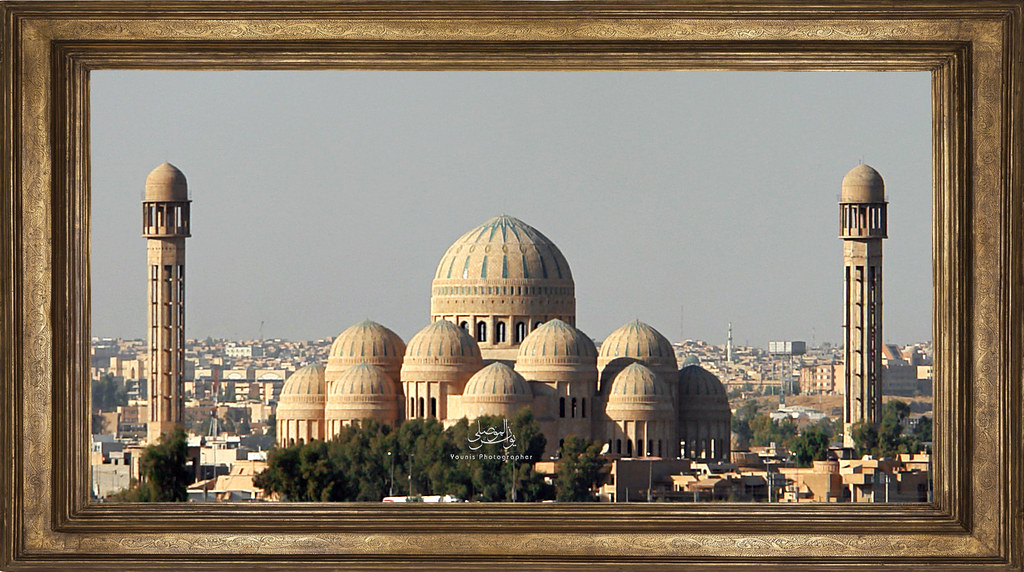
SCENE (XXXIV)
الموصل
MOSUL, in ISIS controlled territory,
formerly in Northwestern Iraq, 2016ce
***
“A battle is raging!”
“Peter Reed,” I presume.
But there was no need for presumption, and it was just a jokingly used phrase; the two of them had served in an international brigade before, 3 years ago, in Haiti.
ADONEAV
I have known Comrade Peter Saint Reed, the marine, since the long, sweltering summer of 2014. We served together for three months in Croix-Des-Bouquets, Haiti. Staffing a small fort where about forty Haitian patriots were being clandestinely trained as emergency medical technicians, community health workers, and combat medics. We were developing and implementing the fourth version of the remote EMT training program in Haiti on behalf of several underground Haitian political parties and their diaspora. I am unabashedly a fan of his work.
PETER SAINT REED
“We could liberate this whole damn country with less than 40 women and men,” he had once said about Haiti. “We could take the whole place over and end all the bullshit.”
ADONAEV
“Liberate” is very relative word, but what he meant to say in his own cowboy marine way was that the Haitian people could cast off foreign oppression with a relatively small armed force.”
PETER SAINT REED
“No. I meant we could just take over the whole country with 40 people.”
ADONAEV
But we wouldn’t be able to hold it. The Haitians have a lot of fight.
PETER SAINT REED
If ten of us are marines, we can fucking hold it.
Sometimes their world views were not aligned, but in general their hearts were in a good place. Only shortly after that 2014 training operation in Haiti, Saint Reed bought a one-way ticket to Erbil in the Kurdish region Iraq and subsequently enlisted with a group of Slovakian mercenaries. They were a Mottley group of foreigners, mostly former military, providing medical aid to the Peshmerga forces. It is widely understood that his bravery and EMT training saved many lives.
“I saw you again on the news,” Sebastian wrote to him at one point, “I envy you and think what you are doing is particularly important. I’ll contact you when my team is coming over the border to join up.”
The boy was bleeding again. His mother, Hamdiya, dragged him across the dust, one hand clutching a dirty IV bag, the other clamped to the arm of her nine-year-old son, Thanoor. His wound — a sliver of metal in the neck — throbbed with each step. It was morning in Mosul, but no one had seen morning in years. They had only seen light followed by war. The clinic was a ruin disguised as hope. Sandbags, burned tea, half-melted gloves. Two Americans — Pete Reed and Derek Coleman — sat against the wall, sweat streaking down their necks, waiting for the next wave of wounded. Reed had the look of a man who’d seen too much, and Coleman had the look of someone trying not to feel anything at all. Reed muttered. Now he patched necks and carried children across hell. They told Hamdiya to take her son to a real hospital. There was still shrapnel in him, and the clinic — held together by Iraqi medics, borrowed supplies, and the will of a Slovak-American NGO — was barely a dressing station. The journey should’ve taken an hour. It took five. Checkpoints. Ethnic suspicion. Kurdish soldiers telling her, “He looks fine.” At the hospital, they said: “You’re Arab. Why are you here?”
She returned to the clinic hollow-eyed, her son worse. The clinic had nothing left but apologies.
Reed and Coleman had come to fight. They stayed to save. They weren’t doctors — just men who couldn’t sit still while others bled. They worked with the Kurds until the war shifted and the front moved. They bluffed their way through checkpoints. They knew that many of the people they treated would die somewhere on the road to Erbil.
“We just try to give them more time,” said Coleman, looking at the blood on his boots.
Reed smoked and stared into the distance like a man already dead. “The waiting is the worst,” he said. “It gives you time to remember who didn’t make it.”
They stabilized patients. That’s all. The war did the rest. A Humvee skidded into the courtyard. Two brothers were dragged out, mortar wounds gaping. Ali Khalil died before they could even say his name. Umar lived — if one can call that living. “Where’s my brother?” he whispered.
“Don’t worry,” said the medic. “He’s fine.”
Outside, the neighbor wailed. They had to get Ali’s body back to Mosul, but checkpoints demanded papers, and the family had none. They wrapped the corpse in a blanket and left for the graveyard under gunfire. As they vanished into the horizon, the courtyard went silent again. A young soldier resumed mopping the floor. Another man was brought in. Shot in the spine, legs useless. “My legs… my legs,” he whimpered. The medic prodded his feet with scissors. No response.
“This is not good,” he said softly, to no one.
In Baghdad, there were forms. In Erbil, there were offices. None of them could help. Psychological care is a myth. Coordination — a joke. Supplies came late. Ambulances came later. Sometimes, not at all. “Even if ISIS doesn’t kill you,” someone said, “the inefficiency will.” Reed didn’t laugh.
Reported by Mr. Gareth Browne on 18 December 2016:
“Meet the U.S. volunteers treating patients at a front-line clinic in Mosul! Pete Reed, and Derek Coleman both 27, catch their breath during one of the many long waits at a frontline medical clinic in Eastern Mosul.”
“MOSUL, Iraq – Grasping her son’s arm in one hand, and a saline drip in the other, Hamdiya Saleh stumbled across the dirt. The 30-year-old Mosulawi had walked for several hours, her black abaya trailing on the ground, to the motley Al-Samah Clinic in the Al-Samah neighborhood of eastern Mosul. Just five days ago, her nine-year-old son Thanoor Saleh was caught in the blast of an Islamic State group mortar. Their home, in the now partially liberated neighborhood of Aden in eastern Mosul, is often the target of reprisal IS mortar attacks on as much as an hourly basis. While playing in the street outside his home, Thanoor took a piece of shrapnel to the neck. Despite receiving near immediate treatment, the injury is still causing him problems, and this clinic staffed by Iraqi special forces medics with the help of the Academy of Emergency Medicine, a Slovak-US NGO, is the only front-line clinic in the east of the city. It is the only help they can reach. Hamdiya and her young son, seeking follow-up medical treatment, are among the first to arrive at the clinic early that morning. Pete Reed, 27, from Trenton, New Jersey, is a bearded former US marine with two tours of Afghanistan under his belt and a commanding presence, now helping to run the clinic.”
After leaving the marines, he spent time working as a ski instructor, but was drawn to Iraq late last year, originally to fight alongside the Kurds, but it quickly became evident that his skills as a combat medic were of far greater value. He instructs Hamdiya to take her son to the hospital. There is still shrapnel in his wound, and he requires treatment. The treatment may require surgery, and with those at the clinic only trained in basic trauma medical care, it goes beyond their remit. Iraqi army medics, with the help of medics from US-Slovak NGO, fight to save a young boy with shrapnel wounds from indiscriminate mortar fire carried out by the Islamic State.
The journey should take no more than one hour, but between these eastern outskirts of Mosul and Erbil there lie at least 4 checkpoints, some controlled by the Iraqi army, and beyond that by the Kurdish Peshmerga.
The journey via ambulance should be straightforward, but this is the humanitarian front line in the war against IS, and nothing is as it should be. Hamdiya returns to the clinic later that afternoon, just as the medics are packing up like shopkeepers after a long day of trade. She told of how she and her son were arbitrarily stopped at two Peshmerga checkpoints, and the journey took almost five hours. Some of the soldiers insisted that “there was nothing wrong with him”, and he did not need treatment. Then upon arriving at the hospital, Hamdiya was asked: “Why are you here? You’re Arab,” before being turned away.
Arab-Kurdish tensions have ratcheted up in recent weeks, and many Kurds are intensely suspicious of Sunnis fleeing the largely Arab city of Mosul. Following the liberation of Ramadi earlier in the year, ISIS attempted to use abaya-clad women to attack checkpoints, the explosive vests hidden away under their garments. Male fighters have also attempted to flee the embattled city, posing as civilians, making life even more difficult for those citizens genuinely trying to flee.
“We just do what we can to help win!” says Peter Saint Reed.
What happened to Hamdiya was not an isolated incident. First Sergeant Ghali, the mustached spokesman of the elite Counter Terrorism Unit’s medical corps unit in charge of running the clinic, says it is “happening every day,” adding “sometimes we have to send people to Baghdad [400 km away] for treatment.” The clinic is officially an Iraqi army installation, but the support of the NGO is both welcome and necessary. Iraqi army medics and the NGO staff – particularly Reed and Coleman – work hand in hand treating patients, maintaining the clinic and sourcing supplies. The two came to Iraq late last year with the vague notion of wanting to help in the battle against Islamic State. Instead, it was providing basic trauma medical care and training that they deemed the most effective means of helping. They worked initially with the Kurdish Peshmerga, and only in recent weeks joined up with Iraqi forces, sweet talking generals and hustling their way through military checkpoints as “Special Forces”. They openly admit they have been “blagging it.”
“This delay and sometimes denial of surgery and more advanced medical treatment is costing lives, as Reed acknowledges: “We know that a lot of people we patch up here die n route to the hospitals in Erbil, we just do what we can”. Saint Reed, a former US combat Marine, battles to stop a patient bleeding. This is just one of dozens of patients treated in the clinic every day.”
Reed’s colleague Derek Coleman adds: “The medical care after us is the weak link; all we can really do is stabilize people and give them a bit more time. The suspicion of IS fighters and supporters doesn’t help, nor do this part of Iraq’s long-standing Arab-Kurdish tensions.” Periods at the clinic consist of long waits – moments of reflection disrupted by a heavy influx of patients. It is during one of these interim periods that a macabre sense humor and deep conversation about what exactly is going on take place. As Reed says, dragging on a cigarette and sipping from a can of home-brand energy drink, “some days we’ll have 60 patients, other days it’s only 25, but that doesn’t make it any easier, because in the interim you just have more time to think about who you had today – the downtime makes it harder.”
“Reed’s colleague, Derek Coleman, 27, is a former machinist from San Diego, with only basic civilian medical training, but that hasn’t stopped him from trying to make a difference. Like Reed, he too initially came to Iraq to join the Kurds as a foreign fighter. But, he says, “I realized that was all bullshit, and this was a better use of my time.” The two are fiercely critical of the overall medical situation. “There is no coordination between the government and all the agencies, they all do their own thing,” says Coleman.”
It would be easy to dismiss the two as war junkies, and indeed some have. Coleman, however, seems to be a well-read and intelligent man. He tends to casually drop the likes of John Stuart Mill into the conversation and answers tough questions with reason, a far cry from the war junkie some have tried to paint him as being. Coleman recalls the case of a young girl he treated recently. “She didn’t make it,” he avoids eye contact, as his voice begins to break, “but I just remember trying to wash her blood off my hands; that was hard.”
Despite months of exposure to this suffering, he is anything but immune to the emotional effects. Similarly, it is clear that Reed is not just here for the ride. He has the sort of experience – providing critical care in conflict zones – that often makes the difference in tough cases where patients could go either way.
A conversation with Coleman about his favorite tanks is interrupted with the eerie sound of a Golden Division Humvee’s horn. Skidding to a halt, civilians drag two men from the vehicle – brothers, both injured in an Islamic State mortar attack. “Get him on oxygen,” yells Reed, seeing instantly that the first of the men pulled from the vehicle is in a critical state. Within minutes, the 27-year-old named Ali Khalil is declared dead, and focus switches to his brother Umar Khalil who lays on a stretcher in the building’s courtyard as his chest is bandaged. “How is my brother?” he asks repeatedly; “Don’t worry, he’s going to be fine,” whispers an Iraqi medic in his ear.
“But really we get almost no support from anyone,” Peter Saint Reed says.
Outside the clinic stands the brother’s neighbor, who is exhausted and covered in dust. With Umar stabilized, and Ali dead, they discuss what to do next. According to Islamic custom, after death a body should be buried as quickly as possible. “We can’t just bury him, his family must see the body,” shouts Ubay Abdel Basset, the neighbor who pulled Ali from the rubble. He explains that much of the family has fled Mosul to Erbil. But without identity cards, their car will likely be unable to cross checkpoints. They elect to return to Mosul, and with Ali’s body wrapped in a blanket, they board an Iraqi army Humvee and head for the family’s plot in a graveyard in the Mosul neighborhood of Qadisiya.
This is but one example of the logistical dilemmas friends and families increasingly find themselves facing as the civilian casualty rate climbs.
As the vehicle accelerates away, towards the sound of distant gunfire, Ali shouts: “Only God can help us. We will go back to Mosul. Maybe tomorrow we will die, but we will go back to Mosul.” And, as suddenly as they came, no more than 20 minutes after arriving, the patients are gone, and the clinic returns to a deathly silence, interrupted only by the slopping sound of a young Iraqi private mopping blood. Despite the great number of deaths, some of the toughest times ahead are for those that the clinic does manage to save. As the medics finish a lunch break, a middle-aged man is brought in, his arms slung over the shoulders of his father and a brother, and he is placed on the stretcher and whimpers a few barely audible words repeatedly – “my legs, my legs.”
Sami Abdul-Razaq has been shot in the back by an ISIS sniper while trying to flee the city despite carrying a white flag. An Iraqi medic frisks his pockets urgently searching for a key but settles on a pair of scissors sitting on the side. Using the sharp end, he prods the man’s feet searching for some sort of response but nothing. “This is not good,” he whispers to himself.
Psychological and physiological support for those who have survived serious injuries is not readily available in Iraq, and even where there is an NGO or government department in place to support patients, treatment is often delayed or incomplete due to a lack of coordination and bureaucracy. It is the same obstacles that often leave this clinic short on supplies or without an ambulance, and that leaves critically injured civilians stuck at army checkpoints for hours on end because of a lack of paperwork. As one ONG worker, who as usual declined to be named, said: “Even if the Islamic State doesn’t kill you, the chronic inefficiency in fighting them just might!” What a dumb fucking thing to say. But he is doing his all-American best to help defeat ISIS, and that is what counts.
______________________________________
 WALTER SEBASTIAN ADLER
Leave a comment