Self-published and self-distributed literature has a long history in Russia. Samizdat is unique to the post-Stalin USSR and other countries with similar systems. Faced with the police state’s powers of censorship, society turned to underground literature for self-analysis and self-expression.
Samizdat originated from the dissident movement of the Russian intelligentsia, and most samizdat directed itself to a readership of Russian elites. While the circulation of samizdat was relatively low, at around 200,000 readers on average, many of these readers possessed positions of cultural power and authority. Furthermore, because of the presence of “dual consciousness” in the Soviet Union, the simultaneous censorship of information, and the necessity of absorbing information to know how to censor it, many government officials became readers of samizdat. Although the general public at times came into contact with samizdat, most of the public lacked access to the few expensive samizdat texts in circulation and expressed discontent with the highly censored reading material made available by the state.
The purpose and methods of samizdat may contrast with the purpose of the concept of copyright.
All Soviet-produced typewriters and printing devices were inventoried, with their typographic samples collected right at the factory and stored in the government directory. Because every typewriter has micro-features that are individual as much as human fingerprints, it allowed the KGB investigators to promptly identify the device which was used to type or print the text in question and apprehend its user. However, certain East German and Eastern European-made Cyrillic typewriters, most notably the Erika, were purchased by Soviet citizens while traveling to nearby socialist countries, skipped the sample collection procedure, and therefore presented more difficulty to trace. Western-produced typewriters, purchased abroad and somehow brought or smuggled into the Soviet Union, were used to type Cyrillic text via Latin characters. To prevent capture, regular bookbinding of ideologically-approved books has been used to conceal the forbidden texts within.
Samizdat copies of texts, such as Mikhail Bulgakov’s novel The Master and Margarita or Václav Havel’s essay The Power of the Powerless were passed around among trusted friends. The techniques used to reproduce these forbidden texts varied. Several copies might be made using carbon paper, either by hand or on a typewriter; at the other end of the scale, mainframe computer printers were used during night shifts to make multiple copies, and books were at times printed on semiprofessional printing presses in much larger quantities. Before glasnost, most of these methods were dangerous, because copy machines, printing presses, and even typewriters in offices were under the control of the organization’s First Department (part of the KGB); reference printouts from all of these machines were stored for subsequent identification purposes, should samizdat output be found.
Samizdat distinguishes itself not only by the ideas and debates that it helped spread to a wider audience but also by its physical form. The hand-typed, often blurry, and wrinkled pages with numerous typographical errors and nondescript covers helped to separate and elevate Russian samizdat from Western literature. The physical form of samizdat arose from a simple lack of resources and the necessity to be inconspicuous. In time, dissidents in the USSR began to admire these qualities for their own sake, the ragged appearance of samizdat contrasting sharply with the smooth, well-produced appearance of texts passed by the censor’s office for publication by the State. The form samizdat took gained precedence over the ideas it expressed and became a potent symbol of the resourcefulness and rebellious spirit of the inhabitants of the Soviet Union. In effect, the physical form of samizdat itself elevated the reading of samizdat to a prized clandestine act.

(American Refugee)
“I want to know about the short life and eventual crumbling, slow death of the Pax-Americana, as told by Israeli and Palestinian rebels besiged in a Jewish Military Colony.”
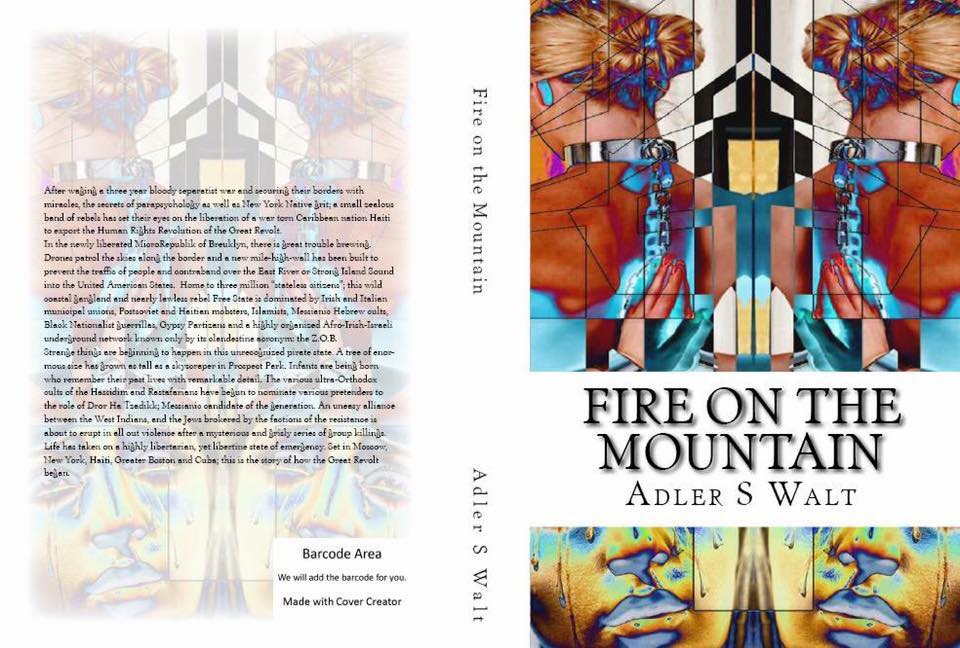
(Fire on the Mountain)
“I want to know what came of the terrible uprising in Newyorkgrad and Haiti, as told by a courtesan and an ambulance man.”
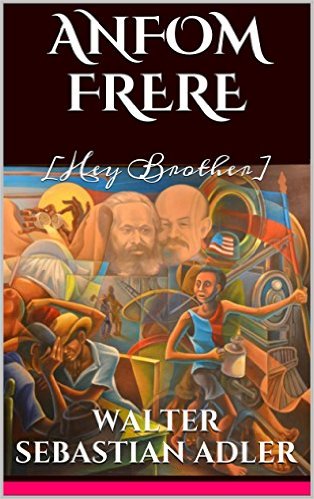
(HEY BROTHER)
“I want to know what happened and is still happening in the Republic of Haiti.”
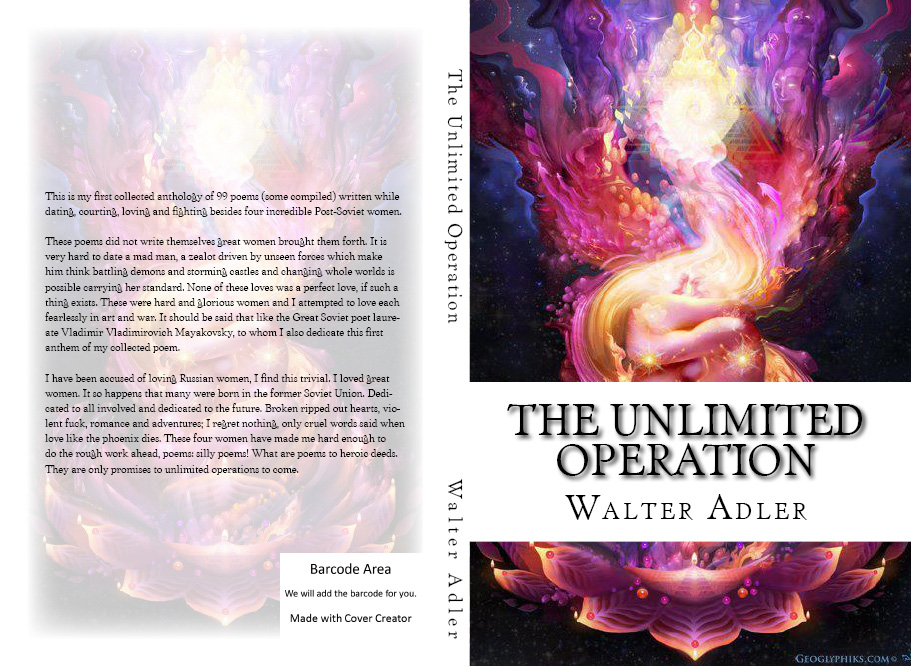
(Vodka Lullabies to the Good Night Moon)
“I want to know what happens when an artist meets a muse.”

