
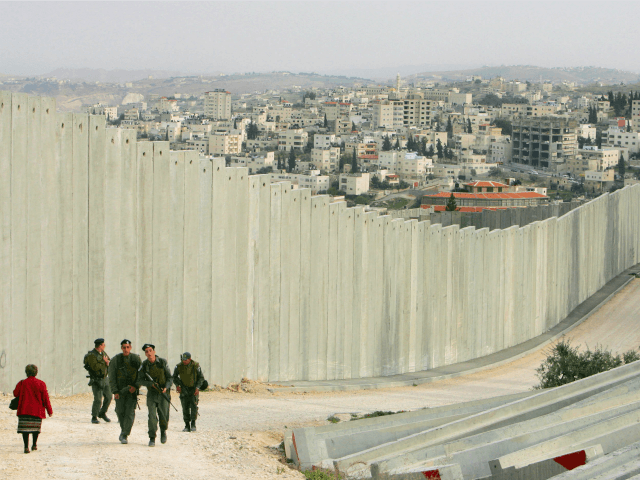
S C E N E (XVIII)
ديار بكر
Gaza Strip, 2024ce
***
Zikim, Erez, Nir Oz — October 7th, Before Dawn
The sea was black. Not the kind of black that poets use to describe longing or the past, but the real kind — thick, opaque, devouring. The kind that swallows ships and secrets. Twelve men slipped through that darkness like knives, clothed in salt and silence, their hearts thudding like tribal drums. They had trained on dry land — crude drills beneath the ruins of bombed apartment blocks in the center of Gaza City. Now they moved through the surf with grim determination, rifles in waterproof sheaths, faces painted with the rust of Gaza’s dust.
Tamer was the youngest. Twenty-one. A child born the year the walls went up, when the crossings were sealed and the permits became shackles. In his pocket, wrapped in plastic, he carried a picture of his mother with her eyes shut — not in sleep but prayer. He had kissed it before diving into the surf, telling no one. There was a quiet ritual to each of them, a parting gesture in case the sea or steel took them before dawn. One man wore his wedding ring around his neck. Another tucked a child’s drawing into his vest.
The beach they approached — Zikim — lay just past the breakwater. It was an Israeli military post and a kibbutz, half-guarded, half-asleep. They’d studied it for months. It looked soft, undefended, serene. But so had the last places, before the sirens screamed and everything turned red.
Tamer’s foot touched sand. The first time he’d touched sand without barbed wire in his line of sight. They emerged not as heroes but as ghosts — dripping, pale, desperate. A spotlight caught them for a flicker of a second. Then the air cracked.
Under the earth, another group marched. Their boots splashed through water as they moved through the damp tunnels carved beneath the Erez checkpoint. The tunnel smelled of concrete rot, rat droppings, and the iron scent of explosives. It had taken three years to build. Many had died in its making — buried alive when sections collapsed, or arrested in sweeps. But now, it was alive. Now it was breathing revolution.
Abu Rafiq walked in front. A former school principal, fifty-three, his hands still calloused from a past life of chalkboards and confiscated cell phones. He’d joined late — too old to run, too bitter to stay idle. The tunnel opened up near an orchard, once owned by a Jewish family who fled in ’48. Then it had been planted by Palestinian workers. Now it was watered by blood.
At the final bend, he paused. He raised one gloved hand.
“No women. No children. We take the checkpoint, not the homes. We are not murderers,” he said, though he sounded unsure.A boy behind him laughed. He couldn’t have been older than sixteen. “Then why does my stomach feel like it swallowed the devil?”Abu Rafiq didn’t answer.
Above them, in the skies not yet kissed by dawn, six paragliders drifted like torn wings. They bore men and munitions, their shadows long and feathered against the thin pre-light of morning. The wind whistled around their gear. There was no sound but the rustling of nylon and the breath of men who knew they would probably die.
Nadir, the group’s leader, pulled a tattered paper map from his chest pouch. He pointed toward the fields just outside Kibbutz Nir Oz — built where once stood the Palestinian village of Hiribya, bulldozed in 1948. He had studied this map like scripture. “They will wake to fire,” he said.
Another man, younger, whispered, “God sees.”
“No,” Nadir said. “Only history sees.”
They landed like curses from the sky. One crashed into a fence and screamed before being gunned down by an elderly volunteer guard. The others fell silently into the orchard and began moving toward the homes.
It began in six places at once. Sirens began to wail, but they came too late. The fighters who emerged from the sea struck the barracks at Zikim with grenades and rapid fire. The checkpoint at Erez exploded in a thundercloud of shrapnel and cement dust. Paragliders rained bullets onto rooftops. Smoke bloomed over sunflower fields. No one knew what was happening. No one had ever imagined it could.
Tamer watched his comrade bleed out beside a dune. The man’s name was Khalil. He had been a taxi driver in Khan Younis. Now his chest was open, and he was staring at the sky like he was waiting for something. Tamer did not stay. He ran through the gate and began shooting.
At Nir Oz, the paragliders breached a school. The classrooms were empty — evacuated, maybe. A whiteboard still read: Hebrew for Beginners. Nadir stepped over a backpack left behind. He walked out into the courtyard and fired at a man running across the lawn. The man collapsed. The sun had started to rise.
By 9:00 a.m., Israeli jets filled the skies. Helicopters roared overhead. The bodies of militants and civilians littered streets, fields, and beaches. Confusion reigned. The news spoke of hundreds dead, taken, or missing. No one understood how the fences had fallen, how the intelligence had failed. But it had, and now the sky bled fire.
In a kindergarten, a child had drawn the sun smiling. On the other side of the door, her mother wept into a bloodstained phone.
In Gaza, Abu Rafiq was wounded. He sat in a makeshift safehouse, bandaged, watching the television flicker with the words State of Emergency. On the floor beside him, a Qur’an lay open to a passage about mercy.
He stared at it for a long time.
Someone offered him a cigarette.
“We did what we had to,” they said.
“No,” Abu Rafiq murmured, “we did what we could no longer stop.”
Outside, the bombers were circling back.
 WALTER SEBASTIAN ADLER
Leave a comment