
S C E N E (XIII)
نيو جيرسي
Al New Jersey, U.S.A., 2023ce
***
Every time we survived a fire fight in Rojava, usually a few of the internationals were out of sorts. They had just killed someone, maybe for the first time. Or seen someone die. Maybe they had shot someone that wasn’t necessarily a combatant per se in the heat of the battle. Or had just been awake for too many days at a time. For a time from of the international fighters, particularly those in their first trial by fire fight, would seem a phantom in the days after the battle. Maybe they would say nothing at all for a time, or maybe they would say something totally off base.
Heval Erdal, a British comrade liked to say:
“I think he lost the plot point.”
Years later, after some of them made it out of Rojava alive, statistically 1 in 10 international volunteers died in the war, and 4 of 10 died from either suicide or by Russian rockets in Ukraine; some years past the pitched battles to defend Rojava, the Jew of Beirut was in Al New Jersey, a state to the West of Al New York. He was meeting with Souheil Tajer, a Lebanese businessman. Telling a short story about his time in Syria. Trying to make it make sense.
“We have to circle back to when things still made three dimensions of sense,” Souheil says to the Jew.
“Circle what?”
“Circle back as to not lose the trail to the plot points.”
“What does that mean?”
“It must make sense to regular people! Stop dancing around in a dabke circle. Stop beating around the bush.”
“What is it you’re planning to do in my country?”
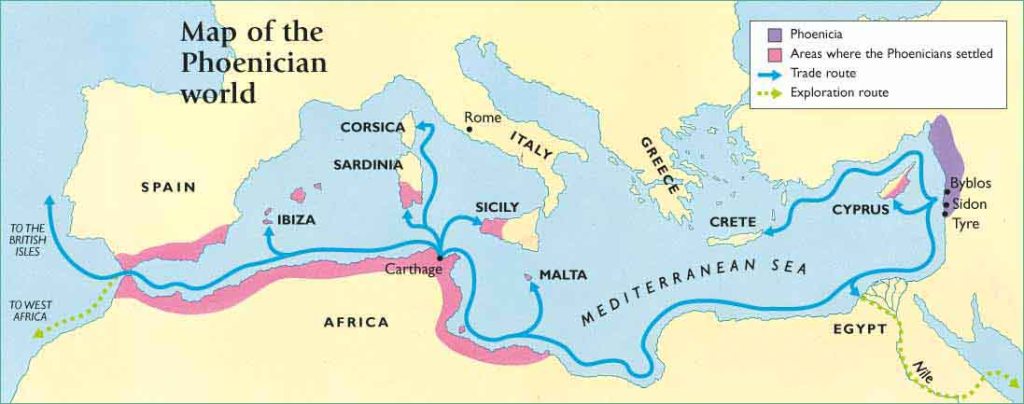
Before the Jew of Beirut, who was only really one half-Jew, (he was technically, allegedly Chechen by his father and Cuban Sephardic by his mother), before he flew into Beirut for allegedly the very first time, days before the Great War began. He went first to a place called the coast of Al New Jersey, a neighboring state to New York, across a River. To West New York. Before he departed with an ill established, albeit ambitious plan he met with an elder statesman of Lebanon, a man named Souheil Tajer who presided with his nine brothers over an import-export firm for high end foods. They speak at length about the unbelievably bad timing, the bevy of possible new experiences, “unique experiences” that Lebanon is known for. The culinary extravaganza is obvious to all, but the people and their resilience in a flailing economy at the edge of a war zone are the most profound. A place where pure strangers are easy friends all the time. A people descended from epic trader sailors; the Phoenicians.”
“The Golden Age of Beirut ended in the Civil War of 1975.”
From 1975 to 1991 the Palestinian militant groups, the right-wing Christians, left wing Druze, Sunni, and the Shiites set off on a very bloody civil conflict. Not everyone participated but everyone was soon shooting and kidnapping in various power constellations. It eventually involved the Maronite41 right called the “Lebanese Forces” or “Phalange”; the Armenians stayed mostly out; the Christian Orthodox liberals; the Sunni Nasserist Pan Arabists; the Shia Left called “Amal”, the Shia revivalist ethno-nationalist right called “Hezbollah”; the Druze left in the “Progressive Socialist Party”, the Israelis, and the Syrians, the French, and the Americans and about 140,000 to 170,000 people lost their lives. When it ended nothing was ever really resolved. So, in a sense, it was always just a matter of time before something like that could happen in Syria or happen again in Lebanon. None of the demographic problems were ever addressed. But while the iron heel of the Assad regime held Syria together, until 2014, in Lebanon it was a though there are defacto ethnic cantons, states inside the illusion of a state.
The country once called the “Paris of the East”, was reduced to an exceedingly long slaughter. No one was left in the absolute majority. Except probably the Shia. No census has been taken since 1932, as has been noted. The President was to be a Sunni, the Prime Minister a Christian, and the Speaker of the Parliament a Shi’a. 18 ethno-religious groups (including Jews) were allotted proportions of important posts. Ways to steal really, and every faction got a port to smuggle from. Everyone buried their guns, except for Hezbollah, “the Party of God” representing the Shi’as (believed to be the true plural majority); and then the Syrians killed the President. The Druze stayed up in the Chouf. A mountainous region to the east of Beirut. Each faction controls a port city except the Druze, everyone is smuggling something.
There was a fast economic upturn from 2008 to 2011, but now the money, the Lira, is valueless and no one can get it out of the bank. Skyscrapers stand empty, the Israelis and Hezbollah exchange daily rocket fire, and life of course somehow goes on. People show up to jobs that don’t really pay and pretend to work. What is the old Russian saying, “we pretend to pay you, and you pretend to work.” Tourism has totally collapsed. But Winter is not tourist season anyway. Only the national carrier Middle Eastern Airways is flying in now.
ADONAEV
My understanding is that a “Green line” runs south from Martyr Square, and it divides a mostly Sunni West “Ras” Beirut from a Chrisitan zone in the east. There are 3 major Palestinian camps in the Southwest and Shi’a in the south and Southwest in zones run by Hezbollah. The airport is squarely in the Hezbollah control zone, or at least everything around it is. They didn’t have a map, but a map of varying lines exists in both their heads. Albeit with Mr. Souheil Tajer has the far more intricate and detailed map.
SOUHEIL TAJER
It is good you are familiar with the “Green Line”, but there are other lines not to cross. “In good times, you would be testing them, them the Lebanese, but under the current situation, everyone will be tested by you. Testing you, wanting to know why you are there, now. What is your motivation?” Everyone will be very, terribly angry about the Palestinian situation. How could they not be? 20,000 is a lot of dead Muslims. Alot of dead people. And it will go higher. It will go to 40,000 by the dead of winter. And then higher still. So many dead people, dead Muslims, everyone will ask where you stand on that. No matter what their confessional feelings. You really must stay inside the Christian and Druze lines on the map. Beirut East, the coastal cities until Batroun, the Chouf, and the Matn. Everything else is an abduction possibility.
You should study that map in real life and your head and use your common sense! Don’t exceed your limits.
ADONAEV
I’m there for 25 days. I’m going to rent a little studio in Achrafieh. I’m working on a book.
SOUHEIL
Achrafieh is safe. You must not stay in the Muslim area after dark and don’t stay in their hotels. No one can guarantee your security. In East Beirut you have many friends. The weather will be bad. It may rain every single day I’m afraid.
ADONAEV
I plan to do some writing in the Chouf, at your friend’s place in Berkazy. I am gonna stay in the city, be wary of my encounters, and stay in the right kinds of places.
SOUHEIL
Achrafieh is safe, but you must, must, must find a good driver. It’s essential to your safety. I wish I could go with you and make some better introductions! Now repeat what I have told you please.
ADONAEV
The green line is the line of demarcation, staying in Muslim areas is not advised in the current situation. Be careful who I get to know because everyone is very curious and will be more curious because of the timing. No ultras, no interviewing extremists, no gangster-type venues. No adventures with fast and easy women of the night. Not an adventure, I won’t wander too much in the night If at all outside the Chrisitan zones. I’m gonna stay to my limits. I’ll get a good driver.
SOUHEIL
“How do you know your limits, or any limits in a place you’ve never been?”
ADONAEV
I know what kinds of risks I’m taking implicitly. But it’s important to me to know your people in their hard times and then later in the good times. I wish to know the Lebanese.
Souheil ponders that, but only for a micro minute, he carries on a conversation with ease and expertise.
SOUHEIL
You’ll need a driver, a driver you trust. And stay in touch with me every day, I’m here for all your questions. I would love to go with you, I will go with you next time. You must be very conscious of your surroundings. Please do not befriend the wrong people and end up in a trap.
ADONAEV
“I’ll get a good driver.”
SOUHEIL
Preferably a Christian driver. I know how that comes across to you, but you do not understand how it is yet. You need a driver you trust. Who is very responsive to your logistical needs. And will not make up new hyperinflation prices. Pay for everything in dollars if you can they will charge your credit cards Lira rates that will be preposterous.
Now listen closely. If Hezbollah and Israel end up in a major escalation you will need to get out quickly and the airport will not be the best way out. If things go very badly internationally, you must get to the Port and find a ship to Cyprus. The Israelis will certainly bomb the airport into the ground, they always seem to do that. You can also go wait it out in the Chouf, I’ll give you some phone numbers. But ideally, you get out by ship if the war spreads. Which it really might.
“This is not the best time to go, I really encourage you to reconsider.”
ADONAEV
My flights from Paris have already all been canceled due to the security deterioration. I will have to reconsider my options. There are only inbound flights on Middle East Airways.
SOUHEIL
One thing you must do is visit the Shrine of Saint Mar Charbel42. He did something like 26,000 plus miracles. A very holy man. If your itinerary allows this, you must go and get some holy water, or oil and walk in the footsteps of this highly righteous man. It will change your whole life! I promise you that.
ADONAEV
I love me some miracles! But I never rely on them at all, just my raw wits. Thank you for talking this out with me. It all seems more possible than before.
SOUHEIL
Follow your heart but know your limits!
***
In the bustling streets of Beirut, where the scent of spices mingled with the sound of honking cars, a plan was set in motion. A group of seasoned professionals gather in a dimly lit room, their faces obscured by shadows. Among them was Kaveh Atatable Ashuri, a notorious mastermind known for his audacious heists. “We need something big,” Kaveh declares, his voice low but commanding. “Something that will shake the city to its core.” “Make the fat cats afraid.”
After hours of deliberation, they settled on their target: Banque du Liban et D’Outre Mer, BLOM Bank; the largest bank in Beirut, renowned for its impenetrable security. With meticulous planning and precision, they devised a plan to infiltrate the bank, bypassing every obstacle in their way.
On the fateful day, chaos erupted in the heart of Beirut as the sound of gunfire echoed through the streets. Masked figures storm the bank, their movements swift and calculated. With a combination of brute force and technological prowess, they breached the vault and laid their hands on the coveted treasure: stacks of cash, worth millions in theory.
As alarms blared and security forces scrambled to respond, the robbers made their escape, disappearing into the labyrinthine alleys of the city. But their journey was far from over. Meanwhile, the perpetrators of the audacious heist remained elusive, their identities shrouded in mystery. With the authorities hot on their trail, they vanished into the shadows, leaving behind a trail of confusion and intrigue.
In the dead of night, the stolen fortune found its way to a different kind of terrain: the cramped alleys of a Palestinian refugee camp on the outskirts of Beirut. Here, amidst poverty and despair, the money was dumped unceremoniously, like crumbs scattered to the wind.
Word spread like wildfire, and soon, the camp was teeming with people, their eyes wide with disbelief as they beheld the unimaginable wealth before them. For a fleeting moment, hope flickered in their hearts, a glimmer of possibility amidst the harsh realities of their existence. In the heart of Ras Beirut, chaos erupted as the deafening sound of gunfire shattered the tranquility of the bustling city streets. It is a scene straight out of a strange foreign dream or an American action movie, but this was all too real. The robbers had struck the biggest bank in the city, leaving behind a trail of destruction and terror!
As the dust settled, the robbers emerged from the bank, their faces concealed behind masks, their weapons glinting in the sunlight. They moved with military precision, their every step calculated and deliberate. But they were not alone. The police were already converging on the scene, their sirens wailing in the distance. With adrenaline coursing through their veins, the robbers made a run for it, their bags of stolen cash clutched tightly in their hands. They jumped into their getaway vehicles, tires screeching as they sped off into the crowded streets of Beirut. The chase was on! RATAATATATATTATATATTATATATATTATTATA!
The streets turned into a battleground as the robbers and the police engaged in a deadly game of cat and mouse. Bullets flew, shattering windows and sending bystanders diving for cover. It was a scene of utter chaos and carnage, with no end in sight. But the robbers were not about to go down without a fight. They fought tooth and nail to evade capture, weaving in and out of traffic, narrowly avoiding collisions with oncoming vehicles. Their driving skills were nothing short of extraordinary, but the police were hot on their heels, determined to bring them to justice. As the chase raged on, the robbers made a daring move, veering off the main road and into the narrow alleyways of Beirut’s labyrinthine streets. It was a risky maneuver, but it paid off. The police were momentarily thrown off their trail, giving the robbers a much-needed advantage.
But their respite was short-lived. The police soon caught up with them, their sirens blaring as they closed in on their prey. With nowhere left to run, the robbers made a split-second decision to turn off the main road and into the sprawling Palestinian refugee camp of Mar Elias. The camp was a maze of narrow streets and crumbling buildings, a haven for those fleeing persecution and violence. It was the perfect place to lose the police, but it was also fraught with danger at every turn. As the robbers raced through the camp, they were met with fierce resistance from the inhabitants, who had no love for outsiders, bringing violence to their doorstep. Shots rang out from every direction, echoing off the walls of the cramped alleyways. But the robbers pressed on, their determination unwavering. They knew they had to keep moving if they were to have any hope of escaping the law’s short arm. And so, they pushed forward, their hearts pounding in their chests, their breath coming in ragged gasps.
And then, just when it seemed like all hope was lost, they saw it: a narrow alleyway leading out of the camp and into the relative safety of the surrounding city side. Without hesitation, they gunned their engines and raced towards freedom, leaving behind a trail of chaos and destruction in their wake.
As they emerged from the camp, they were relieved, knowing they had narrowly escaped capture again. But they also knew that this was far from over. The police would not rest until they had brought them to justice, and the robbers would have to stay one step ahead if they were to survive another day in the unforgiving streets of Beirut.
 WALTER SEBASTIAN ADLER
Leave a comment