This cab is now a magic carpet for a story cabaret.
Using-a-punchdrunk-kitten in the back seat of a Breuklyn-southbound-gypsy as my muse. One doesn’t choose,
_the muse they use. Or when.
There were worse assignments.
Given to more cowardly men!
And my constitution is and always will be_a wide canvas for futurist painting_
My-heart-when-fainting_
Is grinding, then breaking it_causes Brighton to flood and post Haitian earthshaking:
My soul is for barter_sign the dotted line,
I’m a phantasm now-shaking collapsing-and up for the tainting.
Exsanguination! Being bled dry!
There’s blood in my eye,
A mind game, that’s fine, but the mind can unravel before the right time, and the things it envisions; the things you complete; like a thousand lifetimes emptying out of your whispers_
_Like two shots in the dark_unloading my heart on the cold of the street!
Vasa, she whispers:
“Why so sad all the time?_Tell me a story with Camels and Bandits and rhyme!- and keys strung to kites_ mix your biwinning antics and Arabian nights! Make more epic poems! Can-we-not-agree_the audience cannot swallow_ an endless account, as you wallow in all of your feelings for me.”
Starry night burns bright, I begin again:
I have the will!
In a previous life she believed mostly in kill-or-be-killed.
She comes from place_ So brutal, so base, frustrated, consumed by the men in her face,
The following ointments, which vodka let boil to a brine of pure hate_ juxaposed with the partisan flame of my zeal,
I’ve been reborn in a futurist gate.
_And invested with powers to steal or to heal!
Absorb all of your pain_ and restore your ideals! And you will open my chest with your fingers: And start spinning the wheels_
It’s Russian Roulette, the way that she feels!
Magic carpets to carry us so far from this place where we are_Highspeed races and chases_
_ Drive bys taking place without use of a car!
Her kiss is the bullet of deady surrender.
The sweetness of service she’s willing to render_greatest by far:
To enroute replace my pumping mechanism, without medical training_without even leaving the hint-of-a-scar!
A pipe dream_a pipe bomb_ a zen.
Near endless composition, the art of story telling unleashed from my phone or my pen_
In base thirst for a woman I’ve known in other lives.
And desire to keep knowing forever_
_If forever could just be again, and again.
I am trained to fix a broken heart, my own excluded.
For the heart is a time bomb_ your emotions are fire ball bearings_
_Your wiring is now made faulty,
your rational mind is at times misguided-deluded…
“Vasili, please, I’m lying here counting on your story to ease, I want erotic adventure, daring or fun, no more talk of feelings or the latest bombastic-head-fuck-with-a-gun, I like alegory, the-cave-with-the-thieves? What’s the name of that story?! No more tales of the mechanical heart, right before bed,”
“I’ll tell you my dreams about star crossed Chechen peasants instead”.
II.
How can I, live so many lives; But be without you so many nights?
Cold sweats. And the ache of seperation, imprisonment and then exile:
Broken bottles or spears or my pen’s wronging rights,
Sweat itself often passes as tears.
While Writing my politics off as mere hooligan fist fights?
I didn’t mean to trouble you with me, But we seem unable to end it quickly,
Or end me quietly.
I have been hunted like a partisan and I found refuge in your secret kisses.
Now we are partisans together I suppose, but you warned me you prefer the cities to the forests. The Peoni to the Rose.
What about Peoni verses Prose?
I prefer bath houses to General Winter_and the wearing of my solitude below four layers of my clothes.
So how now?
Where will we find shelter?
We’ve run helter-skelter on the glass-bottle-broken-beaches or that Bulgar tavern where we hide.
They have done so many things to me,
Until now I cannot recognize my own face.
I listen it seems, but prefer to confide.
But it is just the face of a man claiming love!
Cupids arrows mutilate.
The barrage burns apart my barricades like katusha rockets, raining from above.
Don’t fail me fearless heart,
Ill get back to you!
From Shali, the mountains, Brighton or Grozny too!
With black eyes, black ties, last tries; this is no mere seduction, or simple desire:
It’s a visceral longing to woe.
Putin has declared war! But foolishly I long for just peace on this front line fight_
_A lull in the violence allowing me to steal my way back to you_guided by moon and my tragic-parachute-knockaround-daggerman-incite.
The barricade-we-made was cobbled together with useless albiet pretty word;
Damn all my gradiose promises,
The misuse and abuse of fables and myth that confuse what I see with that which you claim that you heard.
I am almost quite old.
In old soul time.
I bought what you sold. Dash my face against Dagestan’s rocks, break all my bones if in this life I am more coward_more villain than hero and bold…
“Silly Vasa,” she giggles, pulling her supple body supine even closer to closeness of mine, “Your passions on fire when you press your fingers to prose,_I’m drawing a line_ press your fingers to hold, I want Ambulance Action Peoni ambush_No thorns of the Rose, and my grand design for the story this time is to hear about the dark in your soul, the black rabbit hole where your ambulance goes!”
III.
A Poet paramedic: warm body, heart now made stone cold. I have the will, I carried bodies in piles through Bed Stuy,
Up moutains_we always will battle the Reaper uphill.
I never cried then, I did not even wince,
Every night I’m not dreaming of loving your company, kissing your lips_I’m flashing right back_senses under attack: to life tremmors we trembled_in the City of Port-au-Prince!
We carried legions off to what passed as hospitals.
I’ve had to watch ten thousand die, now all I want is to carry you away from the coast of Brooklyn, magic carpet fly.
Fly in the face of your husband, your secrets;
The dance I do with my stories, in trains or in cabs, returning with you
To the place that you lie.
But I dance again from time to time.You bring it out of me.
“Why cry old soul?” She whispers.
“I saw things I wasn’t meant to see.”
“Women like me?”
“You’re a dangerous creature we both can agree.”
She gives me fourth and fifth tries, the body dies, but the song of the heart is timeless, therefore free.
IV.
Because when you are gone there are only words. Words make the basis of poems_ forming a plee from the deepest depths of my heart’s agony.
When each parting seems so long my mind invents monsters which lurk which are not even there!
In a silky, billowing dress_ I’d hide under your covers, I’d caress the folds of your being, run fingers through darkness through the locks of your hair.
“Until I’m safe too?”
“Like my fallen angel with her wings on gold fire; Dorogaia I need you.”
I pace the Brighton Boardwalk so long that all these lives mesh together ’til the story seems too wild, too Noire to be true;
“Turn this cab toward the seaboard, turn Idlewild, let’s run away, before we break day_”
“You haven’t a clue! Mad man! A poorly laid plan!”
Begging for some proof of goodness of his kind.
“The validity of his mind!”
A million cold stones acquired over long tenuous adventures, but regrets are for traitors on rewind.
Battles and then conflicting accounts of my enemies treacheries abound.
An escape plan is successful only when the underlying logic is found!
The logic is half based on a whisper, and half on a dream.
Their scissor hands dripping from love of the kill. Demons enter the portal with intention to scheme. To make you a mark, turn me to a skell or a shill.
They separated me from my humanity, loving you is against my rational will.
She’s half in the old world,
and half in the new,
half iron curtain, half crystal glass shoe.
The cab nears the Verazono precipice, the Brighton abyss where we will be seperated anew.
Tell me Odysseus: What mean me to you?
Was that voyage anything but unjust for all involved?
Once I had a white motor cycle, I was a fugitive slave, I was evolved. I killed the master and stormed the plantation and then half of the problem was solved!
And on it you waited to escape north toward the blue moon.
“Sooner than soon? Did your love for me grow after the rooftop fist fight in the light of my murderous swoon?”
“Dorogaia that’s right.”
“I don’t want such a life; a life of no humor, a life or death struggle, the terror of night.”
“Stories for night, are about all of the wrongs swept away by the dawn and the light. I require one muse only. One significant. One longing. Never again in the trenches so vast, so empty and so lonely.”
“The story of us? Us is a wild tragic roundabout fuss!”
“Is_to_be_a_tale_of_triumph. Over the hopeless heart via the art of romantic prolonging!”
“Righting or wronging?”
“I sought out your company.”
“Do it again.”
“I do it still out of the longing.”
I have a voice and I have a loud pen.
And I have passion and it overflows my body until I see miracles in the streets.
The strength of forty men!
And the moon winks.
Then on Banner Ave. the story completes.
And then again, the world’s smallest violin plays just for us, she thinks.
Why does such a long shadow fall over his house every time he drinks?
We are not star crossed.
We are not divided by a sea.
Or by barricades. Maybe we’re just in defiance of destiny.
Or the flaming up of the ghettos in the latest Caucasian raids.
When I looked to the sky I saw three ships sailing us apart.
You off to marriage and the world of the continent.
Me, bound forever to the belly of the ship enslaved only to my own fearless heart.
And as they sailed us apart, to never meet again,
Some sailors sang out, “The Nina, the Pinta, and the Santa Maria!”
“To the glory of the new world!” they toasted.
Vain Braggarts and white men.
But I begged the moon:
“Dasha, Dasha, Dasha! Why can’t you love a wild peasant like me?”
What fate was this where we have to part our story time in endless tragedy?
Death itself could not stop this kind of beating in my chest.
If am reborn another thousand lives,
Each time waking from a long kiss good night,
Each life I will call out to you again as my test.
The body will die, but its sleep is the cousin of rest.
So, tied again to the mast.
Shackled and blinded I swagger on hopeless, fearless heart.
In dreams, don’t forget me.
This was begged long ago.
I will steal away and climb to the roof of Mt. Olympus if I must to give the gods a show.
I’ll ask for the help of the spirits if God has no time for us artisans.
Wild peasant partisans, from good families with magic carpets and reckless biwinning minds. The heart yearns, the back breaks, the soul is on fire, the real man, he grinds.
Black until blue.
Carrying me, one day, with wings home to you.
And if you read my verses see if I still appear a slave.
And we can say we knew each other when I was a free man and you were a free woman. I’ve traded my weapons of war for the power to save.
There is only one chain I cannot learn easily how to break.
And that, is the one I first broke to be by your side. By your side, give or take.
I long for you.
It will always be that way. It has been that way since Labor Day.
But then, story time is easy for an old soul with a pen.
“You’re not like other men.”
“Hopeless, Fearless Heart how long apart must I wait to stay gone?”
In 1986 a social movement based in the Little Church (Ti Legliz) used liberation theology gospel, strikes, demonstrations, and targeted assassinations in an uprising referred to as the Dechoukaj to force Jean-Claude Duvalier (Baby Doc) to flee the nation of Haiti. Led by a Salesian Priest named Jean-Bertrand Aristide this movement succeeded in dismantling a hated seemingly intractable regime, carried out the nation’s first and only democratic elections and dissolved the army that had since the time of the American occupation had been used to violate the human rights of the Haitian people. The only social movement that truly represents Haiti’s 8-9 million impoverished peasants is called “Lavalas”, or “the cleansing flood”. Since the fall of Duvalier, Aristide has been twice elected (1991 & 2001) and twice exiled (1991 & 2004) in two bloody coups. Fanmi Lavalas, the political arm of this movement is officially banned from elections. A neo-Duvalierist pop singer was elected to the office of the President following the devastating earthquake of 2010. This briefing paper will attempt to analyze the historical foundation, rise to power, fall to repression and current capabilities of the Lavalas Peasant Movement and its underground political party “Fanmi Lavalas” (Lavalas Family) and what its actions will mean for the future of development, human rights and political landscape of Haiti.
Introduction: What is Lavalas?
Lavalas is a movement based on the idea that Haitians must triumph over their internal and external enemies, free their nation and win their promised human rights.
On January 1st, 1804 the nation of Haiti was born but to this day an illiterate peasant can speak of it and its leaders as though it had just recently occurred. That is because the history of Haiti is the history of how the European hegemon powers moved to contain an uprising and idea that is as threatening to globalization as it was to slavery and colonialism. The people of Haiti and their partisans in the Lavalas Movement are fighting to win a struggle begun over 200 years ago between the masters and the slaves.
Currently, 1% of Haiti’s population owns 45% of its wealth. Its President Michel Martelly is a former pop singer with deep ties to the previously toppled Duvalier dictatorship. Life expectancy is 56. Haiti is occupied by a UN umbrella army called MINSTAH. A disease called Cholera has killed over nine thousand people and infected over 700,000. There are over 10,800 NGOs operating in Haiti with little central coordination or planning. Of the roughly 9 billion delivered of the 16 billion pledged in development & reconstruction aid after the 2010 earthquake; most went directly to NGO or foreign military expenditures and a full $224 million was used to build a 60,000 person capacity sweat shop complex called Caricol Industrial Park (Buss, 2008)(Farmer, 2011)(2012 MINUSTAH Reports).
One should not be dispassionate about the birthplace of Human Rights as a fact on the ground. For the “Rights of Man” as understood by the French Jacobins were for all people, but if Napoleon in 1800 turned that revolution into his personal bid for empire; shortly after an army of slaves would win the first stage of a campaign to make these rights a world order in the Americas. Lavalas is continuum of this historic effort. It is the majority supported, banned and persecuted underground movement for democracy which began in Haiti in the1980’s. Clearly with facts before us we see the birthplace of a Human Rights revolution that took simultaneous aim at slavery, colonialism, class structures and race relations. In 1815 Simón Bolívar and a group of Haitian guerrilla fighters exported this uprising to the entirety of Latin America.
Not until the socialist revolutions of the 20th century had there ever been a more direct threat to contain. And admittedly the masters, the elites of the metrolpol hegemons have contained populism, socialism, and national self-determination in near totality. A victorious indictment of the exploitation that emanates from European greed truly began in Haiti. Paul Farmer claims in his book The Uses of Haiti; her greatest modern use is to continuously discredit an idea (Farmer, 2005).
There was a slave general named Toussaint L’Ouvature who believed that the liberation of San Domingo could shatter a global structure of brutal exploitation. As described so eloquently by C.R.L. James in Black Jacobins:
“Leader of a backward and ignorant mass, he was yet in the forefront of the great historical movement of his time. The blacks were taking their part in the destruction of European feudalism begun by the French Revolution, and liberty and equality, the slogans of the revolution, meant far more to them than to any Frenchman. That was why in the hour of danger Toussaint, uninstructed as he was, could find the language and accent of Diderot, Rousseau, and Raynal, of Mirabeau, Robespierre and Danton. And in one respect he excelled them all. For even these masters of the spoken and written word, owing to the class complications of their society, too often had to pause, to hesitate, to qualify. Toussaint could defend the freedom of the blacks without reservation, and this gave to his declaration a strength and a single-mindedness rare in the great documents of the time. The French bourgeoisie could not understand it. Rivers of blood were to flow before they understood that elevated as was his tone Toussaint had written neither bombast nor rhetoric but the simple and sober truth.” (CRL James, Black Jacobins).
The truth about Haiti is every conceivable effort has been taken by aggressive, capitalist European powers to break her people and annihilate the spirit of the original revolt (Rotberg, 1971) (Farmer, 2005) (Hallward, 2007).
Since independence was declared on 1 January, 1804; the world’s “first black republic” has been plagued by economic quarantine, endemic socio-racial fragmentation, civil war, periodic coups and foreign backed totalitarian dictatorships. The office of the President has been persistently utilized to expropriate the national treasury and keep the Haitian people in a condition of permanent underdevelopment. Haiti is currently the most impoverished nation in the Western hemisphere. The Haitian people, who are largely illiterate subsistence farmers, are not consulted or even included into Haiti’s narrative. Its history is a permanent rebellion from slavery toward a desperately yearned for, but forever fleeting emancipation. The Lavalas Movement with the Haitian people firmly behind them behind are getting closer to that collective dream than any before them. Their movement was able to conquer Duvalier, but has yet to vanquish the entrenched forces of Duvalierism (Dupay, 2007). To know the mind of the Haitian people it is important to understand their collectivism, their fearlessness, and their full connection to their real and imagined history.
The Lavalas Movement and its aspirations cannot be understood unless in context of historical events for the Haitian peasant’s claim of readiness to “complete the revolution” reflects a mental continuity of events that we too must grasp are we to be a participant not a perpetrator.
Micro brief on Haitian History; Part I: (1791-1857)
“The poor have long experience in creating a third way. They face death and death every day. They survive. In Haiti we have survived for hundreds of years this way. This may be a jarring notion for those who believe the poor are poor because they are stupid. If one believes this, one will always feel that the solution to poverty will not come from those who are poor. But in fact, if we are alive at all it is not because of aid or help from other countries, rather despite it. We are alive because of our tremendous capacity for survival.” (Aristide, Reflections, p20).
To understand what is happening today in Haiti one must always separate its people completely from their hyper-predatory government, but never ever separate the people from their history. The Haitian collective memory is product of resilience to trauma inflicted throughout the entirety of its past; it colonial existence, its revolution and it’s periods of repeated occupation.
Mats Lundahl, in his book Poverty in Haiti traces the track of economic and social devastation to five key historical events. I have included five more. The first was the European discovery of Hispaniola in 1492. Within 50 years of arrival 100,000-8 million indigenous Taino Indians had been eradicated by forced labor and disease. They were replaced by a slave labor kidnapped & imported from 40 African regional ethnicities which on the eve of the revolution numbered over 450,000 slaves. Slaves were perishing via the structural violence of the St. Domingue colony at such rates that by 1790; 40,000 new slaves were being imported per year (James, 1963). The second event was the Haitian Revolution itself which from 1791-1804 took the lives of an estimated 140,000 slave, mulatto and colonial inhabitants; as well as over 57,000 French, Irish, Polish, English and Spanish soldiers sent in to suppress it. A plantation economy that was once providing 60% of the world’s coffee; was a vital supplier of sugar, indigo, cotton and made up ¼ of the Pre-Jacobin French GNP was reduced to ashes and absolute ruin. The third event cited was the 1809 Land Reform of President Alexandre Sabès Pétion who broke up most of the major land holdings established by the post-revolutionary leadership and laid the legal foundation for mass peasantry whereby only through periodic government taxation could any form of agricultural exploitation occur. Two events (of my own addition) are the 1822 enslavement of the Dominican Republic compounded with the 1825 imposition of the French Indemnity, an estimated 21 billion dollar debt that Haiti would continuously pay until 1947 to France for “compensation” of its lost territorial and human property. From 1843 to 1915 Haiti had no less than 22 Presidents, 11 of which were in office less than a year little of this had much effect on the peasantry (Rotberg, 1971). The 1809 Land Reform sealed the fate of Haiti underdevelopment according to Lundahl, but it also made the bulk of the population cultivators of their own land without any firm infrastructure to engage in state predation. The fourth main event was the American Occupation which lasted from 1915-1934. The most tangible effects of this occupation were the forced conscription of the Haitians into infrastructure building projects, the full repayments of foreign debts, and the creation of the military forces that would soon after occupation become the Forces Armees d’Haiti, the Haitian Army (FAdH). It was this army and infrastructure that would set the stage for the fifth event sealing the nation into predatory state underdevelopment; the Duvalier Dictatorship of 1957-1986. I will identify the chief attritions of that father-son regime in the next immediate section.
The final three devastating events to Haitian development & democracy were the Coup of 1991, the Coup of 2004, and the Earthquake of 2010 which killed between 100,000 to 316,000 people and reduced the country to full blown a “Republic of NGOs”.
Micro brief on Haitian History; Part II (1957-1986)
The regime that Francois Duvalier built reflected a keen understanding of the Haitian people and the power centers that held the traditional predatory state in check. He maintained power and presided over (father then son) a period of state predation and totalitarian control unrivaled by any previous Haitian despot (Rotberg, 1971). Using “Noirist” political rhetoric and strategic brutality he contained the mulatto elites. Using the army he came to power then brought the army in line by creating his own hyper-violent personal army; the Tonton Macoute. He played on Cold War tensions to secure US aid for his militant anti-communist repression. He neutralized the Catholic Church by replacing all higher clergy with his own loyalists. He wrapped his entire brutal regime in the trappings of voudoun. He established a systematic network of local bosses called Section Chiefs on every level of the 9 Haitian departments. Through systematic killings, torture, rape and massacre he drove most of the intelligentsia and professional class into exile. When his son Jean-Claude Duvalier was handed power at age 19 an intensified period of looting began.
After the U.S. occupation from 1915-1934; via roads, rural pacification, and the creation a new Haitian proto-military; the necessary infrastructure was in place to transform Haiti’s illiterate peasant class into a vast pool of cheap, expendable labor for use in an envisioned island wide export processing zone focused on garment assembly in Haiti and on the Dominican side; sugar cane harvest. Both Duvaliers and their Dominican counter parts Trujillo/Balaguer played on racialist rhetoric to consolidate rule, but both regimes found common cause in conscription of Haitians to work Dominicans sugar plantations. With the exception of the Parsley Massacre in 1937 both sides used their militaries exclusively to make war on their own populations (Wucker, 2000). Backed intermittently by US aid, plunder of state assets and narco-dollars during the height of the Cold War, the Duvalier Regime which lasted from 1957-1971 under Francois Duvalier (Papa Doc) and continued under his son Jean-Claude Duvalier (Baby Doc) 1971-1986 presided over one of Haiti’s longest periods of organized internal violence and state looting. Backed by foreign aid and reinforced via a vicious secret police (Milice de Volontaires de la Sécurité Nationale/Militia of National Security Volunteers/MVSN, better known as the Tonton Macoute) over 50,000 Haitians were viciously annihilated, hundreds of thousands were driven into exile and hundreds of millions dollars were funneled out of the country into private slush funds in foreign banks.
There were by 1980 only four strategic fields that the Haitian peasant could use to resist the brutality of the regime; popular mutual aid associations called Konbits, the spiritual field of liberation theology via the Ti Legliz; urban youth gangs and the resources of the Haitian diaspora.
Haiti’s Konbit System
Haitians survive via a vast informal economy providing subsistence for 70% of the urban workforce (Lundahl, 2011). No public assistance from any government has ever meaningfully replaced this framework.
In the late 1980’s US subsidized rice replaced Haitian grown rice. The 1985 US Farm Bill began subsidizing 40% of the cost of domestic rice and dumping it via “aid” on foreign recipients. By 1996 Haiti was importing 196,000 tons of US rice up from just 7,000 tons in 1986. Eradication of the Haitian black pig began in 1982. International aid agencies told Haitians that the pigs were sick and had to be killed and they were over next 13 months. Replaced with a larger Iowa pig “prince a quatre pieds”. This effected numerous issues. Decapitalization of peasant economy, soil and agricultural productivity, and the people didn’t even like their taste. These two events are often associated as the Haitian peasantries first mass interactions with globalization (Hallward, 2007).
In 1809 Petion’s Land Reform Act transformed the newly liberated Haiti into a nation of small-holding rural peasants. The cycle of political coups and violence centered around the capital Port-Au-Prince and due to lack of infrastructure and mountainous topography the Haitian peasant was until the American occupation an almost ahistorical actor. Until roads and the military were in place, until Section Chiefs and Macoute were available to extort and coerce, until NGOs and missionaries arrived with “development projects”; the Haitian peasant relied on his or her village Konbit to survive.
A Konbit is a collective labor framework utilized on nearly every level of rural Haitian society to extend mutual aid to secure basic support for education, healthcare, agriculture, and other needs. These agreements and their associations were one of the four mechanisms that allowed clandestine organization in the face of Duvalierism.
Less important to the resistance are the various arrangements of Konbits that existed at the time of the 1986 uprising or continue today. More important was and is the Lavalas ability to harness these collective frameworks into strikes, demonstrations, social programs and until 2004; votes.
The Little Church: Ti Legliz
Rhetorically Lavalas organizers are liberation theologian priests and/or young leftist grassroots activists that draw on the messages of the Christian gospel to reinforce socialist conceptions of economic distribution and social justice.
Under the Duvalier most of Haiti’s traditional power centers firmly squared away. The mountainous interior was under the control of a Macoute infiltrated voudou hierarchy and the notoriously exploitative ‘Section Chiefs’. The army and Macoute tortured and disappeared an estimated 50,000 citizens. The official Catholic Church, once recognized in Haiti after the Duvalier purse of all non-Haitian clergy was a mouth piece of the regime. In this was physical repression, spiritual repression, and civil political repression were absolute. But Jean-Claude Duvalier (Baby Doc) was more of a playboy beholden to technocrats than his strong man despot father ever was.
The average Haitian living on less than a dollar a day finds more use for a konbit than any non-existent civil service. They turn to a god that will give them justice and since the Macoute infiltrated voudoun and Catholicism the Ti Legliz became the predominant platform to organize the assault on the regime.
Chimères & Diaspora
Haiti is a place of extremes. There is no traditional middle class to speak of. A tiny mulatto and noire elite of un-apologetic Duvalierists, or post 1986 neo-liberal “neo-Duvalierists” have lorded over the larger peasant population via the Macoutes and the army. Lavalas was and is a peasant movement which harnessed Konbit collective frameworks and liberation theology to mobilize the people into the streets. The overwhelming numbers belayed the fact that this movement had neither the arms to fight the army or the finding to play international politics, but defeated both for a time.
Haiti has nine geographic “departments” and over one million expatriates abroad make up the 10th department responsible for between 400-600 million in remittances. The Haitian diaspora with major population concentrations in Boston, New York, Montréal and Paris are not only disproportionately wealthy and educated as a diaspora, they have been highly excluded from Haitian politics. The diaspora support would prove vital to restoring President Aristide after the military coup of 1991. It is vital to the future of the movement to harness this 10th department.
Unfortunately the Haitian Diaspora is fickle. Dual citizenship is illegal and as many in Diaspora fund or support Neo-Duvalierist candidates (such as Martelly), or are completely disinvolved; as place support behind Lavalas.
In Cite Soleil, the largest slum in the western Hemisphere 400,000 people live on but 2.5 square miles, sleeping in shifts for lack of space. Aristide and other Lavalas leadership could rely on both the slums and the diaspora for support intermittently in crucial ways. In place like La Saline, Bel Air or Cite Soleil Street gangs of young urban men rallied behind the Lavalas flag. These gangs which were never any military match for the FAdH, FRAPH or MINUSTAH but they were the only violent counter balance Lavalas has had to the sheer volume of repression used against the movement. They are referred to the Chimeres.
Lavalas strongholds have been most consistent in the places of greatest desperation. Numerous military efforts have been directed against these youth gangs under the auspices of “security” since 2004 and the French/American press uses them as evidence that Aristide ruled also with terror and force.
In the time leading up to the uprising of 1986 the Chimeres were perhaps the most audacious and violent counter balance available to fight the Macoute. The slum gangs and peasantry carried Lavalas via Father Jean-Bertrand Aristide to the office of president in 1991. The diaspora has yet to decide completely what if any side they are on in Haiti’s future.
Dechoukaj: “The Uprooting”
“One does not adhere to Lavalas as one becomes a card carrying or dues paying member of a party. One joins freely a movement which transforms the eternal vassals, the serfs into free human beings. We are all free human beings. Lavalas was the chance of all men and women…it was the opportunity for the army, the mercenary institution yesterday, to become united with its people. It was the chance for the bourgeoisie to opt for a democratic transition rather than a violent revolution. It was the chance for the church to come closer to its people. The idea of Lavalas – the torrent that cleans everything in its path- was growing in the people’s opinion- unity; the unraveling of the Macoute system. To unravel. To uproot. To be born again.” (Aristide, Prophet and Power, p.91)
The dechoukaj affected every intuition and population center in Haiti, especially the institutions of the Haitian Voudoun religion, whose principals and traditions had been directly tied to the dictatorship; the Section Chiefs, the army and all known members of the Tonton Macoute (Wilentz, 1989).
From the fall of Duvalier to the election of Aristide in 1991 the Lavalas Movement directed and encouraged mobilization in defense of civil rights, but not attacks on known members of the brutal secret police and security forces that so immediately preyed on the masses. This occurred rather spontaneously. Haitians all over the country took advantage of the uprising to execute or apprehend as many agents of the regime as possible. “Necklessing” was the preferred means. Placing a burning tire around the neck of the captured Macoute. While accused by Western media of contributing to the violence Aristide and Lavalas largely directed efforts at sustaining the popular movement while over thirty years of tyranny were assailed in the streets (Hallward, 2007).
Duvalierism had driven the population into previously unknown levels of deprivation. The Little Church aggressively mobilized against the regime and worked hard to ensure that the military could not impose a new president for life upon them. The movement was highly decentralized and took form around a variety of priests that utilized their congregations as mobilizing platforms. After a cycle of mass protests and retaliatory massacres escalating to a point of possible revolution Jean-Claude Duvalier fled in 1986 leaving the army in control of a completely bankrupt country on the verge of total class war.
Election and Coup Pt. 1 & 2
In 1991 Aristide was elected with 67% of the vote in Haiti’s first truly open and democratic election (Hallward, 2007). He defeated a full range of other candidates backed by the army, the United States, neo-conservative backers and overt Duvalierists. Lavalas as a movement had no structures political machine, no media platform, no foreign funding even from the diaspora or party apparatus. But the Haitian people elected him with a mandate to defeat Duvalierism and defend free Haiti. The United States State Department and intelligence community, long Duvalier supporters were not very pleased.
“We are not against trade, we are not against free trade, but our fear is that the global market intends to annihilate our markets. We will be pushed to the cities, to eat food grown on factory farms in distant countries, food whose price depends on the daily numbers game of the first market. ‘This is more efficient,’ the economists say. ‘Your market, your way of life is not efficient,’ they say. But we ask, ‘What is left when you reduce trade to numbers, when you erase all that is human.” (Aristide, Reflections, p.10)
A C.I.A. backed coup carried out by the army toppled Haitian democracy in just 8 months forcing Aristide to flee the country for his life as the military killed and tortured an estimated 5,000 Lavalas activists and supporters between 1991-1994.
The Lavalas Social Movement in Haiti was responsible for toppling the Duvalier regime, later dissolving the military in 1995, introducing unionization, raising minimum wage and establishing widespread social services while carrying out Haiti’s first period of democratic elections bringing Jean Bertrand Aristide, a liberation theologian priest into the Presidency in 1991. Eight months later when was toppled and exiled in a military coup the diaspora rallied behind him and the US restored him to power in 1994. He was reinstated via U.S. military intervention and he was forced to adopt neo-liberal trade polices upon re-assuming office. His term ended in 1996 and he stepped down in the first peaceful transition to opposition Haiti as ever had. He was re-elected in 2001 with 90% of the vote. During this tumultuous period the newly formed Fanmi Lavalas party incarnation of the Lavalas Movement under the leadership of Aristide implemented major reforms in healthcare, education and human rights attainment with Cuban support. The US cut off aid to Haiti and the Lavalas government was without any funds. In 2004 Aristide was exiled yet again in a second coup. This time he was kidnapped by US soldiers and placed under house arrest in Central African Republic as right wing FRAPH paramilitaries stormed the country (Sprague, 2012).
“Inside Haiti Aristide’s government had been ‘denounced by virtually every element of the coalition that supported his rise to the presidency in 1990’. This is true if ‘virtually every’ means ‘everyone except the poor’. The anti-Aristide movement united a broad spectrum of the elite, from Marxists and anti-globalization crusaders to Duvalierists and sweatshop owners. But every indicator, from Gallup polls to the relative size of demonstrations, showed that the government enjoyed solid support from the vast majority of Haitians who were not an ‘intellectual or artist of note’. The anti-Aristide camp knew this, and so refused to allow legislative elections. The ease with which Haiti’s leftist elite and its foreign supporters joined sweatshop owners, Duvalierists and the Bush administration in a crusade to overthrow Aristide says more about the fluidity of their own political commitments than about Haiti’s government. The real cleavage in Haiti has always been not left-right but up-down. When push came to shove, class allegiance trumped any professed commitment to social equality or democracy.” (Concannon, Institute for Justice and Democracy in Haiti)
The UN “stabilization mission” began shortly after. Since the 2004 coup Fanmi Lavalas has been banned from participating in elections. Neo-liberal development reforms have been reinstituted under a “Republic of NGOs” and a mulatto pop singer and open Duvlaierist has been “elected” President but Lavalas remains the predominant social movement and party representing the poor in Haiti.
“On the tarmac in CAR, Aristide thanked the Africans for their hospitality, and then said: ‘I declare in overthrowing me they have uprooted the trunk of the tree of peace, but it will grow back because the roots are l’Ouverturian.’ (Chompsky, Goodman, Farmer 2004)
The Banned Majority
Why does Haiti a ruined and impoverished nation and an underground movement of peasants matter?
In January of 2011, a year after the devastating earthquake, both Aristide and Duvalier ended their respective exiles and returned to the country. Aristide was greeted fanfare and thousands of supporters, Duvalier with barricades and an “arrest for his safety”. Both are now on trial for corruption with ongoing highly politicized proceedings. Both represent diametrically opposite ideological schools of opinion on what will determine the future of Haiti under the “build-back-better” era of Michel Martelly.
Lavalas is till banned from elections as of March 2014 and remains highly polarizing in Diaspora, but widely supported in Haiti.
There are a staggering number of challenges facing the people of Haiti. They have many enemies and many more indifferentists. It is vital that those who are defenders of human rights and allies of the Haitian people support the only movement that has ever represented the impoverished of that long abused nation.
The rhetoric of the “development enterprise” and the full misery of poverty hides the underlying reality that for over 200 years the Haitian peasant and Haiti herself are via their very survival are a revolutionary and existential threat to colonialism then and globalization of today. Therefore, Lavalas is not just a “preferential option for the poor.” It seeks victory over oppressors internal and international; its views its survival as an act of resistance; and it seeks to wash away, to uproot the mechanisms that keep the Haitian people still as perpetual serfs.
References:
Aristide, B. (2000). Eyes of the Heart: Seeking a Path for the Poor in the Age of Globalization. Monroe: Common Courage Press.
Buss, T. (2008). Haiti in the Balance: Why foreign aid has failed and what we can do about it. Washington D.C., Brookings Institution Press.
Dupay, A. (2007). The Prophet and Power. Lanham. Rowman & Littlefield Publishers.
Chompsky, Goodman, Farmer (2004). Getting Haiti Right This Time: The US and the Coup. Monroe: Common Courage Press.
To agree on what it is not: neither evangelization, nor a philanthropic enterprise, nor a desire to push back the frontiers of ignorance, disease and tyranny, nor a project undertaken for the greater glory of God, nor an attempt to extend the rule of law. To admit once and for all, without flinching at the consequences, that the decisive actors here are the adventurer and the pirate, the wholesale grocery and the ship owner, the gold digger and the merchant, appetite and force, and behind them the baleful shadow of a form of civilization which, at a certain point in history, finds itself obliged, for internal reasons, to extend to a world scale the competition of its antagonist economies (Cesaire, p.32)
And in response to that emancipatory development is form of resistance. Before one can struggle they must articulate to their people the nature of the oppression that has befallen them. Colonial literature in different terms seeks to convey the way in which the colonial experience is one of dehumanization and physical rape. While varying authors take different approaches to understanding the social phenomenon it is important to show a textual analysis of different writer’s presentation of the subject. Focusing primarily on Houseboy and Heart of Darkness, this writer will tackle the use of literature to demonstrate the horrors of colonial violence supplemented by the writings of Fanon, Memmi, and Cesaire.
Perhaps the greatest trick ever pulled on mankind was the false consciousness delineating race and nation over the unity of humanity. Colonialism was an institution was designed to extract the wealth of the non-Western world, dehumanize them to nothing short of a reformative slavery, and thus cloak the entire venture in the great civilizing mission, or development enterprise. Yet colonialism was/is a dual pariah. In destroying the indigenous cultures and exacting terrible brutality it also changes the metropol power as well. The colonial experience changes both parties involved for in it one group was dehumanized and the other was forced to admit or rationalize the inhumanity of their practices and policies. To understand a given societal interaction one must first analyze the participating parties to determine the dynamics that define their relationship. In the context of colonialism, social theorists have sought to paint a portrait of the participating parties to show the true costs of maintaining the colonies. It is an entity whose defining attributes include glorification of mediocrity, quick financial gain for a privileged few, and the ultimate ruin of the participants. This was the narrative that declared the age of colonialism “over” and has declared that era; dead, lessons learned. Yet the dependency persists. The economic domination continues. Neo-Colonialism not referring to a “new type of colonialism”. It is the exact same power relationship of North over South divested of its overt ideological of racial overtones. Neo-Colonialism if a globalized version of the old paradigm. To form a true indictment of colonialism one must first know its actors and its cost.
The Colonizer
The archetype of the colonizer most implanted in the Western mind is found in Heart of Darkness is of course Kurtz; the colonizer who accepts. Kurtz is a product of the colonial project; an extreme rendition of the fate of the colonizer. Once the sense of mission is stripped we are left with the brutal reality unjustifiable even under the feeble terms offered in the defense of the enterprise. Says Cesaire in his damning indictment;
They prove that colonization, I repeat, dehumanizes even the most civilized man; the colonial activity, colonial enterprise, colonial conquest, which is based on contempt for the native and justified by that contempt, inevitably tends to change him who undertakes it; that the colonizer, who in order to ease his conscience gets into the habit of seeing the other man as an animal, accustoms himself to treating him like an animal, and tends objectively to transform himself into an animal (Cesaire, p.41).
And an animal is what Kurtz becomes. The journey of Marlow up the Congo River is journey not just into a Heart of Darkness connoting the barbarity of the jungle; it is a metaphor for the darkness in the heart of man transformed by the greater project. And along the way Marlow comes across the varying degrees of colonizers. There is the chief accountant with the starched collars and pristine appearance. Slightly removed from the horror there is the colonist who maintains a position of privilege yet has so far been unmoved by the brutality. Marlow comments on this man;
Moreover I respected the fellow. Yes. I respected his collars, his vast cuffs, his brushed hair. His appearance was certainly that of a hairdresser’s dummy, but in the great demoralization of the land he kept up his appearance. That’s backbone. His starched collars and got-up shirt-fronts were achievements of character. He had been out here three years and, later on, I could not help asking him how he managed to sport such linen (Conrad, p.18).
The esteem articulated by Marlow about this man demonstrates the rational of the colonizer. The place is savage and its savagery is the juxtaposition of the western metropol civilized. In reference to the indigenous people Marlow sees them as beasts of burden; as completely subhuman and looks in relative indifference when they are to be treated as such. While he has a sense of sympathy to the pathetic nature of the broken and whipped creatures that once were the indigenous African tribes or when he sees a ship shelling the bush over a minor and trivial rebellion a part of him must convince himself that this violence is not to a fellow man. There is the cool indifference to the nature of the project and that becomes worse as one moves deeper into the real motivations and realities that lie up river.
Further up river Marlow encounters men from the Eldorado Exploring Expedition. Their rugged indifference to uphold even the pretense of the mission is evident in their talk and conduct they reflect that the colonizer ultimately realizes the nature if their mission.
Their talk however was the talk of sordid buccaneers. It was reckless without hardihood, greedy without audacity, and cruel without courage. There was not an atom of foresight or of serious intention in the whole batch of them, and they did not seem aware that these things are wanted for the work of the world. To tear treasure out of the bowels of the land was their desire, with no more moral purpose at the back of it than there is in burglars breaking into a safe (Conrad, p.30)
The colonizer is of course an agent of profit as expressed my Marlow earlier on in the book. The concept of the civilizing mission is more for the Europeans at home in the metropol power for it would be absurd to express such a view amidst the witness of the project itself. A colony after all is defined by its objective goal. Says Memmi:
Leaving for a colony is not a choice sought because of its uncertain dangers, nor is a desire of one tempted by adventure. It is simply a voyage toward an easier life…” it is “a place where one earns more and spends less. You go to a colony because jobs are guaranteed, wages high, careers more rapid and business more profitable (Memmi, p.3).
The colonizer comes to the colony because of the inherent privilege attached to his status, profiting from a situation instigated by his people and maintained through the oppression of the colonized. The goal of the colony is to get as much as one can for as little as possible. The colony itself exists as a mechanism of pure exploitation.
If his living standards are high, it is because those of the colonized are low; if he can benefit from plentiful and undemanding labor and servants, it is because the colonized can be exploited at will and are not protected by the laws of the colony; if he can obtain administrative positions, it is because they are reserved for him and the colonized are excluded from them (Memmi, p.8).
Upriver beyond the starched collared accountant and the pirates of the Eldorado exploring company lies Kurtz. He is a man of mediocrity made great by the colony and its mission. In the metropol country he is too poor to be married yet here in the Congo he has fashioned himself into a god. Cesaire would comment that the colony has brought the brutality out of Kurtz and that he is merely acting out the natural result of the colonial power structure. The colonizer is of course not accountable to anyone. Kurtz engages in barbarism and wanton brutality for the colony has made him insane. On intrinsic level however Kurtz knows that with his full understanding of the project; his vested role in the colonial endeavor; in his final moments he comes to terms with what he has done.
It was as though a veil had been rent. I saw on that ivory face the expression of somber pride, of ruthless power, of craven terror-of an intense and hopeless despair. Did he live his life again in very detail of desire, temptation, and surrender during that supreme moment of complete knowledge? He cried in a whisper at some image, at some vision-he cried out twice, a cry that was no more than a breath: “The horror! The horror!” (Conrad, p.69).
Kurtz is the creation of the colonial system; he represents its greatest agent stricken by the underlying horror of it all. What Conrad means to say with his character is that colonialism brings out the animal hiding behind the veil of Western civilization and that barbarity of the heart of darkness must always be reflected that the West is “one of the dark places of the earth” too. The only way to justify these atrocities is to attempt to hide them behind the great civilizing mission, but this veil cannot hold for long. While Marlow fabricates the message of Kurtz and conceals the final madness from the intended; this is the metaphoric concealment of the metropol country from ever making its citizens aware of the reality of the colonial project.
The Colonized
For a colony to exist it must be sustained by a large, unskilled, uneducated and generally illiterate indigenous population. These are the natives of the country. These are the colonized. Says Marlow:
No they were not inhuman. Well, you know that was the worst of it- this suspicion of their not being inhuman. It would come slowly to one. They howled and leaped and spun and made horrid faces, but what thrilled you was just the thought of their humanity-like yours- the thought of your remote kinship with this wild and passionate uproar (Conrad, p.36).
But thought like that had to be suppressed.
They were never given the option to accept or refuse. They were born exploited and have been taught from birth a self-degrading mentality that would insure they would never revolt. They are kept unskilled so their labor remains cheap. They have no rights, nor do they have access to power. They are taught inferiority and their only real aspiration is to emulate the colonizer closely enough that they might become him. In Houseboy Toundi bears witness to the role of the colonized. While the natives are taught to embrace a rigid Christian dogma the colonizers live a gilded life of luxury, profit, and hypocrisy. Toundi with relative unconscious rebellion becomes the repeated victim of colonial violence through his failure to grasp what the white man deems is his role. Says the household cook:
Toundi, will you never learn what a houseboy’s job is? One of these days you’ll be the cause of real trouble. When will you grasp that for the whites, you are only alive to do their work and for no other reason. I am the cook. The white man does not see me except with his stomach. You lad’s of today, I don’t know what’s the matter with you (Oyono, p.87).
Assimilation however is impossible. The colonizer tells them that they are incapable of self rule. They have been oppressed for so long they have forgotten what freedom ever felt like. They have been dehumanized into anonymous collectivity existing purely to serve the colonizer. He is trapped and there is no means for social mobility. He is not offered citizenship nor can he convert to the faith of his masters and ever truly be regarded as an equal. His degradation has been absolute.
To keep the colonized from revolting the colonized must be made to believe in the legitimacy of the system. To do this institutionalized racism is used to make the language, culture, and ethnicity of the colonized inferior in their own minds. They are given Christianity and new names; they are taught to believe in the “savage” nature of their old customs. Toundi is socialized through the church to accept his place. In Houseboy religion is the cement that binds the colonized to their prescribed role as an army of slaves. They must struggle to be like the colonizer, but be constantly reminded that this is unattainable.
‘Perhaps Madame, but my wife and children will never be able to eat and dress like Madame or like white children.’
‘Oh dear,’ she laughed. ‘You are getting big ideas.’
She went on. ‘You must be serious. Everyone has their position in life. You are a houseboy, my husband is Commandant…nothing can be done about it. You are a Christian aren’t you?’ (Oyono, p.56)
Revolt is unthinkable. Not only is everything done to disrupt and discredit nationalist feelings, there exists both an army and a police force ready to brutally crush rebellion. Because the typical colonized has little to no education, it produces few intellectuals, and thus remains backward. This backwardness is enforced and relied upon to retain control over a population that greatly outnumbers the colonizers. And yet revolt is carried out in the simple assertion of the colonized’s humanity. It is after all the reclamation on ones humanity and dignity that is the greatest threat to the colonizer. If the colonized are people the system simply will not hold. Toundi comes to this realization throughout the course of Houseboy. Upon witnessing the brutal beating of a native he exclaims:
Is the white man’s neighbor only other white men? Who can go on believing the stuff we are served up in the churches when things happen like I saw today…On Sunday the priest will say, ‘Dearly beloved brethren, pray for all those prisoners who died without making their peace with god. Everyone will put a little more than he had intended. All the money goes to the whites. They are always thinking up new ways to get back what little money they pay us. How wretched we are (Oyono, p.76).
The colonial system, founded on inequity and buttressed with dehumanizing ideas, is not sustainable. While much can be done to enslave a people the obvious hypocrisy of the system only reinforces dull sensations of nationalism and equality in the native people. The colonized wonder why they work so hard and earn so little; they wonder why a foreign power has subjugated them for so long. A writer like Cesaire reminds the colonizer that the system brings out their inherent decadence and lust for blood. For her the colony is but an extension of Nazism. Conrad has demonstrated in his book that this conclusion is not so far from the truth. Europe’s heart is dark indeed. A writer like Memmi introduces us to the mediocrity of the colonizer and paints a vivid picture of the colonial system’s ultimate moral bankruptcy; mediocre people seeking profit. Oyono’s Houseboy not only depicts the colonizers mediocrity, it shows the colonized in proto-rebellious understanding of a needed political reaction.
Conclusion
As we have said literature is a form of resistance. Both Heart of Darkness and Houseboy depict the horrors of the colonial experience for an audience removed from the project. Cesaire, Memmi, and Fanon would be out of context for most without human portraits of the main protagonists. We have touched on Memmi and Cesaire, but what of Fanon? How does the colonial project end?
The naked truth of decolonization evokes for us the searing bullets and the blood stained knives which emanate from it. For if the last shall be first, this will come to pass after a murderous and decisive struggle between the two protagonists. That affirmed intention to place the last at the head of things, and to make them climb at a pace the well-known steps which characterize organized society, can only triumph if we use all means to turn the scale, including, of course, that of violence (Fanon, p.37).
A system founded on such grievous injustice will yield fiery rebellion and violence will wash over every colony as the redemptive actions of a people long in captivity. The systematic subjugation of the colonized took hundreds of years to perfect, but the violent revolution against it will be quick in comparison. Colonialism according to Fanon will be washed away only through bloodshed. Because a people can tolerate such treatment only for so long; the anger unleashed against the colonizer will be great. The fate of both Toundi and Kurtz was death. While the literature may serve to remind the West of the violence they have perpetrated these books are for the West and not for the colonized. The colonized after all read Fanon not Houseboy. Colonialism is an institution that destroys both protagonists. The extent of course rests on the duration of the project.
References:
Cesaire, A. (2000). Discourse on Colonialism
Conrad, J. (2006). Heart of Darkness.
Fanon, F. (1968). Wretched of the Earth.
Memmi, A. (2000). The Colonizer and the Colonized.
Oyono, F. (1990). Houseboy.
The Cost of Colonialism
By: Walter Adler
To understand a given societal interaction, be it the struggles of the working class to gain access to the means of production, or that of a colonized people subjugated by a foreign power; one must first analyze the participating parties to determine the dynamics that define their relationship. In the context of colonialism, Memmi seeks to paint a portrait of the participating parties to show the true cost of maintaining the colony. It is an entity whose defining attributes include glorification of mediocrity, quick financial gain for a privileged few, and the ultimate ruin of all participants. To understand the case against colonialism one must first know its players and its cost.
A colony is defined by its objective goal. “Leaving for a colony is not a choice sought because of its uncertain dangers, nor is a desire of one tempted by adventure. It is simply a voyage toward an easier life…” it is “a place where one earns more and spends less. You go to a colony because jobs are guaranteed, wages high, careers more rapid and business more profitable.” The colonizer comes to the colony because of the inherent privilege attached to his status, profiting from a situation instigated by his people and maintained through the oppression of the colonized. The goal of the colony is to get as much as one can for as little as possible. The colony itself exists as a mechanism of pure exploitation. “If his living standards are high, it is because those of the colonized are low; if he can benefit from plentiful and undemanding labor and servants, it is because the colonized can be exploited at will and are not protected by the laws of the colony; if he can obtain administrative positions, it is because they are reserved for him and the colonized are excluded from them.” A natural dependency is formed and as a result there become two types of colonials; those that refuse and those that accept. Both are changed by the colony in different ways, but are quite aware of its true nature. The reality of the colonizer is the ongoing knowledge that he is a usurper; that all his privilege is derived from the degradation of an entire people to the status of quasi-slavery. The decision he then makes effects the severity of the cost.
The colonizer who refuses tends to come from a left or liberal background. He is upset by the glaring poverty, the malnourished and undereducated colonized, but primarily he regards the very colony itself as a permanent injustice that he must work to right. He rejects the opportunity that comes through his colonizer status and attempts to be accepted by the colonized. Unfortunately, he is not one of them and never will be. Their customs are not his own and their objectives post-liberation do not necessarily coincide with his ideals and long term interests. “He suspects that he will have no place in the future nation. This will be the last discovery, the most staggering one for the left-wing colonizer…if he could continue to live in the midst of the colonized as a tolerated foreigner, he tolerate together with the former colonizers the rancor of a people once bullied by them.” The result of his choice will inevitably leave him alienated by his own people and rejected by those he attempted to aid. He is made ineffective by his origins. While his intentions were indeed righteous, “his statements and promises have no influence on the life of the colonized because he is not in power.” The final act of the colonizer who refuses will be to leave the colony and put an end to his ineffective and contradictory political career. He is left demoralized and may come to the conclusion that perhaps his ideals of freedom and democracy are not so well instituted in the third world. Compared to those that accept however, his loss is less severe.
The colonizer who accepts is by nature mediocre. His decision is obviously more convenient for he is fulfilling the unstated objective of the colony. Its existence is not to better the local populace, it is to make use of them. He pretends not to see the poverty around him and justifies his exploitation through institutionalized racism. He insists both to his class and to those he oppresses that the colonized are inherently lazy and naturally backward. He champions the token developments the colony has brought to the colonized people. All are indeed inadequate, but he rationalizes that his people have done these savages a service. The colony tends to lose its brightest minds as those of real intellect or ability leave, gravitating toward social institutions based on merit. “The promotion of mediocre personnel is not a temporary error but a lasting catastrophe from which the colony never recovers.” Because they have accepted they have made a commitment to remain. Even though their stated objective may be to retire back to their country of origin with the riches they’ve amassed, they remain aware that such a return would mean the end of their privilege and a decreased standard of living. In their home countries they are without rank or privilege; they are simply mediocre. They are supported by a system fashioned to their benefit and a priori they will aggressively defend what they have usurped. He will do everything he can to falsify history, rewrite laws, and praise both himself and his kind. “His disquiet and resulting thirst for justification require the usurper to extol himself to the skies and to drive the usurped below the ground at the same time.”
A deep seated insecurity grips all those who accept for they know that the colony will inevitably cease as an institution. They have become more a burden than asset to the mother country. They are a living anachronism; the skeleton in the closet of the free world. While they do everything they can to suppress the nationalism of the colonized, they know that one day the colony will fall. When it does they will be hunted, they will be forced to flee, and their very lives will be threatened. After all, they are an alien minority living at the expense of an entire people; the Nero complex will inevitably have a cost.
The colonizer who accepts has paid for his luxury by accepting a delusion. His entire existence is based upon justifications that are false and rationalizations that he himself must admit are questionable. He has destroyed a people for personal gain. His class has enabled the misery around him. The price he will pay will be high. The inevitable fall of the colony will strip him of both his material processions and his power, but there is a far worse result of his acceptance. He has spent most of his life in a system where his mediocrity was rewarded. He did not have to work hard or earn what he received. He will find that the outside world is not like the colony. His views; the very way he lives his life is no longer in synch with the outside world. The result will be a permanent isolation. Nothing will ever compare to the life he lived in the colony. While he may have been able to extract some assets before the liberation, he will never possess what he once had. The absolution he created for himself now means nothing. He is aware of what he has done and will never readjust to the social norms of a society based on merit.
For a colony to exist it must be sustained by a large, unskilled, uneducated and generally illiterate indigenous population. These are the natives of the country. These are the colonized. They were never given the option to accept or refuse. They were born exploited and have been taught from birth a self-degrading mentality that would insure they would never revolt. They are kept unskilled so their labor remains cheap. They have no rights, nor do they have access to power. They are taught inferiority and their only real aspiration is to emulate the colonizer closely enough that they might become him. Assimilation however is impossible. The colonizer tells them that they are incapable of self rule. They have been oppressed for so long they have forgotten what freedom ever felt like. They have been dehumanized into anonymous collectivity existing purely to serve the colonizer. He is trapped and there is no means for social mobility. He is not offered citizenship nor can he convert to the faith of his masters and ever truly be regarded as an equal. His degradation has been absolute.
To keep the colonized from revolting the colonized must be made to believe in the legitimacy of the system. To do this institutionalized racism is used to make the language, culture, and ethnicity of the colonized inferior in their own minds. They must struggle to be like the colonizer, but be constantly reminded that this is unattainable. Revolt is unthinkable. Not only is everything done to disrupt and discredit nationalist feelings, there exists both an army and a police force ready to brutally crush rebellion. Because the typical colonized has little to no education, it produces few intellectuals, and thus remains backward. This backwardness is enforced and relied upon to retain control over a population that greatly outnumbers the colonizers. “The question of whether the colonized, if let alone, would have advanced at the same pace as other peoples has no great significance. To be perfectly truthful, we have no way of knowing. It is possible that he might not.” What is accepted by anyone examining the colony system is that in no way was the colony’s existence of actual benefit to the colonized. It was markedly detrimental. “How could a social system which perpetuates such distress— even supposing that is does not create it —endure for so long? How can one dare compare the advantages and disadvantages of colonization? What advantages even if a thousand times more important, could make such internal and external catastrophes acceptable?” There are none.
The cost they have paid is enormous. They have gained little if anything and were denied everything positive the colonizing country could offer. Their entire way of life has been disrupted. Countless resources have been stolen from their country. Millions have died of starvation and disease. While the colonizer that refuses suffered idealistically and the colonizer who accepts may have been bankrupted, displaced, and forced to accept reality; the colonized has been raped. They have been raped both physically and mentally; altered beyond recognition. They have no past, they have no future, they remain trapped in the oppression of the now.
The colonized are left with only two options; assimilation or revolution. Being that assimilation is outright rejected as a concept by the colonizer, they are forced to aggressively demand change. It may start small, by refusing to speak the language of the colonizer. It will intensify; perhaps weapons will be acquired. One way or another, either through peaceful settlement of political violence, the colony will cease to exist. But what was the cost of colonization? It scarred all those that took part in it. Undoubtedly some profited from its existence financially. Obviously lives were destroyed and a nation was ravished. There can be no stability for a system founded on injustice. One cannot undo history, but one must learn not to repeat it.
All quotations have been taken from The Colonizer and The Colonized by Albert Memmi
Over 33,000 New Yorkers have died so far during the COVID-19 pandemic. A lot of bravery, heroism and inter-agency cooperation has ensued for the worst four weeks of the pandemic. The virus is here and will be for some time. My EMS brothers and sisters will continue to help hold the front lines.
But when the coughing stops and the fevers cool, will the inequities be addressed? EMS workers need profession-wide protections. We need to be compensated in parity with policemen and with firefighters. We need leadership to bring the disparate sectors of the field together in common purpose to advocate for political action to resuscitate this field. For decades we have been there at critical moments of loss and terror, laying down our lives for our patients and their families.
NYC EMS workers have been both separate and unequal to all other city service workers for years in terms of wages, benefits and working conditions. Another challenge is the awkward segregation of the workforce into distinctive sectors with competing leadership. NYC’s 13,000 EMS workers are divided into four distinct deployment models with different funding channels, varying benefits, uniform colors, vehicle colors, conditions and levels of prestige — FDNY 911 Municipal, Voluntary Hospital 911, Private Interfacility Transport and Community Volunteers.
Compared to firefighters and policemen, EMS is highly revenue generating. While “saving lives,” EMS is also a multi million-dollar industry. Every billable ambulance ride brings the city, private ambulance companies or hospitals between $500 to $4,000.
While providing significant revenue, the disparity in starting EMS salaries as compared with Fire Suppression and the NYPD is significantly lower. The starting NYPD salary is $42,500, and within 5 ½ years raises to $85,292 with the possibility for additional income from overtime. FDNY firefighters begin at $43,904 and, after 5 ½ years with fringe pay, make $110,293.
Entry pay for an FDNY EMT is $35,000 and, after five years, is capped at $50,000 or around $16.50/hour. New hire transport EMTs begin at the minimum wage — $15.00 per hour only recently up from $10.20 per hour — and go up around $1 a year. Voluntary Hospital (non-public hospitals) EMTs start at $20 per hour and go up $1 a year. When 14-year FDNY EMT Veteran Yadira Arroyo was murdered by a crazed attacker — run over by her own ambulance — she was raising five children on $48,142.
Entry-level FDNY Paramedics make $48,287 and after five years the base cap is $65,226. An entry Voluntary Hospital Paramedic makes between $23 to $38/hr job, with less security and benefits, except in more exclusive, higher-income neighborhood hospital garages like those serviced by New York Presbyterian, Northwell or Mt. Sinai. An entry-level private transport paramedic makes $23 to $25 per hour with no job security or benefits at all.
EMS workers are the frontline troops in medical and public health emergencies that are dangerous, uncontrolled and always unpredictable — where reinforcements do not always arrive or are not available, where ambulances flip, patients assault and a virus lurks.
FDNY EMS manages around 66 percent of the daily 911 call volume. Voluntary Hospital EMS manages over 33 percent of NYC citywide total call volume. This averages about 4,000 calls a day, 1.5 million a year. The combined response of Private Companies and Community Volunteers accounts for a comparable number of non-emergent, Inter-facility or emergency handled outside the 911 dispatch.
We do a lot for this city. We take great risks and we do save and prolong lives. We need proper masks. We need proper wages. We need proper unity.
With one united voice, one Political Action Committee of many small EMS unions, one lobby we must finally demand a parity whose time has come.
Mehlella (Ge’ez: ምህልላ, lit. ‘Supplication’), also Amata Saww (ዐመተ ሰወ, ‘Grouping Day’) or Sigd (ሰግድ, ‘Prostration’, Hebrew: סיגד, also romanized Sig’d), is one of the unique holidays of the Beta Israel (Ethiopian Jewish) community, and is celebrated on the 29th of the Hebrew month of Marcheshvan. Since 2008, it has been recognized as a state holiday for all Israelis.Quick Facts: Official name, Also called …
Date
Previously, Sigd was celebrated on the 29th of Kislev, and after a calendar reform in mid-19 century it was moved to its present day, 50 days after Yom Kippur.
Etymology
The word Sigd itself is Ge’ez for “prostration” and is related to Aramaic: סְגֵד sgēd “to prostrate oneself (in worship)”. The Semitic root √sgd is the same as in mesgid, one of the two Beta Israel Ge’ez terms for “synagogue” (etymologically related to Arabic: مَسْجِد masjid “mosque“, literally “place of prostration”, and the word for mosque in Hebrew: מסגד misgad).
Significance
Originally Sigd was another name for Yom Kippur and after the reform that reunited them, the holiday was called by its present name.
There are two oral traditions about the origin of Sigd. One tradition traces it to the 6th century, in the time of King Gebre Mesqel of Axum, son of King Kaleb, when the war between Jews and Christians ended and both communities separated from each other. The second tradition traces it to the 15th century as a result of persecution by Christian emperors. The first mention of Sigd is from the 15th century.
Sigd symbolizes the acceptance of the Torah. The kahənat have also maintained a tradition of the holiday arising as a result of persecution by Christian kings, during which the kahənat retreated into the wilderness to appeal to God for His mercy. Additionally they sought to unify the Beta Israel and prevent them from abandoning the Haymanot (laws and traditions) under persecution. So they looked toward the Book of Nehemiah and were inspired by Ezra‘s presenting the “book of the law of Moses” before the assembly of Israel after it had been lost to them during the Babylonian exile.
Event
Traditionally in commemoration of the appeals made by the Kessim and consequent mass gathering, the Beta Israel would make pilgrimages to Midraro, Hoharoa, or Wusta Tsegai (possibly marking locations of relief from Christian persecution) every year to reaffirm themselves as a religious community.
Today, during the celebration, members of the community fast, recite Psalms, and gather in Jerusalem where Kessim read from the Orit (the Octateuch). The ritual is followed by the breaking of the fast, dancing, and general revelry.
Official national holiday in Israel
In February 2008 MK Uri Ariel submitted legislation to the Knesset in order to establish Sigd as an Israeli national holiday, and in July 2008 the Knesset “decided to officially add the Ethiopian Sigd holiday to the list of State holidays.” According to an opinion piece in the Jerusalem Post newspaper, however, “While the qessotch [Kessim] and Beta Israel rabbis are pleased that the Sigd became an official Israeli state holiday in 2008, they would also like the holiday to become an integral part of the yearly Jewish holiday cycle and be embraced by more Jews, at least in Israel, rather than remain a holiday primarily celebrated by the Jewish community from Ethiopia.”
Between Police, Firefighters, Sanitation, Nursing and EMS
It takes a special person to be a first responder. There is a great deal of real danger involved in a job where a person is asked to drive and run towards an emergency that the majority of people are running away from. We compensate first responders for the readiness for that danger. In the case of EMTs and Paramedics, the city and state have basically refused to. The difference between an EMS provider and a Cop or Firefighter is not the risk involved, as Mayor DeBlasio has claimed. The real difference is rooted in demographics and failure of the EMS workers to unite and engage in industrial action as a unified group.
The New York City Council has just passed a non-binding resolution calling for parity with Police and Fire. We need to organize and lobby for such legislation to bear fruit.
EMS is a fully diverse service, the majority of which is composed of Blacks and Latinos from the city’s most underserved districts. Its members and officers are over ⅓ female with many openly gay, including the FDNYs EMS Bureau top Chief Lillian Bonsignore. Muslims, Asians, Jews and new immigrants make up a large percentage of the workforce. Approximately 13,500 Emergency Medical Technicians and Paramedics divided in four sectors and over 100 responding agencies, the FDNY being the largest unified group of 4,300.
But the real difference lies in three distinct variables. EMS daily saves human lives. EMS turns a huge profit. EMS is overwhelmingly people of color.
The real “difference” between EMS and all other services is that we are actually worth way more, though we have been bullied and self censored from declaring it. Everyone says “the very worst enemy we have is ourselves”. There is always some truth to that statement. But, we also have a great deal of actual external opposition to our call for parity and justice. Pushing against our members are an array of powerful actors that by action and inaction purposefully block our progress to parity.
That opposition can be isolated into the following groupings. The FDNY Management, the Firefighters Union, Hospital Management, the Nursing Unions, the ownership of all private ambulance companies, the political establishment of the City and State, the current Mayor DeBlasio and very importantly our own unions which perpetuate the status quo through a “management of expectations”. With the exceptions of FDNYs 2507/3621 and the IAEP/SEIU none of the other unions are actually dedicated to or specialized for EMS workers. In the end we are divided amid nine separate unions each negotiating for limited possibilities.
Of course the nurses, firefighters, cops and sanitation workers are completely essential. Vital and important. If not for all those heroes, and we don’t say that tongue in cheek, the city would probably come undone. Of course each of their unions and PR machines would like to sweep away the memory of the times each went on strike, repeatedly over the years. The Nurses of NYP, Montefiore and Mt. Sinai NYSNA nurses with start pay around $97,000 voted to go on strike just last year. Time and time again our heroes paralyzed the city and threatened the lives of New Yorkers for exactly the kind of normative middle class wages and benefits we in EMS are asking for today. Of course EMS would never go on Strike for so many different reasons. Most importantly because people might actually die. But make no mistake every other group of heroes has put their economic well being before their service to the city at some point or another, repeatedly.
Nurses are the integral workhorses of the entire Healthcare system. Like a Nurse, EMS members need to understand concepts of medicine and are supervised by a doctor. In some precise ways our Paramedic skill set is on the practical level is above the level of a nurse. Nurses definitely do not intubate people or interpret EKGs, or administer medication autonomously. Nurses work very, very hard, but they do so in controlled situations with a great deal of supervision, guidance and support. During a 1998 nurses strike at Maimonides Hospital Paramedics were used in the ER, with beyond adequate performance. The Nursing unions would like to make sure we are never allowed in an ER again. The nurses unions quite actively work to prevent any clear bridge from Paramedic to RN or PA because it would lead to a realization that people paid half what they make, with a different background can do their job just as well on the ground. When people start whispering about an ambulance strike, which is also against the law, people say “So cruel, selfish and nearly evil, people could die.” But a nursing strike seems to be as American as apple pie. Could it be that in all the previous Nursing strikes, no one died, no one sued? That was because even higher paid nurses were bussed in to temp for them.
“Without the Department of Sanitation a plague would overtake this city. Or at the very least trash would pile up high, the city would stink and rats would have field day.”
Like a Sanitation worker, EMS members operate a large vehicle in cumbersome urban traffic and all weather conditions, with near total disregard from the public, especially in the Bronx. We must get through the streets making pickups while the public blocks streets with their cars, darts in front of our vehicles and basically flip out when a street is blocked for an emergency. Like sanitation, we have to lift and carry, albeit not in a rapid repetition. Sanitation doesn’t have to carry 125 Ibs of equipment up six flights of stairs and carry down people around 250 pounds or more. In some ways, like sanitation, a pause in delivery of service will potentially cost lives. Like when Sanitation went on strike during the Blizzard of 2010. “New York’s Strongest used a variety of tactics to drag out the plowing process — and pad overtime checks — which included keeping plows slightly higher than the roadways and skipping over streets along their routes.” Although the Department of Sanitation has a logo somewhat similar to EMS, and is engaged in a vital part of public health, they have regularly blackmailed the city with strikes and slowdowns. The DSNY went on Strike for 9 days in 1968. In the DSNY today after 5½ years, the salary jumps to an average of $88,616 dollars. They have a 20 and out pension.
Like Nurses, EMS members practice medicine. Like Sanitation workers we pick things up and we put them down. But EMS isn’t at the educational level of an RN or engaged in the physical rigor of a Sanitation worker. Parity is thus pegged to Cops and Firefighters. The two most similar jobs, we basically share a navy blue uniform with and see them on the majority of our calls.
The real difference between Cops, Firefighters and EMS is not only $50,000 in wage disparity, but in what we all actually do on the job. As well as the physical and mental toll it takes to constantly be around death, dying, sickness and trauma. What our job actually results in, not theoretically, is a daily struggle to keep people from dying. A daily struggle to promote health and wellness. The police protect a system of law and order. The firefighters protect property. EMS protects human life and well being.
The police spend the vast majority of their careers fighting quality of life crime and taking reports. 111 NYPD officers were killed on duty between 1980 and 2010. Another way to think of that is 4 per year. A total of 331 NYPD employees have died in the line of duty since 1950, 5 per year. Deaths peaked in 2001, when 23 officers died in the 9/11 terrorist attacks, but the effects are still being felt today. 206 NYPD officers have died from 9/11-related illnesses, which are separate from the 331 officers who died in the line of duty. Police work is still on the 16th most dangerous American job, but decreasing in the number of deaths and injuries per year.
The job of the Police department is “to be a deterrent to crime and enforce the laws”. Statistically speaking they do not get in that many fire fights and they also do not save that many lives directly, except in a noble indirect way by keeping human tribalism and criminal instincts at bay. In 1971 the NYPD staged a Work Stoppage occuring for five days between January 14 and January 19, 1971, when around 20,000 New York City police officers refused to report for regular duty. While officers maintained that they would continue to respond to serious crimes and emergencies, they refused to carry out routine patrolling duties, leading in some cases, to as little as 200 officers being on the street in the city.
In 2014 the NYPD held a work “slowdown” for about seven weeks as political conflict between protesters, Mayor Bill de Blasio and the city’s police unions intensified. Legally, police officers can’t strike, but for 7 weeks the NYPD arrested no one except in violent crimes. For the week of 22 December, citywide traffic tickets dropped 94% from the same period in 2013. Court summons for low-level offences, like public intoxication, also dropped 94%. Parking tickets were down 92%. Overall arrests were down 66%, as well. Nobody noticed.
Though their publicists and the writers of their many TV serials would like the general public to think they do save many lives, “get the bad guys off the streets” and risk their life every single day, they really don’t. Mostly they write reports, hand out quality of life crime related fines and make quota quality of life crime collars. To justify what amounts to a highly respectable middle class wage a Salary after 5 ½ years of $85,292 which include holiday pay, longevity pay, uniform allowance, night differential and overtime, police officers may potentially earn over $100,000 per year.
The public didn’t even notice the Police were on strike in 2014. It had almost no impact on violent crime or quality of life. It was as if their main job was needless fines and upholding a “broken windows theory” now widely discredited. But sometimes they do get executed in their squad car, they do get shot at by criminals and they do die. And while being a cop is hard work, it sure doesn’t directly keep people alive. It doesn’t seem to slow any link between quality of life crime and descent into anarchy and most importantly, quota based policing it has led to mass incarceration, illegal/unconstitutional racist methods of policing like “stop and frisk”, and contributed to the deaths of around 1,200 people of color in police custody or killed during arrest in America each year. 1 in 100 Americans are behind bars, on probation or parole.
The NYPD has a clear resentment to the FDNY Firefighters, who are paid more to do a lot less. 95% of FDNY calls do not involve the risk of actual fire fighting.
The Firefighters after 5 ½ years earn around 110K, they have 20 and out pensions, they work 2 days a week and they have the enduring love and admiration of much of the public.
As they should, because encountering flames in close quarters is dangerous and risky. Although it is something done mostly by volunteers across America and tens of thousands are on the FDNY waiting list. There is also a strange macho ideology called “interior attack” which worked its way into FDNY methodology, not used anywhere else in the country. Fighting fire inside a building of a working fire instead of dumping water on it from the outside. They proudly claim this is about “saving lives” but it is actually about endangering working class people to protect property. However, because of building codes and modern technology fires make up only 5% of their total call volume.
The FDNY Firefighters have lost 421 members in line of duty deaths since 1980. 343 on 9/11 and 222 more of lung disease and exposure later. Adjusting this in the same way NYPD deaths are arranged, that is 10 deaths a year factoring out 9/11, that number would be 2 a year.
The International Association of Firefighters says cancer is now the leading cause of death among firefighters. While thirty years ago, firefighters were most often diagnosed with asbestos-related cancers, today the cancers are more often leukemia, lymphoma or myeloma, officials say.
On Nov. 6, 1973 for five and a half tense hours, most of the city’s 10,900 firemen (they were all men) picketed outside their firehouses or simply watched as some 80 fires burned citywide, chanting ”Scab! Scab!” at makeshift firefighting crews.
Today, 95% of the time the FDNY and fire houses across America respond to medical EMS type assignments. Engine company CFRs show up on priority 1 to 3 EMS jobs, just a little bit before the ambulances because they get the call 30 seconds before. The “enthusiasm” they have for battling combustion in the shadow of 9/11 is not translated into an enthusiasm for medical first aid. It is very well documented by now that firefighters leave calls without being released or even assessing patients, firefighters not giving even the most basic report before asking “if you guys got this” to EMS, as well as firefighters abandoning EMS crews before anyone even knew the status of the patient.
Firefighters do sometimes give oxygen and do CPR, in varying combinations of one or two hands, which is to say they don’t do it well a great deal of the time, they do give “lift assists” and they vary radically in level of respect by fire house. They do anything they can to get off the scene as fast as they can. Although they have around 48 hours of CFR training, and some of them are or were EMTs and Paramedics, they don’t ever take vitals. They rarely if ever give any meaningful reports. Then, they remain out of service for 30 to 40 minutes after the release of care. It is also very expensive to send 5 firefighters to participate in this insulting charade. By the hour the same cost would fully fund 4 or 5 entire BLS ambulances. Thus also ending the excuse of their wider geographic distribution.
During the Covid 19 Pandemic they were released of these responsibilities for the worst 2 weeks. For the next worst 4 weeks they slowed down and regularly abandoned EMS crews in the field.
They had so much time on their hands they took to feeding nurses on television and turning out for the daily public clap. During the course of the pandemic over 30% of the FDNY went out sick. Over 1,000 EMS members and over 2,000 firefighters. The rapidly overwhelmed 911 system had to call in hundreds of the very same private ambulance EMS providers they so regularly denounce and make life difficult for on a daily basis. That is because the FDNY was unable to manage the pandemic response, as it is unable to manage the normal daily call volume.
9/11 type terrorism, Superstorm Sandy or pandemics aside the FDNY only manages to staff ⅔ of the 911 ambulances. It’s EMS members resign after just 4 years from poor conditions and low wages. It is also the lowest paid 9/11 employer in the City of New York.
There are of course many very brave firefighters, no one begrudges them their good wages and benefits, but they don’t treat EMS workers very well, especially not the 4,300 FDNY EMS workers they share a uniform with. On every conceivable level of abandonment, FDNY firefighters use a combination of the 9/11 legacy and the leverage of their political weight to force an inefficient model of response on the taxpayer. We are literally paying for a loud and nearly useless show since there is no reason that 2 EMTs and 2 Paramedics and a Lieutenant with a Lucas automated compression device cannot manage a cardiac arrest. There is no reason to have 11,000 firefighters when 95% of the calls are EMS calls. There is no reason the FDNY cannot pay its members a living wage in their city.
The realization that our workforce is also a billion dollar operation means that not only do we get exploited, we are propping up the establishment which exploits us.
Parity is a justice whose time has come for people who serve this city. We deliver your babies, we bring back your dead, we carry your wounded off the bloody streets. We check on your grandparents, we bring the ER into the homes of the poorest and most vulnerable, we head to the fires with the firefighters, we careen with ungodly speed towards the shootings of police and gangsters alike. We are there when you are born and when you die. It takes an unknowable toll on our bodies, minds and souls.
Amongst ourselves we must defeat ethnic, garage, agency, union and sector tribalism. No single faction or group has enough members to win this fight. The cops, the firefighters, the nurses, the sanitation workers, the teachers and bus subway operators. They have all used their “essential nature” to bargain for better wages and workplace rights.
EMS will never strike. Because people will actually die, because every day in big and small ways we actually are simply essential. So we are left with two strategies moving ahead and we need to unite 13,500 strong around them. First, we need to tighten the belt, unite the ranks across all sectors and step up the hearts and minds game in all districts. Second, we need clear concise united demands backed up by escalation of industrial action.
If the City Council is allegedly now behind us on parity and the public knows how hard we grind for them before and after Covid 19. We must look our mayor, managers, unions, institutions namely the FDNY Management, the Hospital Groups and the CEOS in the eyes. We need to say in one voice, “As long as there is blood in our eyes and there’s pain in our backs. As long as we can’t afford the good schools. When we can’t afford to live here and you are unwilling to help us advance our lives! We won’t turn our backs on the public ever, but we can hit you in the pockets. And the public will approve.”
Never forget that the price of one ambulance ride is billed from $724 to $4,000 and that our median wage is $18 an EMT and $25 a Paramedic per hour. Never forget that we do over 4,000 911 calls and 2,000 private calls per day. Never forget that we are completely essential. The time for Parity and Justice is now.
The bleak and miserable looking South Bronks with its third world mentality and fourth world life span becomes almost a physical reminder of the culture and differences of the varying races and religions. Or more specifically perhaps how they are treated by the ruling order, police and secret police.
In ‘the Boogie Down’, anxiety is high and some are truly miserable. It used to be just two large mega plantations. One belonged to the Morris family and the other the Bronks family. Now it’s a peri-urban labor reserve ghetto. Overpacked and completely mismanaged by the city. A sea of low rise six story tenements and varying failed experiments in brutalist brick affordable housing run alongside the veins and arteries of the highway beds. The armada of trucks and train lines that supply Newyorkgrad with food must all pass through here to reach Hunts Point Market. Amid this grim barrio sprawl, in this cramped dead place of Spanish speaking poverty are some pockets of normal life. In the north along the border with Westchester it becomes a green and hilly oasis populated mostly by Albanians. This juxtaposition is striking. South of the Cross Bronks Expressway, the place is a fourth or fifth world country. Serfs for the city to clean apartments, wash cars, hold doors and clean dishes. To the north, something manageable takes shape. An Albanian suburb that mostly sat out the class war.
The friends of Sebastian Adonaev, known by many here as “Kawa Zivistan” came from all five boroughs, the primary adminsitrative districts of Newyorkgrad. They find their way north along those endless highway systems. Some too on the public trains. Some on buses or motorcycles or Guyanese modified muscle cars. The friends of the dead end up eventually in a place called the Wakefield Commune. Like most places in the Bronks, it has way too many people living there and no elevators. The vast labor reserve ghetto south of the expressway for the mostly Spanish speaking working class, it ends abruptly. The Albanians keep everything in their districts clean of the dirt they do everywhere else.
“Well that’s the prejudice anyway. Most of them are hardworking and honest citizens. Their mafia has a rather brutal reputation,” Raphael explains.
Viktoria Christiana Contreras is dressed in all black. A lace veil covering a plain albeit heavily makeuped face and contacts which turn her eyes feline brown blue. Her husband, Rafael Contreras is in denim jeans and black shirt as he owns no funeral appropriate suit. He has only sobered himself up long enough to attend the two funerals. Raphael is unshaven. His baby face is markedly hard for the first time in many years. The weather is very poorly. It really seems that in the Bronks no matter if it is hot or cold the weather is always terrible. It is nearly the end of summer, but it has refused to rain this year. The weather machines are in real anarchy or Newyokgrad’s local oligarchy is slipping. They are in a crowd of several hundred mourners. The sky is grey and foggy with smog.
The first Funeral is for Seabstian. Known also by his pen name and guerrilla name Kawa Zivistan. The infamous partisan known by those who really know him as Sebastian Robertivich Adonaev is dead. The funeral is very well attended considering all the bridges he had burned this year. Very few people believe he is really dead. Everyone is speaking of “seeing it or not seeing it coming.” Also of his “incredible potential” now buried. Just as some had suspected before his 30th year. It is rather like a sad circus. There are way too many people speechifying, justifying and explaining, and there is an overabundance of booze flask flowing and over the counters. Who will lead the tribe? Many of the mourners are Negs. Many are wearing blue ambulance Class A dress event uniforms. His parents are kind and vaguely soft bourgeoisie types. They don’t break down or cry. They just quietly hold court and whisper on the sidelines. His mother in particular seems to be conspiring with select old friends paying their respects.
“I read all they need now is upload the soul into a new body,” a guest named Maximillien suggests, “like Premier Putin does and that guy who helped colonize Mars.”
It is a closed casket affair. Kawa had allegedly shot himself twice in the head with a small caliber pistol and then toppled seventeen stories off a roof. Or he was executed. With two bullets to the head. Then thrown off the roof. Either one could have been equally true if you really knew him. Which to be fair a lot of these people did. They knew him in both a biblical sense, a literal sense and aman of his word. Some had served with him in the emergency medical services. Or in foreign extraordinary expeditions. Some were from ‘the Organization’. A few had just fucked him in passing. Others had made love with him for his poems or his hyper-colorful, somewhat naughty little drawings. Some are family. Most are comrades. There is very little left of his face. Seemed possibly the work of the secret police. Or his own work, hard to really say. Similar to how Rahula Today the famous rapper and martyr from Detroit had died in 2068. A little too similar really. How do you shoot yourself twice?
Theoretically, it is an Ivory funeral. But the only thing Yiddish about it was that it is done on the tasteful but cheap, and scheduled to go on for seven days. There was liquor and also warm fresh bagels and various kinds of smoked fish. He was to go in the ground less than 24 hours after his alleged suicide. There not being a note was the most unnerving aspect of the whole thing. Kawa was amongst other things a very prolific writer. Not leaving a suicide note was highly suspect, completely anticlimactic. Out of character. The inner circle knew exactly why he’d gone and done what he did, kept it to themselves. What he thought he had to do. Whether he died by his own hand, or got snuffed, well it all had to do with that Maccluskey broad.
“Over a woman that didn’t even love him!” exclaims Seabstian’s oldest friend Nikholai Trickovitch. Then he spits on the floor and does a shot, “That dumb whore set him up to die! Blat.”
“I want to see the fucking body,” demands a woman named Anya Drovtich. It’s actually out of character for her to curse. She’s a Muhamidian and a Fire Department EMS Bureau Instructor.
Anya’s thick black dreads and the blue F.D.N.Y. Emergency Medical Service uniform that many are wearing out of respect for the fact that Kawa had once been an E.M.T. with that prestigious organization. For four years until the Bureau of Trials and Interrogations had forced him out after various plots and labor agitations centered around the island nation of Ayiti. As well as a controversial subversive newspaper. Many core members of the resistance are of course E.M.T.s, Paramedics and also some Fire Fighters with the organization Kawa built during the long dark lost years. Anya just says what many are thinking, but few other than the parents, Trickovitch or Mickhi Dbrisk had the familiarity with the dead to outright declare.
Viktoria and Rafael stand quietly drinking Vodka in the background. They recognize many of Kawa’s associates. From dinner parties. From late night salons on revolution. Comrades, friends and also some former lovers. Also the fair weather comrades who mostly drank his wine and ate his food. Who do so even in his time of death. Many if not all are from the Z.O.B. His gang, clique, club, party and ‘cult’, which many have and did still call it. Whatever it had been, or still secretly was it wasn’t over with the death of Kawa Zivistan. After decades of clandestine organizing, theirs was a durable Otriad, the realization of an American guerrilla movement.
Viktoria knows the female faces slightly better than the male ones. Long nights at the Mehanata Social Club where Kawa would hold court up on the Mezzanine. Making deals and handing out homework assignments. She’s mostly stayed out of the Z.O.B. club affairs, despite his many attempts to rope her in. Rafael however is absolutely more involved. Inside the internal club politics, he knows almost everyone here. Since despite the blur of the drink, he’s still a Kadro.
“The casket stays closed, sister,” declares Mickhi Dbrisk, a tall Jamaican gangster in a black leather jacket. His gray armband and the small silver lion pin on his left lapel indicating him as a person of authority here. Openly marked as an elected officer of the People’s Defense Forces. The bulge of a pistol can be seen if you know where to look.
“I won’t believe he’s dead until I see the body,” Anya repeats.
The mob of comrades and family mills about. The mother of the dead man nods to Mickhi Dbrisk. Kawa’s mother has strange circular, red wizard spectacles. His father is portly and normally jovial, albeit not really such as his first son’s latest funeral. Dbrisk opens the casket. There lies a body. A body with no head. In theory it is the body of a prolific poet. A dedicated paramedic, partisan and hooligan named Kawa Zivistan. His head is severed, completely missing. His gray multiform is still very crisp. The Ayitian flag of Palmares is tucked in his left breast pocket. Red and blue with the tree of life. Cannons and spears defending hard won and bloody liberty.
“Where’s his fucking head?” mutters Anya in Arabic.
Rafael Ernesto and his paperwork wife Viktoria take a black town car hired out from the Mexican Express. Kawa’s funeral was in the North Bronx but Dasha’s is in Little Odessa in Southern Breuklyn.
Four hours in traffic, three shots of vicious Rakia, two Baltika 9s and a steady flow of Stolichnaya Premiumand a pretty long car service ride later, they make it to Breuklyn a bit after sun down. Through way too many different factional check points. Interborough transit is getting prohibitively expensive. On the southern coast of Breuklyn they arrive at a pretty bleak gathering. This second funeral is quite small, but rather fancy. ‘The bitch didn’t die on the cheap’, thinks Viktoria. It’s on the very other side of the grad.
There are fewer than two dozen people there. No speaks anything but Russian and no one cries except the mom. Dasha looks as beautiful dead as she ever did alive. Like a gently sleeping doll. The funeral is nominally ‘Russian Orthodox’, as that is her patron’s religion. Although Daria was allegedly some part Ivoryish. Probably another deception. The patron has spared no expense. Her mother had been flown in from Penza. Based on the patron’s insistence she was to be buried here and not sent back to Russia. There are a couple lady friends of the night that Viktoria recognizes from the tavern. Dumb foreign gold digging whores, she thinks. There are an assortment of men. All looking suspiciously at each other. Daria had a fan club and none of them are amateur. Rafael’s Russian is much stronger than Viktoria’s. Being American native, she speaks middle English and low English. Though it is his fourth language, he can follow the mood. He makes out vaguely hushed interactions. Scene size ups and non-spoken accusations.
Viktoria knows very little about the nightlife of Daria, outside of the Bulgarian Tavern ‘Mehanata’. She can fill some blanks in though. Even though virtually anything the girl said was a total lie. There was a paperwork husband named Maccluskey. There was a ‘boyfriend’ named Serge paying for an apartment in Brighton. There was a corporate lawyer named Dmitry, who was her patron and was paying for her school and credit cards. She had a best friend named Tanya, a funny looking little emaciated tramp who looks like she needs to find a patron to feed her or get a real job. Viktoria can basically only guess at who everyone else is besides the patron. Holding court on his failed investment. Allegedly, Daria’s black heart had stopped roughly 48 hours ago. The medical examiner inconclusively blamed a hazardous midnight cocktail of Red bulls, Vodka shots, Cocaine, and something else they couldn’t really identify. Daria was known to play with all that stuff pretty often.
Some homies found her body at the Stillwell elevated rail station. She was pronounced dead shortly after a work up at Coney Island Hospital. She had in her purse a small book of poems written to her by one ‘Kawa Zivistan’. Who allegedly killed himself just one day after confirming she was gone.
“Allegedly, blat” was the only word in Americano being bandied about this funeral. A lot of alleged behavior. A lot of possibilities, culprits and suspects.
“Who to blame for the death of my daughter?” her mother asks Viktoria in highly broken English when no one seems to be paying attention, “which one of these men?”
“I’m sorry I just don’t know.”
“My Dasha told us there was some crazy poet in love with her. Want-rescue her from. This kept life. Life of shit in non-glamours Amerika. She say-tell me, this poet man. Trying to steal her away. For about one year. Who kill my daughter in really?”
“I just don’t know. I’m so sorry. I just don’t know what happened,” repeats Viktoria.
“Is man here now? This fucking shit. This Kawa Zivistan?”
“No. Kawa is dead too. He shot himself. Twice. After identifying your daughter’s corpse. We just came from his funeral,” says Rafael quietly knowing there are lots of bad man killers here. Rafael, drunk again, looks like he might cry looking down at Daria’s body. Buried in hyper-expensive completely out of season Peony flowers in fancy white casket with gold trim. He had loved her. While still partly loving his paperwork wife Viktoria in a sad way too of course. Everyone had loved Daria Andreavna. She had dark magic and ‘tits galore’. She had style, cunning and class. Without knowing very much about her, many men had tried to have her. Because she was young and free and exotic and beautiful and impossible to tame. She was a true collectors item. Many men here had tried to own her in one way or another. Her husband, her various boyfriends and her sponsor patron included. Many of which are now here.
“Who to blame for this total catastrophe?” asks the mother again.
Nobody really knew. Allegedly, a lot of fucking things had happened over the course of the year, in the wilderness of Newyorkgrad, the third most powerful city on earth. The Ziggurat of many, many lights and towers.
“A senseless tragedy blat. A senseless goddamn waste of…,” the very well-dressed man in the custom cut black silver blue suit whose name is Dmitry Khulushin, had almost said ‘talent’ aloud, but instead, says “…of total perfection.”
Daria’s mother begins to sob hysterically which is permissible for a woman and mother to do at a Russian funeral. Skinny little Tanya tries to comfort her but starts crying too. Her daughter had come a very long way to die obscurely, for absolutely nothing. Viktoria grabs Rafael by the arm, “It’s time to leave. Now. Her brown eyes say she means it. Rafael looks like shit. Real poorly. The sometimes hard defenses of his machismo crumpled on the ride over, any minute now he could get in a bad fight. They Fenian exit. Which is to say without drawing any attention or even saying goodbye.
They wait outside. The funeral was held at ‘The National’ on Neptune Avenue. Another Mexican Express cab is coming to take them home to District Greenpoint. Rafael begins to weep heavily. Sobbing for Dasha, whom he very much loves, loved, no, loves. And for Sebastian too who was one of his closest real friends in this bleak city. He had introduced them and thus feels now, more than any other moment in the year prior, responsible for what has happened. Since in truth only he knows the full story of it. In both Peruvian as well as Russian culture, ‘real men’ do not by any stretch of fucking imagination cry. Especially in front of women. Paperwork wives included. But, cry now he does. Wiping away the tears as they form. Hitting a brick wall until his hand bleeds, then breaks. Viktoria tries to stop him from boxing the wall. He slaps her. She is just an American. The child of Fenian Catholics. They work hard and wear the blue collar. They drink pretty heavily. They have lots of kids and they cry in front of whomever they want. The Mexican Express is nowhere in sight. Viktoria can’t believe Raphael hit her. Brighton Beach is a bleak eastern oblivion the cops haven’t properly patrolled in a decade or two. The coast of dystopia. A place of traffic. The endlessness is magnified by some not seen aura. A feeling that all times occur at once here. It is a dying place lined with a wide ugly boardwalk. The crumbling boardwalk goes past the many dilapidated public housing towers. Out into nowhere in both directions. Dropping out of time or sight. You drown yourself in your own black desperation here because it is the worst of both the old country and the new one. On the end of the long Steeplechase pier you can line your pockets with quarters then drown yourself in the brine. The sun has finally set on this once plump and happy empire. The short lived Pax-Americana has come to an end. But will it end in a pathetic whimper or a vile televised gang bang? The vultures are circling the grad. Have at it! The Haan hordes and the Russian spy machine are very ready.
Newyorkgrad it gets so evil hot by the end of its Summer. Expectations can cook themselves. The citadel of shrill indulgent billionaires and unwashed foreign masses longing to wear designer sneakers becomes a swelter box. Most people of any means flee to their dachas in Strong Island to avoid it. All night they had been at the social club. The cavalcade of Rakhia and lapland, grinding all over the night. Sebastian invited them to after hours on the roof.
Dawn is now rising. It arrives on a roof garden in the Isle of Mann. Five friends were out all night consuming smoke and spirits. They now sit atop the seventeen story print house converted to a housing cooperative. Saved demolition by some arcane historical preservation laws. It is one of lowest lying structures left in the District Financial amid a maze of towering blue and purple glass towers. Monuments to the gods of trade and alleged progress. Sebastian Robertvich Adonaev is neither fully Russian nor usefully American. He is a byproduct of the global city’s cosmopolitanism. By privilege he appears caucasian, but in second soul a Jew.
Over a bottle of cold Basque wine, Sebastian tells old danger tales to those who can still manage to listen. It is the second to last weekend of Thermidor and soon the summer will end. A fake gold watch dangles off his left wrist as he enunciates his wild tale with his hands. His dark brown hair is covered by a leather partisancap. Which stylistically declares to some that he hands out newspapers, or to others that he is a highwayman. A bandit masquerading with beliefs.
The City Council was supposedly on the verge of legalizing prostiution.
Slim and enthusiastic Europeans Amelia Monteleone and Viktoria Christiana Lynch Contreras snap off photos. They clink their glasses. They banter about being heavily intoxicated. Raphael Ernesto Lynch Contreras is a consummate wild man. His baby face in a constant smirk. His flowing black hair was numerous salt and pepper streaks. They show he’s aging. Slightly poorly thanks to the Peruvian war and the alcoholism. He is the green card carrying husband of Viktoria. Raphael sits with his “dear friend” Sebastian and a beautiful Russian devotchka named Daria Andreavna. They aren’t getting along. The story telling makes her aggressive. Raphael attempts some mediation. Sebastian and Daria evil eye each other. Viciously across the low wooden table they chain smoke over. She has crazy person eyes to go with Sebastian’s crazy person stories. The affectionate if not overly familiar rendering in Russian of Daria is ‘Dasha’, and this is what Sebastian has been calling her all night. They had been introduced several months before, but both had been way too drunk to remember. They are both regulars at the ‘Mehanata Social Club’, but Sebastian more on Thursdays and Daria more on Saturdays. Sebastian tells a dangerously insensitive story. Daria is appalled. Sebastian removes his skally cap and says, “The job and operation, call it as you want, involves calling on high end prostitutes whose number one acquires in the association of athletes, banker men and or those of Post or former Soviet backgrounds. Mostly at the Banya. Sebastian loves the way everything sounds in Russian. Fucking, fighting, and partisan songs. Though he knows under three dozen small phrases and can barely read Cyrillic. He’s an enthusiast of wanting things he cannot possibly have. Becoming things that are unlikely to be.
“So shortly after the girls arrive and you present some fictitious cover. You take their coats as they walk in and settle on a price that will involve no bit of touching at all. Make small talk, make big talk. Whichever you like. Then, you tell them that they’re being filmed and also recorded, but that you’re not a cop. Not some rich pervert or a Mossadnik. Or who-ever else can get weird and dangerous. You’re not there to entrap them for absolutely anything. You can tell them you’re an abolitionist, or keep it real apolitical. Then comes a harmless ask.”
Puff, puff passes along this ill-conceived venture. There is hate in Daria’s eyes.
“You tell them to call down to the driver and say their John is layered out like Charlie Sheen!”
“Tiger-blooded,” notes Raphael Ernesto.
“You put on tea. You tell them a little storah. A personal tale about why you are not a dog or a pig. No troll or ghoul. Intermixed with the story are questions you plan to help answer on a cost effective timeline. How you came to fully hate this line of flesh work. Because you had loved someone forced into it. Because it is evil to trade in coerced human flesh. You convince them to take and perhaps disseminate to other persons a phone number. To arrest or eliminate traffickers and pimps. Also, how to get such trafficked and victimized people the resources they need to escape such work. With a VISA and a future. They get the job cash for nothing. We’re in an era of creating digital money and printing highly convincing hundos. What’s fucking money? We can print it easily these days faster than the Federals can secure it. A number, a simple number which is a real way out of the night life. They get that number on a card. You also ask them to put it in their phone. Eventually, the poor unfortunate soul either will pass the number along or report it directly to their pimps. But, inevitably you force a violent hand. You spread the knowledge that there is in fact a networked way to escape such slavery, are they so inclined. It’s cheaper and more effective than lobbying or the useless political routes. All the cops and half the politicians are on the take, partake anyway. We go directly to the sex slaves and assure them there is safe way out. The next stage then is to get our various operatives into the spas and brothels to feign cardiac arrest and call in ambulances and firemen in as reinforcements. Then we just burn them down.”
Her jaw drops a little.
“They would kill you for all that nonsense,” Daria spits out, “Kill you and your family and people you love. For such bullshit man! For a lot less than bull shit. A number! I spit on your American number. For insulting low grade bullshit that changes nothing. You will die off. They will kill those dear to you too. Make no mistake. They will kill people who owe you money, blat. Nothing at all will be fixed about anything. Not one single girl will go free. It is all stupid bourgeois liberal thinking,” retorts Daria.
“It is the world’s oldest trade!” she tells them.
“The world’s oldest trade is growing food,” Sebastian retorts.
“It’s the world’s oldest trade item,” she replies, putting out her smoke, “is taking women and trading them for food.”
Daria has the regality of being born all Slavic. As a newer emigre she has vulnerabilities here. But far outside the great dividing highway that loops the Moscow capital ring roads, separating the have everything’s from the have nothings or have only little somethings she is in America a type of sexy alien. Born radiantly beautiful and equally tough. Daria was born in Penza fully Russian after the alleged triumph of Capitalist Modernity. Then the rebirth of the Russian Federation. It has left her charming and capable of great fight. Arriving in the largest city of the United States during the time of recession and transition into oligarchy, she is rudderless and floating in glittery fairy tales. They don’t expel the daily hardships of her newly adopted country. Her card is not green yet. Sebastian is fourth generation. He knows his heritage only from books.
“What’s all this for anyway blat?” she asks, “You’re taking some moralistic stand? You see the papers the politicians like this flesh trade. The girls are making money, everyone is making money, don’t fuck with other peoples’ money. You will disappear.”
“They say anyway that I am a hard man to make disappear,” Sebastian flatly retorts, “I am not afraid to die for a thing I believe in sweetness. At the cost of all my American privileges.”
“But are you also not afraid to endanger others,” she retorts.
“He has such dumb American beliefs blat!” she mocks, “I guess you’ve never had to work for anything. Or work to keep something you fought hard for blat. So you would give away most easily. Your life seems so very easily offered. To take, if you ask me,” she snaps back at him.
“Hey, lady, you are insulting to my dear friend and our gracious host,” sternly interjects Raphael, “This man, you have no idea what he’s been through to back up these words. This man is a people’s hero! This is a hard man to stop.”
Daria could care less about the Peruvians definition of so-called ‘heroism’. She is appalled by Sebastian’s cynical little story about call girls passing, itself off as incompetent activism. She offers to kill him. Sebastian obliges her. He thinks she’s bluffing, but doesn’t care if she’s not not. The vodka and wine has them both. They are animated by drink but also offstage sufferings.
‘I’ll kill this over privileged American hypocrite,’ she thinks. A civic duty to my new mother land and the old country too blat! ‘This shit head knows not with whom he fuck,’ she thinks. Mostly, she maintains a mighty level of the not giving of a single shit of a shit. Not one fuck of a fuck, of a shit. She is on an off kilter day. She’s totally blacked out. She won’t remember anything at all. She only remembers every other night out when she drinks. The rest of them form an intractable blur. A black haze punctuated with irregular black and blue marks. “From falling down stairs.” If she really kills him, the tragedy, as far as a memory, will really belong to no one.
Rafael implores her to be more, “Suave, Suave!” To be more calm and “Tranquillo.” The once infamous Peruvian revolutionist, now moonlighting as a Newyorkgrad low key digital disk jockey and designer jeans mender. He cannot even barely modulate Sebastian’s posturing ego and Dasha’s swaggerous, murderous taunting. Now they’re waving invisible pistols at each others’ faces like wild Middle Easterners. Shoving, swaggering and carrying on in the morning lights and sounds of the city that never sleeps doing a line, getting a coffee and coming back online for public visitation.
“You think like a niggle!” she yells at him.
The job of any and all men as far as she is concerned is to please her by making sure her drink is never empty. Making sure that life is a series of well thought, fully compensated attractions. All to make her life easier than it would have been growing up poor in some small Russian half-town. Seabstian has failed her in his utter arrogance. His morals and his poltical colors are useless to her. Useless and insulting.
Amelia and Christina are drunk enough to ignore everything occurring. They take selfies inthe dawn oblivious to the murder setting itself up. Before Rafael can talk them down, Daria and Seabstian are going up a ladder. Up to the 18th level of the garden deck. An easterly platform atop the roof garden with the massive blue glass Geary Buildingtowering just an alleyways distance away. Thousands of expensive little cubicles for the lower upper office class. Sports players, fancy pied a terres to stuff a mistress and city homes for the lower ranks of the financial class. But all the lights are out. They take off up the ladder to a higher level deck of the hanging garden. In Sebastian’s liquor stained mind, she will either fuck him or kill him, but its all relatively engaging. In her mind is only a blackness filled with a spirit urging her to do him in.
“So you’re gonna kill me? Or just fucking threaten on about it?” says Sebastian in her face.
“Absofuckinglutely,” she replies, “your life is all bullshit. Your death is certain, blat.”
They’re bare knuckle boxing! Daria is in a boxing school in Brighton. She strikes at him hard. But it isn’t his first rodeo. A few blocks. A few jabs. Ducking and moving around this upper most ledge.
“Die you shit! You fucking Amerikansky! You wasted one blat,” she spits at him.
Rafael is actually too drunk to get up the ladder to intervene. He is aware that his friend might be in some danger. But the ability to climb a ladder is for now gone. Amelia and Christian have not stopped their camera phone art making. Over white wine, they look out over the District. They don’t look up with even the smallest level of moderate concern or even moderate care. Actually, only Rafael knows Daria and Sebastian intimately enough to care. As he is in love with both of them in very different ways. Rafael knows a lot about Sebastian’s other life aboard. As ‘Kawa Zivistan’, a wanted rebel throughout the peripheral colonies of South Central America and the Wild West Indies. A partisan leader in the American guerrilla. Not spooks nor the police forces had taken him so far, or gotten very close to making him capitulate. A Russian woman might get close enough this morning. It is not that Raphael doesn’t wish to intercede. Had he not introduced them! It is that in his intocations he cannot make it up the ladder. Rafael has drank too much again. His brain is just too wet to stop them.
Daria and Sebastian are now boxing very close to the ledge.
“You don’t want to live here forever?! You don’t enjoy having all this amazing stuff!” Daria taunts him.
Their boxing and taunting has them perilously near the edge of the roof. She is striking hits and he is just taking her hits. Part of it turns him on. Then, then it comes. Thwack! She cracks his jaw hard. He grins at her with a little blood on the lip.
“Hit me to kill me! Just knock me into that fucking pit! Make a good inglorious end to it. It’s all bullshit you know. I’ll just come back,” Sebastian declares in a Russian he himself didn’t know he actually speaks.
That catches her a little off guard.
The most beautiful woman he has ever seen lately is just a side story in his own mind. His own much larger tragedy propels him to make questionable life choices, such as this one.
“Kill me blat!” he yells.
Then, she tries to finally kill him. She’s moves now so fucking fast, like she’s basically trained in theSchool of Alcoholism. Daria cocks back and doesn’t even inhale or blink. She hits him in the throat with the right and then with the left, Crack! He topples backwards off the roof. As Sebastian plummets back, he grabs out instinctively. Yanks her right along with him. Physics does the rest.
They tumble together off the ledge. They plummet to the alley way below. The flesh snaps apart. Two souls leave their bodies from a pile of dead and bloody husks. A pointless death.
The year is unknowable. Two fugitives hide in a safehouse in central Moscow. Near the Arbat, inside the second inner great ring. There are many good places to hide here. Some would find them to be murderers serving nothing but a psychosis. To others, heroes of a revolution. But to most regular people they are invisible. Their tribulations and trauma belong only to themselves. For now they are worth only a little bit more alive than dead.
They smoke. They cry. They take a few shots. At each other and with Vodka. They bleed and they also remember. They talk with their hands. The room is poorly lit in a soft blue light from electric candles. A man with pure gray eyes is seated at a desk. Eyes as such are expensive. As though he has very good patrons. As though he once had real eyes. He is working on a small primitive typing device. Tapping away. A large scroll is opened to reveal a very old story, an ancient manuscript in a language very few can read. Fewer still can possibly understand. In the background, the Russian song ‘Oy Moruz’ plays.
“Oh frost. Oh frost. Please don’t kill my horse.” But in Russian. “My wife is a jealous wife. My wife is a beauty! She waits for me in sadness.”
The record skips and it becomes a dancehall song. Abruptly it warbles. Then turns off. Sebastian Adonaev called ‘Kawa’, an Americansky. He is going through a lengthy codex. The codex is inscribed upon a parchment contained on rollers in a silver sheath. He’s copying out something Sephardic from the scroll. Intermittently he is also typing. The words appear holographically projected on the walls of the windowless room. Daria Andreavna called ‘Dasha is a Russian emigre with bleached blond hair. She is meticulously assembling a futuristic weapon. A silenced automatic pistol. She is smoking a banned Newport cigarette. Banned in the Russian Federation because it is more deadly than any other brand. Sometimes she smokes slowly. Sometimes she smokes quickly. She is deliberate until she is not.
SEBASTIAN:
Reading from the codex.
‘I have had so many lives. Some past. Some future. Some even run concurrently. I feel as though I have visited the mountain top. At the innermost quarters of the Ziggurat itself I had powder blown into my eyes and awoke here. With you. As though it were all a dream.’
She smokes at him. At first saying nothing.
DARIA:
A sane man, in an insane world is what?
SEBASTIAN:
You read the Talmud?
DARIA:
Of course I read the Talmud, blat.
SEBASTIAN:
I’m perfectly sane.
DARIA:
Yet the world is still not.
Your eyes. Always so fucking sad. I am sorry you are made to suffer so. It seems you have lost muscle memory to even form a fake smile. I would go so far as to say. It’s time to stop. All your fighting. Admit your struggle is hopeless.
SEBASTIAN:
We’ve done these lines before.
DARIA:
You keep these mad notions to yourself. We are again flesh. We live in only three dimensions.
SEBASTIAN:
Reading from the Silver Dressed Manuscript
‘The snow fall was exceptional. It was as if Hashem had pulled a vast white blanket upon us to tuck America to bed. Then the devil and a host of petty bureaucrats did not take the time to keep the power running. This winter was the winter that tens of thousands across the empire were tucked in without heat into a long kiss goodnight. That was the winter the Chornay finally fought back with real determination. Remembering finally where they came from. Resisting a planned eradication.’
DARIA:
Who taught you that word Chornay?
SEBASTIAN:
Maybe Maria.
DARIA:
Probably Medved.
A pretty scroll. With such dubious origins. Dubious, is that a good word?
SEBASTIAN:
Reading from the Silver Dressed Manuscript
‘In a well-fortified safe house buried in the heart of the Russian Capital. I lock eyes with a woman who in another life broke me down and sold me as a slave!’
DARIA:
‘Indeed’, as you like to often say. Indeed you are a slave to something.
SEBASTIAN:
Reading from the Silver Dressed Manuscript
‘Her eyes, her eyes! Even the bluest day on the Caspian contains no such expansive shimmer! There is no comparison for this level of captivation. All things we have done, or did or may even still have to do! Only so that we might never have to bear again the painful agony of our tumultuous separation.’
DARIA:
My, my, oh my the fuck my! The stories you tell yourself blat. Re-read then my little bleak one. My American Mayakovsky. Read and torture yourself. Read the numbers of the letters. Read above and between lines.
SEBASTIAN:
Reading from the Silver Dressed Manuscript
‘Poem #38: The Millennium Hostage Crisis. Part One.’
Life of the slave show!
“I will remove you from your castle and make you watch the way we live in the wilderness below.”
And she slips off her high heels into a star-crossed stare down. She always calls the shots,
Gun shots to blood soaked makeshift cots.
The shots she calls are complicated.
She must find me highly dedicated.
She mostly deals with the haves, and I am the have nots!
The rules are anything goes, but no one “knows”.
If she’s been known to steal the weapon from my overcoat,
I’ve been quick to remove her clothes.
I spill for the thrill of those invited, I can kill on compunction! I still have the will! To activate the full facilities!
Of word play and the use of allegory.
To execute deliverance of a blue-blood-bleeding testimony?
“A Post Soviet love story?”
Involving a Chechen Jew peasant and a woman once of Penza now mostly “ofnight.”
It will be of little glory, the way I tell the story.
“It’s based upon real people. Real blood and real bleeding!”
Of taking, of wanting, of feeding the need. Of fucking and fighting and the will to survive!
In a City of glass, steel, and greed.
Real emotional explosions! Her eyes are always so bright.
She has long since urged me to put down the weapon and give up the fight.
But I have a last name that is easy to place, I could buy some new papers, but not a new face.
They can spot us on site!
It’s the ongoing struggle of those who lead:
“A tragic, unyielding life of night.”
We’ll sell a sordid tale.
I wish I had found her back when she was nineteen or twenty.
Before she had to do what she did. And does what she still do.
To keep from starving in the shadow of plenty.
My objective and travail.
Is to recruit the members of this audience into a clandestine apparatus. And harness our collective clandestino.
To force a mighty train to prematurely jump the rail.
I wear suspenders with buttons, a Mayakovsky cap, and iron plated under shirts. I dreamed up a plan to get revenge on a man, or a series of men, hit them in their pockets.
Hit them where it hurts.
I called her late at night bleeding all over the place.
She said “Don’t get your bleeding heart on my red carpet.”
And she fixed me midnight supper.
Herring, beets, Palemni.
And she wiped the cake of crimson off my bloody Chechen face.
(Small talk)
“And the snowfall is phenomenal this year.”
She retorts:
“Don’t get French with me my dear.”
“They really punched yer ticket. Did a number on you in the district, this time.”
(She loves the way I make the Amerikansky Noire lingo mix out eloquently with a touch of old Fenian rhyme.)
“The pay phone call cannot be traced.”
“The weapons hidden in the drywall. In the space your men replaced.”
“The ice cold taste of 9 proof Baltika is refreshing, albeit haram.”
“Those good patriot informers. Those zombies. Those follow-follow men. They beat me for a fortnight, Demand I sign a grim confession,
Attesting to the building and or placement of some near but unexploded bomb.”
“Why can’t you be like normal men?”
I told her: “I’m hungry for my freedom and I’m never going hungry again!” (Sung)
And she says:
“I cannot love you if you’re dead.”
“Please put the house in order, Use the lithium. Use Russian Standard Vodka; use my lips if necessary,
To rectify the madness as it expands inside your head.
I’m not saying that I love you now or later,
Simply I refuse to cater.”
“To all the incidents generated lately when you do not behave.”
“Explain how you plan to court me. YexFrom a black-bag-disappearance.”
“In a frosty, shallow, unmarked open grave.”
“If you’re going to dedicate, in your exacerbation, ‘Resistance efforts’ to a woman (me) who can only love you out of pity,
“In this bleak and foreign city!”
“Even if the words sound epic, also pretty”
“Fuck it man! You’re doing it again!”
I sigh and then reply:
“Did I tell you lately you’re my dorogaya and if not for loving you. I’d surely be dead a thousand times at the hands of ten thousand lesser men?”
Oh, when last we wrote I spoke of devouring her, for hours.
To tease her. To please her. To want her. To need her. Amid a bed of hand-picked, Peonies. Or provincial-wild-flowers.
She isn’t one for single serving dancehall roses. She moves too fast for poses.
Her bright eyes beckon as they dart about the room filled with bluff and imitating glee.
“Accelerate your tempo of evacuation! The checkpoints separate the have everythings. From the people who are dressed like you.
“And carry paper work like me.”
“I suppose you and only you. The woman that I trust and choose. Can entrap these men of business with their whoring,”
“With their endless thirst for further treasure.”
“With long lines of china white running from the mouse trap to their nose. How many slaves does it take to keep this neon play ground running?
“I know via your profession you can undertake a series of transactions.”
“Blonde dynamite distractions.”
Before any know exactly what’s in store. Reduce the need for automatic weapons. Acquire us the proper routes and channels.
And guide us through a tunnel to the vile trading floor.
She looks at me and rolls her eyes and says in Russian, “Lord have mercy.”
I said “I don’t have imaginary friends, there ain’t no need to curse me.”
Where we met is unimportant.
Did I mean to enlist her?
I couldn’t resist her.
I had causes and struggle and vengeance and plan.
I shouldn’t have kissed her,
And longed for her touch.
For surely she lays nightly in the arms of some husband, some much lesser man.
“We have become a most curious spectacle lately.”
“You hate me? Push further.”
“Took you home from the bar stool!”
“Bite me!”
“Kick me! Kill me! Fuck me!”
“Bait me.”
She could have killed me that first night, just with things that she said:
I looked at her once.
And the wheel was turning quickly but the hamster was dead.
The wheel was her cold rationale.
The hamster was the morals that once governed the wheel.
And there were bright lights. That up lit her eyes and whatever that implies.
Separating what she does.
From that which she is still willing to feel.
“You take up so much clock! Blood from a rock!
“I must return to District work which begins at moon rise.”
And the steel trap will slam shut.
And bind me behind those District walls.And the men of that vile district,
“Will use their credit cards.”
“To pay for my flesh. And access between my thighs.”
She said “Root for me.”
“I’m going voodoo out tonight. To earn my money in the City.”
If you truly are my friend,
“Understand that I’ve been hungry and I’m never going hungry again.” (Sung)
I am looking down the barrel at my pin striped enemy. And the columns we’ve been shaking.
And lives we’re always taking.
I was seeking sweet surrender and I sought it at her feet.
“You think you’re not a target? You pay your taxes don’t you?”
“Are you blind to their transgressions?”
A cavalcade of charging bulls rampaging down the street!
Everything from here out, it’s true!
My bones rust, from your stardust, your fairy eyes!
“I lose myself to you.”
She says, “Oh the things that you might do.”
Our harsh and untenable positions have emboldened us. As we know no one cares or pays attention, or even has a clue.
If we want it bad enough we can get it:
“For the rest of our lives?”
“We do.”
“Even if that life,” she says, “will last no longer than another day or two.”
“Kiss me. Fight beside me Dorogaia,
Even if to you my name and words are sometimes strange.
For what they do to your body and mind,
And what they did to my family, to my people.
“Help us create a major crisis at the Moscow Stock Exchange.”
“You’re crazy,” she said. Your crazy won’t get me dead! We’ll talk about your ridiculous plan in the morning.
“It’s all a slave show.”
“And if you didn’t know. Russians who help rebels aren’t even given a funeral. Much less a warning.”
DARIA:
Encore! Encore! Dedicated to heroic little me! Dasha Andreavna! A true Russian patriot! A hero of the revolution?
SEBASTIAN:
Are you blushing yet woman?
DARIA:
We Russians know not how! I like it very much. When you talk so emotionally, dirty to me in such lyrical poetry? Can I use that phrase ’emotionally dirty?’
SEBASTIAN:
I am capable of just about anything when you believe in the work.
DARIA:
The work!? The history books will again close and say you wrote it all yourself. The narrative, it makes no room for powerful female leadership.
SEBASTIAN:
Our work is important! Giving the people some actual hope. Giving the people in the trenches of America’s greatest uprising something of substance. To finally believe in the inevitable victory.
DARIA:
How do I bring you back? To the world of the real.
SEBASTIAN:
You can’t.
DARIA:
Your homeland is in ashes. You’re the very last of your kind. Your last held cities are completely surrounded. Flying fortresses blacking out the very sky. Marching metal tin men. Killing everything they encounter. Our poems are all lies. Songs about something impossible and never ever to be. Yet, you seem to find in them useful propaganda. To somehow hope these scrolls contain anything besides blasphemous false hope!
SEBASTIAN:
The poems and the codex are the only weapons we have left.
DARIA:
Publishing these, Je ne sais; wild fucking conspiracy theories and varying alternative realities. These delusions of grandeur, well they get a lot of people killed.
SEBASTIAN:
The clandestine movement is still circulating them with zeal and fascination.
DARIA:
Written in the antiquated prose of a dead language! Read erratically over the radio?
SEBASTIAN:
Poetry and Martyrs are immortal.
DARIA:
I think all your dead friends have very little use for any more poetry.
SEBASTIAN:
You forget a lot.
DARIA:
Because it is all so terrible.
SEBASTIAN:
We have already played our part! It absolves us of any further responsibility to any higher cause. We don’t have to get involved ever again. We’re safe!
DARIA:
We’re not safe. We’re only in Purgatory.
SEBASTIAN:
The dead can’t take the dead to sleep. The dead can’t dance to soca.
DARIA:
Remind me! Why again do I still stand by you? It costs me a lot.
SEBASTIAN:
Story time again?
DARIA:
Tovarish lover. I challenge you right fucking now blat. The Ministry of the Interior wants to know how our poems are coded. The Department of Homeland Security accuses you of course of the highest levels of treason. Thus to your alleged country of origin you will probably never return. Your “Millennium Hostage Crisis”. This one has cost the Oligarchy dearly. The Bureau for Arranging Meetings with God may knock on our door any day now. Remind me again why I’m still even helping you?
SEBASTIAN:
Sweetness, where do we even start?
DARIA:
You can remind me how we met.
SEBASTIAN:
The trouble sweetness, with all your little tales, is that not a single one of them are ever fucking true. Frankly, they’re all quite bleak. Your stories foster a real hopelessness.
DARIA:
The greatest fun with your stories is that so many of them are possibly real. You expose yourself. To a most serious liability. Your voice is just so fucking loud. Even the bed bugs can inform on you!
SEBASTIAN:
What will be the prize? For a most ‘premium’ story.
DARIA:
Tonight? I let you call me dorogaya.
SEBASTIAN:
Iftonightwere to be forever. Were it now, just one long cold evil night. What’s the get you now are after? What’s the goal behind the prize? If the truth is any real prize.
DARIA:
Ah, prosto. The legendary greetings of our cultural context.
I won’t get raped again. That is a good fucking goal blat. And you won’t get tortured for weeks into years on end. Good goal too. Killing things you love in front of you. People you really care about. With their blades, their beatings, gas, current, water fire boards and also sodomy. Cutting small pieces from me and feeding them to you. The people you love most won’t have to get killed this time. In the real world. Maybe they can even sit the long game out. Maybe, you’ll get to bring your city and miserable desert homeland back from the ashes of oblivion. Your whole mischosen people can come back from the dead. Goals upon goals Fuck! Fuck it man, maybe I’ll date you. For a while. Have a summer fling in Saint Pete. Take a train to endless China. Like you always said you wanted to. If it were a movie. Anything is possible. The truth is a means to such goals.
SEBASTIAN:
What story then tonight dearest?
DARIA:
What you’ve done in my name is very complex. What you’ve seen inside the Ziggurat is hardly small talk in any language.
SEBASTIAN:
What have I done in the name of you?
DARIA:
A lot of bloody fucking terror.
SEBASTIAN:
What I saw there? The truth in its innermost parts.
DARIA:
Liat, Liat. When all the history is finally written. They’ll make you look like a pure lunatic. A fanatical fucking zealot. A real mad man. A terrorist. A perversion. And me, just some whore. At best a hapless muse! Note the role of women in all men’s tales.
SEBASTIAN:
What have I done?
DARIA:
Enough.
Suddenly she kisses him hard. Reminds him for an instant of what he’s fought and still is fighting for. She pulls away. For a small tiny moment he smiles inside and ourside.
SEBASTIAN:
One more night!
DARIA:
It is a shame that it all must end.
She blows a powder into his face and the story begins again. To the sounds of trumpets and rattling machine gun fire.
There is an uprising happening in the United States of America. It is the response to a brutish President and the irresponsible management of a pandemic, catalyzed by the televised lynching of a black man. To succeed in achieving real change, real justice this uprising will require a conscience and a soul. It must address on a structural level, as well as on a policy level ugly injustices of racist apartheid. It must at the same address glaring inequalities of wealth. Both between the American worker and the American Oligarch, but also the way American wealth and privilege has been built on the backs of black, brown, white and yellow labor exploited abroad.
So many terrible things happen in the world that the natural human reaction is to un-see, perhaps also to un-know and thus un-feel. But as the latest body count rises, as long ignored ugly truths play on repeat that position is irresponsible.
Did you know that just two months before the death of George Floyd an Emergency Medical Technician in Kentucky named Breonna Taylor was gunned down in her sleep in a botched no-knock Police raid.
You might know that now, but at the time the Covid Pandemic drowned it out. Unconsciously on your phone and television you are fed happy, individualistic disinformation. Consciously, you make choices about what to spend your time on. Sports not history, porn not philosophy. Shopping not researching. Movies on a fantasy life you cannot probably lead and of course religion, promises of eternal paradise, but only when you die.
What you can know and what you can feel is on a highly manipulated spectrum in America. A product of a deliberate set of policies, multiple variations based on your class and skin tone and an elite consensus on how and who should run this country, and by default an empire.
What is perhaps still more shocking than the televised lynching of an African American is the strange quiet that accompanies the deaths of over 120,000 highly vulnerable Americans from Covid-19. The majority will be proven to be people of color ill served by long defunded health systems, living in the various ghettos of America, as well as the elderly abandoned to places that deliver neither nursing, or a home.
Despite rage and rhetoric, this was not the first and will not be the last series of lynching of a person of color in America. It will hopefully last time hundreds of thousands will die because of their race and their class deemed the second, third, fourth and fifth class citizens by public policy.
Not to mince words, all the many material comforts, relative security and general prosperity this nation enjoys is built on four highly uncomfortable truths that exist outside the written law.
Assailing an individual pillar of the Ziggurat will not result in real system change. Each pillar is holding up a vast injustice which capitalizes on the apathy and inaction of the American people.
The first pillar is an ongoing violent hegemony imposed on most other nations abroad that we all subsidize with our taxes. The result being a trade in working class American military lives abroad for an above average European quality of life and our own imperial ambitions. 800 bases in 70 foreign nations are there to enforce the economic prosperity of the United States.
The second pillar is an extra legal system of racial apartheid that in fairly obvious terms places a tiny group of ultra wealthy Euro-American oligarchs on the very top. Supporting the architecture of that system is a skilled professional and technical class mostly of Whites, Asians (6%) and Jews (1.7%). A majoritarian mass of White European settler descents as an imagined “Middle Class” (59.1% of population), a Latino/Hispanic labor class below it (18.3%), a largely subjugated the African descent reserve menial labor population (13.4%) and the remanent of the Native Indian population (1.5%). The lack of legal segregation and legislation to support Apartheied by no means prevents it from operating as such a system.
The third pillar is the popular rejection of “class consciousness”, where strangely most of the nation works almost their entire life believing they are a part of the “Middle Class“.
The Fourth Pillar is that this political system is not a democracy, your vote really does not matter. The two party system is a large expensive game of special interests making enormous campaign contributions that allow access to create new laws advantageous to corporations.
Americans have been systematically directed through low levels of education (under 30% have a college education) and inoculated by our mass media and hyper-materialistic consumer culture to basically reject a class analysis of modern poltical events.
Most Americans do not have the interest or formal education to even be aware of the full extent of violent interventions the nation is currently engaged in directly or by proxy. The majority of our people are too busy, kept constantly working Our entire lives.
Through Mass Incarceration and Racialized Aggressive Policing generations of people of color were disenfranchised, households broken up and large swaths of the population reduced to a below minimum wage captive labor pool.
Through grossly inadequate social services entire neighborhoods were ghettoized and reduced to cheap domestic labor reserves that we call “the Ghettos and Barrios”.
Through the relative high material comfort available to virtually all classes of Americans most people tolerate the system as it stands. No one starves in the streets of America by choice. We have Regressive Welfare for the poor and Amazon Prime for the Middle Class or anyone that can afford it.
If you set the bar very low and others reinforce your low objective for validation, then it may actually seem like progress. Daily demonstrations increased the charges on the officers who killed George Floyd, led to the tearing down of Confederate Statues, the Cosplay of the Seattle Autonomous Zone and a mainstream debate on “defunding the police.
That optimism is unfounded as this is not a real set of emerging victories. These are token expressions of first amendment rights inside a well contained system, a pressurized cage for acceptable dissent.
But when you have no real historical context for your valid righteous anger and when you have no way to achieve a true majority (African Americans, their actu allies and White liberals if and when combined do not constitute even 50% of this country’s electorate), you will just march in a very large circle within the confines of your glass ceiling and soft cage.
Paired nicely with over 160,000 and rising Covid-19 deaths, two months of varying lockdowns the now daily marches of mostly peaceful protesters is exactly the kind of acceptable dissent this nation will tolerate. Endless marches that are in fact a theater. A game for the unemployed, under employed and college students. But the game has pre-rigged rules. Dissidents will be data based with facial recognition software, no physical space will be allowed to be occupied for long, and no matter what rhetorical games liberal Democrats and progressives play with Police Budgets. The economic order will not change. The two Party Plutocracy will not yield. The legalized bribery of campaign finance will not be reformed.
Here we can look well at Modern American history lessons:
There is no credible American left, but there is a large and well armed libertarian right.
Organized Labor is thuggish, conservative, largely discredited and is less than 10.3% of the workforce.
There is not a unified African American or Latino/Hispanic voting or buying block. Demographically neither ethnic group is large enough to force a major policy shift.
If a public space or building is occupied or any property is threatened then the iron heel of the state will come down hard and fast.
If a Black Messiah arises he or she will be killed.
If a collective rebel leadership emerges, they will be imprisoned, murdered or discredited by the 17 agencies of state repression we know exist.
If organized labor is radicalized it will be forcibly disbanded.
If you talk about “class” and talk about “robust publicly funded social programs” they will discredit you as “Communist“.
If a movement ever effectively combines demands for racial and economic justice it will be made public enemy number one.
Pre-2020 Uprising there was already the highest prisoner to population ratio on earth, 1 in 147 citizens and 1 in 8 black men.
If the following elements of a Resistance and Solution process are not put in place immediately all the demonstrations and countless deaths will be for nothing. They will not enact the change we need. This uprising will fail like all the ones before it. This is not tactical advocacy. It is one of strategy, alignment of vision and of an anti-necessitarian ideology— i.e. it is democratic, and confederalist. It has fusion elements of both the left and the right.
We have to end all Special Interest Campaign Financing, lower wages of politicians and publicly fund all campaigns ending the mockery of American legalized, formalized bribery.
We have to leglislatively challenge Class and Ethnic Discrimination in all social services.
We have to lower funding for the Police, Prisons, Corrections, Intelligence services and the Military.
We have to raise funding massively on Health, Education, Housing and Infrastructure.
We must form new poltical Parties that actually represent American Workers and the American Working Class.
We must acknowledge an American Apartheid and see it fully defeated. We must acknowledge a race-class discrimination where certain citizens gain better opportunities, jobs, schools, hospitals and lives based on their identity.
We must acknowledge that oppression or discrimination against any identity constitutes a crime against us all as society, but there is a heirarchy of oppression and protecting the most vulnerable communities is a responsibility for all.
There must be a National Service System created mandatory to all citizens age 18 to 21, through such a service we will create national unity, rebuild the nation, staff the civil services/military and reward our young people with free college educations and free healthcare.
We must Naturalize every person currently residing in our country and create a more just system for immigration.
We must must ensure a Democratic Meritocracy based on real ability not wealth and private connections to prevail in this country. To that end we should nationalize all schools, universities, health faculties and not allow private privilege to reign. The national service will be all citizens road to a equality of health and education placing all groups on even footing to begin their careers.
We must end our overseas imperialism and interventionist activities. We must shut down the majority of our overseas military bases, abolish all treaties committing us to the defense of foreign nations including Europe and Israel. We must embrace a multilateral world and focus our spending on domestic self reliance.
Wemust end a degrading and regressive welfare machine that perpetuates backwardness, dependency and multi generational poverty. We must replace it with a safety net that protects the vulnerable and reintegrates the poor back into livelihoods with dignity.
We must align our economic production to environmentally sustainable practices and make large scale policy level adjustments to prevent further environmental degradation.
We must amend our constitution to reflect the norms of international Human Rights Law.
The Way Forward is not found in the history books and comes not from the left or right, these are antiquated and disproven political positions.
The Liberals and Conservatives of the Democratic and Republican Parties have already discredited themselves with this two party charade which is in reality a Corporate Oligarchy of two flavors.
Certainly we have no use for radical extremism, mass violence, theocratic backwardness and no use at all for grand social experiments. Such things only unleash misery, atrocity, endless repression and expansionist war.
We should be able to fully recognize the violence humans have the capability to unleash and cruelty we are capable of. The History of humanity is a blood bath, especially during state collapse, civil warfare or unaccountable utopian experimentation.
We require one or many Working Class parties to be fully committed to dismantling a racist white supremacy.
We require Democratic Autonomy to be the foundation of all social organization.
We require so-called Human Rights to be made binding on this nation at home and its actions abroad.
What is to be done in the United States of America? A fast fading empire, a powder keg of racial and poltical conflict ready to blow? Will we turn inward and isolationist? Will we once again put a facade of paint on colonial manor and call it by a new name? The sea is rising. The virus is a taste of things to come. The murders of George Floyd and Breonna Taylor were the latest on a very long list of casualties. One Party offers you a billionaire real estate tycoon, a frend of pedophiliac and a rapist, a thief and thug. Another Party offers you a crappy, senile old man, a hang over from the last presidency. And there is no third option.
It doesnt matter if they put on a populist democratic socialist face, a gay female, a Latina progressive face. It doesn’t matter at all. This is a White Supremacist Settler slave state. This is an Oligarchy. The quality of life here is based on exploiting fully people all over the world.
What is to be done is to connect the dots, unite the factions and develop the resolve to fight. Begin drawing the connection between exploited labor, racial apartheid and Oligarchy masquerading as “Democracy.”
Only the renunciation of a systematic privilege for European descendants will result in Emmancipation for all people and an actual equality before the law.
Only the realization that we are workers and our labor makes other men rich, that we will work until we die; only when we see fellow humans and not racist paradigms of division and hate; only then will we realize that somewhere between bullets and ballots there is a middle road to our freedom. Only then the restoration of a Republic whose liberty has been based on others long term suffering, on pretty words alone, can ever be really free.
Then collective action will begin, the veil of hypocrisy must be torn off, our privileges relinquished and “American Exceptionalism” will then be a reflection of an actual muti-ethnic democracy, that actually upholds the high minded values it espouses and is in the world a force for a greater good, not a predator, not a violator not a thief.
I do not attempt to appeal to your guilt, hope, shame, ego, self interest, ideals or your patriotism. I ask you to draw your motivation from what you see before your eyes. Atrophy, injustice and apathetic glut existing right alongside pandemic death and state sponsored murder.
What is to be done in America? Unite the working class and defeat white supremacy. Just another socialist scheme to fight for human rights? Or something this country was founded to inevitably be strong enough to achieve.
← A Preamble on Justice (Pamplet One), Democratic Confederalist Papers
We will tell you now, what is wrong with this world and our country! No matter what country that it is we are addressing.
It is that you the people believe in yourselves more than you believe in each other. You believe you are in this world alone.
The fate of the individual has ground under iron heel even the faintest notion of the collective good. And rat racing, pitiless individualism has robbed us as a collective people of both our human conscience as well as our “duty to act”.
There are rights we all have: Women, Men and Children that are ours by virtue of being born human.
No deity nor national charter bestowed them. When either a religion or the state fails to secure these rights, then these institutions cease to be of value. They become a danger. Both the state system and the ideas of every existing religion present clear and present threats to human rights.
The states by trampling them or failing to enforce them. Religions by explicitly negating womens’ role in the world, sanctioning violence to non believing minorities and promising a “world of plenty and paradise” in a world you will never live to see, and no one has ever come back from.
The virtuousjustice of the “world to come” must be palpable, must be tangible, must be established by a happiness, prosperity and security in the living world, the world of the real.
The authority by which we or any other member of a Party of resistance compels you, a civilian to “take hold of your rights” comes only from the hearts and minds of other women and men just like you. We hold up no religious gospel or ideological flag. These rights for many decades were put to paper, signed by the nations and then out right ignored by all existing governments.
Let us reiterate what you may already know. It is in fact in every country too hard to feed one’s family. It is too hard to own the roof over one’s head even in nations where television and popular mythology lead some to believe the “streets are paved in gold”. Landlords exploit us and workers grind to the bone in every single nation. The governments of all “safe and civilized Northern nations” currently disparage and despise the immigrant while the natives seem to have forgotten completely the exodus and plight from which their family once fled.
The time to even speak of pacifism has passed.
We believe deeply in cutting the knees out from under each and every tyrant and local Oligarchy who together bleed and rape over half the nations of this earth. But in all the numerous wars fought, has a single human right ever been advanced or championed? Were not all these “Great Wars”, “Crusades”, “Jihads”, “Revolutions” and the World Wars 1, 2 and 3 (the so-called Cd War) all just highly bloody contests to control the resources below and above the soil, to dispose of an excess working class and to compel foreigners to the economic bondage of some great power?
Progress is wholly unequal and justice has become a perversion. Rights are worth the paper they are printed on.
Governments have sent millions of young people to die, maim and get maimed, kill and get killed for nothing other than a cold hard national ambition. The local Oligarchy of a time, using the state system for naked conquest. Channeling nationalism into mass theft, environmental devastation and ongoing bloodletting.
The many Crusades and Jihads were about the control of religious oligarchy, the Oligarchy of the priests and imams. The World Wars were European, Russian, American and Japanese bids for hegemony and empire; “control of the Core”. They didn’t stop fascist dictators from engaging in further atrocity as long as they were proclaimed anti-communist. Neither the Communist nor the Capitalist nor the Third World ideologues built us better worlds. The wealth and options of the North West are built on the exploitation of the rest. The World System and Globalization itself is built on raw inequality, the trampling of human life outside the Core. They built up the very instruments of terror we now oppose. Massive armies of spy surveillance, state torture, nuclear war and armies that if unleashed will finish off the earth.
We present a clear indictment of the current state system.
One
War is still rampant. It is just more diffuse and costs less white lives. It is now a time of small wars, non-state insurgent, low tech and proxy warfare. Driven by the great power intelligence services, Sunni Jihadists, criminal cartels, student movements and Maoist rebels the annual body count of over 35 Small Wars, is quite gruesome. Major conflict of some kind exists in the following nations; in Afghanistan, Yemen, Libya, Syria, Mexico and the Democratic Republic of Congo claim over 10,000 lives a year.
In Turkey (PKK and Maosist Insurgencies), Iraq, Somalia, Kenya, the Maghreb Insurgency (Algeria, Burkina Faso, Chad, Mali, Mauritania, Morocco, Niger and Tunisia), in the Boko Haram Insurgency (Nigeria, Cameroon, Niger Chad), in Sudan and South Sudan 1,000 to 10,000 lives lost a year.
In the Kasmir (India v. Pakistan), the Naxalite Insurgency (India), in Israel and Palestine, Donbass War in Ukraine (Ukraine v. Russia), in Myanmar (Karen, Kachina, Rohingya ethnic conflicts), Insurgency in Balochistan( Iran v. Pakistan), in Thailand, in the Catatumbo Campaign (Colombia, Ecuador, and Venezuela), Moro Conflict/ Communist Insurgency (Philippines), the Kyber Conflict (Pakistan), CAR, Egypt, and the Islamist Insurgency in Mozambique all claim between 100 and 1,000 casualties a year.
Low burning conflicts are occuring in Iran (PJAK Kurds and Khuzestan Arab), Xinjiang Conflict China (State against Uyghers), India (Assam, Nagaland, Meghalaya and Manipur regions), Indonesia (West Papua Conflict), Cabinda Conflict (Angola), Peru (Internal), Lord’s Resistance Army Insurgency (Uganda, DRC, CAR, South Sudan), Nagorno-Karabakh Conflict (Azerbaijan vs. Armenia), the Dissident Irish Republican Campaign (Northern Ireland against UK), War in Darfur Sudan, Islamist terrorism in Pakistan (Punjab and Sindh), ongoing Chechen Separtism in Russia, the Sinai Insurgency in Egypt, Hezbollah’s Jihad against Israel and the Syrian Civil War spill over into Lebanon.
There is major civil unrest ongoing in Venezuela (CIA against State), Hong Kong (CIA against China) and the United States of America.
Two
They have not ended slavery, they actually expanded it. They rebranded it, but it still retains the essence of complete bondage and subjugation, the degradation of a human into an animal, a creature of brutal use. There are more forced sweat shop slaves, child slaves, harvesting slaves, mining slavea and sex slave workers and indentured sweatshop laborers than there ever were as plantation slaves or feudal serfs in the late 17th century.
The North West didn’t ‘liberate women’ without completely objectifying them. In America 1 in 4 women will be sexually assaulted before age 18. 1 in every 147 Americans is in the penal system. The West has the gall to compare their advancements via armed struggle to be some how superior to those of the Monarchists, Fascists, Communists and Islamist Theocracy? These are all different brands of Oligarchy! The grinding logic of the world system depresses wages everywhere and makes humans a commodity, a resource to fully exploit.
Three
Poverty is a rampant genocide. 7 in 10 people live below $5 a day. 4 in 10 below $2 a day and over 2 billion people, 2 of 8 billion live below $2 a day. Even in so-called wealthy, “Northern” nations most people work their entire lives, living to work and working to live. A human life expectancy of 120 has been brought below 50 in most nations on earth, even in the wealthy North West OECD most still die before 80, most black men will die by age 53.
Damn the Oligarchy for its callous dominance. Cruel indifference to human suffering, abuse of power and massive ongoing theft! Those who speaks in numbers and spread sheets while tens of millions starve or die of easily treatable diseases; and every year hundreds of thousands fall to rape, pillage and war while millions of woman lack control over their bodies and tens of millions remain slaves. Of course, every oligarchy sets up, benefits from a priesthood speaking of unseen God! God of Gods or spirits telling us to be patient, accept hard work, accept our rough lot; in the world to come all will be “amazing”. They also set up a modern priesthood of management for thought and public opinion. A media, many talking heads to explain the “hiccups” to universal progress.
We tell these men damn their banal statistics, damn their intractable apathy, your failed policies and your unwillingness to move in the defense of the powerless. We will launch a war unlike any the world has seen. A war of workers, not blinded by made up races, invented cultures and unseen magic gods.
If naked you came to your country, than near naked you will depart. If bandit rapists drove you here or there, or a if some planned famine killed ¾ of your family before the rest died reroute of Cholera, or your came here or there shackled beaten and stolen in the belly of a ship; than you’d better damn never forget where you came from. There is not a safe zone, in “the North.” They will build even higher walls as the conditions on the ground worsen.
There is daily racist police violence, there is a technology of surveillance unlike anything in the past eras, an intractable relative poverty, and a plague of fever cough and death. When the world gets worse, and it has the potential to; the people of the North will build up even taller walls. With land mines and robot sentries.
What is to be done when there is nowhere safe to run?
If the question is “what can be done”, the interlude then is who should do it where. The interesting thing about this paper is that we can give it as a speech in Cairo, Damascus or Jerusalem, Paris or London, Moscow or Beijing, Port-Au-Prince, Port of Spain or Kingston Town. When we speak in the local language, when we have fire in our eyes and sincere passion our hearts; then we earn their time as well as their ears too.
People know that something has been broken for a long time. But after the grisly violence of the last hundred years, a direct product of a retrograde authoritarian Socialism clashing with a hypocritical republican order masquerading as Democracy; does anyone even trust ideology?
There are some pretty universal deficits when it comes to the global state of human rights, no one knows they have them. No one knows who grants them. They are a product of Enlightenment values, Socialist pressure and also, common sense. They are a list of demands. They have already been written down in 39 separate United Nations documents. They are fully violated everywhere.
Because we are not interested in part freedoms, half freedoms, freedoms just on paper or any abridgment of these 58 noble rights enshrined in the halls of the United Nations and trampled everywhere else: we’d make a good wager that our message speaks as true in the Gaza as it does in the Gully.
What is to be done? What is the way forward? We need to demand that governments adopt these rights as laws, or we must bring every single government to its knees.
Who is the primary agent of change?
We, all people.
As Church, Mosque and State have all failed so colossally we must rise to repossess them. We must not replace a corrupt order, that of the Westphalian State System with a new corrupt order. Nearly every nation is an arbitrary creation; a plantation with a flag. States must become tools in the hands of humanity for justice and rights, not soothe saying witch doctors urging schism and bloated bureaucracies enriching only themselves. We are students of a black history, and a cruel unnatural history is what we have read.
We indict the entire state system as lackeys to Oligarchy; Oligarchs must be tried and imprisoned.
The bureaucratic bloat of each state must be reigned in. The nation state is an anachronism. It must be replaced with community centered, democratic autonomy. This is the underlying message of the Democratic Confederalist Parties, the parties of workers and the oppressed; which is to say nearly all people living today.
You are in great company!
If these rogue governments, puppets of Oligarchy cannot be controlled through fair elections, they must be brought to their knees via armed struggle. Not the so-called ‘bourgeoisie’ against the so-called ‘proletariat’, that is old, dated language. Worker against Oligarchy. People who toil, who strive and spend their life as some kind of slave against a tiny, tiny group of malicious factions. Oligarchic Collectives of powerful ruling elite families. Vampires that use the state system to keep us working, keep as all divided and always afraid.
It is not seditious to say “I am a Worker!” You should say it proudly. The Working Class is the class of most humans, the class of people who make this machine run, keep the lights on. It is time to paralyze the machine if we must. To turn off the lights and leave the factory floor.
We are writing of a class of people that currently cannot feed their children, a class which is still affixed in chattel slavery, a class which dies of curable diseases, and lacks even clean water coming into equality with a far smaller class that has all the world’s good things and far too much more. The basis of all rights is an equality before them.
We are workers and this is a Party for Workers. A libertarian Workers Party, that orients a policy framework toward real social justice via a structural embrace of full human rights.
Saying who is the responsible party is actually the initiating question of this paper. We must believe that it is our duty and destiny as Workers first to set this example, there is no particularist destiny when it comes to human rights. They belong to all women, children and men. They belong to men who love men, women who love women and also to people born either woman or man, but don’t identify as such or change it later. If you are alive, and you are a sentient creature with a heart, a soul, a brain and conscience; you are entitled to Human Rights. “An Injury to one is an injury to all” as long as a single person has their rights violated we allow a permissive air of rights violation, a virus. An infection to a just society.
Human rights must be judged in their Availability, Accessibility, Acceptability and Quality. They must manifest in all aspects of social policy.
Rights for all or rights for none!
So who will be asked to fight? In this struggle of Workers against Oligarchs, Oligarchic Collectives that will bring the entire heel of spies, torture, police, military and government abuse on us for these ideas; Every man, woman and child who is able has to fight. Our unity must be a total unity. No rights will be secure if even one gay, black woman is slurred in closed quarters. We are after all fighting a long and total war. We are fighting internationally. No nation is real, each is an artificial construct to divide the Working Class. We have some allies, but mostly we have an array of very well resourced enemies. With nowhere to run or hide, not even Rojava or Cuba.
If you want to be free, “free” being the full attainment and total implementation of universal human rights as well as one day seeing the end of the war: Not just the several dozen live fire wars raging, but the end of man’s willingness and ability to make war then join humanity’s cause.
This is no prelude to a dream. No woman or man ought fall under wrath of war, famine, pestilence or disease, not while in some many gilded ghettos fear of these horsemen have been near obliterated. We look you in the eyes and tell you help is coming and we’re going to win some of these rights or die trying.
This is no “I have a dream”, when the pages end, you open your eyes and help us hold the lines. We will tell you how!
We’re going to get our Human Rights the old fashioned way. The settler way, the cowboy-cowgirl way. The Kurdish way. With tenacity and brazen force of will. With zealous persistence. Or more specifically the kibbutz bootstrap way, the way once called “Zionism”. Until the left and Palestinians made such a word a dirty word. A word associated with Occupation. But the idea of “Zionism”, before there was Israel, before Israel became a colony of America; the idea was to build piecemeal institutions of a state that was unrealistic and unrecognized, that didn’t yet even exist. To step, by step set up a Parallel State to whatever unjust order was horsetrading, macarading as reality. The idea of “Zion”, “the world to come” built in the world of the real is also known by the Hebrew people as “Tikkun Olam”. Zionism today is almost purely associated with Palestinian oppression. Tikkun Olam, is mostly a liberal kumbaya for social justice, in an age of unmitigated bloodshed and terror.
Until enshrined in righteous law, set in constitutions and adjudicated by judges; rights must have a fort.
We’re going to have to build thousands and thousands of such forts way up in the mountains and hold out for a human dawn, that will hopefully arrive before the Capitalists bleed the entire earth dry and we are left with a violent, well armed desert. Killing each other over water.
Democratic Confederalism is the ideological fusion of American Libertarianism, Jewish Zionism and also a Kurdish Socialism. It has profound commitments to participatory democracy, womens’ equality, environmentalism and the protection of ethnic/religious minorities. It is neither purely left nor right in policy. It is the ideological merger of alternatives to a failed Capitalist Modernity, a solution process where the state has collapsed or the state is an agent of great predation. It is a bold idea, in a war of ideas that prepares a defense of structural rights, Available, Accessible,Acceptable and of actual Quality. It embraces a false ncesatarian stand that we cannot have elements of left and right in the social policies to which they apply.
These forts, these outposts of liberty and justice will radiate the ideals we fight for. They will demonstrate the viability of a human rights protected world, collective economics, democracy and non-state solutions to daily problems. Our children and our grandchildren will be given their rights. Our outposts, be they infrastructure, training academies or schools to help, heal and save this sick sad world are our answer to the failed projects of Capitalism. We will build up our own credit unions, charter schools, vocational programs, volunteer rescue agencies, housing cooperatives, clinics, banks, universities and major syndicates modeled on justice. Framing Human Rights goals alongside Workers power. With Democratic Confederalism and actionable work to achieve Human Rights we will craft the foundation of thousands of confederated cantons; a series of Parallel States. If the existing states cannot or will not legislate Human Rights Enabling legislation and will not arrest these criminal Oligarchs; we must achieve rights for ourselves and deny the state system our tax revenue.
Democratic Confederalism is the future. It is the full achievement of human rights by social networks and grassroots infrastructure when elected or self appointed government fails to provide, or threatens us. It is not universally adversarial; but it is a matter of survival. It should be defended with armed self defense.
Our main foreign policy as a movement and Party is the full and total exportation of the technology and ideas into the hands of our fellow human beings more oppressed than ourselves by man or nature. The weapons of our immediate war are the bootstrap teaching outposts, guerrilla medical programs and clinics; make shift vocational academies, and security services that prevent inter-ethnic bloodletting, or that of state actors against their own civilians.
We will not, and cannot fight a war purely on ideas like the United Nations has done for 70 years to implement these documents. We must make the governments afraid. This is the only reasonable way any of the will make change. But we must make them nervous, not terrified, in terror they will only lash out with the entirety of their militarily and police forces. History is full of this. However, the majority if not all state governments must be removed. They are illegitimate and serve on the Oligarchy or each nation.
We are not the kind of people who build a school to watch it burn down or build a clinic to then see nurses abused and aid workers threatened or a local community victimized for wanting to better its condition. Every single institution we set up must be defended like a fortress. Defended by a People’s Defense Force. Note carefully from history that our enemy the Oligarchy and the repressive forces of the State will kill rape or torture anyone it believes is a threat. It will rape your loved on in front of you and put whole ethnic groups in death camps. It will torture your activists, kill your leaders and call you a “terrorist”.
But you’re only a terrorist if you are killing unarmed civilians. You’re only a terrorist when you kill people who are not part of the actual war.
When we build a school or a clinic, know we plan to defend each and everyone we set up with our lives and steel. In East New York, in Cite Soleil, in the Gaza or the Gully or Rome, Istanbul, or Jerusalem we will fight for human rights like a war for Armageddon with the calculated strategy of Machiavelli acting out the Art of War. We have to form quite a lot of something out of almost nothing. In the world today, the world of the real Human rights aren’t worth the pages they are printed on.
You have to begin in your own community by feeding the poor, clothing the naked and teaching ethics to the young people. You must of course begin close to home and enlist the support of your family and friends. You begin must small, but always dream with grandeur. Question tradition, it perpetuated wrongness. Question impossible, everything was impossible until it was done.
You must focus on small victories that build off each other. Feeding free breakfast to children or busing families to visit prisoners, is only revolutionary when it offer s service the state does not provide, or provides inadequately AND is openly associated with a Party of the resistance. Keeping a few blocks litter free, keeping them safe and then drug free. Litter free is an act of charity. Safe is an act of community control of policing, drug free is a challenge to some gang or the mob. You could work to rehabilitate convicts and junkies, which is charity. You can integrate the disposed into a meaningful role in the community, turn them from a vagrant to a worker. You could teach law and accounting to the poor or volunteer in a shelter making art, the move from a charity to a revolutionary communal institution has a lot to do with intent. Capitalists and Oligarchs fund charities and foundations to appear philanthropic, wash some of their wealth. Most charities, like NGOs, are about pork chop politics; about small solutions to the worst elements of obvious poverty, but they are not revolutionary.
A communal institution is revolutionary because it seeks to take control of the means of development, it seeks to compete with the inadequate of absent service the state provides with the tax base.
There are many beachheads to secure. Which is to say places so hopeless that any help is something. There are refugee camps so large they go on for all the eye to see, miles and miles of squalor. There are countries where social services are given only to the preferred ethnic group. We will win this war; but we must wage it correctly. The purpose of an emergency group is to set up the beach head which introduces the skills to develop the initial communal institution, then the strategic planning in place to create backwards and forwards linkages between these institutions. Until the revolutionary institution are valid alternative to what the state offers, further de-legitimizing the state. But expect assault in the front and the rear and side upon these mechanisms.
Thus to secure our rights we must control the means to provide social services, the means of development. To transition from pitiless capitalism to socialism or some False Necessitarian fusion, we require organized workers cooperatives; to control the means of production. You cannot seize institutions of the state and expect them to behave in a manner that is less corrupt, less fallible. You cannot take another mans factory and declare it a workers cooperative. In many ways Democratization of the social and economic spheres of life require new institutions and Social Entrepreneurship; Democratic Confederalism is an ideology of governance that values empowerment.
We set up new schools, new clinic and new infrastructure run by the workers. We set up new enterprises, also run by the workers. This does not mean total equality attributed to communism, or enforced top down restriction like State Socialism; there is room for elements of both Socialism and Capitalism in a society that is democratic and human rights reinenforced.
We have to focus where the state has failed or is flailing. This is the strategy of an emergency group sent to secure a beach head, build the first forts. But at some stage, an early stage the Party must protect its institution and confederated structures.
WE CANNOT VIOLATE RIGHTS AND HOPE TO FULLY OBTAIN THEM. WE CANNOT GET SUCKED INTO A PROTRACTED GUERRILLA WAR WITH A DECADENT AND BRUTALLY REPRESSIVE NATION STATE SYSTEM.
We must always take preventative measures. There are some very guilty men in the world, probably a few women too, but they’re all going to die of old age just like everyone else. Hopefully in white light tight plastic rooms heavily guarded with the latest in life prolonging health options available in The Hague. We advocate the capture and imprisonment of war criminals, but we cannot call for their assassination. We must isolate them, indemnify them and then better educate their grandchildren.
The posture of the Peoples’ Defense Forces must always be defensive. There is a large body of precedent to suggest against embarking on a people’s war. Such campaigns are bloody, in decisive and always result in widespread death and destruction. The Defense Forces are to protect communities from aggression, state aggression, non state paramilitaries, theocratic fundamentalists or criminal banditry.
There are five key pillars to Democratic Confederalist parties functionality;
Democratic Autonomy (establishing meaningful participatory democracy in a all structures, assemblies and bodies)
Human Mass Mobilization ( Widespread Human Rights Active Education and Policy Level Implementation/enforcement)
Control and Enhancement of all local Social Services (controlling and improving on the means of social and economic development)
Control and Democratization of Productive Mechanisms (controlling and democratizing the means of production)
Mobilization of a Peoples’ Defense Forces (enlistment of local forces for deterrent self-defense)
Know that you are not alone in questioning why it’s been so bad, for so long. Know that we have had a very long night and you have been born just before dawn. Know that good women and men serve in this Party and that we all stand on the shoulders of giants that fell fighting for an idea whose time has arrived.
The only question left is to ask what you can specifically do to end your role as a collaborator or as a civilian and begin training as a champion of our people and our universal rights.
And we have a few ideas!
It has long been established that land, or the possession of land does not bring any inherent, long-term security. Its capture in fact is one of the fundamental historical exacerbation of humanities many woes and burdens. Defensibility is no sure fire guarantee of anything other that temporary survivability, but that does not connote fulfillment of human potential. So “new land” therefore always has old problems, and surely now there is no “new land”. Even since time immoral there is especially never an ‘empty land.’ There is always an indigenous population and a conquering outsider. A colonizer and the colonized. It’s never worked out well to say the least.
So we don’t obtain universal human rights by settlement of land upon some aggressor-violators’ territory, not in the traditional since anyway.
There is no uncharted isle, no unclaimed valley: the word is a much-sectioned off place. Invisible little, bloody lines telling women and men they are forever divided. But we will fight that false notion on the beaches, shores and airwaves, with pen and with the rifle. What divides us are invented lines, lines of conquest, colonization and subjugation. The nation state is not natural, it is man made. It is a false consciousness imposing a loyalty, a flag and an anthem along with a mostly made up history on a global slave population; the working class.
Some slaveries are far worse than others. Some slaveries take on the shape of careers. But make no mistake, you will be kept working until near the day that you die too early from exhaustion and stress.
SO ALWAYS WORKING FROM WHAT IS, not what we’d ideally like it to be is the first major break from “traditional Zionism”. We do not make the capture of a new nation any type of objective or means to our ends. The second defining break is the level of participation. Having a land need not make one a ‘real people’ as any Kurd or Basque can tell you. Nor are the good things of life always enjoyed within a so-called ‘State’ as virtually every Congolese, Sudanese or Sub-Saharan African can tell you.
So, first things first. Seizure of land solves absolutely nothing.
Second, tactics of economic and political Zionism can be harnessed without the politics of identity-based nationalism and that is called Democratic Confederalism. An ideological theory established by Murray Bookchin; Jew, Zionist then Anarchist but was put into practice by Abdullah Ocalan; first a third world liberation nationalist, then a Maoist then a Democratic Confederalist. Ocalan built on Bookchin who built on Wallerstien who built on Marx.
Thirdly, mobilization of a wealthy Diaspora is often a detriment. Always better to mobilize the working class Diaspora. Rich people really do all think quite alike. Much of a diaspora is riddled with collaborators, people who defected from confrontation, and their children, and children’s children who culturally have imbibed the rapid individualism of the North and the West.
We must reject all forms of nationalism. The only valid nationalism is nationalism as a cultural sentimentality, but not as a unifying identity. Nationalism8 is a structural implementation of slavery and a re-conceptualization of the feudal order.
No nation had clean historical hands! The particular-ism of United States of America is that the it was a colony that shed its metro-pol Great Britain quite early on. And on top of that within three hundred years came to age as a world empire; presiding of the Globalization Epoch of Capitalist Modernity. It is now in decline and the People’s Republic of China is emergent.
Who can blame the United States that cannot blame Russian, China, Spain, Japan, France, England and virtually every European country? Every nation on earth took part in genocide & atrocity of some kind pre, post or during slavery and colonialism. And to the cultural nationalists of the undeveloped world and their Diaspora we remind them that there is no well documented golden age in Africa, South America and Asia either, even before violent pale monkeys barged in with some germs, guns and steel.
THE IMMEDATE AIM OF THE MOVEMENT IS TO DEMONSTRATE A RANGE OF TACTICS WITHIN A SCHOOL OF THOUGHT CALLED “DEMOCRATIC CONFEDERALISM” TO IMPLEMENT “PARA-STATE INFASTRUCTURE” THROUGHOUT THE WORLD. TO FIGHT FOR AND OBTAIN UNIVERSAL HUMAN RIGHTS AS OUTLINED IN THE UNITED NATIONS DOCUMENTS BEARING THE SAME NAME AS FACTS ON THE GROUND. ESTABLISHED BY “WORKERS PARTIES”, “COMMUNAL INSTIUTIONS”, “WORKERS COOPERATIVES” AND DEFENDED BY “PEOPLES DEFENSE FORCES”.
We are not simply content to document or apprehend war criminals, we need real infrastructure and we need it now. No more after the fact agonizing on atrocities. We need emergency groups, we need flying columns and a reserve army of human rights professionals and labor.
Since 1948 there have been few positive developments in the cause of human rights. No army will enforce them; no champions have risen with arms to heroically bring them into a state of real being.
Once again, until the time the United Nations or any state actor will actually protect and enshrine these rights then the women and men of the Workers Parties, and the hundreds of international formations like our own will take this burden on our shoulders for the sake of our future.
We lay claim our 58 codified rights and bellow help is coming, push forward to inevitable victory! We don’t want a state, or some land and we don’t crave power for the sake of power, or the ease of doing some business. Using the following tactics outlined in this program we seek a massive and overlapping set of infrastructures generated by civilians, through Workers Parties to enforce and enact these rights without the blessing or endorsement of any government. Where others have failed we will succeed; because we must succeed if we are to survive.
Humanity this is your call to arms!
← A Preamble on Justice (Pamplet One), Democratic Confederalist Papers
There was no way to fully plan for what happened on Sept. 11, 2001 because no one could ever have expected the massive loss of life and destruction that occurred simultaneously in New York City, Arlington, Va., and Shanksville, Pa.
“It was the unexpected times the unimaginable,” said former Fire Department of New York (FDNY) EMS Chief John Peruggia.
Those who responded to 9/11 have not fully survived the event—because what they experienced has not ended. The trauma of that day continues to plague the physical and mental health of many of the responders and, in many cases, shatter their families in a never-ending reverberation of pain and suffering.
The reality is that the death toll from the attacks grows larger each year. And although physical wounds have healed, the emotional scars remain for many of the responders a decade after 9/11.
However, the ripple effect of that day hasn’t been all bad. In New York City, it has led to many positive changes, the likes of which even seasoned responders never imagined, including an internalized culture of safety that’s widely accepted and practiced; a newfound respect and cooperation between fire and EMS personnel; and even—gasp—New York City firefighters and police officers taking the first baby steps toward building a foundation of trust.
None of these changes would have happened without the cataclysmic event we call 9/11. Twenty years later, we look back and remember.
The Way We Were
The primary EMS provider for New York City is the FDNY EMS Division. In addition, more than 30 hospital systems (referred to as “voluntaries”) contract with the city to provide 9-1-1 response units, delivering full-time, professional BLS and ALS service to specific areas of the city. In 2001, there were approximately 950 ambulance tours every day for a city of more than eight million residents and countless tourists.
On 9/11, 24 EMS supervisors were involved in the World Trade Center incident, along with the crews from 29 ALS and 58 BLS units. Assuming each unit had a minimum two-member crew on board, nearly 200 EMTs and paramedics were on site when the towers fell. By evening, an estimated 400 additional EMS personnel had made their way to the World Trade Center.
Arlington
What many people failed to realize on 9/11 is that the Pentagon, while not as tall as the World Trade Center’s Twin Towers, was occupied by more than 23,000 people and is one of the world’s largest office buildings. The 6.5 million square-foot structure has 3.7 million square feet of office space, three times the floor space of the Empire State Building. The Capitol could fit into any one of the five wedge-shaped sections. It has 131 stairways, 19 escalators and 16 parking lots.
Because of the high security around the building that is headquarters to our nation’s Department of Defense, and its expansive security perimeter, which includes 200 acres of lawn, the Pentagon incident appeared to be much smaller than it actually was.
Although the death toll at the Pentagon was less than that at the World Trade Center, the same command and control, firefighting and associated physical and emotional stressors were present in the Arlington, Va., incident.
Then the Towers Fell
The first EMS crews to arrive at the World Trade Center had established staging areas and began triaging patients, per protocols. They started transporting burned and traumatized patients to nearby hospitals. They dodged the falling bodies of people who elected to jump more than 100 stories to their deaths rather than die in the fires that raged on the upper floors of the north and south towers.
The responders who were there that day, say that the sound of those bodies crashing to the ground will haunt them for the rest of their lives.
Then the towers fell.
Surprised to find that they were still alive, the men and women who were on scene began what could be described as “the long climb to recovery.” Crawling out from under vehicles after what seemed like an hour of entrapment in a suffocating environment and wading through mountains of debris, they entered a new reality—a post-9/11 world. A world of darkness, choking air and “deafening silence.”
“I remember that first breath,” says Al Kim, executive director of Westchester (N.Y.) EMS. Searing hot and acrid, it could barely be called air.
Kim had been walking toward the lobby of the South Tower when it started to fall. Like many at the scene that day, he mistook the roar of the tumbling building for the third plane that was reportedly heading to New York. He dove under a New York Presbyterian Hospital sport-utility vehicle for protection.
When he finally emerged, a thick blanket of gray dust blocked the sun and covered everything within his limited eyesight. The eerie silence was pierced by a single sound—the PASS alarms of hundreds of firefighters. It’s an audible alarm that signals a firefighter is no longer moving. It was a sound he had never heard before—and never wants to hear again.
Physical Toll
The lasting effect of 9/11 is the physical and emotional toll that continues to plague those who responded. New York City’s officials estimate that more than 21,000 people who worked either on a paid or volunteer basis after 9/11 have developed physical and mental disorders as a result of their exposure to toxic substances and traumatic experiences. Most of the responders we spoke to for this article in New York; New Jersey; Arlington, Va.; and Shanksville, Pa., described some degree of physical or mental impairment. For many, the effects cost them their livelihoods and/or relationships.
Since 9/11, many serious health issues, such as chronic respiratory infections and gastrointestinal diseases, have been directly related to the acrid dust and smoke breathed by those on scene. Testing completed by the EPA in the days following the collapse of the towers revealed a complexity of chemical compounds and particulate structures unlike anything ever encountered.
Dust particles, especially those in the air immediately following the collapse of the buildings, were measured at 10 microns or less; particles so small that they are capable of doing damage regardless of the chemical content because of their ability to be inhaled and transferred deep into the lower lungs.
For years, first responders fought for health benefits to help pay for the expensive tests and treatments they required. Gradually, as studies acknowledged that the health issues were due to exposure to toxins as a result of the 9/11 attack, responders began to receive healthcare coverage, but how much and when varied widely.
On Jan. 2, 2010, President Barack Obama signed the “James Zadroga 9/11 Health and Compensation Act,” establishing the World Trade Health Program. It will provide $4.3 billion in federal funding for both treatment and financial compensation to those suffering effects of the attacks. This is a help, but due to the slow-moving wheels of bureaucracy, it comes very late for responders who had already endured years of fiscal, physical and emotional hardship. Some have already died.
Emotional Toll
Even 20 years later, many of the responders are haunted by quirks of fate that day. If a partner hadn’t been late to work, that crew would have been beneath the tower when it fell. If the building had held up for just a few seconds longer, another person wondered if they would have made it into the lobby and certain death. The decision not to take shelter in a subway stairwell or simply to run left instead of right, made the difference between life and death that horrible day. In psychiatric circles, these feelings are called “survivor’s guilt.”
For most of the personnel we interviewed, the initial anxiety has subsided, although several said they’re still uncomfortable above the third floor in high-rise buildings. Some say they have a tendency to hurry their patient out of high rises and into the confines of their ambulance located on the firm ground below.
However, many continue to be plagued by nightmares, especially as the anniversary of 9/11 approaches each year. Some are still being treated for post-traumatic stress disorder. A number of them no longer work in EMS. Some have sought professional counseling. Others wish they had.
“It was extremely difficult because most of us went back to work that day or the next day. We didn’t have any time off to sort of reflect and recover, which I’m not sure now was a good thing or a bad thing in the end,” FDNY EMS Division Chief Janice Olszewski says.
“When I drive past the site—and I do quite frequently—I still get little butterflies in my chest. I mean, all this time later,” she says. “That’s how strong this kind of [exposure to] trauma is.”
Others can’t bring themselves to look at the World Trade Center site. “I drive with my head turned away and hope I don’t hit a car in front of me,” says former FDNY EMT Frank Puma. After 11 years at FDNY, Puma retired following a non-9/11-related injury. “I try not to let it consume my life. I still have my issues with it, you know. Things that will never go away,” he says.
When you ask what the most vivid memory I have of 9/11 is, what represents the most emotional stress on me and many others that day, it was the smell; the smell of death.
That morning … You know, we’ve all smelled dead bodies; freshly dead bodies. I’m not talking about decomposed bodies [that have a distinctly different smell]. At Ground Zero, there was that smell of blood and death … coupled with the smell of lots of things burning,” says Lahita.
“And there were trees that had no leaves. Pieces of clothing, like dresses and shoes and stuff. I would look up—there was catastrophe. I would look down—there was catastrophe. Everywhere I looked, things were burning. It was like something I’ve never seen. And I hope I never see it again. It came back to me recently when I saw images of Joplin, Mo. It was similar to that, but worse because at Ground Zero, there was also a sea of dust mixed in with all the wreckage!
One of the firemen I was working with a few days after 9/11 made an observation that’s still unfathomable to me and many others who were at Ground Zero. After the collapse, you did not see any contents of the towers that were intact or in their original composition; no chairs or desks or file cabinets, or windows or computers … Just a lot of dust.
It was like everything was totally vaporized. And I mean that. There was nothing that was recognizable. Everything was literally vaporized,” Lahita says.
After 9/11, many say it was hard not to bring those emotions to work. Or worse yet, they bring them home.
Sean Boyle, a Bayonne (N.J.) firefighter and per diem EMT with Jersey City Medical Center, part of LibertyHealth in Jersey City, says that, since 9/11, he and many of his colleagues in EMS, fire and law enforcement no longer sit with their backs to the door when in a restaurant or other public place. He says, “Most responders today have the mindset that they have to walk around with their head on a constant swivel.”
Families
Relationships, marriages and family cohesiveness have also been significantly strained and broken in the aftermath of 9/11. Although there’s no official record, unofficial reports suggest that the divorce rate is high among 9/11 responders. It’s unclear whether the struggle just became too much for some relationships or, like some have suggested, surviving this country’s worst terrorist attack gave those responders a new sense of purpose and perspective.
“I think if you really take to heart that life is short and you should appreciate everything you have … [and] not worry about the small stuff, then, that could take a toll on those around you; or it could be beneficial,” Kim says.
Part of the problem may have been that spouses were left out of the counseling loop. Although counseling was offered to the responders through work and to many of their children through their school, there was no organized effort to assist the wives, husbands and significant others who inherited the emotional victims who suddenly became quiet, silent or different inside.
Getting Help
“We were very fortunate in that we had a peer counseling program set up before 9/11,” says Jack Delaney, retired director of New York Presbyterian EMS. The problem, he says, is that some of our paramedics wouldn’t go for any kind of counseling because doing so could eliminate any chance of getting hired by the fire department. To work around that, New York Presbyterian established a peer counseling program.
“One of the most important aspects of our department before 9/11 was our focus on behavior health. Working with our Employee Assistance Program, we develop trusted relationships with their counselors that contributed to our overall wellbeing during and after the tragedy,” says Arlington County Fire Chief Jim Schwartz.
Responders like former FDNY Deputy Chief of EMS Charles R. Wells, who have taken advantage of the counseling, found it to be of significant benefit. “There’ve been setbacks along the way. You get nightmares. You get times where you have these feeling of impending doom. Thank God for the counseling unit … because they’ve been miracle workers, with me anyway,” he says.
In many cases, the relationships that allowed couples to share their love for EMS and their love for their partner seemed to cave under the excessive emotional pressure and attention the rescuers paid to the job or recovery efforts after 9/11.
To find closure, some responders needed to bring the event full circle. For Olszewski, it meant retracing that day’s steps. Initially it was hard to get her bearings, she says. The landscape is so dramatically different. One day, she returned to the front of the Millennium Hotel, where she was standing when the north tower fell. She walked past the church on the corner, the subway stairwell she nearly ran down into and finally onto Broadway Avenue and safety. “I felt better when I did that,” she reports.
Puma says it helps him to talk about it, but, like many others, he’ll only talk to people who were there that day. “In the beginning I didn’t want to talk about it to anybody,” he says. Eventually, his wife convinced him to open up a bit and participate. She reminded him that someday his baby boy is going to have questions about 9/11 and his father’s role on that terrible day. “Whether you like it or not, you’re a part of history,” she told him.
A few responders, like New York Downtown Hospital paramedic Juana Lomi, emerged from 9/11 feeling affirmed. At first, she says she spent days locked up in her room crying. But she was able to gain perspective by writing a personal journal about her experience and her feelings afterward.
“I think the whole incident … was like a defining day, but it was also a day of confirmation of what I, we, live life to do,” she says. “I made it out of this one, so I better do something better. Keep doing what I’m doing, because it must have been … God’s will that I be there and I should keep myself [in EMS] until I can’t do the job anymore,” she says.
Lomi is the only employee left at New York Downtown who responded to 9/11.
Lessons Learned
“Our system of regional automatic and mutual aid, developed over several decades, was a significant advantage. Units from our neighboring jurisdictions, with whom we work every day, fit into the response as if we were one organization.
Terrorism had been an area of focus for us before 9/11, and one of our most important partners was the FBI. They established a liaison with the Fire and EMS departments in the region in 1999 and were training with us on the morning of September 11,” says Schwartz.
Since 9/11, FDNY approaches EMS and fire operations differently. “We all talk about our careers as before September 11th and after September 11th, and it’s been totally different,” says FDNY Fire Commissioner Salvatore J. Cassano. “It certainly has changed the way we do business. It’s changed the way we think about our job in that we don’t just fight fires anymore. We have so many other responsibilities.”
The first order of business for FDNY was to assign new leaders for the fire department. When the towers fell, the FDNY lost Chief of Department Peter J. Ganci, First Deputy Commissioner William Feehan and 21 other chiefs. Lost with them was significant experience, institutional memory and decades of succession planning.
Those who were left had to step up. On the morning of 9/11, Cassano was a citywide tour commander. Within 24 hours, he was named acting chief of operations, second only to the chief of the department. The formal promotion came just days later. He vowed to institute changes that would guarantee this type of catastrophic leadership void would never happen again.
To that end, FDNY embraced the National Incident Management System (NIMS), putting its own twist on it and dubbing it Citywide Incident Management System. With the help of a NIMS team from the Southwest IMT, FDNY has learned how to better staff and manage long-term incidents, sending only those who need to be at the scene directly to the incident site.
A state-of-the-art fire operations center at FDNY headquarters in Brooklyn was created after 9/11 and now uses live video feeds from police helicopters and Department of Transportation cameras, digital photography, and multiple maps and displays to give ranking officers a global view of an incident and avoid the need to have all command officers on scene to direct operations.
To groom future leaders, the department began an aggressive leadership training program. “We send our staff chiefs to all kinds of management schools,” Cassano says.
In 2002, the fire department established the FDNY Fire Officer’s Management Institute (FOMI), an executive program to provide fire and EMS chiefs with leadership and management training.
In 2004, then EMS Chief Peruggia became the first member of the FDNY to complete the National Fire Academy’s Executive Fire Officer Program, a four-year course aimed to develop leaders in the field of fire service. Since then, six more officers have participated in the program, including Olszewski.
A New Culture of Safety
EMS and fire personnel have a new perspective on safety since 9/11. Looking at the risk/reward through a different lens, the safety of the EMS providers is paramount. “We’re the ones who are going to have to treat the patients, so it’s better to take a safer approach,” says FDNY EMS Command Chief Abdo Nahmod. “We have learned to work smarter and safer.”
New “recall packages” deploy personnel depending on the type and size of an incident. A recall may now involve only 25% of personnel, leaving 50% to relieve the other 50%. Or, if the incident warrants it, only special operations command personnel may be recalled.
According to Cassano, FDNY has quadrupled training since 9/11. “We got fanatical about training, and between training and safety, we’ve been pushing each incredibly hard since then,” Olszewski says.
FDNY’s Certified First Responder Program is helping to improve the relationship between FDNY firefighters and EMS personnel. The program is also part of the curriculum for all probationary firefighters. “It just becomes part of their job vs. something that’s thrust upon them that they didn’t bargain for,” Olszewski says.
Other joint training efforts include firefighter Mayday drills that involve EMS crews. Previously, firefighters would run right past EMS crews with an injured firefighter, not knowing exactly where to take them. Today, Olszewski says the emphasis is, “Bring them to me. I care. I want to help him. I think that’s a big deal,” she says. FDNY also now offers a formal rehab process for its members at all major incidents.
Nahmod and his colleagues in Virginia, and Pennsylvania say that all agencies have learned an important lesson about collaboration since 9/11. “No one agency can handle an incident like this,” he says. “It’s the dialogue that makes it happen, not the technology. You have to figure out a way to collaborate.” FDNY does close to 100 drills with various agencies. It has also established inter-agency liaisons with police and fire to address issues before they become unmanageable. Nahmod admits that there are no Kumbaya sessions yet, but it’s a start.
New Programs
“We in EMS here in New York City have learned to adapt to the ever-changing threat landscape,” Peruggia says. “We are doing great things to serve the people we protect.” In the fall of 2011, the EMS Division deployed a new, triage tag with an orange triage level to identify patients who develop a major medical issue as a result of the incident, not because of it.
“Initially those kind of chest pain or difficulty breathing patients were tagged green because they would be the walking wounded,” Asaeda says. But even with diligent re-triaging, these patients can get lost in a mass-casualty incident. The orange tag category now allows EMS personnel to identify these patients early as a medical triage and get them the treatment they need.
Increased Awareness
There are fewer and fewer of the first-to-arrive 9/11 responders left working in New York City. Those who are still on the job are different. They’ve seen the face of evil, and it has changed the way they work and train. “We realized now … it has affected many, many people, and we just don’t know to what extent,” Asaeda says.
Olszewski says she knows from her firsthand experience on 9/11 that she may again need to deploy the new protective equipment, such as the compact respirator assigned to each member. For others, it may be just another piece of equipment to leave on the ambulance. “But having been through 9/11, I take it with me. And I encourage those under my command to do the same,” she says.
Orlando Martinez was promoted to lieutenant in 2011. As a FDNY EMS officer, he finds that his experience 10 years ago as a responder on 9/11 gives him a valuable perspective. “I’m definitely more aware,” he says. He’s also very protective about the younger personnel working the job. “I’m there for their safety,” he says. “And I’m very emphatic in my orders for the crews to wear the protective gear issued to them.”
For Martinez and his colleagues who responded to the Pentagon, their hyperawareness doesn’t end when their shifts are over. The responders are now aware of all the exits when they are in public places. “It’s always in the back of my mind,” says Martinez. The negative aspect of this new “watch your back” thought process is that it has subtly added extra stress to the lives of responders and their families when they’re supposed to be “off duty.”
What’s Next?
Everyone has their own ideas about what the next attack would look like. Cassano says it doesn’t really matter. It may not be a terrorist attack; it could be a tornado. Rather than focus solely on terrorist attacks, FDNY takes an all-hazards approach to major incidents, something Cassano says all emergency providers, no matter where they live, should consider.
The key is to provide for the safety of emergency workers so they can provide for the safety of the public they serve.
Cassano says that the personnel at FDNY feel a profound gratitude for all the assistance they received following the attacks and they want to give back. “We’d love to share what we’ve learned,” he says.
“We needed a lot of help to recover after September 11th, and we got it from a lot of different departments throughout the city … state, the country, the world. Whether you’re the smallest department in the country or whether the FDNY, we’re all in this battle together,” he says.
Conclusion
As the 20th anniversary of 9/11 approaches, many of the responders we spoke with said they choose not to participate and, in fact, many who can, plan to leave town during the event.
The reality is that the responders to each 9/11 attack site will never be able to forget what they heard, felt, saw and struggled with that awful day. Each responder realizes that they must move on with some semblance of normalcy in their lives. And each agency involved in the 9/11 incidents has learned much from their experiences, struggles and stresses. They’ve instituted new processes to better manage incidents in the future.
Flight 93
Jill Miller, manager of the Somerset Area (Pa.) Ambulance Association on 9/11, responded to the crash of United Airlines Flight 93 in Shanksville, Pa., as a paramedic on the second-arriving ambulance. She then assumed the position of on-site EMS coordinator.
“What I remember most about that day is the utter shock that there was actually a plane that had crashed. The plane crashed into unsettled Earth, which was then thrust into the air and completely covered in the ground. There was very little debris and even fewer pieces that appeared to be from a plane.
Several days after the incident, when I was made aware that the plane was actually beneath the ground where we first parked and walked, I could not fathom the possibility of it all. I remember that it was one of the most beautiful fall days I could ever recall. The sky was bright blue, and the sun was shining. I pay more attention to those kinds of days now,” she says.
Christian Boyd, a full-time EMT with Somerset Ambulance that day, realized that in less than five minutes, there were no survivors, and there would be few intact bodies to be recovered.
Boyd says that no matter how he tries to forget the crash of Flight 93, he still has vivid memories and subtle reminders of the incident. And, like other responders from New York City and Arlington, Va., after that day, he initially refrained from returning to the crash site. It wasn’t until November 2002 that Boyd drove past the site.
By Teresa McCallion, EMT-B |
EMS Martyrs of 9.11.01
EMT Maurice Bary PAPD/ Rutherford Ambulance
Paramedic Bob Cirri PAPD
EMT James Coyle FDNY FF
EMT Brian Ellicott FDNY EMS
Paramedic Keith Fairben
NY Presbyterian EMS
EMT Andre Fletcher FDNY FF
EMT Rodney Gillis NYPD ESU
EMT Lauren Grandcolas No Affiliation
EMT Linda Gronlund No Affiliation
EMTJoe Henry FDNY FF
Paramedic Felix Hernandez FDNY EMS
Paramedic George Howard PAPD
EMT Stephen Huczko PAPD
EMT Karl Joseph FDNY FF
EMT Je Jung No Affiliation
EMT Thomas Jurgens No Affiliation
EMT Timothy Keller FDNY EMS
EMT Michael Kiefer FDNY FF
Paramedic Charles Laurencin
US Air Force
Paramedic David Lemange PAPD
Paramedic Carlos Lillo FDNY EMS
EMT Cynthia Mahoney No Affiliation
Paramedic Kathy Mazza PAPD
Paramedic Yamel Merino Montefiore EMS
EMT Richard Pearlman
Forrest Hills Volunteer
EMT Jean Peterson Madison Ambulance Squad
Paramedic Kevin Pfeifer FDNY FF
Paramedic Ricardo Quinn FDNY EMS
Paramedic Deborah Reeve FDNY EMS
Paramedic Mario Santoro
NY Presbyterian EMS
EMT Mark Schwartz Hunter Ambulance
EMTJeff Simpson-Dumfries VA Triangle Rescue Squad
Paramedic John Skala PAPD
EMT Frank Spinelli Short Hill, NJ VAC
Paramedic Daniel Stewart FDNY EMS
EMT Marc Sullins Cabrini EMS
EMT Kenneth Swenson Chatham Emerg Squad
EMT Sean Tallon FDNY FF
EMT Clive Thompson Summit, NJ VAC
EMT Hector Tirado FDNY FF
EMT Mitchel Wallace Bayside Volunteer Ambulance
EMT Glenn Winuk Jericho FD
EMT Zhe Zeng NY Brighton Ambulance
EMT Felipe A. Torre, Bureau of Training
Paramedic Martha Stewart, EMS Station 8
EMT Joseph A. Rodriguez, EMS Station 58
The 46 EMS Martyrs of the 9.11 Terrorist Attacks. Our hearts grieve for our fallen brothers and sisters and ask everyone who reads this to honor them by contacting their families to give
support for our fallen angels, each one a hero from our ranks.




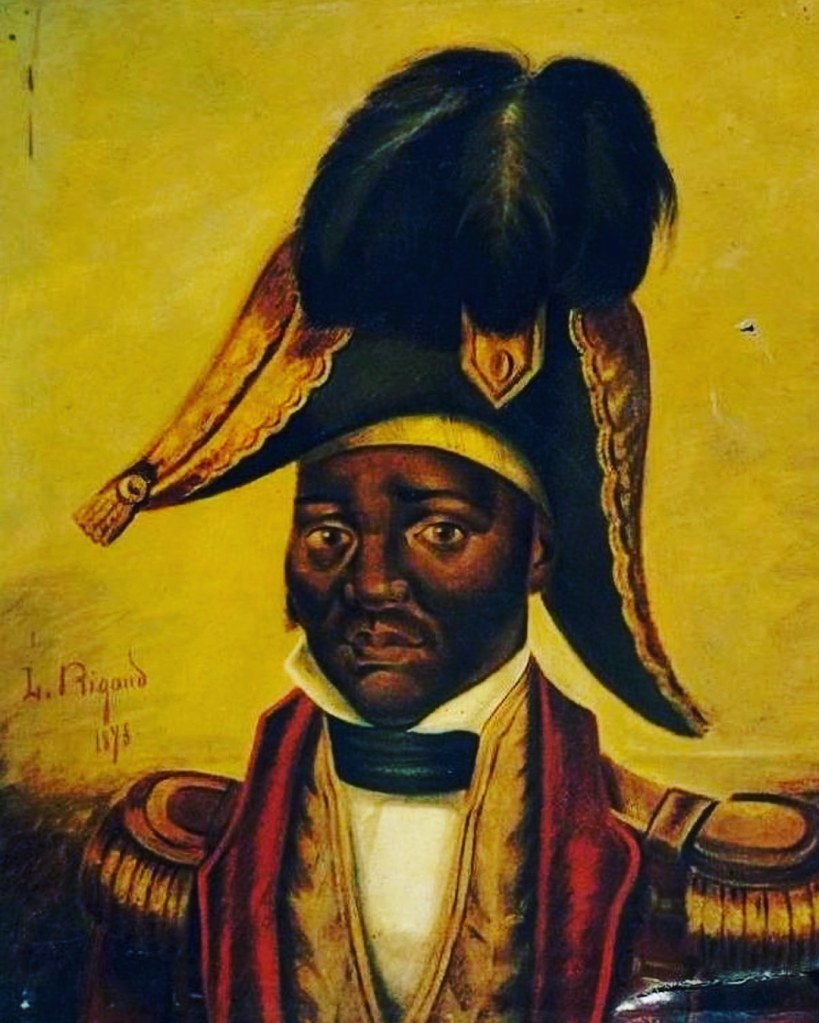


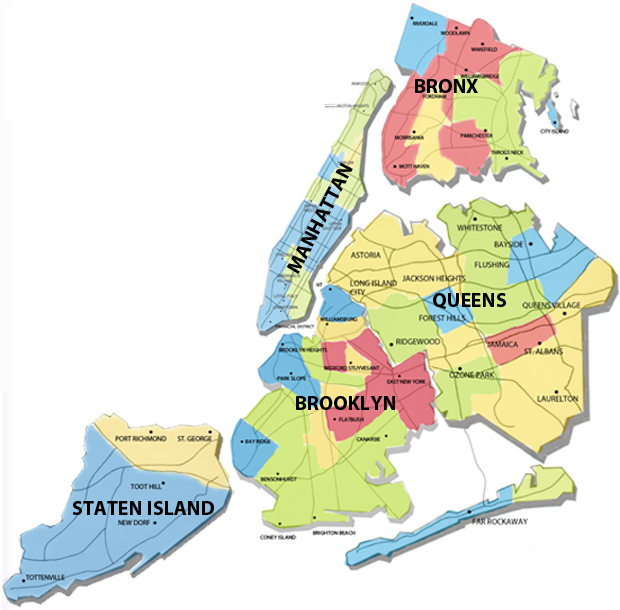




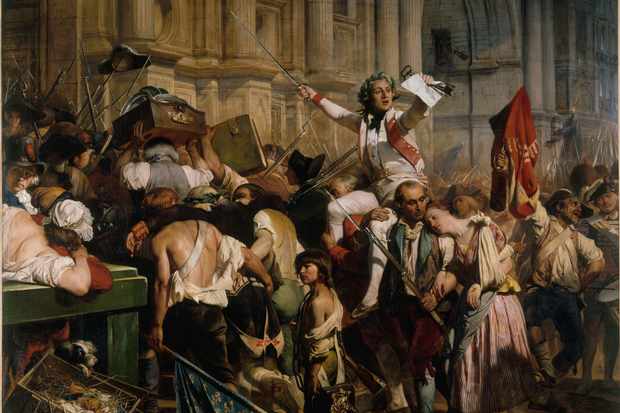


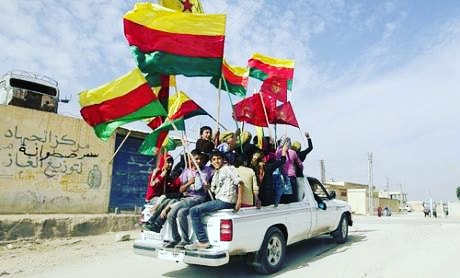

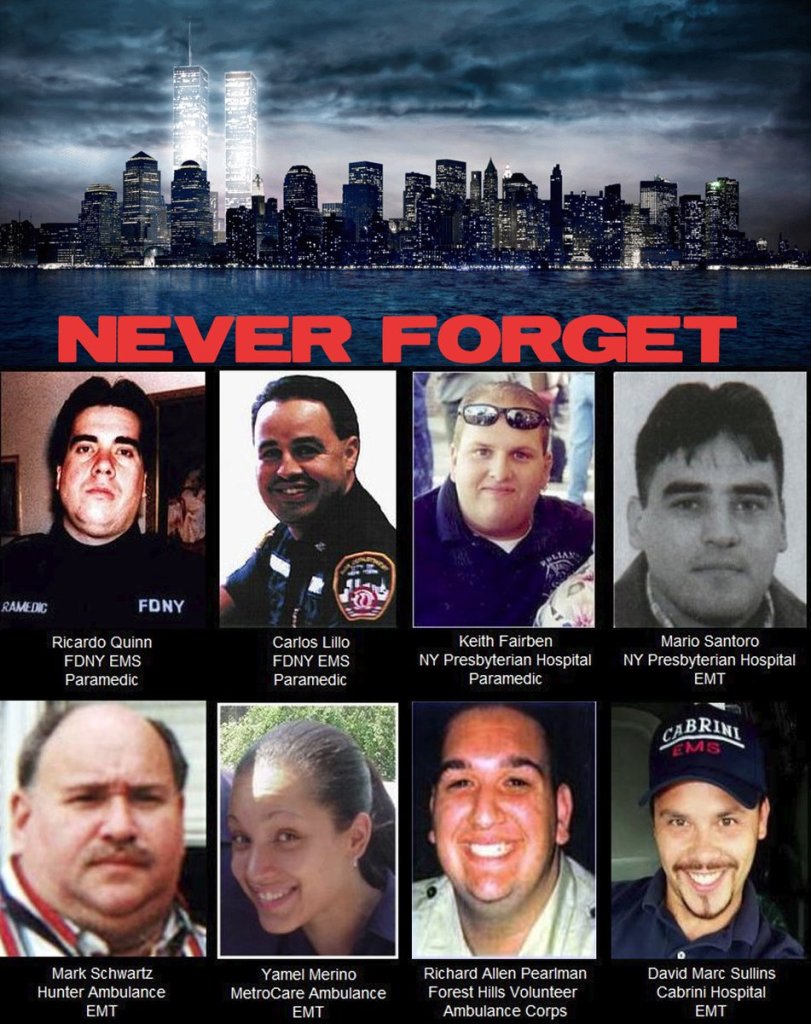
 WALTER SEBASTIAN ADLER