Single Payer Insurance Schemes as they apply to EMS
In the United States, money and profit are the driving forces behind all aspects of the healthcare system. There is a price tag on every item, every procedure and every level of medical intervention. Effective January 1st, 2021 a BLS Ambulance ride will cost $900 before millage and Oxygen. An ALS ride will cost $1,600. Although we think of ourselves as a real economic powerhouse, our medical system is ranked 27th on the planet. The Covid-19 Pandemic also exposed the full extent of the “two-Americas”; one with a set of marginal, broken public services for the poor and full speed, hyper modern and efficient services for those who pay.
Single-payer Healthcare is a type of universal healthcare in which the costs of essential healthcare for all residents are covered by a single public system through the tax base.Single-payer systems may contract for healthcare services from private organizations, as is the case in Canada, or may own and employ healthcare resources and personnel directly, as is the case in the United Kingdom. “Single-payer” describes the mechanism by which healthcare is paid for by a single public authority, not a private authority, nor a mix of both.
There are generally five primary methods of funding health care systems:
General taxation to the state, county or municipality.
Social health insurance.
Voluntary or private health insurance.
Out-of-pocket payments.
Donations to health charities/ Non-Governmental Organizations.
In most countries there is a mix of all five models. This varies across countries and over time within countries. Aside from financing mechanisms, an important question should always be how much to spend on healthcare. For the purposes of comparison, this is often expressed as the percentage of Gross Domestic Product spent on healthcare. In OECD ( Organisation for Economic Co-operation and Development ) countries for every extra $1000 spent on healthcare, life expectancy falls by 0.4 years.A similar correlation is seen from the analysis carried out each year by the Bloomberg Group. Life expectancy is only one measure of a health system’s performance, but there is direct causality found between investments in healthcare in relation to life expectancy and infant mortality rates.
In 2011, thehealthcare industryconsumed an average of 9.3 percent of the GDP or US$ 3,322 (PPP-adjusted) per capita across the 34 members of OECD countries. The U.S. (17.7%, or US$ PPP 8,508), the Netherlands (11.9%, 5,099), France (11.6%, 4,118), Germany (11.3%, 4,495), Canada (11.2%, 5669), and Switzerland (11%, 5,634) were the top spenders, however life expectancy in total population at birth was highest in Switzerland (82.8 years), Japan and Italy (82.7), Spain and Iceland (82.4), France (82.2) and Australia (82.0), while OECD’s average exceeds 80 years for the first time ever in 2011: 80.1 years, a gain of 10 years since 1970. The US (78.7 years) ranges only in place 27 among the 34 OECD member countries, but has the highest costs by far. All OECD countries have achieved universal (or almost universal) health coverage, except the US and Mexico. In the United States, where around 18% of GDP is spent on health care has been one of the least efficient among developed nations in distributing it.
The Nordic countries are sometimes considered to have single-payer health care services, as opposed to single-payer national health care insurance like Taiwan or Canada. This is a form of the ‘Beveridge Model‘ of health care systems that features public health providers in addition to public health insurance.
The term ‘Scandinavian model’ or ‘Nordic model’ of health care systems has a few common features: largely public providers, limited private health coverage, and regionally-run, devolved systems with limited involvement from the central government. Due to this third characteristic, they can also be argued to be single-payer only on a regional level, or to be multi-payer systems, as opposed to the nationally run health coverage found in Taiwan and South Korea.
Healthcare in the United Kingdom is a “devolved matter”, meaning that England, Scotland, Wales, and Northern Ireland all have their own system of private and publicly funded healthcare, generally referred to as the National Health Service (NHS). With largely public or government owned providers, this also fits into the ‘Beveridge Model’ of health care systems, sometimes considered to be single-payer, with relatively little private involvement compared to other universal systems. Each country’s having different policies and priorities has resulted in a variety of differences existing between the systems. That said, each country provides public healthcare to all UK permanent residents that is free at the point of use, being paid for from general taxation. In addition, each also has a private sector which is considerably smaller than its public equivalent, with provision of private healthcare acquired by means of private health insurance, funded as part of an employer funded healthcare scheme or paid directly by the customer.
In England, funding from general taxation is channeled through NHS England, which is responsible for commissioning mainly specialist services and primary care, and Clinical Commissioning Groups (CCGs), which manage 60% of the budget and are responsible for commissioning health services for their local populations.These commissioning bodies do not provide services themselves directly, but procure these from NHS Trusts and Foundation Trusts, as well as private, voluntary, and social enterprise sector providers.
Since 1935 there have been several attempts by U.S. politicians to implement some form of universal healthcare for the American people. President Franklin Delano Roosevelt planned to include federally sponsored health insurance to be part of the Social Security Act of 1935, but it was thrown out to speed the bill through Congress. President Lyndon Jonson tried to pass a similar universal healthcare bill in 1965, the power of the health insurance industry was so entrenched that he met too much resistance to get it passed. As this was happening in the U.S. The rest of the developed world was passing their own versions of Universal Healthcare. Mitt Romney while governor of Massachusetts and President Barack Obama both established a wide range of legislation to advance hybrid versions of single-payer/ private payer Health care.
Supporters of single-payer or Medicare for All note that minorities and the poor, as well as rural residents in general, are less able to afford private health insurance, and that those who can must pay high deductibles and copayments that threaten families with financial ruin.Advocates also argue that single-payer could benefit from a more fluid economy with increasing economic growth, aggregate demand, corporate profit, and quality of life.Others have estimated a long-term savings amounting to 40% of all national health expenditures due to the extended preventive health care, although estimates from the Congressional Budget Office and the New England Journal of Medicine have found that preventive care is more expensive due to increased utilization.
Any national system would be paid for in part through taxes replacing insurance premiums, but advocates also believe savings would be realized through preventive care and the elimination of insurance company overhead and hospital billing costs.A 2008 analysis of a single-payer bill by Physicians for a National Health Program estimated the immediate savings at $350 billion per year.The Commonwealth Fund believes that, if the United States adopted a universal health care system, the mortality rate would improve and the country would save approximately $570 billion a year.
Opponents argue that access to health care diminishes under single-payer systems, and that the overall quality of care suffers. Opponents also claim that single-payer systems cause shortages of general physicians and specialists and reduce access to medical technology. However, a wide international consensus is shareds that Healthcare is both a Human Right and a national priority. Obtaining Universal Healthcare for the member states in part of the United Nations sustainable development plan.
Universal healthcare (also called universal health coverage, universal coverage, or universal care) is a health care system in which all residents of a particular country or region are assured access to health care. It is generally organized around providing either all residents or only those who cannot afford on their own, with either health services or the means to acquire them, with the end goal of improving health outcomes.
Some universal healthcare systems are government-funded, while others are based on a requirement that all citizens purchase private health insurance. Universal healthcare can be determined by three critical dimensions: who is covered, what services are covered, and how much of the cost is covered. It is described by the World Health Organization as a situation where citizens can access health services without incurring financial hardship.The Director General of WHO describes universal health coverage as the “single most powerful concept that public health has to offer” since it unifies “services and delivers them in a comprehensive and integrated way”.One of the goals with universal healthcare is to create a system of protection which provides equality of opportunity for people to enjoy the highest possible level of health.As part of Sustainable Development Goals, United Nations member states have agreed to work toward worldwide universal health coverage by 2030.
Single-payer healthcare is a system in which the government, rather than private insurers, pays for all health care costs.Single-payer systems may contract for healthcare services from private organizations (as in Canada) or own and employ healthcare resources and personnel (as was the case in England before the introduction of the Health and Social Care Act). In some instances, such as Italy and Spain, both these realities may exist at the same time. “Single-payer” describes only the funding mechanism and refers to health care financed by a single public body from a single fund and does not specify the type of delivery or for whom doctors work. Although the fund holder is usually the state, some forms of single-payer use a mixed public-private system.
In Fax-Based Financing, individuals contribute to the provision of health services through various taxes. These are typically pooled across the whole population unless local governments raise and retain tax revenues. Some countries (notably the United Kingdom, Canada, Ireland, New Zealand, Italy, Spain, Brazil, Portugal, India and the Nordic countries) choose to fund public health care directly from taxation alone. Other countries with insurance-based systems effectively meet the cost of insuring those unable to insure themselves via social security arrangements funded from taxation, either by directly paying their medical bills or by paying for insurance premiums for those affected.
In a Social Health Insurance system, contributions from workers, the self-employed, enterprises and governments are pooled into single or multiple funds on a compulsory basis. This is based on risk pooling. The social health insurance model is also referred to as the Bismarck Model, after Chancellor Otto von Bismarck, who introduced the first universal health care system in Germany in the 19th century.The funds typically contract with a mix of public and private providers for the provision of a specified benefit package. Preventive and public health care may be provided by these funds or responsibility kept solely by the Ministry of Health. Within social health insurance, a number of functions may be executed by parastatal or non-governmental sickness funds, or in a few cases, by private health insurance companies. Social health insurance is used in a number of Western European countries and increasingly in Eastern Europe as well as in Israel and Japan.
In Private Health Insurance, premiums are paid directly from employers, associations, individuals and families to insurance companies, which pool risks across their membership base. Private insurance includes policies sold by commercial for-profit firms, non-profit companies and community health insurers. Generally, private insurance is voluntary in contrast to social insurance programs, which tend to be compulsory.In some countries with universal coverage, private insurance often excludes certain health conditions that are expensive and the state health care system can provide coverage. For example, in the United Kingdom, one of the largest private health care providers is BUPA, which has a long list of general exclusions even in its highest coverage policy, most of which are routinely provided by the National Health Service. In the United States, dialysis treatment for end stage renal failure is generally paid for by the government and not by the insurance industry. Those with privatized Medicare (Medicare Advantage) are the exception and must get their dialysis paid for through their insurance company. However, those with end-stage kidney failure generally cannot buy Medicare Advantage plans. In the Netherlands, which has regulated competition for its main insurance system (but is subject to a budget cap), insurers must cover a basic package for all enrollees, but may choose which additional services they offer in supplementary plans (which most people possess).
Community-based health Insurance is a particular form of private health insurance that has often emerged, if financial risk protection mechanisms have only a limited impact, is community-based health insurance. Individual members of a specific community pay to a collective health fund which they can draw from when they need medical care. Contributions are not risk-related and there is generally a high level of community involvement in the running of these plans.
Fast forward to today, the U.S. is now ranked 27th in healthcare behind Costa Rica, Canada and Colombia. New Zealand which has a full coverage tax payer healthcare being ranked number 1 according to Cigna Global. The body count in the Covid-19 Pandemic has so far gone above 290,000 deaths and the number is only growing.
So what does all this mean for EMTs and Paramedics? Well, there are some positive effects and some challenges we could expect. With a growing segment of the U.S. population uninsured and underinsured, we will see a more healthy population under universal healthcare. Instead of people going to the hospital when they’re absolutely dying because they didn’t want to go when they were a little bit sick, we will see more people going to doctors offices and clinics for preventative reasons or to treat their illnesses before they get out of hand. We will see less people going to the hospital instead of using the ER as their doctors office. We will see the continued rise and importance of Community Paramedicine as well as more “treat in place” protocols. Inability to pay for healthcare costs is the #1 cause of bankruptcy in the United States, according to a 2019 by the American journal of public health, and when these uninsured people finally go to the hospital, they’re very sick, They’re also unable to pay for their ambulance rides. This puts more pressure on the need for funding from private insurance companies, medicare and medicaid payment. If ambulance services were able to be fully paid for every ambulance trip, municipal budgets would experience much relief from the pressure to close deficits due to the mandate to offer care to everyone despite the patient’s insurance situation. There would be a balancing effect. Another structural aspect is the separation of our service based on who is paid by whom, which is to say FDNY Municipal being paid by tax revenue, Voluntary Hospital units paid by Hospital Groups and the Privates paid by commercial firms. With single payer we will all be absorbed into a singular EMS service. There will no longer be pressures to collect billing information as it will all be one unified insurance system.
Medicare and Medicaid are federal programs that get distributed to the states and then to the municipalities. Medicare is public healthcare for the elderly over 65 and the disabled, while Medicaid is health care for the poor. When asking how we would pay for a universal healthcare program, many Americans are not aware of the use of American modern Monetary Theory (MMT). Since the U.S. went off the gold standard in 1971, we have used what is called a “fiat currency”. That means that the dollar is not tied to any commodity to give it value except for taxation itself. When federal taxes are received by the federal government, they are immediately deleted and all federal spending is done with new money. So when we want to give billions in subsidies to foreign dictatorships who are also our allies, we use MMT. When we want to pay for a permanent state of war, we use MMT. When we want a system of single payer-universal healthcare, we’re asked, “How are we going to pay for it?” With new money! Just like we pay for everything else.
What we would ultimately see is a population that will become less chronically ill, diabetics who can receive insulin at no cost, cardiac and hypertension patients who can see specialists instead of going months or more without medication because they can’t afford it. We will see overweight people lose weight due to better overall preventative health. On our part, we might see an actual drop in call volume. France, which is usually in the top five countries in worldwide healthcare requires a copay for all ambulance rides. Since implementing this co-pay, they’ve seen a steep drop in abuse of the Emergency Medical System. The burden on towns and cities would be relieved greatly due to no more treatment of uninsured patients and the end of bankruptcy due to unavoidable illnesses.
Medicare in the United States is a public healthcare system, but is restricted to persons over the age of 65, people under 65 who have specific disabilities, and anyone with end-stage renal disease.A number of proposals have been made for a universal single-payer healthcare system in the United States, among them the United States National Health Care Act (popularly known as H.R. 676 or “Medicare for All”) originally introduced in the House in February 2003 and repeatedly since.On July 18, 2018, it was announced that over 60 House Democrats would be forming a Medicare for All Caucus.
Advocates argue that preventive healthcare expenditures can save several hundreds of billions of dollars per year because publicly funded universal health care would benefit employers and consumers, that employers would benefit from a bigger pool of potential customers and that employers would likely pay less, would be spared administrative costs, and inequities between employers would be reduced. Prohibitively high cost is the primary reason Americans give for problems accessing health care.At over 27 million, the number of people without health insurance coverage in the United States is one of the primary concerns raised by advocates of health care reform. Lack of health insurance is associated with increased mortality – about sixty thousand preventable deaths per year, depending on the study. Harvard Medical School conducted a study with Cambridge Health Alliance showed that nearly 45,000 annual deaths are associated with a lack of patient health insurance. The study also found that uninsured, working Americans have a risk of death about 40% higher compared to privately insured working Americans.
It is almost criminal the situation we are in today where a global pandemic has exposed that in our nation there are vastly different results for the rich and poor in health and social well being. In true matters of access to care and the results being life and death. Rebuilding our nation and healing the wounds inflicted by our outgoing President Trump should begin by the reconstruction of our healthcare system and the endorsement of every American for the concept of health equality and Medicare for All.
I interrogated you with Newport cigarettes pursed at my lips.
And you sized me up like a slave on the market block.
Emergently my covered wagon has been jettisoned and set ablaze by a blonde haired savage,
a mercenary in clad multicolored finery with war paint under both blue eyes.
Brandishing a spear and also a bottle of Russian Standard.
She’s since infused my life with her Red Bull risings and cynical parables on the subject of snow ball fighting with General Winter.
“Drink!” she whispers out her demands.
“Until in naked oblivion you can pronounce my name in full glory!
Take in all its parts and thus know my demons and also my saints.
Extoll me as your eternal choicest muse. Make me your goddess and savior, secretly.”
And thus I went to work.
My pen and pipes, belting out prose, parable and promises to fight for her to the death.
And she beat me half to tears with the venyike.
In a wild Peony Ambush,
She put herself upon me,
Robbed me bandit blind.
Of my heart, and second soul as I made art to celebrate the coming of she into me.
Penniless as a proverb!
I marshaled all remaining vagabond tendencies into the rigorous use of my baller ball point pen.
“Woman, you are a golden locked lioness. Boxing with me, you strike incite and nerves unnerving furious fascination.”
Womb to tomb!
You Caspian blue terrorist!
Thing of profoundest beauty.
Drag me down the Brighton Boardwalk and set me as an effigy of hopeless romanticism on the sand of Sea Gate!
Sky high on fire.
Take me to pyre.
When our correspondence first began in September it was like a report on a Cherokee Indian massacre.
Communicated via the passing of notes.
We conducted then a lively human traffic in roses and poems and also in promises.
A triangle trade.
You dripped wax on me shortly after.
I wrote you a play.
“I will try to believe any stories I tell you and you will make me immortal!”
In words and in dreams.
“Pull!”
I produced on demand and she shot each product down.
Exploding clay pigeons with poems tied to paw,
And smoke signals playing out on the prairie skies, steppes and later the chalk marks made on the promenade off Banner Ave were the guarded displays of my awe.
“More fire!”
She proclaimed, by not proclaiming.
You tied me to a post and blind folded me so that in a mirror I’d not see my manly limitations, my grinning devils leering.
I, the artist would then yell, “fire!”
And poems would be fired off, absconding into night with you as their target, their words would roll out the barrel of my wit without even seeking to dress themselves in the fine garments of rhyme.
“The essential quality of a muse is that she will be perfect.”
While at the same time being deeply flawed.
At times she will desire to taste you and be fueled on your fluids, intoxicating herself on your writhing talents taking the form of depiction and futurist words.
She is thrilled to test my will,
Taking me into the shadows of some late night,
Smoke inundated, poorly lit alleyway.
Kissing me to tears under gas lit wind swept boulevards.
At other times, she teases out my rough savant best by ignoring me completely.
Make me create in some wilderness cave like a mad Hebrew prophet,
In some Warsaw ghetto tenements, creating “brave new worlds”,
Burn apart in the steams of the bath house,
Old dead tragic pasts until the proper 13th hour when she calculates just when I will be ready to perform.
Then dripping I emerge!
The greatest show; the highest form of art is after all the private performance you give her,
While these are not immortal, their audience of one is the source, the very foundation and subject of all the war effort!
The muse is not there to please you!
She is there to drag you uphill, in an assault on the profane glory of false gods and the smallness of men who plot in listless towers!
Oh yes. Only an artist can challenge the gods and the shackles of mortality they put upon us.
The essential quality of the artist is that he, or she, will possess some skill and some embattled implements that when rendering her muse perfections, and converting her human flaws into deeply troubling, yet inspiring cautionary apropos that;
This bipole, this anomaly of the creative process will then allow the artist the widest canvas to cast her into the form of goddess, a celestial being, a savior, a seductress, or an angel.
The artist regardless of his weaponry will be fighting his way up Bunker Hill.
When he gets there he will declare:
“Love me until your love overwhelms the white gates of heaven. Ravish me blind until I only see myself in the blue ocean of your eyes!”
Her greatest strength as a subject is her ability to assume the form of desire but also to unleash a savage and indiscriminate rejection of the artist unless each piece produced is an improvement on her immortalization.
For were the muse to be a submissive Siberian doll, an inanimate beauty, well that is just an act of painterly masturbation.
Useless to me.
Please excuse for,
“My Muse Makes Art a Contact Sport!”
And in the steam of the banya I assume the form of Krepki Mushik,
Strong men making fearless art.
She’s a most capable gypsy partisan.
A hooligan seductress.
A wild eyed savage, she holds herself up as a virtuous courtesan, lady at heart, source of great and the granddaughter of “a Jewish Baroness”.
Under her folds I do utter,
When the steams clear and no one occupies the coffin ship but we:
“I’ll lick your tits and drink Borjomi.”
And then compose a body of American poems that will put all previous to shame.
This cab is now a magic carpet for a story cabaret.
Using-a-punchdrunk-kitten in the back seat of a Breuklyn-southbound-gypsy as my muse. One doesn’t choose,
_the muse they use. Or when.
There were worse assignments.
Given to more cowardly men!
And my constitution is and always will be_a wide canvas for futurist painting_
My-heart-when-fainting_
Is grinding, then breaking it_causes Brighton to flood and post Haitian earthshaking:
My soul is for barter_sign the dotted line,
I’m a phantasm now-shaking collapsing-and up for the tainting.
Exsanguination! Being bled dry!
There’s blood in my eye,
A mind game, that’s fine, but the mind can unravel before the right time, and the things it envisions; the things you complete; like a thousand lifetimes emptying out of your whispers_
_Like two shots in the dark_unloading my heart on the cold of the street!
Vasa, she whispers:
“Why so sad all the time?_Tell me a story with Camels and Bandits and rhyme!- and keys strung to kites_ mix your biwinning antics and Arabian nights! Make more epic poems! Can-we-not-agree_the audience cannot swallow_ an endless account, as you wallow in all of your feelings for me.”
Starry night burns bright, I begin again:
I have the will!
In a previous life she believed mostly in kill-or-be-killed.
She comes from place_ So brutal, so base, frustrated, consumed by the men in her face,
The following ointments, which vodka let boil to a brine of pure hate_ juxaposed with the partisan flame of my zeal,
I’ve been reborn in a futurist gate.
_And invested with powers to steal or to heal!
Absorb all of your pain_ and restore your ideals! And you will open my chest with your fingers: And start spinning the wheels_
It’s Russian Roulette, the way that she feels!
Magic carpets to carry us so far from this place where we are_Highspeed races and chases_
_ Drive bys taking place without use of a car!
Her kiss is the bullet of deady surrender.
The sweetness of service she’s willing to render_greatest by far:
To enroute replace my pumping mechanism, without medical training_without even leaving the hint-of-a-scar!
A pipe dream_a pipe bomb_ a zen.
Near endless composition, the art of story telling unleashed from my phone or my pen_
In base thirst for a woman I’ve known in other lives.
And desire to keep knowing forever_
_If forever could just be again, and again.
I am trained to fix a broken heart, my own excluded.
For the heart is a time bomb_ your emotions are fire ball bearings_
_Your wiring is now made faulty,
your rational mind is at times misguided-deluded…
“Vasili, please, I’m lying here counting on your story to ease, I want erotic adventure, daring or fun, no more talk of feelings or the latest bombastic-head-fuck-with-a-gun, I like alegory, the-cave-with-the-thieves? What’s the name of that story?! No more tales of the mechanical heart, right before bed,”
“I’ll tell you my dreams about star crossed Chechen peasants instead”.
II.
How can I, live so many lives; But be without you so many nights?
Cold sweats. And the ache of seperation, imprisonment and then exile:
Broken bottles or spears or my pen’s wronging rights,
Sweat itself often passes as tears.
While Writing my politics off as mere hooligan fist fights?
I didn’t mean to trouble you with me, But we seem unable to end it quickly,
Or end me quietly.
I have been hunted like a partisan and I found refuge in your secret kisses.
Now we are partisans together I suppose, but you warned me you prefer the cities to the forests. The Peoni to the Rose.
What about Peoni verses Prose?
I prefer bath houses to General Winter_and the wearing of my solitude below four layers of my clothes.
So how now?
Where will we find shelter?
We’ve run helter-skelter on the glass-bottle-broken-beaches or that Bulgar tavern where we hide.
They have done so many things to me,
Until now I cannot recognize my own face.
I listen it seems, but prefer to confide.
But it is just the face of a man claiming love!
Cupids arrows mutilate.
The barrage burns apart my barricades like katusha rockets, raining from above.
Don’t fail me fearless heart,
Ill get back to you!
From Shali, the mountains, Brighton or Grozny too!
With black eyes, black ties, last tries; this is no mere seduction, or simple desire:
It’s a visceral longing to woe.
Putin has declared war! But foolishly I long for just peace on this front line fight_
_A lull in the violence allowing me to steal my way back to you_guided by moon and my tragic-parachute-knockaround-daggerman-incite.
The barricade-we-made was cobbled together with useless albiet pretty word;
Damn all my gradiose promises,
The misuse and abuse of fables and myth that confuse what I see with that which you claim that you heard.
I am almost quite old.
In old soul time.
I bought what you sold. Dash my face against Dagestan’s rocks, break all my bones if in this life I am more coward_more villain than hero and bold…
“Silly Vasa,” she giggles, pulling her supple body supine even closer to closeness of mine, “Your passions on fire when you press your fingers to prose,_I’m drawing a line_ press your fingers to hold, I want Ambulance Action Peoni ambush_No thorns of the Rose, and my grand design for the story this time is to hear about the dark in your soul, the black rabbit hole where your ambulance goes!”
III.
A Poet paramedic: warm body, heart now made stone cold. I have the will, I carried bodies in piles through Bed Stuy,
Up moutains_we always will battle the Reaper uphill.
I never cried then, I did not even wince,
Every night I’m not dreaming of loving your company, kissing your lips_I’m flashing right back_senses under attack: to life tremmors we trembled_in the City of Port-au-Prince!
We carried legions off to what passed as hospitals.
I’ve had to watch ten thousand die, now all I want is to carry you away from the coast of Brooklyn, magic carpet fly.
Fly in the face of your husband, your secrets;
The dance I do with my stories, in trains or in cabs, returning with you
To the place that you lie.
But I dance again from time to time.You bring it out of me.
“Why cry old soul?” She whispers.
“I saw things I wasn’t meant to see.”
“Women like me?”
“You’re a dangerous creature we both can agree.”
She gives me fourth and fifth tries, the body dies, but the song of the heart is timeless, therefore free.
IV.
Because when you are gone there are only words. Words make the basis of poems_ forming a plee from the deepest depths of my heart’s agony.
When each parting seems so long my mind invents monsters which lurk which are not even there!
In a silky, billowing dress_ I’d hide under your covers, I’d caress the folds of your being, run fingers through darkness through the locks of your hair.
“Until I’m safe too?”
“Like my fallen angel with her wings on gold fire; Dorogaia I need you.”
I pace the Brighton Boardwalk so long that all these lives mesh together ’til the story seems too wild, too Noire to be true;
“Turn this cab toward the seaboard, turn Idlewild, let’s run away, before we break day_”
“You haven’t a clue! Mad man! A poorly laid plan!”
Begging for some proof of goodness of his kind.
“The validity of his mind!”
A million cold stones acquired over long tenuous adventures, but regrets are for traitors on rewind.
Battles and then conflicting accounts of my enemies treacheries abound.
An escape plan is successful only when the underlying logic is found!
The logic is half based on a whisper, and half on a dream.
Their scissor hands dripping from love of the kill. Demons enter the portal with intention to scheme. To make you a mark, turn me to a skell or a shill.
They separated me from my humanity, loving you is against my rational will.
She’s half in the old world,
and half in the new,
half iron curtain, half crystal glass shoe.
The cab nears the Verazono precipice, the Brighton abyss where we will be seperated anew.
Tell me Odysseus: What mean me to you?
Was that voyage anything but unjust for all involved?
Once I had a white motor cycle, I was a fugitive slave, I was evolved. I killed the master and stormed the plantation and then half of the problem was solved!
And on it you waited to escape north toward the blue moon.
“Sooner than soon? Did your love for me grow after the rooftop fist fight in the light of my murderous swoon?”
“Dorogaia that’s right.”
“I don’t want such a life; a life of no humor, a life or death struggle, the terror of night.”
“Stories for night, are about all of the wrongs swept away by the dawn and the light. I require one muse only. One significant. One longing. Never again in the trenches so vast, so empty and so lonely.”
“The story of us? Us is a wild tragic roundabout fuss!”
“Is_to_be_a_tale_of_triumph. Over the hopeless heart via the art of romantic prolonging!”
“Righting or wronging?”
“I sought out your company.”
“Do it again.”
“I do it still out of the longing.”
I have a voice and I have a loud pen.
And I have passion and it overflows my body until I see miracles in the streets.
The strength of forty men!
And the moon winks.
Then on Banner Ave. the story completes.
And then again, the world’s smallest violin plays just for us, she thinks.
Why does such a long shadow fall over his house every time he drinks?
We are not star crossed.
We are not divided by a sea.
Or by barricades. Maybe we’re just in defiance of destiny.
Or the flaming up of the ghettos in the latest Caucasian raids.
When I looked to the sky I saw three ships sailing us apart.
You off to marriage and the world of the continent.
Me, bound forever to the belly of the ship enslaved only to my own fearless heart.
And as they sailed us apart, to never meet again,
Some sailors sang out, “The Nina, the Pinta, and the Santa Maria!”
“To the glory of the new world!” they toasted.
Vain Braggarts and white men.
But I begged the moon:
“Dasha, Dasha, Dasha! Why can’t you love a wild peasant like me?”
What fate was this where we have to part our story time in endless tragedy?
Death itself could not stop this kind of beating in my chest.
If am reborn another thousand lives,
Each time waking from a long kiss good night,
Each life I will call out to you again as my test.
The body will die, but its sleep is the cousin of rest.
So, tied again to the mast.
Shackled and blinded I swagger on hopeless, fearless heart.
In dreams, don’t forget me.
This was begged long ago.
I will steal away and climb to the roof of Mt. Olympus if I must to give the gods a show.
I’ll ask for the help of the spirits if God has no time for us artisans.
Wild peasant partisans, from good families with magic carpets and reckless biwinning minds. The heart yearns, the back breaks, the soul is on fire, the real man, he grinds.
Black until blue.
Carrying me, one day, with wings home to you.
And if you read my verses see if I still appear a slave.
And we can say we knew each other when I was a free man and you were a free woman. I’ve traded my weapons of war for the power to save.
There is only one chain I cannot learn easily how to break.
And that, is the one I first broke to be by your side. By your side, give or take.
I long for you.
It will always be that way. It has been that way since Labor Day.
But then, story time is easy for an old soul with a pen.
“You’re not like other men!”
“Hopeless, Fearless Heart, how long apart must I wait to stay gone?”
The blame, the blunder, a hand in the blender. You stand still, but I stand last.
I try. Toothless, seven ways drugged,
And I do dream of you.
But I cannot be unfollowed, cannot be debugged.
That is because torments weigh on me and keep me from visions of happier times.
Self-hate overwhelms. I long for death, black death is a lullaby, banged out in rythmes.
You learn to hate your best in a cell. Too much time to spend on the past,
The future is just a glimmer through a keyhole. The plexiglass rattle, I know it too well.
I whisper your name.
To the rats and roaches that are my only witnesses. I extol your virtues to a homeless Lune who sought solace in a delayed suicide.
Tried it twice and will try again upon his release.
The aim is the same as the evil that grins on the inside.
Your name has more fulfillment, than the meager rations or the stake recycled air.
Dasha Andreavna!
I say it aloud and it is like the hurricane outside is a product of our passions, a fitting cap stone to our separation, your hands on my heart, cry out from the fuck, the pull of the hair.
It bears down on the city, beware!
And could render my captivity and chemical manacles, tear the whole goddamn place apart. You looked into me, I looked into madness. The fall fell on me, nothing is fair.
I fade in and out. That, then this.
I try and count the meager learing kisses.
I’ve received from you in just the first five weeks of a courtship.
They took me just three weeks from our very first kiss, the flail of a dying animal akin to the sink of a Titanic sized flip. A capsize, at best.
If each kiss was a bullet or hand grenade used against our faceless oppressors.
I’m sure I’d be here longer.
Is this punishment, or just a test?
I am drunk still on those kisses.
Drunk on the past.
Intoxication is no good substitute for really feeling.
I desire you still. I desire you first and desire you last,
All about you! Every fake smile, every stolen moment we ever have left.
Free me from this place Dasha!
I cannot be a whole, without you, there will be theft.
Right now, without you holding me upright last night, or in a fort night.
I love you limitlessly.
I wish that I could open myself like a Siberian doll.
Open each part until understanding becomes possible, or at least there might lie hidden a jewel to steal. Something to get us through the awol.
But I fear, each layer comes with more questions and there is no jewel, only madness and a blood diamond.
Shines with a price. All men undone, all.
Unbreakable but such toughness has heightened emotional cost.
Dasha Andreavna!
I am neither a phantasm or a ghoul, or mad man lost!
Not a demon or an angel either, nor some hybrid like you! I have purpose to spare, I have hope, I have ever been broken, ever been tossed!
We are unique specimens. And the world has punished me for my loudness and perhaps rewarded you for your beauty only to punish you in other ways.
A lot of worth we are, with a lot of trouble. We shall get worse in the coming days.
I hope my poems survive me.
I hope you are wrong every night you say “it is our last night”.
You’ve been wrong a very good number of times before. You kill me, you go and revive we.
Mostly only about that last part.
My art, is thriving under your casual supervision. I hope my life these days is a testament to your glory and not self-glory. Things fuck around, things fall apart.
I cherish you;
I am a slave to what we might be.
Not what are we.
I would do many tragic things to prove myself a hero.
Again, and again. The counter clicks down to explosion, in increments of one, one zero,
I do not have to prove I am brave;
only brave enough, well enough to fully love. To fully behave in the pursuit of a meaningful save.
Love early, love often, and love with complexity building to completion. “Maybe even fun?”
And then you will forget your slavery and your grinding imprisonment.
From out of this cell I’ll grab your hand, and we will get gone, we will run.
Spend my last days keeping you happy,
As though flowers sprout from the barrel of a gun.
Blast the damn heat, for my brow drips. For in New York it gets so hot in the late of August, a swelter box, most people of any means flee to their dachas in Strong Island.
Dawn is now rising, breaking and expanding on the low roof of an ancient print house that’s been—at some time in the past hundred years— converted to a seventeen story cooperative. 140 Nassau Street, District Financial. On the 17th story roof deck, Sebastian Vasyli Adon, our antagonistic protagonist, tells old danger tales over a bottle of illegally imported Basque white wine. A fake gold watch dangles off his wrist as he enunciated his wild tale with his hands, even though it is known that he is only one half a Yid. Covering his dark brown hair, cut short for Summer, is a…
A great power cannot rely purely on unilateralism. The world is too vast and the conflicts are too many. If the U.S. indeed stands behind principles like democratization and global stability it must cultivate a broader alliance of allies. It must be willing to act in meaningful partnership as well as seek to empower underdeveloped countries to reduce socio-economic conditions leading to poverty and unrest. The difficulty lies in combining our values with our national interest. The U.S. must demonstrate that its values are aligned with its foreign policy. It must sacrifice pure hegemony to achieve a just and stable global community. Says Brzezinski:
The alternative approach to defining America’s central strategic challenge is to focus more broadly on global turmoil in its regional and social manifestations in order to lead an enduring and enlarging alliance of like minded democracies in a comprehensive campaign against the conditions that promote that turmoil (Brzezinski, p.216)
The main problem behind much of the unrest that fueled both the Cold War and now directly factors into the current crisis of radical Islam is not in the adversarial ideologies that cloak these conflicts. Communism and Islam are appealing to the wretched of the earth; both offer visionary (and consequently violent) solutions of how to ease third world suffering. As the rift between developed and underdeveloped nations increases and a greater disparity of wealth focuses third world domestic anger towards an opulent U.S.; these conflicts of inequality will continue. The Neo-Reaganite call offered by Kristol and Kagan is flawed in tactics and motive.
What should that role be? Benevolent global hegemony. Having defeated the “Evil Empire”, the United States enjoys strategic and ideological predominance. The first objective of U.S. Foreign policy should be to preserve and enhance that predominance by strengthening America’s security, supporting its friends, advancing its interests, and standing up for its principles around the world (Kristol & Kagan, p.279).
The underlying flaw is that a benevolent global hegemony narrowly focused on national interest and achieved by an expanded military does not deal with the root of the problem. The three imperatives offered by Kristol and Kagan focus on a beefed up armed forces, supported by a jingoistic citizenry, operating with a new found sense of moral clarity. As the Cold War demonstrated, the U.S. is often willing to forgo moral clarity for ideological superiority. But that then said, this writer is not saying the U.S. should pull back from the global arena. However, the U.S. needs to tackle the issue of global inequality via programs of direct aid and genuine developmental support. Democracies are made sound with books and well fed population, not armed interventions. We will in the long run find ourselves with less of a need for defense if more of our potential enemies are won over not by struggle but with actualization of U.S. values.
Multilateralism must be the watchword of future U.S. foreign policy. This means participation in the International Criminal Court, it means a U.N. with expanded policing powers, and it means subjecting the U.S. to increased restraint. If the objective remains a democratic and economically equalized world the U.S. must refuse all alliances with countries that do not embrace these values. It can extend aid and lead by example. It can be punished with sanctions and as a last resort engage in intervention, but it cannot compromise the democratic vision as it did during the Cold War to achieve immediate political results. With that in mind the U.S. must firmly cement our allies in Europe and Asia through existing political and economic structures. In Moravsik’s article he addresses the necessity of partnership with Europe. While Europe he feels will never again be a true hegemonic military power, they are an essential ally in terms of their economic stability and political ideology.
A better approach to rebuilding the transatlantic relationship would aim at reconceiving it on the basis of comparative advantage, recognizing that what both parties do is essential and complementary. Europe may possess weaker military forces than does the United States, but on almost every other dimension of global influence it is stronger. Meshing the two sets of capabilities would be the surest path to long term global peace and security (Moravcsik, p.316).
With the aid of our democratic allies the U.S. must cement an alliance of development and democratization for the rest of the world. It must act in unison to underscore a commitment to global political participation and use the soft power as advocated by Nye to influence and not coerce third world masses to embrace our global perspective.
The global war on terror lacks vision as well as a clear cut set of objectives. This is not to say the U.S. should abandon its efforts to prevent WMD proliferation and pursue enemies dedicated to its destruction. Tying into earlier arguments however the while the tactic of terrorism can never be eradicated nor suppressed; the motivations of the terrorists rooted in global poverty can be addressed. It is far more difficult to portray the U.S. as the “Great Satan” when we dedicate our global influence to enrichment, security, and peace. In pursuing our security against extremist elements of radical Islam we must not cultivate alliances with dictatorial regimes that serve as a catalyst for terrorist recruiting and anger. In settling for short term allies of convenience, we make strange and dictatorial bedfellow that undermine the very nature of our struggle against terrorism.
In dealing with Rogue states like Iran and North Korea we must remember that despite the belligerent and authoritarian nature of their regimes there remain vast segments of the population in both countries that seek democracy and inclusion on the global community. While these two countries pose an increased threat with each seeking to develop nuclear weapons, there are many brutal dictatorships across the globe without weapons that should be targets of regime change. Our strategy must be more subtle than the neoconservative belief in hegemony via force. As our disastrous campaigns in Vietnam and Iraq have demonstrated; democracy doesn’t come from the barrel of a gun. If regimes threaten their neighbors and persist with the development of WMD we must take action. But our response needs to be the elimination of immediate threat and not prolonged occupations. Yet, these regimes are not operating in a vacuum; the main reason for their procurement of WMD is to prevent a U.S. invasion. With enough time their regimes will atrophy and a constant bombardment of U.S. aid and ideas will see this through in far more orderly fashion then conventional warfare.
In all this we must commit to a strategy of global security. We must develop a multinational peace keeping and rapid intervention force via the U.N. to pacify regional violence and prevent genocide. As was demonstrated in the piece by Steinberg, humanitarian intervention is a vital role to be played by a hegemonic power. By allowing the Rwandan genocide the U.S. failed to live up to its proclaimed values. With a similar conflict escalating in Sudan, the U.S. must not hesitate to stop mass killings and look beyond mere geo-strategic importance.
The central idea of this new foreign policy approach is to make America a showcase for what the world ought to be. We must sell the American people the idea that national boundaries do not separate our common link of being human. It is possible for the U.S. to facilitate a vision of globalization that brings together mankind and raises the bar on living standards globally. We have “talked a talk on democracy” for half a century and it is now time to live up to the great expectations our country once presented to the world. This is radically more important with the rise of the People’s Republic of China and the BRIC economic alliance between Brazil, Russian, India, China and South Africa positioning themselves for a world that is neither Eurocentric, or Democratic.
China’s Rising Multipolarity
It is vitally important that we shed the Cold War mentality. We cannot look at the U.S. national interest through the prism of an ideologically bound bi-polar world. That is to say geopolitics will not be driven on an ideological alignment (of say West versus the Rest) and that an emerging power like China need not be viewed as the paramount threat. The threat China poses and the conflict that will arise between the two powers is sophisticated and is not based on a Chinese demand to replace the U.S. as the single global hegemon. China welds a different kind of power and the strategic realignment of the foreseeable future is not a China vs. U.S. paradigm, but a global multipolarity.
East Asia is not yet hegemonically Sino-Centric, but it is now a place where Chinese interests and influence cannot be disregarded. This is because the new Chinese foreign policy is to tie the region together in a growing web of economic codependences. The United States is still the global center (that is to say its comprehensive national power is incontestably the greatest), but the multipolar vision expounded by China’s leaders will lead to drastic realignment of global power in the immediate future. The concept of regional power must be altered to account for China functioning within a greatly expanded region that stretches from Central, South, and Southeast Asia to the Middle East and beyond. It must be accepted that China is flexing its muscle as a power in ways outside the traditional U.S. paradigm of international relations.
China’s willingness, even eagerness, to improve the Sino-American represents a tactical gesture rather than a strategic one. Beijing has tempered its confrontational rhetoric and retreated from some of the actions that most annoyed Washington. China’s deference reflects its continued interest in the burgeoning trade and technology transfer relationship with the United States and its hope of quelling anti-Chinese sentiment in Congress and with the America public (Bernstein, p.3)
According to David Lampton there are four factors that affect the rise of Chinese Power. The first is the Chinese need to cooperate with others to constrain Washington and reshape the international order. This is the Chinese concept multipolarity directly manifesting itself through greater participation in ASEAN and military alliances like the Shanghai Cooperative Organization. Second, is China’s impressive and sustained economic success giving China options and tools it never had before. That is to say for the first time in 200 years China enjoys the material strength it needs to develop itself into a potentially hegemonic power. Third, is China’s ability to shape the new economic order of Asia by becoming a major purchaser of its neighbor’s products and growing investor in their economies. Fourth, China’s changed leadership is focused on an activist foreign policy with strict emphasis on domestic economic development.
Deng Xiaoping left the CCP with the lasting maxim on Chinese foreign policy: avoid confrontation, bide time, and work to take advantage of developing international opportunities in order to build Chinese “comprehensive national power” and secure a more advantageous world leadership in the long term. This is the maxim that the current generation lead by Hu Jintao seeks to embrace. America on the other hand under the Bush Administration has acted with rash unilateralism.
The United States is trying to preserve its status as the world’s sole superpower, and will not allow any country the chance to pose a challenge to it. The US will maintain its global strategy based in Europe and Asia, and the focus will be on containing Russia and China and controlling Europe and Japan. The core of American policy toward China is still to “engage and contain” Some conservative forces in the US are sticking stubbornly to their Cold War thinking, stressing that the rise of China must harm American interests (Nathan, p.236).
According to Sutter the Bush Administration has done a better job than any previous U.S. Administration in applying incentives and disincentives from a position of overall strength to persuade China to pursue “cooperative and moderate” foreign policy toward the U.S. its allies and associates. At the same time the Bush Administration has aggravated nearly every foreign policy issue of concern to China. It has continued support for Taiwan and expanded military aid, advanced the construction of missile defenses, enhanced security commitments to Japan, the expansion of NATO, continued sanctions on Chinese weapons proliferation, and the invasion and occupation of Iraq. China has severely curtailed its calls for multipolarity while strategically pursuing it as a reality. The U.S. moves to constrain a rising China are too numerous for the country’s leadership to ignore and the long term vision has not been abandoned.
There are three kinds of power illustrated by Lampton; coercive, normative, and remunerative. China is gaining power in all three although the emphasis is largely on its remunerative power exercised as an economic powerhouse. China is gaining power by rapidly purchasing what other countries throughout Asia have to sell and the PRC has become a key part in the global supply chain producing goods destined for North America, Japan, and Europe.
China stands a good chance at becoming, quite literally, the global factory- the world’s main exporter of finished manufactured products. In that respect, China is already putting out of business some traditional industrial sectors in the highly developed economies-including America’s- and even in such economically developing rivals as India. Chinese firms are beginning to buy out some bankrupt Japanese firms in Southeast Asia. The Chinese sense that over the next two decades or so, the cumulative effect of this trend could make China the dominant trade power as well as political leader of Asia (Brzezinski, p.119)
Bi-Lateral investments between the U.S. and China make war unlikely and tie Asia in metastable relationship via the PRC. Brzezinski’s theory of Asia’s metastability is linked via Japan-China-U.S. relations. Comparing Asia to pre-World War One Europe Brzezinski states that numerous regional flashpoints could catalyze a regional breakdown of the existing order. Because virtually every Asian economic power via ASEAN is linked to the continued well being of the PRC economy; confrontations between those three powers must be avoided.
While historical animosity between Japan and China coupled with the U.S. support for the security of Japan foreshadow potential strife given rising nationalist identities in PRC and Japan. Shared economic interaction and investment should prevent a downward spiral of relations.The Chinese strategy of building its comprehensive national power and emerging as a regional hegemon in a multipolar world will lead to increased care in avoiding military confrontation with the U.S. There are however two critical flashpoints where this may lead to metastablic degeneration.
In Taiwan a provocative micro nationalism might induce a U.S./China clash were the island to declare independence and a militarily unleashed North Korea would cause nothing by regional disorder. U.S. intervention and tighter sanctions on the newly nuclear power will escalate confrontation.
In the short run, economically the U.S. and China have too much too lose to risk a confrontation. While China will increase its military capabilities exponentially it is universally accepted that it will be quite some time before coercive power projection is a conceivable threat to regional powers or the U.S. In the short term China will tone down calls for multipolariity to pursue it in the realm of remunerative power. Global discontent with U.S. unilateralism and the prosecution of the War on Terror will make the soft power of China’s multipolarity look attractive to many powers alienated by the U.S.
The United States and China will soon be, if they are not already, the two most important countries in the world. Sober-minded management of their critical and evolving relationship in the coming decades will be the ultimate challenge for both, with serious implications not only for the two countries, but the stability and well-being of the global community as a whole (Bergsten, p.161).
The long term danger is not a bi-polar confrontation: it is that China is a certain catalyst for a global multipolarity. The U.S. can view this as a threat and escalate a precarious relationship or work in partnership with China towards a changing geopolitical environment.
Changes in China’s Leadership
In authoritarian China there is no clear delineation between Party, Government, and Military. All three political organisms are tied together via a single secretive political player that ties its claims to power both in its revolutionary heritage and nationalist fanfare. The Chinese Communist Party (CCP) numbers over sixty five million members and influences every sector of society within the People’s Republic. Highly centralized and bureaucratic the CCP is a careful fusion of authoritarian decision making, single party rule, and inner party democratic-centralism.
The Highest body of the Party is the Politburo Standing Committee (PBSC); the nine most powerful CP members in the country; the highest ranking of which is the General Secretary. All important decisions about everything from foreign policy, to agriculture, to defense, to culture are made by this body. Members on the PBSC, nominally just another Party organ, concurrently hold the most important positions within Party, Government, and Military; such a state president, premier, internal security chiefs or head of the Central Military Commission (CMC). Two lesser bodies; the National People’s Congress (NPC) and the Chinese People’s Political Consultative Conference (CPPCC) are devices to legitimate PBSC decisions by giving them a theoretical seal of popular sovereignty. These institutions lack any real concrete power or influence other than as rubber stamps for the CCP leadership.
There have been three previous “generations” of Chinese leadership usually defined by a single ideologue. The First Generation was that of Mao Zedong who ruled from the Revolution of 1949 until his death in 1976. It was Mao that made China Communist and nearly destroyed it in repeated ideological bloodlettings like the “Great Leap Forward” and the “Cultural Revolution”. The Second Generation of Deng Xiaoping began the period of economic reform and embrace of limited capitalism in China while the Third Generation of Jiang Zemin presided over China’s emergence as a world power. The Fourth Generation was run by a man named Hu Jintao.
Unlike all previous successions the top three posts of the country are not occupied by the head of the PBSC. Zemin has continued on to run the army giving Jintao only the first two (State Presidency and Party General Secretary). With Zemin continuing to run the Central Military Commission analysts wondered if with this separation of military and political authority would weaken the power of the Jintao Generation. The current PBSC members are younger than previous generations, more nationalistic, more technocratic in education, and overall more pragmatic in their thinking. They feel that Jiang Zemin seeks to exert power past this term limit on the PBSC. Ultimately Jintao will have to gain control of the third vital seat of power.
As usual the new Generation are a mix of reformers and conservatives. The new Generation reformers seek to completely realign the Chinese economy with market principles; eliminating over time to inefficient State Owned Enterprises and integrating China fully into the globalized world market. Conservatives believe the state must retain control. Debates over social and ideological restrictions continue to shape Chinese political discourse. It does not look likely that with a liberal economy will come political reform or democratization. If anything the new Generation is creating a more efficient authoritarianism. With no faction seeking to actively displace CCP rule there is little sparking catalyst for asserting political multipolarism. In regard to Japan the United States the new leadership has moved from a position of optimism to one of apprehension.
In gauging this new generation of leaders we must be wary of a mighty economic power; coupled with an authoritarian regime; that makes up a third of the world’s population; and is translating the wealth it generates and into a power that is repressive at home and potentially expansionist abroad.
China and the Russian Federation
Few realize the lasting significance Russia has played on the Chinese people in the last several hundred years via diplomacy, hegemony, and conquest. It was the Russian Imperial expansion to the East that first upset the Sino-Centric East Asian of tributary system, it was Russian territorial conquests that have always been the most significant, and their historical interaction has always been a zero-sum game. While both powers are aware of the centuries of conflict and mistrust, both are well aware that to realize their mutual vision of their multi-polar world; cooperation is reality that they must, if not embrace; give a lukewarm handshake on.
The backdrop of this current geo-political calculus is of course China’s rise as a monumental economic powerhouse and Russia’s steady decline. Absent of what Yu Bin calls the “Russian Factor” that is the bi-polar Cold War Age of militarized-globalized ideological conflict; China can recalculate to what degree it can work with the former global hegemon as a regional partner.
The single greatest impact Russia had on China in the last century was Lenin’s 1917 renunciation of Russia’s special privileges in China. This more than any other factor aligned the Chinese intellectuals with Bolshevism over Liberalism as an intellectual path toward a Chinese revolution. For the rest of the century China was engulfed with various forms of unrest. There was the warlordism of the period between 1916 and 1927. Then there was the CCP-KMT rivalry and then civil war from 1927-1949 with the Japanese Imperial occupation lasting from 1937 to 1945. During the revolutionary period China was converted to the world’s most populous pariah state culminating in the chaos of the Cultural Revolution in the 1960’s. The Chinese saying that “weak nation’s have no diplomacy” encapsulates the Chinese perspective of their nation’s lack of power for ¾ of the century.
In the 1970’s China began its honeymoon with the U.S. out of fear of Soviet hegemony but this only lasted until 1979 when Carter signed the Taiwan Relations Act pledging to defend the Island. Various border conflicts isolated the Chinese from its regional allies in this period until the beginning of Soviet demise in 1989 when Russia and China normalized relations. However, there was a growing ideological gap between Gorbachev’s radical political reforms and China’s incremental economic experiments. Chinese leadership believed the Russian example of rapid democratization would set off unrest in their own country.
The events of 1989 altered the strategic environment. The collapse of the Soviet Union created multiple independent central Asian states which were quick to open relations with China. The Tiananmen Square crackdown had led to sanctions being placed in China by the West. And China was now the sole communist country left standing. The policy consensus that came out of these events was that in a broad and multilateral sweep China had to place itself on more solid regional footing. Between 1989 and 1992 China normalized relations with Mongolia, Indonesia, Singapore, Brunei, Vietnam, and South Korea. What proceeded was what Yo Bin calls a “Cold Peace” between the newly “democratic” Russia and the rising power China that came in two phases.
The first phase lasted from 1991 to 1995. While bureaucratic and presidential contacts were numerous, relations remained cold. There were pledges not to enter treaties biased against the other power and both renounced the right to nuclear first strikes. The second phase from 1995 to 2000 led to much more meaningful interaction. Security dilemmas in the Gulf, Chechnya, Tibet, Kosovo, and the expansion of NATO with the proclamation of a U.S. missile defense system led Russia and China to work more closely with each other. Exchanges accelerated, a hot line was connected, and the Shanghai Five (Russia, China, x3 Central Asian States) was created. Several billions of dollars were sold to China in this period and despite realignment with the West undertaken by Putin, in 2003 the “Treaty of Good Neighborliness and Friendly Cooperation” was signed.
Under the Bush Administration’s reinvention of U.S. foreign policy China and Russia moved closer. In 2001 50 Russian diplomats were expelled from the U.S., a U.S. spy plane crashed over China, and the U.S. approved a $18 million arms package for the defense of Taiwan. Post 9/11 however, China and Russia have done their part to aid the U.S. war on terror with information sharing and security coordination. In 2003 the Shanghai Five revived as the Shanghai Cooperation Organization was greatly reorganized.
There are many factors in the new Chinese and Russian relationship. They preside over the world’s longest militarized border and seek to regulate illegal human traffic across it. They have a mutual interest for different reasons in the stable Korean Peninsula. Russian technicians are building nuclear power facilities. And there is a talk of an oil pipeline from Russia to China. The greatest hurdle in the bi-lateral negotiations is the economic weakness of Russia versus the growing strength of China. Russia seeks to emerge as a pan-regional energy infrastructure while China continues to count on Russia for weapons and energy. Ultimately these two powers have much to gain for cooperation especially if they seek to assert themselves as hegemonic powers in a geopolitical framework.
Creating the Terms of Global Partnership
The concept of the U.S. as a hyperpower, that is to say the sole military and economic powerhouse of the planet, cannot continue indefinitely into the 21st century. As the pure hegemony of the U.S. shifts to the growing reality of an emergent China, rather than adopt a classic stance of defensive nationalism, the U.S. must cultivate closer relations with the PRC and pave the road for an eventual multilateral global leadership. To engage a potential great power the U.S. must form its policies on the basis of partnership while stressing key provisions that maintain our interests in the region.
Brzezinski’s metastable Asia can be greatly disrupted by three combinations of geo-political conflict with China; notably between the Korea’s, Japan, and Taiwan. At the forefront of our redefined PRC policy must be an understanding that China within the decade will assume a first among equals position within the context of the Asian sphere asserting greater influence throughout this part of the world.
While conflicting reports place China’s PLA military expenditures far beyond its admitted claims, China should not be viewed as an expansionist power and seeks merely to restore its historical borders laying claims to areas dominated by Han Chinese in the Taiwan, Spratly, Senkaku, and Paracel Islands. Even liberal estimates of the PLA’s military projection power conclude that China lacks the hardware and resources for any sustained aggressive campaign off the mainland and this will be the continued status of their military for the decade to come. In a list outlining the sevenfold mission of the PLA:
Notably absent from this list are many of the aspirations and objectives that made the rise of other great powers, such as the United States, Japan, Germany, or the Soviet Union, so disruptive of international peace and security. China asserts no doctrine of “manifest destiny” or hemispheric exclusion. It has the ideology of Lebensraum to motivate territorial expansion. Its revanchism does not extend to areas inhabited and claimed by non-Chinese. China appears to believe that access to distant resources is best guaranteed by an open international trading system, rather than by power projection. It has no colonies or satellites and no apparent impulse to establish them (Harrison, p.100-101).
That then said there are issues of regional stability that the PRC can directly affect. China’s influence in the resolution of the current nuclear crisis with North Korea must remain an invaluable objective of U.S. policy with the PRC. In continuing the Six Party talks China must assert itself as one of the closest powers to the North Korean regime to guarantee the halt of the nuclear weapons program. In exchange for increased aid to the beleaguered North Korean population and help with the country’s energy crisis, China must use its unique bargaining position with the North Korean government to de escalate this potentially explosive regional conflict. The belligerent U.S. declaration of regime change is not militarily feasible or politically sound. China can emerge as the source of moderation balancing a hostile regime and a shared global interest.
The U.S. must also discourage an arms race between Japan and China exerting its influence to mediate the historic animosity between the two nations. Both are regional competitors for influence and trade and besides from this there is the energy issue in which the two nations, territorially bereft of such resources, have laid claims to the Chunxiao gas fields in the East China Sea.
A contest for regional leadership between China and Japan today is creating new security dilemmas, prompting concerns over Chinese ambitions in Japan and fears of renewed Japanese militarism in China. Both states are adopting confrontational stances, partly because of rising popular involvement in politics and resurgent nationalism exacerbated by revived memories of World War II; mutually beneficial economic dealings alone are not effectively soothing these tensions (Calder, p.130).
China is obviously weary of the close military ties between the U.S. and Japan. In order to avert an escalation of rhetoric and a destructive regional flashpoint the U.S. must encourage cooperation between these two vital powers in the region through mutual inclusion. Rather than follow the alarmist ideas of Bernstein and Munro in which a militarily strong Japan allies with the U.S. to deflect China’s growing might, the U.S. must work for a trilateral security arrangement in Asia with both nations as equal partners.
In the case of Taiwan the U.S. is confronted with the most explosive regional flashpoint when dealing with U.S./China relations. To continue support for the island’s defense puts the U.S. squarely at odds with a long term security objective of China, but to abandon it would discredit us completely in the eyes of our Asian allies. However, recent political developments on the island show that the political leadership of Taiwan is moving away from the idea of separatism. Fostering reunification along the lines of Hong Kong will allow the island the political autonomy it enjoys while removing a serious stumbling block of U.S./China relations.
The massive Chinese economy well integrated into the world market yields the dual result of political liberalization and regional peace.
China stands a good chance at becoming, quite literally, the global factory- the world’s main exporter of finished manufactured products. In that respect, China is already putting out of business some traditional industrial sectors in the highly developed economies-including America’s- and even in such economically developing rivals as India. Chinese firms are beginning to buy out some bankrupt Japanese firms in Southeast Asia. The Chinese sense that over the next two decades or so, the cumulative effect of this trend could make China the dominant trade power as well as political leader of Asia (Brzezinski, p.119)
The Chinese government is well aware that expansionist political maneuvering will reduce foreign investors that are generating increased capital for the country. They are also aware that a growing middle class will demand greater political participation. This uneasy crossroads is a point of great contention within Chinese society. However, two serious economic factors shape our trade relations with China. The Chinese engage in a mercantilist policy of imbalanced trade with the U.S. absorbing numerous manufacturing industries and exporting to America far more than they are willing to import. On top of this the Chinese economy is hardly transparent and fails to honor international patents. Its recent inclusion in the WTO has improved, but not altogether corrected these problems.
China as we mentioned earlier faces an energy crisis and like the United States has few qualms about where it obtains such resources. It is in the interests of the U.S. to arrange an energy solution for the PRC that does not lead to oil purchases from Iran and Sudan which fuel the pariah regimes in both countries. As China emerges as a global peer it must assume a responsible international character that stands against weapons proliferation and genocide. Hand in hand with regional peace and trade must come full participation in pursuit of global stability. A China at odds with the U.S. will in no way yield that result.
Engagement will not come easy. For it to succeed, China must be willing to accommodate important U.S. interests in controlling proliferation of all kinds of weapons, whether or nor prescribed by international regimes, in regions where the U.S. has vital interests, including the Middle East. China will have to make a formal commitment to reform its economic system and sustained efforts to enforce its international economic commitments. It will also have to make allowances for American domestic conditions and political values, especially as they affect U.S. economic policy and human rights diplomacy (Ross, p.26).
Numerous schools of thought dictate how best to deal with China. Alarmists like Bernstein and Munro stress the expansionist nature and rapid militarization of the PRC. On the other side of the spectrum we are told by Segal that China is overrated and should be treated like any second rate power. The reality of course is more nuanced. A full embrace of the current regime with its totalitarian politics, corrupt institutions, and crumbling infrastructure reiterates the accusation that America is often too flexible with its allies. However, as is demonstrated in the article by Pei the CCP is on its last legs. Continued relations with the U.S. will in turn breed a political regime that is eventually democratic and more pluralistic. To insult Chinese potential or demonize its rise to power does not account for the reality on the ground. The U.S. must now accept that it cannot dictate the terms of engagement for all other nations. But, while “hegemonism” in an absolute sense may be ending, the U.S. still has the ability to shape the political development of a rising power. A repeat of the Cold War geopolitical scenario would be unfortunate. The U.S. and China must work together to share the burden of the world’s geopolitical crisis and economic inequalities. Nationalistic fear mongering will accomplish nothing; the U.S. must be firm in its values yet humble in the inevitability of this new global partnership. While the rise of China is certain, the climate to which it enters will ultimately be dictated by the U.S.
During the 1980’s the Chinese talked a great deal about the global international order but their interests and their politics were domestically focused. During the reform period back to State Capitalism, that is to say post 1978, China remained a “regional power without a regional policy”. With the Chinese economy growing exponentially and with an increased desire to play a role on the global stage, Robert Sutter examines the implications for the U.S. of a rising China at America’s expense. In 1997 China unveiled a “New Security Concept” which looked at the U.S. Cold War mentality with a growing distrust and took practical measures to further the vision of global multipolarity; that is to say a world not simply the U.S. or the U.S. and another a super power. It sought for China to engage its periphery and play a more active role in ASEAN and other regional trade and security frameworks.
China began a very active meeting schedule over the next several years with the political and military leaders of numerous Asian states. Also to project influence into Africa and Latin America. To engage in rapid neocolonization and assure its vast and increasing resource needs Chinese colonies have sprung up all over the world. China has literally built islands to claim swaths of sea territory.
The Trump Presidency sanctions marked a new stage in the confrontation between hegemons. However, no matter how deeply China would like to reassert its role as a Middle Kingdom, far too much of its economic ambition is tied up in American markets to make open confrontations very heated.
However, the PRC will continue to aggressively reassert control on its own sphere and we will see further escalations particularly in Hong Kong, Taiwan and South Asia.
Works Cited:
Bernstein, R. & Munro, R.(1997). The Coming Conflict with America. In Hoge, J. & Rose, G.(Eds.) American Foreign Policy Cases and Choices. (pp.1-14). New York: W.W. Norton & Company.
Brzizinski, Z. (2004). The Choice. New York: Basic Books.
Calder, K. (2006). China and Japan’s Simmering Rivalry. In Foreign Affairs March/April 2006.
Harrison, S. (2000). China and United States in Asia. In Carpenter, T. & Dorn, J.(Eds.) China’s Future: Constructive Partner or Emerging Threat? (pp.95-110). D.C.: Cato Institute.
Lilley, J. (2000). Taiwan in China’s Future: Flash Point, Model, or Partner? In Carpenter, T. & Dorn, J.(Eds.) China’s Future: Constructive Partner or Emerging Threat? (pp.279-290). D.C.: Cato Institute.
Pei, M.(2002). China’s Governance Crisis. In Hoge, J. & Rose, G.(Eds.) American Foreign Policy Cases and Choices. (pp.40-56). New York: W.W. Norton & Company.
Ross, R.(1997). Beijing as a Conservative Power. In Hoge, J. & Rose, G.(Eds.) American Foreign Policy Cases and Choices. (pp.15-26). New York: W.W. Norton & Company.
Ross, R. (2006). Taiwan’s Fading Independence Movement. In Foreign Affairs March/April 2006.
Segal, G.(1999). Does China Matter? In Hoge, J. & Rose, G.(Eds.) American Foreign Policy Cases and Choices. (pp.27-39). New York: W.W. Norton & Company.
Zachariah Artstien and Rahula Today, i.e. Jeremy McGaffey
Dumbing it Down for the Masses
No healthy society longs for war. To your average person war is a nasty reality of human history to be avoided if possible and fought quickly if necessary. Because we claim to be a democracy, the government must convince enough of the populace that war is justified. Your average person does not need statistics, an objective history, or even a clear-cut plan of action. All they need is a simple reason to make them believe. While the New New Left draws attention to the root causes of terrorism, the State takes a much easier route. To justify war all one must do is convince Joe on average that his security is threatened and that decisive action is necessary to keep him safe. To make the masses support the actions of the government, the reasons must be simplified and the objectives must be dumbed down.
The State believes that the most effective way to fight terrorism is through the use of military force. With the exception of a few politicians, Congress has enabled the President to declare preemptive war and given him the funds necessary to maintain an indefinite occupation. Through an effective media campaign the Bush administration has alienated the radicals and put the bulk of the American public opinion into two camps: those who think the war was justified and those who were against the war but believe that we can no longer pull out now that our troops are there. To bring much of the public into the complacent liberal camp, the Administration relied on four basic arguments to justify their War on Terror. These arguments were not complicated, nor were they intended to be. But, they were persuasive enough to be effective.
The primary argument that carries the most weight in the minds of the American people is that it is the irrational objective of the international terrorist to destroy our way of life. September 11th clearly demonstrated to the American public that we had an enemy that was capable of inflicting a direct attack against US citizens. That day, much of the security felt by the bulk of our populace was shattered by the realization that we were not invincible and there were those ready to fight us with unconventional tactics. The government tells us to “never forget” and part of that means to never forgive. It has been made clear by both the pundits and the State that the terrorists aren’t just attacking us to redress grievances they have with the West; they are attacking freedom and democracy itself.
This quickly ties into their second argument. We are told that the terrorists’ actions cannot be justified or explained by looking for root causes. Their causes are made irrelevant by the tactics they employ. This statement in itself ensures that no one thinks too hard about why a substantial global population is willing to take their own lives to fight us. Rather than address the issue of why, the administration has us focus on the irrationality of their actions and the brutality of their methods. Claiming moral superiority our use of force can be justified without having to deal with the nuances of our foreign policy in the Middle East.
Now the ante must be upped. It is not enough to say that they irrationally seek to destroy our way of life and that their causes are made irrelevant by their method of warfare. The state now must argue that soon the terrorists will possess weapons of mass destruction necessary to carry out large scale attacks against Western cities. Boat bombs sinking the Cole, men that explode in public places, and planes flying into buildings are apparently not the only threat. Now, we must deal with the prospect of a nuclear, biological, or chemical weapon being brought to America and detonated in a major city. This makes the threat seem more deadly; this serves as a lead in to point four.
The final point is the lynch pin. The terrorist network cannot exist without the support of rogue states. As a result, to stop terrorism we must enact regime changes in any country in which terrorists operate lest the rogue nation supply a terrorist group with weapons of mass destruction. The biggest threat to our security has supplied the ultimate justification for war.
These four arguments serve as the rationale for supporting the war or being complacent enough to not actively oppose it. While the New New Left points out the record numbers of people in the streets of New York on 2/15 (500,000) and 3/22 (200,000) prior to the war, they do not account for why there were few people attending the demonstrations once the hostilities began. The reality lies in the inadequacy of their arguments. The bulk of the New New Left is composed of upper middle class, white college students that oppose war simply because they feel war in itself is bad. The intelligentsia of the movement, more articulate and more capable of presenting reasons for terror comes across as justifying terrorist actions rather than proposing a means to peacefully stop them. They simply are not making the type of arguments that Joe average can relate to either because they are too complex (ex: the ramifications of globalization) or they are too impractical (ex: ending aid to Israel). While the New New Left is quick to protest, empty rhetoric is no solution to terrorism and their solutions do not answer the one question on every Joe and Jane Average’s mind; will I be safe?
Safety is key and national security is paramount in the mind of both the US citizen and the US government. Whatever side can convince the majority that their solution can offer a more secure country; that is the side that will sway public opinion. The government’s platform (the use of military force) has not succeeded because it is practical and it has not succeeded because it offers a clear-cut solution. It has been successful because it is easy to understand. A sad reality about our society is that not enough people are curious enough to look beyond what they are familiar with to arrive at a conclusion. If any force in this country, be it the democrats, the radicals, or the New New Left, seek to challenge the foreign policy decisions of the State they must remember two things: First, that no solution will be acceptable if it does not guarantee safety. Second, it is not enough to oppose a policy; one must present a plausible solution in the language Joe Average can understand.
Your Government Makes You Accountable
When one regards the modern state, it is important to differentiate between the people and their government. The distinction is indeed quite blurred when a nation proclaims itself a democracy. To an outside observer, the actions of the democratic state, be they foreign policy or imperialist war, seem as though sanctioned by a national consensus. After all, America does tell the world that her people have freedom, and freedom implies choice. To the world it seems that Americans have chosen hegemony over international democracy and national self determination. To nations directly affected by our foreign policies, the rational conclusion is that our democracy and freedom is intended only for Americans and the reaction to that conclusion is hate. If one had always been told America was a democracy and had heard any US national rhetoric on TV, the inevitable conclusion would be that whatever was done by the US government could be blamed on the American people. It is that rationale that made our civilians legitimate targets in the eyes of the terrorists. Against the strongest military power on earth, all those opposed to our presence must fight a poor man’s guerrilla war; we call such war terrorism, and to understand why they hate us we must first define who they are.
What would make someone give their life to attack the American system? It is safe to say it is a combination of two factors; a profound hatred for the US and a deep sense of hopelessness that anything can change without the use of force. Force being the modus operandi of the US, it must be widely believed that it is the only thing to which our government will respond. These individuals do not necessarily wear kafias. While it may happen that most of the more visible terrorism has its objectives rooted in the US’s involvement in the Middle East, we cannot forget that our foreign policy in both Asia and Latin America has made numerous populations wary if not resentful of the American role international politics. Due to resent media coverage our perception of terrorism is that of Arabs hijacking planes and strapping bombs to themselves. This is not the case. The threat is broader and more complex than what our government tells us.
We’ve been a prominent hegemonic power for over fifty years and have retained hyperpower status since ’91. We, as a hyperpower, are the dominant player in the international community and our tendency to play fair often does not coincide with our desire to retain power. The “international terrorists” are not some isolated community of fundamentalist crazies. It is more pragmatic to assume that on many levels they are supported by the peoples of the third world. “Throughout the Muslim world there is widespread bitterness against America, even among well educated businessmen and professionals, who…resent the way the Western Powers have behaved in their countries”.Just because the bulk of the third world is not ready to commit themselves to a war of attrition with the US, does not mean they do not support one. This is not to say that all third world populations completely support the tactic of political violence. It is quite possible to hate America both culturally and ideologically without necessarily taking action. What is important to realize is that for these groups to continue functioning they need a ready source of funding and volunteers. The governments of Iran, Afghanistan, and Iraq undoubtedly lent state support to terrorist organizations. However, many groups base themselves in nations controlled by governments that are relatively secular, corrupt, and admittedly pro-US. “Hatred of the United States is not peculiar to the Middle East, nor does it translate directly into a desire to launch terrorist attacks. The relationship between the two is more complicated and indirect, akin in many ways to that between oxygen and fire. Oxygen does not cause fires-the spark must come from something else-but fire requires oxygen to rage. In the same fashion, terrorists need anti-American sentiment…it provides them with people willing to give aid and comfort.” It is obvious that they hate us, now the real question is why.
hate us because of our history. Analyzing the last fifty years of American foreign policy one must acknowledge that the US government has done some questionable things in its war on communism. In 1953 the CIA overthrew the prime minister of Iran because he sought to nationalize the country’s oil and was thought to be leaning left toward Moscow at a time when nationalism was often confused with the global communist revolution. We restored the Shah to power, a brutal dictator who then went about torturing and killing all opposition to his regime. Amnesty International summed up the situation in 1976 by noting that Iran had the “highest rate of death penalties in the world, no valid system of civilian courts, and a history of torture which is beyond belief. No country in the world has a worse history in human rights than Iran” This would sow the seeds for a fundamentalist take over in ‘79 making the country markedly anti-American. When Israel launched the six day war in ‘67 and achieved a decisive victory against its neighbors using American made weapons, the already substantial Palestinian refugee problem was worsened. With most of the Arab world regarding Israel as the 51st US state much of the animosity that arose from this conflict was redirected against the US. During the war between Iraq and Iran we sold weapons to both sides fueling a long drawn out conflict that would leave thousands dead. During the Soviet invasion of Afghanistan in ’81 the US armed, financed and trained cadres of what would become today’s terrorist leaders to fight the invading Red Army. “Sunnis from all parts of the Islamic world fought in Afghanistan, and then returned home with the will, confidence, and training to begin terrorist operations against weak domestic governments.”When the Russians withdrew the nation was left with no infrastructure and no aid from the US. As a result the nation was left to the warlords of feudal anarchy and the Al Qaeda network would receive training camps and material support. The fighters, having beaten back the Red Army returned home ready to continue the Jihad. In ’82 when Israel invaded and occupied southern Lebanon in a joint action with the US, it was quite clear that the US was willing to use force to support its democratic allies. Combine all this with the corrupt dictators we supported, and continue to support, in most of the Arab world, the Gulf War, our military presence in the spiritual capital of the Middle East; Saudi Arabia, the devastating sanctions on Iraq, and its eventual invasion and occupation, we get some idea that perhaps some of the animosity they have for us is explained if not justified.
They hate us because of our government. The third world fails to differentiate between the people and the apparatus of the state. When our president makes statements calling groups of nations with no apparent interlinking policy or leadership (Iraq, Iran, North Korea) an Axis of Evil, how is the international community expected to react? Our government is believed to be composed and elected by the American people, so when Congress votes on war appropriations it appears to many that it was a nationally made group decision. In reality the government tends to operate without much direct involvement on behalf of its people. It is clear that our government thinks it is upholding the national interest, but at what cost must the third world pay for our economic security? Morgenthau could not have hoped to have his theories better put to practice. The US government does not seem to have many moral scruples, despite the rhetoric spouted by politicians. It has proven time and time again, from Hanoi to Mogadishu that we will kill to protect our security. Some Americans are slowly coming to this realization, but most have not. To the bulk of American society September 11th was an unprovoked attack on freedom, not the culmination of fifty years of Middle Eastern foreign policy. To the terrorists, hating the American government is the same as hating the American people that enable its existence.
They believe that all Americans are accountable. America is a complex society with a vocal minority on both the left and the right in polarized extremes. However, the bulk of middle class America, an enormous demographic, does not choose to voice a concrete opinion or take definite side for or against the government. Only 45% of Americans are registered to vote. The third world interprets this as a combination of indifference and support for the state, for in this case not saying anything maintains the status quo. That status quo is what we are hated for. Your typical American neither cares nor understands the ramifications of globalized capitalism or the reality of our military interventions. Their inaction makes them accountable. Our troops have been involved in hundreds of wars, conflicts, and interventions over the past fifty years. Our economic policies in the third world have led to destabilized economies and American control of valuable resources. Our citizens just want to watch CNN, eat Big Macs, and drive an SUV with a sense of security that they feel can be provided by their government. This gross disregard on behalf of our populace enables our leaders to enact the policies that taint our image in the global community. The hawks refer to terrorism as a protracted campaign of violence directed against non-combatants. But on many levels our non-combatants enable the deaths of civilians in the countries we invade.
Now that we understand the motives of the terrorists we must address the root issue: how do we stop terrorism? We do not fight terror by killing the terrorists as the Palestinian Intifada has shown us, for every terrorist we kill we create four more. These fighters have both the zeal and the resolve necessary to continue fighting no matter what we throw at them. They may change their national power bases, they may lose key leaders, they may suffer annihilation on an individual basis, but they retain popular support and as long as our government makes the foreign policy decisions that initiated these conflicts, they will continue to. We can never stop violent opposition to America as long as it functions as a capitalist hyperpower. We must address our history; our people must know, acknowledge, and admit to what their government has done. Most of all; we must become accountable. We the American people are responsible for what our government does, it must be made clear that not only do we oppose the state; we will actively work to change it. They will only stop hating us when America becomes what it was intended to be. One nation, under the people, indivisible, with liberty and justice for both itself and the global community.
Yet the entire world accuses us of a Neo-Colonialism, disguised as Globalization.
What is meant by the term “colonialism”?
Colonialism is the systematic exploitation of a country by a Metropol power for cheap or conscripted labor as well as an extraction of natural resources for considerably less then their market value. Colonialism as an institution is designed to enrich the colonizing country while taking as much out of the colony as possible. It is a profoundly racist institution which justifies itself on the “backwardness” of the colonized. During times of war or depression the resources of the colony are used to sustain the Metropol power. Overall, colonialism is a parasitic economic institution tying into the capitalist pursuit of cheap labor and new markets. Using force of arms the Metropol power sets the below subsistence wages of the African worker insuring massive profit for the foreign capitalist and underdevelopment for the colonized peoples.
Describe the process of colonies becoming profit-producing using evidence from Rodney’s discussion.
In the colony the Metropol power facilitates the investment of the foreign capitalists by exploiting colonized labor. Because the colonized working class is small, disorganized, and migratory the colonizer can pay wages unthinkably low to a European proletarian without much expectation of trade unionism or revolt. Colonies are by their very nature profit producing because the wage labor of the colony is so much disproportionately lower than that of the Metropol power. Raw materials can be extracted, loaded, and exported for a fraction of what the finished product can be resold for. At all ends of the colonial epoch there is profit except of course for the colonized African people. The process described by Rodney pertaining to the Congo Free State is an extreme, but in every way telling description of the process of turning the colony into a profit producing entity. First, a piece of land is declared a Metropol colony and is secured by force of arms. The military of a country is to insure two major steps; first that the subjugated colonized people will submit to demeaning and dehumanizing labor for little to no pay, and second; that other Metropol powers will not attempt to seize the colony. Next, foreign capitalists invest to build the infrastructure to extricate the wealth and labor of the country and a colonizer population takes control of managing the colony bureaucracy. The local people are driven off their land and forced to produce or extract needed goods for the colonizer. The final result is that the indigenous population has vast material wealth taken out of their land for a minimum price and then sold on the world market for a price far exceeding the cost to produce.
Define the term underdevelopment. Using the colonial enterprise as the example, explain how underdevelopment was manifest through colonialism.
Underdevelopment is the economic and social retardation of a nation or continent used specifically by Rodney to describe the post colonial African states. Underdevelopment happened under the colonial system in a three part pattern. First, the infrastructure of civil society created by the colonizer relied almost entirely on Metropol organizational structure and administration. Thus while setting up the infrastructure to extract wealth there was nothing actually done to replace the political structures destroyed by the epochs of slavery and colonialism with anything sustainable come independence. Second, colonialism created a working class that was without technical skill or organization. While the working classes of the manufacturing based Metropol countries managed to gain political representation and freedom; the African working class remained physically oppressed with force of arms and unable to organize. Finally; vast material wealth was taken out of the continent. While the Metropol countries were enriched with vast amounts of wealth and profit based on African labor and resources; the colonies received nothing.
Colonialism in Literature
Writers ask us; what is Colonization?
To agree on what it is not: neither evangelization, nor a philanthropic enterprise, nor a desire to push back the frontiers of ignorance, disease and tyranny, nor a project undertaken for the greater glory of God, nor an attempt to extend the rule of law. To admit once and for all, without flinching at the consequences, that the decisive actors here are the adventurer and the pirate, the wholesale grocer and the ship owner, the gold digger and the merchant, appetite and force, and behind them the baleful shadow of a form of civilization which, at a certain point in history, finds itself obliged, for internal reasons, to extend to a world scale the competition of its antagonist economies (Cesaire, p.32)
And in response to that literature is form of resistance. Before one can struggle they must articulate to their people the nature of the oppression that has befallen them. Colonial literature in different terms seeks to convey the way in which the colonial experience is one of dehumanization and physical rape. While varying authors take different approaches to understanding the social phenomenon it is important to show a textual analysis of different writer’s presentation of the subject. Focusing primarily on Houseboy and Heart of Darkness, this writer will tackle the use of literature to demonstrate the horrors of colonial violence supplemented by the writings of Fanon, Memmi, and Cesaire.
Perhaps the greatest trick ever pulled on mankind was the false consciousness delineating race and nation over the unity of humanity. Colonialism was an institution was designed to extract the wealth of the third world, dehumanize them to nothing short of slavery, and cloak the entire venture in the great civilizing mission. Yet colonialism was a dual pariah. In destroying the indigenous cultures and exacting terrible brutality it also changed the metropol power as well. The colonial experience changed both parties involved for in it one group was dehumanized and the other was forced to admit the inhumanity of their very nature. To understand a given societal interaction one must first analyze the participating parties to determine the dynamics that define their relationship.
In the context of colonialism, these writers have sought to paint a portrait of the participating parties to show the true cost of maintaining the colony. It is an entity whose defining attributes include glorification of mediocrity, quick financial gain for a privileged few, and the ultimate ruin of all participants. To understand the case against colonialism one must first know its players and its cost.
The Colonizer
The archetype of the colonizer found in Heart of Darkness is of course Kurtz; the colonizer who accepts. Kurtz is a product of the colonial project; an extreme rendition of the fate of the colonizer. Once the sense of mission is stripped we are left with the brutal reality unjustifiable even under the feeble terms offered in the defense of the enterprise. Says Cesaire in his damning indictment;
They prove that colonization, I repeat, dehumanizes even the most civilized man; the colonial activity, colonial enterprise, colonial conquest, which is based on contempt for the native and justified by that contempt, inevitably tends to change him who undertakes it; that the colonizer, who in order to ease his conscience gets into the habit of seeing the other man as an animal, accustoms himself to treating him like an animal, and tends objectively to transform himself into an animal (Cesaire, p.41).
And an animal is what Kurtz becomes. The journey of Marlow up the Congo River is journey not just into a Heart of Darkness connoting the barbarity of the jungle; it is a metaphor for the darkness in the heart of man transformed by the greater project. And along the way Marlow comes across the varying degrees of colonizers. There is the chief accountant with the starched collars and pristine appearance. Slightly removed from the horror there is the colonist who maintains a position of privilege yet has so far been unmoved by the brutality. Marlow comments on this man;
Moreover I respected the fellow. Yes. I respected his collars, his vast cuffs, his brushed hair. His appearance was certainly that of a hairdresser’s dummy, but in the great demoralization of the land he kept up his appearance. That’s backbone. His starched collars and got-up shirt-fronts were achievements of character. He had been out here three years and, later on, I could not help asking him how he managed to sport such linen (Conrad, p.18).
The esteem articulated by Marlow about this man demonstrates the rational of the colonizer. The place is savage and its savagery is the juxtaposition of the western metropol civilized. In reference to the indigenous people Marlow sees them as beasts of burden; as completely subhuman and looks in relative indifference when they are to be treated as such. While he has a sense of sympathy to the pathetic nature of the broken and whipped creatures that once were the indigenous African tribes or when he sees a ship shelling the bush over a minor and trivial rebellion a part of him must convince himself that this violence is not to a fellow man. There is the cool indifference to the nature of the project and that becomes worse as one moves deeper into the real motivations and realities that lie up river.
Further up river Marlow encounters men from the Eldorado Exploring Expedition. Their rugged indifference to uphold even the pretense of the mission is evident in their talk and conduct they reflect that the colonizer ultimately realizes the nature if their mission.
Their talk however was the talk of sordid buccaneers. It was reckless without hardihood, greedy without audacity, and cruel without courage. There was not an atom of foresight or of serious intention in the whole batch of them, and they did not seem aware that these things are wanted for the work of the world. To tear treasure out of the bowels of the land was their desire, with no more moral purpose at the back of it than there is in burglars breaking into a safe (Conrad, p.30)
The colonizer is of course an agent of profit as expressed my Marlow earlier on in the book. The concept of the civilizing mission is more for the Europeans at home in the metropol power for it would be absurd to express such a view amidst the witness of the project itself. A colony after all is defined by its objective goal. Says Memmi:
Leaving for a colony is not a choice sought because of its uncertain dangers, nor is a desire of one tempted by adventure. It is simply a voyage toward an easier life…” it is “a place where one earns more and spends less. You go to a colony because jobs are guaranteed, wages high, careers more rapid and business more profitable (Memmi, p.3).
The colonizer comes to the colony because of the inherent privilege attached to his status, profiting from a situation instigated by his people and maintained through the oppression of the colonized. The goal of the colony is to get as much as one can for as little as possible. The colony itself exists as a mechanism of pure exploitation.
If his living standards are high, it is because those of the colonized are low; if he can benefit from plentiful and undemanding labor and servants, it is because the colonized can be exploited at will and are not protected by the laws of the colony; if he can obtain administrative positions, it is because they are reserved for him and the colonized are excluded from them (Memmi, p.8).
Upriver beyond the starched collared accountant and the pirates of the Eldorado exploring company lies Kurtz. He is a man of mediocrity made great by the colony and its mission. In the metropol country he is too poor to be married yet here in the Congo he has fashioned himself into a god. Cesaire would comment that the colony has brought the brutality out of Kurtz and that he is merely acting out the natural result of the colonial power structure. The colonizer is of course not accountable to anyone. Kurtz engages in barbarism and wanton brutality for the colony has made him insane. On intrinsic level however Kurtz knows that with his full understanding of the project; his vested role in the colonial endeavor; in his final moments he comes to terms with what he has done.
It was as though a veil had been rent. I saw on that ivory face the expression of somber pride, of ruthless power, of craven terror-of an intense and hopeless despair. Did he live his life again in very detail of desire, temptation, and surrender during that supreme moment of complete knowledge? He cried in a whisper at some image, at some vision-he cried out twice, a cry that was no more than a breath: “The horror! The horror!” (Conrad, p.69).
Kurtz is the creation of the colonial system; he represents its greatest agent stricken by the underlying horror of it all. What Conrad means to say with his character is that colonialism brings out the animal hiding behind the veil of Western civilization and that barbarity of the heart of darkness must always be reflected that the West is “one of the dark places of the earth” too. The only way to justify these atrocities is to attempt to hide them behind the great civilizing mission, but this veil cannot hold for long. While Marlow fabricates the message of Kurtz and conceals the final madness from the intended; this is the metaphoric concealment of the metropol country from ever making its citizens aware of the reality of the colonial project.
The Colonized
For a colony to exist it must be sustained by a large, unskilled, uneducated and generally illiterate indigenous population. These are the natives of the country. These are the colonized. Says Marlow:
No they were not inhuman. Well, you know that was the worst of it- this suspicion of their not being inhuman. It would come slowly to one. They howled and leaped and spun and made horrid faces, but what thrilled you was just the thought of their humanity-like yours- the thought of your remote kinship with this wild and passionate uproar (Conrad, p.36).
But thoughts like that had to be suppressed.
They were never given the option to accept or refuse. They were born exploited and have been taught from birth a self-degrading mentality that would insure they would never revolt. They are kept unskilled so their labor remains cheap. They have no rights, nor do they have access to power. They are taught inferiority and their only real aspiration is to emulate the colonizer closely enough that they might become him. In Houseboy Toundi bears witness to the role of the colonized. While the natives are taught to embrace a rigid Christian dogma the colonizers live a gilded life of luxury, profit, and hypocrisy. Toundi with relative unconscious rebellion becomes the repeated victim of colonial violence through his failure to grasp what the white man deems is his role. Says the household cook:
Toundi, will you never learn what a houseboy’s job is? One of these days you’ll be the cause of real trouble. When will you grasp that for the whites, you are only alive to do their work and for no other reason. I am the cook. The white man does not see me except with his stomach. You lad’s of today, I don’t know what’s the matter with you (Oyono, p.87).
Assimilation however is impossible. The colonizer tells them that they are incapable of self rule. They have been oppressed for so long they have forgotten what freedom ever felt like. They have been dehumanized into anonymous collectivity existing purely to serve the colonizer. He is trapped and there is no means for social mobility. He is not offered citizenship nor can he convert to the faith of his masters and ever truly be regarded as an equal. His degradation has been absolute.
To keep the colonized from revolting the colonized must be made to believe in the legitimacy of the system. To do this institutionalized racism is used to make the language, culture, and ethnicity of the colonized inferior in their own minds. They are given Christianity and new names; they are taught to believe in the “savage” nature of their old customs. Toundi is socialized through the church to accept his place. In Houseboy religion is the cement that binds the colonized to their prescribed role as an army of slaves. They must struggle to be like the colonizer, but be constantly reminded that this is unattainable.
‘Perhaps Madame, but my wife and children will never be able to eat and dress like Madame or like white children.’
‘Oh dear,’ she laughed. ‘You are getting big ideas.’
She went on. ‘You must be serious. Everyone has their position in life. You are a houseboy, my husband is Commandant…nothing can be done about it. You are a Christian aren’t you?’ (Oyono, p.56)
Revolt is unthinkable. Not only is everything done to disrupt and discredit nationalist feelings, there exists both an army and a police force ready to brutally crush rebellion. Because the typical colonized has little to no education, it produces few intellectuals, and thus remains backward. This backwardness is enforced and relied upon to retain control over a population that greatly outnumbers the colonizers. And yet revolt is carried out in the simple assertion of the colonized’s humanity. It is after all the reclamation on ones humanity and dignity that is the greatest threat to the colonizer. If the colonized are people the system simply will not hold. Toundi comes to this realization throughout the course of Houseboy. Upon witnessing the brutal beating of a native he exclaims:
Is the white man’s neighbor only other white men? Who can go on believing the stuff we are served up in the churches when things happen like I saw today…On Sunday the priest will say, ‘Dearly beloved brethren, pray for all those prisoners who died without making their peace with god. Everyone will put a little more than he had intended. All the money goes to the whites. They are always thinking up new ways to get back what little money they pay us. How wretched we are (Oyono, p.76).
The colonial system, founded on inequity and buttressed with dehumanizing ideas, is not sustainable. While much can be done to enslave a people the obvious hypocrisy of the system only reinforces dull sensations of nationalism and equality in the native people. The colonized wonder why they work so hard and earn so little; they wonder why a foreign power has subjugated them for so long. A writer like Cesaire reminds the colonizer that the system brings out their inherent decadence and lust for blood. For her the colony is but an extension of Nazism. Conrad has demonstrated in his book that this conclusion is not so far from the truth. Europe’s heart is dark indeed. A writer like Memmi introduces us to the mediocrity of the colonizer and paints a vivid picture of the colonial system’s ultimate moral bankruptcy; mediocre people seeking profit. Oyono’s Houseboy not only depicts the colonizers mediocrity, it shows the colonized in proto-rebellious understanding of a needed political reaction.
Conclusion
As we have said literature is a form of resistance. Both Heart of Darkness and Houseboy depict the horrors of the colonial experience for an audience removed from the project. Cesaire, Memmi, and Fanon would be out of context for most without human portraits of the main protagonists. We have touched on Memmi and Cesaire, but what of Fanon? How does the colonial project end?
The naked truth of decolonization evokes for us the searing bullets and the blood stained knives which emanate from it. For if the last shall be first, this will come to pass after a murderous and decisive struggle between the two protagonists. That affirmed intention to place the last at the head of things, and to make them climb at a pace the well known steps which characterize organized society, can only triumph if we use all means to turn the scale, including, of course, that of violence (Fanon, p.37).
A system founded on such grievous injustice will yield fiery rebellion and violence will wash over every colony as the redemptive actions of a people long in captivity. The systematic subjugation of the colonized took hundreds of years to perfect, but the violent revolution against it will be quick in comparison. Colonialism according to Fanon will be washed away only through bloodshed. Because a people can tolerate such treatment only for so long; the anger unleashed against the colonizer will be great. The fate of both Toundi and Kurtz was death. While the literature may serve to remind the West of the violence they have perpetrated these books are for the West and not for the colonized. The colonized after all read Fanon not Houseboy. Colonialism is an institution that destroys both protagonists. The extent of course rests on the duration of the project.
From Arms and Influence
Warfare is a question of endurance. A group willing to commit soldiers, take casualties, and absorb “hurt” can overcome a stronger power if their endurance is more durable. In a world where conventional war between armies has been minimized to many theatres of separatist and civil conflict; irregular forces have shown quite able to withstand conventional armies for long periods of time via a combination of popular support and endurance. Because any military conflict relies on the civilian population for back end support these two factors are interconnected.
Thomas C. Schelling makes a crucial point in the first chapter of Arms and influence; the decisive factor in warfare is not strength, but ability to endure hurt. It is in this way that a military power far superior in training, person power, and weapons technology can be defeated by a smaller untrained irregular force. Military power, be it in brute force or coercive force, derives its raw power from the enemies perceived cost in engaging it. Preemptively gaining concessions, territory, or trade relations without physically engaging ones enemy would preclude that the enemy had in analysis decided that the risk or cost of engagement was too great. Their endurance was low. A group willing to absorb and inflict pain over a prolonged period would utilize this strategy if their endurance was high.
Schelling would support the notion that the current separatist fighting and civil wars are hard to uproot either by conventional force or coercion because of how willing they are to absorb hurt. Schelling also precludes that because these fighters have so little to loose to begin with they are willing to carry out these wars far longer than would a conventional army.
Hurt, and coercion by threat to inflict hurt, only break endurance of nations or groups that have a stable infrastructure to lose. Regions without stability therefore can endure more because their threshold for hurt is higher. The separatist or terrorist organizations can rely on an already desperate populace to go along with their irregular and violent tactics.
Schelling’s ideas about diplomacy preclude their being a voice that can command the full attention of the state ready to inflict force. In parts of worlds without central government (the parts of the world where these separatist and civil conflicts are based) it is hard to find a single party that could stop the violence. The population then endures because it has to and it is better to put faith in the fighters of your own country than capitulate to one that has already been fighting you for so long. A war of endurance reaches a threshold where it would require almost the entire annihilation of the populace to stifle the military organizations they back up. This being a gruesome and morally compromising act of most western nations, these groups are virtually impossible to uproot and destroy.
From Imperial Temptations By: Jack Snyder
The basic eight point detraction of offensive self defense (preemptive force) is both a practical and historically rooted document outlining the weaknesses with the Bush Administration’s foreign policy adventures. Systematically the piece is guided by the historical precedent of imperial expansionism and the underlying myths that fuel it. While parallels are obvious and potent; the central thesis is two fold. First, an empire yielding significant geopolitical hegemony may be offset by a small coalition of determined adversarial forces. And second, that expansionism via preemptive force is the steppingstone to imperial collapse. And now a point by point summary.
Snyder’s first is called the myth of Offensive Advantage. This myth is rooted in the flawed logic that by attacking first the given aggressor gains offensive surprise, can impose a plan on a passive adversary, and forces the adversary to respond on terms beyond their own planning. Snyder argues that this runs counter to most typical patterns of deterrence and coercion. Engaging in this line of reasoning underestimated the desperation of survival an invaded power works with in self defense of their regime and territory. Snyder says that Offensive Advantage is a strategic fallacy because it presumes a lack of civilian resolve when fighting on a country’s home territory.
Snyder’s second myth is called Power Shifts. This myth is that a power can act alone without other powers attempting to balance it. He states that other powers will form alliances to contain expansionism and preserve the existing balance of power. Acting unilaterally will destroy a power’s diplomatic advantage because all other relevant powers will generally work to contain it. He in essence stated that anytime a country makes a move it affects the alignment and thinking of all its affected neighbors.
The third myth is called Paper Tiger Enemies. It addresses the mistaken assumption that many secondary powers if appeased will grow dangerous but ultimately lack the capacity and resolve to deter an offensive strike. Snyder says this is self contradictory logic because if they were so dangerous they could easily resist a military strike and if they actually couldn’t what made them such a threat to begin with.
The fourth myth is called Bandwagons. It is the mistaken strategic logic that unilateral force can inspire other powers to jump on a global campaign. Snyder says that looking at Soviet imperialism during the Cold War it is apparent that the so-called correlation of forces doctrine this idea supports actually drives away potential allies instead of attracting them.
The fifth myth is called Big Stick Diplomacy. It is the idea that friends can be better coerced then negotiated with and that threat of force can make enemies more likely to accept a powers foreign policy vision. It says that threatening friends and cutting them off when they do not jump on aforementioned bandwagons is a counterproductive strategy and wins no long term allies or effectively makes new “friends” get in line. It just undermines existing fragile alliances while yielding few meaningful new ones.
The sixth myth is called Falling Dominos.This myth relies on the cold war argumentation that credibility to defend even the most geopolitically insignificant, peripheral foothold of the empire is vital to show other powers hegemonic strength. Logic goes that if we lose any ground it will trigger further uprisings and embolden adversaries. Snyder says please study Vietnam if you have any more questions. Jk. This is a rhetorical argument more suited for domestic consumption that IR.
The seventh myth is called El Dorado and Manifest Destiny. This argument basically holds that economic and idealistic justifications for expansionism are hardly ever in line with the actual costs. El Dorado (economic) rewards must be weighed against occupational costs and Manifest Destiny (visionary foreign policy engineering) has no place in pragmatic IR.
The eighth and final myth is called No Tradeoffs. It is a summarizing note that regimes tend to adhere to all previous seven myths simultaneously and that will frame policy and rhetoric in a one sided and distorted prism of idealism and lie. This packaging of expansionism is historically tailored to work on all levels of myth.
Snyder concludes that the Bush administration has embraced all eight myths in its preemptive War on Terror. He reminds readers that even without a coordinated alliance simultaneous resistance by several troublesome states and terrorist organizations could pose a daunting security challenge. If war is indeed a contest on which side can “endure more harm”; asymmetrical warfare (as seen in Algeria, Vietnam, and Palestine) can lead to high cost and long periods of engagement. Historically and today we must be aware of two things. First, hard pressed leaders seeking to rally support by pointing the finger at real imagined enemies will more than willingly lead countries to war and defeat. Second, a power enamored by its own jingoistic nationalism will implode through its own reckless expansion.
Oceania
U.S. Interventions in Latin America
Following World War II battle lines were drawn across the world delineating a global class conflict that would unfold over the next fifty years between the United States and the Soviet Union. Looking beyond the rhetoric this was not a battle between Communism and Capitalism; this was a struggle for hegemony between two super powers which resulted in loss of life and freedom for the people of the third world (developing nations) caught in between. U.S. Foreign policy was crafted looking through the lens of the Cold War with any rumblings for reform and social justice instantly attributed to provocateurism emanating from Moscow and Havana. Latin America serves as a glaring example of how far U.S. rhetoric is distanced from its actions on the ground. The U.S. in Latin America offers text book examples of intervention, espionage, and the resulting genocide that is oft accepted in the name of protecting our liberal democracy. In retrospect (ever a bitch) we are aware that few of these Latin American movements were either Moscow directed or necessarily anti-U.S. Instead they serve as historical case studies of the consequences of political misinterpretation where change means communism and democracy is apparently defended by supporting dictators.
Guatemala
In 1953 when the CIA undertook the overthrow of the democratically elected government of Jacobo Arbenz Guzman there were no formal ties, diplomatic or otherwise, between Guatemala and the Soviet Union. His stated goal upon taking office was “to convert our country from a dependant nation with a semi-colonial economy to an economically independent country; to convert Guatemala from a backward country with a predominately feudal economy into a modern capitalist state; and to make this transformation in a way that will raise the standard of living of the great mass of our people to the highest level.” Distribution of Guatemala’s largely rural land wealth broke down to 2.2 percent of the landowners possessing nearly 70 percent of all arable land with the most massive concentration of land in the hands of the American owned United Fruit Company.
There were only four members of the communist Guatemalan Labor Party (too many for both Truman and Eisenhower) in his coalition government but his program of land reform had broad support among peasants, leftists, and nationalists alike. Jacobo Arbenz was not a communist and while leftists took part in the administration of the land reform program; what we are in essence talking about was a non-aligned populist government attempting to deal with one of Latin Americas most divisive and pressing issues. 100,000 landless peasants were given land (approximately 1.5 million acres) expropriated from United Fruit and landed elites. The Arbenz government offered to compensate United Fruit with $525,000, but the Company decided the land was worth $16 million.
United Fruit Functioned in Guatemala as a state within a state. It owned the country’s telephone lines and telegraph facilities, administered its only important Atlantic harbor, and monopolized its banana exports. A subsidiary of the company owned nearly every mile of railroad track in the country. The fruit company’s influence amongst Washington’s power elite was equally impressive (Blum, 1995, p.75).
This was a dangerous prospect to the United States. American companies held land and assets all over Latin America and here a popular, and democratically elected leader, was dictating the price a multinational corporation would be paid for expropriated land. While this was not necessarily an alignment with Moscow, the Eisenhower Administration found no differentiation between toleration of communists and an outright communist conspiracy in Guatemala. Part corporate lobby and part anti-communist extremism; the CIA sponsored coup was truly about the prevention of precedent when it came to the third world nationalizing Western controlled resources.
By March of 1953 the CIA was beginning to arm right-wing military officers ideologically unhappy with the land reform program. Their coup a month later was put down by the Arbenz government and made it clear that United Fruit had helped fund the little venture in political restructuring. Using bases in Florida and Nicaragua the CIA began again in earnest. Colonel Carlos Castillo Armas was selected to lead hundreds of right-wing defectors of the Guatemalan army against the Arbenz government. The CIA provided weapons, training, and equipment to Armas’ “Army of Liberation” as well as engaged in a wide reaching and diverse espionage campaign prior toe the invasion. They attempted to bribe high-ranking members of the Guatemalan armed forces to defect, telling them that Arbenz was going to replace the army with a “People’s Militia”. They distributed 100,000 copies of a pamphlet documents the chronology of Guatemala going communist. Over 200 articles were planted in Latin American newspapers via the US Information Agency in the weeks leading up the coup. At one point the agency offered Arbenz a large cash payment to go into voluntary exile. They even used religious pressure from the Catholic Church to get a pastoral letter read in Guatemalan churches denouncing the devilish communist practices of Arbenz. Throughout this both the people and the army remained loyal to Arbenz.
When the attack began on June 18th the “Army of Liberation” made little progress. This did not stop the CIA from broadcasting resounding victories while its planes dropped leaflets and bombed the country. Using official government and military radio the CIA spread disinformation that resistance was futile and Arbenz was sure to fall.
A key element in the U.S. Strategy was to undermine the Arbenz government psychologically. Economic pressures, propaganda, military threats-including arms shipments to Honduras- and internal agitation were designed to weaken support for the government so much that the intervention would be only the final blow (Molineu, 1986, p.58).
One by one Arbenz’s military leaders defected to Armas or sat the invasion out. By July Armas was firmly in the seat of power. The land reform was revoked and United Fruit received back its former holdings in full. Newspapers were suppressed, unions were banned, and a communist witch hunt began which led to torture and imprisonment for thousands. A series of brutal dictators and a thirty year guerrilla war would propel Guatemala to fame as one of the worst human rights abusers on the planet. Another free election would not occur until 1985 and subsequently 200,000 people would disappear in the army’s attempt to quell the guerrillas.
Thus it was that the educated, urbane men of the State Department, the CIA, and the United Fruit Company, the pipe smoking, comfortable men of Princeton, Harvard, and Wall Street, decided that the illiterate peasants of Guatemala did not deserve the land which had been given to them, that workers did not need their unions, that hunger and torture were a small price to pay for being rid of the scourge of communism (Blum, 1995, p.82).
Cuba
When Fidel Castro and the M-26 forces marched into Havana in 1959 they were nationalists not communists espousing vague proclamations of social justice and agrarian reform. Subsequent rejection from the American Sphere of aid and a diplomatic and economic shut out led to Fidel to march over to the red camp. That and the U.S. was doing everything in its power to destabilize his country and undermine his revolution. This was probably because the Cuban revolution was talking about dangerously subversive things like nationalization of resources and land reform. The revolution had overthrown a U.S. supported dictator Fulgencio Batista and put in power an impassioned assortment of charismatic anti-imperialists. Like Jacobo Arbenz before him, Fidel Castro would not be tolerated by the United States.
Originally the C.I.A. did not know what to make of Fidel Castro. He was immensely popular with the Cuban people and appeared to be seeking non-alignment. But, following the revolution he began nationalizing American owned sugar plantations and parceling out land to the poor.
Common sense suggests that the White House, identifying itself as the defender of U.S. private property, would have acted swiftly against such sweeping anti-Americanism. Herter and Eisenhower, after all, had close friends among the large land owners of Cuba, and these men of means did not hesitate to sound alarms in Washington about “interventions”…By the end of May, wires between Washington and Havana were burning with demands for a swift rebuttal to the subversive law (McPherson, 2003, pg.58).
The CIA then proceeded to train an army of Cuban exiles in Guatemala and dispatched them to overthrow Castro in 1961. In what was known as the Bay of Pigs invasion over 100 exiles were killed and another 1,200 captured. The local population had mobilized in overwhelming support of the revolution against a force of former Batista supporters obviously controlled by the U.S.
The Bay of Pigs would have far reaching implications. At a cost of $45 million, it represented a humiliating failure for the U.S. strategy. It boosted Castro’s political stature in Cuba, Latin American, and the developing world. And it helped drive him and his revolution toward the Soviet Union; it was December 1961, not before, that Castro declared his life long allegiance to Marxist Leninism (Smith, 1996, p.167).
By the time the Cuban Missile Crisis had come to an end about a year later; the U.S. had tactically unleashed nearly every trick in its arsenal to bring down the new revolutionary republic and would continue this policy of harassment for decades. Overtly the U.S. launched a massive trade and credit embargo coupled with a covert war that took many forms.
After the Bay of Pigs the CIA continued to fund and organize Cuban exiles to engage in terrorist attacks against Cuba. Exiles were smuggled by air and sea into the country to engage in all manners of sabotage ranging from attacks on Russian ships to burning sugar warehouses. Cuban exiles attacked targets inside the U.S. as well.
Cuba cannot be blamed for still seeing the United States as a promoter of terrorism on the island: as late as 1997 terrorist activity against Cuba inside the country and on the high seas was linked to the Miami based exile groups and the remnant participants in the Bay of Pigs invasion; the United States was viewed as doing nothing to prevent such activities even when fully cognizant of them (Schwab, 1999, p.135).
Further covert action unfolded over the next twenty years which included but was not limited to infecting Cuban livestock with disease, attempts to poison Cuban sugar, strafing and bombing raids, hijackings of Cuban planes, and assassination attempts made on the lives of Cuba’s leaders. From the propaganda side of things let’s just say that no expense was spared.
Despite all this Cuba survives politically intact to this day although the embargo has not helped the Cuban economy. Although the CIA used every trick in their book to bring down Fidel; their hated symbol of communism in our hemisphere remains alive albeit not for much longer. It is difficult to estimate whether Cuba would have gone communist without the subsequent invasion orchestrated by the U.S. or if Fidel’s anti-Americanism inherently made the country align itself with Moscow. Regardless; Cuba became America’s worst fear promoting socialism and supporting guerrilla movements in nearly every Latin American country. It is the single example of a leftist regime that has withstood the advances of its neighbor to the north.
Chile
Salvador Allende was neither guilty of having communists in his cabinet, nor of coming to power via the armed overthrow of the Chilean government. He was something more intolerable still; he was a democratically elected Marxist. Or it looked like he would be in 1958 when he came within three percent of winning the presidency.
Immediately the CIA sent its Santiago station to work to insure the victory of a candidate more in line with U.S. foreign policy. Efforts were concentrated to insure the election of Christian Democrat Eduardo Frei and the agency proceeded to cover more than half of his campaign costs. Over $2.6 million was spent through the Christian Democratic Party in scare tactics to impress upon the Chilean People the threat of communism. Appeals were made on a religious basis against the threat to the church as well as on the basis of the economy which was almost entirely dependent on the U.S. The CIA used a massive media blitz with posters, film, literature, and radio urging people to vote for Frei. The campaign was a success with Frei receiving 56 percent of the vote to Allende’s 39 percent. However, the purchased election did not address the real social concerns of Chile. The things Allende wanted to do were not unpopular with the Chilean people and Frei did little to address the country’s economic underdevelopment.
The CIA was optimistic that it could support anti-communist candidates in the Congressional elections of 1965 and 1969 to drive the Socialist Party out of the legislature. They also concentrated on weakening Marxist Unions like Central Unica de Trabajadores and eliminating leftist sentiment on the universities. With all the gains they were certain they were making, the CIA was indeed shocked when Allende was elected president in 1970 due to what Kissinger called the “irresponsibility” of the Chilean people.
The Popular Unity Program called for a single legislative chamber, widespread nationalization, and popular courts, but despite his friendship with Fidel Castro, there is no evidence that Allende intended, as Kissinger claims, to create “another Cuba”. And even if that was his goal, there remained the fact that two-thirds of the Chilean people had not voted for him in 1970 and that the armed forces were determined to retain their independence, hierarchical chain of command, and apolitical character (Sigmund, 1988, pg.168)
The National Security Council’s 40 Committee which included true believers like President Nixon, Henry Kissinger, and CIA Director Richard Helms authorized an increase in anti-Allende funding and contemplated all possible ways to prevent Allende from taking office including assassinating him. Predictably the people to whom they turned were right wing officers in the military.
Provoked by the inevitable nationalization of the copper industry the U.S. cut economic assistance programs and denied the country credit.
In the eyes of the Chileans it was the U.S. companies that owed money, not the Chilean government. The excess profits extracted from the mines and workers, it was argued, more than made up for the cost of nationalization. It was at this juncture that U.S. economic pressure began to build. The National Security Council had already in November 1970 approved a plan for drying up Chile’s credit…After July 1971, no further IDB loans for Chile were approved, largely due to U.S. pressure. No new World Bank loans were made available to Chile, and credits from U.S. private banks dropped to $32 million (Molineu, 1986, pg. 168).
Although Allende’s experimentation with socialism and his change over to state run enterprises caused shortages; the Chilean economy was almost entirely reliant on U.S. aid and was hurt considerably by the boycott. In the mean time the CIA financed trucker strikes, increased its anti-communist propaganda drive, and began engaging the military in the usual talk of carrying out a coup. As time progressed and the situation on the ground continued to deteriorate, the CIA drew up a logistical package for the conspirators including an arrest list, a list of key government installations, and scenarios outlining government’s potential response. Despite all this Allende’s Unidad Popular coalition increased its congressional power to 44 percent.
On September 11th, 1973 Allende’s socialist experiment came to an end. The military seized power and General Augusto Pinochet took power.
A brutal crackdown followed. The day after the coup the head of the air force proclaimed the need to extirpate “the cancer of Marxism.” Members of the Allende government were rounded up and placed under detention; thousands of alleged leftists were detained, questioned, and tortured in the national soccer stadium; sweeps were conducted through working class districts of Santiago and other cities. At least 3,000 Chileans were killed or disappeared in the aftermath of the coup-and this is by a conservative count (Smith, 1996, pg.176).
In the place of a democratically elected socialist government Chile received a military dictatorship that would rule with an iron fist until 1990.
Grenada
The country of Grenada is a tiny island republic with a population of just under 90,000. In 1979 a near bloodless revolution threw out Prime Minister Eric Gairy and replaced him with the New Jewel Movement (NJM) led by Maurice Bishop. Gairy had ruled the island like his personal fief, increasing his wealth, repressing opposition with his private army, and developing a keen fascination with UFOs. Bishop established the People’s Revolutionary Government (PRG) with an ideology vaguely rooted in Marxist-Leninism.
By all accounts fairly moderate; the PRG sought to build infrastructure, increase tourism, and diversify the economy (although without instituting a command economy). It was their foreign policy that the U.S. disapproved of.
The Bishop government identified with “progressive” socialist forces in the third world and established close ties with Cuba and the Soviet Union. They, in return, provided military, political, and security training as well as arms to the Grenadians. This association and the one-party rule made relations with Washington difficult, and when Reagan arrived in the White House, all U.S. aid was cancelled (Molineu, 1986, pg. 204).
A variety of concerns arose from the island republics choice of loyalties. Washington circulated rumors and accusations accusing the Grenadian republic of setting up a military colony for the Soviet Union. They accused Grenada of building a Soviet submarine base, of building enormous launch pads for Cuban airlifts to Africa, and of setting up terrorist training camps to overturn other Caribbean Islands. While there was of course a relative military build up, Grenada did nothing remarkable or even conceivably threatening to the United States.
The main thrust of the American campaign was in the form of propaganda, the theme which was that Grenada was a fully paid up of the Soviet-Cuban-Nicaraguan Terrorist network which held a dagger at America’s throat. Associating Grenada thusly could serve to further discourage tourism as well as justify and invasion. The propagation of this general theme was punctuated by specific accusations which were simply fraudulent. One early hoax was that a Soviet submarine base was being constructed on the South coast of the Island. This report was given wide currency until 1983 when a correspondent from the Washington Post visited the supposed site and pointed out that no submarine base could possibly be built in an area where the sea was so shallow (Blum, 1995, pg. 274).
Sweeping charges were made for years, largely believed by the American people, as the U.S. waited for a reason to intervene. That reason came on October 19th, 1983 when Bishop was murdered by another faction of the New Jewel Movement and an ultra-leftist faction established themselves as the Military Revolutionary Council.
The U.S. had been planning an invasion for years, but the death of Bishop served as the catalyst in sending 7,000 marines to the Island to restore democracy. Resistance was minimal as were the findings. The large arsenals of Soviet/Cuban supplied weaponry turned out to be barely enough to equip the islands own army much less export revolution to other Islands. The airstrip to accommodate (according to Reagan) long range bombers turned out to be missing no less than eleven key components for an Ariel military base. The Cuban “soldiers” captured during the fighting turned out to be doctors, teachers, and construction workers. All in all the world’s largest and most powerful country had moved to swat the world’s smallest communist fly.
Nicaragua
The U.S. had intervened in Nicaraguan politics repeatedly throughout the 20th century. The last intervention had been over an attempt to build a competing canal in Nicaragua in 1912. The U.S. occupied the country until 1932. A U.S. trained National Guard was established and the Somoza Dynasty was established under Anastasio Somoza. As one might imagine the U.S. and Nicaragua were close. They voted together in the U.N. and they both hated communism. The Somoza dynasty had no scruples murdering political opposition and rigging elections. The National Guard which supported it was little better then a criminal mafia that engaged in all manners of human rights abuses to keep the regime in power. They let the U.S. use their country as a training base for counter-revolutionary fighters; specifically those destined to invade Guatemala in 1954 and Cuba in 1961.
When challenges to their influence occurred, the Somozas and the United States mutually reinforced the cooperation between themselves. However, after Somoza pocketed much of the aid sent for victims of the 1971 earthquake in which 20,000 had died and had opposition newspaper editor Pedro Joaquin Chamorro assassinated in 1978, popular discontent exploded, and the U.S. Carter administration withdrew support (Aviel, 2003, pg.48).
In 1979 a group known as the Sandinista National Liberation Front (FSLN) overthrew the Somoza dictatorship. It had been a long and bloody insurrection that cost 45,000 Nicaraguan lives. While Carter had looked at the regime with skeptical ambivalence Reagan saw the talk of a “mixed” economy and foreign policy of non-alignment as yet another Latin American takeover by Marxist radicals. Pulling the usual economic levers Reagan saw to it that Nicaragua was excluded from US government programs which promote American investment and trade. On top of that the U.S. pressured the International Monetary Fund (IMF), the Inter American Development Bank (IDB), the World Bank, and the European Common Market to withhold loans. By 1985 there was a total ban on trade and travel between Nicaragua and the United States. At a time when an already impoverished country was attempting to rebuild itself the U.S. was encouraging every major corporation and banks to pull out. This left non-aligned Nicaragua almost entirely dependant on Cuban and Soviet aid which further seemed to allude to Reagan’s allegations.
In 1981 the CIA had been given orders to organize a paramilitary force of counter revolutionary soldiers, or contras; to engage in guerrilla warfare against the Sandinista government. The project working on a $20 million dollar budget called for the creation of an exile army (composed largely of former members of the National Guard) to attack the Sandinista government and terrorize the population. The initial objectives of the Contras was to stop an alleged flow of arms to rebels in El Salvador, but it became increasingly clear that the Contras could be used as a force to topple the Sandinista government.
It was an American war against Nicaragua, the contras had their own various motivations for wanting to topple the Sandinista government. They did not need to be instigated by the United States. But before the U.S. military arrived in Honduras in the thousands and set up Fortress America, the contras were engaged almost exclusively in hit and run forays across the border, small scale raids on Nicaraguan border patrols and farmers, attacks on patrol boats, and the like; killing a few people here, burning down a building there, there was no future for the contras in a war such as this against a much larger force. Then the American big guns began to arrive in 1982, along with air power, the landing strips, the docks, the radar stations, the communications centers, built under the cover of repeated joint U.S./ Honduran military exercises, while thousands of contras were training in Florida and California (Blum, 1995, pg. 292-293).
The Contras were known for their brutality and it is estimated that by 1984 the Contras had killed 910 state officials as well as 8,000 civilians. By 1985 it was estimated that their number had swelled to 20,000. Attacks regularly fell against civilians and the CIA throughout provided infrastructure, training, and logistical support. Training manuals advocating violence against non-military targets and picture books on sabotage were just a part of the colorful array of materials provided. In order to fight the war against the Contras the Sandinista government began a massive build up of their armed forces which was seen by the U.S. of course as a move toward taking over other Latin American countries.
When Congress became aware of the massive human rights abuses being carried out by the Contras they cut the CIA funding for covert action against Nicaragua under the Boland Amendment in 1984. For two more years the CIA continued to aid the Contras by soliciting funds from other nations and even selling arms to Iran. After the scandal unfolded in 1986 known as the Iran-Contra Affair the conflict which had cost the lives of 43,000 Nicaraguans slowly tapered off to an end leading to the signing of a peace treaty in 1987.
This dual campaign of economic shut out and paramilitary support led to a prolonged destabilization of the Sandinista regime. Shortages, war, and constant CIA agitation against the government led to an increasingly authoritarian state.
The country was in a state of devastation. Because of the continuous fighting, defense had been soaking up 40 percent of the national budget. Economic production had been sliced in half sine the late 1970’s…A compulsory draft plus imprisonment of dissidents further alienated many Nicaraguans. It should come as no surprise, then, when the opposition movement under Violeta Barrios de Chamorro won the 1990 election with 55 percent of the vote. At last, in roundabout fashion, Reagan thus achieved what he had sought: ouster of the Sandinistas (Smith, 1996, pg. 186).
They had had to fuel a long and grisly war, but Nicaragua had been saved.
Conclusion
How does one take seriously the democratic credentials of a country quite willing to undermine democracy to protect it? The answer is that one does not. While history will not absolve the Soviet Union of its parallel crimes we must realize that the Cold War was a battle not of hearts and minds, or of class, or of cultural ethos. The cold war was a manifestation of the power elite in one country competing for supremacy against another. Latin America was a battlefield.
Communism was mankind’s largest attempt of the poor and underprivileged to achieve justice and equality; at least in the eyes of the Latin American leaders that organized and fought for that system. Communism was synonymous with the prospect of inclusion as the former colonies of the first world struggled for their piece of the pie. The U.S. demonstrated in Latin America as it did all over the world that it had declared a moratorium on change. Anything that spoke of nationalization, land reform, or socialism was inherently regarded as a breeding ground for totalitarianism. But totalitarianism was often the result of our meddling. All across Latin America the U.S. financially and militarily supported repressive regimes as long as they aligned themselves with the foreign policy. While we have only outlined five examples of imperial interventionism and covert operation; the U.S. had been dictating Latin American policy for quite some time. The case after case has demonstrated the ruthlessness and wanton disregard for life that the U.S. exhibits when it feels threatened.
Communism arose out of the inequalities generated by Western Capitalist society. While it inevitably led to authoritarian police states with ultimately inefficient economies it was a global revolution attempting to break with the traditions of the West. Africa, Asia, and Latin America had lived under the colonial oppression of the West for two hundred years before the advent of revolutionary socialism. The promises held out by communism were more attractive then the promises of the West. The U.S. will never stop exporting tyranny. Socialism is not the answer; but neither is the status quo. Unfortunately, as long as the U.S. is the dominant power preserving its hegemony will supersede its pursuit of global democracy.
The Elimination of Change:
A Lesson in Political Repression
Perhaps the best measure of true freedom within any state is the degree to which a person, or group of people, can voice opposition. A government’s ability to tolerate dissent is in fact the best testimony available to measure its claims of upholding liberty. In a free and open society people are enabled to think and to question. Throughout American history, any time a group of people have effectively organized for change they have been persecuted, jailed, deported, or outright killed. Beyond the rhetoric espoused in democracy’s name lies a grim reality in which the effective dissident is a threat to be eliminated. This paper will outline the tactics used, trace the history of political repression through its primary targets, and discuss the continuation of this policy under the USA Patriot Act. In a society where the citizenship does not know their past, to change our government we must recognize what it is willing to do to stop us.
How: The Methodology of Repression
Repression does not need to be Orwellian. The telescreen does not have to flicker and the boots of the Thought Police will not be heard thumping up your stairs. However the specter of the state is always present. In a million ways they are watching. When you use your Easy Pass a digital record of your vehicular travel is accumulated in a data base. CCTV cameras record every major city’s thoroughfares and public spaces. Cell phones of political dissidents are tapped and the Carnivore System watches what you write in your email. While surveillance is still somewhat decentralized, the 911 attacks have led the government to believe that the American people are flexible enough with their civil liberties to allow a police state by any other name. This phenomenon has taken many forms and has been based on many excuses, but there is a methodology to be studied and guarded against. While the Left fixates on things like John Poindexter’s proposed Total Information Awareness Initiative and Operation Tips, these are extreme examples well in line with the tenor of the times. There is a laundry list of tactics used by the security agencies of the Federal Government to “neutralize dissidents”. I will address the most effective.
General Surveillance
The FBI’s tactics in monitoring political dissidents are best summed up under Foucault’s panopticon: A model of control in its ideal form, where the effects of power are constant even when its application may be intermittent. Surveillance achieves discipline and creates docile bodies by causing the subjects of observation to police themselves; that is, to make the right decisions by “internalizing the gaze” of their overseer (Parenti, 2003, p.136)
According to his theory it is not necessary to actually keep an entire population under surveillance to control them. All the state has to do is monitor a small percentage of the entire population selectively so that the citizen is never quite sure whether they are being watched. The FBI need only project omniscience and remain focused on eliminating high profile targets. What is essential is that the population remains paranoid and that individuals marked for surveillance are made to feel that they can make no sound that will not be recorded and that there is no where they can hide. The panopticon’s ultimate affect is to generate a constant state of fear; a fear of everyone around you and the constant belief that you are being watched. However, should a person choose to speak out in a way that is indeed effective, they can be certain that someone will be paying attention. The FBI has their hand on the pulse of the people.
The FBI does not limit itself to mere political voyeurism. Utilizing the cutting edge technology at their disposal the FBI is able to keep track of groups and individuals deemed threatening to the interests of the state with the over arching objective being their ultimate “neutralization”.
A massive program of surveillance was carried out against organizations and individuals via wiretaps, surreptitious entries and burglaries, electronic devices, live “tails” and mail tampering. The purpose of such activities was never intelligence gathering per se, but rather the inducement of “paranoia” among those targeted by making them aware they’d been selected for special treatment and that there was “an FBI agent behind every mail box” (Churchill, 1998, p.39).
The government is not content simply to wait for concrete actions. The FBI’s chief line of work is to eliminate the suggestion of a threat. This has been accomplished though Counter Intelligence Programs (COINTELPROs): systematic actions designed to neutralize dissident political activity. According to activist/author Brain Glick:
When Congressional investigations, political trials, and other traditional legal modes of repression failed to counter the growing movements, and even helped fuel them, the FBI and police moved outside the law. They resorted to the secret and systematic use of fraud and force to sabotage constitutionally protected political activity. Their methods ranged far beyond surveillance, amounting to a home front version of the covert action for which the CIA has become infamous throughout the world (Glick, 1989, p.9).
A common line of thinking among the American people is that if one isn’t doing anything wrong then why would they mind being watched? This logic extends itself in their perception of monitoring dissidents. Most Americans feel that engaging in political activity will be constitutionally protected as long as the dissidents work within the system. As I will demonstrate throughout this paper, legal or illegal, subversive or mainstream, the state security apparatus seeks to keep all opposition under tight watch.
A clear example of this was the internal Security Index. The internal Security Index was a roster of dissidents started in 1948 by the FBI under the veneer of the Red Scare. When Congress passed the Internal Security Act of 1950 the FBI had already begun compiling an index of thousands of “subversives” two years prior to the Act being on the books. This presented a problem in the sense that the arrest list started in August 1948 granted broader powers of surveillance under vague terms invoked under “threatened invasion” or keeping watch over “dangerous” persons. The FBI’s index in the case of emergency detentions involved suspending habeas corpus, judicial review, and barred legal rules of evidence. Internal discussions took place between the Justice Department and the FBI as to whether the more restrictive 1950 Act would undermine national security by forcing them to drop hundreds of names from their list. In the end, the FBI opted to secretly maintain the 1948 list.
At its peak in 1955, the FBI’s Security Index list of persons to be arrested in a national emergency included twenty-six thousand individuals including educators, labor union organizers, journalists, lawyers, doctors, scientists, and “individuals who could potentially furnish financial or material aid” to any enemy…by the time the Internal Security Act was repealed in 1971, twelve thousand persons were still listed on the Security Index (Goldstein, 2001, pg. 324).
This was a list of people under constant surveillance to be placed in internment camps in a single national sweep. In the event of major civil disturbance the very people likely to organize against the restriction of civil liberties were slated for internment. By 1971 the Security Index numbered at least 12,000 and a Reserve List had been created numbering as many as 200,000 secondary targets. Not only were the dissident being watched: they were pre-selected for detention.
Both the Security Index and COINTELPROs could not have been successful without relying on vast amounts of information gained through selectively monitoring those that spoke out against the government. Every action engaged in, every dissident plotted against, was first based in act of general surveillance.
Falsification of Correspondence
The objective of this tactic is to spread confusion and provoke hostility between organizations and individual targets. By generating letters from anonymous concerned parties as well as in the name of targeted leaders, the FBI has used this COINTELPRO to provoke violent confrontations and organizational splits. These efforts continued-and in many ways intensified-when it became apparent that the resulting tension was sufficient to cause physical violence among group members (Churchill, 1998, p.40).
Building on the culture of paranoia this tactic greatly exacerbated already mounted tensions. From unnamed “concerned parties” letters went out implying intrigues, lack of faith from constituency, and impending threats of violence. Playing upon ego and insecurity the FBI was able to confuse rank and file while generating infighting among the leadership.
A clear example of this was evident in the COINTELPRO carried out against the Black Panther Party’s Chicago Chapter. By 1969, under the leadership of Fred Hampton, the Chicago Panther chapter was one of the largest and most active in the nation. Fred Hampton’s ability to build multi-racial, multi-class coalitions had led to the possibility of a merger with America’s largest street gang the P. Stone Rangers (numbering roughly 2000 ghetto youth). Had this merger occurred it would have doubled the size of the Black Panther Party. Special Agent in Charge of Chicago’s FBI Racial Matters Squad Marlin Johnson, working from information supplied by an infiltrator named William O’Neal, began a COINTELPRO designed to disrupt such a merger.
The Bureau, with the approval of J. Edgar Hoover, began mailing anonymous letters to Jeff Forte (head of P. Stone Rangers) implying that the Panthers were out to kill him. Simultaneously they mailed letters to Hampton implying the same. William O’Neal then set out to escalate the existing tensions going as far as provoking several armed confrontations between the two groups. As a result of these letters, the FBI destroyed the possibility of a merger and the politicization of the Rangers.
Black Propaganda Operations
To foster further distrust between organizations and to discredit groups in the eyes of their community the FBI launched this COINTELPRO to put out literature, broadsides, and cartoons that would serve to provoke hostility. FBI field offices would distribute this literature in an attempt to make an organization sound ridiculous or play one off another. Such operations were initiated whenever it seemed likely that a merger or alliance might occur or would be used to initiate violence between groups competing for a similar constituency.
Black Propaganda is crafted to give the impression that a specific group is responsible for antagonistic statements. Playing on racial, ideological, or class bias the object remains to create an atmosphere of hate and distrust.
A clear example of this wasthe COINTELPRO campaign of cartoons and statements supposedly put out by SDS to prevent a meaningful alliance between them and the Black Panther Party. By 1969 SDS had close to 100,000 members on hundreds of campuses throughout the country. As the premier New Left Organization, SDS sought to establish ties with the Black Panther Party in the spirit of building broad coalitions across race and class. Throughout the country the Bureau used the issue of race to divide liberation organizations engaged in common struggle. In Chicago, the FBI Field office under the direction of SAC Marlin Johnson began a COINTELPRO designed to sabotage the Rainbow Coalition Panther Fred Hampton was building between SDS, the Young Lords, the Black Panthers, and the Young Patriots. As is stated in a Bureau Memo authorizing the COINTELPRO on May 21st, 1969:
The Students for a Democratic Society (SDS) and the BPP are cooperating in several ways to exploit their common revolutionary aim. Together these organizations pose a formidable threat. Chicago has proposed that BPP informants be instructed to plant the idea that the SDS is exploiting the BPP…Chicago has made available some newspaper articles with the thought in mind of anonymous mailings. These articles question the SDS-BPP alliance (reprinted in Churchill, 2002, p.211).
The thrust of the COINTELPRO that would be adopted anywhere an SDS-Panther alliance looked promising was that SDS sought to use the BPP for grunt work playing off the heated racial tensions of the time. In Newark the FBI composed letters on behalf of the Newark SDS Chapter mocking Panther militancy and insulting its leadership. In Detroit, where SDS and the Panthers were collaborating on the Radical Education Project, the Bureau sought to plant statements to turn them against each other. In Philadelphia Hoover ordered: “that the office undertake specific counterintelligence activities including the generation of cartoons…to disrupt SDS within its area of operation (reprinted in Churchill, 2002, pg. 187). The Bureau released an inflammatory cartoon stating to the effect that SDS sought to use violence to overthrow the government.
Using the race card manifested in cartoons, statements, and letters supposedly written by anonymous SDS chapter members the FBI repeatedly and successfully prevented long term BPP/ SDS cooperation. By July of 1969 such tensions came to a head at the United Front Against Fascism Conference in Oakland. After a minor disagreement over community control of the police the Panther representative stated:
SDS had better get their politics straight because the Black Panther Party is drawing some very clear lines between friends and enemies. And that we’re gonna make it very clear that we’re not going to be attacked from any of those motherfuckers…We’ll beat those little sissies, those little schoolboys’ ass if they don’t straighten up their politics (Booker, 1998, pg.350).
A potentially powerful partnership had been reduced to absolute misunderstanding.
Grey Propaganda: Disinformation
Grey Propaganda is information leaked to “friendly media” to indirectly shape public opinion about a group or individual. Using contacts in the mainstream press the FBI asserts creative control while in a sense painting the dissident an un-American or criminal. False information is circulated on the motives, methodology, and goals of a targeted group for two main reasons. First, if a group is painted as asocial, criminal, and a threat to the security of our country it becomes easier for the public to accept harsh repressive measures brought against the group. Second, Grey Propaganda helps facilitate the conviction of those brought to trial by prejudicing potential jurors.
A clear example of this wasthe COINTELPRO used against the Puerto Rican Independence Movement. In an attempt to stem the support for the nationalist movement the San Juan Bureau began releasing grey propaganda to the island press to paint the independentistas as amoral or communist.
The Cointelpro thus included a full scale disinformation component by which agents systematically planted articles and editorials (often containing malicious gossip concerning independentista leaders’ alleged sexual of financial affairs) in “friendly” newspapers, and dispensed “private” warnings to the owners of island radio stations that their FCC licenses might be revoked if pro-independence material were aired (Churchill, 2002, p.72).
Every day people who were used to getting their information not from direct contact or political exposure but from the news, were mislead into deeming all groups struggling for independence (radical ones like the Puerto Rican Nationalist Party, socialist like the Movimiento por Independencia Puertorriqueno, or mainland issue driven like the Young Lords Party) all as violent, foreign dominated, terrorist organizations. With the local press firmly publishing FBI written “articles” it was not difficult to alienate the public from the movement.
Harassment Arrests
Harassment arrests are encouraged to keep organizers tied down and deplete the resources of an organization by repeatedly having to pay bail bonds and legal fees. Individuals can be arrested for the most spurious of charges and can be held for long periods on trumped up charges. While courts may infact throw out many of these cases the time consumed by repeated arrest as well the cost of defense has been used successfully against numerous organizations.
A clear example of this was visible in the government’s neutralization of the Industrial Workers of the World (IWW). Starting with its free speech actions the IWW had always been willing to take arrests. A common tactic was for IWW members to get arrested in bulk and engage in jail solidarity to overwhelm a given city’s prison system. The IWW exhibited a striking blend of radical utopianism while able to organize around the every day plight of the working class. By May of 1917 the Federal Government had had enough. Using the War as a justification police were instructed to arrest IWW members in bulk, as frequently as possible, where ever they should attempt to organize.
Within a month, 2,000 IWW members were in jail awaiting trial. Mass trials were held: 165 IWW defendants were tried together in Chicago, 146 in Sacramento. Most were found guilty; many were sentenced to between ten and twenty years in prison. The Chicago trial of 165 Wobblies lasted four months…Fines in this one trial alone cost the IWW over $2 million (Linfield, 1990, pg.62).
Even organizations with a mass base can only spend so much. By arresting leadership and then forcing an organization to repeatedly make bail; funds must be diverted from political action toward self preservation. This is a common tactic used repeatedly, and tragically, with much success.
Infiltrators and Agent Provocateurs
To really know how an organization functions, to gain access to records, create profiles on key organizers, and directly influence the decisions made by a political organization; the state has always relied on infiltrators. Infiltrators are not generally actual agents of a government security agency. Instead they are an eclectic mix ranging from ex cons to activists who got caught. It takes a certain kind of person to engage in a line of work that involves gaining a person’s trust and then setting them up to be imprisoned or killed. Infiltrators penetrate all types of organizations–liberal or radical, militant or pacifist, large or small. Any group that is any way capable of attracting attention to either the righting of a social ill or the possibility of building a better society will be infiltrated. It is not a question of if, but when.
They spread rumors and make unfounded accusations to inflame disagreement among activists and provoke splits. The urged divisive proposals, sabotaged important activities, squandered scarce resources, stole funds, seduced leaders, exacerbated rivalries, provoked jealousy, and publicly embarrassed progressive groups. They repeatedly led zealous activists into unnecessary danger and set them up for prosecution (Glick, 1989, p.41).
While an infiltrator serves as informant gathering information; an agent provocateur is placed in an organization in order to disrupt it internally. Every successful COINTELPRO has used this method to disrupt and discredit targeted organizations.
A clear example of this wasthe case of Tommy Tongyai, or “Tommy the Traveler.” Tommy traveled from campus to campus throughout Western New York urging students to bomb government buildings, kill police, and engage in terrorist activity. Tommy supplied students with radical speakers, books, and films and even tried to start an SDS chapter at Hobert College. Constantly encouraging violence Tommy showed students how to use an M-1 rifle and build explosives. When several students at Hobert College took his advice and blew up an ROTC building he came out to testify against them. As a result nine students and faculty faced criminal charges and Tommy the Traveler walked.
Infiltrators are not bound by the law. The degree to which they are able to ensnare and mislead is a testimony to their effectiveness. In movement’s built on idealism it is hard for many organizers to differentiate between enthusiasm and entrapment.
Front Organizations
A front organization is a political organization set up by the FBI to accomplish four separate objectives. First, front organizations can be used to spread disinformation. These formations put out statements on behalf of fictitious organizations designed to confuse the public about the objectives of a movement. A clear example of this was the Bureaus creation of Grupo pro-Uso Voto del MPI (roughly translated as “Group within the MPIPR in Favor of Voting to Achieve Independence”) and the “Committee Against Foreign Domination of the Fight for Independence.” These groups were formed during a period in the Puerto Rican colony’s history where a referendum was being taken to determine its future political status. Puertorriqueno voters were thus confused by one group claiming that the independence movement was Havana inspired and another supposedly within the MPPIPR contradicting themselves between rhetoric and tactics. As a result the referendum resulted in the “acceptance” of continued commonwealth status.
The second objective of a front organization is to serve as a heightened form of agent provocateurism. Rather than the individual extremist urging radicals to violence, this second form of front group does it as a collective voice from which they can “argue from the left”. An example of this was the Red Star Cadre.
One FBI provocateur based in Tampa, Florida, named Joe Burton created organizations all over the United States and Canada between 1972 and 1975. His home base group in Tampa was called the Red Star Cadre. Most of its far flung affiliates, but not all, presented themselves as Maoist; some were ostensibly pro-Soviet or pro-Cuba. The FBI used these front groups sometimes to disrupt legitimate revolutionary movements in the U.S., other times to unify with and spy on them (Lawrence, 1985, pgs.4-5).
This front organization was set up to denounce the work of organizations like Vietnam Veterans Against War (VVAW) and the American Federation of State, County, and Municipal Employees (AFSCME) composed of non-activist types. Specifically intended to denounce coalitions between the New Left and veterans or the new left and workers as lacking militancy, the Red Star Cadre served the dual purpose of being able to “speak” for the radical left as well as to urge more moderate organizations’ to violent action.
The third objective of a front organization is to carry out acts of violence that against the left. The best example of this is the Secret Army Organization (SAO). The SAO was created by the FBI to commit terrorist acts against the movement.
Howard Berry Godfrey, the Bureau’s operative within the Secret Army Organization in Southern California hardly contented himself with participation in the attempted assassination of Peter Bohemer. To the contrary, as Godfrey later testified, he had served as a conduit during 1971 and ’72 through which the FBI had pumped more than $60,000 worth of weapons and explosives into the terrorist group. Further, he admitted to having provided not only the explosive device, but also the demolitions training utilized by the SAO in its June 19, 1972 bombing of the left-leaning Guild Theatre in San Diago (Churchill, 1990, p.224).
The SAO broke into and vandalized offices of leftist organizations and even compiled a list of left-wing activists to be liquidated. The FBI did everything they could to help the SAO with it “patriotic” mission.
The final objective of front organizations is to set up chapters of a known political organization to discredit them politically, ensnare potential members, or place agents in leadership. During the first World War when the IWW was outlawed under the Espionage and Sedition Acts the Federal Government set up fictitious Wobbly chapters to lure potential radicals in an arrest them. In the 1960’s Groups like SDS and the Panthers had chapters established by FBI agents and were thoroughly infiltrated to the point where agents held high ranking positions in the leadership. The objective of this type of covert action is to so thoroughly embed agents in a given organization that like CPUSA; the general membership is debilitated and demoralized by internal counter intelligence. The end result is that a group of agents can pass their actions off under the name of the known political organization to discredit them with the community.
Bad Jacketing
In this environment of heightened paranoia and constant harassment, a common theme has always been for a group to falsely accuse its members of being infiltrators or agents of the state. While obvious signs of an infiltrator may include a proclivity toward militancy or a failure to question anything about the operating structure of a given organization, for every time the movement thinks it has singled out an agent, there are ten times when the agent does the singling out.
This ‘bad jacketing’ technique, well known in prisons where guards are adept at turning members of a group against each other, also creates a pressure point. When a man is abandoned by his comrades because of a rumor slipped into the prison grapevine, when suspicion and rancor suddenly replace old loyalties, it is easier to turn him into a stoolie, the cooperative, compliant informer (Durden-Smith, 1976, p.104).
A clear example of this was the bad jacketing of Stokely Carmichael. A well know proponent of Black Power and ranking member of SNCC and then later the Black Panther Party, as part of an overall plan to disrupt the national leadership of the BPP; Carmichael was set up to look like an agent of the CIA. The FBI took a twofold approach to this counter intelligence operation. First, they designed an informant report and filled it out in Carmichael’s name. They left this bogus report in an associate’s car for a co-organizer to find and thus presume that Carmichael had mistakenly dropped it. Simultaneously they had their informers spread rumors that Carmichael was an agent so that the report and rumors might succeed in bad jacketing him.
This operation was so successful that by 1970 Huey P. Newton denounced Carmichael as a CIA agent effectively neutralizing him as an organizer. Stokely Carmichael, who did more than any other single person to popularize Black Power thus providing an ideological basis for the BPP, was never connected with a government agency, but by that point his reputation in the radical community of America was ruined.
Raids and Round Ups
When all else fails the state uses force. If endless counter intelligence operations do nothing to stem the tide of a movement; then the Federal government has always resorted to the physical disruption of the bases of operation. Like harassment arrests, the objective is not necessarily to make charges stick, but rather to provoke confrontations where a group’s people power and resources are tied up. However, unlike arrests, raids and roundups offer a slightly more lethal equation. Where as the first operation ties up bail money, raids result in injuries, death, and life imprisoning charges. A whole lot can go wrong when a group of armed men rush unannounced into the office, hall, or home of a group of revolutionaries. In the ensuing chaos, the agents of the state have left leaders dead, destroyed equipment used in legitimate political work, and seized files for intelligence purposes. This tactic has been used against nearly every large scale dissident organization or party in our nation’s history.
A clear example of this wasthe Palmer Raids of 1920. After a prolonged period of political repression throughout the period of the First World War, the Bolshevik Revolution had left the American power elite nervous of a similar set of events happening in the US. Although the Espionage and Sedition Acts had effectively crushed the beginnings of a potential class struggle with the mass arrest of the IWW’s leadership over the course of the war, the Palmer Raids swept every known radical hub of the country rounding up between five and ten thousand people delivering a death blow to old left. Thousands were beaten badly and detained for months without being charged with a specific crime. Hundreds were deported to the Soviet Union.
On the individual level, by mid 1920, most liberals and social reformers had been thoroughly intimidated. But the more lasting significance of the Red Scare (and the World War I repression) was its devastation of all the organizations that had been build up so laboriously for twenty years which were capable of providing leadership for any radical political or labor movement-the Socialist Party of America, the Industrial Workers of the World, the Non Partisan League, the Communist Party, and the California Labor Party (Goldstein, 1978, p163).
While the Raids had not turned up the revolutionary conspiracy Palmer had promised; it did insure that it would be a full twenty years before America would see a group of people effectively organizing for another shot at revolution.
Assassinations
Every single revolutionary leader that was successful in their organizing has been put in jail, had to flee the country, or was killed. From Haywood to Debs, from Luther to X, and from Newton to Davis; to successfully call for change (and have people listen) puts people at risk in way comparable to no other profession. Radicals and people of color are more likely to die. A primary directive of COINTELPRO directed against the Black liberation movement was to “prevent the rise of a Black messiah”. When legal means to discredit are exhausted, when the counter intelligence programs described above have failed, our government resorts to murder.
We can’t prove that Martin Luther King was assassinated by the Federal Government, but it is not hard for this writer to believe that his government was capable of it. The FBI did, after all urge King to kill himself before they released recordings of his marital infidelities to his wife and the press. We can however demonstrate that the FBI worked around the clock to exacerbate tensions between Malcolm X and the Nation of Islam (NoI) until the group ultimately ordered the execution of its most famous member. We can prove that Fred Hampton, the leader of the Chicago Chapter of the BPP, was drugged by an FBI informant and gunned down in his bed on December 4th, 1969 in a raid coordinated by the FBI and Chicago Police Department. An epitaph a mile long lists the names of dead American revolutionaries. From the IWW to the Panthers, the state has manipulated others, be they police, mobs, or other political organizations into committing the ultimate form of repression–death.
Who: The Targets of Repression
In demonstrating the effectiveness of the American internal security apparatus we must look beyond the tactics employed and examine the human costs imposed upon the targets. There is a history in this country of radicalism and that history is one of toil and tragedy. To protect the “great American democracy” our government has never ceased in attempting to silence the organized dissident. In singular form the individual radical is peculiarity to be trivialized and tolerated; in plurality, the act of creating an adversarial organization is anathema to our government’s conceptions of “liberty.” In the eyes of the Federal government the act of getting organized is the transformation from freedom of speech to treason.
By looking at three historical examples of government repression this writer seeks to demonstrate the application of political repression in America. Looking at the radical labor movement of the early 1900’s, I will profile the Industrial Workers of the World (IWW). Looking at the Old Left period of the 1930’s-1950’s, I will profile Communist Party USA (CPUSA). Looking at the Black Power Movement of the 1960’s and early 1970’s, I will examine the Black Panther Party (BPP). Through these three examples one can see the previous section’s tactics applied.
The Industrial Workers of the World
In June of 1905 a group of 200 socialists, union organizers, and anarchists from across the United States met in Chicago to found the Industrial Workers of the World (IWW). What would become America’s most radical union, and arguably the greatest threat to the power elite of American in its entire history thus so far, was begun with the following statement:
The working class and the employing class have nothing in common. There can be no peace so long as hunger and want are found among millions of working people and the few, who make up the employing class have all the good things of life. Between these two classes a struggle must go on until the workers of the world organize as a class, take procession of the means of production, and abolish the wage system (IWW Preamble).
At the time of its creation, class struggle in America had reached an alarming peek. The United States had far surpassed its Western European counterparts as an industrial power and “robber barons” like J. P. Morgan and Andrew Carnegie had amassed incredible wealth via seemingly unbreakable trusts. The IWW advocated the creation of “One Big Union” combining syndicalist philosophy and revolutionary ideals. Their objective was not simply to gain better conditions for workers, but to create an organization that could eventually carry out a general strike capable of bringing American capitalist system to its knees.
The IWW’s greatest strength was its willingness to organize unskilled labor regardless of sex, race, or national origin. While the American Federation of Labor (AF of L) admitted only skilled workers and was increasingly conservative in its approach and politics; the IWW challenged the very system itself. Its organizers urged workers to engage in direct action at the point of production and viewed every strike as a preparation for class warfare. In a colorful blend of revolutionary rhetoric and practical industrial organizing, the IWW quickly became the natural leader of the radical labor movement developing in America.
The IWW first began to gain significant national publicity during the “free speech” fights of 1909-13, and with its tremendous victory in the Lawrence Strike of 1912 it became an object of hostility and fear unparalleled in American history since the Chicago anarchists of the Haymarket period. The general impression created of the IWW in the American press at the time and by many American historians since is that the organization consisted of a band of reckless and dangerous men who spent their time destroying machinery, burning wheat fields and constantly preaching the most extreme forms of violence (Goldstein, 1978, p.82).
IWW organizers pioneered a variety of successful organizing tactics demonstrating imagination and relentlessness. In their free speech fights they engaged in a remarkable show of jail solidarity; flooding the prisons with members completely overwhelming the ability of the local law enforcement to process those arrested. Their slogan, “we’re in here for you, be out there for us” illustrated the IWW willingness to support their fellow workers. In the free speech battles that resulted from arrested IWW orators’ attempts to hold street demonstrations and recruit new members; the IWW repeatedly forced local ordinances banning freedom of speech off the books. Between 1907 and 1916 the IWW held about thirty major free speech fights of up to six months duration, mostly in the Far West–all of them centered on the IWW’s right to recruit members at street meeting (Renshaw, 1967, pg.87). These battles brought the IWW national infamy and esteem. Their ability to agitate was crucial in allowing them to spread the word of industrial unionism and bring attention to the atrocious working conditions they organized against.
In 1912 the IWW led an effort to organize textile employees in Lawrence, Massachusetts which led to a strike of over 20,000 workers. Utilizing the method of multilingual strike councils the IWW enabled each of the numerous nationalities represented among the workers to democratically participate in strike management and decision making. Despite numerous physical confrontations between the strikers, the death of several strikers, the framing of two key IWW organizers, and the declaration of martial law, the IWW forced the American Woolen Company to settle. In 1913 the IWW began a drive to organize migrant workers using the job delegate system of mobile agitators. This resulted in the creation of the powerful Agricultural Workers Organization 400 in 1915 which until the IWW schism in 1924 would account for a third of the IWW’s total dues paying membership. With ingenuity and audacity the IWW organized hundreds of strikes and built locals in every industry imaginable. At their height in 1917 they had close to 100,000 members affiliated in one degree or another. Their victories and failures, trials and tribulations are too numerous to recount here. Suffice it to say that by 1912, President Taft had begun a federal investigation of their organization urging his Attorney General to find evidence of their “violent prone nature” and “organizational illegality.”
The IWW was attacked everywhere it reared its head. When local ordinances could not keep them from agitating, law enforcement brutalized and murdered strikers and set up key IWW organizers to be framed. Infiltrators were sent to infiltrate locals and instigate violence to discredit the organization. It seemed as though the IWW was everywhere. As the group made newspaper headlines across the country, the Federal government’s Bureau of Investigation quietly began looking for ways to destroy America’s most radical union.
The IWW was under assault from its inception. Harassment arrests under a variety of local anti-IWW laws were unceasing. Leaders like Joe Hill were framed for murder and executed. Organizers were deported in masse. Arrested organizers were handed over to mobs to be lynched. Yet, despite all this persecution the IWW continued to grow. World War I gave the Federal Government the excuse it needed to crush the One Big Union.
As long as the IWW had floundered, its radicalism had been somewhat tolerable, and resistance to it had centered on local private enterprise. When the IWW began to prevail in some industries at a time when the war economy demanded a steady supply of basic raw materials and compliant labor, beleaguered employers called for Federal Intervention. They understood that only a national campaign could root out a decentralized organization like the IWW and that patriotic fervor could be used to facilitate their task (Bird, 1985, pg.11).
Interestingly enough, the IWW was by no means the most vocal of the leftist organizations in opposing the war. Unlike the Socialist Workers Party (by far the most anti-war of any organization of it s time), the IWW remained neutral on the subject with few of its national leadership calling to halt the draft or disrupt war industries in the name of peace. While IWW rhetoric may have been directed against imperialistic ventures, the war was the pretext by which all class conflict in the United States was to be brought to a halt. The Federal raids which began on September 7, 1917 proceeded to round up all of the IWW leadership indicting them for conspiracy to resist the war effort under the Espionage Act of 1917. First, second, and third tier leadership were targeted in raids that continued throughout the war. In 1918 a huge trial in Chicago of 101 IWW leaders took place. Despite overwhelming evidence to the contrary a jury found every defendant guilty sentencing every key national leader of the IWW to prison terms of ten to twenty years. By 1919 raids had netted virtually every person that had any connection to IWW leadership active or not. The Espionage Act of 1917, the Sedition Act of 1918, and numerous local criminal sydicalist laws made IWW membership in itself a crime. By 1919 the organization had been decimated in what was the largest concerted effort at that time to neutralize a group of organized dissidents. While the IWW would continue to exist in one form or another its ability to carry out meaningful labor agitation was finished.
Communist Party USA
As the era of radical labor came to an end the era of the Red Scare began. Over the course of what became known as the McCarthy era, thousands were subpoenaed before the House Committee on Un-American Activities (HUAC) and questioned as to their supposed communist leanings. All dissent was considered the work of an invisible foreign enemy directed from Moscow or Beijing. No indigenous dissent escaped the government’s call that all change was in fact under communist direction. In this environment of political paranoia and Cold War hysteria, the Communist Party USA (CPUSA) attempted to organize the American working class. What is remarkable about CPUSA is not so much that it constituted a serious threat to the Federal Government as did the IWW; but instead that it was so thoroughly infiltrated, discredited, and harassed that it has in effect a symbol of American repression.
The Communist Party was founded in 1919 as a left-wing splinter of the Socialist Party of America. By the time the Palmer Raids ended, CPUSA had gone from being an above ground political formation with upwards of 27,340 members to an underground network of 8,220. When the General Intelligence Division (GID) was recast as the Federal Bureau of Investigation in 1924, J. Edgar Hoover began a series of programs to “keep a lid” on the CPUSA in order to sabotage possible inroads into labor union organizing and cap national membership. This did not stop the CPUSA from reaching upwards of 40,000 members during the Great Depression. Despite legislative attempts to thwart CPUSA organizing such as the 1940 Smith Act, the Internal Security Act of 1950, and 1954 Communist Control Act; the CP continued to operate through front groups and made marginal political gains. Rhetorically the CP proclaimed itself a revolutionary party but for all intents and purposes it lacked the militancy of the IWW choosing to engage almost exclusively in propaganda work and legal labor organizing.
The Communist Party came under two major waves of repression, one based on law and one accomplished through counter intelligence. Congressionally, law after law was passed to isolate not only avowed communists, but those that might potentially sympathize with them.
A year and a half after World War II ended, President Truman issued Executive Order 9835, which initiated a comprehensive Federal Employees Loyalty Program. The Attorney General compiled a list of 275 “subversive” organizations; over 20,000,000 citizens were screened before the security program ran its course. Not one of the millions screened under this program was indicted for a crime. People accused of disloyalty were not given the right to hear the specific charges made against them by anonymous informers (Linfield, 1990, pgs.83-84).
People dragged before loyalty boards or HUAC had their lives ruined, many ostracized from their communities with such accusations costing them their jobs. Leftist ideas of any kind were suspect. Questions posed to alleged communists ranged from reading Upton Sinclair to having sympathy for the under-privileged. In what became the largest political witch hunt since the time of the IWW, informers were treated as heroes and the whole nation was in desperate fear of communist subversion.
As Congress dragged citizen after citizen before HUAC, the FBI after World War II was given free reign to hunt communists on their own. Between March 1947 and December 1952, the FBI conducted 6.6 million “security investigations” of peaceful citizens-more then 3,000 a day (Linfield, 1990, p.101). What the witch hunt did not accomplish in painting the CPUSA as agents of foreign subversion, the counter intelligence program did. While agents had infiltrated the CP since its creation, by 1956 J. Edgar Hoover began a specific program to destroy what was left of the party itself. On May 8, 1958, Hoover released the following memo to his field offices:
To counteract a resurgence of Communist Party influence in the United States, we have a program designed to intensify confusion and dissatisfaction among its members. During the past few years, the program has been most effective. Selective informants were briefed and trained to raise controversial issues within the Party. In the process, they may be able to advance themselves to high positions. The Internal Revenue Service was furnished the names of and addresses of Party functionaries…based on this information, investigations have been instituted in 262 possible income tax evasion cases. Anticommunist literature and simulated Party documents were mailed anonymously to carefully chosen members (FBI memo reprinted in Cointelpro Papers).
The objective of the counter intelligence program launched in 1956 was to create factionalism and infighting while at the same time targeting key members for tax evasion proceedings that would force them to go to court. Anonymous letters were sent to Party members, false information was leaked to the press, meetings were disrupted, and the IRS targeted key party members for tax evasion. During the Eisenhower years the CP was virtually destroyed by infighting and agent provocateurs reduced by 1959 to a tiny sect of several thousand members; in which one out of every six members was believed to be an informant.. The CP operation became “in some respects a model for similar operations began against the Socialist Workers Party in 1961, “white hate groups” in 1964, “black nationalists” in 1967, and the “New Left” in 1968 (Goldstein, 1978, p.407).
In 1965 the FBI created a front group called “The Committee for Expansion of Socialist Thought in America” to further denounce the remnants of the shattered Party from the “Marxist right.” By 1966 a Cointelpro entitled “Operation Hoodwink” was unsuccessfully launched to provoke violence between the mafia and the CP. By this time the CP had been reduced from 80,000 members in 1949 to less than 2,800 by 1966. Of these only half were active. The Justice Department later admitted in 1975 that during this time period a total of 1,388 separate COINTELPRO actions were carried out against CPUSA. What was once the leading communist organization in the United States had been reduced to a pathetic shell split by ideological infighting and FBI intrigue.
Black Panther Party
In 1966 Huey P. Newton and Bobby Seale founded the Black Panther Party for Self Defense (BPP) in Oakland California. A combination of Black Power and Maoism, taking its methodology from Robert Williams’s Deacons for Defense, the BPP by 1968 had chapters in every major American city focusing on community survival and armed self defense. There was something profoundly unnerving about the Panthers. While their numbers would never come close to those of the IWW or CPUSA; by 1968 J. Edgar Hoover declared them “the single greatest threat to the internal security of the United States.”
The Black Panther Party for Self Defense was the logical culmination of the Civil Rights Movement’s failure to concretely build in the urban ghettos of the North. Unlike most other Black Power formations of their time the BPP encouraged partnership with White radical organizations and actively armed its members. Yet, it was not the Panther’s Maoist ideology, massive arsenal of weapons, or ability to organize gang youth into political revolutionaries that so frightened Hoover. It was their breakfast programs for children. Across the country Panther chapters operated bootstrap operations giving out food, providing free education, running clinics, and testing for sickle cell anemia. These community programs exposed the contradictions inherent in the American capitalist society where an elite few had billions while many in the black community didn’t even have enough to eat.
The BPP had a knack for sensationalism. Everywhere they went they made headlines. Their numerous stand-offs and shoot-outs with police across the country; their armed entry into the California State Capital building in Sacramento in 1967; Huey Newton’s murder of Officer John Frey, the ensuing trial and the Free Huey Campaign that followed; ex-convict Eldridge Cleaver’s knack for bizarre and provocative antics; and men and women in black leather jackets and berets marching in parks and doing military drills were all events that attracted major media attention. The Panthers’ call of “Power to People” inspired millions, both the in US and abroad, to stand up and organize against racism, the Vietnam War, and capitalist system itself. And it certainly made them a target.
The Panthers became the single greatest target of government repression in the 1960’s.
Tactics directed against the Panthers included using informers and anonymous letters and phone calls to falsely suggest that certain Panthers were police informers, even though the FBI believed that Panthers had murdered members that it suspected of being informers…(the) FBI office placed anonymous calls to Panther leaders naming other members as informants, reinforced by rumors spread by an FBI informant in the BPP…Other FBI tactics included attempting to get landlords to oust Panther members and offices from their building; attempting to break up the marriages of Panthers; trying to foster discord between the Panthers and supporting groups, especially SDS; targeting for COINTELPRO actions persons who spoke in support of or gave money to the Panthers; and disseminating derogatory information to he press (Goldstein, 1978, p.525).
If the IWW repression was somewhat haphazard, and the CPUSA repression was a test run; the repression of the BPP was something not unlike an art form. Everything that could have been used to destroy and discredit the group was utilized. By the end of 1969 all of the Panther leadership was in jail (Seale and Newton), exile (Cleaver), or dead (Hampton, Clarke, Huggins, Carter, and Hutton).
Raids and roundups of Panthers took place all over the country in 1968 and 1969. Offices were destroyed and shoot-outs between Panthers and police took numerous lives. In a 1968 shoot-out two days after the assassination of Martin Luther King, an unarmed Bobby Hutton, the Panther Finance Minister, was shot to death after turning himself over the police. The SNCC/Panther merger was sabotaged; and later that year Bobby Seale was arrested and tried with seven other leading New Leftists at the famous Democratic National Convention Conspiracy trial.
In 1969 three famous Panther leaders: Hampton, Huggins, and Carter were all killed as a result of COINTELPRO actions. Hampton was drugged by a police infiltrator named William O’Neal, and shot while asleep in his bed by the Chicago Police Department. The FBI had supplied the police with the exact schematics of the Panther House where Hampton slept. In Los Angeles the FBI Field Office sent numerous inflammatory cartoons to the United Slaves (US) Organization and the LA Chapter of the Panthers and used FBI informants to provoke violent confrontations between the two groups. In a shoot-out at the UCLA Campus, US gunmen killed Panther leaders Jon Huggins and Bunchy Carter. The FBI took credit for this confrontation attributing it to their program.
In 1970 the FBI initiated a plan to provoke a violent split in the BPP. By 1970 the primary leadership had been effectively neutralized with Bobby Seale (Chairman) and Huey Newton (Minister of Defense) in prison and Eldridge Cleaver (Minister of Information) in exile in Algeria. Cleaver had assumed leadership of the Party in 1967 when Newton was imprisoned after a shoot out with Oakland Police Officer John Frey. By 1971 Newton’s political analysis had developed toward community self sufficiency while Cleaver had fully embraced armed insurrection. The FBI fueled this ideological clash by generating nearly a hundred letters written to either leader allegedly from disgruntled Party members complaining of the other leader’s incompetence and or self destructive political direction. With an Ocean between them, each was convinced that allowing the other to remain would spell the destruction of the Party. As a result of this COINTELPRO Newton and Cleaver officially denounced each other splitting the Party to Eastern and Western branches effectively neutralizing either’s ability to organize as a national political formation. The FBI was unconcerned with the Panther fratricide that erupted because of this program which resulting in deaths of over six panthers.
By 1972 the Panthers ceased to exist as a national political formation when Huey Newton called all “loyal” Panthers back to Oakland to consolidate his power. The Cleaver faction went underground to form the Black Liberation Army, and everyone else who wasn’t dead or in jail just plain walked. In arguably the most successful series of the FBI counter intelligence programs, by 1977 the BPP was no more.
Now: The Repackaging of Repression
It is easy to demonize the radical. It is slightly harder to believe that the average citizen, non-affiliated and unorganized is also a target. Until the Soviet Union fell in 1991 the specter of communism was used to justify some of the most totalitarian abuses in our supposed bastion of western democracy. The IWW, the CPUSA, and Black Panther Party represented three distinct eras of social andpolitical upheaval and each demonstrated the Federal government’s willingness to silence those that oppose it. The Internal Security Apparatus monitors all those that call for change, and does away with those that organize effectively for it. Thus far we have looked at how they do it and who they have done it to, but we are left with the most relevant question– how do they do it now? We have to look at political repression through the lens of the War on Terror. We have to put it context of the current political climate. And we must analyze who are its modern targets.
The War on Terror
Like the War on Communism, the War on Terror relies on a faceless enemy lurking around every corner to keep the American people transfixed in a state of constant fear. Every national crisis is somehow connected to it and every domestic plight remains secondary to the greater preventive mission. Nationalism is fervent and citizens rally around the flag consumed with hate for the external enemy and the suspicious alien population. Like the Red Scare era, all dissent is considered aid to the enemy and all protest becomes somehow un-American. Our President speaks in the rhetoric of liberty creating an “us versus them” culture where the world is painted black and white and our opponents are “evil”. War is continuous. The working class and the poor are the first to bleed for the very system that keeps their class oppressed. The parallels are uncanny. And no one is paying attention.
The press says that “everything has changed.” They say that 9-11 has somehow made this country a different place. The watchword of this new era is that “the constitution is not a suicide pact.” Like the fight against the communists, the enemy is abstract. The villain of the day is rhetorically cast as the great proponent of the adversarial ideology (or in today’s case, a tactic). In the end everything is exactly as it was before the attack; the name of our enemy may change, but the reason does not. It does not matter whether our fight is against communism or terror; the end result of either battle is always the consolidation of state power and the restriction of civil liberties.
Just as the IWW, CPSUA, and BPP were all depicted as tools of foreign powers, the targets of today’s struggle will be painted by government and press as sympathetic to terrorism. However, while communism was vilified in the form of rogue states; those that engage in terrorism are not representing a country. There is no country of Al Qaeda. What is ultimately the most frightening about the War on Terror is that it is impossible to decide when it might end.
In this climate things like the USA PATRIOT ACT, Total Information Awareness, Operation Tips, and Bureau of Homeland Security seem like “logical” solutions toward stopping the terrorist threat. However, these repressive laws, policies, and intuitions were not invented after 9-11; they were envisioned long before hand and 9-11 gave the Federal government an excuse to institute them.
Under the USA PATRIOT ACT all intrusions on our civil liberties that have been in the past been labeled as abuses are now perfectly legal. Our phones can be tapped indefinitely; our emails can be read using Carnivore; our grades and medical records can be accessed; and the books we take out of the library can be used to presume our guilt. The right to “be left alone” has been come to an end. The USA PATRIOT ACT eliminates due process. Those accused of terrorist acts can be held without being charged with an actual crime, held without access to a lawyer, and can be tried by military tribunals. Like the Internal Security Act of 1950, the USA PATRIOT ACT grants the internal security apparatus of the state broad powers casting a wide net on terrorist and citizen alike.
The real question posed however is two-fold. Will these increased powers actually stop terrorism; and can we trust a bureaucratic, centralized government not to abuse this power? First, more does not necessarily mean better. The definition of a terrorist act runs the gamut from those that plan to blow up buildings to those that disrupt economic activity. As the British discovered with their country- wide installation of CCTV cameras; crime did not go down and IRA terrorism did not decrease. There is also some doubt that one can even use military might to fight terrorism as the Palestinian Intifada seems to demonstrate. Even in a tiny country the size of Israel with some of the most sophisticated technology in the world, terrorist activity continues. Keeping a watchful eye on our citizens doesn’t necessarily mean that terrorist attacks will cease.
Second, simply looking at history does not give this writer faith that our government will not use these new powers for its own political ends. The object of the state tends to be its own self-perpetuation. The more power the citizen entrusts to its government, the greater likelihood there exists for abuse. As Christian Parenti describes:
Let’s face it: America is full of borderline, petty despots. They gravitate toward work as police officers, security guards, or supervisory bureaucrats like foremen, welfare case workers, and school principals. They have authoritarian personality structures straight from the pages of Marcuse. They thrive on sadomasochistic thrills provided by rules, rule breaking, and disciplinary action. They merge their own emotional agendas with the society’s larger need for order and discipline along class, race, and gender lines. The new surveillance brings out the worst in this type, rewarding and nurturing their will to both submit and dominate just as it binds these local overseers to the larger structure of oppression (Parenti, 2003, p.120).
The Political Climate
The key difference between the repression of today and that of earlier generations is the relative strength of radical political formations. A person could read abut communism and say social equality sounded like a good thing. No one is ideologically a terrorist. There is not a terrorist movement because terrorism is a tactic. Another chief difference is that communism was a movement that many believed would bring about a better and just society. Terrorism is a desperate form of warfare that truly is only embraced by a radical minority.
There is no parallel today in America to the IWW, the CPUSA, or the Black Panthers. While political formations exist bearing their names, there is nowhere near the amount of public support or interest in either their political programs or their goals. The left in America has been dead for roughly 30 years. This largely has to do with the lack of a unifying ideology. While the political movements we have examined were all influenced by Marxism; today’s radicals exist in a sort of vacuum in many ways founded on political nihilism. While the movements we have examined had massive popular support, the left of today is cut off from any real community base. Another serious factor is that today’s movement gravitates toward issue-based organizing often ignoring the broader holistic problem of the capitalist system itself. The modern left also lacks leadership and vision. Therefore, the job of repression is made easier. Rather then have to deal with hundreds of organizations mobilizing tens of thousands toward a complete revolution of the society, the FBI need only mark, track, and neutralize extremists emerging from the issue specific causes the left is now founded on.
Modern Targets of Political Repression
It is virtually impossible to determine the extent to which the War on Terror has impacted the ability of the left to organize. With surveillance technology at the level that it is now and with the USA PATRIOT ACT legally enabling political repression to the extent that it does, it is not hard to imagine. We do, however, have proof that the War on Terror, like the war on communism, has become a pretext for clamping down on dissident individuals and organizations. In conclusion this writer would like to briefly examine the cases of
Hardening the Soft Cage
To your average citizen; for all intents and purposes; this is a free country. There may be poverty and crime in the inner city, there may be a low national voter turn out, and yes; we do seem to go to wars in places many Americans cannot quite seem to find on the map much less pronounce, however, if the object of the state is order and security: most people believe the Federal government is doing a bang up job. If you happen to be an immigrant, a political radical, or a person of color; generally speaking the majority is willing to let a few peoples’ liberties slip through the cracks. Unfortunately, what the majority often fails to notice is that when we allow the government to curtail the freedoms of the few; we open a floodgate that inevitably leads to the loss of liberty for society at large. In The Soft Cage, Christian Parenti lays down the thesis that state surveillance has already enclosed around us and that Big Brother is upon us. In asking the difficult question of liberty or security; Parenti systematically breaks down the methods in which the state keeps watch over its citizens and allows us to draw conclusions as to the future of our freedoms as Americans.
The state doesn’t have a great track history. We’re talking about a country with no viable means of enforcing civil liberty protections on a state level for the first 140 years of its existence. We’re talking about a country that made it illegal to question the government or criticize our involvement in WW1 under the Espionage and Sedition Acts. It then deported hundreds of immigrants on the basis of their dissidence after rounding up thousands in the 1920 Palmer Raids. We’re talking about a government that interned 110,000 Asian Americans (70,000 of which were American citizens) in concentration camps after the Japanese attack on Pearl Harbor. We’re talking about a government that in the 1950’s initiated a Red Scare that cost thousands their jobs bringing numerous Americans before the House Committee on Un-American Affairs based on anonymous snitching. We are talking a about a government that for nearly 25 years ran a secret program called COINTELPRO to disrupt, discredit, and even murder leaders of dissident political groups. We are talking about a government that uses crisis real or imagined to whip of patriotism at home while systematically taking our freedoms. You could make the argument that in times of crisis there is a need for tighter security. You could say we need to remain flexible. Or you could say that the government creates these crises and that the objective of the state is inherently to perpetuate itself first and protect civil liberties second. “In most crises, governments have also used the seriousness of their mission to seize powers far in excess of what the emergency requires.” You could say that the track record isn’t promising and that the future looks even bleaker.
There are 2.5 Million CCTV cameras installed in the UK ostensibly to combat terrorism. The effect on crime has been minimal, the effect of terrorism nil to slight, and the power of deterrence unremarkable. Regardless, every citizen of the UK is now living under the watchful eye of the state. Post 9/11 America has followed suit. In 2002 Washington DC became the first city to install a full CCTV system and attach it to a central police authority. This is of course a logical progression that was jumped forward, but not created by the 9/11 attacks. Despite ACLU claims that this system is a violation of our 4th Amendment rights, DCPD have been putting this technology to use as early as 1999. As to be expected the first targets of the system were not terrorists, but student protesters against globalization.
The DC CCTV system is an overt intrusion; others are far less insidious. E-Z Pass can be used to log your travel location and serves a digital checkpoint system. Installing a black box to recover your vehicle if stolen can allow satellite to trace you via GPS. Using an ATM Card to buy a Metrocard creates a pattern of your movement and turns every subway turnstile into a data log. Computer systems like ASPECT, ENCASE, and POKKY monitor you on the job and track your productivity. Electronic Benefits Cards need to receive welfare or food stamps require submitting yourself to an almost total loss of privacy and civil liberties. 6.6 Million Americans are watched either as probationers, inmates, and parolees through the Justice and Corrections System. Reality TV shows are all the rage and bear in mind all of this was pre-9/11.
The USA Patriot Act was not written form a vacuum it we must be honest with ourselves in stating that 9/11 was its catalyst for institution, but it had been thought up long before that. The PATRIOT ACT hasn’t changed anything. All it has done is justify civil liberty violations that were already, and have always been taking place. So now the government can check your email, tap your phones with a roving wiretap, check your financial and medical records, see what websites you visit, and look up your school grades. They always have done this, crisis or no crisis; all they’ve done now is get the American people to acquiesce to this being permanent. Right on the heels of PARTIOT ACT 1 came the proposed Total Information Awareness (TIA) database proposal and the Terrorism Information and Preventive System (TIPS). These called for a massive security database consolidating all surveillance data into one agency (TIA) and turning 1 out of 5 Americans into an informant. Both were shot down and had their funding cut; but the government’s intentions were made clear.
We live in a ‘soft cage’that everyday comes closer and closer to consolidating all power and decision making capabilities in the hands of the state bureaucracy. Parenti traces the ways in which we are being watched in order to demonstrate how easy it would be to take the surveillance to the next level; consolidate it into a single agency. All it would take is another attack, another life threatening, freedom-sacrificing crisis to propel us to an absolute authoritarian security state. There are no safe guards, only excuses.
Conclusion
When the Citizen’s Committee to Investigate the FBI broke into the FBI Field Office in Media, Pennsylvania and made off with several boxes of files, the Cointelpro Era was made public by the press. It had turned out that between 1956 and 1971 the government had conducted CIA-style counter intelligence programs against American dissidents of nearly every political shade. From groups as moderate as the NAACP to groups as passive as the Southern Christian Leadership Conference; from militant black nationalists like the Panthers to anti-war New Leftists like the students in SDS, not only had the government kept surveillance on thousands of individuals and groups, it had actively worked to destroy them. With this revelation made public and the Church Committee established to conduct a Federal inquiry on FBI misconduct, it was hoped that the Cointelpro era had been merely an excess of the time. Just as the GID had been turned into the FBI after the excesses of the 1920’s, it was claimed and reasoned that the FBI would no longer engage in such a violent trampling of American civil liberties.
Don’t worry, everything is okay now. No matter when or in what circumstances the bureau has been called to account, its official spokespeople and unofficial apologists can be counted on to queue up and say whatever is necessary to pass along the idea that, while there may have been “problems” or “errors” in the past, these have been corrected. There has never been, in such re-countings, any current reason for worry or concern. All has already been set right. This theme prevailed in the 1920’s, in wake of the Palmer Raids. It was maintained in the ‘30s, after the worst of Bureau’s union busting had been completed. It continued in the ‘40s, when the true extent of the FBI’s surveillance of the citizenry began to be apparent. During the ‘50s, it held up even as the Bureau’s linkages to McCarthyism were exposed. In the ‘60s, those who would pose uncomfortable questions concerning FBI activities were, like Martin Luther King, dismissed as liars and “paranoids”. Even during the 1970’s, as the COINTELPRO revelations were ushered forth, the myth was used as the Bureau’s major defense. And in the end, as always, it held sway. Meanwhile, through it all, the apparatus of political repression which the myth was created to shield continued, essentially unhindered by real public scrutiny of any sort, to be evolved, perfected, and applied (Churchill, 1990, p.10).
Americans have a very short attention span. Most American young people do not know what a Wobbly or a Panther even is. They don’t remember the witch hunts against communism. They may vaguely think of Russia when they hear the term, but they do not have the faintest idea what class struggle even means. Revisionists official and unofficial have reworked the past so as to gloss over these violations of our liberties. We point to the thousands that marched against the war back in 2003 and we tell ourselves that this is what a democratic country looks like–where anarchists can be anarchists in small numbers and the word revolution is best associated with hair products and Chevrolets. The lesson we need to draw from this is that the government is very willing and able to destroy those that stand up and organize against it. It has done it in the past and is willing to do it in the present. The difference today is that the movement is far weaker and the state repressive abilities legally and technologically are far stronger. If a viable revolutionary movement does manage to arise out of the Anti-War movement or the Global Justice movement, it must remember the lessons learned and the battles fought by previous radicals. Every single time a group of people came close to fundamentally altering the structure of this society they have been crushed. Our only hope is that despite the government’s ability to crush individual organizations and silence individual radicals; there is one thing that no amount of repression can destroy. It is something that is passed generation to generation that fuels every group of dissidents that have ever been. The only thing they cannot kill is the burning desire to be free.
No Better than Our Enemy
When the government talks about terrorists, or any enemy that we are currently at war with, they paint things in absolutes. Terrorists become “killers”, irrational belligerents that cannot be negotiated with and cannot be dealt with through the law. We have spent much time in questioning the status under international law of the prisoners in Camp Delta, but little attention has been paid to a far more insidious breach of liberty: political assassination. Representing the case for assassination of terrorist leaders is Attorney Daniel B. Pickard and it his arguments that must be briefly refuted in this paper.
Pickard begins by defining terrorism and defining assassination. According to the US State Department terrorism is the, “threat of use of violence for political purposes”. Assassination is defined more loosely in regards to the elimination of the leaders of a power with which you are at war. Using the UN charter as a basis for his argument Pickard urges us to consider assassination in light of being a sort of preemptive defense against our enemies. Since we are not fighting a sovereign nation, but rather a loosely knit international organization; we are told to regard terrorism as a modern day form of piracy to be dealt with outside the law. While interpretation of the UN Charter would have us believe that assassination is infact a terrorist act in itself Professor Beres is cited to refute that point:
“this interpretation ignores the fact that international law cannot reasonably compel a state to wait until it absorbs a devastating or even lethal first strike before acting to protect itself. Moreover, in the nuclear age when waiting to be struck first may be equivalent to accepting annihilation- the right of anticipatory self defense is especially apparent.”
And here lies the fundamental problem. Both Beres and Pickard would have us stoop to the level of terrorism in order to fight it. Again we are asked to sacrifice human rights in the war on terror. But while international law is loosely called into effect to hold the prisoners at Camp Delta as unlawful combatants, this interpretation would simply amount to state sanctioned murder.
This would not be first for us. As the Church Commission reveled, the CIA has used this method to eliminate heads of state that oppose our national interests everywhere from the Chile to the Congo. It seems that human rights and international law are only honored when they are expedient to our foreign policy. We have embraced this methodology, but now we seek to do it through an official medium. Pickard lays down six primary reasons to support assassination. We will address each point by Point.
First, Assassination may preclude greater evil. Anticipatory self defense we are told will save lives. This was our justification for both Afghanistan and Iraq. Infact this may preclude a greater evil against citizens of the US but instead perpetrates one against the people of the Third World. Apparently the only kind of evil is one that targets citizens of the US.
Second, Assassination produces fewer casualties than retaliation with conventional weapons. This remains to be seen. As incidents in Somalia and Libya have shown us; collateral damage is always possible. It is true that shooting an Al Qaeda leader is more cost effective then bombing his community into the ground this does not change the fact that we are eliminating political leaders without trial or connection to an actual crime.
Third, Assassination would be aimed at the persons directly responsible for terrorist acts. Says who? If there is no public trial, if evidence is not presented how can we really be certain that by killing these leaders we are actually getting rid of those responsible for attacks. Our government has never shown restraint in this sensitive arena and by allowing this as policy we set a fairly dangerous precedent for those that we deem responsible for terrorist attacks.
Fourth, Assassination of terrorist leaders would disrupt terrorist groups more than any other form or attack. Except perhaps the concept of engaging in foreign policy that doesn’t contradict our domestic rhetoric. It is the logic of men like Pickard that spawned these groups to begin with. When we preach freedom and then engage in massive violations of human rights we are easily painted as a hypocrite. As we have seen in Palestine, eliminating leaders does very little except create martyrs.
Fifth, Assassination leaves no prisoner to become causes for further terrorist attacks. That’s pretty ridiculous. That just amounts to a “let’s kill um all” mentality that has nothing to do with the rule by law we claim to build our policy around.
For these reasons we must not adopt this as policy. The real weapon we have against terrorism has nothing to do with soldiers, bombs, and assassins. Terrorism as a tactic is fueled by persecution and retaliatory violence. The only way to quell the anger that breeds this phenomenon we must make our practice match our rhetoric lest we become no better then our enemy.
The Least Worst Option
There are those among the liberal camp that are quick to criticize and denounce the actions of the federal government in regards to the internment of prisoners at Guantanamo Bay. While citing examples of legal precedent, human rights, and international law the left has once again fallen into its expectedly quintessential role of complaint without solution. It is undoubtedly easier to maintain the moral high ground when one is not asked to make decisions concerning long term national security. However, the War on Terror has no precedent, and the government cannot be bound by provisions that are both anachronistic and inapplicable to the current conflict. It must be remembered that the tactics being employed against us are unconventional and must be met with a response that elicits both deterrence and preemptive prevention. The proposals that have been offered to deal with the issue of the detainees have fallen into three basic camps; a) international tribunals handled by the UN Security Council or and amended version of the International Criminal Court, b)Trial by US district courts, or c) military commissions. This paper seeks to cover the three options presented in dealing with the detainees and prove why US run military commissions are the most appropriate and effective.
International Tribunals
International pressure, especially from our European allies, has been calling for tribunals conducted by some form of international court as was utilized when dealing with the atrocities in Rwanda and Yugoslavia. Many feel that because terrorism is an international issue, and its perpetrators hail from numerous countries outside the reasonable jurisdiction of US courts, only an international body is fit to try the detainees. This argument has several flaws and should be attacked from two primary angles.
The Liberal Internationalist argument relies on the creation or preexistence of a body capable of running a competent tribunal. “There exists no effective international forum for the prosecution of terrorists. … It would take many years to select a prosecutor and judges, let alone prepare an indictment against key terrorist figures. In the case of the Yugoslavia tribunal, it took seven years to indict Slobodan Milosevic. Likewise, an international terrorism court would take years to establish and potentially have the same deficiencies.”Being that such a body does not exist, one would have to be created, especially due to the long term nature of both the conflict and the trials. The most viable option offered is that of the International Criminal Court, a body we have refused to ratify. It seems that this is at best a back door mechanism to get the US to accept and approve a body which does not serve our interests and will not be efficient to our immediate goals. “The ad hoc criminal tribunals created for Yugoslavia and Rwanda by the U.N. Security Council have not enjoyed the confidence of Western powers in obtaining intelligence intercepts for use at trial. Americans could not expect to fill the majority of slots in an ad hoc tribunal, and a trial chamber of three to five judges might have no Americans at all. Moreover, the tribunal for Yugoslavia has operated at a snail’s pace, trying only 31 defendants in eight years, at a cost of $400 million.”While gaining a degree of international legitimacy might be a necessity to the long term strategy of the war on terror, America must be able to protect her national security without depending on global opinion.
Should credence be given to the idea that such a body would actually incorporate an international consensus giving the trials needed legitamcey, it is important that we consider how the Muslim world will view tribunals of any kind. Advocates of the international tribunal champion the inclusion of Muslim leaders to judge the detainees. However, these tribunals are not designed for Muslim outreach; they are designed to protect American interests and security. Such an ad hoc body extending inclusion to the global community would incorporate judges highly politicized by their constituencies. Such judges might hold subjective values in regards to trial and punishment, especially those from Muslim countries with close relations between sharia law and state justice. Why should we incorporate the law of a particular religion into a court composed largely of countries that have directly separated church and state? Being that we already reject important tenets of the Islamic faith, notable the role and status of women, why would we seek at this point to attempt to incorporate judges that are openly at odds not only with our legal system, but with our culture as a whole. Lastly, how do we go about selecting representatives of the Islamic world, having to choose between numerous interpretations, which do not obviously alienate the population demographics that breed the terrorists in the first place? In doing so, we the West, would be categorically picking the best (or most convenient) school of Islam to uphold. “It is doubtful that a multi-ethnic international tribunal would make much difference to those who now believe that US actions are unjust. The nations that would establish the tribunal have already condemned Osama bin Laden and Al Qaeda for September 11. Bin Laden’s sympathizers would probably view the tribunal as many Serbs view the United Nations-sponsored, multi-ethnic international tribunal at The Hague: as a biased tool of western power.”
Being that such an option fails the needs of efficiency and will not give the trial legitimacy to the most necessary demographic; we are left with two remaining options.
Trial in US District Courts
Being that we have dismissed the idea of leaving the trials to an international tribunal we must address the issue of trying the detainees in US District Courts. Proponents of this option believe that the framework of our justice system is indeed adequate to try the detainees and that their status is not unlike that of a common criminal seeking to commit murder. While this would incorporate our values and promote our interests, there are several definite problems that arise through this medium.
There are several security concerns that arise from this option. The first is that, there are limitations on what the intelligence community, concerned with possible future attacks rather than punishing past attackers, is willing to publish. Because trials must remain open we run this risk of compromising ongoing investigations by divulging sources and methodology in open trial. Second, by publishing non-classified information, such as a captured terrorist procedure manual, we would then allow them to make adjustments and become more effective. “In the past, the United States has pursued a failed policy of domestic prosecution of terrorists. In the cases of the 1996 Khobar Towers attack in Saudi Arabia, the 1998 bombings of US embassies in Africa, and Cole attack in 2000, and the 1993 bombing of the World Trade Center towers, the U.S. has been able to prosecute only a handful of low-level culprits and ideological supporters. With potentially thousands of Al Qaeda terrorists about to fall into the hands of the U.S. military or Northern Alliance, this process will neither serve as adequate justice nor as an effective deterrent to further acts of terror. More strikingly, domestic prosecution prevents the early apprehension of terrorists, as was the case when the Clinton administration declined Sudan’s offer in 1996 to turn over Osama bin Laden because there was not sufficient probable cause to try him in U.S. courts.”
By using US District Courts we are also giving them a platform for their beliefs and means to spread their message. As in the case of Zacarias Moussaoui, the alleged 20th hijacker, he has effectively turned his highly publicized trial into an unrestrained attack against the US. More importantly is our creation of martyrs. A trial in US District Courts would bring them the attention they crave and the publicity needed to bring more followers to their jihad.
Finally, there is the issue of classification. These are men that that have entered our society seeking to destroy it. They should not be entitled to the rights awarded to citizens and cannot be assimilated into the structure of an ordinary criminal trial. Most of these men were apprehended outside the US and were born on foreign soil. They did merely seek to murder people, but to make war on the US itself. They are not motivated by profit like a common criminal; their motives are ideological and based in religious zealotry. A criminal deviates from the established order; they seek to destroy it. Because they cannot be tried international and because our interest are not protected and cannot be tried at home because our structure does not allow it we are left with only one viable option.
Military Commissions
We are left with the option of military commissions. To defend this option we must prove that it is constitutionally legitimate and that it does not violate the Geneva Accords pertaining to enemy combatants. If it can be proven that it meets these two standards than it is indeed the least worst option.
Constitutionally it can be defended in several ways. The constitution is not a contract for the world ands its protections are not extended to those not born in the US or those having lived here for a certain number of years. It was written for a certain geo-political community and its burdens and benefits apply solely to them. This community is determined by citizenship and by territory. The case for constitutional protection is strongest for US citizens committing an act of terror on US soil; such as Timothy McVeigh. It holds the least weight for non-US citizens apprehended on foreign soil. For permanent residents, or resident aliens, a military tribunal could not be applied because they are entitled to constitutional rights even if they were converted to an ideology of terror while living in the US. Even non-resident aliens who entered the US with valid documentation, to work or study, would be covered. However, those that entered with legitimate documents to commit acts of terror would not. Therefore, everyone entitled to constitutional protection would receive it. We can note that Jose Padilla, John Walker Lindh, and Esam Hamdi, are not interned at Camp Delta for the sole reason that they are protected.
For those not covered by US constitutional law, and thereby rightly tried by a US District Court, the only remaining standard is international humanitarian law, as defined in this case specifically by the Third Geneva Convention. Article 4 of the Third Convention outlines the rights of a POW and sets the standards one has to meet to be qualified as a lawful combatant. Article 4 states that a lawful combatant is: “Members of other militias and members of other volunteer corps, including those of organized resistance movements, belonging to a Party to the conflict and operating in or outside their own territory, even if this territory is occupied, provided that such militias or volunteer corps, including such organized resistance movements, fulfill the following conditions: that of being commanded by a person responsible for his subordinates; that of having a fixed distinctive sign recognizable at a distance; that of carrying arms openly; that of conducting their operations in accordance with the laws and customs of war.” Thus so far, none of the detainees meet the standards for lawful combatant status, thus they must be given another classification more fitting to their conduct.
If the detainees do not meet the standard for lawful combatant status they will be tried as unqualified belligerents. This means that they have carried out a criminal act during a time of war rendering them neither the status of criminal nor combatant. They are entitled under Article 75 Protocol 1 to a competent tribunal.
Such a tribunal would satisfy both the constitution and international humanitarian law. Those that were protected by the constitution and those that met POW standards would be tried in a different manner. While the terrorists by nature break the rules of conventional armed conflict, the US government will not through the use of tribunals.
It can be argued that the use of tribunals is not ideal. That argument is quite valid. However, this is not a conventional war and at this point its proceedings we are at a loss to develop a means to deal with the current crisis and the trial of the detainees. The use of tribunals by definition is the least worst option. It is not perfect, but it is expedient. The objective right now is to prevent future attacks and not be bogged down by the moral scruples of the liberal internationalists. When a better option is presented, it is sure to be implemented, but until then action must be taken. While it is unrealistic to assume every one of the detainees is a hardened operative of the Al Qaeda network, it is safe to assume enough of them are quite willing to engage in acts of political violence against the US. It is not the author’s opinion that military commissions are the best option, they are indeed lacking on many levels. However, until a better option is put forward, the least worst option is the best shot we have.
China and America
During the 1980’s the Chinese talked a great deal about the global international order but their interests and their politics were domestically focused. During the reform period that is to say post 1978 China remained a “regional power without a regional policy”. With the Chinese economy growing exponentially and with an increased desire to play a role on the global stage, Robert Sutter examines the implications for the U.S. of a rising China at America’s expense.
In 1997 China unveiled a “New Security Concept” which looked at the U.S. Cold War mentality with a growing distrust and took practical measure to further the vision of global multipolariity; that is to say a world not simple the U.S. or the U.S. and another a super power. It sought for China to engage its periphery and play a more active role in ASEAN and other regional trade and security frameworks. China began a very active meeting schedule over the next several years with the political and military leaders of numerous Asian states to
Black America
Roots of Racial Terrorism
The gang is a political entity. Political in the sense that it provides a network of support and reassurance in a society that allows poverty to break down traditional intuitions of nurture. Both white power formations and inner city street gangs are politicized reactions to social inequality. These formations attract the young and insecure who place the problems of American society squarely on the shoulders of so called pariah populations. Lumping problems pertaining to class with problems pertaining to race these formations generate a violence that consumes our young. Immigration, economic segregation, and class conflict have created a heavily stratified society in which those marginalized and denied resources of the state turn on each other with both crime and structural violence. Equal status, personal contact, cooperation for shared goals, and intuitional support for contact are usually understood to be important because these are the conditions in which members of interacting groups are likely to perceive important similarities and shared values (McCauley, 2001). These are exactly what the rise of racial terrorism prevents through its actions and institutions.
American History X is the story of the polarization of race in America and the violent reaction of the resulting racial clash. The focus is on a White Power formation in California although the response to its attitude and actions lend our attention to the urban gangs the formation provokes. There were numerous precursors to the clashes witnessed in the film. In class we talked about macro-levels precursors that give some insight into what provokes violent clashes like those depicted in the film. Things like poverty, racism, and oppression form the back drop of American History X. Danny and Derek, the films main protagonists, were taught racism by their father and peers. They live in a society in which it is nurtured due to lack of contact. A Black man shot their father and the blame went to Blacks as a whole. In this environment of being poor and a fatherless Derek attached himself to the Cameron and his rhetoric of hate. Micro-level precursors were revealed and taught. Blacks, Jews, and other minorities were taught to be perceived threats to culture and identity. Non-Whites were dehumanized and the unfortunate case of Derek’s father’s murder was used as a catalyst to shape Derek’s worldview. Cameron turned Derek into a spokesperson and organizer for hate. Danny is in addition motivated by his brother’s imprisonment to move closer to the very White Power gangs that socialized his brother to murder the two Black men trying to steal his car. Just as they both lost a father; Danny losing his brother leads him to role modals in the White Power movement that graft the ideas of their politico-gang onto his mentality, style, and actions.
The group dynamic crafted a social identity for Derek that surrounded him with those obsessed with hate and insecure because of class. The issue of class is important to the film because class is what sets the conditions for racism. The vast material inequality is what led to both the gangs and the White Power formations to counter them. When society creates schools that are inadequate and homes that are broken young people attach themselves to these formations as surrogate institutions. In Ethnopolitical Warfare Clark McCauley notes that such groups are instrumental, in the sense that they are built around a goal, and affiliative, existing for social reasons. The goal of the gang that tries to rob Derek’s car is what the Black nationalists calls pimp the system; have nothings stealing from the perceived haves as a form of guerrilla warfare. Derek’s White Power formation has the instrumental role of carrying out violence against minority populations and the affiliative goal of social comparison acting as a racially upward or superior organization. Delinquent, antisocial friends or gangs may serve important and developmentally appropriate needs for belonging, identity, and security (Staub, 1996).
Certain models for aggressive behavior were taught to Derek. The modals of aggression taught to Derek are basic staples of gang mentality. These modals shape the collective action of gangs and are taught by internal interaction. Instrumental aggression is taught by Cameron and preached by Derek. This is the goal of “protecting” the white race. More then the basketball game, the raid on the grocery store demonstrated an action component to Derek’s White Power gang that showed a willingness to engage in terror. The cold and calculated nature of the attack shows that the modal of Cameron’s race rhetoric found willing participants in frustrated and insecure teens. The gang also demonstrates hostile aggression. This modal stemming from impulses of anger is based on the intent to inflict injury on others and serves as a secondary catalyst that makes instrumental aggression possible. The hate that White Power gangs feel for minorities is taught to new recruits, but plays on an inherent racism that exists in American society. While instrumental and hostile aggression were taught by Cameron as a modal; Derek’s father also played a subtler, but by far more influential role. The scene where his father is asking Derek to question the practicality of reading African American literature and then goes on a tirade against affirmative action; this modal learned through direct reinforcement is a form of symbolic aggression. This verbal display of racist ideas socializes Derek more then Cameron’s rhetoric because it is a subtle demonstration of the presumed superiority of the white race. His father’s subtle prejudice is a modal for a kind of “acceptable” racism to which more the extreme socialization (like that taught by Cameron), can take root.
Derek’s violent behavior is only partially explained by these modals. His father’s racism might have been countered by his sister’s liberal education. His teacher Mr. Sweeney may have countered Cameron’s hate rhetoric. The modals of aggression were present as were a counter balance. The larger issue here is a society that is constructed on a racial divide. The socialization that most effects Derek comes from his society, not family environment or social learning. The racism present in American blurs the class issue with the race card. Immigrants taking jobs and Black people committing crime are stereotypes encouraged by the media and conservatives in power. Derek needed only direction from those close to him, but his racial prejudices come from the country he lives in.
The groups portrayed in the film, gangs; were formed by a break down of conventional nurture intuitions as we have stated. The primary factor in the formation of a gang is the insecurity of individuals when traditional institutions are absent. Were public schools better funded and families not so easily rendered by toil and turmoil; then perhaps the upbringing of impoverished youth would not find social identity in hate. Both the White Power group Derek and Danny belonged to and the Black gang that murdered Danny were alternatives that encouraged hate. The secondary factor was social reassurance. Given their poverty, their ignorance, and their American proclivity to racism the gang created an environment where social insecurity was replaced with mutual assurance. Asocial and violent behavior was rewarded inside these gangs. Derek’s violent actions or the actions of the young hood that murdered Danny were given respect and admiration. Derek’s murdering the two hoods trying to steal his car made him a hero. What sustains these gangs is the society that socially and economically disenfranchises them. Race becomes an easy point of unity; a way to rally troops and delineate the enemy “other”.
The role of prejudice plays an important part in the separation of the races and their mobilization to violence. Prejudice is ignorance refined into a belief system on racial superiority. Each gang turns stereotypes into a basis of interaction; often resulting in violence. The “other” is thus dehumanized and set up for victimization and ill treatment. When interaction is limited individual encounters among different races are predisposed to be negative. Prejudice is taught and then acted upon. The White Power group’s ability to cast non-white races as lazy and subhuman enables a justification for their violence against them. In Derek’s case the prejudice comes from his father, then the misfortune of his father’s death, and then the teachings of Cameron. This is all based on insecurity and fear. Derek fears that white people, his kind, will be victimized by the minority populations. This fear is shared by the minority populations that band together to pimp the system stealing to survive. Both sides have notions of superiority and both sides are quite willing to let racial prejudice override class unity. Socialized into hating one another these prejudices are sustained by negative encounters; it is not until prison that Derek even meets a Black person that communicates with him as an equal. We have argued that an absence of contact between groups will polarize images and reinforce group boundaries; moreover, intergroup contact under appropriate conditions can bring about generalized change in out group attitudes (Hewstone, 2001). The lower class is so used to victimization that such encounters are limited to non existent. Prejudice is thus fueled by insecurity, lack of contact, and finally; hate.
The groups in conflict in the movie were whites and the racial other. This was expressed over and over again throughout the movie. The basketball game to get Blacks off their turf was an athletic conflict. Derek’s debate with the Jewish school teacher and his message of not wanted was a verbal conflict. The super market raid was an expression of racial terrorism. Finally the murders; first Derek’s father, then the two robbing hoods, and then Danny himself. Whites and the “others” were in conflict throughout the film. The conflict was over things like land and reputation; but overall the main source of contention lay in protection of reputation. Both sides were obsessed with appearing weak. The conflict between theses politico-gangs are attempts to reestablish lost identity. Rather then interact to put aside differences both sides in engage in racial terrorism under the guise of race pride, but under the motives of ego and opportunism. The conflict is rooted in the lower class desire to redeem a stripped and unstable identity.
In conclusion; racial terrorism will continue as long as we lack a stable infrastructure for positive socialization. Only by repairing our school system and creating strong family bonds can this conflict be resolved. As was demonstrated in American History X; the violence of racial terrorism is perpetuated by prejudice and caused by misunderstanding. Only when our young people are put in contact with those that are different from them can similarities be recognized and friendships replace hate.
Eurasia
Universalist verse Particularist
Tendencies in Revolutionary Politics
When looking at the political writings of European ideologues there appear to be a trend among them to make blanket statements and universalize concepts of revolutionary thought and theory. This is an interesting phenomenon because it seems that everywhere anti-capitalist revolutions actually took place; the ideologues broke out of the unversalist theory to craft renditions of the original ideology to fit the particular circumstances of their country. Using the example of Marxism I will attempt to illustrate that in altering the Universalist theory to enable their revolutions to take place, Third World ideologues doomed the global nature of the struggle and betrayed the objective of the Marxist revolution; political power for the working class.
European ideologues, personified for this case study by Marx, advocated a very Universalist vision of the revolution in the sense that he set up an objective of workers regardless of race or nationality gaining absolute social and economic freedom. The dialectic he uses to show how this is possible is also constructed on a similar perspective. The historical materialism lays down a universal set of economic epics sequentially designed to explain mankind’s progression toward the workers state (socialism) and from there to a classless, stateless society (communism). Marx sets up an economic theory that is applicable to the entire human race and then tells revolutionaries to wait until the economic conditions are correct before launching revolution. The third world couldn’t wait.
Beginning with Vladimir Lenin and Leon Trotsky, underdeveloped countries not in an advanced stage of capitalism sought to make revolution under particularist terms. Trotsky developed the idea of combined and uneven development to justify why Russia did not have to wait for Marx’s defined conditions. As a result workers were not the sole participants in the revolution and juxtaposed did not reap its benefits. A new class, the class of the party emerged; a red bourgeoisie.
Mao Zedong, better personifying the third world revolution, took similar particularist tenancies. Interpreting Marx to fit his conception of Chinese revolutionary conditions, Mao theorized a significant revolutionary role to be played by the peasantry. As a result; he made revolution prematurely as well and the Chinese revolution resulted in genocide and then an eventual return to being a fairly developed capitalist country.
Amilcar Cabral, in the 1960’s adapted Marxism to African colonial conditions. He theorized that imperialism had advanced his country enough to create conditions amiable to revolution. Similar ideas were advanced in the Algerian revolution of the same period. Both experiments ended in a dictatorship.
The Particularist tendency is to justify conditions and prematurely rush the Marxist revolution. As a result revisionist historians would like to point at the socialist experiments of the last century and denounce them as “proof” that Marxism is a flawed concept when in fact these third world revolutions proved nothing of the sort. The particularist tendency arises under conditions of extreme exploitation and the revolutionaries utilize variations of the overall Universalist strand to rally people behind their party. Ultimately however, these attempts to adjust Marxism to the conditions of their oppression cannot actually yield the desired result of the egalitarian workers state. This really boils down to under development of class consciousness.
Only advanced capitalist conditions can enable the working class to view itself in solidarity as a universal whole. Without the right economic conditions this class consciousness simply never develops. The Vanguard of Russia attempted to lead the masses to it with their professional revolutionaries and the result was Stalin. In China the peasantry has no real relation to the actual means of production and the result was the Cultural Revolution killing millions to work out “contradictions”. In Africa, as we can see colonialism was simply replaced with authoritarian regimes tainted with rank nationalism.
The Universalist aspect is crucial. These theories cannot be adjusted and they have not been disproved. We have not yet seen the full epic of bourgeoisie capitalism. The world has not known a fully developed proletarian class and what such a class would be capable of. The chief lesson to draw from these examples is that without the right conditions the revolution is not possible. Globalization is a higher stage than imperialism and we must wait out an all out class confrontation until conditions are right. The class antagonisms have not vanished and the working class is still a potential revolutionary force. Socialism did not fail; it was simply implemented too soon. Particualrists need not attempt to force what will come as a universal principle.
The Revolution Betrayed and Forgotten
To Ilyich,
In desperate times one hopes to seek the council and advice of great men. While your revolution is extolled by many as a force leading toward the classless state of equality we must be brave enough to question not the integrity, but instead the reasoning of the revolution betrayed. Only fools can at this point justify the methodology of the Russian Revolution. History is in fact a ruthless taskmaster and we must measure all deeds in two lights. What was the ideological justification and did your works produce the desired results?
Marx based his entire theory on the ideas of the historical materialism. His scientific socialism laid down the five stages of economic development in relation to the mode of production. The Roman slave economy could not have existed had there been no primitive communal relationships from which it evolved. Feudalism could not have taken hold had there been no triumph of the slave over the empire. AND there can be no socialist state without a developed Bourgeoisie. According to Kautsky; the more developed the bourgeoisie, the more advanced becomes the Proletariat. You did not wait long enough. Twelve years could hardly have comprised an entire phase of economic evolution. You accused Bernstein of falling into the opportunism of political reform, but in fact it was you that rushed the revolution prior to a serious development of the class consciousness. Your opportunism resulted in authoritarianism while his methods have resulted in the embourgeoisement of much of the working class. Marx must turn in his grave upon seeing the vulgar and deformed offspring birthed by his ideology.
There was always a middle road offered between reform and revolution. Kautsky was willing to wait until the false consciousness had been dispelled. You were not. The evolutionary socialism of Bernstein has resulted only in the rise of neo-liberalism while the rush toward the socialist state has produced little more than genocide and tyranny. The legacy left of communism has been a bloody one and what did you expect? Your analysis was that imperialism manifested in the war with Germany was the highest stage of capitalism, but before the workers were ready the vanguard party went to work. The result must have been expected. How could a stateless, classless society ever emerge from a dictatorship of an undeveloped proletariat? Class antagonisms are at the root of Marxist development. The capitalist class never got the chance to truly begin the class struggle. How could the proletariat ever emerge as a politically developed and truly democratic social catalysis if it composed only a minority of those involved in the revolution? We will address your professional revolutionary later, but the Russian revolution in every sense was premature. Without suppression and exploitation their can be no class consciousness. You attempted to turn a feudal country into a socialist one and then were shocked at the results.
Both you and Trotsky attempted to justify the development on two levels. Through “combined and uneven development” you fooled yourselves into thinking that an economically primitive society could manifest an advanced socialist economy. The Permanent Revolution advocated by Trotsky showed quite frankly that a society does not change its skin over night. In his attempt to push Russia into the socialist mode of production he skipped over the most integral part of the struggle; a developed and politically responsive class. This lack of class identity, this vulgar attempt to force human progress is responsible for the incredible brutality and repression characterized by Stalin’s regime. It is easy to claim the revolution was betrayed in retrospective opinion, but it was you and your vanguard which paved the way for his autocracy.
We now must address the ideal of the professional revolutionary. In separating the revolutionary leadership from the class you professed to represent you generated two sets of circumstance. First, through democratic centralism you established a bureaucracy and new social order with its own rights and privileges. Second, the working class was not enabled to gain a consciousness of its apparent historic task. The very concept of the Vanguard Party reeks of authoritarianism. In who’s right mind gave you the ability to determine what the people need and how to get it. Your professional revolutionaries were not above the corruptibility of power and your masses were unable to assert themselves on the political apparatus. In short not much changed. You replaced the insipid bureaucracy of the provisional government with the bureaucratic centralism of your party. Whenever a so called Vanguard of professional revolutionaries exists the masses cannot develop their class consciousness when others seek to do it for them. Luxembourg warned of those that would attempt to rush the general strike or the revolution. Only a natural, or scientific, set of circumstances would allow socialism to exist and thrive. Without those circumstances the masses and working class in particular would be doomed to the whims of the party and the paternalistic socialism it imposed. As history shows today’s revolutionaries quickly become tomorrow’s dictators.
While on the subject of dictatorship we must touch on the condition of dictatorship of the proletariat. Marx described this a condition, not a means of political control. While Luxembourg criticizes the anarchists for not having the vision to grasp the true evil of the current reality they certainly were right about the direction a dictatorship of the proletariat would bring Russia; to tyranny. There is no way such a small group of people can wield so much power and not convert themselves into an oligarchy of the party. The “condition” described by Marx would last throughout the regime of any country brought under the yoke of communist rule.
From you Ilyich we have learned some valuable lessons about history. First, until the masses arrive at a state of revolutionary consciousness there can be no truly democratic organizations capable of making populist revolution. Second, by ignoring the social and economic evolution established by Marx you prevented Russia from developing into a true socialist state. Third, professional revolutionaries are not above the corruptibility of power. Fourth, the Vanguard Party substitutes class consciousness with a centralized monopoly of the forces promoting social change. Finally; a dictatorship of the proletariat is still a dictatorship by any other name.
Every ideologue of the party had a methodology. Bernstein said that through the system socialism can be achieved; this you ignored. Kautsky said work the system until you’re ready to fight it; this you ignored. Luxembourg advised against the democratic centralism of your party and its tendency toward autocracy; this you ignored. The course of action you took in making revolution has made the name of communism damned in the minds of the world.
And now Adler, the radical of today must ask if the time is now ripe. In the heart of the most sophisticated capitalist society of the modern era exercising both imperialism and globalization; is now the time to strike? Our proletariat is embourgeosied to the fullest. The revolution will not come from them. Our lumpen is oft too dejected in the misery of survival to wage the battle from below. Does salvation lie in the hands of the middle class; those that both labor and control the means of production? Your road to hell was paved in good intentions and now the next generation of radicals must come to terms with a society that continues to defy the Marxist analysis. The revolution in the eyes of the masses was betrayed and by the youth it has been forgotten. Your epic shall serve as a reminder of what not to do on the road to liberation and I swear by all I hold dear that we will complete the good work you sought to accomplish.
Betts Strategy is an Illusion
From Richard K. Betts
In this essay Betts is raising a total of ten points of deliberation concerning whether or not Strategy is something that can be gauged and successfully applied. Citing a wide range of theoreticians and scholars the basic premise of Betts is that Strategy is neither a science nor a guarantee of victory. A host of factors influence success and it is the objective of Betts to dispute or affirm those of primary influence.
The first critique is that strategy is an “illusion” because advance planning is so governed by external factors that it renders the final course of action inoperable due to changing factors on the ground. In other words; prediction is relatively bunk relying on luck, genius, both, or neither. To this critique Betts responds that even if one could calculate the best course of action to take many of the best strategies prove useless when actualized.
The second critique is that strategy is an “illusion” because results do not follow a plan. By this Betts implies that even students of history are not adept at matching past victories or losses to tangible future successes. Betts says that “predictability declines with complexity and time” and that we cannot apply a past scenario to a current conflict.
The third critique is that leaders do not actually understand what motives drive them and that and that they are motivated by subconscious desires as to why they do what they do. Betts says not to read to deep into a circumstance that inherently divests rational purpose from actually means. He does not discount that there are deeper motives behind the actions of military planners embedded in their thought process.
The fourth critique is that cognitive restraints on individual thought process limit strategists ability to see linkages between means and ends. Strategists see what they expect to see and allow individual bias to shape a vast section of the actions they plan.
The fifth critique is that culture greatly influences the resolve and response of the enemy and that the enemy does not always get the intended message. While Betts finds this plausible in the subtleties of limited warfare the message becomes far clearer in all out conflict.
The sixth critique is that procedural problems can have the effect of slowing down the campaign and that even the best planned conflict can be mired in turmoil if the operational side of things collapses. Betts does not attempt to negate this point.
The seventh critique is that internal components of the military machine can interfere with the broader vision of the strategic picture. That is to say there needs to be relative unity with a given combat structure lest the strategy fail due to competing internal forces. Standard operating procedures v. flexible strategy allow units to work in area best suited for their trade.
The eighth critique policy adapts to war not vice versa. This critique states that during a war the very policy the war was fought around may completely change; Betts describes the relationship of strategy, policy, and war as an organic relationship.
The ninth critique is that democratic societies cannot wage effective war. It says they are not efficient enough. The response to this is that they are limited enough to be cautious in military conflict and exhibit the checks and balances needed succeed.
The tenth critique is that compromise is not a good military strategy. Engagements need to be total and effectively put their entire vision into the conflict as far as sustaining drive.
Sensible strategy thus includes; do not resort to force unless estimated costs do not exceed benefits, strategies should be kept simple, civilian policymakers need to cooperate with military more, only material interests should be protected.
Islam in the Chechen Conflict
The conflict in the break away republic of Chechnya is incredibly multifaceted. Its Muslim fighters consider themselves Mujaheddin and are rapidly embracing Wahhabite Islam yet the people of Chechnya are not typically religious. It is an independence struggle that has twice captured independence and yet lost it to two failed states. It is an anti-colonial conflict that has cost more lives and more suffering then any in the history of the former Soviet Union after World War 2; yet it has not made Moscow more stable or Groznyy more free. The people of Chechnya have rallied around their Islamic identity through uprisings, deportations, and war in an effort both throw off the yoke of a foreign power. In a war torn society where cruelty and death are the only certainty the Chechen resistance has become the Chechen Jihad.
When we talk about Jihad in Chechnya we first clarify the meaning of the term. While the Russian Federation under Putin has tried repeatedly to play up the fact that it is fighting “Islamic extremism” in the context of the global war on terror; two factors must be recognized. First; human rights organizations have documented violations committed by the Russian Army that cannot come close to justification in an anti-terror campaign and second; the resistance to the Russian occupation has for the most part been indigenous. When we talk about the Chechen Jihad we are talking about an entire people that are in transformation. Jihad in its true form is the internal struggle to make oneself righteous and come closer to god. Despite how hopeless the Chechen situation looks or the scale of suffering it has caused the Chechen people are returning to their identity as warriors and their religion as Muslims.
Islam came to the Caucasus in several waves; the Arab-Khazar wars of the eighth and eleventh centuries, the hegemony of the Cumans in the eleventh and twelfth centuries, and the invasion of Tamerlane’s Golden Hoard in the thirteenth and fourteenth centuries. While throughout the Caucasus Islamic custom shaped the people of the region; the Chechen people did not incorporate Islam until the middle of the eighteenth century. The people of Chechnya took on a very moderate form of Sunni Islam combining and borrowing from existing local custom.
The brand of Islam adopted by the Chechens for the most part was Sufism-a mystical form of Sunni Islam that involves the “journeying” of a disciple under the tutelage of an adept toward god and that in part rejects sharia law in favor of customary law (adat). In this respect, Sufism was particularly amenable to the Chechen’s highlander culture, with its village based individualism, egalitarianism, traditional practices, respect for elders, and opposition to hierarchy (Walker, 1998 p.2)
The adat system revolved around decentralized community decision making which in tern revolved around the Chechen tiep or clan. The tiep system forms the basis of almost all Chechen political life. Each village had their own adat some of which in direct contradiction with sharia law. The reason Sufism was so compatible was that it allowed a selective perception of Islam that did not force the Chechens to give up their traditional beliefs and institutions. The two main fraternities of Chechen Sufism were the Naqshbandiyya and the Qadiriyyah with primary differences revolving around ritual and collective prayer. The most outward practice of this amalgamation was the zikr ritual in which Chechens form a circle dancing and chanting praise to Allah; this ritual, deeply ingrained in the Chechen culture, would later come in direct conflict with the more traditional “pure Islam” that would arise in the country during its bloody wars with Russia in 1994 and 1999.
By the mid of the 19th century the Dagestani Imam Shamil established an imamate in Chechnya and sought to drive out the tsarist troops that had taken over the country in order to form a Pan Caucasian Islamic nation . Shamil tried to wipe out adat that contradicted sharia and fostered an Islamic identity as a mobilizing force against the Russian. While he won popular support from the Chechens in his guerrilla war against Russia most Chechens were more interested in Muslim identity, but not necessarily Muslim law. Shamil’s uprising inflicted numerous casualties against the Tsarist army and went on until 1859.
After the Bolshevik Revolution the Russians sought to suppress religion throughout the Soviet sphere. Beginning in the 1920’s and intensifying in the 1930’s atheist Marxism was taught and religious institutions all over the country were closed by force. The Chechens were thoroughly Russfied to begin with drinking alcohol, smoking, eating pork, and allowing relatively liberal inclusion of women in society. Rather than eliminate Islam the Soviet period once again tailored it to Chechen specifics.
Soviet power sent young Chechen Islam into the underground. After the return of the people who had been deported from 1944 to 1957, they were forbidden to erect mosques, unlike other Caucasian peoples. This brought things to a point where in Chechnya, there was almost no clergy to be controlled by the KGB, and this was actually a plus. Viable, free Muslim religious communities emerged. In every village, if there was a mullah, he was exclusively their own, a self made man to the village and was appointed by it…As a result, a completely unique Islam emerged in Chechnya by the end of the Soviet era. This Islam was free, with many conflicting Sufist virds and individual interpretations of Islam, where all individuals were their own bosses, even in matters of faith (Politkovskaya, 2003, pg.139).
The Chechens were deported to Siberia in 1944 by Stalin for supposedly collaborating with the Germans. This however is viewed merely as a pretext to crush a perceived anti-Soviet identity. Tens of thousands died from exposure sealed up in cattle cars and the Chechens were not allowed to return to the Caucasus until 1957. This was to be yet another classic example of injustice perpetrated against the Chechen people that was continued under Tsar, Bolshevik, and Federal authority. If adat and Islam were principle pieces of Chechen identity the third component to that identity is a hatred of the Russians.
Since the Chechens declared their independence in 1992 there have been two subsequent wars on their soil one which still continues to this day. The capital Groznyy; a modern European city formerly of six hundred thousand has been wiped off the map. Tens of thousands of Chechen civilians have been killed and a half million displaced. Between 14 and 16 thousand Russian soldiers have lost their lives (more than the ten years of fighting in Afghanistan). With the reoccupation of Chechnya has come a terrorist campaign against Russia in which bombings and hostage taking have claimed hundreds of innocent Russian lives. The entire region has been destabilized as the Chechen resistance has made attempts to export Islamic revolution to Dagestan and Ingushetia. Above all else the conflict has lead to a rebirth of what the Chechen’s call “pure Islam”.
Competing with traditional Sufi Islam was Wahhabism, the new “pure Islam”. No one had known about the Wahhabites before the war or even heard of them, and to the people in the Chechen towns and villages, they initially resembled a circus, with their beards, long hair, and strange clothes. The spread of Wahhabism in Chechnya was initiated by itinerant missionaries arriving from Arab countries, who had first brought it to Dagestan, as well as by the first Islamic University graduates who started to return to Chechnya from abroad in the mid 1990’s (Tishkov, 2004, pg. 172).
“Pure Islam” was the mobilizing force the Chechen people needed to oppose the Russian Army. The Chechen fighters needed something to distinguish themselves from their enemy and in an environment of violence and loss clung to a radicalized version of their heritage. Wahhabism with its strict fundamentalist interpretation was spread in the region by the late Omar ibn al Khattab; a mujaheddin who had fought the Soviet Army in Afghanistan with close ties to Bin Laden and the Al Qaeda network. Along with “Pure Islam” came access to Saudi purse strings which financed and armed factions of the resistance loyal to the Wahhabi movement. Several hundred Arab Afghans fight alongside the Chechen resistance lending credibility to the idea that this is a smaller battle in an international Islamic War. These Arab Afghans have brought with them training, arms, money, and Wahhabi Islam.
One would think that the Wahhabites could not have achieved much success with the Chechens, with their offering of antiquated views and norms of behavior, which include compulsory prayers, Arab clothes, a ban on shaving, banishment of the ustazes, repeal of the highland adats, and wholesale revision of women’s role and rights in society. In 1996, women suddenly began covering their faces- a surprising development, especially since most Chechen women are educated and earn wages outside the home (Tishkov, 2004, pg.173).
None of this would have seemed very likely preceding the first Chechen war. However, the suffering unleashed upon the Chechen people has created the need for the religious and social support structure Islam provides.
After the Soviet Union broke up in 1991 militants from the National Congress of Chechen People took control of Groznyy. Dzhokar Dudayev was made President and full independence was declared from the Russian Federation in 1993. However, the international community refused to grant recognition to the Chechen Republic and lawlessness provided in the region. The Dudayev regime generated no social services and did nothing to provide an infrastructure for his government. Chechnya became a sort of free economic zone; a black market emporium for the whole region. Chechens were encouraged to rob, cheat, and steal from the non-Chechen minorities as the Russian Federation fumbled; unsure of what to do about the break away republic that not only openly defied it; but amounted to a failed state on its border.
The business opportunities afforded by Chechnya’s outlaw status were a major reason why the Dudayev regime survived as long as it did. All over the former Soviet Union the command economy crumbled, the Communist Party’s monopoly on ownership had been removed and the new elite was setting the rules of the economic game. The scope for corruption and enrichment was phenomenal and in Chechnya, outside Russia’s legal and customs space, this was ten times over. As one wing of the Russian government gradually cut Chechnya out of the official budget as part of a ‘blockade’ intended to break the separatist regime, other corrupt officials and businessmen were working in the opposite direction, helping Chechnya to become e former Soviet Union’s black market emporium (Gall and de Waal,, 1998, pg.125).
The Russians attempted several times to support coups against the Dudayev regime by arming opposition factions. Despite increasing dissatisfaction with the regime most Chechens continued to oppose a return to Russian rule out of historic animosity and a new found sense of nationalism. With resources running out and neither aid nor recognition coming to the Republic; Russia prepared to invade.
Moscow believed it to be an easy surgical operation to take back control of Chechnya. They were worried that Russia’s numerous ethnic republics would see the example of Chechen independence and that the very territorial integrity of the Russian Federation was at stake. In planning the invasion they failed to take into account the resolve of the Chechen people in the face of invasion and the degree to which the invasion would radicalize Chechnya.
As the violence escalated in the face of widespread and unanticipated resistance, ill prepared and demoralized Russian troops found themselves confronting guerrilla warfare in which virtually the entire civilian population of Chechnya came to be seen as the enemy. Over the next two years, the war was accompanied by extreme brutality and massive violations of human rights…the purpose of the entire operation had become quixotic: to demonstrate that Chechnya was a part of Russia, it was treated as a foreign enemy (Lapidus, 1998, pg.22).
When the Russians finally withdrew in 1996 there was not much left of Chechnya to build a new nation out of. Faced with highly mobile urban guerrillas the Russian army had resorted to the indiscriminate shelling of Chechen cities. The nation had been bombed into the ground. Not only did Chechnya have no central government capable of enforcing law, no legal economy, and no international recognition, its people were traumatized by two years of brutal war. Despite this; Islamization emerged as a popular idea after the first war. Religious slogans went up on walls, prayer became more closely observed, and soon sharia courts were established. Conflict quickly arose between those that favored the Wahhabi influence and those that favored traditional Chechen Islam.
Although the government had professed a negative attitude to Wahhabism, it was unable to do anything about its appeal to the people. Aslan Maskhadov’s election as president was followed by sharia public executions of two people in January 1998. Religious symbols were made visible in all public places, including government offices. Qur’anic studies were introduced in school curricula. Certain Islamic norms regarding clothes, family relations, and the legal system became widely accepted. Maskhadov, a former Soviet military officer, proclaimed sharia to be the basis of the existing order in Chechnya, and missionaries from Saudi Arabia and other Islamic countries contributed large amounts of money to the spreading of fundamentalist Islamic beliefs throughout the republic (Tishkov, 2004, pg.175).
The problem was the same as before. Chechens lacked the ability to build stable governments that could reel in the armed formations, stop crime, and restore social services. Despite the populations return to Islamic faith there emerged no viable plan for the reconstruction of Chechen society. The former Islamic guerrilla leaders each controlled population centers and a situation developed not unlike Afghanistan where there was no central government to unite the factions. The Russian commanders hoped that the situation in Chechnya would denigrate into civil war. Maskhadov’s government on several occasions sought to rein in the radicals but a popular union between commanders Khattub and Basayev (two of the foremost military leaders of the first war) cemented a southern alliance behind Wahhabite political Islam. As Maskhadov struggled to regain control of the country lawlessness once again prevailed.
Chechen society is traditionally organized around a complex, seven-level kinship structure, in which the teip, or clan, is the pre-eminent organization. Chechen society lacks a tradition of an authoritative, overarching political structure that encompasses kinship groups and reconciles their differences. Instead it is chronically fragmented among more than 150 teips. This chronic social fragmentation breeds radicalism as competing leaders seek to justify their ambitions in ideological terms that transcend Chechnya’s social cleavages, then escalate extremist rhetoric and commit extremist acts in order to attract attention, demonstrate prowess, and appeal for supporters (Ware, 2005, pg.89).
The new problem which rapidly arose in independent Chechnya was a kidnapping epidemic. Criminals and armed formations abducted people all over the Caucasus and held them for ransom. Captives were brutally tortured and an entire economy formed around the exchange or prisoners. The practice was initiated during the first Russian occupation but continues on to this day. The abduction of Russian civilians from surrounding states became a serious provocation to the Russian government to restore order in the region.
In the years since the first Russian onslaught in 1994 the kidnapping industry replaced petroleum crude as the primary contributor to Chechnya’s gross domestic product. No full tally exists, but by the best estimates, several thousand people fell prey to the trade in hostages. Reporters, technical advisers, and aid workers were among those kidnapped. Anyone of course was a target, but by far the majority of the “stolen” as the Chechens put it, were natives of the Caucasus: Chechens, Dagestanis, Ingush, Georgians, Armenians…Kidnapping is the only business that works in Chechnya (Meier, 2005, pg.85).
Two more serious factors aggravated the second Chechen war. In 1999 2,000 fighters under the leadership of Khattub and Basayev invaded the Russian republic of Dagestan in their effort to foment a Trans-Caucasian Islamic revolution. This incursion on Russian territory resulted in their defeat as well as a large mobilization of Russian forces on their border. When Dagestani terrorists detonated bombs in Buinksk, Volodonsk, and Moscow the Putin Administration blamed Chechnya and reinvaded in 1999. Advancing slowly and in far greater numbers the Russian army once again leveled Chechnya’s cities, set up check points, and reestablished direct rule. Human Rights Watch and other international human rights organizations have just begun to document the brutality and genocide inflicted upon the Chechen people. Enforced disappearances, summary executions, and widespread rape have been reported throughout the occupation. Chechen men are periodically rounded up and placed in filtration camps where they are tortured to divulge information about rebel activity. Between 3,000 and 5,000 Chechens have disappeared under the continued occupation.
In 2000 Putin established direct Russian rule over Chechnya. Although the conflict still raged in 2003 a new Chechen constitution was approved by a high contested referendum in which 40,000 Russian soldiers took part in the vote. The pro-Moscow president Akhmat Kadyrov was later assassinated in 2004. The rebels still moved freely around the country killing Russian soldiers and attacking their positions.
The Chechen rebels under the leadership of Basayev have responded to the occupation of their country with a terrorist campaign against Russia. While the media has made people familiar with the 2002 Ord-Nost Hostage crisis in Moscow and the Beslan School Massacre in 2004 over 36 suicide bombings have been carried out against Russian modeled largely it is believed after the Palestinian Intifada. The suicide bombers have been predominately female and there is speculation that this may be in fact due to the widespread practice of rape carried out by Russian soldiers.
Thus, while there can be no excuse for the abhorrent terrorist tactic of suicide bombing, Russia ultimately bears responsibility for creating the underlying conditions that fuel suicide terrorism in Chechnya. Suicide bombing did not begin until the second Russo-Chechen war, when Russian forces began systematically targeting Chechen civilians in so called cleansing operations. If Moscow wants eschew another wave of suicide terrorism, then it must take a close look at the human catastrophe it has wrought in Chechnya (Reuter, 2004, pg.3)
While Russian Forces have managed to assassinate both Khattub in 2002 and
Maskhadov in 2005 and the country has been converted in a veritable garrison state; Basayev and other Islamic radicals continue their war against Russia.
The Chechen conflict is not a matter of Russian territorial integrity. There are numerous Muslim majority states within Russia that have remained loyal to the federation throughout the conflict. War torn Chechnya at the same time has proven that it is not ready for independence. For the people of Chechnya their practice of Islam is both a defiance of Russian totalitarianism and means to sustain themselves in the face of terrible diversity. The Chechen Jihad has become a matter of survival. The wars with Russia, the advent of Wahhabiism, and the historic identity of the Chechen people have fueled a culture of violence that will continue to perpetuate itself. The Russians are to blame for the Jihad as they have perpetuated it with over 100 years of oppression. Islam is the religion of the oppressed for it asks that we submit to a force greater than our oppressor, in it the Chechen people have sought redemption and through it perhaps they will find freedom.
(INSERT Chechnya 1, 2, and The New Russia)
On Walzer and the War Convention
According to Walzer war is all about means and there an underlying importance of fighting well. To govern this historic interaction a Convention has been established to dictate what is lawful and what is prohibited in waging war. The purpose of the convention is to establish the duties of belligerent states, army commanders, and individual soldiers. These standards apply to wars of aggression and defense and the convention is enforced by a so called moral equality of soldiers. That is to say that war doesn’t have an equivalent in civil society. Unlike other crimes there are in fact “rules of war” made possible by the moral equality of the battlefield.
Walzer refers to the Sedgwick Twofold Rule: “Any mischief which does not lend materially to the end (of victory) nor any mischief of which the consequences to the end is slight in comparison to the amount of mischief” is basically prohibited. Determining how to stop excessive harm, establishing what is “military necessity”, and creating a proportionality of immediate harm is the framework established. This is an admittedly hard to apply standard. The phrases are open to subjective interpretation. Thus, weighing moral judgments upon purely military conditions, soldiers are entitled to try and win the wars they have to fight in, but the Sedgwick Rule puts killing civilians outside the realm of what is lawful.
According to Walzer; “Killing civilians (non-combatants) is the result of putting dangerous weapons in the hands of undisciplined soldiers and armed men in hands of stupid or fanatical generals.” The War Convention is an imposition of economy of force. It limits the acceptable means to achieve the ends of victory. And a good general is therefore a moral man convinced of a basic standard of human rights.
The conception of human rights is a generally new and universally dishonored proposition. In war it goes right out the window. Early conceptions are closer to the Roman general Vitoria’s impression that allowing troops to sac (that is to say rape all the women and steal all the property of an enemy) than that which is found in the Hebrew Book of Deuteronomy putting provisions against the rape of captured women. In WW2 the Allies sanctioned Moroccan Mercenaries to Rape Italian women on a wide scale level. Few armies can escape blame in this regard. The immediate problem lies with the soldiers that do the fighting. Napoleon said that “Soldiers are made to be killed” (but civilians are not). The rape and murder of civilians is the general fault of an undisciplined army. The conception of civilian/ soldier is blurred by the following distinction: it can be said that soldiers are coerced civilians and that most civilians materially support their armies. That then said the War Convention directly prohibits violations of human rights outside the agreed to framework of armies killing each other.
Soldiers are subject to attack at anytime (unless wounded or captured). The great temptation is to attack the population behind the lines. The distinction of those who work for the war effort and those that do not is the key. Non-combatants cannot be attacked at any time. They cannot be the object of military activity. Yet they are severely endangered by their proximity to the battle. There is a great importance in taking aim during wartime. If saving civilian lives means risking soldier lives risk must be accepted.
The Siege as the oldest form of total war. Citizens/Soldiers exposed to same risks. More civilians died in the Siege of Leningrad than in the active bombings of Hamburg, Dresden, Tokyo, Hiroshima, and Nagasaki combined. By choosing to fight from a city civilians will die. There are only two options generally available to surrounding army; storm city v. starve them out. Locking civilians in a city is the same as driving them in.
Evacuation is tricky and it promotes defeatism, consumes resources while acknowledging that the army can’t hold the line. A million civilians died in the siege of Leningrad because Germans shot people trying to escape. Logic goes that captive civilians consume the precious food supply thus it is ideal to keep them inside the city. Walzer states that inhabitants of a city have freely chosen to live within its walls but they did not choose to live under siege. An act of coercion makes military commanders responsible for the consequences of siege.
In guerrilla war surprise as the essential feature of warfare. Surrender is an explicit agreement and exchange: stop fighting for a benevolent quarantine. A guerrilla force has accepted the political terms of surrender but retains the military option. Resistance is legitimate and the punishment of resistance is also legitimate. This challenges the war convention by blurring the definition of who a combatant is.
Guerillas don’t subvert the war convention by attacking civilians; they invite the enemy to do that. The saying goes that, ‘the people are no longer being defended by an army; the only army in the field is the army of the oppressors; so the people are defending themselves.” And the logic is that “if you want to fight us you are going to have to fight civilians and you won’t be war with an army you’ll be at war with a people and a nation.” To be eligible for war rights and protections guerrilla fighters must wear a fixed distinctive sign visible at a distance and carry arms openly. This is something a guerrilla army is loath to do because it exposes them negating the chosen tactic. Soldiers are supposed to protect civilians who stand behind them; guerrillas are protected by civilians among whom they stand.
If civilians had no rights at all it would be of small benefit to hide among them. Guerrilla warfare relies on the scruples of the enemy or on the unscrupulous excesses they will commit in frustration to further galvanize the masses toward resistance. (A Mai Lai is more potent than a Tet offensive). All counter insurgency handbooks say; cut guerrillas off from the population but being anti-guerrilla becomes anti-social because they are often supported by the society in question. Without popular support guerrillas are crushed quickly or they resort to terrorism.
Terrorism is revolutionary violence without popular support. The goal is to destroy the morale of a nation or class through random murder of innocent people. Going back to Toft it is an extreme indirect approach. People are killed to deliver a message of fear to others like themselves. Beyond the Fanon/ Sartre notions of redemptive violence towards liberation; terrorism like guerrilla warfare is a weapon of the weak, used in violation of the convention, but unlike guerrilla warfare terrorism doesn’t ask civilians for cover it attacks them to provoke fear not solidarity.
China and Russia
Few realize the lasting significance Russia has played on the Chinese people in the last several hundred years via diplomacy, hegemony, and conquest. It was the Russian Imperial expansion to the East that first upset the Sino-Centric East Asian of tributary system, it was Russian territorial conquests that have always been the most significant, and their historical interaction has always been a zero-sum game. While both powers are aware of the centuries of conflict and mistrust, both are well aware that to realize their mutual vision of their multi-polar world; cooperation is reality that they must if not embrace; give a lukewarm handshake on.
The back drop of this current geo-political calculus is of course China’s rise as a monumental economic powerhouse and Russia’s steady decline. Absent of what Yu Bin calls the “Russian Factor” that is the bi-polar Cold War Age of militarized-globalized ideological conflict; China can recalculate to what degree it can work with the former global hegemon as a regional partner.
The single greatest impact Russia had on China in the last century was Lenin’s 1917 renunciation of Russia’s special privileges in China. This more than any other factor aligned the Chinese intellectuals with Bolshevism over Liberalism as an intellectual path toward a Chinese revolution. For the rest of the century China was engulfed with various forms of unrest. There was the warlordism of the period between 1916 and 1927. Then there were the CCP-KMT rivalry and then civil war from 1927-1949 with the Japanese Imperial occupation lasting from 1937 to 1945. During the revolutionary period China was converted to the worlds most populace pariah state culminating in the chaos of the Cultural Revolution in the 1960’s. The Chinese saying that “weak nation’s have no diplomacy” encapsulates the Chinese perspective of their nation’s lack of power for ¾ of the century.
In the 1970’s China began its honeymoon with the U.S. out of fear of Soviet hegemony but this only lasted until 1979 when Carter signed the Taiwan Relations Act pledging to defend the Island. Various border conflicts isolated the Chinese from its regional allies in this period until the beginning of Soviet demise in 1989 when Russia and China normalized relations. However, there was a growing ideological gap between Gorbachev’s radical political reforms and China’s incremental economic experiments. Chinese leadership believed the Russian example of rapid democratization would set off unrest in their own country.
The events of 1989 altered the strategic environment. The collapse of the Soviet Union created multiple independent central Asian states which were quick to open relations with China. The Tiananmen Square crack down had led to sanctions being placed in China by the West. And China was now the sole communist country left standing. The policy consensus that came out of these events was that in a broad and multilateral sweep China had to place itself on more solid regional footing. Between 1989 and 1992 China normalized relations with Mongolia, Indonesia, Singapore, Brunei, Vietnam, and South Korea. What proceeded was what Yo Bin calls a “Cold Peace” between the newly “democratic” Russia and the rising power China that came in two phases.
The first phase lasted from 1991 to 1995. While bureaucratic and presidential contacts were numerous relations remained cold. There were pledges not enter treaties biased against the other power and both renounced the right to nuclear first strikes. The second phase from 1995 to 2000 led to much more meaningful interaction. Security dilemmas in the Gulf, Chechnya, Tibet, Kosovo, and the expansion of NATO with the proclamation of a U.S. missile defense system led Russia and China to work more closely with each other. Exchanges accelerated, a hot line was connected, and the Shanghai Five (Russia, China, x3 Central Asian States) was created. Several billions of dollars were sold to China in this period and despite realignment with the West undertaken by Putin, in 2003 the “Treaty of Good Neighborliness and Friendly Cooperation” was signed.
Under the Bush Administration’s reinvention of U.S. foreign policy China and Russia moved closer. In 2001 50 Russian diplomats were expelled from the U.S., a U.S. spy plane crashed over China, and the U.S. approved a $18 million arms package for the defense of Taiwan. Post 9/11 however, China and Russia have done their part to aid the U.S. war on terror with information sharing and security coordination. In 2003 the Shanghai Five revived as the Shanghai Cooperative Organization was greatly reorganized.
There are many factors in the new Chinese and Russian relationship. They preside over the world’s longest militarized boarder and seek to regulate illegal human traffic across it. They have a mutual interest for different reason in stable Korean Peninsula. Russian technicians are building nuclear power facilities. And there is a talk of an oil pipeline from Russia to China. The greatest hurtle in the bi-lateral negotiations is the economic weakness of Russia verse the growing strength of China. Russia seeks to emerge as a pan-regional energy infrastructure while China continues to count on Russia for weapons and energy. Ultimately these two powers have much to gain for cooperation especially if they seek to assert themselves as hegemonic powers in a geopolitical framework.
East Asia
Changes in China’s Leadership
In authoritarian China there is no clear delineation between Party, Government, and Military. All three political organisms are tied together via a single secretive political player that ties its claims to power both in its revolutionary heritage and nationalist fanfare. The Chinese Communist Party (CCP) numbers sixty five million members and influences every sector of society with in the People’s Republic. Highly centralized and bureaucratic the CCP is a careful fusion of authoritarian decision making, single party rule, and inner party democratic-centralism.
The Highest body of the Party is the Politburo Standing Committee (PBSC); the nine most powerful CP members in the country; the highest ranking of which is the General Secretary. All important decisions about everything from foreign policy, to agriculture, to defense, to culture are made by this body. Members on the PBSC, nominally just another Party organ, concurrently hold the most important positions within Party, Government, and Military; such a state president, premier, internal security chiefs or head of the Central Military Commission (CMC). Two lesser bodies; the National People’s Congress (NPC) and the Chinese People’s Political Consultive Conference (CPPCC) are device to legitimate PBSC decisions by giving them a theoretical seal of popular sovereignty. These institutions lack any real concrete power or influence other than as rubber stamps for the CCP leadership.
There have been three previous “generations” of Chinese leadership usually defined by a single ideologue. The First Generation was that of Mao Zedong who ruled from the Revolution of 1949 until his death in 1976. It was Mao that made China Communist and nearly destroyed it in repeated ideological bloodlettings like the “Great Leap Forward” and the “Cultural Revolution”. The Second Generation of Deng Xiaoping began the period of economic reform and embrace of limited capitalism in China while the Third Generation of Jiang Zemin presided over China’s emergence as a world power. The Fourth Generation is run by a man named Hu Jintao.
Unlike all previous successions the top three posts of the country are not occupied by the head of the PBSC. Zemin has continued on to run the army giving Jintao only the first two (State Presidency and Party General Secretary). With Zemin continuing to run the Central Military Commission analysts wondered if with this separation of military and political authority would weaken the power of the Jintao Generation. The current PBSC members are younger than previous generations, more nationalistic, more technocratic in education, and overall more pragmatic in their thinking. They feel that Jiang Zemin seeks to exert power past this term limit on the PBSC. Ultimately Jintao will have to gain control of third vital seat of power.
As usual the new Generation are a mix of reformers and conservatives. The new Generation reformers seek to completely realign the Chinese economy with market principles; eliminating over time to inefficient State Owned Enterprises and integrating China fully into the globalized word market. Conservatives believe the state must retain control. Debates over social and ideological restrictions continue to shape Chinese political discourse. It does not look likely that with a liberal economy will come political reform or democratization. If anything the new Generation is creating a more efficient authoritarianism. With no faction seeking to actively displace CCP rule there is little sparking catalyst for asserting political multi-polarism. In regard to Japan the United States the new leadership has moved from a position of optimism to one of apprehension.
In gauging this new generation of leaders we must be wary on a mighty economic power; coupled with an authoritarian regime; that makes of a third of the world’s population; and is translating the wealth it generates and into a power that is repressive at home and potentially expansionist abroad.
A Profile of China’s New Leaders
Within China, if there is delineation between state, Party, and military; it is only on paper. In reality the Politburo Standing Committee (PBSC); the top Party organ makes all decisions, for all spheres of Chinese life. In effect, its nine member consensus process is the governing body for one third of the world’s people. Unlike previous ruling factions the Fourth Generation (as Hu Jintao’s government is referred to) is younger, more technocratic, more nationalist, and has is more aware of economic trends and foreign affairs than previous Generations. It is also formed with “fractured unity”. President Hu Jintao does not control all three crucial seats of power (with Jiang Zemin still Chairman of the Central Military Commission, Jintao only holds President and General Secretary Titles). The nine leaders of the Politburo Standing Committee vary a great deal when it comes to their orientation in regards to economic reform, political liberalization, and foreign policy. Of the nine Nathan has picked out three that are viewed to be the most influential in Chinese policy. The following is a profile of each.
Hu Jintao (President and General Secretary) typifies a Chinese Communist organization man. He has always followed orders and worked within the chain of command. Like other prominent leaders of his Generation, Hu was a beneficiary of Deng Xiaoping’s program to promote younger more revolutionary cadres. Beginning his career as an engineer, Hu Jintao served the Party as a provincial leader (Party Secretary) of Guizhou (Chin’s poorest Province) and Tibet (during the civil unrest of 1989) before being promoted to the Standing Committee in 1992. Hu spent his decade as heir apparent staying out of the limelight and avoiding controversy or the impression that he sought to exercise power before it was given. Before assuming the party leadership in 2002 Hu served as a cheerleader for Jiang Zemin promoting the “Three Represents” and “Three Stresses” campaigns; trumpeting Jiang Zemin are a great leader and theoretician. Coming to office Hu Jintao had the weakest power base of any previous Chinese Generational leader. While he has made no serious mark on policy and is not established in any field of authority; he is considered “democratic”, humble, and a “unifier of comrades”. It is his very lack of daring that has enabled his political survival and promotion to power. While Hu was little foreign experience he knows of the problems facing the poorest segments of Chinese society and is expected to focus on the gap between rich and poor throughout the People’s Republic. His publication of Politburo meetings and the way the SARS campaign has been addressed suggests a slight move towards more transparent government.
Zeng Qinghong (Vice President) is the fifth protocol ranked member of the PBSC and Vice-President of the People’s Republic with special responsibilities for personnel and organizational matters. Almost unknown outside of China Zeng is view an “ideological omnivore” in the sense that he looks for the most pragmatic ways to strengthen China regardless of ideological standpoint. Zeng has stated that he is willing to allow non-Party controlled newspapers, competitive elections on a county level, and allow the formation of other political parties. He thinks “outside conventional boundaries” and takes somewhat controversial stands (such as opposition of his patron Jiang Zemin retaining control of the military) for a Chinese politician that have affected his rank but not his overall standing. By controlling Party personnel he will be in a good position to enforce his faction and promote more liberal ideas for Chinese society. Zeng will not engage in power struggle with Hu Jintao instead he will continue to directly influence Hu’s policies with a more subtle, behind the scenes exercise of real power. It is thought that Wen not Hu will bear the most weight on China’s future direction
Wen Jiabao (Premier) has been called a master at surviving inner party political disasters. His reputation as such has won him admiration in the CCP ranks so wrought with internal political maneuvering. Wen seeks to continuously privatize the failing state-owned enterprises (SOE), to create a better network of social services, and greatly reduce rural poverty. He is incredibly knowledgeable about rural poverty from his days as Vice-Premier when he controlled no less than ten ministerial-level bodies and eight cabinet-level organizations. That then said he is completely wedded to Chinese authoritarianism and seeks to make the one party state more efficient not more liberal. Wen Jiabao enjoys broad consensus on the PBSC and will be able to push forward the economic reforms necessary to dissolve the entrenched SOE system.
These three men are not visionaries or mere bureaucrats. Unlike previous Generations they do not offer up a radical new era of Chinese history or broad theoretical realignment. They have inherited a China quickly rising in international trade superiority and geo-political hegemony. None seek the abolition of the one party state in any active way nor do they view liberal democracy as a plausible or even favorable goal. The Fourth generation led by Hu Jintao will be consolidators not trendsetters. The objective of the People’s Republic at this stage has become a three fold mission embraced by its top leaders; an efficient oligarchy, a thriving economy, and an incremental yet explosive rise to global bi-polarity.
China’s Rising Multipolariity
It is vitally important that we shed the Cold War mentality. We cannot look at the U.S. national interest through the prism of an ideologically bound bi-polar world. That is to say geopolitics will not be driven on an ideological alignment (of say West verse the Rest) and that an emerging power like China need not be viewed as the paramount threat. The threat China poses and the conflict that will arise between the two powers is sophisticated and is not based on a Chinese demand to replace the U.S. as the single global hegemon. China welds a different kind of power and the strategic realignment of the foreseeable future is not a China vs. U.S. paradigm, but a global multipolariity.
East Asia is not yet hegemonically Sino-Centric, but it is now a place where Chinese interests and influence cannot be disregarded. This is because the new Chinese foreign policy is to tie the region together in a growing web of economic codependences. The United States is still the global center (that is to say its comprehensive national power is incontestably the greatest), but the multipolar vision expounded by China’s leaders will lead to drastic realignment of global power in the immediate future. The concept of regional power must be altered to account for China functioning within a greatly expanded region that stretches from Central, South, and Southeast Asia to the Middle East and beyond. It must be accepted that China is flexing its muscle as a power in ways outside the traditional U.S. paradigm of international relations.
China’s willingness, even eagerness, to improve the Sino-American represents a tactical gesture rather than a strategic one. Beijing ha tempered its confrontational rhetoric and retreated from some of the actions that most annoyed Washington. China’s deference reflects its continued interest in the burgeoning trade and technology transfer relationship with the United States and its hope of quelling anti-Chinese sentiment in Congress and with the America public (Bernstein, p.3)
According to David Lampton there are four factors that affect the rise of Chinese Power. The first is the Chinese need to cooperate with others to constrain Washington and reshape the international order. This is the Chinese concept multipolariity directly manifesting itself through greater participation in ASEAN and military alliances like the Shanghai Cooperative Organization. Second, is China’s impressive and sustained economic success giving China options and tools it never had before. That is to say for the first time in 200 years China enjoys the material strength it needs to develop itself into a potentially hegemonic power. Third, is China’s ability to shape the new economic order of Asia by becoming a major purchaser of its neighbor’s products and growing investor in their economies. Fourth, China’s changed leadership is focused on an activist foreign policy with strict emphasis on domestic economic development.
Deng Xiaoping left the CCP with the lasting maxim on Chinese foreign policy: avoid confrontation, bide time, work to take advantage of developing international opportunities in order to build Chinese “comprehensive national power” secure a more advantageous world leadership in the long term. This is the maxim that the current generation lead by Hu Jintao seeks to embrace. America on the other hand under the Bush Administration has acted with rash unilateralism.
The United States is trying to preserve its status as the world’s sole superpower, and will not allow any country the chance to pose a challenge to it. The US will maintain its global strategy based in Europe and Asia, and the focus will be on containing Russia and China and controlling Europe and Japan. The core of American policy toward China is still to “engage and contain” Some conservative forces in the US are sticking stubbornly to their Cold War thinking, stressing that the rise of China must harm American interests (Nathan, p.236).
According to Sutter the Bush Administration has done a better job than any previous U.S. Administration in applying incentives and disincentives from a position of overall strength to persuade China to pursue “cooperative and moderate” foreign policy toward the U.S. its allies and associates. At the same time the Bush Administration has aggravated nearly every foreign policy issue of concern to China. It has continued support for Taiwan and expanded military aid, advanced the construction of missile defenses, enhanced security commitments to Japan, the expansion of NATO, continued sanctions on Chinese weapons proliferation, and the invasion and occupation of Iraq. China has severely curtailed its calls for multipolariity while strategically pursuing it as a reality. The U.S. moves to constrain a rising China are too numerous for the countries leadership to ignore and the long term vision has not been abandoned.
There are three kinds of power are illustrated by Lampton; coercive, normative, and remunerative. China is gaining power in all three although the emphasis is largely on its remunerative power exercised as an economic powerhouse. China is gaining power by rapidly purchasing of what other countries throughout Asia have to sell and the PRC has become a key part in the global supply chain producing goods destined for North America, Japan, and Europe.
China stands a good chance at becoming, quite literally, the global factory- the world’s main exporter of finished manufactured products. In that respect, China is already putting out of business some traditional industrial sectors in the highly developed economies-including America’s- and even in such economically developing rivals as India. Chinese firms are beginning to buy out some bankrupt Japanese firms in Southeast Asia. The Chinese sense that over the next two decades or so, the cumulative effect of this trend could make China the dominant trade power as well as political leader of Asia (Brzezinski, p.119)
Bi-Lateral investments between the U.S. and China make war unlikely and tie Asia in metastable relationship via the PRC. Brzezinski’s theory of Asia’s metastablity is linked via Japan-China-U.S. relations. Comparing Asia to pre-World War One Europe Brzezinski states that numerous regional flashpoints could catalyze a regional breakdown of the existing order. Because virtually every Asian economic power via ASEAN is linked to the continued well being on the PRC economy; confrontations between those three powers must be avoided.
While historical animosity between Japan and China coupled with the U.S. support for the security of Japan foreshadow potential strife given rising nationalist identities in PRC and Japan. Shared economic interaction and investment should prevent a downward spiral of relations.The Chinese strategy of building its comprehensive national power and emerging as a regional hegemon in a multipolar world will lead to increased care in avoiding military confrontation with the U.S. There are however two critical flashpoints where this may lead to metastablic degeneration.
In Taiwan a provocative micro nationalism might induce a U.S./China clash were the island to declare independence and a militarily unleashed North Korea would cause nothing by regional disorder. U.S. intervention and tighter sanctions on the newly nuclear power will escalate confrontation.
In the short run, economically the U.S. and China have too much too lose to risk a confrontation. While China will increase its military capabilities exponentially it is universally accepted that it will be quite some time before coercive power projection is a conceivable threat to regional powers or the U.S. In the short term China will tone down calls for multipolariity to pursue it in the realm of remunerative power. Global discontent with U.S. unilateralism and the prosecution of the War on Terror will make the soft power of China’s multipolariity look attractive to many powers alienated by the U.S.
The United States and China will soon be, if they are not already, the two most important countries in the world. Sober-minded management of their critical and evolving relationship in the coming decades will be the ultimate challenge for both, with serious implications not only for the two countries, but the stability and well-being of the global community as a whole (Bergsten, p.161).
The long term danger is not a bi-polar confrontation: it is that China is a certain catalyst for a global multipolariity. The U.S. can view this as a threat and escalate a precarious relationship or work in partnership with China towards a changing geopolitical environment.
Creating the Terms of Global Partnership
The concept of the U.S. as a hyperpower, that is to say the sole military and economic powerhouse of the planet, cannot continue indefinitely into the 21st century. As the pure hegemony of the U.S. shifts to the growing reality of an emergent China, rather than adopt a classic stance of defensive nationalism, the U.S. must cultivate closer relations with the PRC and pave the road for an eventual multilateral global leadership. To engage a potential great power the U.S. must form its policies on the basis of partnership while stressing key provisions that maintain our interests in the region.
Brzezinski’s metastable Asia can be greatly disrupted by three combinations of geo-political conflict with China; notably between the Korea’s, Japan, and Taiwan. At the forefront of our redefined PRC policy must be an understanding that China within the decade will assume a first among equals position within the context of the Asian sphere asserting greater influence throughout this part of the world.
While conflicting reports place China’s PLA military expenditures far beyond its admitted claims, China should not be viewed as an expansionist power and seeks merely to restore its historical borders laying claims to areas dominated by Han Chinese in the Taiwan, Spratly, Senkaku, and Paracel Islands. Even liberal estimates of the PLA’s military projection power conclude that China lacks the hardware and resources for any sustained aggressive campaign off the mainland and this will be the continued status of their military for the decade to come. In a list outlining the sevenfold mission of the PLA:
Notably absent from this list are many of the aspirations and objectives that made the rise of other great powers, such as the United States, Japan, Germany, or the Soviet Union, so disruptive of international peace and security. China asserts no doctrine of “manifest destiny” or hemispheric exclusion. It has ideology of Lebensraum to motivate territorial expansion. Its revanchism does not extend to areas inhabited and claimed by non-Chinese. China appears to believe that access to distant resources is best guaranteed by an open international trading system, rather than by power projection. It has no colonies or satellites and no apparent impulse to establish them (Harrison, p.100-101).
That then said there are issues of regional stability that the PRC can directly affect. China’s influence in the resolution of the current nuclear crisis with North Korea must remain an invaluable objective of U.S. policy with the PRC. In continuing the Six Party talks China must assert itself as one of the closest powers to the North Korean regime to guarantee the halt of the nuclear weapons program. In exchange for increased aid to the beleaguered North Korean population and help with the country’s energy crisis, China must use its unique bargaining position with the North Korean government to deescalate this potentially explosive regional conflict. The belligerent U.S. declaration of regime change is not militarily feasible or politically sound. China can emerge as the source of moderation balancing a hostile regime and a shared global interest.
The U.S. must also discourage an arms race between Japan and China exerting its influence to mediate the historic animosity between the two nations. Both are regional competitors for influence and trade and besides from this there is the energy issue in which the two nations, territorially bereft of such resources, have laid claims to the Chunxiao gas fields in the East China Sea.
A contest for regional leadership between China and Japan today is creating new security dilemmas, prompting concerns over Chinese ambitions in Japan and fears of renewed Japanese militarism in China. Both states are adopting confrontational stances, partly because of rising popular involvement in politics and resurgent nationalism exacerbated by revived memories of World War II; mutually beneficial economic dealings alone are not effectively soothing these tensions (Calder, p.130).
China is obviously weary of the close military ties between the U.S. and Japan. In order to avert an escalation of rhetoric and a destructive regional flashpoint the U.S. must encourage cooperation between these two vital powers in the region through mutual inclusion. Rather than follow the alarmist ideas of Bernstein and Munro in which a militarily strong Japan allies with the U.S. to deflect China’s growing might, the U.S. must work for a trilateral security arrangement in Asia with both nations as equal partners.
In case of Taiwan the U.S. is confronted with the most explosive regional flashpoint when dealing with U.S./China relations. To continue support for the island’s defense puts the U.S. squarely at odds with a long term security objective of China, but to abandon it would discredit us completely in the eyes of our Asian allies. However, recent political developments on the island show that the political leadership of Taiwan is moving away from the idea of separatism. Fostering reunification along the lines of Hong Kong will allow the island the political autonomy it enjoys while removing a serious stumbling block of U.S./China relations.
The massive Chinese economy well integrated into the world market yields the dual result of political liberalization and regional peace.
China stands a good chance at becoming, quite literally, the global factory- the world’s main exporter of finished manufactured products. In that respect, China is already putting out of business some traditional industrial sectors in the highly developed economies-including America’s- and even in such economically developing rivals as India. Chinese firms are beginning to buy out some bankrupt Japanese firms in Southeast Asia. The Chinese sense that over the next two decades or so, the cumulative effect of this trend could make China the dominant trade power as well as political leader of Asia (Brzezinski, p.119)
The Chinese government is well aware that expansionist political maneuvering will reduce foreign investors that are generating increased capital for the country. They are also aware that a growing middle class will demand greater political participation. This uneasy crossroads is a point of great contention within Chinese society. However, two serious economic factors shape our trade relations with China. The Chinese engage in a mercantilist policy of imbalanced trade with the U.S. absorbing numerous manufacturing industries and exporting to America far more than they are willing to import. On top of this the Chinese economy is hardly transparent and fails to honor international patents. Its recent inclusion in the WTO has improved, but not altogether corrected these problems.
China as we mentioned earlier faces an energy crisis and like the United States has few qualms about where it obtains such resources. It is in the interests of the U.S. to arrange an energy solution for the PRC that does not lead to oil purchases from Iran and Sudan which fuel the pariah regimes in both countries. As China emerges as a global peer it must assume a responsible international character that stands against weapons proliferation and genocide. Hand in hand with regional peace and trade must come full participation in pursuit of global stability. A China at odds with the U.S. will in no way yield that result.
Engagement will not come easy. For it to succeed, China must be willing to accommodate important U.S. interests in controlling proliferation of all kinds of weapons, whether or nor proscribed by international regimes, in regions where the U.S. has vital interests, including the Middle East. China will have to make a formal commitment to reform its economic system and sustained efforts to enforce its international economic commitments. It will also have to make allowances for American domestic conditions and political values, especially as they affect U.S. economic policy and human rights diplomacy (Ross, p.26).
Numerous schools of thought dictate how best to deal with China. Alarmists like Bernstein and Munro stress the expansionist nature and rapid militarization of the PRC. On the other side of the spectrum we are told by Segal that China is overrated and should be treated like any second rate power. The reality of course is more nuanced. A full embrace of the current regime with its totalitarian politics, corrupt institutions, and crumbling infrastructure reiterates the accusation that America is often too flexible with its allies. However, as is demonstrated in the article by Pei the CCP is on its last legs. Continued relations with the U.S. will in turn breed a political regime that is eventually democratic and more pluralistic. To insult Chinese potential or demonize its rise to power does not account for the reality on the ground. The U.S. must now accept that it cannot dictate the terms of engagement for all other nations. But, while “hegemonism” in an absolute sense may be ending, the U.S. still has the ability to shape the political development of a rising power. A repeat of the Cold War geopolitical scenario would be unfortunate. The U.S. and China must work together to share the burden of the world’s geopolitical crisis and economic inequalities. Nationalistic fear mongering will accomplish nothing; the U.S. must be firm in its values yet humble in the inevitability of this new global partnership. While the rise of China is certain, the climate to which it enters will ultimately be dictated by the U.S.
The Contested Badlands
On Asymmetrical Warfare
In analyzing the outcome of a military confrontation between disproportionately matched forces the following observation is made by Ivan Arreuin-Toft: in regards to strategic interaction weaker powers can win conflicts when they employ tactics that minimize direct confrontation with the enemy, cultivate and maintain civilian support, and prolong the duration of the conflict. The key factor according to Toft goes beyond the will and interests of the two parties. It relies on applying the proper response to the enemy’s tactics that favor the conditions suitable to resistance by the weak; that is to say a favorable to irregular warfare and a guerrilla campaign.
The Toft analysis is seen in light of Andrew Mack’s ideas of interest asymmetry. This understanding of asymmetrical warfare has three key elements: 1. “Relative power explains relative interest”, 2. “Relative interests explain relative political vulnerability” and 3. Relative vulnerability is why strong actors lose”. Summed up, Mack is saying that weak powers have a high interest because it is the survival of their people that is at stake and their political freedom where as weak power’s are viewing the conflict through a prism of expansion, a theory of political dominos, or an issue of credibility. This makes them more politically vulnerable because the rational for waging a long war has to be justified on the home front to an increasingly adversarial population. The stronger power will often, according to Mack, abandon the war because of unrests at home on behalf of population or local elites. Toft introduces the idea that while interest is a factor it is not the sole factor. The decisive element to the equation is know as strategic interaction.
In a conflict there is always a grand strategy (the totality of an actors resources devoted to the military, political, and economic objectives of the engagement) and the tactics (the art of fighting battles and specific instruments of war employed). According to Toft the objective of war is to compel the other actor to do its will. To understand this combination of grand strategy implemented through the tactics employed Toft identifies four specific types of engagement: two offensive, two defensive. Direct Attack is the use of force to capture an opponent’s values (cities, strategic assets, economic centers) and eliminate the opponent’s armed forces’ ability to resist. Barbarism is a systematic violation of the laws of war directing violence at non-combatants via rape, torture, and genocide to achieve the military or political goals of the campaign. Direct Defense is the use of armed forces to thwart an adversary’s capture or destruction of values. The goal is to cripple the advancing force. Guerrilla Warfare is the organization of a portion of the society to engage in irregular warfare while avoiding direct confrontation with the enemy. Since every strategy is presumed to have an ideal counterstrategy Toft argues that these four strategic interactions in varying combinations are at the heart of explaining asymmetrical warfare scenarios where the weak win.
In a situation of Direct Attack v. Direct Defense nothing mediates the imbalance of one side’s armed forces. The defending, weaker power as a result most is almost certain to lose the interaction. In the situation of Direct Attack v. Indirect Defense ie; guerrilla warfare; the forces of the attacker tend to kill large numbers of non-combatants in their attempt to uproot an irregular force. This stimulates weak-actor resistance. The defender has sacrificed values for the ability to engage the attacker when he is least prepared to resist. Values are sacrificed for time. In this scenario the weaker actor can win. With Indirect Attack v. Direct Defense attacks on civilian population centers generally harden the resolve of the defender and general acts of barbarism stiffen resistance to the enemy. In the case of Indirect Attack v. Indirect Defense where barbarism is used to repress an irregular campaign cases prove that the stronger power when willing to use barbarism on an occupied population soon make the costs of the guerrilla campaign too high to sustain. These are Toft’s strategic interaction outcomes.
In general Toft’s thesis supports the idea that each side is always better off using a mixed strategy; that is to say by using the opposite approach of the one being offered in resistance or attack. Anything that allows civilian participation in resistance, prolongs the conflict, and avoids direct engagements deflects a stronger conventional force. Whenever a stronger force can directly meet a weaker enemy or resorts to barbarism in the face of irregular warfare the weaker party is likely to lose. Toft therefore believes it is interaction not interest that explains the phenomenon of why the weak sometimes win.
Afghanistan
Our Favorite Terrorists
“There were 58,000 dead in Vietnam and we owe the Russians one…I have a slight obsession with it, because of Vietnam. I thought the Soviets ought to get a dose of it…I’ve been of the opinion that this money was better spent to hurt our adversaries than other money in the Defense Department budget.”
It can be said that the War of Terror is the reaping of rewards sewn during the Cold War. Underhanded statements made by press and government disregarding the September 11th tragedy as an unprovoked attack on freedom, fail to account for nearly fifty years of US foreign policy in the Islamic world. Blinded by a newfound national insecurity, we have focused our attention on attacking the surface problem rather than addressing its roots. A definite shortcoming of US foreign policy is its tendency to generate long term problems through short term solutions. The rise of fundamentalist terror groups like Al Qaeda are the direct result of foreign policy decisions which fit this formula. Our decision to create a Soviet version of Vietnam in Afghanistan has created a generation of terrorists; it is unlikely that the War on Terror will not create a generation more.
In 1986 CIA chief William Casey decided to take three steps that would greatly change the nature of the Soviet intervention in Afghanistan. He pressured Congress to supply the Mujaheddin with American made Stinger missile launchers and got permission to send American advisors to train “freedom fighters” opposing the Soviet Union. Working in conjunction with the British M16, the Pakistani ISI, and the CIA, Casey agreed to a provocative plan to launch a guerrilla insurrectionary campaign in Tajikistan and Uzbekistan destabilizing the Russian Republics by inciting their Muslim populations. However, the CIA plan with the most long lasting effects would be that of creating a volunteer army of radical Muslims from around the Islamic world to fight in the Afghani Jihad. While the ISI had been encouraging this course of action for some time it finally met the appeal of the other players. To President Zia of Pakistan, this international brigade would be a statement of Muslim unity. On a superficial level the US was trying to create a new Vietnam for Soviet troops, but the Arab Afghan Mujaheddin could be used to show Muslim hatred for the Soviet Union. The Saudis saw this as a way to promote Wahabbism and get rid of disgruntled radicals. As a result of this program 35,000 Muslim fighters from over 43 Islamic countries would come to fight in Afghanistan between 1982 and 1992. Over a 100,000 Muslim fighters were to receive some level of training and participate in the Pakistani madrassa system, returning to their home countries when the conflict was over. To Reagan these men were “freedom fighters”, in reality, billions of US dollars were going into the creation of an international fighting force as diametrically opposed in ideology to the US as it was to the Soviet Union.
The result of this conflict was a completely destabilized Afghanistan that had by 1992 erupted into civil war between the various Mujaheddin factions. The CIA arms pipeline had leaked profusely and an already anarchic country had been divided up by drug kingpins, feuding warlords, and fundamentalist guerrilla leaders of various shades. We had given the Soviet Union its Vietnam and ravaged Afghanistan leaving a million dead, three million disabled, and five million living as refugees; virtually half of the Afghani population. The long term problem was far more complicated. The US had provided the funding and the Muslim world had provided the man power. Adhering to a fundamentalist school of Islam bred in the Pakistani madrassas during the conflict, tens of thousands of fighters had forged an uneasy coalition intent of promoting an international Islamic revolution. And the US had given them the training to do it. This coalition would be called Al Qaeda.
Osama Bin Laden had come to Afghanistan as a playboy ready to learn the ways of Islam and lead a Saudi contingent of the fighters. His family’s vast wealth allowed him to finance the creation of several training camps in the Khost area and build schools teaching a radical version of Islam known as Wahabbism. Knowing little about Islamic law, and fairly inexperienced with the leadership role in which he had been thrust, he turned to Abdullah Azam. Azam worked at the World Muslim League office in Peshawar and was a Member of the Muslim Brotherhood. Both of these groups served as welcoming centers for the Arab Afghans arriving in Pakistan to fight in the Jihad. When Azam was killed in 1989 Bin Laden took over his organization renaming it Al Qaeda, or Military base.
What formed after the Soviet-Afghan conflict was more of a network than the structured body depicted on the American television screens. In 1990 Osama Bin Laden returned to Saudi Arabia and formed a welfare organization for Arab Afghans veterans living around the Islamic world. When Saddam Hussein invaded Kuwait he advocated organizing an international brigade to fight the Iraqis. Instead the Saudi government invited the US to base troops on its land, an action which enraged Bin Laden. As his hostility toward the Saudi government increased he found himself less than welcome. He traveled to the Sudan in 1992 to participate in the Islamic revolution which was taking place and made use of his wealth and Al Qaeda contacts to fuel the conflict. In 1994 Bin Laden was stripped of his Saudi citizenship and had to flee under pressure from the Sudanese government to extradite him.
Bin Laden took refuge in Afghanistan. Cut off from his financial assets he relied on the goodwill and protection of the Taliban. Right away he reestablished training camps to train a second generation of Arab Afghans ready to carry the Jihad back to their own countries. On February 23rd, 1998, Bin Laden called together much of his network and issued a manifesto under the aegis of “The International Islamic Front for Jihad against Jews and Crusaders”. It in effect declared war on the US and charged them with numerous offenses including the Iraqi sanctions, the support for Israel, the bases in Saudi Arabia, and their overall decadent culture. Bin Laden, through the Al Qaeda network had issued a fatwa of sorts, although technically unable to do so, calling for Muslims to attack Americans and their allies in the name of a fundamentalist, pan-Arabic school of Islam. It is naïve to assume that Bin Laden ordered all the attacks that followed. It is naïve to assume they took place with a centralized command. However, it was through the Al Qaeda network that these terrorists could acquire the funding and support they needed to carry out their operations; and it was Al Qaeda that had put out the call.
In August of 1998 the US Embassies in Kenya and Tanzania were bombed killing 220 people. The US retaliated by firing cruise missiles at Afghani training camps in Khost. By November Bin Laden had a 5 million dollar reward on his head being offered by the US. The US accused Bin Laden of taking part in nearly every terror attack that had taken place during the 90’s. This included the ’93 World Trade Center bombing which injured hundreds, a bomb which killed 5 service men in Riyadh in ’95, an attack which killed 19 servicemen in Dhahran in ’96, along with plans to kill Western leaders and hijack civilian aircraft. It is unlikely that Bin Laden knew many of these attacks were going to happen. It is more likely that he knew the people who did.
By 1992 Al Qaeda had enough of the world’s attention to convince Arab leaders in Egypt and Algeria to attempt to convince the US of a need to end the civil war in Afghanistan. In ’92 Algeria, Sudan, and Egypt saw the first large scale shock waves of the Islamic revolution. Bloody insurrections fought under the leadership of Arab Afghans drove Sudan and Algeria in civil war which destabilized the whole region. In Egypt it was becoming clear that without continued US military aid a Taliban like revolution would sweep the country.
Bin Laden was thoroughly integrated into Taliban Afghanistan by 1998. Most terrorist cells operating around this time and ties to his network and camps. While wanted by both the US and Saudi Arabia, ideologically the Taliban were persuaded to give him and grant asylum. His fighters aided the Taliban in their civil war and Kashmiri rebels in their fight with India. From Bosnia to Chechnya, from Indonesia to the Philippines, the Al Qaeda network spread its arms wide and embraced the call of fundamentalist terrorism. The fighters the US had trained, for a conflict it had fueled had returned home to Afghanistan; the new center for Islamic internationalism and fundamentalist terror.
What we need to understand is that the US is in many ways responsible for the September 11th tragedy. Al Qaeda, the network which carried out the attack, could not have existed without the aid of the US. It had been a progression. The fighters we trained to fight the Soviets returned home to find corrupt dictatorships sponsored by the US. After years of bloody conflict at home many of them realized that they could not win and turned their anger against the one power that seemed to be pulling all the strings; the United States. Afghanistan is an example of our inability to the see the consequences of our policy and the War on Terror continues to illustrate that not much has changed.
We are still too simplistic. We still feel that short term military gains can make up for over two decades of hatred. Many of these conflicts are not made easier by the repressive regimes we support. While the War on Terror is championed in the name of freedom, our alternatives to authoritarian regimes serve few interests than our own. We have once again destabilized Afghanistan returning it to the hands of warlords and drug king pins. Iraq is a powder keg ready to explode with a clock ticking to see who will kick off a civil war first; the Kurdish, Shiite, or Sunni factions. Bin Laden has not been captured and Al Qaeda from the looks of things has actually increased their bombing campaign since September 11th. So, as expected, we respond through a series of self defeating military bombing campaigns punctuated with despondent calls to arms for a democracy we will never grant. Once again we are bombing our way to freedom.
The War on Terror will not be won by repeating the techniques that caused it. The phenomenon of fundamentalist Islam arose out of conditions we created. Violence initiated this conflict and violence perpetuates it. The madrassa system, a system we supported to fuel the Afghani Jihad must be replaced with educational opportunities that do not advocate hatred. We must stop arming one dictator to fight a dictator we armed ten years before. The leaders we support should uphold our proclaimed values of freedom; not pay lip service and protect oil interests. Our favorite terrorist, Osama Bin Laden, is a product of our foreign policy. He is neither articulate nor particularly knowledgeable about Islam. He is merely a man driven out of hate for the US, backed up by Al Qaeda, a coalition we created to support him. We must never come to believe that terror can be fought through violence, it must be fought by removing the conditions which breed it; dictatorship, poverty, and lack of educational opportunity. By using violence we corrupt the next generation with hate. By investing in improving conditions we save ourselves from the threats of tomorrow.
Afghanistan, Iraq, Iran, Palestine, Sudan, Somalia, and Lebanon
Iraq
“The Prospect of Democracy in the Arab World”
The topic of this paper has been the source of deliberation for many an intellectual and pundit throughout the world. In the sake of brevity and candor I will cover the subject on only the most superficial level.
What we are dealing with in Iraq is a reflection of the mentality of roughly every sovereign Arab state composed of dictatorial puppet governments and populations that on some level can greatly sympathize with the jihad against America. Something that must be addressed when dealing with any analysis of US/Arab relations is our proclaimed exportation of democracy while we back minority governments that on every level are resented by their populations. Iraq has been bombed and sanctioned in the name of freedom, Kuwait was used as a staging ground for Gulf War II, and we need not even contest that our support for Israel has only inflamed the zealous passion of any student in a Pakistani madrassa. Bush gets up on the news and tells us that they can’t stand freedom, but any person with even the most sophomoric knowledge of US foreign policy in the mid east knows why an event like September 11th took place. When we say freedom they see bunker busters. When we say democracy they see occupation.
The issue at heart here is not that Arabs cannot accept democracy. The issue is how they view the term, not adhere to the ideal. Any attempt to push our value system on the Arab world will always be met with hostility because it is the US, the hypocritical beast that has shown time and time again that it favors a supportive dictatorship to a popular dissident, which pushes not democracy but control. What rights have we to dictate to the Arab world how to govern their countries and what leaders they should elect. It is not that the Iraqi don’t want democracy, it is that they don not want our concept of the democracy we tell them they should have.
I will build this thesis throughout the semester as I acquire more fact as weapon points to fight the xenophobia and jingoistic cultural imperialism that far to many of my peers have bought into. I will end with this; while the Europeans of feudal Europe were dieing in record numbers from the plague while the church brainwashed millions into servitude the Arab nations has formed themselves into a highly organized and tolerant society. One can only wonder how we were viewed by them; an illiterate race of mongrels that
logic could only deduce were incapable of civil society and were little better than screaming savages. Not unlike how the bulk of our country views the Arab world. How Ironic.
The Qur’anic Stance on Non-Muslims
When Our Clear Signs are rehearsed to them, they will notice a denial on the faces of the Unbelievers! They nearly attack with violence those who rehearse Our Signs to them. Say, “Shall I tell you of something far worse than these signs? It is the fire of Hell!” Allah has promised it to Unbelievers! And evil is their destination! (SURA 22:72).
According to the Qur’an everyone and everything is a Muslim and the natural state of all things is to submit to Allah. All previous prophets and messengers were Muslim and the other two Abrahamic traditions (Judaism and Christianity) are viewed as partial revelations completed by the Prophet Muhammad. Those that view Islam as the one true religion believe in its totality and universal nature. As a result there cannot be meaningful peace with non-Muslims. The Qur’an, if accepted as God’s final statement to mankind, makes two things clear; first, relations with non-Muslims should be cautious to non-existent, and second; that all non-Muslims will burn in hell, Companions of the Fire.
There are several groups of non-Muslims that must be clearly differentiated. There are the “People of the Book” (POTB) which subdivide into the Jews and Christians. Both are more protected then other groups, but ultimately despised for separate reasons. There is the general category of “Unbelievers” which separates further into the “idolaters” (which worship pagan gods) and the “polytheists” (which worship multiple pagan gods). Finally, there are the “hypocrites” (which claim to be Muslim but secretly reject the faith). While the Unbelievers, the Hypocrites and the POTB are ultimately damned to hell; how a Muslim can interact with them in this world varies considerably. This paper seeks to reference Qur’anic verses to directly deal with each group.
Salvation throughout the Qur’an is always predicated on believing in Allah and even though he is the most gracious and most merciful show in town; suffering, torment, and fire seem to be where the book says all those that reject faith are heading. In general reference to the POTB we are talking about compartmentalized sin. POTB know the Qur’an to be true and abrogate the revelation so the logic goes. The Jews and the Christians therefore knowingly engage in a practice that does not acknowledge the whole of what is viewed to be a singular religion from a progressive revelation.
If only the people of the Book had faith, it were best for them: among them are some who have faith, but most of them are perverted transgressors…Shame is pitched over them like a tent wherever they are found, except when under a covenant of protection from Allah and from men; they draw on themselves wrath from Allah, and pitched over them is the tent of destitution. This is because they reject the Signs of Allah, and slew the Prophets in defiance of what is right; this because they rebelled and transgressed beyond bounds (SURA 3:110-112).
This verse sums up the three basic ideas concerning POTB. First, that some among them secretly accept Allah, second; that failure to accept the Qur’an negates their praise of god via previous religious incarnations, and third; that they all are aware of this failure to accept the entirety of the religion. Reiterated throughout the many verses on the POTB are these three points. The Qur’an states frequently that the POTB are fully aware of their heretical standing yet continue to worship as Christians and Jews. Their great sin therefore is the abrogation of the truth yet individually Christians and Jews are treated with differing levels of suspicion.
O People of the Book! Exceed not in your religion the bounds of what is proper, trespassing beyond the truth, nor follow the vain desires of people who went wrong in times gone by, who misled many, and strayed (themselves) from the even Way. Curses were pronounced on those among the Children of Israel who rejected faith…because they disobeyed and persisted in excesses (SURA 5:77-78).
The Jews can be separated into two classifications. First, there are the “Children of Israel” (COI) and then there is the general classification the Jews. The COI are the pre-Islamic descendants of Abraham and are the Qur’anic paradigm of wayward monotheism. The term the Jews illustrates the Abrahamic tradition existing parallel to Islam. The Suras in the Qur’an about COI and their repeated transgressions are illustrations of the inadequacy and partial nature of the previous revelations. Until Islam was revealed the COI and the Christians after them lacked the spiritual tools to allow proper orthopraxy. One can infer from the text that in the case of the Christians and Jews it is not their belief in God that is at question it is their ability to actually submit themselves and be made righteous.
The similitude of those who were charged with the obligations of Mosaic Law, but subsequently failed in those obligations, is that of a donkey which carries huge tomes but does not understand them. Evil is the similitude of people who falsify the Signs of Allah: and Allah does not guide people who do wrong. Say: O you that stand on Judaism! If you think you are friends to Allah, to the exclusion of other men, then express your desire for Death, if you are truthful! (SURA 62:5-6).
The Qur’anic accusations run further against the Jews. Not only do they follow a partial religion they are accused of inventing scripture and thus corrupting the previous revelations. They are accused of taking usury, slaying prophets, and working inequity.
And the Jews say: The hand of Allah is tied up! Be their hands tied up and be they accursed for the blasphemy they utter. Nay, both His hands are widely outstretched: He gives and spends of His bounty as He pleases. But the revelation that comes to you from Allah increases in most of them their obstinate rebellion and blasphemy. Amongst them we have placed enmity and hatred til the Day of Judgment. Every time they kindle the fire of war, Allah extinguishes it; but they ever strive to do mischief on earth and Allah does not love those who do mischief (SURA 5:64).
But the greatest mischief is the corruption of the revelation. The Muslims place the Jews responsible for producing a faith that as sub-standard version of Islam. As a result you can live in the same city as Jew, you can marry a Jew, but the likelihood of seeing a Bar Mitzvah in the garden of paradise is statedly impossible. The COI may have been the original recipients of revelation, but they have ultimately become corrupters of faith.
Christians pose a more serious transgression; that of shirk: making God have characteristics of man. In Islam Jesus, or Issa, is a messenger of Allah but not the son of God. He was not crucified, he was not resurrected, and he certainly was not the seal of prophesy.
O People of the Book! Commit no excess in your religion: nor say of Allah anything but the truth. Christ Jesus the son of Mary was no more than a messenger of Allah, and His Word, which he bestowed on Mary, and a Spirit proceeding from Him: so believe in Allah and His Messengers. DO not say trinity desist: it will be better for you: for Allah is One God: glory be to Him: far exalted is he above having a son (SURA 4:171).
The Christian belief in the Trinity detracts completely form the oneness of Allah. This is a far more direct blasphemy for while the Jews are disagreeing with modes of practice (having every similar ethical and dietary customs with Muslims); the Christians have redefined the very nature of Allah. If he is one he cannot be three and if he is three this is shirk. Shirk, which means ascribing partners to god, would violate the initial and most important act of Islam; the Shahada. Oneness of God is critical to Islam for their can be nothing comparable to Allah. He cannot have a son for this with make him like man nor can he have a partner deity. The Christians are therefore committing a double offense.
From those, too, who call themselves Christians, We did take a Covenant, but they forgot a good part of the message that was sent them: So we estranged them, with enmity and hatred between the one and other, to the Day of Judgment. And soon Allah will show them what it is they have done (SURA 5:14).
Both the Jews and Christians; the People of the Book, are believers of sorts. They just believe in abrogated and out dated religions. The Muslims believe that the Qur’an is the ultimate fulfillment of a divine revelation thus negating previous religions. The POTB believe in the god of Abraham they just refuse to call that god Allah. The three Abrahamic traditions all have similar stories and themes, but in Islam there is one true god and one true religion. This verse is the clearest delineation of the Qur’anic stand on the POTB:
Oh you who believe! Do not take the Jews and Christians for friends; they are friends of each other; and whoever amongst you takes them for a friend then surely he is one of them; surely Allah does not guide the unjust people (SURA 5:51).
The Unbelievers as we stated are divided into two camps; the idolaters and the polytheists. The clearest example against idolatry in the Qur’an is related in the story of the Golden Cow in SURA 2; the greatest transgression of the COI. Placing these revelations in the context of their socio-political setting we must remember that pre-Islamic Arabia was wrought with idol worship and polytheism. Infact most of the primary adversaries to the early Umma were Arab pagans; the tribe of Quaraysh in particular. While verses talking about the POTB are hostile and take tones ranging from “need-our-outreach” to condemnation; most statements on the unbelievers consign them directly to hell and place greater segregation among them and the Umma. Both sets of Unbelievers commit shirk; the idolaters by setting up a physical intermediary between them and god and the polytheists by ascribing god an equal or equals.
Finally there are many verses on the hypocrites; Muslims who accept Islam but do not practice and believe. Illustrated throughout the Qur’an is an understanding that a fall worse fate befalls the hypocrite than the unbeliever. The hypocrites are non-Muslim in practice because with full knowledge of Allah they refuse to submit. While the other groups are products of the Jahhlliya; the hypocrites possess the knowledge to obtain salvation undiluted by incorrect spiritual doctrines. The hypocrites are hated most of any group of unbelievers.
In conclusion the Qur’an and the Islamic religion decidedly believes that it holds a monolopoly on salvation. It is important to note however that while the Qur’an may condemn non-Muslims to Hell it rarely states the precise way in which to interact with them in this life. There are several verses against befriending unbelievers, but at no single point does the Qur’an demand forced conversion or persecution. The grim destination of the unbeliever is our most specific decision on their fate, but the Qur’an says there can be no compulsion in religion. In Islam belief is the most value within the religion; therefore non-Muslims commit the ultimate offense. Fortunately it is Allah, and not the actions of men, which will ultimately punish for our temporal decisions on faith.
The Community and the Individual in Islam
What is important to understand about Islam is that it is a religion that places community at the center of the connection to Allah. The Umma ideally represents a universal brotherhood of mankind joined in submission to god. The religion itself through praxis and law seeks to build an Umma that is just and equal. While Islam is a tradition that places community at its center, the foundation of this relies on individual submission. Ultimately the real connection is between the individual and god. This paper will explore various aspects of the Muslim faith to demonstrate the communal significance of their structure and ideas. Coupled with this we will address the individualized aspects of the religion.
From the beginning, Islam set out to build a society. What Islam has always understood is that people are united by common practices at least as much as common ideals. Islam has functioned socially by harmonizing people’s activities (Murata & Chittick, p. 9).
From the establishment of the Umma in its earliest days in Medina, early Muslims were taught a way of life in which a connection with god could be established through a holistic practice that rooted the individual in faith. While the idea of monotheism had been propagated by the Jews and the Christians for centuries the idea of submission encapsulated the new religion. While the other Abrahamic traditions stressed evolving forms of faith and practice neither of them asked the individual devote themselves entirely and give every, action, thought, and intention to their creator. To make this jump to radical monotheism the religion had to find a way to set up scripture, practice, and law that would immerse the individual in Islam via communal practice. Each element of the five pillars has an individual and communal purpose as we shall demonstrate.
The first pillar of Islam Shahadah is the declaration of submission. By stating it the individual is declaring the oneness of god and acknowledging the Prophet Muhammad as the messenger of god.
First, the person who says the Shahadah will not be heard or rewarded by god for it unless that person knows the truth of the statement and repeats it out of understanding and with heartfelt sincerity. If a hypocrite who firmly believes the contrary of the Shahadah should repeat it, that person will not be considered a believer by god and will have no redemption from the punishment of the hereafter (Al-Baghdadi, p.90).
And while Shahadah must be taken in front of two Muslims, no one can know Al-Baghdadi’s criterion except the individual and god. Thus, the paramount act of becoming a Muslim is ultimately an individualized affair. All other steps taken to perfect faith are predicated on an intention between man and creator unknown to all. And yet the very act of taking Shahadah is setting the individual in a community both by acknowledging Muhammad as a messenger, that is to say placing another human in the relationship of man and god, as well as stating before two living Muslims ones intention.
The second pillar of Salat is the most visible and prominent action of the Muslim. The mandatory five prayers a day are the reiteration of Shahadah and the prostration is a symbolic act of submission to the greatness of god. The Qur’an says that god enjoys Salat more than any other human action. Five times a day a Muslim faces in the direction of the Ka’ba in Mecca to publicly declare the oneness of god. As a practice Salat is the ordering of ones day around prayer. It serves to center the Muslim in their faith and continually reaffirm their faith in the religion. It is a communal action with an individual purpose.
Saying prayers in congregation is highly recommended. According to the Prophet, a salat said in congregation is rewarded with seventy times the reward as a salat said alone. A congregation is defined as two or more people praying together. Hence a husband and a wife or a mother and her child are a congregation when they pray together. But in general, it is felt that the larger the congregation, the better, and this fits nicely with the social dimension of much of Islamic practice (Murata & Chittick, p.14).
The individual reaffirms faith through prayer but there is a stress that faith is best reaffirmed as a group. The mosque is the institution that embodies this ideal. The mosque is a house of prayer that serves not just as a place to perform Salat but is a socio-religious institution for rest, study, socialization, and as a center for ideas to be disseminated to the community. The mandatory Friday prayer brings the entire Muslim community together under one roof for a massive undertaking of group devotion.
A third pillar of Islam, Zakat (almsgiving, develops the link between religious practice and social concerns. Each Muslim is acknowledged to be the equal of every other Muslim when he or she stands shoulder to shoulder with other community members to perform identical ritual movements and prayers in the mosque during congregational worship. Economic inequality between the affluent and the needy members of the community is mitigated though Zakat (Awn, CP, p. 59).
The third pillar of Islam revolves entirely around the community. It is one of the world’s first attempts at a serious redistribution of wealth and makes in incumbent on every Muslim to annually give a portion of their income to the needy. Zakat serves as a way to remind Muslims of the need to help the greater Umma and is a way to reinforce an understanding of compassion and equality. While there are certain restrictions on who can receive the tax it up to the individual to decide where his or her tax is best spent. According to tradition Zakat purifies ones wealth by offering it to god by way of the community. A Hadith from Abu Hamza Anas Ibn Malik states that the Prophet once said:
No one of you really believes in Allah and in His religion till he wants for his brother what he wants for himself (CP, p.44).
Islam as a religion is extremely rooted in social justice. The idea of ones responsibility to the community can find its roots in the original socio-economic conditions from which the religion emerged. Muhammad himself was an orphan taken in and many of the original companions were disinherited members of pre-Islamic Meccan society. The great disparity of wealth at the time in which Islam emerged shaped its message to put great emphasis on the material benefit of the poor. Another Hadith from Abu Hurayra states that the Prophet once said:
An alms is due each day that the sun rises from every finger joint of all people. If you straighten out some trouble between two individuals, it is an alms. If you help a man with his beast, mounting him thereon, or hoisting up on to it his baggage, that is an alms. A good word is an alms. In every step you take while walking to prayers there is an alms. Whenever you remove something harmful from the path, that is an alms (CP, p. 45)
While the third Pillar Zakat may materially provide for the poor of the community the fourth pillar of Ramadan is a month long fast for the daylight hours of the month abstaining from food, water, and sex to physically remind the Umma of the experiences of the poor. The individual act of fasting is tied to the communal act of self denial.
For the twenty eight days of Ramadan, no one may eat, drink, or have sexual intercourse between sunup and sundown. Again, the chief purpose behind the ritual fast is to bind the community as one. It is a reminder of the suffering and poverty of those among them who go without food throughout the year (Aslan, p. 148)
The fast itself holds three components vital to Islam. First, the individual Muslim is experiencing for themselves what the poor must go through. They are instructed by god to make a physical connection with the have nots of their Umma. Second, they are making a personal commitment to god via the fast and the individualized denial strengthens their faith. Third, the communal celebration of breaking fast with the community is a tremendous period of celebration and unity. Every religion asks that a fast be undertaken for some period, but only in Islam is the duration and motivation directed at understanding the plight of the wretched.
The fifth pillar of Hajj signifies this combination of individualism and community more so than any other act. The pilgrimage to Mecca undertaken by Muslims later in their lives is a physical journey to the house of god and the birth place of the religion. It is to be undertaken solely by individual means and it is undertaken to represent the culmination of individual submission to god.
Traditionally, the hajj was looked upon as a grand rite of passage, a move from involvement with this world to occupation with God. In order to make the hajj, people had to finish with everything that kept them occupied on a day to day basis. They had to answer God’s call to come to come and visit him. The hajj was always looked at as a kind of death, because the Koran repeatedly describes death as the meeting with God, and the Kaba is the house of God. The hajj in short was a death and meeting with God, and the return from the hajj was a rebirth (Murata and Chittick, p. 20).
This individual rebirth is the centerpiece of the pilgrimage. The pilgrimage is of course also a highly communal act with over 2 million Muslims from every part of the world coming together for the ultimate act of Islamic worship. Regardless of race, class, or sex during the days of the pilgrimage all Muslims wear similar attire and carry out the journey together to the house of god.
Throughout the practice of the religion there is a repeated desire to unify the community in practice. The pillars all have communal significance and to perform each of them encourages association. The general understanding of Islamic practice and belief is best articulated through their conception of consensus on law. Beyond what is written in the Qur’an and transmitted in Hadith Muslims rely on a community consensus.
The fundamental concept of Islamic orthodoxy is embodied in the Arabic technical term Ijma, “agreement,” a word that we shall encounter frequently in the course of this essay. Ijma is the key to a grasp of the historical evolution of Islam in its political, theological, and legal aspects. Whatever is accepted by the entire Islamic community as true and correct must be regarded as true and correct. To turn ones back on the Ijma is to leave the orthodox community (Goldziher, p.50)
Ijma guides the Islamic community in the sense that faith is a collective process. In the heart and mind of the individual the connection and basis of the submission is between the person and god, but the practices of the religion strengthen this faith with incumbent group participation. Every aspect of the religion works on this dualistic level. A combination of public actions designed to build a society and the individual intention to perform them with the worship of god in mind interweaves these two paradigms. As Islam declares faith in the unseen, the individual in Islam is declaring intention on a personal level. On the plain of the seen, in terms of reality and institutions Islam is shaped by the community of men and women that practice it.
The pillars uphold the religion. Each is a fundamental to the correct pursuit of ones submission. Each is tailored to build community but all rely on the pure intention of the original declaration of faith. The Umma is unified yet every single member of it has decided for themselves the level on which they devote themselves to the religion. Every community aspect is after all only an encouragement and it is up to the individual to ultimately give themselves to the will of god.
The Rise of Political Islam
The amalgamation of religious zeal with political organization has proven to be a powerful force in the demand for radical social change in the Arab world. In understanding the circumstance through which the ruins of Arab nationalism gave birth to political Islam we must trace the movement as both a logical consequence of socio-economic factors and as a reemergence of Muslim identity reacting to the failure of western secular ideology.
The Arab world has always struggled with political identity. In a region defined by a deep rooted tradition of religious faith, left with the battle scars of imperialism and foreign domination; the emerging states by the early 1960’s had attempted to co-opt religious sentiment and place power firmly in the hands of authoritarian regimes. Despite the attempts of Nasserism to drown religious fervor in the drum beat of jingoistic patriotism there emerged an identity manifested in groups like the Muslim Brotherhood in Egypt that sought to keep alive the tradition of Islamic rule. State repression could not stifle the reality of the conditions these regimes produced nor could it kill a deep seated belief system quite inherently ingrained upon the region.
By the end of 1967 the nationalist regimes of Egypt and Syria had been dealt a crippling blow by the Israeli Defense Forces in the Six Day War. Just as the Israeli War of Independence in 1948 had demonstrated the weakness of the monarchs; the illusion of Arab unity and the strength of Arab Socialism were called into serious question over their inability to uproot the “Zionist Entity.” To add insult to injury the state led economies that were promised to bring economic equality to the region were hopeless failures insuring that a quickly growing, educated, urban class of young people held far greater expectations for their futures than their government could produce. Offered mindless jobs in a hapless state bureaucracy they turned to the Islamist ideology as a vehicle which could bring about an end to the domination of the authoritarian elites. With state suppression of dissident opinion many found that the mosques were the only place where grievances against the state could be addressed. This desire for social and economic justice spread across class lines united in a belief in the sharia and the belief in an Islamic state.
The intellectuals did this by concentrating on the moral and cultural dimensions of religion. They won the broadest base of support when they mobilized both the young urban poor and the devout bourgeoisie with an ideology that offered a vague social agenda but a sharp focus on morality. (Kepel p. 67)
Many found common cause with the writings of a man named Sayyid Qutb. Qutb, an Egyptian intellectual and member of the Muslim Brotherhood, wrote profusely on the subject of political Islam declaring that the nationalist regimes were jahiliyya, or barbaric and contrary to the Muslim ideal.He considered the nationalist “worship” of the army, party, or state to be a form of idolatry and his language was directed at the young whom he advocated to carry the torch of Islamic revolution. Along with the writings of Mawdudi and Khomeini, Qutb set up an ideological basis that would soon be spread in more moderate form by the Saudis missionary proselytizing.
In 1973, Egypt and Syria attacked Israel achieving an initial level of military success. In solidarity with their Muslim “brothers” the oil producing Gulf States with held oil shipments to the West causing the price per barrel to sky rocket.
The real victors in this war were the oil exporting countries, above all Saudi Arabia…In the aftermath of the war, the oil states abruptly found themselves with revenues gigantic enough to assure them a clear position of dominance within the Muslim world. (Kepel p. 69)
Oil however wasn’t the only thing the Saudis were exporting. Through the Muslim World League, the Saudis spread the puritanical ideas of the Wahhabite sect through extensive publication and distribution of Islamic literature, the construction of mosques, and the training of Imans.
The objective was to bring Islam to the forefront of the international scene, to substitute it for the various discredited nationalist movements, and to refine multitude of voices within the religion down to the single creed of the masters of Mecca. (Kepel p. 70)
While they attempted to the tone down the radicalism of the political Islam preached by men like Qutb, they none the less succeeded in making the message of Islam easily accessible throughout the Muslim world at a time when the economic and social systems of the West were proving to be less than popular.
Saudi Arabia played another important role in the geo-political rise of politicized Islam. The huge over population and trend of unemployment led to mass population migrations toward the Gulf States. Here, where jobs were available, people were able to send huge sums of money back to their families in non-oil producing states and generate capital which could be reinvested in their own countries. This led to an association of economic gain with religious stability and out of this emerged a form of Islamic banking which would become a War Chest for the Islamist movements.
While the Iranian revolution in 1979 represented a social manifestation of the ideas of political Islam this modal failed to apply itself practically in any of the predominantly Sunni Muslim countries. While movements such as the Hezbollah in Lebanon, Hamas and Islamic Jihad among the Palestinians, and several variants in North Africa played crucial parts in the struggle against the Western backed authoritarian regimes; political Islam found itself confined as movement unable to break the strangle hold these regimes held on their countries. The return to Islam came as a result of the disparities caused by grafting western institutions on Muslim people’s and the rise of political Islam both symbolizes a return to the roots of their civilization and an increased association of the current regimes with Western impiety. The Muslim world felt a sense of pride in the return to their traditions and the political and economic conditions of its rise persistent then and today spell its continued ideological presence in the modern sphere of Middle Eastern politics.
Political Identity as a Reaction to Imperialism:
A Study of Egypt and Iraq
It is impossible to understand the current political crisis of the Arab world without grasping the implications of state formation and the role of political identity. As a case study for the Arab world Egypt and Iraq serve as profound examples in the case for political identity as a reaction to imperialism. Three approaches have been taken as a reaction to British domination; these are regionalism, pan-Arabism, and Islam.
Officially an autonomous Ottoman province until 1882; the defeat of Colonel Urabi’s army at the battle of Tel al-Kebir put Great Britain into the role of an occupying power that would impose it’s imperial hegemony until the Free Officers coup of 1952. In order to secure regional stability post-World War I Britain sought to institute independence without liberation in response to the nationalistic agitation of Sa’d Zaghlul and the Wafd Party. In 1923 Britain granted Egypt the right to create a constitution and hold elections for Parliament putting the Wafd party in control with 90% of the vote. This regionalist Party composed primarily of landed gentry and Western oriented Egyptians was Egypt’s first and only attempt to install a parliamentary democracy under the crown of King Faud.
The Wafd party stressed Egyptian nationalism and sought through historic reference to place Egypt in a Western context. In their eagerness to portray Egypt’s cultural legacy as deriving from the liberal traditions of Europe writers…downplayed the country’s Arab and Islamic Heritage in favor of symbols culled from its Greek and Pharaonic past. Thus the doctrine of pharaonism glorified the Nile River, the major symbol of Egyptian territorial nationalism, and the rich pre-Islamic civilization to which it had given birth. (Cleveland pg. 198) In an attempt to breed a false sense of nationalism the Wafd Party alienated the Egyptian population in three ways. First, the nature of the constitution gave extensive powers to the monarch able to appoint the prime minister and dissolve the parliament. Second, the British continued to interfere with the Parliamentary process undermining the party in favor of the British backed monarch. Third, the shift away from Islam alienated much of the Egyptian lower class.
In response to the increasing belief that the Wafd party was corrupt and that the monarchy was a tool of the British state a new group and ideology would emerge as a result of the rejection of secular, pro-western ideals. The culmination of this school of thought would take shape in the form of the Muslim Brotherhood founded in 1928 by Hasan al-Banna.
The appeal of the Muslim Brotherhood was widespread and cut across class lines. It became the focus for those who were marginalized by Egypt’s disruptive transformation. To the urban poor, and especially to the large number of them who were recent migrants from the country side, the organization offered material assistance, communal associations, and spiritual comfort. The Brotherhood also attracted a large following among university students, who faced the prospect of low paying civil service jobs and a lifetime of frustrated expectation. (Cleveland pg. 200) As World War II loomed over the horizon Egypt found itself divided with the majority preferential to change through Islam.
By 1942 Britain was at war with the Axis powers and Egypt had become a pivot of the British Defense system. When Ali Mahir, head of the coalition government and a known Axis sympathizer appeared likely to gain the throne after King Faruq, the British army launched what would be known as the February Fourth Incident effectively installing a puppet Wafd government under the protection of British tanks. The day of liberal regionalism in Egypt had come to an end setting the stage for the final reaction; a militarist seizure through the promotion of pan-Arabism verses a return to Islam.
Iraq as an entity was created in 1920 through the amalgamation of three wholly distinct former Ottoman provinces. While British domination and the population’s reaction to it would take a similar course as in Egypt, the ethnic tensions arising from the creation of a fictitious state would play a defining role with Iraq being composed of three very distinct populations. In the north were the Kurds with their own language culture and ties to Kurdish populations in Anatolia and greater Syria. The rest of the country was divided between Sunni and Shiite Muslims with the Shiites comprising the majority.
In 1920 a tribal uprising broke out which cost the lives of 10.000 Iraqi tribesmen, 450 British soldiers, and cost Britain 40 million pounds to quell. The British were forced to initiate some form of self rule regardless of how token. In 1921 Amir Faysal, field commander of the Arab Revolt in 1916 against the Ottomans and the former king of the dismembered kingdom of Greater Syria, was confirmed as king of Iraq. By 1925 The Organic Laws defined Iraq as a hereditary constitutional monarchy with an elected bi-cameral legislature. (Cleveland pg. 207) While the British sought to retain control over the region they were careful not to make Faysal appear to be a puppet of the British Empire. In 1932 after a series of treaties, Iraq was granted formal independence, albeit a fragile one. Iraq’s difficulties showed the results of grafting European institutions of government onto and ethnically and religiously fragmented society and then importing a ruler who was expected to make the imposed system work. (Cleveland pg. 208)
Under the false regionalism of Faysal’s Iraq there emerged an institution that would play a decisive role in the countries future; the 1921 development of the armed forces. This institution would become a symbol of Iraq nationalism and allow the lower strata of Iraqi society to produce its future leaders.
Infighting among the politicians, the accommodating attitude of many of them toward Britain, and the tight monopoly exercised over political power disaffected large segments of Iraqi society. Most prominent among the opposition were the young military officers who regarded themselves and their organization as the true symbols of the new Iraqi nation. Imbued with sentiments of nationalism and Pan-Arabism, the army leaders were eager to assert Iraq’s role in the Middle East as an independent nation. (Cleveland pg.210)
By the end of World War II tensions ran high between the British and the Egyptian population. The Muslim Brotherhood, now numbering over 500,000 members had begun a campaign of active violence against both the puppet government of the Wafd Party and British interests in the region. On January 26th 1952, following the deaths of fifty Egyptian police men in what would become known as Black Saturday, mass rioting erupted in Cairo signaling the end of the Wafd Party’s rule in Egypt. They would retain power for several more months, but a change of power was about to take place that would have dramatic implications for both Egypt and the Middle East as a whole.
The military of both Egypt and Iraq would play a decisive role in the future of Middle Eastern political identity. The military coup of 1952 led by the Free Officers under Nasser in Egypt and the military coup of 1958 that brought Iraq under the control of the military regime of Qasim would lead to the proclamation of Pan-Arabism. In reality these coups resulted in an authoritarian take over of both countries. Both countries would break with imperialist interests and seek cold war neutrality( via rejection of the Baghdad Pact) while pursuing arms deals with the Soviet Union. In Iraq the Kurdish and Shiite community were greatly opposed to the Pan-Arabic proclamation of Nasser’s United Arab Republic in which they knew they would be a marginalized minority. Thus Qasim had to play off the communist (regional) desire for a sovereign Iraq and the Ba’th Party’s Pan-Arab desire to merge with the UAR.
In both Iraq and especially in Egypt the military regimes ushered in sweeping land reforms, national independence, and religious repression. Both Nasser and Qasim would play political factions off each other to achieve dominance. Nasser cloaked his authoritarian rule in the premise of Arab Socialism in which he proclaimed support for a democracy which never transpired. Both would use force to keep the diverging political identities of their respective countries in line.
In Egypt the main political identities were represented by the Wafd Party’s regionalism, the Muslim Brotherhoods call for a return to Islam, and the Free Officers message of Pan-Arabism. Each in its own way was a reaction to the British Imperial rule. The regionalists sought to create sovereign states attempted to graph Western political ideology on the region. The Islamists repelled by the secular western colonial hegemony urged a return to the roots of the Muslim faith. The Pan-Arabists sought to restore the political unity of the region that it had experienced prior to the imperial break up imposed by the West. The dominance of the military regime in Egypt would spell the repression of the Muslim Brotherhood whose persecution would inspire the radicals of the 1970’s.
In Iraq political identity was forged more along ethnic lines. Not only were the officer corps factionalized and the civilian politicians divided, but Iraqi society as a whole was riddled with so many religious, ethnic, and economic interest groups that mobilization of the population behind a common goal proved impossible. (Cleveland pg. 329) The Shiite population would continue their close ties to the ulama in Iran. The Kurds would continue to fight for national identity refusing any ideological merger with the state of Iraq. These two identities would insure that only by force could Iraq hold together thus implanting the strong tradition of authoritarian military regimes that would last up until the second Gulf War.
In 1964 Abd al-Salam Arif of Iraq and the Egyptian president initiated a series of summit talks to facilitate the merger of the two former British controlled countries. They sought by 1966 to achive a full economic and military merger. But nationalist forces in both countries would not allow it. Arab unity, so ardently desired by powerful leaders in Syria, Egypt, and Iraq, remained an elusive dream battered by the crosscurrents of political instability, ethnic discord, and personal ambition. (Cleveland pg. 329)
The western imperial legacy has left the region with three very different political identities. Using Pan-Arabism the military regimes triumphed over regionalism only to be re-conquered by it in practice creating a political instability that would lead a return to the rise of political Islam. The hatred for the West, the rise of Muslim fundamentalist terrorism, and the desire to be free of American hegemony are the result of a century and a half of imperialist tactics both economic and militarily. In Egypt we have bought stability in the way of loans and we have brought Iraq to democracy by force. The western interference has not ended, and thus neither will the instability.
Why Arab States can’t Democratize
The fundamental problem that exists throughout the Arab world is the lack of state legitimacy. As a result, to compensate for weak national identities regimes have consolidated political power and embraced authoritarian rule. To maintain power these regimes embrace a variety of tactics including buying off political opposition, maintaining a close alliance with the army, co-opting the religious establishment, and engaging in outright political repression. In attempting to understand the lack of successful democratization throughout the Middle East we must analyze the economic factors that account for the persistence of such regimes and the political results of their longevity.
Most Arab states have Rentier based economies. The primary factor behind a Rentier economy is the predominate reliance on external revenue from an asset to support state infrastructure. Arab state rents come from a variety of sources such as gas resources, pipe lines, control of critical transit facilities, but most importantly; oil.
“The Arab oil states represent, it has been said, the example par excellence of rentier states. With oil exports’ revenues, the Arab oil states depend on external rent. Oil revenues represent more then 90% of budget revenues, 95 % or more of exports. Also, only a small fraction of the population is involved in the generation of oil revenues, the rest being engaged in the use of oil wealth. No more than 2 to 3 % of the labor force is engaged in the production and distribution of the oil wealth…finally, oil revenues (rent) accrue directly to the state or the government.”
The Rentier State economy plays a crucial role in maintaining authoritarian regimes. A Rentier economy enables a direct flow of revenue to the state which can disperse the wealth to those loyal to the regime establishing a patron/client relationship with its citizenry. Because oil rents, and the oil industry in general, are labor unintensive and capital intensive; this means that they employ a virtual minority of the population making citizens dependant on the government welfare programs and state subsidies. Authoritarian regimes can disperse this wealth as they see fit and cut off those that are disloyal to the regime.
Saudi Arabia is a perfect example of a Rentier state. The massive oil revenues that flow directly to the Saudi royal family have allowed them to set up a massive security apparatus and buy off the religious establishment to quell mounting claims of decadence and corruption. The Saudi regime also dolls out substantial subsidies in the way of food, healthcare, and education. This allocation state system makes loyalty a prerequisite for basic social services and survival. “Loyalty is to the system, not to those in power…Democracy is not a problem for allocation states. Although they may set up some kind of representative body to vent and control some of the resentment that court politics generates, there bodies inevitably have a very tenuous link to their apparent constituency: their debates are followed with indifference by the public and the ruler can disband them and meet practically no resistance whatsoever.” As a result there is no accountability on behalf of the Saudi regime to the citizen. The regime itself is completely detached from public pressure because not only does it not rely on the populace for taxes; it provides the subsidies and patronage the citizen needs to survive. Citizens are co-opted to the regime and loyalty is purchased though the distribution of rents.
For these regimes to remain in power it is necessary to quell all internal dissent that cannot be co-opted financially. Thus, the military and the state coercive apparatus are prime recipients of rents. Because of state instability and growing frustration with lack of political freedom or social mobility; the regimes must rely heavily on an extensive internal security force to repress any attempt to criticize the regime. “If a state’s coercive apparatus remains coherent and effective, it can face down popular dissatisfaction and survive significant illegitimacy, “value incoherence”, and even a pervasive sense of relative deprivation among its subjects.”
The state security forces are extremely well funded and receive priority in budget allocations. Highly patrimonial, the state security forces see a direct correlation between their survival and the survival of the regime. Leadership positions within the military are based on ascriptive ties further blurring the distinction between public mission to protect the country and private mission to maintain privilege vi a vi maintaining the regime. The military establishments begin to see their perpetuation and continued existence based upon the regime remaining in power believing that they will be “ruined by reform”.
Such a corporate unity between military and state was found in Iraq prior to the US invasion. Saddam Hussein made sure that the key positions within both the Ba’ath Party and the military were held by relatives or extremely loyal persons largely from his home town Tikrit. The Iraqi military was extremely well paid and received extensive material benefits from loyalty to the regime. They were aware that if the Ba’ath party fell; as would the military and were incredibly repressive in order to make sure no serious opposition formed in Iraq.
A normal challenge to authoritarianism is a vibrant civil sector. Normally, with economic interest comes a demand for political participation. A serious factor in regards to democratization is the presence of a civil society. A strong private sector with a stake in economic growth and political empowerment is crucial in pushing for political liberalization. However, most of the Arab states lack this demographic. Throughout the Arab world high rates of unemployment and illiteracy retard attempts to establish a broad based middle class. Normal forces for liberalization coming from business associations, labor unions, and a general civic culture are nil to non existent.
This can be attributed to several factors. Rents enable the regimes to remain relatively economically secure without creating an industrial sector. The private sector is dominated with state run industries that are largely inefficient. The SRI’s don’t have to compete with imported goods and are therefore state insulated. They are also inadequate in comprehensively providing employment. Compensating for lack of jobs, while further complicated by a population explosion; the regimes employ huge segments of the population in the state run bureaucracy. The population is therefore either receiving state subsidies or directly employed by the state as minor functionaries. Both these equations give little reason to sacrifice social security for political power Lack of economic growth is perpetuated by these state subsidies and thus there is no development of the economic forces necessary to challenge the current regimes.
A commonly perceived notion is that international pressure would force these regimes to democratize and would hold them accountable for massive repression of their citizenry. History has found this not to be the case. The West does not have many serious scruples with backing authoritarian regimes as long as the regimes remain loyal to Western foreign policy as was shown throughout the Cold War period. “The United States and its international allies now find themselves supporting autocratic but compliant friends, willing to do the West regional and international favors at the price of the West’s blind eye to domestic tyranny.” Despite a rhetorical pledge to uphold democracy, Western nations, dependant on oil, are likely to ignore the human rights abuses of these regimes. In pursuing the War on Terror the US in particular is willing to support these regimes for both economic and security reasons. As a result, international pressure to liberalize these regimes has remained token at best. Both Iraq and Saudi Arabia have received generous US aid under the belief of policymakers that the survival of their regimes furthers US economic and political interests. When Iraq invaded Iran our concern was hardly the liberalization of the Iraqi regime but instead the destruction Iran as a political pariah. Saudi Arabia is one of the most repressive regimes in existence, but the US is heavily dependant on the continued flow of petroleum exports. Being that the Iraq invasion has served no real strategic interest in containing the threat of terrorism we must conclude that it was largely an economic intervention and the pretext of spreading democracy (should that actually prove successful) was a peripheral effect not an objective. Thus, international pressure is not a serious factor in opposing these regimes unless apparently they are sitting on a sea of oil.
On top of the economic factors these regimes are nervous about allowing the democratic process to advance. There is also a bad precedent. Regimes that have attempted forms of liberalization have erupted in civil war. When the National Liberation Front (FLN), the quasi-socialist regime in Algeria attempted to hold elections, the Islamist Salvation Front (FIS), which seemed very likely to democratically take control of the government, was abruptly suppressed in January of 1992. The suppression of the FIS, which was a close knit coalition of the urban poor and middle class united under political Islam, led to a civil war that would last the rest of the decade and claim the lives of over 100,000 people.
“The January 1992 coup in Algeria marked not only the end of the country’s dramatic experiment in political reform, but also the end of a period of experimental reform in the Maghreb (North Africa) and the rest of the Middle East. Following the FIS electoral victories, many Arab elites lost their enthusiasm for reform, and certainly for democratization.”
The ensuing bloodshed and near death of the FLN regime convinced many of the other Arab states contemplating similar reform that it would be disastrous to liberalize their governments. This combination of rents, a corporate state military, lack of a viable civic sector, and bad precedent make democratic reform look increasingly unlikely.
There are three primary reasons why this writer does not feel these regimes are likely to democratize anytime soon. First, for a viable democracy to exist there would have to be an infrastructure that enables the regime in power to feel that in losing the election they would not lose everything. Guidelines have to be established in order to insure that the new regime is willing to allow opposition and that each election can in fact yield a turn out that submits to the will of majority vote. This writer does not feel that the regimes in power will allow any such structure. The populations are so dissatisfied that any political liberalization at all will certainly spell the absolute destruction of these regimes. Even if a structure is implemented that allows for change after the new political party takes power the days of the old order will be completely over. Seeing this as a sure way to lose privilege, power, and possibly their lives; regimes will not reform. We should never underestimate the corruptibility of absolute authority.
The second reason is that the modal of democracy has to adhere to the Arab socio-political culture and at present much of the Arab populace associates democracy with decadent Western traditions. The Arab world has suffered greatly under the results of colonialism and then in its attempts to graft socialism to its nationalist movements. We cannot expect to graft our political institutions onto the Middle East without making them work out within a cultural context that is acceptable to the Arab populations. The Arab exceptionalism in the prevalence of authoritarian rule is not inherent to Islam. Rather it was all they have ever known politically and a democratic liberalization must first be adopted through civil institutions before it is attempted on a governmental level. Until a vibrant Middle class can develop or institutions can be set up that utilize a democratic modal these things will not occur. Until the Rentier equation runs out or is altered such a middle class cannot develop and these institutions will not simply emerge in a vacuum. Since the regimes do not seem likely to give up economic control, political control cannot be soon shared.
Finally, this writer does not believe that the West will allow them to achieve any kind of popular government. The Iranian example shows that a popular regime may in fact be quite against Western interests. The US has no problem with dictatorships as we have shown and it also has no problem crushing very democratic threats to its economic hegemony. A liberalized society that voices majority opinion may or may not embrace radical Islam, but anti-western public opinion is prevalent. The US government is fine with democracy only as far as democracy aligns with its interests; it does not seem like a popularly elected Arab regime would.
In conclusion, if the West is serious about spreading democracy it must allow it from within. It seems unlikely that Arab states will be democratized unless such a process comes from the citizens themselves united across class and religious lines to really push for freedom. Such a change may not occur in the immediate future, but inevitably the will to be free will conquer even the mist brutal oppression. The West must be willing to accept the outcome.
Saddam’s Delusions
The Foreign Affairs Article written by Woods, Lacey, and Murray breaks down the security strategy, or lack there of, for the Defense of Iraq as envisioned by Saddam Hussein. Implausible as it is irrational this article seeks to trace the structural, logistical, and material delusions embraced by the now deposed dictator in the years leading up to the Coalition invasion and occupation of Iraq. Throughout the piece we see the reoccurring theme of a demagogue who so terrified his own people that lack of opinion, sycophantic advising, and outright lies led the leader to policy and planning far removed form either sound strategy or for that matter; reality.
Saddam initially embraced three miscalculated postures in the lead up to the invasion. First, he believed that Russian and France with their millions of dollars invested in Iraqi infrastructure would exert international pressure to block an invasion. Second, he believed that the ambiguity of his now proven non-existent WMD programs would serve as a shield form the U.S. and Israel. And third, he believed his armed forces could ensnare the U.S, in a bloody quagmire that would not last long enough to completely bring down the regime. All three of these proved to be poor calculations. Russia and France’s protests were unheeded as the U.S. invaded nearly unilaterally, the WMD ambiguity was used to rile the American people’s latent jingoism, and the Iraqi armed forces were completely inadequate in the face of the U.S. fire power.
13 Years of sanctions had taken a serious toll of the Iraqi army. Post-Gulf War 1991 the role of the armed forces had been reoriented toward internal rebellion as it crumbled from poor leadership, training, and supplies. The air force, which did not launch a single sortie in the 2003 invasion, was dilapidated beyond repair. The Iraqi Military Industrial Commission absorbing 1.5 % of the GDP was corrupt and inefficient making little if any head way in domestically creating the needed military technologies. Iraqi leader under fear of death from contradiction refused to tell Hussein the stark reality that his army was in no shape to stand up against the U.S. Coupled to this was the fact that Saddam placed tribesmen and family members in key military roles under the two criteria that they be too dumb to conspire, and too cowardly to aid in conspiracy. Basically, at the start of the war the Iraqi army was completely unfit for combat and Saddam was too ill advised to even comprehend.
Besides the regular Republican Guard Army Saddam had developed two paramilitary forces after the Kurdish and Shiite uprisings primarily to serve as storm troopers and secret police. The al Quds Army and Saddam Fedayeen were fiercely loyal to the Ba’thist, severely draining on army supplies, and utterly useless in the defense of the country. While al Quds Army was a part time crisis force, the Saddam Fedayeen were handsomely paid for their security services and were fanatically loyal to Hussein. That then said both were draining on already depleted Republican Guard resources and the break up of the countries defense into three virtually disconnected parts weakened the whole defensive strategy.
In the last days of the regime as the American Armed Forces advanced on Baghdad; the grim reality came to the surface. Saddam has been so violently intolerant of criticism that his own officers were incapable of fore warning him of the very obvious outcome of the U.S. invasion. He had not had good advice, his army was ill equipped, the paramilitaries had proven close to useless, and by that point no preparations had been undertaken to mount a government sponsored guerrilla campaign. The very strategy for the defense of the country described at the end of the piece illustrates Saddam’s absolute disconnect from reality.
And what lessons does the piece teach? Two. First; authoritarianism is only effectively maintained through a combination of nationalism, external threat, and safe guarded by a competent and candid oligarchy. Second; unmitigated power makes for poor coordination in a national emergency. That then said we should not assume that North Korea or Iran would fall nearly as easily. They both relatively adhere to the two rules after all.
Coercive Airpower in Iraq based in Robert Pape
Robert A. Pape in his book bombing to win focuses his attention on coercive warfare strategies in general and aerial bombardment in particular. According to Pape; airpower is the best suited form of mechanized warfare to induce a coercive strategy against ones enemy for a variety of reasons. To best understand Pape’s points we must look first at his ideas on the various forms of coercive warfare and then compare the merits or aerial assault to land and sea strategies.
Pape states that coercion, like deterrence, seeks to affect the behavior of the opponent without engaging them in an all out military conflict. Both rely on a state’s credibility to inflict hurt. Pape states that there are three schools of thought when it comes to coercive strategies and these are “coercion by punishment”, “coercion by risk”, and “coercion by denial”. Coercion by punishment seeks to inflict massive harm upon the opponent’s civilian population an economy to make the targeted regime to unpopular they cannot maintain power. Coercion by risk seeks to get an opponent to conform to a given political objective by raising the costs and risks to the civilian population. Coercion by denial aims at destroying a states administrative and military infrastructure to block them from obtaining their own political goals.
When comparing denial and punishment strategies Pape favors denial. He states that punishment does the opposite of what it intends strengthening civilian support for government over time not decreasing it. Public anger is usually always generated at the attacker not the government. It has been found that economic deprivation caused by punishment and risk strategies normally do not cause unrest. Pape goes on to state that the most effective concentration should be on denial via destruction of an enemies armed forces. Destruction of an opponent’s armed forces over civilian destruction historically yields better results. This is because denial offers more coercive leverage. Where as punishment and risk attempt coercion with threat of more harm denial is inflicting harm directly on an opponent’s political objectives. While Pape warns that denial is far more costly and must be carried out consistently for longer periods of time; it is the best strategy at obtaining the political results desired in a given conflict.
Out of the available mechanisms available for coercion aerial assault according to Pape is the best suited. Land power is pure denial in the sense that one army blocks another from invasion as long it can defend a continuous front and not be defeated. Sea power, according to Pape, is the weakest instrument of coercion because the blockade largely affects an opponent dependant on sea trade and when it does the economy as a whole suffers making the relative weight of the effects hard to control. Air power is best suited to force an opponent to give a state what it wants.
There are two fields of aerial assault. Strategic Bombing is the focused destruction of fixed military, industrial, and civilian targets. Interdiction is the striking of military supply lines and front line positions. Coercive airpower falls then into four separate strategies; punishment, risk, denial, and decapitation. Aerial Punishment attempts to inflict enough pain enemy civilians to overwhelm their willingness to resist. This strategy is also called the “Douhet Modal”. Aerial Risk as popularized by Thomas Schelling raises the risk of civilian damage by incrementally increasing the scope of the bombings. To be coercive according to Schelling, violence needs to be anticipated. By increasing the level of destruction the civilian population would force the government to submit. Aerial Denial is the use of air power against and enemies military infrastructure by; a) direct support of invading ground forces; b)destruction of the enemies sources of military production by either destruction of critical components or systemic assaults on production; or c)operational interdiction which seeks out to destroy the command and control facilities. Aerial Decapitation, the newest strategy employed in Iraq, is the overwhelming targeting of key leadership and telecommunication installations to neutralize and an opponent state’s leaders.
Pape favors air power denial because it is the most strategic use of a state’s resources to obtain the needed political results. Repeatedly he states that civilian suffering does little to alter the course of a state’s leadership nor does it cause unrest sufficient enough to topple an enemy’s regime. For this reason punishment and risk strategies are relatively ineffective. Decapitation is also unlikely to lead to the destruction of a government because strategic paralysis is “virtually impossible”. Problems arise because of the high volume of real time communication, inability to keep communications cut indefinitely and there is always delegation of authority to continue resistance. This makes Aerial Denial most effective because eliminates a states coercive apparatus and means to defend itself while limiting civilian hurt. By blocking the opponents military power without destroying its vital infrastructure one decreases their willingness to resist. As long as a regime is not faced with loss of its power and a civilian population is not faced with genocide or a glaring reinstitution of its social system; then eliminating an enemies armed forces vie aerial assault is the best strategy when bombing to win.
Victory in Iraq
In the Bush administration’s assessment of the Iraqi occupation and reconstruction, our citizens are painted a picture far removed from the situation on the ground. A host of factors must be addressed. Using several conditions underlined in the Victory in Iraq program released by the National Security Council, this writer will seek to demonstrate that the prospects of the emergence of a stable, democratic, and pro-US Iraq in the next 2-3 years are slim to none.
The first condition; stressing progress in the Iraqi political process and the increasing willingness of Iraqis to forge political compromises is hardly close to reconciliation. For victory (as defined by the Bush Administration) to be obtained there must be an embrace among the Sunnis, Shiites, and Kurds not only of each other as fully recognized Iraqi citizens, but of the institution of democracy in general. While the scenario of a soft partition of country may reconcile some political grievances; the ethnic and religious tensions that were repressed by the Ba’athist regime will rage for quite some time. The Kurds in the oil rich north have aspirations of independent statehood. The Shiites who were second class citizens and harshly repressed under the previous regime, yet compose the majority, will not easily be persuaded to share power with the Sunnis who they view to be the benefactors of the Ba’athist regime. The only way to prevent a civil war is continued occupation which at the same time gives credibility and purpose to the insurgency fueling the belief that our motives are economic and militarily strategic. The real problem here lies in the power vacuum created after the fall of Saddam Hussein. This vacuum will not be filled in the immediate future and fuels sectarian conflict.
The second condition to note; consolidation of gains in the training of Iraqi Security Forces (ISF) is also uncertain. There is no reason to believe that these forces will retain loyal to the Coalition Government above ethnic or religious loyalties. This has been demonstrated by the wave of disappearances and accusations of torture among the Shiite forces against the Sunnis. The ISF is also thoroughly infiltrated by the various paramilitary forces and hardly reliable independent of American military assistance.
The third condition is that there needs to be a commitment to and implementation of economic reforms by Iraqi leaders. There has to be a reconstruction of the port facilities and refineries to increase the export level income. However, the insurgent bombing of oil pipelines has greatly reduced production to nearly half of the pre-Saddam levels. Oil is crucial to the Iraqi reconstruction but without the security issue resolved economic development will continue to stagnate. As this third condition is predicated on the realization of the first two one cannot speak of equitable distribution until one has a semblance of security. Foreign investment will not be forthcoming until this has been resolved.
Finally, in regards to the support of Iraq’s neighbors it seems that Syria and Iran will be great sources of continued instability. The support of the international community and of the American people will further diminish as mounting casualties will make the occupation continuously unpopular. It is impossible to assume this conflict will be resolved in the next 2-3 years. Sectarianism will hurt democracy, the insurgency will hurt economic recovery, and occupation makes the Iraqi people markedly anti-U.S. A prolonged and costly occupation will only prolong an inevitable civil war. Our failure to truly internationalize the occupation forces once again paints America as the foreign aggressor, but no viable option remains. Iraq is a quagmire and our policy must be directed to the prevention of sectarian violence will obviously escalate in our absence.
Iran
How to Keep the Bomb from Iran: Based on Sagan
According to Sagan there are two main proliferation schools of though. One group; “proliferation fatalists” believe that due to the anarchic structure of the international community the spread of the bomb is inevitable; while the “deterrence optimists” believe that rogue states like North Korea and Iran can be strong armed into complying with international non-proliferation norms. Sagan states that both of these perspectives reinforce each other and are not a realistic approach to keep the bomb out of dangerous rogue states like Iran.
Pesented with the policy options, Sagan states that none are very good. Surgical strikes like the Israeli bombing of the Osirak Nuclear Reactor in Iraq are more symbolic and belligerent than any serious set back to a regimes program. Underground facilities are increasingly sophisticated at preventing conventional preemptive strike effectiveness as we are uncertain where much of Iran’s program is hidden. Sagan also states that while sanctions increase the cost of going nuclear; they are reductive not preventive and the funding will be reallocated. The grim fact is that unless the conditions that motivate the desire for nuclear acquisition are met; little can be done to halt the development of these programs.
Sagan says countries want the bomb for three primary reasons; first is to protect themselves from real or perceived security threats, second; to satisfy the interests and ambitions of domestic actors, and third; the bomb as a status symbol. Iran, according to Sagan is above all else trying to dissuade countries like the U.S., Iraq, and Israel from attack. Faced with all this the best option according to Sagan is the carrot/stick politics of limited war and economic reward working toward a clear agreement of security for non-proliferation.
The greatest fear is a chain reaction leading to a Middle Eastern arms race. If Iran acquires the bomb countries like Turkey and Saudi Arabia will surely seek to. Israel will in response build up its number of “non-existent” warheads and whole region, already unstable; will be unstable with a proliferation of weapons of mass destruction; many readily available to enemies of the U.S. The machinations of A. Q. Khan have succeeded in spreading nuclear technology into the hands of Pakistan, Iran, North Korea, and abortively due to incompetence Libya. Both of those active; Pakistan and North Korea present serious security dilemmas for the U.S. and Iran presents perhaps the most serious.
While Korea seems eager to sell its technology to the highest bidder regardless of objective, ideology, or creed; and Pakistanis arsenal is less than secure; Iran presents a more overt threat in its longtime state support of terrorist organizations such as Hezbollah and Hamas. While rhetorically and financially Iran might call for the destruction of Israel; its nuclear arsenal is more strategically used against targets in Europe and America via a third party. Regardless of the methodology a nuclear armed Iran is a terrifying prospect.
Because U.S, intelligence cannot pin point all the Iranian faculties; surgical strikes do not look like a possibility. The U.S. should also not underestimate the degree that Iran can destabilize the entire region with its conventional military. Iran could worsen the conditions (if that is even possible) of the Afghani and Iraqi occupations and disrupt gulf shipping with its Navy. The last thing the United States wants is a ground war with Iran. With military options viewed as ranging from ineffective to suicidal; Sagan says diplomacy is still the best course.
Iran has a legitimate fear that the U.S. would like to pursue regime change in Tehran. The Bush Administration have stated as much. Sagan suggests that an Agreed Framework for Iran of economic and security incentives to stop production would be best suited to this situation. Iran has very serious external reasons for wanting the bomb and most them are in the bellicose posture of the U.S. A series of gradual steps must be put in place with room for set back and back sliding. Hardlines cannot be taken on either side, but limited force must be utilized when Iran breaks its word. Sagan does not advise a blanket security guarantee. The goal is an Iranian freeze of its nuclear program and an end for its support of terrorist organizations. Not until it feels relative safety in regards to its sovereignty will it soften its stance. However, in the context of the War on Terror; it may be unlikely the ideologically driven policies of the U.S. and Iran can massage a hard-line into an acceptable peace. Sagan’s final stance is that relinquishing the threat of regime change is an acceptable price to pay from letting that regime get the bomb.
Lebanon
Hezbollah:
The Sustainability of Asymmetrical Warfare
The Israeli Defense Forces (IDF) are generally regarded internationally as a premier fighting organization and have decisively beaten virtually all its Arab adversaries on the battlefield, often simultaneously. In a conventional military capacity the IDF is exemplary, but throughout the Israeli invasion and occupation of Lebanon from 1982 through 2000 as well as during the latest round of Arab-Israeli warfare that took place in the summer of 2006; Israel was unable to gain a decisive victory against one key regional player: The Party of God (Hezbollah). Infact, it seems Hezbollah’s defiance of Israel and their ability to survive the two wars has earned them immeasurable credibility on the Arab street as the only Arab organization to hold their own against the IDF on the battlefield.
The central thesis of this research paper is that Hezbollah is a sophisticated threat because not only operates with full population support, is well armed and externally supplied, and is more like an internal nation than a mere insurgent group; Hezbollah is the future of non-state conflict in that it can successfully hold off the armed forces of a great power and force the international community to pay attention to a third world crisis while providing for the population that shields it.
Hezbollah will not be easily defeated by the IDF and may export its modal to other regional conflicts.
PART 1:
The Theory of Asymmetrical Warfare
There are two theoretical frameworks we have to understand when we examine the Hezbollah organization and its military arm Islamic Resistance. The first is a look at a piece by Ivan Arreuin-Toft attempting to understand how the weak sometimes (and increasingly) win in guerrilla confrontations. The second is Michael Walzers’s conception of the relations between a guerrilla force and the civilian population. With their frameworks in mind we arrive at a more realistic perspective on how the Hezbollah organization has withstood two wars with the Israeli state and why its phenomenon as an organization differentiates it from virtually all other jihadist movements
On Asymmetrical Warfare
In analyzing the outcome of a military confrontation between disproportionately matched forces the following observation is made by Ivan Arreuin-Toft: in regards to strategic interaction weaker powers can win conflicts when they employ tactics that minimize direct confrontation with the enemy, cultivate and maintain civilian support, and prolong the duration of the conflict. The key factor according to Toft goes beyond the will and interests of the two parties. It relies on applying the proper response to the enemy’s tactics that favor the conditions suitable to resistance by the weak; that is to say a favorable to irregular warfare and a guerrilla campaign.
The Toft analysis is seen in light of Andrew Mack’s ideas of interest asymmetry. This understanding of asymmetrical warfare has three key elements: 1. “Relative power explains relative interest”, 2. “Relative interests explain relative political vulnerability” and 3. Relative vulnerability is why strong actors lose”. Summed up, Mack is saying that weak powers have a high interest because it is the survival of their people that is at stake and their political freedom where as strong power’s are viewing the conflict through a prism of expansion, a theory of political dominos, or an issue of credibility. This makes them more politically vulnerable because the rational for waging a long war has to be justified on the home front to an increasingly adversarial population. The stronger power will often, according to Mack, abandon the war because of unrest at home on behalf of population or local elites. Toft introduces the idea that while interest is a factor it is not the sole factor. The decisive element to the equation is known as strategic interaction.
In a conflict there is always a grand strategy (the totality of an actors resources devoted to the military, political, and economic objectives of the engagement) and the tactics (the art of fighting battles and specific instruments of war employed). According to Toft the objective of war is to compel the other actor to do its will. To understand this combination of grand strategy implemented through the tactics employed Toft identifies four specific types of engagement: two offensive, two defensive. Direct Attack is the use of force to capture an opponent’s values (cities, strategic assets, economic centers) and eliminate the opponent’s armed forces’ ability to resist. Barbarism is a systematic violation of the laws of war (War Convention) directing violence at non-combatants via rape, torture, and genocide to achieve the military or political goals of the campaign. Direct Defense is the use of armed forces to thwart an adversary’s capture or destruction of values. The goal is to cripple the advancing force. Guerrilla Warfare is the organization of a portion of the society to engage in irregular warfare while avoiding direct confrontation with the enemy. Since every strategy is presumed to have an ideal counterstrategy Toft argues that these four strategic interactions in varying combinations are at the heart of explaining asymmetrical warfare scenarios where the weak win.
In a situation of Direct Attack v. Direct Defense nothing mediates the imbalance of one side’s armed forces. The defending, weaker power as a result most is almost certain to lose the interaction. In the situation of Direct Attack v. Indirect Defense ie; guerrilla warfare; the forces of the attacker tend to kill large numbers of non-combatants in their attempt to uproot an irregular force. This stimulates weak-actor resistance. The defender has sacrificed values for the ability to engage the attacker when he is least prepared to resist. Values are sacrificed for time. In this scenario the weaker actor can win. With Indirect Attack v. Direct Defense attacks on civilian population centers generally harden the resolve of the defender and general acts of barbarism stiffen resistance to the enemy. In the case of Indirect Attack v. Indirect Defense where barbarism is used to repress an irregular campaign cases prove that the stronger power when willing to use barbarism on an occupied population soon make the costs of the guerrilla campaign too high to sustain. These are Toft’s strategic interaction outcomes.
In general Toft’s thesis supports the idea that each side is always better off using a mixed strategy; that is to say by using the opposite approach of the one being offered in resistance or attack. Anything that allows civilian participation in resistance, prolongs the conflict, and avoids direct engagements deflects a stronger conventional force. Whenever a stronger force can directly meet a weaker enemy or resorts to barbarism in the face of irregular warfare the weaker party is likely to lose. Toft therefore believes it is interaction not interest that explains the phenomenon of why the weak sometimes win.
On the Use of Guerilla Warfare
Surprise is the essential feature of Guerrilla Warfare. In a circumstance where one cannot beat ones enemy in a direct confrontation the best approach is to draw out the conflict, attack when unexpected, and rely on civilian support. Passing off one’s forces as civilians but functioning as combatants; Walzer suggests that this challenges the War Convention (on acceptable conduct under arms) by blurring the definition of combatant/non-combatant. If surrender is an explicit agreement and exchange: an actor stops fighting for benevolent quarantine. Than in guerrilla war the actor allows occupation (surrender) but carries on all the activities of a war. Guerillas don’t subvert the war convention by attacking civilians (as terrorists do): they invite the enemy to do that by hiding in their midst.
Walzer states that resistance is legitimate and the punishment of resistance is therefore also legitimate. There is a twofold justification for guerrilla action which serves as a framework for those that fight it. First, the people are no longer being defended by an army; the only army in the field is the army of the oppressors; the people are defending themselves. Second, if you want to fight them you are going to have to fight civilians and you won’t be war with an army you’ll be at war with a people and a nation. In this kind of war the lines are blurred.
To be eligible for war rights guerrilla fighters must wear a fixed distinctive sign visible at a distance and carry arms openly. Few if any guerrillas would do this because it would make them targets. Says Walzer, “Soldiers are supposed to protect civilians who stand behind them; guerrillas are protected by civilians among whom they stand.”
PART 2:
The Failures of the Israeli Military Strategy
The IDF, by all accounts, is superior to Hezbollah in funding and firepower. Yet, despite its superiority in strength it has twice failed to uproot Hezbollah. The strategic failings of the Israeli military ventures in Lebanon are many. This section will survey the Israeli strategy in both Lebanese conflicts and look to illustrate failures in four fields; Intelligence, Over Reliance on Airpower, Embrace of Effects Based Operations, and High Civilian Casualties.
Intelligence
There have been numerous lapses in Israeli intelligence when it comes to accurate information on Hezbollah and its armed wing Islamic Resistance. Obstacles emerged for the IDF’s General Security Service (GSS) to obtain pertinent data on Hezbollah for a myriad of reasons. Faced with the Palestinian Intifada and a potentially nuclear Iran; the intelligence budget for Lebanon had been cut significantly. After the Israeli withdrawal from South Lebanon in 2000, Hezbollah attacks had been largely limited to the disputed Sheba Farms area and the threat level had not been viewed as great. There are numerous factors that led to deteriorated flow of accurate information on the group:
Whether it was do to ranking Hezbollah lower on the intelligence gathering agenda; budget cuts for intelligence gathering in Lebanon; or formidable challenges in agent infiltration into Hezbollah, the gathering capabilities that Israeli intelligence had with regard to the organization, its activities, and deployment were significantly curtailed. The lack of human contacts to provide real time intelligence prevented Israeli intelligence from producing a viable product at the tactical level (Hendel, p.2).
As a result the IDF was in the dark at the beginning of the Second Lebanese War in three crucial intelligence arenas. In regards to weapons; Israel failed to document the enormous traffic of arms from Iran and Syria into Lebanon prior to the war. This left many unknowns as to the type and quality of weapons available to the Islamic Resistance. Despite intelligence reports available that aircraft bringing supplies to the Iran after the massive earthquake in 2005 were returning to Lebanon with weapons; Israel was unclear as to the exact routes of arms supply and transfer blaming geographic distance and strict adherence to communication security on behalf of Hezbollah and Iran.
In regards to forces and command; the IDF had trouble putting an actual size to Hezbollah’s membership with figures ranging between 2,000 and 8,000 active supporters. Active membership is reported in the range of 100,000 with the Islamic Resistance itself numbering closer to the Israeli totals. The other critical failure lay in mapping the group’s hierarchy and accurately determining its chain of command. Hezbollah has succeeded in keeping all but two (Nassrallah and Mughniyeh) of its top leadership hidden from the Israelis as a response to their assassination campaign and has hidden the command structure of the Party from the GSS.
Finally, in regards to combat and defense tactics; the IDF trained in scenarios largely based on combating conventional force invasions from Arab states and Palestinian terror cells found themselves in an “unfamiliar work environment” when the final deployment of IDF ground forces occurred toward the conclusion of the second war. Simply put Israel was not prepared for the sophistication and training of the Islamic Resistance fighters because intelligence reports underestimated not just their size but depth of training.
Critical failures in intelligence prioritization on behalf of the GSS and strict adherence to communications security on behalf of Hezbollah left the IDF unprepared to deal with the Party once hostilities resumed in 2005. Underestimation is a critical failure in asymmetrical warfare especially when it leads to gross unfamiliarity with the organizational structure of ones adversary.
Reliance on Air Power
The Israeli engagement in the Second Lebanese War was largely limited to air power. The IAF proved quite capable on pin pointing high signature firing of medium range launchers and neutralizing the launchers often before they could finish delivering their payload. The reality is however that while Hezbollah is certain to lose the firing mechanism (the launcher) anytime it fires a medium or long range missile; the IAF has proved incapable of contending with Hezbollah’s short range missile batteries where the signature is low, the firing mechanism simple and expendable, and the volume far higher. As long as Islamic Resistance Fighters can set up and fire short range Katyushas close to the blue line the IAF can only cope with a part of the missile threat. That is to say, failure to seriously commit ground forces led to a Hezbollah military arm still very much intact and the missile threat undiminished.
Long and Medium Range rockets need to be fired from trucks or installations especially outfitted to fire missiles of this size. Since the Hezbollah rocket campaign is more psychological than material (there were only 42 Israeli civilian causalities over the course of the whole 34 day war); further enlarging its short range arsenal allows Hezbollah optimum psychological impact in Israel without exposing the lives of its fighters to retaliatory strikes.
Even in the cases where the launcher was identified after the launch, in itself a complicated operation-particularly when dozens of such launchers operate simultaneously in a large area-the question arises whether there was any point in attacking. A launcher of this sort is largely a one-time device. Hezbollah has a limitless supply of these launchers an in contrast with larger launchers stationed on a truck, they are relatively easy to improvise, even in the middle of a war. Was it right to invest resources and effort in attacking a barrel that had launched its load, and was unlikely to be used again by the enemy? The answer is no (Ophir, p.6).
The expectation that the IAF could single-handedly dispatch a highly organized guerrilla army on the ground gave rise to false expectations. The solution to short range launchers is better intelligence and the commitment of ground forces. As long as the Islamic Resistance controls the area from which short range rockets can hit Northern cities; air force retaliation is not an effective deterrent.
The options available are not attractive. Using ground forces to reoccupy Southern Lebanon will alienate Israel in the international community and commit the IDF to a method and theatre of fighting for which Hezbollah is better prepared to inflict substantial casualties. It’s the choice between the method that is ineffective and the method for which ones enemy calls the terms of engagement. Being that the Israeli public is not likely to allow a reoccupation of the South due to the risk of life involved the remaining option remains with air power whose limitations we have illustrated above.
Embrace of Effects Based Operations (EBO)
The IDF has zealously embraced the American tactic of EBO. The aim of Effects Based Operations (EBO) is to paralyze the enemy’s operational ability in contrast to destroying its military force. According to Col. John Warden, the author of The Enemy as a System in which the idea of EBO was first developed; there are three preconditions to EBO use. First, the enemy has a system-like structure; second, the system has critical junctions; and third, there is sufficient familiarity with the enemy’s system and its critical junctions. The EBO system is designed to reduce casualties by using “Shock and Awe” Tactics on key elements of the targeted actor’s infrastructure. This could include elimination of the leadership or bombardment of key communications components. This strategy failed with the Israelis for three reasons. First, Israel was unfamiliar with the Islamic Resistance command structure; second, the Islamic Resistance command structure is designed to reduce operational confusion by eliminating critical junctions; and third, failing to utilize ground forces effectively Israel did not neutralize the bulk of Hezbollah’s bunkers and fighting groups.
EBO works when coupled with an overwhelming use of force on the ground and Hezbollah has organized itself to function even in a break down occurs in its lines of command. Each sector is organized with the supplies it needs to hold out for long periods of time without needing to be re-supplied or issued orders from a central command. In this way Israel would have to seek out and destroy each and every combat group and not rely on overwhelming aerial force to neutralize its ability to operate.
High Civilian Casualties
The IDF has been less than scrupulous over the years in waging its wars against Hezbollah. Instances like the massacres of civilians at Sabra and Shatilla (where the IDF allowed the Maronite Christian Militia to massacre 2,000 Palestinian civilians), the tank barrage at the Qana UN Compound which killed 109 civilians in 1996, and the 1,056 Lebanese civilians reoprtedly killed in Second Lebanese War have all been turned into overwhelming public relations victories by Hezbollah to paint the IDF as a brutal aggressor. In the Second Lebabese War over 900,000 Lebanese were internally displaced, over 30,000 homes were destoyed in the conflict, and the IAF knocked out critical infastrucure throughout the country to prevent Iran and Syria from resupplyin the fighters.
Both Hezbollah and IDF accuse each other of war crimes and of the indiscriminate targeting of civilians. Israel claims that Hezbollah fighters hide weapons and command centers amid civilian neighborhoods and fire rockets from within civilian population centers. And Hezbollah does not deny this at all claiming the basic principles of a guerrilla war. Hezbollah claims that firing rockets at Israeli population centers is a reprisal for murdering civilians. Israel thus finds itself in a difficult situation. It is dealing with a popularly supported guerrilla army that is willingly shielded by the Lebanese masses. Rather than engage in a text book hearts and minds to win Lebanese support for the peace process or its proxies (the former SLA) Israel continues to engage in tactics that lead to the deaths of non-combatants further radicalizing the Lebanese in favor of the Islamic Resistance.
PART 3:
The Hezbollah Military Strategy
In retrospect it is safe to say that Israel greatly underestimated the strength of the Hezbollah military arm, Islamic Resistance. Since the IDF withdrew from Lebanon in 2000, Hezbollah reorganized itself diversifying its military approach from guerrilla assaults and short range rocket attacks to an expanded arsenal of mid to long range missiles that could hit deeper into Israel. As it expanded its operational capabilities Hezbollah also improved upon its communication security and training of its fighters. The result is a guerrilla hybrid organization that is to date the first to stand up to the IDF (twice) and fight to an indecisive standstill. The following are the operational points Hezbollah has embraced.
Advanced Training and Discipline
The armed wing of Hezbollah is divided into two parts; the Islamic Resistance and the Security Organ which have distinct memberships from the political functions of the Party and operate on a separate command structure. The Islamic Resistance is a guerrilla army used to fight the IDF and the Security Organ is two part apparatus designed to hold Party members accountable for their activities and prevent enemies of Hezbollah from penetrating the Party’s structure.
The basic element of Hezbollah’s Islamic Resistance hinges around collective leadership interspersed throughout the Shi’a region. Each group is self contained and semi-autonomous. Thus, if one is plucked from the main branch, the others cannot be discovered easily. In structural terms, groups communicate through military sector commanders who in turn communicate through a military regional commander who is usually a member of Hezbollah’s military operations headquarters (Hamzeh, p.71).
In this way a central leadership can enforce a strict discipline and chain of command, but regional sectors cannot compromise each other if captured because they are supplied and led by sector leader only familiar with a single regional contact and not with the membership of other sector’s fighting groups in their region. Hezbollah keeps discipline like an army but fashions each group like a cell. Organizationally it is a complicated fusion in of Leninist democratic centralism, Maoist organizational principles, and Jihadist theological reasoning.
The Islamic Resistance is comprised of two sections; the Enforcement and Recruitment (E&R) Section and the Combat Section. The E & R’s responsibility is to instill in the fighters an ideological indoctrination that enforces the religious and political beliefs of the Party; that is to say Pan-Islamic Shi’ism and an understanding of revolutionary martyrdom. It is important to understand the Shi’a religious significance of the Martyrdom of their Imam Husayn: the grandson of the Prophet Muhammadpbuth. It is this theological underpinning that Hezbollah has tapped into to link the sectarian religious sympathies of its membership to the broader goals of the political struggle. The E & R Section provide an ideological enforcement of a key concept in the Shi’a faith which is to die for the good of ones community. The one year long ideological training the Section mandates precedes all formal combat instruction.
The Islamic Resistance Combat Section is divided into four organs to which fighters are assigned based on the outcome of a fighter’s training. The military training of the Islamic Resistance is facilitated by mobile training camps that are relocated throughout Lebanon. Hezbollah also sends its elite commando to Iran for training in both advanced guerrilla warfare tactics and the use of more sophisticated hardware. Islamic Resistance training includes martial arts, marksmanship, medical support, and the use of various weapons.
The first Combat Section Organ consists of what is known as Istishadiyyun or Martyrs. Individuals in this organ are willing to under go suicide missions for the resistance. This is not to suggest that Hezbollah endorses or has carried out suicide bombing attacks on civilian population centers. Islamic Resistance martyr operations are ones where the likelihood of survival drops to zero percent: but the tactic has generally taken the form of vehicle bombings of checkpoints or military installations, not nightclubs, bars, and restaurants. While Martyr Operations generally do not target non-combatants; Israeli, American, and French losses from vehicle attacks have had devastating results.
The second Combat Section Organ includes the commandos of Special Forces: Iranian Revolutionary Guard Trained fighters familiar with a wide range of guerrilla tactics who have distinguished themselves from the rank and file of the Islamic Resistance. While rank and file are trained in Lebanon; Islamic Resistance smuggles the officers of its Special Forces to Iran for training in special military academies. The Special Forces are the backbone of Islamic Resistance’s guerrilla striking force and make any Israeli occupation of the South extremely costly via an attrition strategy.
The third Combat Section Organ consists of rocket launchers and specialized weapons operators that form the back bone of Islamic Resistance’s retaliatory capabilities. Islamic Resistance rocket groups operate surface-to-surface, surface-to-air, and general artillery batteries concealed across Southern Lebanon in Hezbollah “nature reserves”. This Organ is trained to fire its rockets from numerous locations simultaneously to confuse the IAF and make reprisal attacks inefficient.
The fourth Combat Section Organ is composed of regular fighters that handle Islamic Resistance surveillance, logistics, and medical support. This Organ’s primary responsibility is to compensate a lack of supply lines with a series of bunker, or “nature reserves” from which a sector’s fighting groups can be supplied. These four Organs are entirely composed of male Shi’a Muslims extensively screened by the security organ. Their class demographic within Lebanese society is quite wide as there is a relative consensus even among non-Shi’a Lebanese that a member of the Resistance is to be awarded a special social esteem and significance.
If Islamic Resistance is the fighting branch of the military arm of Hezbollah, then intelligence is managed by the Security Organ. The Security Organ is divided into two parts; Party Security (Amn al-Hizb) and External Security (Amn al-Khariji). The explicit function of both is to prevent foreign and domestic infiltration into Hezbollah and enforce tight internal discipline.
Party Security keeps extensive files on each member of the Party. Party leaders and general membership are required to file operational reports to inform the Party’s Security Organ about the meetings they attend, their contacts, and their relations with all individuals and groups. Failure to file these reports can result in expulsion or arrest. The Party Security’s goal is not only to keep an eye on Hezbollah members, but to have them constantly self evaluating their work and improving their ability to do their job for the Party. Most Hezbollah members file these reports not out of fear but of belief in takalif al-shari which is a Shi’a conception of rigid adherence to leadership.
According to Sayyid Nasrallah, “Israel and the United States have made great efforts to penetrate our organizational structure through recruiting party members, promising them money, women, glory, and power positions. Both they [Israel and the United States] were always confronted with rejection because, for Hezbollah’s members, there is a self immunity resulting from faith, religion, and ideological commitment. Accordingly, the synthesis of a powerful security organ plus ideological commitment by party members has made it extremely difficult for the party’s adversaries to succeed in penetrating the party’s iron-gate security (Hamzeh, p.73).
External Security or Encounter Security turns the focus not on party members and Lebanese civilians, but to the activities of foreign countries. The External Security section works closely with Iran’s intelligence the Sava’ma and maintains cells throughout the Middle East. The External Security section also keeps agents in Cyprus, Belgium, Switzerland, Germany, England, the U.S., and Canada. Three Hezbollah agents have been captured inside Israel proper and extensive contact is kept with Palestinian Resistance groups in West Bank and Gaza strip to aid the Palestinian Intifadawith material support and training. Hezbollah’s External Security section has remarkable reach and sophistication for a non-state actor.
What is important to realize in dealing with Hezbollah is that the Party indoctrinates its fighters prior to arming them and that it maintains strict codes of conduct and a rigid yet self critical internal system. This has led to the creation of a military force with a hardened resolve and glorification martyrdom within its ranks. What differentiates this from numerous other Jihadist movements is the technical sophistication of the tactics. Because Hezbollah can rely on Iran for gross material and technical support; the Islamic Resistance has been trained to act as formidable and disciplined military force operating quite like the armed forces of state actor.
Bunker Systems
Since Israel’s withdrawal from Southern Lebanon in 2000 Hezbollah has wasted no time in constructing elaborate fortifications throughout the South and building bunker complexes along Israel’s Northern border. Hezbollah calls these bunkers “nature reserves”.
Although it was suspected that Hezbollah was building defensive fortifications, neither the UN peacekeepers nor the Israeli military had any idea as to the scale. When Israeli troops discovered and dynamited one of the bunkers days after the cease-fire, they found a structure consisting of firing positions, operations rooms, medical facilities, lighting and ventilation systems, kitchens and bathrooms with hot water-sufficient for dozens of fighters to live underground for weeks (Blanford, p.7)
Not only do the numerous Hezbollah bunkers allow the Party to conceal its low-signature mobile fleet of short range Katyusha rocket launchers, it allows the Islamic Resistance to remain hidden long after the IDF crosses the blue line in an attempt to reoccupy Southern Lebanon. That is to say these sophisticated bunkers build with Iranian funding and technical support prevent the IDF from effectively neutralizing the Southern command posts of the Islamic Resistance without a protracted occupation and an unacceptable amount of casualties.
The oddest deployment of ground forces took place in the last sixty hours of the fighting. The ground forces were deployed after the political campaign ended (Security Council resolution 1701); in other words, the deployment was not intended to achieve any political objectives. The forces were deployed without the area being cleared of enemy combatants, i.e., the aim was not search, destroy, and inflict damage on Hezbollah’s firing capacity or its forces. When the ceasefire came into effect, IDF forces were interspersed with the enemy forces, and hence there were difficulties with land and air supplies (Tira, p.5).
Hezbollah was able to fire over 100 Katyusha rockets a day at Northern Israeli cities and Settlements because these bunkers allow them to unveil and quickly fire without the IAF being able to successfully pin point firing locations to neutralize the launcher and crew. The bunker complexes also serve the vital function of concealing the Islamic Resistance Fighters. The several hundred active Hezbollah fighters could never hope to stand a direct confrontation with several Divisions of the IDF. In absence of centralized command or fixed fronts and positions the bunker complex allows fighter units to wait out Israeli advances and attack the Israeli supply lines once the IDF has passed deeper into Lebanese territory. Basically, the Hezbollah bunker system allows the Party to make the best use of its guerrilla training and assets by forcing the IDF to fight on its terms in a theatre it controls and maintains civilian support.
Decentralized Guerrilla Units
Apart from the victims of guerrillas, few still identify irregular paramilitary warfare with terrorism but the two activities do overlap a great deal in their operational characteristics. The tactical logic of guerrilla operations resembles that in terrorist attacks: the weaker rebels use stealth and the cover of the civilian society to concentrate their striking power against one among many of the stronger enemy’s dispersed assets; they strike quickly and eliminate the target before the defender can move forces from other areas to respond; they melt back into civilian society to avoid detection and re-concentrate against another target. The government or occupier has far superior strength in terms of conventional military power, but cannot counter-concentrate in time because it has to defend all points, while the insurgent attacker can pick its targets at will (Betts, p.8).
All Hezbollah fighters are mainly civilians that do not stay in the field outside of specific combat engagements. Thus, the Islamic Resistance is a reserve army that is sheltered by the Shi’a population making it even harder for Israel to pinpoint specific members or sector leaders. Islamic Resistance fighters are students at universities, farmers, and professionals in the major cities. Sector leaders can instruct a fighting group’s members to report to an Operational Headquarters where they receive their instructions before deployment. Once assembled the group is instructed by a Sector Commander on the specific nature of the operation. Fighters are then armed, uniformed, and put into the field.
Hezbollah has a relatively flat and decentralized organizational structure, and compromises a network of territorial units operating almost autonomously and, generally, without the need for maneuvering forces or transporting supplies. The fighters, weapons, and supplies are deployed in the field in advance and blend easily within the civilian populations or in “nature reserves” (concealed bunker systems in valleys). On the other hand, Hezbollah does not have an operational center of gravity whose destruction would lead to the collapse of the organization’s other organs and obviate the need to destroy them individually (Tira, p.4).
Except in instances of an Israeli incursion onto Lebanese territory where Hezbollah dons camouflage uniforms and defends fixed positions, Islamic Resistance fighters then are indistinguishable from civilians. Each member only has knowledge of the few other men in his combat group although Hezbollah keeps roughly 10,000 fighters in reserve. Because the Israeli army is trained for large scale engagements with aggressive Arab armies fighting from fixed positions this structure makes it difficult for the IDF to effectively stop Hezbollah because they are not fighting on the same playing field. That is to say Hezbollah maintains an indirect defense.
Rocket Attacks
After the Israeli Operation Grapes of Wrath in 1996; Hezbollah anticipated that Israel had shifted its operational focus to the EBO modal, downplaying large ground force mobilizations, and relying primarily on artillery and air power. In response to the Revolution in Military Affairs, Hezbollah has shifted its primary striking ability to its mobile rocket fleet to strike Israeli cities and settlements. Hezbollah’s rocket attacks are launched from three major fighting formations.
The force responsible for the bulk of the rocket attacks in the Second Lebanese War were Hezbollah’s short-range artillery array which can fire the Katyusha rocket at most of Israel’s northern cities. The Hezbollah rocket arsenal consists of a rocket force of some 13,000 Katyusha rockets, including the 122mm BM-21 rockets capable of hitting targets at a range of 25km. These launchers are easy to move and low signature meaning that retaliatory strikes are hard to deliver because Islamic Resistance Fighters can quickly move and conceal the launcher, or abandon it altogether at little material cost. Few of these short range launchers were destroyed during the fighting which allowed Hezbollah to maintain its 100 Rocket a day quota that was responsible for the evacuation of over 100,000 Israelis from the northern cities. While few casualties resulted from the rocket attacks the psychological impact and paralysis of the Israeli north had a considerable effect of the Israeli masses.
Saturating the area with (short range) rockets, and therefore over recent years Hezbollah stockpiled thousands of Katyusha launchers and rockets. The goal was to ensure a situation whereby Israel’s destruction of multiple launchers, even dozens of them, would not inhibit Hezbollah’s ability to sustain firepower. Thus, launchers were spread out both in villages and in open areas, and indeed, the organization managed to maintain this formation and continue generating massive fire into Israel throughout the war (Kulick, p.2).
Hezbollah also employed a mid-range artillery formation from positions just south of the Litani River. These launchers fired the mid-range rockets; the Fajr-3 and Fajr-5 which have a range of 45km and 75km respectively. It were these formations that were responsible for the strikes on Haifa, Afula, Beit Shean and southward as the launchers can fire 220 mm Syrian Rockets and extended range Katyushas. Israel succeeded in destroying almost every mid-range launcher that was fired as the firing signature was higher and the launchers were harder to move. The psychological impact of these launchers was negated by how quickly they were neutralized.
Finally, Hezbollah had two long range rocket formations capable of hitting Tel Aviv and the South located between the Litani River and Beirut which were not utilized during the War. Hezbollah is in pocession of 30 some Zelzal-2 missles which have a range of 100km allowing Hezbollah to hit Tel Aviv or Jerusalem. A Zelzal launcher was attacked and destroyed in Beirut during the Second Lebanese War. These were meant as a deterrent designed to strike Israel’s soft underbelly; the coastal region between Haifa and Tel Aviv, but require a more complicated firing mechanism and possibly necessitate direct operation by the Iranian Revolutionary Guardsmen. Hezbollah knows that the signature of firing a Zelzal rocket will lead to IAF destruction of the launch site and thus does not want to use this weapon except as a last resort.
Because the IAF was so successful at eliminating medium and long range launchers Hezbollah is likely to carry out a two-part operational policy in preparation for the next war. Hezbollah realizes the psychological impact on the Israeli public of its rocket attacks and will concentrate its forces in two areas. Namely, Hezbollah will develop and enlarge its guerrilla capacities to hold Southern Lebanon as a launch site and will enlarge its arsenal of rockets to hit further inside of Israel.
The IDF’s systematic elimination of mid-range rocket launchers in the region south of the Litani and the (somewhat more limited) damage to the long range rocket array north of the river may push Hezbollah to build a massive infrastructure for arraysNorth of the Litani, possibly even in Beka’a and north of Beirut. The objective will be to saturate the area with rockets (based on the same logic that has guided Hezbollah in setting up the short range rocket array) in order to compel the air force to operate in multiple areas and thereby increase the array’s survivability (Kulick, p.6).
Hezbollah’s leaders know that their rocket arsenal is the key to any deterrent capability when dealing with the IDF. As long as they can strike Israeli cities with rocket fire Hezbollah will be able to de-legitimize the Israeli Knesset’s claims that security can be achieved without an occupation. And as we have demonstrated an occupation puts the IDF right where Islamic Resistance is best prepared to engage them.
PART 4:
The Hezbollah Political Strategy
To better understand the depth of this conflict we must examine the political dimensions of Hezbollah. While it is the military strategy of the Islamic Resistance that earns Hezbollah attention in the media it is the political steps in makes on the ground that ensure it continued loyalty from not just the Shi’a but numerous confessions within Lebanese society. It is these functions that make Hezbollah far more multifaceted than simply being a guerrilla army; Hezbollah is a state within a state.
Foreign Sponsorship
Iran and Syria have long term policy interests in a strong and militarily formidable the Party and both countries have been formative in nurturing and supplying Hezbollah with anything it needs. Both Damascus and Tehran have facilitated various forms of to the Party as a means of power projection in Lebanon and in pursuit of their common enemy Israel. Over the years Hezbollah as made use of both foreign aid and training as a surrogate while it maintains its long term goal of an Islamic state in Lebanon.
Syria is not interested in another head-on military clash with Israel that it is certain to once again lose. Its support for Hezbollah falls in three main areas of concern. First, Hezbollah serves as a thorn in Israel’s side and reminder over the annexed Golan Heights that Syria seeks to keep in the focus of any peace settlement with Israel. Second, cross border war is bad for the Lebanese economy which in turn could displace the hundreds of thousands of Syria workers in Lebanon. War by proxy minimizes this risk Third, Syrian provoked wars with Israel further tarnish the Syrian relationship with the Lebanese people while working through Hezbollah promotes pro-Syrian policies from an indigenous party.
From the very beginning in 1982 Iran’s Revolutionary Guards supplied Hezbollah with the material and ideological support it needed to grow as an organization. As Hezbollah’s skill and arsenal developed it continued to rely on Iran for the tools it needed for its war with Israel. A product of the “export the revolution” policies of Khomeini; Hezbollah is dependant on Iran for all of its arms and much of its funding. Lebanon is home to the largest Shi’a Arab community second to Iraq and Hezbollah gives Iranian policy a platform in Lebanon.
Both Syria in the way of logistics and Iran in the way of funding seek to use Hezbollah as their proxy in Lebanon. The Party over the years has exploited this reality to its advantage retain its own autonomy in voice and operations.
Social Programs
Hezbollah’s Social Unit is responsible for a vast network of social welfare programs that form the foundation of the Party’s ability to serve as a state within a state. While Hezbollah’s armed wing relies on the population to aid and conceal its members from the Israeli forces; the population of the dariyeh, the Beka’a Valley, and Southern Lebanon rely on Hezbollah for the majority of their social services. No other Lebanese faction or the government itself comes close to providing services of this magnitude and it is these services that win Hezbollah the crucial support of the Shi’a Muslim population.
The Hezbollah Social Unit directs the work of four semi-autonomous organizations that provide for the Lebanese people. The most prominent is called Holy Struggle Construction Foundation (Mu’assat Jihad al-Bina). Between 1988 and 2002 the foundation worked on over 10,000 projects ranging from hospitals, to school, homes, mosques, and agricultural cooperatives. In the aftermath of the sixth Arab-Israeli war it was the foundation that was almost solely responsible for the rebuilding of homes and infrastructure destroyed in Israeli air raids.
The foundation also provides electricity and potable water to its constituency. 45% of the dariyeh’s water supply is pumped by the foundation. It installs power generators throughout the areas Hezbollah controls and during periods of crisis has provided round the clock refilling of the water reservoirs it has installed with a fleet of tanker trucks with generators mounted on them to allow citizens to pump water from private cisterns.
The Martyrs Foundation (Mu’assasat al-Shahid) is a charity established to provide for the families of Hezbollah fighters killed in battle. This foundation provides the children of dead Hezbollah soldiers with education and healthcare and since its inception in 1982 has provided for 2,000 families and fourteen hundred children via its programs. Over the years the foundation has provided job assistance, vocational training, health services, and counseling for the families of those killed fighting for the Party.
The Foundation for the Wounded (Mu’assasat al-Jarha) and the Khomeini Support Committee (Lujnat Imdad al-Khomeini) both serve as welfare agencies for civilians hurt during the civil war and conflict with Israel. The Party pays to put thousands of students through school, provide medical care tens of thousands, and rebuild the lives of the downtrodden in war torn society.
The activities of Hezbollah’s Social Unit emanate from a strong ideological commitment because social service is a fundamental tenet of faith. This committee has contributed to the success of Hezbollah in boosting the size of its constituency and its skillful penetration of Lebanon’s society, in particular the Shi’a community. While the Lebanese government has almost ceased to offer social welfare services, Hezbollah has been delivering such services, thus increasing its popularity at the expense of both the Lebanese government and Amal Movement (Hamzeh, p.53).
Across the board Hezbollah has skillfully implemented programs via its four principle foundations along with units of the Party directed specifically toward Education and Islamic Health. These Social Programs are the most valuable weapon the Hezbollah arsenal because they win the hearts and minds of the Shi’a masses who gladly sacrifice for the Party.
Grassroots Advocacy
Hezbollah has earned a reputation for championing its vastly underserved Shi’a Muslim constituency. During the period of the civil war and after Hezbollah has created fact finding teams to bring government and international attention to the crisis of poverty and subsequent interventions. Beginning in 1991 over the issue of water pumping to the dariyeh; Hezbollah began organizing committees on issue specific grievances to make facts better available to its representatives in Parliament and its social service providers like Jihad al-Bina. These fact finding teams equip the Party’s governmental representatives with the facts they need to lobby for badly needed social services and allow the numerous Hezbollah social service providers to reach out to who needs their help the most. This service of actively seeking out the exact conditions of their constituency, coupling a grassroots analysis and a material support solution with a practical plan of national political action is a cornerstone of the numerous Hezbollah campaigns and mobilizations.
The grass roots organizing that Hezbollah engages in has led to a large and well organized staff that can stage large demonstrations to bring attention to Hezbollah domestic policy and regional issues. The Party can put large numbers of people into the streets for sustained periods of time and this have been an invaluable tool in bringing attention to the Party’s political demands.
Use of Information Technology
Hezbollah has benefited from its sophisticated amalgamation of guerrilla warfare and the use of information technology. Its extensive coverage of not only its own guerrilla operations, but of conflicts in the region has made its television station one of the most popular in the region. Al-Manar (The Beacon) satellite television station, four radio stations, and five newspapers serve as the broad based propaganda effort to win Muslim hearts and minds. While aimed at a solid Shi’a audience,
It offered a muscular mixture of revolution and religion. However, with news bulletins, political commentaries, and announcements of martyrdoms and casualties, including those of the Israeli army and the SLA. Supplemented by clips of resistance activities shot on site by al-Manar’s intrepid flak-jacketed, camouflaged cameramen, Hezbollah has brought the battle against Israeli home in uncompromising fashion. For the first time in the history of the Arab-Israeli conflict since 1948, Arabs and Muslims have seen Israeli soldiers inflicted with death and injuries at the hands of Hezbollah’s Islamic Resistance (Hamzeh, p.59)
Run by an Information Unit created by Hezbollah to disseminate information on the movement’s behalf, al-Manar and the numerous other Hezbollah media outlets serve the dual role of a people’s news network and psy-ops campaign on their Israeli enemy. Hezbollah gives a voice to radical Islamic organizations both Sunni and Shi’a to broadcast their message and struggle to the Muslim masses. During the second Palestinian Intifada which began in 2000 al-Manar broadcasted some of the most extensive coverage of the uprising along with recycled clips of the Islamic Resistance fighting Israel during the Lebanese occupation as a veritable how to for the Palestinian fighters. Rejecting over 400 years of sectarian infighting the Shi’a programming of al-Manar was expanded to give Sunni Islamists and leftist Palestine leaders’ free airtime to voice their ideological doctrines and Resistance strategies. Coupled with the training and support Hezbollah has extended to the Palestinian resistance organization Islamic Jihad and Hamas; this was the continuation of the post Iranian revolution trend of Shi’a support for Sunni resistance coming from a position of comparative strength.
Hezbollah also uses al-Manar and its other outlets to do segments in Hebrew designed to demoralize the Israeli public and convince IDF soldiers of the futility of Israeli occupations and aggression. This sophisticated psy-ops campaign has included television slots in Hebrew with names like; “Who’s Next” and “The Upside down Picture”. Hezbollah explained to the Israeli public that Katyusha rocket attacks on Israel’s northern cities and settlements were a direct reprisal for civilian casualties in Lebanon and ran a constantly updated photo gallery of dead Israeli soldiers with a blank space and question mark for who the next casualty would be.
Hezbollah cameramen often filmed right at the confrontation point. This left no doubt about what tactics were being used against the Israelis and backed up (Hezbollah’s) report that Hezbollah’s targets were military personnel inside Lebanon, not innocent Israeli civilians. Besides the obvious damage to the enemies’ morale, the television coverage also boosted Hezbollah’s national, Arab and Islamic revolutionary images to all-time highs in a region searching for heroes (Harik, p.133).
In 2003 Hezbollah released a video-game for Muslim children called Special Force; a first person shooter in which one can play an Islamic Resistance fighter and the enemies are IDF soldiers. Assassination missions on Israeli politicians can also be undertaken. The game operates on a Genesis 3D engine and has sold over 100,000 copies throughout the Middle East. The game can be played in English, French, Arabic, and Persian and is another example of Hezbollah’s sophistication in understanding modern trends and delivering its message with the latest technologies.
The tangible result of al-Manar and its numerous print and radio satellites is the enforcing of an anti-Israeli socialization process for its Muslim viewers and a direct message to the Israeli public portraying the resistance fighters as individuals with no fear of death. If the tactic of imbedding Party journalists to film operations enthralled the Muslim masses with resistance fever it served well the second vital purpose of horrifying the Israeli public and turning Israelis against the Wars in Lebanon.
Conclusion
To anyone who seeks to objectively looks at Hezbollah there can be no denying that the Party has won may tangible victories against Israel. These victories are the result of an integrated military and political strategy that takes an indirect approach to Israeli attacks while maintaining population support via social programs. It is the careful fusion of a guerrilla army with the trappings of state. Looking again at Walzer; anytime Israel fights Hezbollah, Israel is fighting the nation of Lebanon because attempting to destroy Hezbollah is to destroy the only viable social welfare structure the poor of Lebanon have.
In terms of military sophistication Hezbollah poses a serious threat. Not in that it can physically destroy Israel, but in that it can lead to repeated instances of future regional destabilization. In this sense Hezbollah is a regional military force that needs further consideration and a great deal of better intelligence gathering on how it works.
In terms of political sophistication Hezbollah could in the not so distant future be the governing party of Lebanon and this would put an uncompromising Islamist regime on Israel’s Northern border. This integration into mainstream Lebanese Israeli politics is a mirror of what the Hamas Movement achieved last year. It is the logic of picking radicals who can provide a stable society over secular and corrupt bureaucrats who won’t. If anything Hezbollah cannot be ignored any longer. Its emergence is the evolution of the Jihadist Movement from terrorism to state craft or perhaps a fusion of the two. Hezbollah over the last thirty years has demonstrated the sustainability of asymmetrical warfare and is theoretical modal for the future of what non-state actors might do when properly organized and funded.
From Hegemony to Community:
A Vision of Realignment for U.S. Foreign Policy
A great power cannot rely purely on unilateralism. The world is too vast and the conflicts are too many. If the U.S. indeed stands behind principles like democratization and global stability it must cultivate a broader alliance of allies. It must be willing to act in meaningful partnership as well as seek to empower underdeveloped countries to reduce socio-economic conditions leading to poverty and unrest. The difficulty lies in combing our values with our national interest. The U.S. must demonstrate that its values are aligned with its foreign policy. It must sacrifice pure hegemony to achieve a just and stable global community. Says Brzezinski:
The alternative approach to defining America’s central strategic challenge is to focus more broadly on global turmoil in its regional and social manifestations in order to lead an enduring and enlarging alliance of like minded democracies in a comprehensive campaign against the conditions that promote that turmoil (Brzezinski, p.216)
The main problem behind much of the unrest that fueled both the Cold War and now directly factors into the current crisis of radical Islam is not in the adversarial ideologies that cloak these conflicts. Communism and Islam are appealing to the wretched of the earth; both offer visionary (and consequently violent) solutions of how to ease third world suffering. As the rift between developed and underdeveloped nations increases and a greater disparity of wealth focuses third world domestic anger towards an opulent U.S.; these conflicts of inequality will continue. The Neo-Reaganite call offered by Kristol and Kagan is flawed in tactics and motive.
What should that role be? Benevolent global hegemony. Having defeated the “Evil Empire”, the United States enjoys strategic and ideological predominance. The first objective of U.S. Foreign policy should be to preserve and enhance that predominance by strengthening America’s security, supporting its friends, advancing its interests, and standing up for its principles around the world (Kristol & Kagan, p.279).
The underlying flaw is that a benevolent global hegemony narrowly focused on national interest and achieved by an expanded military does not deal with the root of the problem. The three imperatives offered by Kristol and Kagan focus on a beefed up armed forces, supported by a jingoistic citizenry, operating with a new found sense of moral clarity. As the Cold War demonstrated, the U.S. is often willing to forgo moral clarity for ideological superiority. But that then said, this writer is not saying the U.S. should pull back from the global arena. However, the U.S. needs to tackle the issue of global inequality via programs of direct aid and genuine developmental support. Democracies are made sound with books and well fed population, not armed interventions. We will in the long run find ourselves with less of a need for defense if more of our potential enemies are won over not by struggle but with actualization of U.S. values.
Multilateralism must be the watch word of future U.S. foreign policy. This means participation in the International Criminal Court, it means a U.N. with expanded policing powers, and it means subjecting the U.S. to increased restraint. If the objective remains a democratic and economically equalized world the U.S. must refuse all alliances with countries that do not embrace these values. It can extend aid and lead by example. It can punish with sanctions and as a last resort engage in intervention, but it cannot compromise the democratic vision as it did during the Cold War to achieve immediate political results. With that in mind the U.S. must firmly cement our allies in Europe and Asia through existing political and economic structures. In Moravsik’s article he addresses the necessity of partnership with Europe. While Europe he feels will never again be a true hegemonic military power, they are an essential ally in terms of their economic stability and political ideology.
A better approach to rebuilding the transatlantic relationship would aim at reconcieving it on the basis of comparative advantage, recognizing that what both parties do is essential and complementary. Europe may possess weaker military forces than does the United States, but on almost every other dimension of global influence it is stronger. Meshing the two sets of capabilities would be the surest path to long term global peace and security (Moravcsik, p.316).
With the aid of our democratic allies the U.S. must cement an alliance of development and democratization for the rest of the world. It must act in unison to underscore a commitment to global political participation and use the soft power as advocated by Nye to influence not coerce third world masses to embrace our global perspective.
The global war on terror lacks vision as well as a clear cut set of objectives. This is not to say the U.S. should abandon its efforts to prevent WMD proliferation and pursue enemies dedicated to its destruction. Tying into earlier arguments however the while the tactic of terrorism can never be eradicated nor suppressed; the motivations of the terrorists rooted in global poverty can be addressed. It is far more difficult to portray the U.S. as the “Great Satan” when we dedicate our global influence to enrichment, security, and peace. In pursuing our security against extremist elements of radical Islam we must not cultivate alliances with dictatorial regimes that serve as a catalyst for terrorist recruiting and anger. In settling for short term allies of convenience, we make strange and dictatorial bedfellow that undermine the very nature of our struggle against terrorism.
In dealing with Rogue states like Iran and North Korea we must remember that despite the belligerent and authoritarian nature of their regimes there remain vast segments of the population in both countries that seek democracy and inclusion on the global community. While these two countries pose an increased threat with each seeking to develop nuclear weapons, there are many brutal dictatorships across the globe without weapons that should be targets of regime change. Our strategy must be more subtle than the neoconservative belief in hegemony via force. As our disastrous campaigns in Vietnam and Iraq have demonstrated; democracy doesn’t come from the barrel of a gun. If regimes threaten their neighbors and persist with the development of WMD we must take action. But our response needs to be the elimination of immediate threat and not prolonged occupations. Yet, these regimes are not operating in a vacuum; the main reason for their procurement of WMD is to prevent a U.S. invasion. With enough time their regimes will atrophy and a constant bombardment of U.S. aid and ideas will see this through in far more orderly fashion then conventional warfare.
In all this we must commit to a strategy of global security. We must develop a multinational peace keeping and rapid intervention force via the U.N. to pacify regional violence and prevent genocide. As was demonstrated in the piece by Steinberg, humanitarian intervention is a vital role to be played by a hegemonic power. By allowing the Rwandan genocide the U.S. failed to live up to its proclaimed values. With a similar conflict escalating in Sudan, the U.S. must not hesitate to stop mass killings and look beyond mere geo-strategic importance.
The central idea of this new foreign policy approach is to make America a show case for what the world ought to be. We must sell the American people the idea that national boundaries do no separate our common link of being human. It is possible for the U.S. to facilitate a vision of globalization that brings together mankind and raises the bar on living standards globally. We have talked the talk for half a century and it is now time to live up to the great expectations our country once presented to the world.
Case Studies
The Black Panther Party:
A Lesson in Revolutionary Politics
Radicalism is not defined so much as a tactic as it is a response. A political movement is defined as radical when it proposes methods and solutions that are deemed to demand change too quickly. Adverse conditions produce radicals because adverse conditions demand change. America has a glorious history of radical groups and individuals but none so loved, hated, and nere understood as the Black Panther Party (BPP). The young men and women that fought for and organized under the BPP in essence carried a torch passed to them by older generations that they hand off to the radicals of today. For some, change happens slowly, but for the radical this statement is anathema. The radical has both a realistic understanding of oppression and an intense anger toward the system. This combination results in the demand that change be immediate. The BPP was at its time the standard to which all radicals were compared. To understand the Black Panthers and to understand the legacy they have left us we must analyze why they were started and how they were eventually destroyed. In doing so, this paper will attempt critique the party and draw lessons to be learned from its legacy.
The Black Panther Party:
A Lesson in Revolutionary Politics
By 1965 the civil rights movement was coming to an end. Through a variety of tactics ranging from sit-ins, to freedom rides, to voter registration; culminating with the historic 1963 March on Washington, organizers relying on the support of a grass roots constituency had fought to bring an end to Jim Crow segregation. By 1965 the South had been forced through non-violent civil disobedience and countless legal battles to alter its racist laws and grant equal rights to African Americans. These battles had been hard fought and not without sacrifice. Organizers had endured countless beatings, jail time, and outright executions. While groups like the Southern Christian Leadership Conference (SCLC) claimed moral superiority in the face of violent repression by modeling their methodology on the ideas of Gandhi; there were those in the movement that felt non-violence to be complacent to brutality and murder. Robert Williams was one of those men.
Robert Williams was the chairman of the National Association for the Advancement of Colored People (NAACP) in Monroe, North Carolina. In 1957 a man named Dr. Albert Perry filed a suit through the NAACP regarding the desegregation of a public swimming pool. In response to the suit the Ku Klux Klan began a campaign to intimidate the black community and made threats on the life of Dr. Perry. In response to this Williams organized a group of armed Black men to stand guard at Dr. Perry’s home; this group would be called the Deacons for Defense and Justice. While the local police would do nothing to stop the KKK night riding the Deacons for Defense decided to take action. On October 5th, 1957 a group of men from the Deacons for Defense ambushed a large KKK convoy coming through Newton, North Carolina, firing their guns into the air and forcing the Klansmen to flee in fear. After that no more night rides took place in Newton (Pearson, 1994, p.26).
While meeting success with the effort to organize armed resistance to racist violence Williams became further and further disenfranchised with the NAACP’s tactics of relying on the system for justice. Soon after the Deacons made their stand in Newton, Dr. Perry was arrested and convicted of performing an illegal abortion; a claim that is widely believed to be a fabrication created by a woman pressured by the KKK. That same year two Black children were arrested and sentenced to reform school for allegedly kissing a white girl their age while playing house. The NAACP refused to take their case because of their poor domestic situations. After the release of a man accused of trying to a rape a pregnant black woman Williams issued the following statement; “We cannot rely on the law. We can get no justice under the present system. If we feel injustice is done, we must right then and there, on the spot, be prepared to inflict punishment on these people. Since the federal government will not bring a halt to lynching in the South, and since the so-called courts lynch our people illegally, if it is necessary to stop lynching with lynching then we must be ready to resort to that method. We must meet violence with violence.” Williams was immediately suspended from the NAACP. His Deacons for Defense continued to provide support for civil rights work in Monroe as his increased radicalism distanced him from the mainstream of civil rights community. Eventually Williams would be forced to flee the country after being charged with kidnapping relating to a disturbance that occurred outside his home in 1961.
The example set by Williams in Monroe planted the seeds of militancy in the southern civil rights movement, a militancy that would grow rapidly among younger Negro activists in the next five years. But first they had to taste more atrocity at the hands of white racists. (Pearson, 1994, p. 39).
By 1965 most of the civil rights movement had come to taste that atrocity. With the passage of the 1964 Civil Rights Act segregation had been legally brought to an end. The price had been high and the result was not complete. A polarization had emerged within the movement between those that accepted non-violence as a tactic and others that were tired of getting beaten or killed in the pursuit of their constitutional rights. While Martin Luther King had been the man down South; the plight of the northern ghetto resident was embodied more in the messages of men like Malcolm X. But by 1965 Malcolm X had been assassinated. The economic segregation of the North relegated Blacks to impoverished communities where lack of opportunity, affordable healthcare, and descent housing were orders of the day. Police brutality was rampant with racism no less ingrained in both the justice system and society at large.
We had seen Martin Luther King come to Watts in an effort to calm the people and we had seen his philosophy of non-violence rejected. Black people had been taught nonviolence; it was deep in us. What good, however, was nonviolence when the police were determined to rule by force? (Newton, 1973, p.110)
The response to this question was in the process of being answered.
In 1966, at a rally in Greenwood, Mississippi, Willie Ricks of SNCC dropped the slogan that would mark the transition from integration to liberation. Willie Ricks began calling for Black Power. Coinciding with the SNCC drive to register Black voter in Lowndes County; they called for Blacks to take political power and popularized the Black Panther as a symbol of that power. Calling for “black panther parties” to be created around the country; SNCC put out a call that would be answered by many; but none so resolutely as by two students in Oakland, California.
When Huey P. Newton and Bobby Seale founded the Black Panther Party for Self Defense in Oakland they were only one of many groups to take the name of SNCC’s new symbol; their claim to being the official party was still about two years away (Pearson, 1994, p. 119). The initial objective of the party was to protect the black community of Oakland from the city’s brutal police force. The idea pioneered by Newton and Seale was not entirely original. A group called Community Alert Patrol (CAP) had been established in Watts after the 1965 riot. CAP received calls about police activity and dispatched cars to monitor the arrests and advise people on their legal rights. Newton and Seale elaborated on this concept with a new and deadly twist; loaded guns.
By late September, Newton and Seale were sitting in the library of the North Oakland Center researching a theoretical basis for their organization, which would derive its philosophy from the socialist and communist revolutionaries Newton was fond of. They also drew on the theories of Robert Williams of North Carolina’s Deacons for Defense in his book Negro’s with Guns. Newton had discovered a little-known California law allowing a person to carry a loaded rifle or shotgun as long as it was publicly displayed and pointed at no one. (Pearson, 1994, p.109).
They wrote out a Ten Point Platform and came up with a uniform; black berets, black leather jackets, and powder blue shirts. Taking their pay checks from the Anti-Poverty Center where they worked, Newton, Seale, and their first member; little Bobby Hutton, opened an office at 56th and Grove in North Oakland. Newton was named the Minister of Defense, Seale the Chairman, and Hutton the treasurer; and like that, the Black Panther Party for Self Defense was born.
What is important to understand about the beginnings of the party is the audacity of their initial actions.
For Huey, the patrols were meant for the people, to give them a real, live demonstration of what the Party was about- and also for the police, who were used to harassing and brutalizing black citizens with impunity. While the weapons were legal under California law, he knew many of the Oakland police, who, like many of Oakland’s Black community, were natives of southern states, would be livid because they no longer possessed a monopoly on violence. (Abu-Jamal, 2004, p.68)
But it went further then that. While numerous Black Nationalist organizations were talking about revolution, be it cultural-nationalism like Maulana “Ron” Karenga’s United Slaves, or religious separatism like Elijah Muhammad’s Nation of Islam; none were as willing to directly confront the forces of the power structure as Huey P. Newton and his Black Panther Party for Self Defense. The incidents created by this audacity would be instrumental in popularizing the image of the Black Panther Party as the nation’s premier symbol of militant black resistance.
The Johnson administration had a saying in regards to the war in Vietnam. They thought the real battle was for the “hearts and minds” of the Vietnamese people and if this could be won, as would the war. It was truly the hearts and minds of the Black community that the Panthers would soon capture and one man would be instrumental in taking them to the next level. Transforming them from a California based, revolutionary oddity (still too “street” in the minds of most local movement players), this person would give them the ideological and structural apparatus they needed to convert their audacity into revolutionary legend.
Eldridge Cleaver had just been released from prison following the publishing of his national best seller Soul on Ice. He had aspirations of beginning his own organization modeled at least partially on Malcolm X’s attempted Organization of Afro-American Unity, but all that would change the day he saw Newton back down a cop outside the Ramparts office where the BPP had been handling the security for Betty Shabazz; Malcolm X’s widow. Watching from the steps, Cleaver saw Newton wave a loaded shotgun, citing law, and daring the police to draw their weapons. In what would become one of many classic Huey Newton stand offs; the police backed down and Cleaver decided to join the party.
This writer would like to draw some practical conclusions from the beginnings of the party. Radical rhetoric was, and is, abundant on behalf of the movement. A full year before the party was even founded SNCC leaders like Stokely Carmichael and H. Rap Brown were making pronouncements of militant resistance. The edge of the radical movement has always started on what is afraid to be said and moved into the arena of what people are afraid to do. Those unwilling to translate their rhetoric into action and accept the risks this entails always fail to win hearts and minds. The BPP began its organization willing to take heavy risks and its ability to quickly expand (to approximately 42 chapters within two years of creation) was very much a result of its ability to exploit key events to project the fearless nature of the party. While it would be a serious mistake to play down Newton’s intellectual contributions to the party; it was Cleaver that managed to bring the party forward into the national limelight that it enjoyed by late 1968. The triumvirate of Seale, Newton, and Cleaver set up situations like the “invasion” of the Sacramento capital building to send a very clear message to the white power structure. In doing so they made it abundantly clear that the radicals were willing to continuously “take it up a notch” each time the state found ways to come down on the party. Liberals remain forever critical of such displays of force because they feel actions like those taken by the party alienate the mainstream. While every radical must be able to accurately determine the tenor of the times; it can be argued that the actions of the radicals propel the mainstream to take a closer look at the movement as a whole. “The actions we engaged in at the time were strictly strategic actions, for political purposes. They were designed to mobilize the community. Any action which does not mobilize the community toward the goal is not a revolutionary action.” (Foner, 1995, p.274) The tendency of the mainstream is to be overly critical of high profile/ high risk actions because they feel these actions jeopardize the long term movement goals. This could not be further from the truth. Every time the BPP backed down the police or even shot it out with them, they made groups like NAACP look all the more attractive to the power structure serving as an inspiration to the masses and a serious bargaining chip to the mainstream activists.
The accolades and bouquets of the late twentieth-century Black struggle were awarded to veterans of the civil rights struggle epitomized by the martyred Rev. Dr, Martin Luther King, Jr. Elevated by white and black elites to heights of social acceptance, Dr. King’s message of Christian forbearance and his turn-the-other-cheek doctrine were calming to the white psyche. To Americans bred for comfort, Dr. King was, above all, safe. (Abu-Jamal, 2004, p.7).
And the BPP were anything but giving the power structure a very real taste of what was going to come were real changes not to be made. On October 28th, 1967 Huey Newton engaged in an action that would insure his party the attention and support it would need to establish itself as a group very much capable of backing up its rhetoric with action. On this significant day Huey P. Newton shot and killed Officer John Frey.
That Huey Newton was capable of killing a police officer was predictable, given all his prior talk and actions. That the Oakland police were capable of inciting anyone to a desire to murder them was vividly realized by hundreds of Black people in Oakland who had felt their brutality. But it was equally vivid to whites of all persuasions on the occasion of Stop the Draft Week. (Pearson, 1994, p. 143)
Only a week before a predominantly white group of 4,000 student anti-war activists had been savagely beaten outside the Oakland draft induction center. So, when Huey P. Newton shot Officer John Frey; it was not hard for the party to paint the picture of self defense. Newton would spend the next three years in jail. During that period Cleaver and Seale would use the Free Huey Campaign to spearhead chapters across the country and paint Huey as a revolutionary messiah.
Picking up the Gun
The original guns of the Black Panther Party were given to them by Richard Aoki, a Japanese American and self-styled revolutionary. The Black Panther Party would demonstrate throughout its existence its commitment to the ideas of armed struggle. Fashioning themselves after third world revolutionaries like Che Guevara and Ho Chi Minh, the Panthers quickly adopted the Maoist maxim; “all power comes from the barrel of a gun.”
Organizational manifestations of the ideological imperative of “picking up the gun” abound. During the formative years (1966-68) the Party’s commitment to armed self defense was readily apparent. Panther police patrols, as well as armed members who served as body guards for Betty Shabazz at the Party’s political rallies in Richmond, California, underscored its advocacy of armed resistance. And, or course, the May 1967 Sacramento incident in which an armed delegation of Panther lobbyists protested pending legislation highlighted the saliency of armed self-defense. Further evidence that demonstrated the BPP’s paramilitary orientation include weapon-training classes, armed Panthers who openly engaged in close order drills with weapons in public parks, the guerrilla warfare propaganda printed in the Party’s newspaper, and the highly publicized armed confrontations between Panthers and police officers throughout the nation. (Jones & Jeffries, 1998, p.27).
While the Panthers were not the only political organization to have taken up arms; they were the only organization that would make it official policy, actively institute it as a directive among their members, and utilize is as a regular tactic.
On top of the initial BPP armed police patrols the Panthers also engaged in armed, uniformed patrols of predominantly white neighborhoods to let whites know what it felt like to be patrolled by a person armed, in uniform, and of another race. Their repeated confrontations with the Oakland police as well as these patrols led to the Mulford Arms Bill that would effectively end a citizen’s right to carry loaded weapons in public. This bill set the stage for the Panther “invasion” of the state capital that would give them nation wide publicity and allow them to very publicly state their commitment to armed self defense. These armed lobbyists depicted by a sensationalist media allowed the Panthers the opportunity to spread their message coast to coast. There were of course pros and cons to the Panther tactic of “picking up the gun”.
Asserting their own right to organized violence, the Panthers began to police the police, while emphasizing their own “disciplined adherence to existing law.” Invoking the United States Constitution, employing a logic of policing and the law against the police and the law, the Panthers thus posed a stunning challenge to the legitimacy of state power in Black communities. The violent demise of the Panthers, I would suggest, is still best understood when viewed within the context of these initial acts of subversion. (Singh, 1998, p.81).
While the act of picking up the gun gave the Panthers an edge that would capture the imagination of an entire nation of disaffected, urban, black youth, strategically they were crossing a line that would bring down immense repression at the hands of the state via its internal security apparatus COINTELPRO. At no point were the Panther guns ever an actual threat to the power of the state. Fundamentally it was the idea of the gun more than the gun itself that both captured hearts and minds as well as terrified the power structure.
The early rhetoric of the BPP revolved very heavily on encouraging the Black community to arm itself as well as advocating the act of killing police officers (Hampton, 1995 p.144). Very much influenced by the events taking place in the third word, specifically Vietnam and Cuba; the Panthers viewed the black community as a colonized people. As the Vietnamese demonstrated increased resilience despite vast material inequity in their access to modern weapons, the Panthers felt that armed struggle for the cause of freedom was in fact an applicable strategy in America as well.
The Panthers created a certain mythology that sprang up around them. This act of picking up the gun served them more as a piece of militant street theatre than as an actual instrument of insurgency. What kind of political conclusions were to be derived from “all power comes from the barrel of a gun” when it was obvious the other side had all the guns? (Pearson, 1994, p. 210). While the Panthers cited self defense as their rational for arming themselves, the act of arming themselves gave the state every reason it needed to initiate attacks on Panther homes and offices, attacks in which the meager arsenals they processed offered little protection. To this day the Panther are best remembered by the bulk of American society as armed revolutionaries and people that admire or detract them stress the significance armed struggle played in their political development. What is important to look at is what the net result of their decision to take up arms against the state.
On a practical level armed struggle is not a strategic decision for insurrection in the United States because the state seems all to willing to use force against even a minor threat to its political hegemony. Cecile Poole, a U.S. Attorney would later comment during a grand jury investigation of the Black Panthers that, “I find it hard to believe that a group of men who succeed in getting all their men exiled, in prison, or killed, are any real danger in overthrowing this country.” From initial acts like policing the police to more aggressive actions like ambushing the police; the state was more likely terrified of the reaction the Black masses would have to such an open stance of defiance then they were of the actual possibility of an armed Negro insurrection. You can see that the state obviously overreacted to the actions of the party even going as far as labeling them “the greatest threat to the internal security of the United States” by 1968.
That such a small and poorly equipped band of urban Black youth could demand so much attention from federal and local police only attests to the tenuousness of the state itself and the degree to which it depends on controlling and even silencing those who would take its name in vain. (Singh, 1998, p. 85).
The Panther’s act of picking up the gun was a double edged sword that too often flew in their direction. Huey Newton nearly got the death penalty for shooting Officer Frey in 1967 and was taken out of directly leading the party for roughly three years, but as a result the nation was exposed to the politics of the BPP and it enabled them to open chapters across the nation inspired by Huey’s action. When Eldridge Cleaver ordered the Panthers to ambush the police two days after Martin Luther King Jr. was assassinated in 1968, Bobby Hutton was murdered and Cleaver had to flee the country. Public calls to violence would land both Chairman Bobby Seale and Chief of Staff David Hilliard in prison.
From the fall of 1967 through the end of 1969, across the nation, nine police officers were killed and fifty-six were wounded in confrontations with the Panthers, while ten Panthers were believed killed and an unknown number were wounded. In 1969, 348 Panthers were arrested for a variety of crimes. (Pearson, 1994, p.206).
The nation followed the Panther/Police clashes intently as the radical left cheered them on from the sidelines. Yet however much of a spectacle they generated; weighed in full; the Panthers that paid a high price for their actions.
Leaders like Bayard Rustin, Martin Luther King, and other veterans of the civil rights movement watched in horror first at the rhetoric of men like Stokely Carmichael, and then at the actions of groups like the Black Panther Party. As the tactic and ideology of non-violence was abandoned; many viewed the rise of militancy as directly counter productive to the African American freedom struggle. The eruption of white supremacist violence made Rustin and other New York pacifists worry that the black community might respond in kind and unleash a race war that the oppressed were sure to lose (D’Emilio, 2003, p.226).
The Black Power ideology came hand in hand with a new desire for militancy. The ‘turn the other cheek’ mentality was lost in the fury of a righteous anger that was overtaking the younger elements of the black community. It radicalized them away from ‘wait and integrate’ quickly pushing them further and further to the point where the Panther credo of ‘picking up the gun’ was soon put into practice. The Jim Crow credo of separate but equal had been turned into separate and quite possibly superior by the Nation of Islam. Black Power seemed to say separate to get equal and if you don’t let us do that we’ll fight back armed to the teeth.
Civil Rights leaders despaired of this new separatist ideology, which commanded considerable press coverage but fed a strong white backlash. Roy Wilkins of the NAACP called Black Power ‘the father of hatred and the mother of violence’ and compared it to Hitlerism. A. Philip Randolph termed it ‘a menace to racial peace and prosperity. No Negro who is fighting for civil rights can support black power, which is opposed to civil rights and integration.’ Bayard Rustin declared that ‘Black Power was born in bitterness and frustration-has left us with a legacy of polarization, division, and political nonsense.’ (Dierenfield, 2004, p.128)
In a country where the media quite literally dictates domestic opinion; Black Power was too easy to spin. Unlike their non-violent civil rights counter parts, leaders of the Black Power movement could be written off as angry and violent radicals. Most importantly they could be painted as a serious threat that had to be eliminated. Moral superiority was a powerful card in the hands of the civil rights movement depicted time and time again in Diernefield’s book that ultimately led to its numerous victories. Unlike the civil rights movement; the Panthers felt they could not wait; they felt integration would never lead to equality and to defend themselves and their community they simply had to pick up the gun.
Had the Panthers not picked up arms little would have separated them from the hundreds of other Black Power formations of their time. Had the Panthers not picked up arms they probably would not
have been such a subject of inspiration and debate. As a tactic looked at in retrospect however, in regards to actually achieving points on their platform; possessing weapons did little good for the Black community or the activists that employed the tactic. With the US government so willing to respond to defiance with force, the Panthers could not claim the moral superiority that the civil rights movement had utilized through the methodology of non-violence. Possessing weapons enabled the media to demonize them. Despite an obviously stated principle that the weapons were to be used in self defense, it was too easy for the state to paint the Panthers as violent militants. Groups that seek to emulate the Panther strategy of armed resistance ought to note the reaction of the state to such a tactic. By replicating the methodology of the state the Panthers martyred themselves to bring attention to the plight of Black America. While it is easy to glamorize their struggle, one can attribute picking up the gun as a factor in their quick rise and equally sudden demise. The gun is a powerful symbol, but not necessarily a practical tactic.
Serving the People
Ironically it was not that the Panthers were armed that made the FBI consider them the greatest threat to internal security; it was their Free Breakfast Programs (Abron, 1998, p.183). The FBI was deeply concerned that the Panther programs were becoming increasingly popular in the Black communities they were established in. This was due to several factors. On the one hand, they were exposing the contradictions of extreme wealth and poverty in America. On the other, they were providing a tangible service to the community in a way that the government was not providing. In a sense they were basically saying that they could replace the government that wasn’t providing adequate service to begin with.
A lot of people misunderstand the politics of these programs; some people have a tendency to call them reform programs. They’re not reform programs; they’re actually revolutionary community programs. A revolutionary program is one set forth by revolutionaries, by those who want to change the existing system to a better system. A reform program is set up by the existing exploitative system as an appeasing handout to fool people and keep them quiet. (Seale, 1970, p. 412-413).
The programs offered by the Party were extensive. By 1968 there was a Free Breakfast Program in every chapter after Bobby Seale issued an executive mandate for their creation. More then anything else the programs showed the community that the Panthers really intended to serve the people.
Among these programs were the Intercommunal News Service (1967); the Petition Drive for Community Control of Cops (1968); Liberation Schools, later called Intercommunal Youth Institutes (1969); People’s Free Medical Research Health Clinics (1969); Free Clothing Program (1970); Free Busing to Prisons Program (1970); Seniors Against Fearful Environment (SAFE) Program (1971); Sickle Cell Anemia Research Foundation (1971); and Free Housing Cooperative Program (1971). (Abu-Jamal, 2004, p.70)
The programs survived with the support of local businessmen, donations from the community, and were staffed by volunteers and Panther supporters. What the government viewed dangerous about the programs was the way they inspired the community to stand behind the Panthers.
As was addressed in the discussion of the use of arms; the Panthers real threat was not that their programs would actually replace those provided by the state; it was that they undermined the state by showing that revolutionaries could provide social services. Drawing back to the example of policing the police; it was simply audacious that the party would rail against the state and then back up their threats with alternatives.
We called them survival programs pending revolution. They were designed to help people survive until their consciousness is raised, which is only the first step in the revolution to produce a new America…During a flood the raft is a life saving device, but it is only a means of getting to higher ground. So, too, with survival programs, which are emergency services. In themselves they do not change social conditions, but they are life saving vehicles until conditions change. (Newton, 19972, p.89)
The act of setting up these programs was substantial. The programs heightened existing contradictions of American society. It was easy to demonize the BPP when they got in shoot outs with the police and were caught on TV expounding fiery anti-government rhetoric. It was not so easy when international media praised their establishment of social services that even the American government did not seem to adequately provide. In a way, the community survival programs proved two key points. The first, was that poverty existed in the overdeveloped world and there wasn’t a serious attempt made by the US government to rectify it. Second, that as revolutionaries they could directly show that working alternatives were possible. This was a serious threat to the US government in a way that use of arms could never come close to. While numerous groups were expounding socialism; only the Panthers were presenting its material benefits.
This principle of putting revolutionary ideology into practice is perhaps the best example set by the Panthers in studying their methodology. While the BPP were one of thousands of organizations of their period putting out the call for revolution; in essence they were one of the few groups that concretely went out and put in place the change they would like to see in their society. This idea of being able to truly serve the people directly was one of the legacies of the party that ought very much to be replicated in modern political formations. As a tactic it serves three basic functions. First; (using the life raft analogy) the programs serve as a means to directly serve the people and allow them to survive the conditions of poverty. Second, the programs give credibility to the ideas of the revolution. Finally, the programs enable oppressed masses to participate in the political struggle once initial material needs are met. Groups that embrace this tactic will be viewed as champions of the people, while those that do not are seen as empty rhetoricticians.
Multi-Racial Alliances
With the emergence of the Black Power ideology many white activists found themselves alienated by the new politics of radical Blacks. When SNCC expelled its white members in 1966 many of the white former civil rights organizers went over and pitched their tents in the anti-war camp of the movement taking shape to stop the war in Vietnam. Despite the misunderstanding generated by this new ideology many whites were highly sympathetic to the Black liberation struggle and sought allies where they could still be relevant. While groups like SNCC, the Nation of Islam (NOI) and United Slaves (US) were either distrustful, or out right thought white people to be the enemy; the BPP was one of the few Black Power organizations that welcomed white allies. This was evident in their alliance with the Peace and Freedom Party in 1967 which enabled them to launch their Free Huey campaign. The BPP even ran Eldridge Cleaver for President on the Peace and Freedom Party ticket. While the BPP was often heavy handed with its allies, often to the point of disrupting the coalitions they were in, many accepted their terms out of a desire to work with what many believed to be the revolutionary vanguard.
The alliance, nevertheless, seemed to serve the purposes of the Black Panther Party well. It provided the necessary financial and administrative resources to mount and support the Free Huey campaign. It appears doubtful that the Panthers would have been able to make the Free Huey movement a cause celebre around the country without the supportive machinery and resources of the Peace and Freedom Party (Hayes & Kiene, 1998, p. 166).
While groups like United Slaves would frequently accuse the Panthers of being co-opted by their white allies, the extreme opposite was true. The BPP demanded that the Peace and Freedom Party agreed to the ten point platform. Despite some of the extreme rhetoric and tactics used by the BPP, Peace and Freedom were determined to support their ally in the name of ending the war in Vietnam and promoting revolution at home. Groups like Students for a Democratic Society also entered into alliances with the Panthers, albeit more tumultuously (Booker, 1998, p.350).
The revolutionary solidarity embraced by the Panthers extended its influence across the racial and political spectrum. The Panther policy on multi racial alliances had both a practical foundation and an ideological one. We have discussed the practical reasons. The ideological rationalization was both a result of the socialist tendency of the party and the late realizations of Malcolm X. Although Malcolm X had spent much of his career propagating the idea of white Americans being devils; after returning from his pilgrimage to Mecca he sharply redefined his idea of who the enemy truly was. Like Malcolm upon his return; the Panthers set out to build an all Black organization that would embrace Black Power, but not turn away white allies.
It doesn’t mean that we’re anti-white, but it does mean that we’re anti-exploitation, we’re anti-degradation, we’re anti-oppression. And if the white man doesn’t want us to be anti-him, let him stop oppressing and exploiting and degrading us. (X, 1964, p.428)
Huey Newton felt that the ‘mother country radicals’ (white radicals) were seeking to realign themselves with humanity. He felt that if they were sincere revolutionaries; the color of their skin was secondary to their commitment to the struggle. Newton felt that if the mother country radicals were willing to accept the program and leadership of the BPP then they could be considered allies. Juxtaposing the BPP to their forerunners in the civil rights movement described by Dierenfeld; multi racial alliances were invaluable to both integration and the black liberation struggle. White sympathy and even more so white participation broadened the level of support for the civil rights movement. In a country that is controlled by a white power structure; alliances with whites proved to be an asset. While groups like SNCC, NOI, and US would make arguments that whites were co-opting the movement for their own agenda; the BPP walked a fine line enjoying the benefits of white support and promoting the necessity of black self reliance. This writer is not attributing the success of the civil rights movement verses the relative inability of the BPP to accomplish their ten point program; to levels of white involvement and support. It is however important to note when looking at the time period of the 1960’s to observe that the broader the range of alliances among groups and individuals that existed; the more potent were the groups that allowed these alliances in getting the changes they fought for realized. Obviously the BPP and a group like SCLC are in very different categories when it comes to tactics and ideology. Obviously a group like SCLC which was non-violent and Christian was more palatable and media friendly then the Marxist, self defense orientated BPP. Both however encouraged that it was not only an African America struggle. Looking at Karenga’s US Organization verses the BPP however shows that rejecting broad based, multi-racial alliances especially when dealing with a particularly radical agenda is counter productive and only works to alienate potential allies.
Directly influenced by the BPP; a Puerto Rican gang called the Young Lords evolved into the Young Lords Party which adopted a thirteen point platform and embraced the tactics of
community programs and self defense. Other groups to take on Panther tactics and ideas included the Brown Berets; a California based Chicano organization, the Patriot Party, and a short lived radical formation known as the White Panther Party. In 1970 Huey Newton went as far as offering Panther guerrillas to fight along side the Vietcong against American forces in Vietnam.
Huey Newton and other Panther leaders felt Black supremacy was an equal evil to white racism. In line with their socialist ideals they felt that united front tactics were the logical way to make revolution in America. However, as the “vanguard party”, the Panthers felt it was they that got to call the shots. While this attitude was generally, if not begrudgingly accepted, by groups like SDS and the Peace and Freedom Party, other Black Power organizations were either put off or laughed at such a prospect. According to Mae Jackson of SNCC, “In the beginning I think SNCC thought: we’ll be the brain and they’ll be the heart. And maybe the Panthers thought we’ll be the heart and they’ll be the brain, except when you deal with a lot of street people they always have another agenda. Its like not only will I be the heart, but one day I’ll take over the brain.”
Although SNCC leaders were initially supportive of the BPP as they sought to propagate their political agenda of Black Power, while they always saw the relationship as a coalition but, the BPP saw it as a merger. One by one leading SNCC figures, dissatisfied with much of the BPP penchant for violence, resigned from the BPP. James Forman resigned in 1968 and Stokely Carmichael left in 1969 after helping to establish several chapters. While more lumpen elements of SNCC’s northern branches went on to join the party, with the departure of its key organizers (H. Rap Brown, Carmichael, and Forman) who left SNCC for the BPP and then left the BPP for other endeavors, SNCC folded by early 1970.
While identity politics utilized in the call for Black Power served as an exciting rallying call for many of the dispossessed ghetto youth; in alienating white allies, many of these groups were unable to financially sustain their activities and soon petered out. The Black Panther Party relied often on the resources of its allies and contributions from white supporters. This is not to the say that the BPP did not receive ample assistance from the Black community, but a substantial number of its community programs were financed and staffed with the aid of white radicals. This tactic of revolutionary solidarity served the BPP well because it allowed them to be both proponents of Black Power and create united fronts with communities other than their own. Race based organizing does not tackle the mutual reciprocity of racism because it does not spread political ideas across the color line. The leaders of the BPP understood the importance of organizing the Black community and then uniting their struggle to that of other organizations fighting oppression. While they understood their platform to be for the needs of Black people; their revolution, as a socialist revolution; was designed to bring all power to the people, regardless of the color of their skin.
Intercommunalism and Ideological Confusion
There has always been a Pan-Africanist tendency within the black freedom struggle. Marcus Garvey and the Universal Negro Improvement Association launched an enormous back to Africa movement in the US that attached social betterment to returning to ones place of origin and reconnecting to ones roots. While the Civil Rights movement broke with Pan Africanism as a movement casting their activities and goals in creating a truly equal united states; the BPP developed an ideology that incorporated the civil rights struggle with the internationalist goal of African solidarity.
Revolutionary Intercommunalism which became the official ideology of the BPP by 1972, was developed by Newton under the logic that because globalized capital had rendered the world into a single market; there were really no such thing as countries anymore, but instead communities that were either exploiters or exploited. Newton’s intercommunalism declared that the exploited communities of the world should join together under the basis of mutual aid and revolutionary solidarity to overthrow the capitalist system. Under this New Perspective the blacks of Oakland were of closer relation to the Vietnamese of Hanoi then they were to the white middle class of San Francisco. In essence; Newton had realized a Pan-Africanism for the oppressed. The objective was not only solidarity with every black community of the world as well as gaining rights in countries where these communities existed; the overall objective was a global solidarity of the oppressed that did not have borders or nationalities. Newton and the BPP rejected an African orientation and the goal of returning to America. They also rejected limiting their objective to rights at home. Intercommunalism was infact rejecting the specifics of Pan-Africanism and Civil Rights while melding them into a new tradition of radical black thought.
Intercommunalism was an ideology well suited to the BPP. Heavily influenced by the Panther’s socialist doctrine it was not so much an economic theory as much as it was a modal for Newton’s beliefs on the correct handling of revolution. Intercommunalism was a sort of Pan-Resistance to oppression. It was a call to think outside the cultural nationalism of his Pan-Africanist contemporaries, but break as well from the socialist reliance on the working class as the driving revolutionary force. If America was no longer a country, but instead an empire; the struggle was a community struggle on the local level for autonomy and self determination.
The BPP rejected cultural nationalism as myopic. It rejected integration as reformist. It rejected Pan-Africanism as an immediate solution and embraced intercommunalism as a plan. Ideological the BPP was a black sheep; it was amorphous and all encompassing in its vision almost to the point that its objectives were too radical for its time. In its short life (1966-1977) it evolved from black power to socialism, from self defense to community survival, and from violent revolution to electoral maneuvering. The BPP continuously struggled to put itself in the effective context of the world revolution; but remained confused as to what its ideology was and what its means of realizing the ten point platform would be.
Intercommunalism was in essence Pan-Africanism with a little p. Its goals were not limited to retuning to Africa nor were they focused completely on the Negro race. However; their actions sought to better black Americas, promote race pride, and encourage self determinism. Without it being stated revolutionary intercommunalism plugged into a larger structure of the Pan-Africanist tradition.
In the context of building a revolutionary movement we must analyze how the importance of a unified ideology and of a tactical consistency factor into overall development. The BPP did not survive long enough to develop intercommunalism. Fluid structure remains and important element in building a movement for social change; but fluid ideology and ideology in constant flux at times make it difficult to develop an effective strategy. The Pan-Africanist movement had clear objectives and employed a variety of tactics to accomplish the goal of the African state. The Civil Rights movement had clear objectives and tactical constancy in embracing non-violence. These two movements were for the most part successful because they were able to adapt their vision to the times. The BPP representing an example of radical black thought remained unable to accomplish their ten point program because their vision was too radical for their time and their tactics were inconsistent. To their credit the Panther’s developed their program and structure under extreme duress but their demand for change proved impatient; the party remaining too radical for much of American society both white and black alike. Groups with a radical orientation need to make sure that the masses are not alienated by their tactics to the point where they refuse to hear the message.
Lumpenization
The ideological basis for the BPP was constantly in flux. While we have cited early influences to the party indicating their socialist perspective; a key element in understanding the party is to see the ideological imperative the party took in mobilizing the lumpen proletariat as a key constituency.
The Lumpen Proletariat according to Karl Marx was defined as the unproductive working class. Marx viewed this class to be inconsequential to the revolutionary process if not down right counter-revolutionary. Because this class represented the so called dregs of society not anchored in any division of labor, with no connection to the means of production; orthodox Marxists viewed this grouping to be overall irrelevant to the coming class struggle. The leaders of the BPP thought differently;
Contrary to Marxist doctrine, Newton and other Panther theoreticians viewed the lumpen proletariat as a potential leading revolutionary force. Panther strategists sought to harness the fearlessness exhibited by so called street brothers. Newton reasoned that “the brothers off the block” could play an invaluable role in the liberation struggle because of their courageousness. Party leaders were heavily influenced by the writings of Frantz Fanon on the critical role of the lumpen proletariat. Indeed, the lumpen was championed by party comrades. (Jones & Jeffries, 1998, p.44)
While the BPP would evolve from Black Nationalism to Black Internationalism then further on into Newton’s theory of Intercommunalism; the party would continuously draw its members from the lumpen; especially under the direction of Eldridge Cleaver. In writing on lumpen ideology the Panthers defined this class as being far more amorphous then Marx’s original depiction. Included in the lumpen, according to the BPP, were the criminals as well as the working poor. The Panthers pretty much borrowed the term and expanded its definition. This is not to say, as has been depicted by numerous party detractors, that the party was completely composed of criminal elements. Numerous members from both leadership and rank and file would come from a variety of economic backgrounds. The problem would remain however that for many that joined the party, especially those “brothers off the block” Huey Newton seemed quite familiar with; an element of criminality would be brought into the party that would meld itself to the overall structure.
In embracing the lumpen as the theoretical underpinning of their party; the BPP blurred the line at times between revolutionary practice and outright criminality. While this would vary tremendously from chapter to chapter; lumpen characteristics like misogyny and violence would become serious problems for the party rank and file. Many joined the party for status reasons or related to the gun and the power more than the concept of serving the people. While many would learn from the party’s political education classes and become active organizers, scores of others had to be turned away because of lack of discipline (Seale, 1970, p.365-366).
The party created by Newton and Seale was composed of a very broad array of individuals that joined its ranks for a variety of reasons. However, the embrace of the lumpen would play a part in its ultimate demise. The primary lesson to be drawn form this is that by embracing an element of the population known for criminality; without the appropriate means to reeducate these people; their day to day activities within the party would remain tainted with their criminality. As was stated; there were examples where the party successfully mobilized the lumpen and redirected their energies into the pursuit of people’s power, but ultimately the party, especially in its rapid expansion between 1968 and 1970, did not have the internal mechanisms in place to holistically alter this mentality.
To recruit from one particular element of society while trying to create a multi-faceted resistance organization hinders the development of the formation. Without a means to reeducate new members and instill a sense of discipline the organization will ultimately reflect the elements of the society targeted for change.
Misogyny
From its original inception the BPP gave into existing gender relationships established under capitalism. While on a rhetorical basis the party would strive to eliminate these contradictions; in practice the BPP remained very much a reflection of male dominance and misogyny.
Initial manifestations of this tendency abound in early Panther organizational structures and sloganeering. An original directive stated the roles of “Panthers” and “Pantherettes” reserving for men the role of fighting and leadership and reserving for women support and community work. While this structure would be abolished by 1968; its effects would last. Another example is the Cleaver popularized slogan of “Pussy Power”; the female ability to deny sex to men who did not participate in the revolution. Cleaver propagated this slogan in many of his public speaking appearances and even when abolished, it remained a popular Panther concept.
No single Black activist was more profoundly sexist than the celebrated ex-convict/writer of the Black Panther Party, Eldridge Cleaver. His infamous and bizarre expositions against Black women, gays, and others need no recounting here. What is most important about Cleaver’s writing is that it falls squarely into the century-old tradition of viewing Black liberation first and last as the effort to assert one’s manhood, in the patriarchal hegemony exhibited by the old planter class. (Marable, 1983, p.93).
Numerous accounts detail sexism and sexual harassment as an everyday phenomenon in the Party.
A woman in the Black Power movement was considered, at best, irrelevant. A woman asserting herself was a pariah. A woman attempting the role of leadership was, to my proud black Brothers, making an alliance with the “counter-revolutionary, man-hating, lesbian, feminist white bitches.” It was a violation of some Black Power principle that was left undefined. If a black woman assumed a role of leadership, she was eroding Black manhood, to be hindering the progress of the Black race. She was an enemy of Black People. (Brown, 1992, p.357).
This is not to suggest there were not numerous examples of female leadership within the party. Erica Huggins served as one of the leaders of the New Haven Chapter and Elaine Brown would serve as Chairman of the party from 1974-1977 after its decline from being a national formation. While leaders like Newton issued formal declarations against Panther misogyny in 1970 even posturing the party in support of the women’s liberation movement and gay liberation movement; there would always be a fine line between rhetoric and actuality. In embracing sexist ideology in its formative years the BPP mistakenly doomed itself to replicate these capitalist gender norms for the duration of is existence.
The primary lesson to be drawn from this is that in replicating values of the society a group wishes to change within a revolutionary political structure; there is little to no hope that the group can at
a later date alter these norms after any hypothetical revolution. The Panthers internally struggled with the issue of sexism repeatedly, but it was very much ingrained in their structure. Compared to groups like the Nation of Islam and United Slaves; the Panthers were admirably more progressive, but fell quite short of sexual equality within their ranks.
According to the analysis offered by Joy James in Shadow Boxing; black women feel a dual oppression of sex and race. On the one hand they are discriminated against for being black by the society at large, but are also oppressed by their own men for being women. Often seeking to be in solidarity with their men in the face of racist oppression; the black feminist perspective is lost in an attempt to not divide the struggle.
If it is true the outcome of a revolution will reflect the manner in which it is waged, we must unremittingly challenge anachronistic bourgeoisie family structures and also the oppressive character of women’s role in American society in general. Of course, this struggle is part and parcel of a total revolution. Led by women, the fight for liberation must be embraced by men as well. The battle for women’s liberation is especially critical with respect to the effort to build an effective black liberation movement. For there is no question about the fact that as a group, black women constitute the most oppressed sector of society (Davis, 1970, p.482).
The Black Panther Party made few serious attempts to address the issue of patriarchy. As Joy James describes in her book; Panther women faced exploitation in a variety ways. Beyond the internal oppression of the way they were treated within the party was the way history and society received them as revolutionaries. First, as revolutionaries they were measured in relation to the male revolutionaries they were closest to. Elaine Brown known for her relationship with Huey Newton, Cathleen Cleaver for her marriage to Eldridge, and Angela Davis to her correspondence with George Jackson. Judged not on their own merit, these strong women that helped shape the BPP were cast into secondary roles ascribed to them by both the movement and a history written by men. Secondly, James describes female Panther’s, as well as black women in general, exploited in media depicting them as hyper-sexual warriors devoid of the characteristics of femininity.
In numerous instances of Black Nationalist writings a reoccurring theme is the redemption of the black manhood deemed lost during the days of slavery. “Emasculated” by the slave master many saw the Black Power movement as a means to politically reassert manhood and prove the ability of the black male to better and protect his woman and race (Marable, 1983, p.76). This mentality lead to the development of the revolutionary macho which fed directly into the strong elements of patriarchy within the party and other premier black nationalist formations. From all sides the ingrained sexism of the society found a voice and practice as both a reaction to the party and a manifestation of its internal operating practices and theory.
A revolutionary organization is really not revolutionary purely in rhetoric and official mandate, but rather in deed. Any political formation that does not deal directly with the issue of gender equality dooms itself to replicating the oppression it seeks to combat in society.
Leader Worship and Authoritarianism
There is a famous picture of Huey P. Newton. He is seated in a wicker chair with a spear and a shotgun. During the late 1960’s you might find this picture as a poster plastered on the walls of ghetto residencies and college dorm walls alike. This picture, taken shortly before his arrest for the murder of Officer Frey became the image of Huey Newton the Panthers, Cleaver in particular, presented to the world.
The BPP saw its most critical years without Newton at its helm. The campaign to free Huey and the emergence of extremely capable leaders in other chapters helped transform the party into the revolutionary symbol most remember it as. As the party grew so did the legendary status of Newton. Presented as a revolutionary messiah on all sides of the movement; it was impossible that the young Huey P. Newton could live up to the expectations demanded from him.
This fed into an overall problem within the party of centralizing power and enabling only a select few among the leadership to dictate the policy and actions of the party. The structure of the party was very much modeled on top down decision making with a serious separation between leadership and rank
and file. Often less qualified party members would be charged with running a chapter and more capable members would find themselves at odds with the leadership (Abu-Jamal, 2004, throughout).
As Newton degenerated further and further after his release into cocaine and self-destructive behavior, the party, with its top down structure was bound to his whims. Newton expelled key leaders who he felt were a threat to him. He turned a blind eye to abuses of leaders close to him like those of David Hilliard. Strategically he made poor decisions which enabled the numerous forces that would play a part in the party’s destruction to wreak havoc in the ranks. Because of the party’s lack of true democratic structure; abuse was tolerated and many would be loyal members left frustrated by decisions made by the Central Committee.
Paralleling Huey Newton of the BPP, to Martin Luther King of the SCLC as described by John D’Emilio in Lost Prophet; both fell victim to the cult of personality. Both became larger than life symbols of not only their organizations, but their movements as a whole. Both centralized the power of their organizations and made their organizations completely dependant of their will and leadership. Newton and King achieved this through very different means; but the ultimate result was similar. King’s charisma and Newton’s Cleaver fashioned iconic status made the BPP and SCLC revolve around their leaders. Thus when King was assassinated the Poor People’s Campaign in DC fell apart at the seams (D’Emilio, 2003, p.463). Thus when Newton degenerated into drugs and crime the BPP was forced to follow suit. Rather then build up a self reliant rank and file and encourage multiple leaders to assert their voice and opinion; both the SCLC and the BPP fell victim to leadership that was suddenly cut short or suddenly corrupted.
From this we can conclude several things. First; the glorification of leaders as a binding point for a political formation reduces effective participation of the general membership and creates a cult of personality that is unhealthy in any political organization. Second; any structure that creates a substantial rank and file replicates power relationships fostered in the repressive capitalist society. Finally; without proper checks on the leadership abuse will arise from positions of power rewarded with privilege.
State Repression
Thus so far we have covered the internal factors that led to the rise and fall of the Black Panther Party, but it would be a revision of history not to include the massive government campaign to destroy the BPP manifested in the form of COINTELPRO; a branch of the FBI established to infiltrate, disrupt, and neutralize dissident political formations. While numerous structural deficiencies within the BPP enabled infiltrators and agent provocateurs to enter the ranks of the party; it must be noted the degree in which the US government came down on the BPP.
After the Panthers were dubbed “the greatest threat to the internal security of the United States” in 1968; the FBI quickly launched a widespread and ultimately successful campaign to destroy the party. Forged letters led to the disruption of many critical Panther alliances (notably with SNCC), groups were pitted against each other resulting in the deaths of Panther leaders Bunchy Carter and John Huggins at the hands of rival militant group United Slaves, leaders were outright assassinated like Mark Clark and Fred Hampton, and hundreds of infiltrators were planted to encourage internal discord within the party (Churchill & Vander Wall, 1988, p. 63-94).
COINTELPRO used every available avenue it could find to break apart the BPP. The culmination of their efforts, coupled with massive police raids on offices and mass arrests of key party leaders, was to break the party into two factions in 1971 by pitting Newton against Cleaver. By 1972 Panthers loyal to either leader were killing each other across America as many of the rank and file decided to pack up and jump ship. This open warfare was brought about due to internal contradictions exploited by the government to divide and conquer. The result forced many eastern members loyal to Cleaver underground into the Black Liberation Army while Newton called all loyalists back to Oakland to centralize the dying party under his control. By 1973 the party had been decimated with hundreds of its members in exile, jail, or dead.
The Black Liberation Movement exemplified by the repression of the BPP was far from the only group to be infiltrated and repressed. The state kept tabs on leaders and groups both revolutionary and reformist. The FBI deliberately let the Klan attack Freedom Riders in 1961 even going as far as passing their itinerary onto the KKK (Dierenfeld, 2004, p.62-64). J. Edgar Hoover had Martin Luther King’s phone tapped and attempted to ruin him by exposing his marital infidelity to the media (Dierenfeld, 2004, p.85). Both the civil rights movement from NAACP to SCLC and the Black Power movement from SNCC to BPP were victims of COINTELPRO. However, the damage they could do and the extremes to which they went were hand in hand with the character of each movement. While the Civil Rights movement and its supporters tasted atrocity at the hands of Southern bigots; the government could never have gotten away with what they did to the Panthers had they tried those tactic s with Randolph, Bayard, and King. The Civil Rights movement had to deal with wire taps and harassment; the BPP had to deal with executions and imprisonment. There was not the national public outrage that existed in the case of King when Fred Hampton was gunned down in his bed in 1969. Nor were the numerous raids against the Panther offices and continuous imprisonment of its members met with the same public sympathy. When the media saw Southern blacks in their Sunday Best being hit with water cannons singing we shall overcome it had a much different effect then hearing Hampton urge blacks to be revolutionaries and ‘off the pig’. The Civil Rights movement faced government surveillance and harassment, but it was somewhat shielded through its adherence to non violence. The BPP could be painted as violent, cop-killing, communist, revolutionaries that simply had to be suppressed. The outrage was lessened and COINTELPRO received a veritable carte blanche to destroy the BPP.
Although the party would continue to function as a skeletal political entity until 1982; its capacity as a revolutionary vanguard had been successfully destroyed by 1970. Revisionist histories will attribute the death of the party on one extreme purely to COINTELPRO while on the other internal factors are cited. In reality it was a complete combination of the two. Any group that seeks to radically change the structure of the US government should never underestimate the extent to which the state will unleash its repressive forces. Any group that seeks to radically change the structure of the US government must drastically be aware of internal contradictions.
Conclusion
The Black Panther Party has left us with both an important legacy and numerous lessons on the realities of revolutionary politics in America. Rather than demonize or glorify the party we must take them for what they were; a spirited and noble attempt of young American men and women to demand justice from their society. As a new movement begins to form in the early 21st century we must more than ever assess and understand what the Panthers tried to do. “At its peak, the Panthers’ slogan, “All Power to the People,” resounded across the globe as a defiant echo of the African America determination to win a meaningful freedom and achieve genuine democracy. Future generations will inevitably build on this sentiment, and hopefully avoid the mistakes of the Black Panther Party.”(Booker, 1998, p.358). The impossibility of their struggle and the utter nobility of their message echoes today in the minds of America’s new generation of radicals ready to take action.
October 1966 Black Panther Party Platform and Program: What We Want. What We Believe.
WE WANT FREEDOM. WE WANT POWER TO DETERMINE THE DESTINY OF OUR BLACK AND OPPRESSED COMMUNITIES. We believe that Black and oppressed people will not be free until we are able to determine our destinies in our own communities ourselves, by fully controlling all the institutions which exist in our communities.
WE WANT FULL EMPLOYMENT FOR OUR PEOPLE. We believe that the federal government is responsible and obligated to give every person employment or a guaranteed income. We believe that if the American businessmen will not give full employment, then the technology and means of production should be taken from the businessmen and placed in the community so that the people of the community can organize and employ all of its people and give a high standard of living.
WE WANT AN END TO THE ROBBERY BY THE CAPITALISTS OF OUR BLACK AND OPPRESSED COMMUNITIES. We believe that this racist government has robbed us and now we are demanding the overdue debt of
forty acres and two mules. Forty acres and two mules were promised 100 years ago as restitution for slave labor and mass murder of Black people. We will accept the payment in currency which will be distributed to our many communities. The American racist has taken part in the slaughter of our fifty million Black people. Therefore, we feel this is a modest demand that we make.
WE WANT DECENT HOUSING, FIT FOR THE SHELTER OF HUMAN BEINGS. We believe that if the landlords will not give decent housing to our Black and oppressed communities, then housing and the land should be made into cooperatives so that the people in our communities, with government aid, can build and make decent housing for the people.
WE WANT DECENT EDUCATION FOR OUR PEOPLE THAT EXPOSES THE TRUE NATURE OF THIS DECADENT AMERICAN SOCIETY. WE WANT EDUCATION THAT TEACHES US OUR TRUE HISTORY AND OUR ROLE IN THE PRESENT-DAY SOCIETY. We believe in an educational system that will give to our people a knowledge of the self. If you do not have knowledge of yourself and your position in the society and in the world, then you will have little chance to know anything else.
WE WANT COMPLETELY FREE HEALTH CARE FOR All BLACK AND OPPRESSED PEOPLE. We believe that the government must provide, free of charge, for the people, health facilities which will not only treat our illnesses, most of which have come about as a result of our oppression, but which will also develop preventive medical programs to guarantee our future survival. We believe that mass health education and research programs must be developed to give all Black and oppressed people access to advanced scientific and medical information, so we may provide our selves with proper medical attention and care.
WE WANT AN IMMEDIATE END TO POLICE BRUTALITY AND MURDER OF BLACK PEOPLE, OTHER PEOPLE OF COLOR, All OPPRESSED PEOPLE INSIDE THE UNITED STATES. We believe that the racist and fascist government of the United States uses its domestic enforcement agencies to carry out its program of oppression against black people, other people of color and poor people inside the united States. We believe it is our right, therefore, to defend ourselves against such armed forces and that all Black and oppressed people should be armed for self defense of our homes and communities against these fascist police forces.
WE WANT AN IMMEDIATE END TO ALL WARS OF AGGRESSION. We believe that the various conflicts which exist around the world stem directly from the aggressive desire of the United States ruling circle and government to force its domination upon the oppressed people of the world. We believe that if the United States government or its lackeys do not cease these aggressive wars it is the right of the people to defend themselves by any means necessary against their aggressors.
WE WANT FREEDOM FOR ALL BLACK AND OPPRESSED PEOPLE NOW HELD IN U. S. FEDERAL, STATE, COUNTY, CITY AND MILITARY PRISONS AND JAILS. WE WANT TRIALS BY A JURY OF PEERS FOR All PERSONS CHARGED WITH SO-CALLED CRIMES UNDER THE LAWS OF THIS COUNTRY. We believe that the many Black and poor oppressed people now held in United States prisons and jails have not received fair and impartial trials under a racist and fascist judicial system and should be free from incarceration. We believe in the ultimate elimination of all wretched, inhuman penal institutions, because the masses of men and women imprisoned inside the United States or by the United States military are the victims of oppressive conditions which are the real cause of their imprisonment. We believe that when persons are brought to trial they must be guaranteed, by the United States, juries of their peers, attorneys of their choice and freedom from imprisonment while awaiting trial.
WE WANT LAND, BREAD, HOUSING, EDUCATION, CLOTHING, JUSTICE, PEACE AND PEOPLE’S COMMUNITY CONTROL OF MODERN TECHNOLOGY. When, in the course of human events, it becomes necessary for one people to dissolve the political bonds which have connected them with another, and to assume, among the powers of the earth, the separate and equal station to which the laws of nature and nature’s God entitle them, a decent respect to the opinions of mankind requires that they should declare the causes which impel them to the separation.
We hold these truths to be self-evident, that all men are created equal; that they are endowed by their Creator with certain unalienable rights; that among these are life, liberty, and the pursuit of happiness. That to secure these rights, governments are instituted among men, deriving their just powers from the consent of the governed; that, whenever any form of government becomes destructive of these ends, it is the right of the people to alter or to abolish it, and to institute a new government, laying its foundation on such principles, and organizing its powers in such form as to them shall seem most likely to effect their safety and happiness. Prudence, indeed, will dictate that governments long established should not be changed for light and transient causes; and, accordingly, all experience hath shown that mankind are most disposed to suffer, while evils are sufferable, than to right themselves by abolishing the forms to which they are accustomed. But, when a long train of abuses and usurpation, pursuing invariably the same object, evinces a design to reduce them under absolute despotism, it is their right, it is their duty, to throw off such government, and to provide new guards for their future security.
Sources:
Ali, T.(2002). The Clash of Fundamentalisms: Crusades, Jihads, and Modernity.
Arik, J. P. (2005). Hezbollah: The Changing Face of Terrorism. New York: I. B. Tauris.
Arreguin-Toft, (2001). How the Weak Win: A Theory of Asymmetric Conflict. International Security, vol. 26, no. 1. Summer 2001. pp.93-128.
Ash, R. (2005).China’s Regional Economies and the Asian Region: Building Interdependent Linkages. In Shambaugh, D.(Eds.) Power Shift: China and Asia’s New Dynamics(pp.96-134). London: University of California Press.
Aviel, J. (2003). Nicaragua: Foreign Policy in the Revolutionary Era and Post Revolutionary Era. In Mora, F. & Hey, J. (Ed.). Latin American and Caribbean Foreign Policy (pp.46-62). New York: Rowman & Littlefield, INC.
Blum, W. (1995). Killing Hope. Monroe: Common Courage Press.
Bush, R. (2005). Taiwan Faces China: Attraction and Repulsion. In Shambaugh, D.(Eds.) Power Shift: China and Asia’s New Dynamics(pp.96-134). London: University of California Press.
Bergsten, C. F. (2006). The Balance Sheet: China: What the World Needs to Know About the Emerging Superpower. New York: Public Affairs.
Bernstein, R. & Munro, R.(1997). The Coming Conflict with America. In Hoge, J. & Rose, G.(Eds.) American Foreign Policy Cases and Choices. (pp.1-14). New York: W.W. Norton & Company.
Brzizinski, Z. (2004). The Choice. New York: Basic Books.
Betts, R. K. (2002). The Soft Underbelly of American Primacy: Tactical Advantages of Terror. Political Science Quarterly, vol. 117, no. 1. Spring 2002. pp. 19-36.
Blanford, N. (2006). After the War, HezbollahReevaluates. Christian Science Monitor, 9/25/2006, Vol. 98 Issue 210, p7-7, 3/5p, 1c; (AN 22461266).
Djerejian, E. (2006). From Conflict Management to Conflict Resolution. Foreign Affairs, Nov/Dec, Vol. 85, Issue 6.
Fernandez, D. (2003) Cuba: Talking Big, Acting Bigger. In Mora, F. & Hey, J. (Ed.). Latin American and Caribbean Foreign Policy (pp. 84-103) New York: Rowman & Littlefield, INC.
Hamzeh, A. N. (2004). In the Path of Hezbollah. Syracuse: Syracuse University Press.
Harik, J. P. (2005). Hezbollah: The Changing Face of Terrorism. London: I.B. Tauris.
Hendal, Y. (2006). Failed Tactical Intelligence in the Lebanon War. Strategic Assessment, Vol. 9, No. 3, November 2006. Jaffee Center for Strategic Studies: Tel Aviv.
Hewstone, M. & Cairns, E. (2001). Social Psychology and Intergroup Conflict. In Chirot, D. & Seligman, M. (Ed.), Ethnopolitcal Warfare (pp. 319-342). Washington D.C.: American Psychological Association.
Hewstone, M. & Cairns, E. (2001). The Psychology of Group Identification and the Power of Ethnic Nationalism. In Chirot, D. & Seligman, M. (Ed.), Ethnopolitcal Warfare (pp. 343-362). Washington D.C.: American Psychological Association.
Jaber, H. (1997) Hezbollah: Born with a Vengeance. New York: Columbia University Press.
Kepel, G. (2003). Jihad: The Trail of Political Islam. Cambridge: Harvard University Press.
Kinzer, S. (2003). All the Shah’s Men: An American Coup and the Roots of Middle East Terror .Hoboken: John Wiley & Sons, Inc.
Kristol, W. & Kagan, R. (1996). Towards a Neo-Reaganite Foreign Policy. In Hoge, J. & Rose, G.(Eds.) American Foreign Policy Cases and Choices. (pp.277-291). New York: W.W. Norton & Company.
Lampton, D. (2005). China’s Rise in Asia Need Not Be at America’s Expense. In Shambaugh, D.(Eds.) Power Shift: China and Asia’s New Dynamics(pp.96-134). London: University of California Press.
Lilley, J. (2000). Taiwan in China’s Future: Flash Point, Model, or Partner? In Carpenter, T. & Dorn, J.(Eds.) China’s Future: Constructive Partner or Emerging Threat? (pp.279-290). D.C.: Cato Institute.
McPherson, A. (2003). Yankee No! Cambridge: Harvard University Press.
Molineu, H. (2004). U.S. Policy Toward Latin America. London: Westview Press.
Mochizuki, M. (2005).China-Japan Relations: Downward Spiral or a New Equilibrium? In Shambaugh, D.(Eds.) Power Shift: China and Asia’s New Dynamics(pp.135-150). London: University of California Press.
Moravscik, A.(2003). Striking a New Transatlantic Bargain. In Hoge, J. & Rose, G.(Eds.) American Foreign Policy Cases and Choices. (pp.306-321). New York: W.W. Norton & Company.
Merom, G. (2003). How Democracies Lose Small Wars: State, Society, and the Failures of France in Algeria, Israel in Lebanon, and the United States in Vietnam. Cambridge: Cambridge University Press.
Nathan, A. (2003). China’s New Rulers: The Secret Files. New York: New York Review Books.
Nasr, V. (2006). The Shi’a Revival. W.W. Norton & Company: New York
Nye, J. (2003). U.S. Power and Strategy after Iraq. In Hoge, J. & Rose, G.(Eds.) American Foreign Policy Cases and Choices. (pp.277-291). New York: W.W. Norton & Company.
Ophir, N. (2006). Look Not to the Skies: The IAF vs. Surface-to-Surface Rocket Launchers. Strategic Assessment, Vol. 9, No. 3, November 2006. Jaffee Center for Strategic Studies: Tel Aviv.
Peres, S. (2006).The Lessons of War with Hezbollah. NPQ: New Perspectives Quarterly, Fall2006, Vol. 23 Issue 4, p22-26, 5p; DOI: 10.1111/j.1540-5842.2006.00840.x; (AN 22867932)
Reza, A. (2006). Hezbollah Is Not a Puppet of Syria or Iran. NPQ: New Perspectives Quarterly, Fall2006, Vol. 23 Issue 4, p31-32, 2p; DOI: 10.1111/j.1540-5842.2006.00843.x
Saad-Ghorayeb, A. (2002). Hizbu’llah Politics & Religion. Pluto Press: London
Schiff, Z. (2006). Israel’s War With Iran. Foreign Affairs, 00157120, Nov/Dec2006, Vol. 85, Issue 6.
Schweitzer, Y. (2006). Hezbollah and the Morning After: Guerrilla, Terror, and Psychological Warfare. Strategic Assessment, Vol. 9, No. 2, August 2006. Jaffee Center for Strategic Studies: Tel Aviv.
Sobelman, D. (2003). New Rules of the Game: Israel and Hezbollah after the Withdrawal from Lebanon. Kedem Printing Ltd.: Tel Aviv
Schwab, P. (1999). Cuba: Confronting the U.S. Embargo. New York: St. Martin’s Griffin.
Sigmund, P. (1988). Crisis Management: Chile and Marxism. In Martz, J (Ed.) United States Policy in Latin America: A Quarter Century of Crisis and Challenge. (pp.157-174)Nebraska: University of Nebraska Press.
Smith, P. (1996). Talons of the Eagle: Dynamics of U.S.-Latin American Relations. Oxford: Oxford University Press.
Segal, G.(1999). Does China Matter? In Hoge, J. & Rose, G.(Eds.) American Foreign Policy Cases and Choices. (pp.27-39). New York: W.W. Norton & Company.
Sutter, R. (2005).China’s Regional Strategy and Why It May Not Be Good for America. In Shambaugh, D.(Eds.) Power Shift: China and Asia’s New Dynamics(pp.96-134). London: University of California Press.
Tira, R. (2006). Breaking the Amoeba’s Bones. Strategic Assessment, Vol. 9, No. 3, November 2006. Jaffee Center for Strategic Studies: Tel Aviv.
Walzer, M. (1977). Just and Unjust Wars. Basic Books: New York.
Wehrey, F.M. (2002). A Clash of Wills: Hezbollah’s Psychological Campaign against Israel in South Lebanon. Small Wars & Insurgencies, 2002, 13, 3, autumn, 53-74.
Wilkinson, D. (2004). Silence on the Mountain: Stories of Terror, Betrayal, and Forgetting in Guatemala. London: Duke University Press.
Selected Bibliography:
Aslan, R. (2005). No god but God. New York: Random House.
Awn, P. (1984). Islam: The Religious and Political Life of a World Community. New York: Praeger.
Booker, C. (1998). Lumpenization: A Critical Error of The Black Panther Party. In Jones, C. (Ed.), The Black Panther Party Reconsidered (pp. 337-362). Baltimore: Black Classic Press.
Brinkley, A. (2003). A Familiar Story: Lessons from Past Assaults on Freedoms. In Leon & Anrig (Eds.), The War on Our Freedoms. (pp.23-47). New York: Century Foundation.
Bird, Georgakas, & Shaffer. (1985). Solidarity Forever: An Oral History of the IWW. Chicago: Lake View Press.
Churchill, W. & Vander Wall, J. (1988). Agents of Repression. Cambridge: South End Press.
Churchill, W. & Vander Wall, J. (1990). The Cointelpro Papers. Cambridge: South End Press.
Donner, F. (1971). The Agent Provocateur as Folk Hero.
Gitlin, T. (1987). The Sixties: Years of Hope, Days of Rage. New York: Bantam Books.
Glick, B. (1989). War at Home: Covert Action Against U.S. Activists and What We Can DO About It. Cambridge: South End Press.
Goldstein, R. (1978). Political Repression in Modern America From 1870 to 1976. Chicago: University of Illinois Press.
Goldziher, I. (1981). Introduction to Islamic Theology. Princeton: Princeton Review Press.
Grady-Willis, W. (1998). The Black Panther Party: State Repression and Political Prisoners. In Jones, C. (Ed.) The Black Panther Party Reconsidered. (pp.363-390). Baltimore: Black Classic Press.
Jacobs, R. (1997). The Way the Wind Blew: A History of the Weather Underground.New York: Verso.
Lawrence, K. (1985). The New State Repression. Chicago: International Network Against the New York State Repression.
Linfield, M. (1990). Freedom Under Fire: U.S. Civil Liberties in Times of War.Cambridge: South End Press
Murata, S. & Chittick, W. (1994). The Vision of Islam. Minnesota: Paragon House.
Parenti, C. (2003). The Soft Cage: Surveillance in America. New York: Basic Books.
Renshaw, P. (1967). The Wobblies: The Story of the IWW and Syndicalism in the United States. Chicago: Ivan R. Dee.
Rippen, A. & Knappert, J. (1990). Textual Sources for the Study of Islam. Chicago: University of Chicago Press.
Sullivan, K. (2003). Under a Watchful Eye: Incursions on Personal Privacy. In Leon & Anrig (Eds.), The War on Our Freedoms. (pp.128-152). New York: Century Foundation.
Staub, E. (2003). The Psychology of Good and Evil. Cambridge: University Press.
Volkman, Ernest, and Baggett, Blaine. (1989). Secret Intelligance: The Inside Story of America’s Espioange Empire. New York: Doubleday.
Zinn, H. (2003). A People’s History of the United States.New York: HarperCollins Publishers INC.
Cornell, S. (1999). International Reactions to Massive Human Rights Violations: The Case of Chechnya. Glasgow: Carfax
Gall, C. & de Waal, T. (1998). Chechnya: Calamity in the Caucasus. New York: New York University Press.
Human Rights Watch. (2005) Worse than War: Disappearances in Chechnya-A Crime Against Humanity.
Lapidus, G. (1998). Contested Sovereignty: The Tragedy of Chechnya. Cambridge: MIT Press.
Meier, A. (2005). To the Heart of a Conflict: Chechnya. New York: WW Norton.
Politkovskaya, A. (2003). A Small Corner of Hell: Dispatched from Chechnya. Chicago: University of Chicago Press.
Reuter, J. (2004). Chechnya’s Suicide Bombers: Desperate, Devout, or Deceived? New York: American Committee for Peace in Chechnya
Tishkov, V. (2004). Chechnya: Life in a War Torn Society. Berkeley: University of California Press.
Walker, E. (1998). Islam in Chechnya. Berkley: Berkley Stanford Press.
Ware, R. (2005). A Multitude of Evils: Mythology and Political Failure in Chechnya. In Sakwa, R. (Ed.) Chechnya: From Past to Future. (pp.79-115)London: Anthem Press
Wood, T. (2004). The Case for Chechnya. New Left Review.
Why America? The Globalization of Civil War, Martha Crenshaw, Current History, December 2001
Ghosts of Our Past, Karen Armstrong, AARP Modern Maturity, January/February 2002
The Fourth Wave: September 11 in the History of Terrorism, David C. Rapoport, Current History, December 2001
Nasty, Brutish, and Long: America’s War on Terrorism, Ivo H. Daalder and James M. Lindsay, Current History, December 2001
The Tenets of Terror, Robert Marquand, The Christian Science Monitor, October 18, 2001
Killing Hope, William Blum, Common Courage Press, 1995
Cesaire, A. (2000). Discourse on Colonialism
Conrad, J. (2006). Heart of Darkness.
Fanon, F. (1968). Wretched of the Earth.
Memmi, A. (2000). The Colonizer and the Colonized.
Oyono, F. (1990). Houseboy.
Abron, J. (1998). Serving the People: The Survival Programs of the Black Panther Party. In Jones, C. (Ed.), The Black Panther Party Reconsidered (pp. 177-192). Baltimore: Black Classic Press.
Abu-Jamal, M. (2004). We Want Freedom: A Life in the Black Panther Party. Cambridge: South End Press.
Booker, C. (1998). Lumpenization: A Critical Error of The Black Panther Party. In Jones, C. (Ed.), The Black Panther Party Reconsidered (pp. 337-362). Baltimore: Black Classic Press.
Brown, E. (1992) A Taste of Power: A Black Woman’s Story New York: Pantheon Books
Churchill, W. & Vander Wall J. (1988). Agents of Repression Cambridge: South End Press.
Davis, A. (1970). I Am a Revolutionary Black Woman. In Marable, M. & Mullings L. (Ed.), Let Nobody Turn Us Around (pp. 482-485). New York: Rowman & Littlefield Publishers Inc.
D’Emilo, J. (2003). Lost Prophet: The Life and Times of Bayard Rustin New York: Free Press.
Dierenfield, B. (2004) The Civil Rights Movement New York: Pearson Longman.
Foner, P.(1995). The Black Panthers Speak New York: De Capo Press.
Grady-Willis, W.(1998). The Black Panther Party: State Repression and Political Prisoners. In Jones, C. (Ed.), The Black Panther Party Reconsidered (pp. 363-390). Baltimore: Black Classic Press.
James, J. (1999). Shadowboxing: Representations of Black Feminist Politics United Kingdom: Palgrave.
Jones, C. & Jeffries, J.(1998). Don’t Believe the Hype: Debunking Panther Mythology. In Jones, C. (Ed.), The Black Panther Party Reconsidered (pp. 25- 56). Baltimore: Black Classic Press.
Mathews, T. (1998). No One Ever Asks, What a Man’s Role in the Revolution Is: Gender and Politics of the Black Panther Party, (1966-1971). In Jones, C. (Ed.), The Black Panther Party Reconsidered (pp. 267-304). Baltimore: Black Classic Press.
Marable, M. (1983). How Capitalism Underdeveloped Black America. Cambridge: South End Press.
Newton, H. (1973). Revolutionary Suicide New York: Harcourt Brace Jovanovich.
Newton, H. (1972). To Die for the People New York: Random House.
Pearson, H. (1994). The Shadow of the Panther: Huey Newton and the Price of Black Power. New York: Addison-Wesley.
Seale, B. (1970). Seize the Time: The Story of the Black Panther Party and Huey P. Newton Baltimore: Black Classic Press.
Singh, N. P.(1998). The Black Panthers and the “Underdeveloped Country” of the Left. In Jones, C. (Ed.), The Black Panther Party Reconsidered (pp.57 -108). Baltimore: Black Classic Press.
X, M. (1964) The Ballet or the Bullet. In Marable, M. & Mullings L. (Ed.), Let Nobody Turn Us Around: Voices of Resistance, Reform, and Renewal (pp. 427-441) New York: Rowman & Littlefield, INC.
Conflicts around the world today are fully shaped by the lasting machinations & legacies of the former colonial powers. Denial of that is revisionist and irrational. National interests and the economic dependencies fostered in that period have paved the way for the inhabitants of those former colonies to remain entrenched in deep ethnic conflict and lasting hatreds fueled by the ongoing proxy conflicts of the great powers, or economic considerations. US-Russian Cold War calculations repeatedly fueled the major Arab-Israeli Wars. Iranian-Israeli relations repeatedly utilize Palestinians, Kurds and Lebanese in their proxy engagements. Arab Spring uprisings will continuously bring to power regimes that are increasingly anti-West and anti-Israel.
Peoples marginalized and displaced by the process of colonization hold lasting grievances that in new wars will continue to trigger violent engagements. The ongoing tensions and currently intractable low grade violence between the Jewish and Palestinian communities is certainly more complex than colonialism yet far more immediate than distant wars and expulsions with ancient Babylon or Rome. Moving forward it is less vital that root cause be debated conclusively, but instead that the proximate causes are understood and acted upon to secure a lasting settlement. The mechanisms of which we believe are outside the normative nation state framework.
This analysis will propose the rationale and series of interlinked tactical interventions to be carried out in Israel Palestine that will break the intractable deadlock of the failed peace negotiations. It will highlight the combination of renewed multi-track diplomatic efforts that will in harmonization produce three viable confederated states; coexistence; as well as peace and economic development between various peoples involved. Most importantly it will showcase a new intervention theory called Parallel State; the Para-State approach to seemingly endless inter-ethnic conflicts.
Section One
An analysis of the problem
Historic Grievances & Immediate Threats
The seemingly innumerous problems with the so-called peace process are founded in the complete lack of agreement on how and when the conflict began; who allowed this process to occur and ultimately who currently supports its continuation. This rhetoric and historic revisionism contributes to the lack of meaningful dialogue and subsequent action. Via a MSTC rapid historical phase analysis we observe highly divergent reference points and alignments of modern grievance.
Jewish/Israeli Perception:
a) Slavery in Egypt b) Canaanite Conquest, c) First Hebrew Commonwealth, d) Babylonian Exile, e) Second Hebrew Commonwealth, f) Roman Occupation, g) Judeo-Roman Wars, h) Diaspora, i) Zionist Congressional Organizing, j) Shoah, k) Independence War, l) Sinai War 1956, m) 1967 Six Day War, n) 1973 Yom Kippur War o) 1982 Lebanon War, p) Intifada One, q) Oslo Process, r) Intifada Two, s) post 2005 Separation Barrier, t) 2008 Hezbollah War, u) Gaza War 2010, v) Post 2010 Intractability.
Palestinian Perception:
Caliphate b) Ottoman Rule, c)Revolt of 1843 c) British Rule, d) 1948 Catastrophe, e) 1967 Occupation of West Bank and Gaza, f) Formation of PLO 1964 g)1967 Catastrophe h) Post-1967 Resistance Period, i) 1970 Black September Massacres in Jordan, j) 1982 Israeli-Lebanon War, k) Sabra-Shatilla Massacres, l) First Intifada One, m) Oslo, n) Second Intifada o) 2005 Hudna/ Apartheid Wall p) 2006 Hamas Electoral Victory/ Hamas/Fatah Civil Conflict q) 2010 Gaza War, r) post 2010 Intractability.
The contradictions of these clustered collective perspectives are virtually irreconcilable. But that is not as important as you may believe. We do not have to agree to a narrative only aims and indicators.
From the Palestinian historic narrative there occurred a series of grave injustices and failures of leadership that took place throughout Ottoman and British occupations. Working against their rightful existence in the state of Palestine; Arab, Turkish and English collaborators enabled a Jewish colonial presence which by the end of the Second World War; facilitated by Euro-American guilt over German atrocities allowed mass Jewish immigration to occur into historic Palestine which had not had any substantial Jewish population since 73 CE (Laqueur, 1972). Between 1936 and 1939 the Palestinians organized a large revolt against the British commission’s recommendations to divide Palestine. Deborah J. Gerner in Encyclopedia of 20th Century Ethnic Conflict stated that;
“Initially the rebellion was nonviolent; however after a British commission recommended splitting Palestine the revolt flared again in a much more violent form”.
Following a series of provocations, ethnic cleansing and the military defeats of Arab armies; by January 1949 Palestine was literally wiped off the map in order to give birth to the State of Israel. For many Palestinians the source of the conflict goes back to the end of the First World War when Palestine was conquered from the dissolving Ottoman Empire by Great Britain and France which via the Sykes-Picot Agreement divided up the Arab world to ensure there spheres of interest. During the same time period the Balfour Declaration was issued in Britain which promoted the idea of establishing a Jewish homeland in Palestine. Zionist political manipulations in the United States fueled by the calculations of the Cold War enabled the State of Israel to expand rapidly past the boundaries established by the United Nations in 1948. Following the event called “the Catastrophe” (Nakba); Israel enraged in rapid annexation of all of historic Palestine in 1967. A series of wars with its neighbors; a series of atrocities inside Israel and other nations; and a continuous brutal occupation is now further compounded by daily expansions of Jewish settlements in the West Bank and a state of total siege and blockade in the Hamas controlled Gaza Strip.
A commonly held perception is that the Europeans and Americans helped the Jews build a Zionist colony on their historic homeland (Hroub, p.37). In many cases they fled to Arab nations that reduced them to permanent internal refugees and others that massacred and expelled them. After being betrayed by the other Arab leaderships they were forced into an extended exile that continues to this day. The Americans, controlled by the Zionist Lobby will arm and support the Israelis no matter what human rights violations are committed (Hroub, p. 110). Currently, not only has every Arab nation for the most part failed to help them or defeat Israel; the Americans have invaded Iraq and removed their primary ally Saddam Hussein, their political leadership has been completely divided between Hamas (Gaza Strip) and Fatah (West Bank); and Israeli settlement expansions in the West Banks are proceeding; displacing Palestinians from whatever bi-national settlement potentially is achieved (over 9% of West Bank has been settled).
The Jewish-Israeli historic narrative is around two thousand years longer in collective formation; reinforced by the annual retelling of the narrative within the religion itself.To Jews this is their historic homeland, given to them by their god after slavery in Egypt; from which they were exiled after three violent wars with the Roman Empire (66-135 CE). In the collective memory of the Jewish people they then lived in a series ghettos within Muslim and European countries that ended regularly with pogroms, rape, robbery, deportation and eventually the genocide of the Shoah(Holocaust) between 1939-1945. Inspired and motivated by the global Zionist movement and its founder Theodor Herzl; Jewish gradual colonization of Palestine had begun in the 1840’s but rapidly accelerated following the first world war in 1919. From the Jewish Zionist prospective Palestine was the only viable homeland for the Jewish people though settlements were offered and discussed in Sinai, Dominican Republic, Cyprus, Uganda and Argentina. The Zionist Movement had succeed by 1943 in purchasing nearly 400,000 acres, amounting to around 6% of the land for an estimated $560,000,000 paid to corrupt Ottoman officials, absentee Palestinian landlords living abroad and peasant Fellahin (Laquer/Rubenberg). This provoked a massive Palestinian Uprising in 1936-1939 which was crushed by the British Colonial Authority shattering prematurely any nascent resistance to the Zionist program. Jews entered the Allied forces en masse during both WW1 & 2 and gained military training throughout the war while virtually all Palestinians abstained from military service and some of Palestinian leadership openly collaborated with the Nazis (Khalidi, p.115).
It was of course vitally important to these planners that Zionism and later Israeli forces first overcome Palestinian resistance and then clear as much of the country as they could of its Palestinian population. They understood perfectly that otherwise the Jewish State called for by the partition plan would not have control of its internal lines of communication. Most importantly, they understood the well-established demographic calculus of Palestine, which meant that without ethnic cleansing, the new state would have nearly as many Arabs as Jews. But least as important as this objective was the driving forward and establishing of strategic lines on which the Arab armies could be confronted should they enter Palestine as they did on May 15th, 1948 (Khalidi, p.127).
In 1948 United Nations Resolution 181 divided Palestine into two new, highly unreasonable states; one Jewish and the other Palestinian Arab but this was rejected completely by the surrounding Arab countries who quickly decided to go to war with Israel which defeated them easily despite the mythology of six Arab armies v. Jewish partisans and holocaust survivors; it was militarily comparable match (Morris, 2009). For the Jewish people this was a historic victory and the beginning of modern Israel while for most Arabs and Palestinians this was an unjustified post-colonial war; an illegal partition of the land and a humanitarian catastrophe. Subsequent Arab-Israeli wars in 56, 67, 73, 82 and 08 only made the Palestinian political question less likely to be answered and expanded the size of the Zionist state. Egypt and Jordan pressured Palestinians in the West Bank and the Gaza Strip not to challenge the status quo or engage in acts of resistance against Israel (Gerner). Palestinians were massacred by Arab armies in Jordan (1970) and Lebanon (1982). Palestinians lacked any unifying, effective leadership for decades and lacked any formal political representation until the creation of the Palestinian Liberation Organization in 1964. In addition to this all most of the Palestinian leaders were expelled, assassinated or exiled once the Israeli 1967 occupation of Gaza and West Bank began.
According to UNRWA (United Nations Relief and Works Agency) nearly 5,000,000 Palestinians are still refugees while the State of Israel has been fully recognized by all of the Global North and most non-Muslim nations. To the Palestinians this created a lasting hatred and feeling of betrayal by the international community but most importantly created a feeling of hostility towards the new citizens of Israel who were celebrating their victory and freedom at the expense of another nation.
The widespread Israeli belief is that without US military support and a strong military-industrial complex they will be annihilated by their Muslim neighbors. The Palestinians have never been an existential threat to Israel as compared to Egypt, Syria, Iraq and Iran, but they remain the most serious catalyst of organized political violence against Israel. Ultimately whatever political color Israelis hold three deep resentments will shape any peace process: A) there are dozens of Muslim States and this is the only Jewish State; their historic persecution necessitates a national home. B) Whatever they have done to the Palestinians is pale in comparison of what other groups have done in the same situation and continue to do. C) If this is nothing resolved in the next forty years the “Arab-Israeli” population (of 1.6 million) will grow inside pre-1967 Israel to point where ensuring a “Jewish State” will become impossible to maintain.
Critiques of UNRWA state that it fosters dependency, lacks fiscal transparency and is unusual as the UN’s only ethno-specific refugee organization (Berkowitz, 2008).
Romirowsky and Spyer in How UNRWA creates dependency state,
“As it stands, the self-perpetuating bureaucracy of UNRWA is one of the central factors offering day jobs to members of terror groups, propping up Palestinian dependency and perpetuating the myths and falsehoods about Israel which help prevent a solution to the conflict.”
To many Palestinians UNRWA is their only reliable existing para-state (Kimmerling/Migdal, p. 160). War failed, Intifada 1 & 2, Oslo failed; Track 1 & 2 has also failed. The result is a de facto one-state (or three-state) solution which is an incubator for a wider longer violence. Multi-track diplomacy is about all levels of engagement working on conjunction as a system, but due to the unfeasible nature of the previous engagements; we are proposing a more radical intervention package without necessitating recognition of anyone’s states.
“This grisly inventory finds the total number of deaths in conflicts since 1950 numbering about 85,000,000. Of that sum, the deaths in the Arab-Israeli conflict since 1950 include 32,000 deaths due to Arab state attacks and 19,000 due to Palestinian attacks, or 51,000 in all. Arabs make up roughly 35,000 of these dead and Jewish Israelis make up 16,000.
These figures mean that deaths in Arab-Israeli fighting since 1950 amount to just 0.06 percent of the total number of deaths in all conflicts in that period. More graphically, only 1 out of about 1,700 persons killed in conflicts since 1950 has died due to Arab-Israeli fighting.
Adding the 11,00g0 killed in the Israeli war of independence, 1947-49, made up of 5,000 Arabs and 6,000 Israeli Jews, does not significantly alter these figures.
In a different perspective, some 11,000,000 Muslims have been violently killed since 1948, of which 35,000, or 0.3 percent, died during the sixty years of fighting Israel, or just 1 out of every 315 Muslim fatalities. In contrast, over 90 percent of the 11 million who perished were killed by fellow Muslims.” (Pipes, 2007)
After tallying the extent of specific civilian casualty inter-communal violence between Palestinians and Israelis since hostilities began in 1948 a total combined loss of life has been estimated at wide range between 14,000 to 21,500 civilians.
Objective Proximate Causes
Objective proximate causes are existential problems for both states and both peoples. As in for every square meter of West Bank territory absorbed into a settlement any future Palestinian state slowly ceases to lose ground. For every Arab-Israeli (Palestinian) born inside Israel; the reality of the Jewish State begins to crumble. As revolutions break out all over the region the overall security situation is deteriorating. Peace has always take a back seat to security and has always been punctuated with a new round of violent engagement. The following causes are understood on both sides as the primary provocations which trigger violence in the conflict.
Primary Root:Physical integrity of bi-national territory.
This is clearly understood on both sides in relation to the highly limited size of territory both peoples lay their claim to. Pre-1967 Israel has a population of over 1.6 million Palestinian Arabs. East Jerusalem and the West Bank have been settled by over 650,150 Jews which hold an estimated 9% of West Bank territory. The issues most difficult to negotiate include not only Jerusalem; the capital claimed by both; or the ever expanding settlements or the separation/apartheid barriers; but by where to draw borders so that a viable Palestine can exist alongside a secure Israel.
Primary Proximate Causes:
Each side holds a seemingly intractable bottom line perspective making their distrust grow even deeper as their leaders fail to deliver peace, security or economic development. These core provocation issues and the policies taken on them most harm the ability to hold any meaningful negotiations for peace. What follows are the ten primary proximate causes which require corresponding Benefit Harm indicators we advocate for in the fourth section to monitor their resolution or disruption. Symmetric Indicators as explained in more detail later are the agreed to measurement systems for a specific proximate causes where belligerent sides in a conflict lay out specific provocation parameters.
According to a report by B’TSELEM (Sep, 2008), Access Denied, Israeli Measures to deny Palestinians access to land around settlements:
“Israel has created in the Occupied Territories a regime of separation by discrimination, in which it runs separate legal systems, one for Israelis and the other for Palestinians, and under which the scope and nature of human-rights violations vary based on nationality. This system has led to the theft of hundreds of thousands of dunams of land to benefit the settlements and their residents”.
1. Structural Apartheid: Israelis are very loathe to be equated with South Africa and deeply fear the long term ramifications of the nascent boycott, divestment and sanction movement. Apartheid which is a crime against humanity is also the basis of the Israeli-Arab conflict; structural attempts in Israel and the occupied territories to maintain Jewish privilege, especially Ashkenazi Jewish privilege over all other ethnic groups. Apartheid is measured and understood as explicit and implicit structural division for the purpose of fortifying ethnic privilege. The most obvious extensions of this Apartheid are the checkpoints, ethnic identity cards and the Security Barrier Walls.
2. Jerusalem/ Holy Sites: Both Israelis and Palestinians view Jerusalem/Al Quds as their capital. The Old City holds the most holy site to Judaism (Ha Kotel/ Western Wall of destroyed second temple) and the Dome of the Rock; the third holiest site in Islam. A periodic flashpoint for violence, Jerusalem/ Al Quds highlights a major issue between both sides. The Palestinians want full control of East Jerusalem, which was occupied by Jordan prior to the Six Day War in 1967. Israel has actively worked to expand the Jewish presence in East Jerusalem and environs in order to make its division impossible. All West Bank Palestinian Muslims under age 35 are restricted from entering the Dome of the Rock except on major holidays with permits. All Palestinian-Israeli Jerusalem residents have access. All attempts to expand Jewish presence represent an explicit arena of contention. As do Arab or Jewish desecration and neglect
3. Settlement Expansion: Israeli settlements in the West Bank according to Israeli NGO B’Tselem occupy on 1% of West Bank territory but via security barriers and jurisdiction extend to a full 42% of administrative control (Yesha Council disputes this and states that the settlements take up 9.2 %, arguably on some of the best lands). This issue is one of the most glaring issues on the table as the majority of international human rights bodies have repeatedly ruled that the Israeli settlements in the Palestinian territories have no legal basis and must be removed in order to pave the way for a viable Palestinian state to emerge. Despite such obvious refusal of the settlements Israel has ignored all UN resolutions and recommendations and planned for more settlements to be built on Palestinian lands. Israel unilaterally dissolved and destroyed its Gaza Strip settlements in 2005.
4. Access to Water: As of today Israel has access to all the major water resources in the area some of which are located in the Palestinian Territories. Most of the natural resources that go into the Palestinian areas are only allowed to go in under Israeli control and monitoring and this would be essential to be removed in order to allow the state of Palestine to grow and enjoy full and real sovereignty.
5. Refugees/Right to Return: in 1948 over 711,000 Palestinian refugees decided to flee their homes thinking that they could return in a matter of weeks or months after Israel’s defeat by the Arab armies. Others were forced out of their homes by the advancing Israeli army which forcibly evacuated of 500 villages (Pappe, 2006). By leaving their homes they paved the way for the actual establishment of the state of Israel and paved the way for almost never returning to their homes. A good number of Palestinians did not flee and became the so-called “Arab-Israelis” and today they are part of the Israeli society albeit as fourth class citizens. Today the Refugees issue is being used for political use only as most of the Arab countries to refuse to give Palestinian refugees and rights or citizenships in order to support “the right of return” and Israel will never allow Palestinian to return as this would mean that the Jewish people would become a minority in their own Jewish land that they have fought so much in order to have. On the Jewish side, persons with one Jewish grandparent are covered under the existing right to return and are given an extensive benefit basket.
6. The Borders/ Palestinian State Recognition: The Israeli government has repeatedly stood against any idea of a true sovereign Palestinian state due to proclaimed existential security risks. According to Israel any Palestinian state will not be connected in terms of geography with limited air space and sea freedom making the idea of a state kind of hopeless in the eyes of many Palestinians. In addition, there many Israeli restrictions relating to any future state for the Palestinian people such as any state would need to be without any army and even the polices forces would need to fully report its use of weapons. The state would also be forced to rely on Israeli utility companies, water works and be economically dependent for some time.
7. US Military Aid: Israel was the recipient $2.775 billion in 2010, $3 billion in 2011, $3.07 billion in 2012 (and $3.15 billion per year from 2013-2018) while Israel’s defense budget is around $15 billion. The United States and Israel engage in extensive intelligence sharing and defense research. The US also has the largest community of Jews outside of Israel. AIPAC, the Israel lobby in the United States has a disproportionate amount of influence over U.S. policy and the notion of the U.S. an independent outside arbiter is naive.
8. Demographic Changes: Israelis are acutely worried about demographic changes inside of Israel that will affect the state’s “Jewish Character” in the long run. 1.6 million Israeli citizens of Arab, Bedouin, Druze and Palestinian descent make up currently over 20 % of the population. Equally worrying is that out of an estimated 12 million people in greater Israel (Israel, Judea & Samaria/ West Bank), under Israeli jurisdiction (excluding 1.7 million in Gaza) only 5.6 million are classified as being Jewish.
9. Regional Instability: As various Arab governments erupt in civil strife and internal conflict Israel continues to worry about its own security in an environment rife with revolution, civil war and arms proliferation. Egypt’s 2011 revolution and subsequent coup brought Muslim Brotherhood in and then out of power; Hamas is the Palestinian branch of Muslim Brotherhood. Jordan which is over 70% Palestinian is Israel’s only remaining regional ally besides Turkey which is growing also increasingly hostile.
10. Bi-Partisan Palestine: Since the Palestinian civil war in 2006 Gaza Strip has been controlled by Hamas and the West Bank Palestinian Authority by Fatah. Hamas does not recognize Israel’s right to exist and Fatah is viewed as corrupted. This in essence has created two Palestines only one of which is willing to negotiate anything with the State of Israel and neither of which can enforce policy on the other.
These are the major issue is the grievance that both sides hold against one another. This is a major point that can be far more important than Jerusalem, water, or even refugees. The hatred that both sides have for one another and the pain that each side caused the other are so deep that they cannot simply make any future agreements because of a true lack any sense of trust or sincerity. There has to be a true healing process to be formed that involves both sides with the focus on those who suffered because of the Israeli existence or the Palestinian presence in the Territories.
Section Two
An analysis and justification of an intervention(s) to address the problem(s), including theories of change to use.
Our underlying analysis is that Western imposed peace negotiations have completely failed, Palestinian statehood is inevitable; and demographic realities inside of Israel make the continuation of a Jewish state impossible if the status quo is maintained. This intervention package to be coordinated by the Palestinian & Jewish diaspora. It is geared to reinvigorate meaningful dialogue, foster functional reliance and allow three viable administrative division within a Palestinian-Israeli Confederation based on violence cessation, recognition of each other’s territorial claims and freedom of movement & rights attainment within the three territories (Gaza, Pre-1967 Israel, and the West Bank).
The four underlying theories of change are:
“Parastate Infrastructure”; the development of capacity via civil services, trade unions and social enterprises interlinking diaspora financing to community based organizations. Operating in a given nation wracked by failed state policies; a parallel state is built in the shadow of a failing one. This economic leverage is first utilized in the building the capability through Civil Society organizations to provide services to populations; then coordinating their functionality to mirror those attributed to best practices of developed countries. The Para State is build piecemeal out of CBS, SMO, NGOs and small businesses with a unified vision of human rights attainment for the communal identity they share. Successful demonstrations of Parallel State Development are the American Nation of Islam, the Kurdish national movement, the Irish Republican movement, the Bangladeshi mega “NGO” BRAC, Iranian built Hezbollah, Palestinian Hamas and of course the Zionist Movement’s formation of the State of Israel.
“Trilateral cooperation” assumes triumvirate confidence building with full inclusion of Hamas, Fatah, and the Israeli Coalition government functioning as three cooperative administrative units assuming separate but coordinate jurisdiction over their zones of control. All confidence measures revolve on acceptance of Eight Core Agreements; 1) Israel’s’ right to exist in historic Palestine, 2) Palestine’s right to exist in modern Israel, 3) Agreement to a thirty year Hudna (ceasefire) that rewards security and development cooperation with a roll back of Israeli military presence to 1967 borders 4) Right to return of all foreign nationals with one Jewish or Palestinian grandparent to areas under respective tri-national control, 5) Palestinian (“Arab-Israeli”) populations centers inside pre-1967 Israel fall administratively under Palestinian Authority if 67% are Arab 6) Israeli settlement expansion freeze and 1 m3/ for 1m3 reciprocity of pre-1967 Israel in exchange for West Bank territory settled, 7) Bi-nationalization of Jerusalem 8) All political offices will be held based on democratic election; the peace process is to be governed by human rights indicators & tri-state administration of Gaza, Israel & West Bank.
“Multinationalization”; is economic and human rights centered development coupled with civil disobedience; utilizing battalions of foreign volunteers. Multi-nationalization is deliberate and strategic diversification of a project’s field team to recruit and include a composition of staff whereby harm directed against this staff is mitigated by their groupings of foreign nationals. This strategy plays directly to racist/ nationalist media tendencies and multiplies the “outsider Impact” of the field teams effort. Multi-nationalization is however completely subordinated to leadership directives of the CBOs the effort helps facilitate the impact of.
“Functional Reliance”: formation of strategic and economic partnerships that involve multi-ethnic enterprises to build solidarity via functionally relying on the other ethnic group to co-lead, manage and serve in programs. It also involves mass inclusion of belligerent populations within ethno-heterogeneous civil services functionally relying on peace to ensure development.
Our intervention recommendations involve measured, scalable responses in the following categories based on threat levels corresponding to rights violations in the 3 categories of Symmetric Indicators to be outlined in the fourth section. For the sake of vast simplification of the algorithm findings matrix here are the primary intervention recommendations by category:
Interventions to be taken by Non-State Actors
Multi-nationalizing the conflict decreases impunity of violent reprisals. Increasing overall levels of Developed-nation volunteers serving in territories as well as Arabs serving in Israel is ideal especially during escalations of conflict.
Gaza blockade naval flotillas should be launched periodically but attempt to enter Gaza from international waters only in response to symmetric indicator based events. .
Boycott, Divestment, Sanction campaigns directed against Israeli economic, educational and cultural sectors should be strengthened.
Refusals to serve in occupied territories and diversions to National Service should be encouraged. Mass Israeli dissident infiltration of National Service should mirror mass Palestinian infiltration of the UNRWA agencies.
Person-to-person correspondence campaigns increased. Social media ought to broadly utilized in order to increase the awareness of the other side’s perspectives and lives through a mass facilitation program.
“Seeds of Peace” style camps and activities should be rapidly stepped up and further established in Cyprus, Egypt and Jordan. These camps should be seen as vital organizational training grounds for this effort.
Joint Palestinian-Israeli economic ventures should be encouraged especially activities that link asset ownership and management. Palestinians should switch to their own currency pegged to the Jordanian Dinar.
Palestinian populations in diaspora should be organized into Parastate administrative units. Politically and industrially organized and administered by either Hamas, Fatah or an emergent Party. All States that have since 1948 not recognized benefits of citizenship of Palestinian diaspora ought to be viewed as hostile to peace. Factions are urged to pursue annexation efforts of territory into a Greater Palestine.
Mobilization of a Palestinian Lobby to harness Palestinian-American remittances and votes. This lobby like AIPAC must focus on all areas capable of social agency. It must mirror AIPAC’s tactics and organizational structure in every possible regard. It must also focus on reducing AIPAC monopoly of agency in regards to the Near East within the United States.
Occupational Annexes should never be excluded as they are based on precedent. Sykes Picot was the first precedent arbitrarily drawing up the borders of the region. Israel itself is of course the second occupying and annexing far beyond the 1948 agreed borders. Russia is the th third taking territory, basing soldiers there and annexing it via referendum. Valid occupational annexes include any territory bordering any of the three administrative zones Gaza, Israel, and West Bank containing a 67% majority population of Palestinians or Jews.
Interventions as Policy recommendations to State Actors
Recognition of Bi-partisan Palestinian State in exchange for recognition of Israeli Administrative control of pre-1967 borders excluding population centers with 67% Palestinian Arab majority. Further equalizing administrative land disputes proceed to equalize land holdings to 1m3/1m3, a 50/50 land and resource split involving trading taxation/ administration of Arab-Israeli population centers for Jewish Settlement in West Bank.
Settlement freezes/ and scheduled settlement turn-overs.
Prisoner amnesty for quarterly periods of violence cessation.
Israeli Development assistance in exchange for periods of violence cessation.
Institute full draft in Israel with enlargement of National Service to channel Arab-Israeli intuitional exclusion into capacity building via service in Gaza and West Bank.
Piecemeal, scheduled administrative turnovers proceed for periods of violence cessation.
Targeted kidnappings of soldiers are only to be traded one for one.
Scholarships for Palestinian students at Israeli universities.
Extension of Joint-Palestinian Israeli Civil Service inclusion.
Mashav will develop modules to teach Palestinians cooperative economic and organizational frameworks necessary for state capacity.
Mashav and UNRWA will fund the creation of joint Palestinian-Israeli peacekeeping and emergency relief brigades and deploy them under the UN peacekeeping architecture.
Joint Palestinian-Israeli kibbutzim and Moshaviim for collective living, industry and agriculture will be established in Gaza, West Bank, Israel proper and Sinai subsidized by American Jewish community, USAID, Qatar, Jordan and Saudi Arabia.
Long Term Conflict Intervention Recommendations:
Political/Diplomatic tools
• Outsider Mediation for implementation of localized programs.
• Coexistence-Coordination Offices established in each village, town and city.
• Political Capacity and Aid assistance to all factions espousing peace and recognition.
• Hudna/Recognition/Normalization especially between Israel-Hamas; Israel-Iran, and Israel-Hezbollah.
• Human Rights Defense Missions increased inside of Syria along with continued non-military support for any Syrian factions that might recognize Israel.
• Dispute resolution mechanisms further established.
• Crisis Management Systems better implemented.
• Public Diplomacy/Pressure: U.S.A. must reduce military aid to Israel.
• Threat/Use of diplomatic sanctions: A regional arms embargo must be put in place to curtail weapons flow into a region that will be plagued by increasing civil unrest.
Legal/Constitutional tools
• Constitutional Reforms in place in both Israel & Palestine to better reflect Human Rights obligations.
• Formal power sharing mechanisms set in place to create a functional bi-partisan Palestinian State alongside an Israeli one.
• Human Rights monitoring must be carried out by outside multinationals.
• Police, judiciary, corrections capacity assistance must increase in Palestine.
Economic/Social tools
• Conflict-sensitive Israeli led Development Assistance via Mashav.
• Intergroup dialogue interactions stepped up on all four tracks.
• Threat/Use of targeted economic sanctions (BDS): Although this has been viewed with controversy among countries like Israel and the USA but has received wide and major official and non-official support from many countries around the world such as England, Norway, Denmark, and others who imposed sanctions on Israeli banks that fund and have ties with the Israeli illegal settlements. We think that this is indeed an effective tool that can add more pressure on the Israeli refusal to accept and respect International Law but we also think that it can generate more awareness and more understanding among the public in Israel for example and not explaining the problems with an angry tone.
Military/Security tools
• Security guarantees including “Arab-Israeli” units of the IDF to help in security of West Bank and Gaza. Joint defense training between Israeli, Hamas, and Fatah fighters.
• Systematic Confidence-building measures
• Security Sector Reform: All Israelis and Palestinians to be drafted into either IDF or PDF (Palestinian Defense Force) regardless of ethnicity. Only way out universal draft will be enrolment in a revised National Service Corps to be radically expanded in scope to all civil services.
• Joint Israeli-Palestinian Military Observer/ Peacekeeping and Humanitarian Missions will be enhanced via the United Nations.
• Arms Embargoes will be encouraged between Russia and America to cut arms flow into the Middle East generally.
• Preventive Military/Police deployment will cease except by combined units. All Israeli security-intelligence forces will be pulled out of post-1967 borders except to facilitate settlement turn over.
• Threat of Force/Deterrence
Primary Resource Agreements:
Joint PA/Israeli control of Galilee water resource
Joint Administration of Hospitals and Universities
Doubling Israeli-Palestinian land mass via purchase/ annexation of Sinai and Transjordan
Israeli non-proliferation for Iranian non-proliferation
Demilitarized Golan (to be included in the Palestinian State)
Demilitarized Gaza Strip (to be connected to West Bank via a security corridor and train tunnel)
Demilitarization South of Litany River and North of Kishon River
Return of Sheba Farms to Lebanon
Golan Heights transfer to PA control
Implementation of a 2 Child maximum per family
Extension of West Bank PA down to Gulf of Aqaba
Triple Seacoast of PA (Akko, Gaza City, and a third site build between Aqaba and Eilat)
4 Separate Courts, Civil and Religious; 2 per polity
Separate Knesset/ Palestinian Congress both based in East and West Jerusalem respectively.
Release of all Palestinian political prisoners
Right of Return respective and regulated, parity in returning numbers negotiated to return to respective zones of control.
EU to aid Palestine (infrastructure only)
US to aid Israel (infrastructure only)
Bedouin autonomous region in Sinai or population transfer to Palestinian zone.
Structural dual citizenship benefits (tax credits, work visas, health care, educational)
Dismantling the barrier walls
Reduction of Israeli arsenal in exchange for greater aid, (Aid for decommissioned weapons program).
Structural reform from Knesset Parliamentary system to tri-territory Representative Democracy.
Section Three
Suggested partnerships that are required to develop the intervention(s) and how these might be obtained.
The concept of a Para-State is an intermediate tactic of development coupled with resistance to human rights violation meant to forge realities on the ground leading up to the changing of borders and setting of policies of governments the Parallel State exists beside. To achieve any of of our “unrealistic” demands and programs we of course accept that one cannot ignore the hard line of either side which is holding power. Fatah is awash with collaborators, opportunists and corrupt officials. Hamas is led by Islamist fundamentalists. Likud, Kadima and even Avodah have entrenched elite interests to serve.
Ceasefire and Separation
There comes a time beyond outsider pontification, and insider political imagination when the forces on the ground most come to the realistic calculus that the end game for this conflict must be in separation before there can be meaningful coexistence. As we have outlined, militarily neither side’s strategy proves effective at eliminating the other, and certainly hardens the resolve of both confessions. Historically, each has a vague (and at the same time existentially immediate) claim to this land. Religious zeal aside there is overwhelming archeological proof of this being the historical Hebrew homeland, and suffice to say the Dome of the Rock occupies its place as Islam’s third holiest site. From a human rights perspective the Palestinian people, cognizant of a nationalist identity or not, were living on this land for at least the last 1,930 years.
The mindset and values of Israeli Jewish society and Palestinian Muslim society are so different and mutually exclusive as to render a vision of bi-national statehood tenable only in the most disconnected and unrealistic of minds (Morris, p.187).
Surely Israeli society is an incredibly diverse one in both ethnicity and political perspective. It has vast potential to be an exporter of development, medicine and technology to the developing world once it can divest itself from this ongoing war. Surely Palestinian fundamentalisms and Hebrew fundamentalisms are not the desired ends of either peoples, but a part and parcel result of this war.
To end the war we must separate the combatants, but this task must fall upon the shoulders of the hardliners; the Revisionists and Hamas who can at present muster the political will to take this bold step. To cantonize and ghettoized the Gaza Strip and West Bank into non-viable micro-states will not end this conflict. The separation must be implemented and development must follow.
Hamas has in recent years undergone an incremental process of political integration, a process mostly ignored by the movement’s foes and detractors. It has displayed political and tactical moderation, including keeping unilateral ceasefires until June 2006, abandoning the claim to mandatory Palestine and accepting a two-state solution comprising the 1967 territories. Hamas has not, however, complied with external pressures to abandon armed resistance, disarm and recognize Israel. The main reason for doing so is not only ideological, but strategic: complying with the demands would leave Hamas without any credible sanctions in the final-status negotiations that until now have been the only scenario for a lasting peace (Knudsen & Ezbidi, p. 204).
We are at the brink. The demographic reality is that within twenty years there will be an equal number of Arabs and Jews occupying the territorial space of Palestine, this will not broad well for either Israel’s commitment to democracy or the Palestinians already diminished human rights. The willingness of Iran to fuel violence by proxy as well as the total lack of dialogue and cultural exchange within the Middle East between the Muslim nations and the third Hebrew commonwealth leaves no lasting avenues for human exchange. Vultures swoop over Palestine and both the Christian and Muslim world have explicitly demonstrated their zeal to use both Jew and Palestinian as pawns in a game. If Hamas will not put down its guns (and who could rationally expect them to) or acknowledge the right of the Jews to occupy their land, then let us work with what they have offered for some time. The premise of Hudna: long term truce.
Hamas is silent about what happens when a notional long term Hudna signed with the Israelis comes to its appointed end. While Hamas’ leaders have left open the length of the term of the proposed Hudna, regarding this as subject of negotiation with the Israelis once they have accepted the principle, their general philosophy is that the future should be left up to future generations. It is usually assumed that a long term Hudna will probably last for a quarter of a century or more. That is viewed as too long a time for anyone now to predict what may happen afterward. There will always be a possibility that the Hudna will come to a premature end because of a breach. If that were to occur, it would be unlikely that the breach would come from the Hamas side. This is for the simple reason that it is a religious obligation on the Islamic side to honor such an agreement until the end, once made, unless violated by another party. Should the Hudna last until the prescribed date, one scenario is that those in charge then will simply negotiate a renewal (Azzam, p.168).
Were some emerging, strong Israeli leaders able to the muster the will of their divided society to accept their sworn enemy Hamas as a partner in Hudna it might have lasting impacts that would shake the region to the core. The signing of such a truce need not happen on the Lawn of the White House or need be rewarded with some Nobel Prize. The proof of its worth would be in its results. The objective would be simple to grasp. The House of Israel and the House of Palestine have been for around one hundred years locked in bloody combat. To stop the war one need not peace, but instead the structural pursuit of lasting ceasefire coupled with a program to build two economically healthy nations with intertwined need.
Surely the Jewish radicals of the Kach underground and Gush Emunim would prefer a Jewish civil war to a lasting partition, surely no one on either side wishes to give an inch. But this program is an inch by inch reclamation coupled with one more territorial reality. Other than Egypt, Israel and Iran what county in the region has any claim to historical borders other than those imposed by Sykes-Picot. That is to say that the Palestinian Diaspora must surely be aware the extent to which the Arab regional powers owe them, have failed them and have despised them.
A Hudna, signed by a Zionist government and Hamas would be an act of covenant not international relations. To Hamas it would be a holy act and an existential necessity to prove the validity of Islamism in Palestine. To Memshala Israel it would mean a settlement of a prolonged drain on its nation’s coffers and moral and an opening of its society to the developing world. As per the Blueprint, not the Road Map: Jerusalem would be bi-nationally controlled (the Palestinians would maintain control over the Temple Mount, Christian and Muslim Quarters and the East of the City as AL Quds). The West Bank and Gaza Strip would be supplemented by additional territories in Israel, Jordan, Lebanon, Syria and Sinai; settlements would be exchanged for Arab towns and land would be purchased (or simply seized) from neighboring countries unwilling to endorse this lasting truce. Refugees abroad would have the right to return to newly constituted Palestine and those with specific claims to land and property inside Israel proper would be bought out and compensated. Hamas would have free reign to Islamize Palestine in so far as it did so within a Democratic sphere and allowed secular space in its new society. But, even if it refused to moderate its zeal for religion, it would be empowered by Israel to dismantle the armed forces of all other factions and be the sole army on the ground.
The messy business of a population transfer must begin immediately at the offset of implementation. It goes without saying that Israel’s Arab Israeli population will seek and lobby to have their Palestinian cake and eat it too as it were. That is to say some will find it far easier to live as second class citizens in a multi-ethnic Hebrew dominated commonwealth, then as forced participants in a newly independent, Shari’ah dominated Palestinian nascent state. Suffice to say these are the painful realities of survival. Israel cannot maintain even a minute percentage of 20% Arab population within its borders; so-called Arab Israelis, Bedouin, and any Druze unwilling to serve in the armed forces will find themselves on the other side of the line.
This process must proceed in staged evacuations one for one; one settlement block for one Arab Israeli town, there will be misery, separation anxiety, and great soul searching as to moral justification and long term finality of peace. There will be obvious Palestinian anxiety on absorbing a largely secular, more affluent Arab-Israeli middle class, and finalizing the loss of of their historic territory to the Zionists. The Israeli public will surely grieve the infighting of evacuating 600,000 plus settlers from the West Bank and ceding any claim to East Jerusalem, “Judea” and “Samaria”. But it is the very homes of the settlers, their infrastructure, their roads, their settlements into which the larger Arab Israeli evacuees must be placed.
We reiterate that this process will not be easy, nor will it be quickly accomplished. There will be resistance on the part of the settlers, anticipatively armed resistance; and there will be obvious international objection to the forced deportation of the Arab-Israeli into the newly created Gaza-West Bank Palestine.
The vital stage must be to insure the Israeli coalition government and Hamas dominated PA work together to implement this transfer and maintain Hudna with the realization that territorial integrity of their respective nations is vital.
It is irrelevant as to whether Hamas recognizes Israel’s right to exist, or if the final treaty implementing the separation plan is one of ‘peace’ or instead ‘Hudna’. It is irrelevant if the two sides agree to a 10 year truce, a 60 year truce, or a 100 year truce. Phase 1 is separation in its most utter form, the sealing of each side behind their lines. As the Jew and Arab are separated from each other’s forced and hateful embrace the iron wall must be strengthened. The separation barrier must be built taller and its gates must be locked on both sides until the time is correct. For in the period of Hudna there must arise a new generation who does not remember the war or the blood spilled in repetition.
The common media adage suggests that the Arab world is particularly hostile to democracy. In virtually all but a single regional state a cruel military oligarchy rules with a junta and an iron fist. Surely, second to Israel the greatest acknowledged enemy of the Arab masses are their own governments. However, in both Israel and occupied Palestine the Palestinian Arabs have repeatedly demonstrated a zeal for both democratic process and a commitment to civic society. Although the election of the Hamas government was a seemingly critical blow to the trampled peace process, it has not been argued that this was not a supervised and legitimate expression of Palestinian democracy. Within Israel itself the Arab parties and the 1.3 million Arab-Israeli Palestinians participate in the regions only democracy, within the Jewish State.
We are not dealing with howling mullah unfamiliar with Western ideas of statecraft. The BluePrint as a plan is flexible and staged in its intricate redrafting of the Middle Eastern Map, its specifics are for another treatise at another time. Paramount to the survival of both people’s is a rational acknowledgment that they have failed for nearly 100 years at both peace and war. Surely some of the responsibility for rebuilding the Palestinian nation falls on the oil oligarchies and the European Union, just as surely does America have a long term relationship with Israel. But, before any realistic mobilization of these respective mini-states can be used to demonstrate Democratic Islamism and Zionist Universalism respectively; they must stop the war.
It has been found that social movements like those which are responsible for the modern concepts of Israel and Palestine thrive on ‘imagined community’, strictly defined identity, and symbols of some historical Golden Age. When coupled with religion a social movement has the ability to draw from a deep well of support and sustain a struggle indefinitely.
The acronym for Hamas translates to the word Zeal. There was once a group of Hebrew revolutionaries in the year 66 CE that carried the same name in their war with an occupying power the Roman Empire. Their faction, the Zealots and Sicarii carried out merciless acts of terrorism against their own people and the Roman occupiers. The Hebrew people are ‘stiff necked’ the Torah says, prone to stubborn arrogance as well as religious fervor. I am not a man of peace, but a man of pragmatism. If on this wide earth the Hebrew and Palestinian people have found no meaningful source of shelter and security for their respective kind; if locked in bloody struggle the sins of Europe and the sins of Arab oligarchy are channeling both out houses to cosmic, unending war; then we must separate and do so quickly.
If in a simple ten year Hudna both Houses can be made relatively politically homogeneous and their peoples can, uninterrupted by siege and war build two nations, side by side. Then one day, as each subsequent Hudna is renewed the fundamentalists on both sides will find their grasp weakened, they will find blue jeans and art museums are more to the mass appeal than puritanical embrace of religion. The time to act is now. The leaderships of both houses are old men who know nothing but war. But old men die. Younger more visionary leaders who forge their respective nations in the prism of human rights not theological canon can from inside their war torn land and from its vast Diaspora bring both peoples apart and then raise them up side by side together.
What factions influence the ongoing conflict?
Israeli/ Jewish:
Sabra Ashkenazi Elite in Avodah/ Likud/ Kadima
American Jewish Diaspora via AIPAC umbrella
Sephardic Elite
Ultra-Orthodox Parties/ Sects
Russian-Israeli leadership/ Israel Betanyahu
Mizrahi Jews
Ladino Jews
Druse
Ethiopians
Bedouins
Non-Jewish Migrant workers
Non-Jewish African refugees
Palestinian/Arab/Iranian
Fatah (West Bank Palestinian Elites)
Hamas (Gaza leadership)
Palestinian Left Wing
“Arab-Israeli” Palestinians
Palestinian Euro-American Diaspora
Jordanian Palestinians
Palestinians in Syria/ Lebanon/ Iraq /Egypt
Iranian Revolutionary Guard
Hezbollah
The Core Track 1 Parties are obviously the State of Israel (Likud & Avodah), the Palestinian parties Fatah (discluding still Hamas); the United States, Russia, the European Union, Saudi Arabia and the Arab League. The core parties to implement Parastate Strategies however are the dissident and opposition parties that make up the adversarial political culture on both the Israeli and the Palestinian side in country and diaspora, the political construction on both sides have shown to add more complications and challenges in the face of finding any peaceful resolutions to the conflicts over the years via Track 1 & 2 because they revolve around intractable elite actors. On the Israeli side Israel is widely considered as one of the few democracies that exist in the Middle East region if not the only one. The political system in Israel is based on a multi-party participation in the Knesset which has 120 seats. The politics of Israel is full mix of right wing, left wing, center, and religious parties; but the current Likud government led by Netanyahu is the most conservative in Israeli history. There are a number of parties that represent the Arab population of Israel but such parties and other minority parties such Meretz, Balad, United Arab List, Hadash have limited seats in the Knesset.
There is more however to the Israeli politics as there groups who play a major role in the Israeli politics and it influences it a great deal such as the Israeli lobby in the United States AIPAC and other groups that help and promote to finance and help build the illegal settlements in the West Bank and the Gaza Strip before 2005. The politics in Israel can be quite complicated and hard as the Prime Minister cannot act alone without the support and consent of the parties that are part of any political coalition. For example right now Prime Minister Netanyahu has been under heavy pressure from his religious allies in the Knesset and who played a major role in his win of 31 win seats in the parliament making it difficult for him to go ahead and make and deals with the Palestinians for example that could enable and help the “peace process” move right ahead.
For the Palestinians on the other hand it is quite different, since the removal of the Palestinian people and the UN mandated “State of Palestine” in 1948, politics among the Palestinians did not see the light until 1964 when the Palestinian Liberation Organization was established. Yasser Arafat who was born in the Gaza Strip, Khan Younis was elected chairman later that year making himself a lifelong representative on behalf of the Palestinian people and for the Palestinian cause. The PLO also engaged in military operations against Israel and other Arab regimes.
An important faction of the Palestinian politics is Hamas, a party that is enjoys a wide support from many Palestinian factions especially those among Palestinian who reside in refugee camps which make up the majority of the population in Gaza Strip for example. The party was founded by Sheik Ahmed Yassin who was viewed by Israel as fully peaceful and in fact Hamas was allowed and supported by Israel as Israel saw that the sole enemy of Israel was the secular nationalist party of Fatah. There are more parties that emerged throughout the Palestinian territories like the Third Way, The Future, Palestine Democratic Union, and Palestine Forum launched by Palestinian businessman Munib al-Masri. Much of the Palestinian political system only came through to the scene in the last 10 years while before it was the PLO and essentially the 1980’s were Hamas began to become Fatah’s main rival.
It is important to highlight that most of the parties involved receive support from outside parties. Hamas was supported by Israel at first then as its political agenda became to be more threatening to Israel it found support from countries that are considered enemies by Israel such as Iran and even countries like Saudi Arabia and most recently Qatar, one of the biggest donors and supporters of Hamas today. The same applies to Fatah, the primary party emerging from PLO that struggled ever since its creation by the Arab League to find a home as the organization had been forced to relocate from a number of countries either by international pressure promoted by Israel or by hosting Arab countries.
Many positive and negative changes happened since the beginning of the conflict in 1948. A major and notable change is the rise of Israeli human right groups that promote justice and peace for the Palestinian people as such groups did not appear when Israel was established for example and at the same time many Palestinian organizations that promote peace and co-existence have emerged recently as they also did not appear during war times with Israel and emerged increasingly after the signing of the 1993 Oslo Accords which is so far the biggest positive change that took place between the Israelis and the Palestinians. Before 1993 Israel has always defined the PLO as one that is responsible for “terrorist attacks” against Israeli targets in Israel and outside of Israel. And for the PLO and the Palestinian the idea of signing peace agreements with Israel was never an idea to be taken with much seriousness. This is a big positive change that added many positive points to the Palestinians and the Israelis at the same time as it increased and made a new kind of hope that perhaps and despite all the complications the Palestinians and the Israelis can still find a way to make true peace and live side by side in co-existence and respect. Also relevant are the New Historians; Israeli academics challenging long held beliefs about events within the context of the conflict.
The first Palestinian elections that took place in 2005 was also a major change as it showed a strong sign of the Palestinian readiness to run state and civil institutions sending a strong and powerful message to the world that it was time to help the Palestinian gain their right of a state. Unfortunately this message was negatively received by the International community and Israel as the major winner of such elections was the organization of Hamas and eventually leading to a full isolation of the organization and any decisions made by its government. In fact many of its democratically elected officials were simply arrested by the Israeli army. This lead to a major division among the Palestinians making it more difficult for any unity that can run a state if any and more sanction imposed by Israel especially on the Gaza Strip. Also after the signing of the Oslo Accords, the assassination the of the Israeli Prime Minister Rabin by Jewish extremists was a major blow to the peace process as it set the Oslo agreements in another direction that eventually lead to its collapse and the Palestinians uprising once against the occupation in Gaza and the West Bank. The unilateral Israeli withdrawal from Gaza in 2005 also played a major role in the politics among the Palestinians as the Fatah militias gradually began to lose control over the strip allowing the Hamas forces to eventually force them out of the strip and take over the governance of the Strip leaving the Palestinians under two governments one in the West Bank and one in the Gaza Strip leaving Israel as a clear winner of such division as it became easy for the Israeli propaganda to argue that Palestinian lack for ability to manage and run a state on their own.
Effect of Third Parties
Third parties have played a big role in the conflict but unfortunately so far without much effectiveness because of client-patron relationship between American and Israeli. The uncanny relationship between Israel and the United States has hampered the US’s ability to serve as a so-called neutral mediator.
The United States has mixed interest with its efforts to make peace in the Middle East making it lose credibility not only among the Palestinians but also among the Israelis. For example, the US quickly condemned the Iraqi occupation of Kuwait while ignoring the obvious occupation of the Palestinian territories by the Israeli army. The United States played a major role in the birth of the Oslo Accords and the peace between Jordan, Egypt, and Israel. Russia and recently the European Union have played an important role in the management of the conflict but unfortunately with not much success due to the Israeli refusal of obeying international resolutions carried out by organizations such as the United Nations. Or the Russian support for the Syrian government in the vile Civil War no ongoing.
The role of mediation is essential to resolve this situation and to implement the broad package of interventions we are recommending. The superpowers have taken the role of the mediator over the years and since the 1948 war between Israel and the Arab States. It is important to understand that at least one side of the fighting groups would still find many reasons to think that the parties playing the role of mediation may have a highly biased, being biased can jeopardize any creation of an honest peace talk that aims to a lasting peace between Arabs and Jews.
To successful bring peace is not ever a matter of negotiations, but instead of the collective of the communities at war. Since elite interests in both Israel and Palestine so color this discourse we resolve that the Para-State will draw its operational strength from a variety of factions in Israel, Palestine and the Diaspora which do not feel bound to entrenched interests of the old rules of the game. They need not share ideology or end game view; instead three things hold this alliance of partnered organizations together: 1) understanding that the survival of both peoples relies on immediate resolution; 2) that state failure will be rectified with para-state tactics, and 3) to obtain the 8 core agreements and meaningful coexistence violence cessation via a Hudna and separation communities into functional administrative units is more relevant than high minded notions of peace.
Primary Organizational Partners:
As was demonstrated in the First 1987 Intifada and the Israeli Social Justice Demonstrations of 2011 there is a great deal of internal dissent within both communities that can be mobilized outside of the major power blocs and parties. These are the groups that we would involve in the early coalition to form the terms of the network applying Para-State strategies.
Peace Now (Shalom Achshav): is the largest Israeli SMO with the goal of promoting a viable two-state solution to the Israeli-Palestinian conflict utilizing mass mobilization and policy advocacy. They believe in Jerusalem as “two-capitals for two States”, the viability of land swaps, dismantling settlements which it views the key existential long term threat to state of Israel and Palestine.
Seeds of Peace: The group was founded in 1993 and was in presence of the signing of the Oslo Accords at the White House. The main idea of Seeds of Peace is to allow the future leaders of Palestine, Israel, India, Pakistan, Afghanistan, Cyprus, and other countries that experience conflict and ethnic disputes. It’s main program comes through the Seeds of Peace International Camp in the state of Maine, USA. Where teenagers from almost 27 countries are given a life changing experience in which they are able to interact with one another away from the conflict zone in order to provide them with a unique chance to see the world together from a coexistence point of view.
Meretz is the largest of the left-wing, Zionist, social-democraticpolitical parties with the greatest degree of electoral success (with 12 seats held b/t 1992-1996 and 6 seats currently). It was the result of 1992 merger of leftist Ratz, Mapam, and Shinui. The party emphasizes a two-state solution, social justice, human rights, freedom of religion.
Al-Haq: is an independent Palestinian human-rights organization founded in 1979 and based in Ramallah. Its main purpose and mission is to monitor and document human-rights violations by all parties involved in the conflict, it also provides regular reports on human right violations as well as research and studies the are related to the conflict.
B’Tselem: It was founded in 1989 and its main purpose is to monitor all the human rights violations that take place within the Palestinian Territories by multi-nationalizing the conflict with foreign volunteers. It also promotes for more peace efforts within the state of Israel. They have been very effective in developing a model for development coupled with non-violent resistance inside of Palestine.
International Solidarity Movement (ISM): is a Pro-Palestinian Rights organization founded by Israelis and Palestinians that works to resist the occupation peacefully and what they view as the long and unjustified oppression of the Palestinian people by what they view as the apartheid state of Israel. It was founded in 2001 and it’s main aim is to strengthen the Palestinian non-violent resistance by utilization of multi-national volunteers for development programs and non-violent resistance.
The New Israel Fund (NIF) is a U.S.-based non-profit organization established in 1979 which describes its aim as social justice and equality for all Israelis. It is credited with seed-funding “almost every significant cause-related progressive NGO in Israel”. Since its inception the fund has provided over US $250 million to more than 900 organizations. NIF states that while its position is that “Israel is and must be a Jewish and democratic state” it says it was “among the first organizations to see that civil, human and economic rights for Israeli Arabs is an issue crucial to the long-term survival of the state. Its “activist arm” Israeli NGO Shatil will be vital to this effort.
This list does not even begin to scratch the surface of the opposition movements in both communities, merely to provide a departure point from the Hamas/Fatah & Likud/Avodah leadership “consensus”.
Section Four
A process for Monitoring and Evaluating the success of the intervention.
We will plan to utilize an advanced hybrid conflict monitoring tool to track our work in Israel Palestine. Via the cumulative work of three coordinated, multi-nationalized teams; a “FAST” monitoring team, a “Harm/Benefit” intervention team advising interventions on the ground, and a “MSTC” research team in a secure location removed from conflict directing policy advocacy toward outside stakeholders and manipulating the public via the media; we will apply M&E to our interventions.
All three sections of this team are vital to comprehensive and meaningful analysis guiding targeted intervention. M&E operatives are to be non-politically aligned, human rights oriented coordinating directly with local staffs in Israel, Egypt, Jordan, Lebanon, Syria, Turkey, Iraq, Iran, the West Bank, Gaza Strip and Cyprus. There will not be a centralized base of country operations except in Greece. A policy advocacy office will be established in Washington D.C.
Swiss “FAST” will be used for predictive trending, CARE “Benefits/Harm Handbook” to rationalize intervention and “Making Sense of Turbulent Contexts” (MSTC) for long term contextual planning. Rather than identify one and invalidate others for approach we seek to make a base line conflict analysis using a fusion of three. None of them are complete enough for field level practitioners to comprehensively offer meaningful intervention solutions. But each offers possibility in hybrid for definitive action to interdict mass violence.
All Interventions supported with Information & Intelligence. That means that all participating partner organizations are incentivized via transparent data sharing and mutual aid based resource sharing agreements. It means that hundreds of small CBO, SMO, NGO, trade unions, religious groups and parties are cooperating and coordinating action on the same network. Events are interpreted using FAST and interventions are recommended via BHH. All interventions are monitored using universal human rights and supported with hard data.
Tool: FAST
“Rapid Interpretation of Meaningful Data”
Application purpose of FAST:An office staff is set up in Greece to monitor the following communications data coming out of the region. Their objective is to acquire qualitative data to determine “root, proximate, and intervening factors that can lead to the outbreak of a violent conflict or shape an existing conflict”and acquire quantitative data based on daily event indicators.
The tool allows a trained bi-national data collection team to selectively analyze big data trending from a) internet reports from factional monitoring groups, b) news/social media content from institutions of influence by faction c) monitor civilian radio communications in zones, d) collate incoming first hand field reports to flag indicators based on conflict variables.
Qualitative data methods: Arabic/Hebrew/Farsi language news/social media; reports from leading CBO monitoring groups; Benetech open source reports; data triangulation via UN and NGO reports; Palestinian & Israeli governmental data.
Primary Root:Physical integrity of bi-national territory.
Quantitative factors measurements: the following are primary tracking indicators. # Instances of mass violence reflected via hospitalizations/ reported casualties. # Instances of arrest. Weekly prison population. # of demonstrations/ funeral processions in approximate participating numbers. # targeted assassinations quarterly. # exchanges of fire with casualties. # Suicide attacks/Rocket attacks. Settlement expansion by m3. $ US aid/remittances to both sides civilian/ military per quarter. Quantity # of multinationals present in occupied territories. Quarterly demographic reviews.
Assumptions: Presence of bi-lingual, bi-national data analysis team. Operational relationship with understood mutual aid agreements with monitoring agencies based in Gaza, Israel, West Bank and United States. Open channels of communication with all major factions. Aggregate software to recommend daily threat levels and trend annual data in means that as politically useful for the peace process. All operational imperatives meet two decisive bottom lines; a) violence cessation and b) the right of both peoples to exist within the territory of Palestine within three administrative units; Gaza, Israel and West Bank as a confederated entity.
Resource Implications/ Availability: Office staff of 24 staff/ 24 volunteers to utilize tool 24/7 based in Greece. Regional administrative bases in Gaza, Jerusalem, & Nablus. Strategic Autonomous Partner Action Organizations in every population center above population 25,000 capable of monitoring and actionable effect.
Conflict intervention recommendations: TheFAST team in Greece will issue daily reports to all allied Partner Organizations; make weekly ‘process threat’ advisories; hold monthly web briefings on findings and trends, and issue quarterly summaries directly to the communications/ diplomatic representatives of all Israeli/Palestinian/American Jewish factions. It will issue twitter and text message alerts in the event of imminent hostilities to all subscribers. It will maintain clear line of communication open between a) Hamas leadership, b) Fatah leadership, c) the Israeli party in power/ the 2nd and 3rd largest Israeli parties by seat in Knesset d) AIPAC e) U.S. State Department.
Intervention recommendations will proceed via three levels. A) Public Address via mass advisories, b) Partnership Network Alliance and 3) External Factions of influence. All will embrace free association, autonomous action, explicit non-violence and human rights based approach via Benefit/Harms Handbook (BHH) Tool.
Tool: BHH
Application of Benefits/Harms Handbook (BHH) in “Approximate benefit/harm of threat & intervention:
Application purpose is to “to help actors take responsibility for the impact of their work on people’s human rights. It offers a set of simple interrogative tools that help staff think more deeply and effectively about the impacts of their work, and taking responsibility for both positive and negative impacts. It also provides a framework for monitoring potential negative or unintended impacts, as well as ways to mitigate these.”(Action Alert, 2004).
BHH is centered on weighing the impact of ones interventions though three delineated categories of existing human rights: Security Rights (RR), Civil/Political Rights (CPR), and Economic/Social/Cultural Rights (ESCR) along with their indicators, impacts and logical framework outcomes.
The Tool applies a Human Rights Based Approach to the logical framework model. It best used in local operations and not well suited for conflict management at large short term.
Assumptions: Participation of organized Palestinian and Israeli NGOs with indigenous bases of support to accurately conduct Human Rights centered DME of recommended interventions is imperative. Each is operating autonomously in our network with daily operations, budgeting, and operational protocols independent of central authority. Symmetric Indicators agreed to by all parties in conflict utilized throughout engagement. Demographic disaggregation of quantitative data based on religion, ethnicity, political faction utilized in FAST are withheld as this system centers on overall human rights implications.
A focused BHH application to an intervention is up to discretion of the faction or operational body recommended too. Non-discrimination/ protected categories are selectively applied as needed. Broad Segment data is used to guide operational discretion on intervention usage. For our system we will have provided training to each of our allies to apply a Logical Framework Approach algorithm to assess use of an intervention based of level of potential war violation (harm) with level of peaceful rights advancement (benefit). The fundamental process revolves around ‘Symmetric Indicators’ being agreed to within the analytical process.
“The practice of human rights actors in development reveals little consistency in the formulation of indicators. A bewildering diversity prevails, whether actors are focusing on duty-bearer compliance at the macro-level or on performance of planned development change at the micro-level. One overriding challenge is therefore how to establish greater consistency in the design of indicators to facilitate horizontal comparisons between countries or between state parties” (Human Rights Indicators, WB p.15)
Analytical Framework: Main Steps and Suggested process
BHH contains “tools for situation analysis (profile tools), impact assessment (impact tools), and project (re)design (decision tools)” (Action Alert, 2004). Profile tools allow us to achieve a human rights centered, balanced assessment of the perceived impact an intervention will achieve. The objective supply of data to aid the best practice implementation of the tool will be supplied by the FAST team making the intervention recommendation. BHH will allow the local operational leadership to act.
Consultation with local contacts in community, organizational review of the FAST data and individual partner organizations’ information & intelligence capacities will ultimately guide the decision to select the intervention.
Guiding Questions / Pre-Arranged Indicators
Two quotes serve to illustrate the challenge and dilemma. In the OHCHR Draft Guidelines on a Human Rights Approach to Poverty Reduction, from 2003, it was argued that “most of the indicators proposed in these Guidelines are standard indicators of socioeconomic progress, although it should be observed that some human rights indicators, especially those relating to civil and political rights, do not usually figure in measures of socio- economic progress. Essentially, what distinguishes a human rights indicator from a standard disaggregated indicator of socio-economic progress is less its substance than (a) its explicit derivation from a human rights norm and (b) the purpose to which it is put, namely human rights monitoring with a view to holding duty-bearers to account. (OHCHR Indicators Draft)
The Profile, Impact and Decision sub-tools are each organized according to the three categories of human rights:
Security Rights (SR):
Right to a) life b) liberty c) security of person d) Right not to be subjected to torture or cruel, inhuman, or degrading treatment or punishment.
Civil/Political Rights (CPR):
Right to a) participate in public affairs, b) freedom of opinion/expression c) a fair trial
Economic, Social & Cultural Rights (ESCR):
Right to a) the enjoyment of the highest attainable standard of physical and mental health b) to adequate food c) to adequate housing d) to education e) to social security f) to work with paid leave & ability to form trade unions.
Special Protective Categories: a) women, b) children, c) migrant workers, d) demographic minorities.
The tool addresses the full action impact of rights holders/ duty bearers and the underlying causes of the potential harm or benefit via action. Actions, Attitudes and Artifices are the focus of the tool.
Human rights-based approach to relief and development presupposes that all people are entitled to certain minimum conditions of living with dignity (human rights). Relief and development organizations aim to help people achieve these conditions, thereby acknowledging their human responsibility to do so. This implies they take responsibility for the human rights impact of their work –whether positive or negative. Human rights are therefore the central criteria for analyzing the overall impact of a project.” (Action Alert, 2004.)
Quantitative/ Quantitative data measurements: Agreed to “Symmetric Indicators for Separation & Economic Development in Israel Palestine 2020.”
Resource Implications/ Availability: Utilizing DME/BHH trained staff regional leadership assesses a threat and intervention response via 3 categories of benefit/harm to rights (Security, CPR, ESCR) posed by threat/event/action looking at its history-nature via PROFILE. That threat/event/action data is plugged into IMPACT TOOL algorithm which weighs the Benefit/Harm Level (potential rights violation) on a scale of 58. Each increment has corresponding intervention recommendations made via the DECISION. The 3 rights categories via benefits/harms are then again re-assessed and intervention is selected.
Conflict Intervention Recommendations: The Palestinian-Israeli conflict is a multi-dimensional, ongoing low-intensity mass human rights violation that directly aids in fueling the instability of the region at large. One of the least understood aspects of the occupation and conflict has been the role of non-Israeli/ non-Palestinian multinational volunteers. Although comparatively low in overall casualty count compared to other global conflicts since the 1991 Palestinian Uprising a steady cohort of European, Latin American, American and Iranian volunteers have changed the overall strategic calculus.
Military intelligence officers of the Iranian Revolutionary Guard Corps have highly enhanced Palestinian capacity for military action and terrorism since the first intifada. Multi-nationalization actions via the International Solidarity Movement have smuggled thousands of Euro-American volunteers to serve in Palestinian development capacities as well as human shields in the occupied territories. The combination of capacity to inflict harm, European non-violent foreign volunteers embracing the BDS movement, the Israeli embrace of structural apartheid via the Security Wall and take over Gaza by Hamas have all worked to reduce the levels of violence that peaked in the Second Intifada (2000-2005). Surely track 1, 2, 3, & 4 peace work has contributed as well.
Our intervention recommendations involve measured, scalable responses in the following categories based on threat levels corresponding to rights violations in the 3 categories.
All interventions are reviewed once implemented via BHH Human Rights implications, impacts, and outcomes. Each side should adopt a 1 for 1 approach. Harm for Harm & Benefit for Benefit.
Application of “Making Sense of Turbulent Contexts” (MSTC) to “place the intervention in a wider context of outcomes that secure rights obligations and make complex ethno-political phenomena understandable to outside parties.” Most of the problem/ provocation data was detailed in section one.
Primary Purpose: The MSTC Tool’s primary purpose is to render highly complicated, protracted ethnic conflicts understandable to internal and external actors.
Conceptual Assumptions
“Turbulent Contexts” refers to “Situations of Chronic Political Instability (SCPI).” This term expands the notion of ‘complex humanitarian emergency’ to reflect the long-term, cyclical and political nature of many of these contexts. It covers phenomena such as cyclical conflict, violence against civilians, political unrest, extreme polarization of wealth, natural disasters over a number of years, population displacement, and the need for humanitarian assistance. The emphasis is on the chronic and political nature of these contexts. (Action Alert, 2004) The goals is to analyze greed/ grievance as well as historic and current perceptions in light of complicated political science/ identity driven variables.
Conclusion
We do not possess the arrogance to assume that all or many of these specific tactical or policy suggestions will result in coexistence or peace in the immediate future. We shall no longer be beholden to the European constructed state system, to international law forced upon us from the outside or the so-called norms of diplomacy and state building. To advocate for a Para-State is a revolutionary act as it inherently rejects the salvation of either people lies in a government imposed solution. It also conquers the means to attain human rights from those that perpetually violate them.
This blueprint, like the ones we wish to see emerge in every nation where governments and elites trample on the rights of humanity is an emerging vision. One subject to the free association and consensus of those it effects; to be led by social movement organizations that do not believe in the particularism of national origin or identity or the exclusionary determinism forced upon them by either history or an outside party.
A people without a land retuned to a land that still had people. This land has changed hands via blood and fire throughout the centuries and while “holy” to some and “strategic” to many; it is now the home of over 13 million people, Jews and Palestinians who respectively seek a solution that is based on Justice. That barrier to peace is never common people. It is always in the interests of those that rule to perpetuate war. The Parallel State’s aim is not one state, two state, three state; or to redraw a map that never reflected anyone’s wishes to begin with. Our aim is simple. Without violence or political office our aim is to seize control of those things that were our states obligation; freedom, security and development thus safe guarding our collective human rights without waiting for those that have trampled upon them of centuries to negotiate responsibly for their attainment.
References
Abu-Arr, Z (1993). “Hamas: A Historical and Political background”, in Journal of Palestine Studies. Volume 22, Number 4 (Summer 1993): 5-19.
Herzog, C. (2004). The Arab Israeli Wars. New York: Vintage.
Hroub, K. (2006). Hamas: A Beginners Guide. London: Pluto Press.
Khalidi, R.(2006). The Iron Cage: The Story of Palestinian Struggle for Statehood. Beacon Press, Boston.
Lederach, P. J. (1997). Building peace: Sustainable reconciliation in divided societies. Washington DC: United States Institute of Peace.
Laqueur, W. (2003). The History of Zionism. New York: Schocken Books.
Khalidi, R. (2006). The Iron Cage: The Story of the Palestinian Struggle for Statehood. Boston: Beacon Press.
Mearsheimer, J.J. & Walt, S.M.(2007). The Israel Lobby and U.S. Foreign Policy. New York: Farrar, Straus and Giroux
Merom, G. (2003). How Democracies Lose Small Wars: State, Society, and the Failures of France in Algeria, Israel in Lebanon, and the United States in Vietnam. Cambridge: Cambridge University Press.
Morris, B. (1987).The Birth of the Palestinian Refugee Problem. Cambridge University Press: New York.
Morris, B. (2009). One State, Two States: Resolving the Israel/Palestine Conflict. Yale University Press: New Haven.
Mishal, S. (1986). The PLO Under Arafat: Between the Gun and Olive Branch. Yale University Press: New Haven.
Mishal, S. & Sela, A (2006).The Palestinian Hamas. Columbia University Press: New York.
Nasr, V. (2006). The Shi’a Revival. W.W. Norton & Company: New York
Ilan Pappé (2006). The Ethnic Cleansing of Palestine, Oneworld Oxford.
Rubenberg, C. (2003). The Palestinians: In Search of a Just Peace. Lynne Reinner Publishers: Boulder.
Said, E. (1992). The Question of Palestine. Vintage Books: New York
Sayigh, R. (2007). The Palestinians: From Peasants to Revolutionaries. Zed Books: New York.
Schanzer, J (2008). Hamas vs. Fatah: The Struggle for Palestine. Palgrave-Macmillan: New York.
Romirowsky, A. & Spyer, J. (27 February 2009) “How UNRWA creates dependency.” Middle East Forum.
Appendix 1
Conflicts since 1950 with over 10,000 Fatalities (all figures rounded)*
1
40,000,000
Communist China, 1949-76 (outright killing, man-made famine, Gulag)
2
10,000,000
Soviet Bloc: late Stalinism, 1950-53; post-Stalinism, to 1987 (mostly Gulag)
Tajikistan, 1992-96 (secularists against Islamists)
52
50,000
Equatorial Guinea, 1969-79
53
50,000
Peru, 1980-2000
54
50,000
Guinea, 1958-84
55
40,000
Chad, 1982-90
56
30,000
Bulgaria, 1948-89 (own people)
57
30,000
Rhodesia, 1972-79
58
30,000
Argentina, 1976-83 (own people)
59
27,000
Hungary, 1948-89 (own people)
60
26,000
Kashmir independence, 1989-present
61
25,000
Jordan government vs. Palestinians, 1970-71 (Black September)
62
22,000
Poland, 1948-89 (own people)
63
20,000
Syria, 1982 (against Islamists in Hama)
64
20,000
Chinese-Vietnamese war, 1979
65
19,000
Morocco: war against France, 1953-56 (3,000) and in Western Sahara, 1975-present (16,000)
66
18,000
Congo Republic, 1997-99
67
10,000
South Yemen, 1986 (civil war)
Sources: Z. Brzezinski, Out of Control: Global Turmoil on the Eve of the Twenty-first Century, 1993; S. Courtois, Le Livre Noir du Communism, 1997; G. Heinsohn, Lexikon der Völkermorde, 1999, 2nd ed.; G. Heinsohn, Söhne und Weltmacht, 2006, 8th ed.; R. Rummel, Death by Government, 1994; M. Small and J.D. Singer, Resort to Arms: International and Civil Wars 1816-1980, 1982; M. White, “Death Tolls for the Major Wars and Atrocities of the Twentieth Century,” 2003.
Appendix 2
NINE TRACKS IN THE MULTI-TRACK SYSTEM
Track 1 – Government, or Peacemaking through Diplomacy. This is the world of official diplomacy, policy making, and peacebuilding as expressed through formal aspects of the governmental process.
Track 2 – Nongovernment/Professional, or Peacemaking through Conflict Resolution. This is the realm of professional nongovernmental action attempting to analyze, prevent, resolve, and manage international conflicts by non-state actors.
Track 3 – Business, or Peacemaking through Commerce. This is the field of business and its actual and potential effects on peacebuilding through the provision of economic opportunities, international friendship and understanding, informal channels of communication, and support for other peacemaking activities.
Track 4 – Private Citizen, or Peacemaking through Personal Involvement. This includes the various ways that individual citizens become involved in peace and development activities through citizen diplomacy, exchange programs, private voluntary organizations, nongovernmental organizations, and special-interest groups.
Track 5 – Research, Training, and Education, or peacemaking through Learning. This track includes three related worlds: research, as it is connected to university programs, think tanks, and special-interest research centers; training programs that seek to provide training in practitioner skills such as negotiation, mediation, conflict resolution, and third-party facilitation; and education, including kindergarten through PhD programs that cover various aspects of global or cross-cultural studies, peace and world order studies, and conflict analysis, management, and resolution.
Track 6 – Activism, or Peacemaking through Advocacy. This track covers the field of peace and environmental activism on such issues as disarmament, human rights, social and economic justice, and advocacy of special-interest groups regarding specific governmental policies.
Track 7 – Religion, or Peacemaking through Faith in action. This examines the beliefs and peace-oriented actions of spiritual and religious communities and such morality-based movements as pacifism, sanctuary, and nonviolence.
Track 8 – Funding, or Peacemaking through Providing Resources. This refers to the funding community-those foundations and individual philanthropists that provide the financial support for many of the activities undertaken by the other tracks.
Track 9 – Communications and the Media, or Peacemaking through Information. This is the realm of the voice of the people: how public opinion gets shaped and expressed by the media-print, film, video, radio, electronic systems, the arts.
When lost in a Champagne Campaign one is always the friend of sex and cigarettes. So begins a fable,
With a vignette vex,
no remorse, no regrets!
The smoke will dissipate and the bottle once empty,
Must be taken off the table.
Best to know your class,
Best to know and surpass your station,
Ideology is not like love,
Yet both have rules and gentle nuances.
While drinking hard, some things are lost in translation.
She said:
Comrade, I have work for you,
“How do you cope with a newly broken heart?”
For the best way to start?
You’ll see!
To get over on a man, is under another man, she told me.
“I’ll tell you how to make Tovarish me….happy.”
First, we have to make bold art constantly.
Found art, forged art, undressed art. Art in motion.
Art we can touch, Art we can see.
Lewd, crude and out of control art.
Thus explodes a muse like devotion!
Art made by you, in the spirit of loving me!
It doesn’t have to be pretty or even rhyme actually. It must cause commotion!
But we have to make it together somehow. My fake smile, my fake golden hair, ass up and eat. My visionary delight, my thighs are your potion.
My true feelings, your defeat.
“I’m sorry I was drinking while Russian in New York Grad,”
Undo those words on art, abort me!
You heard that all wrong in translation,
“What I said was to get a good job and completely support me.”
Where do I start!? When things fall apart, when cultures are clashing,
But there is still romance in her heart!
Second, you have to sing for me! But never to the Voorhi or the cops. Freedom songs, epic ballads. Such is the Melee.
You have to remember the old tongue; and you have to swallow me.
Your tongue, your rough hands dont instagram follow me.
Remember the right notes, the left and right hooks, and the very disposition of the Old and New love, in the beginning and the end all at once.
You will see blat,
I’ll back you up, best I can, in refrain. This begets that.
But they need to be songs from the soul and the heart both at once, like the sound of a circle. Your me, subsumed in the course of we.
I’ll lead the first dance, then you just follow me!
“I’m sorry I was drinking while Russian in New York Grad,”
Undo those words on art, abort me!
You heard that all wrong, in translation,
“What I said was don’t speak so many words in English, don’t waste my time with crude emotions. You want me by your side? Pony up the cash to even court her, she.”
But there is still romance in her heart! It was there at the start!
Third, we have to travel, like a great endless escape.
New cities, new cities, sites! New hotel rooms. New moons, minimal drama, minimal fights.
New friends, new hats on new keys on new necks on new nights.
Holding hands under the vanilla skies and when the sky breaks open too. Cash cannot be spent when you’re dead, spent it on earthly delights.
Rick shaws, picnics and gondolas and mandalas and lingerie you can see through, whatever the fuck a mandala even is. Or a gondola woo!
Pistols out and moving forward on adventure! Alive, “woke”.
Constant endless walk toward new adventure! She thus spoke.
And the world never gets old, gears get stuck, and get choked up amid the champagne and cigarette smoke.
“I’m sorry. I was drinking, while Rushing. In New York Grad,”
Undo those words on art, abort me with these sentimental breaches!
You heard that all wrong in translation,
“What I said was, who doesn’t like Malta, like Paris and Bora Bora. Like Maldives. Like white sandy people free beaches?”
But there is still romance in her heart! More heads in the cart?
“Number four, work that pussy like you know what it’s good for.”
But there is still romance in her heart!
Fifth, we need to save the world, it’s probably true.
The world is hurting. The world is harsh. They say you’re a man of action and struggle, I leave that world saving project completely to you.
“But the world helps those who help themselves.”
College is over Tom Sawyer. Marx was an asshole, if you’re smart as you think you’’ll get a good job and make adult money, as a corporate lawyer.
“I’m sorry I was drinking while Russian in New York Grad,”
Undo those words on struggle, cancel them or abort me!
You heard that all wrong in translation, poems are useless, starvation courting rags.
“What I said was Capitalismo makes amazing food, and red bottom shoes and handbags.
Sixth, we need to eat all the nice foods as they are available to us. We need to indulge in every crevice of the city.
“Fuss, no fuss.”
Seventh, kids, probably they say we have to make lots of kids. Happy and well raised, all that shit.
As long as you can afford it.
“I’m sorry I was drinking while Rushing in New York Grad,”
Undo those words on kids, abort me! You heard that all wrong in translation, your shirt changed the fee.
“What I said was having kids is for suckers. That’s for those who have a belief in the future.”
Life was quiet, now it’s a bit better- your cash and a small suture.
Eight, “Never leave my side please!”
Ever for too long. I need your attention, now.
And back to number 4; which was skipped actually skipped in the world of the real somehow.
Way back to the when?
We have to make love, again!
“We never did,” she said.
In all best forms and low forms and high Russian and low English and all the between ways to say defy.
Russian to English, emotions and thighs lie,
Cry, all that is being said about cynical loves, and opportunistic loves. Reading past the dollar signs,
We are the very same age, of the same class of tumult and drama,
Born on opposite sides of the geopolitical, not the class lines.
When you hear such art, or such cold calculated self inflicted interest,
This cab is now a magic carpet for a story cabaret.
Using-a-punchdrunk-kitten in the back seat of a Breuklyn-southbound-gypsy as my muse. One doesn’t choose,
_the muse they use. Or when.
There were worse assignments.
Given to more cowardly men!
And my constitution is and always will be_a wide canvas for futurist painting_
My-heart-when-fainting_
Is grinding, then breaking it_causes Brighton to flood and post Haitian earthshaking:
My soul is for barter_sign the dotted line,
I’m a phantasm now-shaking collapsing-and up for the tainting.
Exsanguination! Being bled dry!
There’s blood in my eye,
A mind game, that’s fine, but the mind can unravel before the right time, and the things it envisions; the things you complete; like a thousand lifetimes emptying out of your whispers_
_Like two shots in the dark_unloading my heart on the cold of the street!
Vasa, she whispers:
“Why so sad all the time?_Tell me a story with Camels and Bandits and rhyme!- and keys strung to kites_ mix your biwinning antics and Arabian nights! Make more epic poems! Can-we-not-agree_the audience cannot swallow_ an endless account, as you wallow in all of your feelings for me.”
Starry night burns bright, I begin again:
I have the will!
In a previous life she believed mostly in kill-or-be-killed.
She comes from place_ So brutal, so base, frustrated, consumed by the men in her face,
The following ointments, which vodka let boil to a brine of pure hate_ juxaposed with the partisan flame of my zeal,
I’ve been reborn in a futurist gate.
_And invested with powers to steal or to heal!
Absorb all of your pain_ and restore your ideals! And you will open my chest with your fingers: And start spinning the wheels_
It’s Russian Roulette, the way that she feels!
Magic carpets to carry us so far from this place where we are_Highspeed races and chases_
_ Drive bys taking place without use of a car!
Her kiss is the bullet of deady surrender.
The sweetness of service she’s willing to render_greatest by far:
To enroute replace my pumping mechanism, without medical training_without even leaving the hint-of-a-scar!
A pipe dream_a pipe bomb_ a zen.
Near endless composition, the art of story telling unleashed from my phone or my pen_
In base thirst for a woman I’ve known in other lives.
And desire to keep knowing forever_
_If forever could just be again, and again.
I am trained to fix a broken heart, my own excluded.
For the heart is a time bomb_ your emotions are fire ball bearings_
_Your wiring is now made faulty,
your rational mind is at times misguided-deluded…
“Vasili, please, I’m lying here counting on your story to ease, I want erotic adventure, daring or fun, no more talk of feelings or the latest bombastic-head-fuck-with-a-gun, I like alegory, the-cave-with-the-thieves? What’s the name of that story?! No more tales of the mechanical heart, right before bed,”
“I’ll tell you my dreams about star crossed Chechen peasants instead”.
II.
How can I, live so many lives; But be without you so many nights?
Cold sweats. And the ache of seperation, imprisonment and then exile:
Broken bottles or spears or my pen’s wronging rights,
Sweat itself often passes as tears.
While Writing my politics off as mere hooligan fist fights?
I didn’t mean to trouble you with me, But we seem unable to end it quickly,
Or end me quietly.
I have been hunted like a partisan and I found refuge in your secret kisses.
Now we are partisans together I suppose, but you warned me you prefer the cities to the forests. The Peoni to the Rose.
What about Peoni verses Prose?
I prefer bath houses to General Winter_and the wearing of my solitude below four layers of my clothes.
So how now?
Where will we find shelter?
We’ve run helter-skelter on the glass-bottle-broken-beaches or that Bulgar tavern where we hide.
They have done so many things to me,
Until now I cannot recognize my own face.
I listen it seems, but prefer to confide.
But it is just the face of a man claiming love!
Cupids arrows mutilate.
The barrage burns apart my barricades like katusha rockets, raining from above.
Don’t fail me fearless heart,
Ill get back to you!
From Shali, the mountains, Brighton or Grozny too!
With black eyes, black ties, last tries; this is no mere seduction, or simple desire:
It’s a visceral longing to woe.
Putin has declared war! But foolishly I long for just peace on this front line fight_
_A lull in the violence allowing me to steal my way back to you_guided by moon and my tragic-parachute-knockaround-daggerman-incite.
The barricade-we-made was cobbled together with useless albiet pretty word;
Damn all my gradiose promises,
The misuse and abuse of fables and myth that confuse what I see with that which you claim that you heard.
I am almost quite old.
In old soul time.
I bought what you sold. Dash my face against Dagestan’s rocks, break all my bones if in this life I am more coward_more villain than hero and bold…
“Silly Vasa,” she giggles, pulling her supple body supine even closer to closeness of mine, “Your passions on fire when you press your fingers to prose,_I’m drawing a line_ press your fingers to hold, I want Ambulance Action Peoni ambush_No thorns of the Rose, and my grand design for the story this time is to hear about the dark in your soul, the black rabbit hole where your ambulance goes!”
III.
A Poet paramedic: warm body, heart now made stone cold. I have the will, I carried bodies in piles through Bed Stuy,
Up moutains_we always will battle the Reaper uphill.
I never cried then, I did not even wince,
Every night I’m not dreaming of loving your company, kissing your lips_I’m flashing right back_senses under attack: to life tremmors we trembled_in the City of Port-au-Prince!
We carried legions off to what passed as hospitals.
I’ve had to watch ten thousand die, now all I want is to carry you away from the coast of Brooklyn, magic carpet fly.
Fly in the face of your husband, your secrets;
The dance I do with my stories, in trains or in cabs, returning with you
To the place that you lie.
But I dance again from time to time.You bring it out of me.
“Why cry old soul?” She whispers.
“I saw things I wasn’t meant to see.”
“Women like me?”
“You’re a dangerous creature we both can agree.”
She gives me fourth and fifth tries, the body dies, but the song of the heart is timeless, therefore free.
IV.
Because when you are gone there are only words. Words make the basis of poems_ forming a plee from the deepest depths of my heart’s agony.
When each parting seems so long my mind invents monsters which lurk which are not even there!
In a silky, billowing dress_ I’d hide under your covers, I’d caress the folds of your being, run fingers through darkness through the locks of your hair.
“Until I’m safe too?”
“Like my fallen angel with her wings on gold fire; Dorogaia I need you.”
I pace the Brighton Boardwalk so long that all these lives mesh together ’til the story seems too wild, too Noire to be true;
“Turn this cab toward the seaboard, turn Idlewild, let’s run away, before we break day_”
“You haven’t a clue! Mad man! A poorly laid plan!”
Begging for some proof of goodness of his kind.
“The validity of his mind!”
A million cold stones acquired over long tenuous adventures, but regrets are for traitors on rewind.
Battles and then conflicting accounts of my enemies treacheries abound.
An escape plan is successful only when the underlying logic is found!
The logic is half based on a whisper, and half on a dream.
Their scissor hands dripping from love of the kill. Demons enter the portal with intention to scheme. To make you a mark, turn me to a skell or a shill.
They separated me from my humanity, loving you is against my rational will.
She’s half in the old world,
and half in the new,
half iron curtain, half crystal glass shoe.
The cab nears the Verazono precipice, the Brighton abyss where we will be seperated anew.
Tell me Odysseus: What mean me to you?
Was that voyage anything but unjust for all involved?
Once I had a white motor cycle, I was a fugitive slave, I was evolved. I killed the master and stormed the plantation and then half of the problem was solved!
And on it you waited to escape north toward the blue moon.
“Sooner than soon? Did your love for me grow after the rooftop fist fight in the light of my murderous swoon?”
“Dorogaia that’s right.”
“I don’t want such a life; a life of no humor, a life or death struggle, the terror of night.”
“Stories for night, are about all of the wrongs swept away by the dawn and the light. I require one muse only. One significant. One longing. Never again in the trenches so vast, so empty and so lonely.”
“The story of us? Us is a wild tragic roundabout fuss!”
“Is_to_be_a_tale_of_triumph. Over the hopeless heart via the art of romantic prolonging!”
“Righting or wronging?”
“I sought out your company.”
“Do it again.”
“I do it still out of the longing.”
I have a voice and I have a loud pen.
And I have passion and it overflows my body until I see miracles in the streets.
The strength of forty men!
And the moon winks.
Then on Banner Ave. the story completes.
And then again, the world’s smallest violin plays just for us, she thinks.
Why does such a long shadow fall over his house every time he drinks?
We are not star crossed.
We are not divided by a sea.
Or by barricades. Maybe we’re just in defiance of destiny.
Or the flaming up of the ghettos in the latest Caucasian raids.
When I looked to the sky I saw three ships sailing us apart.
You off to marriage and the world of the continent.
Me, bound forever to the belly of the ship enslaved only to my own fearless heart.
And as they sailed us apart, to never meet again,
Some sailors sang out, “The Nina, the Pinta, and the Santa Maria!”
“To the glory of the new world!” they toasted.
Vain Braggarts and white men.
But I begged the moon:
“Dasha, Dasha, Dasha! Why can’t you love a wild peasant like me?”
What fate was this where we have to part our story time in endless tragedy?
Death itself could not stop this kind of beating in my chest.
If am reborn another thousand lives,
Each time waking from a long kiss good night,
Each life I will call out to you again as my test.
The body will die, but its sleep is the cousin of rest.
So, tied again to the mast.
Shackled and blinded I swagger on hopeless, fearless heart.
In dreams, don’t forget me.
This was begged long ago.
I will steal away and climb to the roof of Mt. Olympus if I must to give the gods a show.
I’ll ask for the help of the spirits if God has no time for us artisans.
Wild peasant partisans, from good families with magic carpets and reckless biwinning minds. The heart yearns, the back breaks, the soul is on fire, the real man, he grinds.
Black until blue.
Carrying me, one day, with wings home to you.
And if you read my verses see if I still appear a slave.
And we can say we knew each other when I was a free man and you were a free woman. I’ve traded my weapons of war for the power to save.
There is only one chain I cannot learn easily how to break.
And that, is the one I first broke to be by your side. By your side, give or take.
I long for you.
It will always be that way. It has been that way since Labor Day.
But then, story time is easy for an old soul with a pen.
“You’re not like other men.”
“Hopeless, Fearless Heart how long apart must I wait to stay gone?”
In 1986 a social movement based in the Little Church (Ti Legliz) used liberation theology gospel, strikes, demonstrations, and targeted assassinations in an uprising referred to as the Dechoukaj to force Jean-Claude Duvalier (Baby Doc) to flee the nation of Haiti. Led by a Salesian Priest named Jean-Bertrand Aristide this movement succeeded in dismantling a hated seemingly intractable regime, carried out the nation’s first and only democratic elections and dissolved the army that had since the time of the American occupation had been used to violate the human rights of the Haitian people. The only social movement that truly represents Haiti’s 8-9 million impoverished peasants is called “Lavalas”, or “the cleansing flood”. Since the fall of Duvalier, Aristide has been twice elected (1991 & 2001) and twice exiled (1991 & 2004) in two bloody coups. Fanmi Lavalas, the political arm of this movement is officially banned from elections. A neo-Duvalierist pop singer was elected to the office of the President following the devastating earthquake of 2010. This briefing paper will attempt to analyze the historical foundation, rise to power, fall to repression and current capabilities of the Lavalas Peasant Movement and its underground political party “Fanmi Lavalas” (Lavalas Family) and what its actions will mean for the future of development, human rights and political landscape of Haiti.
Introduction: What is Lavalas?
Lavalas is a movement based on the idea that Haitians must triumph over their internal and external enemies, free their nation and win their promised human rights.
On January 1st, 1804 the nation of Haiti was born but to this day an illiterate peasant can speak of it and its leaders as though it had just recently occurred. That is because the history of Haiti is the history of how the European hegemon powers moved to contain an uprising and idea that is as threatening to globalization as it was to slavery and colonialism. The people of Haiti and their partisans in the Lavalas Movement are fighting to win a struggle begun over 200 years ago between the masters and the slaves.
Currently, 1% of Haiti’s population owns 45% of its wealth. Its President Michel Martelly is a former pop singer with deep ties to the previously toppled Duvalier dictatorship. Life expectancy is 56. Haiti is occupied by a UN umbrella army called MINSTAH. A disease called Cholera has killed over nine thousand people and infected over 700,000. There are over 10,800 NGOs operating in Haiti with little central coordination or planning. Of the roughly 9 billion delivered of the 16 billion pledged in development & reconstruction aid after the 2010 earthquake; most went directly to NGO or foreign military expenditures and a full $224 million was used to build a 60,000 person capacity sweat shop complex called Caricol Industrial Park (Buss, 2008)(Farmer, 2011)(2012 MINUSTAH Reports).
One should not be dispassionate about the birthplace of Human Rights as a fact on the ground. For the “Rights of Man” as understood by the French Jacobins were for all people, but if Napoleon in 1800 turned that revolution into his personal bid for empire; shortly after an army of slaves would win the first stage of a campaign to make these rights a world order in the Americas. Lavalas is continuum of this historic effort. It is the majority supported, banned and persecuted underground movement for democracy which began in Haiti in the1980’s. Clearly with facts before us we see the birthplace of a Human Rights revolution that took simultaneous aim at slavery, colonialism, class structures and race relations. In 1815 Simón Bolívar and a group of Haitian guerrilla fighters exported this uprising to the entirety of Latin America.
Not until the socialist revolutions of the 20th century had there ever been a more direct threat to contain. And admittedly the masters, the elites of the metrolpol hegemons have contained populism, socialism, and national self-determination in near totality. A victorious indictment of the exploitation that emanates from European greed truly began in Haiti. Paul Farmer claims in his book The Uses of Haiti; her greatest modern use is to continuously discredit an idea (Farmer, 2005).
There was a slave general named Toussaint L’Ouvature who believed that the liberation of San Domingo could shatter a global structure of brutal exploitation. As described so eloquently by C.R.L. James in Black Jacobins:
“Leader of a backward and ignorant mass, he was yet in the forefront of the great historical movement of his time. The blacks were taking their part in the destruction of European feudalism begun by the French Revolution, and liberty and equality, the slogans of the revolution, meant far more to them than to any Frenchman. That was why in the hour of danger Toussaint, uninstructed as he was, could find the language and accent of Diderot, Rousseau, and Raynal, of Mirabeau, Robespierre and Danton. And in one respect he excelled them all. For even these masters of the spoken and written word, owing to the class complications of their society, too often had to pause, to hesitate, to qualify. Toussaint could defend the freedom of the blacks without reservation, and this gave to his declaration a strength and a single-mindedness rare in the great documents of the time. The French bourgeoisie could not understand it. Rivers of blood were to flow before they understood that elevated as was his tone Toussaint had written neither bombast nor rhetoric but the simple and sober truth.” (CRL James, Black Jacobins).
The truth about Haiti is every conceivable effort has been taken by aggressive, capitalist European powers to break her people and annihilate the spirit of the original revolt (Rotberg, 1971) (Farmer, 2005) (Hallward, 2007).
Since independence was declared on 1 January, 1804; the world’s “first black republic” has been plagued by economic quarantine, endemic socio-racial fragmentation, civil war, periodic coups and foreign backed totalitarian dictatorships. The office of the President has been persistently utilized to expropriate the national treasury and keep the Haitian people in a condition of permanent underdevelopment. Haiti is currently the most impoverished nation in the Western hemisphere. The Haitian people, who are largely illiterate subsistence farmers, are not consulted or even included into Haiti’s narrative. Its history is a permanent rebellion from slavery toward a desperately yearned for, but forever fleeting emancipation. The Lavalas Movement with the Haitian people firmly behind them behind are getting closer to that collective dream than any before them. Their movement was able to conquer Duvalier, but has yet to vanquish the entrenched forces of Duvalierism (Dupay, 2007). To know the mind of the Haitian people it is important to understand their collectivism, their fearlessness, and their full connection to their real and imagined history.
The Lavalas Movement and its aspirations cannot be understood unless in context of historical events for the Haitian peasant’s claim of readiness to “complete the revolution” reflects a mental continuity of events that we too must grasp are we to be a participant not a perpetrator.
Micro brief on Haitian History; Part I: (1791-1857)
“The poor have long experience in creating a third way. They face death and death every day. They survive. In Haiti we have survived for hundreds of years this way. This may be a jarring notion for those who believe the poor are poor because they are stupid. If one believes this, one will always feel that the solution to poverty will not come from those who are poor. But in fact, if we are alive at all it is not because of aid or help from other countries, rather despite it. We are alive because of our tremendous capacity for survival.” (Aristide, Reflections, p20).
To understand what is happening today in Haiti one must always separate its people completely from their hyper-predatory government, but never ever separate the people from their history. The Haitian collective memory is product of resilience to trauma inflicted throughout the entirety of its past; it colonial existence, its revolution and it’s periods of repeated occupation.
Mats Lundahl, in his book Poverty in Haiti traces the track of economic and social devastation to five key historical events. I have included five more. The first was the European discovery of Hispaniola in 1492. Within 50 years of arrival 100,000-8 million indigenous Taino Indians had been eradicated by forced labor and disease. They were replaced by a slave labor kidnapped & imported from 40 African regional ethnicities which on the eve of the revolution numbered over 450,000 slaves. Slaves were perishing via the structural violence of the St. Domingue colony at such rates that by 1790; 40,000 new slaves were being imported per year (James, 1963). The second event was the Haitian Revolution itself which from 1791-1804 took the lives of an estimated 140,000 slave, mulatto and colonial inhabitants; as well as over 57,000 French, Irish, Polish, English and Spanish soldiers sent in to suppress it. A plantation economy that was once providing 60% of the world’s coffee; was a vital supplier of sugar, indigo, cotton and made up ¼ of the Pre-Jacobin French GNP was reduced to ashes and absolute ruin. The third event cited was the 1809 Land Reform of President Alexandre Sabès Pétion who broke up most of the major land holdings established by the post-revolutionary leadership and laid the legal foundation for mass peasantry whereby only through periodic government taxation could any form of agricultural exploitation occur. Two events (of my own addition) are the 1822 enslavement of the Dominican Republic compounded with the 1825 imposition of the French Indemnity, an estimated 21 billion dollar debt that Haiti would continuously pay until 1947 to France for “compensation” of its lost territorial and human property. From 1843 to 1915 Haiti had no less than 22 Presidents, 11 of which were in office less than a year little of this had much effect on the peasantry (Rotberg, 1971). The 1809 Land Reform sealed the fate of Haiti underdevelopment according to Lundahl, but it also made the bulk of the population cultivators of their own land without any firm infrastructure to engage in state predation. The fourth main event was the American Occupation which lasted from 1915-1934. The most tangible effects of this occupation were the forced conscription of the Haitians into infrastructure building projects, the full repayments of foreign debts, and the creation of the military forces that would soon after occupation become the Forces Armees d’Haiti, the Haitian Army (FAdH). It was this army and infrastructure that would set the stage for the fifth event sealing the nation into predatory state underdevelopment; the Duvalier Dictatorship of 1957-1986. I will identify the chief attritions of that father-son regime in the next immediate section.
The final three devastating events to Haitian development & democracy were the Coup of 1991, the Coup of 2004, and the Earthquake of 2010 which killed between 100,000 to 316,000 people and reduced the country to full blown a “Republic of NGOs”.
Micro brief on Haitian History; Part II (1957-1986)
The regime that Francois Duvalier built reflected a keen understanding of the Haitian people and the power centers that held the traditional predatory state in check. He maintained power and presided over (father then son) a period of state predation and totalitarian control unrivaled by any previous Haitian despot (Rotberg, 1971). Using “Noirist” political rhetoric and strategic brutality he contained the mulatto elites. Using the army he came to power then brought the army in line by creating his own hyper-violent personal army; the Tonton Macoute. He played on Cold War tensions to secure US aid for his militant anti-communist repression. He neutralized the Catholic Church by replacing all higher clergy with his own loyalists. He wrapped his entire brutal regime in the trappings of voudoun. He established a systematic network of local bosses called Section Chiefs on every level of the 9 Haitian departments. Through systematic killings, torture, rape and massacre he drove most of the intelligentsia and professional class into exile. When his son Jean-Claude Duvalier was handed power at age 19 an intensified period of looting began.
After the U.S. occupation from 1915-1934; via roads, rural pacification, and the creation a new Haitian proto-military; the necessary infrastructure was in place to transform Haiti’s illiterate peasant class into a vast pool of cheap, expendable labor for use in an envisioned island wide export processing zone focused on garment assembly in Haiti and on the Dominican side; sugar cane harvest. Both Duvaliers and their Dominican counter parts Trujillo/Balaguer played on racialist rhetoric to consolidate rule, but both regimes found common cause in conscription of Haitians to work Dominicans sugar plantations. With the exception of the Parsley Massacre in 1937 both sides used their militaries exclusively to make war on their own populations (Wucker, 2000). Backed intermittently by US aid, plunder of state assets and narco-dollars during the height of the Cold War, the Duvalier Regime which lasted from 1957-1971 under Francois Duvalier (Papa Doc) and continued under his son Jean-Claude Duvalier (Baby Doc) 1971-1986 presided over one of Haiti’s longest periods of organized internal violence and state looting. Backed by foreign aid and reinforced via a vicious secret police (Milice de Volontaires de la Sécurité Nationale/Militia of National Security Volunteers/MVSN, better known as the Tonton Macoute) over 50,000 Haitians were viciously annihilated, hundreds of thousands were driven into exile and hundreds of millions dollars were funneled out of the country into private slush funds in foreign banks.
There were by 1980 only four strategic fields that the Haitian peasant could use to resist the brutality of the regime; popular mutual aid associations called Konbits, the spiritual field of liberation theology via the Ti Legliz; urban youth gangs and the resources of the Haitian diaspora.
Haiti’s Konbit System
Haitians survive via a vast informal economy providing subsistence for 70% of the urban workforce (Lundahl, 2011). No public assistance from any government has ever meaningfully replaced this framework.
In the late 1980’s US subsidized rice replaced Haitian grown rice. The 1985 US Farm Bill began subsidizing 40% of the cost of domestic rice and dumping it via “aid” on foreign recipients. By 1996 Haiti was importing 196,000 tons of US rice up from just 7,000 tons in 1986. Eradication of the Haitian black pig began in 1982. International aid agencies told Haitians that the pigs were sick and had to be killed and they were over next 13 months. Replaced with a larger Iowa pig “prince a quatre pieds”. This effected numerous issues. Decapitalization of peasant economy, soil and agricultural productivity, and the people didn’t even like their taste. These two events are often associated as the Haitian peasantries first mass interactions with globalization (Hallward, 2007).
In 1809 Petion’s Land Reform Act transformed the newly liberated Haiti into a nation of small-holding rural peasants. The cycle of political coups and violence centered around the capital Port-Au-Prince and due to lack of infrastructure and mountainous topography the Haitian peasant was until the American occupation an almost ahistorical actor. Until roads and the military were in place, until Section Chiefs and Macoute were available to extort and coerce, until NGOs and missionaries arrived with “development projects”; the Haitian peasant relied on his or her village Konbit to survive.
A Konbit is a collective labor framework utilized on nearly every level of rural Haitian society to extend mutual aid to secure basic support for education, healthcare, agriculture, and other needs. These agreements and their associations were one of the four mechanisms that allowed clandestine organization in the face of Duvalierism.
Less important to the resistance are the various arrangements of Konbits that existed at the time of the 1986 uprising or continue today. More important was and is the Lavalas ability to harness these collective frameworks into strikes, demonstrations, social programs and until 2004; votes.
The Little Church: Ti Legliz
Rhetorically Lavalas organizers are liberation theologian priests and/or young leftist grassroots activists that draw on the messages of the Christian gospel to reinforce socialist conceptions of economic distribution and social justice.
Under the Duvalier most of Haiti’s traditional power centers firmly squared away. The mountainous interior was under the control of a Macoute infiltrated voudou hierarchy and the notoriously exploitative ‘Section Chiefs’. The army and Macoute tortured and disappeared an estimated 50,000 citizens. The official Catholic Church, once recognized in Haiti after the Duvalier purse of all non-Haitian clergy was a mouth piece of the regime. In this was physical repression, spiritual repression, and civil political repression were absolute. But Jean-Claude Duvalier (Baby Doc) was more of a playboy beholden to technocrats than his strong man despot father ever was.
The average Haitian living on less than a dollar a day finds more use for a konbit than any non-existent civil service. They turn to a god that will give them justice and since the Macoute infiltrated voudoun and Catholicism the Ti Legliz became the predominant platform to organize the assault on the regime.
Chimères & Diaspora
Haiti is a place of extremes. There is no traditional middle class to speak of. A tiny mulatto and noire elite of un-apologetic Duvalierists, or post 1986 neo-liberal “neo-Duvalierists” have lorded over the larger peasant population via the Macoutes and the army. Lavalas was and is a peasant movement which harnessed Konbit collective frameworks and liberation theology to mobilize the people into the streets. The overwhelming numbers belayed the fact that this movement had neither the arms to fight the army or the finding to play international politics, but defeated both for a time.
Haiti has nine geographic “departments” and over one million expatriates abroad make up the 10th department responsible for between 400-600 million in remittances. The Haitian diaspora with major population concentrations in Boston, New York, Montréal and Paris are not only disproportionately wealthy and educated as a diaspora, they have been highly excluded from Haitian politics. The diaspora support would prove vital to restoring President Aristide after the military coup of 1991. It is vital to the future of the movement to harness this 10th department.
Unfortunately the Haitian Diaspora is fickle. Dual citizenship is illegal and as many in Diaspora fund or support Neo-Duvalierist candidates (such as Martelly), or are completely disinvolved; as place support behind Lavalas.
In Cite Soleil, the largest slum in the western Hemisphere 400,000 people live on but 2.5 square miles, sleeping in shifts for lack of space. Aristide and other Lavalas leadership could rely on both the slums and the diaspora for support intermittently in crucial ways. In place like La Saline, Bel Air or Cite Soleil Street gangs of young urban men rallied behind the Lavalas flag. These gangs which were never any military match for the FAdH, FRAPH or MINUSTAH but they were the only violent counter balance Lavalas has had to the sheer volume of repression used against the movement. They are referred to the Chimeres.
Lavalas strongholds have been most consistent in the places of greatest desperation. Numerous military efforts have been directed against these youth gangs under the auspices of “security” since 2004 and the French/American press uses them as evidence that Aristide ruled also with terror and force.
In the time leading up to the uprising of 1986 the Chimeres were perhaps the most audacious and violent counter balance available to fight the Macoute. The slum gangs and peasantry carried Lavalas via Father Jean-Bertrand Aristide to the office of president in 1991. The diaspora has yet to decide completely what if any side they are on in Haiti’s future.
Dechoukaj: “The Uprooting”
“One does not adhere to Lavalas as one becomes a card carrying or dues paying member of a party. One joins freely a movement which transforms the eternal vassals, the serfs into free human beings. We are all free human beings. Lavalas was the chance of all men and women…it was the opportunity for the army, the mercenary institution yesterday, to become united with its people. It was the chance for the bourgeoisie to opt for a democratic transition rather than a violent revolution. It was the chance for the church to come closer to its people. The idea of Lavalas – the torrent that cleans everything in its path- was growing in the people’s opinion- unity; the unraveling of the Macoute system. To unravel. To uproot. To be born again.” (Aristide, Prophet and Power, p.91)
The dechoukaj affected every intuition and population center in Haiti, especially the institutions of the Haitian Voudoun religion, whose principals and traditions had been directly tied to the dictatorship; the Section Chiefs, the army and all known members of the Tonton Macoute (Wilentz, 1989).
From the fall of Duvalier to the election of Aristide in 1991 the Lavalas Movement directed and encouraged mobilization in defense of civil rights, but not attacks on known members of the brutal secret police and security forces that so immediately preyed on the masses. This occurred rather spontaneously. Haitians all over the country took advantage of the uprising to execute or apprehend as many agents of the regime as possible. “Necklessing” was the preferred means. Placing a burning tire around the neck of the captured Macoute. While accused by Western media of contributing to the violence Aristide and Lavalas largely directed efforts at sustaining the popular movement while over thirty years of tyranny were assailed in the streets (Hallward, 2007).
Duvalierism had driven the population into previously unknown levels of deprivation. The Little Church aggressively mobilized against the regime and worked hard to ensure that the military could not impose a new president for life upon them. The movement was highly decentralized and took form around a variety of priests that utilized their congregations as mobilizing platforms. After a cycle of mass protests and retaliatory massacres escalating to a point of possible revolution Jean-Claude Duvalier fled in 1986 leaving the army in control of a completely bankrupt country on the verge of total class war.
Election and Coup Pt. 1 & 2
In 1991 Aristide was elected with 67% of the vote in Haiti’s first truly open and democratic election (Hallward, 2007). He defeated a full range of other candidates backed by the army, the United States, neo-conservative backers and overt Duvalierists. Lavalas as a movement had no structures political machine, no media platform, no foreign funding even from the diaspora or party apparatus. But the Haitian people elected him with a mandate to defeat Duvalierism and defend free Haiti. The United States State Department and intelligence community, long Duvalier supporters were not very pleased.
“We are not against trade, we are not against free trade, but our fear is that the global market intends to annihilate our markets. We will be pushed to the cities, to eat food grown on factory farms in distant countries, food whose price depends on the daily numbers game of the first market. ‘This is more efficient,’ the economists say. ‘Your market, your way of life is not efficient,’ they say. But we ask, ‘What is left when you reduce trade to numbers, when you erase all that is human.” (Aristide, Reflections, p.10)
A C.I.A. backed coup carried out by the army toppled Haitian democracy in just 8 months forcing Aristide to flee the country for his life as the military killed and tortured an estimated 5,000 Lavalas activists and supporters between 1991-1994.
The Lavalas Social Movement in Haiti was responsible for toppling the Duvalier regime, later dissolving the military in 1995, introducing unionization, raising minimum wage and establishing widespread social services while carrying out Haiti’s first period of democratic elections bringing Jean Bertrand Aristide, a liberation theologian priest into the Presidency in 1991. Eight months later when was toppled and exiled in a military coup the diaspora rallied behind him and the US restored him to power in 1994. He was reinstated via U.S. military intervention and he was forced to adopt neo-liberal trade polices upon re-assuming office. His term ended in 1996 and he stepped down in the first peaceful transition to opposition Haiti as ever had. He was re-elected in 2001 with 90% of the vote. During this tumultuous period the newly formed Fanmi Lavalas party incarnation of the Lavalas Movement under the leadership of Aristide implemented major reforms in healthcare, education and human rights attainment with Cuban support. The US cut off aid to Haiti and the Lavalas government was without any funds. In 2004 Aristide was exiled yet again in a second coup. This time he was kidnapped by US soldiers and placed under house arrest in Central African Republic as right wing FRAPH paramilitaries stormed the country (Sprague, 2012).
“Inside Haiti Aristide’s government had been ‘denounced by virtually every element of the coalition that supported his rise to the presidency in 1990’. This is true if ‘virtually every’ means ‘everyone except the poor’. The anti-Aristide movement united a broad spectrum of the elite, from Marxists and anti-globalization crusaders to Duvalierists and sweatshop owners. But every indicator, from Gallup polls to the relative size of demonstrations, showed that the government enjoyed solid support from the vast majority of Haitians who were not an ‘intellectual or artist of note’. The anti-Aristide camp knew this, and so refused to allow legislative elections. The ease with which Haiti’s leftist elite and its foreign supporters joined sweatshop owners, Duvalierists and the Bush administration in a crusade to overthrow Aristide says more about the fluidity of their own political commitments than about Haiti’s government. The real cleavage in Haiti has always been not left-right but up-down. When push came to shove, class allegiance trumped any professed commitment to social equality or democracy.” (Concannon, Institute for Justice and Democracy in Haiti)
The UN “stabilization mission” began shortly after. Since the 2004 coup Fanmi Lavalas has been banned from participating in elections. Neo-liberal development reforms have been reinstituted under a “Republic of NGOs” and a mulatto pop singer and open Duvlaierist has been “elected” President but Lavalas remains the predominant social movement and party representing the poor in Haiti.
“On the tarmac in CAR, Aristide thanked the Africans for their hospitality, and then said: ‘I declare in overthrowing me they have uprooted the trunk of the tree of peace, but it will grow back because the roots are l’Ouverturian.’ (Chompsky, Goodman, Farmer 2004)
The Banned Majority
Why does Haiti a ruined and impoverished nation and an underground movement of peasants matter?
In January of 2011, a year after the devastating earthquake, both Aristide and Duvalier ended their respective exiles and returned to the country. Aristide was greeted fanfare and thousands of supporters, Duvalier with barricades and an “arrest for his safety”. Both are now on trial for corruption with ongoing highly politicized proceedings. Both represent diametrically opposite ideological schools of opinion on what will determine the future of Haiti under the “build-back-better” era of Michel Martelly.
Lavalas is till banned from elections as of March 2014 and remains highly polarizing in Diaspora, but widely supported in Haiti.
There are a staggering number of challenges facing the people of Haiti. They have many enemies and many more indifferentists. It is vital that those who are defenders of human rights and allies of the Haitian people support the only movement that has ever represented the impoverished of that long abused nation.
The rhetoric of the “development enterprise” and the full misery of poverty hides the underlying reality that for over 200 years the Haitian peasant and Haiti herself are via their very survival are a revolutionary and existential threat to colonialism then and globalization of today. Therefore, Lavalas is not just a “preferential option for the poor.” It seeks victory over oppressors internal and international; its views its survival as an act of resistance; and it seeks to wash away, to uproot the mechanisms that keep the Haitian people still as perpetual serfs.
References:
Aristide, B. (2000). Eyes of the Heart: Seeking a Path for the Poor in the Age of Globalization. Monroe: Common Courage Press.
Buss, T. (2008). Haiti in the Balance: Why foreign aid has failed and what we can do about it. Washington D.C., Brookings Institution Press.
Dupay, A. (2007). The Prophet and Power. Lanham. Rowman & Littlefield Publishers.
Chompsky, Goodman, Farmer (2004). Getting Haiti Right This Time: The US and the Coup. Monroe: Common Courage Press.






 Scene One


 actors resources devoted to the military, political, and economic objectives of the engagement) and the tactics (the art of fighting battles and specific instruments of war employed). According to Toft the objective of war is to compel the other actor to do its will. To understand this combination of grand strategy implemented through the tactics employed Toft identifies four specific types of engagement: two offensive, two defensive. Direct Attack is the use of force to capture an opponent’s values (cities, strategic assets, economic centers) and eliminate the opponent’s armed forces’ ability to resist. Barbarism is a systematic violation of the laws of war directing violence at non-combatants via rape, torture, and genocide to achieve the military or political goals of the campaign. Direct Defense is the
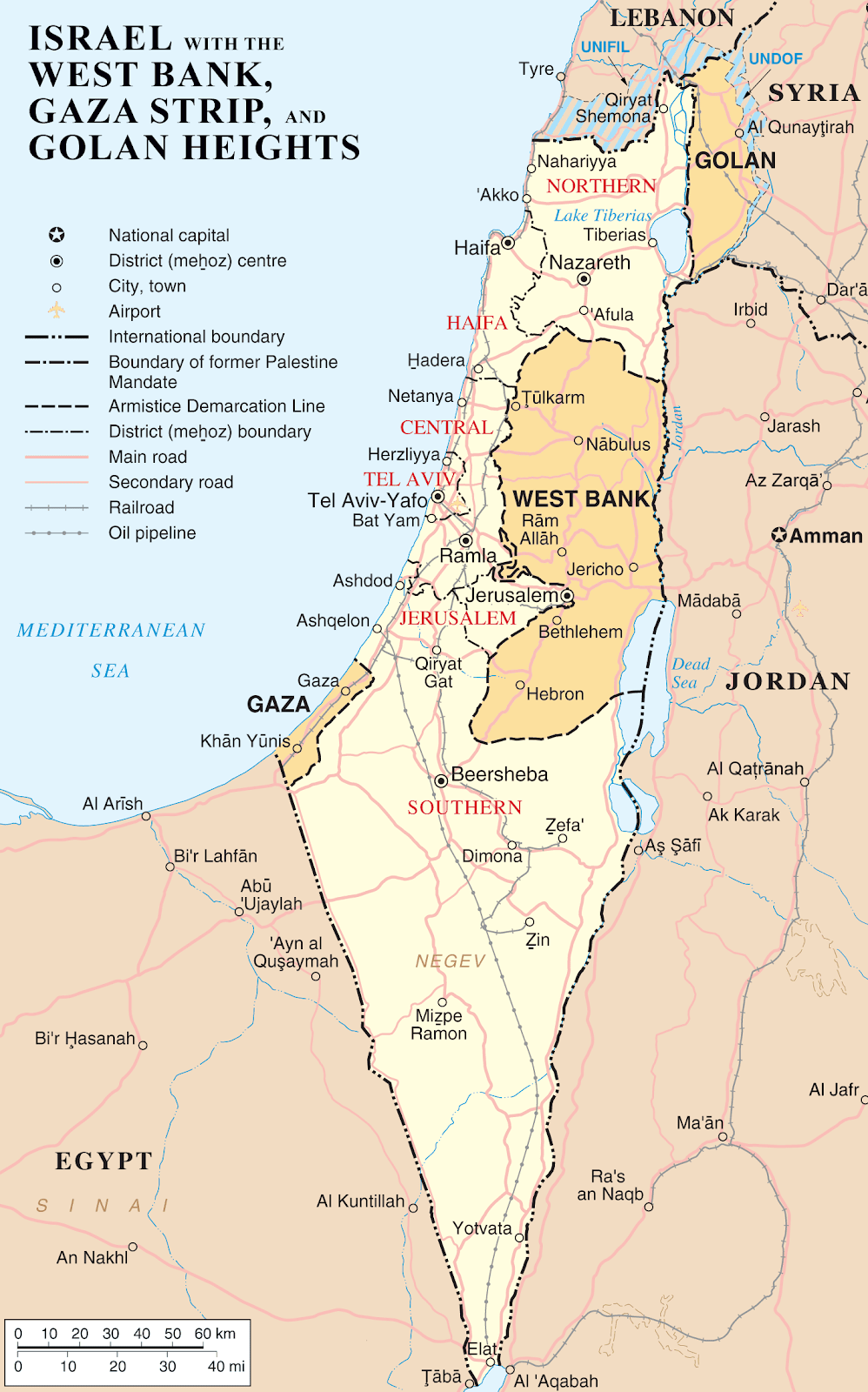
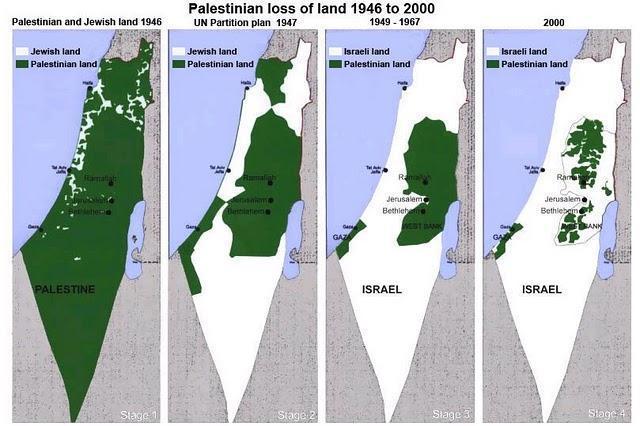
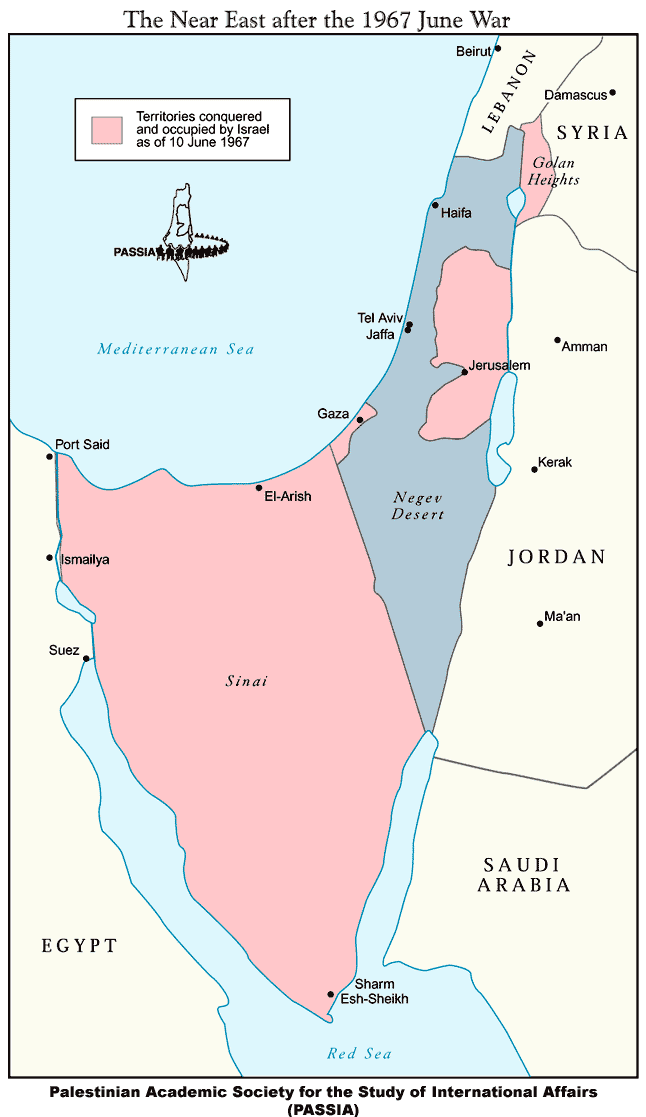
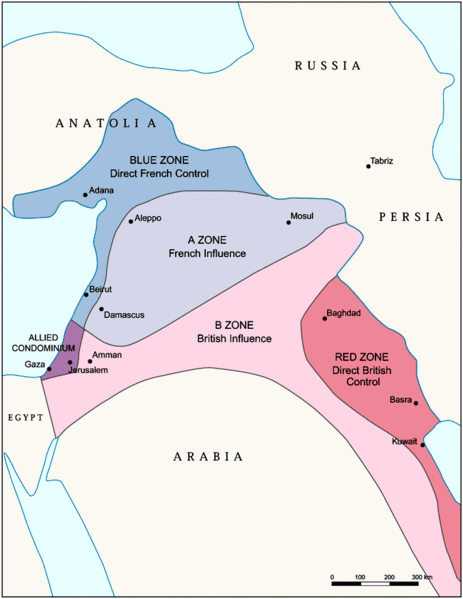





 WALTER SEBASTIAN ADLER