
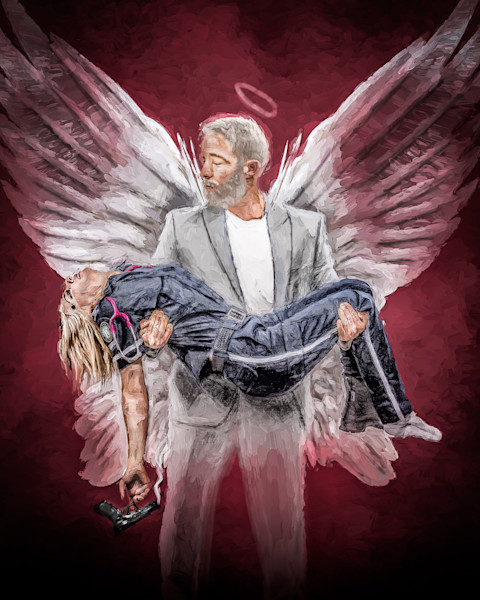
PRELUDE I
Aley, ‘84
***
Once upon a time, in a bustling city called Aley nestled between the mountains and the sea, there lived a storyteller named Nadia. She was known everywhere for her ability to weave tales that captivated the hearts and minds of all who listened. Every evening, as the sun dipped below the horizon and the stars emerged in the night sky, people would gather around Nadia to hear her stories.
One evening, as Nadia sat beneath the ancient olive tree in the town square, a young girl approached her with a curious expression. “Tell me a story, please,” the girl pleaded, her eyes shining with anticipation. Nadia smiled warmly and beckoned the girl to sit beside her. “Of course, my Habibi. But first, let me tell you about the power of a single story. Before it is unleashed.”
With that, Nadia began to spin a tale unlike any other, a story of love and loss, of courage and redemption. As she spoke, the girl listened intently, hanging on to every word as if her very life depended on it. And when Nadia reached the end of the story, the girl sat in stunned silence, her heart deeply moved by the tale she had heard.
“That was just amazing,” the girl exclaimed, her eyes shining with wonder. “I never knew that a story could have such power. Or that stories inside stories, inside stories even still exist!”
Nadia nodded, her own eyes twinkling with wisdom. “Indeed, my dear. A single story has the power to change hearts, to inspire minds, to bridge divides. It can lift us up in times of darkness and guide us along the path to enlightenment. But perhaps most importantly, a single story has the power to connect us to one another, to remind us of our shared humanity, and to unite us in our common journey through life.”
And so, as the stars shimmered overhead and the night air hummed with the magic of storytelling, Nadia and the young girl sat together beneath the olive tree, sharing tales of wonder and wisdom until the wee hours of the morning. And though they may have been just two voices in a world filled with billions, they knew in their hearts that the power of a single story could change the world.
***
Something about shards of manuscripts he had cobbled into something very grandiose sounding called “The Rise of the Middle East Confederation,” but that was not that subversive because talk of Confederalism was “very in now.” As the world was unraveling faster each day. In Lebanon, now that the economy did not exist and at least 5 of 18 ethnic confessions run their own ethnic cantons; namely the Maronites of Kataeb (Lebanese Forces), the Druze (Progressive Socialist Party), the Shi’a (under Hezbollah and a lesser way Amal), and the Sunni had their parties too. Hamas, Popular Front for the Future Movement, Popular Front for the Liberation of Palestine, Democratic Front for the Liberation of Palestine, Fatah, and the Lion’s Den hid among the 12 camps of Palestinians, hiding in plain sight. No one wants anyone going out of the camps and attaching itself to the Sunni demographic. There has not been a census since 1932, but all suspect the Shi’a are getting bigger than the confessional allotment of the Taif Accords.
“We are all in need of something to believe,” an old song goes, “hope is a smoke.”
Now, the power of a single story told over a multi-course Lebanese meal in New Jersey convinced Souheil Tajer he was dealing with a genuine article. A person, Sebastian, who was obviously Lebanese in another life. And if not Lebanese in another life, someone who was an artistic soul. Writing something noble albeit something one might have to high on drugs to think was a viable plan.
But it was not a single story. It was two, or three, each of varying levels of non-authentication. It was two sentimental tales followed up by a powerful rhetorical device about the impossible. Or at least the possibility of impossible things breaking ground. Sneaking out of boats in the night. Turn the rifles into plow shears and art.
Sebastian confided in Souheil that growing up in kindergarten to 8th grade at the United Nations school his best boyhood to young adult friends were an Iranian named Gyve Safavi and a Maronite named Danny Czar. Thus, in comfort, he felt closer to the Shi’a and Maronites than he even did to his own people the Zionists, ehm, I mean Jews. Which were fully interchangeable words too many these days.
The second story was about 9 months that the Jew served as a medical volunteer, really a non-shooting fighter in Iraq and Syria during the Isis Wars. He had been at the fall of Mosul when they massacred the Isis forces, forced finally to surrender the second biggest City in Iraq after a Stalingrad-like siege. He had been there when Isis was mostly wiped out (before they regrouped thanks to the Saudis) in Hajin, Deir Ez Zor.
So even though Souheil told him “This is, consequently, one of the worst times you could have ever picked to go.” He had gotten his plane tickets just before the Palestinian pogrom of October 7th which took several hundred hostages and butchered 1,200-something civilians, then resulted in Israel committing the ongoing quite possibly “war crimes” that have blown apart about 30,000 and counting people in Gaza. Shows no sign of slowing down.
The two stories resonated but so did the energy of the 39-year-old Sebastian Adonaev. Souhail read over the draft introduction to Rise of the Middle East Confederation, and it stated as a multiplicity of Middle Eastern voices, found it sane, and honest.
SOUHEIL TAJER
“What is your interest in my country?”
SEBASTIAN ADONAEV
We all have an imagined identity. My white skin, my Hebrew cult half beliefs, the Inquisition, the Holocaust, the Crusades, the three wars with Rome; to me are not history. They are my peoples lived and living connection to the soul and being of the Levant. And in that light, the national borders, the wars of states are arbitrary and serve only divisive violence. They serve only oligarchy and outsiders.
SOUHEIL
Quite a Zionist idea.
SEBASTIAN
Confederalist, not Zionist. Nothing about the Jewish historical experience allows us a free license to trample the rights of other peoples. To me the national borders are all arbitrary drawn by Ottomans and Sykes Picot. To me, the Turks and then the Europeans handpicked little groups to lord over fake states, little more than plantations, and now we see that all unraveling.
SOUHEIL
It has been unraveling faster each day since October 7th.
The Palestinians are a source of great controversy and only Hezbollah panders to them out of spite for the Zionists they exchange rocket fire with, as well as a history of pandering to them. Everyone wishes the Palestinians would just go away and now there are 1.5-2 million Syrian refugees to contend with. Syrian beggar children are everywhere. That is 4 refugees for every 1 citizen. You can get Syrian beggar gypsies on like every corner of the Muslim Ras Beirut.
What is your relationship to the Palestinians?
SEBASTIAN
Those are my cousins. They make convincing poets and above average terrorists. That said, I have never had Palestinians try and kill me, where my own people have worked overtime. I have never met a Palestinian that I could not wage a struggle with.
SOUHEIL
I would like you to spend a week in the Chouf and share some of these ideas with my Druze friends. He has a similar thinking to you. Perhaps a great collective unconscious has begun to bring the people of the region to new, better, saner ideas. Your collaboration might yield some interesting conversations. Perhaps, in our lifetimes, before a line is crossed, we may act on some of them. The Chouf is magic. The Druze, well you know the Druze have seen many things, they claim to come back.
SEBASTIAN
I would love to. Sounds very peaceful.
SOUHEIL
You wear so many interesting hats. Student of law, paramedic practitioner, and human rights champion. But, as a writer you must tread carefully if you are seeking to make useful writing for those that live in the Middle East; the hard part is not becoming an “Arabist,” as in seeing us from your own world view. It is almost impossible for you to be an “Orientalist,” seeing the world from our view. As an internationalist, with some useful skills, you are welcome in my country now or anytime, but not now is an unbelievably troubled time.
SEBASTIAN
I am not going to try and convince anyone of any kind of thinking or of new zealous beliefs. I assume the role of a polite guest. Conversationally, I do have some ideas. A fusion of human rights and Middle Eastern shall we say destiny.
SOUHEIL
But be a tourist for now. Tourism is going to bring you unique and exciting experiences, but I will give you some numbers of some old friends I think could help you, or at least provide interesting conversations. Just in case you run out of things to do. Or are in the general market for interesting conversations.
Souheil Tajer gives the Jew the phone numbers of several prominent Maronites, Druze, and Orthodox to help him if he gets in trouble. Though he suspects the Jew has slightly more subversive intention than mere tourism, it did not seem dangerous yet to aid and abet his augmented tourism. He was on both an extremely specific mission planned a decade before and was going to try and convince a lot of people of something very radical: that the Middle East could be confederated. That the Middle East could end the dominance of foreigners and embrace democratic autonomy.
 WALTER SEBASTIAN ADLER