MEC-AI-S-XXXII

SCENE (XXXII)  

Birmingham, United Kingdom, 2016 ce 

***  

In grim Birmingham, U.K. sometime in late of 2016, two British Hevals meet in a bleak coffee shop with no phones to say hello, goodbye, and hash out some final details for their upcoming deployment into Rojava. 

“My government name is not relevant to you, Hevalin, as they say.” Havalin is the plural of Hevals, my man and multiple friends. Says Heval Erdal, a cheeky British Jew of left-wing leanings with many Kurdish friends. He sits with his old friend Ana Montgomery Campbell from Lewes, U.K. who later died a Martyr in the defense of Afrin Canton. The British pipeline begins in Birmingham. Actually, hundreds of ISIS Islamists had been recruited from Birmingham. Literally many hundreds. 

“You may call me by my Kurdish guerrilla name, “Heval Erdal”. I’m lanky and have a highly disarming grin, so say the ladies. I’m just having a kid, which is to say a laugh; the ladies don’t say anything like that. I’m British clearly, but also a cheeky part Jew. It’s not a very well thought out part to be honest. Don’t practice any of it. I became active in the Kurdish movement protesting Turkish arms deals and attending cultural events at the centers. My working-class British city had literally hundreds of Jihadists who took off for the Middle East and joined Daesh. Fuck all mate, hundreds! They took wee kids and wives with them. They thought it was the end of times. Well, it had end of times properties, I’ll give it that.” So, I was always a ‘wee activist’ with politics of the progressive kind, but I love them Kurds man! They’re so awesome. Humble, principled mountain people. Leftists. Warriors. Love um! Sometime in August of 2016 I made up my mind to travel to Kurdistan and join up with the People’s Protection Units; the famous and glorious Y.P.G.71

So, I worked a bit more than usual. I saved up about 2,000 quid and there I had a chance to ask the right questions about who to contact, literally just an email address called YPG REVOLUTION, and I answered a bunch of questions for them. Then I was approved to go. It didn’t take nearly as long as lots of chaps complained. Britain has the second largest contribution of foreign fighters to Y.P.G./Y.P.J. right after Turkish leftists.  

But life happens, you have a girlfriend you can’t bring, and you have an apartment you can’t just leave. You also have a bit of fear in you. No one wants to die! Unless you’re one of these Jihadist tossers. You make various excuses. Well not me, I don’t worry about dying. I had a pretty boring apartment. My job was bullocks. We all have bollocksy jobs, so it made it easier to leave mine and go, knowing how much I hated my current situation in what Kurds call Capitalist Modernity. Also, there were brave Hevals who went in earlier, when things were more desperate and asymmetrical.    

I had become friendly with Heval Helen Qerechow, whose British name was Ana Campbell via the various protests and Kurdish events. She was far more ideological than I was. She was what we called later a ‘true believer’, a highly committed young revolutionary. Me, I just wanted to kill Daesh, and the Turkish fascists. I wasn’t stupid to the politics mind you, but I was more of the fighterly mind set. I had set myself on a warpath. I grew up working class and I would die working class, and revolution would never come home to the U.K., but if I could contribute well to the Y.P.G. and aid the Kurdish resistance then I would feel like I was a man of my word. All these years yelling about arms deals and Turkish coups all didn’t ever do much, but it was how you made friends with Hevals and aspiring Hevals. Heval in Kurdish means comrade/friend. It’s what movement people call each other affectionately and ideologically.  

They had met just one weekend before herself deployment to Syria. I went out with Ana, and we talked a little bit about what we were risking and why we were risking it. She went in to Rojava about five months before me. This was maybe on the eve of. 

“I’m all in the game mate, I’m just all about it. As an anarchist and as a human, this is the real deal as I see it,” Ana declared. 

“I mean eye to eye my sis, I agree,” I tells her. 

“I mean as a woman and as an activist this seems so big, so important, how could we ever just go on and ignore this and act like we have and validity to our own fight?” Ana always talked in big questions, rhetorical like ones for circular thinking. 

“I mean are you scared?” she asks me, “I’m not scared at all.” 

“No, not scared to die. Maybe scared to be tortured or maimed, but all part of a revolution I guess,” I reply. 

“You must be brave. Everyone is watching us. The Kurds and the vultures, you know they want to make up stories about why we went out there, going out there to die in a foreign war, a Kurdish war! It’s our war, it’s the last stand for idealism.” 

It’s pathetic so few leftists are going, have gone,” I say. 

“No, it’s up to us to be an example of trustworthy European leftists and what we can contribute. Everything must be about possibility not fear!” 

“You’re a shining star,” I tell her. 

“Serok Apo72 says that Women’s leadership is what saved the P.K.K. in Qandil and has saved the Rojava revolution.” 

“Well surely it has,” I just agree with her now because I’m not ever one to argue with her on either Feminism or what Serok Apo said. She’s very ideological and I am not, so it’s easy to avoid contentious bickering. 

“I’m so happy we’re both finally going,” she says. 

“Yeah, good times,” I reply. 

“We probably won’t see each other that often. The Y.P.J.73 has its own separate structures. How do you feel about that? I think I prefer the old way when we were all together.” 

“I think I read they need to be able to tell the conservative Kurdish village fathers their daughters aren’t getting banged out in the P.K.K., and also because Kurdish Women’s Movement wants their own self-governing spaces.” 

“Yeah, both. But anyway, we will meet up for tea and have long fireside talks about ideology like you love so much,” she smiles.  

So, I was scheduled to begin the Academy in Qerechow74 in August of 2017. I had booked a direct flight to Erbil from Heathrow. Ana was in the class before me for the Y.P.J.; Women’s Protection Units, the co-gendered women’s structure. We had both been arrested several times scuffling with the Turkish security service at this demo or that. Never had any challenging times either of us. Well, why should we have? We were fighting for Kurdish Freedom, for peoples’ freedom; against fascists and Islamic terrorists, the kind that lived in Birmingham and migrated to Syria with their families for the war. 

Now my motives were pure, but they were not purely ideological. Apo did not make me do it! I just felt that Daesh was a heinous evil. I felt the Turks to be true aggressors. And I wanted to avenge the fact that so many people from my city had headed over to the enemy. An enemy which throws homos off roof tops. Kidnaps and sex enslave young women. Commits genocide! And until Operation Inherent Resolve75 I.S.I.S. was gradually taking over the entire Middle East into their “Caliphate”.  

“So, I packed my bag and joined the international volunteers!”  About five months later Anya went down to Rojava to join the Y.P.J. The proud, inglorious 500 or 600 so who ended up with the Y.P.G. and its various affiliated structures. The embarrassingly low turnout compared to the well over 40,000 Jihadists who turned out to join I.S.I.S. is a matter of leftist defeat, human cowardice, ineptitude of Kurdish propaganda, and the psychological barriers of joining a violent shit show that no one is clearly ever going to win. Her last words before she left England were the same last words, she said to me before she was blown apart on the Afrin Front. The phrase has a couple of meanings to the Hevals. “Onwards to invincible victory,” or “Victory is certain ”, or in Kurmanji, “Serkaften!” 

To which I replied “Serchevan76.” On the eyes!  

Within the next year Heval Errdal’s entire family would be arrested in the United Kingdom and charged with aiding terrorists financially and Anna Campbell would be dead, martyred in a Turkish airstrike. 

MEC-A-1-S-12

S C E N E (XII)  

نيو جيرسي 

Raqqa City, Syria., 2017ce 

We enter the mosque compound at twilight, though twilight itself seemed reluctant to fall. The call to prayer still echoed faintly from the minaret, a broken ghost-sound caught between heaven and stone, though its muezzin had long since fled or fallen—whether butchered or swallowed in the tide of war, none of us knew. Dust hung heavy in the air, congealing with the sharp tang of gun oil smeared across my hands and the dried blood caked beneath my fingernails. We moved with the YPG unit like shadows masquerading as men, our boots whispering across sacred carpets long since ripped open and blackened by fire. The mosque had been a sanctuary once; now it was a slaughterhouse with gilded walls. 

They were waiting—Daesh, black-clad, statuesque, crouched like carrion birds behind shattered columns and prayer-stools. Their rifles rested on Qur’ans, defilement turned into ritual, eyes void of mercy, void of thought, filled only with the endless hunger for death. The first shot did not thunder; it whispered. Then the chamber of the mosque exploded in carnage. Muzzle flashes stuttered like lightning storms against the calligraphy-laced walls, sacred verses flickering with each round, the names of God trembling as our blasphemies carved themselves into stone. I returned fire without feeling, a machine in flesh, squeezing the trigger again and again until the rifle jammed, heat and smoke choking my lungs. I collapsed behind a marble pulpit as though it were the ribs of some ancient saint, hoping the stone would hold while lead sang against it. 

Beside me, Heval Kamal was struck. The bullet punched through him with the elegance of inevitability, a red flower unfurling across his chest. His lips parted, a scream forming but drowned in blood, his lungs drowning him quicker than the enemy could. He fell without grace, spasming, his eyes begging for air, for rescue, for God. I did not mourn. There is no space for grief in the iron rhythm of battle. My hands tore his rifle from his still-warm grip before his last twitch had passed. Forgive me, brother, I thought, though I spoke nothing. Your bullets are more useful than your prayers. 

The dome above us wailed with fire. Smoke poured through holes carved by rockets, shafts of dying orange light filtering in like the fingers of a cruel deity. I saw one of them—young, beardless, his face twisted between terror and rage. He couldn’t have been older than nineteen. For a heartbeat we locked eyes, and I saw a cousin, a neighbor, a boy who might have played football in some forgotten street. Then I shot him twice in the chest, precise, quick, watching him fold against the mihrab as if surrendering into a lover’s arms. His blood smeared the sacred niche where thousands had once knelt. I felt nothing. Or perhaps I had felt everything so many times that my soul had calcified. Somewhere back in Raqqa, or maybe in some trench months before, time had stopped mattering. The clock rusts inside your chest when every day is measured in bodies. 

When the shooting ended, silence staggered back into the mosque. It came limping, dragging behind it the stink of powder and iron and meat. We walked among corpses like pilgrims at a grotesque hajj, our rifles drooping with exhaustion, our boots splashing in what once passed for men. I pressed my palm against the bullet-pocked wall, fingers tracing Arabic calligraphy shredded by shrapnel, and whispered an apology to no one in particular. To Allah. To the dead. To myself. To whatever remained listening in this void where even God had turned His face. The only faith left in that ruin was the brotherhood of ash-coated, bone-weary men too stubborn—or too damned—to die. 

Every time we crawled out of a firefight in Rojava with our skins intact, a price was exacted all the same. The internationals especially carried it raw in their eyes. They had just killed someone, maybe for the first time. Or had watched a man they’d eaten bread with choke on his last breath. Or maybe their bullets had torn through someone who wasn’t strictly a combatant at all, just a body caught in the blind frenzy of battle. Some had been awake too many nights in a row, fueled by cigarettes, adrenaline, and the conviction that tomorrow might not exist. After their first blood baptism, they drifted for days in a fugue, phantoms wandering the outpost. Some said nothing, as though words were another luxury they couldn’t afford. Others muttered nonsense, speaking in half-dreams, voices cracking like children’s. 

“He’s lost the plot,” Heval Erdal, a British comrade, used to mutter, shaking his head at those glassy-eyed stares. He’d laugh when he said it, but the laugh always caught in his throat. The plot was easy to lose out there. 

Years later, after the fires of Rojava burned down to embers, those who had survived staggered into other wars. Statistically, one in ten internationals died on that soil, their bodies buried in Kurdish earth far from the countries that had birthed them. Four of ten died later, either by their own hands—noosed, overdosed, revolvers pressed to temples in kitchens at dawn—or vaporized under Russian rockets in Ukraine. They migrated from one doomed battlefield to another like moths drunk on the flame, unable to live in peace, unable to stop killing, unable to stop dying. The war never left them. It only traded flags. 

MEC-A1-S7

S C E N E (VII)  

بيروت 

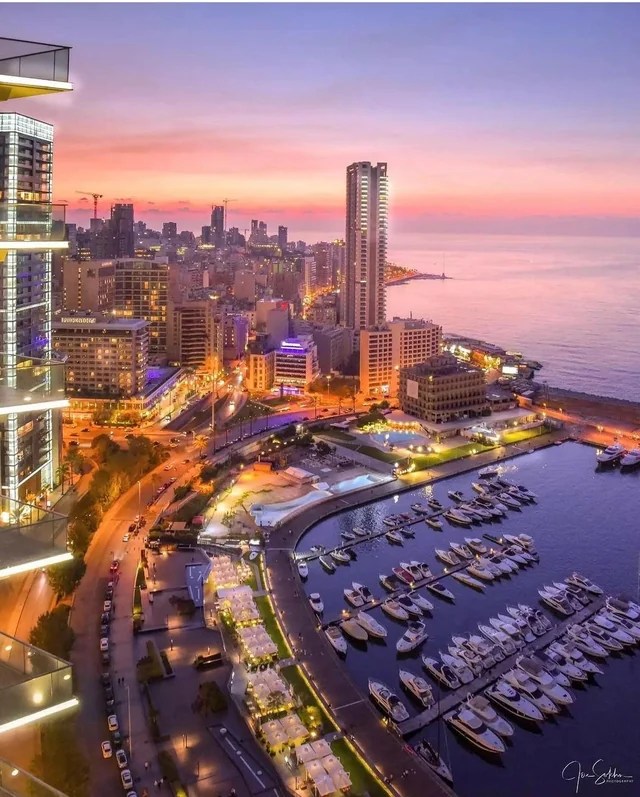
Beirut, Corniche, 2024ce 

***     

The historical, comical, and even anecdotal way you know “the Jew is back in Beirut” is his appearance at Monir’s on the most Western reach of the Corniche wrapping way into Ras Beirut. The very most western point of the Corniche is the literal turning point on “the people’s boardwalk” stretching dozens of kilometers where you begin to leave Western Sunni Beirut and enter southwest Shi’a Beirut. Tracksuits and mustaches. Shiite tricks and the of twelve Palestinian refugee camps.    

Did I hear you say, “a Jew is back in Beirut?! With any surprise in my voice?” explains Monir Senior, the owner of the Fruits of the Sea Restaurant. If he is back, well, great trouble is coming. 

There are at least 40 Jews still in Beirut!” says a man who looks like could be in Hamas or could just be a regular Middle-aged Sunni. Hamas is Arabic for Zeal; and is the infamous Palestinian arm of the Muslim Brotherhood that has just orchestrated the action of October 7th; in which 1,200 Israelis lost their lives in Jihad or Pogrom, or terrorism; depends on one’s sensibilities. The man has a bulge in his suit for a shooter to perch. He has a shabby suit. “Which is 40 too many if you ask me!” 

“There are not 40! Just 25, and all loyal Lebanese to the core.” 

“The Party of God just agreed to help pay for the great synagogue renovations!” exclaims someone in Hezbollah having their late lunch with a deluge of tea and cigarettes. 

Paid for by Iran!” The Hamas man yells back. 

The Jew was made familiar with the Monir family having served with his son in the Mosul Offensive of 2017, and thus the Monir Shop was the one familiar lynchpin the Jew ever has, tying the world of alive and now, to the world of endless and ephemeral. The speculative world he uniquely and often peers into. He is of course “capable of becoming a blue-purple smoke” and then he’s gone! They say the Jew has great powers. That is what they always say for sure. Power to steal and to heal, with mere words.” 

They say “the Jew always appears in a green suit, in a pop and puff and mystical whiff of blue-purple smoke. Out of nowhere!” And so he has now; in the dead of winter. In the nights before Christmas. Which in Beirut means one minute it is sunny beach weather, and the next a torrential downpour flooding the roads putting cars under water. The Jew sits in the middle of the room amid everybody’s tables, so everyone can see his face. And a little light goes on. 

SEBASTIAN ADONAEV  

“Now looking back, the first thing I should have done was walk into Monir’s on the Corniche, ask the manager for the owner, and tell him I fought with his son Monir during the Isis wars.” 

His son Monir Jr. and I were part of a special international tabor attached to the Iraqi Special Forces units in the battle of Mosul. We used to patch up the varying combatants and civilians blown apart in the crossfire. Stabilize them until they can get extracted 10 or 20 km away toward a distant field hospital. Usually NGO, WHO, or Shiite Hashidashabi Popular Mobilization Forces field hospitals. Unless we found the bruises under the right arm, from firing a Kalashnikov, and we’d know they were Isis and they’d be snatched off the operating table to be tortured or summarily shot in the head and then dumped in the river.  Monir is Christian Lebanese; his family is Maronite. We used to spend our leave time in outer ring Erbil flirting with Iranian prostitutes but being too broke to pay for one. 

The salary for an internationalist volunteer in a tabor is $250 a month in faceless dinar, with unlimited Arnette or sometimes Gauloise cigarettes, three square Iraqi collective meals eating with your hands; and “a place at the table with Jesus” as Monir used to say.  

Now any friend of Monir the Jr. was a friend for the life of Monir the Senior, but I never even opened my mouth in Monir’s except to ask for a menu and order some seafood stew. And a Coke, but there is only Pepsi in Lebanon! Any idiot knows that. Why was the Jew making such culturally insensitive rookie mistakes? Maybe he is nervous? Maybe it’s just performance anxiety? 

You can tell the coming weather of winter by the appearance of the Jew. Is he being rushed by something? Why does he order a Coke, there’s no Coke in Lebanon. Does he make a war fellow embrace Monir Jr, working in the Kitchen? Is he in the Kitchen in this reality? Is Monir still studying in Australia? Does he sit with a stranger inviting him for a smoke? Does he sit on the right with Hamas or the left with Hezbollah? Is he going to get kidnapped and cut into lots of little pieces? 

HAMAS MEN  

“Gotta get a good look at his face to tell the coming weather.” 

So, when the Jew sits down, they turn on a little light. Not too bright. Because the Jew comes to Beirut every single year and he may have evolved. How much blue smoke? What kind of shoes? What makes this new green suit? Is he dressed like a PKK again? What’s PKK again? The Kurdish resistance of Qandil; the Kurdistan Workers Party that trained him. Well, it looks like it was rushed and sloppy training if you ask the Party of God. 

This year, in 2024; at least most agree to that. The Jew doesn’t make small talk or reunion with Monir Senior. Shockingly, he seems to ignore everything. Who is or isn’t even at the restaurant? The Jew doesn’t seem to care about establishing the human connection. He seems rushed, and they all agree. In the Middle East only a foreigner is ever rushed. 

“The Jew of Beirut is out of season.” No one even knew he was coming this, Winter. No one even suspected it. He asks for a cigarette from a patron who obliges him. A neutral. He doesn’t make eye contact with the Hamas men, or the Hezbollah men. “My son is an electrical engineer in Massachusetts,” says the man he bummed the original smoke from, “We love you Americans.” “You being here makes me feel safer!” 

The Jew nods. He is a little American. So, they can love him a little. I suppose in some round about logic if shit were about to hit the fan, if the invasion was immanent an American wouldn’t be out for lunch on the Corniche. 

ADONAEV  

What I do now is very important, but mostly only to me. No one is really watching me as closely as me. They’re all watching me order a so-called Seafood stew and a Coke that doesn’t even exist. Watching me ignore the manager and owner, no entitlements. No attachments. No OUTS, and also no INS. I have never been here before. But maybe I have. Retrace your steps. Don’t let her down again. Don’t let your Vice President Yaelle D’Arrigo down, or your little secretary Karessa Abe who you are claiming you love so much. Or at least use it as an acid test for your own alleged morality. 

“They teach you in suicide intervention prevention training that offering an imbibing a glass of cold water is grounding; it’s a break in the tension.” 

No one brings him any water. In the New York Grad “cultural context”, that’s a sign you’re not welcome here. Not out of disrespect, but because it might influence his very next move. Might change the weather. No one moves any time faster than in pure Middle Eastern time; slower than slow as hell at all times like you live in a desert. Although nothing at all about Lebanon is like a desert. Until something explodes? Or does graciousness take over?  

The patron families don’t stare; they ignore him completely. But the Hamas men stare. How does he know they are Hamas men? The vibe is the vibe is the vibe. Hamas men have better suits than the men at the Hezbollah table. And why are these factions both at Monir’s? Because Israelis are about to invade Lebanon; it’s going to start World War Three. This will happen any minute, any hour now, or at least by the end of the week. 

YELIZAVETA ALEKSANDROVNA KOTLYAROVA   

(Inside his head) 

“Show them you’re not afraid to live or to die for me!”  

ADONAEV  

What I do now is particularly important. They are all watching me order a Seafood stew and a Coke that doesn’t exist. They only have Pepsi in Lebanon. An American tourist, out of season. It is near wartime. Hamas means Resistance shortened to Zeal and Hezbollah means Party of God. 

HAMAS MEN  

“The Americans pay for the Zionist war so he should die, in my humble opinion,” says one. 

“But maybe he could make a good hostage?” another one suggests. 

“Most of the ones under Gaza are already dead!” 

HEZBOLLAH MEN  

“This is a funny scenario, almost a little obscene. We were here to talk to Hamas. What’s this Jew doing here, who does he work for. What interests are served by him being here. B for Bravery, but also a highly incorrect approach to doing any real negotiating.” 

“They think they own the whole world,” one says.  

DO-YOU-WANT-ANOTHER-CIGARETTE-MR.-AMERICAN?” one asks him in loud English. And so, he takes one. Nods a thank you/Shokran, and he does a heart-tap-to-salute. The heart tap salute he learned from the Kurds, both hands to the heart, and a left-handed salute showing modesty, and gratitude together. 

HAMAS MEN  

“You used to be able to tell the weather by the running of the Jew, but it’s very very sunny right now.”  

“Like summer in December!”  

“Lure him out to the back somehow?”  

“Hit him in the head?” 

HEZBOLLAH MEN  

“This is not funny.”  

DO-YOU-WANT-ANOTHER-CIGARETTE-AMERICAN?” one asks him again in English. He takes another one. He then offers them his business card in gold and brown leaf. It says GCC which stands for ‘General Coordinating Committee’. Coordinating what, and for whom? 

“Who trained this person?” 

“No one trained him.” 

“Why is he really here then? Why at this time?” 

“To negotiate off channels?” 

“No, he’s nobody. Nobody is protecting him he’s here wide out in the open.”  

“Leave it all alone.” 

The Jew of Beirut didn’t appear in blue purple smoke, poof! He did not have on such bad shoes, but they were bad for walking twenty kilometers on the Corniche from Christian Achrafieh out here. “Clarkes he prefers.” Chafing his heels. His suit is like a green PKK officer if they had officers, which they do not, just comrade friends. Just a hundred thousand friends in the hills with Kalashnikovs. 

HEZBOLLAH MEN  

“I think you should take your leave Mr. American Tourist. No one stocks Coke-A-Cola here.” 

HAMAS MEN  

“They’re cock blocking us, again. Thise fucking Shiite motherfuckers.” 

The Hezbollah men nod, and the Jew gets up and leaves the place. Not having done more than smoke 3 cigarettes and washed his hands. No one in Hezbollah has any interest in a dead American right now. No one in Hezbollah has an interest in a dead American ever. The Jew leaves his card with the two tables of so-called terrorists. “Maybe it’s all confabulation and he’s not leaving a card with anyone besides some middle-aged Lebanese tough guys in a famous seafood cafe that real terrorists wouldn’t be in anyways.” “Pure confabulation, real rooky type moves.”  

YELIZAVETA  

This isn’t a movie. You’re gonna get your fucking Jew fingernails pulled, or your eyes put out,” Yelizaveta tells him. Then, the Jew takes leave but turns hard right and keeps walking, down the Corniche southbound, walking and walking toward the Shi’a control zone. 

Retrace your steps. Walk to the end of the Boardwalk where the Ferris wheels are. When you see them, it should start to look familiar. Like when we were at the AUB in the 70’s. You will find me in the Shatila Refugee camp. I will stop time for you. 

*** 

So, he walks the Corniche until he comes to a place where it looks like the people are sealed inside. There he can see heavy duty checkpoints with armed guards and barbed wire and soviet looking block housing. But Yelizaveta or no Yelizaveta, he can’t just blag his way inside, and this was his first day back in Beirut. You can’t get into a Palestinian Refugee camp kind of state of mind on your very first day back in Beirut. It’s pushy, even for a Jew from New York. The Jew of Beirut is only pushy when it comes to life-or-death situations. And those are right around the corner to be sure. 

*** 

Kaveh Ashuri is burly, Assyrian, Iranian, Persian, American. He goes into town before Yosef Bashir because he wants to see an old, intractable flame. He wants to enjoy the city for a couple days before they get to work, even if he has to stop time. So, he stops time. More on that process later. 

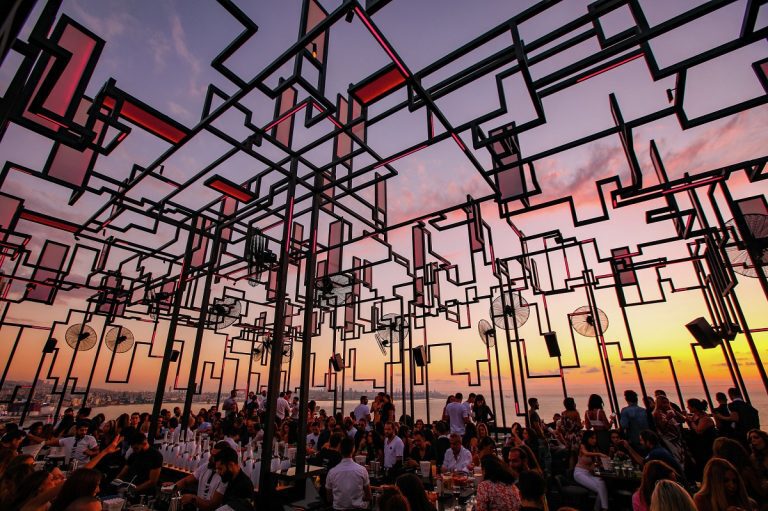
The sun dips below the horizon, painting the sky in hues of fiery orange and soft lilac, signaling the awakening of Beirut’s vibrant nightlife. In the heart of the city, where the ancient metropolis melded seamlessly with modernity, lay a labyrinth of narrow streets and bustling boulevards that came alive after dark. It was a city where time seemed to blur, and the past whispered through the cracks of its ancient walls, intertwining with the pulsating energy of the present. 

Open mic night for stringed instruments. 

Amidst the maze of alleys and cobblestone paths, nestled a quaint café; its walls adorned with eclectic graffiti and flickering lanterns casting a warm glow. The scent of freshly brewed coffee mingled with the sweet aroma of shisha smoke, creating an intoxicating ambiance that drew in locals and wanderers alike. At a corner table, bathed in the soft glow of candlelight, sat Anya Layla Noori, her dark curls cascading over her shoulders as she sipped on a cup of rich Arabic coffee. Her eyes, the color of warm honey, sparkled with a mixture of excitement and anticipation as she awaited her rendezvous with destiny. Across the room, amidst a lively group of patrons, stood Kaveh Ashuri, posing as a musician with fingers that danced effortlessly across the strings of his oud. His soulful melodies filled the air, weaving a tapestry of enchantment that transported the listeners to distant lands and forgotten dreams. 

As the night wore on, Beirut revealed its true essence, a melting pot of cultures and traditions, where East met West and ancient metropolises embraced the modern world. Lebanese, Syrians, Palestinians, and expatriates from every corner of the globe mingled effortlessly, their laughter and chatter blending into a symphony of harmony. Amid this vibrant tapestry, Layla’s eyes met Kaveh’s across the crowded room, and in that fleeting moment, time stood still. It was as if the universe conspired to bring them together, two souls destined to collide amidst the chaos of Beirut’s nocturnal embrace. 

With a shy smile, Kaveh made his way towards Layla, his heart pounding with anticipation. In her presence, he felt a sense of belonging, as if he had finally found the missing piece of his soul amidst the cacophony of the city. Their conversation flows effortlessly, as they exchange stories of their lives, their dreams, and their deepest desires. In each other’s presence, they found solace and understanding, a connection that transcended language and culture. 

As the night drew to a close, Kaveh took Layla’s hand in his own, his eyes searching hers for a flicker of doubt. But in the depths of her gaze, he found only certainty; a silent promise of a future yet to unfold. Together, they ventured out into the streets of Beirut, their footsteps echoing against the ancient walls as they embraced the magic of the night. In this city of contradictions and complexities, they found love, a beacon of light amidst the darkness, illuminating their path towards an uncertain yet exhilarating future. “Are you still Pasdaran,” she asks him? “Well, I guess so,” he says, “but realistically now we are all falling in line with the Party of God and Workers.” “So, Bashir and Sebastian are finally in Beirut,” she asks. “Yes, it has all been given the green light,” Kaveh replies. 

MEC-A-I-S-XVI

S C E N E (XVI)  

بيروت 

BEIRUT, 1932ce 

*** 

“Counting people is a sensitive matter in any country, often fraught with fraud, gerrymandering, as well as bold lies.” No one is interested in upsetting the balance of theft and power.  

For that is when shooting and raping starts. The war. The civil war took 140,000 to 170,000 lives but no one, especially not the Maronites, want to admit that the new facts on the ground have nothing in common with the ethno-religious confessional system in place. It is typically a system that benefits the Chrisitan and the Sunni elites, at the expense of the Shi’a in general and the placation of the Druze who make up 5-10% of the population. Were one a betting man or a trained anthropologist; the Christian numbers are down from war emigration and the Shi’a numbers are way up from having large family sizes (6-9 children). There are also as many as 478,000 Sunni Palestinians absolutely no one wants to naturalize and as many as 1-2 million Syrian refugees, but only 780,000 are registered with the UN relief agencies. They Syrians have always come and gone for freely, like and awkward armed big sibling. To the South Israel has a long history of invading and occupying, and sometimes getting the President killed (Bachir Pierre Gemayel in 1982). To the Northeast Syria has a long history of invading, occupying, and sometimes killing the President (Rafic Hariri in 2005). 

They say countries with no working census are the real free countries and Lebanon hasn’t had one since 1932. But what does it mean to be “free” if all other parts of life are totally insecure? What does it mean to be counted if the numbers are all lies? It’s unnatural to be counting people like chattel and it’s completely prohibited in Judaism. Surely the State of Israel obsessively counts people every single day. The trouble is, the Lebanese went and fixed these invented numbers of 1932 to their Confessional Quota system, with Maronite Christians, Sunni, Shia, and Druze all getting lion shares of the system. Based upon the old National Pact45 and the Taif Accords which “ended the war”, although most districts are mixed; this system allows for a kind of political horse trading that makes Lebanon a very fragile country to govern. 

The Quota system slots key political and bureaucratic seats to specific ethno-religious groups. Remittances and smuggling make up a large unknown portion of the GDP, could be above 40-45%. No one really knows. The Lebanese also offer boutique medical and legal services to much of the Middle East. There are 42 universities. Tourism makes up much of the rest followed by banking (which used to do better than tourism i=until the sector imploded in hyperinflation), real estate, and construction, money laundering, food processing, wine, jewelry, cement, textiles, mineral and chemical products, wood and furniture products, oil refining, and metal fabricating. You can know that as a maven trader or look it up on hte CIA Fact book, but in general all numbers are inventions here.  

Now, a clever idea for your next vacation; somewhere with a real sunny beach and alot of bang for your the fucking dollar. Somewhere they do not openly hate the Americans and want to put them in bags or bags on their heads. A bad idea; various places with ethno-religious rocket exchanges going on every day. Also perhaps places that use quota systems to link ethnic group factions, of which there are 18 listed, to seats of theft and power. Also the quotas are fixed to parliamentary posts, top military commands, trade institutions, civic leagues, and as a result all Lebanese are living on a mountainous powder keg with valueless currency. The default is that there is not one Lebanon, but instead at least 5. Possibly 18. That’s Lebanon in gross geopolitical simplification in case you didn’t catch that. That’s not all of Lebanon, just a very very problematic part of the most obvious of problematic parts of it. Of course it doesn’t capture “the Lebanese Soul” which was a 5,000-10,000 year journey to materialize, at least. They don’t all hate Americans for sure of course and don’t all want to put them in bags. Putting some one ina bag is not very hospitable and they have done well to stop doing that since the 1980’s. Though many still do. In the 1970s and 1980s kidnapping was a major industry of grievance where at one point 147 American and European hostages were hidden all over Beirut. Perhaps kidnapping people is an advanced form of hospitality, and it was all dictated by Iran, who knows. 

Since the very minute, the Jew purchased his plane tickets it was like a secret to be kept. You see, there are things you tell your friends, and then there are things you hold inside because if you tell your friends they will think you are crazy and try to stop you from doing anything important or interesting in life.  So, Sebastian, later known as the “Jew of Beirut”, didn’t tell that many people about his plans to go to Lebanon. Also, those he told, he made it out like some kind of well deserved “reckless adventurism” to the wild Middle East. Not like there was a whole fully baked reimagined plan, the kind of plan the Jew knew best. 

“You see that was something well know about their people; the ability to hold multitudes of contradictory information in the head; believe all of it to have truth; and formulate plans from the data flowing through.” Of course, all smart people can do this, not unique to Jews. 

You see, the Jew of Beirut rarely acts without acting in concert, which is to say, he manifests a specific line of conspiracy wherever he goes. A fusion of human rights populism, Middle Eastern particularism; and pontification on the love of free life! He has detractors but mostly curious if not enthusiastic supporters. After some time living and working in New York Grad he had ingratiated himself to many people. He’d become a well known person in certain circles. He was like a Mayor of his work force. A person with some connections and agency beyond himself. Even if always filled with self doubt. He had some things to build on therefore some things to barter or totally lose. Or perhaps he was only really important to one person only, his secretary Karessa Abe, arguably the only person that ever really loved him. And he squandered it all the time by never really being a suitable partner to her. Never cheating, but never being available enough. She is more than a decade younger than him and they ain’t in the old country anymore. 

He is President of a Harikaat, a movement of ambulance workers seeking much better conditions. It was somewhere between a charity, a lobby, a union, and Hezbollah without God. He was also a law student. He has thoroughly studied the Zionist idea and found to be, through a Kurdish lens; a universal idea about how rights are won and secured. 

So, being a President of a quasi-underground, reasonably militant labor association devoted to the well being of EMS workers, he figured for the right price some of them could be lured to Lebanon to carry out some basic training. But this was a background thought. The kind of training everyone needs; EMT training; when can’t the world benefit from having a few more EMTs around? Spoken like or thought about like the thinking of a career EMT? Perhaps. Perhaps. Perhaps. The plans of a Jew lawyer paramedic. It’s hard to make small talk when your mind is wide enough to see much of the world moving at the same time. But, the world cries out for help, so sending more Paramedics is only part logical. At least not really something many can oppose if they can figure out how to pay for it. So the Jew of Beirut took off for more than adventure, for less than just a type of altruistic business deal. He wanted to find a way to cross over and remain there. He hadn’t totally considered how much that might hurt or offend other people; it was just a desperate act. 

Now desperate acts usually don’t have high degrees of planning, and although the Jews are known to be quite master planners, sometimes the best plans go very South. Once in 1975 the Israeli Military and some of the Lebanese Maronite Christians had a plot to reconfigure Lebanon46. It went really fucking south. The Israelis occupied a strip of southern Lebanon called the Security Zone for 22 years. In 2000 they unilaterally evacuated, and Hezbollah fully took over there, south Beirut, and the Bekaa Valley. The plan to restore Christian hegemony and unite Lebanon and Israel in an alliance, while driving out the PLO, well all that failed. 

*** 

“The cultural and linguistic heritage of the Lebanese people is a blend of both indigenous Phoenician elements and the waves of foreign cultures that have come to rule the land and its people over the course of thousands of years.”  

In a 2013 interview, Pierre Zalloua, a Lebanese biologist pointed out that genetic variation preceded religious variation and divisions: “Lebanon already had well-differentiated communities with their own genetic peculiarities, but not significant differences, and religions came as layers of paint on top. There is no distinct pattern that shows that one community carries significantly more Phoenician than another.” 

“I’m going to give you a lot of great information; but I want you to focus in on just four primary factions; the Sunni; the Shi’a; the Maronites; and the Druze. 

Please see the Appendix: In Lebanon there are 18 officially recognized ethno-religious confessions which contribute to the rich diversity of the nation, and these include: 

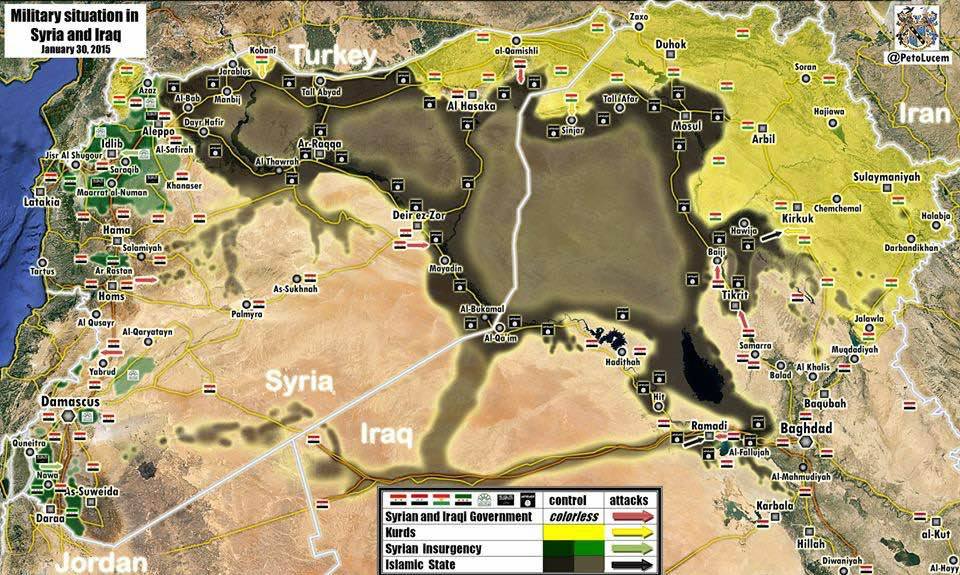
  1. Alawites, a branch off the Shi’a who ritually drink wine and believe in reincarnation. Via the French and the Ba’ath Party this secretive ethnic minority came to control all of Syria; except for now in the years after the Isis War. Today, the Northeast of the country, north of the Euphrates River, is controlled by the Kurds, in an autonomous social experiment called Rojava. 
  1. Armenian Catholics: Ethnic Armenian Christians who accept the rule from Rome. They are very business oriented, but not natural Phoenician style global traders and they aggregate in Bourj Hammoud District of East Beirut. 
  1. Armenian Orthodox: Ethnic Armenian Christians following the Apostolic Church based in Vagharshapat, Armenia; one of the oldest branches of Oriental Orthodox Christianity. Culturally, culinarily, and aesthetically not much different than Armenian Catholics.  
  1. Assyrian Church of the East are following the Eastern Branch of Syriac Christianity not in communion with Oriental Orthodox Churches or Eastern Orthodox Church, nor Rome. Most of its practitioners are ethnic Assyrians, and its base is in Ankawa, Iraq a suburb of Erbil in the Kurdish controlled zone of the KRG; the quasi autonomous Northern third of Iraq.  
  1. Chaldean Catholics: are Assyrians who came into communion with Rome arising from a schism with the Church of the East. But they are not that much different than the Assyrians of Ankawa that did not bend to Rome. They are mainly descended from Iraqi Assyrians. 
  1. Coptic Orthodox are an Oriental Orthodox church based in Alexandria, Egypt who follow the Pope of Alexandria. Established by Mark the Apostle in the 1st century; also, an Eastern Oriental Church. Most of the Copts are descended from Egyptians. 
  1. * * Druze * *; An Abrahamic, monotheistic, syncretic, and ethnic religion whose main tenets are the unity of God and the belief in reincarnation and the eternity of the soul. Most Druze religious practices are kept highly secret. The Druze do not permit outsiders to convert to their religion. Marriage outside the Druze faith is rare and strongly discouraged. Concentrated in the Chouf mountains they have long been viewed as a king maker minority group, perhaps fourth largest on its own accord. There is a larger Druze population living in Syria and a smaller one than the Lebanese clans living in Northern Israel. 
  1. Greek Catholics: ethnic Greeks in communion with Rome. There were several failed attempts to repair the East-West Schism between Greek and Latin Christians: The Council of Bari in 1098, the Council of Lyon in 1274, and the Council of Florence in 1439. Subsequently, many individual Greeks, then under Ottoman rule, embraced communion with the Catholic Church. They typically followed the Roman Rite of the Latin Church, maintaining their parishes through contact and support mostly from the Venetians. 
  1. Greek Orthodox: are the second largest world Christian denomination using Greek in liturgical settings. Ethnically Greek. 
  1.  Islma’ilis: Sometimes called “Sevener Shi’a Islam”. The Isma’ili and the Shi’a Twelvers (the dominant Shi’a sect) both accept the same six initial Imams; the Isma’ili accept Isma’il ibn Jafar as the seventh Imam and none further. At one point the largest branch of Shi’a Islam it concentrates on a deeper more esoteric version of the religion. 
  1.  Jews: an Abrahamic, monotheistic precursor to both Christianity and Islam; also called Hebrews, Judeans, or Israelites. The Israelites emerged from within the Canaanite population to establish the Iron Age kingdoms of Israel and Judah. Judaism emerged from Yahwism, the religion of the Israelites. By the late 6th century BCE they had developed a theology considered by religious Jews to be the expression of a covenant with God established with the Israelites, their ancestors. The Babylonian captivity of Judahites following their kingdom’s destruction, the movement of Jewish groups around the Mediterranean in the Hellenistic period, and subsequent periods of conflict and violent dispersion, such as the Jewish–Roman wars, gave rise to the Jewish diaspora. The Jewish diaspora is a wide dispersion of Jewish communities across the world that have maintained their sense of Jewish history, identity and culture. There are thought to be under 10 Jews in all of Lebanon. To many that is too many. 
  1.  Roman Catholics: Arab followers of the Catholic Church, also known as the Roman Catholic Church, is the largest Christian church, with 1.4 billion baptized Catholics worldwide as of 2024. It is among the world’s oldest and largest international institutions, and has played a prominent role in the history and development of Western civilization. The core beliefs of Catholicism are found in the Nicene Creed. The Catholic Church teaches that it is the one, holy, catholic and apostolic church founded by Jesus Christ in his Great Commission, that its bishops are the successors of Christ’s apostles, and that the pope is the successor to Saint Peter, upon whom primacy was conferred by Jesus Christ. It maintains that it practices the original Christian faith taught by the apostles, preserving the faith infallibly through scripture and sacred tradition as authentically interpreted through the magisterium of the church. The Roman Rite and others of the Latin Church, the Eastern Catholic liturgies, and institutes such as mendicant orders, enclosed monastic orders and third orders reflect a variety of theological and spiritual emphases in the church. 
  1.  * * Maronites * *: third largest ethnic group in Lebanon; The Maronites derive their name from Saint Maron, a Syriac Christian whose followers migrated to the area of Mount Lebanon from their previous place of residence around the area of Antioch and established the nucleus of the Antiochene Syriac Maronite Church. The early Maronites were Hellenized Semites, natives of Byzantine Syria who spoke Greek and Syriac, yet identified with the Greek-speaking populace of Constantinople and Antioch. They were able to maintain an independent status in Mount Lebanon and its coastline after the Muslim conquest of the Levant, keeping their Christian religion, and even their distinct Lebanese Aramaic language. The Maronites are in full communion with Rome. Via the French they came to dominate the political and economic life of the colony; along with Sunni, Shi’a, and Druze still play the leading positions in modern Lebanon, although they have lost their plural majority to the Shiites. 
  1.  Protestants: largely Arab but also some in other confessions; protestants follow the theological tenets of the Protestant Reformation, a movement that began in the 16th century with the goal of reforming the Catholic Church from perceived errors, abuses, and discrepancies. The Reformation began in the Holy Roman Empire in 1517, when Martin Luther published his Ninety-five Theses as a reaction against abuses in the sale of indulgences by the Catholic Church, which purported to offer the remission of the temporal punishment of sins to their purchasers. The term, however, derives from the letter of protestation from German Lutheran princes in 1529 against an edict of the Diet of Speyer condemning the teachings of Martin Luther as heretical. In the 16th  century, Lutheranism spread from Germany into Denmark, Norway, Sweden, Finland, Latvia, Estonia, and Iceland. Calvinist churches spread in Germany, Hungary, the Netherlands, Scotland, Switzerland and France by Protestant Reformers such as John Calvin, Huldrych Zwingli and John Knox. The political separation of the Church of England from the Roman Catholic Church under King Henry VIII began Anglicanism, bringing England and Wales into this broad Reformation movement, under the leadership of reformer Thomas Cranmer, whose work forged Anglican doctrine and identity. 
  1.  * * Sunni * *: Sunni Islam is the largest branch of Islam, followed by 85–90% of the world’s Muslims, and simultaneously the largest religious denomination in the world. Its name comes from the word Sunnah, referring to the tradition of Muhammad. The differences between Sunni and Shi’a Muslims arose from a disagreement over the succession to Muhammad and subsequently acquired broader political significance, as well as theological and juridical dimensions. According to Sunni traditions, Muhammad left no successor and the participants of the Saqifah event appointed Abu Bakr as the next-in-line (the first caliph). This contrasts with the Shi’a view, which holds that Muhammad appointed his son-in-law and cousin Ali ibn Abi Talib as his successor. A large number of Lebanese Sunnis are war refugees from Palestine and Syria with strict controls on their work and movement. It is believed that there are 200,000 to 400,000 Palestinians in Lebanon; and perhaps as many as 2 million Syrian refugees. There are also Kurdish Sunni and Lebanese Arab Sunni. Taken as a whole the Sunni would likely be the second largest ethnic confessions after the Shi’a, largest with naturalization of the refugees.  
  1.  * * Shi’a * *: are the second-largest branch of Islam; 5%-10% of all Muslims. They believe that the Islamic prophet Muhammad designated ʿAlī ibn Abī Ṭālib as his successor (khalīfa) and the Imam (spiritual and political leader) after him, most notably at the event of Ghadir Khumm, but was prevented from succeeding Muhammad as the leader of the Muslims as a result of the choice made by some of Muhammad’s other companions (ṣaḥāba) at Saqifah. This view primarily contrasts with that of Sunnī Islam, whose adherents believe that Muhammad did not appoint a successor before his death and consider Abū Bakr, who was appointed caliph by a group of senior Muslims at Saqifah, to be the first rightful (rāshidūn) caliph after Muhammad. Adherents of Shi’a Islam are called Shi’a Muslims or Shiites. The Shi’a are believed to make up a true plural majority of the population in Lebanon. Their largest representatives are Hezbollah, the Party of God, and Amal, a more secular expression. The Shi’a are heavily dominant in southern Beirut, the Bekaa Valley; and Southern Lebanon. 
  1.  Syriac Catholic: The Syriac Catholic Church traces its history and traditions to the early centuries of Christianity. Following the Chalcedonian Schism, the Church of Antioch became part of Oriental Orthodoxy and was known as the Syriac Orthodox Church, while a new Antiochian patriarchate was established to fill its place by those churches that accepted the Council of Chalcedon. The Syriac Catholic Church came into full communion with the Holy See and the modern Syriac Orthodox Church is the result of those that did not want to join the Catholic Church. Therefore, the Syriac Catholic Church is considered to be a continuation of the original Church of Antioch; though today are headquartered in Beirut. 
  1.  Syriac Orthodox: also known as West Syriac Church or West Syrian Church, officially known as the Syriac Orthodox Patriarchate of Antioch and All the East, and informally as “the Jacobite Church”, is an Oriental Orthodox church that branched from the Church of Antioch. The bishop of Antioch, known as the patriarch, heads the church and possesses apostolic succession through Saint Peter, according to sacred tradition. The church upholds Miaphysite doctrine in Christology, and employs the Liturgy of Saint James, associated with James the Just (also called James the Less and James, son of Alphaeus). Classical Syriac is the official and liturgical language of the church. The See of the church is in Damascus. 

These 18 confessions have lived on or near Mt. Lebanon maintained a diversity that topographically, defensively was lost in the lower levant by waves of invasion from every direction. “That is to say Lebanon is very defensible, and Israel-Palestine is not.”  

These 18 groups are reflective of most surrounding Middle Eastern states; Israel being the only one with a Jewish Oligarchy and Iran being the only one with a Shi’a Oligarchy. Syria and Iraq, after the wars have been partitioned into Kurdish, Shi’a, and Sunni zones. There are of course hundreds if not thousands of break off, off shoot, or otherwise derivative sects of these 18; such as the universalist Baha’i, or the pre-Abrahamic Zoroastrianism. There are unique but derived sub sects like Samaritans or Yazidis.        

One explanation of the Lebanese diversity is that mountains are highly defensible, communities can historically retreat and hold ground; another is that “the Lebanese are actually more gracious than they war like. Even during the civil war, or the current border war; not a very large percentage of the population was under arms.” 

Many would like to shed the Confessional system and see it as a colonial anachronism (as well as how Syria dominates Lebanese affairs). The ruling elites of Lebanon prefer the status quo. As all ruling elites tend to do. 25 long years of civil war altered demographics but not the dominance of the four largest confessions. Maronites, Sunni, Shi’a and Druze each run de facto cantons, but no group is able or willing to fully impose itself on the other. A wise Shi’a leader Al-Sayyid Musa al-Sadr once observed Lebanon’s best protection was its “indigestibility”. “That is a quality that eventually obliges ambitious groups and governments to confront Lebanon as it is, and to accept that definitive solutions are far less likely than persistent contradictions. The Syrians certainly think so. And the Israelis would come to agree. 

Blog at WordPress.com.

Up ↑