MEC-AI-S-XXXV

S C E N E (XXXV)  

Al Brooklyn, Newyorkgrad, U.S.A., 2016-ce 

***  

Yulia is dead,” Kreminizer wrote to me. Michael Kreminzer had done more to train me as a paramedic than anyone else. A horrible feeling, feeling someone strong buckling, being in the shadow of their dark feelings. 

“She and I never had that great art and writing collabo moment we always talked about.” 

“And now you never will. She died on Tuesday.” 

She was one of the very few that had ever read deeply into any of my books. Kreminizer was one of the men who trained me as a Paramedic. Now his woman was dead from a cancer. 

I was in Al-Brooklyn, U.A.S. The heart of a party and the very soul of New-York-Grad; “the big apple”. The “city that never sleeps” or “slept and now sleeps no more”. In a clear and well-furnished safe house abutting the J-M-Z line. I never want to go above $800.00 for a room at a safe house. Okay, I’ll rephrase that. $800.00 is the cap my budget can allow such a room. I always pay cash; I never sign anything. I always put down one month in advance. The people I must live with are all just as shady as I am.  In terms of a safe house, what you’re basically trying to establish is secrecy and staging. You can’t have anyone in the security apparatus know where it is of course, you need it to be hiding in plain sight.  

“Don’t bring your lovers to the safe house. Bring them to a fucking hotel,” is what Brit the German lesbian comrade always tells me. 

There are a ton of women in my life, but they all do different very things, chemically electrically speaking. Without them, I would perhaps not have as much supporting strength to carry my beleaguered little projects out into the world in the face of great risk, there would also not be as much love or hope in me. Or as Kurds like to say, “Motivation.” 

Broadly, I could say there are women I fuck and who I don’t fuck, love and who I don’t feel that much at all, but there is a lot more to it than that distinction. Friends with benefits competing with lovers who are impossible to win, buttressed by ex-girlfriends who still want to help the cause. I learned about Jinology in Kurdistan, but I’m not sure if it all stuck. 

The “Science of Women” (Jinology) cannot be taught in two days and much of what it has to say is just a radical take on feminism. For instance, that for every position of power should be co-chairs; a male and a female running the show together. Women are not special, or complicated. In many ways they are just the same as men. I like listening to them more though, I appreciate the near constant feminine presence in my life. I take their advice and also their leadership.  

Jineology—derived from the Kurdish word “jin” meaning woman, and “logos” meaning science—is a revolutionary concept born from the Kurdish women’s movement and shaped by the imprisoned thinker Abdullah Öcalan. At its core, it holds that the liberation of society is impossible without the liberation of women. In fact, it goes further: it sees the systematic subjugation of women as the first and deepest form of oppression—one that laid the groundwork for class domination, ecological destruction, and authoritarian state power. To confront this foundational injustice, Jineology proposes not only a critique but a new science altogether—one that reclaims knowledge, identity, and power from the ruins of patriarchy. Unlike many Western feminist theories, which Jineology respects but often views as too individualistic or bound to liberalism, this science of women seeks a collective, historical, and grounded approach. It emerges from the lived experiences of Kurdish women resisting war, colonialism, and male domination. It is not an academic discourse but a lived practice. In the villages, in the mountains, in the war zones, women gather to study, reflect, and lead. They do not just read about history—they rewrite it. Jineology teaches that before kings and borders, there were matriarchal societies; before property and state, there was communal life centered around women, the life-givers and caretakers of the earth. 

This knowledge, long buried under the weight of conquest and empire, is being unearthed and revived. Jineology looks to the ancient goddesses of Mesopotamia, to Neolithic communities, to myth and oral tradition. It challenges the idea that science must be male, mechanical, and detached. Instead, it offers a science rooted in ethics, ecology, and freedom. A science that sees not control, but relationship. In this view, every system—whether economic, political, or social—must be measured by how it treats women. The revolution begins with the dignity of the grandmother, the autonomy of the daughter, the choices of the mother. 

In the liberated zones of Rojava in northeastern Syria, Jineology is more than theory. It is curriculum. Every woman fighter of the YPJ learns it. Every commune discusses it. In the “Mala Jin”—the women’s houses where community disputes are resolved and education is shared—Jineology is the heartbeat of decision-making. It teaches that power is to be shared, not hoarded. That every leadership role must be held by one man and one woman. That self-defense is not only against bullets, but against the domination of mind and spirit. In refugee camps, in front-line towns, in classrooms lit by solar panels and hope, this science becomes not an abstraction, but a way of life. 

To those who take up arms or pens in its name, Jineology is both shield and song. It says that women are not just half the sky—they are the foundation beneath it. For internationalist volunteers like Anna Campbell, who left the safety of Britain to fight and die alongside Kurdish women in Afrin, Jineology was not only an idea—it was her compass. It answered the question of what it meant to be free. Not just free from tyranny, but free to reimagine everything: justice, history, love. A revolution led by women, not as tokens, but as origin, principle, and future. 

They all want something different, though, but the same. And it’s all built on the foundation of friendship, like any healthy relationship. The way they pity me is different. Very few admire me, well they do but the pity instinct is a greater driver of their behavior. Or the way my work inspires them.  

Goldy Andreavna is no longer answering my calls or returning my letters. She had had enough. It sure is cold. And the worst parts of me just want to die. Life is thankless, and I am aware that it is also very cruel to most of my human people. That all makes me want to fight, but I’m sure I’ll just make myself into a new statistic. The train rattles by on the above ground track next to the room I’m renting. It doesn’t sound like the ocean at all. It sounds like living in poverty next to plenty. I worked 80 hours this week. I still can’t manage to sleep. 

A hero or a hooligan, well that part’s never clear.” I would have them put that Mighty Mighty Bosstones lyric on my tombstone if I believed they would ever find my body or figure out how to make me die. I lean towards Hooligan in depicting myself, “lower your flighty expectations”. I will not live up to your expectations for me and my agency, me and my powers. I am an easily broken man running from capitalist modernity into dreams, poems and the world beyond American reach. 

It was the icy cold night of Purim in the Hebrew year 5777. Super fucking Futuristic. The full moon was huge, and it was brick as shit, it was Friday, everyone was drunk. But that had nothing to do with their silly drunk festival called Purim. The coldness goes right through his sheets, through his comforter, the space heater doesn’t start up right away. It’s a fire trap in here with all the subdivided dry walls. But it’s brick, as the brothers say, no matter how many layers I put over him. That means harshly cold in the Ebony peasant vernacular. He knew that were I so inclined there would be multiple places to fete and masquerade tonight, but I was conserving my finances. Hoarding up my comfortable sleeps on his big Queen-sized mattress made in Brooklyn that he’d lashed now three times to the roof of my civic and trafficked about the borough. Moving rooms in safe houses. Working everyday towards my next operation. Nothing is given to you in the movement. You have to earn or take initiative. That can appear attractive to women, sometimes, for a bit. But he’s basically broke as well as broken. 

The safe house isn’t so bad. It has high ceilings. The train is obnoxious, and the neighborhood used to be a war zone. It’s still dirty. There are still robberies every day. But the rent was a square $800, which was reasonable. Things were gentrifying here in the Bed Stuy-Bushwhack area. Still looked and felt like the ghetto Adonaev worked the 37 Bravo unit in. It still looked like the dark place Rahula died in.  

That was our first “American Martyr”, shot himself twice in the head. But now there were white hipsters and cafes. It was a cute place except for a couple little things. Like the no drinking rule which annoyed me and the German intelligence officer slash painter greatly.  

Her name was Brit Tully, and we did time together in the camps a few years back. She never admitted to being such, but this is what my associate Alan Medved told Adon, and he knew about such things. Brit was a metal worker, glass worker and an introvert. Her square job was retail in a fancy SoHo denim outlet. We co-habited the domicile, a medium spacious loft on the third floor of Broadway across from the J & M above ground rail line and, I can’t say any more precisely where; I can’t tell you; it’s a safe house. It was Brit Tully in the small middle room, with my room to the right and Handler Hicks to the left. A fucking nut. We had all these hippy rules none of us followed and we both kind of hated him, he was a shifty fuck. 

The man who set up this little shop was none other than the infamous small-time publisher and writer Handler Hicks, who for a lesser intellectual was wild eyed.  

And somewhat muscular and vigorous looking from being straight edge, being Zen and believing that “God is Good!” He is a total nut who fixates on 9/11 conspiracy theories and has all the tendencies of being a junky off junk. His little boy, when custody allowed as always there every other weekend, looked feeble. Looking malnourished and unhappy to be there, yet chipper. Handler is an endless passive aggressive pain in the ass, but Brit and Sebastian Adonaev need a house for a cash and paper trail, and you get what you pay for in this city.  

The handler took me in when the safe house just before it got too hot. Right before I skipped town to Baltimore to get my assignment from the local committee. A safe house falls apart for two main reasons; too much traffic or drama among spies. This place Brooklyn is infested these days with whores, with criminal scum, with sedition and with spies. It’s a good staging area for working in the city with no papers. 

Natasha Salzano, which was just her passport name was a cold cunt. Natalia Chicherova, which was her name in Russia, had fled almost overnight back to Russian Federation and left me and poor confused student Tanya Drozdova, basically squatting a lovely grand place on Eastern Parkway with the rent supposedly 8,000 plus dollars in arrears. I made off with a fancy mirror and my gear in almost the dead of night.  

A couple things about a good safe house, it’s hard to find. And frankly the Russians have too many rules and idiosyncrasies. Like if you live with a woman and you keep leaving the seat up, or water on the floor after you shower; a good fucking or not fucking or two, some talk it out and you can be socialized. In a safe house, whoever is on the lease is the boss. 

Natasha’s whole thing was always “touching her stuff” which was all over the place, but even a slight movement of the cutting board, or moving the walk in storage closet around; she’d flip. She was tall and bleached, she was stern. She claimed she had gotten a master’s in international communications, but who knew. She left Tanya and I with a flat where the rent hadn’t been paid in months, the landlord was threatening to evict us; and she took off back to Russia. There was Mongol in her, I could sense it, and she never smiled but the now defunct safe house on Church & Eastern Parkway was quite luxurious for my tastes. She had basically turned the entire living room into my room and with it came really, nice stuff which incrementally she sold, and the Mirror well I guess I stole. Her last words in an email were, “calm the fuck down you’re acting like a stupid fucking American! Everything’s gonna be fine!” 

I didn’t pay her last month’s rent because Tanya said she’d just rob it and leave us high and dry anyway. But if one day I bump into her in Russian and she has a tough guy kill me over $735, well, that’s life. I’d kill someone over no less than 5,000 and depend on what they’d done to deserve it. 

Comrade roommate-sublessor Handler Hicks had written and gotten published two books on 9/11 Truth and was maybe the figurehead of that rabble band of conspiracy theorists and anti-Semites. Anti-Zionists, excuse me. His first book was that the government did it, the second was that the Saudis were in on it too and after a recent trip to Iran, well his third book is about the Zionist angle, which I’m sure will go over great here and get rave reviews. I guess he didn’t get the memo that the best way to be hated in America by everyone was to keep talking about 911 conspiracy theories. I know for sure I read that memo in 2001. Moving on, it got so damn suddenly cold. It had been jeans and t-shirt weather in March. It had been the most limp, listless winter ever, or maybe I was still traumatized by the two-year winter of Boston and the Blizzard of 2010. I had invested in a long heavy Soviet grey coat, and layers of thermal underwear as well as an Ushanka. The big furry hat everyone knows and loves. Fucking around with the contents of my desk I find some letters from Adelina Blazenaya, a lover long gone. She called me some time a year ago on the road to Washington D.C. 

And really, I never heard from her again. Like someone with a better, more giving dick inside her or maybe her conscience ordered her not speak with ever me. I have three love letters she wrote me and I carry them around in the black leather party envelope I was issued in Haiti. I try quite hard to break that silence of hers. To get friendship or something more or less than that. No dice ever. Legally speaking, I’ve left her 33% of this new shell company if I’m killed in the coming deployment.  

I’m rambling about nothing useful. My existential first world concerns my laptop; I’m comparing gear I need to procure. Bags, boots, and devices. I’ll expropriate them with a fabricated credit card. About 2,000 worth of kit. Maybe I’ll even get a new laptop. If anyone manages to rob me on the road from Havana to Qamishli, well it would be a damn good haul. 

Comrade Handler is out first every night. He sometimes reads in the living room; we wait it out in our rooms. Brit and I are almost pure night creatures. Once I was fired from my slave job about three weeks ago, I immediately reverted to my preferred biological clock. I’d been waking up at 445 am all summer and fall to drive to the ambulance base in the Rockaways. Now I’d wake up at 1 to 2pm and go to bed at 5am to 6am. I just like working at night, less witnesses? I’m sitting at the big, long wooden table Handler built. It’s shoddy work like the bunk beds he builds. He’s a carpenter by trade, like my man Jesus was. But he’s chicken shit. This safe house is ok. Even if we can’t drink here. I think Brit does heroin in her room or at the very least smokes dope on the roof, she’s great though. Never emotional and always objective, she’s going back to Berlin soon, her casework never comes up and isn’t polite conversation. 

We were imprisoned in a detention facility in 2013. Now the year is 2016. She had handed me her email address on a green paper with a Walt Whitman quote, something about nothing. Well anyway many years later, like six months ago I found it and when Handler subdivided the loft into three rooms I social engineered her in, but she was my second choice.  I’d really wanted to live with my friend Erin Moore who is dark humored and funny and can cook her ass off. But frankly Handler sketched her out too much. The subdivide room was also not such a steal ever for $600 USD, and maybe a little firetrap hazardous. 

I plan to drug Handlers and burn him still alive in his home the night after I leave the states. That’s not because he gets under my skin. It’s because he is working for the Iranians and that’s what Brit and I were paid to do. Burn him alive. Weird fantasies of murder still pop in and out of my head from time to time, but I’m a medical man in the emergency Pre-hospital health field. 

The thing about a safe house is that you don’t tell anyone where it is, you don’t have your name on it, you pay cash and don’t sign anything, and everyone in it is a superhero in their own mind. And you don’t pick up a blonde bimbo hipster in a bar and bring her back there to savagely fuck her in every hole in her body with a belt around her neck. How do I say that again, the people living in a safe house are shady fucking gypsies? The people living in safe houses, like me, have something to perhaps hide? Or for people just too unstable in credit and finances to sign a lease. It could be a few factors. 

Brit is supposedly “German intelligence”. Handler is a well-known brilliant crack pot being paid by the Iranians to enlarge the American propaganda base of Press TV. Also, the undisputed leader of a 16-year effort to uncover 9/11 Truth. Most things seemed to tick back to that. His father is a famous IMF economist. He single handedly helped push an unauthorized biography on George W. Bush to market via his printing house, and then that man “killed himself” and that seemed to weigh on Handler, and behind the hippy Zen retreats, the walls of books that he had in fact read, he was always reading, or pretending to be reading behind the chirpy banter was a killer. An Iranian propaganda asset. And I was going to dope him up with benzo sedatives and literally cook him alive. 

I say that still having shared Rosh Hashanah with him, that means Hebrew New Years; and we cooked for each other the cuisine of vegetarian poverty goulash, and yes once he threatened to throw me out, and yes like Natasha he was a total tyrant, but I played several times with his dorky little scientist son, the fucker was so precocious. I don’t mean to talk so much shit; I’m working on it. I’m in shit talking recovery! 

I am not a great person all of the time. I fucked that little hipster like a Ukrainian by the hour. Her face to the wooden floor and my cock up her ass. For something a lot like rape, she took it seven or eight times before I murdered Handlers and jumped country after Passover. Though those acts were perhaps not connected at all, in my mind they sort of connected to my own depravity. 

Comrade Handler Hicks is a left-wing zealot; I respect him only for that. Shows some morale compass anyway. And about ten years my senior was in many ways what I worried a failed version of myself might look like complete with child and broken marriage. Fuck, I just did it again. I like him, he likes me, and he’s really not a bad guy in fact, he’s a lesser hero of this story I’m about to tell. But I will admit that I didn’t mind the idea of killing him. He was annoying and also human trash. Because the truth is Iran doesn’t have any shortage of agents in this city, and his theories on 9/11 aren’t that well received anywhere. And he’s big faggot dork; so why did a two-person hit team get sent to eventually cook him? 

“Well, that’s because loose lips sink ships and traitors get put in the ground.”  

I am one to think every other high-powered person living in the darkness is mental, a whore, a killer or a spy. It’s mostly true. It’s baseless. God only knows what they whisper about me back in the station or worse, the home office. They probably just say I’m crazy. But I am a paramedic, and it took me a while to reconcile that; helping and saving sometimes, murdering and torturing other times. But a man’s got-to-do what a man’s got to do. 

So, this small plane is gonna take off from an airstrip on the south coast of Brooklyn near Queens Border and it’s gonna fly me low down the coast to Cuba. And pretty much I’m gonna sit on a beach and meditate with rum and pussy after a meeting with Cuban intelligence about my training system and how it works. 

Then I’m gonna fly back to Brooklyn and trade tropical white linen clothes for Spring in Russia clothes and I’m gonna fly to Finland then Moscow and check into the hotel Metropole to meet my “new attaché” and confidant Ms. Polina Mazaeva, who I’ve never met but have corresponded with for about six months and seen naked many times, more on that later. Thanks to the internet. And she will take me by the trains to Nizhny Novgorod, check me into a hotel with an Irish Pub, a Sushi restaurant and Strip Club, all a New Yorker really needs, and we’re gonna be working on a few things. Getting some paperwork and concepts in order before I fly to Erbil, Iraq then infiltrate Syria to reach the Rojava Revolution sometime in the fall. But before I leave my city for a while, perhaps forever. Handler Hicks will die! If not by my hand, then his own. He’s a black hole or vile negative sucking energy. 

Polina is a cozy, coy little red head doll. Died of course. She’s overly attentive to my interests and reads my work which is flattering since, honestly most Russian women take all my money and suck on my dick, try to rearrange my wardrobe and ride me for housing and good meals. That’s cheap, but no off. Polina is looking at editing my shortest book, which means she’s manipulating me for someone. She has a little kid, she lives in the fifth biggest Russian city Nizhny Novgorod, looks provincial and bleak.  I’ve never been to the Russian Federation. It will not be hostile; well, it might be a little. It’s better when I don’t talk because vaguely, I look like them. That is what people say. 

A translation of a book about Haiti into Russian, a collaboration called ‘Endless Walk’ which you are now reading; and how we can pose as a family with her seven-year-old son Yazan and secure work visas for Dubai, in the heart of the United Arab Emirates. And then, we fall in love. Or I’ll use her, and she’ll use me, and when it stops working, we can part as nothing. 

But mostly my heart is cold, but I still know how to talk soothingly to a woman and I am governed by both the Code of the Haitian Gentleman, Hebrew tribal law and the desire to be a good communist; so whatever happens between is of course, or course based on consent and mutual admiration for the work of the other. She is a talented singer, a painter and really too much of an artist for Russia’s third to fifth biggest city. She should be in Moscow, London or New York; her son has her pinned down though and wages are low in Russia. She makes her pittances as a graphic designer. They pay her jackbumsquat, which is my gibberish for fucking less than nothing. She lives with her kid, her brother and her parents in what looks worse than an American housing project. 

I’m looking forward to May Day in the Capital and Victory Day in Nizhny, which according to my research survived the Mongol horde invasions nicely, combatively speaking. Those savage fucking Mongols. 

Then I’ll load into a plane at GOJ Nizhny, fly to Istanbul, then provided I am not arrested and detained, head into Iraqi Kurdistan as we like to call it; Erbil City. And wait for Demhat al-Jabari, my colleague and fellow card-carrying D/U associate, to arrive a week later so we get to Sulaymaniyah, contact the resistance and be smuggled into Syrian Kurdistan, over the border into the Rojava Federation. It’s very exciting to me anyway, I’ve wanted to see all these places for years, but for two years I’ve been an ambulance slave. My operational budget is a lot leaner than last time; I am trying to get a good price for my car, but all the prices have sucked; I did too much damage to it using it like an ambulance.  $2650 is the best price so far for a no-frills 2009 Honda Civic with paramedic plates and 58,000 miles, which Brit says is low, like I only drive in circles in this dark city rat race, with a two-year little exile in Boston. 

“I’ve been to Russia in a past life or been Russian in a past life either one”, which I hope to see again in my present and future. I spend most of my time in the Russian quarter on the Brooklyn coast. I like everything about them. I can go deep or very, very shallow on it. I have read several dozen pieces of Russian literature and deeply admire the effort of the Soviet Union. I was blowing the coke off a Bulgarian lady friend’s tit the morning after my 33rd birthday. I liked it a lot, but it felt also disgusting and cheap, and I couldn’t bring myself to fuck her, so I paid and left. I guess Comrade Malcolm Veshanti, one of our comrades who stayed up all night with us, I can’t confirm but I think she passed out there at the Harlem brothel, woke up and fucked her. 

So there I was making a procurement list and seeing how I could raise a little cash here and there without breaking too many laws, and safe house, the high ceilings with pipes running across was so quiet only the pitter patter of my keyboard, and, Handler was asleep since 11:43pm and Brit was out not long after and I just felt compelled to get my inventory logs sorted, my deployment budge square, file the logs; transcribe some poems I found in a little notebook to Adelina, send them to her, no response. Svetlana, her confidant messaged me on the book face that she did wish me luck, I pretended Adelina was there with her watching me type. 

Sveta says she had a man now and was surely happy. I hope she’s happy and motherfucker isn’t twice her age. It might seem like I have all these lovers laying around, or like I’m a cold confused whore mongering whatever I am; but no. That’s not true. Generally, I have a free life partner, she bares me and the movement for a year or two, and she tries to save or fix or improve me; get me out of the movement and into medical school; then ultimately breaks it off when I do some time. I’ve spent 2 ½ years of my life inside camps cells and involuntary detention. 

I’m not a cheat; I don’t beat women up except when they like that in bed. Which seems like a lot, leading me to question my own sweetness. I paid for everything. I dress well, I’m smart and an artist. I’m a decorated hero paramedic. I’ve written 8 books. I’m just a little bit crazy. And I’m a communist. And I do think those things are fine in Russian Federation, no cause for alarm like here. I did bring not one but two pairs of handcuffs to put Polina in, which is kinky but also tasteless and savage. 

Tonight, just after midnight the man who helped the most to train me as a paramedic Mikhail Kreminizer messages me. His wife, maybe just his longtime girlfriend, has just died, will be cremated in the morning. That’s the way poor people do it. Burying people isn’t cost effective. It can cost over forty grand. 

You must understand this man is a tank. A big Russian (really Lithuanian) Israeli storm trooper who used to torture people, Palestinians specifically. May or may not be a Mason, definitely some kind of strange Q-ANON enthusiast. has killed men with his bare hands and now operates an ambulance in midtown Manhattan. Trying to save his own soul which he barely believes in? Not for money. No one gets saved on ambulances. It’s all a profiteering machine of mythology and greed.  

After the secret police broke up our attempt to hold the 9th Congress of the Association & Union in North Brooklyn, after they raped my Polina Mazaeva and tortured me for 5 weeks until the underground could force my ransom; after we bombed the five Strip clubs on Victory Day, after we kidnapped the Satmar Rabbi, well I was too hot for a lot of people in 2016 and Michael had to distance himself from me and withdraw his orbit of protection, which was as vast as he is tall. 

Yulia is dead,” Kreminizer has just written to me. A horrible feeling, feeling someone who is very strong buckle, being in the shadow of their horrible feeling. 

“She and I never had that great art and writing collabo moment we always talked about.” 

“And you never will. She died on Tuesday.” 

“Fuck. I’m so sorry.” 

Ain Davar. 

“No, that’s horrible. I’m so sorry Michael. I know how much you loved her.” 

“Yup. I just came from New Jersey. She will get cremated tomorrow.” 

“I remember it was two summers ago. Yulia and I were on the phone, and I was so manic, and we were talking about her illustrating my book.” 

“Well. That won’t happen.” 

“Not in this life, no.” 

“Agree.” 

“In the world to come maybe she will be willing. I’m so sorry.” 

“I’m going to get some rest. Good night, buddy.” 

I hate it when he calls me “buddy”, but his main chick is dead.  

“Good night.” 

“I’m leaving the States on April 12th for Adelina’s birthday. I’m sure you prefer to suffer in silence, but if you want to hang out. I’ll drive out your way. She loved you so much.” 

“We will see how I feel in the morning. Where are you going this time?” he asks me. 

“Cuba. Then Russia. Iraq and then Syria. I’ll leave the night after Passover.” 

“Be careful. You were just lucky the last few times. Those are all more dangerous places than Haiti.”  

“Yeah. But I’ve got more men and training now. A good team. A real fine outfit.”  

“Only reason you’re still alive.” 

“I’ll try and get to see you more than the one-year usual. I do not only feel your pain, but I know it like I know my own mask of a face.” 

He doesn’t reply because he doesn’t have to pretend to be strong, but I felt a small cry in me, this man had patiently precept-ed and apprenticed into paramedicine, my secondary trade, but first love trade; he had shown me how to put IVs in the dark with feel, while in a moving vehicle at high speeds, he’d talked me through heart blocks, and my own blocked heart over Goldy, and always treated me like an Israeli, not an American even though I’m really from here, wink. He taught me how to interrogate traffickers with the EKG monitor, how to start or stop the human heart, he was patient with me, he didn’t have to take that time I was on the blacklist I’d never be allowed on a good truck, a 911 truck again.  

I feel this great knot of sadness because Michael Kreminizer suddenly has nothing to live for and does not fear g-d or devils; his self-destruction is frankly inevitable. 

You must always be ready for suicide watch dealing with our kind, dealing with high energy people, empaths, bipolar ones, bonobos, whatever. We feel too much and frankly get a little self-destructive which is why so many join the service and why so many die off the job where no one can see it happen. Michael is a hard man. And he killed so many people he had to stay working to balance it out, but I know, I know he loved her, loves her so much. And this could be one thing. I have to stop. Stop, the archangel won’t die tonight or tomorrow, and you haven’t even seen him in a year? Two years? Three years? Four years? Stupid time, like a lot of people he said he’d be my reference, but worried about me. And didn’t have time for the hootenanny I got into. He called me Chechen once, because he could read into me and see many of my past lives. I felt so sad, like I had not been sad in so long and I thought about Adelina. What would I do if she took me back and we made a life and then died? 

Suicide rates are actual low in Israel. And I was allegedly born in Trinidad and Michael was born in Lithuania, USSR, but we’re both Ivory. We’re both paramedics. We’re both parapsychologists. We’re both a lot past crazy. We both love Russian women. He’s the size of a killer robot made of steel from the future, but this could kill him. If anything could, this could. 

One by one having fun tonight, if she only knew what I did for life, it’s an endless walk of dreams versus nightmare.” 

“Don’t leave me alone,” the dancehall song says. 

Late at night, I join Comrade Brit on the roof for a smoke. We were sure looking off the safe house roof, the city visible 5 miles out, the evil stack house of Woodhull hospital within rocket range and the tallest city project on Myrtle Ave, the sniper nest in days to come, we were sure it was jeans and t-shirt day, because Brit Tully and I were wearing jeans and t-shirt, well I was. Brit almost always wore black and on top a black overcoat which had seen its prime some time ago, like my ideals. We were smoking some of her American Spirit dark greens and I hadn’t slept in 24 hours. It was really nice out for mid-March; it had never gotten cold in December, January or even February. 

They are conserving the weather machine for when it matters,” Brit said, and I agreed. 

She was so dark, introverted, and cynical, as well as a lesbian. We only went out together a handful of times, but we smoked on the roof together a lot and both hated the passive aggressive Handler. Brit would always say she’d leave for a lover in German, soon, I always said I’d leave for revolution in Syria, any day now. We were both suffering in the Brooklyn ghetto, in the loft of Handler Hicks the conspiracy theorist and Iranian puppet man. Who we had just been paid to rub out of circulation. But you can’t just kill a man and get away with it in the United States. You must be realistic about that. We weren’t really gonna light him on fire, nobody really paid us to kill him and neither of us were really intelligence agents.  We were all just living in relative poverty of conscience and slight material poverty deep in the Brooklyn labor ghetto, where you lived paycheck to paycheck. Where your collar is blue shade.  

It was all just a transit point to death or possible greatness. But a pointless death is more likely to come first and make the second proposition meaningless. What use is greatness when you cannot see the results of it?” 

“You sure make a lot of dumb American movie like inner monologues when you smoke,” says Brit the German spy. 

MEC-AI-S-XXXI

S C E N E (XXXI) 

TEL AVIV, STATE OF ISRAEL, 2001 ce 

*** 

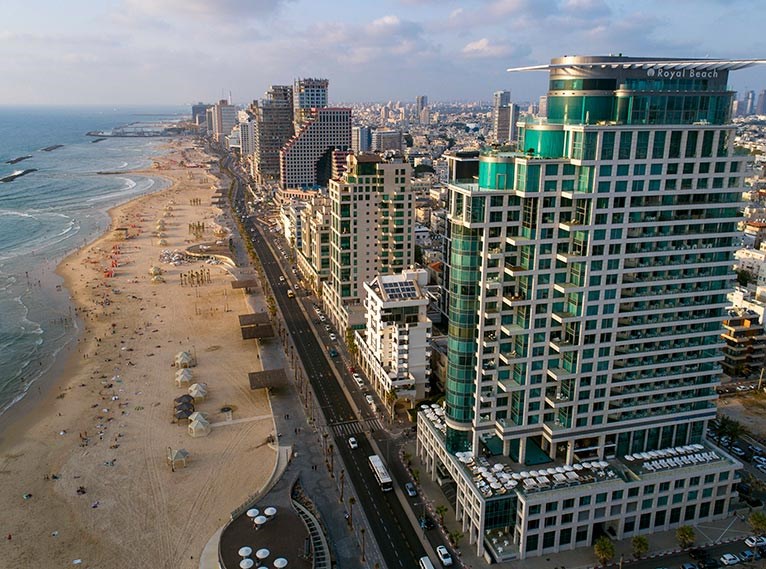
A small place like this takes on fierce intensity. A pressure cooker of ethnic strife baked in varying religious modes. I have not seen the sun in over a week. I work from 9ish at night until close to 3 in the morning, chill by the beach, and then go back to Mughrabi to sleep. I’d walk past the Opera Towers, about a mile north on the tiyeled until I got to Mike’s Blues Bar. I’d shoot the shit with everyone’s favorite Russian-who-wanted-to-be-American Svetlana, drink a beer, eat a burger, pass out a shit ton of flyers to Americans and trash containers, then go back and have Alex buy me a shot while Canadian Dave the manager told me about being a sniper in the IDF. Turned out he and Maya, whom he also called Emma, were old lovers or something for a fleeting time. I really liked the guy. Once he took me to the roof of his building, a great crib on Ben Yehuda Street, and taught me about sniping with a broom. To exhale and then to fire. To always change positions quickly after firing. To wait for hours to get the most bang for your exposure. He told me that sniping is like ancient times when you must remember the face of each woman or man you kill. I told him I wanted to be a sniper in the army, and he just figured the army I meant was the IDF. Lessons were scheduled for once a week, but they only happened two more times. 

I co-write a short manifesto with Maya and Avinadav an,d they turn it into Hebrew and Arabic. I didn’t trust any of my Russians to look at it and did not know any Arabs to trust either. We set up a timetable for me to set up cells in Haifa, Be’er Sheva, and Jerusalem. I spent about three days in each city recruiting. I was to attempt to be back at the Deep on Thursday to check in. Maya would set up a ‘unit’ in Tel Aviv and Avinadav would be the money and logistics man.  

The Organization, as we soon took to calling the thing, was founded in Tel Aviv in late July of 2001. ‘A group without a name was formed to launch a movement without a color’ as our line went. The initial objective of our group was the resolution of the conflict between Israel and Palestine. It was believed that through the creation of a united front among the peoples of the region, a solution could be achieved that might serve as a springboard for a worldwide revolution against American hegemony and the cultural mentality it perpetuates. The principle on which this group was founded was that ‘we are in fact not an organization, but rather individuals becoming organized’ another line from our playbook. The Organization was to serve as a network through which quite different people could unite under common revolutionary goals. Our goals were to be better defined in a soon-to-be-written 10 Point Program for the Revolution in Israel and Palestine. 

I was taking notes from Che Guevara’s manual on guerilla warfare and Mao’s Little Red Book. I was mixing it with populist Israeli rhetoric and Marxist overtones. We didn’t say proletariat. We just said we fought for the rights of the working class. I was getting my training on the fly. So were Maya and Avinadav. The Maya revealed no ideological leanings other than progressive feminism. She seemed left without needing to declare it. She was Spanish by passport and Canadian in upbringing, but she’d been in HaEretz a year and a half. As a club promoter she had half the basic skill set of a revolutionary anyway, the gift of random gab. She took the role of support and advice and begrudgingly accepted a title on our cabinet. She urged me to hammer out a ten-point program before she tried to recruit anyone she knew. 

Andrew Manasseh Butler, aka “Andrew the Hustler”, whom no one seemed to call Avinadav except for me, not even Maya who quite a few men called Emma, told me one night over dinner that Maya and I could be the activists, but he had ‘keep the focus on the mission.’ 

Avinadav and I would talk all night. He lived in a sprawling penthouse near the outer highways and skyscraper towers of the Azrieli center at the edge of Ramat Gan. It was really near the Tel Aviv Light Rail Depot, so I’d crash with him once and awhile at his ‘House of the Rising Sun’ as Emma called it. There were always people crashing on the couches, on the floors and anywhere they could. There was a White rapper from the American hip-hop group Cyprus Hill who had been drafted to play for Maccabi Tel Aviv and then fucked it up somehow. Nice guy, but a huge show boater and big talker. One night he and I picked up these two Ashkenaz cuties and he claimed he was rapping at GSPOT, this huge hip-hop club and could get us all comped. I closed the stand and the four of us walked our asses north to the Sheraton and beyond, only for him to disappear into the club and ditch us outside.  

I talked big too, but I prided myself on delivering what I promised with broads and bullets both. This guy was living on Avinadav’s couch indefinitely. Disrael, the partner at The Deep with the ice in his ear, which he declared ‘It’s a cubit diamond from the land of Zirconium, was the only other rent payer besides Yashara, Avindav’s Yemenite special lady who looked Dominican more than Arab or Jewish. At any given time, there could be between four to seven ‘community relatives’ who’d gotten exiled from Demona for this or that and were living with Avinadav until something came along, or they got forgiven. 

“We are all in ‘back against the sea or a head to the wall country,’ some of us more than others. So when the honorable Prophet Ben-Ami led seventy-odd Black brothers and sisters in 1969 from Chi-Town’s Southside across Africa to build the Hebrew Israelite Community in the badlands of Southern Israel and then when your father gets into a fight with the Prophet over annulling a marriage and your whole clan gets tossed out of the community, but you and your brethren don’t have Israeli or American passports, well fuck the dumb shit, where we gonna go?” 

“How many of you are there?” 

“A couple thousand now. Not one is a citizen here. Ethiopians, they at least begrudgingly call them Jews. We do not even get offered real citizenship. If we the field Negroes, then you got some idea why it’s ‘Waleed and the Lethal Leisure Suite’ time for the Palestinians. It never comes down too hard on more than one demographic group at a time. The others make believe it won’t happen to them. Besides you Ashkenaz, everybody is shut out of something.”    

“Just like in the States.” 

“A microcosm of all the stupid suffering that the wretched of the earth are subject to because they refuse to fight back. I want you to dig inside, Zach. I want you to look into your soul and know that our struggle is doomed to fail like the thousands of other risings before ours if you can’t honestly see the soul you have is of the same worth as the one Hashem gave the Arabs and the Christians, the pagans, communists and atheists like Emma Solomon.” 

“I thought she was agnostic like everybody else.” 

“Nope. She just plays one on TV to get more answers out of you.” 

“Ah. Answers about what?” 

“To judge if we can trust you, a near total stranger, with our lives.” 

“I’m not asking for that kind of trust. I’m asking for help printing propaganda, obtaining safe houses, and recruiting partners. What do my religious inclinations have to do with the mission?” 

“What’s the mission then, Zachariah?” 

“Empower the Israeli and Palestinian people to win a class war against the American backed proxy government of this country.” 

“Which would take a miracle.” 

“You’re not saying…”  

“Who’s Mike Washington?” 

“How did you….?” 

“Emma says you ask him questions in your sleep. Lucky you.” 

“It’s not like that.” 

“I know it’s not like that. The girl’s a goddess, heavenly just to lie beside. But back to Mr. Washington.” 

“I have an imaginary friend who’s a sort of fire walking paramedic with a handgun, something concocted in my head since I was 13 to shoot all the monsters when I sleep.” 

“Gets um all doesn’t he? Shoots straight, never misses, reliable? Brotherly maybe?” 

“Something like that.” 

“You believe in your dreams, Zachariah?” 

“I’d say they confuse more than guide me.” 

“You don’t have a guide in the waking life to translate for you what It’s telling you.” 

“Who? Mike Washington?” 

“Mr. Washington is just a messenger. Your name in Hebrew means ‘G-d Remembers’ incidentally. You ought to toy with the notion of our meeting not being an accident but in fact providence. You ought to meditate on why you’re in the land so young and so early.” 

“One should be careful in presuming their dreams have any more meaning than necessary.” 

“Be as careful as you want. Emma and I are careful as hell. The road to Zion is paved in shit that can get you killed. And there are so, so many things worse than death in the world today. It makes hell quite superfluous to have a world like this.” 

“I agree. Your allusions make me want a cigarette. I think I’m in love with Maya by the way.” 

“With Maya or Emma?” 

“Same person.” 

“Are Sebastian and Zachariah the same person?” 

“Emma told you my real name?” 

“Yeah, but I learned it again going through your pockets when you slept over last time. We must ensure everybody is who they say they are. Got me?” 

“Zachariah’s me trying to live up to the expectations of Mr. Washington.” 

“Complicated. Sounds like programming. Being that you haven’t fucked her, but you guys have rolled up like kittens and cuddled three times in the past week on some pretext. You are in love with Emma. What is it to you to hold that girl?” 

“It is to remind myself I’m a good man whenever I’ve been tested. Otherwise, she would not want me near her.” 

“That’s part of it. What else you feel?” 

“That I remember what love felt like the first and only time I felt it in my life.” 

“Whatcha gonna do about it?”  

 “Why so you can tell her?” 

“Information only flows one way around here.” 

“Nothing at all. I can fall in love and have family in the world to come. I make a better fighter than a lover anyway even though I try and kid myself otherwise. I’ll tell her how I feel before I cross over to the other side.” 

“That’s reassuring to hear. It’s not romantic or right, or fair because you very well might give her the love, she needs to restore her black heart. But I need two lieutenants who can be objective about what we have to do. You want to seize one of the most important spiritual hot zones of the planet there are some time-honored ideas about infrastructure and discipline you would do well to embrace.” 

“Yeah. Go on.” 

“The bottle makes you play the fool. The smokes make you sick and will kill you before their bullets do, and a revolutionary gets only one love, his people. Regulate your vices as soon as you are able.” 

“You want me to quit smoking and drinking?” 

“And stop being promiscuous.” 

“You and Emma are gonna do that?” 

“Of course not. Everyone gets to be a hypocrite except for you.” 

“Why the fuck is that?” 

“Because you’re gonna be a mouthpiece for something massive. If you’re willing to have a message, get you crucified, don’t let some run of the mill garden variety sin degrade your credibility.” 

“You keep alluding to me on some God tip, but we don’t know if God wants any of this. You’re saying you think Hashem got me all the way to the Promised Land to help you and Emma form and lead a revolutionary army?” 

“If I have to dignify that with a response, it is really gonna take eleven more years.” 

“Eleven more years?” 

“People think 2012 is when the world ‘ends.” 

“The world doesn’t ever end.” 

“If the masses were such great political scientists and theologians, we probably wouldn’t have left the gardens to begin with.” 

“Why 2012?” 

“It’s the Mayan calendar thing. It’s in the collective conscious.” 

“You were quick to help me, Avinadav. Why is that?” 

“Every community gets a few prophets right before tumultuous times. All the holy books say so.” 

“I wouldn’t be so fast to construe dreams with prophesy.” 

“I get dreams too. And so does Emma. So does everyone, but only some people get dreams that give um ideas about what Hashem has put them here to do. I believe in the things you say Zachariah; and your soul is eons older than your years of life. Let’s just hope Hashem sends some reinforcements because this plan of ours will not go unnoticed for very long.” 

*** 

So, we built the thing, cobbled it together based on the various books we’d read and life experiences we’d had. The Organization, whom the Israelis called Ha Irgun, was structured to be a constantly evolving effort based upon an ongoing dialogue between Avinadav and me with Emma making corrections. It was the amalgamation of our three quite different viewpoints. Our goal was for the Organization to be composed of autonomous cells throughout the Middle East engaging in political work, community support, business and military operations, and whatever else proved logistically expedient to our ends. We had all done a bit of research on all this before we met. Avinadav made himself Chairman and Minister of Finance. Maya was appointed Defense Minister. I was elected to serve as the Minister of Operations handling logistics and recruiting. We set up a 12-person Cabinet that would command hundreds of 3 to 5-person cells in different communities across the country loosely organized around the Ten Point Program, under the leadership of the Cabinet. Maya and I authored the first statement that we would print glossy club flyers with a grey fist. 

We selected the color grey as our standard because it was no color at all, but many shades of understanding and identity. We called our manifesto-in-progress the Little Grey Book. It began simply:  

“The Organization will not stop fighting until all people on this Earth are free.” 

“Go big or go home.” We argue about the name for a whole night then figured “what’s in a name?” We all had a couple of names, so why not the group? “We were organizing. It was an organization.” The word for that in Hebrew was Ha Irgun, which sounded officious enough to me and had been the street name for one of the original Israeli independence groups. So, we ran off stacks of these little grey cards with a black fist and a little call to arms.  

______________________

MEC-A-1-S-XXVI

S C E N E (XXVI) 

بادرو 

BADERO, BEIRUT, 2024 ce 

*** 

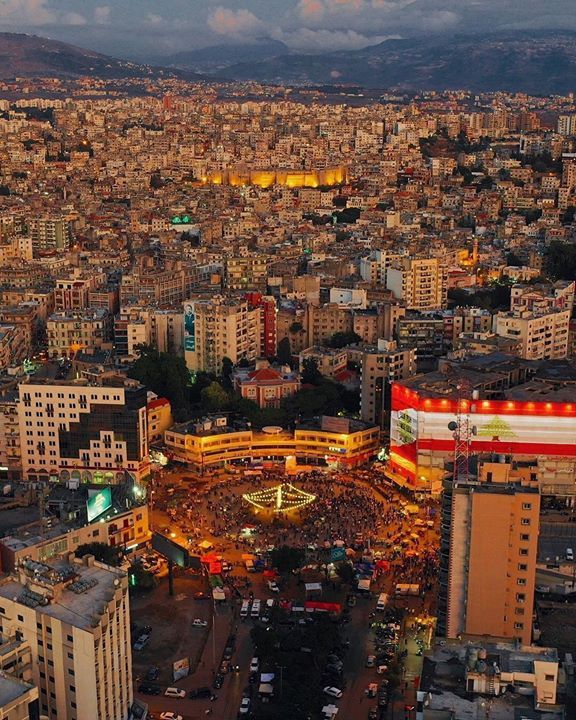
As night falls over Beirut, the city takes on a different persona, one marked by the deep haunting echoes of its turbulent past. For beneath the veneer of beauty and new trapping of prosperity lie the scars of decades of war, a reminder of the fragility of peace. The newly built and now mostly empty skyscrapers rise right next to the bullet pocked derelicts of the civil conflict.” 

In the dimly lit alleyways of the city’s forgotten southern neighborhoods, the ghosts of war linger, their presence palpable in the crumbling facades of bombed-out buildings and bullet-riddled walls not yet reclaimed or dragged piece by piece away. Here, amidst the rubble and debris, life struggles to endure, a testament to the resilience of the human spirit. The main southern districts, the so-called Suburbs; are dominated by Hezbollah. They function in an adjacent, but different space and frequency. Yellow flags and posters of bearded clerics demarcate the southern Shi’a zones from the Sunni West and Christian East. The names of these districts are called the Dahieh, or Al Dahiya. They are some of the most densely populated areas of Lebanon. The Dahiya Doctrine is the explicit Israeli military strategy to maximize destruction of civilian infrastructure when at war in Lebanon. Going west to east though Al Dahiya the districts are Jnah, Gobeiry, Bourj el-Barajneh, Haret Hreik, Chiyah, and Hadath. 

In the heart of downtown Beirut, once the epicenter of the city’s vibrant nightlife, the scars of war are hidden beneath a veneer of modernity. Here, sleek skyscrapers rise from the ashes of destruction, their glass facades reflecting the glittering lights of luxury boutiques and trendy cafes. But beneath the surface lies a city still grappling with the wounds of its past, a city divided along sectarian lines, where the specter of violence looms large. Here, in the shadows of towering skyscrapers, communities remain fractured and distrustful, their wounds slow to heal. 

And yet, amidst the rubble and ruins, there is a glimmer of hope, a belief that Beirut can rise from the ashes and reclaim its rightful place as the “Paris of the Middle East”. Or at least “the Switzerland”. For despite the scars of war, the spirit of Beirut endures, a beacon of resilience and defiance in a troubled region. The graffiti on all the walls give encouragements; “We are the miracles” some reads. As the night stretches on and the city partially sleeps, the haunting echoes of war fade into the darkness, replaced by the promise of a new dawn. And in the heart of Beirut, amidst the chaos and contradictions, life goes on, a testament to the indomitable spirit of a city that refuses to be defined by its past. 

*** 

ADONAEV  

I walk south into Badero navigating toward the high-rise silhouette of the Smallville Hotel. A city block sized blue glass monolith where the good part of town begins to become the working man’s part of town. Wider streets, less abandoned baby skyscrapers. More low-lying brutalist architecture. 

Let me tell you about my Comrade Anya Soledad Druze and my old slow burning flame Ms. Yelizaveta Alexandrovna Kotlyarova. These are two fierce, but highly sentimental Slavic women I used to know, as they say. Who are both as it happens, now living in Beirut. Or, they were here just before the 2014 chaos, and they disappeared from plane sight during the Isis War. Remains a mystery to solve how far underground Anya Druze went. Yelizaveta, however, might be a hostage somewhere. Or some leftover stuffed property. Not one hint of sentimentality! Without a hint of sentimentality he must proceed, for the Jew, was not to be distracted by women or ghosts of women.  Bashir says both are still in Beirut, so both should be brought into the great game plan, that will soon be revealed with fire. 

“That lady can shoot straight and fly a whole ass helicopter,” says Bashir, “go look her up and bring her back on the otriad.” 

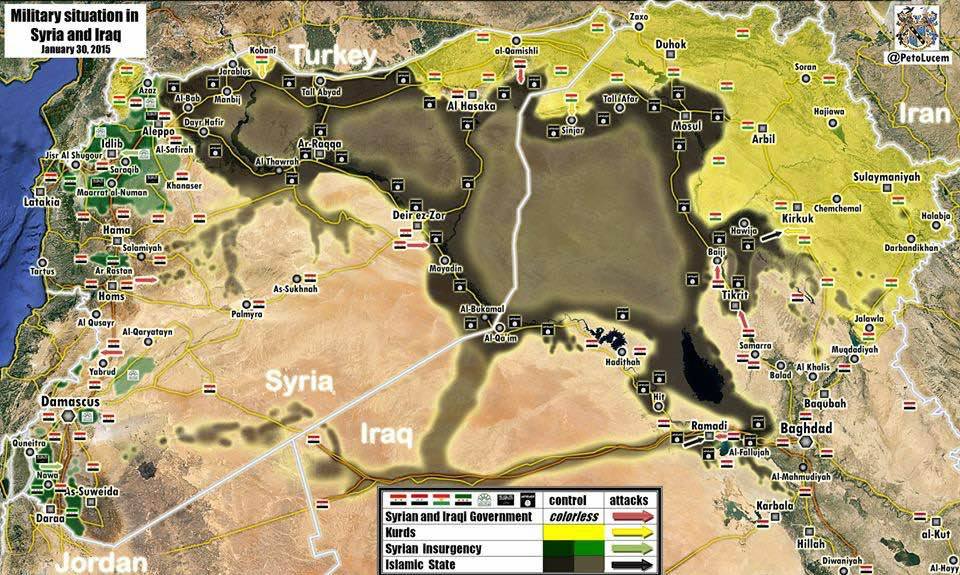
“The Isis War58” was between 2014 and 2018, when everyone, and I mean almost everyone59, put aside their differences to kill every single person in the vile manifestation called “the Islamic State of the Levant and Sham”. Never in recent history had such a grouping come out of nowhere, won battles so miraculously, and then proceeded to make enemies out of just about anyone on earth. Anyone and everyone. Well besides from the Mongols. These were Sunni Mongols; blood thirsty and insatiable. No one on the outside can really grasp the terror they have caused. How close they might have been to bringing back the Caliphate. Now, in 2024, the Isis, called by Arabs Daesh are a threat largely vanquished but in 2014 they credibly threatened to lay siege to both Baghdad and Damascus, and were on the deadly march in every direction. As if fulfilling a Qur’anic prophecy. 40,000 plus foreign Sunni fighters showed up to fight in the Jihad. They seemed unstoppable until everyone united to stop them. 

Anya is a Polish convert to Sunni, really Sufi Islam and she rides motorcycles and can pilot a military or civilian helicopter in all weather conditions. She was married to a sniveling Columbian professor type who used to cheat on her all the time, and he neglected both her sexual and spiritual needs. He even, mostly ineffectually, hit her just once, which was enough. She broke his faggot nose. She later fled her flailing marriage, quit her municipal job, and ended up with the White Helmets60 during the Syrian Civil War. At least that’s the part of the story she told him about. Had she managed to fight for Rojava I’m sure her whole life would be different. The parts of the war she was in changed her. She was there when Aleppo was barrel bombed and leveled by the regime. 

“You can probably find a lead for Anya at the Smallville Hotel,” Bashir said. So that something drew me to the roof bar of the Smallville Hotel in Badero, but the bar itself is closed tonight. Just looking inside somewhere, I think I have been. The night rain batters the glass on the roof deck. Anya is not here. 

ADONAEV  

This hotel doesn’t seem to have a helipad, but I’ve seen her land on it. I’ve seen a lot of things that might not be real at all. This isn’t my very first rodeo in Beirut, but every trip seems like riding an unbroken horse. Every experience seems fourth dimensional.  

Wait, no, hold on. I’ve never been here before. Getting my footing on something very familiar though this time. As if in another life, another reality I’m a virtual Beirut regular. 

Anya would not be amused by such fourth dimensional thinking. 

Yelizaveta is Eastern Ukrainian, also a part Jew. She did a study abroad at American University Beirut, she got taken hostage, carried off to some badland compound Der Ez Zor, and was possibly gang raped or something even more horrible. Kept in a cold dark cage. At least that’s what Marty had told him. Well, he certainly hoped not, but it was a real possibility out here. That’s probably par for the Isis course, to be honest with any non-Arab, non-Sunni woman laid hands on back then. They were known to slit throats, cut off heads, burn people alive, and take sex slaves. During “the Isis Wars’ ‘, a lot of terrible things happened to mostly innocent people in the name of Allah.  

“She is a Marine Biologist by training. She still probably hates me very much for asking her to come teach me out here. What were we teaching them? That is what got her captured anyway. Some part of that is tragedy, some part is the truth.”  

I am not drinking tonight, but this is probably all still in my head. Yelizabeth isn’t in Beirut. She was never here or there at all? Or she is out there in the rainy dark ready to shoot me in the head with a rifle. Whose memories are these and how did they come into my head? 

CONCIERGE  

My sir, the bar is closed. 

ADONAEV  

My understanding, my “overstanding: from the deck of this hotel roof bar is that she is out there somewhere in the south of the city. Hiding out in a neighborhood called Chiya. This is a lawless impoverished place in the Shi’a-controlled zone. I know she is cunning and has a rifle. 

Why do I feel like I have been to this Hotel Bar before? I can’t stand it!  Why does everything feel like Deja vu? Looking out the Smallville Hotel roof bar, although it is closed, I blagged my way in as a money-flushed foreigner. As this is an “International Hotel” in Badero, which is in the Christian part, the southmost still mostly Christian district of east Beirut. The night is cool and raining hard then calmly. I wonder if I’m looking in the right direction, which is South. I smoke a Ceder, indoors of course. The concierge just looks highly impatient. The bar is closed. I wonder if she can shoot me in the heart with her rifle from her vantage point. I imagine the faceless man laughing at me inside. I investigate the bright soviet style housing blocks. The bar on top of the Smallville is very well stocked for the NGO workers and diplomatic staff having a day off. 

CONCIERGE  

My new esteemed friend, the bar is still closed. You must at this time return to your room. 

ADONAEV  

Yelizaveta is out there! I can feel her putting her rifle on me. Ready to blow my head off or just maim me? She is that good a sniper.  That I know. I remember when we came here together for the first time in the 1980s, even though I had never been here before. And we were both born in the 80’s. 

So how could you have been here in the 1980’s,” says Bashir in his head, “you’re not so old.” 

Madness is taking hold of a fragile, often un-Kosher mind! Why did I rent three separate rooms, at three different hotels? Seems either subversive or just wasteful. He has a room at Biophilia, a Room here, and a room at the Royal Tulip Tower. Are you laying a trap or are you falling into one? No! I have been to this hotel roof bar before; with her. I have seen Anya land a helicopter here. Which is no small thing. Get your head screwed on straight. Says the inner dialogue. 

CONCIERGE  

My sir, the bar is still very much closed. 

Rain beats on the windows. I scan the sky for a chopper that isn’t coming. I look out for a rifle burst that never fires. I see the faceless man laughing at me in silence. Smoking a cigarette and mocking me also in his silence. Hating my presence with all his very being. Waiting for me to fail miserably and die for nothing. Or step lively and then blow my fucking brains out. Or become something very dangerous in a pop-off blue purple smoke. 

MEC-A-1-S-14

S C E N E (XIV)  

بيروت 

Beirut, Lebanon, 2024ce 

*** 

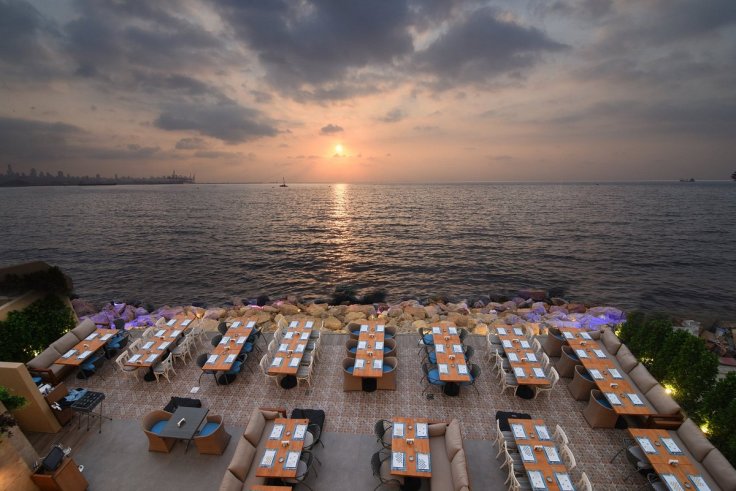
The streets of Beirut throb with life as the sun sinks into the Mediterranean, casting the city in bruised shades of gold and rust. The air is thick with the scent of roasted meat, cardamom coffee, sweat, exhaust, and the faint sting of tear gas that never seems to leave the city entirely. Vendors shout above the ceaseless din of traffic, cars blaring horns like beasts competing for territory. Somewhere a muezzin’s call echoes, almost drowned by the wail of sirens far off. Beneath this living chaos, in the belly of the city, another kind of chaos is being written. 

In a windowless room reeking of smoke and damp concrete, they gather. Men with hard faces and dead eyes, their features obscured by shadow and grime. Among them sits Kaveh Atatable Ashuri, the architect of nightmares, a man whispered about in markets and barracks, the kind of name spoken only when certain no informant is listening. His voice cuts through the haze, low and deliberate, each syllable weighted like a bullet: “We need something big. Something that will bleed fear into their veins. Something that makes the fat cats choke on their own silk ties.” His eyes gleam with fanatic calculation. “We will take the marrow out of their bones.” 

For hours they argue, voices clashing like knives in the dark. Options rise and fall, names of potential targets whispered and dismissed. Finally the plan hardens: Banque du Liban et D’Outre Mer—BLOM Bank—the fortified jewel of Beirut’s financial elite. Its reputation is myth, its security described in the same reverence as fortresses. To strike it is not simply robbery. It is sacrilege, war declared on the city’s gilded arteries. Kaveh smiles faintly when the decision is made. “We will make them watch their walls burn,” he says, and no one doubts he means it. 

Dawn bleeds into the city on the chosen day, but by afternoon Beirut feels wrong. An electricity crackles in the air. In Mar Elias camp, whispers crawl through the alleys: something is about to happen. By evening, the storm arrives. Gunfire erupts in the heart of Ras Beirut, splitting the noise of the city like lightning splitting a tree. Masked figures pour into BLOM Bank’s marble entrance. They move with the clinical precision of soldiers, but their violence is savage. Guards fall before they can even raise weapons, throats opened with knives, skulls cracked by rifle butts. The robbers’ boots trample across sacred lobbies of finance, glass shattering, marble streaked red. 

Inside the vault corridors, silence reigns only for a moment before steel doors scream under shaped charges. Smoke, fire, alarms howling like banshees—yet the men move in rhythm, cutting through locks, dragging sacks of currency into waiting duffels. Piles of lira, mountains of paper that once symbolized wealth but now barely equate to dust. A hundred million notes that might buy a family dinner, or might not even cover bread tomorrow. Still, the symbolism matters. The vault is raped, and the city bleeds. 

Outside, the streets convulse with panic. Sirens converge. The robbers burst from the bank like specters, masks reflecting gunfire, their weapons barking indiscriminate death. Bullets stitch the air, shattering storefronts, chewing flesh. Bystanders scatter, trampled beneath stampeding feet, screams colliding with the metallic staccato of automatic fire. Police cars skid to a halt, sirens wailing, officers leaning from windows only to be cut down in sprays of red mist. Beirut becomes a killing ground, traffic frozen, engines burning, glass raining down like holy ash. 

The robbers leap into their getaway vehicles, tires shrieking as the chase ignites. Engines roar through clogged streets, bullets chasing them like hounds. They weave with animal instinct, ramming aside cars, clipping buses, sending metal shrieking against concrete. The police follow, relentless, their guns blazing from windows, sirens a constant scream. Every intersection becomes a kill zone. A taxi is ripped open by crossfire, passengers spilling onto the street, bleeding and howling. A child screams for her mother while cars burn behind her. Beirut becomes a theatre of the damned. 

Kaveh drives with one hand steady on the wheel, the other gripping a pistol he fires casually out the window at anything in pursuit. The man laughs, a hollow sound that chills even his comrades. “They cannot cage us,” he snarls, his teeth bared, eyes wide. The others are silent, faces pale beneath their masks. They have crossed the threshold, and there is no return. 

They break from the main road, plunging into the cramped labyrinth of Mar Elias camp. The alleys devour them, walls pressing close, the city replaced by a hive of cracked concrete, hanging wires, and desperate eyes peering from darkened doorways. Here the state’s grip falters. Here, history’s refugees scavenge survival. But the camp is no sanctuary for outsiders. 

Gunfire erupts from balconies. Youths, half-grown boys with old Kalashnikovs, rake the convoy. Bullets spark against walls, tear through tires. Residents—furious at the chaos invading their fragile world—hurl stones, Molotovs, even boiling water from rooftops. The robbers fire back, mowing down anyone who dares raise a hand. Women fall in the alleys, men clutch bleeding stomachs, children scream. Smoke coils above the camp like a funeral shroud. 

But the robbers push through, savage, desperate. Their bags of cash leak notes into the mud, green and red bills trampled beneath fleeing feet. Word spreads at the speed of breath: money has come, money fallen from heaven into the camp. Men and women surge into the streets, clawing at the scattered notes, fighting one another with teeth and nails. Hope, hunger, greed—all combust in an instant. 

Through this human tide, the robbers claw forward. They follow Kaveh into a final narrow artery, an alley that twists like the throat of a dying beast. Behind them, police vehicles crash into the camp’s periphery, soldiers pouring in, rifles raised, vengeance in their eyes. Ahead, the alley opens onto the city beyond, the light of freedom like the last candle in a collapsing room. 

Engines roar. Tires spit mud and blood. They surge toward escape. Behind them, Beirut howls—a wounded city, a city watching its own entrails spill into the gutter. The robbers burst free of the camp, their bodies slick with sweat and powder, their eyes hollowed by the violence they have unleashed. 

They have escaped—for now. But the hunt has only begun. Beirut will not forgive. The city will choke them in its labyrinths or swallow them in its endless wars. They vanish into the night, leaving behind money soaked in blood, a camp torn open by greed, and a city reminded that fear is the only true currency. 

MEC-A-1-S-12

S C E N E (XII)  

نيو جيرسي 

Raqqa City, Syria., 2017ce 

We enter the mosque compound at twilight, though twilight itself seemed reluctant to fall. The call to prayer still echoed faintly from the minaret, a broken ghost-sound caught between heaven and stone, though its muezzin had long since fled or fallen—whether butchered or swallowed in the tide of war, none of us knew. Dust hung heavy in the air, congealing with the sharp tang of gun oil smeared across my hands and the dried blood caked beneath my fingernails. We moved with the YPG unit like shadows masquerading as men, our boots whispering across sacred carpets long since ripped open and blackened by fire. The mosque had been a sanctuary once; now it was a slaughterhouse with gilded walls. 

They were waiting—Daesh, black-clad, statuesque, crouched like carrion birds behind shattered columns and prayer-stools. Their rifles rested on Qur’ans, defilement turned into ritual, eyes void of mercy, void of thought, filled only with the endless hunger for death. The first shot did not thunder; it whispered. Then the chamber of the mosque exploded in carnage. Muzzle flashes stuttered like lightning storms against the calligraphy-laced walls, sacred verses flickering with each round, the names of God trembling as our blasphemies carved themselves into stone. I returned fire without feeling, a machine in flesh, squeezing the trigger again and again until the rifle jammed, heat and smoke choking my lungs. I collapsed behind a marble pulpit as though it were the ribs of some ancient saint, hoping the stone would hold while lead sang against it. 

Beside me, Heval Kamal was struck. The bullet punched through him with the elegance of inevitability, a red flower unfurling across his chest. His lips parted, a scream forming but drowned in blood, his lungs drowning him quicker than the enemy could. He fell without grace, spasming, his eyes begging for air, for rescue, for God. I did not mourn. There is no space for grief in the iron rhythm of battle. My hands tore his rifle from his still-warm grip before his last twitch had passed. Forgive me, brother, I thought, though I spoke nothing. Your bullets are more useful than your prayers. 

The dome above us wailed with fire. Smoke poured through holes carved by rockets, shafts of dying orange light filtering in like the fingers of a cruel deity. I saw one of them—young, beardless, his face twisted between terror and rage. He couldn’t have been older than nineteen. For a heartbeat we locked eyes, and I saw a cousin, a neighbor, a boy who might have played football in some forgotten street. Then I shot him twice in the chest, precise, quick, watching him fold against the mihrab as if surrendering into a lover’s arms. His blood smeared the sacred niche where thousands had once knelt. I felt nothing. Or perhaps I had felt everything so many times that my soul had calcified. Somewhere back in Raqqa, or maybe in some trench months before, time had stopped mattering. The clock rusts inside your chest when every day is measured in bodies. 

When the shooting ended, silence staggered back into the mosque. It came limping, dragging behind it the stink of powder and iron and meat. We walked among corpses like pilgrims at a grotesque hajj, our rifles drooping with exhaustion, our boots splashing in what once passed for men. I pressed my palm against the bullet-pocked wall, fingers tracing Arabic calligraphy shredded by shrapnel, and whispered an apology to no one in particular. To Allah. To the dead. To myself. To whatever remained listening in this void where even God had turned His face. The only faith left in that ruin was the brotherhood of ash-coated, bone-weary men too stubborn—or too damned—to die. 

Every time we crawled out of a firefight in Rojava with our skins intact, a price was exacted all the same. The internationals especially carried it raw in their eyes. They had just killed someone, maybe for the first time. Or had watched a man they’d eaten bread with choke on his last breath. Or maybe their bullets had torn through someone who wasn’t strictly a combatant at all, just a body caught in the blind frenzy of battle. Some had been awake too many nights in a row, fueled by cigarettes, adrenaline, and the conviction that tomorrow might not exist. After their first blood baptism, they drifted for days in a fugue, phantoms wandering the outpost. Some said nothing, as though words were another luxury they couldn’t afford. Others muttered nonsense, speaking in half-dreams, voices cracking like children’s. 

“He’s lost the plot,” Heval Erdal, a British comrade, used to mutter, shaking his head at those glassy-eyed stares. He’d laugh when he said it, but the laugh always caught in his throat. The plot was easy to lose out there. 

Years later, after the fires of Rojava burned down to embers, those who had survived staggered into other wars. Statistically, one in ten internationals died on that soil, their bodies buried in Kurdish earth far from the countries that had birthed them. Four of ten died later, either by their own hands—noosed, overdosed, revolvers pressed to temples in kitchens at dawn—or vaporized under Russian rockets in Ukraine. They migrated from one doomed battlefield to another like moths drunk on the flame, unable to live in peace, unable to stop killing, unable to stop dying. The war never left them. It only traded flags. 

MEC

The last phrase I hear was selected for me: “Leave the dead to bury their own dead.” 

I am on my knees not far from the mouth of the well. The scorched earth of a once lush oasis, the WADI FARIN, is a battle torn hell awash with pock marks from artillery, countless arrows protruding from the ground, and, of course, drenched in oil. Mike Washington lays next to me breathing, face down in a puddle of his own blood.  

The army of the demon clown does not draw much closer. The face of the clown still flickers on a several mile high screen. The horsemen have black bags on their faces or what looks like masks of flesh with nothing underneath but TV static flickering from their eyes, souls long departed. They stand at attention moving not even a dull twitch.  

In this silence I watch Mike bleed to death. The arterial red pool collects underneath him soaking through his duct taped grey bandages. The pistol hidden in his gut must have caused him incredible agony. He bellowed in pain when I dragged him out of our foxhole. 

The horsemen stand over us less than fifty meters away. Their legions surround us and the well in a great enveloping circle of thousands of zeppelins and assorted craft. The deliberate lax and lazy apprehension is perhaps just a part of its game. 

We are in a dead place. Only one day from the end of a four-year journey, we are beaten. Like in a good Western or tale of knights, they had the girl, and we were surrounded. No reinforcements were coming.  I remember something Mike once told me about the early days of his rebel career, when he received his first paramilitary training in a cave complex deep in the hills of Judea. A reincarnated soul possessed with the ghost of the Chinese general of Sun Tzu was instructing the fighters of Bar Giora in the ancient arts of spear craft and asymmetrical war. 

The oracle had enchanted a young boy whose blood made him able to receive the spirits of the dead. The oracle put Sun Tzu within the boy and the boy honed the irregular Hebrew forces of several thousand untrained farmers into the guerrilla army Simon Bar Giora used to smash Roman legions. Michael had served throughout the three Hebrew Revolts following the death of the man Jesus Christ. 

He told me he was only 17 when the war against Rome began. The death of the man Yeshau Ben Yoseph was taken by many to be the sign of the end. The man Jesus Christ, born Yeshua Ben Yoseph became a symbol to many throughout the Roman Empire that the iron heel of Caesar could be cast off. The Province of Judea in 60 AD was the first to try. Michael served as an officer until the very end, through 57 years of grisly desert war. In the third round of Hebrew-Roman fighting an entire legion, the XXII Deiotariana, was completely wiped out. The Second Temple of Jerusalem was razed and every last Hebrew man, woman and child were deported as slaves into exile.  

“The ghost of the Chinese general told us ‘Death to traitors and spies.’ The first we slew were those in our midst who were pawns of Rome. The tavern owners, our corrupted class of priests, our foremen and merchants doing business with the empire, the harem proprietors, the spies and turncoats. The ghost of Sun Tzu taught us that many of our people never thought for themselves, had forgotten their people to fill their bellies and pockets and were more our enemies than even the hated Roman occupiers. He called them the living dead, soulless animals that consume but are no longer human. He taught us to cut off the heads of these zombies, to wash the streets with their blood. He taught us these zombies were the enemy within, that which consumes its own kind.” 

Mike continues with his story: 

“I was there surrounded at the fortress of Masada in the first revolt, one of seven to survive the ordeal. They cut off our water, then forced our own people to build the ramp up the mountain. We slew those zombies by the thousands. When we ran out of arrows we threw rocks upon them,” he told me. 

“The thing about zombies, or even these horsemen without their own heads, they take their orders not from a god but just one man. Kill a million horsemen they just keep charging. Killing a zombie just removes an immediate threat to your survival. But if you ever get to fire at a Caesar, you’ll only get one shot. But if you hit Caesar, hit him right between the eyes and you’ll bring an empire to its knees. Few men think for themselves. They mostly just follow some tyrant.” 

As I sat there on the ground, on my knees watching my companion die, I remembered these words. The old, fat clown was Caesar. To him all human suffering was a joke we brought upon ourselves. A grinding of gears and spiraling of machinery from the grandest zeppelin above let me know the clown was coming. A great catwalk of warped metal and tubing was twisting down at me like snakes, descending to the dune directly in front of me out of these Babylonian atrocities. The screeching of the metal ramp did more damage than the air raid sirens above us. The ramp hit the oil-soaked sand with a mighty thud. I still couldn’t see it. The ramp towered into the bowels of a great blimp above us. It seemed as if the other craft had begun extending docking mechanisms intertwining them all into a great aerial city. They intended to dock with Zion, to put out the many, many lights and send something foul and wicked to my world.   

Mike was dying. He squirmed on his side bleeding heavily from his gut. He spasms in pain but does not cry out. 

As the dark thing approaches a quiet feel of creeping death take hold. Slowly and deliberately, it moved down towards us. It had gotten fat feeding on pain. It held a gold chain in its hand with a green tube attached to something behind it we could not see. It wore a regal white gown, a crown of thorns and white golf shirt. Its red face was circle with a leering smile painted in red. Its eyes were blackened orbs. Its massive spider limbs crept out down the plank. Its body pulsated under the gown rising and falling like a serpent. As it got closer the dark horsemen all fell upon one knee.  

‘You’ll only get one shot,” Mike had said to me.  

I knew that as soon as it got within firing distance. As it swooned over us to mock us, maybe shit on our head or piss on our wounds, I’d tear the golden pistol from my companion’s dying chest and shoot Caesar between the eyes. The rest of the things would crumble. The horsemen would fall one by one like dominoes. The zeppelins would fall and be rendered apart like the mother fucking Hindenburg.  

In theory. But the best-laid plans and theories of angelic gunslingers and mentally ill young men . . .  you know how the saying goes. Mike coughs more blood out on the sand when he sees it. A yank of the chain and she steps out in front of him. She is dressed in white, a burka nikab and a miniskirt, a miniburka. Her slender fleshy legs are exposed and nothing else. You could bend over to fuck her in the ass without ever seeing her face. I see her green eyes. She’s wearing makeup under the veil. The shirt is high like a burlesque show whore. The gold chain is around her neck. The green tube descends into her swollen pregnant belly. My nemesis is as cunning as we. 

Mike’s sockets show no anguish, but his face is clenched in fury. But he’s too far gone to have to make the decision I’m about to. I see the redheaded girl tremble, a nervous flinch. She traveled with us too long to not suspect that we have some plan. ‘Knock around rebels for god’ like us cannot be brought to heel. But what makes her shudder is the look upon our faces seeing her like that, seeing her tied to him and knowing we can’t do a damn thing. The best laid plans. The tube goes out the clown’s beating exposed black heart winding down into her belly through a port and likely into the child.  

When the creature addresses us it sounds like nails dragged across a chalkboard. It speaks in images. 

“W,H,E,R,E,. IS,,, Y,,,O,U,,R; G,,O,D,, N,,,,,,,,,,,,,,,O,,,W?” 

As it speaks I see buildings burning shortly in the City of Many Many lights. I see blood in the streets. I see its towers falling in flames. 

“KIL,,L me wil’ yo,,,,,,,,,,,,u? You could try.” 

Its voice makes me cry blood. Mike has no more eyes with which to cry. 

“I am the gr,,,,,,,,,,,,,,,,,,,,,,,,,,eat wooooooooorrrm. I aaaaaaaaaaa,,m the rot. In the darkness I feast on things which learn to kill each other.” 

“WHA,,,,,,,,,T you do h;e,,,,re in the de;sert has had no meaning. We distracted you and ma,,,,,,,,,,,,de you si,,,ick like us.” 

WHERE IS YOUR G-D. IT HAS ABANDONED YOU ALL TO EACH OTHER. I am the w,,orm ,th,a,t, ,f,eeds on the dying; YOUR KIND is a flower of death. EAT OF MY TREE.” 

The thing grows twice as big, its torso expanding out of the arachnid frame of limbs, a worm, a tree of death. The red-haired girl cries from behind her veil. I know Mike Washington says to kill Caesar. He ended his life and broke his wings for me to kill the clown. But what use is killing Caesar when it is Caesar’s happiness to die. It sits leering, its black heart exposed. I could kill the beast but not save the babe. The babe will be polluted with the foul things dying breath. If this world is a dead world, then I am death too. In the place of the whale there is hope. I’m going have to throw the baby out with the bathwater. It thought us callous, but perhaps not hard. I tear the hand weapon out of my dying friend’s chest. I splatter open his abdomen into the sand. The gold pistol barks three times in my hand. The red-haired girl receives a bullet in her head, in her heart and in the heart of the babe. The babe with the power. 

The thing screams its wretched screech. It’s bellows blow down its legion. The horsemen spasm reality shudders then stand suddenly still.  

All around me is the scene of a great war put on standstill. I see the clown king reeling on its tentacles and limbs screaming, now frozen. I see Mike quite dead, splattered open, frozen. I see the red-haired girl who we protected for a whole year, whose baby was named Hope. We were close to helping her cross over. The white miniburka is stained in blood. I have just killed her and her unborn child. Frozen too is the fleet of zeppelins merging above us and the army we held off from a well for half a day the now scorched WADI FARIN. 

I am SCUD the disposable assassin. I am G-d’s Knock around rebel. 

But from the hills above the wadi I see two small things move. In addition to me they are the only pieces of this desert Guernica that remain unfrozen and ambulatory. I recognize them at once and am glad. These are my two friends who have been missing for eight years. They stand less than one foot tall and move about on furry, weathered limbs like plush beanbag animals. They have the appearance somewhere between bears and Klansmen. One is furry and whitish, the other is one furry and grayish. They have black marbles for eyes. I had thought them long vacationing in Mexico. 

‘Black Bear and White Bear?” I ask amid the carnage, still on my knees still clutching a golden handgun. 

White Bear has a voice like a smurf filled with glee. This glee-filled voice says to me, “Looks like you found the golden ticket to Palestine.” 

Black Bear, called such even though he has a grey coat has a voice like a Negro Dick Tracy.  

“Pedro thanks you for your going away present. He and his family are living in Los Angles now. White Bear and I joined a South Central Chicano street gang. Pedro’s girlfriend thinks I’m cute, but Whitey could use some new fur.’ 

“Such talk is fucking ridiculous Black Ass. Good to see you, old buddy. Looks like you’re still loose with the personal possessions. That girl is dead as a doornail.”  His little voice is sickly cute. 

“I didn’t teach you guys to curse.” 

“The mother of the little Mexican boy did. We can’t fucking stop now,” explains Black Bear. 

The two bears waddle up to me and I pick them up. They’re a little heavier than before. They also move, talk, and appear a little alive. I remember that the first time in my life when I sincerely cried and felt down and out and over-powered with sorrow was when I left these two bears in Mexico at the age of eight. Nine years later they walk about and spill foul language like milk and cheese. 

“How now, Brown cow?” White Bear says to me. “I know you liked that girl, but you did what had to be done.” 

“You did what needed the doing,” says Black Bear. 

“I mean, you can’t kill the devil in you,” states White Bear matter of factly. 

“What’s that supposed to mean?” I almost sob. 

From out of nowhere White Bear produces a remote control. With a click he turns off everything. One click and its just Black Bear, White Bear, me and the universe like back when I was a little boy.  

We are lying again in the strawberry field. Black Bear hands me a cigarette. The bears grew up rougher in Mexico. “Where did you guys go?”’ I asked a little more calmly now that the battle has receded in the distance. 

“You were growing up. You needed a role model, not playthings for reckless adventurism,” says Black Bear smoking a Noblisse. 

“Good adventures went on though,” I say reminiscing. For the first time I can remember a lot of my childhood. It glows like a warm memory of the two little bears. 

“Remember the Mohegan Dunes near Montauk?’ asks White Bear. “Do you remember when I showed you the rocket landing point, where the spaceship emergency docked and dropped off your coding?” 

I remember a hastily constructed spaceport in the sand dunes of Eastern long Island. I remember playing a vast game of capturing the flag brought there by the Pathfinder’s Day camp. White Bear and I went off to hide and unearthed a spaceship buried in the sands.  

“Almost,” I say.  

“Remember when you took me to that Art Barge one summer and in the sub basements of the sullied ship we found the endless maze of coffins, the great leaders of the world cloned and frozen for the coming showdown between man and his nature? The Art Barge was the mouth of a bunker, which contained part of salvation within it. It contained a frozen pantheon of leadership for when the world turns finally and fatally upon itself.” 

“I remember the Barge, at least,” I mutter. “It was near a long string of metal radio towers on a sandy bay. 

“There are so many adventures left for you, Sebastian.  I’m halfway jealous you’ve grown too old for imaginary friends,” says White Bear. 

“Is Mike Washington dead finally?’ I ask. 

“He taught you everything you needed to know. And you gotta realize nothing is ever created or destroyed. It just changes form,” states White Bear. 

“Physics?” 

“Common sense, change, movement, birth and even death are only upsetting to you creatures lacking a fourth dimensional perspective,” says Black Bear. 

“Huh?” 

“You might be like, ‘Wow! Fuck! I failed! The Old Man is dead. The game is lost. Mike Washington is gone. Who’s gonna lead me to Zion? I just shot the girl and her unborn savior baby (who might just be your own child). The Clown ain’t dead. I still haven’t faced G-d and I’m stuck in a dream field talking to my two long lost teddy bears.’ You might be like, ‘FUCK, FUCK and fuck. I’m a victim and worse, a failure,’ “rants White Bear. 

I have no words to respond to all this maddness. 

“But you’d be dead wrong,” says Black Bear suddenly breaking the awkward pause in the soliloquy. 

“We, being fourth dimensional creatures can tell you definitively there is so much more going on than even the best human can gather in their mind’s eye. There is an infinity of worlds existing parallel to the ones you inhabit. You, as of just right now exhibit limited control in two,” continues White Bear. 

“Just two,” states Black Bear. “Two, out of infinity.” 

“There are world’s where Hitler killed all the Judeans and you were never born. There are worlds where you were raised Christian and athletic. There are worlds where the darkness reigns and worlds where the forces of Allah are triumphant. There are worlds where art is the sole and universal means of communication. There are worlds where humanity has wiped itself off the face of the planet in a thermo nuclear exchange. There are worlds. . .”  

As White Bear continues his talk, Black Bear clicks his controller again and reality unfolds about us like a vast speedy filing cabinet replacing the strawberry field with countless snapshots, playing around us like grainy, silent films of the worlds the little bear talks of. 

“Just because you can’t see a thing doesn’t mean the thing is gone,” says Black Bear. We step through one of the picture screens around us into a flat and grassy plain. It was the Midwest before there were Midwesterners to terror-form and colonize it.  

“Hold onto your slippers, we’re back in Kansas,” says Black Bear. 

“Where are you taking me now,” I ask. 

Around me is a vast green prairie emptying off into a small electric city. I see a skeletal rail and river town in the distance that by size could only house and hold several thousand souls. A massive arch that makes me think ‘Saint Louis” anachronistically, somehow already constructed.  

“Welcome to the grassy fields of Zion,” says Black Bear. 

“Guess the Mormons had to be right about something,” I respond. 

“You gotta be less judgmental. You gotta realize everybody sees little bits of the great truth,” says Black Bear. 

I pick up the two Bears and put them on my shoulders. The plains are massive, and I see this outpost in front of me on a river running north to south, maybe the Mississippi, or perhaps the Jordan. I see a rail line, which runs ten thousand miles into the east. This is the last stop as far as western expansion, as far as people needed to take it. We approach the outpost walls. A large green stone sign in Hebrew reads: 

WELCOME TO ZION 

Population 144,001 

“Doesn’t look nearly big enough to have that many people,” I say. 

“Not everything takes place on the surface,” says White Bear. 

It’s nearly dusk, but the city is bright as day on the other side of its massive stone walls. Its architecture is Victorian, wild western, but its fortifications are all red stone like the Alhambra. The tallest structure is the archway many stories above us, a giant gateway towering above the walls of the outpost. 

“Everything is stone,” I mutter. 

“Can’t burn a stone wall. Can’t break stone will,” mutters Black Bear. 

We close in on the huge, sealed gates of the Citadel called Zion. The red, impenetrable fortifications loom above us, the archway of the City of Many, Many Lights illuminates everything.   

“We’ll wait here,” says White Bear, the two little things jumping off my back. They sit their furry selves upon a small and grassy mound perhaps 40 meters before the first checkpoint established on the ascending approach to the gates. 

“This place is not for Angels and Djinn; it is a sanctuary for lost women and wary men. You will find us when you get the answers you are looking for,” says White Bear. 

“Try not to leave us behind again. Things are moving quickly now. Everything with a beginning…”   

“Has an end?” I interject. 

“Nope,” says Black Bear, his little Teddy face pulling off a smirk. 

“Everything with a beginning knows not yet of God,” finishes White Bear looking like a cherub. The Bears seated behind me seem to glow with their own halos. But only Black Bear has a Halo. White Bear is a Djinn. 

I make my final approach on Zion. The city outpost stands on a great mound. The vibrant green of the prairie at dusk is lit up not just by the towering arch, but also by watchtowers along the red walls. The walls are Spanish in character, massive maybe sixteen stories tall. Geometric and ornate, ZION stands like a great citadel.  

The Wise Old Man and his great game were swallowed by the darkness. Mike was slaughtered bringing me here safely. It took four years to make our crossing. What struck me most heavily, what weighted down my stride were the Bears’ suggestions that the baby I had killed when I shot down the red-haired girl was my own. It was terrible enough to have fired upon her anyway. Three shots it took to keep the clown out of Zion and out of my own world of the whale. But how was it my baby and the clown’s baby at the same time? The redhead was pregnant when we first abducted her off the flying omnibus. Her name she said was….how come I couldn’t remember her name? I’d palavered with her many times in our journey, almost a year, about ten months that the three of us were together. The bears were babbling. What was I fucking saying?  I was amid a vivid, lucid dream conversing with long lost childhood toys in a metaphor.  

What color was her red hair, really? Orange red like Jessica Rabbit? Crimson red is like some Eastern European bombshell. She was Russian after all. Red like an Irish girl named Alice from outside Boston. Red like Rosy the working girl or Alana the Leisure Agent from Pardes Hana. I suppose if I crossed between the two worlds so could she. I suppose the only evidence of her original pregnancy was the word of the devil clown. 

But I killed that little beauty because it had to be done. Either the wretched clown or I had made her with child. If she reached this place invested by it I’d be committing a vast inescapable evil. I put those bullets in the girl and her baby to save this city and my world from becoming like the land of the Pale City. 

I was about to cross the threshold of a seemingly unguarded check point stacked in sandbags when it hit me like a ton of bricks. Well two things really. 

Flashing through my head was the fourth dimensional truth that I was many things at many times and while these tribulations were so terrible because my condition allowed me live in two of these worlds at once, one dead, one dying. I realized I could be the scared little boy, the delinquent prodigal son, or even the romantic artiste.  I could be the rebel prophet gunslinger, but if I wasn’t the black messiah and husband to this girl (which surely, I was not); then I was the rapist, devil clown too. The bears were right. The child was mine. I had forgotten what an evil thing I once was (am). 

This hit me in the exact moment two men camouflaged perfectly with the ground emerged with lightning speed to bring the butts of their shotguns down upon my head. WHOOSH. 

*** 

You can dream and still be awake. I know that now. You can struggle in the name of G-d and be confronted that you have been quite a devil, shrug and do nothing. The great whale keeps sailing upward towards the moon to make a roundabout approach upon the Pale City. Soon I will get my palaver with the One on the highest. I feel like a hanging man. 

*** 

When I return to consciousness, I find myself chained to the sturdy, outstretched limb of some great tree. It is not so inhumane. My hands are bolted in manacles above my head to the large branch but I am seated in a wooden chair with a red pillow. It is very bright out in this garden in which I am a prisoner. There is a welt on my head from the stock blow and there’s blood in my eyes.  But I’m back in the garden at least. At least they let me cross to the other side. 

I can’t see so well because of the bright synthetic sunlight and the blood in my eye, but there are two chairs next to me at the base of this tree, both empty. One with a black pillow, one with a green pillow. I squint and see a young man across from me seated on a stool. I squinted again. It’s Nicholas Rosetree, my dear best friend. 

“Rosetree?” 

“Actually, here on the other side, it’s Rosetree, but yeah, buddy, it’s me.” 

“What happened to me? Am I in Zion?” 

‘Well, you’ve been down and out in heaven and hell.’ 

“I guess these are the trials of a prophet.” 

“So, you know what you are now, buddy? Long scary ride to a simple truth if you ask me,” he smirks.  

He takes a wet cloth, warm like at a Japanese restaurant and starts cleaning up my face.  

“We weren’t expecting you so soon. You caught the sentinels off guard up top and security around here is tight as a drum.” 

“It’s fine,” I mutter.  

“They fucked you up good, this time my brother. You’re still my best wingman since Flannigan went faggot on me. You’ll heal up in no time. The women around here are something else. They got character like a Stacy Epstein, blazing beauty, super coy like Zoe or Sophie’s cousin whatsername.” 

“Whatsername?” 

“The one with the great tits you fooled with.” 

“I can’t remember.” 

“It’s been that many?” 

“I guess it has.” 

“Well, you’re a rock star. So, that’s what you get.” 

“Am I finally dead, Nick? Did I run out of water in the deep desert and hallucinate my way to Zion through death.” 

“Oh, you’re out of water in the deep desert back in the dying the world. That’s true enough. You ain’t dead yet though. You’re lights out on top of the JABAL ZIN riding the great whale.” 

“So what happens next? Can you take the chains off me?” 

“What happens next is you get to meet the management. Those chains too tight?” 

“No, not really, the chair is comfortable as hell.” 

“On some nights we get to sit on pillows.” 

“Management?” 

“If you have to ask at this stage.” 

“I don’t have to ask. Why the chains?” 

“When Pericles yearned to hear the sirens, he had his men bind him to the mast. Such rapture was the result of this sirens’ song that countless sailors had dashed their ships upon the rocks to get closer to the source. Being your best friend and an obvious player in this great game, I cannot allow you to burst afire when management bestows you with your answers and guidance. We’ve chained you to the tree of life, bound you to it so that you know that when your meeting is adorned you must return to the dying world with the gift of your life. Get it? You’re a man and you are to soon meet your maker. We don’t want a lawsuit. Clear enough?” 

“Crystal.” 

“I’ll see you back in the Upper West of York.” 

He gave me a hug. 

“Keep repeating to yourself, ‘it won’t be like in the movies,’” he says. Nick hugs me again then blindfolds me with a cool, damp veil over my head. I see grey then darkness and warmth. 

In the darkness I hear violin music playing. I am a boy again of only 11 years in my grandfather’s home in Cape Girardeau, Missouri. The violin turns to a crescendo of Afro-beat, classical jazz. I’m in the wine cellar on a metal-framed bunk bed. There are four bunks that used to sleep my mother Briana, her sister Annie, and her brothers Bruce and Andrew. The house my grandfather built is on a homestead several hours outside St. Louis on a highway through the prairie called Beautiful Downtown Dutchtown. The music fills the big, warm wooden home Gordon Wallace, my maternal grandfather designed and erected. His children are all grown up. Just him and my grandma now. He was an emergency room surgeon for 46 years then retired to the Cloister as he calls this farm to harvest and press wine, tailor 1940’s style men’s suits, cook elaborate meals and read a good many epic books.  

I’m very small and very, very far away from New York City, half a continent away. The music is beautiful and now I smell delicious food being cooked upstairs. I climb the steps into the living room with its red brick archways and big glass windows that overlook the valley, lake, vineyards and farm. My grandmother is putting the finishing touches on an apple pie. My grandfather has retired to an easy chair with a volume of some great book. He beckons me to come to his lap. My grandmother turns down the music and says dinner will be ready in five minutes. My grandpa has a weathered grey suit on with a golden pocket watch tucked in his breast pocket. It’s a grey suit with white pinstripes he tailored himself. The man can make just about everything, but not without my grandma’s adjustments and contributions. He’s very old, older than anyone I know. My mom said he founded the Unitarian church of Cape Girardeau, Missouri because they wouldn’t let Blacks in the Protestant one. He is an old-fashioned man, my grandfather, but the traditions he upholds are the universal ones that you don’t improve on much.  

My first childhood memory is being with my mother in the strawberry fields near Montauk. The second farthest back is what I’m experiencing now, sitting on my grandpa’s lap, my grandma just about to feed us. He’s reading from a huge blue volume called ‘THE MISERABLE ONES’.   

“We only have five minutes, Sebastian,” he says to me as I sit on his lap like a child.  

“Let’s finish the story, Grandpa,” I say. 

From the kitchen my grandma laughs, “That story you’re reading has no ending, and even if you finish all the pages, Gordon will just invent future exploits.” 

“Well, that might be right, but I’ll give the boy some momentary closure.” 

“We’ve been reading this book for years, Grandpa,” I say. 

“You don’t like the book anymore?” he asks. 

“It’s sad. Everybody is poor and no one cares about each other. The man Valjean was imprisoned nineteen years for stealing a loaf of bread. The women had to sell her own hair and prostitute herself then dies of sickness before she ever gets to be with the daughter she tries to provide for. Her daughter is adopted and then forced into slavery. Then most of the other characters die needlessly on the barricades of a revolution their people never rise to join. It’s a terribly sad book this old French tale.” 

“These miserable ones are not just some characters in an old French story. These wretched are among us. They starve in the streets and bleed in thankless trenches.” 

“We’ve been reading this book for nearly four years, Grandpa. How does it end? Do they throw the man in prison after all this time? Does the young rebel bleed to death or get to run off with the girl? Why did they shoot the little boy helping to pick up the bullets? What song are the people singing? You keep jumping around the book. I’m so confused.” 

“Slowly, slowly, little Sebastian. Life is not any kind of linear story.” 

“Please tell me how it ends. Please?” 

The young people take to the barricades with their rebel group because they want liberty and justice for the workers. The National Guard that supports the dictator of France kills all but one of them. Thousands of young idealistic, men and women die because the masses don’t stand behind their rebellion. The barricades came down three days after. They kill the little boy trying to take ammunition from dead National Guard troops. They kill the rebel leader as he waves his flag rallying the students to keep fighting. They shoot down the girl because she loves the rebel leader and is on the barricades because of this love.” 

“But one rebel survives. Marius, right? How?” 

“Valjean carries him out through the sewers during the fighting.” 

“Why?” 

“Because Cosette is in love with Marius and Marius with her and Valjean realizes that their love is more important than Marius becoming another dead martyr.” 

“What’s a martyr, Grandpa?” 

“A person who sacrifices himself so that others can realize some truer freedom and some higher truth.” 

“What truth did the students die for?” 

“That working people must resist the iron heel trampling upon their liberty.” 

“Isn’t that a good thing to die for?” 

“Better to live and let a young man know what the thing is called love. In the case of young Marius, there were many, many others who fell that day in his place. He would have died had no Valjean risked everything to save him.” 

“Because Valjean loves his adopted daughter, Cosette?” 

“Exactly.” 

“How does it end though, Grandpa?” 

“With the revolutionaries soundly crushed and defeated and a thief stealing silver from the wedding of Marius and Cosette.” 

“That’s a little boring. Wasn’t Valjean stealing silver from the priest in the beginning of the book and gets caught? Then the priest lets him keep it rather than send him back to prison.” 

“This is the original act of mercy that rehabilitates him and puts him on the path back to G-d.” 

“What about the thief at the end of the book? Does Marius pardon him?” 

“No, they have him arrested and imprisoned, I think.” 

“That doesn’t seem fair.” 

“But he’s the villain, Thernardiers who worked Cosette as a child and then betrayed the rebels in the rising.” 

“I don’t get the point of this book. Is it about rebels, about love? Is it about God or about forgiveness? We’ve spent so much time reading these people’s stories, but I don’t get the ending at all.” 

“Time for dinner, boys,” announces my grandmother. 

I climb off my grandpa’s lap and he set the book about the Miserable people down on the nightstand. 

“The only greater human purpose than martyrdom is true love and the only thing that catches God’s attention more than a person in love is an act of true redemption.” 

“Is that the song the people sing?” 

“The real story in this book is of Jean Valjean. It is not enough to change the way you live your life. This does not fully please YEHAVAH. Your G-d is most impressed when not only do you change your past wicked ways, but that you act and deeds to help the broken and the damned.” 

“Why did you pick this story, Grandfather. It’s different from Tom Sawyer and Huck Finn.” 

“Only because it is epic and further from home.” 

I join my grandmother at the table. 

‘Are you ready, Sebastian?’ she asks me. 

A great flood of white light. Everything is illuminated. 

The reason I would suppose I have been chained to the tree of life is because experiencing the management, that is to say to stand in the presence of YEHAVAH’AllahAdonoiElohanuHashem, and that’s only a 32-letter name, is comparable to how a caterpillar perched atop a pebble stone of grass might feel having a cup of tea with a supernova. Like measuring a dimple on one’s cheek then using this length to gauge the distance to the end of the universe. Like the government of Grenada in the Caribbean being asked to represent the solar system at some inter-cosmic clearinghouse. The feeling of something very small juxtaposed with something great of which your cloth is cut.  

A great flood of gray light in the intricacies of existence is revealed as a thing of precision and clockwork. I’m floating up and up. For a minute I see the fourth dimensionally. I see the existence of a great X/ Y axis of possibility and coinciding pasts and presents and futures. It’s like a cosmic factory, a storyboard picture showing all things that ever were and could ever be.  Along my sides spanning out in an endless corridor are all possible realities playing at once. Up and down are past lives of the souls inhabiting each possible world and rising toward the lives they will live. And then a golden flicker wraps about all these lives and images spiraling this X / Y nexus into a great unified sphere. It’s not the ‘holy spirit’ generating dimension three of this perfect, endless orb as much as it is this beautiful flame interlinking these countless human journeys like a shapeless, perfect fire. I see it. This is God. The interconnectivity of the dimensions of time, possibility and space. It asks me in the form of rose petals fluttering in the wind that I do not grovel or beg. Can’t I see it’s been with me all along and could never bear to leave my side. I can. 

Around me in vast, amazing linear order I can see the great game the old man sought to render on that board. I see stories unfolding about me. I glance for a second at the same story retold in infinitely different ways. Sometimes we win, sometimes we lose, but every single time we get to choose. And even the stories with gruesome endings, whose beginnings seemed weighted for failure, these souls get round after round to bring themselves back to where they began in some beautiful place with a gentle breeze at their back. Allah is all about them whispering possibility. 

At the side of such power and union, you cry out to the Lord. 

“What use have you for me?” 

And It needs no words to answer you. Though the gaze you feel upon has no eyes, what you can see feels like the first time you were in love and the feeling you got on the holidays giving your mother a hug. It loves me. Now I know that I can bear some other worse emotions because I have felt good things enough times to justify the fighting in the trenches down below.  

A billion blue birds whisk up from the viewing post I stand upon. Up and up.  Still up.  

“Am I righteous yet? Am I good enough?” 

The birds launch me through the pool on the ceiling on the sphere. Through the window in the ceiling underground. There’s a sound like when a thermonuclear weapon goes off and then the smell of lilac.  

Drink deep from the waters of existence. I love you and have never left your side. 

I am now seeing the fourth dimensionally. I am connecting dots. I am living far more than two lives at once. I am not a Buddhist monk. I am not enlightened.  

As Tyler Durden once said, “Putting feathers in your ass doesn’t make you a chicken.”  

Being invited to drink from the water of existence does not prevent you from drowning in it.  

They say the hardest part about seeing things in the fourth dimension is returning from such a state. You’ve become one with God. You see all that has been, all that will be, and all that could be. You are briefly at peace. You are briefly at mercy. You realize that the greatest power there is wraps around you. True and total love. You worked so hard to fight your way back to this place. You may be catatonic, stumbling through the desert water bankrupt at the foot of JABAL ZIN, but that is only one time, one place. Oh how far you’ve come. In the fourth dimension you’re shed of your humanity, of the human myopic egotism that your one silly life is the center of a vast cosmic circus in which you star. I’m floating now. At any moment now, lift off is achieved.  I am as pure as a baby in the womb. I am not my race, not my deeds past nor my future. I have no religion thrust upon me. I am for a short time without any sin.  

“Don’t make me leave your side again. I see the terrific folly of our ways. I see what we do to ourselves when left in the darkness too long.”   

The waters of existence can be anything. Man can mold them into a thing like a furnace and a hell. I will always send prophets to each world, to every man woman and child from behind those foul enemy lines. Your war is always waged with yourself in trying to believe that you have been forged in the waters of creation. In the furnace of your sweltering ignorance, in the dark of the mind’s cave, I said, ‘Let there be light.’ Who will be my torchbearers? Who will be my dawn breakers, my beloved rebel prophets? I said help was coming to your dying world, Sebastian called Zachariah. You are some help out. You drank of me and grew humble. Now drink again of me and cast your fists in iron like a hero soon to be.   

Someone’s holding me as every atom of my body attempts to reject reintegration.  

Shake. Shiver.  

I want to refuse this torch. I want to lie in the water of eternity just five minutes more. But I can’t. It’s not what was intended for this round. I plummet free falling back towards reality.  

Memories, sweet memories return. 

“Roxanne I did all this for you to see the good in me.” 

There was another battle, once again a giant and inconclusive atrocious draw. 

The whale dashed against the gates of the Pale City walls. On a giant wave it washed this blight from the dying world. The whale launched back up to the heavens, toward the moon. In the morning it rested again in the place called Biqu’at Tzin. The Pale horsemen were but dust. The Pale rider was only a delirious boy clutching ripped up holy books, babbling like a mad man hidden in his satchel parchments and plans. 

The Pale City lay obliterated. Its gate to this world closed, it lies like a metal boneyard. Only its guts are exposed like a refinery and a phosphate strip mine. The threat is gone.  

I remember chasing the clown, firing at it with Mike’s pistols and putting hollow tip explosive holes in its hide. I chased that thing across the JABAL ZIN over into Jordan and into a pit of sharp spears. I rendered off its head; but it can never really die.  

She Sometimes Amazed me How Much

#75: She sometimes amazed me how much!

Сама иногда поражаюсь как меня много.

Dedicated and shared exclusively to Ms. Komrade Elena Anatolievna Komarova

Written by: Walter Sebastian Adler

Every time we kiss it takes me out of this place! 

And there will be more time for kisses!

Hold me fast and take my tongue from me as well as all my new found essence.

Absorb for me and let me then carry you further than ever before.

When man is submerged in the flood water of his longing,

When the rapids break the legs below him,

Voluptuous folds of over powered temptations yielding bed sheet utterances, belonging.

The desire to muster his best qualities,

His full works brought to bear for that singular woman thrust before him.

As my rough parts are made a puppy faced rabbit!

And my soul into a naked exposure,

Your hands, hips lips a flush of all endless ways to bring the winter to better closure.

And then tight ripped verse.

To chainsaw the rough cut marble of composition, to bash apart the inadequacy of poor form which might hint that all done for you was not unique.

Depart.

Komarade Komarova! You sometimes amaze me how much.

Such, I shall tell you what rights mean to me, dare we be glutted, yet so cold in Babylon make plain your wishes, I will get us free!

I see you not judging, or hiding well judgments! 

From my past escapades or the demons in me!

Not judging we, I am beyond aleaved that we is now two and has been cleaved down from three.

Yet, wet lips still spout insurrection.

They bite the tongue, I bite my tongue in only one language. And lips which once from words but strike keys into bloody history, misconception.

See the melee!

See the thrill of “to us impending victory”

She asks:

How many of your poems sound close to same? The want of affection of a daughter from Russia, the toll of such women, the toll of your struggle, the playing too hard of no rules at the game!”

She says:

“Take a short blade and cut the warble off the words, trim the American vernacular down to half the size.

Surmise, drop vanity, your chornay like use of countless profanity. Make again proud form, verse you rehearse until ere ready to perform.”

“Make language a beautiful thing!”

No instrument to bludgeon about thy demons an enemy’s down with the Winter and up with future, the coming of Spring!”

“And who,” she asks “art thou biggest enemy? Thyself-Thyself Comrade, squandering don’t you dare, stare, look in the mirror see the source of past troubles, he’s laughing at you or crying at you! Comrade take care.”

“Thyself if so untrue is pleasing to no one, not one single no one, not even the darkness in you,” she declare.

I respond; “Kamrade Komarova, my sweet Elena I will moan every moment touching you and beside you render myself a smiling man with a past of no great countenance, you’re not like other woman we can’t be labeled by our continents!”

“Our consonants!”

“Most wanton. Touching you or looking through!”

“I long every day for your touch!”

She sometimes amazed me how much!

Сама иногда поражаюсь как меня много.

Scheming into dreaming, another bridge called Karlov!? I love to dream beside you, separated by nothing but desire, but happy always for the dreaming we do.

The duct tape that when I lived impoverished I used to patch my dressing shoe.

Take that blade that you were offered,

Cast that thing aside!

Seize control that vessel, bleed it red or bleed it blue.

What mean that Haitian flag to you?

“Talk of love or talk of sin or talk of rights; 

You are too happy now to die before winter has finished setting in.”

I want nothing more or train robs, nothing more of winless fights.

“I want us to dream of ways to win!”

It’s all or nothing motherfucker! She imitates; “For a Baha’I Russian Haitian fighting Irish you sure still like to make your dradel spin.

“What’s now not haunting you ought make your words more beautiful,” she says, “No more Victor Gin.”

“And are not small beautiful moments, dreams and things, smells and tastes and landscapes also dangerous to make tunes and tomes too?” she asks.

“Are not sad barricade ballets just belligerencies to thine enemy self?”

“Do not invite fire into your home, the Victory Gin is for self-murdering men, who don’t know how to begin the sniff of a win. Onto the shelf.”

“Your guns and your bullets your lies and worthless desires of dueling with devils!

“DREAM CORRRECT! You command my respect, your humor in nightly visitations to Burma to Paris to Trinidad; you call that all love, your love is forever suspect!”

When I see the smile of Komrade Komarova, I know her as a plural woman.

I profess her my longing and I take her commands.

 A woman who like I is disconnected from aspects of realty so she might better love the place where she lands.

A pause again, cheers to now and cheers to never again; might never loving trysts rip out hearts asunder, might never ideals take needless lives, cost rivers red of blood, denying life all grace or wonder.

I cheers to total truthfulness, a pause’ I’LL SEE YOU; WHEN?

Again and Again and Again.

I speak freely before you, I dare.

Until fireworks over Bagan’s skies are but a symphony of promises kept to me and you, and Blood red balloons of the Banshee insurrection not a spark compare.

She asks:

“What for then comrade! When you kiss my lips and write your poems on the softness of my stare; what is you’ve set yourself to do?”

“If you promise we, or the entire Breuklyn Soviet our liberation true then mark my words your words will return to stab a blade in you, and dash yourself and burn apart for the emptiness of the promises you sew.”  

My hand overtakes her finger, her hand on the clutch.

She sometimes amazed me how much!

Сама иногда поражаюсь как меня много.

How much she knew my heart and yearned to know the plots of my soul. And perhaps I could amaze her too, not with all the adventures to come or the tall orders of deeds I had promised her and the world I could do,

I say.

“Just remain by my side and all of the happy you put on to me, I’ll reflect it actions right back on to you.”

LFME-s.1

S C E N E (I) — BEIRUT, 2024ce

The Jew of Beirut arrives like a ghost falling through layers of time, dragging with him war names and worn-out dreams. They call him Sebastian Adonaev—“Abu Yazan” to some, “Kawa Zivistan” to others, but no one agrees on where he belongs. He claims no tribe, yet tries to belong to all. He walks into Beirut not as a savior, not even a tourist, but as something older, something broken and raw. They say he’s kind, but also that he has that look—the madness that lingers in the eyes of those who’ve been too close to war, and came back wanting to be poets.

He bleeds sincerity, cracks jokes in Arabic, and pours his wallet into chai and cab fare. Some call him righteous, others just confused. He shows up talking about confederations and shared struggles, about love as revolution and borders as lies. But this city doesn’t care about poetry. Beirut eats kindness for breakfast. One minute he’s a guest; the next, he’s on the ground in Chiya with a gun in his ribs and cuffs on his wrists. He didn’t even see it coming. He was knocking on doors. Looking for something—an old address, a lost friend, the edge of the map.

They drag him down the cracked pavement, crowd gathering. His mind fractures. Voices in his head scream orders. Yaelle—his Vice President, his conscience—berates him. Another voice, deeper, ancient, urges violence. He listens. “Kujichagulia!” he roars, slams into the cop, runs like a wild dog through unlit streets. In his mind, Karessa falls from a plane. Blood on Martyr Square. Reality bends. Beirut opens its mouth wide, and he dives in—into the dark between worlds—where memory, myth, and madness blur. And maybe, just maybe, he sees the eye of God staring back.

Blog at WordPress.com.

Up ↑