
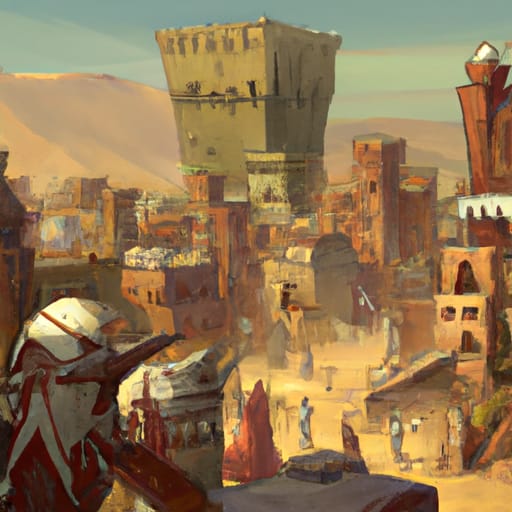
PRELUDE I
اربيل
“ERBIL,” “ARBIL,” “HEWLER,”
BASHUR, IRAQ, 2014ce
***
“The order to evacuate Erbil was given just an hour ago. But we evidently have ignored it.” My Kalashnikov, out from the trunk of my car, lies on the bar. A sense of grim theatre.
How many Cheta (bandits) (“Deash”) are advancing, closing in form the West on the “world’s longest continually inhabited City”? Could be several thousand, the satellite pictures suggest.
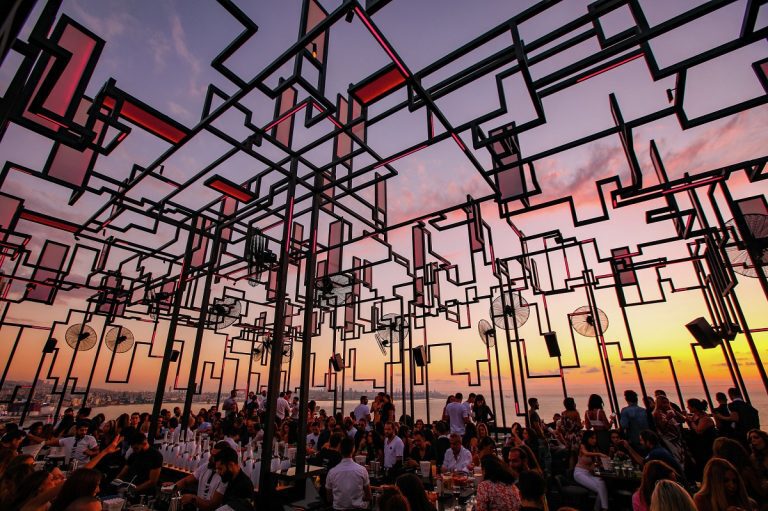
We are at the precipice of civilization. At a hotel roof bar in the world’s oldest, continuously inhabited city. Just me, a good looking shall we call it “Dutch journalist?” My new friend and associate, “Abu Hamza”, is a Kurdish patriot from the City of Kirkuk. “Never turn down a fight city”. Now in the hands of the PUK faction of Kurds, but for how long? It has a lot of oil. Also, with us, the last remaining waiter; perhaps a plant from The Party, chain smoking and watching the telescreen nervously. I hold an important book, well more of a rhetorical report on ‘capitalist modernity’. The title, the Kurds seems to change the title all the time; the Defenses, the Prison Writings; now the latest edition from Suly; “The Rise of the Middle East Confederation.”
“Total chaos tonight,” says Abu Hamza1. Whose actual name is Alacan. A sullen serious Kurd in his mid-twenties.
Just outside the city, to the Southwest, in the darkness are gathering hordes. Bearded men in black hoods, capable of unlimited violence. Many thousands of them. Actually? allegedly? Who knows? Not coalition military intelligence. With belt fed machine guns mounted on pickup trucks and ferociously sharp blades. The horde is at the gates. “Daesh”, “ISIS” is here. The city is understandably in total panic. Tens of Thousands have already fled for the mountains.
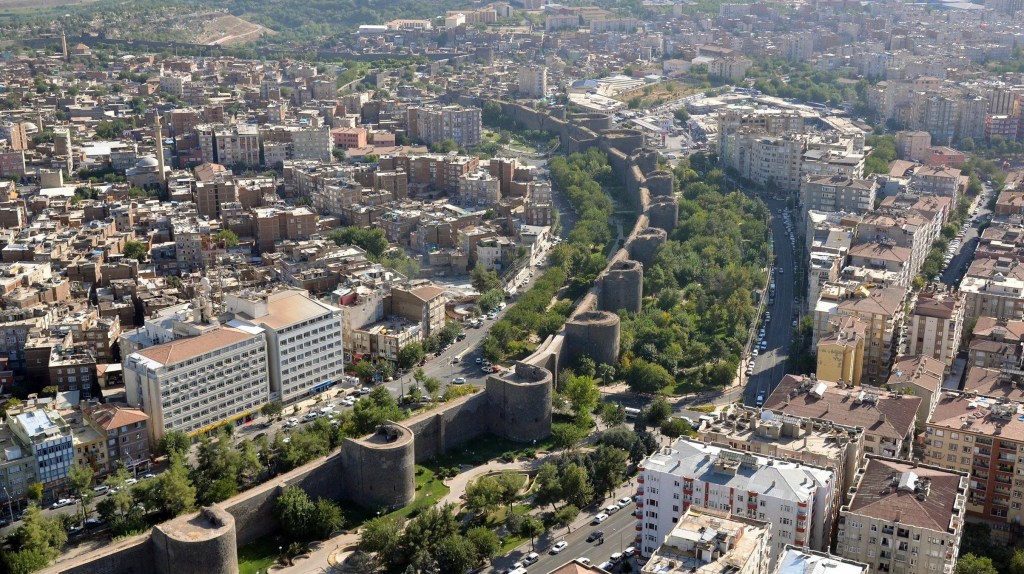
It is called “Arbil, or Erbil” by the Arabs and “Hewler” by the Kurds. The citadel is looped by ring roads. And thus, from the air it looks like a target. Newly paved, well-lit highways link hotels to malls to mosques to shopping centers. This is a city on the very edge of oblivion. Each tower, each pylon, each bolt, each cocktail; 6,000 years of human civilization brought to the full hilt. To the Maximum.
The alleged defense of the city will be managed by three factions of Kurdish militia. Two from the Peshmerga; the KDP who control the city and the the PUK several hundred trucked in from Sulaymaniyah. Some number, a few hundred PKK stay behinds will dig in for some guerrilla style hit and run and hold out as they do with little regard for their own safety.
Some number of CIA, how many who know, will involve themselves with directing air strikes around using the hotels as sniper points, and fighting ring by ring. The last point of defense will be the Citadel at the center.
The CIA is coordinating with the KDP and PUK, although many have fled. PUK has just arrived. The PKK is coordinating with the PUK, as they typically do, but not the KDP.
On the second innermost highway ring, of the 1,000 Meter Road, atop the Dedeman Hotel. Here we find a mixed-race European Justine. Her last name is slightly different on several official documents. It’s a little hard to pronounce. She sits for twilight libation. “If the defenses don’t hold and the air strikes don’t materialize, it’s gonna be a real dry town fast.”
“A contextual report on the Crisis in Greater Kurdistan.” From Case Officer Justine Tomas Falafarian to her colleagues in the Kurdistan Workers Party. On the eve of the battle for Erbil.
ABU HAMZA
The temperature went over 114 degrees today in Erbil City Streets. I am on the roof of a newly erected brutalist slab housing tower on the One Thousand Meter Ring Road to the southeast of Hewler. I took a little break. To watch the last lights of the sun dip below the low range to the West of the world’s oldest continuously inhabited city. The whole roof is lit up in white lights. I will continue the broadcast. Any hour now we’ll be going over the border into what’s left of Syria. Into Rojava. Into a Revolution inside a grisly Civil war whose outcome is very much still up in the air. If Erbil falls tonight, sooner than later hopefully.
Abu Hamza looks a little, shall we say, a real fucking dower. Probably calculating just how indefensible the city is, based on how many Peshmerga militia have fled, or will soon flee.
JUSTINE TOMAS FALAFARIAN
“When you open your paper, turn on your TV, or boot up your smartphone and attempt to understand what is happening; you are already tuned into people paid well to validate a view you already had!”
One such view is that there is a war going on between Islam and the mainly Christian Eastern & Western Bloc that affects China too. Both Russia and the United States have been poorly managing Wahhabi-Salafist terror in their countries since long before the Cold War supposedly ended in 1991. The United States by funding it and Russia by committing war crimes against whoever deploys it against them or their interests. China has been battling Islamic separatists that wish to section off 1/5 of its country to the Northwest in Xinjiang province. Perhaps what you tune into tells you it’s all some massive clash of civilizations. This ridiculous idea was popularized by Samuel Huntington in 1992. Other writers and pundits declare the events all part of a long-running proxy war extending past when Francis Fukuyama ended history after the Cold War. If you’re deeply religious, and much of the human race is, you might periodically wonder if this is the end of time. As humans have wondered many, many times before. Neither the media nor the thought leaders nor your religious intuitions are paid by telling the truth. They are paid because you like how they interpret horrifying, unpredictable events for you. You subscribe to their interpretations because they assist you in rationalizing, wholly irrational human behavior, predatory government malfeasance, and social policies that enable a virtually endless war.
From your house of worship or via your TV screen you might try to rationalize what’s happening here in the killing fields of the Middle East through the prism of your respective prophet’s scriptures or favorite pundit’s words. The news is a nasty circular addiction. A part of religion is a repetitive act of denial. You almost must always deny that vast portions of the rest of your species are even loved or protected by God. This allows a dynamic whereby you systematically begin to not care as much about whole blocks of other humans, based on something you must have faith is real, but cannot be proved by science or reason. So, in many regards, any group of religious practitioners that equate Godly protection to a set of scriptures is always probably re-written and re-translated by a fallible man. It is implicit to accept the belief that your hands are washed off much of humanity’s manifest suffering. But the wretched of the earth are statistically Muslim, Christian, Buddhist, and Hindu in relatively equal proportions. But let’s look at the flood of violence from this phase of this longest war today. Let us try to be dispassionate! Objective and rational, without losing our solidarity or our souls.
I can only assure you on the political science and international development level it is wholly rational what is happening in the world today. Outside of wars for diminishing resources, prophetic revelations, and clashing civilizations. It is the product of high-level planning and an absence of low-level care. We might extend that to the human tragedy generally and the Middle East Highly specifically.
“The steak is just as tender in New York, London, Geneva, Paris, Rome, Berlin, Beijing, Shanghai, St. Petersburg, and Moscow!”
The politicians in these places and those who manage them live in a similar style of home. People who own energy companies, big financial firms, manage banks, own arms, or information tech companies; their mansions and yachts have similar styles and elite luxury amenities. The suits that their businessmen wear is of similar styles and fine materials. The sports cars their kids drive is all around the same speeds, and costs since luxury items are all price fixed. The women for sale in all three power blocks have the same price tags and services for sale.
Thank G-d the “Cold War” is supposedly over because, for a cold war, a kind of hot series of medium-scale wars, civil wars, and highly bloody armed events occurred in almost every single country on earth between 1945 and 1991. Although most respective national histories are total propaganda by omission, it has been agreed in the West that Communism was soundly disproven and defeated and of course, the West allegedly ended history and “won.” But the Pax American of 1989 to 2001 was short-lived. We are supposedly all very democratic in the West. We have Republican or Parliamentary governments with generally only two major opposing parties and free-market economies. The Russians supposedly are that thing called Democracy as well. After all the looting that happened in the gangland 90s under the Shock Doctrines. Nigeria will tell you it is a democracy and so will a lot of other people. It is hard to find a Kurdish political party without the word Democracy in it. The absolute most war town, brutal, depraved place on earth is called the Democratic Republic of Congo.
We all have highly Managed-Democracies. Scripted even. They are managed differently in Russia than in the West. Also, generally with two parties of angry, loud ambitious lawyers, technocrats and oligarchs trying their hands at populism. In European social democracies, after looting the entire earth, they raised taxes and funded social services. Well certainly in Russia with only one relevant Party Yedinaya Rossiya (United Russia), democracy is slightly easier to implement. In Russia, the Communist Party is still the second-biggest party. Anyone effectively opposing United Russia or even writing about it in a negative way is promptly killed. Its corruption is referred to as the “party of crooks and thieves.” But most Russians agree that Vladimir Putin has restored security and dignity to Russia. America is a back-and-forth two-party state, and Russia is a multiple-party, one-party state. Designer consumer goods are readily available in both places. Russians as the losers of the Cold War are demographically poorer than Americans, but Russians have higher rates of university graduation and literacy. Both have pretty enormous domestic reserves of fossil fuels. This is why their ferocious Middle Eastern proxy war cannot be just about oil at all.
China has a strong one-party state, and it is run by the Communist Party. Its impressive economic growth since embracing State Capitalism in 1986 has propelled it to be a clear contender to Western Hegemony. China is disinterested in both military interventions and experiments in the Middle East. All three powers have increasing energy needs that America and Russia can meet within their borders and China cannot, who therefore has elected to colonize every country in Africa. However, energy resources; oil and natural gas, are the engines of both war and development.
America in 2017 has willing proxies in Egypt, Jordan, and Israel. Its base for all Central Command, Military operations is in Qatar. The U.S. invaded Iraq in 2003, as some may recall. It mostly withdrew in 2011 but returned to contain ISIS in 2014. Saudi Arabia and all the Gulf States are Western oil clients, but all of them have intrinsic ties to the propagation of radical Islam.
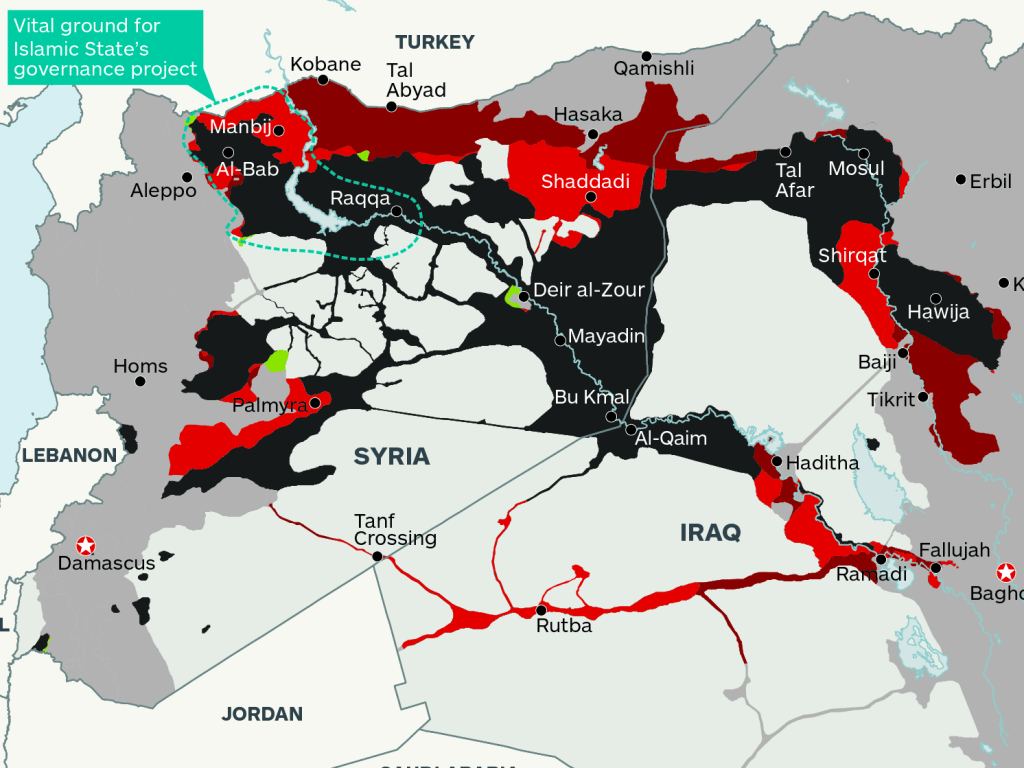
Russia has a long-term client relationship with Syria and its only Mediterranean naval base there. Along with Crimea which it annexed in 2014 on the black sea, this is one of only two warm-water ports. The key Russian regional ally is Iran. Iran because of the American invasion of Iraq controls everything in Iraq that is not Iraqi Kurdistan, the Sunni Triangle, and the remains of the ISIS-held areas (Ar Raqqah, Anbar, Al-Hawijja, Deir-Ez-Zor). Most people here call them Daesh, the pejorative using the acronym.
For over 2/3rds of humanity, the very events critical to their respective, overlapping, and at times contradictory faiths took place in Egypt, the Levant, and Mesopotamia. For followers of Zoroastrianism, Judaism, Christianity, Islam, Baha’i, and numerous sub-sects of each, this is where their very prophets were all born, raised, and communicated with the source. From the very moment, according to their own religious texts, that the Israelites arrived out of Egypt there has never, except for several long authoritarian periods of Islamic Caliphate rule, been one even year of continuous peace. The Crusades were a several hundred-year series of barbaric attempts to establish a genocidal, white supremacist Roman Catholic foothold in an area only slightly larger than modern Israel. When not seeking to expand Islam into ¼ of the earth or repulsing Christian incursions; the Abbasids, the Umayyads, and the Ottomans were fighting constant wars with Mongol hordes, each other, or the long-running Sunni v. Shia wars.
There is nothing that can be written academically or rhetorically, presented on any medium to give the West or the East a new conscience. It is now a simple matter of public record that the developed world has accepted that the only obligations it has to the maldeveloped world is periodic mitigation. Famines, wars, floods, and disease epidemics are to be poorly managed by direct aid. Multilateral efforts through the United Nations are to be the extent of collaboration. NGOs will proliferate as donor trends determine. Regular military intervention will remove or shore up state systems intrinsically hostile to any of the three centers of global power; named Washington, Moscow and Beijing.
The World Wars and Cold War’s brought humanity closer than it ever has come to total self-destruction. But there was nothing particularly stable about the Pax-Americana from 1991 to 2001. The Russian and Chinese embrace of free-market capitalism has not altered in the slightest way how they maneuver as states toward their citizens and world. Albeit with fewer disasters, periods of social engineering. There is nothing particularly comforting about the Chinese hegemony when it fully arrives.
Consistent for nearly 100 years has been the Middle Eastern theater of a war that changes locations, ideologies, factions, and names. But it is all in fact a singular ongoing war.
If we accept the validity of real politics being intrinsically hostile and equity in the international order; if we excuse every type of growing human rights violation as explained in the national interest; the center cannot hold. The earth has only so much capacity for economic pillage. The weapons of war are exponentially more destructive. The exodus toward the West is overwhelming. We cannot prove broad conspiracy, nor do we have to. We cannot confirm or deny that something in human nature is self-interested, violent, and cruel. But we can truly verify a coherent, consistent willingness for wealthy nations to prey on the developing ones and keep them deliberately dependent and maldeveloped.
The Middle East has been in flames since 1919, and it is irresponsible to pretend that it has something to do with civilization, religion, or cultural clashes. It fundamentally has to do with two forces pushing from the East and the West toward an energy resource. But that is simplistic since both the United States and Russia have some of the largest proven reserves under their own territory. A Middle Eastern market for the weapons needed for constant warfare is a vital aspect. Both the Western and Eastern Blocs are seeking to control the oil in the ground and sell the dozens of Middle Eastern players’ advanced and simple tools for defense but mostly more killing. The various holy sites for the numerous religious believers convolute the basic thesis but are the third pillar of the equation. Were there no oil, there would be no willingness to arm so many opposing players. Observe Somalia where Muslims are in a desert and no Western powers really care until high-profile piracy occurs.
Were there no arms racing there could only be very small wars. Without political actors in Moscow as well as Washington, London and Berlin there could not be such a cauldron of bloodshed. There have been countless stated rationales for intervention, proxy arming, and invasion. It is nearly impossible to convince the democracies they ever did anything to escalate this. The war with the Islamic State has become a focal point, almost an obsession for everyone, but it is the latest manifestation of a long-running problem.
Before there was ever such a thing as the Islamic State in Iraq and Syria; the usual pundits and politicians screamed Cold War. Then East and West heavily armed everyone. Israel then tripled its landmass, Syria became the Russian proxy, and Egypt changed opportunistically sides. Next, they screamed about the containment of the Iranian Revolution rather than the West-armed Saddam Hussain. A gruesome eight-year war later Iraq genocided the Kurds. During this period to give the USSR their own Vietnam, the Saudis, Pakistanis, and Americans created Al-Qaeda and turned then Communist Afghanistan into the ungovernable Islamist warzone it is today. Then Saddam annexed Kuwait, and the West invaded. Several atrocities against Shi’a and Kurds later he remained in power. The pundits screamed loudest after September 11th, 2001, and the Global War on Terror began. Russian atrocities in Chechnya in the 1990s where one in four or seven Chechens was killed were replied to with the 2002 Beslan and 2004 Ord Nost Hostage crisis. Hundreds of innocent Russian hostages died in both events. An estimated 240,000 people had died in Chechnya in two wars that leveled the separatist state. Most regimes including Israel saw waves of protest in 2011 over domestic grievances and inequality during the Arab Spring. Virtually all regimes besides Tunisia quelled the uprisings. Civil War broke out in Libya and Syria. By 2014 Afghanistan, Iraq, Libya, Yemen, and Syria were all in total unrest, ashes, and anarchy. The corrupt military dictatorship of Egypt had been overthrown, then restored with U.S. intervention. Saudi Arabia and Iran were fighting proxy wars all over the region.
ABU HAMZA
“Turkey has clearly logistically enabled the creation of a Sunni-oriented, Wahhabi Salafist ultra-fundamentalist Jihadist entity which took the world by complete surprise. Saudi Arabia has long provided it with a hateful Sunni version of Islam. Qatari actors gave their sophisticated propaganda and branding. Pakistani intelligence coordinated it as they had in Yemen and Afghanistan2.”
Then, the so-called “Islamic State” took dozens of Syrian and Iraqi cities including Mosul, which had come dangerously close to taking Baghdad, before being turned back by Iranian coordinated militias and Kurdish Democratic Confederalists. The Peshmerga and the Iraqi military had fled in varying ways exposing civilians to atrocity. But allegedly quite a lot of these Sunni tribes people liked living under the Islamic State’s brand of non-state governance! It validated their identity; it gave them something big and powerful to believe in. But now they are near the brink of annihilation. It is actually not important to indict who thought up the Islamic State, and who planned it. Some say the Gulf States, some say Iran, Israel, and the West. The evidence though is clear that Turkey, Saudi Arabia, and Qatar all fueled its development, and Pakistan has the only intelligence service capable of working out the variables. It is fucking childlike to believe it was created by Islamists and Ba’athist officers in U.S. custody.
It can be difficult to figure out what’s happening “out here in the Middle East”. It can become an abstraction of alien cultures, conflicts, and ethnic configurations that are easily blurred to an uncaring or untrained eye. It is hard to get your head around how the alleged cradle of human civilization became such an everlasting intractable bloodbath. Perhaps it is only the responsibility of the Western audience to know what is happening because the collateral of the carnage is spilling over into their European and American cities. No one will perhaps admit that, but yes. And it is also important to render the Middle East more human because the weapons distributed here are from the West or Russia. The oil being pumped is being bought and sold by Western or Russian firms. Most people living in the West don’t actually know what Kurdistan is, but that doesn’t say so much as most people in the West don’t know where a lot of things are. I would go so far as to say the majority don’t care.
Most probably won’t admit that they didn’t know that the Kurdish ethnic group existed until 2014. It was not until various pundits made it clear “the Kurds” were actively fighting the Islamic State did anyone ever hear about things like the Peshmerga, the People’s Protection Units (YPG), or about Kurds in general. The perversity and violence of ISIS kept it in the headlines for the past three years and the Kurdish issue has increasingly been at the forefront of understating geopolitics in the region.
Particularly because Iraqi Kurdistan, administered by the Kurdish Regional Government as an autonomous area since 2003 is set to hold its next referendum vote for independence on September 27th, 2017. And it is sitting on top of the fifth-largest proven crude oil reserve on earth. No one should totally wash their hands of what happens in the Middle East because its conflicts are fought with Western and Russian weapons, paid for by American and Russian tax dollars. The companies pumping out the oil are largely Western or Russian-based firms.
JUSTINE
There are in fact a lot of players, but all of them fall into four big tents; Western Allies led by the United States Military and Coalition forces. Russian Allies most prominently Syria and Iran. Gulf Sunni Client States claim they are Western Allies but can be linked to the Islamic State through one or two acts of deductive reasoning. And the 40 million Kurds spread across Turkey, Iran, Iraq, and Syria. The Kurds, who are the world’s largest stateless people are seeking some viable means to safeguard their long-abused community and of course, get rich off the oil under their Iraqi territory.
“I plan to be very repetitive with names and places that matter Heval!”
Or the places that have more than one name so the reader can try and learn them. There are a lot of overlapping players, a lot of acronyms, national interests, international interests, and underlying religious and ethnic antagonisms that go back thousands of years. There is a very long history of desert prophecy. This is certainly the land of Zoroaster, Abraham, Bab & Bahaullah (Iran); Moses (Egypt), Jesus (Israel/Palestine), and Muhammed (Saudi Arabia). Well documented and repetitive ethnic killing is the reality of life here for over 4,000 years punctuated by foreign occupations, colonies, and Islamic empires. Devastating foreign invasions on behalf of Mongolia and Europe altered the entire composition of the region; culturally, politically, and genetically. There is deep-rooted tribalism which has to be understood as a means of both loyalty and social organization. There are monarchies created by Europeans to crown their favored Bedouins as oil clients. There was the re-birth of the Jewish State for the third time in three thousand years. There was the re-birth of the revolutionary Shi’a State in Iran which carries a similar sense of Messianic optimism and zealous indoctrination to preserve for Shi’a what the Jewish one does for Jews. There is absolutely a more recent history since 1947 of several large and also small wars and protracted atrocities. Such as those experienced by the Palestinians at the hands of almost everyone in the region. You could rightfully say with a straight face that since the collapse of the Ottoman Empire in 1919; there has been a constant war playing out inside every single country in the region.
The Western Media’s linguistic and cultural detachment from these antagonistic protagonists borders on being crude Orientalism. An anti-Islamism mixed with a thirst for covering and sensationalizing bloodshed. The fact that suicide bombs are regularly going off in Western cities has made everything more immediate, more visceral. But it is undeniable now that some of the biggest beneficiaries of being Western petrol-colony clients (Saudi Arabia, United Arab Emirates, Qatar, Bahrain, and Oman) can be linked to funding and supporting Wahhabi Salafist doctrines when not being caught outright funding the Islamic State. Frankly, enduring miserable heat doesn’t help anything. While obsessing, that is the word I would use; obsessing about the regions 5 million Jews and 7 million Palestinians of Greater Israel, West Bank and Gaza take up a lot of printed word on the subject. The enduring issue, the issue that everyone needs to become more fluent in, is the question of Kurdistan.
Beyond the wars, the ceaseless violence and the conservative, most intolerant, male-dominated nature of Middle Eastern society in general; and Arab, Kurdish and Persian society in particular. All anthropological and political variants are made worse by what I would call claustrophobia. A feeling of being trapped in small spaces disguised as holy lands with nowhere to really go. Or fear of impending genocide, which affects all the players out here, and there are many. As I did not write this article for academics, let me paint with broad brushstrokes a paragraph on demographics.
ABU HAMZA
There are 35-40 million Kurds mostly spread across Turkey, Iran, Iraq, and Syria. They are mostly Sunni Muslims., There are two primary types of Muslims; Sunni and Shi’a which differ in a range of practices and beliefs but are mostly divided over who was the rightful successor of the Prophet Muhamad. The Shi’a declared it was Muhammad’s cousin and son-in-law Ali and have been historically persecuted by the Sunni caliphates and rulers. Sunni Islam, which is the majority sectarian faction of global Islam (say 70-90%) Shi’ism is the smaller (say 10-20%) faction of the Ummah or Global Muslim community which is about 1/3 of humanity.
Kurds are also the world’s largest stateless people. Linguistically, culturally, spiritually, and often militarily Kurds are a great deal like Persians.
The nation of Iran has been a Revolutionary Shiite Islamic State since 1979, and is about 65% Persian, or say 50% of its 80 million people. There are also 9-10 million Kurds living there. While they are certainly not free from Iranian Sharia law; they are generally better treated than everywhere else in their historic lands of settlement. In Iraq, a genocide called Anfal happened in 1988 which brutally killed 180,000 Kurds. In Turkey Kurds and Turks have been in an open civil war since 1984. In Syria, Arabization campaigns and forced resettlement made them third-class citizens. Iran had an anti-Western, anti-Shah revolution in 1979. The United States promptly armed U.S. client Saddam Hussain to the teeth. Then sold guns secretly to Iran in the Iran-Contra Affair. While North Korea, Libya, and Israel all sold arms and secretly advised the Iranians. An 8-year war occurred in the style of World War I with trenches and poison gas where over a million people were killed. In the last days of the war, Saddam Hussain ordered Al-Anfal or the systematic killing of 180,000 Kurdish Iraqis.
The nation that used to be Iraq was ruled by Saddam Hussain and the Ba’ath Party until 2003 when the US successfully “liberated” it. Only the Kurds would call it liberation as both the Shi’a and Sunni Iraqi Arabs both for the most part utterly hate the United States. The Shi’a have gained the most politically speaking. The Ba’ath party which was nominally Arab-Socialism but really a one-man dictatorship is also found in Syria. It is the political party of President Bashar al-Assad, who is an Alawite, but we will come back to that. It is certainly neither irrational nor poorly documented that historically everyone out here has at one point tried to annihilate each other. As most of the groups out here have at one point or are actively today trying to obliterate each other. None of this is helped by the obvious fact that the biggest Western powers & Russia cannot and will not allow control of natural resources under Iraq, Iran, Saudi Arabia, and the Gulf States to go unspoken for. Or be nationalized. Or be made inaccessible by virtually endless conflict.
Sometime around 0300-0400 there were mechanized sounds, the rumbling of the Hord, the incursion advancing. Followed by endless bombardments of death from above. The coalition airstrikes light up the wastelands. These Cheta scum, these ISIS bandits are blown apart just sixteen kilometers from the outermost ring road. Unbeknownst to them the city was virtually defenseless, all the Pesh Merga and most of the civilians had completely fled for their lives. If not for the aggressive Coalition airstrikes, Erbil would have fallen to Daesh in mere hours.












 WALTER SEBASTIAN ADLER