
S C E N E (III)
ירושלים القدس
“YERUSHALAIIM” “JERUSALEM,” “AL QUDS,”
STATE OF ISRAEL, 2001ce
***
MAYA SORIEYA EMMA SOLOMON ROSE
“The Jewish Military Colony is filled with surveillance and informants, every phone is bugged, every email is read. The basis of any uprising must be so low tech that it leaves no fingerprints, a series of whispers, notes on paper, a war of cells.”
There is also a great deal of inevitability all your friends will get rounded up, tortured, and killed. Some will give each other up under torture, betray themselves and the cause.
I went on another scouting trip to Be’er Sheva at the very beginning of August. The young, tough Gavroche went right to work enlisting the local, disaffected youth of the urban Be’er Sheva sprawl. He was not a great thinker. He was a young person of action. What he seemed to like was that there wasn’t too much of a preset plan. He did not have to read anything to join. That was the beauty of it that made so many people just plug in and fight. For years people had said things like this are only in the movies or in Russian literature.
None of that is important anymore though because we are a life support machine, a clandestine movement operating way behind the lines, which according to an unseen G-d, are our ancestorial homeland. You came by. You plugged in, or enlisted was a better word because by then we had written our own Kaaba, an internal proficiency and placement exam. You got talked about it because a friend had signed up. You saw a group of kids learning how to take a soldier’s weapon, saw them practicing martial arts in a park, and then one night it hit you. That fucking heroin dealer that used to be in that park was gone. So were the junkies posted up on the playground. You noticed the gang graffiti on the bombed-out buildings had been painted over. Sometimes just grey paint. Sometimes a small mural. Sometimes an odd black pictograph you had never seen in your life. A food basket ended up in front of your house. Just a little bundle, but if you are hard up enough any bit helps. It came again a few days later courtesy of Ha Irgun. You picked up someone hitchhiking and they put you on to our righteous and almost self-obvious revolution. That someone was always the young Zachariah Artstein making rounds with his old friend Hadas.
Zach got in trouble anytime we went up the hill to Jerusalem.
The Mugavnkiim arrested him and held him 48 hours when he tried crossing from East Jerusalem into Nablus’ Balata Refugee Camp. He had lost his passport some time ago and it was lucky they did not hand him over to the American embassy or deport him. On a trip before this one, we got caught up in some Arab quarter unrest and had to hide for a few hours in a metal shuttered market stall with a couple identical twin Palestinian brothers and their father as the Mugavnik storm troopers flooded the market with tear gas and shots rang out all afternoon.
But by the second week of August, we are solid in Tel Aviv. Mostly Black Israelites and European émigrés. The base of the Cabinet and flagship chapter was called the Manasseh Command. Our network was based out of the Deep Leisure Club and Avinadav’s loft on the edge of town. We had secured a printing facility and were working on secure lines of online communication.
We were also solid in Be’er Sheva led by Gavroche, Katusha, Sahar and a small army of punk rock kids and working-class hooligans. This formation we called the Judah Command. Out in the desert these young fighters were training on M1 rifles and learning Krav Maga. Expansion was being focused on christening cells in Ashdod, Arad and among the Bedouin settlements.
We were solid in Haifa too, a large cluster of Arab Christian youth led by the young preacher Deeb al Hadid and some Ashkenazi art students at the university on the top of Mt. Carmel who were led by a girl named Hadas, some one-time lover of Zach’s from the kibbutz days. The fighters up in Galilee we called the Asher Command.
There were several three to five person cells recently established in Pardes Hanna among Zach’s Russian immigrant friends. In Akko there were a couple of Arab Israeli girls who owned a tattoo parlor. Afula never seemed that solid. Bet She ‘an consisted of a kibbutz hippy and his boyfriend. There were a couple of paramedics in Rehovot. In Sheroot Lummi and in Netanya, it was more Russian street kid friends of Zach’s.
“In Jerusalem we are entirely without representation.”
There was just one single mission. We would drive the U.S. influence out of Israel, and we would make a stand for a government that upheld human rights. I had spent a good many nights wondering if Zach’s communism would set us free or just get us killed for nothing.
“For many years as a young girl I just hoped I’d go to heaven.” I pictured heaven as this endless beach with tall white castles and all the people I had ever loved were waiting for me to get there, waiting for me to come home. I wondered if God valued the work we were doing even if I was not sure about there being a God. But I could never make myself honestly believe. And now I knew that the only heaven I might ever live to see was the one I was ready to fight for then defend. The heaven we would create right here, right now, our Zion in the wilderness.
This Romanian Jewish girl Noaah was making the rounds to collect donations for our relief baskets. Gavroche’s ladylove Katusha was editing the articles that would go into the first edition of our mini newspaper. The little ones they called Sahar, and ‘Molly the Fairy’ were sweeping up this massive, abandoned building called the Bedouin School House where Zach and Molly lived in a room under the great stairs. She had become his little protégé. She followed him everywhere. The little Russian half pint street urchin had been made homeless because of an insane mother and an abusive father who was a self-professed ‘anarchist.’ She was just 13. Enormous glasses, bright outlandish clothing, little braids died different shades of pink. She adored Zach and believed in the ideas of Ha Irgun completely. Tribe Judah had a wide range of child soldiers, but it was the only command with predominantly Jewish members. Asher was Christian Arabs and Manasseh was mostly foreign expats and Black Israelites.
Three weeks ago, the Bedouin School House was overrun with narcomaniim until Gavroche, Big Guy, Zachariah, and few others from the Be’er Sheva Unit’s paramilitary arm EGROPH flooded the building with diverted sprinkler lines and then drove them out. The junkies moved into the abandoned military base on the other side of the electric neon Old City. Ha Irgun took over the enormous two-story Ottoman structure destined for many years to be a science center. The boys padlocked the doors shut, dragged in meeting tables, bricked up some windows and called it the KDAA, some made up word surely of Zach’s creation.
You can’t teach what we were preaching because we are making it up as we go along. And there was no one to compete with. Hamas, Islamic Jihad, and the Al-Aqsa Martyr Brigades kept everyone, for lack of a better phrase, “pretty fucking terrorized”. And all the while as both the second Intifada and our revolution unfolded around us so out of control, I never stopped to think which among us would be the victims of either of these little wars. The Palestinian war ever punctuated with a bullet or a bang. Ours new and in the shadows, but we’d have our bangs and bullets too before long.
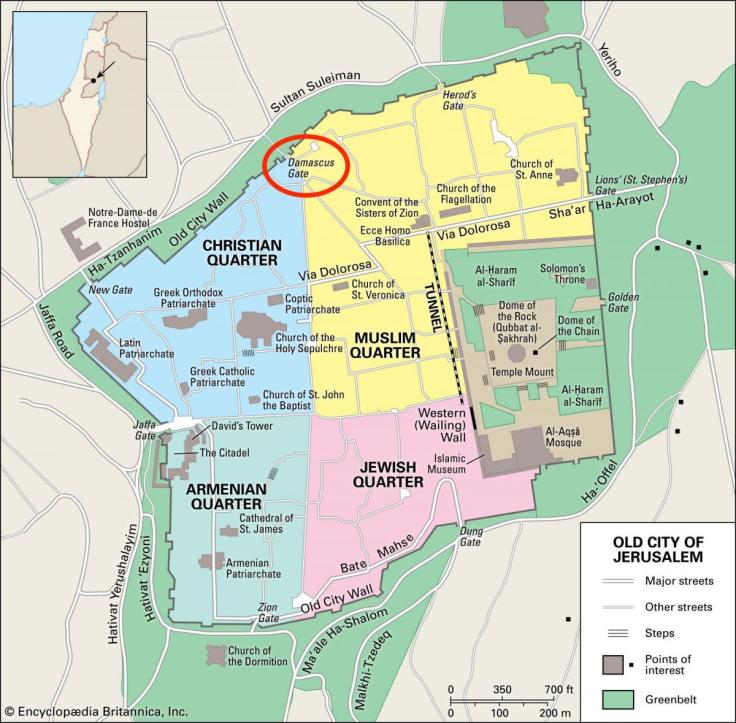
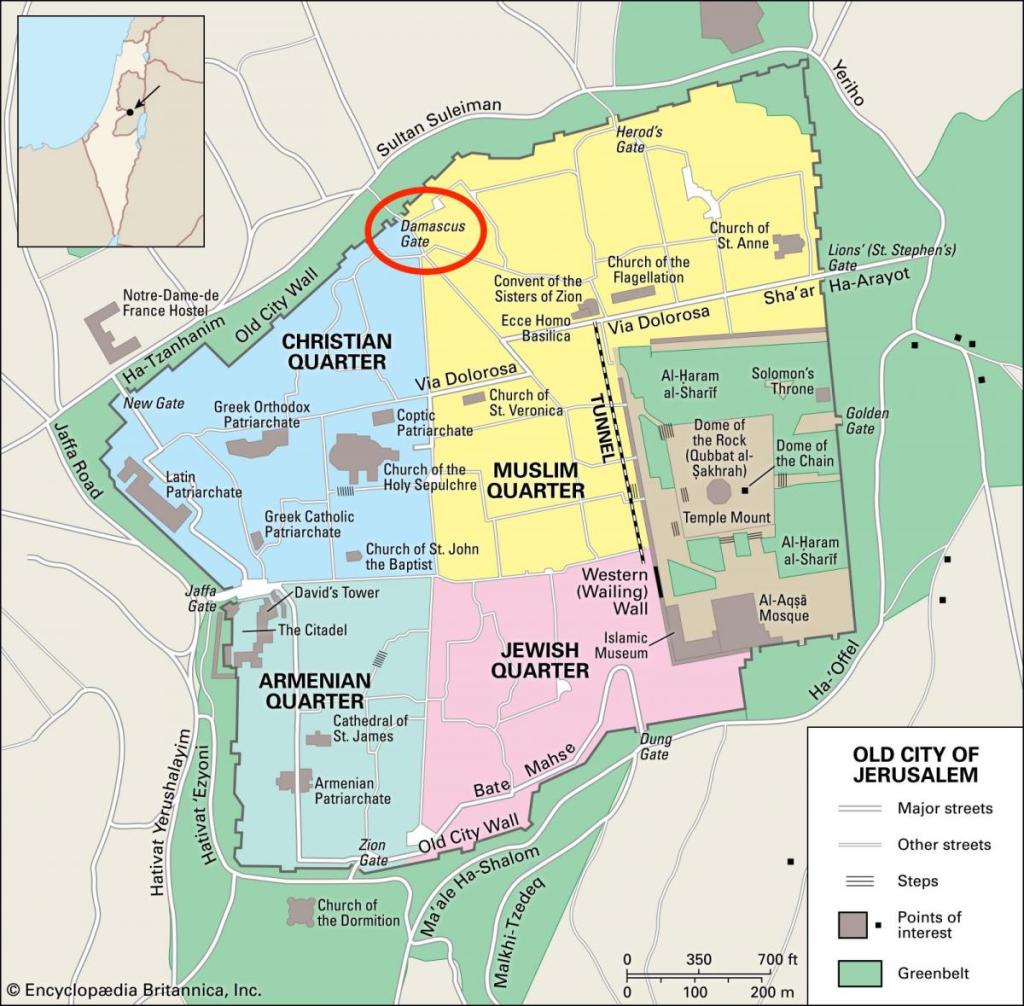
On August 9th, Zach and I left Be’er Sheva bound for a third try at organizing the Capital city into a regional command to be dubbed Ephraim. We got there around noon and got lunch at Mike’s Place Jerusalem, a sister joint to the one managed by my close friend Canadian Dave. We take our time to eat. I think the kid was a little burnt out. He’d been busy and never seemed to like coming to the holiest of holies. We were both more Tel Aviv kind of people. We made our way down to King George Street, one of the huge thoroughfares. Zach looked in his bag.
“Fuck,” he mutters.
“What is it?”
“I’m all out of art.”
Then three blocks ahead of us we heard a
PEGUAH! And I jump in the air and my bones rattle inside me. We freeze. For a second and then watch the smoke and dust settle. We do nothing helpful. Wait for a secondary explosion. The Palestinians have blown up a pizza place up the street. One of the few that still sells Pepperoni. People are screaming. The place is a hectic mess. Blood, dust, ambulance sirens. Zach slumps into a green bench on the road and takes off his hat, as he sometimes does when he gets impassioned or upset. The cloud of dust and the screams of wounded people does not stop until he flags us a cab and tells the driver to “get us back to Tel Aviv.” There’s the smoke, there are the screams of the injured, the incoming sirens. The ambulances show up and second bomber blows up the responding rescue crews. PEGUAH!
The Sbarro restaurant suicide bombing took place around 2pm. The blasts kill 15 people, including 7 small children, and wounded around 130. Both Hamas and the Islamic Jihadimmediately claimed joint responsibility. The only thing he said on the road back to Tel Aviv, with soldiers and emergency medical personnel swarming to seal off the city was:
“I won’t be caught dead in that city again.” But that was just how he talked when he was upset by the intifada and carnage. We obviously would be back when we had set up a cell. That is how organizing works; unreasonable persistence.
Hand to hand, mouth to ear, little speeches, drawings in the sand, whispers about impossible sounding things. She showed me that summer was not just to go underground and become invisible to our enemies, she taught me how to breathe underwater and time.
 WALTER SEBASTIAN ADLER