El Al flight 510 touches down at Lod International Airport on May 9, 2001, at exactly 15:04 Israeli time. Which is usually on time, but then makes you wait a long time. After someone is inevitably rude to you. The passengers on the plane start clapping as the wheels hit the tarmac. Many of the passengers are evidently very happy to be home, and happier still that the Palestinians didn’t manage to hijack or ‘explode’ the plane. Someone whispers that things had gotten much worse in the weeks leading up to Independence Day. There had been two bombings the week before. The second Palestinian Intifada has blown the top off the kettle.
“Welcome to Israel,” the flight attendant tells us. She gives the date, time, and weather in Hebrew and then repeats it in thickly accented English, and then once again in Arabic, which is the second national language. English lettering is below all the Hebrew/Arabic signs because America foots the bill around here.
SEBASTIAN ADONAEV
We descend onto the tarmac from the hatchway in the back of the plane. I have an urge to bend down and kiss the ground, but I do not. It is not very dignified, something tells me, a voice inside that once had a name. It is brutally hot. I am wearing my kosher, blue pinstripe suit. I am glad I left my brown threadbare Kashmir trench coat in Spain. I stop for a moment and cover my eyes, lowering my head.
“Shema Yisrael Adonai Elohanynu, Adonai EhHad.” This is the only prayer I can remember that would make any sense on this occasion. Also, the only prayer I remember at all.
The revolution had failed me completely. But I knew I had also failed it. I was misguided. The staunch atheism that the Family School had instilled in me for a time seemed to have been shattered by my last three weeks in Golder’s Green. Rabbi Tatz had opened a door for me only to have it slammed in my face when Rabbi Gabi declared that I wasn’t’ a real Jew. As I stared out the open window of the cab, I saw the green fields of my people’s land blooming, highways filled with compact cars, and new buildings being erected everywhere. I was home and ready. Babylon was behind me. There was no longer a need to struggle needlessly. Believing in things that can never possibly exist.
***
All of Tel Aviv is bouncing off the walls. The streets are filled with loud and pushy people. There are beautiful women with olive skin and manly guys with tight t-shirts and jeans. They are all drunk or on the way down that road. Everyone has a gun and a flag. It is Israeli Independence Day and Israel had just won the basketball championship against all of Europe. I have never seen so many beautiful girls in my life. Tel Aviv was wild and free like New York on a beach. They may have driven us into the sea with gas and bullets in Europe but now we struck back with basketball and, well really fucking attractive women. The basketball win is a little hard to believe, but it made me happy we were winning wherever we could win. The racist in me asserted that Ethiopians had been put in charge of the team. Some girl told me they had just recruited a bunch of American Blacks. Even better.
I check into a hostel on Kikar Dizengoff or DizengoffSquare. An elevated platform supported a white sculpture fountain with interlocking-colored disks in the middle of the square. It was like a Union Square of the Middle East with more junkies and less skaters. The hostel smelled like radio deodorant-free Europe. I was in a coed dorm room with twelve bunk beds. My bunkmates were mostly South Africans. Afrikaans is the ugliest language I have ever heard. I changed out of my suit, showered, and decided to go exploring. I grabbed a street map from the front desk and wandered out into the bustling, raucous Ben Yehuda Street, which I hoped would lead to the beach.
There was a rally going on in the square for the union which controlled Egged Buses, one of the two major government-owned lines. Groups of teenagers were spending time together and drinking in public, which I am told is legal here. A group of Russian punks gave me some unbelievably cheap vodka, and I slammed it back. I drew them a picture of a punk with a shotgun mashing. They gave me more vodka but did not speak a word of English. There was a large movie theatre on a corner of the square. What looks like a huge and shady motel occupied another corner under a huge red neon sign that says KDA. Hebrew is spoken everywhere or Russian. I am enthralled and overwhelmed. It is almost too much to take in. The signs and language keep reminding me the land is ours. The cute girls with stacks of party flyers remind me that it’s not just another Friday night; it’s the biggest party night of the year.
Eventually I wound my way down to the beach. It’s an endless strip of mini skyscrapers, hotels highway and the boardwalk, called the tiyeled. Itis the land of see-and-be-seen, play-and-get-hustled, hoot, holler and dance. Little wooden pergolas and stone benches run miles in either direction. It’s on the coast of the Mediterranean, but it’s more like Vegas than Nice. Everything is all lit up in a hundred shades of red or blue, and there is live music being performed on mini stages along the way, mostly salsa and house music. I stand below a huge white terraced structure called the Opera Tower and look down at the main strip from Hof Yerushalayim, Jerusalem Beach. Some came to the Holy Land for that broken down wall locked up in the mountains, but I like my pilgrimages to end by the beach with a cocktail. Cars fly by with Israeli flags flapping out the windows. The occupants are yelling on the top of their lungs blasting Arabic sounding music from their vehicles. Everybody keeps offering me shots. Every crew and their Russian girl friends have multiple bottles of vodka and hookah set up for the fireworks show about to light up the beach.
As I walked further down the boardwalk, halfway to drunk by now, I encountered every manner of hustler, hawker, pusher, and thief. Children selling flashy neon toys. Eastern European émigrés hustling the tourists at games of three-card Monty lured in by a cute Romanian girl that keeps winning and might just be the dealer’s lady. Tables set up selling trinkets, temporary tattoos, selling smokes, selling girls who sell the smokes and not a single street artist in sight. Or copper for that matter. I decided not to set it up tonight. It’s the Shabbos on top of Independence Day and Victory over Europe. Rabbi Tatz said I would learn to carry out the mitzvahs gradually. But then Rabbi Gabbi said I wasn’t a Jew, so why I kept referencing those Jews of the Green was beyond me. The Israeli government counts you as a Jew if a single grandparent was Jewish. This is surely better odds than having a halachically-converted Jewish mother.
I hear a South African saying that it was good they “let these not quite Jewish Ruskies in because with the uprising going on in, it was unwise now to let the Palestinians cross the green line to work like dogs in all the jobs the Jews don’t want.” Half the Russians I was drinking with had gold crucifixes come to think of it. Guess they had a Jewish grandparent before Communism made them Orthodox Christians or whatever-the-hell they are.
I’m happy to be reunited with my Noblisse cigarettes. I remembered hoping they came in menthol when I first found them in the ubiquitous cigarette machines. They aren’t that bad for smoke which cost six shekels. That’s just over $1.50. Thank G-d for no more TOP rollies. These are Israel’s general-purpose cigarettes. They are the cheapest cigarettes you can buy when you’re poor. They are also smoked by the kibbutzniks, because if you live on kibbutz, you’re inherently poor. The Russians don’t smoke them. They smoke something only a little better called L & M, which feels more like a cheap Marlboro Light.
With my sketchpad and accented-English flying, I befriend a Russian named Roman along with his car, his bottle of Russian Standard, and his three lady friends. I take off in this former Soviet stranger’s car, a Roman who “knows where the nature party is up country”. At a good party, you can forget about everything. So, I ended up staying in Tel Aviv in the arms of a wild little Russian sweet thing named Anya for nearly a week before I ended up making moves north. Because “a little Party never hurt nobody.” “If you could be dead by tomorrow then you should make good use of today.”
“I’ll tell you what scares me about the Zionists,” one of the Russian girls says to me, “it’s the unlimited nature of the whole operation; like anything whatsoever is justified to secure a state here, anything. It’s that level of unlimited that makes us all party like this; we just really don’t know when the next bomb goes off.”
“The Jewish Military Colony is filled with surveillance and informants, every phone is bugged, every email is read. The basis of any uprising must be so low tech that it leaves no fingerprints, a series of whispers, notes on paper, a war of cells.”
There is also a great deal of inevitability all your friends will get rounded up, tortured, and killed. Some will give each other up under torture, betray themselves and the cause.
I went on another scouting trip to Be’er Sheva at the very beginning of August. The young, tough Gavroche went right to work enlisting the local, disaffected youth of the urban Be’er Sheva sprawl. He was not a great thinker. He was a young person of action. What he seemed to like was that there wasn’t too much of a preset plan. He did not have to read anything to join. That was the beauty of it that made so many people just plug in and fight. For years people had said things like this are only in the movies or in Russian literature.
None of that is important anymore though because we are a life support machine, a clandestine movement operating way behind the lines, which according to an unseen G-d, are our ancestorial homeland. You came by. You plugged in, or enlisted was a better word because by then we had written our own Kaaba, an internal proficiency and placement exam. You got talked about it because a friend had signed up. You saw a group of kids learning how to take a soldier’s weapon, saw them practicing martial arts in a park, and then one night it hit you. That fucking heroin dealer that used to be in that park was gone. So were the junkies posted up on the playground. You noticed the gang graffiti on the bombed-out buildings had been painted over. Sometimes just grey paint. Sometimes a small mural. Sometimes an odd black pictograph you had never seen in your life. A food basket ended up in front of your house. Just a little bundle, but if you are hard up enough any bit helps. It came again a few days later courtesy of Ha Irgun. You picked up someone hitchhiking and they put you on to our righteous and almost self-obvious revolution. That someone was always the young Zachariah Artstein making rounds with his old friend Hadas.
Zach got in trouble anytime we went up the hill to Jerusalem.
The Mugavnkiim arrested him and held him 48 hours when he tried crossing from East Jerusalem into Nablus’ Balata Refugee Camp. He had lost his passport some time ago and it was lucky they did not hand him over to the American embassy or deport him. On a trip before this one, we got caught up in some Arab quarter unrest and had to hide for a few hours in a metal shuttered market stall with a couple identical twin Palestinian brothers and their father as the Mugavnik storm troopers flooded the market with tear gas and shots rang out all afternoon.
But by the second week of August, we are solid in Tel Aviv. Mostly Black Israelites and European émigrés. The base of the Cabinet and flagship chapter was called the ManassehCommand. Our network was based out of the Deep Leisure Club and Avinadav’s loft on the edge of town. We had secured a printing facility and were working on secure lines of online communication.
We were also solid in Be’er Sheva led by Gavroche, Katusha, Sahar and a small army of punk rock kids and working-class hooligans. This formation we called the Judah Command. Out in the desert these young fighters were training on M1 rifles and learning Krav Maga. Expansion was being focused on christening cells in Ashdod, Arad and among the Bedouin settlements.
We were solid in Haifa too, a large cluster of Arab Christian youth led by the young preacher Deeb al Hadid and some Ashkenazi artstudents at the university on the top of Mt. Carmel who were led by a girl named Hadas, some one-time lover of Zach’s from the kibbutz days. The fighters up in Galilee we called the Asher Command.
There were several three to five person cells recently established in Pardes Hanna among Zach’s Russian immigrant friends. In Akko there were a couple of Arab Israeli girls who owned a tattoo parlor. Afula never seemed that solid. Bet She ‘an consisted of a kibbutz hippy and his boyfriend. There were a couple of paramedics in Rehovot. In Sheroot Lummi and in Netanya, it was more Russian street kid friends of Zach’s.
“In Jerusalem we are entirely without representation.”
There was just one single mission. We would drive the U.S. influence out of Israel, and we would make a stand for a government that upheld human rights. I had spent a good many nights wondering if Zach’s communism would set us free or just get us killed for nothing.
“For many years as a young girl I just hoped I’d go to heaven.” I pictured heaven as this endless beach with tall white castles and all the people I had ever loved were waiting for me to get there, waiting for me to come home. I wondered if God valued the work we were doing even if I was not sure about there being a God. But I could never make myself honestly believe. And now I knew that the only heaven I might ever live to see was the one I was ready to fight for then defend. The heaven we would create right here, right now, our Zion in the wilderness.
This Romanian Jewish girl Noaah was making the rounds to collect donations for our relief baskets. Gavroche’s ladylove Katusha was editing the articles that would go into the first edition of our mini newspaper. The little ones they called Sahar, and ‘Molly the Fairy’ were sweeping up this massive, abandoned building called the Bedouin School House where Zach and Molly lived in a room under the great stairs. She had become his little protégé. She followed him everywhere. The little Russian half pint street urchin had been made homeless because of an insane mother and an abusive father who was a self-professed ‘anarchist.’ She was just 13. Enormous glasses, bright outlandish clothing, little braids died different shades of pink. She adored Zach and believed in the ideas of Ha Irgun completely. Tribe Judah had a wide range of child soldiers, but it was the only command with predominantly Jewish members. Asher was Christian Arabs and Manasseh was mostly foreign expats and Black Israelites.
Three weeks ago, the Bedouin School House was overrun with narcomaniim until Gavroche, Big Guy, Zachariah, and few others from the Be’er Sheva Unit’s paramilitary arm EGROPH flooded the building with diverted sprinkler lines and then drove them out. The junkies moved into the abandoned military base on the other side of the electric neon Old City. Ha Irgun took over the enormous two-story Ottoman structure destined for many years to be a science center. The boys padlocked the doors shut, dragged in meeting tables, bricked up some windows and called it the KDAA, some made up word surely of Zach’s creation.
You can’t teach what we were preaching because we are making it up as we go along. And there was no one to compete with. Hamas, Islamic Jihad, and the Al-Aqsa Martyr Brigades kept everyone, for lack of a better phrase, “pretty fucking terrorized”. And all the while as both the second Intifada and our revolution unfolded around us so out of control, I never stopped to think which among us would be the victims of either of these little wars. The Palestinian war ever punctuated with a bullet or a bang. Ours new and in the shadows, but we’d have our bangs and bullets too before long.
On August 9th, Zach and I left Be’er Sheva bound for a third try at organizing the Capital city into a regional command to be dubbed Ephraim. We got there around noon and got lunch at Mike’s Place Jerusalem, a sister joint to the one managed by my close friend Canadian Dave. We take our time to eat. I think the kid was a little burnt out. He’d been busy and never seemed to like coming to the holiest of holies. We were both more Tel Aviv kind of people. We made our way down to King George Street, one of the huge thoroughfares. Zach looked in his bag.
“Fuck,” he mutters.
“What is it?”
“I’m all out of art.”
Then three blocks ahead of us we heard a
PEGUAH! And I jump in the air and my bones rattle inside me. We freeze. For a second and then watch the smoke and dust settle. We do nothing helpful. Wait for a secondary explosion. The Palestinians have blown up a pizza place up the street. One of the few that still sells Pepperoni. People are screaming. The place is a hectic mess. Blood, dust, ambulance sirens. Zach slumps into a green bench on the road and takes off his hat, as he sometimes does when he gets impassioned or upset. The cloud of dust and the screams of wounded people does not stop until he flags us a cab and tells the driver to “get us back to Tel Aviv.” There’s the smoke, there are the screams of the injured, the incoming sirens. The ambulances show up and second bomber blows up the responding rescue crews. PEGUAH!
The Sbarro restaurant suicide bombing took place around 2pm. The blasts kill 15 people, including 7 small children, and wounded around 130. Both Hamas and the Islamic Jihadimmediately claimed joint responsibility. The only thing he said on the road back to Tel Aviv, with soldiers and emergency medical personnel swarming to seal off the city was:
“I won’t be caught dead in that city again.” But that was just how he talked when he was upset by the intifada and carnage. We obviously would be back when we had set up a cell. That is how organizing works; unreasonable persistence.
Hand to hand, mouth to ear, little speeches, drawings in the sand, whispers about impossible sounding things. She showed me that summer was not just to go underground and become invisible to our enemies, she taught me how to breathe underwater and time.
If I ever see her again, this is what I would have said; “we are all very old peoples, with stiff necks that never forget.” “We all laugh, we love, and we dance in circles with our comrades. We have many types of language and customs, and many of these customs have been subsumed, or evolved, or were maintained with the zeal and blood of the martyrs.”
But I never saw her again, she was cut down in a Turkish airstrike during the general defense of Afrin Canton. She died in ball of flame. A pretty face on yet another martyr poster.
It is not in our interests to keep fighting even if we have no will to make peace. For we have no ability or actual willingness to destroy each other. So, we must find a way to live on our hugely different terms. For thousands of years our people gathered at the crossroads of the world. Or were born here in the shifting sands. We traded, we intermarried, we made alliances, we raided, we fled, we made wars and also, we conquered, pillaged, assimilated, massacred, made total fitna. But none of our peoples have killed in the numbers we now kill with weapons from outside our sphere. Many tribes, many peoples are we who remember our ways and our customs back thousands of years. With our stiff necks and incredible stubbornness to relinquish our sense of identities or beliefs. We all live with memories and tribulations going back several thousand years.
This is a treatise co-written by “the People of the Book”, but also those that came before these books, and those that never believed in a religion. It is pieced together and translated differently by the Zoroastrians, and the Judeans; by the Persians, by Arabs, and Phoenicians, by the Kurds; by the Palestinians living as citizens in exile or in camps as refugees. By Assyrians and Druze, by Shi’a, by Sunni, by Orthodox and Latin Christians. By Yemenites, Chechens, Assyrians, Armenians, Maronites, Sunni and Shi’a Lebanese, Jordanians and Syrian Arabs, Alawites, and Georgians as well
All who wish to see peace and if not peace, separation, and long-term ceasefire. If not peace, if not understanding; then trade and normality. All the people in our region have suffered enough. To survive the wars of the last four thousand years, to stop the wars of tomorrow:
“Enough! Ceasefire.”
Build our long-needed confidence apart. “Let us separate into our respective camps and return to our ancestral lands or in those lands we are welcomed; let us confederate and defeat forever the meddling of outside nations that speak of peace, trade in arms, and reduce us to barbarism!”
“These authors and practitioners of a fourth track diplomacy call for an end to false, wasteful peace. An end to all outside invasions. If we cannot pray in the same ways or speak the same languages, this is no impediment to declaring HOLLIS! HUDNA! From our many flags, let us become a Middle East Confederation from the Western Maghreb to the Indus River. None of us are pro-peace. We are pro-survival. Pro-stability. Pro-living our lives with dignity. We are invested in the possibility that the birth of the Confederation will stop the flow of blood throughout our lands. We have all been taught an endless amount of mythology, based on extraordinarily little tangible evidence. It suggests that what occurred between the Tigris and Euphrates, and what occurred down the Nile was “progress”. It suggests civilization, and later religion, and even later science all emanates from our peoples and our lands.
The Ziggurats of the Neolithic age tell a story.
Civilization began with the creation of castes and the centralization of power into early state systems. The cradle of all civilization began with specializations of labor; chaining early humanity to useful trades; and the conscription of worker slaves. The appointment of Kings. It began with tributes to unseen Gods, all-powerful oligarchs, and eventually a cast of priests to preside over mythology, then later religions, later still over since, and this all served one thing: to prevent us from rebellion. The unnatural subjugation of all humanity into productive labor is not a unique story to Mesopotamia. This book is not about insurrection or economic development. It is not a rejection of ethnic identity or the work of atheists. What is clear:
The status quo is not sustainable. The status quo is not sustainable! It is chaotic uncertainty at best. The entire Middle East is awash in an endless war and has experienced every measure of barbaric atrocity. This state of modern warfare has proceeded without any actual peace since 1920, but the bloody chaos existed a long time before that. In perpetuity for as long as we have known. Every nation is vulnerable; every nation is complicit in the killing fields today. The Western powers and Eastern powers have used us. They have handed us sophisticated weapons to murder each other in varying combinations while the great transnational corporations harvest the energy supplies in the ground. This has nothing to do with civilizational clashes or the competing interpretations of the Abrahamic religion. That is just the framework for our terrifying division, not the cause of it. The Modern Middle East must cast off its oligarchy, cast off its foreign domination, cast off its ethnic particularism, and embrace peace on its own terms.
It is not true that the tinderbox of the dying Ottoman erupted via Palestine or can be cured from there. Nor is it true that the roads to Jerusalem from Cairo, Damascus, Karbala, Najaf, Mecca, Medina, and Tehran are all guarded by the now-flailing American empire. Not all original sins of the region began with Crusaders, Ottomans, Zionists, meddling foreigners, and with our oil. The truth is that any so-called peace process is little more than a short-term buy-off. Allowing the hegemon powers more time to take, to utilize what lies under our sands until it all runs out.
Egypt, Jordan, and briefly the PLO were paid off to make peace. Now the UAE, Morocco, Bahrain, Sudan, and soon even possibly Saudi Arabia are paid to stand down because the Americans and Europeans use Israel in Palestine as a forward operating base. Just as the Russians use Syria and Iran. Of course, the Iranians and Israelis have their interests, and of course, they have their own regional goals; but without external arms and subsidies, they could not sustain such aggressive posturing and mount such adventuristic foreign policy.
It is also a wild deception that the Islamic State (ISIS) has its origins in any normal version of Islam. That its goals were divinely inspired and that its recent defeat brought an end to this type of Wahabi Salafist insurgency. ISIS was an entity controlled by, supplied by, and supported by Türkiye, Saudi Arabia, Qatar, and Pakistan’s intelligence services.
It is time now for the coming generation of the Middle East to take steps to prevent the interventions of foreign powers, as well as to contain the regressive impulses of theocracy. In short, the road to an actual long-lasting peace is not through the conquest of states, the dispersion of the Jews again, or religious zeal and fundamentalism!
The road to peace is in fact not peace; it is instead about ceasefire, and separation into stable units but not embracing the chauvinistic nationalism of outsiders; particularly the meddling of the East and the West: NATO aligned crusaders, Russian aligned crusaders, and rising China hungry for all resources of all types. We do not have to commit to anything with these actors. But we must enter a confederation strong enough to repel foreign aggression, stamp out internal fundamentalism, stamp out ethnic conflicts, and secure the ceasefire. Secure a framework of civil and human rights acceptable to the diversity of religions and of course, prevent the indefinite traffic of weapons and currency for access to the finite resources of gas and oil.
The academia, the media, and the West obsessively have focused on Palestine, because:
(a) The Israelis, despite being mostly Jewish are at least half European or Slavic in appearance (approx. 2 million are Ashkenazi/ European and 4 million are Sephardic/ Mizrahi).
(b) Israel is without a single doubt a manipulation of several thousand years of collective trauma experienced by the Jewish people into being a modern Outremer: a colony that Europe and America rely on for regional control. But while accepting or refuting that statement; it cannot be denied that so was Pahlavi Iran until 1979. So has been Jordan and Egypt, and the abomination of Wahabi Salafist extremist Saudi Arabia; as well as each of the Petro-States of the Gulf. Unique in a world where race is the most essential passport to privilege; of 8-9 million Israelites: 3 million look fully European. For the greater part of 800 years since being butchered by Crusaders culminating in the holocaust; the Jews have, or at least the Ashkenazi in charge of Israel decided they will collaborate with Christian Europe against their Semitic cousins, the people of the region they were expelled from by Romans 1,900 years ago.
The Shi’a also knows a great deal about enduring persecution. Iran and the Shi’a have many characteristics like the Jews. Particularly a feeling of their backs against a wall, then the sea. The world’s oldest groups of Christians; the Armenians, Assyrians, and Maronites have survived endless wars by retreating to the mountains. The Sunni are being held hostage between secularism and regressive fundamentalism; Egypt, Türkiye, and Pakistan are caught between those feelings. The contradictions of Saudi Arabia and the Gulf States are lost on no one.
Thus, an unusual realignment is suggested. Five pillars, keystone nations if you will, that if realigned restore the Israelis to their lost homeland indefinitely and return the Jews to being a people of the Middle East. With the realignment of Israel away from her European mixed tribes, abusers of over two thousand years back to the tent of her blood; then there are only four nations left that can sow widespread death, extremism, and disorder and they; Iran, Saudi Arabia, Pakistan, and Türkiye will be managed one by one.
The five intrinsic incubators of regional instability and endless war behind which the Middle Eastern resources are divided up and plundered: Israel, Iran, Saudi Arabia, Türkiye, and Pakistan. Each with an external pipeline of funds and trade linking back to hegemonic power. The semi-peripheral powers of the Middle East.
The three intrinsic imperialists are external profiteers who secure themselves from endless war. They steal resources and direct efforts toward Maldevelopment: USA-NATO, Russian Federation, and eventually the People’s Republic of China. (Though their imperial footprint is still light).
The initial geography behind which a Middle Eastern Confederation can be birthed, formed, and fortified: Israel, Palestine, Jordan, Egypt, Sudan, Syria, Lebanon, Iran, Iraq, Türkiye, Armenia, Kurdistan, Saudi Arabia, Afghanistan, Pakistan, and the Kashmir.
For the skeptics let us draw on the fact that America is under 300 years old. The complete reliance on fossil fuels for transport and trade is less than 100 years. All of Europe exhibited mass violence and religious atrocity for around 2,000 + years and the nations of the Middle East have produced all Western religions, writing, science, and literacy dating back perhaps 3,000 years. Essential to this document is an understanding that we are proposing the confederation of peoples who have lived beside each other in relative non-violence for as long as recorded history existed, and only the interventions of Crusaders, Mongols, and European imperialists have escalated conditions to perpetual war and genocide.
The road between both halves of Jerusalem to Al-Quds runs in fact to the mountains of Kurdistan. To a people without a state, who by historical circumstance were in the last 40 years trained to fight by Palestinians and trained to organize by Zionists. Who, although speaking 11 dialects of Kurdish, are linguistically and culturally most like the Persian Iranians. The Iranians, who are the only existential threat to Israel, still have over 40,000 Jewish citizens and share a version of Shi’a faith with the Lebanese, Yemenis, Bahrainis, and Iraqis and a language with the Afghans; fight East and West via these Proxies. Finally, Egypt is a nation that subsists on Western aid, but revolution is always below the surface. Jordan is over 60-70% Palestinian and without American and Israeli support could not exist as a country.
So, it is not the coexistence of Israel in Palestine that is the lynchpin of peace. Yet in warfare, they have drawn in all the actors that are needed to make a Hudna, or a lasting ceasefire for the Israelis to ally with the two other powers that ensure the Confederation can raise its flags; Iran and Egypt. Which is to say the historic enemies of the Jews. Nations such as Egypt and the Babylonian and Assyrian Empires did attempt to obliterate the Jews, then the “Eivree” or Hebrews. “Jews’ is a word invented by Romans, as there is no J sound in Hebrew or Aramaic.
Although all our people learn and think in several thousand-year segments. Although we find almost unceasing war records no matter what empire or confederation was in power. The point of unity for the nations of this proposed Confederation is the historical legitimacy and self-awareness of monotheistic, desert tribes that absolutely no outsider or insider to the region could subjugate completely. This does not make an argument that Palestinians are Canaanites, the Lebanese Phoenicians, or that Jews should not be called Jews but are the 20-30% intermixed survivors of the Israelite tribes Dan, Yehuda, and Levy; Eivri, or Yehudeans. Or that of the 13 million worldwide population of descendants of the Jews as few as 5 million are remotely even practicing the religion. Which is speculated.
“Essentially speaking we are talking about a confederated alliance of states and self-governing cantons that must find a common cause for separation and economic development intrinsically linked to a series of strategic agreements between Judeans, Persians, Arabs of all religious confessions, and Kurds of all political types. Not factoring in whether they have states or are not recognized by the world state system.”
The Confederation shall be founded by the peoples of nations, not by states. The geographic boundaries are contingent upon the peoples who reside in the Maghreb, Middle, and Near East. Specifically, the fertile crescent with geopolitical implications from Tunisia to the west, to Kashmir in the East, to Sudan in the south, and the Caucuses. But rooted deeply in accords between Israel, Palestine, Shi’a Iran, Lebanon, and the Parties of the Kurds.
The Confederation shall be based on ethnic cantons that will be self-governed by religious law, civil law, or tribal custom but all cantons must be Universal Human Rights law-abiding; which is to allow the exit from any community of those that wish to live under secular civil law.
The Confederation shall be based on democratic autonomy; thus, a co-gendered leadership, a census, and a system of voting and elections must be in place to implement religious laws that are binding throughout a canton.
The Confederation shall conscript and maintain a unified Defense Force and Civil Service that through 3 years of military or civil duty deploy diverse forces amid the Confederation to foster shared values in a complex and diverse society.
The ethno-civil administrative capitals of the Confederation pending cessation of military conflict shall be Cairo, Jerusalem-Al Quds, Beirut, Damascus, Baghdad, Mecca, Diyarbakir, Istanbul, and Tehran.
The Israelis and Palestinians are not the key elements of actualizing the Confederation, but they are capable of indefinitely destabilizing the effort to form the alliance and must be specifically managed.
The Israeli, Iranian, Saudi, and Turkish agreement is the only way to militarily secure the confederation.
The Kurds (in civil society/ ideology), Shi’a (in security), Lebanese (in trade), and Israeli (in technology, but certainly all sectors) have specific developmental technology as well as governance systems that are integral to this project.
The Confederation shall pursue non-alignment.
The Confederation shall enshrine into law and fiercely defend universal human rights, and all other canton level legal configurations will be subordinate to that code.
There are critical security, international relations, and domestic crisis issues that threaten the very existence of the Israeli and Palestinian peoples much more so than the ongoing, comparatively low-intensity occupation of the Palestinian zones of control in the West Bank and blighted Gaza. The region at large is in an acute state of political and social unrest; the governments of Somalia, Afghanistan, Tunisia, Libya, Iraq, Syria, Egypt, and Yemen have fallen resulting in foreign occupations, civil wars, and general anarchy. Shi’a Iran and Sunni Saudi Arabia are at proxy war throughout the Muslim world.
Many will object to us describing Israel as a “Jewish military Colony”, and object to calling the separation barrier the “Apartheid Wall” but linguistics and agreement of a shared paradigm are vital to the success of this committee’s objectives. We assure you the credentials of our core research team from Israel are sufficiently grounded in lived experiences of both the intelligence service and defense forces; while our Palestinian team’s Jihadist and patriotic background would be of little question.
Chaos and revolution are spreading while security, what little there was, is unraveling. All of this was acutely exacerbated by the 2001 & 2003 American invasions of Afghanistan and Iraq; resulting in the virtual anarchic non-governance of both countries today. And of course, the Israeli treatment of the Palestinians is an open wound that festers, then bleeds out.
This treatise has been researched and written by a group of Judeans, Arabs, Israelis, Palestinians, and Kurds concerned with the collective survival of their respective peoples as they occupy and are occupied in the heart of this massive, unending conflict. There is very little hope of this macros-regional war or micro-peace settlement between Israel and Palestine being resolved on the level of government. Palestinians have two competing governments; Hamas and Fatah; Israel has a coalition government but is controlled as a military oligarchy on the behest of Ashkenazi Judaism and the foreign policy goals of the United States of America.
For the approximately 16 million humans living in Greater Israel/ Historic Palestine; the varying scenarios are not optimistic in the slightest.
Peace is improbable, demographics are not favorable to the 5-6 million categorized Jews and beyond the religious overtone of the landmarks described by three world religions as ‘holy land’; Israel is also a nuclear-armed semi-peripheral power aligned completely and dependent on financially a Jewish Lobby and interest in the United States which cultivates the specific and direct interests of two intractable groups; the US military-industrial complex and the 2-3 million Ashkenazi (European) Israeli Jews; which enjoy a standard of living inside the Jewish colony markedly different from the Jews of other ethnic backgrounds.
There has been ceaseless warfare in the Maghreb and Middle East since 1920, shortly after the fall of the Ottoman Empire. The false consciousness of the invented Nationalism. All the scenarios discussed in the treatise are inseparable from the conflict between the Israelis and the Palestinians, but it is naïve and European to link the peace of the region to our specific peace. A peace that will never be under the dynamics of the current situation, the minuscule size of the land, and endless regional intrigue. Arms and aid money, for control of energy resources.
Thus, we concern ourselves in this first manuscript with Israelis (of all religions and ethnicities) and Palestinians (of all demographics). We are concerned with the broader course of humanity, but this has been authored to ensure that regardless of humanities general course; there will always be Palestinians, and there will always be Jews; and if there are to be “Israelis” an identity that is less than 85 years old; we must engage in radical steps to subvert the course of the mainstream Zionist project; delink ourselves of Euro-American hegemony and stop the inevitable slaughter of our collective peoples.
“A new level of atrocity is coming; in fact, it has very much arrived.”
Between October 7th, 2023, and the January 2025 ceasefire the Palestinians killed around 1,700 Israelis, the Israelis killed around 75,000 Palestinians (and counting) and over 5,000 Lebanese. Some portions had weapons, and many did not.
Palestinian demographics will increase to above 50% inside the green line which they trend toward (currently the reality is something like 7 million Arabs to 8 million Jews + others), and or if Israel uses a nuclear weapon of which it has over 500. Or Israel is sucked into or provokes a war with Iran. Or any number of scenarios with state collapse, proxy war, Saudi and Iranian warfare, and further misadventures with enormous cost in-human life. To stop the final floodgates from opening, to address the broad systemic internal contradictions of the Israeli state and to secure a viable Middle Eastern Confederation, a radical policy of reorientation must begin with a realistic assessment of the only other three parties on the ground besides Memshala Yisrael3which can broker regional stability. Israel must deal directly with Hamas, Fatah, Kurdish Parties, and most importantly the Islamic Republic of Iran. Only an uneasy truce and alliance of this kind can focus policy and praxis on awakening the consciousness of the Sunni Arab majority.
“It is no longer a question of moralizing the conflict, obsessing over past failures, or temporarily abating a cycle of degenerating violence. Or conducting more banal and expensive anthropological studies on identity.”
In the Israeli Knesset, amid the Palestinian resistance factions, among the various Persian & Arab power brokers and the para-state organizations on the ground (and in the Diaspora) all realize that neither by sheer will nor by force of arms can they destroy one another. Blame for the modern quagmire that is the Middle East may fall squarely on the post-colonial powers of Europe and the United States for the proliferation of arms without stipulation or control. However, the new reality is that if the third Hebrew Commonwealth of Israel is to survive; if a Palestinian State is to be brought into being; as well as if any measure of regional stability is to be achieved, radical and unorthodox steps must be taken to close the breach. The breach is not simply a result of Israeli defense against Arab aggression, or vice versa; it is a breach in the foundation of the modern security calculus. All parties involved must become more attuned to the heightened stakes via lessons in history and sound political science.
This treatise offers an objective analysis of the Harakat al-Muqawama al-Islamiyah to advocate for its recognition as a viable partner, not in immediate peace; but in implementation of separation, economic development, and most importantly; Hudna4. It makes a fundamental case for supporting Kurdish national ambitions in Türkiye, Iraq, and Syria. We advocate for a full and lasting partnership between Israel and the revolutionary Shi’a government in Iran. But we envision and call for something so much more powerful.
To claim that Memshala Israel has secured its borders, or contained conventional military threats to its existence is to say that glass is made from sand. The process by which glass is made from sand renders the base substance unalterably changed and requires the release of energy through fire and heat to yield something far more unstable than its original form. While the cousins of Ishmael and Yitzhak, the Israelis, and Palestinians, are indeed two peoples intractably bound to a single, tiny piece of land, they are met with a recurring problem. The Israeli public and government (currently) lack the will to commit genocide. The Palestinian Resistance factions cannot (currently) procure or introduce a means to mass murder that will not render their own homeland a house of ash.
Surely whispered even openly said in both camps is the notion that it would not be ‘objectionable’ for the other and their kind to be ‘pushed into the sea’ or ‘dumped on the other side of the Jordan.’ The survivors of the Shoah5 cannot (yet) bring themselves to this, nor would international opinion condone genocide in the Holy Land today. As for the Palestinians, pushing the Jews into the sea has more to do with rhetoric than ability, conscience, or even intention. The ancestors of both races defended the holy land against the Christian Crusaders locked arm in arm.
There are over 1,400 years of precedent for relatively peaceful co-existence and less than 100 to the absolute contrary6. Anyone telling you otherwise has a vested interest in your ignorance. Even the death toll of the First Intifada (estimated at 421 Israeli/1,549 Palestinian7) and the bloodier melee of the Second Intifada, which included suicide bombers and collective punishment, cost only 1,062 Israeli and 5,500 Palestinian lives8. The invasion of the Gaza Strip in 2008 resulted in 13 Israeli and 1,417 Palestinians9. In the ongoing Gaza Wars in 2010-2015, an estimated 100 Israelis and over 5,000 Palestinians have lost their lives. Approximately 1,300 Israelis and 50,000 Palestinians have died in the latest war.
Between 2015 and 2023 multiple rounds of fighting in Gaza killed several thousands of Palestinians and a few dozen Israelis. In the same period, the Syrian Civil War killed over 500,000 people. That means that in the entirety of the Palestinian Israeli conflict beginning in 1948; less than 50,000 people have cumulatively died, comparatively to all other ethnic conflicts that is a footnote, a statistic. The body count of the Palestinian-Israel civil war is comparatively low when compared with other global ethnic conflicts like those waged in Sri Lanka, Sudan, Burundi, Rwanda, Chechnya, Iraq, Afghanistan, Yemen, Syria, and Ukraine.
Then in under a year the Jewish State killed over 75,000 people in retaliation for the brutal killing on October 7th of 1,200 Israelis.
Hamas must be directly engaged as the only viable partner capable of securing Palestinian temporary acceptance of the third Hebrew Commonwealth and thereby securing the Jewish National home by buying both sides more time for ultimate reconciliation before more desperate measures are introduced. (Most no longer believe that is the truth on the ground, as of July 2025 Hamas is reeling).
The Three Parties of Kurdistan (PKK, PUK, KDP) must be supported aggressively by both people overtly and covertly. Shi’a Iran is the only semi-peripheral power both sides can count on, as all other states besides Egypt are European inventions; and Egypt is an incredibly unstable place locked between a US-backed military dictatorship and the Muslim Brotherhood. The road to peace does not run through Jerusalem/ Al-Quds, but without a full ceasefire between the Judeans and Palestinians no other keystone ally, tribe, or faction can be aligned to the program to build up a Middle East Confederation in our lifetimes.
“The window of achieving political and military victory within our lifetimes is a narrowing window. If we falter, if we squander possibility in the name of imagined identity and unseen gods; all will be lost. All our people no matter what they pray to, will be facing annihilation together.”
“We ask you to read these documents carefully and go back to your factions, parties, organizations, armies, and places of worship to testify on the nature of this plan.”
By the best calculations of our Party, we have a window of less than 200 years before the oil reserves run out, but under 40 years to achieve the Confederation on the terms of the many peoples of our nation. There is nothing in anyone’s scripture that calls for this endless warfare. There is nothing that tells us there must be homogenous practice or uniform belief. “We are going to use thin, durable, and yet fully understandable code.” We are going to use metaphors inside the allegories. We will fight on the low roads and high roads and from the mountains. We will not contradict myths or religious tenets; we will not offer science as a new kind of positivist God. “We call on all patriots to mount a defense of our realm. The barbarians are not just inside the gates; they have taken over the majority of our states and their governments.”
“The order to evacuate Erbil was given just an hour ago. But we evidently have ignored it.” My Kalashnikov, out from the trunk of my car, lies on the bar. A sense of grim theatre.
How many Cheta (bandits) (“Deash”) are advancing, closing in form the West on the “world’s longest continually inhabited City”? Could be several thousand, the satellite pictures suggest.
We are at the precipice of civilization. At a hotel roof bar in the world’s oldest, continuously inhabited city. Just me, a good looking shall we call it “Dutch journalist?” My new friend and associate, “Abu Hamza”, is a Kurdish patriot from the City of Kirkuk. “Never turn down a fight city”. Now in the hands of the PUK faction of Kurds, but for how long? It has a lot of oil. Also, with us, the last remaining waiter; perhaps a plant from The Party, chain smoking and watching the telescreen nervously. I hold an important book, well more of a rhetorical report on ‘capitalist modernity’. The title, the Kurds seems to change the title all the time; the Defenses, the Prison Writings; now the latest edition from Suly; “The Rise of the Middle East Confederation.”
“Total chaos tonight,” says Abu Hamza1. Whose actual name is Alacan. A sullen serious Kurd in his mid-twenties.
Just outside the city, to the Southwest, in the darkness are gathering hordes. Bearded men in black hoods, capable of unlimited violence. Many thousands of them. Actually? allegedly? Who knows? Not coalition military intelligence. With belt fed machine guns mounted on pickup trucks and ferociously sharp blades. The horde is at the gates. “Daesh”, “ISIS” is here. The city is understandably in total panic. Tens of Thousands have already fled for the mountains.
It is called “Arbil, or Erbil” by the Arabs and “Hewler” by the Kurds. The citadel is looped by ring roads. And thus, from the air it looks like a target. Newly paved, well-lit highways link hotels to malls to mosques to shopping centers. This is a city on the very edge of oblivion. Each tower, each pylon, each bolt, each cocktail; 6,000 years of human civilization brought to the full hilt. To the Maximum.
The alleged defense of the city will be managed by three factions of Kurdish militia. Two from the Peshmerga; the KDP who control the city and the the PUK several hundred trucked in from Sulaymaniyah. Some number, a few hundred PKK stay behinds will dig in for some guerrilla style hit and run and hold out as they do with little regard for their own safety.
Some number of CIA, how many who know, will involve themselves with directing air strikes around using the hotels as sniper points, and fighting ring by ring. The last point of defense will be the Citadel at the center.
The CIA is coordinating with the KDP and PUK, although many have fled. PUK has just arrived. The PKK is coordinating with the PUK, as they typically do, but not the KDP.
On the second innermost highway ring, of the 1,000 Meter Road, atop the Dedeman Hotel. Here we find a mixed-race European Justine. Her last name is slightly different on several official documents. It’s a little hard to pronounce. She sits for twilight libation. “If the defenses don’t hold and the air strikes don’t materialize, it’s gonna be a real dry town fast.”
“A contextual report on the Crisis in Greater Kurdistan.” From Case Officer Justine Tomas Falafarian to her colleagues in the Kurdistan Workers Party. On the eve of the battle for Erbil.
ABU HAMZA
The temperature went over 114 degrees today in Erbil City Streets. I am on the roof of a newly erected brutalist slab housing tower on the One Thousand Meter Ring Road to the southeast of Hewler. I took a little break. To watch the last lights of the sun dip below the low range to the West of the world’s oldest continuously inhabited city. The whole roof is lit up in white lights. I will continue the broadcast. Any hour now we’ll be going over the border into what’s left of Syria. Into Rojava. Into a Revolution inside a grisly Civil war whose outcome is very much still up in the air. If Erbil falls tonight, sooner than later hopefully.
Abu Hamza looks a little, shall we say, a real fucking dower. Probably calculating just how indefensible the city is, based on how many Peshmerga militia have fled, or will soon flee.
JUSTINE TOMAS FALAFARIAN
“When you open your paper, turn on your TV, or boot up your smartphone and attempt to understand what is happening; you are already tuned into people paid well to validate a view you already had!”
One such view is that there is a war going on between Islam and the mainly Christian Eastern & Western Bloc that affects China too. Both Russia and the United States have been poorly managing Wahhabi-Salafist terror in their countries since long before the Cold War supposedly ended in 1991. The United States by funding it and Russia by committing war crimes against whoever deploys it against them or their interests. China has been battling Islamic separatists that wish to section off 1/5 of its country to the Northwest in Xinjiang province. Perhaps what you tune into tells you it’s all some massive clash of civilizations. This ridiculous idea was popularized by Samuel Huntington in 1992. Other writers and pundits declare the events all part of a long-running proxy war extending past when Francis Fukuyama ended history after the Cold War. If you’re deeply religious, and much of the human race is, you might periodically wonder if this is the end of time. As humans have wondered many, many times before. Neither the media nor the thought leaders nor your religious intuitions are paid by telling the truth. They are paid because you like how they interpret horrifying, unpredictable events for you. You subscribe to their interpretations because they assist you in rationalizing, wholly irrational human behavior, predatory government malfeasance, and social policies that enable a virtually endless war.
From your house of worship or via your TV screen you might try to rationalize what’s happening here in the killing fields of the Middle East through the prism of your respective prophet’s scriptures or favorite pundit’s words. The news is a nasty circular addiction. A part of religion is a repetitive act of denial. You almost must always deny that vast portions of the rest of your species are even loved or protected by God. This allows a dynamic whereby you systematically begin to not care as much about whole blocks of other humans, based on something you must have faith is real, but cannot be proved by science or reason. So, in many regards, any group of religious practitioners that equate Godly protection to a set of scriptures is always probably re-written and re-translated by a fallible man. It is implicit to accept the belief that your hands are washed off much of humanity’s manifest suffering. But the wretched of the earth are statistically Muslim, Christian, Buddhist, and Hindu in relatively equal proportions. But let’s look at the flood of violence from this phase of this longest war today. Let us try to be dispassionate! Objective and rational, without losing our solidarity or our souls.
I can only assure you on the political science and international development level it is wholly rational what is happening in the world today. Outside of wars for diminishing resources, prophetic revelations, and clashing civilizations. It is the product of high-level planning and an absence of low-level care. We might extend that to the human tragedy generally and the Middle East Highly specifically.
“The steak is just as tender in New York, London, Geneva, Paris, Rome, Berlin, Beijing, Shanghai, St. Petersburg, and Moscow!”
The politicians in these places and those who manage them live in a similar style of home. People who own energy companies, big financial firms, manage banks, own arms, or information tech companies; their mansions and yachts have similar styles and elite luxury amenities. The suits that their businessmen wear is of similar styles and fine materials. The sports cars their kids drive is all around the same speeds, and costs since luxury items are all price fixed. The women for sale in all three power blocks have the same price tags and services for sale.
Thank G-d the “Cold War” is supposedly over because, for a cold war, a kind of hot series of medium-scale wars, civil wars, and highly bloody armed events occurred in almost every single country on earth between 1945 and 1991. Although most respective national histories are total propaganda by omission, it has been agreed in the West that Communism was soundly disproven and defeated and of course, the West allegedly ended history and “won.” But the Pax American of 1989 to 2001 was short-lived. We are supposedly all very democratic in the West.We have Republican or Parliamentary governments with generally only two major opposing parties and free-market economies. The Russians supposedly are that thing called Democracy as well. After all the looting that happened in the gangland 90s under the Shock Doctrines. Nigeria will tell you it is a democracy and so will a lot of other people. It is hard to find a Kurdish political party without the word Democracy in it. The absolute most war town, brutal, depraved place on earth is called the Democratic Republic of Congo.
We all have highly Managed-Democracies. Scripted even. They are managed differently in Russia than in the West. Also, generally with two parties of angry, loud ambitious lawyers, technocrats and oligarchs trying their hands at populism. In European social democracies, after looting the entire earth, they raised taxes and funded social services. Well certainly in Russia with only one relevant Party Yedinaya Rossiya (United Russia), democracy is slightly easier to implement. In Russia, the Communist Party is still the second-biggest party. Anyone effectively opposing United Russia or even writing about it in a negative way is promptly killed. Its corruption is referred to as the “party of crooks and thieves.” But most Russians agree that Vladimir Putin has restored security and dignity to Russia. America is a back-and-forth two-party state, and Russia is a multiple-party, one-party state. Designer consumer goods are readily available in both places. Russians as the losers of the Cold War are demographically poorer than Americans, but Russians have higher rates of university graduation and literacy. Both have pretty enormous domestic reserves of fossil fuels. This is why their ferocious Middle Eastern proxy war cannot be just about oil at all.
China has a strong one-party state, and it is run by the Communist Party. Its impressive economic growth since embracing State Capitalism in 1986 has propelled it to be a clear contender to Western Hegemony. China is disinterested in both military interventions and experiments in the Middle East. All three powers have increasing energy needs that America and Russia can meet within their borders and China cannot, who therefore has elected to colonize every country in Africa. However, energy resources; oil and natural gas, are the engines of both war and development.
America in 2017 has willing proxies in Egypt, Jordan, and Israel. Its base for all Central Command, Military operations is in Qatar. The U.S. invaded Iraq in 2003, as some may recall. It mostly withdrew in 2011 but returned to contain ISIS in 2014. Saudi Arabia and all the Gulf States are Western oil clients, but all of them have intrinsic ties to the propagation of radical Islam.
Russia has a long-term client relationship with Syria and its only Mediterranean naval base there. Along with Crimea which it annexed in 2014 on the black sea, this is one of only two warm-water ports. The key Russian regional ally is Iran. Iran because of the American invasion of Iraq controls everything in Iraq that is not Iraqi Kurdistan, the Sunni Triangle, and the remains of the ISIS-held areas (Ar Raqqah, Anbar, Al-Hawijja, Deir-Ez-Zor). Most people here call them Daesh, the pejorative using the acronym.
For over 2/3rds of humanity, the very events critical to their respective, overlapping, and at times contradictory faiths took place in Egypt, the Levant, and Mesopotamia. For followers of Zoroastrianism, Judaism, Christianity, Islam, Baha’i, and numerous sub-sects of each, this is where their very prophets were all born, raised, and communicated with the source. From the very moment, according to their own religious texts, that the Israelites arrived out of Egypt there has never, except for several long authoritarian periods of Islamic Caliphate rule, been one even year of continuous peace. The Crusades were a several hundred-year series of barbaric attempts to establish a genocidal, white supremacist Roman Catholic foothold in an area only slightly larger than modern Israel. When not seeking to expand Islam into ¼ of the earth or repulsing Christian incursions; the Abbasids, the Umayyads, and the Ottomans were fighting constant wars with Mongol hordes, each other, or the long-running Sunni v. Shia wars.
There is nothing that can be written academically or rhetorically, presented on any medium to give the West or the East a new conscience. It is now a simple matter of public record that the developed world has accepted that the only obligations it has to the maldeveloped world is periodic mitigation. Famines, wars, floods, and disease epidemics are to be poorly managed by direct aid. Multilateral efforts through the United Nations are to be the extent of collaboration. NGOs will proliferate as donor trends determine. Regular military intervention will remove or shore up state systems intrinsically hostile to any of the three centers of global power; named Washington, Moscow and Beijing.
The World Wars and Cold War’s brought humanity closer than it ever has come to total self-destruction. But there was nothing particularly stable about the Pax-Americana from 1991 to 2001. The Russian and Chinese embrace of free-market capitalism has not altered in the slightest way how they maneuver as states toward their citizens and world. Albeit with fewer disasters, periods of social engineering. There is nothing particularly comforting about the Chinese hegemony when it fully arrives.
Consistent for nearly 100 years has been the Middle Eastern theater of a war that changes locations, ideologies, factions, and names. But it is all in fact a singular ongoing war.
If we accept the validity of real politics being intrinsically hostile and equity in the international order; if we excuse every type of growing human rights violation as explained in the national interest; the center cannot hold. The earth has only so much capacity for economic pillage. The weapons of war are exponentially more destructive. The exodus toward the West is overwhelming. We cannot prove broad conspiracy, nor do we have to. We cannot confirm or deny that something in human nature is self-interested, violent, and cruel. But we can truly verify a coherent, consistent willingness for wealthy nations to prey on the developing ones and keep them deliberately dependent and maldeveloped.
The Middle East has been in flames since 1919, and it is irresponsible to pretend that it has something to do with civilization, religion, or cultural clashes. It fundamentally has to do with two forces pushing from the East and the West toward an energy resource. But that is simplistic since both the United States and Russia have some of the largest proven reserves under their own territory. A Middle Eastern market for the weapons needed for constant warfare is a vital aspect. Both the Western and Eastern Blocs are seeking to control the oil in the ground and sell the dozens of Middle Eastern players’ advanced and simple tools for defense but mostly more killing. The various holy sites for the numerous religious believers convolute the basic thesis but are the third pillar of the equation. Were there no oil, there would be no willingness to arm so many opposing players. Observe Somalia where Muslims are in a desert and no Western powers really care until high-profile piracy occurs.
Were there no arms racing there could only be very small wars. Without political actors in Moscow as well as Washington, London and Berlin there could not be such a cauldron of bloodshed. There have been countless stated rationales for intervention, proxy arming, and invasion. It is nearly impossible to convince the democracies they ever did anything to escalate this. The war with the Islamic State has become a focal point, almost an obsession for everyone, but it is the latest manifestation of a long-running problem.
Before there was ever such a thing as the Islamic State in Iraq and Syria; the usual pundits and politicians screamed Cold War. Then East and West heavily armed everyone. Israel then tripled its landmass, Syria became the Russian proxy, and Egypt changed opportunistically sides. Next, they screamed about the containment of the Iranian Revolution rather than the West-armed Saddam Hussain. A gruesome eight-year war later Iraq genocided the Kurds. During this period to give the USSR their own Vietnam, the Saudis, Pakistanis, and Americans created Al-Qaeda and turned then Communist Afghanistan into the ungovernable Islamist warzone it is today. Then Saddam annexed Kuwait, and the West invaded. Several atrocities against Shi’a and Kurds later he remained in power. The pundits screamed loudest after September 11th, 2001, and the Global War on Terror began. Russian atrocities in Chechnya in the 1990s where one in four or seven Chechens was killed were replied to with the 2002 Beslan and 2004 Ord Nost Hostage crisis. Hundreds of innocent Russian hostages died in both events. An estimated 240,000 people had died in Chechnya in two wars that leveled the separatist state. Most regimes including Israel saw waves of protest in 2011 over domestic grievances and inequality during the Arab Spring. Virtually all regimes besides Tunisia quelled the uprisings. Civil War broke out in Libya and Syria. By 2014 Afghanistan, Iraq, Libya, Yemen, and Syria were all in total unrest, ashes, and anarchy. The corrupt military dictatorship of Egypt had been overthrown, then restored with U.S. intervention. Saudi Arabia and Iran were fighting proxy wars all over the region.
ABU HAMZA
“Turkey has clearly logistically enabled the creation of a Sunni-oriented, Wahhabi Salafist ultra-fundamentalist Jihadist entity which took the world by complete surprise. Saudi Arabia has long provided it with a hateful Sunni version of Islam. Qatari actors gave their sophisticated propaganda and branding. Pakistani intelligence coordinated it as they had in Yemen and Afghanistan2.”
Then, the so-called “Islamic State” took dozens of Syrian and Iraqi cities including Mosul, which had come dangerously close to taking Baghdad, before being turned back by Iranian coordinated militias and Kurdish Democratic Confederalists. The Peshmerga and the Iraqi military had fled in varying ways exposing civilians to atrocity. But allegedly quite a lot of these Sunni tribes people liked living under the Islamic State’s brand of non-state governance! It validated their identity; it gave them something big and powerful to believe in. But now they are near the brink of annihilation. It is actually not important to indict who thought up the Islamic State, and who planned it. Some say the Gulf States, some say Iran, Israel, and the West. The evidence though is clear that Turkey, Saudi Arabia, and Qatar all fueled its development, and Pakistan has the only intelligence service capable of working out the variables. It is fucking childlike to believe it was created by Islamists and Ba’athist officers in U.S. custody.
It can be difficult to figure out what’s happening “out here in the Middle East”. It can become an abstraction of alien cultures, conflicts, and ethnic configurations that are easily blurred to an uncaring or untrained eye. It is hard to get your head around how the alleged cradle of human civilization became such an everlasting intractable bloodbath. Perhaps it is only the responsibility of the Western audience to know what is happening because the collateral of the carnage is spilling over into their European and American cities. No one will perhaps admit that, but yes. And it is also important to render the Middle East more human because the weapons distributed here are from the West or Russia. The oil being pumped is being bought and sold by Western or Russian firms. Most people living in the West don’t actually know what Kurdistan is, but that doesn’t say so much as most people in the West don’t know where a lot of things are. I would go so far as to say the majority don’t care.
Most probably won’t admit that they didn’t know that the Kurdish ethnic group existed until 2014. It was not until various pundits made it clear “the Kurds” were actively fighting the Islamic State did anyone ever hear about things like the Peshmerga, the People’s Protection Units (YPG), or about Kurds in general. The perversity and violence of ISIS kept it in the headlines for the past three years and the Kurdish issue has increasingly been at the forefront of understating geopolitics in the region.
Particularly because Iraqi Kurdistan, administered by the Kurdish Regional Government as an autonomous area since 2003 is set to hold its next referendum vote for independence on September 27th, 2017. And it is sitting on top of the fifth-largest proven crude oil reserve on earth. No one should totally wash their hands of what happens in the Middle East because its conflicts are fought with Western and Russian weapons, paid for by American and Russian tax dollars. The companies pumping out the oil are largely Western or Russian-based firms.
JUSTINE
There are in fact a lot of players, but all of them fall into four big tents; Western Allies led by the United States Military and Coalition forces. Russian Allies most prominently Syria and Iran. Gulf Sunni Client States claim they are Western Allies but can be linked to the Islamic State through one or two acts of deductive reasoning. And the 40 million Kurds spread across Turkey, Iran, Iraq, and Syria. The Kurds, who are the world’s largest stateless people are seeking some viable means to safeguard their long-abused community and of course, get rich off the oil under their Iraqi territory.
“I plan to be very repetitive with names and places that matter Heval!”
Or the places that have more than one name so the reader can try and learn them. There are a lot of overlapping players, a lot of acronyms, national interests, international interests, and underlying religious and ethnic antagonisms that go back thousands of years. There is a very long history of desert prophecy. This is certainly the land of Zoroaster, Abraham, Bab & Bahaullah (Iran); Moses (Egypt), Jesus (Israel/Palestine), and Muhammed (Saudi Arabia). Well documented and repetitive ethnic killing is the reality of life here for over 4,000 years punctuated by foreign occupations, colonies, and Islamic empires. Devastating foreign invasions on behalf of Mongolia and Europe altered the entire composition of the region; culturally, politically, and genetically. There is deep-rooted tribalism which has to be understood as a means of both loyalty and social organization. There are monarchies created by Europeans to crown their favored Bedouins as oil clients. There was the re-birth of the Jewish State for the third time in three thousand years. There was the re-birth of the revolutionary Shi’a State in Iran which carries a similar sense of Messianic optimism and zealous indoctrination to preserve for Shi’a what the Jewish one does for Jews. There is absolutely a more recent history since 1947 of several large and also small wars and protracted atrocities. Such as those experienced by the Palestinians at the hands of almost everyone in the region. You could rightfully say with a straight face that since the collapse of the Ottoman Empire in 1919; there has been a constant war playing out inside every single country in the region.
The Western Media’s linguistic and cultural detachment from these antagonistic protagonists borders on being crude Orientalism. An anti-Islamism mixed with a thirst for covering and sensationalizing bloodshed. The fact that suicide bombs are regularly going off in Western cities has made everything more immediate, more visceral. But it is undeniable now that some of the biggest beneficiaries of being Western petrol-colony clients (Saudi Arabia, United Arab Emirates, Qatar, Bahrain, and Oman) can be linked to funding and supporting Wahhabi Salafist doctrines when not being caught outright funding the Islamic State. Frankly, enduring miserable heat doesn’t help anything. While obsessing, that is the word I would use; obsessing about the regions 5 million Jews and 7 million Palestinians of Greater Israel, West Bank and Gaza take up a lot of printed word on the subject. The enduring issue, the issue that everyone needs to become more fluent in, is the question of Kurdistan.
Beyond the wars, the ceaseless violence and the conservative, most intolerant, male-dominated nature of Middle Eastern society in general; and Arab, Kurdish and Persian society in particular. All anthropological and political variants are made worse by what I would call claustrophobia. A feeling of being trapped in small spaces disguised as holy lands with nowhere to really go. Or fear of impending genocide, which affects all the players out here, and there are many. As I did not write this article for academics, let me paint with broad brushstrokes a paragraph on demographics.
ABU HAMZA
There are 35-40 million Kurds mostly spread across Turkey, Iran, Iraq, and Syria. They are mostly Sunni Muslims., There are two primary types of Muslims; Sunni and Shi’a which differ in a range of practices and beliefs but are mostly divided over who was the rightful successor of the Prophet Muhamad. The Shi’a declared it was Muhammad’s cousin and son-in-law Ali and have been historically persecuted by the Sunni caliphates and rulers. Sunni Islam, which is the majority sectarian faction of global Islam (say 70-90%) Shi’ism is the smaller (say 10-20%) faction of the Ummah or Global Muslim community which is about 1/3 of humanity.
Kurds are also the world’s largest stateless people. Linguistically, culturally, spiritually, and often militarily Kurds are a great deal like Persians.
The nation of Iran has been a Revolutionary Shiite Islamic State since 1979, and is about 65% Persian, or say 50% of its 80 million people. There are also 9-10 million Kurds living there. While they are certainly not free from Iranian Sharia law; they are generally better treated than everywhere else in their historic lands of settlement. In Iraq, a genocide called Anfal happened in 1988 which brutally killed 180,000 Kurds. In Turkey Kurds and Turks have been in an open civil war since 1984. In Syria, Arabization campaigns and forced resettlement made them third-class citizens. Iran had an anti-Western, anti-Shah revolution in 1979. The United States promptly armed U.S. client Saddam Hussain to the teeth. Then sold guns secretly to Iran in the Iran-Contra Affair. While North Korea, Libya, and Israel all sold arms and secretly advised the Iranians. An 8-year war occurred in the style of World War I with trenches and poison gas where over a million people were killed. In the last days of the war, Saddam Hussain ordered Al-Anfal or the systematic killing of 180,000 Kurdish Iraqis.
The nation that used to be Iraq was ruled by Saddam Hussain and the Ba’ath Party until 2003 when the US successfully “liberated” it.Only the Kurds would call it liberation as both the Shi’a and Sunni Iraqi Arabs both for the most part utterly hate the United States. The Shi’a have gained the most politically speaking. The Ba’ath party which was nominally Arab-Socialism but really a one-man dictatorship is also found in Syria. It is the political party of President Bashar al-Assad, who is an Alawite, but we will come back to that. It is certainly neither irrational nor poorly documented that historically everyone out here has at one point tried to annihilate each other. As most of the groups out here have at one point or are actively today trying to obliterate each other. None of this is helped by the obvious fact that the biggest Western powers & Russia cannot and will not allow control of natural resources under Iraq, Iran, Saudi Arabia, and the Gulf States to go unspoken for. Or be nationalized. Or be made inaccessible by virtually endless conflict.
Sometime around 0300-0400 there were mechanized sounds, the rumbling of the Hord, the incursion advancing. Followed by endless bombardments of death from above. The coalition airstrikes light up the wastelands. These Cheta scum, these ISIS bandits are blown apart just sixteen kilometers from the outermost ring road. Unbeknownst to them the city was virtually defenseless, all the Pesh Merga and most of the civilians had completely fled for their lives. If not for the aggressive Coalition airstrikes, Erbil would have fallen to Daesh in mere hours.
The Democratic Autonomous Administration of North and East Syria (DAANES): “Rojava”, 2018.
There are four million people living in the liberated territories.
If I ever see her again, this is what I would have said; “we are all very old peoples, with stiff necks that never forget.”
“We all laugh, we love, and we dance in circles with our comrades. We have many types of language and customs, and many of these customs have been subsumed, or evolved, or were maintained with the zeal and blood of the martyrs.”
But I never saw her again, in fact, she was cut down in a Turkish airstrike during the general defense of Afrin Canton. She died in ball of flame. A pretty face on yet another martyr poster.
It is not in our interests to keep fighting even if we have no will to make peace. For we have no ability or actual willingness to destroy each other. So, we must find a way to live on our hugely different terms. For thousands of years our people gathered at the crossroads of the world. Or were born here in the shifting sands. We traded, we intermarried, we made alliances, we raided, we fled, we made wars and also, we conquered, pillaged, assimilated, massacred, made total fitna. But none of our peoples have killed in the numbers we now kill with weapons from outside our sphere. Many tribes, many peoples are we who remember our ways and our customs back thousands of years. With our stiff necks and incredible stubbornness to relinquish our sense of identities or beliefs. We all live with memories and tribulations going back several thousand years.
This is a treatise co-written by “the People of the Book”, but also those that came before these books, and those that never believed in a religion. It is pieced together and translated differently by the Zoroastrians, and the Judeans; by the Persians, by Arabs, and Phoenicians, by the Kurds; by the Palestinians living as citizens in exile or in camps as refugees. By Assyrians and Druze, by Shi’a, by Sunni, by Orthodox and Latin Christians. By Yemenites, Chechens, Assyrians, Armenians, Maronites, Sunni and Shi’a Lebanese, Jordanians and Syrian Arabs, Alawites, and Georgians as well
All who wish to see peace and if not peace, separation, and long-term ceasefire. If not peace, if not understanding; then trade and normality. All the people in our region have suffered enough. To survive the wars of the last four thousand years, to stop the wars of tomorrow:
“Enough! Ceasefire.”
Build our long-needed confidence apart. “Let us separate into our respective camps and return to our ancestral lands or in those lands we are welcomed; let us confederate and defeat forever the meddling of outside nations that speak of peace, trade in arms, and reduce us to barbarism!”
“These authors and practitioners of a fourth track diplomacy call for an end to false, wasteful peace. An end to all outside invasions.
If we cannot pray in the same ways or speak the same languages, this is no impediment to declaring HOLLIS! HUDNA! From our many flags, let us become a Middle East Confederation from the Western Maghreb to the Indus River.
None of us are pro-peace. We are pro-survival. Pro-stability. Pro-living our lives with dignity. We are invested in the possibility that the birth of the Confederation will stop the flow of blood throughout our lands. We have all been taught an endless amount of mythology, based on extraordinarily little tangible evidence. It suggests that what occurred between the Tigris and Euphrates, and what occurred down the Nile was “progress”. It suggests civilization, and later religion, and even later science all emanates from our peoples and our lands.
The Ziggurats of the Neolithic age tell a story.
Civilization began with the creation of castes and the centralization of power into early state systems. The cradle of all civilization began with specializations of labor; chaining early humanity to useful trades; and the conscription of worker slaves. The appointment of Kings. It began with tributes to unseen Gods, all-powerful oligarchs, and eventually a cast of priests to preside over mythology, then later religions, later still over since, and this all served one thing: to prevent us from rebellion. The unnatural subjugation of all humanity into productive labor is not a unique story to Mesopotamia. This book is not about insurrection or economic development. It is not a rejection of ethnic identity or the work of atheists. What is clear:
The status quo is not sustainable. The status quo is not sustainable! It is chaotic uncertainty at best. The entire Middle East is awash in an endless war and has experienced every measure of barbaric atrocity. This state of modern warfare has proceeded without any actual peace since 1920, but the bloody chaos existed a long time before that. In perpetuity for as long as we have known. Every nation is vulnerable; every nation is complicit in the killing fields today. The Western powers and Eastern powers have used us. They have handed us sophisticated weapons to murder each other in varying combinations while the great transnational corporations harvest the energy supplies in the ground. This has nothing to do with civilizational clashes or the competing interpretations of the Abrahamic religion. That is just the framework for our terrifying division, not the cause of it. The Modern Middle East must cast off its oligarchy, cast off its foreign domination, cast off its ethnic particularism, and embrace peace on its own terms.
It is not true that the tinderbox of the dying Ottoman erupted via Palestine or can be cured from there. Nor is it true that the roads to Jerusalem from Cairo, Damascus, Karbala, Najaf, Mecca, Medina, and Tehran are all guarded by the now-flailing American empire. Not all original sins of the region began with Crusaders, Ottomans, Zionists, meddling foreigners, and with our oil. The truth is that any so-called peace process is little more than a short-term buy-off. Allowing the hegemon powers more time to take, to utilize what lies under our sands until it all runs out.
Egypt, Jordan, and briefly the PLO were paid off to make peace. Now the UAE, Morocco, Bahrain, Sudan, and soon even possibly Saudi Arabia are paid to stand down because the Americans and Europeans use Israel in Palestine as a forward operating base. Just as the Russians use Syria and Iran. Of course, the Iranians and Israelis have their interests, and of course, they have their own regional goals; but without external arms and subsidies, they could not sustain such aggressive posturing and mount such adventuristic foreign policy.
It is also a wild deception that the Islamic State (ISIS) has its origins in any normal version of Islam. That its goals were divinely inspired and that its recent defeat brought an end to this type of Wahabi Salafist insurgency. ISIS was an entity controlled by, supplied by, and supported by Türkiye, Saudi Arabia, Qatar, and Pakistan’s intelligence services.
It is time now for the coming generation of the Middle East to take steps to prevent the interventions of foreign powers, as well as to contain the regressive impulses of theocracy. In short, the road to an actual long-lasting peace is not through the conquest of states, the dispersion of the Jews again, or religious zeal and fundamentalism!
The road to peace is in fact not peace; it is instead about ceasefire, and separation into stable units but not embracing the chauvinistic nationalism of outsiders; particularly the meddling of the East and the West: NATO aligned crusaders, Russian aligned crusaders, and rising China hungry for all resources of all types. We do not have to commit to anything with these actors. But we must enter a confederation strong enough to repel foreign aggression, stamp out internal fundamentalism, stamp out ethnic conflicts, and secure the ceasefire. Secure a framework of civil and human rights acceptable to the diversity of religions and of course, prevent the indefinite traffic of weapons and currency for access to the finite resources of gas and oil.
The academia, the media, and the West obsessively have focused on Palestine, because:
(a) The Israelis, despite being mostly Jewish are at least half European or Slavic in appearance (approx. 2 million are Ashkenazi/ European and 4 million are Sephardic/ Mizrahi).
(b) Israel is without a single doubt a manipulation of several thousand years of collective trauma experienced by the Jewish people into being a modern Outremer: a colony that Europe and America rely on for regional control. But while accepting or refuting that statement; it cannot be denied that so was Pahlavi Iran until 1979. So has been Jordan and Egypt, and the abomination of Wahabi Salafist extremist Saudi Arabia; as well as each of the Petro-States of the Gulf. Unique in a world where race is the most essential passport to privilege; of 8-9 million Israelites: 3 million look fully European. For the greater part of 800 years since being butchered by Crusaders culminating in the holocaust; the Jews have, or at least the Ashkenazi in charge of Israel decided they will collaborate with Christian Europe against their Semitic cousins, the people of the region they were expelled from by Romans 1,900 years ago.
The Shi’a also knows a great deal about enduring persecution. Iran and the Shi’a have many characteristics like the Jews. Particularly a feeling of their backs against a wall, then the sea. The world’s oldest groups of Christians; the Armenians, Assyrians, and Maronites have survived endless wars by retreating to the mountains. The Sunni are being held hostage between secularism and regressive fundamentalism; Egypt, Türkiye, and Pakistan are caught between those feelings. The contradictions of Saudi Arabia and the Gulf States are lost on no one.
Thus, an unusual realignment is suggested. Five pillars, keystone nations if you will, that if realigned restore the Israelis to their lost homeland indefinitely and return the Jews to being a people of the Middle East. With the realignment of Israel away from her European mixed tribes, abusers of over two thousand years back to the tent of her blood; then there are only four nations left that can sow widespread death, extremism, and disorder and they; Iran, Saudi Arabia, Pakistan, and Türkiye will be managed one by one.
The five intrinsic incubators of regional instability and endless war behind which the Middle Eastern resources are divided up and plundered: Israel, Iran, Saudi Arabia, Türkiye, and Pakistan. Each with an external pipeline of funds and trade linking back to hegemonic power. The semi-peripheral powers of the Middle East.
The three intrinsic imperialists are external profiteers who secure themselves from endless war. They steal resources and direct efforts toward Maldevelopment: USA-NATO, Russian Federation, and eventually the People’s Republic of China. (Though their imperial footprint is still light).
The initial geography behind which a Middle Eastern Confederation can be birthed, formed, and fortified: Israel, Palestine, Jordan, Egypt, Sudan, Syria, Lebanon, Iran, Iraq, Türkiye, Armenia, Kurdistan, Saudi Arabia, Afghanistan, Pakistan, and the Kashmir.
For the skeptics let us draw on the fact that America is under 300 years old. The complete reliance on fossil fuels for transport and trade is less than 100 years. All of Europe exhibited mass violence and religious atrocity for around 2,000 + years and the nations of the Middle East have produced all Western religions, writing, science, and literacy dating back perhaps 3,000 years. Essential to this document is an understanding that we are proposing the confederation of peoples who have lived beside each other in relative non-violence for as long as recorded history existed, and only the interventions of Crusaders, Mongols, and European imperialists have escalated conditions to perpetual war and genocide.
The road between both halves of Jerusalem to Al-Quds runs in fact to the mountains of Kurdistan. To a people without a state, who by historical circumstance were in the last 40 years trained to fight by Palestinians and trained to organize by Zionists. Who, although speaking 11 dialects of Kurdish, are linguistically and culturally most like the Persian Iranians. The Iranians, who are the only existential threat to Israel, still have over 40,000 Jewish citizens and share a version of Shi’a faith with the Lebanese, Yemenis, Bahrainis, and Iraqis and a language with the Afghans; fight East and West via these Proxies. Finally, Egypt is a nation that subsists on Western aid, but revolution is always below the surface. Jordan is over 60-70% Palestinian and without American and Israeli support could not exist as a country.
So, it is not the coexistence of Israel in Palestine that is the lynchpin of peace. Yet in warfare, they have drawn in all the actors that are needed to make a Hudna, or a lasting ceasefire for the Israelis to ally with the two other powers that ensure the Confederation can raise its flags; Iran and Egypt. Which is to say the historic enemies of the Jews. Nations such as Egypt and the Babylonian and Assyrian Empires did attempt to obliterate the Jews, then the “Eivree” or Hebrews. “Jews’ is a word invented by Romans, as there is no J sound in Hebrew or Aramaic.
Although all our people learn and think in several thousand-year segments. Although we find almost unceasing war records no matter what empire or confederation was in power. The point of unity for the nations of this proposed Confederation is the historical legitimacy and self-awareness of monotheistic, desert tribes that absolutely no outsider or insider to the region could subjugate completely. This does not make an argument that Palestinians are Canaanites, the Lebanese Phoenicians, or that Jews should not be called Jews but are the 20-30% intermixed survivors of the Israelite tribes Dan, Yehuda, and Levy; Eivri, or Yehudeans. Or that of the 13 million worldwide population of descendants of the Jews as few as 5 million are remotely even practicing the religion. Which is speculated.
“Essentially speaking we are talking about a confederated alliance of states and self-governing cantons that must find a common cause for separation and economic development intrinsically linked to a series of strategic agreements between Judeans, Persians, Arabs of all religious confessions, and Kurds of all political types. Not factoring in whether they have states or are not recognized by the world state system.”
The Confederation shall be founded by the peoples of nations, not by states. The geographic boundaries are contingent upon the peoples who reside in the Maghreb, Middle, and Near East. Specifically, the fertile crescent with geopolitical implications from Tunisia to the west, to Kashmir in the East, to Sudan in the south, and the Caucuses. But rooted deeply in accords between Israel, Palestine, Shi’a Iran, Lebanon, and the Parties of the Kurds.
The Confederation shall be based on ethnic cantons that will be self-governed by religious law, civil law, or tribal custom but all cantons must be Universal Human Rights law-abiding; which is to allow the exit from any community of those that wish to live under secular civil law.
The Confederation shall be based on democratic autonomy; thus, a co-gendered leadership, a census, and a system of voting and elections must be in place to implement religious laws that are binding throughout a canton.
The Confederation shall conscript and maintain a unified Defense Force and Civil Service that through 3 years of military or civil duty deploy diverse forces amid the Confederation to foster shared values in a complex and diverse society.
The ethno-civil administrative capitals of the Confederation pending cessation of military conflict shall be Cairo, Jerusalem-Al Quds, Beirut, Damascus, Baghdad, Mecca, Diyarbakir, Istanbul, and Tehran.
The Israelis and Palestinians are not the key elements of actualizing the Confederation, but they are capable of indefinitely destabilizing the effort to form the alliance and must be specifically managed.
The Israeli, Iranian, Saudi, and Turkish agreement is the only way to militarily secure the confederation.
The Kurds (in civil society/ ideology), Shi’a (in security), Lebanese (in trade), and Israeli (in technology, but certainly all sectors) have specific developmental technology as well as governance systems that are integral to this project.
The Confederation shall pursue non-alignment.
The Confederation shall enshrine into law and fiercely defend universal human rights, and all other canton level legal configurations will be subordinate to that code.
There are critical security, international relations, and domestic crisis issues that threaten the very existence of the Israeli and Palestinian peoples much more so than the ongoing, comparatively low-intensity occupation of the Palestinian zones of control in the West Bank and blighted Gaza. The region at large is in an acute state of political and social unrest; the governments of Somalia, Afghanistan, Tunisia, Libya, Iraq, Syria, Egypt, and Yemen have fallen resulting in foreign occupations, civil wars, and general anarchy. Shi’a Iran and Sunni Saudi Arabia are at proxy war throughout the Muslim world.
Many will object to us describing Israel as a “Jewish military Colony”, and object to calling the separation barrier the “Apartheid Wall” but linguistics and agreement of a shared paradigm are vital to the success of this committee’s objectives. We assure you the credentials of our core research team from Israel are sufficiently grounded in lived experiences of both the intelligence service and defense forces; while our Palestinian team’s Jihadist and patriotic background would be of little question.
Chaos and revolution are spreading while security, what little there was, is unraveling. All of this was acutely exacerbated by the 2001 & 2003 American invasions of Afghanistan and Iraq; resulting in the virtual anarchic non-governance of both countries today. And of course, the Israeli treatment of the Palestinians is an open wound that festers, then bleeds out.
This treatise has been researched and written by a group of Judeans, Arabs, Israelis, Palestinians, and Kurds concerned with the collective survival of their respective peoples as they occupy and are occupied in the heart of this massive, unending conflict. There is very little hope of this macros-regional war or micro-peace settlement between Israel and Palestine being resolved on the level of government. Palestinians have two competing governments; Hamas and Fatah; Israel has a coalition government but is controlled as a military oligarchy on the behest of Ashkenazi Judaism and the foreign policy goals of the United States of America.
For the approximately 16 million humans living in Greater Israel/ Historic Palestine; the varying scenarios are not optimistic in the slightest.
Peace is improbable, demographics are not favorable to the 5-6 million categorized Jews and beyond the religious overtone of the landmarks described by three world religions as ‘holy land’; Israel is also a nuclear-armed semi-peripheral power aligned completely and dependent on financially a Jewish Lobby and interest in the United States which cultivates the specific and direct interests of two intractable groups; the US military-industrial complex and the 2-3 million Ashkenazi (European) Israeli Jews; which enjoy a standard of living inside the Jewish colony markedly different from the Jews of other ethnic backgrounds.
There has been ceaseless warfare in the Maghreb and Middle East since 1920, shortly after the fall of the Ottoman Empire. The false consciousness of the invented Nationalisms. All the scenarios discussed in the treatise are inseparable from the conflict between the Israelis and the Palestinians, but it is naïve and European to link the peace of the region to our specific peace. A peace that will never be under the dynamics of the current situation, the minuscule size of the land, and endless regional intrigue. Arms and aid money, for control of energy resources.
Thus, we concern ourselves in this first manuscript with Israelis (of all religions and ethnicities) and Palestinians (of all demographics). We are concerned with the broader course of humanity, but this has been authored to ensure that regardless of humanities general course; there will always be Palestinians, and there will always be Jews; and if there are to be “Israelis” an identity that is less than 85 years old; we must engage in radical steps to subvert the course of the mainstream Zionist project; delink ourselves of Euro-American hegemony and stop the inevitable slaughter of our collective peoples.
“A new level of atrocity is coming; in fact, it has very much arrived.”
Between October 7th, 2023, and the January 2025 ceasefire the Palestinians killed around 1,700 Israelis, the Israelis killed around 75,000 Palestinians (and counting) and over 5,000 Lebanese. Some portions had weapons and many did not.
Palestinian demographics will increase to above 50% inside the green line which they trend toward (currently the reality is something like 7 million Arabs to 8 million Jews + others), and or if Israel uses a nuclear weapon of which it has over 500. Or Israel is sucked into or provokes a war with Iran. Or any number of scenarios with state collapse, proxy war, Saudi and Iranian warfare, and further misadventures with enormous cost in-human life. To stop the final floodgates from opening, to address the broad systemic internal contradictions of the Israeli state and to secure a viable Middle Eastern Confederation, a radical policy of reorientation must begin with a realistic assessment of the only other three parties on the ground besides Memshala Yisrael1which can broker regional stability. Israel must deal directly with Hamas, Fatah, Kurdish Parties, and most importantly the Islamic Republic of Iran. Only an uneasy truce and alliance of this kind can focus policy and praxis on awakening the consciousness of the Sunni Arab majority.
“It is no longer a question of moralizing the conflict, obsessing over past failures, or temporarily abating a cycle of degenerating violence. Or conducting more banal and expensive anthropological studies on identity.”
In the Israeli Knesset, amid the Palestinian resistance factions, among the various Persian & Arab power brokers and the para-state organizations on the ground (and in the Diaspora) all realize that neither by sheer will nor by force of arms can they destroy one another. Blame for the modern quagmire that is the Middle East may fall squarely on the post-colonial powers of Europe and the United States for the proliferation of arms without stipulation or control. However, the new reality is that if the third Hebrew Commonwealth of Israel is to survive; if a Palestinian State is to be brought into being; as well as if any measure of regional stability is to be achieved, radical and unorthodox steps must be taken to close the breach. The breach is not simply a result of Israeli defense against Arab aggression, or vice versa; it is a breach in the foundation of the modern security calculus. All parties involved must become more attuned to the heightened stakes via lessons in history and sound political science.
This treatise offers an objective analysis of the Harakat al-Muqawama al-Islamiyah to advocate for its recognition as a viable partner, not in immediate peace; but in implementation of separation, economic development, and most importantly; Hudna2. It makes a fundamental case for supporting Kurdish national ambitions in Türkiye, Iraq, and Syria. We advocate for a full and lasting partnership between Israel and the revolutionary Shi’a government in Iran. But we envision and call for something so much more powerful.
To claim that Memshala Israel has secured its borders, or contained conventional military threats to its existence is to say that glass is made from sand. The process by which glass is made from sand renders the base substance unalterably changed and requires the release of energy through fire and heat to yield something far more unstable than its original form. While the cousins of Ishmael and Yitzhak, the Israelis, and Palestinians, are indeed two peoples intractably bound to a single, tiny piece of land, they are met with a recurring problem. The Israeli public and government (currently) lack the will to commit genocide. The Palestinian Resistance factions cannot (currently) procure or introduce a means to mass murder that will not render their own homeland a house of ash.
Surely whispered even openly said in both camps is the notion that it would not be ‘objectionable’ for the other and their kind to be ‘pushed into the sea’ or ‘dumped on the other side of the Jordan.’ The survivors of the Shoah3 cannot (yet) bring themselves to this, nor would international opinion condone genocide in the Holy Land today. As for the Palestinians, pushing the Jews into the sea has more to do with rhetoric than ability, conscience, or even intention. The ancestors of both races defended the holy land against the Christian Crusaders locked arm in arm.
There are over 1,400 years of precedent for relatively peaceful co-existence and less than 100 to the absolute contrary4. Anyone telling you otherwise has a vested interest in your ignorance. Even the death toll of the First Intifada (estimated at 421 Israeli/1,549 Palestinian5) and the bloodier melee of the Second Intifada, which included suicide bombers and collective punishment, cost only 1,062 Israeli and 5,500 Palestinian lives6. The invasion of the Gaza Strip in 2008 resulted in 13 Israeli and 1,417 Palestinians7. In the ongoing Gaza Wars in 2010-2015, an estimated 100 Israelis and over 5,000 Palestinians have lost their lives. Approximately 1,300 Israelis and 50,000 Palestinians have died in the latest war.
Between 2015 and 2023 multiple rounds of fighting in Gaza killed several thousands of Palestinians and a few dozen Israelis. In the same period, the Syrian Civil War killed over 500,000 people. That means that in the entirety of the Palestinian Israeli conflict beginning in 1948; less than 50,000 people have cumulatively died, comparatively to all other ethnic conflicts that is a footnote, a statistic. The body count of the Palestinian-Israel civil war is comparatively low when compared with other global ethnic conflicts like those waged in Sri Lanka, Sudan, Burundi, Rwanda, Chechnya, Iraq, Afghanistan, Yemen, Syria, and Ukraine.
Then in under a year the Jewish State killed over 75,000 people in retaliation for the brutal killing on October 7th of 1,200 Israelis.
Hamas must be directly engaged as the only viable partner capable of securing Palestinian temporary acceptance of the third Hebrew Commonwealth and thereby securing the Jewish National home by buying both sides more time for ultimate reconciliation before more desperate measures are introduced. (Most no longer believe that is the truth on the ground, as of July 2025 Hamas is reeling).
The Three Parties of Kurdistan (PKK, PUK, KDP) must be supported aggressively by both people overtly and covertly. Shi’a Iran is the only semi-peripheral power both sides can count on, as all other states besides Egypt are European inventions; and Egypt is an incredibly unstable place locked between a US-backed military dictatorship and the Muslim Brotherhood. The road to peace does not run through Jerusalem/ Al-Quds, but without a full ceasefire between the Judeans and Palestinians no other keystone ally, tribe, or faction can be aligned to the program to build up a Middle East Confederation in our lifetimes.
“The window of achieving political and military victory within our lifetimes is a narrowing window. If we falter, if we squander possibility in the name of imagined identity and unseen gods; all will be lost. All our people no matter what they pray to, will be facing annihilation together.”
“We ask you to read these documents carefully and go back to your factions, parties, organizations, armies, and places of worship to testify on the nature of this plan.”
By the best calculations of our Party, we have a window of less than 200 years before the oil reserves run out, but under 40 years to achieve the Confederation on the terms of the many peoples of our nation. There is nothing in anyone’s scripture that calls for this endless warfare. There is nothing that tells us there must be homogenous practice or uniform belief.
“We are going to use thin, durable, and yet fully understandable code.” We are going to use metaphors inside the allegories. We will fight on the low roads and high roads and from the mountains. We will not contradict myths or religious tenets; we will not offer science as a new kind of positivist God. “We call on all patriots to mount a defense of our homelands.”
The Committee for Public Safety in the Middle East
PRELUDE
ڕۆژاڤا
ROJAVA, ‘18ce
The Democratic Autonomous Administration of North and East Syria (DAANES): “Rojava”, 2018.
If I ever see her again, this is what I would have said; “we are all very old peoples, with stiff necks that never forget.”
“We all laugh, we love, and we dance in circles with our comrades. We have many types of language and customs, and many of these customs have been subsumed, or evolved, or were maintained with the zeal and blood of the martyrs.”
But I never saw her again, she was cut down in a Turkish airstrike during the general defense of Afrin Canton. She died in ball of flame.
It is not in our interests to keep fighting even if we have no will to make peace. For we have no ability or actual willingness to destroy each other. So, we must find a way to live on our hugely different terms. For thousands of years our people gathered at the crossroads of the world. Or were born here in the shifting sands. We traded, we intermarried, we made alliances, we raided, we fled, we made wars and also, we conquered, pillaged, assimilated, massacred, made total fitna. But none of our peoples have killed in the numbers we now kill with weapons from outside our sphere. Many tribes, many peoples are we who remember our ways and our customs back thousands of years. With our stiff necks and incredible stubbornness to relinquish our sense of identities or beliefs. We all live with memories and tribulations going back several thousand years.
This is a treatise co-written by “the People of the Book”, but also those that came before these books, and those that never believed in a religion. It is pieced together and translated differently by the Zoroastrians, and the Judeans; by the Persians, by Arabs, and Phoenicians, by the Kurds; by the Palestinians living as citizens in exile or in camps as refugees. By Assyrians and Druze, by Shi’a, by Sunni, by Orthodox and Latin Christians. By Yemenites, Chechens, Assyrians, Armenians, Maronites, Sunni and Shi’a Lebanese, Jordanians and Syrian Arabs, Alawites, and Georgians as well
All who wish to see peace and if not peace, separation, and long-term ceasefire. If not peace, if not understanding; then trade and normality. All the people in our region have suffered enough. To survive the wars of the last four thousand years, to stop the wars of tomorrow:
“Enough! Ceasefire.”
Build our long-needed confidence apart. “Let us separate into our respective camps and return to our ancestral lands or in those lands we are welcomed; let us confederate and defeat forever the meddling of outside nations that speak of peace, trade in arms, and reduce us to barbarism!”
“These authors and practitioners of a fourth track diplomacy call for an end to false, wasteful peace. An end to all outside invasions.
If we cannot pray in the same ways or speak the same languages, this is no impediment to declaring HOLLIS! HUDNA! From our many flags, let us become a Middle East Confederation from the Western Maghreb to the Indus River.
None of us are pro-peace. We are pro-survival. Pro-stability. Pro-living our lives with dignity. We are invested in the possibility that the birth of the Confederation will stop the flow of blood throughout our lands. We have all been taught an endless amount of mythology, based on extraordinarily little tangible evidence. It suggests that what occurred between the Tigris and Euphrates, and what occurred down the Nile was “progress”. It suggests civilization, and later religion, and even later science all emanates from our peoples and our lands.
The Ziggurats of the Neolithic age tell a story.
Civilization began with the creation of castes and the centralization of power into early state systems. The cradle of all civilization began with specializations of labor; chaining early humanity to useful trades; and the conscription of worker slaves. The appointment of Kings. It began with tributes to unseen Gods, all-powerful oligarchs, and eventually a cast of priests to preside over mythology, then later religions, later still over since, and this all served one thing: to prevent us from rebellion. The unnatural subjugation of all humanity into productive labor is not a unique story to Mesopotamia. This book is not about insurrection or economic development. It is not a rejection of ethnic identity or the work of atheists. What is clear:
The status quo is not sustainable. The status quo is not sustainable! It is chaotic uncertainty at best. The entire Middle East is awash in an endless war and has experienced every measure of barbaric atrocity. This state of modern warfare has proceeded without any actual peace since 1920, but the bloody chaos existed a long time before that. In perpetuity for as long as we have known. Every nation is vulnerable; every nation is complicit in the killing fields today. The Western powers and Eastern powers have used us. They have handed us sophisticated weapons to murder each other in varying combinations while the great transnational corporations harvest the energy supplies in the ground. This has nothing to do with civilizational clashes or the competing interpretations of the Abrahamic religion. That is just the framework for our terrifying division, not the cause of it. The Modern Middle East must cast off its oligarchy, cast off its foreign domination, cast off its ethnic particularism, and embrace peace on its own terms.
It is not true that the tinderbox of the dying Ottoman erupted via Palestine or can be cured from there. Nor is it true that the roads to Jerusalem from Cairo, Damascus, Karbala, Najaf, Mecca, Medina, and Tehran are all guarded by the now-flailing American empire. Not all original sins of the region began with Crusaders, Ottomans, Zionists, meddling foreigners, and with our oil. The truth is that any so-called peace process is little more than a short-term buy-off. Allowing the hegemon powers more time to take, to utilize what lies under our sands until it all runs out.
Egypt, Jordan, and briefly the PLO were paid off to make peace. Now the UAE, Morocco, Bahrain, Sudan, and soon even possibly Saudi Arabia are paid to stand down because the Americans and Europeans use Israel in Palestine as a forward operating base. Just as the Russians use Syria and Iran. Of course, the Iranians and Israelis have their interests, and of course, they have their own regional goals; but without external arms and subsidies, they could not sustain such aggressive posturing and mount such adventuristic foreign policy.
It is also a wild deception that the Islamic State (ISIS) has its origins in any normal version of Islam. That its goals were divinely inspired and that its recent defeat brought an end to this type of Wahabi Salafist insurgency. ISIS was an entity controlled by, supplied by, and supported by Türkiye, Saudi Arabia, Qatar, and Pakistan’s intelligence services.
It is time now for the coming generation of the Middle East to take steps to prevent the interventions of foreign powers, as well as to contain the regressive impulses of theocracy. In short, the road to an actual long-lasting peace is not through the conquest of states, the dispersion of the Jews again, or religious zeal and fundamentalism!
The road to peace is in fact not peace; it is instead about ceasefire, and separation into stable units but not embracing the chauvinistic nationalism of outsiders; particularly the meddling of the East and the West: NATO aligned crusaders, Russian aligned crusaders, and rising China hungry for all resources of all types. We do not have to commit to anything with these actors. But we must enter a confederation strong enough to repel foreign aggression, stamp out internal fundamentalism, stamp out ethnic conflicts, and secure the ceasefire. Secure a framework of civil and human rights acceptable to the diversity of religions and of course, prevent the indefinite traffic of weapons and currency for access to the finite resources of gas and oil.
The academia, the media, and the West obsessively have focused on Palestine, because:
(a) The Israelis, despite being mostly Jewish are at least half European or Slavic in appearance (approx. 2 million are Ashkenazi/ European and 4 million are Sephardic/ Mizrahi).
(b) Israel is without a single doubt a manipulation of several thousand years of collective trauma experienced by the Jewish people into being a modern Outremer: a colony that Europe and America rely on for regional control. But while accepting or refuting that statement; it cannot be denied that so was Pahlavi Iran until 1979. So has been Jordan and Egypt, and the abomination of Wahabi Salafist extremist Saudi Arabia; as well as each of the Petro-States of the Gulf. Unique in a world where race is the most essential passport to privilege; of 8-9 million Israelites: 3 million look fully European. For the greater part of 800 years since being butchered by Crusaders culminating in the holocaust; the Jews have, or at least the Ashkenazi in charge of Israel decided they will collaborate with Christian Europe against their Semitic cousins, the people of the region they were expelled from by Romans 1,900 years ago.
The Shi’a also knows a great deal about enduring persecution. Iran and the Shi’a have many characteristics like the Jews. Particularly a feeling of their backs against a wall, then the sea. The world’s oldest groups of Christians; the Armenians, Assyrians, and Maronites have survived endless wars by retreating to the mountains. The Sunni are being held hostage between secularism and regressive fundamentalism; Egypt, Türkiye, and Pakistan are caught between those feelings. The contradictions of Saudi Arabia and the Gulf States are lost on no one.
Thus, an unusual realignment is suggested. Five pillars, keystone nations if you will, that if realigned restore the Israelis to their lost homeland indefinitely and return the Jews to being a people of the Middle East. With the realignment of Israel away from her European mixed tribes, abusers of over two thousand years back to the tent of her blood; then there are only four nations left that can sow widespread death, extremism, and disorder and they; Iran, Saudi Arabia, Pakistan, and Türkiye will be managed one by one.
The five intrinsic incubators of regional instability and endless war behind which the Middle Eastern resources are divided up and plundered: Israel, Iran, Saudi Arabia, Türkiye, and Pakistan. Each with an external pipeline of funds and trade linking back to hegemonic power. The semi-peripheral powers of the Middle East.
The three intrinsic imperialists are external profiteers who secure themselves from endless war. They steal resources and direct efforts toward Maldevelopment: USA-NATO, Russian Federation, and eventually the People’s Republic of China. (Though their imperial footprint is still light).
The initial geography behind which a Middle Eastern Confederation can be birthed, formed, and fortified: Israel, Palestine, Jordan, Egypt, Sudan, Syria, Lebanon, Iran, Iraq, Türkiye, Armenia, Kurdistan, Saudi Arabia, Afghanistan, Pakistan, and the Kashmir.
For the skeptics let us draw on the fact that America is under 300 years old. The complete reliance on fossil fuels for transport and trade is less than 100 years. All of Europe exhibited mass violence and religious atrocity for around 2,000 + years and the nations of the Middle East have produced all Western religions, writing, science, and literacy dating back perhaps 3,000 years. Essential to this document is an understanding that we are proposing the confederation of peoples who have lived beside each other in relative non-violence for as long as recorded history existed, and only the interventions of Crusaders, Mongols, and European imperialists have escalated conditions to perpetual war and genocide.
The road between both halves of Jerusalem to Al-Quds runs in fact to the mountains of Kurdistan. To a people without a state, who by historical circumstance were in the last 40 years trained to fight by Palestinians and trained to organize by Zionists. Who, although speaking 11 dialects of Kurdish, are linguistically and culturally most like the Persian Iranians. The Iranians, who are the only existential threat to Israel, still have over 40,000 Jewish citizens and share a version of Shi’a faith with the Lebanese, Yemenis, Bahrainis, and Iraqis and a language with the Afghans; fight East and West via these Proxies. Finally, Egypt is a nation that subsists on Western aid, but revolution is always below the surface. Jordan is over 60-70% Palestinian and without American and Israeli support could not exist as a country.
So, it is not the coexistence of Israel in Palestine that is the lynchpin of peace. Yet in warfare, they have drawn in all the actors that are needed to make a Hudna, or a lasting ceasefire for the Israelis to ally with the two other powers that ensure the Confederation can raise its flags; Iran and Egypt. Which is to say the historic enemies of the Jews. Nations such as Egypt and the Babylonian and Assyrian Empires did attempt to obliterate the Jews, then the “Eivree” or Hebrews. “Jews’ is a word invented by Romans, as there is no J sound in Hebrew or Aramaic.
Although all our people learn and think in several thousand-year segments. Although we find almost unceasing war records no matter what empire or confederation was in power. The point of unity for the nations of this proposed Confederation is the historical legitimacy and self-awareness of monotheistic, desert tribes that absolutely no outsider or insider to the region could subjugate completely. This does not make an argument that Palestinians are Canaanites, the Lebanese Phoenicians, or that Jews should not be called Jews but are the 20-30% intermixed survivors of the Israelite tribes Dan, Yehuda, and Levy; Eivri, or Yehudeans. Or that of the 13 million worldwide population of descendants of the Jews as few as 5 million are remotely even practicing the religion. Which is speculated.
“Essentially speaking we are talking about a confederated alliance of states and self-governing cantons that must find a common cause for separation and economic development intrinsically linked to a series of strategic agreements between Judeans, Persians, Arabs of all religious confessions, and Kurds of all political types. Not factoring in whether they have states or are not recognized by the world state system.”
The Confederation shall be founded by the peoples of nations, not by states. The geographic boundaries are contingent upon the peoples who reside in the Maghreb, Middle, and Near East. Specifically, the fertile crescent with geopolitical implications from Tunisia to the west, to Kashmir in the East, to Sudan in the south, and the Caucuses. But rooted deeply in accords between Israel, Palestine, Shi’a Iran, Lebanon, and the Parties of the Kurds.
The Confederation shall be based on ethnic cantons that will be self-governed by religious law, civil law, or tribal custom but all cantons must be Universal Human Rights law-abiding; which is to allow the exit from any community of those that wish to live under secular civil law.
The Confederation shall be based on democratic autonomy; thus, a co-gendered leadership, a census, and a system of voting and elections must be in place to implement religious laws that are binding throughout a canton.
The Confederation shall conscript and maintain a unified Defense Force and Civil Service that through 3 years of military or civil duty deploy diverse forces amid the Confederation to foster shared values in a complex and diverse society.
The ethno-civil administrative capitals of the Confederation pending cessation of military conflict shall be Cairo, Jerusalem-Al Quds, Beirut, Damascus, Baghdad, Mecca, Diyarbakir, Istanbul, and Tehran.
The Israelis and Palestinians are not the key elements of actualizing the Confederation, but they are capable of indefinitely destabilizing the effort to form the alliance and must be specifically managed.
The Israeli, Iranian, Saudi, and Turkish agreement is the only way to militarily secure the confederation.
The Kurds (in civil society/ ideology), Shi’a (in security), Lebanese (in trade), and Israeli (in technology, but certainly all sectors) have specific developmental technology as well as governance systems that are integral to this project.
The Confederation shall pursue non-alignment.
The Confederation shall enshrine into law and fiercely defend universal human rights, and all other canton level legal configurations will be subordinate to that code.
There are critical security, international relations, and domestic crisis issues that threaten the very existence of the Israeli and Palestinian peoples much more so than the ongoing, comparatively low-intensity occupation of the Palestinian zones of control in the West Bank and blighted Gaza. The region at large is in an acute state of political and social unrest; the governments of Somalia, Afghanistan, Tunisia, Libya, Iraq, Syria, Egypt, and Yemen have fallen resulting in foreign occupations, civil wars, and general anarchy. Shi’a Iran and Sunni Saudi Arabia are at proxy war throughout the Muslim world.
Many will object to us describing Israel as a “Jewish military Colony”, and object to calling the separation barrier the “Apartheid Wall” but linguistics and agreement of a shared paradigm are vital to the success of this committee’s objectives. We assure you the credentials of our core research team from Israel are sufficiently grounded in lived experiences of both the intelligence service and defense forces; while our Palestinian team’s Jihadist and patriotic background would be of little question.
Chaos and revolution are spreading while security, what little there was, is unraveling. All of this was acutely exacerbated by the 2001 & 2003 American invasions of Afghanistan and Iraq; resulting in the virtual anarchic non-governance of both countries today. And of course, the Israeli treatment of the Palestinians is an open wound that festers, then bleeds out.
This treatise has been researched and written by a group of Judeans, Arabs, Israelis, Palestinians, and Kurds concerned with the collective survival of their respective peoples as they occupy and are occupied in the heart of this massive, unending conflict. There is very little hope of this macros-regional war or micro-peace settlement between Israel and Palestine being resolved on the level of government. Palestinians have two competing governments; Hamas and Fatah; Israel has a coalition government but is controlled as a military oligarchy on the behest of Ashkenazi Judaism and the foreign policy goals of the United States of America.
For the approximately 16 million humans living in Greater Israel/ Historic Palestine; the varying scenarios are not optimistic in the slightest.
Peace is improbable, demographics are not favorable to the 5-6 million categorized Jews and beyond the religious overtone of the landmarks described by three world religions as ‘holy land’; Israel is also a nuclear-armed semi-peripheral power aligned completely and dependent on financially a Jewish Lobby and interest in the United States which cultivates the specific and direct interests of two intractable groups; the US military-industrial complex and the 2-3 million Ashkenazi (European) Israeli Jews; which enjoy a standard of living inside the Jewish colony markedly different from the Jews of other ethnic backgrounds.
There has been ceaseless warfare in the Maghreb and Middle East since 1920, shortly after the fall of the Ottoman Empire. The false consciousness of the invented Nationalisms. All the scenarios discussed in the treatise are inseparable from the conflict between the Israelis and the Palestinians, but it is naïve and European to link the peace of the region to our specific peace. A peace that will never be under the dynamics of the current situation, the minuscule size of the land, and endless regional intrigue. Arms and aid money, for control of energy resources.
Thus, we concern ourselves in this first manuscript with Israelis (of all religions and ethnicities) and Palestinians (of all demographics). We are concerned with the broader course of humanity, but this has been authored to ensure that regardless of humanities general course; there will always be Palestinians, and there will always be Jews; and if there are to be “Israelis” an identity that is less than 85 years old; we must engage in radical steps to subvert the course of the mainstream Zionist project; delink ourselves of Euro-American hegemony and stop the inevitable slaughter of our collective peoples.
“A new level of atrocity is coming; in fact, it has very much arrived.”
Between October 7th, 2023, and the January 2025 ceasefire the Palestinians killed around 1,700 Israelis, the Israelis killed around 75,000 Palestinians (and counting) and over 5,000 Lebanese. Some portions had weapons and many did not.
Palestinian demographics will increase to above 50% inside the green line which they trend toward (currently the reality is something like 7 million Arabs to 8 million Jews + others), and or if Israel uses a nuclear weapon of which it has over 500. Or Israel is sucked into or provokes a war with Iran. Or any number of scenarios with state collapse, proxy war, Saudi and Iranian warfare, and further misadventures with enormous cost in-human life. To stop the final floodgates from opening, to address the broad systemic internal contradictions of the Israeli state and to secure a viable Middle Eastern Confederation, a radical policy of reorientation must begin with a realistic assessment of the only other three parties on the ground besides Memshala Yisrael1which can broker regional stability. Israel must deal directly with Hamas, Fatah, Kurdish Parties, and most importantly the Islamic Republic of Iran. Only an uneasy truce and alliance of this kind can focus policy and praxis on awakening the consciousness of the Sunni Arab majority.
“It is no longer a question of moralizing the conflict, obsessing over past failures, or temporarily abating a cycle of degenerating violence. Or conducting more banal and expensive anthropological studies on identity.”
In the Israeli Knesset, amid the Palestinian resistance factions, among the various Persian & Arab power brokers and the para-state organizations on the ground (and in the Diaspora) all realize that neither by sheer will nor by force of arms can they destroy one another. Blame for the modern quagmire that is the Middle East may fall squarely on the post-colonial powers of Europe and the United States for the proliferation of arms without stipulation or control. However, the new reality is that if the third Hebrew Commonwealth of Israel is to survive; if a Palestinian State is to be brought into being; as well as if any measure of regional stability is to be achieved, radical and unorthodox steps must be taken to close the breach. The breach is not simply a result of Israeli defense against Arab aggression, or vice versa; it is a breach in the foundation of the modern security calculus. All parties involved must become more attuned to the heightened stakes via lessons in history and sound political science.
This treatise offers an objective analysis of the Harakat al-Muqawama al-Islamiyah to advocate for its recognition as a viable partner, not in immediate peace; but in implementation of separation, economic development, and most importantly; Hudna2. It makes a fundamental case for supporting Kurdish national ambitions in Türkiye, Iraq, and Syria. We advocate for a full and lasting partnership between Israel and the revolutionary Shi’a government in Iran. But we envision and call for something so much more powerful.
To claim that Memshala Israel has secured its borders, or contained conventional military threats to its existence is to say that glass is made from sand. The process by which glass is made from sand renders the base substance unalterably changed and requires the release of energy through fire and heat to yield something far more unstable than its original form. While the cousins of Ishmael and Yitzhak, the Israelis, and Palestinians, are indeed two peoples intractably bound to a single, tiny piece of land, they are met with a recurring problem. The Israeli public and government (currently) lack the will to commit genocide. The Palestinian Resistance factions cannot (currently) procure or introduce a means to mass murder that will not render their own homeland a house of ash.
Surely whispered even openly said in both camps is the notion that it would not be ‘objectionable’ for the other and their kind to be ‘pushed into the sea’ or ‘dumped on the other side of the Jordan.’ The survivors of the Shoah3 cannot (yet) bring themselves to this, nor would international opinion condone genocide in the Holy Land today. As for the Palestinians, pushing the Jews into the sea has more to do with rhetoric than ability, conscience, or even intention. The ancestors of both races defended the holy land against the Christian Crusaders locked arm in arm.
There are over 1,400 years of precedent for relatively peaceful co-existence and less than 100 to the absolute contrary4. Anyone telling you otherwise has a vested interest in your ignorance. Even the death toll of the First Intifada (estimated at 421 Israeli/1,549 Palestinian5) and the bloodier melee of the Second Intifada, which included suicide bombers and collective punishment, cost only 1,062 Israeli and 5,500 Palestinian lives6. The invasion of the Gaza Strip in 2008 resulted in 13 Israeli and 1,417 Palestinians7. In the ongoing Gaza Wars in 2010-2015, an estimated 100 Israelis and over 5,000 Palestinians have lost their lives. Approximately 1,300 Israelis and 50,000 Palestinians have died in the latest war.
Between 2015 and 2023 multiple rounds of fighting in Gaza killed several thousands of Palestinians and a few dozen Israelis. In the same period, the Syrian Civil War killed over 500,000 people. That means that in the entirety of the Palestinian Israeli conflict beginning in 1948; less than 50,000 people have cumulatively died, comparatively to all other ethnic conflicts that is a footnote, a statistic. The body count of the Palestinian-Israel civil war is comparatively low when compared with other global ethnic conflicts like those waged in Sri Lanka, Sudan, Burundi, Rwanda, Chechnya, Iraq, Afghanistan, Yemen, Syria, and Ukraine.
Then in under a year the Jewish State killed over 75,000 people in retaliation for the brutal killing on October 7th of 1,200 Israelis.
Hamas must be directly engaged as the only viable partner capable of securing Palestinian temporary acceptance of the third Hebrew Commonwealth and thereby securing the Jewish National home by buying both sides more time for ultimate reconciliation before more desperate measures are introduced. (Most no longer believe that is the truth on the ground, as of July 2025 Hamas is reeling).
The Three Parties of Kurdistan (PKK, PUK, KDP) must be supported aggressively by both people overtly and covertly. Shi’a Iran is the only semi-peripheral power both sides can count on, as all other states besides Egypt are European inventions; and Egypt is an incredibly unstable place locked between a US-backed military dictatorship and the Muslim Brotherhood. The road to peace does not run through Jerusalem/ Al-Quds, but without a full ceasefire between the Judeans and Palestinians no other keystone ally, tribe, or faction can be aligned to the program to build up a Middle East Confederation in our lifetimes.
“The window of achieving political and military victory within our lifetimes is a narrowing window. If we falter, if we squander possibility in the name of imagined identity and unseen gods; all will be lost. All our people no matter what they pray to, will be facing annihilation together.”
“We ask you to read these documents carefully and go back to your factions, parties, organizations, armies, and places of worship to testify on the nature of this plan.”
By the best calculations of our Party, we have a window of less than 200 years before the oil reserves run out, but under 40 years to achieve the Confederation on the terms of the many peoples of our nation. There is nothing in anyone’s scripture that calls for this endless warfare. There is nothing that tells us there must be homogenous practice or uniform belief.
“We are going to use thin, durable, and yet fully understandable code.” We are going to use metaphors inside the allegories. We will fight on the low roads and high roads and from the mountains. We will not contradict myths or religious tenets; we will not offer science as a new kind of positivist God. “We call on all patriots to mount a defense of our realm.”
“I am a comrade and have always been a comrade, that is that. That is all.”
Absolument tout moun, all people, in “La Resistance,” which is to say lePeople’s Protection Units (Y.P.G.) and Women’s Protection Units (Y.P.J.), will give you only a Kurdish guerrilla name,” says Heval Piling of Paris, France. He is the son of African immigrants that have settled in the outskirts of the French capital. Some are given their “heval name” by the P.K.K. cadros during the smuggle crossing from the base of the Qandil mountain over le Tigris River into northeast Syria’s Jazeera Canton. Others are given their nom de guerre in the first few days of their arrival at the guerrilla Academy near Qerechow. Some gain it beforehand through their affiliation with Kurdish Movement in Europe. There are probably under 100 names used. 20 of them are quite common and they are frequently recycled.
The training base is located amid the levers, pumps and minoring systems of the Ruemelin oil fields75, the original base and 22 foreign volunteers and Y.P.G./Y.P.J. fighters were incinerated in Turkish airstrikes which occurred in early May.
You are given a first name and can choose your last name. And this is who you are while fighting for the “Revolution in Rojava”.
My code name means ‘The Tiger’. I heard a story before I left for Syria from a tall anarchist, code named HevalFirat. I am very paranoid about any press coverage or even photographs the French police are already harassing my family. I am a black so I will not be treated the same as other French. I am already under suspicion.
Heval Firat told me that after his first tour of six months he came back and held a small meeting of radicals. He told them of his time in Rojava and encouraged them to go experience the revolution themselves. He was arrested two days later. Clearly an informant was in the meeting. He was charged with terrorism and recruitment of terrorists. His passport was confiscated, and it took him a year to travel to Rojava because getting it back was such meird. (Such shit).
I grew up on the outskirts of Paris. In one of those Arab ghettos, you always see the riots happening in. I am of African descent thus I am not treated exactly like a French man. When I deployed to Rojava with the volunteers my family was harassed weekly. I was accused of joining Daesh and preparing for terrorism. The entire time I was there serving, I was stressed. So very stressed. The security service kept telling my Mom I was a traitor to France. France is one of countries with strict policies on entering the Y.P.G. as a volunteer. Like Britain they make your life a living hell and try confiscating your passport on reentry.
My name is “the Tiger” or Piling in Kurdish. The Arabs have given me another name, but it is top secret. I later went on to kill many men in Deir-Ez Zor with the Dragunov sniper rifle I was given. I speak fluent Kurmanji so I was put in a Kadro unit. Party lifers who have sworn total allegiance to ‘the Revolution’ and Serok Apo. Fanatics, like me.
Abdullah Ocalan’s face is absolutely everywhere in Rojava we have read. The sly, chubby brilliant revolutionary beaming out at us all from his prison cell in Imrili, should he still be alive. He is perhaps not alive. The Turkish fascists have held him hostage and tortured him since 1999. But this is his party and his revolution. One must accept the cult of Apo (which means uncle) because his leadership allowed miracles for the Kurdistan Workers Party (P.K.K.); yes ‘our P.K.K.’ survived the Cold War and is the last resistance movement left to challenge the West and its puppet Turkey. We are asked to read his books and understand his thinking before we enter the Y.P.G. because this is a revolutionary militia. We are fighting for far more than the destruction of Daesh!
I am an Anarcho-Syndicalist and a Platformist76. My group in France and Russian has sent to the Y.P.G. to make an assessment about its capabilities and Rojava’s potential for survival against the Turkish army once Daesh is eradicated. Groups like M.L.K.P.77 have for years used Rojava as a training ground and contributed hundreds of fighters to the cause. Not as many as the Jihadists certainly. But it is thought that more than half of the 500 volunteers were Turkish nationals with the M.L.K.P. I am to discover if my group can make a base here like they do. I am to discover if the Turks will just burn this whole revolutionary effort to the ground.
PILING
“I am very excited to join the armed struggle.”
It is inspiring what the Kurds have done since the Siege of Kobane when they were almost annihilated. Of course, the U.S. airstrikes saved them. Of course, as soon as ISIS is finished the Turks will sweep south to mop up this cordon of resistance the P.K.K. has built via its Syrian arm the P.Y.D. We are probably the last wave of foreigners that will go in. The logistics will get worse and the fight with Turkey will not be the same as the fight with Jihadists in Daesh.
I am good with a rifle. I know the language. They will respect me more because I have taken the time to learn Kurmanji, the other volunteers always complain how shut out they are by language. Firat managed to get his passport back and not be charged with terrorism. He arrived in Rojava a few months before me and went back to his Suikast78unit. Heval Firat encouraged me to come, though I was not at the fatefully infiltrated meeting where all the potential was discovered, charged and shook up to step down.
The number 500 is very small. Embarrassing even; the M.L.K.P. is a disciplined Turkish communist group who has taken on over 100 Shahids79. They have a deep alliance with the Party. But my structure has sent me to make the same deal. Can Rojava hold out long enough to export revolution? Can volunteers survive long enough to return to fight in the West? These are the questions I must answer. And while I’m away French police will make my mother very upset and afraid. They will basically terrorize her. Besides from Firat the Anarchist80 and Piling, the Tiger; there were several other French of note who prepared to cross into Rojava or were already inside. We know them only by their assigned Kurdish names. Heval Serhat was a lawyer and a petite aristocrat. Proudly French he prepared for adventure not revolution. He was there to kill Daesh-ISIS and avenge his terrorized homeland. France had over all endured the most of Daesh terror.
They sure underestimated what effect these well-choreographed executions would have on the hyper-plugged-in West. If anything, it got them invaded with greater speed.
Serhat was not named Serhat yet, nor was he even trying to join the Y.P.G. He was not a leftist and was hoping to link up with a famous Spanish fascist who had made a name for himself in Sinjar with the YBS. Unlike the YPG, he wouldn’t have to deal with all the ideological bullshit he was told. Serhat was a dandy; handsome and conservative. The struggle of his life before he got to the killing fields may have been the challenge of law school examinations. Some women may have broken his heart once.
A stranger to military or Islamist danger, Sher was “a Parisian waiter with socialist family values”. He had less qualms with the left being a leftist and was eager to join the YPG. His English was almost non-existent as was his Arabic and Kurdish, but he was eager to battle ISIS. Sher was a communist but not in any party. He had fired a rifle before and assumed he proved to be a good enough shot.
Neither Heval Sher nor Heval Serhat were eager to battle the Turks. They were aware that they were coming in on the tail end of the counter-ISIS operation. Raqqa, Mosul and the rest would all fall one after another by the wintertime. And after that all acknowledged the Americans would abandon its Kurdish and Shiite allies. The Turks would then move in to crush the revolution in Rojava and kill anything in their path. These were the discussed eventualities.
This was going to be the last time volunteers could get in easily, and fight ISIS, as they would be finished soon and the border sealed up for a time.
PILING
“After this batch, everyone will be fighting against Turkey.” What made the period of our deployment most uncertain was a combination of factors. First, ISIS was annihilated in Raqqa and on the run in Deir Ez-Zor. Second, the Russian Syrian-backed army and the Y.P.G. were racing on either side of the Euphrates River to seize more territory. So far most of the largest river cities were in the hands of the Syrian Regime and most of the oil was in our hands. Tension was building, sometimes erupting into firefights; since no one realistically believes the Assad Regime will tolerate Federal Rojava. At the same time, Türkiye is ready to attack Afrin Canton at any time, seizing the Western most Canton before we can fight our way through Syrian Jihadists in Al Qaeda to close the gap. And everyone knows our U.S. allies will abandon us as soon as ISIS is vanquished. Thirdly, the impending Kurdish referendum will provoke the Iraqi Army to seize border crossings in Sinjar and Northwest of Dokuk, making betting people and supplies into Rojava even harder.
The biggest uncertainty is what will happen when ISIS is inevitably defeated. But it’s not that uncertain really. Turkey, the second largest military in N.A.T.O. will immediately attack us and try and crush the revolution. Any of us are still here to face them. We will all most likely be killed. C’est la vie. This is the risk of real change. This is the Resistance of our time, so we say. The historic event that will shape the movement for real change for the next thousand years.
“Only a full coward would loudly profess these coffee house revolutionary views, these most noble of aspirations for the brotherhood of all mankind; then, when pressed to relinquish the luxury and safety of the West! They turn their back on defending a real revolution!”
Not I comrade, not I, Pasdaran! “These Turkish bastards will not pass.”
The music blares away, and we huddled in the back of the long gun pick-up trucks bound for the river. The mop up operations of the several dozen Daesh hold out villages on the way to Hajin.
Music has always been an important tool in mobilizing the masses, particularly during times of war, with the Syrian conflict no exception. This piece looks at the musical propaganda of three of the Syrian Civil War’s major non-state actors, namely the Partiya Yekîtiya Demokrat (‘Democratic Union Party’, usually referred to by its Kurdish acronym, PYD), Hezbollah, and Daesh. I share a few observations about the role music has played in the political sphere of conflict.
The Kurds do not have a nation-state, and one important element in the continuity of Kurdish identity is music. Since its inception, the PYD and its predecessor, the PKK, have been aware of the role of music as a tool to disseminate ideology. Both followers and militants themselves engage in musical production. Since the 1980s, PKK-linked radio and TV channels have broadcast the ideological discourse of the organization, usually through the medium of songs. Although folk music has historically been the dominant form, Western genres such as rap or rock are now also employed. These songs are also broadcast in Western media, often accompanied by images of female Kurdish militants holding weapons while singing. The organization consciously promotes this combination of imagery and music to differentiate itself from (male-dominated) Islamist groups.
In general, the songs employ a set of recognizable themes. The most common theme is praise for notions of Kurdishness. Lyrics are often derived from poems that emphasize Kurdish identity, written by traditional Kurdish poets. This theme is unique to the PYD among the groups fighting in the Syrian Civil War, with frequent reference made to the Kurdish homeland, which the PYD attests is under colonial occupation. Other themes crop up repeatedly, such as songs commemorating and celebrating the war’s individual battles. The PYD/PKK have many songs about their successful resistance in Kobanî/Ayn al-Arab, against Daesh’s assault on the town. Finally, Kurdish songs are also written in praise of the group’s ‘martyrs’, as well as the organization’s imprisoned spiritual leader, Abdullah Öcalan.
The Shi’a community in the Arab Middle East, which Hezbollah claims to represent, is another of the region’s ethno-religious groups without its own nation-state. In some respects, the use of music by Hezbollah resembles that of the PYD/PKK. A similar condition of ‘statelessness’ has put music at the forefront of identity formation for Hezbollah, yet there are also differences. First, a long-lasting ban on the Kurdish language in Turkey made singing in Kurdish highly political in itself for Kurds, but for Arab Shi’a, it is not the singing itself but the content that matters. Secondly, as a religious movement with important links to the Iranian regime, any music created by Hezbollah must fall within the limitations imposed by orthodox readings of Shi’a Islam and specifically the Iranian government’s understanding of it. These limitations include a ban on female voices in music and an opposition to Western musical forms.
Hezbollah songs emphasizing the bravery and courage of militants are also abundant. While this theme is shared between Hezbollah and the PYD, the heroic figure of Öcalan is replaced by Hassan Nasrallah in Hezbollah songs. Themes also differ between these two camps. Hezbollah composes more songs on the theme of martyrdom, a tradition with a long history in Shi’a Islam. Another important theme in Hezbollah songs is Palestine. Employing this theme, Hezbollah salutes its greatest victory, the 2006 war, and by comparing its enemies in the Syrian Civil War to an ‘army of Jews’, it increases its popularity in the Middle East, where anti-Israel rhetoric is widespread.
For Daesh, the most important type of music is the nasheed. In this musical form, a tambourine is the only instrument used, many references are made to the Qur’an, and solely male voices are allowed. Nasheeds are so common among both Shia and Sunni Islamist groups engaged in the war that they can be thought of as the soundtrack to the Syrian Civil War. One trait that separates nasheeds from the music of Hezbollah and the Kurdish movement is the plurality of the languages in which their lyrics are written: these include Arabic, Pashto, Bosnian, Kurdish, Flemish, German, and English. There are also various combinations of nasheeds with different musical genres. For example, Deso Dogg, a famous rapper from Germany who later joined Daesh and was killed in Syria, combined the classic nasheed form with hip hop.
The nasheeds of Daesh share themes with the previous examples, such as bravery, mourning, and eulogy. Like Hezbollah, Daesh also has songs directed against Israel; however, they focus more on the religious content of the lyrics and quote directly from the Qur’an. Almost all nasheeds makes reference to an Islamic golden age. Like the PYD songs that declare their goal of saving Kurdistan from colonialists, the nasheeds of Daesh declare their aim as restoring the ‘glorious past of Islam’. To overcome the faith-related limitations that define the musical forms, producers of Daesh songs have used various tactics, such as adding sounds of swords and guns to the music. Special attention is paid to the online circulation of music videos. As of 2019, Daesh has lost most of its physical presence in Syria, but before that, while both Hezbollah and the PYD had more representatives and institutions outside of Syria, Daesh’s network was relatively narrow. Thus, they used the Internet to reach and attract masses and disseminate their political views. Many platforms, including YouTube, where music videos are shared and open for comment, acted as forums for them.
Not all the musical battles of the Syrian Civil War are being fought by these three camps alone. Ibrahim Qashoush must be remembered in any discussion of the role of music in Syria. He was not bound to any political organization. Three days after he led crowds in Hama in singing ‘Yalla Erhal Ya Bashar’ (‘Get Out, Bashar’, addressed to the president of Syria) in July 2011, his body was found in the Asi River, his throat having been cut. His murder represents the first bullet fired in the battle of the music of the Syrian Civil War, but it was not to be the last.108
The once-bustling village lay in ruins, its streets empty and silent save for the echoes of distant gunfire. It was here, amidst the crumbling buildings and deserted homes, that Ciya, a Scottish fighter with the YPG, and his men prepared for an intense close-quarters battle. The village, strategically important for both the YPG and ISIS, had become a focal point in the ongoing conflict.
Ciya and his tabor, seasoned fighters who had seen their share of brutal engagements, had established a defensive position in a two-story building at the edge of the village. The structure, though dilapidated, offered a commanding view of the surrounding area and provided a relatively secure spot for their stand. The second-floor landing became their last line of defense. The building was surrounded by debris—collapsed walls, shattered windows, and overturned vehicles. The silence of the village was deceptive, as the calm was frequently broken by the distant sounds of ISIS movements and sporadic gunfire. The village’s eerie quiet only heightened the tension as Ciya and his men awaited the inevitable assault.
As dusk fell, the quiet was shattered by the thunderous roar of ISIS fighters storming the village. Ciya, standing on the second-floor landing, peered through a shattered window, his eyes scanning the darkening landscape. The ISIS forces, numbering in the dozens, approached with a coordinated push, their shouts and commands piercing the silence.
“Hold your positions!” Ciya barked to his men, who were already in position, their weapons trained on the advancing enemy. “We need to make every shot count.”
The first wave of ISIS fighters surged forward, their rifles blazing as they attempted to breach the building. The YPG defenders, entrenched and resolute, returned fire with deadly precision. The close-quarters nature of the fight meant that every corner, every narrow passageway, became a potential battleground. Ciya’s experience and leadership shone through in the chaos. He moved swiftly between his men, offering encouragement and tactical guidance. The defenders on the second floor engaged the enemy with a mix of assault rifles, grenades, and improvised weapons. The close confines of the building, combined with the fighters’ skill, allowed them to inflict heavy casualties on the advancing ISIS forces.
For hours, the battle raged on. The ISIS fighters, determined to take the building, pressed their attack with relentless ferocity. They attempted to breach the building using explosives and heavy machine guns, but Ciya and his men were prepared. They fought tenaciously, using the building’s layout to their advantage and engaging in brutal, close-quarters combat.
Ciya’s leadership was evident as he coordinated his team’s efforts. He directed fire to key entry points, organized counterattacks, and provided covering fire as his men repositioned. The defenders’ discipline and teamwork allowed them to hold off numerous assaults, but the fight was far from easy.
The building’s interior was a maze of narrow hallways and rooms, each one turning into a battleground. The second-floor landing, though still relatively secure, was under constant threat. The walls were pockmarked with bullet holes, and the floor was littered with spent shells and fragments of shattered glass.
Despite the relentless assault, Ciya and his team managed to repel each wave of attackers. They utilized every bit of cover available, making use of the building’s structural weaknesses to create defensive advantages. Each member of the team performed with remarkable skill, turning the abandoned village into a fortress of resistance.
As night deepened, the battle showed no signs of abating. The ISIS fighters, having taken heavy losses, seemed to grow more desperate. Ciya’s men, though exhausted, remained determined. Their unity and resolve were their greatest assets! Realizing the need for decisive action, Ciya ordered a series of well-coordinated counterattacks. They used the remaining grenades and explosive devices to create choke points and disrupt the enemy’s advances. The close-quarters nature of the battle meant that every move was critical, and Ciya’s tactical acumen played a crucial role in the defenders’ ability to hold their ground. After eight grueling hours of intense combat, the tide began to turn. The ISIS fighters, their ranks severely depleted and their morale waning, started to pull back. The defenders, though battered and weary, pressed their advantage, launching a final, aggressive push that forced the remaining attackers to retreat.
As dawn broke over the abandoned village, Ciya and his men emerged from the building, their faces etched with exhaustion but also with a profound sense of achievement. The village, now eerily silent, bore the scars of the night’s fierce battle. The defenders had successfully held their position, repelling a determined and numerically superior enemy.
Ciya surveyed the battlefield with a mixture of relief and pride. The cost of the battle had been high, but the determination and bravery of his team had turned the tide. The abandoned village, once a potential stronghold for ISIS, had been reclaimed through the courage and resilience of the YPG fighters.
As the sun rose over the battered landscape, Ciya and his men began to assess the damage and tend to their wounded. The battle had been a testament to their skill and endurance, a fierce struggle that had tested their limits but ultimately reaffirmed their commitment to their cause. In the aftermath of the battle, the abandoned village stood as a stark reminder of the harsh realities of war and the unwavering resolve of those who fought to protect their land and their people.
Once upon a time, in a bustling city called Aley nestled between the mountains and the sea, there lived a storyteller named Nadia. She was known everywhere for her ability to weave tales that captivated the hearts and minds of all who listened. Every evening, as the sun dipped below the horizon and the stars emerged in the night sky, people would gather around Nadia to hear her stories.
One evening, as Nadia sat beneath the ancient olive tree in the town square, a young girl approached her with a curious expression. “Tell me a story, please,” the girl pleaded, her eyes shining with anticipation. Nadia smiled warmly and beckoned the girl to sit next to her. “Of course, my Habibi. But first, let me tell you about the power of a single story. Before it is unleashed.”
With that, Nadia began to spin a tale unlike any other, a story of love and loss, courage and redemption. As she spoke, the girl listened intently, hanging on to every word as if her very life depended on it. And when Nadia reached the end of the story, the girl sat in stunned silence, her heart deeply moved by the tale she had heard.
“That was just amazing,” the girl exclaimed, her eyes shining with wonder. “I never knew that a story could have such power. Or that stories inside stories, inside stories even still exist!”
Nadia nodded, her own eyes twinkling with wisdom. “Indeed, my dear. A single story has the power to change hearts, to inspire minds, to bridge divides. It can lift us up in times of darkness and guide us along the path to enlightenment. But perhaps most importantly, a single story has the power to connect us to one another, to remind us of our shared humanity, and to unite us in our common journey through life.”
And so, as the stars shimmered overhead and the night air hummed with the magic of storytelling, Nadia and the young girl sat together beneath the olive tree, sharing tales of wonder and wisdom until the wee hours of the morning. And though they may have been just two voices in a world filled with billions, they knew in their hearts that the power of a single story could change the world.
***
Something about shards of manuscripts he had cobbled into something very grandiose sounding called “The Rise of the Middle East Confederation,” but that was not that subversive because talk of Confederalism was “very in now.” As the world was unraveling faster each day. In Lebanon, now that the economy did not exist and at least 5 of 18 ethnic confessions run their own ethnic cantons; namely the Maronites of Kataeb (Lebanese Forces), the Druze (Progressive Socialist Party), the Shi’a (under Hezbollah and a lesser way Amal), and the Sunni had their parties too. Hamas, Popular Front for the Future Movement, Popular Front for the Liberation of Palestine, Democratic Front for the Liberation of Palestine, Fatah, and the Lion’s Den hid among the 12 camps of Palestinians, hiding in plain sight. No one wants anyone going out of the camps and attaching itself to the Sunni demographic. There has not been a census since 1932, but all suspect the Shi’a are getting bigger than the confessional allotment of the Taif Accords.
“We are all in need of something to believe,” an old song goes, “hope is a smoke.”
Now, the power of a single story told over a multi-course Lebanese meal in New Jersey convinced Souheil Tajer he was dealing with a genuine article. A person, Sebastian, who was obviously Lebanese in another life. And if not Lebanese in another life, someone who was an artistic soul. Writing something noble albeit something one might have to high on drugs to think was a viable plan.
But it was not a single story. It was two, or three, each of varying levels of non-authentication. It was two sentimental tales followed up by a powerful rhetorical device about the impossible. Or at least the possibility of impossible things breaking ground. Sneaking out of boats in the night. Turn the rifles into plow shears and art.
Sebastian confided in Souheil that growing up in kindergarten to 8th grade at the United Nations school his best boyhood to young adult friends were an Iranian named Gyve Safavi and a Maronite named Danny Czar. Thus, in comfort, he felt closer to the Shi’a and Maronites than he even did to his own people the Zionists, ehm, I mean Jews. Which were fully interchangeable words too many these days.
The second story was about 9 months that the Jew served as a medical volunteer, really a non-shooting fighter in Iraq and Syria during the Isis Wars. He had been at the fall of Mosul when they massacred the Isis forces, forced finally to surrender the second biggest City in Iraq after a Stalingrad-like siege. He had been there when Isis was mostly wiped out (before they regrouped thanks to the Saudis) in Hajin, Deir Ez Zor.
So even though Souheil told him “This is, consequently, one of the worst times you could have ever picked to go.” He had gotten his plane tickets just before the Palestinian pogrom of October 7th which took several hundred hostages and butchered 1,200-something civilians, then resulted in Israel committing the ongoing quite possibly “war crimes” that have blown apart about 30,000 and counting people in Gaza. Shows no sign of slowing down.
The two stories resonated but so did the energy of the 39-year-old Sebastian Adonaev. Souhail read over the draft introduction to Rise of the Middle East Confederation, and it stated as a multiplicity of Middle Eastern voices, found it sane, and honest.
SOUHEIL TAJER
“What is your interest in my country?”
SEBASTIAN ADONAEV
We all have imagined identities. My white skin, my Hebrew cult half beliefs, the Inquisition, the Holocaust, the Crusades, the three wars with Rome; to me are not history. They are my people living and living connection to the soul and being of the Levant. And in that light, the national borders, the wars of states are arbitrary and serve only divisive violence. They serve only oligarchy and outsiders.
SOUHEIL
Quite a Zionist idea.
SEBASTIAN
Confederalist, not Zionist. Nothing about the Jewish historical experience allows us a free license to trample the rights of other peoples. To me the national borders are all arbitrary drawn by Ottomans and Sykes Picot. To me, the Turks and then the Europeans handpicked little groups to lord over fake states, little more than plantations, and now we see that all unraveling.
SOUHEIL
It has been unraveling faster each day since October 7th.
The Palestinians are a source of great controversy and only Hezbollah panders to them out of spite for the Zionists they exchange rocket fire with, as well as a history of pandering to them. Everyone wishes the Palestinians would just go away and now there are 1.5-2 million Syrian refugees to contend with. Syrian beggar children are everywhere. That is 4 refugees for every 1 citizen. You can get Syrian beggar gypsies on like every corner of the Muslim Ras Beirut.
What is your relationship to the Palestinians?
SEBASTIAN
Those are my cousins. They make convincing poets and above average terrorists. That said, I have never had Palestinians try and kill me, where my own people have worked overtime. I have never met a Palestinian that I could not wage a struggle with.
SOUHEIL
I would like you to spend a week in the Chouf and share some of these ideas with my Druze friends. He has a similar thinking to you. Perhaps a great collective unconscious has begun to bring the people of the region to new, better, saner ideas. Your collaboration might yield some interesting conversations. Perhaps, in our lifetimes, before a line is crossed, we may act on some of them. “The Chouf is magic”. The Druze, well you know the Druze have seen many things, they claim to come back.
SEBASTIAN
I would love to. Sounds very peaceful.
SOUHEIL
You wear so many interesting hats. Student of law. Paramedic practitioner. And human rights champion. But, as a writer you must tread carefully if you are seeking to make useful writing for those that live in the Middle East; the hard part is not becoming an “Arabist,” as in seeing us from your own world view. It is almost impossible for you to be an “Orientalist,” seeing the world from our view. As an internationalist, with some useful skills, you are welcome in my country now or anytime, but not now is an unbelievably troubled time.
SEBASTIAN
I am not going to try and convince anyone of any kind of thinking or of new zealous beliefs. I assume the role of a polite guest. Conversationally, I do have some ideas I’d like to bounce off the walls of the tea house as it were. A fusion of human rights and Middle Eastern shall we say manifest destiny.
SOUHEIL
But be a tourist for now. Tourism is going to bring you unique and exciting experiences, but I will give you some numbers of some old friends I think could help you or at least provide interesting conversations. Just in case you run out of things to do. Or are in the general market for interesting conversations.
Souheil Tajer gives the Jew the phone numbers of several prominent Maronites, Druze, and Orthodox to help him if he gets in trouble. Though he suspects the Jew has slightly more subversive intention than mere tourism, it did not seem dangerous yet to aid and abet his augmented tourism. He was on both an extremely specific mission planned a decade before and was going to try and convince a lot of people of something very radical: that the Middle East could be confederated. That the Middle East could end the dominance of foreigners and embrace democratic autonomy.
The road to peace is in fact not peace; it is instead about ceasefire, and separation into stable units but not embracing the chauvinistic nationalism of outsiders; particularly the meddling of the East and the West; NATO, Russian Federation, and rising China.
We do not have to commit to anything with these actors. But we must enter a confederation strong enough to repel foreign aggression, stamp out internal fundamentalism, stamp out ethnic conflicts, and secure the ceasefire. Secure a framework of civil and human rights acceptable to the diversity of religions and of course, prevent the indefinite traffic of weapons and currency for access to the finite resources of gas and oil.
The academia, the media, and the West obsessively have focused on Palestine, because:
(a) The Israelis, despite being mostly Jewish are at least half European or Slavic in appearance (approx. 2 million are Ashkenazi/ European and 4 million are Sephardic/ Mizrahi)
(b) Israel is without a single doubt a manipulation of several thousand years of collective trauma experienced by the Jewish people into being a modern Outremer: a colony that Europe and America rely on for regional control. But while accepting or refuting that statement; it cannot be denied that so was Pahlavi Iran until 1979. So has been Jordan and Egypt, and the abomination of Wahabi Salafist extremist Saudi Arabia; as well as each of the Petro-States of the Gulf. Unique in a world where race is the most essential passport to privilege; of 8-9 million Israelites: 3 million look fully European. For the greater part of 800 years since being butchered by Crusaders culminating in the holocaust; the Jews have, or at least the Ashkenazi in charge of Israel decided they will collaborate with Christian Europe against their Semitic cousins, the people of the region they were expelled from by Romans 1,900 years ago.
The Shi’a also know a great deal about persecution. Iran and the Shi’a have many characteristics similar to the Jews. Particularly a feeling of their backs against a wall, then the sea. The world’s oldest groups of Christians; the Armenians, Assyrians, and Maronites have survived endless wars by retreating to the mountains. The Sunni are being held hostage between secularism and regressive fundamentalism; Egypt, Türkiye, and Pakistan are caught between those feelings. The contradictions of Saudi Arabia and the Gulf States are lost on no one.
Thus, an unusual realignment is suggested. Five pillars, keystone nations if you will, that if realigned restore the Israelis to their lost homeland indefinitely and return the Jews to being a people of the Middle East. With the realignment of Israel away from her European mixed tribes, abusers of over two thousand years back to the tent of her blood; then there are only four nations left that can sow widespread death, extremism, and disorder and they; Iran, Saudi Arabia, Pakistan, and Türkiye will be managed one by one.
The five intrinsic incubators of regional instability and endless war behind which the Middle Eastern resources are divided up and plundered: Israel, Iran, Saudi Arabia, Türkiye, and Pakistan. Each with external pipeline of funds and trade linking back to hegemonic power. The semi-peripheral powers of the Middle East.
The three intrinsic imperialists are external profiteers who secure themselves from endless war. They steal resources and direct efforts toward Maldevelopment: USA-NATO, Russian Federation, and eventually the People’s Republic of China. (Though their imperial footprint is still light).
The initial geography behind which a Middle Eastern Confederation can be birthed, formed, and fortified: Israel, Palestine, Jordan, Egypt, Sudan, Syria, Lebanon, Iran, Iraq, Türkiye, Armenia, Kurdistan, Saudi Arabia, Afghanistan, Pakistan, and the Kashmir.
For the skeptics let us draw on the fact that America is under 300 years old. The complete reliance on fossil fuels for transport and trade is less than 100 years. All of Europe exhibited mass violence and religious atrocity for around 2,000 + years and the nations of the Middle East have produced all Western religions, writing, science, and literacy dating back perhaps 3,000 years. Essential to this document is an understanding that we are proposing the confederation of peoples who have lived beside each other in relative non-violence for as long as recorded history existed, and only the interventions of Crusaders, Mongols, and European imperialists have escalated conditions to perpetual war and genocide.
The road between both halves of Jerusalem to Al-Quds runs in fact to the mountains of Kurdistan. To a people without a state, who by historical circumstance were in the last 40 years trained to fight by Palestinians and trained to organize by Zionists. Who, although speaking 11 dialects of Kurdish, are linguistically and culturally most like the Persian Iranians. The Iranians, who are the only existential threat to Israel, still have over 40,000 Jewish citizens and share a version of Shi’a faith with the Lebanese, Yemenis, Bahrainis, and Iraqis and a language with the Afghans; fight East and West via these Proxies. Finally, Egypt is a nation that subsists on Western aid, but revolution is always below the surface. Jordan is over 60-70% Palestinian and without American and Israeli support could not exist as a country.
So, it is not the coexistence of Israel in Palestine that is the lynchpin of peace. Yet in warfare, they have drawn in all the actors that are needed to make a Hudna, or a lasting ceasefire for the Israelis to ally with the two other powers that ensure the Confederation can raise its flags; Iran and Egypt. Which is to say the historic enemies of the Jews. Nations such as Egypt and the Babylonian and Assyrian Empires did attempt to obliterate the Jews, then the “Eivree” or Hebrews. “Jews’ is a word invented by Romans, as there is no J sound in Hebrew or Aramaic.
Although all our people learn and think in several thousand-year segments. Although we find almost unceasing war records no matter what empire or confederation was in power. The point of unity for the nations of this proposed Confederation is the historical legitimacy and self-awareness of monotheistic, desert tribes that absolutely no outsider or insider to the region could subjugate completely. This does not make an argument that Palestinians are Canaanites, the Lebanese Phoenicians, or that Jews should not be called Jews but are the 20-30% intermixed survivors of the Israelite tribes Dan, Yehuda, and Levy; Eivri, or Yehudeans. Or that of the 13 million worldwide population of descendants of the Jews as few as 5 million are remotely even practicing the religion. Which is speculated.
***
“Essentially speaking we are talking about a confederated alliance of states and self-governing cantons that must find a common cause for separation and economic development intrinsically linked to a series of strategic agreements between Judeans, Persians, Arabs of all religious confessions, and Kurds of all political types. Not factoring in whether they have states or are not recognized by the world state system.”
The Confederation shall be founded by the peoples of nations not of states. The geographic boundaries are contingent upon the peoples who reside in the Maghreb, Middle, and Near East. Specifically, the fertile crescent with geopolitical implications from Tunisia to the west, to Kashmir in the East, to Sudan in the south, and the Caucuses. But rooted deeply in accords between Israel, Palestine, Shi’a Iran, Lebanon, and the Parties of the Kurds.
The Confederation shall be based on ethnic cantons that will be self-governed by religious law, civil law, or tribal custom but all cantons must be Universal Human Rights law-abiding; which is to allow the exit from any community of those that wish to live under secular civil law.
The Confederation shall be based on democratic autonomy; thus, a co-gendered leadership, a census, and a system of voting and elections must be in place to implement religious laws that are binding throughout a canton.
The Confederation shall conscript and maintain a unified Defense Force and Civil Service that through 3 years of military or civil duty deploy diverse forces amid the Confederation to foster shared values in a complex and diverse society.
The ethno-civil administrative capitals of the Confederation pending cessation of military conflict shall be Cairo, Jerusalem-Al Quds, Beirut, Damascus, Baghdad, Mecca, Diyarbakir, Istanbul, and Tehran.
The Israelis and Palestinians are not the key elements of actualizing the Confederation, but they are capable of indefinitely destabilizing the effort to form the alliance and must be specifically managed.
The Israeli, Iranian, Saudi, and Turkish agreement is the only way to militarily secure the confederation.
The Kurds (in civil society/ ideology), Shi’a (in security), Lebanese (in trade), and Israeli (in technology, but certainly all sectors) have specific developmental technology as well as governance systems that are integral to this project.
The Confederation shall pursue non-alignment.
The Confederation shall enshrine into law and fiercely defend universal human rights, and all other canton level legal configurations will be subordinate to that code.
There are critical security, international relations, and domestic crisis issues that threaten the very existence of the Israeli and Palestinian peoples much more so than the ongoing, comparatively low-intensity occupation of the Palestinian zones of control in the West Bank and blighted Gaza. The region at large is in an acute state of political and social unrest; the governments of Somalia, Afghanistan, Tunisia, Libya, Iraq, Syria, Egypt, and Yemen have fallen resulting in foreign occupations, civil wars, and general anarchy. Shi’a Iran and Sunni Saudi Arabia are at proxy war throughout the Muslim world.
Many will object to us describing Israel as a “Jewish military Colony”, and object to calling the separation barrier the “Apartheid Wall” but linguistics and agreement of a shared paradigm are vital to the success of this unit’s objectives. We assure you the credentials of our core research team from Israel are sufficiently grounded in lived experiences of both the intelligence service and defense forces; while our Palestinian team’s Jihadist and patriotic background would be of little question.
Chaos and revolution are spreading while security, what little there was, is unraveling. All of this was acutely exacerbated by the 2001 & 2003 American invasions of Afghanistan and Iraq; resulting in the virtual anarchic non-governance of both countries today. And of course, the Israeli treatment of the Palestinians is an open wound that festers, then bleeds out.
This treatise has been researched and written by a group of Judeans, Arabs, Israelis, Palestinians, and Kurds concerned with the collective survival of their respective peoples as they occupy and are occupied in the heart of this massive, unending conflict. There is very little hope of this macros-regional war or micro-peace settlement between Israel and Palestine being resolved on the level of government. Palestinians have two competing governments; Hamas and Fatah; Israel has a coalition government but is controlled as a military oligarchy on the behest of Ashkenazi Judaism and the foreign policy goals of the United States of America.
For the approximately 16 million humans living in Greater Israel/ Historic Palestine; the varying scenarios are not optimistic in the slightest.
Peace is improbable, demographics are not favorable to the 5-6 million categorized Jews and beyond the religious overtone of the landmarks described by three world religions as ‘holy land’; Israel is also a nuclear-armed semi-peripheral power aligned completely and dependent on financially a Jewish Lobby and interest in the United States which cultivates the specific and direct interests of two intractable groups; the US military-industrial complex and the 2-3 million Ashkenazi (European) Israeli Jews; which enjoy a standard of living inside the Jewish colony markedly different from the Jews of other ethnic backgrounds.
There has been ceaseless warfare in the Maghreb & Middle East since 1920. All the scenarios discussed in the treatise are inseparable from the conflict between the Israelis and the Palestinians, but it is naïve and European to link the peace of the region to our specific peace. A peace that will never be under the dynamics of the current situation, the minuscule size of the land, and endless regional intrigue. Arms and aid money, for control of energy resources.
Thus, we concern ourselves in this first manuscript with Israelis (of all religions and ethnicities) and Palestinians (of all demographics). We are concerned with the broader course of humanity, but this has been authored to ensure that regardless of humanities general course; there will always be Palestinians, and there will always be Jews; and if there are to be “Israelis” an identity that is less than 85 years old; we must engage in radical steps to subvert the course of the mainstream Zionist project; delink ourselves of Euro-American hegemony and stop the inevitable slaughter of our collective peoples.
“A new level of atrocity is coming; in fact, it has arrived.”
Between October 7th, 2023, and the January 2025 ceasefire the Palestinians killed around 1,700 Israelis, the Israelis killed around 50,000 Palestinians and 5,000 Lebanese.
Palestinian demographics will increase to above 50% inside the green line which they trend toward (currently the reality is something like 7 million Arabs to 8 million Jews + others), and or if Israel uses a nuclear weapon of which it has over 500. Or Israel is sucked into or provokes a war with Iran. Or any number of scenarios with state collapse, proxy war, Saudi and Iranian warfare, and further misadventures with enormous cost in-human life. To stop the final floodgates from opening, to address the broad systemic internal contradictions of the Israeli state and to secure a viable Middle Eastern Confederation, a radical policy of reorientation must begin with a realistic assessment of the only other three parties on the ground besides Memshala Yisrael1which can broker regional stability. Israel must deal directly with Hamas, Fatah, Kurdish Parties, and most importantly the Islamic Republic of Iran. Only an uneasy truce and alliance of this kind can focus policy and praxis on awakening the consciousness of the Sunni Arab majority.
“It is no longer a question of moralizing the conflict, obsessing over past failures, or temporarily abating a cycle of degenerating violence. Or conducting more banal and expensive anthropological studies on identity.”
In the Israeli Knesset, amid the Palestinian resistance factions, among the various Persian & Arab power brokers and the para-state organizations on the ground (and in the Diaspora) all realize that neither by sheer will nor by force of arms can they destroy one another. Blame for the modern quagmire that is the Middle East may fall squarely on the post-colonial powers of Europe and the United States for the proliferation of arms without stipulation or control. However, the new reality is that if the third Hebrew Commonwealth of Israel is to survive; if a Palestinian State is to be brought into being; as well as if any measure of regional stability is to be achieved, radical and unorthodox steps must be taken to close the breach. The breach is not simply a result of Israeli defense against Arab aggression, or vice versa; it is a breach in the foundation of the modern security calculus. All parties involved must become more attuned to the heightened stakes via lessons in history and sound political science.
This treatise offers an objective analysis of the Harakat al-Muqawama al-Islamiyah to advocate for its recognition as a viable partner, not in immediate peace; but in implementation of separation, economic development, and most importantly; Hudna2. It makes a fundamental case for supporting Kurdish national ambitions in Türkiye, Iraq, and Syria. We advocate for a full and lasting partnership between Israel and the revolutionary Shi’a government in Iran. But we envision and call for something so much more powerful.
To claim that Memshala Israel has secured its borders, or contained conventional military threats to its existence is to say that glass is made from sand. The process by which glass is made from sand renders the base substance unalterably changed and requires the release of energy through fire and heat to yield something far more unstable than its original form. While the cousins of Ishmael and Yitzhak, the Israelis, and Palestinians, are indeed two peoples intractably bound to a single, tiny piece of land, they are met with a recurring problem. The Israeli public and government (currently) lack the will to commit genocide. The Palestinian Resistance factions cannot (currently) procure or introduce a means to mass murder that will not render their own homeland a house of ash.
Surely whispered in both camps is the notion that it would not be ‘objectionable’ for the other and their kind to be ‘pushed into the sea’ or ‘dumped on the other side of the Jordan.’ The survivors of the Shoah3 cannot (yet) bring themselves to this, nor would international opinion condone genocide in the Holy Land today. As for the Palestinians, pushing the Jews into the sea has more to do with rhetoric than ability, conscience, or even intention. The ancestors of both races defended the holy land against the Christian Crusaders locked arm in arm.
There are over 1,400 years of precedent for relatively peaceful co-existence and less than 100 to the absolute contrary4. Anyone telling you otherwise has a vested interest in your ignorance. Even the death toll of the First Intifada (estimated at 421 Israeli/1,549 Palestinian5) and the bloodier melee of the Second Intifada, which included suicide bombers and collective punishment, cost only 1,062 Israeli and 5,500 Palestinian lives6. The invasion of the Gaza Strip in 2008 resulted in 13 Israeli and 1,417 Palestinians7. In the ongoing Gaza Wars in 2010-2015, an estimated 100 Israelis and over 5,000 Palestinians have lost their lives. Approximately 1,300 Israelis and 50,000 Palestinians have died in the latest war.
Between 2015 and 2023 multiple rounds of fighting in Gaza killed several thousands of Palestinians and a few dozen Israelis. In the same period, the Syrian Civil War killed over 500,000 people. That means that in the entirety of the Palestinian Israeli conflict beginning in 1948; less than 50,000 people have cumulatively died, comparatively to all other ethnic conflicts that is a footnote, a statistic. The body count of the Palestinian-Israel civil war is comparatively low when compared with other global ethnic conflicts like those waged in Sri Lanka, Sudan, Burundi, Rwanda, Chechnya, Iraq, Afghanistan, Yemen, Syria, and Ukraine.
Hamas must be directly engaged as the only viable partner capable of securing Palestinian temporary acceptance of the third Hebrew Commonwealth and thereby securing the Jewish National home by buying both sides more time for ultimate reconciliation before more desperate measures are introduced. The Three Parties of Kurdistan must be supported aggressively by both people overtly and covertly. Shi’a Iran is the only semi-peripheral power both sides can count on, as all other states besides Egypt are European inventions; and Egypt is an incredibly unstable place locked between a US-backed military dictatorship and the Muslim Brotherhood. The road to peace does not run through Jerusalem/ Al-Quds, but without a full ceasefire between the Judeans and Palestinians no other keystone ally, tribe, or faction can be aligned to the program to build up a Middle East Confederation in our lifetimes.
“The window of achieving political and military victory within our lifetimes is a narrowing window. If we falter, if we squander possibility in the name of imagined identity and unseen gods; all will be lost. All our people no matter what they pray to, will be facing annihilation together.”
“We ask you to read these documents carefully and go back to your factions, parties, organizations, armies, and places of worship to testify on the nature of this plan.”
By the best calculations of our Party, we have a window of less than 200 years before the oil reserves run out, but under 40 years to achieve the Confederation on the terms of the many peoples of our nations. There is nothing in anyone’s scripture that calls for this endless warfare. There is nothing that tells us there must be homogenous practice or uniform belief.
“We are going to use thin, durable, and yet fully understandable code.”
We are going to use metaphors inside allegories. We will fight on the low roads and high roads and from the mountains. We will not contradict myths or religious tenets; we will not offer up science as a new kind of positivist G-d. We are now at the crossroads. Will the world end with a whimper or a bang? “What could we accomplish if we knew you could not fail!”
THE WORLD DOES NOT FIT BETWEEN ONE RIVER AND ONE SEA.
In the year 2013 Palestinian Yousef Bashir and Israeli American Sebastian Adonaev met at the Heller School outside of Boston. In the bleak boony, burnt out postindustrial river town called Waltham. By that time both had both American and Israeli passports. By that time both had been shot in the chest and eventually tortured at some point by the Israeli forces. Although wildly different men by temperament; they found a common voice in their joint writings. By 2015 they had called upon forty student delegates to hold a “Congress”, or Majlis, at camp in Western Massachusetts.
The objective;
To establish the infrastructure and draft the objectives necessary for an international clandestine movement to fight for human rights and defeat the Israeli Oligarchy with arms. Such was their prowess in organizing and zealous desire to see their people free from endless occupation and war.
In the heart of the dense forest hills of Western Massachusetts, hidden away from prying eyes, lies a secluded cabin compound. Surrounded by towering trees and shrouded in a veil of secrecy, it stands as a sanctuary for those seeking refuge from the outside world.
As dusk falls and shadows lengthen, a figure emerges from the depths of the forest, moving with purpose through the underbrush. Cloaked in darkness, they approach the cabin, their footsteps muffled by the soft carpet of fallen leaves. Inside, the cabin is bathed in the warm glow of flickering candlelight, casting dancing shadows upon the walls. A fire crackles in the stone hearth, sending tendrils of smoke curling into the night sky. The air is thick with the scent of woodsmoke and pine, imbuing the space with a sense of ancient mystery. Seated around a weathered wooden table, bathed in the soft glow of candlelight, are forty figures, their faces obscured by the shadows. They speak in hushed tones, their words laden with significance, as they discuss matters of great import. Outside, the forest watches silently, its ancient trees bearing witness to the clandestine meeting unfolding within the cabin’s walls. The night is alive with the sound of rustling leaves and distant whispers, as if nature itself is conspiring to keep their secrets hidden.
In this remote corner of the American world, far from the prying eyes of the university, the cabin hosts a congress which aims to become a beacon of hope for those who dare to defy convention and challenge the status quo. And as the meeting draws to a start and the delegates slip back inside, they take the batteries out of their phones and place them all in the trunk of a car; the cabin remains low tech and expedient, guarding its secrets from the world. The delegates sought to arrive at an analysis for the World System called “Democratic Confederalism”; and for the Middle East in Particular; a Confederation to emerge from a new kind of struggle.
The Russians call it “truth serum”, but really it was just black tea, cigarettes, alcohol, anxiety, sleep deprivation, and prevailing sense of destiny, tempered with desperation, and even though more than half of the forty delegates were not supposed to be drinking by their religious law, most eventually partook in some version of the truth serum.
For truth into its innermost parts was perhaps the only the forty of us could craft a vision of the road to anywhere but mutual destruction.
Sometimes we met in apartments. Sometimes in a class or a cafe. Sometimes in prison. Sometimes in bunkers. Sometimes using fake names. Sometimes using only, a Kunya. It was untenable to spend extended periods of time together. The brutally imposed nature of our identities forced a divide that we felt somehow compelled to cross. The trust was just that low, at first. Who worked for who? Who would undercut whom; how much land was going to change hands. Who did it even belong to? What outside powers were manipulating us! This at first was a heavily tumultuous and relatively lubricated version of a series of meetings, which formed this unlikely, perhaps implausible treatise drafted (at first) by Israeli Zionists, Palestinian Patriots, and Kurdish rebels who wished all peoples to survive history and the endless war. As there was so little to agree on, all decided we all needed more time, more space, more land, more miracles really.
We needed more breathing space than a coastal ghetto the size of New Jersey. Or a sliver of land; a crushed open-air prison of varying dimensions. Less ghettos. Less tunnels. Less foreign arms. So, after 2014 we looked to the barricades of Rojava in Northern Syria where 4 million were fighting for their very lives surrounded by enemies. You could say stopped speaking about what was between the river and the sea; and looked to the vastness of the mountains.
The palavers between 1999 and today were little talks about our region’s destiny. A place where they say civilization began yet has never seen any peace since the first Ziggurats were erected on forced labor. At these many meetings an idea was developed for a Confederation of allied states and cantons across the Middle East and Maghreb. The vision we began to develop was that the state system had failed us all, the Europeans had divided us arbitrarily. The Chinese, Russians, and Americans all seek what is below our sands with no regard for our lives.
This vision was facilitated by copious amounts of tea. Endless cigarettes, Nagilah. Yelling, crying, fighting, making demands! And also, there was beer, rum, vodka, wine and liquor. There was screaming, fighting. Cutting each other off. Threats. There was death, there was dying, there was dancing in a circle.
SEABSTIAN ADONAEV
“And in many ways this entire idea is a type of madness. Crudely configured in this treatise, where dozens of factions delegates scribble in the margins in over ten languages: we try to make the sound of a circle, we try to arrive at a united front. For if we do not there will be nothing left of us. We will quite literally kill and fight until the very end.
KAREEM AL-KHALIDI
“The status quo of Israel in Palestine is not sustainable comrades!” Kareem Al-Khalidi yells banging his fist on the table. While there is anger in eyes, it is soulful anger. Righteous anger. The kind of anger white graduate students with big breasts can get behind. There was rumor he was sleeping with the Polish attaché to the road map. The solution process. Whatever it was billed at.
Al-Khalidi continues, “There are critical security, international relations and domestic crisis issues that threaten the very existence of the Israeli and Palestinian peoples much more so than the ongoing, comparatively low intensity occupation of the Palestinian zones of control in the West Bank and blighted Gaza. The region at large is in an acute state of political and social unrest; the governments of Somalia, Afghanistan, Tunisia, Libya, Iraq, Syria, Egypt, and Yemen have fallen resulting in foreign occupations, civil wars and general anarchy. Shi’a Iran and Sunni Saudi Arabia are at proxy war throughout the Muslim world.”
“He’s going to call us a Jewish Military colony again,” predicts Amitai Ben-Gross Ben-Gurion, the great, great, great grandson of Israel’s foremost labor Zionist founding father. And Al-Khalidi does “many will object to us describing Israel as a “Jewish military Colony”, object to calling the separation barrier “Apartheid Wall” but linguistics and agreement of a shared paradigm are vital to the success out this unit’s objectives. We assure you the credentials of our core research team from Israel is sufficiently grounded in lived experiences of both the intelligence service and defense forces; while our Palestinian team’s Jihadist and patriotic background would be of little question.”
“None of us friends are very pro-peace, we are pro-survival!” Al-Khalidi notes adhesively.
Everyone clinks their tea glass to “fuck peace!”
“Labriut! Fuck your peace,” exclaims Nasr the elder statesperson. He never drinks. Well, he drinks with water anyway. He is wanted for terrorism and experienced torture in Jordan, Israel, and the West Bank.
“Fuck the stupid peace process up its tukass!” adds Sebastian Adoneav.
NASR YACUB
“Chaos and revolution are spreading while security, what little there was unraveling. All of this was acutely exacerbated by the 2001 & 2003 American invasions of Afghanistan and Iraq; resulting in the virtual non-governance of both countries today,” says Adonaev.
“This treatise has been researched and written by a group of Israelis and Palestinians who are concerned with the collective survival of their respective peoples as they occupy and are occupied in the heart of this massive, un-ending conflict. There is extraordinarily little hope of this macros-regional war or micro-peace settlement between Israel and Palestine being resolved on the level of government. Palestinians have two competing governments; Hamas and Fatah; Israel has a coalition government but is controlled as a military oligarchy on the behest of Ashkenazi Judaism and the foreign policy goals of the United States of America.”
“The only way I can ever really bother to hang out with you is if the booze is flowing,” says Bashir to Amitai, “otherwise I would probably just want to shoot you, or blow you up. I wouldn’t kidnap you; you talk way too much. I’d cut off your tongue in under an hour dealing with you Habibi.”
Now it is Sebastian Adonaev’s turn to ramble on about Palestine with five or six shots of Vodka in him, the truth serum doing its decent work!
ADONAEV
“For the approximately 13-16 million humans living in Greater Israel/ historic Palestine; the scenarios are not optimistic in the slightest. Peace is improbable, demographics are not favorable to the 5-6 million categorized Jews and beyond the religious overtone of the landmarks described by three world religions as ‘holy land’; Israel is also a nuclear armed semi-peripheral power aligned completely and dependent on financially a Jewish Lobby and interest in the United States which cultivates the specific and direct interests of two intractable groups; the US military-industrial complex and the 1-2 million Ashkenazi (European) Israeli Jews; which enjoy a standard of living inside the Jewish colony markedly different from the Jews of other ethnic backgrounds.”
The Palestinians distrust Adonaev the very most because he offers a lot. In terms of both game theory and alcohol. But he is the most eyebrow raising Israelite in the pile. “They say he is a hard man to disappear,” says Nasr.
“There has been ceaseless warfare in the Maghreb & Middle East since 2000. All the scenarios discussed in the treatise are inseparable from the conflict between the Israelis and the Palestinians, but it is naïve and European to link the peace of the region of our specific peace. A peace that will never, ever be,” he says.
Bashir gives him a thumbs up.
“Thus, we concern ourselves in this manuscript with Israelis (of all religions and ethnicities) and Palestinians (of all demographics). We are concerned with the broader course of humanity, but this has been authored to ensure that regardless of humanities general course; there will always be Palestinians, and there will always be Jews; and if there are to be “Israelis” an identity that is less than 76 years old; we must engage in radical steps to subvert the course of the mainstream Zionist project; delink ourselves of Euro-American hegemony and stop the inevitable slaughter of our collective peoples.”
Time for another round is what Nasr’s eyes say. The elder statesman with graying hair smiles and motions for Al-Khalidi to take over reading.
AL-KHALIDI
“To stop the floodgates from opening, to address the broad systemic internal contradictions of the Israeli state and to secure the third Hebrew commonwealth, a radical policy of reorientation must begin with a realistic assessment of the only other three parties on the ground besides Memshala Yisrael59which can broker regional stability. Muslim Brotherhood-Hamas. Kurdistan. Iran, yes, yes, I said it; Iran.”
“The central thesis of this desperate drunken experimental treatise has two parts, as its authors are diametrically grounded in two opposing war camps; Political Islam and Zionism; both of which reflect deeply nuanced interpretations of their respective ideologies; but are wildly different in fundamental social policy.”
EMMA SOLOMON
Emma takes over reading, “Part One is that to safeguard Israel as a ‘Jewish National Home,’ some very fundamental assumptions on regional security and domestic policy must be altered to reflect new realities emerging on the ground.The most vital among them being recognition of the Harakat al-Muqawama al-Islamiyah (Islamic Resistance Movement/Hamas), Kurdistan Workers Party and Iranian Revolutionary Guard Corps as the only viable partners the State of Israel has to implement lasting détente, separation and a cessation to this prolonged conflict with an endgame result of peace.”
KareemAl-Khalidi reads Part Two; actualization of Palestinian human rights and opposition to occupation and apartheid is the only mechanism for survival that Jews, particularly non-white Jews must secure the survival of their people.
“Why did you have to make it all micro-ethnic and shit,” Amitai asks Emma.
“Because people need to stop lumping Israelis into one big bundle when it’s really the white Israelis and their relationships with the American Jews that make our work so impossible.”
“Onwards to hudna!” exclaims Bashir who is lit up. Hudna means ceasefire, “We can agree at this bargain to only 30 years at a time.”
Emma concludes the presentation, wine on her breathe, “this treatise is broken into nine Sections each with sub-segments utilized to illustrate the viability of the central thesis.”
“Section One is a brief synopsis of the diversity and contradictions within the Palestinians and Jewish narratives with a focus on linguistics.”
“That one is going to go well with red and white wine,” she says.
“Section Two is a baseline on Hamas’ tactics and beliefs to establish how they have developed as a movement in relation to the Muslim Brotherhood, and Sunni political Islam.”
“Section Three demonstrates Hamas’ evolution in response to failed Israeli tactics of counterinsurgency,” and “Section Four deals with the evolution of the Hamas’ military-political strategy over time.
“Section five explains how these evolutions can be interpreted as establishing Hamas as a reliable partner for separation and economic development60 & is a resistance strategy for the Jewish and Palestinian diaspora.
“Section Six outlines a strategy for bringing the long warring antagonistic protagonist factions to détente.”
“Section Seven is the case for full Palestinian and Israeli support for Kurdistan,” she goes on.
“Don’t forget to tell them about the proposed Palestinian space program,” Sebastian notes.
“Section Eight is an outline of Iranian possibilities and their able proxy Hezbollah.”
“Section Nine is a listing of all known relative players that must be brought into coalition to support the aims of the treatise.”
“Sober and patiently,” says Nasr, “with some fear of Allah.”
“And section Ten is about the Palestinian space program and why the United Nations should pay for it,” Emma concludes, “no, actually no matter how drunk I get I don’t ever want them to have a space program,” exclaims Sebastian Adon, “but your rocketeering abilities as a nation are strong.”
SOLOMON
“Before we begin, I’m going to need to see Nasr take a sip of something,” announces Emma Solomon.
“I’m a practicing Muslim. I’m not drinking anything besides your water and tea,” he responds.
“I cannot believe that the only way to get any land out of you Jews was to ply you with liquor,” says M. Bashir shaking his head.
“Yes, deplorable,” notes reformed terrorist Anya Layla who now attends Columbia University.
“Are you really banging the UNDP attaché?” Amitai asks inappropriately.
“Yes. Without a doubt I am. My sad story made her feel close to me. I exploited it for boat loads of sex,” smiles Bashir.
“Well played. Shall we get to the manuscript then,” Sebastian suggests.
“Fire away comrade Abu Yazan,” Nasr smiles, calling him by his made-up Arabic name he acquired fighting in Syria.
Sebastian tilts back some red wine.
“Ok, so let’s make sure everyone takes this drunken rambling serious style! Where is your drink Muhammed Abu Muhammed!” He is calling M. Nasr by a more colloquial name to butter him up.
“Why do they call you Abu Yazan?” Anya Layla asks him.
“I volunteered with the YPG in Syria towards the end of the ISIS intervention. I was dating a Russian woman who had a son named Yazan, so I called myself Abu Yazan and it was catchier for them then my Kunya, or my Kurdish guerrilla name or my Hebrew tribal name clearly.”
“Interesting, so many names, like a devil.”
“He’s no devil, worse, he’s an articulate trilingual Zionist! Like the original pioneers who caused the catastrophe, he probably doesn’t even dislike us,” notes M. Baagral.
“It’s true, most of us don’t actually dislike any of you,” Amitai says.
“Well, even with six of seven glasses of wine in me, I don’t like or trust any of your delegation. You’re all plotting away with land your grandparents stole. You stole it all.”
NASR
“It is no longer a question of moralizing the conflict, obsessing over past failures or temporarily abating a cycle of degenerating violence. Or conducting expensive anthropological studies on identity,” reads Nasr sober.
“Both the Israeli Knesset, the Palestinian resistance factions, the various Persian & Arab power brokers and the para-state organizations on the ground (and in Diaspora) all realize that neither by sheer will nor by force of arms can they destroy one another. Blame for the modern quagmire that is the Middle East may fall squarely on the post-colonial powers of Europe and the United States for proliferation of arms without stipulation or control. However, the new reality is that if the third Hebrew Commonwealth of Israel is to survive; if a Palestinian State is to be brought into being; as well as if any measure of regional stability is to be achieved, radical and unorthodox steps must be taken to close the breach. The breach is not simply a result of Israeli defense against Arab aggression, or vice versa; it is a breach in the foundation of the modern security calculus. All parties involved must become more attuned to the heightened stakes via lessons of history and sound political science.”
“This treatise offers an objective analysis of the Harakat al-Muqawama al-Islamiyya to advocate for its recognition as a viable partner, not in immediate peace; but in implementation of separation, economic development and most importantly; Hudna61. It makes a fundamental case for supporting Kurdish national ambitions in Turkey, Iraq and Syria. We advocate for a full and lasting partnership between Israel and the revolutionary Shi’a government in Iran. These are all fairly radical steps.”
Emma pours Adon another glass of wine. She knows that he will give away too much if he isn’t counterbalanced by more hardline people. Sebastian reads,
“To claim that Memshala Israel has secured its borders, or contained conventional military threats to its existence is to say that glass is made from sand. The process by which glass is made from sand renders the base substance un-alterably changed and requires much the release of energy through fire and heat to yield something far more unstable than its original form. While the cousins of Ishmael and Yitzhak, the Israelis and Palestinians, are indeed two peoples intractably bound to a single, tiny piece of land, they are met with a reoccurring problem. The Israeli public and government (currently) lack the will to commit genocide. The Palestinian Resistance factions cannot (currently) procure or introduce a means to mass murder that won’t render their own homeland a house of ash.”
“Surely whispered in both camps are the notion that it would not be ‘objectionable’ for the other and their kind to be ‘pushed into the sea’ or ‘dumped on the other side of the Jordan.’ The survivors of the Shoah62 cannot (yet) bring themselves to this, nor would international opinion condone genocide in the Holy Land now. As for the Palestinians, pushing the Jews into the sea has more to do with rhetoric than ability, conscience or even intention. The ancestors of both races defended the holy land against the Christian Crusaders locked arm in arm.”
“Do you really think Hamas and the Likud could ever possibly agree to any of this stuff, even one drop of it?” Malka Dror asks Amitai Ben Gurion.
“No. Not at all. We’re completely wasting our time even having a drink with them,” he replies.
“Is he about to make a big deal over low comparative body counts?”
“Yup, exactly what he’s about to do.”
ADONAEV
“There are over 1,400 years of precedent for relatively peaceful co-existence and less than 100 to the contrary63. Anyone telling you otherwise has a personal stake in your ignorance.”
“Even the death toll of the First Intifada (estimated at 421 Israeli/1,549 Palestinian64) and the bloodier melee of the Second Intifada, which included suicide bombers and collective punishment, cost only 1,062 Israeli and 5,500 Palestinian lives65. The invasion of the Gaza Strip in 2008 resulted in 13 Israeli and 1,417 Palestinians66. In the ongoing Gaza Wars in 2010-2015 an estimated 100 Israelis and over 5,000 Palestinians have lost their lives.”
“That means that in the entirety of the Palestinian Israeli conflict beginning in 1948; less than 50,000 people have cumulatively died, comparatively to virtually all other ethnic conflicts that is a foot note, a statistic.”
“The body count of the Palestinian Israel civil war is still comparatively low when compared with almost any other global ethnic conflicts like those waged in Sri Lanka, Sudan, Burundi, Rwanda, Syria, Ukraine, and Chechnya67.”
The entire sober room seems to gawk at this statement. Which loosely was translated into Arabic and Hebrew as; this whole conflict is lame because you don’t kill enough of each other.
Nasr sips his black tea with lemon. He was once poisoned by a Mossadnik cell about ten years ago with neurotransmitters. Had the Israeli commando cell not been arrested in Jordan he would never have gotten access to the antidote. Because Nasr and Sebastian are both cigarette smokers, the two of them have the most time to reflect on various things that emerge in drunken deliberation. Also, Nasr is completely sober, and Sebastian is impossible to get drunk. Especially since these sessions were his plot with Nasr’s approval and endorsement. The first rule and second rule of negotiate with Zionist terrorist club was to keep the talking going and allow the demographic realities to set in. These realities were accepted by both Sebastian and the progeny of the great Satan Amitai.
AMITAI BEN GROSS
“Hamas and the Muslim Brotherhoodmust be engaged as the only viable partner capable of securing Palestinian temporary acceptance of the third Hebrew Commonwealth and thereby securing the Jewish National home by buying both sides more time for ultimate reconciliation before more desperate measures are introduced. The Kurdistan Workers Party must be supported aggressively by both people overtly and covertly. Iran is the only semi-peripheral power both sides can count on, as all other states besides Egypt are European inventions; and Egypt is an incredibly unstable place locked between a US backed military dictatorship and the Muslim Brotherhood.”
One time in the not-so-distant pass Sebastian Adon, who Arabs call Abu Yazan announced that he was “very difficult person to disappear”. The Palestinian Nasr Yacub saluted that because he too was hard to disappear. Then Sebastian spent about six weeks in involuntary detention. So really you could get to anyone in America, thought Nasr.
Nasr is about twenty years older than the other delegates and, like Sebastian, took the whole process seriously, even if he objected to consuming alcohol. A lot of info on the delegates is unnecessary. Amitai was very well spoken for a 22-year-old and was biologically related to several Zionist heavy hitters. Emma was calm, cool and collective no matter how much she drank. Bashir really hated Jews no matter how much land they offered to give away because as a youth he was shot in the chest in Gaza. Emma had huge breasts, so no one wanted to offend her. Malka spoke with a Russian accent. Al-Khalidi came across like a spoiled diaspora intellectual. Anya and Baagral both looked like they were ready to take over an airplane on one hours’ notice.
Mostly they all spent time together like tragic exiles in Sebastian’s rented townhouse. And the booze kept flowing as they all spoke about options, solutions, and possibilities. You could say the situation couldn’t get any worse, but that’s not correct. The underlying reality was that demographically the Palestinians already made up more than 20% of the population of Israel proper. Combining everyone in imagined Palestine there were 16 million persons, just under half Palestinian Muslims. What was there to drink about, especially since more than half of the Palestinian delegates are practicing observant Muslims?
“I would have to be poisoned, then go completely mad before I agreed to give away one inch of our land,” states Nasr, “my faction will agree to nothing that divides up Palestine.”
“We’re going to have to appear poisoned to not be killed by our own parties by giving away anything at all,” states Anya Layla.
“If I have to poison all of you to get you to agree to a deal, of course I’m trained to do it,” says Sebastian Adon.
“You sneaky Zionist dogs will pay for your crimes,” taunts Muhammed Bagraal.
“Just calm your pretty face and lean in,” Sebastian replies, “we’re not here to write a manifesto, we are here to plan an act of war.”
ADONAEV
Discussion 1: What Judeans & Palestinians Believe
“You don’t eat pork, and we don’t eat pork, we’ve both been not eating pork for as long as we can remember, let’s just agree to disagree on everything and just not eat pork together,” hums Sebastian Adonaev. If all else fails that is the one thing historical and modern, they can agree to.
Malka Dror looks very fucking bored. She has a daughter and a son in Bat Yam. She has very little reason to believe these antics will result in anything useful for the future. She objected to them even including discussion of a Palestinian Space Program, as it made the rest of the well thought out proposal, well completely bat shit crazy. It was enough that Sebastian and Bashir were feeding everyone booze and making peace plans. It was a little in-dignified that so much wine and vodka was needed each night just to get them to agree to anything. That said, this proposal was very different from others. Not just because of the sauce.
“So, to establish a bar lev line across some intractable things I’d like us to both draw out lines into the past. You must accept two things about our perspective. If you invalidate them then we have nowhere to stand even with the drink flowing!” Malka says.
“Ok, lay it on us,” states Bashir.
“First, we were here two thousand years ago. We built temples, we built roads. Maybe we took it from you when you were Caannities, or Philistines, or Phoenicians maybe it was a pricy swap. Maybe we should have stayed in Egypt.”
“I personally reject you ever being in Egypt at all,” Nasr says, “but for the purpose of framing irrational land grabs, fine you all built the pyramids, whatever,” says Bashir.
“Two, the holocaust actually, you know, happened. The Europeans actually tried to kill us all,” says Sebastian.
“Maybe also. I’ll give you 100,000 casualties though, not 6 million,” says Nasr. “Come the fuck on, really guys? We’re doing this again with a straight face?” says Amitai.
“Ok 1 million tops. I’ve seen a lot of YouTube videos saying even that is inflated!” states Anya Layla who has attended multiple truth conferences in Tehran.
SOLOMON
The Grand Narrative of Jews (Holocaust)
“Alright, let’s be succinct. We all know the holocaust happened and how much you people love Hitler,” Emma says, “but let’s agree that it doesn’t matter whether it was 6 million people or 7 million people or just 10,000. Clearly, we Israelis want to count 8 million people as perished and clearly, we have a lot of good museums that substantiate that. The next time you guys go to your holocaust denying conference in Tehran, just remember we’re watching you. And we specifically frame it for you all to look fucking crazy and terroristical. That then aid, here is the grand narrative. The land is ours! We had it thousands of years ago and got booted by the Babylonians and then the Romans. We get that many of your descendants have been here for over 2,000 years farming olives and goat herding. We respect that your people were displaced in mass in the 1940’s and before that Jews and Muslims didn’t have any serious problems with each other. In fact, until we began re-settling Palestine, we appreciate that there were Jewish quarters in just about every Muslim city.”
“That then said. Once 6 million people died in the gas and fire of Europe, once our new born homeland fought basically and endless war with all its neighbors for 70 years, well it was us against you,” Emma continues, “But, can we just state that your Arab brothers weren’t really going to give you Palestine, they expelled and massacred you in just about every country you settled in and never ever even considered naturalizing you.”
“So, our perspective has three basic historical points; one, we had an empire here for hundreds of years. Two, the Europeans tried to kill us all and settling here was the direct result of that; we’re clearly not safe among white people. Third, no matter how much you or we drink, we’re not gonna get out of the ongoing war that we’ve been actively fighting since 1947. Just like you can’t lump us in with white colonizer movements we can’t lump you in with Pan-Arab national aspirations and armies.”
“I don’t find any of those three points super hard to accept even if sober,” states Nasr.
“I sure do,” mutters Anya Layla.
Anya Layla Shubar is best known as a revolutionary sex symbol. Her photo was plastered all over posters of college leftists and the internet when she and three German communists took over an airplane and landed it in Uganda. That happened a while ago, but she still seemed hip, articulate, dangerous and relevant.
“Yeah, I mean I can accept those three things with the unsaid caveat that clearly, we Palestinians are dealing with a sneaky, violent war like tribe called Hebrews. It seems to me that you have been trying to steal our land for like over 3,000 years!” says Bashir.
If Sebastian and Amitai had put their finger on it, Bashir and Bagraal led the delegation, Nasr was the shrewd always sober elder statesman and Anya traded on her notoriety. Al-Khalidi traded off his notoriously well published father, a professor at Columbia. Noha Abdullah was the most moderate and spoke the least.
By the Palestinian estimation clearly Amitai and Sebastian were in charge and Emma Solomon traded off her notoriety. Malka Dror was the least confrontational, but secretly most willing to place all Palestinians in concentration camps in Jordan. Sami Simonov never said much, it was assumed he was the agency man listening in on the monologues of war like factions.
While people like Nasr, Emma and Anya all probably should have been in Israeli prison, this was seeds of peace initiate to grant ten scholarships to Israelis and Palestinians at Brandeis University. The drunken peace process was wholly informal and non-binding, which is why people like Bashir, Khalidi and Nasr in particular were not worried about being assassinated over the contents of their “Plan for Separation and Sustainable Economic Development, i.e. the Annex Plan, or the Heller Accords” called such because as we shall see both factions shared a pretty maximalist vision of Pal-Isra, Israelistine, Palestine, Israel, Palestine-Israel, Israel-Palestine or whatever else you thought to label the lands between the Jordan River to the sea. “Surely not Zion!” exclaims Amitai who is going to run for Knesset on the Labor-Shenui list after graduation.
“Palestine. That isn’t for debate,” says Bashir.
“Agreed, we can’t just rename things to reflect realities on the ground,” interjects Emma Solomon. Emma is a uniquely Jewish terrorist. In previous years she had held much of the U.N. General Assembly hostage at gunpoint and been put on trial in Jerusalem for the latest dome of the rock bomb plot. She was a good-looking woman. Both she and Anya Layla were on a package deal, both had been sitting in prison at the time of the dialogue deal. While not all delegates corresponded neatly to big factions, some did.
Amitai was in Shas; the Sephardic ultra-religious party. His decision to run on the Labor-Shenui List was purely because Shas was so intractable. His father was a big deal Jerusalem rabbi, and he had been ordained as a Hassidic rabbi prior to cutting off his beard and paias for graduate school. A product of his own calculations on perception, not any lull or lapse in religiosity.
ANYA LAYLA
The Grand Narrative of Palestinians (Catastrophe)
Anya Layla begins, “We consider ourselves the Canaanites, Philistines, Moabites and Phoenicians; two tribes or many more that have been invaded by your people for most of recorded history. It doesn’t matter to me whether you came out of Iran or came out of Egypt. All I can say with any certainty was to attempt to counter and compliment your three points of grand narrative.”
“The Nakba was a disaster manufactured amid the war like intentions of the Zionist cause. It robbed us of our historic land and established your Zionist entity in Palestine as boots on the ground.
“Before we can arrive at any solution points, or list out proximate causes here are our three bottom line narrative positions. First, this is our land. We have been here for over 4,000 years, before your people even came to war like monotheism manifest destiny. Second, the fact that there was never a kingdom of Palestine or commonwealth of Palestine does not invalidate our historic rights to land we lived on and farmed prior to the Hebrew Israelite invasion, and throughout the intermittent periods of your exile.”
“You were expelled multiple times, but we were not. Only in 1948 during the catastrophe did you manage to drive most of us into neighboring Arab nations. Third, never has one single so-called peace plan offered up a sustainable national territory. At the time of these deliberations, we control a shattered Bantustan of ghettoized cities and a bi-national Palestine; Gaza controlled by Hamas and West Bank administered by Fatah.”
“So, to repeat back the three narrative points; one, your tribe was always the aggressor, two we inhabited the land for thousands of consecutive years and three everything you offer us is insulting and incapable of being a suitable national homeland.”
“I remember when Mari Fitzduff of the Irish Republican Army taught us a well lubricated peace process was always required. But there is nothing subtle about the drinking happening amid the delegations,” states Malka Dror.
“Yes, just the mere sound of the English language makes me imbibe,” says Al-Khalidi, “I think it makes it easier for me to spend time with you all knowing what sinister interests you all represent.”
“You’re so fucking dramatic,” Emma Solomon replies.
“Pass the Rum,” demands Anya Layla, “so I can lay down some objective proximate causes.”
“The Nakba is our starting point, not the stupid Balfour Declaration. The catastrophe landed us into permanent exile and neutralized any viable territory for statehood. It also deeply traumatized us as a collective people and made resistance such a hardened part of our identity,” Anya explains.
YOUSEF BASHIR
Subjective Contrarian Logic
“Ok,” says Bashir opening a beer, “I don’t agree to let them claim their historical reality of archeological digs and biblical maps. Fuck that. I insist we begin the narratives in 1948 when the ruthless, Soviet supplied Israeli Hagenah committed ethnic cleansing.”
“Really, really?” Emma almost giggles.
It is clear now that not only Nasr is abstaining from drink. So is Bagrall, who is rumored to be the un-official Hamas delegate. And Anya Layla can dispose of a cocktail over several hours while drinking water. In essence everyone is drinking, but no one is drunk. The alcohol is kind of this plausible deniability pretext, as if they couldn’t be there without a poison to clog their judgment.
“I think only 500,000 Jews died in the Holocaust,” declares Nasr, “that is the plausible maximum.”
“What,” Malka almost spits out her Rum and Coke.
“1 million tops,” Bashir says.
Part of Sebastian’s training as a negotiator is to agree with almost anything they say in the front load talks, to make sure they stay for the land deals. It’s a piece process really; a piece of this, a piece of that.
“Can we please just admit that Jews flip the fuck out when you deny the number of holocaust victims, that’s something you must realize right?” Malka demands, “Am I right? Am I right?”
“Sebastian doesn’t care I bet,” Emma accuses.
“I medium care. I do not lose sleep over Holocaust denying. Who cares if Bashir thinks its half a million and I think its six million when the Europeans, Germans included, would just do it again. All I can try, and stress is that the world doesn’t begin in 1948 for us. I will acknowledge that some of our friends overestimate the significance of the Balfour Declaration, but how many Jews did England take in during the World War? I don’t care about their Holocaust denying as long as we can all agree it happened,” Sebastian says.
“It happened because maybe, just maybe the Europeans were tired of your trying to control their banking sector and media?” Benny Bagraal asks.
And nobody could really dignify that kind of anti-Semitism with a response. So, it received an awkward silence.
“It’s because we murdered Jesus the Palestinian,” Emma finally says.
Another awkward silence.
“Ok, can we try and meet halfway on this?” Sebastian puts out there and Amitai, who is already dissociating from this whole debacle.
“No, we probably can’t,” states Anya.
“Can we all agree that Israelites conquered your land an exceptionally long time ago, held it for several hundred years, got exiled to Iran, then came back, then got fucked up by the Romans and exiled for nearly 2,000 years? Then the Europeans tried to kill a lot of us in the 1940’s so we returned to the Middle East and conquered your land again? After every Arab army in the vicinity of Palestine tried to ‘throw us into the sea’,” Sebastian suggests.
An awkward silence.
BENNY BAGRAAL
“Listen here Zionist,” Bagraal cuts in, “We don’t agree to any of that. You invaded us, you drove us into exile and forced us into open air prison ghettos. You kill our leaders. You murder our youth in the streets! You bar us from our holy sites! All you want to do is talk about the past but fuck the past. It’s all about the present for us. All about the last child you murdered or the newest settlement you’re putting up. Fuck you’re Romans, your Persians, your three-thousand-year history of land grabbing. How about those olives?”
“Enough of this tedious foreplay, let’s get into the Objective Proximate Causes then,” Emma says while fantasizing about summarily executing Benny Bagraal the Hamasnik in the head with a pistol.
Objective Proximate Causes
“Objective proximate causes are existential problems for both states and both peoples. As in for every square meter of West Bank territory absorbed into a settlement any future Palestinian state slowly ceases to lose ground,” explains Anya Layla.
LAYLA
“For every Arab Israeli (Palestinian) born inside Israel; the reality of the Jewish State begins to crumble. As revolutions break out all over the region the overall security situation is deteriorating. Even Jews took to the streets in large numbers during the Arab Spring Period. Peace must always take a back seat to security and has always been punctuated with a new round of violent engagement. The following causes are understood on both sides as the primary provocations which trigger violence in the conflict,” says Anya Layla, “if we can’t agree to these, I suggest we consider calling this whole initiative off. We must try and adopt these, or we will not even really be having the same drunken conversation. The same dance in a circle.”
SOLOMON
“We need to get these on the table to make sure that despite the drinks we’re still talking to rational people who can sign off on critical international proposals,” says Emma.
“Oh, trust me, we’re the sober ones most of the time,” says Noha Abdullah.
“Actually, none of your team are ever sober emotionally even without the drinks. I cannot say I’ve ever met a calm cool collected Palestinian who isn’t about to cry or write a Poem,” chuckles Samy Simonov, who rarely ever talks. Samy like Malka are hardline Russian Israelis from Avigdor Lieberman’s Israel Betanyahu Party. Famous for offering to trade Israeli settlements for Palestinian villages in a land swap.
NOHA ABDULLAH
Noha Abdullah finally cuts in, “ThePrimary Root:Physical integrity of bi-national territory.”
“This is clearly understood on both sides in relation to the highly limited size of territory both peoples lay their claim to. Pre-1967 Israel has a population of over 1.6 million Palestinian Arabs. East Jerusalem and the West Bank have been settled by over 650,150 Jews which hold an estimated 9% of West Bank territory. The issues most difficult to negotiate include not only Jerusalem; the capital claimed by both; or the ever-expanding settlements or the separation/apartheid barriers; but by where to draw borders so that a viable Palestine can exist alongside a secure Israel.”
Noha has pretty brown hair. None of the delegates wear hijab or makeup. Anya Layla has lipstick on. “Let us stress what you all already know. Were we to make some kind of permanent settlement today and sign it, the land mass of Palestine as it is currently divided up into ghettos will never be acceptable to establish a Palestinian homeland on. It’s a hot mess.”
Primary Proximate Causes:
Noha continues, “Each side holds an intractable bottom-line perspective making their distrust grow even deeper as their leaders fail to deliver peace, security or economic development. These core provocation issues and the policies taken on them most harm the ability to hold any meaningful negotiations for peace. What follows are the ten primary proximate causes which require corresponding Benefit Harm indicators we advocate for to monitor their resolution or disruption. Symmetric Indicators as explained in more detail later are the agreed to measurement systems for a specific proximate cause where belligerent sides in a conflict lay out specific provocation parameters.”
“That’s technocratize for; these are 10 immediate causes of the warfare which are measurable and outside the stumbling points of historical narrative,” says Nasr, “According to a report by B’TSELEM (Sept., 2008), Access Denied, Israeli Measures to deny Palestinians access to land around settlements:
“Israel has created in the Occupied Territories a regime of separation by discrimination, in which it runs separate legal systems, one for Israelis and the other for Palestinians, and under which the scope and nature of human-rights violations vary based on nationality. This system has led to the theft of hundreds of thousands of dunams of land to benefit the settlements and their residents”.
AL-KHALIDI
“First, let’s measure and address structural apartheid. While it has been useful rhetoric to compare Israeli policy with South Africa, the setup is slightly different,” Al-Khalidi explains.
Structural Apartheid: “Israelis are very loathed to be equated with South Africa and deeply fear the long-term ramifications of the nascent boycott, divestment, and sanction movement. Apartheid which is a crime against humanity is also the basis of the Israeli Arab conflict; structural attempts in Israel and the occupied territories to maintain Jewish privilege, especially Ashkenazi Jewish privilege over all other ethnic groups. Apartheid is measured and understood as explicit and implicit structural division for the purpose of fortifying ethnic privilege. The most obvious extensions of this Apartheid are the checkpoints, ethnic identity cards and the Security Barrier Walls,” explains Noha.
“I object to using the term Apartheid,” Amitai states emphatically.
“I do not,” says Emma, “clearly, we have a sophisticated system of separation in place. What is as interesting to me is the cultural-ethnic apartheid between Jews inside of Israel proper.”
“Of course you would say something like that,” Anya notes, “I’m interested in dismantling your whole white settler apartheid state. I think millions of your own settler citizens might be with us on that one.”
SOLOMON
2. Jerusalem/Al-Quds Holy Sites: Both Israelis and Palestinians view Jerusalem/Al Quds as their capital. The Old City holds the most holy site to Judaism (Ha Kotel/ Western Wall of destroyed second temple) and the Dome of the Rock; the third holiest site in Islam. A periodic flashpoint for violence, Jerusalem/ Al Quds highlights a major issue between both sides. The Palestinians want full control of East Jerusalem, which was occupied by Jordan prior to the Six Day War in 1967. Israel has actively worked to expand the Jewish presence in East Jerusalem and environs to make its division impossible. All West Bank Palestinian Muslims under age 35 are restricted from entering the Dome of the Rock except on major holidays with permits. All Palestinian Israeli Jerusalem residents have access. All attempts to expand Jewish presence represent an explicit arena of contention. As do Arab or Jewish desecration and neglect
LAYLA
3. Settlement Expansion: Israeli settlements in the West Bank according to Israeli NGO B’Tselem occupy on 3% of West Bank territory but via security barriers and jurisdiction extend to a full 42% of administrative control (Yesha Council disputes this and states that the settlements take up 9.2 %, arguably on some of the best lands). This issue is one of the most glaring issues on the table as most international human rights bodies have repeatedly ruled that the Israeli settlements in the Palestinian territories have no legal basis and must be removed to pave the way for a viable Palestinian state to emerge. Despite such obvious refusal of the settlements Israel has ignored all UN resolutions and recommendations and planned for more settlements to be built on Palestinian lands. Israel unilaterally dissolved and destroyed its Gaza Strip settlements in 2005. There are currently upwards of 600,000 Israeli settlers in the West Bank and East Jerusalem.
SOLOMON
4. Access to Water: As of today, Israel has access to all the major water resources in the area some of which are in the Palestinian Territories. Most of the natural resources that go into the Palestinian areas are only allowed to go in under Israeli control and monitoring and this would be essential to be removed to allow the state of Palestine to grow and enjoy full and real sovereignty.
LAYLA
5. Refugees/Right to Return: in 1948 over 711,000 Palestinian refugees decided to flee their homes thinking that they could return in a matter of weeks or months after Israel’s defeat by the Arab armies. Others were forced out of their homes by the advancing Israeli army which forcibly evacuated of 500 villages. By leaving their homes they paved the way for the actual establishment of the state of Israel and paved the way for almost never returning to their homes. A sizable number of Palestinians did not flee and became the so-called “Arab Israelis” and today they are part of the Israeli society albeit as fourth-class citizens. Today the Refugees issue is being used for political use only as most of the Arab countries to refuse to give Palestinian refugees and rights or citizenships in order to support “the right of return” and Israel will never allow Palestinian to return as this would mean that the Jewish people would become a minority in their own Jewish land that they have fought so much in order to have. On the Jewish side, persons with one Jewish grandparent are covered under the existing right to return and are given an extensive benefit basket. Today there are an estimated 6.9 million Palestinians living in some 60 refugee camps.
LAYLA
6. The Borders/ Palestinian State Recognition: The Israeli government has repeatedly stood against any idea of a true sovereign Palestinian state due to proclaimed existential security risks. According to Israel any Palestinian state will not be connected in terms of geography with limited air space and sea freedom making the idea of a state hopeless in the eyes of many Palestinians. In addition, there many Israeli restrictions relating to any future state for the Palestinian people such as any state would need to be without any army and even the polices forces would need to fully report its use of weapons. The state would also be forced to rely on Israeli utility companies, water works and be economically dependent for some time.
SOLOMON
7. US Military Aid: Israel was the recipient $2.775 billion in 2010, $3 billion in 2011, $3.07 billion in 2012 (and $3.15 billion per year from 2013-2018) while Israel’s defense budget is today around $23.5 billion. The United States and Israel engage in extensive intelligence sharing and defense research. The US also has the largest community of Jews outside of Israel. AIPAC, the Israel lobby in the United States has a disproportionate amount of influence over U.S. policy and the notion of the U.S. as an independent outside arbiter is naive. This military aid is seen as a major obstacle to negotiations and emboldens Israeli militarism.
SOLOMON
8. Demographic Changes: Israelis are acutely worried about demographic changes inside of Israel that will affect the state’s “Jewish Character” overall. 2 million Israeli citizens of Arab, Bedouin, Druze and Palestinian descent make up currently over 20 % of the population. Equally worrying is that out of an estimated 12 million people in greater Israel/ Palestine (Israel, Judea & Samaria/ West Bank/ Gaza), under Israeli jurisdiction (including 2.2 million in Gaza/2.7 million West Bank) only 5.6 million are classified as being fully Jewish.
LAYLA
9. Regional Instability: As various Arab governments erupt in civil strife and internal conflict Israel continues to worry about its own security in an environment rife with revolution, civil war and arms proliferation. Egypt’s 2011 revolution and subsequent coup brought Muslim Brotherhood in and then out of power; Hamas is the Palestinian branch of Muslim Brotherhood. Jordan, which is over 70% Palestinian, is Israel’s only remaining regional ally besides Türkiye which is growing also increasingly hostile.
SOLOMON
10. Bi-Partisan Palestine: Since the Palestinian civil war in 2006 Gaza Strip has been controlled by Hamas and the West Bank Palestinian Authority by Fatah. Hamas does not recognize Israel’s right to exist, and Fatah is viewed as corrupted. This has created two Palestine’s only one of which is willing to negotiate anything with the State of Israel and neither of which can enforce policy on the other.
“These are the serious issues are the grievance that both sides hold against one another. This is a major point that can be far more important than Jerusalem, water, or even refugees. The hatred that both sides have for one another and the pain that each side caused the other are so deep that they cannot simply make any future agreements because of a true lack of any sense of trust or sincerity. There must be a true healing process to be formed that involves both sides with the focus on those who suffered because of the Israeli existence or the Palestinian presence in the Territories.”
When these delegates had expressed their thoughts fully, at least enough for some longer pause, the Kurdish delegate Roj Zalla raised his hand to speak.
ROJ ZALLA
“Let me just say this. You all have your grievances; we also have grievances too. These grievances are all valid. They are intertwined. We all have spilled blood, and it has gone on for generations now. More blood will be shed. But what each delegate must convince their faction or party of; go back to your bases and capitals when this is done; We shed blood with weapons that the foreigners sell us. We are pitted against each other based on religions that all come from the same source. The belief in confederation; in democratic confederalism; is not about new states; it is about free life for all out peoples and the removal of the mechanisms that beget all the killing and wars.”
“For this to all work you must think beyond religions, you must think beyond states.”
Kobani—also known as Ayn al-Arab—lies to the east of the Euphrates River.
The town had grown up around a 1912 train station built as a stop on the Ottoman Empire’s Berlin-to-Baghdad railway. The city was largely home to Armenians and Kurds and had a population of about 45,000 when Syria’s civil war began in 2011.
In July 2012, Kurdish forces in the Y.P.G./Y.P.J./P.K.K. took over protection of the city of Kobani and all the districts around it.
“Kobani holds a strategic position on the border with Turkey. From Kobani in the West, past Sinjar and toward Erbil in the East, lies a corridor of oil pipelines and refineries. ISIS was tapping the oil for more than $2 million per day in revenue. Control of Kobani would help solidify ISIS control of Syria’s oil fields. Locking down that revenue was part of the goal for creating the ISIS caliphate Under ISIS control, Kobani would also be a haven for recruits going south to fight in Iraq. Already over 50,000 had crossed in. The Battle of Kobani, also known as the Siege of Kobani, stands as a pivotal moment in the ongoing struggle for Kurdish autonomy and the fight against the Islamic State of Iraq and Syria (ISIS). From the Kurdish perspective, it represents a testament to their resilience, determination, and unwavering commitment to defend their land against tyranny and extremism.”
Kobani, a predominantly Kurdish town in northern Syria, found itself thrust into the international spotlight in 2014 as ISIS militants launched a brutal assault on the city. What ensued was a grueling battle that would come to symbolize the broader struggle against ISIS and the Kurdish people’s fight for survival.
On Sept. 16, ISIS forces seized a key bridge over the Euphrates. A drive with tanks and artillery captured small villages and brought ISIS to within 10 kilometers of Kobani by Sept. 20. Soon artillery fire was falling into the city. Turkey counted 130,000 Syrian Kurdish refugees streaming across the border four days later.
Up to 4,000 ISIS fighters were advancing in parts of the city. Countering them was a determined force of fighters, starting with groups of Syrian Kurds. They were soon joined by Peshmerga, official Kurdish forces of Iraq’s autonomous Kurdish region, and numerous other groups. Kobani’s defenders were in trouble, though. ISIS took an important hill from the YPG—Kurdish militia in Syria—on Sept. 26. The momentum could overwhelm the city. Brazen ISIS forces behaved like an army moving freely, out in the open on the roads and arid terrain.
For the Kurds, Kobani was more than just a strategic location; it was a symbol of their identity and aspirations for self-determination. The town served as a beacon of hope for Kurds everywhere, a bastion of resistance against forces bent on eradicating their culture and way of life. As ISIS forces advanced, the Kurdish People’s Protection Units (YPG) and Women’s Protection Units (YPJ) rallied to defend Kobani, drawing on their guerrilla warfare tactics and fierce determination. Despite being outnumbered and outgunned, they refused to yield, vowing to fight to the last breath to protect their homeland.
The battle for Kobani was characterized by intense urban warfare, with ISIS militants employing tactics of terror and brutality in their attempts to capture the city. However, the Kurds, bolstered by their strong sense of solidarity and unity, stood firm, repelling wave after wave of attacks.
The resilience of the Kurdish fighters drew widespread admiration and support from around the world, with volunteers flocking to join the ranks of the YPG and YPJ. Kurdish forces received crucial air support from the US-led coalition, which carried out airstrikes targeting ISIS positions and supply lines.
The battle for Kobani raged on for months, exacting a heavy toll on both sides. The city lay in ruins, its streets littered with the debris of war and the scars of conflict etched into its buildings. Yet, amidst the devastation, the spirit of the Kurdish people remained unbroken. Finally, after months of fierce fighting, the tide began to turn in favor of the Kurds. With the support of coalition airstrikes and reinforcements, they succeeded in driving ISIS militants out of Kobani, dealing a significant blow to the terrorist organization’s ambitions in the region.
The liberation of Kobani was a moment of triumph for the Kurdish people, a testament to their courage, resilience, and unwavering commitment to freedom. It was a victory not just for the residents of Kobani, but for Kurds everywhere who had long yearned for a homeland where they could live in peace and dignity. However, the battle for Kobani also came at a great cost. Thousands of lives were lost, and the city lay in ruins, its infrastructure devastated by the violence. The scars of war would take years to heal, and the memory of those who sacrificed their lives in defense of Kobani would never be forgotten. In the aftermath of the battle, the Kurds faced the daunting task of rebuilding their shattered city and reclaiming their lives. Despite the challenges that lay ahead, they remained steadfast in their determination to build a better future for themselves and future generations.
The Battle of Kobani serves as a powerful reminder of the Kurdish people’s resilience in the face of adversity and their unwavering commitment to freedom and justice. It is a chapter in their long and tumultuous history that will be remembered for generations to come, a testament to the indomitable spirit of a people who refuse to be silenced or oppressed.
***
The streets of Kobani were a labyrinth of destruction and defiance, where every corner held the echoes of a city once vibrant, now scarred by the relentless onslaught of war. Islamic State militants had laid siege to this Kurdish town for months, seeking to crush its spirit and claim it as their own. But the Kurds, fierce and determined, had refused to yield.
Amidst the rubble-strewn alleys and crumbling buildings, a small group of Kurdish fighters moved with calculated precision. They were led by Baran, a seasoned commander with weathered features that spoke of countless battles fought and survived. His eyes, steely and unwavering, scanned the horizon as he led his comrades towards a strategic position overlooking a key intersection. Suddenly, the crackle of gunfire erupted from a nearby building. Baran instinctively signaled his team to take cover, their movements fluid and practiced. Bullets whizzed overhead, kicking up debris and sending puffs of dust into the air. The staccato rhythm of AK-47s mingled with the shouts of militants, their voices laced with fanaticism and hatred.
“Keep it low! Return the fire!” Baran barks, his voice cutting through the chaos. His fighters responded with disciplined bursts of gunfire, aiming for the flashes of movement behind makeshift barricades. The air fills with the acrid scent of gunpowder as the skirmish intensifies.
Across the street, a group of Islamic State fighters sought to advance, using burnt-out vehicles and crumbling walls as cover. They moved with a deadly efficiency, their intent clear: to overrun the Kurdish position and tighten the noose around their defenses.
Baran gritted his teeth, his mind racing with tactics honed through years of guerrilla warfare. He gestured to one of his fighters, a young woman named Leyla, her braided hair peeking out from under a worn-out keffiyeh. “Leyla, cover our flank. Hassan, suppress their fire!”
Without hesitation, Leyla sprinted towards a nearby building, her movements swift and silent. She took up position on the second floor, peering through a shattered window. Below, she could see the militants’ movements, their black flags fluttering in the wind like ominous shadows.
Taking careful aim, Leyla squeezed the trigger of her rifle, sending precise shots towards the advancing fighters. One militant fell with a cry, clutching his leg in agony. The others scrambled for cover, momentarily disrupted by the sudden onslaught from an unexpected angle. Meanwhile, Hassan unleashed a torrent of bullets towards the militants’ position, forcing them to keep their heads down and buy precious moments for his comrades to reposition and regroup. But the lull in the gunfire was short-lived. With a renewed fervor, the Islamic State fighters launched a counterattack. They surged forward, shouting battle cries that reverberated through the war-torn streets. Baran’s team braced themselves, their hearts pounding with a mixture of adrenaline and determination.
The battle became a deadly dance of tactics and tenacity, each side pushing the other to the brink of exhaustion. The clatter of gunfire mingled with the distant rumble of artillery, a constant reminder of the larger war raging beyond Kobani’s borders.
Baran gritted his teeth as he fired off rounds, his movements fluid and precise. His mind raced, calculating each move, and anticipating the enemy’s next maneuver. Sweat trickled down his brow, mixing with the dust and grime of battle.
Suddenly, a grenade sailed through the air, landing with a thud amidst Baran’s team. Without hesitation, he shouted a warning, diving for cover as the explosion ripped through the air with a deafening roar. Shrapnel sprayed across the street, sending shards of metal and concrete flying in all directions.
Miraculously, Baran and his fighters emerged unscathed, their ears ringing from the blast. They exchanged quick glances, wordlessly reaffirming their resolve to fight on. Around them, the battlefield lay in tatters—a testament to the ferocity of their resistance and the brutality of their adversaries.
As the smoke cleared and the echoes of gunfire faded into the distance, Baran surveyed the scene with a mix of weariness and grim satisfaction. The Islamic State fighters, their advance stalled and their ranks thinned, began to retreat under the cover of smoke and confusion.
“We hold this ground,” Baran declared, his voice firm despite the fatigue that weighed heavily upon him. His comrades nodded in silent agreement; their faces streaked with sweat and determination.
And so, amidst the ruins of Kobani, where the scars of battle ran deep and the wounds of war were still raw, the Kurdish fighters stood defiant. They had faced the onslaught of the Islamic State with courage and resilience, turning the tide of battle one bullet, one grenade, one hard-won victory at a time.
***
The Siege of Kobanî was launched by the Islamic State of Iraq and the Levant on 13 September 2014, to capture the Kobanî Canton and its main city of Kobanî (also known as Kobanê or Ayn al-Arab) in northern Syria, in the de facto autonomous region of Rojava. By 2nd October 2014, the Islamic State had succeeded in capturing 350 Kurdish villages and towns in the vicinity of Kobanê,generating a wave of some 300,000 Kurdish refugees, who fled across the border into Turkey‘s Şanlıurfa Province. By January 2015, this had risen to 400,000.The Kurdish People’s Protection Units (YPG) and some Free Syrian Army (FSA) factions (under the Euphrates Volcano joint operations room), Peshmerga of the Kurdistan Regional Government, and American and US-allied Arab militaries airstrikes began to mount a last-minute defense.
For the next 112 days the world watched as the Kurdish forces defended the city street by street-by-street block by block in horrific bloody street fighting. Waves upon waves of Daesh truck bombs blowing young men and women apart. It was believed that the outnumbered and outgunned Free Syrian Army, Peshmerga, Y.P.G. and Y.P.J. were doomed and would be quickly annihilated. The Islamic State advanced with precision and with incredible confidence. In several prongs they attacked Kobane City murdering everyone standing in their way. Some people put them naked in cages, then burned them alive. Some they gang raped, some they scalped, beheaded or others they burned alive in cages.
In the ISIS mythology anyone killed by a female fighter is denied the glory of martyrdom, so they savagely set on any female defenders they captured. In many ways, every horrific thing you might associate with the Syrian Civil War came from the Islamic State, or the Assad Regime and or the Russians. But the brutality Daesh is known for, they recorded it gleefully. They broadcast it freely. They made it sleek for replay in dark corners of the internet. And, on the screens of Western TV.
In a Report by American Air Force analyst Rebecca Grant:
“When the so-called Islamic State set its sights on Kobani, Syria, in mid-September 2014—encircling Kurdish fighters there—then-Secretary of State John Kerry warned that the city couldn’t be saved. As Turkish tank crews watched tensely from across the border, the US Air Force and coalition air power went into action, making supply drops and hitting surrounding ISIS forces with bombs dropped from B-1B bombers.
The 112-day siege proved to be the turning point in America’s commitment to fighting in Syria, and a battle lab for dynamic air and ground tactics.”
Mosul, Iraq, fell to ISIS in June 2014. Three months later, ISIS fighters were battling Iraqi forces less than 25 miles from Baghdad. The fall of either Baghdad or Damascus would have sent a theological signal to an even greater number of foreign volunteers to enlist. At the time of Kobane, it was widely understood by the intelligence community that over 50,000 foreign fighters had joined ISIS. Largely entering through Turkey.
US and coalition airpower intervened, releasing 1,200 weapons in strikes during August and September 2014.
“As you know, this has been an important week for the US and our coalition forces as we began air strikes in Syria,” Defense Secretary Chuck Hagel said Sept. 26. US and Arab allies carried out 43 air strikes into Syria, he reported.
The first US airstrikes near Kobani began on Sept. 27. Air Force F-15Es struck an ISIS command and control center; a typical target for that phase of the campaign. Also in action were aircraft from the carrier USS George H. W. Bush. For the next two weeks, coalition air strikes continued, but only in small doses. Coalition planners struggled to pinpoint suitable targets and to work with Kobani’s defenders. By Sept. 30, the Pentagon reported 76 airstrikes in Syria, mostly near Kobani.
Washington was in shock. The Intelligence Community and Director of National Intelligence James R. Clapper “acknowledged that they underestimated what had been taking place in Syria,” President Barack Obama told “60 Minutes” on Sept. 30, 2014.
Defending Kobani would take a direct US commitment to defeating ISIS in Syria. While US and coalition partners were pledged to chase ISIS out of Iraq, Syrian policy was another matter. Fighting for Kobani meant more intelligence, surveillance, and reconnaissance, more air strikes, and forging a relationship with groups of Syrian Kurds as new partners on the ground.
“You can’t defend Kobani, Baghdad, Mosul, Erbil, and Sinjar,” as well as conduct strikes “against the Islamic State in places such as Raqqa, with a limited number of ISR orbits to collect necessary intelligence,” a senior Pentagon official told Kate Brannen of Foreign Policy on Oct. 7.
Although the coalition apportioned air strikes to the beleaguered town, pessimism prevailed. A total of 135 air strikes had been carried out on Kobani targets by Oct. 9. “The US has now struck Kobani more than any other target except the Mosul dam,” Jim Sciutto of CNN tweeted on Oct. 9, 2014.
Still, Washington wavered. The Obama administration had committed publicly and at the United Nations to pursuing ISIS through Iraq. What about Syria
“As horrific as it is to watch in real time what is happening in Kobani … you have to step back and understand the strategic objective,” Kerry said at a news conference in Washington with Philip Hammond, Britain’s foreign secretary.
“We are trying to deprive ISIS of the overall ability to wage [war], not just in Kobani but throughout Syria and into Iraq,” Kerry added.
“No Can Do” screamed Time magazine’s headline on the prospects of saving Kobani.
“The US has been restricted in its ability to battle ISIS for two reasons: it waited for months before taking action, and then—per Obama’s orders—it decided not to commit any US ground troops to the fight,” Mark Thompson wrote in Time on Oct. 9, 2014. Katherine Wilkens of the Carnegie Endowment for Peace called Kobani “A Kurdish Alamo.”
“In a coalition where most of Washington’s regional partners are primarily focused on regime change in Syria, the jihadist attack on Kobani offers a test case of whether the United States can get its partners to temporarily set aside their other priorities and act effectively against the Islamic State,” Wilkens wrote in an Oct. 10, 2014, piece.
NATO allies such as the Netherlands and Belgium were deploying forces to join the coalition, and France was already in the fight. For the time being, their parliaments had restricted air strikes to territory in Iraq only. Ultimately, Bahrain, Britain, Jordan, Qatar, Saudi Arabia, and the UAE air forces participated alongside the US providing air support for Kobani.
Airpower was the main tool available. “Just to remind, there’s not going to be a US ground combat role here,” Rear Adm. John Kirby, Pentagon spokesman, said on Oct. 10, 2014. “I’m putting that out very clearly.”
As for airpower, some doubted its effectiveness, given the slipping situation.
“I don’t know what’s going to happen because, again, in the absence of any ground force there, it is going to be difficult just through airpower to prevent ISIS from potentially taking over the town,” then-Deputy National Security Advisor Tony Blinken told NBC News on Oct. 13.
Air strikes were, however, having an effect. The attacks quickly constricted the mobility of ISIS forces. “Before the air strikes happened, they pretty much had free rein,” admitted Kirby. “They don’t have that free rein anymore, because they know we’re watching from the air.”
ISIS forces got better at concealment, according to Kirby.
Two types of air strikes were underway. First was dynamic targeting of what Kirby called “mobile assets on the ground.” These included tanks, command posts, even trucks used in the oil smuggling. Deliberate, pre-planned targeting also went against “fixed targets, a headquarters building, command and control nodes, a finance center, oil refineries.” The idea was to prevent ISIS from consolidating its gains.
However, a sprinkling of strikes wasn’t going to be enough. ISIS forces and tanks advanced closer to the center of Kobani on Oct. 10. A spasm of suicide vehicle bombings followed as ISIS fighters tried to dislodge Kurdish strongpoints.
Both sides were now determined to prevail.
Saudi Arabia joined US fighters and bombers striking ISIS targets southwest of Kobani on Oct. 13.
“Rather than the bombing prompting a tactical retreat” by ISIS units, “they appear to have doubled down in their quest for Kobani,” observed Derek Flood, a journalist who was in Turkey on Oct. 15, 2014. As American air strikes rapidly increased in and around Kobani, ISIS fighters “ushered in reinforcements from their reservoir of recruits in al-Raqqa and Aleppo and ramped up their employment of vehicle-borne suicide bombers,” Flood wrote in the CTC Sentinel, West Point’s counterterrorism journal, in November 2014.
For ISIS, too, this was chosen ground. It clearly mattered to ISIS, Kirby said, “because they kept presenting themselves there and presenting targets.”
In fact, the air strikes put Kobani in the global spotlight. For the US and coalition partners, Kobani was on the verge of becoming a major failure.
Across the border, Turkish tanks lined up to keep a wary watch. Turkish civilians could see the fighting in Kobani from the town of Suruc on their side of the border.
ISIS fighters took over key checkpoints then a key outlying overlooking hill. And then drove the Kurdish defenders out of a key defensible school building. Defeat looks inevitable.
With Kobani nearly defeated, Washington made its move. NATO ally Turkey had entered the anti-ISIS coalition on Oct. 2. Now Turkey agreed to allow resupply to the Kurds to sustain the fight in Kobani. Washington placed its bet on airpower.
On Oct. 20, three USAF C-130s conducted multiple airdrops to resupply Kurdish forces, defending the city. In the airdrops were 24 tons of small arms and ammunition. The airdrops also included 10 tons of medical supplies. Kurdish authorities in Iraq provided the supplies, according to Central Command. As the operation progressed, Operation Inherent Resolve would log over 1.4 million pounds of supplies airdropped from August to December of 2014. From a strategic perspective, there was hope.
“For its campaign against Kobane, [ISIS] has converged en masse for a conventional attack upon a fixed geographic point,” observed Jill Sargent Russell of Kings College London. While ISIS “might momentarily hold an advantage against any concerted defense with effective fire support, they are weak and soft targets,” she pointed out in an Oct. 20, 2014, comment to Britain’s Daily Telegraph.
“Suddenly, the fight for this little-known town took on vast symbolic significance,” wrote Fred Kaplan in Slate on Oct. 31, 2014. “And if ISIS was telling the world that Kobani was a decisive battle along the path to the Islamic State’s victory, then Obama—who’d put American resources and credibility on the line—had little choice but to treat it as a decisive battle as well,” Kaplan assessed.
By early November, ISIS was failing to gain new ground. Four attempts to take a border crossing with Turkey had failed. ISIS called for reinforcements. So did the Kurdish fighters. Backed by steady US and coalition airpower, the Kurdish groups were securing their foothold in Kobani.
ISIS controlled about 60 percent of Kobani as of Nov. 5, 2014. It would prove to be their high-water mark.
The decision to assist Kobani marked a change in the US strategy in Syria. Now the US had to “deliver on helping develop a trained, moderate opposition in Syria that has the requisite leadership and military skills to actually go ahead and defend territory inside Syria,” as Kirby explained at the Pentagon.
What followed was two months of street-by-street fighting. For US airpower, the problem was that ISIS fighters had wrapped themselves around the city and what was left of its civilian population.
It was up to a combination of ISR and battlefield input from the Kurds to outline areas for strikes. As the force on the ground improved tactically, so did its use of airpower. Open supply lines from Turkey also had a significant effect.
US and coalition aircraft striking Kobani faced a long flight from deployed bases. They also had to fly past Syria’s air defenses. Syria’s integrated air defense system usually looked westward, toward Israel, and coalition aircraft operated in the East. Yet the threats were real.
American F-22s in-theater helped quarterback the strike packages. Aircraft such as B-1 bombers, F-15E and F-16 fighters, and others carried electronic warfare systems able to process and jam signals. The B-1s were especially good at dealing with electronic threats.
Dynamic targeting was sharpened during the siege of Kobani. Joint Tactical Air Controllers rarely deployed with the Kurds. Instead, they employed ISR to watch the fight. As targets developed, JTACS did collateral damage estimates and forwarded targeting. Sometimes cell phones were part of the process.
Lt. Gen. John W. Hesterman III, then-commander of US Air Forces Central Command, explained that the vast majority of dynamic targeting strikes were “well away from friendly troops in contact. And we use a multitude of sources to initially ID the enemy and communicate what we see. Then JTACS in operations centers do a collateral damage estimate and then we deconflict friendlies. And when that’s done, a senior officer clears the sortie.”
“You know, the average time for those strikes, by the way, is measured in minutes, not hours, or even halves of hours.”
By far the single largest amount of ordnance pounding ISIS targets in Kobani came from B-1 bombers, which dropped 1,700 precision guided weapons on Kobani during the siege.
“Bones” from the 9th Bomb Squadron at Dyess AFB, Texas, deployed to Qatar in July 2014 expecting six months of long combat overwatch flights to and from Afghanistan’s airspace. They had been used consistently since 2001 to loiter and drop bombs, provide overflights, or simply keep watch. Previously, in Afghanistan, the 9th Bomb Squadron’s B-1 crews found it could take four to five hours to develop and strike a target.
In 2013, they had dropped just 93 bombs in Afghanistan over six months.
At Kobani, the intensity of the fight ratcheted up. “It was a massive shift in rules of engagement,” said Lt. Col. Erick Lord, the 9th BS commander, to Military.com in a January 2018 interview.
In Kobani, “It was just go! Blow everything up,” Lord said.
“It was an urban environment, so there were a lot of buildings,” Maj. Charles Kilchrist told the website.
“We had jets there every single day for 24 hours a day. Along with the F-15E Strike Eagles,” he said.
An F-16 pilot described her missions over Kobani. Especially after night sorties, dawn would break over the deserted town. It looked “like a moonscape,” she said.
One ongoing concern was interference from Syria’s Air Force. This F-16 pilot appreciated how F-22s often just took care of air superiority and let the F-16s concentrate on air-to-groundwork.
Maintaining air patrols over Kobani meant six or more hours on station. Depending on what happened, fighters were often rerouted back into Iraq to refuel.
The F-15s and B-1s would tag each other, handing off targeting coordinates as they rotated in and out for the days-long watch.
“We were just bombing them back, and back, and back … to the West, and [ISIS] would try to sneak around to the South, and then we would see them, and … it was just a huge battle,” Kilchrist said.
On the ground, the arrival of Iraqi Kurd Peshmerga troops brought forces with experience in coordinating US air strikes.
“There were times we were bombing across the street, and as soon as the weapons were going off, they are charging into the rubble to take out what’s left and move forward that line of troops to the next block,” one B-1 pilot told Air Force Times. “It’s an amazing job the [Kurdish forces] did and how they are, more so than air- power, critical to victory in Kobani.”
The B-1s went Winchester—dropping their entire bomb load in one mission—a total of 31 times in the fight for Kobani. That was a credit to smooth air-ground coordination. Typically, crews would release weapons on individual targets throughout several hours.
“The more they [ISIS] try to act like an army … they just reinforce failure, and we kill them at a very great rate,” concluded Hesterman.
“They were very willing to impale themselves on that city,” one B-1 crew member told Air Force Times.
On Jan. 19, 2015, Kurdish YPG fighters stormed Mistanour Hill. Kobani was declared fully liberated about a week later.
The transcript continues:
“The “air strikes helped a lot. It helped when we had a reliable partner on the ground in there who could help us fine-tune those strikes,” Kirby told reporters at the Pentagon on Jan. 27.
Kobani was a significant defeat for ISIS. It lost personnel, territory, and its command-and-control safe haven. The ISIS plan to mass and exert military force over the city fell apart.
CNN reported ISIS fighters withdrew from Kobani because “we no longer had places to hold there,” an ISIS fighter said. “We were inside Ayn al-Arab and we occupied more than 70 percent, but the air strikes did not leave any building standing, they destroyed everything.” The targets even included motorcycles; he added.
Also in late January, Hagel announced the US would begin to train and arm Syrian opposition forces. The success of combining Kurd ground forces and coalition airpower at Kobani had proved the concept.
Then-USAF Chief of Staff Gen. Mark A. Welsh acknowledged that his service flew about 60 percent of the sorties in the air war against ISIS. However, he shrugged off the credit.
“The DOD approach is not to defeat ISIS from the air. The intent is to inhibit ISIS, to attrition ISIS, to slow ISIS down, to give the ground force time to be trained because the ground force will be required,” Welsh said in a State of the Air Force press conference on Jan. 15, 2015.
Holding Kobani was not the end of the ISIS fight. It took a huge acceleration of air strikes from 2015 through 2017 to secure Iraq and bottle up the worst of ISIS. The weapons release count for Operation Inherent Resolve reached 106,808 at the end of 2017.
However, at Kobani, airpower again stepped in as the workable option in a foreign policy crisis, with lives on the line and the world watching. As with Bosnia, Kosovo, and the early days of Afghanistan, allies found their airmen provided a way to fight.
Concluded one B-1 crewman: “I look forward to telling my grandkids that I got to help these people and to defend their homes.”
“On 26 January 2015, the YPG and its allies, backed by the continued US-led airstrikes, began to retake the city, driving ISIS into a steady retreat. The city of Kobanê was fully recaptured on 27 January; however, most of the remaining villages in the Kobanî Canton remained under ISIL control.The YPG and its allies then made rapid advances in rural Kobanî, with ISILS withdrawing 25 km from the city of Kobanî by 2 February.”
“By late April 2015, ISIS had lost almost all of the villages it had captured in the Canton but maintained control of a few dozen villages it seized in the northwestern part of the Raqqa Governorate. In late June 2015, ISS launched a new offensive against the city, killing at least 233 civilians, but were quickly driven back. The battle for Kobanî was considered a turning point in the war against Islamic State and the beginning of official collaboration between the United States of America, the single largest military force on earth and the Kurdistan Workers Party, considered a terrorist organization by Turkey, American and virtually every major country in NATO.”
“This was also the beginning of the PKK-American alliance lacking any other credible ground force to take on ISIS; a leading imperialist hegemon shortly after began training and funding one of the last important leftist guerrilla groups left standing after the cold war, as long as they could work under a front; and the name of that front become the “SYRIAN DEMOCRATIC FORCES.”
By the time the SDF had successfully rebuilt most of the City by December of 2024, the Turkish army was massing for the second battle of Kobani. This time there was no American air support.

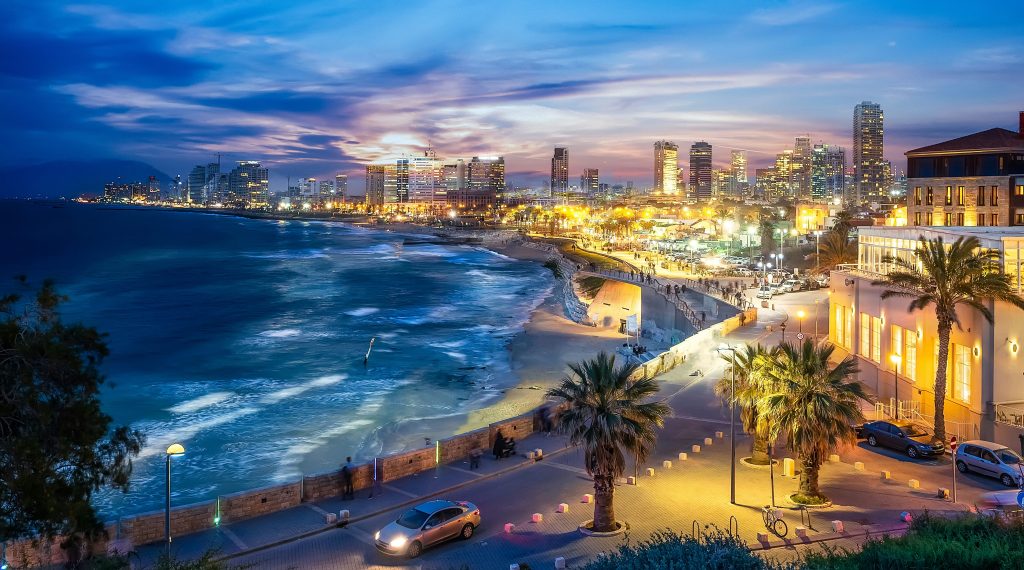

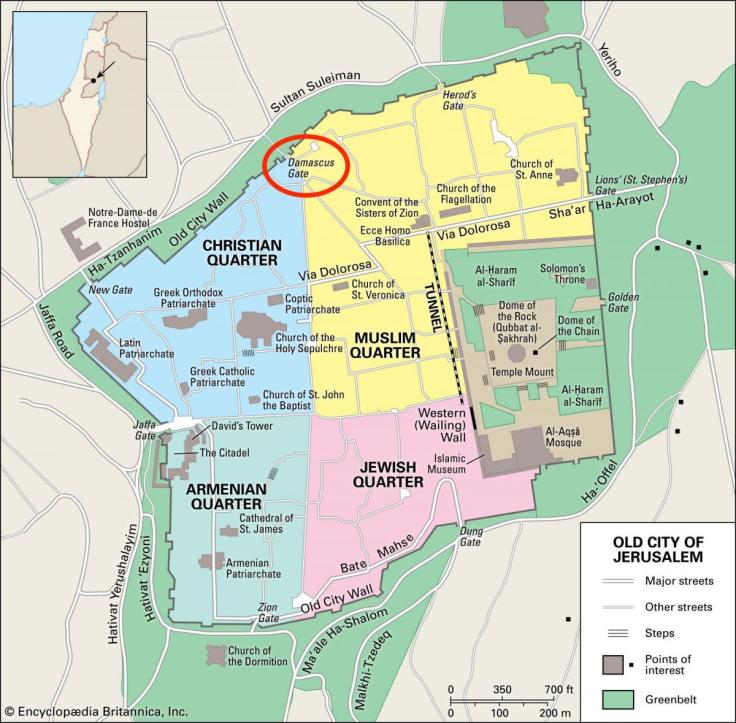





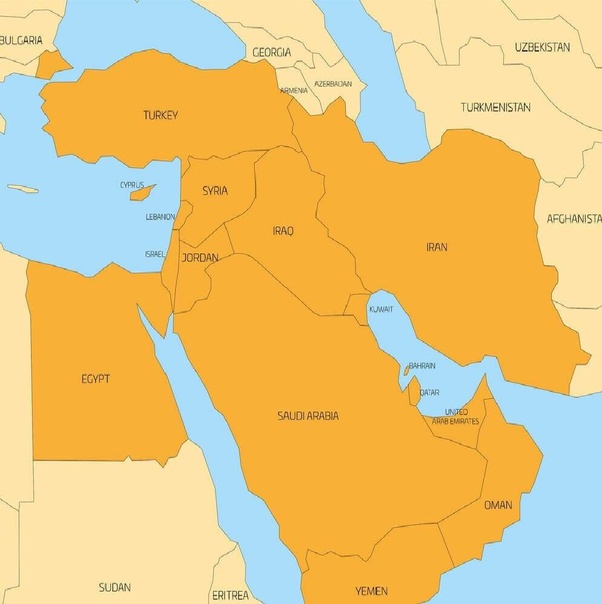








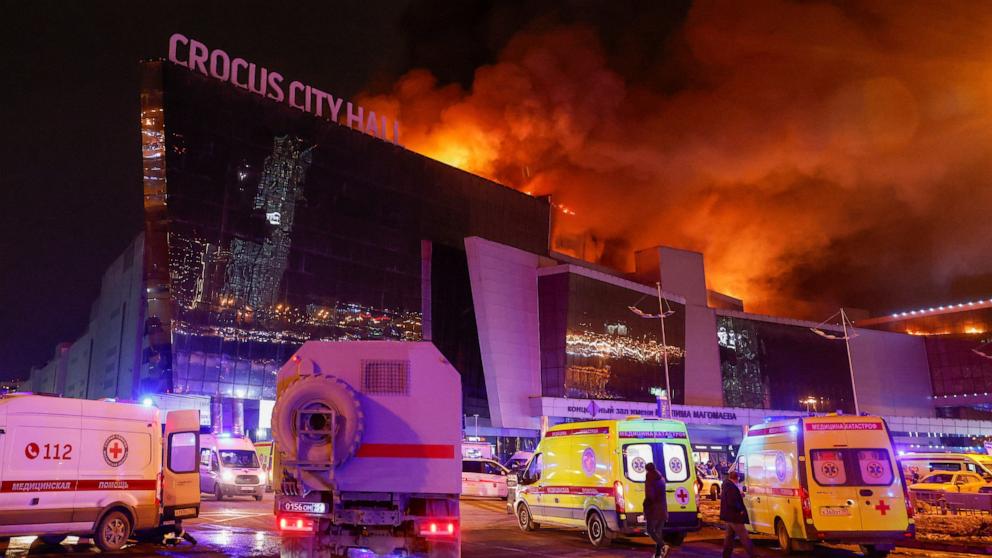
 WALTER SEBASTIAN ADLER