MEC-AI-SXXIII

SCENE (XXIII) 

الأراضي التي يسيطر عليها تنظيم الدولة الإسلامية  

Raqqa City, ISIS Controlled Territory, former Syria, 2016 ce 

Thus recounts the highly devout and sometimes decapitation look away prone mujahadeen Abdullah Shamil Abu-Idris. One of the over 45,000 Sunni Muslim volunteers to arrive in support of the Islamic State. 

ABU IDRIS 

“There is a protracted siege now well underway of this Syrian Bunker Citadel, that historically changed hands many times; and it was clearly not going to end well. Not for the attackers, the defenders, or the 200,000 plus people trapped standing in between.” 

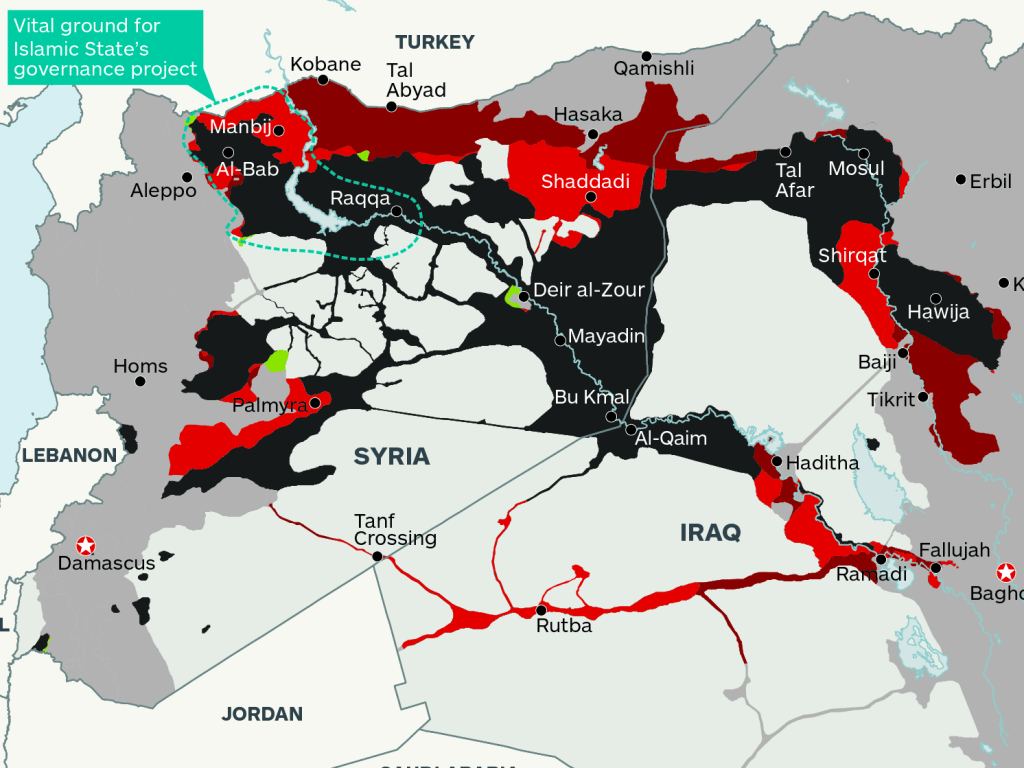
Not every single so-called ‘Daesh’ is an intimately, innately miserable, and evil person. Some are also Turkish spies, the mentally ill, or rapists. Some are on drugs; some are sadists and people with identity crises. Some just wanted to fuck concubines. Or impose themselves upon others. For many of the ten million people who found themselves within the ISIS zone of control, an area around the size of Great Britain. It was the lesser of many evils. That is why in virtually every city that initially encountered ISIS with all but a few exceptions, there was no resistance at all.  

The City of Raqqa at the height of the S.D.F. Offensive had around half a million people living in it and under it. Raqqah was re-developed by the Assad regime as one enormous bunker complex, a fallback base for the regime if Damascus fell. Which it nearly did. The capture of either Baghdad or Damascus, historic centers of Islam would have triggered in the global Muslim community a surge of foreign fighters. It would have subconsciously triggered a mighty influx of support. 

“G-d is Great!”, but his actions are often in-understandable! Everywhere on earth the Ummah53 was trampled, suffering, crying out for the righteous to stand up to these Crusaders, these Shiite Apostates and their Zionist allies. That is what the Baghdadi Caliphate was set up to achieve. The defeat of the Kafirs and the glorious triumph of Sunni Islam. Real Islam, not the Islam of reformers, collaborationists, idolaters, and innovationists. Embracers of Shirk. The inevitable return of the Mahdi our redeemer. But, things have again completely fallen apart. We’re barely holding on now, surrounded by a united cohort of enemies.” As explained by the Jihadi Abdullah Abu-Idris a Syrian Arab from Medayiin captured and interrogated during the gruesome 9-month battle for Raqqah City. 

“At the height of the Caliphate following the death of the Prophet Mohammed, Abu as Salem, in 200 years our Ummah stretched from Spain to Indonesia, from the Balkans down to Africa. The Caliphate of Baghdadi, well it was allegedly the size of Great Britain, had some 12 million subjects and stretched from just west of Baghdad to just east of Damascus. The largest city, currently completely under siege was Mosul and the administrative capital also completely now surrounded by Kurdish hordes is Ar Raqqah.”    

There are barren beige rocky, earth dunes in every direction. Alongside the Euphrates River it is lush and periodically scenic, but less than three kilometers out; dust and despair. Ramadan has begun, but the infidels bombard us day and night. We are in full retreat on all sides. 

It is so hot, but of course I remember to make my prayers and keep my faith, because I am a Muslim. I submit only to Allah, and I know the road I am on will lead me to paradise either in this world should we be victorious, or in the next should we fall as Martyrs. 

There remains a deep vacuum in the depiction of the war to explain the motivation of the 40,000-50,000 estimated Muslim volunteers who crossed the world, infiltrated Iraq & Syria, to defend the radical Caliphate led by Baghdadi. Humanizing these people is essential to making any basic arguments that ISIS had real grievances and framed reality in a way that spoke and speaks to a whole generation of Muslims. However, as complex the span of motives might have been, but 2017 most of them were dead and the coalition had encircled both Mosul and Raqqa City their dual capitals. If a Mahdi was coming, he was extremely late in the game. As rapidly as “the Caliphate” had risen and marched in every direction, its forces were now obliterated. Of course, it was this hardcore of foreign fighters that held out the longest, with their families, with nowhere to run or hide. 

My name is Abdullah Shamil Abu-Idris, or ‘Shamil Basayev’ as my name of the war. I’m named after a famous Chechen Mujahideen, freedom fighter killed in the liberation and resistance wars that happened in the Caucuses between 1994 and 2004. He was killed in an airstrike to his phone in 2006. I am Syrian, but to us Shamil is a real Muslim hero. He took on the Russians after all, the same barbarians we fight now on our southwestern front. Well anyway, the Russians eventually martyred Shamel. Allegedly also they killed 1 in 7 Chechens and raped 1 in 3 of all Chechen women. Which perhaps is why such a large contingent of foreign mujaheddin as Chechens. 

Now, we fight the Russians and Hezbollah from the South and the Kurds from the North. In Mosul the Shiites surround us. The American airstrikes have completely tilted the battlefield against us.  

There are not that many of us left. Perhaps 5,000 fighters, in the beginning it seemed we were sanctified and invisible, mujahedeen arriving from around the world. There is a distinctive dread of impending defeat. The Kafirs54 have bombed all out cities and given weapons to the Kurds and Shi’ites who are our resolute enemies. 

“I never got much enthusiasm from a public beheading.” I’m a good Muslim, so I never got down on the excesses happening under the mantle of the Caliphate. I came with my wife and two children from Chechnya. Clearly the Ummah is under attack in every corner of the globe and the Caliphate here was such an obvious form of resistance. The endless be-headings, gruesome public burnings and sex slaves were a little much for me. Over tea, some of us would go so far as to say it was the actual undoing of the entire Islamic State project this very well publicized brutality. Throwing homosexuals off the roof tops, well everyone had a chuckle about it, but really we should not have televised all that stuff. 

Now, Mosul and Raqqa are completely besieged and we’re all going to fight to the death. Raqqah City was rather beautiful once. The Caliphate was nothing like all the slaughter and terrorism on the media, though we made that media, and we made that terrorism. What people will never understand, the Kafrs I mean, is that we all actually want a caliphate. We want women protected in the home. We want non-believers regulated paying the Demi tax55. We want alcohol and cigarettes banned. We want mandatory prayer five times a day. It’s Islamic to want these things. The Kurds are all secular communists, so we killed them. The Shi’a are treacherous hypocrites, so we killed them. The Yazidis are devil worshipers, so we massacred them in Sinjar and made their women sex slaves. I didn’t do any of that. I arrived in 2016. It was beginning to crumble apart, but I had faith in the Caliphate. Well of course I still do have faith that the will of Allah is highly complicated, and this grand set back is all part of a larger clash, a cosmic war. Of course, Islam will triumph in the end, because that is what the prophet declared. But, for now, things look bleak. 

“I mean, how many generations of Muslims must fall to these crusaders before we restore the true religion of Islam? This is about resistance to the genocide of Muslims. Albeit strange that the leaders live in mansions and drive sports cars. Strange that none of the Imams are very learned. Strange that Turkish and Saudi money is all over the place in rumors, but all the ISIS leaders met in an American prison.” 

Frankly, life here is not a lot better or a lot worse that in fascist Russia. I would say that for my family all things are comparable, or were until Raqqah was besieged. Now, I suppose we will all die here at the murderous hands of Kurdish communist armies.   

I think it is good to die for Islam, but maybe for the sake of my family we will try and get through the lines and cross down the river to Al-Mayadeen. The last stand against the invading Kurdish army will be in the Deir-Ez-Zor Province, deep in the desert along the Euphrates River valley. 

The Western Media dehumanizes Muslims and makes us look fanatical, but after our people are massacred in every single nation on earth and the West declares explicit war on our religion, what exactly is the moderate position? There isn’t one. 

I was young when the towers came down, but it was appropriate. The C.I.A. and its Zionist allies have toppled the governments of Iraq, Afghanistan, Libya and Syria. They are remaking the Middle East for the good of Israel and oil corporations. The fact that their alliance against is one of Shiites and Kurds speaks to how they will stop at nothing, arm anyone to destroy Islamic law and governance. The great hypocrites are the Saudis for while they secretly send us money and clerics, they live off the glut of American petroleum trade.  

This project, the Caliphate had contradictions of course. But it was popular to many and most under its rule. Sunnis welcomed a protecting force with so much instability in Syria and Iraq. Iraq has fallen to the Persian Kafirs who fight us with Iranian help in Mosul. We are better warriors than the Shi’a or Kurds, but we don’t have air power. This is why we are now losing the war town by town, street by street. I will likely not get out of Raqqah, but I will fight and die with the brothers for the Islamic State. I know that at least for me and my Muslim brothers, this is very historical and important. 40,000 of us came to support this, thus it is not the cult of Baghdadi or extremism. It is legitimate and essential to Sunni that this survives, whatever the odds. 

I am of course willing to battle the Kafirs to protect true Islam! That is in the Qur’an. That is what Jihad is. War is terrible, the war in Syria is very awful. But we didn’t start the war. The war is a product of the big game between Russia and America. Everyone is clear on that. The Shiites side with Russia because of oil interests and politics. The Kurds side with America, because everyone hates their seditious plans.  

Look, I am not so violent! I’m not so radical. I am against the sex slaves, the fast cars, and big houses of the leadership. I would like to sometimes have a drink or two, sometimes. I had bacon in Russia, it was very tasty. You will never understand why this was important to us, but it was very important to us. For my generation it was almost cataclysmic. As if the Prophet himself might show up any day now. 

But in the end, he did not. And the coalition airstrikes took their bloody toll. Though I will meet a martyr’s death out here, I must say that the Caliphate and the rise of ISIS was enthralling to all the billion or more believers. Everywhere on earth Muslims are being massacred. Everywhere we are impoverished and abused. If like others I had sat this all out and watched, it on a TV screen I would not have lived up to my own beliefs about Allah and my faith and my religion. 

Later, they beat me badly for many days. Then eventually I was executed in a ditch. I cannot really confirm or deny that there were any virgins where I went because I do not want to upset any of the tens of thousands of Islamic martyrs who resisted the Kurdish infidels, Shiite apostates, and Western Crusader forces. But when I died, I was just dead, with no bells, whistles, virgins, or rivers of milk, or of red wine. The only virgins were the Kurdish and Yazidi girls they all abused. And death came to most of us ether from the American planes above, or the pickup trucks of light infantry fighting under the banner of Abdullah Ocalan.  

MEC-A1-S-XIX

S C E N E (XIX) 

سنجار 

Shengal (Sinjar), Iraq, 2014 ce 

*** 

“Genocide on the Holy Mountain. The men are executed. The women and children enslaved.” 

On August 3, 2014, ISIS attacked Sinjar. Yazidis were hunted like animals. Men were lined up and shot. Women and girls, some as young as nine, were sold as slaves. Boys were stolen, forced to fight, or die. Thousands fled to Mount Sinjar, trapped under the sun without food or water. Many perished before help came. Mass graves fill the region. Survivors live in ruins or camps, haunted by the names of the missing. 

“We woke up with dreams of life. By nightfall, everything was ash.” 

Bahaa Ilyas and Roza Saeed Al-Qaidi are Yazidi activists. These are their words. Taken from reports made right after the genocide: 

“The sun greeted me as I woke on the morning of 3 August 2014. I was a researcher at the University of Duhok, 200 miles from Sinjar. It was to be a joyful day as I was waiting – first for my salary, and then for Roza, my then-fiancée. Roza and I had plans to go shopping for our engagement party, which was to take place a few days later. We were excited, our future now starting to unfurl before us. We have not felt that way again since.” 

“As Roza and I waited at the bank, uneasy murmurs started around us, and phones began to ring. My phone vibrated; a friend was calling. ISIS has attacked Sinjar, he said frantically. Time stopped as the news took hold of us. Roza phoned her sister who was at her home on the outskirts of Duhok. Her sister told her that videos were being published online of ISIS fighters in Sinjar, and that there was news of killings of Yazidis in the streets. I called another friend, a Yazidi man in a village in Sinjar, who described ISIS vehicles with banners and heavy artillery driving past his home. My mother who was in my family’s town of Bashiqa, also called to say she had heard that ISIS was slaughtering Yazidi men and taking away women. Yazidis are fleeing,” she said, urgently. 

“I withdrew as much cash as I could and ran outside to flag down a car to take me to my mother in Bashiqa. Roza waited for a bus to take her to her family’s village outside of Duhok. We said goodbye tearfully, but quickly. We were not sure when we would see each other again. I made my way to my town, into which ISIS had not yet advanced. My entire family was put into the cars and drove to Lalesh, the Yazidi holy site near Duhok. Concerned that ISIS would advance to Lalesh, women and children were then driven by car to Duhok. Some of my uncles and myself followed on foot. Two days later, ISIS occupied Bashiqa. My family survived, but thousands of Yazidis in Sinjar did not.” 

“The Yazidis are a religious minority that has existed for millennia. With less than a million individuals, most of us live in the Kurdish Region of Iraq. Other Yazidi communities live in Syria, Turkey, Russia, Armenia, and Georgia, as well as farther afield, in Germany, the US and elsewhere. The Yazidi faith descends from the ancient religions of Mesopotamia, and today we believe in the one God. That the Yazidis are a pre-Judaic religion and so are not ‘People of the Book’, has long motivated the political, economic and social marginalization of our community.” 

“At various points throughout our history, attempts have been made to wipe us out– we regularly refer to the ‘73 genocides’ that we have suffered. Prior to the ISIS attack, it was the Ottoman Turks who had made the most successful attempt. Misunderstandings of our faith are deeply rooted, and it is not uncommon for people to casually – and wrongly – refer to us as ‘devil worshippers’ or ‘those who worship stones’. ISIS founded its genocidal attack on these old prejudices.” 

“In the early hours of the morning of 3 August 2014, while I was still asleep in Duhok, ISIS fighters left their bases in Iraq and Syria and moved towards the Sinjar region in northwest Iraq, close to the Iraqi Syrian border. Hundreds of villages are spread out around the base of Mount Sinjar, with one main town, Sinjar town, huddled at the base of the southeastern side of the mountain. Mount Sinjar, an arid 100-kilometre-long mountain range, forms the region’s heart. Before the ISIS attacks, the majority of the region’s inhabitants were Yazidis, with a smaller number of Sunni Arabs. The relationship between the Yazidi and Arab communities, who lived together in Sinjar town and in some of the other villages, was built on friendship and neighborly relations that extended across generations.” 

“ISIS attack on Sinjar came two months after they occupied Mosul in June 2014. It was quickly apparent that the Yazidis were their target, our existence perceived to be a stain on their so-called caliphate. Some families fled into the Kurdish Region of Iraq. Others escaped to the upper slopes of Mount Sinjar, where they were besieged by ISIS. Thousands were trapped under Iraq’s August sun, with no shade, water, food or medical care. Hundreds died on the mountain before the Syrian Kurdish forces, operating under the cover of Iraqi and American airstrikes, rescued the survivors.”  

“ISIS captured thousands of Yazidis in their villages or on the roads during their attempt to flee. Within 72 hours, most of the villages had been emptied, with the exception of Kocho, which ISIS did not vacate its residents until 15 August 2014. Upon capture, ISIS fighters separated Yazidi men and adolescent boys from their families. All the men and boys were executed, often by a shot to the back of the head. Their families were sometimes made to watch. ISIS fighters then moved the Yazidi women and children deeper into ISIS-controlled territory where they were registered. ISIS took note of the ages of the women and girls over the age of 9:  whether they were married or not; whether they had children and, if so, how many. In short, they were pricing them.” 

“Yazidi women and girls have been sold and resold into sexual slavery, beaten, starved and forced into labor in the homes of ISIS fighters. ISIS does not permit the sale of Yazidis to non-ISIS members, but the money to be made is enough for fighters to risk their own lives breaching this rule. Fighters sell women and children back to their families for tens of thousands of US dollars. Yazidi families are selling all they have, and borrowing more, to buy back their women and children from the men who raped and tortured them. There has been tremendous media attention on Yazidi women and girls who have been enslaved – but there has been little attempt to understand how the crimes ISIS commits against our women and girls fit into the group’s attempts to destroy our community. The Yazidi women and girls held by ISIS are not ‘sex slaves.’ They are genocide survivors, and for those who did not survive, they are victims.” 

“Boys over the age of 7 are taken from their mothers and forced into ISIS training camps, where they are indoctrinated and taught to fight. Some have died fighting on ISIS’s frontlines. It has been difficult to locate the boys and rescue them.” 

“As ISIS-controlled territory in Iraq and Syria came under aerial attack by the US-led coalition, Yazidi captives, trapped in fighters’ houses and on ISIS military bases, were reportedly among the casualties. As the ‘caliphate’ crumbled, ISIS fighters fled, taking the captured Yazidi women and children with them. Their fate and whereabouts remain unknown.” 

“Today, I am back living in Duhok and working as a research assistant on the LSE Middle East Centre’s project ‘Documenting Yazidi Victims of ISIS’. The project aims to build a consolidated database of Yazidi victims by age, gender, location and crime(s) suffered, using rigorous demographic techniques modelled on the methodology accepted by the International Criminal Tribunal for the former Yugoslavia. Our team will – with the consent of the survivors and their communities – create and organize data collected for use in accountability proceedings, identification of remains in mass graves, humanitarian interventions, community-building, and broader advocacy. It is specifically envisaged, and is an integral aspect of the methodological planning, that the documentation project will play a significant role in achieving justice for Yazidis against the crimes committed against them by ISIS. The data will ground existing advocacy for accountability processes in national, regional and international courts and tribunals. Once courts or tribunals seize the cases, the documentation project’s data will provide reliable information of high probative value for use before various existing and future accountability processes. I am proud to be part of this effort.” 

“For the Yazidis who have survived, most of us now live in displaced people’s camps, unfinished buildings and in rented accommodation in the Kurdish Region of Iraq. A small number have received asylum in Germany, Sweden, Canada and elsewhere. Others, in their desperation to find safety, have fled on dinghies to Greece. Some, including people I know, have drowned in the Mediterranean. A few have taken the risk and returned to Sinjar, which – though destroyed – is now under the control of the Iraqi central government. The region, littered with IEDs, is not yet safe. Mass graves holding the remains of Yazidis are regularly uncovered. There is a need for forensic preservation and analysis and more generally for reconstruction. Living with dignity in Sinjar remains a challenge.” 

“The Yazidis continue to hope for the rescue and return of the women and children still held by ISIS. We hold out hope that some of the Yazidi men captured have survived and might also be reunited with their families. We have survived, for now, ISIS’s attempt to destroy us, but we remain a deeply traumatized community in need of support: psycho-social support, educational and livelihood initiatives, including those specifically aimed at increasing female social and economic independence, forensic documentation of mass graves, reconstruction, including infrastructure for potable water, healthcare and education – our list is long. But if I were to summarize, I would say the Yazidi community, displaced from Sinjar and desirous to return, needs three things: assured security, justice for the crimes committed against us and recognition of the genocide. The prejudices against our community must be uprooted and made to wither in the light. This requires the calling of the crime committed against us by its true name.” 

“The morning, I awoke thinking about my engagement belonging to a more innocent time, one to which Roza and I cannot return. This morning, I sat in front of my computer. On its screen are the names of thousands and thousands of Yazidis.”   

“They are categorized: killed, kidnapped, missing. I know they, like me, they once woke up looking forward to the day ahead of them.” 

Report by:  

Bahaa Ilyas is a Yazidi activist who has been in close contact with internally displaced people through different agencies and organizations since 2014. Currently, he is a researcher on the LSE Middle East Centre’s ‘Documenting Yazidi Victims of ISIS’ project. 

Roza Saeed Al-Qaidi is a Yazidi activist. Since ISIS’ attacks on the Yazidis in August 2014, she has been involved in humanitarian aid and has interviewed Yazidi survivors, particularly women and girls who had been sexually enslaved by ISIS fighters, on behalf of several different organizations. 

*** 

As Further explains the fixer “Abu Hamza”, the assumed Kunya47 of a Kurdish businessman named Alacan Al-Biban of Kirkuk City, fixer, artist, gentleman, man about town in Erbil.  

ABU HAMZA 

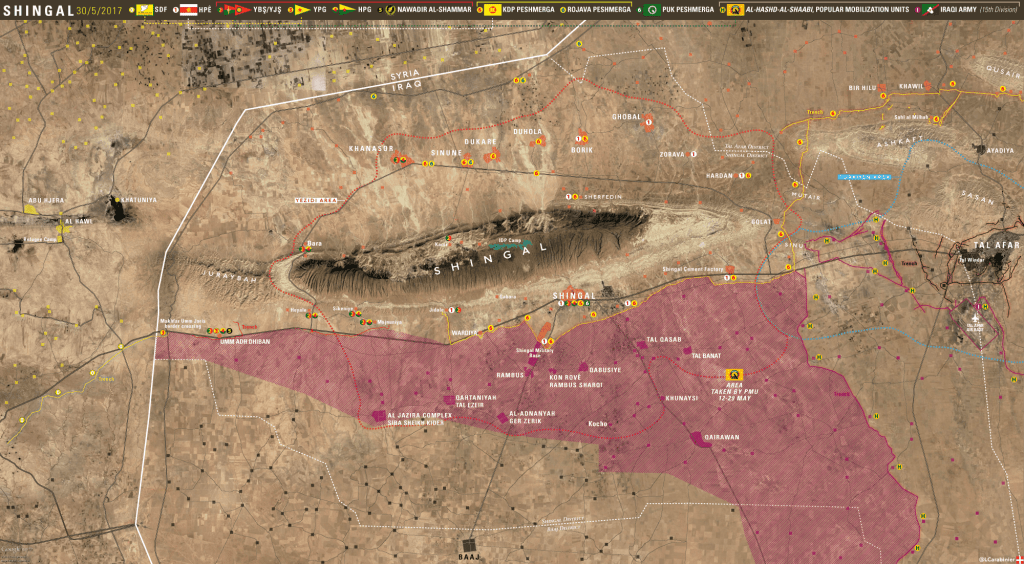
“The Yazidis live in and around a holy mountain called Jabal Sinjar. It lies along the Syrian Iraqi border 80 kilometers West from Mosul in the Nineveh Governorate. Their holiest site called Lalish, the tomb of their avatar for the Peacock Angel48Tawuse Melek”, Sheikh Adi ibn Musafir is found between three mountains. The Arafat, the Misat and the Hizrat.”    

On the highest peak of Jabal Sinjar is the Chel Mera Temple. “The Temple of Forty Men”. The temple is so ancient no one remembers how it got that name, but it is believed forty men were buried there. 

The Yazidis have three hereditary castes; the Murids, the Sheikhs and the Pirs. In some ways their beliefs are linked to Sufism and Zoroastrianism.  They believe in reincarnation and forbid intermarriage with other groups. Although some claim they have holy books called the Kiteba Cilwe (Book of Revelation) and Mishefa Res (Black Book), there is great reason to believe these are forgeries created in 1911-1913 and virtually all Yazidi religious theology is a chain or oral transmission called Qawls; hymns with cryptic allusions and supporting stories.   

The Yazidis are ethnically and linguistically Kurdish. They speak Kurmanji, like the Kurds of Syria and Turkey. They are concentrated in Northwestern Iraq in a highly mountainous area called Sinjar by the Arabs or Shengal, by the Kurds. They are monotheistic, Gnostic religion. Over the years Sunni Muslim Arabs have typically accused them of devil worship, because of their belief in a pea cock fire angel. In 1414 their sacred Lalish was razed. In 1640, Ottoman Turks carried out a pogrom killing around 5,000 of them. In 1892 Turkish Ottoman Sultan Abdulhamid II mass conscripted the men to eradicate their faith. In 1974-1975 Saddam Hussein deported Yazidis and re-settled Arabs in Sinjar. Around 137 Yazidi villages were destroyed. In 2007 there was a Jihadi campaign of bus bombings, kidnappings and terrorism that left as many as 300 Yazidis death and over 1,500 injured. In 2009 Al-Qaeda used a series of truck bombs in Sinjar to kill upwards of 500 Yazidis in Qahtaniya and al-Jazira. So, Turks and Arabs killing Yazidi is as Sunni Islamic as tea and shawarma.  

The story of the woman being fed, oh yes, fed, her one-year-old son. A later story. 

In August of 2014 “Those who run from death”, the KDP Peshmerga, abandoned their positions and allowed almost all of Shengal to fall to ISIS without firing a shot. ISIS then began a rapid campaign of summary execution, forced conversions, sex slaving and out right genocide. On August 3rd, 2014, ISIS captured the holy city of Sinjar. A massacre began. Over 200,000 Yazidis fled into the surrounding mountainside. 50,000 of them were trapped on Mt. Sinjar, exposed to the elements with ISIS bandits raping and murdering their family and friends. ISIS Cheta shot 70 to 90 men in Quiniyah Village, 360 in Harden village. 200 Yazidis were lined up and shot in Sinjar city. 60 to 70 killed in Ramadi Jabal. 50 in Dhola village, 100 in Khana Sor and 200 more on the road between Adaniaya and Jazeera. Dozens in al-Shimal village and more on the road from Matu to Jabal Sinjar. Women were gang raped. Children were buried alive. In most cases the Yazidi girls and women were separated for rape and sex traffic to various ISIS held cities. Old women were shot.  

Using rape as a weapon of war Daesh bandits had gynecologists examine their captives to set slave prices based on virginity. They were treated like cattle. There were online price indexes. Sales on Telegram, Facebook and WhatsApp. Prices varied. Between $2,000.00 and $10,000.00. Less than 5 women escaped. Many died in captivity or allied bombardment. 

The Sinjar Mountains are over 100 km long-range running east to west. The lower western segment in Syria and eastern higher segment in Iraq. The range is viewed as sacred by the Yazidis who consider them the place where Noah’s ark came to rest. 

On August 8th the United States President Barack Obama ordered airstrikes against ISIS in the area of Sinjar. Air strikes and supply drops for the Yazidis hiding there. 

ABU HAMZA 

The 50,000 Yazidi besieged on top of Mount Sinjar began to die from hunger and thirst and exposure to the elements. On August 10th P.K.K. and Y.P.G. guerrillas, with truck mounted heavy machine guns supported by mobile light infantry charges, broke the ISIS siege and began guiding Yazidis to refugee camps and shelter. Some were evacuated by the Peshmerga via Cezanne and Telkocher roads to Dohuk, Iraq-K.R.G. Though the majority broke out with the P.K.K.-Y.P.G. safe corridor to Rojava.  

They fought most of the rescue operation from pick-up trucks or on foot. With small backpacks which mostly had been loaded with extra magazines and hand-grenades, canteens of water and sometimes a few cans of Mortadella. Or canned olives or whatever there was left before they shipped out. Clad in green baggy fatigues the PKK made a rapid incursion through ISIS held territory to launch the largest humanitarian evacuation of the war, saving the lives of tens of thousands of civilians hiding on the mountain.  By August 8th most of the remaining Yazidis had been evacuated by the P.K.K. to the K.R.G. areas and Rojava.  On August 10th airstrikes opened a passage for another P.K.K. evacuation into Syria of some additional 20,000 to 30,000 Yazidis. But there were still around 10,000 trapped on the mountain by 13th August receiving airdrops of food and water from the coalition forces. Eventually, the guerrillas got almost everybody still alive out alive.    

On August 15th there was a large massacre in Kojo. Over 80 men were killed outright. The entire male population of Khocho, around 400 men were butchered. Around 1,000 women and children were abducted for sex slavery. In Tal Afar 200 Yazidi were shot at the prison. A report in late September concluded over 5,000 Yazidis had been exterminated. Several thousand, perhaps as many as 7,000-10,800 women and girls were carried off to Mosul, Raqqa and other ISIS strongholds.  The confirmation of the missing versus the dead has not been cleared up yet and will not be for many years later.  

Repeated raids by P.K.K. commandos rescued 51 Yazidis in March and 53 in April. Most of the abducted women and girls are still missing, having been living in brutal, in-human slavery for over four years. Most have been presumed dead. Mass graves keep getting found all over the liberated areas.  

From time to time a young woman, an escapee, jumps off Mt. Sinjar. That will probably go on for many years to come, a dark disturbed pattern in a community wholly unaccustomed to this level of barbarism” explains Alacan, known mostly to outsiders and journalists as “Abu Hamza”.  “They were all mentally and physically abused by the vile bearded Chetta in ways we cannot ever possibly comprehend. That few can even bear to hear. Fewer still wish to talk about.”  

Blog at WordPress.com.

Up ↑