MEC-A1-S7

S C E N E (VII)  

بيروت 

Beirut, Corniche, 2024ce 

***     

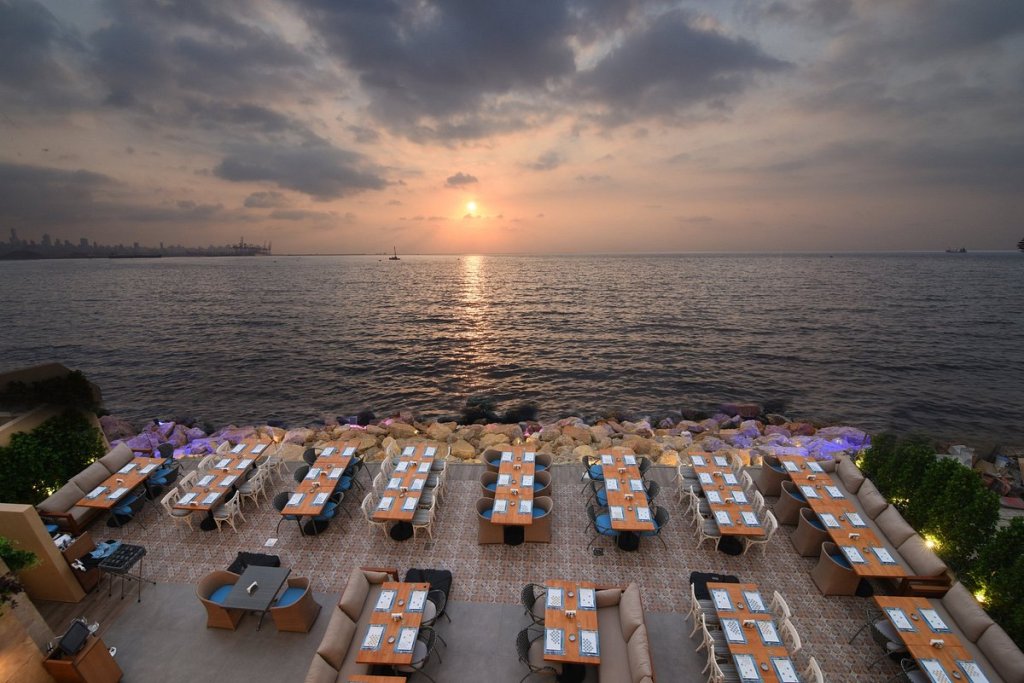
The historical, comical, and even anecdotal way you know “the Jew is back in Beirut” is his appearance at Monir’s on the most Western reach of the Corniche wrapping way into Ras Beirut. The very most western point of the Corniche is the literal turning point on “the people’s boardwalk” stretching dozens of kilometers where you begin to leave Western Sunni Beirut and enter southwest Shi’a Beirut. Tracksuits and mustaches. Shiite tricks and the of twelve Palestinian refugee camps.    

Did I hear you say, “a Jew is back in Beirut?! With any surprise in my voice?” explains Monir Senior, the owner of the Fruits of the Sea Restaurant. If he is back, well, great trouble is coming. 

There are at least 40 Jews still in Beirut!” says a man who looks like could be in Hamas or could just be a regular Middle-aged Sunni. Hamas is Arabic for Zeal; and is the infamous Palestinian arm of the Muslim Brotherhood that has just orchestrated the action of October 7th; in which 1,200 Israelis lost their lives in Jihad or Pogrom, or terrorism; depends on one’s sensibilities. The man has a bulge in his suit for a shooter to perch. He has a shabby suit. “Which is 40 too many if you ask me!” 

“There are not 40! Just 25, and all loyal Lebanese to the core.” 

“The Party of God just agreed to help pay for the great synagogue renovations!” exclaims someone in Hezbollah having their late lunch with a deluge of tea and cigarettes. 

Paid for by Iran!” The Hamas man yells back. 

The Jew was made familiar with the Monir family having served with his son in the Mosul Offensive of 2017, and thus the Monir Shop was the one familiar lynchpin the Jew ever has, tying the world of alive and now, to the world of endless and ephemeral. The speculative world he uniquely and often peers into. He is of course “capable of becoming a blue-purple smoke” and then he’s gone! They say the Jew has great powers. That is what they always say for sure. Power to steal and to heal, with mere words.” 

They say “the Jew always appears in a green suit, in a pop and puff and mystical whiff of blue-purple smoke. Out of nowhere!” And so he has now; in the dead of winter. In the nights before Christmas. Which in Beirut means one minute it is sunny beach weather, and the next a torrential downpour flooding the roads putting cars under water. The Jew sits in the middle of the room amid everybody’s tables, so everyone can see his face. And a little light goes on. 

SEBASTIAN ADONAEV  

“Now looking back, the first thing I should have done was walk into Monir’s on the Corniche, ask the manager for the owner, and tell him I fought with his son Monir during the Isis wars.” 

His son Monir Jr. and I were part of a special international tabor attached to the Iraqi Special Forces units in the battle of Mosul. We used to patch up the varying combatants and civilians blown apart in the crossfire. Stabilize them until they can get extracted 10 or 20 km away toward a distant field hospital. Usually NGO, WHO, or Shiite Hashidashabi Popular Mobilization Forces field hospitals. Unless we found the bruises under the right arm, from firing a Kalashnikov, and we’d know they were Isis and they’d be snatched off the operating table to be tortured or summarily shot in the head and then dumped in the river.  Monir is Christian Lebanese; his family is Maronite. We used to spend our leave time in outer ring Erbil flirting with Iranian prostitutes but being too broke to pay for one. 

The salary for an internationalist volunteer in a tabor is $250 a month in faceless dinar, with unlimited Arnette or sometimes Gauloise cigarettes, three square Iraqi collective meals eating with your hands; and “a place at the table with Jesus” as Monir used to say.  

Now any friend of Monir the Jr. was a friend for the life of Monir the Senior, but I never even opened my mouth in Monir’s except to ask for a menu and order some seafood stew. And a Coke, but there is only Pepsi in Lebanon! Any idiot knows that. Why was the Jew making such culturally insensitive rookie mistakes? Maybe he is nervous? Maybe it’s just performance anxiety? 

You can tell the coming weather of winter by the appearance of the Jew. Is he being rushed by something? Why does he order a Coke, there’s no Coke in Lebanon. Does he make a war fellow embrace Monir Jr, working in the Kitchen? Is he in the Kitchen in this reality? Is Monir still studying in Australia? Does he sit with a stranger inviting him for a smoke? Does he sit on the right with Hamas or the left with Hezbollah? Is he going to get kidnapped and cut into lots of little pieces? 

HAMAS MEN  

“Gotta get a good look at his face to tell the coming weather.” 

So, when the Jew sits down, they turn on a little light. Not too bright. Because the Jew comes to Beirut every single year and he may have evolved. How much blue smoke? What kind of shoes? What makes this new green suit? Is he dressed like a PKK again? What’s PKK again? The Kurdish resistance of Qandil; the Kurdistan Workers Party that trained him. Well, it looks like it was rushed and sloppy training if you ask the Party of God. 

This year, in 2024; at least most agree to that. The Jew doesn’t make small talk or reunion with Monir Senior. Shockingly, he seems to ignore everything. Who is or isn’t even at the restaurant? The Jew doesn’t seem to care about establishing the human connection. He seems rushed, and they all agree. In the Middle East only a foreigner is ever rushed. 

“The Jew of Beirut is out of season.” No one even knew he was coming this, Winter. No one even suspected it. He asks for a cigarette from a patron who obliges him. A neutral. He doesn’t make eye contact with the Hamas men, or the Hezbollah men. “My son is an electrical engineer in Massachusetts,” says the man he bummed the original smoke from, “We love you Americans.” “You being here makes me feel safer!” 

The Jew nods. He is a little American. So, they can love him a little. I suppose in some round about logic if shit were about to hit the fan, if the invasion was immanent an American wouldn’t be out for lunch on the Corniche. 

ADONAEV  

What I do now is very important, but mostly only to me. No one is really watching me as closely as me. They’re all watching me order a so-called Seafood stew and a Coke that doesn’t even exist. Watching me ignore the manager and owner, no entitlements. No attachments. No OUTS, and also no INS. I have never been here before. But maybe I have. Retrace your steps. Don’t let her down again. Don’t let your Vice President Yaelle D’Arrigo down, or your little secretary Karessa Abe who you are claiming you love so much. Or at least use it as an acid test for your own alleged morality. 

“They teach you in suicide intervention prevention training that offering an imbibing a glass of cold water is grounding; it’s a break in the tension.” 

No one brings him any water. In the New York Grad “cultural context”, that’s a sign you’re not welcome here. Not out of disrespect, but because it might influence his very next move. Might change the weather. No one moves any time faster than in pure Middle Eastern time; slower than slow as hell at all times like you live in a desert. Although nothing at all about Lebanon is like a desert. Until something explodes? Or does graciousness take over?  

The patron families don’t stare; they ignore him completely. But the Hamas men stare. How does he know they are Hamas men? The vibe is the vibe is the vibe. Hamas men have better suits than the men at the Hezbollah table. And why are these factions both at Monir’s? Because Israelis are about to invade Lebanon; it’s going to start World War Three. This will happen any minute, any hour now, or at least by the end of the week. 

YELIZAVETA ALEKSANDROVNA KOTLYAROVA   

(Inside his head) 

“Show them you’re not afraid to live or to die for me!”  

ADONAEV  

What I do now is particularly important. They are all watching me order a Seafood stew and a Coke that doesn’t exist. They only have Pepsi in Lebanon. An American tourist, out of season. It is near wartime. Hamas means Resistance shortened to Zeal and Hezbollah means Party of God. 

HAMAS MEN  

“The Americans pay for the Zionist war so he should die, in my humble opinion,” says one. 

“But maybe he could make a good hostage?” another one suggests. 

“Most of the ones under Gaza are already dead!” 

HEZBOLLAH MEN  

“This is a funny scenario, almost a little obscene. We were here to talk to Hamas. What’s this Jew doing here, who does he work for. What interests are served by him being here. B for Bravery, but also a highly incorrect approach to doing any real negotiating.” 

“They think they own the whole world,” one says.  

DO-YOU-WANT-ANOTHER-CIGARETTE-MR.-AMERICAN?” one asks him in loud English. And so, he takes one. Nods a thank you/Shokran, and he does a heart-tap-to-salute. The heart tap salute he learned from the Kurds, both hands to the heart, and a left-handed salute showing modesty, and gratitude together. 

HAMAS MEN  

“You used to be able to tell the weather by the running of the Jew, but it’s very very sunny right now.”  

“Like summer in December!”  

“Lure him out to the back somehow?”  

“Hit him in the head?” 

HEZBOLLAH MEN  

“This is not funny.”  

DO-YOU-WANT-ANOTHER-CIGARETTE-AMERICAN?” one asks him again in English. He takes another one. He then offers them his business card in gold and brown leaf. It says GCC which stands for ‘General Coordinating Committee’. Coordinating what, and for whom? 

“Who trained this person?” 

“No one trained him.” 

“Why is he really here then? Why at this time?” 

“To negotiate off channels?” 

“No, he’s nobody. Nobody is protecting him he’s here wide out in the open.”  

“Leave it all alone.” 

The Jew of Beirut didn’t appear in blue purple smoke, poof! He did not have on such bad shoes, but they were bad for walking twenty kilometers on the Corniche from Christian Achrafieh out here. “Clarkes he prefers.” Chafing his heels. His suit is like a green PKK officer if they had officers, which they do not, just comrade friends. Just a hundred thousand friends in the hills with Kalashnikovs. 

HEZBOLLAH MEN  

“I think you should take your leave Mr. American Tourist. No one stocks Coke-A-Cola here.” 

HAMAS MEN  

“They’re cock blocking us, again. Thise fucking Shiite motherfuckers.” 

The Hezbollah men nod, and the Jew gets up and leaves the place. Not having done more than smoke 3 cigarettes and washed his hands. No one in Hezbollah has any interest in a dead American right now. No one in Hezbollah has an interest in a dead American ever. The Jew leaves his card with the two tables of so-called terrorists. “Maybe it’s all confabulation and he’s not leaving a card with anyone besides some middle-aged Lebanese tough guys in a famous seafood cafe that real terrorists wouldn’t be in anyways.” “Pure confabulation, real rooky type moves.”  

YELIZAVETA  

This isn’t a movie. You’re gonna get your fucking Jew fingernails pulled, or your eyes put out,” Yelizaveta tells him. Then, the Jew takes leave but turns hard right and keeps walking, down the Corniche southbound, walking and walking toward the Shi’a control zone. 

Retrace your steps. Walk to the end of the Boardwalk where the Ferris wheels are. When you see them, it should start to look familiar. Like when we were at the AUB in the 70’s. You will find me in the Shatila Refugee camp. I will stop time for you. 

*** 

So, he walks the Corniche until he comes to a place where it looks like the people are sealed inside. There he can see heavy duty checkpoints with armed guards and barbed wire and soviet looking block housing. But Yelizaveta or no Yelizaveta, he can’t just blag his way inside, and this was his first day back in Beirut. You can’t get into a Palestinian Refugee camp kind of state of mind on your very first day back in Beirut. It’s pushy, even for a Jew from New York. The Jew of Beirut is only pushy when it comes to life-or-death situations. And those are right around the corner to be sure. 

*** 

Kaveh Ashuri is burly, Assyrian, Iranian, Persian, American. He goes into town before Yosef Bashir because he wants to see an old, intractable flame. He wants to enjoy the city for a couple days before they get to work, even if he has to stop time. So, he stops time. More on that process later. 

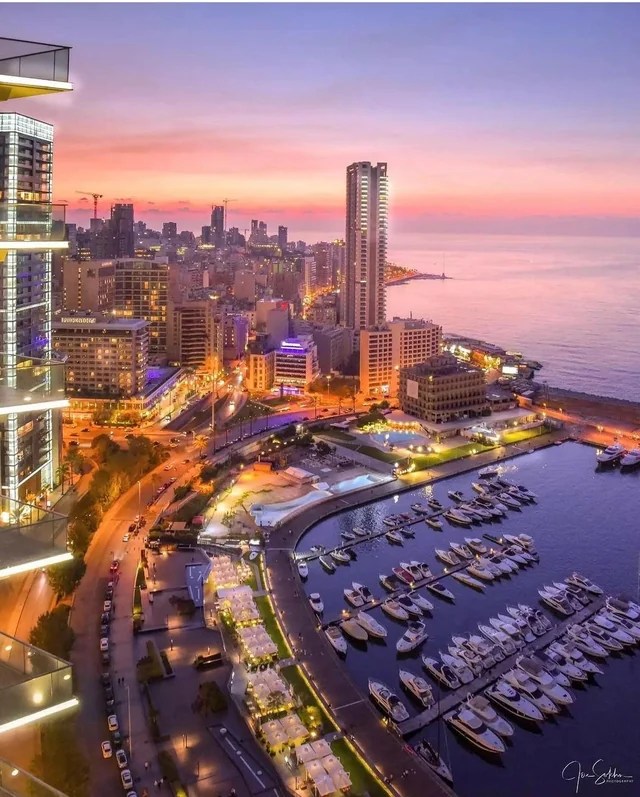
The sun dips below the horizon, painting the sky in hues of fiery orange and soft lilac, signaling the awakening of Beirut’s vibrant nightlife. In the heart of the city, where the ancient metropolis melded seamlessly with modernity, lay a labyrinth of narrow streets and bustling boulevards that came alive after dark. It was a city where time seemed to blur, and the past whispered through the cracks of its ancient walls, intertwining with the pulsating energy of the present. 

Open mic night for stringed instruments. 

Amidst the maze of alleys and cobblestone paths, nestled a quaint café; its walls adorned with eclectic graffiti and flickering lanterns casting a warm glow. The scent of freshly brewed coffee mingled with the sweet aroma of shisha smoke, creating an intoxicating ambiance that drew in locals and wanderers alike. At a corner table, bathed in the soft glow of candlelight, sat Anya Layla Noori, her dark curls cascading over her shoulders as she sipped on a cup of rich Arabic coffee. Her eyes, the color of warm honey, sparkled with a mixture of excitement and anticipation as she awaited her rendezvous with destiny. Across the room, amidst a lively group of patrons, stood Kaveh Ashuri, posing as a musician with fingers that danced effortlessly across the strings of his oud. His soulful melodies filled the air, weaving a tapestry of enchantment that transported the listeners to distant lands and forgotten dreams. 

As the night wore on, Beirut revealed its true essence, a melting pot of cultures and traditions, where East met West and ancient metropolises embraced the modern world. Lebanese, Syrians, Palestinians, and expatriates from every corner of the globe mingled effortlessly, their laughter and chatter blending into a symphony of harmony. Amid this vibrant tapestry, Layla’s eyes met Kaveh’s across the crowded room, and in that fleeting moment, time stood still. It was as if the universe conspired to bring them together, two souls destined to collide amidst the chaos of Beirut’s nocturnal embrace. 

With a shy smile, Kaveh made his way towards Layla, his heart pounding with anticipation. In her presence, he felt a sense of belonging, as if he had finally found the missing piece of his soul amidst the cacophony of the city. Their conversation flows effortlessly, as they exchange stories of their lives, their dreams, and their deepest desires. In each other’s presence, they found solace and understanding, a connection that transcended language and culture. 

As the night drew to a close, Kaveh took Layla’s hand in his own, his eyes searching hers for a flicker of doubt. But in the depths of her gaze, he found only certainty; a silent promise of a future yet to unfold. Together, they ventured out into the streets of Beirut, their footsteps echoing against the ancient walls as they embraced the magic of the night. In this city of contradictions and complexities, they found love, a beacon of light amidst the darkness, illuminating their path towards an uncertain yet exhilarating future. “Are you still Pasdaran,” she asks him? “Well, I guess so,” he says, “but realistically now we are all falling in line with the Party of God and Workers.” “So, Bashir and Sebastian are finally in Beirut,” she asks. “Yes, it has all been given the green light,” Kaveh replies. 

MEC-AI-S13

S C E N E (XIII)  

نيو جيرسي 

Al New Jersey, U.S.A., 2023ce 

*** 

Every time we survived a fire fight in Rojava, usually a few of the internationals were out of sorts. They had just killed someone, maybe for the first time. Or seen someone die. Maybe they had shot someone that wasn’t necessarily a combatant per se in the heat of the battle. Or had just been awake for too many days at a time. For a time from of the international fighters, particularly those in their first trial by fire fight, would seem a phantom in the days after the battle. Maybe they would say nothing at all for a time, or maybe they would say something totally off base.   

Heval Erdal, a British comrade liked to say: 

“I think he lost the plot point.” 

Years later, after some of them made it out of Rojava alive, statistically 1 in 10 international volunteers died in the war, and 4 of 10 died from either suicide or by Russian rockets in Ukraine; some years past the pitched battles to defend Rojava, the Jew of Beirut was in Al New Jersey, a state to the West of Al New York. He was meeting with Souheil Tajer, a Lebanese businessman. Telling a short story about his time in Syria. Trying to make it make sense. 

“We have to circle back to when things still made three dimensions of sense,” Souheil says to the Jew.  

“Circle what?” 

“Circle back as to not lose the trail to the plot points.” 

“What does that mean?” 

“It must make sense to regular people! Stop dancing around in a dabke circle. Stop beating around the bush.”  

“What is it you’re planning to do in my country?” 

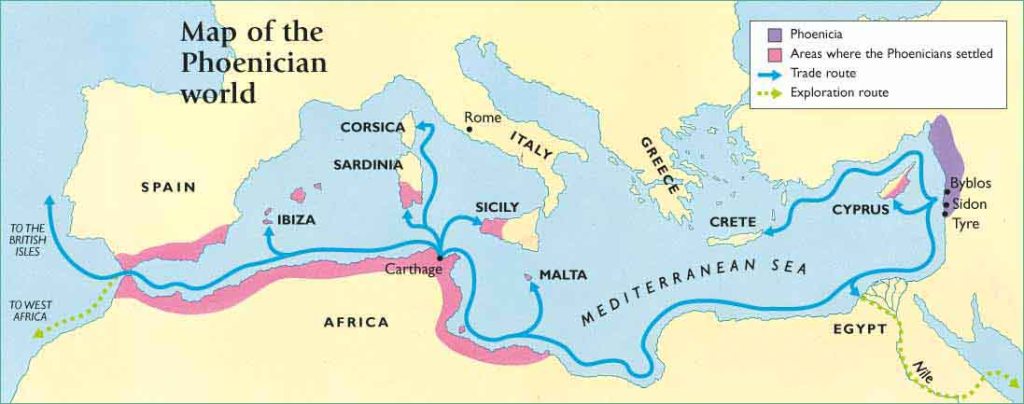
Before the Jew of Beirut, who was only really one half-Jew, (he was technically, allegedly Chechen by his father and Cuban Sephardic by his mother), before he flew into Beirut for allegedly the very first time, days before the Great War began. He went first to a place called the coast of Al New Jersey, a neighboring state to New York, across a River. To West New York. Before he departed with an ill established, albeit ambitious plan he met with an elder statesman of Lebanon, a man named Souheil Tajer who presided with his nine brothers over an import-export firm for high end foods. They speak at length about the unbelievably bad timing, the bevy of possible new experiences, “unique experiences” that Lebanon is known for. The culinary extravaganza is obvious to all, but the people and their resilience in a flailing economy at the edge of a war zone are the most profound. A place where pure strangers are easy friends all the time. A people descended from epic trader sailors; the Phoenicians.” 

“The Golden Age of Beirut ended in the Civil War of 1975.” 

From 1975 to 1991 the Palestinian militant groups, the right-wing Christians, left wing Druze, Sunni, and the Shiites set off on a very bloody civil conflict. Not everyone participated but everyone was soon shooting and kidnapping in various power constellations. It eventually involved the Maronite41 right called the “Lebanese Forces” or “Phalange”; the Armenians stayed mostly out; the Christian Orthodox liberals; the Sunni Nasserist Pan Arabists; the Shia Left called “Amal”, the Shia revivalist ethno-nationalist right called “Hezbollah”; the Druze left in the “Progressive Socialist Party”, the Israelis, and the Syrians, the French, and the Americans and about 140,000 to 170,000 people lost their lives. When it ended nothing was ever really resolved. So, in a sense, it was always just a matter of time before something like that could happen in Syria or happen again in Lebanon. None of the demographic problems were ever addressed. But while the iron heel of the Assad regime held Syria together, until 2014, in Lebanon it was a though there are defacto ethnic cantons, states inside the illusion of a state. 

The country once called the “Paris of the East”, was reduced to an exceedingly long slaughter. No one was left in the absolute majority. Except probably the Shia. No census has been taken since 1932, as has been noted. The President was to be a Sunni, the Prime Minister a Christian, and the Speaker of the Parliament a Shi’a. 18 ethno-religious groups (including Jews) were allotted proportions of important posts. Ways to steal really, and every faction got a port to smuggle from. Everyone buried their guns, except for Hezbollah, “the Party of God” representing the Shi’as (believed to be the true plural majority); and then the Syrians killed the President. The Druze stayed up in the Chouf. A mountainous region to the east of Beirut. Each faction controls a port city except the Druze, everyone is smuggling something.  

There was a fast economic upturn from 2008 to 2011, but now the money, the Lira, is valueless and no one can get it out of the bank. Skyscrapers stand empty, the Israelis and Hezbollah exchange daily rocket fire, and life of course somehow goes on. People show up to jobs that don’t really pay and pretend to work. What is the old Russian saying, “we pretend to pay you, and you pretend to work.” Tourism has totally collapsed. But Winter is not tourist season anyway. Only the national carrier Middle Eastern Airways is flying in now. 

ADONAEV   

My understanding is that a “Green line” runs south from Martyr Square, and it divides a mostly Sunni West “Ras” Beirut from a Chrisitan zone in the east. There are 3 major Palestinian camps in the Southwest and Shi’a in the south and Southwest in zones run by Hezbollah. The airport is squarely in the Hezbollah control zone, or at least everything around it is. They didn’t have a map, but a map of varying lines exists in both their heads. Albeit with Mr. Souheil Tajer has the far more intricate and detailed map. 

SOUHEIL TAJER  

It is good you are familiar with the “Green Line”, but there are other lines not to cross. “In good times, you would be testing them, them the Lebanese, but under the current situation, everyone will be tested by you. Testing you, wanting to know why you are there, now. What is your motivation?”  Everyone will be very, terribly angry about the Palestinian situation. How could they not be? 20,000 is a lot of dead Muslims. Alot of dead people. And it will go higher. It will go to 40,000 by the dead of winter. And then higher still. So many dead people, dead Muslims, everyone will ask where you stand on that. No matter what their confessional feelings. You really must stay inside the Christian and Druze lines on the map. Beirut East, the coastal cities until Batroun, the Chouf, and the Matn. Everything else is an abduction possibility. 

You should study that map in real life and your head and use your common sense! Don’t exceed your limits.  

ADONAEV  

I’m there for 25 days. I’m going to rent a little studio in Achrafieh. I’m working on a book. 

SOUHEIL  

Achrafieh is safe. You must not stay in the Muslim area after dark and don’t stay in their hotels. No one can guarantee your security. In East Beirut you have many friends. The weather will be bad. It may rain every single day I’m afraid.  

ADONAEV  

 I plan to do some writing in the Chouf, at your friend’s place in Berkazy.  I am gonna stay in the city, be wary of my encounters, and stay in the right kinds of places.  

SOUHEIL  

Achrafieh is safe, but you must, must, must find a good driver. It’s essential to your safety. I wish I could go with you and make some better introductions! Now repeat what I have told you please. 

ADONAEV  

The green line is the line of demarcation, staying in Muslim areas is not advised in the current situation. Be careful who I get to know because everyone is very curious and will be more curious because of the timing. No ultras, no interviewing extremists, no gangster-type venues. No adventures with fast and easy women of the night. Not an adventure, I won’t wander too much in the night If at all outside the Chrisitan zones. I’m gonna stay to my limits. I’ll get a good driver. 

SOUHEIL  

“How do you know your limits, or any limits in a place you’ve never been?” 

ADONAEV  

I know what kinds of risks I’m taking implicitly. But it’s important to me to know your people in their hard times and then later in the good times. I wish to know the Lebanese. 

Souheil ponders that, but only for a micro minute, he carries on a conversation with ease and expertise. 

SOUHEIL  

You’ll need a driver, a driver you trust. And stay in touch with me every day, I’m here for all your questions. I would love to go with you, I will go with you next time. You must be very conscious of your surroundings. Please do not befriend the wrong people and end up in a trap. 

ADONAEV  

“I’ll get a good driver.” 

SOUHEIL  

Preferably a Christian driver. I know how that comes across to you, but you do not understand how it is yet. You need a driver you trust. Who is very responsive to your logistical needs. And will not make up new hyperinflation prices. Pay for everything in dollars if you can they will charge your credit cards Lira rates that will be preposterous.  

Now listen closely. If Hezbollah and Israel end up in a major escalation you will need to get out quickly and the airport will not be the best way out.  If things go very badly internationally, you must get to the Port and find a ship to Cyprus. The Israelis will certainly bomb the airport into the ground, they always seem to do that. You can also go wait it out in the Chouf, I’ll give you some phone numbers. But ideally, you get out by ship if the war spreads. Which it really might. 

“This is not the best time to go, I really encourage you to reconsider.” 

ADONAEV  

My flights from Paris have already all been canceled due to the security deterioration. I will have to reconsider my options. There are only inbound flights on Middle East Airways. 

SOUHEIL  

One thing you must do is visit the Shrine of Saint Mar Charbel42. He did something like 26,000 plus miracles. A very holy man. If your itinerary allows this, you must go and get some holy water, or oil and walk in the footsteps of this highly righteous man. It will change your whole life! I promise you that. 

ADONAEV  

I love me some miracles! But I never rely on them at all, just my raw wits. Thank you for talking this out with me. It all seems more possible than before. 

SOUHEIL  

Follow your heart but know your limits! 

*** 

In the bustling streets of Beirut, where the scent of spices mingled with the sound of honking cars, a plan was set in motion. A group of seasoned professionals gather in a dimly lit room, their faces obscured by shadows. Among them was Kaveh Atatable Ashuri, a notorious mastermind known for his audacious heists. “We need something big,” Kaveh declares, his voice low but commanding. “Something that will shake the city to its core.” “Make the fat cats afraid.” 

After hours of deliberation, they settled on their target: Banque du Liban et D’Outre Mer, BLOM Bank; the largest bank in Beirut, renowned for its impenetrable security. With meticulous planning and precision, they devised a plan to infiltrate the bank, bypassing every obstacle in their way. 

On the fateful day, chaos erupted in the heart of Beirut as the sound of gunfire echoed through the streets. Masked figures storm the bank, their movements swift and calculated. With a combination of brute force and technological prowess, they breached the vault and laid their hands on the coveted treasure: stacks of cash, worth millions in theory. 

As alarms blared and security forces scrambled to respond, the robbers made their escape, disappearing into the labyrinthine alleys of the city. But their journey was far from over. Meanwhile, the perpetrators of the audacious heist remained elusive, their identities shrouded in mystery. With the authorities hot on their trail, they vanished into the shadows, leaving behind a trail of confusion and intrigue. 

In the dead of night, the stolen fortune found its way to a different kind of terrain: the cramped alleys of a Palestinian refugee camp on the outskirts of Beirut. Here, amidst poverty and despair, the money was dumped unceremoniously, like crumbs scattered to the wind. 

Word spread like wildfire, and soon, the camp was teeming with people, their eyes wide with disbelief as they beheld the unimaginable wealth before them. For a fleeting moment, hope flickered in their hearts, a glimmer of possibility amidst the harsh realities of their existence. In the heart of Ras Beirut, chaos erupted as the deafening sound of gunfire shattered the tranquility of the bustling city streets. It is a scene straight out of a strange foreign dream or an American action movie, but this was all too real. The robbers had struck the biggest bank in the city, leaving behind a trail of destruction and terror! 

As the dust settled, the robbers emerged from the bank, their faces concealed behind masks, their weapons glinting in the sunlight. They moved with military precision, their every step calculated and deliberate. But they were not alone. The police were already converging on the scene, their sirens wailing in the distance. With adrenaline coursing through their veins, the robbers made a run for it, their bags of stolen cash clutched tightly in their hands. They jumped into their getaway vehicles, tires screeching as they sped off into the crowded streets of Beirut. The chase was on! RATAATATATATTATATATTATATATATTATTATA! 

The streets turned into a battleground as the robbers and the police engaged in a deadly game of cat and mouse. Bullets flew, shattering windows and sending bystanders diving for cover. It was a scene of utter chaos and carnage, with no end in sight. But the robbers were not about to go down without a fight. They fought tooth and nail to evade capture, weaving in and out of traffic, narrowly avoiding collisions with oncoming vehicles. Their driving skills were nothing short of extraordinary, but the police were hot on their heels, determined to bring them to justice. As the chase raged on, the robbers made a daring move, veering off the main road and into the narrow alleyways of Beirut’s labyrinthine streets. It was a risky maneuver, but it paid off. The police were momentarily thrown off their trail, giving the robbers a much-needed advantage. 

But their respite was short-lived. The police soon caught up with them, their sirens blaring as they closed in on their prey. With nowhere left to run, the robbers made a split-second decision to turn off the main road and into the sprawling Palestinian refugee camp of Mar Elias. The camp was a maze of narrow streets and crumbling buildings, a haven for those fleeing persecution and violence. It was the perfect place to lose the police, but it was also fraught with danger at every turn. As the robbers raced through the camp, they were met with fierce resistance from the inhabitants, who had no love for outsiders, bringing violence to their doorstep. Shots rang out from every direction, echoing off the walls of the cramped alleyways. But the robbers pressed on, their determination unwavering. They knew they had to keep moving if they were to have any hope of escaping the law’s short arm. And so, they pushed forward, their hearts pounding in their chests, their breath coming in ragged gasps. 

And then, just when it seemed like all hope was lost, they saw it: a narrow alleyway leading out of the camp and into the relative safety of the surrounding city side. Without hesitation, they gunned their engines and raced towards freedom, leaving behind a trail of chaos and destruction in their wake. 

As they emerged from the camp, they were relieved, knowing they had narrowly escaped capture again. But they also knew that this was far from over. The police would not rest until they had brought them to justice, and the robbers would have to stay one step ahead if they were to survive another day in the unforgiving streets of Beirut. 

MEC-A1-S8

S C E N E (VIII)  

بيروت 

Beirut, Corniche, 2023ce 

***     

The historical, comical, and even anecdotal way you know “the Jew is back in Beirut” is his appearance at Monir’s on the most Western reach of the Corniche way into Ras Beirut. The very most western point of the Corniche is the literal turning point on the people’s boardwalk stretching dozens of kilometers where you begin to leave Western Sunni Beirut and enter southwest Shi’a Beirut. Tracksuits and mustaches. Shiite tricks and the of twelve Palestinian refugee camps.    

Did I hear you say, “a Jew is back in Beirut?! With any surprise in my voice?” explains Monir Senior, the owner of the Fruits of the Sea Restaurant. If he is back, well, great trouble is coming. 

There are at least 40 Jews still in Beirut!” says a man who looks like could be in Hamas or could just be a regular Middle-aged Sunni. Hamas is Arabic for Zeal; and is the infamous Palestinian arm of the Muslim Brotherhood that has just orchestrated the action of October 7th; in which 1,200 Israelis lost their lives in Jihad. The man has a bulge in his suit for a shooter to perch. He has a shabby suit. “Which is 40 too many if you ask me!” 

“There are not 40! Just 25, and all loyal Lebanese to the core.” 

“The Party of God just agreed to help pay for the great synagogue renovations!” exclaims someone in Hezbollah having their late lunch with a deluge of tea and cigarettes. 

Paid for by Iran!” The Hamas man yells back. 

The Jew was made familiar with the Monir family having served with his son in the Mosul Offensive of 2017, and thus the Monir Shop was the one familiar lynchpin the Jew ever has, tying the world of alive and now, to the world of endless and ephemeral. The speculative world he uniquely and often peers into. He is of course “capable of becoming a blue-purple smoke and then he’s gone! They say the Jew has great powers. That is what they always say for sure. Power to steal and to heal, with mere words.” 

They say “the Jew always appears in a green suit, in a pop and puff and mystical whiff of blue-purple smoke. Out of nowhere!” And so has now in the dead of winter. Which in Beirut means one minute it is sunny beach weather, and the next a torrential down pour flooding the roads putting cars under water. The Jew sits in the middle of the room amid everybody’s tables, so everyone can see his face. And a little light goes on. 

SEBASTIAN ADONAEV  

“Now looking back, the first thing I should have done was walk into Monir’s on the Corniche, ask the manager for the owner, and tell him I fought with his son Monir during the Isis wars.” 

His son Monir Jr. and I were part of a special international tabor attached to the Iraqi Special Forces units in the battle of Mosul. We used to patch up the varying combatants and civilians blown apart in the crossfire. Stabilize them until they can get extracted 10 or 20 km away toward a distant field hospital. Usually NGO, WHO, or Shiite Hashidashabi Popular Mobilization Forces field hospitals. Unless we found the bruises under the right arm, from firing a Kalashnikov, and we’d know they were Isis and they’d be snatched off the operating table to be tortured, or summarily shot in the head and then dumped in the river.  Monir is Christian Lebanese; his family is Maronite. We used to spend our leave time in outer ring Erbil flirting with Iranian prostitutes but being too broke to pay for one. 

The salary for an internationalist volunteer in a tabor is $250 a month in faceless dinar, with unlimited Arnette or sometimes Gauloise cigarettes, three square Iraqi collective meals eating with your hands; and “a place at the table with Jesus” as Monir used to say.  

Now any friend of Monir the Jr. was a friend for the life of Monir the Senior, but I never even opened my mouth in Monir’s except to ask for a menu and order some seafood stew. And a Coke, but there is only Pepsi in Lebanon! Any idiot knows that. Why was the Jew making such culturally insensitive rookie mistakes? Maybe he is nervous? Maybe it’s just performance anxiety? 

You can tell the coming weather of winter by the appearance of the Jew. Is he being rushed by something? Why does he order a Coke, there’s no Coke in Lebanon. Does he make a war fellow embrace Monir Jr, working in the Kitchen? Is he in the Kitchen in this reality? Is Monir still studying in Australia? Does he sit with a stranger inviting him for a smoke? Does he sit on the right with Hamas or the left with Hezbollah? Is he going to get kidnapped and cut into lots of little pieces? 

HAMAS MEN  

“Gotta get a good look at his face to tell the coming weather.” 

So, when the Jew sits down, they turn on a little light. Not too bright. Because the Jew comes to Beirut every single year and he may have evolved. How much blue smoke? What kind of shoes? What makes this new green suit? Is he dressed like PKK again? What’s PKK again? The Kurdish resistance of Qandil; the Kurdistan Workers Party that trained him. Well, it looks like it was rushed and sloppy training if you ask the Party of God. 

This year, in 2024; at least most agree to that. The Jew doesn’t make small talk or reunion with Monir Senior. Shockingly he seems to ignore everything. Who is or isn’t even at the restaurant? The Jew doesn’t seem to care about establishing the human connection. He seems rushed, and they all agree. In the Middle East only a foreigner is ever rushed. 

“The Jew of Beirut is out of season.” No one even knew he was coming this, Winter. No one even suspected it. He asks for a cigarette from a patron who obliges him. A neutral. He doesn’t make eye contact with the Hamas men, or the Hezbollah men. “My son is an electrical engineer in Massachusetts,” says the man he bummed the original smoke from, “We love you Americans.” “You being here makes me feel safer!” 

The Jew nods. He is a little American. So, they can love him a little. I suppose in some round about logic if shit were about to hit the fan, if the invasion was immanent an American wouldn’t be out for lunch on the Corniche. 

ADONAEV  

What I do now is very important, but mostly only to me. No one is really watching me as closely as me. They’re all watching me order a so-called Seafood stew and a Coke that doesn’t even exist. Watching me ignore the manager and owner, no entitlements. No attachments. No OUTS, and also no INS. I have never been here before. But maybe I have. Retrace your steps. Don’t let her down again. Don’t let your Vice President Yaelle D’Arrigo down, or your little secretary Karessa Abe who you are claiming you love so much. Or at least using it as an acid test for your own alleged morality. 

“They teach you in suicide intervention prevention training that offering an imbibing a glass of cold water is grounding; it’s a break in the tension.” 

No one brings him any water. In the New York Grad cultural context that’s a sign you’re not welcome here. Not out of disrespect, but because it might influence his very next move. Might change the weather. No one moves any time faster than in pure Middle Eastern time; slower than slow as hell at all times like you live in a desert. Until something explodes? Or does graciousness take over?  

The patron families don’t stare, they ignore him completely. But the Hamas men stare. How does he know they are Hamas men? The vibe is the vibe is the vibe. Hamas men have better suits than the men at the Hezbollah table. And why are these factions both at Monir’s? Because Israelis are about to invade Lebanon; it’s going to start World War Three. This will happen any minute, any hour now, or at least by the end of the week. 

YELIZAVETA ALEKSANDROVNA KOTLYAROVA   

(Inside his head) 

“Show them you’re not afraid to live or to die for me!”  

ADONAEV  

What I do now is particularly important. They are all watching me order a Seafood stew and a Coke that doesn’t exist. They only have Pepsi in Lebanon. An American tourist, out of season. It is near wartime. Hamas means Resistance shortened to Zeal and Hezbollah means Party of God. 

HAMAS MEN  

“The Americans pay for the Zionist war so he should die, in my humble opinion,” says one. 

“But maybe he could make a good hostage?” another one suggests. 

“Most of the ones under Gaza are already dead!” 

HEZBOLLAH MEN  

“This is a funny scenario, almost a little obscene. We were here to talk to Hamas. What’s this Jew doing here, who does he work for. What interests are served by him being here. B for Bravery, but also a highly incorrect approach to doing any real negotiating.” 

“They think they own the whole world,” one says.  

DO-YOU-WANT-ANOTHER-CIGARETTE-MR.-AMERICAN?” one asks him in loud English. And so, he takes one. Nods a thank you/Shokran, and he does a heart-tap-to-salute. The heart tap salute he learned from the Kurds, both hands to the heart, and a left-handed salute showing modesty, and gratitude together. 

HAMAS MEN  

“You used to be able to tell the weather by the running of the Jew, but it’s very very sunny right now.”  

“Like summer in December!”  

“Lure him out to the back somehow?”  

“Hit him in the head?” 

HEZBOLLAH MEN  

“This is not funny.”  

DO-YOU-WANT-ANOTHER-CIGARETTE-AMERICAN?” one asks him again in English. He takes another one. He then offers them his business card in gold and brown leaf. It says GCC which stands for ‘General Coordinating Committee’. Coordinating what, and for whom? 

“Who trained this person?” 

“No one trained him.” 

“Why is he really here then? Why at this time?” 

“To negotiate off channels?” 

“No, he’s nobody. Nobody is protecting him he’s here wide out in the open.”  

“Leave it all alone.” 

The Jew of Beirut didn’t appear in blue purple smoke, poof! He did not have on such bad shoes, but they were bad for walking twenty kilometers on the Corniche from Christian Achrafieh out here. “Clarkes he prefers.” Chafing his heels. His suit is like a green PKK officer if they had officers, which they do not, just comrade friends. Just a hundred thousand friends in the hills with Kalashnikovs. 

HEZBOLLAH MEN  

“I think you should take leave Mr. American. No one stocks Coke-A-Cola here.” 

HAMAS MEN  

“They’re cock blocking us, again. Fucking Shiites.” 

The Hezbollah men nod, and the Jew gets up and leaves the place. Not having done more than smoke 3 cigarettes and washed his hands. No one in Hezbollah has any interest in a dead American right now. No one in Hezbollah has an interest in a dead American ever. The Jew leaves his card with the two tables of so-called terrorists. Maybe it’s all confabulation and he’s not leaving a card with anyone besides some middle-aged Lebanese tough guys in a famous seafood cafe that real terrorists wouldn’t be in anyways. Pure confabulation, real rooky moves.  

YELIZAVETA  

“This isn’t a movie. You’re gonna get your fucking Jew fingernails pulled out,” Yelizaveta tells him. Then, the Jew takes leave but turns hard right and keeps walking, down the Corniche southbound, walking and walking toward the Shi’a control zone. 

Retrace your steps. Walk to the end of the Boardwalk where the Ferris wheels are. When you see them, it should start to look familiar. Like when we were at the AUB in the 70’s. You will find me in the Shatila Refugee camp. I will stop time for you. 

*** 

So, he walks the Corniche until he comes to a place where it looks like the people are sealed inside. There he can see heavy duty checkpoints with armed guards and barbed wire and soviet looking block housing. But Yelizaveta or no Yelizaveta he can’t just blag his way inside and this was his first day back in Beirut. You can’t get into a Palestinian Refugee camp kind of state of mind on your very first day back in Beirut. It’s pushy, even for a Jew from New York. The Jew of Beirut is only pushy when it comes to life-or-death situations. And those are right around the corner to be sure. 

*** 

Kaveh Ashuri is burly, Assyrian, Iranian, Persian, American. He gets into town before Yosef Bashir because he wants to see an old intractable flame. He wants to enjoy the city for a couple days before they get to work, even if he has to stop time.  

So, he stops time. 

The sun dips below the horizon, painting the sky in hues of fiery orange and soft lilac, signaling the awakening of Beirut’s vibrant nightlife. In the heart of the city, where the ancient metropolis melded seamlessly with modernity, lay a labyrinth of narrow streets and bustling boulevards that came alive after dark. It was a city where time seemed to blur, and the past whispered through the cracks of its ancient walls, intertwining with the pulsating energy of the present. 

Open mic night for stringed instruments. 

Amidst the maze of alleys and cobblestone paths, nestled a quaint café, its walls adorned with eclectic graffiti and flickering lanterns casting a warm glow. The scent of freshly brewed coffee mingled with the sweet aroma of shisha smoke, creating an intoxicating ambiance that drew in locals and wanderers alike. At a corner table, bathed in the soft glow of candlelight, sat Anya Layla Noori, her dark curls cascading over her shoulders as she sipped on a cup of rich Arabic coffee. Her eyes, the color of warm honey, sparkled with a mixture of excitement and anticipation as she awaited her rendezvous with destiny. Across the room, amidst a lively group of patrons, stood Kaveh Ashuri, posing as a musician with fingers that danced effortlessly across the strings of his oud. His soulful melodies filled the air, weaving a tapestry of enchantment that transported the listeners to distant lands and forgotten dreams. 

As the night wore on, Beirut revealed its true essence, a melting pot of cultures and traditions, where East met West and ancient metropolises embraced the modern world. Lebanese, Syrians, Palestinians, and expatriates from every corner of the globe mingled effortlessly, their laughter and chatter blending into a symphony of harmony. In the midst of this vibrant tapestry, Layla’s eyes met Kaveh’s across the crowded room, and in that fleeting moment, time stood still. It was as if the universe conspired to bring them together, two souls destined to collide amidst the chaos of Beirut’s nocturnal embrace. 

With a shy smile, Kaveh made his way towards Layla, his heart pounding with anticipation. In her presence, he felt a sense of belonging, as if he had finally found the missing piece of his soul amidst the cacophony of the city. Their conversation flows effortlessly, as they exchange stories of their lives, their dreams, and their deepest desires. In each other’s presence, they found solace and understanding, a connection that transcended language and culture. 

As the night drew to a close, Kaveh took Layla’s hand in his own, his eyes searching hers for a flicker of doubt. But in the depths of her gaze, he found only certainty, a silent promise of a future yet to unfold. Together, they ventured out into the streets of Beirut, their footsteps echoing against the ancient walls as they embraced the magic of the night. In this city of contradictions and complexities, they found love, a beacon of light amidst the darkness, illuminating their path towards an uncertain yet exhilarating future. 

MEC-A1-S1

S C E N E (I)  

بيروت 

                                       BEIRUT, 2024ce 

*** 

Let me begin by saying that the Jew of Beirut is kind!”  

So, if anyone ever accused this man of madness, hijackings, robbery, or vice, or immoral acts of cavorting with criminals and whores, all would be fast to say, it is not true. That is not this man! And, they would say, “Go throughout our city asking questions because this man came to us at a tough and strange time with a giving of his whole self.” He, employed, deployed his whole heart and naked soul and opened his pockets on the streets of Beirut for us to see into him. He was in some ways the finest of his kind, in other ways, a crude foreigner, but he was indeed filled with “old soul” and we saw what he said and did; clearly. Well, he has a loveable madness. 

They say here, that “the Roots of the Righteous will grow like a cedar in Lebanon” and he did immediately. He flourished, he wilted, and he died three whole times in just forty days for us, to impress us; or almost impress us. Or just to impress upon us that his soul is an old soul, his roots, are from here. Or at least next door. 

The Jew of Beirut has a name of course and that name is Sebastian Adonaev. His Kunya is “Abu Yazan,” because at some time during the Isis Wars, he took on the name of the illegitimate half-Druze son of his ex-romantic partner Polina Mazaeva. He also has a Kurdish name if you can even believe such robust internationalism: Kawa Zivistan; the blacksmith of winter; from his time serving in the YPG12. A Kurdish militia he served with in Syria. But we trusted and mostly still trust him. Though not completely with marrying our daughters, unless of course, he converts to Islam or Christianity depending which faction he wants to marry into. He is not wealthy or internationally famous to marry a Druze. Even if he were, we would all trust him even less, and kind of frown on those kinds of unions. Those people think they all come back, that makes them a little fancy if you ask around.  

As we tried and recalled the speed of it all in an existential moment, he fell out of the sky into our laps and eventually hearts. Yet, this man was coming to know us, in our hardest times since the civil conflict. He sought to know not only about our current dire straits, but our epic past and a possible, yet improbable glorious future! He was not pursuing “unique experiences” instead he pursued a life he did not get to lead, at least not yet. An old saying of Kahil Gibran: “If I was not born Lebanese, I would have pursued it!” 

The Jew of Beirut is a paramedic by trade. Which means at least he is good with his hands when it matters the most. Existing somewhere between a doctor and a bandit. That causes him to want to help anyone and everyone all at once, as well as have an eye for certain details. And so, he encountered us too, as a partly trained lawyer and a full-blown poet, a partisan commander of sorts in his left labor movement, a painter and a life lover; a hustler, a lover, a wide talker; in multilingualism so basically already in a sense fully Lebanese!? No, of course not, but he exudes the energy we have in us as a people surely. A laugh in the face of terrible odds, a free life with style. 

They say the Jews are a people with no roots, a drifting trickster people. But as his tribe is known for, he tried to make himself valuable. And valuable we would certainly later declare him to be. A real Bonafide “Middle Eastern gentleman;” “one of us.” Though which faction could claim him? 

No one knows precisely how many Jews are left in Lebanon. Maybe ten, maybe forty, maybe just one. But they are certainly one of eighteen classified and protected identities. So, all of them are welcome here in some form! If they are not part of a Zionist invader plot. Preferably if they convert to any of the 17 other confessions before marrying anyone. That would be preferred.  

They say, “he is writing something about us.” Trying to translate some shall we call it Easten-Western-Middle Eastern poetry? Something about a “confederation from the Maghreb to the Indus”; talk of a noble mad man. 

When they finally arrested the Jew wandering around the working-class Shi’a neighborhood called Chiya he did not know where he was, did not even know what he was. He certainly did not have any “so-called EMT program” in mind at that point. 

“A promising idea for a vacation was somewhere with a beach, and they do not hate Americans openly and do not want to immediately kill Jews. A bad idea is a place where just being you makes you a threat to a potentially considerable number of the natives, to several of the population; where being you could get you in trouble. Troubles such as when a citizen patrol stops you and an off-duty cop puts you in some handcuffs. And natives are going in pockets for papers.” 

“You’re making us look bad!” yells Yaelle D’Arrigo in his head. Yaelle is his new Vice President and his voice of reason and constraint. Her role as acting President while he travels to Lebanon speaks to who he thinks he can trust, and Sicilian Puerto Rican EMT Yaelle D’Arrigo is stone cold tough, and he trusts her. But she cannot help him now. 

They cuff him from the front, which means they don’t really think he’s an actual threat and they go in his pockets and take out his wallet which sort of proves he’s a well-meaning tourist and not an ill meaning spy; since the wallet confirms he’s a paramedic from the city of New York, and an American not an Israeli. 

“Is he drunk?” the off-duty cop asks in French. 

“I cannot believe you got arrested already,” says Yaelle in his head, “In Chiya of all places. Making pour team look terrible!” 

“Why are you here?” the off-duty cop asks. A small crowd had formed, “why are you here in Beirut?!” 

“You’re making us look bad,” says Yaelle in his head. Then there is another voice inside his head, where it comes from and who it speaks for no one knows yet: 

“If you want to save Yaelle’s life you have to ROAR! KUJUCHAGULIA! and throw this law man across the very pavement; and beat his fucking ass!” Then: “do something really extra fucking crazy so they have to tie you to a chair and disregard you, long enough to escape”, says a voice in his head.  

“That is if you want Yaelle to live, if you do not care about the lives of your friends then just go quietly. They are gonna throw little Karessa of a plane with no parachute and splatter her on Martyr Square.” And then you fight your way through the unbreathing gloom! 

In his head he wonders if everyone here is just an actor, gathered at dusk, watching him in hand cuffs. He is in one of those sensitivity training villages like in Jordan filled with actors playing Arab civilians. A teaching movement. The off-duty cop slaps him, “Why are you knocking on people’s doors man!”  

In Chiya, Beirut the Shiite part of town. He sees a mental of the CIA pushing his little Asian girlfriend Karessa Abe out a plane cargo for and she explodes on the ground of Martyr Square like a red pasta coconut. Of course he does not want anything to happen to his friends. 

He yells” “! KUJICHAGULIA!And throws all his weight at the off-duty copper knocking them both on the ground then he takes off running down the poorly paved street, unlit boulevard howling into the night.  

“You’re definitely making us look bad!” says Yaelle in his head.  

“Why are you going to Beirut!” Karessa cried the night he left. She begged him not to go. She knew it was potentially a one-way trip. As he runs through the Beirut night, still in cuffs down the unlit streets of Chiya, all he can think about, all he can picture is that there are different layers to the world, and he is crossing over into an uncharted realm. As if, as if, in this world of layers you could take a deep breath, and drop yourself into a subverted reality, a whole other plane of being. And in the movement, in the passing through to the other side if you retained your perspective, you could learn something, even teach something to people that see and live in only one reality of their own creation. And it was if, almost if, you could look into the eyes of G-d. 

*** 

Blog at WordPress.com.

Up ↑