
S C E N E (X)
עפולה
Afula Township, State of Israel, 2001-ce
***
The first time you come here, as a Jew, a lifetime of anticipation, religious zeal, and propaganda make it like a pilgrimage. And you only go on the two-week tour; the wall, the handsome and pretty soldiers, the Tel Aviv vibe, the camels, the shouks, the black tea, the Dead Sea and Masada. But the second time, the cracks began to show up. You either decide, “Tikkun Olam”, we can fix any cracks, or you place the State of Israel on a little shelf, like a photo, and you root for it, or you have long boring circular conversations about the Palestinians. But in the State, itself, which necessitates the ghettoization and systematic oppression of Palestinians; the uncomfortable reality that is literally behind window or over a wall; in the occupation there are not just cracks in moral narrative; there is bleeding and there is dying. There is the full denial of rights and freedom for one people, for another to lay claim to the land.
SEBASTIAN ADONAEV
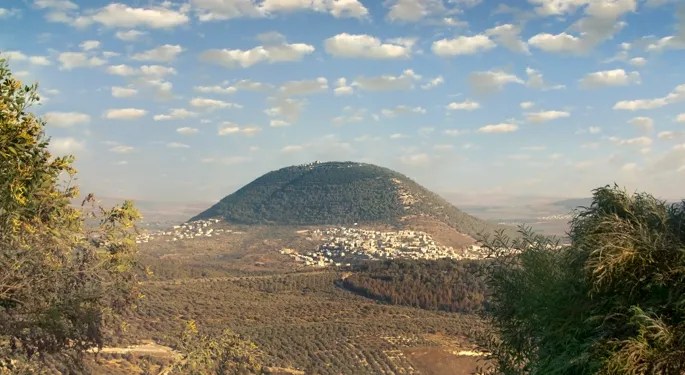
I am told it is very green up north in the shade of Mt. Tabor. I am told it’s important to learn Hebrew. The language of the colony, I mean, “our historic homeland”. I take a bus from the Techanama Gazit Central Bus Station to a town called Afula, which is as mediocre as it is relatively isolated. As it is also close to everything. The whole country takes eight hours to drive north to south. The kibbutz itself is still a good half an hour further north, so I stick my thumb in the air for several hours before a Bedouin trucker drops me at the gates of Kibbutz Ein Dor.
My one-night standing had turned into a good long week of partying. With less than $200 of my money left, I decided to quit my evil ways and learn to speak the language of the world’s oldest tribe while doing a bit of the old ‘agrarian collective labor’.
Kibbutz Ein Dor was established at its present location facing Mount Tabor in the eastern section of the Lower Galilee in May 1948. Its members came from groups of the Zionist youth movement Hashomer Hatzair from Israel, Hungary, and the United States. Later groups from Chile and Uruguay and much smaller groups and individuals from over 30 different countries joined them. Today the kibbutz boasts about 430 members and candidates for membership, and a permanent population of close to 800 when children, parents of members, and Hebrew Ulpan students are considered. The kibbutz’s economy is built almost entirely upon its cable factory, Teldor, which manufactures telecommunication and electronic cables. The kibbutz still cultivates a wide range of field crops, has a dairy farm, and raises chickens. That’s almost verbatim off the kibbutz Web site.
Ein Dor is situated where the Chesulloth Basin meets the eastern section of the Lower Galilee and the Jezreel Valley. There was a new electric entrance gate that was surrounded by a security fence made of barbed wire as old as the country itself. A guard was posted at the entrance. The young man had dark hair and a black uniform and was sitting with his feet up at the post with an Uzi submachine in his lap looking bored and disinterested. The guard was no older than seventeen. All of the buildings are white stucco with a solid earthy appearance and red corrugated tin roofs. Massive olive trees and other shrubbery made the kibbutz exude abundance. Compared with the dry and dusty hills and the two small Arab villages with their scrawny sheep that flanked it, the kibbutz felt like a fortress of bounty. Flowers had been planted everywhere, and the grounds were immaculate. Green grass covered the lawns of all the kibbutz buildings. As I walked up the main street to the central building, I saw what looked like a huge auditorium that served as the central dining hall. A sign told me as much in Hebrew and English, but not in Arabic.
The Russians Roman and Anya his homegirl had told me that the real Israelis hate the weak, naïve American tourists. That I come from New York means a lot less here. A lot of fat, rich, lazy American Jews live in that city.
“Above your head there flashes a great big dollar sign,” the Russian girl Anya I made fuck within Tel Aviv had said to me adding, “Your nice words will not so much to protect you here from us!” Was she Slavic joking I’d get kidnapped, or that everyone would want to fuck me, I wasn’t fully sure. In fact, she was also alluding as I’d discover that Israel is a place where all the Jews, or the majority, are poor. Sometimes Israelis call Israelis sabras after the cactus-like, thorny fruit with the sweet center when opened as if deep down these Israelites were warm and respectful to outsiders. That’s very wishful thinking, which doesn’t last long past the two-week tour.
“I’m looking for a woman named Bruria who is the volunteer coordinator of the kibbutz.”
Bruria’s closet-like office was in a small shed attached to the main Volunteer Office building. I can’t help but thinking she looks like a man in a dress. Her English isn’t very good, and I am informed that it will cost me a thousand, two hundred shekels and fifty agorot to enroll in the ulpan program. Everything they say about the poor, impoverished kibbutzniks must be truism because they want my agorot; the bullshit Jewish penny. Nobody chases those down the street. I feign agreement fully wondering where I am going to come up with that kind of money considering my net worth financially is perhaps no more than $180 at this time. She takes every penny and tells me I can pay the rest down the line. It’s hard times in the lower hills of Galilee. I now don’t have a shekel to my name.
The kibbutz does not make a great first impression. Built something like a cross between Jurassic Park and the Soviet Union, the adults seem embittered and cagey as Bruria brings me around. The facilities are pleasant until we arrive in the area where the volunteers live. Stucco and pebble faced buildings give way to trailer bungalows near a sign that reads ‘welcome to our ghetto.’ There are close to twenty white bungalow buildings on a steeply inclined hill that are each only one story tall. Each bungalow has a porch with some irregular lawn chairs and assorted stools. Each house has four volunteers in two sets of living quarters. There are two outdoor showers per building, which four volunteers share. These dwellings overlook a series of olive fields and in the distance, you can see the small Arab village of Deburiya. The Adhan, the Muslim call to prayer echoes across the valley five times a day she warns me.
“It may sound like a scary cry of war, but it is how they pray. They are the good Arabs, long time our neighbors. We control now their water which makes them better neighbors.”
Bruria unlocks my apartment and tells me to leave my stuff. I have just one large black rucksack. The room she calls ‘living quarters’ is a one-room affair with two dormitory steel cots and two adjacent closets. My roommate is rather neat. His t-shirts are all folded, his stuff tucked inside the large closet. There are no posters on the walls or art, just a small wooden table with an alarm clock that has a picture of Israeli girl in black and white with X O X O scribbled on it and a big red lipstick kiss. Guess that’s what he’s doing here. It’s all very laconic, that is to say the bare minimum of what one needs. But after squatting for three months in a dirty hovel in London this is all a marked improvement. Bruria tells me my roommate’s name is Danny and that he is from Los Angles
Classes are in session. The classroom building is on top of the hill. It is built in the same white stucco style with a red shingled roof. Bruria interrupts the class and announces that I ‘will be the new student.’ There are about twenty other people in the class. All of them are easily twice my age by the look of it. I had been under the impression that there would be people my age forgetting that this was a program for new immigrants, not seventeen-year-old radicals in some fucked up self-imposed exile. Everybody smiles and then gets back to work.
Later that day I am introduced to the ghetto’s ‘North American Social Club.’ It is on the porch of a bungalow at the top of the ghetto on the hill. It has a third fridge on the porch. There is a Russian quarter, an Argentinean quarter with a Columbian among them here to garden not to learn, and the American section. The Russians only speak Russian; the Latin Americans don’t speak Russian or English well. And go figure, we don’t speak anything at all besides English including the Chilean girl and Canadian guy in my new ‘club.’ Everyone is learning Hebrew, but vodka is the lingua franca by the looks of it.
My roommate introduces himself as Daniel Asher Callahan who is questionably Jewish. He is tall and lanky, has dark hair with freckles and knows how to freestyle rap. The Canadian John Yuma, whom everybody calls Johnny Bravo, is all things loud, drunk, and misogynistic. Also, questionably Jewish. Like Paul Bunyan and Izzy Vitz, he tells tall tales. According to his own booze-soaked account, he was formerly a freelance soldier, this gun for hire in the French Foreign Legion for eight years. He boasts combat on nearly every continent ‘with the browns or yellows’ and is visibly a degenerate drunk. Bobby Brown is the third American in the social club. He’s part bookworm and part smartass jock. He has glasses and flashcards. He goes for jogs to Duriyah. He’s liberal but still doesn’t trust Arabs. Both Danny and Yuma are not yet sure it was worth their coming here. The more they drank, the less they liked the Holy Land air and long summer months with no rain. Bobby Brown was a good little Zionist through and through. “What kind of fucking Jewish name is Robert Brown?” Yuma yells!
It’s my first day at the Kibbutz and they’ve extended me a full membership. Club activities generally involve pounding back Gold Star or Maccabi beers, the national swag of Israel, and puffing carton upon carton of Noblisse from the commissary. It is as if they pay us weekly for booze and smoke. That’s all our little company store stipend gets us in the end. Yuma spotted me the beers.
“You’re new so you get the shitty chair ‘til you steal yourself a better one,” Danny says to me.
“Steal anything that’s not tied down,” he says is the way of things.
Bobby becomes more social the more he drinks. John Yuma seems to get louder and more unhinged. Kind of hard to imagine any of them as being Jewish.
School and work alternate every day except Saturday. Depending on your assignment you work about eight hours a day with a two-hour lunch. Most volunteers are in the mess hall cooking, food prepping and doing dishes for nearly 800 three times a day, although I’m told many families eat at home. Other options include Yards, which means constantly weeding and laying sprinkler line or Gardens, which helps to maintain the flowers and trees on the grounds. The ambitious and trusted either milk cows or work for TELDOR the chief kibbutz product, which is telecommunications wiring. Everyone tells me that I have to decide by tomorrow to work in the mess hall for obvious reasons like stealing food and air-conditioning, but I need to be outside using my hands.
We are all sitting on the porch of the North American Social Club drinking Gold Star beers that Yuma bought in Afula except for Bobby Brown who is immersed in the course work.
“So where are you going to slave,” asks John Yuma.
“I was thinking about Yards and Gardens.”
“That’s a lot of digging. You got to dig mini trenches for the sprinkler lines, which keep the place so green. You should get to work to keep your soft hands not dirty. And fill our fridge,” Yuma says.
“You see, a kibbutz is about doing as little work as possible and getting drunk as often as you can. And givin’ it to every new girl that arrives.”
“I only say it ‘cause you’re scrawny. Teldor and field work is man’s work,” says Yuma.
“Where do all the curvy kibbutz girls work?
“They don’t. Most of them are really underage. Like getting locked up underage. Pickings are very slim these days. There’s a fine Brazilian girl named Carla but she he has a kibbutznik boyfriend. She works in Yards and Gardens if you’re looking for good eye candy. Girl is stacked and curvy,” says Bobby looking up from his book.
“I’m always looking for eye candy. I’m a horny seventeen-year-old.”
Just down the hill at the bungalow below ours some Russians in our Ulpan Program start yelling at us from their window and waving with their arms for us to come down.
“What do they want?” I ask.
“They want us to get really trashed on vodka,” says Bobby Brown.
“Come on,” says John, “It’s a kibbutz highlight that never gets old.”
It was one we would have over and over again. Bobby and Danny sat it out. I had no idea why because I figured it was just for a shot. The Russians apparently really, really liked sharing their liquid oblivion.
There were four Russians in the small room. All four of them were in their early thirties. Three were Slavs and the other one was a dark Georgian. They offered their names, but I only caught one distinctively, Alexi, who was the youngest. The Georgian had a crucifix around his neck, which he never took off. None of them spoke English and I wasn’t able to catch any of the names of the other three. The vodka was very cheap and highly flammable, one of them demonstrated by igniting a wall briefly. We slammed two shots in the first minute or two. Then we chased each shot with water. I was laid out by the time I reached eight. It burned my throat and made my head spin. I fell off the cot as I yelled profanity in drunken glee. Alexi showed us a picture of his sister or girlfriend. Who cared or knew. Yuma told him ‘I’d fucked her in the ass.’ They all started cheering and patting me on the back. And then a blackout, and a blur of sweat and yelling and more shots.
The last thing I remember hearing was Yuma with his arm around a Russian yelling, “WE’RE GONNA FUCK YOUR MOTHERS IN THE ASS!” They had no idea what he was saying so that just cheered and we all did another shot. I had to be practically carried back to my room by John and Danny sometime after midnight. I stink of booze for a whle week. The Russians see to that.
***
I settle on “Yards and Gardens” detail managed by a triumvirate two Latin laborers and the Kibbutz Yards and Garden foreman Mr. Jones. Mr. Jones was half English/half Irish. He’d come here in the sixties, a little leftist and a little reckless. He had gotten an Israelite pregnant and never left. He’d acquired kibbutz membership, married the girl and had three kids. He was a good guy with numerous yarns, which all seemed to amount to a warning about getting out before I got one of their girls pregnant. The girls were all 12, I told him. He told me he was talking about the country not the kibbutz. The other two weren’t Jewish either. Adonai Gonzalez was Colombian and strapping. He’d been here a couple years. Said prospects were better here than in his own ‘piece of shit’ country. And there was the hot Brazilian, a tall, gorgeous brunette, the hot sweaty eye candy Yuma had mentioned.
Our work was largely the maintenance of the sprinkler system. Without it the hills would not be so green. The Israelis utilized a drip irrigation system. The pioneers in less than a hundred years had reclaimed swathes of swamp, desert and rock, but milk and honey hardly came. The kibbutznik dream of agrarian socialism was over. They had outlived their colonial purpose.
But if there was some endless war going on, I hadn’t seen any of it yet. Not in Tel Aviv or Galilee anyway. I dug up sprinkler lines shirtless, never seeming to burn in the nonstop sun. I was getting a little less scrawny with the three meals a day. The kibbutz was always the same work, the same food and the same people every single day. I’d get shit hammered drunk with the Russians and the North American Social Club. I’d sit bored in the classroom pretending to learn Hebrew. I wondered sometimes if I was in too deep. I wondered if Zionism was really the end of the ideological road for me. It was too easy. I wondered when the hammer would fall, or the real test would come. I was living in a war zone wholly sheltered from the war. I wondered when I’d meet a Palestinian again.
I wonder if little Kareem from the Wadi would light himself up in a bus that I was on or perhaps he had already. The kibbutz was a vacuum. Each weekend came and I hitchhiked down to Tel Aviv. To see Israel. To get fucked and hammered and blown by everything except Palestinians. My dreams were a dull silence. Mike Washington was truly dead it seemed. I had learned to sleep like normal people do, in quiet but without peace.
Every so often some kibbutznik would tell me to put a shirt on lest I burn up, but I never seemed to. My blood wasn’t wholly infused with the European. Just my skin. My great, great grandmother’s rape had not been complete, as I didn’t burn. So, I ate cucumber, onion, and tomato salads, tried to pick up Hebrew and fought the good fight to keep the yards and gardens green.
After work I’d sit on the porch with Danny and Johnny Yuma smoking cigarette after cigarette and downing frosty cold liter bottles of Coca Cola. We’d look out over the village of Deburiya and listen to their call to prayer go off around sundown. The ghostly Adhan echoed throughout the valley. We could sit in our walled little compound sipping Coke and getting hammered on cheap beer. We could pretend the Intifada was taking place in the cities and would not reach us. But like the village of Deburiya, we could cut off their water and lock them off their lands but ignoring them is impossible. “There are serious contradictions that Alleyah will raise,” Danny explains, “it’s not a very large country and there is nowhere for anyone to go. We have already pushed millions of them out of the country. We cannot ignore the Intifada; it is not going to stop.” “Fuck these stupid sand niggers” says Yuma.






 WALTER SEBASTIAN ADLER