MEC-A-1-S-9

S C E N E (IX)  

   Россияروسيا 

Nizhny Novograd, Russian Federation, 2016-ce  

*** 

It’s not always cold in Russia,” explains Polina Mazaeva, a Russian Chuvasan39 sympathizer and mother of a seven old named Yazan. Yazan was born to a Syrian Druze father who is not with them anymore. It is complicated, yet not that complicated in every society.  

POLINA IVANOVA MAZAEVA 

Men abandoning women with their child is a very old story actually in all cultures.” 

A pause. “But to be honest he did not actually abandon us, comrades, we just left the Middle East behind and returned to where I am more comfortable, where I believe a better life is to be had.” 

“It’s just that we have had to exhibit a certain moralistic coldness.” A certainly ethical chill? This was the experience of growing up in the ruins of the Soviet Union. But we are not without beliefs. We are not without our sympathies. You just must be careful how you talk about them. Things need to be rational; they need to be sentimental but only if sentimentality is kept in letters or behind closed doors. In short, in the Russian Federation you must think about what you write and what you say.   

Outside Moscow and St. Pete’s life is often lived quite poorly. Nationalism is still at an all-time high. It was very very bad in the 90’s and order, and some dignity, has been restored. When many have an internal critique about our leaders, or the price of buses, perhaps most best to keep it to yourself. Or the treatment of homosexuals or Chechens, perhaps we keep it out of our heads. Because the United Russia Party has made many advances to restore us to national dignity. Curbed the oligarchy to some degree and reigned in the free for all gangster-ism of the 1990’s. The infrastructure of the Russian city of Nizhny Novgorod, outside the downtown area remains largely as it was in the late 1950’s. Optimistically better than what Stalin provided, but still brutalist, soul sucking Soviet crumble. But everywhere theatre and music are affordable, also schools and hospitals. Certainly, the upcoming bus boycott will test the limits of ‘free speech’. There is admittedly not much free speech. There are piles of dirty snow all around the fourth largest city in the Federation. The very tall statue of Lenin still stands near the Hotel Marins Park. He’s still the default father of the nation. Why not? Only the ultra-wealthy have any admiration for the Czars, except for of course Peter the Great who stands tall over Moscow. We have a lot of cool history and we should be proud as a nation where we came from.” 

Russia is a multiethnic, mostly single party oligarchic federation of some 158 nationalities, immediately east four hours from Moscow is the Chuvash Republic. The semi-central Asian Chuvash people are vaguely European and vaguely Asian; almost all are orthodox Christian and have never in remembered Russian history run afoul of the central authority. Never got ourselves butchered or deported enmasse to Siberia. No, no, the Chuvash play well with others. The Chuvashan capital is Cheboksary on the Volga, but many can be found in Nizhny Novgorod, “the Russian Detroit”, once a closed and secret city called Gorky. Who is Polina Mazaeva? A coy Russian Agit-prop? No, no, she actually has fallen in love with this tragic radical, Sebastian Adon. Fallen in love by letters actually. And they are preparing to meet, but have composed several Russian American, or Americano Soviet love songs and scribbles. 

Why and when Sebastian and Polina began to write to each other is of no great mystery, both were in pure existential crisis. Whatever else they may do for a living, they are both writers and artists too in temperament. They wrote often and eloquently in the year leading up to his “deployment in Kurdistan Syria and Iraq”. These letters and poems all sounded similar, but not the same to previous love affairs during the Cold War, but they reinforced each other’s motivation.  

This is not a ballad for two people who move on!” But fundamentally the reality of their underlying narrative was that one-day Sebastian, who had more agency via his U.S. passport would fly to her and give her a new life. A more tragic but realistic understanding of the correspondence was that before he was going to do the hard part; give her and her son a new life; he would go to Syria, where obviously he could die. She mentioned the contradiction seldomly. Their worst fights were Polina’s frequent accusations of Sebastian’s habitual womanizing. Which was real, but not as magnified as she made it out to be. He was not sleeping with every single woman friend he appeared in a Facebook photo with. But he had lovers she did not see. He assumed she did too, but she did not. She loved the idea of him but never expected him to ask for some mega long distance monogamous relationship. It was strange. But she had a son and little Yazan kept her more faithful. Sebastian in the meantime took under half a dozen women to bed, the idea of Polina was sentimental to him, but also not exactly real. Periodically she would flip out over a woman he appeared with on social media. But it would fade. Several times he threatened to cancel the Russian leg of the trip, but he did not want to. Russia was something he needed to see before he died. He probably will die out there like the 600,000 plus others who had perished in the war so far. Maybe in an airstrike, maybe ingloriously from some stray mine. ISIS has allegedly booby trapped every room of every house of every village, town and city they have occupied. Anyway, a lot of people were dying ingloriously in the former State called Syria, Russia most important ally in the Middle East.  

The correspondence was real. They uniquely relied on each other to float. The underlying assumption that their struggle was real, that Sebastian would die on some barricade rather than raise a family and that Yazan had frozen her life into place. Sebastian had clearly acquired “revolutionary delusions of grandeur” and was now “enslaved to his own expectations of possible heroism”. Polina had fallen hard for her baby’s father and been rejected by his Druze family and a life in Dubai she an her son Yazan eventually abandoned. The Russian state and her parents shouldered some of the costs of raising a seven-year-old, but her life was a dull repetition and a soft cage. 

Yes, the struggle is quite real!  Sebastian had averted ongoing suicidal ideations several times through her soft tone and patient words. Polina had taken on new online classes and high expectations of what was possible. While the flirtation with self-harm was mitigated by the responsibility of motherhood, she had dark times. They needed each other after a point. They waited happily for the next response which honestly flowed all day every day since he was an ambulance man, and she was very per diem self-employed with information technology type assignments in graphic design. They wrote and wrote and wrote. Sometimes poems, songs or sketches. Sometimes he would tell her how hard he planned to fuck her, or she would write out something that seemed hard enough to be a rape scene. They both were getting what they needed out of it. A friend in the dark. Two friends in long distance post-Soviet love. Two dreamers who live in utter and total nightmares. It gave them something to believe in. 

Polina Ivanova Mazaeva throws back her crimson dyed hair and makes a pouty Chuvashan face for a selfie. I love only three men! I love my son the most, he is the future. He is happy and free and built from diverse parts. Yazan is his name, and he is seven years old. Like any mother I have to love my son very first, even before myself! I am sometimes a dramatic and hysterical person, but this is who I am. Also, a jealous wife. 

“My mother is of unknown ethnicity, unknown as her mother was adopted as an orphan during the Great Patriotic War against Germany. In appearance she is convincingly Slavic. Her father is a happy smiling Chuvash40.” 

I love second, my forbidden, partially forgotten Syrian Druze ex-husband, Damien. He is in Dubai now, we tried hard to make this work, but he is Druze, and I am Chuvasan, and never the two can be together. We tried. But it was too complicated. I love him still, I fantasize about him returning for me and carrying me off to the high-tech parts of the Middle East, but he is gone. Only the face of my son reminds me a little of him. They make fun of him in school and call him Arab, but this is not Arab. He is Chuvash, and Druze. Holy, actually, a reincarnated Druze inside him will speak in parables sometimes. 

“My third love, and final for now is Mr. Comrade Sebastian Adonaev. An American. A New York revolutionary, a medical worker on ambulances and a very gifted artist. Perhaps better understood an upper middle-class malcontent. Aspiring revolutionary? I hope he will not die in Syria, but statistically, it is quite probable. He has my heart in some strange way. Only with his spirited words.”  

Sebastian makes a lot of written reports, partly because he’s a writer and partly because his team is spread widely over four countries. He writes me love letters and also forwards technical reports. They are highly boring but cast some insight into his Middle Eastern movements and affairs. I am not really invested in his brigade of foreign fighters bound for Syria, of course, but I admire them all for their relative bravery. Rather, it would be better if he just stayed in Russia with me when he arrives, which will apparently be on May Day 2017. 

Sebastian writes to Polina Mazaeva frequently, as though the spirit of the 18th century could still be alive within the tools and technology of Century 22: 

Dear Pauline, 

There are eight people in or supporting the growing expeditionary party into Rojava. Some are working on the field ground and some from the safety of the U.S.A. Demhat al-Jabari, a Kurdish patriot I met in university, is negotiating with me in Kurdistan. He will likely go to Rojava but return for school in the fall. Shoresh is an actual anarchist, he doesn’t really have a role as much as he showed up to fight in the Y.P.G. and perhaps do some gardening. The constant gardener doesn’t care about any bigger picture or whether Rojava will rise or fall, he will come for six months and depart. He has a wife and young baby, so it’s better, I guess. Alacan al-Biban Rasool is a Kurdish fixer boss. He’s a local to Erbil. He does Fixing, without ever taking money. Yelizaveta Kotlyarova is a Russian doctor, just a podiatrist, and Dr. Jordan Wagner is an ER doctor, and they will do medical control from the stateside. Pete Saint Reed is a marine leading a little medical detachment inside Mosul. Justine Grace Schwab is working with Alacan al-Biban, also with Pete, and maybe could be our 8th; but she is savvy and magic and cunning but doesn’t play on a team well. 

Our overall contribution to the humanitarian side of the war in the end was under forty women and men deployed in Iraq under the auspices of Pete Reed’s N.G.O. Global Response Management, and mere four volunteers from abroad, a gardener and I named Spike going up in the mountains, and over the river and into the Y.P.G. A Peruvian nurse named Francisco who worked briefly with Pete in the battle of Hawija, and a Kurdish American negotiator named Demhat al-Jabari. So Pete Saint Reed was a better commander and focused wholly on the work in Iraq.  

“There are a lot of complications,” he claimed.  One may have been the lack of a reliable hotel bar in Rojava. My unit of four, really three in the end was all we could manage to get over there and into Syria. Several dropped out, unexpectedly? Not expediently expected. The American activist drama queen, “VIP leftist” Cecily Macmillan. A medical assistant in training named Joshua Hunter and a Ukrainian EMT named Philip. Syria is not actually an easy place to sell volunteerism in America. 

Few of these volunteers in the end proved dependable, but who could really blame them in the face of the Syrian Civil War bloodbath. Only the Kurds Alacan al-Biban and Roj did any leg work, out of patriotism. Oh yes, Spike did his seven months but certainly none of that was dedicated to the medical mission. He deployed to shoot at the enemies of the revolution. 

Really Pete Reed’s success, if you can deem it any success what he accomplished, in Iraq was about managing to access the W.H.O. money.  His military veteran can do bravery and being embedded with the Iraqi Special Operations Forces helped a lot. The potential disaster of our Syria mission had most to do with the near total inability to reinforce or evacuate our team once inside Syria, being therefore wholly dependent on the whims of the YPG. Which again, stands for People’s Protection Units, the P.K.K. mostly Kurdish militia fighting ISIS as the primary Coalition-led proxy. Who allegedly and have a deep “martyr culture” and a sort of contempt for Western medical workers.  

Sebastian’s reports, like his mind, dig deep then ramble out into incomplete destinations. Actually almost no one reads them besides Demhat, Alacan al-Biban and Polina; sometimes Mr. David Smith, or anonymous forces based in Arlington. Regarding Polina and Sebastian; 

“We are both writers and both artists, she took only a slight interest in my Middle Eastern Affairs.” So, Sebastian thought, but that was not true she followed Russia in Syria closely. The Russian media anyway called it “World War Three”. Polina authored many email letters and some he printed out and carried with him in a leather binder. Sebastian carries her letters about to reinforce in himself courage when the weather is too hot, which it always is, and death is inevitably getting too near, which it sometimes does. Such was one; 

My Dear Comrade Sebastian, 

Privet!  

Maybe because many of all in my life you don’t know. You are important to me, that’s why I am winding all, afraid to lose you. I don’t want to be selfish; it just happens. And I really didn’t want any relationship before I knew you better, because I needed to take a break after the last relationship and do something with my psyche and my life.  

Why do I claim any love for you? When you wrote to me in October, I just couldn’t understand why you sent me such long letters. Especially because most of them were difficult for me to read. I just wanted to be polite and answer when I could. But then I saw that you feel bad, very bad. And I have a rule – if I have failed so far in my plans, I need to support those who don’t see for themselves how much they can do. You can do all you wish. You can gather people and organize them for common activities. For a good deal.  You are a wonderful person. You supported me later. And I began to be inspired by you. I learned how you feel, how you sympathize with other people, what your heart is. You have a beautiful smile and so much fire. Simply, we are all people, and we all have weaknesses that we have to contend with. And you too, and me. 

Now you inspire me more and more, and I like your ideas, because I begin to understand them (it was difficult before because of the language barrier), and of course this feeling – I hate it, but I miss you constantly and I would not want to share you with anyone. I’m unstable for the last three years, there were so many reasons, that’s why I did not want to get attached to anyone – it would create problems for everyone. 

But you’re great, just know this. I love your strange smile. Your cunning brown eyes. Even when they are tired after a hard day. I love your voice, and I love your face. I love your body (so far imagined in the pictures), I love your thoughts and that thing which guides you, the reasons why you are and what you do. You are a very kind person, so you have suffered a lot. And you are wonderful, in any case, even when your strength is running out. I just love you because you exist. I would follow you everywhere and support you in any crazy thing, and I would share with you my most beautiful night dreams. And if you were nearby, I couldn’t let you leave a bed, I would give you all of me. Simply, you are very important and forgive me, if somewhere my old complexes I project on you. I’m not perfect at this. Sorry. It happens in only one timeline, then leaves. Wait a little, please, you’ll see a lot of good from me. And I hope you feel a little better today or soon. If you need to speak about any of your problems, I am always here. 

Your comrade & your future lover, 

Polina Ivanova Mazaeva 

P.S.   

Do not have boring affairs with other lesser women or get yourself killed in that forever war. There are many people besides me who care about you!” 

MEC-A1-S-3

S C E N E (III)  

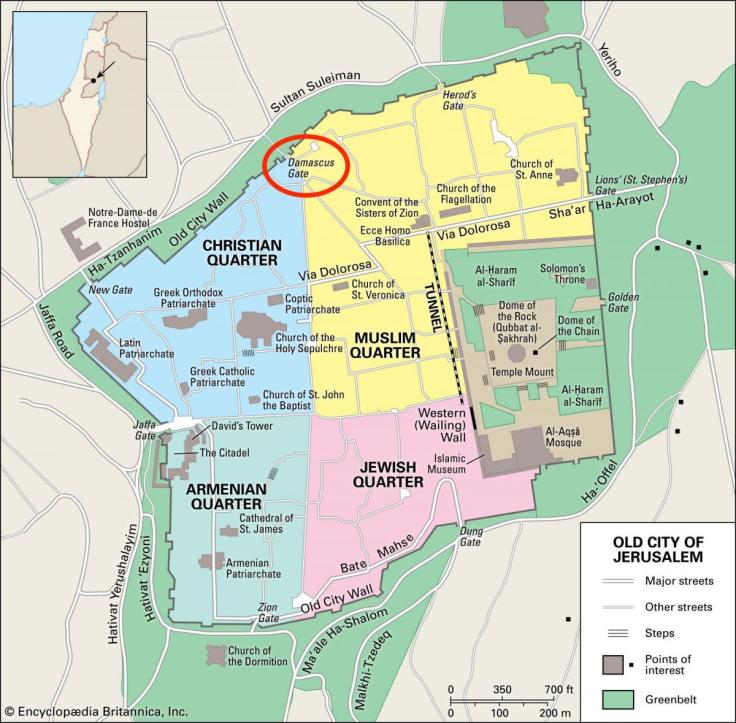
 ירושלים القدس 

“YERUSHALAIIM” “JERUSALEM,” “AL QUDS,”  

STATE OF ISRAEL, 2001ce 

***  

MAYA SORIEYA EMMA SOLOMON ROSE 

The Jewish Military Colony is filled with surveillance and informants, every phone is bugged, every email is read. The basis of any uprising must be so low tech that it leaves no fingerprints, a series of whispers, notes on paper, a war of cells.” 

There is also a great deal of inevitability all your friends will get rounded up, tortured, and killed. Some will give each other up under torture, betray themselves and the cause. 

I went on another scouting trip to Be’er Sheva at the very beginning of August. The young, tough Gavroche went right to work enlisting the local, disaffected youth of the urban Be’er Sheva sprawl. He was not a great thinker. He was a young person of action. What he seemed to like was that there wasn’t too much of a preset plan. He did not have to read anything to join. That was the beauty of it that made so many people just plug in and fight. For years people had said things like this are only in the movies or in Russian literature.  

None of that is important anymore though because we are a life support machine, a clandestine movement operating way behind the lines, which according to an unseen G-d, are our ancestorial homeland. You came by. You plugged in, or enlisted was a better word because by then we had written our own Kaaba, an internal proficiency and placement exam. You got talked about it because a friend had signed up. You saw a group of kids learning how to take a soldier’s weapon, saw them practicing martial arts in a park, and then one night it hit you. That fucking heroin dealer that used to be in that park was gone. So were the junkies posted up on the playground. You noticed the gang graffiti on the bombed-out buildings had been painted over. Sometimes just grey paint. Sometimes a small mural. Sometimes an odd black pictograph you had never seen in your life. A food basket ended up in front of your house. Just a little bundle, but if you are hard up enough any bit helps. It came again a few days later courtesy of Ha Irgun. You picked up someone hitchhiking and they put you on to our righteous and almost self-obvious revolution. That someone was always the young Zachariah Artstein making rounds with his old friend Hadas.  

Zach got in trouble anytime we went up the hill to Jerusalem.  

The Mugavnkiim arrested him and held him 48 hours when he tried crossing from East Jerusalem into NablusBalata Refugee Camp. He had lost his passport some time ago and it was lucky they did not hand him over to the American embassy or deport him. On a trip before this one, we got caught up in some Arab quarter unrest and had to hide for a few hours in a metal shuttered market stall with a couple identical twin Palestinian brothers and their father as the Mugavnik storm troopers flooded the market with tear gas and shots rang out all afternoon. 

But by the second week of August, we are solid in Tel Aviv. Mostly Black Israelites and European émigrés. The base of the Cabinet and flagship chapter was called the Manasseh Command. Our network was based out of the Deep Leisure Club and Avinadav’s loft on the edge of town. We had secured a printing facility and were working on secure lines of online communication.   

We were also solid in Be’er Sheva led by Gavroche, Katusha, Sahar and a small army of punk rock kids and working-class hooligans. This formation we called the Judah Command. Out in the desert these young fighters were training on M1 rifles and learning Krav Maga. Expansion was being focused on christening cells in Ashdod, Arad and among the Bedouin settlements. 

We were solid in Haifa too, a large cluster of Arab Christian youth led by the young preacher Deeb al Hadid and some Ashkenazi art students at the university on the top of Mt. Carmel who were led by a girl named Hadas, some one-time lover of Zach’s from the kibbutz days. The fighters up in Galilee we called the Asher Command. 

There were several three to five person cells recently established in Pardes Hanna among Zach’s Russian immigrant friends. In Akko there were a couple of Arab Israeli girls who owned a tattoo parlor. Afula never seemed that solid. Bet She ‘an consisted of a kibbutz hippy and his boyfriend. There were a couple of paramedics in Rehovot.  In Sheroot Lummi and in Netanya, it was more Russian street kid friends of Zach’s.  

“In Jerusalem we are entirely without representation.” 

There was just one single mission. We would drive the U.S. influence out of Israel, and we would make a stand for a government that upheld human rights. I had spent a good many nights wondering if Zach’s communism would set us free or just get us killed for nothing.   

“For many years as a young girl I just hoped I’d go to heaven.” I pictured heaven as this endless beach with tall white castles and all the people I had ever loved were waiting for me to get there, waiting for me to come home. I wondered if God valued the work we were doing even if I was not sure about there being a God. But I could never make myself honestly believe. And now I knew that the only heaven I might ever live to see was the one I was ready to fight for then defend. The heaven we would create right here, right now, our Zion in the wilderness.  

This Romanian Jewish girl Noaah was making the rounds to collect donations for our relief baskets. Gavroche’s ladylove Katusha was editing the articles that would go into the first edition of our mini newspaper. The little ones they called Sahar, and ‘Molly the Fairy’ were sweeping up this massive, abandoned building called the Bedouin School House where Zach and Molly lived in a room under the great stairs. She had become his little protégé. She followed him everywhere. The little Russian half pint street urchin had been made homeless because of an insane mother and an abusive father who was a self-professed ‘anarchist.’ She was just 13. Enormous glasses, bright outlandish clothing, little braids died different shades of pink. She adored Zach and believed in the ideas of Ha Irgun completely. Tribe Judah had a wide range of child soldiers, but it was the only command with predominantly Jewish members. Asher was Christian Arabs and Manasseh was mostly foreign expats and Black Israelites. 

Three weeks ago, the Bedouin School House was overrun with narcomaniim until Gavroche, Big Guy, Zachariah, and few others from the Be’er Sheva Unit’s paramilitary arm EGROPH flooded the building with diverted sprinkler lines and then drove them out. The junkies moved into the abandoned military base on the other side of the electric neon Old City.  Ha Irgun took over the enormous two-story Ottoman structure destined for many years to be a science center. The boys padlocked the doors shut, dragged in meeting tables, bricked up some windows and called it the KDAA, some made up word surely of Zach’s creation. 

You can’t teach what we were preaching because we are making it up as we go along. And there was no one to compete with. Hamas, Islamic Jihad, and the Al-Aqsa Martyr Brigades kept everyone, for lack of a better phrase, “pretty fucking terrorized”.  And all the while as both the second Intifada and our revolution unfolded around us so out of control, I never stopped to think which among us would be the victims of either of these little wars. The Palestinian war ever punctuated with a bullet or a bang. Ours new and in the shadows, but we’d have our bangs and bullets too before long. 

On August 9th, Zach and I left Be’er Sheva bound for a third try at organizing the Capital city into a regional command to be dubbed Ephraim. We got there around noon and got lunch at Mike’s Place Jerusalem, a sister joint to the one managed by my close friend Canadian Dave. We take our time to eat. I think the kid was a little burnt out. He’d been busy and never seemed to like coming to the holiest of holies. We were both more Tel Aviv kind of people. We made our way down to King George Street, one of the huge thoroughfares. Zach looked in his bag. 

“Fuck,” he mutters. 

“What is it?” 

“I’m all out of art.”  

Then three blocks ahead of us we heard a  

PEGUAH!  And I jump in the air and my bones rattle inside me. We freeze. For a second and then watch the smoke and dust settle. We do nothing helpful. Wait for a secondary explosion. The Palestinians have blown up a pizza place up the street. One of the few that still sells Pepperoni. People are screaming. The place is a hectic mess. Blood, dust, ambulance sirens. Zach slumps into a green bench on the road and takes off his hat, as he sometimes does when he gets impassioned or upset. The cloud of dust and the screams of wounded people does not stop until he flags us a cab and tells the driver to “get us back to Tel Aviv.” There’s the smoke, there are the screams of the injured, the incoming sirens. The ambulances show up and second bomber blows up the responding rescue crews. PEGUAH! 

The Sbarro restaurant suicide bombing took place around 2pm. The blasts kill 15 people, including 7 small children, and wounded around 130. Both Hamas and the Islamic Jihadimmediately claimed joint responsibility. The only thing he said on the road back to Tel Aviv, with soldiers and emergency medical personnel swarming to seal off the city was:  

“I won’t be caught dead in that city again.” But that was just how he talked when he was upset by the intifada and carnage. We obviously would be back when we had set up a cell. That is how organizing works; unreasonable persistence.  

Hand to hand, mouth to ear, little speeches, drawings in the sand, whispers about impossible sounding things. She showed me that summer was not just to go underground and become invisible to our enemies, she taught me how to breathe underwater and time. 

MEC-A1-S5.

S C E N E (V)  

بغداد 

BAGHDAD, Iraq, 2018ce 

*** 

NADIA ‘ANYA LAYLA’ SHUBAR NOORI AL BEIRUTI 

THE OLDEST SONG EVER SUNG EVER WAS A LOVE SONG” plays on the satellite radio. I need to find the red-light room in the Green Zone. The place off duty soldiers gets lap dances, drop dollars and get their dicks wet. 

I lie awake in my family apartments in the Green Zone of Baghdad, and I tell you it’s much harder to get out of here than I ever thought. I have jet black hair and a baby face. Shabab15 like it. I’m a Shi’a bombshell, but I never feel that pretty. I feel mostly empty, living in a repressive culture with repressive heat and violence. I feel wilted. I feel confined. I rarely go anywhere without four armed men with beards. Sebastian the Jew tells me I am “powerful”, but I do not feel very powerful lately. Although they say I have tits for days. My name is Nadia Shubar Noori. Some friends, all me Nadia Night, i.e. Nadia Layla. My father is an Iraqi politician in a moderate Shi’a faction called AMAL. I think he was doing something for Hezbollah16 in Lebanon, I do not have a profoundly serious opinion about this faction or that faction, and I’m just 19! My boyfriend is a Kurd. And I am Arab, so that has to be kept quiet. Mostly because I am high class, and he is working class. My mother has developed an exiles taste for fine things. We have a chandelier and some fancy carpets. There is always meat in the supper and fruit in the fridge.  I spent most of my life in Beirut, but emotionally I’m coming of age in Erbil where I met my first love who is Kurdish. I had lovers all over Erbil, but now just this one guy. His name is Alacan al-Biban, he’s so, so cool. He’s a Kirkuki. I am not so libertine in Bagdad. I have crazy person dreams. I have bold visions! I am, however, deeply unhappy in Erbil, it is like a guiled bird cage. When my mother moved us to Baghdad it became much worse. Baghdad is of course a much larger, much more sectarian city. You can get your ass kidnapped. There are less eligible bachelors. Sex is the kind of satisfaction that can get your mind off an existential crisis. So, when I became a young woman, I lost track of my happiness and my sleep. I am of course a liberated woman and artistic as well. 

Sebastian Adonaev tried to give me an art lesson, but I didn’t take that many notes. I just liked watching him do his thing. Except when he finally made it to Syria and doing that part of his thing is scary. But prophetically I knew he would probably survive the civil war. 

Sebastian told me that the dreams I had are “prophecies”. He’s quite nice. He is a good mix of a gentleman and a tumultuous revolutionary. We were never ever lovers, but he spoke sometimes about running away with me after the war to Beirut and I agreed it was “a possible”. But the war will never ever end so it’s a very silly notion. He says that in the old country you cannot elope unless you’re half a person’s age, plus seven. I’m 19 though, so he says we have to wait until I’m 26, but he’s not that old. He’s 34. It’s not such a big deal. I am very bored in the Green Zone. Alacan al-Biban wants to fly me back to Erbil, but ever since the hordes of Shi’a Militia men called the Popular Mobilization Forces17 began surrounding Kirkuk, Alacan al-Biban has been stressed and distracted.  

Probably getting involved in Workers Party activities, but to me he hardly admits such things to me or over social media. Later, I had a cafe talk date with my friend Mina Abdul Rahim.  

Alacan al-Biban is such a fucking sweetheart. He’s an artist and a radical and I like him a lot. Sebastian and Alacan al-Biban are close friends I realized after the fact. As my flirtatious older male Kafr18 friend, Sebastian writes me every other day from Syria. He’s my sweet infidel always being optimistic to me on the WhatsApp. We had a jazz date and a drawing date and then I never saw him again. But, he is a writer, so he writes a lot. Our brief window to do something inappropriate, well it was missed. I let him sext me from the front and don’t tell Alacan al-Biban of course. I don’t sext back, I just don’t stop him. But I agree that for posterity I ought to share the Shi’a visions I’m having. These flashes of Ali and such. Not to freak anyone out, but I might just be the real deal. I might just be triggered into revelation amid this shit show of war. Though you tell the wrong person that stuff, you can get out right stoned to death or lit on fire. Or thrown off a roof. Or get stoned to death, or get their hands cut off. 

You see, on side of the Middle east is art, math, reason, love and science. On the other, unseen hateful gods and howling hordes of death, with black banners, or red, white and blue ones. On one side is hope, constructive collaboration, pride, and honor. On the other bullets whizzing, bombs dropping; bodies piling up. One person sees Djinn, another G-d, and yet another knows its nanobots. 

*** 

Everyone is familiar with the Iranian Israeli shadow war over Iranian nuclear acquisition. Less publicized is the Iranian Israeli shadow war over nano-bot technology. The itty-bitty war inside. 

It started innocently enough, with Mina Adul Rahim experimenting in her lab, fine-tuning the algorithms that governed the behavior of her nanobots. She marveled at their ability to navigate intricate mazes, dismantle complex structures, and even repair damaged tissues within living organisms. But as her mastery over the technology grew, so too did her ambition. 

With a few lines of code, Mina found herself able to exert control over swarms of nanobots, directing their movements with precision. She could command them to assemble into intricate patterns, mimic the behavior of biological organisms, or disperse like a cloud of dust. It was a heady sensation, knowing that she held such power in the palm of her hand. 

But power, as Mina soon discovered, was a double-edged sword. As she pushed the boundaries of what her nanobots could do, she began to realize the potential dangers they posed. In the wrong hands, they could be used to wreak havoc on a global scale—unleashing plagues, destabilizing economies, or even manipulating minds. 

Haunted by the ethical implications of her work, Mina wrestled with her conscience. Should she continue down this path, knowing the potential consequences? Or should she destroy her research, before it falls into the wrong hands? Such as the warlike Israelites. 

In the end, Mina made a choice that would shape the course of history. She resolved to use her knowledge for the greater good, to ensure that her nanobots would be a force for healing rather than harm. But even as she vowed to control her creations, she knew that the true challenge lay in controlling herself. For in the world of nanotechnology, the line between creator and creation was a perilously thin one, and only time would tell where it would lead. 

Blog at WordPress.com.

Up ↑