In Newyorkgrad it gets so evil hot in the end of Summer. The citadel of shrill billionaires and unwashed foreign masses longing to wear designer sneakers becomes a swelter box. Most people of any means flee to their dachasin Strong Island to avoid it. Dawn is now rising on a roof garden. Five friends were up and out all night. They sit atop a seventeen story print house converted to a housing cooperative. It is one of lowest lying structures left in the Financial District. A maze of towering blue and purple towers. Sebastian Vasilivich Adonaev over a bottle of Basque wine, tells old danger tales to those who will and can still mange to listen. It is the second to last weekend of Thermidor and soon summer will end. A fake gold watch dangles off his left wrist as he enunciates his wild tale with his hands. Covering his dark brown hair is a brown leather partisancap.
On the roof garden of the old converted print house on Nassau Street, slim and enthusiastic Europeans Amelia Monteleone and Viktoria Christiana Lynch Contreras snap off photos and clink glasses bantering heavily intoxicated. Raphael Ernesto Lynch Contreras, a consumate wild man, is baby faced with flowing black hair. Salt and pepper streaks show he’s aging. Slightly poorly thanks to war and alcoholism. He is at least on green card the husband of Viktoria. Raphael sits with his dear friend Sebastian and a beautiful Russian dvotchka named Daria Andreavna. Raphael attempts a boozy mediation. Sebastian and Daria evil eye each other viciously across a low wooden table. She has big blue crazy person eyes. An affectionate rendering in Russian of Daria is ‘Dasha’, and this is what Sebastian has been calling her all night. They had been introduced several months before, but both had been way too drunk to remember. They are both regulars at the ‘Mehanata Social Club’, but he more on Thursdays and she more on Saturdays. Sebastian is telling a dangerously insensitive story. Daria is appalled. Sebastian removes his skally cap and says, “The job, and operation; call it as you want, involves calling on high end prostitutes whose numbers one acquires in the association of athletes, banker men and or those of Post or former Soviet back grounds, mostly at the Banya.Sebastian loves the way everything sounds in Russian. Fucking, fighting, and partisan songs. Though he knows under three dozen small phrases and can barely read Cyrillic. He’s an enthusiast of wanting things he cannot possibly have.
“So shortly after the girls arrive and you present some fictitious cover. You take their coats as they walk in and settle on a price that will involve no bit of touching at all. Make small talk, make big talk. Which ever you like. Then, you tell them that they’re being filmed and also recorded, but that you’re not a cop. Not some rich pervert or a Mossadnik. Or who-ever else weird and dangerous. You’re not there to entrap them for absolutely anything. You can tell them you’re an abolitionist, or keep it real apolitical.”
Puff, puff passes along this ill-conceived venture.
“You tell them to call down to the driver and say their John is layered out like Charlie Sheen.”
“Tiger-blooded,” notes Raphael Ernesto.
“Then you make tea. You tell them a little storah. A personal tale about why you are not a dog or a pig. No troll or ghoul. Intermixed with the story are questions you plan to help answer on a cost effective timeline. How you came to fully hate this line of flesh work. Because you had loved someone forced into it. Because it is evil to trade in coerced human flesh. You convince them to take and perhaps disseminate to other persons a phone number. To arrest or eliminate traffickers and pimps. Also, how to get such trafficked and victimized people the resources they need to escape such work. With a VISA and a future. They get the job cash for nothing. We’re in an era of creating digital money and printing highly convincing hundos. What’s fucking money? We can print it easily these days faster than the Federals can secure it. A number, a simple number which is a real way out of the night life. They get that number on a card. You also ask them to put it in their phone. Eventually, the poor unfortunate soul either will pass the number along or report it directly to their pimps. But, inevitably you force a violent hand. You spread the knowledge that there is in fact a networked way to escape such slavery, are they so inclined. It’s cheaper and more effective than lobbying or the useless political routes. All the cops and half the politicians are on the take, partake anyway. We go directly to the sex slaves and assure them there is safe way out. The next stage then is to get our various operatives into the spas and brothels to feign cardiac arrest and call in ambulances and firemen in as reinforcements. Then we just burn them down.”
Her jaw basically drops.
“They will kill you for that nonsense,” Daria spits out, “Kill you and your family and people you love. For such bullshit man! For a lot less than bull shit. A number! I spit on your American number. For insulting low grade bullshit that changes nothing. You will die. They will kill those dear to you too. Kill people who owe you money. Nothing at all will be fixed about anything. Not one single girl will walk free. It is bourgeois liberal thinking,” retorts Daria.
All the regality of being born all Slavic, but outside the great dividing highway that loops the Moscow capital separating the have everything’s from the have nothings or have only little somethings. Being born so radiantly beautiful and tough and Russian after the alleged triumph of Capitalist Modernity has left her charming and capable of fight. She is quite far ‘from Russia with love’, rootless and floating in glittery fairy tales that don’t expel the daily hardships of her newly adopted country. Though her card is not green yet.
“I am not afraid to die for a thing I believe in sweetness. At the cost of all my American privileges. They say anyway that I’m hard man to make disappear,” Sebastian flatly retorts.
“But are you not afraid to endanger others,” she retorts.
“He has such dumb American beliefs blat!” she mocks, “I guess you’ve never had to work for anything. Or work to keep something you fought hard for blat. So you would give away most easily. Your life seems so very easily offered. To take, if you ask me,” she snaps at his bait.
“Hey, lady, you are insulting to my dear friend and our gracious host,” sternly interjects Raphael, “This man, you have no idea what he’s been through to back up these words. This man is a people’s hero!”
Daria could care less about the Peruvian definition of so-called ‘heroism’. She is appalled by Sebastian’s cynical little story about call girls passing, itself off as incompetent activism. So she offers to kill him. He obliges her. Thinks she’s bluffing, but doesn’t care if she’s not not.
‘I’ll kill this over privileged American hypocrite,’ she thinks. A civic duty to my new mother land and the old country too blat! ‘This shit head knows not with whom he plays,’ she thinks. Mostly, she maintains a mighty level of the not giving of a single shit. Not one fuck of a fuck, of a shit. She’s an off day. She’s totally blacked out. She won’t remember anything. She only remembers every other night out when she drinks. The rest of them form an intractable blur. A black haze punctuated with irregular black and blue marks. “From falling down stairs.” If she really kills him, the tragedy, as far as a memory, will really belong to no one.
Rafael implores her to be more, “Suave, Suave!” To be more calm and “Tranquillo.” The once infamous Peruvian revolutionist, now moonlighting as a Newyorkgrad low key digital disk jockey and designer jeans mender. He cannot even barely modulate Sebastian’s posturing ego and Dasha’s swaggerous, murderous taunting. Now they’re waving invisible pistols at each others’ faces like wild Middle Easterners.
“You think like a niggle!” she yells at him.
The job of any and all men as far as she is concerned is please her by makings sure her drink is never empty and that life is a series of taken care of attractions, to make her life easier. He has failed at both in his utter self-serving arrogance.
“So you’re gonna kill me? Or just fucking threaten on about it?” says Sebastian in her face.“Absofuckinglutely,” she replies, “your life is bullshit, thus your death is certain blat.”
Before Rafael can talk them down they’re going up a ladder. Up to the 18th level deck. It’s more of an easterly platform atop the roof garden with the massive blue glass Geary Buildingtowering just an alley ways distance away. Thousands of expensive little cubicles for the lower upper class. Sports players, fancy pied a terres to stuff a mistress and city homes for the lower ranks of the financial class. But all the lights are out. A great setting for a hastily arranged assisted suicide.
Now, they’re bare knuckled boxing! Daria is in a boxing school in Brighton. She strikes at him hard. But it isn’t his first rodeo.
“Die you shit! You fucking Amerikansky! You wasted one blat,” she spits at him.
Rafael is actually too drunk to get up the ladder to intervene. Amelia and Victoria have stopped their camera phone art making over white wine and look up with moderate concern, moderate care. Actually, only Rafael knows Daria and Sebastian intimately enough to really care. As he is in love with both of them. Rafael knows a lot about Sebastian’s other life aboard as ‘Kawa Zivistan’, a wanted rebel throughout the peripheral colonies. A partisan leader in the American guerrilla. Not spooks nor the police forces had taken him so far, or gotten very close to making him die. A beautiful woman might now get close enough. They are boxing pretty close to the ledge. But to be honest, Amelia fucked him twice and it was mediocre. Viktoria only uses him for hints about Rafael’s infidelity. Rafael, has drank too much. His brain is just too wet to get him up that ladder.
“You don’t want to live here forever?!” Daria taunts him.
Their boxing and taunting has them perilously near the edge of the roof. She is striking hits and he is just taking her hits and then, then it comes. Thwack. She cracks his jaw hard. He grins at her with a little blood on the lip.
“Hit me to kill me! Just knock me into that fucking pit!Make a good inglorious end to it.It’s all bullshit you know. I’ll just come back,” Sebastian declares in Russian.
The most beautiful woman he has ever seen is just a side story in his own mind. His own much larger tragedy propels him to make questionable life choices, such as this one. “Kill me blat!” he beckons. Then, she tries to really kill him. She’s moves so fucking fast, like she’s basically trained in the ‘School of Alcoholism’. Daria cocks back and doesn’t even blink. She hits him in the throat with the right and then with the left, crack!He topples backwards off the roof. As Sebastian plummets back, he grabs out instinctively. Yanks her along with him. They tumble together off the ledge. They plummet to the alley way below. The flesh snaps apart. Two souls leave their bodies from a pile of bloody pointless death.
A nuclear electromagnetic pulse (commonly abbreviated as nuclear EMP, or NEMP) is a burst of electromagnetic radiation created by a nuclear explosion. The resulting rapidly varying electric and magnetic fields may couple with electrical and electronic systems to produce damaging current and voltage surges. The specific characteristics of a particular nuclear EMP event vary according to a number of factors, the most important of which is the altitude of the detonation.
The term “electromagnetic pulse” generally excludes optical (infrared, visible, ultraviolet) and ionizing (such as X-ray and gamma radiation) ranges. In military terminology, a nuclear warhead detonated tens to hundreds of kilometers above the Earth’s surface is known as a high-altitude electromagnetic pulse (HEMP) device. Effects of a HEMP device depend on factors including the altitude of the detonation, energy yield, gamma ray output, interactions with the Earth’s magnetic field and electromagnetic shielding of targets.
The fact that an electromagnetic pulse is produced by a nuclear explosion was known in the earliest days of nuclear weapons testing. The magnitude of the EMP and the significance of its effects, however, were not immediately realized.[1]
During the first United States nuclear test on 16 July 1945, electronic equipment was shielded because Enrico Fermi expected the electromagnetic pulse. The official technical history for that first nuclear test states, “All signal lines were completely shielded, in many cases doubly shielded. In spite of this many records were lost because of spurious pickup at the time of the explosion that paralyzed the recording equipment.”[2] During British nuclear testing in 1952–1953, instrumentation failures were attributed to “radioflash“, which was their term for EMP.[3][4]
The first openly reported observation of the unique aspects of high-altitude nuclear EMP occurred during the helium balloon-lofted Yucca nuclear test of the Hardtack I series on 28 April 1958. In that test, the electric field measurements from the 1.7 kiloton weapon went off the scale of the test instruments and was estimated to be about five times the oscilloscope limits. The Yucca EMP was initially positive-going, whereas low-altitude bursts were negative pulses. Also, the polarization of the Yucca EMP signal was horizontal, whereas low-altitude nuclear EMP was vertically polarized. In spite of these many differences, the unique EMP results were dismissed as a possible wave propagation anomaly.[5]
The high-altitude nuclear tests of 1962, as discussed below, confirmed the unique results of the Yucca high-altitude test and increased the awareness of high-altitude nuclear EMP beyond the original group of defense scientists. The larger scientific community became aware of the significance of the EMP problem after a three-article series on nuclear EMP was published in 1981 by William J. Broad in Science.[1][6][7]
In July 1962, the US carried out the Starfish Prime test, exploding a 1.44 megaton bomb 400 kilometres (250 mi; 1,300,000 ft) above the mid-Pacific Ocean. This demonstrated that the effects of a high-altitude nuclear explosion were much larger than had been previously calculated. Starfish Prime made those effects known to the public by causing electrical damage in Hawaii, about 1,445 kilometres (898 mi) away from the detonation point, knocking out about 300 streetlights, setting off numerous burglar alarms and damaging a microwave link.[8]
Starfish Prime was the first success in the series of United States high-altitude nuclear tests in 1962 known as Operation Fishbowl. Subsequent tests gathered more data on the high-altitude EMP phenomenon.
The Bluegill Triple Prime and Kingfish high-altitude nuclear tests of October and November 1962 in Operation Fishbowl provided data that was clear enough to enable physicists to accurately identify the physical mechanisms behind the electromagnetic pulses.[9]
The EMP damage of the Starfish Prime test was quickly repaired due, in part, to the fact that the EMP over Hawaii was relatively weak compared to what could be produced with a more intense pulse, and in part due to the relative ruggedness (compared to today)[10] of Hawaii’s electrical and electronic infrastructure in 1962.[11]
The relatively small magnitude of the Starfish Prime EMP in Hawaii (about 5.6 kilovolts/metre) and the relatively small amount of damage (for example, only one to three percent of streetlights extinguished)[12] led some scientists to believe, in the early days of EMP research, that the problem might not be significant. Later calculations[11] showed that if the Starfish Prime warhead had been detonated over the northern continental United States, the magnitude of the EMP would have been much larger (22 to 30 kV/m) because of the greater strength of the Earth’s magnetic field over the United States, as well as its different orientation at high latitudes. These calculations, combined with the accelerating reliance on EMP-sensitive microelectronics, heightened awareness that EMP could be a significant problem.[13]
In 1962, the Soviet Union also performed three EMP-producing nuclear tests in space over Kazakhstan, the last in the “Soviet Project K nuclear tests“.[14] Although these weapons were much smaller (300 kiloton) than the Starfish Prime test, they were over a populated, large land mass and at a location where the Earth’s magnetic field was greater; the damage caused by the resulting EMP was reportedly much greater than in Starfish Prime. The geomagnetic storm–like E3 pulse from Test 184 induced a current surge in a long underground power line that caused a fire in the power plant in the city of Karaganda.[citation needed]
After the collapse of the Soviet Union, the level of this damage was communicated informally to US scientists.[15] For a few years US and Russian scientists collaborated on the HEMP phenomenon. Funding was secured to enable Russian scientists to report on some of the Soviet EMP results in international scientific journals.[16] As a result, formal documentation of some of the EMP damage in Kazakhstan exists[17][18] but is still sparse in the open scientific literature.[citation needed]
For one of the K Project tests, Soviet scientists instrumented a 570-kilometer (350 mi) section of telephone line in the area that they expected to be affected by the pulse. The monitored telephone line was divided into sub-lines of 40 to 80 kilometres (25 to 50 mi) in length, separated by repeaters. Each sub-line was protected by fuses and by gas-filledovervoltage protectors. The EMP from the 22 October (K-3) nuclear test (also known as Test 184) blew all of the fuses and fired all of the overvoltage protectors in all of the sub-lines.[17]
Published reports, including a 1998 IEEE article,[17] have stated that there were significant problems with ceramic insulators on overhead electrical power lines during the tests. A 2010 technical report written for Oak Ridge National Laboratory stated that “Power line insulators were damaged, resulting in a short circuit on the line and some lines detaching from the poles and falling to the ground.”[19]
The E1 pulse is the very fast component of nuclear EMP. E1 is a brief but intense electromagnetic field that induces high voltages in electrical conductors. E1 causes most of its damage by causing electrical breakdown voltages to be exceeded. E1 can destroy computers and communications equipment and it changes too quickly (nanoseconds) for ordinary surge protectors to provide effective protection from it. Fast-acting surge protectors (such as those using TVS diodes) will block the E1 pulse.The mechanism for a 400-kilometre-high (250 mi; 1,300,000 ft) burst EMP: gamma rays hit the atmosphere between 20–40 km (66,000–131,000 ft) altitude, ejecting electrons which are then deflected sideways by the Earth’s magnetic field. This makes the electrons radiate EMP over a large area. Because of the curvature and downward tilt of Earth’s magnetic field over the USA, the maximum EMP occurs south of the detonation and the minimum occurs to the north.[22]
E1 is produced when gamma radiation from the nuclear detonation ionizes (strips electrons from) atoms in the upper atmosphere. This is known as the Compton effect and the resulting current is called the “Compton current”. The electrons travel in a generally downward direction at relativistic speeds (more than 90 percent of the speed of light). In the absence of a magnetic field, this would produce a large, radial pulse of electric current propagating outward from the burst location confined to the source region (the region over which the gamma photons are attenuated). The Earth’s magnetic field exerts a force on the electron flow at a right angle to both the field and the particles’ original vector, which deflects the electrons and leads to synchrotron radiation. Because the outward traveling gamma pulse is propagating at the speed of light, the synchrotron radiation of the Compton electrons adds coherently, leading to a radiated electromagnetic signal. This interaction produces a large, brief, pulse.[23]
Several physicists worked on the problem of identifying the mechanism of the HEMP E1 pulse. The mechanism was finally identified by Conrad Longmire of Los Alamos National Laboratory in 1963.[9]
Longmire gives numerical values for a typical case of E1 pulse produced by a second-generation nuclear weapon such as those of Operation Fishbowl. The typical gamma rays given off by the weapon have an energy of about 2 MeV (mega-electron volts). The gamma rays transfer about half of their energy to the ejected free electrons, giving an energy of about 1 MeV.[23]
In a vacuum and absent a magnetic field, the electrons would travel with a current density of tens of amperes per square metre.[23] Because of the downward tilt of the Earth’s magnetic field at high latitudes, the area of peak field strength is a U-shaped region to the equatorial side of the detonation. As shown in the diagram, for nuclear detonations in the Northern Hemisphere, this U-shaped region is south of the detonation point. Near the equator, where the Earth’s magnetic field is more nearly horizontal, the E1 field strength is more nearly symmetrical around the burst location.[citation needed]
At geomagnetic field strengths typical of the mid latitudes, these initial electrons spiral around the magnetic field lines with a typical radius of about 85 metres (280 ft). These initial electrons are stopped by collisions with air molecules at an average distance of about 170 metres (560 ft). This means that most of the electrons are stopped by collisions with air molecules before completing a full spiral around the field lines.[23]
This interaction of the negatively charged electrons with the magnetic field radiates a pulse of electromagnetic energy. The pulse typically rises to its peak value in some five nanoseconds. Its magnitude typically decays by half within 200 nanoseconds. (By the IEC definition, this E1 pulse ends 1000 nanoseconds after it begins.) This process occurs simultaneously on about 1025 electrons.[23] The simultaneous action of the electrons causes the resulting pulse from each electron to radiate coherently, adding to produce a single large amplitude, but narrow, radiated pulse.[citation needed]
Secondary collisions cause subsequent electrons to lose energy before they reach ground level. The electrons generated by these subsequent collisions have so little energy that they do not contribute significantly to the E1 pulse.[23]
These 2 MeV gamma rays typically produce an E1 pulse near ground level at moderately high latitudes that peaks at about 50,000 volts per metre. The ionization process in the mid-stratosphere causes this region to become an electrical conductor, a process that blocks the production of further electromagnetic signals and causes the field strength to saturate at about 50,000 volts per metre. The strength of the E1 pulse depends upon the number and intensity of the gamma rays and upon the rapidity of the gamma ray burst. Strength is also somewhat dependent upon altitude.[citation needed]
There are reports of “super-EMP” nuclear weapons that are able to exceed the 50,000 volt per metre limit by unspecified mechanisms. The reality and possible construction details of these weapons are classified and are, therefore, unconfirmed in the open scientific literature[24]:3
The E2 component is generated by scattered gamma rays and inelastic gammas produced by neutrons. This E2 component is an “intermediate time” pulse that, by IEC definition, lasts from about one microsecond to one second after the explosion. E2 has many similarities to lightning, although lightning-induced E2 may be considerably larger than a nuclear E2. Because of the similarities and the widespread use of lightning protection technology, E2 is generally considered to be the easiest to protect against.[21]
According to the United States EMP Commission, the main problem with E2 is that it immediately follows E1, which may have damaged the devices that would normally protect against E2.
The EMP Commission Executive Report of 2004 states, “In general, it would not be an issue for critical infrastructure systems since they have existing protective measures for defense against occasional lightning strikes. The most significant risk is synergistic, because the E2 component follows a small fraction of a second after the first component’s insult, which has the ability to impair or destroy many protective and control features. The energy associated with the second component thus may be allowed to pass into and damage systems.”[25]
The E3 component is different from E1 and E2. E3 is a much slower pulse, lasting tens to hundreds of seconds. It is caused by the nuclear detonation’s temporary distortion of the Earth’s magnetic field. The E3 component has similarities to a geomagnetic storm caused by a solar flare.[26][27] Like a geomagnetic storm, E3 can produce geomagnetically induced currents in long electrical conductors, damaging components such as power line transformers.[28]
Because of the similarity between solar-induced geomagnetic storms and nuclear E3, it has become common to refer to solar-induced geomagnetic storms as “Solar EMP”.[29] “Solar EMP” does not include E1 or E2 components.[30]
Factors that control weapon effectiveness include altitude, yield, construction details, target distance, intervening geographical features, and local strength of the Earth’s magnetic field.
How the peak EMP on the ground varies with the weapon yield and burst altitude. The yield here is the prompt gamma ray output measured in kilotons. This varies from 0.115–0.5% of the total weapon yield, depending on weapon design. The 1.4 Mt total yield 1962 Starfish Prime test had a gamma output of 0.1%, hence 1.4 kt of prompt gamma rays. (The blue ‘pre-ionisation‘ curve applies to certain types of thermonuclear weapons, for which gamma and x-rays from the primary fission stage ionise the atmosphere and make it electrically conductive before the main pulse from the thermonuclear stage. The pre-ionisation in some situations can literally short out part of the final EMP, by allowing a conduction current to immediately oppose the Compton current of electrons.)[31][32]
According to an internet primer published by the Federation of American Scientists[33]A high-altitude nuclear detonation produces an immediate flux of gamma rays from the nuclear reactions within the device. These photons in turn produce high energy free electrons by Compton scattering at altitudes between (roughly) 20 and 40 km. These electrons are then trapped in the Earth’s magnetic field, giving rise to an oscillating electric current. This current is asymmetric in general and gives rise to a rapidly rising radiated electromagnetic field called an electromagnetic pulse (EMP). Because the electrons are trapped essentially simultaneously, a very large electromagnetic source radiates coherently.The pulse can easily span continent-sized areas, and this radiation can affect systems on land, sea, and air. … A large device detonated at 400–500 km (250 to 312 miles) over Kansas would affect all of the continental U.S. The signal from such an event extends to the visual horizon as seen from the burst point.
Thus, for equipment to be affected, the weapon needs to be above the visual horizon.[33]
The altitude indicated above is greater than that of the International Space Station and many low Earth orbit satellites. Large weapons could have a dramatic impact on satellite operations and communications such as occurred during Operation Fishbowl. The damaging effects on orbiting satellites are usually due to factors other than EMP. In the Starfish Prime nuclear test, most damage was to the satellites’ solar panels while passing through radiation belts created by the explosion.[34]
For detonations within the atmosphere, the situation is more complex. Within the range of gamma ray deposition, simple laws no longer hold as the air is ionised and there are other EMP effects, such as a radial electric field due to the separation of Compton electrons from air molecules, together with other complex phenomena. For a surface burst, absorption of gamma rays by air would limit the range of gamma ray deposition to approximately 16 kilometres (10 mi), while for a burst in the lower-density air at high altitudes, the range of deposition would be far greater.[citation needed]
Typical nuclear weapon yields used during Cold War planning for EMP attacks were in the range of 1 to 10 megatons[35] This is roughly 50 to 500 times the size of the Hiroshima and Nagasaki bombs. Physicists have testified at United States Congressional hearings that weapons with yields of 10 kilotons or less can produce a large EMP.[36]
The EMP at a fixed distance from an explosion increases at most as the square root of the yield (see the illustration to the right). This means that although a 10 kiloton weapon has only 0.7% of the energy release of the 1.44-megaton Starfish Prime test, the EMP will be at least 8% as powerful. Since the E1 component of nuclear EMP depends on the prompt gamma ray output, which was only 0.1% of yield in Starfish Prime but can be 0.5% of yield in low yield pure nuclear fission weapons, a 10 kiloton bomb can easily be 5 x 8% = 40% as powerful as the 1.44 megaton Starfish Prime at producing EMP.[37]
The total prompt gamma ray energy in a fission explosion is 3.5% of the yield, but in a 10 kiloton detonation the triggering explosive around the bomb core absorbs about 85% of the prompt gamma rays, so the output is only about 0.5% of the yield. In the thermonuclear Starfish Prime the fission yield was less than 100% and the thicker outer casing absorbed about 95% of the prompt gamma rays from the pusher around the fusion stage. Thermonuclear weapons are also less efficient at producing EMP because the first stage can pre-ionize the air[37] which becomes conductive and hence rapidly shorts out the Compton currents generated by the fusion stage. Hence, small pure fission weapons with thin cases are far more efficient at causing EMP than most megaton bombs.[citation needed]
This analysis, however, only applies to the fast E1 and E2 components of nuclear EMP. The geomagnetic storm-like E3 component of nuclear EMP is more closely proportional to the total energy yield of the weapon.[38]
In nuclear EMP all of the components of the electromagnetic pulse are generated outside of the weapon.[33]
For high-altitude nuclear explosions, much of the EMP is generated far from the detonation (where the gamma radiation from the explosion hits the upper atmosphere). This electric field from the EMP is remarkably uniform over the large area affected.[39]
According to the standard reference text on nuclear weapons effects published by the U.S. Department of Defense, “The peak electric field (and its amplitude) at the Earth’s surface from a high-altitude burst will depend upon the explosion yield, the height of the burst, the location of the observer, and the orientation with respect to the geomagnetic field. As a general rule, however, the field strength may be expected to be tens of kilovolts per metre over most of the area receiving the EMP radiation.”[39]
The text also states that, “… over most of the area affected by the EMP the electric field strength on the ground would exceed 0.5Emax. For yields of less than a few hundred kilotons, this would not necessarily be true because the field strength at the Earth’s tangent could be substantially less than 0.5Emax.”[39]
(Emax refers to the maximum electric field strength in the affected area.)
In other words, the electric field strength in the entire area that is affected by the EMP will be fairly uniform for weapons with a large gamma ray output. For smaller weapons, the electric field may fall at a faster rate as distance increases.[39]
An energetic EMP can temporarily upset or permanently damage electronic equipment by generating high voltage and high current surges; semiconductor components are particularly at risk. The effects of damage can range from imperceptible to the eye, to devices literally blowing apart. Cables, even if short, can act as antennas to transmit pulse energy to equipment.[40]
Older, vacuum tube (valve) based equipment is generally much less vulnerable to nuclear EMP than solid state equipment, which is much more susceptible to damage by large, brief voltage and current surges. SovietCold War-era military aircraft often had avionics based on vacuum tubes because solid-state capabilities were limited and vacuum-tube gear was believed to be more likely to survive.[1]
Other components in vacuum tube circuitry can be damaged by EMP. Vacuum tube equipment was damaged in the 1962 testing.[18] The solid state PRC-77VHF manpackable two-way radio survived extensive EMP testing.[41] The earlier PRC-25, nearly identical except for a vacuum tube final amplification stage, was tested in EMP simulators, but was not certified to remain fully functional.[citation needed]
Equipment that is running at the time of an EMP is more vulnerable. Even a low-energy pulse has access to the power source, and all parts of the system are illuminated by the pulse. For example, a high-current arcing path may be created across the power supply, burning out some device along that path. Such effects are hard to predict, and require testing to assess potential vulnerabilities.[40]
Many nuclear detonations have taken place using aerial bombs. The B-29 aircraft that delivered the nuclear weapons at Hiroshima and Nagasaki did not lose power from electrical damage, because electrons (ejected from the air by gamma rays) are stopped quickly in normal air for bursts below roughly 10 kilometres (33,000 ft), so they are not significantly deflected by the Earth’s magnetic field.[42]
If the aircraft carrying the Hiroshima and Nagasaki bombs had been within the intense nuclear radiation zone when the bombs exploded over those cities, then they would have suffered effects from the charge separation (radial) EMP. But this only occurs within the severe blast radius for detonations below about 10 km altitude.[citation needed]
During Operation Fishbowl, EMP disruptions were suffered aboard a KC-135 photographic aircraft flying 300 km (190 mi) from the 410 kt (1,700 TJ) detonations at 48 and 95 km (157,000 and 312,000 ft) burst altitudes.[37] The vital electronics were less sophisticated than today’s and the aircraft was able to land safely.[citation needed]
An EMP would probably not affect most cars, despite modern cars’ heavy use of electronics, because cars’ electronic circuits and cabling are likely too short to be affected. In addition, cars’ metallic frames provide some protection. However, even a small percentage of cars breaking down due to an electronic malfunction would cause temporary traffic jams.[40]
An EMP has a smaller effect the shorter the length of an electrical conductor; though other factors affect the vulnerability of electronics as well, so no cutoff length determines whether some piece of equipment will survive. However, small electronic devices, such as wristwatches and cell phones, would most likely withstand an EMP.[40]
Though voltages can accumulate in electrical conductors after an EMP, it will generally not flow out into human or animal bodies, and thus contact is safe.[40]
The United States EMP Commission was created by the United States Congress in 2001. The commission is formally known as the Commission to Assess the Threat to the United States from Electromagnetic Pulse (EMP) Attack.[43]
The Commission brought together notable scientists and technologists to compile several reports. In 2008, the Commission released the “Critical National Infrastructures Report”.[38] This report describes the likely consequences of a nuclear EMP on civilian infrastructure. Although this report covered the United States, most of the information is applicable to other industrialized countries. The 2008 report was a followup to a more generalized report issued by the commission in 2004.[27][21]
In written testimony delivered to the United States Senate in 2005, an EMP Commission staff member reported:
“
The EMP Commission sponsored a worldwide survey of foreign scientific and military literature to evaluate the knowledge, and possibly the intentions, of foreign states with respect to electromagnetic pulse (EMP) attack. The survey found that the physics of EMP phenomenon and the military potential of EMP attack are widely understood in the international community, as reflected in official and unofficial writings and statements. The survey of open sources over the past decade finds that knowledge about EMP and EMP attack is evidenced in at least Britain, France, Germany, Israel, Egypt, Taiwan, Sweden, Cuba, India, Pakistan, Iraq under Saddam Hussein, Iran, North Korea, China and Russia.Many foreign analysts – particularly in Iran, North Korea, China, and Russia – view the United States as a potential aggressor that would be willing to use its entire panoply of weapons, including nuclear weapons, in a first strike. They perceive the United States as having contingency plans to make a nuclear EMP attack, and as being willing to execute those plans under a broad range of circumstances.Russian and Chinese military scientists in open source writings describe the basic principles of nuclear weapons designed specifically to generate an enhanced-EMP effect, that they term “Super-EMP” weapons. “Super-EMP” weapons, according to these foreign open source writings, can destroy even the best protected U.S. military and civilian electronic systems.[24]
”
The United States EMP Commission determined that long-known protections are almost completely absent in the civilian infrastructure of the United States and that large parts of US military services were less-protected against EMP than during the Cold War. In public statements, the Commission recommended making electronic equipment and electrical components resistant to EMP – and maintaining spare parts inventories that would enable prompt repairs.[27][38][44] The United States EMP Commission did not look at other nations.[citation needed]
In 2011 the Defense Science Board published a report about the ongoing efforts to defend critical military and civilian systems against EMP and other nuclear weapons effects.[45]
The United States military services developed, and in some cases published, hypothetical EMP attack scenarios.[46]
In 2016 the Los Alamos Laboratory started phase 0 of a multi-year study (through to phase 3) to investigate EMP’s which prepared the strategy to be followed for the rest of the study.[47]
In 2017 the US department of energy published the “DOE Electromagnetic Pulse Resilience Action Plan”[48], Edwin Boston published a dissertation on the topic[49] and the EMP Commission published “Assessing the threat from electromagnetic pulse (EMP)”[50]. The EMP commission was closed in summer 2017[51]. They found that earlier reports had underestimated the effects of an EMP attack on the national infrastructure and highlighted issues with communications from the DoD due to the classified nature of the material and recommended that the DHS instead of going to the DOE for guidance and direction should directly cooperate with the more knowledgeable parts of the DOE. Several reports are in process of being released to the general public.[52].
The problem of protecting civilian infrastructure from electromagnetic pulse has been intensively studied throughout the European Union, and in particular by the United Kingdom.[53][54]
As of 2017, several power utility companies in the United States had been involved in a three-year research program on the impact of HEMP to the United States power grid led by an industry non-profit organization, Electric Power Research Institute (EPRI).[55][56]
Especially since the 1980s, nuclear EMP weapons have gained a significant presence in fiction and popular culture.
The popular media often depict EMP effects incorrectly, causing misunderstandings among the public and even professionals, and official efforts have been made in the United States to set the record straight.[40] The United States Space Command commissioned science educator Bill Nye to produce a video called “Hollywood vs. EMP” so that inaccurate Hollywood fiction would not confuse those who must deal with real EMP events.[57] The video is not available to the general public.
^ Reardon, Patrick J. (2014). “Case Study: Operation Starfish Prime Introduction & EMP analysis”. The Effect of an Electromagnetic Pulse Strike on the Transportation Infrastructure of Kansas City (Master’s Thesis). Fort Leavenworth: U.S. Army Command & General Staff College. p. 53. Retrieved 2019-07-26.
^ Rabinowitz, Mario (1987) “Effect of the Fast Nuclear Electromagnetic Pulse on the Electric Power Grid Nationwide: A Different View”. IEEE Trans. Power Delivery, PWRD-2, 1199–1222 arXiv:physics/0307127
^ Jump up to:ab Loborev, Vladimir M. “Up to Date State of the NEMP Problems and Topical Research Directions”, Electromagnetic Environments and Consequences: Proceedings of the EUROEM 94 International Symposium, Bordeaux, France, 30 May – 3 June 1994, pp. 15–21
^ Jump up to:abc Glasstone, Samuel (March 29, 2006). “EMP radiation from nuclear space bursts in 1962”. Subsequent tests with lower yield devices [410 kt Kingfish at 95 km altitude, 410 kt Bluegill at 48 km altitude, and 7 kt Checkmate at 147 km] produced electronic upsets on an instrumentation aircraft [presumably the KC-135 that filmed the tests from above the clouds?] that was approximately 300 kilometers away from the detonations.
^ Rivera, M.K., Backhaus, S.N., Woodroffe, J.R., Henderson, M.G., Bos, R.J., Nelson, E.M. and Kelic, A., 2016. EMP/GMD Phase 0 Report, A Review of EMP Hazard Environments and Impacts(No. LA-UR-16-28380). Los Alamos National Laboratory (LANL).
Vladimir Gurevich “Cyber and Electromagnetic Threats in Modern Relay Protection” – CRC Press (Taylor & Francis Group), Boca Raton – New York – London, 2014, 222 p.
Vladimir Gurevich “Protection of Substation Critical Equipment Against Intentional Electromagnetic Threats” – Wiley, London, 2016, 300 p.
Vladimir Gurevich “Protecting Electrical Equipment: Good Practices for Preventing High Altitude Electromagnetic Pulse Impacts” – De Gruyter, Berlin, 2019, 400 p.
ISBN978-1-59-248389-1 A 21st Century Complete Guide to Electromagnetic Pulse (EMP) Attack Threats, Report of the Commission to Assess the Threat to the United States from Electromagnetic … High-Altitude Nuclear Weapon EMP Attacks (CD-ROM)
ISBN978-0-16-056127-6 Threat posed by electromagnetic pulse (EMP) to U.S. military systems and civil infrastructure: Hearing before the Military Research and Development Subcommittee – first session, hearing held July 16, 1997 (Unknown Binding)
The Dead Sea Scrolls (also Qumran Caves Scrolls) are ancient Jewish religious manuscripts found in the Qumran Caves in the Judaean Desert, near Ein Feshkha on the northern shore of the Dead Sea.[1] Scholarly consensus dates these scrolls from the last three centuries BCE and the first century CE.[2] The texts have great historical, religious, and linguistic significance because they include the second-oldest known surviving manuscripts of works later included in the Hebrew Bible canon, along with deuterocanonical and extra-biblical manuscripts which preserve evidence of the diversity of religious thought in late Second Temple Judaism. Almost all of the Dead Sea Scrolls are currently in the collection of the Government of the State of Israel, with ownership disputed with Jordan and the Palestinian Authority, and they are housed in the Shrine of the Book on the grounds of the Israel Museum.
Many thousands of written fragments have been discovered in the Dead Sea area. They represent the remnants of larger manuscripts damaged by natural causes or through human interference, with the vast majority holding only small scraps of text. However, a small number of well-preserved, almost intact manuscripts have survived – fewer than a dozen among those from the Qumran Caves.[2] Researchers have assembled a collection of 981 different manuscripts – discovered in 1946/47 and in 1956 – from 11 caves.[3] The 11 Qumran Caves lie in the immediate vicinity of the Hellenistic-period Jewish settlement at Khirbet Qumran in the eastern Judaean Desert, in the West Bank.[4] The caves are located about one mile (1.6 kilometres) west of the northwest shore of the Dead Sea, whence they derive their name. Scholarly consensus dates the Qumran Caves Scrolls from the last three centuries BCE and the first century CE.[2] Bronze coins found at the same sites form a series beginning with John Hyrcanus (in office 135–104 BCE) and continuing until the period of the First Jewish–Roman War (66–73 CE), supporting the radiocarbon and paleographic dating of the scrolls.[5]
In the larger sense, the Dead Sea Scrolls include manuscripts from additional Judaean Desert sites, dated as early as the 8th century BCE and as late as the 11th century CE.[1]
Biblical texts older than the Dead Sea Scrolls have been discovered only in two silver scroll-shaped amulets containing portions of the Priestly Blessing from the Book of Numbers, excavated in Jerusalem at Ketef Hinnom and dated c. 600 BCE; some scholars also include the controversial Shapira Scroll. The third-oldest surviving known piece of the Torah, the En-Gedi Scroll, consists of a portion of Leviticus found in the Ein Gedi synagogue, burnt in the 6th century CE and analyzed in 2015. Research has dated it palaeographically to the 1st or 2nd century CE, and using the C14 method to sometime between the 2nd and 4th centuries CE.[6]
Archaeologists have long associated the scrolls with the ancient Jewish sect called the Essenes, although some recent interpretations have challenged this connection and argue that priests in Jerusalem, or Zadokites, or other unknown Jewish groups wrote the scrolls.[10][11]
Owing to the poor condition of some of the scrolls, scholars have not identified all of their texts. The identified texts fall into three general groups:
Caves at QumranSee also: QumranQumran cave 4, where ninety percent of the scrolls were found
The Dead Sea Scrolls were discovered in a series of twelve caves around the site originally known as the “Ein Feshkha Caves” near the Dead Sea in the West Bank (then part of Jordan) between 1946 and 1956 by Bedouin shepherds and a team of archeologists.[13] The practice of storing worn-out sacred manuscripts in earthenware vessels buried in the earth or within caves is related to the ancient Jewish custom of Genizah.
The initial discovery by Bedouin shepherd Muhammed edh-Dhib, his cousin Jum’a Muhammed, and Khalil Musa, took place between November 1946 and February 1947.[14][15] The shepherds discovered seven scrolls (See Scrolls and fragments) housed in jars in a cave near what is now known as the Qumran site. John C. Trever reconstructed the story of the scrolls from several interviews with the Bedouin. Edh-Dhib’s cousin noticed the caves, but edh-Dhib himself was the first to actually fall into one (the cave now called Cave 1). He retrieved a handful of scrolls, which Trever identifies as the Isaiah Scroll, Habakkuk Commentary, and the Community Rule, and took them back to the camp to show to his family. None of the scrolls were destroyed in this process.[16] The Bedouin kept the scrolls hanging on a tent pole while they figured out what to do with them, periodically taking them out to show to their people. At some point during this time, the Community Rule was split in two. The Bedouin first took the scrolls to a dealer named Ibrahim ‘Ijha in Bethlehem. ‘Ijha returned them, saying they were worthless, after being warned that they might have been stolen from a synagogue. Undaunted, the Bedouin went to a nearby market, where a Syrian Christian offered to buy them. A sheikh joined their conversation and suggested they take the scrolls to Khalil Eskander Shahin, “Kando”, a cobbler and part-time antiques dealer. The Bedouin and the dealers returned to the site, leaving one scroll with Kando and selling three others to a dealer for 7 Jordanian pounds (approximately $28, or $321 in 2019 dollars).[16][17] The original scrolls continued to change hands after the Bedouin left them in the possession of a third party until a sale could be arranged. (See Ownership.)
In 1947 the original seven scrolls caught the attention of Dr. John C. Trever, of the American Schools of Oriental Research (ASOR), who compared the script in the scrolls to that of The Nash Papyrus, the oldest biblical manuscript then known, and found similarities between them. In March the 1948 Arab–Israeli War prompted the move of some of the scrolls to Beirut, Lebanon, for safekeeping. On 11 April 1948, Millar Burrows, head of the ASOR, announced the discovery of the scrolls in a general press release.
Early in September 1948, Metropolitan bishop Mar Samuel brought some additional scroll fragments that he had acquired to Professor Ovid R. Sellers, the new Director of ASOR. By the end of 1948, nearly two years after their discovery, scholars had yet to locate the original cave where the fragments had been found. With unrest in the country at that time, no large-scale search could be undertaken safely. Sellers tried to get the Syrians to assist in the search for the cave, but he was unable to pay their price. In early 1949, the government of Jordan gave permission to the Arab Legion to search the area where the original Qumran cave was thought to be. Consequently, Cave 1 was rediscovered on 28 January 1949, by Belgian United Nationsobserver Captain Phillipe Lippens and Arab Legion Captain Akkash el-Zebn.[18]
Qumran caves rediscovery and new scroll discoveries (1949–1951)[edit]
A view of the Dead Sea from a cave at Qumran in which some of the Dead Sea Scrolls were discovered.
The rediscovery of what became known as “Cave 1” at Qumran prompted the initial excavation of the site from 15 February to 5 March 1949 by the Jordanian Department of Antiquities led by Gerald Lankester Harding and Roland de Vaux.[19] The Cave 1 site yielded discoveries of additional Dead Sea Scroll fragments, linen cloth, jars, and other artifacts.[20]
Excavations of Qumran and new cave discoveries (1951–1956, 2017)[edit]
In November 1951, Roland de Vaux and his team from the ASOR began a full excavation of Qumran.[21] By February 1952, the Bedouin had discovered 30 fragments in what was to be designated Cave 2.[22] The discovery of a second cave eventually yielded 300 fragments from 33 manuscripts, including fragments of Jubilees and the Wisdom of Sirach written in Hebrew.[20][21] The following month, on 14 March 1952, the ASOR team discovered a third cave with fragments of Jubilees and the Copper Scroll.[22] Between September and December 1952 the fragments and scrolls of Caves 4, 5, and 6 were subsequently discovered by the ASOR teams.[21]
With the monetary value of the scrolls rising as their historical significance was made more public, the Bedouins and the ASOR archaeologists accelerated their search for the scrolls separately in the same general area of Qumran, which was over 1 kilometer in length. Between 1953 and 1956, Roland de Vaux led four more archaeological expeditions in the area to uncover scrolls and artifacts.[20] Cave 11 was discovered in 1956 and yielded the last fragments to be found in the vicinity of Qumran.[23]
Caves 4–10 are clustered in an area lying in relative proximity 160 yards (ca. 150 metres) from Khirbet Qumran, while caves 1, 2, 3 and 11 are located 1 mile (1–2 kilometres) North, with Cave 3 being the most remote.[24][25]
In February 2017, Hebrew University archaeologists announced the discovery of a new, 12th cave.[26] There was one blank parchment found in a jar; however, broken and empty scroll jars and pickaxes suggest that the cave was looted in the 1950s.[27]
The 972 manuscripts found at Qumran were found primarily in two separate formats: as scrolls and as fragments of previous scrolls and texts. In the fourth cave the fragments were torn into up to 15,000 pieces. These small fragments created somewhat of a problem for scholars. G.L. Harding, director of the Jordanian Department of Antiquities, began working on piecing the fragments together but did not finish this before his death in 1979.[28]
Cave 4 was discovered in August 1952, and was excavated on 22–29 September 1952 by Gerald Lankester Harding, Roland de Vaux, and Józef Milik.[22][123] Cave 4 is actually two hand-cut caves (4a and 4b), but since the fragments were mixed, they are labeled as 4Q. Cave 4 is the most famous of Qumran caves both because of its visibility from the Qumran plateau and its productivity. It is visible from the plateau to the south of the Qumran settlement. It is by far the most productive of all Qumran caves, producing ninety percent of the Dead Sea Scrolls and scroll fragments (approx. 15,000 fragments from 500 different texts), including 9–10 copies of Jubilees, along with 21 tefillin and 7 mezuzot.
Dead Sea Scroll fragments 7Q4, 7Q5, and 7Q8 from Cave 7 in Qumran, written on papyrus.
Cave 7 yielded fewer than 20 fragments of Greek documents, including 7Q2 (the “Letter of Jeremiah” = Baruch 6), 7Q5 (which became the subject of much speculation in later decades), and a Greek copy of a scroll of Enoch.[403][404][405] Cave 7 also produced several inscribed potsherds and jars.[406]
Lists of groups of fragments collected from Wadi Qumran Cave 7:[370][371]
Cave 8, along with caves 7 and 9, was one of the only caves that are accessible by passing through the settlement at Qumran. Carved into the southern end of the Qumran plateau, cave 8 was excavated by archaeologists in 1957.
Cave 8 produced five fragments: Genesis (8QGen), Psalms (8QPs), a tefillin fragment (8QPhyl), a mezuzah (8QMez), and a hymn (8QHymn).[413] Cave 8 also produced several tefillin cases, a box of leather objects, tons of lamps, jars, and the sole of a leather shoe.[406]
List of groups of fragments collected from Wadi Qumran Cave 8:[370][371]
Cave 9, along with caves 7 and 8, was one of the only caves that are accessible by passing through the settlement at Qumran. Carved into the southern end of the Qumran plateau, Cave 9 was excavated by archaeologists in 1957. There was only one fragment found in Cave 9.
A view of part of the Temple Scroll that was found in Qumran Cave 11.
Cave 11 was discovered in 1956 and yielded 21 texts, some of which were quite long. The Temple Scroll, so called because more than half of it pertains to the construction of the Temple of Jerusalem, was found in Cave 11, and is by far the longest scroll. It is now 26.7 feet (8.15 m) long. Its original length may have been over 28 feet (8.75 m). The Temple Scroll was regarded by Yigael Yadin as “The Torah According to the Essenes”. On the other hand, Hartmut Stegemann, a contemporary and friend of Yadin, believed the scroll was not to be regarded as such, but was a document without exceptional significance. Stegemann notes that it is not mentioned or cited in any known Essene writing.[415]
According to former chief editor of the DSS editorial team John Strugnell, there are at least four privately owned scrolls from Cave 11, that have not yet been made available for scholars. Among them is a complete Aramaic manuscript of the Book of Enoch.[416]
List of groups of fragments collected from Wadi Qumran Cave 11:
A unique Psalms scroll with only about a quarter of the Masoretic psalms (in atypical order), three Syriac psalms, one from Ben Sira, and the only known copies of three more unique psalms—Plea for Deliverance, Apostrophe to Zion, and Hymn to the Creator—all of which are unattested by other sources, as well as the short text of David’s Compositions.
50–25 BCE or 75–50 BCELate Hasmonean or Early Herodian
Describes a tenth jubilee and portrays Melchizedek as a messianic agent of salvation, using similar language to that used for Jesus in Hebrews, such as “Heavenly Prince Melchizedek”
An account of the final eschatological battle of the Israelites and the Kittim (Romans), including a messianic figure named the “Prince of the Congregation.”
Cave 12 was discovered in February 2017 on cliffs west of Qumran, near the northwestern shore of the Dead Sea.[26] Archaeological examination found pickaxes and empty broken scroll jars, indicating that the cave had been discovered and looted in the 1950s. One of the joint Hebrew University of Jerusalem and Liberty University of Virginia project’s lead researchers, Dr. Oren Gutfeld, stated, “Although at the end of the day no scroll was found, and instead we ‘only’ found a piece of parchment rolled up in a jug that was being processed for writing, the findings indicate beyond any doubt that the cave contained scrolls that were stolen.”[27]
Some fragments of scrolls have neither significant archaeological provenance nor records that reveal in which designated Qumran cave area they were found. They are believed to have come from Wadi Qumran caves, but are just as likely to have come from other archaeological sites in the Judaean Desert area.[418] These fragments have therefore been designated to the temporary “X” series.
There has been much debate about the origin of the Dead Sea Scrolls. The dominant theory remains that the scrolls were the product of a sect of Jews living at nearby Qumran called the Essenes, but this theory has come to be challenged by several modern scholars.[419]
The view among scholars, almost universally held until the 1990s, is the “Qumran–Essene” hypothesis originally posited by Roland Guérin de Vaux[420] and Józef Tadeusz Milik,[421] though independently both Eliezer Sukenik and Butrus Sowmy of St Mark’s Monastery connected scrolls with the Essenes well before any excavations at Qumran.[422] The Qumran–Essene theory holds that the scrolls were written by the Essenes, or by another Jewish sectarian group, residing at Khirbet Qumran. They composed the scrolls and ultimately hid them in the nearby caves during the Jewish Revolt sometime between 66 and 68 CE. The site of Qumran was destroyed and the scrolls never recovered. A number of arguments are used to support this theory.
There are striking similarities between the description of an initiation ceremony of new members in the Community Rule and descriptions of the Essene initiation ceremony mentioned in the works of Flavius Josephus – a Jewish–Roman historian of the Second Temple Period.
Josephus mentions the Essenes as sharing property among the members of the community, as does the Community Rule.
During the excavation of Khirbet Qumran, two inkwells and plastered elements thought to be tables were found, offering evidence that some form of writing was done there. More inkwells were discovered nearby. De Vaux called this area the “scriptorium” based upon this discovery.
Several Jewish ritual baths (Hebrew: miqvah = מקוה) were discovered at Qumran, offering evidence of an observant Jewish presence at the site.
Pliny the Elder (a geographer writing after the fall of Jerusalem in 70 CE) describes a group of Essenes living in a desert community on the northwest shore of the Dead Sea near the ruined town of ‘Ein Gedi.
Qumran–Sectarian theories are variations on the Qumran–Essene theory. The main point of departure from the Qumran–Essene theory is hesitation to link the Dead Sea Scrolls specifically with the Essenes. Most proponents of the Qumran–Sectarian theory understand a group of Jews living in or near Qumran to be responsible for the Dead Sea Scrolls, but do not necessarily conclude that the sectarians are Essenes.
A specific variation on the Qumran–Sectarian theory that has gained much recent popularity is the work of Lawrence H. Schiffman, who proposes that the community was led by a group of Zadokite priests (Sadducees).[423] The most important document in support of this view is the “Miqsat Ma’ase Ha-Torah” (4QMMT), which cites purity laws (such as the transfer of impurities) identical to those attributed in rabbinic writings to the Sadducees. 4QMMT also reproduces a festival calendar that follows Sadducee principles for the dating of certain festival days.
Some scholars have argued that the scrolls were the product of Jews living in Jerusalem, who hid the scrolls in the caves near Qumran while fleeing from the Romans during the destruction of Jerusalem in 70 CE.[427] Karl Heinrich Rengstorf first proposed that the Dead Sea Scrolls originated at the library of the Jewish Temple in Jerusalem.[428] Later, Norman Golb suggested that the scrolls were the product of multiple libraries in Jerusalem, and not necessarily the Jerusalem Temple library.[429][430] Proponents of the Jerusalem Origin theory point to the diversity of thought and handwriting among the scrolls as evidence against a Qumran origin of the scrolls. Several archaeologists have also accepted an origin of the scrolls other than Qumran, including Yizhar Hirschfeld[431] and more recently Yizhak Magen and Yuval Peleg,[432] who all understand the remains of Qumran to be those of a Hasmonean fort that was reused during later periods.
Parchment from a number of the Dead Sea Scrolls has been carbon dated. The initial test performed in 1950 was on a piece of linen from one of the caves. This test gave an indicative dating of 33 CE plus or minus 200 years, eliminating early hypotheses relating the scrolls to the medieval period.[433] Since then two large series of tests have been performed on the scrolls themselves. The results were summarized by VanderKam and Flint, who said the tests give “strong reason for thinking that most of the Qumran manuscripts belong to the last two centuries BCE and the first century CE.”[17]:32
Analysis of letter forms, or palaeography, was applied to the texts of the Dead Sea Scrolls by a variety of scholars in the field. Major linguistic analysis by Cross and Avigad dates fragments from 225 BCE to 50 CE.[434] These dates were determined by examining the size, variability, and style of the text.[435] The same fragments were later analyzed using radiocarbon dating and were dated to an estimated range of 385 BCE to 82 CE with a 68% accuracy rate.[434]
The scrolls were analyzed using a cyclotron at the University of California, Davis, where it was found that all black ink was carbon black.[436] The red ink on the scrolls was found to be made with cinnabar (HgS, mercury sulfide).[437] There are only four uses of this red ink in the entire collection of Dead Sea Scroll fragments.[437] The black inks found on the scrolls that are made up of carbon soot were found to be from olive oil lamps.[438] Honey, oil, vinegar, and water were often added to the mixture to thin the ink to a proper consistency for writing.[438] In order to apply the ink to the scrolls, its writers used reed pens.[439]
The Dead Sea scrolls were written on parchment made of processed animal hide known as vellum (approximately 85.5–90.5% of the scrolls), papyrus (estimated at 8.0–13.0% of the scrolls), and sheets of bronze composed of about 99.0% copper and 1.0% tin (approximately 1.5% of the scrolls).[439][440] For those scrolls written on animal hides, scholars with the Israeli Antiquities Authority, by use of DNA testing for assembly purposes, believe that there may be a hierarchy in the religious importance of the texts based on which type of animal was used to create the hide. Scrolls written on goat and calf hides are considered by scholars to be more significant in nature, while those written on gazelle or ibex are considered to be less religiously significant in nature.[441]
Two of the pottery jars that held some of the Dead Sea Scrolls found at Qumran.Two Dead Sea Scrolls jars at the Jordan Museum, Amman
The Dead Sea Scrolls that were found were originally preserved by the dry, arid, and low humidity conditions present within the Qumran area adjoining the Dead Sea.[443] In addition, the lack of the use of tanning materials on the parchment of the Dead Sea Scrolls and the very low airflow in the Qumran caves also contributed significantly to their preservation.[444] Some of the scrolls were found stored in clay jars within the Qumran caves, further helping to preserve them from deterioration. The original handling of the scrolls by archaeologists and scholars was done inappropriately, and, along with their storage in an uncontrolled environment, they began a process of more rapid deterioration than they had experienced at Qumran.[445] During the first few years in the late 1940s and early 1950s, adhesive tape used to join fragments and seal cracks caused significant damage to the documents.[445] The Government of Jordan had recognized the urgency of protecting the scrolls from deterioration and the presence of the deterioration among the scrolls.[446] However, the government did not have adequate funds to purchase all the scrolls for their protection and agreed to have foreign institutions purchase the scrolls and have them held at their museum in Jerusalem until they could be “adequately studied”.[446]
In early 1953, they were moved to the Palestine Archaeological Museum (commonly called the Rockefeller Museum)[447] in East Jerusalem and through their transportation suffered more deterioration and damage.[17]:63–65 The museum was underfunded and had limited resources with which to examine the scrolls, and, as a result, conditions of the “scrollery” and storage area were left relatively uncontrolled by modern standards.[17] The museum had left most of the fragments and scrolls lying between window glass, trapping the moisture in with them, causing an acceleration in the deterioration process. During a portion of the conflict during the 1956 war waged by Israel, Britain and France against Egypt, the scrolls collection of the Palestine Archaeological Museum was stored in the vault of the Ottoman Bank in Amman, Jordan.[448] Damp conditions from temporary storage of the scrolls in the Ottoman Bank vault from 1956 to the Spring of 1957 led to a more rapid rate of deterioration of the scrolls. The conditions caused mildew to develop on the scrolls and fragments, and some fragments were partially destroyed or made illegible by the glue and paper of the manila envelopes in which they were stored while in the vault.[448] By 1958 it was noted that up to 5% of some of the scrolls had completely deteriorated.[446] Many of the texts had become illegible and many of the parchments had darkened considerably.[17][445]
Until the 1970s, the scrolls continued to deteriorate because of poor storage arrangements, exposure to different adhesives, and being trapped in moist environments.[445] Fragments written on parchment (rather than papyrus or bronze) in the hands of private collectors and scholars suffered an even worse fate than those in the hands of the museum, with large portions of fragments being reported to have disappeared by 1966.[449] In the late 1960s, the deterioration was becoming a major concern with scholars and museum officials alike. Scholars John Allegro and Sir Francis Frank were among the first to strongly advocate for better preservation techniques.[17] Early attempts made by both the British and Israel Museums to remove the adhesive tape ended up exposing the parchment to an array of chemicals, including “British Leather Dressing,” and darkening some of them significantly.[17] In the 1970s and 1980s, other preservation attempts were made that included removing the glass plates and replacing them with cardboard and removing pressure against the plates that held the scrolls in storage; however, the fragments and scrolls continued to rapidly deteriorate during this time.[445]
In 1991, the Israeli Antiquities Authority established a temperature-controlled laboratory for the storage and preservation of the scrolls. The actions and preservation methods of Rockefeller Museum staff were concentrated on the removal of tape, oils, metals, salt, and other contaminants.[445] The fragments and scrolls are preserved using acid-free cardboard and stored in solander boxes in the climate-controlled storage area.[445]
Nine tiny phylactery slips were rediscovered by the Israel Antiquities Authority (IAA) in 2014, after they had been stored unopened for six decades following their excavation in 1952. The IAA is preparing to unroll the phylacteries or tefillin once a safe procedure has been decided upon.[450][451]
Since the Dead Sea Scrolls were initially held by different parties during and after the excavation process, they were not all photographed by the same organization.
First photographs by the American Schools of Oriental Research (1948)[edit]
The first individual person to photograph a portion of the collection was John C. Trever (1916–2006), a Biblical scholar and archaeologist, who was a resident for the American Schools of Oriental Research.[17]:68 He photographed three of the scrolls discovered in Cave 1 on 21 February 1948, both on black-and-white and standard color film.[17]:26[452][453] Although an amateur photographer, the quality of his photographs often exceeded the visibility of the scrolls themselves as, over the years, the ink of the texts quickly deteriorated after they were removed from their linen wrappings.
Infrared photography and plate assembly by the Palestine Archaeological Museum (1952–1967)[edit]
A majority of the collection from the Qumran caves was acquired by the Palestine Archaeological Museum. The Museum had the scrolls photographed by Najib Albina, a local Arab photographer trained by Lewis Larsson of the American Colony in Jerusalem,[454] Between 1952 and 1967, Albina documented the five-stage process of the sorting and assembly of the scrolls, done by the curator and staff of the Palestine Archaeological Museum, using infrared photography. Using a process known today as broadband fluorescence infrared photography, or NIR photography, Najib and the team at the Museum produced over 1,750 photographic plates of the scrolls and fragments.[17]:68[455][456][457] The photographs were taken with the scrolls laid out on animal skin, using large format film, which caused the text to stand out, making the plates especially useful for assembling fragments.[17]:68 These are the earliest photographs of the museum’s collection, which was the most complete in the world at the time, and they recorded the fragments and scrolls before their further decay in storage, so they are often considered the best recorded copies of the scrolls.[458]
Israel Antiquities Authority and NASA digital infrared imaging (1993–2012)[edit]
A previously unreadable fragment of the Dead Sea Scrolls photographed by the Jet Propulsion Laboratory using digital infrared technology. Translated into English it reads: “He wrote the words of Noah.”
Beginning in 1993, the United States National Aeronautics and Space Administration used digital infrared imaging technology to produce photographs of Dead Sea Scrolls fragments.[459] In partnership with the Ancient Biblical Manuscript Center and West Semitic Research, NASA’s Jet Propulsion Laboratory successfully worked to expand on the use of infrared photography previously used to evaluate ancient manuscripts by expanding the range of spectra at which images are photographed.[460] NASA used this multi-spectral imaging technique, adapted from its remote sensing and planetary probes, in order to reveal previously illegible text on fragments of the Dead Sea Scrolls.[460] The process uses a liquid crystal tunable filter in order to photograph the scrolls at specific wavelengths of light and, as a result, image distortion is significantly diminished.[459] This method was used with select fragments of the Dead Sea Scrolls to reveal text and details that cameras that take photographs using a larger light spectrum could not reveal.[459] The camera and digital imaging assembly was developed specifically for the purpose of photographing illegible ancient texts.[461]
On 18 December 2012[462] the first output of this project was launched together with Google on the dedicated site Deadseascrolls.org.il.[463] The site contains both digitizations of old images taken in the 1950s and about 1000 new images taken with the new NASA technology.[464]
Israel Antiquities Authority and DNA scroll assembly (2006–2012)[edit]
Scientists with the Israeli Antiquities Authority have used DNA from the parchment on which the Dead Sea Scrolls fragments were written, in concert with infrared digital photography, to assist in the reassembly of the scrolls. For scrolls written on parchment made from animal hide and papyrus, scientists with the museum are using DNA code to associate fragments with different scrolls and to help scholars determine which scrolls may hold greater significance based on the type of material that was used.[441]
Israel Museum of Jerusalem and Google digitization project (2011–2016)[edit]
In partnership with Google, the Museum of Jerusalem is working to photograph the Dead Sea Scrolls and make them available to the public digitally, although not placing the images in the public domain.[465] The lead photographer of the project, Ardon Bar-Hama, and his team are utilizing the Alpa 12 MAX camera accompanied with a Leaf Aptus-II back in order to produce ultra-high resolution digital images of the scrolls and fragments.[466] With photos taken at 1,200 megapixels, the results are digital images that can be used to distinguish details that are invisible to the naked eye. In order to minimize damage to the scrolls and fragments, photographers are using a 1/4000th of a second exposure time and UV-protected flash tubes.[465] The digital photography project was estimated in 2011 to cost approximately 3.5 million U.S. dollars.[466]
Eleazar Sukenik examining one of the Dead Sea Scrolls in 1951.
After most of the scrolls and fragments were moved to the Palestine Archaeological Museum in 1953, scholars began to assemble them and log them for translation and study in a room that became known as the “Scrollery”.[467]
The text of the Dead Sea Scrolls is written in four different languages: Hebrew, Aramaic, Greek, and Nabataean.
Scholars assembling Dead Sea Scrolls fragments at the Rockefeller Museum (formerly the Palestine Archaeological Museum).
Some of the fragments and scrolls were published early. Most of the longer, more complete scrolls were published soon after their discovery. All the writings in Cave 1 appeared in print between 1950 and 1956; those from eight other caves were released in 1963; and 1965 saw the publication of the Psalms Scroll from Cave 11. Their translations into English soon followed.
Publication of the scrolls has taken many decades, and delays have been a source of academic controversy. The scrolls were controlled by a small group of scholars headed by John Strugnell, while a majority of scholars had access neither to the scrolls nor even to photographs of the text. Scholars such as Hershel Shanks, Norman Golb, and many others argued for decades for publishing the texts, so that they become available to researchers. This controversy only ended in 1991, when the Biblical Archaeology Society was able to publish the “Facsimile Edition of the Dead Sea Scrolls”, after an intervention of the Israeli government and the Israeli Antiquities Authority (IAA).[476] In 1991 Emanuel Tov was appointed as the chairman of the Dead Sea Scrolls Foundation, and publication of the scrolls followed in the same year.
The majority of the scrolls consist of tiny, brittle fragments, which were published at a pace considered by many to be excessively slow. During early assembly and translation work by scholars through the Rockefeller Museum from the 1950s through the 1960s, access to the unpublished documents was limited to the editorial committee.[citation needed]
Discoveries in the Judaean Desert (1955–2009)[edit]
Emanuel Tov, who was Editor-in-Chief of the Dead Sea Scrolls Publication Project and, as a result, responsible for the publication of 32 volumes of the Discoveries in the Judaean Desert series. He also worked to publish a six-volume printed edition with a majority of the non-Biblical Dead Sea Scrolls and make the same volumes available electronically on CD in a collection titled “The Dead Sea Scrolls Reader”.
The content of the scrolls was published in a 40 volume series by Oxford University Press published between 1955 and 2009 known as Discoveries in the Judaean Desert.[477] In 1952 the Jordanian Department of Antiquities assembled a team of scholars to begin examining, assembling, and translating the scrolls with the intent of publishing them.[478] The initial publication, assembled by Dominique Barthélemy and Józef Milik, was published as Qumran Cave 1 in 1955.[477] After a series of other publications in the late 1980s and early 1990s and with the appointment of the respected Dutch–Israeli textual scholar Emanuel Tov as Editor-in-Chief of the Dead Sea Scrolls Publication Project in 1990 publication of the scrolls accelerated. Tov’s team had published five volumes covering the Cave 4 documents by 1995. Between 1990 and 2009, Tov helped the team produce 32 volumes. The final volume, Volume XL, was published in 2009.
A Preliminary Edition of the Unpublished Dead Sea Scrolls (1991)[edit]
In 1991, researchers at Hebrew Union College in Cincinnati, Ohio, Ben Zion Wacholder and Martin Abegg, announced the creation of a computer program that used previously published scrolls to reconstruct the unpublished texts.[479] Officials at the Huntington Library in San Marino, California, led by Head Librarian William Andrew Moffett, announced that they would allow researchers unrestricted access to the library’s complete set of photographs of the scrolls. In the fall of that year, Wacholder published 17 documents that had been reconstructed in 1988 from a concordance and had come into the hands of scholars outside of the International Team; in the same month, there occurred the discovery and publication of a complete set of facsimiles of the Cave 4 materials at the Huntington Library. Thereafter, the officials of the Israel Antiquities Authority agreed to lift their long-standing restrictions on the use of the scrolls.[480]
A Facsimile Edition of the Dead Sea Scrolls (1991)[edit]
After further delays, attorney William John Cox undertook representation of an “undisclosed client”, who had provided a complete set of the unpublished photographs, and contracted for their publication. Professors Robert Eisenman and James Robinson indexed the photographs and wrote an introduction to A Facsimile Edition of the Dead Sea Scrolls, which was published by the Biblical Archaeology Society in 1991.[481] Following the publication of the Facsimile Edition, Professor Elisha Qimron sued Hershel Shanks, Eisenman, Robinson and the Biblical Archaeology Society for copyright infringement for publishing, without authorization or attribution, his decipherment of one of the scrolls, MMT. The District Court of Jerusalem found in favor of Qimron in September 1993.[482] The Court issued a restraining order, which prohibited the publication of the deciphered text, and ordered defendants to pay Qimron NIS 100,000 for infringing his copyright and the right of attribution. Defendants appealed the Supreme Court of Israel, which approved the District Court’s decision, in August 2000. The Supreme Court further ordered that the defendants hand over to Qimron all the infringing copies.[483] The decision met Israeli and international criticism from copyright law scholars.[484][485][486][487][488]
The Facsimile Edition by Facsimile Editions Ltd, London, England (2007–2008)[edit]
In November 2007 the Dead Sea Scrolls Foundation commissioned the London publisher, Facsimile Editions Limited, to produce a facsimile edition of The Great Isaiah Scroll (1QIsa), The Order of the Community (1QS), and The Pesher to Habakkuk (1QpHab).[489][490] The facsimile was produced from 1948 photographs, and so more faithfully represents the condition of the Isaiah scroll at the time of its discovery than does the current condition of the real Isaiah scroll.[489]
Of the first three facsimile sets, one was exhibited at the Early Christianity and the Dead Sea Scrolls exhibition in Seoul, South Korea, and a second set was purchased by the British Library in London. A further 46 sets including facsimiles of three fragments from Cave 4 (now in the collection of the National Archaeological Museum in Amman, Jordan) Testimonia (4Q175), Pesher Isaiahb (4Q162) and Qohelet (4Q109) were announced in May 2009. The edition is strictly limited to 49 numbered sets of these reproductions on either specially prepared parchment paper or real parchment. The complete facsimile set (three scrolls including the Isaiah scroll and the three Jordanian fragments) can be purchased for $60,000.[489]
The facsimiles have since been exhibited in Qumrân. Le secret des manuscrits de la mer Morte at the Bibliothèque Nationale, Paris, France (2010)[491] and Verbum Domini at the Vatican, Rome, Italy (2012).[492]
The text of nearly all of the non-biblical scrolls has been recorded and tagged for morphology by Dr. Martin Abegg, Jr., the Ben Zion Wacholder Professor of Dead Sea Scroll Studies at Trinity Western University located in Langley, British Columbia, Canada.[493] It is available on handheld devices through Olive Tree Bible Software – BibleReader, on Macs and Windows via emulator through Accordance with a comprehensive set of cross references, and on Windows through Logos Bible Software and BibleWorks.
The text of almost all of the non-Biblical texts from the Dead Sea Scrolls was released on CD-ROM by publisher E.J. Brill in 2005.[494] The 2400 page, 6 volume series, was assembled by an editorial team led by Donald W. Parry and Emanuel Tov.[495] Unlike the text translations in the physical publication, Discoveries in the Judaean Desert, the texts are sorted by genres that include religious law, parabiblical texts, calendrical and sapiental texts, and poetic and liturgical works.[494]
Israel Antiquities Authority and Google digitization project (2010–2016)[edit]
High-resolution images, including infrared photographs, of some of the Dead Sea scrolls are now available online on two dedicated websites.
On 19 October 2010, it was announced[496] that Israeli Antiquities Authority (IAA) would scan the documents using multi-spectral imaging technology developed by NASA to produce high-resolution images of the texts, and then, through a partnership with Google, make them available online free of charge,[497] on a searchable database and complemented by translation and other scholarly tools. The project is scheduled for completion within five years.
On 25 September 2011 the Israel Museum Digital Dead Sea Scrolls site went online.[498][499] It gives users access to searchable, high-resolution images of the scrolls, as well as short explanatory videos and background information on the texts and their history. As of May 2012, five complete scrolls from the Israel Museum have been digitized for the project and are now accessible online: the Great Isaiah Scroll, the Community Rule Scroll, the Commentary on Habakkuk Scroll, the Temple Scroll, and the War Scroll.
Before the discovery of the Dead Sea Scrolls, the oldest Hebrew-language manuscripts of the Bible were Masoretic texts dating to the 10th century CE, such as the Aleppo Codex.[500] Today, the oldest known extant manuscripts of the Masoretic Text date from approximately the 9th century. The biblical manuscripts found among the Dead Sea Scrolls push that date back a full thousand years, to the 2nd century BCE.[501] This was a significant discovery for Old Testament scholars who anticipated that the Dead Sea Scrolls would either affirm or repudiate the reliability of textual transmission from the original texts to the oldest Masoretic texts at hand. The discovery demonstrated the unusual accuracy of transmission over a thousand-year period, rendering it reasonable to believe that current Old Testament texts are reliable copies of the original works.
According to The Dead Sea Scrolls by Hebrew scholar Millar Burrows,
Of the 166 words in Isaiah 53, there are only seventeen letters in question. Ten of these letters are simply a matter of spelling, which does not affect the sense. Four more letters are minor stylistic changes, such as conjunctions. The remaining three letters comprise the word “light,” which is added in verse 11, and does not affect the meaning greatly.[502]
It is important to note that differences were found among fragments of texts. According to The Oxford Companion to Archaeology:
While some of the Qumran biblical manuscripts are nearly identical to the Masoretic, or traditional, Hebrew text of the Old Testament, some manuscripts of the books of Exodus and Samuel found in Cave Four exhibit dramatic differences in both language and content. In their astonishing range of textual variants, the Qumran biblical discoveries have prompted scholars to reconsider the once-accepted theories of the development of the modern biblical text from only three manuscript families: of the Masoretic text, of the Hebrew original of the Septuagint, and of the Samaritan Pentateuch. It is now becoming increasingly clear that the Old Testament scripture was extremely fluid until its canonization around A.D. 100.[503]
The conclusion, then, is that the Dead Sea scrolls have taken Biblical scholarship to a new era where much of what was previously believed can now be confirmed, and some of what was accepted as fact should now be reexamined so Biblical texts can correspond precisely with what was originally written. To quote Gleason Archer’s A Survey of Old Testament Introduction:
In conclusion, we should accord to the Masoretes the highest praise for their meticulous care in preserving so sedulously the consonantal text of the Sopherim which had been entrusted to them. They, together with the Sopherim themselves, gave the most diligent attention to the accurate preservation of the Hebrew Scriptures that has ever been devoted to any ancient literature, secular or religious, in the history of human civilization…
Because of their faithfulness, we have today a form of the Hebrew text which in all essentials duplicates the recension which was considered authoritative in the days of Christ and the apostles, if not a century earlier. And this in turn, judging from Qumran evidence, goes back to an authoritative revision of the Old Testament text which was drawn up on the basis of the most reliable manuscripts available for collation from previous centuries. These bring us very close in all essentials to the original autographs themselves, and furnish us with an authentic record of God’s revelation. As W. F. Albright has said, “We may rest assured that the consonantal text of the Hebrew Bible, though not infallible has been preserved with an accuracy perhaps unparalleled in any other Near Eastern literature.”[504]
There are 225 Biblical texts included in the Dead Sea Scroll documents, or around 22% of the total, and with deuterocanonical books the number increases to 235.[505][506] The Dead Sea Scrolls contain parts of all but one of the books of the Tanakh of the Hebrew Bible and the Old Testamentprotocanon. They also include four of the deuterocanonical books included in Catholic and Eastern Orthodox Bibles: Tobit, Ben Sirach, Baruch 6 (also known as the Letter or Epistle of Jeremiah), and Psalm 151.[505] The Book of Esther has not yet been found and scholars believe Esther is missing because, as a Jew, her marriage to a Persian king may have been looked down upon by the inhabitants of Qumran,[507] or because the book has the Purim festival which is not included in the Qumran calendar.[17]:180 Listed below are the most represented books, along with the deuterocanonicals, of the Bible found among the Dead Sea Scrolls, including the number of translatable Dead Sea texts that represent a copy of scripture from each Biblical book:[508][509]
The majority of the texts found among the Dead Sea Scrolls are non-biblical in nature and were thought to be insignificant for understanding the composition or canonization of the Biblical books, but a different consensus has emerged which sees many of these works as being collected by the Essene community instead of being composed by them.[513] Scholars now recognize that some of these works were composed earlier than the Essene period, when some of the Biblical books were still being written or redacted into their final form.[513]
Visitors examining Dead Sea Scrolls displayed at the Shrine of the Book in Jerusalem.Strip of the Copper Scroll from Qumran Cave 3 written in the Hebrew Mishnaic dialect, on display at the Jordan Museum, Amman
Small portions of the Dead Sea Scrolls collections have been put on temporary display in exhibitions at museums and public venues around the world. The majority of these exhibitions took place in 1965 in the United States and the United Kingdom and from 1993 to 2011 in locations around the world. Many of the exhibitions were co-sponsored by either the Jordanian government (pre-1967) or the Israeli government (post-1967). Exhibitions were discontinued after 1965 due to the Six-days War conflicts and have slowed down in post-2011 as the Israeli Antiquities Authority works to digitize the scrolls and place them in permanent cold storage.
The majority of the Dead Sea Scrolls collection was moved to Jerusalem’s Shrine of the Book (a part of the Israel Museum) after the building’s completion in April 1965.[514] The museum falls under the auspices of the Israel Antiquities Authority, an official agency of the Israeli government. The permanent Dead Sea Scrolls exhibition at the museum features a reproduction of the Great Isaiah Scroll, surrounded by reproductions of other famous fragments that include Community Rule, the War Scroll, and the Thanksgiving Psalms Scroll.[515][516]
Some of the Dead Sea Scrolls collection held by the Jordanian government prior to 1967 was stored in Amman rather than at the Palestine Archaeological Museum in East Jerusalem. As a consequence, that part of the collection remained in Jordanian hands under their Department of Antiquities. In 2013 parts of this collection have been put on display at The Jordan Museum in Amman, to which they were moved from the Jordan Archaeological Museum.[517] Among the display items are artifacts from the Qumran site and the Copper Scroll.[518]
This section needs expansion. You can help by adding to it. (May 2012)
Advertisement in the Wall Street Journal dated 1 June 1954 for four of the “Dead Sea Scrolls.”
Arrangements with the Bedouin left the scrolls in the hands of a third party until a profitable sale of them could be negotiated. That third party, George Isha’ya, was a member of the Syriac Orthodox Church, who soon contacted St Mark’s Monastery in the hope of getting an appraisal of the nature of the texts. News of the find then reached Metropolitan Athanasius Yeshue Samuel, better known as Mar Samuel. After examining the scrolls and suspecting their antiquity, Mar Samuel expressed an interest in purchasing them. Four scrolls found their way into his hands: the now famous Isaiah Scroll (1QIsaa), the Community Rule, the Habakkuk Pesher (a commentary on the book of Habakkuk), and the Genesis Apocryphon. More scrolls soon surfaced in the antiquities market, and Professor Eleazer Sukenik and Professor Benjamin Mazar, Israeli archaeologists at Hebrew University, soon found themselves in possession of three, The War Scroll, Thanksgiving Hymns, and another, more fragmented, Isaiah scroll (1QIsab).
Four of the Dead Sea Scrolls eventually went up for sale in an advertisement in the 1 June 1954, Wall Street Journal.[519] On 1 July 1954, the scrolls, after delicate negotiations and accompanied by three people including the Metropolitan, arrived at the Waldorf-Astoria Hotel in New York. They were purchased by Professor Mazar and the son of Professor Sukenik, Yigael Yadin, for $250,000 (approximately $2,400,000 in 2019 dollars[520]), and brought to Jerusalem.[521] Since 2002, forgeries of alleged Dead Sea Scrolls have appeared on black markets.[522]
Almost all of the Dead Sea Scrolls collection is currently under the ownership of the Government of the state of Israel, and housed in the Shrine of the Book on the grounds of the Israel Museum. This ownership is contested by both Jordan and by the Palestinian Authority.
A list of known ownership of Dead Sea Scroll fragments:
Alleges that the Dead Sea Scrolls were stolen from the Palestine Archaeological Museum (now the Rockefeller Museum) operated by Jordan from 1966 until the Six-Day War when advancing Israeli forces took control of the Museum, and that therefore they fall under the rules of the 1954 Hague Convention for the Protection of Cultural Property in the Event of Armed Conflict.[533] Jordan regularly demands their return and petitions third-party countries that host the scrolls to return them to Jordan instead of to Israel, claiming they have legal documents that prove Jordanian ownership of the scrolls.[534]
Israel
Disputant; Current Majority Owner
After the Six-Day War Israel seized the scrolls and moved them to the Shrine of the Book in the Israel Museum. Israel disputes Jordan’s claim and states that Jordan never lawfully possessed the scrolls since it was an unlawful occupier of the museum and region.[535][536][537]
In 2009, a part of the Dead Sea Scrolls collection held by the Israeli Antiquities Authority was moved and displayed at the Royal Ontario Museum in Toronto, Canada. Both the Palestinian Authority and Jordan petitioned the international community, including the United Nations,[539] for the scrolls to be seized under disputed international law. Ottawa dismissed the demands and the exhibit continued, with the scrolls returning to Israel upon its conclusion.[540]A planned exhibition in Germany was cancelled, as the German government could not guarantee a return of the scrolls to Israel [1]
This section needs attention from an expert in Law. The specific problem is: Complexity of copyright law surrounding historical documents in the United States and other nations.WikiProject Law may be able to help recruit an expert. (June 2012)
There are three types of documents relating to the Dead Sea Scrolls in which copyright status can be considered ambiguous; the documents themselves, images taken of the documents, and reproductions of the documents. This ambiguity arises from differences in copyright law across different countries and the variable interpretation of such law.
In 1992 a copyright case Qimron v. Shanks was brought before the Israeli District court by scholar Elisha Qimron against Hershel Shanks of the Biblical Archaeology Society for violations of United States copyright law regarding his publishing of reconstructions of Dead Sea Scroll texts done by Qimron in A Facsimile Edition of the Dead Sea Scrolls which were included without his permission. Qimron’s suit against the Biblical Archaeology Society was done on the grounds that the research they had published was his intellectual property as he had reconstructed about 40% of the published text. In 1993, the district court Judge Dalia Dorner ruled for the plaintiff, Elisha Qimron, in context of both United States and Israeli copyright law and granted the highest compensation allowed by law for aggravation in compensation against Hershel Shanks and others.[541] In an appeal in 2000 in front of Judge Aharon Barak, the verdict was upheld in Israeli Supreme Court in Qimron’s favor.[542] The court case established the two main principles from which facsimiles are examined under copyright law of the United States and Israel: authorship and originality.
The court’s ruling not only affirms that the “deciphered text” of the scrolls can fall under copyright of individuals or groups, but makes it clear that the Dead Sea Scrolls themselves do not fall under this copyright law and scholars have a degree of, in the words of U.S. copyright law professor David Nimmer, “freedom” in access. Nimmer has shown how this freedom was in the theory of law applicable, but how it did not exist in reality as the Israeli Antiquities Authority tightly controlled access to the scrolls and photographs of the scrolls.[541]
^ 10 Scrolls containing fragments of all 12 of the “Minor Prophets” were found in Cave 4, although no fragment contains portions of more than three prophets.[510]
^ There are four Aramaic fragmentary texts of Tobit, and one Hebrew text.[511]
^ Martinez/Tigchelaar (1999). The Dead Sea Scrolls Edition, Caves 1 to 11 & more (Enoch Aramaic fragments and translation by Milik: Hénoc au pays des aromates, pp. 413, 425, 430)
^ Milik (1957). Dix ans de découverte dans le désert de Juda | Discoveries in the Judaean Desert; Milik (1976). The Books of Enoch: Aramaic Fragments Qumran Cave 4 with the collaboration of Black M.
^ Buitenwerf, Rieuwerd, The Gog and Magog Tradition in Revelation 20:8, in, H. J. de Jonge, Johannes Tromp, eds., The book of Ezekiel and its influence, Ashgate Publishing, Ltd., 2007, p.172; scheduled to be published in Charlesworth’s edition, volume 9
^ Baillet, Maurice ed. Les ‘Petites Grottes’ de Qumrân (ed., vol. 3 of Discoveries in the Judaean Desert; Oxford: Oxford University Press, 1962), 144–45, pl. XXX.
^ Muro, Ernest A., “The Greek Fragments of Enoch from Qumran Cave 7 (7Q4, 7Q8, &7Q12 = 7QEn gr = Enoch 103:3–4, 7–8),” Revue de Qumran 18 no. 70 (1997).
^ Puech, Émile, “Sept fragments grecs de la Lettre d’Hénoch (1 Hén 100, 103, 105) dans la grotte 7 de Qumrân (= 7QHén gr),” Revue de Qumran 18 no. 70 (1997).
^ Jump up to:ab Humbert and Chambon, Excavations of Khirbet Qumran and Ain Feshkha, 67.
^ Stegemann, Hartmut. “The Qumran Essenes: Local Members of the Main Jewish Union in Late Second Temple Times.” pp. 83–166 in The Madrid Qumran Congress: Proceedings of the International Congress on the Dead Sea Scrolls, Madrid, 18–21 March 1991, Edited by J. Trebolle Barrera and L. Vegas Montaner. Vol. 11 of Studies on the Texts of the Desert of Judah. Leiden: Brill, 1992.
^ de Vaux, Roland, Archaeology and the Dead Sea Scrolls(Schweich Lectures of the British Academy, 1959). Oxford: Oxford University Press, 1973.
^ Milik, Józef Tadeusz, Ten Years of Discovery in the Wilderness of Judea, London: SCM, 1959.
^ For Sowmy, see: Trever, John C., The Untold Story of Qumran, (Westwood: Fleming H. Revell Company, 1965), p. 25.
^ Schiffman, Lawrence H., Reclaiming the Dead Sea Scrolls: their True Meaning for Judaism and Christianity, Anchor Bible Reference Library (Doubleday) 1995.
^ O’Callaghan–Martínez, Josep, Cartas Cristianas Griegas del Siglo V, Barcelona: E. Balmes, 1963.
^ Enste, Stefan. (2000). Kein Markustext in Qumran: Eine Untersuchung der These; Qumran-Fragment 7Q5 = Mk 6, 52–53 (No Mark text: an enquiry of the thesis; Qumran fragment 7Q5 = Gospel of Mark 6: 52–53). Göttingen: Vandenhoeck & Ruprecht. ISBN978-3-525-53945-3
^ Eisenman, Robert H. James, the Brother of Jesus: The Key to Unlocking the Secrets of Early Christianity and the Dead Sea Scrolls. 1st American ed. New York: Viking, 1997.
^ Doudna, G. “Carbon-14 Dating”, in Encyclopedia of the Dead Sea Scrolls, Schiffman, Lawrence, Tov, Emanuel, & VanderKam, James, eds., Vol.1 (Oxford: 2000)
^ Jump up to:ab Grossman, Maxine. “Rediscovering the Dead Sea Scrolls.” pp. 48–51. 2010.
^ Schofield, Alison. “From Qumran to the Yahad.” p. 81. 2009.
^ Nir-El, Yoram; Broshi, Magen (2009). “The Black Ink of the Qumran Scrolls”. Dead Sea Discoveries. 3 (2): 157–67. doi:10.1163/156851796X00183. JSTOR4201558.
^ Israel Antiquities Authority Personnel Records. Dated 1952 and 1960
^ Verhoeven, G. (2008). “Imaging the invisible using modified digital still cameras for straightforward and low-cost archaeological near-infrared photography”. Journal of Archaeological Science. 35 (12): 3087–3100. doi:10.1016/j.jas.2008.06.012.
^ Dorrell, Peter G. Photography in Archaeology and Conservation2nd Edition. 1994
^ American Schools of Oriental Research. The Biblical Archaeologist. Volumes 55–56. 1992.
^ Shanks, Hershel. Freeing the Dead Sea Scrolls: And Other Adventures of an Archaeology Outsider (2010)
^ Jump up to:abc Elledge, C.D. The Bible and the Dead Sea Scrolls. p. 88. 2005.
^ Reeves, John C. and Kampen, John. Pursuing the Text. pp. 111–12. 1994.
^ Jump up to:abc Glob, Norman. Who Wrote the Dead Sea Scrolls. 2012.
^ Wise, Michael et al. A New Translation: The Dead Sea Scrolls. p. 9. 1996.
^ Jump up to:ab Schiffman, Lawrence H. et al. “The Dead Sea scrolls: fifty years after their discovery: proceedings of the Jerusalem Congress, July 20–25, 1997.” 1997.
^Eisenman, Robert H. and James Robinson, A Facsimile Edition of the Dead Sea Scrolls’ in two volumes (Biblical Archaeology Society of Washington, DC, Washington, DC, 1991).
^ Civil Case (Jer) 41/92 Qimron v. Shanks et al. (30 March 1993) [Hebrew].
^ Birnhack, Michael D. (30 May 2006). “The Dead Sea Scrolls Case: Who Is an Author?”. 23 (3) EIPR 128 (2001). SSRN905114. Missing or empty |url= (help)
^ Roberta Rosenthal Kwall, “Inspiration and Innovation: The Intrinsic Dimension of the Artistic Soul” 81 Notre Dame L. Rev.. 1945 (2006)
^ David Nimmer, Authorship and Originality, 38 Houston L. Rev. 1, 159 (2001)
^ Urszula Tempska, “Originality after the Dead Sea Scrolls Decision: Implications for the American Law of Copyright”, 6 Marq. Intell. Prop. L. Rev. 119 (2002)
^ Timothy H. Lim, “Intellectual Property and the Dead Sea Scrolls”, Dead Sea Discoveries Vol 9, No. 2 (2002) p. 187
^ Rezetko, Robert (2013). “The Qumran Scrolls of the Book of Judges: Literary Formation, Textual Criticism, and Historical Linguistics”. Journal of Hebrew Scriptures. 13 (2): 9. doi:10.5508/jhs.2013.v13.a2.
Abegg, Jr., Martin, Peter Flint, and Eugene Ulrich, The Dead Sea Scrolls Bible: The Oldest Known Bible Translated for the First Time into English, San Francisco: Harper, 2002. ISBN0-06-060064-0, (contains the biblical portion of the scrolls)
Burrows, Millar (1958). More Light on the Dead Sea Scrolls; New Scrolls and New Interpretations, with Translations of Important Recent Discoveries.New York: Viking.
Charlesworth, James H. “The Theologies of the Dead Sea Scrolls.” pp. xv–xxi in The Faith of Qumran: Theology of the Dead Sea Scrolls. Edited by H. Ringgren. New York: Crossroad, 1995.
Davies, A. Powell (1956). The Meaning of the Dead Sea Scrolls. Signet.
Davies, Philip R., George J. Brooke, and Phillip R. Callaway (2002). The Complete World of the Dead Sea Scrolls, London: Thames & Hudson. ISBN0-500-05111-9
de Vaux, Roland, Archaeology and the Dead Sea Scrolls (Schweich Lectures of the British Academy, 1959). Oxford: Oxford University Press, 1973.
Dimant, Devorah, and Uriel Rappaport (eds.), The Dead Sea Scrolls: Forty Years of Research, Leiden and Jerusalem: E.J. Brill, Magnes Press, Yad Izhak Ben-Zvi, 1992.
Eisenman, Robert H., The Dead Sea Scrolls and the First Christians, Shaftesbury: Element, 1996.
Eisenman, Robert H., and Michael O. Wise. The Dead Sea Scrolls Uncovered: The First Complete Translation and Interpretation of 50 Key Documents Withheld for Over 35 Years, Shaftesbury: Element, 1992.
Eisenman, Robert H. and James Robinson, A Facsimile Edition of the Dead Sea Scrolls 2 vol., Washington, D.C.: Biblical Archaeology Society, 1991.
Fitzmyer, Joseph A., Responses to 101 Questions on the Dead Sea Scrolls, Paulist Press 1992, ISBN0-8091-3348-2
Galor, Katharina, Jean-Baptiste Humbert, and Jürgen Zangenberg. Qumran: The Site of the Dead Sea Scrolls: Archaeological Interpretations and Debates: Proceedings of a Conference held at Brown University, 17–19 November 2002, Edited by Florentino García Martínez, Studies on the Texts of the Desert of Judah 57. Leiden: Brill, 2006.
García-Martinez, Florentino, The Dead Sea Scrolls Translated: The Qumran Texts in English, (Translated from Spanish into English by Wilfred G. E. Watson) (Leiden: E.J. Brill, 1994).
Khabbaz, C., “Les manuscrits de la mer Morte et le secret de leurs auteurs”, Beirut, 2006. (Ce livre identifie les auteurs des fameux manuscrits de la mer Morte et dévoile leur secret).
Magen, Yizhak, and Yuval Peleg, The Qumran Excavations 1993–2004: Preliminary Report, JSP 6 (Jerusalem: Israel Antiquities Authority, 2007) Download
Magen, Yizhak, and Yuval Peleg, “Back to Qumran: Ten years of Excavations and Research, 1993–2004,” in The Site of the Dead Sea Scrolls: Archaeological Interpretations and Debates (Studies on the Texts of the Desert of Judah 57), Brill, 2006 (pp. 55–116).
Magness, Jodi, The Archaeology of Qumran and the Dead Sea Scrolls, Grand Rapids: Eerdmans, 2002.
Maier, Johann, The Temple Scroll, [German edition was 1978], (Sheffield:JSOT Press [Supplement 34], 1985).
Milik, Józef Tadeusz, Ten Years of Discovery in the Wilderness of Judea, London: SCM, 1959.
Muro, E. A., “The Greek Fragments of Enoch from Qumran Cave 7 (7Q4, 7Q8, &7Q12 = 7QEn gr = Enoch 103:3–4, 7–8).” Revue de Qumran 18, no. 70 (1997): 307, 12, pl. 1.
O’Callaghan-Martínez, Josep, Cartas Cristianas Griegas del Siglo V, Barcelona: E. Balmes, 1963.
Qimron, Elisha, The Hebrew of the Dead Sea Scrolls, Harvard Semitic Studies, 1986. (This is a serious discussion of the Hebrew language of the scrolls.)
Rengstorf, Karl Heinrich, Hirbet Qumran und die Bibliothek vom Toten Meer, Translated by J. R. Wilkie. Stuttgart: W. Kohlhammer, 1960.
Roitman, Adolfo, ed. A Day at Qumran: The Dead Sea Sect and Its Scrolls. Jerusalem: The Israel Museum, 1998.
Sanders, James A., ed. Dead Sea scrolls: The Psalms scroll of Qumrân Cave 11 (11QPsa), (1965) Oxford, Clarendon Press.
Schiffman, Lawrence H., Reclaiming the Dead Sea Scrolls: their True Meaning for Judaism and Christianity, Anchor Bible Reference Library (Doubleday) 1995, ISBN0-385-48121-7, (Schiffman has suggested two plausible theories of origin and identity – a Sadducean splinter group, or perhaps an Essene group with Sadducean roots.) Excerpts of this book can be read at COJS: Dead Sea Scrolls.
Schiffman, Lawrence H., and James C. VanderKam, eds. Encyclopedia of the Dead Sea Scrolls. 2 vols. New York: Oxford University Press, 1999.
Shanks, Hershel, The Mystery and Meaning of the Dead Sea Scrolls, Vintage Press 1999, ISBN0-679-78089-0 (recommended introduction to their discovery and history of their scholarship)
Stegemann, Hartmut. “The Qumran Essenes: Local Members of the Main Jewish Union in Late Second Temple Times.” pp. 83–166 in The Madrid Qumran Congress: Proceedings of the International Congress on the Dead Sea Scrolls, Madrid, 18–21 March 1991, Edited by J. Trebolle Barrera and L. Vegas Mountainer. Vol. 11 of Studies on the Texts of the Desert of Judah. Leiden: Brill, 1992.
Thiede, Carsten Peter, The Dead Sea Scrolls and the Jewish Origins of Christianity, Palgrave 2000, ISBN0-312-29361-5
Thiering, Barbara, Jesus and the Riddle of the Dead Sea Scrolls (ISBN0-06-067782-1), New York: Harper Collins, 1992
VanderKam, James C., The Dead Sea Scrolls Today, Grand Rapids: Eerdmans, 1994.
Vermes, Geza, The Complete Dead Sea Scrolls in English, London: Penguin, 1998. ISBN0-14-024501-4 (good translation, but complete only in the sense that he includes translations of complete texts, but neglects fragmentary scrolls and more especially does not include biblical texts.) (7th ed. 2011 ISBN978-0-14-119731-9)
Wise, Michael O., Martin Abegg, Jr., and Edward Cook, The Dead Sea Scrolls: A New Translation, (1996), Harper San Francisco paperback 1999, ISBN0-06-069201-4, (contains the non-biblical portion of the scrolls, including fragments)
Yadin, Yigael. The Temple Scroll: The Hidden Law of the Dead Sea Sect, New York: Random House, 1985.
Other sources
Dead Sea Scrolls Study Vol 1: 1Q1 – 4Q273, Vol. 2: 4Q274 – 11Q31, (compact disc), Logos Research Systems, Inc., (contains the non-biblical portion of the scrolls with Hebrew and Aramaic transcriptions in parallel with English translations)
Ali Shariati Mazinani (Persian: علی شریعتی مزینانی, 23 November 1933 – 18 June 1977) was an Iranian revolutionary and sociologist who focused on the sociology of religion. He is held as one of the most influential Iranian intellectuals of the 20th century and has been called the “ideologue of the Iranian Revolution“, although his ideas ended up not forming the basis of the Islamic Republic.Quick facts: Born, Died …
Biography
Ali Shariati (Ali Masharati) was born in 1933 in Mazinan, a suburb of Sabzevar, in northeastern Iran. His father’s family were clerics. His father, Mohammad-Taqi, was a teacher and Islamic scholar. In 1947, he opened the Centre for the Propagation of Islamic Truths in Mashhad, in Khorasan Province. It was a social Islamic forum which became embroiled in the oil nationalisation movement of the 1950s. Shariati’s mother was from a small land-owning family. His mother was from Sabzevar, a little town near Mashhad.
In his years at the Teacher’s Training College in Mashhad, Shariati came into contact with young people who were from less privileged economic classes of society, and for the first time saw the poverty and hardship that existed in Iran during that period. At the same time, he was exposed to many aspects of Western philosophical and political thought. He attempted to explain and offer solutions for the problems faced by Muslim societies through traditional Islamic principles interwoven with, and understood from, the point of view of modern sociology and philosophy. His articles from this period for the Mashhad daily newspaper, Khorasan, display his developing eclecticism and acquaintance with the ideas of modernist thinkers such as Jamal al-Din al-Afghani, Sir Allama Muhammad Iqbal of Pakistan, among Muslims, and Sigmund Freud and Alexis Carrel.
In 1952, he became a high-school teacher and founded the Islamic Students’ Association, which led to his arrest following a demonstration. In 1953, the year of Mossadeq’s overthrow, he became a member of the National Front. He received his bachelor’s degree from the University of Mashhad in 1955. In 1957, he was arrested again by the Iranian police, along with sixteen other members of the National Resistance Movement.
Shariati then managed to get a scholarship for France, where he continued his graduate studies at University of Paris. He left Paris after earning a PhD in sociology in 1964. During this period in Paris, Shariati started collaborating with the Algerian National Liberation Front (FLN) in 1959. The following year, he began to read Frantz Fanon and translated an anthology of his work into Persian. Shariati introduced Fanon’s thought into Iranian revolutionary émigrée circles. He was arrested in Paris on 17 January 1961 during a demonstration in honour of Patrice Lumumba.
Shariati then returned to Iran in 1964, where he was arrested and imprisoned for engaging in subversive political activities while in France. He was released after a few weeks, at which point he began teaching at the University of Mashhad.
Shariati next went to Tehran, where he began lecturing at the Hosseiniye Ershad Institute. These lectures were hugely popular among his students, and were spread by word of mouth throughout all economic sectors of society, including the middle and upper classes, where interest in his teachings began to grow immensely.
His continued success again aroused the interest of the government, which arrested him, along with many of his students. Widespread pressure from the people, and an international outcry, eventually led to his release on 20 March 1975, after eighteen months in solitary confinement.
Shariati was allowed to leave for England. He died three weeks later in a Southampton hospital under “mysterious circumstances”, although in Ali Rahnema‘s biography of Shariati, he is said to have died of a fatal heart attack. He is buried next to Sayyidah Zaynab, the granddaughter of the Islamic prophet Muhammad, and the daughter of Ali, in Damascus, where Iranian pilgrims often visit.
Views and popularity
Ali Shariati and his family, one day after his release from prison.
Shariati sought to revive the revolutionary currents of Shiism. His interpretation of Shiism encouraged revolution in the world, and promised salvation after death. He referred to his brand of Shiism as “red Shiism” which he contrasted with non-revolutionary “black Shiism” or Safavid Shiism. His ideas have been compared to the Catholic Liberation Theology movement founded in South America by Peruvian Gustavo Gutierrez and Brazilian Leonardo Boff.
Shariati was a prominent Islamist philosopher, who argued that a good society would conform to Islamic values. He suggested that the role of government was to guide society in the best possible manner rather than manage it in the best possible way. He believed that the most learned members of the Ulema (clergy) should play a leadership role in guiding society, because they best understand how to administer an Islamic value system based on the teachings of the Prophets of God and the 12 Shia Twelver Imams. He argued that the role of the clergy was to guide society in accordance with Islamic values to advance human beings towards reaching their highest potential—not to provide/serve the hedonistic desires of individuals as in the West.
At the same time, Shariati was very critical of some clerics and defended the Marxists. “Our mosques, the revolutionary left and our preachers,” he declared, “work for the benefit of the deprived people and against the lavish and lush… Our clerics who teach jurisprudence and issue fatwas are right-wingers, capitalist, and conservative; simply our fiqh is at the service of capitalism.”
Shariati’s works were highly influenced by the Third Worldism that he encountered as a student in Paris—ideas that class war and revolution would bring about a just and classless society—from one side, and the epistemic decolonisation thinking of his time from the other side. He is said to have adopted the idea of Gharbzadegi from Jalal Al-e Ahmad and given it “its most vibrant and influential second life”.
He sought to translate these ideas into cultural symbols of Shiism that Iranians could relate to. Shariati believed Shia should not merely await the return of the 12th Imam, but should actively work to hasten his return by fighting for social justice, “even to the point of embracing martyrdom,” saying “everyday is Ashoura, every place is the Karbala“.
When he was writing the three letters to Fanon, unlike him, Shariati believed that it is not true that one must put away religion to fight imperialism. He felt that people could fight imperialism solely by recovering their culture identity. In some countries, such an identity was intertwined with fundamental religious beliefs. Shariati refers to the maxim of returning to ourselves.
Social theorist Asef Bayat has recorded his observations as a witness and participant in the Iranian revolution of 1979. He asserts that Shariati emerged at the time of the revolution as “an unparalleled revolutionary intellectual” with his portraits widely present during the marches and protests and his nickname as “mo’allem-e enqilab” (revolutionary mentor) chanted by millions and whose literature and tapes had already been widely available before the revolution. “My father,” recalls Bayat, “barely literate, had his own copies” of Shariati’s works.
Shariati and socialism
It seems that his eagerness to explore socialism began with the translation of the book Abu Zarr: The God-Worshipping Socialist by the Egyptian thinker Abdul Hamid Jowdat-al-Sahar (ar:عبد الحميد جودة السحار). According to this book, Abu Zarr was the very first socialist. Then, Shariarti’s father declared that his son believed that the principles of Abu Zarr are fundamental. Even some thinkers described Shariati as the modern=day Abu Zarr in Iran. Of all his thoughts, there is his insistence on the necessity of revolutionary action. Shariati believed that Marxism could not provide the Third World with the ideological means for its own liberation. One of his premises was that Islam by nature is a revolutionary ideology. Therefore, Islam could relate to the modern world as an ideology. According to Shariati, the historical and original origin of human problems was the emergence of private ownership. He believed that in the modern era, the appearance of the machine was the second most fundamental change in the human condition. In fact, private ownership and the emergence of the machine, if considered one of two curves of history, belong to the second period of history. The first period is collective ownership. However, Shariati gave a critique of the historical development of religion and the modern philosophical and ideological movements and their relationship to both private ownership and the emergence of the machine.
Epistemology
Shariati developed the idea of the social, cultural and historical contingencies of religious knowledge in sociology. He believed in the earthly religion and in the social context in which the meaning of society is construed. He also emphasized that he understood religion historically because he was a sociologist. He said he was concerned with the historical and social Tawhid, not with the truth of the Quran or of Muhammad or Ali.
Philosophy of history
Completely contrary to Hegel and his philosophy of history, Shariati believed that it is not true that the civilized human is less consciousness than modern people [clarification needed] but rather there is a difference between them. The civilized man could talk on himself more than universe and the new people are so concerned with reality and universe that there is no place for himself and mysticism and religion[clarification needed]. Of course he knows the movement of soul in Hegel’s philosophy and history in one sense as right.[clarification needed]
Political philosophy
In the first place, Shariati criticised western liberal democracy. He pointed out that there is a direct relationship between democracy, liberalism and the plundering of nations. He believed that liberal democracy is the enemy of humankind. He also referred to the fact that the ruling economic system of liberal democracy is unjust and contrary to the rights of people. He maintained that in such a society, someone who is weak is already subjected to defeat and annihilation. There are basic foundations in Shariati’s thoughts and his criticism of liberal democracy. The first foundation is related to the contrast between the religious worldview and the non-religious one. He explained history, society and humanity according to a monistic worldview. He explained liberalism as something with inequality and discrimination. Freedom and equality based on spirituality were the very basis of pre-modern societies which were devastated in one period of history.
Shariati believed that the government of Imam Ali could be considered the best form of democracy. On this occasion, he tried to interpret the behavior of Imam Ali in contrast with his enemy.[clarification needed] He called this democracy Commitment democracy. It appears that Shariati did not accept the western definition of democracy although he had no problem with democracy. According to him, a religious government is the democratic right of Muslim citizens. He believed that one of the basic problems of western democracy is demagogy. Nowadays the votes of voters direct to special channels with the help of advertising instruments. In such a condition only one who is critically conscious can dispose of distractions and surface-level arguments, and vote effectively for themselves and their communities. He maintains that the western democracy based on gold, cruelty and tricking (Zar, Zour va Tazvir) is an anti-revolutionary regime which is different with ideological Guidance.[clarification needed][clarification needed]
Commitment democracy
For explaining better the commitment democracy, he at first divides between two concepts. One of them is Syasat and the other is politic. Syasat is a philosophy by government that want to have the responsibility of changing and becoming the society not its being and existence. In fact Syasat is a progressive and dynamic thing. The aim of government in the philosophy of Syasat is to change social foundations, institutions and even all the norms of society namely culture, morality and desires etc. in simple word, Syasat want to make exist the people. In contrary, there is no making in politic. In other word politic is follow of having people not making them. Of course Shariati prefers Syasat on politic because the former is more progressive. He considers with making human(Ensan Sazi). In fact his utopia is constructed with three concepts of Gnosis, equality and freedom. Commitment democracy appeared out of his lecture in Hoseyniyeh Ershad; a famous lecture with the name of Ummah and Imamate. According to him, Imam is one who want to guide humans not only in political, social and economic dimensions but also in all existential dimensions. He believes that Imam is alive everywhere and every time. In one hand Imamate is not a metaphysical belief but a revolutionary guide philosophy. He added that Imam has to guide people not according to his desire like dictator but to Islamic ideology and authentic values.[clarification needed]
Sociology
Some scholars classify him among the current of religious neo-thinkers. According to this stand point, Shariati accepted the rationality of the West. Shariati called the theoretical foundation of West as civilization and called its appearances as Tajadod [Renewal]. He emphasized accepting civilization and criticized tajadod. He also believed that civilization has to be considered as something deep. He also highly acknowledged the importance of empirical science and knowledge. He appreciated the empirical methodology. He also criticized traditionalism for its disregard of scientific methodology. On another hand, he criticized the Modernists because they confuse the Western ideological theories with valid scientific epistemology. According to Shariati, the knowledge of reason is self-evident. Therefore, he suggested to think of reason as the axiom for understanding the other sources namely the holy book or Quran, ḥadīth (‘tradition’), sīra (Prophetic biography) and ijmāʿ (consensus). Shariati also dismissed consensus as a source for understanding religion. He insisted on the concepts of knowledge and time along with the holy book and tradition, and stressed the important role of methodology and changing of viewpoint.
Shariati, who was the fan of Georges Gurvitch in his analysis of sociology, believed that there was no special pattern for the analysis of social affairs and historical events. He thought that there was no unity of religion and society, but rather there were many religions and societies. He referred to the active role of the scholar of human science during investigation and scientific research. He believed that there was a relationship between the values of scholarship and the effects of those values on the conclusions of investigation. He believed that it was not necessary to extend the other conclusions of other Western scholars to our society [which society? Iranian? Muslim?]. However, he given [check translation] to criticize the Western ideological schools such as nationalism, liberalism, Marxism, etc. He maintained that there was conformity and correspondence between the Western philosophy and Iranian society. According to Shariati, democracy is inconsistent with revolutionary evolution and progress. One of his criticism of Western ideology is its [regardless imitation of those ideologies – check translation]. One of his other criticisms is the denial of spirituality in the Western philosophy. In fact, those ideologies [which ideologies?] attempt to prevent humans from achieving transcendental goals and any [evolutionary movements – check translation]. In this vein, he firmly criticized capitalism, and at the same time, he admired socialism because it would lead humanity to evolution and free it from utilitarianism. However, he firmly criticized Karl Marx. According to Shariati, Karl Marx’s theory on the economy as the infrasructure and foundation of human and society [has gone strayed – check translation]. Conversely, Sharia places the human, not the economy, as the foundation and origin of society.[clarification needed]
Modern problems
According to Shariati, human history is composed of two stages, the stage of collectivity and the stage of private ownership. He explained that the first stage, collectivity, was concerned with social equality and spiritual oneness. But the second stage, which is the current era, could be considered as the domination of the many by one. The second stage began with the emergence of private ownership. The various types of private ownership in history have included slavery, serfdom, feudalism, and capitalism among others. According to the concept of social ownership, all material and spiritual resources are accessible to everyone. But monopoly polarised the human community. In fact, according to Shariati, private ownership is the main cause of all modern problems. These problems change men’s brotherhood and love to duplicity, deceit, hatred, exploitation, colonisation and massacre. The polarisation by monopoly manifested itself in different forms throughout history. For example, in ancient times there were slave economies which transferred to capitalist society in modern times. In other words, machinism, or the dependence on machines, can be considered the latest stage of private ownership. Machinism began in the nineteenth century and human beings have had to confront the many anxieties and problems arousing from it.[citation needed]
Legacy
There are many adherents and opponents of Shariati’s views. But we have to pay attention to the point that the image of Shariati is not such that some revolutionary groups, in early days of Islamic republic of Iran, attributed to him. In fact, Shariati has an unknown figure and personality.[clarification needed]Ali Khamenei knew Shariati as a pioneer of Islamic teaching according to the requirements of his generation. According to Sayyed Ali Khamenei, Shariati had also both positive and negative characteristics. Khamenei believes that it is unfair that we consider Shariati as someone who firmly disagreed with the Mullahs. One of the positive sides of Shariati was his ability to explain his thought progression with suitable and simple language for his generation. Shariati not only was not the opposition of Mullahs but rather he believes in the currents of Mullahs in Iran.[clarification needed] Some Scholars like Elizabeth F. Thompson try to envisage some similarities between Shariati and his role in the Islamic revolution in Iran with Sayyed Qutb’s role in Egypt. One similarity is that both of them paved the way for the imminent revolution in Iran and Egypt. Both desired of Islamic cultural dominance. Both were fans of being revolutionary about ruling values and norms. They considered Islamism a third way between those of America and the Soviet Union. At the same time they were not wholly utopian and they were partly Islamic. [clarification needed] Of course there are differences between them – Shariati was a leftist while Qutb was a conservative. According to Mahmoud Taleghani, Ali Shariati was a thinker who created a school for revolution. The school guided young people to revolutionary action. Beheshti believes that Shariati’s work was fundamental to Islamic revolution.
According to Hamid Enayat, Shariati was not only a theorist but also an adherent of Islamic radicalism. Enayat believes that Shariati can be considered the founder of Islamic socialism. Enayat considers him to be one of the most beloved and popular individuals in Islamic radicalism and socialism.[clarification needed]
According to Hamid Elgar, Shariati was the number one ideologue of the Islamic revolution.
Publications
Despite passing away at the young age of 43, he was the prolific author of “more than a hundred books”, and the number of his publications goes up to some 200 if we include “articles, seminar papers, and lecture series”, some of the most notable being:
Sir Fazle Hasan AbedKCMG (27 April 1936 – 20 December 2019) was the founder and Chair Emeritus of BRAC, one of the world’s largest non-governmental organizations.
Sir Fazle was honored with numerous national and international awards for his contributions in social development, including the LEGO Prize (2018), Laudato Si’ Award (2017), Thomas Francis, Jr Medal in Global Public Health (2016), World Food Prize (2015), Spanish Order of Civil Merit (2014), Leo Tolstoy International Gold Medal (2014), WISE Prize for Education (2011) among others.
In both 2014 and 2017, he was named in Fortune Magazine’s List of the World’s 50 Greatest Leaders. He was also recognized by Ashoka as one of the ‘global greats’ and was a founding member of its prestigious Global Academy for Social Entrepreneurship. He was appointed Knight Commander of the Order of St Michael and St George (KCMG) in the 2010 New Year Honours for services in tackling poverty and empowering the poor in Bangladesh and globally.[2]
In an interview for the Creating Emerging Markets project at the Harvard Business School, Abed revealed his strong belief that businesses can positively impact society, that “you can do good also by doing business.”[5][6]
In August 2019, Abed retired as the chairperson of BRAC Bangladesh and BRAC International, and took on the position of the Chair Emeritus. [7]
After passing intermediate from Dhaka College in 1954, Abed left home at the age of 18 to attend University of Glasgow, where, in an effort to break away from tradition and do something radically different, he studied naval architecture. He realized there was little work in ship building in East Pakistan and a career in Naval Architecture would make returning home difficult. With that in mind, Abed joined the Chartered Institute of Management Accountants in London, completing his professional education in 1962.
Abed returned to East Pakistan (now Bangladesh) to join Shell Oil Company and quickly rose to head its finance division. His time at Shell exposed Abed to the inner workings of a large conglomerate and provided him with insight into corporate management, which would become invaluable to him later in life.
It was during his time at Shell that the devastating cyclone of 1970 hit the south and south-eastern coastal regions of the country, killing 300,000 people. The cyclone had a profound effect on Abed. In the face of such devastation, he said the comforts and perks of a corporate executive’s life ceased to have any attraction for him. Together with friends, Abed created HELP, an organisation that provided relief and rehabilitation to the worst affected in the island of Manpura, which had lost three-quarters of its population in the disaster.
Soon after, Bangladesh’s own struggle for independence from Pakistan began and circumstances forced Abed to leave the country. He found refuge in the United Kingdom, where he set up Action Bangladesh to lobby the governments of Europe for his country’s independence.
When the war ended in December 1971, Abed sold his flat in London and returned to the newly independent Bangladesh to find his country in ruins. In addition, hundreds of refugees who had sought shelter in India during the war had started to return home. Their relief and rehabilitation called for urgent efforts, and Abed decided to use the funds he had generated from selling his flat to initiate his own such organisation to deal with the long-term task of improving the living conditions of the rural poor. He selected the remote region of Sulla in northeastern Bangladesh to start his work, and this work led to the non-governmental organisation known as BRAC in 1972.[3]
Although the name ‘BRAC’ does not represent an acronym, the organisation was formerly known as the Bangladesh Rehabilitation Assistance Committee and then as the Bangladesh Rural Advancement Committee.
In a span of only three decades, BRAC has grown to become one of the largest development organisations in the world in terms of the scale and diversity of its interventions. As BRAC grew, Abed ensured that it continued to target the landless poor, particularly women, a large percentage of whom live below the poverty line with little or no access to resources or conventional development efforts.
BRAC now operates in all 64 districts of Bangladesh through development interventions that range from education, healthcare, microfinance, skills, human rights, agriculture and enterprise development. It is now considered the largest non-profit in the world – both by employees and people served.
In 2002, BRAC went international by taking its range of development interventions to Afghanistan. Since then, BRAC has expanded to a total of 10 countries across Asia and Africa, successfully adapting its unique integrated development model across varying geographic and socioeconomic contexts.
He was admitted to the hospital in late November on account of breathing problems and physical weakness. He died at the Apollo Hospital in the capital on Friday, December 20, at 08:28 pm. He was undergoing treatment for a malignant brain tumor. [14] At the time of his death, he was 83 years old. He is survived by a wife, a daughter, a son and three grandchildren.[15][16]
His influence on Israeli politics is profound: through his closest protégé Menachem Begin‘s administration (1977–1983), consolidating the domination of Israeli politics by the right-wing Likud party; and through the administrations (1996–1999, 2009–) of Likud‘s leader (1993–1999, 2005–) Benjamin Netanyahu, the son of his former personal secretary and historian, Benzion Netanyahu.
Jabotinsky with his parentsEditorial staff of Razsvet in Saint Petersburg, 1912. Sitting (R–L): 1) Max (Mordecai) Soloveichik (Solieli), 2) Avraham Ben David Idelson, 3) Zeev Jabotinsky; Standing: 1) Arnold Zeidman, 2) Alexander Goldstein, 3) Shlomo Gefstein
Vladimir Yevgenyevich (Yevnovich) Zhabotinsky[8] was born in Odessa,[2]Kherson Governorate (modern Ukraine) into an assimilated Jewish family.[9] His father, Yevno (Yevgeniy Grigoryevich) Zhabotinsky, hailed from Nikopol, Yekaterinoslav Governorate. He was a member of the Russian Society of Sailing and Trade and was primarily involved in wheat trading. His mother, Chava (Eva Markovna) Zach (1835–1926), came from Berdychiv, Kiev Governorate. Jabotinsky’s older brother Myron died when Vladimir was six months old, and his father died when he was six years old. His sister, Tereza (Tamara Yevgenyevna) Zhabotinskaya-Kopp, founded a private school for girls in Odessa. In 1885, the family moved to Germany due to his father’s illness, returning a year later after his father’s death.
Raised in a middle-class Jewish home, Jabotinsky was educated in Russian schools. Although he studied Hebrew as a child, he wrote in his autobiography that his upbringing was divorced from Jewish faith and tradition. His mother ran a stationary store in Odessa. Jabotinsky dropped out of school at the age of 17 with a guarantee of a job as a correspondent for a local Odessan newspaper,[10] the Odesskiy Listok, and was sent to Bern and Rome as a correspondent. He also worked for the Odesskie Novosti after his return from Italy.[11] Jabotinsky was a childhood friend of Russian journalist and poet Korney Chukovsky.[12]
In April 1902 he was arrested for writing feuilletons in an anti-establishment tone, as well as contributing to a radical Italian journal. He was held isolated in a prison cell in Odessa for two months, where he communicated with other inmates through shouting and passing written notes.[14]
He married Joanna (or Ania) Galperina in October 1907.[15] They had one child, Eri Jabotinsky, who later became a member of the Irgun-inspired Bergson Group. Eri Jabotinsky briefly served in the 1st Knesset of Israel; he died on 6 June 1969.
Prior to the Kishinev pogrom of 1903, Jabotinsky joined the Zionist movement, where he soon became known as a powerful speaker and an influential leader.[16] With more pogroms looming on the horizon, he established the Jewish Self-Defense Organization, a Jewish militant group, to safeguard Jewish communities throughout Russia. He became the source of great controversy in the Russian Jewish community as a result of these actions.
Around this time, he began learning modern Hebrew, and took a Hebrew name: Vladimir became Ze’ev (“wolf”). During the pogroms, he organized self-defense units in Jewish communities across Russia and fought for the civil rights of the Jewish population as a whole. His slogan was, “Better to have a gun and not need it than to need it and not have it!” Another slogan was, “Jewish youth, learn to shoot!”
In 1903, he was elected as a Russian delegate to the Sixth Zionist Congress in Basel, Switzerland. After Theodore Herzl‘s death in 1904, he became the leader of the right-wing Zionists. That year he moved to Saint Petersburg and became one of the co-editors for the Russophone magazine Yevreiskaya Zhyzn (Jewish Life), which after 1907 became the official publishing body of the Zionist movement in Russia. In the pages of the newspaper, Jabotinsky wrote fierce polemics against supporters of assimilation and the Bund.
In 1905, he was one of the co-founders of the “Union for Rights Equality of Jewish People in Russia”. The following year, he was one of the chief speakers at the 3rd All-Russian Conference of Zionists in Helsinki (Helsingfors), which called upon the Jews of Europe to engage in Gegenwartsarbeit (work in the present) and to join together to demand autonomy for ethnic minorities in Russia.[17] This liberal approach was later apparent in his position concerning the Arab citizens of the future Jewish State: Jabotinsky asserted that “Each one of the ethnic communities will be recognized as autonomous and equal in the eyes of the law.”[17]
In 1909, he fiercely criticized leading members of the Russian Jewish community for participating in ceremonies marking the centennial of the Russian writer Nikolai Gogol. In the light of Gogol’s anti-Semitic views, Jabotinsky claimed it was unseemly for Russian Jews to take part in these ceremonies, as it showed they had no Jewish self-respect.[18]
In 1908, the Berlin Executive office of the World Zionist Organisation (WZO), sent Jabotinsky to the Ottoman capital Constantinople. Jabotinsky became editor-in-chief of a new pro-Young-Turkish daily newspaper Jeune Turc, which was founded and financed by Zionist officials like WZO president David Wolffsohn and his representative in Constantinople Victor Jacobson. The journalists writing for that paper included the famous German Social democrat and Russian-Jewish revolutionary Parvus, who lived in Constantinople from 1910 until 1914. The Jeune Turc was prohibited in 1915 by the pro-German Turkish military junta. Richard Lichtheim, who was to become Jabotinsky’s representative in Germany in 1925, stayed in Constantinople as WZO representative and managed to keep the “Yishuv” out of trouble during the war years by constant diplomatic interventions with Germans, Turks, and also US authorities, whose humanitarian support was crucial for the survival of the Jewish settlement project in Palestine during the war years.[19]
Ze’ev Jabotinsky served in platoon 16 of the 20th Battalion of the London Regiment between 1916 and 1917Lt Jabotinsky in the uniform of the Royal FusiliersMiniatures of the MBE, British War Medal and Victory Medal awarded to JabotinskyTestimonial to Jabotinsky from the 38th Battalion Royal Fusiliers
During World War I, he had the idea of establishing a Jewish Legion to fight alongside the British against the Ottomans who then controlled Palestine. In 1915, together with Joseph Trumpeldor, a one-armed veteran of the Russo-Japanese War, he created the Zion Mule Corps, which consisted of several hundred Jewish men, mainly Russians who had been exiled from Palestine by the Ottoman Empire and had settled in Egypt. The unit served with distinction in the Battle of Gallipoli. When the Zion Mule Corps was disbanded, Jabotinsky traveled to London, where he continued his efforts to establish Jewish units to fight in Palestine as part of the British Army. Although Jabotinsky did not serve with the Zion Mule Corps, Trumpeldor, Jabotinsky and 120 Zion Mule Corps members did serve in Platoon 16 of the 20th Battalion of the London Regiment. In 1917, the government agreed to establish three Jewish battalions, initiating the Jewish Legion.
As an honorary lieutenant in the 38th Royal Fusiliers, Jabotinsky saw action in Palestine in 1918.[20] His battalion was one of the first to enter Transjordan.[20]
He was demobilised in September 1919,[21] soon after he complained to Field Marshal Allenby about the British Army’s attitude towards Zionism and the Jewish Legion.[22] His appeals to the British government failed to reverse the decision, but in December 1919[23] he was appointed a Member of the Order of the British Empire (MBE) for his service.[24]
After Ze’ev Jabotinsky was discharged from the British Army in September 1919, he openly trained Jews in warfare and the use of small arms. On 6 April 1920, during the 1920 Palestine riots the British searched the offices and apartments of the Zionist leadership for arms, including the home of Chaim Weizmann, and in a building used by Jabotinsky’s defense forces they found three rifles, two pistols, and 250 rounds of ammunition.
Nineteen men were arrested. The next day Jabotinsky protested to the police that he was their commander and therefore solely responsible, so they, should be released. Instead, he was arrested and joined them in jail, the nineteen were sentenced to three years in prison and Jabotinsky was given a 15-year prison term for possession of weapons, until the month of July when a general pardon was granted to Jews and Arabs convicted in the rioting.[25]
A committee of inquiry placed responsibility for the riots on the Zionist Commission, alleging that they provoked the Arabs. The court blamed “Bolshevism” claiming that it “flowed in Zionism’s inner heart”, and ironically identified the fiercely anti-socialist Jabotinsky with the socialist-aligned Poalei Zion (‘Zionist Workers’) party, which it called ‘a definite Bolshevist institution.’[26]
Ze’ev Jabotinsky at a Hatzohar Conference (likely in Paris, in the second half of the 1920s)
In 1920, Jabotinsky was elected to the first Assembly of Representatives in Palestine. The following year he was elected to the executive council of the Zionist Organization. He was also a founder of the newly registered Keren haYesod and served as its director of propaganda.[27] Jabotinsky left the mainstream Zionist movement in 1923 due to differences of opinion between him and its chairman, Chaim Weizmann, establishing a new revisionist party called Alliance of Revisionists-Zionists and its youth movement, Betar (a Hebrew acronym for the “League of Joseph Trumpeldor”).
His new party demanded that the mainstream Zionist movement recognize as its stated objective the establishment of a Jewish state on both banks of the Jordan River. His main goal was to establish a modern Jewish state with the help of the British Empire. His philosophy contrasted with that of the socialist oriented Labor Zionists, in that it focused its economic and social policy on the ideals of the Jewish middle class in Europe. His ideal for a Jewish state was a form of nation state based loosely on the British imperial model.[28] His support base was mostly located in Poland, and his activities focused on attaining British support to help with the development of the Yishuv. Another area of major support for Jabotinsky was Latvia, where his speeches in Russian made an impression on the largely Russian-speaking Latvian Jewish community.
Jabotinsky was both a nationalist and a liberal democrat. Despite his attachment to nationalism, he did not embrace authoritarian notions of state authority and its imposition on individual liberty; he said that “Every man is a king.” He championed the notion of a free press and believed the new Jewish state would protect the rights and interests of minorities. As an economic liberal, he supported a free market with minimal government intervention, but also believed that the “‘elementary necessities’ of the average person…: food, shelter, clothing, the opportunity to educate his children, and medical aid in case of illness” should be supplied by the state.[29]
In 1898, Jabotinsky was sent to Rome as a correspondent for Odessky Listok, writing columns under the pen name “V. Egal, “Vl. Egal” “V.E.” for more than a year. His first application for a job at Odesskiya Novosti was turned down, but after the editor, J.M. Heifetz, saw his writing for Odessky Listok, he hired him. At that point, Jabotinsky changed his pen name to Altalena, which he confesses was a mistake. He thought the Italian word meant “elevator,” but explained to the editor that the real meaning, “swing,” suited him well, since he was “‘by no means stable or constant’, but rather rocking and balancing.”[30]
From 1923, Jabotinsky was editor of the revived Jewish weekly Rassvet (Dawn), published first in Berlin, then in Paris. Besides his journalistic work, he published novels under his previous pseudonym Altalena; his historical novel Samson Nazorei (Samson the Nazirite, 1927), set in Biblical times, describes Jabotinsky’s ideal of an active, daring, warrior form of Jewish life. His novel Pyatero (The Five, written 1935, published 1936) has been described as “a work that probably has the truest claim to being the great Odessa novel. … It contains poetic descriptions of early-twentieth-century Odessa, with nostalgia-tinged portraits of its streets and smells, its characters and passions.”[32] Although it was little noticed at the time, it has received renewed appreciation for its literary qualities at the start of the twenty-first century, being reprinted in Russia and Ukraine and in 2005 translated into English (the first translation into a Western language).[33]
Evacuation plan for the Jews of Poland, Hungary and Romania[edit]
Ze’ev Jabotinsky (bottom right) meeting with Betar leaders in Warsaw. Bottom left Menachem Begin (probably 1939).
During the 1930s, Jabotinsky was deeply concerned with the situation of the Jewish community in Eastern Europe. In 1936, Jabotinsky prepared the so-called “evacuation plan”, which called for the evacuation of the entire Jewish population of Poland, Hungary and Romania to Palestine.
The same year he toured Eastern Europe, meeting with the Polish Foreign Minister, Colonel Józef Beck; the Regent of Hungary, Admiral Miklós Horthy; and Prime Minister Gheorghe Tătărescu of Romania to discuss the evacuation plan. The plan gained the approval of all three governments, but caused considerable controversy within the Jewish community of Poland, on the grounds that it played into the hands of anti-Semites. In particular, the fact that the ‘evacuation plan’ had the approval of the Polish government was taken by many Polish Jews as indicating Jabotinsky had gained the endorsement of what they considered to be the wrong people.
The evacuation of Jewish communities in Poland, Hungary and Romania was to take place over a ten-year period. However, the British government vetoed it, and the World Zionist Organization‘s chairman, Chaim Weizmann, dismissed it. Two years later, in 1938, Jabotinsky stated in a speech that Polish Jews were “living on the edge of the volcano”, and warned that a wave of pogroms would happen in Poland sometime in the near future. “Catastrophe is approaching. … I see a terrible picture … the volcano that will soon spew out its flames of extermination,” he said.[35] Jabotinsky went on to warn Jews in Europe that they should leave for Palestine as soon as possible.[36] There is much discussion about whether or not Jabotinsky actually predicted the Holocaust. In his writings and public appearances he warned against the dangers of an outbreak of violence against the Jewish population of Central and Eastern Europe. However, as late as August 1939, he was certain that war would be averted.[37]
In 1939, Britain enacted the MacDonald White Paper, in which Jewish immigration to Palestine under the British Mandate was to be restricted to 75,000 for the next five years, after which further Jewish immigration would depend on Arab consent. In addition, land sales to Jews were to be restricted, and Palestine would be cultivated for independence as a binational state.
Jabotinsky reacted by proposing a plan for an armed Jewish revolt in Palestine. He sent the plan to the Irgun High Command in six coded letters. Jabotinsky proposed that he and other “illegals” would arrive by boat in the heart of Palestine – preferably Tel Aviv – in October 1939. The Irgun would ensure that they successfully landed and escaped, by whatever means necessary. They would then occupy key centers of British power in Palestine, chief among them Government House in Jerusalem, raise the Jewish national flag, and fend off the British for at least 24 hours whatever the cost. Zionist leaders in Western Europe and the United States would then declare an independent Jewish state, and would function as a provisional government-in-exile. Although Irgun commanders were impressed by the plan, they were concerned over the heavy losses they would doubtless incur in carrying it out. Avraham Stern proposed simultaneously landing 40,000 armed young immigrants in Palestine to help launch the uprising. The Polish government supported his plan, and it began training Irgun members and supplying them arms. Irgun submitted the plan for the approval of its commander David Raziel, who was imprisoned by the British. However, the beginning of World War II in September 1939 quickly put an end to these plans.[38][39]
According to the historian Benny Morris, documents show that Jabotinsky favored the idea of the transfer of Arab populations if required for establishing a (still-proposed) Jewish state.[40] Jabotinsky’s other writings state, “We do not want to eject even one Arab from either the left or the right bank of the Jordan River. We want them to prosper both economically and culturally. We envision the regime of Jewish Palestine [Eretz Israel ha-Ivri] as follows: most of the population will be Jewish, but equal rights for all Arab citizens will not only be guaranteed, they will also be fulfilled.”[29] Jabotinsky was convinced that there was no way for the Jews to regain any part of Palestine without opposition from the Arabs. In 1934, he wrote a draft constitution for the Jewish state which declared that Arabs would be on an equal footing with their Jewish counterparts “throughout all sectors of the country’s public life.” The two communities would share the state’s duties, both military and civil service, and enjoy its prerogatives. Jabotinsky proposed that Hebrew and Arabic should enjoy equal status, and that “in every cabinet where the prime minister is a Jew, the vice-premiership shall be offered to an Arab and vice versa.”[41]
On May 12, 1940, Jabotinsky offered Winston Churchill the support of a Jewish Army; he also proposed Weizman and Ben-Gurion the creation of a United Front for policy and relief.[42] In his visit to New York in order to build support within the United States for a Jewish Army to fight the Nazis,[43] Jabotinsky died of a heart attack on 3 August 1940, 22:45,[44][45] Saturday night,[46][47][48][49][50] while he was visiting a Jewish self-defense camp in Hunter, New York that was run by Betar.[51] Most of the books say that Jabotinsky died on 4 August, because a wrong conversion from the Hebrew day (that starts after sunset and not after midnignt). The correct date is 3 August, the telegram of the Jewish Telegraphic Agency from 4 August says he died “shortly before midnight last night”.[52] He was buried in New Montefiore Cemetery in Farmingdale, New York,[53] in accordance with a clause of his will. A monument to Jabotinsky was erected at his original burial site in New York.[54] In 1964 the remains of Jabotinsky and his wife, in accordance with a second clause of his will, were reburied in Mount Herzl Cemetery in Jerusalem by order of Israeli Prime Minister Levi Eshkol.[55]
Jabotinsky House at King George V St. in Tel Aviv. The building is also known as “Ze’ev’s Stronghold“, and is named after Ze’ev Jabotinsky. It used to be the center of the Herut Party, and is now the central institute of the Likud Party.Jabotinsky’s grandson Ze’ev with his daughter Tal beside Jabotinsky’s uniforms and military decorations at the Jabotinsky Institute and Museum
Ze’ev Jabotinsky’s legacy was carried on by Israel’s Herut party, which merged with other right wing parties to form the Likud Party in 1973. Likud has since acted as Israel’s main right-wing party, and has been part of most Israeli governments since 1977. His legacy has also been honored to a smaller extent by Herut – The National Movement (a breakaway from Likud), Magshimey Herut (young adult activist movement) and Betar (youth movement). In the United States, his call for Jewish self-defense has led to the formation of Americans for a Safe Israel and the Jewish Defense Organization. The JDO’s training camp is named Camp Jabotinsky.
In Israel, 57 streets, parks and squares are named after Jabotinsky, more than for any other person in Jewish or Israeli history. making him the most-commemorated historical figure in Israel.[56]
The Jabotinsky Medal is awarded for outstanding achievements in the sphere of literature and research.
The Jabotinsky Institute, in Tel Aviv, is a repository of documents and research relating to the history of Betar, the Revisionist movement, the Irgun, and Herut.[57] It is identified with Likud.[58]
A bronze bust of Jabotinsky by Johan Oldert was presented to the Metzudat Ze’ev in Tel Aviv in 2008 and remains on display.[59]
Jabotinsky Day (Hebrew: יום ז’בוטינסקי) is an Israeli national holiday celebrated annually on the twenty ninth of the Hebrew month of Tammuz, to commemorate the life and vision of Zionist leader Ze’ev Jabotinsky.[60]
In the 1990s, the Sweden-based church Livets ord set up an organisation called Operation Jabotinsky with the purpose of assisting diaspora Jews, mainly from the former Soviet Union, in emigrating to Israel.
The Story of the Jewish Legion, New York, B. Ackerman, Inc. [c1945]
The Battle for Jerusalem. Vladimir Jabotinsky, John Henry Patterson, Josiah Wedgwood, Pierre van Paassen explains why a Jewish army is indispensable for the survival of a Jewish nation and preservation of world civilization, American Friends of a Jewish Palestine, New York, The Friends, [1941]
A Pocket Edition of Several Stories, Mostly Reactionary, Tel-Aviv: Reproduced by Jabotinsky Institute in Israel, [1984]. Reprint. Originally published: Paris, [1925]
The Five, A Novel of Jewish Life in Turn-of-the-Century Odessa, Paris, [1936]
“The East Bank of the Jordan” (also known as “Two Banks has the Jordan”), a poem by Jabotinsky that became the slogan and one of the most famous songs of Betar
Vladimir Jabotinsky’s Story of My Life, Brian Horowitz & Leonid Katsis, eds., Detroit: Wayne State University Press, 2015.
^ Jump up to:ab Владимир Евгеньевич Жаботинский. Russian Writers, 1800-1917. Biographical Dictionary, vol. 2, p. 250 // Русские писатели. 1800—1917. Биографический словарь. Т. 2: Г — К. — М.: Большая российская энциклопедия, 1992 (in Russian)
^ Жаботинский З. Повесть моих дней. — Библиотека-Алия, 1985
^Kishinev 1903: The Birth of a Century, quoting from the memoirs of Simon Dubnow: “It was the night of April 7, 1903. Because of Russian Easter, the newspapers had not been issued for the previous two days so that we remained without any news from the rest of the world. That night the Jewish audience assembled in the Beseda Club, to listen to the talk of a young Zionist, the Odessa ‘wunderkind’ V. Jabotinsky [….] The young agitator had great success with his audience. In a particularly moving manner, he drew on Pinsker’s parable of the Jew as a shadow wandering through space and developed it further. As for my own impression, this one-sided treatment of our historical problem depressed me: Did he not scarcely stop short of inducing fear in our unstable Jewish youth of their own national shadow?… During the break, while pacing up and down in the neighboring room, I noticed sudden unrest in the audience: the news spread that fugitives had arrived in Odessa from nearby Kishinev and had reported of a bloody pogrom in progress there.”
^Tom Segev, One Palestine, Complete, Metropolitan Books, 1999. p.141
^“Keren Hayesod”. Archived from the original on 28 September 2007. Retrieved 10 December 2009.
^ ‘England is becoming continental! Not long ago the prestige of the English ruler of the “colored” colonies stood very high. Hindus, Arabs, Malays were conscious of his superiority and obeyed, not unprotestingly, yet completely. The whole scheme of training of the future rulers was built on the principle “carry yourself so that the inferior will feel your unobtainable superiority in every motion”.’ Jabotinsky, cited by Lenni Brenner, The Iron Wall London, ch.7, 1984
Murray Bookchin (January 14, 1921 – July 30, 2006)[1] was an American social theorist, author, orator, historian, and political philosopher. A pioneer in the ecology movement,[4] Bookchin formulated and developed the theory of social ecology and urban planning, within anarchist, libertarian socialist, and ecological thought. He was the author of two dozen books covering topics in politics, philosophy, history, urban affairs, and ecology. Among the most important were Our Synthetic Environment (1962), Post-Scarcity Anarchism (1971), The Ecology of Freedom (1982) and Urbanization Without Cities (1987). In the late 1990s he became disenchanted with what he saw as an increasingly apolitical “lifestylism” of the contemporary anarchist movement, stopped referring to himself as an anarchist, and founded his own libertarian socialist ideology called Communalism, which seeks to reconcile Marxist and anarchist thought.[5][6]
Bookchin was born in New York City to RussianJewish immigrants[7][8] Nathan Bookchin and Rose (Kaluskaya) Bookchin. He grew up in the Bronx, where his grandmother, Zeitel, a Socialist Revolutionary, imbued him with Russian populist ideas. After her death in 1930, he joined the Young Pioneers, the Communist youth organization (for children 9 to 14)[9] and the Young Communist League (for older children) in 1935. He attended the Workers School near Union Square, where he studied Marxism. In the late 1930s he broke with Stalinism and gravitated toward Trotskyism, joining the Socialist Workers Party (SWP). In the early 1940s he worked in a foundry in Bayonne, New Jersey where he was an organizer and shop steward for the United Electrical Workers as well as a recruiter for the SWP. Within the SWP he adhered to the Goldman-Morrow faction, which broke away after the war ended. He was an auto worker and UAW member at the time of the great General Motors strike of 1945-46. In 1949, while speaking to a Zionist youth organization at City College, Bookchin met a mathematics student, Beatrice Appelstein, whom he married in 1951.[10] They were married for 12 years and lived together for 35, remaining close friends and political allies for the rest of his life. They had two children, Debbie and Joseph.[11]
From 1947, he collaborated with a fellow lapsed Trotskyist, the German expatriate Josef Weber, in New York in the Movement for a Democracy of Content, a group of 20 or so post-Trotskyists who collectively edited the periodical Contemporary Issues – A Magazine for a Democracy of Content. Contemporary Issues embraced utopianism. The periodical provided a forum for the belief that previous attempts to create utopia had foundered on the necessity of toil and drudgery; but now modern technology had obviated the need for human toil, a liberatory development. To achieve this “post-scarcity” society, Bookchin developed a theory of ecological decentralism. The magazine published Bookchin’s first articles, including the pathbreaking “The Problem of Chemicals in Food” (1952). In 1958, Bookchin defined himself as an anarchist,[9] seeing parallels between anarchism and ecology. His first book, Our Synthetic Environment, was published under the pseudonym Lewis Herber in 1962, a few months before Rachel Carson‘s Silent Spring.[12][13] The book described a broad range of environmental ills but received little attention because of its political radicalism.
In 1964, Bookchin joined the Congress of Racial Equality (CORE), and protested racism at the 1964 World’s Fair. During 1964-67, while living on Manhattan‘s Lower East Side, he cofounded and was the principal figure in the New York Federation of Anarchists. His groundbreaking essay “Ecology and Revolutionary Thought” introduced ecology as a concept in radical politics.[14] In 1968, he founded another group that published the influential Anarchos magazine, which published that and other innovative essays on post-scarcity and on ecological technologies such as solar and wind energy, and on decentralization and miniaturization. Lecturing throughout the United States, he helped popularize the concept of ecology to the counterculture. His widely republished 1969 essay “Listen, Marxist!”[15] warned Students for a Democratic Society (in vain) against an impending takeover by a Marxist group. “Once again the dead are walking in our midst,” he wrote, “ironically, draped in the name of Marx, the man who tried to bury the dead of the nineteenth century. So the revolution of our own day can do nothing better than parody, in turn, the October Revolution of 1917 and the civil war of 1918-1920, with its ‘class line,’ its Bolshevik Party, its ‘proletarian dictatorship,’ its puritanical morality, and even its slogan, ‘Soviet power'”.[16] These and other influential 1960s essays are anthologized in Post-Scarcity Anarchism (1971).
In 1969-1970, he taught at Alternate U, a counter-cultural radical school based on 14th Street in Manhattan. In 1971, he moved to Burlington, Vermont, with a group of friends, to put into practice his ideas of decentralization. In the fall of 1973, he was hired by Goddard College to lecture on technology; his lectures led to a teaching position and to the creation of the Social Ecology Studies program in 1974 and the Institute for Social Ecology soon thereafter, of which he became the director. In 1974, he was hired by Ramapo College in Mahwah, New Jersey, where he quickly became a full professor. The ISE was a hub for experimentation and study of appropriate technology in the 1970s. In 1977-78 he was a member of the Spruce Mountain Affinity Group of the Clamshell Alliance. Also in 1977, he published The Spanish Anarchists, a history of the Spanish anarchist movement up to the revolution of 1936. During this period, Bookchin forged some ties with the nascent libertarian movement. “He spoke at a Libertarian Party convention and contributed to a newsletter edited by Karl Hess. In 1976, he told a Libertarian activist that ‘If I were a voting man, I’d vote for MacBride’ — LP nominee Roger MacBride, that is.”[16] Bookchin’s affiliations to libertarianism during this period reflect his disillusionment with the authoritarianism of Marxist-Leninists, resulting in him stating in a 1979 interview with Jeff Riggenbach that he felt closer to free-market libertarians who defend the rights of the individual than he did to “the totalitarian liberals and Marxist-Leninists of today.”[17] Nevertheless, Bookchin rejected the types of libertarianism that advocated unconstrained individualism.[18]
In From Urbanization to Cities (published in 1987 as The Rise of Urbanization and the Decline of Citizenship), Bookchin traced the democratic traditions that influenced his political philosophy and defined the implementation of the libertarian municipalism concept. A few years later, The Politics of Social Ecology, written by his partner of 19 years, Janet Biehl, briefly summarized these ideas.
In 1988, Murray Bookchin and Howie Hawkins founded the Left Green Network “as a radical alternative to U.S. Green liberals”, based around the principles of social ecology and libertarian municipalism.[19]
In 1995, Bookchin lamented the decline of American anarchism into primitivism, anti-technologism, neo-situationism, individual self-expression, and “ad hoc adventurism,” at the expense of forming a social movement. Arthur Verslius said, “Bookchin … describes himself as a ‘social anarchist‘ because he looks forward to a (gentle) societal revolution. … Bookchin has lit out after those whom he terms ‘lifestyle anarchists.'”[20] The publication of Social Anarchism or Lifestyle Anarchism in 1995, criticizing this tendency, was startling to anarchists. Thereafter Bookchin concluded that American anarchism was essentially individualistic and broke with anarchism publicly in 1999. He placed his ideas into a new political ideology: Communalism (spelled with a capital “C” to differentiate it from other forms of communalism), a form of libertarian socialism that retains his ideas about assembly democracy and the necessity of decentralization of settlement, power/money/influence, agriculture, manufacturing, etc.
In addition to his political writings, Bookchin wrote extensively on philosophy, calling his ideas dialectical naturalism.[2]:31 The dialectical writings of Georg Wilhelm Friedrich Hegel, which articulate a developmental philosophy of change and growth, seemed to him to lend themselves to an organic, even ecological approach.[2]:96-97 Although Hegel “exercised a considerable influence” on Bookchin, he was not, in any sense, a Hegelian.[21] His philosophical writings emphasize humanism, rationality, and the ideals of the Enlightenment.[22][23] His last major published work was The Third Revolution, a four-volume history of the libertarian movements in European and American revolutions.
He continued to teach at the ISE until 2004. Bookchin died of congestive heart failure on July 30, 2006, at his home in Burlington at the age of 85.[24]
General sociological and psychological views[edit]
Bookchin was critical of class-centered analysis of Marxism and simplistic anti-state forms of libertarianism and liberalism and wished to present what he saw as a more complex view of societies. In The Ecology of Freedom: The Emergence and Dissolution of Hierarchy, he says that:
My use of the word hierarchy in the subtitle of this work is meant to be provocative. There is a strong theoretical need to contrast hierarchy with the more widespread use of the words class and State; careless use of these terms can produce a dangerous simplification of social reality. To use the words hierarchy, class, and State interchangeably, as many social theorists do, is insidious and obscurantist. This practice, in the name of a “classless” or “libertarian” society, could easily conceal the existence of hierarchical relationships and a hierarchical sensibility, both of which-even in the absence of economic exploitation or political coercion-would serve to perpetuate unfreedom.[25]
Bookchin also points to an accumulation of hierarchical systems throughout history that has occurred up to contemporary societies which tends to determine the human collective and individual psyche:
The objective history of the social structure becomes internalized as a subjective history of the psychic structure. Heinous as my view may be to modern Freudians, it is not the discipline of work but the discipline of rule that demands the repression of internal nature. This repression then extends outward to external nature as a mere object of rule and later of exploitation. This mentality permeates our individual psyches in a cumulative form up to the present day-not merely as capitalism but as the vast history of hierarchical society from its inception.[26]
Bookchin rejected Barry Commoner‘s belief that the environmental crisis could be traced to technological choices, Paul Ehrlich‘s views that it could be traced to overpopulation, or the even more pessimistic view that traces this crisis to human nature. Rather, Bookchin felt that our environmental predicament is the result of the cancerous logic of capitalism, a system aimed at maximizing profit instead of enriching human lives: “By the very logic of its grow-or-die imperative, capitalism may well be producing ecological crises that gravely imperil the integrity of life on this planet.”
The solution to this crisis, he said, is not a return to hunter-gatherer societies, which Bookchin characterized as xenophobic and war-like. Bookchin likewise opposed “a politics of mere protest, lacking programmatic content, a proposed alternative, and a movement to give people direction and continuity.”[27] We need
“a constant awareness that a given society’s irrationality is deep seated, that its serious pathologies are not isolated problems that can be cured piecemeal but must be solved by sweeping changes in the often hidden sources of crisis and suffering—that awareness alone is what can hold a movement together, give it continuity, preserve its message and organization beyond a given generation, and expand its ability to deal with new issues and developments.”[27]
The answer then lies in Communalism, a system encompassing a directly democratic political organization anchored in loosely confederated popular assemblies, decentralization of power, absence of domination of any kind, and replacing capitalism with human-centered forms of production.[27]
In the history of political ecology, social ecology is not a movement but a theory primarily associated with Bookchin and elaborated over his body of work.[28] He presents a utopian philosophy of human evolution that combines the nature of biology and society into a third “thinking nature” beyond biochemistry and physiology, which he argues is a more complete, conscious, ethical, and rational nature. Humanity, by this line of thought, is the latest development from the long history of organic development on Earth. Bookchin’s social ecology proposes ethical principles for replacing a society’s propensity for hierarchy and domination with that of democracy and freedom.[29]
Bookchin wrote about the effects of urbanization on human life in the early 1960s during his participation in the civil rights and related social movements. Bookchin then began to pursue the connection between ecological and social issues, culminating with his best-known book, The Ecology of Freedom, which he had developed over a decade.[30] His argument, that human domination and destruction of nature follows from social domination between humans, was a breakthrough position in the growing field of ecology. Life develops from self-organization and evolutionary cooperation (symbiosis).[31] Bookchin writes of preliterate societies organized around mutual need but ultimately overrun by institutions of hierarchy and domination, such as city-states and capitalist economies, which he attributes uniquely to societies of humans and not communities of animals.[32] He proposes confederation between communities of humans run through democracy rather than through administrative logistics.[33]
Starting in the 1970s, Bookchin argued that the arena for libertarian social change should be the municipal level. In “The Next Revolution”, Bookchin stresses the link that libertarian municipalism has with his earlier philosophy of social ecology. He writes:
“Libertarian Municipalism constitutes the politics of social ecology, a revolutionary effort in which freedom is given institutional form in public assemblies that become decision-making bodies.”[34]
Bookchin proposes that these institutional forms must take place within differently scaled local areas. In a 2001 interview he summarized his views this way: “The overriding problem is to change the structure of society so that people gain power. The best arena to do that is the municipality—the city, town, and village—where we have an opportunity to create a face-to-face democracy.”[35] In 1980 Bookchin used the term “libertarian municipalism”, to describe a system in which libertarian institutions of directly democratic assemblies would oppose and replace the state with a confederation of free municipalities.[36] Libertarian municipalism intends to create a situation in which the two powers—the municipal confederations and the nation-state—cannot coexist.[35] Its supporters—Communalists—believe it to be the means to achieve a rational society, and its structure becomes the organization of society.
Though Bookchin, by his own recognition, failed to win over a substantial body of supporters during his own lifetime, his ideas have nonetheless influenced movements and thinkers across the globe.
Among these are the Kurdish People’s Protection Units (YPG) and closely aligned Kurdistan Workers’ Party (PKK) in Turkey, which have fought the Turkish state since the 1980s to try to secure greater political and cultural rights for the country’s Kurds. The PKK is designated as a terrorist organization by the Turkish and United States governments, while the YPG has been considered an ally of the US against ISIS.[37][38] Though founded on a rigid Marxist–Leninist ideology, the PKK has seen a shift in its thought and aims since the capture and imprisonment of its leader, Abdullah Öcalan, in 1999. Öcalan began reading a variety of post-Marxist political theory while in prison, and found particular interest in Bookchin’s works.[39][40]
Öcalan attempted in early 2004 to arrange a meeting with Bookchin through his lawyers, describing himself as Bookchin’s “student” eager to adapt his thought to Middle Eastern society. Bookchin was too ill to accept the request. In May 2004 Bookchin conveyed this message “My hope is that the Kurdish people will one day be able to establish a free, rational society that will allow their brilliance once again to flourish. They are fortunate indeed to have a leader of Mr. Öcalan’s talents to guide them”. When Bookchin died in 2006, the PKK hailed the American thinker as “one of the greatest social scientists of the 20th century”, and vowed to put his theory into practice.[39]
“Democratic Confederalism”, the variation on Communalism developed by Öcalan in his writings and adopted by the PKK, does not outwardly seek Kurdish rights within the context of the formation of an independent state separate from Turkey. The PKK claims that this project is not envisioned as being only for Kurds, but rather for all peoples of the region, regardless of their ethnic, national, or religious background. Rather, it promulgates the formation of assemblies and organisations beginning at the grassroots level to enact its ideals in a non-state framework beginning at the local level. It also places a particular emphasis on securing and promoting women’s rights.[39] The PKK has had some success in implementing its programme, through organisations such as the Democratic Society Congress (DTK), which coordinates political and social activities within Turkey, and the Koma Civakên Kurdistan (KCK), which does so across all countries where Kurds live.[41]
^ Bookchin, Murray. “The Future of the Left,” The Next Revolution: Popular Assemblies and the Promise of Direct Democracy. New York: Verso Books, 2015. pp. 157-8.
^ Murray Bookchin. The Ecology of Freedom: the emergence and dissolution of Hierarchy. CHESHIRE BOOKS. Palo Alto. 1982. Pg. 3
^ Murray Bookchin. The Ecology of Freedom: the emergence and dissolution of Hierarchy. CHESHIRE BOOKS. Palo Alto. 1982. Pg. 8
^ Jump up to:abcd Bookchin, Murray (2015). Bookchin, Debbie; Taylor, Blair (eds.). The next revolution: Popular assemblies and the promise of direct democracy (with a foreword by Ursula K. Le Guin). London: Verso. ISBN978-1-78168-581-5.
^ Murray Bookchin (2015), The Next Revolution, London, Verso Press, p. 96
^ Jump up to:ab Murray Bookchin, interview by David Vanek (October 1, 2001) Harbinger, a Journal of Social Ecology, Vol. 2 No. 1. Institute for Social Ecology.
Selva Varengo, La rivoluzione ecologica. Il pensiero libertario di Murray Bookchin (2007) Milano: Zero in condotta. ISBN978-88-95950-00-6.
E. Castano, Ecologia e potere. Un saggio su Murray Bookchin, Mimesis, Milano 2011 ISBN978-88-575-0501-5.
Damian F. White ‘Bookchin – A Critical Appraisal’. Pluto Press (UK/Europe), University of Michigan Press. ISBN978-0-7453-1965-0 (HBK); 9780745319643 (pbk).
Andrew Light, ed., Social Ecology after Bookchin (Guilfor, 1998) ISBN1-57230-379-4.
Immanuel Maurice Wallerstein (/ˈwɔːlərstiːn/;[4] September 28, 1930 – August 31, 2019) was an Americansociologist and economic historian. He is perhaps best known for his development of the general approach in sociology which led to the emergence of his world-systems approach.[5] He was a Senior Research Scholar at Yale University from 2000 until his death in 2019, and published bimonthly syndicated commentaries through Agence Global on world affairs from October 1998 to July 2019.[6][7]
His parents, Sara Günsberg (born in 1895) and Menachem Lazar Wallerstein (born in 1890), were Polish Jews and both came from Galicia. Because of World War I they moved to Berlin, where they married in 1919. Two years later, Sara gave birth to their first son, Solomon. In 1923, the Wallerstein family emigrated to New York, where Immanuel was born.[9] On the “list of alien passengers for the United States” at the time of his family’s emigration, the nationality of his mother and brother was described as Polish.[9]
From 1951 to 1953 Wallerstein served in the U.S. Army.[3] After his discharge from military service, he wrote his master’s thesis on McCarthyism as a phenomenon of American political culture; the widely cited work, as Wallerstein himself later stated, “confirmed my sense that I should consider myself, in the language of the 1950s, a ‘political sociologist'”.[3] Eleven years later, on May 25, 1964, he married Beatrice Friedman; the couple had three children and 5 grandchildren.[10]
Wallerstein’s academic and professional career began at Columbia University, where he started as an instructor and later became an associate professor of sociology from 1958 to 1971.[10] During his time there he became a prominent supporter of the students during the Columbia University protests of 1968.[11] In 1971 he moved from New York to Montreal, where he taught at McGill University for five years.[10]
Originally, Wallerstein’s prime area of intellectual concern was not American politics, but politics of the non-European world, most especially in India and Africa.[3] For two decades Wallerstein researched Africa, publishing numerous books and articles,[3] and in 1973 he became president of the African Studies Association.[12]
In 1976 Wallerstein was offered the unique opportunity to pursue a new avenue of research, and so became head of the Fernand Braudel Center for the Study of Economies, Historical Systems and Civilization at Binghamton University in New York,[13] which has a mission “to engage in the analysis of large-scale social change over long periods of historical time”.[14] The Center opened with the publishing support of a new journal, Review,[10] (of which Wallerstein was the founding editor), and would go on to produce a body of work that “went a long way toward invigorating sociology and its sister disciplines, especially history and political-economy“.[10] Wallerstein would serve as a distinguished professor of sociology at Binghamton until his retirement in 1999.[15]
Wallerstein began as an expert of post-colonial African affairs, which he selected as the focus of his studies after attending international youth conferences in 1951 and 1952.[22] His publications were almost exclusively devoted to this until the early 1970s, when he began to distinguish himself as a historian and theorist of the global capitalisteconomy on a macroscopic level. His early criticism of global capitalism and championship of “anti-systemic movements” made him an éminence grise with the anti-globalization movement within and outside of the academic community, along with Noam Chomsky and Pierre Bourdieu.
His most important work, The Modern World-System, appeared in four volumes between 1974 and 2011.[23] In it, Wallerstein drew on several intellectual influences:
Karl Marx, whom he followed in emphasizing underlying economic factors and their dominance over ideological factors in global politics, and whose economic thinking he adopted with such ideas as the dichotomy between capital and labor. He also criticized the traditional Marxian view of world economic development through stages such as feudalism and capitalism, and its belief in the accumulation of capital, dialectics, and more;
Dependency theory, most obviously its concepts of “core” and “periphery”.
However, Wallerstein categorized Frantz Fanon, Fernand Braudel, and Ilya Prigogine as the three individuals that had the greatest impact “in modifying my line of argument (as opposed to deepening a parallel line of argument).”[3] In The Essential Wallerstein, he chronologically lists the three individuals and described their influence on his views:
Frantz Fanon: “Fanon represented for me the expression of the insistence by those disenfranchised by the modern world‑system that they have a voice, a vision, and a claim not merely to justice but to intellectual valuation.”[3]
Fernand Braudel: who had described the development and political implications of extensive networks of economic exchange in the European world between 1400 and 1800, “more than anyone else made me conscious of the central importance of the social construction of time and space and its impact on our analyses.”[3]
Ilya Prigogine: “Prigogine forced me to face the implications of a world in which certainties did not exist – but knowledge still did.”[3]
Wallerstein also stated that another major influence on his work was the “world revolution” of 1968. He was on the faculty of Columbia University at the time of the student uprising there, and participated in a faculty committee that attempted to resolve the dispute. He argued in several works that this revolution marked the end of “liberalism” as a viable ideology in the modern world system. He also argued that the end of the Cold War, rather than marking a triumph for liberalism, indicates that the current system has entered its ‘end’ phase; a period of crisis that will end only when it is replaced by another system.[24] Wallerstein anticipated the growing importance of the North–South divide at a time when the main world conflict was the Cold War..[citation needed]
He argued since 1980 that the United States is a “hegemon in decline”. He was often mocked for making this claim during the 1990s,[citation needed] but since the Iraq War this argument has become more widespread. Overall, Wallerstein saw the development of the capitalist world economy as detrimental to a large proportion of the world’s population.[25] Like Marx, Wallerstein predicted that capitalism will be replaced by a socialist economy.[26]
Wallerstein both participated in and wrote about the World Social Forum.
Wallerstein’s first volume on world-systems theory (The Modern World System, 1974) was predominantly written during a year at the Center for Advanced Study in the Behavioral Sciences (now affiliated with Stanford University).[5] In it, he argues that the modern world system is distinguished from empires by its reliance on economic control of the world order by a dominating capitalist center (core) in systemic economic and political relation to peripheral and semi-peripheral world areas.[27]
Wallerstein rejected the notion of a “Third World“, claiming that there is only one world connected by a complex network of economic exchange relationships — i.e., a “world-economy” or “world-system” in which the “dichotomy of capital and labor” and the endless “accumulation of capital” by competing agents (historically including, but not limited, to nation-states) account for frictions.[28] This approach is known as the world-system theory.
Wallerstein located the origin of the modern world-system in 16th-century Western Europe and the Americas. An initially slight advance in capital accumulation in Britain, the Dutch Republic, and France, due to specific political circumstances at the end of the period of feudalism, set in motion a process of gradual expansion. As a result, only one global network or system of economic exchange exists in modern society. By the 19th century, virtually every area on earth was incorporated into the capitalist world-economy.
The capitalist world-system is far from homogeneous in cultural, political, and economic terms; instead, it is characterized by fundamental differences in social development, accumulation of political power, and capital. Contrary to affirmative theories of modernization and capitalism, Wallerstein did not conceive of these differences as mere residues or irregularities that can and will be overcome as the system evolves.
A lasting division of the world into core, semi-periphery, and periphery is an inherent feature of world-system theory. Other theories, partially drawn on by Wallerstein, leave out the semi-periphery and do not allow for a grayscale of development.[28] Areas which have so far remained outside the reach of the world-system enter it at the stage of “periphery”. There is a fundamental and institutionally stabilized “division of labor” between core and periphery: while the core has a high level of technological development and manufactures complex products, the role of the periphery is to supply raw materials, agricultural products, and cheap labor for the expanding agents of the core. Economic exchange between core and periphery takes place on unequal terms: the periphery is forced to sell its products at low prices, but has to buy the core’s products at comparatively high prices. Once established, this unequal state tends to stabilize itself due to inherent, quasi-deterministic constraints. The statuses of core and periphery are not exclusive and fixed geographically, but are relative to each other. A zone defined as “semi-periphery” acts as a periphery to the core and as a core to the periphery. At the end of the 20th century, this zone would comprise Eastern Europe, China, Brazil, and Mexico. It is important to note that core and peripheral zones can co-exist in the same location.
One effect of the expansion of the world-system is the commodification of things, including human labor. Natural resources, land, labor, and human relationships are gradually being stripped of their “intrinsic” value and turned into commodities in a market which dictates their exchange value.
In the last two decades of his life, Wallerstein increasingly focused on the intellectual foundations of the modern world-system and the pursuit of universal theories of human behavior. In addition, he showed interest in the “structures of knowledge” defined by the disciplinary division between sociology, anthropology, political science, economics, and the humanities, which he himself regarded as Eurocentric. In analyzing them, he was highly influenced by the “new sciences” of theorists like Ilya Prigogine.
Wallerstein’s theory provoked harsh criticism, not only from neo-liberal or conservative circles, but even from some historians who say that some of his assertions may be historically incorrect. Some critics suggest that Wallerstein tended to neglect the cultural dimension of the modern world-system, arguing that there is a world system of global culture which is independent from the economic processes of capitalism;[29] this reduces it to what some call “official” ideologies of states which can then easily be revealed as mere agencies of economic interest. Nevertheless, his analytical approach, along with that of associated theorists such as Andre Gunder Frank, Terence Hopkins, Samir Amin, Christopher Chase-Dunn, Thomas D. Hall and Giovanni Arrighi, has made a significant impact on the field and has established an institutional base devoted to the general approach of intellectual inquiry. Their ideology has also attracted strong interest from the anti-globalization movement.
Capitalist world-system Wallerstein’s definition follows dependency theory, which intended to combine the developments of the different societies since the 16th century in different regions into one collective development. The main characteristic of his definition is the development of a global division of labour, including the existence of independent political units (in this case, states) at the same time. There is no political center, compared to global empires like the Roman Empire; instead, the capitalist world-system is identified by the global market economy. It is divided into core, semi-periphery, and periphery regions, and is ruled by the capitalist mode of production.
Core/periphery Defines the difference between developed and developing countries, characterized e.g. by power or wealth. The core refers to developed countries, the periphery to the dependent developing countries. The main reason for the position of the developed countries is economic power.
Semi-periphery Defines states that are located between core and periphery, and who benefit from the periphery through unequal exchange relations. At the same time, the core benefits from the semi-periphery through unequal exchange relations.
Quasi-monopolies Defines a kind of monopoly where there is more than one service provider for a particular good/service. Wallerstein claims that quasi-monopolies are self-liquidating because new sellers go into the market by exerting political pressure to open markets to competition.[30]
Kondratiev waves A Kondratiev wave is defined as a cyclical tendency in the world’s economy. It is also known as a supercycle. Wallerstein argues that global wars are tied to Kondratiev waves. According to him, global conflicts occur as the summer phase of a wave begins, which is when production of goods and services around the world are on an upswing.[31]
^ Jump up to:ab Wallerstein, Immanuel Maurice (1959). The Emergence of Two West African Nations: Ghana and the Ivory Coast (Dissertation). ProQuest LLC. ProQuest301893682.
^ Jump up to:ab “Wallerstein, Immanuel (1930- ).” The AZ Guide to Modern Social and Political Theorists. Ed. Noel Parker and Stuart Sim. Hertfordshire: Prentice Hall/Harvester Wheatsheaf, 1997. 372-76. Print.
^ Jump up to:abcdef Sica, Alan. 2005. “Immanuel Wallerstein”. Pp. 734-739 in Social Thought: from the Enlightenment to the present. Boulder, CO: Westview Press.
^ Ed. Lemert, Charles. 2010. “Immanuel Wallerstein.” Pp. 398-405 in Social Theory: The Multicultural and Classical Readings. Westview Press.
^ Lemert, edited with commentaries by Charles (2010). Social theory : the multicultural and classic readings (4th ed.). Boulder, CO: Westview Press. ISBN9780813343921.
^ Ed. Parker, Noel and Stuart Sim. 1997. “Wallerstein, Immanuel (1930- ).” Pp. 372-76 in The AZ Guide to Modern Social and Political Theorists. Hertfordshire: Prentice Hall/Harvester Wheatsheaf.
^ Wallerstein, I. 2000. The Essential Wallerstein. New York, NY: The New Press.
^ Williams, Gregory. P. 2013. Special Contribution: Interview with Immanuel Wallerstein Retrospective on the Origins of World-Systems Analysis. Journal of World-Systems Research 19(2): 202-210.
^ Baylis, John (2011). The Globalization of World Politics. Oxford University Press. ISBN978-0-19-956909-0.
^ Ed. Lemert, Charles. 2010. “Immanuel Wallerstein.” Pp. 398-405 in Social Theory: The Multicultural and Classical Readings. Westview Press.
^ Jump up to:ab So, Alvin Y. (1990). Social Change and Development: Modernization, Dependency, and World-Systems Theory. Newbury Park, London: Sage Publications. pp. 169–199.
^ Abercrombie, Nicholas, Hill, Stephen, and Bryan Turner. 2006. Dictionary of Sociology. 6th ed. London, England: Penguin Books Ltd.
Kenneth, A. “Contemporary social and sociological theory: visualizing social worlds”. Thousand Oaks, CA: Pine Forge Press, 2006.
Brewer, A., Marxist Theories of Imperialism: A Critical survey, London: Macmillan, 1990.
Frank, A.G. and B. Gills (eds), The World System: 500 years or 5000?, London: Routledge, 1993.
Hout, W., Capitalism and the Third World: Development, dependence and the world system, Hants: Edward Elgar, 1993.
Sanderson, S., Civilizations and World Systems, London: Sage, 1955.
Shannon, T., An Introduction to the World-System Perspective, Oxford: Westview Press, 1989.
Wallerstein, I., The Modern World System: Capitalist Agriculture and the Origins of the European World Economy in the Sixteenth Century, New York: Academic Press, 1974.
“Global Africa: Liberation Movements Since 1945” – Sept. 24, 2008, dialogue between Immanuel Wallerstein, Walter Turner, and Will Grant at CounterPULSE, part of the ongoing Shaping San Francisco Talks series
KPFA Radio Interview – Nov. 12, 2008, Immanuel Wallerstein comments on the structural constraints faced by Obama and the current economic crisis
Öcalan was arrested in 1999 by the Turkish National Intelligence Agency (MIT) with the support of the CIA in Nairobi and taken to Turkey, where he was sentenced to death under Article 125 of the Turkish Penal Code, which concerns the formation of armed organisations.[15][16][17][18]
The sentence was commuted to aggravated life imprisonment when Turkey abolished the death penalty in support of its bid to be admitted to membership in the European Union. From 1999 until 2009, he was the sole prisoner[19] on İmralı island, in the Sea of Marmara.[20][21] Öcalan now argues that the period of armed warfare is past and a political solution to the Kurdish question should be developed.[22] The conflict between Turkey and the PKK has resulted in over 40,000 deaths, including PKK members, the Turkish military, and civilians, both Kurdish and Turkish.[23]
From prison, Öcalan has published several books, the most recent in 2015. Jineology, also known as the science of women, is a form of feminism advocated by Öcalan[24] and subsequently a fundamental tenet of the Apoist movement.[25]
Öcalan was born in Ömerli,[26] a village in Halfeti, Şanlıurfa Province in eastern Turkey.[27] While some sources report his birthday as being 4 April 1948, no official birth records for him exist, and he himself claims not to know exactly when he was born, estimating the year to be 1946 or 1947.[28] He is the oldest of seven children.[29] According to some sources, Öcalan’s grandmother was an ethnic Turk and (he once claimed that) his mother was also an ethnic Turk.[30][31] According to Amikam Nachmani, lecturer at the Bar-Ilan University in Israel, Öcalan did not know Kurdish when he met him in 1991. Nachmani: “He [Öcalan] told me that he speaks Turkish, gives orders in Turkish, and thinks in Turkish.”[32]
Öcalan’s brother Osman became a PKK commander, serving until defecting with several others to establish the Patriotic and Democratic Party of Kurdistan.[33] His other brother, Mehmet Öcalan, is a member of the pro-Kurdish Peace and Democracy Party (BDP).[34] Dilek Öcalan, a former parliamentarian of the HDP is his niece.[35] Ömer Öcalan, current member of parliament for the HDP is his nephew.[36][37]
Education and early political and revolutionary activity[edit]
After graduating from a vocational high school in Ankara (Turkish: Ankara Tapu-Kadastro Meslek Lisesi), Öcalan started working at the Diyarbakir Title Deeds Office. He was relocated one month later to Bakırköy, Istanbul. Later, he entered the Istanbul Law Faculty but transferred after the first year to Ankara University to study political science.[38] His return to Ankara (normally impossible given his situation[notes 1]) was facilitated by the state in order to divide a militant group, Dev-Genç (Revolutionary Youth Federation of Turkey), of which Öcalan at the time was a member. President Süleyman Demirel later regretted this decision, since the PKK was to become a much greater threat to the state than Dev-Genç.[39] In 1972 he was detained due to a participation in a protest held against the killing of Mahir Çayan. For 7 months he was held at Mamak Prison.[40] In November 1973 the Ankara Democratic Association of Higher Education, (Ankara Demokratik Yüksek Öğrenim Demeği,ADYÖD) was founded and shortly after he was elected to join its board.[41] In December 1974 ADYÖD was closed down.[42]
In 1978, in the midst of the right- and left-wing conflicts which culminated in the 1980 Turkish coup d’état, Öcalan founded the Kurdistan Workers’ Party (PKK), which launched a war against the Turkish government in order to set up an independent Kurdish state.[26][43] In July 1979 he fled to Syria, where he remained until October 1998, when the Syrian government expelled him.[44]
PKK leader Öcalan allegedly used this Cypriot passport to enter Kenya where he was taken in and protected by the Greek embassy.Öcalan on trial in 1999
Until 1998, Öcalan was based in Syria. On at least one occasion, in 1993, he was detained and held by Syria’s General Intelligence Directorate but later released.[55] As the situation deteriorated in Turkey, the Turkish government openly threatened Syria over its support for the PKK.[56] As a result, the Syrian government forced Öcalan to leave the country but did not turn him over to the Turkish authorities. Öcalan went to Russia first and from there moved to various countries, including Italy and Greece. In 1998 the Turkish government requested the extradition of Öcalan from Italy.[57][dead link] He was at that time defended by Britta Böhler, a high-profile German attorney who argued that he fought a legitimate struggle against the oppression of ethnic Kurds.
Speaking to Can Dündar on NTV Turkey, the Deputy Undersecretary of the Turkish National Intelligence Organization, Cevat Öneş, said that Öcalan impeded American aspirations of establishing a separate Kurdish state. The Americans transferred him to the Turkish authorities, who flew him back to Turkey for trial.[60] His capture led thousands of Kurds to protest at Greek and Israeli embassies around the world. Kurds living in Germany were threatened with deportation if they continued to hold demonstrations in support of Öcalan. The warning came after three Kurds were killed and 16 injured during the 1999 attack on the Israeli consulate in Berlin.[61][62]
After his capture, Öcalan was held in solitary confinement as the only prisoner on İmralı island in the Sea of Marmara. Although former prisoners at İmralı were transferred to other prisons, more than 1,000 Turkish military personnel were stationed on the island to guard him. A state security court consisting of three military judges was convened on the island to try him. Öcalan was charged with treason and separatism and sentenced to death on 29 June 1999.[63] He was also banned from holding public office for life.[64] In January 2000 the Turkish government declared the death sentence was delayed until European Court of Human Rights EU reviewed the verdict.[65] Upon the abolition of the death penalty in Turkey in August 2002,[66] in October of that year, the security court commuted his sentence to life imprisonment.[67] The Kurdish Human Rights Project (KHRP) may have aided this case’s decision.[68]
Following the commutation, Öcalan remained imprisoned on İmralı, and was the sole inmate there. In November 2009, Turkish authorities announced that Öcalan would be relocated to a new prison on the island and that they were ending his solitary confinement by transferring several other PKK prisoners to İmralı. They said that Öcalan would be allowed to see them for ten hours a week. The new prison was built after the Council of Europe’s Committee for the Prevention of Torture visited the island and objected to the conditions in which he was being held.[69][70]
In 2005, the European Court of Human Rights ruled that Turkey had violated articles 3, 5, and 6 of the European Convention of Human Rights by refusing to allow Öcalan to appeal his arrest and by sentencing him to death without a fair trial.[71] Öcalan’s request for a retrial was refused by Turkish courts.[72]
From 27 July 2011 until the 2 May 2019 his lawyers have not been allowed to see Abdullah Öcalan.[73] From July 2011 until December 2017 his lawyers filed more than 700 appeals for visits, but all were rejected.[74] There are regular demonstrations held by the Kurdish community to raise awareness of the isolation of Öcalan.[75] In October 2012 several hundred Kurdish political prisoners went on hunger strike for better detention conditions for Öcalan and the right to use the Kurdish language in education and jurisprudence. The hunger strike lasted 68 days until Öcalan demanded its end.[76] Öcalan was banned from receiving visits almost two years from 6 October 2014 until 11 September 2016, when his brother Mehmet Öcalan visited him for Eid al-Adha.[77] On 6 September 2018 visits from lawyers were banned for six months due to former punishments he received in the years 2005-2009, the fact that the lawyers made their conversations with Ocalan public, and the impression that Öcalan was leading the PKK through communications with his lawyers.[73] He was again banned from receiving visits until 12 January 2019 when his brother was permitted to visit him a second time. His brother said his health was good.[78] The ban on the visitation of his lawyers was lifted in April 2019, and Öcalan saw his lawyers on 2 May 2019.[73]
Legal prosecution of sympathizers of Abdullah Öcalan[edit]
In 2008, the Justice Minister of Turkey, Mehmet Ali Sahin, said that between 2006 and 2007, 949 people were convicted and more than 7,000 people prosecuted for calling Öcalan “esteemed” (Sayın).[79]
In 1993, upon request of Turkish president Turgut Özal, Öcalan Jalal Talabani for negotiations following which Öcalan declared a unilateral cease fire which had a duration from 20 March to the 15 April.[80][81] Later he prolonged it in order to enable negotiations. Soon after Özal died on 17 April 1993,[82] the initiative was halted by Turkey on the grounds that Turkey did not negotiate with terrorists.[80] After his capture, Öcalan called for a halt in PKK attacks, and he has advocated a peaceful solution to the Kurdish conflict inside the borders of Turkey.[83][84][85][86][87] Öcalan called for the foundation of a “Truth and Justice Commission” by Kurdish institutions in order to investigate war crimes committed by both the PKK and Turkish security forces. A similar structure began functioning in May 2006.[88] In March 2005, Öcalan issued the Declaration of Democratic confederalism in Kurdistan[89] calling for a border-free confederation between the Kurdish regions of Southeastern Turkey (called “Northern Kurdistan” by Kurds[90]), Northeast Syria (“Western Kurdistan“), Northern Iraq (“South Kurdistan“), and Northwestern Iran (“East Kurdistan“). In this zone, three bodies of law would be implemented: EU law, Turkish/Syrian/Iraqi/Iranian law and Kurdish law. This proposal was adopted by the PKK programme following the “Refoundation Congress” in April 2005.[91]
Öcalan had his lawyer, Ibrahim Bilmez,[92] release a statement on 28 September 2006 calling on the PKK to declare a ceasefire and seek peace with Turkey. Öcalan’s statement said, “The PKK should not use weapons unless it is attacked with the aim of annihilation,” and “it is very important to build a democratic union between Turks and Kurds. With this process, the way to democratic dialogue will be also opened”.[93]
On 31 May 2010, however, Öcalan said he was abandoning the ongoing dialogue with Turkey, as “this process is no longer meaningful or useful”. Öcalan stated that Turkey had ignored his three protocols for negotiation: (a) his terms of health and security, (b) his release, and (c) a peaceful resolution to the Kurdish issue in Turkey. Though the Turkish government had received Öcalan’s protocols, they were never released to the public. Öcalan said he would leave the top PKK commanders in charge of the conflict, but that this should not be misinterpreted as a call for the PKK to intensify its armed conflict with Turkey.[94][95]
In 2013, Öcalan initiated new peace negotiations. On 21 March of that year, Öcalan declared a ceasefire between the PKK and the Turkish state. Öcalan’s statement was read to hundreds of thousands of Kurds in Diyarbakir who had gathered to celebrate the Kurdish New Year. The statement said in part, “Let guns be silenced and politics dominate… a new door is being opened from the process of armed conflict to democratization and democratic politics. It’s not the end. It’s the start of a new era.”[96] Turkish Prime Minister Recep Tayyip Erdogan welcomed the statement, and hope for a peaceful settlement was raised on both sides.
Soon after Öcalan’s declaration, the functional head of the PKK, Murat Karayılan responded by promising to implement a ceasefire, stating, “Everyone should know the PKK is as ready for peace as it is for war”.
Democratic confederalism is a “system of popularly elected administrative councils, allowing local communities to exercise autonomous control over their assets, while linking to other communities via a network of confederal councils.”[100] Decisions are made by communes in each neighborhood, village, or city. All are welcome to partake in the communal councils, but political participation is not mandated. There is no private property, but rather “ownership by use, which grants individuals usage rights to the buildings, land, and infrastructure, but not the right to sell and buy on the market or convert them to private enterprises.”[100] The economy is in the hands of the communal councils, and is thus (in the words of Bookchin) ‘neither collectivised nor privatised – it is common.’[100]Feminism, ecology, and direct democracy are essential in democratic confederalism.[101]
With his 2005 “Declaration of Democratic Confederalism in Kurdistan”, Öcalan advocated for a Kurdish implementation of Bookchin’s The Ecology of Freedom via municipal assemblies as a democratic confederation of Kurdish communities beyond the state borders of Syria, Iran, Iraq, and Turkey. Öcalan promoted a platform of shared values: environmentalism, self-defense, gender equality, and a pluralistic tolerance for religion, politics, and culture. While some of his followers questioned Öcalan’s conversion from Marxism-Leninism, the PKK adopted Öcalan’s proposal and began to form assemblies.[102]
In early 2004, Öcalan attempted to arrange a meeting with Murray Bookchin through Öcalan’s lawyers, describing himself as Bookchin’s “student” eager to adapt Bookchin’s thought to Middle Eastern society. Bookchin was too ill to meet with Öcalan. In May 2004 Bookchin conveyed this message “My hope is that the Kurdish people will one day be able to establish a free, rational society that will allow their brilliance once again to flourish. They are fortunate indeed to have a leader of Mr. Öcalan’s talents to guide them”. When Bookchin died in 2006, the PKK hailed the American thinker as “one of the greatest social scientists of the 20th century” and vowed to put his theories into practice.[99]
Followers of Öcalan and members of the PKK are known by his diminutive name as Apocu (Apo-ites), and his movement is known as Apoculuk (Apoism).[103]
Öcalan is the author of more than 40 books, four of which were written in prison. Many of the notes taken from his weekly meetings with his lawyers have been edited and published.
Interviews and Speeches. London: Kurdistan Solidarity Committee; Kurdistan Information Centre, 1991. 46 p.
^ Normally, students can only transfer between like departments, otherwise the student must retake the university entrance exam. Moreover, Öcalan was awarded a scholarship by the Ministry of Finance, despite being ineligible due to his age, and the fact that he had participated in political demonstrations. He had also been tried and acquitted by a martial law court. The public prosecutor had asked for the harshest possible sentence.
^ Mango, Andrew (2005). Turkey and the War on Terror: ‘For Forty Years We Fought Alone’. Routledge: London. p. 32. ISBN978-0-203-68718-5. The most ruthless among them was Abdullah Öcalan, known as Apo (a diminutive for Abdullah; the word also means ‘uncle’ in Kurdish).
^ Jongerden, Joost (2007). The Settlement Issue in Turkey and the Kurds: An Analysis of Spatical Policies, Modernity and War. Leiden, the Netherlands: Brill. p. 57. ISBN9789004155572. In 1975 the group settled on a name, the Kurdistan Revolutionaries (Kurdistan Devrimcileri), but others knew them as Apocu, followers of Apo, the nickname of Abdullah Öcalan (apo is also Kurdish for uncle).
^ Powell, Colin (5 October 2001). “2001 Report on Foreign Terrorist Organizations”. Foreign Terrorist Organizations. Washington, DC: Bureau of Public Affairs, U.S. State Department. Retrieved 24 June2017.
^ Marlies Casier, Joost Jongerden, Nationalisms and Politics in Turkey: Political Islam, Kemalism and the Kurdish Issue, Taylor & Francis, 2010, p. 146.
^ Council of Europe, Parliamentary Assembly Documents 1999 Ordinary Session (fourth part, September 1999), Volume VII, Council of Europe, 1999, p. 18
^ Mag. Katharina Kirchmayer, The Case of the Isolation Regime of Abdullah Öcalan: A Violation of European Human Rights Law and Standards?, GRIN Verlag, 2010, p. 37
^“A Short Biography”. Partiya Karkerên Kurdistan / Kurdistan Workers Party. Archived from the original on 24 September 2015. Retrieved 2 February 2015.
^ Nevzat Cicek (31 July 2008). “‘Pilot Necati’ sivil istihbaratçıymış”. Taraf (in Turkish). Archived from the originalon 9 August 2008. Retrieved 4 January 2009. Abdullah Öcalan’ın İstanbul’dan Ankara’ya gelmesine keşke izin verilmeseydi. O zamanlar Dev-Genç’i bölmek için böyle bir yol izlendi… Kürt gençlerini Marksistler’in elinden kurtarmak ve Dev-Genç’in bölünmesi hedeflendi. Bunda başarılı olundu olunmasına ama Abdullah Öcalan yağdan kıl çeker gibi kaydı gitti. Keşke Tuzluçayır’da öldürülseydi!
^“Öcalan bağımsız devlete engeldi”. Vatan (in Turkish). 15 October 2008. Archived from the original on 18 October 2008. Retrieved 15 October 2008. Öcalan yakalandığında ABD, bağımsız bir devlet kurma isteğindeydi. Öcalan, konumu itibariyle, araç olma işlevi bakımından buna engel bir isimdi. ABD bölgede yeni bir Kürt devleti kurabilmek için Öcalan’ı Türkiye’ye teslim etti.
^ Jump up to:abNahost Jahrbuch 1993: Politik, Wirtschaft und Gesellschaft in Nordafrika und dem Nahen und Mittleren Osten (in German). Springer-Verlag. 9 March 2013. p. 21. ISBN9783322959683.
^ Jump up to:abc Paul White, “Democratic Confederalism and the PKK’s Feminist Transformation,” in The PKK: Coming Down from the Mountains (London: Zed Books, 2015), pp. 126–149.
^ Öcalan, Abdullah (2011). Democratic Confederalism. London: Transmedia Publishing Ltd. p. 21. ISBN978-3-941012-47-9.
From Wikipedia, the free encyclopediaJump to navigationJump to searchNot to be confused with Paradise Papers.Countries with politicians, public officials or close associates implicated in the leak on April 15, 2016 (as of May 19, 2016)
The Panama Papers (Spanish: Papeles de Panamá) are 11.5 million leaked documents that detail financial and attorney–client information for more than 214,488 offshore entities.[1][2] The documents, some dating back to the 1970s,[3] were created by, and taken from, Panamanian law firm and corporate service provider Mossack Fonseca.[4]
The documents contain personal financial information about wealthy individuals and public officials that had previously been kept private.[5] While offshore business entities are legal (see Offshore Magic Circle), reporters found that some of the Mossack Fonseca shell corporations were used for illegal purposes, including fraud, tax evasion, and evading international sanctions.[6]
“John Doe“, the whistleblower who leaked the documents to German journalist Bastian Obermayer[7][8] from the newspaper Süddeutsche Zeitung (SZ), remains anonymous, even to the journalists who worked on the investigation. “My life is in danger”, he told them.[9] In a May 6, 2016, statement, John Doe cited income inequality as the reason for his action, and said he leaked the documents “simply because I understood enough about their contents to realize the scale of the injustices they described”. He added that he had never worked for any government or intelligence agency and expressed willingness to help prosecutors if granted immunity from prosecution. After SZ verified that the statement did in fact come from the source for the Panama Papers, the International Consortium of Investigative Journalists (ICIJ) posted the full document on its website.[10][11]
SZ asked the ICIJ for help because of the amount of data involved. Journalists from 107 media organizations in 80 countries analyzed documents detailing the operations of the law firm.[3] After more than a year of analysis, the first news stories were published on April 3, 2016, along with 150 of the documents themselves.[12] The project represents an important milestone in the use of data journalism software tools and mobile collaboration.
The documents were dubbed the Panama Papers because of the country they were leaked from, but the Panamanian government expressed strong objections to the name over concerns that it would tarnish the government’s and country’s image worldwide, as did other entities in Panama and elsewhere.[13] Some media outlets covering the story have used the name “Mossack Fonseca papers”.[14]
In addition to the much-covered business dealings of British prime minister David Cameron and Icelandic prime minister Sigmundur Davíð Gunnlaugsson, the leaked documents also contain identity information about the shareholders and directors of 214,000 shell companies set up by Mossack Fonseca, as well as some of their financial transactions. It is generally not against the law (in and of itself) to own an offshore shell company, although offshore shell companies may sometimes be used for illegal purposes.
The journalists on the investigative team found business transactions by many important figures in world politics, sports and art. While many of the transactions were legal, since the data is incomplete, questions remain in many other cases; still others seem to clearly indicate ethical if not legal impropriety. Some disclosures – tax avoidance in very poor countries by very wealthy entities and individuals for example – lead to questions on moral grounds. According to The Namibian for instance, a shell company registered to Beny Steinmetz, Octea, owes more than $700,000 US in property taxes to the city of Koidu in Sierra Leone, and is $150 million in the red, even though its exports were more than twice that in an average month in the 2012–2015 period. Steinmetz himself has personal worth of $6 billion.[16]
Other offshore shell company transactions described in the documents do seem to have broken exchange laws, violated trade sanctions or stemmed from political corruption, according to ICIJ reporters. For example:
Ouestaf, an ICIJ partner in the investigation, reported that it had discovered new evidence that Karim Wade received payments from DP World (DP). He and a long-time friend were convicted of this in a trial that the United Nations and Amnesty International said was unfair and violated the defendants’ rights. The Ouestaf article does not address the conduct of the trial, but does say that Ouestaf journalists found Mossack Fonseca documents showing payments to Wade via a DP subsidiary and a shell company registered to the friend.[18]
Swiss lawyer Dieter Neupert has been accused of mishandling client funds and helping both oligarchs and the Qatari royal family to hide money.[19]
Named in the leak were 12 current or former world leaders; 128 other public officials and politicians; and hundreds of celebrities, businessmen, and other wealthy individuals of over 200 countries.[20]
Individuals and entities may open offshore accounts for any number of reasons, some of which are legal[21] but ethically questionable. A Canadian lawyer based in Dubai noted, for example, that businesses might wish to avoid falling under Islamic inheritance jurisprudence if an owner dies.[22] Businesses in some countries may wish to hold some of their funds in dollars also, said a Brazilian lawyer.[23]Estate planning is another example of legal tax avoidance.
American film-maker Stanley Kubrick had an estimated personal worth of $20 million when he died in 1999, much of it invested in an 18th-century English manor he bought in 1978. He lived in that manor for the rest of his life, filming scenes from The Shining, Full Metal Jacket and Eyes Wide Shut there as well. Three holding companies set up by Mossack Fonseca now own the property, and are in turn held by trusts set up for his children and grandchildren.[24] Since Kubrick was an American living in Britain, without the trust his estate would have had to pay transfer taxes to both governments and possibly have been forced to sell the property to obtain the liquid assets to pay them.[25] Kubrick is buried on the grounds along with one of his daughters, and the rest of his family still lives there.[24][25]Poster issued by the British tax authorities to counter offshore tax evasion
Other uses are more ambiguous. Chinese companies may incorporate offshore in order to raise foreign capital, normally against the law in China.[26] In some of the world’s hereditary dictatorships, the law may be on the side of the elite who use offshore companies to award oil contracts to themselves,[27] or gold concessions to their children,[28] however such dealings are sometimes prosecuted under international law.[29]
While no standard official definition exists, The Economist and the International Monetary Fund describe an offshore financial center, or tax haven, as a jurisdiction whose banking infrastructure primarily provides services to people or businesses who do not live there, requires little or no disclosure of information when doing business, and offers low taxes.[30][31]
“The most obvious use of offshore financial centers is to avoid taxes”, The Economist added.[30]Oxfam blamed tax havens in its 2016 annual report on income inequality for much of the widening gap between rich and poor. “Tax havens are at the core of a global system that allows large corporations and wealthy individuals to avoid paying their fair share,” said Raymond C. Offenheiser, president of Oxfam America, “depriving governments, rich and poor, of the resources they need to provide vital public services and tackle rising inequality.”[32]
International Monetary Fund (IMF) researchers estimated in July 2015 that profit shifting by multinational companies costs developing countries around US$213 billion a year, almost two percent of their national income.[33] Igor Angelini, head of Europol‘s Financial Intelligence Group, said that shell companies “play an important role in large-scale money laundering activities” and that they are often a means to “transfer bribe money”.[34]Tax Justice Network concluded in a 2012 report that “designing commercial tax abuse schemes and turning a blind eye upon suspicious transactions have become an inherent part of the work of bankers and accountants”.[35]
Money-laundering affects the first world as well, since a favored shell company investment is real estate in Europe and North America. London, Miami, New York, Paris, Vancouver and San Francisco have all been affected. The practice of parking assets in luxury real estate has been frequently cited as fueling skyrocketing housing prices in Miami,[36][37][38] where the Miami Association of Realtors said that cash sales accounted for 90% of new home sales in 2015.[39] “There is a huge amount of dirty money flowing into Miami that’s disguised as investment,” according to former congressional investigator Jack Blum.[40] In Miami, 76% of condo owners pay cash, a practice considered a red flag for money-laundering.[40]
Real estate in London, where housing prices increased 50% from 2007 to 2016, also is frequently purchased by overseas investors.[41][42][43] Donald Toon, head of Britain’s National Crime Agency, said in 2015 that “the London property market has been skewed by laundered money. Prices are being artificially driven up by overseas criminals who want to sequester their assets here in the UK”.[43] Three quarters of Londoners under 35 cannot afford to buy a home.[43]
Andy Yan, an urban planning researcher and adjunct professor at the University of British Columbia, studied real estate sales in Vancouver—also thought to be affected by foreign purchasers—found that 18% of the transactions in Vancouver’s most expensive neighborhoods were cash purchases, and 66% of the owners appeared to be Chinese nationals or recent arrivals from China.[44] Calls for more data on foreign investors have been rejected by the provincial government.[45] Chinese nationals accounted for 70% of 2014 Vancouver home sales for more than CA$3 million.[46] On June 24, 2016 China CITIC Bank Corp filed suit in Canada against a Chinese citizen who borrowed CN¥50 million for his lumber business in China, but then withdrew roughly CA$7.5 million from the line of credit and left the country. He bought three houses in Vancouver and Surrey, British Columbia together valued at CA$7.3 million during a three-month period in June 2014.[47]
“This issue will surely be raised at the G20 summit,” predicted Tomasz Kozlowski, Ambassador of the European Union (EU) to India. “We need to strengthen international cooperation for exchange of tax information between tax authorities”.[48]
Panama, Vanuatu and Lebanon may find themselves on a list of uncooperative tax havens that the Organisation for Economic Co-operation and Development (OECD) re-activated in July 2016 at the request of G20 nations, warned Le Monde, a French newspaper that participated in the investigation. Those three countries followed none of the OECD’s three broad guidelines for international banking cooperation:[49]
information exchange on request
a signed multilateral agreement on information standards
a commitment to implement automated information exchange in 2017 or 2018[49]
The OECD, the G20, or the European Union could also institute another list for countries that are inadequate in more than one area. Countries meeting none of these criteria, such as Panama, Vanuatu and Lebanon, would go on the blacklist. Countries that meet only one criterion would go on the greylist.[49] In April 2016, if this greylist had been in place it would have included nine countries: Antigua and Barbuda, Bahrain, Brunei, Dominica, Liberia, Nauru, Samoa, Tobago and the United Arab Emirates.[49]
The International Consortium of Investigative Journalists helped organize the research and document review once Süddeutsche Zeitung realized the scale of the work required to validate the authenticity of 2.6 terabytes[50] of leaked data. They enlisted reporters and resources from The Guardian, the BBC, Le Monde, SonntagsZeitung, Falter, La Nación, German broadcasters NDR and WDR, and Austrian broadcaster ORF, and eventually many others.[51] Ultimately, “reporters at 100 news media outlets working in 25 languages had used the documents” to investigate individuals and organizations associated with Mossack Fonseca.[2]
Security factored into a number of project management considerations. Saying his life was in danger,[52] John Doe insisted that reporters communicate over encrypted channels only and agree that they would never meet face-to-face.[53][54][55]
SZ also had concerns about security, not only for their source, the leaked documents, and their data, but also for the safety of some of their partners in the investigation living under corrupt regimes who might not want their money-handling practices made public. They stored the data in a room with limited physical access on air gapped computers that were never connected to the Internet. The Guardian also limited access to its journalists’ project work area. To make it even harder to sabotage the computers or steal their drives, SZ journalists made them more tamper-evident by painting the screws holding the drives in place with glitter nail polish.[56]
Reporters sorted the documents into a huge file structure containing a folder for each shell company, which held the associated emails, contracts, transcripts, and scanned documents Mossack Fonseca had generated while doing business with the company or administering it on a client’s behalf.[50] Some 4.8 million leaked files were emails, 3 million were database entries, 2.2 million PDFs, 1.2 million images, 320,000 text files, and 2242 files in other formats.[50][57]
Journalists indexed the documents using open software packages Apache Solr and Apache Tika,[58] and accessed them by means of a custom interface built on top of Blacklight.[58][59]Süddeutsche Zeitung reporters also used Nuix for this, which is proprietary software donated by an Australian company also named Nuix.[60]
Using Nuix, Süddeutsche Zeitung reporters performed optical character recognition (OCR) processing on the millions of scanned documents, making the data they contained become both searchable and machine-readable. Most project reporters then used Neo4J and Linkurious[58] to extract individual and corporate names from the documents for analysis, but some who had access to Nuix used it for this as well.[60] Reporters then cross-referenced the compiled lists of people against the processed documents,[50] then analyzed the information, trying to connect people, roles, monetary flow, and structure legality.[50]
US banking and SEC expert David P. Weber assisted journalists in reviewing information from the Panama Papers.[61]
Additional stories were released based on this data, and the full list of companies was released in early May 2016.[62] The ICIJ later announced the release on May 9, 2016 of a searchable database containing information on over 200,000 offshore entities implicated in the Panama Papers investigation and more than 100,000 additional companies implicated in the 2013 Offshore Leaks investigation.[63] Mossack Fonseca asked the ICIJ not to publish the leaked documents from its database. “We have sent a cease and desist letter,” the company said in a statement.[64]
The sheer quantity of leaked data greatly exceeds the WikiLeaks Cablegate leak in 2010[50] (1.7 GB),[65]Offshore Leaks in 2013 (260 GB), the 2014 Lux Leaks (4 GB), and the 3.3 GB Swiss Leaks of 2015. For comparison, the 2.6 TB of the Panama Papers equals approximately 2,660 GB.
Mossack Fonseca notified its clients on April 1, 2016 that it had sustained an email hack. Mossack Fonseca also told news sources that the company had been hacked and always operated within the law.[66]
Data security experts noted, however, that the company had not been encrypting its emails[58] and furthermore seemed to have been running a three-year-old version of Drupal with several known vulnerabilities.[58] According to James Sanders of TechRepublic, Drupal ran on the Apache 2.2.15 version from March 6, 2010, and worse, the Oracle fork of Apache, which by default allows users to view directory structure.[67]
The network architecture was also inherently insecure; the email and web servers were not segmented from the client database in any way.[68]
Some reports[69] also suggest that some parts of the site may have been running WordPress with an out-of-date version of Revolution Slider, a plugin whose previously-announced vulnerabilities[70] are well-documented.
A grey hat hacker named 1×0123 announced April 12 that Mossack Fonseca’s content management system had not been secured from SQL injection, a well-known database attack vector, and that he had been able to access the customer database because of this.[71]
Computer security expert Chris Kubecka announced May 24, 2016 that the Mossack Fonseca client login portal was running four different government grade remote access trojans (RATs). Kubecka confirmed there were still numerous critical vulnerabilities, too many open ports into their infrastructure and internet access to their archive server due to weak security.[72] Kubecka explained how each data security issue was discovered in detail in a full-length book titled Down the Rabbit Hole: An OSINT Journey.[73]Shodan scan results of Mossack Fonseca’s client login portal breached by RATs
Gerard Ryle, director of the International Consortium of Investigative Journalists, called the leak “probably the biggest blow the offshore world has ever taken because of the extent of the documents”.[74]Edward Snowden described the release in a Twitter message as the “biggest leak in the history of data journalism“.[75] The ICIJ also said that the leak was “likely to be one of the most explosive [leaks of inside information in history] in the nature of its revelations”.[76]
“This is a unique opportunity to test the effectiveness of leaktivism“, said Micah White, co-founder of Occupy, “… the Panama Papers are being dissected via an unprecedented collaboration between hundreds of highly credible international journalists who have been working secretly for a year. This is the global professionalization of leaktivism. The days of WikiLeaks amateurism are over.”[77]
WikiLeaks spokesperson Kristinn Hrafnsson, an Icelandic investigative journalist who worked on Cablegate in 2010, said withholding some documents for a time does maximise the leak’s impact, but called for full online publication of the Panama Papers eventually.[78] A tweet from WikiLeaks criticized the decision of the ICIJ to not release everything for ethical reasons: “If you censor more than 99% of the documents you are engaged in 1% journalism by definition.”[79]
While offshore business entities are not illegal in the jurisdictions where they are registered, and often not illegal at all, reporters found that some Mossack Fonseca shell corporations seem to have been used for illegal purposes including fraud, kleptocracy, tax evasion and evading international sanctions.
Reports from April 3 note the law firm’s many connections to high-ranking political figures and their relatives, as well as celebrities and business figures.[3][80][81] Among other things, the leaked documents illustrate how wealthy individuals, including public officials, can keep personal financial information private.
Initial reports identified five then-heads of state or government leaders from Argentina, Iceland, Saudi Arabia, Ukraine, and the United Arab Emirates as well as government officials, close relatives, and close associates of various heads of government of more than forty other countries. Names of then-current national leaders in the documents include President Khalifa bin Zayed Al Nahyan of the United Arab Emirates, Petro Poroshenko of Ukraine, King Salman of Saudi Arabia, and the Prime Minister of Iceland, Sigmundur Davíð Gunnlaugsson.[80]
Former heads of state mentioned in the papers include:
Argentinian president Mauricio Macri who was president from december 2015 – december 2019. Moreover the moral problem, the oppositers reclaimed illegality because he never put this in his patrimonial declarations. For one of the official source of panama papers: “Macri’s official spokesman Ivan Pavlovsky said that the Argentine president didn’t list Fleg Trading Ltd. as an asset because he had no capital participation in the company. The company, used to participate in interests in Brazil, was related to the family business group. “This is why Maricio Macri was occasionally its director,” he said, reiterating that Macri was not a shareholder.” Mauricio Macri aparece como director una segunda empresa offshoreMacri offshore: aparece una segunda empresa del presidente en Panamá | Perfil.com
Former Emir of Qatar Hamad bin Khalifa Al Thani owned Afrodille S.A., which had a bank account in Luxembourg and shares in two South African companies. Al Thani also held a majority of the shares in Rienne S.A. and Yalis S.A., holding a term deposit with the Bank of China in Luxembourg. A relative owned 25 percent of these: Sheikh Hamad bin Jassim Al Thani, Qatar’s former prime minister and foreign minister.[83]
Prime Minister Ayad Allawi, a former vice president of Iraq, owned property through Mossack Fonseca shell companies registered in Panama and the British Virgin Islands, for security reasons following an assassination attempt, according to his spokesperson, who added that any income from the properties was reported and taxes paid “promptly and on time.”[85]
Other clients included less-senior government officials and their close relatives and associates, from over forty countries.[80]
Over £10 million of cash from the sale of the gold stolen in the 1983 Brink’s-Mat robbery was laundered, first unwittingly and later with the complicity of Mossack Fonseca, through a Panamanian company, Feberion Inc. The company was set up on behalf of an unnamed client twelve months after the robbery. The Brinks money was put through Feberion and other front companies, through banks in Switzerland, Liechtenstein, Jersey, and the Isle of Man. It issued bearer shares only. Two nominee directors from Sark were appointed to Feberion by Jersey-based offshore specialist Centre Services.[91] The offshore firms recycled the funds through land and property transactions in the United Kingdom.[91] Although the Metropolitan Police Service raided the offices of Centre Services in late 1986 in cooperation with Jersey authorities, and seized papers and two Feberion bearer shares, it wasn’t until 1995 that Brink’s-Mat’s solicitors were finally able to take control of Feberion and the assets.[91]
Law firms play a central role in offshore financial operations.[35] Mossack Fonseca is one of the biggest in its field and the biggest financial institutions refer customers to it.[3] Its services to clients include incorporating and operating shell companies in friendly jurisdictions on their behalf.[93] They can include creating “complex shell company structures” that, while legal, also allow the firm’s clients “to operate behind an often impenetrable wall of secrecy”.[21] The leaked papers detail some of their intricate, multilevel, and multinational corporate structures.[94] Mossack Fonseca has acted with global consultancy partners like Emirates Asset Management Ltd, Ryan Mohanlal Ltd, Sun Hedge Invest and Blue Capital Ltd on behalf of more than 300,000 companies, most of them registered in the British Overseas Territories.
Leaked documents also indicate that the firm would also backdate documents on request and, based on a 2007 exchange of emails in the leaked documents, it did so routinely enough to establish a price structure: $8.75 per month in the past.[95] In 2008, Mossack Fonseca hired a 90-year-old British man to pretend to be the owner of the offshore company of Marianna Olszewski, a US businesswoman, “a blatant breach of anti-money laundering rules” according to the BBC.[96]
The anonymity of offshore shell companies can also be used to circumvent international sanctions, and more than 30 Mossack Fonseca clients were at one time or another blacklisted by the US Treasury Department, including businesses linked to senior figures in Russia, Syria and North Korea.[97]
Three Mossack Fonseca companies started for clients of Helene Mathieu Legal Consultants were later sanctioned by the US Treasury’s Office of Foreign Assets Control (OFAC). Pangates International Corporation was accused in July 2014 of supplying the government of Syria with “a large amount of specialty petroleum products” with “limited civilian application in Syria”. The other two, Maxima Middle East Trading and Morgan Additives Manufacturing Co, and their owners Wael Abdulkarim and Ahmad Barqawi, were said to have “engaged in deceptive measures” to supply oil products to Syria.[98]
Mossack Fonseca also ran six businesses for Rami Makhlouf, cousin of Syrian president Bashar al-Assad, despite US sanctions against him.[99] Internal Mossack Fonseca documents show that in 2011 Mossack Fonseca rejected a recommendation by their own compliance team to sever ties to Mr. Makhlouf. They agreed to do so only months later. The firm has said it never knowingly allowed anyone connected with rogue regimes to use its companies.[97]
Frederik Obermaier, co-author of the Panama Papers story and an investigative reporter at the German newspaper Süddeutsche Zeitung, told Democracy Now: “Mossack Fonseca realised that Makhlouf was the cousin, and they realised that he was sanctioned, and they realised that he’s allegedly one of the financiers of the Syrian regime. And they said, ‘Oh, there is this bank who still does business with him, so we should still keep with him, as well’.”[100]
HSBC also appeared to reassure Mossack Fonseca not only that it was “comfortable” with Makhlouf as a client but suggested there could be a rapprochement with the Assad family by the US. Makhlouf is already known to be a long-standing client of HSBC’s Swiss private bank, holding at least $15 million with it in multiple accounts in 2006.[101] The Panamanian files also show HSBC provided financial services to a Makhlouf company called Drex Technologies, which HSBC said was a company of “good standing”.[101]
DCB Finance, a Virgin Islands-based shell company founded by North Korean banker Kim Chol-sam[102] and British banker Nigel Cowie,[103] also ignored international sanctions and continued to do business with North Korea with the help of the Panamanian firm. The US Treasury Department in 2013 called DCB Finance a front company for Daedong Credit Bank and announced sanctions against both companies for providing banking services to North Korean arms dealer Korea Mining and Development Trading Corporation,[102] attempting to evade sanctions against that country, and helping to sell arms and expand North Korea’s nuclear weapons programme. Cowie said the holding company was used for legitimate business and he was not aware of illicit transactions.[103]
Mossack Fonseca, required by international banking standards to avoid money-laundering or fraudster clients, is, like all banks, supposed to be particularly alert for signs of corruption with politically exposed persons (PEP), in other words, clients who either are or have close ties to government officials. However they somehow failed to turn up any red flags concerning Tareq Abbas even though he shares a family name with the president of Palestine, and sat on the board of directors of a company with four fellow directors the firm did deem PEP because of their ties to Palestinian politics. Yet Mossack Fonseca actually did and documented due diligence research, including a Google search.[104]
Mossack Fonseca has managed more than 300,000 companies over the years.[93] The number of active companies peaked at more than 80,000 in 2009. Over 210,000 companies in twenty-one jurisdictions figure in the leaks. More than half were incorporated in the British Virgin Islands, others in Panama, the Bahamas, the Seychelles, Niue, and Samoa. Mossack Fonseca’s clients have come from more than 100 countries. Most of the corporate clients were from Hong Kong, Switzerland, the United Kingdom, Luxembourg, Panama, and Cyprus. Mossack Fonseca worked with more than 14,000 banks, law firms, incorporators, and others to set up companies, foundations, and trusts for their clients.[105] Some 3,100 companies listed in the database appear to have ties to US offshore specialists, and 3,500 shareholders of offshore companies list US addresses.[106] Mossack Fonseca has offices in Nevada and Wyoming.[107]
The leaked documents indicate that about US$2 trillion has passed through the firm’s hands.[108] Several of the holding companies that appear in the documents did business with sanctioned entities, such as arms merchants and relatives of dictators, while the sanctions were in place. The firm provided services to a Seychelles company named Pangates International, which the US government believes supplied aviation fuel to the Syrian government during the current civil war, and continued to handle its paperwork and certify it as a company in good standing, despite sanctions, until August 2015.[99]
More than 500 banks registered nearly 15,600 shell companies with Mossack Fonseca, with HSBC and its affiliates accounting for more than 2,300 of the total. Dexia and J. Safra Sarasin of Luxembourg, Credit Suisse from the Channel Islands and the Swiss UBS each requested at least 500 offshore companies for their clients.[105] An HSBC spokesman said, “The allegations are historical, in some cases dating back 20 years, predating our significant, well-publicized reforms implemented over the last few years.”[109]
In response to queries from the Miami Herald and ICIJ, Mossack Fonseca issued a 2,900-word statement listing legal requirements that prevent using offshore companies for tax avoidance and total anonymity, such as FATF protocols which require identifying ultimate beneficial owners of all companies (including offshore companies) before opening any account or transacting any business.
The Miami Herald printed the statement with an editor’s note that said the statement “did not address any of the specific due diligence failings uncovered by reporters”.[110]
On Monday, April 4, Mossack Fonseca released another statement:
The facts are these: while we may have been the victim of a data breach, nothing we’ve seen in this illegally obtained cache of documents suggests we’ve done anything illegal, and that’s very much in keeping with the global reputation we’ve built over the past 40 years of doing business the right way.
Co-founder Ramón Fonseca Mora told CNN that the reports were false, full of inaccuracies and that parties “in many of the circumstances” cited by the ICIJ “are not and have never been clients of Mossack Fonseca”. The firm provided longer statements to ICIJ.[111]
In its official statement April 6,[112] Mossack Fonseca suggested that responsibility for any legal violations might lie with other institutions:
approximately 90% of our clientele is comprised of professional clients … who act as intermediaries and are regulated in the jurisdiction of their business. These clients are obliged to perform due diligence on their clients in accordance with the KYC and AML regulations to which they are subject.
In an interview with Bloomberg, Jürgen Mossack said: “The cat’s out of the bag, so now we have to deal with the aftermath.”[113]
He said the leak was not an “inside job”—the company had been hacked by servers based abroad. It filed a complaint with the Panamanian attorney general’s office.[114]
On April 7, 2016 Mossack resigned from Panama’s Council on Foreign Relations (Conarex),[115][116] even though he was not officially serving at the time.[117] His brother Peter Mossack still serves as honorary Consul of Panama, as he has since 2010.[118][119][120][121]
On May 5, 2016, Mossack Fonseca sent a cease and desist letter to the ICIJ in an attempt to stop the ICIJ from releasing the leaked documents from the Panama Papers scandal.[122] Despite this, the ICIJ released the leaked documents on May 9, 2016.[123][124]
In March 2018, Mossack Fonseca announced it would close down.[125]
In October 2019, The Laundromat, a movie based on the events of the Panama Papers was released on the streaming service Netflix. Prior to this, Mossack and Fonseca issued a lawsuit[126] in aim of preventing the release, citing defamation and potential damage to their rights of a fair trial by jury, should one begin.[127] On July 17, 2019, the judge, based in Connecticut, refused the injunction citing lack of jurisdiction, and ordered the case be transferred to Los AngelesCalifornia.[128][126]
At 5:00 am on April 3, as the news first broke, Ramón Fonseca Mora told television channel TVN he “was not responsible nor he had been accused in any tribunal”.[129]
He said the firm was the victim of a hack and that he had no responsibility for what clients did with the offshore companies that they purchased from Mossack Fonseca, which were legal under Panamanian law.[129] Later that day, the Independent Movement (MOVIN)[note 1] called for calm, and expressed hope that the Panamanian justice system would not allow the culprits to go with impunity.[129]
By April 8, the government understood that media reports were addressing tax evasion and that they were not attacking Panama. The president met on Wednesday April 7, with CANDIF, a committee of representatives from different sectors of the economy which includes the Chamber of Commerce, Chamber of Industry and Agriculture, the National Lawyers Association, the International Lawyers Association, the Banking Association and the Stock Exchange, and entered full crisis management mode.[131] On the same day he announced the creation of a new judiciary tribunal and a high-level commission led by Nobel Prize Laureate Joseph Stiglitz. There were accusations that foreign forces were attacking Panama because of Panama’s “stable and robust economy”.[132]
Isabel Saint Malo de Alvarado, Vice President of Panama, said in an op-ed piece published April 21 in The Guardian that President Juan Carlos Varela and his administration have strengthened Panama’s controls over money-laundering in the twenty months they have been in power, and that “Panama is setting up an independent commission, co-chaired by the Nobel laureate Joseph Stiglitz, to evaluate our financial system, determine best practices, and recommend measures to strengthen global financial and legal transparency. We expect its findings within the next six months, and will share the results with the international community.”[133]
However, in early August 2016, Stiglitz resigned from the committee because he learned that the Panamanian government would not commit to making their final report public. He said that he had always “assumed” that the final report would be transparent.[134]
On April 8, President Varela denounced France’s proposal to return Panama to a list of countries that did not cooperate with information exchange.[135] Minister of the Presidency Alvaro Alemán categorically denied that Panama is a tax haven, and said the country would not be a scapegoat.[136] Alemán said that talks with the French ambassador to Panama had begun.[136]
On April 25, a meeting of the Panamanian and French finance ministers resulted in an agreement under which Panama will provide information to France about French nationals with taxable assets in the country.[137][138]
The Minister of Economy and Finance of Panama, Dulcidio de la Guardia, formerly an offshore specialist at Mossack Fonseca competitor Morgan & Morgan, said the legal but often “murky” niche of establishing offshore accounts, firms and trusts make up “less than half a percentage point” of Panama’s GDP. He appeared to suggest that the publication of the papers was an attack on Panama because of the high level of economic growth that the country had shown.[139]
Eduardo Morgan of the Panamanian firm Morgan & Morgan accused the OECD of starting the scandal to avoid competition from Panama with the interests of other countries.[140] The Panama Papers affect the image of Panama in an unfair manner and have come to light not as the result of an investigation, but of a hack, said Adolfo Linares, president of the Chamber of Commerce, Industries and Agriculture of Panama (Cciap).[141]
The Colegio Nacional de Abogados de Panama (CNA) urged the government to sue.[142] Political analyst Mario Rognoni said that the world perceives Panama as a tax haven. The government of President Juan Carlos Varela might become implicated if he tries to cover up for those involved, Rognoni said.[143]
Economist Rolando Gordon said the affair hurts Panama, which has just emerged from the greylist of the FATF, and added that each country, especially Panama, must conduct investigations and determine whether illegal or improper acts were committed.[144]
Panama’s Lawyers Movement called the Panama Papers leak “cyber bullying” and in a press conference condemned it as an attack on the ‘Panama’ brand. Fraguela Alfonso, its president, called it a direct attack on the country’s financial system.
I invite all organized forces of the country to create a great crusade for the rescue of the country’s image.
The law firm Rubio, Álvarez, Solís & Abrego also reacted and in a press release said that “In recent decades Panama has been in the most important financial and service centers of Latin America and the entire world. As a result, all kinds of attacks on our service system have been attempted.”[145]
Offshore companies are legal, said Panamanian lawyer and former controller of the republic Alvin Weeden; illegality arises when they are used for money laundering, arms smuggling, terrorism, or tax evasion.[146]
On October 19, 2016, it became known that a government executive had spent 370 million U.S. dollars in order to “clean” the country’s image.[147]
On October 22, 2016, during a state visit to Germany, Varela told journalist Jenny Pérez, of Deutsche Welle that there had been “progress” in transparency and many agreements to exchange tax information, and that tax evasion was a global problem. Asked about his ties with Ramón Fonseca Mora, managing partner of the firm Mossack Fonseca, he acknowledged that he is a friend.[148]
The Procuraduría de la Nación announced that it would investigate Mossack Fonseca and the Panama papers.[149] On April 12, the newly formed Second Specialized Prosecutor against Organized Crime raided Mossack Fonseca and searched their Bella Vista office as part of the investigation initiated by the Panama Papers. The Attorney General’s office issued a press release following the raid, which lasted 27 hours,[150] stating that the purpose was “to obtain documents relevant to the information published in news articles that establishes the possible use of the law firm in illegal activities”.[151] The search ended without measures against the law firm, confirmed prosecutor Javier Caraballo of the Second Prosecutor Against Organized Crime.[152]
On April 22 the same unit raided another Panama location and “secured a large amount of evidence”.[150]
The Municipality of Regulation and Supervision of Financial Subjects [not the Ministry of Economy and Finance (MEF)] initiated a special review of the law firm Mossack Fonseca to determine whether it had followed tax law. Carlamara Sanchez, in charge of this proceeding, said at a press conference that the quartermaster had come to verify whether the firm had complied since April 8 with due diligence, customer knowledge, the final beneficiary and reporting of suspicious transactions to Financial Analysis Unit (UAF) operations. She said that Law 23 of 2015 empowers regulation and supervision and said some firms had been monitored since late last year with special attention after the Panama Papers, and noted that the law carries fines $5,000 to $1 million or even suspension of the firm.[153]
The ICIJ investigation of Mossack Fonseca was reported to the Public Ministry. Samid Dan Sandoval, former candidate for mayor of Santiago de Veraguas (2014), filed the legal action against the journalists and all those who had participated. He said the project name damaged the integrity, dignity and sovereignty of the country and that the consortium would have to assume legal responsibility for all damage caused to the Panamanian nation.[154]
A Change.org petition requested the ICIJ stop using the name of Panama as in the Panama Papers. The request said the generally- accepted name for the investigation “damage(d) the image” of Panama.[155]
Attorney General of Panama Kenia Isolda Porcell Diaz announced on January 24, 2017 that he was suspending the investigations against Mossack Fonseca because it filed an appeal for protection of constitutional rights before the First Superior Court of Justice of Panama and requested that he deliver all the original documents to issue a judgment.[156][157][158][clarification needed]
In March 2018, Mossack Fonseca announced that it would cease operations at the end of March due to “irreversible damage” to their image as a direct result of the Panama Papers.[160]
Former South African president Thabo Mbeki, head of the African Union‘s panel on illicit financial flows, on April 9 called the leak “most welcome” and called on African nations to investigate the citizens of their nations who appear in the papers. His panel’s 2015 report[161] found that Africa loses $50 billion a year due to tax evasion and other illicit practices and its 50-year losses top a trillion dollars. Furthermore, he said, the Seychelles, an African nation, is the fourth most mentioned tax haven in the documents.[162]
On April 22, 2016, Australia said it would create a public register showing the beneficial, or actual, owners of shell companies, as part of an effort to stamp out tax avoidance by multinational corporations.[163]
The Australian Taxation Office has announced that it is investigating 800 individual Australian taxpayers on the Mossack Fonseca list of clients and that some of the cases may be referred to the country’s Serious Financial Crime Task Force.[164] Eighty names match to an organized crime intelligence database.[165]
Leaked documents examined by the ABC “pierced the veil of anonymous shell companies” and linked a Sydney businessman and a Brisbane geologist to mining deals in North Korea.[166] “Rather than applying sanctions, the Australian Government and the ASX seem to have allowed a coach and horses to be ridden through them by the people involved in forming this relationship, corporate relationship with one of the primary arms manufacturers in North Korea,” said Thomas Clark of the University of Technology Sydney.[166]
David Sutton was director of AAT Corporation and EHG Corporation when they held mineral licenses in North Korea and did business with Korean Natural Resources Development and Investment Corporation, which is under United Nations sanctions, and North Korea’s “primary arms dealer and main exporter of goods and equipment related to ballistic missiles and conventional weapons, responsible for approximately half of the arms exported by North Korea.”[166] The geologist, Louis Schurmann, said British billionaire Kevin Leech was key to putting the deal together.[166] Leaked documents also reveal the involvement of another Briton, Gibraltar-based John Lister.[166] According to ABC, the Department of Foreign Affairs and Trade was aware of these mining deals, which had also been brought up in the Australian Senate, but nobody ever referred the matter to the Australian Federal Police.[166]
On May 12, 2016, the names of former Prime Minister of AustraliaMalcolm Turnbull, and former Premier of New South WalesNeville Wran, were both found in the Panama Papers, due to the pair’s former directorship of the Mossack Fonseca-incorporated company Star Technology Systems Limited. Turnbull and Wran resigned from these positions in 1995, and the Prime Minister has denied any impropriety, stating “had [Star Technology] made any profits—which it did not regrettably—it certainly would have paid tax in Australia.”[167]
Media initially reported that the Panama Papers lists 500 entities created under the jurisdiction of the Cook Islands, population 10,000, almost as many as Singapore, whose population is 5.7 million.[168] After the Winebox affair, the Cook Islands gave New Zealand jurisdiction over tax matters.[169]
New Zealand’s Inland Revenue Department said that they were working to obtain details of people who have tax residence in the country who may have been involved in arrangements facilitated by Mossack Fonseca.[170]Gerard Ryle, director of the International Consortium of Investigative Journalists, told Radio New Zealand on April 8, 2016 that New Zealand is a well-known tax haven and a “nice front for criminals”.[171] New Zealand provides overseas investors with foreign trusts and look-through companies. New Zealand government policy is to not request disclosure of the identity of either the settlor or the beneficiaries of the trust, and thus the ownership remains secret, and as a consequence, thus hiding the assets from the trust-holder’s home jurisdictions. These trusts are not taxed in New Zealand. These trusts can then be used to acquire and own New Zealand registered companies, which become a vehicle by which the trust owners can exercise day to day control over their assets. These New Zealand-registered companies can be designed not to make a profit using loans from tax havens and other profit shifting techniques: the result being tax free income with the general respectability that has typically been associated with companies registered in New Zealand.
Prime Minister John Key responded May 7 to John Doe‘s remark that he had been “curiously quiet” about tax evasion in the Cook Islands by saying that the whistleblower was confused and probably European. While the Cook Islands use New Zealand currency, “I have as much responsibility for tax in the Cook Islands as I do for taxing Russia.” New Zealand does represent the Cook Islands on defence and foreign policy, but not taxation, he said.[172]
In distancing New Zealand from the Cook Islands, Key ignored the close ties between the two countries and the crucial role New Zealand had in setting up the Cook Island taxation system.[173]
Mossack Fonseca approached Niue in 1996 and offered to help set up a tax haven on the tiny South Sea island. The law firm drafted the necessary legislation, permitting offshore companies to operate in total secrecy. They took care of all the paperwork, the island got a modest fee for each filing, and it seemed like quite a deal, even if they were required by law now to provide all banking paperwork in Russian and Chinese as well as English.[174]
Soon the filings almost covered the island’s year budget. The US government however made official noises in 2001 about laundering criminal proceeds and Chase Bank blacklisted the island and Bank of New York followed suit. This caused inconvenience to the population so they let their contract with Mossack Fonseca expire and many of the privacy-seekers on the banking world moved on.[174] Some did stay however, apparently; the Panama Papers database lists nearly 10,000 companies and trusts set up on Niue, population 1200.[168]
Many recently created shell companies were set up in Samoa, perhaps after Niue revised its tax laws. The Panama Papers database lists more than 13,000 companies and trusts set up there. Samoa has a population of roughly 200,000.[168]
On May 27, 2015, the US Department of Justice indicted a number of companies and individuals for conspiracy, corruption and racketeering in connection with bribes and kickbacks paid to obtain media and marketing rights for FIFA tournaments. Some immediately entered guilty pleas.[175]
Among those indicted were Jeffrey Webb and Jack Warner, the current and former presidents of CONCACAF, the continental confederation under FIFA headquartered in the United States. They were charged with racketeering and bribery offenses. Others were US and South American sports marketing executives who paid and agreed to pay well over $150 million in bribes and kickbacks.[175]
On December 12, 2014, José Hawilla, the owner and founder of the Traffic Group, the Brazilian sports marketing conglomerate, waived indictment and pleaded guilty to a four-count information charging him with racketeering conspiracy, wire fraud conspiracy, money laundering conspiracy and obstruction of justice. Hawilla also agreed to forfeit over $151 million, $25 million of which was paid at the time of his plea.[175]
Torneos & Traffic (T&T) is a subsidiary of Fox International Channels since 2005[176] (with investments since 2002) and is the same company involved in corrupt practices in the acquisition of rights to major South American soccer tournaments.[177][178]‘
The leak also revealed an extensive conflict of interest between a member of the FIFA Ethics Committee and former FIFA vice president Eugenio Figueredo.[179] Swiss police searched the offices of UEFA, European football’s governing body, after the naming of former secretary-general Gianni Infantino as president of FIFA. He had signed a television deal while he was at UEFA with a company called Cross Trading, which the FBI has since accused of bribery. The contract emerged among the leaked documents. Infantino has denied wrongdoing.[181]
Recovered sums from litigations, fines and back taxes[edit]
In April 2019, the ICIJ and European newspapers reported that the global tally of such payments exceeded one billion USD, and is now at 1.2 billion. In comparison, Great Britain recovered the largest position (253 million), followed by Denmark (237 million), Germany (183 million), Spain (164 million), France (136 million) and Australia (93 million). Colombia with 89 million recuperated the highest amount for South and Central American countries, which were heavily involved in the financial scandal. While investigations are ongoing in Austria, Canada and Switzerland, and more payments are to be expected, many countries are conducting continued inspections of companies and private individuals revealed in the report.[182][183]
The Tavern is open for business officially only on Thursday, Friday, and Saturday. Though typically and unofficially there are underground lap dancing parties happening late Wednesday night in the basement. The lights are kept dim no matter what happens. You need that to hide subtle stains from fluids. You can dance all night if you have to, but eventually someone has to herd the cats out the door and hide the bodies on the floor. The Mehanata Social Club is tucked away discreetly on113 Ludlow Streeton the lower east side of Manhattan. This is their second location. Numerous police raids and finally a raid which transformed into a brawling melee succeeded in burning to the ground the original location on Canal and Broadway. In an ugly incident that took place in 2005 the lights of the “Bulgarian Bar and Cultural Society” briefly went out. The new location is about six times the size over three levels. Surely it will not be the final location, given the tumultuous nature of the existing times. Sasho the owner has already begun planning an even larger Breuklyn location, a whore house in Kiev with the same name and a ‘School for Alcoholism’ in upstate New York.
At an infamous establishment such as this you ought to always know the names of the men standing watch or the women pouring your drinks. Or the people holding down of your bags and coats. Most importantly you ought to be cautious of the seductive forces marshaled via awkwardly inexpensive liquor and the black magic to lead you to things you ought not to be playing around with. Such as foreign persons in needs of papers. Or creatures that drink blood.
There might was well be signs on the wall telling you anything not tied down will be carried away into the night, your bags, your souls, and virginities of nearly every kind. Come to think of it, there are such overt signs hanging everywhere! Literal not figurative signs. One claims three teeth are needed for entry. One says anything not checked will be stolen. One says “get naked get a shot, get fucked on the bar win a bottle”. That is hardly a bluff, but the bottle is never top shelf stuff.
It’s a ‘Gypsy Bar’, they claim to the public which sometimes romanticizes Gypsies, but often does not. But Gypsy’s all steal. Gypsy’s will trick you with music and some dance, lure you for tarot cards and then steal you internal organs and you will wake up in an ice bath in Bratislava missing some elements internally, then die of blood loss. The name of this place literally means ‘the Tavern’ in Bulgarian. And it lives up to that designation splendidly.
You wouldn’t find it unless you were looking for it. The entrance isn’t loud and the clamor inside is well insulated by its system of layers. The Lower East Side area is a drinking dancing seven day a week shit show anyway for university students and the children of the upper middle classes. Mehanata is the club of choice for New York’s newly arrived undocumented immigrants from South America, Central America and the former Soviet Union. You’d only be looking for it if someone told you about it. Perhaps you’d hate them for it later, but very few people are not amused the very first time. There never is just a first time. But, in the New York wilderness a tavern of eclectic wilding foreigners and untamed domestic people dancing to the tunes of South America, the former Soviet Union, the Balkans and the Roma can draw to it both angels and demons by word of mouth. Since 2000 it has been surviving pogroms, police raids and venue changes via fire. The police department is doing everything in their human power from keeping the Breuklyn location from obtaining a liquor license. Sasho has been trying to open it for three of four years it seems.Who is Sasho? He’s of course the boss.
There are three floors to the Tavern. The website extols patrons to “meet their future green card holding spouse.” There is live Mestizo music. Live fire juggling. Bulgarian contortionists on Thursday alongside with Bordel Dali.Rafael and his business comrade Georgie who is from Bucharest, Romania. Or maybe he just says that knowing no Americans know any other cities there.
“But I’m not freaking Gypsy!” he declares. He’s getting a PhD in Computer science. His specialization, the tracking of petrol futures purchasing and predicting in relation to major airlines. The cast of characters around here boggles the mind.
The club has the look of a vast lawless pirate ship or a wilderness brothel. It is sometimes dim red and under the cloth tarps of the upper galley level which looks down with little tables in the dance floor. The main floor has a dance floor, a bar and a kitchen. The downstairs has stripper poles, blue light, a bar and an Ice Cage.
The Ice Cage has bottles of wall to wall Vodka, which is all the same Vodka, but when people pay $40 to enter the cage and slam that wall to wall Vodka orgy in Soviet officer uniforms; they don’t notice. Vodka drinkers of repute, do not go in the Ice Cage, which also sits above a hatch to the abandoned railways under lower Manhattan. So one can walk or take a private train to Breuklyn or New Jersey. That is also why the place is only officially open Thursday through Saturday, to facilitate that traffic.
The waitresses and bar tenders are skinny or shapely, all Post-Soviet Bucharest or Sophia girls just arrived recently though generally well educated and for now, un-indentured. Some claim they are ‘from Moscow’. But they are not from Moscow at all. They are from shitty little Eastern European towns no one has ever heard of. They mostly don’t stay long and the reason for that is partly because of the mental and physical demands of the work and because their boss is the devil himself. The club is only open Thursday, Friday and Saturday. Things that go on during the week here are private and mostly didn’t even ever happen. There are private parties in the basement you’d do well not to crash unexpected or uninvited. Like the one on Wednesdays which is sort of high stakes a gang bang contest. There have been cock fights, dog fights and also bear fights. There are a lot of meetings happening upstairs right before the place fills up in Eastern European languages that you’d do well not to hear. The musical talent is highly various. Normally three or four live acts a night on Friday and Saturday. A lot of live horns. There’s a rather Pall Mall esthetic of transcontinental bacchanalia.
The booking agent for Music is petite and elegant Viktoria Lynch often wearing the hat of a Soviet officer the shoulder length locks of her hair falling over well fashioned skirts or flowing dresses. She was born in the Catskills, but has recently gotten her New Yorker residency card much to her delight; eight years later. The primary live acts are Gypsy Jazz, Spanish Ska and Balkan mostly. Roma meets Latin American for the most part. You get dance hall and reggae tone periodically from the Selectors, but for the most part ‘the brothers’ stay out of the place. The doughty wine happens, but as international as everything remains, there are almost never black people at Mehanata. Which no one has a problem with except maybe Kawa Zivistan who keeps bringing them there? But, they have one drink and politely leave after meetings. For some reason the charms of the venue are lost on the brothers.
Since 2001 the Z.O.B. has made Mehanata its unofficial office and also its social club. It’s meeting spot and its drinking spot. Sasho allows all kinds of people to meet under his roof and being there has connected the movement to darker things. There is a power the club has to draw in the very worst and best of people. Mehanata is thus a fitting place for the Z.O.B. leaders to draw towards since many of the group are hardly saints. Its members are generally able to lumped into the categories of ambulance workers, criminals, sex workers and also some leftist radicals. Sometimes a cadre is two or more of those things.
The Balsa, the Wango, Rumbia, sometimes even a little Zoukare played by the various selectors, but ‘the brothers’ always immediately depart when the meetings are over. No one can say exactly why they don’t like the place, but they really don’t. But as it is a central location for all five boroughs, it’s remained an unchallenged haunt.
Sasho and Kawa allegedly go all the way back to 2001, but they don’t always remember or talk about all the events in between. The most popular disk jockeys are Raphael Rafael Contreras Lynch also called Selector Rafflex and Georgie from Bucharest also called ‘Selector Mishto’. As stated Romanian but “not a fucking Gypsy”. Recently booked is the bearded, crazy eyed Serb Adrian Jankovitch. The most famous of the current bartenders is moxy Martina Hella Dubreskaya. She has been here a good deal longer than the others. A black haired Bulgarian journalist, music blogger and BDSM enthusiast. She has the special constitution that a bartender needs to work the shit show around here longer than a month. Though many suspect she will quit soon. Perhaps go into Real Estate. Martina smiles at everyone in hate. She is technically speaking the first person to publish the work of Kawa Zivistan by putting his sad poems on her website. She regrets that she encourages him, but secretly likes some of his work.
Outside and inside is James Burns the feisty retired Fenian cop on ¾’s pension. They call him James White, because he’s white. After his ACL was torn chasing down a perp he retired to bouncer work. His partner is James Behemoth Brown Pererez a smart talking, burly Mestizo from the Bronx. They call him James Brown, because he’s Mestizo. Always outside is Slavi the stone faced brother of Sasho, but no one trusts they’re actually brothers. Until sneaking a sly grin the Bulgarian strong man collects people’s papers, cans their IDs and directs them to be retina scanned via this Illubadori device at the door which biometrixes all the guests. He collects the cash or the directs drunk patrons to use the external ATM which charges an extortionist ten dollar service fee, the highest almost in New York actually. The irregular admission charge never gets a smile, because Slavi doesn’t charge people he knows in money. Then he sneaks a sly happy grin, has a quick smoke and sometimes, only sometimes asks people for money to come inside wearing a black Soviet wolf fur ushanka hat except during the summer.
You should pay cash up front for everything. Unless you’re a card carrying regular. Giving them your credit card is simply a horrible idea. It means you’ll just keep drinking and very often, leave without your card. James White and James Brown are sometimes easy going on admission for just about anyone not over weight and female. The regulars never pay. The various mob tough guys never pay. The Z.O.B. members never ever pay. Sexy young girls never ever pay. The endless Korean bachelorette parties never pay except to ride the Gypsy Bus. The guests of regulars, mobsters, musicians, D.J.s, rebels and girlfriends of friends never pay. It’s between 15-35 dollars though if you’re just sort of showing up. Except on Thursday when everyone is in for free.
James White, James Brown and Slavi sometimes have to get fierce quick to squash the brawls which happen, generally around 2 AM, generally instigated by the Albanians, but often before and after. They can’t seem to keep the Albanians from breaking people’s faces over stupid things. But that’s part of their cultural charm some say.
Justin Toomey O’Azzello is ‘the General Manager’. He is full blood Fenian and has ‘wandering hands’ people say. He is quite jovial and likes to tell elaborate stories about his days in the Air Force flying bombing missions over former Yugoslavia. He blames his flirtations with alcoholism over the years on bombing runs he inflicted over Bosnia. But Justin was never in the air force or ever in Bosnia. His hands do wander though. Recently he has taken up painting. Some say he’s Sasho’s top Capo.
The owner of this place is a fearsome Bulgarian half Ukrainian Ivory named Sasho, but is real name is Alexander Dmitrievich Perchevney. He was born in Kiev, lived in Belaya Tserkov, Ukraine and moved to Sophia, Bulgaria before arriving here in 1992. He used to be a dentist. He used to be a person of importance in the now defunct U.S.S.R., in the Inner Party. He thus has something of soft spot for revolutionists. The debaucheries of fallen men too. As well as a hard spot for undocumented woman of theatre. Misha Kishbivalli, the long haired millionaire playboy from Georgia also is his silent partner. No one ever knows of asks what Misha does for a living. But the answer is blood diamonds. The Mehanata “cooks” are all from the tropic of Capricorn but nothing is ever very good eat except the beet soup or the Bulgarian salad; cucumbers, tomatoes, onions and pepper and white cheese. The feta cheese over fries is pretty safe too. Some type of Borschtwhich is rumored to sometimes contain menstrual blood. The pork dishes are outright made of people.
Sasho’s wife Tanya isn’t the cook anymore. It’s always undocumented Mexicans Sasho brings on over the years through the under tunnels. They say the Breuklyn venue, when it opens, will have ‘traditional Bulgarian food’, but no one knows what that means exactly. Tanya is not a vindictive person, but she cannot stand this ‘so-called Kawa Zivistan’. There is very valid reason for that contempt, beyond him being something of a trouble maker. They have history in other lives.
“Stop cooking people and more people would eat here,” Kawa once suggested.
“Stop being a fucking Democratic Confederalist, Blatand Daria will perhaps date you, yet again,” was Tanya’s response.
It is rumored, also that there is vast tunnel system running from under the Tavern to multiple places unknown. Some nights, Misha Kishbivalli has pontificated outside of the club with clearly manic eyes that an ‘American engineered mega tunnel system runs under the entire country in case of insurgency, general emergency or nuclear winter.’ The traffic around here is always hard to predict. ‘Of course I’ve been to camps’ Misha exclaims, ‘let me tell you, one time I followed the tunnels all the way back to Bulgaria!’
There are tall glass pitchers of apple cider ginger vodka that sit atop the bar, sitting there for haShem only knows how long. There is a sign informing people that “get naked get a shot, get fucked win a bottle” and people seem to win all the time. Also the rule that patrons ‘must have at least three teeth to enter the establishment’, that is untrue. You just need to have cash money. Preferably American type. Or be vouched for by a regular. But, things are always pretty fucking negotiable.
The music is playing loud at the Mehanata Social Club where Daria Andreavna makes eyes then orders a Vodka based energy drink confection. She then slides up to Kawa at the bar. He is wearing a black suit this time. A week since his death, no one acknowledges or recognizes them.
“I thought you were dead,” Kawa says.
“Martyrs never die,” Daria replies and she winks.
“It seems that we have found each other again,” she whispers.
“You completely misbehaved I dare tell you,” he says, “you got us both killed yet again. This time for true bullshit.”
“I was bad. Bored? Rude should I say? I am told, the other night, I insulted your hospitality, greatly.”
“That you certainly did.”
“What are you drinking,” she asks.
“Astika,” he replies. The Bulgarian beer that is never in stock, hasn’t been in stock since 2001, but he always asks for it. Knowing they one squirreled away.
She catches Martina’s attention, and get him his drink. Martina winks at her. One man’s hot commodity, still is the cheapest drink in the house.
“So,” she whispers again, “Cheers. I have no memory of anything last weekend. Forgive me for that. I don’t even know what I did. Or didn’t do, might have done.”
“You remember nothing?”
She just gives him a coy but devilish smirk. And she shakes her head.
“I drink a lot for fun. I don’t always remember my Friday or my Saturday nights. Outside work, where I also drink the week gets interrupted by school, and then I party hard on the days off. I was told I was really bad to you. So, I’m saying the sorry. For the being of bad. What are you really drinking? This is our custom. Astika is shit,” she says.
“Nothing? No recollection?”
“No nothing at all. Oh, okay,” she smiles at him, “you were wearing a suit that’s a different color from the suit you’re wearing now, this I remember.”
Kawa is now in a black suit. The night she almost killed them last it was white linen. It’s almost always a cheap suit or a blue uniform with him.
“You never acted all that drunkenly. You were calm and in control throughout, your, shall I say, outbursts. My friends have told me that it’s too late to stop your vodka calamities from unfolding sometimes. But, you nearly killed us. And you bit me,” he says showing her the red ring around his index left finger.
“Well we all have our demons in there, don’t we? I’m good at drinking. Until I sometimes fall down. I fell down those steps one night,” she says pointing to a long downstairs plummet into the downstairs floor where the Ice Cage is hidden.
The Ice Cage is a freezer box in the basement where people pay forty a head to slam wall to wall cheap vodka over a period of two minutes. It never ends well for those who get in that cage. There is perilous flight of stairs down to the basement where they keep the stripper poles and the blue lit fuck cage by a second bar and dance floor.
“That looks like if would hurt,” he replies, “if you remembered it”.
“I don’t remember it,” she smiles wide and seductively.
But that’s a silly thing to say. Seductively. Dasha is the most beautiful woman he has ever seen. Her proclivity for homicide aside, she is fascinating. Describing just how beautiful she is almost doesn’t fit in a later play he could end up writing. Her golden locks are like a lioness. Her eyes are capable of quick swing between fierce, curious and loving. She loves to hear men say it, how beautiful she is, but beauty isn’t where a man falls from when he falls from the heart not the groin. Beauty is a thing of lust. It has no bearing on love when that love is real love and not lust with imagined feelings. Love is energy, a wave crashing over you. Kawa has drowned several times before. He’d be very careful to use the word again. In that regard he is reckless to no end. He feels an attraction and can’t comprehend it, must be love. Previous formula for the same emotion dictated that whatever woman resisted his affections the most adamantly and then let down her guard to an elegant seduction of deeds and art, must be love. There were loves at first sight, or interaction as well as friendships that became romances and he was unafraid to say the words again. The words often came out without his permission.
Overtime several women had accused him of bastardizing the loaded phrase via serial usage. There were over a dozen women he’d uttered it to over the course of his 28 years. Generally after the conquest of kisses, but to a couple stupidly even before.
They were all very different women of course and they all brought out very different rolls to his emotional dice. Sides to his coin being a limited idiom. Supposedly in popular fictions man or woman is supposed to have only one true love in a lifetime, to marry them or be parted from them tragically. So Kawa was working hard by that standard, which truly in real life it can never be that simple, that limited.
“You’re really something to write about,” he says.
“Absolutely I am. And I never say sorry to men, but Rafael said he would cancel his friendship with me if I didn’t say sorry to you. Apparently I underestimated that you are the favorite host. The dashing revolutionary saint. The darling also of the owner. The grandeismo! Wait, I’m not sure what that word means blat! You’re great. Also as the confidant of Rafael Rafael and Viktoria, you should become my confidant too.”
“I’m just Kawa on my good nights.”
“And on the bad nights? Tell me some of your other names,” she whispers.
“Zachariah, Valera or Vasyli Pveada, or, wait, wait, my memory is growing back, perhaps your papers really say: Sebastian Adonaev! Ha! A royal victory? Where did you concoct these strange and slightly atrocious monikers? Moniker, is that the right word?”
He nods slightly.
“I’m Kawa when the drinks flow and the desire to dance returns to my hard hips. All other times I’m at war. With myself and my nature, with a world of sheep and a den of wolves. In such circumstances I require a hard Russian name, and the luck of a royal victory.”
“Hmm. Well it sounds ridiculous the way you say it. I’ll call you Valera, highly sparingly, it’s an insult you know! Some girl insulted you and you made it your Russian name. We can get you a new on. But, Kawa is okay too. I’ll see what rolls better off tongue. All that other stuff, well I have no idea what you’re talking about.
“Martina, two shots, Russian Standard please,” Daria proclaims dropping another twenty on the bar. Martina the bartender comes over and gives Dasha a little wink again. She pours them out.
“This is sorry alright,” she smiles “I have said the words sorry! Now I again reserve the right to be rude to you and forget about it later. Fair game, yes? You got two drinks.”
He looks deep into her blue eyes and gives a half smile wondering how much she really remembers. In her eyes he sees someone looking out at him below the swagger of her posture, behind her beauty is a much older beauty.
“Well aren’t you impressed with my new manners?” she asks
I find you quite a bit stunning, he thinks and almost says.
“Of course I am.”
“What are you drinking next?” she asks.
They clink the shots and she proclaims, “Nazdrovia!”
She drinks like a fish, but really she just drinks like a Russian.
“Astika,” she orders for him.
She has years of recent training in anticipating the needs of men. By realizing those needs controlling them. And she thinks, what terrible piss but of course she orders him another one from Martina. The raven black haired Bulgarian bartender who knows exactly what she’s doing. Since Daria never buys men drinks. Because Russian apologies are based on acts not words.
“Are you coming to our little festival?” Daria asks him almost casually.
There will be a four day Bohemian Festival happening Labor Day Weekend where all manner of fuckery will take place in a park in Queens called the Onderdonk Public Historic Fields. Sasho the owner had let Victoria allow Kawa do a benefit concert for their Haiti efforts at Mehanata a month ago. So a week from now Kawa and his E.M.T., Paramedic in training comrade Jared Forgetter from Kalifornia will be freelance E.M.T.s covering the first two days of festival.
“Wait,” she pauses.
“You are working the festival as our paramedic,” she says as she presses her palm to his side burn and face side.
“Sharp as a dagger you are dorogaia,” he smirks.
She smiles with big bright eyes. Who the fuck taught you that word, she thinks.
“Don’t call me dear ever again, I’m not so old! I’ll alert you that I may well come to some of that festival and if I fall down, drunk, I will ask for very intimate and professional service.”
“Hand pressed ice,” he promises reaching for her waist then thinking again.
“Hand pressed everything,” she demands.
“It’s at the service of all attending,” he declares.
“You are a true servant of the people,” she mocks with a wink.
“Dasha, you’re a tough act to follow.”
“You’re gonna keep calling me that are you?”
“That a problem?”
“It’s rather intimate, I don’t know if we know each other like this or that.”
“Well I suppose we can work on that over festival.”
She smiles a lovely, practiced smile.
Kawa, or whatever stupid name you’re calling yourself tonight. Press me best you can. The risk is completely yours not mine.”
A song about the great and noble Commandant Che Guevaraby the Buena Vista Social Club comes on and she thrusts herself into his arms for a last dance. They take the floor to themselves.
“I knew you back in Cuba,” she whispers in his ear.
“I’ve never been to Cuba,” he replies with a stone face.
She Latin sashays with him across the dance floor muscling out the other couples with her buxom way. She’s part crass and part wonderful. She lets him lead and he does a fairly good job under pressure to keep up. It’s been over a year since he’s danced with a woman of any substance.
“You dance like you’re actually from the Caribbean,” she says to him.
“But I’ve never been to Cuba,” he repeats.
He dips her slightly. She’s a gorgeous powerful woman who will always get what she wants in the end so it seems. Except perhaps happiness which no power or money can so far buy.
“You’ve gotten much better at playing an Amerikansky radical,” she tells him in Ivory language. “You are even at better at playing a Russian courtesan,” he replies and they dance the rest of the night.
It is past 4 am now and efforts begin to clear the worst kind of rabble out the tavern have begun. Only card carrying regulars and lovers of staff can remain and light things up or pound things down. It’s now with the storm shudders sealed just over two dozen left lingering around the bar. Smoke them if you got them. They count out the cash on the bar. For some reason, with almost no music, drunk as hell, Kawa and Daria are still dancing. Slumped into each other.
“Right never on schedule,” says Justin Toomey O’Azzello to Sasho, the burly owner smoking a cigar at the end of the ground floor bar passage way, packed up with intoxicated core circle patrons, tight except around his circumference.
“Hasn’t changed his cap or tune much in ten years,” Justin notes.
“I know him of course,” Sasho says without looking up, “with or without the ridiculous peasant cap. He’s been the same good man for over a decade. Dependable killer. Knocked the fuck around in Ayiti, that is for sure.”
“He’s dancing with Daria Andreavna, good for him! She’s got great big ones for him.”
“He’s always dancing with Daria,” replies Martina, “or at least trying to dance with her anyway.”
“You’re thinking of…” notes Justin.
“No my O’Azzello. I’m thinking exactly what I mean to be thinking. He’s always dancing with my Dasha right before things get interesting around here. And it sure will get interesting fast.”
“They just met boss,” says Martina.
Sasho almost yells,“You’re thinking of things three dimensionally and I am thinking of things fifth dimensionally, even sixthly or seventhly and I know that when those two dance. Fucking trouble. Niggers with fire and arms in the streets. Illubadori mind games. Decapitations on camera and lynchings to boot. Lynchings I say! Gays being flung of roof tops! And lots of piles of burning bodies. Walking dead and fucking flying robots. It’s time to call up all our troops, every single man to the front.”
Justin sometimes suspected the boss was fucking insane, but the old man had a gift for utilizing that insanity. The lights come on and the remaining guests not vouched for are herded like drunk cats out the secondary exit on to Ludlow street until no one is left inside but the staff, a handful of regulars and of course Sasho with his cigar.
Daria and Kawa wander out into what’s left of the night on the Lower East Side.
Out of the corner of his eye Sasho notices the mini Mexican weight staff are carrying the body of a man out of the tiny room upstairs where people go to fuck whores, or their drunk lady girlfriends, or college students. Or, he supposed less frequently, but evidently in case tonight; kill a man, drain his blood and empty his pockets. A little room to the very back of the second floor mezzanine. You can fuck or even murder at the top of your lungs and no one would know. Of the four little Mexicans none are taller than four feet a piece and they must carry drag the body down the stairs. The corpse is pale from exsanguination, being bled totally dry.
“Into the soup or the soap?”asks little Enrique from Monterrey in Spanish.
Sasho nods. “Let the dead keep eating the dead, like they do out in the colonies.” James White and James Brown sit with their drinks in near silence. Tanya just counts money. Martina counts more money with a smoke in her mouth for some reason naked as they day she was born. Justin Toomey the General Manager sits on the bar next to Sasho wondering how many days the Tavern in its current incarnation has left above ground.
The Bulgarian Tavern called ‘Mehanata’ on 113 Ludlow Street has roughly four doors in and three tunnels out. Also a roof hatch. You could completely miss the whole place if you weren’t looking for it. For the nine to thirteen million rats in their various stages of the great race to make it here, this city never fucking sleeps. Its go, go, go, go, zoom, zoom, rush rush! Slaves and Serfs to the trains for wage service. It’s all an illusion its fun here. With no currency, with endless wage work the place is bleak urban hell. It’s a filthy place except at the very center. The Isle of Man. Getting in early with red eyes and leaving late. Back on the cattle cars. The masters dangling enough to cover the rising rent and some groceries if you’re lucky. You’re so lucky to here in this cage! The hope dies out. You whore yourself somehow. You have to! You drink more than you should. It feels worse if you’re not from here. Even the yellow cab driver have more education than most of the rest of the country. The black sports utility vehicles, with tinted windows and important people that don’t want to look at you. The constant sirens. Everyone running somewhere not making eye contact. Always a fucking siren going off for some emergency that isn’t probably real. The city itself was built on the very top of the mountain. Its highest towers hold more rich and powerful people than anywhere on earth. Except maybe Moscow and London. This apple is all poison and rotten. The high octane hyper diversity is just a sex circus. Plus a racial death trap. Plus an ugly over crowed sprawl more regularly breaking then making those who arrive from the interior or abroad.
Nikholai Trickovitch is bleary eyed. He stinks of cigarettes, some cheap men’s fragrance and also of raw smoked Rum. The climate here is repressive towards the end of summer. Rum Barbancourt Nine Staron the rocks isn’t served in this part of town. So he brought his own bottle to the tavern. For their troubles were about to mount exponentially. Their bravest battle was about to arrive. ‘Heroes will be separated from hooligans. The cowards from the brave. The sacred from the profane.’ Well anyway so said the voice of Emma Solomon on the Fire Switch Radio.
Nikholai also technically, mostly by very early association with an even more militant Kawa in the early days of the Resistance is part of the inner most core of the leadership of the Z.O.B. The clandestine network of insurgent cells and for a time the editor of its underground newspaper, ‘the Banshee News Service.’ He highly prefers conducting his revolutionary duties from the computer of his uptown Penthouse. Moving things about the internet, correcting pamphlets and public movement speeches Kawa and their comrades give in soap box parks and on the trains. Nikh was persuaded to manage the logistics for the very First Haiti Operation. He did pretty well. Only two had gotten killed. He was then later persuaded to manage ground logistics in Port-Au-Prince for the expeditionary forces. Still later, he joined the medical guerrillas in their ill-fated expedition into Colombia. Where most of the partisans were wiped out and he barely survived the long walk home. But, he has only so much will power to back up such walk and warfare.
‘I need yet another drink!’, thinks Trickovitch. He knows it will be a long meeting and the A/C won’t work well in the private upper club house. The night is really just getting started work wise even though it’s past 4am. They’re erring toward minimal street traffic, but even the rats and pigeons here work in shifts. Well that same night Nicholai Trickovitch put together a little squad to, “do another messy little big job.” There were big jobs and little jobs. There were protracted campaigns that took many years. Some jobs where social engineering was needed. Others where brute force was the best approach. A job that has a lot of force commitment is called ‘an Operation’. Several coordinated large scale operations are a ‘Campaign’.
This required some of both and right away. He had to get buy in. No one was ever really in charge. Now, outside New York the Resistance got very eclectic with who was involved. It would be inaccurate to say anyone could possibly ever lead it. It was bad in New York where well over 70% of the population wasn’t even born here. A lot of players. They all “Relied heavily on Neg, Blan and Gray magic to keep this whole thing together,” as Nicholai was fond of saying, “But in New York Fucking City, we still do things the old fashioned way. By having a real tight crew.”
For many, many years Newyorkgrad was not the old Newyorkgrad that so many who had never visited imagined it to be based on movies and television. In the dead of something, where night creeps toward dusk, around a table on the fourth floor of 113 Ludlow Street, they met. That is to say the restaurant immediately above the Mehanata Tavern. A little talk is underway, a briefing. Maybe also something of a sale pitch.
“There are thirteen elected leaders of the Z.O.B,” Trickovitch explains, “Two have disappeared. We don’t fill their seats, but we consider them probably, most likely dead. One is living in a submarine somewhere hidden. Two are sleeping. That’s a polite way of staying they were thrown in a camp and badly tortured. Most of them kill themselves sometime after. That means at any given period nine are left. Left in charge of all the cells in the division. Greater Newyorkgrad.”
The table is wooden and plates of tapas have all been cleared. Nobody got in from the street. They got in from the various tunnels. It’s time for tea.
“Let me tell you how this is gonna go down,” says Nikh to his fellow partisans which include the tall well-polished Jamaican Gangster Mickhi Dbrisk. He is wearing a black suit with no tie after coming from work at previous engagement. Where girls were still jiggling.
Mara Fitzduff is a half pint Fenian. Barely ever smiles. A dirty blonde rebel famous for her firebrand speeches on the Fire Switch Radio. Also present is Rafael Ernesto Contreras, the Peruvian disk jockey. A photographer too. Retired child soldier and lesser officer of a defunct guerrilla band in the Arequipa Province. The fifth member of this add-hock unit is Mr. Siegfried Sassoon. He speaks very well with great emotion in his face. He should be expected to as he is an actor classically trained in Moscow. He too is just getting off work as a bar tender at a flashy supper club up the street called the ‘Red Fox Box’. A dashing swaggerous man of Cuban descent. The sixth man in this last minute, late night call up was the light skinned Haitian smooth criminal Watson Entwissle. The seventh at the table wasn’t made yet. A smooth young bloodfrom East New York. Says his name is Joshua Hunter. Has okay references and they are going to test him out. Could be a plant.
Watson is pretty pissed. You can tell when he’s pissed, he doesn’t pay attention at all. It’s based anyway on the past midnight hour. He left his favorite ‘sexy chocolate’ in bed in Yonkers for this “very tedious bullshit.” He doesn’t get to see his old lady enough. She lives in Boston. Ms. Charlotte from Uganda.
In the confusing and albeit vaguely disjointed chain of command Mara, Watson, Mickhi and Nicholai are all title holding inner leadership. Only one is from the inner nine. Siegfried Sassoon, Hunter and Raphael were called in as ‘hevals’. Though technically Hunter was not even a ‘provisional member’. Hasn’t made rank or been sworn in. Not written in the book of life. But they were told he can do good work by Dbrisk.
“The Labor Day weekend begins in 72 hours and you all know what’s coming,” explains Mickhi, “The West Indian Day Parade ain’t heading south at the Grand Army Plaza. Oh no, they’re gonna head north right over the bridges and attack the mostly empty City.”
Everybody except young Joshua Hunter knew that already. They were gonna stick Hunter with Watson and Watson would keep him working this weekend until he was trust-able, or dead. They were all aware of the score.
“As most of us know this revolt is a three stage attack in Newyorkgrad was being coordinated mostly by the Pan-Africanists, the Garveyites, the N.L.M.M., some of the liberal and radical medical trade unions, the I.W.W. of course, the Shi’a Muslims, the Occupiers, the affiliated radical student movements in C.U.N.Y., the 1199 Trade Union, the Malcolm X Grassroots Movement and of course, Uhuru and greater we,” explains Mickhi.
“The dry runs were the messy occupations on Wall Street and around the country last year to assess the state defenses. Phase Two is Labor Day where we take Breuklyn, the Bronx and Queens. Phase three will be to hold and liberate ‘the City’ just before New Year’s Eve,” he continues, “The goal is to declare confederated cantons up and down the east coast. Hunker down and defend them from federal counter assault.”
“Hectic shit,” mutters Raphael.
“Our role then is quite basic in phase two,” explains Nikholai Trickovitch, who knew indeed that the General Rising was close in coming, but not actually a mere five days away.
“We all know what was revealed about the h1n1 and Ebola. We’ve all seen the reports. The documentation has been widely circulated and now our people are ready. Enough outrages have occurred to spark something bigger than riots. The ‘Stop and Frisk’, the weekly shootings, the Iran war conscription and the new walking drones of course. This time almost everyone expects death camps and prolonged urban warfare, not Capoeira,” Mickhi explains.
“The Z.O.B. has called up eight hundred riflemen, combat medics and agitation propaganda officers to support the needs of the parade. Our convoy of marauders. They will be attached to each major island band truck. Flying columns are on the ready in all five boroughs. An additional three hundred and forty three women and men.
“Listen!”, declared Watson, “Watson knows all of this shit. So brother please come to conclusion so I can get Bronx bound with this new jack,” says Watson, “he can wash my care before we die in the coming melee.”
“Watson, we just need this young blood briefed. You can get out the door in fifty minutes,” Mickhi tells him. Used to his load way.
“Watson needs this to happen in less minutes,” he replies with a grin.
“As usual,” continues Mickhi, “The two Haitian Convoys will bring up the middle and the rear. Unknown to the City parade organizers, and hopefully the police intelligence forces, there are actually three Haitian bands this year of 10,000 masqueraders a piece. About ¾ up the route the Middle Convoy which is gonna be twice as big will initiate the raid across the Grand Army Plaza and then fight their way up Flatbush hope fully with the people behind us. And this is when the hectic bloody melee will begin.”
“What’s our precise role tonight,” asks Siegfried Sassoon. Siggy, never goes to that many meetings. He never votes in Otriad elections except with his feet for Kawa. When Kawa is leading he steps back and when Kawa is sleeping her steps up. He did however vote for keeping Kawa asleep after the last Haiti job, when the Hospitaliers took him very hard. Kawa is a serious knock around guy; best estimates think he’s been taken to the camps over 21 times. About three years’ worth of his life. Siggy, like Watson does jobs not meetings. Neither ever-ever tries to be at these meetings. Rarely even the candle light salons in Breuklyn. Which are sometimes cute.
“We’re gonna install Fire Station Transmitters on four very, very tall structures,” says Mara Fitzduff. She has over the years been the club’s ‘Chief of Staff’, worked in the propaganda bureau, in academy on the ‘Science of Women’ and done much of the fund raising for the past ten years. She’s not always officially even in the Z.O.B., but she is always very dependable. She has no salty broag. She’s got one kid with a soldier who ran off somewhere. And another with the Russian-Ivory loan shark Donny Gold who Kawa and Nikholai went to high school with ‘way back in the day’. So in that regard she’s double tied down.
“And then tomorrow we’re gonna blow up the Consolidated Edison building, putting most of Manhattan in the dark” says Mickhi Dbrisk, who has been the club’s Operation’s Chief since nearly the very beginning. He was in prison for a year as a teenager. When the cops accused him and four friends of all robbing a liquor store and no one talked. Some people say he’s a Crip, but he’s allegedly not a Crip anymore.
Nikholai holds the official position of Logistics Coordinator, but he’s more hands on than many before or after him as a good logistic fixer should be. He’s the one who arranges a lot of the raids and bombing targets. Now that Kawa lives in a dream, or a nightmare.
“The transmitters will override the police radio system and turn whatever frequencies we feel like into dancehall radio stations. We need them hidden and we need them high,” explains Mara, “so we can keep broadcasting when they shut the internet down again.”
“We’ve gotten the four choice spots picked out well enough,” Nicholai explains, “each transmitter is about the size of a football. There are blasters and flicker masks in the bags at the downstairs at coat check. But those are for getting out of the buildings later. Soon as this meeting is done, if you agree to this shit, you’re all getting in the town cars outside and getting dropped near bye all four targets. Fuck the girls if you feel like, if that works for you. We want you rested and loose. The town cars bring you to apartment brothels we work with and you sleep there. Whatever you decide to do,” Mara says.
She continues, “You wake up again when it’s dark. One person one location. In the bags with the guns and flicker masks are the addresses and names of four sympathetic venues, but really the car will just take you pretty near there. You’re going to get dropped at some of the tallest buildings on the island. Masks go on to obscure your faces, before you get out of the town cars. The girls will have you over for a drink, and whatever. Don’t really drink. Fuck if you wanna fuck and go to sleep. Then they will give you roof access when you get up. Those masks don’t come off in elevators, in lobbies, on streets anywhere near that building. The cameras are everywhere, as you know. You will get up the roof and turn on the transmitters.
“Try to hide them somewhere,” Nicholai mentions. Don’t just leave them lying around, they’re booby trapped anyway. Whoever tries to turn them off will is gonna lose their arms and face,” says Mara.
“Watson, you are assigned to the Heights. You’ll take Hunter with you. Siggy you’re in Midtown. Jon Denby and I will work in lower Manhattan. Raphael you’ll be setting up the Long Island City installation which is quite tricky because there’s nothing residential in the CITI Corp building so we’ll have to social engineer it. Nicholai and Dbrisk will go after the High tower on Atlantic Junction also with the same predicament.”
“And by assigned, we’re asking you to accept the job as a volunteer,” Mickhi explains.
“For the good of the service,” Mara says with a smile.
“How is Jon Denby doing?” Mickhi asks.
“His father is real sick again, it cuts into his out time,” Nicholai explained.
“So are you with this? You’re all Pararescuemen and or amateur Parapsychologists so I’m sure this will all just be fun. Once you get to the safe houses you’re staying at feel free to relax and take a long nap. You’ve all been up all week. Some of you all month. This doesn’t have to happen at once or tomorrow, it just has to happen before we blow up the power station on Monday morning. So enjoy, thank god it’s Tuesday. Some of these sympathizers are very attractive. I’m not saying any of you would take a whole a day to ravish the high end escorts at the brothels you’ll be staying at. Certainly not as either husbands, fathers, or Haitian gentlemen. But well it’s an option. Can’t have you stressed,” grins Mara knowing full well Raphael is married albeit a consummate adulterer. That Mickhi Dbrisk for all intents and purposes has three or four wives. That Siggy is secretly married to the daughter of a powerful Russian oligarch. That Nicholai is an incorrigible whore monger. And that Watson Entwissle is a very loyal family man. A true Haitian gentleman.
“We’re working out of the apartment brothels yet again?” asks Raphael. The joy in his voice is real for he so loves the Manhattan apartment brothels. You can’t afford them as an internationalist Disk Jockey.
“We need these devices set up real high,” says Mara, “If we can knock out their power and maintain alternative systems of communications we’re keeping to our end of the mutual aid agreement with Uhuru. Without blowing our arsenal and fighters prematurely,” she says, “as you all know this is phase two of three. We’re only fully mobilizing if they manage to take the City or if they hold Breuklyn longer than a week. Otherwise it’s 1st Nivôse.”
“I know I’m in,” asks Raphael.
“Shut the fuck up, Watson knows before he came here he was in.”
“Ha Chi will be a little pissed,” says Siggy, “But of course. It’s too late to get out now.”
“Joshua, you gonna ride with us on this?” Watson asks him.
“Yeah one hundred,” the kid replies.
Mickhi Dbrisk chuckles.
“Four transmitters. Then we blow the Consolidated Edison N.S.A. Data aggregation depot on Monday morning and EMP the district financial at noon thirty Monday with the anarchists, if they breech. Monday. All of you are in the trenches and I’m running dispatch with Anya out of a most secure location. Things are going to pop the hell off prematurely. We’ll do the best we can to keep up with impossible expectations, any questions?”
No one has any.
“I love centralized democracy. All of you please grab your gear at coat check and get in the cars outside via the alley door,” Mara tells them, “Good luck. Don’t get needlessly killed. Shahid Namaran!”
Things were about to go smash bang! Then fully explode. In flame and death in the night. To the sweet blaring tunes of the Wild West Indies.

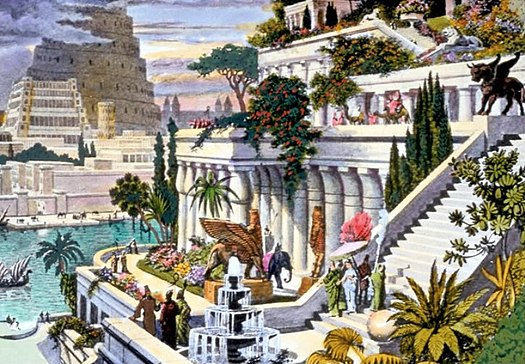

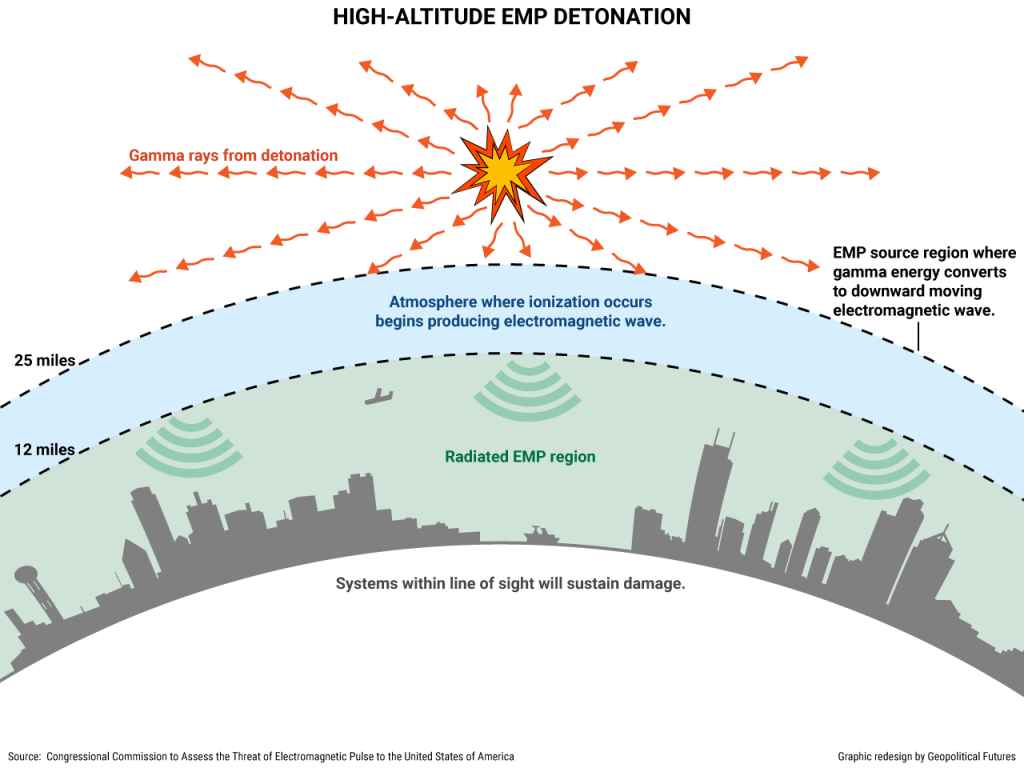
 This article incorporates


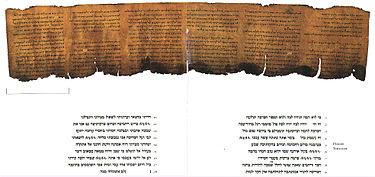














 WALTER SEBASTIAN ADLER


.jpg)
_MEETING_WITH_BETAR_LEADERS_IN_WARSAW._BOTTOM_LEFT_MENAHEM_BEGIN._%D7%96%D7%90%D7%91_%D7%96%27%D7%91%D7%95%D7%98%D7%99%D7%A0%D7%A1%D7%A7%D7%99_%D7%A0%D7%A4%D7%92%D7%A9_%D7%A2%D7%9D_%D7%9E%D7%A0%D7%94%D7%99%D7%92%D7%99_%D7%91%D7%99%D7%AA%22%D7%A8_%D7%91%D7%95%D7%A8%D7%A9%D7%94,_%D7%A4%D7%95%D7%9C%D7%99%D7%9F._%D7%9E%D7%A9%D7%9E%D7%90%D7%9C_%D7%9C%D7%9ED705-081.jpg)


.png)


