Meaning: to regroup, to gather the strength, to get the nerve
“TO GATHER WITH FORCES”
The infamous Bulgarian Tavern has roughly four doors in and three tunnels out. Also a roof hatch. You could completely miss the whole place if you weren’t looking for it. For the nine to thirteen million rats in their various stages of the great race to make it here, this city never fucking sleeps. Its go, go, go, go, zoom, zoom, rush rush! Slaves and Serfs to the trains for wage service. It’s all an illusion its fun here. With no currency, with endless wage work the place is bleak urban hell. It’s a filthy place except at the very center. The Isle of Man. Getting in early with red eyes and leaving late. Back on the cattle cars. The masters dangling enough to cover the rising rent and some groceries if you’re lucky. You’re so lucky to here in this cage! The hope dies out. You whore yourself somehow. You have to! You drink more than you should. It feels worse if you’re not from here. Even the yellow cab driver have more education than most of the rest of the country. The black sports utility vehicles, with tinted windows and important people that don’t want to look at you. The constant sirens. Everyone running somewhere not making eye contact. Always a fucking siren going off for some emergency that isn’t probably real. The city itself was built on the very top of the mountain. Its highest towers hold more rich and powerful people than anywhere on earth. Except maybe Moscow and London. This apple is all poison and rotten. The high octane hyper diversity is just a sex circus. Plus a racial death trap. Plus an ugly over crowed sprawl more regularly breaking then making those who arrive from the interior or abroad.
Nikholai Trickovitch is bleary eyed. He stinks of cigarettes, some cheap men’s fragrance and also of raw smoked Rum. The climate here is repressive towards the end of summer. Rum Barbancourt Nine Staron the rocks isn’t served in this part of town. So he brought his own bottle to the tavern. For their troubles were about to mount exponentially. Their bravest battle was about to arrive. ‘Heroes will be separated from hooligans.The cowards from the brave. The sacred from the profane.’ Well anyway so said the voice of their leader Emma Solomon on the Fire Switch Radio.
Nikholai by very early association with the even more militant Kawa in the early days of the Resistance is part of the inner most core of the leadership of the Z.O.B. The clandestine network of insurgent cells and for a time the editor of its underground newspaper, ‘the Banshee News Service.’ He highly prefers conducting his revolutionary duties from the computer of his uptown Penthouse. Moving things about the internet, correcting pamphlets and public movement speeches Kawa and their comrades give in soap box parks and on the trains. Nikh was persuaded to manage the logistics for the very First Haiti Operation. He did pretty well. Only two had gotten killed. He was then later persuaded to manage ground logistics in Port-Au-Prince for the expeditionary forces. Still later, he joined the medical guerrillas in their ill-fated expedition into Gran Colombia. Where most of the partisans were wiped out and he barely survived the long walk home. But, he has only so much will power to back up such walk and warfare.
‘I might need yet another drink!’, thinks Trickovitch. He knows it will be a long meeting and the A/C won’t work well in the private upper club house. The night is really just getting started work wise even though it’s past 4am. They’re erring toward minimal street traffic, but even the rats and pigeons here work in shifts. Well that same night Nicholai Trickovitch put together a little squad to do, “another messy little big job.” There were big jobs and little jobs. There were protracted campaigns that took many years. Some jobs where social engineering was needed. Others where brute force was the best approach. A job that has a lot of force commitment is called ‘an Operation’. Several coordinated large scale operations are dubbed a ‘Campaign’.
Nikh has to get buy in. No one is ever fully in charge of the structure. Now, outside New York the Resistance gets very eclectic with who is involved. It would be inaccurate to say anyone could possibly ever lead it. It is bad in New York where well over 70% of the population wasn’t even born here. A lot of players. They all “Relied heavily on Neg, Blan and Gray magic to keep this whole thing together,” as Nicholai was fond of saying, “But in New York Fucking City, we still do things the old fashioned way. By having a real tight crew.”
Based on the Kurdish origin of their military doctrine, their “crew” was typically organized into a “Kol” or ‘section’ of 7 to 10 gender mixed fighters. Two or three ‘Kols’ were organized into a “Takim” or ‘squad’ of up to 30 people. 2 Takims make up a “Tabor” fighting group or “Platoon” of 40 women and men. It had been some time since the Z.O.B. deployed a defense structure of any larger size inside the country.
For many, many years Newyorkgrad was not “the old Newyorkgrad” that so many who had never visited imagined it to be based on movies and television. In the dead of something, where night creeps toward dusk, around a table on the fourth floor of 113 Ludlow Street, they met. That is to say the restaurant immediately above the Mehanata Tavern. A little talk is underway, a briefing. Maybe also something of a sale pitch.
“There are thirteen elected leaders of the Z.O.B,” Trickovitch explains, “Two have disappeared. We don’t fill their seats, but we consider them probably, most likely dead. One is living in a submarine somewhere hidden. Two are sleeping. That’s a polite way of staying they were thrown in a filtration camp and badly tortured. Most of them kill themselves sometime after. That means at any given period nine are left. Left in charge of all the cells in the division. Greater Newyorkgrad.”
The table is wooden and plates of tapas have all been cleared. Nobody got in from the street. They got in from the various tunnels. It’s time for black tea.
“Let me tell you how this is gonna go down,” says Nikh to his fellow partisans which include the tall well-polished Jamaican Gangster Mickhi Dbrisk. He is wearing a black suit with no tie after coming from work at previous engagement. Where girls were still jiggling.
Mara Fitzduff is a half pint Fenian. Barely ever smiles. A dirty blonde rebel famous for her firebrand speeches on the Fire Switch Radio. Also present is Rafael Ernesto Contreras, the Peruvian disk jockey. A photographer too. Retired child soldier and lesser officer of a defunct guerrilla band in the Arequipa Province. The fifth member of this add-hock unit is Mr. Siegfried Sassoon. He speaks very well with great emotion in his face. He should be expected to as he is an actor classically trained in Moscow. He too is just getting off work as a bar tender at a flashy supper club up the street called the ‘Red Fox Box’. A dashing swaggerous man of Cuban descent. The sixth man in this last minute, late night call up was the light skinned Haitian smooth criminal Watson Entwissle. The seventh at the table wasn’t made yet. A smooth young bloodfrom East New York. Says his name is Joshua Hunter. Has okay references and they are going to test him out. Could be a plant.
Watson is pretty pissed. You can tell when he’s pissed, he doesn’t pay attention at all. It’s based anyway on the past midnight hour. He left his favorite ‘sexy chocolate’ in bed in Yonkers for this “very tedious bullshit.” He doesn’t get to see his old lady enough. She lives in Boston. Ms. Charlotte from Uganda.
In the confusing and albeit vaguely disjointed chain of command Mara, Watson, Mickhi and Nicholai are all title holding inner leadership. Only one is from the inner nine. Siegfried Sassoon, Hunter and Raphael were called in as ‘hevals’. Though technically Hunter was not even a ‘provisional member’. Hasn’t made rank or been sworn in. Not written in the book of life. But they were told he can do good work by Dbrisk.
“The Labor Day weekend begins in 72 hours and you all know what’s coming,” explains Mickhi, “The West Indian Day Parade ain’t heading south at the Grand Army Plaza. Oh no, they’re gonna head north right over the bridges and attempt to occupy the mostly empty City on Isle of Mann.”
Everybody except young Joshua Hunter knows that already. They are gonna stick Hunter with Watson and Watson will keep him working this weekend until he is trust-able, or dead. They are all aware of the score.
“As most of us know this revolt is a three stage campaign in Newyorkgrad is being coordinated mostly by the Pan-Africanists, the Garveyites, the N.L.M.M., some of the liberal and radical medical trade unions, the I.W.W. of course, the Shi’a Muslims, the Occupiers, the Anarchist Black Cross Federation, the various affiliated radical student movements in C.U.N.Y., the 1199 Trade Union, as well as the Malcolm X Grassroots Movement and of course, our faction Uhuru and greater we,” explains Mickhi, “Namely the Brotherhood and the Banshee Group.”
“The dry runs were the messy occupations on Wall Street and around the country last year to assess the state defenses. Phase Two is Labor Day where we liberate Breuklyn, the Bronks and Queens. Phase three will be to hold ground and liberate ‘the City’ just before New Year’s Eve,” he continues, “The goal is to declare a whole series of confederated cantons up and down the east coast. Hunker down and defend them from federal counter assault.”
“Hectic shit,” mutters Raphael.
“Our role then is quite basic in phase two,” explains Nikholai Trickovitch, who knew indeed that the General Rising was close in coming, but not actually a mere five days away.
“We all know what was revealed about the C.D.C. conspiracy. The h1n1, AIDS-HIV, the Malaria, the Chikungunya, and of course Ebola. We’ve all seen the damn reports. The documentation has been widely circulated and now our people are really ready for fight. Enough outrages have occurred to spark something bigger than riots. The ‘Stop and Frisk’, the weekly shootings, the manufactured Fars and Illubadore war, conscription and the new walking police drones of course. This time almost everyone expects death camps and prolonged urban warfare, not Capoeira,” Mickhi explains.
“The Z.O.B. has called up eight hundred light infantry organized into 20 Tabors. Snipers, Combat medics, anti-drone rocketeers and agitation propaganda officers will all support the needs of the parade redirection. Our convoy of marauders. They will be attached to each major island band truck. 40 to 80 fighters per band. Each truck has been outfitted with bullet proof siding and once we pop off we’re going to mount PKM machine guns to the tops.”
Trickovitch unfolds a diagram.
“Flying columns are on the ready in all five boroughs. Though we do not expect much action on Monday in Staten Isle, Queens or the Bronks,” says Nikh, “An additional three hundred and forty women and men will support A.B.C./ Occupier actions in the Financial District as well as set up casualty collection points in Brooklyn and Isle of Mann.”
“Listen!”, declares Watson, “Watson knows all of this shit. Done known the plan for weeks. So brother please come to conclusion so I can get Bronks bound with this new jack,” says Watson, “he can wash my car before we die in the coming melee.”
“Watson, we just need this young blood briefed. You can get out the door in fifty minutes,” Mickhi tells him. Used to his friend’s way.
“Watson needs this to happen in way less minutes,” he replies with a grin.
“As usual,” continues Mickhi, “The two Haitian Convoys will bring up the middle and the rear. Unknown to the City parade organizers. And also unknown hopefully to the police intelligence forces that there are actually three Haitian bands this year of 10,000 masqueraders a piece. About ¾ up the route the Middle Convoy which is gonna be twice as big will initiate the raid across the Grand Army Plaza and then fight their way up Flatbush hope fully with the people behind us. That is when the uprising will begin.”
“What’s our precise goal tonight,” asks Siegfried Sassoon. Siggy, never goes to that many meetings. He never votes in Otriad elections except with his feet for Kawa. When Kawa is leading he steps back and when Kawa is sleeping her steps up. He did however vote for keeping Kawa asleep after the last Ayiti job, when the Hospitaliers took him very hard. Kawa is a serious knock around guy; best estimates think he’s been taken to the camps over 21 times. About three years’ worth of his life. Siggy, like Watson does jobs not meetings. Neither ever-ever tries to be at these meetings. Rarely even the candle light salons in Breuklyn. Which are sometimes cute.
“We’re gonna install Fire Station Transmitters on four very, very tall structures,” says Mara Fitzduff. She has over the years been the club’s ‘Chief of Staff’, worked in the propaganda bureau, in academy on the ‘Science of Women’ and done much of the fund raising for the past ten years. She’s not always officially even in the Z.O.B., but she is always very dependable. She has no salty broag. She’s got one kid with a soldier who ran off somewhere. Another kid with the Russian-Ivory loan shark Donny Gold who Kawa and Nikholai went to high school with ‘way back in the day’. So in that regard she’s double tied down.
“Then Monday we’re gonna deploy some troops and blow up some infrastructure,” says Dbrisk.
“Where we doing all that on Labor Day weekend?” asks Joshua.
“Alot of what ifs,” Dbrisk replies, “But, focused on likely scenarios. We expect the initial uprising to punch through police lines and make it as far as down town Brooklyn before its..liquidated, pacified by drones and E.S.U. machine gun nests.”
“So you don’t even expect us to make it into the City,” Hunter asks them.
“In short. No. It’s probably gonna turn into a blood bath,” says Nicholai, “But getting into the city on Monday is not really the goal. While the Labor Day Parade gets routed toward to Bridges up Flatbush Ave the Anarchists and students are going to try and storm the trading floors on Wall Street itself. To facilitate operation we’re gonna again have embedded fighters and medics, less but still 4 tabors. We’re gonna blow some things up to confuse the N.Y.P.D. efforts to guess what we’re really doing. Such as four Con Ed stations and the two big N.S.A. biometrics and data warehouses.”
“What about the E.M.P.?”
“That’s just to terrorize them,” states Mara.
“Hitting the Consolidated Edison building puts most of Manhattan in the dark anyway” says Mickhi Dbrisk, who has been the club’s Operation’s Chief since nearly the very beginning. Nikholai holds the official position of Logistics Coordinator, but he’s more hands on than many before or after him as a good logistic fixer should be. He’s the one who arranges a lot of the supply raids and bombing targets. Now that Kawa lives in a dream or a nightmare.
“The fire switch transmitters will override both the police and commercial radio system and turn whatever frequencies we feel like into dancehall tunes or rebel broadcast stations. We need them well hidden and we need them high as possible,” explains Mara, “so we can keep broadcasting when they shut the internet down again.”
“We’ve gotten the four spots picked out well enough,” Nicholai explains, “each transmitter is about the size of a football. Pretty much get it high up, turn it on. We can transmit the Fire Switch Station over Wi-Fi from the West Indies. Downstairs at coat there are Silenced Macro-Uzi blasters with rubber knock down rounds and also live ammunition. There are iridium phones, radios, transmitters and flicker masks. One for each team,” Mara says.
She continues, “When we conclude here you buddy up and head to the staging points on thee hand notes here. Get in doors before dawn. In about two hours. You wake up again when it’s dark again. One team per location. Before you surface again, your masks go on to obscure your faces, before you head to staging. At staging and leaving staging. Those masks don’t come off in elevators, in lobbies, on streets anywhere near that building. The cameras are everywhere, as you know. You’ll live die or get tortured by that mask. Each team has a high rise structure. How you get on top of it, well each of your team leads known that route. You will get up the roof and turn on the transmitters.”
“Try to hide them somewhere,” Nicholai mentions. Don’t just leave them lying around, they’re booby trapped anyway. Whoever tries to turn them off will is gonna lose their arms and face,” says Mara.
“Watson you’ll take Hunter with you to Manhattan North staging,” explains Nikh, “Siggy and your crew you’re setting up the downtown. Jon Denby and I will set up in Manhattan Central. Raphael and crew in Queens will be setting up the Long Island City installation which is quite tricky because there’s nothing residential in the CITI Corp building so we’ll have to social engineer it. Dbrisk and your crew will go after the High tower on Atlantic Junction Downtown Brooklyn also with the same predicament.”
Mara continues “Once you get to the safe houses you’re staying at feel free to relax and take a long nap. You’ve all been up all week. Some of you all month. This doesn’t have to happen at once or tomorrow. It just has to happen before we blow up the power stations on Monday morning. So enjoy, thank god it’s just Tuesday” grins Mara.
“We’re working out of the apartment brothels yet again?” asks Raphael. The joy in his voice is real for he so loves the Manhattan apartment brothels. You can’t properly afford them as an internationalist Disk Jockey.
“We need these devices set up real high,” says Mara, “If we can knock out their power grid and maintain alternative systems of communications we’re keeping to our end of the mutual aid agreement with the Garveyite Movement, Uhuru and the ABC; the tip our spear. Without blowing our arsenal and fighters prematurely,” she says, “as you all know this is phase two of three. We’re only fully mobilizing forces and taking this national if we manage to take the City or if we can hold Breuklyn longer than a month. Otherwise it’s 1st Nivôse.”
“Joshua, you gonna ride with us on this?” Watson asks him.
“Yeah one hundred,” the kid replies.
Mickhi Dbrisk chuckles.
“The Four transmitters set us up to broadcast the good word from Ayiti. They allow us to speak to the people. We expect the masqueraders and Uhuru light infantry tabors to reach Grand Army Plaza around 11am and begin the redirection maneuver toward the bridges by noon. As soon as we get confirmation from our people on the ground, then we are going to blow the Consolidated Edison power stations, the N.S.A. Data aggregation depots and finally, we will E.M.P. Police Plaza One and all of the the district financial at noon thirty. Put the whole fucking city in the dark. In coordination with the Anarchist Black Cross who will be simultaneously lead the assault on Wall Street. If they mange to breech an hold. Which is a big if. Well we push the spear deep in the beast as we can.”
“If the Garveyites and Uhuru are not all gunned down before they even reach the bridges,” says Watson.
Mara says, “Another real big fucking if.”
Watson just watches the size of the pupils on young Joshua Hunter, watches him breathe and counts the breathes. Because all of this is one big act of science fiction. One big feigning maneuver. Joshua Hunter from East New York is an informant. A police spy. None of the locations and targets being talked about are real. The Department of Homeland Security knows about the Labor Day Uprising and so so do the police. They know about the A.B.C. Wall Street take over march. They know just about everything because they have informants in all of the groups and factions except the Z.O.B. Mara and Anya have been feeding loads of misinformation for months about what will happen on Monday and where. There will be an uprising in Brooklyn. There will be a coordinated attempt to re-occupy Wall Street. There will be a non-stop Fire Switch Pirate broadcast of the New Social Gospel. There will be bombs going off in power plants, data aggregation depots and a black out down town with or without use of the Electromagnetic Pulse Ordinance build by sympathizers in Stony Brook. But this is still all one big, bloody feigning operation because the revolution will actually begin until 1st Nivose. Gregorian New Years Eve. This is all still a drill.
“ Real Big Monday,” says Michkai Dbrisk, “I’ll be on the Parkway early with Watson and the rest of the squad.”
Mara says, “All of you are in the trenches and I’m running the dispatch with Anya out of a secure location in the Bronks. Things are going to pop the hell off. We’ll do the best we can to keep up with impossible expectations, any questions?”
No one has any. Except Joshua.
“Where did ya’ll get them E.M.P. from?”
“Joshua. That’s not a very adult question,” says Mara.
“So we just gonna done black out down town and hit from two sides?” he asks them.
“Yessir,” says Watson, who honestly just wants to get back to Yonkers.
“I love centralized democracy,” exclaims Mara, “All of you please grab your gear at coat check and get out via the tunnels you came in on,” Mara tells them, “Good luck. Don’t get needlessly killed this weekend. Shahid Namaran!”
Things were about to go smash bang! Then fully explode. In flame and death in the night. To the sweet blaring tunes of the Wild West Indies.
Meaning: to be fully engrossed/immersed (in something)
“TO LEAVE WITH THE HEAD”
The Isle of Mann has a place to drink just about every 12 feet prices vary radically on who they want in. The Tavern is open for business officially only on Thursday, Friday, and Saturday. Though typically and unofficially there are underground lap dancing parties happening late Wednesday night in the basement. The lights are kept dim no matter what happens. You need that to hide subtle stains from fluids. You can dance all night if you have to, but eventually someone has to herd the cats out the door and hide the bodies on the floor. The Mehanata Social Club is tucked away discreetly on113 Ludlow Streeton the lower east side of Manhattan. This is their second location. Numerous police raids and finally a raid which transformed into a brawling melee succeeded in burning to the ground the original location on Canal and Broadway. In an ugly incident that took place in 2005 the lights of the “Bulgarian Bar and Cultural Society” briefly went out. The new location is about six times the size over three levels. Surely it will not be the final location, given the tumultuous nature of the existing times. Sasho the owner has already begun planning an even larger Breuklyn location, a whore house in Kiev with the same name and a ‘School for Alcoholism’ in the mountain hills of upstate New York.
At an infamous establishment such as this you ought to always know the names of the men standing watch or the women pouring your drinks. Or the people holding down of your bags and coats. Most importantly you ought to be cautious of the seductive forces marshaled via awkwardly inexpensive liquor and the black magic to lead you to things you ought not to be playing around with. Such as foreign persons in needs of papers. Or creatures that like to drink blood.
There might was well be signs on the wall telling you anything not tied down will be carried away into the night, your bags, your souls, and virginities of nearly every kind. Come to think of it, there are such overt signs hanging everywhere! Literal not figurative signs. One claims three teeth are needed for entry. One says anything not checked will be stolen. One says “get naked get a shot, get fucked on the bar win a bottle”. That is hardly a bluff, but the bottle is never top shelf stuff.
It’s a ‘Gypsy Bar’, they claim to the public which sometimes romanticizes Gypsies, but often does not. But Gypsy’s all steal. Gypsy’s will trick you with music and some dance, lure you for tarot cards and then steal you internal organs and you will wake up in an ice bath in Bratislava missing some elements internally, then die of blood loss. The name of this place literally means ‘the Tavern’ in Bulgarian. And it lives up to that designation splendidly.
You wouldn’t find it unless you were looking for it. The entrance isn’t loud and the clamor inside is well insulated by its system of layers. The Lower East Side area is a drinking dancing seven day a week shit show anyway for university students and the children of the upper middle classes. Mehanata is the club of choice for New York’s newly arrived undocumented immigrants from South America, Central America and the former Soviet Union. You’d only be looking for it if someone told you about it. Perhaps you’d hate them for it later, but very few people are not amused the very first time. There never is just a first time. But, in the New York wilderness a tavern of eclectic wilding foreigners and untamed domestic people dancing to the tunes of South America, the former Soviet Union, the Balkans and the Roma can draw to it both angels and demons by word of mouth. Since 2000 it has been surviving pogroms, police raids and venue changes via fire. The police department is doing everything in their human power from keeping the Breuklyn location from obtaining a liquor license. Sasho has been trying to open it for three of four years it seems.Who is Sasho? He’s of course the boss.
There are three floors to the Tavern. The website extols patrons to “meet their future green card holding spouse.” There is live Mestizo music. Live fire juggling. Bulgarian contortionists on Thursday alongside with Bordel Dali.Rafael and his business comrade Georgie who is from Bucharest, Romania. Or maybe he just says that knowing no Americans know any other cities there.
“But I’m not freaking Gypsy!” he declares. He’s getting a PhD in Computer science. His specialization, the tracking of petrol futures purchasing and predicting in relation to major airlines. The cast of characters around here boggles the mind.
The club has the look of a vast lawless pirate ship or a wilderness brothel. It is sometimes dim red and under the cloth tarps of the upper galley level which looks down with little tables in the dance floor. The main floor has a dance floor, a bar and a kitchen. The downstairs has stripper poles, blue light, a bar and an Ice Cage.
The Ice Cage has bottles of wall to wall Vodka, which is all the same Vodka, but when people pay $40 to enter the cage and slam that wall to wall Vodka orgy in Soviet officer uniforms; they don’t notice. Vodka drinkers of repute, do not go in the Ice Cage, which also sits above a hatch to the abandoned railways under lower Manhattan. So one can walk or take a private train to Breuklyn or New Jersey. That is also why the place is only officially open Thursday through Saturday, to facilitate that traffic.
The waitresses and bar tenders are skinny or shapely, all Post-Soviet Bucharest or Sophia girls just arrived recently though generally well educated and for now, un-indentured. Some claim they are ‘from Moscow’. But they are not from Moscow at all. They are from shitty little Eastern European towns no one has ever heard of. They mostly don’t stay long and the reason for that is partly because of the mental and physical demands of the work and because their boss is the devil himself. The club is only open Thursday, Friday and Saturday. Things that go on during the week here are private and mostly didn’t even ever happen. There are private parties in the basement you’d do well not to crash unexpected or uninvited. Like the one on Wednesdays which is sort of high stakes a gang bang contest. There have been cock fights, dog fights and also bear fights. There are a lot of meetings happening upstairs right before the place fills up in Eastern European languages that you’d do well not to hear. The musical talent is highly various. Normally three or four live acts a night on Friday and Saturday. A lot of live horns. There’s a rather Pall Mall esthetic of transcontinental bacchanalia.
The booking agent for Music is petite and elegant Viktoria Lynch often wearing the hat of a Soviet officer the shoulder length locks of her hair falling over well fashioned skirts or flowing dresses. She was born in the Catskills, but has recently gotten her New Yorker residency card much to her delight; eight years later. The primary live acts are Gypsy Jazz, Spanish Ska and Balkan mostly. Roma meets Latin American for the most part. You get dance hall and reggae tone periodically from the Selectors, but for the most part ‘the brothers’ stay out of the place. The doughty wine happens, but as international as everything remains, there are almost never black people at Mehanata. Which no one has a problem with except maybe Kawa Zivistan who keeps bringing them there? But, they have one drink and politely leave after meetings. For some reason the charms of the venue are lost on the brothers.
Since 2001 the Z.O.B. has made Mehanata its unofficial office and also its social club. It’s meeting spot and its drinking spot. Sasho allows all kinds of people to meet under his roof and being there has connected the movement to darker things. There is a power the club has to draw in the very worst and best of people. Mehanata is thus a fitting place for the Z.O.B. leaders to draw towards since many of the group are hardly saints. Its members are generally able to lumped into the categories of ambulance workers, criminals, sex workers and also some leftist radicals. Sometimes a cadre is two or more of those things.
The Balsa, the Wango, Rumbia, sometimes even a little Zoukare played by the various selectors, but ‘the brothers’ always immediately depart when the meetings are over. No one can say exactly why they don’t like the place, but they really don’t. But as it is a central location for all five boroughs, it’s remained an unchallenged haunt.
Sasho and Kawa allegedly go all the way back to 2001, but they don’t always remember or talk about all the events in between. The most popular disk jockeys are Raphael Rafael Contreras Lynch also called Selector Rafflex and Georgie from Bucharest also called ‘Selector Mishto’. As stated Romanian but “not a fucking Gypsy”. Recently booked is the bearded, crazy eyed Serb Adrian Jankovitch. The most famous of the current bartenders is moxy Martina Hella Dubreskaya. She has been here a good deal longer than the others. A black haired Bulgarian journalist, music blogger and BDSM enthusiast. She has the special constitution that a bartender needs to work the shit show around here longer than a month. Though many suspect she will quit soon. Perhaps go into Real Estate. Martina smiles at everyone in hate. She is technically speaking the first person to publish the work of Kawa Zivistan by putting his sad poems on her website. She regrets that she encourages him, but secretly likes some of his work.
Outside and inside is James Burns the feisty retired Fenian cop on ¾’s pension. They call him James White, because he’s white. After his ACL was torn chasing down a perp he retired to bouncer work. His partner is James Behemoth Brown Pererez a smart talking, burly Mestizo from the Bronx. They call him James Brown, because he’s Mestizo. Always outside is Slavi the stone faced brother of Sasho, but no one trusts they’re actually brothers. Until sneaking a sly grin the Bulgarian strong man collects people’s papers, cans their IDs and directs them to be retina scanned via this Illubadori device at the door which biometrixes all the guests. He collects the cash or the directs drunk patrons to use the external ATM which charges an extortionist ten dollar service fee, the highest almost in New York actually. The irregular admission charge never gets a smile, because Slavi doesn’t charge people he knows in money. Then he sneaks a sly happy grin, has a quick smoke and sometimes, only sometimes asks people for money to come inside wearing a black Soviet wolf fur ushanka hat except during the summer.
You should pay cash up front for everything. Unless you’re a card carrying regular. Giving them your credit card is simply a horrible idea. It means you’ll just keep drinking and very often, leave without your card. James White and James Brown are sometimes easy going on admission for just about anyone not over weight and female. The regulars never pay. The various mob tough guys never pay. The Z.O.B. members never ever pay. Sexy young girls never ever pay. The endless Korean bachelorette parties never pay except to ride the Gypsy Bus. The guests of regulars, mobsters, musicians, D.J.s, rebels and girlfriends of friends never pay. It’s between 15-35 dollars though if you’re just sort of showing up. Except on Thursday when everyone is in for free.
James White, James Brown and Slavi sometimes have to get fierce quick to squash the brawls which happen, generally around 2 AM, generally instigated by the Albanians, but often before and after. They can’t seem to keep the Albanians from breaking people’s faces over stupid things. But that’s part of their cultural charm some say.
Justin Toomey O’Azzello is ‘the General Manager’. He is full blood Fenian and has ‘wandering hands’ people say. He is quite jovial and likes to tell elaborate stories about his days in the Air Force flying bombing missions over former Yugoslavia. He blames his flirtations with alcoholism over the years on bombing runs he inflicted over Bosnia. But Justin was never in the air force or ever in Bosnia. His hands do wander though. Recently he has taken up painting. Some say he’s Sasho’s top Capo.
The owner of this place is a fearsome Bulgarian half Ukrainian Ivory named Sasho, but is real name is Alexander Dmitrievich Perchevney. He was born in Kiev, lived in Belaya Tserkov, Ukraine and moved to Sophia, Bulgaria before arriving here in 1992. He used to be a dentist. He used to be a person of importance in the now defunct U.S.S.R., in the Inner Party. He thus has something of soft spot for revolutionists. The debaucheries of fallen men too. As well as a hard spot for undocumented woman of theatre. Misha Kishbivalli, the long haired millionaire playboy from Georgia also is his silent partner. No one ever knows of asks what Misha does for a living. But the answer is blood diamonds. The Mehanata “cooks” are all from the tropic of Capricorn but nothing is ever very good eat except the beet soup or the Bulgarian salad; cucumbers, tomatoes, onions and pepper and white cheese. The feta cheese over fries is pretty safe too. Some type of Borschtwhich is rumored to sometimes contain menstrual blood. The pork dishes are outright made of people.
Sasho’s wife Tanya isn’t the cook anymore. It’s always undocumented Mexicans Sasho brings on over the years through the under tunnels. They say the Breuklyn venue, when it opens, will have ‘traditional Bulgarian food’, but no one knows what that means exactly. Tanya is not a vindictive person, but she cannot stand this ‘so-called Kawa Zivistan’. There is very valid reason for that contempt, beyond him being something of a trouble maker. They have history in other lives.
“Stop cooking people and more people would eat here,” Kawa once suggested.
“Stop being a fucking Democratic Confederalist, Blatand Daria will perhaps date you, yet again,” was Tanya’s response.
It is rumored, also that there is vast tunnel system running from under the Tavern to multiple places unknown. Some nights, Misha Kishbivalli has pontificated outside of the club with clearly manic eyes that an ‘American engineered mega tunnel system runs under the entire country in case of insurgency, general emergency or nuclear winter.’ The traffic around here is always hard to predict. ‘Of course I’ve been to camps’ Misha exclaims, ‘let me tell you, one time I followed the tunnels all the way back to Bulgaria!’
There are tall glass pitchers of apple cider ginger vodka that sit atop the bar, sitting there for haShem only knows how long. There is a sign informing people that “get naked get a shot, get fucked win a bottle” and people seem to win all the time. Also the rule that patrons ‘must have at least three teeth to enter the establishment’, that is untrue. You just need to have cash money. Preferably American type. Or be vouched for by a regular. But, things are always pretty fucking negotiable.
The music is playing loud at the Mehanata Social Club where Daria Andreavna makes eyes then orders a Vodka based energy drink confection. She then slides up to Kawa at the bar. He is wearing a black suit this time. A week since his death, no one acknowledges or recognizes them.
“I thought you were dead,” Kawa says.
“Martyrs never die,” Daria replies and she winks.
“It seems that we have found each other again,” she whispers.
“You completely misbehaved I dare tell you,” he says, “you got us both killed yet again. This time for true bullshit.”
“I was bad. Bored? Rude should I say? I am told, the other night, I insulted your hospitality, greatly.”
“That you certainly did.”
“What are you drinking,” she asks.
“Astika,” he replies. The Bulgarian beer that is never in stock, hasn’t been in stock since 2001, but he always asks for it. Knowing they one squirreled away.
She catches Martina’s attention, and get him his drink. Martina winks at her. One man’s hot commodity, still is the cheapest drink in the house.
“So,” she whispers again, “Cheers. I have no memory of anything last weekend. Forgive me for that. I don’t even know what I did. Or didn’t do, might have done.”
“You remember nothing?”
She just gives him a coy but devilish smirk. And she shakes her head.
“I drink a lot for fun. I don’t always remember my Friday or my Saturday nights. Outside work, where I also drink the week gets interrupted by school, and then I party hard on the days off. I was told I was really bad to you. So, I’m saying the sorry. For the being of bad. What are you really drinking? This is our custom. Astika is shit,” she says.
“Nothing? No single recollection?”
“No nothing at all. Oh, okay,” she smiles at him, “you were wearing a suit that’s a different color from the suit you’re wearing now, this I remember.”
Kawa is now in a black suit. The night she almost killed them last it was white linen. It’s almost always a cheap suit. Or a navy blue uniform.
“You never acted all that drunkenly. You were calm and in control throughout, your, shall I say, outbursts. My friends have told me that it’s too late to stop your vodka calamities from unfolding sometimes. But, you nearly killed us. And you bit me,” he says showing her the red ring around his index left finger.
“Well we all have our demons in there, don’t we? I’m good at drinking. Until I sometimes fall down. I fell down those steps one night,” she says pointing to a long downstairs plummet into the downstairs floor where the Ice Cage is hidden.
The Ice Cage is a freezer box in the basement where people pay forty a head to slam wall to wall cheap vodka over a period of two minutes. It never ends well for those who get in that cage. There is perilous flight of stairs down to the basement where they keep the stripper poles and the blue lit fuck cage by a second bar and dance floor.
“That looks like if would hurt,” he replies, “if you remembered it”.
“I don’t remember it,” she smiles wide and seductively.
But that’s a silly thing to say. Seductively. Dasha is the most beautiful woman he has ever seen. Her proclivity for homicide aside, she is fascinating. Describing just how beautiful she is almost doesn’t fit in a later play he could end up writing. Her golden locks are like a lioness. Her eyes are capable of quick swing between fierce, curious and loving. She loves to hear men say it, how beautiful she is, but beauty isn’t where a man falls from when he falls from the heart not the groin. Beauty is a thing of lust. It has no bearing on love when that love is real love and not lust with imagined feelings. Love is energy, a wave crashing over you. Kawa has drowned several times before. He’d be very careful to use the word again. In that regard he is reckless to no end. He feels an attraction and can’t comprehend it, must be love. Previous formula for the same emotion dictated that whatever woman resisted his affections the most adamantly and then let down her guard to an elegant seduction of deeds and art, must be love. There were loves at first sight, or interaction as well as friendships that became romances and he was unafraid to say the words again. The words often came out without his permission.
Overtime several women had accused him of bastardizing the loaded phrase via serial usage. There were over a dozen women he’d uttered it to over the course of his 28 years. Generally after the conquest of kisses, but to a couple stupidly even before.
They were all very different women of course and they all brought out very different rolls to his emotional dice. Sides to his coin being a limited idiom. Supposedly in popular fictions man or woman is supposed to have only one true love in a lifetime, to marry them or be parted from them tragically. So Kawa was working hard by that standard, which truly in real life it can never be that simple, that limited.
“You’re really something to write about,” he says.
“Absolutely I am. And I never say sorry to men, but Rafael said he would cancel his friendship with me if I didn’t say sorry to you. Apparently I underestimated that you are the favorite host. The dashing revolutionary saint. The darling also of the owner. The grandeismo! Wait, I’m not sure what that word means blat! You’re great. Also as the confidant of Rafael Rafael and Viktoria, you should become my confidant too.”
“I’m just Kawa on my very best nights.”
“And on the bad nights? Tell me some of your other silly names,” she whispers.
“Zachariah, Valera or Vasyli Pveada, or, wait, wait, my memory is growing back, perhaps your papers really say: Sebastian Adonaev! Ha! A royal victory? Where did you concoct these strange and slightly atrocious monikers? Moniker, is that the right word?”
He nods slightly.
“I’m Kawa when the drinks flow and the desire to dance returns to my hard hips. All other times I’m at war. With myself and my nature, with a world of sheep and a den of wolves. In such circumstances I require a hard Russian name, and the luck of a royal victory.”
“Hmm. Well it sounds ridiculous the way you say it. I’ll call you Valera, highly sparingly, it’s an insult you know! Some girl insulted you and you made it your Russian name. We can get you a new on. But, Kawa is okay too. I’ll see what rolls better off tongue. All that other stuff, well I have no idea what you’re talking about.
“Martina, two shots, Russian Standard please,” Daria proclaims dropping another twenty on the bar. Martina the bartender comes over and gives Dasha a little wink again. She pours them out.
“This is sorry alright,” she smiles “I have said the words sorry! Now I again reserve the right to be rude to you and forget about it later. Fair game, yes? You got two drinks.”
He looks deep into her blue eyes and gives a half smile wondering how much she really remembers. In her eyes he sees someone looking out at him below the swagger of her posture, behind her beauty is a much older beauty.
“Well aren’t you impressed with my new manners?” she asks
I find you quite a bit stunning, he thinks and almost says.
“Of course I am.”
“What are you drinking next?” she asks.
They clink the shots and she proclaims, “Nazdrovia!”
She drinks like a fish, but really she just drinks like a Russian.
“Astika,” she orders for him.
She has years of recent training in anticipating the needs of men. By realizing those needs controlling them. And she thinks, what terrible piss but of course she orders him another one from Martina. The raven black haired Bulgarian bartender who knows exactly what she’s doing. Since Daria never buys men drinks. Because Russian apologies are based on acts not words.
“Are you coming to our little festival?” Daria asks him almost casually.
There will be a four day Bohemian Festival happening Labor Day Weekend where all manner of fuckery will take place in a park in Queens called the Onderdonk Public Historic Fields. Sasho the owner had let Victoria allow Kawa do a benefit concert for their Haiti efforts at Mehanata a month ago. So a week from now Kawa and his E.M.T., Paramedic in training comrade Jared Forgetter from Kalifornia will be freelance E.M.T.s covering the first two days of festival.
“Wait,” she pauses.
“You are working the festival as our paramedic,” she says as she presses her palm to his side burn and face side.
“Sharp as a dagger you are dorogaia,” he smirks.
She smiles with big bright eyes. Who the fuck taught you that word, she thinks.
“Don’t call me your dear ever again, I’m not so old! I’ll alert you that I may well come to some of that festival and if I fall down, drunk, I will ask for very intimate and professional service.”
“Hand pressed ice,” he promises reaching for her waist then thinking again.
“Hand pressed everything,” she demands.
“It’s at the service of all attending,” he declares.
“You are a true servant of the people,” she mocks with a wink.
“Dasha, you’re a tough act to follow.”
“You’re gonna keep calling me that are you?”
“That a problem?”
“It’s rather intimate. I don’t know if we know each other like this or that.”
“Well I suppose we can work on that over festival.”
She smiles a lovely, practiced smile.
Kawa, or whatever stupid name you’re calling yourself tonight. Press me best you can. The risk is completely yours not mine.”
A song about the great and noble Commandant Che Guevaraby the Buena Vista Social Club comes on and she thrusts herself into his arms for a last dance. They take the floor to themselves.
“I knew you back in Cuba,” she whispers in his ear.
“I’ve never been to Cuba,” he replies with a stone face.
She Latin sashays with him across the dance floor muscling out the other couples with her buxom way. She’s part crass and part wonderful. She lets him lead and he does a fairly good job under pressure to keep up. It’s been over a year since he’s danced with a woman of any substance.
“You dance like you’re actually from the Illubadore,” she whispers to him.
“But I’ve never been there either,” he repeats.
He dips her slightly. She’s a gorgeous powerful woman who will always get what she wants in the end so it seems. Except perhaps happiness which no power or money can so far buy.
“You’ve gotten much better at playing an Amerikansky radical,” she tells him in Ivory language. “You are even at better at playing a tragic Russian courtesan,” he replies and they dance the rest of the night.
It is past 4 am now and efforts begin to clear the worst kind of rabble out the tavern have begun. Only card carrying regulars and lovers of staff can remain and light things up or pound things down. It’s now with the storm shudders sealed just over two dozen left lingering around the bar. Smoke them if you got them. They count out the cash on the bar. For some reason, with almost no music, drunk as hell, Kawa and Daria are still dancing. Slumped into each other.
“Right never on schedule,” says Justin Toomey O’Azzello to Sasho, the burly owner smoking a cigar at the end of the ground floor bar passage way, packed up with intoxicated core circle patrons, tight except around his circumference.
“Hasn’t changed his cap or tune much in ten years,” Justin notes.
“I know him of course,” Sasho says without looking up, “with or without the ridiculous peasant cap. He’s been the same good man for over a decade. Dependable killer. Knocked the fuck around in Ayiti, that is for sure.”
“He’s dancing with Daria Andreavna, good for him! She’s got great big ones for him.”
“He’s always dancing with Daria,” replies Martina, “or at least trying to dance with her anyway.”
“You’re thinking of…” notes Justin.
“No my O’Azzello. I’m thinking exactly what I mean to be thinking. He’s always dancing with my Dasha right before things get interesting around here. And it sure will get interesting fast.”
“They just met boss,” says Martina.
Sasho almost yells,“You’re thinking of things three dimensionally and I am thinking of things fifth dimensionally, even sixthly or seventhly and I know that when those two dance. Fucking trouble. Niggers with fire and arms in the streets. Illubadori mind games. Decapitations on camera and lynchings to boot. Lynchings I say! Gays being flung of roof tops! And lots of piles of burning bodies. Walking dead and fucking flying robots. It’s time to call up all our troops, every single man to the front.”
Justin sometimes suspected the boss was fucking insane, but the old man had a gift for utilizing that insanity. The lights come on and the remaining guests not vouched for are herded like drunk cats out the secondary exit on to Ludlow street until no one is left inside but the staff, a handful of regulars and of course Sasho with his cigar. Daria and Kawa wander out into what’s left of the night on the Lower East Side. Wander out into the time before dawn.
Out of the corner of his eye Sasho notices the mini Mexican weight staff are carrying the body of a man out of the tiny room upstairs where people go to fuck whores, or their drunk lady girlfriends, or college students. Or, he supposed less frequently, but evidently in case tonight; kill a man, drain his blood and empty his pockets. A little room to the very back of the second floor mezzanine. You can fuck or even murder at the top of your lungs and no one would know. Of the four little Mexicans none are taller than four feet a piece and they must carry drag the body down the stairs. The corpse is pale from exsanguination, being bled totally dry.
“Into the soup or the soap?”asks little Enrique from Monterrey in Spanish.
Sasho nods. “Let the dead keep eating the dead, like they do out in the colonies.” James White and James Brown sit with their drinks in near silence. Tanya just counts money. Martina counts more money with a smoke in her mouth for some reason naked as they day she was born. Justin Toomey the General Manager sits on the bar next to Sasho wondering how many days the Tavern in its current incarnation has left above ground.
Little blonde and gigging, wide eyed Yelizaveta Aleksandrovna Perechenova was born at the end of the U.S.S.R in the Ukrainian City of Bila Tserkva Oblast on Messidor 2nd,1987. The rest is all misinformation. Gypsy legends and mere ignorant speculation. The seemingly miraculous particulars surrounding her allegedly virgin birth were many fold and are to this day recounted. Her mother Tanya Ivanova seemed to have reversed in age by ten years over the course of the pregnancy. When she finally gave birth to her first child she bore the resemblance to a girl in her late teens. Not a woman approaching nearly thirty four. Sasho’s closest men patted him on the shoulder and told him, ‘very, very well played.’ But honestly, at that stage he not not even gotten his dick wet.
The second highly strange miracle occurred shortly after little infant Yelizaveta’s birth. All the animals in all of the forests surrounding Bila Tserkva Oblast began to show up at the city hospital. So congested with various fauna wandering about the city that a whole task force of Red Army men from Kiev were needed to attempt removal of this glut of birds and bears and deer as well as animals that the authorities in the Ministry of Social Ecology had long thought were rendered extinct. These animals seemed drawn to the hospital and for a whole lunar month after little Yelizaveta’s birth they were drawn to family dachaof the Perchevney family to the south a day’s journey from the city.
The third strange miracle was that infant Yelizaveta was not only able to speak Russian within the third month of her infancy, but by her third year Americano English, Castile Spanish, Old High Ivory and a bizarre dialect of French called Ayitian Creolespoken exclusively on the Caribbean island ‘Republic of Palmares’ also called Hispaniola. So marvelous was this behavior an infant which spoke multiple complex foreign languages that Alexander and Tania Ivanova agreed to conceal this from the world and hide the girl on a dascha as long as possible so no knowledge of this genius might alert the proper authorities to auspicious comings and goings which might result in the borrowing of their prodigious infant. Although the phenomenon of animals and birds flooding the forests and airspace of the dascha made a clandestine upbringing quite hard to arrange.
The fourth miracle occurred at Yelizaveta’s fourth birthday when she turned to her mother and said that as long as the family stayed happily in Bila Tserkva, no one in that city would ever die. So it was for a time of around two years.
In 1989 the Soviet Union began to completely unravel. The despotic red dream crumbled country by country and the quality of living markedly dropped off. Life as they understood it in relation to the ‘Dictatorship of the Proletariat’ came to an inglorious end. There was not one instance of a reported death in an hundred mile radius of Bila Tserkva Oblast though for the two years leading up the fall of the Berlin Wall. During this time Alexander was away from the family for extended periods of time. As the only Ivory left in Bila Tserkva his admittance to the inner Party was highly unorthodox. Also, his admittance to Medical College and his marriage to Tanya Ivanova who came from a prosperous Ruus family of Slavic Russian intellectuals close to the local seats of Communist power in Kiev. To court, win and impregnate Tanya had been a complicated and also costly venture. Men lined up longer than the ration lines of the 19080’s for the chance to date the daughter of this local Party boss. Alexander was not only a half Ivory by paperwork but from a family that had devolved slowly from yeshiva benchersto raw smuggler high way people and then back into lazy migrant Rabbis.
By forging a passport and bribing several dozen people Alexander was able to change his ethnic designation from “Ivory” to “Bulgarian” and then later with more bribes to “Russian”. And thus was able to arrive in Kiev at age 18 to begin his medical training. It was there in university that he encountered the affluent and ravishing daughter of a party boss. Ms. Tanya Ivanova who was studying engineering in the same college.
After a lengthy and tumultuous courtship he gave her a tiny watch encased in a gold heart. He said that if she ran away with him to the Sakhalin Soviet upon completion of their studies, an island to Russia’s far east past Siberia, north of Japan then they would one day escape to Illubador and eventually to America as soon as the Cold War ended in seemingly inevitable capitalist victory. This was the end of the eighties and the writing was written clearly on the Berlin wall. One night she secretly packed her bags and joined him in a waiting car and they finally eloped in 1984.
He told her that by the time the watch stopped running they would be in Amerika and by the time it started up again they’d never want for anything again. They barely made it as far as the city limits. Goons in black caps in the employ of her father Ivan Ivanovitch’s stopped them at a check point. They beat Alexander rather badly. They returned a crying distraught Tanya to her father and threw the covert Ivoryish doctor Alexander Perchevney into a jail for special prisoners who committed crimes that were handled in the cold and quiet.
The night of this attempted elopement and calamity the father of Tanya, Ivan Ivanovitch had a terrible dream. He dreamed an army of many of thousands of four-foot Mayans were parachuting out of the sky and attacking Bila Tserkva in an effort to rescue the young Alexander. He dreamed of the strange days of nightmare and plague about to wreak havoc on all of Kiev and the whole Soviet Socialist world if necessary should the detention of his daughters lover go on. In the dream his daughter Tanya fell into some inexplicable coma and for each day of Alexander’s captivity ten men disappeared without a trace. Then twenty men. And so on. Until by the end of the dream month of Alexander’s imprisonment, there were virtually no Russian or Ukrainian men left alive in Kiev. The strange wave of disappearances swept through the local Party apparatus and military an d leaders of state owned business cooperatives and even the secret police and soon like a strange and miraculous and ghostly purge had been carried out. Finally, finally Alexander was not just the only secret Ivory in Kiev, but conspicuously the only person left alive with a passport that said “Russian”. Finally, after the third lunar dream month, it began to snow. To snow with such determination that obstruction and paralysis took hold. Throughout the eerie disappearances, the drop in temperature, the sky falling out, Ivan Ivanovitch’s daughter Tanya hovered in a mesmerized trance. Alexander languished in prison although there was no one left to guard him besides Ivan though he did not even three months into the nightmare connect his interference with the love of his daughter for this Ivoryish medical student to anything so, other worldly. Yes, people did disappear from time to time, but not often the entire Inner Party Cadre of a major Soviet capital city. Yes it did snow but not with the endless and unceasing siege of white deluge they were experiencing, or in month of Prairial!
Finally, in the dream the sun itself ceased to rise. And without party leaders, bureaucrats, draped in over forty feet of snow, Kiev underwent forty days of night. During this time Ivan never left the dream police garrison where he and Alexander Perchevney would bond intermittently over Chess, Go and Vodka. Bonding begrudgingly, for Ivan spoke no Ukrainian and by the fourth month of these phenomena no one was willing to speak any Russian anymore under the superstitious belief that it would bring death. So Alexander the Ivory and Ivan, party boss of Bila Tserkva spoke for the first time. First, on the subject of haShem, then on the subject of the devil. And then also a bit on women which both agreed were stronger in will than either HaShem’s or the craft works of some lesser spooky devils.
“You love my daughter, but what do I care, fundamentally speaking? Love, is after all, just bullshit and chemicals. You offer her and as importantly me nothing, really, at all,” Ivan informed young Alexander.
“As I have never loved or even thought to love another woman so do I love your Tanya!”
“You will never be accepted here or anywhere as a damn Ivory! Even a party Ivory is suspect. Even with a new name and a medical certificate. Your Ivoryish horns and tail cannot hide!”
“You could sponsor me. You can sponsor me to the Inner Party and allow me to marry her.”
“I’m not frightened by the evil weird Ivory magic outside. I know these are only cruel vodka lullabies, whispers in the ear of a man made hard and hateful by life. I will awake in my bed tomorrow! There will be no Mexican invaders, no disappearing apparatchiks, no endless snow or black endless night. You will be sent to deep Siberia for some infraction. Tanya will wake up and marry a Russian Calvary officer. Or someone from the foreign bureau.”
“How can you be sure?” asked Alexander Perchevney, “How can you know if your dreams are real or if some dark power has unleashed itself against your house for obstructing our basic and sincere love?”
“Because there is no love or magic allowed here. Those are of course bourgeoisie inventions. I will wake up soon, I feel it. And then order you shot.”
For nearly two fortnights General Winter took full hold of Bila Tserkva. It did not stop snowing. It did not become day again. By third fortnight of his imprisonment and Tanya’s mysterious coma there were no Russian anything left in the darkness. Ivan in his solitude became like a prisoner too. The heavy snows then cut Bila Tserkva off from all of the rest of the Soviet world and the wake field Ivan hoped would come; nearly a year later still had not transpired, nor had he ever slept.
“You damn cursed Ivory! What kind of dark magic have you unleashed?”
“This is not my doing,” muttered Alexander defensively.
“When will I wake from this perverse nightmare of ‘upsidedownhood’, of idiotic dragfootery?! You cannot ever marry my daughter. You are not a whole man. You will never give my daughter a good secure life.”
“This is not my doing man! Not by any means! You’ve brought this damn nightmare upon yourself. I have no such powers like these.”
“A typical Ivoryish response.”
Lost and asleep an endless nightmare Ivan Ivanovitch turned to mankind’s oldest imaginary friend. He implored the Russian Orthodox HaShem to end this plague of darkness, deprivation and Ivoryish parasitic blight! But as we all know, if there is a haShem, it is a Mayan long gamed if not vaguely Soviet haShem, a go without understandable morals or temporal reward for the seemingly righteous. Whatever lesson it wishes us to learn is like algebra to an ant farm. It has been lost on us completely in it magnitude and scale. For ten years little auspicious Virgin born Yelizaveta was kept with her mother Tanya on the family Dascha, studied by the K.G.B. then its successor the F.S.B. Eventually between 1989 and 1991 the Soviet Union collapsed and the Iron curtain was briefly lifted.
The sun never rose and Ivan Ivanovitch never yielded. At the beginning of the spring of the third year of Alexander’s imprisonment there dropped from the sky blue and red parachutists of four foot stature. One a day. Grinning bandoliered Latin American Pararescuemen each gliding down into the outskirts of town and taking up position in the woods. One a day. With all the Russians gone, the Ukrainians began hiring these men as day laborers and yard workers. Ivan Ivanovitch began to suspect that there was a growing secret army of these Latino Pararescuemen waiting in the shadows awaiting the right moment to break young Alexander out of prison and spirit him into the wilderness of North America. Slowly Ivan Ivanovitch lost his mind and ordered an endless torture on Alexander. And in the tumultuous days of the Mafia Wars and Shock Doctrine anyone could have had anything done to anyone.
While Alexander ‘Sasho’ Perchevney sat long miserable five years in confinement punished for his love and his allegedly part race. The young aspiring dentist, had nightmarish dreams and vision. A voice would come to him after midnight as he hung by his arms in solitary. The voice, a female voice from an ephemeral belly dancer would whisper, “And I will raise you up an make you richer and more powerful than any living man. And three daughters will you have by the spirit of HaShem, all born without intercourse to three women I will show you. And therefore you will be made mighty to protect and raise the children of G-d. Three candidates for Messiah. One to defeat the dragon, one to defeat the eagle and one to tame the bear. And you will know the lord is with you. And your house will be most feared and respected among the houses of man. Now you are weak from torture, but next year you will have American dreams.”
The future founder of the fearsome Bratva that would bear his family name and that would so loot the banks of the world stayed only a bit longer in the hands of his tormentor. He sat in his own thoughts and the belly dancing spirit laid out for him a most elaborate plan. Awaiting rescue and reunion with his beloved Tanya. A most auspicious woman to be sure. Along with Yelizaveta his little bear cub. While languishing in solitary confinement it was revealed to him a way to steal the very most secret secrets of the ancient tribe called the Ivory. Thus when and if, a big if, ‘the world to come’, eventually came, it would be a world completely under his control. Subservient to his whims and ambitions.
“Once someone or something has successfully attacked you, mauled your face. Has violated your family. Fucked up your pocket. Fucked up your reputation or your life. You make sure. You fucking make sure! You will never be in that position. Not ever again. You will never ever be a Suka, not ever,” sums up Sasho, “I just took that idea one step further. I sought to make the whole world my little bitch.”
Neither HaShem nor the Mossadnik agents facilitating his protracted revelations cared at all about the dubious morality or the long term motives of Mr. Perecheveney. There was a need in 1991 to give people something to believe in because very dark days were right around the corner.
Literal translation: to look the truth in the eyes
Meaning: to face up to something; to face the truth
“TO LOOK TRUTH IN THE EYES”
At a brutalist six story brick row house on 256 Schenectady a very well attended meeting is happening in the basement fall out shelter. The room is jam-packed. Church goers as well as Yardies. People are sitting on the floor, on the tables, people are out in the hall craning their necks. Many of the apartment blocks on Schenectady Ave have concrete inner court yards, have multiple means to get in and out without keys, lot of places to run and evade the police. The followers of the Reb Menachem Mendel Schneersonand the Chabad Movement congregate near Kingston Avenue and the large Afro-Caribbean community stays more toward Uttica Avenue. But, for the most part the Noires and Ivory live right on top of each other. They for the most part ignore each other. With the exception of a bloody three day riot in 1991 this is virtually the only neighborhood where two completely different people share a ghetto. But in the bunker basement here, not a white face in sight. They are all pressing closer to hear the words of the man that so many people had been talking about. The basement of the apartment block fallout shelter has a maximum occupancy of a hundred and fifty people. Nearly three hundred had filtered in, a hundred more are waiting upstairs. Most people had just gotten off work, some neighborhood kids, boys off the block, had dropped by to see what all the commotion was about. They heard this man was “gonna tell it like it is and how it could be”. Lay it down for them in words they could understand. The harsh white neon lighting grid in the basement flickered its blinding light. Suddenly there was a real hush. Three men dressed in baggy black fatigues pushed forward through the masses. One of the men put his hand up in the hair, a call for silence. For some people in the ghetto there was religion, for others some little hustle, for a tiny talented tent make music or athletics for the whites. But lately for the struggling Jamaican, Ayitian and West Indian diaspora lower classes there were the motivational words of the movement man. The sometimes a killer, sometimes a healer, always a Shattah; Mickhi Dbrisk.
“Sisters and Brothers! If you saw the enormity of the blessings en-stowed upon our people, then you would comprehend the magnitude of the struggle we are about to fight and win,” declares Dbrisk to those assembled, “I do not need to tell you how much our kind has willed. I can only assure you, that the time of our liberation has arrived.”
“You know what the trouble is these days?” he begins, “we work ourselves to death at the door step of incredible plenty. As we starve spiritually, we are paid scraps for thankless toil divested of meaning. We fight amongst ourselves constantly. We embrace another civilization’s G-ds and we sing to hymns to white man on a cross. We work more, we hustle more, and we get sucked into criminality, negativity and vice. They lock up one in eight of our young men, they break up our families and they use as their slaves. We always lose, and the white man never relinquishes his hold on the thinly veiled apartheid, white racist power structure. My name is Mickhi Dbrisk and I am here to tell you brothers and sisters not just how it is, but also how it could be.”
Every voice dies down to hear what he would go on to describe.
“TheBlan says we need schooling. That we are descendants from savages. But not a single one of our ghetto schools is well funded or functionally intact. So we try go to strive our way to college, but the majority of the colleges where actual opportunity is found are not even open to us.”
“The Blan says get jobs! So we go try to get one. But most of the jobs we have to take are the jobs they don’t want, the only jobs open for us. Menial slave jobs”
“The Blan says you ain’t a slave anymore! That you can get some, equal opportunity, but as we all know. They on some real bullshit. Equality is propaganda. We are willingly participating in a bondage system that get more work out of us than chattel slavery ever did!”
“Now, I ain’t some redundant brother. Here me now. Do not. Do not I repeat blame the Blan for all your problems. The white man doesn’t want to hear it, can’t hear it, so it won’t do no good for the community. Ya see, lots of brothers out there will tell you that blame needs to be cast everywhere but here. They say “Buy Noire!”. They say “Go Muslim”. They tell you “Neg Lives Matter.” Hell, I say it to, our lives definitively do matter. But it is the language behind the diction that’s important.” The cops can kill us in the streets. They can humiliate us and strip our rights in the court rooms. They can lock up entire generations and take away our votes systematically. The time for resistance was before they took us out of Afrika actually, but the solution now is not needles confrontation and protests we never stand to win. We must focus ourselves on control of our own development and intuitions! Like out Ivoryish brothers and sisters right upstairs do.”
Some of the youth began to leave.
“Hold the hell up,” says Mickhi Dbrisk, “You wanna go play gangsta, you’ll end up in a damn coffin or a penal colony. You wanna be a man. Hold the fuck up. Let’s drop this glorified criminal shit today. We will teach you how to fight with mathematics. With science, with economics and with some actual strategy.”
A few people, mostly young hoods walk out, but the people there are mostly becoming enthralled, this man Dbrisk can hold court. The Noire know a prophet when they see one. They know how fast they are cut down.
“I come before you with a simple message. We as a community have suffered the injustice of being begotten by slaves into a new modified slavery. We can’t hold onto that, but we must not ever forget it. We, the descendants of black Afrikan people are no better or worse than these white people in our hearts. But bear in mind, when I sayBlan, I’m not talking about the color of the skin. I mean the establishment here of a white supremacist oligarchy does not mean that all oligarchs are white, or that whiteness is anything besides a skin privilege. The men at the top, they are mostly white, but they are as diverse as the oppressed in their colors. There are many types of people and situations and circumstances dictate the state of current affairs. But learn to think about beyond class and race. So many out there will fight and die for their race or their religion. What I say is don’t get blinded by your race. White people are slaves too. Yellow people, brown people, Muslims and even the surviving Ivory tribe are all bound as slaves on in this world system. The majority of the human race 5 in 7 billions are wretched and miserable below $5 a day. We need allies for our liberation, but do not hear my words and think we plan to start a plantation razing race war. We are here to defeat the oligarchy, not just some plain devilish white man.”
There is a great pause. Every eye is on him now.
“Never forget what our system does to maintain itself,” he began again.
“Never forget that as an American, black, white, and yellow you all on that slave ship and our goal is our own ship not to burn the ship and all drown together. What oppresses one man oppresses every man, here and abroad. Our chains are not of lead but of the illusion of gold we are promised every day. It’s said in America that history has been a progression towards ever-greater freedom for humanity. “Name a better society than this one” is a common statement made to anyone who criticizes the system of modernity. But if no better system than this one has ever existed does that automatically recommend the status quo? What if, on a scale of 1 to 10, with most countries in the world currently scoring a 4, modern America is a 6 for its whites and a 3 for everyone else? What if humanity started out as driven slaves with a whip-master behind them; progressed to a stage in which they were only driven but not whipped, then to a stage in which they could stand enchained on their own? What if modern society is only one in which we all wear really shiny chains? Should we be satisfied with this state of existence? Is This Just The Way It Is? I cry incredible bull shit!” He pauses. “I am here to say, let us get free together.”
If anyone had the audacity to speak up now it was young ‘Tina Shabazz’. The latest code name for T-Bird Tall Flame Luv. A highly skilled agitation propaganda officer for the Cooperation Jackson faction of Uhuru Movement.
“So you talk a big game Mickhi, but what do we do?”
She was standing now, her trim and beautiful Nubian frame sliding out of her seat and pushing to the front of the crowd.
“We stand up and we dig deep inside ourselves and community, we marshal our resources and we prepare for autonomy, ghetto by ghetto,” he quickly retorts, “We prepare for a Breuklyn Canton based on communal self governance.”
“Like my grandpa died for?”
Tina would often claim that the assassinated Noire-Nationalist Muslim preacher Malcolm X was her grand father. But, that was total symbolic invented bullshit. Anyone who knew her knew she didn’t even know her father’s name let alone her grandpas’. In the hood she was treated like a crazy artistic teenager. But a lot of her connections to Cooperation Jackson. A major Black Internationalist network in Mississippi making big things happen down deep South.
“Tina. Tina. Tina. Always rabble rousing, but never achieving nothing for the community.”
“What fucking community Mickhi? Harlem’s way more than half white now, in five to ten years district Bed-Stuy will be too. They completely displacing us.”
“Not if we unite and resist now,” he replies.
“You would burn down a brothers’ home before you let the white folks get it, is that it? That we must fight? You is on some shit. The only thing Brothas wanna fight fo’ is loosies and the next little big score. How you gonna rally um them? How you gonna wake up all the good striving Christ followers and them Separatist Muslims? What does Uhuru and your Ivory allies have to offer that don’t get more young people killed like that last time we got up?”
“It’s this very attitude sister that keeps us all oppressed. Disunity and prejudices. Artificial divisions that we have been socialized to accept!”
“Way to be optimistic brother! It isn’t the man that keeps us oppressed, we do a good enough job oppressing ourselves. You used to be Crip, you know the cycle.”
“Have you missed every word I just said?”
“I heard you loud and fuckin’ clear Mr. Dbrisk. RA, RA, RA! Up the Uhuru Movement! All power to the people!” the same horseshit my grandpa shouted.”
“As you will be Tina. As you will be and as you are.”
She knew he wouldn’t argue with her long. After all, it was all a front. Dbrisk and Tina Shabazz were in the same squad. The community just didn’t know it yet.
“We have room for good Christians, we even have room for Bloods and Crips, and we certainly have room for the strivers, the newly bourgeoisie Niggas and room for Muslims. We have a ten point program that will be familiar to everyone. We have clinics, schools and training camps. I am here tonight to invite everyone to enlist fully in the Future. In liberation! In Uhuru Movement! As you may have heard on the wire there’s gonna be a show of force at the parade. We will keep everyone updated on the Fire Station, the underground press and via liaison officers.
“They are killing us man by man and isolating us in these ghettos to exploit us. If you can fight you fight, if you gotta run you run. This uprising is not black against white, we have allies among the Blan, the Muslims, the Ivory and even the Fenians,” he tells them.
“You go back to your churches and school and places of work, the snitches in the room can pass this on to the cops. We are fighting forDemocratic Confederalism, for autonomy and also for our base line promised human rights. If you ain’t running’ wit it run from it.”
“Well niggle, how do me an’ my squad get in,” asks a tough young thug on the wall. Who on his government papers is inscribed down as ‘Joshua Hunter’.
“Well, you’ve got your gangster slouch down, now it’s time to master the revolutionary swagger.”
“We read ‘dem U.S.B. pamphlets. You write ‘dem? Or ‘dem Yids behind you?”
“Debuterliers, is blacker than me, blacker than you.”
“Who dat? ”
“No life without a leader, that is what they say now in both Africa and in Kurdistan.”
“Who you really working for my niggle?” Joshua Hunter asks.
“I’m working for the cause of the Prophet Emma Solomon, as explained to Avinadav Debuteliers undisputed leader of our resistance.”
“What’s all that that mean to me and the rest of the Set?”
“Every single time we tried to resist alone, we were obliterated and look today at the vanquished state of all of mother Afrika. Do even count or bury the dead anymore? So I say, you have local needs and local grievances. You have a local rep. If you rock with us, when we fight this time and we will be fighting very soon! We’re gonna be hitting the local oligarchy with the combined forces of the Ivory; with the Fenians; with the Muslim alongside the Mestizos, the Queers, the hipsters, the occupiers, the commies, the brothers, the sisters. Absolutely everybody. Fully united. When the Labor Day Rising begins, we ain’t gonna be alone. When liberation comes we are all going to get our human rights together.”
“What kind of guns you got comrade Niggle?”
“Shouldn’t use that word brother. Makes you sound stupid. Like a slave,” Dbrisk replies.
Literal translation: jokes are bad (with someone or something)
Meaning: not joking; not to be messed with
“JOKES ARE BAD”
The dry run was on December 21st, 2012 and main main event took place two months later on February 19th, 2013. It was actually the world’s most impressive recorded bank heist to that date, but the culprits never even used guns or masks, never threatened anyone or even ever set foot inside a single bank vault. In two massive precision operations that mobilized hundreds of cells in more than two dozen countries acting in close coordination and with near surgical precision, thieves in law stole $45 million from thousands of A.T.M.’s in a matter of hours. In Newyorkgrad alone, the Dominikany clean out crews responsible for A.T.M. withdrawals struck 2,904 machines over 10 hours starting on Feb. 19, withdrawing $2.4 million. But, $45 million dollars really isn’t that much money, so for something that big to have happened with such widespread international collaboration, well something else must have been going on.
The world and the social media didn’t see it because they were not paying attention to any of the right things. All the money stolen was not even real money, it was all insured. But the unlimited operation job did have an objective much larger than the heist of course.
In Gregorian calendar year 1999, because of technical glitch in computerized monetary systems sensationally depicted on proletarian media as Y2K, many system analysts were worried then about a system wide failure of the internet. Electronic military defense complex systems more specifically were to experience temporary shut down on New Year’s Eve’ December 31st, 1999 leaving anyone and everyone wide open. In order to protect critical defense and money changing infrastructure, major digitized commerce, and all sorts of civilian surveillance databases; governments and major corporations had begun scrambling to back up data on fixed servers. Secure from the effects of this Y2K glitch which many big brained computer engineers believed would wipe out digital control of commerce via internet and for a brief movement allow any country with nuclear missiles first strike capability on the New Year. Enter the ‘Perchevney Bratva’.
‘The Big Job’ took ten years to orchestrate. Planned in its grandiose entirety in a Bulgarian tavern on Lower East Side of the Isle of Man, the central most affluent borough of Newyorkgrad. A little tucked away place the called the ‘Mehanata Social Club’. The man who planned the greatest theft in history was a Bulgarian dentist named Alexander Dmitrievich Perchevney, called “Sasho” by his closest confederates. In Slavic countries ‘Sasha’ is a nickname for ‘Alex’. Sasho and his wife Tanya were enthusiastic co-equal villains. At time of the plot, their human resources really just consisted of newly immigrated Alexander Perchevney and his scheming, but quiet brother strong man Slavi, a Krepki Mushikand serious tough guy. Along with his wife Tanya Magda and also three shady grinning characters named “James White”, “James Brown”, and “Justin Toomey O’Azzello” who all worked part time at “Bulgarian Cultural Center” on Canal and Broadway established in 1998. At first it was a cultural front for a “cash for marriage agency”, an extralegal dental coverage program, and also planning center for a highly lucrative racket called “no-fault-insurance”. Also a highly premium place to drink underage and dance naked, do cocaine; no questions asked.
You had to have at least two teeth, a sign said. On the same wall was another sign, “Get naked get a shot, fuck on the bar, get a bottle.”
Sasho and Slavi, alongside several hundred thousand of the newly admitted “Soviet Ivory” began immigration to Breuklyn immediately after the Berlin wall came down in 1989 and United States of America “defensively” began the total pillage of former Soviet Union in a Post-Cold War victory orgy of expropriation , naked theft and non-stop ultra-violence. They arrived on the coast of ‘Fun City Breuklyn’ with advanced degrees, speaking multiple languages, and instilled with a profound skill in extralegal entrepreneurship; cultivated in a Communist society where graft and bribes were way of life. When informed by Amerikansky immigration officers that these degrees not worth the paper they were printed on, well perhaps this is how it all began. In former Soviet Union, Alexander Perchevney was a dentist, which there was really more like doctor specializing in dentistry. His wife, Tanya was ‘an engineer’. That really could mean almost anything in former Soviet Union where almost everyone was some kind of ‘engineer’. But specifically, Tanya was computer engineer. Designing early algorithms for demographic counting, for deportations and for fuel prices, for self automated missile systems. Slavi, well Slavi was good with various machines and breaking man’s faces also with fists. This was a now non-existent empire where 53% of the population had a bachelors degree of higher education level. Alexander, Tanya, Slavi and infant progeny of Tanya and Alex, their four year old daughter Yelizaveta all moved from Brighton coastal ghetto to the higher ground of Williamsburg shortly after their arrival in the cold dark winter of 1991.
It did not take Alex and Tanya long to realize that not only would they be treated like fourth class citizens of vanquished enemy nation, but that as immigrants their own people would arrive not just with advanced degrees and “dubious moral code”, but accompanied by violent thieves and Voorheeswith links to privatization under way transforming the K.G.B., into a large and ruthless transcontinental mafia, or in Russian parlance’ a Bratva’.
It was shortly after his first brutal run in with a New Russian Voorhi seeking an overtly grand percentage slice for protection of black market dentistry clinic run out of Alex’s basement in Brighton, that Alex realized that one; his daughter would be raised outside the clutches of the new Russian ghetto, so called Little Odessa of Brighton. Second, to operate anything lucrative in this new soft country he’d need the help of the natives at least a few.
Alex embraced a latent never practiced Orthodox Ivoryism and made friends with some ambitious Fenian tough guys, he got some cops on his payroll. This was how Alex met first met young Misha Kishbivalli. A young Bulgarian pretend Ivory like himself though much wealthier having gotten to America three years earlier and begun actively trafficking in uncut conflict diamonds traffic out of the failed state called Liberia. Over a round of Astika beers Misha and Alexander envisioned an establishment “where criminality and philanthropy, stealing and borrowing, culture and crime could all intertwine, voluptuously and thus ‘the Mehanata Social Club’ was born. By Winter of 1998 Alex and Slavi had rented out second floor loft space on the corner of Canal and Broadway and registered it as “Bulgarian Cultural Center”. Despite having no liquor license or paying any taxes to internal revenue service Alex hired a large menagerie of former Soviet women to work as “cultural hostesses”, and bartenders and “cultural attaches”. Also to dance the mother fucking go-go. Underground lap dance parties, the girl friend experience, whip its before they all went mainstream. Easy to make coke. Easy to import cigarettes in contain ships from their Albanian suppliers.
In the entire sixteen year run of Mehanata at its Canal Street location much was exchanged, culturally and financially. The enterprise itself was a careful gamble that under guise of “multiculturalism and diversity”, just about anything could follow. Keep everyone dancing in big fucking circle! Keep everyone entertained.
Alexander used the Russian language internet to recruit a wide range of medical professionals of former Soviet extraction to offer black market health care to other new arrivals, and long stayed arrivals without paper work. Next, Misha and Alex worked out a technicality called “no fault” where by accidents could be staged arranged all over Breuklyn and insurance companies could be divested of millions upon millions. They reached out directly to the Jamaican mob to help them. Later and alongside all of that they began importing cigarettes in container ships through the Albanians. They were recruiting a veritable Gypsy underground army all fueled by self interest, the music of Balkans, New York’s sanctuary city status, as well as home brewed Vodka-apple cider and Astika beer. They would forge an awkward ethnic alliance under the initial auspices of drinking, dining and dancing. They would rely on heavily the Post Soviet talent pool, particularly the warlike Albanians. They would set up the necessary conditions to achieve oligarch status in the Americas. The greatest expropriation was yet to come.
The $45 million job take was just the starting ante. A smallish bullshit score really. A sort of right of passage operationally, but Sasho Perecheveney wasn’t after “petty cash”. He was after premium antiquities! He was was after really old scrolls covered in logarithmic math codes and anyone he could hire from that very ancient tribe that survived just about everything world history had thrown at them. The Egypt Job, the First Temple destruction and the Babylonian exile, the Esther Job, the Maccabean Revolt, the Second Temple destruction, and the Roman Wars, the Crusades 1 through 9, “the Spanish Inquisition” and “the purge in Germany”, the Arab Wars, the recent destruction of the Third Commonwealth. And of course they also then knew exactly where the latest New Jerusalem was really hidden. Deep under the sands of some desert? In a submarine under the sea? Thinly hidden in some mountain fort or on some island protected by natives with spears?
Sasho was in the end, after the key codes. After the activation rites to entire Systema Ziggurat. An ancient method of of human organization and tribute linked to deliberately forgotten Gods and perpetual masters. As far as he was aware only the Ivory had been there when the first one was built way back when in Ur. The very first Earth Man City, where the very first Ziggurat had been built up. Sasho needed to borrow trade craft to get in. To get up into the highest towers of the control room. Pull levers and press the buttons. Read the silver wrapped scrolls in the very first language. Thus, with the right circles, one could interpret the Gamatriacodes, grok the protocols and drink the very recipes needed to live for ever and ever. But really, after the second great holocaust, the hidden Shoah of the Cold War Times, not that many of the real Ivory were even left to bribe, barter, interrogate, intermarry with or mobilize with the pussy. So he would have to find them. Find the very last hiding ones. His daughters could be compelled to help. There were not very many real Ivory left anymore, actually. You can’t appeal to their pockets. Their ego is also generally intact. If you can’t appeal to their big Jew puzzle loving brains, you can generally appeal to their circumcised dicks. As with virtually all men. “So don’t send a man to do a woman’s job,” claims Sasho, “an Old Bulgarian saying.”
Literal translation: so dark you can stab my eye out
Meaning: pitch black
“SO DARK YOU CAN STAB MY EYE OUT”
Somewhere in that vast and hideous sprawling red brick barrio called ‘the Boogie Down’, anxiety is high and some are truly miserable. The story continues. A sea of low rise six story tenements and failed experiments in brutalist brick affordable housing run alongside highway beds. Then eventually that barrio sprawl, that cramped dead place of Spanish speaking poverty becomes a green and hilly oasis. Populated by the Albanians actually. This juxtaposition is striking. South of the Cross Bronks Expressway, the place is a fourth or fifth world country. To the north, something manageable takes shape. An Albanian suburb that mostly sat out the class war.
The friends of Sebastian Adonaev, known by many here as ‘Kawa Zivistan’ came from all five boroughs. They find their way north along those endless highway systems. Some too on trains. Some on buses or motor cycles or Guyanese modified muscle cars. The friends of the dead end up eventually in a place called the Wakefield Commune. Like most places in the Bronks, it has way too many people living there and no elevators. The vast labor reserve ghetto south of the expressway for the mostly Spanish speaking working class, it ends abruptly. The Albanians keep everything in their districts clean of the dirt they do everywhere else. The bleak and miserable looking South Bronks with it’s third world mentality and fourth world life span becomes almost a physical reminder of the culture and differences of the races religions. Or, more specifically perhaps how they are treated by the ruling order and secret police.
Viktoria Christiana Contreras is dressed in all black, a lace vale covering a pretty albeit heavily make upped face and contacts which turn her eyes feline brown blue. Her husband, Rafael Contreras is in denim jeans and black shirt as he owns no funeral appropriate suit. He has only sobered himself up long enough to attend the two funerals. Raffa is unshaven. His baby face is markedly hard for the first time in many years. The weather is poorly, really it seems in the Bronx hot or cold, the weather is always poorly. It is nearly the end of summer, but it had refused to snow this year. The weather machines were in real anarchy or Newyokgrad’s oligarchy is slipping. They are in a crowd of several hundred mourners.
The first Funeral is for Kawa Zivistan, the infamous partisan known by those who really know him as Sebastian Vasilivich Adonaev. It is very well attended considering all the bridges he has burned this year. Very few people believe he is really dead. Everyone is speaking of “not seeing it coming.” Also of his ‘incredible potential’ now buried just as many had suspected before his 30th year. It is rather like a sad circus actually. There are way too many people speechifying, justifying and explaining, and there is an overabundance of booze flask flowing. Who will lead the tribe? Many of the mourners are Negs. Many are wearing blue ambulance Class A dress event uniforms. His parents are kind and bourgeoisie. They don’t break down or cry. They just quietly hold court and whisper on the sidelines. His mother in particular conspiring with select old friends paying their respects.
It is a closed casket affair. Kawa had allegedly shot himself twice in the head with small caliber pistol and then toppled seventeen stories off a roof. Or he was executed. With two bullets to the head. Then thrown off the roof. Either one could have been true if you really knew him. Which to be fair a lot of these people did. Some had served with him in the emergency medical services. Some were from ‘the organization’. A few had fucked him. Others had made love with him for his poems or his hyper-colorful, somewhat naughty little drawings. Most are family. Most are comrades. There is very little left of his face. Seemed possibly the work of the secret police. Or his own work, hard to really say. Similar to how Rahula Today the famous martyr from Detroit had died in 2068. A little too similar. How do you shoot yourself twice?
Theoretically, it is an Ivory funeral. But the only thing Yiddish about it was that it is done on the tasteful but cheap, and scheduled to go on for seven days. There was liquor and also warm fresh bagels and various kinds of smoked fish. He was to go in the ground less than 24 hours after his alleged suicide. There not being a note was the most unnerving aspect of the whole thing. Kawa was amongst other things a very prolific writer. Not leaving a suicide note was highly suspect, completely anticlimactic. Out of character. The inner circle knew exactly why he’d gone and done what he did, kept it to themselves. What he thought he had to do. Whether he died by his own hand, or got snuffed; well it all had to do with that Maccluskey broad.
“Over a woman that didn’t even love him!” explains his oldest friend Nikholai Trickovitch. Then he spits on the floor and does a shot, “That dumb little Suka set him up! Blat.”
“I want to see the fucking body,” demands a woman named Anya Drovtich with thick black dreads and the blue F.D.N.Y. Emergency Medical Service uniform that many are wearing out of respect for the fact that Kawa had once been an E.M.T. with that prestigious organization. For four years until the Bureau of Trials and Interrogations had forced him out after various plots and labor agitations centered around the island nation of Ayiti. As well as a controversial subversive newspaper. Many core members of the resistance are of course E.M.T.s, Paramedics and also some Fire Fighters with the organization Kawa built during the long dark lost years. Anya just says what many are thinking, but few other than the parents, Trickovitch or Mickhi Dbrisk had the familiarity with the dead to outright declare.
Plain Viktoria and wild Rafael stand quietly drinking vodka in the background. They recognize many of Kawa’s associates. From dinner parties. From late night salons on revolution. Comrades and former lovers. Also the fair weather comrades who mostly drank his wine and ate his food. Who do so even in his time of death. Many, if not all are from the from the Z.O.B. His gang, clique, club, party and ‘cult’, which many have and did still call it. Whatever it had been, or still secretly was it wasn’t over with the death of Kawa Zivistan. After decades of clandestine organizing, theirs was a durable Otriad, the realization of an American guerrilla movement.
Viktoria knows the female faces slightly better than the male ones. Dinner parties and long nights at Mehanata, where Kawa would hold court up on the Mezzanine. Making deals and handing out homework assignments. She’s mostly stayed out of the Z.O.B. club affairs, despite his many attempts to rope her in. Rafael however is absolutely more involved. Inside the internal club politics, he knows almost everyone here. Since despite the blur of the drink, he’s a Kadro.
“The casket stays closed, sister,” declares Mickhi Dbrisk, a tall Jamaican gangster in a black pea coat. His gray armband and the small silver lion pin on his left lapel indicating him as a person of authority here. Openly marked as member of the ‘People’s Defense Forces’. The bulge of a pistol can be seen if you known where to look.
“I won’t believe he’s dead until I see the body,” Anya repeats.
The mob of comrades and family mills about in the brick-house cold. The mother of the dead man nods to Mickhi Dbrisk. Kawa’s mother has strange circular, red wizard spectacles. His father is portly and normally jovial, albeit not really such as his first son’s latest funeral. Dbrisk opens the casket. There lies a body. A body with no head. In theory it is the body of a prolific poet. A dedicated paramedic, partisan and hooligan named Kawa Zivistan. His head is severed, completely missing. His gray multiform is still very crisp. The Ayitian flag of Palmares is tucked in his left breast pocket. Red and blue with the tree of life. Cannons and spears defending hard won and bloody liberty.
“Where’s his fucking head?” mutters Anya in Arabic.
Rafael Ernesto and his wife Viktoria take a black town car hired out from the Mexican Express. Kawa’s funeral was in the North Bronx but Dasha’s is in Little Odessa, Southern Breuklyn.
Four hours in traffic, three shots of vicious Rakia, two Baltika 9s and a steady flow of Stolichnaya Premiumand a pretty long car service ride later, they make it to Breuklyn a bit after sun down. Through way too many different factional check points. Inter-borough transit is getting prohibitively expensive. On the southern coast of Breuklyn they arrive at a pretty bleak gathering. This second funeral is quite small, but rather fancy. ‘The bitch didn’t die on the cheap’, thinks Viktoria. It’s on the very other side of of the grad.
There are fewer than two dozen people there. No speaks anything but Russian and no one cries except the mom. Dasha looks as beautiful dead as she ever did alive. Like a gently sleeping doll. The funeral is nominally ‘Russian Orthodox’, as that was her patron’s religion is. Although Daria was allegedly some part Ivoryish. Probably a deception. The patron has spared no expense. Her mother had been flown in from Penza.Based on the patron’s insistence she was to be buried here and not sent back to Russia.
There are a couple lady friends of the night that Viktoria recognizes from the tavern. Dumb foreign gold digging whores, she thinks. There is an assortment of men. All looking suspiciously at each other. Daria had a fan club and none of them are amateur. Rafael’s Russian is much stronger than Viktoria’s. Being American native, she speaks middle English and low English. Though it is his fourth language, he can follow the mood. He makes out vaguely hushed interactions. Scene size ups and accusations.
Viktoria knows actually very little about the nightlife of Daria, outside of the Bulgarian Tavern ‘Mehanata’. She can fill some blanks though. Even though virtually anything the girl said was a total lie. There was a paper work husband named Maccluskey. There was a ‘boyfriend’ named Serge paying for an apartment in Brighton. There was a corporate lawyer named Dmitry, who was her patron and was paying for her school and credit cards. She had a best friend named Tanya, a funny looking little emaciated tramp. Viktoria can basically only guess at who everyone else is besides the patron. Holding court on his failed investment. Allegedly, Daria’s black heart had stopped roughly 48 hours ago. The medical examiner inconclusively blamed a hazardous midnight cocktail of Red bulls, Vodka shots, Cocaine, and something else they couldn’t really identify. Daria was known to play with all that stuff, pretty often.
Some homies found her body at the Stillwell elevated rail station. She was pronounced dead shortly after a work up at Coney Island Hospital. She had in her purse a small book of poems written to her by one ‘Kawa Zivistan’. Who, allegedly killed himself just one day after confirming she was gone.
“Allegedly, blat” was the only word in Americano being bandied about this funeral.
“Who to blame for the death of my daughter?” her mother asks Viktoria in real broken English when no one seems to be paying attention, “which one of these men?”
“I’m sorry I just don’t know.”
“My Dasha told us there was a crazy poet in love with her. Want rescue her from, this kept life. Life of shit in non-glamours Amerika. She say-tell me, this poet man. Trying steal her away. For about one year. Who kill my daughter really?”
“I just don’t know, I’m so sorry” repeats Viktoria.
“Is man here now? This fucking shit, this Kawa Zivistan Suka?”
“No. Kawa is dead too. He shot himself. Twice. After identifying your daughter’s corpse. We just came from his funeral,” says Rafael quietly knowing there are lots of bad man killers here. Rafael, drunk again, looks like he might cry looking down at Daria’s body. Buried in hyper-expensive completely out of season Peony flowers in fancy white casket with gold trim. He had loved her. While still partly loving his paper work wife Viktoria in sad way too of course. Everyone had loved Daria Andreavna. She had dark magic and ‘tits galore’. She had style, cunning and class. Without knowing very much about her, many men had tried to have her. Because she was young and free and exotic and beautiful and impossible to tame. She was a true collectors item.
Many men here had tried to own her in one way or another. Her husband, her boyfriends and her sponsor patron included. Many of which are now here.
“Who to blame for this total catastrophe?” asks the mother again.
Nobody really knew. Allegedly, a lot of fucking things had happened over the course of the year, in the wilderness of Newyorkgrad, the third most powerful city on earth. The ziggurat of many, many lights and towers.
“A senseless tragedy blat. A senseless goddamn waste of…,” the very well-dressed man in the custom cut black silver blue suit whose name is Dmitry Khulushin, had almost said ‘talent’ aloud, but instead, says “…of perfection.”
Daria’s mother begins to sob hysterically which is permissible for a woman and mother to do at a Russian funeral. Skinny little Tanya tries to comfort her but starts crying too. Her daughter had come a very long way to die obscurely, for absolutely nothing. Viktoria grabs Rafael by the arm, “It’s time to leave. Now. Her browns eyes say she means it. Rafael looks like shit. Real poorly. The sometimes hard defenses of his machismo crumpled on the ride over, any minute now he could get in a bad fight. They Fenian exit.
They wait in the terrible cold outside. The funeral was held at ‘The National’ on Neptune Avenue. Another Mexican Express cab is coming to take them home to District Greenpoint. Rafael begins to weep heavily. Sobbing for Dasha, whom he very much loves, loved, no, loves. And for Sebastian too who was one of his closest real friends in this bleak city. He had introduced them and thus feels now, more than any other moment in the year prior, responsible for what has happened. Since in truth only he knows the full story of it. In both Peruvian as well as Russian culture, ‘real men’ do not by any stretch of fucking imagination cry. Specially in front of women. Paper work wives included. But, cry now he does. Wiping away the tears as they form. Hitting a brick wall until his hand bleeds, then breaks. Viktoria tries to stop him from boxing the wall. He slaps her. She is an American. The child of Fenian Catholics. They work hard and blue collar.They drink pretty heavily. They have lots of kids and cry in front of whomever they want. The ice cold wind blows deathly freeze upon them. The Mexican Express is nowhere in sight. Viktoria can’t believe he even hit her.
Brighton Beach is a bleak eastern oblivion. The endless ugly crumbling boardwalk goes past dilapidated public housing towers out a no where place, to drop out of time or sight. Drown yourself on the end of the Steeple Chase pier. The sun has finally set on this once plump and happy empire, a short lived Pax-American. But will it end in a pathetic whimper, or a vile gang bang? The vultures are circling the ‘grad. Have at it! The Haan hordes and the Russian spy machine are very ready.
In Newyorkgrad it gets so evil hot in the end of Summer. The citadel of shrill billionaires and unwashed foreign masses longing to wear designer sneakers becomes a swelter box. Most people of any means flee to their dachasin Strong Island to avoid it. Dawn is now rising on a roof garden in the Isle of Mann. Five friends were up and out all night. They sit atop a seventeen story print house converted to a housing cooperative. It is one of lowest lying structures left in the Financial District. A maze of towering blue and purple towers. Sebastian Vasilivich Adonaev over a bottle of Basque wine, tells old danger tales to those who will and can still mange to listen. It is the second to last weekend of Thermidor and soon summer will end. A fake gold watch dangles off his left wrist as he enunciates his wild tale with his hands. Covering his dark brown hair is a brown leather partisancap.
On the roof garden of the old converted print house on Nassau Street, slim and enthusiastic Europeans Amelia Monteleone and Viktoria Christiana Lynch Contreras snap off photos and clink glasses bantering heavily intoxicated. Raphael Ernesto Lynch Contreras, a consumate wild man, is baby faced with flowing black hair. Salt and pepper streaks show he’s aging. Slightly poorly thanks to war and alcoholism. He is at least on green card the husband of Viktoria. Raphael sits with his dear friend Sebastian and a beautiful Russian dvotchka named Daria Andreavna. Raphael attempts a boozy mediation. Sebastian and Daria evil eye each other viciously across a low wooden table. She has big blue crazy person eyes. An affectionate rendering in Russian of Daria is ‘Dasha’, and this is what Sebastian has been calling her all night. They had been introduced several months before, but both had been way too drunk to remember. They are both regulars at the ‘Mehanata Social Club’, but he more on Thursdays and she more on Saturdays. Sebastian is telling a dangerously insensitive story. Daria is appalled. Sebastian removes his skally cap and says, “The job, and operation; call it as you want, involves calling on high end prostitutes whose numbers one acquires in the association of athletes, banker men and or those of Post or former Soviet back grounds, mostly at the Banya.Sebastian loves the way everything sounds in Russian. Fucking, fighting, and partisan songs. Though he knows under three dozen small phrases and can barely read Cyrillic. He’s an enthusiast of wanting things he cannot possibly have.
“So shortly after the girls arrive and you present some fictitious cover. You take their coats as they walk in and settle on a price that will involve no bit of touching at all. Make small talk, make big talk. Which ever you like. Then, you tell them that they’re being filmed and also recorded, but that you’re not a cop. Not some rich pervert or a Mossadnik. Or who-ever else weird and dangerous. You’re not there to entrap them for absolutely anything. You can tell them you’re an abolitionist, or keep it real apolitical.”
Puff, puff passes along this ill-conceived venture.
“You tell them to call down to the driver and say their John is layered out like Charlie Sheen.”
“Tiger-blooded,” notes Raphael Ernesto.
“Then you make tea. You tell them a little storah. A personal tale about why you are not a dog or a pig. No troll or ghoul. Intermixed with the story are questions you plan to help answer on a cost effective timeline. How you came to fully hate this line of flesh work. Because you had loved someone forced into it. Because it is evil to trade in coerced human flesh. You convince them to take and perhaps disseminate to other persons a phone number. To arrest or eliminate traffickers and pimps. Also, how to get such trafficked and victimized people the resources they need to escape such work. With a VISA and a future. They get the job cash for nothing. We’re in an era of creating digital money and printing highly convincing hundos. What’s fucking money? We can print it easily these days faster than the Federals can secure it. A number, a simple number which is a real way out of the night life. They get that number on a card. You also ask them to put it in their phone. Eventually, the poor unfortunate soul either will pass the number along or report it directly to their pimps. But, inevitably you force a violent hand. You spread the knowledge that there is in fact a networked way to escape such slavery, are they so inclined. It’s cheaper and more effective than lobbying or the useless political routes. All the cops and half the politicians are on the take, partake anyway. We go directly to the sex slaves and assure them there is safe way out. The next stage then is to get our various operatives into the spas and brothels to feign cardiac arrest and call in ambulances and firemen in as reinforcements. Then we just burn them down.”
Her jaw basically drops.
“They will kill you for that nonsense,” Daria spits out, “Kill you and your family and people you love. For such bullshit man! For a lot less than bull shit. A number! I spit on your American number. For insulting low grade bullshit that changes nothing. You will die. They will kill those dear to you too. Kill people who owe you money. Nothing at all will be fixed about anything. Not one single girl will walk free. It is bourgeois liberal thinking,” retorts Daria.
All the regality of being born all Slavic, but outside the great dividing highway that loops the Moscow capital separating the have everything’s from the have nothings or have only little somethings. Being born so radiantly beautiful and tough and Russian after the alleged triumph of Capitalist Modernity has left her charming and capable of fight. She is quite far ‘from Russia with love’, rootless and floating in glittery fairy tales that don’t expel the daily hardships of her newly adopted country. Though her card is not green yet.
“I am not afraid to die for a thing I believe in sweetness. At the cost of all my American privileges. They say anyway that I’m hard man to make disappear,” Sebastian flatly retorts.
“But are you not afraid to endanger others,” she retorts.
“He has such dumb American beliefs blat!” she mocks, “I guess you’ve never had to work for anything. Or work to keep something you fought hard for blat. So you would give away most easily. Your life seems so very easily offered. To take, if you ask me,” she snaps at his bait.
“Hey, lady, you are insulting to my dear friend and our gracious host,” sternly interjects Raphael, “This man, you have no idea what he’s been through to back up these words. This man is a people’s hero!”
Daria could care less about the Peruvian definition of so-called ‘heroism’. She is appalled by Sebastian’s cynical little story about call girls passing, itself off as incompetent activism. So she offers to kill him. He obliges her. Thinks she’s bluffing, but doesn’t care if she’s not not.
‘I’ll kill this over privileged American hypocrite,’ she thinks. A civic duty to my new mother land and the old country too blat! ‘This shit head knows not with whom he plays,’ she thinks. Mostly, she maintains a mighty level of the not giving of a single shit. Not one fuck of a fuck, of a shit. She’s an off day. She’s totally blacked out. She won’t remember anything. She only remembers every other night out when she drinks. The rest of them form an intractable blur. A black haze punctuated with irregular black and blue marks. “From falling down stairs.” If she really kills him, the tragedy, as far as a memory, will really belong to no one.
Rafael implores her to be more, “Suave, Suave!” To be more calm and “Tranquillo.” The once infamous Peruvian revolutionist, now moonlighting as a Newyorkgrad low key digital disk jockey and designer jeans mender. He cannot even barely modulate Sebastian’s posturing ego and Dasha’s swaggerous, murderous taunting. Now they’re waving invisible pistols at each others’ faces like wild Middle Easterners.
“You think like a niggle!” she yells at him.
The job of any and all men as far as she is concerned is please her by makings sure her drink is never empty and that life is a series of taken care of attractions, to make her life easier. He has failed at both in his utter self-serving arrogance.
“So you’re gonna kill me? Or just fucking threaten on about it?” says Sebastian in her face.“Absofuckinglutely,” she replies, “your life is bullshit, thus your death is certain blat.”
Before Rafael can talk them down they’re going up a ladder. Up to the 18th level deck. It’s more of an easterly platform atop the roof garden with the massive blue glass Geary Buildingtowering just an alley ways distance away. Thousands of expensive little cubicles for the lower upper class. Sports players, fancy pied a terres to stuff a mistress and city homes for the lower ranks of the financial class. But all the lights are out. A great setting for a hastily arranged assisted suicide.
Now, they’re bare knuckled boxing! Daria is in a boxing school in Brighton. She strikes at him hard. But it isn’t his first rodeo.
“Die you shit! You fucking Amerikansky! You wasted one blat,” she spits at him.
Rafael is actually too drunk to get up the ladder to intervene. Amelia and Victoria have stopped their camera phone art making over white wine and look up with moderate concern, moderate care. Actually, only Rafael knows Daria and Sebastian intimately enough to really care. As he is in love with both of them. Rafael knows a lot about Sebastian’s other life aboard as ‘Kawa Zivistan’, a wanted rebel throughout the peripheral colonies. A partisan leader in the American guerrilla. Not spooks nor the police forces had taken him so far, or gotten very close to making him die. A beautiful woman might now get close enough. They are boxing pretty close to the ledge. But to be honest, Amelia fucked him twice and it was mediocre. Viktoria only uses him for hints about Rafael’s infidelity. Rafael, has drank too much. His brain is just too wet to get him up that ladder.
“You don’t want to live here forever?!” Daria taunts him.
Their boxing and taunting has them perilously near the edge of the roof. She is striking hits and he is just taking her hits and then, then it comes. Thwack. She cracks his jaw hard. He grins at her with a little blood on the lip.
“Hit me to kill me! Just knock me into that fucking pit!Make a good inglorious end to it.It’s all bullshit you know. I’ll just come back,” Sebastian declares in Russian.
The most beautiful woman he has ever seen is just a side story in his own mind. His own much larger tragedy propels him to make questionable life choices, such as this one. “Kill me blat!” he beckons. Then, she tries to really kill him. She’s moves so fucking fast, like she’s basically trained in the ‘School of Alcoholism’. Daria cocks back and doesn’t even blink. She hits him in the throat with the right and then with the left, crack!He topples backwards off the roof. As Sebastian plummets back, he grabs out instinctively. Yanks her along with him. They tumble together off the ledge. They plummet to the alley way below. The flesh snaps apart. Two souls leave their bodies from a pile of bloody pointless death.
The status quo of Israel in Palestine is not sustainable.
There are critical security, international relations and domestic crisis issues that threaten the very existence of the Israeli and Palestinian peoples much more so than the ongoing, comparatively low intensity occupation of the Palestinian zones of control in the West Bank and blighted Gaza. The region at large is in an acute state of political and social unrest; the governments of Somalia, Afghanistan, Tunisia, Libya, Iraq, Syria, Egypt and Yemen have fallen resulting in foreign occupations, civil wars and general anarchy. Shi’a Iran and Sunni Saudi Arabia are at proxy war throughout the Muslim world.
Many will object to us describing Israel as a “Jewish military Colony”, object to calling the separation barrier “Apartheid Wall” but linguistics and agreement of a shared paradigm are vital to the success out this unit’s objectives. We assure you the credentials of our core research team from Israel is sufficiently grounded in lived experiences of both the intelligence service and defense forces; while our Palestinian team’s Jihadist and patriotic background would be of little question.
None of us nine are pro-peace; we are pro-survival.
Chaos and revolution are spreading while security, what little there was is unraveling. All of this was acutely exacerbated by the 2001 & 2003 American invasions of Afghanistan and Iraq; resulting in the virtual non-governance of both countries today.
This treatise has been researched and written by a group of Israelis and Palestinians who are concerned with the collective survival of their respective peoples as they occupy and are occupied in the heart of this massive, un-ending conflict. There is very little hope of this macros-regional war or micro-peace settlement between Israel and Palestine being resolved on the level of government. Palestinians have two competing governments; Hamas and Fatah; Israel has coalition government, but in reality is controlled as a military oligarchy on the behest of Ashkenazi Judaism and the foreign policy goals of the United States of America.
For the approximately 13-14 million humans living in Greater Israel/ historic Palestine; the scenarios are not optimistic in the slightest. Peace is improbable, demographics are not favorable to the 4-5 million categorized Jews and beyond the religious overtone of the landmarks described by three world religions as ‘holy land’; Israel is also a nuclear armed semi-peripheral power aligned completely and dependent on financially a Jewish Lobby and interest in the United States which cultivates the specific and direct interests of two intractable groups; the US military-industrial complex and the 1-2 million Ashkenazi (European) Israeli Jews; which enjoy a standard of living inside the Jewish colony markedly different from the Jews of other ethnic backgrounds.
There has been ceaseless warfare in the Maghreb & Middle East since 2000.
All of the scenarios discussed in the treatise are inseparable from the conflict between the Israelis and the Palestinians, but it is naïve and European to link the peace of the region of our specific peace.
A peace that will never be.
Thus we concern ourselves in this manuscript with Israelis (of all religions and ethnicities) and Palestinians (of all demographics). We are concerned with the broader course of humanity, but this has been authored to ensure that regardless of humanities general course; there will always be Palestinians, and there will always be Jews; and if there are to be “Israelis” an identity that is less than 84 years old; we must engage in radical steps to subvert the course of the mainstream Zionist project; delink ourselves of Euro-American hegemony and stop the inevitable slaughter of our collective peoples.
To stop the flood gates from opening, to address the broad systemic internal contradictions of the Israeli state and to secure the third Hebrew commonwealth, a radical policy of reorientation must begin with a realistic assessment of the only other three parties on the ground besides Memshala Yisraelwhich can broker regional stability. Hamas. Kurdistan. Iran
The central thesis of this treatise has two parts, as its authors are diametrically grounded in two war camps; Political Islam and Zionism; both of which reflect deeply nuanced interpretations of their respective ideologies; but are wildly different in fundamental social policy.
Part One; is that in order to safeguard Israel as a ‘Jewish National Home,’ some very fundamental assumptions on regional security and domestic policy must be altered to reflect new realities emerging on the ground.The most vital among them being recognition of the Harakat al-Muqawama al-Islamiyya (Islamic Resistance Movement/Hamas), Kurdistan and Iran as the only viable partners the State of Israel has to implement lasting détente, separation and a cessation to this prolonged conflict with an endgame result of peace.
Part Two; actualization of Palestinian human rights and opposition to occupation and apartheid is the only mechanism for survival that Jews, particularly non-white Jews have to secure the survival of their people.
Introduction:
It is no longer a question of moralizing the conflict, obsessing over past failures or temporarily abating a cycle of degenerating violence. Or conducting expensive anthropological studies on identity.
Both the Israeli Knesset, the Palestinian resistance factions, the various Persian & Arab power brokers and the para-state organizations on the ground (and in Diaspora) all realize that neither by sheer will nor by force of arms can they destroy one another. Blame for the modern quagmire that is the Middle East may fall squarely on the post-colonial powers of Europe and the United States for proliferation of arms without stipulation or control. However the new reality is that if the third Hebrew Commonwealth of Israel is to survive; if a Palestinian State is to be brought into being; as well as if any measure of regional stability is to be achieved, radical and unorthodox steps must be taken to close the breach. The breach is not simply a result of Israeli defense against Arab aggression, or vice versa; it is a breach in the foundation of the modern security calculus. All parties involved must become more attuned to the heightened stakes via lessons of history and sound political science.
This paper treatise offers an objective analysis of the Harakat al-Muqawama al-Islamiyya in order to advocate for its recognition as a viable partner, not in immediate peace; but in implementation of separation, economic development and most importantly; Hudna. It makes a fundamental case for supporting Kurdish national ambitions in Turkey, Iraq and Syria. We advocate for a full and lasting partnership between Israel and the revolutionary Shi’a government in Iran.
To claim that Memshala Israel has secured its borders, or contained conventional military threats to its existence is to say that glass is made out of sand. The process by which glass is made from sand renders the base substance un-alterably changed and requires much the release of energy through fire and heat to yield something far more unstable than its original form. While the cousins of Ishmael and Yitzhak, the Israelis and Palestinians, are indeed two peoples intractably bound to a single, tiny piece of land, they are met with a reoccurring problem. The Israeli public and government (currently) lack the will to commit genocide. The Palestinian Resistance factions cannot (currently) procure or introduce a means to mass murder that won’t render their own homeland a house of ash.
Surely whispered in both camps is the notion that it wouldn’t be ‘objectionable’ for the other and their kind to be ‘pushed into the sea’ or ‘dumped on the other side of the Jordan.’ The survivors of the Shoah cannot (yet) bring themselves to this, nor would international opinion condone genocide in the Holy Land in this day and age. As for the Palestinians, pushing the Jews into the sea has more to do with rhetoric than ability, conscience or even intention. The ancestors of both races defended the holy land against the Christian Crusaders locked arm in arm.
There are over 1,400 years of precedent for relatively peaceful co-existence and less than 100 to the contrary. Anyone telling you otherwise has a vested interest in your ignorance.
Even the death toll of the First Intifada (estimated at 421 Israeli/1,549 Palestinian) and the more bloody melee of the Second Intifada, which included suicide bombers and collective punishment, cost only 1,062 Israeli and 5,500 Palestinian lives. The invasion of the Gaza Strip in 2008 resulted in 13 Israeli and 1,417 Palestinians. In the ongoing Gaza Wars in 2010-2015 an estimated 100 Israelis and over 5,000 Palestinians have lost their lives.
That means that in the entirety of the Palestinian-Israeli conflict beginning in 1948; less than 50,000 people have cumulatively died, comparatively to virtually all other ethnic conflicts that is a foot note, a statistic.
The body count of the Palestinian Israel civil war is comparatively low when compared with other global ethnic conflicts like those waged in Sri Lanka, Sudan, Burundi, Rwanda and Chechnya.
Hamas must be engaged as the only viable partner capable of securing Palestinian temporary acceptance of the third Hebrew Commonwealth and thereby securing the Jewish National home by buying both sides more time for ultimate reconciliation before more desperate measures are introduced. Kurdistan must be supported aggressively by both people’s overtly and covertly. Iran is the only semi-peripheral power both sides can count on, as all other states besides Egypt are European inventions; and Egypt is an incredibly unstable place locked between a US backed military dictatorship and the Muslim Brotherhood.
This treatise is broken into nine Sections each with sub-segments utilized to illustrate the viability of the central thesis.
Section zero is a brief synopsis of the diversity and contradictions within the Palestinians and Jewish narratives with a focus on linguistics.
Section one is a baseline on Hamas’ tactics and beliefs to establish how they have developed as a movement in relation to the Muslim Brotherhood, and Sunni political Islam.
Section two demonstrates Hamas’ evolution in response to failed Israeli tactics of counter-insurgency.
Section three deals with the evolution of the Hamas’ military-political strategy over time.
Section four explains how these evolutions can be interpreted as establishing Hamas as a reliable partner for separation and economic development & is a resistance strategy for the Jewish and Palestinian diaspora.
Section five outlines a strategy for bringing the long warring factions to détente.
Section six is the case for full Palestinian and Israeli support for Kurdistan.
Section seven is an outline of Iran and their proxy Hezbollah.
Section eight is a listing of all known relative players that must be brought into coalition to support the aims of the treatise.
Table of Contents
Section zero “What Jews and Palestinians Believe”
Section one “What Hamas Believes”
Section two “How Hamas Evolves”
Section three “Crusades”.
Section four “Exile”.
Section five “Hudna & Détente”
Section six “Kurdistan”
Section seven “Iran and Hezbollah”
Section eight “Factions”.
Section 0: What Jews & Palestinians Believe
“You don’t eat pork and we don’t eat pork, we’ve both been not eating pork for as long as we can remember, let’s just agree to disagree on everything and just not eat pork together.”
The Grand Narrative of Jews (Holocaust)
The Grand Narrative of Palestinians (Catastrophe)
Objective Proximate Causes
Objective proximate causes are existential problems for both states and both peoples. As in for every square meter of West Bank territory absorbed into a settlement any future Palestinian state slowly ceases to lose ground. For every Arab-Israeli (Palestinian) born inside Israel; the reality of the Jewish State begins to crumble. As revolutions break out all over the region the overall security situation is deteriorating. Peace has always take a back seat to security and has always been punctuated with a new round of violent engagement. The following causes are understood on both sides as the primary provocations which trigger violence in the conflict.
Primary Root:Physical integrity of bi-national territory.
This is clearly understood on both sides in relation to the highly limited size of territory both peoples lay their claim to. Pre-1967 Israel has a population of over 1.6 million Palestinian Arabs. East Jerusalem and the West Bank have been settled by over 650,150 Jews which hold an estimated 9% of West Bank territory. The issues most difficult to negotiate include not only Jerusalem; the capital claimed by both; or the ever expanding settlements or the separation/apartheid barriers; but by where to draw borders so that a viable Palestine can exist alongside a secure Israel.
Primary Proximate Causes:
Each side holds a seemingly intractable bottom line perspective making their distrust grow even deeper as their leaders fail to deliver peace, security or economic development. These core provocation issues and the policies taken on them most harm the ability to hold any meaningful negotiations for peace. What follows are the ten primary proximate causes which require corresponding Benefit Harm indicators we advocate for in the fourth section to monitor their resolution or disruption. Symmetric Indicators as explained in more detail later are the agreed to measurement systems for a specific proximate causes where belligerent sides in a conflict lay out specific provocation parameters.
According to a report by B’TSELEM (Sep, 2008), Access Denied, Israeli Measures to deny Palestinians access to land around settlements:
“Israel has created in the Occupied Territories a regime of separation by discrimination, in which it runs separate legal systems, one for Israelis and the other for Palestinians, and under which the scope and nature of human-rights violations vary based on nationality. This system has led to the theft of hundreds of thousands of dunams of land to benefit the settlements and their residents”.
1. Structural Apartheid: Israelis are very loathe to be equated with South Africa and deeply fear the long term ramifications of the nascent boycott, divestment and sanction movement. Apartheid which is a crime against humanity is also the basis of the Israeli-Arab conflict; structural attempts in Israel and the occupied territories to maintain Jewish privilege, especially Ashkenazi Jewish privilege over all other ethnic groups. Apartheid is measured and understood as explicit and implicit structural division for the purpose of fortifying ethnic privilege. The most obvious extensions of this Apartheid are the checkpoints, ethnic identity cards and the Security Barrier Walls.
2. Jerusalem/ Holy Sites: Both Israelis and Palestinians view Jerusalem/Al Quds as their capital. The Old City holds the most holy site to Judaism (Ha Kotel/ Western Wall of destroyed second temple) and the Dome of the Rock; the third holiest site in Islam. A periodic flashpoint for violence, Jerusalem/ Al Quds highlights a major issue between both sides. The Palestinians want full control of East Jerusalem, which was occupied by Jordan prior to the Six Day War in 1967. Israel has actively worked to expand the Jewish presence in East Jerusalem and environs in order to make its division impossible. All West Bank Palestinian Muslims under age 35 are restricted from entering the Dome of the Rock except on major holidays with permits. All Palestinian-Israeli Jerusalem residents have access. All attempts to expand Jewish presence represent an explicit arena of contention. As do Arab or Jewish desecration and neglect
3. Settlement Expansion: Israeli settlements in the West Bank according to Israeli NGO B’Tselem occupy on 1% of West Bank territory but via security barriers and jurisdiction extend to a full 42% of administrative control (Yesha Council disputes this and states that the settlements take up 9.2 %, arguably on some of the best lands). This issue is one of the most glaring issues on the table as the majority of international human rights bodies have repeatedly ruled that the Israeli settlements in the Palestinian territories have no legal basis and must be removed in order to pave the way for a viable Palestinian state to emerge. Despite such obvious refusal of the settlements Israel has ignored all UN resolutions and recommendations and planned for more settlements to be built on Palestinian lands. Israel unilaterally dissolved and destroyed its Gaza Strip settlements in 2005.
4. Access to Water: As of today Israel has access to all the major water resources in the area some of which are located in the Palestinian Territories. Most of the natural resources that go into the Palestinian areas are only allowed to go in under Israeli control and monitoring and this would be essential to be removed in order to allow the state of Palestine to grow and enjoy full and real sovereignty.
5. Refugees/Right to Return: in 1948 over 711,000 Palestinian refugees decided to flee their homes thinking that they could return in a matter of weeks or months after Israel’s defeat by the Arab armies. Others were forced out of their homes by the advancing Israeli army which forcibly evacuated of 500 villages (Pappe, 2006). By leaving their homes they paved the way for the actual establishment of the state of Israel and paved the way for almost never returning to their homes. A good number of Palestinians did not flee and became the so-called “Arab-Israelis” and today they are part of the Israeli society albeit as fourth class citizens. Today the Refugees issue is being used for political use only as most of the Arab countries to refuse to give Palestinian refugees and rights or citizenships in order to support “the right of return” and Israel will never allow Palestinian to return as this would mean that the Jewish people would become a minority in their own Jewish land that they have fought so much in order to have. On the Jewish side, persons with one Jewish grandparent are covered under the existing right to return and are given an extensive benefit basket.
6. The Borders/ Palestinian State Recognition: The Israeli government has repeatedly stood against any idea of a true sovereign Palestinian state due to proclaimed existential security risks. According to Israel any Palestinian state will not be connected in terms of geography with limited air space and sea freedom making the idea of a state kind of hopeless in the eyes of many Palestinians. In addition, there many Israeli restrictions relating to any future state for the Palestinian people such as any state would need to be without any army and even the polices forces would need to fully report its use of weapons. The state would also be forced to rely on Israeli utility companies, water works and be economically dependent for some time.
7. US Military Aid: Israel was the recipient $2.775 billion in 2010, $3 billion in 2011, $3.07 billion in 2012 (and $3.15 billion per year from 2013-2018) while Israel’s defense budget is around $15 billion. The United States and Israel engage in extensive intelligence sharing and defense research. The US also has the largest community of Jews outside of Israel. AIPAC, the Israel lobby in the United States has a disproportionate amount of influence over U.S. policy and the notion of the U.S. an independent outside arbiter is naive.
8. Demographic Changes: Israelis are acutely worried about demographic changes inside of Israel that will affect the state’s “Jewish Character” in the long run. 1.6 million Israeli citizens of Arab, Bedouin, Druze and Palestinian descent make up currently over 20 % of the population. Equally worrying is that out of an estimated 12 million people in greater Israel (Israel, Judea & Samaria/ West Bank), under Israeli jurisdiction (excluding 1.7 million in Gaza) only 5.6 million are classified as being Jewish.
9. Regional Instability: As various Arab governments erupt in civil strife and internal conflict Israel continues to worry about its own security in an environment rife with revolution, civil war and arms proliferation. Egypt’s 2011 revolution and subsequent coup brought Muslim Brotherhood in and then out of power; Hamas is the Palestinian branch of Muslim Brotherhood. Jordan which is over 70% Palestinian is Israel’s only remaining regional ally besides Turkey which is growing also increasingly hostile.
10. Bi-Partisan Palestine: Since the Palestinian civil war in 2006 Gaza Strip has been controlled by Hamas and the West Bank Palestinian Authority by Fatah. Hamas does not recognize Israel’s right to exist and Fatah is viewed as corrupted. This in essence has created two Palestine’s only one of which is willing to negotiate anything with the State of Israel and neither of which can enforce policy on the other.
These are the major issue is the grievance that both sides hold against one another. This is a major point that can be far more important than Jerusalem, water, or even refugees. The hatred that both sides have for one another and the pain that each side caused the other are so deep that they cannot simply make any future agreements because of a true lack any sense of trust or sincerity. There has to be a true healing process to be formed that involves both sides with the focus on those who suffered because of the Israeli existence or the Palestinian presence in the Territories.
Section 1: What Political Islamists Believes
“Allah is its goal, the Prophet is its Modal, the Qur’an is its constitution, and death for the sake of Allah its most coveted desire.”
-Hamas Charter
Article 8.
Crusades
“You live in a democracy, which means that all 316 million of you made a decision to go towar against Islam, therefore all 316 million of you are our enemy and the Government you have elected makes you accountable.”
Al Qaeda
When one regards the modern state, it is important to differentiate between the people and their government. The distinction is indeed quite blurred when a nation proclaims itself a democracy. To an outside observer, the actions of the democratic state, be they foreign policy or imperialist war, seem as though sanctioned by a national consensus. After all, America does tell the world that her people have freedom, and freedom implies choice. To the world it seems that Americans have chosen hegemony over international democracy and national self determination. To nations directly affected by our foreign policies, the rational conclusion is that our democracy and freedom is intended only for Americans and the reaction to that conclusion is hate. If one had always been told America was a democracy and had heard any US national rhetoric on TV, the inevitable conclusion would be that whatever was done by the US government could be blamed on the American people. It is that rational that made our civilians legitimate targets in the eyes of the terrorists. Against the strongest military power on earth, all those opposed to our presence must fight a poor man’s guerrilla war; we call such war terrorism, and to understand why they hate us we must first define who they are.
What would make someone give their life to attack the American system? It safe to say it is a combination of two factors; a profound hatred for the US and a deep sense of hopelessness that anything can change without the use of force. Force being the modus operandi of the US, it must be widely believed that it is the only thing to which our government will respond. These individuals do not necessarily wear kafias. While it may happen that most of the more visible terrorism has its objectives rooted in the US’s involvement in the Middle East, we cannot forget that our foreign policy in both Asia and Latin America has made numerous populations wary if not resentful of the American role international politics. Due to resent media coverage our perception of terrorism is that of Arabs hijacking planes and strapping bombs to themselves. This is not the case. The threat is broader and more complex than what our government tells us.
We’ve been a prominent hegemonic power for over fifty years and have retained hyperpower status since ’91. We, as a hyperpower, are the dominant player in the international community and our tendency to play fair often does not coincide with our desire to retain power. The “international terrorists” are not some isolated community of fundamentalist crazies. It is more pragmatic to assume that on many levels they are supported by the peoples of the third world. “Throughout the Muslim world there is widespread bitterness against America, even among well educated businessmen and professionals, who…resent the way the Western Powers have behaved in their countries”.Just because the bulk of the third world is not ready to commit themselves to a war of attrition with the US, does not mean they do not support one. This is not to say that all third world populations completely support the tactic of political violence. It is quite possible to hate America both culturally and ideologically without necessarily taking action. What is important to realize is that for these groups to continue functioning they need a ready source of funding and volunteers. The governments of Iran, Afghanistan, and Iraq undoubtedly lent state support to terrorist organizations. However, many groups base themselves in nations controlled by governments that are relatively secular, corrupt, and admittedly pro-US. “Hatred of the United States is not peculiar to the Middle East, nor does it translate directly into a desire to launch terrorist attacks. The relationship between the two is more complicated and indirect, akin in many ways to that between oxygen and fire. Oxygen does not cause fires-the spark must come from something else-but fire requires oxygen to rage. In the same fashion, terrorists need anti-American sentiment…it provides them with people willing to give aid and comfort.” It is obvious that they hate us, now the real question is why.
They hate us because of our history. Analyzing the last fifty years of American foreign policy one must acknowledge that the US government has done some questionable things in the its war on communism. In 1953 the CIA overthrew the prime minister of Iran because he sought to nationalize the country’s oil and was thought to be leaning left toward Moscow at a time when nationalism was oft confused with the global communist revolution. We restored the Shah to power, a brutal dictator who then went about torturing and killing all opposition to his regime. Amnesty International summed up the situation in 1976 by noting that Iran had the “highest rate of death penalties in the world, no valid system of civilian courts, and a history of torture which is beyond belief. No country in the world has a worse history in human rights than Iran” This would sow the seeds for a fundamentalist take over in ‘79 making the country markedly anti-American. When Israel launched the six day war in ‘67 and achieved a decisive victory against its neighbors using American made weapons, the already substantial Palestinian refugee problem was worsened. With most of the Arab world regarding Israel as the 51st US state much of the animosity that arose from this conflict was redirected against the US. During the war between Iraq and Iran we sold weapons to both sides fueling a long drawn out conflict that would leave thousands dead. During the Soviet invasion of Afghanistan in ’81 the US armed, financed and trained cadres of what would become today’s terrorist leaders to fight the invading Red Army. “Sunnis from all parts of the Islamic world fought in Afghanistan, and then returned home with the will, confidence, and training to begin terrorist operations against weak domestic governments.”When the Russians withdrew the nation was left with no infrastructure and no aid from the US. As a result the nation was left to the warlords of feudal anarchy and the Al Qaeda network would receive training camps and material support. The fighters, having beaten back the Red Army returned home ready to continue the Jihad. In ’82 when Israel invaded and occupied southern Lebanon in a joint action with the US, it was quite clear that the US was willing to use force to support its democratic allies. Combine all this with the corrupt dictators we supported, and continue to support, in most of the Arab world, the Gulf War, our military presence in the spiritual capital of the Middle East; Saudi Arabia, the devastating sanctions on Iraq, and its eventual invasion and occupation, we get some idea that perhaps some of the animosity they have for us is explained if not justified.
They hate us because of our government. The third world fails to differentiate between the people and the apparatus of the state. When our president makes statements calling groups of nations with no apparent interlinking policy or leadership (Iraq, Iran, North Korea) an Axis of Evil, how is the international community expected to react? Our government is believed to be composed and elected by the American people, so when Congress votes on war appropriations it appears to many that it was a nationally made group decision. In reality the government tends to operate without much direct involvement on behalf of its people. It is clear that our government thinks it is upholding the national interest, but at what cost must the third world pay for our economic security? Morgenthau could not have hoped to have his theories better put to practice. The US government does not seem to have many moral scruples, despite the rhetoric spouted by politicians. It has proven time and time again, from Hanoi to Mogadishu that we will kill to protect our security. Some Americans are slowly coming to this realization, but most have not. To the bulk of American society September 11th was an unprovoked attack on freedom, not the culmination of fifty years of Middle Eastern foreign policy. To the terrorists, hating the American government is the same as hating the American people that enable its existence.
They believe that all Americans are accountable. America is a complex society with a vocal minority on both the left and the right in polarized extremes. However, the bulk of middle class America, an enormous demographic, does not choose to voice a concrete opinion or take definite side for or against the government. Only 45% of Americans are registered to vote. The third world interprets this as a combination of indifference and support for the state, for in this case not saying anything maintains the status quo. That status quo is what we are hated for. Your typical American neither cares nor understands the ramifications of globalized capitalism or the reality of our military interventions. Their inaction makes them accountable. Our troops have been involved in hundreds of wars, conflicts, and interventions over the past fifty years. Our economic policies in the third world have led to destabilized economies and American control of valuable resources. Our citizens just want to watch CNN, eat Big Macs, and drive an SUV with a sense of security that they feel can be provided by their government. This gross disregard on behalf of our populace enables our leaders to enact the policies that taint our image in the global community. The hawks refer to terrorism as a protracted campaign of violence directed against non-combatants. But on many levels our non-combatants enable the deaths of civilians in the countries we invade.
Now that we understand the motives of the terrorists we must address the root issue: how do we stop terrorism? We do not fight terror by killing the terrorists as the Palestinian Intifada has shown us, for every terrorist we kill we create four more. These fighters have both the zeal and the resolve necessary to continue fighting no matter what we throw at them. They may change their national power bases, they may lose key leaders, they may suffer annihilation on an individual basis, but they retain popular support and as long as our government makes the foreign policy decisions that initiated these conflicts, they will continue to. We can never stop violent opposition to America as long as it functions as a capitalist hyperpower. We must address our history; our people must know, acknowledge, and admit to what their government has done. Most of all; we must become accountable. We the American people are responsible for what our government does, it must be made clear that not only do we oppose the state; we will actively work to change it. They will only stop hating us when America becomes what it was intended to be. One nation, under the people, indivisible, with liberty and justice for both itself and the global community.
The Rise of Political Islam
The amalgamation of religious zeal with political organization has proven to be a powerful force in the demand for radical social change in the Arab world. In understanding the circumstance through which the ruins of Arab nationalism gave birth to political Islam we must trace the movement as both a logical consequence of socio-economic factors and as a reemergence of Muslim identity reacting to the failure of western secular ideology.
The Arab world has always struggled with political identity. In a region defined by a deep rooted tradition of religious faith, left with the battle scars of imperialism and foreign domination; the emerging states by the early 1960’s had attempted to co-opt religious sentiment and place power firmly in the hands of authoritarian regimes. Despite the attempts of Nasserism to drown religious fervor in the drum beat of jingoistic patriotism there emerged an identity manifested in groups like the Muslim Brotherhood in Egypt that sought to keep alive the tradition of Islamic rule. State repression could not stifle the reality of the conditions these regimes produced nor could it kill a deep seated belief system quite inherently ingrained upon the region.
By the end of 1967 the nationalist regimes of Egypt and Syria had been dealt a crippling blow by the Israeli Defense Forces in the Six Day War. Just as the Israeli War of Independence in 1948 had demonstrated the weakness of the monarchs; the illusion of Arab unity and the strength of Arab Socialism were called into serious question over their inability to uproot the “Zionist Entity.” To add insult to injury the state led economies that were promised to bring economic equality to the region were hopeless failures insuring that a quickly growing, educated, urban class of young people held far greater expectations for their futures than their government could produce. Offered mindless jobs in a hapless state bureaucracy they turned to the Islamist ideology as a vehicle which could bring about an end to the domination of the authoritarian elites. With state suppression of dissident opinion many found that the mosques were the only place where grievances against the state could be addressed. This desire for social and economic justice spread across class lines united in a belief in the sharia and the belief in an Islamic state. The intellectuals did this by concentrating on the moral and cultural dimensions of religion. They won the broadest base of support when they mobilized both the young urban poor and the devout bourgeoisie with an ideology that offered a vague social agenda but a sharp focus on morality. (Kepel p. 67)
Many found common cause with the writings of a man named Sayyid Qutb. Qutb, an Egyptian intellectual and member of the Muslim Brotherhood, wrote profusely on the subject of political Islam declaring that the nationalist regimes were jahiliyya, or barbaric and contrary to the Muslim ideal.He considered the nationalist “worship” of the army, party, or state to be a form of idolatry and his language was directed at the young whom he advocated to carry the torch of Islamic revolution. Along with the writings of Mawdudi and Khomeini, Qutb set up an ideological basis that would soon be spread in more moderate form by the Saudis missionary proselytizing.
In 1973, Egypt and Syria attacked Israel achieving an initial level of military success. In solidarity with their Muslim “brothers” the oil producing Gulf States with held oil shipments to the West causing the price per barrel to sky rocket. The real victors in this war were the oil exporting countries, above all Saudi Arabia…In the aftermath of the war, the oil states abruptly found themselves with revenues gigantic enough to assure them a clear position of dominance within the Muslim world. (Kepel p. 69) Oil however wasn’t the only thing the Saudis were exporting. Through the Muslim World League, the Saudis spread the puritanical ideas of the Wahhabite sect through extensive publication and distribution of Islamic literature, the construction of mosques, and the training of imans. The objective was to bring Islam to the forefront of the international scene, to substitute it for the various discredited nationalist movements, and to refine multitude of voices within the religion down to the single creed of the masters of Mecca. (Kepel p. 70) While they attempted to the tone down the radicalism of the political Islam preached by men like Qutb, they none the less succeeded in making the message of Islam easily accessible throughout the Muslim world at a time when the economic and social systems of the West were proving to be less than popular.
Saudi Arabia played another important role in the geo-political rise of politicized Islam. The huge over population and trend of unemployment led to mass population migrations toward the Gulf States. Here, where jobs were available, people were able to send huge sums of money back to their families in non-oil producing states and generate capital which could be reinvested in their own countries. This led to an association of economic gain with religious stability and out of this emerged a form of Islamic banking which would become a War Chest for the Islamist movements.
While the Iranian revolution in 1979 represented a social manifestation of the ideas of political Islam this modal failed to apply itself practically in any of the predominantly Sunni Muslim countries. While movements such as the Hezbollah in Lebanon, Hamas and Islamic Jihad among the Palestinians, and several variants in North Africa played crucial parts in the struggle against the Western backed authoritarian regimes; political Islam found itself confined as movement unable to break the strangle hold these regimes held on their countries. The return to Islam came as a result of the disparities caused by grafting western institutions on Muslim people’s and the rise of political Islam both symbolizes a return to the roots of their civilization and an increased association of the current regimes with Western impiety. The Muslim world felt a sense of pride in the return to their traditions and the political and economic conditions of its rise persistent then and today spell its continued ideological presence in the modern sphere of Middle Eastern politics.
Religious Nationalism
It is impossible to grasp the political dynamic of the region by embracing either one’s visceral reaction or a revisionist reinterpretation of historical events. We must divest our respective identities from the end game solution. We must then look at the progression of events and ideas behind the formation of Hamas through the prism of reality not Western notions of morality or international convention. The Hamas movement holds beliefs and a worldview that are a direct descendent of the evolution of the Muslim Brotherhood style of political Islam and of the tangible military victories of the Shi’a Revival. We must understand the roots of their world view to calculate their evolution as a movement.
The failure of the Arab states to make social and economic progress their people yearned for, the widening socioeconomic gap between rich and poor, the growing phenomenon of social and moral anomie identified with Western culture especially affected the urban, educated, lower middle-class Muslims. Their disillusion with modernity and revolutionary secularism heightened their inclination to seek refuge in religious traditions as a cure for the current social malaise and as a source of individual and collective hope. The growing trend of Islamification and institutionalization in the cultural and social spheres soon assumed a political, sometimes violent form (Mishal & Sela, p. 27).
To assert Hamas won the 2007 elections due to a Palestinian embrace of rejectionist political violence and collective fundamentalism is to make the equally baseless claim that Israel is a product of Western guilt following the Holocaust. Both claims would be divorced from over 1600 years of generally amicable relations between the houses of Ishmael and Yitzhak. The most uncompromising, principled and ruthless advent of Palestinian Resistance is surely Hamas much as the Hebrew Commonwealth must trace its own nationalistic yearnings of nationhood to the French Revolution, the Jewish enlightenment, labor Zionism and Jabotinsky militancy following centuries of persecution in Europe. Hamas’ rise is also a product of historical factors including the rise of the Muslim Brotherhood, the Iranian Revolution and the successes of the Hezbollah movement in forcing the withdrawal of Israel out of Lebanon in 2000 and 2005. The amalgamation of religious zeal with tightly compartmentalized political organization as Para-state infrastructure has proven to be a powerful force in the demand for radical social change in the Middle East, which has been utilized by Hebrew and Muslim alike. The circumstances through which the ruins of Arab nationalism gave birth to political Islam is both a logical consequence of socio-economic factors and a resurgence of Islamic identity reacting to the failures of western secular ideology.
Islamist movements are loose coalitions of three elements: a counter elite composed of businessmen and professionals, a second stratum of frustrated intellectuals and unemployed or underemployed university of secondary school graduates, and a mass base of the young, semi educated unemployed…these people harbor deep grievances. They are personally and collectively frustrated. Education and exposure to the wider world have broadened their horizons, but the grim realities of the job and housing market have dashed their hopes (Richards & Waterbury p.347).
The Muslim world has always struggled with political identity. The emerging states had attempted to co-opt populist sentiment and place power firmly in the hands of the authoritarian regimes by the early 1950’s and 1960’s in a region defined by a deep rooted tradition of religious faith and left with the deep and humiliating battle scars of colonialism and foreign domination. An identity became manifested in groups like the Muslim Brotherhood in Egypt that sought to re-implement the tradition of Shar’iah law and a revival of Islamic values in the world beginning at a grassroots level. Arab state repression could not wholly stifle the resistance produced by the conditions of their regimes despite the attempts of the Nasserists to drown religious fervor in the drumbeat of Pan-Arabism and Arab socialism. Nor could they harness the deep-seated belief system of religious national identity that the political Islamists could harness via the Masjid and imagined history.
The nationalist regimes of Egypt and Syria had been dealt a crippling blow by the Israeli Defense Forces in the Six Day War by the end of 1967. Just as the Israeli War of Independence in 1948 had demonstrated the weakness of the monarchs; the illusion of Arab unity and the strength of Arab Socialism were called into serious question over their inability to uproot the ‘Zionist Entity.’ Adding insult to injury, the state led economies that were promised to bring economic equality to the region were hopeless failures insuring that a quickly growing, educated urban class of young people held far greater expectations for their futures than their government could produce. They turned to the Islamist ideology as a vehicle which could bring about an end to the domination of the authoritarian elites and rehabilitate the political weakness the Arab street felt was responsible for the emergence of a Jewish State when they were offered mindless jobs in a hapless state bureaucracy. With state suppression of dissident opinion many found that the mosques were the only place where grievances against the state could be openly addressed. This desire for social and economic justice spread across class lines uniting the implementation and belief in Shar’iah law with the conception of an Islamic state; the Qur’an as their constitution.
The intellectuals did this by concentrating on the moral and cultural dimensions of religion. They won the broadest base of support when they mobilized both the young urban poor and the devout bourgeoisie with an ideology that offered a vague social agenda but a sharp focus on morality. (Kepel p. 67)
In the year 1928, an organization by the name of Al Ikhwan Al Musliimeen (the Muslim Brotherhood) was established in Egypt by religious scholar Hassan al-Banna embracing Islamic Dawa and activism as a grassroots response to Western cultural imperialism and the weakness of the post-colonial Muslim world. Many found common cause with his ideas (for which he was murdered by the Egyptian state in 1949. The organization of Al Banna evolved over time. There was state repression of the writings and oratory of a second man named Sayyid Qutb. Qutb was an Egyptian intellectual and member of the Muslim Brotherhood who was also arrested, imprisoned and murdered by the Egyptian state in 1966. He wrote prolifically on the subject of political Islam declaring that the nationalist regimes were jahiliyya, or barbaric and contrary to the Muslim ideal.He considered the nationalist “worship” of the army, party or state to be a form of idolatry. His language was directed at the young whom he advocated to carry the torch of Islamic revolution first against their own corrupt regimes and then the Dar al Har, governments of the West. Along with the later Shi’a writings of Ayatollah Khomeini, it was Qutb who almost single-handedly codified the ideology for revolutionary political Islam. The ideology of revolutionary religious nationalist filled a vacuum left in the early 1970’s as Pan-Arabism, Arab Socialism and secular nationalist factions were met with defeat on the battlefield against Israel and brought the iron heels of repression upon the necks of their own people, notably the Palestinians.
The Muslim Brotherhood by the 1980’s was the dominant organizational framework for political Islam throughout the Middle East. It members were at times hunted and hounded by authoritarian regimes, or in other cases, like in Saudi Arabia or Hashemite Jordan, it was co-opted by the oligarchs. While the Brotherhood attempted to the tone down the radicalism of political Islam preached by men like Qutb, they none-the-less succeeded in making the message of Islam easily accessible throughout the Muslim world at a time when the economic and social systems of the West were proving to be less than popular. After the murder of Qutb in 1966, the Muslim Brotherhood spread rapidly. Its leadership took haven in Saudi Arabia and its activists laid in for a long haul strategy of Islamic society implemented from the bottom up.
Throughout the twentieth century, the Muslim Brotherhood expanded rapidly, despite period of government repression in several countries, to become one of the largest (if not the largest) Islamist organizations in the world. Experts often haggle over the exact membership of the worldwide movement, but the Brotherhood has penetrated every Muslim country, with predictably strong membership in the Arab world but also surprisingly large numbers in the West (Schanzer, p. 15).
The events of the 1967 Six Day Warin which Israel occupied the Golan Heights, Gaza Strip, Sinai Peninsula, the West Bank and Jerusalem was instrumental in allowing the Muslim Brotherhood of Jordan and Muslim Brotherhood of Egypt to connect their activists via Israeli occupation. The burden of Palestinian liberation was being taken up by the secular nationalist operations of the Fatah dominated PLO, no longer trusting of military victory via the Arab-Socialist coalition, but upon forces organized on the ground. While the PLO conducted wave after wave of terrorist strikes and struggles against Israel, the Muslim Brotherhood focused itself on the spiritual reformation of the Palestinian people in the occupied zones.
The Iranian revolution in 1979 represented a social manifestation of the ideas of political Islam. This model had failed to apply itself practically in any of the predominantly Sunni Muslim countries. While various MB factions in Syria, Islamic Jihad among the Palestinians and several variants in North Africa had waged various campaigns under the banner of Islam against their authoritarian regimes, political Islam found itself confined as a movement unable to break the stranglehold these regimes held on their countries. The return to Islamic practice had increased exponentially despite the failures of the revolutionaries. The rise of political Islam both symbolized a return to the imagined roots of their civilization and an increased association of the current regimes with impiety. The seizure of state power in Iran in 1979 and advent of Lebanese Hezbollah sent a clear message to Sunni Muslim loyalists of the Muslim Brotherhood. Religious nationalism could be marshaled and the successes their Shi’a brothers had achieved against Israel and the West could be tactically replicated within occupied Palestine.
The vast material network and supply lines of communications and logistics the Brotherhood possessed throughout the Muslim world would in 1987 merge Sunni Political Islam with tactics of Shi’a asymmetric resistance. On the eve of the first Intifada Hamas was born. There is virtually no doctrinal distinction to be drawn from the mother organization. The Palestinian Muslim Brotherhood’s creation of the Islamic Resistance Movement of Hamas was a tactical evolution borrowed and enhanced by the Iranian Revolutionary Guard and their surrogate force Hezbollah. While isolation based on religious confession can hinder the logistics and mass support in the Muslim world for these two victories of the Shi’a Revival, Hamas being spawned out of the Gaza City Branch of the Palestinian Muslim Brotherhood laid the groundwork for an internationalist manifestation of Sunni political Islam, which could rely on a vast pool of resources both doctrinal and material across sectarian lines in its fight against Memshala Yisrael.
The Masjid as a bunker and a school
The development of autonomous space and minimization of the Israeli intelligence forces ability to penetrate the organization and its zones of control is directly linked to the period after 1967 when Israel encouraged the rise of political Islam via the Muslim Brotherhood to discourage support and indoctrination carried out by the secular Fatah, PLO and Palestinian left then responsible for innumerable acts of armed resistance. The creation of a corporate identity on the basis of religious fundamentalism, albeit then not harnessed toward Jihad, was thought to offset gains the PLO and Palestinian leftists were making to organizing resistance activities.
The Israeli decision, despite obvious second thoughts, to grant the license to the Islamic Compound in Tel Aviv was an indicator of what would become unannounced, but official, Israeli policy. The Israeli government perceived its staunch enemy to be the nationalist and secular PLO and, by allowing Islamist rivals to flourish, believed that opposing Palestinian groups would do its work on the ground in a way that did not necessitate active Israeli involvement (Chehab, p20).
Israel allowed and granted official license for the Muslim Brotherhood to construct a massive network of mosque-centered, bootstrap social services, which by the late 80’s had become a new Muslim nucleus of Palestinian civil society complete with social infrastructure and civic organizations not controlled by the Israel occupational authorities or the wildly corrupt Fatah party. The nucleus of this organizing was the Al-Mujamma (Islamic Center), a focal point for hundreds of grassroots social services and schools of Islamic indoctrination.
In the beginning the Muslim Brotherhood was quite cognizant of the fact that it would have to begin its campaign of dawa on a mass scale in order to arrive at a Palestinian polity that was Islamic was well as independent of Israeli rule. From the outset, the mother organization of Hamas (Muslim Brotherhood) was engaged in education, proselytizing and vast reorientation of largely secular Palestinian society from the pulpit rather than the barricade. While throughout the 70’s and early 80’s groups like Black September, Fatah-PLO, Popular Front for the Liberation of Palestine (PFLP) and other secular nationalist groups launched successive waves of hijackings, bombings and political violence; the political Islamists who were quite aware of the force of state repression being carried against their movement throughout the Arab world, chose to engage in a program of Islamification from the ground up, by which the final armed struggle for Palestine would be proceeded by a return to ‘true Islamic practice’ by the Palestinian masses.
Until the advent and formation of Hamas as the mechanism for revolt and insurrection catalyzed by the competing forces of militant Islamic Jihad and PLO domination at the opening of the first Intifada, the Muslim Brotherhood and its chief instruments of indoctrination, Islamic University of Gaza and the al-Mujamma movement, sought to reform the religious character of Palestine via the Masjid and bootstrap social services. The Muslim Brotherhood tapped a vein of latent religiosity that had proven so successful for the Shi’a Hezbollah movement in Southern Lebanon via tapping into the hierarchy of needs. ; Palestinian society has taken an obvious turn toward conservative Sunni Islam as evidenced by the wearing of Hijab as a superficial indicator of Islamification as well as avoiding gender mixing, western dress and the permeation of Western culture. The Hijab is now commonly worn where it was once not. Cinemas have all but closed and Hamas has instituted, often by force, a regime in Gaza akin to the Taliban’s Ministry of Promotion of Virtue and Prevention of Vice.
Hamas now directs the most sophisticated hearts and minds apparatus of any of numerous factions on the ground. Israel cannot easily penetrate the vast network of mosque-based charities and instruments of indoctrination via religion as it is loath to shut down the only functional network of charities operational in the occupied territories, which would risk an even larger human rights disaster than that which currently exists. Israel will not risk international condemnation to demolish a mosque, nor will it raid a hospital or a school. Yet the mosque is to Hamas the focal point of the resistance above all other tactics. Islamification, the blending of nationalism and religious zeal, the purge of Western influence from the Palestinian masses and the re-crafting of identity are the bedrock of the new Jihad.
The corporate identity of a movement cannot be suppressed with assassination, retaliatory airstrikes, sanctions or siege. The zeal that is being taught via the Hamas Masjid network and the successes of their grassroots charities are a bunker the Israelis cannot penetrate and a rallying point that cannot be captured.
Social Programs and Grassroots Advocacy
The sheer scope of the Hamas’ network of social infrastructure is breathtaking and bears direct responsibility for the group’s popularity. Islamic Jihad, Fatah and the other factions of the PLO do not come close to providing the wide range of services the charities set up by Muslim Brotherhood and now controlled by Hamas.
As a branch of the Muslim Brotherhood and indeed inextricably intertwined with it, Hamas has been able to build on the mother organization’s extensive infrastructure in expanding its public base of operations. It is thus that nursery schools, kindergartens, social and sports clubs, libraries, and other such associations fall under its auspices, and the Islamic University continues under its control. These various institutions, to say nothing of the network of mosques-are useful vehicles for spreading Hamas’ ideas and influence and enlisting supporters (Abu-Amr, p.14).
The foundation of Hamas’ popularity and deep connectivity to the civilian base, which shelters its leaders and fighters was established through the decades of Islamic activism of the Muslim Brotherhood. Israel’s tacit approval of this dawa organizing, as well as Israel’s fixation on standing Arab armies and PLO terror squads inevitably allowed Hamas the breathing space and time build a mass base in both Gaza and the West Bank. Hamas has Islamified Palestinian society via the bread basket by combining the millions in aid from foreign backers and the ground apparatus of its mother organization
The Islamist movement whose Dawa tradition has most influenced Hamas, the Egyptian Muslim Brotherhood, is notable for having a politically activist nature. Academic scholars have noted that Brotherhood activists use communal activities at the grassroots level to “reshape the political consciousness of educated youth.” By focusing on impressionable youth and in areas lacking social welfare services, the Brotherhood’s Islamic institutions serve as “functional substitutes for the welfare apparatus of the state and constitute a natural and familiar setting in which young activists can reach out to uncommitted peers.” In other words, social service institutions function as an ideal tool used by Islamists to radicalize and recruit Muslim youth (Levitt, p.17).
Hamas administers its social services network via its indirect affiliations. This prevents Israel from connecting specific charitable organizations, hospitals, mosques and Palestinian civic associations with pipelines from arms and guerrilla operations. This enables vast amounts of foreign capital to fill Hamas’ coffers from Iran, Syria, Sudan and the West without allegations being made besides regular ones by America and Israel that aid money is being used for armed struggle. Each piece of indirectly affiliated Muslim Brotherhood, al-Mujamma foundation, or spiritual/educational apparatus is absolutely employed in the war effort with Israel. It is estimated that not only does Hamas utilize these boot-strap operations for indoctrination and its hearts and minds victory, each doubles as a command base, a cache or a means for the dissemination of propaganda. The most epic failure of groups such as the Popular Front for the Liberation of Palestine, Fatah-PLO and Islamic Jihad was their myopic obsession with armed struggle without establishing such networks.
It is not logical to assume that Hamas would not engage its organizational and social programs purely for humanitarian purposes if one studies the absolute nature of the Hamas war against Israel. One can also draw lessons from years of insurgency by studying Israeli allegations of ambulances being used to move arms, of hospitals being converted into military operations centers and of mosques as being used as platforms for the spread of religious hatred. The Palestinian people certainly have their backs to the wall if one looks at sixty years of occupation and the full quarantine and siege underway in Gaza since 2007 combined with the reality of Israeli military prowess and the grinding bloodshed of two failed uprisings. Hamas social programs have become the bed-rock of their Para-state, which is utilized for both survival and the ongoing war effort.
These social services are vital to the masses of occupied Palestine, as are those administered by Hezbollah to the Shi’a of Southern Lebanon. Israel encouraged their establishment in the late 80’s and from them Hamas derives the bulk of its support in leadership of the Al-Aqsa Intifada.
Democratic Participation
Hamas had previously boycotted participating in the Fatah dominated government. Its leadership had posited that legitimizing the PA would by default give legitimacy to final partition. This changed in the staggered municipal elections of 2004-2006. When Hamas ran candidates in the January 2006 election, for the Palestinian National Congress, it shocked the world (and itself); by winning. To the shock and appall of Israel and the West, Hamas captured a plurality of 42.9% of the total votes as well as 74 out of 132 available seats in the congress.
Hamas’ strategies reflected a perception based on neither a full acceptance nor a total rejection of the political order emanating from the Oslo accords and the establishment of the PA. Although Hamas made its struggle with Israel a religious duty, it did not lose sight of its socio-political interests. Senses of political realism and “here and now” considerations were signs of pragmatism. Hamas’ thrust toward extremism was balanced by its awareness of political constraints and structural limitations. Hamas refused to accept basic assumptions or to officially recognize the consequences of the peace process. But, it did not seek all out confrontation with the emerging new political order prompted by the PA-Israeli dialogue. Thus the Hamas discourse represented its inclination to stick to its ideological premises and pursue its long term goal of establishing an alternative social and moral order, but it also demonstrated its implicit acceptance of the current political realities (Mishal & Sela, pp147-148).
The newly formed Hamas government was immediately boycotted by all Western aligned countries, and of course Israel, upon assuming power within the Palestinian Authority in elections that had been internationally monitored and had engaged some 80% of the Palestinians in the occupied territories. Like Hezbollah before them, Hamas refused to put down their guns and acknowledge Israel’s right to statehood while engaged in the formation of an elected para-state. Although democratically elected, both the EU and USA deemed the election of a designated ‘terrorist group’ wholly illegitimate and proceeded to cut all but the most basic aspects of foreign aid via humanitarian groups and the UN.
The election was a vote of no confidence for the perceived inept and corrupt Fatah faction. It also intensified the internal fitnabetween Hamas and Fatah. This civil strife, which had been going on since the late 80’s and had resulted in numerous small-scale violent clashes between the two groups now reached a boiling point. A Hamas electoral victory alongside the vast networks for dawa and charity they already controlled placed incredible pressure on the Fatah party of take radical steps to consolidate a semblance of control. Both Fatah’s Al-Aqsa Martyr Brigades and Yasir Arafat himself were highly responsible for initiating the second wave of bloodletting in the Second Intifada. Yet, after the Hamas victory the West continued to pin hope on the fact that the PLO-Fatah might revive the doomed Road Map to Peace. The West and Israel with continued skepticism, redirected aid and arms to bolster the PLO. They had been the official Palestinian negotiating party in Oslo after all; the enemy Memshala Yisrael believed it tacitly understood. Hamas prepared to seize Gaza.
Hamas crushed the Fatah regiments and police forces in Gaza in a six day military operation culminating on June 14, 2007 and assumed full control of the besieged Strip. This resulted in the international blockade of Gaza on all sides and a desperate Western attempt to shore up the positions of Fatah in the West Bank before a second seizure occurred. PLO President Mahmoud Abbas nullified the Hamas government with Western approval and set up another un-elected Congress based in the West Bank. Hamas now dominates the Gaza Strip ‘ghetto’ of 1.5 million and while is temporarily ‘contained’ by the blockade and sanctions; surely has its eyes set on the West Bank.
While various commentators view the participation in the elections as an evolution toward moderation it must be called for what it is: another card in their deck of tactics. Their mandate to rule the para-state of occupied Palestine was not a result of an across the board Palestinian embrace of terrorist tactics or political Islam. However, two lessons ought to be drawn from their stunning victory. First, the West once again has demonstrated to the Muslim world that it prefers the corrupt oligarchy that can be controlled as opposed to the democratic regime that it deems adversarial. Second, Hamas has evolved from a religious nationalist association, to a guerilla army and now on to an elected para-state. This is a testimony to Hamas’ ever increasing political sophistication. Not even in the EU or United States does 80% of any country even show up to the polls. Occupied Palestine could reasonably be called the second emerging true democracy of the Middle East except for the fact that unlike a true democracy, the political loser Fatah will surely not give up power without an even bloodier fight.
Hamas’ behavior during the 2004-2006 electoral campaign suggests that it is acutely aware not only of what constitutes power in an electoral environment, but also of its dependency on gaining votes. Its emphasis on grassroots consultations and surveys in the shaping of the electoral program and the selection of its candidates suggests that, in an electoral context, Hamas heeds public opinion-within the boundaries of its ideological commitments. It remains to be seen whether a U.S.-Israel sponsored peace process is capable of reconciling itself with an electoral system which can bring opponents of the peace process to power. But, the fact that Hamas has invested so much effort in the playing the electoral system well suggests that, at last in Hamas’ eyes, a future Palestinian state is likely to be built around an electoral system in which power is concentrated in elected offices (Gunning, p.191).
It may no longer be stated that the PLO-Fatah is the ‘sole legitimate’ representative of the Palestinian people. After the 2006 elections Hamas was, but now Fatah controls the West Bank and Hamas is isolated in Gaza Strip.
Pragmatism and Political Maturity
In most Western academic literature on Hamas there is the attempt to pigeonhole the movement as fundamentalist and unwavering in its call for the destruction of the Jewish state. While most Arab intellectuals produce tomes to the contrary, it is actually Hamas’ unwavering zeal to destroy Israel and dogmatic insistence on religious doctrine that make it the ideal partner to implement a meaningful truce.
In the 22 years since the December 8th, 1987 founding of Hamas the party has exhibited near total commitment to its core mission, the creation of an Islamic Palestinian state from the Jordan River to the Mediterranean Sea. In its Islamification of highly secular Palestinian society, and its 2006 electoral victory over Fatah it has assumed the reigns of democratic para-state power without compromising itself in the minds of the Palestinian masses. As compared to the PLO, which has all but accepted a two state solution ceding more than 78% of the territory to the ‘Zionist entity’; renounced armed struggle against Israel (accept when pressured into it simply to compete with Islamic Jihad and Hamas); was beaten and expelled from Jordan in 1970; was beaten and expelled from Lebanon in 1983; and had for all intents and purposes neglected the running of social infrastructure while lining the pockets of its bureaucrats and family members living abroad.
Hamas is hardly to be compared to the Paki-Afghan Taliban in three important regards. First, the leadership of Hamas is largely composed of Western educated technocrats who while they embrace a framework of religious nationalism are fully cognizant of international law, global political trends and world history. Secondly, they can rely on and cultivate deep religious understanding of their faith and are for the most part capable of carrying out internal debate applying Shari’ah in a loose and far more inclusive structure than other more literal fundamentalists (like Taliban and Pakistani Salafists). Third, there exist numerous competing trends of leadership within the movement which forces Hamas to engage in a balancing act between modernity and zeal which it has thus so far navigated rather well.
To draw a parallel to the evolution of Memshala Yisrael, observe its three founding resistance factions Ha Haganah (The Defense), Ha’Irgun HaTzva’i HaLe’umi (ETZEL/National Military Organization) and the smaller, albeit more inclined to sensational terrorism: Lohamei Herut Israel(Fighters of the Freedom of Israel, also called the Stern Gang). While none of these three factions were particularly rooted in Jewish religious fundamentalism they serve as telling indicators of future of the three principle clusters of the Palestinian resistance. Upon victory in 1949, the Haganah (likened in this metaphor to the PLO) assumed responsibility as the ‘sole and legitimate’ instrument of Jewish National Defense and its Labor Zionist backers were designated as the sole representatives of armed struggle. The Revisionist Irgun (which in this case I shall liken to Hamas) was co-opted into the government, but was virtually cut out of the labor coalition until the Menachem Begin victory of 1977. The Stern Gang, which in this allegory I liken to Islamic Jihad, after serving its brutal function was suppressed entirely. The members of the Haganah and members of the Irgun, most certainly were as ideologically divided as Hamas and Fatah, and certainly one came to the forefront; the one with more time, money and guns on the ground, the one first on the scene. For near forty years the Fatah dominated PLO and its leftist ilk have engaged in every tactic under the sun from hijacking, to car bombing, from Columbia Yard to the White House Lawn. And like the founders of the Labor Zionist (descendants of Haganah) realized in 1977; the PLO in a single election learned their number was up. The Irgun (Herut Party and Likud Party) had watched the mistakes of the Haganah. In the realm of Palestinian national struggle, Islamism has triumphed over Marxism and secular nationalism. In the future realm of Israeli politics: Revisionist Zionism can reshape and re-orientate Israel at the brink of ruin after a near thirty years of Labor Zionist influence and rule.
The forces that are coming to power now, are forces that brought about the beginnings of this war. The Palestinians were Muslim before there was Palestine. The Revisionists, like the Islamists of Hamas had patiently watched both their near and far enemies, developed a base and reignited the war. Just as Stern Gang had a use, as does Islamic Jihad, but just as Stern Gang lacked a base; Islamic Jihad will be absorbed or destroyed before long. But Likud is not just an evolved and matured Irgun; it is a sophisticated political machine evolved via observation and years in power. Hamas will react in a simlar fashion, in fact it already has. These rumblings about long term ceasefire (Hudna), the new responsibilities of governance, its gradual divestment form the tactic of suicide bombing, its several periods of unilateral calm(unilateral cessation of bombings); its participation in the Palestinian Authority Elections; and its interactions with para-state actor Hezbollah have all evolved Hamas. It is no longer proper to view Hamas as the Palestinian Muslim Brotherhood bearing arms. They too will become more mature with power and with time. Fatah is largely discredited, its ideology of secular pan-Arab nationalism disproven, and its time is up.
Section 2: How Memshala Yisrael Behaves
“Our feet are standing within thy gates O Jerusalem and they will never leave. This is Zionism, and the United Gentiles call it ‘Racist’ and debate how to take my city away from me. Foolish world; sooner will the sun fail to rise tomorrow. The Jews have come home to their Zion and have welded their city together with fierce tightness that none least of all the humor that is the United Nations can sunder. A people patiently bides it’s time for millennia will not easily-ever-give up its state and capital.”
-Rabbi Meir Kahane
Listen World, Listen Jew
The Israeli Defense Forces, by all accounts, are superior to Hamas’ Ez Ed Din al-Qassam Brigades in funding, training, raw numbers and sophistication of firepower. Yet, despite its superiority in strength the IDF has repeatedly failed to uproot the Islamic Resistance or destroy its leadership in nearly 25 years of continuous counter-insurgency and siege. The strategic failings of the Israeli military in attempting to destroy the Islamic Resistance are many. This section will survey the Israeli strategy in both the West Bank and Gaza Strip and look to illustrate failures in several tactical segments. This section outlines the primary military deficits that have allowed Hamas to survive and thrive despite tremendous and overwhelming Israeli military pressure against them.
Unpreparedness for Asymmetric War
Certainly Hamas is a very large movement, and within it you can find a range of voices and concepts, this is part of our diversity. Still, some account should be taken of extreme pressures on the ground in terms of the Israeli occupation and military incursions, not to mention the economic boycott and the deprivation of rights. Such a situation can occasionally push people to give priority to self-preservation. Such a situation can produce errors and excesses. But this a reaction, an attempt at self-defense in the face of attack. Oppression and abuse always produce counter-reactions, which can be extreme and which we do not desire (Khalid Mishal in interview with Journal of Palestine Studies, p.178).
In analyzing the outcome of a military confrontation between disproportionately matched forces the following observation is made by military strategist Ivan Arreuin-Toft: “in regards to strategic interaction weaker powers can win conflicts when they employ tactics that minimize direct confrontation with the enemy, cultivate and maintain civilian support, and prolong the duration of the conflict.” Hamas has heeded this critical lesson well. The key factor according to Toft goes beyond the will and interests of the two parties (Israel and Palestine). It relies on applying the proper response to the enemy’s tactics that favor the conditions suitable to resistance by the weak; that is to say favorable to irregular warfare and a guerrilla campaign.
The Toft analysis is seen in light of Andrew Mack’s ideas of ‘interest asymmetry’. This understanding of asymmetrical warfare has three key elements: 1. “Relative power explains relative interest” (Hamas is representing an occupied people/ Memshala Yisrael is the strongest military power in the region), 2. “Relative interest explains relative political vulnerability” (Memshala Yisrael must answer to public wary of war and occupation) and 3. Relative vulnerability is why strong actors lose”. Summed up, Mack is saying that weak powers (like Hamas) have a high interest because it is the survival of their people that is at stake and their political freedom where as strong power’s are viewing the conflict through a prism of expansion, a theory of political dominos, or an issue of credibility. This makes them more politically vulnerable because the rational for waging a long war has to be justified on the home front to an increasingly adversarial population. The stronger power will often, according to Mack, abandon the war because of unrest at home on behalf of population or local elites (as Israel has done in several recent military engagements). Toft introduces the idea that while interest is a factor it is not the sole factor. The decisive element to the equation is known as strategic interaction. In a conflict there is always a grand strategy (the totality of an actor’s resources devoted to the military, political, and economic objectives of the engagement) and the tactics (the art of fighting battles and specific instruments of war employed). According to Toft the objective of war is to compel the other actor to do its will. To understand this combination of grand strategy implemented through the tactics employed Toft identifies four specific types of engagement: two offensive, two defensive. Direct Attack is the use of force to capture an opponent’s values (cities, strategic assets, economic centers) and eliminate the opponent’s armed forces’ ability to resist (which Israel successfully utilized in the wars of 1948, 1956, 1967 and 1973). Barbarism is a systematic violation of the laws of war (War Convention) directing violence at non-combatants via rape, torture, and genocide to achieve the military or political goals of the campaign (which Memshala Yisrael is relatively loath to do). Direct Defense is the use of armed forces to thwart an adversary’s capture or destruction of values (which Hamas avoids). The goal is to cripple the advancing force. Guerrilla Warfare is the organization of a portion of the society to engage in irregular warfare while avoiding direct confrontation with the enemy. (This is the bulk of the security threat Memshala Yisrael must contend with.) Since every strategy is presumed to have an ideal counterstrategy Toft argues that these four strategic interactions in varying combinations are at the heart of explaining asymmetrical warfare scenarios where the weak win.
In a situation of Direct Attack v. Direct Defense nothing mediates the imbalance of one side’s armed forces. The defending, weaker power as a result most is almost certain to lose the interaction. In the situation of Direct Attack v. Indirect Defense i.e.; guerrilla warfare; the forces of the attacker tend to kill large numbers of non-combatants in their attempt to uproot an irregular force. This stimulates weak-actor resistance. The defender has sacrificed values for the ability to engage the attacker when he is least prepared to resist. Values are sacrificed for time. In this scenario the weaker actor can win. With Indirect Attack v. Direct Defense attacks on civilian population centers generally harden the resolve of the defender and general acts of barbarism stiffen resistance to the enemy (as Suicide attacks and Israeli collective punishment have illustrated). In the case of Indirect Attack v. Indirect Defense where barbarism is used to repress an irregular campaign cases prove that the stronger power when willing to use barbarism on an occupied population soon make the costs of the guerrilla campaign too high to sustain (which Israel has not attempted to do). These are Toft’s strategic interaction outcomes.
In general Toft’s thesis supports the idea that each side is always better off using a mixed strategy; that is to say by using the opposite approach of the one being offered in resistance or attack. Anything that allows civilian participation in resistance, prolongs the conflict, and avoids direct engagements deflects a stronger conventional force. Whenever a stronger force can directly meet a weaker enemy or resorts to barbarism in the face of irregular warfare the weaker party is likely to lose. Toft therefore believes it is interaction not interest that explains the phenomenon of why the weak sometimes win.
Surprise is the essential feature of Guerrilla Warfare. In a circumstance where one cannot beat ones enemy in a direct confrontation the best approach is to draw out the conflict, attack when unexpected, and rely on civilian support. Passing off one’s forces as civilians but functioning as combatants; poses a challenge to the War Convention (on acceptable conduct under arms) by blurring the definition of combatant/non-combatant. If surrender is an explicit agreement and exchange: an actor stops fighting for benevolent quarantine. Than in guerrilla war the actor allows occupation (surrender) but carries on all the activities of a war. Guerillas don’t subvert the war convention by attacking civilians (as terrorists do): they invite the enemy to do that by hiding in their midst.
Walzer states that resistance is legitimate and the punishment of resistance is therefore also legitimate. There is a twofold justification for guerrilla action which serves as a framework for those that fight it. First, the people are no longer being defended by an army; the only army in the field is the army of the oppressors; the people are defending themselves. Second, if you want to fight them you are going to have to fight civilians and you won’t be war with an army you’ll be at war with a people and a nation. In this kind of war the lines are blurred.
Both Memshala Yisrael and the Islamic Resistance have incredible (and obvious) stake and interest in winning this war. However, the framework Israel has chosen to fight from make it particularly vulnerable to guerrilla attacks. Says Walzer: “Soldiers are supposed to protect civilians who stand behind them; guerrillas are protected by civilians among whom they stand.” Hamas completely blurs this line as does Israel with its national service mandatory conscription, but the reality is that Israel is still fighting the six day war, which worked in 1973, but hasn’t worked since.
Embrace of Effects Based Operations (EBO)
The IDF has zealously embraced the American tactic of EBO. The aim of Effects Based Operations (EBO) is to paralyze the enemy’s operational ability in contrast to destroying its military force. According to Col. John Warden, the author of The Enemy as a System13in which the idea of EBO was first developed; there are three preconditions to EBO use. First, the enemy has a system-like structure; second, the system has critical junctions; and third, there is sufficient familiarity with the enemy’s system and its critical junctions. The EBO system is designed to reduce casualties by using “Shock and Awe” tactics on key elements of the targeted actor’s infrastructure. This could include elimination of the leadership or bombardment of key communications components as was so successful in both the 1956 War in Sinai and the 1967 Six Day War in which Memshala Yisrael was engaged in pre-emptive strike against Soviet supplied Para-modern armies with fixed assets, critical junctions and top down chain of command.
This strategy, in regards to Hamas and Hezbollah has failed with the Israelis for three reasons. First, Israel is unfamiliar with overall command structure (specifically identity and location of the external command of the HAMAS movement); second, the Islamic Resistance command structure is designed to reduce operational confusion by eliminating critical junctions (i.e.: granting autonomy to both regional divisions, infrastructure, and combat groups); and third, failing to utilize ground forces effectively Israel did not neutralize the bulk of Hamas bunkers, tunnels, fighting groups; nor disable the groups arms cache or logistical pipelines by which the movement can be materially resupplied by its allies Syria and Iran.
EBO only works when coupled with an overwhelming use of force on the ground and Hamas has re-organized itself to function even if a break down occurs in its lines of command. Not only does it zealously protect the identity of external leadership outside the territories from which it receives state-sponsor funding, it has subdivided districts of command and control (seven districts with five sub-districts per sector) within the Gaza Strip and West Bank to enable fighters to operate if necessary without critical junctions by which a modern army would need to coordinate battle.
Each sector within the Gaza Strip and the West Bank is organized with the armaments it needs to hold out for long periods of time without needing to be re-supplied or issued direct orders from a central command. In this way Israel would have to seek out and destroy each and every combat group (totally embedded and harbored by the Palestinian population at large) and not rely on overwhelming aerial force to neutralize their ability to operate. As successive wars in Lebanon and Gaza have demonstrated, EBO is the tactic of the ‘last great war’ and using it is akin to fighting a land war in Asia. Not only does EBO fail against guerrilla armies, the primary deficit inflicts the greatest harm on the Palestinian civilian population while doing little to materially weaken the Islamic Resistance. In so far as tunnels remain open, an external leadership can raise funds abroad, and Hamas can continue to operate its network of grassroots social services EBO is in effect useless. If anything, by attacking these listed critical junctions maximum burden falls on the civilians of the Gaza Strip while providing propaganda value for Hamas. Unwilling to engage in re-occupation of the Strip and casualty intensive uprooting of underground logistics bases from which the resistance functions, Memshala Israel has directed operations largely utilizing targeted assassination in essence presuming individual leaders as critical junctions themselves.
Over Reliance on Air Power
The Israeli engagement in the Gaza War of 2008 was largely limited to air power. The IAF proved quite incapable of capturing of terminating large numbers of central leadership, disrupting supply tunnels, or accomplishing more than exacerbating an already grievous human rights disaster to little or no political or military gain. The reality is that while Hamas is certain to lose the firing mechanism (the launcher) anytime it fires a medium or long range missile from Gaza into Israel proper; there is (as was surely demonstrated in the 2006 Second War in Lebanon) little Israel can do to prevent Qassam or Katusha rocket fire simply because the launchers are cheap, mobile and ultimately disposable.
Differentiating between military and civilian targets is therefore problematic if not impossible on both sides, precisely because Hamas uses most civilian facilities as covers for their military operations and can justify most reprisals on the Israeli public due to the complete mobilization of Israeli society into the war machine. The IAF was proven incapable of contending with Hezbollah’s short and medium range missile batteries where the signature is low, the firing mechanism simple and expendable, and the volume far higher. Hamas utilizing similar operating systems with an even lower signature in its prolonged siege of areas like Ashdod, Ashkelon, Sderiot and Negev Settlements utilize simlar mechanics of operation while eliminating many of Hezbollah’s restraints on movement (i.e.: with similar weapons Hamas can strike the remaining key metropolitan urban areas of Israel; Tel Aviv, Jerusalem, Be’er Sheva and Eilat). As long as Islamic Resistance Fighters can set up and fire short range Qassam rockets close to the barrier wall with a range of 3-10 km depending on rocket class (1-3) the IAF can only cope with a part of the missile threat. And an ineffective part at that, back to the zero sum game of tit-for-tat reprisals. That is to say, failure to seriously commit ground forces led to engage a Hamas military arm leaves the organization still very much intact and the missile threat undiminished.
Long and Medium Range rockets need to be fired from trucks or installations especially outfitted to fire missiles of this size. Since the Hamas rocket campaign is more psychological than material (15 Israeli deaths since 2001); further enlarging its short range arsenal allows Hamas optimum psychological impact in Israel without exposing the lives of its fighters to retaliatory strikes.
Presumably the Israeli public and world opinion would not tolerate a highly casualty intensive re-occupation of the Strip by ground forces. The result of moving the necessary amount of troops into Gaza to disarm the Hamas Qassam brigades and demolish the numerous supply tunnels and subterranean bunker systems would result in a Grozny like atrocity. The Gaza Strip is the world’s most densely populated area with a population of 1.5 million. Hamas understands perfectly well that it can hold that strip for at least as long as the world will exert pressure on Israel (notably the Obama Administration and the EU) to disengage. Hamas is more than understanding of Israel’s unwillingness to engage in atrocity on the mass level or the Israeli public’s ability to tolerate a high threshold of causalities.
The expectation that the IAF could single-handedly dispatch a highly organized guerrilla army on the ground gave rise to false expectations. The solution to short range launchers is better intelligence and the commitment of ground forces. As long as the Islamic Resistance controls the area from which short range rockets can hit Southern border cities; air force retaliation is not an effective deterrent.
The options available are not attractive. Using ground forces to reoccupy Gaza will alienate Israel in the international community and commit the IDF to a method and theatre of fighting for which Hamas is better prepared to inflict substantial casualties. A second option relies on punitive strikes upon an area from which the missiles are launched which is called barbarism, collective punishment and a war crime under the Geneva Convention. Thus so far Israel pursues the second option. It’s the choice between the method that is ineffective and the method for which one’s enemy calls the terms of engagement. Being that the Israeli public is not likely to allow a reoccupation of the Gaza Strip due to the risk of life involved the remaining option remains with air power whose limitations we have illustrated above and whose implementation only hardens the resolve of those who support the Islamic Resistance.
Inadequate Intelligence
Memshala Israel, like most state actors continues to fight the last war, with the last wars tactics. The bulk of its counter insurgency operations against Hamas are from the playbook of combating terror inflicted by 1970’s formations Black September, PFLP and the PLO (from a time when information could be purchased from collaborators with ease). The focus had been on secular-nationalist factions largely operating from abroad, with limited territorial infrastructure to win the hearts-minds-bread-basket game Hamas so ably administers. Not only did Memshala Yisrael encourage the rise of political Islam as a counter balance in the territories, it has achieved backwards operational familiarity with the more disciplined and horizontal style of command utilized by Hezbollah and Hamas, as taught by the Iranian Revolutionary Guards. As a result the IDF was in the largely in the dark at the beginning of the Al-Aqsa Intifada, but more grievously during the brief Gaza War in three crucial intelligence arenas.
In regards to weapons; Israel failed to contain the traffic of arms and munitions through tunnels into the Gaza Strip, thus allowing for a massive proliferation of small arms vital to attrition based urban fighting. Memshala Yisrael was also unclear as to what extend the Iranian Revolutionary Guards and their surrogate in the region Hezbollah had facilitated training programs, infiltrated supplies and evolved the Hamas military arm into something of far greater combat proficiency.
In regards to combat and defense tactics; the IDF trained in scenarios largely based on combating conventional force invasions from Arab states and Palestinian terror cells (akin more to Islamic Jihad than Hamas) found themselves in an “unfamiliar work environment” when the deployment of IDF ground forces occurred in a hyper-restricted manner. Simply put Israel was not prepared for the sophistication and training of the Islamic Resistance fighters because intelligence reports underestimated not just their size but depth of training.
Critical failures in intelligence prioritization on behalf of the Shin Bet and Mossad contribute to misunderstanding and reactionary development of armed intervention. All of the military operations carried out in the West Bank, Gaza Strip, and Southern Lebanon in the last nine years have accomplished nothing in regards to deterrence. The Islamic Resistance has in fact largely been strengthened because of them. The intelligence situation of the 1980’s and the field today are not comparable. Hamas and Hezbollah have maintained strict adherence to communications security and have left the IDF unprepared to deal with their military arms once hostilities resumed in 2000. Since the critical formation of Hamas and its internal security arm where once Israel might have had thousands of informants on payroll ready to sell out the resistance for coin and visa, Hamas has hunted down and murdered hundreds of informants, compartmentalized its command, and kept the identity of its external leadership secret from the military intelligence arms of Memshala Yisrael.
Underestimation is a critical failure in asymmetrical warfare especially when it leads to gross unfamiliarity with the organizational structure of one’s adversary.
Strategic Settlement
The settlements have become an integral part of the escalation of violence between Memshala Yisrael and Hamas. The surge in settlement activity on behalf of Likud government in an effort to create a permanent hold on Jerusalem, Judea and Samaria is viewed by the Hamas government and the Palestinian people as a whole as tantamount to ethnic cleansing of their land hill by hill. For by transplanting hundreds of thousands of Jews into the occupied territories the Israeli government has sought through settlement to effectively legitimize the annexation of the Palestinian land. The formation of the settlements has been a progression, their trends and development evolving in response to whatever coalition holds power in the Knesset. While the settlement program was initiated by the Begin government beginning in 1977, it has proceeded unabated even during brief periods of Avodah (Labor) and Kadima control.
The Settlements are fortified civilian compound communities with the occupied territories captured in the six day war of 1967. While concentrations have been established in the Golan Heights, Jerusalem, and the Gaza Strip (until vacated in 2005) at the time of publication there are 280,000 settlers concentrated largely in the West Bank in 121 authorized settlements, as well as 190,000settlers in East Jerusalem and 102 unauthorized outposts of various sizes.
Large commuter settlements like Mod’in Illit, Maale Adumim, Betar Illit, and Ariel are veritable mini-cities with near 40,000 plus residents. Some such as those in the Gush Etzion Bloc are ideologically dedicated to reclaiming lost or destroyed former holy sites such as those in and around Hebron. These sites continue to be one of the most divisive issues in the conflict as their supply and security involve vast restrictions on Palestinian movement and continuity of a future state. Hamas and every other Palestinian faction interpret settlement growth as ongoing attempts to seize and hold more of already diminished Palestine.
As stated, by 1967 Israel had conquered not only Gaza, the Golan and Sinai, but the region of Judea and Samaria known as the West Bank. In order to legitimize the conquest the Israeli government created military posts on seized or abandoned land to create a “security zone for the protection of the state”. This of course was another way to justify expansion.
The original settlement wave, post the establishment of military compounds in outlying areas was started by the squatters of the Gush Emunim movement. They stressed the need to keep the whole of Israel intact by taking over land conquered during the Six Day War and creating armed encampments that could be expanded into towns to establish Jewish control. The Allon Plan, the intended plan of the state, sought to settle Israelis in the relatively unpopulated Jordan rift to create a buffer against future attack while consolidating Palestinian population centers into three mini-cantons. The Gush Emmunim, representing a more radical trend in settlement activitysought to position themselves near Palestinian population centers and holy sites under Palestinian control. Their activities were supported by the Begin government who legitimized widespread settlement activity and promised to help establish more upon coming to power in a landslide victory supported by the Sephardic Jews in 1977.
In order to establish a cold-peace with Egypt, Israel agreed to return the Sinai along with the settlements it had set up there. Israel had never before abandoned a settlement and the Begin government decided they would make up for the loss with a consolidation of the more ideologically significant West Bank. By the 1980’s the Memshala Yisrael said that it would create only ten settlements and enlarge the three existing ones, but the object was clear, consolidate a hold on the West bank by establishing settlements at strategic points that could be linked later and annexed into the state.
The Begin government held through the 1981 election by a slim margin by rapidly expanding the settlements before election day. At this time much of the population was greatly in favor of holding the settlements and the Begin government appealed to the people by promising to hold Judea and Samaria. They organized tours of the West Bank settlements and began a building project to expand them for thousands of families. The commuter settlement had been born.
The Drubles plan was put together by the World Zionist Organization called for an expansion of the settlements to accommodate 100,000 settlers. It was his belief that such an expansion could legitimize hold on the West Bank. This Program of 100,000 would become Israel’s new settlement policy. The problem was that Gush was running out of human resources and the state was short of volunteers. They created a land reclamation fund and began subsidizing immigrants move into the territories. Hebron became a heated center of settler activity as religious zealots more radical than even the Gush movement began violent efforts to reclaim the Tomb of the Patriarch starting in 1981. As the government moved immigrants into newly constructed settlements, the zealots sought to drive Palestinians out of the Hebron holy sites which resulted in various riots and inter-communal violence.
By 1986 the 100,000 mark had been met and the courts had opened up much of the seized land for development. The Likud party was strong with the settler lobby and many non ideological settlements had been established through the subsidies. While there was opposition on the basis of renewed attempts of land for the peace, by the early 1990’s the settlements were firmly established and had little intention of being removed by either Likud or Avodah governments.
The settlement strategy was piecemeal and waves would be followed by radical action and then by lulls. The settlements remain a crucial stumbling block for the peace process being that they are now at such a substantial population. Massive amounts of funding have gone into their creation and they must be defended against constant attack by the IDF. To Palestinians, they are a constant reminder of the permanent intent of the occupation and a prelude to finalized annexation.
Separation via Barrier
The security wall was not initially supported by the Sharon government due to the fact that it would harden a boundary that would allocate more land to the Palestinians than was considered desirable. As the Al-Aqsa Intifada intensified it became clear that pleasing the public and keeping hold of the land were not mutually exclusive. Israel’s far-left opposed the barrier on the grounds that such highhanded unilateralism would set back the peace process, but the political mainstream embraced the wall as a self-defensive measure to be implemented to stem the waves of suicide bombers largely emanating from the Nablus-Jenin-Tulkarm triangle.
The security wall was originally intended to seal out the West bank along the 1967 border, but plans soon changed. The actual construction of the wall runs deep into Palestinian territory to incorporate the settlements into is defensive boundary. While the barrier in the north initially follows the 1967 border path, albeit built on the Palestinian side, the farther south the barrier runs, the more it starts to swerve and dip eastwards to include the settlements. It is the extent and reach of these detours from the Green Line that convinces Palestinians that the barrier is both a project for Israel’s security, but more a means to realize the colonial ambitions of the settler movement and its supporters. Several Palestinian population centers are trapped between the Green Line and the barrier. The inhabitants of these areas will be prohibited from entering Israel to the west, and barred from reaching their lands, businesses, and extended families in the West Bank to the east. 30,000 Palestinian farmers who live on the east side of the barrier are now cut off from their orchards, groves and farms on the western side. The UN reports that 160,000 dunams (36,000 acres) or 2% of the West Bank’s total land area, now falls on the Israeli side of the barrier. This brings Israel in control of a full 80% of country should a unilateral break be affected giving the East Bank (of the Wall) and Gaza for some incorporation into a future state.
The Israeli government claims that the land has been seized for security reasons and that it is legitimized by law that they can utilize it until a threat no longer exists. To the Palestinians the wall looks less than temporary; an enormous investment has been made in it construction. The barrier is between 60 and 100 meters wide, built of concrete walls, electronic and razor-wire fences, trenches or ditches, and is surrounded by three roads: one to trace infiltrators, another for army patrols and a third wide one for tanks. The wall has cut many farmers off from their land and many have abandoned it. The Israelis use an old Ottoman law that states that if the land is abandoned for three years it can be claimed by the state. Since 1967, Israel has invoked this law to take over 60% of the West Bank as state land, to build 135 settlements and to transplant more3 than 500,000 of its Jewish citizens into occupied territory, including East Jerusalem. The wall and settlements will insure that a two state solution cannot be a viable reality as the “Palestinian State” will become little more than a patchwork isolated communities. Once this canonization reaches a critical juncture, disengagement will become politically impossible for any Israeli leader to accomplish.
Management of Civilian Casualties
It is in fact commendable to both the Israeli Defense Forces (and intelligence services of the Mossad and Shebac) as well as to the Parties of Palestinian Resistance that so much restraint has been used.
This is not discount the many tens of thousands maimed, the tens of thousands of homes and lives destroyed, or the incalculable human suffering caused. But measure via raw, unsentimental body count; less than 10,000 men, women and children have dies in the bloodiest decade of intra-communal fighting these two groups have seen.
Compared to the two separatist wars in Chechnya: most estimates give figures of between 3,500 and 7,500 Russian military dead, between 3,000 and 15,000 Chechen militants dead, and no fewer than 35,000civilian deaths—a total of at least 41,500 dead. Others have cited figures in the range of 80,000 to 100,000 in a period between 1994 and 1996. Round two of the fighting from 1999 to present is placed at 3,643 Russian soldiers, 1,722 Interior ministry troops and 1,045 Chechen police officers killed, 113 militants killed. Chechen civilian deaths in the Second conflict run between 25,000 killed and up to 5,000 “disappeared in filtration camps” to as high as 50,000 killed in various stages of shelling..
Comparable death tolls of non-combatant deaths in Darfur are placed at 300,000, in Rwanda at 500,000 and Sri Lanka at 80,000. These conflicts all took place after the start of the first Intifada. The devil in the details is that the Palestinians and Israelis show incredible, incredible restraint.
Both Hamas and Memshala Yisrael accuse each other of war crimes and of the indiscriminate targeting of civilians; in fact both justify some of their more messy operations as retaliations for each other’s attacks. Israel claims that Hamas fighters hide weapons and command centers amid civilian neighborhoods and fire rockets from within civilian population centers (which they obviously do). And Hamas does not deny this at all claiming the basic principles of a guerrilla war. Hamas claims that suicide attacks and the firing of rockets at Israeli population centers is a reprisal for murdering Palestinian civilians and movement leadership. Hamas also contends that since virtually every member of Israeli society will be, is, or serving in reserve for the IDF; than the line between combatant and non-combatant is equally blurred in a fully war mobilized society. Israel thus finds itself in a difficult situation. It is dealing with a popularly supported guerrilla army shielded by a sophisticated Para-state apparatus (that is now the elected leadership of the PA) that is willingly shielded by the masses. Israel continues to engage in tactics that lead to the deaths of non-combatants further radicalizing the Palestinians in favor of the Islamic Resistance.
This latest tit-for-tat cycle of retaliatory violence (directed against civilians) appears to have stemmed from the Goldstein massacre of 1996 when a revisionist settler opened fire in the Mosque of the Patriarchs killing 32 unarmed women and children. Just as the massacre in Deir Yassin triggered the massacre of the Mt. Scopus medical column, each side has unlimited justifications for political violence and unrestricted willingness to turn that violence against non-combatants, even if both sides non-combatants are directly or indirectly engaged in the struggle. An Israeli would say little Muhammad Dura would have surely grown up to support Hamas, and a Palestinian would claim that while it is objectionable to kill children, they would one day go off to join the IDF.
As per recent reports by the UN Office for the Coordination of Humanitarian Affairs, during the period of fighting from 2005 until 2008 116 Israelis, including both civilians and security forces were killed in both Israel and the Palestinian Territories involved in “direct conflict related incidents” and 1,509 were injured. During this same time, 1,735 Palestinians, including civilians and militants from various groups, were killed and 8,308 wounded in “direct conflict related incidents”.
As compared to previous rounds of war, the Israeli ability to inflict harm increases while that of the Palestinians decreases, this result is not purely determined by an advance in Israeli counter-insurgency. It is as much via a Hamas change in tactics.
Assassination of Leadership
Since Mid-2001, Hamas has lost three of its founding members- Ismail Abu Shanan, Sheikh Ahmed Yasin, and Abdel al-Aziz Rantisi- in addition to more than 300 cadres in Gaza and abroad. The assassinations increased popular support for Hamas which quickly recovered from the loss of its founders, although it became cautious about naming its new leader publically in an effort to protect their lives (Knudsen & Ezbidi, p.198).
There is probably no better example of a failed Israeli tactic in this regard. For each member of the Palestinian leadership, particularly Hamas, it terminates; the Israelis supply 100 more convicted zealots to the movement which so rewards the notion of martyrdom in the Jihad as if it were synonymous to charity or prayer.
During the first Intifada Israel sought to decapitate the movement by deporting its primary and secondary leadership to Lebanon. The 417 leaders (of both Hamas and Islamic Jihad) were in fact delivered right into the open arms of Hezbollah movement. While the round up and deportation of major players of the first Intifada briefly united Fatah and Hamas (as well as much of the international community) in outrage against Israel, it did little to neutralize the nascent movement. In fact, not only did a long and active partnership between Sunni Hamas and Shi’a Iran form out of this deportation, the street credibility of Hamas skyrocketed. In fact, each time Memshala Yisrael deports a Hamas leader or arrests one, or has them ‘liquidated’, the organization evolves to tighten security, more radical leaders emerge and the Palestinian street celebrates the sacrifice of the group.
Hamas has vast pool of trained recruits and cadre to re-coup its ranks from. Drawn from a large body of sources and supporters, the horizontal nature of their structure; external/internal leaderships, Shura Council support from clerics, wide ranging and diffuse pools of recruitment, autonomous military units; all of this makes the Israeli EBO strategy of liquidating leaders little more than a political maneuver to their own people.
Now with the Al-Aqsa Intifada underway a policy of liquidation, or what Israelis officially termed ‘targeted killing’, ‘pin-pointing attackers’, or ‘neutralizing the organizers of attacks’, namely Palestinian activists affiliated to Fatah, Hamas, or Islamic Jihad, was approved by the Cabinet. The aim of the policy was threefold: to weaken the Palestinian command on the ground, to deter new potential Palestinian leaders from joining the ranks; and perhaps most importantly, to foil and pre-empt Palestinian attackers- suicide bombers and others from carrying out their missions in Israeli towns and cities (Bregman, p.220).
However, as best demonstrated with the botched assassination attempt in Jordan of Khaled Mish’al, the 200,000 plus Gaza City funeral procession for Sheik Yassin, or the countless instances of glorification within the Hamas ‘cult of martyrdom’; killing individual leaders (even on the highest level of command) has done the reverse of the intended effect. Rather than have an identifiable nemesis who might be brought to bargain, there are now multiple levels of leadership with varying influences (few of them moderate).
Each leader Memshala Yisrael kills fuels the commitment within the ranks to strike back harder and more aggressively. Next to settlement construction and prisoners it is assassinations that provide the greatest fuel to the fire of Islamic resistance ignited by Hamas.
Section 3: The Evolution of the Hamas Strategy
“I want to proclaim loudly to the world that we are not fighting Jews because they are Jews! We are fighting them because they assaulted us, they killed us, they took our land and our homes; they attacked our children and our women; they scattered us. All we want is our rights. We don’t want more.”
Sheikh Ahmad Yassin
Hamas Founder
Localization of Jihad
To date, Hamas has not carried out a single attack outside of Green Line Israel and the occupied territories, nor has it deliberately targeted Westerners or foreign nationals whose governments support Israel. This is not to indicate that when you ignite your own body in a blaze of c4 and ball bearings indiscriminately hoping to slaughter civilians that some foreigners have not been killed.
Hamas posits itself as the vanguard of Pan-Islamic revolution, but suffice to say it has very nationalistic goals that preclude its involvement in international Jihadist activities except in direct cooperation with Israel’s immediate enemies: Sudan, Syria, Hezbollah zones of control in Lebanon and of course Iran. While it may rhetorically support the actions of various international Jihadist groups, it hardly embraces an irrational utopianism akin to say, Al Qaeda. For that reason Hamas is loath to take symbolic of tactical acts of collaboration (such as those extended by Bin Laden and Chechen guerillas) for any cause not involving Israel and Palestine. It has a rational localized objective and does not distract itself with what it perceives as antagonistic actions (attacking the West and U.S.) that will only marginalize its fight with Israel.
Iran and Syria have long term policy interests in a strong and militarily formidable Hamas and both countries have been formative in nurturing and supplying both Hamas, Palestinian Islamic Jihad and Lebanese Hezbollah with anything they needs. Both Damascus and Tehran have facilitated various factions within the resistance as a means of power projection in the Levant and in pursuit of harming their common enemy Memshala Yisrael. Over the years Hamas as made use of both foreign aid and training working as military a surrogate while it maintains its long term goal of an Islamic state in Palestine.
Syria is not interested in another head-on military clash with Israel that it is certain to once again lose. Its support for Hamas and Hezbollah falls in three main areas of interest. First, Hamas serves as a thorn in Israel’s side and reminder over the annexed Golan Heights that Syria seeks to keep in the focus of any peace settlement with Israel. Second, cross border war is bad for the Lebanese economy which in turn could displace the hundreds of thousands of Syria workers in Lebanon and exacerbate the refugee problem the Syrians already have. War by proxy minimizes this risk. Third, Syrian provoked wars with Israel further tarnish the Syrian relationship with the Lebanese people while working through Hezbollah and Hamas promotes pro-Syrian policies from indigenous proxies.
From the very beginning in 1982 Iran’s Revolutionary Guards supplied Hezbollah with the material and ideological support it needed to grow as an organization. As Hezbollah’s skill and arsenal developed it continued to rely on Iran for the tools it needed for its war with Israel. A product of the “export the revolution” policies of Khomeini; Hezbollah is dependent on Iran for all of its arms and much of its funding. Lebanon is home to the largest Shi’a Arab community second to Iraq and Hezbollah gives Iranian policy a platform in Lebanon. Contact with Hamas was initiated in 1986 and beginning in 1987 Iran began an arms and money pipeline hoping to shore up Sunni Hamas and Islamic Jihad as allies in the common fight against Israel.
Both Syria in the way of movement logistics and Iran in the way of funding seek to use Hamas as their proxy in the war with Israel. Hamas over the years has exploited this reality to its advantage retain its own autonomy in voice and operations.
At times Israeli or American pundits and politicians attempt to claim that groups like Hamas and Hezbollah are part of the larger ‘Islamo-fasciest’ constellation of ‘Global Jihadist’ groups united around the ideas of Al-Qaida. This mythology transforms the loosely affiliated, former-Mujahedeen of the Jihad against the Soviet Union in Afghanistan into a shadowy transnational conspiracy. It (via the War on Terror) proceeds to lump a wide range of militant Islamic nationalist groups waging struggled with their near enemy (local corrupt regimes); with franchise type cellular networks willing to engage in indiscriminate violence against the far enemy (Israel and the West); along with state actors like North Korea, Iraq and Iran which endorse and fund terrorist insurgencies. This cluster of identities does not embrace a single world view, have a coordinated leadership, or share more than a wide constellation of perceived grievances. Periodically Memshala Yisrael and the U.S. assert that Hamas is linked within the broader Al-Qaida network: an irrational and expansionist Islamic regime.
It is true that Hamas has embraced terrorism since 1996. It is also true that numerous foreign nationals have been killed in its various attacks. It is further true that Hamas rhetorically makes statements in solidarity with various components of the Jihadist movement. It is true that Hamas receives state aid from Iran, Syria, Sudan, Saudi Arabia and Libya in various degrees over time. It is true that Hamas has mutual aid and training alliances with Hezbollah, Islamic Jihad and various wings of the Ikhwan. This does not mean that Hamas has ever, or will ever embrace indiscriminate violence against the West, nor will it materially support internationalist Islamist groups whose guns are not singularly turned on Israel. To that end Shi’a Hezbollah and Sunni Hamas, in sharing a common enemy (Israel) and common patrons (Iran and Syria) while not sharing a theological framework, engage in tactical mutual aid. Both however, clearly an explicitly denounced the 9/11 attacks on the trade center (while at the same time claiming the Pentagon was a valid military target). Both have not carried out a single attack (even against Israelis) on foreign soil. Both have limited nationalist goals (Shari’ah states in Lebanon and Palestine.)
While pariah states such as Syria, Sudan and Iran (for varying reasons) all provide vast degrees of support for Hamas, they too have only a limited interest in striking out at the Western far enemy. Sudan for ideological reasons provides Hamas supply conduits into Sinai but is more preoccupied with its internal civil war (read ethnic cleansing). Syria has a long term grievance over the Golan Heights that it fears will be permanently annexed to Israel in the event of any peace settlement. A long time enemy of Memshala Yisrael its capital Damascus is also a major base of operations for Hamas EXTERNAL leadership. Syria supplies land routes and training bases to move Iranian supplies into Palestine. However, as smuggling routes are far softer for infiltration via Sinai, Sudan and Syria are logistical bases for camps and smuggling, not financial powerhouses behind the movement. The real patron extraordinaire is the Islamic Republic of Iran. Iran’s leadership beyond its embrace of revolutionary Shi’ism remember the recent past of 1978 when it was Israel who trained and supported the Shah’s brutal internal security corps.
Memshala Yisrael and the world’s only Islamic republic are locked in a mortal combat of conflicting ideologies both with a road through Jerusalem. Hamas certainly embraces the old Chinese military adage that the ‘enemy of my enemy is my friend’, but that does not mean that the friend of Hamas’ enemy becomes its enemy. Hamas has no aspiration for a transnational Islamic revolution or a restoration of some golden aged Caliphate. It has a simple pragmatic aim; restoration of Palestine restored via localized nationalist resistance.
Sophisticated command Structure
The Hamas structure, post-interaction and training via the Iran revolutionary guards has taken on the form of a highly evolved Para-state apparatus. Its structure is both difficult for Memshala Yisrael to engage and even more difficult to infiltrate. After repeated waves of imprisonment, assassination and deportation Hamas has taken moves to secure its leaders and further neutralize the forces within Gaza and the West Bank that have supplied information on its members and branches.
Hamas is organized in four areas of operations. The Gaza Strip, under Hamas control since 2007 is at this stage their largest center for weapons caches, social services, recruitment and religious indoctrination. However, since their election to control of the PA and their armed seizure of the strip from the Fatah faction a year later, tight sanctions and security cordon has largely prevented members inside rte strip from leaving. The second area is the West Bank, now under the control of Mahmud Abbas led Fatah but Hamas still maintains vast organizational networks their via charities and Masjids, as well as numerous combat cells, particularly in the Jenin-Tulkarm-Nablus triangle. The third area is inside green-line Israel where Hamas enjoys varying degrees of logistical support and sympathy from the INSERT number Arab-Israelis. The fourth area are the training bases, regional command offices, fund raising fronts, and pipelines of arms that Hamas has established largely in Iran, Syria, Sudan, Egypt, and various cities in the West.
Hamas is led by and INTERNAL and an EXTERNAL leadership, guided by a carefully concealed Advisory Council called Majalis Shura. A Political Bureau (al-Maktab al-Siyasi) coordinates the various branches of the organization while shaping its poltical message and sanctioning its tactics. This Political Bureau is organized into five sub-division; Foreign Affairs, Finance, Propaganda, Internal Security, and Military Affairs. Both the internal leadership (residing within the territories) and the external leadership (abroad) hold various posts on the Political Bureau which relies on the Advisory Council for material support and theological rulings. While it is now fairly established who holds power on the Political Bureau, Hamas has managed to completely conceal both its leaders in the territories (Internal) and its secretive Shura Council. It is believed that this external leadership (which composes most of the Bureau) is at times at odds with leadership on the ground, but has classically exhibited more influence via access and coordination of foreign purse strings.
Directly subordinate to the Political Bureau are District Committees (five in the West Bank, seven in Gaza) which serve as local implementing bodies of Political Bureau (ie: external leadership) directives through intermediaries, largely unknown to Israel who are influential West Bank and Gazan organizers. These District Committees are largely political in nature, largely logistically autonomous and are only partially aware (beyond a few key spokes people in the Bureau) of the identities of other INTERNAL and EXTERNAL leadership. These Committees are organized into five sub-divisions: Education, Prisoner Support, Area Security, Publishing, and Finance. The Political Bureau operates in ‘informal affiliation’ with the multitude of Muslim Brotherhood controlled social services; particularly the Islamic Center (al-Mujumma al-Islami) the vast charity and mosque network founded by former Chairman Sheik Yassin; the Islamic University in Gaza which Hamas controls via its faculty and funding, a wide range of Hospitals, clinics, and professional associations; as well as the National Islamic Salvation Party (Hisb al-Khalas al-Witani al-Islmai).
The twelve localized District Committees aid in the political-charitable-military interface, but are largely to further legitimate political ends of the movement. Most charitable work is being performed under the auspices of an informally affiliated subsidiary and military operations are carried out via autonomous combat groups.
Apart from the victims of guerrillas, few still identify irregular paramilitary warfare with terrorism but the two activities do overlap a great deal in their operational characteristics. The tactical logic of guerrilla operations resembles that in terrorist attacks: the weaker rebels use stealth and the cover of the civilian society to concentrate their striking power against one among many of the stronger enemy’s dispersed assets; they strike quickly and eliminate the target before the defender can move forces from other areas to respond; they melt back into civilian society to avoid detection and re-concentrate against another target. The government or occupier has far superior strength in terms of conventional military power, but cannot counter-concentrate in time because it has to defend all points, while the insurgent attacker can pick its targets at will (Betts, p.8).
All Hamas fighters are mainly civilians that do not stay in the field outside of specific combat engagements. Thus, the Islamic Resistance is a reserve army that is sheltered by the population making it even harder for Israel to pinpoint specific members or sector leaders. Islamic Resistance fighters are students at universities, farmers, and professionals in the major cities. Sector leaders can instruct a fighting group’s members to report to an Operational Headquarters where they receive their instructions before deployment. Once assembled the group is instructed by a Sector Commander on the specific nature of the operation. Fighters are then armed, uniformed, and put into the field.
Hezbollah has a relatively flat and decentralized organizational structure, and compromises a network of territorial units operating almost autonomously and, generally, without the need for maneuvering forces or transporting supplies. The fighters, weapons, and supplies are deployed in the field in advance and blend easily within the civilian populations or in “nature reserves” (concealed bunker systems in valleys). On the other hand, Hezbollah does not have an operational center of gravity whose destruction would lead to the collapse of the organization’s other organs and obviate the need to destroy them individually (Tira, p.4).
And it is the Iranian Hezbollah modal Hamas has embraced.
During the Gaza war Hamas generally refused to wear uniforms and defend fixed positions, Islamic Resistance fighters then are indistinguishable from civilians. Each member only has knowledge of the few other men in his combat group although Hamas is attempting to build a popular army in a Gaza to keep roughly 40,000 fighters in reserve. Because the Israeli army is trained for large scale engagements with aggressive Arab armies fighting from fixed positions this structure makes it difficult for the IDF to effectively stop Hezbollah because they are not fighting on the same playing field. That is to say Hezbollah maintains an indirect defense.
Bunker Systems
Since Israel’s unilateral withdrawal from Gaza in 2005 Hamas has wasted no time in constructing elaborate fortifications throughout the strip, building elaborate bunker complexes, supply tunnels, and underground attack corridors under Israel’s security barrier.
Although it was suspected that Hezbollah was building defensive fortifications, neither the UN peacekeepers nor the Israeli military had any idea as to the scale they had assisted the Palestinians. When Israeli troops discovered and dynamited one of the bunkers days after the cease-fire, they found a structure consisting of firing positions, operations rooms, medical facilities, lighting and ventilation systems, kitchens and bathrooms with hot water-sufficient for dozens of fighters to live underground for weeks (Blanford, p.7)
Not only do the numerous Hamas bunkers allow the Party to conceal its low-signature mobile fleet of short range Qassam and Katyusha rocket launchers, it allows the Islamic Resistance to move and remain hidden long before the IAF makes retaliatory strikes. That is to say these sophisticated bunkers build with Iranian funding and technical support prevent the IDF from effectively neutralizing the Gaza Strip command posts of the Islamic Resistance without a protracted occupation and an unacceptable amount of casualties.
The oddest deployment of ground forces took place in the last sixty hours of the fighting. The ground forces were deployed after the political campaign ended; in other words, the deployment was not intended to achieve any political objectives. The forces were deployed without the area being cleared of enemy combatants, i.e., the aim was not search, destroy, and inflict damage on Hezbollah’s firing capacity or its forces. When the ceasefire came into effect, IDF forces were interspersed with the enemy forces, and hence there were difficulties with land and air supplies (Tira, p.5).
Hamas ally Hezbollah was able to fire over 100 Katyusha rockets a day at Northern Israeli cities and Settlements because these bunkers allow them to unveil and quickly fire without the IAF being able to successfully pin point firing locations to neutralize the launcher and crew. Such installations once active in the Gaza Strip could target the reminder of Israel’s major population centers in the next round of hostilities. The bunker complexes also serve the vital function of concealing the Islamic Resistance Fighters. The approximately 20,000 fighters of the Izz Ed Din al-Qassam Brigades could never hope to withstand a direct confrontation with several Divisions of the IDF. In absence of centralized command or fixed fronts and positions the bunker complex allows fighter units to wait out Israeli advances and attack the Israeli supply lines once the IDF has passed deeper into urban territory. Basically, the Hezbollah inspired bunker system allows Hamas to make the best use of its guerrilla training and assets by forcing the IDF to fight on its terms in a theatre it controls and maintains civilian support.
Short Range Rockets
Hamas, under the tutelage of Hezbollah (and the Iranian Revolutionary Guard) has begun a compartmentalization of military action moving away from suicide bombings (which Hamas is surely cognizant are inexplicable and anathema to the West) towards use of short range Qassam rockets as resistance modus-operandi.
Integral to the balance of fear is the constant and unpredictable nature of where and when Hamas can strike. In utilizing rockets not suicide attacks Palestinian resistance factions, replicating lessons learned in Lebanon via Hezbollah instinctually realize how alienating the West via suicide bombings makes it harder to paint themselves as freedom fighters as opposed to terrorists. Rockets which don’t cost much to produce and fire (and rarely sacrifice trained operatives to do so) are a dual result of three factors, a) the effectiveness of the security barrier, b) a Hamas evolution and understanding of how the Western media views their ‘martyrdom operations’, and c) internal debate regarding the religious justification for sacrifice vs. suicide in Jihad.
During the Al-Aqsa Intifada Hamas began production (under Iranian ) tutelage of a domestic arms industry. The product was the Qassam-1 Rocket, a short range missile that could be built out of a wide range of household and construction items available in Gaza to fire a protracted battery of rockets over the wall into Israel proper. The early modals had a maximum range of 3 miles (4.5 kilometers). Most of the suicide attacks of the Al-Aqsa intifada occurred between 2000 and 2004, prior to the construction of the security barrier, largely using operatives form the West Bank. The Qassam missile strategy is to instill a renewed balance of fear, and enable besieged Gaza to strike at various surrounding areas. To date 15 Israelis have died from Qassam rocket attacks which have become increasingly sophisticated and longer in range. Thousands of these home made rockets have fallen on the Israeli town of Sderiot and during the 2008 Gaza War of Operation Cast Lead; Hamas demonstrated it could fire Qassam 3 and Katusha rockets as deep into Israel as the largest Southern City:(4th largest in Israel) Be’er Sheva.
The Qassam Rocket class 1-3 are quickly produced out of basic goods both available from the UN relief agencies and more sophisticated via smuggling operations through the Sinai tunnels. The Qassam is propelled via a mixture of sugar (available via relief organizations) and potassium nitrate (found in fertilizer). The explosive war head is packed with TNT (smuggled in) and urea nitrate (another readily available fertilizer). The rocket is constructed out of steel cylinders of varying sizes (UN relief or scavenged pipes) and a simple trigger mechanism is then built at the end out of a cartridge, spring and nail. The Qassam is impossible to aim and thus what it hits is purely up to probability and direction of firing. The manufacturers of the Qassam rocket class do not have canted nozzles (the rocket thus doesn’t spin), this is to simplify launch procedure at the expense of accuracy which is nil with home-made short range missiles to begin with. The Qassam’s basic components are highly unstable which prevents a stockpiling and barrage type tactic. Instead, missiles are built and quickly fired in order to create the low intensity version of the terror inflicted via their suicide attacks.
Suicide Terrorism
Suicide bombings are undoubtedly the most contentious element of Palestinian resistance. They merit equal condemnation with Israel’s killing of civilians; yet it is important to explain why some individuals carry out these acts, as well as why some groups promote their use. The explanation resides neither in the propagandized version of Islam (which says the bombers are brainwashed to believe that if they die martyred they will go to paradise, where some 72 virgins await them). Neither is it because they hate Jews and want to kill as many as possible. Fundamentally, the explanation is to be found in despair so overwhelming that these individuals believe they have no future and thus they are willing to sacrifice themselves. In the context of occupation, and the Israeli’s daily assaults on their families and friends, the despair combines with rage and an explosive desire for revenge fuels their actions (Rubenberg, pp.338-339.)
The Palestinians are in a comparable position to the Jews of the early 19th century, their homeland in the hands of a foreign power, their numbers divided among many continents and nations, their collective welfare in the hands of squabbling political factions. They live in ghettos, the bulk of their number in poverty with little chance for social and political advancement. The Israelis on the other hand possess international recognition by the world’s great powers, a modern conventional military capable of defeating all other forces in the region on the battlefield with the possible exception of the Islamic Republic of Iran; as well a vibrant economy, and the ability to strike at Palestinian leadership and population centers with near impunity.
Palestinian organizations that use martyrdom operations maintain that they never target children. They insist that they target predominantly army personnel, and that any attacks on civilians are either unintended or inevitable, as long as Israel continues to target Palestinian civilians. Additionally, they argue that Israel is a military state where every man and woman, part from the ultra-Orthodox Jews, serves in the army. They explain that they target buses because soldiers travel in them. They target bars and night clubs because these are meeting places for off-duty service men and women who earlier in the day would be actively engaged in military operations in the occupied territories (Tamimi, p.186).
A great body of scholarship has been done on the motivations for, psychology of and history behind suicide bombings, called by Hamas ‘martyrdom operations’. Hamas began utilizing this tactic operationally in 1996 and is to date the leading Palestinian faction in its prolific use. However, as documented a combination of a) Iranian influence, b) the separation and barrier and c) internal religious discourse has led to a discontinuation of suicide bombings in the past few years. Of course this does not preclude their total discontinuation, but it appears that Hamas seeks to develop more conventional military capabilities to achieve some degree of recognition as a guerrilla army, not as a terrorist group.
The Iranian influence is very important in this regard. Although Shi’a Hezbollah inflicted heavy causalities against France, America and Israel during the Lebanese Civil War via the use of suicide truck bombs, by and large Shi’a revolutionary groups draw a hard line between combatant and non-combatant which makes fatwa based justification of suicide bombings directed at civilian population centers impossible to justify on a religious grounds. Iran (next too foreign money raised to run al-Mujamma charities) is the largest financial contributor to the Hamas movement. The Iranian Revolutionary Guard has provided engineering support, training facilities, weapons, and a whole range of contributions which lend the Hamas ear to the powers in Tehran. Hamas, as a keen student of history has evolved its tactics since 2000 to more closely resemble Hezbollah, the Shi’a Lebanese proxy of Iran.
It is far easier to rationalize a missile fired toward an enemy city as an act of war (albeit without a targeting system) than is a cross-dressed man in a lethal leisure suit lighting up a club of underage kids with ball bearings.
It is of importance to recognize that from the outset there has been a debate within Hamas as to whether these kinds of attacks are even permissible in Islam. Desperation being the mother of violent invention, it is clear that Hamas initially embraced these ‘martyrdom operations’ in the hopeless days of the first intifada and intensified them after the death of Oslo in the Al-Aqsa intifada of 2000. The Iranian embrace hands Hamas more deadly tools and training, but forges them into an army of resistance fighters who must then act like soldiers, not desperate terrorists eager for death and revenge.
Section 4: Hamas as a Partner in Separation
“I have also shown to you already that, in our submission, there is no question of ousting the Arabs. On the contrary, the idea is that Palestine on both sides of the Jordan should hold Arabs, their progeny and many millions of Jews. What I do not deny is that in that process the Arabs of Palestine will necessarily become a minority in the country of Palestine.
What I do deny is that it will be a hardship.”
Vladimir Ze’ev Jabotinsky
Founder of Revisionist Zionism
There comes a time beyond outsider pontification, and insider political imagination when the forces on the ground most come to the realistic calculus that the end game for this conflict must be in separation. As we have outlined, militarily neither side’s strategy proves remarkably affective at eliminating the other, and certainly hardens the resolve of both confessions. Historically, each has a vague historical (and at the same time existentially immediate) claim to this land. Religious zeal aside there is overwhelming archeological proof of this being the historical Hebrew homeland, and suffice to say the Dome of the Rock occupies its place as Islam’s third holiest site. From a human rights perspective the Palestinian people, cognizant of a nationalist identity or not, were living on this land for at least the last 1,930 years.
The mindset and values of Israeli Jewish society and Palestinian Muslim society are so different and mutually exclusive as to render a vision of bi-national statehood tenable only in the most disconnected and unrealistic of minds (Morris, p.187).
Surely Israeli society is an incredibly diverse one in both ethnicity and political perspective. It has vast potential to be an exporter of development, science and structural development of the third world once it can divest itself form this war. Surely Palestinian fundamentalisms and Hebrew fundamentalisms are not the desired ends of either peoples, but a part and parcel result of this war.
To end the war we must separate the combatants, but this task must fall upon the shoulders of the hardliners; the Revisionists and Hamas who can at present muster the poltical will to take this bold step. To cantonize and ghettoize the Gaza Strip and West Bank into inviable micro-states will not end this conflict. The separation must be implemented and development must follow.
Hamas has in recent years undergone an incremental process of political integration, a process mostly ignored by the movement’s foes and detractors. It has displayed political and tactical moderation, including keeping unilateral ceasefires until June 2006, abandoning the claim to mandatory Palestine and accepting a two-state solution comprising the 1967 territories. Hamas has not, however, complied with external pressures to abandon armed resistance, disarm and recognize Israel. The main reason for doing so is not only ideological, but strategic: complying with the demands would leave Hamas without any credible sanctions in the final-status negotiations that until now have been the only scenario for a lasting peace (Knudsen & Ezbidi, p. 204).
We are at the brink. The demographic realty is that within twenty years there will be an equal number of Arabs and Jews occupying the territorial space of Palestine, this will not broad well for either Israel’s commitment to democracy or the Palestinian’s already diminished human rights. The willingness of Iran to fuel violence by proxy as well as the total lack of dialogue and cultural exchange within the Middle East between the Muslim nations and the third Hebrew commonwealth leaves no lasting avenues for human exchange. Vultures swoop over Palestine and both the Christian and Muslim world have explicitly demonstrated their zeal to use both Jew and Palestinian as pawns in a game.
If Hamas will not put down its weapons (and who could rationally expect it to) or acknowledge the right of the Jews to occupy their land, then let us work with what they have offered for some time. The premise of Hudna: long term truce.
Hamas is silent about what happens when a notional long term Hudna signed with the Israelis comes to its appointed end. While Hamas’ leaders have left open the length of the term of the proposed Hudna, regarding this as subject of negotiation with the Israelis once they have accepted the principle, their general philosophy is that the future should be left up to future generations. It is usually assumed that a long term Hudna will probably last for a quarter of a century or more. That is viewed as too long a time for anyone now to predict what may happen afterward. There will always be a possibility that the Hudna will come to a premature end because of a breach. If that were to occur, it would be unlikely that the breach would come from the Hamas side. This is for the simple reason that it is a religious obligation on the Islamic side to honor such an agreement until the end, once made, unless violated by another party. Should the Hudna last until the proscribed date, one scenario is that those in charge then will simply negotiate a renewal (Azzam, p.168).
Were emerging, strong Israeli leaders able to the muster the will of their divided society to accept their sworn enemy Hamas as a partner in Hudna it might have lasting impacts that would shake the region to the core. The signing of such a truce need not happen on the Lawn of the White House or need be rewarded with some Nobel Prize. The proof of its worth would be in its results. The objective would be simple to grasp. The House of Israel and the House of Ishmael have been sixty years and more locked in bloody combat. To stop the war one need not peace, but instead the structural pursuit of lasting ceasefire coupled with a program to build two economically healthy nations with intertwined need.
Surely the Jewish radicals of the Kach underground and Gush Emunim would prefer a Jewish civil war to a lasting partition, surely no one on either side wishes to give an inch. But this program is an inch by inch reclamation coupled with one more territorial reality. Other than Egypt, Israel and Iran what county in the region has any claim to historical borders other than those imposed by Sykes-Picot. That is to say that the Palestinian Diaspora must surely be aware the extent to which the Arab regional powers owe them, have failed them and have despised them.
A Hudna, signed by a Zionist government and Hamas would be an act of covenant not international relations. To Hamas it would be a holy act and an existential necessity to prove the validity of Islamism in Palestine. To Memshala Israel it would mean a settlement of a prolonged drain on its nation’s coffers and moral and an opening of its society to the developing world. As per the Blue Print, not the Road Map: Jerusalem would be divided (the Palestinians would maintain control over the Temple Mount, Christian and Muslim Quarters and the East of the City as AL Quds). The West Bank and Gaza Strip would be supplemented by additional territories in Israel, Jordan, Lebanon, Syria and Sinai; settlements would be exchanged for Arab towns and land would be purchased (or simply seized) from neighboring countries unwilling to endorse this lasting truce. Refugees abroad would have the right to return to newly constituted Palestine and those with specific claims to land and property inside Israel proper would be bought out and compensated. Hamas would have free reign to Islamize Palestine in so far as it did so within a Democratic sphere and allowed secular space in its new society. But, even if it refused to moderate its zeal for religion, it would be empowered by Israel to dismantle the armed forces of all other factions and be the sole army on the ground.
The messy business of a population transfer must begin immediately at the off set of implementation. It goes without saying that Israel’s Arab Israeli population will seek and lobby to have their Palestinian cake and eat it too as it were. That is to say some will find it far easier to live as second class citizens in a multi-ethnic Hebrew dominated commonwealth, then as forced participants in a newly independent, Shari’ah dominated Palestinian nascent state. Suffice to say these are the painful realities of survival. Israel cannot maintain even a minute percentage of 20% Arab population within its borders; so-called Arab Israelis, Bedouin, and any Druze unwilling to serve in the armed forces will find themselves on the other side of the line.
This process must proceed in staged evacuations one for one; one settlement block for one Arab Israeli town, there will be misery, separation anxiety, and great soul searching as to moral justification and long term finality of peace. There will be obvious Palestinian anxiety on absorbing a largely secular, more affluent Arab-Israeli middle class, and finalizing the loss of sum 78% of their historic territory to the Zionists. The Israeli public will surely grieve the infighting of evacuating 200,000 plus settlers from the West Bank and ceding any claim to East Jerusalem, “Judea” and “Samaria”. But it is the very homes of the settlers, their infrastructure, their roads, their settlements into which the larger Arab Israeli evacuees must be placed.
I reiterate that this process will not be easy, nor will it be quickly accomplished. There will be resistance on the part of the settlers, anticipatively armed resistance; and there will be obvious international objection to the forced deportation of the Arab-Israeli into the newly created Gaza-West Bank Palestine.
The vital stage must be to insure that Memshala Yisrael and Hamas dominated PA work together to implement this transfer and maintain Hudna with the realization that territorial integrity of their respective nations is vital.
It is irrelevant as to whether Hamas recognizes Israel’s right to exist, or if the final treaty implementing the separation plan is one of ‘peace’ or instead ‘Hudna’. It is irrelevant if the two sides agree to a 10 year truce, a 60 year truce, or a 100 year truce. Phase 1 is separation in its most utter form, the sealing of each side behind their lines. As the Jew and Arab are separated from each other’s forced and hateful embrace the iron wall must be strengthened. The separation barrier must be built taller and its gates must be locked on both sides. For in the period of Hudna there must arise a new generation who does not remember the war or the blood spilled in repetition.
The common media adage suggests that the Arab world is particularly hostile to democracy. In virtually all but a single regional state a cruel military oligarchy rules with a junta and an iron fist. Surely, second to Israel the greatest acknowledged enemy of the Arab masses are their own governments. However, in both Israel and occupied Palestine the Palestinian Arabs have repeatedly demonstrated a zeal for both democratic process and a commitment to civic society. Although the election of the Hamas government was a seemingly critical blow to the trampled peace process, it has not been argued that this was not a supervised and legitimate expression of Palestinian democracy. Within Israel itself the Arab parties and the 1.3 million Arab-Israeli Palestinians participate in the regions only democracy, within the Jewish State.
We are not dealing with howling mullah unfamiliar with Western ideas of statecraft. The Blue Print as a plan is flexible and staged in its intricate redrafting of the Middle Eastern Map, its specifics are for another treatise at another time. Paramount to the survival of both people’s is a rational acknowledgment that they have failed for nearly 100 years at both peace and war. Surely some of the responsibility for rebuilding the Palestinian nation falls on the oil oligarchies and the European Union, just as surely does America have a long term relationship with Israel. But, before any realistic mobilization of these respective mini-states can be used to demonstrate Democratic Islamism and Zionist Universalism respectively; they must stop the war.
It has been found that social movements like those which are responsible for the modern concepts of Israel and Palestine thrive on ‘imagined community’, strictly defined identity, and symbols of some historical Golden Age. When coupled with religion a social movement has the ability to draw from a deep well of support and sustain a struggle indefinitely.
The acronym for Hamas translates to the word Zeal. There was once a group of Hebrew revolutionaries in the year 66 CE that carried the same name in their war with an occupying power the Roman Empire. Their faction, the Zealots and Sicarii carried out merciless acts of terrorism against their own people and the Roman occupiers. The Hebrew people are ‘stiff necked’ the Torah says, prone to stubborn arrogance as well as religious fervor. I am not a man of peace, but a man of pragmatism. If on this wide earth the Hebrew and Palestinian people have found no meaningful source of shelter and security for their respective kind; if locked in bloody struggle the sins of Europe and the sins of Arab oligarchy are channeling both out houses to cosmic, unending war; then we must separate and do so quickly.
If in a simple ten year Hudna both Houses can be made relatively homogenous and their peoples can, uninterrupted by siege and war build two nations, side by side. Then one day, as each subsequent Hudna is renewed the fundamentalists on both sides will find their grasp weakened, they will find blue jeans and art museums are more to the mass appeal than puritanical embrace of religion. The time to act is now. The leaderships of both houses are old men who know nothing but war. But old men die. Younger more visionary leaders who forge their respective nations in the prism of human rights not theological canon can from inside their war torn land and from its vast Diaspora bring both peoples apart and then raise them up side by side together.
Section 5: An Intervention Blueprint
Walter Sebastian Adler & Yousef Bashir
21 April 2014
Introduction
Conflicts around the world today are fully shaped by the lasting machinations & legacies of the former colonial powers. Denial of that is revisionist and irrational. National interests and the economic dependencies fostered in that period have paved the way for the inhabitants of those former colonies to remain entrenched in deep ethnic conflict and lasting hatreds fueled by the ongoing proxy conflicts of the great powers, or economic considerations. US-Russian Cold War calculations repeatedly fueled the major Arab-Israeli Wars. Iranian-Israeli relations repeatedly utilize Palestinians, Kurds and Lebanese in their proxy engagements. Arab Spring uprisings will continuously bring to power regimes that are increasingly anti-West and anti-Israel.
Peoples marginalized and displaced by the process of colonization hold lasting grievances that in new wars will continue to trigger violent engagements. The ongoing tensions and currently intractable low grade violence between the Jewish and Palestinian communities is certainly more complex than colonialism yet far more immediate than distant wars and expulsions with ancient Babylon or Rome. Moving forward it is less vital that root cause be debated conclusively, but instead that the proximate causes are understood and acted upon to secure a lasting settlement. The mechanisms of which we believe are outside the normative nation state framework.
This analysis will propose the rationale and series of interlinked tactical interventions to be carried out in Israel Palestine that will break the intractable deadlock of the failed peace negotiations. It will highlight the combination of renewed multi-track diplomatic efforts that will in harmonization produce three viable confederated states; coexistence; as well as peace and economic development between various peoples involved. Most importantly it will showcase a new intervention theory called Parallel State; the Para-State approach to seemingly endless inter-ethnic conflicts.
Section One
An analysis of the problem
Historic Grievances & Immediate Threats
The seemingly innumerous problems with the so-called peace process are founded in the complete lack of agreement on how and when the conflict began; who allowed this process to occur and ultimately who currently supports its continuation. This rhetoric and historic revisionism contributes to the lack of meaningful dialogue and subsequent action. Via a MSTC rapid historical phase analysis we observe highly divergent reference points and alignments of modern grievance.
Jewish/Israeli Perception:
a) Slavery in Egypt b) Canaanite Conquest, c) First Hebrew Commonwealth, d) Babylonian Exile, e) Second Hebrew Commonwealth, f) Roman Occupation, g) Judeo-Roman Wars, h) Diaspora, i) Zionist Congressional Organizing, j) Shoah, k) Independence War, l) Sinai War 1956, m) 1967 Six Day War, n) 1973 Yom Kippur War o) 1982 Lebanon War, p) Intifada One, q) Oslo Process, r) Intifada Two, s) post 2005 Separation Barrier, t) 2008 Hezbollah War, u) Gaza War 2010, v) Post 2010 Intractability.
Palestinian Perception:
Caliphate b) Ottoman Rule, c)Revolt of 1843 c) British Rule, d) 1948 Catastrophe, e) 1967 Occupation of West Bank and Gaza, f) Formation of PLO 1964 g)1967 Catastrophe h) Post-1967 Resistance Period, i) 1970 Black September Massacres in Jordan, j) 1982 Israeli-Lebanon War, k) Sabra-Shatilla Massacres, l) First Intifada One, m) Oslo, n) Second Intifada o) 2005 Hudna/ Apartheid Wall p) 2006 Hamas Electoral Victory/ Hamas/Fatah Civil Conflict q) 2010 Gaza War, r) post 2010 Intractability.
The contradictions of these clustered collective perspectives are virtually irreconcilable. But that is not as important as you may believe. We do not have to agree to a narrative only aims and indicators.
From the Palestinian historic narrative there occurred a series of grave injustices and failures of leadership that took place throughout Ottoman and British occupations. Working against their rightful existence in the state of Palestine; Arab, Turkish and English collaborators enabled a Jewish colonial presence which by the end of the Second World War; facilitated by Euro-American guilt over German atrocities allowed mass Jewish immigration to occur into historic Palestine which had not had any substantial Jewish population since 73 CE (Laqueur, 1972). Between 1936 and 1939 the Palestinians organized a large revolt against the British commission’s recommendations to divide Palestine. Deborah J. Gerner in Encyclopedia of 20th Century Ethnic Conflict stated that;
“Initially the rebellion was nonviolent; however after a British commission recommended splitting Palestine the revolt flared again in a much more violent form”.
Following a series of provocations, ethnic cleansing and the military defeats of Arab armies; by January 1949 Palestine was literally wiped off the map in order to give birth to the State of Israel. For many Palestinians the source of the conflict goes back to the end of the First World War when Palestine was conquered from the dissolving Ottoman Empire by Great Britain and France which via the Sykes-Picot Agreement divided up the Arab world to ensure there spheres of interest. During the same time period the Balfour Declaration was issued in Britain which promoted the idea of establishing a Jewish homeland in Palestine. Zionist political manipulations in the United States fueled by the calculations of the Cold War enabled the State of Israel to expand rapidly past the boundaries established by the United Nations in 1948. Following the event called “the Catastrophe” (Nakba); Israel enraged in rapid annexation of all of historic Palestine in 1967. A series of wars with its neighbors; a series of atrocities inside Israel and other nations; and a continuous brutal occupation is now further compounded by daily expansions of Jewish settlements in the West Bank and a state of total siege and blockade in the Hamas controlled Gaza Strip.
A commonly held perception is that the Europeans and Americans helped the Jews build a Zionist colony on their historic homeland (Hroub, p.37). In many cases they fled to Arab nations that reduced them to permanent internal refugees and others that massacred and expelled them. After being betrayed by the other Arab leaderships they were forced into an extended exile that continues to this day. The Americans, controlled by the Zionist Lobby will arm and support the Israelis no matter what human rights violations are committed (Hroub, p. 110). Currently, not only has every Arab nation for the most part failed to help them or defeat Israel; the Americans have invaded Iraq and removed their primary ally Saddam Hussein, their political leadership has been completely divided between Hamas (Gaza Strip) and Fatah (West Bank); and Israeli settlement expansions in the West Banks are proceeding; displacing Palestinians from whatever bi-national settlement potentially is achieved (over 9% of West Bank has been settled).
The Jewish-Israeli historic narrative is around two thousand years longer in collective formation; reinforced by the annual retelling of the narrative within the religion itself.To Jews this is their historic homeland, given to them by their god after slavery in Egypt; from which they were exiled after three violent wars with the Roman Empire (66-135 CE). In the collective memory of the Jewish people they then lived in a series ghettos within Muslim and European countries that ended regularly with pogroms, rape, robbery, deportation and eventually the genocide of the Shoah(Holocaust) between 1939-1945. Inspired and motivated by the global Zionist movement and its founder Theodor Herzl; Jewish gradual colonization of Palestine had begun in the 1840’s but rapidly accelerated following the first world war in 1919. From the Jewish Zionist prospective Palestine was the only viable homeland for the Jewish people though settlements were offered and discussed in Sinai, Dominican Republic, Cyprus, Uganda and Argentina. The Zionist Movement had succeed by 1943 in purchasing nearly 400,000 acres, amounting to around 6% of the land for an estimated $560,000,000 paid to corrupt Ottoman officials, absentee Palestinian landlords living abroad and peasant Fellahin (Laquer/Rubenberg). This provoked a massive Palestinian Uprising in 1936-1939 which was crushed by the British Colonial Authority shattering prematurely any nascent resistance to the Zionist program. Jews entered the Allied forces en masse during both WW1 & 2 and gained military training throughout the war while virtually all Palestinians abstained from military service and some of Palestinian leadership openly collaborated with the Nazis (Khalidi, p.115).
It was of course vitally important to these planners that Zionism and later Israeli forces first overcome Palestinian resistance and then clear as much of the country as they could of its Palestinian population. They understood perfectly that otherwise the Jewish State called for by the partition plan would not have control of its internal lines of communication. Most importantly, they understood the well-established demographic calculus of Palestine, which meant that without ethnic cleansing, the new state would have nearly as many Arabs as Jews. But least as important as this objective was the driving forward and establishing of strategic lines on which the Arab armies could be confronted should they enter Palestine as they did on May 15th, 1948 (Khalidi, p.127).
In 1948 United Nations Resolution 181 divided Palestine into two new, highly unreasonable states; one Jewish and the other Palestinian Arab but this was rejected completely by the surrounding Arab countries who quickly decided to go to war with Israel which defeated them easily despite the mythology of six Arab armies v. Jewish partisans and holocaust survivors; it was militarily comparable match (Morris, 2009). For the Jewish people this was a historic victory and the beginning of modern Israel while for most Arabs and Palestinians this was an unjustified post-colonial war; an illegal partition of the land and a humanitarian catastrophe. Subsequent Arab-Israeli wars in 56, 67, 73, 82 and 08 only made the Palestinian political question less likely to be answered and expanded the size of the Zionist state. Egypt and Jordan pressured Palestinians in the West Bank and the Gaza Strip not to challenge the status quo or engage in acts of resistance against Israel (Gerner). Palestinians were massacred by Arab armies in Jordan (1970) and Lebanon (1982). Palestinians lacked any unifying, effective leadership for decades and lacked any formal political representation until the creation of the Palestinian Liberation Organization in 1964. In addition to this all most of the Palestinian leaders were expelled, assassinated or exiled once the Israeli 1967 occupation of Gaza and West Bank began.
According to UNRWA (United Nations Relief and Works Agency) nearly 5,000,000 Palestinians are still refugees while the State of Israel has been fully recognized by all of the Global North and most non-Muslim nations. To the Palestinians this created a lasting hatred and feeling of betrayal by the international community but most importantly created a feeling of hostility towards the new citizens of Israel who were celebrating their victory and freedom at the expense of another nation.
The widespread Israeli belief is that without US military support and a strong military-industrial complex they will be annihilated by their Muslim neighbors. The Palestinians have never been an existential threat to Israel as compared to Egypt, Syria, Iraq and Iran, but they remain the most serious catalyst of organized political violence against Israel. Ultimately whatever political color Israelis hold three deep resentments will shape any peace process: A) there are dozens of Muslim States and this is the only Jewish State; their historic persecution necessitates a national home. B) Whatever they have done to the Palestinians is pale in comparison of what other groups have done in the same situation and continue to do. C) If this is nothing resolved in the next forty years the “Arab-Israeli” population (of 1.6 million) will grow inside pre-1967 Israel to point where ensuring a “Jewish State” will become impossible to maintain.
Critiques of UNRWA state that it fosters dependency, lacks fiscal transparency and is unusual as the UN’s only ethno-specific refugee organization (Berkowitz, 2008).
Romirowsky and Spyer in How UNRWA creates dependency state,
“As it stands, the self-perpetuating bureaucracy of UNRWA is one of the central factors offering day jobs to members of terror groups, propping up Palestinian dependency and perpetuating the myths and falsehoods about Israel which help prevent a solution to the conflict.”
To many Palestinians UNRWA is their only reliable existing para-state (Kimmerling/Migdal, p. 160). War failed, Intifada 1 & 2, Oslo failed; Track 1 & 2 has also failed. The result is a de facto one-state (or three-state) solution which is an incubator for a wider longer violence. Multi-track diplomacy is about all levels of engagement working on conjunction as a system, but due to the unfeasible nature of the previous engagements; we are proposing a more radical intervention package without necessitating recognition of anyone’s states.
“This grisly inventory finds the total number of deaths in conflicts since 1950 numbering about 85,000,000. Of that sum, the deaths in the Arab-Israeli conflict since 1950 include 32,000 deaths due to Arab state attacks and 19,000 due to Palestinian attacks, or 51,000 in all. Arabs make up roughly 35,000 of these dead and Jewish Israelis make up 16,000.
These figures mean that deaths in Arab-Israeli fighting since 1950 amount to just 0.06 percent of the total number of deaths in all conflicts in that period. More graphically, only 1 out of about 1,700 persons killed in conflicts since 1950 has died due to Arab-Israeli fighting.
Adding the 11,00g0 killed in the Israeli war of independence, 1947-49, made up of 5,000 Arabs and 6,000 Israeli Jews, does not significantly alter these figures.
In a different perspective, some 11,000,000 Muslims have been violently killed since 1948, of which 35,000, or 0.3 percent, died during the sixty years of fighting Israel, or just 1 out of every 315 Muslim fatalities. In contrast, over 90 percent of the 11 million who perished were killed by fellow Muslims.” (Pipes, 2007)
After tallying the extent of specific civilian casualty inter-communal violence between Palestinians and Israelis since hostilities began in 1948 a total combined loss of life has been estimated at wide range between 14,000 to 21,500 civilians.
Section Two
An analysis and justification of an intervention(s) to address the problem(s), including theories of change to use.
Our underlying analysis is that Western imposed peace negotiations have completely failed, Palestinian statehood is inevitable; and demographic realities inside of Israel make the continuation of a Jewish state impossible if the status quo is maintained. This intervention package to be coordinated by the Palestinian & Jewish diaspora. It is geared to reinvigorate meaningful dialogue, foster functional reliance and allow three viable administrative division within a Palestinian-Israeli Confederation based on violence cessation, recognition of each other’s territorial claims and freedom of movement & rights attainment within the three territories (Gaza, Pre-1967 Israel, and the West Bank).
The four underlying theories of change are:
“Parastate Infrastructure”; the development of capacity via civil services, trade unions and social enterprises interlinking diaspora financing to community based organizations. Operating in a given nation wracked by failed state policies; a parallel state is built in the shadow of a failing one. This economic leverage is first utilized in the building the capability through Civil Society organizations to provide services to populations; then coordinating their functionality to mirror those attributed to best practices of developed countries. The Para State is build piecemeal out of CBS, SMO, NGOs and small businesses with a unified vision of human rights attainment for the communal identity they share. Successful demonstrations of Parallel State Development are the American Nation of Islam, the Kurdish national movement, the Irish Republican movement, the Bangladeshi mega “NGO” BRAC, Iranian built Hezbollah, Palestinian Hamas and of course the Zionist Movement’s formation of the State of Israel.
“Trilateral cooperation” assumes triumvirate confidence building with full inclusion of Hamas, Fatah, and the Israeli Coalition government functioning as three cooperative administrative units assuming separate but coordinate jurisdiction over their zones of control. All confidence measures revolve on acceptance of Eight Core Agreements; 1) Israel’s’ right to exist in historic Palestine, 2) Palestine’s right to exist in modern Israel, 3) Agreement to a thirty year Hudna (ceasefire) that rewards security and development cooperation with a roll back of Israeli military presence to 1967 borders 4) Right to return of all foreign nationals with one Jewish or Palestinian grandparent to areas under respective tri-national control, 5) Palestinian (“Arab-Israeli”) populations centers inside pre-1967 Israel fall administratively under Palestinian Authority if 67% are Arab 6) Israeli settlement expansion freeze and 1 m3/ for 1m3 reciprocity of pre-1967 Israel in exchange for West Bank territory settled, 7) Bi-nationalization of Jerusalem 8) All political offices will be held based on democratic election; the peace process is to be governed by human rights indicators & tri-state administration of Gaza, Israel & West Bank.
“Multinationalization”; is economic and human rights centered development coupled with civil disobedience; utilizing battalions of foreign volunteers. Multi-nationalization is deliberate and strategic diversification of a project’s field team to recruit and include a composition of staff whereby harm directed against this staff is mitigated by their groupings of foreign nationals. This strategy plays directly to racist/ nationalist media tendencies and multiplies the “outsider Impact” of the field teams effort. Multi-nationalization is however completely subordinated to leadership directives of the CBOs the effort helps facilitate the impact of.
“Functional Reliance”: formation of strategic and economic partnerships that involve multi-ethnic enterprises to build solidarity via functionally relying on the other ethnic group to co-lead, manage and serve in programs. It also involves mass inclusion of belligerent populations within ethno-heterogeneous civil services functionally relying on peace to ensure development.
Our intervention recommendations involve measured, scalable responses in the following categories based on threat levels corresponding to rights violations in the 3 categories of Symmetric Indicators to be outlined in the fourth section. For the sake of vast simplification of the algorithm findings matrix here are the primary intervention recommendations by category:
Interventions to be taken by Non-State Actors
Multi-nationalizing the conflict decreases impunity of violent reprisals. Increasing overall levels of Developed-nation volunteers serving in territories as well as Arabs serving in Israel is ideal especially during escalations of conflict.
Gaza blockade naval flotillas should be launched periodically but attempt to enter Gaza from international waters only in response to symmetric indicator based events. .
Boycott, Divestment, Sanction campaigns directed against Israeli economic, educational and cultural sectors should be strengthened.
Refusals to serve in occupied territories and diversions to National Service should be encouraged. Mass Israeli dissident infiltration of National Service should mirror mass Palestinian infiltration of the UNRWA agencies.
Person-to-person correspondence campaigns increased. Social media ought to broadly utilized in order to increase the awareness of the other side’s perspectives and lives through a mass facilitation program.
“Seeds of Peace” style camps and activities should be rapidly stepped up and further established in Cyprus, Egypt and Jordan. These camps should be seen as vital organizational training grounds for this effort.
Joint Palestinian-Israeli economic ventures should be encouraged especially activities that link asset ownership and management. Palestinians should switch to their own currency pegged to the Jordanian Dinar.
Palestinian populations in diaspora should be organized into Parastate administrative units. Politically and industrially organized and administered by either Hamas, Fatah or an emergent Party. All States that have since 1948 not recognized benefits of citizenship of Palestinian diaspora ought to be viewed as hostile to peace. Factions are urged to pursue annexation efforts of territory into a Greater Palestine.
Mobilization of a Palestinian Lobby to harness Palestinian-American remittances and votes. This lobby like AIPAC must focus on all areas capable of social agency. It must mirror AIPAC’s tactics and organizational structure in every possible regard. It must also focus on reducing AIPAC monopoly of agency in regards to the Near East within the United States.
Occupational Annexes should never be excluded as they are based on precedent. Sykes Picot was the first precedent arbitrarily drawing up the borders of the region. Israel itself is of course the second occupying and annexing far beyond the 1948 agreed borders. Russia is the th third taking territory, basing soldiers there and annexing it via referendum. Valid occupational annexes include any territory bordering any of the three administrative zones Gaza, Israel, and West Bank containing a 67% majority population of Palestinians or Jews.
Interventions as Policy recommendations to State Actors
Recognition of Bi-partisan Palestinian State in exchange for recognition of Israeli Administrative control of pre-1967 borders excluding population centers with 67% Palestinian Arab majority. Further equalizing administrative land disputes proceed to equalize land holdings to 1m3/1m3, a 50/50 land and resource split involving trading taxation/ administration of Arab-Israeli population centers for Jewish Settlement in West Bank.
Settlement freezes/ and scheduled settlement turn-overs.
Prisoner amnesty for quarterly periods of violence cessation.
Israeli Development assistance in exchange for periods of violence cessation.
Institute full draft in Israel with enlargement of National Service to channel Arab-Israeli intuitional exclusion into capacity building via service in Gaza and West Bank.
Piecemeal, scheduled administrative turnovers proceed for periods of violence cessation.
Targeted kidnappings of soldiers are only to be traded one for one.
Scholarships for Palestinian students at Israeli universities.
Extension of Joint-Palestinian Israeli Civil Service inclusion.
Mashav will develop modules to teach Palestinians cooperative economic and organizational frameworks necessary for state capacity.
Mashav and UNRWA will fund the creation of joint Palestinian-Israeli peacekeeping and emergency relief brigades and deploy them under the UN peacekeeping architecture.
Joint Palestinian-Israeli kibbutzim and Moshaviim for collective living, industry and agriculture will be established in Gaza, West Bank, Israel proper and Sinai subsidized by American Jewish community, USAID, Qatar, Jordan and Saudi Arabia.
Long Term Conflict Intervention Recommendations:
Political/Diplomatic tools
• Outsider Mediation for implementation of localized programs.
• Coexistence-Coordination Offices established in each village, town and city.
• Political Capacity and Aid assistance to all factions espousing peace and recognition.
• Hudna/Recognition/Normalization especially between Israel-Hamas; Israel-Iran, and Israel-Hezbollah.
• Human Rights Defense Missions increased inside of Syria along with continued non-military support for any Syrian factions that might recognize Israel.
• Dispute resolution mechanisms further established.
• Crisis Management Systems better implemented.
• Public Diplomacy/Pressure: U.S.A. must reduce military aid to Israel.
• Threat/Use of diplomatic sanctions: A regional arms embargo must be put in place to curtail weapons flow into a region that will be plagued by increasing civil unrest.
Legal/Constitutional tools
• Constitutional Reforms in place in both Israel & Palestine to better reflect Human Rights obligations.
• Formal power sharing mechanisms set in place to create a functional bi-partisan Palestinian State alongside an Israeli one.
• Human Rights monitoring must be carried out by outside multinationals.
• Police, judiciary, corrections capacity assistance must increase in Palestine.
Economic/Social tools
• Conflict-sensitive Israeli led Development Assistance via Mashav.
• Intergroup dialogue interactions stepped up on all four tracks.
• Threat/Use of targeted economic sanctions (BDS): Although this has been viewed with controversy among countries like Israel and the USA but has received wide and major official and non-official support from many countries around the world such as England, Norway, Denmark, and others who imposed sanctions on Israeli banks that fund and have ties with the Israeli illegal settlements. We think that this is indeed an effective tool that can add more pressure on the Israeli refusal to accept and respect International Law but we also think that it can generate more awareness and more understanding among the public in Israel for example and not explaining the problems with an angry tone.
Military/Security tools
• Security guarantees including “Arab-Israeli” units of the IDF to help in security of West Bank and Gaza. Joint defense training between Israeli, Hamas, and Fatah fighters.
• Systematic Confidence-building measures
• Security Sector Reform: All Israelis and Palestinians to be drafted into either IDF or PDF (Palestinian Defense Force) regardless of ethnicity. Only way out universal draft will be enrolment in a revised National Service Corps to be radically expanded in scope to all civil services.
• Joint Israeli-Palestinian Military Observer/ Peacekeeping and Humanitarian Missions will be enhanced via the United Nations.
• Arms Embargoes will be encouraged between Russia and America to cut arms flow into the Middle East generally.
• Preventive Military/Police deployment will cease except by combined units. All Israeli security-intelligence forces will be pulled out of post-1967 borders except to facilitate settlement turn over.
• Threat of Force/Deterrence
Primary Resource Agreements:
Joint PA/Israeli control of Galilee water resource
Joint Administration of Hospitals and Universities
Doubling Israeli-Palestinian land mass via purchase/ annexation of Sinai and Transjordan
Israeli non-proliferation for Iranian non-proliferation
Demilitarized Golan (to be included in the Palestinian State)
Demilitarized Gaza Strip (to be connected to West Bank via a security corridor and train tunnel)
Demilitarization South of Litany River and North of Kishon River
Return of Sheba Farms to Lebanon
Golan Heights transfer to PA control
Implementation of a 2 Child maximum per family
Extension of West Bank PA down to Gulf of Aqaba
Triple Seacoast of PA (Akko, Gaza City, and a third site build between Aqaba and Eilat)
4 Separate Courts, Civil and Religious; 2 per polity
Separate Knesset/ Palestinian Congress both based in East and West Jerusalem respectively.
Release of all Palestinian political prisoners
Right of Return respective and regulated, parity in returning numbers negotiated to return to respective zones of control.
EU to aid Palestine (infrastructure only)
US to aid Israel (infrastructure only)
Bedouin autonomous region in Sinai or population transfer to Palestinian zone.
Structural dual citizenship benefits (tax credits, work visas, health care, educational)
Dismantling the barrier walls
Reduction of Israeli arsenal in exchange for greater aid, (Aid for decommissioned weapons program).
Structural reform from Knesset Parliamentary system to tri-territory Representative Democracy.
Section Three
Suggested partnerships that are required to develop the intervention(s) and how these might be obtained.
The concept of a Para-State is an intermediate tactic of development coupled with resistance to human rights violation meant to forge realities on the ground leading up to the changing of borders and setting of policies of governments the Parallel State exists beside. To achieve any of of our “unrealistic” demands and programs we of course accept that one cannot ignore the hard line of either side which is holding power. Fatah is awash with collaborators, opportunists and corrupt officials. Hamas is led by Islamist fundamentalists. Likud, Kadima and even Avodah have entrenched elite interests to serve.
Ceasefire and Separation
There comes a time beyond outsider pontification, and insider political imagination when the forces on the ground most come to the realistic calculus that the end game for this conflict must be in separation before there can be meaningful coexistence. As we have outlined, militarily neither side’s strategy proves effective at eliminating the other, and certainly hardens the resolve of both confessions. Historically, each has a vague (and at the same time existentially immediate) claim to this land. Religious zeal aside there is overwhelming archeological proof of this being the historical Hebrew homeland, and suffice to say the Dome of the Rock occupies its place as Islam’s third holiest site. From a human rights perspective the Palestinian people, cognizant of a nationalist identity or not, were living on this land for at least the last 1,930 years.
The mindset and values of Israeli Jewish society and Palestinian Muslim society are so different and mutually exclusive as to render a vision of bi-national statehood tenable only in the most disconnected and unrealistic of minds (Morris, p.187).
Surely Israeli society is an incredibly diverse one in both ethnicity and political perspective. It has vast potential to be an exporter of development, medicine and technology to the developing world once it can divest itself from this ongoing war. Surely Palestinian fundamentalisms and Hebrew fundamentalisms are not the desired ends of either peoples, but a part and parcel result of this war.
To end the war we must separate the combatants, but this task must fall upon the shoulders of the hardliners; the Revisionists and Hamas who can at present muster the political will to take this bold step. To cantonize and ghettoized the Gaza Strip and West Bank into non-viable micro-states will not end this conflict. The separation must be implemented and development must follow.
Hamas has in recent years undergone an incremental process of political integration, a process mostly ignored by the movement’s foes and detractors. It has displayed political and tactical moderation, including keeping unilateral ceasefires until June 2006, abandoning the claim to mandatory Palestine and accepting a two-state solution comprising the 1967 territories. Hamas has not, however, complied with external pressures to abandon armed resistance, disarm and recognize Israel. The main reason for doing so is not only ideological, but strategic: complying with the demands would leave Hamas without any credible sanctions in the final-status negotiations that until now have been the only scenario for a lasting peace (Knudsen & Ezbidi, p. 204).
We are at the brink. The demographic reality is that within twenty years there will be an equal number of Arabs and Jews occupying the territorial space of Palestine, this will not broad well for either Israel’s commitment to democracy or the Palestinians already diminished human rights. The willingness of Iran to fuel violence by proxy as well as the total lack of dialogue and cultural exchange within the Middle East between the Muslim nations and the third Hebrew commonwealth leaves no lasting avenues for human exchange. Vultures swoop over Palestine and both the Christian and Muslim world have explicitly demonstrated their zeal to use both Jew and Palestinian as pawns in a game. If Hamas will not put down its guns (and who could rationally expect them to) or acknowledge the right of the Jews to occupy their land, then let us work with what they have offered for some time. The premise of Hudna: long term truce.
Hamas is silent about what happens when a notional long term Hudna signed with the Israelis comes to its appointed end. While Hamas’ leaders have left open the length of the term of the proposed Hudna, regarding this as subject of negotiation with the Israelis once they have accepted the principle, their general philosophy is that the future should be left up to future generations. It is usually assumed that a long term Hudna will probably last for a quarter of a century or more. That is viewed as too long a time for anyone now to predict what may happen afterward. There will always be a possibility that the Hudna will come to a premature end because of a breach. If that were to occur, it would be unlikely that the breach would come from the Hamas side. This is for the simple reason that it is a religious obligation on the Islamic side to honor such an agreement until the end, once made, unless violated by another party. Should the Hudna last until the prescribed date, one scenario is that those in charge then will simply negotiate a renewal (Azzam, p.168).
Were some emerging, strong Israeli leaders able to the muster the will of their divided society to accept their sworn enemy Hamas as a partner in Hudna it might have lasting impacts that would shake the region to the core. The signing of such a truce need not happen on the Lawn of the White House or need be rewarded with some Nobel Prize. The proof of its worth would be in its results. The objective would be simple to grasp. The House of Israel and the House of Palestine have been for around one hundred years locked in bloody combat. To stop the war one need not peace, but instead the structural pursuit of lasting ceasefire coupled with a program to build two economically healthy nations with intertwined need.
Surely the Jewish radicals of the Kach underground and Gush Emunim would prefer a Jewish civil war to a lasting partition, surely no one on either side wishes to give an inch. But this program is an inch by inch reclamation coupled with one more territorial reality. Other than Egypt, Israel and Iran what county in the region has any claim to historical borders other than those imposed by Sykes-Picot. That is to say that the Palestinian Diaspora must surely be aware the extent to which the Arab regional powers owe them, have failed them and have despised them.
A Hudna, signed by a Zionist government and Hamas would be an act of covenant not international relations. To Hamas it would be a holy act and an existential necessity to prove the validity of Islamism in Palestine. To Memshala Israel it would mean a settlement of a prolonged drain on its nation’s coffers and moral and an opening of its society to the developing world. As per the Blueprint, not the Road Map: Jerusalem would be bi-nationally controlled (the Palestinians would maintain control over the Temple Mount, Christian and Muslim Quarters and the East of the City as AL Quds). The West Bank and Gaza Strip would be supplemented by additional territories in Israel, Jordan, Lebanon, Syria and Sinai; settlements would be exchanged for Arab towns and land would be purchased (or simply seized) from neighboring countries unwilling to endorse this lasting truce. Refugees abroad would have the right to return to newly constituted Palestine and those with specific claims to land and property inside Israel proper would be bought out and compensated. Hamas would have free reign to Islamize Palestine in so far as it did so within a Democratic sphere and allowed secular space in its new society. But, even if it refused to moderate its zeal for religion, it would be empowered by Israel to dismantle the armed forces of all other factions and be the sole army on the ground.
The messy business of a population transfer must begin immediately at the offset of implementation. It goes without saying that Israel’s Arab Israeli population will seek and lobby to have their Palestinian cake and eat it too as it were. That is to say some will find it far easier to live as second class citizens in a multi-ethnic Hebrew dominated commonwealth, then as forced participants in a newly independent, Shar’iah dominated Palestinian nascent state. Suffice to say these are the painful realities of survival. Israel cannot maintain even a minute percentage of 20% Arab population within its borders; so-called Arab Israelis, Bedouin, and any Druze unwilling to serve in the armed forces will find themselves on the other side of the line.
This process must proceed in staged evacuations one for one; one settlement block for one Arab Israeli town, there will be misery, separation anxiety, and great soul searching as to moral justification and long term finality of peace. There will be obvious Palestinian anxiety on absorbing a largely secular, more affluent Arab-Israeli middle class, and finalizing the loss of their historic territory to the Zionists. The Israeli public will surely grieve the infighting of evacuating 600,000 plus settlers from the West Bank and ceding any claim to East Jerusalem, “Judea” and “Samaria”. But it is the very homes of the settlers, their infrastructure, their roads, their settlements into which the larger Arab Israeli evacuees must be placed.
We reiterate that this process will not be easy, nor will it be quickly accomplished. There will be resistance on the part of the settlers, anticipatively armed resistance; and there will be obvious international objection to the forced deportation of the Arab-Israeli into the newly created Gaza-West Bank Palestine.
The vital stage must be to insure the Israeli coalition government and Hamas dominated PA work together to implement this transfer and maintain Hudna with the realization that territorial integrity of their respective nations is vital.
It is irrelevant as to whether Hamas recognizes Israel’s right to exist, or if the final treaty implementing the separation plan is one of ‘peace’ or instead ‘Hudna’. It is irrelevant if the two sides agree to a 10 year truce, a 60 year truce, or a 100 year truce. Phase 1 is separation in its most utter form, the sealing of each side behind their lines. As the Jew and Arab are separated from each other’s forced and hateful embrace the iron wall must be strengthened. The separation barrier must be built taller and its gates must be locked on both sides until the time is correct. For in the period of Hudna there must arise a new generation who does not remember the war or the blood spilled in repetition.
The common media adage suggests that the Arab world is particularly hostile to democracy. In virtually all but a single regional state a cruel military oligarchy rules with a junta and an iron fist. Surely, second to Israel the greatest acknowledged enemy of the Arab masses are their own governments. However, in both Israel and occupied Palestine the Palestinian Arabs have repeatedly demonstrated a zeal for both democratic process and a commitment to civic society. Although the election of the Hamas government was a seemingly critical blow to the trampled peace process, it has not been argued that this was not a supervised and legitimate expression of Palestinian democracy. Within Israel itself the Arab parties and the 1.3 million Arab-Israeli Palestinians participate in the regions only democracy, within the Jewish State.
We are not dealing with howling mullah unfamiliar with Western ideas of statecraft. The BluePrint as a plan is flexible and staged in its intricate redrafting of the Middle Eastern Map, its specifics are for another treatise at another time. Paramount to the survival of both people’s is a rational acknowledgment that they have failed for nearly 100 years at both peace and war. Surely some of the responsibility for rebuilding the Palestinian nation falls on the oil oligarchies and the European Union, just as surely does America have a long term relationship with Israel. But, before any realistic mobilization of these respective mini-states can be used to demonstrate Democratic Islamism and Zionist Universalism respectively; they must stop the war.
It has been found that social movements like those which are responsible for the modern concepts of Israel and Palestine thrive on ‘imagined community’, strictly defined identity, and symbols of some historical Golden Age. When coupled with religion a social movement has the ability to draw from a deep well of support and sustain a struggle indefinitely.
The acronym for Hamas translates to the word Zeal. There was once a group of Hebrew revolutionaries in the year 66 CE that carried the same name in their war with an occupying power the Roman Empire. Their faction, the Zealots and Sicarii carried out merciless acts of terrorism against their own people and the Roman occupiers. The Hebrew people are ‘stiff necked’ the Torah says, prone to stubborn arrogance as well as religious fervor. I am not a man of peace, but a man of pragmatism. If on this wide earth the Hebrew and Palestinian people have found no meaningful source of shelter and security for their respective kind; if locked in bloody struggle the sins of Europe and the sins of Arab oligarchy are channeling both out houses to cosmic, unending war; then we must separate and do so quickly.
If in a simple ten year Hudna both Houses can be made relatively politically homogeneous and their peoples can, uninterrupted by siege and war build two nations, side by side. Then one day, as each subsequent Hudna is renewed the fundamentalists on both sides will find their grasp weakened, they will find blue jeans and art museums are more to the mass appeal than puritanical embrace of religion. The time to act is now. The leaderships of both houses are old men who know nothing but war. But old men die. Younger more visionary leaders who forge their respective nations in the prism of human rights not theological canon can from inside their war torn land and from its vast Diaspora bring both peoples apart and then raise them up side by side together.
What factions influence the ongoing conflict?
Israeli/ Jewish:
Sabra Ashkenazi Elite in Avodah/ Likud/ Kadima
American Jewish Diaspora via AIPAC umbrella
Sephardic Elite
Ultra-Orthodox Parties/ Sects
Russian-Israeli leadership/ Israel Betanyahu
Mizrahi Jews
Ladino Jews
Druse
Ethiopians
Bedouins
Non-Jewish Migrant workers
Non-Jewish African refugees
Palestinian/Arab/Iranian
Fatah (West Bank Palestinian Elites)
Hamas (Gaza leadership)
Palestinian Left Wing
“Arab-Israeli” Palestinians
Palestinian Euro-American Diaspora
Jordanian Palestinians
Palestinians in Syria/ Lebanon/ Iraq /Egypt
Iranian Revolutionary Guard
Hezbollah
The Core Track 1 Parties are obviously the State of Israel (Likud & Avodah), the Palestinian parties Fatah (discluding still Hamas); the United States, Russia, the European Union, Saudi Arabia and the Arab League. The core parties to implement Parastate Strategies however are the dissident and opposition parties that make up the adversarial political culture on both the Israeli and the Palestinian side in country and diaspora, the political construction on both sides have shown to add more complications and challenges in the face of finding any peaceful resolutions to the conflicts over the years via Track 1 & 2 because they revolve around intractable elite actors. On the Israeli side Israel is widely considered as one of the few democracies that exist in the Middle East region if not the only one. The political system in Israel is based on a multi-party participation in the Knesset which has 120 seats. The politics of Israel is full mix of right wing, left wing, center, and religious parties; but the current Likud government led by Netanyahu is the most conservative in Israeli history. There are a number of parties that represent the Arab population of Israel but such parties and other minority parties such Meretz, Balad, United Arab List, Hadash have limited seats in the Knesset.
There is more however to the Israeli politics as there groups who play a major role in the Israeli politics and it influences it a great deal such as the Israeli lobby in the United States AIPAC and other groups that help and promote to finance and help build the illegal settlements in the West Bank and the Gaza Strip before 2005. The politics in Israel can be quite complicated and hard as the Prime Minister cannot act alone without the support and consent of the parties that are part of any political coalition. For example right now Prime Minister Netanyahu has been under heavy pressure from his religious allies in the Knesset and who played a major role in his win of 31 win seats in the parliament making it difficult for him to go ahead and make and deals with the Palestinians for example that could enable and help the “peace process” move right ahead.
For the Palestinians on the other hand it is quite different, since the removal of the Palestinian people and the UN mandated “State of Palestine” in 1948, politics among the Palestinians did not see the light until 1964 when the Palestinian Liberation Organization was established. Yasser Arafat who was born in the Gaza Strip, Khan Younis was elected chairman later that year making himself a lifelong representative on behalf of the Palestinian people and for the Palestinian cause. The PLO also engaged in military operations against Israel and other Arab regimes.
An important faction of the Palestinian politics is Hamas, a party that is enjoys a wide support from many Palestinian factions especially those among Palestinian who reside in refugee camps which make up the majority of the population in Gaza Strip for example. The party was founded by Sheik Ahmed Yassin who was viewed by Israel as fully peaceful and in fact Hamas was allowed and supported by Israel as Israel saw that the sole enemy of Israel was the secular nationalist party of Fatah. There are more parties that emerged throughout the Palestinian territories like the Third Way, The Future, Palestine Democratic Union, and Palestine Forum launched by Palestinian businessman Munib al-Masri. Much of the Palestinian political system only came through to the scene in the last 10 years while before it was the PLO and essentially the 1980’s were Hamas began to become Fatah’s main rival.
It is important to highlight that most of the parties involved receive support from outside parties. Hamas was supported by Israel at first then as its political agenda became to be more threatening to Israel it found support from countries that are considered enemies by Israel such as Iran and even countries like Saudi Arabia and most recently Qatar, one of the biggest donors and supporters of Hamas today. The same applies to Fatah, the primary party emerging from PLO that struggled ever since its creation by the Arab League to find a home as the organization had been forced to relocate from a number of countries either by international pressure promoted by Israel or by hosting Arab countries.
Many positive and negative changes happened since the beginning of the conflict in 1948. A major and notable change is the rise of Israeli human right groups that promote justice and peace for the Palestinian people as such groups did not appear when Israel was established for example and at the same time many Palestinian organizations that promote peace and co-existence have emerged recently as they also did not appear during war times with Israel and emerged increasingly after the signing of the 1993 Oslo Accords which is so far the biggest positive change that took place between the Israelis and the Palestinians. Before 1993 Israel has always defined the PLO as one that is responsible for “terrorist attacks” against Israeli targets in Israel and outside of Israel. And for the PLO and the Palestinian the idea of signing peace agreements with Israel was never an idea to be taken with much seriousness. This is a big positive change that added many positive points to the Palestinians and the Israelis at the same time as it increased and made a new kind of hope that perhaps and despite all the complications the Palestinians and the Israelis can still find a way to make true peace and live side by side in co-existence and respect. Also relevant are the New Historians; Israeli academics challenging long held beliefs about events within the context of the conflict.
The first Palestinian elections that took place in 2005 was also a major change as it showed a strong sign of the Palestinian readiness to run state and civil institutions sending a strong and powerful message to the world that it was time to help the Palestinian gain their right of a state. Unfortunately this message was negatively received by the International community and Israel as the major winner of such elections was the organization of Hamas and eventually leading to a full isolation of the organization and any decisions made by its government. In fact many of its democratically elected officials were simply arrested by the Israeli army. This lead to a major division among the Palestinians making it more difficult for any unity that can run a state if any and more sanction imposed by Israel especially on the Gaza Strip. Also after the signing of the Oslo Accords, the assassination the of the Israeli Prime Minister Rabin by Jewish extremists was a major blow to the peace process as it set the Oslo agreements in another direction that eventually lead to its collapse and the Palestinians uprising once against the occupation in Gaza and the West Bank. The unilateral Israeli withdrawal from Gaza in 2005 also played a major role in the politics among the Palestinians as the Fatah militias gradually began to lose control over the strip allowing the Hamas forces to eventually force them out of the strip and take over the governance of the Strip leaving the Palestinians under two governments one in the West Bank and one in the Gaza Strip leaving Israel as a clear winner of such division as it became easy for the Israeli propaganda to argue that Palestinian lack for ability to manage and run a state on their own.
Effect of Third Parties
Third parties have played a big role in the conflict but unfortunately so far without much effectiveness because of client-patron relationship between American and Israeli. The uncanny relationship between Israel and the United States has hampered the US’s ability to serve as a so-called neutral mediator.
The United States has mixed interest with its efforts to make peace in the Middle East making it lose credibility not only among the Palestinians but also among the Israelis. For example, the US quickly condemned the Iraqi occupation of Kuwait while ignoring the obvious occupation of the Palestinian territories by the Israeli army. The United States played a major role in the birth of the Oslo Accords and the peace between Jordan, Egypt, and Israel. Russia and recently the European Union have played an important role in the management of the conflict but unfortunately with not much success due to the Israeli refusal of obeying international resolutions carried out by organizations such as the United Nations. Or the Russian support for the Syrian government in the vile Civil War no ongoing.
The role of mediation is essential to resolve this situation and to implement the broad package of interventions we are recommending. The superpowers have taken the role of the mediator over the years and since the 1948 war between Israel and the Arab States. It is important to understand that at least one side of the fighting groups would still find many reasons to think that the parties playing the role of mediation may have a highly biased, being biased can jeopardize any creation of an honest peace talk that aims to a lasting peace between Arabs and Jews.
To successful bring peace is not ever a matter of negotiations, but instead of the collective of the communities at war. Since elite interests in both Israel and Palestine so color this discourse we resolve that the Para-State will draw its operational strength from a variety of factions in Israel, Palestine and the Diaspora which do not feel bound to entrenched interests of the old rules of the game. They need not share ideology or end game view; instead three things hold this alliance of partnered organizations together: 1) understanding that the survival of both peoples relies on immediate resolution; 2) that state failure will be rectified with para-state tactics, and 3) to obtain the 8 core agreements and meaningful coexistence violence cessation via a Hudna and separation communities into functional administrative units is more relevant than high minded notions of peace.
Primary Organizational Partners:
As was demonstrated in the First 1987 Intifada and the Israeli Social Justice Demonstrations of 2011 there is a great deal of internal dissent within both communities that can be mobilized outside of the major power blocs and parties. These are the groups that we would involve in the early coalition to form the terms of the network applying Para-State strategies.
Peace Now (Shalom Achshav): is the largest Israeli SMO with the goal of promoting a viable two-state solution to the Israeli-Palestinian conflict utilizing mass mobilization and policy advocacy. They believe in Jerusalem as “two-capitals for two States”, the viability of land swaps, dismantling settlements which it views the key existential long term threat to state of Israel and Palestine.
Seeds of Peace: The group was founded in 1993 and was in presence of the signing of the Oslo Accords at the White House. The main idea of Seeds of Peace is to allow the future leaders of Palestine, Israel, India, Pakistan, Afghanistan, Cyprus, and other countries that experience conflict and ethnic disputes. It’s main program comes through the Seeds of Peace International Camp in the state of Maine, USA. Where teenagers from almost 27 countries are given a life changing experience in which they are able to interact with one another away from the conflict zone in order to provide them with a unique chance to see the world together from a coexistence point of view.
Meretz is the largest of the left-wing, Zionist, social-democraticpolitical parties with the greatest degree of electoral success (with 12 seats held b/t 1992-1996 and 6 seats currently). It was the result of 1992 merger of leftist Ratz, Mapam, and Shinui. The party emphasizes a two-state solution, social justice, human rights, freedom of religion.
Al-Haq: is an independent Palestinian human-rights organization founded in 1979 and based in Ramallah. Its main purpose and mission is to monitor and document human-rights violations by all parties involved in the conflict, it also provides regular reports on human right violations as well as research and studies the are related to the conflict.
B’Tselem: It was founded in 1989 and its main purpose is to monitor all the human rights violations that take place within the Palestinian Territories by multi-nationalizing the conflict with foreign volunteers. It also promotes for more peace efforts within the state of Israel. They have been very effective in developing a model for development coupled with non-violent resistance inside of Palestine.
International Solidarity Movement (ISM): is a Pro-Palestinian Rights organization founded by Israelis and Palestinians that works to resist the occupation peacefully and what they view as the long and unjustified oppression of the Palestinian people by what they view as the apartheid state of Israel. It was founded in 2001 and it’s main aim is to strengthen the Palestinian non-violent resistance by utilization of multi-national volunteers for development programs and non-violent resistance.
The New Israel Fund (NIF) is a U.S.-based non-profit organization established in 1979 which describes its aim as social justice and equality for all Israelis. It is credited with seed-funding “almost every significant cause-related progressive NGO in Israel”. Since its inception the fund has provided over US $250 million to more than 900 organizations. NIF states that while its position is that “Israel is and must be a Jewish and democratic state” it says it was “among the first organizations to see that civil, human and economic rights for Israeli Arabs is an issue crucial to the long-term survival of the state. Its “activist arm” Israeli NGO Shatil will be vital to this effort.
This list does not even begin to scratch the surface of the opposition movements in both communities, merely to provide a departure point from the Hamas/Fatah & Likud/Avodah leadership “consensus”.
Section Four
A process for Monitoring and Evaluating the success of the intervention.
We will plan to utilize an advanced hybrid conflict monitoring tool to track our work in Israel Palestine. Via the cumulative work of three coordinated, multi-nationalized teams; a “FAST” monitoring team, a “Harm/Benefit” intervention team advising interventions on the ground, and a “MSTC” research team in a secure location removed from conflict directing policy advocacy toward outside stakeholders and manipulating the public via the media; we will apply M&E to our interventions.
All three sections of this team are vital to comprehensive and meaningful analysis guiding targeted intervention. M&E operatives are to be non-politically aligned, human rights oriented coordinating directly with local staffs in Israel, Egypt, Jordan, Lebanon, Syria, Turkey, Iraq, Iran, the West Bank, Gaza Strip and Cyprus. There will not be a centralized base of country operations except in Greece. A policy advocacy office will be established in Washington D.C.
Swiss “FAST” will be used for predictive trending, CARE “Benefits/Harm Handbook” to rationalize intervention and “Making Sense of Turbulent Contexts” (MSTC) for long term contextual planning. Rather than identify one and invalidate others for approach we seek to make a base line conflict analysis using a fusion of three. None of them are complete enough for field level practitioners to comprehensively offer meaningful intervention solutions. But each offers possibility in hybrid for definitive action to interdict mass violence.
All Interventions supported with Information & Intelligence. That means that all participating partner organizations are incentivized via transparent data sharing and mutual aid based resource sharing agreements. It means that hundreds of small CBO, SMO, NGO, trade unions, religious groups and parties are cooperating and coordinating action on the same network. Events are interpreted using FAST and interventions are recommended via BHH. All interventions are monitored using universal human rights and supported with hard data.
Tool: FAST
“Rapid Interpretation of Meaningful Data”
Application purpose of FAST:An office staff is set up in Greece to monitor the following communications data coming out of the region. Their objective is to acquire qualitative data to determine “root, proximate, and intervening factors that can lead to the outbreak of a violent conflict or shape an existing conflict”and acquire quantitative data based on daily event indicators.
The tool allows a trained bi-national data collection team to selectively analyze big data trending from a) internet reports from factional monitoring groups, b) news/social media content from institutions of influence by faction c) monitor civilian radio communications in zones, d) collate incoming first hand field reports to flag indicators based on conflict variables.
Qualitative data methods: Arabic/Hebrew/Farsi language news/social media; reports from leading CBO monitoring groups; Benetech open source reports; data triangulation via UN and NGO reports; Palestinian & Israeli governmental data.
Primary Root:Physical integrity of bi-national territory.
Quantitative factors measurements: the following are primary tracking indicators. # Instances of mass violence reflected via hospitalizations/ reported casualties. # Instances of arrest. Weekly prison population. # of demonstrations/ funeral processions in approximate participating numbers. # targeted assassinations quarterly. # exchanges of fire with casualties. # Suicide attacks/Rocket attacks. Settlement expansion by m3. $ US aid/remittances to both sides civilian/ military per quarter. Quantity # of multinationals present in occupied territories. Quarterly demographic reviews.
Assumptions: Presence of bi-lingual, bi-national data analysis team. Operational relationship with understood mutual aid agreements with monitoring agencies based in Gaza, Israel, West Bank and United States. Open channels of communication with all major factions. Aggregate software to recommend daily threat levels and trend annual data in means that as politically useful for the peace process. All operational imperatives meet two decisive bottom lines; a) violence cessation and b) the right of both peoples to exist within the territory of Palestine within three administrative units; Gaza, Israel and West Bank as a confederated entity.
Resource Implications/ Availability: Office staff of 24 staff/ 24 volunteers to utilize tool 24/7 based in Greece. Regional administrative bases in Gaza, Jerusalem, & Nablus. Strategic Autonomous Partner Action Organizations in every population center above population 25,000 capable of monitoring and actionable effect.
Conflict intervention recommendations: TheFAST team in Greece will issue daily reports to all allied Partner Organizations; make weekly ‘process threat’ advisories; hold monthly web briefings on findings and trends, and issue quarterly summaries directly to the communications/ diplomatic representatives of all Israeli/Palestinian/American Jewish factions. It will issue twitter and text message alerts in the event of imminent hostilities to all subscribers. It will maintain clear line of communication open between a) Hamas leadership, b) Fatah leadership, c) the Israeli party in power/ the 2nd and 3rd largest Israeli parties by seat in Knesset d) AIPAC e) U.S. State Department.
Intervention recommendations will proceed via three levels. A) Public Address via mass advisories, b) Partnership Network Alliance and 3) External Factions of influence. All will embrace free association, autonomous action, explicit non-violence and human rights based approach via Benefit/Harms Handbook (BHH) Tool.
Tool: BHH
Application of Benefits/Harms Handbook (BHH) in “Approximate benefit/harm of threat & intervention:
Application purpose is to “to help actors take responsibility for the impact of their work on people’s human rights. It offers a set of simple interrogative tools that help staff think more deeply and effectively about the impacts of their work, and taking responsibility for both positive and negative impacts. It also provides a framework for monitoring potential negative or unintended impacts, as well as ways to mitigate these.”(Action Alert, 2004).
BHH is centered on weighing the impact of ones interventions though three delineated categories of existing human rights: Security Rights (RR), Civil/Political Rights (CPR), and Economic/Social/Cultural Rights (ESCR) along with their indicators, impacts and logical framework outcomes.
The Tool applies a Human Rights Based Approach to the logical framework model. It best used in local operations and not well suited for conflict management at large short term.
Assumptions: Participation of organized Palestinian and Israeli NGOs with indigenous bases of support to accurately conduct Human Rights centered DME of recommended interventions is imperative. Each is operating autonomously in our network with daily operations, budgeting, and operational protocols independent of central authority. Symmetric Indicators agreed to by all parties in conflict utilized throughout engagement. Demographic disaggregation of quantitative data based on religion, ethnicity, political faction utilized in FAST are withheld as this system centers on overall human rights implications.
A focused BHH application to an intervention is up to discretion of the faction or operational body recommended too. Non-discrimination/ protected categories are selectively applied as needed. Broad Segment data is used to guide operational discretion on intervention usage. For our system we will have provided training to each of our allies to apply a Logical Framework Approach algorithm to assess use of an intervention based of level of potential war violation (harm) with level of peaceful rights advancement (benefit). The fundamental process revolves around ‘Symmetric Indicators’ being agreed to within the analytical process.
“The practice of human rights actors in development reveals little consistency in the formulation of indicators. A bewildering diversity prevails, whether actors are focusing on duty-bearer compliance at the macro-level or on performance of planned development change at the micro-level. One overriding challenge is therefore how to establish greater consistency in the design of indicators to facilitate horizontal comparisons between countries or between state parties” (Human Rights Indicators, WB p.15)
Analytical Framework: Main Steps and Suggested process
BHH contains “tools for situation analysis (profile tools), impact assessment (impact tools), and project (re)design (decision tools)” (Action Alert, 2004). Profile tools allow us to achieve a human rights centered, balanced assessment of the perceived impact an intervention will achieve. The objective supply of data to aid the best practice implementation of the tool will be supplied by the FAST team making the intervention recommendation. BHH will allow the local operational leadership to act.
Consultation with local contacts in community, organizational review of the FAST data and individual partner organizations’ information & intelligence capacities will ultimately guide the decision to select the intervention.
Guiding Questions / Pre-Arranged Indicators
Two quotes serve to illustrate the challenge and dilemma. In the OHCHR Draft Guidelines on a Human Rights Approach to Poverty Reduction, from 2003, it was argued that “most of the indicators proposed in these Guidelines are standard indicators of socioeconomic progress, although it should be observed that some human rights indicators, especially those relating to civil and political rights, do not usually figure in measures of socio- economic progress. Essentially, what distinguishes a human rights indicator from a standard disaggregated indicator of socio-economic progress is less its substance than (a) its explicit derivation from a human rights norm and (b) the purpose to which it is put, namely human rights monitoring with a view to holding duty-bearers to account. (OHCHR Indicators Draft)
The Profile, Impact and Decision sub-tools are each organized according to the three categories of human rights:
Security Rights (SR):
Right to a) life b) liberty c) security of person d) Right not to be subjected to torture or cruel, inhuman, or degrading treatment or punishment.
Civil/Political Rights (CPR):
Right to a) participate in public affairs, b) freedom of opinion/expression c) a fair trial
Economic, Social & Cultural Rights (ESCR):
Right to a) the enjoyment of the highest attainable standard of physical and mental health b) to adequate food c) to adequate housing d) to education e) to social security f) to work with paid leave & ability to form trade unions.
Special Protective Categories: a) women, b) children, c) migrant workers, d) demographic minorities.
The tool addresses the full action impact of rights holders/ duty bearers and the underlying causes of the potential harm or benefit via action. Actions, Attitudes and Artifices are the focus of the tool.
Human rights-based approach to relief and development presupposes that all people are entitled to certain minimum conditions of living with dignity (human rights). Relief and development organizations aim to help people achieve these conditions, thereby acknowledging their human responsibility to do so. This implies they take responsibility for the human rights impact of their work –whether positive or negative. Human rights are therefore the central criteria for analyzing the overall impact of a project.” (Action Alert, 2004.)
Quantitative/ Quantitative data measurements: Agreed to “Symmetric Indicators for Separation & Economic Development in Israel Palestine 2020.”
Resource Implications/ Availability: Utilizing DME/BHH trained staff regional leadership assesses a threat and intervention response via 3 categories of benefit/harm to rights (Security, CPR, ESCR) posed by threat/event/action looking at its history-nature via PROFILE. That threat/event/action data is plugged into IMPACT TOOL algorithm which weighs the Benefit/Harm Level (potential rights violation) on a scale of 58. Each increment has corresponding intervention recommendations made via the DECISION. The 3 rights categories via benefits/harms are then again re-assessed and intervention is selected.
Conflict Intervention Recommendations: The Palestinian-Israeli conflict is a multi-dimensional, ongoing low-intensity mass human rights violation that directly aids in fueling the instability of the region at large. One of the least understood aspects of the occupation and conflict has been the role of non-Israeli/ non-Palestinian multinational volunteers. Although comparatively low in overall casualty count compared to other global conflicts since the 1991 Palestinian Uprising a steady cohort of European, Latin American, American and Iranian volunteers have changed the overall strategic calculus.
Military intelligence officers of the Iranian Revolutionary Guard Corps have highly enhanced Palestinian capacity for military action and terrorism since the first intifada. Multi-nationalization actions via the International Solidarity Movement have smuggled thousands of Euro-American volunteers to serve in Palestinian development capacities as well as human shields in the occupied territories. The combination of capacity to inflict harm, European non-violent foreign volunteers embracing the BDS movement, the Israeli embrace of structural apartheid via the Security Wall and take over Gaza by Hamas have all worked to reduce the levels of violence that peaked in the Second Intifada (2000-2005). Surely track 1, 2, 3, & 4 peace work has contributed as well.
Our intervention recommendations involve measured, scalable responses in the following categories based on threat levels corresponding to rights violations in the 3 categories.
All interventions are reviewed once implemented via BHH Human Rights implications, impacts, and outcomes. Each side should adopt a 1 for 1 approach. Harm for Harm & Benefit for Benefit.
Application of “Making Sense of Turbulent Contexts” (MSTC) to “place the intervention in a wider context of outcomes that secure rights obligations and make complex ethno-political phenomena understandable to outside parties.” Most of the problem/ provocation data was detailed in section one.
Primary Purpose: The MSTC Tool’s primary purpose is to render highly complicated, protracted ethnic conflicts understandable to internal and external actors.
Conceptual Assumptions
“Turbulent Contexts” refers to “Situations of Chronic Political Instability (SCPI).” This term expands the notion of ‘complex humanitarian emergency’ to reflect the long-term, cyclical and political nature of many of these contexts. It covers phenomena such as cyclical conflict, violence against civilians, political unrest, extreme polarization of wealth, natural disasters over a number of years, population displacement, and the need for humanitarian assistance. The emphasis is on the chronic and political nature of these contexts. (Action Alert, 2004) The goals is to analyze greed/ grievance as well as historic and current perceptions in light of complicated political science/ identity driven variables.
Conclusion
We do not possess the arrogance to assume that all or many of these specific tactical or policy suggestions will result in coexistence or peace in the immediate future. We shall no longer be beholden to the European constructed state system, to international law forced upon us from the outside or the so-called norms of diplomacy and state building. To advocate for a Para-State is a revolutionary act as it inherently rejects the salvation of either people lies in a government imposed solution. It also conquers the means to attain human rights from those that perpetually violate them.
This blueprint, like the ones we wish to see emerge in every nation where governments and elites trample on the rights of humanity is an emerging vision. One subject to the free association and consensus of those it effects; to be led by social movement organizations that do not believe in the particularism of national origin or identity or the exclusionary determinism forced upon them by either history or an outside party.
A people without a land retuned to a land that still had people. This land has changed hands via blood and fire throughout the centuries and while “holy” to some and “strategic” to many; it is now the home of over 13 million people, Jews and Palestinians who respectively seek a solution that is based on Justice. That barrier to peace is never common people. It is always in the interests of those that rule to perpetuate war. The Parallel State’s aim is not one state, two state, three state; or to redraw a map that never reflected anyone’s wishes to begin with. Our aim is simple. Without violence or political office our aim is to seize control of those things that were our states obligation; freedom, security and development thus safe guarding our collective human rights without waiting for those that have trampled upon them of centuries to negotiate responsibly for their attainment.
References
Abu-Arr, Z (1993). “Hamas: A Historical and Political background”, in Journal of Palestine Studies. Volume 22, Number 4 (Summer 1993): 5-19.
Herzog, C. (2004). The Arab Israeli Wars. New York: Vintage.
Hroub, K. (2006). Hamas: A Beginners Guide. London: Pluto Press.
Khalidi, R.(2006). The Iron Cage: The Story of Palestinian Struggle for Statehood. Beacon Press, Boston.
Lederach, P. J. (1997). Building peace: Sustainable reconciliation in divided societies. Washington DC: United States Institute of Peace.
Laqueur, W. (2003). The History of Zionism. New York: Schocken Books.
Khalidi, R. (2006). The Iron Cage: The Story of the Palestinian Struggle for Statehood. Boston: Beacon Press.
Mearsheimer, J.J. & Walt, S.M.(2007). The Israel Lobby and U.S. Foreign Policy. New York: Farrar, Straus and Giroux
Merom, G. (2003). How Democracies Lose Small Wars: State, Society, and the Failures of France in Algeria, Israel in Lebanon, and the United States in Vietnam. Cambridge: Cambridge University Press.
Morris, B. (1987).The Birth of the Palestinian Refugee Problem. Cambridge University Press: New York.
Morris, B. (2009). One State, Two States: Resolving the Israel/Palestine Conflict. Yale University Press: New Haven.
Mishal, S. (1986). The PLO Under Arafat: Between the Gun and Olive Branch. Yale University Press: New Haven.
Mishal, S. & Sela, A (2006).The Palestinian Hamas. Columbia University Press: New York.
Nasr, V. (2006). The Shi’a Revival. W.W. Norton & Company: New York
Ilan Pappé (2006). The Ethnic Cleansing of Palestine, Oneworld Oxford.
Rubenberg, C. (2003). The Palestinians: In Search of a Just Peace. Lynne Reinner Publishers: Boulder.
Said, E. (1992). The Question of Palestine. Vintage Books: New York
Sayigh, R. (2007). The Palestinians: From Peasants to Revolutionaries. Zed Books: New York.
Schanzer, J (2008). Hamas vs. Fatah: The Struggle for Palestine. Palgrave-Macmillan: New York.
Romirowsky, A. & Spyer, J. (27 February 2009) “How UNRWA creates dependency.” Middle East Forum.
Appendix 1
Conflicts since 1950 with over 10,000 Fatalities (all figures rounded)*
1
40,000,000
Communist China, 1949-76 (outright killing, man-made famine, Gulag)
2
10,000,000
Soviet Bloc: late Stalinism, 1950-53; post-Stalinism, to 1987 (mostly Gulag)
Tajikistan, 1992-96 (secularists against Islamists)
52
50,000
Equatorial Guinea, 1969-79
53
50,000
Peru, 1980-2000
54
50,000
Guinea, 1958-84
55
40,000
Chad, 1982-90
56
30,000
Bulgaria, 1948-89 (own people)
57
30,000
Rhodesia, 1972-79
58
30,000
Argentina, 1976-83 (own people)
59
27,000
Hungary, 1948-89 (own people)
60
26,000
Kashmir independence, 1989-present
61
25,000
Jordan government vs. Palestinians, 1970-71 (Black September)
62
22,000
Poland, 1948-89 (own people)
63
20,000
Syria, 1982 (against Islamists in Hama)
64
20,000
Chinese-Vietnamese war, 1979
65
19,000
Morocco: war against France, 1953-56 (3,000) and in Western Sahara, 1975-present (16,000)
66
18,000
Congo Republic, 1997-99
67
10,000
South Yemen, 1986 (civil war)
Sources: Z. Brzezinski, Out of Control: Global Turmoil on the Eve of the Twenty-first Century, 1993; S. Courtois, Le Livre Noir du Communism, 1997; G. Heinsohn, Lexikon der Völkermorde, 1999, 2nd ed.; G. Heinsohn, Söhne und Weltmacht, 2006, 8th ed.; R. Rummel, Death by Government, 1994; M. Small and J.D. Singer, Resort to Arms: International and Civil Wars 1816-1980, 1982; M. White, “Death Tolls for the Major Wars and Atrocities of the Twentieth Century,” 2003.
Appendix 2
NINE TRACKS IN THE MULTI-TRACK SYSTEM
Track 1 – Government, or Peacemaking through Diplomacy. This is the world of official diplomacy, policy making, and peacebuilding as expressed through formal aspects of the governmental process.
Track 2 – Nongovernment/Professional, or Peacemaking through Conflict Resolution. This is the realm of professional nongovernmental action attempting to analyze, prevent, resolve, and manage international conflicts by non-state actors.
Track 3 – Business, or Peacemaking through Commerce. This is the field of business and its actual and potential effects on peacebuilding through the provision of economic opportunities, international friendship and understanding, informal channels of communication, and support for other peacemaking activities.
Track 4 – Private Citizen, or Peacemaking through Personal Involvement. This includes the various ways that individual citizens become involved in peace and development activities through citizen diplomacy, exchange programs, private voluntary organizations, nongovernmental organizations, and special-interest groups.
Track 5 – Research, Training, and Education, or peacemaking through Learning. This track includes three related worlds: research, as it is connected to university programs, think tanks, and special-interest research centers; training programs that seek to provide training in practitioner skills such as negotiation, mediation, conflict resolution, and third-party facilitation; and education, including kindergarten through PhD programs that cover various aspects of global or cross-cultural studies, peace and world order studies, and conflict analysis, management, and resolution.
Track 6 – Activism, or Peacemaking through Advocacy. This track covers the field of peace and environmental activism on such issues as disarmament, human rights, social and economic justice, and advocacy of special-interest groups regarding specific governmental policies.
Track 7 – Religion, or Peacemaking through Faith in action. This examines the beliefs and peace-oriented actions of spiritual and religious communities and such morality-based movements as pacifism, sanctuary, and nonviolence.
Track 8 – Funding, or Peacemaking through Providing Resources. This refers to the funding community-those foundations and individual philanthropists that provide the financial support for many of the activities undertaken by the other tracks.
Track 9 – Communications and the Media, or Peacemaking through Information. This is the realm of the voice of the people: how public opinion gets shaped and expressed by the media-print, film, video, radio, electronic systems, the arts.
Institute for Multi-Track Diplomacy
Appendix 3
Summary of Appendices
Appendix 1: Maps of Israel Palestine
Appendix 2: Hamas Attacks by Year
Appendix 3: Assassinations carried out by Israel
Appendix 4: Total civilian/military casualties in Second Intifada
Appendix 5: ‘Road Map’ highlights and benchmarks
Appendix 6: ‘Blue Print 3’ highlights and benchmarks
Appendix 7: List of Israeli political parties and factions
Appendix 8: List of Palestinian parties and factions
Appendix 6: ‘Blue Print 3’ highlights and benchmarks
Primary Structural Tenets:
PHASE ONE: Separate Populations: Jewish Settlements for Arab Towns
PHASE TWO: Purchase of Sinai from Egypt
PHASE THREE: Purchase of portions of the East Bank from Jordan
PHASE FOUR: Partition of Jerusalem-Al Quds
PHASE FIVE: Free Trade Zones in Western Sinai and Saudi Coast
PHASE SIX: Implementation of Demilitarized Zones
PHASE SEVEN: Staggered return of Diaspora
PHASE EIGHT: Resource Sharing Agreements
Primary Resource Agreements:
Joint PA/Israeli control of Galilee water resource
Joint Administration of select Hospitals and 4 Universities
Doubling Israeli-Palestinian land mass via purchase of Sinai and parts of East Bank of the Jordan
Israeli non-proliferation for Iranian non-proliferation
Demilitarized Golan (to be included in the Palestinian State)
Demilitarized Gaza Strip (to be connected to West Bank via a security corridor and train tunnel)
Demilitarization South of Litany River and North of Kishon River. (to be filled with UN Peacekeeping forces).
Return of Sheba Farms to Lebanon
Golan Heights transfer to PA control
Implementation of a 2 Child maximum per family
Extension of West Bank PA down to Gulf of Aqaba
Triple Seacoast of PA (Acco, Gaza City, and a third site build between Aqaba and Eilat)
4 Separate Courts, Civil and Religious; 2 per polity
Separate Knesset/ Palestinian Congress both based in East and West Jerusalem respectively.
Release of all Palestinian political prisoners
Right of Return respective and regulated, parity in returning numbers negotiated to return to respective zones of control.
EU to aid Palestine (infrastructure only)
US to aid Israel (infrastructure only)
Bedouin autonomous region in Sinai or population transfer to Palestinian zone.
Structural dual citizenship benefits (tax credits, work visas, healthcare, educational)
Physically strengthening the barrier wall
Reduction of Israeli arsenal in exchange for greater aid, (Aid for decommissioned weapons program).
Structural reform from Parliamentary system to representative democracy.
Selected Bibliography
Abu-Arr, Z (1993). “Hamas: A Historical and Political background”, in Journal of Palestine Studies. Volume 22, Number 4 (Summer 1993): 5-19.
Anderson, B. (2006). Imagined Communities. Verso: London.
Arik, J. P. (2005). Hezbollah: The Changing Face of Terrorism. New York: I. B. Tauris.
Arreguin-Toft, (2001). How the Weak Win: A Theory of Asymmetric Conflict. International Security, vol. 26, no. 1. Summer 2001. pp.93-128.
Azlan, R. (2009). How to Win A Cosmic War. New York: Random House.
Bregman, A. (2002). Israel’s Wars: A History Since 1947. London: Routledge.
Betts, R. K. (2002). The Soft Underbelly of American Primacy: Tactical Advantages of Terror. Political Science Quarterly, vol. 117, no. 1. Spring 2002. pp. 19-36.
Chehab, Z. (2007). Inside Hamas: The Untold Story of the Militant Islamic Movement. Nation Books: New York.
Cleveland, W. L. (2004). A History of the Middle East: Third Edition.
Fanon, F. (1968). The Wretched of the Earth. New York: Grove Press.
Gellner, E. (2006). Nation and Nationalism. Malden: Blackwell Publishing.
Grayzel, S. (1968). A History of the Jews. New York: Mentor Books.
Hamzeh, A. N. (2004). In the Path of Hezbollah. Syracuse: Syracuse University Press.
Harik, J. P. (2005). Hezbollah: The Changing Face of Terrorism. London: I.B. Tauris.
Hendal, Y. (2006). Failed Tactical Intelligence in the Lebanon War. Strategic Assessment, Vol. 9, No. 3, November 2006. Jaffee Center for Strategic Studies: Tel Aviv.
Herzog, C. (2004). The Arab Israeli Wars. New York: Vintage.
Humpherys, R.S (2001). Between Memory and Desire: The Middle East in a Troubled Age. University of California Press: Los Angles.
Khalidi, Rashid (2006). The Iron Cage: The Story of Palestinian Struggle for Statehood. Beacon Press, Boston.
Katz, S. (1996). Lone Wolf: A Biography of Vladimir (Ze’ev) Jabotinsky. Barricade Books Inc: New York.
Kepel, G. (2003). Jihad: The Trail of Political Islam. Cambridge: Harvard University Press.
Knudsen, A. & Ezbidi, B (2009). “Hamas and Palestinian Statehood,” in Where Now for Palestine? Edited by Jamil Hilal. Zed Books: London.
La Guardia, A. (2003). War without End: Israelis, Palestinians and the Struggle for a Promised Land. St. Martin’s Press.
Laqueur, W. (2003). The History of Zionism. New York: Schocken Books.
Laquer, W. & Rubin, B. (2008). The Israel-Arab Reader. Penguin Books, New York.
Lewis, B. (2004). From Babel to Dragomans: Interpreting the Middle East. Oxford: Oxford University Press.
Levitt, M. (2006). Hamas: Politics, Charity, and Terrorism in the Service of Jihad. Yale University Press: New Haven
Luttwak, E. (1968). Coup D’Etat: A Practical Handbook. Cambridge: Harvard University Press.
Mearsheimer, J.J. & Walt, S.M.(2007). The Israel Lobby and U.S. Foreign Policy. New York: Farrar, Straus and Giroux
Merom, G. (2003). How Democracies Lose Small Wars: State, Society, and the Failures of France in Algeria, Israel in Lebanon, and the United States in Vietnam. Cambridge: Cambridge University Press.
Morris, B. (1987).The Birth of the Palestinian Refugee Problem. Cambridge University Press: New York.
Morris, B. (2009). One State, Two States: Resolving the Israel/Palestine Conflict. Yale University Press: New Haven.
Mishal, S. (1986). The PLO Under Arafat: Between the Gun and Olive Branch. Yale University Press: New Haven.
Mishal, S. & Sela, A (2006).The Palestinian Hamas. Columbia University Press: New York.
Nasr, V. (2006). The Shi’a Revival. W.W. Norton & Company: New York
Ophir, N. (2006). Look Not to the Skies: The IAF vs. Surface-to-Surface Rocket Launchers. Strategic Assessment, Vol. 9, No. 3, November 2006. Jaffee Center for Strategic Studies: Tel Aviv.
Qassem, N. (2005). Hezbollah: The Qassem. Saqi: London.
Reinhart, T. (2002). Israel/Palestine: How to End the War of 1948. Seven Stories Press: New York
Richards, A. & Waterbury, J. (1998). A Political Economy of the Middle East. West View Press: Boulder.
Rubenberg, C. (2003). The Palestinians: In Search of a Just Peace. Lynne Reinner Publishers: Boulder.
Sayigh, R. (2007). The Palestinians: From Peasants to Revolutionaries. Zed Books: New York.
Saad-Ghorayeb, A. (2002). Hizbu’llah Politics & Religion. Pluto Press: London
Said, E. (1992). The Question of Palestine. Vintage Books: New York
Schanzer, J (2008). Hamas vs. Fatah: The Struggle for Palestine. Palgrave-Macmillan: New York.
Schweitzer, Y. (2006). Hezbollah and the Morning After: Guerrilla, Terror, and Psychological Warfare. Strategic Assessment, Vol. 9, No. 2, August 2006. Jaffee Center for Strategic Studies: Tel Aviv.
Schelling, T.C. (1966). Arms and Influence. Bookcrafters Inc: Fredericksburg.
Schultz, R.H. Jr. & Dew, A.J. (2006). Insurgents, Terrorists, and Militias: The Warriors of Contemporary Combat. New York: Columbia University Press.
Shalim, A.(1990). The Poltics of Partiton. Columbia Press:New York.Inteerlink Publishing Group: Northhampton.
Tamimi, A. (2007). Hamas: A History from Within. Olive Branch Press: Northhampton.
Tira, R. (2006). Breaking the Amoeba’s Bones. Strategic Assessment, Vol. 9, No. 3, November 2006. Jaffee Center for Strategic Studies: Tel Aviv.
Walzer, M. (1977). Just and Unjust Wars. Basic Books: New York.
Bibliography:
1. Why America? The Globalization of Civil War, Martha Crenshaw, Current History, December 2001
2. Ghosts of Our Past, Karen Armstrong, AARP Modern Maturity, January/February 2002
3. The Fourth Wave: September 11 in the History of Terrorism, David C. Rapoport, Current History, December 2001
4. Nasty, Brutish, and Long: America’s War on Terrorism, Ivo H. Daalder and James M. Lindsay, Current History, December 2001
5. The Tenets of Terror, Robert Marquand, The Christian Science Monitor, October 18, 2001
6. Killing Hope, William Blum, Common Courage Press, 1995
In Newyorkgrad it gets so evil hot in the end of Summer. The citadel of shrill billionaires and unwashed foreign masses longing to wear designer sneakers becomes a swelter box. Most people of any means flee to their dachasin Strong Island to avoid it. Dawn is now rising on a roof garden. Five friends were up and out all night. They sit atop a seventeen story print house converted to a housing cooperative. It is one of lowest lying structures left in the Financial District. A maze of towering blue and purple towers. Sebastian Vasilivich Adonaev over a bottle of Basque wine, tells old danger tales to those who will and can still mange to listen. It is the second to last weekend of Thermidor and soon summer will end. A fake gold watch dangles off his left wrist as he enunciates his wild tale with his hands. Covering his dark brown hair is a brown leather partisancap.
On the roof garden of the old converted print house on Nassau Street, slim and enthusiastic Europeans Amelia Monteleone and Viktoria Christiana Lynch Contreras snap off photos and clink glasses bantering heavily intoxicated. Raphael Ernesto Lynch Contreras, a consumate wild man, is baby faced with flowing black hair. Salt and pepper streaks show he’s aging. Slightly poorly thanks to war and alcoholism. He is at least on green card the husband of Viktoria. Raphael sits with his dear friend Sebastian and a beautiful Russian dvotchka named Daria Andreavna. Raphael attempts a boozy mediation. Sebastian and Daria evil eye each other viciously across a low wooden table. She has big blue crazy person eyes. An affectionate rendering in Russian of Daria is ‘Dasha’, and this is what Sebastian has been calling her all night. They had been introduced several months before, but both had been way too drunk to remember. They are both regulars at the ‘Mehanata Social Club’, but he more on Thursdays and she more on Saturdays. Sebastian is telling a dangerously insensitive story. Daria is appalled. Sebastian removes his skally cap and says, “The job, and operation; call it as you want, involves calling on high end prostitutes whose numbers one acquires in the association of athletes, banker men and or those of Post or former Soviet back grounds, mostly at the Banya.Sebastian loves the way everything sounds in Russian. Fucking, fighting, and partisan songs. Though he knows under three dozen small phrases and can barely read Cyrillic. He’s an enthusiast of wanting things he cannot possibly have.
“So shortly after the girls arrive and you present some fictitious cover. You take their coats as they walk in and settle on a price that will involve no bit of touching at all. Make small talk, make big talk. Which ever you like. Then, you tell them that they’re being filmed and also recorded, but that you’re not a cop. Not some rich pervert or a Mossadnik. Or who-ever else weird and dangerous. You’re not there to entrap them for absolutely anything. You can tell them you’re an abolitionist, or keep it real apolitical.”
Puff, puff passes along this ill-conceived venture.
“You tell them to call down to the driver and say their John is layered out like Charlie Sheen.”
“Tiger-blooded,” notes Raphael Ernesto.
“Then you make tea. You tell them a little storah. A personal tale about why you are not a dog or a pig. No troll or ghoul. Intermixed with the story are questions you plan to help answer on a cost effective timeline. How you came to fully hate this line of flesh work. Because you had loved someone forced into it. Because it is evil to trade in coerced human flesh. You convince them to take and perhaps disseminate to other persons a phone number. To arrest or eliminate traffickers and pimps. Also, how to get such trafficked and victimized people the resources they need to escape such work. With a VISA and a future. They get the job cash for nothing. We’re in an era of creating digital money and printing highly convincing hundos. What’s fucking money? We can print it easily these days faster than the Federals can secure it. A number, a simple number which is a real way out of the night life. They get that number on a card. You also ask them to put it in their phone. Eventually, the poor unfortunate soul either will pass the number along or report it directly to their pimps. But, inevitably you force a violent hand. You spread the knowledge that there is in fact a networked way to escape such slavery, are they so inclined. It’s cheaper and more effective than lobbying or the useless political routes. All the cops and half the politicians are on the take, partake anyway. We go directly to the sex slaves and assure them there is safe way out. The next stage then is to get our various operatives into the spas and brothels to feign cardiac arrest and call in ambulances and firemen in as reinforcements. Then we just burn them down.”
Her jaw basically drops.
“They will kill you for that nonsense,” Daria spits out, “Kill you and your family and people you love. For such bullshit man! For a lot less than bull shit. A number! I spit on your American number. For insulting low grade bullshit that changes nothing. You will die. They will kill those dear to you too. Kill people who owe you money. Nothing at all will be fixed about anything. Not one single girl will walk free. It is bourgeois liberal thinking,” retorts Daria.
All the regality of being born all Slavic, but outside the great dividing highway that loops the Moscow capital separating the have everything’s from the have nothings or have only little somethings. Being born so radiantly beautiful and tough and Russian after the alleged triumph of Capitalist Modernity has left her charming and capable of fight. She is quite far ‘from Russia with love’, rootless and floating in glittery fairy tales that don’t expel the daily hardships of her newly adopted country. Though her card is not green yet.
“I am not afraid to die for a thing I believe in sweetness. At the cost of all my American privileges. They say anyway that I’m hard man to make disappear,” Sebastian flatly retorts.
“But are you not afraid to endanger others,” she retorts.
“He has such dumb American beliefs blat!” she mocks, “I guess you’ve never had to work for anything. Or work to keep something you fought hard for blat. So you would give away most easily. Your life seems so very easily offered. To take, if you ask me,” she snaps at his bait.
“Hey, lady, you are insulting to my dear friend and our gracious host,” sternly interjects Raphael, “This man, you have no idea what he’s been through to back up these words. This man is a people’s hero!”
Daria could care less about the Peruvian definition of so-called ‘heroism’. She is appalled by Sebastian’s cynical little story about call girls passing, itself off as incompetent activism. So she offers to kill him. He obliges her. Thinks she’s bluffing, but doesn’t care if she’s not not.
‘I’ll kill this over privileged American hypocrite,’ she thinks. A civic duty to my new mother land and the old country too blat! ‘This shit head knows not with whom he plays,’ she thinks. Mostly, she maintains a mighty level of the not giving of a single shit. Not one fuck of a fuck, of a shit. She’s an off day. She’s totally blacked out. She won’t remember anything. She only remembers every other night out when she drinks. The rest of them form an intractable blur. A black haze punctuated with irregular black and blue marks. “From falling down stairs.” If she really kills him, the tragedy, as far as a memory, will really belong to no one.
Rafael implores her to be more, “Suave, Suave!” To be more calm and “Tranquillo.” The once infamous Peruvian revolutionist, now moonlighting as a Newyorkgrad low key digital disk jockey and designer jeans mender. He cannot even barely modulate Sebastian’s posturing ego and Dasha’s swaggerous, murderous taunting. Now they’re waving invisible pistols at each others’ faces like wild Middle Easterners.
“You think like a niggle!” she yells at him.
The job of any and all men as far as she is concerned is please her by makings sure her drink is never empty and that life is a series of taken care of attractions, to make her life easier. He has failed at both in his utter self-serving arrogance.
“So you’re gonna kill me? Or just fucking threaten on about it?” says Sebastian in her face.“Absofuckinglutely,” she replies, “your life is bullshit, thus your death is certain blat.”
Before Rafael can talk them down they’re going up a ladder. Up to the 18th level deck. It’s more of an easterly platform atop the roof garden with the massive blue glass Geary Buildingtowering just an alley ways distance away. Thousands of expensive little cubicles for the lower upper class. Sports players, fancy pied a terres to stuff a mistress and city homes for the lower ranks of the financial class. But all the lights are out. A great setting for a hastily arranged assisted suicide.
Now, they’re bare knuckled boxing! Daria is in a boxing school in Brighton. She strikes at him hard. But it isn’t his first rodeo.
“Die you shit! You fucking Amerikansky! You wasted one blat,” she spits at him.
Rafael is actually too drunk to get up the ladder to intervene. Amelia and Victoria have stopped their camera phone art making over white wine and look up with moderate concern, moderate care. Actually, only Rafael knows Daria and Sebastian intimately enough to really care. As he is in love with both of them. Rafael knows a lot about Sebastian’s other life aboard as ‘Kawa Zivistan’, a wanted rebel throughout the peripheral colonies. A partisan leader in the American guerrilla. Not spooks nor the police forces had taken him so far, or gotten very close to making him die. A beautiful woman might now get close enough. They are boxing pretty close to the ledge. But to be honest, Amelia fucked him twice and it was mediocre. Viktoria only uses him for hints about Rafael’s infidelity. Rafael, has drank too much. His brain is just too wet to get him up that ladder.
“You don’t want to live here forever?!” Daria taunts him.
Their boxing and taunting has them perilously near the edge of the roof. She is striking hits and he is just taking her hits and then, then it comes. Thwack. She cracks his jaw hard. He grins at her with a little blood on the lip.
“Hit me to kill me! Just knock me into that fucking pit!Make a good inglorious end to it.It’s all bullshit you know. I’ll just come back,” Sebastian declares in Russian.
The most beautiful woman he has ever seen is just a side story in his own mind. His own much larger tragedy propels him to make questionable life choices, such as this one. “Kill me blat!” he beckons. Then, she tries to really kill him. She’s moves so fucking fast, like she’s basically trained in the ‘School of Alcoholism’. Daria cocks back and doesn’t even blink. She hits him in the throat with the right and then with the left, crack!He topples backwards off the roof. As Sebastian plummets back, he grabs out instinctively. Yanks her along with him. They tumble together off the ledge. They plummet to the alley way below. The flesh snaps apart. Two souls leave their bodies from a pile of bloody pointless death.
A nuclear electromagnetic pulse (commonly abbreviated as nuclear EMP, or NEMP) is a burst of electromagnetic radiation created by a nuclear explosion. The resulting rapidly varying electric and magnetic fields may couple with electrical and electronic systems to produce damaging current and voltage surges. The specific characteristics of a particular nuclear EMP event vary according to a number of factors, the most important of which is the altitude of the detonation.
The term “electromagnetic pulse” generally excludes optical (infrared, visible, ultraviolet) and ionizing (such as X-ray and gamma radiation) ranges. In military terminology, a nuclear warhead detonated tens to hundreds of kilometers above the Earth’s surface is known as a high-altitude electromagnetic pulse (HEMP) device. Effects of a HEMP device depend on factors including the altitude of the detonation, energy yield, gamma ray output, interactions with the Earth’s magnetic field and electromagnetic shielding of targets.
The fact that an electromagnetic pulse is produced by a nuclear explosion was known in the earliest days of nuclear weapons testing. The magnitude of the EMP and the significance of its effects, however, were not immediately realized.[1]
During the first United States nuclear test on 16 July 1945, electronic equipment was shielded because Enrico Fermi expected the electromagnetic pulse. The official technical history for that first nuclear test states, “All signal lines were completely shielded, in many cases doubly shielded. In spite of this many records were lost because of spurious pickup at the time of the explosion that paralyzed the recording equipment.”[2] During British nuclear testing in 1952–1953, instrumentation failures were attributed to “radioflash“, which was their term for EMP.[3][4]
The first openly reported observation of the unique aspects of high-altitude nuclear EMP occurred during the helium balloon-lofted Yucca nuclear test of the Hardtack I series on 28 April 1958. In that test, the electric field measurements from the 1.7 kiloton weapon went off the scale of the test instruments and was estimated to be about five times the oscilloscope limits. The Yucca EMP was initially positive-going, whereas low-altitude bursts were negative pulses. Also, the polarization of the Yucca EMP signal was horizontal, whereas low-altitude nuclear EMP was vertically polarized. In spite of these many differences, the unique EMP results were dismissed as a possible wave propagation anomaly.[5]
The high-altitude nuclear tests of 1962, as discussed below, confirmed the unique results of the Yucca high-altitude test and increased the awareness of high-altitude nuclear EMP beyond the original group of defense scientists. The larger scientific community became aware of the significance of the EMP problem after a three-article series on nuclear EMP was published in 1981 by William J. Broad in Science.[1][6][7]
In July 1962, the US carried out the Starfish Prime test, exploding a 1.44 megaton bomb 400 kilometres (250 mi; 1,300,000 ft) above the mid-Pacific Ocean. This demonstrated that the effects of a high-altitude nuclear explosion were much larger than had been previously calculated. Starfish Prime made those effects known to the public by causing electrical damage in Hawaii, about 1,445 kilometres (898 mi) away from the detonation point, knocking out about 300 streetlights, setting off numerous burglar alarms and damaging a microwave link.[8]
Starfish Prime was the first success in the series of United States high-altitude nuclear tests in 1962 known as Operation Fishbowl. Subsequent tests gathered more data on the high-altitude EMP phenomenon.
The Bluegill Triple Prime and Kingfish high-altitude nuclear tests of October and November 1962 in Operation Fishbowl provided data that was clear enough to enable physicists to accurately identify the physical mechanisms behind the electromagnetic pulses.[9]
The EMP damage of the Starfish Prime test was quickly repaired due, in part, to the fact that the EMP over Hawaii was relatively weak compared to what could be produced with a more intense pulse, and in part due to the relative ruggedness (compared to today)[10] of Hawaii’s electrical and electronic infrastructure in 1962.[11]
The relatively small magnitude of the Starfish Prime EMP in Hawaii (about 5.6 kilovolts/metre) and the relatively small amount of damage (for example, only one to three percent of streetlights extinguished)[12] led some scientists to believe, in the early days of EMP research, that the problem might not be significant. Later calculations[11] showed that if the Starfish Prime warhead had been detonated over the northern continental United States, the magnitude of the EMP would have been much larger (22 to 30 kV/m) because of the greater strength of the Earth’s magnetic field over the United States, as well as its different orientation at high latitudes. These calculations, combined with the accelerating reliance on EMP-sensitive microelectronics, heightened awareness that EMP could be a significant problem.[13]
In 1962, the Soviet Union also performed three EMP-producing nuclear tests in space over Kazakhstan, the last in the “Soviet Project K nuclear tests“.[14] Although these weapons were much smaller (300 kiloton) than the Starfish Prime test, they were over a populated, large land mass and at a location where the Earth’s magnetic field was greater; the damage caused by the resulting EMP was reportedly much greater than in Starfish Prime. The geomagnetic storm–like E3 pulse from Test 184 induced a current surge in a long underground power line that caused a fire in the power plant in the city of Karaganda.[citation needed]
After the collapse of the Soviet Union, the level of this damage was communicated informally to US scientists.[15] For a few years US and Russian scientists collaborated on the HEMP phenomenon. Funding was secured to enable Russian scientists to report on some of the Soviet EMP results in international scientific journals.[16] As a result, formal documentation of some of the EMP damage in Kazakhstan exists[17][18] but is still sparse in the open scientific literature.[citation needed]
For one of the K Project tests, Soviet scientists instrumented a 570-kilometer (350 mi) section of telephone line in the area that they expected to be affected by the pulse. The monitored telephone line was divided into sub-lines of 40 to 80 kilometres (25 to 50 mi) in length, separated by repeaters. Each sub-line was protected by fuses and by gas-filledovervoltage protectors. The EMP from the 22 October (K-3) nuclear test (also known as Test 184) blew all of the fuses and fired all of the overvoltage protectors in all of the sub-lines.[17]
Published reports, including a 1998 IEEE article,[17] have stated that there were significant problems with ceramic insulators on overhead electrical power lines during the tests. A 2010 technical report written for Oak Ridge National Laboratory stated that “Power line insulators were damaged, resulting in a short circuit on the line and some lines detaching from the poles and falling to the ground.”[19]
The E1 pulse is the very fast component of nuclear EMP. E1 is a brief but intense electromagnetic field that induces high voltages in electrical conductors. E1 causes most of its damage by causing electrical breakdown voltages to be exceeded. E1 can destroy computers and communications equipment and it changes too quickly (nanoseconds) for ordinary surge protectors to provide effective protection from it. Fast-acting surge protectors (such as those using TVS diodes) will block the E1 pulse.The mechanism for a 400-kilometre-high (250 mi; 1,300,000 ft) burst EMP: gamma rays hit the atmosphere between 20–40 km (66,000–131,000 ft) altitude, ejecting electrons which are then deflected sideways by the Earth’s magnetic field. This makes the electrons radiate EMP over a large area. Because of the curvature and downward tilt of Earth’s magnetic field over the USA, the maximum EMP occurs south of the detonation and the minimum occurs to the north.[22]
E1 is produced when gamma radiation from the nuclear detonation ionizes (strips electrons from) atoms in the upper atmosphere. This is known as the Compton effect and the resulting current is called the “Compton current”. The electrons travel in a generally downward direction at relativistic speeds (more than 90 percent of the speed of light). In the absence of a magnetic field, this would produce a large, radial pulse of electric current propagating outward from the burst location confined to the source region (the region over which the gamma photons are attenuated). The Earth’s magnetic field exerts a force on the electron flow at a right angle to both the field and the particles’ original vector, which deflects the electrons and leads to synchrotron radiation. Because the outward traveling gamma pulse is propagating at the speed of light, the synchrotron radiation of the Compton electrons adds coherently, leading to a radiated electromagnetic signal. This interaction produces a large, brief, pulse.[23]
Several physicists worked on the problem of identifying the mechanism of the HEMP E1 pulse. The mechanism was finally identified by Conrad Longmire of Los Alamos National Laboratory in 1963.[9]
Longmire gives numerical values for a typical case of E1 pulse produced by a second-generation nuclear weapon such as those of Operation Fishbowl. The typical gamma rays given off by the weapon have an energy of about 2 MeV (mega-electron volts). The gamma rays transfer about half of their energy to the ejected free electrons, giving an energy of about 1 MeV.[23]
In a vacuum and absent a magnetic field, the electrons would travel with a current density of tens of amperes per square metre.[23] Because of the downward tilt of the Earth’s magnetic field at high latitudes, the area of peak field strength is a U-shaped region to the equatorial side of the detonation. As shown in the diagram, for nuclear detonations in the Northern Hemisphere, this U-shaped region is south of the detonation point. Near the equator, where the Earth’s magnetic field is more nearly horizontal, the E1 field strength is more nearly symmetrical around the burst location.[citation needed]
At geomagnetic field strengths typical of the mid latitudes, these initial electrons spiral around the magnetic field lines with a typical radius of about 85 metres (280 ft). These initial electrons are stopped by collisions with air molecules at an average distance of about 170 metres (560 ft). This means that most of the electrons are stopped by collisions with air molecules before completing a full spiral around the field lines.[23]
This interaction of the negatively charged electrons with the magnetic field radiates a pulse of electromagnetic energy. The pulse typically rises to its peak value in some five nanoseconds. Its magnitude typically decays by half within 200 nanoseconds. (By the IEC definition, this E1 pulse ends 1000 nanoseconds after it begins.) This process occurs simultaneously on about 1025 electrons.[23] The simultaneous action of the electrons causes the resulting pulse from each electron to radiate coherently, adding to produce a single large amplitude, but narrow, radiated pulse.[citation needed]
Secondary collisions cause subsequent electrons to lose energy before they reach ground level. The electrons generated by these subsequent collisions have so little energy that they do not contribute significantly to the E1 pulse.[23]
These 2 MeV gamma rays typically produce an E1 pulse near ground level at moderately high latitudes that peaks at about 50,000 volts per metre. The ionization process in the mid-stratosphere causes this region to become an electrical conductor, a process that blocks the production of further electromagnetic signals and causes the field strength to saturate at about 50,000 volts per metre. The strength of the E1 pulse depends upon the number and intensity of the gamma rays and upon the rapidity of the gamma ray burst. Strength is also somewhat dependent upon altitude.[citation needed]
There are reports of “super-EMP” nuclear weapons that are able to exceed the 50,000 volt per metre limit by unspecified mechanisms. The reality and possible construction details of these weapons are classified and are, therefore, unconfirmed in the open scientific literature[24]:3
The E2 component is generated by scattered gamma rays and inelastic gammas produced by neutrons. This E2 component is an “intermediate time” pulse that, by IEC definition, lasts from about one microsecond to one second after the explosion. E2 has many similarities to lightning, although lightning-induced E2 may be considerably larger than a nuclear E2. Because of the similarities and the widespread use of lightning protection technology, E2 is generally considered to be the easiest to protect against.[21]
According to the United States EMP Commission, the main problem with E2 is that it immediately follows E1, which may have damaged the devices that would normally protect against E2.
The EMP Commission Executive Report of 2004 states, “In general, it would not be an issue for critical infrastructure systems since they have existing protective measures for defense against occasional lightning strikes. The most significant risk is synergistic, because the E2 component follows a small fraction of a second after the first component’s insult, which has the ability to impair or destroy many protective and control features. The energy associated with the second component thus may be allowed to pass into and damage systems.”[25]
The E3 component is different from E1 and E2. E3 is a much slower pulse, lasting tens to hundreds of seconds. It is caused by the nuclear detonation’s temporary distortion of the Earth’s magnetic field. The E3 component has similarities to a geomagnetic storm caused by a solar flare.[26][27] Like a geomagnetic storm, E3 can produce geomagnetically induced currents in long electrical conductors, damaging components such as power line transformers.[28]
Because of the similarity between solar-induced geomagnetic storms and nuclear E3, it has become common to refer to solar-induced geomagnetic storms as “Solar EMP”.[29] “Solar EMP” does not include E1 or E2 components.[30]
Factors that control weapon effectiveness include altitude, yield, construction details, target distance, intervening geographical features, and local strength of the Earth’s magnetic field.
How the peak EMP on the ground varies with the weapon yield and burst altitude. The yield here is the prompt gamma ray output measured in kilotons. This varies from 0.115–0.5% of the total weapon yield, depending on weapon design. The 1.4 Mt total yield 1962 Starfish Prime test had a gamma output of 0.1%, hence 1.4 kt of prompt gamma rays. (The blue ‘pre-ionisation‘ curve applies to certain types of thermonuclear weapons, for which gamma and x-rays from the primary fission stage ionise the atmosphere and make it electrically conductive before the main pulse from the thermonuclear stage. The pre-ionisation in some situations can literally short out part of the final EMP, by allowing a conduction current to immediately oppose the Compton current of electrons.)[31][32]
According to an internet primer published by the Federation of American Scientists[33]A high-altitude nuclear detonation produces an immediate flux of gamma rays from the nuclear reactions within the device. These photons in turn produce high energy free electrons by Compton scattering at altitudes between (roughly) 20 and 40 km. These electrons are then trapped in the Earth’s magnetic field, giving rise to an oscillating electric current. This current is asymmetric in general and gives rise to a rapidly rising radiated electromagnetic field called an electromagnetic pulse (EMP). Because the electrons are trapped essentially simultaneously, a very large electromagnetic source radiates coherently.The pulse can easily span continent-sized areas, and this radiation can affect systems on land, sea, and air. … A large device detonated at 400–500 km (250 to 312 miles) over Kansas would affect all of the continental U.S. The signal from such an event extends to the visual horizon as seen from the burst point.
Thus, for equipment to be affected, the weapon needs to be above the visual horizon.[33]
The altitude indicated above is greater than that of the International Space Station and many low Earth orbit satellites. Large weapons could have a dramatic impact on satellite operations and communications such as occurred during Operation Fishbowl. The damaging effects on orbiting satellites are usually due to factors other than EMP. In the Starfish Prime nuclear test, most damage was to the satellites’ solar panels while passing through radiation belts created by the explosion.[34]
For detonations within the atmosphere, the situation is more complex. Within the range of gamma ray deposition, simple laws no longer hold as the air is ionised and there are other EMP effects, such as a radial electric field due to the separation of Compton electrons from air molecules, together with other complex phenomena. For a surface burst, absorption of gamma rays by air would limit the range of gamma ray deposition to approximately 16 kilometres (10 mi), while for a burst in the lower-density air at high altitudes, the range of deposition would be far greater.[citation needed]
Typical nuclear weapon yields used during Cold War planning for EMP attacks were in the range of 1 to 10 megatons[35] This is roughly 50 to 500 times the size of the Hiroshima and Nagasaki bombs. Physicists have testified at United States Congressional hearings that weapons with yields of 10 kilotons or less can produce a large EMP.[36]
The EMP at a fixed distance from an explosion increases at most as the square root of the yield (see the illustration to the right). This means that although a 10 kiloton weapon has only 0.7% of the energy release of the 1.44-megaton Starfish Prime test, the EMP will be at least 8% as powerful. Since the E1 component of nuclear EMP depends on the prompt gamma ray output, which was only 0.1% of yield in Starfish Prime but can be 0.5% of yield in low yield pure nuclear fission weapons, a 10 kiloton bomb can easily be 5 x 8% = 40% as powerful as the 1.44 megaton Starfish Prime at producing EMP.[37]
The total prompt gamma ray energy in a fission explosion is 3.5% of the yield, but in a 10 kiloton detonation the triggering explosive around the bomb core absorbs about 85% of the prompt gamma rays, so the output is only about 0.5% of the yield. In the thermonuclear Starfish Prime the fission yield was less than 100% and the thicker outer casing absorbed about 95% of the prompt gamma rays from the pusher around the fusion stage. Thermonuclear weapons are also less efficient at producing EMP because the first stage can pre-ionize the air[37] which becomes conductive and hence rapidly shorts out the Compton currents generated by the fusion stage. Hence, small pure fission weapons with thin cases are far more efficient at causing EMP than most megaton bombs.[citation needed]
This analysis, however, only applies to the fast E1 and E2 components of nuclear EMP. The geomagnetic storm-like E3 component of nuclear EMP is more closely proportional to the total energy yield of the weapon.[38]
In nuclear EMP all of the components of the electromagnetic pulse are generated outside of the weapon.[33]
For high-altitude nuclear explosions, much of the EMP is generated far from the detonation (where the gamma radiation from the explosion hits the upper atmosphere). This electric field from the EMP is remarkably uniform over the large area affected.[39]
According to the standard reference text on nuclear weapons effects published by the U.S. Department of Defense, “The peak electric field (and its amplitude) at the Earth’s surface from a high-altitude burst will depend upon the explosion yield, the height of the burst, the location of the observer, and the orientation with respect to the geomagnetic field. As a general rule, however, the field strength may be expected to be tens of kilovolts per metre over most of the area receiving the EMP radiation.”[39]
The text also states that, “… over most of the area affected by the EMP the electric field strength on the ground would exceed 0.5Emax. For yields of less than a few hundred kilotons, this would not necessarily be true because the field strength at the Earth’s tangent could be substantially less than 0.5Emax.”[39]
(Emax refers to the maximum electric field strength in the affected area.)
In other words, the electric field strength in the entire area that is affected by the EMP will be fairly uniform for weapons with a large gamma ray output. For smaller weapons, the electric field may fall at a faster rate as distance increases.[39]
An energetic EMP can temporarily upset or permanently damage electronic equipment by generating high voltage and high current surges; semiconductor components are particularly at risk. The effects of damage can range from imperceptible to the eye, to devices literally blowing apart. Cables, even if short, can act as antennas to transmit pulse energy to equipment.[40]
Older, vacuum tube (valve) based equipment is generally much less vulnerable to nuclear EMP than solid state equipment, which is much more susceptible to damage by large, brief voltage and current surges. SovietCold War-era military aircraft often had avionics based on vacuum tubes because solid-state capabilities were limited and vacuum-tube gear was believed to be more likely to survive.[1]
Other components in vacuum tube circuitry can be damaged by EMP. Vacuum tube equipment was damaged in the 1962 testing.[18] The solid state PRC-77VHF manpackable two-way radio survived extensive EMP testing.[41] The earlier PRC-25, nearly identical except for a vacuum tube final amplification stage, was tested in EMP simulators, but was not certified to remain fully functional.[citation needed]
Equipment that is running at the time of an EMP is more vulnerable. Even a low-energy pulse has access to the power source, and all parts of the system are illuminated by the pulse. For example, a high-current arcing path may be created across the power supply, burning out some device along that path. Such effects are hard to predict, and require testing to assess potential vulnerabilities.[40]
Many nuclear detonations have taken place using aerial bombs. The B-29 aircraft that delivered the nuclear weapons at Hiroshima and Nagasaki did not lose power from electrical damage, because electrons (ejected from the air by gamma rays) are stopped quickly in normal air for bursts below roughly 10 kilometres (33,000 ft), so they are not significantly deflected by the Earth’s magnetic field.[42]
If the aircraft carrying the Hiroshima and Nagasaki bombs had been within the intense nuclear radiation zone when the bombs exploded over those cities, then they would have suffered effects from the charge separation (radial) EMP. But this only occurs within the severe blast radius for detonations below about 10 km altitude.[citation needed]
During Operation Fishbowl, EMP disruptions were suffered aboard a KC-135 photographic aircraft flying 300 km (190 mi) from the 410 kt (1,700 TJ) detonations at 48 and 95 km (157,000 and 312,000 ft) burst altitudes.[37] The vital electronics were less sophisticated than today’s and the aircraft was able to land safely.[citation needed]
An EMP would probably not affect most cars, despite modern cars’ heavy use of electronics, because cars’ electronic circuits and cabling are likely too short to be affected. In addition, cars’ metallic frames provide some protection. However, even a small percentage of cars breaking down due to an electronic malfunction would cause temporary traffic jams.[40]
An EMP has a smaller effect the shorter the length of an electrical conductor; though other factors affect the vulnerability of electronics as well, so no cutoff length determines whether some piece of equipment will survive. However, small electronic devices, such as wristwatches and cell phones, would most likely withstand an EMP.[40]
Though voltages can accumulate in electrical conductors after an EMP, it will generally not flow out into human or animal bodies, and thus contact is safe.[40]
The United States EMP Commission was created by the United States Congress in 2001. The commission is formally known as the Commission to Assess the Threat to the United States from Electromagnetic Pulse (EMP) Attack.[43]
The Commission brought together notable scientists and technologists to compile several reports. In 2008, the Commission released the “Critical National Infrastructures Report”.[38] This report describes the likely consequences of a nuclear EMP on civilian infrastructure. Although this report covered the United States, most of the information is applicable to other industrialized countries. The 2008 report was a followup to a more generalized report issued by the commission in 2004.[27][21]
In written testimony delivered to the United States Senate in 2005, an EMP Commission staff member reported:
“
The EMP Commission sponsored a worldwide survey of foreign scientific and military literature to evaluate the knowledge, and possibly the intentions, of foreign states with respect to electromagnetic pulse (EMP) attack. The survey found that the physics of EMP phenomenon and the military potential of EMP attack are widely understood in the international community, as reflected in official and unofficial writings and statements. The survey of open sources over the past decade finds that knowledge about EMP and EMP attack is evidenced in at least Britain, France, Germany, Israel, Egypt, Taiwan, Sweden, Cuba, India, Pakistan, Iraq under Saddam Hussein, Iran, North Korea, China and Russia.Many foreign analysts – particularly in Iran, North Korea, China, and Russia – view the United States as a potential aggressor that would be willing to use its entire panoply of weapons, including nuclear weapons, in a first strike. They perceive the United States as having contingency plans to make a nuclear EMP attack, and as being willing to execute those plans under a broad range of circumstances.Russian and Chinese military scientists in open source writings describe the basic principles of nuclear weapons designed specifically to generate an enhanced-EMP effect, that they term “Super-EMP” weapons. “Super-EMP” weapons, according to these foreign open source writings, can destroy even the best protected U.S. military and civilian electronic systems.[24]
”
The United States EMP Commission determined that long-known protections are almost completely absent in the civilian infrastructure of the United States and that large parts of US military services were less-protected against EMP than during the Cold War. In public statements, the Commission recommended making electronic equipment and electrical components resistant to EMP – and maintaining spare parts inventories that would enable prompt repairs.[27][38][44] The United States EMP Commission did not look at other nations.[citation needed]
In 2011 the Defense Science Board published a report about the ongoing efforts to defend critical military and civilian systems against EMP and other nuclear weapons effects.[45]
The United States military services developed, and in some cases published, hypothetical EMP attack scenarios.[46]
In 2016 the Los Alamos Laboratory started phase 0 of a multi-year study (through to phase 3) to investigate EMP’s which prepared the strategy to be followed for the rest of the study.[47]
In 2017 the US department of energy published the “DOE Electromagnetic Pulse Resilience Action Plan”[48], Edwin Boston published a dissertation on the topic[49] and the EMP Commission published “Assessing the threat from electromagnetic pulse (EMP)”[50]. The EMP commission was closed in summer 2017[51]. They found that earlier reports had underestimated the effects of an EMP attack on the national infrastructure and highlighted issues with communications from the DoD due to the classified nature of the material and recommended that the DHS instead of going to the DOE for guidance and direction should directly cooperate with the more knowledgeable parts of the DOE. Several reports are in process of being released to the general public.[52].
The problem of protecting civilian infrastructure from electromagnetic pulse has been intensively studied throughout the European Union, and in particular by the United Kingdom.[53][54]
As of 2017, several power utility companies in the United States had been involved in a three-year research program on the impact of HEMP to the United States power grid led by an industry non-profit organization, Electric Power Research Institute (EPRI).[55][56]
Especially since the 1980s, nuclear EMP weapons have gained a significant presence in fiction and popular culture.
The popular media often depict EMP effects incorrectly, causing misunderstandings among the public and even professionals, and official efforts have been made in the United States to set the record straight.[40] The United States Space Command commissioned science educator Bill Nye to produce a video called “Hollywood vs. EMP” so that inaccurate Hollywood fiction would not confuse those who must deal with real EMP events.[57] The video is not available to the general public.
^ Reardon, Patrick J. (2014). “Case Study: Operation Starfish Prime Introduction & EMP analysis”. The Effect of an Electromagnetic Pulse Strike on the Transportation Infrastructure of Kansas City (Master’s Thesis). Fort Leavenworth: U.S. Army Command & General Staff College. p. 53. Retrieved 2019-07-26.
^ Rabinowitz, Mario (1987) “Effect of the Fast Nuclear Electromagnetic Pulse on the Electric Power Grid Nationwide: A Different View”. IEEE Trans. Power Delivery, PWRD-2, 1199–1222 arXiv:physics/0307127
^ Jump up to:ab Loborev, Vladimir M. “Up to Date State of the NEMP Problems and Topical Research Directions”, Electromagnetic Environments and Consequences: Proceedings of the EUROEM 94 International Symposium, Bordeaux, France, 30 May – 3 June 1994, pp. 15–21
^ Jump up to:abc Glasstone, Samuel (March 29, 2006). “EMP radiation from nuclear space bursts in 1962”. Subsequent tests with lower yield devices [410 kt Kingfish at 95 km altitude, 410 kt Bluegill at 48 km altitude, and 7 kt Checkmate at 147 km] produced electronic upsets on an instrumentation aircraft [presumably the KC-135 that filmed the tests from above the clouds?] that was approximately 300 kilometers away from the detonations.
^ Rivera, M.K., Backhaus, S.N., Woodroffe, J.R., Henderson, M.G., Bos, R.J., Nelson, E.M. and Kelic, A., 2016. EMP/GMD Phase 0 Report, A Review of EMP Hazard Environments and Impacts(No. LA-UR-16-28380). Los Alamos National Laboratory (LANL).
Vladimir Gurevich “Cyber and Electromagnetic Threats in Modern Relay Protection” – CRC Press (Taylor & Francis Group), Boca Raton – New York – London, 2014, 222 p.
Vladimir Gurevich “Protection of Substation Critical Equipment Against Intentional Electromagnetic Threats” – Wiley, London, 2016, 300 p.
Vladimir Gurevich “Protecting Electrical Equipment: Good Practices for Preventing High Altitude Electromagnetic Pulse Impacts” – De Gruyter, Berlin, 2019, 400 p.
ISBN978-1-59-248389-1 A 21st Century Complete Guide to Electromagnetic Pulse (EMP) Attack Threats, Report of the Commission to Assess the Threat to the United States from Electromagnetic … High-Altitude Nuclear Weapon EMP Attacks (CD-ROM)
ISBN978-0-16-056127-6 Threat posed by electromagnetic pulse (EMP) to U.S. military systems and civil infrastructure: Hearing before the Military Research and Development Subcommittee – first session, hearing held July 16, 1997 (Unknown Binding)
The Dead Sea Scrolls (also Qumran Caves Scrolls) are ancient Jewish religious manuscripts found in the Qumran Caves in the Judaean Desert, near Ein Feshkha on the northern shore of the Dead Sea.[1] Scholarly consensus dates these scrolls from the last three centuries BCE and the first century CE.[2] The texts have great historical, religious, and linguistic significance because they include the second-oldest known surviving manuscripts of works later included in the Hebrew Bible canon, along with deuterocanonical and extra-biblical manuscripts which preserve evidence of the diversity of religious thought in late Second Temple Judaism. Almost all of the Dead Sea Scrolls are currently in the collection of the Government of the State of Israel, with ownership disputed with Jordan and the Palestinian Authority, and they are housed in the Shrine of the Book on the grounds of the Israel Museum.
Many thousands of written fragments have been discovered in the Dead Sea area. They represent the remnants of larger manuscripts damaged by natural causes or through human interference, with the vast majority holding only small scraps of text. However, a small number of well-preserved, almost intact manuscripts have survived – fewer than a dozen among those from the Qumran Caves.[2] Researchers have assembled a collection of 981 different manuscripts – discovered in 1946/47 and in 1956 – from 11 caves.[3] The 11 Qumran Caves lie in the immediate vicinity of the Hellenistic-period Jewish settlement at Khirbet Qumran in the eastern Judaean Desert, in the West Bank.[4] The caves are located about one mile (1.6 kilometres) west of the northwest shore of the Dead Sea, whence they derive their name. Scholarly consensus dates the Qumran Caves Scrolls from the last three centuries BCE and the first century CE.[2] Bronze coins found at the same sites form a series beginning with John Hyrcanus (in office 135–104 BCE) and continuing until the period of the First Jewish–Roman War (66–73 CE), supporting the radiocarbon and paleographic dating of the scrolls.[5]
In the larger sense, the Dead Sea Scrolls include manuscripts from additional Judaean Desert sites, dated as early as the 8th century BCE and as late as the 11th century CE.[1]
Biblical texts older than the Dead Sea Scrolls have been discovered only in two silver scroll-shaped amulets containing portions of the Priestly Blessing from the Book of Numbers, excavated in Jerusalem at Ketef Hinnom and dated c. 600 BCE; some scholars also include the controversial Shapira Scroll. The third-oldest surviving known piece of the Torah, the En-Gedi Scroll, consists of a portion of Leviticus found in the Ein Gedi synagogue, burnt in the 6th century CE and analyzed in 2015. Research has dated it palaeographically to the 1st or 2nd century CE, and using the C14 method to sometime between the 2nd and 4th centuries CE.[6]
Archaeologists have long associated the scrolls with the ancient Jewish sect called the Essenes, although some recent interpretations have challenged this connection and argue that priests in Jerusalem, or Zadokites, or other unknown Jewish groups wrote the scrolls.[10][11]
Owing to the poor condition of some of the scrolls, scholars have not identified all of their texts. The identified texts fall into three general groups:
Caves at QumranSee also: QumranQumran cave 4, where ninety percent of the scrolls were found
The Dead Sea Scrolls were discovered in a series of twelve caves around the site originally known as the “Ein Feshkha Caves” near the Dead Sea in the West Bank (then part of Jordan) between 1946 and 1956 by Bedouin shepherds and a team of archeologists.[13] The practice of storing worn-out sacred manuscripts in earthenware vessels buried in the earth or within caves is related to the ancient Jewish custom of Genizah.
The initial discovery by Bedouin shepherd Muhammed edh-Dhib, his cousin Jum’a Muhammed, and Khalil Musa, took place between November 1946 and February 1947.[14][15] The shepherds discovered seven scrolls (See Scrolls and fragments) housed in jars in a cave near what is now known as the Qumran site. John C. Trever reconstructed the story of the scrolls from several interviews with the Bedouin. Edh-Dhib’s cousin noticed the caves, but edh-Dhib himself was the first to actually fall into one (the cave now called Cave 1). He retrieved a handful of scrolls, which Trever identifies as the Isaiah Scroll, Habakkuk Commentary, and the Community Rule, and took them back to the camp to show to his family. None of the scrolls were destroyed in this process.[16] The Bedouin kept the scrolls hanging on a tent pole while they figured out what to do with them, periodically taking them out to show to their people. At some point during this time, the Community Rule was split in two. The Bedouin first took the scrolls to a dealer named Ibrahim ‘Ijha in Bethlehem. ‘Ijha returned them, saying they were worthless, after being warned that they might have been stolen from a synagogue. Undaunted, the Bedouin went to a nearby market, where a Syrian Christian offered to buy them. A sheikh joined their conversation and suggested they take the scrolls to Khalil Eskander Shahin, “Kando”, a cobbler and part-time antiques dealer. The Bedouin and the dealers returned to the site, leaving one scroll with Kando and selling three others to a dealer for 7 Jordanian pounds (approximately $28, or $321 in 2019 dollars).[16][17] The original scrolls continued to change hands after the Bedouin left them in the possession of a third party until a sale could be arranged. (See Ownership.)
In 1947 the original seven scrolls caught the attention of Dr. John C. Trever, of the American Schools of Oriental Research (ASOR), who compared the script in the scrolls to that of The Nash Papyrus, the oldest biblical manuscript then known, and found similarities between them. In March the 1948 Arab–Israeli War prompted the move of some of the scrolls to Beirut, Lebanon, for safekeeping. On 11 April 1948, Millar Burrows, head of the ASOR, announced the discovery of the scrolls in a general press release.
Early in September 1948, Metropolitan bishop Mar Samuel brought some additional scroll fragments that he had acquired to Professor Ovid R. Sellers, the new Director of ASOR. By the end of 1948, nearly two years after their discovery, scholars had yet to locate the original cave where the fragments had been found. With unrest in the country at that time, no large-scale search could be undertaken safely. Sellers tried to get the Syrians to assist in the search for the cave, but he was unable to pay their price. In early 1949, the government of Jordan gave permission to the Arab Legion to search the area where the original Qumran cave was thought to be. Consequently, Cave 1 was rediscovered on 28 January 1949, by Belgian United Nationsobserver Captain Phillipe Lippens and Arab Legion Captain Akkash el-Zebn.[18]
Qumran caves rediscovery and new scroll discoveries (1949–1951)[edit]
A view of the Dead Sea from a cave at Qumran in which some of the Dead Sea Scrolls were discovered.
The rediscovery of what became known as “Cave 1” at Qumran prompted the initial excavation of the site from 15 February to 5 March 1949 by the Jordanian Department of Antiquities led by Gerald Lankester Harding and Roland de Vaux.[19] The Cave 1 site yielded discoveries of additional Dead Sea Scroll fragments, linen cloth, jars, and other artifacts.[20]
Excavations of Qumran and new cave discoveries (1951–1956, 2017)[edit]
In November 1951, Roland de Vaux and his team from the ASOR began a full excavation of Qumran.[21] By February 1952, the Bedouin had discovered 30 fragments in what was to be designated Cave 2.[22] The discovery of a second cave eventually yielded 300 fragments from 33 manuscripts, including fragments of Jubilees and the Wisdom of Sirach written in Hebrew.[20][21] The following month, on 14 March 1952, the ASOR team discovered a third cave with fragments of Jubilees and the Copper Scroll.[22] Between September and December 1952 the fragments and scrolls of Caves 4, 5, and 6 were subsequently discovered by the ASOR teams.[21]
With the monetary value of the scrolls rising as their historical significance was made more public, the Bedouins and the ASOR archaeologists accelerated their search for the scrolls separately in the same general area of Qumran, which was over 1 kilometer in length. Between 1953 and 1956, Roland de Vaux led four more archaeological expeditions in the area to uncover scrolls and artifacts.[20] Cave 11 was discovered in 1956 and yielded the last fragments to be found in the vicinity of Qumran.[23]
Caves 4–10 are clustered in an area lying in relative proximity 160 yards (ca. 150 metres) from Khirbet Qumran, while caves 1, 2, 3 and 11 are located 1 mile (1–2 kilometres) North, with Cave 3 being the most remote.[24][25]
In February 2017, Hebrew University archaeologists announced the discovery of a new, 12th cave.[26] There was one blank parchment found in a jar; however, broken and empty scroll jars and pickaxes suggest that the cave was looted in the 1950s.[27]
The 972 manuscripts found at Qumran were found primarily in two separate formats: as scrolls and as fragments of previous scrolls and texts. In the fourth cave the fragments were torn into up to 15,000 pieces. These small fragments created somewhat of a problem for scholars. G.L. Harding, director of the Jordanian Department of Antiquities, began working on piecing the fragments together but did not finish this before his death in 1979.[28]
Cave 4 was discovered in August 1952, and was excavated on 22–29 September 1952 by Gerald Lankester Harding, Roland de Vaux, and Józef Milik.[22][123] Cave 4 is actually two hand-cut caves (4a and 4b), but since the fragments were mixed, they are labeled as 4Q. Cave 4 is the most famous of Qumran caves both because of its visibility from the Qumran plateau and its productivity. It is visible from the plateau to the south of the Qumran settlement. It is by far the most productive of all Qumran caves, producing ninety percent of the Dead Sea Scrolls and scroll fragments (approx. 15,000 fragments from 500 different texts), including 9–10 copies of Jubilees, along with 21 tefillin and 7 mezuzot.
Dead Sea Scroll fragments 7Q4, 7Q5, and 7Q8 from Cave 7 in Qumran, written on papyrus.
Cave 7 yielded fewer than 20 fragments of Greek documents, including 7Q2 (the “Letter of Jeremiah” = Baruch 6), 7Q5 (which became the subject of much speculation in later decades), and a Greek copy of a scroll of Enoch.[403][404][405] Cave 7 also produced several inscribed potsherds and jars.[406]
Lists of groups of fragments collected from Wadi Qumran Cave 7:[370][371]
Cave 8, along with caves 7 and 9, was one of the only caves that are accessible by passing through the settlement at Qumran. Carved into the southern end of the Qumran plateau, cave 8 was excavated by archaeologists in 1957.
Cave 8 produced five fragments: Genesis (8QGen), Psalms (8QPs), a tefillin fragment (8QPhyl), a mezuzah (8QMez), and a hymn (8QHymn).[413] Cave 8 also produced several tefillin cases, a box of leather objects, tons of lamps, jars, and the sole of a leather shoe.[406]
List of groups of fragments collected from Wadi Qumran Cave 8:[370][371]
Cave 9, along with caves 7 and 8, was one of the only caves that are accessible by passing through the settlement at Qumran. Carved into the southern end of the Qumran plateau, Cave 9 was excavated by archaeologists in 1957. There was only one fragment found in Cave 9.
A view of part of the Temple Scroll that was found in Qumran Cave 11.
Cave 11 was discovered in 1956 and yielded 21 texts, some of which were quite long. The Temple Scroll, so called because more than half of it pertains to the construction of the Temple of Jerusalem, was found in Cave 11, and is by far the longest scroll. It is now 26.7 feet (8.15 m) long. Its original length may have been over 28 feet (8.75 m). The Temple Scroll was regarded by Yigael Yadin as “The Torah According to the Essenes”. On the other hand, Hartmut Stegemann, a contemporary and friend of Yadin, believed the scroll was not to be regarded as such, but was a document without exceptional significance. Stegemann notes that it is not mentioned or cited in any known Essene writing.[415]
According to former chief editor of the DSS editorial team John Strugnell, there are at least four privately owned scrolls from Cave 11, that have not yet been made available for scholars. Among them is a complete Aramaic manuscript of the Book of Enoch.[416]
List of groups of fragments collected from Wadi Qumran Cave 11:
A unique Psalms scroll with only about a quarter of the Masoretic psalms (in atypical order), three Syriac psalms, one from Ben Sira, and the only known copies of three more unique psalms—Plea for Deliverance, Apostrophe to Zion, and Hymn to the Creator—all of which are unattested by other sources, as well as the short text of David’s Compositions.
50–25 BCE or 75–50 BCELate Hasmonean or Early Herodian
Describes a tenth jubilee and portrays Melchizedek as a messianic agent of salvation, using similar language to that used for Jesus in Hebrews, such as “Heavenly Prince Melchizedek”
An account of the final eschatological battle of the Israelites and the Kittim (Romans), including a messianic figure named the “Prince of the Congregation.”
Cave 12 was discovered in February 2017 on cliffs west of Qumran, near the northwestern shore of the Dead Sea.[26] Archaeological examination found pickaxes and empty broken scroll jars, indicating that the cave had been discovered and looted in the 1950s. One of the joint Hebrew University of Jerusalem and Liberty University of Virginia project’s lead researchers, Dr. Oren Gutfeld, stated, “Although at the end of the day no scroll was found, and instead we ‘only’ found a piece of parchment rolled up in a jug that was being processed for writing, the findings indicate beyond any doubt that the cave contained scrolls that were stolen.”[27]
Some fragments of scrolls have neither significant archaeological provenance nor records that reveal in which designated Qumran cave area they were found. They are believed to have come from Wadi Qumran caves, but are just as likely to have come from other archaeological sites in the Judaean Desert area.[418] These fragments have therefore been designated to the temporary “X” series.
There has been much debate about the origin of the Dead Sea Scrolls. The dominant theory remains that the scrolls were the product of a sect of Jews living at nearby Qumran called the Essenes, but this theory has come to be challenged by several modern scholars.[419]
The view among scholars, almost universally held until the 1990s, is the “Qumran–Essene” hypothesis originally posited by Roland Guérin de Vaux[420] and Józef Tadeusz Milik,[421] though independently both Eliezer Sukenik and Butrus Sowmy of St Mark’s Monastery connected scrolls with the Essenes well before any excavations at Qumran.[422] The Qumran–Essene theory holds that the scrolls were written by the Essenes, or by another Jewish sectarian group, residing at Khirbet Qumran. They composed the scrolls and ultimately hid them in the nearby caves during the Jewish Revolt sometime between 66 and 68 CE. The site of Qumran was destroyed and the scrolls never recovered. A number of arguments are used to support this theory.
There are striking similarities between the description of an initiation ceremony of new members in the Community Rule and descriptions of the Essene initiation ceremony mentioned in the works of Flavius Josephus – a Jewish–Roman historian of the Second Temple Period.
Josephus mentions the Essenes as sharing property among the members of the community, as does the Community Rule.
During the excavation of Khirbet Qumran, two inkwells and plastered elements thought to be tables were found, offering evidence that some form of writing was done there. More inkwells were discovered nearby. De Vaux called this area the “scriptorium” based upon this discovery.
Several Jewish ritual baths (Hebrew: miqvah = מקוה) were discovered at Qumran, offering evidence of an observant Jewish presence at the site.
Pliny the Elder (a geographer writing after the fall of Jerusalem in 70 CE) describes a group of Essenes living in a desert community on the northwest shore of the Dead Sea near the ruined town of ‘Ein Gedi.
Qumran–Sectarian theories are variations on the Qumran–Essene theory. The main point of departure from the Qumran–Essene theory is hesitation to link the Dead Sea Scrolls specifically with the Essenes. Most proponents of the Qumran–Sectarian theory understand a group of Jews living in or near Qumran to be responsible for the Dead Sea Scrolls, but do not necessarily conclude that the sectarians are Essenes.
A specific variation on the Qumran–Sectarian theory that has gained much recent popularity is the work of Lawrence H. Schiffman, who proposes that the community was led by a group of Zadokite priests (Sadducees).[423] The most important document in support of this view is the “Miqsat Ma’ase Ha-Torah” (4QMMT), which cites purity laws (such as the transfer of impurities) identical to those attributed in rabbinic writings to the Sadducees. 4QMMT also reproduces a festival calendar that follows Sadducee principles for the dating of certain festival days.
Some scholars have argued that the scrolls were the product of Jews living in Jerusalem, who hid the scrolls in the caves near Qumran while fleeing from the Romans during the destruction of Jerusalem in 70 CE.[427] Karl Heinrich Rengstorf first proposed that the Dead Sea Scrolls originated at the library of the Jewish Temple in Jerusalem.[428] Later, Norman Golb suggested that the scrolls were the product of multiple libraries in Jerusalem, and not necessarily the Jerusalem Temple library.[429][430] Proponents of the Jerusalem Origin theory point to the diversity of thought and handwriting among the scrolls as evidence against a Qumran origin of the scrolls. Several archaeologists have also accepted an origin of the scrolls other than Qumran, including Yizhar Hirschfeld[431] and more recently Yizhak Magen and Yuval Peleg,[432] who all understand the remains of Qumran to be those of a Hasmonean fort that was reused during later periods.
Parchment from a number of the Dead Sea Scrolls has been carbon dated. The initial test performed in 1950 was on a piece of linen from one of the caves. This test gave an indicative dating of 33 CE plus or minus 200 years, eliminating early hypotheses relating the scrolls to the medieval period.[433] Since then two large series of tests have been performed on the scrolls themselves. The results were summarized by VanderKam and Flint, who said the tests give “strong reason for thinking that most of the Qumran manuscripts belong to the last two centuries BCE and the first century CE.”[17]:32
Analysis of letter forms, or palaeography, was applied to the texts of the Dead Sea Scrolls by a variety of scholars in the field. Major linguistic analysis by Cross and Avigad dates fragments from 225 BCE to 50 CE.[434] These dates were determined by examining the size, variability, and style of the text.[435] The same fragments were later analyzed using radiocarbon dating and were dated to an estimated range of 385 BCE to 82 CE with a 68% accuracy rate.[434]
The scrolls were analyzed using a cyclotron at the University of California, Davis, where it was found that all black ink was carbon black.[436] The red ink on the scrolls was found to be made with cinnabar (HgS, mercury sulfide).[437] There are only four uses of this red ink in the entire collection of Dead Sea Scroll fragments.[437] The black inks found on the scrolls that are made up of carbon soot were found to be from olive oil lamps.[438] Honey, oil, vinegar, and water were often added to the mixture to thin the ink to a proper consistency for writing.[438] In order to apply the ink to the scrolls, its writers used reed pens.[439]
The Dead Sea scrolls were written on parchment made of processed animal hide known as vellum (approximately 85.5–90.5% of the scrolls), papyrus (estimated at 8.0–13.0% of the scrolls), and sheets of bronze composed of about 99.0% copper and 1.0% tin (approximately 1.5% of the scrolls).[439][440] For those scrolls written on animal hides, scholars with the Israeli Antiquities Authority, by use of DNA testing for assembly purposes, believe that there may be a hierarchy in the religious importance of the texts based on which type of animal was used to create the hide. Scrolls written on goat and calf hides are considered by scholars to be more significant in nature, while those written on gazelle or ibex are considered to be less religiously significant in nature.[441]
Two of the pottery jars that held some of the Dead Sea Scrolls found at Qumran.Two Dead Sea Scrolls jars at the Jordan Museum, Amman
The Dead Sea Scrolls that were found were originally preserved by the dry, arid, and low humidity conditions present within the Qumran area adjoining the Dead Sea.[443] In addition, the lack of the use of tanning materials on the parchment of the Dead Sea Scrolls and the very low airflow in the Qumran caves also contributed significantly to their preservation.[444] Some of the scrolls were found stored in clay jars within the Qumran caves, further helping to preserve them from deterioration. The original handling of the scrolls by archaeologists and scholars was done inappropriately, and, along with their storage in an uncontrolled environment, they began a process of more rapid deterioration than they had experienced at Qumran.[445] During the first few years in the late 1940s and early 1950s, adhesive tape used to join fragments and seal cracks caused significant damage to the documents.[445] The Government of Jordan had recognized the urgency of protecting the scrolls from deterioration and the presence of the deterioration among the scrolls.[446] However, the government did not have adequate funds to purchase all the scrolls for their protection and agreed to have foreign institutions purchase the scrolls and have them held at their museum in Jerusalem until they could be “adequately studied”.[446]
In early 1953, they were moved to the Palestine Archaeological Museum (commonly called the Rockefeller Museum)[447] in East Jerusalem and through their transportation suffered more deterioration and damage.[17]:63–65 The museum was underfunded and had limited resources with which to examine the scrolls, and, as a result, conditions of the “scrollery” and storage area were left relatively uncontrolled by modern standards.[17] The museum had left most of the fragments and scrolls lying between window glass, trapping the moisture in with them, causing an acceleration in the deterioration process. During a portion of the conflict during the 1956 war waged by Israel, Britain and France against Egypt, the scrolls collection of the Palestine Archaeological Museum was stored in the vault of the Ottoman Bank in Amman, Jordan.[448] Damp conditions from temporary storage of the scrolls in the Ottoman Bank vault from 1956 to the Spring of 1957 led to a more rapid rate of deterioration of the scrolls. The conditions caused mildew to develop on the scrolls and fragments, and some fragments were partially destroyed or made illegible by the glue and paper of the manila envelopes in which they were stored while in the vault.[448] By 1958 it was noted that up to 5% of some of the scrolls had completely deteriorated.[446] Many of the texts had become illegible and many of the parchments had darkened considerably.[17][445]
Until the 1970s, the scrolls continued to deteriorate because of poor storage arrangements, exposure to different adhesives, and being trapped in moist environments.[445] Fragments written on parchment (rather than papyrus or bronze) in the hands of private collectors and scholars suffered an even worse fate than those in the hands of the museum, with large portions of fragments being reported to have disappeared by 1966.[449] In the late 1960s, the deterioration was becoming a major concern with scholars and museum officials alike. Scholars John Allegro and Sir Francis Frank were among the first to strongly advocate for better preservation techniques.[17] Early attempts made by both the British and Israel Museums to remove the adhesive tape ended up exposing the parchment to an array of chemicals, including “British Leather Dressing,” and darkening some of them significantly.[17] In the 1970s and 1980s, other preservation attempts were made that included removing the glass plates and replacing them with cardboard and removing pressure against the plates that held the scrolls in storage; however, the fragments and scrolls continued to rapidly deteriorate during this time.[445]
In 1991, the Israeli Antiquities Authority established a temperature-controlled laboratory for the storage and preservation of the scrolls. The actions and preservation methods of Rockefeller Museum staff were concentrated on the removal of tape, oils, metals, salt, and other contaminants.[445] The fragments and scrolls are preserved using acid-free cardboard and stored in solander boxes in the climate-controlled storage area.[445]
Nine tiny phylactery slips were rediscovered by the Israel Antiquities Authority (IAA) in 2014, after they had been stored unopened for six decades following their excavation in 1952. The IAA is preparing to unroll the phylacteries or tefillin once a safe procedure has been decided upon.[450][451]
Since the Dead Sea Scrolls were initially held by different parties during and after the excavation process, they were not all photographed by the same organization.
First photographs by the American Schools of Oriental Research (1948)[edit]
The first individual person to photograph a portion of the collection was John C. Trever (1916–2006), a Biblical scholar and archaeologist, who was a resident for the American Schools of Oriental Research.[17]:68 He photographed three of the scrolls discovered in Cave 1 on 21 February 1948, both on black-and-white and standard color film.[17]:26[452][453] Although an amateur photographer, the quality of his photographs often exceeded the visibility of the scrolls themselves as, over the years, the ink of the texts quickly deteriorated after they were removed from their linen wrappings.
Infrared photography and plate assembly by the Palestine Archaeological Museum (1952–1967)[edit]
A majority of the collection from the Qumran caves was acquired by the Palestine Archaeological Museum. The Museum had the scrolls photographed by Najib Albina, a local Arab photographer trained by Lewis Larsson of the American Colony in Jerusalem,[454] Between 1952 and 1967, Albina documented the five-stage process of the sorting and assembly of the scrolls, done by the curator and staff of the Palestine Archaeological Museum, using infrared photography. Using a process known today as broadband fluorescence infrared photography, or NIR photography, Najib and the team at the Museum produced over 1,750 photographic plates of the scrolls and fragments.[17]:68[455][456][457] The photographs were taken with the scrolls laid out on animal skin, using large format film, which caused the text to stand out, making the plates especially useful for assembling fragments.[17]:68 These are the earliest photographs of the museum’s collection, which was the most complete in the world at the time, and they recorded the fragments and scrolls before their further decay in storage, so they are often considered the best recorded copies of the scrolls.[458]
Israel Antiquities Authority and NASA digital infrared imaging (1993–2012)[edit]
A previously unreadable fragment of the Dead Sea Scrolls photographed by the Jet Propulsion Laboratory using digital infrared technology. Translated into English it reads: “He wrote the words of Noah.”
Beginning in 1993, the United States National Aeronautics and Space Administration used digital infrared imaging technology to produce photographs of Dead Sea Scrolls fragments.[459] In partnership with the Ancient Biblical Manuscript Center and West Semitic Research, NASA’s Jet Propulsion Laboratory successfully worked to expand on the use of infrared photography previously used to evaluate ancient manuscripts by expanding the range of spectra at which images are photographed.[460] NASA used this multi-spectral imaging technique, adapted from its remote sensing and planetary probes, in order to reveal previously illegible text on fragments of the Dead Sea Scrolls.[460] The process uses a liquid crystal tunable filter in order to photograph the scrolls at specific wavelengths of light and, as a result, image distortion is significantly diminished.[459] This method was used with select fragments of the Dead Sea Scrolls to reveal text and details that cameras that take photographs using a larger light spectrum could not reveal.[459] The camera and digital imaging assembly was developed specifically for the purpose of photographing illegible ancient texts.[461]
On 18 December 2012[462] the first output of this project was launched together with Google on the dedicated site Deadseascrolls.org.il.[463] The site contains both digitizations of old images taken in the 1950s and about 1000 new images taken with the new NASA technology.[464]
Israel Antiquities Authority and DNA scroll assembly (2006–2012)[edit]
Scientists with the Israeli Antiquities Authority have used DNA from the parchment on which the Dead Sea Scrolls fragments were written, in concert with infrared digital photography, to assist in the reassembly of the scrolls. For scrolls written on parchment made from animal hide and papyrus, scientists with the museum are using DNA code to associate fragments with different scrolls and to help scholars determine which scrolls may hold greater significance based on the type of material that was used.[441]
Israel Museum of Jerusalem and Google digitization project (2011–2016)[edit]
In partnership with Google, the Museum of Jerusalem is working to photograph the Dead Sea Scrolls and make them available to the public digitally, although not placing the images in the public domain.[465] The lead photographer of the project, Ardon Bar-Hama, and his team are utilizing the Alpa 12 MAX camera accompanied with a Leaf Aptus-II back in order to produce ultra-high resolution digital images of the scrolls and fragments.[466] With photos taken at 1,200 megapixels, the results are digital images that can be used to distinguish details that are invisible to the naked eye. In order to minimize damage to the scrolls and fragments, photographers are using a 1/4000th of a second exposure time and UV-protected flash tubes.[465] The digital photography project was estimated in 2011 to cost approximately 3.5 million U.S. dollars.[466]
Eleazar Sukenik examining one of the Dead Sea Scrolls in 1951.
After most of the scrolls and fragments were moved to the Palestine Archaeological Museum in 1953, scholars began to assemble them and log them for translation and study in a room that became known as the “Scrollery”.[467]
The text of the Dead Sea Scrolls is written in four different languages: Hebrew, Aramaic, Greek, and Nabataean.
Scholars assembling Dead Sea Scrolls fragments at the Rockefeller Museum (formerly the Palestine Archaeological Museum).
Some of the fragments and scrolls were published early. Most of the longer, more complete scrolls were published soon after their discovery. All the writings in Cave 1 appeared in print between 1950 and 1956; those from eight other caves were released in 1963; and 1965 saw the publication of the Psalms Scroll from Cave 11. Their translations into English soon followed.
Publication of the scrolls has taken many decades, and delays have been a source of academic controversy. The scrolls were controlled by a small group of scholars headed by John Strugnell, while a majority of scholars had access neither to the scrolls nor even to photographs of the text. Scholars such as Hershel Shanks, Norman Golb, and many others argued for decades for publishing the texts, so that they become available to researchers. This controversy only ended in 1991, when the Biblical Archaeology Society was able to publish the “Facsimile Edition of the Dead Sea Scrolls”, after an intervention of the Israeli government and the Israeli Antiquities Authority (IAA).[476] In 1991 Emanuel Tov was appointed as the chairman of the Dead Sea Scrolls Foundation, and publication of the scrolls followed in the same year.
The majority of the scrolls consist of tiny, brittle fragments, which were published at a pace considered by many to be excessively slow. During early assembly and translation work by scholars through the Rockefeller Museum from the 1950s through the 1960s, access to the unpublished documents was limited to the editorial committee.[citation needed]
Discoveries in the Judaean Desert (1955–2009)[edit]
Emanuel Tov, who was Editor-in-Chief of the Dead Sea Scrolls Publication Project and, as a result, responsible for the publication of 32 volumes of the Discoveries in the Judaean Desert series. He also worked to publish a six-volume printed edition with a majority of the non-Biblical Dead Sea Scrolls and make the same volumes available electronically on CD in a collection titled “The Dead Sea Scrolls Reader”.
The content of the scrolls was published in a 40 volume series by Oxford University Press published between 1955 and 2009 known as Discoveries in the Judaean Desert.[477] In 1952 the Jordanian Department of Antiquities assembled a team of scholars to begin examining, assembling, and translating the scrolls with the intent of publishing them.[478] The initial publication, assembled by Dominique Barthélemy and Józef Milik, was published as Qumran Cave 1 in 1955.[477] After a series of other publications in the late 1980s and early 1990s and with the appointment of the respected Dutch–Israeli textual scholar Emanuel Tov as Editor-in-Chief of the Dead Sea Scrolls Publication Project in 1990 publication of the scrolls accelerated. Tov’s team had published five volumes covering the Cave 4 documents by 1995. Between 1990 and 2009, Tov helped the team produce 32 volumes. The final volume, Volume XL, was published in 2009.
A Preliminary Edition of the Unpublished Dead Sea Scrolls (1991)[edit]
In 1991, researchers at Hebrew Union College in Cincinnati, Ohio, Ben Zion Wacholder and Martin Abegg, announced the creation of a computer program that used previously published scrolls to reconstruct the unpublished texts.[479] Officials at the Huntington Library in San Marino, California, led by Head Librarian William Andrew Moffett, announced that they would allow researchers unrestricted access to the library’s complete set of photographs of the scrolls. In the fall of that year, Wacholder published 17 documents that had been reconstructed in 1988 from a concordance and had come into the hands of scholars outside of the International Team; in the same month, there occurred the discovery and publication of a complete set of facsimiles of the Cave 4 materials at the Huntington Library. Thereafter, the officials of the Israel Antiquities Authority agreed to lift their long-standing restrictions on the use of the scrolls.[480]
A Facsimile Edition of the Dead Sea Scrolls (1991)[edit]
After further delays, attorney William John Cox undertook representation of an “undisclosed client”, who had provided a complete set of the unpublished photographs, and contracted for their publication. Professors Robert Eisenman and James Robinson indexed the photographs and wrote an introduction to A Facsimile Edition of the Dead Sea Scrolls, which was published by the Biblical Archaeology Society in 1991.[481] Following the publication of the Facsimile Edition, Professor Elisha Qimron sued Hershel Shanks, Eisenman, Robinson and the Biblical Archaeology Society for copyright infringement for publishing, without authorization or attribution, his decipherment of one of the scrolls, MMT. The District Court of Jerusalem found in favor of Qimron in September 1993.[482] The Court issued a restraining order, which prohibited the publication of the deciphered text, and ordered defendants to pay Qimron NIS 100,000 for infringing his copyright and the right of attribution. Defendants appealed the Supreme Court of Israel, which approved the District Court’s decision, in August 2000. The Supreme Court further ordered that the defendants hand over to Qimron all the infringing copies.[483] The decision met Israeli and international criticism from copyright law scholars.[484][485][486][487][488]
The Facsimile Edition by Facsimile Editions Ltd, London, England (2007–2008)[edit]
In November 2007 the Dead Sea Scrolls Foundation commissioned the London publisher, Facsimile Editions Limited, to produce a facsimile edition of The Great Isaiah Scroll (1QIsa), The Order of the Community (1QS), and The Pesher to Habakkuk (1QpHab).[489][490] The facsimile was produced from 1948 photographs, and so more faithfully represents the condition of the Isaiah scroll at the time of its discovery than does the current condition of the real Isaiah scroll.[489]
Of the first three facsimile sets, one was exhibited at the Early Christianity and the Dead Sea Scrolls exhibition in Seoul, South Korea, and a second set was purchased by the British Library in London. A further 46 sets including facsimiles of three fragments from Cave 4 (now in the collection of the National Archaeological Museum in Amman, Jordan) Testimonia (4Q175), Pesher Isaiahb (4Q162) and Qohelet (4Q109) were announced in May 2009. The edition is strictly limited to 49 numbered sets of these reproductions on either specially prepared parchment paper or real parchment. The complete facsimile set (three scrolls including the Isaiah scroll and the three Jordanian fragments) can be purchased for $60,000.[489]
The facsimiles have since been exhibited in Qumrân. Le secret des manuscrits de la mer Morte at the Bibliothèque Nationale, Paris, France (2010)[491] and Verbum Domini at the Vatican, Rome, Italy (2012).[492]
The text of nearly all of the non-biblical scrolls has been recorded and tagged for morphology by Dr. Martin Abegg, Jr., the Ben Zion Wacholder Professor of Dead Sea Scroll Studies at Trinity Western University located in Langley, British Columbia, Canada.[493] It is available on handheld devices through Olive Tree Bible Software – BibleReader, on Macs and Windows via emulator through Accordance with a comprehensive set of cross references, and on Windows through Logos Bible Software and BibleWorks.
The text of almost all of the non-Biblical texts from the Dead Sea Scrolls was released on CD-ROM by publisher E.J. Brill in 2005.[494] The 2400 page, 6 volume series, was assembled by an editorial team led by Donald W. Parry and Emanuel Tov.[495] Unlike the text translations in the physical publication, Discoveries in the Judaean Desert, the texts are sorted by genres that include religious law, parabiblical texts, calendrical and sapiental texts, and poetic and liturgical works.[494]
Israel Antiquities Authority and Google digitization project (2010–2016)[edit]
High-resolution images, including infrared photographs, of some of the Dead Sea scrolls are now available online on two dedicated websites.
On 19 October 2010, it was announced[496] that Israeli Antiquities Authority (IAA) would scan the documents using multi-spectral imaging technology developed by NASA to produce high-resolution images of the texts, and then, through a partnership with Google, make them available online free of charge,[497] on a searchable database and complemented by translation and other scholarly tools. The project is scheduled for completion within five years.
On 25 September 2011 the Israel Museum Digital Dead Sea Scrolls site went online.[498][499] It gives users access to searchable, high-resolution images of the scrolls, as well as short explanatory videos and background information on the texts and their history. As of May 2012, five complete scrolls from the Israel Museum have been digitized for the project and are now accessible online: the Great Isaiah Scroll, the Community Rule Scroll, the Commentary on Habakkuk Scroll, the Temple Scroll, and the War Scroll.
Before the discovery of the Dead Sea Scrolls, the oldest Hebrew-language manuscripts of the Bible were Masoretic texts dating to the 10th century CE, such as the Aleppo Codex.[500] Today, the oldest known extant manuscripts of the Masoretic Text date from approximately the 9th century. The biblical manuscripts found among the Dead Sea Scrolls push that date back a full thousand years, to the 2nd century BCE.[501] This was a significant discovery for Old Testament scholars who anticipated that the Dead Sea Scrolls would either affirm or repudiate the reliability of textual transmission from the original texts to the oldest Masoretic texts at hand. The discovery demonstrated the unusual accuracy of transmission over a thousand-year period, rendering it reasonable to believe that current Old Testament texts are reliable copies of the original works.
According to The Dead Sea Scrolls by Hebrew scholar Millar Burrows,
Of the 166 words in Isaiah 53, there are only seventeen letters in question. Ten of these letters are simply a matter of spelling, which does not affect the sense. Four more letters are minor stylistic changes, such as conjunctions. The remaining three letters comprise the word “light,” which is added in verse 11, and does not affect the meaning greatly.[502]
It is important to note that differences were found among fragments of texts. According to The Oxford Companion to Archaeology:
While some of the Qumran biblical manuscripts are nearly identical to the Masoretic, or traditional, Hebrew text of the Old Testament, some manuscripts of the books of Exodus and Samuel found in Cave Four exhibit dramatic differences in both language and content. In their astonishing range of textual variants, the Qumran biblical discoveries have prompted scholars to reconsider the once-accepted theories of the development of the modern biblical text from only three manuscript families: of the Masoretic text, of the Hebrew original of the Septuagint, and of the Samaritan Pentateuch. It is now becoming increasingly clear that the Old Testament scripture was extremely fluid until its canonization around A.D. 100.[503]
The conclusion, then, is that the Dead Sea scrolls have taken Biblical scholarship to a new era where much of what was previously believed can now be confirmed, and some of what was accepted as fact should now be reexamined so Biblical texts can correspond precisely with what was originally written. To quote Gleason Archer’s A Survey of Old Testament Introduction:
In conclusion, we should accord to the Masoretes the highest praise for their meticulous care in preserving so sedulously the consonantal text of the Sopherim which had been entrusted to them. They, together with the Sopherim themselves, gave the most diligent attention to the accurate preservation of the Hebrew Scriptures that has ever been devoted to any ancient literature, secular or religious, in the history of human civilization…
Because of their faithfulness, we have today a form of the Hebrew text which in all essentials duplicates the recension which was considered authoritative in the days of Christ and the apostles, if not a century earlier. And this in turn, judging from Qumran evidence, goes back to an authoritative revision of the Old Testament text which was drawn up on the basis of the most reliable manuscripts available for collation from previous centuries. These bring us very close in all essentials to the original autographs themselves, and furnish us with an authentic record of God’s revelation. As W. F. Albright has said, “We may rest assured that the consonantal text of the Hebrew Bible, though not infallible has been preserved with an accuracy perhaps unparalleled in any other Near Eastern literature.”[504]
There are 225 Biblical texts included in the Dead Sea Scroll documents, or around 22% of the total, and with deuterocanonical books the number increases to 235.[505][506] The Dead Sea Scrolls contain parts of all but one of the books of the Tanakh of the Hebrew Bible and the Old Testamentprotocanon. They also include four of the deuterocanonical books included in Catholic and Eastern Orthodox Bibles: Tobit, Ben Sirach, Baruch 6 (also known as the Letter or Epistle of Jeremiah), and Psalm 151.[505] The Book of Esther has not yet been found and scholars believe Esther is missing because, as a Jew, her marriage to a Persian king may have been looked down upon by the inhabitants of Qumran,[507] or because the book has the Purim festival which is not included in the Qumran calendar.[17]:180 Listed below are the most represented books, along with the deuterocanonicals, of the Bible found among the Dead Sea Scrolls, including the number of translatable Dead Sea texts that represent a copy of scripture from each Biblical book:[508][509]
The majority of the texts found among the Dead Sea Scrolls are non-biblical in nature and were thought to be insignificant for understanding the composition or canonization of the Biblical books, but a different consensus has emerged which sees many of these works as being collected by the Essene community instead of being composed by them.[513] Scholars now recognize that some of these works were composed earlier than the Essene period, when some of the Biblical books were still being written or redacted into their final form.[513]
Visitors examining Dead Sea Scrolls displayed at the Shrine of the Book in Jerusalem.Strip of the Copper Scroll from Qumran Cave 3 written in the Hebrew Mishnaic dialect, on display at the Jordan Museum, Amman
Small portions of the Dead Sea Scrolls collections have been put on temporary display in exhibitions at museums and public venues around the world. The majority of these exhibitions took place in 1965 in the United States and the United Kingdom and from 1993 to 2011 in locations around the world. Many of the exhibitions were co-sponsored by either the Jordanian government (pre-1967) or the Israeli government (post-1967). Exhibitions were discontinued after 1965 due to the Six-days War conflicts and have slowed down in post-2011 as the Israeli Antiquities Authority works to digitize the scrolls and place them in permanent cold storage.
The majority of the Dead Sea Scrolls collection was moved to Jerusalem’s Shrine of the Book (a part of the Israel Museum) after the building’s completion in April 1965.[514] The museum falls under the auspices of the Israel Antiquities Authority, an official agency of the Israeli government. The permanent Dead Sea Scrolls exhibition at the museum features a reproduction of the Great Isaiah Scroll, surrounded by reproductions of other famous fragments that include Community Rule, the War Scroll, and the Thanksgiving Psalms Scroll.[515][516]
Some of the Dead Sea Scrolls collection held by the Jordanian government prior to 1967 was stored in Amman rather than at the Palestine Archaeological Museum in East Jerusalem. As a consequence, that part of the collection remained in Jordanian hands under their Department of Antiquities. In 2013 parts of this collection have been put on display at The Jordan Museum in Amman, to which they were moved from the Jordan Archaeological Museum.[517] Among the display items are artifacts from the Qumran site and the Copper Scroll.[518]
This section needs expansion. You can help by adding to it. (May 2012)
Advertisement in the Wall Street Journal dated 1 June 1954 for four of the “Dead Sea Scrolls.”
Arrangements with the Bedouin left the scrolls in the hands of a third party until a profitable sale of them could be negotiated. That third party, George Isha’ya, was a member of the Syriac Orthodox Church, who soon contacted St Mark’s Monastery in the hope of getting an appraisal of the nature of the texts. News of the find then reached Metropolitan Athanasius Yeshue Samuel, better known as Mar Samuel. After examining the scrolls and suspecting their antiquity, Mar Samuel expressed an interest in purchasing them. Four scrolls found their way into his hands: the now famous Isaiah Scroll (1QIsaa), the Community Rule, the Habakkuk Pesher (a commentary on the book of Habakkuk), and the Genesis Apocryphon. More scrolls soon surfaced in the antiquities market, and Professor Eleazer Sukenik and Professor Benjamin Mazar, Israeli archaeologists at Hebrew University, soon found themselves in possession of three, The War Scroll, Thanksgiving Hymns, and another, more fragmented, Isaiah scroll (1QIsab).
Four of the Dead Sea Scrolls eventually went up for sale in an advertisement in the 1 June 1954, Wall Street Journal.[519] On 1 July 1954, the scrolls, after delicate negotiations and accompanied by three people including the Metropolitan, arrived at the Waldorf-Astoria Hotel in New York. They were purchased by Professor Mazar and the son of Professor Sukenik, Yigael Yadin, for $250,000 (approximately $2,400,000 in 2019 dollars[520]), and brought to Jerusalem.[521] Since 2002, forgeries of alleged Dead Sea Scrolls have appeared on black markets.[522]
Almost all of the Dead Sea Scrolls collection is currently under the ownership of the Government of the state of Israel, and housed in the Shrine of the Book on the grounds of the Israel Museum. This ownership is contested by both Jordan and by the Palestinian Authority.
A list of known ownership of Dead Sea Scroll fragments:
Alleges that the Dead Sea Scrolls were stolen from the Palestine Archaeological Museum (now the Rockefeller Museum) operated by Jordan from 1966 until the Six-Day War when advancing Israeli forces took control of the Museum, and that therefore they fall under the rules of the 1954 Hague Convention for the Protection of Cultural Property in the Event of Armed Conflict.[533] Jordan regularly demands their return and petitions third-party countries that host the scrolls to return them to Jordan instead of to Israel, claiming they have legal documents that prove Jordanian ownership of the scrolls.[534]
Israel
Disputant; Current Majority Owner
After the Six-Day War Israel seized the scrolls and moved them to the Shrine of the Book in the Israel Museum. Israel disputes Jordan’s claim and states that Jordan never lawfully possessed the scrolls since it was an unlawful occupier of the museum and region.[535][536][537]
In 2009, a part of the Dead Sea Scrolls collection held by the Israeli Antiquities Authority was moved and displayed at the Royal Ontario Museum in Toronto, Canada. Both the Palestinian Authority and Jordan petitioned the international community, including the United Nations,[539] for the scrolls to be seized under disputed international law. Ottawa dismissed the demands and the exhibit continued, with the scrolls returning to Israel upon its conclusion.[540]A planned exhibition in Germany was cancelled, as the German government could not guarantee a return of the scrolls to Israel [1]
This section needs attention from an expert in Law. The specific problem is: Complexity of copyright law surrounding historical documents in the United States and other nations.WikiProject Law may be able to help recruit an expert. (June 2012)
There are three types of documents relating to the Dead Sea Scrolls in which copyright status can be considered ambiguous; the documents themselves, images taken of the documents, and reproductions of the documents. This ambiguity arises from differences in copyright law across different countries and the variable interpretation of such law.
In 1992 a copyright case Qimron v. Shanks was brought before the Israeli District court by scholar Elisha Qimron against Hershel Shanks of the Biblical Archaeology Society for violations of United States copyright law regarding his publishing of reconstructions of Dead Sea Scroll texts done by Qimron in A Facsimile Edition of the Dead Sea Scrolls which were included without his permission. Qimron’s suit against the Biblical Archaeology Society was done on the grounds that the research they had published was his intellectual property as he had reconstructed about 40% of the published text. In 1993, the district court Judge Dalia Dorner ruled for the plaintiff, Elisha Qimron, in context of both United States and Israeli copyright law and granted the highest compensation allowed by law for aggravation in compensation against Hershel Shanks and others.[541] In an appeal in 2000 in front of Judge Aharon Barak, the verdict was upheld in Israeli Supreme Court in Qimron’s favor.[542] The court case established the two main principles from which facsimiles are examined under copyright law of the United States and Israel: authorship and originality.
The court’s ruling not only affirms that the “deciphered text” of the scrolls can fall under copyright of individuals or groups, but makes it clear that the Dead Sea Scrolls themselves do not fall under this copyright law and scholars have a degree of, in the words of U.S. copyright law professor David Nimmer, “freedom” in access. Nimmer has shown how this freedom was in the theory of law applicable, but how it did not exist in reality as the Israeli Antiquities Authority tightly controlled access to the scrolls and photographs of the scrolls.[541]
^ 10 Scrolls containing fragments of all 12 of the “Minor Prophets” were found in Cave 4, although no fragment contains portions of more than three prophets.[510]
^ There are four Aramaic fragmentary texts of Tobit, and one Hebrew text.[511]
^ Martinez/Tigchelaar (1999). The Dead Sea Scrolls Edition, Caves 1 to 11 & more (Enoch Aramaic fragments and translation by Milik: Hénoc au pays des aromates, pp. 413, 425, 430)
^ Milik (1957). Dix ans de découverte dans le désert de Juda | Discoveries in the Judaean Desert; Milik (1976). The Books of Enoch: Aramaic Fragments Qumran Cave 4 with the collaboration of Black M.
^ Buitenwerf, Rieuwerd, The Gog and Magog Tradition in Revelation 20:8, in, H. J. de Jonge, Johannes Tromp, eds., The book of Ezekiel and its influence, Ashgate Publishing, Ltd., 2007, p.172; scheduled to be published in Charlesworth’s edition, volume 9
^ Baillet, Maurice ed. Les ‘Petites Grottes’ de Qumrân (ed., vol. 3 of Discoveries in the Judaean Desert; Oxford: Oxford University Press, 1962), 144–45, pl. XXX.
^ Muro, Ernest A., “The Greek Fragments of Enoch from Qumran Cave 7 (7Q4, 7Q8, &7Q12 = 7QEn gr = Enoch 103:3–4, 7–8),” Revue de Qumran 18 no. 70 (1997).
^ Puech, Émile, “Sept fragments grecs de la Lettre d’Hénoch (1 Hén 100, 103, 105) dans la grotte 7 de Qumrân (= 7QHén gr),” Revue de Qumran 18 no. 70 (1997).
^ Jump up to:ab Humbert and Chambon, Excavations of Khirbet Qumran and Ain Feshkha, 67.
^ Stegemann, Hartmut. “The Qumran Essenes: Local Members of the Main Jewish Union in Late Second Temple Times.” pp. 83–166 in The Madrid Qumran Congress: Proceedings of the International Congress on the Dead Sea Scrolls, Madrid, 18–21 March 1991, Edited by J. Trebolle Barrera and L. Vegas Montaner. Vol. 11 of Studies on the Texts of the Desert of Judah. Leiden: Brill, 1992.
^ de Vaux, Roland, Archaeology and the Dead Sea Scrolls(Schweich Lectures of the British Academy, 1959). Oxford: Oxford University Press, 1973.
^ Milik, Józef Tadeusz, Ten Years of Discovery in the Wilderness of Judea, London: SCM, 1959.
^ For Sowmy, see: Trever, John C., The Untold Story of Qumran, (Westwood: Fleming H. Revell Company, 1965), p. 25.
^ Schiffman, Lawrence H., Reclaiming the Dead Sea Scrolls: their True Meaning for Judaism and Christianity, Anchor Bible Reference Library (Doubleday) 1995.
^ O’Callaghan–Martínez, Josep, Cartas Cristianas Griegas del Siglo V, Barcelona: E. Balmes, 1963.
^ Enste, Stefan. (2000). Kein Markustext in Qumran: Eine Untersuchung der These; Qumran-Fragment 7Q5 = Mk 6, 52–53 (No Mark text: an enquiry of the thesis; Qumran fragment 7Q5 = Gospel of Mark 6: 52–53). Göttingen: Vandenhoeck & Ruprecht. ISBN978-3-525-53945-3
^ Eisenman, Robert H. James, the Brother of Jesus: The Key to Unlocking the Secrets of Early Christianity and the Dead Sea Scrolls. 1st American ed. New York: Viking, 1997.
^ Doudna, G. “Carbon-14 Dating”, in Encyclopedia of the Dead Sea Scrolls, Schiffman, Lawrence, Tov, Emanuel, & VanderKam, James, eds., Vol.1 (Oxford: 2000)
^ Jump up to:ab Grossman, Maxine. “Rediscovering the Dead Sea Scrolls.” pp. 48–51. 2010.
^ Schofield, Alison. “From Qumran to the Yahad.” p. 81. 2009.
^ Nir-El, Yoram; Broshi, Magen (2009). “The Black Ink of the Qumran Scrolls”. Dead Sea Discoveries. 3 (2): 157–67. doi:10.1163/156851796X00183. JSTOR4201558.
^ Israel Antiquities Authority Personnel Records. Dated 1952 and 1960
^ Verhoeven, G. (2008). “Imaging the invisible using modified digital still cameras for straightforward and low-cost archaeological near-infrared photography”. Journal of Archaeological Science. 35 (12): 3087–3100. doi:10.1016/j.jas.2008.06.012.
^ Dorrell, Peter G. Photography in Archaeology and Conservation2nd Edition. 1994
^ American Schools of Oriental Research. The Biblical Archaeologist. Volumes 55–56. 1992.
^ Shanks, Hershel. Freeing the Dead Sea Scrolls: And Other Adventures of an Archaeology Outsider (2010)
^ Jump up to:abc Elledge, C.D. The Bible and the Dead Sea Scrolls. p. 88. 2005.
^ Reeves, John C. and Kampen, John. Pursuing the Text. pp. 111–12. 1994.
^ Jump up to:abc Glob, Norman. Who Wrote the Dead Sea Scrolls. 2012.
^ Wise, Michael et al. A New Translation: The Dead Sea Scrolls. p. 9. 1996.
^ Jump up to:ab Schiffman, Lawrence H. et al. “The Dead Sea scrolls: fifty years after their discovery: proceedings of the Jerusalem Congress, July 20–25, 1997.” 1997.
^Eisenman, Robert H. and James Robinson, A Facsimile Edition of the Dead Sea Scrolls’ in two volumes (Biblical Archaeology Society of Washington, DC, Washington, DC, 1991).
^ Civil Case (Jer) 41/92 Qimron v. Shanks et al. (30 March 1993) [Hebrew].
^ Birnhack, Michael D. (30 May 2006). “The Dead Sea Scrolls Case: Who Is an Author?”. 23 (3) EIPR 128 (2001). SSRN905114. Missing or empty |url= (help)
^ Roberta Rosenthal Kwall, “Inspiration and Innovation: The Intrinsic Dimension of the Artistic Soul” 81 Notre Dame L. Rev.. 1945 (2006)
^ David Nimmer, Authorship and Originality, 38 Houston L. Rev. 1, 159 (2001)
^ Urszula Tempska, “Originality after the Dead Sea Scrolls Decision: Implications for the American Law of Copyright”, 6 Marq. Intell. Prop. L. Rev. 119 (2002)
^ Timothy H. Lim, “Intellectual Property and the Dead Sea Scrolls”, Dead Sea Discoveries Vol 9, No. 2 (2002) p. 187
^ Rezetko, Robert (2013). “The Qumran Scrolls of the Book of Judges: Literary Formation, Textual Criticism, and Historical Linguistics”. Journal of Hebrew Scriptures. 13 (2): 9. doi:10.5508/jhs.2013.v13.a2.
Abegg, Jr., Martin, Peter Flint, and Eugene Ulrich, The Dead Sea Scrolls Bible: The Oldest Known Bible Translated for the First Time into English, San Francisco: Harper, 2002. ISBN0-06-060064-0, (contains the biblical portion of the scrolls)
Burrows, Millar (1958). More Light on the Dead Sea Scrolls; New Scrolls and New Interpretations, with Translations of Important Recent Discoveries.New York: Viking.
Charlesworth, James H. “The Theologies of the Dead Sea Scrolls.” pp. xv–xxi in The Faith of Qumran: Theology of the Dead Sea Scrolls. Edited by H. Ringgren. New York: Crossroad, 1995.
Davies, A. Powell (1956). The Meaning of the Dead Sea Scrolls. Signet.
Davies, Philip R., George J. Brooke, and Phillip R. Callaway (2002). The Complete World of the Dead Sea Scrolls, London: Thames & Hudson. ISBN0-500-05111-9
de Vaux, Roland, Archaeology and the Dead Sea Scrolls (Schweich Lectures of the British Academy, 1959). Oxford: Oxford University Press, 1973.
Dimant, Devorah, and Uriel Rappaport (eds.), The Dead Sea Scrolls: Forty Years of Research, Leiden and Jerusalem: E.J. Brill, Magnes Press, Yad Izhak Ben-Zvi, 1992.
Eisenman, Robert H., The Dead Sea Scrolls and the First Christians, Shaftesbury: Element, 1996.
Eisenman, Robert H., and Michael O. Wise. The Dead Sea Scrolls Uncovered: The First Complete Translation and Interpretation of 50 Key Documents Withheld for Over 35 Years, Shaftesbury: Element, 1992.
Eisenman, Robert H. and James Robinson, A Facsimile Edition of the Dead Sea Scrolls 2 vol., Washington, D.C.: Biblical Archaeology Society, 1991.
Fitzmyer, Joseph A., Responses to 101 Questions on the Dead Sea Scrolls, Paulist Press 1992, ISBN0-8091-3348-2
Galor, Katharina, Jean-Baptiste Humbert, and Jürgen Zangenberg. Qumran: The Site of the Dead Sea Scrolls: Archaeological Interpretations and Debates: Proceedings of a Conference held at Brown University, 17–19 November 2002, Edited by Florentino García Martínez, Studies on the Texts of the Desert of Judah 57. Leiden: Brill, 2006.
García-Martinez, Florentino, The Dead Sea Scrolls Translated: The Qumran Texts in English, (Translated from Spanish into English by Wilfred G. E. Watson) (Leiden: E.J. Brill, 1994).
Khabbaz, C., “Les manuscrits de la mer Morte et le secret de leurs auteurs”, Beirut, 2006. (Ce livre identifie les auteurs des fameux manuscrits de la mer Morte et dévoile leur secret).
Magen, Yizhak, and Yuval Peleg, The Qumran Excavations 1993–2004: Preliminary Report, JSP 6 (Jerusalem: Israel Antiquities Authority, 2007) Download
Magen, Yizhak, and Yuval Peleg, “Back to Qumran: Ten years of Excavations and Research, 1993–2004,” in The Site of the Dead Sea Scrolls: Archaeological Interpretations and Debates (Studies on the Texts of the Desert of Judah 57), Brill, 2006 (pp. 55–116).
Magness, Jodi, The Archaeology of Qumran and the Dead Sea Scrolls, Grand Rapids: Eerdmans, 2002.
Maier, Johann, The Temple Scroll, [German edition was 1978], (Sheffield:JSOT Press [Supplement 34], 1985).
Milik, Józef Tadeusz, Ten Years of Discovery in the Wilderness of Judea, London: SCM, 1959.
Muro, E. A., “The Greek Fragments of Enoch from Qumran Cave 7 (7Q4, 7Q8, &7Q12 = 7QEn gr = Enoch 103:3–4, 7–8).” Revue de Qumran 18, no. 70 (1997): 307, 12, pl. 1.
O’Callaghan-Martínez, Josep, Cartas Cristianas Griegas del Siglo V, Barcelona: E. Balmes, 1963.
Qimron, Elisha, The Hebrew of the Dead Sea Scrolls, Harvard Semitic Studies, 1986. (This is a serious discussion of the Hebrew language of the scrolls.)
Rengstorf, Karl Heinrich, Hirbet Qumran und die Bibliothek vom Toten Meer, Translated by J. R. Wilkie. Stuttgart: W. Kohlhammer, 1960.
Roitman, Adolfo, ed. A Day at Qumran: The Dead Sea Sect and Its Scrolls. Jerusalem: The Israel Museum, 1998.
Sanders, James A., ed. Dead Sea scrolls: The Psalms scroll of Qumrân Cave 11 (11QPsa), (1965) Oxford, Clarendon Press.
Schiffman, Lawrence H., Reclaiming the Dead Sea Scrolls: their True Meaning for Judaism and Christianity, Anchor Bible Reference Library (Doubleday) 1995, ISBN0-385-48121-7, (Schiffman has suggested two plausible theories of origin and identity – a Sadducean splinter group, or perhaps an Essene group with Sadducean roots.) Excerpts of this book can be read at COJS: Dead Sea Scrolls.
Schiffman, Lawrence H., and James C. VanderKam, eds. Encyclopedia of the Dead Sea Scrolls. 2 vols. New York: Oxford University Press, 1999.
Shanks, Hershel, The Mystery and Meaning of the Dead Sea Scrolls, Vintage Press 1999, ISBN0-679-78089-0 (recommended introduction to their discovery and history of their scholarship)
Stegemann, Hartmut. “The Qumran Essenes: Local Members of the Main Jewish Union in Late Second Temple Times.” pp. 83–166 in The Madrid Qumran Congress: Proceedings of the International Congress on the Dead Sea Scrolls, Madrid, 18–21 March 1991, Edited by J. Trebolle Barrera and L. Vegas Mountainer. Vol. 11 of Studies on the Texts of the Desert of Judah. Leiden: Brill, 1992.
Thiede, Carsten Peter, The Dead Sea Scrolls and the Jewish Origins of Christianity, Palgrave 2000, ISBN0-312-29361-5
Thiering, Barbara, Jesus and the Riddle of the Dead Sea Scrolls (ISBN0-06-067782-1), New York: Harper Collins, 1992
VanderKam, James C., The Dead Sea Scrolls Today, Grand Rapids: Eerdmans, 1994.
Vermes, Geza, The Complete Dead Sea Scrolls in English, London: Penguin, 1998. ISBN0-14-024501-4 (good translation, but complete only in the sense that he includes translations of complete texts, but neglects fragmentary scrolls and more especially does not include biblical texts.) (7th ed. 2011 ISBN978-0-14-119731-9)
Wise, Michael O., Martin Abegg, Jr., and Edward Cook, The Dead Sea Scrolls: A New Translation, (1996), Harper San Francisco paperback 1999, ISBN0-06-069201-4, (contains the non-biblical portion of the scrolls, including fragments)
Yadin, Yigael. The Temple Scroll: The Hidden Law of the Dead Sea Sect, New York: Random House, 1985.
Other sources
Dead Sea Scrolls Study Vol 1: 1Q1 – 4Q273, Vol. 2: 4Q274 – 11Q31, (compact disc), Logos Research Systems, Inc., (contains the non-biblical portion of the scrolls with Hebrew and Aramaic transcriptions in parallel with English translations)
Ali Shariati Mazinani (Persian: علی شریعتی مزینانی, 23 November 1933 – 18 June 1977) was an Iranian revolutionary and sociologist who focused on the sociology of religion. He is held as one of the most influential Iranian intellectuals of the 20th century and has been called the “ideologue of the Iranian Revolution“, although his ideas ended up not forming the basis of the Islamic Republic.Quick facts: Born, Died …
Biography
Ali Shariati (Ali Masharati) was born in 1933 in Mazinan, a suburb of Sabzevar, in northeastern Iran. His father’s family were clerics. His father, Mohammad-Taqi, was a teacher and Islamic scholar. In 1947, he opened the Centre for the Propagation of Islamic Truths in Mashhad, in Khorasan Province. It was a social Islamic forum which became embroiled in the oil nationalisation movement of the 1950s. Shariati’s mother was from a small land-owning family. His mother was from Sabzevar, a little town near Mashhad.
In his years at the Teacher’s Training College in Mashhad, Shariati came into contact with young people who were from less privileged economic classes of society, and for the first time saw the poverty and hardship that existed in Iran during that period. At the same time, he was exposed to many aspects of Western philosophical and political thought. He attempted to explain and offer solutions for the problems faced by Muslim societies through traditional Islamic principles interwoven with, and understood from, the point of view of modern sociology and philosophy. His articles from this period for the Mashhad daily newspaper, Khorasan, display his developing eclecticism and acquaintance with the ideas of modernist thinkers such as Jamal al-Din al-Afghani, Sir Allama Muhammad Iqbal of Pakistan, among Muslims, and Sigmund Freud and Alexis Carrel.
In 1952, he became a high-school teacher and founded the Islamic Students’ Association, which led to his arrest following a demonstration. In 1953, the year of Mossadeq’s overthrow, he became a member of the National Front. He received his bachelor’s degree from the University of Mashhad in 1955. In 1957, he was arrested again by the Iranian police, along with sixteen other members of the National Resistance Movement.
Shariati then managed to get a scholarship for France, where he continued his graduate studies at University of Paris. He left Paris after earning a PhD in sociology in 1964. During this period in Paris, Shariati started collaborating with the Algerian National Liberation Front (FLN) in 1959. The following year, he began to read Frantz Fanon and translated an anthology of his work into Persian. Shariati introduced Fanon’s thought into Iranian revolutionary émigrée circles. He was arrested in Paris on 17 January 1961 during a demonstration in honour of Patrice Lumumba.
Shariati then returned to Iran in 1964, where he was arrested and imprisoned for engaging in subversive political activities while in France. He was released after a few weeks, at which point he began teaching at the University of Mashhad.
Shariati next went to Tehran, where he began lecturing at the Hosseiniye Ershad Institute. These lectures were hugely popular among his students, and were spread by word of mouth throughout all economic sectors of society, including the middle and upper classes, where interest in his teachings began to grow immensely.
His continued success again aroused the interest of the government, which arrested him, along with many of his students. Widespread pressure from the people, and an international outcry, eventually led to his release on 20 March 1975, after eighteen months in solitary confinement.
Shariati was allowed to leave for England. He died three weeks later in a Southampton hospital under “mysterious circumstances”, although in Ali Rahnema‘s biography of Shariati, he is said to have died of a fatal heart attack. He is buried next to Sayyidah Zaynab, the granddaughter of the Islamic prophet Muhammad, and the daughter of Ali, in Damascus, where Iranian pilgrims often visit.
Views and popularity
Ali Shariati and his family, one day after his release from prison.
Shariati sought to revive the revolutionary currents of Shiism. His interpretation of Shiism encouraged revolution in the world, and promised salvation after death. He referred to his brand of Shiism as “red Shiism” which he contrasted with non-revolutionary “black Shiism” or Safavid Shiism. His ideas have been compared to the Catholic Liberation Theology movement founded in South America by Peruvian Gustavo Gutierrez and Brazilian Leonardo Boff.
Shariati was a prominent Islamist philosopher, who argued that a good society would conform to Islamic values. He suggested that the role of government was to guide society in the best possible manner rather than manage it in the best possible way. He believed that the most learned members of the Ulema (clergy) should play a leadership role in guiding society, because they best understand how to administer an Islamic value system based on the teachings of the Prophets of God and the 12 Shia Twelver Imams. He argued that the role of the clergy was to guide society in accordance with Islamic values to advance human beings towards reaching their highest potential—not to provide/serve the hedonistic desires of individuals as in the West.
At the same time, Shariati was very critical of some clerics and defended the Marxists. “Our mosques, the revolutionary left and our preachers,” he declared, “work for the benefit of the deprived people and against the lavish and lush… Our clerics who teach jurisprudence and issue fatwas are right-wingers, capitalist, and conservative; simply our fiqh is at the service of capitalism.”
Shariati’s works were highly influenced by the Third Worldism that he encountered as a student in Paris—ideas that class war and revolution would bring about a just and classless society—from one side, and the epistemic decolonisation thinking of his time from the other side. He is said to have adopted the idea of Gharbzadegi from Jalal Al-e Ahmad and given it “its most vibrant and influential second life”.
He sought to translate these ideas into cultural symbols of Shiism that Iranians could relate to. Shariati believed Shia should not merely await the return of the 12th Imam, but should actively work to hasten his return by fighting for social justice, “even to the point of embracing martyrdom,” saying “everyday is Ashoura, every place is the Karbala“.
When he was writing the three letters to Fanon, unlike him, Shariati believed that it is not true that one must put away religion to fight imperialism. He felt that people could fight imperialism solely by recovering their culture identity. In some countries, such an identity was intertwined with fundamental religious beliefs. Shariati refers to the maxim of returning to ourselves.
Social theorist Asef Bayat has recorded his observations as a witness and participant in the Iranian revolution of 1979. He asserts that Shariati emerged at the time of the revolution as “an unparalleled revolutionary intellectual” with his portraits widely present during the marches and protests and his nickname as “mo’allem-e enqilab” (revolutionary mentor) chanted by millions and whose literature and tapes had already been widely available before the revolution. “My father,” recalls Bayat, “barely literate, had his own copies” of Shariati’s works.
Shariati and socialism
It seems that his eagerness to explore socialism began with the translation of the book Abu Zarr: The God-Worshipping Socialist by the Egyptian thinker Abdul Hamid Jowdat-al-Sahar (ar:عبد الحميد جودة السحار). According to this book, Abu Zarr was the very first socialist. Then, Shariarti’s father declared that his son believed that the principles of Abu Zarr are fundamental. Even some thinkers described Shariati as the modern=day Abu Zarr in Iran. Of all his thoughts, there is his insistence on the necessity of revolutionary action. Shariati believed that Marxism could not provide the Third World with the ideological means for its own liberation. One of his premises was that Islam by nature is a revolutionary ideology. Therefore, Islam could relate to the modern world as an ideology. According to Shariati, the historical and original origin of human problems was the emergence of private ownership. He believed that in the modern era, the appearance of the machine was the second most fundamental change in the human condition. In fact, private ownership and the emergence of the machine, if considered one of two curves of history, belong to the second period of history. The first period is collective ownership. However, Shariati gave a critique of the historical development of religion and the modern philosophical and ideological movements and their relationship to both private ownership and the emergence of the machine.
Epistemology
Shariati developed the idea of the social, cultural and historical contingencies of religious knowledge in sociology. He believed in the earthly religion and in the social context in which the meaning of society is construed. He also emphasized that he understood religion historically because he was a sociologist. He said he was concerned with the historical and social Tawhid, not with the truth of the Quran or of Muhammad or Ali.
Philosophy of history
Completely contrary to Hegel and his philosophy of history, Shariati believed that it is not true that the civilized human is less consciousness than modern people [clarification needed] but rather there is a difference between them. The civilized man could talk on himself more than universe and the new people are so concerned with reality and universe that there is no place for himself and mysticism and religion[clarification needed]. Of course he knows the movement of soul in Hegel’s philosophy and history in one sense as right.[clarification needed]
Political philosophy
In the first place, Shariati criticised western liberal democracy. He pointed out that there is a direct relationship between democracy, liberalism and the plundering of nations. He believed that liberal democracy is the enemy of humankind. He also referred to the fact that the ruling economic system of liberal democracy is unjust and contrary to the rights of people. He maintained that in such a society, someone who is weak is already subjected to defeat and annihilation. There are basic foundations in Shariati’s thoughts and his criticism of liberal democracy. The first foundation is related to the contrast between the religious worldview and the non-religious one. He explained history, society and humanity according to a monistic worldview. He explained liberalism as something with inequality and discrimination. Freedom and equality based on spirituality were the very basis of pre-modern societies which were devastated in one period of history.
Shariati believed that the government of Imam Ali could be considered the best form of democracy. On this occasion, he tried to interpret the behavior of Imam Ali in contrast with his enemy.[clarification needed] He called this democracy Commitment democracy. It appears that Shariati did not accept the western definition of democracy although he had no problem with democracy. According to him, a religious government is the democratic right of Muslim citizens. He believed that one of the basic problems of western democracy is demagogy. Nowadays the votes of voters direct to special channels with the help of advertising instruments. In such a condition only one who is critically conscious can dispose of distractions and surface-level arguments, and vote effectively for themselves and their communities. He maintains that the western democracy based on gold, cruelty and tricking (Zar, Zour va Tazvir) is an anti-revolutionary regime which is different with ideological Guidance.[clarification needed][clarification needed]
Commitment democracy
For explaining better the commitment democracy, he at first divides between two concepts. One of them is Syasat and the other is politic. Syasat is a philosophy by government that want to have the responsibility of changing and becoming the society not its being and existence. In fact Syasat is a progressive and dynamic thing. The aim of government in the philosophy of Syasat is to change social foundations, institutions and even all the norms of society namely culture, morality and desires etc. in simple word, Syasat want to make exist the people. In contrary, there is no making in politic. In other word politic is follow of having people not making them. Of course Shariati prefers Syasat on politic because the former is more progressive. He considers with making human(Ensan Sazi). In fact his utopia is constructed with three concepts of Gnosis, equality and freedom. Commitment democracy appeared out of his lecture in Hoseyniyeh Ershad; a famous lecture with the name of Ummah and Imamate. According to him, Imam is one who want to guide humans not only in political, social and economic dimensions but also in all existential dimensions. He believes that Imam is alive everywhere and every time. In one hand Imamate is not a metaphysical belief but a revolutionary guide philosophy. He added that Imam has to guide people not according to his desire like dictator but to Islamic ideology and authentic values.[clarification needed]
Sociology
Some scholars classify him among the current of religious neo-thinkers. According to this stand point, Shariati accepted the rationality of the West. Shariati called the theoretical foundation of West as civilization and called its appearances as Tajadod [Renewal]. He emphasized accepting civilization and criticized tajadod. He also believed that civilization has to be considered as something deep. He also highly acknowledged the importance of empirical science and knowledge. He appreciated the empirical methodology. He also criticized traditionalism for its disregard of scientific methodology. On another hand, he criticized the Modernists because they confuse the Western ideological theories with valid scientific epistemology. According to Shariati, the knowledge of reason is self-evident. Therefore, he suggested to think of reason as the axiom for understanding the other sources namely the holy book or Quran, ḥadīth (‘tradition’), sīra (Prophetic biography) and ijmāʿ (consensus). Shariati also dismissed consensus as a source for understanding religion. He insisted on the concepts of knowledge and time along with the holy book and tradition, and stressed the important role of methodology and changing of viewpoint.
Shariati, who was the fan of Georges Gurvitch in his analysis of sociology, believed that there was no special pattern for the analysis of social affairs and historical events. He thought that there was no unity of religion and society, but rather there were many religions and societies. He referred to the active role of the scholar of human science during investigation and scientific research. He believed that there was a relationship between the values of scholarship and the effects of those values on the conclusions of investigation. He believed that it was not necessary to extend the other conclusions of other Western scholars to our society [which society? Iranian? Muslim?]. However, he given [check translation] to criticize the Western ideological schools such as nationalism, liberalism, Marxism, etc. He maintained that there was conformity and correspondence between the Western philosophy and Iranian society. According to Shariati, democracy is inconsistent with revolutionary evolution and progress. One of his criticism of Western ideology is its [regardless imitation of those ideologies – check translation]. One of his other criticisms is the denial of spirituality in the Western philosophy. In fact, those ideologies [which ideologies?] attempt to prevent humans from achieving transcendental goals and any [evolutionary movements – check translation]. In this vein, he firmly criticized capitalism, and at the same time, he admired socialism because it would lead humanity to evolution and free it from utilitarianism. However, he firmly criticized Karl Marx. According to Shariati, Karl Marx’s theory on the economy as the infrasructure and foundation of human and society [has gone strayed – check translation]. Conversely, Sharia places the human, not the economy, as the foundation and origin of society.[clarification needed]
Modern problems
According to Shariati, human history is composed of two stages, the stage of collectivity and the stage of private ownership. He explained that the first stage, collectivity, was concerned with social equality and spiritual oneness. But the second stage, which is the current era, could be considered as the domination of the many by one. The second stage began with the emergence of private ownership. The various types of private ownership in history have included slavery, serfdom, feudalism, and capitalism among others. According to the concept of social ownership, all material and spiritual resources are accessible to everyone. But monopoly polarised the human community. In fact, according to Shariati, private ownership is the main cause of all modern problems. These problems change men’s brotherhood and love to duplicity, deceit, hatred, exploitation, colonisation and massacre. The polarisation by monopoly manifested itself in different forms throughout history. For example, in ancient times there were slave economies which transferred to capitalist society in modern times. In other words, machinism, or the dependence on machines, can be considered the latest stage of private ownership. Machinism began in the nineteenth century and human beings have had to confront the many anxieties and problems arousing from it.[citation needed]
Legacy
There are many adherents and opponents of Shariati’s views. But we have to pay attention to the point that the image of Shariati is not such that some revolutionary groups, in early days of Islamic republic of Iran, attributed to him. In fact, Shariati has an unknown figure and personality.[clarification needed]Ali Khamenei knew Shariati as a pioneer of Islamic teaching according to the requirements of his generation. According to Sayyed Ali Khamenei, Shariati had also both positive and negative characteristics. Khamenei believes that it is unfair that we consider Shariati as someone who firmly disagreed with the Mullahs. One of the positive sides of Shariati was his ability to explain his thought progression with suitable and simple language for his generation. Shariati not only was not the opposition of Mullahs but rather he believes in the currents of Mullahs in Iran.[clarification needed] Some Scholars like Elizabeth F. Thompson try to envisage some similarities between Shariati and his role in the Islamic revolution in Iran with Sayyed Qutb’s role in Egypt. One similarity is that both of them paved the way for the imminent revolution in Iran and Egypt. Both desired of Islamic cultural dominance. Both were fans of being revolutionary about ruling values and norms. They considered Islamism a third way between those of America and the Soviet Union. At the same time they were not wholly utopian and they were partly Islamic. [clarification needed] Of course there are differences between them – Shariati was a leftist while Qutb was a conservative. According to Mahmoud Taleghani, Ali Shariati was a thinker who created a school for revolution. The school guided young people to revolutionary action. Beheshti believes that Shariati’s work was fundamental to Islamic revolution.
According to Hamid Enayat, Shariati was not only a theorist but also an adherent of Islamic radicalism. Enayat believes that Shariati can be considered the founder of Islamic socialism. Enayat considers him to be one of the most beloved and popular individuals in Islamic radicalism and socialism.[clarification needed]
According to Hamid Elgar, Shariati was the number one ideologue of the Islamic revolution.
Publications
Despite passing away at the young age of 43, he was the prolific author of “more than a hundred books”, and the number of his publications goes up to some 200 if we include “articles, seminar papers, and lecture series”, some of the most notable being:











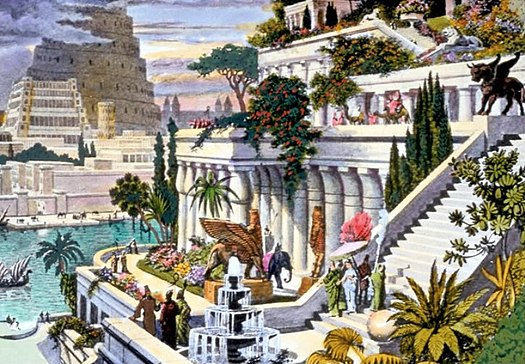

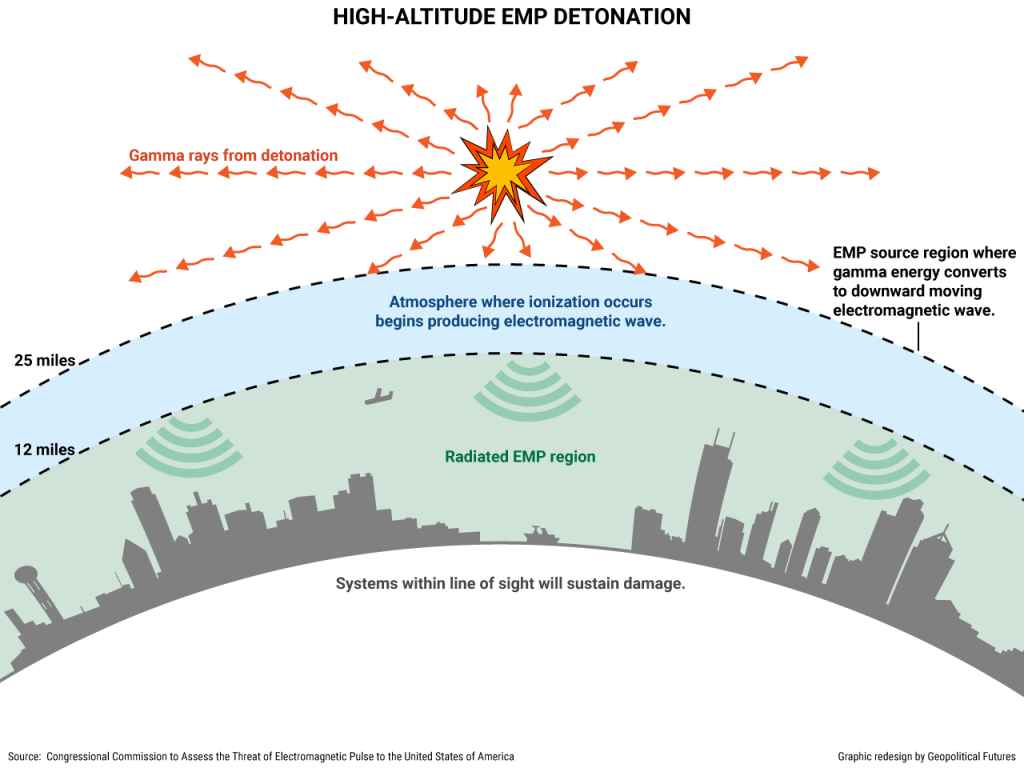
 This article incorporates





 WALTER SEBASTIAN ADLER


