MEC-A1-S-XVIII

S C E N E (XVIII)  

نيويوركغراد 

NEWYORKGRAD, USA, 2017ce 

*** 

As told by Heval Goldy.  

A begrudging Russian sympathizer to our cause now held in a small, electrified cage in Midtown West. A gated community for the ultra-rich. A place called the Hudson Yard. They call her “Goldy the very expensive goldfish.” Of course that is not her real name at all. Her name at the agency is Sussudio. Her real name in Russian, it means “rich soon”. 

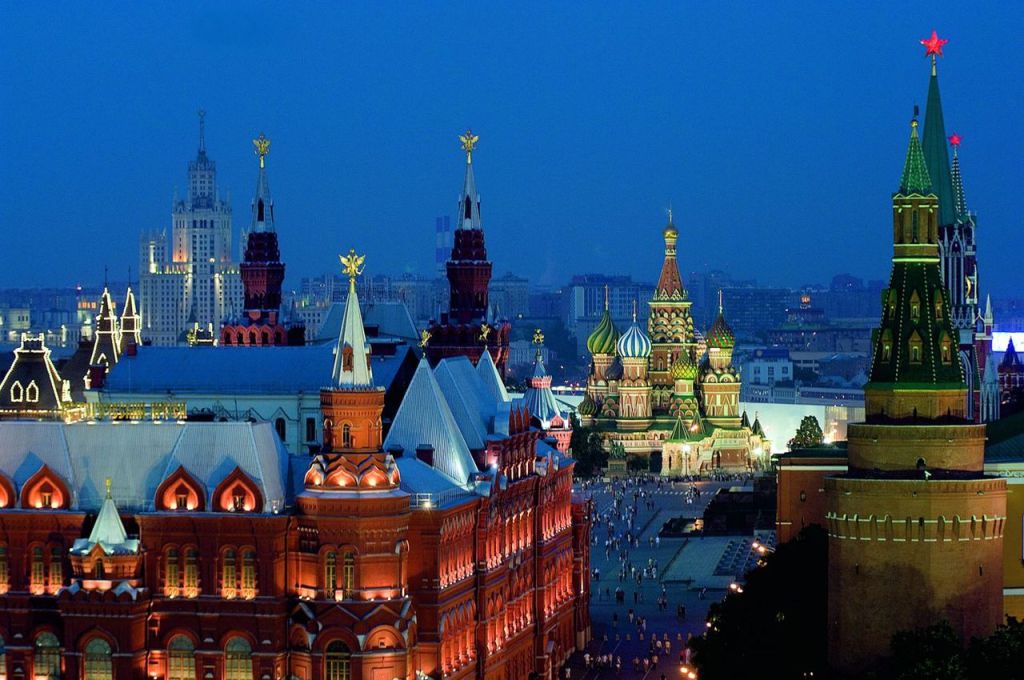
“All of the buildings appear to be very, shall we say, forever. Permanent. Almost invulnerable, blyat. These elegant high towers of blue and black, glass and steel, towers built in defiance of gravity and common sense. Like mega sculpture, like a love song to the invisible hero called American Capitalism. You look down at all the city, even all Downtown and Midtown and imagine all the utter debauchery other people are having at your expense. Well anyway I have my name on my own little cage here. So, I too can say “I have made it in New York City.” “So maybe I’ve made it here in America!” In the background a saxophone cacophony erupts! There are more brothels than bars and coffee shops in all Newyorkgrad, but the quality and the pricing vary markedly. Sex work is hard work. It may not be the world’s oldest profession as they say blyat, but it is the oldest trusted way to get information from one’s enemies. 

And she states in letter: 

“I live in a tall residential tower complex in Western Midtown in a costly new development named the Hudson Yards. Right in the very heart of success. A tower complex built in recent years above the train yards of west 34th street. I work my sweet ass off to keep that apartment rent free. The game I am playing with this chubby Indian Brahman venture capitalist roommate, is eating off his plate without him imagining he’s becoming my patron. Drain the clock, not his cock as they say. But really, he annoyingly proposes marriage as often as my Sergei had. And the others. And the other. I am waiting for a Russian Jewish doctor. He will love me again. I know it. The stars say as much. As for Sebastian. I think he’s calling himself Kawa now.” We all have all kinds of names. 

“He mostly writes to me. I mostly do not write back to him very often,” I would later tell the FBI, or the CIA, or the Police Dept. and the Department of Homeland Security or whoever else I was being forced to talk to. But I, of course blyat, I do write him back, I’m his muse. He creates well, though most of it is chaos. Much of it very much misses the mark, as it were. 

I once remarked to Oleg the Bear, a common friend;  

“A relationship with Comrade Adonaev is like a roller coaster. Extremes of up and down, drama and thrills. But like all such thrill machines. You can tolerate it only in increments, you must step off and stay off. Sometimes for many years.” 

My blonde hair is convincingly dyed from light brown. I told Sebastian that once and he said I was beautiful either way but should try brown hair like him. I don’t actually hate him, though he has cost me time. I just prefer not to have him around, thinking he can save me, heal me, change my life. No working woman ever needs that shit. Get me to higher ground on his terms. I told him go to law school and stop fucking helping the Kurds. I just don’t like giving him hope that we have a future of any kind. I’ve always been adamant about that. Sometimes against my better judgment, I’ve kissed him, and those kisses gave him way too much hope. He in fact wrote me over 100 poems of Russian theme and a door stopping nearly 800-page novel. Which is kind of about me, but also about terrorism being justified. Or so my friend Alana interpreted.  That he can save money up, get it together in the brain, and “save me”, he just can’t. I’m a kept woman now. That comes with a price tag and comes with responsibilities. Like sex on demand. I’ve told him that, but I’ve told him many also not so true things so maybe he can’t put it all together. He thinks it’s love. It’s maybe some kind of fucking weird 18th-19th century muse lust love, blyat, but it’s really a product of his mental illness, not my encouragement. His writing is prolific. To be fair. Some of his paintings are very unique. Overall, he is impressive as an American, just not the horse I need to bet on right now. He’s not patron or paperwork marriage material, as he is always nearly broken, or often fully broke.  

But like it or not an artist gets only one truly great muse, and I am his. Russians, we are known for our loyalty and being indomitable. Putin says we also make the best whores.  Well anyway, I know what I came for when I arrived in Newyorkgrad lost lonely and lethal at age 19, and I am a full-grown asset, a woman with expensive tastes.  Not that into long board walk walks and art making and picnics with stupid couscous and over spiced chicken blyat with no value. The long long book and paintings he has made for me do not help my mom immigrate to the U.S.A. Or get me a euro passport, for that matter, now that it is looking like my special marriage hasn’t resulted in anything useful for papers. 

“Let me roll up my sleeves and my skirt, a little! Look at me in the eyes! I have all my teeth to bite. So sexy and educated and multilingual. What a catch to catch if you can. I am a wild debutante, elusive and amazing. I am a graceful fighter of course, forced to pour men off shots in a tavern downtown.”  

“Zdrastvistia! The purpose of my sponsor is to buy and sell luxury carrots. Also, a flying carpet to get you home after all the bullshit we will make you sit through telling Russian American tales. Also, to warn you about Chechens and to distribute out a phone number where slaves with abused lives can get J 1, S 1 or go to college. There is so little time for singing and poems. We will try and pour you things called Vodka, but it’s not Vodka. To us it’s like water for wound care.”  

“Good and bad men went to war and women also went to war, and Americans and Russians watched out of the corner of the newspaper or on the telescreen. And of course, we both supplied the arsenals and the airstrikes to our proxies. But ultimately it was a faraway spectacle happening far from both empires. At least until Ukraine.” 

“The papers called them “the New Chechens” because when the war kept going, people came back trained in G-d-only-knows how much carnage capability. The war I’m referring to is the Syrian Civil War/ the Revolution in Rojava which was a phantom menace to all. But it was more a dark dream based on improbable odds. Chechens are in fact a very real jihadist menace that fought us to the last bullet in Mosul, Raqqa and Deir-A-Zor. They brought their whole families into their fun little Jihad. These re-moniquored “Chechens” aren’t like them. They were secular and young, and mostly on the Kurdish or Shi’a side, or the Peshmerga. They all left our families at home. There were plenty of war path teams and factions, mine/ ours was the most moral, but lived in a state of total delusion. They were following a pudgy faced aging man in Turkish solitary confinement. We thought breaking rocks was a useful form of soliloquy.” 

My latest “patron” is in his mind a Brahman, which is something pretty fucking fancy in India. He’s a tech guy but looks and acts more like a Wall Street guy. He’s just too fucking rough on me. It has a lot in common with rape in my own home. He goes deep up my ass too often. He is pulling my hair and slamming me against the bar. He punches me in the head as hard as he can. He gets what he pays for. He slams me for about five minutes until he cums. Like a Quisling, snorting pig. I am the star of a very private show! Recently, I fell down some stairs. He paid for surgery. I don’t remember things like I used to. 

Sebastian wrote to me the other night to go down memory lane and formally tell me he is off for Syria soon. Well, this is the end of him finally. I do not feel that bad, or much of anything. He wants to end it like this anyway. He is living up to his expectation to die a martyr, that is up to him. In my mind, somewhere, is the understanding that if I had given him more rope, he could have hung himself here, but who doesn’t like a motherfucking show. Am I right. 

My patron climbs off me eventually. Eventually, they all must. 

A lot of meat to him, I will need to stretch it out. Jon isn’t just a Jon; he’s unfortunately often my roommate too. He’s the one paying me to live somewhere nice with him. A Brahmin. They do what they want. Including fuck my asshole on a Tuesday afternoon. Am I fucking to not pay my rent? Yes, that’s exactly what I’m doing. I wish I had something better, someone better to do but I don’t. The Russian doctor, well he said I was “a little too high maintenance.” Sergei flipped his shit when he found a pile of Sebastian’s letters. Poor form on my part, perhaps, too sentimental. No, I will just say lazy. 

I have not seen Comrade Sebastian Adonaev since the end of the summer. The time when we gave it another sad go, the poetry making for some kissing. The hopeless romanticism in him. Well anyway he’s the exact same man and I’m the same old gal. He’s still broke and still just a shiftless adventurer, romanticizing the Chornay. He once wrote an 800-page book for me, yet I’ve only read the first couple chapters. He wrote me over 100 poems, but they all sound about the same. Words rhyming about love, hate sex and devastation in Angliski. He painted and framed a painting in Brighton and bought a gold frame for it. It’s still up. I was dating a doctor, but he left me, as I said. I was dating a corporate lawyer, but it was never so serious. My original patron cut me off over my first Adonaev affair.  Now I’m fucking the so-called roommate to cut down on my business here expenses. Well anyway “my roommate” has a big Indian style Xanny Kama sutra cock. He manages some tech finance derivatives schemes in L.A., which could be anything. I must disassociate a lot. What was I saying, that’s right, something about my mother getting her paper. Something about the mark. 

Later, in around a year when I am arrested by the secret police and they demand that I tell them about what Sebastian was actually doing in Syria, honestly, I didn’t even know that much. I wasn’t that interested or directly invested. He is climbing a moutnain, to prove himself to himself to win me, that sounds like a good take. 

He periodically would send me all these highly miserable looking, often bloody war photos, but I didn’t want to see any of them. He would beg to be allowed to see me. But in reality, I wanted very little nothing to do with him. I live my own life. It’s mostly mine. I chose it and made all the bad decisions! Later on I’d sometimes message his WhatsApp and tell him to ‘Come home now please’. But I didn’t, mean, to me. He would probably survive the war. He has strong luck. He is tough in his own way. Incredibly lucky. The roommate, comrade Brahmin patron, he likes to choke me. I need a new living situation. Or should I just pay cash, every hole is too many holes. I’m working on a possible new patron with a place by the beach in Miami. 

I wasn’t raised stupid, or lacking morales. So how have I gotten stuck here in this loop? I should move to Miami, where it’s warmer. I remember thinking only a little bit about his strange Syria objective.  

What I failed to see, through Sasho, our old boss and roof explained it to me, was that he was actually going to Syria to impress me. How ludicrous, nothing could be further from impressive to me. He was going to live, I was fairly sure. But to do what? Live to be a mentally broken person that I could never imagine how to heal. From Miami, it will all take the form of more of brightly colored dream.  

We had some fun but also some very messy history Sebastian Adonaev and I, blyat, but I think going to this evil little war was the stupidest thing he ever did, far worse than the exploits in Haiti, worse than loving me. It was hard on me anyway. I will certainly not be meeting him at the airport, should he survive the war. I am tougher than he, but it’s still not nice to make a person watch unwillingly your attempt at self-murder. Functionally speaking that man is dead to me. I have to insulate myself from mad men seeking high publicized means for suicide. The man just wants to die in a meaningful way, but that doesn’t help my situation at all! Yet, I still have all his letters, I still have the two published books about me. I still have the gold framed multi-color pornograph on the wall. 

When the secret police dragged me in to find out where Sebastian went, I told them:  

“He is probably still in Havana…”  

“He’s definitely not in Havana, toots.” 

“Don’t call me toots, blyat.” 

They then did pretty nasty stuff to me just to punish him. Or maybe just because I don’t have any actual papers? Or maybe because degrading a Russian blonde is as American now as apple pie. They eventually bent me over and just took turns fucking me on the interrogation table. Good times. It’s really not that free a country. Once the surface gets scratched enough. Eventually, my Brahman patron bails me out, somehow. He lectures me about “pussy footing around with terrorists that don’t have my best interests at heart.” 

Well where is that fuck? Where is your useless Jew Chechen now?” my patron asks me.  

“He is climbing up a Holy Mountain, blyat. In his mind anyway. Thinking of me the whole entire time.” 

“But here you are. Locked in a fishbowl with no passport. With one to help you besides me and your Serge,” the patron replies, “And like a goldfish, I can do whatever I want, and you will not remember it 8 seconds later. He punches me in the face and rapes me on the table. 

“Dumb bitches always thinking things are free,” he says. 

But nothing in Russia or America is free. Old Russian saying, “The only free cheese is in a mouse trap.” 

MEC-A1-S-XVII

S C E N E (XVII)  

קיבוץ עין דור 

KIBBUTZ EIN DOR, State of Israel, 2001ce 

*** 

The very first Kibbutzim were built out of both practicalities, and a socialistic feeling that many of the early Zionists arrived with from old Europe. It is correct to assume most of the early founders, pioneers, resetters; resettlers; were Ashkenazim from Eastern Europe; where material conditions for the Jew were far worse than Western Europe. Until the 1930’s when they would become fairly bad in both Europes. Mostly Ashkenazim, but not wholly. Certainly, one can see an overwhelming majority of white Jews in the early Zionist congress, its structures of settlement, and its proto-military formations. That is wholly because the Sephardim and Mizrahim; were without a doubt more integrated into the Muslim world. Their position was without a doubt one of being tolerated, but it was an integral toleration; written into the Quran as the word of G-d. In Europe; a series of inquisitions, blood libels, persecutions, expulsions, culminating in the Holocaust of 6-7 million. 7, as the Germans didn’t count infants and children in many of their extermination counts.  Yet, today, on the Arab street, it doesn’t matter how many Hitlers forces eliminated, “it was not enough”. The kibbutz was an attempt to remake the world, in a settler Zionist leftist infused fashion. It was a project to transform the ghetto Jew of Europe, the Jew of the Pale, into the Judean of his heritage. It was practical as it was about maximizing labor, in an egalitarian fashion, it was also infused with the socialist ideas of Europe. The USSR had been born in 1917. Many of its architects were Jewish, though not all certainly. There was a feeling in the mind of the early pioneers that they were recreating a world, but most of them were not religious, so they drew intellectual and moral supports from a long-gone warrior past; Moses and the exodus, Esther and Mordecai, Hanukkah and the Hasmoneans, Bar Kokhba and the three wars with Rome, a time before the exile and wandering. Not necessarily grounded at all in the scrolls. Fused to that; the core value of Tikkun Olam; the Jewish duty to remake the world in a moral light. The left progressive manifestation of manifest destiny or being “chosen”. What that became in practice was all the early architecture; the structures of the new Jewish state that came into being in 1948. The kibbutzim, hundreds of them; were incubators of the new state. Perhaps more than half were left, and the other half were right; Moshavim; farms of tenancy in common, as opposed to collective ownership and utopian values.  

Now what was in no way consistent was to what degree the early settlements incubated tolerance and acceptance of the Palestinians. The people that had been on the land for at least as long as the Judeans had been expelled from it; sometime between 66CE-136CE. 

There were three very bloody wars with Rome, and then all of us who survived were marched out into protracted slavery. From 136CE until the beginning of organized Zionist re-settlement beginning in 1897, of course a lot of wholesale misery befell the Judean people. Alot of brutal violence, expulsion, discrimination, pogroms and butchery in Europe. Between 136ce and 1948 when the Jewish state was re-established, people lived in Palestine. Whether Palestine was ever a state, for it never was, does not negate the multi-generational settlement of Arabs into the land. Perhaps some were once Canaanites, or Philistines, but it hardly matters. Either under varying caliphates or Ottoman rule; the Arabs of Palestine never ceased to exist.  

  It is not well known amongst the modern Arab street, or anti-Zionist student protesters that Theodore Herzl, Zionist founding father and ideologue, longed to live alongside the Arab. Sought Jewish redemption as an integral part of the Middle East. It is not well known by Jews that Ben-Gurion, the labor left founding father of the third Jewish commonwealth planned and executed ethnic cleansing. While the right-wing Revisionist counterweight, whose legacy informs Netanyahu and Likud Party; sought to live alongside Palestinians in a far larger Palestine than anyone else though possible. Jews are literate and we all somewhat study history. The very nature of the Talmud is legal reasoning. That cannot be fully said for the Arab street. But it doesn’t matter anymore. The violence which began in Palestinian riots in 1916, has basically not stopped cycling to this very day. The Israelis speak of Independence War, the Suez War of 1956, the 6 Day War of 1967, the Yom Kippur War of 1973, the Lebanon wars from 1978 until 2000. The first Intifada, the second one we are in now. But it’s a non-stop vile bloody endless war. The rest of the Middle East has in the same period been at war, either with Israel, or with each other. With each death, a changing of our nature as people. Until no one can see anything besides the defensive posture of endless war. To that end Israel has acquired 200 something nuclear missiles.  

“The first man you see die; it is a consciousness lowering experience. With each death you experience you become tainted, you become stranger. This is magnified 100-fold the first time you kill.” 

The Kibbutz has many books in its library, and in my free time I suppose I gave myself a second glance into my people’s imagined history. Which like any history of any people is full of justification and mythology, yet with two Jews one might fight five opinions and six organizations, and argumentation with each other at length, also in one’s own head. A running self-doubt about the destiny of the so-called chosen people by G-d, also anxiety about what it took to survive for so many thousands of years. And in our scrolls, in our own books, we have built an entire paradigm about the feasts of survival, the fasts of our many massacres. The veritable film industry around the Holocaust, large Hollywood violins playing for us alone. It was never one tragedy. Never one moment of doubt. It was a vast and unusual mythology about how we survived all that, and what if anything is our duty now, to our own nation and to others.  

“Death of any form, you cannot unsee it, and you cannot ever forget it. Usually, if it is someone close to you, you can also never forgive it. And thus, in this small place, no bigger than Al New Jersey, that cycle has played out since 1916 accelerating mass inter-communal violence with new intensification.” 

There in explains Israel and the soul of the Jew. For when in the last 2,000 years was not the Jew being hunted, or expelled, or persecuted, or exposed to concentrations of death and dying. That is then our obsession with history, or another way to say a canon of near miraculous survival. The Jew, if anything, is literate and a literate person can read and retain history. But for nearly 2,000 years the Jewish nation was stateless, unable to practice many skills. So, the Jew became adept at working with their brain. True, but also devising a means to survive outside of, if not with the state hostile to Jewish existence. Because the Jews were also always frequently expelled by Christian powers, they evolved a wide range of portable skills and portable non-state structures. 

Ironically, though the last 100 years would have one believe the Jews and Muslims are locked in eternal conflict this is wholly false. Jews were not maltreated, massacred, and genocided in Islamic lands, for the most part. It was not until the re-conquest of Palestine that animus boiled over. Yet, death and dying, now killing seems baked into the Jewish nation. The state of Israel is then a pressure cooker. For it is mostly undisputed that European gas chambers and killing fields took the lives of 6-7 million Jews. That event, that event was an instance of dramatic evolution. It cannot be said Israel was founded because of the Holocaust, or by its survivors. Nor should it be overlooked what one might have had to do to survive the holocaust.     

The stories we tell our children and venerate to each other in our holidays are also about what we had to do to survive Egypt; kill their first born on Passover. Assyria; fight a brutal guerilla war on Hanukkah. The story of Purim is how we sent a beauty to bed the king and get permission to massacre tens of thousands of our Persian enemies. Lag be Omar symbolizes the tens of thousands the Romans massacred in our three wars with them. This is all crude, but it is also somewhat true. Perhaps we the Judeans are as good at killing as we are at running to not be killed. Jabotinsky famously once said that we should not hold ourselves to any higher standard than any other nation. Israelis it seems have learned that lesson well. 

The aggregation of all events in the last 2,500 years was a crude mechanism converting a learned race of rabbis, high priests, and peasants, into, what we are today. What did not kill us made us very capable of survival. Some of that were prayers of the chosen, some was our zeal. Was the survival perhaps of the worst of Europe’s Jews, or Jews that so hideously misshaped in the furnace; did they still have a Jewish soul? The most Zionist and pioneering of Jews had left Europe before 1939. The millions of Jews who had lived in Muslim nations for over 2,000 years had a different type of soul too. But all ended up in the new state, or should we say, third try at a Jewish commonwealth in Palestine. Or would be just say, third try at a Jewish state. 

The lived experience of historic persecution has then made us smart, innovative and perhaps also more recently capable of a great violence that was evident in our past, but dormant for nearly 1,900 years. We pride ourselves on our doctors and lawyers, our musicians, scientists, architects, politicians and bankers. But we should read in our own holidays and feasts as a remembrance of an innate zealotry. A unique and often psychotic refusal to assimilate or compromise. Such events in our history like the exodus, but then also the invasion of Cannan. The intrigues of Purim, but also the massacre of tens of thousands when sanctioned by the king who married our Esther.       

I am two hours late to work back at the kibbutz on Sunday morning. You get what you pay for, as they say. I show up for my duty on Yards and Gardens hung over, un-showered, and looking a bit vacant. My supervisor Mr. Jones saw the blood on my khaki shirt and the terrible look in my eyes. He sent me to go sleep it off. He did not ask, nor did I mention. He knew or he did not. I did not say anything about the Dolphinarium to anyone.  

When I eventually woke up back in Ein Dor, the Associated Press told the world. I crashed out in my cot and slept hard. Remembering my training, I began to immediately dissociate everything I had seen. Allowing the willed dreams to become the new memories. 

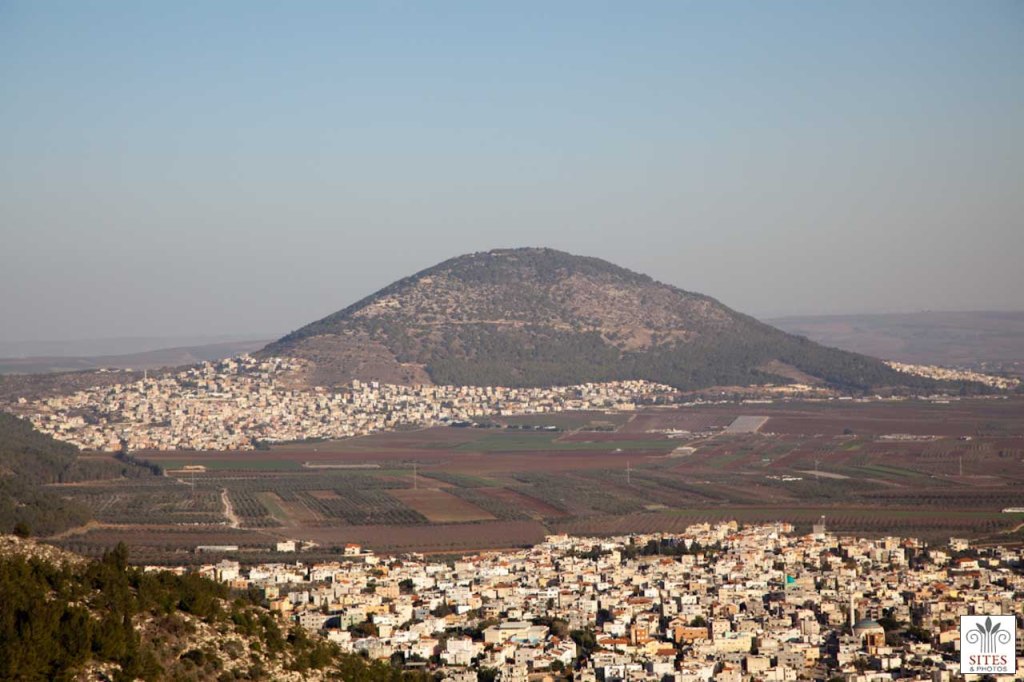
The next day I climb Mt. Tabor after Ulpan class as the sun is setting with what seemed like the only person about my age on the kibbutz, a young Persian Jew named Hadas Naphtali from the nearby village of Ramat Ishai. She claims to be “an anarchist” and practitioner of “black voodoo magic”. We borrowed a copy of the Tenach from the kibbutz library. We say extraordinarily little as I follow her up the mountain, really a large hill. We watch darkness overtake the valley from the top of the mount. She begins to read, her nearly D’s and her tease have me fully under her spell. She is bad, as they say in Brooklyn.    

It was an interesting Biblical passage she recounted describing how King Saul consulted with the wizard woman from Ein Dor before his fatal battle on the Gilboa. King Saul had persecuted spiritual people during his Kingdom, so no wonder she was afraid of the King. Although he came to the meeting disguised, the witch recognized him. Saul required her services to get a sign about the future he would face in the crucial battle the next day against the Philistines. King Saul brought back the ghost of the recently dead prophet Samuel; however, Samuel did not deliver a positive outcome of the battle. Indeed, King Saul died on the next day. 

It was at Ein Dor that King Saul learned of the fate of Israel as well as his own on the next day, which he was completely powerless to stop. His own G-d was silent. In the silence he put fatal trust in the witch of Ein Dor. And now so did I. 

Hadas Shimeon Naphtali, part Persian, part ravishing. She was born here. She reads my palm. The valley’s Arab villages and the electric glow of Kibbutz Ein Dor flickered in the twilight. Hadas turns over my hand examining the lines of my palm. Suddenly she bites the thick my right hand below the thumb, bites it hard. I wrenched my hand back. 

“The spirits will watch over you, but maybe G-d is indifferent,’ she whispers to me, ‘Take precautions, because nothing for you is totally written by G-d. You could be undone on Tisha’bav, or one day they will you be a Messiah. The angels encircle you, but the djinn too. They will strike at you on the day you are the happiest.” Real witch talk. “You’re an epicenter of spiritual war, no one knows how it it ends,” she tells me. 

My hand still smarts from where she just bit into me. Do not let a witch bite you, old Haitian Voodoo saying. Who really knows what is in their bite? 

“What’s all that all supposed to mean?” I asked her. 

“Nothing is written for you when G-d writes the chapters of the year for others. That you’re just foreign sexy and I like you and the sounds you make. We should get the fuck out of this country before it all blows up around us,” she tells me, “What are we doing here,” she asks me, “take me to your homeland America! To Newyorkgrad. There is nothing good for us here in the long run. Only a slow death or a fast death.” 

“This is our homeland.” 

“Is it? Do we have new rights the Arabs no longer have?” 

“There are many other Arab nations.” 

“There should be no nations! No states. It is all a trick on us,” she says. 

“We have been through hell everywhere else.” 

“It’s not true. Thats what they taught you in Hebrew school, but it’s not true! The Arabs and Persians never did anything to us. We had no reason to war with them for 100 years.” 

“They started the war.” 

“It doesn’t matter Zachariah who starts a war. States and kings start wars. Not regular people. No one asked the Palestinians to live here, they just have lived here for thousands of years. This is their land as well. They farmed it. They built homes. They lived here while we rotted in Europes ghettos. But my family comes from Persia. They never had issues with us. There are still 20,000 Iranian Jews living safely in Iran.” 

“They kicked them out of everywhere else.” 

“Did they? Depends on what books you read, I guess. Maybe some left on their own. Some were tricked into coming. Some got kicked out later.” 

“We should have a state of our own.” 

“No. All states are oppressive. All nations are built on death and lies.” 

“Where did you learn all this,” I ask her. 

“Books in the Kibbutz library and my parents.” 

“I like it here,” I tell her. 

“You haven’t seen shit.” 

“Show me everything.” 

“I’ll show you as much as I can.” 

“It’s a very small place. I have been dreaming of being here all my life.” 

“There is so much violence happening here. Behind walls, in plain sight. I was born here, so it is my home now. I am Jewish like you are Jewish, so we are home. But it all has a cost. A cost to keep our many enemies at bay. Life here is not like the kibbutz, it is hard to poor here. It’s hard in the cities. Most people are not so well off. There are many cracks you will see soon. Don’t glamorize this land, and don’t die for anyone’s state.”  

She takes my hand again. 

“Kiss me hard and let’s go to America, ok.” 

She kisses me quite hard and says, “A war unlike any of the ones before is coming.” 

*** 

I do not mention the bombing to either Hadas or my compatriots of the North American Social Club. But they could see I had sunken into a depression. I stopped attending Ulpan class and began to drink more heavily. Yuma began to taunt me, or at least that is how I perceived it.  

Sometime in mid-June a new girl from Ramat Ishai, a small town twenty minutes to the north had moved onto the kibbutz after fighting with her mother about curfew. She hadn’t even unpacked her bags before I took her on a picnic, got drunk in the cornfields, and fucked her in the ass on the floor of her shower. She had black voodoo magic, next thing I knew we were taking nature hikes, and she was interpreting dreams. That was Hadas, punk and exotic. Not at all content with her life in “this colony”, as she called it sometimes. 

Danny Callahan and I grow closer. Danny became a sort of older brother to me, following in an extensive line of slightly older men. After a while we dropped out of the North American Social Club altogether to spend time with our respectively cute native flings. After a day in the yards, we often sat on our own porch watching Debriyiah and sipping from big bottles of frosty cold Coke. I always snared a few liters whenever I ventured off the kibbutz. We’d pontificate about these wonderful desert women. He was set to marry one this time next year. Danny is teaching me to freestyle rap, to rap off the top of my head. I was always something of a makeshift romantic poet and Danny told me this would be yet another tool I might use to communicate my message. I had sense shared with him both my past and my subversive ideals. Back in LA Danny had been a regular at open mikes in various hip clubs. In America I would have laughed at this, but this was the Middle East. You clung to what you were before on some gut level. He gave me my first hip-hop CD by out outfit called LATYRX

I will tell Danny more about my “revolutionary thinkings”. He nods approvingly at most of it and wished me luck as many slightly older men had done before him. He assures me that I’ll never be out of work here. “Something is always broken or exploding or burning down. The trouble is it’s a small place, so they can and will catch you eventually.”  

We rarely talk about the Palestinians, what they want or what should be done about them. Danny tells me he thinks that they had more right to this land than he or I did. After all, they have nowhere else to go. “Their only fallback position is more death and more forced exile.”  

Danny is not a Jew at all, but had claimed his grandmother was one to get an immigration VISA. He would be off to the Army in September once he completed the Ulpan program.  He was 26, which put him at the age for active service. I had neither renewed my soon-to-expire tourist visa nor made any real strides toward official Alleya. Even Johnny Yuma had gotten his Todat Zhoot, which entitled him to some cash and subsidies from the government.  

Danny tells me that even though I was a more bonified Jew with my candle lighting rituals and my intermittent prayers, I would be looking at three years’ service in the Defense forces.  It wasn’t even theoretically legal for a 17-year-old to be bopping about Israel with no guide or family, but no one ever called me on this. My freedom of movement would be further curtailed with registration. As I’d be quickly conscripted. Mr. Jones, my South African foreman in Yards and Gardens told me to catch the next flight out of here. “Go back to America, kid. This whole place is falling apart. In the heat of violence to eventually be swallowed by the sands. There is no actual future for you here.”  

I am getting a lot of advice about my future. Through it all Danny remains mostly neutral. In his cool, collected cold California old stoner way, he says that “I should take all the time I need to decide.  

He urges me to: “Flee the shelter of this stupid boring insular kibbutz and see more of the real country. See what is really happening here, the good, the bad, and the real. Better now than when they stick you with a rifle to defend it. Then give your children a rifle, and their children after them.  

“Alot to see in a very small place.”  

It is all rather good advice. Eventually, I must take some of it. 

“Did you know that in Tel Aviv you can order women from your phone like a pizza, He tells me. 

MEC-A-I-S-XVI

S C E N E (XVI)  

بيروت 

BEIRUT, 1932ce 

*** 

“Counting people is a sensitive matter in any country, often fraught with fraud, gerrymandering, as well as bold lies.” No one is interested in upsetting the balance of theft and power.  

For that is when shooting and raping starts. The war. The civil war took 140,000 to 170,000 lives but no one, especially not the Maronites, want to admit that the new facts on the ground have nothing in common with the ethno-religious confessional system in place. It is typically a system that benefits the Chrisitan and the Sunni elites, at the expense of the Shi’a in general and the placation of the Druze who make up 5-10% of the population. Were one a betting man or a trained anthropologist; the Christian numbers are down from war emigration and the Shi’a numbers are way up from having large family sizes (6-9 children). There are also as many as 478,000 Sunni Palestinians absolutely no one wants to naturalize and as many as 1-2 million Syrian refugees, but only 780,000 are registered with the UN relief agencies. They Syrians have always come and gone for freely, like and awkward armed big sibling. To the South Israel has a long history of invading and occupying, and sometimes getting the President killed (Bachir Pierre Gemayel in 1982). To the Northeast Syria has a long history of invading, occupying, and sometimes killing the President (Rafic Hariri in 2005). 

They say countries with no working census are the real free countries and Lebanon hasn’t had one since 1932. But what does it mean to be “free” if all other parts of life are totally insecure? What does it mean to be counted if the numbers are all lies? It’s unnatural to be counting people like chattel and it’s completely prohibited in Judaism. Surely the State of Israel obsessively counts people every single day. The trouble is, the Lebanese went and fixed these invented numbers of 1932 to their Confessional Quota system, with Maronite Christians, Sunni, Shia, and Druze all getting lion shares of the system. Based upon the old National Pact45 and the Taif Accords which “ended the war”, although most districts are mixed; this system allows for a kind of political horse trading that makes Lebanon a very fragile country to govern. 

The Quota system slots key political and bureaucratic seats to specific ethno-religious groups. Remittances and smuggling make up a large unknown portion of the GDP, could be above 40-45%. No one really knows. The Lebanese also offer boutique medical and legal services to much of the Middle East. There are 42 universities. Tourism makes up much of the rest followed by banking (which used to do better than tourism i=until the sector imploded in hyperinflation), real estate, and construction, money laundering, food processing, wine, jewelry, cement, textiles, mineral and chemical products, wood and furniture products, oil refining, and metal fabricating. You can know that as a maven trader or look it up on hte CIA Fact book, but in general all numbers are inventions here.  

Now, a clever idea for your next vacation; somewhere with a real sunny beach and alot of bang for your the fucking dollar. Somewhere they do not openly hate the Americans and want to put them in bags or bags on their heads. A bad idea; various places with ethno-religious rocket exchanges going on every day. Also perhaps places that use quota systems to link ethnic group factions, of which there are 18 listed, to seats of theft and power. Also the quotas are fixed to parliamentary posts, top military commands, trade institutions, civic leagues, and as a result all Lebanese are living on a mountainous powder keg with valueless currency. The default is that there is not one Lebanon, but instead at least 5. Possibly 18. That’s Lebanon in gross geopolitical simplification in case you didn’t catch that. That’s not all of Lebanon, just a very very problematic part of the most obvious of problematic parts of it. Of course it doesn’t capture “the Lebanese Soul” which was a 5,000-10,000 year journey to materialize, at least. They don’t all hate Americans for sure of course and don’t all want to put them in bags. Putting some one ina bag is not very hospitable and they have done well to stop doing that since the 1980’s. Though many still do. In the 1970s and 1980s kidnapping was a major industry of grievance where at one point 147 American and European hostages were hidden all over Beirut. Perhaps kidnapping people is an advanced form of hospitality, and it was all dictated by Iran, who knows. 

Since the very minute, the Jew purchased his plane tickets it was like a secret to be kept. You see, there are things you tell your friends, and then there are things you hold inside because if you tell your friends they will think you are crazy and try to stop you from doing anything important or interesting in life.  So, Sebastian, later known as the “Jew of Beirut”, didn’t tell that many people about his plans to go to Lebanon. Also, those he told, he made it out like some kind of well deserved “reckless adventurism” to the wild Middle East. Not like there was a whole fully baked reimagined plan, the kind of plan the Jew knew best. 

“You see that was something well know about their people; the ability to hold multitudes of contradictory information in the head; believe all of it to have truth; and formulate plans from the data flowing through.” Of course, all smart people can do this, not unique to Jews. 

You see, the Jew of Beirut rarely acts without acting in concert, which is to say, he manifests a specific line of conspiracy wherever he goes. A fusion of human rights populism, Middle Eastern particularism; and pontification on the love of free life! He has detractors but mostly curious if not enthusiastic supporters. After some time living and working in New York Grad he had ingratiated himself to many people. He’d become a well known person in certain circles. He was like a Mayor of his work force. A person with some connections and agency beyond himself. Even if always filled with self doubt. He had some things to build on therefore some things to barter or totally lose. Or perhaps he was only really important to one person only, his secretary Karessa Abe, arguably the only person that ever really loved him. And he squandered it all the time by never really being a suitable partner to her. Never cheating, but never being available enough. She is more than a decade younger than him and they ain’t in the old country anymore. 

He is President of a Harikaat, a movement of ambulance workers seeking much better conditions. It was somewhere between a charity, a lobby, a union, and Hezbollah without God. He was also a law student. He has thoroughly studied the Zionist idea and found to be, through a Kurdish lens; a universal idea about how rights are won and secured. 

So, being a President of a quasi-underground, reasonably militant labor association devoted to the well being of EMS workers, he figured for the right price some of them could be lured to Lebanon to carry out some basic training. But this was a background thought. The kind of training everyone needs; EMT training; when can’t the world benefit from having a few more EMTs around? Spoken like or thought about like the thinking of a career EMT? Perhaps. Perhaps. Perhaps. The plans of a Jew lawyer paramedic. It’s hard to make small talk when your mind is wide enough to see much of the world moving at the same time. But, the world cries out for help, so sending more Paramedics is only part logical. At least not really something many can oppose if they can figure out how to pay for it. So the Jew of Beirut took off for more than adventure, for less than just a type of altruistic business deal. He wanted to find a way to cross over and remain there. He hadn’t totally considered how much that might hurt or offend other people; it was just a desperate act. 

Now desperate acts usually don’t have high degrees of planning, and although the Jews are known to be quite master planners, sometimes the best plans go very South. Once in 1975 the Israeli Military and some of the Lebanese Maronite Christians had a plot to reconfigure Lebanon46. It went really fucking south. The Israelis occupied a strip of southern Lebanon called the Security Zone for 22 years. In 2000 they unilaterally evacuated, and Hezbollah fully took over there, south Beirut, and the Bekaa Valley. The plan to restore Christian hegemony and unite Lebanon and Israel in an alliance, while driving out the PLO, well all that failed. 

*** 

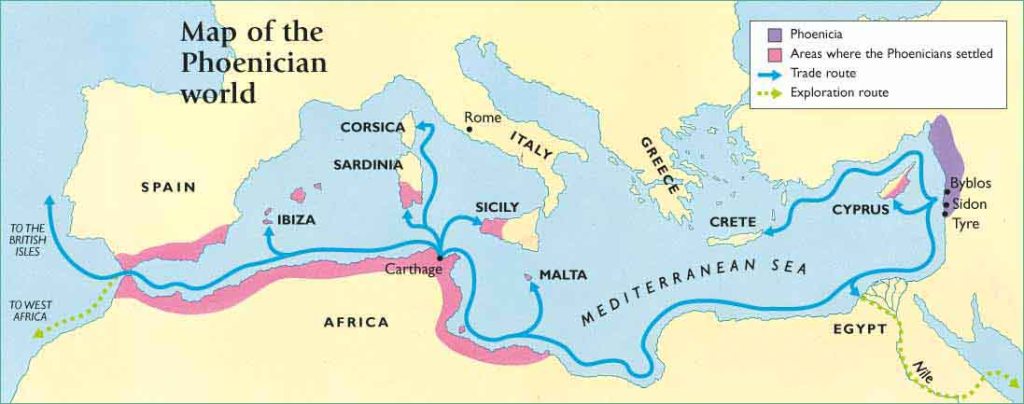
“The cultural and linguistic heritage of the Lebanese people is a blend of both indigenous Phoenician elements and the waves of foreign cultures that have come to rule the land and its people over the course of thousands of years.”  

In a 2013 interview, Pierre Zalloua, a Lebanese biologist pointed out that genetic variation preceded religious variation and divisions: “Lebanon already had well-differentiated communities with their own genetic peculiarities, but not significant differences, and religions came as layers of paint on top. There is no distinct pattern that shows that one community carries significantly more Phoenician than another.” 

“I’m going to give you a lot of great information; but I want you to focus in on just four primary factions; the Sunni; the Shi’a; the Maronites; and the Druze. 

Please see the Appendix: In Lebanon there are 18 officially recognized ethno-religious confessions which contribute to the rich diversity of the nation, and these include: 

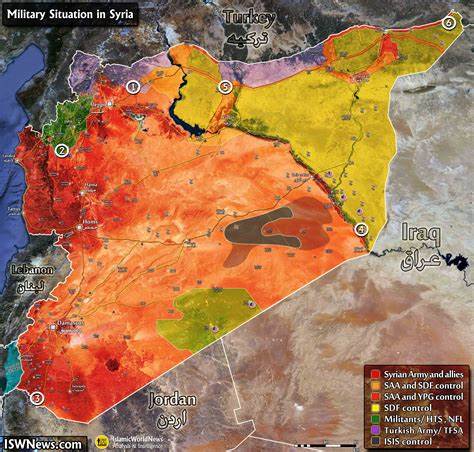
  1. Alawites, a branch off the Shi’a who ritually drink wine and believe in reincarnation. Via the French and the Ba’ath Party this secretive ethnic minority came to control all of Syria; except for now in the years after the Isis War. Today, the Northeast of the country, north of the Euphrates River, is controlled by the Kurds, in an autonomous social experiment called Rojava. 
  1. Armenian Catholics: Ethnic Armenian Christians who accept the rule from Rome. They are very business oriented, but not natural Phoenician style global traders and they aggregate in Bourj Hammoud District of East Beirut. 
  1. Armenian Orthodox: Ethnic Armenian Christians following the Apostolic Church based in Vagharshapat, Armenia; one of the oldest branches of Oriental Orthodox Christianity. Culturally, culinarily, and aesthetically not much different than Armenian Catholics.  
  1. Assyrian Church of the East are following the Eastern Branch of Syriac Christianity not in communion with Oriental Orthodox Churches or Eastern Orthodox Church, nor Rome. Most of its practitioners are ethnic Assyrians, and its base is in Ankawa, Iraq a suburb of Erbil in the Kurdish controlled zone of the KRG; the quasi autonomous Northern third of Iraq.  
  1. Chaldean Catholics: are Assyrians who came into communion with Rome arising from a schism with the Church of the East. But they are not that much different than the Assyrians of Ankawa that did not bend to Rome. They are mainly descended from Iraqi Assyrians. 
  1. Coptic Orthodox are an Oriental Orthodox church based in Alexandria, Egypt who follow the Pope of Alexandria. Established by Mark the Apostle in the 1st century; also, an Eastern Oriental Church. Most of the Copts are descended from Egyptians. 
  1. * * Druze * *; An Abrahamic, monotheistic, syncretic, and ethnic religion whose main tenets are the unity of God and the belief in reincarnation and the eternity of the soul. Most Druze religious practices are kept highly secret. The Druze do not permit outsiders to convert to their religion. Marriage outside the Druze faith is rare and strongly discouraged. Concentrated in the Chouf mountains they have long been viewed as a king maker minority group, perhaps fourth largest on its own accord. There is a larger Druze population living in Syria and a smaller one than the Lebanese clans living in Northern Israel. 
  1. Greek Catholics: ethnic Greeks in communion with Rome. There were several failed attempts to repair the East-West Schism between Greek and Latin Christians: The Council of Bari in 1098, the Council of Lyon in 1274, and the Council of Florence in 1439. Subsequently, many individual Greeks, then under Ottoman rule, embraced communion with the Catholic Church. They typically followed the Roman Rite of the Latin Church, maintaining their parishes through contact and support mostly from the Venetians. 
  1. Greek Orthodox: are the second largest world Christian denomination using Greek in liturgical settings. Ethnically Greek. 
  1.  Islma’ilis: Sometimes called “Sevener Shi’a Islam”. The Isma’ili and the Shi’a Twelvers (the dominant Shi’a sect) both accept the same six initial Imams; the Isma’ili accept Isma’il ibn Jafar as the seventh Imam and none further. At one point the largest branch of Shi’a Islam it concentrates on a deeper more esoteric version of the religion. 
  1.  Jews: an Abrahamic, monotheistic precursor to both Christianity and Islam; also called Hebrews, Judeans, or Israelites. The Israelites emerged from within the Canaanite population to establish the Iron Age kingdoms of Israel and Judah. Judaism emerged from Yahwism, the religion of the Israelites. By the late 6th century BCE they had developed a theology considered by religious Jews to be the expression of a covenant with God established with the Israelites, their ancestors. The Babylonian captivity of Judahites following their kingdom’s destruction, the movement of Jewish groups around the Mediterranean in the Hellenistic period, and subsequent periods of conflict and violent dispersion, such as the Jewish–Roman wars, gave rise to the Jewish diaspora. The Jewish diaspora is a wide dispersion of Jewish communities across the world that have maintained their sense of Jewish history, identity and culture. There are thought to be under 10 Jews in all of Lebanon. To many that is too many. 
  1.  Roman Catholics: Arab followers of the Catholic Church, also known as the Roman Catholic Church, is the largest Christian church, with 1.4 billion baptized Catholics worldwide as of 2024. It is among the world’s oldest and largest international institutions, and has played a prominent role in the history and development of Western civilization. The core beliefs of Catholicism are found in the Nicene Creed. The Catholic Church teaches that it is the one, holy, catholic and apostolic church founded by Jesus Christ in his Great Commission, that its bishops are the successors of Christ’s apostles, and that the pope is the successor to Saint Peter, upon whom primacy was conferred by Jesus Christ. It maintains that it practices the original Christian faith taught by the apostles, preserving the faith infallibly through scripture and sacred tradition as authentically interpreted through the magisterium of the church. The Roman Rite and others of the Latin Church, the Eastern Catholic liturgies, and institutes such as mendicant orders, enclosed monastic orders and third orders reflect a variety of theological and spiritual emphases in the church. 
  1.  * * Maronites * *: third largest ethnic group in Lebanon; The Maronites derive their name from Saint Maron, a Syriac Christian whose followers migrated to the area of Mount Lebanon from their previous place of residence around the area of Antioch and established the nucleus of the Antiochene Syriac Maronite Church. The early Maronites were Hellenized Semites, natives of Byzantine Syria who spoke Greek and Syriac, yet identified with the Greek-speaking populace of Constantinople and Antioch. They were able to maintain an independent status in Mount Lebanon and its coastline after the Muslim conquest of the Levant, keeping their Christian religion, and even their distinct Lebanese Aramaic language. The Maronites are in full communion with Rome. Via the French they came to dominate the political and economic life of the colony; along with Sunni, Shi’a, and Druze still play the leading positions in modern Lebanon, although they have lost their plural majority to the Shiites. 
  1.  Protestants: largely Arab but also some in other confessions; protestants follow the theological tenets of the Protestant Reformation, a movement that began in the 16th century with the goal of reforming the Catholic Church from perceived errors, abuses, and discrepancies. The Reformation began in the Holy Roman Empire in 1517, when Martin Luther published his Ninety-five Theses as a reaction against abuses in the sale of indulgences by the Catholic Church, which purported to offer the remission of the temporal punishment of sins to their purchasers. The term, however, derives from the letter of protestation from German Lutheran princes in 1529 against an edict of the Diet of Speyer condemning the teachings of Martin Luther as heretical. In the 16th  century, Lutheranism spread from Germany into Denmark, Norway, Sweden, Finland, Latvia, Estonia, and Iceland. Calvinist churches spread in Germany, Hungary, the Netherlands, Scotland, Switzerland and France by Protestant Reformers such as John Calvin, Huldrych Zwingli and John Knox. The political separation of the Church of England from the Roman Catholic Church under King Henry VIII began Anglicanism, bringing England and Wales into this broad Reformation movement, under the leadership of reformer Thomas Cranmer, whose work forged Anglican doctrine and identity. 
  1.  * * Sunni * *: Sunni Islam is the largest branch of Islam, followed by 85–90% of the world’s Muslims, and simultaneously the largest religious denomination in the world. Its name comes from the word Sunnah, referring to the tradition of Muhammad. The differences between Sunni and Shi’a Muslims arose from a disagreement over the succession to Muhammad and subsequently acquired broader political significance, as well as theological and juridical dimensions. According to Sunni traditions, Muhammad left no successor and the participants of the Saqifah event appointed Abu Bakr as the next-in-line (the first caliph). This contrasts with the Shi’a view, which holds that Muhammad appointed his son-in-law and cousin Ali ibn Abi Talib as his successor. A large number of Lebanese Sunnis are war refugees from Palestine and Syria with strict controls on their work and movement. It is believed that there are 200,000 to 400,000 Palestinians in Lebanon; and perhaps as many as 2 million Syrian refugees. There are also Kurdish Sunni and Lebanese Arab Sunni. Taken as a whole the Sunni would likely be the second largest ethnic confessions after the Shi’a, largest with naturalization of the refugees.  
  1.  * * Shi’a * *: are the second-largest branch of Islam; 5%-10% of all Muslims. They believe that the Islamic prophet Muhammad designated ʿAlī ibn Abī Ṭālib as his successor (khalīfa) and the Imam (spiritual and political leader) after him, most notably at the event of Ghadir Khumm, but was prevented from succeeding Muhammad as the leader of the Muslims as a result of the choice made by some of Muhammad’s other companions (ṣaḥāba) at Saqifah. This view primarily contrasts with that of Sunnī Islam, whose adherents believe that Muhammad did not appoint a successor before his death and consider Abū Bakr, who was appointed caliph by a group of senior Muslims at Saqifah, to be the first rightful (rāshidūn) caliph after Muhammad. Adherents of Shi’a Islam are called Shi’a Muslims or Shiites. The Shi’a are believed to make up a true plural majority of the population in Lebanon. Their largest representatives are Hezbollah, the Party of God, and Amal, a more secular expression. The Shi’a are heavily dominant in southern Beirut, the Bekaa Valley; and Southern Lebanon. 
  1.  Syriac Catholic: The Syriac Catholic Church traces its history and traditions to the early centuries of Christianity. Following the Chalcedonian Schism, the Church of Antioch became part of Oriental Orthodoxy and was known as the Syriac Orthodox Church, while a new Antiochian patriarchate was established to fill its place by those churches that accepted the Council of Chalcedon. The Syriac Catholic Church came into full communion with the Holy See and the modern Syriac Orthodox Church is the result of those that did not want to join the Catholic Church. Therefore, the Syriac Catholic Church is considered to be a continuation of the original Church of Antioch; though today are headquartered in Beirut. 
  1.  Syriac Orthodox: also known as West Syriac Church or West Syrian Church, officially known as the Syriac Orthodox Patriarchate of Antioch and All the East, and informally as “the Jacobite Church”, is an Oriental Orthodox church that branched from the Church of Antioch. The bishop of Antioch, known as the patriarch, heads the church and possesses apostolic succession through Saint Peter, according to sacred tradition. The church upholds Miaphysite doctrine in Christology, and employs the Liturgy of Saint James, associated with James the Just (also called James the Less and James, son of Alphaeus). Classical Syriac is the official and liturgical language of the church. The See of the church is in Damascus. 

These 18 confessions have lived on or near Mt. Lebanon maintained a diversity that topographically, defensively was lost in the lower levant by waves of invasion from every direction. “That is to say Lebanon is very defensible, and Israel-Palestine is not.”  

These 18 groups are reflective of most surrounding Middle Eastern states; Israel being the only one with a Jewish Oligarchy and Iran being the only one with a Shi’a Oligarchy. Syria and Iraq, after the wars have been partitioned into Kurdish, Shi’a, and Sunni zones. There are of course hundreds if not thousands of break off, off shoot, or otherwise derivative sects of these 18; such as the universalist Baha’i, or the pre-Abrahamic Zoroastrianism. There are unique but derived sub sects like Samaritans or Yazidis.        

One explanation of the Lebanese diversity is that mountains are highly defensible, communities can historically retreat and hold ground; another is that “the Lebanese are actually more gracious than they war like. Even during the civil war, or the current border war; not a very large percentage of the population was under arms.” 

Many would like to shed the Confessional system and see it as a colonial anachronism (as well as how Syria dominates Lebanese affairs). The ruling elites of Lebanon prefer the status quo. As all ruling elites tend to do. 25 long years of civil war altered demographics but not the dominance of the four largest confessions. Maronites, Sunni, Shi’a and Druze each run de facto cantons, but no group is able or willing to fully impose itself on the other. A wise Shi’a leader Al-Sayyid Musa al-Sadr once observed Lebanon’s best protection was its “indigestibility”. “That is a quality that eventually obliges ambitious groups and governments to confront Lebanon as it is, and to accept that definitive solutions are far less likely than persistent contradictions. The Syrians certainly think so. And the Israelis would come to agree. 

MEC-A1-S-XV

S C E N E (XV)  

TEL AVIV, State of Israel, 2001 ce 

*** 

Friday arrives and I catch the last bus out before sundown and head south. Sundown on Friday is when they shut everything down, everything except parts of Tel Aviv. I need eye candy and attractions. I need to sell some art because I am completely out of cash. It was a two-hour trip to get from Afula to the Boardwalk. That night far out pacing any records set in London. The tiyeled is packed. The strip is lit up brightly. I feel good about getting back to this city. I moved through the crowd impressed with how quickly I’d made my first 200 shekels. This equivalent of nearly $50 was chump change except on a kibbutz. Tel Aviv is geared to be one of the most expensive cities on earth. 

I can smell the perfume of the Russian frehhote.  Many of the young Russian men had bleached their hair like Eminem. A salsa band was playing, and an Argentinean Jewish woman was dancing and singing through a Madonna mike surrounded by a crowd of onlookers. Everyone was clapping to the beat. A group of Arab Israelis was hawking watches, lighters and bootleg L & M smokes from a foldout table. Some rough-edged Romanian hustlers and their friends were taking money off stupid, shit-brained cocky American Yeshiva boys in games of three-card Monty. On the beach I saw the flash of fire poi whirling in the night. The Opera Towers looked huge. I could see a security guard patting down Yemenite Jews because they look Arab while he let the paler Ashkenazim in without any trouble at all.  

Canadian Dave who is the bartender over at Mike’s Blues Bar gives me a bunch of flyers to hand out. They take up half the space in my bag. He gives me fifty sheks and a hamburger with frenc fries to hand them all out. I got this gig through a girl I drew on the tiyeled a week ago. There are several big parties tonight. I offload flyers to anyone who will take them at drop spots along the way to the Dolphinarium. The Dolphinarium beach-bar-restaurant complex, which houses a mega club called Pacha. Built near the Dan Hotel where the boardwalk hits the Turkish Fort at Yafo, Jaffa, the old Arab port that was here before the Zionists did all this building. No one I give flyers to will actually go to Mike’s because it’s an Americanized tourist jump-off right next to the American embassy.  

It’s 10:40 pm. I make my way to Abulafia for a couple of mini pizzas. Abulafia is a 24-hour bakery that sells mini pizzas and pita soaked in olive oil with zaatar, a green fragrant spice that tastes like Palestinian oregano. The place has non-stop business especially around sunrise when it gets swarmed with club goers on the way home. That is when the fights break out between the Russians and Arabs or the Russians and the Ethiopians. It’s always the Russians and someone else. The owners of Abulafia seem to have a lot of sons and nephews named Muhammad. They do good business. One of them tells me they live in Yafo, the Old City, the Arab Quarter. It was the Arab port of long, long ago. The Yafo-Tel Aviv border is near the Dolphinarium and near a huge Ottoman prison that now apparently houses a sex club called the Dungeon.  

*** 

A man disguised as Orthodox Jew in a cab is approaching the Dolphinarium. He is wearing a club suit and carrying a guitar case that covers a payload of ball bearings and nails. He thinks nervously, 

‘It is too heavy. They will notice me as soon as I step from the cab. This vest and jacket are making me sweat.’ 

He looks out the window. The driver seems nervous. The man doesn’t say much. This is not a situation for small talk. He looks at his watch. It’s 22:53. He observes people strolling on the tiyeled as the cab speeds by. The cab passes the Sheraton Hotel. The man wonders if one day all this will be returned to his people. He wonders when these Jews will be driven back to Hell.  It’s 22:57. He takes a deep breath and tries to come to terms with the fact that he will be dead within the hour. 

*** 

Roman is standing outside the Pasha Club in the parking lot talking to his friends.  He thinks, ‘Fuck this place. Fuck this place big time.’ 

Roman is of regular build and is wearing a tight black T-shirt and FOXX jeans. His shoes are polished. There is gel in his hair. He speaks in thickly accented Hebrew. He mixes in Russian words. When he gets angry, he stops speaking Hebrew altogether. He never goes anywhere without his cell phone, which seems to never stop ringing. All his friends are from the Ukraine. They are racially Slavic and technically Jewish, which is to say that they have a Jewish grandparent. This doesn’t change the fact that they go to the Orthodox Church.  

This is his third time at the Pasha Club. He wouldn’t normally go to this venue, but the girl his friend has fucking dragged them along. Her friends are Russian origin, and they act like whores when they drink like most Russian girls he knows. One of them is Georgian. Her family is using Israel as a halfway point between the former Soviet Union and the US. Like most of the olim hadashim from that part of the world, they have no intention of staying here too long.  Roman hopes his family get their U.S. visas soon because the Arabs are going crazy and he’s about to get drafted into the IDF. 

The line is always too long. The Dan Hotel is across the street. Its plaza is large and white. He’s never stayed there, but he imagines it’s rather decent. When he gets to America, he’ll stay in a hotel like that. Or maybe even own one if he works hard. 

*** 

I remember the basic joy of walking in the damp sand by the water with no shoes. Zachariah and Sebastian equate this with happy childhood memories so it’s pleasing to see the body they now share.  

I finally break free from the crowd as I get to the end of Jerusalem Beach. I deliberately walk on the sand even if it means no people take flyers. I can see Yaffo in the distance. Compared to Tel Aviv it is ominous and lower key. I’m wearing my khaki pants with the tan button-down work shirt that says Mike on the left breast and has a Drop Kick Murphy patch sewn on the right.  

I pass out most of the flyers for Mike’s Blues Bar to groups of arsim and frehhote. They ask me questions in Hebrew or Russian, but I hardly speak either language well enough to know what they are asking me.  

I reach into my pocket and pull out a crumpled pack of Noblisse cigarettes. There are only three left.  

*** 

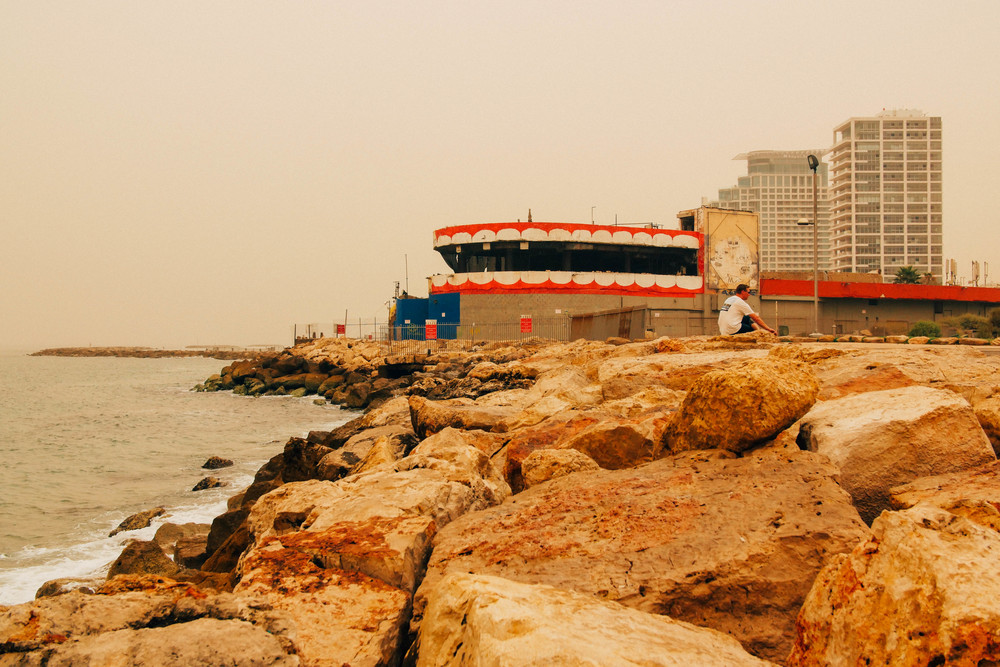
The waves are crashing against the levy. The rocks extend out into the water, and you can walk along them toward the end, which is as good a place as any to smoke hash. The levy is on the sea side of the Dolphinarium. This section of the Beach is called Tiki Beach. During the day people play Congo drums and an outdoor café serves overpriced beverages with a scenic view. There is a private club next to the Pasha and a barbed wire fence prevents people from climbing from the levy into its outdoor section. House music is blaring from Pasha.  

Slightly removed from the chaos, Ze’ev and his friends smoke a joint of tobacco mixed with hash. Ze’ev knows he’s a scumbag. The girl he and his friends had been gang-raping in his car had been left slumped against the rocks down by the water. They had pissed all over her before they left her. They’d slipped her a ‘knock out’ in the last club. 

*** 

The man in the lethal club suit is approaching Target B in the cab. He had three targets to pick from.  He had rejected the other two as unsuitable. He thinks, ‘I have never been to this part of the city before.’ 

He removes his wristwatch and places it into an envelope in the front seat. The envelope already contained his wedding ring, his wallet, and other petty personal effects. The only thing that remains is a small snapshot of his son and roughly 2 pounds of military grade plastic explosives. He begins a silent prayer, ‘My G-d is merciful, and all good things come of it. I will be your sword, my people’s sword against the Zionist dogs who killed my son and stole my land. Amen.’ 

***  

I finally arrive at the Dolphinarium with no flyers to hinder my game and my two-step. Long lines had formed to get into the club. Its clientele are mostly underage Russian immigrants. Dave doesn’t need or want this demographic at his bar, but fuck Dave. What’s twelve dollars and a beer. Absolutely nothing. I should just dump the damn flyers in a trashcan and rattle off some tourist spots I magically hit up.  

There are arsim everywhere. The word is sort of like the Bridge and Tunnel Crowd of Israel. A little meaner actually. They are dressed pretty much the same. Tight t-shirts, jeans, hair gel. They all reflect the same mannerisms and mentality. They always give me shit everywhere I go in the country while I’m selling art. My style is way too different for them. When they want me to draw something, it’s always crude and they never pay. They might sit and watch me draw and then wander off like crack heads with ADD. They are the club guys of the Middle East, the socio-economic equivalent to a mix of Jersey Guidos and ghetto Blacks coming to Manhattan clubs with a hard-on and a roofy. They love the ultra violence. Most of them aren’t from Tel Aviv. They just come here for the clubs and the tiyeled. Packs of them will follow groups of girls around propositioning them until a rejection or a hook up or rape. They take Ecstasy. They are offensive to everyone. They frequent bad clubs and get into fights. Not unlike the Jersey Guidos, they thrill me. Racially they tend to be non-Ashkenazi, Romanians, Russians, and the Yemenites who live in Israel’s smaller, rougher cities like Bat Yam, Rehovot, Peta Tikvah, and Pardes Hana. I watch young, stupid people try to get laid after they wait on a long line for a high-priced bottle of poison. The Russian immigrant girls look blazing. They are really loving this whole free market thing and are waiting eagerly to get visas for the US or Canada. In the meantime, they’re made up as hell even when they are only going to the store for laundry detergent.  

I see my friend of three weeks, Roman, talking to former Soviet girls. The Israelis are curvier and less made-up. I walk over to give him a pound and he introduces me to several of the girls whose names all end in ‘a.’ They, of course, don’t speak any English. They are maybe Russian but could be from Kazakhstan because they look a little Asian. I have no idea what they are trying to say to me. Roman’s English isn’t too hot either. We mostly communicate through gestures and the occasional sentence or two in Hebrew. He is excited to have ‘an American friend.’ Like most of the Russians I’ve met, I have only the most basic knowledge of who Roman is as a person. I’ve known him for less than three weeks. He was the first person I met in Israel and when I’m in Tel Aviv he always quickly visits to get his lady friends to buy sketches off me. Then we party in broken Hebanglish.  

*** 

Ze’ev wonders what that American asshole is doing here. He remembered how the guy looked at the girl he was with last week when he met them for the first time at his stupid hobo art stand. Ze’ev thinks he dresses like a hobo. I should tell my friend not to let that American hobo into the club. Nobody looked at his girls like that. Ze’ev wasn’t some little punk lookout anymore. He was moving pills and would soon get a piece of Jerusalem beach to milk or bleed.  

Ze’ev knows everyone worthwhile in the Tel Aviv club scene. It’s all he’s been doing for the past four years. He gets comped at most of the low-end joints and a few of the mid-end. He’s still too young for the real hot spots. He does not like the niggers so most of the hip-hop venues are out. All the bouncers know he deals and that he’s affiliated so he gets in quick if the spot is Russian. 

He wonders why those girls are flirting with the hobo. It’s because he’s American and they want to get to America by using him. It’s the only explanation. His pictures are stupid and communist. 

*** 

The human time bomb steps out of a black cab. 

As he surveys the scene, he thinks, ‘I’m so close I can smell them. These Israeli girls smell like whores. It’s the scent of my enemy. They all look so young. I don’t see any soldiers. My lieutenant gave me orders, ‘Take from them their young as they do to us.’ In a few years they’ll all be in the army killing my people anyway. One of those girls is giving me a funny look. They know I’m an Arab and I’m wearing a suit that’s too bulky.’ 

Quick thoughts race through his head. 

He thinks about his son. He thought about his people. He thought about the land that they stole from his people. Someone points at him as he edges near the line. He tugs the ripcord at his sleeve.  

“Salwa, I rejoin you,” he whispers to his long dead wife, “Palestine will be redeemed!”  

*** 

I’m chatting up one of the Russian girls when I realized I was out of cigarettes. I told the girl to hold on for a second. I asked Roman if he had one. He told me that he did not. Everyone smokes, but I really want a Noblisse. They all have L&Ms or worse. I didn’t want to stop talking to the Kazak girl, so I asked Roman if I could toss him some loot to buy me a pack. He didn’t pick up the phrase ‘toss him some loot.’ He looked at me like I was crazy.  

I look at my watch. 11:31pm. I hopped the barrier and was about to cross into the parking lot. I don’t even know if the kiosk is open across the street. I look back to see if the girl is still. . .  

B  O  O  M ! 

*** 

Ze’ev is telling his friend about ‘some chick that gave him head on the beach.’ That chick is a 16-year-old that he and three friends raped. She is lying unconscious face down in the sand by the water. He tells them he came all over her  

B  O  O  M !  

What the fuck was that he wonders. It came from the street by the club entrance. Of course, he knows what it is. This is Israel after all. 

*** 

Roman is on his cell phone. It’s hot as hell here, even in the night. He looks up and sees a quick bright flash before he dies.  

 B O O M ! 

*** 

I’m on my knees half deaf. I hear a terrible ringing in my head, but I can’t hear anything else. There are tiny droplets of blood all over me, but I don’t think any of it’s mine. Dozens of people are screaming, slouched on the ground. Some of them don’t look like much more than bloody bundles of tattered flesh.  

There’s blood on the ground and there’s blood in my hair. I don’t really know what to do. I am slumped down facing what was once the outside of a popular nightclub. I reach into my pocket to pull out a smoke and I realize it is the fucking cigarettes that just saved my life.  

My first suicide bombing. Saved by a fucking pack of cigarettes. There are a lot of dead bodies less than twenty feet away from me. I see the lights of the paramedic trucks and hear the sirens through the cluttered tunnel of my inner ear. I see people trying to pick themselves up and help the wounded. I’ve never seen so much real blood. Not in real life anyway. Everything I thought I knew about anything was ripped to shreds in a fiery burst of nails, ball bearings, and sharp things flying through the air. Violence looks so cool until you meet him in person. Then he just looks like the Angel of Death. 

I try to stand up. I can’t. I am a coward in the face of it all. A part of me is thinking: So that is what a suicide bombing looks like. And another part of me realizes:  Holy fuck! I just got all blown up. And another part of me, the part that has my undivided attention, is asking where the fuck our god was tonight!? Twenty-one victims are dead. Most of the dead are teenage girls from the former Soviet Union. 

MEC-A1-S14

S C E N E (XIV)  

ديار بكر 

Diyarbakir, Türkiye (Ahmed, Kurdistan), 2012ce 

*** 

Recounts Heval Oldivan Amraz, also known in some certain circles as “Comrade Moving Target.” 

HEVAL OLDIVAN AMRAZ 

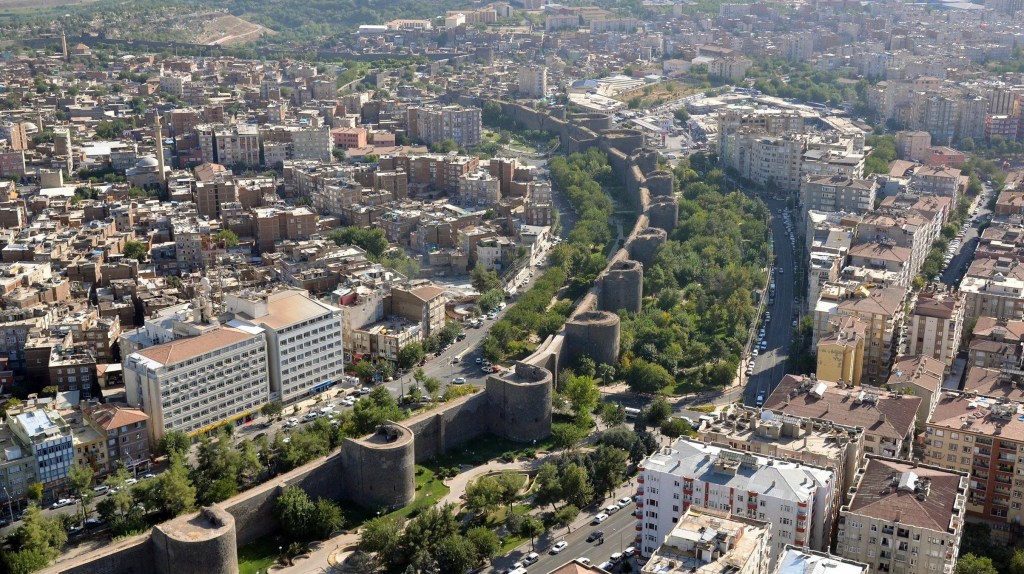
“I found myself as a young man in Diyarbakir City, the place we long call ‘Ahmed’, the future capital of all Kurdistan.” The black walled citadel of Bakur. The proud capital city of a nation that doesn’t exist, yet.” And the wicked Turkish boots do grind the necks and general spirit of the people all around us. 

“A poetic if not fully epic place!” An ancient citadel of giant black stone walls and total martial law. A town of prisons, stories, heroes and valiance in the epoch of the Kurdish people. Little wine bars, a thriving literary scene. It cannot decide whether to be eastern or western, Turkish or Kurdish. The epicenter of a great revolt, or the dystopian mockery of the full-blown repression of a colonizing power forcing a boot heel on our neck.  As Kurdistan is a powerful and long repressed enduring idea, that idea is becoming a reality on the barricades here and in a long running fight in the mountains. An imagined community of over forty million souls who are wrongfully, shamefully divided between the imposed nation states of Turkey, Syria, Iraq and Iran all things have two names, all things are both real and imposed upon us. As if to be a Kurd requires an act of insanity, and an act of double thinking. A persistent zealous fight to make the world acknowledge our rights and identity. To admit we have a right to survive as a nation beset with enemies on all sides.   

AMRAZ 

“Following the Turkish military coup of 1980, the Kurdish language was prohibited in public and private life. The prison of Diyarbakir filled up and the endless wails of rape and torture propelled the movement to full mobilization and to take up arms again. 

Diyarbakir, which in my people’s tradition is also called “Ahmed”, has now swollen to nearly 4 million people since the eradication and ethnic cleansing of over 5,000 Kurdish villages in the great ranges of mountains to the east. The primary battlegrounds between the Party and the Turkish State. Growing up there, there was of course no Kurdish allowed in school, no Kurdish books or music except deep underground. Were it within the Turkish State’s power, we would not even have Kurdish names! We would admit to being backwards people of “Mountain Turks”. I was born in the year of the largest, latest and greatest uprising. And although since the days of the Medes there have been “one thousand sighs and one thousand failed revolts” ‘, this uprising was to be completely different. 

In 1984 Abdullah Ocalan and the Kurdistan Workers Party simultaneously attacked three Turkish army posts and police stations in Bakur and announced the beginning of the revolution. For the next thirty years, almost without pause the P.K.K. and its armed guerrillas would battle the Turkish military across Bakur, the name we call the Turkish occupied zone of Kurdistan which means “the North”. Over 50,000 would die, mostly Kurds actually. The Turks would engage in vast acts of scorched earth barbarism and we in the Party would eventually turn to outright terror. In the end, most of the deaths were Kurdish civilians. In the end the only liberated ground was a handful of villages deep in the mountains of North Iraq, the Qandil. 

Now, ‘Heval Amraz’ is of course not my original name. It is the name given to me by the guerrillas of the P.K.K. when I joined the Party. By that time, we were fully surrounded in Qandil being attacked on all sides and death seemed certain. Total defeat as well. Our great leader had been kidnapped in Kenya. Major leaders of the movement including the brother of Abdullah Ocalan, Osman, had completely betrayed us. Our own Iraqi Kurdish brothers in the K.D.P. and P.U.K.-Peshmerga were collaborating with Turkey and America to annihilate us. 

“How do I tell you, my story? What does it really matter? How does this even begin or end for an outsider? For people who do not even know where Kurdistan begins or ends, or even care.” As Türkiye is a N.A.T.O.43 ally, and no matter what it says or does will remain a beneficiary of great power largesse. 

AMRAZ 

“I cannot tell you my real name of course. I cannot speak for the Party, nor can I fully disclose the depth of my hope and my hate to a stranger. I can only speak to a feeling shared on differing levels by thirty to forty million Kurds.”  

I will try to say something for the benefit of doubt, that non-Kurds could care about us so much that they would come to our land by the hundreds. To fight and die alongside us not simply fighting in resistance to Islamic radicalism, genocide and repression, but also because they grasp the larger idea. The total and utter radicalism and implications of Abdullah Ocalan’s vision. The survival of the revolution rests not in securing a Kurdish State, but instead in exporting these ideas abroad. To make the blood of the martyrs raise the flood waters of all mankind and provide a blueprint for liberation. 

Of course, we began as communists, we began admiring the Cubans and it was the Russians and Palestinians that first trained armed resistance in the early days in the Bekaa Valley of Lebanon. But we are not Communists or Nationalists anymore. Our thinking on the subject of liberation has evolved. The Cuban connection and the Palestinians connection are very real and enduring parts of the story. 

But, when we all almost died on the mountain top, surrounded and out gunned in 2000 there were no Cubans, or Russians or Palestinians to help us as they were all defeated or fully besieged. By some miracle, or just by sheer will the Party survived. And the 1989 defeat of Communism internationally required us to climb higher, dig deeper to criticize and self-criticize. To adopt an evolution in our thinking. With our ranks decimated, the armed struggle in a complete stalemate, declared a terrorist organization by almost every European country; we evolved. The revolution could not ever be won with arms and ideology alone. Nor could we secure Kurdistan while every other nation on earth embraced “Capitalist Modernity”. To secure our victory and survival as a people in Bakur, Bashur, Rojhelat and Rojava we would embrace the ideas of a Jewish anarchist from Vermont, as re-interpreted in prison by Ocalan and implemented by the new largely female leadership of the Party. This methodology called “Democratic Confederalism”, adopted by the Party in 2004 would soon find actual expression in Rojava. The Wild West of Kurdistan, the North most area of Syria. In 2014 when the Civil War broke out the Party and its allied militias seized control of major towns and cities across Syria abandoned by the Assad regime.  

AMRAZ 

“Thus, we came down from the mountains, out of the underground and prepared to make a stand in Rojava where the radicals of the Islamic State were terrorizing our people and butchering everyone in their path.”  

“If we go back to the mountains, it will signal only our isolation and defeat.” If we hold these cities, if we showcase that we are fighting to defend not just for Kurds but for Arabs, Assyrians, Yazidis, Circassians, Chechens and the Turkmen too; if we show that Democratic Confederalism is the solution, the way ahead for all oppressed peoples; then others will join us. And like the Nowruz44 mountain fires this uprising will eventually spread everywhere! There is a historic destiny to our revolution. To be victorious where all others failed! 

A most dramatic pause. 

Out of habit, Comrade Moving Target lights a cigarette and pours himself a cup of black tea. On the walls of the small office set up at the training base, which is also his room, Comrade Amraz looks the dead in the eyes. Or death in the eyes? Or both. As the posters of the martyrs plaster all the walls and the war expands everywhere around us. 

____________

MEC-AI-S13

S C E N E (XIII)  

نيو جيرسي 

Al New Jersey, U.S.A., 2023ce 

*** 

Every time we survived a fire fight in Rojava, usually a few of the internationals were out of sorts. They had just killed someone, maybe for the first time. Or seen someone die. Maybe they had shot someone that wasn’t necessarily a combatant per se in the heat of the battle. Or had just been awake for too many days at a time. For a time from of the international fighters, particularly those in their first trial by fire fight, would seem a phantom in the days after the battle. Maybe they would say nothing at all for a time, or maybe they would say something totally off base.   

Heval Erdal, a British comrade liked to say: 

“I think he lost the plot point.” 

Years later, after some of them made it out of Rojava alive, statistically 1 in 10 international volunteers died in the war, and 4 of 10 died from either suicide or by Russian rockets in Ukraine; some years past the pitched battles to defend Rojava, the Jew of Beirut was in Al New Jersey, a state to the West of Al New York. He was meeting with Souheil Tajer, a Lebanese businessman. Telling a short story about his time in Syria. Trying to make it make sense. 

“We have to circle back to when things still made three dimensions of sense,” Souheil says to the Jew.  

“Circle what?” 

“Circle back as to not lose the trail to the plot points.” 

“What does that mean?” 

“It must make sense to regular people! Stop dancing around in a dabke circle. Stop beating around the bush.”  

“What is it you’re planning to do in my country?” 

Before the Jew of Beirut, who was only really one half-Jew, (he was technically, allegedly Chechen by his father and Cuban Sephardic by his mother), before he flew into Beirut for allegedly the very first time, days before the Great War began. He went first to a place called the coast of Al New Jersey, a neighboring state to New York, across a River. To West New York. Before he departed with an ill established, albeit ambitious plan he met with an elder statesman of Lebanon, a man named Souheil Tajer who presided with his nine brothers over an import-export firm for high end foods. They speak at length about the unbelievably bad timing, the bevy of possible new experiences, “unique experiences” that Lebanon is known for. The culinary extravaganza is obvious to all, but the people and their resilience in a flailing economy at the edge of a war zone are the most profound. A place where pure strangers are easy friends all the time. A people descended from epic trader sailors; the Phoenicians.” 

“The Golden Age of Beirut ended in the Civil War of 1975.” 

From 1975 to 1991 the Palestinian militant groups, the right-wing Christians, left wing Druze, Sunni, and the Shiites set off on a very bloody civil conflict. Not everyone participated but everyone was soon shooting and kidnapping in various power constellations. It eventually involved the Maronite41 right called the “Lebanese Forces” or “Phalange”; the Armenians stayed mostly out; the Christian Orthodox liberals; the Sunni Nasserist Pan Arabists; the Shia Left called “Amal”, the Shia revivalist ethno-nationalist right called “Hezbollah”; the Druze left in the “Progressive Socialist Party”, the Israelis, and the Syrians, the French, and the Americans and about 140,000 to 170,000 people lost their lives. When it ended nothing was ever really resolved. So, in a sense, it was always just a matter of time before something like that could happen in Syria or happen again in Lebanon. None of the demographic problems were ever addressed. But while the iron heel of the Assad regime held Syria together, until 2014, in Lebanon it was a though there are defacto ethnic cantons, states inside the illusion of a state. 

The country once called the “Paris of the East”, was reduced to an exceedingly long slaughter. No one was left in the absolute majority. Except probably the Shia. No census has been taken since 1932, as has been noted. The President was to be a Sunni, the Prime Minister a Christian, and the Speaker of the Parliament a Shi’a. 18 ethno-religious groups (including Jews) were allotted proportions of important posts. Ways to steal really, and every faction got a port to smuggle from. Everyone buried their guns, except for Hezbollah, “the Party of God” representing the Shi’as (believed to be the true plural majority); and then the Syrians killed the President. The Druze stayed up in the Chouf. A mountainous region to the east of Beirut. Each faction controls a port city except the Druze, everyone is smuggling something.  

There was a fast economic upturn from 2008 to 2011, but now the money, the Lira, is valueless and no one can get it out of the bank. Skyscrapers stand empty, the Israelis and Hezbollah exchange daily rocket fire, and life of course somehow goes on. People show up to jobs that don’t really pay and pretend to work. What is the old Russian saying, “we pretend to pay you, and you pretend to work.” Tourism has totally collapsed. But Winter is not tourist season anyway. Only the national carrier Middle Eastern Airways is flying in now. 

ADONAEV   

My understanding is that a “Green line” runs south from Martyr Square, and it divides a mostly Sunni West “Ras” Beirut from a Chrisitan zone in the east. There are 3 major Palestinian camps in the Southwest and Shi’a in the south and Southwest in zones run by Hezbollah. The airport is squarely in the Hezbollah control zone, or at least everything around it is. They didn’t have a map, but a map of varying lines exists in both their heads. Albeit with Mr. Souheil Tajer has the far more intricate and detailed map. 

SOUHEIL TAJER  

It is good you are familiar with the “Green Line”, but there are other lines not to cross. “In good times, you would be testing them, them the Lebanese, but under the current situation, everyone will be tested by you. Testing you, wanting to know why you are there, now. What is your motivation?”  Everyone will be very, terribly angry about the Palestinian situation. How could they not be? 20,000 is a lot of dead Muslims. Alot of dead people. And it will go higher. It will go to 40,000 by the dead of winter. And then higher still. So many dead people, dead Muslims, everyone will ask where you stand on that. No matter what their confessional feelings. You really must stay inside the Christian and Druze lines on the map. Beirut East, the coastal cities until Batroun, the Chouf, and the Matn. Everything else is an abduction possibility. 

You should study that map in real life and your head and use your common sense! Don’t exceed your limits.  

ADONAEV  

I’m there for 25 days. I’m going to rent a little studio in Achrafieh. I’m working on a book. 

SOUHEIL  

Achrafieh is safe. You must not stay in the Muslim area after dark and don’t stay in their hotels. No one can guarantee your security. In East Beirut you have many friends. The weather will be bad. It may rain every single day I’m afraid.  

ADONAEV  

 I plan to do some writing in the Chouf, at your friend’s place in Berkazy.  I am gonna stay in the city, be wary of my encounters, and stay in the right kinds of places.  

SOUHEIL  

Achrafieh is safe, but you must, must, must find a good driver. It’s essential to your safety. I wish I could go with you and make some better introductions! Now repeat what I have told you please. 

ADONAEV  

The green line is the line of demarcation, staying in Muslim areas is not advised in the current situation. Be careful who I get to know because everyone is very curious and will be more curious because of the timing. No ultras, no interviewing extremists, no gangster-type venues. No adventures with fast and easy women of the night. Not an adventure, I won’t wander too much in the night If at all outside the Chrisitan zones. I’m gonna stay to my limits. I’ll get a good driver. 

SOUHEIL  

“How do you know your limits, or any limits in a place you’ve never been?” 

ADONAEV  

I know what kinds of risks I’m taking implicitly. But it’s important to me to know your people in their hard times and then later in the good times. I wish to know the Lebanese. 

Souheil ponders that, but only for a micro minute, he carries on a conversation with ease and expertise. 

SOUHEIL  

You’ll need a driver, a driver you trust. And stay in touch with me every day, I’m here for all your questions. I would love to go with you, I will go with you next time. You must be very conscious of your surroundings. Please do not befriend the wrong people and end up in a trap. 

ADONAEV  

“I’ll get a good driver.” 

SOUHEIL  

Preferably a Christian driver. I know how that comes across to you, but you do not understand how it is yet. You need a driver you trust. Who is very responsive to your logistical needs. And will not make up new hyperinflation prices. Pay for everything in dollars if you can they will charge your credit cards Lira rates that will be preposterous.  

Now listen closely. If Hezbollah and Israel end up in a major escalation you will need to get out quickly and the airport will not be the best way out.  If things go very badly internationally, you must get to the Port and find a ship to Cyprus. The Israelis will certainly bomb the airport into the ground, they always seem to do that. You can also go wait it out in the Chouf, I’ll give you some phone numbers. But ideally, you get out by ship if the war spreads. Which it really might. 

“This is not the best time to go, I really encourage you to reconsider.” 

ADONAEV  

My flights from Paris have already all been canceled due to the security deterioration. I will have to reconsider my options. There are only inbound flights on Middle East Airways. 

SOUHEIL  

One thing you must do is visit the Shrine of Saint Mar Charbel42. He did something like 26,000 plus miracles. A very holy man. If your itinerary allows this, you must go and get some holy water, or oil and walk in the footsteps of this highly righteous man. It will change your whole life! I promise you that. 

ADONAEV  

I love me some miracles! But I never rely on them at all, just my raw wits. Thank you for talking this out with me. It all seems more possible than before. 

SOUHEIL  

Follow your heart but know your limits! 

*** 

In the bustling streets of Beirut, where the scent of spices mingled with the sound of honking cars, a plan was set in motion. A group of seasoned professionals gather in a dimly lit room, their faces obscured by shadows. Among them was Kaveh Atatable Ashuri, a notorious mastermind known for his audacious heists. “We need something big,” Kaveh declares, his voice low but commanding. “Something that will shake the city to its core.” “Make the fat cats afraid.” 

After hours of deliberation, they settled on their target: Banque du Liban et D’Outre Mer, BLOM Bank; the largest bank in Beirut, renowned for its impenetrable security. With meticulous planning and precision, they devised a plan to infiltrate the bank, bypassing every obstacle in their way. 

On the fateful day, chaos erupted in the heart of Beirut as the sound of gunfire echoed through the streets. Masked figures storm the bank, their movements swift and calculated. With a combination of brute force and technological prowess, they breached the vault and laid their hands on the coveted treasure: stacks of cash, worth millions in theory. 

As alarms blared and security forces scrambled to respond, the robbers made their escape, disappearing into the labyrinthine alleys of the city. But their journey was far from over. Meanwhile, the perpetrators of the audacious heist remained elusive, their identities shrouded in mystery. With the authorities hot on their trail, they vanished into the shadows, leaving behind a trail of confusion and intrigue. 

In the dead of night, the stolen fortune found its way to a different kind of terrain: the cramped alleys of a Palestinian refugee camp on the outskirts of Beirut. Here, amidst poverty and despair, the money was dumped unceremoniously, like crumbs scattered to the wind. 

Word spread like wildfire, and soon, the camp was teeming with people, their eyes wide with disbelief as they beheld the unimaginable wealth before them. For a fleeting moment, hope flickered in their hearts, a glimmer of possibility amidst the harsh realities of their existence. In the heart of Ras Beirut, chaos erupted as the deafening sound of gunfire shattered the tranquility of the bustling city streets. It is a scene straight out of a strange foreign dream or an American action movie, but this was all too real. The robbers had struck the biggest bank in the city, leaving behind a trail of destruction and terror! 

As the dust settled, the robbers emerged from the bank, their faces concealed behind masks, their weapons glinting in the sunlight. They moved with military precision, their every step calculated and deliberate. But they were not alone. The police were already converging on the scene, their sirens wailing in the distance. With adrenaline coursing through their veins, the robbers made a run for it, their bags of stolen cash clutched tightly in their hands. They jumped into their getaway vehicles, tires screeching as they sped off into the crowded streets of Beirut. The chase was on! RATAATATATATTATATATTATATATATTATTATA! 

The streets turned into a battleground as the robbers and the police engaged in a deadly game of cat and mouse. Bullets flew, shattering windows and sending bystanders diving for cover. It was a scene of utter chaos and carnage, with no end in sight. But the robbers were not about to go down without a fight. They fought tooth and nail to evade capture, weaving in and out of traffic, narrowly avoiding collisions with oncoming vehicles. Their driving skills were nothing short of extraordinary, but the police were hot on their heels, determined to bring them to justice. As the chase raged on, the robbers made a daring move, veering off the main road and into the narrow alleyways of Beirut’s labyrinthine streets. It was a risky maneuver, but it paid off. The police were momentarily thrown off their trail, giving the robbers a much-needed advantage. 

But their respite was short-lived. The police soon caught up with them, their sirens blaring as they closed in on their prey. With nowhere left to run, the robbers made a split-second decision to turn off the main road and into the sprawling Palestinian refugee camp of Mar Elias. The camp was a maze of narrow streets and crumbling buildings, a haven for those fleeing persecution and violence. It was the perfect place to lose the police, but it was also fraught with danger at every turn. As the robbers raced through the camp, they were met with fierce resistance from the inhabitants, who had no love for outsiders, bringing violence to their doorstep. Shots rang out from every direction, echoing off the walls of the cramped alleyways. But the robbers pressed on, their determination unwavering. They knew they had to keep moving if they were to have any hope of escaping the law’s short arm. And so, they pushed forward, their hearts pounding in their chests, their breath coming in ragged gasps. 

And then, just when it seemed like all hope was lost, they saw it: a narrow alleyway leading out of the camp and into the relative safety of the surrounding city side. Without hesitation, they gunned their engines and raced towards freedom, leaving behind a trail of chaos and destruction in their wake. 

As they emerged from the camp, they were relieved, knowing they had narrowly escaped capture again. But they also knew that this was far from over. The police would not rest until they had brought them to justice, and the robbers would have to stay one step ahead if they were to survive another day in the unforgiving streets of Beirut. 

MEC-A1-s12

S C E N E (XII) 

سوريا 

THE TURKISH ARMY IS COMING! 

Green Village Outpost, Syria, 2017ce  

Autonomous Administration of North and East Syria 

*** 

At the Green Village Outpost contact line our tabor is told to dig in. So, for a few days we helped sandbag and fortify what appears like the accommodations of long fled oil workers. Something green and modern looking in the bleak oil lands of Der Ez Zor province. Oasis in the Wastelands north of the Euphrates. The Turkish Army is coming. 

SEBASTIAN ADONAEV  

“Sometimes I close my eyes and remember your lips.” Late into the long trips home. I have no home; it was your home only. Only my ugly little flats around the Brooklyn Soviet. Rented in desperation, vulnerability, an admission of poverty. And I will never go back to that humiliating life. I will never see you again, or see Russia, or Cuba, or Mehanata or any other type of slavery life. Your lips and whispers are still lingering Goldy. It forever remains.  

Now deployed about ten days ago to the Southern front near Omar Fields. Daesh is nearly finished they say. Assigned first to Tabor Shihad Lawrence, five quickly died by snipers and mines in the first night of the operation.  

The twenty international volunteers are all drifting in different directions. They prefer we not all die at the same time. There are supposedly around 500 international fighters in Rojava, mostly from the U.S. and Europe, also Türkiye. But numbers and time to the Kurds mean absolutely nothing. So maybe there are 500, or maybe just 50. Who knows Heval, who knows! 

“Daesh is nearly defeated.” The Islamic State once size of Great Britain at its maximal, poised to take Baghdad and Damascus is reduced to the wastelands of the deep desert and a strong of indefensible towns along the Euphrates River southeast. From the North the Syrian Democratic Forces supported by the Western Coalition advance. We are part of that force. On the other side of the Euphrates the Russian Army, Lebanese Hezbollah, and the Syrian Army advance. We all try and not shoot at each other, at least until ISIS is finished. Over the border in Iraq ISIS has been largely crushed; the Shi’a Popular Mobilization Forces, the Iraqi Army, the Iranian Pasdaran, and Western advisors and Special forces have all but driven ISIS from Iraq to the Syrian border. 

The name I have been given is Heval Kawa Zivistan which means “Comrade Black Smith Winter.” I am a Paramedic in civilian life and therefore one of the highest medically trained foreigners in the brigade. Heval Shoresh from Brooklyn, I have known him since childhood. He has a child back in America. And I judge him for being here were it my right to judge. But this palace and this revolution is irresistible to us both. He is a gardener back home. Here he carries a heavy-duty long-range, high-power rifle called a Dastun which is about twice his size. Hard to aim. 

There is Heval Sasson from Austria. He was an EMT who once travelled with his girlfriend all over Africa on a motorcycle. He is quiet, ideological, principled and socialist in disposition. With also is Scottish Heval Ciya a former British solider. Also, the mad man possible career criminal kicked out of the French foreign Legion called Heval Sivan, who although he claims he was also a British solider can’t hit a target with an AK to save his reputation. He hasn’t let up for many days talking about the Order of the Knights Templar, talking about the Knights of Malta; actually, engaged in an unending pressure of speech manic diatribe about the new crusades, that we are allegedly in. There’s also Heval Azad from Albania, something of a gypsy, a bespeckeld intellectual; an anarchist of course.  

There is also a French Legionnaire of enormous size, almost a giant. He is called Heval Gabar and speaks only of the Legion, reveals nothing of his life. He isn’t very well liked by the other internationals. There is also a young kid who looks not more than 16 but is allegedly 18 his name is Max. One of the few held back in the Academy because of minor injury. He is dubbed “Heval Maslum”, but everyone just calls him Max. And that is how he introduces himself. He’s allegedly from Salem, Oregon. No matter what sems to happen he just repeats, “I don’t care.” 

After the 5 Arab conscripts were blown apart the first night, they broke the internationals nto smaller groupings. Ciya and Sivan were sent to a YPG Cadro Tabor based on being British military they were sent to the front. Soresh, Maslum, Gabar were merged into an Arab unit and sent to the front. Sasson and I were attached to Kurdish Red Crescent outpost in the Naqta in Omar Fields. Gabar and Maslum dubbed “pizkereks” or problem makers were sent to guard a fox hole on the edge of some useless “liberated village”. No one knew where Heval Azad was sent, but Albanians are very tough crafty bunker people. 

“He will turn up and be just fine!” Heval Sasson says, ever an Austrian optimist. “But he just as easily could have stepped on a mine and blown off a leg or been hit by sniper bullet. 

*** 

Then night came and Sasson and I were quartered in a farmhouse. The commander invited us over to the field command for tea. The mood was the war with Daesh was almost over and very soon we would all be fighting Turkey in the north and or Assads forces right over the river. 

The Commander is named Heval Azadi. They basically cycle out the same 50 Kurdish code names for everyone seems like. The commander in very broken English invites us for black Tea in one of the many pillow rooms they like to build.  

Trump say, no more guns for YPG,” he tells us the SDF is the brand the YPG uses to appear more inclusive, a little less Apoist, a little more not the PKK, but the commanders almost always say YPG or PKK, there’s a lot of little acronyms for small armies out here. The YPG, or the People’s Defense Forces make up 80% of the SDF; the Syrian Democratic Forces. All the best commanders are Turkish Kurd PKK trained. 

“Daesh done in Iraq. Two towns left,” Azadi tells us. 

“24 little Gundes to take along the river,” he says. A Gunde is a village. 

“In Moscow, the PKK make a deal with regime,” he says, regime meaning Assad and Syrian Army, “Iran, regime, Russian make deal on autonomy and oil rights.” 

We are engaged in an operation to seize Syria’s oil fields, Sasson had explained. There were not many ISIS fighters left after Mosul and Raqqah fell. This is all now about who can take as many oil fields as possible to negotiate the final settlements. This seems to discourage Heval Sasson. 

“Really all that is left now, “says Commander, “NUSRA Front and HDS in Idlib.”  

“Al Qaeda’s Syrian brand,” Sasson tells me. 

“The PKK make a deal in Moscow; we will end making terms with Assad. The HDS, the Nusra, the Deash all the Islamist proxies in Idlib, Bab and Jarabulus City they must be eliminated to close the gap.” 

“Closing-the-Gap” we learned in the Academy was about pushing through the Islamists into Turkish Hatay Province to gain sea access for Rojava. The Gap also being closing the lines between Afrin and Kobane. Afrin Canton is hard to resupply and will be the first thing the Turks attack. 

“As soon as Deash war is over Turkey will attack, you will fight with Turkey?” They all wanted to know that. Would we all stay and fight the second biggest army in Nato. 

“Of course we will,” Kawa claims, but Sasson knows suicide is also problematic when they return to their homelands. In fact, it is well known that many of the prior volunteers, of which there were only maybe two thousand over the past ten years; they didn’t adjust well here or there. But this was an antidote. Some did multiple tours, others died in other foreign lands for lesser causes. 

“When Daesh is done there will be no ceasefire. Turkey will attack immediately. 45% of call Syria now in Rojava. In SDF hands. Turkey will waste no time,” says Heval Baran from Germany. Baran had set out to join the PKK, but after 6 months on the mountain they sent him to the YPG. The Germans apparently are the best suited of the internationals to adjust to Kadro life, but Baran said simply; “I don;t really want to give up women.” The life of a Kadro is one without any material things, no attachments, not sex no marriage. Life of total dedication to the struggle. 

We all speculated about “Fighting the Turks near Afrin” while in the Academy. It will be slaughtered. A cadro boasts that “We have peace deals with USA and with Russia maybe also China!” But the dependency on the U.S. airpower is real.  

“The Regime will not ever accept Rojava in any form, it is just too weak to defeat it right now.” 

Russia will never abandon the regime,” someone says in Kurdish. 

“It is like America and Israel; you have Syria and Russia. The Regime gives Russian Mediterranean Seaport access, the Regime is only alive because of Russia and Iran.” 

“There are many factors. Russian is loyal, America is not. When Daesh is over there will be no more guns, no more air support.” 

“How many Western volunteers do you think are still in Rojava,” Sasson asks the commander. 

“40, maybe even much less,” the Commander says. “50,000 came to fight for Daesh, maybe over time 2,000 came to help the SDF. 1,500 leftists from Turkey and 500 from the West. Now, in country still, 50 maybe.” “The airports in Erbil and Slemani are still shut down because of the independence referendum. For now, you are here to stay. Who knows what will happen. PJAK is now fighting in Iran again. Maybe soon more fighting between Iraqi Army and Pesh Merga. And Turkey! They are coming trust me heval.” 

Goldy wrote that she might have to marry her rich ugly patron. Polina wrote she is leaving me since I am “on the other side of the planet now” Chanie is “back with Charlie”, so probably I will never hear from her again. Anya Noori, my attaché, sent me some news from Baghdad. “They are arresting Western volunteers without good paperwork coming back from Rojava. Slemani and Erbil airports are down everyone must go out from Baghdad.” But I have good paperwork. I called my parents the other day. An Arab had sold me a Syrian SIM card. They seem proud that I am there. I hope I can hold it together and reach ‘the mountaintop.’ There, if I am open-minded, I will finally understand the truth; into its innermost parts. 

Like in my dreams, the EMT Program of Kurdistan is just a means to an end. And after thought, the G.C.C. is barely useful or functional any more out here. My so-called partners Andrew, Forti, Jessica, Matthew Smith, Ovid all have defected and left me out here with no help. Can I count on David Smith, Kaveh, Jonah, or Dr. Wagner, probably not or only for a little. 

Everything here is an assault on my senses!  Daily, I must learn ideology, discipline, war, Arabic, Kurmanji, keep Sasson and I from stepping on mines, dying in airstrikes, getting enough water. Sasson has said he is willing to help me run the EMT program if only we can get authorization to do so. The Kurds do not believe in time, they do not believe in space, and they do not believe in relying on foreigners. They do seem to believe concurrently in American led coalition airpower. 

The others we trained with, the twenty, are all dispersed to different positions. Ten to Afrin and ten to Der Ez Zore. They must choose their own adventures in Rojava. I do hope that Soresh stays alive for the sake of his 6-year-old child and young wife. Ciya and Sasson signed the G.C.C. paperwork, the cover contracts that they will claim later to the government of Austria and Scottland that when they did out here was purely medical. But it’s not so much will they stay 6 months to train in an EMT program it’s more will the war ever actually end to allow the time and space to justify one. 

It’s impossible to know how far up the mountain any of us will really ever go. Heval Barron was there almost a year. The German heval said little good or bad about it, he barely said much. 

So many ways to die out here. We or most of the 2,000, or 500, or 50 shared a noble goal. Defeat Daesh, defend the Revolution in Rojava. In the meantime, Sasson and I have been training Arab fighters in life saving skills. We try and stay sane. I am sure I will have to use this AK-47 before this is all over. The thought does not bother me, but I do not delight in the thought of any killing.  

Today, a villager “gundi” handed me their sick infant and I listened to its lungs and heart, and helped prepare some Pedialyte mix. The child was sick but dehydrated and stable, the Arab comrades keep telling people an American doctor is in the camp. But even in Syria I am still just a a paramedic not a doctor at all. 

So much responsibility is on my shoulders. They all have varying medical issues. Infected toes, rotting death, abdominal pains. I do what I can. The Party purchased me a huge rolling duffle bag of medications and medical supplies. So, we stay as busy as we can. 

I daydream, and hope Goldy thinks about me more than sometimes, but probably only Chanie does when she is allowed to. Goldy sometimes WhatsApp’s me cute photos and sometimes Anya, the attaché flirts from Baghdad. I have been sending Chanie letters via the U.S. Special Forces were run into coming through the camps.  

I realize that G-d or no G-d, Abdullah Ocalan is writing about a universal truth. This is the last stand. The last chance we will ever have or get again.  

Deash is all wiped out,” the Commander repeats, “BUT THE TURKISH ARMY IS COMING FOR SURE. To burn all we have built to the ground,” he sighs, “Serkaften, we will fight them too!” 

We all probably have a lot more bleeding left to do no matter what happens.  

MEC-AI-SXI

S C E N E (XI) 

עפולה 

Afula Township, State of Israel, 2001ce 

*** 

The first time you come here, as a Jew, a lifetime of anticipation, religious zeal, and propaganda make it like a pilgrimage. And you only go on the two-week tour; the wall, the handsome and pretty soldiers, the Tel Aviv vibe, the camels, the shouks, the black tea, the Dead Sea and Masada. But the second time, the cracks begin to show.  

SEBASTIAN ADONAEV 

I am told it is very green up north in the shade of Mt. Tabor. I am told its important to learn Hebrew. The language of the colony, I mean, our historic homeland. I take a bus from the Techanama Gazit Central Bus Station to a town called Afula, which is as mediocre as it is relatively isolated. As it is also close to everything. The whole country takes eight hours to drive north to south. The kibbutz itself is still a good half an hour further north, so I stick my thumb in the air for several hours before a Bedouin trucker drops me at the gates of Kibbutz Ein Dor.  

My one-night standing had turned into a good long week of come-on-in-sin. With less than $200 of my money left, I decided to quit my evil ways and learn to speak the language of the world’s oldest tribe while doing a bit of the old ‘agrarian collective labor’.  

Kibbutz Ein Dor was established at its present location facing Mount Tabor in the eastern section of the Lower Galilee in May of 1948. Its members came from groups of the Zionist youth movement Hashomer Hatzair from Israel, Hungary, and the United States. Later groups from Chile and Uruguay and much smaller groups and individuals from over 30 different countries joined them. Today the kibbutz boasts about 430 members and candidates for membership, and a permanent population of close to 800 when children, parents of members, and Hebrew Ulpan students are considered. The kibbutz’s economy is built almost entirely upon its cable factory, Teldor, which manufactures telecommunication and electronic cables. The kibbutz still cultivates a wide range of field crops, has a dairy farm, and raises chickens. That’s almost verbatim off the kibbutz Web site. 

Ein Dor is situated where the Chesulloth Basin meets the eastern section of the Lower Galilee and the Jezreel Valley. There was a new electric entrance gate that was surrounded by a security fence made of barbed wire as old as the country itself. A guard was posted at the entrance. The young man had dark hair and a black uniform and was sitting with his feet up at the post with an Uzi submachine in his lap looking bored and disinterested. The guard was no older than seventeen. All of the buildings are white stucco with a solid earthy appearance and red corrugated tin roofs.  Massive olive trees and other shrubbery made the kibbutz exude abundance. Compared with the dry and dusty hills and the two small Arab villages with their scrawny sheep that flanked it, the kibbutz felt like a fortress of bounty. Flowers had been planted everywhere, and the grounds were immaculate. Green grass covered the lawns of all the kibbutz buildings. As I walked up the main street to the central building, I saw what looked like a huge auditorium that served as the central dining hall. A sign told me as much in Hebrew and English, but not in Arabic. 

The Russians Roman and Anya his homegirl had told me that the real Israelis hate the weak, naïve American tourists. That I come from New York means a lot less here. A lot of fat, rich, lazy American Jews live in that city.  

Above your head there flashes a great big dollar sign,” the Russian girl Anya I made fuck within Tel Aviv had said to me adding, “Your nice words will not so much to protect you here from us!” Was she Slavic joking I’d get kidnapped, or that everyone would want to fuck me, I wasn’t fully sure. In fact she was also alluding as I’d discover that Israel is a place where all the Jews, or the majority, are poor. 

Sometimes Israelis call Israelis sabras after the cactus-like, thorny fruit with the sweet center when opened up as if deep down these Israelites were warm and respectful to outsiders. That’s very wishful thinking, which doesn’t last long past the two-week tour.  

“I’m looking for a woman named Bruria who is the volunteer coordinator of the kibbutz.”  

Bruria’s closet-like office was in a small shed attached to the main Volunteer Office building. I can’t help but thinking she looks like a man in a dress. Her English isn’t very good, and I am informed that it will cost me a thousand, two hundred shekels and fifty agorot to enroll in the ulpan program. Everything they say about the poor, impoverished kibbutzniks must be truism because they want my agorot; the bullshit Jewish penny. Nobody chases those down the street. I feign agreement fully wondering where I am going to come up with that kind of money considering my net worth financially is perhaps no more than $180 at this time. She takes every penny and tells me I can pay the rest down the line. It’s hard times in the lower hills of Galilee.  I now don’t have a shekel to my name.   

The kibbutz does not make a great first impression. Built something like a cross between Jurassic Park and the Soviet Union, the adults seem embittered and cagey as Bruria brings me around. The facilities are pleasant, until we arrive in the area where the volunteers live. Stucco and pebble faced buildings give way to trailer bungalows near a sign that reads ‘welcome to our ghetto.’ There are close to twenty white bungalow buildings on a steeply inclined hill that are each only one story tall. Each bungalow has a porch with some irregular lawn chairs and assorted stools. Each house has four volunteers in two sets of living quarters. There are two outdoor showers per building, which four volunteers share. These dwellings overlook a series of olive fields and in the distance, you can see the small Arab village of Deburiya. The Adhan, the Muslim call to prayer echoes across the valley five times a day she warns me. 

“It may sound like a scary cry of war, but it is how they pray. They are the good Arabs, long time our neighbors. We control now their water which makes them better neighbors.” 

Bruria unlocks my apartment and tells me to leave my stuff. I have just my one large black rucksack. The room she calls ‘living quarters’ is a one-room affair with two dormitory steel cots and two adjacent closets. My roommate is rather neat. His t-shirts are all folded, his stuff tucked inside the large closet. There are no posters on the walls or art, just a small wooden table with an alarm clock that has a picture of Israeli girl in black and white with X O X O scribbled on it and a big red lipstick kiss. Guess that’s what he’s doing here. It’s all very laconic, that is to say the bare minimum of what one needs. But after squatting for three months in a dirty hovel in London this is all a marked improvement. Bruria tells me my roommate’s name is Danny and that he is from Los Angles  

Classes are in session. The classroom building is on top of the hill. It is built in the same white stucco style with a red shingled roof. Bruria interrupts the class and announces that I ‘will be the new student.’ There are about twenty other people in the class. All of them are easily twice my age by the look of it. I had been under the impression that there would be people my age forgetting that this was a program for new immigrants, not seventeen-year-old radicals in some fucked up self-imposed exile. Everybody smiles and then gets back to work.   

Later that day I am introduced to the ghetto’s ‘North American Social Club.’ It is on the porch of a bungalow at the top of the ghetto on the hill. It has a third fridge on the porch. There is a Russian quarter, an Argentinean quarter with a Columbian among them here to garden not to learn, and the American section. The Russians only speak Russian; the Latin Americans don’t speak Russian or English well. And go figure, we don’t speak anything at all besides English including the Chilean girl and Canadian guy in my new ‘club.’ Everyone is learning Hebrew, but vodka is the lingua franca by the looks of it. 

My roommate introduces himself as Daniel Asher Callahan who is questionably Jewish. He is tall and lanky, has dark hair with freckles and knows how to freestyle rap. The Canadian John Yuma, whom everybody calls Johnny Bravo, is all things loud, drunk, and misogynistic. Also, questionably Jewish. Like Paul Bunyan and Izzy Vitz, he tells tall tales. According to his own booze-soaked account, he was formerly a freelance soldier, this gun for hire in the French Foreign Legion for eight years. He boasts combat on nearly every continent ‘with the browns or yellows’ and is visibly a degenerate drunk. Bobby Brown is the third American in the social club. He’s part bookworm and part smartass jock. He has glasses and flashcards. He goes for jogs to Duriyah. He’s liberal but still doesn’t trust Arabs. Both Danny and Yuma are not yet sure it was worth their coming here. The more they drank, the less they liked the Holy Land air and long summer months with no rain. Bobby Brown was a good little Zionist through and through. “What kind of fucking Jewish name is Robert Brown?” Yuma yells! 

It’s my first day at the Kibbutz and they’ve extended me a full membership. Club activities generally involve pounding back Gold Star or Maccabi beers, the national swag of Israel, and puffing carton upon carton of Noblisse from the commissary. It is as if they pay us weekly for booze and smoke. That’s all our little company store stipend gets us in the end. Yuma spotted me the beers.  

“You’re new so you get the shitty chair ‘til you steal yourself a better one,” Danny says to me.  

“Steal anything that’s not tied down,” he says is the way of things.  

Bobby becomes more social the more he drinks. John Yuma seems to get louder and more unhinged. Kind of hard to imagine any of them as being Jewish. 

School and work alternate every day except Saturday. Depending on your assignment you work about eight hours a day with a two-hour lunch. Most volunteers are in the mess hall cooking, food prepping and doing dishes for nearly 800 three times a day, although I’m told many families eat at home. Other options include Yards, which means constantly weeding and laying sprinkler line or Gardens, which helps to maintain the flowers and trees on the grounds. The ambitious and trusted either milk cows or work for TELDOR the chief kibbutz product, which is telecommunications wiring. Everyone tells me that I have to decide by tomorrow to work in the mess hall for obvious reasons like stealing food and air-conditioning, but I need to be outside using my hands.  

We are all sitting on the porch of the North American Social Club drinking Gold Star beers that Yuma bought in Afula except for Bobby Brown who is immersed in the course work. 

“So where are you going to slave,” asks John Yuma. 

“I was thinking about Yards and Gardens.” 

“That’s a lot of digging. You got to dig mini trenches for the sprinkler lines, which keep the place so green. You should get to work to keep your soft hands not dirty. And fill our fridge,” Yuma says.  

“You see, a kibbutz is about doing as little work as possible and getting drunk as often as you can. And givin’ it to every new girl that arrives.” 

“I only say it ‘cause you’re scrawny. Teldor and field work is man’s work,” says Yuma. 

“Where do all the curvy kibbutz girls work?  

“They don’t. Most of them are really underage. Like getting locked up underage. Pickings are very slim these days. There’s a fine Brazilian girl named Carla but she he has a kibbutznik boyfriend. She works in Yards and Gardens if you’re looking for good eye candy. Girl is stacked and curvy,” says Bobby looking up from his book. 

“I’m always looking for eye candy. I’m a horny seventeen-year-old.” 

Just down the hill at the bungalow below ours some Russians in our Ulpan Program start yelling at us from their window and waving with their arms for us to come down. 

“What do they want?” I ask. 

“They want us to get really trashed on vodka,” says Bobby Brown. 

“Come on,” says John, “It’s a kibbutz highlight that never gets old.” 

It was one we would have over and over again. Bobby and Danny sat it out. I had no idea why because I figured it was just for a shot. The Russians apparently really, really liked sharing their liquid oblivion. 

There were four Russians in the small room. All four of them were in their early thirties. Three were Slavs and the other one was a dark Georgian. They offered their names, but I only caught one distinctively, Alexi, who was the youngest. The Georgian had a crucifix around his neck, which he never took off. None of them spoke English and I wasn’t able to catch any of the names of the other three. The vodka was very cheap and highly flammable, one of them demonstrated by igniting a wall briefly. We slammed two shots in the first minute or two. Then we chased each shot with water. I was laid out by the time I reached eight. It burned my throat and made my head spin. I fell off the cot as I yelled profanity in drunken glee. Alexi showed us a picture of his sister or girlfriend. Who cared or knew. Yuma told him ‘I’d fucked her in the ass.’ They all started cheering and patting me on the back. And then a blackout, and a blur of sweat and yelling and more shots.  

The last thing I remember hearing was Yuma with his arm around a Russian yelling, “WE’RE GONNA FUCK YOUR MOTHERS IN THE ASS!” They had no idea what he was saying so that just cheered and we all did another shot. I had to be practically carried back to my room by John and Danny sometime after midnight. I stunk of booze for a week. The Russians saw to that. 

*** 

The girls on the kibbutz are all about 12 years old or younger. So, I settled on Yards and Gardens detail managed by a triumvirate two Latin laborers and the Kibbutz Yards and Garden foreman Mr. Jones. Mr. Jones was half English/half Irish. He’d come here in the sixty’s leftist and reckless. He had gotten an Israelite pregnant and never left. He’d acquired kibbutz membership, married the girl and had three kids. He was a good guy with numerous yarns, which all seemed to amount to a warning about getting out before I got one of their girls pregnant. The girls were all 12, I told him. He told me he was talking about the country not the kibbutz. The other two weren’t Jewish either. Adonai Gonzalez was Colombian and strapping. He’d been here a couple years. Said prospects were better here than in his own ‘piece of shit’ country. And there was the hot Brazilian, a tall, gorgeous brunette, the hot sweaty eye candy Yuma had mentioned.  

Our work was largely the maintenance of the sprinkler system. Without it the hills would not be so green. The Israelis utilized a drip irrigation system. The pioneers in less than a hundred years had reclaimed swathes of swamp, desert and rock, but milk and honey hardly came. The kibbutznik dream of agrarian socialism was over. They had outlived their colonial purpose.  

But if there was some endless war going on, I hadn’t seen any of it yet. Not in Tel Aviv or Galilee anyway. I dug up sprinkler lines shirtless, never seeming to burn in the nonstop sun. I was getting a little less scrawny with the three meals a day. The kibbutz was always the same work, the same food and the same people every single day. I’d get shit hammered drunk with the Russians and the North American Social Club. I’d sit bored in the classroom pretending to learn Hebrew. I wondered sometimes if I was in too deep. I wondered if Zionism was really the end of the ideological road for me. It had been too easy. I wondered when the hammer would fall, or the real test would come. I was living in a war zone wholly sheltered from the war. I wondered when I’d meet a Palestinian again.  

I wonder if little Kareem from the Wadi would light himself up in a bus that I was on or perhaps he had already. The kibbutz was a vacuum. Each weekend came and I hitchhiked down to Tel Aviv. To see Israel. To get fucked and hammered and blown by everything except Palestinians. My dreams were a dull silence. Mike Washington was truly dead it seemed. I had learned to sleep like normal people do, in quiet but without peace.   

Every so often some kibbutznik would tell me to put a shirt on lest I burn up, but I never seemed to. My blood wasn’t wholly infused with the European. Just my skin. My great, great grandmother’s rape had not been complete, as I didn’t burn. So, I ate cucumber, onion, and tomato salads, tried to pick up Hebrew and fought the good fight to keep the yards and gardens green.  

After work I’d sit on the porch with Danny and Johnny Yuma smoking cigarette after cigarette and downing frosty cold liter bottles of Coca Cola. We’d look out over the village of Deburiya and listen to their call to prayer go off around sundown. The ghostly Adhan echoed throughout the valley. We could sit in our walled little compound sipping Coke and getting hammered on cheap beer. We could pretend the Intifada was taking place in the cities and would not reach us. But like the village of Deburiya, we could cut off their water and lock them off their lands, but to ignore them would be impossible.    

MEC-A1-SX

S C E N E (X)  

   Россияروسيا 

Nizhny Novograd, Russian Federation, 2016ce  

*** 

It’s not always cold in Russia,” explains Polina Mazaeva, a Russian Chuvasan39 sympathizer and mother of a seven old named Yazan. Yazan was born to a Syrian Druze father who is not with them anymore. It is complicated, yet not that complicated in every society.  

POLINA IVANOVA MAZAEVA 

“Men abandoning women with their child is a very old story actually in all cultures.” 

A pause. 

It’s just that we have had to exhibit a certain moralistic coldness.” A certainly ethical chill? This was the experience of growing up in the ruins of the Soviet Union. But we are not without beliefs. We are not without our sympathies. You just must be careful how you talk about them. Things need to be rational; they need to be sentimental but only if sentimentality is kept in letters or behind closed doors.    

Outside Moscow and St. Pete’s life is often lived quite poorly. Nationalism was at an all-time high. When many have an internal critique about our leaders, or the price of buses. Or the treatment of homosexuals or Chechens, perhaps we keep it out of our heads. Because the United Russia Party has made many advances to restore us to national dignity. Curb the oligarchy to some degree and reign in the gangster-ism of the 1990’s. The infrastructure of the Russian city of Nizhny Novgorod, outside the downtown area remains largely as it was in the late 1950’s. Optimistically better than what Stalin provided, but still brutalist, soul sucking Soviet crumble. Certainly, the upcoming bus boycott will test the limits of ‘free speech’. There are piles of dirty snow all around the fourth largest city in the Federation. The very tall statue of Lenin still stands near the Hotel Marins Park. He’s still the default father of the nation. Only the ultra-wealthy have any admiration for the Czars, except for of course Peter the Great who stands tall over Moscow.” 

Russia is a multiethnic, mostly single party oligarchic federation of some 158 nationalities, immediately east four hours from Moscow is the Chuvash Republic. The semi-central Asian Chuvash people are vaguely European and vaguely Asian; almost all are orthodox Christian and have never in remembered Russian history run afoul of the central authority. Never got themselves butchered or deported enmasse to Siberia. No, no, the Chuvash play well with others. The Chuvashan capital is Cheboksary on the Volga, but many can be found in Nizhny Novgorod, the Russian Detroit, once a closed and secret city called Gorky. 

Who is Polina Mazaeva? A coy Russian Agit-prop? No, No, she actually has fallen in love with this tragic radical, Sebastian Adon. And they are preparing to meet, but have composed several Russian American, or Americano Soviet love songs and scribbles. 

Why and when Sebastian and Polina began to write to each other is of no great mystery, both were in pure existential crisis. They wrote often and eloquently in the year leading up to his deployment in Kurdistan Syria and Iraq. These letters and poems all sounded similar, but not the same to previous love affairs during the Cold War, but they reinforced each other’s motivation.  

This is not a ballad for two people who move on!” But fundamentally the reality of their underlying narrative was that one-day Sebastian, who had more agency via his U.S. passport would fly to her and give her a new life. A more tragic but realistic understanding of the correspondence was that before he was going to do the hard part; give her and her son a new life; he would go to Syria, where obviously he could die.  

She mentioned the contradiction only seldom. Their worst fights were Polina’s frequent accusations of Sebastian’s habitual womanizing. Which was real, but not as magnified as she made. He was not sleeping with every single woman friend he appeared in a Facebook photo with. But he had lovers she did not see. He assumed she did too, but she did not. She loved the idea of him but never expected him to ask for some mega long distance monogamous relationship. It was strange. But she had a son and little Yazan kept her more faithful. Sebastian in the meantime took under half a dozen women to bed, the idea of Polina was sentimental to him, but also not exactly real. Periodically she would flip out over a woman he appeared with on social media. But it would fade. Several times he threatened to cancel the Russian leg of the trip, but he did not want to. Russia was something he needed to see before he died. He probably will die out there like the 600,000 plus others who had perished in the war so far. Maybe in an airstrike, but from a mine. ISIS had allegedly booby trapped every room of every house of every village, town and city they had occupied. 

The correspondence was real. They uniquely relied on each other to float. The underlying assumption that their struggle was real, that Sebastian would die on some barricade rather than raise a family and that Yazan had frozen her life into place. Sebastian had clearly acquired a revolutionary delusion of grandeur and was now enslaved to his own expectations of heroism. Polina had fallen hard for her baby’s father and been rejected and abandoned. The Russian state and her parents shouldered some of the costs of raising a seven-year-old, but her life was a dull repetition and a soft cage. 

Yes, the struggle is quite real!  Sebastian had several times averted ongoing suicidal ideations through her soft tone and patient words. Polina had taken on new online classes and high expectations of what was possible. While the flirtation with self-harm was mitigated by the responsibility of motherhood, she had dark times. They needed each other after a point. They waited happily for the next response which honestly flowed all day every day since he was an ambulance man, and she was very per diem self-employed with information technology type assignments in graphic design. They wrote and wrote and wrote. Sometimes poems, songs or sketches. Sometimes he would tell her how hard he planned to fuck her, or she would write out something that seemed hard enough to be a rape scene. They both were getting what they needed out of it. A friend in the dark. Two friends in long distance post-Soviet love. Two dreamers who live in utter and total nightmares. It gave them something to believe in. 

Polina Ivanova Mazaeva throws back her crimson dyed hair and makes a pouty Chuvashan face for a selfie. I love only three men! I love my son the very most, he is the future. He is happy and free and built from diverse parts. Yazan is his name, and he is seven. Like any mother I have to love my son very first, even before myself! I am sometimes a dramatic and hysterical person, but this is who I am. Also, a jealous wife. 

“My mother is of unknown ethnicity, unknown as her mother was adopted as an orphan during the Great Patriotic War against Germany. In appearance she is convincingly Slavic. Her father is a happy smiling Chuvash40.” 

I love second, my forbidden, partially forgotten Syrian Druze ex-husband, Damien. He is in Dubai now, we tried hard to make this work, but he is Druze, and I am Chuvasan, and never the two can be together. We tried. But it was too complicated. I love him still, I fantasize about him returning for me and carrying me off to the high-tech parts of the Middle East, but he is gone. 

Only the face of my son reminds me of him a little. They make fun of him in school and call him Arab, but this is not Arab. He is Chuvash, and Druze. Holy, actually, a reincarnated Druze inside him will speak in parables sometimes. 

“My third love, and final for now is Mr. Comrade Sebastian Adonaev. An American. A New York revolutionary, a medical worker on ambulances and a very gifted artist. Perhaps better understood an upper middle-class malcontent. Aspiring revolutionary? I hope he will not die in Syria, but statistically, it is probable. He has my heart in some strange way. Only with his spirited words.”  

Sebastian makes a lot of written reports, partly because he’s a writer and partly because his team is spread widely over four countries. He writes me love letters and also forwards technical reports. They are highly boring but cast some insight into his Middle Eastern movements and affairs. I am not really invested in his brigade of foreign fighters bound for Syria, of course, but I admire them all for their relative bravery. Rather, it would be better if he just stayed in Russia with me when he arrives, which will apparently be on May Day 2017. 

Sebastian writes to Polina Mazaeva frequently, as though the spirit of the 18th century could still be alive within the tools and technology of Century 21: 

Dear Pauline, 

There are eight people in or supporting the growing expeditionary party into Rojava. Some are working on the field ground and some from the safety of the U.S.A. Demhat al-Jabari, a Kurdish patriot I met in university, is negotiating with me in Kurdistan. He will likely go to Rojava but return for school in the fall. Shoresh is an actual anarchist, he doesn’t really have a role as much as he showed up to fight in the Y.P.G. and perhaps do some gardening. The constant gardener doesn’t care about any bigger picture or whether Rojava will rise or fall, he will come for six months and depart. He has a wife and young baby, so it’s better, I guess. Alacan al-Biban Rasool is a Kurdish fixer boss. He’s a local to Erbil. He does Fixing, without ever taking money. Yelizaveta Kotlyarova is a Russian doctor, just a podiatrist, and Dr. Jordan Wagner is an ER doctor, and they will do medical control from the stateside. Pete Saint Reed is a marine leading a little medical detachment inside Mosul. Justine Grace Schwab is working with Alacan al-Biban, also with Pete, and maybe could be our 8th; but she is savvy and magic and cunning but doesn’t play on a team well. 

Our overall contribution to the humanitarian side of the war in the end was under forty women and men deployed in Iraq under the auspices of Pete Reed’s N.G.O. Global Response Management, and mere four volunteers from abroad, a gardener and I named Spike going up in the mountains, and over the river and into the Y.P.G. A Peruvian nurse named Francisco who worked briefly with Pete in the battle of Hawija, and a Kurdish American negotiator named Demhat al-Jabari. So Pete Saint Reed was a better commander and focused wholly on the work in Iraq.  

“There are a lot of complications,” he claimed.  One may have been the lack of a reliable hotel bar in Rojava. 

My unit of four, really three in the end was actually all we could manage to get over there and into Syria. Several dropped out, unexpectedly? Not expediently expected. The American activist drama queen, “VIP leftist” Cecily Macmillan. A medical assistant in training named Joshua Hunter and a Ukrainian EMT named Philip. Syria is not actually an easy place to sell volunteerism in America. 

Few of these volunteers in the end proved dependable, but who could really blame them in the face of the Syrian Civil War bloodbath. Only the Kurds Alacan al-Biban and Roj did any leg work, out of patriotism. Oh yes, Spike did his seven months but certainly none of that was dedicated to the medical mission. He deployed to shoot. 

Really Pete Reed’s success, if you can deem it any success what he accomplished, in Iraq was about managing to access the W.H.O. money.  His military veteran can do bravery and being embedded with the Iraqi Special Operations Forces helped a lot. The potential disaster of our Syria mission had most to do with the near total inability to reinforce or evacuate our team once inside Syria, being therefore wholly dependent on the whims of the YPG. Which again, stands for People’s Protection Units, the P.K.K. mostly Kurdish militia fighting ISIS as the primary Coalition-led proxy. Who allegedly and have a deep “martyr culture” and a sort of contempt for Western medical workers.  

Sebastian’s reports, like his mind, dig deep then ramble out into incomplete destinations. Actually almost no one read them besides Demhat, Alacan al-Biban and Polina; sometimes Mr. David Smith, or anonymous forces based in Arlington. Regarding Polina and Sebastian; 

“We are both writers and both artists, she took only a slight interest in my Middle Eastern Affairs.” So, Sebastian thought, but that was not true she followed Russia in Syria closely. The Russian media anyway called it World War three. Polina authored many email letters and some he printed out and carried with him in a leather binder. 

Sebastian carries her letters about to reinforce in himself courage when the weather is too hot, which it always is, and death is inevitably getting too near, which it sometimes does. Such was one; 

My Dear Comrade Sebastian, 

Privet!  

Maybe because many of all in my life you don’t know. You are important to me, that’s why I am winding all, afraid to lose you. I don’t want to be selfish; it just happens. And I really didn’t want any relationship before I knew you better, because I needed to take a break after the last relationship and do something with my psyche and my life.  

Why do I claim any love for you? When you wrote to me in October, I just couldn’t understand why you sent me such long letters. Especially because most of them were difficult for me to read. I just wanted to be polite and answer when I could. But then I saw that you feel bad, very bad. And I have a rule – if I have failed so far in my plans, I need to support those who don’t see for themselves how much they can do. You can do all you wish. You can gather people and organize them for common activities. For a good deal.  You are a wonderful person. You supported me later. And I began to be inspired by you. I learned how you feel, how you sympathize with other people, what your heart is. You have a beautiful smile and so much fire. Simply, we are all people, and we all have weaknesses that we have to contend with. And you too, and me. 

Now you inspire me more and more, and I like your ideas, because I begin to understand them (it was difficult before because of the language barrier), and of course this feeling – I hate it, but I miss you constantly and I would not want to share you with anyone. I’m unstable for the last three years, there were so many reasons, that’s why I did not want to get attached to anyone – it would create problems for everyone. 

But you’re great, just know this. I love your strange smile. Your cunning brown eyes. Even when they are tired after a hard day. I love your voice, and I love your face. I love your body (so far imagined in the pictures), I love your thoughts and that thing which guides you, the reasons why you are and what you do. You are a very kind person, so you suffered a lot. And you are wonderful, in any case, even when your strength is running out. I just love you because you exist. I would follow you everywhere and support you in any crazy thing, and I would share with you my most beautiful night dreams. And if you were nearby, I couldn’t let you leave a bed, I would give you all of me. Simply, you are very important and forgive me, if somewhere my old complexes I project on you. I’m not perfect at this. Sorry. It happens in only one timeline, then leaves. Wait a little, please, you’ll see a lot of good from me. And I hope you feel a little better today or soon. If you need to speak about any of your problems I am always here. 

Your comrade & your future lover, 

Polina Ivanova Mazaeva 

P.S.   

“Do not have affairs with other lesser women or get yourself killed in that war. There are many people besides me who care about you!” 

MEC-A.1-S.9

S C E N E (IX)  

ديريك 

Derik, Syria-Rojava Region-Kurdistan, 2017ce 

Autonomous Administration of North and East Syria 

*** 

ADONAEV  

“It is not that any of us longed to die!”  

“It was only that we believed that in this transience, this short human life, it was preferable to die on one’s feet moving towards a just idea. Moving in solidarity, in defense of the powerless. Then it would be to die on our backs or our knees, half-lives, shuffling along like zombies. Always asleep. With meaningless, un-free lives wasted. Lives were spent like wallowing serfs and base slaves.”   

Have you ever had an amazing noble idea in your head? That simply refused to translate itself or find traction in reality? Have you ever risked everything, sacrificed absolutely everything for such an idea? Myopically, almost psychotically pushing forward in the face of a stubborn, intractable cruel reality. When you can, bring yourself to do that. To engage in nothing short of overwhelming zealotry. Pursuing a new reality, a reality where the vast suffering of this world is mitigated. Where the chaos and carnage and daily humiliation that is the lot of most humans is undone by rights, by hope, by heroism. That is called the “motivation for the fight”.   

It has been a very long hard bloody road to the mountains and back from them. From Manhattan to Jerusalem to Havana. All the trips to the City of Port-Au-Prince. To Greater Boston. Back to Brooklyn then to Russia. Across Russia on a train then into the Middle East to fight in Rojava27. Iraq, Turkey, Syria and Egypt and then back to the Big Apple again. Riding on the backs of armored trucks and flying carpets. On horses, on tanks, on airships. Over the great rivers and through the woods. Mountains beyond mountains beyond mountains. With stopovers where all civilization has come to a resolute end in the Fertile Crescent. Smoldering villages. Enormous cities razed to the very foundations. Once historic places, simply crushed and undone. Burning down river by river shore to deep sands of desolation. A revolution within a civil war within an endless third world war. A place called Kurdistan which exists not on maps but in the hearts and dreams of perhaps forty million stateless, long oppressed people. Engaged in a very long fight for their right to exist.   

How do you make any sense of such carnage to people that were not there? How do you make an enjoyable narrative about bloody chaos? Articulate ideas that when they become facts on the ground, have vast contradictions. Have improbable capability to survive.   

My name is Sebastian Adonaev, but the Kurds named me “Blacksmith Winter”, or Kawa Zivistan. The Arabs needed to name me too in a way familiar to them, so they called me “Abu Yazan”. Because my then-part-girlfriend, part-confidant Polina has a son named Yazan. I was 33 when I was deployed but looked and felt a bit younger. I felt brave or stupid enough to volunteer for a war. At the most desperate heights of the conflict, which would end up killing over 500,000 people, there was a cry for some extra hands, some Hamsas. Every side called up all available reinforcements. Just before Baghdad almost fell, the mostly Shiite al-Hashid ash-Shabi Popular Mobilization Forces called up half a million Iraqis to hold I.S.I.S. back.  The Assad Regime enlisted thousands of Russians, Iranian and Lebanese Hezbollah28 to fight Daesh and other Sunni rebel factions aligned with ISIS, Al Qaeda, the Free Syrian Army brands and the Al Qaeda reboot H.T.S. The so-called Islamic State took in over 40,000 foreign fighters and the mostly Kurdish forces in the “Syrian Democratic Forces” enlisted just 500. I fought alongside the Iraqi Special Operations Forces in Iraq and for the Syrian Democratic Forces, in the Y.P.G. Militia defending the idea of Rojava in Syria. I contributed very few bullets, mostly serving as combat medic during my time there. Mostly stopping hemorrhage and carrying the wounded to ambulances. Mostly trying to train people to save lives at a time when almost everyone wanted to kill.  

“After defeating the so-called “Islamic State” as a force holding any territory, the United States military all but completely abandoned their Kurdish allies and Turkey invaded Rojava. Yet, she did not fall.” 

We who survived to talk about the Syrian Civil War, we often found there were not easy words to describe what we took part in. At least not in English. This is a story grounded in history and ideology. The tale of a stateless people spread over 4 nations, over 40 million strong. This is a love song after a series of hard fucks in Spanish and some love making in Russian. This is a Post-Soviet Lullaby, written in Imperial English about Western privileges. I have heard on the wire that the Turkish Army is fully mobilizing to crush Rojava. A fully modern army of over 435,000 soldiers. That Anya is losing her mind in Baghdad and Ana Campbell, that optimistic young woman I once gave hand grenades to, well she died in an airstrike in Afrin29. Here I am in Capitalist Modernity’s very heartland and loving embrace. Doing nothing useful for Kurdistan. Just writing stupid love songs. Composing vain self-serving propaganda plays. 

I am not sure exactly what I am supposed to hide and what I can give away. I’m very detached from Western thinking, so I don’t know what makes compelling propaganda in the West anyway. Actually, the sly and looming enemy knows most of our real names, and frankly there were many informants amongst us, it is simply a matter of sad fact that to get their passports back many of the French and British volunteers gave us away. Not to snitch jacket, but with a little lean on anyone can make a person flip. Really, there were not that many of us internationalists to keep track of. As the mad China-man Heval Andok said, “the hard drives containing our data were barely even secured and this place is awash in spies.” Our overall numbers were estimated to be around 500 strong of which around 50 later perished. Mostly in combat, some in a wave of alleged suicides. We were small enough therefore for the various security services to keep track of. 

So, what is the actual purpose of this little manuscript? It is certainly not to glorify or denigrate the volunteers. I think it’s brave we went there but I don’t think we changed a single thing. Perhaps we were all only there to bear witness that the revolution has even happened. It is surely not my aim to give away military secrets and name names, because I am many things but not a Josh, a ‘donkey ass betrayer’. Suffice to say the CIA, MI630 and the MIT.31 have all our names. 

HEVAL JANSHER  

“I heard some comrades sang like little opera singers to get their European passports back. All speculation, no one can actually say. Americans, you have the easiest deal. After ISIS32 is finished, maybe it will not be so black and white, fighting a N.A.T.O. ally and what not.”  

Assisting a revolution for stateless democracy, women’s emancipation and social ecology in the heart of the war-torn Middle East. ‘Heval Ciya’33 the Scotsman always used to say that the 231 Sniper Unit changed the entire game, but only the United States and the Coalition airstrikes probably, certainly did. When the last of the under 2,500 U.S. Special Forces leave the Turks will invade in force and try to undo everything. 
There’s a story we heard about a Y.P.G.34 Euro volunteer vacationing in Turkey immediately after his tour. He was of course arrested and will serve life in prison. He probably should have made better choices for leave and decompression. There are lots of crazy people here. You must be little crazy to travel halfway across the earth to enlist in a revolution inside a bloody brutal civil war amid a great power confrontation placing Russia and Iran directly against the United States and N.A.T.O35
I was told by ‘Heval Jansher’ the Y.P.G. guerrilla who helped train us that, if I survive the war I should “write something about Rojava that does justice to the over 12,000 martyrs. That does justice to the cause of Kurdistan36. Honors Abdullah Ocalan37 and upholds the values of the revolution.” That it should humanize this resistance struggle inside a revolution inside a civil war inside a great game for the Middle East.  

JANSHER  

“Maybe Heval, just make it a kind of strange fucked up love story! Call it; A MIDDLE EASTERN WESTERN! Then allude to something grand and wholly revolutionary!”  

Jansher joked with me over cigarettes and endless black tea. He probably would never have cursed publicly. As he was living a life of “unlimited modesty”. So, I hope this account manages some of that, compiling the oral history, experiences and many martyrdoms shared amongst the approximate 500-600 foreign Y.P.G./Y.P.J./I.F.B.38 Internationalist fighters. At the very least I’d like to capture what it was that made us enlist in this hell to take part, to fight and die and kill and try and help, to be less than a footnote in the epic tale of Kurdistan. But still a part of a part. 

JANSHER  

“It must be a love story, or they will never make a movie about it, comrade! To the West without a Movie, it is perhaps like this struggle is not even happening at all.”  

But he also said things like: 

A ‘real revolutionist’ has no love except for his or her people. Any romantic love, or sexual yearning is a bourgeois luxury. For civilians, actually. A Kadro moves beyond the physical temptations of life, not because they are sinful or weak. They are just weakening to a revolutionary militant. Distracting the focus, one must maintain motivation for our fight”.  

“Our love story is for the Resistance of the Age” he used to say, but then Heval Jansher also laughed and noted that Heval Actor Jake Gyllenhaal was then already shopping around a script where he plays an anarchist falling in love for a beautiful Y.P.J. fighter and another action exploitation of the Y.P.J. was coming out soon in France.  

JANSHER  

“But that will likely not go anywhere useful. By the time it comes out we will all be dead, or have achieved victory, actually.” He always punctuates or punctuates his thoughts with “actually”. 

JANSHER  

You see Heval, in real life we would probably platform and deport this stupid volunteer and the Y.P.J. comrade, she would be shamed and sent briefly to prison” Heval Jansher told me. A famous saying states that the “Kurds have no friends besides the mountains.” Well, that’s no longer completely true. The 600 who served and the 45 who died besides the 12,000 Kurdish and Arab martyrs of the battle to defeat ISIS and defend the Rojava Revolution will live forever in the Kurdish tradition, since in Kurdistan ‘Martyrs never die’. Shahid Namarin.  

These were the kinds of little talks we had at the Qerechow Academy. Like a father and son seated on the floor of a small office, in a tiny outpost at the end of the world.  

That said, this is not a love story at all. It’s not even “a Middle Eastern Western”. The revolution itself has hardly been secured. The struggle is hardly over. The iron heel and might of the Turkish army looms right over the border to the North. Ready to descend quickly and murder us all. Undo everything that has been fought for against the so-called Islamic State. The Forces of the bloody dictator Assad backed by the Russian army and Hezbollah dig into the south of the Euphrates River. The collaborationist Iraqi Kurdish K.D.P. Peshmerga, the Iranian supported Hashid Ashabi popular mobilization forces, the Shi’a dominated Iraqi Army and all manners of Iranian revolutionary guards to the southeast in Sinjar. To the West the Jihadists of Al Qaeda’s latest rebrand and Islamists of different types in Idlib.  

ADONAEV  

“Enemies of the revolution on every single side!”  

In fulfilling my promises, I will present our little part of the story as the defense has only just begun. Everything might be wiped away before you even paid attention to the vastness and hope of it. I worry, no, sadly I expect, that long before this manuscript is ever published anywhere, all will be lost. My remaining Hevals will all likely be killed.  

The Turkish Army will roll over the border and everyone will be slaughtered. This isn’t speculation, since it happened many times before. 

*** 

MEC-A1-S8

S C E N E (VIII)  

بيروت 

Beirut, Corniche, 2023ce 

***     

The historical, comical, and even anecdotal way you know “the Jew is back in Beirut” is his appearance at Monir’s on the most Western reach of the Corniche way into Ras Beirut. The very most western point of the Corniche is the literal turning point on the people’s boardwalk stretching dozens of kilometers where you begin to leave Western Sunni Beirut and enter southwest Shi’a Beirut. Tracksuits and mustaches. Shiite tricks and the of twelve Palestinian refugee camps.    

Did I hear you say, “a Jew is back in Beirut?! With any surprise in my voice?” explains Monir Senior, the owner of the Fruits of the Sea Restaurant. If he is back, well, great trouble is coming. 

There are at least 40 Jews still in Beirut!” says a man who looks like could be in Hamas or could just be a regular Middle-aged Sunni. Hamas is Arabic for Zeal; and is the infamous Palestinian arm of the Muslim Brotherhood that has just orchestrated the action of October 7th; in which 1,200 Israelis lost their lives in Jihad. The man has a bulge in his suit for a shooter to perch. He has a shabby suit. “Which is 40 too many if you ask me!” 

“There are not 40! Just 25, and all loyal Lebanese to the core.” 

“The Party of God just agreed to help pay for the great synagogue renovations!” exclaims someone in Hezbollah having their late lunch with a deluge of tea and cigarettes. 

Paid for by Iran!” The Hamas man yells back. 

The Jew was made familiar with the Monir family having served with his son in the Mosul Offensive of 2017, and thus the Monir Shop was the one familiar lynchpin the Jew ever has, tying the world of alive and now, to the world of endless and ephemeral. The speculative world he uniquely and often peers into. He is of course “capable of becoming a blue-purple smoke and then he’s gone! They say the Jew has great powers. That is what they always say for sure. Power to steal and to heal, with mere words.” 

They say “the Jew always appears in a green suit, in a pop and puff and mystical whiff of blue-purple smoke. Out of nowhere!” And so has now in the dead of winter. Which in Beirut means one minute it is sunny beach weather, and the next a torrential down pour flooding the roads putting cars under water. The Jew sits in the middle of the room amid everybody’s tables, so everyone can see his face. And a little light goes on. 

SEBASTIAN ADONAEV  

“Now looking back, the first thing I should have done was walk into Monir’s on the Corniche, ask the manager for the owner, and tell him I fought with his son Monir during the Isis wars.” 

His son Monir Jr. and I were part of a special international tabor attached to the Iraqi Special Forces units in the battle of Mosul. We used to patch up the varying combatants and civilians blown apart in the crossfire. Stabilize them until they can get extracted 10 or 20 km away toward a distant field hospital. Usually NGO, WHO, or Shiite Hashidashabi Popular Mobilization Forces field hospitals. Unless we found the bruises under the right arm, from firing a Kalashnikov, and we’d know they were Isis and they’d be snatched off the operating table to be tortured, or summarily shot in the head and then dumped in the river.  Monir is Christian Lebanese; his family is Maronite. We used to spend our leave time in outer ring Erbil flirting with Iranian prostitutes but being too broke to pay for one. 

The salary for an internationalist volunteer in a tabor is $250 a month in faceless dinar, with unlimited Arnette or sometimes Gauloise cigarettes, three square Iraqi collective meals eating with your hands; and “a place at the table with Jesus” as Monir used to say.  

Now any friend of Monir the Jr. was a friend for the life of Monir the Senior, but I never even opened my mouth in Monir’s except to ask for a menu and order some seafood stew. And a Coke, but there is only Pepsi in Lebanon! Any idiot knows that. Why was the Jew making such culturally insensitive rookie mistakes? Maybe he is nervous? Maybe it’s just performance anxiety? 

You can tell the coming weather of winter by the appearance of the Jew. Is he being rushed by something? Why does he order a Coke, there’s no Coke in Lebanon. Does he make a war fellow embrace Monir Jr, working in the Kitchen? Is he in the Kitchen in this reality? Is Monir still studying in Australia? Does he sit with a stranger inviting him for a smoke? Does he sit on the right with Hamas or the left with Hezbollah? Is he going to get kidnapped and cut into lots of little pieces? 

HAMAS MEN  

“Gotta get a good look at his face to tell the coming weather.” 

So, when the Jew sits down, they turn on a little light. Not too bright. Because the Jew comes to Beirut every single year and he may have evolved. How much blue smoke? What kind of shoes? What makes this new green suit? Is he dressed like PKK again? What’s PKK again? The Kurdish resistance of Qandil; the Kurdistan Workers Party that trained him. Well, it looks like it was rushed and sloppy training if you ask the Party of God. 

This year, in 2024; at least most agree to that. The Jew doesn’t make small talk or reunion with Monir Senior. Shockingly he seems to ignore everything. Who is or isn’t even at the restaurant? The Jew doesn’t seem to care about establishing the human connection. He seems rushed, and they all agree. In the Middle East only a foreigner is ever rushed. 

“The Jew of Beirut is out of season.” No one even knew he was coming this, Winter. No one even suspected it. He asks for a cigarette from a patron who obliges him. A neutral. He doesn’t make eye contact with the Hamas men, or the Hezbollah men. “My son is an electrical engineer in Massachusetts,” says the man he bummed the original smoke from, “We love you Americans.” “You being here makes me feel safer!” 

The Jew nods. He is a little American. So, they can love him a little. I suppose in some round about logic if shit were about to hit the fan, if the invasion was immanent an American wouldn’t be out for lunch on the Corniche. 

ADONAEV  

What I do now is very important, but mostly only to me. No one is really watching me as closely as me. They’re all watching me order a so-called Seafood stew and a Coke that doesn’t even exist. Watching me ignore the manager and owner, no entitlements. No attachments. No OUTS, and also no INS. I have never been here before. But maybe I have. Retrace your steps. Don’t let her down again. Don’t let your Vice President Yaelle D’Arrigo down, or your little secretary Karessa Abe who you are claiming you love so much. Or at least using it as an acid test for your own alleged morality. 

“They teach you in suicide intervention prevention training that offering an imbibing a glass of cold water is grounding; it’s a break in the tension.” 

No one brings him any water. In the New York Grad cultural context that’s a sign you’re not welcome here. Not out of disrespect, but because it might influence his very next move. Might change the weather. No one moves any time faster than in pure Middle Eastern time; slower than slow as hell at all times like you live in a desert. Until something explodes? Or does graciousness take over?  

The patron families don’t stare, they ignore him completely. But the Hamas men stare. How does he know they are Hamas men? The vibe is the vibe is the vibe. Hamas men have better suits than the men at the Hezbollah table. And why are these factions both at Monir’s? Because Israelis are about to invade Lebanon; it’s going to start World War Three. This will happen any minute, any hour now, or at least by the end of the week. 

YELIZAVETA ALEKSANDROVNA KOTLYAROVA   

(Inside his head) 

“Show them you’re not afraid to live or to die for me!”  

ADONAEV  

What I do now is particularly important. They are all watching me order a Seafood stew and a Coke that doesn’t exist. They only have Pepsi in Lebanon. An American tourist, out of season. It is near wartime. Hamas means Resistance shortened to Zeal and Hezbollah means Party of God. 

HAMAS MEN  

“The Americans pay for the Zionist war so he should die, in my humble opinion,” says one. 

“But maybe he could make a good hostage?” another one suggests. 

“Most of the ones under Gaza are already dead!” 

HEZBOLLAH MEN  

“This is a funny scenario, almost a little obscene. We were here to talk to Hamas. What’s this Jew doing here, who does he work for. What interests are served by him being here. B for Bravery, but also a highly incorrect approach to doing any real negotiating.” 

“They think they own the whole world,” one says.  

DO-YOU-WANT-ANOTHER-CIGARETTE-MR.-AMERICAN?” one asks him in loud English. And so, he takes one. Nods a thank you/Shokran, and he does a heart-tap-to-salute. The heart tap salute he learned from the Kurds, both hands to the heart, and a left-handed salute showing modesty, and gratitude together. 

HAMAS MEN  

“You used to be able to tell the weather by the running of the Jew, but it’s very very sunny right now.”  

“Like summer in December!”  

“Lure him out to the back somehow?”  

“Hit him in the head?” 

HEZBOLLAH MEN  

“This is not funny.”  

DO-YOU-WANT-ANOTHER-CIGARETTE-AMERICAN?” one asks him again in English. He takes another one. He then offers them his business card in gold and brown leaf. It says GCC which stands for ‘General Coordinating Committee’. Coordinating what, and for whom? 

“Who trained this person?” 

“No one trained him.” 

“Why is he really here then? Why at this time?” 

“To negotiate off channels?” 

“No, he’s nobody. Nobody is protecting him he’s here wide out in the open.”  

“Leave it all alone.” 

The Jew of Beirut didn’t appear in blue purple smoke, poof! He did not have on such bad shoes, but they were bad for walking twenty kilometers on the Corniche from Christian Achrafieh out here. “Clarkes he prefers.” Chafing his heels. His suit is like a green PKK officer if they had officers, which they do not, just comrade friends. Just a hundred thousand friends in the hills with Kalashnikovs. 

HEZBOLLAH MEN  

“I think you should take leave Mr. American. No one stocks Coke-A-Cola here.” 

HAMAS MEN  

“They’re cock blocking us, again. Fucking Shiites.” 

The Hezbollah men nod, and the Jew gets up and leaves the place. Not having done more than smoke 3 cigarettes and washed his hands. No one in Hezbollah has any interest in a dead American right now. No one in Hezbollah has an interest in a dead American ever. The Jew leaves his card with the two tables of so-called terrorists. Maybe it’s all confabulation and he’s not leaving a card with anyone besides some middle-aged Lebanese tough guys in a famous seafood cafe that real terrorists wouldn’t be in anyways. Pure confabulation, real rooky moves.  

YELIZAVETA  

“This isn’t a movie. You’re gonna get your fucking Jew fingernails pulled out,” Yelizaveta tells him. Then, the Jew takes leave but turns hard right and keeps walking, down the Corniche southbound, walking and walking toward the Shi’a control zone. 

Retrace your steps. Walk to the end of the Boardwalk where the Ferris wheels are. When you see them, it should start to look familiar. Like when we were at the AUB in the 70’s. You will find me in the Shatila Refugee camp. I will stop time for you. 

*** 

So, he walks the Corniche until he comes to a place where it looks like the people are sealed inside. There he can see heavy duty checkpoints with armed guards and barbed wire and soviet looking block housing. But Yelizaveta or no Yelizaveta he can’t just blag his way inside and this was his first day back in Beirut. You can’t get into a Palestinian Refugee camp kind of state of mind on your very first day back in Beirut. It’s pushy, even for a Jew from New York. The Jew of Beirut is only pushy when it comes to life-or-death situations. And those are right around the corner to be sure. 

*** 

Kaveh Ashuri is burly, Assyrian, Iranian, Persian, American. He gets into town before Yosef Bashir because he wants to see an old intractable flame. He wants to enjoy the city for a couple days before they get to work, even if he has to stop time.  

So, he stops time. 

The sun dips below the horizon, painting the sky in hues of fiery orange and soft lilac, signaling the awakening of Beirut’s vibrant nightlife. In the heart of the city, where the ancient metropolis melded seamlessly with modernity, lay a labyrinth of narrow streets and bustling boulevards that came alive after dark. It was a city where time seemed to blur, and the past whispered through the cracks of its ancient walls, intertwining with the pulsating energy of the present. 

Open mic night for stringed instruments. 

Amidst the maze of alleys and cobblestone paths, nestled a quaint café, its walls adorned with eclectic graffiti and flickering lanterns casting a warm glow. The scent of freshly brewed coffee mingled with the sweet aroma of shisha smoke, creating an intoxicating ambiance that drew in locals and wanderers alike. At a corner table, bathed in the soft glow of candlelight, sat Anya Layla Noori, her dark curls cascading over her shoulders as she sipped on a cup of rich Arabic coffee. Her eyes, the color of warm honey, sparkled with a mixture of excitement and anticipation as she awaited her rendezvous with destiny. Across the room, amidst a lively group of patrons, stood Kaveh Ashuri, posing as a musician with fingers that danced effortlessly across the strings of his oud. His soulful melodies filled the air, weaving a tapestry of enchantment that transported the listeners to distant lands and forgotten dreams. 

As the night wore on, Beirut revealed its true essence, a melting pot of cultures and traditions, where East met West and ancient metropolises embraced the modern world. Lebanese, Syrians, Palestinians, and expatriates from every corner of the globe mingled effortlessly, their laughter and chatter blending into a symphony of harmony. In the midst of this vibrant tapestry, Layla’s eyes met Kaveh’s across the crowded room, and in that fleeting moment, time stood still. It was as if the universe conspired to bring them together, two souls destined to collide amidst the chaos of Beirut’s nocturnal embrace. 

With a shy smile, Kaveh made his way towards Layla, his heart pounding with anticipation. In her presence, he felt a sense of belonging, as if he had finally found the missing piece of his soul amidst the cacophony of the city. Their conversation flows effortlessly, as they exchange stories of their lives, their dreams, and their deepest desires. In each other’s presence, they found solace and understanding, a connection that transcended language and culture. 

As the night drew to a close, Kaveh took Layla’s hand in his own, his eyes searching hers for a flicker of doubt. But in the depths of her gaze, he found only certainty, a silent promise of a future yet to unfold. Together, they ventured out into the streets of Beirut, their footsteps echoing against the ancient walls as they embraced the magic of the night. In this city of contradictions and complexities, they found love, a beacon of light amidst the darkness, illuminating their path towards an uncertain yet exhilarating future. 

MEC-A1-S7

S C E N E (VII)  

دير عز الزور 

                                            Der Ez-Zor, Syria, 2017ce 

Autonomous Administration of North and East Syria  

*** 

Flaming, low-lying wreckage spreads out before us in every direction. The ruins of an already desolated land. Sprawling two-story compounds along a mighty river. Pock marked with rifle rounds. Misery found everywhere. Syria is now a byword for total warfare, over 600,000 have so far died. A Revolution in a Civil War. A Third World War using several dozen proxy armies is underway. Russia, Iran, China, America, and Europe all have their boots on the ground. In Northern Syria, an unrecognized administration in three cantons protects 4 million civilians and internal refugees. A Kurdish lead project for democracy, ethnic pluralism, women’s empowerment, and something called ‘social ecology’. The sun bakes you and the dust gets into absolutely everything. 

HEVAL CHIYA19  

In Deir Ez-Zor Province, a wasteland along the North bank of the Euphrates, in a few hundred hamlets, from their ‘capitals’ in Raqqa and Mosul, Iraq the most hateful and radical of Islamic fascists rules over 10 million persons. Some happily embrace its Caliph Baghdadi as the fulfillment of prophecy. Over 50,000 Muslim Jihadists from around the world arrived to reinforce this effort. At its maximum the Islamic State occupied massive swaths of Eastern Syria and Northwestern Iraq, threatening to capture Baghdad and Damascus. 

Deir Ez-Zor was one of the very first Syrian cities in 2011 to stage large scale demonstrations against the Assad Regime. In 2014 ISIS took over the city with little resistance leaving only a small pocket of pro-Assad military and over 100,000 civilian supporters cut off in an airbase and small section of the city. Supplied by helicopters and high altitude drop services, the besieged garrison deep inside the ISIS control zone resisted capture for over 3 years and 2 months.   

The siege of Deir Ez-Zor Airbase garrison lasted an exceedingly long time. ‘Daesh’ controlled everything except a small military airport which the Russians and Regime supplied by air for all of the war, but could not re-take, along with the city until just a month ago when it was “liberated” on 3rd November 2017 by the SAA and the Russians.  

At some point the Regime soldiers made the local women trade sex for basic rations of food. There were rarely sympathetic forces in the war, besides ours. But even if the Y.P.G. is conscripting children, forcing Arabs off their lands, and dabbling in occasional war crimes from time to time, to time. Now, on the South bank, Assad Regime forces, Hezbollah, Iranian Revolutionary guards and Russian special forces push southeast down the southern bank of the river while Syrian Democratic Forces and United States lead coalition forces pushed rapidly south to the Euphrates North bank, both sides maneuvering to secure the majority of the Syrian oil fields. The S.D.F. capture most of them. Now we slowly begin the final offensive to capture Isis’s last strongholds, moving down the river toward Hajin. Trying not to kick off World War Three. 

Perhaps I am not where I am supposed to be,” muses Heval Ciya, “Perhaps here, I will die for nothing useful at all. We can be killed so easily by anything, then they will dance about with my corpse making speeches in Kurmanji for a day, until my death takes on significance that it probably never had.” It seems like every other day; a man wanders off and steps on something and explodes. The mines are everywhere, can’t be understated. You should try to never walk anywhere you have never seen someone else walk. 

 Heval Ciya Zinar is the name they gave me. “Comrade Friend Mountain Rock”. I am a separatist minded Scottish Soldier. Although still a member of the British army, I voted for independence in our latest failed referendum. I am a gentleman by most accounts and a Y.P.G. International Volunteer. I have no political sympathies with the Kurdish lead formations, though I possess formal military training, making me more valuable than most of these preachy, useless ideologically motivated volunteers.  

“There’s dust in my beard and men die all around me!” exclaims Heval Ciya from Scotland. 

As we grew closer to the Euphrates, we could see fire in the sky and the night is lit up with heavy coalition airstrikes somewhere far away to the south. The convoy of nine trucks had left Al Hasakah20, the largest rebel held city in the morning and drove about five hours south toward some forward operating base. The eight of us internationals had not been issued weapons until halfway to the front. We stopped of course several times for obligatory tea and some volleyball. The sport of ‘Apoist’ revolution. Sometimes we’d stop at what seemed like the same identical storefront kiosk, next to well stocked pharmacies. The road bodega of Kurdistan is stocked with energy drinks, smokes, and Turkish day to day items, never toilet paper. All the toilet paper in Syria was now gone. There we bought energy drinks and cigarettes of a more potent type, as the party issued Ardens were lights or ultra lights at best. There were tons of canned Pepsi, but no Coca-Cola throughout the liberated zones. Real freedom evidently has not been won yet. 

In the first battle that I participated in during the Syrian Civil War five Arab soldiers in our S.D.F./ Y.P.G. Unit were blown to bits by mines and mortars as we stormed the river basin a little after midnight. Evidently, there were far more Daesh entrenched than we had thought. From a dirt sand trench, I fired my AK-47 shiftlessly over the wall, peaking out I saw an Arab comrade ripped apart by gun fire and collapse in the sand. 

The fire fight resumed immediately after a short re-calibration of the battle plan, after Heval Commander Dalil’s men were buried. A larger number of Kasadeh21 were trucked in, barely trained. Half or more might have fought for Daesh or the Regime at some point. Child soldiers all over the place. A major conscription drive happened, even some cadro tabors were moved in. This was a race to secure as much turf north of the Euphrates as we could as quickly as we could, creating a defensible buffer against the regime, Russians and Iranians to secure the oil fields. Of course, implicit in all that was to finish Daesh for good. Smash their final positions along 60 to 100 hamlets and miserable dust cake boney towns leading to Hajin, for the very last stand of the caliphate.  

Very bad intelligence friends! The bandits were still very well dug in, refugees were swarming out and among them suicide bombers. Five so far. it was impossible to know anymore who was Daesh or not among the refugees flooding out. Some two dozen Arab Hevals were martyred the first night of the operation. We were down to the hardcore of the elite, the foreign fighter zealots, their families. Motorcycles with snipers affixed to reposition.  Sleeper cell deployment, suicide bombers, booby traps, tunnel mines, the usual. Now they would in four battalions capture about fifty tiny key destitute towns working south in several prongs toward the river.  

“If you see a helicopter, don’t shoot at it!” Dalal had said, it was our new resupply drop copters. We allegedly had a very, very small air force now. “Do not shoot at the helicopters in general,” was repeated several times in Arabic and Kurdish. “Also, also! If the regime forces fire, return fire, but do not engage them. Unless they cross the river. Declared Commander Heval Brusk, which means ‘commander lightning’. Commander lightning then personally presided over a few hours on conscript drills. None of these bearded partisans were trusted with grenades. 

So, the very next day, at early dawn, ten of the destitution ridden little seemingly strategic ISIS hamlets were again stormed.  
There was chaotic gun fire erupting everywhere. There were utterly ransacked two story brown buildings all unfinished, all about the same shattered look. From several positions Takim22 commandos were firing endlessly from roof tops and sniper holes out toward where it was believed the enemy was hiding. A mosque about half a kilometer away. Well of course every Daesh position was in a mosque, hospital or granary since nothing else was defensible.  
This was a mostly one-sided AK-47 and mortar barrage. Much of the war had proceeded like this, pickup trucks dripping light infantry to storm abandoned Arab homes and light up anything that moved. Loot absolutely anything that wasn’t made of sand and carry it back north. One pipe, one water basin, one carpet at a time. 
A small child runs out into the road and is blown away. Briefly a pause, until he is clearly limp and dead. A day or two more of endless AK fire, sometimes at night too. Eventually the Americans were told to bomb the mosque. Spotters transmit grid coordinates. Soon, about 5 minutes later an airstrike rips apart the mosque. Battle won!  

Many people have written at length about “how boring” it can be to be at war, but it is more terrifying than boring, Heval. You do your best to not think about how men and women far more prepared than yourself took a wrong turn and then just exploded. Or how a sniper cut them down. Or how they died in a Turkish airstrike. Or contracted hepatitis because of poor local appreciation of pooping with toilet paper and hand washing, then eating. 
 

“The boredom of war Heval is perhaps a cover for a sneaking debilitating fear. A pervasive feeling you will not make it out alive,” so that is what people sometimes write about who write about war. Being bored, instead of often being afraid. And in a war, such as this certainly you sit around quite a lot drinking tea, smoking weak Party issued cigarettes and standing guard. Or looking for strategic places to jerk off or poop without setting off a mine. But nothing for us was the same for very long and thus all the time you spent sitting around was better spent ‘conversating’ on the Revolution’s bleak future, or studying some Kurdish, or horsing around with the Arabs. Who loved to try and communicate actually. And show you pornography and awkwardly try and steal, trade for or buy your hand grenades. Or ask you to bring them to America or Europe hidden in a bag. Jokes abound, but really it is only you who will be brought back to Europe or America in a bag. 
While very few of us spoke any real Kurmanji Kurdish23 or Arabic, it seemed that the Arabs were far more interested in us than the Kurds though. I would call the Kurdish commander’s attitude, begrudging appreciation and that of the rank-and-file borderline insulting. I would go so far as to say that at this stage in the war, being fought in majority Arab zones now by the Euphrates River that an increasing number of the front-line fighters were Kasadeh24, non-Kurdish Arab S.D.F. fighters. The Assyrians too had a small group, less than a few hundred men, many little kids and old men. Many poorly trained and poorly paid semi conscripts. Many were not even very against the Islamic State, more eager to shoot at the Russians and regime forces on the other side of the river. With the Kadros25 being withheld in clear preparation for the impending defense of Afrin Canton.  

In retrospect I assume that Heval Fermander Dalil26 probably saved our lives by abandoning us in a rear fox hole in the dead of night. The ten internationalists that I was aware of were placed further back in the rear, but Heval Shervan ‘the crazed Irish gypsy’ commandeered a Humvee and caught us up, without any invitation to the troops of “Fermander Dalil”. 

I remember freezing out in the dunes all night long while the Arab fighters shared neither bedding nor blanket. It was so bitterly G-d damn cold! Sometimes Heval Kawa, the idealistic New Yorker, and I talk about the girls back home. I will talk about my Ms. Ashley. He talks about his “Goldy”. Some escort Russian he has some arty muse thing with. Pretty much this is what men at war do. Although in my case, I motorboated my female best friend. In his case it seems a bit more fucking dark and tragic. 

Sometimes I close my eyes and remember your lips. Late into the long trip back to Brighton to your so-called home. I have no home, only ugly little flats around Brooklyn soviet which I rent out of poverty, artless and shared. Decorated with trinkets. I’ll never go back! To you or to Russia, or Haiti, nor to Mehanata the tavern or even dear Cuba! All these things are a form of slavery now. Your lingering Daria, it takes the form of ruminations on WhatsApp messages telling me to “come home”. But to what? To nothing. Life here is hard, but it is free life as they say.”  

Kawa, the so-called American, is more a poet than a medic in his heart of hearts. Me? I am simply a Scottish warrior. I long for the fight and I got some. 

I was deployed into the Deir Ez-Zor Province wastelands about ten days ago to the front near Omar, Daesh is nearly completely defeated they say, but every day we are taking martyr bodies back to Al-Hasaka. Assigned briefly to the Tabor Shahid Lawrence; we lost fifty men in the first few battles to advance south on the mighty Euphrates River. After all that initial death it seems they aim to break up our group of internationalists into different places. They do not want us all to die at once. They do not really seem to have achieved consensus or a plan on where we should be or when and if we should die, or what we are even good for. Or what to do when ISIS is finished, and America abandons them, and the Turkish Army rolls over the border to kill us all. A heated internal debate is constantly held in both Turkish and Kurdish. Sometimes also in Arabic. Which always ends inconclusively. Well, its a complex matter anyway. So many ways to die out here for the greatest cause of our time. 

On this matter Kawa and I agree that whatever motives brought us all to this wasteland, this place of dying and suffering over made up Gods and ideologies, invented ethnicities and World War three style great power politics; this was the resistance of the age. This was a battle between good men, bad men and crazy men who could not sit out. Because when the smoke clears there will be a different Middle East, a different world. I am no ideologue. I am no dreamer or religious fanatic. I am a professional soldier. While it is not unreasonable to say the Assad Regime backed by Russia and Iran, the Turks, Al Qaeda and of course the Daesh, are unequivocal forces of religious fanatical reaction, of fascism, or totalitarianism and death, well they are. While the Kurds and Arabs of Y.P.G./Y.P.J./S.D.F. are not saints of course. We are not angels here to help do some God’s work. We are fighting for democracy, feminism, ecology and tolerance in the heart of the Middle East. As opposed to all the other groups that are fighting for radical Islam, chauvinism, fascism and the right to impose the will of the minority on the majority.  

“Did you know that when you take off a person’s uniform to bury them, you cannot tell a fascist corpse, from a democratic corpse, from a Daesh corpse, not even from the length of the beard?”  

Those three and letter affiliations, they do not matter anyway. It matters more, the stuff inside a person’s heart. Their moral compass. Not the length of the beard or who they pray to. Not the historic struggle of their people or their claim to the rivers. When true warriors die, they might not end up anywhere glorious. They might just be dead. The “immortality” we are achieving in our death here is thus rooted in the way the story is framed. Which is to say, whoever wins the war. But can you really win a revolution inside a civil war, inside a World War?  I see no good ending in sight. We will all get killed ingloriously. But there is of course a timeless epic glory for young men of all cultures to join an impossible battle, risk their lives and join a pantheon of immortal heroes. Of course, the Arabs, Assyrians, Kurds, Turks, Chechens, Turkmen, Persians and all the other micro-ethnic tribes gathered here to make war, well they sadly all have no choices. These are the oil rich, strategic holy lands and mountains they were cursed perhaps by their gods to be born in.  

How did we even get here? How did this motley group of around 800 mostly Western foreigners take up the cause of Kurdistan?  

Well, it began with a letter of introduction. As well as four short pamphlets that were written by the Uncle Leader himself, while serving twenty-one years in solitary confinement on the Turkish prison island of Imrali.  These pamphlets attempt to paraphrase thousands and thousands of handwritten theoretical documents smuggled out by his lawyers from Imrali. The name if this 8-volume treatise are called alternatively “Democratic Confederalism” or “the Defenses of Abdullah Ocalan.” Taken as a body of ideology these writings translated into Kurmanji, Sorani, German, French, English, Spanish and Farsi from Turkish for the theoretical basis for the military and political objectives of the Party. 

Blog at WordPress.com.

Up ↑