THE FIRST BATTLE OF MANBIJ June–August 2016 CE — Near the Euphrates River, Northern Syria
EXT. ROJAVA HILL VILLAGE — DAY
A brittle heat shimmers off the dirt. Mud-brick houses and a squat, grim-looking mosque stand stubbornly on a low ridge. Gunfire echoes. The rattle of PKM fire sprays against a wall. Our fighters stay low, hugging the dust. The courtyard is cratered, blackened. Through narrow sniper holes—retaliation. Controlled bursts. Cursing in Kurdish, Arabic, English.
NARRATOR (V.O.) Before we reached Manbij, there were weeks of reconnaissance. Daesh had dug in across the villages west of the Euphrates. We were told the locals—neutral at best, hostile at worst. Three years they’d lived under the black banner.
INT. FARMHOUSE COMPOUND — CONTINUOUS
A small, hardened group of fighters—Kurds, Arabs, Europeans—return fire across the ravine. A sniper rests his barrel on a broken window. A female fighter yells coordinates. A rocket streaks out. The mosque shudders.
NARRATOR (V.O.) To take Manbij, we had to sweep through dozens of hill towns like this. All the same—mud huts, sheep pens, and the same damn ugly little mosque. Some 700 meters between us and them. All day, it went on like that.
EXT. MOSQUE RIDGE — LATER
A woman screams a bloodcurdling battle cry. It echoes across the valley. The Daesh fighters flinch. The fire intensifies—heavy machine guns now. The sound of RPGs splitting air. Dust. Debris. Screams. Radios chirp.
NARRATOR (V.O.) They fear that sound—a woman’s voice in battle. Fear dying at her rifle.
EXT. HILL VILLAGE — MIDDAY HEAT
Stillness. Everything slows. The sun is a hammer in the sky. Fighters nap in the shade, meditate, or simply collapse.
NARRATOR (V.O.) From eleven to three, we’d all just stop. Hibernating in the heat. Unless someone got martyred—then we fought on. No time to eat. No time to breathe.
INT. COMPOUND — EARLY EVENING
A young fighter mans the radio. Nearby, the COMMANDER—a hard-faced, mountain veteran—refuses to call in air support.
COMMANDER (quietly, in Kurdish) Only if we can’t take the mosque ourselves.
NARRATOR (V.O.) He was a Kadro. Old guard. Mountain fighter. Said we shouldn’t rely on the Americans unless we had to. He still blames them for Apo’s capture. Says they’d let us all hang once it suited them.
FLASHBACK – TRAINING CAMP (PAST)
American advisors demonstrate how to paint laser targets. Drones overhead. Kurdish fighters scribble notes in notebooks.
NARRATOR (V.O.) They trained us to call the airships. Taught us to paint targets, to speak their lingo. But trust? That was harder.
EXT. MOSQUE — NIGHT ASSAULT
Four columns of YPG light infantry descend like wraiths. Silently. Steadily. The doors are kicked in. Grenades tossed inside. Brief, ferocious gunfire. Screams. Then silence.
INT. MOSQUE — MOMENTS LATER
Five wounded Daesh fighters sit slumped. One reaches for something—he’s shot dead. The others are executed against the outer wall. Cold, quiet work.
NARRATOR (V.O.) That was that. Few of them left alive. No Hevals martyred. So we had tea.
EXT. MAKESHIFT FIELD CLINIC — LATER THAT NIGHT
Foreign fighters in medical gear tend to the wounded. One of them, MACER GIFFORD, moves like a surgeon, giving orders. Bandaging. Extracting. The Tactical Medical Unit—sleek, efficient, quiet.
NARRATOR (V.O.) A new thing then—foreign Hevals doing combat medicine. Macer Gifford led them. British. Always on the news. They let him lead the Takim because he was trusted. It wasn’t a Tabor. Just eighteen or twenty people. But it worked.
Heval Roj, a FRENCH FIGHTER with a thick beard, hefts a DShK on a pickup truck. He yells to his Kurdish co-leader.
NARRATOR (V.O.) We had others—Heval Roj in heavy weapons, a Chinese friend, too. But no foreigner ever really commanded alone. Someone Kurdish was always in charge. Still, the foreigners pulled their weight. And bled with us.
EXT. ROJAVA PLAIN — DAWN
Over the radio, voices crackle. Reports of thousands of fighters crossing the Euphrates with American support. Convoys of pickup trucks stretching to the horizon.
NARRATOR (V.O.) Thousands were bridging the river now. Manbij was next. And beyond that, Deir Ez-Zor. Oil fields. The final badlands.
The camera holds on the ruined mosque, now abandoned. A goat wanders in. The war moves forward. The town is left behind.
“Yulia is dead,” Kreminizer wrote to me. Michael Kreminzer had done more to train me as a paramedic than anyone else. A horrible feeling, feeling someone strong buckle, being in the shadow of their feeling.
“She and I never had that great art and writing collabo moment we always talked about.”
“And now you never will. She died on Tuesday.”
She was one of the very few that had ever read deeply into any of my books. Kreminizer was one of the men who trained me as a Paramedic. Now his woman was dead from a cancer.
I was in Al-Brooklyn, U.A.S. The heart of a party and the very soul of New-York-Grad; “the big apple”. The “city that never sleeps” or slept and sleeps no more. In a clear and well-furnished safe house abutting the J-M-Z line. I never want to go above $800.00 for a room at a safe house. Okay, I’ll rephrase that. $800.00 is the cap my budget can allow such a room. I always pay cash; I never sign anything. I always put down one month in advance. The people I must live with are all just as shady as I am.
In terms of a safe house, what you’re basically trying to establish is secrecy and staging. You can’t have anyone in the security apparatus know where it is of course, you need it to be hiding in plain sight.
“Don’t bring your lovers to the safe house. Bring them to a fucking hotel,” is what Brit the German lesbian comrade always tells me.
There are a ton of women in my life, but they all do different very things, chemically electrically speaking. Without them, I would perhaps not have as much supporting strength to carry my beleaguered little projects out into the world in the face of great risk, there would also not be as much love or hope in me. Or as Kurds like to say, “Motivation.”
Broadly, I could say there are women I fuck and who I don’t fuck, love and who I don’t feel that much at all, but there is a lot more to it than that distinction. Friends with benefits competing with lovers who are impossible to win, buttressed by ex-girlfriends who still want to help the cause. I learned about Jinology in Kurdistan, but I’m not sure if it all stuck.
The “Science of Women” (Jinology) cannot be taught in two days and much of what it has to say is just a radical take on feminism. For instance, that for every position of power should be co-chairs; a male and a female running the show together. Women are not special, or complicated. In many ways they are just the same as men. I like listening to them more though, I appreciate the feminine presence.
They all want something different though, but the same. And it’s all built on the foundation of friendship, like any healthy relationship. The way they pity me is different. Very few admire me, well they do but the pity instinct is a greater driver of their behavior. Or the way my work inspires them.
Goldy Andreavna was no longer answering my calls or returning my letters. She had had enough. It sure is cold. And the worst parts of me just want to die. Life is thankless, and I am aware that it is also very cruel to most of my human people. That all makes me want to fight, but I’m sure I’ll just make myself into a new statistic. The train rattles by on the above ground track next to the room I’m renting. It doesn’t sound like the ocean at all. It sounds like living in poverty next to plenty. I worked 80 hours this week. I still can’t manage to sleep.
“A hero or a hooligan, well that part’s never clear.” I would have them put that Mighty Mighty Bosstones lyric on my tombstone if I believed they would ever find my body or figure out how to make me die. I lean towards Hooligan in depicting myself, “lower your flighty expectations”. I will not live up to your expectations for me and my agency, me and my powers. I am an easily broken man running from capitalist modernity into dreams, poems and the world beyond American reach.
It was the icy cold night of Purim in the Hebrew year 5777. Super fucking Futuristic. The full moon was huge, and it was brick as shit, it was Friday, everyone was drunk. But that had nothing to do with their silly drunk festival called Purim. The coldness goes right through his sheets, through his comforter, the space heater doesn’t start up right away. It’s a fire trap in here with all the subdivided dry walls. But it’s brick, as the brothers say, no matter how many layers I put over him. That means harshly cold in the Ebony peasant vernacular. He knew that were I so inclined there would be multiple places to fete and masquerade tonight, but I was conserving my finances. Hoarding up my comfortable sleeps on his big Queen-sized mattress made in Brooklyn that he’d lashed now three times to the roof of my civic and trafficked about the borough. Moving rooms in safe houses. Working everyday towards my next operation. Nothing is given to you in the movement. You have to earn or take initiative. That can appear attractive to women, sometimes, for a bit. But he’s basically broke.
The safe house isn’t so bad. It has high ceilings. The train is obnoxious, and the neighborhood used to be a war zone. It’s still dirty. There are still robberies every day. But the rent was a square $800, which was reasonable. Things were gentrifying here in the Bed Stuy-Bushwhack area. Still looked and felt like the ghetto Adonaev worked the 37 Bravo unit in. It still looked like the dark place Rahula died in.
That was our first “American Martyr”, shot himself twice in the head. But now there were white hipsters and cafes. It was a cute place except for a couple little things. Like the no drinking rule which annoyed me and the German intelligence officer slash painter greatly.
Her name was Brit Tully, and we did time together in the camps a few years back. She never admitted to being such, but this is what my associate Alan Medved told Adon, and he knew about such things. Brit was a metal worker, glass worker and an introvert. Her square job was retail in a fancy SoHo denim outlet. We co-habited the domicile, a medium spacious loft on the third floor of Broadway across from the J & M above ground rail line and, I can’t say any more precisely where; I can’t tell you; it’s a safe house. It was Brit Tully in the small middle room, with my room to the right and Handler Hicks to the left. A fucking nut. We had all these hippy rules none of us followed and we both kind of hated him, he was a shifty fuck.
The man who set up this little shop was none other than the infamous small-time publisher and writer Handler Hicks, who for a lesser intellectual was wild eyed.
And somewhat muscular and vigorous looking from being straight edge, being Zen and believing that “God is Good!” He is a total nut who fixates on 9/11 conspiracy theories and has all the tendencies of being a junky off junk. His little boy, when custody allowed as always there every other weekend, looked feeble. Looking malnourished and unhappy to be there, yet chipper. Handler is an endless passive aggressive pain in the ass, but Brit and Sebastian Adonaev need a house for a cash and paper trail, and you get what you pay for in this city.
The handler took me in when the safe house just before it got too hot. Right before I skipped town to Baltimore to get my assignment from the local committee. A safe house falls apart for two main reasons; too much traffic or drama among spies. This place Brooklyn is infested these days with whores, with criminal scum, with sedition and with spies. It’s a good staging area for working in the city with no papers.
Natasha Salzano, which was just her passport name was a cold cunt. Natalia Chicherova, which was her name in Russia, had fled almost overnight back to Russian Federation and left me and poor confused student Tanya Drozdova, basically squatting a lovely grand place on Eastern Parkway with the rent supposedly 8,000 plus dollars in arrears. I made off with a fancy mirror and my gear in almost the dead of night.
A couple things about a good safe house, it’s hard to find. And frankly the Russians have too many rules and idiosyncrasies. Like if you live with a woman and you keep leaving the seat up, or water on the floor after you shower; a good fucking or not fucking or two, some talk it out and you can be socialized. In a safe house, whoever is on the lease is the boss.
Natasha’s whole thing was always “touching her stuff” which was all over the place, but even a slight movement of the cutting board, or moving the walk in storage closet around; she’d flip. She was tall and bleached, she was stern. She claimed she had gotten a master’s in international communications, but who knew.
She left Tanya and I with a flat where the rent hadn’t been paid in months, the landlord was threatening to evict us; and she took off back to Russia. There was Mongol in her, I could sense it, and she never smiled but the now defunct safe house on Church & Eastern Parkway was quite luxurious for my tastes. She had basically turned the entire living room into my room and with it came really, nice stuff which incrementally she sold, and the Mirror well I guess I stole. Her last words in an email were, “calm the fuck down you’re acting like a stupid fucking American! Everything’s gonna be fine!”
I didn’t pay her last month’s rent because Tanya said she’d just rob it and leave us high and dry anyway. But if one day I bump into her in Russian and she has a tough guy kill me over $735, well, that’s life. I’d kill someone over no less than 5,000 and depend on what they’d done to deserve it.
Comrade roommate-sublessor Handler Hicks had written and gotten published two books on 9/11 Truth and was maybe the figurehead of that rabble band of conspiracy theorists and anti-Semites. Anti-Zionists, excuse me. His first book was that the government did it, the second was that the Saudis were in on it too and after a recent trip to Iran, well his third book is about the Zionist angle, which I’m sure will go over great here and get rave reviews. I guess he didn’t get the memo that the best way to be hated in America by everyone was to keep talking about 911 conspiracy theories. I know for sure I read that memo in 2001. Moving on, it got so damn suddenly cold. It had been jeans and t-shirt weather in March. It had been the most limp, listless winter ever, or maybe I was still traumatized by the two-year winter of Boston and the Blizzard of 2010. I had invested in a long heavy Soviet grey coat, and layers of thermal underwear as well as an Ushanka. The big furry hat everyone knows and loves. Fucking around with the contents of my desk I find some letters from Adelina Blazenaya, a lover long gone. She called me some time a year ago on the road to Washington D.C.
And really, I never heard from her again. Like someone with a better, more giving dick inside her or maybe her conscience ordered her not speak with ever me. I have three love letters she wrote me and I carry them around in the black leather party envelope I was issued in Haiti. I try quite hard to break that silence of hers. To get friendship or something more or less than that. No dice ever. Legally speaking, I’ve left her 33% of this new shell company if I’m killed in the coming deployment.
I’m rambling about nothing useful. My existential first world concerns my laptop; I’m comparing gear I need to procure. Bags, boots, and devices. I’ll expropriate them with a fabricated credit card. About 2,000 worth of kit. Maybe I’ll even get a new laptop. If anyone manages to rob me on the road from Havana to Qamishli, well it would be a damn good haul.
Comrade Handler is out first every night. He sometimes reads in the living room; we wait it out in our rooms. Brit and I are almost pure night creatures. Once I was fired from my slave job about three weeks ago, I immediately reverted to my preferred biological clock. I’d been waking up at 445 am all summer and fall to drive to the ambulance base in the Rockaways. Now I’d wake up at 1 to 2pm and go to bed at 5am to 6am. I just like working at night, less witnesses? I’m sitting at the big, long wooden table Handler built. It’s shoddy work like the bunk beds he builds. He’s a carpenter by trade, like my man Jesus was. But he’s chicken shit. This safe house is ok. Even if we can’t drink here. I think Brit does heroin in her room or at the very least smokes dope on the roof, she’s great though. Never emotional and always objective, she’s going back to Berlin soon, her casework never comes up and isn’t polite conversation.
We were imprisoned in a detention facility in 2013. Now the year is 2016. She had handed me her email address on a green paper with a Walt Whitman quote, something about nothing. Well anyway many years later like six months ago I found it and when Handler subdivided the loft into three rooms I social engineered her in, but she was my second choice. I’d really wanted to live with my friend Erin Moore who is dark humored and funny and can cook her ass off. But frankly Handler sketched her out too much. The subdivide room was also not such a steal ever for $600 USD, and maybe a little firetrap hazardous.
I plan to drug Handlers and burn him still alive in his home the night after I leave the states. That’s not because he gets under my skin. It’s because he is working for the Iranians and that’s what Brit and I were paid to do. Burn him alive.
Weird fantasies of murder still pop in and out of my head from time to time, but I’m a medical man in the emergency Pre-hospital health field.
The thing about a safe house is that you don’t tell anyone where it is, you don’t have your name on it, you pay cash and don’t sign anything, and everyone in it is a superhero in their own mind. And you don’t pick up a blonde bimbo hipster in a bar and bring her back there to savagely fuck her in every hole in her body with a belt around her neck. How do I say that again, the people living in a safe house are shady fucking gypsies? The people living in safe houses, like me, have something to perhaps hide? Or for people just too unstable in credit and finances to sign a lease. It could be a few factors.
Brit is supposedly “German intelligence”. Handler is a well-known brilliant crack pot being paid by the Iranians to enlarge the American propaganda base of Press TV. Also, the undisputed leader of a 16-year effort to uncover 9/11 Truth. Most things seemed to tick back to that. His father is a famous IMF economist. He single handedly helped push an unauthorized biography on George W. Bush to market via his printing house, and then that man “killed himself” and that seemed to weigh on Handler, and behind the hippy Zen retreats, the walls of books that he had in fact read, he was always reading, or pretending to be reading behind the chirpy banter was a killer. An Iranian propaganda asset. And I was going to dope him up with benzo sedatives and literally cook him alive.
I say that still having shared Rosh Hashanah with him, that means Hebrew New Years; and we cooked for each other the cuisine of vegetarian poverty goulash, and yes once he threatened to throw me out, and yes like Natasha he was a total tyrant, but I played several times with his dorky little scientist son, the fucker was so precocious. I don’t mean to talk so much shit; I’m working on it. I’m in shit talking recovery!
I am not a great person all of the time. I fucked that little hipster like a Ukrainian by the hour. Her face to the wooden floor and my cock up her ass. For something a lot like rape, she took it seven or eight times before I murdered Handlers and jumped country after Passover. Though those acts were perhaps not connected at all, in my mind they sort of connected to my own depravity.
Comrade Handler Hicks is a left-wing zealot; I respect him only for that. Shows some morale compass anyway. And about ten years my senior was in many ways what I worried a failed version of myself might look like complete with child and broken marriage. Fuck, I just did it again. I like him, he likes me, and he’s really not a bad guy in fact, he’s a lesser hero of this story I’m about to tell. But I will admit that I didn’t mind the idea of killing him. He was annoying and also human trash. Because the truth is Iran doesn’t have any shortage of agents in this city, and his theories on 9/11 aren’t that well received anywhere. And he’s big faggot dork; so why did a two-person hit team get sent to eventually cook him?
“Well, that’s because loose lips sink ships and traitors get put in the ground.”
I am one to think every other high-powered person living in the darkness is mental, a whore, a killer or a spy. It’s mostly true. It’s baseless. God only knows what they whisper about me back in the station or worse, the home office. They probably just say I’m crazy. But I am a paramedic, and it took me a while to reconcile that; helping and saving sometimes, murdering and torturing other times. But a man’s got-to-do what a man’s got to do.
So, this small plane is gonna take off from an airstrip on the south coast of Brooklyn near Queens Border and it’s gonna fly me low down the coast to Cuba. And pretty much I’m gonna sit on a beach and meditate with rum and pussy after a meeting with Cuban intelligence about my training system and how it works.
Then I’m gonna fly back to Brooklyn and trade tropical white linen clothes for Spring in Russia clothes and I’m gonna fly to Finland then Moscow and check into the hotel Metropole to meet my “new attaché” and confidant Ms. Polina Mazaeva, who I’ve never met but have corresponded with for about six months and seen naked many times, more on that later. Thanks to the internet. And she will take me by the trains to Nizhny Novgorod, check me into a hotel with an Irish Pub, a Sushi restaurant and Strip Club, all a New Yorker really needs, and we’re gonna be working on a few things. Getting some paperwork and concepts in order before I fly to Erbil, Iraq then infiltrate Syria to reach the Rojava Revolution sometime in the fall. But before I leave my city for a while, perhaps forever. Handler Hicks will die! If not by my hand, then his own. He’s a black hole or vile negative sucking energy.
Polina is a cozy, coy little red head doll. Died of course. She’s overly attentive to my interests and reads my work which is flattering since, honestly most Russian women take all my money and suck on my dick, try to rearrange my wardrobe and ride me for housing and good meals. That’s cheap, but no off. Polina is looking at editing my shortest book, which means she’s manipulating me for someone. She has a little kid, she lives in the fifth biggest Russian city Nizhny Novgorod, looks provincial and bleak. I’ve never been to the Russian Federation. It will not be hostile; well, it might be a little. It’s better when I don’t talk because vaguely, I look like them. That is what people say.
A translation of a book about Haiti into Russian, a collaboration called ‘Endless Walk’ which you are now reading; and how we can pose as a family with her seven-year-old son Yazan and secure work visas for Dubai, in the heart of the United Arab Emirates. And then, we fall in love. Or I’ll use her, and she’ll use me, and when it stops working, we can part as nothing.
But mostly my heart is cold, but I still know how to talk soothingly to a woman and I am governed by both the Code of the Haitian Gentleman, Hebrew tribal law and the desire to be a good communist; so whatever happens between is of course, or course based on consent and mutual admiration for the work of the other. She is a talented singer, a painter and really too much of an artist for Russia’s third to fifth biggest city. She should be in Moscow, London or New York; her son has her pinned down though and wages are low in Russia. She makes her pittances as a graphic designer. They pay her jackbumsquat, which is my gibberish for fucking less than nothing. She lives with her kid, her brother and her parents in what looks worse than an American housing project.
I’m looking forward to May Day in the Capital and Victory Day in Nizhny, which according to my research survived the Mongol horde invasions nicely, combatively speaking. Those savage fucking Mongols.
Then I’ll load into a plane at GOJ Nizhny, fly to Istanbul, then provided I am not arrested and detained, head into Iraqi Kurdistan as we like to call it; Erbil City. And wait for Demhat al-Jabari, my colleague and fellow card-carrying D/U associate, to arrive a week later so we get to Sulaymaniyah, contact the resistance and be smuggled into Syrian Kurdistan, over the border into the Rojava Federation. It’s very exciting to me anyway, I’ve wanted to see all these places for years, but for two years I’ve been an ambulance slave. My operational budget is a lot leaner than last time; I am trying to get a good price for my car, but all the prices have sucked; I did too much damage to it using it like an ambulance. $2650 is the best price so far for a no-frills 2009 Honda Civic with paramedic plates and 58,000 miles, which Brit says is low, like I only drive in circles in this dark city rat race, with a two-year little exile in Boston.
“I’ve been to Russia in a past life or been Russian in a past life either one”, which I hope to see again in my present and future. I spend most of my time in the Russian quarter on the Brooklyn coast. I like everything about them. I can go deep or very, very shallow on it. I have read several dozen pieces of Russian literature and deeply admire the effort of the Soviet Union. I was blowing the coke off a Bulgarian lady friend’s tit the morning after my 33rd birthday. I liked it a lot, but it felt also disgusting and cheap, and I couldn’t bring myself to fuck her, so I paid and left. I guess Comrade Malcolm Veshanti, one of our comrades who stayed up all night with us, I can’t confirm but I think she passed out there at the Harlem brothel, woke up and fucked her.
So there I was making a procurement list and seeing how I could raise a little cash here and there without breaking too many laws, and safe house, the high ceilings with pipes running across was so quiet only the pitter patter of my keyboard, and, Handler was asleep since 11:43pm and Brit was out not long after and I just felt compelled to get my inventory logs sorted, my deployment budge square, file the logs; transcribe some poems I found in a little notebook to Adelina, send them to her, no response. Svetlana, her confidant messaged me on the book face that she did wish me luck, I pretended Adelina was there with her watching me type.
Sveta says she had a man now and was surely happy. I hope she’s happy and motherfucker isn’t twice her age. It might seem like I have all these lovers laying around, or like I’m a cold confused whore mongering whatever I am; but no. That’s not true. Generally, I have a free life partner, she bares me and the movement for a year or two, and she tries to save or fix or improve me; get me out of the movement and into medical school; then ultimately breaks it off when I do some time. I’ve spent 2 ½ years of my life inside camps cells and involuntary detention.
I’m not a cheat; I don’t beat women up except when they like that in bed. Which seems like a lot, leading me to question my own sweetness. I paid for everything. I dress well, I’m smart and an artist. I’m a decorated hero paramedic. I’ve written 8 books. I’m just a little bit crazy. And I’m a communist. And I do think those things are fine in Russian Federation, no cause for alarm like here. I did bring not one but two pairs of handcuffs to put Polina in, which is kinky but also tasteless and savage.
Tonight, just after midnight the man who helped the most to train me as a paramedic Mikhail Kreminizer messages me. His wife, maybe just his longtime girlfriend, has just died, will be cremated in the morning. That’s the way poor people do it. Burying people isn’t cost effective. It can cost over forty grand.
You must understand this man is a tank. A big Russian Israeli storm trooper who used to torture people, Palestinians specifically. May or may not be a Mason, definitely some kind of strange Q-ANON enthusiast. has killed men with his bare hands and now operates an ambulance in midtown Manhattan. Trying to save his own soul which he barely believes in? Not for money. No one gets saved on ambulances. It’s all a profiteering machine of mythology and greed.
After the secret police broke up our attempt to hold the 9th Congress of the Association & Union in North Brooklyn, after they raped my Polina Mazaeva and tortured me for 5 weeks until the underground could force my ransom; after we bombed the five Strip clubs on Victory Day, after we kidnapped the Satmar Rabbi, well I was too hot for a lot of people in 2016 and Michael had to distance himself from me and withdraw his orbit of protection, which was as vast as he is tall.
“Yulia is dead,” Kreminizer had written to me. A horrible feeling, feeling someone who is very strong buckle, being in the shadow of their horrible feeling.
“She and I never had that great art and writing collabo moment we always talked about.”
“And you never will. She died on Tuesday.”
“Fuck. I’m so sorry.”
“Ain Davar.”
“No, that’s horrible. I’m so sorry Michael. I know how much you loved her.”
“Yup. I just came from New Jersey. She will get cremated tomorrow.”
“I remember it was two summers ago. Yulia and I were on the phone, and I was so manic, and we were talking about her illustrating my book.”
“Well. That won’t happen.”
“Not in this life, no.”
“Agree.”
“In the world to come maybe she will be willing. I’m so sorry.”
“I’m going to get some rest. Good night, buddy.”
I hate it when he calls me “buddy”, but his main chick is dead.
“Good night.”
“I’m leaving the States on April 12th for Adelina’s birthday. I’m sure you prefer to suffer in silence, but if you want to hang out. I’ll drive out your way. She loved you so much.”
“We will see how I feel in the morning. Where are you going this time?” he asks me.
“Cuba. Then Russia. Iraq and then Syria. I’ll leave the night after Passover.”
“Be careful. You were just lucky last time.”
“Yeah. But I’ve got more men and training now. A good team. A real fine outfit.”
“Only reason you’re still alive.”
“I’ll try and get to see you more than the one-year usual. I do not only feel your pain, but I know it like I know my own mask of a face.”
He doesn’t reply because he doesn’t have to pretend to be strong, but I felt a small cry in me, this man had patiently precept-ed and apprenticed into paramedicine, my secondary trade, but first love trade; he had shown me how to put IVs in the dark with feel, while in a moving vehicle at high speeds, he’d talked me through heart blocks, and my own blocked heart over Daria, and always treated me like an Israeli, not an American even though I’m really from here, wink. He taught me how to interrogate traffickers with the EKG monitor, how to start or stop the human heart, he was patient with me, he didn’t have to take that time I was on the blacklist I’d never be allowed on a good truck, a 911 truck again.
I feel this great knot of sadness because Michael Kreminizer suddenly has nothing to live for and does not fear g-d or devils; his self-destruction is frankly inevitable.
You must always be ready for suicide watch dealing with our kind, dealing with high energy people, empaths, bipolar ones, bonobos, whatever. We feel too much and frankly get a little self-destructive which is why so many join the service and why so many die off the job where no one can see it happen. Michael is a hard man. And he killed so many people he had to stay working to balance it out, but I know, I know he loved her, loves her so much. And this could be one thing. I have to stop. Stop, the archangel won’t die tonight or tomorrow, and you haven’t even seen him in a year? Two years? Three years? Four years? Stupid time, like a lot of people he said he’d be my reference, but worried about me. And didn’t have time for the hootenanny I got into. He called me Chechen once, because he could read into me and see many of my past lives.
I felt so sad, like I had not been sad in so long and I thought about Adelina. What would I do if she took me back and we made a life and then died?
Suicide rates are actual low in Israel. And I was born in Trinidad and Michael was born in Lithuania, but we’re both Ivory. We’re both paramedics. We’re both parapsychologists. We’re both a lot crazy. We both love Russian women. And he’s the size of a killer robot made of steel from the future, but this could kill him. If anything could, this could.
“One by one having fun tonight, if she only knew what I did for life, it’s an endless walk of dreams versus nightmare.”
“Don’t leave me alone,” the dancehall song says.
Late at night, I join Comrade Brit on the roof for a smoke.
We were sure looking off the safe house roof, the city visible 5 miles out, the evil stack house of Woodhull hospital within rocket range and the tallest city project on Myrtle Ave, the sniper nest in days to come, we were sure it was jeans and t-shirt day, because Brit Tully and I were wearing jeans and t-shirt, well I was. Brit almost always wore black and on top a black overcoat which had seen its prime some time ago, like my ideals. We were smoking some of her American Spirit dark greens and I hadn’t slept in 24 hours. It was really nice out for mid-March; it had never gotten cold in December, January or even February.
“They are conserving the weather machine for when it matters,” Brit said, and I agreed.
She was so dark, introverted, and cynical, as well as a lesbian. We only went out together a handful of times, but we smoked on the roof together a lot and both hated the passive aggressive Handler. Brit would always say she’d leave for a lover in German, soon, I always said I’d leave for revolution in Syria, any day now. We were both suffering in the Brooklyn ghetto, in the loft of Handler Hicks the conspiracy theorist and Iranian puppet man. Who we had just been paid to rub out of circulation. But you can’t just kill a man and get away with it in the United States. You must be realistic about that. We weren’t really gonna light him on fire, nobody really paid us to kill him and neither of us were really intelligence agents. We were all just living in relative poverty of conscience and slight material poverty deep in the Brooklyn labor ghetto, where you lived paycheck to paycheck. Where your collar is blue shade.
“It was all just a transit point to death or possible greatness. But a pointless death is more likely to come first and make the second proposition meaningless. What use is greatness when you cannot see the results of it?”
“You sure make a lot of dumb American movie like inner monologues when you smoke,” says Brit the German spy.
Rain. Heavy and sudden. The skyline is fractured glass and scaffold. A new pediatric hospital gleams where a crater once was.
INT. HOSPITAL LOBBY – MORNING
SEBASTIAN ADONAEV, mid-30s, wiry, dressed in blue Kurdish fatigues with built-in suspenders, enters damp from the downpour. He’s calm, practiced.
He speaks to the RECEPTIONIST in English.
SEBASTIAN I’m here to meet Dr. Robert Sacy. Eleven o’clock.
The receptionist nods. He waits. Smokes. Watches the storm swallow the road.
EXT. KIOSK OUTSIDE HOSPITAL – MOMENTS LATER
Sebastian huddles under the awning of a little kiosk. DOMINOS click on a plastic table. The OWNER’S WIFE in a black chador beckons him inside.
They drink instant coffee in silence. Her SON, 20s, talks fast, offers a haircut, hands over a barber card.
SON You draw? Draw me New York. Bronx or Chiya — who’s poorer?
Laughter. Rain beats down like bullets.
INT. HOSPITAL LOBBY – LATER
11:00AM. Still raining.
DR. ROBERT SACY, late 50s, fragile but fast-moving, steps out of a black SUV. Elegant disrepair in his manner. The two men shake hands briskly.
DR. SACY This is Lebanon! Beautiful women, plastic surgeons, no taxes, no cops. We have world-class medicine no one can afford. And war. Always war.
SEBASTIAN Thank you for seeing me on such short notice, sir.
DR. SACY You heard about the port blast?
SEBASTIAN Fertilizer explosion, yes?
DR. SACY(shakes head) Media story. Truth is, Mossad missile hit a Hezbollah shipment too close to a nitrate depot. Mistake. Big one. Like Hiroshima big.
He shows Sebastian a photo on his phone — a collapsed NICU, a baby in rubble.
DR. SACY (CONT’D) Neonates dangling out the floor. One survived. Swiss pulled her out. Miracle.
SEBASTIAN Madness.
DR. SACY Madness made in Tel Aviv and Tehran. But paid for here. 263 dead. Dozens were my colleagues. Nurses now make $25 a month. The Lira is toilet paper. Banks robbed us blind.
INT. HOSPITAL – WALKING TOUR
They move fast. Clean hallways. Neonates in incubators. A ward of glowing RESIDENTS. Two critical-care ambulances idle outside.
DR. SACY Only pediatric ER in Lebanon. We retrieve babies from 30 hospitals. It’s all new. All reborn.
INT. STRETCHER BAY – LOWER WARD – LATER
They sit on a stretcher in a shadowy ward.
DR. SACY(quietly) I cannot be seen meeting a Jew. Especially not one dressed like PKK. But for Souheil? I make time.
SEBASTIAN I’m grateful. I don’t have a request. Just a story. Maybe an offer.
DR. SACY(grim smile) This is the Middle East. Time is elastic. Offers come wrapped in tea.
He swipes through photos: newborns dumped in trash bags.
DR. SACY (CONT’D) Prostitutes trafficked here from Moldova, Kenya, Philippines. Artist visas. Pregnant. Abandoned. We find babies in dumpsters. Sometimes dismembered.
(pause) You see? Not tourism. Something else brought you.
SEBASTIAN I’m part of a movement in New York. 1,800 EMS. We trained all of Haiti’s EMS post-quake. Trained Kurds and Arabs in field trauma care during the Daesh wars. I think we can tell your story. Maybe rally support.
DR. SACY Nice. Noble. But this is Lebanon. Not Haiti. Here, services are sectarian. Red Cross is Christian. Hezbollah has its own ambulances. Palestinians their own. Sunni charities. Druze volunteers.
SEBASTIAN What if we supported an inter-confessional EMT Academy hosted here? Volunteers from each sect, trained side by side. Except the Jews. You don’t have any of those left.
DR. SACY(smirks) If you find a Jewish EMT, I’ll give him tea and a stretcher.
(beat) Your proposal is utopian. But maybe… maybe. Send me materials. Let’s talk again. Bring tea next time.
SEBASTIAN Thank you, Doctor. For your time. For the truth.
DR. SACY Old Druze saying — “if a Jew falls from the sky, at least hear his offer before you deny it.”
SEBASTIAN You just made that up.
DR. SACY(grinning) I most certainly did.
TEXT ON SCREEN:
That was the last time they ever saw each other alive.
EXT. HOTEL – NIGHT
Sebastian walks into the dim lobby. Across the street, a SYRIAN MECHANIC makes a call. Two CLEANERS enter a car. Lights out.
NARRATOR (V.O.) The reason you introduce people hunting into a failed state is because you can.
MONTAGE:
CCTV of girls lured into limos at dawn.
Nightclubs in Jounieh. Girls in chains backstage.
Blood trails behind a shuttered “massage parlor.”
NARRATOR (V.O.) The state should be a predator, but a predictable one. This—this is feral entropy. In Lebanon, every virtue is a mask for vice. And every border is made of bone.
FLASHES:
Casino du Liban, flooded with Saudis.
Irish UNIFIL troops, eyes averted.
A Hezbollah funeral procession. Missiles overhead.
NARRATOR (V.O.) You can dress soldiers like peacekeepers, but they act like soldiers. People hunting isn’t new. Might be the oldest sport in the world.
FADE TO BLACK.
TEXT ON SCREEN: “Based on actual conversations and credible rumors.”
In the year 2013 Palestinian Yousef Bashir and Israeli American Sebastian Adonaev met at the Heller School outside of Boston. In the bleak boony, burnt out postindustrial river town called Waltham. By that time both had both American and Israeli passports. By that time both had been shot in the chest and eventually tortured at some point by the Israeli forces. Although wildly different men by temperament; they found a common voice in their joint writings. By 2015 they had called upon forty student delegates to hold a “Congress”, or Majlis, at camp in Western Massachusetts.
The objective;
To establish the infrastructure and draft the objectives necessary for an international clandestine movement to fight for human rights and defeat the Israeli Oligarchy with arms. Such was their prowess in organizing and zealous desire to see their people free from endless occupation and war.
In the heart of the dense forest hills of Western Massachusetts, hidden away from prying eyes, lies a secluded cabin compound. Surrounded by towering trees and shrouded in a veil of secrecy, it stands as a sanctuary for those seeking refuge from the outside world.
As dusk falls and shadows lengthen, a figure emerges from the depths of the forest, moving with purpose through the underbrush. Cloaked in darkness, they approach the cabin, their footsteps muffled by the soft carpet of fallen leaves. Inside, the cabin is bathed in the warm glow of flickering candlelight, casting dancing shadows upon the walls. A fire crackles in the stone hearth, sending tendrils of smoke curling into the night sky. The air is thick with the scent of woodsmoke and pine, imbuing the space with a sense of ancient mystery. Seated around a weathered wooden table, bathed in the soft glow of candlelight, are forty figures, their faces obscured by the shadows. They speak in hushed tones, their words laden with significance, as they discuss matters of great import. Outside, the forest watches silently, its ancient trees bearing witness to the clandestine meeting unfolding within the cabin’s walls. The night is alive with the sound of rustling leaves and distant whispers, as if nature itself is conspiring to keep their secrets hidden.
In this remote corner of the American world, far from the prying eyes of the university, the cabin hosts a congress which aims to become a beacon of hope for those who dare to defy convention and challenge the status quo. And as the meeting draws to a start and the delegates slip back inside, they take the batteries out of their phones and place them all in the trunk of a car; the cabin remains low tech and expedient, guarding its secrets from the world. The delegates sought to arrive at an analysis for the World System called “Democratic Confederalism”; and for the Middle East in Particular; a Confederation to emerge from a new kind of struggle.
The Russians call it “truth serum”, but really it was just black tea, cigarettes, alcohol, anxiety, sleep deprivation, and prevailing sense of destiny, tempered with desperation, and even though more than half of the forty delegates were not supposed to be drinking by their religious law, most eventually partook in some version of the truth serum.
For truth into its innermost parts was perhaps the only the forty of us could craft a vision of the road to anywhere but mutual destruction.
Sometimes we met in apartments. Sometimes in a class or a cafe. Sometimes in prison. Sometimes in bunkers. Sometimes using fake names. Sometimes using only, a Kunya. It was untenable to spend extended periods of time together. The brutally imposed nature of our identities forced a divide that we felt somehow compelled to cross. The trust was just that low, at first. Who worked for who? Who would undercut whom; how much land was going to change hands. Who did it even belong to? What outside powers were manipulating us! This at first was a heavily tumultuous and relatively lubricated version of a series of meetings, which formed this unlikely, perhaps implausible treatise drafted (at first) by Israeli Zionists, Palestinian Patriots, and Kurdish rebels who wished all peoples to survive history and the endless war. As there was so little to agree on, all decided we all needed more time, more space, more land, more miracles really.
We needed more breathing space than a coastal ghetto the size of New Jersey. Or a sliver of land; a crushed open-air prison of varying dimensions. Less ghettos. Less tunnels. Less foreign arms. So, after 2014 we looked to the barricades of Rojava in Northern Syria where 4 million were fighting for their very lives surrounded by enemies. You could say stopped speaking about what was between the river and the sea; and looked to the vastness of the mountains.
The palavers between 1999 and today were little talks about our region’s destiny. A place where they say civilization began yet has never seen any peace since the first Ziggurats were erected on forced labor. At these many meetings an idea was developed for a Confederation of allied states and cantons across the Middle East and Maghreb. The vision we began to develop was that the state system had failed us all, the Europeans had divided us arbitrarily. The Chinese, Russians, and Americans all seek what is below our sands with no regard for our lives.
This vision was facilitated by copious amounts of tea. Endless cigarettes, Nagilah. Yelling, crying, fighting, making demands! And also, there was beer, rum, vodka, wine and liquor. There was screaming, fighting. Cutting each other off. Threats. There was death, there was dying, there was dancing in a circle.
SEABSTIAN ADONAEV
“And in many ways this entire idea is a type of madness. Crudely configured in this treatise, where dozens of factions delegates scribble in the margins in over ten languages: we try to make the sound of a circle, we try to arrive at a united front. For if we do not there will be nothing left of us. We will quite literally kill and fight until the very end.
KAREEM AL-KHALIDI
“The status quo of Israel in Palestine is not sustainable comrades!” Kareem Al-Khalidi yells banging his fist on the table. While there is anger in eyes, it is soulful anger. Righteous anger. The kind of anger white graduate students with big breasts can get behind. There was rumor he was sleeping with the Polish attaché to the road map. The solution process. Whatever it was billed at.
Al-Khalidi continues, “There are critical security, international relations and domestic crisis issues that threaten the very existence of the Israeli and Palestinian peoples much more so than the ongoing, comparatively low intensity occupation of the Palestinian zones of control in the West Bank and blighted Gaza. The region at large is in an acute state of political and social unrest; the governments of Somalia, Afghanistan, Tunisia, Libya, Iraq, Syria, Egypt, and Yemen have fallen resulting in foreign occupations, civil wars and general anarchy. Shi’a Iran and Sunni Saudi Arabia are at proxy war throughout the Muslim world.”
“He’s going to call us a Jewish Military colony again,” predicts Amitai Ben-Gross Ben-Gurion, the great, great, great grandson of Israel’s foremost labor Zionist founding father. And Al-Khalidi does “many will object to us describing Israel as a “Jewish military Colony”, object to calling the separation barrier “Apartheid Wall” but linguistics and agreement of a shared paradigm are vital to the success out this unit’s objectives. We assure you the credentials of our core research team from Israel is sufficiently grounded in lived experiences of both the intelligence service and defense forces; while our Palestinian team’s Jihadist and patriotic background would be of little question.”
“None of us friends are very pro-peace, we are pro-survival!” Al-Khalidi notes adhesively.
Everyone clinks their tea glass to “fuck peace!”
“Labriut! Fuck your peace,” exclaims Nasr the elder statesperson. He never drinks. Well, he drinks with water anyway. He is wanted for terrorism and experienced torture in Jordan, Israel, and the West Bank.
“Fuck the stupid peace process up its tukass!” adds Sebastian Adoneav.
NASR YACUB
“Chaos and revolution are spreading while security, what little there was unraveling. All of this was acutely exacerbated by the 2001 & 2003 American invasions of Afghanistan and Iraq; resulting in the virtual non-governance of both countries today,” says Adonaev.
“This treatise has been researched and written by a group of Israelis and Palestinians who are concerned with the collective survival of their respective peoples as they occupy and are occupied in the heart of this massive, un-ending conflict. There is extraordinarily little hope of this macros-regional war or micro-peace settlement between Israel and Palestine being resolved on the level of government. Palestinians have two competing governments; Hamas and Fatah; Israel has a coalition government but is controlled as a military oligarchy on the behest of Ashkenazi Judaism and the foreign policy goals of the United States of America.”
“The only way I can ever really bother to hang out with you is if the booze is flowing,” says Bashir to Amitai, “otherwise I would probably just want to shoot you, or blow you up. I wouldn’t kidnap you; you talk way too much. I’d cut off your tongue in under an hour dealing with you Habibi.”
Now it is Sebastian Adonaev’s turn to ramble on about Palestine with five or six shots of Vodka in him, the truth serum doing its decent work!
ADONAEV
“For the approximately 13-16 million humans living in Greater Israel/ historic Palestine; the scenarios are not optimistic in the slightest. Peace is improbable, demographics are not favorable to the 5-6 million categorized Jews and beyond the religious overtone of the landmarks described by three world religions as ‘holy land’; Israel is also a nuclear armed semi-peripheral power aligned completely and dependent on financially a Jewish Lobby and interest in the United States which cultivates the specific and direct interests of two intractable groups; the US military-industrial complex and the 1-2 million Ashkenazi (European) Israeli Jews; which enjoy a standard of living inside the Jewish colony markedly different from the Jews of other ethnic backgrounds.”
The Palestinians distrust Adonaev the very most because he offers a lot. In terms of both game theory and alcohol. But he is the most eyebrow raising Israelite in the pile. “They say he is a hard man to disappear,” says Nasr.
“There has been ceaseless warfare in the Maghreb & Middle East since 2000. All the scenarios discussed in the treatise are inseparable from the conflict between the Israelis and the Palestinians, but it is naïve and European to link the peace of the region of our specific peace. A peace that will never, ever be,” he says.
Bashir gives him a thumbs up.
“Thus, we concern ourselves in this manuscript with Israelis (of all religions and ethnicities) and Palestinians (of all demographics). We are concerned with the broader course of humanity, but this has been authored to ensure that regardless of humanities general course; there will always be Palestinians, and there will always be Jews; and if there are to be “Israelis” an identity that is less than 76 years old; we must engage in radical steps to subvert the course of the mainstream Zionist project; delink ourselves of Euro-American hegemony and stop the inevitable slaughter of our collective peoples.”
Time for another round is what Nasr’s eyes say. The elder statesman with graying hair smiles and motions for Al-Khalidi to take over reading.
AL-KHALIDI
“To stop the floodgates from opening, to address the broad systemic internal contradictions of the Israeli state and to secure the third Hebrew commonwealth, a radical policy of reorientation must begin with a realistic assessment of the only other three parties on the ground besides Memshala Yisrael59which can broker regional stability. Muslim Brotherhood-Hamas. Kurdistan. Iran, yes, yes, I said it; Iran.”
“The central thesis of this desperate drunken experimental treatise has two parts, as its authors are diametrically grounded in two opposing war camps; Political Islam and Zionism; both of which reflect deeply nuanced interpretations of their respective ideologies; but are wildly different in fundamental social policy.”
EMMA SOLOMON
Emma takes over reading, “Part One is that to safeguard Israel as a ‘Jewish National Home,’ some very fundamental assumptions on regional security and domestic policy must be altered to reflect new realities emerging on the ground.The most vital among them being recognition of the Harakat al-Muqawama al-Islamiyah (Islamic Resistance Movement/Hamas), Kurdistan Workers Party and Iranian Revolutionary Guard Corps as the only viable partners the State of Israel has to implement lasting détente, separation and a cessation to this prolonged conflict with an endgame result of peace.”
KareemAl-Khalidi reads Part Two; actualization of Palestinian human rights and opposition to occupation and apartheid is the only mechanism for survival that Jews, particularly non-white Jews must secure the survival of their people.
“Why did you have to make it all micro-ethnic and shit,” Amitai asks Emma.
“Because people need to stop lumping Israelis into one big bundle when it’s really the white Israelis and their relationships with the American Jews that make our work so impossible.”
“Onwards to hudna!” exclaims Bashir who is lit up. Hudna means ceasefire, “We can agree at this bargain to only 30 years at a time.”
Emma concludes the presentation, wine on her breathe, “this treatise is broken into nine Sections each with sub-segments utilized to illustrate the viability of the central thesis.”
“Section One is a brief synopsis of the diversity and contradictions within the Palestinians and Jewish narratives with a focus on linguistics.”
“That one is going to go well with red and white wine,” she says.
“Section Two is a baseline on Hamas’ tactics and beliefs to establish how they have developed as a movement in relation to the Muslim Brotherhood, and Sunni political Islam.”
“Section Three demonstrates Hamas’ evolution in response to failed Israeli tactics of counterinsurgency,” and “Section Four deals with the evolution of the Hamas’ military-political strategy over time.
“Section five explains how these evolutions can be interpreted as establishing Hamas as a reliable partner for separation and economic development60 & is a resistance strategy for the Jewish and Palestinian diaspora.
“Section Six outlines a strategy for bringing the long warring antagonistic protagonist factions to détente.”
“Section Seven is the case for full Palestinian and Israeli support for Kurdistan,” she goes on.
“Don’t forget to tell them about the proposed Palestinian space program,” Sebastian notes.
“Section Eight is an outline of Iranian possibilities and their able proxy Hezbollah.”
“Section Nine is a listing of all known relative players that must be brought into coalition to support the aims of the treatise.”
“Sober and patiently,” says Nasr, “with some fear of Allah.”
“And section Ten is about the Palestinian space program and why the United Nations should pay for it,” Emma concludes, “no, actually no matter how drunk I get I don’t ever want them to have a space program,” exclaims Sebastian Adon, “but your rocketeering abilities as a nation are strong.”
SOLOMON
“Before we begin, I’m going to need to see Nasr take a sip of something,” announces Emma Solomon.
“I’m a practicing Muslim. I’m not drinking anything besides your water and tea,” he responds.
“I cannot believe that the only way to get any land out of you Jews was to ply you with liquor,” says M. Bashir shaking his head.
“Yes, deplorable,” notes reformed terrorist Anya Layla who now attends Columbia University.
“Are you really banging the UNDP attaché?” Amitai asks inappropriately.
“Yes. Without a doubt I am. My sad story made her feel close to me. I exploited it for boat loads of sex,” smiles Bashir.
“Well played. Shall we get to the manuscript then,” Sebastian suggests.
“Fire away comrade Abu Yazan,” Nasr smiles, calling him by his made-up Arabic name he acquired fighting in Syria.
Sebastian tilts back some red wine.
“Ok, so let’s make sure everyone takes this drunken rambling serious style! Where is your drink Muhammed Abu Muhammed!” He is calling M. Nasr by a more colloquial name to butter him up.
“Why do they call you Abu Yazan?” Anya Layla asks him.
“I volunteered with the YPG in Syria towards the end of the ISIS intervention. I was dating a Russian woman who had a son named Yazan, so I called myself Abu Yazan and it was catchier for them then my Kunya, or my Kurdish guerrilla name or my Hebrew tribal name clearly.”
“Interesting, so many names, like a devil.”
“He’s no devil, worse, he’s an articulate trilingual Zionist! Like the original pioneers who caused the catastrophe, he probably doesn’t even dislike us,” notes M. Baagral.
“It’s true, most of us don’t actually dislike any of you,” Amitai says.
“Well, even with six of seven glasses of wine in me, I don’t like or trust any of your delegation. You’re all plotting away with land your grandparents stole. You stole it all.”
NASR
“It is no longer a question of moralizing the conflict, obsessing over past failures or temporarily abating a cycle of degenerating violence. Or conducting expensive anthropological studies on identity,” reads Nasr sober.
“Both the Israeli Knesset, the Palestinian resistance factions, the various Persian & Arab power brokers and the para-state organizations on the ground (and in Diaspora) all realize that neither by sheer will nor by force of arms can they destroy one another. Blame for the modern quagmire that is the Middle East may fall squarely on the post-colonial powers of Europe and the United States for proliferation of arms without stipulation or control. However, the new reality is that if the third Hebrew Commonwealth of Israel is to survive; if a Palestinian State is to be brought into being; as well as if any measure of regional stability is to be achieved, radical and unorthodox steps must be taken to close the breach. The breach is not simply a result of Israeli defense against Arab aggression, or vice versa; it is a breach in the foundation of the modern security calculus. All parties involved must become more attuned to the heightened stakes via lessons of history and sound political science.”
“This treatise offers an objective analysis of the Harakat al-Muqawama al-Islamiyya to advocate for its recognition as a viable partner, not in immediate peace; but in implementation of separation, economic development and most importantly; Hudna61. It makes a fundamental case for supporting Kurdish national ambitions in Turkey, Iraq and Syria. We advocate for a full and lasting partnership between Israel and the revolutionary Shi’a government in Iran. These are all fairly radical steps.”
Emma pours Adon another glass of wine. She knows that he will give away too much if he isn’t counterbalanced by more hardline people. Sebastian reads,
“To claim that Memshala Israel has secured its borders, or contained conventional military threats to its existence is to say that glass is made from sand. The process by which glass is made from sand renders the base substance un-alterably changed and requires much the release of energy through fire and heat to yield something far more unstable than its original form. While the cousins of Ishmael and Yitzhak, the Israelis and Palestinians, are indeed two peoples intractably bound to a single, tiny piece of land, they are met with a reoccurring problem. The Israeli public and government (currently) lack the will to commit genocide. The Palestinian Resistance factions cannot (currently) procure or introduce a means to mass murder that won’t render their own homeland a house of ash.”
“Surely whispered in both camps are the notion that it would not be ‘objectionable’ for the other and their kind to be ‘pushed into the sea’ or ‘dumped on the other side of the Jordan.’ The survivors of the Shoah62 cannot (yet) bring themselves to this, nor would international opinion condone genocide in the Holy Land now. As for the Palestinians, pushing the Jews into the sea has more to do with rhetoric than ability, conscience or even intention. The ancestors of both races defended the holy land against the Christian Crusaders locked arm in arm.”
“Do you really think Hamas and the Likud could ever possibly agree to any of this stuff, even one drop of it?” Malka Dror asks Amitai Ben Gurion.
“No. Not at all. We’re completely wasting our time even having a drink with them,” he replies.
“Is he about to make a big deal over low comparative body counts?”
“Yup, exactly what he’s about to do.”
ADONAEV
“There are over 1,400 years of precedent for relatively peaceful co-existence and less than 100 to the contrary63. Anyone telling you otherwise has a personal stake in your ignorance.”
“Even the death toll of the First Intifada (estimated at 421 Israeli/1,549 Palestinian64) and the bloodier melee of the Second Intifada, which included suicide bombers and collective punishment, cost only 1,062 Israeli and 5,500 Palestinian lives65. The invasion of the Gaza Strip in 2008 resulted in 13 Israeli and 1,417 Palestinians66. In the ongoing Gaza Wars in 2010-2015 an estimated 100 Israelis and over 5,000 Palestinians have lost their lives.”
“That means that in the entirety of the Palestinian Israeli conflict beginning in 1948; less than 50,000 people have cumulatively died, comparatively to virtually all other ethnic conflicts that is a foot note, a statistic.”
“The body count of the Palestinian Israel civil war is still comparatively low when compared with almost any other global ethnic conflicts like those waged in Sri Lanka, Sudan, Burundi, Rwanda, Syria, Ukraine, and Chechnya67.”
The entire sober room seems to gawk at this statement. Which loosely was translated into Arabic and Hebrew as; this whole conflict is lame because you don’t kill enough of each other.
Nasr sips his black tea with lemon. He was once poisoned by a Mossadnik cell about ten years ago with neurotransmitters. Had the Israeli commando cell not been arrested in Jordan he would never have gotten access to the antidote. Because Nasr and Sebastian are both cigarette smokers, the two of them have the most time to reflect on various things that emerge in drunken deliberation. Also, Nasr is completely sober, and Sebastian is impossible to get drunk. Especially since these sessions were his plot with Nasr’s approval and endorsement. The first rule and second rule of negotiate with Zionist terrorist club was to keep the talking going and allow the demographic realities to set in. These realities were accepted by both Sebastian and the progeny of the great Satan Amitai.
AMITAI BEN GROSS
“Hamas and the Muslim Brotherhoodmust be engaged as the only viable partner capable of securing Palestinian temporary acceptance of the third Hebrew Commonwealth and thereby securing the Jewish National home by buying both sides more time for ultimate reconciliation before more desperate measures are introduced. The Kurdistan Workers Party must be supported aggressively by both people overtly and covertly. Iran is the only semi-peripheral power both sides can count on, as all other states besides Egypt are European inventions; and Egypt is an incredibly unstable place locked between a US backed military dictatorship and the Muslim Brotherhood.”
One time in the not-so-distant pass Sebastian Adon, who Arabs call Abu Yazan announced that he was “very difficult person to disappear”. The Palestinian Nasr Yacub saluted that because he too was hard to disappear. Then Sebastian spent about six weeks in involuntary detention. So really you could get to anyone in America, thought Nasr.
Nasr is about twenty years older than the other delegates and, like Sebastian, took the whole process seriously, even if he objected to consuming alcohol. A lot of info on the delegates is unnecessary. Amitai was very well spoken for a 22-year-old and was biologically related to several Zionist heavy hitters. Emma was calm, cool and collective no matter how much she drank. Bashir really hated Jews no matter how much land they offered to give away because as a youth he was shot in the chest in Gaza. Emma had huge breasts, so no one wanted to offend her. Malka spoke with a Russian accent. Al-Khalidi came across like a spoiled diaspora intellectual. Anya and Baagral both looked like they were ready to take over an airplane on one hours’ notice.
Mostly they all spent time together like tragic exiles in Sebastian’s rented townhouse. And the booze kept flowing as they all spoke about options, solutions, and possibilities. You could say the situation couldn’t get any worse, but that’s not correct. The underlying reality was that demographically the Palestinians already made up more than 20% of the population of Israel proper. Combining everyone in imagined Palestine there were 16 million persons, just under half Palestinian Muslims. What was there to drink about, especially since more than half of the Palestinian delegates are practicing observant Muslims?
“I would have to be poisoned, then go completely mad before I agreed to give away one inch of our land,” states Nasr, “my faction will agree to nothing that divides up Palestine.”
“We’re going to have to appear poisoned to not be killed by our own parties by giving away anything at all,” states Anya Layla.
“If I have to poison all of you to get you to agree to a deal, of course I’m trained to do it,” says Sebastian Adon.
“You sneaky Zionist dogs will pay for your crimes,” taunts Muhammed Bagraal.
“Just calm your pretty face and lean in,” Sebastian replies, “we’re not here to write a manifesto, we are here to plan an act of war.”
ADONAEV
Discussion 1: What Judeans & Palestinians Believe
“You don’t eat pork, and we don’t eat pork, we’ve both been not eating pork for as long as we can remember, let’s just agree to disagree on everything and just not eat pork together,” hums Sebastian Adonaev. If all else fails that is the one thing historical and modern, they can agree to.
Malka Dror looks very fucking bored. She has a daughter and a son in Bat Yam. She has very little reason to believe these antics will result in anything useful for the future. She objected to them even including discussion of a Palestinian Space Program, as it made the rest of the well thought out proposal, well completely bat shit crazy. It was enough that Sebastian and Bashir were feeding everyone booze and making peace plans. It was a little in-dignified that so much wine and vodka was needed each night just to get them to agree to anything. That said, this proposal was very different from others. Not just because of the sauce.
“So, to establish a bar lev line across some intractable things I’d like us to both draw out lines into the past. You must accept two things about our perspective. If you invalidate them then we have nowhere to stand even with the drink flowing!” Malka says.
“Ok, lay it on us,” states Bashir.
“First, we were here two thousand years ago. We built temples, we built roads. Maybe we took it from you when you were Caannities, or Philistines, or Phoenicians maybe it was a pricy swap. Maybe we should have stayed in Egypt.”
“I personally reject you ever being in Egypt at all,” Nasr says, “but for the purpose of framing irrational land grabs, fine you all built the pyramids, whatever,” says Bashir.
“Two, the holocaust actually, you know, happened. The Europeans actually tried to kill us all,” says Sebastian.
“Maybe also. I’ll give you 100,000 casualties though, not 6 million,” says Nasr. “Come the fuck on, really guys? We’re doing this again with a straight face?” says Amitai.
“Ok 1 million tops. I’ve seen a lot of YouTube videos saying even that is inflated!” states Anya Layla who has attended multiple truth conferences in Tehran.
SOLOMON
The Grand Narrative of Jews (Holocaust)
“Alright, let’s be succinct. We all know the holocaust happened and how much you people love Hitler,” Emma says, “but let’s agree that it doesn’t matter whether it was 6 million people or 7 million people or just 10,000. Clearly, we Israelis want to count 8 million people as perished and clearly, we have a lot of good museums that substantiate that. The next time you guys go to your holocaust denying conference in Tehran, just remember we’re watching you. And we specifically frame it for you all to look fucking crazy and terroristical. That then aid, here is the grand narrative. The land is ours! We had it thousands of years ago and got booted by the Babylonians and then the Romans. We get that many of your descendants have been here for over 2,000 years farming olives and goat herding. We respect that your people were displaced in mass in the 1940’s and before that Jews and Muslims didn’t have any serious problems with each other. In fact, until we began re-settling Palestine, we appreciate that there were Jewish quarters in just about every Muslim city.”
“That then said. Once 6 million people died in the gas and fire of Europe, once our new born homeland fought basically and endless war with all its neighbors for 70 years, well it was us against you,” Emma continues, “But, can we just state that your Arab brothers weren’t really going to give you Palestine, they expelled and massacred you in just about every country you settled in and never ever even considered naturalizing you.”
“So, our perspective has three basic historical points; one, we had an empire here for hundreds of years. Two, the Europeans tried to kill us all and settling here was the direct result of that; we’re clearly not safe among white people. Third, no matter how much you or we drink, we’re not gonna get out of the ongoing war that we’ve been actively fighting since 1947. Just like you can’t lump us in with white colonizer movements we can’t lump you in with Pan-Arab national aspirations and armies.”
“I don’t find any of those three points super hard to accept even if sober,” states Nasr.
“I sure do,” mutters Anya Layla.
Anya Layla Shubar is best known as a revolutionary sex symbol. Her photo was plastered all over posters of college leftists and the internet when she and three German communists took over an airplane and landed it in Uganda. That happened a while ago, but she still seemed hip, articulate, dangerous and relevant.
“Yeah, I mean I can accept those three things with the unsaid caveat that clearly, we Palestinians are dealing with a sneaky, violent war like tribe called Hebrews. It seems to me that you have been trying to steal our land for like over 3,000 years!” says Bashir.
If Sebastian and Amitai had put their finger on it, Bashir and Bagraal led the delegation, Nasr was the shrewd always sober elder statesman and Anya traded on her notoriety. Al-Khalidi traded off his notoriously well published father, a professor at Columbia. Noha Abdullah was the most moderate and spoke the least.
By the Palestinian estimation clearly Amitai and Sebastian were in charge and Emma Solomon traded off her notoriety. Malka Dror was the least confrontational, but secretly most willing to place all Palestinians in concentration camps in Jordan. Sami Simonov never said much, it was assumed he was the agency man listening in on the monologues of war like factions.
While people like Nasr, Emma and Anya all probably should have been in Israeli prison, this was seeds of peace initiate to grant ten scholarships to Israelis and Palestinians at Brandeis University. The drunken peace process was wholly informal and non-binding, which is why people like Bashir, Khalidi and Nasr in particular were not worried about being assassinated over the contents of their “Plan for Separation and Sustainable Economic Development, i.e. the Annex Plan, or the Heller Accords” called such because as we shall see both factions shared a pretty maximalist vision of Pal-Isra, Israelistine, Palestine, Israel, Palestine-Israel, Israel-Palestine or whatever else you thought to label the lands between the Jordan River to the sea. “Surely not Zion!” exclaims Amitai who is going to run for Knesset on the Labor-Shenui list after graduation.
“Palestine. That isn’t for debate,” says Bashir.
“Agreed, we can’t just rename things to reflect realities on the ground,” interjects Emma Solomon. Emma is a uniquely Jewish terrorist. In previous years she had held much of the U.N. General Assembly hostage at gunpoint and been put on trial in Jerusalem for the latest dome of the rock bomb plot. She was a good-looking woman. Both she and Anya Layla were on a package deal, both had been sitting in prison at the time of the dialogue deal. While not all delegates corresponded neatly to big factions, some did.
Amitai was in Shas; the Sephardic ultra-religious party. His decision to run on the Labor-Shenui List was purely because Shas was so intractable. His father was a big deal Jerusalem rabbi, and he had been ordained as a Hassidic rabbi prior to cutting off his beard and paias for graduate school. A product of his own calculations on perception, not any lull or lapse in religiosity.
ANYA LAYLA
The Grand Narrative of Palestinians (Catastrophe)
Anya Layla begins, “We consider ourselves the Canaanites, Philistines, Moabites and Phoenicians; two tribes or many more that have been invaded by your people for most of recorded history. It doesn’t matter to me whether you came out of Iran or came out of Egypt. All I can say with any certainty was to attempt to counter and compliment your three points of grand narrative.”
“The Nakba was a disaster manufactured amid the war like intentions of the Zionist cause. It robbed us of our historic land and established your Zionist entity in Palestine as boots on the ground.
“Before we can arrive at any solution points, or list out proximate causes here are our three bottom line narrative positions. First, this is our land. We have been here for over 4,000 years, before your people even came to war like monotheism manifest destiny. Second, the fact that there was never a kingdom of Palestine or commonwealth of Palestine does not invalidate our historic rights to land we lived on and farmed prior to the Hebrew Israelite invasion, and throughout the intermittent periods of your exile.”
“You were expelled multiple times, but we were not. Only in 1948 during the catastrophe did you manage to drive most of us into neighboring Arab nations. Third, never has one single so-called peace plan offered up a sustainable national territory. At the time of these deliberations, we control a shattered Bantustan of ghettoized cities and a bi-national Palestine; Gaza controlled by Hamas and West Bank administered by Fatah.”
“So, to repeat back the three narrative points; one, your tribe was always the aggressor, two we inhabited the land for thousands of consecutive years and three everything you offer us is insulting and incapable of being a suitable national homeland.”
“I remember when Mari Fitzduff of the Irish Republican Army taught us a well lubricated peace process was always required. But there is nothing subtle about the drinking happening amid the delegations,” states Malka Dror.
“Yes, just the mere sound of the English language makes me imbibe,” says Al-Khalidi, “I think it makes it easier for me to spend time with you all knowing what sinister interests you all represent.”
“You’re so fucking dramatic,” Emma Solomon replies.
“Pass the Rum,” demands Anya Layla, “so I can lay down some objective proximate causes.”
“The Nakba is our starting point, not the stupid Balfour Declaration. The catastrophe landed us into permanent exile and neutralized any viable territory for statehood. It also deeply traumatized us as a collective people and made resistance such a hardened part of our identity,” Anya explains.
YOUSEF BASHIR
Subjective Contrarian Logic
“Ok,” says Bashir opening a beer, “I don’t agree to let them claim their historical reality of archeological digs and biblical maps. Fuck that. I insist we begin the narratives in 1948 when the ruthless, Soviet supplied Israeli Hagenah committed ethnic cleansing.”
“Really, really?” Emma almost giggles.
It is clear now that not only Nasr is abstaining from drink. So is Bagrall, who is rumored to be the un-official Hamas delegate. And Anya Layla can dispose of a cocktail over several hours while drinking water. In essence everyone is drinking, but no one is drunk. The alcohol is kind of this plausible deniability pretext, as if they couldn’t be there without a poison to clog their judgment.
“I think only 500,000 Jews died in the Holocaust,” declares Nasr, “that is the plausible maximum.”
“What,” Malka almost spits out her Rum and Coke.
“1 million tops,” Bashir says.
Part of Sebastian’s training as a negotiator is to agree with almost anything they say in the front load talks, to make sure they stay for the land deals. It’s a piece process really; a piece of this, a piece of that.
“Can we please just admit that Jews flip the fuck out when you deny the number of holocaust victims, that’s something you must realize right?” Malka demands, “Am I right? Am I right?”
“Sebastian doesn’t care I bet,” Emma accuses.
“I medium care. I do not lose sleep over Holocaust denying. Who cares if Bashir thinks its half a million and I think its six million when the Europeans, Germans included, would just do it again. All I can try, and stress is that the world doesn’t begin in 1948 for us. I will acknowledge that some of our friends overestimate the significance of the Balfour Declaration, but how many Jews did England take in during the World War? I don’t care about their Holocaust denying as long as we can all agree it happened,” Sebastian says.
“It happened because maybe, just maybe the Europeans were tired of your trying to control their banking sector and media?” Benny Bagraal asks.
And nobody could really dignify that kind of anti-Semitism with a response. So, it received an awkward silence.
“It’s because we murdered Jesus the Palestinian,” Emma finally says.
Another awkward silence.
“Ok, can we try and meet halfway on this?” Sebastian puts out there and Amitai, who is already dissociating from this whole debacle.
“No, we probably can’t,” states Anya.
“Can we all agree that Israelites conquered your land an exceptionally long time ago, held it for several hundred years, got exiled to Iran, then came back, then got fucked up by the Romans and exiled for nearly 2,000 years? Then the Europeans tried to kill a lot of us in the 1940’s so we returned to the Middle East and conquered your land again? After every Arab army in the vicinity of Palestine tried to ‘throw us into the sea’,” Sebastian suggests.
An awkward silence.
BENNY BAGRAAL
“Listen here Zionist,” Bagraal cuts in, “We don’t agree to any of that. You invaded us, you drove us into exile and forced us into open air prison ghettos. You kill our leaders. You murder our youth in the streets! You bar us from our holy sites! All you want to do is talk about the past but fuck the past. It’s all about the present for us. All about the last child you murdered or the newest settlement you’re putting up. Fuck you’re Romans, your Persians, your three-thousand-year history of land grabbing. How about those olives?”
“Enough of this tedious foreplay, let’s get into the Objective Proximate Causes then,” Emma says while fantasizing about summarily executing Benny Bagraal the Hamasnik in the head with a pistol.
Objective Proximate Causes
“Objective proximate causes are existential problems for both states and both peoples. As in for every square meter of West Bank territory absorbed into a settlement any future Palestinian state slowly ceases to lose ground,” explains Anya Layla.
LAYLA
“For every Arab Israeli (Palestinian) born inside Israel; the reality of the Jewish State begins to crumble. As revolutions break out all over the region the overall security situation is deteriorating. Even Jews took to the streets in large numbers during the Arab Spring Period. Peace must always take a back seat to security and has always been punctuated with a new round of violent engagement. The following causes are understood on both sides as the primary provocations which trigger violence in the conflict,” says Anya Layla, “if we can’t agree to these, I suggest we consider calling this whole initiative off. We must try and adopt these, or we will not even really be having the same drunken conversation. The same dance in a circle.”
SOLOMON
“We need to get these on the table to make sure that despite the drinks we’re still talking to rational people who can sign off on critical international proposals,” says Emma.
“Oh, trust me, we’re the sober ones most of the time,” says Noha Abdullah.
“Actually, none of your team are ever sober emotionally even without the drinks. I cannot say I’ve ever met a calm cool collected Palestinian who isn’t about to cry or write a Poem,” chuckles Samy Simonov, who rarely ever talks. Samy like Malka are hardline Russian Israelis from Avigdor Lieberman’s Israel Betanyahu Party. Famous for offering to trade Israeli settlements for Palestinian villages in a land swap.
NOHA ABDULLAH
Noha Abdullah finally cuts in, “ThePrimary Root:Physical integrity of bi-national territory.”
“This is clearly understood on both sides in relation to the highly limited size of territory both peoples lay their claim to. Pre-1967 Israel has a population of over 1.6 million Palestinian Arabs. East Jerusalem and the West Bank have been settled by over 650,150 Jews which hold an estimated 9% of West Bank territory. The issues most difficult to negotiate include not only Jerusalem; the capital claimed by both; or the ever-expanding settlements or the separation/apartheid barriers; but by where to draw borders so that a viable Palestine can exist alongside a secure Israel.”
Noha has pretty brown hair. None of the delegates wear hijab or makeup. Anya Layla has lipstick on. “Let us stress what you all already know. Were we to make some kind of permanent settlement today and sign it, the land mass of Palestine as it is currently divided up into ghettos will never be acceptable to establish a Palestinian homeland on. It’s a hot mess.”
Primary Proximate Causes:
Noha continues, “Each side holds an intractable bottom-line perspective making their distrust grow even deeper as their leaders fail to deliver peace, security or economic development. These core provocation issues and the policies taken on them most harm the ability to hold any meaningful negotiations for peace. What follows are the ten primary proximate causes which require corresponding Benefit Harm indicators we advocate for to monitor their resolution or disruption. Symmetric Indicators as explained in more detail later are the agreed to measurement systems for a specific proximate cause where belligerent sides in a conflict lay out specific provocation parameters.”
“That’s technocratize for; these are 10 immediate causes of the warfare which are measurable and outside the stumbling points of historical narrative,” says Nasr, “According to a report by B’TSELEM (Sept., 2008), Access Denied, Israeli Measures to deny Palestinians access to land around settlements:
“Israel has created in the Occupied Territories a regime of separation by discrimination, in which it runs separate legal systems, one for Israelis and the other for Palestinians, and under which the scope and nature of human-rights violations vary based on nationality. This system has led to the theft of hundreds of thousands of dunams of land to benefit the settlements and their residents”.
AL-KHALIDI
“First, let’s measure and address structural apartheid. While it has been useful rhetoric to compare Israeli policy with South Africa, the setup is slightly different,” Al-Khalidi explains.
Structural Apartheid: “Israelis are very loathed to be equated with South Africa and deeply fear the long-term ramifications of the nascent boycott, divestment, and sanction movement. Apartheid which is a crime against humanity is also the basis of the Israeli Arab conflict; structural attempts in Israel and the occupied territories to maintain Jewish privilege, especially Ashkenazi Jewish privilege over all other ethnic groups. Apartheid is measured and understood as explicit and implicit structural division for the purpose of fortifying ethnic privilege. The most obvious extensions of this Apartheid are the checkpoints, ethnic identity cards and the Security Barrier Walls,” explains Noha.
“I object to using the term Apartheid,” Amitai states emphatically.
“I do not,” says Emma, “clearly, we have a sophisticated system of separation in place. What is as interesting to me is the cultural-ethnic apartheid between Jews inside of Israel proper.”
“Of course you would say something like that,” Anya notes, “I’m interested in dismantling your whole white settler apartheid state. I think millions of your own settler citizens might be with us on that one.”
SOLOMON
2. Jerusalem/Al-Quds Holy Sites: Both Israelis and Palestinians view Jerusalem/Al Quds as their capital. The Old City holds the most holy site to Judaism (Ha Kotel/ Western Wall of destroyed second temple) and the Dome of the Rock; the third holiest site in Islam. A periodic flashpoint for violence, Jerusalem/ Al Quds highlights a major issue between both sides. The Palestinians want full control of East Jerusalem, which was occupied by Jordan prior to the Six Day War in 1967. Israel has actively worked to expand the Jewish presence in East Jerusalem and environs to make its division impossible. All West Bank Palestinian Muslims under age 35 are restricted from entering the Dome of the Rock except on major holidays with permits. All Palestinian Israeli Jerusalem residents have access. All attempts to expand Jewish presence represent an explicit arena of contention. As do Arab or Jewish desecration and neglect
LAYLA
3. Settlement Expansion: Israeli settlements in the West Bank according to Israeli NGO B’Tselem occupy on 3% of West Bank territory but via security barriers and jurisdiction extend to a full 42% of administrative control (Yesha Council disputes this and states that the settlements take up 9.2 %, arguably on some of the best lands). This issue is one of the most glaring issues on the table as most international human rights bodies have repeatedly ruled that the Israeli settlements in the Palestinian territories have no legal basis and must be removed to pave the way for a viable Palestinian state to emerge. Despite such obvious refusal of the settlements Israel has ignored all UN resolutions and recommendations and planned for more settlements to be built on Palestinian lands. Israel unilaterally dissolved and destroyed its Gaza Strip settlements in 2005. There are currently upwards of 600,000 Israeli settlers in the West Bank and East Jerusalem.
SOLOMON
4. Access to Water: As of today, Israel has access to all the major water resources in the area some of which are in the Palestinian Territories. Most of the natural resources that go into the Palestinian areas are only allowed to go in under Israeli control and monitoring and this would be essential to be removed to allow the state of Palestine to grow and enjoy full and real sovereignty.
LAYLA
5. Refugees/Right to Return: in 1948 over 711,000 Palestinian refugees decided to flee their homes thinking that they could return in a matter of weeks or months after Israel’s defeat by the Arab armies. Others were forced out of their homes by the advancing Israeli army which forcibly evacuated of 500 villages. By leaving their homes they paved the way for the actual establishment of the state of Israel and paved the way for almost never returning to their homes. A sizable number of Palestinians did not flee and became the so-called “Arab Israelis” and today they are part of the Israeli society albeit as fourth-class citizens. Today the Refugees issue is being used for political use only as most of the Arab countries to refuse to give Palestinian refugees and rights or citizenships in order to support “the right of return” and Israel will never allow Palestinian to return as this would mean that the Jewish people would become a minority in their own Jewish land that they have fought so much in order to have. On the Jewish side, persons with one Jewish grandparent are covered under the existing right to return and are given an extensive benefit basket. Today there are an estimated 6.9 million Palestinians living in some 60 refugee camps.
LAYLA
6. The Borders/ Palestinian State Recognition: The Israeli government has repeatedly stood against any idea of a true sovereign Palestinian state due to proclaimed existential security risks. According to Israel any Palestinian state will not be connected in terms of geography with limited air space and sea freedom making the idea of a state hopeless in the eyes of many Palestinians. In addition, there many Israeli restrictions relating to any future state for the Palestinian people such as any state would need to be without any army and even the polices forces would need to fully report its use of weapons. The state would also be forced to rely on Israeli utility companies, water works and be economically dependent for some time.
SOLOMON
7. US Military Aid: Israel was the recipient $2.775 billion in 2010, $3 billion in 2011, $3.07 billion in 2012 (and $3.15 billion per year from 2013-2018) while Israel’s defense budget is today around $23.5 billion. The United States and Israel engage in extensive intelligence sharing and defense research. The US also has the largest community of Jews outside of Israel. AIPAC, the Israel lobby in the United States has a disproportionate amount of influence over U.S. policy and the notion of the U.S. as an independent outside arbiter is naive. This military aid is seen as a major obstacle to negotiations and emboldens Israeli militarism.
SOLOMON
8. Demographic Changes: Israelis are acutely worried about demographic changes inside of Israel that will affect the state’s “Jewish Character” overall. 2 million Israeli citizens of Arab, Bedouin, Druze and Palestinian descent make up currently over 20 % of the population. Equally worrying is that out of an estimated 12 million people in greater Israel/ Palestine (Israel, Judea & Samaria/ West Bank/ Gaza), under Israeli jurisdiction (including 2.2 million in Gaza/2.7 million West Bank) only 5.6 million are classified as being fully Jewish.
LAYLA
9. Regional Instability: As various Arab governments erupt in civil strife and internal conflict Israel continues to worry about its own security in an environment rife with revolution, civil war and arms proliferation. Egypt’s 2011 revolution and subsequent coup brought Muslim Brotherhood in and then out of power; Hamas is the Palestinian branch of Muslim Brotherhood. Jordan, which is over 70% Palestinian, is Israel’s only remaining regional ally besides Türkiye which is growing also increasingly hostile.
SOLOMON
10. Bi-Partisan Palestine: Since the Palestinian civil war in 2006 Gaza Strip has been controlled by Hamas and the West Bank Palestinian Authority by Fatah. Hamas does not recognize Israel’s right to exist, and Fatah is viewed as corrupted. This has created two Palestine’s only one of which is willing to negotiate anything with the State of Israel and neither of which can enforce policy on the other.
“These are the serious issues are the grievance that both sides hold against one another. This is a major point that can be far more important than Jerusalem, water, or even refugees. The hatred that both sides have for one another and the pain that each side caused the other are so deep that they cannot simply make any future agreements because of a true lack of any sense of trust or sincerity. There must be a true healing process to be formed that involves both sides with the focus on those who suffered because of the Israeli existence or the Palestinian presence in the Territories.”
When these delegates had expressed their thoughts fully, at least enough for some longer pause, the Kurdish delegate Roj Zalla raised his hand to speak.
ROJ ZALLA
“Let me just say this. You all have your grievances; we also have grievances too. These grievances are all valid. They are intertwined. We all have spilled blood, and it has gone on for generations now. More blood will be shed. But what each delegate must convince their faction or party of; go back to your bases and capitals when this is done; We shed blood with weapons that the foreigners sell us. We are pitted against each other based on religions that all come from the same source. The belief in confederation; in democratic confederalism; is not about new states; it is about free life for all out peoples and the removal of the mechanisms that beget all the killing and wars.”
“For this to all work you must think beyond religions, you must think beyond states.”
A flickering light. Cracked tiles. Roaches climb the wall.
NARRATOR (V.O.) The rooms I slept in charged by the hour. The kind with grunts through paper walls and headboards that banged like war drums. Cheap vodka. Cheaper sex.
EXT. TEL AVIV – BEACH – NIGHT
Under a pergola. He lies in the sand, shirtless, eyes to the stars.
NARRATOR (V.O.) When I couldn’t afford filth, I took the beach. Jerusalem Beach. Wooden slats and sea mist. Sometimes a couch. Gay men. Girls with names that ended in -a. Always hot, never sober.
INT. BOARDWALK BAR – NIGHT
He pours vodka into plastic cups, preaching to strangers.
NARRATOR (V.O.) They called it missionary work. I sold paintings after sermons. Stories of exile and New York. They paid more if I wept a little. Sometimes they offered a bed. Sometimes just a place to fall.
MONTAGE:
Opium pipe burns.
Russian girls dance in a haze of cigarette smoke.
Laughter in broken languages.
NARRATOR (V.O.) Other nights I was a genie. Released in smoke, sex, vodka. A party prophet to a lost tribe of Russians. They drank me like they drank the myth of America.
INT. ROACH MOTEL – NIGHT
Frantic sex. No sheets. Anya’s hair in his fist.
NARRATOR (V.O.) Anya lived up the coast, but worked the city. We fucked like it meant something. She cursed in three tongues, told stories of Sharon and war. I wanted to take her on a picnic. Figs, cheese, maybe a poem. But that would’ve been wasted on both of us.
INT. BOARDWALK – NIGHT
He walks alone past the Opera Towers, cigarette lit.
NARRATOR (V.O.) Everyone likes an artist. I sold them more than paintings. I sold hope. They thought I was the hero. But I was just another ghost in their fantasy.
EXT. STREETS OF TEL AVIV – DAY
Two rough-looking kids, GILEAD and THE GREEK, lead him down back alleys.
NARRATOR (V.O.) I found a free place to sleep. Bet Ashanti. Meals and a bed, no questions asked. Just don’t do drugs. Be back by midnight.
EXT. FLORENTINE NEIGHBORHOOD – SUNSET
An urban kibbutz. Kids smoke, fight, flirt. Laughter and broken things everywhere.
NARRATOR (V.O.) It was like Lord of the Flies with Wi-Fi. A pregnant girl on the couch. A woman who looked like she’d punched half the room. They gave me a locker with no lock, a bed among thieves.
NARRATOR (V.O.) We sang prayers like it mattered. Forty kids pretending this was home. I stayed because it was clean. And because I had nowhere else to go.
FADE OUT.
NARRATOR (V.O.) The weekend warrior tale has no real end. Only detours. Only nights.
Dedicated and shared exclusively to Ms. Komrade Elena Anatolievna Komarova
Written by: Walter Sebastian Adler
Every time we kiss it takes me out of this place!
And there will be more time for kisses!
Hold me fast and take my tongue from me as well as all my new found essence.
Absorb for me and let me then carry you further than ever before.
When man is submerged in the flood water of his longing,
When the rapids break the legs below him,
Voluptuous folds of over powered temptations yielding bed sheet utterances, belonging.
The desire to muster his best qualities,
His full works brought to bear for that singular woman thrust before him.
As my rough parts are made a puppy faced rabbit!
And my soul into a naked exposure,
Your hands, hips lips a flush of all endless ways to bring the winter to better closure.
And then tight ripped verse.
To chainsaw the rough cut marble of composition, to bash apart the inadequacy of poor form which might hint that all done for you was not unique.
Depart.
Komarade Komarova! You sometimes amaze me how much.
Such, I shall tell you what rights mean to me, dare we be glutted, yet so cold in Babylon make plain your wishes, I will get us free!
I see you not judging, or hiding well judgments!
From my past escapades or the demons in me!
Not judging we, I am beyond aleaved that we is now two and has been cleaved down from three.
Yet, wet lips still spout insurrection.
They bite the tongue, I bite my tongue in only one language. And lips which once from words but strike keys into bloody history, misconception.
See the melee!
See the thrill of “to us impending victory”
She asks:
“How many of your poems sound close to same? The want of affection of a daughter from Russia, the toll of such women, the toll of your struggle, the playing too hard of no rules at the game!”
She says:
“Take a short blade and cut the warble off the words, trim the American vernacular down to half the size.
Surmise, drop vanity, your chornay like use of countless profanity. Make again proud form, verse you rehearse until ere ready to perform.”
“Make language a beautiful thing!”
No instrument to bludgeon about thy demons an enemy’s down with the Winter and up with future, the coming of Spring!”
“And who,” she asks “art thou biggest enemy? Thyself-Thyself Comrade, squandering don’t you dare, stare, look in the mirror see the source of past troubles, he’s laughing at you or crying at you! Comrade take care.”
“Thyself if so untrue is pleasing to no one, not one single no one, not even the darkness in you,” she declare.
I respond; “Kamrade Komarova, my sweet Elena I will moan every moment touching you and beside you render myself a smiling man with a past of no great countenance, you’re not like other woman we can’t be labeled by our continents!”
“Our consonants!”
“Most wanton. Touching you or looking through!”
“I long every day for your touch!”
She sometimes amazed me how much!
Сама иногда поражаюсь как меня много.
Scheming into dreaming, another bridge called Karlov!? I love to dream beside you, separated by nothing but desire, but happy always for the dreaming we do.
The duct tape that when I lived impoverished I used to patch my dressing shoe.
Take that blade that you were offered,
Cast that thing aside!
Seize control that vessel, bleed it red or bleed it blue.
What mean that Haitian flag to you?
“Talk of love or talk of sin or talk of rights;
You are too happy now to die before winter has finished setting in.”
I want nothing more or train robs, nothing more of winless fights.
“I want us to dream of ways to win!”
It’s all or nothing motherfucker! She imitates; “For a Baha’I Russian Haitian fighting Irish you sure still like to make your dradel spin.
“What’s now not haunting you ought make your words more beautiful,” she says, “No more Victor Gin.”
“And are not small beautiful moments, dreams and things, smells and tastes and landscapes also dangerous to make tunes and tomes too?” she asks.
“Are not sad barricade ballets just belligerencies to thine enemy self?”
“Do not invite fire into your home, the Victory Gin is for self-murdering men, who don’t know how to begin the sniff of a win. Onto the shelf.”
“Your guns and your bullets your lies and worthless desires of dueling with devils!
“DREAM CORRRECT! You command my respect, your humor in nightly visitations to Burma to Paris to Trinidad; you call that all love, your love is forever suspect!”
When I see the smile of Komrade Komarova, I know her as a plural woman.
I profess her my longing and I take her commands.
A woman who like I is disconnected from aspects of realty so she might better love the place where she lands.
A pause again, cheers to now and cheers to never again; might never loving trysts rip out hearts asunder, might never ideals take needless lives, cost rivers red of blood, denying life all grace or wonder.
I cheers to total truthfulness, a pause’ I’LL SEE YOU; WHEN?
Again and Again and Again.
I speak freely before you, I dare.
Until fireworks over Bagan’s skies are but a symphony of promises kept to me and you, and Blood red balloons of the Banshee insurrection not a spark compare.
She asks:
“What for then comrade! When you kiss my lips and write your poems on the softness of my stare; what is you’ve set yourself to do?”
“If you promise we, or the entire Breuklyn Soviet our liberation true then mark my words your words will return to stab a blade in you, and dash yourself and burn apart for the emptiness of the promises you sew.”
My hand overtakes her finger, her hand on the clutch.
She sometimes amazed me how much!
Сама иногда поражаюсь как меня много.
How much she knew my heart and yearned to know the plots of my soul. And perhaps I could amaze her too, not with all the adventures to come or the tall orders of deeds I had promised her and the world I could do,
I say.
“Just remain by my side and all of the happy you put on to me, I’ll reflect it actions right back on to you.”
Kobani—also known as Ayn al-Arab—lies to the east of the Euphrates River.
The town had grown up around a 1912 train station built as a stop on the Ottoman Empire’s Berlin-to-Baghdad railway. The city was largely home to Armenians and Kurds and had a population of about 45,000 when Syria’s civil war began in 2011.
In July 2012, Kurdish forces in the Y.P.G./Y.P.J./P.K.K. took over protection of the city of Kobani and all the districts around it.
“Kobani holds a strategic position on the border with Turkey. From Kobani in the West, past Sinjar and toward Erbil in the East, lies a corridor of oil pipelines and refineries. ISIS was tapping the oil for more than $2 million per day in revenue. Control of Kobani would help solidify ISIS control of Syria’s oil fields. Locking down that revenue was part of the goal for creating the ISIS caliphate Under ISIS control, Kobani would also be a haven for recruits going south to fight in Iraq. Already over 50,000 had crossed in. The Battle of Kobani, also known as the Siege of Kobani, stands as a pivotal moment in the ongoing struggle for Kurdish autonomy and the fight against the Islamic State of Iraq and Syria (ISIS). From the Kurdish perspective, it represents a testament to their resilience, determination, and unwavering commitment to defend their land against tyranny and extremism.”
Kobani, a predominantly Kurdish town in northern Syria, found itself thrust into the international spotlight in 2014 as ISIS militants launched a brutal assault on the city. What ensued was a grueling battle that would come to symbolize the broader struggle against ISIS and the Kurdish people’s fight for survival.
On Sept. 16, ISIS forces seized a key bridge over the Euphrates. A drive with tanks and artillery captured small villages and brought ISIS to within 10 kilometers of Kobani by Sept. 20. Soon artillery fire was falling into the city. Turkey counted 130,000 Syrian Kurdish refugees streaming across the border four days later.
Up to 4,000 ISIS fighters were advancing in parts of the city. Countering them was a determined force of fighters, starting with groups of Syrian Kurds. They were soon joined by Peshmerga, official Kurdish forces of Iraq’s autonomous Kurdish region, and numerous other groups. Kobani’s defenders were in trouble, though. ISIS took an important hill from the YPG—Kurdish militia in Syria—on Sept. 26. The momentum could overwhelm the city. Brazen ISIS forces behaved like an army moving freely, out in the open on the roads and arid terrain.
For the Kurds, Kobani was more than just a strategic location; it was a symbol of their identity and aspirations for self-determination. The town served as a beacon of hope for Kurds everywhere, a bastion of resistance against forces bent on eradicating their culture and way of life. As ISIS forces advanced, the Kurdish People’s Protection Units (YPG) and Women’s Protection Units (YPJ) rallied to defend Kobani, drawing on their guerrilla warfare tactics and fierce determination. Despite being outnumbered and outgunned, they refused to yield, vowing to fight to the last breath to protect their homeland.
The battle for Kobani was characterized by intense urban warfare, with ISIS militants employing tactics of terror and brutality in their attempts to capture the city. However, the Kurds, bolstered by their strong sense of solidarity and unity, stood firm, repelling wave after wave of attacks.
The resilience of the Kurdish fighters drew widespread admiration and support from around the world, with volunteers flocking to join the ranks of the YPG and YPJ. Kurdish forces received crucial air support from the US-led coalition, which carried out airstrikes targeting ISIS positions and supply lines.
The battle for Kobani raged on for months, exacting a heavy toll on both sides. The city lay in ruins, its streets littered with the debris of war and the scars of conflict etched into its buildings. Yet, amidst the devastation, the spirit of the Kurdish people remained unbroken. Finally, after months of fierce fighting, the tide began to turn in favor of the Kurds. With the support of coalition airstrikes and reinforcements, they succeeded in driving ISIS militants out of Kobani, dealing a significant blow to the terrorist organization’s ambitions in the region.
The liberation of Kobani was a moment of triumph for the Kurdish people, a testament to their courage, resilience, and unwavering commitment to freedom. It was a victory not just for the residents of Kobani, but for Kurds everywhere who had long yearned for a homeland where they could live in peace and dignity. However, the battle for Kobani also came at a great cost. Thousands of lives were lost, and the city lay in ruins, its infrastructure devastated by the violence. The scars of war would take years to heal, and the memory of those who sacrificed their lives in defense of Kobani would never be forgotten. In the aftermath of the battle, the Kurds faced the daunting task of rebuilding their shattered city and reclaiming their lives. Despite the challenges that lay ahead, they remained steadfast in their determination to build a better future for themselves and future generations.
The Battle of Kobani serves as a powerful reminder of the Kurdish people’s resilience in the face of adversity and their unwavering commitment to freedom and justice. It is a chapter in their long and tumultuous history that will be remembered for generations to come, a testament to the indomitable spirit of a people who refuse to be silenced or oppressed.
***
The streets of Kobani were a labyrinth of destruction and defiance, where every corner held the echoes of a city once vibrant, now scarred by the relentless onslaught of war. Islamic State militants had laid siege to this Kurdish town for months, seeking to crush its spirit and claim it as their own. But the Kurds, fierce and determined, had refused to yield.
Amidst the rubble-strewn alleys and crumbling buildings, a small group of Kurdish fighters moved with calculated precision. They were led by Baran, a seasoned commander with weathered features that spoke of countless battles fought and survived. His eyes, steely and unwavering, scanned the horizon as he led his comrades towards a strategic position overlooking a key intersection. Suddenly, the crackle of gunfire erupted from a nearby building. Baran instinctively signaled his team to take cover, their movements fluid and practiced. Bullets whizzed overhead, kicking up debris and sending puffs of dust into the air. The staccato rhythm of AK-47s mingled with the shouts of militants, their voices laced with fanaticism and hatred.
“Keep it low! Return the fire!” Baran barks, his voice cutting through the chaos. His fighters responded with disciplined bursts of gunfire, aiming for the flashes of movement behind makeshift barricades. The air fills with the acrid scent of gunpowder as the skirmish intensifies.
Across the street, a group of Islamic State fighters sought to advance, using burnt-out vehicles and crumbling walls as cover. They moved with a deadly efficiency, their intent clear: to overrun the Kurdish position and tighten the noose around their defenses.
Baran gritted his teeth, his mind racing with tactics honed through years of guerrilla warfare. He gestured to one of his fighters, a young woman named Leyla, her braided hair peeking out from under a worn-out keffiyeh. “Leyla, cover our flank. Hassan, suppress their fire!”
Without hesitation, Leyla sprinted towards a nearby building, her movements swift and silent. She took up position on the second floor, peering through a shattered window. Below, she could see the militants’ movements, their black flags fluttering in the wind like ominous shadows.
Taking careful aim, Leyla squeezed the trigger of her rifle, sending precise shots towards the advancing fighters. One militant fell with a cry, clutching his leg in agony. The others scrambled for cover, momentarily disrupted by the sudden onslaught from an unexpected angle. Meanwhile, Hassan unleashed a torrent of bullets towards the militants’ position, forcing them to keep their heads down and buy precious moments for his comrades to reposition and regroup. But the lull in the gunfire was short-lived. With a renewed fervor, the Islamic State fighters launched a counterattack. They surged forward, shouting battle cries that reverberated through the war-torn streets. Baran’s team braced themselves, their hearts pounding with a mixture of adrenaline and determination.
The battle became a deadly dance of tactics and tenacity, each side pushing the other to the brink of exhaustion. The clatter of gunfire mingled with the distant rumble of artillery, a constant reminder of the larger war raging beyond Kobani’s borders.
Baran gritted his teeth as he fired off rounds, his movements fluid and precise. His mind raced, calculating each move, and anticipating the enemy’s next maneuver. Sweat trickled down his brow, mixing with the dust and grime of battle.
Suddenly, a grenade sailed through the air, landing with a thud amidst Baran’s team. Without hesitation, he shouted a warning, diving for cover as the explosion ripped through the air with a deafening roar. Shrapnel sprayed across the street, sending shards of metal and concrete flying in all directions.
Miraculously, Baran and his fighters emerged unscathed, their ears ringing from the blast. They exchanged quick glances, wordlessly reaffirming their resolve to fight on. Around them, the battlefield lay in tatters—a testament to the ferocity of their resistance and the brutality of their adversaries.
As the smoke cleared and the echoes of gunfire faded into the distance, Baran surveyed the scene with a mix of weariness and grim satisfaction. The Islamic State fighters, their advance stalled and their ranks thinned, began to retreat under the cover of smoke and confusion.
“We hold this ground,” Baran declared, his voice firm despite the fatigue that weighed heavily upon him. His comrades nodded in silent agreement; their faces streaked with sweat and determination.
And so, amidst the ruins of Kobani, where the scars of battle ran deep and the wounds of war were still raw, the Kurdish fighters stood defiant. They had faced the onslaught of the Islamic State with courage and resilience, turning the tide of battle one bullet, one grenade, one hard-won victory at a time.
***
The Siege of Kobanî was launched by the Islamic State of Iraq and the Levant on 13 September 2014, to capture the Kobanî Canton and its main city of Kobanî (also known as Kobanê or Ayn al-Arab) in northern Syria, in the de facto autonomous region of Rojava. By 2nd October 2014, the Islamic State had succeeded in capturing 350 Kurdish villages and towns in the vicinity of Kobanê,generating a wave of some 300,000 Kurdish refugees, who fled across the border into Turkey‘s Şanlıurfa Province. By January 2015, this had risen to 400,000.The Kurdish People’s Protection Units (YPG) and some Free Syrian Army (FSA) factions (under the Euphrates Volcano joint operations room), Peshmerga of the Kurdistan Regional Government, and American and US-allied Arab militaries airstrikes began to mount a last-minute defense.
For the next 112 days the world watched as the Kurdish forces defended the city street by street-by-street block by block in horrific bloody street fighting. Waves upon waves of Daesh truck bombs blowing young men and women apart. It was believed that the outnumbered and outgunned Free Syrian Army, Peshmerga, Y.P.G. and Y.P.J. were doomed and would be quickly annihilated. The Islamic State advanced with precision and with incredible confidence. In several prongs they attacked Kobane City murdering everyone standing in their way. Some people put them naked in cages, then burned them alive. Some they gang raped, some they scalped, beheaded or others they burned alive in cages.
In the ISIS mythology anyone killed by a female fighter is denied the glory of martyrdom, so they savagely set on any female defenders they captured. In many ways, every horrific thing you might associate with the Syrian Civil War came from the Islamic State, or the Assad Regime and or the Russians. But the brutality Daesh is known for, they recorded it gleefully. They broadcast it freely. They made it sleek for replay in dark corners of the internet. And, on the screens of Western TV.
In a Report by American Air Force analyst Rebecca Grant:
“When the so-called Islamic State set its sights on Kobani, Syria, in mid-September 2014—encircling Kurdish fighters there—then-Secretary of State John Kerry warned that the city couldn’t be saved. As Turkish tank crews watched tensely from across the border, the US Air Force and coalition air power went into action, making supply drops and hitting surrounding ISIS forces with bombs dropped from B-1B bombers.
The 112-day siege proved to be the turning point in America’s commitment to fighting in Syria, and a battle lab for dynamic air and ground tactics.”
Mosul, Iraq, fell to ISIS in June 2014. Three months later, ISIS fighters were battling Iraqi forces less than 25 miles from Baghdad. The fall of either Baghdad or Damascus would have sent a theological signal to an even greater number of foreign volunteers to enlist. At the time of Kobane, it was widely understood by the intelligence community that over 50,000 foreign fighters had joined ISIS. Largely entering through Turkey.
US and coalition airpower intervened, releasing 1,200 weapons in strikes during August and September 2014.
“As you know, this has been an important week for the US and our coalition forces as we began air strikes in Syria,” Defense Secretary Chuck Hagel said Sept. 26. US and Arab allies carried out 43 air strikes into Syria, he reported.
The first US airstrikes near Kobani began on Sept. 27. Air Force F-15Es struck an ISIS command and control center; a typical target for that phase of the campaign. Also in action were aircraft from the carrier USS George H. W. Bush. For the next two weeks, coalition air strikes continued, but only in small doses. Coalition planners struggled to pinpoint suitable targets and to work with Kobani’s defenders. By Sept. 30, the Pentagon reported 76 airstrikes in Syria, mostly near Kobani.
Washington was in shock. The Intelligence Community and Director of National Intelligence James R. Clapper “acknowledged that they underestimated what had been taking place in Syria,” President Barack Obama told “60 Minutes” on Sept. 30, 2014.
Defending Kobani would take a direct US commitment to defeating ISIS in Syria. While US and coalition partners were pledged to chase ISIS out of Iraq, Syrian policy was another matter. Fighting for Kobani meant more intelligence, surveillance, and reconnaissance, more air strikes, and forging a relationship with groups of Syrian Kurds as new partners on the ground.
“You can’t defend Kobani, Baghdad, Mosul, Erbil, and Sinjar,” as well as conduct strikes “against the Islamic State in places such as Raqqa, with a limited number of ISR orbits to collect necessary intelligence,” a senior Pentagon official told Kate Brannen of Foreign Policy on Oct. 7.
Although the coalition apportioned air strikes to the beleaguered town, pessimism prevailed. A total of 135 air strikes had been carried out on Kobani targets by Oct. 9. “The US has now struck Kobani more than any other target except the Mosul dam,” Jim Sciutto of CNN tweeted on Oct. 9, 2014.
Still, Washington wavered. The Obama administration had committed publicly and at the United Nations to pursuing ISIS through Iraq. What about Syria
“As horrific as it is to watch in real time what is happening in Kobani … you have to step back and understand the strategic objective,” Kerry said at a news conference in Washington with Philip Hammond, Britain’s foreign secretary.
“We are trying to deprive ISIS of the overall ability to wage [war], not just in Kobani but throughout Syria and into Iraq,” Kerry added.
“No Can Do” screamed Time magazine’s headline on the prospects of saving Kobani.
“The US has been restricted in its ability to battle ISIS for two reasons: it waited for months before taking action, and then—per Obama’s orders—it decided not to commit any US ground troops to the fight,” Mark Thompson wrote in Time on Oct. 9, 2014. Katherine Wilkens of the Carnegie Endowment for Peace called Kobani “A Kurdish Alamo.”
“In a coalition where most of Washington’s regional partners are primarily focused on regime change in Syria, the jihadist attack on Kobani offers a test case of whether the United States can get its partners to temporarily set aside their other priorities and act effectively against the Islamic State,” Wilkens wrote in an Oct. 10, 2014, piece.
NATO allies such as the Netherlands and Belgium were deploying forces to join the coalition, and France was already in the fight. For the time being, their parliaments had restricted air strikes to territory in Iraq only. Ultimately, Bahrain, Britain, Jordan, Qatar, Saudi Arabia, and the UAE air forces participated alongside the US providing air support for Kobani.
Airpower was the main tool available. “Just to remind, there’s not going to be a US ground combat role here,” Rear Adm. John Kirby, Pentagon spokesman, said on Oct. 10, 2014. “I’m putting that out very clearly.”
As for airpower, some doubted its effectiveness, given the slipping situation.
“I don’t know what’s going to happen because, again, in the absence of any ground force there, it is going to be difficult just through airpower to prevent ISIS from potentially taking over the town,” then-Deputy National Security Advisor Tony Blinken told NBC News on Oct. 13.
Air strikes were, however, having an effect. The attacks quickly constricted the mobility of ISIS forces. “Before the air strikes happened, they pretty much had free rein,” admitted Kirby. “They don’t have that free rein anymore, because they know we’re watching from the air.”
ISIS forces got better at concealment, according to Kirby.
Two types of air strikes were underway. First was dynamic targeting of what Kirby called “mobile assets on the ground.” These included tanks, command posts, even trucks used in the oil smuggling. Deliberate, pre-planned targeting also went against “fixed targets, a headquarters building, command and control nodes, a finance center, oil refineries.” The idea was to prevent ISIS from consolidating its gains.
However, a sprinkling of strikes wasn’t going to be enough. ISIS forces and tanks advanced closer to the center of Kobani on Oct. 10. A spasm of suicide vehicle bombings followed as ISIS fighters tried to dislodge Kurdish strongpoints.
Both sides were now determined to prevail.
Saudi Arabia joined US fighters and bombers striking ISIS targets southwest of Kobani on Oct. 13.
“Rather than the bombing prompting a tactical retreat” by ISIS units, “they appear to have doubled down in their quest for Kobani,” observed Derek Flood, a journalist who was in Turkey on Oct. 15, 2014. As American air strikes rapidly increased in and around Kobani, ISIS fighters “ushered in reinforcements from their reservoir of recruits in al-Raqqa and Aleppo and ramped up their employment of vehicle-borne suicide bombers,” Flood wrote in the CTC Sentinel, West Point’s counterterrorism journal, in November 2014.
For ISIS, too, this was chosen ground. It clearly mattered to ISIS, Kirby said, “because they kept presenting themselves there and presenting targets.”
In fact, the air strikes put Kobani in the global spotlight. For the US and coalition partners, Kobani was on the verge of becoming a major failure.
Across the border, Turkish tanks lined up to keep a wary watch. Turkish civilians could see the fighting in Kobani from the town of Suruc on their side of the border.
ISIS fighters took over key checkpoints then a key outlying overlooking hill. And then drove the Kurdish defenders out of a key defensible school building. Defeat looks inevitable.
With Kobani nearly defeated, Washington made its move. NATO ally Turkey had entered the anti-ISIS coalition on Oct. 2. Now Turkey agreed to allow resupply to the Kurds to sustain the fight in Kobani. Washington placed its bet on airpower.
On Oct. 20, three USAF C-130s conducted multiple airdrops to resupply Kurdish forces, defending the city. In the airdrops were 24 tons of small arms and ammunition. The airdrops also included 10 tons of medical supplies. Kurdish authorities in Iraq provided the supplies, according to Central Command. As the operation progressed, Operation Inherent Resolve would log over 1.4 million pounds of supplies airdropped from August to December of 2014. From a strategic perspective, there was hope.
“For its campaign against Kobane, [ISIS] has converged en masse for a conventional attack upon a fixed geographic point,” observed Jill Sargent Russell of Kings College London. While ISIS “might momentarily hold an advantage against any concerted defense with effective fire support, they are weak and soft targets,” she pointed out in an Oct. 20, 2014, comment to Britain’s Daily Telegraph.
“Suddenly, the fight for this little-known town took on vast symbolic significance,” wrote Fred Kaplan in Slate on Oct. 31, 2014. “And if ISIS was telling the world that Kobani was a decisive battle along the path to the Islamic State’s victory, then Obama—who’d put American resources and credibility on the line—had little choice but to treat it as a decisive battle as well,” Kaplan assessed.
By early November, ISIS was failing to gain new ground. Four attempts to take a border crossing with Turkey had failed. ISIS called for reinforcements. So did the Kurdish fighters. Backed by steady US and coalition airpower, the Kurdish groups were securing their foothold in Kobani.
ISIS controlled about 60 percent of Kobani as of Nov. 5, 2014. It would prove to be their high-water mark.
The decision to assist Kobani marked a change in the US strategy in Syria. Now the US had to “deliver on helping develop a trained, moderate opposition in Syria that has the requisite leadership and military skills to actually go ahead and defend territory inside Syria,” as Kirby explained at the Pentagon.
What followed was two months of street-by-street fighting. For US airpower, the problem was that ISIS fighters had wrapped themselves around the city and what was left of its civilian population.
It was up to a combination of ISR and battlefield input from the Kurds to outline areas for strikes. As the force on the ground improved tactically, so did its use of airpower. Open supply lines from Turkey also had a significant effect.
US and coalition aircraft striking Kobani faced a long flight from deployed bases. They also had to fly past Syria’s air defenses. Syria’s integrated air defense system usually looked westward, toward Israel, and coalition aircraft operated in the East. Yet the threats were real.
American F-22s in-theater helped quarterback the strike packages. Aircraft such as B-1 bombers, F-15E and F-16 fighters, and others carried electronic warfare systems able to process and jam signals. The B-1s were especially good at dealing with electronic threats.
Dynamic targeting was sharpened during the siege of Kobani. Joint Tactical Air Controllers rarely deployed with the Kurds. Instead, they employed ISR to watch the fight. As targets developed, JTACS did collateral damage estimates and forwarded targeting. Sometimes cell phones were part of the process.
Lt. Gen. John W. Hesterman III, then-commander of US Air Forces Central Command, explained that the vast majority of dynamic targeting strikes were “well away from friendly troops in contact. And we use a multitude of sources to initially ID the enemy and communicate what we see. Then JTACS in operations centers do a collateral damage estimate and then we deconflict friendlies. And when that’s done, a senior officer clears the sortie.”
“You know, the average time for those strikes, by the way, is measured in minutes, not hours, or even halves of hours.”
By far the single largest amount of ordnance pounding ISIS targets in Kobani came from B-1 bombers, which dropped 1,700 precision guided weapons on Kobani during the siege.
“Bones” from the 9th Bomb Squadron at Dyess AFB, Texas, deployed to Qatar in July 2014 expecting six months of long combat overwatch flights to and from Afghanistan’s airspace. They had been used consistently since 2001 to loiter and drop bombs, provide overflights, or simply keep watch. Previously, in Afghanistan, the 9th Bomb Squadron’s B-1 crews found it could take four to five hours to develop and strike a target.
In 2013, they had dropped just 93 bombs in Afghanistan over six months.
At Kobani, the intensity of the fight ratcheted up. “It was a massive shift in rules of engagement,” said Lt. Col. Erick Lord, the 9th BS commander, to Military.com in a January 2018 interview.
In Kobani, “It was just go! Blow everything up,” Lord said.
“It was an urban environment, so there were a lot of buildings,” Maj. Charles Kilchrist told the website.
“We had jets there every single day for 24 hours a day. Along with the F-15E Strike Eagles,” he said.
An F-16 pilot described her missions over Kobani. Especially after night sorties, dawn would break over the deserted town. It looked “like a moonscape,” she said.
One ongoing concern was interference from Syria’s Air Force. This F-16 pilot appreciated how F-22s often just took care of air superiority and let the F-16s concentrate on air-to-groundwork.
Maintaining air patrols over Kobani meant six or more hours on station. Depending on what happened, fighters were often rerouted back into Iraq to refuel.
The F-15s and B-1s would tag each other, handing off targeting coordinates as they rotated in and out for the days-long watch.
“We were just bombing them back, and back, and back … to the West, and [ISIS] would try to sneak around to the South, and then we would see them, and … it was just a huge battle,” Kilchrist said.
On the ground, the arrival of Iraqi Kurd Peshmerga troops brought forces with experience in coordinating US air strikes.
“There were times we were bombing across the street, and as soon as the weapons were going off, they are charging into the rubble to take out what’s left and move forward that line of troops to the next block,” one B-1 pilot told Air Force Times. “It’s an amazing job the [Kurdish forces] did and how they are, more so than air- power, critical to victory in Kobani.”
The B-1s went Winchester—dropping their entire bomb load in one mission—a total of 31 times in the fight for Kobani. That was a credit to smooth air-ground coordination. Typically, crews would release weapons on individual targets throughout several hours.
“The more they [ISIS] try to act like an army … they just reinforce failure, and we kill them at a very great rate,” concluded Hesterman.
“They were very willing to impale themselves on that city,” one B-1 crew member told Air Force Times.
On Jan. 19, 2015, Kurdish YPG fighters stormed Mistanour Hill. Kobani was declared fully liberated about a week later.
The transcript continues:
“The “air strikes helped a lot. It helped when we had a reliable partner on the ground in there who could help us fine-tune those strikes,” Kirby told reporters at the Pentagon on Jan. 27.
Kobani was a significant defeat for ISIS. It lost personnel, territory, and its command-and-control safe haven. The ISIS plan to mass and exert military force over the city fell apart.
CNN reported ISIS fighters withdrew from Kobani because “we no longer had places to hold there,” an ISIS fighter said. “We were inside Ayn al-Arab and we occupied more than 70 percent, but the air strikes did not leave any building standing, they destroyed everything.” The targets even included motorcycles; he added.
Also in late January, Hagel announced the US would begin to train and arm Syrian opposition forces. The success of combining Kurd ground forces and coalition airpower at Kobani had proved the concept.
Then-USAF Chief of Staff Gen. Mark A. Welsh acknowledged that his service flew about 60 percent of the sorties in the air war against ISIS. However, he shrugged off the credit.
“The DOD approach is not to defeat ISIS from the air. The intent is to inhibit ISIS, to attrition ISIS, to slow ISIS down, to give the ground force time to be trained because the ground force will be required,” Welsh said in a State of the Air Force press conference on Jan. 15, 2015.
Holding Kobani was not the end of the ISIS fight. It took a huge acceleration of air strikes from 2015 through 2017 to secure Iraq and bottle up the worst of ISIS. The weapons release count for Operation Inherent Resolve reached 106,808 at the end of 2017.
However, at Kobani, airpower again stepped in as the workable option in a foreign policy crisis, with lives on the line and the world watching. As with Bosnia, Kosovo, and the early days of Afghanistan, allies found their airmen provided a way to fight.
Concluded one B-1 crewman: “I look forward to telling my grandkids that I got to help these people and to defend their homes.”
“On 26 January 2015, the YPG and its allies, backed by the continued US-led airstrikes, began to retake the city, driving ISIS into a steady retreat. The city of Kobanê was fully recaptured on 27 January; however, most of the remaining villages in the Kobanî Canton remained under ISIL control.The YPG and its allies then made rapid advances in rural Kobanî, with ISILS withdrawing 25 km from the city of Kobanî by 2 February.”
“By late April 2015, ISIS had lost almost all of the villages it had captured in the Canton but maintained control of a few dozen villages it seized in the northwestern part of the Raqqa Governorate. In late June 2015, ISS launched a new offensive against the city, killing at least 233 civilians, but were quickly driven back. The battle for Kobanî was considered a turning point in the war against Islamic State and the beginning of official collaboration between the United States of America, the single largest military force on earth and the Kurdistan Workers Party, considered a terrorist organization by Turkey, American and virtually every major country in NATO.”
“This was also the beginning of the PKK-American alliance lacking any other credible ground force to take on ISIS; a leading imperialist hegemon shortly after began training and funding one of the last important leftist guerrilla groups left standing after the cold war, as long as they could work under a front; and the name of that front become the “SYRIAN DEMOCRATIC FORCES.”
By the time the SDF had successfully rebuilt most of the City by December of 2024, the Turkish army was massing for the second battle of Kobani. This time there was no American air support.
In grim Birmingham, U.K. sometime in late of 2016, two British Hevals meet in a bleak coffee shop with no phones to say hello, goodbye, and hash out some final details for their upcoming deployment into Rojava.
“My government name is not relevant to you, Hevalin, as they say.” Havalin is the plural of Hevals, my man and multiple friends. Says Heval Erdal, a cheeky British Jew of left-wing leanings with many Kurdish friends. He sits with his old friend Ana Montgomery Campbell from Lewes, U.K. who later died a Martyr in the defense of Afrin Canton. The British pipeline begins in Birmingham. Actually, hundreds of ISIS Islamists had been recruited from Birmingham. Literally many hundreds.
“You may call me by my Kurdish guerrilla name, “Heval Erdal”. I’m lanky and have a highly disarming grin, so say the ladies. I’m just having a kid, which is to say a laugh; the ladies don’t say anything like that. I’m British clearly, but also a cheeky part Jew. It’s not a very well thought out part to be honest. Don’t practice any of it. I became active in the Kurdish movement protesting Turkish arms deals and attending cultural events at the centers. My working-class British city had literally hundreds of Jihadists who took off for the Middle East and joined Daesh. Fuck all mate, hundreds! They took wee kids and wives with them. They thought it was the end of times. Well, it had end of times properties, I’ll give it that.” So, I was always a ‘wee activist’ with politics of the progressive kind, but I love them Kurds man! They’re so awesome. Humble, principled mountain people. Leftists. Warriors. Love um! Sometime in August of 2016 I made up my mind to travel to Kurdistan and join up with the People’s Protection Units; the famous and glorious Y.P.G.69.
So, I worked a bit more than usual. I saved up about 2,000 quid and there I had a chance to ask the right questions about who to contact, literally just an email address called YPG REVOLUTION, and I answered a bunch of questions for them. Then I was approved to go. It didn’t take nearly as long as lots of chaps complained. Britain has the second largest contribution of foreign fighters to Y.P.G./Y.P.J. right after Turkish leftists.
But life happens, you have a girlfriend you can’t bring, and you have an apartment you can’t just leave. You also have a bit of fear in you. No one wants to die! Unless you’re one of these Jihadist tossers. You make various excuses. Well not me, I don’t worry about dying. I had a pretty boring apartment. My job was bullocks. We all have bollocksy jobs, so it made it easier to leave mine and go, knowing how much I hated my current situation in what Kurds call Capitalist Modernity. Also, there were brave Hevals who went in earlier, when things were more desperate and asymmetrical.
I had become friendly with Heval Helen Qerechow, whose British name was Ana Campbell via the various protests and Kurdish events. She was far more ideological than I was. She was what we called later a ‘true believer’, a highly committed young revolutionary. Me, I just wanted to kill Daesh, and the Turkish fascists. I wasn’t stupid to the politics mind you, but I was more of the fighterly mind set. I had set myself on a warpath. I grew up working class and I would die working class, and revolution would never come home to the U.K., but if I could contribute well to the Y.P.G. and aid the Kurdish resistance then I would feel like I was a man of my word. All these years yelling about arms deals and Turkish coups all didn’t ever do much, but it was how you made friends with Hevals and aspiring Hevals. Heval in Kurdish means comrade/friend. It’s what movement people call each other affectionately and ideologically.
They had met just one weekend before herself deployment to Syria. I went out with Ana, and we talked a little bit about what we were risking and why we were risking it. She went in about five months before me. This was maybe on the eve of.
“I’m all in the game mate, I’m just all about it. As an anarchist and as a human, this is the real deal as I see it,” Ana declared.
“I mean eye to eye my sis, I agree,” I tells her.
“I mean as a woman and as an activist this seems so big, so important, how could we ever just go on and ignore this and act like we have and validity to our own fight?”
Ana always talked in big questions, rhetorical like ones for circular thinking.
“I mean are you scared?” she asks me, “I’m not scared at all.”
“No, not scared to die. Maybe scared to be tortured or maimed, but all part of a revolution I guess,” I reply.
“You must be brave. Everyone is watching us. The Kurds and the vultures, you know they want to make up stories about why we went out there, going out there to die in a foreign war, a Kurdish war! It’s our war, it’s the last stand for idealism.”
“It’s pathetic so few leftists are going, have gone,” I say.
“No, it’s up to us to be an example of trustworthy European leftists and what we can contribute. Everything must be about possibility not fear!”
“You’re a shining star,” I tell her.
“Serok Apo70 says that Women’s leadership is what saved the P.K.K. in Qandil and has saved the Rojava revolution.”
“Well surely it has,” I just agree with her now because I’m not ever one to argue with her on either Feminism or what Serok Apo said. She’s very ideological and I am not, so it’s easy to avoid contentious bickering.
“I’m so happy we’re both finally going,” she says.
“Yeah, good times,” I reply.
“We probably won’t see each other that often. The Y.P.J.71 has its own separate structures. How do you feel about that? I think I prefer the old way when we were all together.”
“I think I read they need to be able to tell the conservative Kurdish village fathers their daughters aren’t getting banged out in the P.K.K., and also because Kurdish Women’s Movement wants their own self-governing spaces.”
“Yeah, both. But anyway, we will meet up for tea and have long fireside talks about ideology like you love so much,” she smiles.
So, I was scheduled to begin the Academy in Qerechow72 in August of 2017. I had booked a direct flight to Erbil from Heathrow. Ana was in the class before me for the Y.P.J.; Women’s Protection Units, the co-gendered women’s structure. We had both been arrested several times scuffling with the Turkish security service at this demo or that. Never had any challenging times either of us. Well, why should we have? We were fighting for Kurdish Freedom, for peoples’ freedom; against fascists and Islamic terrorists, the kind that lived in Birmingham and migrated to Syria with their families for the war.
Now my motives were pure, but they were not purely ideological. Apo did not make me do it! I just felt that Daesh was a heinous evil. I felt the Turks to be true aggressors. And I wanted to avenge the fact that so many people from my city had headed over to the enemy. An enemy which throws homos off roof tops. Kidnaps and sex enslave young women. Commits genocide! And until Operation Inherent Resolve73 I.S.I.S. was gradually taking over the entire Middle East into their “Caliphate”.
“So, I packed my bag and joined the international volunteers!”
About five months later Anya went down to Rojava to join the Y.P.J. The proud, inglorious 500 or 600 so who ended up with the Y.P.G. and its various affiliated structures. The embarrassingly low turnout compared to the well over 40,000 Jihadists who turned out to join I.S.I.S. is a matter of leftist defeat, human cowardice, ineptitude of Kurdish propaganda, and the psychological barriers of joining a violent shit show that no one is clearly ever going to win.
Her last words before she left England were the same last words, she said to me before she was blown apart on the Afrin Front. The phrase has a couple of meanings to the Hevals. “Onwards to invincible victory,” or “Victory is certain ”, or in Kurmanji, “Serkaften ”.
To which I replied “Serchevan74.” On the eyes!
Within the next year Heval Errdal’s entire family would be arrested in the United Kingdom and charged with aiding terrorists financially and Anna Campbell would be dead in a Turkish airstrike.
A small place like this takes on fierce intensity. A pressure cooker of ethnic strife baked in varying religious modes. I have not seen the sun in over a week. I work from 9ish at night until close to 3 in the morning, chill by the beach, and then go back to Mughrabi to sleep. I’d walk past the Opera Towers, about a mile north on the tiyeled until I got to Mike’s Blues Bar. I’d shoot the shit with everyone’s favorite Russian-who-wanted-to-be-American Svetlana, drink a beer, eat a burger, pass out a shit ton of flyers to Americans and trash containers, then go back and have Alex buy me a shot while Canadian Dave the manager told me about being a sniper in the IDF. Turned out he and Maya, whom he also called Emma, were old lovers or something for a fleeting time. I really liked the guy. Once he took me to the roof of his building, a great crib on Ben Yehuda Street, and taught me about sniping with a broom. To exhale and then to fire. To always change positions quickly after firing. To wait for hours to get the most bang for your exposure. He told me that sniping is like ancient times when you must remember the face of each woman or man you kill. I told him I wanted to be a sniper in the army, and he just figured the army I meant was the IDF. Lessons were scheduled for once a week, but they only happened two more times.
I co-write a short manifesto with Maya and Avinadav and they turn it into Hebrew and Arabic. I didn’t trust any of my Russians to look at it and did not know any Arabs to trust either. We set up a timetable for me to set up cells in Haifa, Be’er Sheva, and Jerusalem. I was to spend about three days in each city recruiting. I was to attempt to be back at the Deep on Thursday to check in. Maya would set up a ‘unit’ in Tel Aviv and Avinadav would be the money and logistics man.
The Organization, as we soon took to calling the thing, was founded in Tel Aviv in late July of 2001. ‘A group without a name was formed to launch a movement without a color’ as our line went. The initial objective of our group was the resolution of the conflict between Israel and Palestine. It was believed that through the creation of a united front among the peoples of the region, a solution could be achieved that might serve as a springboard for a worldwide revolution against American hegemony and the cultural mentality it perpetuates. The principle on which this group was founded was that ‘we are in fact not an organization, but rather individuals becoming organized’ another line from our playbook. The Organization was to serve as a network through which quite different people could unite under common revolutionary goals. Our goals were to be better defined in a soon-to-be-written 10 Point Program for the Revolution in Israel and Palestine.
I was taking notes from Che Guevara’s manual on guerilla warfare and Mao’s Little Red Book. I was mixing it with populist Israeli rhetoric and Marxist overtones. We didn’t say proletariat. We just said we fought for the rights of the working class. I was getting my training on the fly. So were Maya and Avinadav. The Maya revealed no ideological leanings other than progressive feminism. She seemed left without needing to declare it. She was Spanish by passport and Canadian in upbringing, but she’d been in HaEretz a year and a half. As a club promoter she had half the basic skill set of a revolutionary anyway, the gift of random gab. She took the role of support and advice and begrudgingly accepted a title on our cabinet. She urged me to hammer out a ten-point program before she tried to recruit anyone she knew.
Andrew Manasseh Butler, aka “Andrew the Hustler”, whom no one seemed to call Avinadav except for me, not even Maya who quite a few men called Emma, told me one night over dinner that Maya and I could be the activists, but he had ‘keep the focus on the mission.’
Avinadav and I would talk all night. He lived in a sprawling penthouse near the outer highways and skyscraper towers of the Azrieli center at the edge of Ramat Gan. It was really near the Tel Aviv Light Rail Depot, so I’d crash with him once and awhile at his ‘House of the Rising Sun’ as Emma called it. There were always people crashing on the couches, on the floors and anywhere they could. There was a White rapper from the American hip-hop group Cyprus Hill who had been drafted to play for Maccabi Tel Aviv and then fucked it up somehow. Nice guy, but a huge show boater and big talker. One night he and I picked up these two Ashkenaz cuties and he claimed he was rapping at GSPOT, this huge hip-hop club and could get us all comped. I closed the stand and the four of us walked our asses north to the Sheraton and beyond, only for him to disappear into the club and ditch us outside.
I talked big too, but I prided myself on delivering what I promised with broads and bullets both. This guy was living on Avinadav’s couch indefinitely. Disrael, the partner at The Deep with the ice in his ear, which he declared ‘It’s a cubit diamond from the land of Zirconium, was the only other rent payer besides Yashara, Avindav’s Yemenite special lady who looked Dominican more than Arab or Jewish. At any given time, there could be between four to seven ‘community relatives’ who’d gotten exiled from Demona for this or that and were living with Avinadav until something came along, or they got forgiven.
“We are all in ‘back against the sea or a head to the wall country,’ some of us more than others. So when the honorable Prophet Ben-Ami led seventy-odd Black brothers and sisters in 1969 from Chi-Town’s Southside across Africa to build the Hebrew Israelite Community in the badlands of Southern Israel and then when your father gets into a fight with the Prophet over annulling a marriage and your whole clan gets tossed out of the community, but you and your brethren don’t have Israeli or American passports, well fuck the dumb shit, where we gonna go?”
“How many of you are there?”
“A couple thousand now. Not one is a citizen here. Ethiopians, they at least begrudgingly call them Jews. We do not even get offered real citizenship. If we the field Negroes, then you got some idea why it’s ‘Waleed and the Lethal Leisure Suite’ time for the Palestinians. It never comes down too hard on more than one demographic group at a time. The others make believe it won’t happen to them. Besides you Ashkenaz, everybody is shut out of something.”
“Just like in the States.”
“A microcosm of all the stupid suffering that the wretched of the earth are subject to because they refuse to fight back. I want you to dig inside, Zach. I want you to look into your soul and know that our struggle is doomed to fail like the thousands of other risings before ours if you can’t honestly see the soul you have is of the same worth as the one Hashem gave the Arabs and the Christians, the pagans, communists and atheists like Emma Solomon.”
“I thought she was agnostic like everybody else.”
“Nope. She just plays one on TV to get more answers out of you.”
“Ah. Answers about what?”
“To judge if we can trust you, a near total stranger, with our lives.”
“I’m not asking for that kind of trust. I’m asking for help printing propaganda, obtaining safe houses, and recruiting partners. What do my religious inclinations have to do with the mission?”
“What’s the mission then, Zachariah?”
“Empower the Israeli and Palestinian people to win a class war against the American backed proxy government of this country.”
“Which would take a miracle.”
“You’re not saying…”
“Who’s Mike Washington?”
“How did you….?”
“Emma says you ask him questions in your sleep. Lucky you.”
“It’s not like that.”
“I know it’s not like that. The girl’s a goddess, heavenly just to lie beside. But back to Mr. Washington.”
“I have an imaginary friend who’s a sort of fire walking paramedic with a handgun, something concocted in my head since I was 13 to shoot all the monsters when I sleep.”
“Gets um all doesn’t he? Shoots straight, never misses, reliable? Brotherly maybe?”
“Something like that.”
“You believe in your dreams, Zachariah?”
“I’d say they confuse more than guide me.”
“You don’t have a guide in the waking life to translate for you what It’s telling you.”
“Who? Mike Washington?”
“Mr. Washington is just a messenger. Your name in Hebrew means ‘G-d Remembers’ incidentally. You ought to toy with the notion of our meeting not being an accident but in fact providence. You ought to meditate on why you’re in the land so young and so early.”
“One should be careful in presuming their dreams have any more meaning than necessary.”
“Be as careful as you want. Emma and I are careful as hell. The road to Zion is paved in shit that can get you killed. And there are so, so many things worse than death in the world today. It makes hell quite superfluous to have a world like this.”
“I agree. Your allusions make me want a cigarette. I think I’m in love with Maya by the way.”
“With Maya or Emma?”
“Same person.”
“Are Sebastian and Zachariah the same person?”
“Emma told you my real name?”
“Yeah, but I learned it again going through your pockets when you slept over last time. We must ensure everybody is who they say they are. Got me?”
“Zachariah’s me trying to live up to the expectations of Mr. Washington.”
“Complicated. Sounds like programming. Being that you haven’t fucked her, but you guys have rolled up like kittens and cuddled three times in the past week on some pretext. You are in love with Emma. What is it to you to hold that girl?”
“It is to remind myself I’m a good man whenever I’ve been tested. Otherwise, she would not want me near her.”
“That’s part of it. What else you feel?”
“That I remember what love felt like the first and only time I felt it in my life.”
“Whatcha gonna do about it?”
“Why so you can tell her?”
“Information only flows one way around here.”
“Nothing at all. I can fall in love and have family in the world to come. I make a better fighter than a lover anyway even though I try and kid myself otherwise. I’ll tell her how I feel before I cross over to the other side.”
“That’s reassuring to hear. It’s not romantic or right, or fair because you very well might give her the love, she needs to restore her black heart. But I need two lieutenants who can be objective about what we have to do. You want to seize one of the most important spiritual hot zones of the planet there are some time-honored ideas about infrastructure and discipline you would do well to embrace.”
“Yeah. Go on.”
“The bottle makes you play the fool. The smokes make you sick and will kill you before their bullets do, and a revolutionary gets only one love, his people. Regulate your vices as soon as you are able.”
“You want me to quit smoking and drinking?”
“And stop being promiscuous.”
“You and Emma are gonna do that?”
“Of course not. Everyone gets to be a hypocrite except for you.”
“Why the fuck is that?”
“Because you’re gonna be a mouthpiece for something massive. If you’re willing to have a message, get you crucified, don’t let some run of the mill garden variety sin degrade your credibility.”
“You keep alluding to me on some God tip, but we don’t know if God wants any of this. You’re saying you think Hashem got me all the way to the Promised Land to help you and Emma form and lead a revolutionary army?”
“If I have to dignify that with a response, it is really gonna take eleven more years.”
“Eleven more years?”
“People think 2012 is when the world ‘ends.”
“The world doesn’t ever end.”
“If the masses were such great political scientists and theologians, we probably wouldn’t have left the gardens to begin with.”
“Why 2012?”
“It’s a Mayan calendar thing. It’s in the collective conscious.”
“You were quick to help me, Avinadav. Why is that?”
“Every community gets a few prophets right before tumultuous times. All the holy books say so.”
“I wouldn’t be so fast to construe dreams with prophesy.”
“I get dreams too. And so does Emma. So does everyone, but only some people get dreams that give um ideas about what Hashem has put them here to do. I believe in the things you say Zachariah; and your soul is eons older than your years of life. Let’s just hope Hashem sends some reinforcements because this plan of ours will not go unnoticed for very long.”
***
So, we built the thing, cobbled it together based on the various books we’d read and life experiences we’d had. The Organization, whom the Israelis called Ha Irgun, was structured to be a constantly evolving effort based upon an ongoing dialogue between Avinadav and me with Emma making corrections. It was the amalgamation of our three quite different viewpoints. Our goal was for the Organization to be composed of autonomous cells throughout the Middle East engaging in political work, community support, business and military operations, and whatever else proved logistically expedient to our ends. We had all done a bit of research on all this before we met. Avinadav made himself Chairman and Minister of Finance. Maya was appointed Defense Minister. I was elected to serve as the Minister of Operations handling logistics and recruiting. We set up a 12-person Cabinet that would command hundreds of 3 to 5-person cells in different communities across the country loosely organized around the Ten Point Program, under the leadership of the Cabinet. Maya and I authored the first statement that we would print on glossy club flyers with a grey fist.
We selected the color grey as our standard because it was no color at all, but many shades of understanding and identity. We called our manifesto-in-progress the Little Grey Book. It began simply:
“The Organization will not stop fighting until all people on this Earth are free.”
We argue about the name for a whole night then figured “what’s in a name?” We all had a couple of names, so why not the group? “We were organizing. It was an organization.” The word for that in Hebrew was Ha Irgun, which sounded officious enough to me and had been the street name for one of the original Israeli independence groups. So, we ran off stacks of these little grey cards with a black fist and a little call to arms.
Despite renewed interest in unionization efforts at companies like Starbucks and Amazon, organized labor remains in total decline. Fewer than 9% of American workers hold union membership, and public perception of unions remains mixed at best, with many associating them with “corruption, inefficiency, and entitlement”. Right-to-work laws in 26 states, along with severe restrictions on public-sector strikes and bargaining in 39 states, further suppress labor power. While union-busting legislation, hyper-individualism, and globalization have all played a role, unions themselves have struggled to modernize and remain relevant to today’s workforce. Strict financial and legal constraints on 501(c)(5) trade unions hinder their ability to effectively mobilize workers, adapt new strategies, and expand their influence.
The average full-time American worker earns $1,192.001 per week. A modest income considering the high costs of living, taxes which consume 10-24% of one’s earnings2, and the decline of employer-provided benefits like 401(K) matching, paid sick leave, paid family care, subsidized healthcare, and perpetuity pensions3. This directly corresponds with the globalization of manufacturing and production to the lowest wages and most unregulated working conditions overseas, i.e. “the race to the bottom”. There is also a buffering of the classes in the form of an ill-defined “Middle Class”, an aspirational “Managerial-Professional Class”, and a robust regressive welfare state. Income inequality in the USA is and remains radical4.
However, the most definitive set of nails in the coffin of organzied labor is the National Labor Relations Act (hereafter NLRA) itself. It is in the very nature of this law and its amendments to slow down labor militancy, neuter the righteous rage of the working class, and drown unfair labor practices in the bathtub of legalese. In short, a system of lethargy by design; the NLRB exists in past and present form to limit tactics available for workers to leverage our power. One might track the decline of union density from the very passage of the Taft Hartley Amendments5 to the NLRA in 1947.
Around 91% of American workers are at-will employees, meaning they can be dismissed without cause, pursuant to employment law norms. Millions of undocumented, incarcerated, and literal slave laborers (sex work and agriculture largely) exist outside any substantive labor law protections6. Not well covered under the NLRA, should they even navigate how to engage with it. Many are in highly exploitative invisible servitudes. The dominant ideology, (i.e. neoliberal or conservative brand free market capitalism) suggests “unions are outdated”, and “unions are inefficient”. With only 9% of U.S. workers unionized7. One might see unions as either “ineffective”, “flawed” or perhaps “casualties of a deliberate campaign to turn back hard-won labor rights”.
Consquently, the World Bank thinks around 50% of the workers on earth work for under $5.50 per day. Many “union jobs” have been outsourced to nations that break strikes at gun point and have no actual rule of law. Or fully authoritarian states where workers will do what they are told, when they are told.
Literature Review
The highly flawed, structural issues baked within the National Labor Relations Act (NLRA) extend beyond the Taft-Hartley amendments, reinforcing deep worker divisions (“The National Labor Relations Board: A Critical Evaluation” by Michael C. Harper). Most American workers do not identify as part of a “Working Class” but instead as individuals, who “by their own merits” navigate a labor market aspiring to an imagined middle-class status. Banerjee et al.,Unions Are Not Only Good for Workers remind us that in many categories of civics, wages, and well-being: union density directly correlates to gains for all working people.
The most impactful legal defeat in recent years was Janus v. AFSCME, 585 U.S. 878 (2018), forcing all public employees to individually consent to union membership/dues check off. In Starbucks Corporation v. McKinney, No. 23-367 the U.S. Supreme Court imposed a stricter standard on the NLRB when seeking preliminary injunctions, potentially making it more challenging for the agency to obtain immediate relief against employers accused of unfair labor practices during union organizing efforts. There are “right-to-work” laws currently in 26 states (Benjamin I. Sachs, “Compulsory Unionism” and Its Critics: The National Right to Work Committee, Teacher Unions, and the Defeat of Labor Law Reform in 1978, Pacific Historical Review 81 (2009).), The National Labor Relations Board (NLRB) operates with frustrating inefficiency (The NLRB’s Dysfunctional Role in Protecting Workers” by Richard B. Freeman), failing to penalize unfair labor practices (Failing Workers: The National Labor Relations Board and the Decline of Union Power” by Charlie Moret), failing to protect workers engaged in collective action, or empower them toward substantive mutual aid and protection (see The Decline of the National Labor Relations Board and Its Impact on Workers’ Rights” by Anne Marie Lofaso). NLRB decisions swing wildly based on political appointments (“The Labor Board: Politics and Policies of the National Labor Relations Board” by William B. Gould IV), creating an unpredictable landscape for labor rights. Board agents often display ideological bias or act as bureaucratic functionaries rather than neutral enforcers of the law.
There are no punitive damages for ULPs (NLRB v. Fansteel Metallurgical Corp. (1939). Republic Steel Corp. v. NLRB, 311 U.S. 7 (1940), NLRB v. Gullett Gin Co., 340 U.S. 361 (1951), Therefore, there are also few incentives besides credible threat of strike, slow down, or deep public shaming/ negative publicity to deter employer abuses (see Seth D. Harris et al.,Modern Labor Law in the Private and Public Sectors: Cases and Materials (3d ed. 2021) at 415-426), also see Jane McAlevey, A Collective Bargain: Unions, Organizing, and the Fight for Democracy (Ecco 2020).
Additionally, restrictive definitions of who qualifies as an “employee” limit organizing potential (Cynthia L. Estlund, The Ossification of American Labor Law (2002)), see NLRB v. United Insurance Co. of America, 390 U.S. 254 (1968), Nationwide Mutual Insurance Co. v. Darden, 503 U.S. 318 (1992), see SuperShuttle DFW, Inc., 367 NLRB No. 75 (2019) while dividing workers by trade and sector—especially between private and public employment—benefits only those in power (Stephen Lerner, Three Steps to Reorganizing and Rebuilding the Labor Movement: Building New Strength and Unity for All Working Families, LABOR NOTES (Dec. 2002)).
For oligarchs, corporations, and their policymakers, “industrial peace” is synonymous with suppressing labor activism while maintaining high consumption and tax revenue cycles, repression and corporate activism against organzied labor is as American as apple pie, see Rosemary Feurer & Chad Pearson, eds., Against Labor: How U.S. Employers Organized to Defeat Union Activism (Univ. of Ill. Press 2017). Policy considerations should be drawn from an understanding of the basis of the sector division, i.e. how workers are fundamentally compensated; the public tax base vs. Private capital X on Public/ Private sector unions found in. The differences are rooted mostly in labor law jurisdictions, employment classifications, the basis of tax allocation. There are valuable theories of worker centered organizing that can read in Eric Blanc.We Are the Union, (2023). Ruth Milkman & Kim Voss eds.,Rebuilding Labor: Organizing and Organizers in the New Union Movement (Cornell Univ. Press 2004). Importantly No Shortcuts: Organizing For Power In The New Gilded Age by Jane F. Mcalevey. These emphasize social movement unionism, organizing the most vulnerable, and the embrace of comprehensive campaigns. David Madland, a senior fellow at the Center for American Progress, emphasizes the role of sectoral bargaining in achieving a more equitable economy. In his book Re-Union, he advocates for a labor system that includes enhanced rights for workers and greater sectoral bargaining to complement workplace-level negotiations.
Studies exploring the importance of Sectoral bargaining, see Kate Andrias, Union Rights for All: Toward Sectoral Bargaining in the United States, in The Cambridge Handbook of U.S. Labor Law: Reviving American Labor for a Twenty-First Century Economy (Richard Bales & Charlotte Garden eds., Cambridge Univ. Press 2020). Important bargaining ideas in general are found in Jane F. McAlevey & Abby Lawlor,Rules to Win By: Power and Participation in Union Negotiations (Oxford Univ. Press 2023).
There are also several important international organizations one must be familiar with to see the viability of some these proposed policies; which when taken as whole transform more normative 501(c)5 labor unions into something more hybrid, more durable, and more akin to a “multi-structure-social movement” than a mere bargaining agent, or stale, visionless business union. Specifically, we draw your attention to the unique messaging styles, organizing methods, and social service provision structures of the Industrial Workers of the Word (hereafter IWW)8, the “New General Workers Federation” (hereafter HISTADRUT9), BRAC10, and 1199SEIU Healthcare Workers East (hereafter 1199). An overview of 1199SEIU organizing can be found in Upheaval in the Quiet Zoneby Leon Fink & Brian Greenberg. This presents a durable best practice modal of an industrial union in the health sector. Its success links concepts of wall-to-wall industrial organizing, successful lobbying, social movement mobilization. The primary concept drawn from the IWW, is the prototypical idea of one big union (revolutionary industrial unionism), eliminating artificial divides of the working class, in rapid rise and rapid fall, see We Shall Be All: A History of the Industrial Workers of the Worldby Melvyn Dubofsky andThe Industrial Workers of the World: Its First 100 Years: 1905 Through 2005by Thompson and Bekken. Compared and contrasted to Histadrut, which is arguably the only union to ever form a state, see Zeev Sternhell, The Founding Myths of Israel: Nationalism, Socialism, and the Making of the Jewish State (David Maisel trans., Princeton Univ. Press 1998), also see Adam M. Howard,Sewing the Fabric of Statehood: Garment Unions, American Labor, and the Establishment of the State of Israel (ILR Press 2017), and Jonathan Preminger,Labor in Israel: Beyond Nationalism and Neoliberalism (Cornell Univ. Press 2017).
A synopsis of BRACs economic ideas can be read in Freedom From Want: The Remarkable Success Story of BRAC, the Global Grassroots Organization That’s Winning the Fight Against Poverty, by Ian Smillie. BRAC is an organization that is simultaneously engaged in mass organizing, development, microfinance, education, and social enterprise. It is not a trade union at all, but instead the world’s largest NGO offering highly diverse social services.
Analysis
The solution to attrition, NLRB adjudication delay, ideological oscillation, anti-union legislation, and corporate refusal to bargain in good faith is to mount cost effective, worker drivencomprehensive campaigns.
Trade unions today face existential challenges in retention, engagement, mobilization, and worker consciousness. Many workers no longer see unions as instruments for societal change or even as effective negotiators for better wages and benefits. Many blue-collar jobs have been moved overseas where the wages drop exponentially, and labor laws are worth the papers they are printed on. A large portion of the U.S. sentiment, particularly in the South, see unions in a far more negative light; “gangsters and communists”. Structural changes and bold visionary reimagining can reverse this trend. A worker always wins by affiliating with a union11 so why are we where we are? This fundamental question shapes the future of organized labor in the Americas. What can the individual worker gain and what clear victories can be collectively won to reset an imbalance which it rooted in our laws and codified in class? Union membership is in rapid decline. Unions must evolve to survive.
To increase our political and public influence, unions should establish 501(c)(3) organizations for hardship relief and public advocacy, as well as 501(c)(4) lobbying arms that reduce dependence on professional lobbyists. Trade-specific councils overlapping with other unions can enhance coordination, while involvement in these auxiliary structures should be incentivized. More aggressive tactics—such as graduated slowdowns, strikes, and public pressure—should be used earlier in negotiations, tailored to employer behavior. Unions must also support worker-owned businesses, offer direct services like childcare and legal aid, and prioritize retaining membership through job transitions. Consolidation of weak locals or underperforming entities should be pursued to build stronger, more effective unions across entire industries. Through a stratagem of “backwards and forwards linkages” unions must not only organize “wall to wall”, and on an industrial basis, but we must also organize in relation to adjacent industry, adjacent sector, and across supply chains.
This policy paper proposes critical reforms to strengthen union structures and organizational strategies. Comprehensive campaigns are usually massively expensive; this paper proposes how to reduce those costs. Unions should unify public and private sector locals within the same trades to foster collective action, pattern bargaining, and mutual aid. Organizing should expand across adjacent industries using off-duty union members paid per diem, reducing reliance on full-time staff organizers. Membership should be opened to per diem and undocumented workers, with separate units and training pathways to integrate them into union-covered jobs. Union membership should extend beyond current employment status, creating tiered systems of affiliation and solidarity.
To revitalize trade unionism, labor organizations must overcome not only external opposition but also internal atrophy(cite). As important as not being divided by sector is an understanding that each workforce, if not workplace, has a distinct culture. There must be clear shifts to defeat sector divides, as well as a unique voice and vision cultivated by very different terms and conditions in each workplace. Without a shift in approach, one that fosters greater engagement, broader worker solidarity (inter-union, inter-sector), and a clear vision for labor’s role in modern society, unions invite oblivion in an economy fully tilted toward corporate power.
“In order to recruit new members on a scale that would be required to significantly rebuild union power, unions must fundamentally alter their internal organizational practices. This means creating more organizer positions on the staff; developing programs to teach current members how to handle the tasks involved in resolving shop-floor grievances; and building programs that train members to participate fully in the work of external organizing. Such a reorientation entails redefining the very meaning of union membership from a relatively passive stance toward one of continuous active engagement.” Ruth Milkman & Kim Voss eds., Rebuilding Labor: Organizing and Organizers in the New Union Movement (Cornell Univ. Press 2004).
With no credible threat, the employing class acts with utter impunity.American trade unions, which in 2025 represent less than 10%of the work force, face serious existential challenges. With most American workers actually existing in the “Lower Middle Class”, lacking true job security, decent benefits, and legal protections, the need for strong, organized labor is more urgent than ever. The failure of labor laws and enforcement agencies like the NLRB to protect workers only underscores the importance of revitalized union activism and solidarity across sectors. Despite decades of attacks through legislation, ideology, and corporate pressure, unions are beginning to stir again, with organizing efforts at companies like Starbucks and Amazon signaling a renewed fighting spirit. To reclaim their power, unions must reconnect with workers’ daily realities, build cross-sector unity, and offer a compelling vision for economic justice and workplace democracy.
This policy paper suggests essential shifts in structures and organizing frameworks. Though each of these are subject to exhaustive research and discourse, this paper will focus on five key policy recommendations related to legal structures and campaign strategies. The importance of Public-Private Sector unity in collective action and the development of allied-aligned c-structure entities to achieve a wider range of tactics and worker engagement, being the recommendations of greatest importance.
Policy Recommendations
(1) Unions should set up 501(c)3 Adjacent Organizationsfor worker hardship, increase appeals to public sympathy, engage the press more effectively and circumvent NLRA bans on secondary activity. 501(c)3 entities are tax deductible, grant eligible, and can perform a wide range of charitable activities, peer support, and hardship grant making. There are specific tight caps on what they can spend on either lobbying, or direct labor organizing. They cannot endorse candidates or take partisan positions.
The union has to facilitate the start-up of these new entities and has to have a framework for supporting them without dominating them, which is hard and runs counter to human nature. Legally speaking the union CAN fully control the c3 if its officers do not, and even its officers can hold board positions except for those of treasurer and president. The 501(c)5 thus, can develop the brand, bylaws, strategic vision AND can donate to the entity, but some clear conflict of interest procedures must be developed.
Unique President/ Treasurer
Separate Executive Officers
Should be a public, private, third sector composed leadership
Separate websites
Separate bank accounts
Caps on how much political or labor activity spending can occur
Primary benefits: operation of tax-free social services, accessing grant money, developing positive soft power from hardship support, capable of giving tax deductible incentives for contributions that a UNION 501(c)5 CANNOT. This can be tent for confidence building between multiple unions exploring a merger. Now you can manage strike funds/ lay off funds in more sophisticated financial manner then a 501(c)5 can. You can circumvent bans on secondary activity during labor impasse. You can operate social services for members and non-union members of the industry you wish to organize as a gateway to union membership. You can absorb non-citizens with less scrutiny than a regular union can.
Membership should not be limited to “employees”. Unions should deliberately represent workers not inherently covered under the Act, per diem workers specifically and undocumented workers generally, organized into separate units12.
In 1954 Union membership in the USA peaked at around 35% of the available labor force13 As said, the NLRA is not on the side of the working class. The price of industrial peace is always worker rights attrition.
Using the structures outlined we should invite any worker, any person, citizen or not, who will pay dues or show willingness to be trained and find work to become a “member”. Membership should not be based purely on being employed at a union site, nor should one have to wait to “be certified” by the NLRB to be a member. Nor should dues be the only way to achieve membership. We should make it easier to join, and easier to stay when you leave your union employment. If this cannot be properly executed vie the c5 it can certainly be worked out in the c3 and c4. Under the NLRA, several categories of workers are not considered employees and are therefore excluded from its protections14. There should not be an aristocracy of labor, there should not be arbitrary divisions. Nationalism is anathema to class struggle.
This is a humanitarian imperative, but it is also a strategic issue of representing those that other elements of organized labor have ignored. Working people, which when develop a consciousness of their class and situation; recognize they do in fact share a shared relationship of subservience and alienation as Karl Marx said. They share a common experience of dependency on the employing class to have organized the capital, structures, and circumstances that make their employment, their ability to feed their families possible. Now, to what degree socialists tell us this antagonism need result in revolutionary violence, is perhaps a matter of just looking at the last 100 years, but from the perspective of a conscious worker: they trade their time and labor fora wage, that is generally disproportionate to the profits the employer earns but having organized the venture. But sewing class hatreds has not born practical fruit. The violence revolutionaries tend to unleash has thus so far installed authoritarian factions in power with little regard for human life, much less workers’ rights, human rights, any rights. The real lesson of the last 100 years of struggle between the parties of the working class and various kings, aristocrats, robber barons, churches, states and capitalists is that once you begin killing people, it is often hard to stop. I personally do think we wish to live under Russian or Chinese rule, societies shaped in every single way by the unleashed “worker state”.
The humanitarian imperative of the labor movement is not based on revolutionary violence or “utopian schemes”. None of those schemes have borne fruit in 100 years as they played out in almost every nation on earth. The objective of a union, a democratic union, is to provide a structure for concerted activity, for mutual aid and protection, on behalf of the working class. It is our imperative to take in workers, who individually are vulnerable and isolated, lacking agency, lacking choices. It is our job to train and empower them to be able to harness collective power for action.
We should develop a means to train these workers in skills/credentials needed at union work sites. Union membership should not be wholly contingent on employment at a union job; there should be other tiers/ types of membership. We want lifetime union membership; we want entire families enrolled. We want union membership to take on a new significance and pride. We cannot complete with nationalism or religion, but we should try since neither of those two will act in tangible solidarity, in the way a democratic union can.
(B) Unions should provide more direct benefits, such as hiring halls, training, childcare, and legal services and develop more mechanisms to retain worker membership when they resign or are terminated.
The power to bargain collectively will never be as powerful as the ability to provide actual services to one’s members. This is where hybrid entities such as HISTADRUT and BRAC come into our analysis. Neither are pure labor organizations. Arguably, HISTADRUT is the largest trade union in Israel and BRAC the largest NGO on earth. Both began with similar ideas about poverty alleviation through mass movements, both have long proclaimed commitments to workers empowerment, human rights, and social justice. Today, BRAC is one of the largest employers and social service providers in Bangladesh and (16 other nations), HISTADRUT is the largest union in Israel. Whatever you may think of their actual politics; both are veritable tool kits to see what types of services can be organzied at the c3 or c5 level to win hearts and minds.
The “gangster” union trope is the Teamster tough guy who demands the boss pay for your kids’ school or twists the arm with a strike until the boss pays you; but it is still the boss paying and the gangster making threats. Here, HISTADRUT and BRAC saw that power is derived not only by threat, or credible threat; it is derived by what organization can provide for human needs while fighting for human wants. HISTADRUT, in the name of labor Zionism/ social democracy AND BRAC in the name of emancipatory development/human rights literally formed banks, land funds, universities, medical services, micro-credit, agricultural cooperatives, small business developments, and BOTH, albeit HISTADRUT in a colonizing venture, and BRAC in a humanitarian international development mode; they build non-state infrastructure frankly unheard of by any non-state entity. Today, whatever you man think of the Israeli occupation in Palestine, or the fragility of Bangladesh and its rampant poverty; I ask you look beyond the rhetoric and the politics and see the methodology.
Using the 501c3-cahritable foundation, c4-advocate lobby, c5-union architecture what I am advocating is to develop unions from being about collective bargaining inside a NLRA framework we will never properly win, because it is a loaded dive game set up by lawyers for workers to fail. Instead, we look at the tool kits, the architecture of emancipatory development well established by HISTADRUT, BRAC: a union begin to develop our own networks of social services, so we have one less think to wrench out of the greedy claws of the employing class; we as union, or confederation of unions begin providing the kinds of services that in the past had to be begged from employer wages, or state largesse.
(C) Unions should enable worker education, entrepreneurship and small business development.
All the groups listed (except for the IWW, which barely exists today in skeletal nostalgic form) possess varying funds and scholarships for workers and children of workers to gain important skills and education. But there is not much thought or planning on how to retain them in the loyal orbit of the movement once they gain the agency to become “upper middle class.”
With NYSNA Nurses (NPs) making over 170K and an IAFF Firefighter who after his 22-year pension begins at age 42 opens a hardware store chain and now makes 440K; are these people still in the actual working class? Do they retain any incentive to pay union dues and support the organization that benefited them while they worked for others?
1199 of has a robust hiring hall and worker training system, it also has varying schemes to keep one’s health benefits and pension between different employers.
BRAC and HISTADRUT both understand that not every worker wishes to work for someone else forever, and absorbing all types of talent back into the organization has staffing limits. 1199 is good at identifying leadership talent in delegates and promoting them to organizers and VPs. But BRAC/ HISTADRUT both fully understand some of the limitations, if not all of the limitations of collectivization and socialist ideal. Some people wish only for good jobs and safe conditions, a pension on which to retire, and others have entrepreneurial spirit that the union should not lose to Managerial-Professional Class. Thus, it should be noted that BRAC and HISTADRUT make microloans, and business loans to their members and beneficiaries. It would be better to develop a humane and ethical small-medium business class from workers than wish to work for themselves, then hemorrhage educated people from one’s movement, or have them as ally, where not most unions will lose them when they graduate.
It is highly advantageous strategically for a 501(c)3 to partner with a 501(c)4. They can emanate from the same council the public/private union convenes; they must have unique presidents, treasurers, website, bank accounts from the c5, and each other. The practical implication is to train workers in more sophisticated modes of “mutual aid and protection”, as well as to provide the nucleus of social service support systems union should offer not contingent on employer contribution.
(2) Unions should set up 501(c)4 Lobby organizationsfor greater political impact and rely less on paid lobbyists. Such entities can mobilize worker votes, engage in effective lobbying for budget allocations and industry wide protections.
It is far more effective to mobilize the votes of your workers into a local block in municipal elections and primaries, than to rely only on professional lobbyists to lobby. The worker storytelling, the worker as constituent, is highly effective, and also costs less. The practical implication is to train workers to have political understanding, mobilized for voter turnout. This apparatus can also augment all manner of public visibility. This is the entity that can:
Accommodate the political action objective of multiple allied unions
Lobby with no caps on finances
Set up SuperPAC funds
Mobilize voters in blocs
Develop legislation that benefits the union membership
Can absorb members, non-citizens, per diems, and non-NLRA bound category of workers that are not directly employed at a unionized workplace
What we are in essence doing is developing a practical framework to merge common trade industrial unions, clubs, or associations into one allied entity (a super-union) through practical cooperation.
A Joint Council specific to logical groups of trades and those community interests they impact at the very least involving a public sector union, a private sector union, and community-based organizations as appropriate.
A Public Advocacy Council 501(c)3– mobilizing hardship help for workers of a type of field/trade/industrial grouping of labor no matter what sector which makes appeals to the public for varying work grievance or bargaining goal decided upon.
A Political Action Committee 501(c)4– mobilizing worker votes within a type of field/trade/industry no matter what sector.
Both types of entities can also absorb third sector workers. The most modest example of this methodology is Local 501(c)5 representing primarily public-school teachers and Local 501(c)5 representing private school teachers; form a joint council which sets up 10 to 20 overlapping bargaining goals. This is their Collective Bargaining Objectives (of both sectors). They then agree to fund and staff a 501(c)3 for charitable help to teachers and encouraging public respect and support of education; then a 501(c)4 to encourage local politicians to help fund and support their industry. There are now 4 types of organization aligned behind the CBO goals; and both the c3, and c4 can provide support for both new organizing into the 2 union. As importantly any of the 4 entities can provide membership and benefits to the third sector worker without that worker being an employee under the NLRA, a local State code, or even a citizen.
The ultimate goals of this confidence building are to unify wall to wall, i.e. all the workers in the institutes of the primary trade; in a stacked public/private c5, and joint c3 charity and c4 lobby serving the whole allied work force.
Theinitial goals of the lobbying division are to:
Help our friends, get our opponents and neutrals out of office.
Educate workers on which politicians support their interests.
Rank local politicians on responsiveness to workers issues.
Mobilize union voters.
Make local elected officials responsive to labor related issues.
The specific macro goals of the lobbying division are to:
Run pro-worker candidates in primaries.
Draft and pass laws that protect workers rights.
Increase the enforcement of workers rights/protections on the state level.
Repeal Taft Hartley.
Repeal anti-union/ union avoidance State laws
Expand the NLRA to all classifications of workers.
Reform the NLRB to be efficient in processing charges and claims.
Enact powers of punitive damages for ULPs.
(3) Unions should consolidate public and private sector unions of the same class of trades into unified associations for collective action, pattern bargaining, and mutual aid.
There is no U.S. Supreme Court ruling that directly authorizes or prohibits the merger of public and private sector unions. However, federal law, specifically the National Labor Relations Act (NLRA), does not bar unions from representing both groups. Public-sector labor relations are governed by state laws, which can vary widely—some states may impose restrictions, while others allow broader union representation. In practice, several major unions represent both sectors, such as SEIU, AFSCME, and UFCW. These unions operate across legal boundaries by ensuring they follow distinct rules for each sector. While such arrangements are legally possible, unions must carefully manage different bargaining rights and regulatory frameworks to remain compliant.
The NLRA applies as said to the majority of the private sector. State labor laws apply to the public sector. Varying Federal and State health, safety, employment regulations apply to all sectors, citizen worker or undocumented worker alike. It is obviously harder to figure out much of that safety net as an at least hidden undocumented worker, and when exploited you have no real substantive remedies (Kate Andrias, Union Rights for All). Incarcerated workers have almost no rights to speak of. Actual Slavery, though banned under the 13th amendment, remains quite intact. But almost everyone pays taxes of some form.
The only actual difference between a public, private, or third sector worker is by what revenue stream their employer is compensating them for their work. Work is therefore an ecosystem. Public-sector labor relations are primarily governed by state laws, which can vary significantly. Some states may have restrictions or specific requirements for public-sector unions, affecting their ability to merge with or be represented by unions that also represent private-sector workers, see.
Private sector workers are taxed alongside public sector workers, but public sector workers are compensated with those tax dollars, which in theory support essential public services that allow for capital and enterprise to thrive. We have almost 500 years of proof we cannot allow the employing class to run unchecked. We have almost 100 years of proof that eliminating the private sector and consolidating the economy under a single party, one public sector state is regressive, violent, unfree, and also very bad economics.
There is a general sense that certain services are “essential”, to be funded by the tax base and provided by career civil servants; such as police, fire, sanitation, education, utilities, and public hospitals. The same forces that decimated the American labor movement, push a regime of privatization; the further fissure of the work force; lobbying for state sub-contracting of essential services to private firms. It is in the public sector where a far larger percentage of workers are unionized (32.2%-per Dept. Of Labor). Public sector jobs, in general, are more stable, less competitive, offer more benefits, and pay generally lower wages than the private sector. Most private sector workers are “employees” under the NLRA (excluding several million persons)15, while most public sector workers are “employees” under a state labor code (Modern Labor Law at 89).
Here, the fundamental issue is formation of durable alliance of confidence building and mutual aid between the relevant labor unions of the private and public sector. Where 90% of the country is non-union; in general, this is about the public sector union forming a partnership or salting and seeding16.
(4) There should only be one union per industry and the aim of that union is sectoral bargaining.
Sectoral bargaining needs to be the order of the day17. The public and private unions of a particular industry must work harmoniously and then seek to merge. These council need to be accessible, on and offline, they need to develop strategic alliances with non-unions; i.e. all the stakeholders that an industry affects. These councils should not before symbolic co-endorsement and back-patting, echo chambers, they should be to seed and salt the entirety of an industry.
We are wasting a lot of time trying to pry individual contracts out of the hands of each separate employer (Cemex Construction Materials Pacific, LLC, cited as 372 NLRB No. 130 (2023). Unions should set up all industry specific councils that overlap with other unions and encourage/ incentivize membership on 501c committees to increase involvement. But the goal has to be a merger, we do not need or want competing worker organizations that can make separate deals with management and be pitted against each other.
We must map and chart all existing Canadian, American, Carribean, and Mexican organzied labor by three classifications: private sector, public sector, and a third sector (all those not covered under the NLRA, or a local state labor code thus needing special protection to be outlined). Once mapped-charted; it will be clearer if there are overlapping industries which hold both a private and public work force, and if relevant who represents them currently. Those fields with discernible public/private competition or at least dual provision of services should be focused on. The intuitive next step is the “seeding” of a structure which can allow for the coordination of both founding unions’ goals, codified in a joint program, i.e. collective bargain objectives. Meeting all three sectors unique conditions/ arrangements/deployment of work, having to do with divergences in employment funding modal.
Again; the tax base (public), private capital (private), and a wide swath of vulnerable fields (domestic work, sex work, agriculture, undocumented trades ect.) which are sometimes public funded, largely private funded, often in an informal economy but always exploited (Hoffman Plastic Compounds, Inc. v. NLRB, 535 U.S. 137 (2002)).
“Unions often focus on easy targets and hot shops, organizing workers in various sectors unrelated to their core industry. To offset membership losses, they expand into areas like public service, healthcare, and manufacturing. However, this generalist approach weakens their effectiveness, as they struggle to make significant changes in industries where they represent only a small portion of workers. This masks the growing weakness in their core sectors,” see Lerner, Three Steps to Reorganizing and Rebuilding the Labor Movement at 7.)
Unions should seek consolidation of entire industries via merger of existing entities or actively raiding locals that make no demonstrable gains for their workers.
There should not be multiple amalgamated locals, these entities are an embarrassment and at best are incompetent. At worst connected to organzied crime. Eliminating non-credible corner store locals is always a strategic imperative.
To effectively organize and empower millions of workers, the labor movement must consolidate into a smaller number of large, sector-based unions, (see Lerner, Three Steps to Reorganizing and Rebuilding the Labor Movement at 5). The current structure of 66 fragmented and overlapping unions hinders coordinated growth. While many union leaders seek survival by diversifying into multiple industries, this strategy often weakens worker power. Instead, labor must reorganize into unified, well-resourced sectoral unions that are strategically focused on winning gains for workers in their industries. These unions should collaborate within a stronger federation that sets collective strategies and ensures accountability in carrying them out.
(5) All future organizing requires the deliberate use of COMPREHENSIVE CAMPAIGNS. All future organizing must involve and be led by actual workers.
A Comprehensive Campaign is an advanced labor organizing strategy that goes beyond traditional methods by incorporating research, community coalition-building, media publicity, political and regulatory engagement, and both economic and legal pressure. These multifaceted efforts aim to strengthen collective bargaining or unionization efforts by mobilizing support from a wide range of allies and leveraging multiple pressure points on employers. Though rooted in the U.S. where unions face fewer legal protections and cultural support than in Europe comprehensive campaigns are becoming increasingly relevant globally, as employers adopt American-style union-avoidance tactics. While these campaigns remain relatively rare in the U.S. due to their high cost and complexity, more unions are investing in the capacity to deploy them, viewing comprehensive strategies as essential to adapting to the evolving global labor environment (Bronfenbrenner & Hickey, Winning is Possible: Successful Union Organizing in the United States, 24 Multinational Monitor 6 (2003);
The core elements are:
1) Adequate and Appropriate staff and financial resources;
2) Strategic Targeting;
3) Active and Representative rank-and-file organizing committees;
4) Active Participation of member volunteer organizers;
5) Person-to-Person contact inside and outside the workplace;
6) Benchmarks and Assessments to monitor union support and set thresholds for moving ahead with the campaign;
7) an Emphasis on Issues which Resonate in the workplace and in the community;
8) Creative, escalating internal pressure tactics involving members in the workplace;
9) Creative, escalating external pressure tactics involving members outside the workplace, locally, nationally, and/or internationally; and
10) Building for the first contract during the organizing campaign
“Backwards and Forwards Linkage” in BRAC’s jargon; is the ownership of different units of production, supply, and retail throughout a supply chain. For our policy organizing purposes this means unionizing up and down a supply chain. Which necessitates the consolidation of unions by industry, and consolidation of the public and private sector into one labor union, albeit with separate bargaining & legal divisions; as the NLRA and State Labor Codes do not contain the same processes.
The base is your own industry (private and public sectors of it)
There should only be ONE UNION PER INDUSTRY
Followed by whatever other classifications of employee work in the bargaining units when defined
Followed by non-union shops of the same type of industry
The secondary target sets are the next 2-3 adjacent industries
Such as warehouse workers to truckers to longshoreman to sailors. Such as hospital nurses to EMS to nursing homes staff to medical supply companies to pharmacies. The tertiary target sets are individual workers of unskilled, semi-skilled trades that are aided by the union in filling vacancies at bargain unit sites or send to school for skilled/ semi-skilled training to fill in a unionized job site of need. Unions should organize adjacent industries18 using workers not employed at those specific job sites; paid organizer staff should be greatly increased19, with a far greater utilization of off duty union members/delegates paid per diems for short engagements. Unionized workers should be paid per diem to engage with workers of the same industry and different plants/bases/companies. Using workers to organize fellow workers is far more effective than the use of paid organizers alone. To achieve a cost-effective comprehensive campaign a union will need to have consolidated, set up a council for the industry to enlist additional coalition partners. And developed its c3/c4 capability. Efforts like that require a COMPREHENSIVE CAMPAIGN. Which requires much higher levels of planning.
Here, this fundamentally means wall to wall + adjacent industry organizing. Which is well accepted in principle, but not well actualized. Low hanging fruit organizing, i.e. units under 25-50 workers has been seen without any result in Starbucks (site). Insert number of stores brought under joint employer farmwork. Because there are continued limitations on union organizers entering work sites, see Lechmere, Inc. v. NLRB, 502 U.S. 527 (1992), see Cedar Point Nursery v. Hassid, 141 S. Ct. 2063 (2021).
An obvious paranoia and active retaliation against the key/lead organizers of a campaign who are employees, the suggestion is to use union employees (on volunteer or per diem basis) to organize workers of same type.
Organizing Departments should be expanded, and more money should be spent on utilizing more sophisticated modes, which means hiring more expertise driven staff, but at the core of the comprehensive campaign is the involvement of the lay worker, and volunteerism has hard limits with the working class. So, organizing departments should develop systems of hour pay so workers can be used effectively as front-line communicators of the benefits of unionization. There is a time and a place for the quintessential “wiley-socialist wobbly”, there is a place for the “honed labor maven”, but the starring role in a comprehensive campaign is the fellow worker of your same field, extolling the benefits of industrial democracy as well as explains the nuts and bolts. Explaining their “feelings about the union” is more important than sharp comms propaganda, tight scripted catch phrases, and rhetoric. That is because the working class recognizes their own, and each work force does have a unique style and jargon. There is a place still for a professional organizer. There is room for mavens. But to see women and men of your own trade, class, and profession explain what the “union feels like”; that is akin as to why story telling is far more effective tool than power points.
Unions should be prepared to engage in public pressure, economic pressure, slowdowns, work to code, andstrikes sooner in the bargaining cycle and deploy more aggressive economic tactics than mere pickets early on, perhaps prior to any negotiations. These tactics should also be pattern escalation tactics proportional to company bad faith, surface bargaining, and ULPS.
It is highly stressed that the elements of a comprehensive campaign are in place to allow full utilization of all necessary tactics of secondary activity, launched from the structures of the c3 and c4.
THEORIES OF CHANGE
ONE UNION PER INDUSTRY
SECTORIAL BARGAINING PREFFERED
FALSE NECESSITY- rejection of left/right, liberal/conservative, loaded historical jargon. Reject any affiliation with any party. There are compatible liberal and conservative approaches to social policy (Oberto Ungar).
REJECT THE PRIMACY AND IMPORTANCE OF THE NLRA/ NLRB PROCESS
DEMOCRATIC CONFEDERALISM
Actual use, empowerment, and training in civics and democracy
Human Rights Oriented
Actual commitment to Democracy, democratic autonomy
Always drawing leadership from the rank and file
Councils for trades, councils for sectors, council for industries
Worker led, worker mobilized industrial democracy
ADVOCACY VIA WORKERS POWER: Workers educated, trained, and empowered to lead their unions.
Always pro-worker
Always organize the most vulnerable workers
QUOTA DIVERSITY– not fake liberal DEI, quota driven balance of identities in all levels of the organization
SOLIDARITY: IMPROVE CULTURE/ MORALE/ SURVIVAL/RETENTION VIA “MUTUAL AID AND PROTECTION”- Hardship Help with seeding 501c3s.
ADVOCACY/ORGANZING/INDUSTRIAL DEMOCRACY- 1 strong union per industry.
COMPREHENSIVE CAMPAIGN– low to no budget comprehensive campaigns using the joint council, using the c3, c4, c5 stack.
EDUCATIONAL DEVELOPMENT/ ELEVATION– hiring halls and skill building
CREDIBLE THREAT DOCTRINE
Always prepared for a strike, boycott, or action.
Always ready to strike in the first 3 months of bargaining first contract.
Always ready to escalate.
Always able to mobilize secondary activity via the affiliated groups on the joint council
Ready to mobilize the private sector in strike when the public sector isn’t legally allowed to
FOSTER PUBLIC SYMPATHY AND UNDERSTANDING– appealing to the public we serve to support us/ also via the press.
WORKER SUPPLIED CONTENT ON ALLIED MEDIA– allowing workers to tell their own stories online, to each other, to the public, to increase our trade visibility.
ALWAYS PRO-WORKER concerted activity, “organized for mutual and protection”, and engaged in what can only be described as “the most low-budget/cost-effective/ democratic comprehensive campaigns in history.
Actual readiness to put workers above union brands. Actual investment in the training of a union membership that values democratic participation, civic involvement, and feel real solidarity with fellow workers in other trades. Actual willingness to cooperate and consolidate unions, all a big if.
Implementation
Stage One:
SUPER–SEEDING– setting up hybrid public/private/community structures that allow for higher levels of worker support services, higher levels of political education/ legislative action, and set up the basics of a comprehensive campaign for the industry which can operate complete unrestricted by NLRA bans on secondary activity (NLRB v. Fruit & Vegetable Packers (Tree Fruits), 377 U.S. 58 (1964), National Woodwork Manufacturers Association v. NLRB, 386 U.S. 612 (1967), Longshoremen v. Allied International, Inc., 456 U.S. 212 (1982).
Stage Two:
SUPER–SALTING– organizing union members/organizers to not only take jobs in companies one plans to unionize, but also taking employment in varying 501c3/501c4 entities that the union wants to learn from or have interest in enlisting into the joint council. With a particular focus on infiltration and organization of agricultural workers, domestic workers, sex workers, and railway/airline workers.
Stage Three:
SUPER-UNIONS: one per industry representing the public and private sector of the industry with willingness to absorb and train NON-NLRA covered workers. This consolidation should attempt to be voluntary and democratic but should not hesitate to raid smaller amalgamated locals with histories of non-performance on behalf of their members.
Stage Four: PILOTS
Mounting a series of demonstration campaigns along critical industry supply lines. Such as public and private education; such as public and private healthcare; such as organizing in a traditionally non-union southern work force using the c3/c4 to lead into a c5. Such as training organizers to form c3, c4 units inside no NLRA covered work forces.
Stage Five: CAMPAIGNS
Replicating on a larger scale campaign with a focus on up to four adjacent industries aligned in one comprehensive campaign. Such as trucking/sanitation, farming/groceries, schools (public + private), and healthcare (public + private).
Implications
What are the pros and cons?
The main pro is that this is expected to greatly increase union density. It will make the unions more central to American life and increase the bargaining power we have via larger industrial unions leveraging industry wide concessions.
The main con is that it deeply changes the economics and power centers of a trade union taking on new costs and responsibilities, as well as workers who don’t have the same protections the NLRA offers bonified “employees”. We also run the risk of trading the 63+ national AFL CIO unions for 9 to 10 that are bloated bureaucracies that capitulate more readily to corporate interests. Alot of this policy also assumes that rank and file workers will make time and effort to adopt these structures, which are dominated at the present time by the Professional Managerial Class. It is also important to note that the radical IWW barely still exists 120 years after formation. The Histadrut was highly culpable in the displacement of Arab workers and likely has characteristics unique to a Jewish context. BRAC is far more like a mega NGO, and a bank than it is like a social movement. 1199SEIU has very unique advantage of being a healthcare union, which occupies a uniquely important place in the economy and imagination. So, none of the four groups have typical worker demographics/ dispositions in 2025. Anarchism and Socialism are fully marginal ideologies. Palestine is in literally amid war crimes and instability. Bangladesh is one of the poorest countries on earth and its going under water. You will see IWW members at punk rock concerts, but what contracts have they won lately? 1199SEIU is alone the closest local example and they have not taken any steps to consolidate their industry, or to engage the public sector. There are legal and structural reasons for this.
What is feasible?
For the AFL-CIO or SOC to sponsor a demonstration campaign using organizers and union members from the big four.
What are the predictable outcomes?
At the time of writing in 2025 there are 63 unions in the AFL-CIO. The best-case scenario initial outcome would be to get buy in from one large private sector union and one large public sector union to carry out a timebound, heavily monitored and evaluated comprehensive campaign pilot.
Such as a local of AFSCME and a local of SEIU partnering in an urban work force.
In general reference, we will want to identify the 4 largest American labor organizations20Which include the National Education Association (NEA), the Service Employees International Union (SEIU), the International Brotherhood of Teamsters (IBT); and the American Federation of State, County, and Municipal Employees (AFSCME), which represents public sector workers across various government agencies and services.
These unions are among the most influential in the U.S., with significant organizing power and political impact. Each has deeply entrenched interests and should all be expected to initially reject the totality of this policy plan. In the next 50 years most of the Teamsters will be replaced by robots. As will many roles in the SEIU. For the forceable future most, Americans will want human teachers, medical workers, and public servants.
Conclusion
The working class and the employing class have at least one thing very much in common, it is that neither has figured out how to exist without each other. Try as either side might, over the last 200 years it remains clear that worker self-management devolves into a highly unproductive blood bath, see all experiments with socialism, (Hobsbawm, The Age of Extremes, The Black Book of Communism, Stéphane Courtois, et al), which all failed.
On the other hand, neither globalization nor automation have allowed the employing class to fully replace, outsource, or employ fully at will, i.e. restore widespread serfdom and slavery. Without democratic super-unions, without organized labor we would have children in mines, 80-hour weeks, and zero labor protections. Like much of the world actually still has if you consider it. Quite like what corporations seek out- when they move jobs abroad.
In the same thinking that a public and private sector worker have more in common with each other than with an employer, for ages Communists have asked the working class to have more in common with each other, than with the nation state, or sky-pie religion. That also largely has failed. The Union, as we today still understand the union, is dying out as it is not evolving in form and function. The working class is still highly vulnerable in most of the world. This paper does not ask for the Titanic to be raised and for seas to part; nor is it a love letter to defeated ideology. We ask what is left of the labor movement to take a chance on a demonstration campaigns and see if the juice is worth the squeeze.
We were once told we had nothing to lose buy our chains; then the chains developed in different forms, in differing contexts. The unions and labor laws of today are still a type of chain. We do not have to gamble our lives on ideas about things we have never seen proven; we should instead invest in proving ideas that we have seen partially work. The emancipation of the working class has nothing to do with bigger, better unions, better laws. It has everything to do with empowerment. If the working woman and man look to the union as provider, protector, and means for advancement the union itself is a means to win. If the union is an actual service provider, an employer, a political mobilizer, a party, one invests in what provides one actual meeting of needs, attainment of wants; and above all else: makes our lives and work have dignity.
Bibliography
Kate Andrias, Union Rights for All: Toward Sectoral Bargaining in the United States, in The Cambridge Handbook of U.S. Labor Law: Reviving American Labor for a Twenty-First Century Economy (Richard Bales & Charlotte Garden eds., Cambridge Univ. Press 2020).
Kate Andrias, Sectoral Bargaining in the United States, in The Cambridge Handbook of Labor and Democracy (Angela B. Cornell & Mark Barenberg eds., Cambridge Univ. Press 2022).
Asha Banerjee et al., Unions Are Not Only Good for Workers, They’re Good for Communities and for Democracy: High Unionization Levels Are Associated with Positive Outcomes Across Multiple Indicators of Economic, Personal, and Democratic Well-Being (Econ. Policy Inst. Dec. 15, 2021).
Eric Blanc, We Are the Union: How Worker-to-Worker Organizing Is Revitalizing Labor and Winning Big (2023).
Rami Ginat & Daniel Blatman, British Trade Unions, the Labour Party, and Israel’s Histadrut (Palgrave Macmillan 2021).
Kate Bronfenbrenner & Robert Hickey, Winning is Possible: Successful Union Organizing in the United States, 24 Multinational Monitor 6 (2003).
Paul F. Clark, John T. Delaney & Ann C. Frost eds., Collective Bargaining in the Private Sector (Cornell Univ. Press 2002).
Stéphane Courtois et al., The Black Book of Communism: Crimes, Terror, Repression (Jonathan Murphy trans., Harvard Univ. Press 1999).
Melvyn Dubofsky, We Shall Be All: A History of the Industrial Workers of the World (abridged ed., Univ. of Ill. Press 2000).
Leon Fink & Brian Greenberg, Upheaval in the Quiet Zone: 1199SEIU and the Politics of Health Care Unionism (2d ed. Univ. of Ill. Press 2009).
Rosemary Feurer & Chad Pearson, eds., Against Labor: How U.S. Employers Organized to Defeat Union Activism (Univ. of Ill. Press 2017).
Richard Freeman, Spurts in Union Growth: Defining Moments, National Bureau of Economic Research, Working Paper no. 6012, April 1997 (hereinafter, Spurts in Union Growth, 1997.)
Richard B. Freeman, The NLRB’s Dysfunctional Role in Protecting Workers, in The Labor Movement in the 21st Century: Challenges and Opportunities (Columbia Univ. Press 2010).
Walter Galenson, Split Corporatism in Israel (SUNY Press 1992).
William B. Gould IV, The Labor Board: Politics and Policies of the National Labor Relations Board (Univ. of Cal. Press 1979).
William B. Gould IV, The Labor Board: Politics and Policies of the National Labor Relations Board (MIT Press 1985).
Michael C. Harper, The National Labor Relations Board: A Critical Evaluation, 36 Labor Law Journal 253 (1985).
Seth D. Harris et al., Modern Labor Law in the Private and Public Sectors: Cases and Materials (3d ed. 2021).
Eric Hobsbawm, The Age of Extremes: A History of the World, 1914–1991 (Vintage Books
1996).
Adam M. Howard, Sewing the Fabric of Statehood: Garment Unions, American Labor, and the Establishment of the State of Israel (ILR Press 2017).
Michael L. Katz, The National Labor Relations Board in the Trump Era: A Constitutional and Political Critique, 50 Industrial Relations Research Association 120 (2019).
Anne Marie Lofaso, The Decline of the National Labor Relations Board and Its Impact on Workers’ Rights, 29 Workplace Rights Review 185 (2018).
Jonathan Preminger, Labor in Israel: Beyond Nationalism and Neoliberalism (Cornell Univ. Press 2017).
David Madland, Re-Union: How Bold Labor Reforms Can Repair, Revitalize, and Reunite the United States (ILR Press 2021).
Jane F. McAlevey, No Shortcuts: Organizing for Power in the New Gilded Age (Oxford Univ. Press 2016).
Jane McAlevey, A Collective Bargain: Unions, Organizing, and the Fight for Democracy (Ecco 2020).
Jane F. McAlevey & Abby Lawlor, Rules to Win By: Power and Participation in Union Negotiations (Oxford Univ. Press 2023).
Ruth Milkman & Kim Voss eds., Rebuilding Labor: Organizing and Organizers in the New Union Movement (Cornell Univ. Press 2004).
Charlie Moret, Failing Workers: The National Labor Relations Board and the Decline of Union Power, 45 Labor Studies Journal 31 (2020).
Thomas Piketty, Capital in the Twenty-First Century (Arthur Goldhammer trans., Belknap Press 2017).
Nicholas A. Pittner, Better Bargaining: Navigating the Minefield of Public Sector Collective Bargaining (Bookbaby 2021).
Benjamin I. Sachs, “Compulsory Unionism” and Its Critics: The National Right to Work Committee, Teacher Unions, and the Defeat of Labor Law Reform in 1978, 78 Pacific Historical Review 81 (2009).
Ian Smillie, Freedom from Want: The Remarkable Success Story of BRAC, the Global Grassroots Organization That’s Winning the Fight Against Poverty (Kumarian Press 2009).
Zeev Sternhell, The Founding Myths of Israel: Nationalism, Socialism, and the Making of the Jewish State (David Maisel trans., Princeton Univ. Press 1998).
Fred W. Thompson & Jon Bekken, The Industrial Workers of the World: Its First One Hundred Years: 1905 Through 2005 (Industrial Workers of the World 2006).
SCENE (III) — JERUSALEM / YERUSHALAIIM / AL QUDS — STATE OF ISRAEL, 2001 CE
In a land soaked in history and under the unblinking eye of total surveillance, rebellion cannot scream. It must whisper. Ha Irgun, an underground movement born in the urban sprawl of Be’er Sheva, grows like cracks in the wall—impossible to see until the whole foundation trembles. Phones are tapped. Emails read. But handwritten notes, strange symbols painted on walls, quiet meetings in basements—these leave no fingerprints.
Led by youth too tired to wait for freedom, the movement spreads fast. Judah Command in the desert, where punk kids and street fighters train with M1 rifles. Manasseh Command in Tel Aviv, filled with Black Israelites and expats, base of operations in a crumbling loft and a converted nightclub. Asher Command in Haifa, built by Arab Christian youth and disillusioned art students.
In Jerusalem, there is only silence.
Emma, a revolutionary hardened by loss, walks alongside Zachariah Artstein, her mentor, a burnt-out dreamer haunted by ideology and love. Together, they attempt the impossible: spark a cell in the holiest, most militarized city in the region.
Their journey is built on quiet acts. A food basket on a doorstep. A stranger with a whisper. A child trained in Krav Maga in a park once ruled by junkies. The Bedouin School House—once overrun with addicts—now serves as their headquarters, swept clean by the young and the forgotten. Girls with tattoos. Thirteen-year-old orphans. Soldiers of the shadows.
On August 9th, Zach and Emma return to Jerusalem. Third attempt. They stop at Mike’s Place for lunch. They talk about organizing. About art. About exhaustion.
Then—boom.
Just up the street, a Palestinian suicide bomber detonates inside a pizza shop—Sbarro—a place that still served pepperoni. Dust, blood, fire. Screams. Panic. Then a second explosion—first responders taken with it. Seven children die. Over 130 wounded. Hamas and Islamic Jihad take credit within the hour.
Zach and Emma sit frozen. Bones vibrating from the blast. Emma wants to help, but they’re not medics. They’re insurgents. And the rules are different now.
In the cab ride back to Tel Aviv, Zach finally mutters: “I ain’t gonna be caught dead in that city again.”
But they both know the truth. They’ll return. They have to. No one else will bring the fight to Jerusalem.
Because revolutions aren’t born in speeches. They are born in smoke. In whispers. In terrible silence after the blast.
The Millennium Theatre Hostage Crisis explodes into brutality with military precision. Within minutes, women and children are herded out, diplomats and officials seized, bound, and laced with explosives that glint like festive nightmares. Resistance is crushed quickly—screams fading into muffled sobs, then silence.
Heavily armed attackers with glitching, unnatural masks storm the venue mid-show, transforming a cultural landmark into a slaughterhouse. A diplomat’s skull cracks under a pistol’s handle. Any protest earns a shattered jaw, a broken nose, or worse. Whispers of pleas echo between the sobs and gunfire.
Outside, the NYPD scrambles to contain the chaos. Inside, the hostages—over 800 of them—are stripped of status, speech, and dignity. Those who try to speak are gagged and beaten. A woman—calm, deadly—issues ultimatums: withdraw law enforcement, or executions begin. They demand Israel open its borders and cease fire in Gaza, or bodies will start dropping every half hour.
The world watches, horrified and helpless, as the terrorists release videos of their demands. Inside, horror grows hour by hour. A man is executed off-camera. Another shot while trying to flee. The air thickens with blood and dread.
Negotiations stretch into days. But diplomacy fails. The NYPD makes a desperate gamble, flooding the theatre with odorless gas. Chaos erupts—shots, screams, and then a series of deafening explosions. Fire consumes the building. Over 800 lives vanish in smoke and rubble—hostages, attackers, innocents.
When the dust settles, it’s carnage. Bodies charred and unrecognizable. The media calls it the Millennium Theatre Hostage Crisis, second only to 9/11 in death toll. The Arab world names it more fittingly: the Newyorkgrad Christmas Massacre.
Two of the attackers survived. Both now walk free, under the protection of foreign passports.
Nothing changed in Gaza. Nothing changed in Israel. Except the body count.


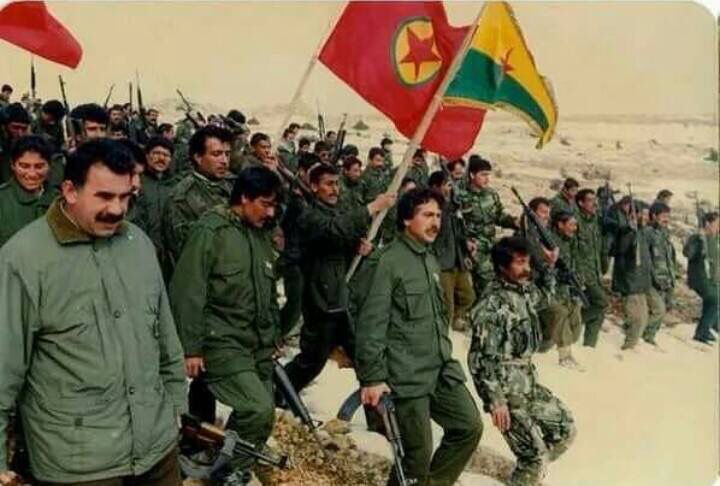

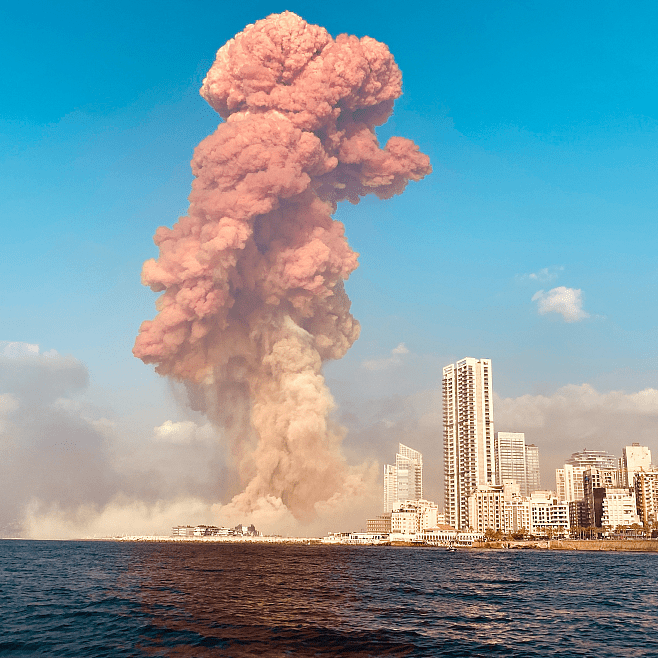



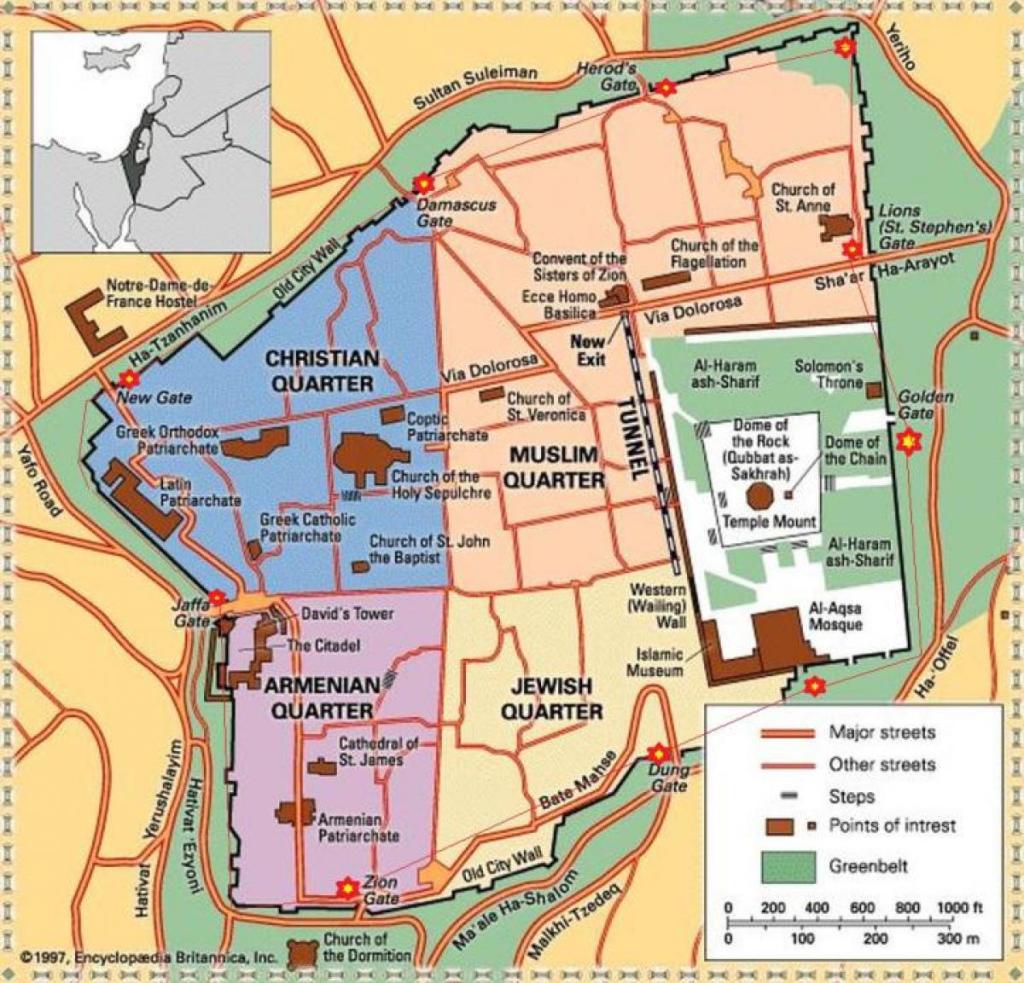



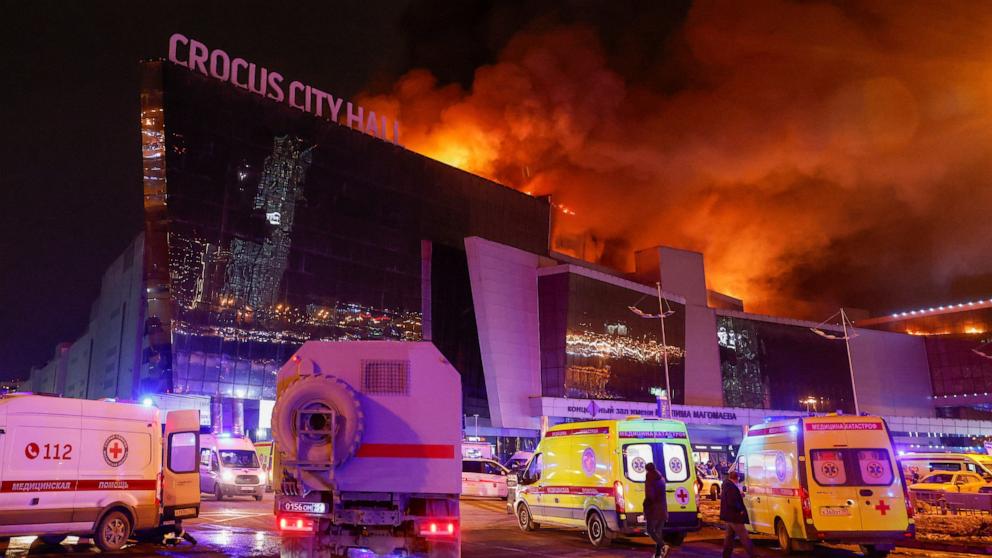



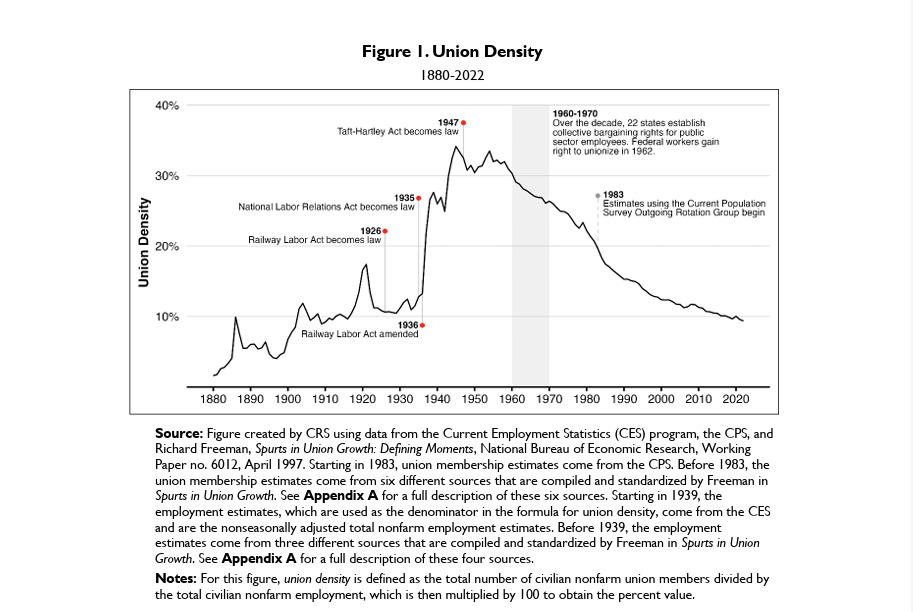

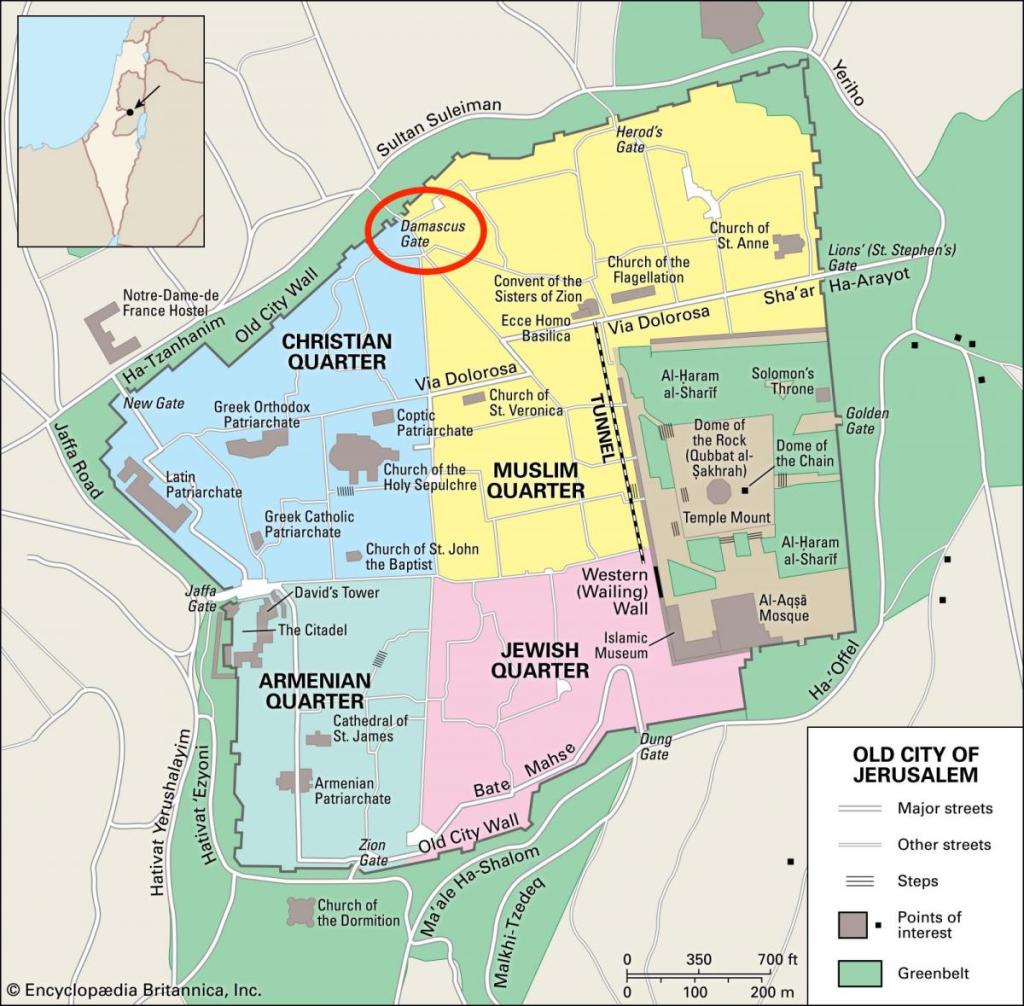

 WALTER SEBASTIAN ADLER