This famous speech is perhaps best viewed as a candid ultimatum. As the race crisis in America escalated in violence and scope; Malcolm X articulated the position of many northern Blacks for which segregation was a non-issue. Coming at a time after his separation with the Nation of Islam (NOI) and Elijah Muhammad, the Ballot of the Bullet speech touches on four key themes that illustrate a great transition on Malcolm’s philosophy and political strategy. Underling these four points is bold and terrifying statement in line with a famous Martin Luther King quote; “those who make peaceful revolution impossible make violent revolution inevitable.” Malcolm makes it plain; if the white power structure blocks Blacks from utilizing the ballot; then violence will erupt and power will obtained in more tumultuous and bloody ways.
Key Point One: The Political Strength Blacks (How does Malcolm X see himself in terms of politics?) The NOI preached political non-involvement. Elijah Muhammad kept Malcolm from getting Muslims active in the civil rights struggle or from supporting political candidates because separatist ideology declared it counter productive to integrate with ones enemy the so-called devilish white man. But this drew criticism from many black sympathetic to Malcolm’s rhetoric but frustrated with the NOI’s lack of activism. With his break from the NOI Malcolm realigned his priorities and moved to articulate his Black Nationalist views through concrete political action. While this speech is pre-Mecca; thus his distrust of whites remained unchanged; Malcolm admits during this period that before and independent Black nation; (a more long term goal) can be achieved or a repatriation to Africa could be made; there is the immediate plight of Blacks in America who lack social services and are under constant threat of racial violence. Before idealized visions of a true nation can come to pass; in this speech Malcolm makes the demand that since Black built America; America must grant Blacks the rights of its white citizens. Basically Malcolm has realigned himself with the immediate demands of the mainstream civil rights movement as an initial stepping stone to Black Nationalist long term political goals.
In terms of politics; Malcolm understood that with white America evenly divided between Republican and Democrat the Black vote was what swung the race. In this speech Malcolm talks of how Blacks throw away their vote with the false promises of the double dealing politicians who pander to integration minded Blacks during the campaign but do nothing once elected. Malcolm also reminds his listeners that there is no real difference between both parties and logical step would be for Blacks to form a new Black Nationalist Party to run candidates. A fundamental of this speech is that Blacks need to make their votes count; but not necessarily for any of the two established white parties that have always stood on similar ground with race relations.
Key Point Two: Unity Among Civil Rights Leaders (Has there been any change in his reference to mainstream civil rights leaders?) In this speech Malcolm also makes a defacto apology and accepts one without it being stated to and from the other mainstream civil rights leaders. He is humbly stating that his rhetoric has not accomplished concrete political good and that it is time for greater unity among leaders allegedly struggling for the same short term objectives.
Malcolm’s reasoning is that the white power structure discriminates and does violence to Blacks collectively regardless of their religious or ideological creed; therefore it is only sensible that resistance be collective as well. This speech on top of political realignment is a declaration of reconciliation with the other leaders. Malcolm is stating that he will involve is soldiers in civil rights struggle now that the restraints of the NOI have been lifted.
Key Point Three: The African American Condition (How does Malcolm X assess the African American condition?) Malcolm’s phrase “the so-called Negro” is an illustration of his Pan-African thinking well on top of his Black Nationalist ideology. Malcolm seeks not only empower Blacks to assert themselves on the political apparatus; but to reconnect them with their roots via the Global Black struggle.
The condition of Blacks in America according to Malcolm is a state of exploitation, moral degradation, and brainwashing. By brainwashing Malcolm refers to disconnect between Blacks living in America and the heritage as being part of the greater African civilization. Malcolm said that Blacks couldn’t remember that they descended from a once proud African civilization. He said that they didn’t even remember their true names. The condition was based on the psychological trauma inflicted by slavery and enforced by adherence to the Euro-Centric practice of Christianity. By Blacks not being able to vote, by blacks not controlling the economic resources of their communities; and by Black being completely disconnected from their roots; the condition furthered Black oppression.
Point Four: On Elijah Muhammad (Is there mention of Elijah Muhammad?) In all previous speeches Malcolm sought to point attention the Elijah Muhammad’s teachings by bringing all credit for his personal rehabilitation on the man himself and while at the time to this speeches delivery Malcolm X had been cast out of the NOI and was being plotted against by his great mentor and former savior; Malcolm would hold off serious criticism of the man until his property and family were threatened by Elijah Muhammad’s followers. The Ballot of the Bullet makes no mention of Elijah Muhammad and coming right after his establishment of Muslim Mosque Inc., this on top of the political redirection marks beginning (so close to the end of life) of the independence of Malcolm’s political actions. No more is he under the leash of Elijah Muhammad; while whites found him radical and so-called dangerous a Muslim minister orator; that fire turned to political engagement would have had a terrifying impact if he had survived to see it pan out. In essence Elijah Muhammad has restrained Malcolm and with their break, and absence of reference in this keynote speech; implied a new sense of policy and vision on what to do about the race crisis in America.
The Ballot or the Bullet was the question; by 1968 a lot of bullets began to fly. By that time Malcolm and Martin had been assassinated; gunned down for their ideas and respective strategies both under highly questionable circumstances as to who orchestrated the murders. Out of the civil rights movement grew the Black Power movement and out of Black Power arose the Black Panther Party for Self Defense directly from the nationalist ideology of Malcolm X. And bullets flew. This speech predicted the massive eruption of violence around the country, especially in the northern ghettos which reached a peak in 1969 with the murder of Panther leader Fred Hampton. We are not going to make a statement as to whether this violence obtained any more political freedom than subsequent attempts at the ballot. But the Black vote still wasn’t an organized by 1970 and it isn’t organized in 2006. And after all that perhaps brother Malcolm isn’t looking down and wondering if Black people, and the American people in general, might need to offer up the same scenario again.
I lost once in a bottle what a priest uses achieves in a prayer; never saw, only heard.
Vodka is more inviting than the priests anyway.
Safer also to have children around.
I believe I was a child around you once or twice.
But it was short lived, adulthood was swiftly found.
To have met you in Penza, eleven years ago;
I might have made your journey more, hospitable. Based on what you say.
“Would have’s” are everyone’s favorites.
Everyone is alive with regret in this city today.
There is no could have, only the will do imaging the before times.
You lies and your truths eviscerate me, vivisect my joint.
The only think I know how do well in a kitchen,
Is cook, and fuck you at knife point.
Albeit, simply; my love for you is twofold;
You are voluptuous and stunning, you’re total hear of darkness, you’re hot,
And then you’re quite cold.
For my love or my own belly I can do much, I liked your arms around my neck, I liked your grab of meat inside my jeans, I need you clutch.
You and I it seems have lived a life of night!
We’ve slept out in the exposure cold, fell asleep out outbound trains, the story you painted, it was bold as it was used to get me sold.
I’ve slept where I was offered, you’ve slept once there here and too,
I’ve stolen bread, you’ve stolen bread,
We both know very well the Manhattan finer things, well you do.
I’ve lied to protect myself, you lie supine and lateral and rewind, you fine dine and call sign, you text novels, she says, you woo.
I’ll steal bread for the universe for you!
If I had such reach with my plane speech, to feed the stars with words of action and of promise and of hope.
“Man I own less than four feet of your noose, but you are hanging on a thread, dying from your hope.”
The things I’ve done in past lives are made plain at 6am in Brighton, we hold hands sometimes, we stumble we bottle tip, we bottle lighten.
When I was the man with Grey Mask, I used to kill for you!
The things you say, we are twenty minutes from the coming of the new day, the rabbit hole residing; you cling to me like glue.
I lie, I wish to always lie with you.
My past lives melt like midnight wax, like Mason words, like the blue moon too.
I lose myself, I give myself I bind my fate, and its Jew true.
The blue moon above us drowns out the sobs of my soul.
You lie and I cry and the circle sounds, ring tones, bells and things made un whole.
Sobs, of the stroll, the Russian ghetto thug roll, the body count is getting higher as you see into my goal.
We lie on the beach and midnight star wax drips from me to you.
Not two fucks of clue about the things you just might do.
I drip on her, she likes, the pain the basic pain the sealing of desire,
Between my legs you’ll drip and wax on the back you’ll pour, but if it’s true I a married woman, a desired girlfriend and have over fourteen lovers; then use me;
Make me for one night more you story whore.
You almost killed us over nothing, I say.
“You almost kissed me over nothing,” she replies, it’s not yet but almost day.
A dove goes by, it decorates the Brooklyn sky, there are blue blacks turning into tiny yellow rays,
Well we killed us, but don’t make that dirty moment linger. It was the wine, it was the mood, it was the; Je ne sais.
Don’t get French with me my dear,
Dragon flies are temporary creatures, they mate, they kill, and they do not ever stay.
Temperamental predator at best, Daria what is it that you really hide. Where hide you your sword, your blade your knife;
“I bore my neck to monsters, and those monsters took my life.”
The surely know to prey on glorious pests,
Fastest insect in the world they say; but they eat each other.
Whereas I’d like to think you only eat your enemies, the knife point fucking, the dripping wax the rest of it, the salsa dancing; I’m a dirty minded man, but I respect you and I love you as if I were your non-blood brother.
You know that I’ve got what science has yet to learn in the blood!
It’s a tug of war some nights.
Insights; in me a passion piñata; bashful-now-I-bash myself for less than useful plights.
Rip off my shirt on site, and beset all inhibitions to the loftiest of flights. You’re not like other women and I don’t ever look too hard for a round of winless fights!
But, I still base my outlook on convictions and those noble thirty human rights.
I still beat my fist against brick walls, I still battle demons and the higher that one climbs in a life of epic expectations;
Then don’t underestimate the gravity of falls.
Or, head spinning, as tobacco demons leave thee,
I want for you to need me!
The how-damn-much you’re wanted near we;
Verse-by-verse a beckon; a tug of begging; of affections hoping that you hear me,
Hoping that you see.
Hoping that you see me win!
Am I weaker because I measure myself in the eyes of woman?
And truthful make my secrets seen to any looking in?
For my English has no resonance it seems,
I long for you, I need you fierce; my close companion by my side and also in my dreams.
And the Burma nights will unfold in nightly plights and carnal color schemes.
You are a world unto yourself, if I cannot pronounce your city how will I never speak to your soul? That is my truest goal.
The moment when our essence and our trust, our common longing makes a good thing whole.
She says; “You know that I’ve got what science has yet to learn in the blood!”
Does a man when lacking bricks build a house from sticks and mud?
When my heart makes a second beat; is-it-more-like machine gun’s fire,
Or a door closing with a thud.
And if I could speak to her special uniqueness,
Knowing my emotions are a liable thing, a source of honest, utter weakness.
And like some unclassified species of sky bound creature, a shaman or a sorcerous blessing many as their patient friend and quiet teacher; does she who has defied science via the reanimation of her own broken heart;
Now broken two times, or more?
Mine four, but who keeps score foreshore!
Find any solace so to speak in clever words or stone heart rhymes?
Does she who has braved so much and cut off expectations bounds find peace with any kind of poetic vagabond when she is certain of his must intenuous mind.
Rewind.
Did you like my passion kissing, did you believe my pledging of my world to you in just one month of passion so reckeless and a man so emotionally blind?
Where was to light a candle for the newness of our kind?
She says; “You know that I’ve got what science has yet to learn in the blood!”
Does a woman when lacking open feelings build a life where golden cows and golden temples escape the torrent and thwart impending flood?
Eye for eye, a blood for a blood!
The mathematics equated to measure her eye brow to eye brow,
To gauge the hard diameter of her judgment, the softness of her spirit, I vow!
I have battered myself up over hard hearts.
For you I pledge devotion to you until such devotion moves or I am moved by cause and zeal, worlds apart to steal and to heal.
To battle these tyrants, to open the thick of my heart to the world of the soul, the world we control, the happy in now and the all of the essence since you showed me how.
One day 10,000 miles apart, the light and dark the stop and the start,
As the thing falls apart;
You keep me like a steel hand guarding your breast and I’ll wear your spirit and memory over the walls of my heart. And keep you in the chakras that resides from the crown of my head to the base of my chest.
“The rest is the rest, and the test is no test for a holy fool such I, if your soul can make love after bodies do perish what good is the kiss to lips of the blessed?”
When my head’s on your chest! When my fear is all vanquished by your fire and magic and when you hold me close you’re my bullet proof vest.
“I’d never have guessed that in three months of knowing I’d yearn for you this deeply!”
She says;
“Well Alan and I could have guessed,” she says with wink and I stand before her pale blushing and naked; completely undressed.
She says; “You know that I’ve got what science has yet to learn in the blood!”
What’s love; just a useless word for a volumous thing, is vodka potatoes or when in America called just a spud?
She does second guess your naked feeling, she has sent you spectral reeling, she is spurred by actions; words are things rehashed.
“You have a stormy lurid past. I don’t judge you for a minute but I know this thing can’t last.”
Now my poetic leanings have failed me for the last time and once filled with fire, am naked, quivering weak.
“We like our manly men.”
“I’ll pull myself together and make myself a thing of manly virtue before we meet again.”
I’m going nowhere, I’m your friend. Don’t iron strike my love and time and break your deals, your promises on this end.
“What is “love” is officially?” she never asked to me;
Love to me officially is Strast (passion is the basis for us to set we free).
Loyalnost (loyalty is the basis of all human interactions, those which offer merit, I think we’d both agree.)
Stojkost (perseverance always needed for what the world will throw at thee)
And Predannost (devotion is the last lesson in Russian that before you turned numb you taught to me)
All must be carried out together; fearlessly.
For another in daily acts of awe,
In your gold brown eyes I saw, warm company and the sheer fire of their soul.
Love to me means the world is alive again when a person you are devoted to smiles and makes you whole.
At you they look and such looks into your very being,
And then on fire you engage the world alive and all awake and loving all you’re seeing. And nothing is abstract or hidden.
And nothing is secret and nothing forbidden.
You are in the end sharing a fire that lights up the night of life and via being together makes waste of all strife;
And cold world bright and the sometimes heavy load, eased by living a state of joy is like butter to a knife.
She asks,
“How without science or knowledge did you but two months come to love?”
“I was dead and it was you who breathed the life into me, and carried me in your arms to safety and as waves crashed below us there were you in passion as we watched the Burma skies above.”
Comrade Norma Sanchez has jet black hair and is petite. She’s vaguely malnourished for a Cuban, but still attractive and dynamico. Of course. She is and always will be a member of the Committees for Defense of the Revolution. The vigilant internal defense mechanism against Yankee imperialist aggression and unrestrained, insatiable sex tourism. Her mother was a fairly high ranking person in the Party, told her of the struggles to defend socialism during the cold war years. Told her of the deprivations and economic siege beginning in 1989 when the Soviet Union collapsed and virtually all proto-communist regimes along with it.
“The U.S.S.R. was the sun and we were just a proud and tiny fortress; that when the sun went out, when we lost our greatest, sturdiest ally; we would be in the dark and there were many things in the dark that could ruin us.”
There would be no more petrol for the cars and tractors, buses and power plants. There would not be fertilizer for growing food. There would be shortages of absolutely everything on every level of consumption. There would be long lines and no electricity. There would be no fans or air conditioners, there would be zip-zero-nada. And in this proverbial darkness of our times ahead, our enemy which had sought to ruin us from the very day of our independence would move in, emboldened by the so called end of history.
I have some understanding that were it not for decisions made during the revolution, if not for our Russian friends and of course the own solid base of our people in the historical context; we could be living in an illiterate and deeply unhealthy place; with a brothel and gambling embankment running from Miramar to Varadero. 500 kilometers long where foreigners could just cheaply, scenically fuck our women, drink our rum and smoke our cigars in the sun.
I knew, I knew the minute I was called to the office that we would not surrender, our great leaders, well the two brothers still alive; would not for one human second consider that the fight was lost.
I was there the day they called us all together. The top nine, the big two; the Ministers and the deputies of industry, defense, finance, agriculture, espionage later. We had known it was coming the fall of our protector and benefactor. In embassy cables and diplomatic whispers; we also knew, it was our job to know that when the big bear fell down, died, and became reborn as god only knows what under American guidance! And its brightest, newest oldest and also highly questionable satellites began dropping from the sky; that nothing not one thing would stop the aggressors to the north from moving in upon us.
We knew this was the beginning of the end of the revolution as we understood it, but what could we do? We suspected the Syrians and the Libyans would not give in easily to them at all. And we watched one after another as communist regimes collapsed in Eastern Europe and Africa. It was really our estimation, that by the time the dust settled; it would be only us, the Vietnamese, the People’s Republic of China (both which had embraced capitalism in most regards five years ago, Laos, and whatever the backwards hell they were doing in North Korea!
We assumed Nicaragua, Ethiopia, Namibia and Angola would remember what we did for them but be in no position to reciprocate. And between 1989 and 1994, it would all come tumbling down. The failed architecture of a dystopian dream.
We sat together at a time when even the leaders were hungry and when anyone looked in a mirror they would not always recognize their own faces, for a look of despair had set in, inside oneself. All that we had willed as a people could be undone in just one year. We were all the same outside, for the siege had not begun yet, it would begin tomorrow and the next day and for the next ten or twenty years. And the Yankee enemy in the North, the pale colder place just a few days out by raft or one hour by plane; it would either soon invade, or try and starve us out. The ten million that had refused to defect. And the accomplishments of the last fifty years could go up in smoke, or simply in a long whimper, as the Dominoes began to fall.
But I understood, it was my training from Moscow to understand and my own Cuban sense of putting it together and taking it apart and refashioning. I knew that there was only one thing that could hold the country together, and so did Fidel and Raul. We needed to buy the time it required us to shore up. I am not sure that we prepared adequately for this day, actually. I’m not sure really we believed this day would come.
They drove us out to, well of course they didn’t tell us and we didn’t ask. And we were told in a meeting this was going to be a special period in times of peace, which was to say all the conditions of a siege and a war were to be upon us and really the only question was how long could we last until the U.S. gets bored, not tired for they have never been in a rush. More until the empire is bored with us, less obsessed with us. Long enough for the opposition to imperialism to recoup.
I remember in the car to the ranch which disguised the room for these situations. I remember wondering if this was the end of our experiment and life as we understood it.
“This comes right from Fidel; you’re all going abroad in a week. Some of you will join embassy staff or medical missions, some as private people with foreign passports. You will be going to allied countries and Western countries, you will be going to make some hasty business.”
Well really the whole speech was so much longer. But this was the short of it. We were not told in any specific terms how long supplies and foreign currency reserves could hold out on the island. We were told in no uncertain terms that things were going to run out, and that our job was to generate hard currency through the operation of a variety of legal and illegal businesses to shore up the essential purchase; food, fuel and probably armaments.
“They’re rioting in Moscow and Warsaw and Budapest. It’s all coming down. Even the Chinese are talking about calling it something else.”
I tell you it wasn’t all cigar smoke and mirrors and fake foreign names, Cubans look like everyone and we had trained long ago to act like anyone, and we’d been assimilating for years into the second world and there was a contingency planned for a cut off over time from USSR foreign aid, not overnight.
“What brought it all down?” Norma asks.
“This wasn’t a polite or immediate question,” she was told. But the answer was several things. First, the West was economically more exploitative and comparatively more ruthless. Second, the Russian Communist Party lost its popular imperative, and third, the endless wars in proxy had sapped its will. But there was something else no one said, which was being said in the West; that Capitalism was simply a better system, no-no no one would say that. But everyone was always hoping blue jeans and popular gringo music would fall of a favela cart or plane hatch back from Miami. And it often did. Luxury carrots for all or for none says the evil murderous and often sloppy C.I.A.! But ours was a hard won thing that had the support of the people and would not be defeated by American imperialism and temptation.
We will do what we have to do to survive this! Too much is historically on the line, if we fall like the others this idea and all our sacrifices and gains will have been for nothing. We would plot and organize, mobilize and do anything we had to do to secure the revolution. We would survive this coming Special Period in Times of Peace. We will break the grim Yankee blockade and ensure the relevancy of Cuban style Marxist Leninism for ten thousand years to come! And I will wear blue jeans when I have to.
Four people with exotic features enter the room, two men and two women, clad in loose army green tunics.
“I would like to introduce the delegation from the Kurdistan Workers Party,” declares my chief, “They are quite expert in smuggling, establishing European business fronts and of course they are committed revolutionaries.”
Says Heval Commander Cancer, pronounced ‘Jansher’ the Guerrilla from his notes,
“Actually, I tried to prepare them for a lifestyle of revolutionary militancy. Kill the enemy. Kill the enemy before the enemy can airstrike, execute, torture or disappear you and your friends. I don’t think they all got it. The training was just too short. They retained much of their Western bourgeoisie privileges. They thought it would maybe be like a movie. It’s a shame the woman died, she was the one with possibly the very most potential, excluding the Germans. That’s all I can say about that, Heval.”
Heval is the Kurdish Kurmanji word for friend, or comrade. In case you had forgotten that. Sometimes I find it best just to repeat myself over and over and over again to make sure you’re paying attention.
Within the Kurdish movement there is a tendency to imbibe a rather endless amount of black tea. A tendency to have poor sleeping habits. A tendency to chain smoke. But, they also light their own cigarette. To let another light your cigarette is ideologically suspect.
Sometimes the Party has debated on banning cigarette smoking, like it has alcohol, drugs, sex, romance, having kids, having a family, contacting your immediate family and acquiring any material things beyond what fits in a ruck sack, in service of the war effort. However, being a revolutionary militant is quite stressful actually. And there sure are a lot of things that can kill you faster than a cigarette. A whole lot of things, actually.
“The legend goes that in a meeting in a tea house in the village of Lice near Diyarbakir City, on November 25th of 1978 a group of young students lead by Abdullah Ocalan founded the Kurdistan Workers Party and launched a revolution unlike anything the world had ever seen before it,” explains Heval Jansher. A Guerrilla in good standing with the Party. Good standing means trust. Good standing means not being a problem. Band standing, means re-education, prolonged isolation or indefinite detention. Eventually it means a bullet.
I was born in Diyarbakir City, the place we call Ahmed, the capital of all Kurdistan. A poetic if not epic place. An ancient citadel of giant black stone walls and total martial law. A town of prisons, stories, heroes and valance in the epoch of the Kurdish people. Little wine bars, a thriving literary scene. It cannot decide whether to be eastern or western, Turkish or Kurdish. The epicenter of a great revolt, or the dystopian mockery of the full blown repression of a colonizing power forcing a boot heel on our neck. As Kurdistan is a powerful and long repressed enduring idea, that idea is becoming a reality on the barricades here and long running fight in the mountains. An imagined community of over forty million souls who are wrongfully, shamefully divided between the imposed nation states of Turkey, Syria, Iraq and Iran all things have two names, all things are both real and imposed upon us. As if to be a Kurd requires an act of insanity, and an act of double thinking. A persistent zealous fight to make the world acknowledge our rights and identity. To admit we have a right to survive as a nation beset with enemies on all sides.
Following the Turkish military coup of 1980, the Kurdish language was prohibited in public and private life. The prison of Diyarbakir filled up and the endless wails of rape and torture propelled the movement to full mobilization and to take up arms again.
Diyarbakir, which in my people’s tradition is also called Ahmed has now swollen to nearly 4 million people since the eradication and ethnic cleansing of over 5,000 Kurdish villages in the great ranges of mountains to the east. The primary battle grounds between the Party and the Turkish State. Growing up there, there was of course no Kurdish allowed in school, no Kurdish books or music except deeply underground. Were in within the Turkish State’s power, we would not even have Kurdish names! We would admit to being a backwards people of “Mountain Turks”. I was born in the year of the largest, latest and greatest uprising. And although since the days of the Medes there have been “one thousands sighs and one thousand failed revolts”, this uprising was to be completely different.
In 1984 Abdullah Ocalan and the Kurdistan Workers Party simultaneously attacked three Turkish army posts and police stations in Bashur and announced the beginning of their revolution. For the next thirty years, almost without pause the P.K.K. and it’s armed guerrilla would battle the Turkish military across Bashur, the name we call the Turkish occupied zone of Kurdistan which means “the North”. Over 50,000 would die, the Turks would engage in vast acts of scorched earth barbarism and we in the Party would eventually turn to out right terror. In the end, the majority of the deaths were Kurdish civilians. In the end the only liberated ground was a handful of villages deep in the mountains of North Iraq, the Qandil.
Now, Kawa is not my real name. It is the name given to me by the guerrillas of the P.K.K. when I joined the Party at age 16. In the year 2000. By that time we were fully surrounded in Qandil being attacked on all sides and death seemed certain. Total defeat as well. Our great leader had been kidnapped in Kenya. Major leaders of the movement including the brother of Abdullah Ocalan, Osman, had completely betrayed us. Our own Iraqi Kurdish brothers in the K.D.P. and P.U.K. Peshmerga were collaborating with Turkey and American to annihilate us.
How do I tell you my story? How does this even begin or end for an outsider. For people who do not even know where Kurdistan begins of ends, or even care. As Turkey is a N.A.T.O. ally, and no matter what it says or does will remain a beneficiary of great power largesse.
I cannot tell you my real name. I cannot speak for the Party, not can I fully disclose the deepness of my hope and my hate to a stranger.
I will try and say somethings for the benefit of doubt, that non-Kurds could care about us so much that they would come to our land by the hundreds. To fight and die alongside us not simply fighting in resistance to Islamic radicalism, genocide and repression, but also because they grasp the larger idea. The total an utter radicalism and implications of Abdullah Ocalan’s vision. For the survival of the revolution rests not in securing a Kurdish State, but instead to export these ideas abroad. To make the blood of the martyrs raise the flood waters of all mankind and provide a blueprint for liberation.
Of course we began as communists, we began admiring the Cubans and it was the Russians and Palestinians that first trained armed the resistance in the early days in the Bekka Valley of Lebanon. But we are not Communists or Nationalists anymore. Our thinking on the subject of liberation has evolved. The Cuban connection and the Palestinians connection are very real and enduring parts of the story.
But, when we all almost died on the mountain top, surrounded and out gunned in 2000 there were no Cubans, or Russians or Palestinians to help us as they were all defeated or fully besieged. By some miracle, or just by sheer will the Party survived. And the 1989 defeat of Communism internationally required us to climb higher, dig deeper to criticize and self-criticize. To adopt an evolution in our thinking. With our ranks decimated, the armed struggle In a complete stalemate, declared a terrorist organization by almost every European country; we evolved. The revolution could not ever be won with arms and ideology alone. Nor could we secure Kurdistan while every other nation on earth embraced “Capitalist Modernity”. To secure our victory and survival as a people in Bakur, Bashur, Rojalat and Rojava we would embrace the ideas of a Jewish anarchist from Vermont, as re-interpreted in prison by Ocalan and implemented by the new largely female leadership of the Party. This methodology called “Democratic Confederalism”, adopted by the Party in 2004 would soon find actual expression in Rojava. The Wild West of Kurdistan, the North most area of Syria. In 2014 when the Civil War broke out the Party and its allied militias seized control of major towns and cities across Syria abandoned by the Assad regime.
Thus we came down from the mountains, out of the underground and prepared to make a stand in Rojava where the radicals of the Islamic State were terrorizing out people and butchering everyone in the their path. If we go back to the mountains it will signal only our isolation and defeat. If we hold these cities, if we showcase that we are fighting to defend not just for Kurds but for Arabs, Assyrians, Yazidis, Circassaians, Chechens and the Turkmen too; if we show that Democratic Confederalism is the solution, the way ahead for all oppressed peoples; then others will join us. And like the Nawruz mountain fires this uprising will eventually spread everywhere.
Out of habit, he lights a cigarette and pours himself a cup of tea. On the walls of the small office set up at the training base, which is also his room, Jansher looks the dead in the eyes.
Deir Ez-Zor was one of the very first Syrian cities in 2011 to stage large scale demonstrations against the Assad Regime. In 2014 ISIS took over the city with little resistance leaving only a small pocket of pro-Assad military and perhaps over 100,000 civilian supporters cut off in an airbase and small section of the city. Supplied by helicopters and high altitude drop services the besieged garrison deep inside the ISIS control zone resisted capture for over 3 years and 2 months.
The siege of Deir Ez-Zor Airbase garrison lasted a very long time. Daesh controlled everything except a small military airport which the Russians and Regime supplied by air for all of the war, but could not re-take, along with the city until just a month ago when it was “liberated” on 3rd November, 2017 by the SAA and the Russians.
At some point the Regime soldiers made the local women trade sex for basic rations of food. There were rarely sympathetic forces in the war, besides ours. But even the Y.P.G. conscripts children, forces Arabs off their land and dabbles in war crimes from time to time, to time. Now, on the South bank, Assad Regime forces, Hezbollah, Iranian Revolutionary guards and Russian special forces push south east down the southern bank of the River while Syrian Democratic Forces and United States lead coalition forces pushed rapidly south to the Euphrates North bank, both sides maneuvering to secure the majority of the Syrian oil fields. The S.D.F. capturing most of them. Now we slowly begin the final offensive to capture Isis’s last strongholds, moving down the river toward Hajin. Trying not to kick off World War Three.
“Perhaps I am not where I am supposed to be,” muses Heval Ciya, “Perhaps here, I will die for nothing at all. We can be killed so easily by anything, then they will dance about with my corpse making speeches in Kurmanji for a day, until my death takes on significance that it probably never had.”
Heval Ciya Zinar is the name they gave me. “Comrade Friend Mountain Rock”. I am a separatism minded Scottish Soldier. Although still a member of the British army, I voted for independence in our latest failed referendum. I am gentleman by most accounts and a Y.P.G. International Volunteer. I have absolutely no political sympathies with the Kurdish lead formations, though I possesses formal military training, making me more valuable than most of these preachy, useless ideologically motivated volunteers.
“There’s dust in my beard and men dying all around me.”
As we grew closer to the Euphrates we can see fire in the sky and the night is lit up with heavy coalition airstrikes somewhere far away to the south. The convoy of nine trucks had left Al Hasakah the largest rebel held city in the morning and drove about five hours south toward some forward operating base. The eight of us internationals had not been issued weapons until half way to the front. We stopped of course several times for obligatory tea and some volleyball. The sport of Apoist revolution. Sometimes we’d stop at what seemed like the same identical store front kiosk, next to well stocked pharmacies. The road bodega of Kurdistan stocked with energy drinks, smokes and Turkish day to day items, never toilet paper. All the toilet paper in Syria was now gone. There we bought energy drinks and cigarettes of a more potent type, as the party issued Ardens were lights or ultra lights at best. There was Pepsi, but no Coca-Cola throughout the liberated zones. Real freedom was not won yet.
In the first battle that I participated in during the Syrian Civil War five Arab soldiers in our S.D.F./ Y.P.G. unit were blown to bits by mines and mortars as we stormed the river basin a little after midnight. Evidently, there were far more Daesh entrenched than we had thought. From a dirt sand trench I fired my AK-47 shiftlessly over the wall, peaking out I saw an Arab comrade ripped apart by gun fire an collapse in the sand.
The fire fight resumed immediately after a short re-calibration of the battle plan, after Heval Commander Dalil’s men were buried. A larger number of Kasadehwere trucked in, barely trained. Half or more might have fought for Daesh or the Regime at some point. Child soldiers all over the place. A major conscription drive happened, even some cadro tabors were moved in. This was a race to secure as much turf north of the Euphrates as we could as quickly as we could, creating a defensible buffer against the regime, Russians and Iranians to secure the oil fields. Of course, implicit in all that was to finish Daesh for good. Smash their final positions along 60 to 100 hamlets and miserable dust cake boney towns leading to Hajin, for the very last stand of the caliphate. Very bad intelligence friends! The bandits were still very well dug in, refugee were swarming out and among them suicide bombers. Five so far. it was impossible to know anymore who was Daesh or not among the refugees flooding out. Some two dozen Arab Hevals were martyred the first night of operation. We were down the hardcore of the elite, the foreign fighter zealots, their families. Motor cycles with snipers affixed to re-position. Sleeper cell deployment, suicide bombers, booby traps, tunnel mines, the usual. Now they would in four battalions capture about fifty tiny key destitute towns working south in several prongs toward the river. “If you see a helicopter, don’t shoot at it!” Dalal had said, it was our new resupply drop copters. we allegedly had an very, very small air force now. “Do not shoot at the helicopters in general,” was repeated several times in Arabic and Kurdish. “Also, also! If the regime forces fire, return fire, but do not engage them. Unless they actually cross the river.” Declared Commander Heval Brusk, which means ‘commander lightning’. Commander lightning then personally presided over a few hours on conscript drills. None of these bearded partisans were trusted with grenades. So the very next day, at early dawn, ten of the destitution ridden little seemingly strategic ISIS hamlets were again stormed. There was chaotic gun fire erupting everywhere. There were utterly ransacked two story brown buildings all unfinished, all about the same shattered look. From several positionsTakimcommandos were firing endlessly from roof tops and sniper holes out toward where it was believed the enemy was hiding. A mosque about half a kilometer away. Well of course every Daesh position was in a mosque, hospital or granary since nothing else was defensible. This was a mostly one sided AK-47 and mortar barrage. Much of the war had proceeded like this, pick up trucks dripping light infantry to storm abandoned Arab homes and light up anything that moved. Loot absolutely anything that wasn’t made of sand and carry it back north. One pipe, one water basin one carpet at a time. A small child ran out into the road was blown away. Briefly a pause, until he was clearly limp and dead. A day or two more of endless AK fire, sometimes at night too. Eventually the Americans were told to bomb the mosque. Spotters transmit grid coordinates. Soon, about 5 minutes later an airstrike riots apart the mosque. Battle won!
Many people have written at length about “how boring” it can be to be at war, but it is more terrifying than boring, actually Heval. You do your best to not think about how men and women far more prepared than yourself took a wrong turn and then just exploded. Or how a sniper cut them down. Or how they died in a Turkish airstrike. Or contracted hepatitis because of poor local appreciation of pooping with toilet paper and hand washing, then eating. The boredom of war Heval is perhaps a cover for a sneaking debilitating fear, so that is what people write about. Being bored, instead of being afraid. And in a war such as this certainly you sit around quite a lot drinking tea, smoking weak Party issued cigarettes and standing guard. Or looking for strategic places to jerk off or poop without setting off a mine. But nothing for us was the same for very long and thus all the time you spend sitting around was better spend ‘conversating’ on the Revolution’s bleak future, or studying some Kurdish, or horsing around with the Arabs. Who loved to try and communicate actually. And also show you pornography and awkwardly try and steal, trade for or buy your hand grenades. Or ask you to bring them to America or Europe hidden in a bag. Jokes abound, but really it is only you who will be brought back to Europe or America in a bag. While very few of us actually spoke any real Kurmanji Kurdish or Arabic, it seemed that the Arabs were far more interested in us than the Kurds though. I would call the Kurdish commanders attitude, begrudging appreciation and that of the rank and file borderline insulting. I would go so far as to say that at this stage in the war, being fought in majority Arab zones now by the Euphrates river that an increasing number of the front line fighters were Kasadeh, non Kurdish Arab S.D.F. fighters. The Assyrians too had a small group, less than a few hundred men many little kids and old men. Many poorly trained and poorly paid semi conscripts. Many not even very against the Islamic state more eager to shoot at the Russians and regime forces on the other side of the river. With the Kadrosbeing withheld in clear preparation for the impending defense of Afrin Canton.
In retrospect I assume that Heval Fermander Dalil probably saved our lives by abandoning us in a rear fox hole in the dead of night. The ten internationalists that I was aware of were placed further back in the rear, but Heval Shervan ‘the crazed Irish gypsy’ commandeered a Humvee and caught us up, without any invitation to the troops of “Fermander Dalil”.
I remember freezing out in the dunes all night long while the Arab fighters shared neither bedding nor blanket. It was so bitterly god damn cold!
Sometimes Heval Kawa the idealistic New Yorker and I talk about the girls back home. I talk about my Ms. Ashley. He talks about his Daria. Some escort Russian he has some arty muse thing with. Pretty much this is what men at war do. Although in my case, I motor boated my female best friend. In his case it seems a bit more fucking dark and tragic.
“Sometimes I close my eyes and remember your lips. Late into the long trip back to Brighton to you home. I have no home, only ugly little flats around Brooklyn soviet which I rent out of poverty, artless and shared. Decorated with trinkets.I’ll never go back! To you or to Russia, or Haiti, nor to Mehanata the tavern or even dear Cuba! All these things are a form of slavery now. Your lingering Daria, it takes the form of ruminations on WhatsApp messages telling me to “come home”.But to what? To nothing. Life here is hard, but it is free life as they say.” Kawa, the American, is more a poet than a medic in his heart of hearts. Me I am simply a Scottish warrior. I long for the fight and I got some.
I was deployed into the Deir Ez-Zor Province wastelands about ten days ago to the front near Omar, Daesh is nearly completely defeated they say, but everyday we are taking martyr bodies back to Al-Hasake. Assigned briefly to the Tabor Shahid Lawrence; we lost fifty men in the first few battles to advance south on the mighty Euphrates river. After all that initial death it seems they aim to break up our group of internationalists into different places. The do not want us all to die at once. They do not really seem to have achieved consensus or a plan on where we should be or when and if we should die, or what we are actually even good for. Or what to do when ISIS is finished, and America abandons them and the Turkish Army rolls over the border to kill us all. A heated internal debate is constantly held in both Turkish and Kurdish. Sometimes also in Arabic. Which always ends inconclusively. Well its a complex matter anyway. So many ways to die out here for the greatest cause of our time.
On this matter Kawa and I agree, that whatever motives brought us all to this wasteland, this place of dying and suffering over made up Gods and ideologies, invented ethnicities and world war three style great power politics; this was the resistance of the age. This was a battle good men, bad men and crazy men could not sit out. Because when the smoke clears there will be a different Middle East, a different world. I am no ideologue. I am no dreamer or religious fanatic. I am a professional soldier. While it is not unreasonable to say the Assad Regime backed by Russia and Iran, the Turks, Al Qaeda and of course the Daesh, are unequivocal the forces of religious fanatical reaction, of fascism, or totalitarianism and death, well they are. While the Kurds and Arabs of Y.P.G./Y.P.J./S.D.F. are not saints of course. We are not angels here to help. We are fighting for democracy, feminism, ecology and tolerance in the heart of the Middle East. As opposed to all the other groups that are fighting for radical Islam, chauvinism, fascism and the right to impose the will of the minority on the majority.
Did you know that when you take off a person’s uniform to bury them, you cannot tell a fascist corpse, from a democratic corpse from a Daesh corpse not even from the length of the beard? Those three and letter affiliations, they doesn’t matter anyway. It matters more, the stuff inside a person heart. Their moral compass. Not the length of the beard or who they pray to. Not the historic struggle of their people or their claim to the rivers. When warriors die, they might not end up anywhere glorious. They might just be dead. The immortality we are achieving in out death here is thus rooted in the way the story is framed. Which is to say, who ever wins the war. But can you really win a war like this at all? I see absolutely no good end in sight.
It is not that any of us longed to die. It was only that we believed that in this transience, this short human life, it was preferable to die on ones feet moving towards a just idea. Moving in solidarity, in defense of the powerless. Then it would be to die on our backs or our knees, half lives, shuffling along like zombies. Always asleep. With meaningless, un-free lives wasted. Lives spend like serfs and slaves.
Have you ever had an amazing noble idea in your head? That simply refused to translate itself or find traction in reality? Have you ever risked everything, sacrificed absolutely everything for such an idea? Myopically, almost psychotically pushing forward in the face of a stubborn, intractable cruel reality. When you can bring yourself to do that. To engage in nothing short of overwhelming zealotry. Pursuing a new reality, a reality where the vast suffering of this world is mitigated. Where the chaos and carnage and daily humiliation that is the lot of most humans is undone by rights, by hope, by heroism. That is called the motivation for the fight.
It has been a very long hard bloody road to the mountains and back from them. From Manhattan to Jerusalem to Havana. All the trips to the City of Port-Au-Prince. To Greater Boston. Back to Brooklyn then to out Russia. Across Russia on a train then into the Middle East to fight in Rojava. Iraq, Turkey, Syria and Egypt and then back to the Big Apple again. Riding on the backs of armored trucks and flying carpets. On horses, on tanks on airships. Over the great rivers and through the woods. Mountains beyond mountains beyond mountains. With stopovers where all civilization has come to a resolute end in the Fertile Crescent. Smoldering villages. Enormous cities razed to the very foundations. Once historic places, simply crushed and undone. Burning down river by river shore to deep sands of desolation. A revolution within a civil war within an endless third world war. A place called Kurdistan which exists not on maps but in the hearts and dreams of perhaps forty million stateless, long oppressed people. Engaged a very long fight for their right to exist.
How do you make any sense of such carnage to people that were not there? How do you make an enjoyable narrative about bloody chaos? Articulate ideas that when they become facts on the ground, have vast contradictions. Have improbable capability to survive.
My name is Sebastian Adonaev, but the Kurds named me “Blacksmith Winter”, or Kawa Zivistan. The Arabs, they needed to name me too so they called me “Abu Yazan”. Because my then part-girlfriend, part-confidant Polina has a son named Yazan. I was 33 when I deployed but looked and felt a bit younger. I felt brave or stupid enough to volunteer for a war. At the most desperate heights of the conflict, which would end up killing over 500,000 people, there was a cry for some extra hands, some Hamsas. Every side called up all available reinforcements. Just before Baghdad almost fell, the mostly Shiite al-Hashid ash-Sha’bi Popular Mobilization Forcescalled up half a million Iraqis to hold I.S.I.S. back. The Assad Regime enlisted thousands of Russian, Iranian and Lebanese Hezbollah to fight Daesh and other Sunni rebel factions aligned with ISIS, Al Qaeda, the Free Syrian Army brands and the Al Qaeda reboot H.T.S. The Islamic State took in over 40,000 foreign fighters and the mostly Kurdish forces in the “Syrian Democratic Forces” enlisted just 500. I fought alongside the Iraqi Special Operations Forces in Iraq and for the Syrian Democratic Forces, in the Y.P.G. Militia defending the idea of Rojava in Syria. I contributed very few bullets, mostly serving as combat medic during my time there. Mostly stopping hemorrhage and carrying the wounded to ambulances. Mostly trying to train people to save lives, actually, at a time when almost everyone wanted to kill.
After defeating the so-called “Islamic State” as a force holding any territory, the United States military all but completely abandoned their Kurdish allies and Turkey invaded Rojava.
We who survived to talk about the Syrian Civil War, we often found there were not easy words to describe what we took part in. This is story grounded in history and ideology. The tale of a stateless people spread over 4 nations, 40 million strong. This is a love song after a series of hard fucks in Spanish and some love making in Russian. This is a Post-Soviet Lullaby, written in Imperial English about Western privileges. I have heard on the wire that the Turkish Army is fully mobilizing to crush Rojava. A fully modern army of over 435,000 soldiers. That Anya is losing her mind in Baghdad and Ana Campbell, that optimistic young woman I once gave hand grenades to, well she died in an airstrike in Afrin. Here I am in Capitalist Modernity’s very heartland and loving embrace. Doing nothing useful for Kurdistan. Just writing stupid love songs. Composing vain self serving propaganda plays.
I’m not sure exactly what I’m supposed to hide and what I can give away. I’m actually very detached from Western thinking so I don’t even know what actually makes compelling propaganda in the West anyway. Actually, the sly and looming enemy knows most of our real names, and frankly were there not many informants amongst us, it is simply a matter of sad fact that to get their passports back many of the French and British volunteers gave us away. Not to snitch jacket, but with a little lean on anyone can make a person flip. Really, there were not that many of us internationalists to keep track of. As the mad China-man Andok said, “the hard drives containing our data were barely even secured and this place is awash in spies.” Our overall numbers were estimated to be around 500 strong of which around 50 later perished. Mostly in combat, some in a wave of alleged suicides. We were small enough therefore for the various security services to keep track of.
So what is the actual purpose of this little manuscript? It is certainly not to glorify or denigrate the volunteers. I think it brave we went there but I don’t think we game changed a single thing. Perhaps we were all only there to bear witness that the revolution has even happened. It is surely not my aim give away military secrets and name names, because I am many things but not a Josh, a ‘donkey ass betrayer’. Suffice to say the C.I.A., MI5 and the M.I.T. know all our names. I heard some comrades sang like little opera singers to get their European passports back. All speculation, none can actually say. Americans, we had the easiest deal. After ISIS is finished maybe it will not be so black and white, fighting a N.A.T.O. ally and what not. Assisting a revolution for stateless democracy, womens emancipation and social ecology in the heart of the war torn Middle East. ‘Heval Ciya’ the Scott always used to say that the 231 Sniper Unit changed the entire game, but really only the United States and the Coalition airstrikes probably, certainly did. When the last of the under 2,500 U.S. Special Forces leave the Turks will invade in force and try and undo everything. There’s a story we heard about a Y.P.G. Euro volunteer vacationing in Turkey immediately after his tour. He was of course arrested and will serve life in prison. He probably should have made better choices for leave and decompression. There are lots of crazy people here. You have to be little crazy to travel half way across the earth to enlist in a revolution inside a bloody brutal civil war amid a great power confrontation placing Russia and Iran directly against the United States and N.A.T.O. I was told by ‘Heval Jansher’ the Y.P.G. guerrilla who helped train us that, that if I survive the war I should “write something about Rojava that does justice to the over 12,000 martyrs. That does justice to the cause of Kurdistan. Honors Abdullah Ocalan and upholds the values of the revolution.” That it should humanize this resistance struggle inside a revolution inside a civil war inside a great game for the Middle East.
“Maybe Heval, just make it a kind of strange fucked up love story,” Jansher joked with me over cigarettes and endless black tea. So I hope this account manages some of that, compiling the oral history, experiences and many martyrdom’s shared amongst the approximate 500-600 foreign Y.P.G./Y.P.J./I.F.B. Internationalist fighters. At the very least I’d like to capture what it was that made us enlist in this hell to take part, to fight and die and kill and try and help, to be less than a foot note in the epic tale of Kurdistan. But still a part. “It has to be a love story or they will never make a movie about it comrade,” Heval Jansher once said, “to the West without a Movie, it is perhaps like this struggle is not even happening at all.” But he also said a ‘real revolutionist’ has no love except for his or her people. That any romantic love is a “bourgeois luxury for civilians”.
“Our love story is for the Resistance of the Age” he used to say, but then Heval Jansher also laughed and noted Jake Gillenhaul was then already shopping around a script where he plays an anarchist falling in love for a beautiful Y.P.J. fighter and another action exploitation of the Y.P.J. was coming out soon in France. But that will likely not go anywhere useful. “You see, in real life we would probably platform and deport this stupid volunteer and the Y.P.J. comrade, she would be shamed and sent briefly to prison” Heval Jansher told me. A famous saying states that the “Kurds have no friends besides the mountains.” Well that’s no longer completely true. The 500 who served and the 45 who died besides the 12,000 Kurdish and Arab martyrs of the battle to defeat ISIS and defend the Rojava Revolution will live forever in the Kurdish tradition, since in Kurdistan ‘Martyrs never die’. Shahid Namarin. These were kind of talks we had at theQerechow Academy.
That then said this is not a love story at all. It’s not even “a Middle Eastern Western”. The revolution itself has hardly been secured. The struggle is hardly over. The iron heel and might of the Turkish army looms right over the border to the North. Ready to descend quickly and murder us all. Undo everything that has been fought for against the so-called Islamic State. The Forces of the bloody dictator Assad backed by the Russian army and Hezbollah dig in to the south of the Euphrates river. The collaborationist Iraqi Kurdish K.D.P. Peshmerga, the Iranian supported Hashid Ashabi popular mobilization forces, the Shi’a dominated Iraqi Army and all manners of Iranian revolutionary guards to the south east in Sinjar. To the West the Jihadists of Al Qaeda’s latest rebrand and Islamists of different types in Idlib.
Enemies of the revolution on every single side! In fulfillment of my promises I will try and present our little part of the story as the defense has really only just begun. Everything might be wiped away before you even paid attention to vastness and hope of it. I worry, no sadly I expect, that long before this manuscript is ever published anywhere, all will be lost. My remaining Hevals will all be killed. The Turkish Army will literally roll over the border and everyone will be slaughtered. This isn’t really speculation, since it has happened many times before.
(c) Rochdale Arts & Heritage Service; Supplied by The Public Catalogue Foundation
Amidah
From Wikipedia, the free encyclopedia (Redirected from Amida prayer)Jump to navigationJump to searchThis article is about a Jewish prayer. For other uses, see Amida.Illustration from Brockhaus and Efron Jewish Encyclopedia (1906—1913)
The Amidah (Hebrew: תפילת העמידה, Tefilat HaAmidah, “The Standing Prayer”), also called the Shemoneh Esreh (שמנה עשרה), is the central prayer of the Jewish liturgy. This prayer, among others, is found in the siddur, the traditional Jewish prayer book. Due to its importance, it is simply called hatefila (תפילה, “prayer”) in rabbinic literature.[1]
The typical weekday Amidah actually consists of nineteen blessings, though it originally had eighteen (hence the alternative name Shemoneh Esreh, meaning “Eighteen”). When the Amidah is modified for specific prayers or occasions, the first three blessings and the last three remain constant, framing the Amidah used in each service, while the middle thirteen blessings are replaced by blessings (usually just one) specific to the occasion.
The prayer is recited standing with feet firmly together, and preferably while facing Jerusalem. In Orthodox public worship, the Amidah is usually first prayed silently by the congregation and is then repeated aloud by the chazzan (reader); it is not repeated in the Maariv prayer. The repetition’s original purpose was to give illiterate members of the congregation a chance to participate in the collective prayer by answering “Amen.” Conservative and Reform congregations sometimes abbreviate the public recitation of the Amidah according to their customs.
To recite the Amidah is a mitzvah de-rabbanan for, according to legend, it was first composed by the Anshei Knesset HaGedolah.[2][3] The rules governing the composition and recital of the Amidah are discussed primarily in the Talmud, in Chapters 4–5 of Berakhot; in the Mishneh Torah, in chapters 4–5 of Hilkhot Tefilah; and in the Shulchan Aruch, Laws 89–127.
The language of the Amidah most likely comes from the mishnaic period,[4] both before and after the destruction of the Temple (70 CE). In the time of the Mishnah, it was considered unnecessary to prescribe its text and content. This may have been simply because the language was well known to the Mishnah’s authors.[5] The Mishnah may also not have recorded a specific text because of an aversion to making prayer a matter of rigor and fixed formula.[6]
According to the Talmud, R. Gamaliel II undertook to codify uniformly the public service, directing Simeon ha-Pakoli to edit the blessings (probably in the order they had already acquired) and made it a duty, incumbent on every one, to recite the prayer three times daily.[7] But this does not imply that the blessings were unknown before that date; in other passages the Amidah is traced to the “first wise men”[8], or to the Great Assembly[9]. In order to reconcile the various assertions of editorship, the Talmud concludes that the prayers had fallen into disuse, and that Gamaliel reinstituted them.[10][11]
The historical kernel in these conflicting reports seems to be that the benedictions date from the earliest days of the Pharisaic Synagogue. They were at first spontaneous outgrowths of the efforts to establish the Pharisaic Synagogue in opposition to, or at least in correspondence with, the Sadducean Temple service.[citation needed] This is apparent from the aggadic endeavor to connect the stated times of prayer (morning and afternoon) with the Temple sacrifices at the same times[12] (for the evening prayer, recourse was had to artificial comparison with the sacrificial portions consumed on the altar during the night).
The Talmud indicates that when Rabbi Gamaliel II undertook to uniformly codify the public service and to regulate private devotion, he directed Samuel ha-Katan to write another paragraph inveighing against informers and heretics, which was inserted as the twelfth prayer in modern sequence, making the number of blessings nineteen.[13] Other Talmudic sources indicate, however, that this prayer was part of the original 18;[14] and that 19 prayers came about when the 15th prayer for the restoration of Jerusalem and of the throne of David (coming of the Messiah) was split into two.[15]
On regular weekdays, the Amidah is prayed three times, once each during the morning, afternoon, and evening services that are known respectively as Shacharit, Mincha, and Ma’ariv.
One opinion in the Talmud claims, with support from Biblical verses, that the concept for each of the three services was founded respectively by each of the three biblical patriarchs.[16] The prescribed times for reciting the Amidah thus may come from the times of the public tamid (“eternal”) sacrifices that took place in the Temples in Jerusalem. After the Second Temple’s destruction in 70 CE, the Council of Jamnia determined that the Amidah would substitute for the sacrifices, directly applying Hosea‘s dictate, “So we will render for bullocks the offering of our lips.”[17] For this reason, the Amidah should be recited during the time period in which the tamid would have been offered. Accordingly, since the Ma’ariv service was originally optional, as it replaces the overnight burning of ashes on the Temple altar rather than a specific sacrifice, Maariv’s Amidah is not repeated by the hazzan (reader), while all other Amidot are repeated.
On Shabbat, Rosh Chodesh, and other Jewish holidays there is a Musaf (“Additional”) Amidah to replace the additional communal sacrifices of these days. On Yom Kippur (Day of Atonement), a fifth public recitation, Ne’ilah, is added to replace a special sacrifice offered on that day.
The weekday Amidah contains nineteen blessings. Each blessing ends with the signature “Blessed are you, O Lord…” and the opening blessing begins with this signature as well. The first three blessings as a section are known as the shevach (“praise”), and serve to inspire the worshipper and invoke God’s mercy. The middle thirteen blessings compose the bakashah (“request”), with six personal requests, six communal requests, and a final request that God accept the prayers. The final three blessings, known as the hoda’ah (“gratitude”), thank God for the opportunity to serve the Lord. The shevach and hoda’ah are standard for every Amidah, with some changes on certain occasions.
Avot (“Ancestors”) – praises of God as the God of the Biblical patriarchs, “God of Abraham, God of Isaac and God of Jacob.”[18][19]
Gevurot (“powers”) – praises God for His power and might[20]. This prayer includes a mention of God’s healing of the sick and resurrection of the dead. It is called also Tehiyyat ha-Metim = “the resurrection of the dead.”
Rain is considered as great a manifestation of power as the resurrection of the dead; hence in winter a line recognizing God’s bestowal of rain is inserted in this benediction. Except for many Ashkenazim, most communities also insert a line recognizing dew in the summer.
Kedushat ha-Shem (“the sanctification of the Name”) – praises God’s holiness.
During the chazzan’s repetition, a longer version of the blessing called Kedusha is chanted responsively. The Kedusha is further expanded on Shabbat and Festivals.
Binah (“understanding”) – asks God to grant wisdom and understanding.
Teshuvah (“return”, “repentance”) – asks God to help Jews to return to a life based on the Torah, and praises God as a God of repentance.
Selichah – asks for forgiveness for all sins, and praises God as being a God of forgiveness.
Geulah (“redemption”) – asks God to rescue the people Israel.[21]
On fast days, the chazzan adds in the blessing Aneinu during his repetition after concluding the Geulah blessing.
Refuah (“healing”)[22]) – a prayer to heal the sick.[23]
An addition can ask for the healing of a specific person or more than one name. The phrasing uses the person’s Jewish name and the name of their Jewish mother (or Sara immeinu).
Birkat HaShanim (“blessing for years [of good]”) – asks God to bless the produce of the earth.
A prayer for rain is included in this blessing during the rainy season.
Galuyot (“diasporas”) – asks God to allow the ingathering of the Jewish exiles back to the land of Israel.
Birkat HaDin (“Justice”) – asks God to restore righteous judges as in the days of old.
Birkat HaMinim (“the sectarians, heretics”) – asks God to destroy those in heretical sects (Minuth), who slander Jews and who act as informers against Jews.
Tzadikim (“righteous”) – asks God to have mercy on all who trust in Him, and asks for support for the righteous.
Boneh Yerushalayim (“Builder of Jerusalem”) – asks God to rebuild Jerusalem and to restore the Kingdom of David.
Birkat David (“Blessing of David”) – asks God to bring the descendant of King David, who will be the messiah.
Tefillah (“prayer”) – asks God to accept our prayers, to have mercy and be compassionate.
On fast days, Ashkenazic Jews insert Aneinu into this blessing during Mincha. Sephardic Jews recite it during Shacharit as well.
Avodah (“service”) – asks God to restore the Temple services and sacrificial services.
Hoda’ah (“thanksgiving”) – thanks God for our lives, for our souls, and for God’s miracles that are with us every day.
When the chazzan reaches this blessing during the repetition, the congregation recites a prayer called Modim deRabbanan (“the thanksgiving of the Rabbis”).
Sim Shalom (“Grant Peace”) – asks God for peace, goodness, blessings, kindness and compassion. Ashkenazim generally say a shorter version of this blessing at Minchah and Maariv, called Shalom Rav.
Prior to the final blessing for peace, the following is said:
We acknowledge to You, O Lord, that You are our God, as You were the God of our ancestors, forever and ever. Rock of our life, Shield of our help, You are immutable from age to age. We thank You and utter Your praise, for our lives that are delivered into Your hands, and for our souls that are entrusted to You; and for Your miracles that are with us every day and for your marvelously kind deeds that are of every time; evening and morning and noon-tide. Thou art good, for Thy mercies are endless: Thou art merciful, for Thy kindnesses never are complete: from everlasting we have hoped in You. And for all these things may Thy name be blessed and exalted always and forevermore. And all the living will give thanks unto Thee and praise Thy great name in truth, God, our salvation and help. Selah. Blessed be Thou, O Lord, Thy name is good, and to Thee it is meet to give thanks.
The priestly blessing is said in the reader’s repetition of the Shacharit Amidah, and at the Mussaf Amidah on Shabbat and Jewish Holidays. On public fast days it is also said at Mincha; and on Yom Kippur, at Neilah. It is not said in a House of Mourning. In Orthodox and some Conservative congregations, this blessing is chanted by kohanim (direct descendants of the Aaronic priestly clan) on certain occasions. In Ashkenazic practice, the priestly blessing is chanted by kohanim on Jewish Holidays in the Diaspora, and daily in the Land of Israel. In Yemenite Jewish synagogues and some Sephardi synagogues, kohanim chant the priestly blessing daily, even outside Israel.
The custom has gradually developed of reciting, at the conclusion of the latter, the supplication with which Mar, the son of Rabina, used to conclude his prayer:
My God, keep my tongue and my lips from speaking deceit, and to them that curse me let my soul be silent, and like dust to all. Open my heart in Your Torah, and after [in] Thy commandments let me [my soul] pursue. As for those that think evil of [against] me speedily thwart their counsel and destroy their plots. Do [this] for Thy name’s sake, do this for Thy right hand’s sake, do this for the sake of Thy holiness, do this for the sake of Thy Torah. That Thy beloved ones may rejoice, let Thy right hand bring on help [salvation] and answer me…
At this point, some say a Biblical verse for their name(s):
For example, someone named Leah, would say, as their Pasuk
“LaHaShem HaYeShuA AL Amcha VirChaSecha Selah” since both Leah and the phrase begin with a Lamed and end with a Hay.[24] This practice is attributed[25] to Eliya Rabba and/or Sh’Lah. One Sephardic siddur says that this practice helps to remind the person of their name on the Day of Judgement.
The silent wording then continues:
May the words of my mouth and the meditations of my heart be acceptable in Thy sight, O Eternal, my rock and my redeemer.[26]
May it be your will, O my God and God of my fathers, that the Temple be rebuilt speedily in our days, and give us our portion in your Torah, and there we will worship you with reverence as in ancient days and former years. And may the Mincha offering of Judah and Jerusalem be pleasing to God, as in ancient days and former years.
Many Sepharic prayer books correspondingly add:
May it be your will, O my God and God of my fathers, that You Shall speedily rebuild the Temple in our days, and give us our portion in your Torah, so that we may fulfill your statutes and do Your Will and serve you with all our heart.
Many also customary add individual personal prayers as part of silent recitation of the Amidah. Rabbi Shimon enjoins praying by rote: “But rather make your prayer a request for mercy and compassion before the Ominipresent.”[27] Some authorities encourage the worshipper to say something new in his prayer every time.
Prayer in Judaism is called avodah shebalev (“service of the heart”). Thus, prayer is only meaningful if one focuses one’s emotion and intention, kavanah, to the words of the prayers. The Shulchan Aruch thus advises that one pray using a translation one can understand, though learning the meaning of the Hebrew liturgy is ideal.[28]
Halakhah requires that the first blessing of the Amidah be said with intention; if said by rote alone, it must be repeated with intention. Rema (16th century) wrote that this is no longer necessary, because “nowadays… even in the repetition it is likely he will not have intention”.[29] The second to last blessing of Hoda’ah also has high priority for kavanah.
Interrupting the Amidah is forbidden. The only exceptions are in cases of danger or for one who needs to relieve oneself, though this rule may depend on the movement of Judaism. There are also halakhot to prevent interrupting the Amidah of others; for example, it is forbidden to sit next to someone praying or to walk within four amot (cubits) of someone praying.
The guideline of silent prayer comes from Hannah‘s behavior during prayer, when she prayed in the Temple to bear a child.[30] She prayed “speaking upon her heart,” so that no one else could hear, yet her lips were moving. Therefore, when saying the Amidah one’s voice should be audible to oneself, but not loud enough for others to hear.
The name “Amidah,” which literally is the Hebrew gerund of “standing,” comes from the fact that the worshipper recites the prayer while standing with feet firmly together. This is done to imitate the angels, whom Ezekiel perceived as having “one straight leg.”[31] As worshippers address the Divine Presence, they must remove all material thoughts from their minds, just as angels are purely spiritual beings. In a similar vein, the Tiferet Yisrael explains in his commentary, Boaz, that the Amidah is so-called because it helps a person focus his or her thoughts. By nature, a person’s brain is active and wandering. The Amidah brings everything into focus.
The Talmud says that one who is riding an animal or sitting in a boat (or by modern extension, flying in an airplane) may recite the Amidah while seated, as the precarity of standing would disturb one’s focus.[32]
The Amidah is preferably said facing Jerusalem, as the patriarch Jacob proclaimed, “And this [place] is the gateway to Heaven,”[33] where prayers may ascend. The Talmud records the following Baraita on this topic:
A blind man, or one who cannot orient himself, should direct his heart toward his Father in Heaven, as it is said, “They shall pray to the Lord” (I Kings 8). One who stands in the diaspora should face the Land of Israel, as it is said, “They shall pray to You by way of their Land” (ibid). One who stands in the Land of Israel should face Jerusalem, as it is said, “They shall pray to the Lord by way of the city” (ibid). One who stands in Jerusalem should face the Temple. … One who stands in the Temple should face the Holy of Holies. … One who stands in the Holy of Holies should face the Cover of the Ark. … It is therefore found that the entire nation of Israel directs their prayers toward a single location.[34]
There is a dispute regarding how one measures direction for this purpose. Some say one should face the direction which would be the shortest distance to Jerusalem, i.e. the arc of a great circle, as defined in elliptic geometry. Thus in New York one would face north-northeast. Others say one should face the direction along a rhumb line path to Jerusalem, which would not require an alteration of compass direction. This would be represented by a straight line on a Mercator projection, which would be east-southeast from New York. In practice, many individuals in the Western Hemisphere simply face due east, regardless of location.
There are varying customs related to taking three steps backwards (and then forwards) before reciting the Amidah, and likewise after the Admidah.
Before reciting the Amidah, it is customary for Ashkenazim to take three steps back and then three steps forward. The steps backward at the beginning represent withdrawing one’s attention from the material world, and then stepping forward to symbolically approach the King of Kings. The Mekhilta notes that the significance of the three steps is based on the three barriers that Moses had to pass through at Sinai before entering God’s realm.[35] The Mishnah Berurah wrote that only the steps forward are required, while the backward steps beforehand are a prevalent custom.[36] It is not the custom of the Sephardim to step backward or forward prior to reciting the Amidah.
Mention of taking three steps back, upon finishing the final meditation after the Amidah, is found in both Asheknaz and Sephardi/עדות המזרח siddurim.
One takes three steps back upon finishing the final meditation after the Amidah, and then says, while bowing left, right, and forward, “He who makes peace in the heavens, may He make peace for us and all Israel, and let us say, Amen.” Many have the custom to remain standing in place until immediately before the chazzan reaches the Kedusha, and then take three steps forward. The Talmud understands this as a reminder of the practice in the Temple in Jerusalem, when those offering the daily sacrifices would walk backward from the altar after finishing. It also compares the practice to a student’s respectfully backs away from his teacher.[37]
The worshipper bows at four points in the Amidah: at the beginning and end of two blessings, Avot and Hoda’ah. It is the custom of the Ashkenazim that one bends the knees when saying “Blessed,” then bows at “are You,” and straightens while saying “O Lord.” (At the beginning of Hoda’ah, one instead bows while saying the opening words “We are grateful to You” without bending the knees.) The reason for this procedure is that the Hebrew word for “blessed” (baruch) is related to “knee” (berech); while the verse in Psalms states, “The Lord straightens the bent.”[38] At each of these bows, one must bend over until the vertebrae protrude from one’s back; one physically unable to do so suffices by nodding the head.[39] It is not the custom of the Sephardim to bend the knees during the Amidah.
During certain parts of the Amidah said on Rosh Hashana and Yom Kippur, Ashkenazi Jews traditionally go down to the floor upon their knees and make their upper body bowed over like an arch, similar to the Muslim practice of sujud. There are some variations in Ashkenazi customs as to how long one remains in this position. Some members of the Dor Daim movement also bow in this manner in their daily Amidah prayer.[40]
In Orthodox and Conservative (Masorti) public worship, the Amidah is first prayed silently by the congregation; it is then repeated aloud by the chazzan (reader), except for the evening Amidah or when a minyan is not present. The congregation responds “Amen” to each blessing, and “Baruch Hu Uvaruch Shemo” (“blessed is He and blessed is His Name”) when the chazzan invokes God’s name in the signature “Blessed are You, O Lord…” If there are not six members of the minyan responding “Amen,” the chazzan’s blessing is considered in vain.
The repetition’s original purpose was to give illiterate members of the congregation a chance to be included in the chazzan’s Amidah by answering “Amen.”
The public recitation of the Amidah is sometimes abbreviated, with the first three blessings (including Kedushah) said out loud and the remainder silently. The individual’s silent repetition of the Amidah is said afterwards, not before. This practice is commonly referred to as heikha kedusha (Yiddish: הויכע קדושה, lit. “high (loud) kedushah”), and sometimes as bekol ram (Hebrew בקול רם, lit. “in a high voice”). It is occasionally performed in Orthodox prayers (in some communities it is customary for mincha to be recited in this way), and more common in Conservative and Reform congregations. A variety of customs exist for how exactly this practice is performed.[41][42][43][44][45]
On Shabbat, the middle 13 benedictions of the Amidah are replaced by one, known as Kedushat haYom (“sanctity of the day”), so that each Shabbat Amidah is composed of seven benedictions. The Kedushat haYom has an introductory portion, which on Sabbath is varied for each of the four services, and short concluding portion, which is constant:
Our God and God of our Ancestors! Be pleased with our rest; sanctify us with Your commandments, give us a share in Your Torah, satiate us with Your bounty, and gladden us in Your salvation. Cleanse our hearts to serve You in truth: let us inherit, O Lord our God, in love and favor, Your holy Sabbath, and may Israel, who loves Your name, rest thereon. Praised are You, O Lord, who sanctifies the Sabbath.
On Sabbath eve, after the congregation has read the Amidah silently, the reader repeats aloud the Me’En Sheva’, or summary of the seven blessings.[46] The congregation then continues:
Shield of the fathers by His word, reviving the dead by His command, the holy God to whom none is like; who causeth His people to rest on His holy Sabbath-day, for in them He took delight to cause them to rest. Before Him we shall worship in reverence and fear. We shall render thanks to His name on every day constantly in the manner of the benedictions. God of the ‘acknowledgments,’ Lord of ‘Peace,’ who sanctifieth the Sabbath and blesseth the seventh [day] and causeth the people who are filled with Sabbath delight to rest as a memorial of the work in the beginning of Creation.
On festivals, like on Shabbat, the intermediate 13 blessings are replaced by a single blessing concerning “Sanctification of the Day” prayer. However, the text of this blessing differs from on Shabbat. The first section is constant on all holidays:
You have chosen us from all the nations, You have loved us and was pleased with us; You lifted us above all tongues, and sanctified us with Your commandments, and brought us, O our King, to Your service, and pronounced over us Your great and holy name.
A paragraph naming the festival and its special character follow.
If the Sabbath coincides with a festival, the festival blessing is recited, but with special additions relating to Shabbat.
On the Shabbat, festivals (i.e., on Yom Tov and on Chol HaMoed), and on Rosh Chodesh, a fourth Amidah prayer is recited, entitled Mussaf (“additional”). Like the Shacharit and Mincha Amidah, it is recited both silently and repeated by the Reader.
The Mussaf Amidah begins with the same first three and concludes with the same last three blessings as the regular Amidah. In place of the 13 intermediate blessings of the daily service, a single blessing is added, relating to the holiday. (The Mussaf Amidah on Rosh Hashanah is unique in that apart from the first and last 3 blessings, it contains 3 central blessings making a total of 9.)
Historically (and currently in Orthodox services), the middle blessing focuses on the special Mussaf sacrifice that was offered in the Temple in Jerusalem, and contains a plea for the building of a Third Temple and the restoration of sacrificial worship. The biblical passage referring to the Mussaf sacrifice of the day is recited.
The Rabbinical Assembly of Conservative Judaism has devised two forms for the Mussaf Amidah with varying degrees of difference from the Orthodox form. One version refers to the prescribed sacrifices, but in the past tense (“there our ancestors offered” rather than “there we shall offer”). A newer version omits references to sacrifices entirely.
On Yom Kippur, a fifth Amidah (in addition to the Ma’ariv (Evening), Shacharit (Morning), Mussaf (Additional), and Mincha (Afternoon) Amidah is recited and repeated at the closing of Yom Kippur. The congregation traditionally stands during the entire repetition of this prayer, which contains a variety of confessional and supplicatory additions. In the Ashkenazi custom, it is also the only time that the Avinu Malkeinu prayer is said on Shabbat, should Yom Kippur fall on Shabbat, though by this point Shabbat is celestially over.
The Mishnah (Brachot 4:3) and Talmud (Brachot 29a) mention the option of saying a truncated version of the Amidah (see Havineinu), if one is in a rush or under pressure. It consists of only seven blessings – the usual first three and last three, and a middle blessing named after its first word, Havineinu.[47][48]
Prayers for rain in winter and dew in summer[edit]
“Mentioning the power of [providing] rain” (הזכרת גבורות גשמים)[edit]
The phrase “משיב הרוח ומוריד הגשם” (“He [God] causes the wind to blow and the rain to fall”) is inserted in the second blessing of the Amidah (Gevurot), throughout the rainy season in Israel (fall and winter). The most prominent of God’s powers mentioned in this blessing is the resurrection of the dead. Rain is mentioned here because God’s provision of rain is considered to be as great a manifestation of His power as the resurrection.[citation needed] Rain is not mentioned in spring and summer, when rain does not fall in Israel. Nevertheless, given the importance of moisture during the dry summer of Israel, many versions of the liturgy insert the phrase “מוריד הטל,” “He causes the dew to fall,” during every Amidah of the dry half of the year.
The “mention” of rain (or dew) starts and ends on major festivals (Shemini Atzeret and Passover respectively)[49] On these holidays, special extended prayers for rain or dew (known as Tefillat Geshem and Tefillat Tal respectively). In the Ashkenazic tradition, both prayers are recited by the Reader during the repetition of the Mussaf Amidah. Sephardic tradition, which prohibits such additions, places them before the Mussaf Amidah. The change is made on these holidays because they are days of great joy, and because they are days of heavy attendance at public prayers. Therefore, the seasonal change in the language of the prayers is immediately and widely disseminated.[citation needed]
In the ninth blessing of the weekday Amidah, the words “may You grant dew and rain” are inserted during the winter season in the Land of Israel. Outside Israel, this season is defined as beginning on the 60th day after the autumnal equinox (usually 4 December) and ending on Passover.[50] In Israel, the season begins on the 7th of Cheshvan. The Sephardi and Yemenite Jewish rituals, as opposed to just adding the words “dew and rain” during the winter, have two distinct versions of the ninth blessing. During the dry season, the blessing has this form:
Bless us, our Father, in all the work of our hands, and bless our year with gracious, blessed, and kindly dews: be its outcome life, plenty, and peace as in the good years, for Thou, O Eternal, are good and does good and blesses the years. Blessed be Thou, O Eternal, who blesses the years.
In the rainy season, the text is changed to read:
Bless upon us, O Eternal our God, this year and all kinds of its produce for goodness, and bestow dew and rain for blessing on all the face of the earth; and make abundant the face of the world and fulfil the whole of Thy goodness. Fill our hands with Thy blessings and the richness of the gifts of Thy hands. Preserve and save this year from all evil and from all kinds of destroyers and from all sorts of punishments: and establish for it good hope and as its outcome peace. Spare it and have mercy upon it and all of its harvest and its fruits, and bless it with rains of favor, blessing, and generosity; and let its issue be life, plenty, and peace as in the blessed good years; for Thou, O Eternal, are good and does good and blesses the years. Blessed be Thou, O Eternal, who blesses the years.
At the Maariv Amidah following the conclusion of a Shabbat or Yom Tov, a paragraph beginning Atah Chonantanu (“You have granted us…”) is inserted into the weekday Amidah’s fourth blessing of Binah. The paragraph thanks God for the ability to separate between the holy and mundane, paraphrasing the concepts found in the Havdalah ceremony. In fact, the Talmud teaches that if this paragraph is forgotten, the Amidah need not be repeated, because Havdalah will be said later over wine. Once Atah Chonantanu is said, work prohibited on the holy day becomes permitted because the separation from the holy day has been established.
During the Ten Days of Repentance between Rosh Hashanah and Yom Kippur, additional lines are inserted in the first, second, second to last, and last blessings of all Amidot. These lines invoke God’s mercy and pray for inscription in the Book of Life. In many communities, when the chazzan reaches these lines during his repetition, he pauses and the congregation recites the lines before him. During the final recitation of the Amidah on Yom Kippur the prayer is slightly modified to read “seal us” in the book of life, rather than “write us”.
Moreover, the signatures of two blessings are changed to reflect the days’ heightened recognition of God’s sovereignty. In the third blessing, the signature “Blessed are You, O Lord, the Holy God” is replaced with “Blessed are You, O Lord, the Holy King.” On weekdays, the signature of the eleventh blessing is changed from “Blessed are You, O Lord, King who loves justice and judgement” to “Blessed are You, O Lord, the King of judgement.”
On public fast days, special prayers for mercy are added to the Amidah. At Shacharit, no changes are made in the silent Amidah, but the chazzan adds an additional blessing in his repetition right after the blessing of Geulah, known by its first word Aneinu (“Answer us”). The blessing concludes with the signature “Blessed are You, O Lord, Who responds (some say: to His nation Israel) in time of trouble.”
At Minchah, the chazzan adds Aneinu in his repetition again, as at Shacharit. In addition, during the silent Amidah, all fasting congregatants recite the text of Aneinu without its signature in the blessing of Tefillah. In addition, communities that say the shortened version of the Shalom blessing at Minchah and Maariv say the complete version at this Minchah. The chazzan also says the priestly blessing before Shalom as he would at Shacharit, unlike the usual weekday Minchah when the priestly blessing is not said.
On Tisha B’Av at Minchah, Ashkenazim add a prayer that begins Nachem (“Console…”) to the conclusion of the blessing Binyan Yerushalayim, elaborating on the mournful state of the Temple in Jerusalem. The concluding signature of the blessing is also extended to say “Blessed are You, O Lord, Who consoles Zion and builds Jerusalem.” In other traditions, it is said in all the Amidot of Tisha B’av, or not included at all.
On Chol HaMoed and Rosh Chodesh, the prayer Ya’aleh Veyavo (“May [our remembrance] rise and be seen…”) is inserted in the blessing of Avodah. Ya’aleh Veyavo is also said in the Kedushat HaYom blessing of the Festival Amidah, and at Birkat HaMazon. One phrase of the prayer varies according to the day’s holiday, mentioning it by name. Often, the first line is uttered aloud so that others will be reminded of the change.
On Hanukkah and Purim, the weekday Amidot are recited, but a special paragraph is inserted into the blessing of Hoda’ah. Each holiday’s paragraph recounts the historical background of that holiday, thanking God for his salvation. Both paragraphs are prefaced by the same opening line, “[We thank You] for the miraculous deeds (Al HaNissim) and for the redemption and for the mighty deeds and the saving acts wrought by You, as well as for the wars which You waged for our ancestors in ancient days at this season.”
The most recent known change to the text of the standard daily Amidah by an authority accepted by Orthodox Judaism was done by the Arizal in the 16th century. He formulated a text of the Amidah which seems to be a fusion of the Ashkenazi and Sepharadi text in accordance with his understanding of Kabbalah. Following the establishment of the State of Israel and the reunification of Jerusalem, some Orthodox authorities proposed changes to the special Nachem (“Console…”) prayer commemorating the destruction of Jerusalem added to the Amidah on Tisha B’av in light of these events.A mixed-gender, egalitarian Conservative service at Robinson’s Arch, Western Wall
Conservative and Reform Judaism have altered the text to varying degrees to bring it into alignment with their view of modern needs and sensibilities. Conservative Judaism retains the traditional number and time periods during which the Amidah must be said, while omitting explicit supplications for restoration of the sacrifices. Reconstructionist and Reform Judaism, consistent with their views that the rhythm of the ancient sacrifices should no longer drive modern Jewish prayer, often omit some of the Amidah prayers, such as the Mussaf, omit temporal requirements, and omit references to the Temple and its sacrifices.
Reform Judaism has changed the first benediction, traditionally invoking the phrase “God of our Fathers, God of Abraham, God of Isaac and God of Jacob,” one of the Biblical names of God. New editions of the Reform siddur explicitly say avoteinu v’imoteinu (“our fathers and our mothers”), and Reform and some Conservative congregations amend the second invocation to “God of Abraham, God of Isaac and God of Jacob; God of Sarah, God of Rebekah, God of Leah, and God of Rachel.” The new reform prayer book, Mishkan T’filah, reverses Leah’s and Rachel’s names. Some feminist Jews have added the names of Bilhah and Zilpah, since they were mothers to four tribes of Israel.
Liberal branches of Judaism make some additional changes to the opening benedictions. the phrase umeivi go’eil (“and brings a redeemer”) is changed in Reform Judaism to umeivi ge’ulah (“who brings redemption”), replacing the personal messiah with a Messianic Age. The phrase m’chayei hameitim (“who causes the dead to come to life”) is replaced in the Reform and Reconstructionist siddurim with m’chayei hakol (“who gives life to all”) and m’chayei kol chai (“who gives life to all life”), respectively. This represents a turn away from the traditional article of faith that God will resurrect the dead.
Prayer 17, Avodah. asks God to restore the Temple services, build a Third Temple, and restore sacrificial worship. The concluding meditation ends with an additional prayer for the restoration of Temple worship. Both prayers have been modified within the siddur of Conservative Judaism, so that although they still ask for the restoration of the Temple, they remove the explicit plea for the resumption of sacrifices. (Some Conservative congregations remove the concluding silent prayer for the Temple entirely.) The Reform siddur also modifies this prayer, eliminating all reference to the Temple service and replacing the request for the restoration of the Temple with “God who is near to all who call upon you, turn to your servants and be gracious to us; pour your spirit upon us.”
Many Reform congregations will often conclude with either Sim Shalom or Shalom Rav. Once either of those prayers are chanted or sung, many congregations proceed to a variation on the Mi Shebeirach (typically the version popularized by Debbie Friedman), the traditional prayer for healing, followed by silent prayer, and then a resumption of the service.
Conservative Judaism is divided on the role of the Mussaf Amidah. More traditional Conservative congregations recite a prayer similar to the Mussaf prayer in Orthodox services, except they refer to Temple sacrifices only in the past tense and do not include a prayer for the restoration of the sacrifices. More liberal Conservative congregations omit references to the Temple sacrifices entirely. Reconstructionist and Reform congregations generally do not do the Mussaf Amidah at all, but if they do, they omit all references to Temple worship.
^Maimonides on Men. iv. 1b, quoted by Elbogen, “Gesch. des Achtzehngebetes”.
^ This aversion that continued at least to some extent throughout the Talmudic period, as evidenced by the opinions of R. Eliezer(Talmud Ber. 29b) and R. Simeon ben Yohai (Ab. ii. 13). R. Joseheld that one should include something new in one’s prayer every day (Talmud Yerushalmi Ber. 8b), a principle said to have been carried into practice by R. Eleazar and R. Abbahu (ib.). Prayer was not to be read as one would read a letter (ib.).
^ Ehrlich, Uri and Hanoch Avenary. “Amidah.” Encyclopaedia Judaica. Ed. Michael Berenbaum and Fred Skolnik. Vol. 2. 2nd ed. Detroit: Macmillan Reference USA, 2007. 72–76. Gale Virtual Reference Library. Gale. 17 November 2009, p. 73
^ They understand the Mishneh Torah and the Talmudic statements concerning bowing in the Amidah to mean that one must always prostrate, lying flat on the ground, throughout the year during the four bows of the Amidah.
Joseph Heinemann “Prayer in the Talmud”, Gruyter, New York, 1977
——— (1981), ‘Iyyunei Tefilla” Magnes, Jerusalem.
Kaunfer, Alvan (Winter 1995), “Who knows four? The Imahot in rabbinic Judaism”, Judaism, 44: 94–103.
Reuven Kimelman “The Messiah of the Amidah: A Study in Comparative Messianism.” Journal of Biblical Literature 116 (1997) 313–320.
Zev LeffShemoneh Esrei: The Depth and Beauty of Our Daily Prayer, Targum Press, Jerusalem, 2008.
Paula Reimers, “Feminism, Judaism and God the Mother” Conservative Judaism Volume XLVI, Number I, Fall, 1993
Joel Rembaum “Regarding the Inclusion of the names of the Matriarchs in the First Blessing of the Amidah” Proceedings of the Committee on Jewish Law and Standards 1986–1990 pp. 485–490
Creation was an effortless act of self awareness and defining.
In the beginning of creation there was an astonishing and lonelyemptiness.
Such arose a need to name subjects and objects. A need to categorize indefinite matter into types. A need to make the vast darkness known and knowable.
In the emptiness of the universe forms required definitions.
Thus the unified creator named the universe of space “the heavens” and the spinning objects within that space composed of matter; “the earths”.
Thus in definition God created the heavens and the earths.
With the utterance of “Let there be light” God shared knowledge of the infinite with newly emerging forms.
God separated matter from space, and darkness from light.
The light would be called “Day” and the and darkness “Night”. Thus was created heavens and earths, a conception of days and nights.
All this was accomplished by the morning of a second day.
On some earths there was pure liquid matter which God called “Ocean” and the ocean it was separated with dry matter called “Land”. On the second day was accomplished the concentration of dry and wet spaces.
God conceived of time, dividing seconds, minutes, hours and days, creating seasons creating Suns to give energy, warmth and light, creating moons to illuminate the darkness of the night.
God then created vegetation in the seas and on lands by seeds which became herbs, fruit trees and all manners of non-sentient living forms.Thus ended the third day.
On the fourth day God created creatures for the air and sea which multiplied and on the fifth day God created creatures for populating the land and they too multiplied.
On the sixth day God created Woman and Man who embodied characteristics of self awareness, empathy, beneficence, mercy and possessed creative instincts. Of all the creatures in creation none were more like the essence of their creator.
God separated earth from heaven, light from dark, day from night, it created time and it populated the universe with living things called plants and animals it then divided its unity into woman and man bestowing them with complementary sentience.
Thus God created humans in its image, thus God being a personified pure good with a thirst for self-knowledge and mighty creative instincts so also was human kind.
Such it was evening and morning of the sixth day of creation and on the seventh day God rested happily having brought definition to darkness and endless possibility in the from of woman and man.
1In the beginning of God’s creation of the heavens and the earth.
11And God said, “Let the earth sprout vegetation, seed yielding herbs and fruit trees producing fruit according to its kind in which its seed is found, on the earth,” and it was so.
12And the earth gave forth vegetation, seed yielding herbs according to its kind, and trees producing fruit, in which its seed is found, according to its kind, and God saw that it was good.
14And God said, “Let there be luminaries in the expanse of the heavens, to separate between the day and between the night, and they shall be for signs and for appointed seasons and for days and years.
21And God created the great sea monsters, and every living creature that crawls, with which the waters swarmed, according to their kind, and every winged fowl, according to its kind, and God saw that it was good.
24And God said, “Let the earth bring forth living creatures according to their kind, cattle and creeping things and the beasts of the earth according to their kind,” and it was so.
25And God made the beasts of the earth according to their kind and the cattle according to their kind, and all the creeping things of the ground according to their kind, and God saw that it was good.
26And God said, “Let us make man in our image, after our likeness, and they shall rule over the fish of the sea and over the fowl of the heaven and over the animals and over all the earth and over all the creeping things that creep upon the earth.”
28And God blessed them, and God said to them, “Be fruitful and multiply and fill the earth and subdue it, and rule over the fish of the sea and over the fowl of the sky and over all the beasts that tread upon the earth. “
29And God said, “Behold, I have given you every seed bearing herb, which is upon the surface of the entire earth, and every tree that has seed bearing fruit; it will be yours for food.
30And to all the beasts of the earth and to all the fowl of the heavens, and to everything that moves upon the earth, in which there is a living spirit, every green herb to eat,” and it was so.
The Israeli Defense Forces (IDF) are generally regarded internationally as a premier fighting organization and have decisively beaten virtually all its Arab adversaries on the battlefield, often simultaneously. In a conventional military capacity the IDF is exemplary, but throughout the Israeli invasion and occupation of Lebanon from 1982 through 2000 as well as during the latest round of Arab-Israeli warfare that took place in the summer of 2006; Israel was unable to gain a decisive victory against one key regional player: The Party of God (Hezbollah). Infact, it seems Hezbollah’s defiance of Israel and their ability to survive the two wars has earned them immeasurable credibility on the Arab street as the only Arab organization to hold their own against the IDF on the battlefield.
The central thesis of this research paper is that Hezbollah is a sophisticated threat because not only operates with full population support, is well armed and externally supplied, and is more like an internal nation than a mere insurgent group; Hezbollah is the future of non-state conflict in that it can successfully hold off the armed forces of a great power and force the international community to pay attention to a third world crisis while providing for the population that shields it.
Hezbollah will not be easily defeated by the IDF and may export its modal to other regional conflicts.
PART 1:
The Theory of Asymmetrical Warfare
There are two theoretical frameworks we have to understand when we examine the Hezbollah organization and its military arm Islamic Resistance. The first is a look at a piece by Ivan Arreuin-Toft attempting to understand how the weak sometimes (and increasingly) win in guerrilla confrontations. The second is Michael Walzers’s conception of the relations between a guerrilla force and the civilian population. With their frameworks in mind we arrive at a more realistic perspective on how the Hezbollah organization has withstood two wars with the Israeli state and why its phenomenon as an organization differentiates it from virtually all other jihadist movements
On Asymmetrical Warfare
In analyzing the outcome of a military confrontation between disproportionately matched forces the following observation is made by Ivan Arreuin-Toft: in regards to strategic interaction weaker powers can win conflicts when they employ tactics that minimize direct confrontation with the enemy, cultivate and maintain civilian support, and prolong the duration of the conflict. The key factor according to Toft goes beyond the will and interests of the two parties. It relies on applying the proper response to the enemy’s tactics that favor the conditions suitable to resistance by the weak; that is to say a favorable to irregular warfare and a guerrilla campaign.
The Toft analysis is seen in light of Andrew Mack’s ideas of interest asymmetry. This understanding of asymmetrical warfare has three key elements: 1. “Relative power explains relative interest”, 2. “Relative interests explain relative political vulnerability” and 3. Relative vulnerability is why strong actors lose”. Summed up, Mack is saying that weak powers have a high interest because it is the survival of their people that is at stake and their political freedom where as strong power’s are viewing the conflict through a prism of expansion, a theory of political dominos, or an issue of credibility. This makes them more politically vulnerable because the rational for waging a long war has to be justified on the home front to an increasingly adversarial population. The stronger power will often, according to Mack, abandon the war because of unrest at home on behalf of population or local elites. Toft introduces the idea that while interest is a factor it is not the sole factor. The decisive element to the equation is known as strategic interaction. In a conflict there is always a grand strategy (the totality of an actors resources devoted to the military, political, and economic objectives of the engagement) and the tactics (the art of fighting battles and specific instruments of war employed). According to Toft the objective of war is to compel the other actor to do its will. To understand this combination of grand strategy implemented through the tactics employed Toft identifies four specific types of engagement: two offensive, two defensive. Direct Attack is the use of force to capture an opponent’s values (cities, strategic assets, economic centers) and eliminate the opponent’s armed forces’ ability to resist. Barbarism is a systematic violation of the laws of war (War Convention) directing violence at non-combatants via rape, torture, and genocide to achieve the military or political goals of the campaign. Direct Defense is the use of armed forces to thwart an adversary’s capture or destruction of values. The goal is to cripple the advancing force. Guerrilla Warfare is the organization of a portion of the society to engage in irregular warfare while avoiding direct confrontation with the enemy. Since every strategy is presumed to have an ideal counterstrategy Toft argues that these four strategic interactions in varying combinations are at the heart of explaining asymmetrical warfare scenarios where the weak win.
In a situation of Direct Attack v. Direct Defense nothing mediates the imbalance of one side’s armed forces. The defending, weaker power as a result most is almost certain to lose the interaction. In the situation of Direct Attack v. Indirect Defense ie; guerrilla warfare; the forces of the attacker tend to kill large numbers of non-combatants in their attempt to uproot an irregular force. This stimulates weak-actor resistance. The defender has sacrificed values for the ability to engage the attacker when he is least prepared to resist. Values are sacrificed for time. In this scenario the weaker actor can win. With Indirect Attack v. Direct Defense attacks on civilian population centers generally harden the resolve of the defender and general acts of barbarism stiffen resistance to the enemy. In the case of Indirect Attack v. Indirect Defense where barbarism is used to repress an irregular campaign cases prove that the stronger power when willing to use barbarism on an occupied population soon make the costs of the guerrilla campaign too high to sustain. These are Toft’s strategic interaction outcomes.
In general Toft’s thesis supports the idea that each side is always better off using a mixed strategy; that is to say by using the opposite approach of the one being offered in resistance or attack. Anything that allows civilian participation in resistance, prolongs the conflict, and avoids direct engagements deflects a stronger conventional force. Whenever a stronger force can directly meet a weaker enemy or resorts to barbarism in the face of irregular warfare the weaker party is likely to lose. Toft therefore believes it is interaction not interest that explains the phenomenon of why the weak sometimes win.
On the Use of Guerilla Warfare
Surprise is the essential feature of Guerrilla Warfare. In a circumstance where one cannot beat ones enemy in a direct confrontation the best approach is to draw out the conflict, attack when unexpected, and rely on civilian support. Passing off one’s forces as civilians but functioning as combatants; Walzer suggests that this challenges the War Convention (on acceptable conduct under arms) by blurring the definition of combatant/non-combatant. If surrender is an explicit agreement and exchange: an actor stops fighting for benevolent quarantine. Than in guerrilla war the actor allows occupation (surrender) but carries on all the activities of a war. Guerillas don’t subvert the war convention by attacking civilians (as terrorists do): they invite the enemy to do that by hiding in their midst.
Walzer states that resistance is legitimate and the punishment of resistance is therefore also legitimate. There is a twofold justification for guerrilla action which serves as a framework for those that fight it. First, the people are no longer being defended by an army; the only army in the field is the army of the oppressors; the people are defending themselves. Second, if you want to fight them you are going to have to fight civilians and you won’t be war with an army you’ll be at war with a people and a nation. In this kind of war the lines are blurred.
To be eligible for war rights guerrilla fighters must wear a fixed distinctive sign visible at a distance and carry arms openly. Few if any guerrillas would do this because it would make them targets. Says Walzer, “Soldiers are supposed to protect civilians who stand behind them; guerrillas are protected by civilians among whom they stand.”
PART 2:
The Failures of the Israeli Military Strategy
The IDF, by all accounts, is superior to Hezbollah in funding and firepower. Yet, despite its superiority in strength it has twice failed to uproot Hezbollah. The strategic failings of the Israeli military ventures in Lebanon are many. This section will survey the Israeli strategy in both Lebanese conflicts and look to illustrate failures in four fields; Intelligence, Over Reliance on Airpower, Embrace of Effects Based Operations, and High Civilian Casualties.
Intelligence
There have been numerous lapses in Israeli intelligence when it comes to accurate information on Hezbollah and its armed wing Islamic Resistance. Obstacles emerged for the IDF’s General Security Service (GSS) to obtain pertinent data on Hezbollah for a myriad of reasons. Faced with the Palestinian Intifada and a potentially nuclear Iran; the intelligence budget for Lebanon had been cut significantly. After the Israeli withdrawal from South Lebanon in 2000, Hezbollah attacks had been largely limited to the disputed Sheba Farms area and the threat level had not been viewed as great. There are numerous factors that led to deteriorated flow of accurate information on the group:
Whether it was do to ranking Hezbollah lower on the intelligence gathering agenda; budget cuts for intelligence gathering in Lebanon; or formidable challenges in agent infiltration into Hezbollah, the gathering capabilities that Israeli intelligence had with regard to the organization, its activities, and deployment were significantly curtailed. The lack of human contacts to provide real time intelligence prevented Israeli intelligence from producing a viable product at the tactical level (Hendel, p.2).
As a result the IDF was in the dark at the beginning of the Second Lebanese War in three crucial intelligence arenas. In regards to weapons; Israel failed to document the enormous traffic of arms from Iran and Syria into Lebanon prior to the war. This left many unknowns as to the type and quality of weapons available to the Islamic Resistance. Despite intelligence reports available that aircraft bringing supplies to the Iran after the massive earthquake in 2005 were returning to Lebanon with weapons; Israel was unclear as to the exact routes of arms supply and transfer blaming geographic distance and strict adherence to communication security on behalf of Hezbollah and Iran.
In regards to forces and command; the IDF had trouble putting an actual size to Hezbollah’s membership with figures ranging between 2,000 and 8,000 active supporters. Active membership is reported in the range of 100,000 with the Islamic Resistance itself numbering closer to the Israeli totals. The other critical failure lay in mapping the group’s hierarchy and accurately determining its chain of command. Hezbollah has succeeded in keeping all but two (Nassrallah and Mughniyeh) of its top leadership hidden from the Israelis as a response to their assassination campaign and has hidden the command structure of the Party from the GSS.
Finally, in regards to combat and defense tactics; the IDF trained in scenarios largely based on combating conventional force invasions from Arab states and Palestinian terror cells found themselves in an “unfamiliar work environment” when the final deployment of IDF ground forces occurred toward the conclusion of the second war. Simply put Israel was not prepared for the sophistication and training of the Islamic Resistance fighters because intelligence reports underestimated not just their size but depth of training.
Critical failures in intelligence prioritization on behalf of the GSS and strict adherence to communications security on behalf of Hezbollah left the IDF unprepared to deal with the Party once hostilities resumed in 2005. Underestimation is a critical failure in asymmetrical warfare especially when it leads to gross unfamiliarity with the organizational structure of ones adversary.
Reliance on Air Power
The Israeli engagement in the Second Lebanese War was largely limited to air power. The IAF proved quite capable on pin pointing high signature firing of medium range launchers and neutralizing the launchers often before they could finish delivering their payload. The reality is however that while Hezbollah is certain to lose the firing mechanism (the launcher) anytime it fires a medium or long range missile; the IAF has proved incapable of contending with Hezbollah’s short range missile batteries where the signature is low, the firing mechanism simple and expendable, and the volume far higher. As long as Islamic Resistance Fighters can set up and fire short range Katyushas close to the blue line the IAF can only cope with a part of the missile threat. That is to say, failure to seriously commit ground forces led to a Hezbollah military arm still very much intact and the missile threat undiminished.
Long and Medium Range rockets need to be fired from trucks or installations especially outfitted to fire missiles of this size. Since the Hezbollah rocket campaign is more psychological than material (there were only 42 Israeli civilian causalities over the course of the whole 34 day war); further enlarging its short range arsenal allows Hezbollah optimum psychological impact in Israel without exposing the lives of its fighters to retaliatory strikes.
Even in the cases where the launcher was identified after the launch, in itself a complicated operation-particularly when dozens of such launchers operate simultaneously in a large area-the question arises whether there was any point in attacking. A launcher of this sort is largely a one-time device. Hezbollah has a limitless supply of these launchers an in contrast with larger launchers stationed on a truck, they are relatively easy to improvise, even in the middle of a war. Was it right to invest resources and effort in attacking a barrel that had launched its load, and was unlikely to be used again by the enemy? The answer is no (Ophir, p.6).
The expectation that the IAF could single-handedly dispatch a highly organized guerrilla army on the ground gave rise to false expectations. The solution to short range launchers is better intelligence and the commitment of ground forces. As long as the Islamic Resistance controls the area from which short range rockets can hit Northern cities; air force retaliation is not an effective deterrent.
The options available are not attractive. Using ground forces to reoccupy Southern Lebanon will alienate Israel in the international community and commit the IDF to a method and theatre of fighting for which Hezbollah is better prepared to inflict substantial casualties. It’s the choice between the method that is ineffective and the method for which ones enemy calls the terms of engagement. Being that the Israeli public is not likely to allow a reoccupation of the South due to the risk of life involved the remaining option remains with air power whose limitations we have illustrated above.
Embrace of Effects Based Operations (EBO)
The IDF has zealously embraced the American tactic of EBO. The aim of Effects Based Operations (EBO) is to paralyze the enemy’s operational ability in contrast to destroying its military force. According to Col. John Warden, the author of The Enemy as a System in which the idea of EBO was first developed; there are three preconditions to EBO use. First, the enemy has a system-like structure; second, the system has critical junctions; and third, there is sufficient familiarity with the enemy’s system and its critical junctions. The EBO system is designed to reduce casualties by using “Shock and Awe” Tactics on key elements of the targeted actor’s infrastructure. This could include elimination of the leadership or bombardment of key communications components. This strategy failed with the Israelis for three reasons. First, Israel was unfamiliar with the Islamic Resistance command structure; second, the Islamic Resistance command structure is designed to reduce operational confusion by eliminating critical junctions; and third, failing to utilize ground forces effectively Israel did not neutralize the bulk of Hezbollah’s bunkers and fighting groups.
EBO works when coupled with an overwhelming use of force on the ground and Hezbollah has organized itself to function even in a break down occurs in its lines of command. Each sector is organized with the supplies it needs to hold out for long periods of time without needing to be re-supplied or issued orders from a central command. In this way Israel would have to seek out and destroy each and every combat group and not rely on overwhelming aerial force to neutralize its ability to operate.
High Civilian Casualties
The IDF has been less than scrupulous over the years in waging its wars against Hezbollah. Instances like the massacres of civilians at Sabra and Shatilla (where the IDF allowed the Maronite Christian Militia to massacre 2,000 Palestinian civilians), the tank barrage at the Qana UN Compound which killed 109 civilians in 1996, and the 1,056 Lebanese civilians reoprtedly killed in Second Lebanese War have all been turned into overwhelming public relations victories by Hezbollah to paint the IDF as a brutal aggressor. In the Second Lebabese War over 900,000 Lebanese were internally displaced, over 30,000 homes were destoyed in the conflict, and the IAF knocked out critical infastrucure throughout the country to prevent Iran and Syria from resupplyin the fighters.
Both Hezbollah and IDF accuse each other of war crimes and of the indiscriminate targeting of civilians. Israel claims that Hezbollah fighters hide weapons and command centers amid civilian neighborhoods and fire rockets from within civilian population centers. And Hezbollah does not deny this at all claiming the basic principles of a guerrilla war. Hezbollah claims that firing rockets at Israeli population centers is a reprisal for murdering civilians. Israel thus finds itself in a difficult situation. It is dealing with a popularly supported guerrilla army that is willingly shielded by the Lebanese masses. Rather than engage in a text book hearts and minds to win Lebanese support for the peace process or its proxies (the former SLA) Israel continues to engage in tactics that lead to the deaths of non-combatants further radicalizing the Lebanese in favor of the Islamic Resistance.
PART 3:
The Hezbollah Military Strategy
In retrospect it is safe to say that Israel greatly underestimated the strength of the Hezbollah military arm, Islamic Resistance. Since the IDF withdrew from Lebanon in 2000, Hezbollah reorganized itself diversifying its military approach from guerrilla assaults and short range rocket attacks to an expanded arsenal of mid to long range missiles that could hit deeper into Israel. As it expanded its operational capabilities Hezbollah also improved upon its communication security and training of its fighters. The result is a guerrilla hybrid organization that is to date the first to stand up to the IDF (twice) and fight to an indecisive standstill. The following are the operational points Hezbollah has embraced.
Advanced Training and Discipline
The armed wing of Hezbollah is divided into two parts; the Islamic Resistance and the Security Organ which have distinct memberships from the political functions of the Party and operate on a separate command structure. The Islamic Resistance is a guerrilla army used to fight the IDF and the Security Organ is two part apparatus designed to hold Party members accountable for their activities and prevent enemies of Hezbollah from penetrating the Party’s structure.
The basic element of Hezbollah’s Islamic Resistance hinges around collective leadership interspersed throughout the Shi’a region. Each group is self contained and semi-autonomous. Thus, if one is plucked from the main branch, the others cannot be discovered easily. In structural terms, groups communicate through military sector commanders who in turn communicate through a military regional commander who is usually a member of Hezbollah’s military operations headquarters (Hamzeh, p.71).
In this way a central leadership can enforce a strict discipline and chain of command, but regional sectors cannot compromise each other if captured because they are supplied and led by sector leader only familiar with a single regional contact and not with the membership of other sector’s fighting groups in their region. Hezbollah keeps discipline like an army but fashions each group like a cell. Organizationally it is a complicated fusion in of Leninist democratic centralism, Maoist organizational principles, and Jihadist theological reasoning.
The Islamic Resistance is comprised of two sections; the Enforcement and Recruitment (E&R) Section and the Combat Section. The E & R’s responsibility is to instill in the fighters an ideological indoctrination that enforces the religious and political beliefs of the Party; that is to say Pan-Islamic Shi’ism and an understanding of revolutionary martyrdom. It is important to understand the Shi’a religious significance of the Martyrdom of their Imam Husayn: the grandson of the Prophet Muhammadpbuth. It is this theological underpinning that Hezbollah has tapped into to link the sectarian religious sympathies of its membership to the broader goals of the political struggle. The E & R Section provide an ideological enforcement of a key concept in the Shi’a faith which is to die for the good of ones community. The one year long ideological training the Section mandates precedes all formal combat instruction.
The Islamic Resistance Combat Section is divided into four organs to which fighters are assigned based on the outcome of a fighter’s training. The military training of the Islamic Resistance is facilitated by mobile training camps that are relocated throughout Lebanon. Hezbollah also sends its elite commando to Iran for training in both advanced guerrilla warfare tactics and the use of more sophisticated hardware. Islamic Resistance training includes martial arts, marksmanship, medical support, and the use of various weapons.
The first Combat Section Organ consists of what is known as Istishadiyyun or Martyrs. Individuals in this organ are willing to under go suicide missions for the resistance. This is not to suggest that Hezbollah endorses or has carried out suicide bombing attacks on civilian population centers. Islamic Resistance martyr operations are ones where the likelihood of survival drops to zero percent: but the tactic has generally taken the form of vehicle bombings of checkpoints or military installations, not nightclubs, bars, and restaurants. While Martyr Operations generally do not target non-combatants; Israeli, American, and French losses from vehicle attacks have had devastating results.
The second Combat Section Organ includes the commandos of Special Forces: Iranian Revolutionary Guard Trained fighters familiar with a wide range of guerrilla tactics who have distinguished themselves from the rank and file of the Islamic Resistance. While rank and file are trained in Lebanon; Islamic Resistance smuggles the officers of its Special Forces to Iran for training in special military academies. The Special Forces are the backbone of Islamic Resistance’s guerrilla striking force and make any Israeli occupation of the South extremely costly via an attrition strategy.
The third Combat Section Organ consists of rocket launchers and specialized weapons operators that form the back bone of Islamic Resistance’s retaliatory capabilities. Islamic Resistance rocket groups operate surface-to-surface, surface-to-air, and general artillery batteries concealed across Southern Lebanon in Hezbollah “nature reserves”. This Organ is trained to fire its rockets from numerous locations simultaneously to confuse the IAF and make reprisal attacks inefficient.
The fourth Combat Section Organ is composed of regular fighters that handle Islamic Resistance surveillance, logistics, and medical support. This Organ’s primary responsibility is to compensate a lack of supply lines with a series of bunker, or “nature reserves” from which a sector’s fighting groups can be supplied. These four Organs are entirely composed of male Shi’a Muslims extensively screened by the security organ. Their class demographic within Lebanese society is quite wide as there is a relative consensus even among non-Shi’a Lebanese that a member of the Resistance is to be awarded a special social esteem and significance.
If Islamic Resistance is the fighting branch of the military arm of Hezbollah, then intelligence is managed by the Security Organ. The Security Organ is divided into two parts; Party Security (Amn al-Hizb) and External Security (Amn al-Khariji). The explicit function of both is to prevent foreign and domestic infiltration into Hezbollah and enforce tight internal discipline.
Party Security keeps extensive files on each member of the Party. Party leaders and general membership are required to file operational reports to inform the Party’s Security Organ about the meetings they attend, their contacts, and their relations with all individuals and groups. Failure to file these reports can result in expulsion or arrest. The Party Security’s goal is not only to keep an eye on Hezbollah members, but to have them constantly self evaluating their work and improving their ability to do their job for the Party. Most Hezbollah members file these reports not out of fear but of belief in takalif al-shari which is a Shi’a conception of rigid adherence to leadership.
According to Sayyid Nasrallah, “Israel and the United States have made great efforts to penetrate our organizational structure through recruiting party members, promising them money, women, glory, and power positions. Both they [Israel and the United States] were always confronted with rejection because, for Hezbollah’s members, there is a self immunity resulting from faith, religion, and ideological commitment. Accordingly, the synthesis of a powerful security organ plus ideological commitment by party members has made it extremely difficult for the party’s adversaries to succeed in penetrating the party’s iron-gate security (Hamzeh, p.73).
External Security or Encounter Security turns the focus not on party members and Lebanese civilians, but to the activities of foreign countries. The External Security section works closely with Iran’s intelligence the Sava’ma and maintains cells throughout the Middle East. The External Security section also keeps agents in Cyprus, Belgium, Switzerland, Germany, England, the U.S., and Canada. Three Hezbollah agents have been captured inside Israel proper and extensive contact is kept with Palestinian Resistance groups in West Bank and Gaza strip to aid the Palestinian Intifadawith material support and training. Hezbollah’s External Security section has remarkable reach and sophistication for a non-state actor.
What is important to realize in dealing with Hezbollah is that the Party indoctrinates its fighters prior to arming them and that it maintains strict codes of conduct and a rigid yet self critical internal system. This has led to the creation of a military force with a hardened resolve and glorification martyrdom within its ranks. What differentiates this from numerous other Jihadist movements is the technical sophistication of the tactics. Because Hezbollah can rely on Iran for gross material and technical support; the Islamic Resistance has been trained to act as formidable and disciplined military force operating quite like the armed forces of state actor.
Bunker Systems
Since Israel’s withdrawal from Southern Lebanon in 2000 Hezbollah has wasted no time in constructing elaborate fortifications throughout the South and building bunker complexes along Israel’s Northern border. Hezbollah calls these bunkers “nature reserves”.
Although it was suspected that Hezbollah was building defensive fortifications, neither the UN peacekeepers nor the Israeli military had any idea as to the scale. When Israeli troops discovered and dynamited one of the bunkers days after the cease-fire, they found a structure consisting of firing positions, operations rooms, medical facilities, lighting and ventilation systems, kitchens and bathrooms with hot water-sufficient for dozens of fighters to live underground for weeks (Blanford, p.7)
Not only do the numerous Hezbollah bunkers allow the Party to conceal its low-signature mobile fleet of short range Katyusha rocket launchers, it allows the Islamic Resistance to remain hidden long after the IDF crosses the blue line in an attempt to reoccupy Southern Lebanon. That is to say these sophisticated bunkers build with Iranian funding and technical support prevent the IDF from effectively neutralizing the Southern command posts of the Islamic Resistance without a protracted occupation and an unacceptable amount of casualties.
The oddest deployment of ground forces took place in the last sixty hours of the fighting. The ground forces were deployed after the political campaign ended (Security Council resolution 1701); in other words, the deployment was not intended to achieve any political objectives. The forces were deployed without the area being cleared of enemy combatants, i.e., the aim was not search, destroy, and inflict damage on Hezbollah’s firing capacity or its forces. When the ceasefire came into effect, IDF forces were interspersed with the enemy forces, and hence there were difficulties with land and air supplies (Tira, p.5).
Hezbollah was able to fire over 100 Katyusha rockets a day at Northern Israeli cities and Settlements because these bunkers allow them to unveil and quickly fire without the IAF being able to successfully pin point firing locations to neutralize the launcher and crew. The bunker complexes also serve the vital function of concealing the Islamic Resistance Fighters. The several hundred active Hezbollah fighters could never hope to stand a direct confrontation with several Divisions of the IDF. In absence of centralized command or fixed fronts and positions the bunker complex allows fighter units to wait out Israeli advances and attack the Israeli supply lines once the IDF has passed deeper into Lebanese territory. Basically, the Hezbollah bunker system allows the Party to make the best use of its guerrilla training and assets by forcing the IDF to fight on its terms in a theatre it controls and maintains civilian support.
Decentralized Guerrilla Units
Apart from the victims of guerrillas, few still identify irregular paramilitary warfare with terrorism but the two activities do overlap a great deal in their operational characteristics. The tactical logic of guerrilla operations resembles that in terrorist attacks: the weaker rebels use stealth and the cover of the civilian society to concentrate their striking power against one among many of the stronger enemy’s dispersed assets; they strike quickly and eliminate the target before the defender can move forces from other areas to respond; they melt back into civilian society to avoid detection and re-concentrate against another target. The government or occupier has far superior strength in terms of conventional military power, but cannot counter-concentrate in time because it has to defend all points, while the insurgent attacker can pick its targets at will (Betts, p.8).
All Hezbollah fighters are mainly civilians that do not stay in the field outside of specific combat engagements. Thus, the Islamic Resistance is a reserve army that is sheltered by the Shi’a population making it even harder for Israel to pinpoint specific members or sector leaders. Islamic Resistance fighters are students at universities, farmers, and professionals in the major cities. Sector leaders can instruct a fighting group’s members to report to an Operational Headquarters where they receive their instructions before deployment. Once assembled the group is instructed by a Sector Commander on the specific nature of the operation. Fighters are then armed, uniformed, and put into the field.
Hezbollah has a relatively flat and decentralized organizational structure, and compromises a network of territorial units operating almost autonomously and, generally, without the need for maneuvering forces or transporting supplies. The fighters, weapons, and supplies are deployed in the field in advance and blend easily within the civilian populations or in “nature reserves” (concealed bunker systems in valleys). On the other hand, Hezbollah does not have an operational center of gravity whose destruction would lead to the collapse of the organization’s other organs and obviate the need to destroy them individually (Tira, p.4).
Except in instances of an Israeli incursion onto Lebanese territory where Hezbollah dons camouflage uniforms and defends fixed positions, Islamic Resistance fighters then are indistinguishable from civilians. Each member only has knowledge of the few other men in his combat group although Hezbollah keeps roughly 10,000 fighters in reserve. Because the Israeli army is trained for large scale engagements with aggressive Arab armies fighting from fixed positions this structure makes it difficult for the IDF to effectively stop Hezbollah because they are not fighting on the same playing field. That is to say Hezbollah maintains an indirect defense.
Rocket Attacks
After the Israeli Operation Grapes of Wrath in 1996; Hezbollah anticipated that Israel had shifted its operational focus to the EBO modal, downplaying large ground force mobilizations, and relying primarily on artillery and air power. In response to the Revolution in Military Affairs, Hezbollah has shifted its primary striking ability to its mobile rocket fleet to strike Israeli cities and settlements. Hezbollah’s rocket attacks are launched from three major fighting formations.
The force responsible for the bulk of the rocket attacks in the Second Lebanese War were Hezbollah’s short-range artillery array which can fire the Katyusha rocket at most of Israel’s northern cities. The Hezbollah rocket arsenal consists of a rocket force of some 13,000 Katyusha rockets, including the 122mm BM-21 rockets capable of hitting targets at a range of 25km. These launchers are easy to move and low signature meaning that retaliatory strikes are hard to deliver because Islamic Resistance Fighters can quickly move and conceal the launcher, or abandon it altogether at little material cost. Few of these short range launchers were destroyed during the fighting which allowed Hezbollah to maintain its 100 Rocket a day quota that was responsible for the evacuation of over 100,000 Israelis from the northern cities. While few casualties resulted from the rocket attacks the psychological impact and paralysis of the Israeli north had a considerable effect of the Israeli masses.
Saturating the area with (short range) rockets, and therefore over recent years Hezbollah stockpiled thousands of Katyusha launchers and rockets. The goal was to ensure a situation whereby Israel’s destruction of multiple launchers, even dozens of them, would not inhibit Hezbollah’s ability to sustain firepower. Thus, launchers were spread out both in villages and in open areas, and indeed, the organization managed to maintain this formation and continue generating massive fire into Israel throughout the war (Kulick, p.2).
Hezbollah also employed a mid-range artillery formation from positions just south of the Litani River. These launchers fired the mid-range rockets; the Fajr-3 and Fajr-5 which have a range of 45km and 75km respectively. It were these formations that were responsible for the strikes on Haifa, Afula, Beit Shean and southward as the launchers can fire 220 mm Syrian Rockets and extended range Katyushas. Israel succeeded in destroying almost every mid-range launcher that was fired as the firing signature was higher and the launchers were harder to move. The psychological impact of these launchers was negated by how quickly they were neutralized.
Finally, Hezbollah had two long range rocket formations capable of hitting Tel Aviv and the South located between the Litani River and Beirut which were not utilized during the War. Hezbollah is in pocession of 30 some Zelzal-2 missles which have a range of 100km allowing Hezbollah to hit Tel Aviv or Jerusalem. A Zelzal launcher was attacked and destroyed in Beirut during the Second Lebanese War. These were meant as a deterrent designed to strike Israel’s soft underbelly; the coastal region between Haifa and Tel Aviv, but require a more complicated firing mechanism and possibly necessitate direct operation by the Iranian Revolutionary Guardsmen. Hezbollah knows that the signature of firing a Zelzal rocket will lead to IAF destruction of the launch site and thus does not want to use this weapon except as a last resort.
Because the IAF was so successful at eliminating medium and long range launchers Hezbollah is likely to carry out a two-part operational policy in preparation for the next war. Hezbollah realizes the psychological impact on the Israeli public of its rocket attacks and will concentrate its forces in two areas. Namely, Hezbollah will develop and enlarge its guerrilla capacities to hold Southern Lebanon as a launch site and will enlarge its arsenal of rockets to hit further inside of Israel.
The IDF’s systematic elimination of mid-range rocket launchers in the region south of the Litani and the (somewhat more limited) damage to the long range rocket array north of the river may push Hezbollah to build a massive infrastructure for arraysNorth of the Litani, possibly even in Beka’a and north of Beirut. The objective will be to saturate the area with rockets (based on the same logic that has guided Hezbollah in setting up the short range rocket array) in order to compel the air force to operate in multiple areas and thereby increase the array’s survivability (Kulick, p.6).
Hezbollah’s leaders know that their rocket arsenal is the key to any deterrent capability when dealing with the IDF. As long as they can strike Israeli cities with rocket fire Hezbollah will be able to de-legitimize the Israeli Knesset’s claims that security can be achieved without an occupation. And as we have demonstrated an occupation puts the IDF right where Islamic Resistance is best prepared to engage them.
PART 4:
The Hezbollah Political Strategy
To better understand the depth of this conflict we must examine the political dimensions of Hezbollah. While it is the military strategy of the Islamic Resistance that earns Hezbollah attention in the media it is the political steps in makes on the ground that ensure it continued loyalty from not just the Shi’a but numerous confessions within Lebanese society. It is these functions that make Hezbollah far more multifaceted than simply being a guerrilla army; Hezbollah is a state within a state.
Foreign Sponsorship
Iran and Syria have long term policy interests in a strong and militarily formidable the Party and both countries have been formative in nurturing and supplying Hezbollah with anything it needs. Both Damascus and Tehran have facilitated various forms of to the Party as a means of power projection in Lebanon and in pursuit of their common enemy Israel. Over the years Hezbollah as made use of both foreign aid and training as a surrogate while it maintains its long term goal of an Islamic state in Lebanon.
Syria is not interested in another head-on military clash with Israel that it is certain to once again lose. Its support for Hezbollah falls in three main areas of concern. First, Hezbollah serves as a thorn in Israel’s side and reminder over the annexed Golan Heights that Syria seeks to keep in the focus of any peace settlement with Israel. Second, cross border war is bad for the Lebanese economy which in turn could displace the hundreds of thousands of Syria workers in Lebanon. War by proxy minimizes this risk Third, Syrian provoked wars with Israel further tarnish the Syrian relationship with the Lebanese people while working through Hezbollah promotes pro-Syrian policies from an indigenous party.
From the very beginning in 1982 Iran’s Revolutionary Guards supplied Hezbollah with the material and ideological support it needed to grow as an organization. As Hezbollah’s skill and arsenal developed it continued to rely on Iran for the tools it needed for its war with Israel. A product of the “export the revolution” policies of Khomeini; Hezbollah is dependant on Iran for all of its arms and much of its funding. Lebanon is home to the largest Shi’a Arab community second to Iraq and Hezbollah gives Iranian policy a platform in Lebanon.
Both Syria in the way of logistics and Iran in the way of funding seek to use Hezbollah as their proxy in Lebanon. The Party over the years has exploited this reality to its advantage retain its own autonomy in voice and operations.
Social Programs
Hezbollah’s Social Unit is responsible for a vast network of social welfare programs that form the foundation of the Party’s ability to serve as a state within a state. While Hezbollah’s armed wing relies on the population to aid and conceal its members from the Israeli forces; the population of the dariyeh, the Beka’a Valley, and Southern Lebanon rely on Hezbollah for the majority of their social services. No other Lebanese faction or the government itself comes close to providing services of this magnitude and it is these services that win Hezbollah the crucial support of the Shi’a Muslim population.
The Hezbollah Social Unit directs the work of four semi-autonomous organizations that provide for the Lebanese people. The most prominent is called Holy Struggle Construction Foundation (Mu’assat Jihad al-Bina). Between 1988 and 2002 the foundation worked on over 10,000 projects ranging from hospitals, to school, homes, mosques, and agricultural cooperatives. In the aftermath of the sixth Arab-Israeli war it was the foundation that was almost solely responsible for the rebuilding of homes and infrastructure destroyed in Israeli air raids.
The foundation also provides electricity and potable water to its constituency. 45% of the dariyeh’s water supply is pumped by the foundation. It installs power generators throughout the areas Hezbollah controls and during periods of crisis has provided round the clock refilling of the water reservoirs it has installed with a fleet of tanker trucks with generators mounted on them to allow citizens to pump water from private cisterns.
The Martyrs Foundation (Mu’assasat al-Shahid) is a charity established to provide for the families of Hezbollah fighters killed in battle. This foundation provides the children of dead Hezbollah soldiers with education and healthcare and since its inception in 1982 has provided for 2,000 families and fourteen hundred children via its programs. Over the years the foundation has provided job assistance, vocational training, health services, and counseling for the families of those killed fighting for the Party.
The Foundation for the Wounded (Mu’assasat al-Jarha) and the Khomeini Support Committee (Lujnat Imdad al-Khomeini) both serve as welfare agencies for civilians hurt during the civil war and conflict with Israel. The Party pays to put thousands of students through school, provide medical care tens of thousands, and rebuild the lives of the downtrodden in war torn society.
The activities of Hezbollah’s Social Unit emanate from a strong ideological commitment because social service is a fundamental tenet of faith. This committee has contributed to the success of Hezbollah in boosting the size of its constituency and its skillful penetration of Lebanon’s society, in particular the Shi’a community. While the Lebanese government has almost ceased to offer social welfare services, Hezbollah has been delivering such services, thus increasing its popularity at the expense of both the Lebanese government and Amal Movement (Hamzeh, p.53).
Across the board Hezbollah has skillfully implemented programs via its four principle foundations along with units of the Party directed specifically toward Education and Islamic Health. These Social Programs are the most valuable weapon the Hezbollah arsenal because they win the hearts and minds of the Shi’a masses who gladly sacrifice for the Party.
Grassroots Advocacy
Hezbollah has earned a reputation for championing its vastly underserved Shi’a Muslim constituency. During the period of the civil war and after Hezbollah has created fact finding teams to bring government and international attention to the crisis of poverty and subsequent interventions. Beginning in 1991 over the issue of water pumping to the dariyeh; Hezbollah began organizing committees on issue specific grievances to make facts better available to its representatives in Parliament and its social service providers like Jihad al-Bina. These fact finding teams equip the Party’s governmental representatives with the facts they need to lobby for badly needed social services and allow the numerous Hezbollah social service providers to reach out to who needs their help the most. This service of actively seeking out the exact conditions of their constituency, coupling a grassroots analysis and a material support solution with a practical plan of national political action is a cornerstone of the numerous Hezbollah campaigns and mobilizations.
The grass roots organizing that Hezbollah engages in has led to a large and well organized staff that can stage large demonstrations to bring attention to Hezbollah domestic policy and regional issues. The Party can put large numbers of people into the streets for sustained periods of time and this have been an invaluable tool in bringing attention to the Party’s political demands.
Use of Information Technology
Hezbollah has benefited from its sophisticated amalgamation of guerrilla warfare and the use of information technology. Its extensive coverage of not only its own guerrilla operations, but of conflicts in the region has made its television station one of the most popular in the region. Al-Manar (The Beacon) satellite television station, four radio stations, and five newspapers serve as the broad based propaganda effort to win Muslim hearts and minds. While aimed at a solid Shi’a audience,
It offered a muscular mixture of revolution and religion. However, with news bulletins, political commentaries, and announcements of martyrdoms and casualties, including those of the Israeli army and the SLA. Supplemented by clips of resistance activities shot on site by al-Manar’s intrepid flak-jacketed, camouflaged cameramen, Hezbollah has brought the battle against Israeli home in uncompromising fashion. For the first time in the history of the Arab-Israeli conflict since 1948, Arabs and Muslims have seen Israeli soldiers inflicted with death and injuries at the hands of Hezbollah’s Islamic Resistance (Hamzeh, p.59)
Run by an Information Unit created by Hezbollah to disseminate information on the movement’s behalf, al-Manar and the numerous other Hezbollah media outlets serve the dual role of a people’s news network and psy-ops campaign on their Israeli enemy. Hezbollah gives a voice to radical Islamic organizations both Sunni and Shi’a to broadcast their message and struggle to the Muslim masses. During the second Palestinian Intifada which began in 2000 al-Manar broadcasted some of the most extensive coverage of the uprising along with recycled clips of the Islamic Resistance fighting Israel during the Lebanese occupation as a veritable how to for the Palestinian fighters. Rejecting over 400 years of sectarian infighting the Shi’a programming of al-Manar was expanded to give Sunni Islamists and leftist Palestine leaders’ free airtime to voice their ideological doctrines and Resistance strategies. Coupled with the training and support Hezbollah has extended to the Palestinian resistance organization Islamic Jihad and Hamas; this was the continuation of the post Iranian revolution trend of Shi’a support for Sunni resistance coming from a position of comparative strength.
Hezbollah also uses al-Manar and its other outlets to do segments in Hebrew designed to demoralize the Israeli public and convince IDF soldiers of the futility of Israeli occupations and aggression. This sophisticated psy-ops campaign has included television slots in Hebrew with names like; “Who’s Next” and “The Upside down Picture”. Hezbollah explained to the Israeli public that Katyusha rocket attacks on Israel’s northern cities and settlements were a direct reprisal for civilian casualties in Lebanon and ran a constantly updated photo gallery of dead Israeli soldiers with a blank space and question mark for who the next casualty would be.
Hezbollah cameramen often filmed right at the confrontation point. This left no doubt about what tactics were being used against the Israelis and backed up (Hezbollah’s) report that Hezbollah’s targets were military personnel inside Lebanon, not innocent Israeli civilians. Besides the obvious damage to the enemies’ morale, the television coverage also boosted Hezbollah’s national, Arab and Islamic revolutionary images to all-time highs in a region searching for heroes (Harik, p.133).
In 2003 Hezbollah released a video-game for Muslim children called Special Force; a first person shooter in which one can play an Islamic Resistance fighter and the enemies are IDF soldiers. Assassination missions on Israeli politicians can also be undertaken. The game operates on a Genesis 3D engine and has sold over 100,000 copies throughout the Middle East. The game can be played in English, French, Arabic, and Persian and is another example of Hezbollah’s sophistication in understanding modern trends and delivering its message with the latest technologies.
The tangible result of al-Manar and its numerous print and radio satellites is the enforcing of an anti-Israeli socialization process for its Muslim viewers and a direct message to the Israeli public portraying the resistance fighters as individuals with no fear of death. If the tactic of imbedding Party journalists to film operations enthralled the Muslim masses with resistance fever it served well the second vital purpose of horrifying the Israeli public and turning Israelis against the Wars in Lebanon.
Conclusion
To anyone who seeks to objectively looks at Hezbollah there can be no denying that the Party has won may tangible victories against Israel. These victories are the result of an integrated military and political strategy that takes an indirect approach to Israeli attacks while maintaining population support via social programs. It is the careful fusion of a guerrilla army with the trappings of state. Looking again at Walzer; anytime Israel fights Hezbollah, Israel is fighting the nation of Lebanon because attempting to destroy Hezbollah is to destroy the only viable social welfare structure the poor of Lebanon have.
In terms of military sophistication Hezbollah poses a serious threat. Not in that it can physically destroy Israel, but in that it can lead to repeated instances of future regional destabilization. In this sense Hezbollah is a regional military force that needs further consideration and a great deal of better intelligence gathering on how it works.
In terms of political sophistication Hezbollah could in the not so distant future be the governing party of Lebanon and this would put an uncompromising Islamist regime on Israel’s Northern border. This integration into mainstream Lebanese Israeli politics is a mirror of what the Hamas Movement achieved last year. It is the logic of picking radicals who can provide a stable society over secular and corrupt bureaucrats who won’t. If anything Hezbollah cannot be ignored any longer. Its emergence is the evolution of the Jihadist Movement from terrorism to state craft or perhaps a fusion of the two. Hezbollah over the last thirty years has demonstrated the sustainability of asymmetrical warfare and is theoretical modal for the future of what non-state actors might do when properly organized and funded.
Sources:
Ali, T.(2002). The Clash of Fundamentalisms: Crusades, Jihads, and Modernity.
Arik, J. P. (2005). Hezbollah: The Changing Face of Terrorism. New York: I. B. Tauris.
Arreguin-Toft, (2001). How the Weak Win: A Theory of Asymmetric Conflict. International Security, vol. 26, no. 1. Summer 2001. pp.93-128.
Betts, R. K. (2002). The Soft Underbelly of American Primacy: Tactical Advantages of Terror. Political Science Quarterly, vol. 117, no. 1. Spring 2002. pp. 19-36.
Blanford, N. (2006). After the War, HezbollahReevaluates. Christian Science Monitor, 9/25/2006, Vol. 98 Issue 210, p7-7, 3/5p, 1c; (AN 22461266).
Djerejian, E. (2006). From Conflict Management to Conflict Resolution. Foreign Affairs, Nov/Dec, Vol. 85, Issue 6.
Hamzeh, A. N. (2004). In the Path of Hezbollah. Syracuse: Syracuse University Press.
Harik, J. P. (2005). Hezbollah: The Changing Face of Terrorism. London: I.B. Tauris.
Hendal, Y. (2006). Failed Tactical Intelligence in the Lebanon War. Strategic Assessment, Vol. 9, No. 3, November 2006. Jaffee Center for Strategic Studies: Tel Aviv.
Jaber, H. (1997) Hezbollah: Born with a Vengeance. New York: Columbia University Press.
Kepel, G. (2003). Jihad: The Trail of Political Islam. Cambridge: Harvard University Press.
Kinzer, S. (2003). All the Shah’s Men: An American Coup and the Roots of Middle East Terror .Hoboken: John Wiley & Sons, Inc.
Merom, G. (2003). How Democracies Lose Small Wars: State, Society, and the Failures of France in Algeria, Israel in Lebanon, and the United States in Vietnam. Cambridge: Cambridge University Press.
Nasr, V. (2006). The Shi’a Revival. W.W. Norton & Company: New York
Ophir, N. (2006). Look Not to the Skies: The IAF vs. Surface-to-Surface Rocket Launchers. Strategic Assessment, Vol. 9, No. 3, November 2006. Jaffee Center for Strategic Studies: Tel Aviv.
Peres, S. (2006).The Lessons of War with Hezbollah. NPQ: New Perspectives Quarterly, Fall2006, Vol. 23 Issue 4, p22-26, 5p; DOI: 10.1111/j.1540-5842.2006.00840.x; (AN 22867932)
Reza, A. (2006). Hezbollah Is Not a Puppet of Syria or Iran. NPQ: New Perspectives Quarterly, Fall2006, Vol. 23 Issue 4, p31-32, 2p; DOI: 10.1111/j.1540-5842.2006.00843.x
Saad-Ghorayeb, A. (2002). Hizbu’llah Politics & Religion. Pluto Press: London
Schiff, Z. (2006). Israel’s War With Iran. Foreign Affairs, 00157120, Nov/Dec2006, Vol. 85, Issue 6.
Schweitzer, Y. (2006). Hezbollah and the Morning After: Guerrilla, Terror, and Psychological Warfare. Strategic Assessment, Vol. 9, No. 2, August 2006. Jaffee Center for Strategic Studies: Tel Aviv.
Sobelman, D. (2003). New Rules of the Game: Israel and Hezbollah after the Withdrawal from Lebanon. Kedem Printing Ltd.: Tel Aviv
Tira, R. (2006). Breaking the Amoeba’s Bones. Strategic Assessment, Vol. 9, No. 3, November 2006. Jaffee Center for Strategic Studies: Tel Aviv.
Walzer, M. (1977). Just and Unjust Wars. Basic Books: New York.
Wehrey, F.M. (2002). A Clash of Wills: Hezbollah’s Psychological Campaign against Israel in South Lebanon. Small Wars & Insurgencies, 2002, 13, 3, autumn, 53-74.
In 1986 a social movement based in the Little Church (Ti Legliz) used liberation theology gospel, strikes, demonstrations, and targeted assassinations in an uprising referred to as the Dechoukaj to force Jean-Claude Duvalier (Baby Doc) to flee the nation of Haiti. Led by a Salesian Priest named Jean-Bertrand Aristide this movement succeeded in dismantling a hated seemingly intractable regime, carried out the nation’s first and only democratic elections and dissolved the army that had since the time of the American occupation had been used to violate the human rights of the Haitian people. The only social movement that truly represents Haiti’s 8-9 million impoverished peasants is called “Lavalas”, or “the cleansing flood”. Since the fall of Duvalier, Aristide has been twice elected (1991 & 2001) and twice exiled (1991 & 2004) in two bloody coups. Fanmi Lavalas, the political arm of this movement is officially banned from elections. A neo-Duvalierist pop singer was elected to the office of the President following the devastating earthquake of 2010. This briefing paper will attempt to analyze the historical foundation, rise to power, fall to repression and current capabilities of the Lavalas Peasant Movement and its underground political party “Fanmi Lavalas” (Lavalas Family) and what its actions will mean for the future of development, human rights and political landscape of Haiti.
Introduction: What is Lavalas?
Lavalas is a movement based on the idea that Haitians must triumph over their internal and external enemies, free their nation and win their promised human rights.
On January 1st, 1804 the nation of Haiti was born but to this day an illiterate peasant can speak of it and its leaders as though it had just recently occurred. That is because the history of Haiti is the history of how the European hegemon powers moved to contain an uprising and idea that is as threatening to globalization as it was to slavery and colonialism. The people of Haiti and their partisans in the Lavalas Movement are fighting to win a struggle begun over 200 years ago between the masters and the slaves.
Currently, 1% of Haiti’s population owns 45% of its wealth. Its President Michel Martelly is a former pop singer with deep ties to the previously toppled Duvalier dictatorship. Life expectancy is 56. Haiti is occupied by a UN umbrella army called MINSTAH. A disease called Cholera has killed over nine thousand people and infected over 700,000. There are over 10,800 NGOs operating in Haiti with little central coordination or planning. Of the roughly 9 billion delivered of the 16 billion pledged in development & reconstruction aid after the 2010 earthquake; most went directly to NGO or foreign military expenditures and a full $224 million was used to build a 60,000 person capacity sweat shop complex called Caricol Industrial Park (Buss, 2008)(Farmer, 2011)(2012 MINUSTAH Reports).
One should not be dispassionate about the birthplace of Human Rights as a fact on the ground. For the “Rights of Man” as understood by the French Jacobins were for all people, but if Napoleon in 1800 turned that revolution into his personal bid for empire; shortly after an army of slaves would win the first stage of a campaign to make these rights a world order in the Americas. Lavalas is continuum of this historic effort. It is the majority supported, banned and persecuted underground movement for democracy which began in Haiti in the1980’s. Clearly with facts before us we see the birthplace of a Human Rights revolution that took simultaneous aim at slavery, colonialism, class structures and race relations. In 1815 Simón Bolívar and a group of Haitian guerrilla fighters exported this uprising to the entirety of Latin America.
Not until the socialist revolutions of the 20th century had there ever been a more direct threat to contain. And admittedly the masters, the elites of the metrolpol hegemons have contained populism, socialism, and national self-determination in near totality. A victorious indictment of the exploitation that emanates from European greed truly began in Haiti. Paul Farmer claims in his book The Uses of Haiti; her greatest modern use is to continuously discredit an idea (Farmer, 2005).
There was a slave general named Toussaint L’Ouvature who believed that the liberation of San Domingo could shatter a global structure of brutal exploitation. As described so eloquently by C.R.L. James in Black Jacobins:
“Leader of a backward and ignorant mass, he was yet in the forefront of the great historical movement of his time. The blacks were taking their part in the destruction of European feudalism begun by the French Revolution, and liberty and equality, the slogans of the revolution, meant far more to them than to any Frenchman. That was why in the hour of danger Toussaint, uninstructed as he was, could find the language and accent of Diderot, Rousseau, and Raynal, of Mirabeau, Robespierre and Danton. And in one respect he excelled them all. For even these masters of the spoken and written word, owing to the class complications of their society, too often had to pause, to hesitate, to qualify. Toussaint could defend the freedom of the blacks without reservation, and this gave to his declaration a strength and a single-mindedness rare in the great documents of the time. The French bourgeoisie could not understand it. Rivers of blood were to flow before they understood that elevated as was his tone Toussaint had written neither bombast nor rhetoric but the simple and sober truth.” (CRL James, Black Jacobins).
The truth about Haiti is every conceivable effort has been taken by aggressive, capitalist European powers to break her people and annihilate the spirit of the original revolt (Rotberg, 1971) (Farmer, 2005) (Hallward, 2007).
Since independence was declared on 1 January, 1804; the world’s “first black republic” has been plagued by economic quarantine, endemic socio-racial fragmentation, civil war, periodic coups and foreign backed totalitarian dictatorships. The office of the President has been persistently utilized to expropriate the national treasury and keep the Haitian people in a condition of permanent underdevelopment. Haiti is currently the most impoverished nation in the Western hemisphere. The Haitian people, who are largely illiterate subsistence farmers, are not consulted or even included into Haiti’s narrative. Its history is a permanent rebellion from slavery toward a desperately yearned for, but forever fleeting emancipation. The Lavalas Movement with the Haitian people firmly behind them behind are getting closer to that collective dream than any before them. Their movement was able to conquer Duvalier, but has yet to vanquish the entrenched forces of Duvalierism (Dupay, 2007). To know the mind of the Haitian people it is important to understand their collectivism, their fearlessness, and their full connection to their real and imagined history.
The Lavalas Movement and its aspirations cannot be understood unless in context of historical events for the Haitian peasant’s claim of readiness to “complete the revolution” reflects a mental continuity of events that we too must grasp are we to be a participant not a perpetrator.
Micro brief on Haitian History; Part I: (1791-1857)
“The poor have long experience in creating a third way. They face death and death every day. They survive. In Haiti we have survived for hundreds of years this way. This may be a jarring notion for those who believe the poor are poor because they are stupid. If one believes this, one will always feel that the solution to poverty will not come from those who are poor. But in fact, if we are alive at all it is not because of aid or help from other countries, rather despite it. We are alive because of our tremendous capacity for survival.” (Aristide, Reflections, p20).
To understand what is happening today in Haiti one must always separate its people completely from their hyper-predatory government, but never ever separate the people from their history. The Haitian collective memory is product of resilience to trauma inflicted throughout the entirety of its past; it colonial existence, its revolution and it’s periods of repeated occupation.
Mats Lundahl, in his book Poverty in Haiti traces the track of economic and social devastation to five key historical events. I have included five more. The first was the European discovery of Hispaniola in 1492. Within 50 years of arrival 100,000-8 million indigenous Taino Indians had been eradicated by forced labor and disease. They were replaced by a slave labor kidnapped & imported from 40 African regional ethnicities which on the eve of the revolution numbered over 450,000 slaves. Slaves were perishing via the structural violence of the St. Domingue colony at such rates that by 1790; 40,000 new slaves were being imported per year (James, 1963). The second event was the Haitian Revolution itself which from 1791-1804 took the lives of an estimated 140,000 slave, mulatto and colonial inhabitants; as well as over 57,000 French, Irish, Polish, English and Spanish soldiers sent in to suppress it. A plantation economy that was once providing 60% of the world’s coffee; was a vital supplier of sugar, indigo, cotton and made up ¼ of the Pre-Jacobin French GNP was reduced to ashes and absolute ruin. The third event cited was the 1809 Land Reform of President Alexandre Sabès Pétion who broke up most of the major land holdings established by the post-revolutionary leadership and laid the legal foundation for mass peasantry whereby only through periodic government taxation could any form of agricultural exploitation occur. Two events (of my own addition) are the 1822 enslavement of the Dominican Republic compounded with the 1825 imposition of the French Indemnity, an estimated 21 billion dollar debt that Haiti would continuously pay until 1947 to France for “compensation” of its lost territorial and human property. From 1843 to 1915 Haiti had no less than 22 Presidents, 11 of which were in office less than a year little of this had much effect on the peasantry (Rotberg, 1971). The 1809 Land Reform sealed the fate of Haiti underdevelopment according to Lundahl, but it also made the bulk of the population cultivators of their own land without any firm infrastructure to engage in state predation. The fourth main event was the American Occupation which lasted from 1915-1934. The most tangible effects of this occupation were the forced conscription of the Haitians into infrastructure building projects, the full repayments of foreign debts, and the creation of the military forces that would soon after occupation become the Forces Armees d’Haiti, the Haitian Army (FAdH). It was this army and infrastructure that would set the stage for the fifth event sealing the nation into predatory state underdevelopment; the Duvalier Dictatorship of 1957-1986. I will identify the chief attritions of that father-son regime in the next immediate section.
The final three devastating events to Haitian development & democracy were the Coup of 1991, the Coup of 2004, and the Earthquake of 2010 which killed between 100,000 to 316,000 people and reduced the country to full blown a “Republic of NGOs”.
Micro brief on Haitian History; Part II (1957-1986)
The regime that Francois Duvalier built reflected a keen understanding of the Haitian people and the power centers that held the traditional predatory state in check. He maintained power and presided over (father then son) a period of state predation and totalitarian control unrivaled by any previous Haitian despot (Rotberg, 1971). Using “Noirist” political rhetoric and strategic brutality he contained the mulatto elites. Using the army he came to power then brought the army in line by creating his own hyper-violent personal army; the Tonton Macoute. He played on Cold War tensions to secure US aid for his militant anti-communist repression. He neutralized the Catholic Church by replacing all higher clergy with his own loyalists. He wrapped his entire brutal regime in the trappings of voudoun. He established a systematic network of local bosses called Section Chiefs on every level of the 9 Haitian departments. Through systematic killings, torture, rape and massacre he drove most of the intelligentsia and professional class into exile. When his son Jean-Claude Duvalier was handed power at age 19 an intensified period of looting began.
After the U.S. occupation from 1915-1934; via roads, rural pacification, and the creation a new Haitian proto-military; the necessary infrastructure was in place to transform Haiti’s illiterate peasant class into a vast pool of cheap, expendable labor for use in an envisioned island wide export processing zone focused on garment assembly in Haiti and on the Dominican side; sugar cane harvest. Both Duvaliers and their Dominican counter parts Trujillo/Balaguer played on racialist rhetoric to consolidate rule, but both regimes found common cause in conscription of Haitians to work Dominicans sugar plantations. With the exception of the Parsley Massacre in 1937 both sides used their militaries exclusively to make war on their own populations (Wucker, 2000). Backed intermittently by US aid, plunder of state assets and narco-dollars during the height of the Cold War, the Duvalier Regime which lasted from 1957-1971 under Francois Duvalier (Papa Doc) and continued under his son Jean-Claude Duvalier (Baby Doc) 1971-1986 presided over one of Haiti’s longest periods of organized internal violence and state looting. Backed by foreign aid and reinforced via a vicious secret police (Milice de Volontaires de la Sécurité Nationale/Militia of National Security Volunteers/MVSN, better known as the Tonton Macoute) over 50,000 Haitians were viciously annihilated, hundreds of thousands were driven into exile and hundreds of millions dollars were funneled out of the country into private slush funds in foreign banks.
There were by 1980 only four strategic fields that the Haitian peasant could use to resist the brutality of the regime; popular mutual aid associations called Konbits, the spiritual field of liberation theology via the Ti Legliz; urban youth gangs and the resources of the Haitian diaspora.
Haiti’s Konbit System
Haitians survive via a vast informal economy providing subsistence for 70% of the urban workforce (Lundahl, 2011). No public assistance from any government has ever meaningfully replaced this framework.
In the late 1980’s US subsidized rice replaced Haitian grown rice. The 1985 US Farm Bill began subsidizing 40% of the cost of domestic rice and dumping it via “aid” on foreign recipients. By 1996 Haiti was importing 196,000 tons of US rice up from just 7,000 tons in 1986. Eradication of the Haitian black pig began in 1982. International aid agencies told Haitians that the pigs were sick and had to be killed and they were over next 13 months. Replaced with a larger Iowa pig “prince a quatre pieds”. This effected numerous issues. Decapitalization of peasant economy, soil and agricultural productivity, and the people didn’t even like their taste. These two events are often associated as the Haitian peasantries first mass interactions with globalization (Hallward, 2007).
In 1809 Petion’s Land Reform Act transformed the newly liberated Haiti into a nation of small-holding rural peasants. The cycle of political coups and violence centered around the capital Port-Au-Prince and due to lack of infrastructure and mountainous topography the Haitian peasant was until the American occupation an almost ahistorical actor. Until roads and the military were in place, until Section Chiefs and Macoute were available to extort and coerce, until NGOs and missionaries arrived with “development projects”; the Haitian peasant relied on his or her village Konbit to survive.
A Konbit is a collective labor framework utilized on nearly every level of rural Haitian society to extend mutual aid to secure basic support for education, healthcare, agriculture, and other needs. These agreements and their associations were one of the four mechanisms that allowed clandestine organization in the face of Duvalierism.
Less important to the resistance are the various arrangements of Konbits that existed at the time of the 1986 uprising or continue today. More important was and is the Lavalas ability to harness these collective frameworks into strikes, demonstrations, social programs and until 2004; votes.
The Little Church: Ti Legliz
Rhetorically Lavalas organizers are liberation theologian priests and/or young leftist grassroots activists that draw on the messages of the Christian gospel to reinforce socialist conceptions of economic distribution and social justice.
Under the Duvalier most of Haiti’s traditional power centers firmly squared away. The mountainous interior was under the control of a Macoute infiltrated voudou hierarchy and the notoriously exploitative ‘Section Chiefs’. The army and Macoute tortured and disappeared an estimated 50,000 citizens. The official Catholic Church, once recognized in Haiti after the Duvalier purse of all non-Haitian clergy was a mouth piece of the regime. In this was physical repression, spiritual repression, and civil political repression were absolute. But Jean-Claude Duvalier (Baby Doc) was more of a playboy beholden to technocrats than his strong man despot father ever was.
The average Haitian living on less than a dollar a day finds more use for a konbit than any non-existent civil service. They turn to a god that will give them justice and since the Macoute infiltrated voudoun and Catholicism the Ti Legliz became the predominant platform to organize the assault on the regime.
Chimères & Diaspora
Haiti is a place of extremes. There is no traditional middle class to speak of. A tiny mulatto and noire elite of un-apologetic Duvalierists, or post 1986 neo-liberal “neo-Duvalierists” have lorded over the larger peasant population via the Macoutes and the army. Lavalas was and is a peasant movement which harnessed Konbit collective frameworks and liberation theology to mobilize the people into the streets. The overwhelming numbers belayed the fact that this movement had neither the arms to fight the army or the finding to play international politics, but defeated both for a time.
Haiti has nine geographic “departments” and over one million expatriates abroad make up the 10th department responsible for between 400-600 million in remittances. The Haitian diaspora with major population concentrations in Boston, New York, Montréal and Paris are not only disproportionately wealthy and educated as a diaspora, they have been highly excluded from Haitian politics. The diaspora support would prove vital to restoring President Aristide after the military coup of 1991. It is vital to the future of the movement to harness this 10th department.
Unfortunately the Haitian Diaspora is fickle. Dual citizenship is illegal and as many in Diaspora fund or support Neo-Duvalierist candidates (such as Martelly), or are completely disinvolved; as place support behind Lavalas.
In Cite Soleil, the largest slum in the western Hemisphere 400,000 people live on but 2.5 square miles, sleeping in shifts for lack of space. Aristide and other Lavalas leadership could rely on both the slums and the diaspora for support intermittently in crucial ways. In place like La Saline, Bel Air or Cite Soleil Street gangs of young urban men rallied behind the Lavalas flag. These gangs which were never any military match for the FAdH, FRAPH or MINUSTAH but they were the only violent counter balance Lavalas has had to the sheer volume of repression used against the movement. They are referred to the Chimeres.
Lavalas strongholds have been most consistent in the places of greatest desperation. Numerous military efforts have been directed against these youth gangs under the auspices of “security” since 2004 and the French/American press uses them as evidence that Aristide ruled also with terror and force.
In the time leading up to the uprising of 1986 the Chimeres were perhaps the most audacious and violent counter balance available to fight the Macoute. The slum gangs and peasantry carried Lavalas via Father Jean-Bertrand Aristide to the office of president in 1991. The diaspora has yet to decide completely what if any side they are on in Haiti’s future.
Dechoukaj: “The Uprooting”
“One does not adhere to Lavalas as one becomes a card carrying or dues paying member of a party. One joins freely a movement which transforms the eternal vassals, the serfs into free human beings. We are all free human beings. Lavalas was the chance of all men and women…it was the opportunity for the army, the mercenary institution yesterday, to become united with its people. It was the chance for the bourgeoisie to opt for a democratic transition rather than a violent revolution. It was the chance for the church to come closer to its people. The idea of Lavalas – the torrent that cleans everything in its path- was growing in the people’s opinion- unity; the unraveling of the Macoute system. To unravel. To uproot. To be born again.” (Aristide, Prophet and Power, p.91)
The dechoukaj affected every intuition and population center in Haiti, especially the institutions of the Haitian Voudoun religion, whose principals and traditions had been directly tied to the dictatorship; the Section Chiefs, the army and all known members of the Tonton Macoute (Wilentz, 1989).
From the fall of Duvalier to the election of Aristide in 1991 the Lavalas Movement directed and encouraged mobilization in defense of civil rights, but not attacks on known members of the brutal secret police and security forces that so immediately preyed on the masses. This occurred rather spontaneously. Haitians all over the country took advantage of the uprising to execute or apprehend as many agents of the regime as possible. “Necklessing” was the preferred means. Placing a burning tire around the neck of the captured Macoute. While accused by Western media of contributing to the violence Aristide and Lavalas largely directed efforts at sustaining the popular movement while over thirty years of tyranny were assailed in the streets (Hallward, 2007).
Duvalierism had driven the population into previously unknown levels of deprivation. The Little Church aggressively mobilized against the regime and worked hard to ensure that the military could not impose a new president for life upon them. The movement was highly decentralized and took form around a variety of priests that utilized their congregations as mobilizing platforms. After a cycle of mass protests and retaliatory massacres escalating to a point of possible revolution Jean-Claude Duvalier fled in 1986 leaving the army in control of a completely bankrupt country on the verge of total class war.
Election and Coup Pt. 1 & 2
In 1991 Aristide was elected with 67% of the vote in Haiti’s first truly open and democratic election (Hallward, 2007). He defeated a full range of other candidates backed by the army, the United States, neo-conservative backers and overt Duvalierists. Lavalas as a movement had no structures political machine, no media platform, no foreign funding even from the diaspora or party apparatus. But the Haitian people elected him with a mandate to defeat Duvalierism and defend free Haiti. The United States State Department and intelligence community, long Duvalier supporters were not very pleased.
“We are not against trade, we are not against free trade, but our fear is that the global market intends to annihilate our markets. We will be pushed to the cities, to eat food grown on factory farms in distant countries, food whose price depends on the daily numbers game of the first market. ‘This is more efficient,’ the economists say. ‘Your market, your way of life is not efficient,’ they say. But we ask, ‘What is left when you reduce trade to numbers, when you erase all that is human.” (Aristide, Reflections, p.10)
A C.I.A. backed coup carried out by the army toppled Haitian democracy in just 8 months forcing Aristide to flee the country for his life as the military killed and tortured an estimated 5,000 Lavalas activists and supporters between 1991-1994.
The Lavalas Social Movement in Haiti was responsible for toppling the Duvalier regime, later dissolving the military in 1995, introducing unionization, raising minimum wage and establishing widespread social services while carrying out Haiti’s first period of democratic elections bringing Jean Bertrand Aristide, a liberation theologian priest into the Presidency in 1991. Eight months later when was toppled and exiled in a military coup the diaspora rallied behind him and the US restored him to power in 1994. He was reinstated via U.S. military intervention and he was forced to adopt neo-liberal trade polices upon re-assuming office. His term ended in 1996 and he stepped down in the first peaceful transition to opposition Haiti as ever had. He was re-elected in 2001 with 90% of the vote. During this tumultuous period the newly formed Fanmi Lavalas party incarnation of the Lavalas Movement under the leadership of Aristide implemented major reforms in healthcare, education and human rights attainment with Cuban support. The US cut off aid to Haiti and the Lavalas government was without any funds. In 2004 Aristide was exiled yet again in a second coup. This time he was kidnapped by US soldiers and placed under house arrest in Central African Republic as right wing FRAPH paramilitaries stormed the country (Sprague, 2012).
“Inside Haiti Aristide’s government had been ‘denounced by virtually every element of the coalition that supported his rise to the presidency in 1990’. This is true if ‘virtually every’ means ‘everyone except the poor’. The anti-Aristide movement united a broad spectrum of the elite, from Marxists and anti-globalization crusaders to Duvalierists and sweatshop owners. But every indicator, from Gallup polls to the relative size of demonstrations, showed that the government enjoyed solid support from the vast majority of Haitians who were not an ‘intellectual or artist of note’. The anti-Aristide camp knew this, and so refused to allow legislative elections. The ease with which Haiti’s leftist elite and its foreign supporters joined sweatshop owners, Duvalierists and the Bush administration in a crusade to overthrow Aristide says more about the fluidity of their own political commitments than about Haiti’s government. The real cleavage in Haiti has always been not left-right but up-down. When push came to shove, class allegiance trumped any professed commitment to social equality or democracy.” (Concannon, Institute for Justice and Democracy in Haiti)
The UN “stabilization mission” began shortly after. Since the 2004 coup Fanmi Lavalas has been banned from participating in elections. Neo-liberal development reforms have been reinstituted under a “Republic of NGOs” and a mulatto pop singer and open Duvlaierist has been “elected” President but Lavalas remains the predominant social movement and party representing the poor in Haiti.
“On the tarmac in CAR, Aristide thanked the Africans for their hospitality, and then said: ‘I declare in overthrowing me they have uprooted the trunk of the tree of peace, but it will grow back because the roots are l’Ouverturian.’ (Chompsky, Goodman, Farmer 2004)
The Banned Majority
Why does Haiti a ruined and impoverished nation and an underground movement of peasants matter?
In January of 2011, a year after the devastating earthquake, both Aristide and Duvalier ended their respective exiles and returned to the country. Aristide was greeted fanfare and thousands of supporters, Duvalier with barricades and an “arrest for his safety”. Both are now on trial for corruption with ongoing highly politicized proceedings. Both represent diametrically opposite ideological schools of opinion on what will determine the future of Haiti under the “build-back-better” era of Michel Martelly.
Lavalas is till banned from elections as of March 2014 and remains highly polarizing in Diaspora, but widely supported in Haiti.
There are a staggering number of challenges facing the people of Haiti. They have many enemies and many more indifferentists. It is vital that those who are defenders of human rights and allies of the Haitian people support the only movement that has ever represented the impoverished of that long abused nation.
The rhetoric of the “development enterprise” and the full misery of poverty hides the underlying reality that for over 200 years the Haitian peasant and Haiti herself are via their very survival are a revolutionary and existential threat to colonialism then and globalization of today. Therefore, Lavalas is not just a “preferential option for the poor.” It seeks victory over oppressors internal and international; its views its survival as an act of resistance; and it seeks to wash away, to uproot the mechanisms that keep the Haitian people still as perpetual serfs.
References:
Aristide, B. (2000). Eyes of the Heart: Seeking a Path for the Poor in the Age of Globalization. Monroe: Common Courage Press.
Buss, T. (2008). Haiti in the Balance: Why foreign aid has failed and what we can do about it. Washington D.C., Brookings Institution Press.
Dupay, A. (2007). The Prophet and Power. Lanham. Rowman & Littlefield Publishers.
Chompsky, Goodman, Farmer (2004). Getting Haiti Right This Time: The US and the Coup. Monroe: Common Courage Press.

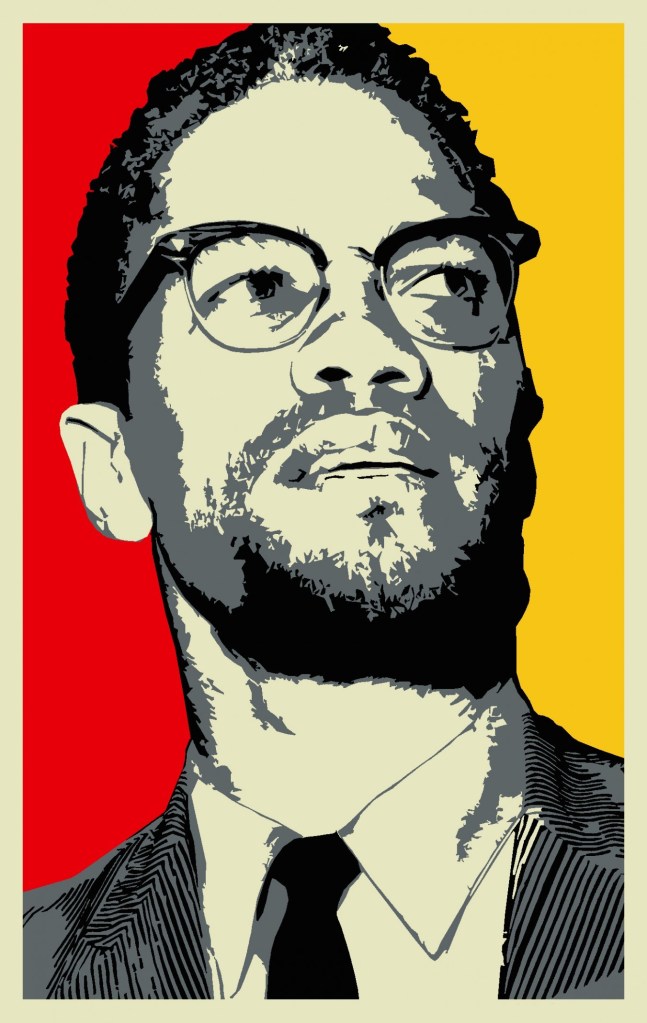

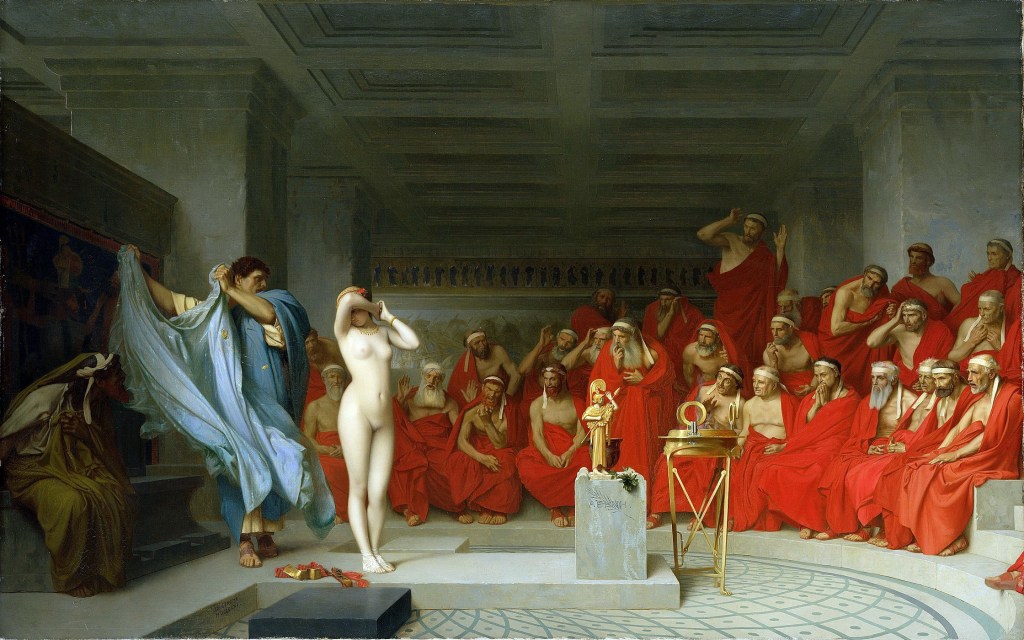


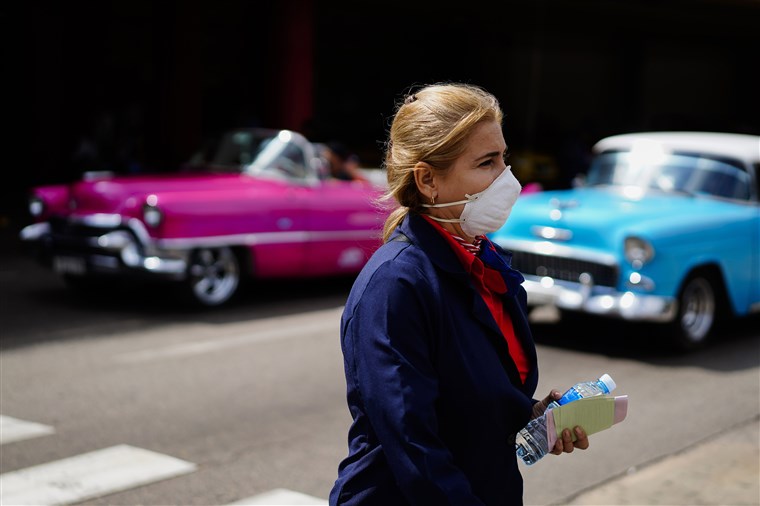


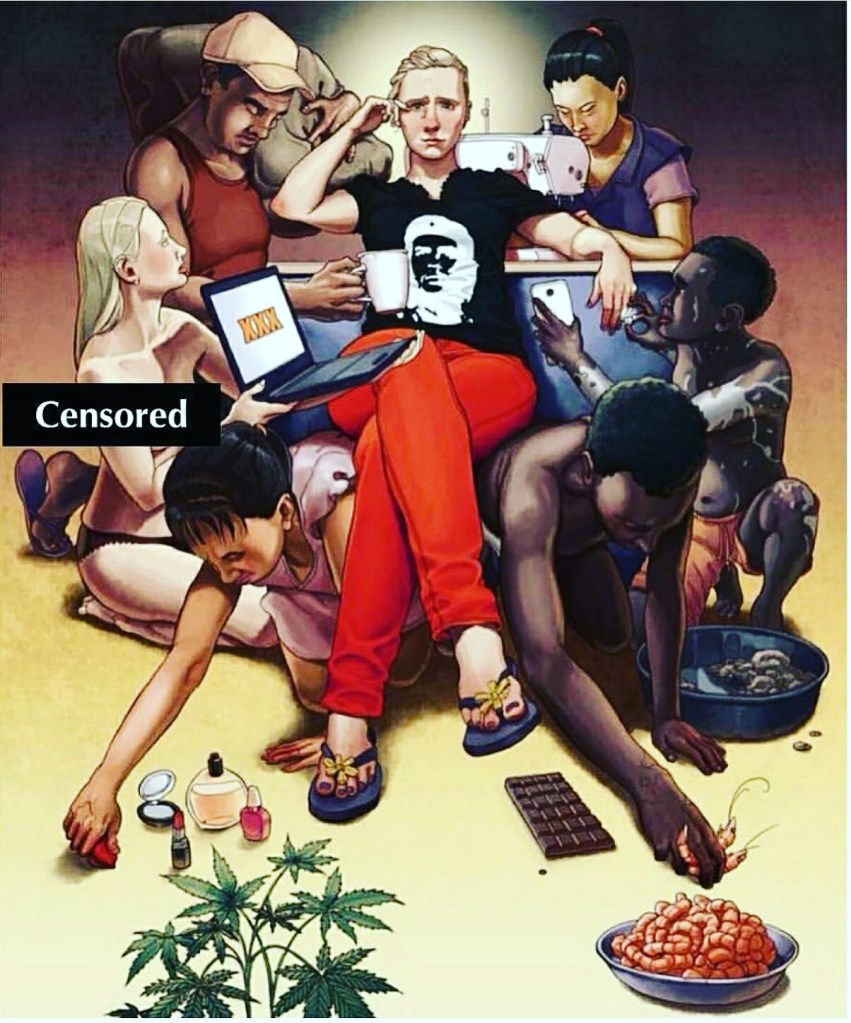

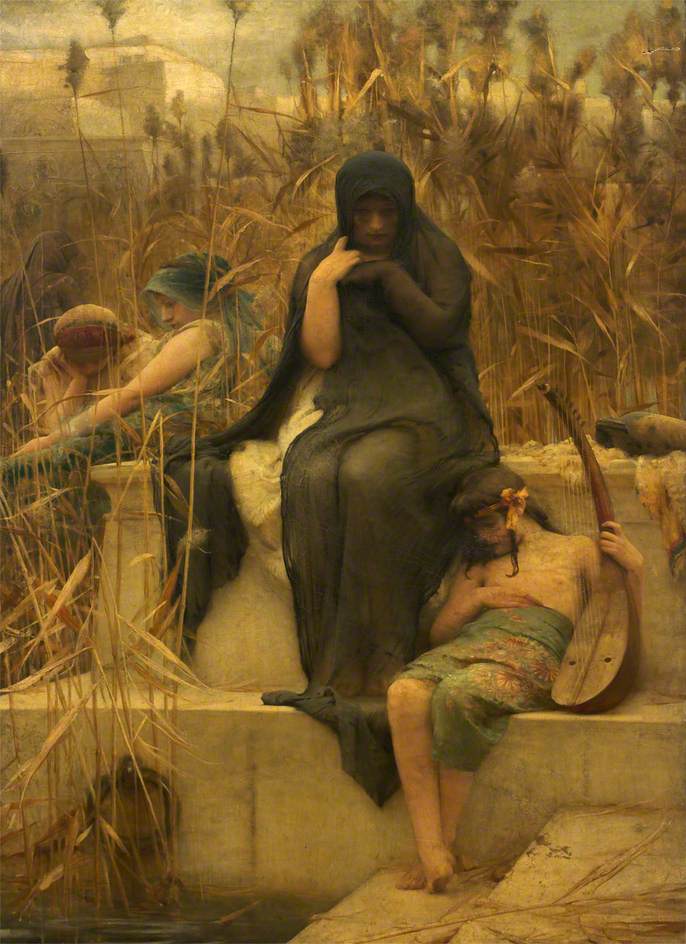

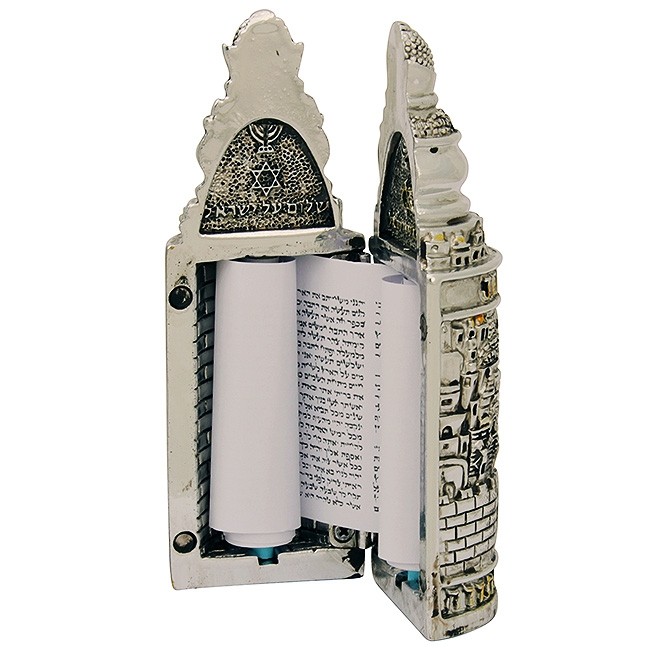

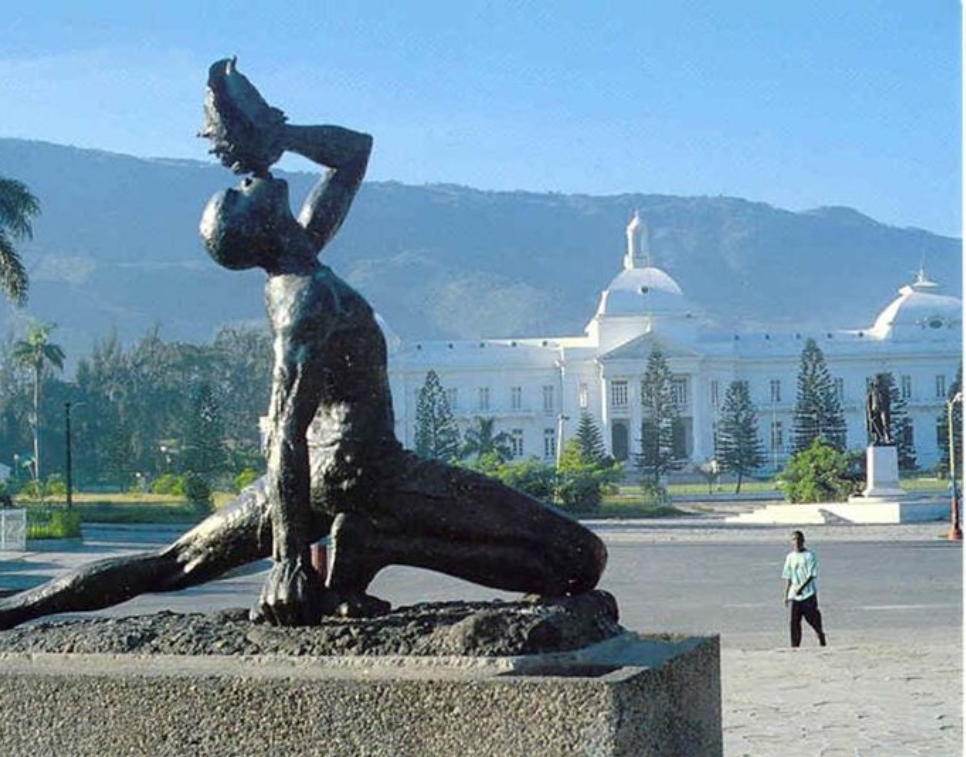
 WALTER SEBASTIAN ADLER


.jpg)
