“Counting people is a sensitive matter in any country, often fraught with fraud, gerrymandering, hatred, as well as bold lies. Total made up numbers” No one is interested in upsetting the balance of theft and power. For that is when shooting, stealing, and raping starts. The war. The civil war took 140,000 to 170,000 lives but no one, especially not the Maronites, want to admit that the new facts on the ground have nothing in common with the ethno-religious confessional system in place. It is typically a system that benefits the Chrisitan and the Sunni elites, at the expense of the Shi’a in general and the placation of the Druze who make up 5-10% of the population. Were one a betting man or a trained anthropologist; the Christian numbers are down from war emigration and the Shi’a numbers are way up from having large family sizes (6-9 children). There are also as many as 478,000 Sunni Palestinians absolutely no one wants to naturalize and as many as 1-2 million Syrian refugees, but only 780,000 are registered with the UN relief agencies. They Syrians have always come and gone for freely, like and awkward armed big sibling. To the South Israel has a long history of invading and occupying, and sometimes getting the President killed (Bachir Pierre Gemayel in 1982). To the Northeast Syria has a long history of invading, occupying, and sometimes killing the President (Rafic Hariri in 2005).
They say countries with no working census are the real free countries and Lebanon hasn’t had one since 1932. But what does it mean to be “free” if all other parts of life are totally insecure? What does it mean to be counted if the numbers are all lies? It’s unnatural to be counting people like chattel and it’s completely prohibited in Judaism. Surely the State of Israel obsessively counts people every single day. The trouble is, the Lebanese went and fixed these invented numbers of 1932 to their Confessional Quota system, with Maronite Christians, Sunni, Shia, and Druze all getting lion shares of the system. Based upon the old National Pact47 and the Taif Accords which “ended the war”, although most districts are mixed; this system allows for a kind of political horse trading that makes Lebanon a very fragile country to govern.
The Quota system slots key political and bureaucratic seats to specific ethno-religious groups. Remittances and smuggling make up a large unknown portion of the GDP, which could be above 40-45%. No one really knows. The Lebanese also offer boutique medical and legal services to much of the Middle East. There are 42 universities. Tourism makes up much of the rest followed by banking (which used to do better than tourism i=until the sector imploded in hyperinflation), real estate, and construction, money laundering, food processing, wine, jewelry, cement, textiles, mineral and chemical products, wood and furniture products, oil refining, and metal fabricating. You can know that as a maven trader or look it up on the CIA Fact book, but in general all numbers are inventions here.
Now, a clever idea for your next vacation; somewhere with a real sunny beach and a lot of bang for your the fucking dollar. Somewhere they do not openly hate the Americans and want to put them in bags or bags on their heads. A bad idea; various places with ethno-religious rocket exchanges going on every day. Also perhaps places that use quota systems to link ethnic group factions, of which there are 18 listed, to seats of theft and power. Also, the quotas are fixed to parliamentary posts, top military commands, trade institutions, civic leagues, and as a result all Lebanese are living on a mountainous powder keg with valueless currency. The default is that there is not one Lebanon, but instead at least 5. Possibly 18. That’s Lebanon in gross geopolitical simplification in case you didn’t catch that. That’s not all of Lebanon, just a very problematic part of the most obvious of problematic parts of it.Of course, it doesn’t capture “the Lebanese Soul” which was a 5,000-10,000-year journey to materialize, at least. They don’t all hate Americans for sure of course and don’t all want to put them in bags. Putting some one ina bag is not very hospitable and they have done well to stop doing that since the 1980’s. Though many still do. In the 1970s and 1980s kidnapping was a major industry of grievance where at one point 147 American and European hostages were hidden all over Beirut. Perhaps kidnapping people is an advanced form of hospitality, and it was all dictated by Iran, who knows.
Since the very minute, the Jew purchased his plane tickets it was like a secret to be kept. You see, there are things you tell your friends, and then there are things you hold inside because if you tell your friends they will think you are crazy and try to stop you from doing anything important or interesting in life. So, Sebastian, later known as the “Jew of Beirut”, didn’t tell that many people about his plans to go to Lebanon. Also, those he told, he made it out like well deserved “reckless adventurism” to the wild Middle East. Not like there was a whole fully baked reimagined plan, the kind of plan the Jew knew best.
“You see that was something well know about their people; the ability to hold multitudes of contradictory information in the head; believe all of it to have truth; and formulate plans from the data flowing through.” Of course, all smart people can do this, not unique to Jews.
You see, the Jew of Beirut rarely acts without acting in concert, which is to say, he manifests a specific line of conspiracy wherever he goes. A fusion of human rights populism, Middle Eastern particularism; and pontification on the love of free life! He has detractors but mostly curious if not enthusiastic supporters. After some time living and working in New York Grad he had ingratiated himself to many people. He’d become a well-known person in certain circles. He was like a mayor of his work force. A person with some connections and agency beyond himself. Even if always filled with self-doubt. He had some things to build on therefore some things to barter or totally lose. Or perhaps he was only important to one person only, his secretary Karessa Abe, arguably the only person that ever really loved him. And he squandered it all the time by never really being a suitable partner to her. Never cheating but never being available enough. She is more than a decade younger than him and them ain’t in the old country anymore. He is President of a Harikaat, a movement of ambulance workers seeking much better conditions. It was somewhere between a charity, a lobby, a union, and Hezbollah without God. He was also a law student. He has thoroughly studied the Zionist idea and found it to be, through a Kurdish lens, a universal idea about how rights are won and secured.
So, being a President of a quasi-underground, reasonably militant labor association devoted to the wellbeing of EMS workers, he figured for the right price some of them could be lured to Lebanon to carry out some basic training. But this was a background thought. The kind of training everyone needs; EMT training; when can’t the world benefit from having a few more EMTs around? Spoken like or thought about like the thinking of a career EMT? Perhaps. Perhaps. Perhaps. The plans of a Jew lawyer paramedic. It’s hard to make small talk when your mind is wide enough to see much of the world moving at the same time. But the world cries out for help, so sending more Paramedics is only part logical. At least not really something many can oppose if they can figure out how to pay for it. So, the Jew of Beirut took off for more than adventure, for less than just a type of altruistic business deal. He wanted to find a way to cross over and remain there. He hadn’t totally considered how much that might hurt or offend other people; it was just a desperate act.
Now desperate acts usually don’t have high degrees of planning, and although the Jews are known to be quite master planners, sometimes the best plans go very South. Once in 1975 the Israeli Military and some of the Lebanese Maronite Christians had a plot to reconfigure Lebanon48. It went really fucking south. The Israelis occupied a strip of southern Lebanon called the Security Zone for 22 years. In 2000 they unilaterally evacuated, and Hezbollah fully took over there, south Beirut, and the Bekaa Valley. The plan to restore Christian hegemony and unite Lebanon and Israel in an alliance, while driving out the PLO, well, all that failed.
***
“The cultural and linguistic heritage of the Lebanese people is a blend of both indigenous Phoenician elements and the waves of foreign cultures that have come to rule the land and its people over the course of thousands of years.”
In a 2013 interview, Pierre Zalloua, a Lebanese biologist pointed out that genetic variation preceded religious variation and divisions: “Lebanon already had well-differentiated communities with their own genetic peculiarities, but not significant differences, and religions came as layers of paint on top. There is no distinct pattern that shows that one community carries significantly more Phoenician than another.”
“I’m going to give you a lot of great information; but I want you to focus in on just four primary factions; the Sunni; the Shi’a; the Maronites; and the Druze.”
Please see the Appendix: In Lebanon there are 18 officially recognized ethno-religious confessions which contribute to the rich diversity of the nation, and these include:
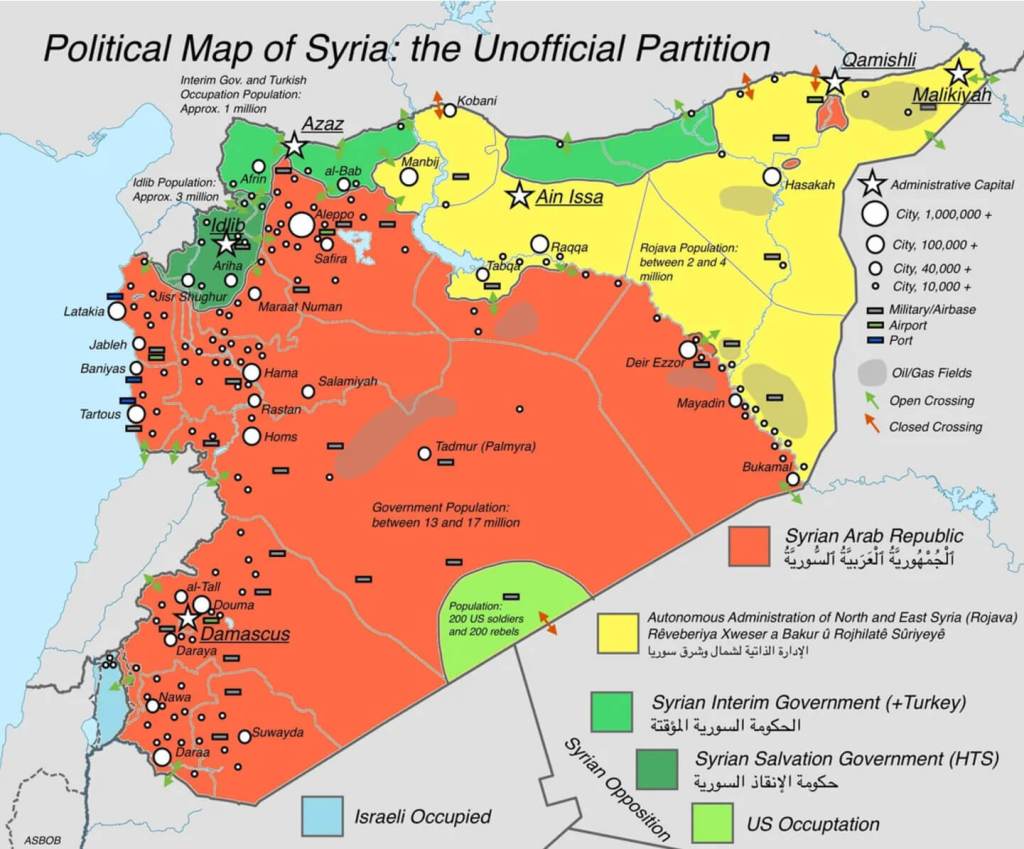
Alawites, a branch off the Shi’a who ritually drink wine and believe in reincarnation. Via the French and the Ba’ath Party this secretive ethnic minority came to control all of Syria; except for now in the years after the Isis War. Today, the Northeast of the country, north of the Euphrates River, is controlled by the Kurds, in an autonomous social experiment called Rojava.
Armenian Catholics: Ethnic Armenian Christians who accept the rule from Rome. They are very business oriented, but not natural Phoenician style global traders and they aggregate in Bourj Hammoud District of East Beirut.
Armenian Orthodox: Ethnic Armenian Christians following the Apostolic Church based in Vagharshapat, Armenia; one of the oldest branches of Oriental Orthodox Christianity. Culturally, culinarily, and aesthetically not much different than Armenian Catholics.
Assyrian Church of the East are following the Eastern Branch of Syriac Christianity not in communion with Oriental Orthodox Churches or Eastern Orthodox Church, nor Rome. Most of its practitioners are ethnic Assyrians, and its base is in Ankawa, Iraq a suburb of Erbil in the Kurdish controlled zone of the KRG; the quasi autonomous Northern third of Iraq.
Chaldean Catholics: are Assyrians who came into communion with Rome arising from a schism with the Church of the East. But they are not that much different than the Assyrians of Ankawa that did not bend to Rome. They are mainly descended from Iraqi Assyrians.
Coptic Orthodox are an Oriental Orthodox church based in Alexandria, Egypt who follow the Pope of Alexandria. Established by Mark the Apostle in the 1st century; also, an Eastern Oriental Church. Most of the Copts are descended from Egyptians.
* * Druze * *; An Abrahamic, monotheistic, syncretic, and ethnic religion whose main tenets are the unity of God and the belief in reincarnation and the eternity of the soul.Most Druze religious practices are kept highly secret. The Druze do not permit outsiders to convert to their religion. Marriage outside the Druze faith is rare and strongly discouraged. Concentrated in the Chouf mountains they have long been viewed as a king maker minority group, perhaps fourth largest on its own accord. There is a larger Druze population living in Syria and a smaller one than the Lebanese clans living in Northern Israel.
Greek Catholics: ethnic Greeks in communion with Rome.There were several failed attempts to repair the East-West Schism between Greek and Latin Christians: The Council of Bari in 1098, the Council of Lyon in 1274, and the Council of Florence in 1439. Subsequently, many individual Greeks, then under Ottoman rule, embraced communion with the Catholic Church. They typically followed the Roman Rite of the Latin Church, maintaining their parishes through contact and support mostly from the Venetians.
Greek Orthodox: are the second largest world Christian denomination using Greek in liturgical settings. Ethnically Greek.
Islma’ilis: Sometimes called “Sevener Shi’a Islam”.The Isma’ili and the Shi’a Twelvers (the dominant Shi’a sect) both accept the same six initial Imams; the Isma’ili accept Isma’il ibn Jafar as the seventh Imam and none further. At one point the largest branch of Shi’a Islam it concentrates on a deeper more esoteric version of the religion.
Jews: an Abrahamic, monotheistic precursor to both Christianity and Islam; also called Hebrews, Judeans, or Israelites. The Israelites emerged from within the Canaanite population to establish the Iron Age kingdoms of Israel and Judah.Judaism emerged from Yahwism, the religion of the Israelites. By the late 6th century BCE they had developed a theology considered by religious Jews to be the expression of a covenant with God established with the Israelites, their ancestors. The Babylonian captivity of Judahites following their kingdom’s destruction, the movement of Jewish groups around the Mediterranean in the Hellenistic period, and subsequent periods of conflict and violent dispersion, such as the Jewish–Roman wars, gave rise to the Jewish diaspora. The Jewish diaspora is a wide dispersion of Jewish communities across the world that have maintained their sense of Jewish history, identity and culture. There are thought to be under 10 Jews in all of Lebanon. To many that is too many.
Roman Catholics: Arab followers ofthe Catholic Church, also known as the Roman Catholic Church, is the largest Christian church, with 1.4 billion baptized Catholics worldwide as of 2024. It is among the world’s oldest and largest international institutions, and has played a prominent role in the history and development of Western civilization. The core beliefs of Catholicism are found in the Nicene Creed. The Catholic Church teaches that it is the one, holy, catholic and apostolic church founded by Jesus Christ in his Great Commission,that its bishops are the successors of Christ’s apostles, and that the pope is the successor to Saint Peter, upon whom primacy was conferred by Jesus Christ.It maintains that it practices the original Christian faith taught by the apostles, preserving the faith infallibly through scripture and sacred tradition as authentically interpreted through the magisterium of the church.The Roman Rite and others of the Latin Church, the Eastern Catholic liturgies, and institutes such as mendicant orders, enclosed monastic orders and third orders reflect a variety of theological and spiritual emphases in the church.
* * Maronites * *: third largest ethnic group in Lebanon; The Maronites derive their name from Saint Maron, a Syriac Christian whose followers migrated to the area of Mount Lebanon from their previous place of residence around the area of Antioch and established the nucleus of the Antiochene Syriac Maronite Church. The early Maronites were Hellenized Semites, natives of Byzantine Syria who spoke Greek and Syriac, yet identified with the Greek-speaking populace of Constantinople and Antioch. They were able to maintain an independent status in Mount Lebanon and its coastline after the Muslim conquest of the Levant, keeping their Christian religion, and even their distinct Lebanese Aramaic language. The Maronites are in full communion with Rome. Via the French they came to dominate the political and economic life of the colony; along with Sunni, Shi’a, and Druze still play the leading positions in modern Lebanon, although they have lost their plural majority to the Shiites.
Protestants: largely Arab but also some in other confessions; protestants follow the theological tenets of the Protestant Reformation, a movement that began in the 16th century with the goal of reforming the Catholic Church from perceived errors, abuses, and discrepancies. The Reformation began in the Holy Roman Empire in 1517, when Martin Luther published his Ninety-five Theses as a reaction against abuses in the sale of indulgences by the Catholic Church, which purported to offer the remission of the temporal punishment of sins to their purchasers. The term, however, derives from the letter of protestation from German Lutheran princes in 1529 against an edict of the Diet of Speyer condemning the teachings of Martin Luther as heretical. In the 16th century, Lutheranism spread from Germany into Denmark, Norway, Sweden, Finland, Latvia, Estonia, and Iceland. Calvinist churches spread in Germany, Hungary, the Netherlands, Scotland, Switzerland and France by Protestant Reformers such as John Calvin, Huldrych Zwingli and John Knox. The political separation of the Church of England from the Roman Catholic Church under King Henry VIII began Anglicanism, bringing England and Wales into this broad Reformation movement, under the leadership of reformer Thomas Cranmer, whose work forged Anglican doctrine and identity.
* * Sunni * *: Sunni Islam is the largest branch of Islam, followed by 85–90% of the world’s Muslims, and simultaneously the largest religious denomination in the world. Its name comes from the word Sunnah, referring to the tradition of Muhammad.The differences between Sunni and Shi’a Muslims arose from a disagreement over the succession to Muhammad and subsequently acquired broader political significance, as well as theological and juridical dimensions. According to Sunni traditions, Muhammad left no successor and the participants of the Saqifah event appointed Abu Bakr as the next-in-line (the first caliph). This contrasts with the Shi’a view, which holds that Muhammad appointed his son-in-law and cousin Ali ibn Abi Talib as his successor. Many Lebanese Sunnis are war refugees from Palestine and Syria with strict controls on their work and movement. It is believed that there are 200,000 to 400,000 Palestinians in Lebanon; and perhaps as many as 2 million Syrian refugees. There are also Kurdish Sunni and Lebanese Arab Sunni. Taken as a whole the Sunni would likely be the second largest ethnic confessions after the Shi’a, largest with naturalization of the refugees.
* * Shi’a * *: are the second-largest branch of Islam; 5%-10% of all Muslims. They believe that the Islamic prophet Muhammad designated ʿAlī ibn Abī Ṭālib as his successor (khalīfa) and the Imam (spiritual and political leader) after him, most notably at the event of Ghadir Khumm, but was prevented from succeeding Muhammad as the leader of the Muslims as a result of the choice made by some of Muhammad’s other companions at Saqifah. This view primarily contrasts with that of Sunni Islam, whose adherents believe that Muhammad did not appoint a successor before his death and consider Abū Bakr, who was appointed caliph by a group of senior Muslims at Saqifah, to be the first rightful (rāshidūn) caliph after Muhammad. Adherents of Shi’a Islam are called Shi’a Muslims or Shiites. The Shi’a are believed to make up a true plural majority of the population in Lebanon. Their largest representatives are Hezbollah, “the Party of God”, and Amal, a more secular expression. The Shi’a are heavily dominant in southern Beirut, the Bekaa Valley; and Southern Lebanon.
Syriac Catholic: The Syriac Catholic Church traces its history and traditions to the early centuries of Christianity. Following the Chalcedonian Schism, the Church of Antioch became part of Oriental Orthodoxy and was known as the Syriac Orthodox Church, while a new Antiochian patriarchate was established to fill its place by those churches that accepted the Council of Chalcedon. The Syriac Catholic Church came into full communion with the Holy See and the modern Syriac Orthodox Church is the result of those that did not want to join the Catholic Church. Therefore, the Syriac Catholic Church is a continuation of the original Church of Antioch; though today are headquartered in Beirut.
Syriac Orthodox: also known as West Syriac Church or West Syrian Church, officially known as the Syriac Orthodox Patriarchate of Antioch and All the East, and informally as “the Jacobite Church”, is an Oriental Orthodox church that branched from the Church of Antioch. The bishop of Antioch, known as the patriarch, heads the church and possesses apostolic succession through Saint Peter, according to sacred tradition. The church upholds Miaphysite doctrine in Christology, and employs the Liturgy of Saint James, associated with James the Just (also called James the Less and James, son of Alphaeus).Classical Syriac is the official and liturgical language of the church. The See of the church is in Damascus.
These 18 confessions have lived on or near Mt. Lebanon maintained a diversity that topographically, defensively was lost in the lower levant by waves of invasion from every direction. “That is to say Lebanon is very defensible while Israel-Palestine is not.”
These 18 groups are reflective of most surrounding Middle Eastern states; Israel being the only one with a Jewish Oligarchy and Iran being the only one with a Shi’a Oligarchy. Syria and Iraq, after the wars have been partitioned into Kurdish, Shi’a, and Sunni zones. There are of course hundreds if not thousands of break off, off shoot, or otherwise derivative sects of these 18; such as the universalist Baha’i, or the pre-Abrahamic Zoroastrianism. There are unique but derived sub sects like Samaritans or Yazidis.
One explanation of the Lebanese diversity is that mountains are highly defensible, communities can historically retreat and hold ground; another is that “the Lebanese are more gracious than they war like. Even during the civil war, or the current border war; not a very large percentage of the population was under arms.”
Many would like to shed the Confessional system and see it as a colonial anachronism (as well as how Syria dominates Lebanese affairs). The ruling elites of Lebanon prefer the status quo. As all ruling elites tend to do. 25 long years of civil war altered demographics but not the dominance of the four largest confessions. Maronites, Sunni, Shi’a and Druze each run de facto cantons, but no group is able or willing to fully impose itself on the other. A wise Shi’a leader Al-Sayyid Musa al-Sadr once observed Lebanon’s best protection was its “indigestibility”. “That is a quality that eventually obliges ambitious groups and governments to confront Lebanon as it is, and to accept that definitive solutions are far less likely than persistent contradictions. The Syrians certainly think so. And the Israelis would come to agree. One cannot actually conquer Lebanon, nor can one bring the Palestinians to forgive or forget one thing.
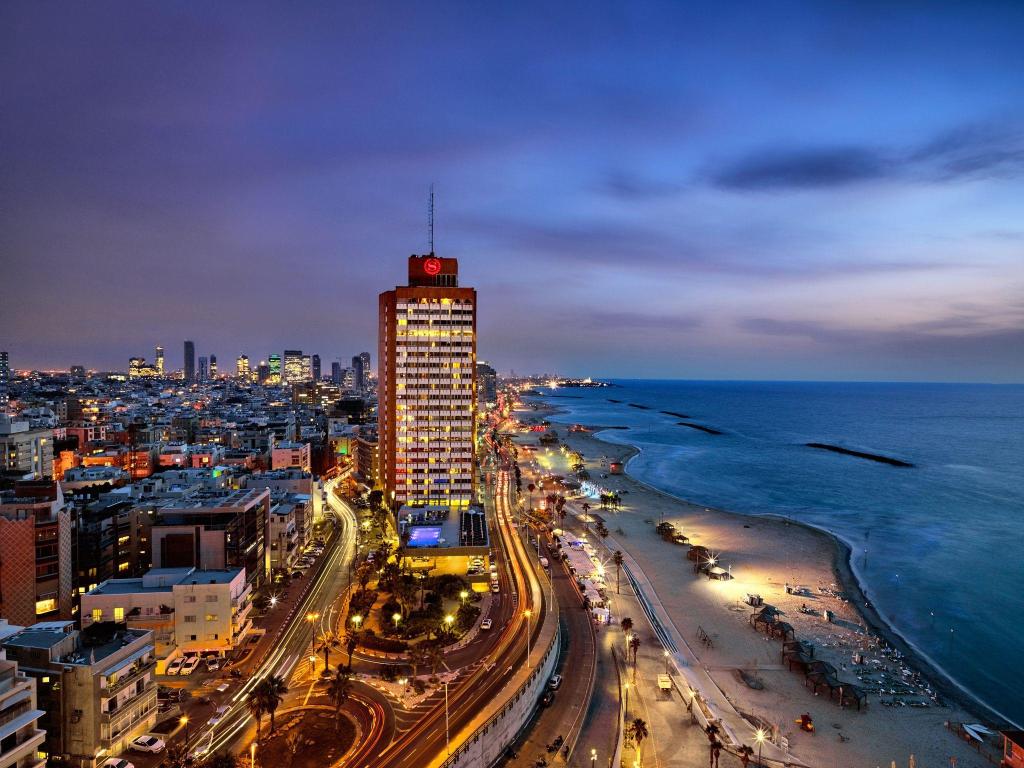
Friday arrives and I catch the last bus out of Afula before sundown and head south down the coast. Sundown on Friday is when they shut everything down, everything except parts of Tel Aviv. I need eye candy and attractions. I need to sell some art because I am completely out of cash. It was a two-hour trip to get from Afula to the Boardwalk.That night far out pacing any records set in London. The tiyeled is packed. The strip is lit up brightly. I feel good about getting back to this city. I moved through the crowd impressed with how quickly I’d made my first 200 shekels. This equivalent of nearly $50 is a chump change except on a kibbutz. Tel Aviv is geared to be one of the most expensive cities on earth. Thats from putting the Western incredible and implausible up on beach sand in under 90 years on the shores next to old Port Yafo. It’s also because Israel is a very small place and this is where wealth and decadence are concentrated.
I can smell the perfume of the beautiful painted Russian frehhote. Many of the young Russian men had bleached their hair like Eminem. A salsa band was playing, and an Argentinean Jewish woman was dancing and singing through a Madonna mike surrounded by a crowd of onlookers. Everyone was clapping to the beat. A group of Arab Israelis was hawking watches, lighters and bootleg L & M smokes from a foldout table. Some rough-edged Romanian hustlers and their friends were taking money off stupid, shit-brained cocky American Yeshiva boys in games of three-card Monty. On the beach I saw the flash of fire poi whirling in the night. The Opera Towers looked huge. I could see a security guard patting down Yemenite Jews because they look Arab while he let the paler Ashkenazim in without any trouble at all.
Canadian Dave who is the bartender over at Mike’s Blues Bar gives me a bunch of flyers to hand out. They take up half the space in my bag. He gives me fifty sheks and a hamburger with French fries to hand them all out. I got this gig through a girl I drew on the tiyeled a week ago.There are several big parties tonight. I offload flyers to anyone who will take them at drop spots along the way to the Dolphinarium. The Dolphinarium beach-bar-restaurant complex, which houses a mega club called Pacha. Builtnear the Dan Hotel where the boardwalk hits the Turkish Fort at Yafo, Jaffa, the old Arab port that was here before the Zionists did all this building. No one I give flyers to will go to Mike’s because it’s an Americanized tourist jump-off right next to the American embassy.
It’s 10:40 pm. I make my way to Abulafia for a couple of mini pizzas. Abulafia is a 24-hour bakery that sells mini pizzas and pita soaked in olive oil with zaatar, a green fragrant spice that tastes like Palestinian oregano. The place has non-stop business especially around sunrise when it gets swarmed with club goers on the way home. That is when the fights break out between the Russians and Arabs or the Russians and the Ethiopians. It’s always the Russians and someone else. The owners of Abulafia seem to have a lot of sons and nephews named Muhammad. They do good business. One of them tells me they live in Yafo, the Old City, the Arab Quarter. It was the Arab port of long, long ago. The Yafo-Tel Aviv border is near the Dolphinarium and near a huge Ottoman prison that now apparently houses a sex club called the Dungeon.
***
A man disguised as Orthodox Jew in a cab is approaching the Dolphinarium. He is wearing a club suit and carrying a guitar case that covers a payload of ball bearings and nails. He thinks nervously,
‘It is too heavy. They will notice me as soon as I step out of the cab. This vest and jacket are making me sweat.’
He looks out the window. The driver seems nervous. The man doesn’t say much. This is not a situation for small talk. He looks at his watch. It’s 22:53. He observes people strolling on the tiyeled as the cab speeds by.The cab passes the Sheraton Hotel. The man wonders if one day all this will be returned to his people. He wonders when these Jews will be driven back to Hell. It’s 22:57. He takes a deep breath and tries to come to terms with the fact that he will be dead within this hour.
***
Roman is standing outside the Pasha Club in the parking lot talking to his friends. He thinks, ‘Fuck this place. Fuck this place big time.’
Roman is of regular build and is wearing a tight black T-shirt and FOXX jeans. His shoes are polished. There is gel in his hair. He speaks in thickly accented Hebrew. He mixes in Russian words. When he gets angry, he stops speaking Hebrew altogether. He never goes anywhere without his cell phone, which seems to never stop ringing. All his friends are from the Ukraine. They are racially Slavic and technically Jewish, which is to say that they have a Jewish grandparent. This doesn’t change the fact that they go to the Orthodox Church.
This is his third time at the Pasha Club. He wouldn’t normally go to this venue, but the girl his friend has fucking dragged them along. Her friends are Russian origin, and they act like whores when they drink like most Russian girls he knows. One of them is Georgian. Her family is using Israel as a halfway point between the former Soviet Union and the US. Like most of the olim Hadashim from that part of the world, they have no intention of staying here too long. Roman hopes his family get their U.S. visas soon because the Arabs are going crazy and he’s about to get drafted into the IDF.
The line is always too long. The Dan Hotel is across the street. Its plaza is large and white. He’s never stayed there, but he imagines it’s rather decent. When he gets to America, he’ll stay in a hotel like that. Or maybe even own one if he works hard.
***
I remember the basic joy of walking in the damp sand by the water with no shoes. Zachariah and Sebastian equate this with happy childhood memories so it’s pleasing to see the body they now share.
I finally break free from the crowd as I get to the end of Jerusalem Beach. I deliberately walk on the sand even if it means no people take flyers. I can see Yaffo in the distance. Compared to Tel Aviv it is ominous and lower key. I’m wearing my khaki pants with the tan button-down work shirt that says Mike on the left breast and has a Drop Kick Murphy patch sewn on the right. I pass out most of the flyers for Mike’s Blues Bar to groups of arsim and frehhote. They ask me questions in Hebrew or Russian, but I hardly speak either language well enough to know what they are asking me. I reach into my pocket and pull out a crumpled pack of Noblisse cigarettes. There are only three left.
***
The waves are crashing against the seawall levy. The rocks extend out into the water, and you can walk along them toward the end, which is as good a place as any to smoke hash. The levy is on the seaside of the Dolphinarium. This section of the Beach is called Tiki Beach. During the day people play Congo drums, and an outdoor café serves overpriced beverages with a scenic view. There is a private club next to the Pasha and a barbed wire fence prevents people from climbing from the levy into its outdoor section. House music is blaring from Pasha.
Slightly removed from the chaos, Ze’ev and his friends smoke a joint of tobacco mixed with hash. Ze’ev knows he’s a scumbag. The girl he and his friends had been gang-raping in his car had been left slumped against the rocks down by the water. They had pissed all over her before they left her. They’d slipped her a ‘knock out’ in the last club.
***
The man in the lethal club suit is approaching Target B in the cab. He had three targets to pick from. He had rejected the other two as unsuitable. He thinks, ‘I have never been to this part of the city before.’ He removes his wristwatch and places it into an envelope in the front seat. The envelope already contained his wedding ring, his wallet, and other petty personal effects. The only thing that remains is a small snapshot of his son and roughly 2 pounds of military grade plastic explosives. He begins a silent prayer, ‘My G-d is merciful, and all good things come of it. I will be your sword, my people’s sword against the Zionist dogs who killed my son and stole my land. Amen.’
***
I finally arrived at the Dolphinarium with no flyers to hinder my game and my two-step. Long lines had formed to get into the club. Its clientele are mostly underage Russian immigrants. Dave doesn’t need or want this demographic at his bar but fuck Dave. What’s twelve dollars and a beer. Absolutely nothing. I should just dump the damn flyers in a trashcan and rattle off some tourist spots I magically hit up. There are arsim everywhere. The word is sort of like the Bridge and Tunnel Crowd of Israel. A little meaner actually.They are dressed pretty much the same. Tight t-shirts, jeans, hair gel. They all reflect the same mannerisms and mentality. They always give me shit everywhere I go in the country while I’m selling art. My style is way too different for them. When they want me to draw something, it’s always crude and they never pay. They might sit and watch me draw and then wander off like crack heads with ADD. They are the club guys of the Middle East, the socio-economic equivalent to a mix of Jersey Guidos and ghetto Blacks coming to Manhattan clubs with a hard-on and a roofy. They love the ultra-violence. Most of them aren’t from Tel Aviv. They just come here for the clubs and the tiyeled. Packs of them will follow groups of girls around propositioning them until a rejection or a hook up or rape. They take Ecstasy. They are offensive to everyone. They frequent bad clubs and get into fights. Not unlike the Jersey Guidos, they thrill me. Racially they tend to be non-Ashkenazi, Romanians, Russians, and the Yemenites who live in Israel’s smaller, rougher cities like Bat Yam, Rehovot, Peta Tikvah, and Pardes Hana. I watch young, stupid people try to get laid after they wait on a long line for a high-priced bottle of poison. The Russian immigrant girls look blazing.They are really loving this whole free market thing and are waiting eagerly to get visas for the US or Canada. In the meantime, they’re made up as hell even when they are only going to the store for laundry detergent.
I see my friend of three weeks, Roman, talking to former Soviet girls. The Israelis are curvier and less made-up. I walk over to give him a pound and he introduces me to several of the girls whose names all end in ‘a.’ They, of course, don’t speak any English. They are maybe Russian but could be from Kazakhstan because they look a little Asian. I have no idea what they are trying to say to me. Roman’s English isn’t too hot either. We mostly communicate through gestures and the occasional sentence or two in Hebrew. He is excited to have ‘an American friend.’ Like most of the Russians I’ve met, I have only the most basic knowledge of who Roman is as a person. I’ve known him for less than three weeks. He was the first person I met in Israel and when I’m in Tel Aviv he always quickly visits to get his lady friends to buy sketches off me. Then we party in broken Hebanglish.
***
Ze’ev wonders what that American asshole is doing here. He remembered how the guy looked at the girl he was with last week when he met them for the first time at his stupid hobo art stand. Ze’ev thinks he dresses like a hobo. I should tell my friend not to let that American hobo into the club. Nobody looked at his girls like that. Ze’ev wasn’t some little punk lookout anymore. He was moving pills and would soon get a piece of Jerusalem beach to milk or bleed. Ze’ev knows everyone worthwhile in the Tel Aviv club scene. It’s all he’s been doing for the past four years. He gets comped at most of the low-end joints and a few of the mid-end. He’s still too young for the real hot spots. He does not like the niggers so most of the hip-hop venues are out. All the bouncers know he deals and that he’s affiliated so he gets in quick if the spot is Russian. He wonders why those girls are flirting with the hobo. It’s because he’s American and they want to get to America by using him. It’s the only explanation. His pictures are stupid and communist.
***
The human time bomb steps out of a black cab. As he surveys the scene, he thinks, ‘I’m so close I can smell them. These Israeli girls smell like whores. It’s the scent of my enemy. They all look so young. I don’t see any soldiers. My lieutenant gave me orders, ‘Take from them their young as they do to us.’ In a few years they’ll all be in the army killing my people anyway. One of those girls is giving me a funny look. They know I’m an Arab and I’m wearing a suit that’s too bulky.’
Quick thoughts race through his head. He thinks about his son. He thought about his people. He thought about the land that they stole from his people. Someone points at him as he edges near the line. He tugs the ripcord at his sleeve. “Salwa, I rejoin you,” he whispers to his long dead wife, “Palestine will be redeemed!”
***
I’m chatting up one of the Russian girls when I realized I was out of cigarettes. I told the girl to hold on for a second. I asked Roman if he had one. He told me that he did not. Everyone smokes, but I really want a Noblisse. They all have L&Ms or worse. I didn’t want to stop talking to the Kazak girl, so I asked Roman if I could toss him some loot to buy me a pack. He didn’t pick up the phrase ‘toss him some loot.’ He looked at me like I was crazy. I look at my watch. 11:31pm. I hopped the barrier and was about to cross into the parking lot. I don’t even know if the kiosk is open across the street. I look back to see if the girl is still. . . PEGUA!
***
Ze’ev is telling his friend about ‘some chick that gave him head on the beach.’ That chick is a 16-year-old that he and three friends raped. She is lying unconscious face down in the sand by the water. He tells them he came all over her PEGUA!
What the fuck was that he wonders. It came from the street by the club entrance. Of course, he knows what it is. This is Israel after all.
***
Roman is on his cell phone when he dies. It’s hot as hell here, even in the night. He looks up and sees a quick bright flash before he blows apart.
PEGUA!
***
I’m on my knees half deaf. I hear a terrible ringing in my head, but I can’t hear anything else. There are tiny droplets of blood all over me, but I don’t think any of its mine. Dozens of people are screaming, slouched on the ground. Some of them don’t look like much more than bloody bundles of tattered flesh. There’s blood on the ground and there’s blood in my hair. I don’t really know what to do. I am slumped down facing what was once the outside of a popular nightclub. I reach into my pocket to pull out a smoke and I realize it is the fucking cigarettes that just saved my life. My first suicide bombing. Saved by a fucking pack of cigarettes. There are a lot of dead bodies less than twenty feet away from me. I see the lights of the paramedic trucks and hear the sirens through the cluttered tunnel of my inner ear. I see people trying to pick themselves up and help the wounded. I’ve never seen so much real blood. Not in real life anyway. Everything I thought I knew about anything was ripped to shreds in a fiery burst of nails, ball bearings, and sharp things flying. Violence looks so cool until you meet him in person. Then he just looks like the Angel of Death.
I try to stand up. I can’t. I am a coward in the face of it all. A part of me is thinking: So that is what a suicide bombing looks like. And another part of me realizes: Holy fuck! I just got all blown up. And another part of me, the part that has my undivided attention, is asking where the fuck our god was tonight!? Twenty-one victims are dead. Most of the dead were teenage girls from the former Soviet Union.
Recounts Heval Oldivan Amraz, also known in some certain circles as “Comrade Moving Target.”
HEVAL OLDIVAN AMRAZ
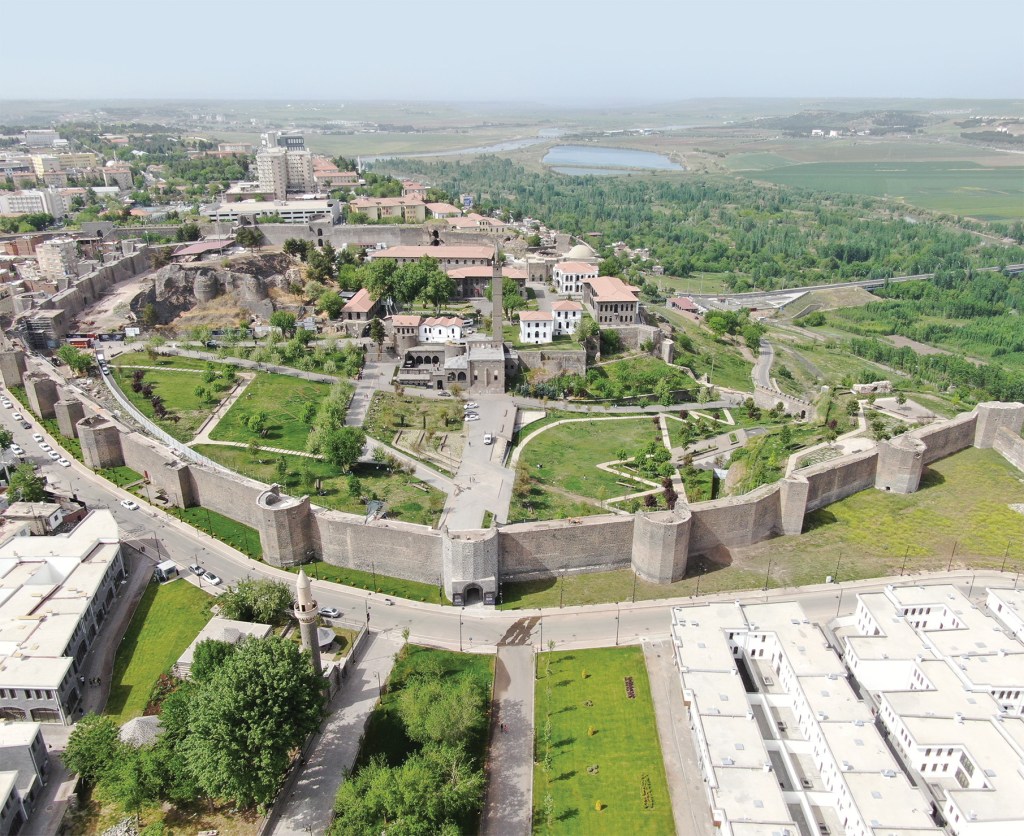
“I found myself as a young man in Diyarbakir City, the place we long call ‘Ahmed’, the future capital of all Kurdistan.” The black walled citadel of Bakur. The proud capital city of a nation that doesn’t exist, yet.” And the wicked Turkish boots do grind the necks and general spirit of the people all around us. “A poetic if not fully epic place!” An ancient citadel of giant black stone walls and total martial law. A town of prisons, stories, heroes and valiance in the epoch of the Kurdish people. Little wine bars, a thriving literary scene. It cannot decide whether to be eastern or western, Turkish or Kurdish. The epicenter of a great revolt, or the dystopian mockery of the full-blown repression of a colonizing power forcing a boot heel on our neck. As Kurdistan is a powerful and long repressed enduring idea, that idea is becoming a reality on the barricades here and in a long running fight in the mountains. An imagined community of over forty million souls who are wrongfully, shamefully divided between the imposed nation states of Turkey, Syria, Iraq and Iran all things have two names, all things are both real and imposed upon us. As if to be a Kurd requires an act of insanity, and an act of double thinking. A persistent zealous fight to make the world acknowledge our rights and identity. To admit we have a right to survive as a nation beset with enemies on all sides.
AMRAZ
“Following the Turkish military coup of 1980, the Kurdish language was prohibited in public and private life. The prison of Diyarbakir filled up and the endless wails of rape and torture propelled the movement to full mobilization and to take up arms again.
Diyarbakir, which in my people’s tradition is also called “Ahmed”, has now swollen to nearly 4 million people since the eradication and ethnic cleansing of over 5,000 Kurdish villages in the great ranges of mountains to the east. The primary battlegrounds between the Party and the Turkish State. Growing up there, there was of course no Kurdish allowed in school, no Kurdish books or music except deep underground. Were it within the Turkish State’s power, we would not even have Kurdish names! We would admit to being backwards people of “Mountain Turks”. I was born in the year of the largest, latest and greatest uprising. And although since the days of the Medes there have been “one thousand sighs and one thousand failed revolts”, this uprising was to be completely different.
In 1984 Abdullah Ocalan and the Kurdistan Workers Party simultaneously attacked three Turkish army posts and police stations in Bakur and announced the beginning of the revolution. For the next thirty years, almost without pause the P.K.K. and its armed guerrillas would battle the Turkish military across Bakur, the name we call the Turkish occupied zone of Kurdistan which means “the North”. Over 50,000 would die, mostly Kurds actually. The Turks would engage in vast acts of scorched earth barbarism and we in the Party would eventually turn to outright terror. In the end, most of the deaths were Kurdish civilians. In the end the only liberated ground was a handful of villages deep in the mountains of North Iraq, the Qandil.
Now, ‘Heval Amraz’ is of course not my original name. It is the name given to me by the guerrillas of the P.K.K. when I joined the Party. By that time, we were fully surrounded in Qandil being attacked on all sides and death seemed certain. Total defeat as well. Our great leader had been kidnapped in Kenya. Major leaders of the movement including the brother of Abdullah Ocalan, Osman, had completely betrayed us. Our own Iraqi Kurdish brothers in the K.D.P. and P.U.K.-Peshmerga were collaborating with Turkey and America to annihilate us.
“How do I tell you, my story? What does it really matter? How does this even begin or end for an outsider? For people who do not even know where Kurdistan begins or ends, or even care.” As Türkiye is a N.A.T.O.45 ally, and no matter what it says or does, will remain a beneficiary of great power largesse.
AMRAZ
“I cannot tell you my real name of course. I cannot speak for the Party, nor can I fully disclose the depth of my hope and my hate to a stranger. I can only speak to a feeling shared on differing levels by thirty to forty million Kurds.”
I will try to say something for the benefit of doubt, that non-Kurds could care about us so much that they would come to our land by the hundreds. To fight and die alongside us not simply fighting in resistance to Islamic radicalism, genocide and repression, but also because they grasp the larger idea. The total and utter radicalism and implications of Abdullah Ocalan’s vision. The survival of the revolution rests not in securing a Kurdish State, but instead in exporting these ideas abroad. To make the blood of the martyrs raise the flood waters of all mankind and provide a blueprint for liberation.
Of course, we began as communists, we began admiring the Cubans and it was the Russians and Palestinians that first trained armed resistance in the early days in the Bekaa Valley of Lebanon. But we are not Communists or Nationalists anymore. Our thinking on the subject of liberation has evolved. The Cuban connection and the Palestinians connection are very real and enduring parts of the story.
But, when we all almost died on the mountain top, surrounded and out gunned in 2000 there were no Cubans, or Russians or Palestinians to help us as they were all defeated or fully besieged. By some miracle, or just by sheer will the Party survived. And the 1989 defeat of Communism internationally required us to climb higher, dig deeper to criticize and self-criticize. To adopt an evolution in our thinking. With our ranks decimated, the armed struggle in a complete stalemate, declared a terrorist organization by almost every European country; we evolved. The revolution could not ever be won with arms and ideology alone. Nor could we secure Kurdistan while every other nation on earth embraced “Capitalist Modernity”. To secure our victory and survival as a people in Bakur, Bashur, Rojhelat and Rojava we would embrace the ideas of a Jewish anarchist from Vermont, as re-interpreted in prison by Ocalan and implemented by the new largely female leadership of the Party. This methodology called “Democratic Confederalism”, adopted by the Party in 2004 would soon find actual expression in Rojava. The Wild West of Kurdistan, the North most area of Syria. In 2014 when the Civil War broke out the Party and its allied militias seized control of major towns and cities across Syria abandoned by the Assad regime.
AMRAZ
“Thus, we came down from the mountains, out of the underground and prepared to make a stand in Rojava where the radicals of the Islamic State were terrorizing our people and butchering everyone in their path.”
“If we go back to the mountains, it will signal only our isolation and defeat.” Also, they have drones now to hit us in the mountains. If we hold these cities, if we showcase that we are fighting to defend not just for Kurds but for Arabs, Assyrians, Yazidis, Circassians, Chechens and the Turkmen too; if we show that Democratic Confederalism is the solution, the way ahead for all oppressed peoples; then others will join us. And like the Nowruz46 mountain fires this uprising will eventually spread everywhere! There is a historic destiny to our revolution. To be victorious where all others failed!
A most dramatic pause.
Out of habit, Comrade Moving Target lights a cigarette and pours himself a cup of black tea. On the walls of the small office set up at the training base, which is also his room, Comrade Amraz looks the heroic dead, the Shahids, in the eyes. Or death in the eyes? Or both. As the posters of the martyrs plaster all the walls and the war expands everywhere around us.
The streets of Beirut throb with life as the sun sinks into the Mediterranean, casting the city in bruised shades of gold and rust. The air is thick with the scent of roasted meat, cardamom coffee, sweat, exhaust, and the faint sting of tear gas that never seems to leave the city entirely. Vendors shout above the ceaseless din of traffic, cars blaring horns like beasts competing for territory. Somewhere a muezzin’s call echoes, almost drowned by the wail of sirens far off. Beneath this living chaos, in the belly of the city, another kind of chaos is being written.
In a windowless room reeking of smoke and damp concrete, they gather. Men with hard faces and dead eyes, their features obscured by shadow and grime. Among them sits Kaveh Atatable Ashuri, the architect of nightmares, a man whispered about in markets and barracks, the kind of name spoken only when certain no informant is listening. His voice cuts through the haze, low and deliberate, each syllable weighted like a bullet: “We need something big. Something that will bleed fear into their veins. Something that makes the fat cats choke on their own silk ties.” His eyes gleam with fanatic calculation. “We will take the marrow out of their bones.”
For hours they argue, voices clashing like knives in the dark. Options rise and fall, names of potential targets whispered and dismissed. Finally the plan hardens: Banque du Liban et D’Outre Mer—BLOM Bank—the fortified jewel of Beirut’s financial elite. Its reputation is myth, its security described in the same reverence as fortresses. To strike it is not simply robbery. It is sacrilege, war declared on the city’s gilded arteries. Kaveh smiles faintly when the decision is made. “We will make them watch their walls burn,” he says, and no one doubts he means it.
Dawn bleeds into the city on the chosen day, but by afternoon Beirut feels wrong. An electricity crackles in the air. In Mar Elias camp, whispers crawl through the alleys: something is about to happen. By evening, the storm arrives. Gunfire erupts in the heart of Ras Beirut, splitting the noise of the city like lightning splitting a tree. Masked figures pour into BLOM Bank’s marble entrance. They move with the clinical precision of soldiers, but their violence is savage. Guards fall before they can even raise weapons, throats opened with knives, skulls cracked by rifle butts. The robbers’ boots trample across sacred lobbies of finance, glass shattering, marble streaked red.
Inside the vault corridors, silence reigns only for a moment before steel doors scream under shaped charges. Smoke, fire, alarms howling like banshees—yet the men move in rhythm, cutting through locks, dragging sacks of currency into waiting duffels. Piles of lira, mountains of paper that once symbolized wealth but now barely equate to dust. A hundred million notes that might buy a family dinner, or might not even cover bread tomorrow. Still, the symbolism matters. The vault is raped, and the city bleeds.
Outside, the streets convulse with panic. Sirens converge. The robbers burst from the bank like specters, masks reflecting gunfire, their weapons barking indiscriminate death. Bullets stitch the air, shattering storefronts, chewing flesh. Bystanders scatter, trampled beneath stampeding feet, screams colliding with the metallic staccato of automatic fire. Police cars skid to a halt, sirens wailing, officers leaning from windows only to be cut down in sprays of red mist. Beirut becomes a killing ground, traffic frozen, engines burning, glass raining down like holy ash.
The robbers leap into their getaway vehicles, tires shrieking as the chase ignites. Engines roar through clogged streets, bullets chasing them like hounds. They weave with animal instinct, ramming aside cars, clipping buses, sending metal shrieking against concrete. The police follow, relentless, their guns blazing from windows, sirens a constant scream. Every intersection becomes a kill zone. A taxi is ripped open by crossfire, passengers spilling onto the street, bleeding and howling. A child screams for her mother while cars burn behind her. Beirut becomes a theatre of the damned.
Kaveh drives with one hand steady on the wheel, the other gripping a pistol he fires casually out the window at anything in pursuit. The man laughs, a hollow sound that chills even his comrades. “They cannot cage us,” he snarls, his teeth bared, eyes wide. The others are silent, faces pale beneath their masks. They have crossed the threshold, and there is no return.
They break from the main road, plunging into the cramped labyrinth of Mar Elias camp. The alleys devour them, walls pressing close, the city replaced by a hive of cracked concrete, hanging wires, and desperate eyes peering from darkened doorways. Here the state’s grip falters. Here, history’s refugees scavenge survival. But the camp is no sanctuary for outsiders.
Gunfire erupts from balconies. Youths, half-grown boys with old Kalashnikovs, rake the convoy. Bullets spark against walls, tear through tires. Residents—furious at the chaos invading their fragile world—hurl stones, Molotovs, even boiling water from rooftops. The robbers fire back, mowing down anyone who dares raise a hand. Women fall in the alleys, men clutch bleeding stomachs, children scream. Smoke coils above the camp like a funeral shroud.
But the robbers push through, savage, desperate. Their bags of cash leak notes into the mud, green and red bills trampled beneath fleeing feet. Word spreads at the speed of breath: money has come, money fallen from heaven into the camp. Men and women surge into the streets, clawing at the scattered notes, fighting one another with teeth and nails. Hope, hunger, greed—all combust in an instant.
Through this human tide, the robbers claw forward. They follow Kaveh into a final narrow artery, an alley that twists like the throat of a dying beast. Behind them, police vehicles crash into the camp’s periphery, soldiers pouring in, rifles raised, vengeance in their eyes. Ahead, the alley opens onto the city beyond, the light of freedom like the last candle in a collapsing room.
Engines roar. Tires spit mud and blood. They surge toward escape. Behind them, Beirut howls—a wounded city, a city watching its own entrails spill into the gutter. The robbers burst free of the camp, their bodies slick with sweat and powder, their eyes hollowed by the violence they have unleashed.
They have escaped—for now. But the hunt has only begun. Beirut will not forgive. The city will choke them in its labyrinths or swallow them in its endless wars. They vanish into the night, leaving behind money soaked in blood, a camp torn open by greed, and a city reminded that fear is the only true currency.
Into the future, some years past the pitched battles to defend Rojava, the Jew of Beirut was in Al New Jersey in the year 2023, a state to the West of Al New York. He was meeting with Mr. Souheil Tajer, a Lebanese businessman. Telling a short story about his time in Syria. Trying “to make it make sense”.
“We have to circle back to when things still made three dimensions of sense,” Souheil says to the Jew.
“Circle what?”
“Circle back as to not lose the trail to the plot points.”
“What does that mean?”
“It must make sense to regular people! Stop dancing around in a dabke circle. Stop beating around the bush.”
“What is it you’re planning to do in my country?”
Before the Jew of Beirut, who was only really one half-Jew, (he was technically, allegedly Chechen by his father and Cuban Sephardic by his mother), before he flew into Beirut for allegedly the very first time, days before the Great War began. He went first to a place called the coast of Al New Jersey, a neighboring state to New York, across a River. To West New York. Before he departed with an ill established, albeit ambitious plan he met with an elder statesman of Lebanon, a man named Souheil Tajer who presided with his nine brothers over an import-export firm for high end foods. Theyspeak at length about the unbelievably bad timing, the bevy of possible new experiences, “unique experiences” that Lebanon is known for. The culinary extravaganza is obvious to all, but the people and their resilience in a flailing economy at the edge of a war zone are the most profound. A place where pure strangers are easy friends all the time. A people descended from epic trader sailors; the Phoenicians.”
“The Golden Age of Beirut ended in the Civil War of 1975.” From 1975 to 1991 the Palestinian militant groups, the right-wing Christians, left wing Druze, Sunni, and the Shiites set off on a very bloody civil conflict. Not everyone participated but everyone was soon shooting and kidnapping in various power constellations. It eventually involved the Maronite43 right called the “Lebanese Forces” or “Phalange”; the Armenians stayed mostly out; the Christian Orthodox liberals; the Sunni Nasserist Pan Arabists; the Shia Left called “Amal”, the Shia revivalist ethno-nationalist right called “Hezbollah”; the Druze left in the “Progressive Socialist Party”, the Israelis, and the Syrians, the French, and the Americans and about 140,000 to 170,000 people lost their lives. When it ended nothing was ever really resolved. So, in a sense, it was always just a matter of time before something like that could happen in Syria or happen again in Lebanon. None of the demographic problems were ever addressed. But while the iron heel of the Assad regime held Syria together, until 2014, in Lebanon it was a though there are defacto ethnic cantons, states inside the illusion of a state.
The country, once called the “Paris of the East”, was reduced to an exceedingly long slaughter. No one was left in the absolute majority. Except probably the Shia. No census has been taken since 1932, as has been noted. The President was to be a Sunni, the Prime Minister a Christian, and the Speaker of the Parliament a Shi’a. 18 ethno-religious groups (including Jews) were allotted proportions of important posts. Ways to steal, really, and every faction got a port to smuggle from. Everyone buried their guns, except for Hezbollah, “the Party of God” representing the Shi’as (believed to be the true plural majority); and then the Syrians killed the President. The Druze stayed up in the Chouf. A mountainous region to the east of Beirut. Each faction controls a port city except the Druze; everyone is smuggling something.
There was a fast economic upturn from 2008 to 2011, but now the money, the Lira, is valueless and no one can get it out of the bank. Skyscrapers stand empty, the Israelis and Hezbollah exchange daily rocket fire, and life of course somehow goes on. People show up to jobs that don’t really pay and pretend to work. What is the old Russian saying, “we pretend to pay you, and you pretend to work.” Tourism has collapsed, but a lot but not in total. But Winter is not tourist season anyway. Only the national carrier Middle Eastern Airways is flying in now.
ADONAEV
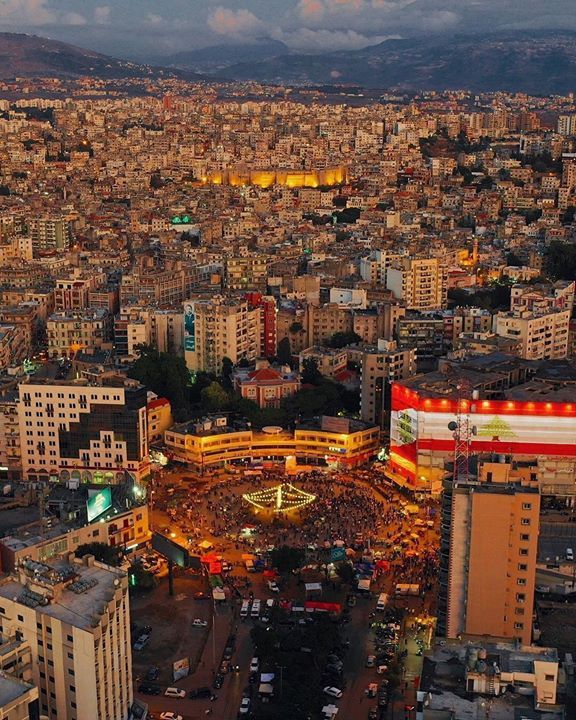
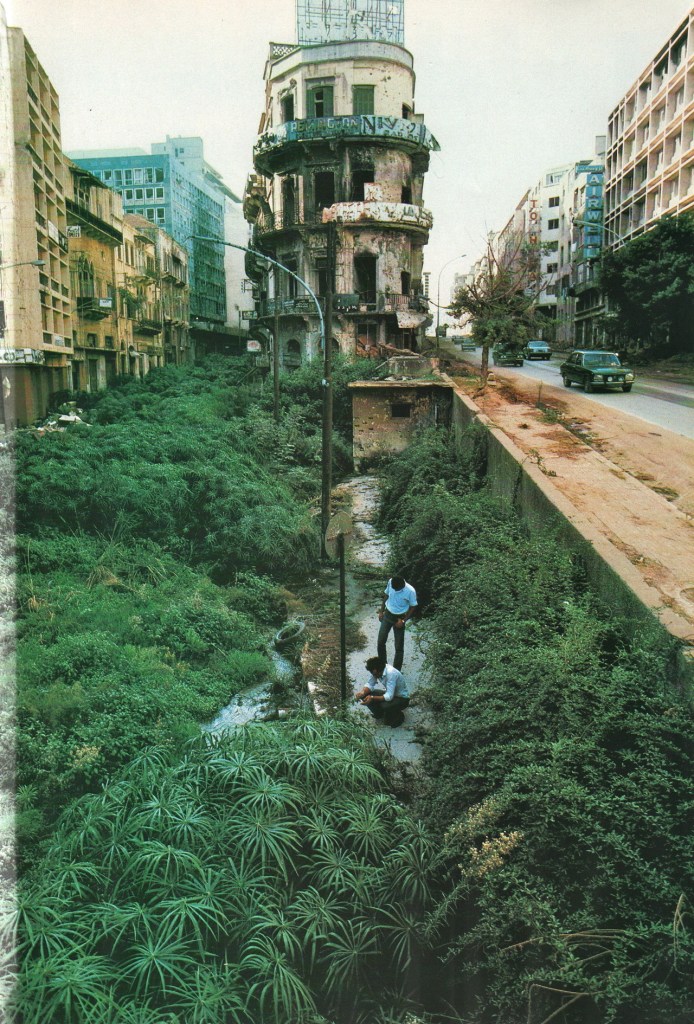
My understanding is that a “Green line” runs south from Martyr Square, and it divides a mostly Sunni West “Ras” Beirut from a Chrisitan zone in the east. There are 3 major Palestinian camps in the Southwest and Shi’a in the south and Southwest in zones run by Hezbollah. The airport is squarely in the Hezbollah control zone, or at least everything around it is. They didn’t have a map, but a map of varying lines exists in both their heads. Albeit with Mr. Souheil Tajer has the far more intricate and detailed map.
SOUHEIL TAJER
It is good you are familiar with the “Green Line”, but there are other lines not to cross. “In good times, you would be testing them, them the Lebanese, but under the current situation, everyone will be tested by you. Testing you, wanting to know why you are there, now. What is your motivation?” Everyone will be very, terribly angry about the Palestinian situation. How could they not be? 20,000 is a lot of dead Muslims. Alot of dead people. And it will go higher. It will go to 40,000 by the dead of winter. And then higher still. So many dead people, dead Muslims, everyone will ask where you stand on that. No matter what their confessional feelings. You really must stay inside the Christian and Druze lines on the map. Beirut East, the coastal cities until Batroun, the Chouf, and the Matn. Everything else is an abduction possibility. You should study that map in real life and your head and use your common sense! Don’t exceed your limits. That’s how you can get captured or killed. Then I have to answer your parents.
ADONAEV
I’m there for 25 days. I’m going to rent a little studio in Achrafieh. I’m working on a manuscript.
SOUHEIL
Achrafieh is quite safe. You must not stay in the Muslim area after dark and don’t stay in their hotels. No one can guarantee your security. In East Beirut, you have many friends. The weather will be bad. It may rain every single day I’m afraid.
ADONAEV
I plan to do some writing in the Chouf, at your friend’s place in Berkazy. I am gonna stay in the city, be wary of my encounters, and stay in the right kinds of places.
SOUHEIL
Achrafieh is totally safe, but you must, must, must, find a good driver. It’s essential to your safety. I wish I could go with you and make some better introductions! Now repeat what I have told you please.
ADONAEV
The green line is the line of demarcation, staying in Muslim areas is not advised in the current situation. Be careful who I get to know because everyone is very curious and will be more curious because of the timing. No ultras, no interviewing extremists, no gangster-type venues. No adventures with fast and easy women of the night. Not an adventure, I won’t wander too much in the night If at all outside the Chrisitan zones. I’m gonna stay to my limits. I’ll get a good driver.
SOUHEIL
“How do you know your limits, or any limits in a place you’ve never been?”
ADONAEV
I know what kinds of risks I’m taking implicitly. But it’s important to me to know your people in their hard times and then later in the good times. I wish to know the Lebanese.
Souheil ponders that, but only for a micro minute; he carries a conversation with ease and expertise.
SOUHEIL
You’ll need a driver, a driver you trust. And stay in touch with me every day, I’m here for all your questions. I would love to go with you; I will go with you next time. You must be very conscious of your surroundings. Please do not befriend the wrong people and end up in a trap.
ADONAEV
I’ll get a good driver.
SOUHEIL
Preferably a Christian driver. I know how that comes across to you, but you do not understand how it is yet. You need a driver you trust. Who is very responsive to your logistical needs. And will not make up new hyperinflation prices. Pay for everything in dollars if you can they will charge your credit cards Lira rates that will be preposterous.
Now listen closely. If Hezbollah and Israel end up in a major escalation you will need to get out quickly and the airport will not be the best way out. If things go very badly internationally, you must get to the Port and find a ship to Cyprus. The Israelis will certainly bomb the airport into the ground, they always seem to do that. You can also go wait it out in the Chouf, I’ll give you some phone numbers. But ideally, you will have to get out of there by ship to Cyprus if the war spreads. Which it really might. As Hezbollah does not stop firing rockets into Israel.
“This is not the best time to go; I really encourage you to reconsider.”
ADONAEV
My flights from Paris have already all been canceled due to the security deterioration. I will have to reconsider my options. There are only inbound flights on Middle East Airways.
SOUHEIL
One thing you mustdo is visit the Shrine of Saint Mar Charbel44. He did something like 26,000 plus miracles. A very holy man. If your itinerary allows this, you must go and get some holy water, or oil and walk in the footsteps of this highly righteous man. It will change your whole life! I promise you that.
ADONAEV
I love miracles! But I never rely on them at all, just my raw wits. Thank you for talking this out with me. It all seems more possible than before.
SOUHEIL
Follow your heart but know your limits! Or you will die out there. Die for what? I am fully unclear, these are highly tumultuous times, but as a good Lebanese patriot; I say this: better not to die at all when more than half of your encounters will bring unique experiences and exciting new friendships.
We enter the mosque compound at twilight, though twilight itself seemed reluctant to fall. The call to prayer still echoed faintly from the minaret, a broken ghost-sound caught between heaven and stone, though its muezzin had long since fled or fallen—whether butchered or swallowed in the tide of war, none of us knew. Dust hung heavy in the air, congealing with the sharp tang of gun oil smeared across my hands and the dried blood caked beneath my fingernails. We moved with the YPG unit like shadows masquerading as men, our boots whispering across sacred carpets long since ripped open and blackened by fire. The mosque had been a sanctuary once; now it was a slaughterhouse with gilded walls.
They were waiting—Daesh, black-clad, statuesque, crouched like carrion birds behind shattered columns and prayer-stools. Their rifles rested on Qur’ans, defilement turned into ritual, eyes void of mercy, void of thought, filled only with the endless hunger for death. The first shot did not thunder; it whispered. Then the chamber of the mosque exploded in carnage. Muzzle flashes stuttered like lightning storms against the calligraphy-laced walls, sacred verses flickering with each round, the names of God trembling as our blasphemies carved themselves into stone. I returned fire without feeling, a machine in flesh, squeezing the trigger again and again until the rifle jammed, heat and smoke choking my lungs. I collapsed behind a marble pulpit as though it were the ribs of some ancient saint, hoping the stone would hold while lead sang against it.
Beside me, Heval Kamal was struck. The bullet punched through him with the elegance of inevitability, a red flower unfurling across his chest. His lips parted, a scream forming but drowned in blood, his lungs drowning him quicker than the enemy could. He fell without grace, spasming, his eyes begging for air, for rescue, for God. I did not mourn. There is no space for grief in the iron rhythm of battle. My hands tore his rifle from his still-warm grip before his last twitch had passed. Forgive me, brother, I thought, though I spoke nothing. Your bullets are more useful than your prayers.
The dome above us wailed with fire. Smoke poured through holes carved by rockets, shafts of dying orange light filtering in like the fingers of a cruel deity. I saw one of them—young, beardless, his face twisted between terror and rage. He couldn’t have been older than nineteen. For a heartbeat we locked eyes, and I saw a cousin, a neighbor, a boy who might have played football in some forgotten street. Then I shot him twice in the chest, precise, quick, watching him fold against the mihrab as if surrendering into a lover’s arms. His blood smeared the sacred niche where thousands had once knelt. I felt nothing. Or perhaps I had felt everything so many times that my soul had calcified. Somewhere back in Raqqa, or maybe in some trench months before, time had stopped mattering. The clock rusts inside your chest when every day is measured in bodies.
When the shooting ended, silence staggered back into the mosque. It came limping, dragging behind it the stink of powder and iron and meat. We walked among corpses like pilgrims at a grotesque hajj, our rifles drooping with exhaustion, our boots splashing in what once passed for men. I pressed my palm against the bullet-pocked wall, fingers tracing Arabic calligraphy shredded by shrapnel, and whispered an apology to no one in particular. To Allah. To the dead. To myself. To whatever remained listening in this void where even God had turned His face. The only faith left in that ruin was the brotherhood of ash-coated, bone-weary men too stubborn—or too damned—to die.
Every time we crawled out of a firefight in Rojava with our skins intact, a price was exacted all the same. The internationals especially carried it raw in their eyes. They had just killed someone, maybe for the first time. Or had watched a man they’d eaten bread with choke on his last breath. Or maybe their bullets had torn through someone who wasn’t strictly a combatant at all, just a body caught in the blind frenzy of battle. Some had been awake too many nights in a row, fueled by cigarettes, adrenaline, and the conviction that tomorrow might not exist. After their first blood baptism, they drifted for days in a fugue, phantoms wandering the outpost. Some said nothing, as though words were another luxury they couldn’t afford. Others muttered nonsense, speaking in half-dreams, voices cracking like children’s.
“He’s lost the plot,” Heval Erdal, a British comrade, used to mutter, shaking his head at those glassy-eyed stares. He’d laugh when he said it, but the laugh always caught in his throat. The plot was easy to lose out there.
Years later, after the fires of Rojava burned down to embers, those who had survived staggered into other wars. Statistically, one in ten internationals died on that soil, their bodies buried in Kurdish earth far from the countries that had birthed them. Four of ten died later, either by their own hands—noosed, overdosed, revolvers pressed to temples in kitchens at dawn—or vaporized under Russian rockets in Ukraine. They migrated from one doomed battlefield to another like moths drunk on the flame, unable to live in peace, unable to stop killing, unable to stop dying. The war never left them. It only traded flags.
At the Green Village Outpost contact line our tabor is told to dig in. So, for a few days we helped sandbag and fortify what appear like the accommodations of now long fled oil workers. Something green and modern looking in the bleak oil lands of Der Ez Zor province. An oasis in the wastelands north of the Euphrates. The Turkish Army is coming. For every step Isis takes in retreat, the Turkish state prepares its forces to crush us.
SEBASTIAN ADONAEV
“Sometimes I close my eyes and remember your lips.”Late into the long trips home. I had no home; it was your home only. Only my ugly little flats around the Brooklyn Soviet. Rented in desperation, vulnerability, an admission of poverty. And I will never go back to that humiliating life. I will never see you again, or see Russia, or Cuba, or Mehanata or any other type of slavery life. Your lips and whispers are still lingering Goldy, Goldy. It will forever remain. Now deployed about ten days ago to the Southern front near Omar Fields. Daesh is nearly finished, they say. Assigned first to Tabor Shihad Lawrence, five quickly die by sniper fire and mines in the very first night of the operation. The race to liberate all of Syria’s oil from Isis before the Regime, Russians, and Hezbollah can.
The twenty international volunteers are all drifting in different directions. They, our Kurdish handlers, prefer we not all die at the same time. There are supposedly around 500 international fighters who came to fight in Rojava, mostly from the U.S. and Europe, also Türkiye. But numbers and time to the Kurds mean absolutely nothing. So maybe there are 500, or maybe just 50. “Who knows Heval, who knows!” It is generally believed that in total 500 served and 40-50 remain in the autonomous region.
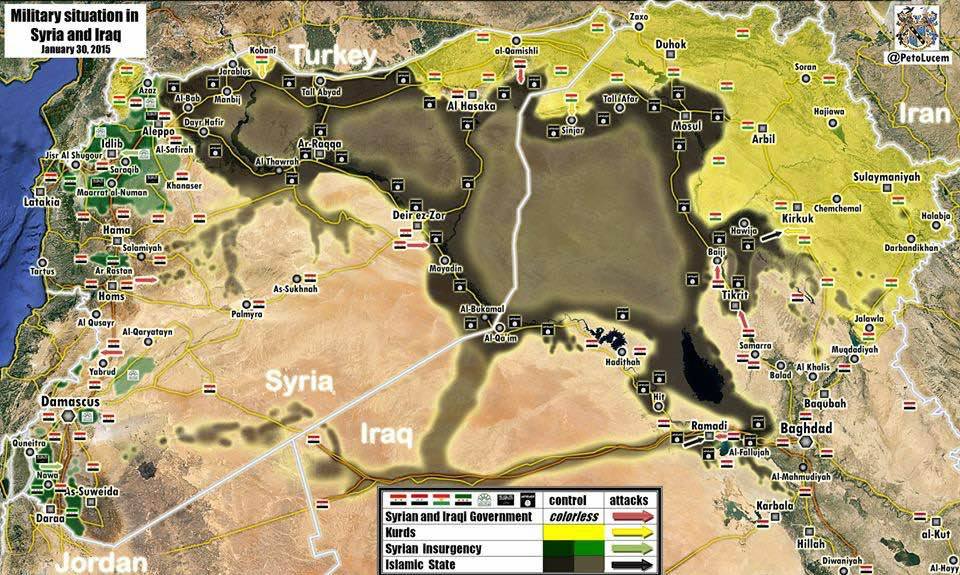
“Daesh is nearly defeated, but you cannot kill a poisonous idea.”The Islamic State once size of Great Britain at its maximal, poised to take Baghdad and Damascus is reduced to the wastelands of the deep desert and a strong of indefensible towns along the Euphrates River southeast. From the North the Syrian Democratic Forces supported by the Western Coalition advance. We are part of that force. On the other side of the Euphrates the Russian Army, Lebanese Hezbollah, and the Syrian Army advance. We all try and not shoot at each other, at least until ISIS is finished. Over the border in Iraq ISIS has been largely crushed; the Shi’a Popular Mobilization Forces, the Iraqi Army, the Iranian Pasdaran, and Western advisors and various Special forces have all but driven ISIS from Iraq back to the Syrian border.
The name I have been given is Heval Kawa Zivistan which means “Comrade Black Smith Winter.” I am a Paramedic in civilian life and therefore one of the highest medically trained foreigners in the brigade. Heval Shoresh from Brooklyn, I have known him since childhood. He has a child back in America. I judge him for being here were it really my right to judge other people. But this place and this revolution are irresistible to us both. He is a gardener back home. Here he carries a heavy-duty long-range, high-power rifle called a Dastun which is about twice his size. Hard to aim.
There is Heval Sasson from Austria. He was an EMT who once travelled with his girlfriend all over Africa on a motorcycle. He is quiet, ideological, principled, and socialist in disposition. With also is Scottish Heval Ciya a former British solider. Also, the mad man career criminal kicked out of the French foreign Legion called Heval Shivan, who although he claims he was also a British solider cannot hit a target with an AK to save his reputation. He has not let up for many days talking about the Order of the Knights Templar, talking about the Knights of Malta; actually, engaged in an unending pressure of speech manic diatribe about the new crusades, that we are allegedly in. There’s also Heval Azad from Albania, something of a gypsy, a bespeckeld intellectual; an anarchist of course. There is also a French Legionnaire of enormous size, a giant. He is called Heval Gabar and speaks only of the Legion, revealing nothing of his life. He is not very well liked by the other internationals. There is also a young kid who looks not more than 16 but is allegedly 18. His name is allegedly Max. One of the few held back in the Academy because of minor injury. He is dubbed “Heval Maslum”, but everyone just calls him Max. And that is how he introduces himself. He is allegedly from Salem, Oregon. No matter what seems to happen he just repeats, “I don’t care.”
After the 5 Arab conscripts were blown apart the first night, they broke the internationals not smaller groupings. Ciya and Shivan were sent to a YPG Cadro Tabor based on being British military they were sent to the front. Soresh, Maslum, Gabar were merged into an Arab unit and sent to the front. Sasson and I were attached to the Kurdish Red Crescent outpost in the Naqta in Omar Fields. Gabar and Maslum dubbed “pizkereks” or problem makers, were sent to guard a fox hole on the edge of some useless “liberated village”. No one knew where Heval Azad was sent, but Albanians are very tough crafty bunker people.
“He will turn up and be just fine!” Heval Sasson says, ever an Austrian optimist. “But he just as easily could have stepped on a mine and blown off a leg or been hit by sniper bullets. Many of the Internationals that died, it seemed died from stepping where they shouldn’t step, on some mine, or, getting cut down by sniper fire.
***
Then night came and Sasson and I were quartered in a farmhouse. The commander invited us over to the field command for tea. The mood was the war with Daesh was over and very soon we would all be fighting Türkiye in the north and or Assad’s forces right over the river. The Commander is named Heval Azadi. They cycle out the same 50 Kurdish code names for everyone seems like. The commander in very broken English invites us for customary black Tea in one of the many pillow rooms they like to build. Command rooms with wall to floor pillows are par for the course.
“Trump say, no more guns for YPG,” he tells us the SDF is the brand the YPG uses to appear more inclusive, a little less Apoist, a little more not directly in the chain of command of the PKK, but the commanders almost always say YPG or PKK, there’s a lot of little acronyms for small armies out here. The YPG, or the People’s Defense Forces make up 80% of the SDF; the Syrian Democratic Forces. All the best commanders are Turkish Kurds, PKK trained. Some don’t conceal their cross affiliations very seriously, but almost all do not wear the green PKK uniforms, instead wear YPG-SDF cammo. But it in their walk.
“Daesh finished in Iraq. Two towns left,” Azadi tells us.
“Twenty-four little Gundes to take along the river,” he says. A Gunde is Kurdish for a small indefensible village.
“In Moscow, the PKK make a deal with regime,” he says, regime meaning Assad and Syrian Army, “Iran, regime, Russian make deal on autonomy and oil rights.”
We are engaged in an operation to seize Syria’s oil fields, Sasson had explained. There were not many ISIS fighters left after Mosul and Raqqah fell. This is all now about who can take as many oil fields as possible to negotiate the final settlements. This seems to discourage Heval Sasson.
“Really all that is left now, “says Commander, “NUSRA Front and HDS in Idlib.”
“Al Qaeda’s Syrian brand,” Sasson tells me.
“The PKK is making a deal in Moscow; we will end up making terms with Assad. The HDS, the Nusra, the Deash all the Islamist proxies in Idlib, Bab and Jarabulus City they must be eliminated to close the gap.”
“Closing-the-Gap” we learned in the Academy was about pushing through the Islamists into Turkish Hatay Province to gain sea access for Rojava. The Gap also being closing the lines between Afrin and Kobane. Afrin Canton is hard to resupply and will be the first thing the Turks attack.
“As soon as Deash war is over Turkey will attack, you will fight with Turkey?” They all wanted to know that. Would we all stay and fight the second biggest army in NATO?
“Of course we will,” Kawa claims, but Sasson knows suicide is also problematic when they return to their homelands. In fact, it is well known that many of the prior volunteers, of which there were only maybe two thousand over the past ten years; they did not adjust well here or there. But this was an antidote. Some did multiple tours, others died in other foreign lands for lesser causes.
“When Daesh is done there will be no ceasefire. Turkey will attack immediately. 45% of all Syria is now in Rojava. In SDF hands. Türkiye will waste no time,” says Heval Baran from Germany. Baran had set out to join the PKK, but after 6 months on the mountain they sent him to the YPG. The Germans are the best suited of the internationals to adjust to Kadro life, but Baran said simply; “I don’t really want to give up women.” The life of a Kadro is one without any material things, no attachments, not sex no marriage. Life of total dedication to “the struggle”.
We all speculated about “Fighting the Turks near Afrin” while in the Academy. It will be slaughtered. A cadro boasts that “We have peace deals with USA and with Russia maybe also China!” But the dependency on the U.S. airpower is very real.
“The Regime will not ever accept Rojava in any form, it is just too weak to defeat it right now.”
“Russia will never abandon the regime,” someone says in Kurdish.
“It is like America and Israel; you have Syria and Russia. The Regime gives Russian Mediterranean Seaport access; the Regime is only alive because of Russia and Iran.”
“There are many factors. Russian is loyal, America is not. When Daesh is over there will be no more guns, no more air support.”
“How many Western volunteers do you think are still in Rojava,” Sasson asks the commander.
“40, maybe even much less,” the Commander says. “50,000 came to fight for Daesh, over time 2,000 came to help the SDF. 1,500 leftists from Türkiye and 500 from the West. Now, in country still, 50 maybe.” “The airports in Erbil and Slemani are still shut down because of the independence referendum. For now, you are here to stay. Who knows what will happen? PJAK is now fighting in Iran again. Soon more fighting between Iraqi Army and Peshmerga. And Türkiye! They are coming trust me heval.”
Goldy wrote that she might have to marry her rich ugly patron. Polina wrote she is leaving me since I am “on the other side of the planet now” Chanie is “back with Charlie”, so probably I will never hear from her again. Anya Noori, my attaché, sent me some news from Baghdad. “They are arresting Western volunteers without good paperwork coming back from Rojava. Slemani and Erbil airports are down everyone must go out from Baghdad.” But I have good paperwork. I called my parents the other day. An Arab had sold me a Syrian SIM card. They seem proud that I am here. I hope I can hold it together and reach ‘the mountaintop.’ There, if I am open-minded, I will finally understand the truth; in its innermost parts.
Like in my dreams, the “EMT Program of Kurdistan” is just a means to an end. And after thought, the G.C.C. is barely useful or functional any more out here. My so-called state-side partners Andrew, Forti, Jessica, the lawyer Matthew Smith, and Ovid all have defected and left me out here with no help. Can I count on David Smith, Kaveh, Jonah, or Dr. Wagner, probably not or only for a little while?
Everything here is an assault on my senses! Daily, I must learn ideology, discipline, war, Arabic, Kurmanji, keep Sasson and I from stepping on mines, dying in airstrikes, getting enough water. Sasson has said he is willing to help me run the EMT program if only we can get authorization to do so. The Kurds do not believe in time, they do not believe in space, and they do not believe in relying on foreigners. They do seem to believe concurrently in American led coalition airpower.
The others we trained with, the twenty, are all dispersed to different positions. Ten to Afrin and ten to Der Ez Zore. They must choose their own adventures in Rojava. I do hope that Soresh stays alive for the sake of his 6-year-old child and young wife. Ciya and Sasson signed the G.C.C. paperwork, the cover contracts that they will claim later to the government of Austria and Scottland that when they did out here was purely medical. But it’s not so much if they stay 6 months to train in an EMT program; it’s more will the war end to allow the time and space to justify one. It’s impossible to know how far up the mountain any of us will go. Heval Barron was there for almost a year. The German heval said little good or bad about it, he barely says much.
So many ways to die out here. We or most of the 2,000, or 500, or 40 shared a noble goal. Defeat Daesh, defend the Revolution in Rojava. In the meantime, Sasson and I have been training Arab fighters in life saving skills. We try to stay sane. I am sure I will have to use this AK-47 before this is all over. The thought does not bother me, but I do not delight in the thought of any killing.
Today, a villager “gundi” handed me their sick infant, and I listened to its lungs and heart and helped prepare some Pedialyte mix. The child was sick but dehydrated and stable, the Arab comrades keep telling people an American doctor is in the camp. But even in Syria I am still just a paramedic not a doctor at all. So much responsibility is on my shoulders. They all have varying medical issues. Infected toes, rotting death, abdominal pains. I do what I can. The Party purchased me a huge rolling duffle bag of medications and medical supplies. So, we stay as busy as we can.
I daydream and hope Goldy thinks about me more than sometimes, but probably only Chanie does when she is allowed to. Goldy sometimes WhatsApp’s me cute photos and sometimes Anya, the attaché flirts from Baghdad. I have been sending Chanie letters via the U.S. Special Forces were run into coming through the camps. I realize that G-d or no G-d, Abdullah Ocalan is writing about a universal truth. This is the last stand. The last chance we will ever have or get again.
“Deash is all wiped out,” the Commander repeats, “BUT THE TURKISH ARMY IS COMING FOR SURE. To burn all we have built to the ground,” he sighs, “Serkaften, we will fight them too!”
We all have a lot more bleeding left to do no matter what happens. It’s sometimes hard to imagine where the war begins and how it all ends.
Field Report………………………………………………………..……………………Page 51
Recommendations………………………………………………………………………Page 64
Conclusion…………………………………………………………………………………Page 70
List of References………………………………………………………………………Page 72
Annexes……………………………………………………………………………….……Page 78
Abstract
This Masters paper aims to validate a system of module based training deployed in the Republic of Haiti carried out between 2010-2015 based on an amalgamated core of Southern and Eastern development paradigms. The Module itself is a Special Forces model of Emergency Medical Technician Basic (EMT-B). But the underlying ideology of auto centric and emancipatory development provides a compelling example of what occurs when ‘the beneficiary’ is treated like a fully invested partner; sustainability & actual advancement of capacity.
Executive Summary
My research is a summary of how groups of multi-disciplinary & resource poor tactical development units trained 104 EMTs, 551 first responders and enabled them to build 4 distinct organizations that required no further capital inputs to self-sustain in the Republic of Haiti for below $241,000 USD with a simple idea and a modular expanding tool kit. This thesis will outline the practical application of an EMT Module in the Republic of Haiti and suggest eleven subsequent para-state module adaptations described as Keystone Trades; essential socio-economic building blocks to restore failed state function.
The delivery of health & social services is generally considered the responsibility of national governments and their appointed Health ministries. It is precisely these public services that were gutted under the structural adjustment polices advocated by the Washington Consensus and IMF economists in the 1980’s (Stiglitz, 2002). Endemic global poverty brought about through structural violence has of 2015 resulted in 5.1 billion people living their lives below $5 a day (WB, 2015). The World Bank’s $1.25-a-day poverty line is insultingly low. The United Nations Conference on Trade and Development (UNCTAD) states that anyone living on less than $5 a day is unable to achieve “a standard of living adequate for health and wellbeing”: the inalienable right enshrined in the Universal Declaration of Human Rights. If these statistics are correct that would mean that over 71% of the human race; or 5/7 people are living in a state of emergency and deprivation (Kirk, 2015).
Concurrently 45 ongoing armed conflicts within 35 nations have weakened or disintegrated the capacity of many governments to maintain and deliver even basic social services (Uppsala, 2014). The gruesome civil wars have decimated populations and destroyed all but the most basic mechanisms of the state. Haiti has long been wracked by foreign invasion, internal political violence, and numerous coups. Adequate, Accessible, Available and Quality health & human services are rarely available outside of major cities in over 138 low and middle HDI countries due to reallocation, or expropriation via corrupt practice, of the limited available resources (Collier, 2007)(WHO, 2015).
The World Health Organization (WHO) calculates a global shortage of 4.3 million doctors. Using 2005 data in a regional census of African health workers it was determined that developing nations throughout Sub-Saharan Africa & the Developing world have highly limited resources to train medical workers. A variety of skilled professionals critical to forming just and equitable societies leave their countries to seek out higher pay in the urban centers of regional trade hubs and if they can; migrate to the global North West (Kinfu, 2009). Health Care has gone from being a human right and humanitarian imperative to a high lucrative global market, one that is experiencing a serious shock via the structural and regulatory barriers to train skilled medical workers. The catastrophic NGO influx into Haiti post 2010 earthquake are among the latest manifestations of that shock. Well-meaning foreigners providing non-regulated, uncoordinated and un-accountable development projects in lieu of private or public sector services controlled in country.
When a sustained process of underdevelopment expropriates a nations human resources, exploits the labor of its people and then exposes their fragile economies to the forces of un-mitigated free trade; the result is maldevelopment. One cannot make inherently dysfunctional structures succeed or failed states prosperous until critical investment are made in the human capacity to sustain and proliferate basic human services; particularly investments in health and education.
Pre-hospital care does not exist in any normative function outside of the OECD nations, where it does it is provided irregularly by Community Health Worker, low paid, quickly trained and existing with little to no uniformity of scope of practice.
The reason that the post-earthquake Cholera epidemic has ravaged Haiti is because few in the developed world took meaningful action until the situation was potentially threatening to global health. What is happening in Haiti must be examined in light of what is also happening in 59, underdeveloped & maldeveloped nations worldwide. It is not accurate to suggest that measurable improvements are being achieved (Farmer, 2003). The theory of change being accepted by the WHO and groups such as the Clinton Health Access Initiative (CHAI) is “human resources for health services”, but what in what distribution; and by what pedagogy remains a serious question. If success is being measured in MDG health indicators; then the Western Health Policy machine has convinced itself they are succeeding. But only those living in the West are giving themselves any pats on the back. Investing in stop gap maneuvers such as affordable medications for infectious disease, community health worker proliferation, malaria nets, foreign volunteer medical brigades and expatriate trainings are token gestures offered by privileged Western academics, at best. They are not solutions to long lasting structural violence propagated by Western policies and local mismanagement. Those that advocate for them have clearly never lived on $ 5 or less a day in a violent, impoverished society.
No health system on earth has been designed to allow the base level practitioner, in this case the Community Health Worker, to advance via testing and modular training to the level of a specialized physician. It is that precise service system we seek to proliferate in both Haiti and West Africa and in the process demonstrate the speed and proficiency we can build back social services in developing nations.
Acknowledgements
This work was a very long time in the making and took a great deal of generosity, risk and time from all those that were involved. When this began in the fall of 2010 no one supported this effort, in fact all the experts told us the Haitians would steal our equipment and malign our civilian volunteers. We were told that we were unequipped for an operation of this scale and what could a group of ambulance workers know about sustainable development. Five years later the Clintons have built a $470 million sweat shop called Sai-Ah; the proliferation of un-registered NGOs continues unabated; people continue to profit off Haiti’s poverty and there is still no emergency medical service in any normative form. There is however confirmation that anti-Haitian pogroms are happening in DR, the rock star neo-Duvalierist President has not called elections in over a year and perhaps as much as 20 billion in gold has been found in the north of the country being prospected by American companies.
However, thanks to rank and file EMS members of service connected with the Banshee Association in New York and Empact Northwest in Seattle; 104 capable, utilized and employed Emergency Medical Technicians have been trained in four classes in Haiti. These men and woman are employed at hospitals, on ambulances; they have formed Haitian organizations that function without foreign direction. They save lives and train others.
Our work would be impossible without the bravery over sixty-four EMS personnel from around the USA who raised money and equipment; who flew to Haiti wave after tumultuous wave to teach. Special thanks to Gerard and Geraldine Prévot of the GAI; who held the Haitian formations together throughout un-ending adversity. Without them and Haitian nationals like Obenson Etienne, Lucien Bonhomme and Claudel Gedeon Haitian EMS would be a foreign invention. These men and women built GAI, RETUM, MASHA and EMPACT Haiti the autonomous EMS groups that emerged from each class. On the diaspora side; without the support of Sonide Simon, Sam Darguin, Victor Cange, Watson Entwissle and Ken Francois we’d have been unable to connect out theories and modules to the support base of the diaspora.
Special thanks to Michael Mastroianni, Armandeus Davidson and Eric Adman the elder statesmen paramedics of the effort that tempered Banshee radicalism and provided decades of EMS supervision. Special thanks to Elena Antolievna Komarova who utilized her training in Educational Development to upgrade the fourth version of the EMT Module and make it so replicable and lean; she alongside Peter Reed served three months in Haiti alongside this author in the summer of 2014 to prove the module could run at a fraction of the previous staffing costs.
At Heller, with the exception of Jefferson McIntyre I got so used to dirty looks due to my comments on development that I will never in my life call myself a development practitioner. With the exception of Profs Sampath, Howard and Abt more blank looks from the faculty made it clear that 100K in debt, having carried out five years of medical capacity building and arguing passionately for the poor and oppressed is not welcome at this university. I feel that I have no support for this module, no prospects for deployment and no future for this work other than that what I will create. I have learned that a happy class of people have taken poverty alleviation as means to live well off the backs off the poor in a field that is unaccountable and in denial about its own impacts. One day they will throw development practitioners in prison as profiteers and I expect to see many of my classmates at that trial.
Without my mother, father, Elena and Alan Medvinsky I am sure I could not have sustained the graduate school experience. I only hope with all this new training and wider perspective I can put by research to more good work.
Acronyms and Abbreviations
BRACBangladeshi Rural Advancement Committee
BRICSBrazil, Russia, India, China, South Africa’s New Development Bank
CBOCommunity Based Organization
CHWCommunity Health Workers
CSICommunity Supported Infrastructure
CPRCivil Political Rights
DACDevelopment Assistance Committee
EMT-BEmergency Medical Technician Basic
ESCREconomic Social Cultural Rights
FTZFree Trade Zone
GAIGwoup Ayisyen pou Ijans/ Haitian Emergency Group
GCCGeneral Coordinating Committee
GDPGross Domestic Product
GNIGross National Income
GINIGINI index
HDOHybrid Development Organizations
HHTARG Haitian Hometown Associations Resource Group
IMFInternational Monetary Fund
IKIndigenous Knowledge
INIndigenous Need
ISMInternational Solidarity Movement
MASHAMovement of the Rescuers in Haiti
MCAMass Capacity Approach
MCDMass Capacity Development
MCMMass Capacity Modules
MbTModule based training
MDGMillennium Development Goals
MINUSTAHUnited Nations Stabilization Mission in Haiti
MSPPHaitian Ministry of Health
NGONon-Governmental Organization
OECDOrganization for Economic Co-operation and Development
PSTParallel State Theory
PALMAPalma Index
RMARezo Medikal Ayisyen/ Haitian Medical Network
RETUMNetwork of Emergency Technicians
SDGSustainable Development Goals
SMOSocial Movement Organization
TEDTechnology Entertainment Design
UNDPUnited Nations Development Program
USAIDUnited States Agency for International Development
WBWorld Bank
Introduction
2.4 million people living in Port-au-Prince, Haiti lack access to basic pre-hospital emergency care and die of preventable illness and injuries. In 2005, the World Health Organization recommended pre-hospital care as an integral building block of emerging health systems. However, Emergency Medical Services (EMS) as understood in developed countries are virtually non-existent throughout the developing world.
The theory and practice of Module based training is to permanently provide high quality emergency medical service training consistent with Anglo-American standards to resource poor populations within developing nations. We use an innovative systems based approach to train healthcare workers in remote, austere and resource poor environments. Our solution was to expand the scope of practice of the Community Health Worker through a series of paraprofessional training modules. Beginning with a CHW upgrade to Emergency Medical Technician (EMT) our module system focuses on three core aspects:
Generate independently employable human resources for health services.
Enhance the capability of existing community based healthcare organizations.
Empower local capacity for continuing medical education and local training.
We have developed and rigorously field-tested (over five years and four clinical trials) a for-profit, hybrid solution to pre-hospital care delivery. Our training methodology can quickly, efficiently and cost-effectively improve the medical services of resource poor communities within developing nations. Our pilot program is successfully running in Port-au-Prince and Croix-des-Bouquet in Haiti. We have so far trained 104 EMT providers and 551 community first responders the majority of which are employed in the health sector. We are now seeking funding to establish permanent operations and scale up.
This thesis paper will build upon these Eastern and Southern case studies and demonstrated praxis to outline a bold new methodology of development called Module based training (MbT). It will then illustrate the applicability of this hybrid modal for proliferation via all four sectors of the enterprise. The thesis paper will be arranged into several categories of analysis; 1) Background & Development Context, 2) a Case Study, 3) Methods, 4) Literature Review 5) Discussion 6) Recommendations, followed by and Annex which will include 7) a Cost Effective Analysis, 8) Assumptions & a 9) Listing key stone trades.
We will recommend financial and operational facilitation of the 12 Key Stone Modules in 130 peripheral, least developed nations and conclude with immediate next steps for international implementation. Specifically and immediately, in Haiti, DR, Jamaica, Sierra Leone and Greater Kurdistan. The logic of these locales will be explained in some depth. The goal of each emergency group is to establish a useful beach head to advance further trainings and correlated social enterprises.
Background & the Development Context
What if a crime of enormous magnitude was being carried out in the most sanctimonious and white washed paradigm imaginable? Perhaps in the name of social justice, gender equity, human rights and democracy. A great and unnatural pillage of humanity and planetary resources being carried out as a civilizing, modernizing mission. Preceding at such an alarming rate that 5 in 7 humans were as of 2015ce reduced to varying degrees of miserable serfdom and the climate itself was being altered, rendering the ecosystem hostile to life. What if an international web of small clustered elites were via their accumulation of wealth concentrated in several developed nations. And these elites we able to not only shape the dominant socio-political discourse; they were able to carry out their expropriation by calling it “development.”
The Development Enterprise as we understand it began after the Second World War with the 1948 implementation of the Marshal Plan. The intention of this far-reaching US Aid investment was to keep war-ravaged Western Europe from being absorbed into the Soviet sphere. Development subsequently evolved into a far more expansive international architecture. Its newly stated intention within the Cold War context was to modernize & industrialize the former colonial, third world and later the Post-Soviet nations. Packages of civilian and military aid were coupled with technical assistance. Non-governmental organizations proliferated generally around poverty alleviation and cause specific programs. The United Nations ratified a wide range of human rights instruments as rapidly escalating armed conflicts accelerated in almost every nation in the developing world. By 2014, there have been 15 confirmed acts of Genocide by International Law since 1945, 37 total if you include acts of democide (Rummel, 1998). Environmental degradation has resulted in expanding disastrous climate change (Nordhaus, 2013). There are over three billion human beings living at or below $2.50 a family a day that are worth as much in their collective assets as the top 83 richest people on earth (Oxfam, 2014). It is believed that over 29.8 million people still live in chattel slavery (Global Slavery Index, 2013). That number might expand tenfold were we to incorporate low paid, race to the bottom type assembly plants and bonded labor. While the United Nation’s Millennium Development Goals have supposedly ‘halved global extreme poverty’, ‘doubled human access to clean water’ and ‘halted new infection with HIV-AIDS’ divested of all the many political, economic and religious superstructures the results of the development enterprise are highly underwhelming. Largely unmeasured, unaccountable and top down in implementation; if not an outright architecture to maintain former colonial relationships between states referred to as dependencies (Rist, 2002); development lacks to a growing body of humanity whatever moral imperative it once enjoyed.
Development today is a highly subjective and amorphous field that lacks measurement or even an agreed to verifiable definition (Rist, 2007). Within the ranks of this vast and ambitious undertaking are bright eyed idealists; ego maniacs; missionaries, spies; colonialists, national patriots and aspiring revolutionaries. Economic opportunists are everywhere. As well as wolves in sheep’s clothing who in pursuit of bare national & self-interest leave not a scrap for the future. This global enterprise of unprecedented scale relies upon various competing theories of change and remedy, constantly in antagonism. That the needs of the present generation do not outstrip the prosperity or availability of future generation’s needs; juxtaposed to a Kuznets curve positing that rising inequality precedes equity. Concentration on Sen’s maximization of agency & capability; or breaking physical and mental dependency via Paulo Freire’s pedagogy of the oppressed. Does one glorify the United Nations and multilateral big-push theory and Sachs’ Millennium Villages or endorse Easterly’s social entrepreneurial searchers and the Monterrey Consensus. Does the future look to John Smith via ‘Free Market Fundamentalism’ or to the ghost of Karl Marx? Human Rights or human needs; the ‘ease of doing business’ or the ‘dictatorship of the proletariat’. Capacity or capability? Do developing nations borrow from the World Bank or BRICS; is the worldview of the practitioners shaped by World Economic Forum or World Social Forum. Where do we ultimately place priority and resource mobilization; within the social, the economic or environmental sphere? Does work actually set people free? No one knows, or can know, the answer to any of those questions. Largely due to a total lack of objective and transparent data. We must refuse to accept the validity of government statistics being produced by governments that cannot meet the most basic social services such as feeding, housing and providing healthcare and education for their people. We must also reject systems of Monitoring & Evaluating any data that are carried out by the same institutions that the data reflects performance upon. The World Bank in 2001 conducted a massive participatory study of poverty where tens of thousands of people living below $1.25 a day were asked what could be done. When the UNDP in 2014 asked similar questions to over 1 million people about the ‘world they wanted’ it was still obvious; the interests of the powerful few, the narrow interests of the oligarchic elites persist in smothering the voices of the poor, silencing all calls for change and imposing upon us all the vision of acceptable development, modernization and social progress (Piketty, 2014).
Underlying all this chaos and urgency is the objective reality that over 4 billion human beings are living in varying degrees of wretched deprivation, dying miserably before their time (World Bank Data/UNDP 2015). There is a very harmful dual untruth being perpetuated by majoritarian development actors in the United States and Europe. It is based on a dual illusion that has been furthered by big media apparatuses and financed by the corporate, business & banking sectors which also fund the various political parties in high office with direct bribes, indirect bribes and campaign financing.
The first part of this great un-truth is that human progress is a proven fact upon the ground; that the world is gradually getting freer, safer and more equitable; exemplified by indicators such as trade statistics, GDP and the Millennium Development Goals. This is the world view offered by TED Talks pundits, the neo-liberal theories of economist Jeffrey Sachs and revisionist academics such exemplified Steven Pinker. That poverty is ending and violence is ever decreasing.
The second part of the untruth is that capitalism and globalization are the drivers of this equitable progress and that market forces are ultimately good for the poor. The so-called ‘hard data’ that we have on hand does not well substantiate either highly muddy illusion. Both of which are paradigm hallmarks of a North Western development consensus which has for too long been operating unaccountable to all those it claims to serve, while attempting to maintain a monopoly on development and its discourse. We cannot reasonably prove in a scientific and objective way that Walt Rostow’s modernization theory is actually even occurring. We cannot prove that global violence, war and conflict is markedly decreased from unestablished, and largely un-kept statistical base lines from all the ages before 1848 (most of world history); and most importantly; we are being intellectually coerced (and coddled) by Western academics, politicians and economists to embrace a growth-obsessed, econometric free market fundamentalism simply on the basis of the competing ideologies battle field defeat. The famines, gulags, atrocities and repressions used to chronicle the civil warfare transitions from backwards feudal and peasant societies to 20th century socialist incarnations are direct exacerbations of top down socio-economic transformations in a state of perpetual cold and hot proxy war with the Western capitalist system. Russia and China have without a doubt gone in the course of less than one hundred years from being defeated, long victimized semi-feudal peripheral powers to super power hegemons and serious core contenders (Wallerstein, 2004)(Amin, 2006).
There can be no clear and absolute measurement of the data being generated to verify progress in the Human condition despite what various experts attempt to claim. The numbers on hand at the United Nations and World Bank are supplied by statistical ministries in a variety of highly non-transparent [if not overtly corrupt and incompetent] national governments aggregated to produce results that do not tell full or even partial truths. Despite what is being claimed at global conferences; we do not actually have much valid comparative data on the human condition before 1848 (Foucault, 1988). At the 2013 Interaction Forum, the broadest confederation of American development NGOs and Humanitarian actors, the UN High Commissioner for Refugees António Guterres admitted, “We are not entirely prepared”. More conflicts, deeply entrenched poverty, coupled with the targeting of aid workers will occur alongside decreases in funds and the impacts of global climate change. Yet, across the western development enterprise, almost all of the Western and white-washed academia and technocracy seem to agree that the very worst of human civilization is behind us (Pinker, 2013). Climate change and gender equity are to subsume talk of structural human rights achievement and class warfare as the acceptable development discourse.
There still is massive disagreement regarding the hierarchy of immediate needs for those 5 billion human souls that live on less than USD 10 a day; 4 billion at below $4 per family per day. 3 billion of which live on less than USD 2.50 a day; and 1.2 billion on less than USD 1.25 the number of which living in Sub-Saharan Africa which may in fact have in the last decade doubled (World Bank, 2015). The economist Thomas Piketty argues in his 2014 book Capital in the 21st Century that not only has there never been such wealth & income inequality ever in recorded history; but that at present rates oligarchic wealth accumulations are increasing and ultimately highly destabilizing to both markets and democracy.
The question remains one of enlisting actual participation and empowerment, not governance. Will listening to the ‘voices of the poor’ be a meaningless slogan or a set of specific instructions to those invested in actually achieving equality? Will development amount to economic enrichment of existing elites, corrupt governments and be the political aid carrot to the military stick; or will development mean emancipation from poverty and a tool kit to achieve freedom from long running structural violence (Goulet, 1971).
Development economist Amyarta Sen believes that development is a means to achieve freedom and freedom is achieved by enabling human capability. Jeffery Sachs believes poverty can be eliminated though coordinated action via a big push style global Marshal Plan. Banerjee & Duflo argue that not until randomized control trials drive interventions are we truly transparent and accountable. Many denounce development itself as a neo-colonialist scheme (Amir, 1973) and regardless of your political tendency one must admit the same actors of the North West dominate. OECD countries are theoretically bound to be giving 0.7% of GDP in direct foreign aid, to be matched by 0.3% via private sector charitable giving. However all rich, high HDI nations seem to prefer the 2002 Monterrey Consensus; to invest in trade related infrastructure. A regular buzzword in the enterprise is ‘Capacity building’, but this is often limited to technocracy and management training going directly to the government/public sector. Throughout the development and humanitarian sector coordination is irregular, local participation is largely dictated top down, and dependency is fostered beholden to national political directives, or just simple failure to meaningfully empower the so-called beneficiaries.
Development cannot easily be grouped by proponent origin geography, but a grouping of tendencies in methodology can be identified from their sources. It is important to remember that Development is not purely about donor and beneficiary nations; there is a clear linkage between internal national developments of a governments own population and external projection of its development paradigm. Development fosters dependency inherently; citizens dependent on government services and developing nations dependent on developed ones; their economies wide open their resources and cheap labor reserves ripe for picking.
There has emerged in the developing world a variety of effective means to break that dependency and unleash the human capability Amyarta Sen was referring to. Southern Development (Bangladesh, India, Cuba and Tanzania) is often categorized by utilization of micro-finance as credit base for social programs, encouraging self-reliance, directing investment internally and promoting massive capacity investment via vocational training in vital services. In the experience of Eastern Development (emanating from Russia, China, Israel and Iran); development focuses on construction of fixed infrastructure, long term investment in education & health, large scale/ long term cultivation of local leadership capacity and highly replicable localized mass training.
As opposed to Northern Development (Advanced Welfare States) largely concerned and successful with their own citizens development; and Western Development (emanating from the European Union and the United States via the OECD) that focuses predominantly on excess asset dumping, promoting market deregulation and free trade policy, augmenting perceived comparative advantage, supporting widespread privatization; and in the era of Gates philanthropy pushing disease surveillance, availability of inexpensive pharmaceuticals, women’s literacy [and inclusion in the work force] as well as advancing shallow policy changes in socio-political culture and asserting entrepreneurship when and where ever it can be advanced.
Within local Non-Governmental Organizations (NGOs), Social Movement Organizations (SMOs), trade unions, religious intuitions and Community Based Organizations (CBOs) of the so-called Global South, but in actuality economic dependent periphery; maximized human resources are often the primary asset they have to work with. Cut off from mega donors, domestically or abroad and often from services typically provided by government; innovation has been the key to community survival, which has superseded international external development strategies rarely aligned with political realities. A result of that innovation is the understanding that development is best implemented through indigenous knowledge, through local control of the means of development; and through investments in skills and training called Mass Capacity Development (MCD).
My research work is being driven by development programs initiated in the Global South/Periphery, but the theoretical construct is Eastern in origin (Rist, 2011). The world is divided into 216 economic, quasi-national zones. While it would be largely accurate to state that the core of the world system lies in the global North and West; it would be wildly inaccurate to think this is a static reality. There are multipolar challenges coming from the People’s Republic of China, the Russian Federation and India. There are a myriad of shifting paradigms in development methodology. Particularly those activities occurring in Cuba, Bangladesh, but also in New York, India, Israel and Iran. While this may seem a highly irregular data set the following findings are emerging that will revolutionize the system of Development Capacity Building. To transform the enterprise completely from one, which focuses on barely meeting human needs to one that generates human rights achievement via mass capacity. From Cuba we have seen some of the largest medical deployments in human history; an estimated 50,000 medical workers and comparable number of teachers and construction workers (Feinsilver, 1993). A full 6% of Cuba’s GDP is generated providing healthcare, education and construction of infrastructure to the developing world. Its population is 99% literate and has better health indicators than the United States. Bangladesh has facilitated the birth of the world’s largest NGO BRAC. Over 102,281 people (BRAC, 2012) employed in a massive hybrid system that cover 70-80% of its own operational needs though social industries. That runs major businesses, micro creditors, schools, health services and paraprofessional training. The Acumen Fund in New York has set up over 82 major social enterprises in the global south through their implementation of patient capital. Israel has developed sophisticated training systems in health and agriculture to generate functional cohorts. Its state formation itself was a demonstration of parallel state development. Iran has made incredible progress through an innovative system of community health workers called the Behvarzan; it has also demonstrated via Hezbollah in Lebanon its ability to rapidly introduce Para State functionality and security in a war zone. Beginning in 2008 India via the Indian Skills Development Corporation has set out to provide vocational training to millions of it is citizens via a vast public-private partnership.
The true “economic miracles” of the last twenty years were not those countries which followed the advice of Washington Consensus; they were not the captive Asian Tigers; they were China, India, Bangladesh, Vietnam and Ethiopia who generally ignored the basic elements of the Washington Consensus completely (Rodrik, 2002).
There should be no mistake that development is highly complex, perhaps the most ambitious undertaking of human civilization; an organized and sustained campaign to alleviate massive human suffering and injustice. However, whether we in the North West wish to admit it or not; most of the leading causes of underdevelopment were & are the direct result of social, military and economic polies initiated by developed nation governments (Blum, 2003). We must operate in the realm of realpolitik, but we must also draw definitive lines between what is in the interests of the long suffering masses of humanity verses what is done in our own so-called national interests, to secure the lifestyles and wants of the developed world at the expense of the majority of the species. Mass Capacity Development is not adversarial. It does not pit nation against nation or posit a new utopian political order. Instead, modular vocational development is the great leveler that allows all who are willing to engage in productive social enterprises to have doors open to their advancement. It places development back in the hands of the community while engaging the recommendation that development and aid are best directed not at state systems but towards striving masses yearning to acquire a means to fish. Dependency is not broken with a ‘leaky begging bowl’ but with the skills and training to invest in ones future (Escobar, 1995).
The Development Enterprise has regularly circumvented the local populations of the developing world by focusing aid into the opportunistic private sector, often corrupt public sector or via foreign dominated and culturally hostile NGOs. Development too often ignores the capacity of local people and focuses on the capacity of increasingly failing states (Collier, 2007). Throughout the history of development since 1948 the politics, economic needs and priorities of the North West have not only shaped the way we are taught to view human progress, but also tethered more than half the human race to the most wretched and deplorable living conditions imaginable.
The concept of multi-disciplinary vocational/ technical paraprofessional training coupled with the formation of civil service enterprises (CSE) is seemingly anathema to North-Western development, but remains at the fore front of South-Eastern/ South-South development exemplified by Russia, Cuba, Israel, Iran, Bangladesh and the People’s Republic of China. Responsible elements within the global development enterprise must become not only “accountable to those they serve” but work actively to break all forms of foreign dependency; especially in this a new era of unstable Multipolarity.
The future of development must assume a marked departure from the imperatives of the former colonial powers as well as those emerging hegemons that are effecting core shift from ‘West to Rest’ via the BRICS. The gross human rights violations and structural injustices that have been perpetrated via the world system have resulted in 3.5 billion humans living below $3 per day, 45 active low, medium and high intensity armed conflicts (Kaldor, 1999) (Uppsala, 2015), vast deterioration of our climate via CO2 emission and unprecedented wealth concentrating the worth of half the human race in the hands of just 83 individuals (Oxfam, 2015). The perversity of this reality bears it being repeated.
This thesis via its interpretation of several eastern theoretical frameworks; organizational case studies and direct RCT field implementation of the suggested approach recommends that the blue print to emancipatory development via human rights and justice lies no longer in hands of the North-Western powers that have for 500 years demonstrated both their tendencies toward proliferation of both conflict and exploitation (Wallerstein, 1974). Nor does it fall evenly into the three sectors (private, public and NGO) that so far have failed to meaningfully deliver development to more than half of the species.
The micro-problem is the wholesale refusal to admit ‘development as a political act’, the inverse of interstate warfare. A system of theory, technology and praxis carried out upon a targeted population group. The macro-problem is that those that designed the architecture of the development enterprise had no intention of relinquishing their power differentials or their own hyper-development.
This thesis will build upon these Eastern and Southern case studies and demonstrated praxis to outline a bold new methodology of development called Mass Capacity Approach (MCA). I will then illustrate the applicability of this modal for proliferation in all four sectors of the enterprise. It will draw on historic as well as contemporary examples to demonstrate the validity of development efforts to achieve equitable societies and human rights security through Parallel State Theory (PST); the demonstrated development paradigm that allows communities to fully control the terms, planning and implementation of their own development.
The solution to this series of overlapping, multi-dimensional problems which have yielded the contemporary tapestry of mass human rights violation is a massive investment in fourth sector human capacity via the trades and professions most needed to alleviate this highly systemic injustice. To wean humans off unnecessary dependency; political subservience to local elites often directly linked to the economic domination by foreigners.
Poverty is not a naturally occurring phenomena such as the weather. It is the social result of political decisions on how to allocate national resources and organize ones economy in relation to a global trade and production system.
According to Yale Sociologist Immanuel Wallerstein, there has since 1500 CE existed a World Economic System dominated by the political directives of a Core power hegemon or Core block of powerful interdependent states. While historically speaking large empires had existed and marshalled wide swaths of regional control or trade; not until the emergence of capitalism, industrialization and globalization could a singular state or alliance impose control upon the global population. The first power to do so was the Netherlands, followed by England. Slavery and colonialism were the outward manifestation of this new order. The World Wars were a contest for this core dominance between Germany, Japan and the United States. At the end of the World Wars the U.S. effectively launched the Development Enterprise with the Marshall Plan in Europe to shore up its nation’s against the advent of revolutionary socialism. By 1950, a bipolar world system of competing economic hegemonies (super powers) pitted the U.S. against the U.S.S.R. which was defeated after the ensuing protracted Cold War between 1989-1991. In 1978 the People’s Republic of China embraced state capitalism and began ramping up as the world’s factory a production machine of previously unknown capacity that would subsequently lift 688 million people out of extreme poverty (UNDP, 2015). The U.S. and its NATO allies enjoyed an unprecedented period of hyper-power dominance until 2001. By the time of September 11th attacks and certainly by the 2008 global recession it was clear that core shift was occurring toward China, especially in light of the BRICS alliance, a direct development challenge to the Bretton Woods Institutions and Euro-American hegemony (Amin, 2006).
This is not just another academic indictment of the development enterprise. It is first and fore most an analysis of the most noble and effective elements that have persisted throughout the quagmire because of the simplicity of their implementation.
Haitian Case Study
Haiti carries a unique and symbolic place in the hearts and minds of the developing world as it was here in 1791 that a slave uprising first began to roll back the grisly forces of slavery and colonization. For that Haiti has paid a price of quarantines, coups, foreign occupations, brutal dictatorships and an indemnity payment to France valued at $27 billion dollars paid off until 1947. To ask why Haiti ‘is so poor’ or deny her modern uses is disingenuous (Farmer, 2005). When one considers the sheer scale of human poverty; development practitioners and economists are at a repeated loss to identify a just solution, much less a singular once.
Often people speak of capacity as removed from ‘teaching people to fish’, as though that were somehow counter intuitive. We are therefore by redacting complex development and political science to that ancient maxim, but going a step much further. We seek to teach people how to save lives in a pre-hospital setting, heal, and teach their nations empowering self-reliance. To accomplish that we have enlisted in this case the Haitian diaspora in every step of the planning and implementation. Our impact will be to turn the symbolic victim into the practical rescuer. We have generated livelihoods with dignity and fostered development with substance.
This case recounts how in January of 2010 a group of emergency medical workers, fire fighters, development practitioners and members of the Haitian diaspora dispatched a series of volunteer brigades to Haiti and over the next five years deployed the methodology of module based development to achieve a tangible human rights based health intervention.
A series of human and environmental catastrophes have befallen the Republic of Haiti since the moment of her independence. It has repeatedly been stated that Haiti bears a certain ‘uniqueness’. I assert that this ‘uniqueness’ is artificially enforced to the detriment of all her citizens and must be corrected by political action. She is the most disaster casualty prone nation in the Americas (UNOHA, 2014). She is the absolute poorest nation in the Western Hemisphere and second only to India the highest perceived ratio of NGOs/to population on earth (Clinton Global, 2012). Perhaps more striking is that her income inequality is seventh most unequal on earth (2012 GINI is 0.61). She is also the only nation on earth with a peacekeeping operation presiding over our military jurisdiction without a ceasefire in place between warring factions.
There are now 10.32 million citizens now living in the Republic and they are living with daily existential threats to their general welfare and survival. Currently their HDI is 168/187 (0.417). Haiti has an adult life expectancy of 63.1. A full 50.16 % of their population is living in multidimensional poverty (UNDP 2014). A 2012 World Bank survey places 6 million Haitians (59%) living below $2 (90 HTG) a day while 2.5 million (24%) are living below $1(45 HTG). Therefore 83% are below their own domestic poverty line. Adult literacy is at 48.7% (UNDP, 2014). Only 5% of the population can functionally comprehend French; our language of education and administration (MIT, 2014). Only 10% of the population are employed in a taxable sector (World Bank, 2014). Their state does not currently have the capacity to exert full sovereignty (Farmer & Schwartz, 2014). This is derived from a combination of stressors; a) having no substantial tax revenue base; b) donor circumvention of state structure in delivery of aid via NGOS; c) the sensitive nature of our domestic politics; c) ongoing MINUSTAH presence; e) the lack of an armed forces and underdeveloped police force; d) and NGO proliferation (Schwartz, 2014)(CFPS, 2014). If we examine USAID development policies ranging from HAVA to subsequent newer incarnations, we observe not only several generations of clusters that paid only lip service to the authority of the state, but also demonstrated non-coordination facilitated by USAID subcontracting to both NGOs & Beltway contractors (Schuller, 2012).
A range of capacity building priorities will require both management training and eventually takeover of wholly inadequate NGO facilitated services (NORD, 2014). MINUSTAH policies which once urged ‘clusters’ now suggest a firmer hand in regulation of NGO actors in Haitian soil. On either end of this extreme are polices of India v. NGO policies of Sudan (Oxfam, 2012). UN OCHA 2014 policy recommendations involve development of command and control over NGOS, public-private partnerships, extension of microfinance sector; new tax identity cards, direct taxation of remittances and transfers, as well as extension of sales taxes on items in the large informal economy (World Bank, 2014). According to the GAO Congressional policy studies in the US; of $631 million allocated to our post-2010 reconstruction: 0.7% went to our government, businesses or organizations; 43% was routed to NGOs and a full 56% was reinvested via contractors. 55% of obligated pledge has evens been delivered (GAO, 2013)
The NGO sector remains totally unaccountable, over 46,000 predominantly Euro-American aid workers constitute a demographic Haitians refer to as Klas ONG; the NGO Class. As of March 31, 2013, the U.S. Agency for International Development (USAID) has obligated $293 million (45 percent) and disbursed $204 million (31 percent) of $651 million in funding for Haiti from the Supplemental Appropriations Act, 2010: less than 1% has gone to their government (USIP, 2010). While officially, there are 560 registered NGOs, there may be at any given time upwards of 5,000-10,800 formations (missionary, humanitarian, and domestic) dispensing services illegally in their territory. Perhaps not with malice, but with total disregard they have been reduced to predatory dependency, regulating them will be highly complicated (Chafetz, 2006)(Schuller, 2012 )(USIP, 2010). Reduction of duplication and overlap most coincide with thorough monitoring and evaluation.
‘Open for Business’ legislation has allowed a degree of exploitation of the Haitian labor force and further destruction of their environment (Johnston, 2013). Investment policy should shift away from maquiladora garment assemblage (Titus, 2012). It should absolutely enforce state ownership of resources especially in light of the recent discovery of an estimated 20 billion in gold (HGW, 2014). Investments have been made to replicate the Dominican Ministry of Tourism’s Dual Track; segregated all-inclusive hotels on the coast and islands used to pay to more culturally sensitive development open to all within the interior.Investments in garment assemblage at Sai Ah Industrial & export-processing zones is not a proven model for development (NY Times, 2014). Through U.S. legislation such as HOPE I & II as well as the Help Economic Lift Program (HELP) Acts Haiti retains duty free access to the US. (Chandler/ Clinton Global Initiative). Capital inflows from the diaspora are estimated to be $1.5-1.9 billion a year (23-30%) of their 2010 GDP Most of the existing policies in place to empower the diaspora to reinvest financial and human capital are only proving partially effective (Titus, 2012). Allowing dual citizenship (Maretlly, 2011) was critical but needs to be expanded (Zéphir, 2004). This investment is not just a question of capital; reengaging Haitian youth in diaspora through a type of Birthright program was invaluable to Israeli policy and would be valuable to us. Studies of diaspora migration yield a durable pattern of either reclamation or interference (Newland, 2004) According to the CFIC briefing, Haiti must shore up their massive brain drain (80% of degree holding Haitians living abroad). Critical studies of diaspora mobilization policy convince us of the critical need to empower, not simply extract remittance support (Newland, 2004).The Haitian Hometown Associations Resource Group (HHTARG) is government-sponsored effort to focus the Haitian Diaspora to invest back in the nation. Haitian American Caucus has done strong work in mobilizing the diaspora to be increasingly relevant in U.S. regional politics and channel direct aid into Haitian CBOs and should be empowered to increase their reach. Diaspora mobilization is key ingredient to national stability (Fitzduff, 2014).
The current ratio of physicians to patients 1 to 10,000 in cities/ 1 to 20,000 in the rural interior (WHO, 2014). According to the Ministry of Public Health and Population, the cholera epidemic had caused the deaths of 8,570 persons and infected 705,084 as at 20 July, 2014. Over 140,000 are living with HIV (UNAIDS/PAHO, 2014). There remain upwards of 103,565 earthquake IDPs living in squalor (Farmer, 2014). Lacking resources our governmental capacity has remained dependent on foreign medical NGOS. Following the existing polices of Dr. Farmer and the ZL-PIH in Health policy; he has recommended and implemented with the new University Hospital of Mirabalais an approach to patient care that empowers Haitian citizens through direct teaching hospitals and poly clinics. The ZL-PIH policies recommend; a) utilization of community health workers trained in all communities; b) focus on medical outposts in rural areas to extend basic coverage; c) establishing continuing education and training at each site d) combining public health, public education and ‘preferential options for the poor’ (Farmer, 2001). Other successful polices have included those of Bernard Mevs-University of Miami collaborating between facilities with teaching hospitals abroad.Diplomatic policy with the governments of Spain, Brazil, Venezuela & Cuba have over 700 Cuban MDs and RNs serving in all departments; and 1,200 Haitian medical students training in Havana (CMB, 2014). Cuba recently initiated its French language medical school at ELAM and can absorb an increased number of our candidate students. Haitian national ambulance service is not yet operational in the capital (HERO, 2014). Extensive studies of Cuban health delivery support integrated track health systems (Feinsilver, 2010.) This means removing barriers of entry from one medical rank to the next, preventing brain drain by educating in country and offering better salaries for axillary health professions.
On 17 April 2013 MIT and Haiti ratified an initiative that will help develop Haitian Kreyòl-language education in the science, technology, engineering and math (STEM) disciplines, part of an effort to help Haitians learn in the language most of them speak at home (95%). The current government is openly invested in use of Haitian Kreyòl to empower youth to meaningful education. Currently we utilize an out dated French language national testing system although only 1/3 of our facilities are monitored by the Education ministry. On Vocational Capacity and skill building;BRAC International which is currently giving technical training to Fonkoze their largest (although questionably successful) micro-creditor has a range of paraprofessional services that might be developed in Haiti (Smillie, 2009)(BRAC, 2012).
Deforestation remains at a shocking 93% due to the use of charcoal as an energy and cooking fuel (UNDP, 2014). Aggressive replanting must be coupled with alternative energy promotion and Disaster Risk Reduction (DRR). Energy, re-forestation, and DRR must be mutually reinforcing activities. The Department of Civil Protection (DCP) must integrate DRR into renewable energy promotion (Dolisca, 2007). Sporadic investment in t-shelter construction and NGO green energy campaigns have not culminated in sustainable programs because of previously stated NGO mismanagement creating a lack long term coordination (Schwartz, 2014). Policies to expand electrification are necessary throughout the country. Outside the capital national grid power lasts barely three hours daily and is often completely lacking in the rural interior. Solar lighting must be expanded. Environmental degradation should not be linked purely to the preservation of a tourism sector; it needs to serve the immediate aim of social welfare (Schuller, 2012). Garbage collection is almost non-existent and public burning of trash in a wide spread practice. MIT Poverty Lab has pioneered a series of randomized control trials we must apply to all NGO and governmental initiatives as well as systems of humanure/ bio waste energy schemes that they must adopt, such as those of Sanergy. Previous policies to modal tourism and environmental preservation have only created the illusion of progress and several small tourist ghettos akin to what exists abundantly in the Dominican Republic, albeit far more insulated from the glowering face of miserable poverty.
The Institute for Justice & Democracy in Haiti has recently unsuccessfully sued the UN in relation to the Cholera epidemic. At current time the Center for Disease Control USA, Duke University and the Health Ministry of Cuba have all independently confirmed the high probability of Nepalese MINUSTAH peacekeepers as the source. These foreign troops are increasingly unpopular and source of great ongoing unrest. With just over 10,000 Haitian National Police and no military, they cannot rationally secure their territory or contain the recent reemergence of Lavalas protest disruptions, G184 paramilitary reprisals or expansive narco-trafficking. U.S. government officials have declared that 83 metric tons or 8% of the cocaine entering the United States in 2006 transited either Haiti or the Dominican Republic via freighters bound for Miami (Institute for Peace, 2007)(Whitney, 1996). The August 2014 prison break in Croix-des-Bouquets illustrates the deep penetration paramilitaries into their existing state security formations.
It is believed by Human Rights Watch that 70,000 documented and 1.93 million undocumented Haitians are residing inside the Dominican Republic. In 2013 the Dominican Republic Constitutional Court ruled that any children born in country, on Dominican territory since 1929 to foreigners, were effectively denationalized. Affecting over 458,233 Haitians working in DR, this law has left an estimated 200,000 people stateless. Violent anti-Haitian pogroms are being sporadically reported and the two nations have broken official diplomatic contact. There are still upwards of 250,000 Restavek child slaves used throughout the country (CIA, 2014). This as long as it continues will remain one of the purest reminders of their humiliation in claiming the victory of their initial slave uprising, ingrained forever in the national ethos and identity.
Methods
An extensive literature review and data analysis was conducted using multiple sources to verify the effectiveness of the interventions profiled in the case study cited, i.e. methodologies of Eastern/ Southern development. I will utilize reports by multilateral agencies such as the United Nations, Pan American Health Organization, World Health Organization, the World Bank and BRICS/New Development Bank; government reports; published literature and essays; published research papers on mass capacity interventions; and standardized, informal interviews with government officials, local and international NGOs affiliated with past and/or current projects in the Republics of Haiti and Cuba, and with staff of the Haitian American Caucus, Cuban Medical Brigades and the four divisions of the Haitian Emergency Group; Gwoup Ayisyen pou Ijans– (G.A.I.).
In evaluation of the modular based training of 104 EMTs in the Republic of Haiti conducted by the multi-sector stakeholder alliance called Rezo MedikalAyisyen / Haitian Medical Network; I will rely on the logical framework modals, monitoring & evaluation documentation, field reports and direct informal interviews with the numerous student participants, officers and respective leaderships as well as stake holders that supported the five year effort.
A three-month cycle period is necessary to achieve a comparable level of training to an American National Registry standard Emergency Medical Technician-Basic (EMT-B). This course met 4-5 days a week, 5 hours a day not including 24 mandatory off site clinical rotation hours.
246 total Class Hours
144 hours didactic instruction
96 hours practical skills training
24 hours of clinical site training
6 in final drills & testing
Each module began with a skills intensive two week Community First Responder training using National Registry CFR materials. There were then eight days of Community Health Worker training based on Partners in Health (PIH) Standards. The course then continued with a rigorous mix of EMT-Basic didactic instruction in local language of instruction via power points, illustrated diagrams and exams; with weekly multiple choice testing, homework assignments, practical scenario drills and clinical field rotations at a local hospital.
All students have passed a final 200 question written exam and seven-station practical examination under the supervision of previously certified Haitian EMTs and an MSPP recognized MD, these are the exact standards American EMTs are held to. Our four trials had several program and deployment adjustments, but each gradated Haitian EMTs that have all proven to meet the best practice standards of their US equivalents.
With ideal resources and logistical support this program would continue in a total of four classes (module generations) back to back every three months to generate a possible total of 160 EMT health workers, an indigenous instructor corps, a fully localized module and an operational emergency group.
The preferred number of sponsored course generations is four classes of three months each training 40 students at a time along with an instructor corps. Recommended ratio of instructors to students is 5 to 40. Two non-indigenous local language proficient EMS personnel preferably one paramedic and one EMT. Two local personnel serving as instructors preferably with some medical background. One educational administrator (teacher) tasked with improving the module over the four generations into most replicable indigenous form. Over the course of the four project cycles non-indigenous personnel are systematically withdrawn until the replication should be possible by class four almost entirely directed by the cultivated local instructor corps.
Practical Skills Competences
Over the course of the three month program candidates gained competency in the following (16) practical skills. To complete their training candidates tested out in (7) Scenario Stations which will demonstrate competency in all (16) skills.
Medical Documentation
Public Health Monitoring
Patient Assessment Medical
Patient Assessment Trauma
Rapid Trauma Extrication
Pupil reaction, blood pressure,
Heart rate, Respiratory rate, Lung sounds
Cardiopulmonary resuscitation (CPR)
Use of Automated External Defibrillator (AED) device
Seated, Standing, Supine spinal immobilizations
Bleeding control/ bandaging/ wound care
NPA/OPA/Suction Airway control
Splinting long and short bones
Lifting and Carrying
Ventilation and O2 administration
MCI management/triage
Neonate Delivery
Practical Skills Testing Stations
Students were signed off on these skills over the course. They will be tested out on each of them during a scheduled FINAL PRACTICAL EXAMINATION.
Patient Assessment Medical
Patient Assessment Trauma
Manual Airway Ventilation/ Oxygen Therapy
Cardio-pulmonary resuscitation (CPR) w. (AED) device & manual ventilation
Supine Spinal immobilization
Bleeding control & shock management
Splinting long and short bones
Written Examinations
Candidates took weekly written examinations in local language of 25-50 multiple-choice questions and (3) Section Exams of 100 multiple-choice questions (Medical, Trauma, Advanced Operations). Weekly homework projects and group work emphasized aspects of classroom instruction while enhancing the module with indigenous knowledge. There was a 200 question final written exam at the summation of the course.
All students were expected to maintain a 70% cumulative average throughout the course to be eligible for the EMT title. Students with below 70 % average that demonstrated full practical skill competency tested out for the titles Community First Responder, Advanced First Responder and Community Health Worker. The objective of testing is viewed as a tool to enhance retention of knowledge and ensure quality control. It was expected based on advanced screening that 35 of 40 will graduate as EMTs and 5 will graduate on the lower level as CFRs as would be expected under best practices of an American class environment. A maximal graduation rate is of course desired but as these are students being held to the highest quality standards to save lives and deal with the poorest of the poor, the sick and the injured; they will be asked to meet the international standards necessary to maintain the integrity of the new service.
It was viewed that the graduation rates were too high in both EMPACT Northwest classes; nearly 100% which is not normal for a typical EMT class. This was a result we deduced of their system of rotating in two American instructors every one to two weeks which enabled there to be limited connection between instructor and students. However, most EMPACT students were bi-lingual and EMPACT utilized text books while Banshee did not. Banshee graduation overall rates are higher in number, but GAI and RMA students that didn’t pass the written tests were retained as advanced first responders.
Syllabus
This syllabus constitutes a National Registry standard Emergency Health Care Provider EMT-B Course covered in the first three months of training based upon Mosby, AAOS and Brady EMT course books.
Section One: MedicalIntroduction to EMS
Wellness & Safety
Medical Legal Ethics
Anatomy and Physiology Pt. 1Anatomy and Physiology Pt. 2
Vital Signs
Lifting & Carrying
Airway Control
Patient Assessment
Tactical Communications
General Pharmacology
Respiratory Emergencies
Cardiovascular Emergencies
Neurological Emergencies
Abdominal Emergencies
Diabetic Emergencies
Anaphylactic Emergencies
Substance Abuse & Toxicology
Environmental Emergencies
Behavioral Emergencies
OB GYNPediatricsPediatric AssessmentGeriatricGeriatric Assessment
Micro-brief on the Training of Haitian Emergency Medical Personnel
1. PURPOSE
1.1 To set forth policy and procedures for the ongoing training an emergency medical service in Port Au Prince, Haiti.
2. SCOPE
2.1 These procedures apply to all medical volunteers under the RMA Alliance Deployment Command, all Haitian medical cadets seeking recognition as EMT-Basics via the training program, and all American, Haitian, and International agencies both NGO and governmental which via mutual aid and alliance support this training program.
3. DURATION
3.1 The commencement of the renewed deployment will begin on the morning of January 4th, 2011 and extend until March 30th, 2015. It will be followed by waves of medical volunteers January 1st, 2011 through December of 2014.
3.2 It will consist of numerous sub-deployments. Some designated NEGOTIATIONS. Some designated TRAINING.
3.3 This period will be considered the 2nd ALLIANCE WAVE. (Wave 01 being the various earthquake response deployments)
3.4 This program will be extended into subsequent waves based upon successful completion of operations and adequate staffing.
4. DEFINITIONS
4.1 Gwoup Ayisyen pou Ijans (GAI): All Haitian national force of roughly 125 male and female civilian volunteers enlisted from Church groups, the Haitian Scouts, and the University Hospital’s formerly operational medical school. Trained originally by AMHE-Bedstuy Volunteer Ambulance Corps volunteers operating in the first few days of the earthquake relief operations, received further training from Canadian Red Cross and Israel Aid. This force is to be the nucleus of an Emergency Medical System for the country of Haiti, controlled exclusively by the Haitian people. We began training 64 cadets on January 10th, 2010. There are now 25 EMTs and 100 CFR capable students thanks to our last wave’s training initiative which ran until July 2011.
To be responsible for spearheading the GAI training operations, housing EMS volunteers coming to Haiti; provide a base of operations in Central PAP for training, stockpiling equipment, and coordinating various EMS training and deployment efforts into a centralized system.
4.2 RMA Alliance02: New York based network responsible for orientating volunteers in the USA, ensuring standardized levels of training and readiness before deployment; negotiating between factions, NGOs, grassroots groups and the Haitian government; serving as a clearing house for volunteer needs on the island of Haiti-and debriefing in New York.
All groups, organizations, NFPs, NGOs and governmental agencies that support our dual objectives of:
a) Establishing an Emergency Medical Service in the country of Haiti.
b) The Advancement of Human Rights & Self-Determinism for the Haitian people.
Basis for membership in Alliance01 is based upon a commitment to Universal Human Rights, material-financial support for the G.A.I. & other Haitian controlled groups advancing their people’s condition; commitment to education-awareness on the plight of the Haitian people, and or the commitment of human resources via the sending of medical, instructional, and developmental volunteers to the Country of Haiti.
4.3 Banshee Association: EMS Fraternal Organization responsible for recruiting and training Medical and Rescue personnel in the US; acquiring and modifying EMS training materials for use and instruction in the French & Creole Languages (Based on international norms of BLS curriculum standards with the approval of Haitian government); establishing Medical-Instructional squads for deployment in Haiti to train, supply, and serve alongside in the field with the G.A.I. (GWOUP AYISYEN pou IJANS/Haitian Emergency Group).
4.4 First Wave: The irregular medical deployment of tens of thousands of civilian aid works that via their own means self-deployed to Haiti form around the world in the days immediately following the earthquake which occurred on January 12th, 2010 killing approximately 300,000 people. The response of recognized international bodies, governmental agencies and international NGOs that assumed official control of the relief effort by week 3 of the response.
4.5 Second Wave: The redeployment on January 10th, 2011 of civilian volunteers lead by the Haitian Diaspora to restore infrastructure, support relief organizations and train the GAI as Haiti’s first professional EMS corps. This latest effort will constitute our fourth wave.
4.6 Volunteer Conduit: The pipeline established concerning the recruitment, orientation, procurement of necessary provisions, deployment and extraction of volunteer personnel to the Island of Haiti. This pipeline serves to ensure effective transfer of supplies between the United States and Haiti, the safety and security of our civilian personnel and the debriefing, critical stress management and continued medical follow-up of volunteers post deployment.
4.7 Staggered Wave Deployment: The training and enlistment of civilian medical workers, professional EMS in the USA, and unpaid civilian volunteers to deploy as a reservist relief force in one week sub-deployments.
4.8 Coordinator: Part-time unpaid coordinators in Port Au Prince and New York City that handle the corporate, NGO aspects of the VOLUNTEER CONDUIT.
4.9 Case Officer: Part time unpaid volunteers that serve in Working Groups (Medical Instructional, Supplies & Logistics, and Media handling cases, or specific projects.
4.10 Volunteer: Unpaid civilians deploying to Port Au Prince Haiti to facilitate the training of GAI and its deployment via clinical rotations in Port Au Prince.
5. VOLUNTEER POLICY
5.1 No coordinator, case officer, or volunteer operating under the RMA Alliance Deployment Command shall receive monetary compensation for their efforts.
5.2 All coordinators, case officers and volunteers are to have read the DEPLOYMENT MANUAL, adhere to its protocols and guidelines and follow the direct commands of its appointed leaders.
5.3 All coordinators, case officers and volunteers must sign the Alliance Waiver of Liability.
5.4 All coordinators, case officers and volunteers must attend the 6 hour mandatory orientation prior to deployment.
5.5 All coordinators, case officers and volunteers must personally cover their own airfare to Port Au Prince, Haiti. We can assist you in coordinating direct sponsorship via our SPONSOR A RESCUER PROGRAM.
5.6 All coordinators, case officers and volunteers must obtain the equipment necessary to perform their role in the training of GAI.
5.7 All coordinators, case officers and volunteers must remain in multi-form while deployed in the field. Multi-form consists on blue BDU pants, black boots, a blue/black shirt and or a blue BDU button down shirt. No insignia are permitted than that of your medical rank (i.e. Street Medic, CRF, EMT, RN, LPN, MD). NO NGO/ Political/ National patches are permitted.
5.8 All coordinators, case officers and volunteers must make every effort to obtain the recommended vaccinations prior to deployment.
5.9 All coordinators, case officers and volunteers must refrain from any commentary to the press mainstream or otherwise without direct authorization of the ALLIANCE PRESS BUREAU/Media Working Group.
5.10 All coordinators, case officers and volunteers must commit to a seven day deployment within the timeframe of the wave and its four sub-deployments.
5.11 No coordinators, case officers and volunteers will be allowed to extend their deployment and deployment shall exceed the length of two weeks.
5.12 No coordinators, case officers and volunteers will be authorized to spread religious or political ideology while serving under the deployment command.
5.13 All coordinators, case officers and volunteers serving in a municipal capacity must have the authorization of their employer to participate in this operation.
5.14 All volunteers must make every effort to learn Creole or French, or both.
6. GAI TRAINING POLICY
6.1 GAI will supply us with a list of ALL EMT candidates who formed the student body of the GAI HAITIAN EMS CADET CLASS 0001 and subsequent classes. We must continue to evaluate their ability to pass the 8 EMS Practical skills and complete French language written exam.
6.2 Members of GAI will set up regular drills, meetings and salons.
6.3 Members of GAI will be supplied with further equipment once their skills have been evaluated.
6.4 Members of GAI will be broken into 8 squads of 8 with a selected squad leader. They will remain in these squads for duration of their training and clinical rotations.
6.5 GAI students will be assigned medical instructor to overseeing their training at any given time.
6.6 GAI students will be engaged in clinical rotations at medical outposts and hospitals throughout Port Au Prince and will attend regular lecture and drill.
6.7 The training/ operational day for rotations will be divided into three shifts called Tours 1 (midnight) Tour 2 (Day) and Tour 3 (Evening).
6.8 There will be 4 platoons A, B, C, and D. We will divide the platoons based upon location and scheduling.
6.9 Each GAI training squad will ideally be assigned at least two Creole Speaking Medical Training volunteers certified in the USA as CFR-D, EMT, EMT-P, RN, or MD.
6.10. Alliance 01 and GAI will document and set up meetings with all medical receiving outposts in greater Port Au Prince.
6.11 Clinical Rotations are to be conducted at fixed locations.
6.12 Lecture and Drill are to be conducted a set base.
6.13 GAI Cadets are to establish a quarter master, and cache point for equipment.
6.14 GAI Cadets are to be registered with the MSPP and continually prepared for official testing.
6.15 As each week long sub-deployment is relieved, the subsequent medical training squad of volunteers is to be fully briefed on the progress of each cadet. At the end of each week practical skills test rehearsals will be given.
6.16 Ideally on the final week of the deployment in the end of March each GAI cadet is to be certified as an EMT, as per a future negotiation with the health ministry.
6.17 Subsequent waves will seek to make more GAI students capable of passing a French language BLS exam, recognized by the MSPP.
6.18 All equipment to be issued to GAI must be accounted for and properly secured.
6.19 Ideally each GAI Cadet will receive a certificate, a blood pressure cuff, a stethoscope, and a pair of sheers.
6.20 DRILL will cover patient assessment medical, patient assessment trauma, airway-AED-CPR, wound care and bandaging, splinting, spinal immobilization, no application of KED, OB-GYN labor and delivery, and be taught via scenario hands on drill.
6.21 LECTURE will cover a topical overview of all BLS material broken into segments with French language lectures to be projected on a screen.
6.22 All printed course materials are to be in FRENCH and HAITIAN CREOLE. All tests will be in FRENCH.
6.23 All Clinical rotations will occur at established clinics, hospital and medical outposts.
6.24 GAI IS TO BE CONSULTED ON EVERY OPERATIONAL DECISION.
6.25 NO OPERATIONAL OR PROCEDURAL CHANGES WILL OCCUR WITHOUT GAI APPROVAL.
6.26 NO NGOs OR ANY BODY CONTRARY TO THE INTERESTS OF THE HAITIAN PEOPLE WILL BE INCLUDED IN ANY LEVEL OF THE ALLIANCE01 in HAITI OR ABROAD.
6.27 GAI are to regularly screen and assess their members individually for skills competency, ethical practice, and dedication to the cause of establishing a Haitian EMS system.
6.28 Alliance02 are to regularly screen their volunteers individually for skills competency, ethical practice, and dedication to the advancement of Human Rights in Haiti.
Output Indicators
Attendance reports
Test and Exam scores
Final Examination scores
# of Community First Responders trained. (class/total)
# of EMT-Bs trained. (class/total)
Number of program graduates employed post-graduation in medical or teaching capacities at local facilities/ agencies.
Number of program graduates employed via CBO agencies.
Number of new operational Civil Service Enterprise units chartered and registered.
Impact Indicators
Evaluators report popular support and use of EMS services.
Existing medical provision agencies hiring statistics.
# of Emergency Calls responded to by graduating members.
Diaspora funding for the Civil Service Enterprise (CSE).
Political support, legal recognition of CSE.
Indigenous replication of module
Recertification tests three years later
Quality Improvement/ Quality control reporting
Literature Review
My research work in building the module is being driven by development programs initiated in the Global South & Periphery, but the theoretical construct is Eastern in origin. It was in Russia and China that major, albeit authoritarian and economically unstable alternatives to free market monopoly capitalist development achieved unparalleled needs and rights advances for hundreds of millions of people, despite how modern revisionist history would like to re-interpret these events. Prior to the Communist revolutions of 1917 (Russia), China (1949) and Cuba (1959) all non-European insurgencies opposing the colonial economic order had been nationalists seeking market economies. The advent of Revolutionary Socialism and the bipolar super power confrontation of the Cold War period was the first time since 1500ce that subjugated, developing nations had competing alternatives to the world order being exported by Europe and the United States (Wallerstein, 1991). It was during this period of free market-command economy confrontation that more humans perished than any other time in previous history, greater even than the cumulative toll of the World Wars immediately preceding. My module research is based on successful methodology of alter-development pioneered in this period to lay the theoretical foundations for the establishment of the emergency group in Haiti in 2010.
The world in 2015 is now divided into 193 U.N. recognized, 206 officially designated economic, quasi-national zones. While it would be largely accurate to state that the core of the world system lies in the global North and West; it would be wildly inaccurate to think this is a static reality. There are multipolar challenges coming from the People’s Republic of China, the Russian Federation and India. There are a myriad of shifting paradigms in development methodology. Particularly those activities occurring in Cuba, Bangladesh, but also in New York, India, Israel and Iran. While this may seem a highly global, but irregular data set; the following findings are emerging that will revolutionize the modern system of indigenous development capacity building. To transform the enterprise completely from one, which focuses on barely meeting human needs to one that generates human rights achievement via mass capacity. From Cuba we have seen some of the largest medical deployments in human history; an estimated 50,000 medical workers and comparable number of teachers and construction workers (Feinsilver, 1993). A full 6% of Cuba’s GDP is generated providing healthcare, education and construction of infrastructure to the developing world. Its population is 99% literate and has better health indicators than the United States. Bangladesh has facilitated the birth of the world’s largest NGO BRAC. Over 102,281 people (BRAC, 2012) employed in a massive hybrid system that cover 70-80% of its own operational needs though social industries. That runs major businesses, micro creditors, schools, health services and paraprofessional training. The Acumen Fund in New York has set up over 82 major social enterprises in the global south through their implementation of patient capital. Israel has developed sophisticated training systems in health and agriculture to generate functional cohorts. Its state formation itself was a demonstration of parallel state development. Iran has made incredible progress through an innovative system of community health workers called the Behvarzan; it has also demonstrated via Hezbollah in Lebanon its ability to rapidly introduce Para State functionality and security in a war zone. Beginning in 2008 India via the Indian Skills Development Corporation has set out to provide vocational training to millions of it is citizens via a vast public-private partnership.
An extensive literature review and data analysis has been conducted using numerous sources to verify the effectiveness of the interventions profiled in the case studies cited, i.e. methodologies of Eastern/ Southern development. I will utilize reports by multilateral agencies such as the United Nations, Pan American Health Organization, World Health Organization, the World Bank, the World Social Forum, Alter-Development, Alter-Globalization and BRICS/New Development Bank; government reports; published literature and essays; published research papers on mass capacity interventions; and standardized, informal interviews with government officials, local and international NGOs affiliated with past and/or current projects in the Republics of Haiti and Cuba, and with staff of the Haitian American Caucus, Partners in Health, Cuban Medical Brigades and the four divisions of the Haitian Emergency Group; Gwoup Ayisyen pou Ijans– (G.A.I.).
In evaluation of the modular based training of 104 EMTs/551 CFRS in the Republic of Haiti conducted by the multi-sector stakeholder alliance called Rezo MedikalAyisyen / Haitian Medical Network; I will rely on the logical framework modals, monitoring, evaluation & learning (MEL) documentation, QED field reports and direct informal interviews with the numerous EMT student participants, officers and respective leaderships as well as stake holders that supported the five year effort.
This is to help paint a portrait of the works of development theories the modules are founded in. Suffice to say the biggest critique of the Western development enterprise is that it breeds dependency; these mass capacity modules are the most cost effective tool to reestablish critical services that allow incremental, encroaching autonomy.
Five external organizations (ABCDE) in the contemporary four sectors (private, public, NGO, diaspora, & civil society) demonstrate several hybrid capital development solutions to economic dependency via Civil Service Enterprise all of which are sophisticated hybridized development modals not easily labeled by sector at all, but are modern sophisticated examples of Eastern development as applied Southern methodology, none of which are in antagonism with state actors. Studying these five groups have truly been where the conception of the module based training yielding civil service enterprises came from.
Praxis
Acumen Fund, based in New York and via their venture patient capital approach to seeding social enterprises (S/E) in the Global South they have enjoyed broad support from the Gates & Skoll Foundations and Acumen’s intimate connection to TED Talks intellectual capital. They have successfully built 82 S/Es via investment of over $88 million throughout the developing world coupling private foreign investment with respect for indigenous knowledge and innovation. They maintain six robust portfolios of S/E in water, health, housing energy, agriculture and education committing between $300k-$2 million in equity or loan with payback or exit windows of 7-10 years. Acumen is private capital intermediary for major Western foundations to channel funding and expertise to free market solutions for social problems throughout the developing world. This case was used to establish a template for core to periphery funding mechanisms that extend private capital through a non-for-profit intermediary into social enterprises abroad.
BRAC, based in Dhaka, Bangladesh, the world’s largest NGO couples microfinance, social enterprise, a retail handicrafts, food and dairy empire with holistic social programs, paraprofessional training and a university system emphasizing the human rights based approach. BRAC operates in 14 countries with over 102,218 paid employees while remaining 84% economically self-sufficient. BRAC is a banking intuition & private university system, providing social services and social enterprise formation in 14 nations, while participating in major multilateral anti-poverty initiatives.This case was used to demonstrate the functionalities of a large scale peripherally based and funded hybrid organization. Smillie (2009) in Freedom from want: The remarkable success story of BRAC, the global grassroots organization that’s winning the fight against poverty. Outlines the basics of the BRAC modal. Halder, S. R., & Mosley, P. (2004). Working with the ultra‐poor: learning from BRAC experiences. Journal of International Development, 16(3), 387-406. This explains their targeting the ultra-poor programs.
Cuban International Medical Brigades; with development aid and direct technical servicescomposing 40-60% of the Cuban GDP via export of development services and training in health, education and infrastructure. The Cubans have over 50,000 medical professionals working in over 47 countries as well as extensive capability in training developing world populations in medicine, science, education and other needed socially beneficial trades. They are also operate the world’s largest free Medical school ELAM which annually trains over 10,000 nationals of developing nations/ communities in medicine. CIMB is a government funded foreign policy of using medical capacity development to project soft power and win allies using medicine not arms.This care will be used to showcase the viability of development technology export as a viable component of both GDP and soft power.Kirk, J. M., & Erisman, H. M. (2009) in Cuban Medical Internationalism. Outline the full extend of Cuban medical aid programs and the significance of medical internationalism. Healing the Masses: Cuban health politics at home and abroad. & Huish, R. (2008). Going where no doctor has gone before: The Role of Cuba’s Latin American School of Medicine in meeting the needs of some of the world’s most vulnerable populations. Public health, 122(6), 552-557.Ryan (1978) in The Organization of Soviet Medical Care. Gives us a look into Soviet style medical development.
Indian Skill Development Corporation: Begun in 2008 this private-public partnership lead by the Indian government aims to provide mass capacity vocational training in 23 vocational sectors to 150 million Indians by 2020. It will be one of the largest historical attempts to systematically up-skill, re-train an indigenous national population. This is a major government funded state enterprise to create domestic mass capacity in India.This case will bring attention to the largest instance of mass capacity building in human history.
The World Zionist Organization (WZO): was originally founded as the Zionist Organization (ZO; 1897-1960) under the leadership of Theodor Herzl at the “First Zionist Congress”, which took place in August 1897 in Basel, Switzerland. The goals of the Zionist movement were stated in a resolution that came of that Congress and came to be known as the “Basel Program.” Quote from draft program; “Zionism aims at establishing for the Jewish people a legally assured home in Palestine. For the attainment of this purpose, the Congress considers the following means serviceable:
(1) the promotion of the settlement of Jewish agriculturists [farmers], artisans, and tradesmen in Palestine; (2) the federation [unified organization] of all Jews into local or general groups, according to the laws of the various countries; (3) the strengthening of the Jewish feeling and consciousness [national sentiment and national consciousness]; (4) preparatory steps for the attainment of those governmental grants which are necessary to the achievement of the Zionist purpose.”.”
The Zionist experiments in state building, divorced from the long running and intractable conflict in Palestine is one of the most interesting examples of Diaspora led national construction. Piece meal the Zionist development tool laid a functional piece of a future state and then claimed in.
Theory
Brazilian Development minister Roberto Unger writes on False Necessity or Anti-Necessitarian thinking describing the consequences of belief in a “Closed list of structures”, where by future econ-political arrangements might be possible outside of the socialist/ capitalist framework. His “illusion of indivisibility” posits that indivisible systems do not exist in reality that must wholly replace each other. Practical consequences mean that hybrid systems can exist, new systems can be created. Most importantly, experiments should always be undertaken with hybrid systems in existing states of social service market failure.
Swiss post development theorist Gilbert Rist in (2003) wrote The History of Development: From Western Origins to Global Faith, in which he systematically traces the un-measurable, amorphous global phenomenon called ‘development’ and its evolving manifestations. This work lucidly evaluates the history of the development enterprise and its grand utility in East v. West; North to South projection of political influence and economic power (p. 72). Although categorized as post development analysis, many of his critiques are important in establishing thought and praxis continuity in the general evolution of the discourse. Alongside Unger what is presented is an attack on treatments that try and avoid confronting failed systems of distribution.
American Sociologist Immanuel Wallerstein (1974) wrote The Modern World-System I: capitalist agriculture and the origins of the European world-economy in the sixteenth century. In three subsequent volumes (2-4) Wallerstein traces the rise of the Modern World System and the shift of Core dominance from Netherlands to England; and then to the United States. He identifies in detail a global system of core, semi-periphery and peripheral national units with interlocking economic relationships of hegemony and subordination (v.1, p.224). After examining the triumph of liberalism following the World Wars with Germany and the Cold War with the USSR; Wallerstein (2012) asks the question in his latest works Uncertain Worlds: World-Systems analysis in changing times what will Core Shift to China and BRIC powers mean for the World System, and in (2013); Does Capitalism have a future? As such a toll on humanity and planet has been taken so unsustainably under this 500 year old economic order; Multipolarity is inevitable, but neoliberalism and capitalism as currently implemented are not (p.86).
What makes Wallerstien interesting is that during the upcoming period of ‘core shift’ to China there will be a huge period of realignment of mode of production and means of development. I find the BRICS to be a likely source of support for development tools such as ours that are geared to local empowerment via up-skilling workers. Wallerstein creates one of the most effective mapping systems of showing how wealth is accumulated structurally.
The French economist Thomas Piketty in 2014 wrote, Capital in the 21st Century; which argues that elite wealth accumulations are accelerating and threatening to both democracy and global order. He argues that at no other time in history have so few individuals managed to concentrate so much wealth as a result of the rate of return on capital being far greater than the return on growth over an extended period; thus causing social instability. His solution of progressive wealth taxes is unrealistic and caters to the illusion of the liberal petty bourgeoisie. Lessig (2011) Republic, Lost: how money corrupts Congress–and a plan to stop it explains legislative capture in an American context (p. 91).
Anderson (1983) in Imagined Communities: Reflections on the Origin and Spread of Nationalism; deeply explores the socio-psychological construct of nationalism asserting all nationalisms to be a politically created invention for the purpose of economic control (p. 84). Gellner (1983) in Nations and Nationalism writes that nations are political units forged during the industrial revolution to meet its demands for homogeneity of identity among the labor force and increase their productivity (p.72). I understand the modules as being structural planks in a parallel state; one that piece meal places functions of the nation back into play.
1776, the year that United States of America came into being as new nation; Scottish economist Adam Smith published An Inquiry into the Nature and Causes of the Wealth of Nations; the world’s first collected treatise detailing that which builds national wealth, and how individual interest is guided via the invisible hand of the market to produce a collective social good (p.456). Reflecting on the European economy prior to the Industrial Revolution, the book outlines the basis for what would become the classical economic foundation for the rise of the West. Modern capitalist economics of growth, market structure and development have been built on his ideas. As well as those of David Ricardo’s ideas on free trade and theory of comparative advantage; Sir John Maynard Keynes’s macroeconomic polies for government economic policy involving state intervention to mitigate effects of recession and depression (Maeir, p. 432). Milton Friedman later introduced sequential sampling statistics, monetarism (regulation of currency supplies to curtail inflation) and via the Chicago School was the intellectual father of Neoliberalism and structural adjustment.
American economist and political adviser Walt Rostow in (1960) wrote The Stages of Economic Growth: A non-communist manifesto, reducing development to five stages; traditional, pre-conditions for take-off, take-off, drive to maturity and high mass consumption, (p.59). His writings became the basis for Western Modernization Theory that dominated the Euro-American development discourse alongside trade and macroeconomic policies of Neoliberalism. In (1953) the Methodology of Positive Economics, he advocated that “economics as science should be free of value judgments for it to be objective. Moreover, a useful economic theory should be judged not by its descriptive realism but by its simplicity and fruitfulness as an engine of prediction.” (p.15)
American Geographer and popular scientist Jared Diamond in (1997) wrote the book Guns, Germs, and Steel; which suggests that acquired immunological resistance to disease, superior weapons technology and advanced transport logistics allowed Eurasians to dominate the rest of the world’s civilizations, a positive feed-back loop of developments. This environmental determinism, delinked from any notions of genetic or cultural superiority advances the idea as popular science that the geography of civilizations enabled the three advances necessary for widespread conquest. In his (2005) book Collapse he categorizes historical factors of civilization collapse outside of military conquest and economic system collapse. Those factors include; climate change, belligerent neighbors, collapse of vital trading partners, environmental catastrophe and failure to adapt to recurrent environment issues. He links modern threats of collapse to; habitat destruction, erosion, salinization, loss of soil fertility (degradation), water resource management, over hunting, species invasion, per-capita human impact, energy shortages and general over population. Economist Paul Collier in the Bottom Billion identifies 59 underdeveloped, non-developing nations to make a case for good governance and intuitions.
Canadian Evolutionary Psychologist Steven Pinker in (2011) in The better angels of our nature: Why violence has declined; puts forward the argument, backed by ‘hard data’ that human violence is decreasing to the lowest point ever in history. This can be contrasted with several longitudinal studies of war, genocide and democide since 1900 that suggest Pinker’s tome to cautious optimism is a) based on data that was unavailable before the 19th century (Foucault, 1966), b) fails to consider poverty related death as a structural violence and doesn’t treat the World Wars and Cold Wars as related events (Rummel, 1998), disaggregating them into a series of unrelated national conflicts (Brzezinski, 2010). All of whom tabulate the death tolls of the 20th century to be somewhere in approximation of 9% of the human species eradicated violently via wars and related effects between 1900-1945; and an even greater toll, with a body count three times as high was accumulated in the 1945-1989 period of Cold War conflict. In the period between 1989-2015; there has been a rapid increase in non-state actor, low intensity violence and civil war (Kaldor, 2012).
British Political Scientist Mary Kaldor, advocate of “Cosmopolitan Democracy” calls these New Wars, and attempts to diagnose them as empirically more barbaric, but much smaller in scale than conventional old wars. She makes no reference to the African World War of 1998, the Syrian Civil War of 2012, the Russian annexations and atrocities in Moldova, Georgia and Ukraine; or the rise of ISIS. Contrasted with William Blum, W. (2003). Killing Hope: US military and CIA interventions since World War II, Blum written one of the most extensive catalogues of military intelligence interventions on the affairs of foreign nations originating from the USA. Alongside Ambrose, S. E. (2010). Rise to globalism: American foreign policy since 1938, we see that most of Ms. Kaldor’s New Wars are the legacy of KGB/CIA activity and the U.S.-NATO military proxy confrontation with the USSR-Warsaw Pact during the Cold War period of 1945-1989.
Acemoglu, Robinson, & Woren (2012) in Why Nations fail: the origins of power, prosperity and poverty (Vol. 4) attempts to trace development to an issue of strong intuitions and governance. But, how can development, especially human rights based approach to development or emancipatory development be accomplished when entrenched elites so overtly influence policy in failed and thriving states alike? (Pogge, 2007)(Easterly, 2010). Voices of the Poor: Crying out for Change was commissioned by the World Bank in 2000, very few people have read it cover to cover, but evident throughout it is the dissociated voice of the powerless calling out for help without ascribing blame, this is of course the narrative of Humanitarian Impertivism of Western Aid. Former Chief Economist of the World Bank Joseph Stiglitz (2002) in Globalization and its Discontents, wrote that IMF policies caused persistent low levels of development, if not maldevelopment in Sub-Saharan Africa. That the East Asian financial crisis; the Argentine economic crisis as well as the total failure of Russia’s conversion to democracy and normative market economy were the result of free market policies understood to result in failure. Specific policies criticized by Stiglitz include insistence on the privatization of state assets, mandated fiscal austerity, high interest rates, full trade liberalization, and the liberalization of capital markets; recommendations of the now discredited Washington Consensus.
In his seminal 2007 work The Bottom Billion: Why the Poorest countries are failing and what can be done about it; Paul Collier, English Economist puts forward four structural causes for long term under-development called poverty traps (all of them outside of North Western culpability); land locked, resource curse, bad neighbors and poor governance. In (2013) via Exodus: How migration is changing our world, he makes a roundabout apologist case for brain drain and lifeboat development.
American economist Jeffery Sachs (2006), the sharp mind that helped bring us Russia’s failed transition to democracy and markets; and via the Earth Institute; the Potemkinesque Millennium Villages wrote The End of poverty: Economic Possibilities for our Time; squared off with other Western development economists and posited that a big push, Marshall Plan type aid program could bring an end to extreme poverty throughout the developing world (p. 244). The response to this well read and recurved call to action came from William Easterly (2006) in The White man’s burden: why the West’s efforts to aid the rest have done so much ill and so little good, which introduced the bipolar development paradigm of planners and searchers; dismissively calling planners detached and utopian, and entrepreneurial searchers, relevant and receptive (p.. The two (Easterly and Sachs proceeded to then debate about which sector the OECD state system vie the UN (Sachs) or the private sector (Easterly) was best prepared to develop the developing world. Amartya Sen in (1999) wrote Development as Freedom which takes the Capabilities approach that development is means to achieve human rights and freedom, but the poorest of the poor must be empowered to do so by enhancing their agency and their skill set.
Serbian-American Branko Milanovic, formerly lead economist in the World Bank’s research department in (2005) wrote Worlds Apart: measuring international and global inequality asking us to imagine a world without a middle class. His 2010 book The Haves and the Have-Nots: A brief and idiosyncratic history of global inequality, is a vain, pedantic distortion of social responsibility. In (2011) he wrote Global Inequality: From class to location, from proletarians to migrants, putting forth the argument that class warfare is no longer relevant in an age of globalization where increasingly migrants will travel rural to urban and south to North to radically increase their earning power.
Political Scientist Robert Rotberg in (2002) in Failed States in a World of Terror and When States Fail: Causes and Consequences, paints a lucid picture of the future of intra-state and civil warfare linked to protracted maldevelopment.Hochschild, A. (1999) in King Leopold’s Ghost: A story of greed, terror, and heroism in colonial Africa. This detailed history of the Belgium Congo demonstrates the historic slaughter of the global south justified and carried out in the name of humanitarian imperative. Details the 1884-1885 Berlin Conference to divide Africa and the genocide of 5-20 million Congolese. Peter Uvinsbook Aiding Violence, Easterly’s book White Man’s Burden and Moyo, D. (2009). Dead Aid: Why Aid Is Not Working and How There is Another Way for Africa all provide graphic explanation of what a near total failure foreign aid has been to address deeply entrenched structural injustice and poverty. Assassinated Russian journalist Anna Politkovskaya in (2005) Putin’s Russia: Life in a Failing Democracy, chronicles life in Russia after Euro-American economists introduced free-market capitalism. Cornell, S. & Jonsson, M. in (2014) via Conflict, Crime, and the State in Post-Communist Eurasia, explore the fruits of transition from Socialism to “democracy & free markets” in the former Soviet Union.
While neo-conservatives such as Samuel Huntington (1993) in Clash of Civilizations and Francis Fukuyama in (2006) The End of History and the last man, have attempted an ivory tower and public policy assault alongside those in the Project for a New American Century; the state of development is not about civilizational values, and world history certainly did not end with the fall of the Berlin Wall.
Marx & Engels (1848) wrote The Communist Manifesto; a call to arms for the international proletariat to wage armed struggle against the kings, aristocracy, and upper classes of society that they believed to be responsible for vast super structural inequality directly related to alienation and exploitation of labor (p. 34). In Capital Volumes I (1867), & posthumously by Engels Volumes II published in (1887) and III in (1894) Marx outlines an analysis of class struggle and economic dialectical relationships that have shaped human history. These writings, and the work of innumerous theorists & scholars who built upon them formed the body of revolutionary socialist development theory; a direct assault on the theories of Adam Smith and his many acolytes of the modern era particularly; John Maynard Keynes and Walt Rostow. It would not be fair to disclude the several dozen major Marxist, Socialist, Communist and Anarchist theoreticians that would come to write over the course of the 20th century; suffice to say that Proudhon, Bakunin, Kropotkin, Goldman, Luxembourg, Trotsky, Lenin, Mao, Nkrumah, Nyerere, Castro and Gutiérrez all expanded an ideological confrontation that regardless of tendency justified using violent insurgency to conquer ‘the means of production’.
In 1971 Dennis Goulet, founder of Development-ethics in Cruel Choice: A New Concept in Development Theory, heoutlined the precise implications of development as promoted by the North West. In a bitter indictment of the development enterprise after the 1960-1970 U.N. declared Decade of Development he asks is development to be “ethical, or purely pragmatic economic-political decision making” (p. 301) and whether it is best to have development, or liberation (p. 314).
Eric Blair (1949) his seminal work 1984 outlines via literary fiction a world more similar to 2015 then many in the West accept.J. A. Winters (2011) in his book Oligarchy advances an explanation about a little known elite power structure grouping called ‘Oligarical Collectivism’ (p.20). Blair coined the phrase allegorically and 52 years later Winters wrote a historical study on the power dynamic of the phenomenon. It posits that ultra-wealthy monopoly capitalists direct national foreign policy destructively consolidating control. These Oligarch Collectives are regionally, linguistically linked through informal clubs and associations and have increasingly consolidated wealth into fewer and fewer hands through direct control of the financial architecture of the states they are based within (Winters, p. 211). H.J. Chang is his 2010 book 23 Things they don’t tell you about Capitalism identifies the structural contradictions, but more importantly the precise un-truths associated with free-market fundamentalism, policies that Oligarical Collectives in rich countries have never even utilized for their own economic growth (p.62). Legislative capture via these informal networks and campaign financing (in the West), deep structural cronyism (in Russia), Confucian autocracy aligned with hereditary access (China) and post-colonial opportunism and positioning had put all 206 nation state units at the disposal of powerful minority interests; particular those concentrated in New York, London, Beijing and Moscow.
Indian Marxist Vijay Prashad Vijay in (2013) wrote The Poorer Nations: A possible history of the Global South. In this sequel to his book The Darker Nations, which tracked the rise and demise of the non-aligned movement. This book imagines the Global South not as a place, but as the breeding ground for a variety of movements directed at breaking the hegemony of neoliberalism. Colombian anthropologist Arturo Escobar (1995) wrote Encountering Development: The Making and Unmaking of the Third World in which he declared that development as a socio-historic phenomena remained an exploitative political exercise, the architecture upon which the world economic system rests (p. 4). The “development apparatus” functions to support the consolidation of Euro-American hegemony, where the Bretton Woods intuitions and military force leave off. Often referred to in leftist and Alter-Globalization writings as ‘neo-colonialism’; development remains and extractive enterprise at its core.
French-Algerian political philosopher Frantz Fanon in (1952) wrote Black Skin, White Masks analyzing the psychological harm inflicted by the colonial experience. In (1961) he wrote The Wretched of the Earth identifying that violence was completely justified in expunging Euro-American influence from the developing world. Between 1945 and 2015, 120 new national entities would emerge from former colonies mostly through insurgency. While the specter of Cold War distorted the destiny of many of these new nations, all embraced development, Eastern or Western in asserting their claim to Non-Alignment. According to Chang, in 23 Things those that resisted Western free market economist advice toward privatization, de-regulation and free trade (as most did in the period of 1950-1970) experienced far greater growth via either proto-socialism and protectionism that all of those (markedly in Latin American and Sub-Saharan African) that embraced free markets in the 1980’s and had minimal or negative growth.
Tunisian Jewish Albert Memmi in (1957) wrote his seminal work on colonization; The Colonizer and the Colonized, argues that at the core of the colonial experience was a most mediocre migration of human capital traveling from the metropol to the colony which a) created the architecture of extractive dependency and b) fundamentally under-developed the colonizer and colonized in very different ways. The worst and most mediocre European managers cultivated predatory, backwards and dependent states.
French philosopher Michel Foucault (1966) The Order of Things: An Archaeology of the human sciences makes a very contrarian argument to all the 21st century best sellers crafted for the liberal elites noting that there is little evidence to suggest that numerically, demographically or structurally it was possible to have any record of deaths per capita, much less fashion some measurable recollection of human history. His underlying structuralist critique is that we do not have an objective basis to measure one episode of human history again another.
Egyptian Marxist Samir Amin provides us with a penetrating overview of how the colonial framework and its extractive dependences were transferred structurally into the development enterprise. In his (1972) essay; Underdevelopment and dependence in Black Africa—origins and contemporary forms.The Journal of Modern African Studies, 10(04), (pp.503-524) as well as in his (1973) book Neo-Colonialism in West Africa; & Unequal Development: An essay on the social formations of peripheral capitalism (1976); Amin utilizes the West African context to show aspects of this resource transfer shift to be linguistic and cosmetic, not different from colonialisms intent (p.124). Amin (1997) Capitalism in the age of globalization: The Management of Contemporary Society and in (2006). Beyond US hegemony: assessing the prospects for a multipolar world; analyzes how Development was largely neo-colonialism under a different moral and rhetorical imperative to create ‘undeveloped labor reserves’.
Turning to the rising Core contender the People’s Republic of China where a ruling one party Communist state has embraced large elements of protectionist capitalism since 1978; Gao (2008) The Battle for China’s Past: Mao and the Cultural Revolution Economy & Levi (2014) in By All Means Necessary: How China’s Resource Quest is Changing the World (p. 195) and Jacques & Lane (2010) When China Rules the World, (p.505) there is broad speculation about the rise of the ‘Civilization State’. Lin (2011) in demystifying the Chinese economy, attempts to strip the rise of China from Western speculations tainted with both partial understanding and xenophobia (p. 124).
Haiti Context
Peter Hallward (2007) in Damming the Flood: Haiti, Aristide, and the Politics of Containment and Dupay, A. (2007). in The Prophet and Power Provides a in depth analysis of what happened in Haiti after the victory of democracy and liberation theology in 1986. James, C.L.R. (1963). The Black Jacobins. Toussaint L’Ouvature and the San Domingo Revolution wrote a seminal depiction of the revolutionary period and the Haitian symbology for future developing nation struggles.
Robert Rotberg, (1971). Haiti: The Politics of Squalor; writes one of the most comprehensive generational accounts of Haiti’s political ruin and outsider interference.
Dr. Paul Farmer, one of the founders of Partners in Health (2003) in Pathologies of Power: Health, human rights, and the new war on the poor, in (2005) The Uses of Haiti, and (2011) Haiti after the Earthquake paints a detailed picture of politics, health and social/ political unrest in Haiti before, during and after the great quake. Paul Farmer is known as a black “neg” Haitian despite being both an American and original outsider. His anthropologist lens takes a very different look at Haitians and Haiti. Few outsiders know the country and people as well.
Bertrand Aristide, liberation theologian priest, twice democratically elected and twice coup deposed president of the Republic of Haiti wrote in (2000). Eyes of the Heart: Seeking a Path for the Poor in the Age of Globalization. Giving voice to the desire of people’s in developing nations to find a way to development outside of neoliberalism.
Wucker, M. (2000). Why the Cocks Fight. Dominicans, Haitians, and the Struggle for Hispaniola. Draws a lucid history of antagonism between DR and Haiti.
Discussion
Several organizations have advanced EMS in Haiti in differing capacities. Some independently and some in alliance. Those profiled in this report are EMPACT Northwest, Trek Medic International, Banshee Association, Lend a Hand and Foot, Global DIRT, and Johanniter-Unfall-Hilfe e.V. (JUH; German for “St. John Accident Assistance”), commonly referred to as Die Johanniter (St. John’s). We believe that our effort was unique in adopting an implementing the entirety of a National Registry EMT-B course within a replicable Haitian context. It was also unique in that it produced an employable cohort that generated their own groups and sustained their own efforts via a range of economic activities in the health field and the merit of their new employable trade.
Assumptions
Module based training will reduce brain drain.
It is important to establish that all Modules are done in country and can be carried out in the most Spartan and remote of conditions. They reduce brain drain a) because all the training happens in country and b) the paramilitary, social entrepreneurial nature of EMS roots them to domestic health services. It must be understood that the rural to city train and developing nation to metropole cannot be totally stemmed in such an unequal world. However, building up a uniformed service of young people to save lives is very different pedagogy than taking people out of country to medical schools to give them routes to expatriate.
Module based training will reduce dependency on donor driven development.
Whoever contracts the module will of course have a stake in the outcome; but these modules are designed to cover dispatch, communications, financing schemes and leave a functional EMS unit in country after one years’ time. The end result may run like a medical brigade, or like a two tiered volunteer ambulance service, or like a proto-Academy; but it is designed to be sustainable. These formations are not meant to be donor projects. They are designed to be accountable to their national medical services and the populations they serve.
Module based training is less expensive than importing humanitarian rescue personnel.
Even the costs of parachuting in humanitarian responders don’t add up in the end. Just to move into country and maintain a Westerner costs an average of $2,000.00 in plane fair and $1,000 a month. These volunteers rarely speak the local language, they form no serious connection with the patients they operate on “rescue”; and very little capacity work is done. The most famous example is Doctors without Borders which is reliant on Western nation donors and government contracts. Dollar for dollar it will always be less expensive to sub-out foreign personnel with high living costs for investing the money to train up more locals.
EMTs are more useful than CHWs as public health and safety providers.
CHW’s have a limited scope of practice and a completely un-standardized training pedagogy. The eight programs of Western NGOs are producing legions of non-independent and non-qualified personnel to do little more than public health. They are not trained for acute emergency in most instances and are not trained for disaster mitigation. Observe the following leading causes of death in the developing world.
A community health worker can distribute medications and check on after care; but most programs are not like the Iranian and PIH one; there is simply no way to integrate CHW’s into higher levels of training. Most items on the above list can have their outcome highly affected by having a skilled EMT in the field. What we are advocating is to use EMT as the bridge and then built modularly to paramedic then RN in a stepwise fashion. CHW’s simply are not enough.
Our EMTs hold up in competency to U.S. EMTs.
The EMTs coming out of these modules are passing US NREMT standard tests. They are practicing in busy ERs and being used in a lot more functionalities than an American EMT could hope to be employed in. Most are progressing to higher levels of training and all are passing tests that are exact replicas of questions and practical skill drills taken from U.S. EMT classrooms.
Module based training can bridge from CHW to RN from the field.
This is unproven but assumed. If EMTS are being utilized in ERs; and can be upgraded to the level of paramedic; there is no reason that RN skills and pedagogy cannot be worked into blocks to allow the best EMTs to upgrade in the integrated fashion advocated. In this was we build on a given countries need for human resources for health services without siloing.
Students who pay for their training will take it more seriously.
This assumption states that these programs can sustain themselves more independently if students pay. This is highly variable as to who takes out the initial contract. What is well understood is that this is the modal in most of the OECD world where pre-hospital care is found. Both private and government courses typically require you get their training on the outside. Having our best EMT students selected to form teaching groups for first aid has precedence in the St. Jean Ambulance model.
NGOs that provide advanced life support but do not train in it are merely prolonging a problem. Module deployment affects development on a number of intersecting levels.
Via this program functional national social service infrastructure will be established in a manner that promotes an interdependence of the existing agencies to maintain capabilities with limited outside support. This program is to be monitored via Human Needs & Rights Based Indicators presented alongside multidimensional poverty regional data. Project operations are measured by Human Rights structural gains and advancements as well as the accepted development indicators pertaining to the vocational training being called for; in this case health. Human Needs: this program is grounded in the basic understanding that there cannot be human rights achievement prior to meeting basic needs, but there must be full harmonization of this baseline needs objective concurrent with long term visions of human rights. Therefore all basic logical framework design, monitoring & evaluation relies on data relevant key multidimensional poverty impacts, but never deviates from explicit commitment to local rights achievement.. Human Rights: Human rights indicators measure the rights to health, education and employment via the AAAQ methodology (Acceptability, Accessibility, Availability and Quality). The main aim of this Mass Capacity Development Initiative is to train and regiment indigenous health care providers with organizational training built into vocational modules. A Civil Service Enterprise formation based in places of extreme poverty can establish several Emergency Groups and subsequent training operations that make rights and development a fact on the ground. We believe that thoroughly organized civil service composed of emergency medical responders, educators, civil engineers and sanitation workers will improve the overall access of the population in this region to fulfil and achieve their human rights. Access to Livelihoods with Dignity: By investing in communities ability to provide social service and control the means of development; you not only capacitate development you allow young women and men to pursue professional careers that are both comparatively lucrative and impactful. Access to Healthcare: This program rapidly introduces skilled, uniformed community health workers and emergency medical technicians to a participating community. It provides functional prehospital medical care in communities with no such preexisting infrastructure and creates meaningful employment in a sector that posits natural benefit to the recipients. Access to Education: The creation of a fourth sector, hybridized civil service formations will not only create mass employment as thousands are enlisted into its ranks but necessitate continuing education of public servants to reflect meaningful advancements in their sectors. One of the most prominent sectors is of course to create a dynamic and capable para-state educational system. Training teachers and other trades via the mass capacity model will improve overall country access to education. All modules are based on a system of incremental certification such that even those who do not complete our program academy will be signed off on skills that make them employable as ancillary support to the new service. Our continuing education system builds incrementally on skill sets such that will be marketable in Haiti and throughout the region. Relations between State, NGO and Citizens: We do not believe in building up a massive NGO sector fostering dependence on international welfare or fostering a substitution effect. Raw privatization of social services also is not a viable path to human rights and self-determination in a country. Para-state Infrastructure is not in opposition to the existing agents of a state, nor is it adversarial toward NGO cooperation or private enterprise. However, as a theory of change it embraces a fourth way by which grassroots mobilization and needs of local elites converge on a uniformed, disciplined sector of civil servants who serve their people not necessarily on behalf of their states payroll system. This this can be proclaimed proudly as a national exercise in state building and patriotism, but not in the name or ownership of an already completely discredited political institution. Our approach denies the validity of playing naïve or pretend with a virtually non-existent state systems in a given region. However, in so far as the government in question is not facilitating or directly causing human rights violations our theory of change necessitates full community control over the means of development, in this case the EMT Academy and subsequent EMS formations. Diaspora Engagement:Remittances are a major means for diasporic populations to return wealth to their families in country of origin. Capital inflows from the Haitian diaspora are estimated to be $1.5-1.9 billion a year (23-30%) of their 2010 GDP. Most of the existing policies in place to empower the diaspora to reinvest financial and human capital are only proving partially effective.
All project data and accounting along with Monitoring, Evaluation & Learning (MEL) data will be kept on open public record for community scrutiny, reported at GCC and CCH meetings and posted online for public view. Randomized Control Trials (RCT) are the most appropriate means of establishing the validity of the intervention. Output Data: Attendance records are to be used to track participation. Test, exam, group project and homework scores are the documented measurement of the students medical data retention. Practical skill tests will chart skill retention. Open project reports will summarize key challenges and ongoing progress. A registry will track graduation and employment data. Time sheets will track staff hours and expense reports will track spending. Outcomes Data: Collected 60 days from completion of each subsequent class. Will track student employment and performance. Methodology: Utilizing an allied network to survey populations served. Documentations of validity of training, employability of skill set, and comparison of service with government assets. The Community Clearing House will be the local forum for engagement and solicitation of feedback the website will be the donor medium for monitoring progress along with scheduled weekly reports. Approach: Transparency fosters program legitimacy. Rationale: Responsible parties (donors & investors) will fund only what it accepts the local government won’t mismanage, fairly or unfairly this reflects a diaspora bias. The EMS service has to be compliant to national protocols and respectful of all power broking intuitions but it must demonstrate its operational capacity first and foremost accountable to the people in the community it serves.
Economic Analysis
A cost effective comparison of this measure compares the $241,400.00 to build such a formation (where 140 are trained) and the 12K of each subsequent class (40 more) to maintain local training to the estimated cost of training one physician abroad; approx. $354,084.00 in English medical school (government subsidized, average 12 years) or $233,236.00 for American schools (private funding, average 11-14 years), or Cuba (government subsidized, 6 years) and grants full scholarships over 10,000 additional students from developing nations each year at the Latin American Medical School (ELAM).
It is hard to compare apples to oranges; but at these costs to train MDs and the rate that they can be deployed; Community Health Workers ought to be trained as EMTs if only as an alternative stop gap maneuver until a critical mass of MDs and RNs can be accumulated in country.
It is very hard to approximate what a group might spend on the two predominantly selected modals a) the Doctors without Borders modal which deploys foreign doctors but does no capacity building and b) the PIH Model of Community Health Worker Training supporting mostly foreign nurses and doctors. Again we are comparing the EMT program to two other very dissimilar treatments.
If it costs MSF (Doctors Without Borders) $2,000.00 to fly their foreign doctor anywhere and $1,000.00 to upkeep him; then for $14,000.00 a year we get one foreign doctor who may or may not speak the language. MSF deploys around 30,000 MDs and medical workers in 70 nations for an estimated $610 million a year, 80% from private donations. That loosely means it costs MSF $20,333.00 per single medical worker for a year. Another way of looking at that is that if one medical worker costs $20,333.00; the estimated cost of training 20 EMTs, or half a class; how many patents a year can an MD can competently treat. Harder to say. These are completely different resources, not every MD can get themselves out into the field. Nor can it be said that EMTs can definitively deal with all, if any medical emergencies.
Dollar for dollar it seems odd that MSF has no and desires no capacity initiatives. I think few would criticize MSF. Groups like International Medical Brigades and the Cuban Medical Brigades field large number of physicians paid for by the U.S. and Cuban states. Both have programs to bring back promising health workers and train them in RN and MD schools at cost. There are no studies about retention of RNs and MDs trained in the West returning and not defecting from their nation of origin. Suffice to say let us estimate the cost of an MD as $300 K and the cost of an RN $150 K. We are still making an uneasy comparison to say that the cost of 1 MD over 6 years or RN over 2 is measured against a certain EMT variable of providing prehospital care.
The theories of change are just so different. They are not competing, but there must be re-allocation of fund to implement these programs. Comparing an EMT against the existing Community Health worker; let us assumer we can train 140 CHWs for $500 a month. We are still comparing apples to oranges. As we are aware how many CHW, EMTS, RNs and MDs has a certain WHO ration; but because right now so few EMTs are being trained we must call into question the longer more expensive road to definitive care taking all budget items instead and ahead of having a force to bring the hospital to the field that is trained more than 8 days. Again an EMT program is 246 hours; 3 months. It’s just a different level of care.
See Attached Cost break down of module.
The following organizations were & are engaged in efforts within a loose resources sharing alliance to facilitate the creation of a modern Haitian EMS system in Port Au Prince. The name of this alliance is REZO MEDIKAL AYISYEN (RMA) or the “Haitian Medical Network”. Following an EMS Consortium held on January 23rd, 2012 in Port Au Prince, the following non-governmental organizations, konbits, state agencies, social movements and associations are currently collaborating to:
Standardize a Haitian EMS training curriculum.
Support the efforts of allied organizations to train EMTs and First Responders.
Recruit foreign volunteers to support EMS training operations.
Forge collaborative mutual aid agreements with all state and non-state actors currently working toward EMS in Haiti.
Coordinate a broad strategy to encourage diaspora support for a modern Haitian EMS system.
Build confidence with the Haitian government to recognize an official Haitian EMT certification.
Empower the Haitian people with the skills and training needed to respond to medical emergencies.
Adopt recognizable prehospital care protocols in relation to pre-hospital care in Haiti.
Index of Actively Allied Organizations
Supporting or engaging in EMS trainings
GAI; original and largest EMS formation linked to Banshee Association’s earthquake volunteers; hold contracts with Medishare and DCP.
RETUM; an off shoot of GAI predominantly sustained as a first aid training group.
MASHA; an off shoot of GAI concerned with EMS temp work.
EMPACT HAITI; Haitian EMT group connected to the two Empact Northwest classes.
EMPACT NORTHWEST; a group of Seattle based paramedics and fire fighters doing disaster relief.
BANSHEE ASSOCIATION; a NYC based EMT and Paramedic fraternal organization.
HAITIAN AMERICAN CAUCUS; a Haitian Diaspora NGO.
Index of peripheral allies
Providing material support or employing Haitian EMTS
MSPP; Haitian Health Ministry
CAN; National Ambulance Service
HNP; Haitian National Police
DCP; Department of Civil Protection
JP-HRO; Jenkins Penn Haiti Relief Organization
LAHAF; Lend a Hand and Foot
AMHE; Haitian Physicians Abroad
BSVAC; Bed-Stuy Volunteer Ambulance Corps
Project Medishare; Miami based runs Bernard Mevs
Project Hope; NGO
Adventist Hospital
Physicians for Haiti/ Equal Health
Trek Medics International
MMRC; Material Management Relief Corps
GLOBAL DIRT
Haiti Air Ambulance
HERO; Haitian Emergency Rescue Organization
Equal Health (P4H)
In the aftermath of the 12 January, 2010 earthquake a wide range of emergency medical service personnel from abroad in collaboration with various factions of the Haitian diaspora began arriving in Port Au Prince with supplies, EMT training materials and foreign volunteers to outfit and organize Haitian civilians into proto-ems formations.
This cumulative effort has resulted in the full EMT training of 104 Haitians citizens, the first aid training of an estimated 551 additional civilians as community first aid responders; the training of upward of 8,000 HNP as first aiders; the creation of the CAN ambulance service and the 116 emergency number; the reaction of 4 indigenous EMS groups (Empact, GAI, RETUM and MASHA); the establishment of an air ambulance (AAA) and a private ambulance (HERO); the adaptation of an indigenous Haitian Creole taught training EMT module; however lacking government resources 116 barely covers the capital. EMT is still not a recognized, regulated medical title; most Haitian EMTs are working as nurse techs in ERs or engaged in training jobs. And a rather offensive and ego driven NGO back room haggle has prevented any meaningful alliance between the predominantly foreign, Caucasian proponents of this program, and the Haitian EMTs and CFRs themselves.
Government MSPP efforts have yield a Franco-German style EMS system introduced by Johanniter International; by all reports it is irregular and best and not staffed by highly trained medical professionals, rather often drivers with a working knowledge of first aid. As stated it does not extend past the capital and has less than 40 operational units.
MMRC, a small foreign EMS NGO had helped to facilitate the first training in Jan, 2011 before being black listed, had several members arrest on spurious charges and was forced from the country. BANSHEE & LAHAF carried out the first EMT course from Jan-July 2011 and graduated 28 EMTs that would form the GAI, RETUM and MASHA. EMPACT Northwest conducted a second EMT training in September 2011, graduating 14. The Banshee course and Empact PAPMO-1 course were in the same period and both groups BANSHEE & EMPACT NORTHWST collaborated on a third course in April 2012 which graduated 25 more EMTs. In the summer of 2014 Banshee and Empact collaborated again on a fourth class which graduated 36. EMPACT and BANSHEE along with the four Haitian EMT clusters of the first two classes began an alliance called RMA (Haitian Medical Network) to better coordinate the un-recognized efforts to promote EMS.
Following the January 26th, 2012 EMS Consortium the following groups began negotiating the details and division of labor within the RMA Alliance. A class of 26 more Haitian EMT students was graduated May 25th, 2012 bringing total number of Haitian EMTs up to 65 EMTs and 300 First Aid Responders (GAI the largest Haitian EMT grouping actively had been training in first aid skills). The efforts of the RMA participating organizations have produced a Haiti specific joint EMT-B and Community Health Worker module taught in French and Haitian Creole by GAI and EMPACT Haiti EMT graduates On May 25th, 2012 we have certified an additional 26 Haitian EMTs and to another graduating class of 35 in August of 2014; thus bringing the total number in Haiti to:
Class 0001: PAPMO1 EMS Training Program, 14 EMTs (graduated September 2011) (EMPACT & Project Medishare)
Class 0002: LAHAF EMS Training Program, 29 EMTs (graduated January 2012) (LAHAF & Banshee)
Class 0003: RMA/PAPMO1 Training Program, 26 EMTs (graduated May 2012) (EMPACT, JP-HRO, St. Jeans’s, ADHE, Medishare, Banshee, GAI)
Class 0004: RMA/ HAC EMT Training Program, 35 EMTs (graduated August 2014)
There are as of 1 January, 2015 an estimated 104 EMTs in Haiti trained in this effort. The following groups are currently participating, or tactically utilizing in the RMA framework in one form or another in support of prehospital care in Haiti:
EMPACT Northwest
EMPACT Haiti
Project Medishare
GAI Gwoup Ayisyen Pou Ijans
RETUM
MASHA
Banshee Association
HAC Haitian American Caucus
GLOBAL DIRT, a small foreign EMS NGO had attempted to deliver ALS care to build confidence before attempting to pitch the MSPP on their own training platform. They did several publicity driven first aid trainings with TEAM RUBICON, before disbanding in 2012. They were actively opposed to training until MSPP recognition arrived. Trek Medics via Project Hope attempted to pitch a cellular dispatch system called BEACON for rural areas and achieved, or appears to have achieved success in MSPP interest, however they are currently deploying in Dominican Republic after several of the first aiders they trained were killed in motor cycle related accidents. Trek Medic advocates a motorcycle style patient transport device and text based dispatching.
Haiti Air Ambulance and HERO are both private companies employing our students as EMTs. Project Medishare at Bernard Mevs Hospital and Adventist Hospital are the primary employers of our EMTs. Most EMT’s serve a role better understood in the United States as Nurse-Tech; very few are employed on actual ambulances. Those that are, perhaps fewer than 10 work on JP-HRO or CAN ambulances.
Of the 4 proto-ems groupings; EMPACT Haiti has the highest rate of employment in NGO medical efforts but lacks any normative chain of command or independent funding base. GAI sustains its efforts with ongoing first aid training, EMT temp work and is shortly rolling out a social enterprise insurance scheme for delivery and transport of the sick and injured. HAC has made offers to run an ongoing EMT school if partners can be found. MASHA and RETUM both have their own uniforms, chains of command and also work at CAN and NGO units. RETUM is larger and better organized. MASHA is least engaged in RMA activities and organizing but has some of the strongest module LAHAF 0001 emts in it.
What is the Haitian Emergency Group
(Gwoup Ayisyen pou Ijans)?
During the January 16th, 2010 deployment to Port Au Prince Haiti via the Bedstuy Ambulance Corps and the AMHE (Haitian Physicians Abroad) there emerged the need to quickly organize a vast pool of untrained Haitian volunteers and put them to work during the restoration of the General Hospital, the focal point of first wave NGO relief.
Unit C emerged in the first week of operations with the intention of organizing young Haitians organizing them to serve as first responders, translators, guides, guards and sanitation workers during the first wave’s re-occupation and restoration of the General Hospital. Its objective was very simple; Haitians must be at the forefront of the relief effort because eventually the volunteer waves would dry up and Haiti would be left to its own devices. As subsequent events have proven.
The net result of Unit C’s training activities was the establishment of list of some approximately 600 Haitian volunteers that began irregularly training under a working group shortly after the volunteer waves from AMHE and Bedstuy Volunteer Ambulance Corps dried up some four months after the quake. This all Haitian islander formation, dubbed in English the ‘Haitian Emergency Group’ seeks to be the nucleus of volunteer EMS and Rescue service. It is this body that we can rely on for our on the ground contingent and logistical support base.
This group has received some basic training from the Canadian Red Cross and IsraAid prior to January 10th, 2011. It was further trained by Banshee-LAHAF-MMRC volunteers for the next six months. It still however lacks numerous resources, official certification and at this time state sponsorship.
One of the immediate objectives of the Banshee-LAHAF volunteer conduit (Module 0001) was to get these women and men official training, certified first responder status in Haiti and work with them to develop a long term strategy for an emergency medical system in Haiti. GAI, largely because of geography and male ego, as well as differences in vision have splintered into three groups; RETUM based in La Lue Commune and MASHA based in lower Delmas.
GAI and RETUM are primarily for profit training groups. MASHA is more like a temp agency for EMTs and EMPACT Haiti is mostly employed in the Bernard Mevs ER in a range of functionalities.
These deployments differed markedly with those of other NGOs that professed the objective of pre-hospital care. For one thing all of the American volunteers were completely unpaid. For another thing none of the Haitian EMTs were salaried by American based groups. Partners in Health focused on building a teaching hospital, the largest of its kind in Haiti and continues to train Community Health Workers called Accampetuers. This eight day training is focused on medication compliance and public health, not emergency pre-hospital care. Their teaching hospital opened in the summer of 2015 and is expected to train new Haitian nurses and MDs. PIH is donor reliant organization and does not sustain itself through fees.
The Die Johanniter trainings in the Franco-German modal have resulted in 8,000 Haitian National Police (many trained by our students) having first aid training. Another USAID funded government initiative is the FEMA like Department of Civil Protection and 116 Ambulance number. The result has been a 116 emergency number for the capital and about 65 ambulances donated by Brazil are irregularly staffed by RNs, drivers and first aid trained members. Most people in the capital report that this service is not generally utilized by everyday people and response times are very long, as long as 45 minutes. The DCP has set up earthquake and storm staging caches; but several roadside disasters have not positively reflected the new services.
The Red Cross has an emergency number 115. Its drivers have no uniformity of training and neither the Die Johanniter effort or the Red Cross utilize and EMT-B curriculum. Global DIRT hoped to showcase the value of foreign EMS, but it never build the intuitional loyalty it hoped for and it disbanded in 2015 without training EMTS. It did partner with Team Rubicon to do some CME for the GAI members in 2014.
The major healthcare provider Doctors without Borders needs some mention because by all accounts most feel that MSF has no commitment to training and capacity building and the group sees its mandate only as provider. While they clearly do remarkable work in areas of great poverty and conflict; it is not cost effective nor in the theme of sustainable development to have rich country donors paying for basic medical services for the poor, but not aiding the poor in their efforts.
The largest provider of Advanced Life support in Haiti is the Cuban Medical Brigade. They have roughly 2,000 MDs and RNs in Haiti in outposts all over the country and are well known and liked by the Haitians. They have trained several thousand Haitians as MDs back in Cuba, but do not utilize EMTs in their family doctor polyclinics. ELAM; the Latin American Medical School graduates an estimated 12,000 physicians a year.
Field Report
Rezo Medikal Ayisyen (R.M.A.)
Haitian Medical Network
EMT Training Program, Class 0004
HAC Compound, Croix-des-Bouquets, Haiti
June 1st until 1st September, 2015
Beginning on 4 January 2011 a variety of Emergency Medical Services (EMS) personnel from the United States who had responded to Haiti in the immediate aftermath of the January 2010 earthquake began adapting an Emergency Medical Technician Basic (EMT-B) course to the Haitian context and shortly after began training Haitian nationals as EMT-Bs. In January 2011 Banshee, MMRC, and LAHAF began the initial pilot program in Delmas, Port Au Prince (PAP) that eventually graduated 29 EMTs. In September 2011 Empact Northwest at a base in Buju Park, PAP graduated 12 subsequent EMTs. In April 2012 a coalition of groups under the banner of “Haiti EMS Consortium” launched the “REZO MEDIKAL AYISIEN” (RMA) or “Haitian Medical Network” which then trained 25 more EMS in PAP. Since that time 4 Haitian EMS groups have emerged GAI, RETUM, MASHA, and EMPACT Haiti; and allied groups such as JP-HRO, Adventist Hospital, St. John’s, the Red Cross, Haiti Air Ambulance, Hero’s for Haiti, Haitian National Ambulance Service (CAN) and Bernard Mevs/Project Medishare have begun employing our EMTS.
RMA Alliance Class 0004 has been generously hosted by the Haitian American Caucus (HAC) at their base 64 Double Harvest Road in Croix Des Bouquets as per the attached Terms of Reference (ToR). Our Advance Team arrived in Haiti on 4-5 June, 2014. Paramedic Walter Adler (Program Director, Instructor Coordinator) and Elena Komarova (Director of Educational Development) arrived by Capital Couch bus via the Dominican Republic and were picked up in Tabarre, PAP. They were joined the next day by WEMT-B Peter Reed (Director of Clinical Skills) and EMT-B Louis Joseph (Skills Instructor) via TLI Airport. The Haitian Instructor Coordinators were EMT Gerard Prevot and EMT Claudel Gedeon both trained in previous versions of the Haitian EMS program. The core unit of Adler, Komarova and Reed will be supported by 2 nations Prevot & Gedeon doing virtually all of the lecturing. A total of 5 volunteer foreign national/ 5 local EMT one to two week per diem instructor staff will periodically come in to reinforce practical skills. Joseph, Adman, Kim, Maclagan, and Smith.
An initial RMA meeting at Bernard Mev Hospital established between RETUM, MASHA, GAI, EMPACT Haiti, HAC, Banshee, Empact Northwest and Project Medishare established the framework for confidence building measures around the fourth Haitian EMT class.
This framework revolved around three objectives critical to the summer’s efforts.
Train 30-40 new Haitian EMTS utilizing an “austere” modal, a fourth generation version of the Haitian EMT Program with materials taught almost entirely in Haitian Creole, with French slides and tests with a minimal cadre of foreign EMS adjunct instructors. A program that without salaries is expected to cost less than 10,000 USD.
Improve RMA Affiliated groups’ operational capacity; identify group missions/charters/ chains of command/ visions of mission, register all members, inventory all supplies, separate greater PAP into operational Divisions; introduce Mutual Aid Agreements between groups.
Turn over to the allies an improved Haitian EMT Training curriculum complete with tests, power points, materials and syllabus for indigenous replication inside Haiti.
Week 1
9 June – 13 June, 2014
We began with approximately 30 pre-registered students and currently have 43 (as of 25 June). The Haitian national exam period late June to 17 July contributed to this, as well cultural inclination to allow a thing to prove itself valid before one joins it. On 10 June Paramedic Eric Adman (Program Advisor) joined our team. He helped design the two previous classes and is a senior member of Empact Northwest. A variety of factors presented early on that will continue to contribute to the hardships in delivery of course 0004.
To begin with there is an endless cloud of dust that are result of nearby national highway renovation and the erection of second school building on the HAC compound itself. The first week of school took place alongside some 300 students attending school at HAC. Subsequent weeks will take place with non-stop construction occurring less than fifty feet from our training facility classroom. In essence, we are training inside a construction site. It took several different classroom locations to balance the dust exposure. We also had to contend with heat and the constant noise of construction.
National Grid power lasts only about 4 hours a day, generally after 3PM. It is rumored the government times the activation to coincide with the World Cup games to avoid civil unrest. The radio reported large scale rioting in Champs Mars (central PAP) last week over imminent domain land seizures along the new highway route. HAC secured a backup generator, as did EMPACT Haiti that can both be run three hours at a time respectively before overheating. Much of our course requires power point presentation hampered repeatedly by power outages.
Medical Supplies are also critically short. As plainly seen in the attached inventory we are quite low on almost everything. HAC and Banshee were able to contribute to our meager diagnostic supplies while GAI and EMPACT Haiti each hauled in some of their medical cache; EMT Reed also fashioned a number of splint making materials out of found objects and wood. By the end of week one we were still quite short of every major training item. This has led to creative manufacture of materials and various attempts at local procurement via the RMA Alliance.
Classes run from 0900 to 1400 Monday to Friday, though Fridays will just be make up days for missed days during the upcoming Rainy Season; July-August. There are two paid instructor coordinators Prévot and Gedeon. (HAC and Empact Northwest are providing salaries). One of which will always be at the base delivering the modified AAOS (American Academy of Orthopedic Surgeons) power points in French or leading practical skill drills, backed up periodically by RMA affiliated allied Haitian EMTs and EMS volunteers from the US. Reed, Adler, and Komarova will be in Haiti for the duration of the course. Classes (as per schedule) will be taught in Haitian Creole, with French Power Points, and will be supported by knowledge of the foreign EMS.
Another issue is that there are not French EMT books. In fact, we are fairly certain they do not exist. GAI is producing an amalgamated course book of St. Jeans Advanced first aid and medical student A&P text books. Students must rely on PP notes and PP emailed to them to retain medical knowledge. Only half of the 44 AAOS slides were translated or retained after last class so ongoing translation efforts will be happening.
Goals as stated in RMA meeting 6 June; a) add approximately 30 new EMTS to Haitian standing force, b) better increase operational capacity of RMA groups, c) improve and solidify the existing Haitian EMT training curriculum.
On 13 June another RMA meeting happened at Bernard Mevs to teach “Advanced Command Structures” to the allied Haitian groups. To help them compose their charters, chains of command, and decide whether their desire is to be organized as private, municipal, NGO or volunteer services.
Week 2
16 June – 20 June, 2014
The second week a full inventory was taken of supplies. Due to local allies and manufacture we have bare minimum but have submitted a detailed list to HAC for procurement especially BP cuffs, stethoscopes, and long boards. Some students coming from allied Haitian organizations have been first aid trained.
We are attempting to minimize English to Haitian-Creole translation as much as possible and empower our two Haitian instructor coordinators to ask for support when needed, not be prompted between slides. Every Sunday before the coming week, we set a lesson plan of the syllabus with a backup plan for power failure. We have a nightly meeting for the following day’s educational topics, to discuss the best way to present the information to the students and the different learning styles in our class. It is important here to have a series of back up plans. Our goal is to graduate as many EMT-B’s that would meet the NREMT national standard as possible. We are also assigning homework and additional clinical to make up for weather related missed days. There is an annex EMT class happening at Medishare on the weekends for several employees there and students that have to miss classes.
It is very difficult to plan for all the eventualities of Haiti. Increasingly it is very evident that EMS volunteers without French or Haitian Creole slow down the educational delivery and it would be preferable to hire two full time Haitian American paramedics as opposed to rotating in every several weeks a foreigners who cannot communicate as well.
Emphasis has been placed on short, tight phrases and avoiding needless interruption.
The first three weeks of the course emphasize practical skill training for the EMT-B with PP limited to Intro, Wellness of EMT, Medical Legal, Assessment, Vitals, Bleeding and Musculoskeletal.
EMT Joseph (a Haitian Creole speaker) departed 17 June and Paramedic Adman departed 20 June. There are not expected to be any foreign volunteers EMS until August. The program logic is that while experience of American EMS is valuable, to keep program costs in a range that will allow replication by local Haitian groups and require limited capital inputs, it is again recommended that no more than two foreign EMS be deployed at a time to support Haitian EMS. Friendly and humble are only a partial substitution, being able to speak the language is the answer. Translation slows everything down and foreign volunteers cost three or four times as much to feed and house.
Conditions here are very austere, however HAC has so far fully honored its pledge to house, feed and transport EMS volunteers for the summer. This had removed a huge cost to the effort and the logistics. A procurement order for supplies went to HAC to NYC this week. Instructors have been capable and a second RMA meeting happened at Bernard Mevs to reiterate the need for inter-group solidarity.
On 21 June Adler and Komarova went to see the base and meet the members and leadership of RETUM in La Lue, PAP. They seemed motivated organized and uniform; they had maintained a small cache of previously moved equipment and were running a first responder course in La Lue. They plan to deploy their members for Karnival in July and will continue sending support EMT instructors. RETUM considers itself a social movement for aiding Haitians through might be willing to launch a social enterprise. It is one of the so far best organized of the four independent factions not receiving external support. It has a clear chain of command and an organized program of action. It still remains to be assessed what operational capacity it has.
Also on 21 June there was a third RMA meeting at Bernard Mev facilitated by Heroic Haiti; a new agency seeking to employ many of my members and students as private ambulance company for Haiti’s more affluent areas (Petionville/ Kenscoff), businesses and NGOS.
After the RMA meeting our team (Adler, Komarova, Reed) met with a leader of Haitian Emergency Rescue Organization HERO leader Stacy Lebrundi to discuss her upcoming plans to employee our RMA EMTs, offer them continuing medical education and establish EMS response and Med-Evac to those who subscribe to an insurance package her group will offer Haiti’s business and NGO community beginning this fall. They seek low wage Haitian EMTs supplemented by veterans working as volunteers. Regardless of what tax filing codes say this will evidently be a service geared to the expats, NGOS workers and elites providing road side and medical evacuation.
An ongoing negotiation between the leaders of the four RMA factions will determine how many work privately for companies and NGOS, how many can join the CAN National Ambulance as municipals, and which have a plan to provide grassroots EMS to the poor in country where compensation is unlikely and insurance non-existent.
Week 3
23 June – 27 June, 2014
Chikungunya has infected almost all of the standing personnel and staff of this facility (including 4 interns, the country director Sam Darguin, EMT Prévot, departed Program Advisor Eric Adman) and now WEMT Peter Reed. The infection presents with joint pain, fever, torso/ extremity rash and has rendered most personnel inoperable for three to four days. So far only Adler and Komarova have not succumbed to the infection. We are curious about the connection between weaponized Chikungunya and the relatively short window of infection transmission.
This week was the end of the three week intensive skills build up. So far the students have gotten training in bleeding control/ shock management. Extremity splinting. Spinal immobilization. Patient Assessment Medical and Trauma. This week we introduced airway maintenance via OPA airway adjuncts, pocket facemask ventilation/ rescue breathing, O2 administration, bag valve mask (BVM) ventilation, and adult CPR. The students are also gaining competency in accurately taking vital signs.
The students seemed very interested in the Medical Legal Ethics presentation and we feel it is very worthwhile to emphasize the EMTs role as both a clinician, a civil servant, a public health advocate and community educator.
We have three new students from the JP-HRO (Sean Penn’s NGO) that is exciting since that organization has ambulance units. We have told HAC that no students will be admitted after next Monday when we begin Anatomy and Physiology. Instructor Prévot will be introducing a Friday-Saturday-Sunday refresher make up sessions at Bernard Mevs to help students catch up.
We have introduced a higher level of discipline in Week 3 which has resulted in more punctual attendance and there are approximately twenty students affiliated with the four RMA groups that have already gotten the first aid course via those groups or worked in the medical field. One of our students is a nurse in a local clinic.
The first 25 question multiple-choice test on intro to ems, wellness of EMT, and assessment was an unmitigated disaster. Every student failed. Most scores ranged 40-68. We realized that Haitians do not take multiple-choice tests. Their system relies on a fill in the blank system, which is presumably harder. This was very discouraging next to their retention it appears of practical skills, and we are have begun reevaluating the way we conduct the test. The next test will be given entirely in written for with a longer period; 45 min to test. We will also be organizing them into study groups as of next week and emailing out all power point. Our strongest students are a cadre of Empact Haiti and RETUM members, but even they barely cleared 68. We have to strike some balance to substitute for a lack of text books.
Beginning next week it will get very A/P and Medical condition heavy. Along with the above suggestions we will be copying materials from St. Jeans to assist student with understanding of AP. EMT Reed also assisted many students in setting up email addresses.
HAC has sent our procurement requests to NYC. Along with stethoscopes, BP cuffs, and carrying devices it seems that the AAOS text book is itself a highly vital component that we cannot substitute easily.
On 27 June there was another RMA meeting at Bernard Mevs. Each group will submit a charter by next week and diagram their respective chains of command. All agree to help member registration; dividing the city into operational divisions and will be holding internal meetings at the executive level to better hone their vision of themselves as EMS organizations. It was highly stressed at this meeting, “what we will always lack in materials, money, and recognition we can make up for with discipline and increased organization”. While no delegate felt any group had a precise vision of corporate identity; they all seemed interested in the notion of “social enterprise”; providing training and pre-hospital care at a fee to some to be able to provide it without charge for the poorest of Haiti. Un-officially it seems the three aims of the RMA Alliance can be summed up as the following:
Employment and opportunity for Haitian First Responders and EMTs.
Government recognition of the medical title EMT.
Providing prompt and professional pre-hospital care to the people of Haiti regardless of their income, race, or religion.
As we prepare to begin week four it is evident that so-called Haitian “resilience” is a combination of cooperation and improvisation; on that level we will continue to try and adapt this Anglo-American modality to the Haitian context. On another level, for the entirety of their history it seems the Haitian “resilience” is a tacit if not forced acceptance of degrading treatment, complete governmental neglect, and foreign interference. It is very hard to see things in context here, or at least in the context of normative Western standards. If we are to achieve an indigenous Haitian ambulance service that is both efficient and in the service of Haiti’s poor; we must continue to reject whatever practices the NGO community has fostered or accepted here.
Everywhere is poverty and squalor. A cloud of dust and misery hangs over everyone here. There is trash littered in every street. The school system, health system and every non-privatized piece of infrastructure is a discombobulated mess. While laminated and colorful business directories proclaim “Haiti open for business” very little seems to have changed since the earthquake except most of the rubble has been carted away. Everything is dirty, crumbled, and debilitated. The swell of foreign volunteers has thinned some back to the missionaries, MINUSTAH soldiers, and development workers. But nothing is right about Haiti.
Since the beginning of our efforts since 12 January 2010 there has been established a 116 number for a Haitian Ambulance Service (CAN), but its staff is barely trained in first aid. Sources say it is to be a Franco-German modal supported via dispatching Haitian nurses and doctors. Perhaps 10,000 Haitian National Police have been trained but no one in RMA can recount when or if they were used to provide civilians with medical aid. A source in the President’s office says soon all NGOs and private citizens will be issued new identity cards and taxed. MINUSTAH reports say progress is happening everywhere. Just how little or how much has changed is about whose statistics you believe. Haiti has an air ambulance now and soon a private ambulance service called Haitian Emergency Rescue Organization (HERO HAITI) based in Petionville.
We will continue to confront challenge the illogical notion that the current conditions in Haiti are a matter of history, culture or some other particularistic determinant. The power to save lives is more powerful than the ability to take them. There are many motivations that drive this alliance. But paramount for the instructor staff this summer is increasing the total operational capacity of the alliance and weaning it to heavily off foreign dependence to replicate efforts and increase the size of the existing EMS service.
Week 4
30 June-4 July
At the beginning of the fourth week we tallied 38 students at HAC and 4 more at Bernard Mevs taking the remote version taught by Gerard Prévot and Pierre Duckens. Two have left the program; one due to being hired at Haiti Air Ambulance.
An ongoing lesson to those that will replicate this effort.
Applying Western learning styles and standards of academic measurement without gross adaptation to local tradition and reality of delivery is a very harmful practice. From the outset we have ascertained that the absence of French language text books (a language majority of population do not speak; and such an EMT course book does not exist in the French language) as well as reliance on power point projections with power that lasts 2-4 hours a day lends itself to massive adaptation on replicating an EMT course or course of any other nature.
But the answer is not to lower standards; it is to adapt the highest standards to local realities.
There is another issue that most Haitian exams are not multiple-choice tests. This course uses a fill in the blank test. That may be presumably easier to us in the USA, but the Haitian students find the prospect of four answers confusing and counter intuitive. We will continue to test with 50 question multiple-choice tests, but have introduced other innovations such as fill in blank homework, subject based definition homework, group work, and enhanced clinicals to supplement the poor testing of the students on the first exam. Total failure first test (intro, wellness, medical legal).
We returned from our weekend leave to learn that the generator HAC had rented was stolen over the weekend. As Director of Clinical Skills WEMT-B Peter Reed lay in bed recuperating from the fever, rash and weakness that accompanies Chikungunya infection, a group of people walked through the compound walls that were partially leveled to install the new well and carried off the generator. Thus adding an estimated 1,200.00 expense to the HAC portfolio of un-anticipated expenditures for this effort. This theft denied us of the only reliable power source other than the national grid activation in the afternoon timed to the World Cup matches. Most Haitians favor Argentina and Brazil, which consequently are the primary contingents of MINUSTAH peacekeeping troops.
Countries contributing military personnel (7,206 in all):
Argentina (558 including a field hospital ), Bolivia (208), Brazil (2,200), Canada (10), Chile (499), Croatia (3), Ecuador (67), France (2), Indonesia (167), Guatemala (118), Jordan (728), Nepal (1,075), Paraguay (31), Peru (209), the Philippines (157), Sri Lanka (959), United States (4), and Uruguay (1,135). ((CITE))
The HAC has generously supplied a variety of logistical support and the housing and food for our team. They have also provided us with a driver free of charge to and from RMA meetings. Living here continues to be still very austere. The construction effort is daily and the dust cakes anything in less than five minutes. Power goes out every night and the domestic animals (roosters, dogs, etc.) wake us early every morning. The compound has been left completely un-secured throughout the previously mentioned construction effort.
That then said it was yet another serious setback. As we began our modules on anatomy and physiology, we relied largely on illustrations of each body system drawn by Director of Educational Administration Elena Komarova. Many such large diagrams and step-by-step review of their function enabled us without power to teach the human body. Overall some dozen anatomy drawings were produced and were effective (85% of students passed exam three (A/P2, although all but two failed A/P1 they took before A/P2).
To pass this course they will need a 70% cumulative average to take the EMT Final Written Exam. We have begun re-evaluating our teaching methodology. We need to increase the amount of time that the students have to examine and copy the slides, step up note taking, utilize group work. We will also use the tests to test effectiveness of our teaching techniques by monitoring students’ results. This week also the students are divided into study groups to enhance their out-of-classroom learning. We not only plan to insure there is a computer in each group
Although our equipment and materials remain very under par for stock, we still have achieved a great deal with very little equipment. Especially thanks to the HAC cache, WEMT-B Reed improvisations, and the existing GAI and Empact Haiti caches. Despite the obvious overhead required to pay instructors as well as feed and house them along with numerous other associated costs, once this program is implemented its local delivery costs are still believed to be under 5,000 USD once “nationalized”; that is to say taught in country with full Haitian administration and delivery. That figure presumes that room/board/food/moderate logistics/ and the teaching facility itself are being provided by the partner facilitating organization (in this case HAC). That 10,000 USD (this summers presumed cost of delivery) also presumes all foreign instructor staff are volunteers and all local staff paid at comparable local wages (in Haiti 300 USD a month). (Haitian ЕМТ’s working over 40 plus hours a week at Bernard Mev Hospital make 270 USD a month).
We have repeatedly discussed and now come to believe that rotating in the support volunteers week by week as was done for the past three course generations is “feel good but not effective” except to reinforce practical skills. It is ideal to hire three native language speaking (Haitian Creole) EMS to deliver the course and ask for foreign volunteers than expect that the level of their language proficiency and ethno-centrism will evolve in one week. Of course one or two weeks is all you can expect any unpaid EMS volunteer to give, but it is not effective especially on the level of connecting to the students.
It has taken us about three weeks to learn our students names and sensibilities. Their study habits, their lateness or punctuality, their willingness to collaborate well with others. Less than 5 of the cohort can speak comprehensible English and perhaps only two can communicate with any fluency. Of the 38 EMT candidates (students) in the cohort, half commute as much as an hour and half from various communes inside P-Au-P; mostly the RMA affiliated students. The remainder, which include a local nurse, are from CDB. The P-Au-P students are generally more motivated and punctual and score higher on exams.
As stated, no student passed the initial exam on intro, medical legal and wellness of the EMT.
We have set up the class to allow those that have a cumulative average of tests, finals, homework’s, group works and clinical to take the EMT Final Written Exam and Practical Exam. Those that do not will take an advanced first responder test and be certified on completion as Advanced First Responders. The goal is that as many of the class proceed into some functional medical capacity without us lowering the bar on that is an EMT in Haiti.
We suspect with 246 didactic and skills hours, over a dozen multiple choice exams modeled on NREMT tests along with three final exams, 24 clinical hours at multiple clinical sites and a 200 question written final accompanied by seven skill stations we are raising the bar of Haitian EMS despite the adverse conditions.
There is a question of incentivization which we refer to as “jobs with dignity”, “National Certification” and “Haitian Self-Determinism”. Loosely this translates to the fact that many Haitians work in textile sweat shops for 250 gds (6$) a day logging 12 to 16 hour shifts. Our previous RMA students work in medical facilities at around ($270 USD) a month, but they get a real chance to progress and to help their people. MSPP recognition remains a major benchmark for us all. That they might one day be recognized by the Haitian Health Ministry is a core principle of the effort. Finally the notion of “self-determinism” has to do with Haitian patriotism and an understanding that the Republic of NGOS is not a sustainable future. They need competent Haitian institutions staffed by disciplined Haitian patriots.
The affiliated students pay half fee to be here (2,500 gds) as opposed to the non-affiliated which pay 5,000 gds (1,000 gds is around $22.00 USD/ 46 gds to 1 USD). HAC will use collected to cover the heavy expected losses the organization is willing to absorb to for paying Haitian EMT Instructor Gerard and Geraldine Prévot to teach for three months, support three foreign volunteers, pay for the lost generator, the new generator and associated petrol costs. This is the first time we have charged students to attend to cover costs which also lowers the losses HAC or any future party would absorb. There is a variety of fees you will see in the final report that inflate 10,000 USD into the typical NGO price tags. The philosophy of HAC is to create ownership have everyone buy in for nothing is free without dependency. We fully agree. Haitians believe something given to them for free has no value. Like the rice dumped on them every year by USAID which devastated the local rice market. Or a variety of other bulk consumer items fostered on them via “charitable giving”. One “use of Haiti” appears to be a consumer dumping ground for the US; rice, pasta and textiles.
Examining the costs of the previous three efforts we believe this will surely be the “austere operation”. Running the books on the 2011 Banshee-LAHAF effort the first RMA EMS Class 0001; for 32 foreign volunteers working over 6 months, all associated costs of operations and logistic had to be raised, airfare itself would be (approx. 32,000 USD), considering the 10,000 USD estimated value of donated equipment carried in and other related expenses of those 6 months the bill would be nearly 80,000.00 USD to train 29 Haitian EMTs.
Considering EMPACT Northwest led classes in Sept 2011 and April 2012 utilized less volunteers (though not that many less) for shorter periods (about two months a class) unable to examine their books we put cost per class at less, but not much less and those two classes created an additional 11 + 25 Haitian EMTS.
The sustainability of this effort in Haiti or elsewhere is to determine how inexpensively the pilot program can be implemented, how quickly a second generation can be taught in local language instruction with local language materials. And by stage three of four how it can be replicated in country without paying for foreign support. And such is the rhetoric of all development enterprises but there is also a different kind of step four.
It is a political act that can control a force of uniformed rescuers able to teach, heal and save lives. So, stage four has a lot to do with what the RMA (Haitian Medical Network) or a similar grouping decides to be. A social enterprise like the one in Mumbai, India seeded by global fund Acumen with now over 300 ambulances running 25 hours a day? It is going to become a private company delivering evidently and reportedly half free care and half charge. Or will it be a volunteer agency like BRAVO or HATZALAH in the United States supported by the community. Or will it transform into a Haitian NGO or CBO (non-governmental organization/ community based organization). Will it become its own Haitian private ambulance company or be more like a union or trade association? The development workers reluctance to ask political questions or see development work as inherently political is firstly naïve and secondly dangerous and thirdly pathetic. It is indeed political who will control EMS in Haiti. And that is why everyone is meeting to decide who will.
Hero Haiti the new private ambulance company based in Petionville would like to pay our EMTs and rely on foreign support from military vets to deliver for profit ambulance services. They are organized and seem highly funded with no less than three medical evacuation planes ready in Tabarre. They are calculated and connected and will very likely in September be the most competent private service in the country. We hold their country director Ms. Librundi in high regard and see this as a vital niche for countrywide EMS. Our concern remains that like the new Haiti Air Ambulance (HAA) few regular Haitians will get to utilize if afford it. Now there can be no doubt that both medevac and private companies are needed and we see that both employ and plan to employ our former students. HERO has actively held a meeting for RMA EMTs to seek employment and HAA currently employs one of our head instructors EMT Claudel Gedeon. The issue is scale. It is not needed to get an air ambulance to peasants dying of Malaria or a medevac for peasants dying of cholera. These resources are not going to be affordable for average Haitians. 82% Haitians are peasants living on or below 2 USD a day. They will not be calling HAA or HERO.
The CAN Ambulance service under the jurisdiction of the MSPP (Haitian Health Ministry) is growing. It is mostly staffed with driver-secourists (first aiders) and “normally” an RN or MD. There are so few Haitian RN and MDs that this seems unlikely. It is also allegedly very political who even get an ambulance. You can call 116 but ambulances (there are now estimated to be around 60 functional ones; down from the 106 turned over two years ago from Brazil and Cuba) will always be redirected to relatives of government officials or other powerful people. They will get utilized inappropriately and inefficiently. A deputy ministers son could get an MD for a nose bleed but a traffic accident could wait hours still. There is active effort to integrate Haitian National Police (10,000 plus of which are first aid trained) the Pompiers (fire fighters) and CAN into an effective NIMS based network. As of now calling 116 is a purely PAP upper class reality. 118 might get you a Red Cross Ambulance. Who is on these ambulances and what they know how to do is subject of much discussion. And it is an very political question guarded by the Martelly Government how prepared Haiti really is for any emergency. We continue to hope the MSPP will recognize the EMT Credential in Haiti, but are not holding our breath.
NGOs seem to still not make EMS training any serious operational priority. In fact the head of medical education at Project Medishare has worked actively all summer to undermine this effort and call into question the credentials of both Haitian EMTs and instructors. All the time he is paid employee of an NGO running “in partnership” the Haitian Hospital Bernard Mevs living quite well in Haiti working out business deals with HAA, HERO, and new a NGO that will send Haitian children to Korea to get cardiac surgery.
Residents from university of Miami staff Bernard Mevs which is better than nothing of course and this remains one of the best local hospitals. Project Medishare has always been a partner in EMS training and employees many RMA EMTS as nurse techs. Mr. Smith however continues to slander this program and its instructor staff both Haitian and American.
Also “political” is the Cuban medical brigade leadership that we are meeting with on Friday. We hope the Cubans will allow our students access to their numerous hospitals as clinical sites, particularly the one five minutes from our base at HAC. Free medical care brought to Haiti via a partnership with Cuba and Venezuela has 700 MDs in country, 17 medical outposts, clinic and hospitals all over Haiti and has trained 1,100 Haitians in Cuba as MDs. Political because this is their foreign policy and we will have to make reports in PAP to be send to Havana before this can be authorized. Dr. Camillo and Dr. Walfredo the Cuban MDs are very supportive and have referred us to the Embassy to get a meeting set up with the head of the Brigade.
Finally, as we continue to interact with Haiti’s “Middle Eastern community” we glean more information about who is a friend/ enemy of progress. The Middle Eastern community which is Syrian, Lebanese and Palestinian mostly have been here for over four generations. While the community may number only a little over 10,000 they seem to be the primary arbiters and investors in legitimate business, local tourism, restaurants, super markets, gas stations and behind the scenes have seen and do a great deal without any direct political participation. They are internationally educated and cosmopolitan. As well as gracious and generous hosts. Our new friends have helped us to see other aspects of Haiti you would never see the trenches. That there is certainly a lot of wealth and high living to protect at the top of the hill. They told us that they were targeted heavily for kidnapping in the period post 1986 when Jean Claude Duvalier fled into exile. They have a stake here as strong as any other faction and would like an ambulance for an emergency as much as wealthy mullato, wealthy noire, NGO employee or peasant. When addressing the issue of politics we were told they stay out because it is too visible and dangerous. There are two classes here they told us, “those who can easily leave and those that cannot” and everything is else is just a question of race, politics, money and power.
There is a conference being held next week hosted by the Southern Command of the US military with a price tag of 30,000 USD for four days of meetings between HNP, MSPP, CAN, Department of Civil Protection, Red Cross, HERO and other medical serious players. WEMT-B Director of Clinical Skills will attend along with all of the RMA leaders.
So quite a lot of people are interested in EMTs. Just who gets the credit and who makes the money is beyond our pay grade but certainly has a lot to do with what kind of EMS system Haitian will have.
Without power, using largely hand drawn diagrams made by Ms. Komarova we taught A/P all week and began introduction of CPR and Ventilation skills. All of our students received assistance in setting up email addresses, have been divided into 6 squads “study groups”, and have elected 2 delegates and 2 deputy delegates to represent them.
On 4 July AEMT-P Adler, Komarova and EMT-I Gerard Prévot met with the deputy consul of the Cuban Embassy in Peguy-ville to make a report and gain authorization to meet with the heads of the Cuban Medical Brigade next Friday. The deputy consul conducted the meeting in French with EMT Prévot and granted us authorization to proceed. The Cubans seem excited about the prospects of mass training Haitians as EMS to supplement existing local infrastructure.
We visited the new HERO base on Pan-American Avenue/ John Brown and saw a well-organized facility well set up for dispatch, accommodating foreign volunteers and staging for a single red cross ambulance. It appears HERO had strong patrons but no medical personnel or clear vision for how to attract unpaid/ low paid hires other than our students. They hope to begin offering pay-for-service EMS and road side assistance beginning in September augmented with veterans serving as volunteers via a partnership with Team Rubicon, but this may be an optimistic assessment.
Week 5
7 July -11 July
When we returned from weekend leave in PAP Sunday we were told HAC had rented a new generator. The compound is visibly being renovated top to bottom. Tiled floors on the ground level, a new well, a new inverter to buy us at least four more hours after it charges on the grid. The back yard we cleared of trash and burned is not a staging point for cement mixing. The second new school building we are told will be operational in three more weeks.
Attendance is up. The students have been told three lateness is one absence, and three absences is grounds for termination. That then said many (half) travel over 2 hours from PAP on tap-tap omnibuses that are both dangerous and irregular. Normally there had only been 25/ 43 enrolled students there at any given time, but National Exam month is finally over and we began on the 7th with 33. After the A/P test there will be a grading and attendance based purge of the roster. After that they will proceed needing a 70% cumulative test average to take the final 200 question exam and final practical in late August. 3 late nesses excluding storm or family emergency equal one absence, three absences is grounds for review and termination. They can utilize homework and extra clinical to boost their average.
We continue to state, “we are not here to teach you to take American tests, but you must utilize these tests to improve your medical knowledge and document your progress for outsider audit.” With intermittent power thanks to the new generator we accomplished more A/P study and had reviewed all body systems before Thursdays third EXAM A/P 2.
On the morning of 10 July AEMT-P Adler and EMT-I Geraldine Prévot met with the leadership of the Cuban Medical Brigades to present on the methodology and design of the RMA EMT program. The Cuban Brigade leadership in Haiti seemed highly impressed with the effort and said they would be making a report to Havana for authorization, setting up a second meeting in early August and looked forward to assisting RMA in its negotiations with the MSPP.
On the evening of 10 July (Thursday) there was a sit down of the RMA leadership excluding (because of work scheduling) Empact Haiti. All of GAI, RETUM, and MASHA command leadership were present at the Plaza Hotel on Champs Mars. It seemed like we had stepped into a time warp where the Cold War had never ended and that was because we had. The Cubans seemed very interested in the fact that ambulance workers had created parallel structures as medical brigades without any support from our government and carried out the classes in their conception of solidarity.
After reviewing the intelligence gathered by the four groups present on EMS player in Haiti and speaking about immediate needs/ v. long term ambitions; the RMA groups, pending negotiations with EMPACT Haiti have agreed to create an Executive Command with one leader per group (4) and staff seven operation sections with mixed membership: LIASON Section, COMMUNICAIONS Section, SAFETY Section, OPERTATIONS Section, LOGISTICS Section, PLANNING Section, and FINANCE Section in accordance with the National Incident Management System (NIMS/ NICS). They have agreed to meet with their members and respective leaderships to draft an organizational charter of the RMA. And fully deploy between 50 and 100 Haitian EMTs and Secouristes at the upcoming Karnival on the weekend of 26 July.
The meeting lasted nearly 3 hours in English and Haitian Creole. It was stressed that for a group of 65 EMTs and 500 responders with almost no resources to sit at the table with the MSPP, Cubans, MINUSTAH, NGOS, or other players they has better be, or appear unified for bargaining to be lucrative.
EMT Reed attending a disaster relief meeting earlier in the month that had representatives from the DPC (Department of Civil Protection, Haitian National Police HNP, Haitian National Fire, Haitian Coat Guard, six members of the Louisiana National Guard, three members of HERO (Haitian Emergency Response Operations), CAN, the MSPP and several leaders of the Haitian EMS groups in RMA. Over three days they discussed (for the first time in this face to face setting) realistic strategies for a verity of possible disasters and situations. The first day was an introduction period where all the different groups explained their particular role and gave examples from previous disasters. Each group voiced problems and frustrations that they had faced and how they overcame them. Group scenarios were used to test the different group’s strategies as a whole. By the end, all of the groups had open and clear lines of communication for the upcoming hurricane season.
$30,000 USD and three days of meeting later there was still no clear or codified plan for mass emergencies in Haiti. RMA leaders did use the meeting to present a response plan during the upcoming Karnival and be recognized as four distinct Haitian EMT organizations, independent of NGO backers.
Week 6
14 July – 18 July
On 14 July our students took, and all but 6 passed the A & P exam (50 questions multiple choice) in flying colors. We like these progress measurable in the West, but the goals remains to impart and get it to stick real knowledge. The 6 that failed had missed a great deal of previous class due to National Exams and will retake the A/P in two more weeks.
Gerard Prévot and other RMA leaders continue to meet with CAN and DPC to allow they network to work in a support role during Karnival and it look as though this will proceed. Clinical rotations have begun at Bernard Mevs hospital (the students need 24 clinical hours.) By all reports they are doing very well. Attendance is up to a normal 28-32 students a day. Most of the Medical Section will be completed by next week. The students seem to excel at Medical Evaluation. Overall there is marked improvement in all regards. The study groups are meeting outside of the class twice a week A, B, C, D, E. Except for B which is some of the weakest students and will be re-organized. There are also 3 additional students taking a “remote” version of the course at Bernard Mevs, their reintegration of testing remains unresolved.
In conclusion; the Cuban Medical Brigade and the GAI performance at the upcoming Karnival will likely again force the issue before the MSSP.
Week 7-10
20 July-20 August
There is not much that occurred to radically alter the dynamics of our students success. They each performed successively better on tests, except for the two that never seemed to pass a test no matter what we arranged. Discussions have begun with local HAC leadership for HAC to join the RMA as a permanent EMS Academy. If this occurs, it will allow a base and conduit for an all Haitian EMS effort to proceed.
Week 11-12
20 August to 1 September
The only thing to support was our success. After an entire day of practical testing aided by MASHA and RETUM we tested out 36 students; all of which passed a 200 question multiple choice exam and graduated 1 September as EMTs in a ceremony HAC produced. Without a doubt we have proven that the largest most indigenous course could be carried out for under $12,000 USD (with no one but the Haitian EMT instructors being paid) and that limiting adjunct parachute staff for full time lean group of teachers was ideal.
Recommendations
Mass Capacity Modules (MCM) are the latest operational innovation in the field of sustainable development. They are based primarily on a participatory methodology that allow the practitioner the ability to form their projects on the ground based fully on indigenous knowledge (IK), indigenous need (IN) and most importantly direct empowerment.
Modules themselves are vocational training programs that target key indicators of multidimensional poverty namely health, education and living standards while measuring success utilizing an innovative system of IK inputs and human rights indicators. Formed around achievement on the ground of measurable human rights entitlements. MCM evolve in four generations; four cycles of three-month intensive training that impart employable skills while organizing the cadre into local functional units specialized in the area of need.
Smallest scale operations utilize a rotating staff of five instructors to forty students gradually scaling back over the course of one year all foreign technical support with each cycle until the fourth version is completely replicable by local CBOs stakeholder Alliance. As each cycle runs it incorporates more IK/ IN, more nuanced learning adaptations to the community while setting up the operational framework to utilize the new capacity; namely emergency medical workers, teachers, civil engineers, hydrologists, agronomists, construction/electric/energy engineers, fire/rescue/peacekeepers, mediators, paralegals, and numerous other needed paraprofessionals.
Combining the most efficient pedagogy of vocational training honed under austere conditions with low cost technology to deliver the most lasting results in capacity building the MCM system not only imparts training it adapts its relevance to the particular community it serves. CBO stakeholders as well as the public, private & NGO sector can send student candidates to enhance their development capacity. Where no such stakeholder alliance exists in the given sector functionality (Health, Education and Living Standard direct improvement) this system will subsequently organize new formations out of the graduating students called Civil Service Enterprises (CSE).
Individuals now trained with new skills to sustainable develop and empower their community in public, private, NGO or CBO partnerships for capability now offer real impacts without the costs of ongoing technocracy. Accountable foremost to the communities they serve while still able to advance their training in livelihoods with dignity of their own choosing.
What we aim to demonstrate via a series of operational deployments in the field is that with austere resource commitments, small multinational crews, and the engagement of local groups we can begin to establish training that will allow the communities to quickly control their own means of development via seeding functional Civil Service Enterprises.
Modules are presented to the community for popular selection of 1-5 modules per 1 year project cycle, broken into class cadres of 3-6 month vocational training segments. The Module vocational training skeletons are enhanced with indigenous knowledge and need to be fully localized to local context. Operational, logistics, communications and financial elements are built in to ensure the emergence of a functional Civil Service Enterprise after one year or training operations.
Training Ratio is 40:5; forty students to 5 instructors; one in charge of skills (Practical Skills Coordinator), one in charge of didactic instruction (Instructor Coordinator); one Educational Administrator (module pedagogy improvement) and two back up skills instructors. All modules run for 3 months, involve regular testing and attendance metrics and result in certification for the skill/ trade they are learning upon successful completion of the program. Students are issued certification papers which allow them to practice the skill/ trade for a period of three years. Provided they complete continuing education and pass re-certification, depending on skill students are then licensed to practice the trade.
Module skeletons are built by fusion of existing national certification standard trainings with Solidarity Systems Civil Service Enterprise curriculum development and delivery modals.
Modules must be adopted throughout the developing world to create fully integrated health services and lay foundations for more sophisticated bridge programs from Community Health Worker to nurse. It must be proven on the ground that this modal operationally and fiscally is more competitive than the zeitgeist to train irregular community health workers, then send the best ones off to nursing and medical school.
A fully integrated health service places emphasis on allowing base level practitioners at the earliest possible age to enter a medical hierarchy, and upgrade their credentialing and training levels though a harmonized system of continuing medical education. Most nations (with the possible exceptions of Cuba and Israel) silo health workers into ancillary paraprofessional roles (EMT, Paramedic, and nursing technicians), nursing hierarchies or physician hierarchies that are very linked to class and opportunity. Community Health Workers have not been properly integrated into this medical hierarchy or silo system except in Iran and via Partners in Health’s selection for medical upgrade to RN or MD. In a fully integrated health service young men and women being their training as an 5-8 day community health workers, and use the emergency prehospital care professions EMT (3 months) & Paramedic (2 year) as the practical upgrade bridge to RN (4 years); then subsequently based on testing, clinical competency and academic ability promote to PA (5 years) then MD (7 years). This system allows functional clinical learning while providing needed patient care. The other critical pedagogical deviation from the North-Western cost and modal is that students a) remain employed after their three month EMT bridge and b) promote up a single educational silo based on competency and c) their primary employer is the Civil Service Enterprise that sponsors them.
There are three major modalities for training providers of pre-Hospital Care; the Anglo-American model, the Franco-German model and the fully-integrated model. The Anglo-American model relies on EMT-Bs and Paramedics to extend the physician out into the field and extract the sick and injured back to a hospital. EMT-Bs are trained in 246 hours, or around 3 months and paramedics 1-2 years. They function on advanced directives called protocols where MDs sign off on what lifesaving interventions they can do in the field or via telemetry.
The Franco-German system placed MDs and RNs on ambulances in effect extending the ER into the field. The fully integrated system used only in Israel and Cuba places all levels of provider onto ambulances appropriate to call type but draws the best providers into higher levels of training instead of siloing as the other two types do.
Our solution is to widely expand the scope of practice of the community health worker through a series of paraprofessional training modules that generate operational health services, community-based organizations (CBOs) called Civil Service Enterprises (CSE). This method can lead to a rapid expansion of uniformed health service providers who meet performance standards regulated by regional health policy. It allows a pathways for professional continuing medical education from community health worker up the medical training hierarchy while improving the medical skills, mobility and agency of the providers trained from the local community where the need exists.
We recommend that each module is geared to establish a Civil Service Enterprise; similar to a Social Enterprise, but explicitly serving in public-private partnership to re-establish a a critical social service that has fallen into non-existence or neglect due to fiscal austerity of state budgets. Civil Service Enterprises are derivative of practices extrapolated by ABCDIII actors; Acumen, BRAC, Cuba, Iran, Israel and the Indian Skill Development Corporation. It is a policy for reconstruction of health services modeled austerely for direct implementation.
NGOs Acumen and BRAC international have developed valid financing schemes to fund such enterprises in a full range of development sectors. These social enterprises link back to the NGO’s that seeded them through something called backwards and forwards linkages; funding pipelines that link a valid business to a social mission. They also are designed to help support a valid functionality of the NGO’s local work. Acumen accomplishes this through venture capital philanthropy and BRAC through microcredit loans. Acumen has built a viable ambulance service in Mumbai, India though its health portfolio. BRAC proliferates community health workers, but also trains more advanced staff in its paraprofessional programs and university. BRAC utilizes backward and forward linkages to link up all sectors in its mission to end extreme poverty. Acumen utilizes something called patient capital; longer term loans on social causes, 500 K to 3 million in loans and equity. Acumen has seeded over 88 social enterprises. BRAC is a veritable empire of over 90,000 plus employees in 14 countries combining development services, social enterprise, handicrafts and a major school system.
The work of the Cuban Health Ministry has shown the high level impacts of equal access to health services, and how developing nations use them to achieve domestic health outcomes and sot power abroad. They currently export medical workers (estimated at 6% of GDP) with approximately 55,000 Cuban-trained medical professionals serving abroad in 66 nations while maintaining health standards surpassing most of the developed world (Feinsilver, 2008). Over 2,000 Cuban MDs and RNs currently serve in Haiti. The Cuban modal has been valuable to study the high level of development the Cuban people have achieved with such uniform investment in training and educating their people. While Cuba is not big on community health worker or EMT programs; their Medical Brigades have demonstrated the good will Cuba has earned by establishing health services.
The Iranian Behvarzan integrated Community Health Worker system has been credited with radically improving health outcomes (Tavassoli, 2008). The Iranian modal of fully integrated systems is similar to the Soviet Fletcher system of training the provider almost totally in the field. Partners in Health has proven the impact of health workers augmenting NGO medical delivery systems. Their community health workers augment their MDs in a wide range of settings. The PIH methodology is to build facilities then get them staffed by turning them into teaching hospitals for the best of the CHWs. Both PIH and the Iranians have shown the value of training lay people in austere settings then gradually up-skilling them as they work. This is markedly similar to the Sino-Soviet health service; where cadres of barefoot doctors and medical students working and training as they provided healthcare. I believe they only did this barefoot in China.
The Indian Skill Development Corporation has made massive up-skilling of its citizens a national priority. It has set up in 21 lines of industry a major drive to up-skill and train its labor force. Such is the world’s largest single investment in mass capacity since China and the Soviet Union. No nation in modern history has made vocational training for the masses such a priority, but its 21 trades are very different from the 12 Keystone trades recommended here.
The State of Israel has modeled one of the most integrated health systems on earth. Its medical system can merge at all levels with its military and there is one of the highest levels of pre-hospital care on earth. Another Israeli innovation we have examined is the idea of capacity as development; Mashav, its development agency makes training of foreign personnel a major priority.
The idea of a module based training regimen as advocated by this paper has been influenced by all of the above actors and what we perceive is their placement of human capacity at the forefront of development. Despite these all these exceptional efforts, there is still a critical shortage of professionally-trained, front line health workers (MDs, RNs, midwives & CHW) and a pressing need for grassroots medical training in austere regions and conflict rife states.
Our Research & Development team at the Heller School for Social Policy & Management at Brandies University has recently developed and field-tested a hybrid solution to pre-hospital care delivery that falls between the current trinity of private sector, non-governmental organizational and government providers. Our training methodology can quickly, efficiently and cost effectively, augment the medical services of developing nations as point of entry to train communities in a range of sectors.Our solution is to widely expand the scope of practice of the community health worker through a series of professional training modules that generate operational health service, community-based organizations (CBOs) called Civil Service Enterprises (CSE). This method can lead to a rapid expansion of uniformed health service providers who meet performance standards regulated by regional health policy. It allows for pathways for professional continuing medical education from community health worker to registered nurse, while improving the medical skills mobility and agency of the providers trained from the local community where the need exists.
Amalgamating aspects of Community Paramedicine, public health, and emergency basic life support, pre-hospital care, we offer a bold new training paradigm. The Mass Capacity Module System (MCM) is an innovation in development that couples vocational training operations in austere conditions in the medical sector with hybridized social entrepreneurship. Where there are no local resources to pay these health workers our methods propose a range of finance schemes based upon valid Southern precedent.
The global proliferation of community health workers has been credited throughout the development enterprise as an integral aspect of poverty alleviation and disease prevention. But a bridge must exist between the 5-8 day Community Health Worker modal of groups like Partners in Health and the expensive and foreign dependent expatriate training modals such as those used by Clinton Health Access Initiative (CHAI).
EMT training modules have been developed in English, French and Haitian Creole with all associated materials. We maintain a roster of multi-national/multi-lingual EMT / Paramedic instructors and an incorporated status for sub-contracting the platform. We have medical control and operational protocols codified. We can engage a group of 40 civilians or current community health workers and train them over 246 hours (3 months) to the operational level of Emergency Medical Technician with a core staff of 5, only two of which are non-indigenous. In a one-year project cycle divided into four class ‘generations’ at minimum staffing the expected output is 160 EMT Medical Workers, a local Civil Service Enterprise for delivery and a localized replicable EMT module tailored to local context.
Management should always be authorized by a National Health Ministry, facilitated by a regional NGO with full CBO stakeholder involvement to seed a pre-hospital care provision social enterprise called a Civil Service Enterprise (CSE). Organizational adaptation of methodology exponentially cuts delivery costs. Beyond livelihoods with dignity is ingenious control of development. We are in the process of adapting this training technology into three additional critical health development bridge sectors (CHW-EMT, EMT-MEDIC, and MEDIC-RN) in an effort to proliferate the methodology. Currently we seek a leading Southern Development organization such as BRAC or the Cuban Medical Brigades to upscale and fully internationalize the work. Beginning with healthcare and evolving into education, agronomy and infrastructure development we aspire to not only teach women and men of the developing world ‘to fish’; we yearn for them to combine self-reliance and entrepreneurial spirit to achieve the kinds of needs and rights codified & promised in the halls of the United Nations, but left far too often to whims of donors to carry out in the field.
Specifically and immediately, in Haiti, DR, Jamaica, subsequently in Colombia, Sierra Leone, Bangladesh, Burma and Greater Kurdistan. The logic of these locales will be explained in depth. The goal of each emergency group is to establish a useful beach head to advance further trainings and correlated social enterprises. EMS is not always the first logical segway, but it is a needed one. The expansion of efforts in Haiti takes is the magnitude of the Haitian victory in the consciousness of the developing world. Ignored is the historical moment of a multi-racial triumph over slavery and racial apartheid. It is for that reason that the Haitian Emergency Group has taken on extra significance and attention especially due to so many stalemates precedence because Haiti holds both practical and symbolic significance. Ignored in white Western consciousness and mishaps in Haiti’s supposed “development”.
There are two ways to proliferate this training modal. One is the grassroots and the other is via contracts. The grassroots is more humble and in touch with the factions that most deserve it. You sacrifice resources for autonomy and integrity; but there must be balance because it is difficult to sustain the training without operational investments that are hard to come by without contracts.
Contracts however will mostly come from sectors with interests and those interests are the entrenched interests of development critiqued in the macro level analysis. But you cannot surrender resources for principles as NGOs of scale know so well. The primary mission is proliferation of the module technology and through proliferation add an increased array of Key Stone trades to the open source tool kits that can then find their way to the grassroots. But proliferators must eat and so the following are suggested locations to strengthen the EMT Module and prove that year long, four cycle deployments yield the promised fruit of 140 medical rescue workers and a localized module that can be replicated without external supports. This is a very tempting offer for the price put on it, but finding the balance between contract and grassroots is a matter of strategic planning.
Staying the course in Haiti is essential. First, successes and alliances make work easier than launching the module in a completely new context. A Haitian NGO Colors of Hope hopes to secure our module for a year of training in the IDP camps called Canaan; a tent city in the Haitian desert of earthquake refugees without hope or employment. It would be an excellent controlled location (one of over 100,000 people) to see if the one year, four cycle program yields the kind of needed result we promise and believe it will. Haiti is the best place to compare results of the four pilot courses to what we will set up with MEL QED to track the fifth round of the program. Canaan is also cut off from the bustling city centers of Croix des Bouquets and Port Au Prince which will make the rationale for NGO and government support high and attract attention for future proliferation. Colors of Hope is led by a serious ally of the EMT Program and doing the first contract with such institutional support is vital.
As resources make themselves available expansion into Kingston, Jamaica is an important location not because of overwhelming need but also proximity to Haiti. DR is a logical step because of the historic rift but there only is fairly functional Red Cross based services and ambulances in DR making the need much less. Jamaica and DR will come through contracts that seek to generate more profitable and better trained medical response services than those the Red Cross provides. In essence Jamaica doesn’t even have Red Cross Ambulances they have very little at all. An irregular patch work of throwing people into non-ambulance transports. If expanding Haiti is for the most part a grassroots in its perspective the DR and Jamaica module contracts will be aimed at private sector investments to compete with inadequate charitable services. These will be modelled on social enterprises with multiple shareholders that aim to create ambulance services in the country that will function within the guidelines of private-public partnerships. DR as a Spanish speaking country and Jamaica as an English speaking one add the value of placing the module in a regional framework where supply lines of trainers and equipment would not be hard to maintain.
The third stage of proliferation is to get direct government contracts in Sierra Leone where the health service is almost non-existent and Iraqi Kurdistan which is both under siege and is institution building in all areas as it cautiously prepares for statehood. Let me speak to these two cases separately.
In Sierra Leone the government has come under pressure post the Ebola Epidemic to square away, i.e. build nearly from scratch a health service. NGO imperatives on nurses and doctors are costly and time consuming. A fully integrated health service is appropriate for nation’s building from scratch. There is political will for such a service and a likelihood of winning a contract.
In Iraqi Kurdistan a range of forces have aligned to make the push for independence more likely. Syria had collapsed, Iraq had been de-facto partitioned. The Kurdish political factions can clearly benefit from front line EMS personnel and Kurdistan is exciting from the macro-level because should an EMT Program be successful it would be a fantastic context to deploy other modules in the effort to build the parallel Kurdish state.
Conclusion
My original work has often been a hardline critique of a development enterprise that so often appears to do business, cloak opportunism and mask cultural disregard in the lens of the humanitarian imperative. Development has so many forms and it was not my place here to critique and contrast. Suffice to say I believe in Mass Capacity; I believe in investing in the people of the poorest nations and earth and allowing them uniformed, civil service enterprises that restore national pride and go after the root causes of poverty. I believe that an EMT program is a good way to expand the reach and capacity of any developing nation health service. I believe that dollar for dollar, and especially in regards to the kind of young people attracted to the emergency medical services; we are not talking about vocational training.
We are talking about applying a paramilitary espirit du corps to health and human services. We are talking about a multi-sector initiative that restores with each class more human resources for health services back to the nation that invests in them. By deploying the module in your country you are making an investment in the capacity needed to save lives and respond to disasters. You are investing in self-determination and control of the means of development.
The solution to this series of overlapping, multi-dimensional problems is a massive investment in fourth sector human capacity. Proliferation of the trades and professions most needed to alleviate this highly systemic injustice, while placing their service distribution and control at most local community level of administration. To thus wean humans off unnecessary dependency; political subservience to self-dealing national elites often directly linked to the economic domination by foreigners; building on the ancient proverb, the ‘teaching of people to fish’ and drawing on examples throughout the international development arena that grant wider access to a larger pond.
Healthcare and Human Rights are interrelated objectives. Healthcare is a human right, but human rates are worth the paper and walls they are printed on when men and women die early because of injury, starvation and printable disease. Sustainable development, human rights advocacy and peacebuilding are deeply integral fields. To address war, poverty and disastrous climate change we must understand the interconnectivity. Rather than embrace technocratic generalists we must focus on efforts that provide mass capacity; that is to say the broad based investment of multi-sector training into a developing nation’s population .We are currently seeing global health, security and overall human rights deterioration via numerous failed Northern economic aid incentives, escalating internal conflicts, as well as the effects climate change. Underlying is the reality that 4 billion human beings living on less than 4 dollars per family per day. My field work and research will examine solutions to this vast human misery that circumvent corrupt governments, big power politics and corrupted states. Mass Capacity Building as defined by this project will be about putting skills, training and organizational capability South-South into the hands of the people with a special emphasis on health. The concept of the Parallel State is about identification of the functional components that capacity efforts must be focused into to fulfil governmental prerogatives while avoiding confrontation.
List of References
Abt, C. C. (Ed.). (1979). Perspectives on the costs and benefits of applied social research. Council for Applied Social Research.
Acemoglu, D., Robinson, J. A., & Woren, D. (2012). Why nations fail: the origins of power, prosperity and poverty (Vol. 4). New York: Crown Business.
Amin, S. (1972). Underdevelopment and dependence in Black Africa—origins and contemporary forms. The Journal of Modern African Studies, 10(04), 503-524.
Amin, S. (1976). Unequal Development: An essay on the social formations of peripheral capitalism.
Anderson, B. (2006). Imagined Communities: Reflections on the Origin and Spread of Nationalism. Verso Books.
Aristide, B. (2000). Eyes of the Heart: Seeking a Path for the Poor in the Age of Globalization. Monroe: Common Courage Press.
Arreguin-Toft, (2001). How the Weak Win: A Theory of Asymmetric Conflict. International Security, vol. 26, no. 1. Summer 2001. pp.93-128.
Banerjee, A., Banerjee, A. V., & Duflo, E. (2011). Poor economics: A radical rethinking of the way to fight global poverty. Public Affairs.
Buss, T. (2008). Haiti in the Balance: Why foreign aid has failed and what we can do about it. Washington D.C., Brookings Institution Press.
Chen L, Evans T, Anand S, Boufford JI, Brown H, Chowdhury M, et al., et al. Human resources for health: overcoming the crisis. Lancet 2004; 364: 1984-90,
Chomsky, Goodman, Farmer (2004). Getting Haiti Right This Time: The US and the Coup. Monroe: Common Courage Press.
Collier, P. (2005), The Plundered Planet, Why We Must – and How We Can – Manage Nature for Global Prosperity, Ibid, Energy at the Crossroads: Global Perspectives and Uncertainties, MIT Press.
Collier, P. (2007). The Bottom Billion: Why the Poorest countries are failing and what can be done about it. New York: Oxford University Press.
Collier, P. (2013). Exodus: How Migration is Changing our World. Oxford University
Dupay, A. (2007). The Prophet and Power. Lanham. Rowman & Littlefield Publishers.
Easterly, W., & Easterly, W. R. (2006). The White Man’s burden: why the West’s efforts to aid the rest have done so much ill and so little good. Penguin.
Easterly, W. (2014). The tyranny of experts: Economists, dictators, and the forgotten rights of the poor. New York: Basic Books.
Escobar, A. (1995), Encountering Development: The Making and Unmaking of the Third World. Princeton: Princeton University Press.
Farmer, P. (2003). Pathologies of Power: Health, human rights, and the new war on the poor. North American Dialogue, 6(1), 1-4.
Farmer, P. (2005). The Uses of Haiti. Monroe. USA: Common Courage Press; Third Edition.
Farmer, P. (2011) Haiti after the Earthquake. New York, NY USA: Public Affairs.
Farmer, P. (2003). Pathologies of Power: Health, human rights, and the new war on the poor. North American Dialogue.
Feinsilver, J. M. (1993). Healing the Masses: Cuban health politics at home and abroad. University of California Press.
Feinsilver, J. M. (2008). Oil-for-doctors: Cuban medical diplomacy gets a little help from a Venezuelan friend. Nueva Sociedad, 216, 105-122.
Freire, P. (1970). Pedagogy of the Oppressed, trans. Myra Bergman Ramos. New York: Continuum.
Goulet, D. (1971). Cruel choice.
Halder, S. R., & Mosley, P. (2004). Working with the ultra‐poor: learning from BRAC experiences. Journal of International Development, 16(3), 387-406.
Hallward, Peter (2007). Damming the Flood: Haiti, Aristide, and the Politics of Containment. London: Verso Books.
Huish, R. (2008). Going where no doctor has gone before: The role of Cuba’s Latin American School of Medicine in meeting the needs of some of the world’s most vulnerable populations. Public health, 122(6), 552-557.
Human Development Report 2013: Rise of the Global South.
Huntington, S. P. (1993). The clash of civilizations. Foreign affairs, 22-49.
Islands, P. (2010). Cuba answers the call for doctors. Bull World Health Organ, 88, 325-326.
James, C.L.R. (1963). The Black Jacobins. Toussaint L’Ouvature and the San Domingo Revolution. Second edition, revised. New York: Vintage Books.
Kaldor, M. (2013). New and Old Wars: Organized Violence in a Global Era. John Wiley & Sons.
Kirk, J. M., & Erisman, H. M. (2009). Cuban Medical Internationalism. Palgrave Macmillan.
Kirk, J. M. (2009). Cuba’s Medical Internationalism: Development and Rationale. Bulletin of Latin American Research, 28(4), 497-511.
Kinfu, Y., Dal Poz, M. R., Mercer, H., & Evans, D. B. (2009). The health worker shortage in Africa: are enough physicians and nurses being trained?. Bulletin of the World Health Organization, 87(3), 225-230.
Pang, T., Lansang, M. A., & Haines, A. (2002). Brain drain and health professionals: a global problem needs global solutions. BMJ: British Medical Journal, 324(7336), 499.
Ryan, M. P. (1978). The Organization of Soviet Medical Care. Blackwell.
Shvarts, S. (2008). Health and Zionism: The Israeli Health Care System, 1948-1960 (Vol. 13). University Rochester Press.
Tavassoli, M. (2008). Iranian Health Houses Open the Door to Primary Care: Working in Pairs out of Modest, Village-Based Facilities, the Islamic Republic of Iran’s Trained Community Health Workers, the Behvarzan, Provide Basic Health Care to Most of the Country’s Rural Population. Bulletin of the World Health Organization, 86(8), 585.
Wilkinson, A., & Leach, M. (2014). Briefing: Ebola–myths, realities, and structural violence. African Affairs.
The World Health Report 2006: working together for health. Geneva: World Health Organization; 2006.
Jacques, M., & Lane, A. (2010). When China Rules the World: The Rise of the Middle Kingdom and the End of the Western World.
Laqueur, W. (1972). The History of Zionism. New York: Schocken Books.
Lardy, N. R. (2014). Markets Over Mao: The Rise of Private Business in China. Peterson Institute for International Economics.
Lin, J. Y. (2011). Demystifying the Chinese economy. Cambridge University Press.
Lin, J. Y. (2013). Against the consensus: reflections on the great recession. Cambridge University Press.
Lundahl, M. (2011). Poverty in Haiti: Essays on Underdevelopment and Post Disaster Prospects. New York: Palgrave Macmillan.
Maslow, A. H. (1943). A Theory of Human Motivation. Psychological review, 50(4), 370.
Marx, K., & Engels, F. (1848). The Communist Manifesto. Karl Marx.
Marx, K. (1887). Capital Volumes I, II, III.
Memmi, A. (2013). The Colonizer and the Colonized. Routledge.
Modi, R. (Ed.). (2011). South-South Cooperation: Africa on the Centre stage. Palgrave Macmillan.
Moyo, D. (2009). Dead Aid: Why Aid Is Not Working and How There is Another Way for Africa. New York: Farrar, Straus and Giroux.
Milanovic, B. (2010). The Haves and the Have-Nots: A brief and idiosyncratic history of global inequality. Basic books.
Milanovic, B. (2011). Global Inequality: From class to location, from proletarians to migrants. The World Bank Development Research Group Poverty and Inequality Team. September 2011.
Narayan, D., Chambers, R., Shah, M. K., & Petesch, P. (2000). Voices of the Poor: Crying out for Change. New York: Oxford University Press for the World Bank.
Nasr, V. (2007). The Shi’a Revival. Military Review, 87(3), 9.
Nkrumah, K. (1965). Neo-colonialism: The Last Stage of Imperialism (Vol. 140). London: Nelson.
Nyerere, J. K. (1968). Ujamaa-Essays on socialism (Vol. 359). Oxford University Press.
Piketty, T. (2014). Capital in the 21st Century. Cambridge: Harvard University.
Pinker, S. (2011). The Better Angels of our nature: Why violence has declined. (Vol. 75). New York: Viking.
Pogge, T. (2007). Freedom from poverty as a human right: Who owes what to the very poor?. UNESCO.
Pogge, T. W. M. (2008). World poverty and human rights. Polity.
Rodrik, D. (2002, May). After Neoliberalism, What? In Remarks at the BNDES seminar on New Paths of Development, Rio de Janeiro, September (pp. 12-13).
Rodrik, D. (2011). The globalization paradox: why global markets, states, and democracy can’t coexist. Oxford University Press.
Rodrik, D. (2011). The globalization paradox: democracy and the future of the world economy. New York.
Rostow, W. W. (1960). The stages of economic growth: A non-communist manifesto. Cambridge University Press.
Rotberg, R. I. (2002). Failed States in a World of Terror. Foreign Affairs, 81, 127.
Rotberg, R. I. (Ed.). (2010). When States Fail: Causes and Consequences. Princeton University Press.
Rotberg, R. (1971). Haiti: The Politics of Squalor. Boston: Houghton Mifflin Co.
Rist, G. (2002). The History of Development: From Western Origins to Global Faith. Zed Books.
Rummel, R. J. (1998). Statistics of democide: Genocide and mass murder since 1900 (Vol. 2). LIT Verlag Münster.
Ryan, M. P. (1978). The Organization of Soviet Medical Care. Blackwell.
Scott, D. (2008). The Chinese Century?: The Challenge to Global Order. Palgrave Macmillan.
Shvarts, S. (2008). Health and Zionism: The Israeli Health Care System, 1948-1960 (Vol. 13). University Rochester Press.
Sprague, J. (2012). Paramilitarism and the Assault on Democracy in Haiti. Monthly Review Press.
Sachs, J. (2006). The End of Poverty: economic possibilities for our time. Penguin.
Sachs, J. (2008). Common Wealth: Economics for a crowded planet. Penguin.
Sen, A. (1999). Development as freedom. Oxford University Press.
Smillie, I. (2009). Freedom from want: The remarkable success story of BRAC, the global grassroots organization that’s winning the fight against poverty. Sumerian Press.
Stiglitz, J. E. (2002). Globalization and its Discontents. New York.
Rummel, R. J. (1998). Statistics of Democide: Genocide and Mass Murder since 1900 (Vol. 2). LIT Verlag Münster.
T. Boas& J. Gans-Morse (2009). Neoliberalism: From New Liberal Philosophy to Anti-Liberal Slogan. Studies in Comparative International Development 44 (2): 137–161.
Unger, R. M. (1987). False Necessity: Anti-necessitarian social theory in the service of radical democracy. CUP Archive.
Wallerstein, I. (1974). “The Rise and Future Demise of the World-Capitalist System: Concepts for Comparative Analysis.” Comparative Studies in Society and History. New York: Academic Press.
Wallerstein, I. M. (2004). World-Systems Analysis: An Introduction. Duke University Press.
Wallerstein, I. (1974). The Modern World-System I: capitalist agriculture and the origins of the European world-economy in the sixteenth century, with a new prologue (Vol. 1). University of California Press.
Wallerstein, I. M. (2000). The Essential Wallerstein (p. 324). New York: New Press.
Wallerstein, I. (2011). IV: Centrist liberalism triumphant, 1789-1914. Berkeley, CA [etc.]: University of California Press.
Wallerstein, I. M., Rojas, C. A. A., & Lemert, C. C. (2012). Uncertain worlds: world-systems analysis in changing times. Paradigm Publishers.
Wehrey, F. M. (2009). The Rise of the Pasdaran: Assessing the domestic roles of Iran’s Islamic Revolutionary Guards Corps (Vol. 821). Rand Corporation.
Winters, J. A. (2011). Oligarchy. Cambridge University Press.
Wilentz, A. (1989). The Rainy Season: Haiti since Duvalier. New York: Simon & Schuster.
Wucker, M. (2000). Why the Cocks Fight. Dominicans, Haitians, and the Struggle for Hispaniola. New York. Farrar, Straus and Giroux.
Annex 1: Modules & Keystone Trades
Modules are training systems that rapidly impart hard skills, continuing education, management and vocational training through a systems based approach which focus on 12 Keystone Trades, but are not limited to them. The 12 Keystone trades are;
Health Education Construction Trades Civil Affairs Livelihoods & Asset Management Safety & Emergency Response Sustainable Energy Resources Recycling & Sanitation Communications, Media & IT Transport Logistics Civil Engineering Environmental Conservation & Management
Mass Capacity Modules
The following twelve keystone trade sectors are endorsed by Solidary Systems.
Health Sector
Community Emergency Response Team (CERT) (5 days)
Community Health Worker (CHW) (8 days)
Community First Responder (CFR) (8 days)
Emergency Medical Technician-Basic (EMT-B) (3 months)
Emergency Medical Technician-Intermediate (EMT-I)
Emergency Medical Technician-Advanced (EMT-A)
Emergency Medical Technician-Paramedic (EMT-P) (1 year)
Emergency Medical Technician-Paramedic-Critical Care (EMT-P-CC)
(1 year, 3 months)
Paramedic Practitioner (PP) (2 years)
Nurse (RN) (2 years, six months)
Nurse Practitioner (NP) (3 years)
Physician’s Assistant (PA) (4 years)
Physician (6 years)
All modules post training level (PP) can acquire specializations via clinical/ didactic apprenticeships. None of the duration of trainings listed here include clinical preceptorship.
Educational Sector
Kindergarten
Primary
Secondary
Tertiary
Vocational
Arts Education
Musical Education
Continuing Education
Special Needs/ Disability
Elderly Education
Distance Learning/ Home Schooling
Education Technology Development
Living Standards Sector
Construction Trades
Electrical Work
Plumbing
Carpentry
Welding & Metal Work
Restoration/Renovation/Rehabilitation
Civil Engineering
General Construction Trades
Livelihoods & Asset Management Sector
Accounting
Microfinance/ Microcredit
Small/ Medium Enterprises
Social Enterprises management
Cooperative Enterprise Management
Civil Service Enterprise Management
Civil Affairs Sector
Mediation
Negotiation
Contract Law
Human Rights Monitoring
Para-Legal Studies
Lawyer (JD)
Transitional Justice
Emergency Response Sector
Fire Suppression
Community Safety
Peacekeeping
Emergency Management
Energy Resource Sector
Solar Energy
Wind Energy
Compost/ Bio-wastes Management
Mechanical Energies
Conservation Ecology
Recycling & Sanitation Sector
Waste Management
Salvage & Recycling
Collection and Disposal logistics management
Weather Mitigation Specialist
Disaster Risk Reduction Specialist
Communications & IT Sector
Information Technologist
Telecommunications
MESH Wireless
Journalism & Print Media
Video Journalism
Radio Broadcast
Investigatory Journalism
Transport Logistics Sector
Motor Vehicle Operations
Mechanics & Automotive Repair
Livery & Public Transport Operations
Public Transit Systems Design
Dispatch Logistics
Engineering Sector
Civil Engineering (Structures)
Civil Engineering (Bridges)
Civil Engineering (Tunnels)
Civil Engineering (Electricity generation)
Civil Engineering (Water Systems)
Environmental Protection Sector
Hydrology & Water Services
Agronomy & Agricultural Enhancement
Ecological Services
Sustainable Forestry
Marine Conservation
Annex 2: Operational Timeline of EMS in Haiti
■ On January 12th, 2010 an earthquake of 7.0 Magnitude devastates Port au Prince, the Capital of Haiti. The estimated body count by the time the dust settles is between 260,000- 316,000 people. No one knows how many really died because no census had been taken due to anarchy and civil war after a coup in 2004. Since that time UN peacekeeper from MINUSTAH have occupied the country, despite to there being no declared ceasefire in the civil war between the elite and disbanded army; and the popular peasant movement Lavalas.
■ On January 15th, 104 medical volunteers depart to Haiti from JFK in an irregular medical column composed of EMTs, paramedics, RNS, and MDS from around the tristate area. This all civilian medical detachment is organized by Bedford Stuyvesant Volunteer Ambulance Corps under the command of Chief Jared Raeburn. It was supported by doctors and nurses from Haitian Physicians Abroad (AMHE) led by Dr. Louis August, Dr. Gary Jean-Baptiste, Dr. William Savoy & Dr. William Gibbs, and flown to Haiti on a Vision Airline Flight paid for by the Church of Scientology. Its composition was roughly 85% percent Haitian-American. 15% was highly ethnically cross composed of EMTs, Paramedics and Firefighters from the tristate area.
■ January 16th, 2010 this civilian medical detachment arrives in Port-Au-Prince and is garrisoned in the Tabarre District of Port Au Prince. The compound is very rough and the next day they move their base to the Santo District.
■ January 17th, a negotiating team led by Dr. Louis August, Dr. William Savoy, and Dr. Williams Gibbs of AMHE meet with Haitian Health Minister Dr. Alexander Larsen and secure authorization to deploy the irregular medical column at the abandoned University General Hospital (HUEH) in the downtown area of the city.
■ The Bedstuy-AMHE medical column begins restoring functionality to the General Hospital (HUEH). They base themselves out of the triage building by the main gate caring for thousands of critically injured Haitian civilians. By nightfall they have re-established a 24 hour ER, an OB ward, a quartermaster depot and triage area.
■ January 18th: Around 6am a second 6.2 earthquake hits and the night crew must evacuate several hundred critically injured patients into the hospital yards already crowded with injured patients.
■ January 20th: EMT Adler, Paramedic Victor Cange, Dr. William Gibbs, and an Israeli Scientologist volunteer travel to Israeli Military Hospital and organize patient exchanges between the field hospital and the now operational General Hospital.
■ On Friday, January 22nd EMT Walter Adler, EMT Cassidy Vail, EMT Dominich Asbun, & EMT-P Victor Cange aided by several Haitian American EMTS began training a group of 100 Haitian nationals in basic first aid, lifting and carrying, and BLS skills. The leader of this group is a student named Gerard Prévot, his mother a nurse at the HUEH.
At their orientation on January 22nd, 2010 it was explained that the immediate objective of the program was assist in the relief effort then ongoing. The secondary objective would be to establish an internationally recognized EMS program and for this to serve as the nucleus of Haiti’s first Emergency Medical Service.
The meeting was attended by roughly 100 Haitians, translated in full every five words into Creole and had a three hour question period. It was explicitly explained there would be no pay to participate in the program and no guaranteed jobs after.
■ On Sunday January 24th, the first official training occurred and was attended by over 500 participants. They began to drill a group of approximately 500 Haitian nationals in first aid and basic life support skills under the auspices of an ad-hock EMS training program called Unit C.
This formation drew volunteers from a wide range of social networks concentrated around the General Hospital in the weeks immediately following the earthquake. Its primary organizers were young bilingual Haitians from middle class church associations, student groups and youth scouts, as well as medical students and employees of existing NGOs.
■ By March 2010 participants in UNIT C declare the Gwoup Ayisyen pou Ijans-Haitian Emergency Group (G.A.I-H.E.G.). Working off a list of the most dedicated volunteers they began drilling in acquired skills with help from the Canadian Red Cross and IsraAid. Working in coordination with first wave rescuers they received training and organizational materials in French.
■ In May 2010 via coordination online of an Alliance begins to develop between first wave rescuers represented by the Banshee Association, a newly formed NGO called Lend a Hand and Foot (L.A.H.A.F.), the cowboy EMS outfit in Haiti the Material Management Relief Corps (M.M.R.C.) and the G.A.I.-H.E.G.
■ July, 2010: EMT Walter Adler & EMT Dave Briscoe representing the Banshee EMS Association and Louis August Jr. and Jennifer Slitter representing Lend a Hand and Foot (LAHAF) agree to a redeployment of EMS to Haiti for the earthquakes second anniversary to train the cluster of EMS volunteers of the G.AI. August will provide a training base in Haiti. Slitter will organize publicity. Adler and Banshee Association will recruit the personnel.
■ September, 2010: Logistics of deployment are agreed upon by G.A.I., L.A.H.A.F., M.M.R.C. and BANSHEE. WEMT-P Michael Mastroianni and WEMT-P Peter Taft are selected as Deployment commanders. Both as Wilderness Paramedics and certified instructors have extensive experience training EMS abroad and working in disaster zones. Taft was a leader during the Second Wave of the Bedstuy deployment.
Both are directly recruited by Banshee Association along with roughly 40 other EMS, media and civilian support volunteers from NYC, Miami, and Las Vegas.
■ November 5th-7th, 2011 Banshee holds a Congress in Upstate NY to finalize the planning details for the Haiti EMS training operation set to begin on January 5h, 2011.
Banshee Association was responsible for developing the logistics of the redeployment known as the ‘Volunteer Conduit’. They also set out to recruit forty medical volunteers for redeployment, largely fire fighters, EMTs, paramedics, and support personnel from Chicago, New York, Miami, and Las Vegas.
Banshee also undertook the financing of the operation throwing several large events. It sponsored an equipment drive raising approximately $5,000.00 in reusable medical equipment. It also deployed an embedded film team to document the deployment and the effort to train the G.A.I.
Footage has been shot from three months before deployment as well as the first month on the ground. The GAI has been supplied with a video camera and further filming has been done by Banshee film maker Justin Thomas.
MMRC took responsibility to develop a training curriculum and providing instructors. The point people for that effort were EMT-B Paul Sebring and EMT-B Kay Byers.
LAHAF took responsibility to house, feed and transport volunteers. It also brought in WEMT-P Instructor Michael Mastroianni to design a volunteer orientation, fine tune the MMRC curriculum and handle safety and security while in Haiti.
Volunteer teams would deploy for 1-3 weeks in waves to sustain an EMS training program at base in the neighborhood of 75 Delmas provided by LAHAF after the MMRC base was lost due to logistical and security considerations.
GAI-HEG was responsible for marshaling the volunteers and ensuring they attend the courses offered.
■ November7th-December 25th: $5,000.00 in medical training supplies is raised via the Banshee Newspaper and an online supply drive. 29 medical, civilian and media volunteers had bought plane tickets to Haiti and are set to drill roughly 60 GAI members for four weeks, then continue the program if the first four weeks are successful. Anticipating good press and an influx of volunteers after the first four weeks, the pilot training program is extended 8 weeks.
■ January 5th, an advance Team led by WEMT-P Michael Mastroianni and EMT Kate Hanselman arrives in Haiti. Deployment Commander/ Chief Medical Officer Michael Mastroianni begins set up at base at Delmas 75. It is also the USFilmAid office.
It is a three story building in a gated compound with no security. It has 2 bedrooms (one locked), kitchen, bathroom, mac desktop sound and video equipment. The compound is owned by Lou August Jr.’s Aunt. A man named Tifway a 25 y/o male, speaking limited English lives there as a caretaker with his family of two and Haitian Nationals Samuel and Carlos work there for US FilmAid. There is 10 passenger van with 2 flat tires, engine didn’t start. There was little to no food on hand.
■ On January 8th Nick Rosenbaum, Banshee Logistics Officer arrived in Port Au Prince along with Clancy Nolan a journalist. They are picked up at airport by a man named Ronald. Lou Auguste Jr. arrives early January 9th.
The advance team begins building benches for students out of salvaged wood and readying the compound. Shopping was done at Eagle Mart, where it is over-priced and geared for NGOs and UN Staff. The Van is repaired.
■ Wave 02 officially begins (January 9th, 2011) Group A: EMT-P Victor Cange, Matt Mallon (CPR instruction), Film maker Ryder Haske, Film maker Nick Bruckman, Jon Denby (Photographer), Marianna Marisova (Photographer) . Emma Sacks (PhD Public Health) .
All are stuck at airport and couldn’t get a ride because the LAHAF Van broke down enroot. Stranded at airport, eventually they take a Taptap to Delmas 75 base.
■ Monday January 10th, registration officially begins. Approx.: 60 GAI members arrive.
■ Wednesday January 12th. Emma Sacks MPH begins to provide training in Cholera treatment and prevention. This program is endorsed and certified by the Haitian Health Ministry the MSPP. There are also some rotations done in HUEH as well as s few camps by American EMS volunteers.
Cholera Prevention training begins Wednesday, tested with a print-out multiple choice French test. 45 Haitians in GAI are certified.
Nightly meetings and trainings were regularly filmed. Extensive testing and documentation of GAIs ability carried out.
■ Thursday, January 13th, EMT Virginia Byers and RN Bridget Mulrooney from MMRC arrives with EMS lesson plan.
■ Group B begins arriving January 14th: They are all paramedics from Miami who met Cange and Adler during the original deployment after the quake. In January of 2010 they had self-deployed to Haiti, crossed from the Dominican Republic and were running an ambulance out of a bread truck by day 3 of the relief effort.
EMT-P Eric Alvarez, EMT-P Yosel Garcia, and EMT-P Michael Bello.
■ January 15th: Filmmakers Alexander Greenlee & Andrew Fishman arrive to join the Media Team led by Ryder Haske, and relieve Denby, Bruckman, and Marisova. WAEMT-P Peter Taft takes over from WAEMT-P Michael Mastroianni as Deployment commander.
■ January 16th: Election Day rioting begins over allegations of fraud and exclusion of Michel Martelly and the return of former dictator Francois Duvalier J r. He is arrested at airport. Violence erupts between protesters of varying political factions and the MINUSTA soldiers attempting to keep order.
■ January 21st Group C arrives EMT-I Tim Sullivan, EMT-B Kate Sullivan, film maker and photographer Jon Resnick. Still remaining on the ground are Greenlee, Ryder, Sarah Schlesinger (speaks French and did a lot of translation).
■ January 27th Group D arrives: LAHAF coordinators Sonia Miranda and Jennifer Slitter arrive.
In NYC Banshee Association throws another gala at the Living Theatre to raise money for supplies, provisions and compound rent.
■ February 3rd WEMT-P Howard s recruited by LAHAF to keep school running Brought in by Jen. Paramedic. His previous experience includes high value asset protection work in Latin American and EMS instruction abroad. Still on ground until WEMT-P Howard takes over:
Ryder Haske shooting footage of operation until Howard pulls out with Nick Rosenbaum Feb 3rd. RN Bridget Mulrooney stays on a week longer. By March no foreign volunteers in country except Howard who continues GAI class at Delmas 75 six days a week, four hours a day until July 25th, 2011.
Everyone who came back, came back enthused about program but highly aware of the difficulty of our mostly all civilian grassroots effort.
■ Between July and August of 2011, G.A.I. officially joins the Health Cluster and attempts to build relationships with various NGOs in Port Au Prince. See attached allies sheet. Particularly Haitian Red Cross, International Medical Corps and Partners in Health. They complain that no one takes them seriously because they are all Haitian and very young. Median GAI age is about 22 years old, no members are younger than 18. Also they all work and go to school so it is hard for them to organize. LAHAF and BANSHEE continue to support GAI with online trainings and advice, as well as evaluate how to proceed efficiently. LAHAF achieves 501 C 3 status and focuses on backend negotiations with Health Cluster, MSPP, and the Clinton foundation.
Banshee focuses on broadening its human resource pool and building with the NYC Haitian community.
■ September 2011: Banshee codifies “Alliance01 Framework”, a resource sharing clearinghouse for all groups working on human rights centered activities.
■ EMPACT Northwest and Project Medishare graduate a class of 14 Haitian EMTs.
■ October 2011: Alliance01 begins meeting to organize a limited deployment and resupply of GAI in January 2012. Ideas are circulated and discussed on holding a mock practical exam witnessed by NGOs and MSPP to prove GAI can pass a French language BLS exam. The plan involves filming the exam and then presenting it and the witnesses as evidence to the MSPP of GAI medical proficiency. Then, lobbying the Haitian community to bolster and expand the EMS program once these men and women are in the field.
■ November 2011: Alliance01 reconstitutes Banshee Association’s Supply & Logistics Working Group, Finance Working Group, and Medical Instructional Working Group.
■ December 13th, 2011, Specialist Wilkinson Francois, Banshee member and specialist of the US Military arrives Haiti stays with Gerard from 12/13/11-12/23/11.
His impressions of G.A.I.:
They are dedicated. However, they lack serious organization tactically or administratively. Gerard Prévot and a few other leaders do most of the organizing and do not yet empower a secondary leadership. Members appear highly motivated and capable at performing EMS skills, but they are in need of a command structure. Regular meetings and drills hold the group together, although their social network is what has sustained this more than any unified vision or organizational structure. Which they lack but are eager to learn.
They are holding regular meetings with twenty or more in attendance. I gave a talk on ‘American mentality’, helping G.A.I. to better understand our capabilities and cultural differences. He also clarified political and administrative differences of approach in Alliance01, especially between LAHAF, MMRC, and Banshee.
A lot of their complaints have to do with problems of communication, funding, safety and respect.
Few organizers other than Wilkinson, Cange and Adler from Banshee and Erek Tinker from LAHAF have been in regular contact with them. Only Gerard and his sister, co-founder Geraldine speak English fluently.
They all study and work part time, so their time is limited and increasing frustration grows over a) no certification and b) little support from other NGOs. They are however registered an official organization in Haiti via the Social Ministry and are participating in the MSPP facilitated Health Cluster.
Many felt their lives would be in jeopardy to practice EMS without MSPP certification and aid from a larger Haitian group on the ground.
They often felt, especially in dealings with WEMT-P Howard and various non-EMS personnel that they were being disrespected, treated like ‘children & students’ and not as professionals and change makers.
They felt the language and cultural barriers made it hard to connect with the foreign volunteers, and that while they were highly grateful for the 6 months of training and all the supplies; they wished volunteers had connected with them further as human beings outside the classroom. This was not across the board, but in particular they were disappointed that after two years of work there is still no MSPP certification or an immediate likelihood of employment as EMTs.
GAI lacks has often lacked a fixed base. They have held salons (dinner party discussions) at various homes to develop their vision as a group. They have also produced a Declaration Statement (see attached).
They have also been meeting and drilling regularly at the Rue Laraque & College Fleurantin. They have also acquired an abandoned property on Delmas 32 and base with the FRAED Haitian MD organization at Delmas 33. It lacks a roof but can be used as a training ground. There’s some reason to think this property can be easily refurbished for at least some purpose.
WEMT-P Howard (via LAHAF) was running the GAI EMS program from mid-February-July 25th, 2011. He ran it very paramilitary and often was perceived as somewhat disrespectful in his military cadence. He did rigorous testing and threw out about 35 GAI members who were unable to always attend due to other school and work. He graduated 25 and gave them a test in mid-July.
Re-Occurring GAI questions were:
“How much longer do they have to wait for certification?” and “will there ever be paid work as an EMT in Port Au Prince”. They also sought clarification on components of the Alliance01, and if this Alliance will sustain support and send more volunteers soon.
Wilkinson clarified who is who in LAHAF, Banshee Association & MMRC and helped them understand the staff breakdowns of labor and support.
Gerard lives in Carfoure-Fuille, most of his members live in Delmas. Gerard and his team have poor compartmentalization of labor, or specialization of task. It looks as though Gerard Prevot has laid quite a lot of ground work with the help of his team however they are not organized well as group. There is obvious centralization of command with about 8 leaders, but Gerard and his sister Geraldine have done most of the hard organizing and attendance of official meetings with Health Custer, the primary Port Au Prince medical clearing house.
The following are operational questions posed to GAI-HEG by Banshee Association delegates Adler, Rosenbaum & Briscoe in September 2011:
1. How many active members do you have in total, including non-medical members, semi-trained medical members, and active organizers?
GAI reported: See attached spreadsheet roster.
28 trained EMT-Bs. 35 First Responders, semi-trained in a wide range of medical professions. 16 non-medical members that aid with organizing.
Total strength: 76 part time members, approximately 25 active members.
2. How many members do you have with Cholera prevention certified by the Health Ministry?
45. All have official MSPP documentation.
3. How many members have completed the BANSHEE-LAHAF EMT Pilot Program?
25. Out of 60 who began it.
4. How many members could realistically pass an EMT-B exam in French?
45.
5. How many members speak English?
3.
6. How many members speak Spanish?
3.
7. What equipment does G.A.I. still have on hand:
Virtually none. Several dozen uniforms. Several dozen sets of diagnostic equipment. A range of French language EMS materials. A single long board.
8. Has G.A.I. fully implemented NIMS, and who are the eight primary officers?
No. GAI does not understand how to use NIMS or know what structure will be most effective.
9. Does G.A.I. have a supply depot where equipment can be secured and where is it?
Yes. A secure base has been given to us just to store equipment. It is in Carrefour-Feuille. A second is on Delmas 35.
10. Has GAI drafted a MISSION STATEMENT or OPERATIONAL BILAWS?
A mission statement of two pages articulating why GAI exists and what is its long term/ short term aim has been collectively written (see attached).
OPERATIONAL BILAWS are not codified, understandable chain of command, protocols for operations and procedures have not been written.
11. Does GAI have weekly meetings, how often and where?
Yes. Now, for the project, we use to meet at least twice a week. At Rue Laraque. College Fleurantin.
12. Does GAI have leadership meetings, how often and where?
Yes. We also meet at the same local and at least twice a week and we also communicate by phone.
13. Does GAI have weekly drill for members to practice EMS skills, how often, how long, and where?
In the past, yes, but not now, because all our members are working together to make the current project a success. But we also make some extras class for the new and semi-trained members once a week.
14. Does GAI have a central base, functional command center in a storm/flood/quake/unrest/emergency?
Yes, we have one, not our own. We can still meet there but cannot make it our own functional command center. 15. Does GAI have a deployment plan for storm/flood/quake/unrest/emergency?
Yes, we do. Because depending on the structure of G.A.I, we have a specific group of people for each event.
16. Have you Surveyed AND LIST ALL FUCNTIONAL/ SEMI-FUNCTIONAL receiving medical facilities in the vicinity of PAP. Please list a contact person for each, how many hours a day they operate, who runs them, and funds/supplies them.
Yes. See attached.
17. Who have you contacted in the Haitian Health Ministry MSPP? We have direct contact with Health Minister. We participate in the Health Cluster and have close ties with Haitian Red Cross and others. We have met with Dr. Claude Surena of MSPP.
18. Who have you contacted in the Partners in Health organization? Worked with them in Health Cluster, no formal alliance.
19. Who have you contacted in the Haitian police force?
No one. (GAI would later go on to begin actively training the HNP in first aid skills with St. Jeans)
20. Who have you contacted in JP-HRO?
We are not formal partners, but we use to make drills for the people in the refugee camp they are based at Petionville Club. But we have done volunteer rotations in Petionville Club Camp. JP HRPRO would emerge later as clinical site and EMT employers sending its employees to both classes 03 and 04.
21. Who have you contacted in the Church/Catholic community?
Several churches have hosted our educational activities.
22. Have you contacted in the Haitian Red Cross?
Yes we have met with them about skill sharing workshops.
23. Who have you contacted in Grass Roots United?
No formal alliance.
24. Who have you contacted in Haiti Village Health Project?
No contact, they are based in Cap Haitian.
25. Who have you contacted at University Hospital? (HUEH)
We have a relationship beginning with the International Medical Corps based there.
27. Who have you contacted at MEDISHARE Hospital?
No.
28. HAVE YOU DIVIDED PAP INTO OPERATION DIVISIONS?
Yes. We’ve done it depending on where each member is located. We have three divisions: Delmas Lower, Le Vil and Carfour Feulle.
Specialist Wilkinson Francois has helped secure two serious potential allies for GAI:
F.R.A.E.D.:
They are church based organization that provides organizational support and legal aid led by former Haitian Judge Dr. Ronald at a center on Delmas 33. They have given free access to GAI. And are interested in hosting meetings, giving office space and a supplies base.
Haitian Red Cross: Is providing water purification training. Based in downtown area. They wish to help GAI and host foreign medical volunteers if their members can get EMS training.
International Medical Corps is funding IMC to be at HUEH, providing training medical training in general.
They have given GAI EMS training materials in French.
World Food Program: Feeding Haitian EMS upon receipt of program of instructions (POI)
Global DIRT: We will be asking for witnesses and their aid running our practical skill stations.
JP-HRO: We will be asking for approval for GAI to do clinical rotations.
Health Cluster: Will be asking for representation.
■ On January 4th, 2012 EMT Walter Adler and EMT-P Victor Cange deploy to Haiti to drill GAI in EMT-B practical skills and admin French language written exams. They bring with them 2 long boards and 300ibs od BLS equipment.
They also helped them develop a strategy and an organizational structure best suited to their work and implement NIMS command system.
They negotiated directly with MSPP and NGOs to provide material support and guidance to GAI, Haiti’s first volunteer EMS organization.
■ January 12th, delegates from EMPACT Northwest, EMAPCT Haiti, GAI, Global DIRT and Banshee meet at the hotel Olofsen for a triparte discussion on EMS in Haiti.
■ On January 22nd WEMT-P Michael Mastroianni, WEMT-P Howard and EMT Adler organized and a witnessed EMT-B exam and practical skills test for the GAI. It included 5 Practical Skill Stations supervised by Haitian MDs from FRAED and an 125 question BLS Exam in French. It was filmed as evidence that GAI is medically competent and ready to serve the people of Haiti. It was witnessed by HAC, Empact Northwest, PIH-ZL, FRAED, and JP-HRO.
■ All 29 GAI members pass the written with an average of 87% (tests on file) and all pass the practical skill stations. Two years to the day of their creation, Gerard and Geraldine Prévot read the “Declaration of the GAI” to those in attendance.
■ On January 26th, 2012 EMPACT Northwest calls an EMS Consortium together at the Foursquare Church to unite the various EMS efforts in Haiti.
■ February Dr. Ginzberg of Project Medishare, representing the EMS initiatives under the RMA umbrella meets with President Martelly about the project.
■ Febraury 19th-22nd 16 EMT members of the GAI and 8 members of Global DIRT cover the Haitian Karnival in Less Cayes.
■ March 13th, 2012 EMPACT and Banshee Association meet in New York to sign a mutual aid agreement.
■ April 1st, a third EMS Class begins taught by Banshee, EMPACT, EMPACT Haiti and GAI instructors in Commune Priener. This is the first class taught by Haitian instructors in French and Creole using French power points.
■ April 4th: Banshee Association volunteers supply the GAI with another 300 IBS of BLS Medical equipment.
■ April 13th: Banshee Association, GAI, EMPACT, and Haitian American Caucus meet to discuss RMA Framework and mutual aid agreements between groups.
■ May 5th: Banshee and GAI submit drafts of RMA Joint Statement and Structure to be evaluated by the other allies.
■ May 20th GAI graduates a class of 100 first responders using the St. John’s Ambulance first aid course.
■ Out of 29 initial students, 26 graduate on May 25th, 2012 bringing total number of Haitian EMS up to 68 EMTs
■ May 25th: Dr. Ginzberg of Project Medishare meets again with President Martelly to present the EMPACT EMS curriculum.
■ May 30th: GAI and HAC begin a first responders course in Croix de Bouquet.
■ June 1st: Project Hope and Global DIRT begin emergency responder courses via moto bike at their respective bases.
■ RMA Allies continue sending EMS volunteers and BLS equipment to Haiti until the time an EMT certificate is recognized by MSPP and funded to stand efficiently as Haiti’s first public EMS system.
■ From June until September 2014 the RMA 0004 Class successfully graduates 36 more EMTs at the HAC base in Croix des Bouquets bringing total cohort to 104.
■ In November 2014 Physicians for Haiti invites GAI to address their conference in Haitian on healthcare entrepreneurship
■ In December 2014 P4H MDs begin discussing the possibility of codifying and presenting some prehospital care protocols to the MSPP.
The first time you come here, as a Jew, a lifetime of anticipation, religious zeal, and propaganda make it like a pilgrimage. And you only go on the two-week tour; the wall, the handsome and pretty soldiers, the Tel Aviv vibe, the camels, the shouks, the black tea, the Dead Sea and Masada. But the second time, the cracks began to show up. You either decide, “Tikkun Olam”, we can fix any cracks, or you place the State of Israel on a little shelf, like a photo, and you root for it, or you have long boring circular conversations about the Palestinians. But in the State, itself, which necessitates the ghettoization and systematic oppression of Palestinians; the uncomfortable reality that is literally behind window or over a wall; in the occupation there are not just cracks in moral narrative; there is bleeding and there is dying. There is the full denial of rights and freedom for one people, for another to lay claim to the land.
SEBASTIAN ADONAEV
I am told it is very green up north in the shade of Mt. Tabor. I am told it’s important to learn Hebrew. The language of the colony, I mean, “our historic homeland”. I take a bus from the Techanama Gazit Central Bus Station to a town called Afula, which is as mediocre as it is relatively isolated. As it is also close to everything. The whole country takes eight hours to drive north to south. The kibbutz itself is still a good half an hour further north, so I stick my thumb in the air for several hours before a Bedouin trucker drops me at the gates of Kibbutz Ein Dor.
My one-night standing had turned into a good long week of partying. With less than $200 of my money left, I decided to quit my evil ways and learn to speak the language of the world’s oldest tribe while doing a bit of the old ‘agrarian collective labor’.
Kibbutz Ein Dor was established at its present location facing Mount Tabor in the eastern section of the Lower Galilee in May 1948. Its members came from groups of the Zionist youth movement Hashomer Hatzair from Israel, Hungary, and the United States. Later groups from Chile and Uruguay and much smaller groups and individuals from over 30 different countries joined them. Today the kibbutz boasts about 430 members and candidates for membership, and a permanent population of close to 800 when children, parents of members, and Hebrew Ulpan students are considered. The kibbutz’s economy is built almost entirely upon its cable factory, Teldor, which manufactures telecommunication and electronic cables. The kibbutz still cultivates a wide range of field crops, has a dairy farm, and raises chickens. That’s almost verbatim off the kibbutz Web site.
Ein Dor is situated where the Chesulloth Basin meets the eastern section of the Lower Galilee and the JezreelValley. There was a new electric entrance gate that was surrounded by a security fence made of barbed wire as old as the country itself. A guard was posted at the entrance. The young man had dark hair and a black uniform and was sitting with his feet up at the post with an Uzi submachine in his lap looking bored and disinterested. The guard was no older than seventeen. All of the buildings are white stucco with a solid earthy appearance and red corrugated tin roofs. Massive olive trees and other shrubbery made the kibbutz exude abundance. Compared with the dry and dusty hills and the two small Arab villages with their scrawny sheep that flanked it, the kibbutz felt like a fortress of bounty. Flowers had been planted everywhere, and the grounds were immaculate. Green grass covered the lawns of all the kibbutz buildings. As I walked up the main street to the central building, I saw what looked like a huge auditorium that served as the central dining hall. A sign told me as much in Hebrew and English, but not in Arabic.
The Russians Roman and Anya his homegirl had told me that the real Israelis hate the weak, naïve American tourists. That I come from New York means a lot less here. A lot of fat, rich, lazy American Jews live in that city.
“Above your head there flashes a great big dollar sign,” the Russian girl Anya I made fuck within Tel Aviv had said to me adding, “Your nice words will not so much to protect you here from us!” Was she Slavic joking I’d get kidnapped, or that everyone would want to fuck me, I wasn’t fully sure. In fact, she was also alluding as I’d discover that Israel is a place where all the Jews, or the majority, are poor. Sometimes Israelis call Israelis sabras after the cactus-like, thorny fruit with the sweet center when opened as if deep down these Israelites were warm and respectful to outsiders. That’s very wishful thinking, which doesn’t last long past the two-week tour.
“I’m looking for a woman named Bruria who is the volunteer coordinator of the kibbutz.”
Bruria’s closet-like office was in a small shed attached to the main Volunteer Office building. I can’t help but thinking she looks like a man in a dress. Her English isn’t very good, and I am informed that it will cost me a thousand, two hundred shekels and fifty agorot to enroll in the ulpan program. Everything they say about the poor, impoverished kibbutzniks must be truism because they want my agorot; the bullshit Jewish penny. Nobody chases those down the street. I feign agreement fully wondering where I am going to come up with that kind of money considering my net worth financially is perhaps no more than $180 at this time. She takes every penny and tells me I can pay the rest down the line. It’s hard times in the lower hills of Galilee. I now don’t have a shekel to my name.
The kibbutz does not make a great first impression. Built something like a cross between Jurassic Park and the Soviet Union, the adults seem embittered and cagey as Bruria brings me around. The facilities are pleasant until we arrive in the area where the volunteers live. Stucco and pebble faced buildings give way to trailer bungalows near a sign that reads ‘welcome to our ghetto.’ There are close to twenty white bungalow buildings on a steeply inclined hill that are each only one story tall. Each bungalow has a porch with some irregular lawn chairs and assorted stools. Each house has four volunteers in two sets of living quarters. There are two outdoor showers per building, which four volunteers share. These dwellings overlook a series of olive fields and in the distance, you can see the small Arab village of Deburiya. The Adhan, the Muslim call to prayer echoes across the valley five times a day she warns me.
“It may sound like a scary cry of war, but it is how they pray. They are the good Arabs, long time our neighbors. We control now their water which makes them better neighbors.”
Bruria unlocks my apartment and tells me to leave my stuff. I have just one large black rucksack. The room she calls ‘living quarters’ is a one-room affair with two dormitory steel cots and two adjacent closets. My roommate is rather neat. His t-shirts are all folded, his stuff tucked inside the large closet. There are no posters on the walls or art, just a small wooden table with an alarm clock that has a picture of Israeli girl in black and white with X O X O scribbled on it and a big red lipstick kiss. Guess that’s what he’s doing here. It’s all very laconic, that is to say the bare minimum of what one needs. But after squatting for three months in a dirty hovel in London this is all a marked improvement. Bruria tells me my roommate’s name is Danny and that he is from Los Angles
Classes are in session. The classroom building is on top of the hill. It is built in the same white stucco style with a red shingled roof. Bruria interrupts the class and announces that I ‘will be the new student.’ There are about twenty other people in the class. All of them are easily twice my age by the look of it. I had been under the impression that there would be people my age forgetting that this was a program for new immigrants, not seventeen-year-old radicals in some fucked up self-imposed exile. Everybody smiles and then gets back to work.
Later that day I am introduced to the ghetto’s ‘North American Social Club.’ It is on the porch of a bungalow at the top of the ghetto on the hill. It has a third fridge on the porch. There is a Russian quarter, an Argentinean quarter with a Columbian among them here to garden not to learn, and the American section. The Russians only speak Russian; the Latin Americans don’t speak Russian or English well. And go figure, we don’t speak anything at all besides English including the Chilean girl and Canadian guy in my new ‘club.’ Everyone is learning Hebrew, but vodka is the lingua franca by the looks of it.
My roommate introduces himself as Daniel Asher Callahan who is questionably Jewish. He is tall and lanky, has dark hair with freckles and knows how to freestyle rap. The Canadian John Yuma, whom everybody calls Johnny Bravo, is all things loud, drunk, and misogynistic. Also, questionably Jewish. Like Paul Bunyan and Izzy Vitz, he tells tall tales. According to his own booze-soaked account, he was formerly a freelance soldier, this gun for hire in the French Foreign Legion for eight years. He boasts combat on nearly every continent ‘with the browns or yellows’ and is visibly a degenerate drunk. Bobby Brown is the third American in the social club. He’s part bookworm and part smartass jock. He has glasses and flashcards. He goes for jogs to Duriyah. He’s liberal but still doesn’t trust Arabs. Both Danny and Yuma are not yet sure it was worth their coming here. The more they drank, the less they liked the Holy Land air and long summer months with no rain. Bobby Brown was a good little Zionist through and through. “What kind of fucking Jewish name is Robert Brown?” Yuma yells!
It’s my first day at the Kibbutz and they’ve extended me a full membership. Club activities generally involve pounding back Gold Star or Maccabi beers, the national swag of Israel, and puffing carton upon carton of Noblisse from the commissary. It is as if they pay us weekly for booze and smoke. That’s all our little company store stipend gets us in the end. Yuma spotted me the beers.
“You’re new so you get the shitty chair ‘til you steal yourself a better one,” Danny says to me.
“Steal anything that’s not tied down,” he says is the way of things.
Bobby becomes more social the more he drinks. John Yuma seems to get louder and more unhinged. Kind of hard to imagine any of them as being Jewish.
School and work alternate every day except Saturday. Depending on your assignment you work about eight hours a day with a two-hour lunch. Most volunteers are in the mess hall cooking, food prepping and doing dishes for nearly 800 three times a day, although I’m told many families eat at home. Other options include Yards, which means constantly weeding and laying sprinkler line or Gardens, which helps to maintain the flowers and trees on the grounds. The ambitious and trusted either milk cows or work for TELDOR the chief kibbutz product, which is telecommunications wiring. Everyone tells me that I have to decide by tomorrow to work in the mess hall for obvious reasons like stealing food and air-conditioning, but I need to be outside using my hands.
We are all sitting on the porch of the North American Social Club drinking Gold Star beers that Yuma bought in Afula except for Bobby Brown who is immersed in the course work.
“So where are you going to slave,” asks John Yuma.
“I was thinking about Yards and Gardens.”
“That’s a lot of digging. You got to dig mini trenches for the sprinkler lines, which keep the place so green. You should get to work to keep your soft hands not dirty. And fill our fridge,” Yuma says.
“You see, a kibbutz is about doing as little work as possible and getting drunk as often as you can. And givin’ it to every new girl that arrives.”
“I only say it ‘cause you’re scrawny. Teldor and field work is man’s work,” says Yuma.
“Where do all the curvy kibbutz girls work?
“They don’t. Most of them are really underage. Like getting locked up underage. Pickings are very slim these days. There’s a fine Brazilian girl named Carla but she he has a kibbutznik boyfriend. She works in Yards and Gardens if you’re looking for good eye candy. Girl is stacked and curvy,” says Bobby looking up from his book.
“I’m always looking for eye candy. I’m a horny seventeen-year-old.”
Just down the hill at the bungalow below ours some Russians in our Ulpan Program start yelling at us from their window and waving with their arms for us to come down.
“What do they want?” I ask.
“They want us to get really trashed on vodka,” says Bobby Brown.
“Come on,” says John, “It’s a kibbutz highlight that never gets old.”
It was one we would have over and over again. Bobby and Danny sat it out. I had no idea why because I figured it was just for a shot. The Russians apparently really, really liked sharing their liquid oblivion.
There were four Russians in the small room. All four of them were in their early thirties. Three were Slavs and the other one was a dark Georgian. They offered their names, but I only caught one distinctively, Alexi, who was the youngest. The Georgian had a crucifix around his neck, which he never took off. None of them spoke English and I wasn’t able to catch any of the names of the other three. The vodka was very cheap and highly flammable, one of them demonstrated by igniting a wall briefly. We slammed two shots in the first minute or two. Then we chased each shot with water. I was laid out by the time I reached eight. It burned my throat and made my head spin. I fell off the cot as I yelled profanity in drunken glee. Alexi showed us a picture of his sister or girlfriend. Who cared or knew. Yuma told him ‘I’d fucked her in the ass.’ They all started cheering and patting me on the back. And then a blackout, and a blur of sweat and yelling and more shots.
The last thing I remember hearing was Yuma with his arm around a Russian yelling, “WE’RE GONNA FUCK YOUR MOTHERS IN THE ASS!” They had no idea what he was saying so that just cheered and we all did another shot. I had to be practically carried back to my room by John and Danny sometime after midnight. I stink of booze for a whle week. The Russians see to that.
***
I settle on “Yards and Gardens” detail managed by a triumvirate two Latin laborers and the Kibbutz Yards and Garden foreman Mr. Jones. Mr. Jones was half English/half Irish. He’d come here in the sixties, a little leftist and a little reckless. He had gotten an Israelite pregnant and never left. He’d acquired kibbutz membership, married the girl and had three kids. He was a good guy with numerous yarns, which all seemed to amount to a warning about getting out before I got one of their girls pregnant. The girls were all 12, I told him. He told me he was talking about the country not the kibbutz. The other two weren’t Jewish either. Adonai Gonzalez was Colombian and strapping. He’d been here a couple years. Said prospects were better here than in his own ‘piece of shit’ country. And there was the hot Brazilian, a tall, gorgeous brunette, the hot sweaty eye candy Yuma had mentioned.
Our work was largely the maintenance of the sprinkler system. Without it the hills would not be so green. The Israelis utilized a drip irrigation system. The pioneers in less than a hundred years had reclaimed swathes of swamp, desert and rock, but milk and honey hardly came. The kibbutznik dream of agrarian socialism was over. They had outlived their colonial purpose.
But if there was some endless war going on, I hadn’t seen any of it yet. Not in Tel Aviv or Galilee anyway. I dug up sprinkler lines shirtless, never seeming to burn in the nonstop sun. I was getting a little less scrawny with the three meals a day. The kibbutz was always the same work, the same food and the same people every single day. I’d get shit hammered drunk with the Russians and the North American Social Club. I’d sit bored in the classroom pretending to learn Hebrew. I wondered sometimes if I was in too deep. I wondered if Zionism was really the end of the ideological road for me. It was too easy. I wondered when the hammer would fall, or the real test would come. I was living in a war zone wholly sheltered from the war. I wondered when I’d meet a Palestinian again.
I wonder if little Kareem from the Wadi would light himself up in a bus that I was on or perhaps he had already. The kibbutz was a vacuum. Each weekend came and I hitchhiked down to Tel Aviv. To see Israel. To get fucked and hammered and blown by everything except Palestinians. My dreams were a dull silence. Mike Washington was truly dead it seemed. I had learned to sleep like normal people do, in quiet but without peace.
Every so often some kibbutznik would tell me to put a shirt on lest I burn up, but I never seemed to. My blood wasn’t wholly infused with the European. Just my skin. My great, great grandmother’s rape had not been complete, as I didn’t burn. So, I ate cucumber, onion, and tomato salads, tried to pick up Hebrew and fought the good fight to keep the yards and gardens green.
After work I’d sit on the porch with Danny and Johnny Yuma smoking cigarette after cigarette and downing frosty cold liter bottles of Coca Cola. We’d look out over the village of Deburiya and listen to their call to prayer go off around sundown. The ghostly Adhan echoed throughout the valley. We could sit in our walled little compound sipping Coke and getting hammered on cheap beer. We could pretend the Intifada was taking place in the cities and would not reach us. But like the village of Deburiya, we could cut off their water and lock them off their lands but ignoring them is impossible. “There are serious contradictions that Alleyah will raise,” Danny explains, “it’s not a very large country and there is nowhere for anyone to go. We have already pushed millions of them out of the country. We cannot ignore the Intifada; it is not going to stop.”“Fuck these stupid sand niggers” says Yuma.
“It’s not always cold in Russia,” explains Polina Mazaeva, a Russian Chuvasan39 sympathizer and mother of a seven old named Yazan. Yazan was born to a Syrian Druze father who is not with them anymore. It is complicated, yet not that complicated in every society.
POLINA IVANOVA MAZAEVA
“Men abandoning women with their child is a very old story actually in all cultures.”
A pause. “But to be honest he did not actually abandon us, comrades, we just left the Middle East behind and returned to where I am more comfortable, where I believe a better life is to be had.”
“It’s just that we have had to exhibit a certain moralistic coldness.” A certainly ethical chill? This was the experience of growing up in the ruins of the Soviet Union. But we are not without beliefs. We are not without our sympathies. You just must be careful how you talk about them. Things need to be rational; they need to be sentimental but only if sentimentality is kept in letters or behind closed doors. In short, in the Russian Federation you must think about what you write and what you say.
Outside Moscow and St. Pete’s life is often lived quite poorly. Nationalism is still at an all-time high. It was very very bad in the 90’s and order, and some dignity, has been restored. When many have an internal critique about our leaders, or the price of buses, perhaps most best to keep it to yourself. Or the treatment of homosexuals or Chechens, perhaps we keep it out of our heads. Because the United Russia Party has made many advances to restore us to national dignity. Curbed the oligarchy to some degree and reigned in the free for all gangster-ism of the 1990’s. The infrastructure of the Russian city of Nizhny Novgorod, outside the downtown area remains largely as it was in the late 1950’s. Optimistically better than what Stalin provided, but still brutalist, soul sucking Soviet crumble. But everywhere theatre and music are affordable, also schools and hospitals. Certainly, the upcoming bus boycott will test the limits of ‘free speech’. There is admittedly not much free speech. There are piles of dirty snow all around the fourth largest city in the Federation. The very tall statue of Lenin still stands near the Hotel Marins Park. He’s still the default father of the nation. Why not? Only the ultra-wealthy have any admiration for the Czars, except for of course Peter the Great who stands tall over Moscow. We have a lot of cool history and we should be proud as a nation where we came from.”
Russia is a multiethnic, mostly single party oligarchic federation of some 158 nationalities, immediately east four hours from Moscow is the Chuvash Republic. The semi-central Asian Chuvash people are vaguely European and vaguely Asian; almost all are orthodox Christian and have never in remembered Russian history run afoul of the central authority. Never got ourselves butchered or deported enmasse to Siberia. No, no, the Chuvash play well with others. The Chuvashan capital is Cheboksary on the Volga, but many can be found in Nizhny Novgorod, “the Russian Detroit”, once a closed and secret city called Gorky. Who is Polina Mazaeva? A coy Russian Agit-prop? No, no, she actually has fallen in love with this tragic radical, Sebastian Adon. Fallen in love by letters actually. And they are preparing to meet, but have composed several Russian American, or Americano Soviet love songs and scribbles.
Why and when Sebastian and Polina began to write to each other is of no great mystery, both were in pure existential crisis. Whatever else they may do for a living, they are both writers and artists too in temperament. They wrote often and eloquently in the year leading up to his “deployment in Kurdistan Syria and Iraq”. These letters and poems all sounded similar, but not the same to previous love affairs during the Cold War, but they reinforced each other’s motivation.
“This is not a ballad for two people who move on!” But fundamentally the reality of their underlying narrative was that one-day Sebastian, who had more agency via his U.S. passport would fly to her and give her a new life. A more tragic but realistic understanding of the correspondence was that before he was going to do the hard part; give her and her son a new life; he would go to Syria, where obviously he could die. She mentioned the contradiction seldomly. Their worst fights were Polina’s frequent accusations of Sebastian’s habitual womanizing. Which was real, but not as magnified as she made it out to be. He was not sleeping with every single woman friend he appeared in a Facebook photo with. But he had lovers she did not see. He assumed she did too, but she did not. She loved the idea of him but never expected him to ask for some mega long distance monogamous relationship. It was strange. But she had a son and little Yazan kept her more faithful. Sebastian in the meantime took under half a dozen women to bed, the idea of Polina was sentimental to him, but also not exactly real. Periodically she would flip out over a woman he appeared with on social media. But it would fade. Several times he threatened to cancel the Russian leg of the trip, but he did not want to. Russia was something he needed to see before he died. He probably will die out there like the 600,000 plus others who had perished in the war so far. Maybe in an airstrike, maybe ingloriously from some stray mine. ISIS has allegedly booby trapped every room of every house of every village, town and city they have occupied. Anyway, a lot of people were dying ingloriously in the former State called Syria, Russia most important ally in the Middle East.
The correspondence was real. They uniquely relied on each other to float. The underlying assumption that their struggle was real, that Sebastian would die on some barricade rather than raise a family and that Yazan had frozen her life into place. Sebastian had clearly acquired “revolutionary delusions of grandeur” and was now “enslaved to his own expectations of possible heroism”. Polina had fallen hard for her baby’s father and been rejected by his Druze family and a life in Dubai she an her son Yazan eventually abandoned. The Russian state and her parents shouldered some of the costs of raising a seven-year-old, but her life was a dull repetition and a soft cage.
Yes, the struggle is quite real! Sebastian had averted ongoing suicidal ideations several times through her soft tone and patient words. Polina had taken on new online classes and high expectations of what was possible. While the flirtation with self-harm was mitigated by the responsibility of motherhood, she had dark times. They needed each other after a point. They waited happily for the next response which honestly flowed all day every day since he was an ambulance man, and she was very per diem self-employed with information technology type assignments in graphic design. They wrote and wrote and wrote. Sometimes poems, songs or sketches. Sometimes he would tell her how hard he planned to fuck her, or she would write out something that seemed hard enough to be a rape scene. They both were getting what they needed out of it. A friend in the dark. Two friends in long distance post-Soviet love. Two dreamers who live in utter and total nightmares. It gave them something to believe in.
Polina Ivanova Mazaeva throws back her crimson dyed hair and makes a pouty Chuvashan face for a selfie. I love only three men! I love my son the most, he is the future. He is happy and free and built from diverse parts. Yazan is his name, and he is seven years old. Like any mother I have to love my son very first, even before myself! I am sometimes a dramatic and hysterical person, but this is who I am. Also, a jealous wife.
“My mother is of unknown ethnicity, unknown as her mother was adopted as an orphan during the Great Patriotic War against Germany. In appearance she is convincingly Slavic. Her father is a happy smiling Chuvash40.”
I love second, my forbidden, partially forgotten Syrian Druze ex-husband, Damien. He is in Dubai now, we tried hard to make this work, but he is Druze, and I am Chuvasan, and never the two can be together. We tried. But it was too complicated. I love him still, I fantasize about him returning for me and carrying me off to the high-tech parts of the Middle East, but he is gone. Only the face of my son reminds me a little of him. They make fun of him in school and call him Arab, but this is not Arab. He is Chuvash, and Druze. Holy, actually, a reincarnated Druze inside him will speak in parables sometimes.
“My third love, and final for now is Mr. Comrade Sebastian Adonaev. An American. A New York revolutionary, a medical worker on ambulances and a very gifted artist. Perhaps better understood an upper middle-class malcontent. Aspiring revolutionary? I hope he will not die in Syria, but statistically, it is quite probable. He has my heart in some strange way. Only with his spirited words.”
Sebastian makes a lot of written reports, partly because he’s a writer and partly because his team is spread widely over four countries. He writes me love letters and also forwards technical reports. They are highly boring but cast some insight into his Middle Eastern movements and affairs. I am not really invested in his brigade of foreign fighters bound for Syria, of course, but I admire them all for their relative bravery. Rather, it would be better if he just stayed in Russia with me when he arrives, which will apparently be on May Day 2017.
Sebastian writes to Polina Mazaeva frequently, as though the spirit of the 18th century could still be alive within the tools and technology of Century 22:
Dear Pauline,
There are eight people in or supporting the growing expeditionary party into Rojava. Some are working on the field ground and some from the safety of the U.S.A. Demhat al-Jabari, a Kurdish patriot I met in university, is negotiating with me in Kurdistan. He will likely go to Rojava but return for school in the fall. Shoresh is an actual anarchist, he doesn’t really have a role as much as he showed up to fight in the Y.P.G. and perhaps do some gardening. The constant gardener doesn’t care about any bigger picture or whether Rojava will rise or fall, he will come for six months and depart. He has a wife and young baby, so it’s better, I guess. Alacan al-Biban Rasool is a Kurdish fixer boss. He’s a local to Erbil. He does Fixing, without ever taking money. Yelizaveta Kotlyarova is a Russian doctor, just a podiatrist, and Dr. Jordan Wagner is an ER doctor, and they will do medical control from the stateside. Pete Saint Reed is a marine leading a little medical detachment inside Mosul. Justine Grace Schwab is working with Alacan al-Biban, also with Pete, and maybe could be our 8th; but she is savvy and magic and cunning but doesn’t play on a team well.
Our overall contribution to the humanitarian side of the war in the end was under forty women and men deployed in Iraq under the auspices of Pete Reed’s N.G.O. Global Response Management, and mere four volunteers from abroad, a gardener and I named Spike going up in the mountains, and over the river and into the Y.P.G. A Peruvian nurse named Francisco who worked briefly with Pete in the battle of Hawija, and a Kurdish American negotiator named Demhat al-Jabari. So Pete Saint Reed was a better commander and focused wholly on the work in Iraq.
“There are a lot of complications,” he claimed. One may have been the lack of a reliable hotel bar in Rojava. My unit of four, really three in the end was all we could manage to get over there and into Syria. Several dropped out, unexpectedly? Not expediently expected. The American activist drama queen, “VIP leftist” Cecily Macmillan. A medical assistant in training named Joshua Hunter and a Ukrainian EMT named Philip. Syria is not actually an easy place to sell volunteerism in America.
Few of these volunteers in the end proved dependable, but who could really blame them in the face of the Syrian Civil War bloodbath. Only the Kurds Alacan al-Biban and Roj did any leg work, out of patriotism. Oh yes, Spike did his seven months but certainly none of that was dedicated to the medical mission. He deployed to shoot at the enemies of the revolution.
Really Pete Reed’s success, if you can deem it any success what he accomplished, in Iraq was about managing to access the W.H.O. money. His military veteran can do bravery and being embedded with the Iraqi Special Operations Forces helped a lot. The potential disaster of our Syria mission had most to do with the near total inability to reinforce or evacuate our team once inside Syria, being therefore wholly dependent on the whims of the YPG. Which again, stands for People’s Protection Units, the P.K.K. mostly Kurdish militia fighting ISIS as the primary Coalition-led proxy. Who allegedly and have a deep “martyr culture” and a sort of contempt for Western medical workers.
Sebastian’s reports, like his mind, dig deep then ramble out into incomplete destinations. Actually almost no one reads them besides Demhat, Alacan al-Biban and Polina; sometimes Mr. David Smith, or anonymous forces based in Arlington. Regarding Polina and Sebastian;
“We are both writers and both artists, she took only a slight interest in my Middle Eastern Affairs.” So, Sebastian thought, but that was not true she followed Russia in Syria closely. The Russian media anyway called it “World War Three”. Polina authored many email letters and some he printed out and carried with him in a leather binder. Sebastian carries her letters about to reinforce in himself courage when the weather is too hot, which it always is, and death is inevitably getting too near, which it sometimes does. Such was one;
My Dear Comrade Sebastian,
Privet!
Maybe because many of all in my life you don’t know. You are important to me, that’s why I am winding all, afraid to lose you. I don’t want to be selfish; it just happens. And I really didn’t want any relationship before I knew you better, because I needed to take a break after the last relationship and do something with my psyche and my life.
Why do I claim any love for you? When you wrote to me in October, I just couldn’t understand why you sent me such long letters. Especially because most of them were difficult for me to read. I just wanted to be polite and answer when I could. But then I saw that you feel bad, very bad. And I have a rule – if I have failed so far in my plans, I need to support those who don’t see for themselves how much they can do. You can do all you wish. You can gather people and organize them for common activities. For a good deal. You are a wonderful person. You supported me later. And I began to be inspired by you. I learned how you feel, how you sympathize with other people, what your heart is. You have a beautiful smile and so much fire. Simply, we are all people, and we all have weaknesses that we have to contend with. And you too, and me.
Now you inspire me more and more, and I like your ideas, because I begin to understand them (it was difficult before because of the language barrier), and of course this feeling – I hate it, but I miss you constantly and I would not want to share you with anyone. I’m unstable for the last three years, there were so many reasons, that’s why I did not want to get attached to anyone – it would create problems for everyone.
But you’re great, just know this. I love your strange smile. Your cunning brown eyes. Even when they are tired after a hard day. I love your voice, and I love your face. I love your body (so far imagined in the pictures), I love your thoughts and that thing which guides you, the reasons why you are and what you do. You are a very kind person, so you have suffered a lot. And you are wonderful, in any case, even when your strength is running out. I just love you because you exist. I would follow you everywhere and support you in any crazy thing, and I would share with you my most beautiful night dreams. And if you were nearby, I couldn’t let you leave a bed, I would give you all of me. Simply, you are very important and forgive me, if somewhere my old complexes I project on you. I’m not perfect at this. Sorry. It happens in only one timeline, then leaves. Wait a little, please, you’ll see a lot of good from me. And I hope you feel a little better today or soon. If you need to speak about any of your problems, I am always here.
Your comrade & your future lover,
Polina Ivanova Mazaeva
P.S.
“Do not have boring affairs with other lesser women or get yourself killed in that forever war. There are many people besides me who care about you!”
“It was only that we believed that in this transience, this short human life, it was preferable to die on one’s feet moving towards a just idea. Moving in solidarity, in defense of the powerless. Then it would be to die on our backs or our knees, half-lives, shuffling along like zombies. Always asleep. With meaningless, un-free lives wasted. Lives were spent like wallowing serfs and base slaves.”
Have you ever had an amazing noble idea in your head? That simply refused to translate itself or find traction in reality? Have you ever risked everything, sacrificed absolutely everything for such an idea? Myopically, almost psychotically pushing forward in the face of a stubborn, intractable cruel reality. When you can, bring yourself to do that. To engage in nothing short of overwhelming zealotry. Pursuing a new reality, a reality where the vast suffering of this world is mitigated. Where the chaos and carnage and daily humiliation that is the lot of most humans is undone by rights, by hope, by heroism. That is called the “motivation for the fight”.
It has been a very long hard bloody road to the mountains and back from them. From Manhattan to Jerusalem to Havana. All the trips to the City of Port-Au-Prince. To Greater Boston. Back to Brooklyn then to Russia. Across Russia on a train then into the Middle East to fight in Rojava27. Iraq, Turkey, Syria and Egypt and then back to the Big Apple again. Riding on the backs of armored trucks and flying carpets. On horses, on tanks, on airships. Over the great rivers and through the woods. Mountains beyond mountains beyond mountains. With stopovers where all civilization has come to a resolute end in the Fertile Crescent. Smoldering villages. Enormous cities razed to the very foundations. Once historic places, simply crushed and undone. Burning down river by river shore to deep sands of desolation. A revolution within a civil war within an endless third world war. A place called Kurdistan which exists not on maps but in the hearts and dreams of perhaps forty million stateless, long oppressed people. Engaged in a very long fight for their right to exist.
How do you make any sense of such carnage to people that were not there? How do you make an enjoyable narrative about bloody chaos? Articulate ideas that when they become facts on the ground, have vast contradictions. Have improbable capability to survive.
My name is Sebastian Adonaev, but the Kurds named me “Blacksmith Winter”, or Kawa Zivistan. The Arabs needed to name me too in a way familiar to them, so they called me “Abu Yazan”. Because my then-part-girlfriend, part-confident Polina has a son named Yazan. I was 33 when I was deployed but looked and felt a bit younger. I felt brave or stupid enough to volunteer for a war. At the most desperate heights of the conflict, which would end up killing over 500,000 people, there was a cry for some extra hands, some Hamsas. Every side called up all available reinforcements. Just before Baghdad almost fell, the mostly Shiite al-Hashid ash-Shabi Popular Mobilization Forces called up half a million Iraqis to hold I.S.I.S. back. The Assad Regime enlisted thousands of Russians, Iranian and Lebanese Hezbollah28 to fight Daesh and other Sunni rebel factions aligned with ISIS, Al Qaeda, the Free Syrian Army brands and the Al Qaeda reboot H.T.S. The so-called Islamic State took in over 40,000 foreign fighters and the mostly Kurdish forces in the “Syrian Democratic Forces” enlisted just 500. I fought alongside the Iraqi Special Operations Forces in Iraq and for the Syrian Democratic Forces, in the Y.P.G. Militia defending the idea of Rojava in Syria. I contributed very few bullets, mostly serving as combat medic during my time there. Mostly stopping hemorrhage and carrying the wounded to ambulances. Mostly trying to train people to save lives at a time when almost everyone wanted to kill.
“After defeating the so-called “Islamic State” as a force holding any territory, the United States military all but completely abandoned their Kurdish allies and Turkey invaded Rojava. Yet, she did not fall.” We who survived to talk about the Syrian Civil War, we often found there were not easy words to describe what we took part in. At least not in English. This is a story grounded in history and ideology. The tale of a stateless people spread over 4 nations, over 40 million strong. This is a love song after a series of hard fucks in Spanish and some love making in Russian. This is a Post-Soviet Lullaby, written in Imperial English about Western privileges. I have heard on the wire that the Turkish Army is fully mobilizing to crush Rojava. A fully modern army of well over 435,000 soldiers. That Anya is losing her mind in Baghdad and Anna Campbell, that optimistic young woman I once gave hand grenades to, well she died in an airstrike in Afrin29. Here I am in Capitalist Modernity’s very heartland and loving embrace. Doing nothing useful for Kurdistan. Just writing stupid love songs. Composing vain self-serving propaganda plays.
I am not sure exactly what I am supposed to hide and what I can give away.I’m very detached from Western thinking, so I don’t know what makes compelling propaganda in the West anyway. The sly and looming enemy knows most of our real names, and frankly there were many informants amongst us, it is simply a matter of sad fact that to get their passports back many of the French and British volunteers gave us away. Not to snitch jacket, but with a little lean on anyone can make a person flip. Really, there were not that many of us internationalists to keep track of. As the mad China-man Heval Andok said, “the hard drives containing our data were barely even secured and this place is awash in spies.” Our overall numbers were estimated to be around 500 strong of which around 50 later perished. Mostly in combat, some in a wave of alleged suicides. We were small enough therefore for the various security services to keep track of.
So, what is the actual purpose of this little manuscript? It is certainly not to glorify or denigrate volunteers. I think it’s brave we went there but I don’t think we changed a single thing. Perhaps we were all only there to bear witness that the revolution had even happened. It is surely not my aim to give away military secrets and name names, because I am many things but not a Josh, a ‘donkey ass betrayer’. Suffice to say the CIA, MI630 and the MIT.31 have all our names.
HEVAL JANSHER
What is an Ideology?
SECTION (II)
A lecture delivered in Rojava, 2017
“An ideology is a body of theory explaining social, historical, economic and political relationships. Based on the writings of varying social theorists, philosophers and economists ideology establishes a paradigm of reality and change (a rationale for how change comes about in the world), advocates systems of governance (structures of rule both local and international), outlines social policy (specific laws that establish societal norms) and codifies relationships between individuals, societies, corporations, and states. An ideology explains, or tries to explain the chaos in the world of the real.”
“Everyone has some kind of Political Paradigm. Normally established by their parents, early education and religious values, or by the media sources of their state. An ideology is more scientific than a paradigm, more dogmatic than basic learned political values and beliefs. An ideology uses elements of history to establish a narrative. This narrative is then cultivated to introduce new values, new modes of behavior and new ways of understanding reality. By not having an ideology, or paradigm most people become frustrated, and then religious. Which is to say they absolve themselves of this world and imagine justice and peace only in another world, which absolutely no one has come back from to verify.”
“Thus all ideology relies on establishing its own “Subjective Version of History”, its own interpretation of largely unknown previous epochs, current events and future possibilities.”
“Those who control the past, control the future: those who control the present, control the past.”
Eric Blair (George Orwell), British Political Novelist, 1984.
HEVAL JANSHER
“I heard some comrades sang like little opera singers to get their European passports back. All speculation, no one can actually say. Americans, you have the easiest deal. After ISIS32 is finished, maybe it will not be so black and white, fighting a N.A.T.O. ally and what not.”
Assisting a revolution for stateless democracy, women’s emancipation and social ecology in the heart of the war-torn Middle East. ‘Heval Ciya’33 the Scotsman always used to say that the 231 Sniper Unit changed the entire game, but only the United States and the Coalition airstrikes probably, certainly did. When the last of the under 2,500 U.S. Special Forces leave the Turks will invade in force and try to undo everything. There’s a story we heard about a Y.P.G.34 Euro volunteer vacationing in Turkey immediately after his tour. He was of course arrested and will serve life in prison. He probably should have made better choices for leave and decompression. There are lots of crazy people here. You must be little crazy to travel halfway across the earth to enlist in a revolution inside a bloody brutal civil war amid a great power confrontation placing Russia and Iran directly against the United States and N.A.T.O35. I was told by ‘Heval Jansher’, pronounced” Heval JAN-SHER” the Georgian Y.P.G. guerrilla commander who helped train us that, if I survive the war I should “write something about Rojava that does justice to the over 12,000 martyrs. That does justice to the cause of Kurdistan36. Honors Abdullah Ocalan37 and upholds the values of the revolution.” That it should humanize this resistance struggle inside a revolution inside a civil war inside a great game for the Middle East. Speak knowingly in English about the solution process for a beautiful and liberated future time.
JANSHER
“Maybe Heval, just make it a kind of strange fucked up love story! Call it; A MIDDLE EASTERN WESTERN!Then allude to something grand and wholly revolutionary!”
Jansher joked with me over cigarettes and endless black tea. He probably would never have cursed publicly. As he was living a life of “unlimited modesty”. So, I hope this account manages some of that, compiling the oral history, experiences and many martyrdoms shared amongst the approximate 500-600 foreign Y.P.G./Y.P.J./I.F.B.38 Internationalist fighters. At the very least I’d like to capture what it was that made us enlist in this hell to take part, to fight and die and kill and try and help, to be less than a footnote in the epic tale of Kurdistan. But still a part, of a part, or something very epic.
JANSHER
“It must be a love story, or they will never make a movie about it, comrade! To the West without a Movie, it is perhaps like this struggle is not even happening at all.”
But he also said things like:
“A ‘real revolutionist’ has no love except for his or her people. Any romantic love, or sexual yearning is a bourgeois luxury. For civilians, actually. A Kadro moves beyond the physical temptations of life, not because they are sinful or weak. They are just weakening to a revolutionary militant. Distracting the focus, one must maintain motivation for our fight”.
“Our love story is for the Resistance of the Age” he used to say, but then Heval Jansher also laughed and noted that Heval Actor Jake Gyllenhaal was then already shopping around a script where he plays an anarchist falling in love for a beautiful Y.P.J. fighter and another action exploitation of the Y.P.J. was coming out soon in France.
JANSHER
“But that will likely not go anywhere useful. By the time it comes out we will all be dead, or have achieved victory, actually.” He always punctuates or punctuates his thoughts with “actually”.
JANSHER
You see Heval, in real life we would probably platform and deport this stupid volunteer and the Y.P.J. comrade, she would be shamed and sent briefly to prison” Heval Jansher told me. A famous saying states that the “Kurds have no friends besides the mountains.” Well, that’s no longer completely true. The 600 who served and the 45 who died besides the 12,000 Kurdish and Arab martyrs of the battle to defeat ISIS and defend the Rojava Revolution will live forever in the Kurdish tradition, since in Kurdistan ‘Martyrs never die’. Shahid Namarin.
These were the kinds of “little talks” we had at theQerechow Academy. Like a father and son seated on the floor of a small office, in a tiny outpost at the end of the world.
That said, this is not a love story at all. It’s not even “a Middle Eastern Western”. The revolution itself has hardly been secured. The struggle is hardly over. The iron heel and might of the Turkish army looms right over the border to the North. Ready to descend quickly and murder us all. Undo everything that has been fought for against the so-called Islamic State. The Forces of the bloody dictator Assad backed by the Russian army and Hezbollah dig into the south of the Euphrates River. The collaborationist Iraqi Kurdish K.D.P. Peshmerga, the Iranian supported Hashid Ashabi popular mobilization forces, the Shi’a dominated Iraqi Army and all manners of Iranian revolutionary guards to the southeast in Sinjar. To the West the Jihadists of Al Qaeda’s latest rebrand and Islamists of different types in Idlib.
ADONAEV
“Enemies of the revolution on every single side!”
In fulfilling my promises, I will present our little part of the story as the defense has only just begun. Everything might be wiped away before you even paid attention to the vastness and hope of it. I worry, no, sadly I expect that long before this manuscript is ever published anywhere, all will be lost. My remaining Hevals will all likely be killed. The Turkish Army will roll over the border and everyone will be slaughtered. This isn’t speculation, since it has happened many times before.
“It is said that the Israeli genocide of the Palestinians is inevitable to keep the Israeli and Palestinians working classes subjected; but the Turkish genocide of the Armenians and Kurds was/is literally so we do not exist.” Well, the Party put a stop to all those plans.
JANSHER
In fulfilling my obligations as your ideological instructor, not just in the pulling of a trigger or the flinging of a grenade the words of Abdullah Ocalan, from the pages of the Defenses:
Principles of Democratic Confederalism
The right of self-determination of the people includes the right to a state of their own. However, the foundation of a state does not increase the freedom of a people. The system of the United Nations which is based on nation-states has remained inefficient. Meanwhile, nation-states have become serious obstacles to any social development. Democratic confederalism is the contrasting paradigm of the oppressed people.
Democratic confederalism is a non-state social paradigm. It is not controlled by a state. At the same time, democratic confederalism is the cultural organizational blueprint of a democratic nation.
Democratic confederalism is based on grass-roots participation. Its decision-making processes lie with the communities. Higher levels only serve the coordination and implementation of the will of the communities that send their delegates to the general assemblies. For a limited space of time, they are both mouthpieces and executive institutions. However, the basic power of decision rests with the local grass-roots institutions.
In the Middle East, democracy cannot be imposed by the capitalist system and its imperial powers which only damage democracy. The propagation of grass-roots democracy is elementary. It is the only approach that can cope with diverse ethnical groups, religions, and class differences. It also goes together well with the traditional confederate structure of the society.
Democratic confederalism in Kurdistan is an anti-nationalist movement as well. It aims at realizing the right of self-defense of the people by the advancement of democracy in all parts of Kurdistan without questioning the existing political borders. Its goal is not the foundation of a Kurdish nation-state. The movement intends to establish federal structures in Iran, Turkey, Syria, and Iraq that are open to all Kurds and at the same time form an umbrella confederation for all four parts of Kurdistan.
The historical, comical, and even anecdotal way you know “the Jew is back in Beirut”is his appearance at Monir’s on the most Western reach of the Corniche wrapping way into Ras Beirut. The very most western point of the Corniche is the literal turning point on “the people’s boardwalk” stretching dozens of kilometers where you begin to leave Western Sunni Beirut and enter southwest Shi’a Beirut. Tracksuits and mustaches. Shiite tricks and the of twelve Palestinian refugee camps.
Did I hear you say, “a Jew is back in Beirut?!With any surprise in my voice?” explains Monir Senior, the owner of the Fruits of the Sea Restaurant. If he is back, well, great trouble is coming.
“There are at least 40 Jews still in Beirut!” says a man who looks like could be in Hamas or could just be a regular Middle-aged Sunni. Hamas is Arabic for Zeal; and is the infamous Palestinian arm of the Muslim Brotherhood that has just orchestrated the action of October 7th; in which 1,200 Israelis lost their lives in Jihad or Pogrom, or terrorism; depends on one’s sensibilities. The man has a bulge in his suit for a shooter to perch. He has a shabby suit. “Which is 40 too many if you ask me!”
“There are not 40! Just 25, and all loyal Lebanese to the core.”
“The Party of God just agreed to help pay for the great synagogue renovations!” exclaims someone in Hezbollah having their late lunch with a deluge of tea and cigarettes.
“Paid for by Iran!” The Hamas man yells back.
The Jew was made familiar with the Monir family having served with his son in the Mosul Offensive of 2017, and thus the Monir Shop was the one familiar lynchpin the Jew ever has, tying the world of alive and now, to the world of endless and ephemeral. The speculative world he uniquely and often peers into. He is of course “capable of becoming a blue-purple smoke” and then he’s gone! They say the Jew has great powers. That is what they always say for sure. Power to steal and to heal, with mere words.”
They say “the Jew always appears in a green suit, in a pop and puff and mystical whiff of blue-purple smoke. Out of nowhere!” And so he has now; in the dead of winter. In the nights before Christmas. Which in Beirut means one minute it is sunny beach weather, and the next a torrential downpour flooding the roads putting cars under water. The Jew sits in the middle of the room amid everybody’s tables, so everyone can see his face. And a little light goes on.
SEBASTIAN ADONAEV
“Now looking back, the first thing I should have done was walk into Monir’s on the Corniche, ask the manager for the owner, and tell him I fought with his son Monir during the Isis wars.”
His son Monir Jr. and I were part of a special international tabor attached to the Iraqi Special Forces units in the battle of Mosul. We used to patch up the varying combatants and civilians blown apart in the crossfire. Stabilize them until they can get extracted 10 or 20 km away toward a distant field hospital. Usually NGO, WHO, or Shiite Hashidashabi Popular Mobilization Forces field hospitals. Unless we found the bruises under the right arm, from firing a Kalashnikov, and we’d know they were Isis and they’d be snatched off the operating table to be tortured or summarily shot in the head and then dumped in the river. Monir is Christian Lebanese; his family is Maronite. We used to spend our leave time in outer ring Erbil flirting with Iranian prostitutes but being too broke to pay for one.
The salary for an internationalist volunteer in a tabor is $250 a month in faceless dinar, with unlimited Arnette or sometimes Gauloise cigarettes, three square Iraqi collective meals eating with your hands; and “a place at the table with Jesus” as Monir used to say.
Now any friend of Monir the Jr. was a friend for the life of Monir the Senior, but I never even opened my mouth in Monir’s except to ask for a menu and order some seafood stew. And a Coke, but there is only Pepsi in Lebanon! Any idiot knows that. Why was the Jew making such culturally insensitive rookie mistakes? Maybe he is nervous? Maybe it’s just performance anxiety?
You can tell the coming weather of winter by the appearance of the Jew. Is he being rushed by something? Why does he order a Coke, there’s no Coke in Lebanon. Does he make a war fellow embrace Monir Jr, working in the Kitchen? Is he in the Kitchen in this reality? Is Monir still studying in Australia? Does he sit with a stranger inviting him for a smoke? Does he sit on the right with Hamas or the left with Hezbollah? Is he going to get kidnapped and cut into lots of little pieces?
HAMAS MEN
“Gotta get a good look at his face to tell the coming weather.”
So, when the Jew sits down, they turn on a little light. Not too bright. Because the Jew comes to Beirut every single year and he may have evolved. How much blue smoke? What kind of shoes? What makes this new green suit? Is he dressed like a PKK again? What’s PKK again? The Kurdish resistance of Qandil; the Kurdistan Workers Party that trained him. Well, it looks like it was rushed and sloppy training if you ask the Party of God.
This year, in 2024; at least most agree to that. The Jew doesn’t make small talk or reunion with Monir Senior. Shockingly, he seems to ignore everything. Who is or isn’t even at the restaurant? The Jew doesn’t seem to care about establishing the human connection. He seems rushed, and they all agree. In the Middle East only a foreigner is ever rushed.
“The Jew of Beirut is out of season.” No one even knew he was coming this, Winter. No one even suspected it. He asks for a cigarette from a patron who obliges him. A neutral. He doesn’t make eye contact with the Hamas men, or the Hezbollah men. “My son is an electrical engineer in Massachusetts,” says the man he bummed the original smoke from, “We love you Americans.” “You being here makes me feel safer!”
The Jew nods. He is a little American. So, they can love him a little. I suppose in some round about logic if shit were about to hit the fan, if the invasion was immanent an American wouldn’t be out for lunch on the Corniche.
ADONAEV
What I do now is very important, but mostly only to me.No one is really watching me as closely as me. They’re all watching me order a so-called Seafood stew and a Coke that doesn’t even exist. Watching me ignore the manager and owner, no entitlements. No attachments. No OUTS, and also no INS. I have never been here before. But maybe I have. Retrace your steps. Don’t let her down again. Don’t let your Vice President Yaelle D’Arrigo down, or your little secretary Karessa Abe who you are claiming you love so much. Or at least use it as an acid test for your own alleged morality.
“They teach you in suicide intervention prevention training that offering an imbibing a glass of cold water is grounding; it’s a break in the tension.”
No one brings him any water. In the New York Grad “cultural context”, that’s a sign you’re not welcome here. Not out of disrespect, but because it might influence his very next move. Might change the weather. No one moves any time faster than in pure Middle Eastern time; slower than slow as hell at all times like you live in a desert. Although nothing at all about Lebanon is like a desert. Until something explodes? Or does graciousness take over?
The patron families don’t stare; they ignore him completely. But the Hamas men stare. How does he know they are Hamas men? The vibe is the vibe is the vibe. Hamas men have better suits than the men at the Hezbollah table. And why are these factions both at Monir’s? Because Israelis are about to invade Lebanon; it’s going to start World War Three. This will happen any minute, any hour now, or at least by the end of the week.
YELIZAVETA ALEKSANDROVNA KOTLYAROVA
(Inside his head)
“Show them you’re not afraid to live or to die for me!”
ADONAEV
What I do now is particularly important. They are all watching me order a Seafood stew and a Coke that doesn’t exist. They only have Pepsi in Lebanon. An American tourist, out of season. It is near wartime. Hamas means Resistance shortened to Zeal and Hezbollah means Party of God.
HAMAS MEN
“The Americans pay for the Zionist war so he should die, in my humble opinion,” says one.
“But maybe he could make a good hostage?” another one suggests.
“Most of the ones under Gaza are already dead!”
HEZBOLLAH MEN
“This is a funny scenario, almost a little obscene. We were here to talk to Hamas. What’s this Jew doing here, who does he work for. What interests are served by him being here. B for Bravery, but also a highly incorrect approach to doing any real negotiating.”
“They think they own the whole world,” one says.
“DO-YOU-WANT-ANOTHER-CIGARETTE-MR.-AMERICAN?” one asks him in loud English. And so, he takes one. Nods a thank you/Shokran, and he does a heart-tap-to-salute. The heart tap salute he learned from the Kurds, both hands to the heart, and a left-handed salute showing modesty, and gratitude together.
HAMAS MEN
“You used to be able to tell the weather by the running of the Jew, but it’s very very sunny right now.”
“Like summer in December!”
“Lure him out to the back somehow?”
“Hit him in the head?”
HEZBOLLAH MEN
“This is not funny.”
“DO-YOU-WANT-ANOTHER-CIGARETTE-AMERICAN?” one asks him again in English. He takes another one. He then offers them his business card in gold and brown leaf. It says GCC which stands for ‘General Coordinating Committee’. Coordinating what, and for whom?
“Who trained this person?”
“No one trained him.”
“Why is he really here then? Why at this time?”
“To negotiate off channels?”
“No, he’s nobody. Nobody is protecting him he’s here wide out in the open.”
“Leave it all alone.”
The Jew of Beirut didn’t appear in blue purple smoke, poof! He did not have on such bad shoes, but they were bad for walking twenty kilometers on the Corniche from Christian Achrafieh out here. “Clarkes he prefers.” Chafing his heels. His suit is like a green PKK officer if they had officers, which they do not, just comrade friends. Just a hundred thousand friends in the hills with Kalashnikovs.
HEZBOLLAH MEN
“I think you should take your leave Mr. American Tourist. No one stocks Coke-A-Cola here.”
TheHezbollah men nod, and the Jew gets up and leaves the place. Not having done more than smoke 3 cigarettes and washed his hands. No one in Hezbollah has any interest in a dead American right now. No one in Hezbollah has an interest in a dead American ever. The Jew leaves his card with the two tables of so-called terrorists. “Maybe it’s all confabulation and he’s not leaving a card with anyone besides some middle-aged Lebanese tough guys in a famous seafood cafe that real terrorists wouldn’t be in anyways.” “Pure confabulation, real rooky type moves.”
YELIZAVETA
“This isn’t a movie. You’re gonna get your fucking Jew fingernails pulled, or your eyes put out,” Yelizaveta tells him. Then, the Jew takes leave but turns hard right and keeps walking, down the Corniche southbound, walking and walking toward the Shi’a control zone.
Retrace your steps. Walk to the end of the Boardwalk where the Ferris wheels are. When you see them, it should start to look familiar. Like when we were at the AUB in the 70’s. You will find me in the Shatila Refugee camp. I will stop time for you.
***
So, he walks the Corniche until he comes to a place where it looks like the people are sealed inside. There he can see heavy duty checkpoints with armed guards and barbed wire and soviet looking block housing. But Yelizaveta or no Yelizaveta, he can’t just blag his way inside, and this was his first day back in Beirut. You can’t get into a Palestinian Refugee camp kind of state of mind on your very first day back in Beirut. It’s pushy, even for a Jew from New York. The Jew of Beirut is only pushy when it comes to life-or-death situations. And those are right around the corner to be sure.
***
Kaveh Ashuri is burly, Assyrian, Iranian, Persian, American. He goes into town before Yosef Bashir because he wants to see an old, intractable flame. He wants to enjoy the city for a couple days before they get to work, even if he has to stop time. So, he stops time. More on that process later.
The sun dips below the horizon, painting the sky in hues of fiery orange and soft lilac, signaling the awakening of Beirut’s vibrant nightlife. In the heart of the city, where the ancient metropolis melded seamlessly with modernity, lay a labyrinth of narrow streets and bustling boulevards that came alive after dark. It was a city where time seemed to blur, and the past whispered through the cracks of its ancient walls, intertwining with the pulsating energy of the present.
Open mic night for stringed instruments.
Amidst the maze of alleys and cobblestone paths, nestled a quaint café; its walls adorned with eclectic graffiti and flickering lanterns casting a warm glow. The scent of freshly brewed coffee mingled with the sweet aroma of shisha smoke, creating an intoxicating ambiance that drew in locals and wanderers alike. At a corner table, bathed in the soft glow of candlelight, sat Anya Layla Noori, her dark curls cascading over her shoulders as she sipped on a cup of rich Arabic coffee. Her eyes, the color of warm honey, sparkled with a mixture of excitement and anticipation as she awaited her rendezvous with destiny. Across the room, amidst a lively group of patrons, stood Kaveh Ashuri, posing as a musician with fingers that danced effortlessly across the strings of his oud. His soulful melodies filled the air, weaving a tapestry of enchantment that transported the listeners to distant lands and forgotten dreams.
As the night wore on, Beirut revealed its true essence, a melting pot of cultures and traditions, where East met West and ancient metropolises embraced the modern world. Lebanese, Syrians, Palestinians, and expatriates from every corner of the globe mingled effortlessly, their laughter and chatter blending into a symphony of harmony. Amid this vibrant tapestry, Layla’s eyes met Kaveh’s across the crowded room, and in that fleeting moment, time stood still. It was as if the universe conspired to bring them together, two souls destined to collide amidst the chaos of Beirut’s nocturnal embrace.
With a shy smile, Kaveh made his way towards Layla, his heart pounding with anticipation. In her presence, he felt a sense of belonging, as if he had finally found the missing piece of his soul amidst the cacophony of the city. Their conversation flows effortlessly, as they exchange stories of their lives, their dreams, and their deepest desires. In each other’s presence, they found solace and understanding, a connection that transcended language and culture.
As the night drew to a close, Kaveh took Layla’s hand in his own, his eyes searching hers for a flicker of doubt. But in the depths of her gaze, he found only certainty; a silent promise of a future yet to unfold. Together, they ventured out into the streets of Beirut, their footsteps echoing against the ancient walls as they embraced the magic of the night. In this city of contradictions and complexities, they found love, a beacon of light amidst the darkness, illuminating their path towards an uncertain yet exhilarating future. “Are you still Pasdaran,” she asks him? “Well, I guess so,” he says, “but realistically now we are all falling in line with the Party of God and Workers.” “So, Bashir and Sebastian are finally in Beirut,” she asks. “Yes, it has all been given the green light,” Kaveh replies.