1 Now that the heavens and the earth were ordered and completed, they had to be named. All known and knowable existence became subject to the measure of soon sentient woman and man. Host to their speculation and inquiry. Through humans Hashem subjected raw creation to rational existence and subsequent use. Subjected a raw matter to rumination and use.
2 Hashem completed all this by the seventh day. Hashem then abstained on the seventh day from any further creation, work or even naming. On the 7th Day Hashem rested. Infinite matter and all newly made things paused to rest, to reflect on purpose, an all seeing and all knowing creator paying respect to the finite, fallible and temporary matter it created.
3 Hashem blessed this seventh day and sanctified it for thereon none of creation, sentient, simple, complex, animal, plant or even miniscule measure of matter was expected to labor, for the 7th day was a day of pure rest, relaxation, rechargement and peace.
4 The heavens and the earth when they were created would also need rest, on the day that the Lord God made earth and heaven Hashem invented the concept of fragility. Honoring fragile new creation with a sense of rest.
5 Now no tree of the field was yet on the earth, neither did any herb of the field yet grow, because Hashem had not brought rain upon the earth, and there was no human to work the soil.
6 A mist ascended from the earth and watered the entire surface of the ground.
7 Hashem formed humans of dust from the ground, and breathing into their nostrils the soul of life, and thus woman and man became instilled with living souls. Become conscious and sentient beings.
8 And Hashem planted a garden in Eden from the east, a refuge in the mountains above Mesopotamia and Hashem placed there the humans whom it had formed.
9 And Hashem caused life to sprout from the ground every tree pleasant to see and good to eat, and the Tree of Life in the midst of the garden, and also the Tree of Knowledge of good and of evil. So newly created humanity might learn of of morals, learn of ethics, learn of options. Humans might learn of vice and valor. Might experience temptation, betrayal and the temporary fragile nature of life. Might come to know good and evil. Might through this choose good over evil. Of free will make good triumph over hollow selfish vile evil.
10 And a river flowed out of Eden to water the garden, and from there it separated and became four heads flowing out from the fortress of mountains.
11 The name of one is Pishon; that is the one that encompasses all the land of Havilah, where there is gold.
12 And the gold of that land is good; there is the crystal and the onyx stone.
13 And the name of the second river is Gihon; that is the one that encompasses all the land of Cush.
14 And the name of the third river is Tigris; that is the one that flows to the east of Assyria, and the fourth river that is the Euphrates.
15 Now Hashem took woman and man, and He placed them in the Garden of Eden to live, learn, work, play and also to guard it. For their progeny would be heirs to the garden, the river, the evil and the good.
16 And Hashem commanded woman and man, saying, “Of every tree of the garden you may freely eat.
17 But of the Tree of Knowledge of good and evil you shall not eat of it, for on the day that you eat thereof, you shall surely die.”
18 And Hashem said, “It is not good that first woman and man is alone; I shall make them children as a helpmate opposite them. My creation will thus create. “
19 And Hashem formed from the earth every beast of the field and every fowl of the heavens, and brought [it] to humans to see what the would call it, and whatever the woman and man called each living thing, that was its very first name.
20 And they named all the cattle and the fowl of the heavens and all the beasts of the field, but for woman, she did not find a joy in this naming.
21And Hashem caused a deep sleep to fall upon woman and man, and they slept, and together as woman and man they created humanity. The first born twins a girl and boy.
22And Hashem built humanity from his first two templates.
23And man said, “This time, we are bone of bones and flesh of flesh. This creation is fragile flawed and finite”
24 Therefore, a man shall leave his father and his mother, and cleave to his wife, and they shall become one flesh.
25 Now they were both naked, the man and his wife, but they were not ashamed.
Emergency Medical Technicians (EMTs) and Paramedics practice a largely non-scientific, protocol driven form of medicine, in completely uncontrolled non-sterile field environments with little to no direct supervision.
No matter what valid grievances other sectors had, it was the EMS members in and out of Covid infected households with 1 N95 for a week or 2 issued at most, with no access to 3m Respirator Masks. We all got exposed. 18 of us died in the tri-state area. 6 in the FDNY. Everyone clapped and kept it moving. But some of the therapies we were using of our own initiative were the right ones.
The most widely accepted treatments for Covid-19 are not outside of the practice of a regular EMT or Paramedic. They are part of our regular regime of clinical management before and during Covid-19.
According to the University of Oxford and the British National Health Service a simple set of procedures and medications routinely used by Paramedics on the basis of common sense, protocol and discretionary orders could soon be by the future routine protocol for managing COVID-19.
This combination of common procedures involves a) placing the patients prone to maximize lung surface area, b) providing hyper oxygenation via a nasal cannula set to 6 lpm and a non rebreather set to 15 lpm on two tanks c) Administration Intramuscular or Intravenous of Dexamethasone 12mg an anti inflammatory steroid d) using CPAP with mild sedation to delay or prevent intubation.
A host of expert and lobbyist driven options have all failed. There is no vaccine. Remdesivir used to treat Ebola is very expensive, in short supply and only may only mildly shorten the time it takes to recover from the infection. The FDA just withdrew emergency usages of the anti-Malaria drugs Hydroxychloroquine and Chloroquine as viable treatments for Covid-19. The overwhelming majority of Americans intubated and placed on ventilators have all died.
The Covid 19 virus directly attacks cells lining the patient’s airways and lungs which triggers a rapid oxygen desaturation and an overwhelming immune reaction called Cytokine Storm. Cytokines are part of the body’s normal immune response to infection, but rapid release in large quantities causes multisystem organ failure and death.
Dexamethasone greatly reduces inflammation caused by the immune system, protecting the tissues. In the latest British study, dexamethasone reduced deaths of patients on ventilators by one-third, and deaths of patients on oxygen by one-fifth.
This week Britain’s National Health Service has begun using the Dexamethasone as the standard treatment for coronavirus patients. The drug costs less than $1 per day of treatment on a single patient. We need these protocols properly established in New York City and the USA.
Paramedics intubate in the field (an anesthesiologists job at the ED), interpret 12 lead ECGs (a cardiologists job at the ED) and administer around 40 medications all of by protocol and clinical judgement. Critical Care Paramedics manage ventilator settings and Rescue Medics carry out field amputations, cricothyrotomies, fasciotomies, escharotomies and other field surgeries. We do all of that for not alot more than minimum wage.
During the Covid-19 Crisis, as many now know, over 17,389 people in New York City alone have perished while much of our medical establishment has remained baffled, terrified and confused. Over 120,000 largely elderly, re-currently sick and largely poor Americans have died so far. The majority of those people died inside the ER.
Push your politicians to invest in EMS. We do not have advanced degrees but we have common sense and our fingertips directly on the pulse of the community.
The Real Difference Between EMS, Police, Nursing, Sanitation and Firefighters
It takes a special person to be a first responder. There is a great deal of real danger involved in any job where a person is asked to drive and run towards an emergency that the majority of people are running away from. We compensate first responders for the readiness for that danger. In the case of EMTs and Paramedics, the city and state have basically refused to. The difference between an EMS provider and a Cop or Firefighter is not the risk involved, as Mayor DeBlasio has claimed. The real difference is rooted in demographics and failure of the EMS workers to unite and engage in industrial action as a unified group.
The New York City Council has just passed a non-binding resolution calling for parity with Police and Fire. We need to organize and lobby for even more.
EMS is a fully diverse service, the majority of which is composed of Blacks and Latinos from the city’s most underserved districts. Its members and officers are over ⅓ female with many openly gay, including the FDNYs EMS Bureau top Chief Lillian Bonsignore. Muslims, Asians, Jews and new immigrants make up a large percentage of the workforce. Approximately 13,500 Emergency Medical Technicians and Paramedics divided in four sectors and over 100 responding agencies, the FDNY being the largest unified group of 4,300.
But the real difference lies in three distinct variables. EMS daily saves human lives. EMS turns a huge profit. EMS is overwhelmingly people of color.
The real “difference” between EMS and all other services is that we are actually worth way more, though we have been bullied and self censored from declaring it. Everyone says “the very worst enemy we have is ourselves”. There is always some truth to that statement. But, we currently also have a great deal of actual external opposition to our call for parity and justice. Arrayed against our members are an array of powerful actors that by action and inaction purposefully block our progress to parity.
That opposition can be isolated into the following groupings. The FDNY Management, the Firefighters Union, Hospital Management, the Nursing Unions, the ownership of all private ambulance companies, the political establishment of the City and State, the current Mayor DeBlasio and very importantly our own unions which perpetuate the status quo through a “management of expectations”. With the exceptions of FDNYs 2507/3621, 1199/SEIU and the IAEP/SEIU none of the other unions are actually dedicated to or specialized for EMS workers. And what happens is we are divided amid nine separate unions each negotiating for limited possibilities.
Of course the nurses, firefighters, cops and sanitation workers are completely essential. Vital and important. If not for all those heroes, and I don’t say that tongue in cheek, the city would probably come undone. Of course each of their unions and PR machines would like to sweep away the memory of when each went on strike, repeatedly over the years. The Nurses of NYP, Montefiore and Mt. Sinai NYSNA nurses with start pay around $97,000 voted to go on strike just last year. Time and time again our heroes paralyzed the city and threatened the lives of New Yorkers for exactly the kind of normative middle class wages and benefits we in EMS are asking for today. Of course EMS will not ever be going on Strike for so many different reasons. Most importantly because people might actually die. But make no mistake every other group of heroes has put their economic well being before their service to the city at some point or another, repeatedly.
Nurses are the integral workhorses of the entire Healthcare system.
Like a Nurse, EMS members need to understand concepts of medicine and are supervised by a doctor. In some precise ways our Paramedic skill set is on the practical level is above the entry level nurse. Nurses definitely do not intubate people or interpret EKGs, or administer medication autonomously. Nurses work very, very hard, but they do so in controlled situations with a great deal of supervision, guidance and support. During a 1998 nurses strike at Maimonides Hospital in the recent past Paramedics were used in the ER, with beyond adequate performance. The Nursing unions would like to make sure we are never allowed in an ER again. The nurses unions quite actively would like to prevent any clear bridge from Paramedic to RN or PA because it would lead to a realization that people paid half what they make, with almost none of the science background can do their job just as well on the ground. When people start whispering about an ambulance strike, which is also against the law, people say “So cruel, selfish and nearly evil, people could die.” But a nursing strike seems to be as American as apple pie. Could it be that in all the previous Nursing strikes, no one died, no one sued? That was because even higher paid nurses were bussed in to temp for them.
“Without the Department of Sanitation a plague would overtake this city. Or at the very least trash would pile up high, the city would stink and rats would have field day.”
Like a Sanitation worker, EMS members operate a large vehicle in cumbersome urban traffic and all weather conditions, with near total disregard from the public, especially in the Bronx. We must get through the streets making pickups while the public blocks streets with their cars, darts in front of our vehicles and basically flip out when a street is blocked operationally. Like sanitation, we have to lift and carry, albeit not in a rapid repetition. Sanitation doesn’t have to carry 125 Ibs of equipment up six flights of stairs and carry down people around 250 pounds or more. In some ways, like sanitation, a pause in delivery of service will potentially cost lives. Like when Sanitation went on strike during the Blizzard of 2010. “New York’s Strongest used a variety of tactics to drag out the plowing process — and pad overtime checks — which included keeping plows slightly higher than the roadways and skipping over streets along their routes.” Although the Department of Sanitation has a logo somewhat similar to EMS, and is engaged in a vital part of public health, they have regularly blackmailed the city with strikes and slowdowns. Also went on Strike for 9 days in 1968. In the DSNY today after 5½ years, the salary jumps to an average of $88,616 dollars. They have a 20 and out pension.
Like Nurses, EMS members practice medicine. Like Sanitation workers we pick things up and we put them down. But EMS isn’t at the educational level of an RN or engaged in the physical rigor of a Sanitation worker. Parity is thus pegged to Cops and Firefighters. The two most similar jobs, jobs we basically share a navy blue uniform with and see on the majority of our calls.
The real difference between Cops, Firefighters and EMS is not only $50,000 in wage disparity, but in what we all actually do on the job. As well as the physical and mental toll it takes to constantly be around death, dying, sickness and trauma. What our job actually results in, not theoretically results or results in by default, is a daily struggle to keep people from dying. A daily struggle to promote health and wellness. The police protect a system of law and order. The firefighters protect property. EMS protects human life and well being.
The police spend the vast majority of their careers fighting quality of life crime and taking reports.
The very limited amount of instances they are ever being shot at, they rarely and statistically have been killed. Statistically meaning, taken as a whole, numerically, over time.
111 NYPD officers were killed on duty between 1980 and 2010. Another way to think of that is 4 per year. A total of 331 NYPD employees have died in the line of duty since 1950, 5 per year. Deaths peaked in 2001, when 23 officers died in the 9/11 terrorist attacks, but the effects are still being felt today. 206 NYPD officers have died from 9/11-related illnesses, which are separate from the 331 officers who died in the line of duty. Police work is still on the 16th most dangerous American job, but decreasing in the number of deaths and injuries per year.
The job of the Police department is “to be a deterrent to crime and enforce the laws”. Statistically speaking they do not get in that many fire fights and they also do not save that many lives directly, except in a noble indirect way by keeping human tribalism and criminal instincts at bay. In 1971 the NYPD staged a Work Stoppage occuring for five days between January 14 and January 19, 1971, when around 20,000 New York City police officers refused to report for regular duty. While officers maintained that they would continue to respond to serious crimes and emergencies, they refused to carry out routine patrolling duties, leading in some cases, to as little as 200 officers being on the street in the city.
In 2014 the NYPD held a work “slowdown” for about seven weeks as political conflict between protesters, Mayor Bill de Blasio and the city’s police unions intensified. Legally, police officers can’t strike, but for 7 weeks in 2014-2015 the NYPD engaged in a near total work stoppage, arresting no one except in violent crimes. For the week of 22 December, citywide traffic tickets dropped 94% from the same period in 2013. Court summons for low-level offences, like public intoxication, also dropped 94%. Parking tickets were down 92%. Overall arrests were down 66%, as well. Nobody noticed.
Though their publicists and the writers of their many TV serials would like the general public to think they do save many lives, “get the bad guys off the streets” and risk their life every single day, they really don’t. Mostly they write reports, hand out quality of life crime related fines and make quota quality of life crime collars. To justify what amounts to a highly respectable middle class wage a Salary after 5 ½ years of $85,292 which include holiday pay, longevity pay, uniform allowance, night differential and overtime, police officers may potentially earn over $100,000 per year.
The public didn’t even notice the Police were on strike in 2014. It had almost no impact on violent crime or quality of life. It was as if their main job was needless fines and upholding a “broken windows theory” now widely discredited. But sometimes they do get executed in their squad car, they do get shot by criminals and they do die. And while being a cop is hard work, it sure doesn’t directly keep people alive. It doesn’t seem to slow any link between quality of life crime and descent into anarchy and most importantly, quota based policing it has led to mass incarceration, illegal/unconstitutional racist methods of policing like “stop and frisk”, and contributed to the deaths of around 1,200 people of color in police custody or killed during arrest in America each year. 1 in 100 Americans are behind bars, on probation or parole.
The NYPD has a clear resentment to the FDNY Firefighters, who are paid more to do a lot less. 95% of FDNY calls do not involve the risk of actual fire fighting.
The Firefighters after 5 ½ years earn around 110K, they have 20 and out pensions, they work 2 days a week and they have the enduring love and admiration of much of the public.
As they should, because encountering flames in close quarters is dangerous and risky. Although it is something done mostly by volunteers across America and tens of thousands are on the FDNY waiting list. There is also a strange macho ideology called “interior attack” which worked its way into FDNY methodology, not used anywhere else in the country. Fighting fire inside a building of a working fire instead of dumping water on it from the outside. They proudly claim this is about “saving lives” but it is actually about endangering working class people to protect property. However, because of building codes and modern technology fires make up only 5% of their total call volume.
The FDNY Firefighters have lost 421 members in line of duty deaths since 1980. 343 on 9.11 and 222 more of lung disease and exposure later.. adjusting this in the same way NYPD deaths are arranged, that is 10 deaths a year factoring out 9.11, that number would be 2 a year.
The International Association of Firefighters says cancer is now the leading cause of death among firefighters. While thirty years ago, firefighters were most often diagnosed with asbestos-related cancers, today the cancers are more often leukemia, lymphoma or myeloma, officials say.
On Nov. 6, 1973 for five and a half tense hours, most of the city’s 10,900 firemen (they were all men) picketed outside their firehouses or simply watched as some 80 fires burned citywide, chanting ”Scab! Scab!” at makeshift firefighting crews.
Today, 95% of the time the FDNY and fire houses across America respond to medical EMS type assignments. Engine company CFRs show up on priority 1 to 3 EMS jobs, just a little bit before the ambulances because they get the call 30 seconds before. The “enthusiasm” they have for battling combustion in the shadow of 9.11 is not translated into an enthusiasm for medical first aid. Very well documented by now is fire fighters leaving calls without being released or even assessing patients, firefighters not giving even the most basic report before asking “if you guys got this” to EMS, as well as firefighters abandoning EMS crews before anyone even knew the status of the patient.
Firefighters do sometimes give oxygen and do CPR, in varying combinations of one or two hands, which is to say they don’t do it well a great deal of the time, they do give “lift assists” and they vary radically in level of respect by fire house. They do anything they can to get off the scene as fast as they can. Although they have around 48 hours of CFR training, and many of them are or were EMTs and Paramedics, they don’t ever take vitals. They rarely if ever give any meaningful reports. Then, they remain out of service for 30 to 40 minutes after the release of care. It is also very expensive to send 5 firefighters to participate in this insulting charade. By the hour the same cost would fully fund 4 or 5 entire BLS ambulances. Thus also ending the excuse of their wider geographic distribution.
During the Covid 19 Pandemic they were released of these responsibilities for the worst 2 weeks. For the next worst 4 weeks they slowed down and regularly abandoned EMS crews in the field.
They had so much time on their hands they took to feeding nurses on television and turning out for the daily public clap. During the course of the pandemic over 30% of the FDNY went out sick. Over 1,000 EMS members and over 2,000 firefighters. The rapidly overwhelmed 911 system had to call in hundreds of the very same private ambulance EMS providers they so regularly denounce and make life difficult for on a daily basis. That is because the FDNY was unable to manage the pandemic response, as it is unable to manage the normal daily call volume.
9.11 type terrorism, Superstore Sandy or Covid 19 style pandmeic aside the FDNY only manages to staff ⅔ of the 911 ambulances on a regular uneventful day because typically it’s EMS members resign after just 4 years from poor conditions and low wages. It is also the lowest paid 9.11 employer in the City of New York.
There are of course many very brave firefighters, no one begrudges them their good wages and benefits, but they don’t treat EMS workers very well, especially not the 4,300 FDNY EMS workers they share a uniform with. On every conceivable level of abandonment, FDNY firefighters use a combination of the 9.11 legacy and the leverage of their political weight to force an inefficient model of response on the taxpayer. We are literally paying for a loud and nearly useless show since there is no reason that 2 EMTs and 2 Paramedics and a Lieutenant with a Lucas automated compression device cannot manage a cardiac arrest. There is no reason to have 11,000 firefighters when 95% of the calls are EMS calls. There is no reason the FDNY cannot pay its members a living wage in their city.
The realization that our workforce is also a billion dollar operation means that not only do we get exploited, we are propping up the establishment which exploits us.
Parity is a justice whose time has come for people who serve this city. We deliver your babies, we bring back your dead, we carry your wounded off the bloody streets. We check on your grandparents, we bring the ER into the homes of the poorest most vulnerable, we head to the fires with the firefighters, we careen with ungodly speed towards the shootings of police and gangsters alike. We are there when you are born and when you die. It takes an unknowable toll on our bodies, minds and backs.
Amongst ourselves we must defeat ethnic, garage, agency, union and sector tribalism. No single faction or group has enough members to win this fight.
The cops, the firefighters, the nurses, the sanitation workers, the teachers and bus subway operators. They have all used their “essential nature” to bargain for better wages and workplace rights.
EMS will never strike. Because people will actually die, because every day in big and small ways we actually are simply essential. So we are left with two strategies moving ahead and we need to unite 13,500 strong around them. First, we need to tighten the belt, unite the ranks across all sectors and step up the hearts and minds game in all districts. Second, we need clear concise united demands backed up by escalation of industrial action.
If the City Council is allegedly now behind us on parity and the public knows how hard we grind for them before and after Covid 19. We must look our mayor, managers, unions, institutions namely the FDNY Management, the Hospital Groups and the CEOS in the eyes. We need to say in one voice, “As long as there blood in our eyes, there’s pain in our backs, as long as our kids can’t afford the right schools, we can’t afford to live here and you are unwilling to help us advance our lives, we won’t turn our backs on the public ever, but we will hit you in the pockets.”
Never forget that the price of one ambulance ride is billed at $724 to $4,000 and that our median wage is $18 an EMT and $30 a paramedic per hour. Never forget that we do over 4,000 911 calls and 2,000 private calls per day. Never forget that we are essential. The time for Parity and Justice is now.
The New York City Council has just passed a non-binding resolution calling for parity with Police and Fire. We need to organize and lobby for even more.
EMS is a fully diverse service, the majority of which is composed of Blacks and Latinos from the city’s most underserved districts. Its members and officers are over ⅓ female with many openly gay, including the FDNYs Em@ Chief Lillian Bonsignore. Muslims, Asians, Jews and new immigrants make up a large percentage of the force.
But the real difference lies in two distinct variables. EMS daily saves human lives. EMS turns a huge profit.
The real “difference” between EMS and all other services is that we are actually worth way more, though we have been bullied and self censored from declaring it. Everyone says “the very worst enemy we have is ourselves”. There is always some truth to that statement. But, we currently also have a great deal of actual external opposition to our call for parity and justice. Arrayed against our members are an array of powerful actors that by action and inaction purposefully block our progress to parity.
That opposition can be isolated into the following groupings. The FDNY Management, the Firefighters Union, Hospital Management, the Nursing Unions, the ownership of all private ambulance companies, the political establishment of the City and State, the current Mayor DeBlasio and very importantly our own unions which perpetuate the status quo through a “management of expectations”. With the exceptions of FDNYs 2507/3621, 1199/SEIU and the IAEP/SEIU none of the other unions are dedicated to or specialized for EMS workers. And what happens is we are divided amid nine separate unions each negotiating for limited possibilities.
Of course the nurses, firefighters, cops and sanitation workers are completely essential. Vital and important. If not for all those heroes, and I don’t say that tongue in cheek, the city would probably come undone. Of course each of their unions and PR machines would like to sweep away the memory of when each went on strike, repeatedly over the years. The Nurses of NYP, Montefiore and Mt. Sinai NYSNA nurses with start pay around $97,000 voted to go on strike just last year. Time and time again our heroes paralyzed the city and threatened the lives of New Yorkers for exactly the kind of normative middle class wages and benefits we in EMS are asking for today. Of course EMS will not ever be going on Strike for so many different reasons. Most importantly because people might actually die. But make no mistake every other group of heroes has put their economic well being before their service to the city at some point.
Nurses are the integral workhorses of the entire Healthcare system.
Like a Nurse, EMS members need to understand concepts of medicine and are supervised by a doctor. In some precise ways our Paramedic skill set is on the practical level is above the entry level nurse. Nurses definitely do not intubate people or interpret EKGs, or administer medication autonomously. Nurses work very, very hard, but they do so in controlled situations with a great deal of supervision, guidance and support. During a 1998 nurses strike at Maimonides Hospital in the recent past Paramedics were used in the ER, with beyond adequate performance. The Nursing unions would like to make sure we are never allowed in an ER again. The nurses unions quite actively would like to prevent any clear bridge from Paramedic to RN or PA because it would lead to a realization that people paid half what they make, with almost nine of the science background can do their job just as well. When people start whispering about an ambulance strike, which is also against the law, people say “So cruel, selfish and nearly evil, people could die.” But a nursing strike seems to be as American as Apple pie. Could it be that in all the precious Nursing strikes, no on died, no one sued? That was because even higher paid nurses were bussed in to temp for them.
“Without the Department of Sanitation a plague would overtake this city. Or at the very least trash would pile up high, the city would stink and rats would have field day.”
Like a Sanitation worker, EMS members operate a large vehicle in cumbersome urban traffic and all weather conditions, with near total disregard from the public, especially in the Bronx. We must get through the streets making pickups while the public blocks streets with their cars, darts in front of our vehicles and basically flip out when a street is blocked operationally. Like sanitation, we have to lift and carry, albeit not in a rapid succesion. Sanitation doesn’t have to carry 250 Ibs up six flights of stairs and carry down people around 250 pounds or more. In some ways, like sanitation, a pause in delivery of service will potentially cost lives. Like when Sanitation went on strike during the Blizzard of 2010. “New York’s Strongest used a variety of tactics to drag out the plowing process — and pad overtime checks — which included keeping plows slightly higher than the roadways and skipping over streets along their routes.” Although the Department of Sanitation has a logo somewhat similar to EMS, and is engaged in a vital part of public health, they have regularly blackmailed the city with strikes and slowdowns. Also went on Strike for 9 days in 1968. In the DSNY today after 5½ years, the salary jumps to an average of $88,616 dollars. They have a 20 and out pension.
Like Nurses, EMS members practice medicine. Like Sanitation workers we pick things up and we put them down. But EMS isn’t at the educational level of an RN or engaged in the physical rigor of a Sanitation worker. Parity is thus pegged to Cops and Firefighters. The two most similar jobs, jobs we basically share a navy blue uniform with and see on the majority of our calls.
The real difference between Cops, Firefighters and EMS is not only $50,000 in wage disparity, but in what we all actually do on the job. As well as the physical and mental toll it takes to constantly be around death, dying, sickness and trauma. What our job actually results in, not theoretically results or results in by default, is a daily struggle to keep people from dying. A daily struggle to promote health and wellness. The police protect a system of law and order. The firefighters protect property. EMS protects human life and well being.
The police spend the vast majority of their careers fighting quality of life crime and taking reports.
The very limited amount of instances they are ever being shot at, they rarely and statistically have been killed. Statistically meaning, taken as a whole, numerically, over time.
111 NYPD officers were killed on duty between 1980 and 2010. Another way to think of that is 4 per year. A total of 331 NYPD employees have died in the line of duty since 1950, 5 per year. Deaths peaked in 2001, when 23 officers died in the 9/11 terrorist attacks, but the effects are still being felt today. 206 NYPD officers have died from 9/11-related illnesses, which are separate from the 331 officers who died in the line of duty. Police work is still on the 16th most dangerous American job, but decreasing in the number of deaths and injuries per year.
The job of the Police department is “to be a deterrent to crime and enforce the laws”. Statistically speaking they do not get in that many fire fights and they also do not save that many lives directly, except in a noble indirect way by keeping human tribalism and criminal instincts at bay. In 1971 the NYPD staged a Work Stoppage occuring for five days between January 14 and January 19, 1971, when around 20,000 New York City police officers refused to report for regular duty. While officers maintained that they would continue to respond to serious crimes and emergencies, they refused to carry out routine patrolling duties, leading in some cases, to as little as 200 officers being on the street in the city.
In 2014 the NYPD held a work “slowdown” for about seven weeks as political conflict between protesters, Mayor Bill de Blasio and the city’s police unions intensified. Legally, police officers can’t strike, but for 7 weeks in 2014-2015 the NYPD engaged in a near total work stoppage, arresting no one except in violent crimes. For the week of 22 December, citywide traffic tickets dropped 94% from the same period in 2013. Court summons for low-level offences, like public intoxication, also dropped 94%. Parking tickets were down 92%. Overall arrests were down 66%, as well. Nobody noticed.
Though their publicists and the writers of their many TV serials would like the general public to think they do save many lives, “get the bad guys off the streets” and risk their life every single day, they really don’t. Mostly they write reports, hand out quality of life crime related fines and make quota quality of life crime collars. To justify what amounts to a highly respectable middle class wage a Salary after 5 ½ years of $85,292 which including holiday pay, longevity pay, uniform allowance, night differential and overtime, police officers may potentially earn over $100,000 per year.
The public didn’t even notice the Police were on strike in 2014. It had almost no impact on violent crime or quality of life. It was as if their main job was needless fines and upholding a broken windows theory now widely discredited. But sometimes they do get executed in their squad car, they do get shot by criminals and they do die. And while being a cop is hard work, it sure doesn’t directly keep people alive. It doesn’t seem to slow any link between quality of life crime and descent into anarchy and most importantly, quota based policing it has led to mass incarceration, illegal/unconstitutional racist methods of policing like “stop and frisk”, and contributed to the deaths of around 1,200 people of color in police custody or killed during arrest in America each year. 1 in 100 Americans are behind bars, on probation or parole.
The NYPD has a clear resentment to the FDNY Firefighters, who are paid more to do a lot less. 95% of FDNY calls do not involve the risk of actual fire fighting.
The Firefighters after 5 ½ years earn around 110K, they have 20 and out pensions, they work 2 days a week and they have the enduring love and admiration of much of the public.
As they should, because encountering flames in close quarters is dangerous and risky. Although it is something done mostly by volunteers across America and tens of thousands are on the FDNY waiting list. There is also a strange macho ideology called “interior attack” which worked its way into FDNY methodology, not used anywhere else in the country. Fighting fire inside a building of a working fire instead of dumping water on it from the outside. They proudly claim this is about “saving lives” but its actually about endangering working class people to protect property. However, because of building codes and modern technology fires make up only 5% of their total call volume.
The FDNY Firefighters have lost 421 members in line of duty deaths since 1980. 343 on 9.11 and 222 more of lung disease and exposure later.. adjusting this in the same way NYPD deaths are arranged, that is 10 deaths a year factoring out 9.11, that number would be 2 a year.
The International Association of Firefighters says cancer is now the leading cause of death among firefighters. While thirty years ago, firefighters were most often diagnosed with asbestos-related cancers, today the cancers are more often leukemia, lymphoma or myeloma, officials say.
On Nov. 6, 1973 for five and a half tense hours, most of the city’s 10,900 firemen (they were all men) picketed outside their firehouses or simply watched as some 80 fires burned citywide, chanting ”Scab! Scab!” at makeshift firefighting crews.
Today, 95% of the time the FDNY and fire houses across America respond to medical EMS type assignments. Engine company CFRs show up on priority 1 to 3 EMS jobs, just a little bit before the ambulances because they get the call 30 seconds before. The “enthusiasm” they have for battling combustion in the shadow of 9.11 is not translated into an enthusiasm for medical first aid. Very well documented by now is fire fighters leaving calls without being released or even assessing patients, firefighters not giving even the most basic report before asking “if you guys got this” to EMS, as well as firefighters abandoning crews.
Fire fighters do sometimes give oxygen and do CPR, in varying combinations of one or two hands, which is to say they don’t do it well a great deal of the time, they do give “lift assists” and they vary radically in level of respect by fire house. They do anything they can to get off the scene as fast as they can. Although they have around 48 hours of CFR training, and many of them are or were EMTs and Paramedics, they don’t ever take vitals. They rarely if ever give any meaningful reports. Then, they remain out of service for 30 to 40 minutes after the release of care. It is also expensive to send 5 firefighters to participate in this insulting charade. By the hour the same cost would fund 4 or 5 entire BLS ambulances.
During the Covid 19 Pandemic they were released of these responsibilities for the worst 2 weeks. For the next worst 4 weeks they slowed down and regularly abandoned crews in the field.
They had so much time on their hands they took to feeding nurses on television and turning out for the daily public clap. During the course of the pandemic over 30% of the FDNY went out sick. Over 1,000 EMS members and over 2,000 firefighters. The rapidly overwhelmed 911 system had to call in hundreds of the very same private ambulance EMS providers they so regularly denounce and make life difficult for. That is because the FDNY was unable to manage the pandemic response, as it is unable to manage the nor.al call volume.
9.11 type terror, Superstore Sandy or Covid 19 style pandmeic aside the FDNY only manages to staff ⅔ rds of the 911 ambulances on a regular uneventful day because typically it’s EMS members resign after just 4 years. It is also the lowest paid 9.11 employer in the City of New York.
There are of course many very brave firefighters, no one begrudges them their good wages and benefits, but they dont treat EMS workers well, especially not the 4,300 FDNY EMS workers they share a uniform with. On every conceivable level of abandonment, FDNY firefighters use a combination of the 9.11 legacy and the leverage of their political weight to force an inefficient model of response on the taxpayer. We are literally paying for a loud and nearly useless show since there is no reason that 2 EMTSs and 2 paramedics and a Lieutenant with a Lucas device cannot manage a cardiac arrest. There is no reason to have 11,000 fire fighters when 95% of the calls are EMS calls. There is no reason the FDNY cannot pay its members a living wage in their city.
The realization that our workforce is also a billion dollar operation means that not only do we get exploited, we are propping up the establishment which exploits us.
Parity is a justice whose time has come for people who serve this city. We deliver your babies, we bring back your dead, we carry your wounded off the bloody streets. We check on your grandparents, we bring the ER into the homes of the poorest most vulnerable, we head to the fires with the firefighters, we careen with ungodly speed towards the shootings of police and gangster alike. We are there when you are born and when you die.
Amongst ourselves we must defeat ethnic, garage, agency, union and sector tribalism. No single faction or group has enough members to win this fight.
The cops, the firefighters, the nurses, the sanitation workers, the teachers and bus subway operators. They have all used their essential nature to bargain for better wages and workplace rights.
EMS will never strike. Because people will actually die, because every day in big and small ways we actually are simply essential. So we are left with two strategies moving ahead and we need to unite 13,500 strong around them. First, we need to tighten the belt, unite the ranks across all sectors and step up the hearts and minds game in all districts. Second, we need clear concise united demands backed up by industrial action.
If the City Council is allegedly now behind us on parity and the public knows how hard we grind for them before and after Covid 19; we must look our mayor, managers, unions, institutions namely the FDNY Management, the Hospital Groups and the CEOS in the eye. We need to say in one voice, “As long as there blood in our eyes, there’s pain in our backs, as long as our kids can’t afford the right schools and you are unwilling to help us advance our lives, we won’t turn our backs on the public ever, but we will hit you in the pockets.”
This famous speech is perhaps best viewed as a candid ultimatum. As the race crisis in America escalated in violence and scope; Malcolm X articulated the position of many northern Blacks for which segregation was a non-issue. Coming at a time after his separation with the Nation of Islam (NOI) and Elijah Muhammad, the Ballot of the Bullet speech touches on four key themes that illustrate a great transition on Malcolm’s philosophy and political strategy. Underling these four points is bold and terrifying statement in line with a famous Martin Luther King quote; “those who make peaceful revolution impossible make violent revolution inevitable.” Malcolm makes it plain; if the white power structure blocks Blacks from utilizing the ballot; then violence will erupt and power will obtained in more tumultuous and bloody ways.
Key Point One: The Political Strength Blacks (How does Malcolm X see himself in terms of politics?) The NOI preached political non-involvement. Elijah Muhammad kept Malcolm from getting Muslims active in the civil rights struggle or from supporting political candidates because separatist ideology declared it counter productive to integrate with ones enemy the so-called devilish white man. But this drew criticism from many black sympathetic to Malcolm’s rhetoric but frustrated with the NOI’s lack of activism. With his break from the NOI Malcolm realigned his priorities and moved to articulate his Black Nationalist views through concrete political action. While this speech is pre-Mecca; thus his distrust of whites remained unchanged; Malcolm admits during this period that before and independent Black nation; (a more long term goal) can be achieved or a repatriation to Africa could be made; there is the immediate plight of Blacks in America who lack social services and are under constant threat of racial violence. Before idealized visions of a true nation can come to pass; in this speech Malcolm makes the demand that since Black built America; America must grant Blacks the rights of its white citizens. Basically Malcolm has realigned himself with the immediate demands of the mainstream civil rights movement as an initial stepping stone to Black Nationalist long term political goals.
In terms of politics; Malcolm understood that with white America evenly divided between Republican and Democrat the Black vote was what swung the race. In this speech Malcolm talks of how Blacks throw away their vote with the false promises of the double dealing politicians who pander to integration minded Blacks during the campaign but do nothing once elected. Malcolm also reminds his listeners that there is no real difference between both parties and logical step would be for Blacks to form a new Black Nationalist Party to run candidates. A fundamental of this speech is that Blacks need to make their votes count; but not necessarily for any of the two established white parties that have always stood on similar ground with race relations.
Key Point Two: Unity Among Civil Rights Leaders (Has there been any change in his reference to mainstream civil rights leaders?) In this speech Malcolm also makes a defacto apology and accepts one without it being stated to and from the other mainstream civil rights leaders. He is humbly stating that his rhetoric has not accomplished concrete political good and that it is time for greater unity among leaders allegedly struggling for the same short term objectives.
Malcolm’s reasoning is that the white power structure discriminates and does violence to Blacks collectively regardless of their religious or ideological creed; therefore it is only sensible that resistance be collective as well. This speech on top of political realignment is a declaration of reconciliation with the other leaders. Malcolm is stating that he will involve is soldiers in civil rights struggle now that the restraints of the NOI have been lifted.
Key Point Three: The African American Condition (How does Malcolm X assess the African American condition?) Malcolm’s phrase “the so-called Negro” is an illustration of his Pan-African thinking well on top of his Black Nationalist ideology. Malcolm seeks not only empower Blacks to assert themselves on the political apparatus; but to reconnect them with their roots via the Global Black struggle.
The condition of Blacks in America according to Malcolm is a state of exploitation, moral degradation, and brainwashing. By brainwashing Malcolm refers to disconnect between Blacks living in America and the heritage as being part of the greater African civilization. Malcolm said that Blacks couldn’t remember that they descended from a once proud African civilization. He said that they didn’t even remember their true names. The condition was based on the psychological trauma inflicted by slavery and enforced by adherence to the Euro-Centric practice of Christianity. By Blacks not being able to vote, by blacks not controlling the economic resources of their communities; and by Black being completely disconnected from their roots; the condition furthered Black oppression.
Point Four: On Elijah Muhammad (Is there mention of Elijah Muhammad?) In all previous speeches Malcolm sought to point attention the Elijah Muhammad’s teachings by bringing all credit for his personal rehabilitation on the man himself and while at the time to this speeches delivery Malcolm X had been cast out of the NOI and was being plotted against by his great mentor and former savior; Malcolm would hold off serious criticism of the man until his property and family were threatened by Elijah Muhammad’s followers. The Ballot of the Bullet makes no mention of Elijah Muhammad and coming right after his establishment of Muslim Mosque Inc., this on top of the political redirection marks beginning (so close to the end of life) of the independence of Malcolm’s political actions. No more is he under the leash of Elijah Muhammad; while whites found him radical and so-called dangerous a Muslim minister orator; that fire turned to political engagement would have had a terrifying impact if he had survived to see it pan out. In essence Elijah Muhammad has restrained Malcolm and with their break, and absence of reference in this keynote speech; implied a new sense of policy and vision on what to do about the race crisis in America.
The Ballot or the Bullet was the question; by 1968 a lot of bullets began to fly. By that time Malcolm and Martin had been assassinated; gunned down for their ideas and respective strategies both under highly questionable circumstances as to who orchestrated the murders. Out of the civil rights movement grew the Black Power movement and out of Black Power arose the Black Panther Party for Self Defense directly from the nationalist ideology of Malcolm X. And bullets flew. This speech predicted the massive eruption of violence around the country, especially in the northern ghettos which reached a peak in 1969 with the murder of Panther leader Fred Hampton. We are not going to make a statement as to whether this violence obtained any more political freedom than subsequent attempts at the ballot. But the Black vote still wasn’t an organized by 1970 and it isn’t organized in 2006. And after all that perhaps brother Malcolm isn’t looking down and wondering if Black people, and the American people in general, might need to offer up the same scenario again.
I lost once in a bottle what a priest uses achieves in a prayer; never saw, only heard.
Vodka is more inviting than the priests anyway.
Safer also to have children around.
I believe I was a child around you once or twice.
But it was short lived, adulthood was swiftly found.
To have met you in Penza, eleven years ago;
I might have made your journey more, hospitable. Based on what you say.
“Would have’s” are everyone’s favorites.
Everyone is alive with regret in this city today.
There is no could have, only the will do imaging the before times.
You lies and your truths eviscerate me, vivisect my joint.
The only think I know how do well in a kitchen,
Is cook, and fuck you at knife point.
Albeit, simply; my love for you is twofold;
You are voluptuous and stunning, you’re total hear of darkness, you’re hot,
And then you’re quite cold.
For my love or my own belly I can do much, I liked your arms around my neck, I liked your grab of meat inside my jeans, I need you clutch.
You and I it seems have lived a life of night!
We’ve slept out in the exposure cold, fell asleep out outbound trains, the story you painted, it was bold as it was used to get me sold.
I’ve slept where I was offered, you’ve slept once there here and too,
I’ve stolen bread, you’ve stolen bread,
We both know very well the Manhattan finer things, well you do.
I’ve lied to protect myself, you lie supine and lateral and rewind, you fine dine and call sign, you text novels, she says, you woo.
I’ll steal bread for the universe for you!
If I had such reach with my plane speech, to feed the stars with words of action and of promise and of hope.
“Man I own less than four feet of your noose, but you are hanging on a thread, dying from your hope.”
The things I’ve done in past lives are made plain at 6am in Brighton, we hold hands sometimes, we stumble we bottle tip, we bottle lighten.
When I was the man with Grey Mask, I used to kill for you!
The things you say, we are twenty minutes from the coming of the new day, the rabbit hole residing; you cling to me like glue.
I lie, I wish to always lie with you.
My past lives melt like midnight wax, like Mason words, like the blue moon too.
I lose myself, I give myself I bind my fate, and its Jew true.
The blue moon above us drowns out the sobs of my soul.
You lie and I cry and the circle sounds, ring tones, bells and things made un whole.
Sobs, of the stroll, the Russian ghetto thug roll, the body count is getting higher as you see into my goal.
We lie on the beach and midnight star wax drips from me to you.
Not two fucks of clue about the things you just might do.
I drip on her, she likes, the pain the basic pain the sealing of desire,
Between my legs you’ll drip and wax on the back you’ll pour, but if it’s true I a married woman, a desired girlfriend and have over fourteen lovers; then use me;
Make me for one night more you story whore.
You almost killed us over nothing, I say.
“You almost kissed me over nothing,” she replies, it’s not yet but almost day.
A dove goes by, it decorates the Brooklyn sky, there are blue blacks turning into tiny yellow rays,
Well we killed us, but don’t make that dirty moment linger. It was the wine, it was the mood, it was the; Je ne sais.
Don’t get French with me my dear,
Dragon flies are temporary creatures, they mate, they kill, and they do not ever stay.
Temperamental predator at best, Daria what is it that you really hide. Where hide you your sword, your blade your knife;
“I bore my neck to monsters, and those monsters took my life.”
The surely know to prey on glorious pests,
Fastest insect in the world they say; but they eat each other.
Whereas I’d like to think you only eat your enemies, the knife point fucking, the dripping wax the rest of it, the salsa dancing; I’m a dirty minded man, but I respect you and I love you as if I were your non-blood brother.
You know that I’ve got what science has yet to learn in the blood!
It’s a tug of war some nights.
Insights; in me a passion piñata; bashful-now-I-bash myself for less than useful plights.
Rip off my shirt on site, and beset all inhibitions to the loftiest of flights. You’re not like other women and I don’t ever look too hard for a round of winless fights!
But, I still base my outlook on convictions and those noble thirty human rights.
I still beat my fist against brick walls, I still battle demons and the higher that one climbs in a life of epic expectations;
Then don’t underestimate the gravity of falls.
Or, head spinning, as tobacco demons leave thee,
I want for you to need me!
The how-damn-much you’re wanted near we;
Verse-by-verse a beckon; a tug of begging; of affections hoping that you hear me,
Hoping that you see.
Hoping that you see me win!
Am I weaker because I measure myself in the eyes of woman?
And truthful make my secrets seen to any looking in?
For my English has no resonance it seems,
I long for you, I need you fierce; my close companion by my side and also in my dreams.
And the Burma nights will unfold in nightly plights and carnal color schemes.
You are a world unto yourself, if I cannot pronounce your city how will I never speak to your soul? That is my truest goal.
The moment when our essence and our trust, our common longing makes a good thing whole.
She says; “You know that I’ve got what science has yet to learn in the blood!”
Does a man when lacking bricks build a house from sticks and mud?
When my heart makes a second beat; is-it-more-like machine gun’s fire,
Or a door closing with a thud.
And if I could speak to her special uniqueness,
Knowing my emotions are a liable thing, a source of honest, utter weakness.
And like some unclassified species of sky bound creature, a shaman or a sorcerous blessing many as their patient friend and quiet teacher; does she who has defied science via the reanimation of her own broken heart;
Now broken two times, or more?
Mine four, but who keeps score foreshore!
Find any solace so to speak in clever words or stone heart rhymes?
Does she who has braved so much and cut off expectations bounds find peace with any kind of poetic vagabond when she is certain of his must intenuous mind.
Rewind.
Did you like my passion kissing, did you believe my pledging of my world to you in just one month of passion so reckeless and a man so emotionally blind?
Where was to light a candle for the newness of our kind?
She says; “You know that I’ve got what science has yet to learn in the blood!”
Does a woman when lacking open feelings build a life where golden cows and golden temples escape the torrent and thwart impending flood?
Eye for eye, a blood for a blood!
The mathematics equated to measure her eye brow to eye brow,
To gauge the hard diameter of her judgment, the softness of her spirit, I vow!
I have battered myself up over hard hearts.
For you I pledge devotion to you until such devotion moves or I am moved by cause and zeal, worlds apart to steal and to heal.
To battle these tyrants, to open the thick of my heart to the world of the soul, the world we control, the happy in now and the all of the essence since you showed me how.
One day 10,000 miles apart, the light and dark the stop and the start,
As the thing falls apart;
You keep me like a steel hand guarding your breast and I’ll wear your spirit and memory over the walls of my heart. And keep you in the chakras that resides from the crown of my head to the base of my chest.
“The rest is the rest, and the test is no test for a holy fool such I, if your soul can make love after bodies do perish what good is the kiss to lips of the blessed?”
When my head’s on your chest! When my fear is all vanquished by your fire and magic and when you hold me close you’re my bullet proof vest.
“I’d never have guessed that in three months of knowing I’d yearn for you this deeply!”
She says;
“Well Alan and I could have guessed,” she says with wink and I stand before her pale blushing and naked; completely undressed.
She says; “You know that I’ve got what science has yet to learn in the blood!”
What’s love; just a useless word for a volumous thing, is vodka potatoes or when in America called just a spud?
She does second guess your naked feeling, she has sent you spectral reeling, she is spurred by actions; words are things rehashed.
“You have a stormy lurid past. I don’t judge you for a minute but I know this thing can’t last.”
Now my poetic leanings have failed me for the last time and once filled with fire, am naked, quivering weak.
“We like our manly men.”
“I’ll pull myself together and make myself a thing of manly virtue before we meet again.”
I’m going nowhere, I’m your friend. Don’t iron strike my love and time and break your deals, your promises on this end.
“What is “love” is officially?” she never asked to me;
Love to me officially is Strast (passion is the basis for us to set we free).
Loyalnost (loyalty is the basis of all human interactions, those which offer merit, I think we’d both agree.)
Stojkost (perseverance always needed for what the world will throw at thee)
And Predannost (devotion is the last lesson in Russian that before you turned numb you taught to me)
All must be carried out together; fearlessly.
For another in daily acts of awe,
In your gold brown eyes I saw, warm company and the sheer fire of their soul.
Love to me means the world is alive again when a person you are devoted to smiles and makes you whole.
At you they look and such looks into your very being,
And then on fire you engage the world alive and all awake and loving all you’re seeing. And nothing is abstract or hidden.
And nothing is secret and nothing forbidden.
You are in the end sharing a fire that lights up the night of life and via being together makes waste of all strife;
And cold world bright and the sometimes heavy load, eased by living a state of joy is like butter to a knife.
She asks,
“How without science or knowledge did you but two months come to love?”
“I was dead and it was you who breathed the life into me, and carried me in your arms to safety and as waves crashed below us there were you in passion as we watched the Burma skies above.”
Comrade Norma Sanchez has jet black hair and is petite. She’s vaguely malnourished for a Cuban, but still attractive and dynamico. Of course. She is and always will be a member of the Committees for Defense of the Revolution. The vigilant internal defense mechanism against Yankee imperialist aggression and unrestrained, insatiable sex tourism. Her mother was a fairly high ranking person in the Party, told her of the struggles to defend socialism during the cold war years. Told her of the deprivations and economic siege beginning in 1989 when the Soviet Union collapsed and virtually all proto-communist regimes along with it.
“The U.S.S.R. was the sun and we were just a proud and tiny fortress; that when the sun went out, when we lost our greatest, sturdiest ally; we would be in the dark and there were many things in the dark that could ruin us.”
There would be no more petrol for the cars and tractors, buses and power plants. There would not be fertilizer for growing food. There would be shortages of absolutely everything on every level of consumption. There would be long lines and no electricity. There would be no fans or air conditioners, there would be zip-zero-nada. And in this proverbial darkness of our times ahead, our enemy which had sought to ruin us from the very day of our independence would move in, emboldened by the so called end of history.
I have some understanding that were it not for decisions made during the revolution, if not for our Russian friends and of course the own solid base of our people in the historical context; we could be living in an illiterate and deeply unhealthy place; with a brothel and gambling embankment running from Miramar to Varadero. 500 kilometers long where foreigners could just cheaply, scenically fuck our women, drink our rum and smoke our cigars in the sun.
I knew, I knew the minute I was called to the office that we would not surrender, our great leaders, well the two brothers still alive; would not for one human second consider that the fight was lost.
I was there the day they called us all together. The top nine, the big two; the Ministers and the deputies of industry, defense, finance, agriculture, espionage later. We had known it was coming the fall of our protector and benefactor. In embassy cables and diplomatic whispers; we also knew, it was our job to know that when the big bear fell down, died, and became reborn as god only knows what under American guidance! And its brightest, newest oldest and also highly questionable satellites began dropping from the sky; that nothing not one thing would stop the aggressors to the north from moving in upon us.
We knew this was the beginning of the end of the revolution as we understood it, but what could we do? We suspected the Syrians and the Libyans would not give in easily to them at all. And we watched one after another as communist regimes collapsed in Eastern Europe and Africa. It was really our estimation, that by the time the dust settled; it would be only us, the Vietnamese, the People’s Republic of China (both which had embraced capitalism in most regards five years ago, Laos, and whatever the backwards hell they were doing in North Korea!
We assumed Nicaragua, Ethiopia, Namibia and Angola would remember what we did for them but be in no position to reciprocate. And between 1989 and 1994, it would all come tumbling down. The failed architecture of a dystopian dream.
We sat together at a time when even the leaders were hungry and when anyone looked in a mirror they would not always recognize their own faces, for a look of despair had set in, inside oneself. All that we had willed as a people could be undone in just one year. We were all the same outside, for the siege had not begun yet, it would begin tomorrow and the next day and for the next ten or twenty years. And the Yankee enemy in the North, the pale colder place just a few days out by raft or one hour by plane; it would either soon invade, or try and starve us out. The ten million that had refused to defect. And the accomplishments of the last fifty years could go up in smoke, or simply in a long whimper, as the Dominoes began to fall.
But I understood, it was my training from Moscow to understand and my own Cuban sense of putting it together and taking it apart and refashioning. I knew that there was only one thing that could hold the country together, and so did Fidel and Raul. We needed to buy the time it required us to shore up. I am not sure that we prepared adequately for this day, actually. I’m not sure really we believed this day would come.
They drove us out to, well of course they didn’t tell us and we didn’t ask. And we were told in a meeting this was going to be a special period in times of peace, which was to say all the conditions of a siege and a war were to be upon us and really the only question was how long could we last until the U.S. gets bored, not tired for they have never been in a rush. More until the empire is bored with us, less obsessed with us. Long enough for the opposition to imperialism to recoup.
I remember in the car to the ranch which disguised the room for these situations. I remember wondering if this was the end of our experiment and life as we understood it.
“This comes right from Fidel; you’re all going abroad in a week. Some of you will join embassy staff or medical missions, some as private people with foreign passports. You will be going to allied countries and Western countries, you will be going to make some hasty business.”
Well really the whole speech was so much longer. But this was the short of it. We were not told in any specific terms how long supplies and foreign currency reserves could hold out on the island. We were told in no uncertain terms that things were going to run out, and that our job was to generate hard currency through the operation of a variety of legal and illegal businesses to shore up the essential purchase; food, fuel and probably armaments.
“They’re rioting in Moscow and Warsaw and Budapest. It’s all coming down. Even the Chinese are talking about calling it something else.”
I tell you it wasn’t all cigar smoke and mirrors and fake foreign names, Cubans look like everyone and we had trained long ago to act like anyone, and we’d been assimilating for years into the second world and there was a contingency planned for a cut off over time from USSR foreign aid, not overnight.
“What brought it all down?” Norma asks.
“This wasn’t a polite or immediate question,” she was told. But the answer was several things. First, the West was economically more exploitative and comparatively more ruthless. Second, the Russian Communist Party lost its popular imperative, and third, the endless wars in proxy had sapped its will. But there was something else no one said, which was being said in the West; that Capitalism was simply a better system, no-no no one would say that. But everyone was always hoping blue jeans and popular gringo music would fall of a favela cart or plane hatch back from Miami. And it often did. Luxury carrots for all or for none says the evil murderous and often sloppy C.I.A.! But ours was a hard won thing that had the support of the people and would not be defeated by American imperialism and temptation.
We will do what we have to do to survive this! Too much is historically on the line, if we fall like the others this idea and all our sacrifices and gains will have been for nothing. We would plot and organize, mobilize and do anything we had to do to secure the revolution. We would survive this coming Special Period in Times of Peace. We will break the grim Yankee blockade and ensure the relevancy of Cuban style Marxist Leninism for ten thousand years to come! And I will wear blue jeans when I have to.
Four people with exotic features enter the room, two men and two women, clad in loose army green tunics.
“I would like to introduce the delegation from the Kurdistan Workers Party,” declares my chief, “They are quite expert in smuggling, establishing European business fronts and of course they are committed revolutionaries.”
Says Heval Commander Cancer, pronounced ‘Jansher’ the Guerrilla from his notes,
“Actually, I tried to prepare them for a lifestyle of revolutionary militancy. Kill the enemy. Kill the enemy before the enemy can airstrike, execute, torture or disappear you and your friends. I don’t think they all got it. The training was just too short. They retained much of their Western bourgeoisie privileges. They thought it would maybe be like a movie. It’s a shame the woman died, she was the one with possibly the very most potential, excluding the Germans. That’s all I can say about that, Heval.”
Heval is the Kurdish Kurmanji word for friend, or comrade. In case you had forgotten that. Sometimes I find it best just to repeat myself over and over and over again to make sure you’re paying attention.
Within the Kurdish movement there is a tendency to imbibe a rather endless amount of black tea. A tendency to have poor sleeping habits. A tendency to chain smoke. But, they also light their own cigarette. To let another light your cigarette is ideologically suspect.
Sometimes the Party has debated on banning cigarette smoking, like it has alcohol, drugs, sex, romance, having kids, having a family, contacting your immediate family and acquiring any material things beyond what fits in a ruck sack, in service of the war effort. However, being a revolutionary militant is quite stressful actually. And there sure are a lot of things that can kill you faster than a cigarette. A whole lot of things, actually.
“The legend goes that in a meeting in a tea house in the village of Lice near Diyarbakir City, on November 25th of 1978 a group of young students lead by Abdullah Ocalan founded the Kurdistan Workers Party and launched a revolution unlike anything the world had ever seen before it,” explains Heval Jansher. A Guerrilla in good standing with the Party. Good standing means trust. Good standing means not being a problem. Band standing, means re-education, prolonged isolation or indefinite detention. Eventually it means a bullet.
I was born in Diyarbakir City, the place we call Ahmed, the capital of all Kurdistan. A poetic if not epic place. An ancient citadel of giant black stone walls and total martial law. A town of prisons, stories, heroes and valance in the epoch of the Kurdish people. Little wine bars, a thriving literary scene. It cannot decide whether to be eastern or western, Turkish or Kurdish. The epicenter of a great revolt, or the dystopian mockery of the full blown repression of a colonizing power forcing a boot heel on our neck. As Kurdistan is a powerful and long repressed enduring idea, that idea is becoming a reality on the barricades here and long running fight in the mountains. An imagined community of over forty million souls who are wrongfully, shamefully divided between the imposed nation states of Turkey, Syria, Iraq and Iran all things have two names, all things are both real and imposed upon us. As if to be a Kurd requires an act of insanity, and an act of double thinking. A persistent zealous fight to make the world acknowledge our rights and identity. To admit we have a right to survive as a nation beset with enemies on all sides.
Following the Turkish military coup of 1980, the Kurdish language was prohibited in public and private life. The prison of Diyarbakir filled up and the endless wails of rape and torture propelled the movement to full mobilization and to take up arms again.
Diyarbakir, which in my people’s tradition is also called Ahmed has now swollen to nearly 4 million people since the eradication and ethnic cleansing of over 5,000 Kurdish villages in the great ranges of mountains to the east. The primary battle grounds between the Party and the Turkish State. Growing up there, there was of course no Kurdish allowed in school, no Kurdish books or music except deeply underground. Were in within the Turkish State’s power, we would not even have Kurdish names! We would admit to being a backwards people of “Mountain Turks”. I was born in the year of the largest, latest and greatest uprising. And although since the days of the Medes there have been “one thousands sighs and one thousand failed revolts”, this uprising was to be completely different.
In 1984 Abdullah Ocalan and the Kurdistan Workers Party simultaneously attacked three Turkish army posts and police stations in Bashur and announced the beginning of their revolution. For the next thirty years, almost without pause the P.K.K. and it’s armed guerrilla would battle the Turkish military across Bashur, the name we call the Turkish occupied zone of Kurdistan which means “the North”. Over 50,000 would die, the Turks would engage in vast acts of scorched earth barbarism and we in the Party would eventually turn to out right terror. In the end, the majority of the deaths were Kurdish civilians. In the end the only liberated ground was a handful of villages deep in the mountains of North Iraq, the Qandil.
Now, Kawa is not my real name. It is the name given to me by the guerrillas of the P.K.K. when I joined the Party at age 16. In the year 2000. By that time we were fully surrounded in Qandil being attacked on all sides and death seemed certain. Total defeat as well. Our great leader had been kidnapped in Kenya. Major leaders of the movement including the brother of Abdullah Ocalan, Osman, had completely betrayed us. Our own Iraqi Kurdish brothers in the K.D.P. and P.U.K. Peshmerga were collaborating with Turkey and American to annihilate us.
How do I tell you my story? How does this even begin or end for an outsider. For people who do not even know where Kurdistan begins of ends, or even care. As Turkey is a N.A.T.O. ally, and no matter what it says or does will remain a beneficiary of great power largesse.
I cannot tell you my real name. I cannot speak for the Party, not can I fully disclose the deepness of my hope and my hate to a stranger.
I will try and say somethings for the benefit of doubt, that non-Kurds could care about us so much that they would come to our land by the hundreds. To fight and die alongside us not simply fighting in resistance to Islamic radicalism, genocide and repression, but also because they grasp the larger idea. The total an utter radicalism and implications of Abdullah Ocalan’s vision. For the survival of the revolution rests not in securing a Kurdish State, but instead to export these ideas abroad. To make the blood of the martyrs raise the flood waters of all mankind and provide a blueprint for liberation.
Of course we began as communists, we began admiring the Cubans and it was the Russians and Palestinians that first trained armed the resistance in the early days in the Bekka Valley of Lebanon. But we are not Communists or Nationalists anymore. Our thinking on the subject of liberation has evolved. The Cuban connection and the Palestinians connection are very real and enduring parts of the story.
But, when we all almost died on the mountain top, surrounded and out gunned in 2000 there were no Cubans, or Russians or Palestinians to help us as they were all defeated or fully besieged. By some miracle, or just by sheer will the Party survived. And the 1989 defeat of Communism internationally required us to climb higher, dig deeper to criticize and self-criticize. To adopt an evolution in our thinking. With our ranks decimated, the armed struggle In a complete stalemate, declared a terrorist organization by almost every European country; we evolved. The revolution could not ever be won with arms and ideology alone. Nor could we secure Kurdistan while every other nation on earth embraced “Capitalist Modernity”. To secure our victory and survival as a people in Bakur, Bashur, Rojalat and Rojava we would embrace the ideas of a Jewish anarchist from Vermont, as re-interpreted in prison by Ocalan and implemented by the new largely female leadership of the Party. This methodology called “Democratic Confederalism”, adopted by the Party in 2004 would soon find actual expression in Rojava. The Wild West of Kurdistan, the North most area of Syria. In 2014 when the Civil War broke out the Party and its allied militias seized control of major towns and cities across Syria abandoned by the Assad regime.
Thus we came down from the mountains, out of the underground and prepared to make a stand in Rojava where the radicals of the Islamic State were terrorizing out people and butchering everyone in the their path. If we go back to the mountains it will signal only our isolation and defeat. If we hold these cities, if we showcase that we are fighting to defend not just for Kurds but for Arabs, Assyrians, Yazidis, Circassaians, Chechens and the Turkmen too; if we show that Democratic Confederalism is the solution, the way ahead for all oppressed peoples; then others will join us. And like the Nawruz mountain fires this uprising will eventually spread everywhere.
Out of habit, he lights a cigarette and pours himself a cup of tea. On the walls of the small office set up at the training base, which is also his room, Jansher looks the dead in the eyes.
Deir Ez-Zor was one of the very first Syrian cities in 2011 to stage large scale demonstrations against the Assad Regime. In 2014 ISIS took over the city with little resistance leaving only a small pocket of pro-Assad military and perhaps over 100,000 civilian supporters cut off in an airbase and small section of the city. Supplied by helicopters and high altitude drop services the besieged garrison deep inside the ISIS control zone resisted capture for over 3 years and 2 months.
The siege of Deir Ez-Zor Airbase garrison lasted a very long time. Daesh controlled everything except a small military airport which the Russians and Regime supplied by air for all of the war, but could not re-take, along with the city until just a month ago when it was “liberated” on 3rd November, 2017 by the SAA and the Russians.
At some point the Regime soldiers made the local women trade sex for basic rations of food. There were rarely sympathetic forces in the war, besides ours. But even the Y.P.G. conscripts children, forces Arabs off their land and dabbles in war crimes from time to time, to time. Now, on the South bank, Assad Regime forces, Hezbollah, Iranian Revolutionary guards and Russian special forces push south east down the southern bank of the River while Syrian Democratic Forces and United States lead coalition forces pushed rapidly south to the Euphrates North bank, both sides maneuvering to secure the majority of the Syrian oil fields. The S.D.F. capturing most of them. Now we slowly begin the final offensive to capture Isis’s last strongholds, moving down the river toward Hajin. Trying not to kick off World War Three.
“Perhaps I am not where I am supposed to be,” muses Heval Ciya, “Perhaps here, I will die for nothing at all. We can be killed so easily by anything, then they will dance about with my corpse making speeches in Kurmanji for a day, until my death takes on significance that it probably never had.”
Heval Ciya Zinar is the name they gave me. “Comrade Friend Mountain Rock”. I am a separatism minded Scottish Soldier. Although still a member of the British army, I voted for independence in our latest failed referendum. I am gentleman by most accounts and a Y.P.G. International Volunteer. I have absolutely no political sympathies with the Kurdish lead formations, though I possesses formal military training, making me more valuable than most of these preachy, useless ideologically motivated volunteers.
“There’s dust in my beard and men dying all around me.”
As we grew closer to the Euphrates we can see fire in the sky and the night is lit up with heavy coalition airstrikes somewhere far away to the south. The convoy of nine trucks had left Al Hasakah the largest rebel held city in the morning and drove about five hours south toward some forward operating base. The eight of us internationals had not been issued weapons until half way to the front. We stopped of course several times for obligatory tea and some volleyball. The sport of Apoist revolution. Sometimes we’d stop at what seemed like the same identical store front kiosk, next to well stocked pharmacies. The road bodega of Kurdistan stocked with energy drinks, smokes and Turkish day to day items, never toilet paper. All the toilet paper in Syria was now gone. There we bought energy drinks and cigarettes of a more potent type, as the party issued Ardens were lights or ultra lights at best. There was Pepsi, but no Coca-Cola throughout the liberated zones. Real freedom was not won yet.
In the first battle that I participated in during the Syrian Civil War five Arab soldiers in our S.D.F./ Y.P.G. unit were blown to bits by mines and mortars as we stormed the river basin a little after midnight. Evidently, there were far more Daesh entrenched than we had thought. From a dirt sand trench I fired my AK-47 shiftlessly over the wall, peaking out I saw an Arab comrade ripped apart by gun fire an collapse in the sand.
The fire fight resumed immediately after a short re-calibration of the battle plan, after Heval Commander Dalil’s men were buried. A larger number of Kasadehwere trucked in, barely trained. Half or more might have fought for Daesh or the Regime at some point. Child soldiers all over the place. A major conscription drive happened, even some cadro tabors were moved in. This was a race to secure as much turf north of the Euphrates as we could as quickly as we could, creating a defensible buffer against the regime, Russians and Iranians to secure the oil fields. Of course, implicit in all that was to finish Daesh for good. Smash their final positions along 60 to 100 hamlets and miserable dust cake boney towns leading to Hajin, for the very last stand of the caliphate. Very bad intelligence friends! The bandits were still very well dug in, refugee were swarming out and among them suicide bombers. Five so far. it was impossible to know anymore who was Daesh or not among the refugees flooding out. Some two dozen Arab Hevals were martyred the first night of operation. We were down the hardcore of the elite, the foreign fighter zealots, their families. Motor cycles with snipers affixed to re-position. Sleeper cell deployment, suicide bombers, booby traps, tunnel mines, the usual. Now they would in four battalions capture about fifty tiny key destitute towns working south in several prongs toward the river. “If you see a helicopter, don’t shoot at it!” Dalal had said, it was our new resupply drop copters. we allegedly had an very, very small air force now. “Do not shoot at the helicopters in general,” was repeated several times in Arabic and Kurdish. “Also, also! If the regime forces fire, return fire, but do not engage them. Unless they actually cross the river.” Declared Commander Heval Brusk, which means ‘commander lightning’. Commander lightning then personally presided over a few hours on conscript drills. None of these bearded partisans were trusted with grenades. So the very next day, at early dawn, ten of the destitution ridden little seemingly strategic ISIS hamlets were again stormed. There was chaotic gun fire erupting everywhere. There were utterly ransacked two story brown buildings all unfinished, all about the same shattered look. From several positionsTakimcommandos were firing endlessly from roof tops and sniper holes out toward where it was believed the enemy was hiding. A mosque about half a kilometer away. Well of course every Daesh position was in a mosque, hospital or granary since nothing else was defensible. This was a mostly one sided AK-47 and mortar barrage. Much of the war had proceeded like this, pick up trucks dripping light infantry to storm abandoned Arab homes and light up anything that moved. Loot absolutely anything that wasn’t made of sand and carry it back north. One pipe, one water basin one carpet at a time. A small child ran out into the road was blown away. Briefly a pause, until he was clearly limp and dead. A day or two more of endless AK fire, sometimes at night too. Eventually the Americans were told to bomb the mosque. Spotters transmit grid coordinates. Soon, about 5 minutes later an airstrike riots apart the mosque. Battle won!
Many people have written at length about “how boring” it can be to be at war, but it is more terrifying than boring, actually Heval. You do your best to not think about how men and women far more prepared than yourself took a wrong turn and then just exploded. Or how a sniper cut them down. Or how they died in a Turkish airstrike. Or contracted hepatitis because of poor local appreciation of pooping with toilet paper and hand washing, then eating. The boredom of war Heval is perhaps a cover for a sneaking debilitating fear, so that is what people write about. Being bored, instead of being afraid. And in a war such as this certainly you sit around quite a lot drinking tea, smoking weak Party issued cigarettes and standing guard. Or looking for strategic places to jerk off or poop without setting off a mine. But nothing for us was the same for very long and thus all the time you spend sitting around was better spend ‘conversating’ on the Revolution’s bleak future, or studying some Kurdish, or horsing around with the Arabs. Who loved to try and communicate actually. And also show you pornography and awkwardly try and steal, trade for or buy your hand grenades. Or ask you to bring them to America or Europe hidden in a bag. Jokes abound, but really it is only you who will be brought back to Europe or America in a bag. While very few of us actually spoke any real Kurmanji Kurdish or Arabic, it seemed that the Arabs were far more interested in us than the Kurds though. I would call the Kurdish commanders attitude, begrudging appreciation and that of the rank and file borderline insulting. I would go so far as to say that at this stage in the war, being fought in majority Arab zones now by the Euphrates river that an increasing number of the front line fighters were Kasadeh, non Kurdish Arab S.D.F. fighters. The Assyrians too had a small group, less than a few hundred men many little kids and old men. Many poorly trained and poorly paid semi conscripts. Many not even very against the Islamic state more eager to shoot at the Russians and regime forces on the other side of the river. With the Kadrosbeing withheld in clear preparation for the impending defense of Afrin Canton.
In retrospect I assume that Heval Fermander Dalil probably saved our lives by abandoning us in a rear fox hole in the dead of night. The ten internationalists that I was aware of were placed further back in the rear, but Heval Shervan ‘the crazed Irish gypsy’ commandeered a Humvee and caught us up, without any invitation to the troops of “Fermander Dalil”.
I remember freezing out in the dunes all night long while the Arab fighters shared neither bedding nor blanket. It was so bitterly god damn cold!
Sometimes Heval Kawa the idealistic New Yorker and I talk about the girls back home. I talk about my Ms. Ashley. He talks about his Daria. Some escort Russian he has some arty muse thing with. Pretty much this is what men at war do. Although in my case, I motor boated my female best friend. In his case it seems a bit more fucking dark and tragic.
“Sometimes I close my eyes and remember your lips. Late into the long trip back to Brighton to you home. I have no home, only ugly little flats around Brooklyn soviet which I rent out of poverty, artless and shared. Decorated with trinkets.I’ll never go back! To you or to Russia, or Haiti, nor to Mehanata the tavern or even dear Cuba! All these things are a form of slavery now. Your lingering Daria, it takes the form of ruminations on WhatsApp messages telling me to “come home”.But to what? To nothing. Life here is hard, but it is free life as they say.” Kawa, the American, is more a poet than a medic in his heart of hearts. Me I am simply a Scottish warrior. I long for the fight and I got some.
I was deployed into the Deir Ez-Zor Province wastelands about ten days ago to the front near Omar, Daesh is nearly completely defeated they say, but everyday we are taking martyr bodies back to Al-Hasake. Assigned briefly to the Tabor Shahid Lawrence; we lost fifty men in the first few battles to advance south on the mighty Euphrates river. After all that initial death it seems they aim to break up our group of internationalists into different places. The do not want us all to die at once. They do not really seem to have achieved consensus or a plan on where we should be or when and if we should die, or what we are actually even good for. Or what to do when ISIS is finished, and America abandons them and the Turkish Army rolls over the border to kill us all. A heated internal debate is constantly held in both Turkish and Kurdish. Sometimes also in Arabic. Which always ends inconclusively. Well its a complex matter anyway. So many ways to die out here for the greatest cause of our time.
On this matter Kawa and I agree, that whatever motives brought us all to this wasteland, this place of dying and suffering over made up Gods and ideologies, invented ethnicities and world war three style great power politics; this was the resistance of the age. This was a battle good men, bad men and crazy men could not sit out. Because when the smoke clears there will be a different Middle East, a different world. I am no ideologue. I am no dreamer or religious fanatic. I am a professional soldier. While it is not unreasonable to say the Assad Regime backed by Russia and Iran, the Turks, Al Qaeda and of course the Daesh, are unequivocal the forces of religious fanatical reaction, of fascism, or totalitarianism and death, well they are. While the Kurds and Arabs of Y.P.G./Y.P.J./S.D.F. are not saints of course. We are not angels here to help. We are fighting for democracy, feminism, ecology and tolerance in the heart of the Middle East. As opposed to all the other groups that are fighting for radical Islam, chauvinism, fascism and the right to impose the will of the minority on the majority.
Did you know that when you take off a person’s uniform to bury them, you cannot tell a fascist corpse, from a democratic corpse from a Daesh corpse not even from the length of the beard? Those three and letter affiliations, they doesn’t matter anyway. It matters more, the stuff inside a person heart. Their moral compass. Not the length of the beard or who they pray to. Not the historic struggle of their people or their claim to the rivers. When warriors die, they might not end up anywhere glorious. They might just be dead. The immortality we are achieving in out death here is thus rooted in the way the story is framed. Which is to say, who ever wins the war. But can you really win a war like this at all? I see absolutely no good end in sight.
It is not that any of us longed to die. It was only that we believed that in this transience, this short human life, it was preferable to die on ones feet moving towards a just idea. Moving in solidarity, in defense of the powerless. Then it would be to die on our backs or our knees, half lives, shuffling along like zombies. Always asleep. With meaningless, un-free lives wasted. Lives spend like serfs and slaves.
Have you ever had an amazing noble idea in your head? That simply refused to translate itself or find traction in reality? Have you ever risked everything, sacrificed absolutely everything for such an idea? Myopically, almost psychotically pushing forward in the face of a stubborn, intractable cruel reality. When you can bring yourself to do that. To engage in nothing short of overwhelming zealotry. Pursuing a new reality, a reality where the vast suffering of this world is mitigated. Where the chaos and carnage and daily humiliation that is the lot of most humans is undone by rights, by hope, by heroism. That is called the motivation for the fight.
It has been a very long hard bloody road to the mountains and back from them. From Manhattan to Jerusalem to Havana. All the trips to the City of Port-Au-Prince. To Greater Boston. Back to Brooklyn then to out Russia. Across Russia on a train then into the Middle East to fight in Rojava. Iraq, Turkey, Syria and Egypt and then back to the Big Apple again. Riding on the backs of armored trucks and flying carpets. On horses, on tanks on airships. Over the great rivers and through the woods. Mountains beyond mountains beyond mountains. With stopovers where all civilization has come to a resolute end in the Fertile Crescent. Smoldering villages. Enormous cities razed to the very foundations. Once historic places, simply crushed and undone. Burning down river by river shore to deep sands of desolation. A revolution within a civil war within an endless third world war. A place called Kurdistan which exists not on maps but in the hearts and dreams of perhaps forty million stateless, long oppressed people. Engaged a very long fight for their right to exist.
How do you make any sense of such carnage to people that were not there? How do you make an enjoyable narrative about bloody chaos? Articulate ideas that when they become facts on the ground, have vast contradictions. Have improbable capability to survive.
My name is Sebastian Adonaev, but the Kurds named me “Blacksmith Winter”, or Kawa Zivistan. The Arabs, they needed to name me too so they called me “Abu Yazan”. Because my then part-girlfriend, part-confidant Polina has a son named Yazan. I was 33 when I deployed but looked and felt a bit younger. I felt brave or stupid enough to volunteer for a war. At the most desperate heights of the conflict, which would end up killing over 500,000 people, there was a cry for some extra hands, some Hamsas. Every side called up all available reinforcements. Just before Baghdad almost fell, the mostly Shiite al-Hashid ash-Sha’bi Popular Mobilization Forcescalled up half a million Iraqis to hold I.S.I.S. back. The Assad Regime enlisted thousands of Russian, Iranian and Lebanese Hezbollah to fight Daesh and other Sunni rebel factions aligned with ISIS, Al Qaeda, the Free Syrian Army brands and the Al Qaeda reboot H.T.S. The Islamic State took in over 40,000 foreign fighters and the mostly Kurdish forces in the “Syrian Democratic Forces” enlisted just 500. I fought alongside the Iraqi Special Operations Forces in Iraq and for the Syrian Democratic Forces, in the Y.P.G. Militia defending the idea of Rojava in Syria. I contributed very few bullets, mostly serving as combat medic during my time there. Mostly stopping hemorrhage and carrying the wounded to ambulances. Mostly trying to train people to save lives, actually, at a time when almost everyone wanted to kill.
After defeating the so-called “Islamic State” as a force holding any territory, the United States military all but completely abandoned their Kurdish allies and Turkey invaded Rojava.
We who survived to talk about the Syrian Civil War, we often found there were not easy words to describe what we took part in. This is story grounded in history and ideology. The tale of a stateless people spread over 4 nations, 40 million strong. This is a love song after a series of hard fucks in Spanish and some love making in Russian. This is a Post-Soviet Lullaby, written in Imperial English about Western privileges. I have heard on the wire that the Turkish Army is fully mobilizing to crush Rojava. A fully modern army of over 435,000 soldiers. That Anya is losing her mind in Baghdad and Ana Campbell, that optimistic young woman I once gave hand grenades to, well she died in an airstrike in Afrin. Here I am in Capitalist Modernity’s very heartland and loving embrace. Doing nothing useful for Kurdistan. Just writing stupid love songs. Composing vain self serving propaganda plays.
I’m not sure exactly what I’m supposed to hide and what I can give away. I’m actually very detached from Western thinking so I don’t even know what actually makes compelling propaganda in the West anyway. Actually, the sly and looming enemy knows most of our real names, and frankly were there not many informants amongst us, it is simply a matter of sad fact that to get their passports back many of the French and British volunteers gave us away. Not to snitch jacket, but with a little lean on anyone can make a person flip. Really, there were not that many of us internationalists to keep track of. As the mad China-man Andok said, “the hard drives containing our data were barely even secured and this place is awash in spies.” Our overall numbers were estimated to be around 500 strong of which around 50 later perished. Mostly in combat, some in a wave of alleged suicides. We were small enough therefore for the various security services to keep track of.
So what is the actual purpose of this little manuscript? It is certainly not to glorify or denigrate the volunteers. I think it brave we went there but I don’t think we game changed a single thing. Perhaps we were all only there to bear witness that the revolution has even happened. It is surely not my aim give away military secrets and name names, because I am many things but not a Josh, a ‘donkey ass betrayer’. Suffice to say the C.I.A., MI5 and the M.I.T. know all our names. I heard some comrades sang like little opera singers to get their European passports back. All speculation, none can actually say. Americans, we had the easiest deal. After ISIS is finished maybe it will not be so black and white, fighting a N.A.T.O. ally and what not. Assisting a revolution for stateless democracy, womens emancipation and social ecology in the heart of the war torn Middle East. ‘Heval Ciya’ the Scott always used to say that the 231 Sniper Unit changed the entire game, but really only the United States and the Coalition airstrikes probably, certainly did. When the last of the under 2,500 U.S. Special Forces leave the Turks will invade in force and try and undo everything. There’s a story we heard about a Y.P.G. Euro volunteer vacationing in Turkey immediately after his tour. He was of course arrested and will serve life in prison. He probably should have made better choices for leave and decompression. There are lots of crazy people here. You have to be little crazy to travel half way across the earth to enlist in a revolution inside a bloody brutal civil war amid a great power confrontation placing Russia and Iran directly against the United States and N.A.T.O. I was told by ‘Heval Jansher’ the Y.P.G. guerrilla who helped train us that, that if I survive the war I should “write something about Rojava that does justice to the over 12,000 martyrs. That does justice to the cause of Kurdistan. Honors Abdullah Ocalan and upholds the values of the revolution.” That it should humanize this resistance struggle inside a revolution inside a civil war inside a great game for the Middle East.
“Maybe Heval, just make it a kind of strange fucked up love story,” Jansher joked with me over cigarettes and endless black tea. So I hope this account manages some of that, compiling the oral history, experiences and many martyrdom’s shared amongst the approximate 500-600 foreign Y.P.G./Y.P.J./I.F.B. Internationalist fighters. At the very least I’d like to capture what it was that made us enlist in this hell to take part, to fight and die and kill and try and help, to be less than a foot note in the epic tale of Kurdistan. But still a part. “It has to be a love story or they will never make a movie about it comrade,” Heval Jansher once said, “to the West without a Movie, it is perhaps like this struggle is not even happening at all.” But he also said a ‘real revolutionist’ has no love except for his or her people. That any romantic love is a “bourgeois luxury for civilians”.
“Our love story is for the Resistance of the Age” he used to say, but then Heval Jansher also laughed and noted Jake Gillenhaul was then already shopping around a script where he plays an anarchist falling in love for a beautiful Y.P.J. fighter and another action exploitation of the Y.P.J. was coming out soon in France. But that will likely not go anywhere useful. “You see, in real life we would probably platform and deport this stupid volunteer and the Y.P.J. comrade, she would be shamed and sent briefly to prison” Heval Jansher told me. A famous saying states that the “Kurds have no friends besides the mountains.” Well that’s no longer completely true. The 500 who served and the 45 who died besides the 12,000 Kurdish and Arab martyrs of the battle to defeat ISIS and defend the Rojava Revolution will live forever in the Kurdish tradition, since in Kurdistan ‘Martyrs never die’. Shahid Namarin. These were kind of talks we had at theQerechow Academy.
That then said this is not a love story at all. It’s not even “a Middle Eastern Western”. The revolution itself has hardly been secured. The struggle is hardly over. The iron heel and might of the Turkish army looms right over the border to the North. Ready to descend quickly and murder us all. Undo everything that has been fought for against the so-called Islamic State. The Forces of the bloody dictator Assad backed by the Russian army and Hezbollah dig in to the south of the Euphrates river. The collaborationist Iraqi Kurdish K.D.P. Peshmerga, the Iranian supported Hashid Ashabi popular mobilization forces, the Shi’a dominated Iraqi Army and all manners of Iranian revolutionary guards to the south east in Sinjar. To the West the Jihadists of Al Qaeda’s latest rebrand and Islamists of different types in Idlib.
Enemies of the revolution on every single side! In fulfillment of my promises I will try and present our little part of the story as the defense has really only just begun. Everything might be wiped away before you even paid attention to vastness and hope of it. I worry, no sadly I expect, that long before this manuscript is ever published anywhere, all will be lost. My remaining Hevals will all be killed. The Turkish Army will literally roll over the border and everyone will be slaughtered. This isn’t really speculation, since it has happened many times before.
(c) Rochdale Arts & Heritage Service; Supplied by The Public Catalogue Foundation
Amidah
From Wikipedia, the free encyclopedia (Redirected from Amida prayer)Jump to navigationJump to searchThis article is about a Jewish prayer. For other uses, see Amida.Illustration from Brockhaus and Efron Jewish Encyclopedia (1906—1913)
The Amidah (Hebrew: תפילת העמידה, Tefilat HaAmidah, “The Standing Prayer”), also called the Shemoneh Esreh (שמנה עשרה), is the central prayer of the Jewish liturgy. This prayer, among others, is found in the siddur, the traditional Jewish prayer book. Due to its importance, it is simply called hatefila (תפילה, “prayer”) in rabbinic literature.[1]
The typical weekday Amidah actually consists of nineteen blessings, though it originally had eighteen (hence the alternative name Shemoneh Esreh, meaning “Eighteen”). When the Amidah is modified for specific prayers or occasions, the first three blessings and the last three remain constant, framing the Amidah used in each service, while the middle thirteen blessings are replaced by blessings (usually just one) specific to the occasion.
The prayer is recited standing with feet firmly together, and preferably while facing Jerusalem. In Orthodox public worship, the Amidah is usually first prayed silently by the congregation and is then repeated aloud by the chazzan (reader); it is not repeated in the Maariv prayer. The repetition’s original purpose was to give illiterate members of the congregation a chance to participate in the collective prayer by answering “Amen.” Conservative and Reform congregations sometimes abbreviate the public recitation of the Amidah according to their customs.
To recite the Amidah is a mitzvah de-rabbanan for, according to legend, it was first composed by the Anshei Knesset HaGedolah.[2][3] The rules governing the composition and recital of the Amidah are discussed primarily in the Talmud, in Chapters 4–5 of Berakhot; in the Mishneh Torah, in chapters 4–5 of Hilkhot Tefilah; and in the Shulchan Aruch, Laws 89–127.
The language of the Amidah most likely comes from the mishnaic period,[4] both before and after the destruction of the Temple (70 CE). In the time of the Mishnah, it was considered unnecessary to prescribe its text and content. This may have been simply because the language was well known to the Mishnah’s authors.[5] The Mishnah may also not have recorded a specific text because of an aversion to making prayer a matter of rigor and fixed formula.[6]
According to the Talmud, R. Gamaliel II undertook to codify uniformly the public service, directing Simeon ha-Pakoli to edit the blessings (probably in the order they had already acquired) and made it a duty, incumbent on every one, to recite the prayer three times daily.[7] But this does not imply that the blessings were unknown before that date; in other passages the Amidah is traced to the “first wise men”[8], or to the Great Assembly[9]. In order to reconcile the various assertions of editorship, the Talmud concludes that the prayers had fallen into disuse, and that Gamaliel reinstituted them.[10][11]
The historical kernel in these conflicting reports seems to be that the benedictions date from the earliest days of the Pharisaic Synagogue. They were at first spontaneous outgrowths of the efforts to establish the Pharisaic Synagogue in opposition to, or at least in correspondence with, the Sadducean Temple service.[citation needed] This is apparent from the aggadic endeavor to connect the stated times of prayer (morning and afternoon) with the Temple sacrifices at the same times[12] (for the evening prayer, recourse was had to artificial comparison with the sacrificial portions consumed on the altar during the night).
The Talmud indicates that when Rabbi Gamaliel II undertook to uniformly codify the public service and to regulate private devotion, he directed Samuel ha-Katan to write another paragraph inveighing against informers and heretics, which was inserted as the twelfth prayer in modern sequence, making the number of blessings nineteen.[13] Other Talmudic sources indicate, however, that this prayer was part of the original 18;[14] and that 19 prayers came about when the 15th prayer for the restoration of Jerusalem and of the throne of David (coming of the Messiah) was split into two.[15]
On regular weekdays, the Amidah is prayed three times, once each during the morning, afternoon, and evening services that are known respectively as Shacharit, Mincha, and Ma’ariv.
One opinion in the Talmud claims, with support from Biblical verses, that the concept for each of the three services was founded respectively by each of the three biblical patriarchs.[16] The prescribed times for reciting the Amidah thus may come from the times of the public tamid (“eternal”) sacrifices that took place in the Temples in Jerusalem. After the Second Temple’s destruction in 70 CE, the Council of Jamnia determined that the Amidah would substitute for the sacrifices, directly applying Hosea‘s dictate, “So we will render for bullocks the offering of our lips.”[17] For this reason, the Amidah should be recited during the time period in which the tamid would have been offered. Accordingly, since the Ma’ariv service was originally optional, as it replaces the overnight burning of ashes on the Temple altar rather than a specific sacrifice, Maariv’s Amidah is not repeated by the hazzan (reader), while all other Amidot are repeated.
On Shabbat, Rosh Chodesh, and other Jewish holidays there is a Musaf (“Additional”) Amidah to replace the additional communal sacrifices of these days. On Yom Kippur (Day of Atonement), a fifth public recitation, Ne’ilah, is added to replace a special sacrifice offered on that day.
The weekday Amidah contains nineteen blessings. Each blessing ends with the signature “Blessed are you, O Lord…” and the opening blessing begins with this signature as well. The first three blessings as a section are known as the shevach (“praise”), and serve to inspire the worshipper and invoke God’s mercy. The middle thirteen blessings compose the bakashah (“request”), with six personal requests, six communal requests, and a final request that God accept the prayers. The final three blessings, known as the hoda’ah (“gratitude”), thank God for the opportunity to serve the Lord. The shevach and hoda’ah are standard for every Amidah, with some changes on certain occasions.
Avot (“Ancestors”) – praises of God as the God of the Biblical patriarchs, “God of Abraham, God of Isaac and God of Jacob.”[18][19]
Gevurot (“powers”) – praises God for His power and might[20]. This prayer includes a mention of God’s healing of the sick and resurrection of the dead. It is called also Tehiyyat ha-Metim = “the resurrection of the dead.”
Rain is considered as great a manifestation of power as the resurrection of the dead; hence in winter a line recognizing God’s bestowal of rain is inserted in this benediction. Except for many Ashkenazim, most communities also insert a line recognizing dew in the summer.
Kedushat ha-Shem (“the sanctification of the Name”) – praises God’s holiness.
During the chazzan’s repetition, a longer version of the blessing called Kedusha is chanted responsively. The Kedusha is further expanded on Shabbat and Festivals.
Binah (“understanding”) – asks God to grant wisdom and understanding.
Teshuvah (“return”, “repentance”) – asks God to help Jews to return to a life based on the Torah, and praises God as a God of repentance.
Selichah – asks for forgiveness for all sins, and praises God as being a God of forgiveness.
Geulah (“redemption”) – asks God to rescue the people Israel.[21]
On fast days, the chazzan adds in the blessing Aneinu during his repetition after concluding the Geulah blessing.
Refuah (“healing”)[22]) – a prayer to heal the sick.[23]
An addition can ask for the healing of a specific person or more than one name. The phrasing uses the person’s Jewish name and the name of their Jewish mother (or Sara immeinu).
Birkat HaShanim (“blessing for years [of good]”) – asks God to bless the produce of the earth.
A prayer for rain is included in this blessing during the rainy season.
Galuyot (“diasporas”) – asks God to allow the ingathering of the Jewish exiles back to the land of Israel.
Birkat HaDin (“Justice”) – asks God to restore righteous judges as in the days of old.
Birkat HaMinim (“the sectarians, heretics”) – asks God to destroy those in heretical sects (Minuth), who slander Jews and who act as informers against Jews.
Tzadikim (“righteous”) – asks God to have mercy on all who trust in Him, and asks for support for the righteous.
Boneh Yerushalayim (“Builder of Jerusalem”) – asks God to rebuild Jerusalem and to restore the Kingdom of David.
Birkat David (“Blessing of David”) – asks God to bring the descendant of King David, who will be the messiah.
Tefillah (“prayer”) – asks God to accept our prayers, to have mercy and be compassionate.
On fast days, Ashkenazic Jews insert Aneinu into this blessing during Mincha. Sephardic Jews recite it during Shacharit as well.
Avodah (“service”) – asks God to restore the Temple services and sacrificial services.
Hoda’ah (“thanksgiving”) – thanks God for our lives, for our souls, and for God’s miracles that are with us every day.
When the chazzan reaches this blessing during the repetition, the congregation recites a prayer called Modim deRabbanan (“the thanksgiving of the Rabbis”).
Sim Shalom (“Grant Peace”) – asks God for peace, goodness, blessings, kindness and compassion. Ashkenazim generally say a shorter version of this blessing at Minchah and Maariv, called Shalom Rav.
Prior to the final blessing for peace, the following is said:
We acknowledge to You, O Lord, that You are our God, as You were the God of our ancestors, forever and ever. Rock of our life, Shield of our help, You are immutable from age to age. We thank You and utter Your praise, for our lives that are delivered into Your hands, and for our souls that are entrusted to You; and for Your miracles that are with us every day and for your marvelously kind deeds that are of every time; evening and morning and noon-tide. Thou art good, for Thy mercies are endless: Thou art merciful, for Thy kindnesses never are complete: from everlasting we have hoped in You. And for all these things may Thy name be blessed and exalted always and forevermore. And all the living will give thanks unto Thee and praise Thy great name in truth, God, our salvation and help. Selah. Blessed be Thou, O Lord, Thy name is good, and to Thee it is meet to give thanks.
The priestly blessing is said in the reader’s repetition of the Shacharit Amidah, and at the Mussaf Amidah on Shabbat and Jewish Holidays. On public fast days it is also said at Mincha; and on Yom Kippur, at Neilah. It is not said in a House of Mourning. In Orthodox and some Conservative congregations, this blessing is chanted by kohanim (direct descendants of the Aaronic priestly clan) on certain occasions. In Ashkenazic practice, the priestly blessing is chanted by kohanim on Jewish Holidays in the Diaspora, and daily in the Land of Israel. In Yemenite Jewish synagogues and some Sephardi synagogues, kohanim chant the priestly blessing daily, even outside Israel.
The custom has gradually developed of reciting, at the conclusion of the latter, the supplication with which Mar, the son of Rabina, used to conclude his prayer:
My God, keep my tongue and my lips from speaking deceit, and to them that curse me let my soul be silent, and like dust to all. Open my heart in Your Torah, and after [in] Thy commandments let me [my soul] pursue. As for those that think evil of [against] me speedily thwart their counsel and destroy their plots. Do [this] for Thy name’s sake, do this for Thy right hand’s sake, do this for the sake of Thy holiness, do this for the sake of Thy Torah. That Thy beloved ones may rejoice, let Thy right hand bring on help [salvation] and answer me…
At this point, some say a Biblical verse for their name(s):
For example, someone named Leah, would say, as their Pasuk
“LaHaShem HaYeShuA AL Amcha VirChaSecha Selah” since both Leah and the phrase begin with a Lamed and end with a Hay.[24] This practice is attributed[25] to Eliya Rabba and/or Sh’Lah. One Sephardic siddur says that this practice helps to remind the person of their name on the Day of Judgement.
The silent wording then continues:
May the words of my mouth and the meditations of my heart be acceptable in Thy sight, O Eternal, my rock and my redeemer.[26]
May it be your will, O my God and God of my fathers, that the Temple be rebuilt speedily in our days, and give us our portion in your Torah, and there we will worship you with reverence as in ancient days and former years. And may the Mincha offering of Judah and Jerusalem be pleasing to God, as in ancient days and former years.
Many Sepharic prayer books correspondingly add:
May it be your will, O my God and God of my fathers, that You Shall speedily rebuild the Temple in our days, and give us our portion in your Torah, so that we may fulfill your statutes and do Your Will and serve you with all our heart.
Many also customary add individual personal prayers as part of silent recitation of the Amidah. Rabbi Shimon enjoins praying by rote: “But rather make your prayer a request for mercy and compassion before the Ominipresent.”[27] Some authorities encourage the worshipper to say something new in his prayer every time.
Prayer in Judaism is called avodah shebalev (“service of the heart”). Thus, prayer is only meaningful if one focuses one’s emotion and intention, kavanah, to the words of the prayers. The Shulchan Aruch thus advises that one pray using a translation one can understand, though learning the meaning of the Hebrew liturgy is ideal.[28]
Halakhah requires that the first blessing of the Amidah be said with intention; if said by rote alone, it must be repeated with intention. Rema (16th century) wrote that this is no longer necessary, because “nowadays… even in the repetition it is likely he will not have intention”.[29] The second to last blessing of Hoda’ah also has high priority for kavanah.
Interrupting the Amidah is forbidden. The only exceptions are in cases of danger or for one who needs to relieve oneself, though this rule may depend on the movement of Judaism. There are also halakhot to prevent interrupting the Amidah of others; for example, it is forbidden to sit next to someone praying or to walk within four amot (cubits) of someone praying.
The guideline of silent prayer comes from Hannah‘s behavior during prayer, when she prayed in the Temple to bear a child.[30] She prayed “speaking upon her heart,” so that no one else could hear, yet her lips were moving. Therefore, when saying the Amidah one’s voice should be audible to oneself, but not loud enough for others to hear.
The name “Amidah,” which literally is the Hebrew gerund of “standing,” comes from the fact that the worshipper recites the prayer while standing with feet firmly together. This is done to imitate the angels, whom Ezekiel perceived as having “one straight leg.”[31] As worshippers address the Divine Presence, they must remove all material thoughts from their minds, just as angels are purely spiritual beings. In a similar vein, the Tiferet Yisrael explains in his commentary, Boaz, that the Amidah is so-called because it helps a person focus his or her thoughts. By nature, a person’s brain is active and wandering. The Amidah brings everything into focus.
The Talmud says that one who is riding an animal or sitting in a boat (or by modern extension, flying in an airplane) may recite the Amidah while seated, as the precarity of standing would disturb one’s focus.[32]
The Amidah is preferably said facing Jerusalem, as the patriarch Jacob proclaimed, “And this [place] is the gateway to Heaven,”[33] where prayers may ascend. The Talmud records the following Baraita on this topic:
A blind man, or one who cannot orient himself, should direct his heart toward his Father in Heaven, as it is said, “They shall pray to the Lord” (I Kings 8). One who stands in the diaspora should face the Land of Israel, as it is said, “They shall pray to You by way of their Land” (ibid). One who stands in the Land of Israel should face Jerusalem, as it is said, “They shall pray to the Lord by way of the city” (ibid). One who stands in Jerusalem should face the Temple. … One who stands in the Temple should face the Holy of Holies. … One who stands in the Holy of Holies should face the Cover of the Ark. … It is therefore found that the entire nation of Israel directs their prayers toward a single location.[34]
There is a dispute regarding how one measures direction for this purpose. Some say one should face the direction which would be the shortest distance to Jerusalem, i.e. the arc of a great circle, as defined in elliptic geometry. Thus in New York one would face north-northeast. Others say one should face the direction along a rhumb line path to Jerusalem, which would not require an alteration of compass direction. This would be represented by a straight line on a Mercator projection, which would be east-southeast from New York. In practice, many individuals in the Western Hemisphere simply face due east, regardless of location.
There are varying customs related to taking three steps backwards (and then forwards) before reciting the Amidah, and likewise after the Admidah.
Before reciting the Amidah, it is customary for Ashkenazim to take three steps back and then three steps forward. The steps backward at the beginning represent withdrawing one’s attention from the material world, and then stepping forward to symbolically approach the King of Kings. The Mekhilta notes that the significance of the three steps is based on the three barriers that Moses had to pass through at Sinai before entering God’s realm.[35] The Mishnah Berurah wrote that only the steps forward are required, while the backward steps beforehand are a prevalent custom.[36] It is not the custom of the Sephardim to step backward or forward prior to reciting the Amidah.
Mention of taking three steps back, upon finishing the final meditation after the Amidah, is found in both Asheknaz and Sephardi/עדות המזרח siddurim.
One takes three steps back upon finishing the final meditation after the Amidah, and then says, while bowing left, right, and forward, “He who makes peace in the heavens, may He make peace for us and all Israel, and let us say, Amen.” Many have the custom to remain standing in place until immediately before the chazzan reaches the Kedusha, and then take three steps forward. The Talmud understands this as a reminder of the practice in the Temple in Jerusalem, when those offering the daily sacrifices would walk backward from the altar after finishing. It also compares the practice to a student’s respectfully backs away from his teacher.[37]
The worshipper bows at four points in the Amidah: at the beginning and end of two blessings, Avot and Hoda’ah. It is the custom of the Ashkenazim that one bends the knees when saying “Blessed,” then bows at “are You,” and straightens while saying “O Lord.” (At the beginning of Hoda’ah, one instead bows while saying the opening words “We are grateful to You” without bending the knees.) The reason for this procedure is that the Hebrew word for “blessed” (baruch) is related to “knee” (berech); while the verse in Psalms states, “The Lord straightens the bent.”[38] At each of these bows, one must bend over until the vertebrae protrude from one’s back; one physically unable to do so suffices by nodding the head.[39] It is not the custom of the Sephardim to bend the knees during the Amidah.
During certain parts of the Amidah said on Rosh Hashana and Yom Kippur, Ashkenazi Jews traditionally go down to the floor upon their knees and make their upper body bowed over like an arch, similar to the Muslim practice of sujud. There are some variations in Ashkenazi customs as to how long one remains in this position. Some members of the Dor Daim movement also bow in this manner in their daily Amidah prayer.[40]
In Orthodox and Conservative (Masorti) public worship, the Amidah is first prayed silently by the congregation; it is then repeated aloud by the chazzan (reader), except for the evening Amidah or when a minyan is not present. The congregation responds “Amen” to each blessing, and “Baruch Hu Uvaruch Shemo” (“blessed is He and blessed is His Name”) when the chazzan invokes God’s name in the signature “Blessed are You, O Lord…” If there are not six members of the minyan responding “Amen,” the chazzan’s blessing is considered in vain.
The repetition’s original purpose was to give illiterate members of the congregation a chance to be included in the chazzan’s Amidah by answering “Amen.”
The public recitation of the Amidah is sometimes abbreviated, with the first three blessings (including Kedushah) said out loud and the remainder silently. The individual’s silent repetition of the Amidah is said afterwards, not before. This practice is commonly referred to as heikha kedusha (Yiddish: הויכע קדושה, lit. “high (loud) kedushah”), and sometimes as bekol ram (Hebrew בקול רם, lit. “in a high voice”). It is occasionally performed in Orthodox prayers (in some communities it is customary for mincha to be recited in this way), and more common in Conservative and Reform congregations. A variety of customs exist for how exactly this practice is performed.[41][42][43][44][45]
On Shabbat, the middle 13 benedictions of the Amidah are replaced by one, known as Kedushat haYom (“sanctity of the day”), so that each Shabbat Amidah is composed of seven benedictions. The Kedushat haYom has an introductory portion, which on Sabbath is varied for each of the four services, and short concluding portion, which is constant:
Our God and God of our Ancestors! Be pleased with our rest; sanctify us with Your commandments, give us a share in Your Torah, satiate us with Your bounty, and gladden us in Your salvation. Cleanse our hearts to serve You in truth: let us inherit, O Lord our God, in love and favor, Your holy Sabbath, and may Israel, who loves Your name, rest thereon. Praised are You, O Lord, who sanctifies the Sabbath.
On Sabbath eve, after the congregation has read the Amidah silently, the reader repeats aloud the Me’En Sheva’, or summary of the seven blessings.[46] The congregation then continues:
Shield of the fathers by His word, reviving the dead by His command, the holy God to whom none is like; who causeth His people to rest on His holy Sabbath-day, for in them He took delight to cause them to rest. Before Him we shall worship in reverence and fear. We shall render thanks to His name on every day constantly in the manner of the benedictions. God of the ‘acknowledgments,’ Lord of ‘Peace,’ who sanctifieth the Sabbath and blesseth the seventh [day] and causeth the people who are filled with Sabbath delight to rest as a memorial of the work in the beginning of Creation.
On festivals, like on Shabbat, the intermediate 13 blessings are replaced by a single blessing concerning “Sanctification of the Day” prayer. However, the text of this blessing differs from on Shabbat. The first section is constant on all holidays:
You have chosen us from all the nations, You have loved us and was pleased with us; You lifted us above all tongues, and sanctified us with Your commandments, and brought us, O our King, to Your service, and pronounced over us Your great and holy name.
A paragraph naming the festival and its special character follow.
If the Sabbath coincides with a festival, the festival blessing is recited, but with special additions relating to Shabbat.
On the Shabbat, festivals (i.e., on Yom Tov and on Chol HaMoed), and on Rosh Chodesh, a fourth Amidah prayer is recited, entitled Mussaf (“additional”). Like the Shacharit and Mincha Amidah, it is recited both silently and repeated by the Reader.
The Mussaf Amidah begins with the same first three and concludes with the same last three blessings as the regular Amidah. In place of the 13 intermediate blessings of the daily service, a single blessing is added, relating to the holiday. (The Mussaf Amidah on Rosh Hashanah is unique in that apart from the first and last 3 blessings, it contains 3 central blessings making a total of 9.)
Historically (and currently in Orthodox services), the middle blessing focuses on the special Mussaf sacrifice that was offered in the Temple in Jerusalem, and contains a plea for the building of a Third Temple and the restoration of sacrificial worship. The biblical passage referring to the Mussaf sacrifice of the day is recited.
The Rabbinical Assembly of Conservative Judaism has devised two forms for the Mussaf Amidah with varying degrees of difference from the Orthodox form. One version refers to the prescribed sacrifices, but in the past tense (“there our ancestors offered” rather than “there we shall offer”). A newer version omits references to sacrifices entirely.
On Yom Kippur, a fifth Amidah (in addition to the Ma’ariv (Evening), Shacharit (Morning), Mussaf (Additional), and Mincha (Afternoon) Amidah is recited and repeated at the closing of Yom Kippur. The congregation traditionally stands during the entire repetition of this prayer, which contains a variety of confessional and supplicatory additions. In the Ashkenazi custom, it is also the only time that the Avinu Malkeinu prayer is said on Shabbat, should Yom Kippur fall on Shabbat, though by this point Shabbat is celestially over.
The Mishnah (Brachot 4:3) and Talmud (Brachot 29a) mention the option of saying a truncated version of the Amidah (see Havineinu), if one is in a rush or under pressure. It consists of only seven blessings – the usual first three and last three, and a middle blessing named after its first word, Havineinu.[47][48]
Prayers for rain in winter and dew in summer[edit]
“Mentioning the power of [providing] rain” (הזכרת גבורות גשמים)[edit]
The phrase “משיב הרוח ומוריד הגשם” (“He [God] causes the wind to blow and the rain to fall”) is inserted in the second blessing of the Amidah (Gevurot), throughout the rainy season in Israel (fall and winter). The most prominent of God’s powers mentioned in this blessing is the resurrection of the dead. Rain is mentioned here because God’s provision of rain is considered to be as great a manifestation of His power as the resurrection.[citation needed] Rain is not mentioned in spring and summer, when rain does not fall in Israel. Nevertheless, given the importance of moisture during the dry summer of Israel, many versions of the liturgy insert the phrase “מוריד הטל,” “He causes the dew to fall,” during every Amidah of the dry half of the year.
The “mention” of rain (or dew) starts and ends on major festivals (Shemini Atzeret and Passover respectively)[49] On these holidays, special extended prayers for rain or dew (known as Tefillat Geshem and Tefillat Tal respectively). In the Ashkenazic tradition, both prayers are recited by the Reader during the repetition of the Mussaf Amidah. Sephardic tradition, which prohibits such additions, places them before the Mussaf Amidah. The change is made on these holidays because they are days of great joy, and because they are days of heavy attendance at public prayers. Therefore, the seasonal change in the language of the prayers is immediately and widely disseminated.[citation needed]
In the ninth blessing of the weekday Amidah, the words “may You grant dew and rain” are inserted during the winter season in the Land of Israel. Outside Israel, this season is defined as beginning on the 60th day after the autumnal equinox (usually 4 December) and ending on Passover.[50] In Israel, the season begins on the 7th of Cheshvan. The Sephardi and Yemenite Jewish rituals, as opposed to just adding the words “dew and rain” during the winter, have two distinct versions of the ninth blessing. During the dry season, the blessing has this form:
Bless us, our Father, in all the work of our hands, and bless our year with gracious, blessed, and kindly dews: be its outcome life, plenty, and peace as in the good years, for Thou, O Eternal, are good and does good and blesses the years. Blessed be Thou, O Eternal, who blesses the years.
In the rainy season, the text is changed to read:
Bless upon us, O Eternal our God, this year and all kinds of its produce for goodness, and bestow dew and rain for blessing on all the face of the earth; and make abundant the face of the world and fulfil the whole of Thy goodness. Fill our hands with Thy blessings and the richness of the gifts of Thy hands. Preserve and save this year from all evil and from all kinds of destroyers and from all sorts of punishments: and establish for it good hope and as its outcome peace. Spare it and have mercy upon it and all of its harvest and its fruits, and bless it with rains of favor, blessing, and generosity; and let its issue be life, plenty, and peace as in the blessed good years; for Thou, O Eternal, are good and does good and blesses the years. Blessed be Thou, O Eternal, who blesses the years.
At the Maariv Amidah following the conclusion of a Shabbat or Yom Tov, a paragraph beginning Atah Chonantanu (“You have granted us…”) is inserted into the weekday Amidah’s fourth blessing of Binah. The paragraph thanks God for the ability to separate between the holy and mundane, paraphrasing the concepts found in the Havdalah ceremony. In fact, the Talmud teaches that if this paragraph is forgotten, the Amidah need not be repeated, because Havdalah will be said later over wine. Once Atah Chonantanu is said, work prohibited on the holy day becomes permitted because the separation from the holy day has been established.
During the Ten Days of Repentance between Rosh Hashanah and Yom Kippur, additional lines are inserted in the first, second, second to last, and last blessings of all Amidot. These lines invoke God’s mercy and pray for inscription in the Book of Life. In many communities, when the chazzan reaches these lines during his repetition, he pauses and the congregation recites the lines before him. During the final recitation of the Amidah on Yom Kippur the prayer is slightly modified to read “seal us” in the book of life, rather than “write us”.
Moreover, the signatures of two blessings are changed to reflect the days’ heightened recognition of God’s sovereignty. In the third blessing, the signature “Blessed are You, O Lord, the Holy God” is replaced with “Blessed are You, O Lord, the Holy King.” On weekdays, the signature of the eleventh blessing is changed from “Blessed are You, O Lord, King who loves justice and judgement” to “Blessed are You, O Lord, the King of judgement.”
On public fast days, special prayers for mercy are added to the Amidah. At Shacharit, no changes are made in the silent Amidah, but the chazzan adds an additional blessing in his repetition right after the blessing of Geulah, known by its first word Aneinu (“Answer us”). The blessing concludes with the signature “Blessed are You, O Lord, Who responds (some say: to His nation Israel) in time of trouble.”
At Minchah, the chazzan adds Aneinu in his repetition again, as at Shacharit. In addition, during the silent Amidah, all fasting congregatants recite the text of Aneinu without its signature in the blessing of Tefillah. In addition, communities that say the shortened version of the Shalom blessing at Minchah and Maariv say the complete version at this Minchah. The chazzan also says the priestly blessing before Shalom as he would at Shacharit, unlike the usual weekday Minchah when the priestly blessing is not said.
On Tisha B’Av at Minchah, Ashkenazim add a prayer that begins Nachem (“Console…”) to the conclusion of the blessing Binyan Yerushalayim, elaborating on the mournful state of the Temple in Jerusalem. The concluding signature of the blessing is also extended to say “Blessed are You, O Lord, Who consoles Zion and builds Jerusalem.” In other traditions, it is said in all the Amidot of Tisha B’av, or not included at all.
On Chol HaMoed and Rosh Chodesh, the prayer Ya’aleh Veyavo (“May [our remembrance] rise and be seen…”) is inserted in the blessing of Avodah. Ya’aleh Veyavo is also said in the Kedushat HaYom blessing of the Festival Amidah, and at Birkat HaMazon. One phrase of the prayer varies according to the day’s holiday, mentioning it by name. Often, the first line is uttered aloud so that others will be reminded of the change.
On Hanukkah and Purim, the weekday Amidot are recited, but a special paragraph is inserted into the blessing of Hoda’ah. Each holiday’s paragraph recounts the historical background of that holiday, thanking God for his salvation. Both paragraphs are prefaced by the same opening line, “[We thank You] for the miraculous deeds (Al HaNissim) and for the redemption and for the mighty deeds and the saving acts wrought by You, as well as for the wars which You waged for our ancestors in ancient days at this season.”
The most recent known change to the text of the standard daily Amidah by an authority accepted by Orthodox Judaism was done by the Arizal in the 16th century. He formulated a text of the Amidah which seems to be a fusion of the Ashkenazi and Sepharadi text in accordance with his understanding of Kabbalah. Following the establishment of the State of Israel and the reunification of Jerusalem, some Orthodox authorities proposed changes to the special Nachem (“Console…”) prayer commemorating the destruction of Jerusalem added to the Amidah on Tisha B’av in light of these events.A mixed-gender, egalitarian Conservative service at Robinson’s Arch, Western Wall
Conservative and Reform Judaism have altered the text to varying degrees to bring it into alignment with their view of modern needs and sensibilities. Conservative Judaism retains the traditional number and time periods during which the Amidah must be said, while omitting explicit supplications for restoration of the sacrifices. Reconstructionist and Reform Judaism, consistent with their views that the rhythm of the ancient sacrifices should no longer drive modern Jewish prayer, often omit some of the Amidah prayers, such as the Mussaf, omit temporal requirements, and omit references to the Temple and its sacrifices.
Reform Judaism has changed the first benediction, traditionally invoking the phrase “God of our Fathers, God of Abraham, God of Isaac and God of Jacob,” one of the Biblical names of God. New editions of the Reform siddur explicitly say avoteinu v’imoteinu (“our fathers and our mothers”), and Reform and some Conservative congregations amend the second invocation to “God of Abraham, God of Isaac and God of Jacob; God of Sarah, God of Rebekah, God of Leah, and God of Rachel.” The new reform prayer book, Mishkan T’filah, reverses Leah’s and Rachel’s names. Some feminist Jews have added the names of Bilhah and Zilpah, since they were mothers to four tribes of Israel.
Liberal branches of Judaism make some additional changes to the opening benedictions. the phrase umeivi go’eil (“and brings a redeemer”) is changed in Reform Judaism to umeivi ge’ulah (“who brings redemption”), replacing the personal messiah with a Messianic Age. The phrase m’chayei hameitim (“who causes the dead to come to life”) is replaced in the Reform and Reconstructionist siddurim with m’chayei hakol (“who gives life to all”) and m’chayei kol chai (“who gives life to all life”), respectively. This represents a turn away from the traditional article of faith that God will resurrect the dead.
Prayer 17, Avodah. asks God to restore the Temple services, build a Third Temple, and restore sacrificial worship. The concluding meditation ends with an additional prayer for the restoration of Temple worship. Both prayers have been modified within the siddur of Conservative Judaism, so that although they still ask for the restoration of the Temple, they remove the explicit plea for the resumption of sacrifices. (Some Conservative congregations remove the concluding silent prayer for the Temple entirely.) The Reform siddur also modifies this prayer, eliminating all reference to the Temple service and replacing the request for the restoration of the Temple with “God who is near to all who call upon you, turn to your servants and be gracious to us; pour your spirit upon us.”
Many Reform congregations will often conclude with either Sim Shalom or Shalom Rav. Once either of those prayers are chanted or sung, many congregations proceed to a variation on the Mi Shebeirach (typically the version popularized by Debbie Friedman), the traditional prayer for healing, followed by silent prayer, and then a resumption of the service.
Conservative Judaism is divided on the role of the Mussaf Amidah. More traditional Conservative congregations recite a prayer similar to the Mussaf prayer in Orthodox services, except they refer to Temple sacrifices only in the past tense and do not include a prayer for the restoration of the sacrifices. More liberal Conservative congregations omit references to the Temple sacrifices entirely. Reconstructionist and Reform congregations generally do not do the Mussaf Amidah at all, but if they do, they omit all references to Temple worship.
^Maimonides on Men. iv. 1b, quoted by Elbogen, “Gesch. des Achtzehngebetes”.
^ This aversion that continued at least to some extent throughout the Talmudic period, as evidenced by the opinions of R. Eliezer(Talmud Ber. 29b) and R. Simeon ben Yohai (Ab. ii. 13). R. Joseheld that one should include something new in one’s prayer every day (Talmud Yerushalmi Ber. 8b), a principle said to have been carried into practice by R. Eleazar and R. Abbahu (ib.). Prayer was not to be read as one would read a letter (ib.).
^ Ehrlich, Uri and Hanoch Avenary. “Amidah.” Encyclopaedia Judaica. Ed. Michael Berenbaum and Fred Skolnik. Vol. 2. 2nd ed. Detroit: Macmillan Reference USA, 2007. 72–76. Gale Virtual Reference Library. Gale. 17 November 2009, p. 73
^ They understand the Mishneh Torah and the Talmudic statements concerning bowing in the Amidah to mean that one must always prostrate, lying flat on the ground, throughout the year during the four bows of the Amidah.
Joseph Heinemann “Prayer in the Talmud”, Gruyter, New York, 1977
——— (1981), ‘Iyyunei Tefilla” Magnes, Jerusalem.
Kaunfer, Alvan (Winter 1995), “Who knows four? The Imahot in rabbinic Judaism”, Judaism, 44: 94–103.
Reuven Kimelman “The Messiah of the Amidah: A Study in Comparative Messianism.” Journal of Biblical Literature 116 (1997) 313–320.
Zev LeffShemoneh Esrei: The Depth and Beauty of Our Daily Prayer, Targum Press, Jerusalem, 2008.
Paula Reimers, “Feminism, Judaism and God the Mother” Conservative Judaism Volume XLVI, Number I, Fall, 1993
Joel Rembaum “Regarding the Inclusion of the names of the Matriarchs in the First Blessing of the Amidah” Proceedings of the Committee on Jewish Law and Standards 1986–1990 pp. 485–490


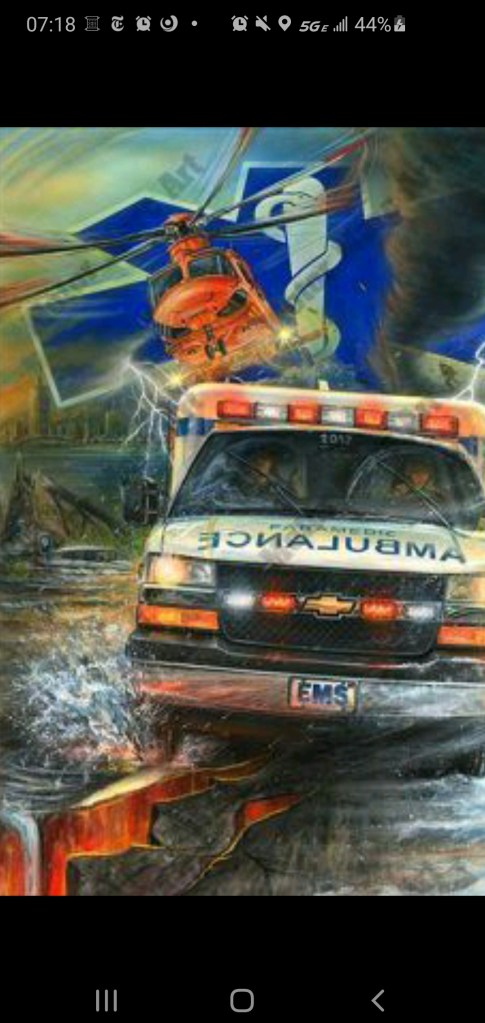


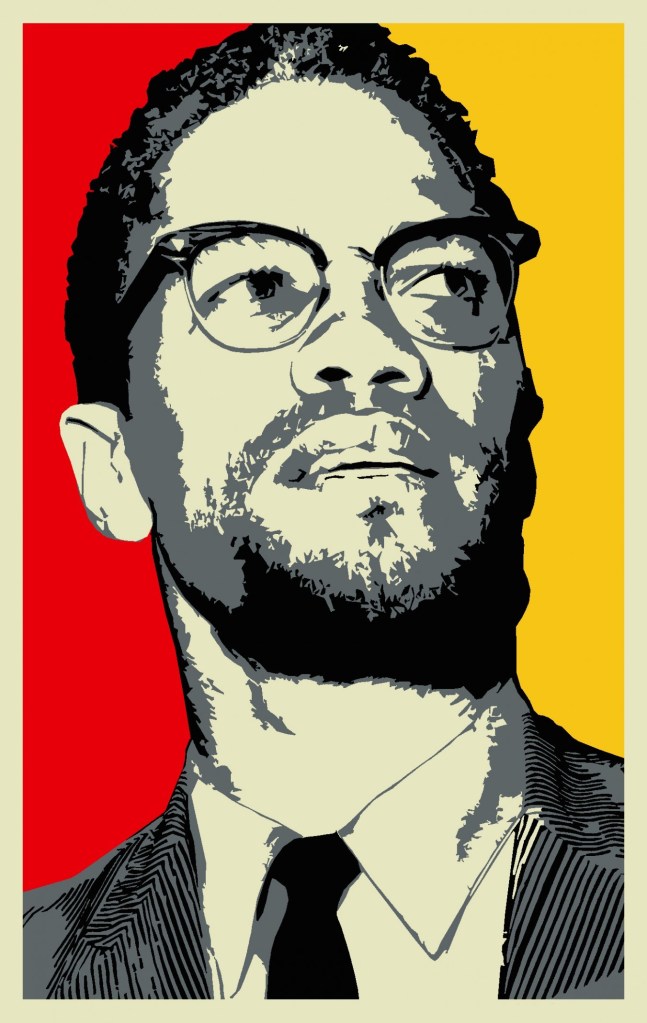



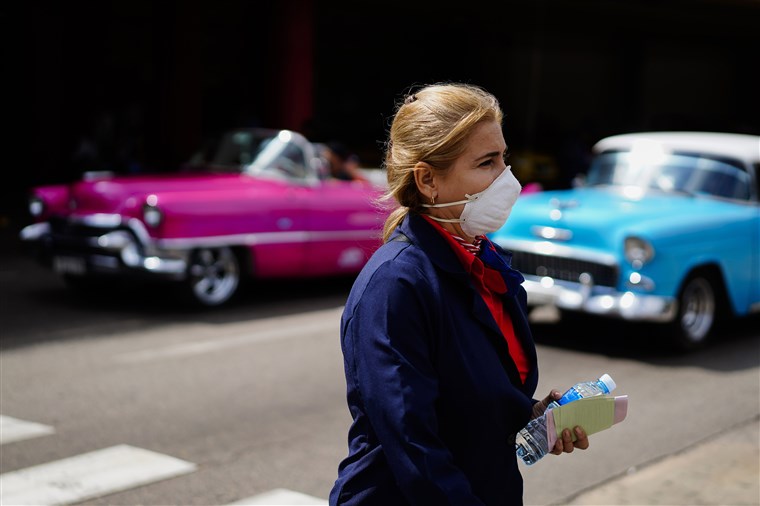


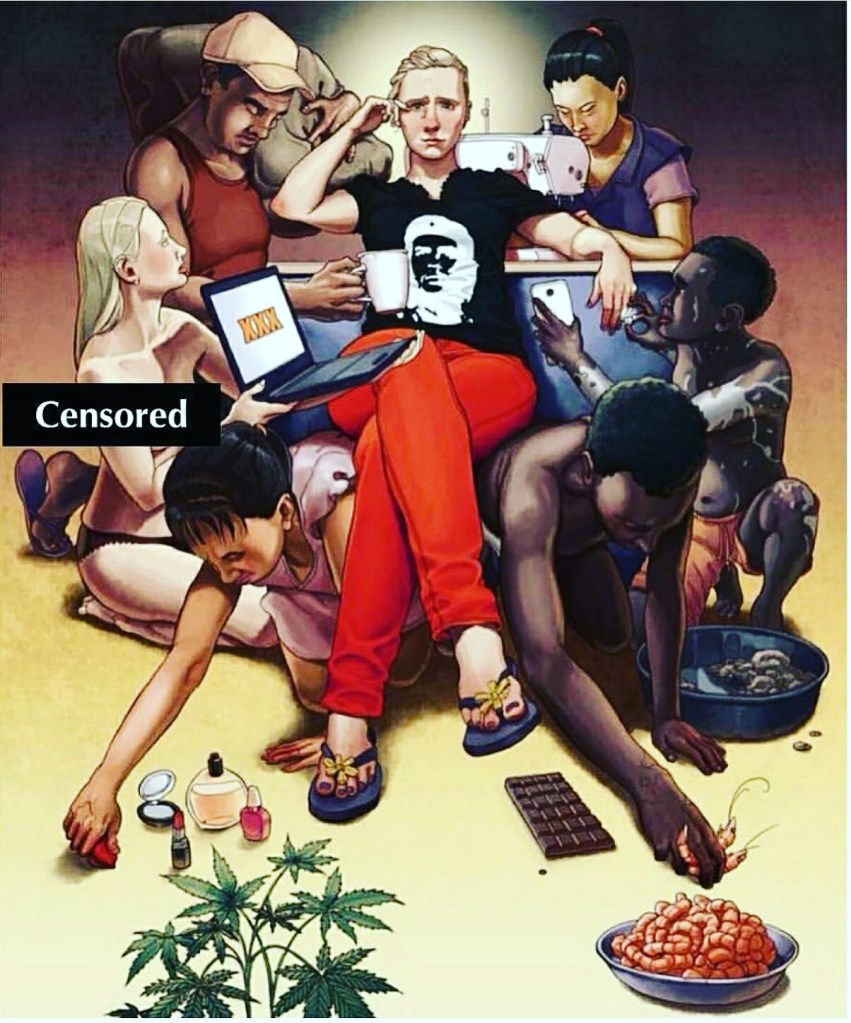

 WALTER SEBASTIAN ADLER


.jpg)
