“You like your hopeless losing battles? You want to get killed fighting for nothing? You get off on all that hopeless shit,” Yelizaveta once mocked him, mocks him still. “You always have.”
On the way back the Jew stops to have some deep thoughts with a cigarette and look at the sea near the Raoche; the Pigeon Rocks that rise out of the sea. The Corniche continues to hustle and bustle with all faces of Beirut. Sometimes you must fight a lost, if not unwinnable battle. That is basic Shi’a philosophy. But not so alien to the Jews either.
The Battle of Karbala stands as a defining moment in Islamic history, a tragic and pivotal event that has reverberated through the centuries, shaping the beliefs and practices of millions of Muslims around the world. It unfolded on the arid plains of Karbala, in present-day Iraq, on the 10th day of Muharram, in the year 61 AH (October 10, 680 CE). At its heart lay a struggle for power and legitimacy within the nascent Muslim community, following the death of the Prophet Muhammad. The conflict pitted the forces of Yazid I, the Umayyad caliph, against a small band of followers led by Imam Husayn ibn Ali, the grandson of the Prophet and the son of Imam Ali and Fatimah, Muhammad’s daughter.
Imam Husayn, revered by Shia Muslims as the third Imam and a symbol of resistance against tyranny, had refused to pledge allegiance to Yazid, whom he saw as a corrupt and unjust ruler. Instead, he chose to confront Yazid’s forces head-on, even though he was vastly outnumbered, and his followers were suffering from thirst and deprivation due to a siege imposed by Yazid’s army.
On the fateful Day of Ashura, the 10th day of Muharram, the two sides clashed on the battlefield of Karbala. Imam Husayn and his companions, numbering around 72, faced off against a much larger army of several thousand soldiers. Despite their valiant efforts and unwavering resolve, the forces of Imam Husayn were gradually overwhelmed by the sheer numbers and military might of Yazid’s army.
The battle was marked by “acts of extraordinary courage and sacrifice on both sides”. Imam Husayn’s companions fought fiercely to defend their leader and uphold the principles of justice and righteousness. One by one, they fell on the battlefield, martyred in defense of their faith and beliefs. In the chaos and carnage, Imam Husayn emerged as a beacon of resilience and steadfastness. Despite knowing that he faced certain death, he refused to compromise his principles or bow to tyranny. With his family and companions by his side, he stood firm in the face of overwhelming odds, embodying the highest ideals of sacrifice and martyrdom.
The Battle of Karbala then culminated in a most brutal massacre, with Imam Husayn and his followers slain on the battlefield. Their bodies were left to lie unburied for several days, a stark reminder of the brutality and inhumanity of war. Yet, despite the tragic outcome, the legacy of Karbala endures as a powerful symbol of resistance, courage, and unwavering faith. For Shia Muslims, the martyrdom of Imam Husayn is commemorated each year during the month of Muharram, as they mourn his death and honor his sacrifice through rituals of mourning and remembrance. The lessons of Karbala continue to resonate across generations, inspiring believers to stand up against oppression and injustice, and to uphold the values of truth, justice, and righteousness.
On the 10th of October, 680 CE Husayn ibn Ali picked a battle he would certainly lose. The battle of Karbala70pitted about 70 fighters and family members of the grandson of the prophet Muhammed Husayn against 30,000 soldiers loyal to the pretender to the Umayyad Caliph Yazid I. Or, maybe, depending on what side you believe Sunni or Shiite; Husayn led an ill-prepared uprising to die for absolutely nothing important in an illegal insurrection. That interpretation of the alleged usurpation is the root of the schism of Sunni and Shiites today; who did the Prophet Muhammed intend to have led his movement? The Shi’a believe in the blood line and say it is through his son in law Ali, and through Ali’s children Hassan and Husayn the prophet’s grandchildren, or righteously guided califs. The Umayyad Caliph Yazid that sent his army to massacre the prophet’s family and then paraded the survivors though the streets are today accepted by 85% of the Muslims; the Sunni. For many centuries Sunni rulers zealously persecuted the Shi’a.
The Shi’a, however, zealously follow the bloodline of the prophet, venerating the martyred Husayn and his last stand at Karbala. His band of companions (including many blood relatives of the Prophet Muhammed) were slaughtered with him in the dunes of Karbala and the female survivors were force marched, humiliated, and tortured. The surviving women and children were paraded and stoned on the way to Damascus. The centrality of Ali and his blood line is rejected by the Sunni. This is 85% of all Muslims. The Sunni rejects this whole story as adventurism and the Shi’a make it the most central event of the religion just second to Muhammed’s sayings and doings (Hadith). From his bloodline come a lineage of Imams; and the Shi’a (the second biggest branch of Islam) follow 12 of these Imams. They venerate those from the profit’s line the Sayyids.
The Shi’a rule only in true majority in the nation of Iran. Iran became Shi’a around 400 years ago and today following the revolution of 1979 is a Shi’a Theocracy. They have significant plural majorities in Azerbaijan and Iraq. Following the American invasion of Iraq the Shi’a dominate the central and south of the country. The Shi’a have large plural majorities in Yemen, Bahrain, and Lebanon. They found are in significant numbers in Saudi Arabia, Kuwait, and Syria. Today, there is only one Shi’a State and that is Iran, and it takes on the role Israel takes for Jews; a safe haven and protector for its Confession.
Some might say the Jew did not care whether he lived or died, as long as one or both were glorious. Others might say he was “squandering his blessings all the time” and insulting his Yahweh even being out here.
Why would you deliberately go somewhere you might die? Why fight a battle that is inevitably going to be a disaster. And unlike the venerable Husayn ibn Ali, there was nothing riding on his participation in this plot until he fully brought himself to ignore how loved he was by little Karessa back in New York City. How under the normal trajectory of events he might have good comfortable American life as a paramedic or later still as a lawyer. Yet that was not true because his investment in the plot we have not yet fully revealed was quite extensive. It was as if Bashir wrote one phrase in Arabic, and he wrote another one in Hebrew and they invited many others to check the plot points, copy edit the manuscripts, distribute the pamphlets; and sign the declaration of a war to the death.
***
Little Karessa Abe is the Secretary General of the movement in New York. She is probably the second most important leader right after her boyfriend/ partner the President Sebastian Adonaev. She lays out the newspaper, runs the cadence of social media, designs all the flyers and graphics, and keeps peoples’ male ego from flying off the handle. Which in turn has kept the group alive for about 4 years. All of 4 and a half feet tall the little Philippina was the fourth person to join a group that now was now over 1,800 EMS workers. Karessa begged him not to go to Beirut and cried and begged and cried and begged that he does not leave on this journey. But she did not understand the depth of the plot.
Probably none, or all but none of his many ambulance comrades understand the degree to which the Jew is a Jew before he is a New Yorker, a paramedic, or a future lawyer. They do not understand the sheer loyalty he has to his people, his blood, his promised land. Because he has not made that known in the nine years since his return from Heller near Boston.
Now, of course the Jew is not a Shiite and his knowledge of the battle of Karbala is primitive and highly limited, but perhaps he can gleam some truth from the basic idea. It was not ever about a victory, inevitable or possible; it was truly more about a bloody statement being made with one’s life that future generations would not be able to ignore. He felt in his heart that Israel and Palestine were on the very brink of total self-destruction. The body count was rising every day in Gaza, and it was only a matter of time before Israel turned North to Lebanon. Which would then suck Iran, Syria, America, and Russia into direct confrontation. Was this different than the Isis Wars of 2014-2018? In some regard it was. The Islamic State was an enemy of all people that would not submit to the Wahabi Salafist vision they carved out. Israel has over 200 nuclear weapons and Iran has 5. The daily rocket fire between Israel and Hezbollah is limited. It is choreographed. But the closer Israel and Hezbollah get to another full-blown war the clock tick faster.
“We just want an excuse to drop an electromagnetic pulse over Tehran and send them back to the Stone Age,” Marty was always fond of reminding him. This was in fact it seems Marty’s top policy recommendation on the strife in the region.
***
On the way back, the Jew stops to have some cigarette and look again at the beautiful blue sea meet the beautiful blue skies. The Corniche continues to hustle and bustle with all faces of Beirut. Everyone doing their best to avoid Syrian gypsy tricks. Women in Iranian Chadors, women in miniskirts; modern and the deeply oriental feeling all are taking a long walk in time of great uncertainty. Some are swimming in the sun and dashing for cover in the hard rain. What strange weather. Like it cannot decide what kind of weather patten to be. Like it cannot decide what kind of country to be as well.
I am standing there when a burly red bearded Shi’a comes up to me. Right on time. They told him to meet near Pigeon Rocks in the derelict restaurant cafe with its windows bashed in from last year’s rioting and protesting.
“I am called Majid Mousli Al Sury,” he says, “welcome to Lebanon.”
“Thank you,” the Jew replies, “I am a called Sebastian Robertovivh al-Newyorki.”
“You look like you’ve been here before,” Majid says.
“Yes, I come every year. At least in my mind.”
“Judging from your suit you must be the Jew of Beirut.”
“That is me.”
“Well, what’s the story this year?”
“I’m looking for a woman.”
“The Jew is always looking for a woman, you think with your, you know, you people like to fuck all the time.”
“Everyone likes to fuck all the time.”
“So, what’s the new part of the story besides you’re looking for a woman?”
“I’m looking for two women actually.”
“Your decadence should show no sign of abatement in light of our squalor!”
“Majid, I’m looking for a way to liberate Palestine.”
“Well, isn’t everyone!”
“Well, I’m looking for a way to empty the 12 camps and create a movement to march right down into the Galilee with everyone; and invade the State of Israel before they can invade you.”
“Have you spoken directly with Hezbollah?”
“Not yet directly. My two partners will in town in a few days.”
“There’s a lot of jurisdictions you’d have to override to move all those Palestinians across everyone’s turf. No one wants those people running amuck freely. They are confined to camps for good reason.”
“What reason is that?”
“Palestinians are troublemakers, everyone knows that.”
“What let you know I’m the Jew of Beirut?”
“I saw you on social media speaking about Zuckerberg’s aquarium. I guess you’re not working low key this year.”
“The CIA will throw my girlfriend out of a plane over the Atlantic if I don’t do what I’m supposed to do.”
“What are you supposed to do?”
“I can’t tell you everything on the first date my friend.”
“But I thought the Jew of Beirut never works for agencies.”
“The CIA wants Israel “re-destabilized”. And they have my girlfriend, so I’m following the orders to the letter this time around.”
“Why does the CIA want Israel restabilized?”
“Antisemites have taken over? Who knows.”
“I don’t think it’s as simple as that. No one hates Jews because they are Jews, people hate Jews for interfering in world events.”
“I think the war in Gaza is dragging and they want to suck in Iran before it’s too late.”
“So, you think the CIA wants to bring us World War three then?”
“I think Hezbollah and Iran have an aggrandized version of themselves if they think they are enough to kick off a World War Three.”
“What about Russia?”
“We are already fighting Russia in Ukraine.”
“Well Hezbollah is not Hamas. No paper tiger. You upset things at the border and a real war might break out, not this Palestinians in a barrel stuff like in Gaza.”
“Enough fun and games you Shiite tricker,” says the Jew, “what say the Party.”
“So, the Party says they are open minded to this plan your Hareekat has come up with as long as you really think the magic is gonna work.”
“Magic, eh?”
“Yes, a Jew magic. They can get you permission to open camp doors and lend you tons of trucks for a southern migration, but they can’t use purple blue smoke to block out Israeli drones and can’t really stop a massacre when you try and cross. The Revolutionary Guards are optimistic that you have brought serious magic this time, being, shall we say a little compelled.”
“The CIA wants chaos on the border, not an all-out World War three. If we keep that in mind all the better.”
“They say you people serve no one but your own plan.”
“Were my girlfriend not a hostage, that would usually be mostly true. Though the more you come to know me, you will see that my plan is not based on ethno-nations, land rights, or the great will of the long unseen.”
“What if your plan has very negative effects for the people of Lebanon? What if we are putting all our trust in the wrong Palestinians and Jews?”
“Then I couldn’t be doing any worse than the combined weight of all your parties and politicians. When the ground shakes in Jerusalem it shakes also in Beirut”
And that was still mostly true. The money was mostly valueless. No one had a good job at all. The Southern border seemed just a few more missile strikes away from World War Three. Iran was trying to take over the country, the Maronites were plotting with the Israelis again. Tourism was a wash. The weather was being more weird than usual; what’s the worst this Jew could do?
“What can you do with this magic of yours that has so impressed the Palestinians, Iranians, and Kurds to sheishbeish with you?”
“They think I can bring back the dead. They think I can turn water into wine. They think I can stop time and rearrange bullets. You all are protecting the blood line of Muhammed, but my people are capable of just as much.”
“So, you think you’re an Isa?”
“Not an Isa, just a Jew from New York Grad, backed into the corner by his government, with nothing left to lose.”
“You people are dangerous. You have wild ideas about your capabilities, about everyone’s dependance on your prophesies and God.”
“I don’t need them to vouch for me. I know my powers.”
“Fine, then let’s rob a bank on Christmas. Show us you’re Lebanese now. Show us you’re the Jew of Beirut, not the Jew of the CIA or Mossad.”
“You get the getaway car, pick the beneficiaries in al Dibaya and I’ll show you something special for the Christ Mass.”
“Yalla.”
“Yalla.”
“Let me ask you a question bro?” he says to me, “is it true that 50% of America’s billionaires are Jewish?”
“It is more like 8%. Only about 25% of the richest Americans on the Forbes list are Jewish. Jews are 1-2% of the American population. So, I think you are exaggerating the numbers a little friend.”
“Why are your people so powerful over there. Christians hate you all. Thy think you killed their Messiah. You think you are safer on the Christian side, but they hate you more than we do.”
“Why are allegedly running America? I don’t know if we are. We made ourselves very useful over there. Because Jews have been bred and raised to be entrepreneurial for thousands of years. They were barred from owning land, from trade guilds, from professions. All we could do was be money lenders, peddlers, and merchants. The dumb ones were either killed in pogroms, or the Holocaust, or they were very poor and had only one or two kids. The smart ones prospered and had more kids. Jewish tradition always emphasized the importance of “the book”, study and learning, and getting a good education. So there was a bit of evolution whereby Jews ended up having a disproportionate number of their people good at business. Also, since we were the last to be hired and the first to be fired, we lean towards being independent. Which meant owning our own business. It’s easier to get rich if you own your own business.”
“I cannot believe anyone is trusting you people to be part of this plan.”
“Unless it was all our plan all along,” I continue, “Since we Jews suffered so much in pogroms, slaughters of Jews at the hands of Muslims, Christians, etc., we became somewhat immune to ordinary reactions to risk. If taking on a risky investment didn’t mean that you were going to be killed, we weren’t scared. So, Jews were attracted to riskier newer fields of business activity. We invented Hollywood and the searchability of the internet, i.e. all stored information. We invented smart phones and sophisticated weapons. It’s risky to make a movie or build a rocket. We took the risk. It used to be very risky to develop real estate, putting up big bucks before you knew if it was going to rent and you wouldn’t get caught in a slump, or by higher interest rates by the time you finished your buildings. We took the risk. Jews are disproportionately represented in business that pay off bigtime, such as hedge funds. There’s high risk, high reward in hedge funds. Jews are disproportionately represented in the successful poker players. Where else: high tech Software. Google and Facebook and Oracle are all Jewish owned. Tech pays off bigtime, but it does have high risk.”
“I knew all of this stuff Mr. Jew of Beirut; I am just pressing your buttons.”
“We like to talk. We like to tell people about ourselves.”
“Everyone knows that you are big talkers. Will you be buying any land here should this whole operation not blow up in your Jew face?”
“A little. Jews are also overrepresented in real estate development. You get big payoffs because it is highly leveraged by way of mortgages. So, you get a very big bang for your buck. I’m not sure if I’ve had enough fun yet here to start buying up your property.”
Majid Mousli Al Sury chuckles.
“They said you were a big shot from New York Grad; you’re not such a bad guy. I will make a good report about you to my people.”
“What does your Amal say about this operation?”
“Amal does not belong to anyone buy the working people. Those who strive and struggle.”
“What is you read on what Amal might say about all this, in the name of the working man?”
“That you will get many Palestinians needlessly killed, if not fully massacred at the border. That it might kick off World War Three, and we are not fully sure why we are trusting Kurds and Jews to begin with.”
“What does Hezbollah say?”
“That they don’t know if they trust a traitor.”
“I’m no fucking traitor. When this done Israel will be right where we found it, just with easier borders to cross.”
“As you say!”
“Have you read any of Yousef Bashir’s work?”
“I’ll be honest, we trust Palestinians as little as we trust Druze, Kurds, Christians and Jews.”
“This plan will work. It’s an exceptionally good plan.”
“As you claim. Studies by non-Jewish sociologists and psychologists on global intelligence found that the highest IQ among humans on the planet were: 1) Ashkenazi Jews from Eastern Europe; and 2) South Koreans. I however as a Syrian, think we Syrians are clever too. Right not 2 million of my country people have settled here in Lebanon. We will not leave. I am very aware of what your American backed YPG has done in Syria, is doing in Syria. I may not have the so-called highest IQ to invent Marxism, Freudian analysis, the Atom Bomb! What great things! But I do know we Syrian will come out on top.”
“But high IQ isn’t enough. It’s the motivation, creativity, fear of persecution, that are factors that create the overrepresentation of Jews among billionaires. Among the drivers of change. I personally feel that it’s also a matter of attitude and belief. Because of the Torah, and the unique relationship between Jews and God, I feel that we Jews believe that they have a destiny in the world. It is to survive, thrive, and to heal the world (“Tikkun Olam”).
Majid Mousli Al Sury chuckles.
“Whatever you say to feel valuable! To survive in this world today takes money. To thrive certainly does. To heal the world takes money too. Jews are overrepresented in philanthropy. Well so are the Shi’a. Accordingly, Jews feel that they have a high probability of succeeding. Well so do we. They are also, historically, a “stiff-necked people”, stubborn. That means that they persist. They don’t quit. So, Jews start a business, and they stubbornly persist until it’s successful, partly because they feel that they have a destiny of success which is mandated by a higher power. Is that true Jew of Beirut, Abu Yazan?”
“I will persist until the operation is successfully carried out.”
“I think sometimes we underestimate your people, but Amal does not, and Hezbollah does not. Things are bad now. Any day it could all explode far worse than any time before. Our missiles will rain down on Tel Aviv and Haifa. Your people will have no peace.”
Majid Mousli Al Sury hands Sebastian a Cedar.
Sebastian says, “The late evangelical pastor Robert Schuller, of Hour of Power and Crystal Cathedral fame, once asked: “What could you accomplish if you knew you could not fail!”. I think that that applies to a certain extent to we Jews. Our expectation to succeed helps make that a self-fulfilling prophecy.
“So, CIA will kill your girlfriend if you help us, will kill your whole family, will take away your citizenship, end your whole ass American dream?”
“Something like that. Something along those sorts of lines.”
“I have always wanted to go to Newyorkgrad. It looks like a great place. Tons of fun opportunities. After the Operation you think I can get a VISA?”
“Depends on lot of factors.”
“Such as?”
“Does Iran have a nuclear weapon for instance? How close can we get it to Jerusalem without being intercepted, tortured, or killed? How many people will the Israelis kill at the border during the distraction? Do I have magic powers, advanced spy weapons, or am I just bluffing you all and just fucking out of my mind.”
“I think you have some powers. Being smart alone would not be enough to get you this far. Still might get you tortured though.”
The Crusaders called this place Outremer. Between 1095 and 1250 there were eight major crusades and dozens of lesser ones. Somewhere in between, Constantinople was sacked by the Christians. A territory twice the size of the current state of Israel was carved out brutally, then crumbled apart in a Jihad of attrition.
Incidentally, they say Abraham settled here from Iran. Joseph dreamed here. Moses evacuated his entire people here from out of Egypt to here. The Phoenicians launched a trade empire from here. Jesus was born here. Died here, maybe came back. Rome occupied and fought three wars here. Mohammed spent the night here. The Turks occupied it for 500 years and the British for 50. The Levant is the crossroads of the old world. A place of miracles. A place of Canaanites and Philistines, of real and imagined Israelites. Judeans, Samarians, Palestinians, Israelis. Sand people, desert people, people of trade, scrolls, war and identities inscribed in the blaze. Identities, pluralistic identities that are stiff necked, fanatical, and zealous.
This place is furnace those forges religions. It cooks the brain and browns the body. It puts G-d’s words in the minds of believers. It bakes belief. It festers fervor. The Levant and Mesopotamia have been the homeland of every major world prophet besides Buddha and the mouthpieces of the Hindus.
If Hashem, if Allah, if the Godhead, if the singular divine, or perhaps the pagan Gods, the Hindu Gods, the lesser prophets and the spirits; may guide and speak to the world of man; here, they speak far louder. Here they etch the word of G-d on the tongues of men; then unleashes the into inglorious combat.
It is getting about as hot as I am told it gets out here. The place is violent pressure cooker for prophets and ultra-violence. Bet Ashanti was keeping food in my belly and providing me a cot near a fan. If things went missing at least they did not go missing with a knife to my throat. My CD player, my belt, and some loose shekels all seemed to disappear down a black hole of faceless theft. My inner Jewish accountant said the meals and cot were worth it and to ride it out a few more weeks. It was just so fucking hot outside.
Those weeks in July of 2001 were a loud bang killer on all. There were more bus bombings, more mass shootings, more reprisals, and more death on the public transit. The Europeans were condemning the Israelis because they kept taking out little kids in their not that smart bomb attacks. Americans condemned “the terrorists” while doing nothing more than keeping the money spigot flowing. That blank check on aid, well it goes to more guns, tanks, and rockets used on the Palestinians.
I hustle my art seven days a week in front of the Opera Towers. A mall slash condominium complex on the sea. On the tiyeled and against the beaches. On the boardwalk. I was selling my art faster than I could restock by redrawing it to be fair, though not selling it for very much. I was turning out sketches on demand. It was hotter and hotter by day and the Zachariah show was going strong. Then, every other day, something blew up somewhere. Usually there was rock throwing, and ball bearing vest blasts, there were tanks in the streets there was death and occupation, but not in Tel Aviv for the most part. The whole country is a small place, as said, like New Jersey, like two hours across and eight up and down, and each day, death in the blazing heat, the iron heel of occupation versus the defense of the nation. Two very palpable narratives, under pressure, then a bang. A protest and a bellow in a megaphone in Arabic or Hebrew, in Russian. A bang, a ratatatatatat. Maybe from the outside it all looks like fitna. Like occupation. Like a holy war. On the ground, a pressure cooker.
I made a day trip to Pardes Hanna to bring Anya some flowers against my better judgment. She is a dead ringer for Izzy Vitz’s part Lithuanian part Japanese ex Jackie Niche back in New York, but with bigger tits. She wasn’t just a leisure agent. She was also an emergency medical technician for the Sheroot Leumi, which was a sort of do-community-service-from-home-to-stay-out-of-the-army jump off for females and the patriotic religious.
This was hardly a leap into monogamy. What in the world does a seventeen-year-old know about that. We’re little animals. She didn’t seem to want more of me than I could give. Anya didn’t speak enough English to get deep about it, but she’d bat her eyes and ask me to take her to New York one day soon. This giving her flowers thing was a madhouse idea after a month of dirty drunk sex. Some nights we sat on the boardwalk with piles of stacked beach chairs. Whenever I was up her way, we promptly fucked all over her ever-absent mommy’s house. Made love rather, if I had not been doing so much vodka drinking.
I haven’t kissed a girl sober in a very long time. Not Daphne Collins or the other one in England, not Hadas and certainly rarely ever Anya. In less than a week she fell for me. So, I feigned some lovemaking, some ‘slow fucking’ as Izzy once had called it. I came three times that first night. On her breasts and in her mouth and in a condom. I moaned ‘suck my dick’ and some dirty-talk language getting head in the big steel bathtub. The girl lay with me in the dark at her mother’s small apartment in Pardes Hana and she begged me to take her to New York once her time in the national services was completed. She showed me a pistol and a ton of ammunition her ex had stolen for her.
She has great breasts. Which is very important. I’m socialized like that I suppose. And if I am the American pretending to be an Israeli, she was certainly doing a bang-up job working to not be from here. She had come here from Karaganda by way of Tashkent in 1990. Often, she practiced reducing her accent to nothing with the TV and mail order accent-reduction tapes. She wasn’t Russian but wanted to model there. She was cute enough, but she didn’t have the starvation frame. She is a curvy little former Soviet. In America, you’d call her a ‘Russian.’ Here too, maybe, but she was half Kazakh, half Uzbek. Unlikely any part Jew.
I told Bet Ashanti’s madam that I was meeting an uncle in Haifa for the weekend. I hitchhiked up to Pardes Hana to get with Anya instead. She had quite a few boyfriends bopping around to stare me down, but that didn’t stop us from kissing and fucking all night and whispering things about running off country. We filled her ashtray with three packs of butts, and I got so caught up in the moment that I failed to see how quick this girly had taken to me. She is my comfort girl, and I am her golden ticket out of this military colony should I ever choose to leave. Under pressure, like everything else.
***
I meet people quickly and develop intense relationships in my line of work. If it really works at all. It’s a sad little hustle. Maybe on a busy Saturday night I can make 200 shekels; that’s barely $50 US. It’s called hustling art on the street in a foreign war-torn colony.
You take an intelligent person, and they see this big art stand with pictures filled up with Commie imagery, carnal orgiastic renditions, biblical allegories, and current events. You break into some topic a picture you like alludes to, only to meet a young kid who defies every idea you have about Americans. That sort of explains how I was getting down.
I took a whole lot more numbers than I called. Numbers to get fed, to get fucked, to finish a good conversation, and even offers to take the Zachariah Artstein show on the road to quaint and quieter inner country locals like in Ashdod, Acho, and well healed Herzliyya. The American Jewish colony, in the colony. There were also young kids my own age that wanted me to paint murals in their bedrooms and rap in English for their friends.
“What are you doing here man! No one wants to be here. Everyone wants to live in New York!”
I never did as well sell as when I worked the tiyeled. It was July 4th and the masses were out in force. Bands played salsa music on small bandstands set up on the boardwalk. Street hustlers worked on games of Three Card Monty. Teenage girls looking for a quick summer buck sold all sorts of glowing toys to small children passing by as little boys hustled couples with flowers and Polaroid pictures. There was a whole culture of street hustlers that worked the tiyeled. I was one of them. I had been in Tel Aviv about a month since leaving the Ein Dor kibbutz and moving to Bet Ashanti, home for runaway teens. I sold my art every night. Five shekels here, twenty shekels there. It was just enough to eke out a desperately thin existence on ice cold Mayim, crunchy falafel, Zaatar cakes, and Noblisse cigarettes.
My new business partner, the half Russian boy named Ditri Massoud, would watch the stand as I worked the crowd. I mingled in and out of the great crowds shouting in Hebrew,
“Bo tista-clu al omanute sha-li!” or “Come look at my art!”
Ditri is twice my size and had lived in the desert town of Be’er Sheva. He had borrowed the equivalent of nearly a thousand dollars from the local Romanian mob to finance and stock his stall in the market. The enterprise had been less than successful, and he had fled to Tel Aviv to avoid the consequences of owing dangerous people too much money. It is a very, very small country so they’d catch him eventually. He didn’t speak English so that our communication in my garbled Hebrew was limited, to say the least. His English was limited to “Yes,” “No” and “You are friend of Ditri”.
Ditri owns two pairs of clothing. He slept in the sand under one of the many beach pergolas. He was barred from Bet Ashanti for a reason that was never really explained to me. Greek mentioned that he was violent and crazy. Ditri was a bulky kid with curly blond hair and Mongoloid features. He was very loyal. Whenever someone tried to steal from our collection plate as the gangs of arsim often did, Ditri would chase then down and clobber them something awful. Maybe he is really violent, but it all works to my advantage.
During the heat of the day, we share a bottle of Coke-A-Cola and watch the waves crash gently on the beach. We spaced out slightly because of the heat exhaustion. I don’t know if I would call Ditri my friend per se, for I know precious little about him, but he serves nicely in our new symbiotic relationship as street hustlers.
My best customers are the American and English tourists vacationing in Israel for the summer. That’s because ‘the ZA show’ works best when your English is good. Most of them stay in Jerusalem, hyped up on some propaganda-induced spiritual experience. Jerusalem is the brainwashing capital of the world as far as I am concerned. I haven’t even stepped foot in it since I’d arrived back in the country. Secular Jews visiting for a week always run into some Dos or Hasid who will give them a crash course in the workings of the Old Testament and get them hooked.
The religious Jews, the Dosim and Hasidim, are on the national dole. These two groups are more offensive than the other groups of religious Jews because of their penchant for rock throwing and religious rioting. They neither pay taxes nor serve in the IDF. Most importantly, they never buy art. They don’t even stop to look. It’s good they don’t look because the Tetranomogram, the ‘Yod Hei Vav Hei’ gets incorporated quite bit and they flip shit over that.
Israelis do not have any true or actual need for a thing like pity, or street art.
It’s not that they don’t like art, but they really need some persuading to buy it from a street vendor. To make a living from a street stand, one must know how to work the crowds, create a market, and deliver a desirable product. This country has little time for charity cases, which is what I get perceived as most of the time.
My best sales pitch is to young girls who are fascinated with the American expatriate who loves a country no one seems to want to live in. Maybe that is a misinterpretation on my part. It just seems that each Israeli I talk to dreams of living in New York. While many people stop to examine our goods, the bulk of our money comes from the tourists and from the regulars. A regular is someone who lives or works by the tiyeled and will drop money anytime they see us out. To survive in this game, you need your regulars.
Ms. Svetlana Tchaadaev is perfect example of a regular. She’s an American-educated Russian trust-fund baby, which is just a code word for her daddy being a Russian mobster-robber baron. Ms. Tchaadaev carries on romantic flings with the artists and bohemians of the Tel Aviv subculture. Despite the fact that she is independently wealthy, she works as a flyer girl for Mike’s Blues Bar just up the beach. I’d been doing the same thing for Mike’s the night the Pasha club blew up.
Ms. Svetlana normally shares her beers and meals with me and always buys a picture. We try to steal yellow beach chairs from the lock up on Jerusalem Beach before they are chained together for the night. She sits with me and helps me in the hustle. She is shady as hell. Ditri never seems to like her. She always tries to get me to sell her my passport.
There are other far less problematic regulars, like curly, blonde-haired Ethiopian Lina, who even though she was born in village without running water or electricity seems more Americanized and hipper in fashion and sensibility then most Ashkenazi Israelis. Abby and Rachel are the ‘two birds’ from Golder’s Green, students of Rabbi Akiva Tatz. They bring young men from Jerusalem to meet with me to spar on issues of Talmud and religion. These are the people that keep Ditri and me in water, meal money and smokes. I am the sale-man, and he is the strongman. It is like any Russian business except in ours the salesman gets to call the shots.
Although I consider myself a Resistance Artist, the truth is I am barely making ends meet. On a terrific evening, generally a Friday or Saturday, I might bring in close to 200 shekels, the equivalent of fifty dollars. The money I save is earmarked to take my girl Anya out to dinner when she comes into the city to visit me. You might say I am becoming like a normal person. Bit by bit by bit, less like street trash. Anything left over is earmarked toward pens, sketchpads, vodka, ice-cold mayiim and some more cheap Noblisse cigarettes.
It is necessary to keep yourself looking presentable when you hustle. You can’t have the buyers think that you are begging for the money. It is important to communicate that you are a skilled artisan, a poor and hungry skilled artisan, but nonetheless incredibly talented. When I feel humorous, I compare my art to Van Gogh and Picasso when they traded paintings for food. I convince my customers they are making a serious investment and that one day these sketches I make will be worth a small fortune on the art market when I cut off my ear for a woman or go out against fascism in a hail of bullets.
My art stock consists of three types: political cartoons, dream-based consignment pieces, and commissions. “Give me any idea you have an I’ll draw it in 5 minutes.”
My favorite works are the political cartoons surrealistically drawn with black Uniball pens on 8 ½ by 11 papers. Normally they start with a cartoon version of myself blowing away the ‘pigs and capitalist traitors of the Iron heel.’ Then with that image somewhere in the page I drop in any number of red flag hammer and sickles, bare-naked women engaged in carnality or war or both. Then with a slightly finer pen, normally a Uniball Fine Point, I stencil in the message of the day, which could be anything really, but is normally anti-war, anti-state, anti-religious and Israeli issue themed. Finally, I write bold needlessly proactive messages. The phrases are always in English, but sometimes in a, shall we say artistic, rendition of the phrases in Hebrew, Russian, or Arabic.
There is little color in any of my work and the sketches take on a variety of subjects, but generally they were quite dark and violent in their depictions of Israeli or American social ills. Lots of ‘Join or Die’ type themes with the 14 big Israeli ethnic groups. If color does get used its either black or red Sharpie fill-ins, highlighter color-ins of people’s eyes, or gold etched inlay on edges to simulate shadow.
The lowest I go on these pieces is 20 Shek a pop, although Ditri made a bunch of Photostat copies one day from my archive sketch book, and I loosely colored a few in. These we sell for just 10 Shek, or a comparable offered price, because frankly, a photocopy costs Ditri only 10 Agarot to bang off.
My dream-based work is all in pencil on thicker matte paper far larger in size. These sketches are from the vivid dreams I used to have about Mike Washington and the Pale City. The gun battles against the screaming Zombie hordes, the underground railroad, the flying machines, the redheaded girl, the Old Man and his game. All of these take at least a day to render. Since traffic is so slow during daylight, I fashion most of these pieces then.
These sell almost right away for 100 Sheks or more. I can crack out the political stuff on demand, but these take longer as I have to remember them. Most of the customers fixate on the controversial statements of the political work. It takes a while, an hour even of conversation before a customer turns their attention to the dream pieces. If it was a good conversation and the offer price exceeds 100, I never haggle hard over the sale. It’s all just small talk.
What were all these so-called good conversations about? Well, I guess they were kind of about philosophy, or politics, or theology, or vibes, because what I knew about any of those things. Maybe they were also about art and making art, in a sense about freedom. About so much carnage in such a small place. About Judaism, maybe the heat and pressure were speaking for me a lot of the time.
It would have been impossible to be talking that summer with all that Intifada going on unless we were also speaking about the future of Jews and Palestinians.
I don’t think whatever I learned, I didn’t then bounce off someone else later in the day. I think maybe all the cigarettes, all the heat, all the violence was bearing down on us. I felt that maybe they all said things to me in English, they wouldn’t say to others in Hebrew, Arabic, or Russian. I was the perfect outsider. A young, skinny vagabond totally out of place, yet, with the passport of the empire. From the economic capital of the world. Speaking in Amerkanski. Speaking in tongues. Speaking behind art, so none of it was real enough to fear entrapment, but it was so novel, it could be harbored, it could be trusted. These perfect strangers went to bed with me, they put me on their couches, they brought me to their villages and military outposts. They invited me into their homes. Perhaps, because I am not threatening. Perhaps, because I am like a lion cub, you just don’t feel alarmed. The Resistance Art stand circulates all over, and with these little talks, these little one night all night conversations; I develop a primitive analysis of the nation I seek to be a part of. Then, I repeat the analysis back to more strangers. I sell a few more sketches, I sleep around. I move from place to place, with Tel Aviv as my base. Sleeping and eating in what is little more than a youth shelter. When they cry, I cry, when they smile, I smile, I smile and laugh along with all these different strangers. And the pressure builds, the heat builds, the pressure and heat and make 5,000 years of imagined identity speak though me: and I end up saying, we have more in common with the Arabs than the Americans. We have more in common with the Persians than the British. We are not colonists; we are from here. We are not Europeans; we are from these lands. If we continue to war with the Palestinians, we war with our selves. This place is a dangerous war colony, based on how it was designed. How it mutated with American money and ideas. Our solution is to be confederated with the Arabs and Persians; our only salvation as a people can come by an identity, a consciousness that is rooted in our Middle Eastern Judean soul. Reject that soul, we are a war base for the empire. We are only serving New Rome. I sometimes I talked about other things, well maybe often I made small talk. I do not speak Hebrew and Arabic, or Russian. I try and speak from my soul. I try and reflect on the enormity of my people’s history; we cannot win the war we are fighting; we war with our own people. The Palestinians are our people. You cannot win a war against yourself.
I make and sell Art, and it’s the way I sustain these kinds of conversations.
I have other artists work too. The twenty odd pieces always on display are generally half mine and half consigned stock, other things give me to try and sell. The consigned pieces are from a variety of young Israeli artists who admire my tenacity at salesmanship and are curious to see what prices their work might fetch on the open market in Israel. They were generous enough to let me keep 30% of the sale, for they could see I was destitute. Most of them go to art school in Haifa and my trade inspires them of the future they hope for in Williamsburg and DUMBO once their Sheroot Lummi commitments are finished. Just under half my earnings come from selling the Israeli’s their own children’s art. By the end of June, I was representing over twelve Israeli artists, one Ethiopian, three Arabs, two Russians, three Mizrahi, two Ashkenazim, and one dos, the derogatory word for the religious now added to my vernacular.
Commissions are where my living truly comes from. Most of the time it is a goods-for-services swap situation. I paint a small mural for a haircut or charcoal portrait for a bath when I am hitchhiking about Galilee. I am just ‘eking out a very base existence, but Bet Ashanti put a roof over my head and two meals a day in my belly.
The staff there thinks that I work as an overnight busboy; otherwise, I’d have to be in by midnight. Because the other kids are such freeloaders, they appreciate my working and let me slide. My entire cycle has been reversed. It’s too hot to do anything during the day and I can’t stand the sun anyway.
I sleep on the bottom bunk in one of the two boy’s rooms along with about twelve other kids. Most of them don’t speak too much English. Those that do hold day jobs and I rarely see them.
Bet Ashanti is a place for runaways, misfits and ghetto trash. It has been associated with a series of scandals over the years involving, but not limited to accusations of drug dealing on behalf of the residents, accusations of child molestation on behalf of the residents, high rates of Army desertion on behalf of the residents upon reaching age 18, and it had recently been in the papers when its owner and founder was accused of raping a 17 year-old female resident. That most of the boys are in street gangs, that no one goes to school, and that the mayor of Tel Aviv was under some public pressure to shut the operation down, nothing seemed any worse here than say, sleeping on a street while hungry.
As far as I can tell there are a lot of rules, but only three that truly matter. The first is no substance abuse, at least not on the premises. No drugs or drinking anywhere near Bet Ashanti. But these kids are all drug addicts and smoke hash all day on the beach. The second rule is-no fighting. No one is allowed to fight anywhere near the Shanti House. But that’s also a stupid rule for kids who are members of street gangs and all manner of shady shit. I watched the Greek break some guy’s jaw in a prizefight he took me to a day ago. The last rule is-no stealing. People are not allowed to take stuff belonging to Bet Ashanti or the kids that live there. One would think these rules sort of go without saying, but in fact there is seldom a time when these kids aren’t doing drugs, fighting, and stealing.
By evening I had only seen a few of my regulars. Greek, the Russian kid from Bet Ashanti had dropped by to show me his new girlfriend. Svetlana had passed by on a flyer run. There were other familiar faces, but no regulars. It is very cool for an evening in mid-July. Business has been good, and the collection pot is up to about 90 shekels. I had made an additional 100 shekels yesterday that I hadn’t gotten to blow yet on one of my girls and the still water. The colorful paper notes were tucked neatly in my billfold. New Israeli shekels, the good old ‘N-I-S’ currency looks like fucking monopoly money to me.
***
The evening is coming to a near close, as far as any so-called “working” is concerned. The bands have stopped playing and the crowd has thinned out to a trickle. Drunken revelers are dancing in the moonlight. There is a fight going on across the street. As it nears 2 am, I begin to consider closing the shop. I have close to 150 shekels in my pocket, a small comparative fortune. I stand up to stretch. My hands are sore from the non-stop drawing I had been doing all evening. I pop my knuckles and light up a Noblisse. This is perhaps my thirtieth stoag of the day. I tend to smoke I great deal when I am on the job. Placing the crumpled green packet into the cargo pocket of my ripped and baggy khakis, I palm Ditri a fifty note for his troubles.
“Thank you, Ze-Hariah,” said Ditri, for to him this was a great deal of money.
“You are friend of Ditri.”
“Take it easy, big guy.”
The big oaf gives me a hearty pat on the pack that almost knocks me flat on my face.
“Ditri now to sleeping,” he says. I had to hand it to him. His English is improving, as is my Hebrew. I was starting to understand phrases and bits of conversation and could get my point across if I had to. Most Israelis learned English in high school and could hold a conversation. It was the Arabs and the Russians who refused to learn English. There were exceptions but few that I encountered could understand what I was saying. Ditri bargained for me in Russian, but Arabic was lost on both of us, which is odd him being half Bedouin. I had recently considered doing the sign in Arabic and Russian to broaden my clientele but kept forgetting to ask someone to translate it. Ditri was virtually illiterate and could neither read nor write in Hebrew or Russian.
Svetlana could do it for me in Russian, but she despised anything that revealed her actual and not imagined heritage. She would feign ignorance to not speak or write her native tongue. She had invited me for late night drinks at the Blues Bar and I had made enough money to easily cover my expenses for the week, cigarettes, vodka, and more art supplies.
I am quite proud of myself for making so much money and decided to celebrate at the Blues Bar over a pint of Maccabi, which isn’t as good as the piss water Gold Star and can’t hold a candle to a Stella, but I guess I want to be down with the tribe. It is close to 3 in the morning. Ditri has found some corner to fall asleep in. I am just putting some last touches on a large pencil sketch.
I make a final count of my money and start packing up the pieces into my bag. I start with the 8 ½ by 11’s, peeling the tape off the back that hold them to the enormous tabletop I use as a display board. I have neatly inserted three of the pieces into my binder when I hear a voice behind me.
“So, what exactly are you selling these people?” Her voice sounds like old Brooklynese.
“I make and sell Art,” I respond without looking up, “the finest street art in Tel Aviv if not the entire Western World. Except for maybe Barcelona where the street art is well, fucking good also.”
I turn around to face her and lord, is she beautiful with long flowing brown hair and a smile to disarm any man. I catch her chest like a second later, but that smile caught me off guard for a minute, because I just don’t really look at that in a girl ever.
She is just a little shorter than me and looks like a natural hustler. She looks elegant and she can hold her shit down hard like a killer. Like a stripper putting herself through law school, things aren’t always what you degrade them to be.
“It is pretty good, kiddo. You’re wasting time being in Tel Aviv, but you knew that of course.”
“I was about to close! You’re lucky you caught me. I wouldn’t want a girl like you going home without a piece of Resistance Art.”
“I bet, you say cheesy shit like that to girls all night and they throw their phone numbers at you because the color of your passport is dark blue.”
“Actually, I leave for Cairo in the morning, and this might be your last chance to buy one.”
“Right. Cause it’s not like you’re here every single night of the week,” she responds smugly, “and incidentally the Taba border crossing with Egypt is closed at the moment because they found four tunnels across Rafah, they were carting rockets in through.”
I laughed with her for a second. At each other and ourselves. “You’re just really, really absolutely charming miss what can I call you?”
“Maya. You may call me Maya Soriya Rose.”
“Is Rosen short for Rosen?”
“It’s just Rose.”
“Zachariah Artstein, is what I call myself.”
She looks dead at me and smirks, “I don’t think that’s your real name at all.”
“I don’t think you really told me yours.”
A pause between us.
“What’s in name? Buy some fucking art,” I laugh.
“How much for that one?”
She points to a pencil sketch of 40 rebels holding the walls of Jerusalem with swords and rifles and spears against a massive army of the undead. At the center of the drawing stands a bloodied fighter waving a grey banner as he empties his pistol into swine depicted police forces attacking the rebels within the city.
“That one’s called ‘The Tragic Little Hero’s Last Stand at the Golden Gates’.”
“You made that name up just now on the spot.”
“No, I swear I put a lot of thought into naming them because of how, truly deep they really all are.”
“No, you just made that name up now. I mean it’s good. I’ve seen your work before, but I never got a chance to get close enough to look and talk to you about it.”
“Yeah, the crowds are getting bigger and bigger these days.”
“Crowds? I was referring to your seemingly constant flirtation with mindless frekhot.”
“Flirtation? I just want them to feed me and fuck me.”
“If you were just a little prettier, I’d swear I met a long-lost brother,” she laughs.
“Quite. It’s a smallish tribe though. I’ll tell you what, you tell me your real name and I’ll give you the piece for any price you declare.
“My real name eh, for a discount? I thought you were a businessman, Zach.”
“I’m in the business of telling people things they only thought they’d get to hear in movies and romantic novels.”
“Where does the resistance come in?” she says noticing my sign.
“I’m resisting starvation.”
“So, what you’re selling is communist-propaganda-meets-an-elaborate-pick-up-line?”
“Yeah, that sums it up if you wish to cheapen and devalue nearly everything, I believe into a sound bite.”
“I see you have this speech carefully worked out.”
“Maya, you don’t spy on me, do you?”
“Someone as ravishing as me gets spied upon but does not spy on people herself. I’m just acutely honed at deductive reasoning.”
“So, you’re a psychic detective moonlighting as a stripper, eh?”
“Maybe I’m just a law student moonlighting as psychic detective who likes to take my clothing off.”
“Yeah, so what’s your real name, Maya Rose?”
“A better question is what you’re really doing in Tel Aviv. You know, when you’re not being a hipster.”
“Darling, I’m glad you asked. I think that there is no such thing as the devil, but if there were, and the devil was the head of a large, militarized state, his greatest trick would be making people believe they had something other than themselves to blame for the evils of the world. The wool pulled over our eyes and iron heel upon our necks are kept there by our belief that we shouldn’t do anything; that the fault lies with some huge and powerful other and not in our own lack of will.”
“Spoken like someone with soft, soft American hands. I don’t know what any of that means. Give me something more definitive, Zachariah, ‘cause I’ve heard this shpiel before. It’s 3 am and you’ve got only a couple minutes to make this sale.”
“One need not make the masses aware, nor arm them nor give them doctrines on dreams that do not feed their children. The working people who have long been taught to hate and kill each other over skin tones, invisible friends, and flag patterns don’t need to feel unity beyond the communities in which they live. But if these could see such a stand and a story demonstrated for their children’s children to remember and repeat; then they would have that one crucial thing the workers republic will be founded on.”
“Controlling the means of production?”
“No. The new republic is a thing to be founded on autonomy and hope.”
“I assume this is where you hope to make your little stand.”
“Here’s what I know. Give these Palestinians a little land. Re-absorb the Palestinian Diaspora into a combined Jewish-Arab nation andseparate our shul from our state. No Rabbis and Imams allowed in Knesset. Accept that being America’s whore is far worse than failing to retain the ‘Jewish character’ of this nation. Since the Palestinians are a political football, the other Arab states use to keep us weak and the other Arab states hate the Palestinians anyway, a Pal-Isra solution makes sense since all Christians basically hate Jews So in a nutshell, I’m here ready for the revolution.”
“First off, my Zachariah, you’re damn well divorced from the political reality of the world in which you live. But that I can dig. Israel can barely support those living here now. There isn’t enough land and there isn’t enough water.”
“Propaganda dear.”
“Second, this is the JEWISH homeland. We can’t just turn it into another secular country ‘cause we’d lose the one place Jews can turn to escape persecution.”
“Rhetoric.”
“Third, what makes you think these people actually want to share the land in the first place?”
“Because in the end they’ll realize that it’s better to live side by side than to keep killing each other’s children in a turf war no one cares about but your average New York Times reader.”
“It’s been over sixty years of war, and no one seems to have learnt that lesson yet.”
“This can’t go on for much longer.”
“I beg to differ. We can kill each other indefinitely. The US will never turn off the gun spigot and the Palestinians can hold their asymmetric war another couple hundred years unless the Israelis do something to make them look like Germans, which they won’t.”
“My Kazakhi girlfriend advocates gassing them all at camps in the Negev.”
“Says something about your tastes in women.”
“Listen, I came to Israel to start a new life. I believe that in the end there’s got to be some way to make peace in this land. If I didn’t believe that then I would have to leave.
“There are other reasons to be here like fast girls, nice beaches and a good hustle. How can you be so naive about the world and live in Israel, the most divided nation on the planet? Not exactly the best place to demonstrate peace and tolerance. If ya’ had not noticed, we live in a state of constant and unending war.”
“Where better for me to be? In America people don’t understand the concept of fighting for an ideal. They’re fat with the glut of their own apathy.”
“Fair enough, but enough people want war in Israel to make this conflict go on for decades more. There’s never been any actual peace in this country. It has been a big non-stop war for the last sixty odd years. We’re sitting on the wall of a war field, a vast experimental powder keg upon which our kind gather half their number.”
“And one day it’ll explode.”
“Explode? Maybe you do not watch the news, but it explodes nearly every day.”
“You know what I mean.”
“I’m not sure I do.”
“Before there can be peace, there needs to be a conflict big enough to show these people why they shouldn’t fight indefinitely. Most Israeli kids don’t want to dress in a uniform and impose curfews and checkpoints on the Palestinians. I find it real hard to believe that every Palestinian wants to be a brick thrower or a shahiid. Everyone wants peace, but all the leaders can think of is how to get a bigger piece.”
“The Jews never went out and deliberately murdered civilians.”
“Except in the case of Baruch Kappel Goldstein, Sabra and Shatilla. OR Deir Yassin! Suicide bombing is counter-productive to the Palestinian cause, but it’s the only method they feel that works. They have ten thousand rocks for every Merkava Tank we have. For every ten thousand trained soldiers in the Tsvah they have one young person willing to blow themselves up as a martyr.”
“And you want to give in to them. You want to hand then the keys to the temple and expect them to let us live here.”
“I didn’t say we give the land away. I said, we share it because it’s not fully anymore ours than it is theirs.”
“Ha. Priceless American idealism. I agree with you, Zachariah in my heart and principles, believe me I do. I just don’t see a possibility of hope for these people.”
“We are these people.”
At that moment she looked at me and smiled again like when I first saw her. There was a moment of silence as we stared at each other anticipating each other’s response. She reached into her pocket and took out a purple NIS fifty note.
“I don’t know if you’ve completely sold me, but here are some props for having the right ideals. The real name’s Emma but don’t call me that in front of other people when and if we hang out again.”
I removed the piece from the display board. I handed it to her and her eyes ran the gamut of its details.
“I know I’m giving you far less than it might be worth.”
“Throw your number in and I’ll pretend I’m not disappointed.”
I rolled it up and handed it to her. She smiles and hands me a business card and writes a cell phone number on the back of it. I look over the card Emma called Maya Rose handed me which looks like a club flyer, laminated small blue and white. It said in English: -THE DEEP-.
“What’s The Deep?”
“It’s a nightclub. Drop by on a Thursday and we’ll make sure to sort it out.”
“Sort what out?”
“If we are working for the same side of the problem and the cause. It was nice to meet you, Mr. Adonaev.”
What a lady. How did she know me by my government name?
***
I have a three-day rule when I get a girl’s number. It’s from the movie Swingers. You can’t seem eager. So, there went Saturday, Sunday, and Monday. I sold every piece I had that weekend. I hung out in a café in Yaffo with Anya all day Tuesday and called Emma that night. She told me she was running around promoting at a ton of parties and could not give me any attention. She said it was best for me just to come to the Deep alone on Thursday at about midnight-thirty. Then she could hang out with me all night.
I had made plans to move out of Bet Ashanti. I wanted to see more of the country, and the terms of the bread and a bed were constraining logistically. And I was tired of the war of attrition going on to keep my property from being stolen. So, I said good-bye to Gilead and the Greek and packed up all my gear and left. I moved into a room at the Mughrabi Hostel on Allenby Street five blocks from the Opera Towers. I rented a cot for 33 NIS sheks a night, which was manageable.
I closed early that Thursday night so I could make it to the club at some reasonable hour. For me closing early was closing any time before 11. No one even hits the clubs until around midnight in Israel. In New York you’ve done three bars already by this time. I suppose it’s the heat that keeps the nightlife hard, cool and strictly nocturnal.
The Deep is in the heart of Tel Aviv near the monolithic white tower of the Ministry of the Interior. It was an underground hotspot nestled on a dark side street. It was known for its wild queer after hours parties but was now run and operated by Black Israelites. Emma worked as a promoter and a partner. For every 25 people she brought to the club, her boss Andrew put five hundred shekels in her pocket. Apparently, Miss Maya was the top promoter. She was able to bring in roughly 125 people every Thursday. As I arrived at the entrance, a well-dressed Israeli Ashkenazi stood at the door with the guest list. A group of drunken Russian frekhot was trying to get into the club free of charge. They argued in Hebrew, as I waited behind them to get in. The street was empty besides the girls, the gatekeeper and me. A Black male with a diamond earring in his left ear emerged from behind the red curtain. At first, I assumed he was Ethiopian, until I heard him talk.
“WHAT the hell are these trifling bitches goin’ on about now?”
It was the first time I had heard a trace of an Ebonics accent in over a year.
“Excuse me,” I interject.
“Can I help you, cracka?” says a young black thug with the enormous diamond earring from the land of Zirconium.
I hadn’t heard that since New York.
“I’m looking for Maya Rose, she said I was on the list.”
Like a fabulous ghetto St. Peter this Middle Eastern gangster looks at his list scornfully. He shakes his head looking tired. And then Maya emerged from behind the curtain.
“Dizzy, this one’s with me,” she says to him and takes my hand. Past the black velvet rope we go down into a catacomb below the streets into a place that was once a blast shelter. The cavernous basement is packed wall to wall with Israelis who are black and brown. This bunker is dimly lit with red lights and strobes flashing to the beat of the music. There are huge black couches against the walls and white swings installed at the edge of the dance floor. The DJ is spinning Old School American Hip-Hop music.
I take a seat at the bar with the young woman allegedly named Maya Rose. Other than her I’m the only alleged Caucasian in the place.
“What are you drinking?” she asks me.
“Gold Star.”
She waves down and whispers something to the bartender. I try to pass her some NIS shekel ten spot coins, but she looks at me like I’m crazy.
“Beers on Andrew,” she says.
“Andrew is the guy who runs this place?”
“Indeed.”
“An American?”
“Israelite. Andrew, and half the other people who work for this club are Black Israelites from a little city in the Negev named Demona where they keep the nuclear weapons.”
“You mean the Ethiopian Jews.”
“No, there’s an enormous difference between an Ethiopian and a Black Israelite. One’s humble and from Africa and one will call you a cracker and has a nasty jump shot.”
“Where did they come from?”
“Chicago mostly. That was about forty years ago. There’s maybe a couple thousand of them
living in Israel now. Some like Andrew have neither Israeli nor American citizenship. The state of Israel still doesn’t believe they are in any senses actually the Jews.’
“State of Israel doesn’t believe a lot of people are Jews.”
“It deports them whenever it can. Andrew built up the Deep’s rep for the past year or so as a haven for Israeli Blacks who want to rock out. Ethiopians don’t have too many of their own places and I’m sure you’ve seen what happens when a Black guy dances with a White or Russian girl.”
We drink and dance a bit more and I call her Maya in front of couple dozen ‘Black Israelites’ I get introduced to. She introduces me to everyone as Zachariah. I was thrilled to see something like this here. I’d seen some racist shit in the past few weeks of Tel Aviv nightlife.
I finally get introduced to “Andrew the Hustler”, the man behind this little operation who introduces himself as Avinadav. In a manic little rant about names while rolling up a spliff, he tells me ‘Everyone calls him Andrew, but he’s been thinking, dreaming really, that it’s better to use his ‘Hebrew name’ and not his ‘Babylon slave name.’ He is related to a good many people here. He is the big brother who came to the big city and made good for the rest of them. He comes across as generous, maybe to a fault.
It was really after hours now, like 5 am, when very few people can be coherent; when Maya and Andrew called Avinadav, and this Jamaican Rasta guy Bradshaw and I are hanging out in the courtyard across from the club as Andrew rolls up another spliff. It was the first time I’d seen weed being smoked in Israel.
“I mean, I’m not saying that a Black guy can’t go to the GSPOT or the GAT RAMON or any other jump off rave psyche trance party. It happens; it does. BUT, if they wanna kick game to some Ashkenazi or Russia sister then its problems nine of ten. I mean shit, this Eretz isn’t South Africa or Southside bad, I mean it’s not legislated. I’m just sayin’ all my girlfriends not from the community in Demona are Yemeni girls. They know about being Black before the Ethiopians and us got here in the 70’s. Shit, they think of themselves as Black. I think of um like Puerto Rican actually. I mean the Black man will always be everybody’s favorite nigger. But the Palestinians are givin’ us a run. I mean racism ain’t shit next to holy war. I want chu’ to know I’m not fucked up and high and I’m just wired a bit ‘cause I couldn’t sleep last night. I mean I talk, talk, talk but I feel like you got some shit to say kid.”
Both Andrew and Maya call me kid or kiddo, but neither is much older than me. Maya is 18 and Andrew is 26.
“There’s hate based on race and a hate based on religion, but those are just pretexts for political leaders to consolidate powers. Likud and Avodah and the governing coalition can play ball for years by keeping everybody divided. I mean the Russians, Yemenis and Ethiopians all live in the same shit neighborhoods and go to same run-down hospitals, but they can’t wait to fight each other over any stupid thing. The Palestinian Christians, Palestinians in Gaza, Palestinians in the West Bank and the so-called ‘Arab Israelis’ are not even different peoples, and they can’t even work together on the uprising. Bedouins and Druze are Arabs but have more in common with the coalition government than with each other. For a nation of eight million there’s quite a bit of disunity.”
“We unified over beatin’ back the other Arab states. Even Palestinians true hate the other Arabs. The Jordanians butchered um in ’71. The Lebanese butchered um in ’83, and any person with a brain knows they aren’t gonna give the Palestinians a country once the Jews get ‘driven into the sea’. Egypt would take the Negev and the Coast until Ashkelon. Jordan would take the West Bank to the Sea, and Syria would swallow up what was left. Like a football those Palestinians get thrown around to be a thorn in our side. Fools.”
“Nu, you consider yourself an Israelite then?” I ask him.
“Even if they don’t consider me one. I mean I ain’t even got US citizenship. I grew up in Demona. I was born in Demona and I ain’t even got a valid todat zeeoot. I’m a resident alien. Don’t even get me started on our troubles. It was worse before. The state has at least somewhat accepted we ain’t goin back to America.”
The brother with the diamond earring and black suit whose name I didn’t catch joined us. He was one of Andrew’s partners and also a cousin. He’d called me cracka when I arrived. They looked alike, same build and complexion. His name was Disrael, Dizzy for short. Andrew kept with these manic, politico-spiritual rants and his cousin looked tired and wanted to cash out. The Jamaican; Ian Bradshaw and Maya barely said a word. They just listened. I guess she was sizing things up. Andrew was both articulate and wildly knowledgeable about theology and political science. Maya never got drunk even though she never stopped drinking.
By sunrise Andrew, Maya, and I are having breakfast at dawn in an outdoor café on lower Allenby Street.
“So, are you a change maker then? That’s a damn good thing ‘cause I’m a change maker too. Something has to give or break because it can’t be like this much longer. To fathom one day one of us bringing a kid up in this balagan. Unthinkable. I mean the three of us, we ain’t gonna see change. We’ll see some fight, see a lot of death, but nothin’ we can believe in. But you gotta lay a foundation for the future generations, gotta give your kids something better to reach from if they weren’t born that tall.”
Andrew chuckles, “But really now, both of you need to try and call me Avinadav even if the others won’t.”
I nod and light one of Emma’s cigarettes. Did I call her Maya in front of ‘Avinidav’ even when he called her Emma? Like me she responded quickly enough to both.
“So, what brought you back to Israel, Maya?” I asked her.
“I’m not sure really. People are obsessed with this notion that God has the power to dole out property rights,” says Maya, “but I’m mostly hear for the beaches and nightlife.
“Sure-as a pillar of salt once was a woman, God willed this land to us,” interjects Avinadav, “If you ask some Israelis, they’ll tell you that God promised us this land. Ask a Muslim they’ll say they’ve always been here, and it is Allah’s will that they remain. Christians want to take the whole planet anyway. Muslims too, but pay attention, God gave us this stretch to be for the Hebrews.”
“Hebrews?” I ask.
“The title of our twelve tribes taken collectively.”
“You mean the Jews?” questions Maya.
“That’s not the proper way we’re called,” he retorts.
“I don’t get it. It’s semantics. Jews, Israelites, Hebrews. What’s the difference?” she says.
“When the tribes came back from exile in Babylon there were only three tribes left, Judah, Levi and Benjamin. The rest were lost in Babylon, which means they intermarried, got inter-raped, converted or never came back. Judah, which is also the tribe that Yeshua the messiah and King David come from, rose to prominence. Levi was the priestly tribe and Benjamin, they all had red hair and now they look Ethiopian. When the Romans fought the Hebrews around 60 CE in the Bar Kokhba Revolt and wiped out twelve Roman legions, the Romans knew these weren’t a people to fuck around with. Judah was the largest tribe so when Masada and later Betar finally fell and the raping and second temple burning and Diaspora all began, they derogatorily called our proud Hebrew people the ‘Yahuds’ or Jews. It was like nigger, a slur imposed in bondage. Now think about the etymology. ‘ISH,” is kind of like. “ChildISH”, kind of like a child. “JewISH”, kind of like a JEW. I’m a Hebrew. You two are Hebrew. Not only is Jewish a watered-downdegrading title, but it also implies that we are all from the tribe of Yehuda. But we could be from Gad, or Manasseh, or Ephraim or Asher or any of ‘um. It’s like the Nigerians. WHERE THE FUCK DID, THEY GET THAT NAME FROM, I WONDER? The damn ever-colonizing Europeans. The Romans gave us that name. But it is not our true name.”
“I don’t really care whose land G-d says it is as long as the violence eventually stops,” cuts in Maya.
“Do you still believe in a G-d, Maya?” Avinadav asks her point blank.
“Every other Friday, I reconsider the matter.”
“Pardon my candor, but what has G-d done lately for us?” I mutter.
“That’s a loaded question if I ever heard one,” she says.
“Yeah, but let’s answer it anyway,” Avinadav says.
“Well Zachariah, I suppose not a whole lot. But if there is a G-d, who are we to interpret Its actions?” Maya puts in.
“Its?” I ask.
“Hey, if you guys wanna rename whole religious ethnic groups, I feel free to de-masculinize the almighty.”
“That’s fine, fuck the dumb shit” smiles Avinadav.
“Look, to me G-d isn’t like a be-all-end-all safety net. You don’t get blessed by just believing in him, It. You must trust Hashem works through the actions of good people more than miracles,” Maya responds.
“AND surely there will be more miracles coming!” declares Avinadav banging on the table.
“I’m not ruling out the existence of a G-d. All I’m saying is that maybe It’s given up on us,” says Maya.
“How do you figure?” Avinadav demands again attracting the attention of other people in the café more for being Black and loud than for just being loud.
“What if G-d decided humanity just wasn’t worth all the grief we cause. What if it looks at us as a failed experiment and stopped devoting time to divine interventions and the like?” Maya says.
“I’m with that opinion,” I say, “I don’t find it so hard to believe.”
“So, you think G-d has just bailed on us?” Avinadav asks us.
“Yep,” she smirks.
“Don’t blaspheme and sound ridiculous at the same time,” Avinadav mumbles in a grin.
“Well let’s not hold our breath on that one. I’m just doing my part working on that miracle in case God holds out.”
“What kind of miracle, kid?” Avinadav asks.
“The miracle of a revolution done right.”
“I like that. The kid’s articulate and totally insane,” Avinadav weighs in.
“I like that about Zach, too,” she says.
“Most people do I bet. Do you ever wonder the purpose of it all, Maya?” Avinadav asks.
“The purpose of what?”
“The purpose of G-d sending this kid our way?”
“Guys, I’m really not that much younger than either of you.”
“It’s totally random. He just wants to nail me,” she smiles, “There’s no purpose, Andrew.”
“Avinadav.”
“Sorry.”
“Guys, I’m sitting right here.”
“If there is no purpose and there’s no greater meaning to it all, it is pointless to be alive. I mean the things he says are the things this country needs to hear right now,” Avinadav says to Maya.
“He’s just young and you believe in Hashem too aggressively. I’m a cynic, from Spain by way of Montreal. I like watching you two talk though.”
“Cynics are fallen idealists frustrated with the failure of their original ideals,” I interject.
“Excuse me?” she utters, “I would like to say I still believe in the potential for a better world, but lately I’ve begun to doubt whether humans would actually tolerate a better world.”
“Our kind is pretty fucked,” Avinadav reflects openly.
“Only mostly fucked. There’s always a potential for change making,” I say.
“I’m not discounting the fact that there are a few good people out there, but certainly not the majority. And few like less than a dozen in the country that would join what you are talking about. Most people just want to go about their lives and not have to think big thoughts about brave new worlds and the governing factors behind the human nature and if God taps people to participate in history or a higher plan. You’re making demands that never get answered, Zach. Sure, people come up with relatively comprehensible concepts explaining certain things about our existence, but even Socrates was working in the shadows of a cave,” Maya responds.
“What’s your point?” I ask.
“It’s hard to keep the attention of the masses. There is something wrong with the world, but the good people, the rebels you hope to find aren’t interested in employing the right tactics for change,” Maya continues.
“What tactics would you employ?” Avinadav asks me.
“The most radical ones I could find,” I retort.
“Such as?”
“You know, something that tells the people that the rebels aren’t fucking around. Like kidnapping the representative or majority shareholder of the McDonald’s corporation in Israel and blowing his brains out on national television.”
They stared at me for a second, then at each other and then they went on.
“Spoken like a true fucking zealot,” Avinadav states.
“And what the fuck would that accomplish,” she asks me.
“It would tell Israelis we won’t eat the processed-treif shit America sends us to chow on,” Avinadav chimes in coldly. Maya takes off her glasses and gives us both a ‘you’re both talking like terrorists’ look as she lights another cigarette.
“And then for your second little miracle?” she says under her breath.
“We’d take the old city of Jerusalem with a few hundred fighters then proceed to blow up the Kotel, Dome of the Rock, and Church of the Holy Sepulcher so nobody had any misconceptions about how unholy this war was gonna get,” I say coldly.
“That one I like more,” Maya says, “And for a grand finale Jesus could back with a fleet of gold-plated tanks to relieve your hunted and abandoned fighters?”
“We’d retreat into the Negev, then deeper into Sinai to regroup, unite with the million Bedouin in the desert and capture the major southern cities with the aid of Iran. Then via a coordinated general strike and massive defection within the army, we’d take the central districts and cut the country in half before closing in on the capital.”
“Ah, well Mr. Hubert, what would you do about the Palestinians and other Arab states that would love to hit us while we fight amongst ourselves,” she chuckles, “Aided by the Islamic Republic of Iran, of course.”
“Who’s Mr. Hubert? I’m quite insulated from Western pop cultural references,” says Avinadav glibly.
“She’s mocking me again. He wrote Dune.”
“Dune?” he shrugs.
“Islamic Star Wars,” she says, “He’s American after all..”
“Oh. Missed that entirely,” he responds, “Go on.”
“Well, it wouldn’t work unless Palestinians were involved from the beginning within the rebel leadership. We’d have to smash Fatah and their Al ’Aksa Martyrs Brigade because they’re secular, corrupt puppets. We’d have to eliminate Islamic Jihad because they’re too fundamentalist or at least drive them into merging with Hamas.”
They are both staring at me speechless.
“Our obvious ally the socialist Popular Front for the Liberation of Palestine would help us hem in Hamas. Hamas, who will soon emerge as the premiere representative of the Palestinian Intifada will have to be brought to the bargaining table by pressure from a revitalized Popular Front and their patron, the Islamic Republic of Iran. Hamas, ironically enough, will be our closest ally, the only Palestinian player to fully mobilize their people for this endgame.
“When we ‘smash’ the IDF, Knesset, and American interests, of course,” utters Maya.
“As I said, after the south and the Sinai are in the hands of the rebels, much of the IDF will desert to the confederated rebels after the general strike. The Knesset and their American supporters will order the IDF to end the strike, which will seal the fate of the Jewish State, America’s 51st.
“How the hell could you even dream of allying with Hamas! They want to kill us all.” Maya scoffs
“Because they’re led by Muslim fundamentalists, which means they won’t be co-opted by the secular Arab dictatorships that are American proxies. They hate the leaders of Iraq, Egypt, Syria, and the Emirates more than they hate the Israelis,” Avinadav cuts in.
“And that’s sort of my point. “You want to unite a lot of people who are fundamentalists about what they believe,” I say.
“Then like magic, and a lot of miracle magic is involved in your plan, these groups fall in line into a leadership council, then a governing body called Pal’Israel?” Maya scowls in disbelief.
“Well, it would be ‘Pal’Isra’ if you wanted to be more unified in the national title,” states Avinadav, “but everyone knows that’s just called Zion anyway. That will never fly with the Arabs though, calling it Zion I mean.”
“Then it will be called the Confederation of the Middle East,” Avinadav declares.
“What’s in a name?” Maya smirks, “When we have such wild imaginations and so much unused magic.”
“Well, anyway whatever you build on the Hebrew side you gotta build in Gaza and the West Bank as well as anywhere with large Palestinian and Jewish Diasporas like New York, Baghdad, Paris, Dearborn and Tehran. When the revolution comes it will begin with direct action, proceed to a general strike, a revolt in the defense forces and then a rapid move to realign the new nation with Iran, China, and Latin America.”
“So, like Beirut in 82?” she says.
“More like Tehran in ‘79 but replace Shi’a fundamentalism with populist nationalism founded in human rights and democracy.”
“I think it’s sexy when he says violent radical shit, don’t you?” Maya says to Avinadav.
“Real sexy,” Avinadav says.
Andrew the Hustler is thinking hard watching a younger whiter version of himself talk dangerously. Maya has put back on her huge black sunglasses and is sipping on her coffee while smoking a Marlboro menthol cigarette. A waiter brings out a large platter of hardboiled eggs, a pitcher of orange juice, another of Turkish coffee and something sort of like hash browns and Israeli salad, which is diced cucumbers, tomatoes, and onions. We’d all be eating from the same plate.
“What’s the plan then, boys? You’ve fallen in love. I can see it in your eyes,” Maya says to us.
“Well then, Zachariah. You got some big crazy fucking ideas. G-d sent you to us. That I know. I got the means! She has got the will when she’s willing. We can talk all morning but fuck the dumb shit, as I like to say. What you playin’ with here?”
I am smoking deeply from one of Emma’s Marlboros. Just like London, ain’t no Newport pleasure in the Holy Land.
“I’ve been dreaming for a long time about making a stand, about a small group of people showing the world that we need not live our lives like slaves lashed to a rolling engine of war. This I know in my heart. If we can rally the wretched of this broken land behind a banner of unity, then a land of tears and blood will yield the milk and honey promised.”
“Bottom line. What’s step?” Avinadav asks.
“I don’t follow.”
“What’s the first course of action that might involve us and what’s your final objective?” she asks.
“I need unrestricted access to the Deep for meetings and storage of equipment. I need multiple safe houses around the country to recruit from. And your help designing and translating a basic manifesto into Hebrew, Russian, and Palestinian Arabic.”
“You can have meetings in the club, just do not run up the bar. We can get your places to stay in every major city as long as it’s short term,” says Andrew.
“But what do you want long-term, Zachariah? What are we conspiring to do? I want you to say it a simple sentence so we three can digest the severity of what we plan to set in motion.”
“Say it once and never again ‘til it’s all made real,” Andrew says.
I smother my cigarette butt in the cheap grey plastic ash tray.
“Our aim is to overthrow the government of Israel. Then liberate the entire Middle East from its Oligarchy.”
“Why stop there,” Maya smiles.
“Right on. I’m in,” Avinadav says his eyes never blinking.
“Well, somebody’s gonna have to make sure women don’t get cut out as usual when the freedom starts getting handed out,” Emma grins darkly, “I hope you got some good magic, kid.”
“Or someone’s on our side that’s proactive with the miracles,” I say. But what Maya is thinking, is that that then was the very morning they all signed up to be killed.
In the year 2013 Palestinian Yousef Bashir and Israeli American Sebastian Adonaev met at the Heller School for Social Policy and Research outside of Boston. In the bleak boony, burnt, grim, postindustrial river town called Waltham. By that time both had both American and Israeli passports. By that time both had been shot in the chest and eventually tortured at some point by the Israeli forces. Although wildly different men by temperament; they found a common voice in their joint writings. By 2015 they had called upon forty student delegates to hold a “Congress”, or Majlis, at camp in Western Massachusetts.
The objective;
To establish the infrastructure and draft the objectives necessary for an international clandestine movement to fight for human rights and defeat the Israeli Oligarchy with arms. Such was their prowess in organizing and zealous desire to see their people free from endless occupation and war.
In the heart of the dense forest hills of Western Massachusetts, hidden away from prying eyes, lies a secluded cabin compound. Surrounded by towering trees and shrouded in a veil of secrecy, it stands as a sanctuary for those seeking refuge from the outside world. As dusk falls and shadows lengthen, a figure emerges from the depths of the forest, moving with purpose through the underbrush. Cloaked in darkness, they approach the cabin, their footsteps muffled by the soft carpet of fallen leaves. Inside, the cabin is bathed in the warm glow of flickering candlelight, casting dancing shadows upon the walls. Fire crackles in the stone hearth, sending tendrils of smoke curling into the night sky. The air is thick with the scent of wood smoke and pine, imbuing the space with a sense of ancient mystery. Seated around a weathered wooden table, bathed in the soft glow of candlelight, are forty figures; their faces obscured by the shadows. They speak in hushed tones, their words laden with significance, as they discuss matters of great import. Outside, the forest watches silently, its ancient trees bearing witness to the clandestine meeting unfolding within the cabin’s walls. The night is alive with the sound of rustling leaves and distant whispers, as if nature itself is conspiring to keep their secrets hidden.
In this remote corner of the American world, far from the prying eyes of the university, the cabin hosts a congress which aims to become a beacon of hope for those who dare to defy convention and challenge the status quo. And as the meeting draws to a start and the delegates slip back inside, they take the batteries out of their phones and place them all in the trunk of a car; the cabin remains low tech and expedient, guarding its secrets from the world. The delegates sought to arrive at an analysis for the World System called “Democratic Confederalism”; and for the Middle East in particular; a Confederation to emerge from a new kind of struggle.
The Russians call it “truth serum”, but really it was just black tea, cigarettes, alcohol, anxiety, sleep deprivation, and prevailing sense of destiny, tempered with desperation, and even though more than half of the forty delegates were not supposed to be drinking by their religious law, most eventually partook in some version of the truth serum. For truth into its innermost parts was perhaps only forty of us could craft a vision of the road to anywhere but mutual destruction.
Sometimes we met in apartments. Sometimes in a class or a cafe. Sometimes in prison. Sometimes in bunkers. Sometimes using fake names. Sometimes using only, a Kunya. It was untenable to spend extended periods of time together. The brutally imposed nature of our identities forced a divide that we felt somehow compelled to cross. The trust was just that low, at first. Who worked for who? Who would undercut whom; how much land was going to change hands. Who did it even belong to? What outside powers were manipulating us! This at first was a heavily tumultuous and relatively lubricated version of a series of meetings, which formed this unlikely, perhaps implausible treatise drafted (at first) by American and Israeli Zionists, Palestinian Patriots, and Kurdish rebels who wished all peoples to survive history and the endless war. As there was so little to agree on, we all decided we all needed more time, more space, more land, more miracles really.
We needed more breathing space than a coastal ghetto the size of New Jersey. Or a sliver of land; a crushed open-air prison of varying dimensions. Less ghettos. Less tunneling. Less foreign arms. So, after 2014 we looked to the barricades of Rojava in Northern Syria where 4 million were fighting for their very lives surrounded by enemies. You could say stopped speaking about what was between the river and the sea; and looked to the vastness of the mountains.
The palavers between 1999 and today were little talks about our region’s destiny. A place where they say civilization began yet has never seen any peace since the first Ziggurats were erected on forced labor. At these many meetings an idea was developed for a Confederation of allied states and cantons across the Middle East and Maghreb. The vision we began to develop was that the state system had failed us all, the Europeans had divided us arbitrarily. The Chinese, Russians, and Americans all seek what is below our sands with no regard for our lives.
This vision was facilitated by copious amounts of tea. Endless cigarettes, Nagilah. Yelling, crying, fighting, making demands! And also, there was beer, rum, vodka, wine and liquor. There was screaming and fighting. Cutting each other off. Threats. There was death, there was dying, there was dancing in a circle.
SEBSTIAN ADONAEV
“And in many ways this entire idea is a type of madness. Crudely configured in this treatise, where dozens of factions’ delegates scribble in the margins in over ten languages: we try to make the sound of a circle, we try to arrive at a united front. For if we do not there will be nothing left of us. We will quite literally kill and fight until the very end.
KAREEM AL-KHALIDI
“The status quo of Israel in Palestine is not sustainable comrades!” Kareem Al-Khalidi yells banging his fist on the table. While there is anger in eyes, it is soulful anger. Righteous anger. The kind of anger white graduate students with big breasts can get behind. There was rumor he was sleeping with the Polish attaché to the road map. The solution process. Whatever it was billed at.
Al-Khalidi continues, “There are critical security, international relations and domestic crisis issues that threaten the very existence of the Israeli and Palestinian peoples much more so than the ongoing, comparatively low intensity occupation of the Palestinian zones of control in the West Bank and blighted Gaza. The region at large is in an acute state of political and social unrest; the governments of Somalia, Afghanistan, Tunisia, Libya, Iraq, Syria, Egypt, and Yemen have fallen resulting in foreign occupations, civil wars and general anarchy. Shi’a Iran and Sunni Saudi Arabia are at proxy war throughout the Muslim world.”
“He’s going to call us a Jewish Military colony again,” predicts Amitai Ben-Gross Ben-Gurion, the great, great, great grandson of Israel’s foremost labor Zionist founding father. And Al-Khalidi does “many will object to us describing Israel as a “Jewish military Colony”, object to calling the separation barrier “Apartheid Wall” but linguistics and agreement of a shared paradigm are vital to the success out this unit’s objectives. We assure you the credentials of our core research team from Israel is sufficiently grounded in lived experiences of both the intelligence service and defense forces; while our Palestinian team’s Jihadist and patriotic background would be of little question.”
“None of us friends are very pro-peace, we are pro-survival!” Al-Khalidi notes adhesively.
Everyone clinks their tea glass to “fuck peace!”
“Labriut! Fuck your peace,” exclaims Nasr the elder statesperson. He never drinks. Well, he drinks water anyway. He is wanted for terrorism and has experienced torture in Jordan, Israel, and the West Bank. “Fuck the stupid peace process up its tukass!” adds Sebastian Adoneav.
NASR YACUB
“Chaos and revolution are spreading while security, what little there was before, is unraveling fast. All of this was acutely exacerbated by the 2001 & 2003 American invasions of Afghanistan and Iraq; resulting in the virtual non-governance of both countries today,” says Adonaev.
“This treatise has been researched and written by a group of Israelis and Palestinians who are concerned with the collective survival of their respective peoples as they occupy and are occupied in the heart of this massive, un-ending conflict. There is extraordinarily little hope of this macros-regional war or micro-peace settlement between Israel and Palestine being resolved on the level of government. Palestinians have two competing governments; Hamas and Fatah; Israel has a coalition government but is controlled as a military oligarchy on the behest of Ashkenazi Judaism and the foreign policy goals of the United States of America.”
“The only way I can ever really bother to hang out with you is if the booze is flowing,” says Bashir to Amitai, “otherwise I would probably just want to shoot you, or blow you up. I wouldn’t kidnap you; you talk way too much. I’d cut off your tongue in under an hour dealing with you Habibi.”
Now it is Sebastian Adonaev’s turn to ramble on about Palestine with five or six shots of Vodka in him, the truth serum doing its decent work!
ADONAEV
“For the approximately 13-16 million humans living in Greater Israel/ historic Palestine; the scenarios are not optimistic in the slightest. Peace is improbable, demographics are not favorable to the 5-6 million categorized Jews and beyond the religious overtone of the landmarks described by three world religions as ‘holy land’; Israel is also a nuclear armed semi-peripheral power aligned completely and dependent on financially a Jewish Lobby and interest in the United States which cultivates the specific and direct interests of two intractable groups; the US military-industrial complex and the 1-2 million Ashkenazi (European) Israeli Jews; which enjoy a standard of living inside the Jewish colony markedly different from the Jews of other ethnic backgrounds.”
The Palestinians distrust Adonaev the very most because he offers a lot. In terms of both game theory and alcohol. But he is the most eyebrow raising Israelite in the pile. “They say he is a hard man to disappear,” says Nasr.
“There has been ceaseless warfare in the Maghreb & Middle East since 2000. All the scenarios discussed in the treatise are inseparable from the conflict between the Israelis and the Palestinians, but it is naïve and European to link the peace of the region of our specific peace. A peace that will never, ever be,” he says.
Bashir gives him a thumbs up.
“Thus, we concern ourselves in this manuscript with Israelis (of all religions and ethnicities) and Palestinians (of all demographics). We are concerned with the broader course of humanity, but this has been authored to ensure that regardless of humanities general course; there will always be Palestinians, and there will always be Jews; and if there are to be “Israelis” an identity that is less than 76 years old; we must engage in radical steps to subvert the course of the mainstream Zionist project; delink ourselves of Euro-American hegemony and stop the inevitable slaughter of our collective peoples.”
Time for another round is what Nasr’s eyes say. The elder statesman with graying hair smiles and motions for Al-Khalidi to take over reading.
AL-KHALIDI
“To stop the floodgates from opening, to address the broad systemic internal contradictions of the Israeli state and to secure the third Hebrew commonwealth, a radical policy of reorientation must begin with a realistic assessment of the only other three parties on the ground besides Memshala Yisrael61which can broker regional stability. Muslim Brotherhood-Hamas. Kurdistan. Iran, yes, yes, I said it; Iran.”
“The central thesis of this desperate drunken experimental treatise has two parts, as its authors are diametrically grounded in two opposing war camps; Political Islam and Zionism; both of which reflect deeply nuanced interpretations of their respective ideologies; but are wildly different in fundamental social policy.”
EMMA SOLOMON
Emma takes over reading, “Part One is that to safeguard Israel as a ‘Jewish National Home,’ some very fundamental assumptions on regional security and domestic policy must be altered to reflect new realities emerging on the ground.The most vital among them being recognition of the Harakat al-Muqawama al-Islamiyah (Islamic Resistance Movement/Hamas), Kurdistan Workers Party and Iranian Revolutionary Guard Corps as the only viable partners the State of Israel has to implement lasting détente, separation and a cessation to this prolonged conflict with an endgame result of peace.”
KareemAl-Khalidi reads Part Two; actualization of Palestinian human rights and opposition to occupation and apartheid is the only mechanism for survival that Jews, particularly non-white Jews must secure the survival of their people.
“Why did you have to make it all micro-ethnic and shit,” Amitai asks Emma.
“Because people need to stop lumping Israelis into one big bundle when it’s really the white Israelis and their relationships with the American Jews that make our work so impossible.”
“Onwards to hudna!” exclaims Bashir who is lit up. Hudna means ceasefire, “We can agree at this bargain to only 30 years at a time.”
Emma concludes the presentation, wine on her breathe, “this treatise is broken into nine Sections each with sub-segments utilized to illustrate the viability of the central thesis.”
“Section One is a brief synopsis of the diversity and contradictions within the Palestinians and Jewish narratives with a focus on linguistics.”
“That one is going to go well with red and white wine,” she says.
“Section Two is a baseline on Hamas’ tactics and beliefs to establish how they have developed as a movement in relation to the Muslim Brotherhood, and Sunni political Islam.”
“Section Three demonstrates Hamas’ evolution in response to failed Israeli tactics of counterinsurgency,” and “Section Four deals with the evolution of the Hamas’ military-political strategy over time.
“Section five explains how these evolutions can be interpreted as establishing Hamas as a reliable partner for separation and economic development62 & is a resistance strategy for the Jewish and Palestinian diaspora.
“Section Six outlines a strategy for bringing the long warring antagonistic protagonist factions to détente.”
“Section Seven is the case for full Palestinian and Israeli support for Kurdistan,” she goes on.
“Don’t forget to tell them about the proposed Palestinian space program,” Sebastian notes.
“Section Eight is an outline of Iranian possibilities and their able proxy Hezbollah.”
“Section Nine is a listing of all known relative players that must be brought into coalition to support the aims of the treatise.”
“Sober and patiently,” says Nasr, “with some fear of Allah.”
“And section Ten is about the Palestinian space program and why the United Nations should pay for it,” Emma concludes, “no, actually no matter how drunk I get I don’t ever want them to have a space program,” exclaims Sebastian Adon, “but your rocketeering abilities as a nation are strong.”
“That was a joke, it’s about the emergence of a Middle East Confederation and a consolidation of military and civil service forces.”
SOLOMON
“Before we begin, I’m going to need to see Nasr take a sip of something,” announces Emma Solomon.
“I’m a practicing Muslim. I’m not drinking anything besides your water and tea,” he responds.
“I cannot believe that the only way to get any land out of you Jews was to ply you with liquor,” says M. Bashir shaking his head.
“Yes, deplorable,” notes reformed terrorist Anya Layla who now attends Columbia University.
“Are you really banging the UNDP attaché?” Amitai asks inappropriately.
“Yes. Without a doubt I am. My sad story made her feel close to me. I exploited it for boat loads of sex,” smiles Bashir.
“Well played. Shall we get to the manuscript then,” Sebastian suggests.
“Fire away comrade Abu Yazan,” Nasr smiles, calling him by his made-up Arabic name he acquired fighting in Syria.
Sebastian tilts back some red wine.
“Ok, so let’s make sure everyone takes this drunken rambling serious style! Where is your drink Muhammed Abu Muhammed!” He is calling M. Nasr by a more colloquial name to butter him up.
“Why do they call you Abu Yazan?” Anya Layla asks him.
“I volunteered with the YPG in Syria towards the end of the ISIS intervention. I was dating a Russian woman who had a son named Yazan, so I called myself Abu Yazan and it was catchier for them then my Kunya, or my Kurdish guerrilla name or my Hebrew tribal name clearly.”
“Interesting, so many names, like a devil.”
“He’s no devil, worse, he’s an articulate trilingual Zionist! Like the original pioneers who caused the catastrophe, he probably doesn’t even dislike us,” notes M. Baagral.
“It’s true, most of us don’t actually dislike any of you,” Amitai says.
“Well, even with six of seven glasses of wine in me, I don’t like or trust any of your delegation. You’re all plotting away with land your grandparents stole. You stole it all.”
NASR
“It is no longer a question of moralizing the conflict, obsessing over past failures or temporarily abating a cycle of degenerating violence. Or conducting expensive anthropological studies on identity,” reads Nasr sober.
“Both the Israeli Knesset, the Palestinian resistance factions, the various Persian & Arab power brokers and the para-state organizations on the ground (and in Diaspora) all realize that neither by sheer will nor by force of arms can they destroy one another. Blame for the modern quagmire that is the Middle East may fall squarely on the post-colonial powers of Europe and the United States for proliferation of arms without stipulation or control. However, the new reality is that if the third Hebrew Commonwealth of Israel is to survive; if a Palestinian State is to be brought into being; as well as if any measure of regional stability is to be achieved, radical and unorthodox steps must be taken to close the breach. The breach is not simply a result of Israeli defense against Arab aggression, or vice versa; it is a breach in the foundation of the modern security calculus. All parties involved must become more attuned to the heightened stakes via lessons of history and sound political science.”
“This treatise offers an objective analysis of the Harakat al-Muqawama al-Islamiyya to advocate for its recognition as a viable partner, not in immediate peace; but in implementation of separation, economic development and most importantly; Hudna63. It makes a fundamental case for supporting Kurdish national ambitions in Turkey, Iraq and Syria. We advocate for a full and lasting partnership between Israel and the revolutionary Shi’a government in Iran. These are all fairly radical steps.”
Emma pours Adon another glass of wine. She knows that he will give away too much if he isn’t counterbalanced by more hardline people. Sebastian reads,
“To claim that Memshala Israel has secured its borders, or contained conventional military threats to its existence is to say that glass is made from sand. The process by which glass is made from sand renders the base substance un-alterably changed and requires much the release of energy through fire and heat to yield something far more unstable than its original form. While the cousins of Ishmael and Yitzhak, the Israelis and Palestinians, are indeed two peoples intractably bound to a single, tiny piece of land, they are met with a reoccurring problem. The Israeli public and government (currently) lack the will to commit genocide. The Palestinian Resistance factions cannot (currently) procure or introduce a means to mass murder that won’t render their own homeland a house of ash.”
“Surely whispered in both camps are the notion that it would not be ‘objectionable’ for the other and their kind to be ‘pushed into the sea’ or ‘dumped on the other side of the Jordan.’ The survivors of the Shoah64 cannot (yet) bring themselves to this, nor would international opinion condone genocide in the Holy Land now. As for the Palestinians, pushing the Jews into the sea has more to do with rhetoric than ability, conscience or even intention. The ancestors of both races defended the holy land against the Christian Crusaders locked arm in arm.”
“Do you really think Hamas and the Likud could ever possibly agree to any of this stuff, even one drop of it?” Malka Dror asks Amitai Ben Gurion.
“No. Not at all. We’re completely wasting our time even having a drink with them,” he replies.
“Is he about to make a big deal over low comparative body counts?”
“Yup, exactly what he’s about to do.”
ADONAEV
“There are over 1,400 years of precedent for relatively peaceful co-existence and less than 100 to the contrary65. Anyone telling you otherwise has a personal stake in your ignorance.”
“Even the death toll of the First Intifada (estimated at 421 Israeli/1,549 Palestinian66) and the bloodier melee of the Second Intifada, which included suicide bombers and collective punishment, cost only 1,062 Israeli and 5,500 Palestinian lives67. The invasion of the Gaza Strip in 2008 resulted in 13 Israeli and 1,417 Palestinians68. In the ongoing Gaza Wars in 2010-2015 an estimated 100 Israelis and over 5,000 Palestinians have lost their lives.”
“That means that in the entirety of the Palestinian Israeli conflict beginning in 1948; less than 50,000 people have cumulatively died, comparatively to virtually all other ethnic conflicts that is a foot note, a statistic.”
“The body count of the Palestinian Israel civil war is still comparatively low when compared with almost any other global ethnic conflicts like those waged in Sri Lanka, Sudan, Burundi, Rwanda, Syria, Ukraine, and Chechnya69.”
The entire sober room seems to gawk at this statement. Which loosely was translated into Arabic and Hebrew as; this whole conflict is lame because you don’t kill enough of each other.
Nasr sips his black tea with lemon. He was once poisoned by a Mossadnik cell about ten years ago with neurotransmitters. Had the Israeli commando cell not been arrested in Jordan he would never have gotten access to the antidote. Because Nasr and Sebastian are both cigarette smokers, the two of them have the most time to reflect on various things that emerge in drunken deliberation. Also, Nasr is completely sober, and Sebastian is impossible to get drunk. Especially since these sessions were his plot with Nasr’s approval and endorsement. The first rule and second rule of negotiate with Zionist terrorist club was to keep the talking going and allow the demographic realities to set in. These realities were accepted by both Sebastian and the progeny of the great Satan Amitai.
AMITAI BEN GROSS
“Hamas and the Muslim Brotherhoodmust be engaged as the only viable partner capable of securing Palestinian temporary acceptance of the third Hebrew Commonwealth and thereby securing the Jewish National home by buying both sides more time for ultimate reconciliation before more desperate measures are introduced. The Kurdistan Workers Party must be supported aggressively by both people overtly and covertly. Iran is the only semi-peripheral power both sides can count on, as all other states besides Egypt are European inventions; and Egypt is an incredibly unstable place locked between a US backed military dictatorship and the Muslim Brotherhood.”
One time in the not-so-distant pass Sebastian Adon, who Arabs call Abu Yazan announced that he was “very difficult person to disappear”. The Palestinian Nasr Yacub saluted that because he too was hard to disappear. Then Sebastian spent about six weeks in involuntary detention. So really you could get to anyone in America, thought Nasr.
Nasr is about twenty years older than the other delegates and, like Sebastian, took the whole process seriously, even if he objected to consuming alcohol. A lot of info on the delegates is unnecessary. Amitai was very well spoken for a 22-year-old and was biologically related to several Zionist heavy hitters. Emma was calm, cool and collective no matter how much she drank. Bashir really hated Jews no matter how much land they offered to give away because as a youth he was shot in the chest in Gaza. Emma had huge breasts, so no one wanted to offend her. Malka spoke with a Russian accent. Al-Khalidi came across like a spoiled diaspora intellectual. Anya and Baagral both looked like they were ready to take over an airplane on one hours’ notice.
Mostly they all spent time together like tragic exiles in Sebastian’s rented townhouse. And the booze kept flowing as they all spoke about options, solutions, and possibilities. You could say the situation couldn’t get any worse, but that’s not correct. The underlying reality was that demographically the Palestinians already made up more than 20% of the population of Israel proper. Combining everyone in imagined Palestine there were 16 million persons, just under half Palestinian Muslims. What was there to drink about, especially since more than half of the Palestinian delegates are practicing observant Muslims?
“I would have to be poisoned, then go completely mad before I agreed to give away one inch of our land,” states Nasr, “my faction will agree to nothing that divides up Palestine.”
“We’re going to have to appear poisoned to not be killed by our own parties by giving away anything at all,” states Anya Layla.
“If I have to poison all of you to get you to agree to a deal, of course I’m trained to do it,” says Sebastian Adon.
“You sneaky Zionist dogs will pay for your crimes,” taunts Muhammed Bagraal.
“Just calm your pretty face and lean in,” Sebastian replies, “we’re not here to write a manifesto, we are here to plan an act of war.”
ADONAEV
Discussion 1: What Judeans & Palestinians Believe
“You don’t eat pork, and we don’t eat pork, we’ve both been not eating pork for as long as we can remember, let’s just agree to disagree on everything and just not eat pork together,” hums Sebastian Adonaev. If all else fails that is the one thing historical and modern, they can agree to.
Malka Dror looks very fucking bored. She has a daughter and a son in Bat Yam. She has very little reason to believe these antics will result in anything useful for the future. She objected to them even including discussion of a Palestinian Space Program, as it made the rest of the well thought out proposal, well completely bat shit crazy. It was enough that Sebastian and Bashir were feeding everyone booze and making peace plans. It was a little in-dignified that so much wine and vodka was needed each night just to get them to agree to anything. That said, this proposal was very different from others. Not just because of the sauce.
“So, to establish a bar lev line across some intractable things I’d like us to both draw out lines into the past. You must accept two things from our perspective. If you invalidate them then we have nowhere to stand even with the drink flowing!” Malka says.
“Ok, lay it on us,” states Bashir.
“First, we were here two thousand years ago. We built temples, and we built roads. Maybe we took it from you when you were Caannities, or Philistines, or Phoenicians. Maybe it was a pricey swap. Maybe we should have stayed in Egypt.”
“I personally reject you ever being in Egypt at all,” Nasr says, “but for the purpose of framing irrational land grabs, fine you all built the pyramids, whatever,” says Bashir.
“Two, the holocaust actually, you know, happened. The Europeans actually tried to kill us all,” says Sebastian.
“Maybe also. I’ll give you 100,000 casualties though, not 6 million,” says Nasr. “Come the fuck on, really guys? We’re doing this again with a straight face?” says Amitai.
“Ok 1 million tops. I’ve seen a lot of YouTube videos saying even that is inflated!” states Anya Layla who has attended multiple truth conferences in Tehran.
SOLOMON
The Grand Narrative of Jews (Holocaust)
“Alright, let’s be succinct. We all know the holocaust happened and how much you people love Hitler,” Emma says, “but let’s agree that it doesn’t matter whether it was 6 million people or 7 million people or just 10,000. Clearly, we Israelis want to count 8 million people as perished and clearly, we have a lot of good museums that substantiate that. The next time you guys go to your holocaust denying conference in Tehran, just remember we’re watching you. And we specifically frame it for you all to look fucking crazy and terroristical. That then aid, here is the grand narrative. The land is ours! We had it thousands of years ago and got booted by the Babylonians and then the Romans. We get that many of your descendants have been here for over 2,000 years farming olives and goat herding. We respect that your people were displaced in mass in the 1940’s and before that Jews and Muslims didn’t have any serious problems with each other. In fact, until we began re-settling Palestine, we appreciate that there were Jewish quarters in just about every Muslim city.”
“That then said. Once 6 million people died in the gas and fire of Europe, once our new born homeland fought basically and endless war with all its neighbors for 70 years, well it was us against you,” Emma continues, “But, can we just state that your Arab brothers weren’t really going to give you Palestine, they expelled and massacred you in just about every country you settled in and never ever even considered naturalizing you.”
“So, our perspective has three basic historical points; one, we had an empire here for hundreds of years. Two, the Europeans tried to kill us all and settling here was the direct result of that; we’re clearly not safe among white people. Third, no matter how much you or we drink, we’re not gonna get out of the ongoing war that we’ve been actively fighting since 1947. Just like you can’t lump us in with white colonizer movements we can’t lump you in with Pan-Arab national aspirations and armies.”
“I don’t find any of those three points super hard to accept even if sober,” states Nasr.
“I sure do,” mutters Anya Layla.
Anya Layla Shubar is best known as a revolutionary sex symbol. Her photo was plastered all over posters of college leftists and the internet when she and three German communists took over an airplane and landed it in Uganda. That happened a while ago, but she still seemed hip, articulate, dangerous and relevant.
“Yeah, I mean I can accept those three things with the unsaid caveat that clearly, we Palestinians are dealing with a sneaky, violent war like tribe called Hebrews. It seems to me that you have been trying to steal our land for like over 3,000 years!” says Bashir.
If Sebastian and Amitai had put their finger on it, Bashir and Bagraal led the delegation, Nasr was the shrewd always sober elder statesman and Anya traded on her notoriety. Al-Khalidi traded off his notoriously well published father, a professor at Columbia. Noha Abdullah was the most moderate and spoke the least.
By the Palestinian estimation clearly Amitai and Sebastian were in charge and Emma Solomon traded off her notoriety. Malka Dror was the least confrontational, but secretly most willing to place all Palestinians in concentration camps in Jordan. Sami Simonov never said much, it was assumed he was the agency man listening in on the monologues of war like factions.
While people like Nasr, Emma and Anya all probably should have been in Israeli prison, this was seeds of peace initiate to grant ten scholarships to Israelis and Palestinians at Brandeis University. The drunken peace process was wholly informal and non-binding, which is why people like Bashir, Khalidi and Nasr in particular were not worried about being assassinated over the contents of their “Plan for Separation and Sustainable Economic Development, i.e. the Annex Plan, or the Heller Accords” called such because as we shall see both factions shared a pretty maximalist vision of Pal-Isra, Israelistine, Palestine, Israel, Palestine-Israel, Israel-Palestine or whatever else you thought to label the lands between the Jordan River to the sea. “Surely not Zion!” exclaims Amitai who is going to run for Knesset on the Labor-Shenui list after graduation.
“Palestine. That isn’t for debate,” says Bashir.
“Agreed, we can’t just rename things to reflect realities on the ground,” interjects Emma Solomon. Emma is a uniquely Jewish terrorist. In previous years she had held much of the U.N. General Assembly hostage at gunpoint and been put on trial in Jerusalem for the latest dome of the rock bomb plot. She was a good-looking woman. Both she and Anya Layla were on a package deal, both had been sitting in prison at the time of the dialogue deal. While not all delegates corresponded neatly to big factions, some did.
Amitai was in Shas; the Sephardic ultra-religious party. His decision to run on the Labor-Shenui List was purely because Shas was so intractable. His father was a big deal Jerusalem rabbi, and he had been ordained as a Hassidic rabbi prior to cutting off his beard and paias for graduate school. A product of his own calculations on perception, not any lull or lapse in religiosity.
ANYA LAYLA
The Grand Narrative of Palestinians (Catastrophe)
Anya Layla begins, “We consider ourselves the Canaanites, Philistines, Moabites and Phoenicians; two tribes or many more that have been invaded by your people for most of recorded history. It doesn’t matter to me whether you came out of Iran or came out of Egypt. All I can say with any certainty was to attempt to counter and compliment your three points of grand narrative.”
“The Nakba was a disaster manufactured amid the war like intentions of the Zionist cause. It robbed us of our historic land and established your Zionist entity in Palestine as boots on the ground.
“Before we can arrive at any solution points, or list out proximate causes here are our three bottom line narrative positions. First, this is our land. We have been here for over 4,000 years, before your people even came to war like monotheism manifest destiny. Second, the fact that there was never a kingdom of Palestine or commonwealth of Palestine does not invalidate our historic rights to land we lived on and farmed prior to the Hebrew Israelite invasion, and throughout the intermittent periods of your exile.”
“You were expelled multiple times, but we were not. Only in 1948 during the catastrophe did you manage to drive most of us into neighboring Arab nations. Third, never has one single so-called peace plan offered up a sustainable national territory. At the time of these deliberations, we control a shattered Bantustan of ghettoized cities and a bi-national Palestine; Gaza controlled by Hamas and West Bank administered by Fatah.”
“So, to repeat back the three narrative points; one, your tribe was always the aggressor, two we inhabited the land for thousands of consecutive years and three everything you offer us is insulting and incapable of being a suitable national homeland.”
“I remember when Mari Fitzduff of the Irish Republican Army taught us a well lubricated peace process was always required. But there is nothing subtle about the drinking happening amid the delegations,” states Malka Dror.
“Yes, just the mere sound of the English language makes me imbibe,” says Al-Khalidi, “I think it makes it easier for me to spend time with you all knowing what sinister interests you all represent.”
“You’re so fucking dramatic,” Emma Solomon replies.
“Pass the Rum,” demands Anya Layla, “so I can lay down some objective proximate causes.”
“The Nakba is our starting point, not the stupid Balfour Declaration. The catastrophe landed us into permanent exile and neutralized any viable territory for statehood. It also deeply traumatized us as a collective people and made resistance such a hardened part of our identity,” Anya explains.
YOUSEF BASHIR
Subjective Contrarian Logic
“Ok,” says Bashir opening a beer, “I don’t agree to let them claim their historical reality of archeological digs and biblical maps. Fuck that. I insist we begin the narratives in 1948 when the ruthless, Soviet supplied Israeli Hagenah committed ethnic cleansing.”
“Really, really?” Emma almost giggles.
It is clear now that not only Nasr is abstaining from drink. So is Bagrall, who is rumored to be the un-official Hamas delegate. And Anya Layla can dispose of a cocktail over several hours while drinking water. In essence everyone is drinking, but no one is drunk. The alcohol is kind of this plausible deniability pretext, as if they couldn’t be there without a poison to clog their judgment.
“I think only 500,000 Jews died in the Holocaust,” declares Nasr, “that is the plausible maximum.”
“What,” Malka almost spits out her Rum and Coke.
“1 million tops,” Bashir says.
Part of Sebastian’s training as a negotiator is to agree with almost anything they say in the front load talks, to make sure they stay for the land deals. It’s a piece process really; a piece of this, a piece of that.
“Can we please just admit that Jews flip the fuck out when you deny the number of holocaust victims, that’s something you must realize right?” Malka demands, “Am I right? Am I right?”
“Sebastian doesn’t care I bet,” Emma accuses.
“I medium care. I do not lose sleep over Holocaust denying. Who cares if Bashir thinks its half a million and I think its six million when the Europeans, Germans included, would just do it again. All I can try, and stress is that the world doesn’t begin in 1948 for us. I will acknowledge that some of our friends overestimate the significance of the Balfour Declaration, but how many Jews did England take in during the World War? I don’t care about their Holocaust denying if we can all agree it happened,” Sebastian says.
“It happened because maybe, just maybe the Europeans were tired of your trying to control their banking sector and media?” Benny Bagraal asks.
And nobody could really dignify that kind of anti-Semitism with a response. So, it received an awkward silence.
“It’s because we murdered Jesus the Palestinian,” Emma finally says.
Another awkward silence.
“Ok, can we try and meet halfway on this?” Sebastian puts out there and Amitai, who is already dissociating from this whole debacle.
“No, we probably can’t,” states Anya.
“Can we all agree that Israelites conquered your land an exceptionally long time ago, held it for several hundred years, got exiled to Iran, then came back, then got fucked up by the Romans and exiled for nearly 2,000 years? Then the Europeans tried to kill a lot of us in the 1940’s so we returned to the Middle East and conquered your land again? After every Arab army in the vicinity of Palestine tried to ‘throw us into the sea’,” Sebastian suggests. An awkward silence.
BENNY BAGRAAL
“Listen here Zionist,” Bagraal cuts in, “We don’t agree to any of that. You invaded us, you drove us into exile and forced us into open air prison ghettos. You kill our leaders. You murder our youth in the streets! You bar us from our holy sites! All you want to do is talk about the past but fuck the past. It’s all about the present for us. All about the last child you murdered or the newest settlement you’re putting up. Fuck you’re Romans, your Persians, your three-thousand-year history of land grabbing. How about those olives?”
“Enough of this tedious foreplay, let’s get into the Objective Proximate Causes then,” Emma says while fantasizing about summarily executing Benny Bagraal the Hamasnik in the head with a pistol.
Objective Proximate Causes
“Objective proximate causes are existential problems for both states and both peoples. As in for every square meter of West Bank territory absorbed into a settlement any future Palestinian state slowly ceases to lose ground,” explains Anya Layla.
LAYLA
“For every Arab Israeli (Palestinian) born inside Israel; the reality of the Jewish State begins to crumble. As revolutions break out all over the region, the overall security situation is deteriorating. Even Jews took to the streets in large numbers during the Arab Spring Period. Peace must always take a back seat to security and has always been punctuated with a new round of violent engagement. The following causes are understood on both sides as the primary provocations which trigger violence in the conflict,” says Anya Layla, “if we can’t agree to these, I suggest we consider calling this whole initiative off. We must try and adopt these, or we will not even really be having the same drunken conversation. The same dance in a circle.”
SOLOMON
“We need to get these on the table to make sure that despite the drinks we’re still talking to rational people who can sign off on critical international proposals,” says Emma.
“Oh, trust me, we’re the sober ones most of the time,” says Noha Abdullah.
“Actually, none of your team are ever sober emotionally even without the drinks. I cannot say I’ve ever met a calm cool collected Palestinian who isn’t about to cry or write a Poem,” chuckles Samy Simonov, who rarely ever talks. Samy like Malka are hardline Russian Israelis from Avigdor Lieberman’s Israel Betanyahu Party. Famous for offering to trade Israeli settlements for Palestinian villages in a land swap.
NOHA ABDULLAH
Noha Abdullah finally cuts in, “ThePrimary Root:Physical integrity of bi-national territory.”
“This is clearly understood on both sides in relation to the highly limited size of territory both peoples lay their claim to. Pre-1967 Israel has a population of over 1.6 million Palestinian Arabs. East Jerusalem and the West Bank have been settled by over 650,150 Jews which hold an estimated 9% of West Bank territory. The issues most difficult to negotiate include not only Jerusalem; the capital claimed by both; or the ever-expanding settlements or the separation/apartheid barriers; but by where to draw borders so that a viable Palestine can exist alongside a secure Israel.”
Noha has pretty brown hair. None of the delegates wear hijab or makeup. Anya Layla has lipstick on. “Let us stress what you all already know. Were we to make some kind of permanent settlement today and sign it, the land mass of Palestine as it is currently divided up into ghettos will never be acceptable to establish a Palestinian homeland on. It’s a hot mess.”
Primary Proximate Causes:
Noha continues, “Each side holds an intractable bottom-line perspective making their distrust grow even deeper as their leaders fail to deliver peace, security or economic development. These core provocation issues and the policies taken on them most harm the ability to hold any meaningful negotiations for peace. What follows are the ten primary proximate causes which require corresponding Benefit Harm indicators we advocate for to monitor their resolution or disruption. Symmetric Indicators as explained in more detail later are the agreed to measurement systems for a specific proximate cause where belligerent sides in a conflict lay out specific provocation parameters.”
“That’s technocratize for; these are 10 immediate causes of the warfare which are measurable and outside the stumbling points of historical narrative,” says Nasr, “According to a report by B’TSELEM (Sept., 2008), Access Denied, Israeli Measures to deny Palestinians access to land around settlements:
“Israel has created in the Occupied Territories a regime of separation by discrimination, in which it runs separate legal systems, one for Israelis and the other for Palestinians, and under which the scope and nature of human-rights violations vary based on nationality. This system has led to the theft of hundreds of thousands of dunams of land to benefit the settlements and their residents”.
AL-KHALIDI
“First, let’s measure and address structural apartheid. While it has been useful rhetoric to compare Israeli policy with South Africa, the setup is slightly different,” Al-Khalidi explains.
Structural Apartheid: “Israelis are very loathed to be equated with South Africa and deeply fear the long-term ramifications of the nascent boycott, divestment, and sanction movement. Apartheid which is a crime against humanity is also the basis of the Israeli Arab conflict; structural attempts in Israel and the occupied territories to maintain Jewish privilege, especially Ashkenazi Jewish privilege over all other ethnic groups. Apartheid is measured and understood as explicit and implicit structural division for the purpose of fortifying ethnic privilege. The most obvious extensions of this Apartheid are the checkpoints, ethnic identity cards and the Security Barrier Walls,” explains Noha.
“I object to using the term Apartheid,” Amitai states emphatically.
“I do not,” says Emma, “clearly, we have a sophisticated system of separation in place. What is as interesting to me is the cultural-ethnic apartheid between Jews inside of Israel proper.”
“Of course you would say something like that,” Anya notes, “I’m interested in dismantling your whole white settler apartheid state. I think millions of your own settler citizens might be with us on that one.”
SOLOMON
2. Jerusalem/Al-Quds Holy Sites: Both Israelis and Palestinians view Jerusalem/Al Quds as their capital. The Old City holds the most holy site to Judaism (Ha Kotel/ Western Wall of destroyed second temple) and the Dome of the Rock; the third holiest site in Islam. A periodic flashpoint for violence, Jerusalem/ Al Quds highlights a major issue between both sides. The Palestinians want full control of East Jerusalem, which was occupied by Jordan prior to the Six Day War in 1967. Israel has actively worked to expand the Jewish presence in East Jerusalem and environs to make its division impossible. All West Bank Palestinian Muslims under age 35 are restricted from entering the Dome of the Rock except on major holidays with permits. All Palestinian Israeli Jerusalem residents have access. All attempts to expand Jewish presence represent an explicit arena of contention. As do Arab or Jewish desecration and neglect
LAYLA
3. Settlement Expansion: Israeli settlements in the West Bank according to Israeli NGO B’Tselem occupy on 3% of West Bank territory but via security barriers and jurisdiction extend to a full 42% of administrative control (Yesha Council disputes this and states that the settlements take up 9.2 %, arguably on some of the best lands). This issue is one of the most glaring issues on the table as most international human rights bodies have repeatedly ruled that the Israeli settlements in the Palestinian territories have no legal basis and must be removed to pave the way for a viable Palestinian state to emerge. Despite such obvious refusal of the settlements Israel has ignored all UN resolutions and recommendations and planned for more settlements to be built on Palestinian lands. Israel unilaterally dissolved and destroyed its Gaza Strip settlements in 2005. There are currently upwards of 600,000 Israeli settlers in the West Bank and East Jerusalem.
SOLOMON
4. Access to Water: As of today, Israel has access to all the major water resources in the area some of which are in the Palestinian Territories. Most of the natural resources that go into the Palestinian areas are only allowed to go in under Israeli control and monitoring and this would be essential to be removed to allow the state of Palestine to grow and enjoy full and real sovereignty.
LAYLA
5. Refugees/Right to Return: in 1948 over 711,000 Palestinian refugees decided to flee their homes thinking that they could return in a matter of weeks or months after Israel’s defeat by the Arab armies. Others were forced out of their homes by the advancing Israeli army which forcibly evacuated of 500 villages. By leaving their homes they paved the way for the actual establishment of the state of Israel and paved the way for almost never returning to their homes. A sizable number of Palestinians did not flee and became the so-called “Arab Israelis” and today they are part of the Israeli society albeit as fourth-class citizens. Today the Refugees issue is being used for political use only as most of the Arab countries to refuse to give Palestinian refugees and rights or citizenships in order to support “the right of return” and Israel will never allow Palestinian to return as this would mean that the Jewish people would become a minority in their own Jewish land that they have fought so much in order to have. On the Jewish side, persons with one Jewish grandparent are covered under the existing right to return and are given an extensive benefit basket. Today there are an estimated 6.9 million Palestinians living in some 60 refugee camps.
LAYLA
6. The Borders/ Palestinian State Recognition: The Israeli government has repeatedly stood against any idea of a true sovereign Palestinian state due to proclaimed existential security risks. According to Israel any Palestinian state will not be connected in terms of geography with limited air space and sea freedom making the idea of a state hopeless in the eyes of many Palestinians. In addition, there many Israeli restrictions relating to any future state for the Palestinian people such as any state would need to be without any army and even the polices forces would need to fully report its use of weapons. The state would also be forced to rely on Israeli utility companies; water works and be economically dependent for some time.
SOLOMON
7. US Military Aid: Israel was the recipient $2.775 billion in 2010, $3 billion in 2011, $3.07 billion in 2012 (and $3.15 billion per year from 2013-2018) while Israel’s defense budget is today around $23.5 billion. The United States and Israel engage in extensive intelligence sharing and defense research. The US also has the largest community of Jews outside of Israel. AIPAC, the Israel lobby in the United States has a disproportionate amount of influence over U.S. policy and the notion of the U.S. as an independent outside arbiter is naive. This military aid is seen as a major obstacle to negotiations and emboldens Israeli militarism.
SOLOMON
8. Demographic Changes: Israelis are acutely worried about demographic changes inside of Israel that will affect the state’s “Jewish Character” overall. 2 million Israeli citizens of Arab, Bedouin, Druze and Palestinian descent make up currently over 20 % of the population. Equally worrying is that out of an estimated 12 million people in greater Israel/ Palestine (Israel, Judea & Samaria/ West Bank/ Gaza), under Israeli jurisdiction (including 2.2 million in Gaza/2.7 million West Bank) only 5.6 million are classified as being fully Jewish.
LAYLA
9. Regional Instability: As various Arab governments erupt in civil strife and internal conflict Israel continues to worry about its own security in an environment rife with revolution, civil war and arms proliferation. Egypt’s 2011 revolution and subsequent coup brought Muslim Brotherhood in and then out of power; Hamas is the Palestinian branch of Muslim Brotherhood. Jordan, which is over 70% Palestinian, is Israel’s only remaining regional ally besides Türkiye which is growing also increasingly hostile.
SOLOMON
10. Bi-Partisan Palestine: Since the Palestinian civil war in 2006 Gaza Strip has been controlled by Hamas and the West Bank Palestinian Authority by Fatah. Hamas does not recognize Israel’s right to exist, and Fatah is viewed as corrupted. This has created two Palestine’s only one of which is willing to negotiate anything with the State of Israel and neither of which can enforce policy on the other.
“These are the serious issues are the grievance that both sides hold against one another. This is a major point that can be far more important than Jerusalem, water, or even refugees. The hatred that both sides have for one another and the pain that each side caused the other are so deep that they cannot simply make any future agreements because of a true lack of any sense of trust or sincerity. There must be a true healing process to be formed that involves both sides with the focus on those who suffered because of the Israeli existence or the Palestinian presence in the Territories.”
When these delegates had expressed their thoughts fully, at least enough for some longer pause, the Kurdish delegate Roj Zalla raised his hand to speak.
ROJ ZALLA
“Let me just say this. You all have your grievances; we also have grievances too. These grievances are all valid. They are intertwined. We all have spilled blood, and it has gone on for generations now. More blood will be shed. But what each delegate must convince their faction or party of; go back to your bases and capitals when this is done; We shed blood with weapons that the foreigners sell us. We are pitted against each other based on religions that all come from the same source. The belief in confederation; in democratic confederalism; is not about new states; it is about free life for all out peoples and the removal of the mechanisms that beget all the killing and wars.”
“For this to all work you must think beyond religions, nationalism, you must think beyond factions and states.”
I found a free place to live after three days in Tel Aviv. I was selling art, as I do when money and options run out. A lanky and dark- complexioned Ashkenazi and a jacked-up Russian with spiked hair approached me. Their names were Gilead and the Greek respectively. The Russian kid called the Greek understood more than he could communicate so he let Gilead do the talking. Gilead seemed something of a slimy ass to me. They were both aimless street kids. Gilead told me there was place called Bet Ashanti where I could get three meals and a bed for free just by being homeless and underage. They said it was clean and relatively safe. I was sold.
I accompanied them all the way down past the Dolphinarium and the drummers of the Tiki Beach beyond the Dan Hotel to the crossroads of Tel Aviv and Yaffo into a neighborhood named Florentine. At least the Bet Ashanti was clean. It looked like an urban kibbutz behind the Dan Hotel across from a rundown parking lot. There were twin wooden bunkhouses, and a huge wooden porch cluttered with twenty boys and girls about my age on wooden tables and chairs. The rec room had computers and couches and a pregnant 15-year-old Yemeni. There was something about it that was very Mary Poppins, but it was more like the Lord of the Flies. The older battle-axe of a woman who was on duty looked like she had punched a few of these kids out. My new housemates were sizing up what I had to steal even before I put my bag down. Most of them introduced themselves, but I can’t ever catch names when I meet more than ten new people at a time.
It just so happened to be sundown on Friday. We gathered around a huge table in the rec room to eat a Shabbos dinner, light some candles and sing the little familiar prayers. There were forty kids in all. The girls had their own apartment up the street. They gave me a locker without a lock and bottom bunk in a large room full of kids that stayed in and out ofthe jungle. Greek told me to hold down anything I had of value. I was one of only two or three Ashkenazim in the lot. They told me not to do any drugs and to come home by midnight. They say I can stay here until I get on my feet.
I stay in many questionable places moving about the country. Which is only eight hours tall and 2-hours wide. I sleep in the kind of hotel rooms that you pay for by the hour and where small roaches creep up the bathroom walls out cracks in the ceiling and floor. Grunts through paper-thin walls, and bed boards banging like a carnal metronome. Sometimes I’d sleep on Jerusalem Beach under one of the many wooden pergolas built on the sands. Occasionally I’d get offered a couch in a female or gay man’s never-seemed-to-be-air-conditioned apartment. I’d always wake up in my own sweat feeling hungover stinking of cheap vodka when I was lucky with a broad whose name ended with an ‘A.’ Later on, in memories, I just associate Tel Aviv with being out all night. The place I’m at tonight is swinging. This happens when my morals are loose. “All teenagers morals are loose.”
I’d split a bottle of vodka with a client or two and sit on the beach recounting my yarn of exile. We’d palaver on the boardwalk over a twenty-shekel bottle of still water chased with cola or cherry juice about how I came to this place and what was across the sea in that city they all seemed so eager to run toward. That was missionary work. I had worked on this tale so many times that it came out like a sermon. My congregants always spent more to purchase a picture after the homily was delivered than they would have before. They’d often give me a number to get fed or get fucked or have a placed to sleep for the night that was not sand or pavement.
The small peace I had seen through observing Shabbos with the Golder’s Green Jews was drowned in the even greater peace of drinking, fucking, smoking and fighting. I was back to the lifestyle I led prior to my internment in the series of hospitals and the Family School. The rapes and the robberies were gone, but in all other ways it was come-on-in-and-sin. I smoked opium and hash. I drank vodka alone and with my art spectacle congregation. My Russian compatriots yearned for New York Americana, and I delivered it. I was a symbol of the city they hoped every night that they might still get to grow up in. So, their girls swallowed my cock and fucked me even when I could not speak a word of their language. Anya spoke a sort of broken half-English. Everything was in the future tense and every sentence included a couple of Russian words, a couple of Hebrew ones and the curse word blyat, which means bitch-fuck-shit-cunt. These street Russians use it like a comma.
Anya does not live in Tel Aviv. She lives in Pardes Hanna on the road to Haifa. She is down here on the tiyeled more than I am for her work. She never says what kind of work. One of the many Dimitri’s tells me she is a ‘medical agent.’ These Russians roll deep, like twenty people whose names I’m not expected to keep track of. Mostly they sit on the boardwalk getting drunk all weekend. The Russians post up where I sell across from the Opera Towers so now, I’m part of the gang.
The only time I recall paying for a hotel by the hour was when I banged out Anya in a roach motel with no extra sheets. We’d drunk so much still water that it was hard to stand. We fucked frantically. I clenched her burgundy, blonde hair as I sucked on her C-plus tits thrust after thrust. The night she attempted to tell me about how Ariel Sharon started the second Intifada, I realized it would be nice to take her to dinner. Or at least have a picnic with a scenic view. Some figs and cheap white wine. Some crackers and some cheese. I don’t really want these girls to think I’m some dark fuck that has no romance in him.
Everyone likes an artist, and I know I am playing a part in all these young girls’ escapist fantasies. I’m that hero of the night who’s gonna whisper it’s all gonna get better one day after I tell them a good story. Never mind my art, it’s all in the epic sincerity of my various yarns. I give these girls something to believe in. I give them some hope that life is like a mission and not just a journey in the darkness. I mean some girls fuck me just because I’m from New York, but I’d like to think that Anya could understand every fourteenth word I say. Then I can be a kid again and do the cute courtship type stuff, write her a poem or something. It washes over me and recedes just as fast. My emotions would be wasted on her. It would add a sense of development to a relationship that has been taken as far as it can or should be.
“As night falls over Beirut, the city takes on a different persona, one marked by the deep haunting echoes of its turbulent past. For beneath the veneer of beauty and new trapping of prosperity lie the scars of decades of war, a reminder of the fragility of peace. The newly built and now mostly empty skyscrapers rise right next to the bullet pocked derelicts of the civil conflict.”
In the dimly lit alleyways of the city’s forgotten southern neighborhoods, the ghosts of war linger, their presence palpable in the crumbling facades of bombed-out buildings and bullet-riddled walls not yet reclaimed or dragged piece by piece away. Here, amidst the rubble and debris, life struggles to endure, a testament to the resilience of the human spirit. The main southern districts, the so-called Suburbs; are dominated by Hezbollah. They function in an adjacent, but different space and frequency. Yellow flags and posters of bearded clerics demarcate the southern Shi’a zones from the Sunni West and Christian East. The names of these districts are called the Dahieh, or Al Dahiya. They are some of the most densely populated areas of Lebanon.The Dahiya Doctrine is the explicit Israeli military strategy to maximize destruction of civilian infrastructure when at war in Lebanon. Going west to east though Al Dahiya the districts are Jnah, Gobeiry, Bourj el-Barajneh, Haret Hreik, Chiyah, and Hadath.
In the heart of downtown Beirut, once the epicenter of the city’s vibrant nightlife, the scars of war are hidden beneath a veneer of modernity. Here, sleek skyscrapers rise from the ashes of destruction, their glass facades reflecting the glittering lights of luxury boutiques and trendy cafes. But beneath the surface lies a city still grappling with the wounds of its past, a city divided along sectarian lines, where the specter of violence looms large. Here, in the shadows of towering skyscrapers, communities remain fractured and distrustful, their wounds slow to heal.
And yet, amidst the rubble and ruins, there is a glimmer of hope, a belief that Beirut can rise from the ashes and reclaim its rightful place as the “Paris of the Middle East”. Or at least “the Switzerland”. For despite the scars of war, the spirit of Beirut endures, a beacon of resilience and defiance in a troubled region. The graffiti on all the walls give encouragements; “We are the miracles” some reads. As the night stretches on and the city partially sleeps, the haunting echoes of war fade into the darkness, replaced by the promise of a new dawn. And in the heart of Beirut, amidst the chaos and contradictions, life goes on, a testament to the indomitable spirit of a city that refuses to be defined by its past.
***
ADONAEV
I walk south into Badero navigating toward the high-rise silhouette of the Smallville Hotel. A city block sized blue glass monolith where the good part of town begins to become the working man’s part of town. Wider streets, less abandoned baby skyscrapers. More low-lying brutalist architecture.
Let me tell you about my Comrade Anya Soledad Druze and my old slow burning flame Ms. Yelizaveta Alexandrovna Kotlyarova. These are two fierce, but highly sentimental Slavic women I used to know, as they say. Who are both as it happens, now living in Beirut. Or, they were here just before the 2014 chaos, and they disappeared from plane sight during the Isis War. Remains a mystery to solve how far underground Anya Druze went. Yelizaveta, however, might be a hostage somewhere. Or some leftover stuffed property. Not one hint of sentimentality! Without a hint of sentimentality he must proceed, for the Jew, was not to be distracted by women or ghosts of women. Bashir says both are still in Beirut, so both should be brought into the great game plan, that will soon be revealed with fire.
“That lady can shoot straight and fly a whole ass helicopter,” says Bashir, “go look her up and bring her back on the otriad.”
“The Isis War58” was between 2014 and 2018, when everyone, and I mean almost everyone59, put aside their differences to kill every single person in the vile manifestation called “the Islamic State of the Levant and Sham”. Never in recent history had such a grouping come out of nowhere, won battles so miraculously, and then proceeded to make enemies out of just about anyone on earth. Anyone and everyone. Well besides from the Mongols. These were Sunni Mongols; blood thirsty and insatiable. No one on the outside can really grasp the terror they have caused. How close they might have been to bringing back the Caliphate. Now, in 2024, the Isis, called by Arabs Daesh are a threat largely vanquished but in 2014 they credibly threatened to lay siege to both Baghdad and Damascus, and were on the deadly march in every direction. As if fulfilling a Qur’anic prophecy. 40,000 plus foreign Sunni fighters showed up to fight in the Jihad. They seemed unstoppable until everyone united to stop them.
Anya is a Polish convert to Sunni, really Sufi Islam and she rides motorcycles and can pilot a military or civilian helicopter in all weather conditions. She was married to a sniveling Columbian professor type who used to cheat on her all the time, and he neglected both her sexual and spiritual needs. He even, mostly ineffectually, hit her just once, which was enough.She broke his faggot nose. She later fled her flailing marriage, quit her municipal job, and ended up with the White Helmets60 during the Syrian Civil War. At least that’s the part of the story she told him about. Had she managed to fight for Rojava I’m sure her whole life would be different. The parts of the war she was in changed her. She was there when Aleppo was barrel bombed and leveled by the regime.
“You can probably find a lead for Anya at the Smallville Hotel,” Bashir said. So that something drew me to the roof bar of the Smallville Hotel in Badero, but the bar itself is closed tonight. Just looking inside somewhere, I think I have been. The night rain batters the glass on the roof deck. Anya is not here.
ADONAEV
This hotel doesn’t seem to have a helipad, but I’ve seen her land on it. I’ve seen a lot of things that might not be real at all. This isn’t my very first rodeo in Beirut, but every trip seems like riding an unbroken horse. Every experience seems fourth dimensional.
Wait, no, hold on. I’ve never been here before. Getting my footing on something very familiar though this time. As if in another life, another reality I’m a virtual Beirut regular.
Anya would not be amused by such fourth dimensional thinking.
Yelizaveta is Eastern Ukrainian, also a part Jew. She did a study abroad at American University Beirut, she got taken hostage, carried off to some badland compound Der Ez Zor, and was possibly gang raped or something even more horrible. Kept in a cold dark cage. At least that’s what Marty had told him. Well, he certainly hoped not, but it was a real possibility out here. That’s probably par for the Isis course, to be honest with any non-Arab, non-Sunni woman laid hands on back then. They were known to slit throats, cut off heads, burn people alive, and take sex slaves. During “the Isis Wars’ ‘, a lot of terrible things happened to mostly innocent people in the name of Allah.
“She is a Marine Biologist by training. She still probably hates me very much for asking her to come teach me out here. What were we teaching them? That is what got her captured anyway. Some part of that is tragedy, some part is the truth.”
I am not drinking tonight, but this is probably all still in my head. Yelizabeth isn’t in Beirut. She was never here or there at all? Or she is out there in the rainy dark ready to shoot me in the head with a rifle. Whose memories are these and how did they come into my head?
CONCIERGE
My sir, the bar is closed.
ADONAEV
My understanding, my “overstanding: from the deck of this hotel roof bar is that she is out there somewhere in the south of the city. Hiding out in a neighborhood called Chiya. This is a lawless impoverished place in the Shi’a-controlled zone. I know she is cunning and has a rifle.
Why do I feel like I have been to this Hotel Bar before? I can’t stand it! Why does everything feel like Deja vu? Looking out the Smallville Hotel roof bar, although it is closed, I blagged my way in as a money-flushed foreigner. As this is an “International Hotel” in Badero, which is in the Christian part, the southmost still mostly Christian district of east Beirut. The night is cool and raining hard then calmly. I wonder if I’m looking in the right direction, which is South. I smoke a Ceder, indoors of course. The concierge just looks highly impatient. The bar is closed. I wonder if she can shoot me in the heart with her rifle from her vantage point. I imagine the faceless man laughing at me inside. I investigate the bright soviet style housing blocks. The bar on top of the Smallville is very well stocked for the NGO workers and diplomatic staff having a day off.
CONCIERGE
My new esteemed friend, the bar is still closed. You must at this time return to your room.
ADONAEV
Yelizaveta is out there! I can feel her putting her rifle on me. Ready to blow my head off or just maim me? She is that good a sniper. That I know. I remember when we came here together for the first time in the 1980s, even though I had never been here before. And we were both born in the 80’s.
“So how could you have been here in the 1980’s,” says Bashir in his head, “you’re not so old.”
Madness is taking hold of a fragile, often un-Kosher mind! Why did I rent three separate rooms, at three different hotels? Seems either subversive or just wasteful. He has a room at Biophilia, a Room here, and a room at the Royal Tulip Tower. Are you laying a trap or are you falling into one?No! I have been to this hotel roof bar before; with her. I have seen Anya land a helicopter here. Which is no small thing. Get your head screwed on straight. Says the inner dialogue.
CONCIERGE
My sir, the bar is still very much closed.
Rain beats on the windows. I scan the sky for a chopper that isn’t coming. I look out for a rifle burst that never fires. I see the faceless man laughing at me in silence. Smoking a cigarette and mocking me also in his silence. Hating my presence with all his very being. Waiting for me to fail miserably and die for nothing. Or step lively and then blow my fucking brains out. Or become something very dangerous in a pop-off blue purple smoke.
“There are still 9,000 Jews who are loyal citizens of Iran”, Hadas tells me.
Hadas Shimeon Naphtali drinks and smokes a lot and she, unlike so many, was actually born here. My “punk rock Persian”. Her parents fled persecution in Iran in the 50’s. They settled here in the North. Her Angliski, it gets worse the more she drinks, and she uses Farsi or Hebrew curses after every fourth word. She is some cross between a goth and a punk, a Persian or Jew depending on what she wants to do after you take her clothes off. This girl had gotten me into trouble before. Moaglie a kibbutz brat arse had some long-standing territorial claim on her. I was encroaching. He was her ex-boyfriend and wanted to beat me senseless when Johnny Yuma informed on me, buddying up to him to get better food and watch HBO with air conditioning. The scum fucker Yuma told him that Hadas was sweet on me. That lip-flapping, eluding bastard sent the jungle boy after me. The little ape threw a brick at my head and chased me with a shovel across the field into the village of Debriyiah. The kid was huge. Some villagers let me hide in their little mosque.
I took this violent outburst of jealousy and its consequences as a sign to move after somebody turned my whole room inside out. One night I threw a brick through the jungle boy’s window and lit off a Molotov cocktail on his porch. ‘Little bitches are nothing but trouble,’ Hadas told me giggling after the fact. Bruriya tells me to pack my bags and ‘get out of here!’ She refunds a couple hundred sheks from the Ulpan and washes her hands of me. The best way was to keep it internal and banish me before me or the jungle boy tried to kill each other. I caught the next southbound bus to Tel Aviv. I had not been there since the bombing. I was not cut out for what was left of collective living anyway. I had the phone numbers of my roommate, the wild chesty Hadas and Mr. Jones if I ever needed places to crash.
The mood in Tel Aviv has grown a little bit darker now. But it is just me. The central bus station of Tel Aviv was still a maze of commerce and a madhouse failure in human trafficking. It was Grand Central Station with neither grandeur, elegance nor any discernable organization. It was like the Port Authority with five minutes to live. Increased security and soldiers swarmed the area. ID and random bag checks were done on everyone coming or going. Arab Israelis and Yemenite or Moroccan Jews may as well have never put the identity cards back in their pockets. It was a kind of muted hysteria, not as edgy as being terrorized, but prepared to jump on anyone who looked suspicious. People were colder than normal. Everyone was more jumpy, more likely to curse out strangers and cut lines. Nothing had really changed except me. Except my perception of what is potentially dangerous. I keep my eyes peeled for bag bombs now and racially profile out my ass. Looking for dark skinned Disney villains. Having never met more than a small handful of Arabs in real life. I take a Sheroort, a mini-van cab, from the bus station to Jerusalem Beach. I always seem to wind up here under the Opera Towers. It seems open and safe.
I drop my black rucksack and set up my art stand from the huge plywood piece near the foot de-sander sprinklers. It air-dried in about five minutes and so did I. The heat was something ridiculous in Celsius. I was soaked through and through. I affixed a large white tablecloth that I had expropriated from the kibbutz to the board and then taped my twenty-some-odd sketches to it. I dropped a handful of new Israeli shekels on my turquoise, bandana-wrapped archive sketchbook. I wedged a sign that some girl had made for me next to it, which said OMANOOT MAQHAR, ‘Resistance Art’ in Hebrew.
With my makeshift art stand up and running, I sat in the shade and counted out my remaining shekels. I have only had 280 left. I had few options for living free or cheap. The most rundown hostels cost 40-plus a night and we’re talking places you would only bring hookers to. I had to get some money and a roof over my head fast.
Squatting isn’t really an option because of the heat and the robber junkies. There was not really a squatter movement here in Israel, that is, unless you counted the several million Palestinians as a kind of squatter community, squatting their own homes now deemed illegal. The irony of this was not lost upon me. Only junkies in bombed out shit holes did not pay rent. They were constantly evicted. I didn’t want to live in that kind of situation.
The boardwalk is empty because of the evil heat. A small girl came up to me with her mother and then ran off quickly. They only buy my sketches at night when they’re drunk. On a Thursday or a Friday, it would get busy, and I could do okay. Or at least that was what it was like when I was coming down just for weekends. They can’t seem to get an American selling political art here. They also really can’t get their heads around a New Yorker immigrating here. They spend more time trying to talk me out of moving to Israel than buying art. Only girls and tourists buy anything for more than ten NIS. They buy what hangs on the board sometimes quite inspired by one of my scribbles. I don’t put the time into these things that I did in London. A lot of them are photocopies of my archive colored in with pencils and sharpies.
No wonder they thought I was crazy. Whatever AIPAC and the big US Jew lobby was doing, it worked, all the propaganda had worked. Israel is the single largest recipient of US aid on the planet. What it offers in intelligence or about anything seemed too negligible for the number of US dollars it receives each year. These are the subjects of lofty and opinionated books, but Israel seemed more like an outpost than a colony. Its claims toward both democracy and Westernness were highly exaggerated. Things are neither “Western” nor “Democratic” in the Holy Land.
Arab rhetoricians liked to compare the ‘Zionist entity’ to the crusader state during the Middle Ages. That was weak, too. Except maybe that’s how it looks to everyone except us. Israel was clearly quite capable of fighting off joint amalgamations of Arab armies prior to the serious military aid that didn’t get started in earnest until after the war in 1956. The massive evangelical Christian support for Israel was geared to their Bible book of Revelations, based upon wishful thinking that the Jewish return would precede the end of days. The Evangelicals were thrilled about us coming home. The sooner we all returned home and were slaughtered, the sooner Jesus would return.
This little outpost of 8 million people was also like a large open-air ghetto in the sands. And inside our ghetto wed built Palestinians a few smaller ones. This outpost oasis would always be armed, walled and holding out for reinforcements, which were never coming. The hundreds of millions of dollars in gun money and the immigrant waves of several thousand a year couldn’t outgun or out breed the Palestinian will for their nation to be liberated. We’d built our ghetto on top of someone else’s land. No matter how we justify it, that is how they see it. If it had been ours some thousands of years ago, that didn’t matter on the Arab or Muslim Street. They weren’t going anywhere, and neither were we.
That an American artist would come here to draw was neither logical nor in line with the Israelite Dream. You did your army time and then moved on to New York via Bali or Europe if your finances allowed.If you got to America, you didn’t come back unless you came back rich. The Russians were just biding time. Their Zionist yearnings were in an entirely different language. If things had been shit for Jews in Russia, they were shit here too. Only Brighton Beach was paved in gold. For the Israeli kids it was in Williamsburg or DUMBO where these golden streets were to be found. They all just wanted out of here. They felt the walls beginning to chip.
Draft dodging was not just on the rise; it was a supported subculture. These Refuseniks, as they were called, claimed insanity, or pacifism, or whatever they could. Most went to prison or fled the country. The ones who stayed were ruined. Doors were closed to them not only for vital state monies for healthcare and school, but also for thousands of upper middle-class jobs. You were marked as a traitor if you didn’t join the IDF because the whole outpost relied on the strength and violence of its young to hold the fort.
The religious, or Dosiim as they were called derogatorily by my Russian friends, were exempt from the army and taxes too. Their role was to keep the ‘Jewish character’ of the state together. Maintain actual Jewish identity. They voted as a block and their SHAS party was always needed for any government coalition. This created a tremendous amount of religious baggage that was foisted upon the secular Jewish state. It impacted nearly every aspect of Israeli life. You couldn’t get married if you weren’t Jewish. You had to fly to Cyprus to consummate a marriage that was not halachically approved.
Things are locked down on Shabbos. Not everything, but about everything outside of Tel Aviv. Russians and Arabs ran their stores and clubs, but the national bus and train lines went down for 24 hours. You could not find too many restaurants with pepperoni pizza. Technically you couldn’t have pigs on the territory of Israel, but Russians got around it with elevated sties. There were ways around everything, but the real result was divisions that had been growing in Israel since the mass waves of Sephardic Jews began showing up in the 50’s fleeing pogroms in Arab countries after the first two wars had gone so badly.
The Mizrahim, as they were derogatively called by the Ashkenazim, the white European Israelis, looked like Arabs, spoke and thought in Arabic, ate foods like Arabs and to an outsider were indistinguishable culturally from Arabs. The Jews and Muslims had done well enough together for about 1600 years, far better than Jews had done living in Christian Europe. Their status as a “People of the Book” had protected them under theIslamic Shari’ah Law for hundreds of years. There was intermarriage as well as vast cultural exchange as Jews had been integrated throughout the Caliphates. This ended quite abruptly in 1948. Beat enough war drums and shed enough blood and now less than fifty years later, the Jews and Muslims will swear they have been enemies since creation.
The Mizrahim demographically are quite diverse, but the largest contingents are the Jews from Yemen and Morocco. For decades the racial and cultural tensions drove the first schisms within the Jewish state. The constant state of war, however, never allowed these differences to be politically dangerous. There had been a Black Panther Party of Israel in the 1970’s, which fought discrimination. Eventually they were arrested or co-opted or forgotten about or ignored. When there’s a war every ten years and the survival of the state always seems to hang in the balance, these internal contradictions are swept under the great wool rug. Then came huge waves of Ethiopian Jews in the 70’s and there was a new other, one more racially pronounced and completely unaccustomed to living in a quasi-developed, industrial country. But better to be a nigger in the outpost than a nigger in a war zone. Ethiopia went up in the flames of civil war and the 20,000 odd Ethiopian Jews were lifted out and naturalized in Israel. They belonged to two great African tribes that had been practicing Judaism for over 2,000 years and were widely believed to be the lost tribe of Dan. My Russian friends call them DOS, or the Dosiim, which meant Blacks, but might as well have meant niggers. The Russians seemed to never play nice with Ethiopians. There were fights in the ghettos, fights in the schools, fights in the army, and fights in the clubs. I almost got the shit kicked out of me in front of Abulafiah trying to break up a Russian Ethiopian fisticuff right after I first arrived.
The Russian flood began in 1989 when the wall came down and surged by the early nineties. Any Russian with even the flimsiest claim to being the grandchild of a Jew came in swarms. All over the former Soviet Union as former party and KGB operators grabbed up turf, men and weapons, the fall of communism meant a mass exodus of a million so-called Russian Jews to Israel. Fleeing poverty, repression and anarchy, these Russians were called Barbarians by just about every other marginalized group as they packed ghettos all over the outpost to capacity right next to Sephardic, Ethiopian, and lower-class Ashkenazi groups like the Romanians. The adjustment to this new immigration was still underway. My closest friends here, like the now exploded and dead Roman, were the children of this new wave. They spoke English better than they spoke Hebrew because they tuned into MTV and VH-1 everyday having grown up cold-war, capitalist-culture deprived.
There was another especially important demographic in our outpost. They were harder to count because they had so many kids they didn’t always report. They had their own ways and were as insular as they could be. A TagliitBirth Right Israel guide would call them the Arab Israelis; but that was a fiction for tourists not attuned to demographics or statecraft. There are easily a million Arab Israelis or Palestinians living in Israel proper. They are the ones who never left. Some of them were Christians, like the inhabitants of the town of Nazareth and Acho. Many were not. No one wanted to call them Palestinians, but that’s what they called themselves. I had met a few on the tiyeled. They went out in packs because it was safer that way. They didn’t have to join the army, but they benefited by staying. They were hated by everyone else and suspected as a fifth column in this latest Intifada.
There were two more subgroups of the so-called “Arab Israelis” with whom I had no contact: the Druze and the Bedui. You had to count them separately because even though they were Arab they had always sided with the Israeli state despite any silly claims at ethnic loyalties. The Bedouin were Sunni Muslim like the Palestinians, but their nomadic desert nature put them quite at odds with every Arab regime in the region. They were concentrated largely in settlements all over the Negev and periodically joined the army as trackers. They were very poor and were also well integrated into southern crime and smuggling out of Egypt. I hoped to meet one eventually. I’d never been to the south of Judea. The Druze were more ambiguous still because they practiced a highly secretive religion something like Hinduism and Islam mixed. They lived in little village citadels in the north in Lebanon and the Galilee. They were active supporters of the Jewish state, and many sent their children to the IDF. I was told that even if I did meet a Druze, they’d never tell me anything about their religion. They kept to the hills and to their own ways clandestino.
So, our little outpost of 8-9 million souls. 11-12 when one includes all the Palestinians in the territories, had quite enough internal fighting simmering to add to the twenty-plus nations in the region that continued to swear to kill us, not to mention the two million Palestinians in the occupied territories. There were internal contradictions of the inner city and the ghettos. I saw them clearly on the tiyeled. I drew pictures about them and about the need for unity even with the Palestinians at war with us. It was becoming obvious to me that this internal fighting would do in our outpost far sooner than some Arab army could. All this building hatred was exploding around us three or four times a week. A bus here, a bar there. Sometimes it was just a child with a Kalashnikov opening up on people in a market. The suicide bombing campaign was low intensity and high volume. There were never more than twenty fatalities per attack, but it was taking its toll. The Israelis would strike back with ‘smart bombs’ and checkpoints and road closures, but it stopped nothing. This thing was just getting started.
Anya is the blondinette-streaked, raven-haired Russian really part Jewish Khazaki girl that I am fooling around with from the town of Pardes Hana. She tells me that it all started when Ariel Sharon and a huge armed escort made their way to the Temple Mount where the Dome of the Rock sits and demanded access to pray. A violent and terrifying fitna erupted within twenty minutes of the Prime Minister’s initial visit. It was this that had started the second Intifada. It must have begun less than a month since I first visited in 2000. Now, nine months later, the body count was in the thousands with daily retaliations. It was the bomber belt versus the F-15 fighter with their laser-guided rocket smart bombs that always knocked out the terrorists and nine families living near them. It was blood for blood and bullet for bullet, a test of wills as to who possessed the constitution to hold the outpost.
The First Intifada began on 9 December 1987 in theJabalia refugee camp after an Israeli truck driver collided with parked civilian vehicles, killing four Palestinian workers, three of whom were from the refugee camp. 1,962 Palestinians died in the uprising and 179 Israelis, between 1987 and 1993.
I was working late on a Thursday when I saw something unusually gangster. Two carloads of Palestinians were careening down the highway that runs alongside the tiyeled at over 70 mph. They were each waving four huge red flags with the crescent of Islam upon them. Thirty Israeli police cars were pursuing them with sirens wailing. It was a high-speed chase over what might have just been a first amendment question at a high speed but was getting blown up into something more significant. It was indeed quite gangster so see these Arab bandits tearing down the highway repping their colors. They’d be very lucky if the Israelis didn’t open fire on them. I hoped to not see the end of it. It was brave, noble, more of a statement than exploding yourself in a club full of uninvolved high school kids. But that was naïve. Everyone was involved.
One of the Israeli squad cars pulled off a pit maneuver on the rear vehicle and it spun out of control into a concrete barrier and flipped. The lead car took off out of site heading south toward the Dan Hotel and District Yaffo. A crowd gathered around the vehicle, and the police took positions with their pistols drawn. Some fat American tourists with handheld video cameras turned their attention from the three-card Monte stands to ‘the terrorists.’ A group of Russian youth swarmed the site, but not too close in case the people in the overturned car ‘exploded’ themselves.
A young Arab man crawled out one of the broken windows. He dragged his buddy with him. The police started screaming in Hebrew for him to put his arms in the air. A policeman fired in the air. I think you only fire in the air in third world countries. The young Arab rebel’s hands and shirt were all bloodied up. He hadn’t let go of that flag.
There were two more guys in the back who were pretty fucked up because they hadn’t been wearing seat belts. The paramedics arrived on the scene as well as a few more cop cars. A loudspeaker was telling everyone in Hebrew and English to get back in case the car was booby-trapped. Maybe it was because the fat Americans were filming. Maybe it was because he hated the sound of Hebrew. Maybe it was because English is the Modern Greek, the bloodied Arab rebel bellows:
“Khaybar, Khaybar, ya yahud! Jaish Mohammed soufa ya-oud!!”
He did not bellow it for an exceedingly long time. Some of the gawking Russian kids overran the security cordon and started kicking his face in. They tore him and his friend in the front seat apart. The police beat the Russians back with riot sticks and pepper spray. Peace was eventually restored. Four young Arabs are soon in cuffs. Only one of them was conscious. The police called some ambulances for the four kids who could not really have been said to have been doing much more than speeding with the pride of the nation.

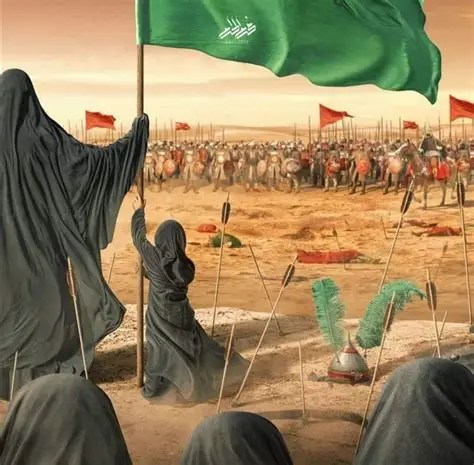

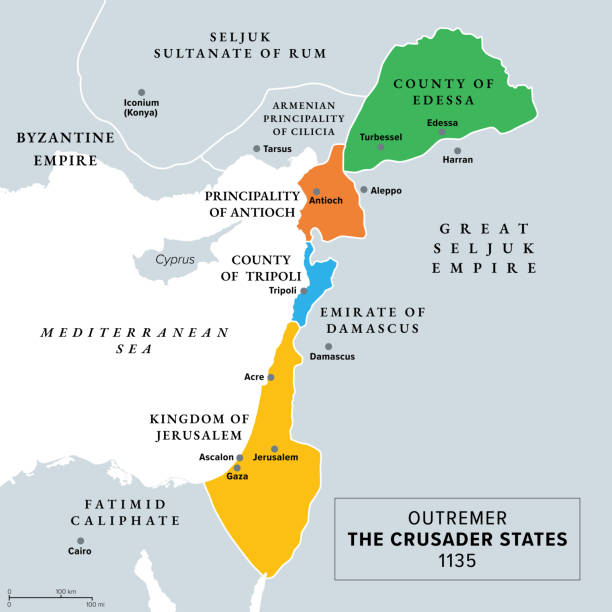




 WALTER SEBASTIAN ADLER