MEC-A-1-S-13

S C E N E (XIII)  

Al New Jersey, USA, 2024 

*** 

Into the future, some years past the pitched battles to defend Rojava, the Jew of Beirut was in Al New Jersey in the year 2023, a state to the West of Al New York. He was meeting with Mr. Souheil Tajer, a Lebanese businessman. Telling a short story about his time in Syria. Trying “to make it make sense”. 

“We have to circle back to when things still made three dimensions of sense,” Souheil says to the Jew.  

“Circle what?” 

“Circle back as to not lose the trail to the plot points.” 

“What does that mean?” 

“It must make sense to regular people! Stop dancing around in a dabke circle. Stop beating around the bush.”  

“What is it you’re planning to do in my country?” 

Before the Jew of Beirut, who was only really one half-Jew, (he was technically, allegedly Chechen by his father and Cuban Sephardic by his mother), before he flew into Beirut for allegedly the very first time, days before the Great War began. He went first to a place called the coast of Al New Jersey, a neighboring state to New York, across a River. To West New York. Before he departed with an ill established, albeit ambitious plan he met with an elder statesman of Lebanon, a man named Souheil Tajer who presided with his nine brothers over an import-export firm for high end foods. They speak at length about the unbelievably bad timing, the bevy of possible new experiences, “unique experiences” that Lebanon is known for. The culinary extravaganza is obvious to all, but the people and their resilience in a flailing economy at the edge of a war zone are the most profound. A place where pure strangers are easy friends all the time. A people descended from epic trader sailors; the Phoenicians.” 

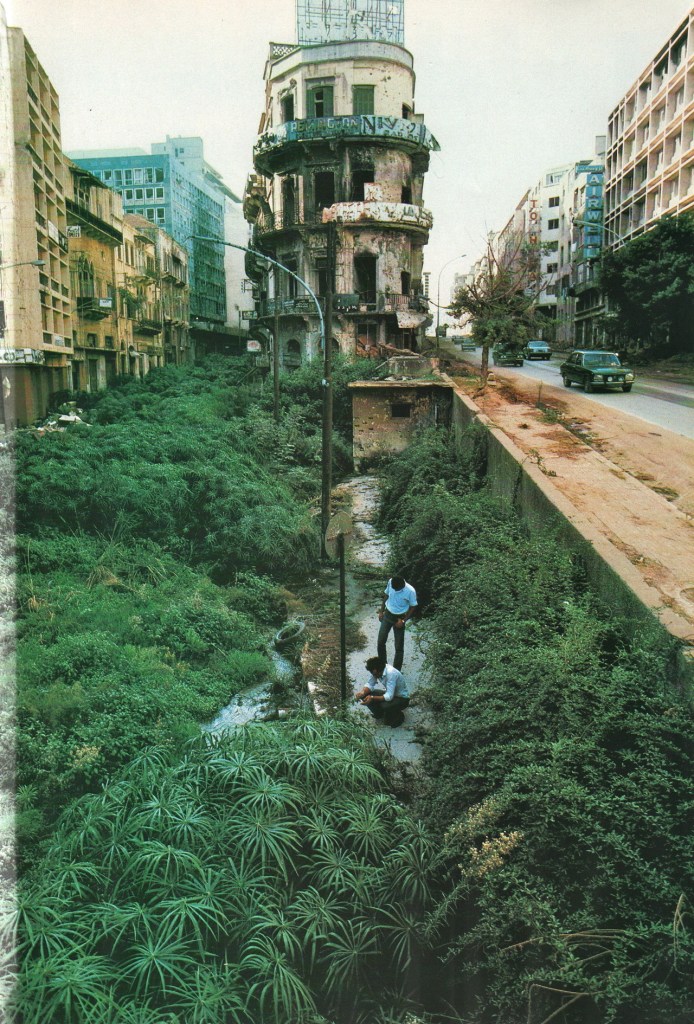
“The Golden Age of Beirut ended in the Civil War of 1975.” From 1975 to 1991 the Palestinian militant groups, the right-wing Christians, left wing Druze, Sunni, and the Shiites set off on a very bloody civil conflict. Not everyone participated but everyone was soon shooting and kidnapping in various power constellations. It eventually involved the Maronite43 right called the “Lebanese Forces” or “Phalange”; the Armenians stayed mostly out; the Christian Orthodox liberals; the Sunni Nasserist Pan Arabists; the Shia Left called “Amal”, the Shia revivalist ethno-nationalist right called “Hezbollah”; the Druze left in the “Progressive Socialist Party”, the Israelis, and the Syrians, the French, and the Americans and about 140,000 to 170,000 people lost their lives. When it ended nothing was ever really resolved. So, in a sense, it was always just a matter of time before something like that could happen in Syria or happen again in Lebanon. None of the demographic problems were ever addressed. But while the iron heel of the Assad regime held Syria together, until 2014, in Lebanon it was a though there are defacto ethnic cantons, states inside the illusion of a state. 

The country, once called the “Paris of the East”, was reduced to an exceedingly long slaughter. No one was left in the absolute majority. Except probably the Shia. No census has been taken since 1932, as has been noted. The President was to be a Sunni, the Prime Minister a Christian, and the Speaker of the Parliament a Shi’a. 18 ethno-religious groups (including Jews) were allotted proportions of important posts. Ways to steal, really, and every faction got a port to smuggle from. Everyone buried their guns, except for Hezbollah, “the Party of God” representing the Shi’as (believed to be the true plural majority); and then the Syrians killed the President. The Druze stayed up in the Chouf. A mountainous region to the east of Beirut. Each faction controls a port city except the Druze; everyone is smuggling something.  

There was a fast economic upturn from 2008 to 2011, but now the money, the Lira, is valueless and no one can get it out of the bank. Skyscrapers stand empty, the Israelis and Hezbollah exchange daily rocket fire, and life of course somehow goes on. People show up to jobs that don’t really pay and pretend to work. What is the old Russian saying, “we pretend to pay you, and you pretend to work.” Tourism has collapsed, but a lot but not in total. But Winter is not tourist season anyway. Only the national carrier Middle Eastern Airways is flying in now. 

ADONAEV   

My understanding is that a “Green line” runs south from Martyr Square, and it divides a mostly Sunni West “Ras” Beirut from a Chrisitan zone in the east. There are 3 major Palestinian camps in the Southwest and Shi’a in the south and Southwest in zones run by Hezbollah. The airport is squarely in the Hezbollah control zone, or at least everything around it is. They didn’t have a map, but a map of varying lines exists in both their heads. Albeit with Mr. Souheil Tajer has the far more intricate and detailed map. 

SOUHEIL TAJER  

It is good you are familiar with the “Green Line”, but there are other lines not to cross. “In good times, you would be testing them, them the Lebanese, but under the current situation, everyone will be tested by you. Testing you, wanting to know why you are there, now. What is your motivation?”  Everyone will be very, terribly angry about the Palestinian situation. How could they not be? 20,000 is a lot of dead Muslims. Alot of dead people. And it will go higher. It will go to 40,000 by the dead of winter. And then higher still. So many dead people, dead Muslims, everyone will ask where you stand on that. No matter what their confessional feelings. You really must stay inside the Christian and Druze lines on the map. Beirut East, the coastal cities until Batroun, the Chouf, and the Matn. Everything else is an abduction possibility. You should study that map in real life and your head and use your common sense! Don’t exceed your limits. That’s how you can get captured or killed. Then I have to answer your parents. 

ADONAEV  

I’m there for 25 days. I’m going to rent a little studio in Achrafieh. I’m working on a manuscript. 

SOUHEIL  

Achrafieh is quite safe. You must not stay in the Muslim area after dark and don’t stay in their hotels. No one can guarantee your security. In East Beirut, you have many friends. The weather will be bad. It may rain every single day I’m afraid.  

ADONAEV  

 I plan to do some writing in the Chouf, at your friend’s place in Berkazy.  I am gonna stay in the city, be wary of my encounters, and stay in the right kinds of places.  

SOUHEIL  

Achrafieh is totally safe, but you must, must, must, find a good driver. It’s essential to your safety. I wish I could go with you and make some better introductions! Now repeat what I have told you please. 

ADONAEV  

The green line is the line of demarcation, staying in Muslim areas is not advised in the current situation. Be careful who I get to know because everyone is very curious and will be more curious because of the timing. No ultras, no interviewing extremists, no gangster-type venues. No adventures with fast and easy women of the night. Not an adventure, I won’t wander too much in the night If at all outside the Chrisitan zones. I’m gonna stay to my limits. I’ll get a good driver. 

SOUHEIL  

“How do you know your limits, or any limits in a place you’ve never been?” 

ADONAEV  

I know what kinds of risks I’m taking implicitly. But it’s important to me to know your people in their hard times and then later in the good times. I wish to know the Lebanese. 

Souheil ponders that, but only for a micro minute; he carries a conversation with ease and expertise. 

SOUHEIL  

You’ll need a driver, a driver you trust. And stay in touch with me every day, I’m here for all your questions. I would love to go with you; I will go with you next time. You must be very conscious of your surroundings. Please do not befriend the wrong people and end up in a trap. 

ADONAEV  

I’ll get a good driver. 

SOUHEIL  

Preferably a Christian driver. I know how that comes across to you, but you do not understand how it is yet. You need a driver you trust. Who is very responsive to your logistical needs. And will not make up new hyperinflation prices. Pay for everything in dollars if you can they will charge your credit cards Lira rates that will be preposterous.  

Now listen closely. If Hezbollah and Israel end up in a major escalation you will need to get out quickly and the airport will not be the best way out.  If things go very badly internationally, you must get to the Port and find a ship to Cyprus. The Israelis will certainly bomb the airport into the ground, they always seem to do that. You can also go wait it out in the Chouf, I’ll give you some phone numbers. But ideally, you will have to get out of there by ship to Cyprus if the war spreads. Which it really might. As Hezbollah does not stop firing rockets into Israel. 

“This is not the best time to go; I really encourage you to reconsider.” 

ADONAEV  

My flights from Paris have already all been canceled due to the security deterioration. I will have to reconsider my options. There are only inbound flights on Middle East Airways

SOUHEIL  

One thing you must do is visit the Shrine of Saint Mar Charbel44. He did something like 26,000 plus miracles. A very holy man. If your itinerary allows this, you must go and get some holy water, or oil and walk in the footsteps of this highly righteous man. It will change your whole life! I promise you that. 

ADONAEV  

I love miracles! But I never rely on them at all, just my raw wits. Thank you for talking this out with me. It all seems more possible than before. 

SOUHEIL  

Follow your heart but know your limits! Or you will die out there. Die for what? I am fully unclear, these are highly tumultuous times, but as a good Lebanese patriot; I say this: better not to die at all when more than half of your encounters will bring unique experiences and exciting new friendships.  

*** 

MEC-A-1-S-12

S C E N E (XII)  

نيو جيرسي 

Raqqa City, Syria., 2017ce 

We enter the mosque compound at twilight, though twilight itself seemed reluctant to fall. The call to prayer still echoed faintly from the minaret, a broken ghost-sound caught between heaven and stone, though its muezzin had long since fled or fallen—whether butchered or swallowed in the tide of war, none of us knew. Dust hung heavy in the air, congealing with the sharp tang of gun oil smeared across my hands and the dried blood caked beneath my fingernails. We moved with the YPG unit like shadows masquerading as men, our boots whispering across sacred carpets long since ripped open and blackened by fire. The mosque had been a sanctuary once; now it was a slaughterhouse with gilded walls. 

They were waiting—Daesh, black-clad, statuesque, crouched like carrion birds behind shattered columns and prayer-stools. Their rifles rested on Qur’ans, defilement turned into ritual, eyes void of mercy, void of thought, filled only with the endless hunger for death. The first shot did not thunder; it whispered. Then the chamber of the mosque exploded in carnage. Muzzle flashes stuttered like lightning storms against the calligraphy-laced walls, sacred verses flickering with each round, the names of God trembling as our blasphemies carved themselves into stone. I returned fire without feeling, a machine in flesh, squeezing the trigger again and again until the rifle jammed, heat and smoke choking my lungs. I collapsed behind a marble pulpit as though it were the ribs of some ancient saint, hoping the stone would hold while lead sang against it. 

Beside me, Heval Kamal was struck. The bullet punched through him with the elegance of inevitability, a red flower unfurling across his chest. His lips parted, a scream forming but drowned in blood, his lungs drowning him quicker than the enemy could. He fell without grace, spasming, his eyes begging for air, for rescue, for God. I did not mourn. There is no space for grief in the iron rhythm of battle. My hands tore his rifle from his still-warm grip before his last twitch had passed. Forgive me, brother, I thought, though I spoke nothing. Your bullets are more useful than your prayers. 

The dome above us wailed with fire. Smoke poured through holes carved by rockets, shafts of dying orange light filtering in like the fingers of a cruel deity. I saw one of them—young, beardless, his face twisted between terror and rage. He couldn’t have been older than nineteen. For a heartbeat we locked eyes, and I saw a cousin, a neighbor, a boy who might have played football in some forgotten street. Then I shot him twice in the chest, precise, quick, watching him fold against the mihrab as if surrendering into a lover’s arms. His blood smeared the sacred niche where thousands had once knelt. I felt nothing. Or perhaps I had felt everything so many times that my soul had calcified. Somewhere back in Raqqa, or maybe in some trench months before, time had stopped mattering. The clock rusts inside your chest when every day is measured in bodies. 

When the shooting ended, silence staggered back into the mosque. It came limping, dragging behind it the stink of powder and iron and meat. We walked among corpses like pilgrims at a grotesque hajj, our rifles drooping with exhaustion, our boots splashing in what once passed for men. I pressed my palm against the bullet-pocked wall, fingers tracing Arabic calligraphy shredded by shrapnel, and whispered an apology to no one in particular. To Allah. To the dead. To myself. To whatever remained listening in this void where even God had turned His face. The only faith left in that ruin was the brotherhood of ash-coated, bone-weary men too stubborn—or too damned—to die. 

Every time we crawled out of a firefight in Rojava with our skins intact, a price was exacted all the same. The internationals especially carried it raw in their eyes. They had just killed someone, maybe for the first time. Or had watched a man they’d eaten bread with choke on his last breath. Or maybe their bullets had torn through someone who wasn’t strictly a combatant at all, just a body caught in the blind frenzy of battle. Some had been awake too many nights in a row, fueled by cigarettes, adrenaline, and the conviction that tomorrow might not exist. After their first blood baptism, they drifted for days in a fugue, phantoms wandering the outpost. Some said nothing, as though words were another luxury they couldn’t afford. Others muttered nonsense, speaking in half-dreams, voices cracking like children’s. 

“He’s lost the plot,” Heval Erdal, a British comrade, used to mutter, shaking his head at those glassy-eyed stares. He’d laugh when he said it, but the laugh always caught in his throat. The plot was easy to lose out there. 

Years later, after the fires of Rojava burned down to embers, those who had survived staggered into other wars. Statistically, one in ten internationals died on that soil, their bodies buried in Kurdish earth far from the countries that had birthed them. Four of ten died later, either by their own hands—noosed, overdosed, revolvers pressed to temples in kitchens at dawn—or vaporized under Russian rockets in Ukraine. They migrated from one doomed battlefield to another like moths drunk on the flame, unable to live in peace, unable to stop killing, unable to stop dying. The war never left them. It only traded flags. 

MEC-A-1-S-11

S C E N E (XI) 

سوريا 

Green Village Outpost, Syria, 2017ce  

Autonomous Administration of North and East Syria 

*** 

At the Green Village Outpost contact line our tabor is told to dig in. So, for a few days we helped sandbag and fortify what appear like the accommodations of now long fled oil workers. Something green and modern looking in the bleak oil lands of Der Ez Zor province. An oasis in the wastelands north of the Euphrates. The Turkish Army is coming. For every step Isis takes in retreat, the Turkish state prepares its forces to crush us. 

SEBASTIAN ADONAEV  

“Sometimes I close my eyes and remember your lips.” Late into the long trips home. I had no home; it was your home only. Only my ugly little flats around the Brooklyn Soviet. Rented in desperation, vulnerability, an admission of poverty. And I will never go back to that humiliating life. I will never see you again, or see Russia, or Cuba, or Mehanata or any other type of slavery life. Your lips and whispers are still lingering Goldy, Goldy. It will forever remain.  Now deployed about ten days ago to the Southern front near Omar Fields. Daesh is nearly finished, they say. Assigned first to Tabor Shihad Lawrence, five quickly die by sniper fire and mines in the very first night of the operation. The race to liberate all of Syria’s oil from Isis before the Regime, Russians, and Hezbollah can.  

The twenty international volunteers are all drifting in different directions. They, our Kurdish handlers, prefer we not all die at the same time. There are supposedly around 500 international fighters who came to fight in Rojava, mostly from the U.S. and Europe, also Türkiye. But numbers and time to the Kurds mean absolutely nothing. So maybe there are 500, or maybe just 50. “Who knows Heval, who knows!” It is generally believed that in total 500 served and 40-50 remain in the autonomous region. 

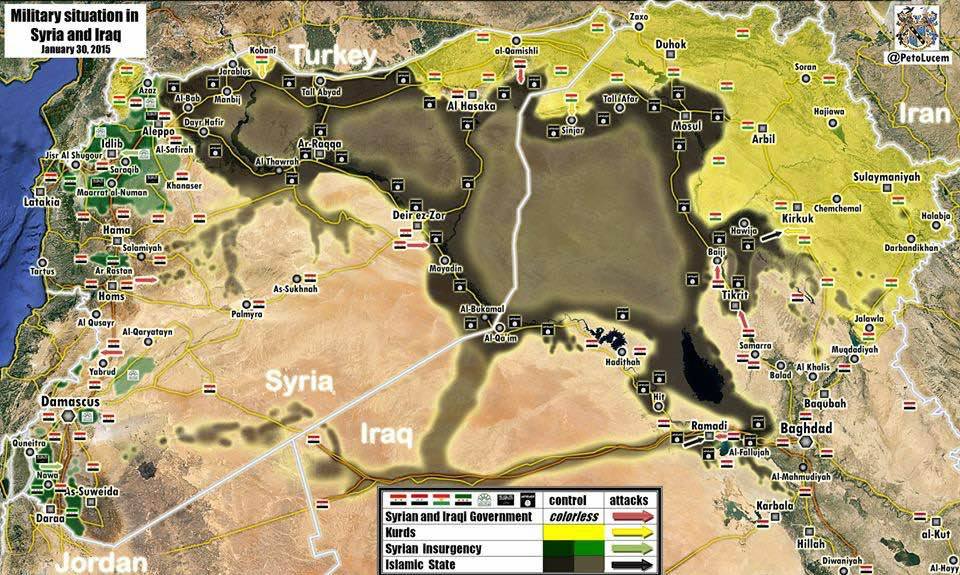
Daesh is nearly defeated, but you cannot kill a poisonous idea. The Islamic State once size of Great Britain at its maximal, poised to take Baghdad and Damascus is reduced to the wastelands of the deep desert and a strong of indefensible towns along the Euphrates River southeast. From the North the Syrian Democratic Forces supported by the Western Coalition advance. We are part of that force. On the other side of the Euphrates the Russian Army, Lebanese Hezbollah, and the Syrian Army advance. We all try and not shoot at each other, at least until ISIS is finished. Over the border in Iraq ISIS has been largely crushed; the Shi’a Popular Mobilization Forces, the Iraqi Army, the Iranian Pasdaran, and Western advisors and various Special forces have all but driven ISIS from Iraq back to the Syrian border. 

The name I have been given is Heval Kawa Zivistan which means “Comrade Black Smith Winter.” I am a Paramedic in civilian life and therefore one of the highest medically trained foreigners in the brigade. Heval Shoresh from Brooklyn, I have known him since childhood. He has a child back in America. I judge him for being here were it really my right to judge other people. But this place and this revolution are irresistible to us both. He is a gardener back home. Here he carries a heavy-duty long-range, high-power rifle called a Dastun which is about twice his size. Hard to aim. 

There is Heval Sasson from Austria. He was an EMT who once travelled with his girlfriend all over Africa on a motorcycle. He is quiet, ideological, principled, and socialist in disposition. With also is Scottish Heval Ciya a former British solider. Also, the mad man career criminal kicked out of the French foreign Legion called Heval Shivan, who although he claims he was also a British solider cannot hit a target with an AK to save his reputation. He has not let up for many days talking about the Order of the Knights Templar, talking about the Knights of Malta; actually, engaged in an unending pressure of speech manic diatribe about the new crusades, that we are allegedly in. There’s also Heval Azad from Albania, something of a gypsy, a bespeckeld intellectual; an anarchist of course. There is also a French Legionnaire of enormous size, a giant. He is called Heval Gabar and speaks only of the Legion, revealing nothing of his life. He is not very well liked by the other internationals. There is also a young kid who looks not more than 16 but is allegedly 18. His name is allegedly Max. One of the few held back in the Academy because of minor injury. He is dubbed “Heval Maslum”, but everyone just calls him Max. And that is how he introduces himself. He is allegedly from Salem, Oregon. No matter what seems to happen he just repeats, “I don’t care.” 

After the 5 Arab conscripts were blown apart the first night, they broke the internationals not smaller groupings. Ciya and Shivan were sent to a YPG Cadro Tabor based on being British military they were sent to the front. Soresh, Maslum, Gabar were merged into an Arab unit and sent to the front. Sasson and I were attached to the Kurdish Red Crescent outpost in the Naqta in Omar Fields. Gabar and Maslum dubbed “pizkereks” or problem makers, were sent to guard a fox hole on the edge of some useless “liberated village”. No one knew where Heval Azad was sent, but Albanians are very tough crafty bunker people. 

“He will turn up and be just fine!” Heval Sasson says, ever an Austrian optimist. “But he just as easily could have stepped on a mine and blown off a leg or been hit by sniper bullets. Many of the Internationals that died, it seemed died from stepping where they shouldn’t step, on some mine, or, getting cut down by sniper fire.  

*** 

Then night came and Sasson and I were quartered in a farmhouse. The commander invited us over to the field command for tea. The mood was the war with Daesh was over and very soon we would all be fighting Türkiye in the north and or Assad’s forces right over the river. The Commander is named Heval Azadi. They cycle out the same 50 Kurdish code names for everyone seems like. The commander in very broken English invites us for customary black Tea in one of the many pillow rooms they like to build. Command rooms with wall to floor pillows are par for the course.  

Trump say, no more guns for YPG,” he tells us the SDF is the brand the YPG uses to appear more inclusive, a little less Apoist, a little more not directly in the chain of command of the PKK, but the commanders almost always say YPG or PKK, there’s a lot of little acronyms for small armies out here. The YPG, or the People’s Defense Forces make up 80% of the SDF; the Syrian Democratic Forces. All the best commanders are Turkish Kurds, PKK trained. Some don’t conceal their cross affiliations very seriously, but almost all do not wear the green PKK uniforms, instead wear YPG-SDF cammo. But it in their walk. 

“Daesh finished in Iraq. Two towns left,” Azadi tells us. 

“Twenty-four little Gundes to take along the river,” he says. A Gunde is Kurdish for a small indefensible village.  

“In Moscow, the PKK make a deal with regime,” he says, regime meaning Assad and Syrian Army, “Iran, regime, Russian make deal on autonomy and oil rights.” 

We are engaged in an operation to seize Syria’s oil fields, Sasson had explained. There were not many ISIS fighters left after Mosul and Raqqah fell. This is all now about who can take as many oil fields as possible to negotiate the final settlements. This seems to discourage Heval Sasson. 

“Really all that is left now, “says Commander, “NUSRA Front and HDS in Idlib.”  

“Al Qaeda’s Syrian brand,” Sasson tells me. 

The PKK is making a deal in Moscow; we will end up making terms with Assad. The HDS, the Nusra, the Deash all the Islamist proxies in Idlib, Bab and Jarabulus City they must be eliminated to close the gap.” 

“Closing-the-Gap” we learned in the Academy was about pushing through the Islamists into Turkish Hatay Province to gain sea access for Rojava. The Gap also being closing the lines between Afrin and Kobane. Afrin Canton is hard to resupply and will be the first thing the Turks attack. 

“As soon as Deash war is over Turkey will attack, you will fight with Turkey?” They all wanted to know that. Would we all stay and fight the second biggest army in NATO? 

“Of course we will,” Kawa claims, but Sasson knows suicide is also problematic when they return to their homelands. In fact, it is well known that many of the prior volunteers, of which there were only maybe two thousand over the past ten years; they did not adjust well here or there. But this was an antidote. Some did multiple tours, others died in other foreign lands for lesser causes. 

When Daesh is done there will be no ceasefire. Turkey will attack immediately. 45% of all Syria is now in Rojava. In SDF hands. Türkiye will waste no time,” says Heval Baran from Germany. Baran had set out to join the PKK, but after 6 months on the mountain they sent him to the YPG. The Germans are the best suited of the internationals to adjust to Kadro life, but Baran said simply; “I don’t really want to give up women.” The life of a Kadro is one without any material things, no attachments, not sex no marriage. Life of total dedication to “the struggle”. 

We all speculated about “Fighting the Turks near Afrin” while in the Academy. It will be slaughtered. A cadro boasts that “We have peace deals with USA and with Russia maybe also China!” But the dependency on the U.S. airpower is very real.  

The Regime will not ever accept Rojava in any form, it is just too weak to defeat it right now. 

Russia will never abandon the regime, someone says in Kurdish. 

“It is like America and Israel; you have Syria and Russia. The Regime gives Russian Mediterranean Seaport access; the Regime is only alive because of Russia and Iran.” 

“There are many factors. Russian is loyal, America is not. When Daesh is over there will be no more guns, no more air support.” 

“How many Western volunteers do you think are still in Rojava,” Sasson asks the commander. 

“40, maybe even much less,” the Commander says. “50,000 came to fight for Daesh, over time 2,000 came to help the SDF. 1,500 leftists from Türkiye and 500 from the West. Now, in country still, 50 maybe.” “The airports in Erbil and Slemani are still shut down because of the independence referendum. For now, you are here to stay. Who knows what will happen? PJAK is now fighting in Iran again. Soon more fighting between Iraqi Army and Peshmerga. And Türkiye! They are coming trust me heval.” 

Goldy wrote that she might have to marry her rich ugly patron. Polina wrote she is leaving me since I am “on the other side of the planet now” Chanie is “back with Charlie”, so probably I will never hear from her again. Anya Noori, my attaché, sent me some news from Baghdad. “They are arresting Western volunteers without good paperwork coming back from Rojava. Slemani and Erbil airports are down everyone must go out from Baghdad.” But I have good paperwork. I called my parents the other day. An Arab had sold me a Syrian SIM card. They seem proud that I am here. I hope I can hold it together and reach ‘the mountaintop.’ There, if I am open-minded, I will finally understand the truth; in its innermost parts. 

Like in my dreams, the “EMT Program of Kurdistan” is just a means to an end. And after thought, the G.C.C. is barely useful or functional any more out here. My so-called state-side partners Andrew, Forti, Jessica, the lawyer Matthew Smith, and Ovid all have defected and left me out here with no help. Can I count on David Smith, Kaveh, Jonah, or Dr. Wagner, probably not or only for a little while? 

Everything here is an assault on my senses!  Daily, I must learn ideology, discipline, war, Arabic, Kurmanji, keep Sasson and I from stepping on mines, dying in airstrikes, getting enough water. Sasson has said he is willing to help me run the EMT program if only we can get authorization to do so. The Kurds do not believe in time, they do not believe in space, and they do not believe in relying on foreigners. They do seem to believe concurrently in American led coalition airpower. 

The others we trained with, the twenty, are all dispersed to different positions. Ten to Afrin and ten to Der Ez Zore. They must choose their own adventures in Rojava. I do hope that Soresh stays alive for the sake of his 6-year-old child and young wife. Ciya and Sasson signed the G.C.C. paperwork, the cover contracts that they will claim later to the government of Austria and Scottland that when they did out here was purely medical. But it’s not so much if they stay 6 months to train in an EMT program; it’s more will the war end to allow the time and space to justify one. It’s impossible to know how far up the mountain any of us will go. Heval Barron was there for almost a year. The German heval said little good or bad about it, he barely says much. 

So many ways to die out here. We or most of the 2,000, or 500, or 40 shared a noble goal. Defeat Daesh, defend the Revolution in Rojava. In the meantime, Sasson and I have been training Arab fighters in life saving skills. We try to stay sane. I am sure I will have to use this AK-47 before this is all over. The thought does not bother me, but I do not delight in the thought of any killing.  

Today, a villager “gundi” handed me their sick infant, and I listened to its lungs and heart and helped prepare some Pedialyte mix. The child was sick but dehydrated and stable, the Arab comrades keep telling people an American doctor is in the camp. But even in Syria I am still just a paramedic not a doctor at all. So much responsibility is on my shoulders. They all have varying medical issues. Infected toes, rotting death, abdominal pains. I do what I can. The Party purchased me a huge rolling duffle bag of medications and medical supplies. So, we stay as busy as we can. 

I daydream and hope Goldy thinks about me more than sometimes, but probably only Chanie does when she is allowed to. Goldy sometimes WhatsApp’s me cute photos and sometimes Anya, the attaché flirts from Baghdad. I have been sending Chanie letters via the U.S. Special Forces were run into coming through the camps. I realize that G-d or no G-d, Abdullah Ocalan is writing about a universal truth. This is the last stand. The last chance we will ever have or get again.  

Deash is all wiped out,” the Commander repeats, “BUT THE TURKISH ARMY IS COMING FOR SURE. To burn all we have built to the ground,” he sighs, Serkaften, we will fight them too!” 

We all have a lot more bleeding left to do no matter what happens. It’s sometimes hard to imagine where the war begins and how it all ends. 

Blog at WordPress.com.

Up ↑