Raqqa City, ISIS Controlled Territory, former Syria, 2016 ce
There remains an undisputed fact that from around the world many devout Muslims answered the call to raise the black flag and resurrect the caliphate. Some were devout and mentally ill, some devout and highly blood thirsty. Some were adventurers masquerading in devotion to a cause. Thus recounts the highly devout and sometimes decapitation look away prone mujahadeen Abdullah Shamil Abu-Idris. One of the over 45,000-50,000, maybe even 100,000 Sunni Muslim international volunteers to arrive in support of the Islamic State. The majority crossing from Turkey. Many with their families.
The City of Raqqa at the height of the S.D.F. Counter-Offensive had around half a million people living in it and under it. Raqqah was re-developed by the Assad regime as one enormous bunker complex, a fallback base for the regime if Damascus fell. Which it nearly did. The capture of either Baghdad or Damascus, historic centers of Islam would have triggered in the global Muslim community a surge of foreign fighters. It would have subconsciously triggered a mighty unstoppable influx of support.
ABU IDRIS
My name is Abdullah Shamil Abu-Idris, or ‘Shamil Basayev’ as my name of the war. I’m named after a famous Chechen Mujahideen, freedom fighter killed in the liberation and resistance wars that happened in the Caucuses between 1994 and 2004. He was killed in an airstrike to his phone in 2006. I am Syrian, but to us Shamil is a real Muslim hero. He took on the Russians after all, the same barbarians we fight now on our southwestern front. Well anyway, the Russians eventually martyred Shamel. Allegedly also they killed 1 in 7 Chechens and raped 1 in 3 of all Chechen women. Which perhaps is why such a large contingent of foreign mujaheddin as Chechens.
“There is a protracted siege now well underway of this Syrian Bunker Citadel, that historically changed hands many times; and it was clearly not going to end well. Not for the attackers, the defenders, or the 200,000 plus people trapped standing in between.”
Not every single so-called ‘Daesh’ is an intimately, innately miserable, and allegedly evil person. Some are also Turkish spies, the mentally ill, bandits, thieves, adventurers, believers or also rapists. Some are on drugs; some are sadists and people with identity crises. Some just wanted to fuck concubines. Or impose themselves upon others. For many of the ten million people who found themselves within the ISIS zone of control, an area around the size of Great Britain; it is in fact a matter of devotion to Islam and the innate desire to restore the Caliphate. It is now the lesser of many evils. That is why in virtually every city that initially encountered ISIS with all but a few exceptions, there was no resistance at all. Many Sunni Arabs or Iraq and Syria just went along with it.
“G-d is Great!”, but his actions are often not understandable! Everywhere on earth the Ummah55 was trampled, suffering, crying out for the righteous to stand up to these Crusaders, these Shiite Apostates and their Zionist allies. That is what the Baghdadi Caliphate was set up to achieve. The defeat of the Kafirs and the glorious triumph of Sunni Islam. Real Islam, not the Islam of reformers, collaborationists, idolaters, and innovationists. Embracers of Shirk. The inevitable return of the Mahdi our redeemer. But, things have again completely fallen apart. We’re barely holding on now, surrounded by a united cohort of enemies.” As explained by the Jihadi Abdullah Abu-Idris a Syrian Arab from Medayiin captured and interrogated during the gruesome 9-month battle for Raqqah City.
“At the height of the Caliphate following the death of the Prophet Mohammed, Abu as Salem, in 200 years our Ummah stretched from Spain to Indonesia, from the Balkans down to Africa. The Caliphate of Baghdadi, well it was allegedly the size of Great Britain, had some 12 million subjects and stretched from just west of Baghdad to just east of Damascus. The largest city, currently completely under siege was Mosul and the administrative capital also completely now surrounded by Kurdish hordes is Ar Raqqah.”
There are barren beige rocky, earth dunes in every direction. Alongside the Euphrates River it is lush and periodically scenic, but less than three kilometers out; dust and despair. Ramadan has begun, but the infidels bombard us day and night. We are in full retreat on all sides.
It is so hot, but of course I remember to make my prayers and keep my faith, because I am a Muslim first and foremost. I submit only to Allah, and I know the road I am on will lead me to paradise either in this world should we be victorious, or in the next should we fall as Martyrs.
There remains a deep vacuum in the depiction of the war to explain the motivation of the 40,000-50,000 estimated Muslim volunteers who crossed the world, infiltrated Iraq & Syria, to defend the radical Caliphate led by Baghdadi. Humanizing these people is essential to making any basic arguments that ISIS had real grievances and framed reality in a way that spoke and speaks to a whole generation of Muslims. However, as complex the span of motives might have been, but 2017 most of them were dead and the coalition had encircled both Mosul and Raqqa City their dual capitals. If a Mahdi was coming, he is extremely late in the game. As rapidly as “the Caliphate” had risen and marched in every direction, its forces were now obliterated. Of course, it was this hardcore of foreign fighters that held out the longest, with their families, with nowhere to run or hide.
Now, we fight the Russians and Hezbollah from the South and the Kurds from the North. In Mosul, the Shiites surround us. The American airstrikes have completely tilted the battlefield against us.
There are not that many of us left. Perhaps 5,000 fighters, in the beginning it seemed we were sanctified and invisible, mujahedeen arriving from around the world. There is a distinctive dread of impending defeat. The Kafirs56have bombed all out cities and given weapons to the Kurds and Shi’ites who are our resolute enemies.
“I never got much enthusiasm from a public beheading.” I’m a good Muslim, so I never got down on the excesses happening under the mantle of the Caliphate. I came with my wife and two children from Chechnya. Clearly the Ummah is under attack in every corner of the globe and the Caliphate here was such an obvious form of resistance. The endless be-headings, gruesome public burnings and sex slaves were a little much for me. Over tea, some of us would go so far as to say it was the actual undoing of the entire Islamic State project this very well publicized brutality. Throwing homosexuals off the roof tops, well everyone had a chuckle about it, but really, we should not have televised all that stuff.
Now, Mosul and Raqqa are completely besieged and we’re all going to fight to the death. Raqqah City was rather beautiful once. The Caliphate was nothing like all the slaughter and terrorism on the media, though we made that media, and we made that terrorism. What people will never understand, the Kafrs I mean, is that we all actually want a caliphate. We want women protected in the home. We want non-believers regulated paying the Demi tax57. We want alcohol and cigarettes banned. We want mandatory prayer five times a day. It’s Islamic to want these things. The Kurds are all secular communists, so we killed them. The Shi’a are treacherous hypocrites, so we killed them. The Yazidis are devil worshipers, so we massacred them in Sinjar and made their women sex slaves. I didn’t do any of that. I arrived in 2016. It was beginning to crumble apart, but I had faith in the Caliphate. Well of course I still do have faith that the will of Allah is highly complicated, and this grand setback is all part of a larger clash, a cosmic war. Of course, Islam will triumph in the end, because that is what the prophet declared. But, for now, things look bleak.
“I mean, how many generations of Muslims must fall to these crusaders before we restore the true religion of Islam? This is about resistance to the genocide of Muslims. Albeit strange that the leaders live in mansions and drive sports cars. Strange that none of the Imams are very learned. Strange that Turkish and Saudi money is all over the place in rumors, but all the ISIS leaders met in an American prison.”
Frankly, life here is not a lot better or a lot worse that in fascist Russia. I would say that for my family all things are comparable, or were until Raqqah was besieged. Now, I suppose we will all die here at the murderous hands of Kurdish communist armies.
I think it is good to die for Islam, but maybe for the sake of my family we will try and get through the lines and cross down the river to Al-Mayadeen. The last stand against the invading Kurdish army will be in the Deir-Ez-Zor Province, deep in the desert along the Euphrates River valley.
The Western Media dehumanizes Muslims and makes us look fanatical, but after our people are massacred in every single nation on earth and the West declares explicit war on our religion, what exactly is the moderate position? There isn’t one.
I was young when the towers came down, but it was appropriate. The C.I.A. and its Zionist allies have toppled the governments of Iraq, Afghanistan, Libya and Syria. They are remaking the Middle East for the good of Israel and oil corporations. The fact that their alliance against is one of Shiites and Kurds speaks to how they will stop at nothing, arm anyone to destroy Islamic law and governance. The great hypocrites are the Saudis for while they secretly send us money and clerics, they live off the glut of American petroleum trade.
This project, the Caliphate had contradictions of course. But it was popular to many and most under its rule. Sunnis welcomed a protecting force with so much instability in Syria and Iraq. Iraq has fallen to the Persian Kafirs who fight us with Iranian help in Mosul. We are better warriors than the Shi’a or Kurds, but we don’t have air power. This is why we are now losing the war town by town, street by street. I will likely not get out of Raqqah, but I will fight and die with the brothers for the Islamic State. I know that at least for me and my Muslim brothers, this is very historical and important. At least 40,000, maybe far more, of us came to support this, thus it is not the cult of Baghdadi or extremism. It is legitimate and essential to Sunni that this survives, whatever the odds.
I am of course willing to battle the Kafirs to protect true Islam! That is in the Qur’an. That is what Jihad is. War is terrible, the war in Syria is very awful. But we didn’t start the war. The war is a product of the big game between Russia and America. Everyone is clear on that. The Shiites side with Russia because of oil interests and politics. The Kurds side with America, because everyone hates their seditious plans.
Look, I am not so violent! I’m not so “radicalized”. I am against the traffic of sex slaves, the fast cars, and big houses of the nepotistic leadership. I would like to sometimes have a drink or two, sometimes. I had bacon in Russia, it was very tasty. You will never understand why this was important to us, but it was very important to us. For my generation it was almost cataclysmic. As if the Prophet himself might show up any day now. But in the end, he did not. And the coalition airstrikes took their bloody toll. The waves of Kurdish fighters ground down out defenses. Though I will meet a martyr’s death out here, I must say that the Caliphate and the rise of ISIS was enthralling to all the billion or more believers. Everywhere on earth Muslims are being massacred. Everywhere we are impoverished and abused. If like others I had sat this all out and watched, it on a TV screen, I would not have lived up to my own beliefs about Allah and my faith and my religion.
Later on, they beat me badly for many days. Then eventually I was executed in a ditch. I cannot really confirm or deny that there were any virgins where I went because I do not want to upset any of the tens of thousands of Islamic martyrs who resisted the Kurdish infidels, Shiite apostates, and Western Crusader forces. But when I died, I was just dead, with no bells, whistles, virgins, or rivers of milk, or of red wine. The only virgins were the Kurdish and Yazidi girls they all abused. And death came to most of us ether from the American planes above, or the pickup trucks of light infantry fighting under the banner of Abdullah Ocalan.
As of now in 2025, nearly 10,000 ISIS fighters are in custody with the Syrian Democratic Forces (SDF) in northeast Syria. This includes approximately 5,000 Syrian fighters, 3,000 Iraqi fighters, and 2,000 foreign fighters. Additionally, there are about 60,000 mostly women and children in concentration camps under the care of the SDF.
BEIRUT, RAFIC HARIRI INTERNATIONAL AIRPORT, 2024-ce
***
Nestled along the azure shores of the Mediterranean Sea, Beirut-Rafic Hariri International Airport stands as a bustling hub of activity, welcoming travelers from around the globe to the vibrant city of Beirut and the enchanting landscapes of Lebanon. It is named after the popular Sunni President the Syrians allegedly murdered. It is usually one of the very first things to be blown apart in an Israeli invasion. That’s has not happened since 2006 but has happened enough times to make it predictable. Why there isn’t more international outcry, oh wait there is, and the United States ignores it. Although Israel is capable of some independent foreign policy prerogatives; telling is the concept of the 5 Eyes + I; the U.S., U.K., Australia, New Zealand, and Canada sharing signals intelligence in collaboration with Israel. Is Israel a Jewish Military Colony of the United States? Are its interests ever separate from its major donor? Most assume not. The correct analysis is hard to make. Are Jews such a useful part of America, they get such influence as to prop up their colony? Or is it much more complicated; where the worth of the colony is that of outlying multi-ethnic Middle East intelligence base? What they do with their Palestinians is far more humane than what Lebanon does with theirs. As you approach the airport, the gleaming terminal buildings rise from the coastal plain like modern-day palaces, their sleek glass facades reflecting the brilliance of the departing sun. Palm trees sway gently in the breeze, adding a touch of tropical elegance to the bustling scene.
Inside the terminal, a symphony of sounds and sights unfolds, as travelers from all walks of life converge upon this crossroads of the Middle East. The air is alive with the hum of conversation in a myriad of languages, mingling with the clatter of luggage wheels and the chime of departure announcements. At this moment, the traffic is youth home for the holidays. Thousands studying in Europe and America defying the travel warnings out of familial love and patriotism. Dropping into English but mostly using French to talk about Bourgeoise nothing. But that is subjective. Passengers move with purpose through the cavernous halls, their eyes alight with the excitement of adventure and rediscovery. Families bid tearful hellos to loved ones, while a small cadre of business travelers rush to catch their next flight, briefcases in hand. Yet amidst the hustle and bustle, there is a sense of warmth and hospitality that permeates the air. Airport staff greet travelers with genuine smiles and friendly welcomes, offering assistance and guidance to ensure a smooth journey. And an even smoother welcome home. The background noise; that no airline is flying into the country besides national carrier Middle East Airways. The background noise, like Israel might invade soon. It’s all kept in the background behind a terrific enthusiasm to be back in Lebanon.
As you make your way through the terminal, you cannot help but be captivated by the diverse array of shops and restaurants that line the concourses. From high-end boutiques displaying the latest in fashion and luxury goods to cozy cafes serving up fragrant Lebanese coffee and delectable pastries, there is something for everyone to enjoy. But the most enchanting aspect of Beirut-Rafic Hariri International Airport is its panoramic views of the Mediterranean Sea. As you gaze out through the expansive windows, you are treated to breathtaking vistas of sparkling blue waters stretching out to the horizon, dotted with sailboats and fishing vessels.
As the sun sets over the sea, casting a golden glow over the terminal, you can’t help but feel a sense of awe and wonder at the beauty of this magical place. And as you board your flight, bidding farewell to Paris and London, you carry with you memories of a country that is not just a gateway to the Middle East, but a destination in its own right—a place where the spirit of hospitality and the allure of adventure come together to create an unforgettable experience. And in the background the disconnection that is four hours south is the front.
***
Middle East Airways carrier touches down in Beirut around 8 pm. The airport is like a vast illuminated shopping mall; everything is shiny and new. It doesn’t take me more than half an hour to get through customs, collect my only other bag, and try to find Ali who is holding my name on a sign. There he is. Well, that was all really easy. This airport is almost empty.
Ali the Shiite cab driver picked up the Jew from the airport and brought him to the Biophilia Lofts, which were not exactly the most bang for one’s buck possible in Beirut. A City well known for hundreds of glamorous hotels; this was not that. Ali gives him a Ceder cigarette and declares “we will be friends forever!” There’s something in the air. That something is called dread.
“Nestled within the bustling metropolis of Achrafieh, East Beirut, amidst the concrete jungle and bustling streets, lies a hidden gem: Biophilia Lofts. Here, amidst the chaos of city life, a sanctuary of serenity awaits, where nature and urban living converge in perfect harmony.” That is what the internet description says.
We take the M-51 Freeway North cutting through the Shiite South of the City. As you approach these Biophilia Lofts, you are greeted by a striking facade, adorned with living greenery cascading down the sides of the building like a verdant waterfall. The air is alive with the sounds of birdsong and the gentle rustle of leaves, a stark contrast to the cacophony of the city beyond, downhill, moving back to the West. “Step inside, and you are transported into a world of natural beauty and modern elegance. The interior spaces are bathed in soft, natural light, filtering in through floor-to-ceiling windows that offer panoramic views of the city skyline and the shimmering waters of the Mediterranean Sea beyond.” Absolutely, none of that is true. “Each loft is a masterpiece of design, blending sleek, contemporary architecture with elements of biophilic design. Living green walls breathe life into the space, while natural materials such as wood and stone create a sense of warmth and tranquility.” If they say so.
“But it is not just the aesthetics that set Biophilia Lofts apart; it is the ethos that underpins every aspect of the development. Here, sustainability is not just a buzzword; it is a way of life. Solar panels line the rooftop, providing clean, renewable energy to power the building, while rainwater harvesting systems ensure that every drop is put to effective use.” But the most unique feature of Biophilia Lofts is its rooftop garden oasis. Here, residents can escape the hustle and bustle of the city below and reconnect with nature in a lush, green paradise. Stroll along winding pathways lined with native plants and flowers or unwind in a shaded alcove beneath the canopy of a towering tree. Bathe in the moonlight! As the sun sets over Beirut and the West, city lights begin to twinkle in the distance, first a fast highway, then parkways up hills. “There is a sense of peace and tranquility that washes over Biophilia Lofts. Here, amidst the chaos of urban life, residents find solace in the embrace of nature, and a new way of living takes root—one that is in harmony with the world around us.”
Ali does not say very much, because he does not actually speak Angliski. I ride shotgun, we smoke some Cedar dark blues and listen to Fayrouz on the radio, how pleasant. “We are now friends perhaps for life,” he tells me!
***
The hotel is a series of still being renovated lofts in an old warehouse. It is like renting a very small studio for $250 a night and it came with absolutely nothing except a lot of privacy and some boutique soap. There is no concierge or any security. You can just walk inside and walk upstairs. The elevator at least had a pass card. But the stairs certainly did not. And how much privacy anyway does your money buy in a place like this? There is no actual address on the building. It’s a warehouse-looking building on the corner of Alexander Pharmacy near the Spinney Supermarket. No actual building number, no door man, no locking front door. No door on the front door really. It honestly was like someone created bohemian loft studios in a broken-down old warehouse; that’s supposedly in the “good part of town”. Achrafieh is the highpoint of the city in East Beirut. Had he not paid $875 up front moving the whole show over to Smallville seemed totally logical. This place didn’t come with any fucking thing besides whispering Ferns hanging above the bed. Was this a slip away to fuck, or did he just have to worst room in the whole place? No, it was a place to slip away for sure. The room isn’t bad at all. It’s clean, the door locks, the bed is comfortable, what more does one need?
“Well, it’s the high point of the city! Christian Achrafieh! There’s holiday energy in the air, in the distance one can hear what is perhaps Christmas caroling in French.”
There is now another Ali, “the night manager”; spindly aged by war, he helps me with my bag. He sizes up the Jew. There is a general manager named Jennyfer who lives down the hall, aloof and slightly bizarre in her looks and movements. Maybe he makes them all nervous. He barely sees her face for 1 minute during check in. So much for the allegedly famous Lebanese hospitality thus so far.
“Tonight, you’re the only guest in the hotel,” Miss Jennyfer tells him, “But tomorrow we have a totally full house! Welcome to Beirut for the holidays.”
The safehouse has one elevator you need a key to operate, the doors are clunky, and the Jew must take a few practice runs to get the key in. There’s a light skinned African maid, maybe Eritrean. The room is clean and upscale; it has “biophilia-like elements”. The Ferns really do whisper at you all night. What are they trying to say? They say, “move your ass over to Smallville or Royal Tulip!” This place has weird voodoo.”
Miss Jennyfer mentions something about payment later in the week because she doesn’t have the cashpoint machine which reads foreign credit cards. She doesn’t look him in the eyes. She might be a pretty and a partly bleached blonde, but the interaction doesn’t go on that long to form any real opinions. It happens so fast Sebastian would be unable to say what she did or didn’t come across like. And it doesn’t matter if he’s paying for the room not the adjacent experiences.
I unpack my two bags. Another man named Ali, a third one, shows him how to smoke out the hotel window. Opens it up for him. This Ali also has war or prison tattoos on his arms including the Zulfaqar split sword of the Shi’a.
I can see right into his neighbors’ apartments across the street when he pulls away the black out curtain. Nothing about the Christian quarter looks very modern besides the supermarket. The supermarket Spinneys looks just like any Western modern supermarket. The rest of it, on first impression looks like a Christian foot hold, dare he use the word “Ghetto”. I pass out on the big, comfortable king-sized bed. I see I have a missed call from Bashir and another from his Vice President Yaelle D’Arrigo. But sleep is the cousin of rest, or death. In my dreams, I fuck her to the beat of fireworks going off. In real life, I would never dare to even ask her out on a date. Just an operationally focused coffee.
***
ADONAEV
“I wake up in Biophilia lofts on the fourth floor to the rustling of the Ferns directly above me. This place is neither particularly bohemian nor truly fancy. But I am paying 4 stars to sleep here. $250 a night is hardly a deal. You can stay at most hotels in East Beirut for $100. The Muslim West Beirut, Ras Beirut a lot less in general, except that is where all the really 5 star looking hotels seem to be. But he is not here to fuck around this time.”
The Ferns are whispering thatI could have selected a far better safe house. The Ferns never lie. Marty would be upset by the whole damn thing. Marty would be telling me I really am about to blow my foot off on this little undertaking. Or get forced disappeared. Marty never likes my travel plans. Never approves of anything that involves any level of trusting an Arab with anything. He’d disapproved of the Syria job in 2017, barely made it out alive on that, and he disapproved of this even more.
“In Syria at least you knew who your enemies were.” Knew every other pothole was a mine. At least there you kept your dick in your pants, and didn’t walk anywhere you hadn’t seen another man walk. Beirut is different. She will lure you in and take you alive.’
October 7th had made all the Jews a little fucking crazy, perhaps more blood thirsty than we ever usually are. The State of Israel has one real mandate, and that mandate isn’t really a “Jewish State”; it’s a state that can protect Jews and the ball was dropped. Like it had never been dropped before.
I have a text message from Yaelle, my “Vice President in New York”. She is saying something about “Night of the North ”; an event they’re all going to be speaking at; an ambulance driver unity type club night. Being organized by Lt. David Cook, who may or may not mean us well. Who may or may not have his own agenda for helping us out. But everything about New York Grad has melted away and all that is left; the goal of the mission; the objectives for being here. Moving cautiously step by step. With no back up really to speak of.
“Absolutely no one is coming to get you if they don’t even know where you are,” Yaelle had told him, “Please keep your geotracker on all the time.” But it doesn’t work anywhere and there isn’t Wi-Fi.
I wonder how many weeks it will take for them to implode the whole otriad in my absence. I trust that Yaelle is a tough cookie, and some people helping her are smart. Like my girlfriend Karessa Abe, “the General Secretary”. But I don’t think I really trust “my Treasurer” Big Mike Combs or know why Lt. Cook is really helping us. I think everyone in the ambulance service is bit crazy. Individualistic; primarily tribal. I am unable to play well with others for long periods of time. Whether fighting amongst themselves counts, the group is held together with duct tape. Big Mike Combs hasn’t done one useful or helpful thing in a year and he’s right under Yaelle in the chain of command. More than a year! And others in leadership are the same. Just plain doing nothing without my special brand of leadership pushing, dragging them all along. Dragging us forward. And they often resent me for it. Yet la lucha goes on. Just barely it goes on. I decided to take this “job” because I have come to care very little about my life in New York Grad. I have decided to take this “job” because I would, and can, lay down my life for change. That makes me a zealot, not an operator. It makes me of course not a tourist. It changes one’s perspective on acceptable risks. You might just say you move completely differently and take far more risks. In that you don’t perceive them, or think you are immune from them. Or think you will come back.
“You’re a local! You are a natural! If you die, you’ll come right back.”
Now lest you just think the Jew of Beirut is a total mad man, who talks to ghosts, talks to the moon, and talks to possibly dead ex; the Ferns don’t talk as much as hum, and a whole array of dangling Ferns do hang above the bed. It’s part of the so-called “Biophilia Motif”. To put you in touch with nature. The architecture or design that connects you with nature or other living things. I should move my ass to a real hotel over on the Muslim side, thinks the Jew; his handlers all have biases he doesn’t share. Marty hates Iranians and doesn’t trust Arabs. Souheil doesn’t trust Muslims of any stripe. Bashir doesn’t trust Shiites. Marcy trusts everyone in her own naive hippy way. Yaelle doesn’t know a Sunni from a Shiite, doesn’t know the plan. Not even one letter of the plan. What would little Karessa Abe say, “You told me Shi’a are the good guys!”
I look around the room and see a big glass shower box and a very small TV. An empty mini bar. No ice. Huge black out curtain windows. How did I get here? Why am I doing this again? This is such a bad idea to be flying so far out with no back up. How did I end up thinking this was a good safe house and not just ‘rent out a hotel and hope for the best’.
ADONAEV
“But you are going to rent hotels, two more to be precise. With each Lira you spend and each place you show face; you are doing your little part. Tourism, the war kept behind the mountains.”
“No one cares about your comings and goings here.” The whole city sits in a daze between paralysis and endless party time. No one is expecting you or looking for you. You’re just a tourist, maybe the only tourist here. You are a ghost.
I’m very-very jet-lagged. That is for sure. I remember not sleeping very well in the Paris safe house, so called safe house, in the gray. Staying up too late talking to that young anarchist Luka about things that don’t really matter in Rojava. He’s at an age where he wants to go fight for the revolution somewhere, anywhere. He’s getting arrested in Parisian Street demonstrations. He probably has to go see the revolution and sit around waiting to kill people before they kill you. Council communism in languages you really don’t speak. He probably has to learn that a revolution is bloody, not magic, not transformative. He must see the light go out from some one’s eyes, choking them to death. With his own hands before he grows out of whatever the left is peddling these days. Anyway, the Jew hadn’t slept in Paris and its fucking with his motivation.
“Your main target is either the Guest or the Host,” who said that to me? Aren’t I “the guest” capable of hosting? Which handler or adviser said that to me? Yes, who said something crazy like that, say the Ferns all at once as he lies in the bed. Get your shit together Man, get some real sleep! says Yaelle in his head. “You’re a fucking tourist act like a tourist and don’t get into unscripted shit no one needs you to do. Don’t make us look bad.”
“Take a deep breath and remember the face of G-d”, Bashir once told him. God has no face, he has no hands, he has no actual gender, he is all knowing and all seeing; he is beneficent and merciful and has written a destiny for you, for us all”. Bashir is no zealot; a wife and kid does that to you; even for a Hamas sympathizer he still has too many real-world attachments; such as a wife and newly born son. Yet, the new Palestinian Nelson Mandella will be here in seven days’ time. Whatever he believes in, he also believes in destiny.
I think it was Marty; it might have been Marcy. Gruff old war weathered Marty. Marty was a retired spook, maybe. Which agency didn’t matter. A cigar smoking Israeli who didn’t even think I should be here in Beirut, not now, not ever. It wasn’t him that put the zealous ideas in my head. With his stories of melting dismembered Fatahniks in bathtubs, or “the impending EMP attack on Tehran”. No night with Marty was over without a threat, or the impending threat to send Iran back to the Neolithic age.
“The place is one big Jew death trap,” Marty warned him. “Every single conversation could just about get you tortured or killed for what? For nothing.”
Marty is a slowly dying, proud old man with war stories to offload. Ashkenazim can live for 120 years. His world was the old world. A world where Zionism meant hope and freedom, at least to him. Was he also bitter? No one could tell. He lives well. Clinging to all the things he isn’t allowed to say, ready for the bombs to fall on Tehran. Telling the same old anecdote about “they need to love their kids more than they want to kill our kids.” Telling stories about meeting Golda Meir and Yasser Arafat.
“Well, if you’re going to be there anyway boychik, maybe you could do a job for your people,” Marty told him right before. “The Guest or the Host could die, either one. Whoever you can get closer to. Only if it’s supernatural looking. No air strikes inside the City right now.”
No one at all anywhere actually thought the Jew should be in Beirut for any reason at all. No one besides Bashir had given him any good rope to work with besides maybe Suheil; but Suheil Tajer gave him tourist rope and Bashir had a whole city plan. Well, it was both their plan, wasn’t it, but without Bashir and the Lion’s Den it could never work. It also probably will not work unless the Israelis invade Lebanon, which could happen any day now. That would make all the factions desperate. Every day Hezbollah fired a few rockets at Israel and Israel fired a few back; and Gaza was now again hell on earth. The body count could get as high as 50,000-100,000 by the time it was all wrapped up. Maybe even more. From the Otriad, no back up except Kaveh Ashuri and an Austrian woman named Karen Gruber, coming in near New Years. He didn’t count on Bashir in the same way, not in the make it our alive same way. Marcy says this is all “destiny”. Hezbollah was firing dozens of rockets a day into Northern Israel from Southern Lebanon and that too might end very poorly. Thats what Marcy had said.
Marcy is some kind of Jewish witch. A sorceress friend of his mother. Maybe “shaman” is the right word. A tricky fourth dimensional scam artist?” She often hypothesized about the “end of times”, or “beginning of a new time”. She often hypnotized the Jew, at least several times and helped him see certain things. And that’s why, or should I say where, the Jew of Beirut turned for advice; to a retired spy, and a Witch descended from Adam Luria, the Rabbi who wrote the Shulhan Arukh. And the gentleman Trader of course. But the Jew was working with and for Yousef Bashir. Working for the cause of Middle East Confederalism. Even now ten years on he remembers the words of Bashir at the 5th Congress in Western Massachusetts woods;
“The territory is just too small, too small for the lives and aspirations of 16 million Judeans and Palestinians; it is as small as it is all illegitimate. The borders of the Middle East are shaped by Sykes-Picot not us; the answer is not one state, two state; it is to birth a Middle East Confederation that stretches from the Maghreb to the Indus River; and delivers us all from warfare fueled by the foreign power after the resources under our sands.”
Bashir and Adoneav wrote that together in the Heller School and then spent ten years laying the groundwork that would soon be tested.
Marty ultimately said, “you probably won’t make it out in one piece”, and Marcy said it was “fulfillment of my destiny” to be there. Not just my destiny, but perhaps a pivotal moment in a spiritual journey I was bound to undertake. A celestial pivot point.”
“Whatever you do, please don’t go to their newly renovated synagogue,” little Karessa Abe had told him.
“Why would I poke my head in there?”
“Because you’re a tourist, not a terrorist, you gotta take pictures of stuff, you gotta go on sightseeing tours. And ask dumb questions about history. But don’t go see the new synagogue please. No one needs to really know you’re a Jew. Why run that in anyone’s face. Why test them?” The trouble is, the Jew isn’t just dumb, he’s dundunbanza; and he doesn’t like taking pictures of things. He likes living a free life. Which often means doing whatever he feels like, if it doesn’t trample the rights of others. A key ideological element of the Abdullah Ocalan “Free Life” concept is that “it is better to live every day as a free person and meet the end when it arrives, then live a very long life like a slave”. Back in Newyorkgrad there was a suicide each month in the ambulance service. Back in Newyorkgrad your bank account was empty or near empty each time you paid the stupid motherfucking evil Jew rent.
Yousef Bashir once said, “If you do this job with us your bank account will never be empty, and you will have friends all over the world.”
Well, if that wasn’t a valuable preposition, whatever it would be more than enough to try and keep going. To keep sticking to a well-made plan. None of that matters to the Jew. So, there was a 1-day layover of sleepless agony in Paris, and it was there that he realized this was probably it; he was probably not ever coming back. He spoke by satellite phone with not Marty the possible spy, or Marcy the shaman, Witch whatever. He lights up a Cedar smoke and dials up Yousef Bashir, his old friend from the Strip called Gaza.
ADONAEV
What’s a Jack knife to a swan?
(Went the words of code from a song by the Mighty Mighty Bosstones)
YOUSEF BASHIR
What’s a hero to a hooligan not afraid to cross the line? Good to hear from you, glad you arrived safely.
ADONAEV
I hate airplanes. Everything about them.
BASHIR
How’s the hotel?
ADONAEV
It’s fine. I’m gonna rent another one tomorrow. I don’t like the energy on the Christian side.
BASHIR
Well don’t get kidnapped.
ADONAEV
How’s your son doing?
BASHIR
Fatherhood is very time-consuming. But extremely rewarding.
ADONAEV
That is what I hear.
BASHIR
You need to go to an address in District Chiya. In the southern suburbs, Al Dahiya. I’ll provide it to you. See an old, trusted friend of ours from Graduate school. I’ll message you on Telegram with a phone number to call. It’s a Tea House right next to Shatila Camp where I’m sending you. Here you’ll find people to help us. Ask for ‘the Host’. I’ll be in Beirut in seven days, Kaveh is coming sooner.
ADONAEV
I hope this all works out.
BASHIR
Why would this not work out? Do not have any useless Jewish doubts. We have the numbers; we have the will. The Party is with us! No doubts needed! You are the best man we have for this job.
ADONAEV
I’ll do my best.
BASHIR
You need better than your absolute best to pull this off. You need something extra special. But the pieces are all in place man. So, just stick to the plan, and all will be okay. Everyone is ready, and you, my Judean Friend, are the tip of the spear. You use that Jew magic for Allah, and everyone will be your ally. We have spoken about this for years. This is the only way forward. So do not get kidnapped!
ADONAEV
I will do my very best, Allahu Akbar my old friend.
BASHIR
You stay alive man, and I will be there quite soon. Go recruit some local talent, you are always such a people person. Everyone you meet will be willing to help us; I can feel it. The people are with us! Allah is with us! Every one of our many comrades is with us! We will not fail this time. Yalla54.
The mountain was quiet that morning. Wind moved through the scrub and the olive groves in small, reverent gestures. A battered radio played a folk song in the kitchen of the outpost — the voice of a woman long dead, singing about apricots and exile. The fighters of the YPJ and YPG sat cross-legged on sandbags, smoking thin cigarettes, pouring tea into tin cups gone black with soot. Sarya, a woman of thirty-four, watched the sunrise with suspicion. Her eyes were hard, dark, cracked at the edges like drought land. She had fought at Raqqa, at Ras al-Ayn, at Sinjar. She didn’t smile anymore. She sharpened her bayonet out of habit, not need.
The radio signal broke at 05:16.
The first indication was not sound but absence — the birds stopped chirping. Then came the whistle. Not a missile yet. The jets — F-16s, likely from Incirlik — streaked overhead like gods with no face. By the time the fighters looked up, it was too late.
The first missile struck the communications tower. The sky turned white.
The second struck the armory. That was when the bodies began to fall.
Sarya was thrown backward by the blast wave. When she stood, her ears were full of cotton and the ground was singing. Smoke poured from what had once been the command hut. She could hear nothing but a high, constant ringing and her own heartbeat. She stepped over a corpse she didn’t recognize — it had no face. A girl with braids screamed for her leg, which was somewhere she could not see.
Another missile came, this one guided by heat. It found the generator station and split it open like fruit. Flames crawled up the cliffside. The olive grove lit like parchment. The air was thick with gunpowder, cordite, burned hair.
They fired back, of course — a Soviet-era anti-air battery that hadn’t worked since Afrin. It exploded after two minutes of trying.
Some ran for the tunnels. Some didn’t make it. Some simply lay down, face to the sky, and waited.
By 05:43, Mount Karachok was a crater.
The Turkish warplanes circled once more, as if admiring their work, then vanished east into the horizon, toward the steel dawn over Mardin. The silence that followed was unnatural. Not peace — just absence. Sarya found the radio again. It was melted. She sat down amid the rubble and lit another cigarette with shaking hands. The wind carried ash across the stones. Far below, in the villages, no one moved. They had heard the metal birds and knew better than to look up.
She smoked, and waited for orders. There were none.
***
Jansher is a mustached bear of a man, clad in a forest green multicam uniform gesticulating all his lessons with his animated hands. He is the Georgian born Kadro entrusted with ideological training of incoming foreign fighters aiding the revolution in Rojava. “A few hours ago, the Turkish State rocket bombed our training academy on the plateau of Mt. Qerechow.”
Eighteen Hevals perished then and there in the barrage, some of them newly arrived foreign volunteers. Five Peshmerga also died in the strikes. They were visiting us for tea. The training base has been moved down the ridge into the oil pumping facility. It is unclear what makes the new location safer. A new batch of internationals has just arrived from Sulaymaniyah. The lessons and training must continue.
JANSHER
“People were being massacred and sold into sexual slavery. Gang rapes and decapitations were gleefully being streamed live. What exactly would you have done?” recounts Heval Jansher the intellectual Georgian Kadro responsible for the ideological and historical training of new Internationalist volunteers.
“We came down from the mountains in convoys of pickup trucks, semi-armored school buses and on foot. We moved in fearless columns, committing perhaps half of our remaining beleaguered armed forces. Tens of thousands of Yazidi men, women and children were huddling helplessly and exposed in the Shengal mountains. Without our intervention all their men would have been massacred and their women sold off in markets. In Kobane around this same time Daesh has surrounded our Syrian Kurdish brothers and sisters and were on the verge of wiping us off the ground in North Syria. At that time ISIS was 30 miles from Baghdad and 100 miles from Damascus. Everyday hundreds of foreign fanatics joined them. Entering easily with the help of the Turkish state.”
“We broke through the Turkish lines and along with American airstrikes saved Kobane from destruction. We literally saved the lives of over 50,000 Yazidis trapped in the Sinjar facing Daesh genocide. We took up positions in Kirkuk awaiting an inevitable Daesh or Iraqi Army attack.”
Sometimes we changed out of our baggy green guerrilla uniforms into those of local forces or simply took the uniform off. Without the Party, without the People’s Defense Forces which bolstered every Y.P.G./Y.P.J. position there would have been no one for the Americans to arm as it would have all been Islamic State territory.
It is possible that the P.K.K., the Kurdistan Workers Party did some very nasty things internally and externally during its forty-year war with the Turkish State. Certainly, there were both internal purges of real and imagined counter revolutionaries as well as deliberate attacks on civilians, but war is war, and war is very brutal on absolutely everyone.
The P.K.K. was trained in war by the Palestinians in the Bekaa Valley of Lebanon in the 1970’s. There is a historic sympathy that the Party has to the cause of Palestine as a thankful result of this early collaboration. It is completely unacknowledged, and unsubstantiated that the Russians also trained the P.K.K. But that’s who was hanging out in the Bekaa Valley in the 1980’s. Palestinian guerrillas. Iranian special forces. Lebanese Shiite partisans. Russian spies.
The P.K.K. got openly involved in the fight against ISIS first in Kobane and then in Sinjar. It can be said in unambiguous terms that without the leadership of the Party, assisted by coalition air power the revolution in Rojava would not have survived the Islamic State onslaught. Abdullah Ocalan has been in prison since 1999.
A variety of tactical and ideological innovations have had to be made for us to survive. However, the adaptation of Democratic Confederalism is not a publicity stunt or mere revisionism. The Party has had to adapt; Ocalan has helped us find the context to adapt. Without his leadership, the P.K.K. would not have withstood the tumultuous collapse of global state socialism in the 1990s.
The Revolution in Rojava is of course a product of Party discipline and functionally speaking there is extraordinarily little difference between the Y.P.G./Y.P.J. and the People’s Defense Forces51 of the P.K.K., most of the Y.P.G./Y.P.J. commanders are P.K.K. cadres.
In the insurrection against the Turkish State which began in this phase in 1984, over 50,000 people died and most of them were Kurds. If nasty, brutal violent things such as burying people alive, executing busloads of Turkish civil servants, carrying out suicide bombings, periodically purging the ranks of real or accused counter revolutionaries.
But even though we are declared a terrorist organization because Turkey is so important to N.A.T.O. and the Kurdish issue is so intractable, the U.S. led coalition of course used the Y.P.G./Y.P.J. dressed up as the Syrian Democratic Forces to annihilate ISIS. The Turkish state had a daily telephone riot with their American counterparts. No one was stupid. Everyone knew every dollar, every rifle and every bit of training given to the Syrian Democratic Forces which was over 60% Kurdish Y.P.G./Y.P.J. anyway would be routed to the P.K.K. when the war with ISIS was over and the fighting resumed in earnest between the Kurdish allies and Turkish Army. But, in 2015 after Kobane there was no other reliable ally on the ground and the Turks had to wait for the dust to settle. In Kobane the tide was turned for ISIS and the S.D.F. became the default U.S. Coalition proxy in Syria. Between 2015 and 2018 the S.D.F. smashed ISIS towns and cities from the North and the Assad Regime aided by the Russians hit them from the West. With no friends, under attack in every direction the once seemingly invincible Jihadists of Daesh were defeated, falling back to Ar-Raqqah and holes in the desert to hide. The Regime forces, Hezbollah, the S.D.F., the P.K.K. the Coalition, the Iraqi Army, the Iranian Revolutionary Guards and the al-Hashid ash-Sha’bi Popular Mobilization Forces52 we all ground them under our boot heels on all sides. Now only Deir Ez-Zor is left to liberate. But once these Cheta Daesh are temporarily defeated, isolated, trampled on and crushed in some shitty desert town that will change nothing. The Saudi funded and Pakistani spread Wahabbi-Salfist53 virus. By no means will this war be over any time soon.
By year 2014 around the time that the Y.P.G./ Y.P.J. militia, assisted heavily by the P.K.K.’s People’s Defense Forces, the K.D.P. Peshmerga and the Coalition airstrikes were battling their way out of the ISIS siege in Kobane, effectively cementing for five years an American led Coalition- leftist Kurdish alliance and changing the dynamics of the Civil War in the North of Syria completely. But no one was stupid, not Turkey, not Daesh not the American Special Forces sent to arm and coordinate airstrikes with us. There are acrimony upon acronyms, there were shells of meaningless letters to make the American Congress feel better about releasing military aid. No one Heval was completely stupid. We all knew that the very minute Daesh was defeated we’d be alone and that all these enemies and friends knew the truth. That nothing happening politically or militarily in North Syria would be decided except by the Party.
The P.K.K. Our Party, the Kurdistan Workers Party! To the Turks we are nefarious terrorists. They want to hunt us down and kill us all. For we are an existential threat to the Turkish State. All states, really Hevals. They convinced America and Europe to adopt that line. To the Kurdish people the premier Party of Resistance to oppression and total annihilation as coherent people. The very last defense against seemingly triumphant Capitalist Modernity. The only military force capable of defeating I.S.I.S. on the ground. An entity that is outside the immediate theatre of war, except for Russia and China, still very much considered a terror group by the West and N.A.T.O. forces of which the Turkish State contributes the second largest military force. Over 250,000 combatants.
No one in their wildest dreams can imagine that when the smoke clears and ash settles that the first Democratic Confederalist polity, safeguarding some 4-5 million people, will be allowed to survive. But for now, the total rubble of what was left from the siege of Kobane has in defiance been rebuilt in the sprawl of white brutalist two to six story dwellings, buttressing in defiance the long white wall and treacherous minefield the Turks built across the entire northern border.
Says Heval Commander Cancer, pronounced ‘Jansher’ the Guerrilla from his notes:
JANSHER
“Actually, I tried to prepare them for a lifestyle of revolutionary militancy. Kill the enemy. Kill the enemy before the enemy can airstrike, bombard, capture, execute, torture or disappear you and your friends. I don’t think they all got it. The training was just too short. They retained much of their Western bourgeoisie privileges. They thought it would maybe be like a movie. It’s a shame the British woman died, she was the one with possibly the very most revolutionary potential, for a foreigner excluding the Germans. That’s all I can say about that, Heval.” Heval is the Kurdish Kurmanji word for friend, or comrade. In case you had forgotten that. Sometimes I find it best to repeat myself repeatedly to make sure you’re paying attention. I was born in Georgia. I’m not even ethnically Kurdish, actually.
Within the Kurdish movement there is a tendency to imbibe a rather endless amount of black tea. A tendency to have poor sleeping habits. A tendency to chain smoke. But they also light their own cigarettes. To let another light your cigarette is ideologically suspect. Sometimes, the Party has debated on banning cigarette smoking, like it has alcohol, drugs, sex, romance, having kids, having a family, contacting your immediate family and acquiring any material things beyond what fits in a ruck sack, in service of the war effort. However, being a revolutionary militant is quite stressful actually. And there sure are a lot of things that can kill you faster than a cigarette. A whole lot of things, actually.
“The legend goes that in a meeting in a tea house in the village of Lice near Diyarbakir City, on November 25th of 1978 a group of young students lead by Abdullah Ocalan founded the Kurdistan Workers Party and launched a revolution unlike anything the world had ever seen before it,” explains Heval Jansher. A guerrilla in good standing with the Party. Good standing means trust. Good standing means not being a Pizkarek; a problem. They need to be platformed, as we say. Bad standing means re-education, prolonged isolation, or indefinite detention. Eventually, if nothing else seems to work, it means a bullet and an unmarked grave. We are not fucking around. There is a revolution to defend. When this is over, every sacrifice, every shahid will have allowed the birth of a new world from the ashes of the old. But if we fail, there is more at stake than the deliverance of Kurdish national autonomy. There is more at stake than redemption of a flailing old idea about liberty, equality, and democracy. If we survive in the coming years. If we finally secure the Rojava Revolution so many have died for as martyrs. These ideas will spread like wildfire. If we are vanquished, “human rights” will be buried here with us.
On August 3, 2014, ISIS attacked Sinjar. Yazidis are hunted like animals. Men were lined up and shot. Women and girls, some as young as nine, were sold as slaves. Boys were stolen, forced to fight, or die. Thousands fled to Mount Sinjar, trapped under the sun without food or water. Many perished before help came. Mass graves fill the region. Survivors live in ruins or camps, haunted by the names of the missing. “Genocide on the Holy Mountain. The men are executed. The women and children all enslaved.”
“We woke up with dreams of life. By nightfall, everything was ash.”
Bahaa Ilyas and Roza Saeed Al-Qaidi are Yazidi activists.These are their words. Taken from reports made right after the genocide:
“The sun greeted me as I woke on the morning of 3 August 2014. I was a researcher at the University of Duhok, 200 miles from Sinjar. It was to be a joyful day as I was waiting – first for my salary, and then for Roza, my then-fiancée. Roza and I had plans to go shopping for our engagement party, which was to take place a few days later. We were excited, our future now starting to unfurl before us. We have not felt that way again since.”
“As Roza and I waited at the bank, uneasy murmurs started around us, and phones began to ring. My phone vibrated; a friend was calling. ISIS has attacked Sinjar, he said frantically. Time stopped as the news took hold of us. Roza phoned her sister who was at her home on the outskirts of Duhok. Her sister told her that videos were being published online of ISIS fighters in Sinjar, and that there was news of killings of Yazidis in the streets. I called another friend, a Yazidi man in a village in Sinjar, who described ISIS vehicles with banners and heavy artillery driving past his home. My mother who was in my family’s town of Bashiqa, also called to say she had heard that ISIS was slaughtering Yazidi men and taking away women. Yazidis are fleeing,” she said, urgently.
“I withdrew as much cash as I could and ran outside to flag down a car to take me to my mother in Bashiqa. Roza waited for a bus to take her to her family’s village outside of Duhok. We said goodbye tearfully, but quickly. We were not sure when we would see each other again. I made my way to my town, into which ISIS had not yet advanced. My entire family was put into the cars and drove to Lalesh, the Yazidi holy site near Duhok. Concerned that ISIS would advance to Lalesh, women and children were then driven by car to Duhok. Some of my uncles and myself followed on foot. Two days later, ISIS occupied Bashiqa. My family survived, but thousands of Yazidis in Sinjar did not.”
“The Yazidis are a religious minority that has existed for millennia. With less than a million individuals, most of us live in the Kurdish Region of Iraq. Other Yazidi communities live in Syria, Turkey, Russia, Armenia, and Georgia, as well as farther afield, in Germany, the US and elsewhere. The Yazidi faith descends from the ancient religions of Mesopotamia, and today we believe in the one God. That the Yazidis are a pre-Judaic religion and so are not ‘People of the Book’, has long motivated the political, economic and social marginalization of our community.”
“At various points throughout our history, attempts have been made to wipe us out– we regularly refer to the ‘73 genocides’ that we have suffered. Prior to the ISIS attack, it was the Ottoman Turks who had made the most successful attempt. Misunderstandings of our faith are deeply rooted, and it is not uncommon for people to casually – and wrongly – refer to us as ‘devil worshippers’ or ‘those who worship stones’. ISIS founded its genocidal attack on these old prejudices.”
“In the early hours of the morning of 3 August 2014, while I was still asleep in Duhok, ISIS fighters left their bases in Iraq and Syria and moved towards the Sinjar region in northwest Iraq, close to the Iraqi Syrian border. Hundreds of villages are spread out around the base of Mount Sinjar, with one main town, Sinjar town, huddled at the base of the southeastern side of the mountain. Mount Sinjar, an arid 100-kilometre-long mountain range, forms the region’s heart. Before the ISIS attacks, the majority of the region’s inhabitants were Yazidis, with a smaller number of Sunni Arabs. The relationship between the Yazidi and Arab communities, who lived together in Sinjar town and in some of the other villages, was built on friendship and neighborly relations that extended across generations.”
“ISIS attack on Sinjar came two months after they occupied Mosul in June 2014. It was quickly apparent that the Yazidis were their target, our existence perceived to be a stain on their so-called caliphate. Some families fled into the Kurdish Region of Iraq. Others escaped to the upper slopes of Mount Sinjar, where they were besieged by ISIS. Thousands were trapped under Iraq’s August sun, with no shade, water, food or medical care. Hundreds died on the mountain before the Syrian Kurdish forces, operating under the cover of Iraqi and American airstrikes, rescued the survivors.”
“ISIS captured thousands of Yazidis in their villages or on the roads during their attempt to flee. Within 72 hours, most of the villages had been emptied, with the exception of Kocho, which ISIS did not vacate its residents until 15 August 2014. Upon capture, ISIS fighters separated Yazidi men and adolescent boys from their families. All the men and boys were executed, often by a shot to the back of the head. Their families were sometimes made to watch. ISIS fighters then moved the Yazidi women and children deeper into ISIS-controlled territory where they were registered. ISIS took note of the ages of the women and girls over the age of 9: whether they were married or not; whether they had children and, if so, how many. In short, they were pricing them.”
“Yazidi women and girls have been sold and resold into sexual slavery, beaten, starved and forced into labor in the homes of ISIS fighters. ISIS does not permit the sale of Yazidis to non-ISIS members, but the money to be made is enough for fighters to risk their own lives breaching this rule. Fighters sell women and children back to their families for tens of thousands of US dollars.Yazidi families are selling all they have, and borrowing more, to buy back their women and children from the men who raped and tortured them. There has been tremendous media attention on Yazidi women and girls who have been enslaved – but there has been little attempt to understand how the crimes ISIS commits against our women and girls fit into the group’s attempts to destroy our community. The Yazidi women and girls held by ISIS are not ‘sex slaves.’ They are genocide survivors, and for those who did not survive, they are victims.”
“Boys over the age of 7 are taken from their mothers and forced into ISIS training camps, where they are indoctrinated and taught to fight. Some have died fighting on ISIS’s frontlines. It has been difficult to locate the boys and rescue them.”
“As ISIS-controlled territory in Iraq and Syria came under aerial attack by the US-led coalition, Yazidi captives, trapped in fighters’ houses and on ISIS military bases, were reportedly among the casualties. As the ‘caliphate’ crumbled, ISIS fighters fled, taking the captured Yazidi women and children with them. Their fate and whereabouts remain unknown.”
“Today, I am back living in Duhok and working as a research assistant on the LSE Middle East Centre’s project ‘Documenting Yazidi Victims of ISIS’. The project aims to build a consolidated database of Yazidi victims by age, gender, location and crime(s) suffered, using rigorous demographic techniques modelled on the methodology accepted by the International Criminal Tribunal for the former Yugoslavia. Our team will – with the consent of the survivors and their communities – create and organize data collected for use in accountability proceedings, identification of remains in mass graves, humanitarian interventions, community-building, and broader advocacy. It is specifically envisaged, and is an integral aspect of the methodological planning, that the documentation project will play a significant role in achieving justice for Yazidis against the crimes committed against them by ISIS. The data will ground existing advocacy for accountability processes in national, regional and international courts and tribunals. Once courts or tribunals seize the cases, the documentation project’s data will provide reliable information of high probative value for use before various existing and future accountability processes. I am proud to be part of this effort.”
“For the Yazidis who have survived, most of us now live in displaced people’s camps, unfinished buildings and in rented accommodation in the Kurdish Region of Iraq. A small number have received asylum in Germany, Sweden, Canada and elsewhere. Others, in their desperation to find safety, have fled on dinghies to Greece. Some, including people I know, have drowned in the Mediterranean. A few have taken the risk and returned to Sinjar, which – though destroyed – is now under the control of the Iraqi central government. The region, littered with IEDs, is not yet safe. Mass graves holding the remains of Yazidis are regularly uncovered. There is a need for forensic preservation and analysis and more generally for reconstruction. Living with dignity in Sinjar remains a challenge.”
“The Yazidis continue to hope for the rescue and return of the women and children still held by ISIS. We hold out hope that some of the Yazidi men captured have survived and might also be reunited with their families. We have survived, for now, ISIS’s attempt to destroy us, but we remain a deeply traumatized community in need of support: psycho-social support, educational and livelihood initiatives, including those specifically aimed at increasing female social and economic independence, forensic documentation of mass graves, reconstruction, including infrastructure for potable water, healthcare and education – our list is long.But if I were to summarize, I would say the Yazidi community, displaced from Sinjar and desirous to return, needs three things: assured security, justice for the crimes committed against us and recognition of the genocide. The prejudices against our community must be uprooted and made to wither in the light. This requires the calling of the crime committed against us by its true name.”
“The morning, I awoke thinking about my engagement belonging to a more innocent time, one to which Roza and I cannot return. This morning, I sat in front of my computer. On its screen are the names of thousands and thousands of Yazidis.”
“They are categorized: killed, kidnapped, missing. I know they, like me, they once woke up looking forward to the day ahead of them.”
Report by:
Bahaa Ilyas is a Yazidi activist who has been in close contact with internally displaced people through different agencies and organizations since 2014. Currently, he is a researcher on the LSE Middle East Centre’s ‘Documenting Yazidi Victims of ISIS’ project.
Roza Saeed Al-Qaidi is a Yazidi activist. Since ISIS’ attacks on the Yazidis in August 2014, she has been involved in humanitarian aid and has interviewed Yazidi survivors, particularly women and girls who had been sexually enslaved by ISIS fighters, on behalf of several different organizations.
***
As Further explains the fixer “Abu Hamza”, the assumed Kunya49 of a Kurdish businessman fixer named Alacan Al-Biban of Kirkuk City, fixer, artist, gentleman, man about town in Erbil.
ABU HAMZA
“The Yazidis live in and around a holy mountain called Jabal Sinjar. It lies along the Syrian Iraqi border 80 kilometers West from Mosul in the Nineveh Governorate. Their holiest site called Lalish, the tomb of their avatar for the Peacock Angel50 “Tawuse Melek”, Sheikh Adi ibn Musafir is found between three mountains. The Arafat, the Misat and the Hizrat.”
On the highest peak of Jabal Sinjar is the Chel Mera Temple. “The Temple of Forty Men”. The temple is so ancient no one remembers how it got that name, but it is believed forty men were buried there. The Yazidis have three hereditary castes; the Murids, the Sheikhs and the Pirs. In some ways their beliefs are linked to Sufism and Zoroastrianism. They believe in reincarnation and forbid intermarriage with other groups. Although some claim they have holy books called the Kiteba Cilwe (Book of Revelation) and Mishefa Res (Black Book), there is great reason to believe these are forgeries created in 1911-1913 and virtually all Yazidi religious theology is a chain or oral transmission called Qawls; hymns with cryptic allusions and supporting stories.
The Yazidis are ethnically and linguistically Kurdish. They speak Kurmanji, like the Kurds of Syria and Turkey. They are concentrated in Northwestern Iraq in a highly mountainous area called Sinjar by the Arabs or Shengal, by the Kurds. They are monotheistic, Gnostic religion. Over the years Sunni Muslim Arabs have typically accused them of devil worship, because of their belief in a pea cock fire angel. In 1414 their sacred Lalish was razed. In 1640, Ottoman Turks carried out a pogrom killing around 5,000 of them. In 1892 Turkish Ottoman Sultan Abdulhamid II mass conscripted the men to eradicate their faith. In 1974-1975 Saddam Hussein deported Yazidis and re-settled Arabs in Sinjar. Around 137 Yazidi villages were destroyed. In 2007 there was a Jihadi campaign of bus bombings, kidnappings and terrorism that left as many as 300 Yazidis death and over 1,500 injured. In 2009 Al-Qaeda used a series of truck bombs in Sinjar to kill upwards of 500 Yazidis in Qahtaniya and al-Jazira. So, Turks and Arabs killing Yazidi is as Sunni Islamic as tea and shawarma.
The story of the woman being fed, oh yes, fed, her one-year-old son. A later story.
In August of 2014 “Those who run from death”, the KDP Peshmerga, abandoned their positions and allowed almost all of Shengal to fall to ISIS without firing a shot. ISIS then began a rapid campaign of summary execution, forced conversions, sex slaving and out right genocide. On August 3rd, 2014, ISIS captured the holy city of Sinjar. A massacre began. Over 200,000 Yazidis fled into the surrounding mountainside. 50,000 of them were trapped on Mt. Sinjar, exposed to the elements with ISIS bandits raping and murdering their family and friends. ISIS Cheta shot 70 to 90 men in Quiniyah Village, 360 in Harden village. 200 Yazidis were lined up and shot in Sinjar city. 60 to 70 killed in Ramadi Jabal. 50 in Dhola village, 100 in Khana Sor and 200 more on the road between Adaniaya and Jazeera. Dozens in al-Shimal village and more on the road from Matu to Jabal Sinjar. Women were gang raped. Children were buried alive. In most cases the Yazidi girls and women were separated for rape and sex traffic to various ISIS held cities. Old women were summarily shot.
Using rape as a weapon of war Daesh bandits had gynecologists examine their captives to set slave prices based on virginity. They were treated like cattle. There were online price indexes. Sales on Telegram, Facebook, and WhatsApp. Prices varied. Between $2,000.00 and $10,000.00. Less than 5 women escaped. Many died in captivity or allied bombardment.
The Sinjar Mountains are over 100 km long-range running east to west. The lower western segment in Syria and eastern higher segment in Iraq. The range is viewed as sacred by the Yazidis who consider them the place where Noah’s ark came to rest. On August 8th the United States President Barack Obama ordered airstrikes against ISIS in Sinjar. Air strikes and mass supply drops for the Yazidis hiding there. While PKK light infantry breaks through the ISIS lines and guide thousands of trapped, injured, starving Yazidis off the holy mountain.
ABU HAMZA
The 50,000 Yazidi besieged on top of Mount Sinjar began to die from hunger and thirst and exposure to the elements. On August 10th P.K.K. and Y.P.G. guerrillas, with truck mounted heavy machine guns supported by mobile light infantry charges, broke the ISIS siege and began guiding Yazidis to refugee camps and shelter. Some were evacuated by the Peshmerga via Cezanne and Telkocher roads to Dohuk, Iraq-K.R.G. Though the majority broke out with the P.K.K.-Y.P.G. safe corridor to Rojava.
They fought most of the rescue operations from pick-up trucks or on foot. With small backpacks which mostly had been loaded with extra magazines and hand-grenades, canteens of water and sometimes a few cans of Mortadella. Or canned olives or whatever was left before they shipped out. Clad in green baggy green fatigues, the PKK made a rapid incursion through ISIS-held territory to launch the largest humanitarian evacuation of the war, saving the lives of tens of thousands of civilians hiding on the mountain. By August 8th most of the remaining Yazidis had been evacuated by the P.K.K. to the K.R.G. areas and Rojava. On August 10th airstrikes opened a passage for another P.K.K. evacuation into Syria of some additional 20,000 to 30,000 Yazidis. But there were still around 10,000 trapped on the mountain by 13th August receiving airdrops of food and water from the coalition forces. Eventually, the guerrillas got almost everybody still alive out alive.
On August 15th there was a large massacre in Kojo. Over 80 men were killed outright. The entire male population of Khocho, around 400 men were butchered. Around 1,000 women and children were abducted for sex slavery. In Tal Afar 200 Yazidi were shot at the prison. A report in late September concluded over 5,000 Yazidis had been exterminated. Several thousand, perhaps as many as 7,000-10,800 women and girls were carried off to Mosul, Raqqa and other ISIS strongholds. The confirmation of the missing versus the dead has not been cleared up yet and will not be for many years.
Repeated raids by P.K.K. commandos rescued 51 Yazidis in March and 53 in April. Most of the abducted women and girls are still missing, having been living in brutal, in-human slavery for over four years. Most have been presumed dead. Mass graves keep being found all over the liberated areas.
“From time to time a young woman, an escapee, jumps off Mt. Sinjar. That will probably go on for many years to come, a dark disturbed pattern in a community wholly unaccustomed to this level of barbarism”explains Alacan, known mostly to outsiders and journalists as “Abu Hamza”. “They were all mentally and physically abused by the vile bearded Chetta in ways we cannot ever possibly comprehend. That few can even bear to hear. Fewer still wish to talk about.”
As told by Heval Goldy. Some parts have been blacked out by the state censor.
A begrudging Russian sympathizer to our cause now held in a small, electrified cage in Midtown West. A gated community for the ultra, ultra-rich. A place called Hudson Yard. They call her “Goldy the very expensive goldfish.” Of course that is not her real name at all. Her name at the agency is Sussudio. Her real name in Russian, it means “rich soon”.
“All of the buildings appear to be very, shall we say, forever. Permanent. Almost invulnerable, blyat. These elegant high towers of blue and black, glass and steel, towers built in defiance of gravity and common sense. Like mega sculpture, like a love song to the invisible hero called American Capitalismo. You look down at all the city, even all Downtown and Midtown and imagine all the utter debauchery other people are having at your expense. Well anyway I have my name on my own little cage here. So, I too can say “I have made it in New York City.” “So maybe I’ve made it here in America!” In the background, a saxophone cacophony erupts! There are more brothels than bars and coffee shops in all Newyorkgrad, but the quality and the pricing vary markedly. Sex work is hard work. It may not be the world’s oldest profession as they say blyat, but it is the oldest trusted way to get information from one’s enemies.
She states in letter:
“I live in a tall residential tower complex in Western Midtown in a costly new development named the Hudson Yards. Right in the very heart of success. A tower complex built in recent years above the train yards of west 34th street. I work my sweet ass off to keep that apartment rent free. The game I am playing with this chubby Indian Brahman venture capitalist roommate, is eating off his plate without him imagining he’s becoming my patron. Drain the clock, not his cockas they say. But really, he annoyingly proposes marriage as often as my Sergei had. And the others. And the other. I am waiting for a Russian Jewish doctor. He will love me again. I know it. The stars say as much. As for Sebastian. I think he’s calling himself Kawa now.” We all have all kinds of names.
“He mostly writes to me. I mostly do not write back to him very often,” I would later tell the FBI, or the CIA, or the Police Dept. and the Department of Homeland Security or whoever else I was being forced to talk to. But I, of course blyat, I do write him back, I’m his muse. He creates well, though most of it is chaos. Much of it very much misses the mark, as it were. I once remarked to Oleg the Bear, a common friend of ours;
“A relationship with Comrade Adonaev is like a roller coaster.Extremes of ups and downs, drama and thrills. But like all such thrill machines. You can tolerate it only in increments; you must step off and stay off. Sometimes for many years.”
My blonde hair is convincingly dyed from light brown. I told Sebastian that once and he said I was beautiful either way but should try brown hair like him. I don’t actually hate him, though he has cost me time. I just prefer not to have him around, thinking he can save me, heal me, change my life. No working woman ever needs that shit. Get me to higher ground on his terms. I told him go to law school and stop fucking helping the Kurds. I just don’t like giving him hope that we have a future of any kind. I’ve always been adamant about that. Sometimes against my better judgment, I’ve kissed him, and those kisses gave him way too much hope. He in fact wrote me over 100+ poems of Russian theme and a door stopping nearly 800-page novel. Which is kind of about me, but also about terrorism being justified. Or so my friend Alana interpreted. That he can save his money up somehow, get it together in the brain, and “save me”, he just can’t. I’m a kept woman now. That comes with a price tag and comes with responsibilities. Like sex on demand. I’ve told him that, but I’ve told him many also not so true things so maybe he can’t put it all together. He thinks it’s love. It’s maybe some kind of fucking weird 18th-19th century muse lust love, blyat, but it’s really a product of his mental illness, not my encouragement. His writing is prolific. To be fair. Some of his paintings are very unique. Overall, he is impressive as an American, just not the horse I need to bet on right now. He’s not patron or paperwork marriage material, as he is always nearly broken, or often fully broke.
But like it or not an artist gets only one truly great muse, and I am his. Russians, we are known for our loyalty and being indomitable. Putin says we also make the best whores. Well anyway, I know what I came for when I arrived in Newyorkgrad lost lonely and lethal at age 19, and I am a full-grown asset, a woman with expensive tastes. Not that into long board walk walks and art making and picnics with stupid couscous and over spiced chicken blyat with no value. The long, I mean Russian long book and paintings he has made for me do not help my mom immigrate to the U.S.A. Or get me a euro passport, for that matter, now that it is looking like my special marriage hasn’t resulted in anything useful for papers.
“Let me roll up my sleeves and my skirt, a little! Look at me in the eyes!I have all my teeth to bite. So sexy and educated and multilingual. What a catch to catch if you can. I am a wild debutante, elusive and amazing. I am a graceful fighter of course, forced to pour men off shots in a tavern downtown.”
“Zdrastvistia! The purpose of my sponsor is to buy and sell luxury carrots. Also, a flying carpet to get you home after all the bullshit we will make you sit through telling Russian American tales. Also, to warn you about Chechens and to distribute out a phone number where slaves with abused lives can get J 1, S 1 or go to college. There is so little time for singing and poems. We will try and pour you things called Vodka, but it’s not Vodka. To us it’s like water for wound care.”
“Good and bad men went to war and women also went to war, and Americans and Russians watched out of the corner of the newspaper or on the telescreen. And of course, we both supplied the arsenals and the airstrikes to our proxies. But ultimately it was a faraway spectacle happening far from both empires. At least until Ukraine.”
“The papers called them “the New Chechens” because when the war kept going, people came back trained in G-d-only-knows how much carnage capability. The war I’m referring to is the Syrian Civil War/ the Revolution in Rojava which was a phantom menace to all. But it was more a dark dream based on improbable odds. Chechens are in fact a very real jihadist menace that fought us to the last bullet in Mosul, Raqqa and Deir-A-Zor. They brought their whole families into their fun little Jihad. These re-moniquored “Chechens” aren’t like them. They were secular and young, and mostly on the Kurdish or Shi’a side, or the Peshmerga. They all left our families at home. There were plenty of war path teams and factions, mine/ ours was the most moral, but lived in a state of total delusion. They were following a pudgy faced aging man in Turkish solitary confinement. We thought breaking rocks was a useful form of soliloquy.”
My latest “patron” is in his mind a Brahman, which is something pretty fucking fancy in India. He’s a tech guy but looks and acts more like a Wall Street guy. He’s just too fucking rough on me. It has a lot in common with rape in my own home. He goes deep up my ass too often. He is pulling my hair and slamming me against the bar. He punches me in the head as hard as he can. He gets what he pays for. He slams me for about five minutes until he cums. Like Quisling and snorting pig. I am the star of a very private show! Recently, “I fell down some stairs”. He paid for surgery. I don’t remember things like I used to.
Sebastian wrote to me the other night to go down memory lane and formally tell me he is off for Syria soon. Well, this is the end of him finally. I do not feel that bad, or much of anything. He wants to end it like this anyway. He is living up to his expectation to die a martyr, that is up to him. In my mind, somewhere, is the understanding that if I had given him more rope, he could have hung himself here, but who doesn’t like a motherfucking show. Am I right. My patron climbs off me eventually. Eventually, they all must.
A lot of meat to him, I will need to stretch it out. Jon isn’t just a John; he’s unfortunately often my roommate too. He’s the one paying me to live somewhere nice with him. A Brahmin. They do what they want. Including fuck my asshole on a Tuesday afternoon. Am I fucking to not pay my rent? Yes, that’s exactly what I’m doing. I wish I had something better, someone better to do but I don’t. The Russian doctor, well he said I was “a little too high maintenance.” Sergei flipped his shit when he found a pile of Sebastian’s letters. Poor form on my part, perhaps, too sentimental. No, I will just say lazy.
I have not seen Comrade Sebastian Adonaev since the end of the summer. The time when we gave it another sad go, the poetry making for some light kissing. The hopeless romanticism in him. Well anyway he’s the exact same man and I’m the same old gal. He’s still broke and still just a shiftless adventurer, romanticizing the Chornay. He once wrote an 800-page book for me, yet I’ve only read the first couple chapters. He wrote me over 100 poems, but they all sound about the same. Words rhyming about love, hate sex and devastation in Angliski. He painted and framed a painting in Brighton and bought a gold frame for it. It’s still up. I was dating a doctor, but he left me, as I said. I was dating a corporate lawyer, but it was never so serious. My original patron cut me off over my first Adonaev affair. Now I’m fucking the so-called roommate to cut down on my business here expenses. Well anyway “my roommate” has a big Indian style Xanny Kama sutra cock. He manages some tech finance derivatives schemes in L.A., which could be anything. I must disassociate a lot. What was I saying, that’s right, something about my mother getting her paper. Something about the mark.
Later, in around a year when I am arrested by the secret police and they demand that I tell them about what Sebastian was doing in Syria, honestly, I didn’t even know that much. I wasn’t that interested or directly invested in it. He is climbing a mountain, to prove to himself to win me, that sounds like a good take. He periodically would send me all these highly miserable looking, often bloody war photos, but I didn’t want to see any of them. He would beg to be allowed to see me. But in reality, I wanted very little nothing to do with him. I live my own life. It’s mostly mine. I chose it and made all the bad decisions! Later, I’d sometimes message his WhatsApp and tell him to ‘Come home now please’ ‘before you die’. But I didn’t mean come home to me. He will probably survive the war. He has strong luck. He is tough in his own strange way. Incredibly lucky. The roommate, comrade Brahmin patron, he likes to choke me. I need a new living situation. Or should I just pay cash, every hole, is too many holes. I’m working on a possible new patron with a place by the beach in Miami. I wasn’t raised stupid, or lacking morales. So how have I gotten stuck here in this loop? I should move to Miami, where it’s warmer. I remember thinking only a little bit about his strange Syria objective.
What I failed to see, through Sasho, our old boss and roof explained it to me, was that he was going to Syria to impress me. How ludicrous, nothing could be further from impressive to me. He was going to live, I was sure. But to-do-what with himself? Live to be a mentally broken person that I could never imagine how to heal. From Miami, when I get there, it will all take the form of a brightly colored dream.
We had some fun but also some very messy history Sebastian Adonaev and I, blyat, but I think going to this evil little war was the stupidest thing he ever did, far worse than the exploits in Haiti, worse than loving me. It was hard on me anyway. I will certainly not be meeting him at the airport, should he survive the war. I am tougher than he, but it’s still not nice to make a person watch unwillingly your attempt at self-murder. Functionally speaking that man is dead to me. I must insulate myself from mad men seeking high publicized means for suicide. The man just wants to die in a meaningful way, but that doesn’t help my situation at all! Yet, I still have all his letters, I still have the two published books about me. I still have the gold framed multi-color pornograph on the wall. When the secret police dragged me in to find out where Sebastian went, I told them:
“He is probably still in Havana…”
“He’s definitely not in Havana, toots.”
“Don’t fucking call me toots, blyat.”
They then did pretty nasty stuff to me, just to punish him, maybe. Or maybe just because I don’t have any actual papers? Or maybe because degrading a Russian blonde is as American now as apple pie. They eventually bent me over and just took turns fucking me on the interrogation table. Good times. It’s really not that “free” a country. Once the surface gets scratched enough. Eventually, my Brahman patron bails me out, somehow. He lectures me about “pussy footing around with terrorists that don’t have my best interests at heart.”
“Well, where is that motherfucker? Where is your useless Jew Chechen now?” My patron asks me.
“He is climbing up Holy Mountain, blyat. In his mind anyway. Thinking of me the whole entire time.”
“But low and behold here you still are.Locked in a fishbowl with no passport. With one to help you besides me and your Serge,” the patron replies, “And like a goldfish, I can do whatever I want, and you will not remember it 8 seconds later. He punches me in the face and rapes me on the table.
“Dumb bitches always thinking things are free,” he says. But nothing in Russia or America is free. Old Russian saying, “The only free cheese is in a mouse trap.” Which is infact an actual Old Russian saying.
The very first Kibbutzim were built out of both practicalities, and a socialistic feeling that many of the early Zionists arrived with from old Europe. It is correct to assume most of the early founders, pioneers, resetters; resettlers; were Ashkenazim from Eastern Europe; where material conditions for the Jew were far worse than Western Europe. Until the 1930’s when they would become fairly bad in both Europes. Mostly Ashkenazim, but not wholly. Certainly, one can see an overwhelming majority of white Jews in the early Zionist congress, its structures of settlement, and its proto-military formations. That is wholly because the Sephardim and Mizrahim; were without a doubt more integrated into the Muslim world. Their position was without a doubt one of being tolerated, but it was an integral toleration; written into the Quran as the word of G-d. In Europe; a series of inquisitions, blood libels, persecutions, expulsions, culminating in the Holocaust of 6-7 million. 7, as the Germans didn’t count infants and children in many of their extermination counts. Yet, today, on the Arab street, it doesn’t matter how many Hitlers forces eliminated, “it was not enough”. The kibbutz was an attempt to remake the world, in a settler Zionist leftist infused fashion. It was a project to transform the ghetto Jew of Europe, the Jew of the Pale, into the Judean of his heritage. It was practical as it was about maximizing labor, in an egalitarian fashion. It was also infused with the socialist ideas of Europe. The USSR had been born in 1917. Many of its architects were Jewish, though not all certainly. There was a feeling in the mind of the early pioneers that they were recreating a world, but most of them were not religious, so they drew intellectual and moral supports from a long-gone warrior past; Moses and the exodus, Esther and Mordecai, Hanukkah and the Hasmoneans, Bar Kokhba and the three wars with Rome, a time before the exile and wandering. Not necessarily grounded at all in the scrolls. Fused to that; the core value of Tikkun Olam; the Jewish duty to remake the world in a moral light. The left progressive manifestation of manifest destiny or being “chosen”. What that became in practice was all the early architecture; the structures of the new Jewish state that came into being in 1948. The kibbutzim, hundreds of them; were incubators of the new state. Perhaps more than half were left, and the other half were right; Moshavim; farms of tenancy in common, as opposed to collective ownership and utopian values.
Now what was in no way consistent was to what degree the early settlements incubated tolerance and acceptance of the Palestinians. The people that had been on the land for at least as long as the Judeans had been expelled from it; sometime between 66CE-136CE.
There were three very bloody wars with Rome, and then all of us who survived were marched out into protracted slavery. From 136CE until the beginning of organized Zionist re-settlement beginning in 1897, of course a lot of wholesale misery befell the Judean people. Alot of brutal violence, expulsion, discrimination, pogroms and butchery in Europe. Between 136ce and 1948 when the Jewish state was re-established, people lived in Palestine. Whether Palestine was ever a state, for it never was, does not negate the multi-generational settlement of Arabs into the land. Perhaps some were once Canaanites, or Philistines, but it hardly matters. Either under varying caliphates or Ottoman rule; the Arabs of Palestine never ceased to exist.
It is not well known amongst the modern Arab street, or anti-Zionist student protesters that Theodore Herzl, Zionist founding father and ideologue, longed to live alongside the Arab. Sought Jewish redemption as an integral part of the Middle East. It is not well known by Jews that Ben-Gurion, the labor left founding father of the third Jewish commonwealth planned and executed ethnic cleansing. While the right-wing Revisionist counterweight, whose legacy informs Netanyahu and Likud Party; sought to live alongside Palestinians in a far larger Palestine than anyone else though possible. Jews are literate and we all somewhat study history. The very nature of the Talmud is legal reasoning. That cannot be fully said for the Arab street. But it doesn’t matter anymore. The violence which began in Palestinian riots in 1916, has basically not stopped cycling to this very day. The Israelis speak of Independence War, the Suez War of 1956, the 6 Day War of 1967, the Yom Kippur War of 1973, the Lebanon wars from 1978 until 2000. The first Intifada, the second one we are in now. But it’s a non-stop vile bloody endless war. The rest of the Middle East has in the same period been at war, either with Israel, or with each other. With each death, a changing of our nature as people. Until no one can see anything besides the defensive posture of endless war. To that end Israel has acquired 200 something nuclear missiles.
“The first man you see die; it is a consciousness lowering experience. With each death you experience you become tainted, you become stranger. This is magnified 100-fold the first time you kill.”
The Kibbutz has many books in its library, and in my free time I suppose I gave myself a second glance into my people’s imagined history. Which like any history of any people is full of justification and mythology, yet with two Jews one might fight five opinions and six organizations, and argumentation with each other at length, also in one’s own head. A running self-doubt about the destiny of the so-called chosen people by G-d, also anxiety about what it took to survive for so many thousands of years. And in our scrolls, in our own books, we have built an entire paradigm about the feasts of survival, the fasts of our many massacres. The veritable film industry around the Holocaust, large Hollywood violins playing for us alone. It was never one tragedy. Never one moment of doubt. It was a vast and unusual mythology about how we survived all that, and what if anything is our duty now, to our own nation and to others.
“Death of any form, you cannot unsee it, and you cannot ever forget it. Usually, if it is someone close to you, you can also never forgive it. And thus, in this small place, no bigger than Al New Jersey, that cycle has played out since 1916 accelerating mass inter-communal violence with new intensification.”
There in explains Israel and the soul of the Jew. For when in the last 2,000 years was not the Jew being hunted, or expelled, or persecuted, or exposed to concentrations of death and dying. That is then our obsession with history, or another way to say a canon of near miraculous survival. The Jew, if anything, is literate and a literate person can read and retain history. But for nearly 2,000 years the Jewish nation was stateless, unable to practice many skills. So, the Jew became adept at working with their brain. True, but also devising a means to survive outside of, if not with the state hostile to Jewish existence. Because the Jews were also always frequently expelled by Christian powers, they evolved a wide range of portable skills and portable non-state structures.
Ironically, though the last 100 years would have one believe the Jews and Muslims are locked in eternal conflict this is wholly false. Jews were not maltreated, massacred, and genocided in Islamic lands, for the most part. It was not until the re-conquest of Palestine that animus boiled over. Yet, death and dying, now killing seems baked into the Jewish nation. The state of Israel is then a pressure cooker. For it is mostly undisputed that European gas chambers and killing fields took the lives of 6-7 million Jews. That event, that event was an instance of dramatic evolution. It cannot be said Israel was founded because of the Holocaust, or by its survivors. Nor should it be overlooked what one might have had to do to survive the holocaust.
The stories we tell our children and venerate to each other in our holidays are also about what we had to do to survive Egypt; kill their first born on Passover. Assyria; fight a brutal guerilla war on Hanukkah. The story of Purim is how we sent a beauty to bed the king and get permission to massacre tens of thousands of our Persian enemies. Lag be Omar symbolizes the tens of thousands the Romans massacred in our three wars with them. This is all crude, but it is also somewhat true. Perhaps we the Judeans are as good at killing as we are at running to not be killed. Jabotinsky famously once said that we should not hold ourselves to any higher standard than any other nation. Israelis it seems have learned that lesson well.
The aggregation of all events in the last 2,500 years was a crude mechanism converting a learned race of rabbis, high priests, and peasants, into, what we are today. What did not kill us made us very capable of survival. Some of those were prayers of the chosen, some is our zeal. Was the survival perhaps of the worst of Europe’s Jews, or Jews that so hideously misshaped in the furnace; did they still have a Jewish soul? The most Zionist and pioneering of Jews had left Europe before 1939. The millions of Jews who had lived in Muslim nations for over 2,000 years had a different type of soul too. But all ended up in the new state, or should we say, third try at a Jewish commonwealth in Palestine. Or would be just say, third try at a Jewish state.
The lived experience of historic persecution has then made us smart, innovative and perhaps also more recently capable of a great violence that was evident in our past, but dormant for nearly 1,900 years. We pride ourselves on our doctors and lawyers, our musicians, scientists, architects, politicians, and bankers. But we should read in our own holidays and feasts as a remembrance of an innate zealotry. A unique and often psychotic refusal to assimilate or compromise. Such events in our history like the exodus, but then also the invasion of Cannan. The intrigues of Purim, but also the massacre of tens of thousands when sanctioned by the king who married our Esther.
I am two hours late to work back at the kibbutz on Sunday morning. You get what you pay for, as they say. I show up for my duty on Yards and Gardens hung over, un-showered, and looking a bit vacant. My supervisor Mr. Jones saw the blood on my khaki shirt and the terrible look in my eyes. He sent me to go sleep it off. He did not ask, nor did I mention. He knew or he did not. I did not say anything about the Dolphinarium to anyone.
When I eventually woke up back in Ein Dor, the Associated Press told the world. I crashed out in my cot and slept hard.Remembering my training, I began to immediately dissociate everything I had seen. Allowing the willed dreams to become new memories.
The next day I climb Mt. Tabor after Ulpan class as the sun is setting with what seemed like the only person about my age on the kibbutz, a young Persian Jew named Hadas Naphtali from the nearby village of Ramat Ishai. She claims to be “an anarchist” and practitioner of “black voodoo magic”. We borrowed a copy of the Tenach from the kibbutz library. We say extraordinarily little as I follow her up the mountain, really a large hill. We watch darkness overtake the valley from the top of the mount. She begins to read, her nearly D’s and her tease have me fully under her spell. She is bad, as they say in Brooklyn.
It was an interesting Biblical passage she recounted describing how King Saul consulted with the wizard woman from Ein Dor before his fatal battle on the Gilboa. King Saul had persecuted spiritual people during his Kingdom, so no wonder she was afraid of the King. Although he came to the meeting disguised, the witch recognized him. Saul required her services to get a sign about the future he would face in the crucial battle the next day against the Philistines. King Saul brought back the ghost of the recently dead prophet Samuel; however, Samuel did not deliver a positive outcome of the battle. Indeed, King Saul died on the next day.
It was at Ein Dor that King Saul learned of the fate of Israel as well as his own on the next day, which he was completely powerless to stop. His own G-d was silent. In the silence he put fatal trust in the witch of Ein Dor. And now so did I.
Hadas Shimeon Naphtali, part Persian, part ravishing. She was born here. She reads my palm. The valley’s Arab villages and the electric glow of Kibbutz Ein Dor flickered in the twilight. Hadas turns over my hand examining the lines of my palm. Suddenly she bites the thick my right hand below the thumb, bites it hard. I wrenched my hand back.
“The spirits will watch over you, but maybe G-d is indifferent,’ she whispers to me, ‘Take precautions, because nothing for you is totally written by G-d. You could be undone on Tisha’bav, or one day they will you be a Messiah. The angels encircle you, but the djinn too. They will strike at you on the day you are the happiest.” Real witch talk. “You’re an epicenter of spiritual war, no one knows how it it ends,” she tells me.
My hand still smarts from where she just bit into me. Do not let a witch bite you, old Haitian Voodoo saying. Who really knows what is in their bite?
“What’s all that all supposed to mean?” I asked her.
“Nothing is written for you when G-d writes the chapters of the year for others. That you’re just foreign sexy and I like you and the sounds you make. We should get the fuck out of this country before it all blows up around us,” she tells me, “What are we doing here,” she asks me, “take me to your homeland America! To Newyorkgrad. There is nothing good for us here in the long run. Only a slow death or a fast death.”
“This is our homeland.”
“Is it? Do we have new rights the Arabs no longer have?”
“There are many other Arab nations.”
“There should be no nations! No states. It is all a trick on us,” she says.
“We have been through hell everywhere else.”
“It’s not true. Thats what they taught you in Hebrew school, but it’s not true! The Arabs and Persians never did anything to us. We had no reason to war with them for 100 years.”
“They started the war.”
“It doesn’t matter Zachariah who starts a war. States and kings start wars. Not regular people. No one asked the Palestinians to live here, they just have lived here for thousands of years. This is their land as well. They farmed it. They built homes. They lived here while we rotted in Europes ghettos. But my family comes from Persia. They never had issues with us. There are still 20,000 Iranian Jews living safely in Iran.”
“They kicked them out of everywhere else.”
“Did they? Depends on what books you read, I guess. Maybe some left on their own. Some were tricked into coming. Some got kicked out later.”
“We should have a state of our own.”
“No. All states are oppressive. All nations are built on death and lies.”
“Where did you learn all this,” I ask her.
“Books in the Kibbutz library and my parents.”
“I like it here,” I tell her.
“You haven’t seen shit.”
“Show me everything.”
“I’ll show you as much as I can.”
“It’s a very small place. I have been dreaming of being here all my life.”
“There is so much violence happening here. Behind walls, in plain sight. I was born here, so it is my home now. I am Jewish like you are Jewish, so we are home. But it all has a cost. A cost to keep our many enemies at bay. Life here is not like the kibbutz, it is hard to poor here. It’s hard in the cities. Most people are not so well off. There are many cracks you will see soon. Don’t glamorize this land, and don’t die for anyone’s state.”
She takes my hand again.
“Kiss me hard and let’s go to America, ok.”
She kisses me quite hard and says, “A war unlike any of the ones before is coming.”
***
I do not mention the bombing to either Hadas or my compatriots of the North American Social Club. But they could see I had sunk into depression. I stopped attending Ulpan class and began to drink more heavily. Yuma began to taunt me, or at least that is how I perceived it.
Sometime in mid-June a new girl from Ramat Ishai, a small town twenty minutes to the north had moved onto the kibbutz after fighting with her mother about curfew. She hadn’t even unpacked her bags before I took her on a picnic, got drunk in the cornfields, and fucked her in the ass on the floor of her shower. She had black voodoo magic, next thing I knew we were taking nature hikes, and she was interpreting dreams. That was Hadas, punk and exotic. Not at all content with her life in “this colony”, as she called it sometimes.
Danny Callahan and I grow closer. Danny became a sort of older brother to me, following in an extensive line of slightly older men. After a while we dropped out of the North American Social Club altogether to spend time with our respectively cute native flings. After a day in the yards, we often sat on our own porch watching Debriyiah and sipping from big bottles of frosty cold Coke. I always snared a few liters whenever I ventured off the kibbutz. We’d pontificate about these wonderful desert women. He was set to marry one this time next year. Danny is teaching me to freestyle rap, to rap off the top of my head. I was always something of a makeshift romantic poet, and Danny told me this would be yet another tool I might use to communicate my message. I had sense shared with him both my past and my subversive ideals. Back in LA Danny was a regular at open mikes in various hip clubs. In America I would have laughed at this, but this was the Middle East. You clung to what you were before on some gut level. He gave me my first hip-hop CD by an outfit called LATYRX.
I will tell Danny more about my “revolutionary wanderings”. He nods approvingly at most of it and wished me luck as many slightly older men had done before him. He assures me that I’ll never be out of work here. “Something is always broken or exploding or burning down. The trouble is it’s a small place, so they can and will catch you eventually.”
We rarely talk about the Palestinians, what they want or what should be done about them.Danny tells me he thinks that they had more right to this land than he or I did. After all, they have nowhere else to go. “Their only fallback position is more death and more forced exile.”
Danny is not a Jew at all, but had claimed his grandmother was one to get an immigration VISA. He would be off to the Army in September once he completed the Ulpan program. He was 26, which put him at the age for active service. I had neither renewed my soon-to-expire tourist visa nor made any real strides toward official Alleya. Even Johnny Yuma had gotten his Todat Zhoot, which entitled him tosome cash and subsidies from the government.
Danny tells me that even though I was a far more bonified Jew with my candle lighting rituals and my intermittent prayers, or demonstrably crazy, I would be looking at three years’ service in the Defense forces. It wasn’t even theoretically legal for a 17-year-old to be bopping about Israel with no guide or family, but no one ever called me on this. My freedom of movement would be further curtailed with registration. As I’d be quickly conscripted. Mr. Jones, my South African foreman in Yards and Gardens told me to catch the next flight out of here. “Go back to America, kid. This whole place is falling apart. In the heat of violence to eventually be swallowed by the sands. There is no actual future for you here.”
I am getting a lot of advice about my future. Through it all Danny remains mostly neutral. In his cool, collected cold California old stoner way, he says that “I should take all the time I need to decide.
He urges me to: “Flee the shelter of this stupid boring insular kibbutz and see more of the real country. See what is really happening here, the good, the bad, and the real. Better now than when they stick you with a rifle to defend it. Then give your children a rifle, and their children after them.
“Alot to see in a very small place.”
It is all rather good advice. Eventually, I must take some of it.
“Did you know that in Tel Aviv you can order women from your phone like a pizza,” he tells me.
“That’s very futuristic,” I reply.
“The world is very wide, and this war is very old, and once you really get involved in the defense, and the killing, your youthful and high minded, human rights ideas won’t hold water. Soldiers do not have the luxury of having opinions or questioning the logic of a war. To live here we have to basically pick a side. I have come to terms with that, but I don’t think you have at all.”
The sea was black. Not the kind of black that poets use to describe longing or the past, but the real kind — thick, opaque, devouring. The kind that swallows ships and secrets. Twelve men slipped through that darkness like knives, clothed in salt and silence, their hearts thudding like tribal drums. They had trained on dry land — crude drills beneath the ruins of bombed apartment blocks in the center of Gaza City. Now they moved through the surf with grim determination, rifles in waterproof sheaths, faces painted with the rust of Gaza’s dust.
Tamer was the youngest. Twenty-one. A child born the year the walls went up, when the crossings were sealed and the permits became shackles. In his pocket, wrapped in plastic, he carried a picture of his mother with her eyes shut — not in sleep but prayer. He had kissed it before diving into the surf, telling no one. There was a quiet ritual to each of them, a parting gesture in case the sea or steel took them before dawn. One man wore his wedding ring around his neck. Another tucked a child’s drawing into his vest.
The beach they approached — Zikim — lay just past the breakwater. It was an Israeli military post and a kibbutz, half-guarded, half-asleep. They’d studied it for months. It looked soft, undefended, serene. But so had the last places, before the sirens screamed and everything turned red.
Tamer’s foot touched sand. The first time he’d touched sand without barbed wire in his line of sight. They emerged not as heroes but as ghosts — dripping, pale, desperate. A spotlight caught them for a flicker of a second. Then the air cracked.
Under the earth, another group marched. Their boots splashed through water as they moved through the damp tunnels carved beneath the Erez checkpoint. The tunnel smelled of concrete rot, rat droppings, and the iron scent of explosives. It had taken three years to build. Many had died in its making — buried alive when sections collapsed, or arrested in sweeps. But now, it was alive. Now it was breathing revolution.
Abu Rafiq walked in front. A former school principal, fifty-three, his hands still calloused from a past life of chalkboards and confiscated cell phones. He’d joined late — too old to run, too bitter to stay idle. The tunnel opened up near an orchard, once owned by a Jewish family who fled in ’48. Then it had been planted by Palestinian workers. Now it was watered by blood.
At the final bend, he paused. He raised one gloved hand.
“No women. No children. We take the checkpoint, not the homes. We are not murderers,” he said, though he sounded unsure.A boy behind him laughed. He couldn’t have been older than sixteen. “Then why does my stomach feel like it swallowed the devil?”Abu Rafiq didn’t answer.
Above them, in the skies not yet kissed by dawn, six paragliders drifted like torn wings. They bore men and munitions, their shadows long and feathered against the thin pre-light of morning. The wind whistled around their gear. There was no sound but the rustling of nylon and the breath of men who knew they would probably die.
Nadir, the group’s leader, pulled a tattered paper map from his chest pouch. He pointed toward the fields just outside Kibbutz Nir Oz — built where once stood the Palestinian village of Hiribya, bulldozed in 1948. He had studied this map like scripture. “They will wake to fire,” he said.
Another man, younger, whispered, “God sees.”
“No,” Nadir said. “Only history sees.”
They landed like curses from the sky. One crashed into a fence and screamed before being gunned down by an elderly volunteer guard. The others fell silently into the orchard and began moving toward the homes.
It began in six places at once. Sirens began to wail, but they came too late. The fighters who emerged from the sea struck the barracks at Zikim with grenades and rapid fire. The checkpoint at Erez exploded in a thundercloud of shrapnel and cement dust. Paragliders rained bullets onto rooftops. Smoke bloomed over sunflower fields. No one knew what was happening. No one had ever imagined it could.
Tamer watched his comrade bleed out beside a dune. The man’s name was Khalil. He had been a taxi driver in Khan Younis. Now his chest was open, and he was staring at the sky like he was waiting for something. Tamer did not stay. He ran through the gate and began shooting.
At Nir Oz, the paragliders breached a school. The classrooms were empty — evacuated, maybe. A whiteboard still read: Hebrew for Beginners. Nadir stepped over a backpack left behind. He walked out into the courtyard and fired at a man running across the lawn. The man collapsed. The sun had started to rise.
By 9:00 a.m., Israeli jets filled the skies. Helicopters roared overhead. The bodies of militants and civilians littered streets, fields, and beaches. Confusion reigned. The news spoke of hundreds dead, taken, or missing. No one understood how the fences had fallen, how the intelligence had failed. But it had, and now the sky bled fire.
In a kindergarten, a child had drawn the sun smiling. On the other side of the door, her mother wept into a bloodstained phone.
In Gaza, Abu Rafiq was wounded. He sat in a makeshift safehouse, bandaged, watching the television flicker with the words State of Emergency. On the floor beside him, a Qur’an lay open to a passage about mercy.
He stared at it for a long time.
Someone offered him a cigarette.
“We did what we had to,” they said.
“No,” Abu Rafiq murmured, “we did what we could no longer stop.”
“Counting people is a sensitive matter in any country, often fraught with fraud, gerrymandering, hatred, as well as bold lies. Total made up numbers” No one is interested in upsetting the balance of theft and power. For that is when shooting, stealing, and raping starts. The war. The civil war took 140,000 to 170,000 lives but no one, especially not the Maronites, want to admit that the new facts on the ground have nothing in common with the ethno-religious confessional system in place. It is typically a system that benefits the Chrisitan and the Sunni elites, at the expense of the Shi’a in general and the placation of the Druze who make up 5-10% of the population. Were one a betting man or a trained anthropologist; the Christian numbers are down from war emigration and the Shi’a numbers are way up from having large family sizes (6-9 children). There are also as many as 478,000 Sunni Palestinians absolutely no one wants to naturalize and as many as 1-2 million Syrian refugees, but only 780,000 are registered with the UN relief agencies. They Syrians have always come and gone for freely, like and awkward armed big sibling. To the South Israel has a long history of invading and occupying, and sometimes getting the President killed (Bachir Pierre Gemayel in 1982). To the Northeast Syria has a long history of invading, occupying, and sometimes killing the President (Rafic Hariri in 2005).
They say countries with no working census are the real free countries and Lebanon hasn’t had one since 1932. But what does it mean to be “free” if all other parts of life are totally insecure? What does it mean to be counted if the numbers are all lies? It’s unnatural to be counting people like chattel and it’s completely prohibited in Judaism. Surely the State of Israel obsessively counts people every single day. The trouble is, the Lebanese went and fixed these invented numbers of 1932 to their Confessional Quota system, with Maronite Christians, Sunni, Shia, and Druze all getting lion shares of the system. Based upon the old National Pact47 and the Taif Accords which “ended the war”, although most districts are mixed; this system allows for a kind of political horse trading that makes Lebanon a very fragile country to govern.
The Quota system slots key political and bureaucratic seats to specific ethno-religious groups. Remittances and smuggling make up a large unknown portion of the GDP, which could be above 40-45%. No one really knows. The Lebanese also offer boutique medical and legal services to much of the Middle East. There are 42 universities. Tourism makes up much of the rest followed by banking (which used to do better than tourism i=until the sector imploded in hyperinflation), real estate, and construction, money laundering, food processing, wine, jewelry, cement, textiles, mineral and chemical products, wood and furniture products, oil refining, and metal fabricating. You can know that as a maven trader or look it up on the CIA Fact book, but in general all numbers are inventions here.
Now, a clever idea for your next vacation; somewhere with a real sunny beach and a lot of bang for your the fucking dollar. Somewhere they do not openly hate the Americans and want to put them in bags or bags on their heads. A bad idea; various places with ethno-religious rocket exchanges going on every day. Also perhaps places that use quota systems to link ethnic group factions, of which there are 18 listed, to seats of theft and power. Also, the quotas are fixed to parliamentary posts, top military commands, trade institutions, civic leagues, and as a result all Lebanese are living on a mountainous powder keg with valueless currency. The default is that there is not one Lebanon, but instead at least 5. Possibly 18. That’s Lebanon in gross geopolitical simplification in case you didn’t catch that. That’s not all of Lebanon, just a very problematic part of the most obvious of problematic parts of it.Of course, it doesn’t capture “the Lebanese Soul” which was a 5,000-10,000-year journey to materialize, at least. They don’t all hate Americans for sure of course and don’t all want to put them in bags. Putting some one ina bag is not very hospitable and they have done well to stop doing that since the 1980’s. Though many still do. In the 1970s and 1980s kidnapping was a major industry of grievance where at one point 147 American and European hostages were hidden all over Beirut. Perhaps kidnapping people is an advanced form of hospitality, and it was all dictated by Iran, who knows.
Since the very minute, the Jew purchased his plane tickets it was like a secret to be kept. You see, there are things you tell your friends, and then there are things you hold inside because if you tell your friends they will think you are crazy and try to stop you from doing anything important or interesting in life. So, Sebastian, later known as the “Jew of Beirut”, didn’t tell that many people about his plans to go to Lebanon. Also, those he told, he made it out like well deserved “reckless adventurism” to the wild Middle East. Not like there was a whole fully baked reimagined plan, the kind of plan the Jew knew best.
“You see that was something well know about their people; the ability to hold multitudes of contradictory information in the head; believe all of it to have truth; and formulate plans from the data flowing through.” Of course, all smart people can do this, not unique to Jews.
You see, the Jew of Beirut rarely acts without acting in concert, which is to say, he manifests a specific line of conspiracy wherever he goes. A fusion of human rights populism, Middle Eastern particularism; and pontification on the love of free life! He has detractors but mostly curious if not enthusiastic supporters. After some time living and working in New York Grad he had ingratiated himself to many people. He’d become a well-known person in certain circles. He was like a mayor of his work force. A person with some connections and agency beyond himself. Even if always filled with self-doubt. He had some things to build on therefore some things to barter or totally lose. Or perhaps he was only important to one person only, his secretary Karessa Abe, arguably the only person that ever really loved him. And he squandered it all the time by never really being a suitable partner to her. Never cheating but never being available enough. She is more than a decade younger than him and them ain’t in the old country anymore. He is President of a Harikaat, a movement of ambulance workers seeking much better conditions. It was somewhere between a charity, a lobby, a union, and Hezbollah without God. He was also a law student. He has thoroughly studied the Zionist idea and found it to be, through a Kurdish lens, a universal idea about how rights are won and secured.
So, being a President of a quasi-underground, reasonably militant labor association devoted to the wellbeing of EMS workers, he figured for the right price some of them could be lured to Lebanon to carry out some basic training. But this was a background thought. The kind of training everyone needs; EMT training; when can’t the world benefit from having a few more EMTs around? Spoken like or thought about like the thinking of a career EMT? Perhaps. Perhaps. Perhaps. The plans of a Jew lawyer paramedic. It’s hard to make small talk when your mind is wide enough to see much of the world moving at the same time. But the world cries out for help, so sending more Paramedics is only part logical. At least not really something many can oppose if they can figure out how to pay for it. So, the Jew of Beirut took off for more than adventure, for less than just a type of altruistic business deal. He wanted to find a way to cross over and remain there. He hadn’t totally considered how much that might hurt or offend other people; it was just a desperate act.
Now desperate acts usually don’t have high degrees of planning, and although the Jews are known to be quite master planners, sometimes the best plans go very South. Once in 1975 the Israeli Military and some of the Lebanese Maronite Christians had a plot to reconfigure Lebanon48. It went really fucking south. The Israelis occupied a strip of southern Lebanon called the Security Zone for 22 years. In 2000 they unilaterally evacuated, and Hezbollah fully took over there, south Beirut, and the Bekaa Valley. The plan to restore Christian hegemony and unite Lebanon and Israel in an alliance, while driving out the PLO, well, all that failed.
***
“The cultural and linguistic heritage of the Lebanese people is a blend of both indigenous Phoenician elements and the waves of foreign cultures that have come to rule the land and its people over the course of thousands of years.”
In a 2013 interview, Pierre Zalloua, a Lebanese biologist pointed out that genetic variation preceded religious variation and divisions: “Lebanon already had well-differentiated communities with their own genetic peculiarities, but not significant differences, and religions came as layers of paint on top. There is no distinct pattern that shows that one community carries significantly more Phoenician than another.”
“I’m going to give you a lot of great information; but I want you to focus in on just four primary factions; the Sunni; the Shi’a; the Maronites; and the Druze.”
Please see the Appendix: In Lebanon there are 18 officially recognized ethno-religious confessions which contribute to the rich diversity of the nation, and these include:
Alawites, a branch off the Shi’a who ritually drink wine and believe in reincarnation. Via the French and the Ba’ath Party this secretive ethnic minority came to control all of Syria; except for now in the years after the Isis War. Today, the Northeast of the country, north of the Euphrates River, is controlled by the Kurds, in an autonomous social experiment called Rojava.
Armenian Catholics: Ethnic Armenian Christians who accept the rule from Rome. They are very business oriented, but not natural Phoenician style global traders and they aggregate in Bourj Hammoud District of East Beirut.
Armenian Orthodox: Ethnic Armenian Christians following the Apostolic Church based in Vagharshapat, Armenia; one of the oldest branches of Oriental Orthodox Christianity. Culturally, culinarily, and aesthetically not much different than Armenian Catholics.
Assyrian Church of the East are following the Eastern Branch of Syriac Christianity not in communion with Oriental Orthodox Churches or Eastern Orthodox Church, nor Rome. Most of its practitioners are ethnic Assyrians, and its base is in Ankawa, Iraq a suburb of Erbil in the Kurdish controlled zone of the KRG; the quasi autonomous Northern third of Iraq.
Chaldean Catholics: are Assyrians who came into communion with Rome arising from a schism with the Church of the East. But they are not that much different than the Assyrians of Ankawa that did not bend to Rome. They are mainly descended from Iraqi Assyrians.
Coptic Orthodox are an Oriental Orthodox church based in Alexandria, Egypt who follow the Pope of Alexandria. Established by Mark the Apostle in the 1st century; also, an Eastern Oriental Church. Most of the Copts are descended from Egyptians.
* * Druze * *; An Abrahamic, monotheistic, syncretic, and ethnic religion whose main tenets are the unity of God and the belief in reincarnation and the eternity of the soul.Most Druze religious practices are kept highly secret. The Druze do not permit outsiders to convert to their religion. Marriage outside the Druze faith is rare and strongly discouraged. Concentrated in the Chouf mountains they have long been viewed as a king maker minority group, perhaps fourth largest on its own accord. There is a larger Druze population living in Syria and a smaller one than the Lebanese clans living in Northern Israel.
Greek Catholics: ethnic Greeks in communion with Rome.There were several failed attempts to repair the East-West Schism between Greek and Latin Christians: The Council of Bari in 1098, the Council of Lyon in 1274, and the Council of Florence in 1439. Subsequently, many individual Greeks, then under Ottoman rule, embraced communion with the Catholic Church. They typically followed the Roman Rite of the Latin Church, maintaining their parishes through contact and support mostly from the Venetians.
Greek Orthodox: are the second largest world Christian denomination using Greek in liturgical settings. Ethnically Greek.
Islma’ilis: Sometimes called “Sevener Shi’a Islam”.The Isma’ili and the Shi’a Twelvers (the dominant Shi’a sect) both accept the same six initial Imams; the Isma’ili accept Isma’il ibn Jafar as the seventh Imam and none further. At one point the largest branch of Shi’a Islam it concentrates on a deeper more esoteric version of the religion.
Jews: an Abrahamic, monotheistic precursor to both Christianity and Islam; also called Hebrews, Judeans, or Israelites. The Israelites emerged from within the Canaanite population to establish the Iron Age kingdoms of Israel and Judah.Judaism emerged from Yahwism, the religion of the Israelites. By the late 6th century BCE they had developed a theology considered by religious Jews to be the expression of a covenant with God established with the Israelites, their ancestors. The Babylonian captivity of Judahites following their kingdom’s destruction, the movement of Jewish groups around the Mediterranean in the Hellenistic period, and subsequent periods of conflict and violent dispersion, such as the Jewish–Roman wars, gave rise to the Jewish diaspora. The Jewish diaspora is a wide dispersion of Jewish communities across the world that have maintained their sense of Jewish history, identity and culture. There are thought to be under 10 Jews in all of Lebanon. To many that is too many.
Roman Catholics: Arab followers ofthe Catholic Church, also known as the Roman Catholic Church, is the largest Christian church, with 1.4 billion baptized Catholics worldwide as of 2024. It is among the world’s oldest and largest international institutions, and has played a prominent role in the history and development of Western civilization. The core beliefs of Catholicism are found in the Nicene Creed. The Catholic Church teaches that it is the one, holy, catholic and apostolic church founded by Jesus Christ in his Great Commission,that its bishops are the successors of Christ’s apostles, and that the pope is the successor to Saint Peter, upon whom primacy was conferred by Jesus Christ.It maintains that it practices the original Christian faith taught by the apostles, preserving the faith infallibly through scripture and sacred tradition as authentically interpreted through the magisterium of the church.The Roman Rite and others of the Latin Church, the Eastern Catholic liturgies, and institutes such as mendicant orders, enclosed monastic orders and third orders reflect a variety of theological and spiritual emphases in the church.
* * Maronites * *: third largest ethnic group in Lebanon; The Maronites derive their name from Saint Maron, a Syriac Christian whose followers migrated to the area of Mount Lebanon from their previous place of residence around the area of Antioch and established the nucleus of the Antiochene Syriac Maronite Church. The early Maronites were Hellenized Semites, natives of Byzantine Syria who spoke Greek and Syriac, yet identified with the Greek-speaking populace of Constantinople and Antioch. They were able to maintain an independent status in Mount Lebanon and its coastline after the Muslim conquest of the Levant, keeping their Christian religion, and even their distinct Lebanese Aramaic language. The Maronites are in full communion with Rome. Via the French they came to dominate the political and economic life of the colony; along with Sunni, Shi’a, and Druze still play the leading positions in modern Lebanon, although they have lost their plural majority to the Shiites.
Protestants: largely Arab but also some in other confessions; protestants follow the theological tenets of the Protestant Reformation, a movement that began in the 16th century with the goal of reforming the Catholic Church from perceived errors, abuses, and discrepancies. The Reformation began in the Holy Roman Empire in 1517, when Martin Luther published his Ninety-five Theses as a reaction against abuses in the sale of indulgences by the Catholic Church, which purported to offer the remission of the temporal punishment of sins to their purchasers. The term, however, derives from the letter of protestation from German Lutheran princes in 1529 against an edict of the Diet of Speyer condemning the teachings of Martin Luther as heretical. In the 16th century, Lutheranism spread from Germany into Denmark, Norway, Sweden, Finland, Latvia, Estonia, and Iceland. Calvinist churches spread in Germany, Hungary, the Netherlands, Scotland, Switzerland and France by Protestant Reformers such as John Calvin, Huldrych Zwingli and John Knox. The political separation of the Church of England from the Roman Catholic Church under King Henry VIII began Anglicanism, bringing England and Wales into this broad Reformation movement, under the leadership of reformer Thomas Cranmer, whose work forged Anglican doctrine and identity.
* * Sunni * *: Sunni Islam is the largest branch of Islam, followed by 85–90% of the world’s Muslims, and simultaneously the largest religious denomination in the world. Its name comes from the word Sunnah, referring to the tradition of Muhammad.The differences between Sunni and Shi’a Muslims arose from a disagreement over the succession to Muhammad and subsequently acquired broader political significance, as well as theological and juridical dimensions. According to Sunni traditions, Muhammad left no successor and the participants of the Saqifah event appointed Abu Bakr as the next-in-line (the first caliph). This contrasts with the Shi’a view, which holds that Muhammad appointed his son-in-law and cousin Ali ibn Abi Talib as his successor. Many Lebanese Sunnis are war refugees from Palestine and Syria with strict controls on their work and movement. It is believed that there are 200,000 to 400,000 Palestinians in Lebanon; and perhaps as many as 2 million Syrian refugees. There are also Kurdish Sunni and Lebanese Arab Sunni. Taken as a whole the Sunni would likely be the second largest ethnic confessions after the Shi’a, largest with naturalization of the refugees.
* * Shi’a * *: are the second-largest branch of Islam; 5%-10% of all Muslims. They believe that the Islamic prophet Muhammad designated ʿAlī ibn Abī Ṭālib as his successor (khalīfa) and the Imam (spiritual and political leader) after him, most notably at the event of Ghadir Khumm, but was prevented from succeeding Muhammad as the leader of the Muslims as a result of the choice made by some of Muhammad’s other companions at Saqifah. This view primarily contrasts with that of Sunni Islam, whose adherents believe that Muhammad did not appoint a successor before his death and consider Abū Bakr, who was appointed caliph by a group of senior Muslims at Saqifah, to be the first rightful (rāshidūn) caliph after Muhammad. Adherents of Shi’a Islam are called Shi’a Muslims or Shiites. The Shi’a are believed to make up a true plural majority of the population in Lebanon. Their largest representatives are Hezbollah, “the Party of God”, and Amal, a more secular expression. The Shi’a are heavily dominant in southern Beirut, the Bekaa Valley; and Southern Lebanon.
Syriac Catholic: The Syriac Catholic Church traces its history and traditions to the early centuries of Christianity. Following the Chalcedonian Schism, the Church of Antioch became part of Oriental Orthodoxy and was known as the Syriac Orthodox Church, while a new Antiochian patriarchate was established to fill its place by those churches that accepted the Council of Chalcedon. The Syriac Catholic Church came into full communion with the Holy See and the modern Syriac Orthodox Church is the result of those that did not want to join the Catholic Church. Therefore, the Syriac Catholic Church is a continuation of the original Church of Antioch; though today are headquartered in Beirut.
Syriac Orthodox: also known as West Syriac Church or West Syrian Church, officially known as the Syriac Orthodox Patriarchate of Antioch and All the East, and informally as “the Jacobite Church”, is an Oriental Orthodox church that branched from the Church of Antioch. The bishop of Antioch, known as the patriarch, heads the church and possesses apostolic succession through Saint Peter, according to sacred tradition. The church upholds Miaphysite doctrine in Christology, and employs the Liturgy of Saint James, associated with James the Just (also called James the Less and James, son of Alphaeus).Classical Syriac is the official and liturgical language of the church. The See of the church is in Damascus.
These 18 confessions have lived on or near Mt. Lebanon maintained a diversity that topographically, defensively was lost in the lower levant by waves of invasion from every direction. “That is to say Lebanon is very defensible while Israel-Palestine is not.”
These 18 groups are reflective of most surrounding Middle Eastern states; Israel being the only one with a Jewish Oligarchy and Iran being the only one with a Shi’a Oligarchy. Syria and Iraq, after the wars have been partitioned into Kurdish, Shi’a, and Sunni zones. There are of course hundreds if not thousands of break off, off shoot, or otherwise derivative sects of these 18; such as the universalist Baha’i, or the pre-Abrahamic Zoroastrianism. There are unique but derived sub sects like Samaritans or Yazidis.
One explanation of the Lebanese diversity is that mountains are highly defensible, communities can historically retreat and hold ground; another is that “the Lebanese are more gracious than they war like. Even during the civil war, or the current border war; not a very large percentage of the population was under arms.”
Many would like to shed the Confessional system and see it as a colonial anachronism (as well as how Syria dominates Lebanese affairs). The ruling elites of Lebanon prefer the status quo. As all ruling elites tend to do. 25 long years of civil war altered demographics but not the dominance of the four largest confessions. Maronites, Sunni, Shi’a and Druze each run de facto cantons, but no group is able or willing to fully impose itself on the other. A wise Shi’a leader Al-Sayyid Musa al-Sadr once observed Lebanon’s best protection was its “indigestibility”. “That is a quality that eventually obliges ambitious groups and governments to confront Lebanon as it is, and to accept that definitive solutions are far less likely than persistent contradictions. The Syrians certainly think so. And the Israelis would come to agree. One cannot actually conquer Lebanon, nor can one bring the Palestinians to forgive or forget one thing.
Friday arrives and I catch the last bus out of Afula before sundown and head south down the coast. Sundown on Friday is when they shut everything down, everything except parts of Tel Aviv. I need eye candy and attractions. I need to sell some art because I am completely out of cash. It was a two-hour trip to get from Afula to the Boardwalk.That night far out pacing any records set in London. The tiyeled is packed. The strip is lit up brightly. I feel good about getting back to this city. I moved through the crowd impressed with how quickly I’d made my first 200 shekels. This equivalent of nearly $50 is a chump change except on a kibbutz. Tel Aviv is geared to be one of the most expensive cities on earth. Thats from putting the Western incredible and implausible up on beach sand in under 90 years on the shores next to old Port Yafo. It’s also because Israel is a very small place and this is where wealth and decadence are concentrated.
I can smell the perfume of the beautiful painted Russian frehhote. Many of the young Russian men had bleached their hair like Eminem. A salsa band was playing, and an Argentinean Jewish woman was dancing and singing through a Madonna mike surrounded by a crowd of onlookers. Everyone was clapping to the beat. A group of Arab Israelis was hawking watches, lighters and bootleg L & M smokes from a foldout table. Some rough-edged Romanian hustlers and their friends were taking money off stupid, shit-brained cocky American Yeshiva boys in games of three-card Monty. On the beach I saw the flash of fire poi whirling in the night. The Opera Towers looked huge. I could see a security guard patting down Yemenite Jews because they look Arab while he let the paler Ashkenazim in without any trouble at all.
Canadian Dave who is the bartender over at Mike’s Blues Bar gives me a bunch of flyers to hand out. They take up half the space in my bag. He gives me fifty sheks and a hamburger with French fries to hand them all out. I got this gig through a girl I drew on the tiyeled a week ago.There are several big parties tonight. I offload flyers to anyone who will take them at drop spots along the way to the Dolphinarium. The Dolphinarium beach-bar-restaurant complex, which houses a mega club called Pacha. Builtnear the Dan Hotel where the boardwalk hits the Turkish Fort at Yafo, Jaffa, the old Arab port that was here before the Zionists did all this building. No one I give flyers to will go to Mike’s because it’s an Americanized tourist jump-off right next to the American embassy.
It’s 10:40 pm. I make my way to Abulafia for a couple of mini pizzas. Abulafia is a 24-hour bakery that sells mini pizzas and pita soaked in olive oil with zaatar, a green fragrant spice that tastes like Palestinian oregano. The place has non-stop business especially around sunrise when it gets swarmed with club goers on the way home. That is when the fights break out between the Russians and Arabs or the Russians and the Ethiopians. It’s always the Russians and someone else. The owners of Abulafia seem to have a lot of sons and nephews named Muhammad. They do good business. One of them tells me they live in Yafo, the Old City, the Arab Quarter. It was the Arab port of long, long ago. The Yafo-Tel Aviv border is near the Dolphinarium and near a huge Ottoman prison that now apparently houses a sex club called the Dungeon.
***
A man disguised as Orthodox Jew in a cab is approaching the Dolphinarium. He is wearing a club suit and carrying a guitar case that covers a payload of ball bearings and nails. He thinks nervously,
‘It is too heavy. They will notice me as soon as I step out of the cab. This vest and jacket are making me sweat.’
He looks out the window. The driver seems nervous. The man doesn’t say much. This is not a situation for small talk. He looks at his watch. It’s 22:53. He observes people strolling on the tiyeled as the cab speeds by.The cab passes the Sheraton Hotel. The man wonders if one day all this will be returned to his people. He wonders when these Jews will be driven back to Hell. It’s 22:57. He takes a deep breath and tries to come to terms with the fact that he will be dead within this hour.
***
Roman is standing outside the Pasha Club in the parking lot talking to his friends. He thinks, ‘Fuck this place. Fuck this place big time.’
Roman is of regular build and is wearing a tight black T-shirt and FOXX jeans. His shoes are polished. There is gel in his hair. He speaks in thickly accented Hebrew. He mixes in Russian words. When he gets angry, he stops speaking Hebrew altogether. He never goes anywhere without his cell phone, which seems to never stop ringing. All his friends are from the Ukraine. They are racially Slavic and technically Jewish, which is to say that they have a Jewish grandparent. This doesn’t change the fact that they go to the Orthodox Church.
This is his third time at the Pasha Club. He wouldn’t normally go to this venue, but the girl his friend has fucking dragged them along. Her friends are Russian origin, and they act like whores when they drink like most Russian girls he knows. One of them is Georgian. Her family is using Israel as a halfway point between the former Soviet Union and the US. Like most of the olim Hadashim from that part of the world, they have no intention of staying here too long. Roman hopes his family get their U.S. visas soon because the Arabs are going crazy and he’s about to get drafted into the IDF.
The line is always too long. The Dan Hotel is across the street. Its plaza is large and white. He’s never stayed there, but he imagines it’s rather decent. When he gets to America, he’ll stay in a hotel like that. Or maybe even own one if he works hard.
***
I remember the basic joy of walking in the damp sand by the water with no shoes. Zachariah and Sebastian equate this with happy childhood memories so it’s pleasing to see the body they now share.
I finally break free from the crowd as I get to the end of Jerusalem Beach. I deliberately walk on the sand even if it means no people take flyers. I can see Yaffo in the distance. Compared to Tel Aviv it is ominous and lower key. I’m wearing my khaki pants with the tan button-down work shirt that says Mike on the left breast and has a Drop Kick Murphy patch sewn on the right. I pass out most of the flyers for Mike’s Blues Bar to groups of arsim and frehhote. They ask me questions in Hebrew or Russian, but I hardly speak either language well enough to know what they are asking me. I reach into my pocket and pull out a crumpled pack of Noblisse cigarettes. There are only three left.
***
The waves are crashing against the seawall levy. The rocks extend out into the water, and you can walk along them toward the end, which is as good a place as any to smoke hash. The levy is on the seaside of the Dolphinarium. This section of the Beach is called Tiki Beach. During the day people play Congo drums, and an outdoor café serves overpriced beverages with a scenic view. There is a private club next to the Pasha and a barbed wire fence prevents people from climbing from the levy into its outdoor section. House music is blaring from Pasha.
Slightly removed from the chaos, Ze’ev and his friends smoke a joint of tobacco mixed with hash. Ze’ev knows he’s a scumbag. The girl he and his friends had been gang-raping in his car had been left slumped against the rocks down by the water. They had pissed all over her before they left her. They’d slipped her a ‘knock out’ in the last club.
***
The man in the lethal club suit is approaching Target B in the cab. He had three targets to pick from. He had rejected the other two as unsuitable. He thinks, ‘I have never been to this part of the city before.’ He removes his wristwatch and places it into an envelope in the front seat. The envelope already contained his wedding ring, his wallet, and other petty personal effects. The only thing that remains is a small snapshot of his son and roughly 2 pounds of military grade plastic explosives. He begins a silent prayer, ‘My G-d is merciful, and all good things come of it. I will be your sword, my people’s sword against the Zionist dogs who killed my son and stole my land. Amen.’
***
I finally arrived at the Dolphinarium with no flyers to hinder my game and my two-step. Long lines had formed to get into the club. Its clientele are mostly underage Russian immigrants. Dave doesn’t need or want this demographic at his bar but fuck Dave. What’s twelve dollars and a beer. Absolutely nothing. I should just dump the damn flyers in a trashcan and rattle off some tourist spots I magically hit up. There are arsim everywhere. The word is sort of like the Bridge and Tunnel Crowd of Israel. A little meaner actually.They are dressed pretty much the same. Tight t-shirts, jeans, hair gel. They all reflect the same mannerisms and mentality. They always give me shit everywhere I go in the country while I’m selling art. My style is way too different for them. When they want me to draw something, it’s always crude and they never pay. They might sit and watch me draw and then wander off like crack heads with ADD. They are the club guys of the Middle East, the socio-economic equivalent to a mix of Jersey Guidos and ghetto Blacks coming to Manhattan clubs with a hard-on and a roofy. They love the ultra-violence. Most of them aren’t from Tel Aviv. They just come here for the clubs and the tiyeled. Packs of them will follow groups of girls around propositioning them until a rejection or a hook up or rape. They take Ecstasy. They are offensive to everyone. They frequent bad clubs and get into fights. Not unlike the Jersey Guidos, they thrill me. Racially they tend to be non-Ashkenazi, Romanians, Russians, and the Yemenites who live in Israel’s smaller, rougher cities like Bat Yam, Rehovot, Peta Tikvah, and Pardes Hana. I watch young, stupid people try to get laid after they wait on a long line for a high-priced bottle of poison. The Russian immigrant girls look blazing.They are really loving this whole free market thing and are waiting eagerly to get visas for the US or Canada. In the meantime, they’re made up as hell even when they are only going to the store for laundry detergent.
I see my friend of three weeks, Roman, talking to former Soviet girls. The Israelis are curvier and less made-up. I walk over to give him a pound and he introduces me to several of the girls whose names all end in ‘a.’ They, of course, don’t speak any English. They are maybe Russian but could be from Kazakhstan because they look a little Asian. I have no idea what they are trying to say to me. Roman’s English isn’t too hot either. We mostly communicate through gestures and the occasional sentence or two in Hebrew. He is excited to have ‘an American friend.’ Like most of the Russians I’ve met, I have only the most basic knowledge of who Roman is as a person. I’ve known him for less than three weeks. He was the first person I met in Israel and when I’m in Tel Aviv he always quickly visits to get his lady friends to buy sketches off me. Then we party in broken Hebanglish.
***
Ze’ev wonders what that American asshole is doing here. He remembered how the guy looked at the girl he was with last week when he met them for the first time at his stupid hobo art stand. Ze’ev thinks he dresses like a hobo. I should tell my friend not to let that American hobo into the club. Nobody looked at his girls like that. Ze’ev wasn’t some little punk lookout anymore. He was moving pills and would soon get a piece of Jerusalem beach to milk or bleed. Ze’ev knows everyone worthwhile in the Tel Aviv club scene. It’s all he’s been doing for the past four years. He gets comped at most of the low-end joints and a few of the mid-end. He’s still too young for the real hot spots. He does not like the niggers so most of the hip-hop venues are out. All the bouncers know he deals and that he’s affiliated so he gets in quick if the spot is Russian. He wonders why those girls are flirting with the hobo. It’s because he’s American and they want to get to America by using him. It’s the only explanation. His pictures are stupid and communist.
***
The human time bomb steps out of a black cab. As he surveys the scene, he thinks, ‘I’m so close I can smell them. These Israeli girls smell like whores. It’s the scent of my enemy. They all look so young. I don’t see any soldiers. My lieutenant gave me orders, ‘Take from them their young as they do to us.’ In a few years they’ll all be in the army killing my people anyway. One of those girls is giving me a funny look. They know I’m an Arab and I’m wearing a suit that’s too bulky.’
Quick thoughts race through his head. He thinks about his son. He thought about his people. He thought about the land that they stole from his people. Someone points at him as he edges near the line. He tugs the ripcord at his sleeve. “Salwa, I rejoin you,” he whispers to his long dead wife, “Palestine will be redeemed!”
***
I’m chatting up one of the Russian girls when I realized I was out of cigarettes. I told the girl to hold on for a second. I asked Roman if he had one. He told me that he did not. Everyone smokes, but I really want a Noblisse. They all have L&Ms or worse. I didn’t want to stop talking to the Kazak girl, so I asked Roman if I could toss him some loot to buy me a pack. He didn’t pick up the phrase ‘toss him some loot.’ He looked at me like I was crazy. I look at my watch. 11:31pm. I hopped the barrier and was about to cross into the parking lot. I don’t even know if the kiosk is open across the street. I look back to see if the girl is still. . . PEGUA!
***
Ze’ev is telling his friend about ‘some chick that gave him head on the beach.’ That chick is a 16-year-old that he and three friends raped. She is lying unconscious face down in the sand by the water. He tells them he came all over her PEGUA!
What the fuck was that he wonders. It came from the street by the club entrance. Of course, he knows what it is. This is Israel after all.
***
Roman is on his cell phone when he dies. It’s hot as hell here, even in the night. He looks up and sees a quick bright flash before he blows apart.
PEGUA!
***
I’m on my knees half deaf. I hear a terrible ringing in my head, but I can’t hear anything else. There are tiny droplets of blood all over me, but I don’t think any of its mine. Dozens of people are screaming, slouched on the ground. Some of them don’t look like much more than bloody bundles of tattered flesh. There’s blood on the ground and there’s blood in my hair. I don’t really know what to do. I am slumped down facing what was once the outside of a popular nightclub. I reach into my pocket to pull out a smoke and I realize it is the fucking cigarettes that just saved my life. My first suicide bombing. Saved by a fucking pack of cigarettes. There are a lot of dead bodies less than twenty feet away from me. I see the lights of the paramedic trucks and hear the sirens through the cluttered tunnel of my inner ear. I see people trying to pick themselves up and help the wounded. I’ve never seen so much real blood. Not in real life anyway. Everything I thought I knew about anything was ripped to shreds in a fiery burst of nails, ball bearings, and sharp things flying. Violence looks so cool until you meet him in person. Then he just looks like the Angel of Death.
I try to stand up. I can’t. I am a coward in the face of it all. A part of me is thinking: So that is what a suicide bombing looks like. And another part of me realizes: Holy fuck! I just got all blown up. And another part of me, the part that has my undivided attention, is asking where the fuck our god was tonight!? Twenty-one victims are dead. Most of the dead were teenage girls from the former Soviet Union.
Recounts Heval Oldivan Amraz, also known in some certain circles as “Comrade Moving Target.”
HEVAL OLDIVAN AMRAZ
“I found myself as a young man in Diyarbakir City, the place we long call ‘Ahmed’, the future capital of all Kurdistan.” The black walled citadel of Bakur. The proud capital city of a nation that doesn’t exist, yet.” And the wicked Turkish boots do grind the necks and general spirit of the people all around us. “A poetic if not fully epic place!” An ancient citadel of giant black stone walls and total martial law. A town of prisons, stories, heroes and valiance in the epoch of the Kurdish people. Little wine bars, a thriving literary scene. It cannot decide whether to be eastern or western, Turkish or Kurdish. The epicenter of a great revolt, or the dystopian mockery of the full-blown repression of a colonizing power forcing a boot heel on our neck. As Kurdistan is a powerful and long repressed enduring idea, that idea is becoming a reality on the barricades here and in a long running fight in the mountains. An imagined community of over forty million souls who are wrongfully, shamefully divided between the imposed nation states of Turkey, Syria, Iraq and Iran all things have two names, all things are both real and imposed upon us. As if to be a Kurd requires an act of insanity, and an act of double thinking. A persistent zealous fight to make the world acknowledge our rights and identity. To admit we have a right to survive as a nation beset with enemies on all sides.
AMRAZ
“Following the Turkish military coup of 1980, the Kurdish language was prohibited in public and private life. The prison of Diyarbakir filled up and the endless wails of rape and torture propelled the movement to full mobilization and to take up arms again.
Diyarbakir, which in my people’s tradition is also called “Ahmed”, has now swollen to nearly 4 million people since the eradication and ethnic cleansing of over 5,000 Kurdish villages in the great ranges of mountains to the east. The primary battlegrounds between the Party and the Turkish State. Growing up there, there was of course no Kurdish allowed in school, no Kurdish books or music except deep underground. Were it within the Turkish State’s power, we would not even have Kurdish names! We would admit to being backwards people of “Mountain Turks”. I was born in the year of the largest, latest and greatest uprising. And although since the days of the Medes there have been “one thousand sighs and one thousand failed revolts”, this uprising was to be completely different.
In 1984 Abdullah Ocalan and the Kurdistan Workers Party simultaneously attacked three Turkish army posts and police stations in Bakur and announced the beginning of the revolution. For the next thirty years, almost without pause the P.K.K. and its armed guerrillas would battle the Turkish military across Bakur, the name we call the Turkish occupied zone of Kurdistan which means “the North”. Over 50,000 would die, mostly Kurds actually. The Turks would engage in vast acts of scorched earth barbarism and we in the Party would eventually turn to outright terror. In the end, most of the deaths were Kurdish civilians. In the end the only liberated ground was a handful of villages deep in the mountains of North Iraq, the Qandil.
Now, ‘Heval Amraz’ is of course not my original name. It is the name given to me by the guerrillas of the P.K.K. when I joined the Party. By that time, we were fully surrounded in Qandil being attacked on all sides and death seemed certain. Total defeat as well. Our great leader had been kidnapped in Kenya. Major leaders of the movement including the brother of Abdullah Ocalan, Osman, had completely betrayed us. Our own Iraqi Kurdish brothers in the K.D.P. and P.U.K.-Peshmerga were collaborating with Turkey and America to annihilate us.
“How do I tell you, my story? What does it really matter? How does this even begin or end for an outsider? For people who do not even know where Kurdistan begins or ends, or even care.” As Türkiye is a N.A.T.O.45 ally, and no matter what it says or does, will remain a beneficiary of great power largesse.
AMRAZ
“I cannot tell you my real name of course. I cannot speak for the Party, nor can I fully disclose the depth of my hope and my hate to a stranger. I can only speak to a feeling shared on differing levels by thirty to forty million Kurds.”
I will try to say something for the benefit of doubt, that non-Kurds could care about us so much that they would come to our land by the hundreds. To fight and die alongside us not simply fighting in resistance to Islamic radicalism, genocide and repression, but also because they grasp the larger idea. The total and utter radicalism and implications of Abdullah Ocalan’s vision. The survival of the revolution rests not in securing a Kurdish State, but instead in exporting these ideas abroad. To make the blood of the martyrs raise the flood waters of all mankind and provide a blueprint for liberation.
Of course, we began as communists, we began admiring the Cubans and it was the Russians and Palestinians that first trained armed resistance in the early days in the Bekaa Valley of Lebanon. But we are not Communists or Nationalists anymore. Our thinking on the subject of liberation has evolved. The Cuban connection and the Palestinians connection are very real and enduring parts of the story.
But, when we all almost died on the mountain top, surrounded and out gunned in 2000 there were no Cubans, or Russians or Palestinians to help us as they were all defeated or fully besieged. By some miracle, or just by sheer will the Party survived. And the 1989 defeat of Communism internationally required us to climb higher, dig deeper to criticize and self-criticize. To adopt an evolution in our thinking. With our ranks decimated, the armed struggle in a complete stalemate, declared a terrorist organization by almost every European country; we evolved. The revolution could not ever be won with arms and ideology alone. Nor could we secure Kurdistan while every other nation on earth embraced “Capitalist Modernity”. To secure our victory and survival as a people in Bakur, Bashur, Rojhelat and Rojava we would embrace the ideas of a Jewish anarchist from Vermont, as re-interpreted in prison by Ocalan and implemented by the new largely female leadership of the Party. This methodology called “Democratic Confederalism”, adopted by the Party in 2004 would soon find actual expression in Rojava. The Wild West of Kurdistan, the North most area of Syria. In 2014 when the Civil War broke out the Party and its allied militias seized control of major towns and cities across Syria abandoned by the Assad regime.
AMRAZ
“Thus, we came down from the mountains, out of the underground and prepared to make a stand in Rojava where the radicals of the Islamic State were terrorizing our people and butchering everyone in their path.”
“If we go back to the mountains, it will signal only our isolation and defeat.” Also, they have drones now to hit us in the mountains. If we hold these cities, if we showcase that we are fighting to defend not just for Kurds but for Arabs, Assyrians, Yazidis, Circassians, Chechens and the Turkmen too; if we show that Democratic Confederalism is the solution, the way ahead for all oppressed peoples; then others will join us. And like the Nowruz46 mountain fires this uprising will eventually spread everywhere! There is a historic destiny to our revolution. To be victorious where all others failed!
A most dramatic pause.
Out of habit, Comrade Moving Target lights a cigarette and pours himself a cup of black tea. On the walls of the small office set up at the training base, which is also his room, Comrade Amraz looks the heroic dead, the Shahids, in the eyes. Or death in the eyes? Or both. As the posters of the martyrs plaster all the walls and the war expands everywhere around us.
The streets of Beirut throb with life as the sun sinks into the Mediterranean, casting the city in bruised shades of gold and rust. The air is thick with the scent of roasted meat, cardamom coffee, sweat, exhaust, and the faint sting of tear gas that never seems to leave the city entirely. Vendors shout above the ceaseless din of traffic, cars blaring horns like beasts competing for territory. Somewhere a muezzin’s call echoes, almost drowned by the wail of sirens far off. Beneath this living chaos, in the belly of the city, another kind of chaos is being written.
In a windowless room reeking of smoke and damp concrete, they gather. Men with hard faces and dead eyes, their features obscured by shadow and grime. Among them sits Kaveh Atatable Ashuri, the architect of nightmares, a man whispered about in markets and barracks, the kind of name spoken only when certain no informant is listening. His voice cuts through the haze, low and deliberate, each syllable weighted like a bullet: “We need something big. Something that will bleed fear into their veins. Something that makes the fat cats choke on their own silk ties.” His eyes gleam with fanatic calculation. “We will take the marrow out of their bones.”
For hours they argue, voices clashing like knives in the dark. Options rise and fall, names of potential targets whispered and dismissed. Finally the plan hardens: Banque du Liban et D’Outre Mer—BLOM Bank—the fortified jewel of Beirut’s financial elite. Its reputation is myth, its security described in the same reverence as fortresses. To strike it is not simply robbery. It is sacrilege, war declared on the city’s gilded arteries. Kaveh smiles faintly when the decision is made. “We will make them watch their walls burn,” he says, and no one doubts he means it.
Dawn bleeds into the city on the chosen day, but by afternoon Beirut feels wrong. An electricity crackles in the air. In Mar Elias camp, whispers crawl through the alleys: something is about to happen. By evening, the storm arrives. Gunfire erupts in the heart of Ras Beirut, splitting the noise of the city like lightning splitting a tree. Masked figures pour into BLOM Bank’s marble entrance. They move with the clinical precision of soldiers, but their violence is savage. Guards fall before they can even raise weapons, throats opened with knives, skulls cracked by rifle butts. The robbers’ boots trample across sacred lobbies of finance, glass shattering, marble streaked red.
Inside the vault corridors, silence reigns only for a moment before steel doors scream under shaped charges. Smoke, fire, alarms howling like banshees—yet the men move in rhythm, cutting through locks, dragging sacks of currency into waiting duffels. Piles of lira, mountains of paper that once symbolized wealth but now barely equate to dust. A hundred million notes that might buy a family dinner, or might not even cover bread tomorrow. Still, the symbolism matters. The vault is raped, and the city bleeds.
Outside, the streets convulse with panic. Sirens converge. The robbers burst from the bank like specters, masks reflecting gunfire, their weapons barking indiscriminate death. Bullets stitch the air, shattering storefronts, chewing flesh. Bystanders scatter, trampled beneath stampeding feet, screams colliding with the metallic staccato of automatic fire. Police cars skid to a halt, sirens wailing, officers leaning from windows only to be cut down in sprays of red mist. Beirut becomes a killing ground, traffic frozen, engines burning, glass raining down like holy ash.
The robbers leap into their getaway vehicles, tires shrieking as the chase ignites. Engines roar through clogged streets, bullets chasing them like hounds. They weave with animal instinct, ramming aside cars, clipping buses, sending metal shrieking against concrete. The police follow, relentless, their guns blazing from windows, sirens a constant scream. Every intersection becomes a kill zone. A taxi is ripped open by crossfire, passengers spilling onto the street, bleeding and howling. A child screams for her mother while cars burn behind her. Beirut becomes a theatre of the damned.
Kaveh drives with one hand steady on the wheel, the other gripping a pistol he fires casually out the window at anything in pursuit. The man laughs, a hollow sound that chills even his comrades. “They cannot cage us,” he snarls, his teeth bared, eyes wide. The others are silent, faces pale beneath their masks. They have crossed the threshold, and there is no return.
They break from the main road, plunging into the cramped labyrinth of Mar Elias camp. The alleys devour them, walls pressing close, the city replaced by a hive of cracked concrete, hanging wires, and desperate eyes peering from darkened doorways. Here the state’s grip falters. Here, history’s refugees scavenge survival. But the camp is no sanctuary for outsiders.
Gunfire erupts from balconies. Youths, half-grown boys with old Kalashnikovs, rake the convoy. Bullets spark against walls, tear through tires. Residents—furious at the chaos invading their fragile world—hurl stones, Molotovs, even boiling water from rooftops. The robbers fire back, mowing down anyone who dares raise a hand. Women fall in the alleys, men clutch bleeding stomachs, children scream. Smoke coils above the camp like a funeral shroud.
But the robbers push through, savage, desperate. Their bags of cash leak notes into the mud, green and red bills trampled beneath fleeing feet. Word spreads at the speed of breath: money has come, money fallen from heaven into the camp. Men and women surge into the streets, clawing at the scattered notes, fighting one another with teeth and nails. Hope, hunger, greed—all combust in an instant.
Through this human tide, the robbers claw forward. They follow Kaveh into a final narrow artery, an alley that twists like the throat of a dying beast. Behind them, police vehicles crash into the camp’s periphery, soldiers pouring in, rifles raised, vengeance in their eyes. Ahead, the alley opens onto the city beyond, the light of freedom like the last candle in a collapsing room.
Engines roar. Tires spit mud and blood. They surge toward escape. Behind them, Beirut howls—a wounded city, a city watching its own entrails spill into the gutter. The robbers burst free of the camp, their bodies slick with sweat and powder, their eyes hollowed by the violence they have unleashed.
They have escaped—for now. But the hunt has only begun. Beirut will not forgive. The city will choke them in its labyrinths or swallow them in its endless wars. They vanish into the night, leaving behind money soaked in blood, a camp torn open by greed, and a city reminded that fear is the only true currency.


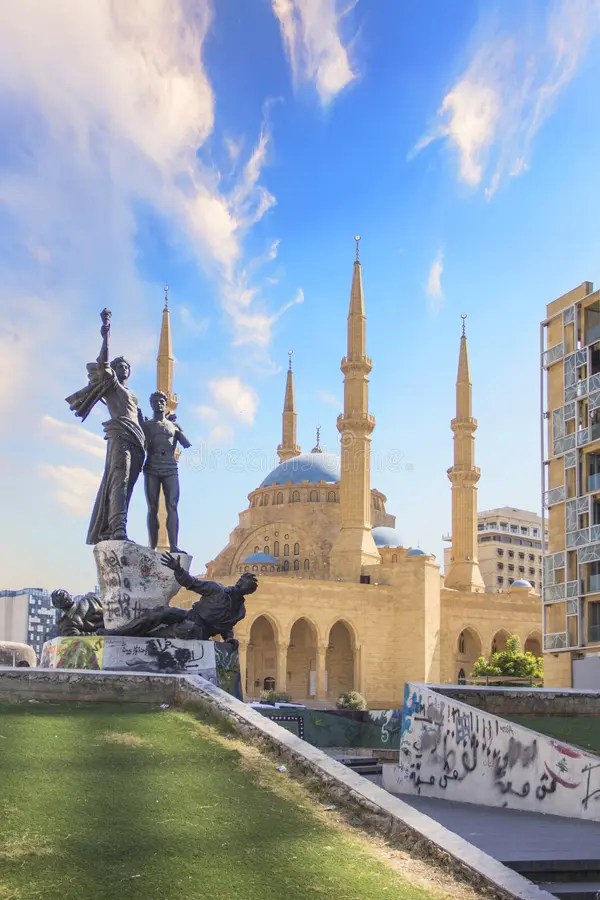

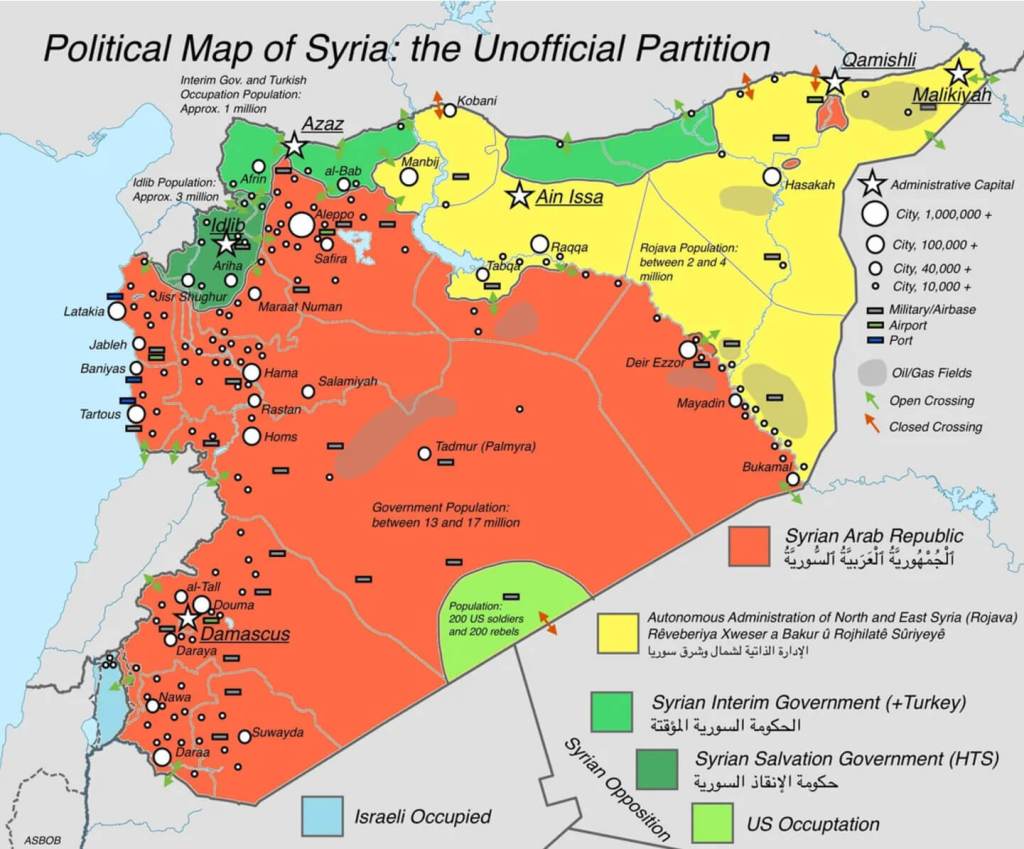

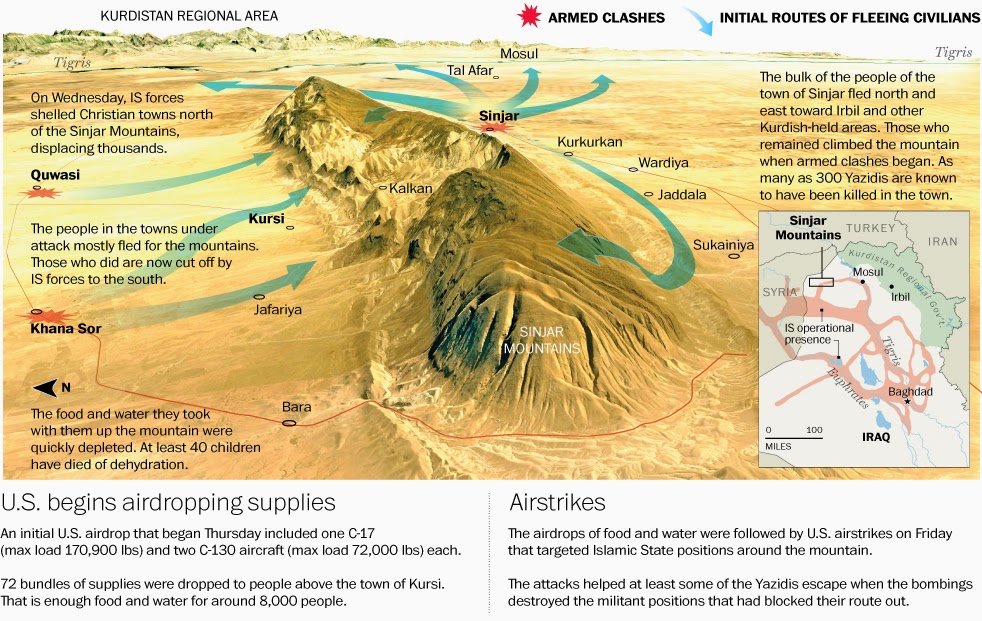





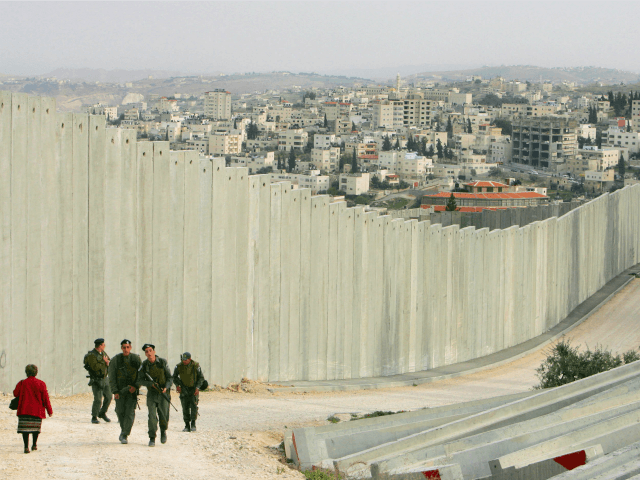


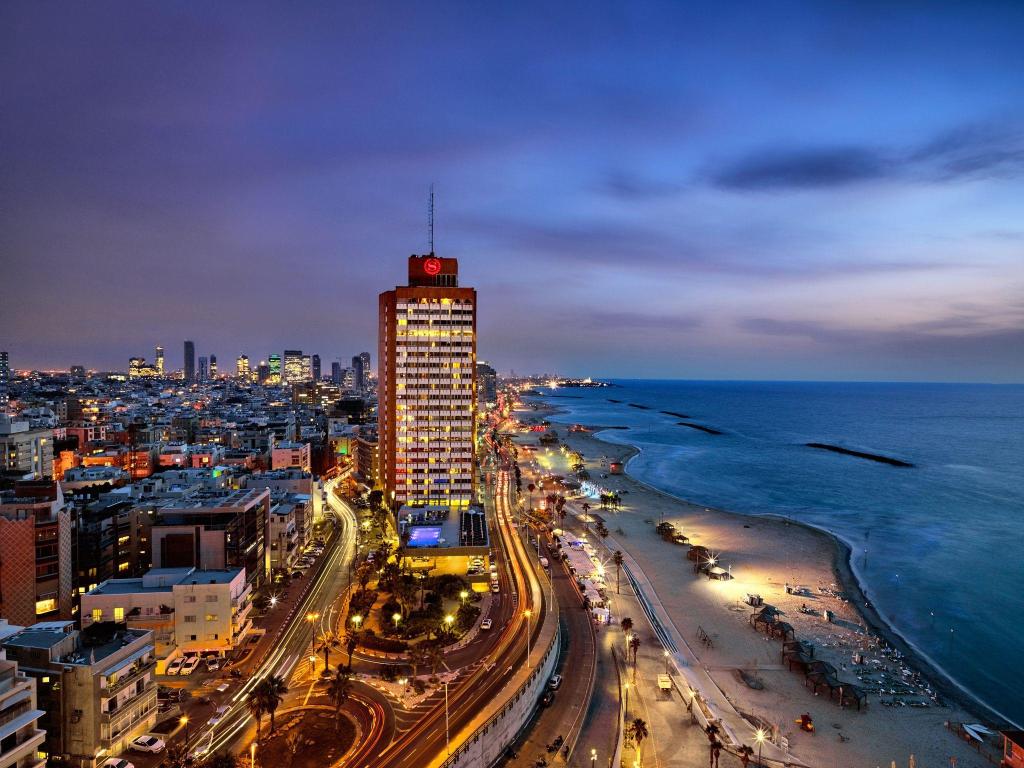

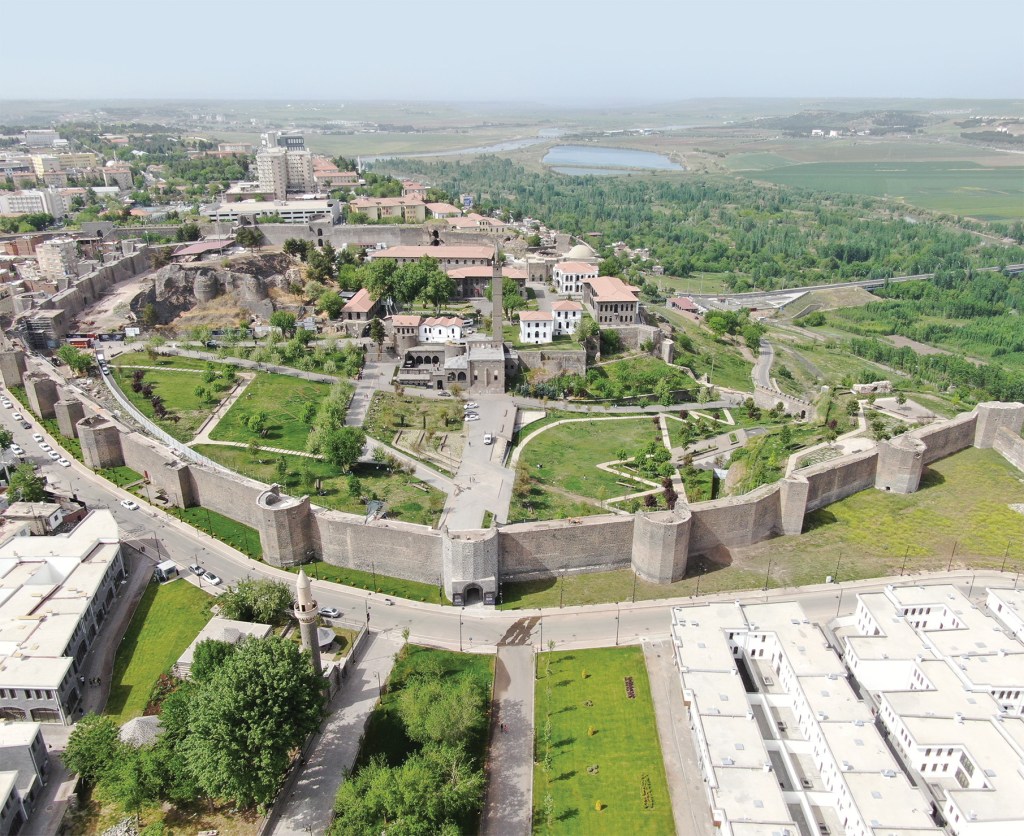

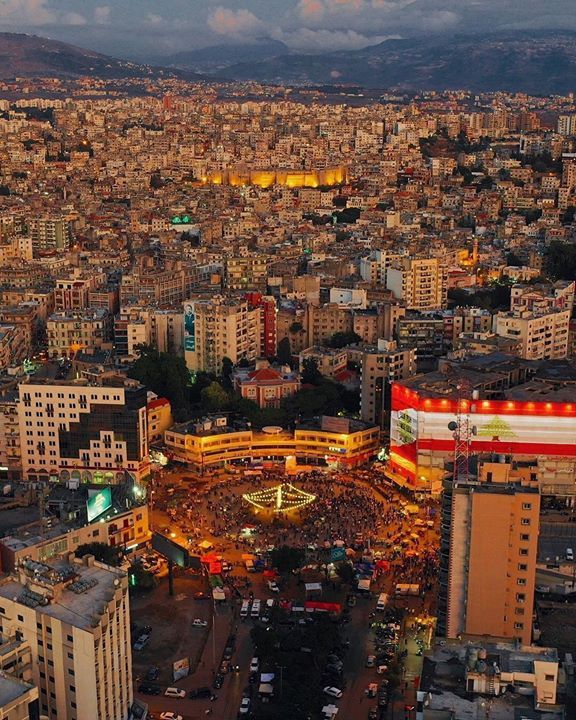
 WALTER SEBASTIAN ADLER