“I am a comrade and have always been a comrade, that is that. That is all.”
Absolument tout moun, all people, in “La Resistance,” which is to say lePeople’s Protection Units (Y.P.G.) and Women’s Protection Units (Y.P.J.), will give you only a Kurdish guerrilla name,” says Heval Piling of Paris, France. He is the son of African immigrants that have settled in the outskirts of the French capital. Some are given their “heval name” by the P.K.K. cadros during the smuggle crossing from the base of the Qandil mountain over le Tigris River into northeast Syria’s Jazeera Canton. Others are given their nom de guerre in the first few days of their arrival at the guerrilla Academy near Qerechow. Some gain it beforehand through their affiliation with Kurdish Movement in Europe. There are probably under 100 names used. 20 of them are quite common and they are frequently recycled.
The training base is located amid the levers, pumps and minoring systems of the Ruemelin oil fields75, the original base and 22 foreign volunteers and Y.P.G./Y.P.J. fighters were incinerated in Turkish airstrikes which occurred in early May.
You are given a first name and can choose your last name. And this is who you are while fighting for the “Revolution in Rojava”.
My code name means ‘The Tiger’. I heard a story before I left for Syria from a tall anarchist, code named HevalFirat. I am very paranoid about any press coverage or even photographs the French police are already harassing my family. I am a black so I will not be treated the same as other French. I am already under suspicion.
Heval Firat told me that after his first tour of six months he came back and held a small meeting of radicals. He told them of his time in Rojava and encouraged them to go experience the revolution themselves. He was arrested two days later. Clearly an informant was in the meeting. He was charged with terrorism and recruitment of terrorists. His passport was confiscated, and it took him a year to travel to Rojava because getting it back was such meird. (Such shit).
I grew up on the outskirts of Paris. In one of those Arab ghettos, you always see the riots happening in. I am of African descent thus I am not treated exactly like a French man. When I deployed to Rojava with the volunteers my family was harassed weekly. I was accused of joining Daesh and preparing for terrorism. The entire time I was there serving, I was stressed. So very stressed. The security service kept telling my Mom I was a traitor to France. France is one of countries with strict policies on entering the Y.P.G. as a volunteer. Like Britain they make your life a living hell and try confiscating your passport on reentry.
My name is “the Tiger” or Piling in Kurdish. The Arabs have given me another name, but it is top secret. I later went on to kill many men in Deir-Ez Zor with the Dragunov sniper rifle I was given. I speak fluent Kurmanji so I was put in a Kadro unit. Party lifers who have sworn total allegiance to ‘the Revolution’ and Serok Apo. Fanatics, like me.
Abdullah Ocalan’s face is absolutely everywhere in Rojava we have read. The sly, chubby brilliant revolutionary beaming out at us all from his prison cell in Imrili, should he still be alive. He is perhaps not alive. The Turkish fascists have held him hostage and tortured him since 1999. But this is his party and his revolution. One must accept the cult of Apo (which means uncle) because his leadership allowed miracles for the Kurdistan Workers Party (P.K.K.); yes ‘our P.K.K.’ survived the Cold War and is the last resistance movement left to challenge the West and its puppet Turkey. We are asked to read his books and understand his thinking before we enter the Y.P.G. because this is a revolutionary militia. We are fighting for far more than the destruction of Daesh!
I am an Anarcho-Syndicalist and a Platformist76. My group in France and Russian has sent to the Y.P.G. to make an assessment about its capabilities and Rojava’s potential for survival against the Turkish army once Daesh is eradicated. Groups like M.L.K.P.77 have for years used Rojava as a training ground and contributed hundreds of fighters to the cause. Not as many as the Jihadists certainly. But it is thought that more than half of the 500 volunteers were Turkish nationals with the M.L.K.P. I am to discover if my group can make a base here like they do. I am to discover if the Turks will just burn this whole revolutionary effort to the ground.
PILING
“I am very excited to join the armed struggle.”
It is inspiring what the Kurds have done since the Siege of Kobane when they were almost annihilated. Of course, the U.S. airstrikes saved them. Of course, as soon as ISIS is finished the Turks will sweep south to mop up this cordon of resistance the P.K.K. has built via its Syrian arm the P.Y.D. We are probably the last wave of foreigners that will go in. The logistics will get worse and the fight with Turkey will not be the same as the fight with Jihadists in Daesh.
I am good with a rifle. I know the language. They will respect me more because I have taken the time to learn Kurmanji, the other volunteers always complain how shut out they are by language. Firat managed to get his passport back and not be charged with terrorism. He arrived in Rojava a few months before me and went back to his Suikast78unit. Heval Firat encouraged me to come, though I was not at the fatefully infiltrated meeting where all the potential was discovered, charged and shook up to step down.
The number 500 is very small. Embarrassing even; the M.L.K.P. is a disciplined Turkish communist group who has taken on over 100 Shahids79. They have a deep alliance with the Party. But my structure has sent me to make the same deal. Can Rojava hold out long enough to export revolution? Can volunteers survive long enough to return to fight in the West? These are the questions I must answer. And while I’m away French police will make my mother very upset and afraid. They will basically terrorize her. Besides from Firat the Anarchist80 and Piling, the Tiger; there were several other French of note who prepared to cross into Rojava or were already inside. We know them only by their assigned Kurdish names. Heval Serhat was a lawyer and a petite aristocrat. Proudly French he prepared for adventure not revolution. He was there to kill Daesh-ISIS and avenge his terrorized homeland. France had over all endured the most of Daesh terror.
They sure underestimated what effect these well-choreographed executions would have on the hyper-plugged-in West. If anything, it got them invaded with greater speed.
Serhat was not named Serhat yet, nor was he even trying to join the Y.P.G. He was not a leftist and was hoping to link up with a famous Spanish fascist who had made a name for himself in Sinjar with the YBS. Unlike the YPG, he wouldn’t have to deal with all the ideological bullshit he was told. Serhat was a dandy; handsome and conservative. The struggle of his life before he got to the killing fields may have been the challenge of law school examinations. Some women may have broken his heart once.
A stranger to military or Islamist danger, Sher was “a Parisian waiter with socialist family values”. He had less qualms with the left being a leftist and was eager to join the YPG. His English was almost non-existent as was his Arabic and Kurdish, but he was eager to battle ISIS. Sher was a communist but not in any party. He had fired a rifle before and assumed he proved to be a good enough shot.
Neither Heval Sher nor Heval Serhat were eager to battle the Turks. They were aware that they were coming in on the tail end of the counter-ISIS operation. Raqqa, Mosul and the rest would all fall one after another by the wintertime. And after that all acknowledged the Americans would abandon its Kurdish and Shiite allies. The Turks would then move in to crush the revolution in Rojava and kill anything in their path. These were the discussed eventualities.
This was going to be the last time volunteers could get in easily, and fight ISIS, as they would be finished soon and the border sealed up for a time.
PILING
“After this batch, everyone will be fighting against Turkey.” What made the period of our deployment most uncertain was a combination of factors. First, ISIS was annihilated in Raqqa and on the run in Deir Ez-Zor. Second, the Russian Syrian-backed army and the Y.P.G. were racing on either side of the Euphrates River to seize more territory. So far most of the largest river cities were in the hands of the Syrian Regime and most of the oil was in our hands. Tension was building, sometimes erupting into firefights; since no one realistically believes the Assad Regime will tolerate Federal Rojava. At the same time, Türkiye is ready to attack Afrin Canton at any time, seizing the Western most Canton before we can fight our way through Syrian Jihadists in Al Qaeda to close the gap. And everyone knows our U.S. allies will abandon us as soon as ISIS is vanquished. Thirdly, the impending Kurdish referendum will provoke the Iraqi Army to seize border crossings in Sinjar and Northwest of Dokuk, making betting people and supplies into Rojava even harder.
The biggest uncertainty is what will happen when ISIS is inevitably defeated. But it’s not that uncertain really. Turkey, the second largest military in N.A.T.O. will immediately attack us and try and crush the revolution. Any of us are still here to face them. We will all most likely be killed. C’est la vie. This is the risk of real change. This is the Resistance of our time, so we say. The historic event that will shape the movement for real change for the next thousand years.
“Only a full coward would loudly profess these coffee house revolutionary views, these most noble of aspirations for the brotherhood of all mankind; then, when pressed to relinquish the luxury and safety of the West! They turn their back on defending a real revolution!”
Not I comrade, not I, Pasdaran! “These Turkish bastards will not pass.”
The music blares away, and we huddled in the back of the long gun pick-up trucks bound for the river. The mop up operations of the several dozen Daesh hold out villages on the way to Hajin.
Music has always been an important tool in mobilizing the masses, particularly during times of war, with the Syrian conflict no exception. This piece looks at the musical propaganda of three of the Syrian Civil War’s major non-state actors, namely the Partiya Yekîtiya Demokrat (‘Democratic Union Party’, usually referred to by its Kurdish acronym, PYD), Hezbollah, and Daesh. I share a few observations about the role music has played in the political sphere of conflict.
The Kurds do not have a nation-state, and one important element in the continuity of Kurdish identity is music. Since its inception, the PYD and its predecessor, the PKK, have been aware of the role of music as a tool to disseminate ideology. Both followers and militants themselves engage in musical production. Since the 1980s, PKK-linked radio and TV channels have broadcast the ideological discourse of the organization, usually through the medium of songs. Although folk music has historically been the dominant form, Western genres such as rap or rock are now also employed. These songs are also broadcast in Western media, often accompanied by images of female Kurdish militants holding weapons while singing. The organization consciously promotes this combination of imagery and music to differentiate itself from (male-dominated) Islamist groups.
In general, the songs employ a set of recognizable themes. The most common theme is praise for notions of Kurdishness. Lyrics are often derived from poems that emphasize Kurdish identity, written by traditional Kurdish poets. This theme is unique to the PYD among the groups fighting in the Syrian Civil War, with frequent reference made to the Kurdish homeland, which the PYD attests is under colonial occupation. Other themes crop up repeatedly, such as songs commemorating and celebrating the war’s individual battles. The PYD/PKK have many songs about their successful resistance in Kobanî/Ayn al-Arab, against Daesh’s assault on the town. Finally, Kurdish songs are also written in praise of the group’s ‘martyrs’, as well as the organization’s imprisoned spiritual leader, Abdullah Öcalan.
The Shi’a community in the Arab Middle East, which Hezbollah claims to represent, is another of the region’s ethno-religious groups without its own nation-state. In some respects, the use of music by Hezbollah resembles that of the PYD/PKK. A similar condition of ‘statelessness’ has put music at the forefront of identity formation for Hezbollah, yet there are also differences. First, a long-lasting ban on the Kurdish language in Turkey made singing in Kurdish highly political in itself for Kurds, but for Arab Shi’a, it is not the singing itself but the content that matters. Secondly, as a religious movement with important links to the Iranian regime, any music created by Hezbollah must fall within the limitations imposed by orthodox readings of Shi’a Islam and specifically the Iranian government’s understanding of it. These limitations include a ban on female voices in music and an opposition to Western musical forms.
Hezbollah songs emphasizing the bravery and courage of militants are also abundant. While this theme is shared between Hezbollah and the PYD, the heroic figure of Öcalan is replaced by Hassan Nasrallah in Hezbollah songs. Themes also differ between these two camps. Hezbollah composes more songs on the theme of martyrdom, a tradition with a long history in Shi’a Islam. Another important theme in Hezbollah songs is Palestine. Employing this theme, Hezbollah salutes its greatest victory, the 2006 war, and by comparing its enemies in the Syrian Civil War to an ‘army of Jews’, it increases its popularity in the Middle East, where anti-Israel rhetoric is widespread.
For Daesh, the most important type of music is the nasheed. In this musical form, a tambourine is the only instrument used, many references are made to the Qur’an, and solely male voices are allowed. Nasheeds are so common among both Shia and Sunni Islamist groups engaged in the war that they can be thought of as the soundtrack to the Syrian Civil War. One trait that separates nasheeds from the music of Hezbollah and the Kurdish movement is the plurality of the languages in which their lyrics are written: these include Arabic, Pashto, Bosnian, Kurdish, Flemish, German, and English. There are also various combinations of nasheeds with different musical genres. For example, Deso Dogg, a famous rapper from Germany who later joined Daesh and was killed in Syria, combined the classic nasheed form with hip hop.
The nasheeds of Daesh share themes with the previous examples, such as bravery, mourning, and eulogy. Like Hezbollah, Daesh also has songs directed against Israel; however, they focus more on the religious content of the lyrics and quote directly from the Qur’an. Almost all nasheeds makes reference to an Islamic golden age. Like the PYD songs that declare their goal of saving Kurdistan from colonialists, the nasheeds of Daesh declare their aim as restoring the ‘glorious past of Islam’. To overcome the faith-related limitations that define the musical forms, producers of Daesh songs have used various tactics, such as adding sounds of swords and guns to the music. Special attention is paid to the online circulation of music videos. As of 2019, Daesh has lost most of its physical presence in Syria, but before that, while both Hezbollah and the PYD had more representatives and institutions outside of Syria, Daesh’s network was relatively narrow. Thus, they used the Internet to reach and attract masses and disseminate their political views. Many platforms, including YouTube, where music videos are shared and open for comment, acted as forums for them.
Not all the musical battles of the Syrian Civil War are being fought by these three camps alone. Ibrahim Qashoush must be remembered in any discussion of the role of music in Syria. He was not bound to any political organization. Three days after he led crowds in Hama in singing ‘Yalla Erhal Ya Bashar’ (‘Get Out, Bashar’, addressed to the president of Syria) in July 2011, his body was found in the Asi River, his throat having been cut. His murder represents the first bullet fired in the battle of the music of the Syrian Civil War, but it was not to be the last.108
The once-bustling village lay in ruins, its streets empty and silent save for the echoes of distant gunfire. It was here, amidst the crumbling buildings and deserted homes, that Ciya, a Scottish fighter with the YPG, and his men prepared for an intense close-quarters battle. The village, strategically important for both the YPG and ISIS, had become a focal point in the ongoing conflict.
Ciya and his tabor, seasoned fighters who had seen their share of brutal engagements, had established a defensive position in a two-story building at the edge of the village. The structure, though dilapidated, offered a commanding view of the surrounding area and provided a relatively secure spot for their stand. The second-floor landing became their last line of defense. The building was surrounded by debris—collapsed walls, shattered windows, and overturned vehicles. The silence of the village was deceptive, as the calm was frequently broken by the distant sounds of ISIS movements and sporadic gunfire. The village’s eerie quiet only heightened the tension as Ciya and his men awaited the inevitable assault.
As dusk fell, the quiet was shattered by the thunderous roar of ISIS fighters storming the village. Ciya, standing on the second-floor landing, peered through a shattered window, his eyes scanning the darkening landscape. The ISIS forces, numbering in the dozens, approached with a coordinated push, their shouts and commands piercing the silence.
“Hold your positions!” Ciya barked to his men, who were already in position, their weapons trained on the advancing enemy. “We need to make every shot count.”
The first wave of ISIS fighters surged forward, their rifles blazing as they attempted to breach the building. The YPG defenders, entrenched and resolute, returned fire with deadly precision. The close-quarters nature of the fight meant that every corner, every narrow passageway, became a potential battleground. Ciya’s experience and leadership shone through in the chaos. He moved swiftly between his men, offering encouragement and tactical guidance. The defenders on the second floor engaged the enemy with a mix of assault rifles, grenades, and improvised weapons. The close confines of the building, combined with the fighters’ skill, allowed them to inflict heavy casualties on the advancing ISIS forces.
For hours, the battle raged on. The ISIS fighters, determined to take the building, pressed their attack with relentless ferocity. They attempted to breach the building using explosives and heavy machine guns, but Ciya and his men were prepared. They fought tenaciously, using the building’s layout to their advantage and engaging in brutal, close-quarters combat.
Ciya’s leadership was evident as he coordinated his team’s efforts. He directed fire to key entry points, organized counterattacks, and provided covering fire as his men repositioned. The defenders’ discipline and teamwork allowed them to hold off numerous assaults, but the fight was far from easy.
The building’s interior was a maze of narrow hallways and rooms, each one turning into a battleground. The second-floor landing, though still relatively secure, was under constant threat. The walls were pockmarked with bullet holes, and the floor was littered with spent shells and fragments of shattered glass.
Despite the relentless assault, Ciya and his team managed to repel each wave of attackers. They utilized every bit of cover available, making use of the building’s structural weaknesses to create defensive advantages. Each member of the team performed with remarkable skill, turning the abandoned village into a fortress of resistance.
As night deepened, the battle showed no signs of abating. The ISIS fighters, having taken heavy losses, seemed to grow more desperate. Ciya’s men, though exhausted, remained determined. Their unity and resolve were their greatest assets! Realizing the need for decisive action, Ciya ordered a series of well-coordinated counterattacks. They used the remaining grenades and explosive devices to create choke points and disrupt the enemy’s advances. The close-quarters nature of the battle meant that every move was critical, and Ciya’s tactical acumen played a crucial role in the defenders’ ability to hold their ground. After eight grueling hours of intense combat, the tide began to turn. The ISIS fighters, their ranks severely depleted and their morale waning, started to pull back. The defenders, though battered and weary, pressed their advantage, launching a final, aggressive push that forced the remaining attackers to retreat.
As dawn broke over the abandoned village, Ciya and his men emerged from the building, their faces etched with exhaustion but also with a profound sense of achievement. The village, now eerily silent, bore the scars of the night’s fierce battle. The defenders had successfully held their position, repelling a determined and numerically superior enemy.
Ciya surveyed the battlefield with a mixture of relief and pride. The cost of the battle had been high, but the determination and bravery of his team had turned the tide. The abandoned village, once a potential stronghold for ISIS, had been reclaimed through the courage and resilience of the YPG fighters.
As the sun rose over the battered landscape, Ciya and his men began to assess the damage and tend to their wounded. The battle had been a testament to their skill and endurance, a fierce struggle that had tested their limits but ultimately reaffirmed their commitment to their cause. In the aftermath of the battle, the abandoned village stood as a stark reminder of the harsh realities of war and the unwavering resolve of those who fought to protect their land and their people.
Once upon a time, in a bustling city called Aley nestled between the mountains and the sea, there lived a storyteller named Nadia. She was known everywhere for her ability to weave tales that captivated the hearts and minds of all who listened. Every evening, as the sun dipped below the horizon and the stars emerged in the night sky, people would gather around Nadia to hear her stories.
One evening, as Nadia sat beneath the ancient olive tree in the town square, a young girl approached her with a curious expression. “Tell me a story, please,” the girl pleaded, her eyes shining with anticipation. Nadia smiled warmly and beckoned the girl to sit next to her. “Of course, my Habibi. But first, let me tell you about the power of a single story. Before it is unleashed.”
With that, Nadia began to spin a tale unlike any other, a story of love and loss, courage and redemption. As she spoke, the girl listened intently, hanging on to every word as if her very life depended on it. And when Nadia reached the end of the story, the girl sat in stunned silence, her heart deeply moved by the tale she had heard.
“That was just amazing,” the girl exclaimed, her eyes shining with wonder. “I never knew that a story could have such power. Or that stories inside stories, inside stories even still exist!”
Nadia nodded, her own eyes twinkling with wisdom. “Indeed, my dear. A single story has the power to change hearts, to inspire minds, to bridge divides. It can lift us up in times of darkness and guide us along the path to enlightenment. But perhaps most importantly, a single story has the power to connect us to one another, to remind us of our shared humanity, and to unite us in our common journey through life.”
And so, as the stars shimmered overhead and the night air hummed with the magic of storytelling, Nadia and the young girl sat together beneath the olive tree, sharing tales of wonder and wisdom until the wee hours of the morning. And though they may have been just two voices in a world filled with billions, they knew in their hearts that the power of a single story could change the world.
***
Something about shards of manuscripts he had cobbled into something very grandiose sounding called “The Rise of the Middle East Confederation,” but that was not that subversive because talk of Confederalism was “very in now.” As the world was unraveling faster each day. In Lebanon, now that the economy did not exist and at least 5 of 18 ethnic confessions run their own ethnic cantons; namely the Maronites of Kataeb (Lebanese Forces), the Druze (Progressive Socialist Party), the Shi’a (under Hezbollah and a lesser way Amal), and the Sunni had their parties too. Hamas, Popular Front for the Future Movement, Popular Front for the Liberation of Palestine, Democratic Front for the Liberation of Palestine, Fatah, and the Lion’s Den hid among the 12 camps of Palestinians, hiding in plain sight. No one wants anyone going out of the camps and attaching itself to the Sunni demographic. There has not been a census since 1932, but all suspect the Shi’a are getting bigger than the confessional allotment of the Taif Accords.
“We are all in need of something to believe,” an old song goes, “hope is a smoke.”
Now, the power of a single story told over a multi-course Lebanese meal in New Jersey convinced Souheil Tajer he was dealing with a genuine article. A person, Sebastian, who was obviously Lebanese in another life. And if not Lebanese in another life, someone who was an artistic soul. Writing something noble albeit something one might have to high on drugs to think was a viable plan.
But it was not a single story. It was two, or three, each of varying levels of non-authentication. It was two sentimental tales followed up by a powerful rhetorical device about the impossible. Or at least the possibility of impossible things breaking ground. Sneaking out of boats in the night. Turn the rifles into plow shears and art.
Sebastian confided in Souheil that growing up in kindergarten to 8th grade at the United Nations school his best boyhood to young adult friends were an Iranian named Gyve Safavi and a Maronite named Danny Czar. Thus, in comfort, he felt closer to the Shi’a and Maronites than he even did to his own people the Zionists, ehm, I mean Jews. Which were fully interchangeable words too many these days.
The second story was about 9 months that the Jew served as a medical volunteer, really a non-shooting fighter in Iraq and Syria during the Isis Wars. He had been at the fall of Mosul when they massacred the Isis forces, forced finally to surrender the second biggest City in Iraq after a Stalingrad-like siege. He had been there when Isis was mostly wiped out (before they regrouped thanks to the Saudis) in Hajin, Deir Ez Zor.
So even though Souheil told him “This is, consequently, one of the worst times you could have ever picked to go.” He had gotten his plane tickets just before the Palestinian pogrom of October 7th which took several hundred hostages and butchered 1,200-something civilians, then resulted in Israel committing the ongoing quite possibly “war crimes” that have blown apart about 30,000 and counting people in Gaza. Shows no sign of slowing down.
The two stories resonated but so did the energy of the 39-year-old Sebastian Adonaev. Souhail read over the draft introduction to Rise of the Middle East Confederation, and it stated as a multiplicity of Middle Eastern voices, found it sane, and honest.
SOUHEIL TAJER
“What is your interest in my country?”
SEBASTIAN ADONAEV
We all have imagined identities. My white skin, my Hebrew cult half beliefs, the Inquisition, the Holocaust, the Crusades, the three wars with Rome; to me are not history. They are my people living and living connection to the soul and being of the Levant. And in that light, the national borders, the wars of states are arbitrary and serve only divisive violence. They serve only oligarchy and outsiders.
SOUHEIL
Quite a Zionist idea.
SEBASTIAN
Confederalist, not Zionist. Nothing about the Jewish historical experience allows us a free license to trample the rights of other peoples. To me the national borders are all arbitrary drawn by Ottomans and Sykes Picot. To me, the Turks and then the Europeans handpicked little groups to lord over fake states, little more than plantations, and now we see that all unraveling.
SOUHEIL
It has been unraveling faster each day since October 7th.
The Palestinians are a source of great controversy and only Hezbollah panders to them out of spite for the Zionists they exchange rocket fire with, as well as a history of pandering to them. Everyone wishes the Palestinians would just go away and now there are 1.5-2 million Syrian refugees to contend with. Syrian beggar children are everywhere. That is 4 refugees for every 1 citizen. You can get Syrian beggar gypsies on like every corner of the Muslim Ras Beirut.
What is your relationship to the Palestinians?
SEBASTIAN
Those are my cousins. They make convincing poets and above average terrorists. That said, I have never had Palestinians try and kill me, where my own people have worked overtime. I have never met a Palestinian that I could not wage a struggle with.
SOUHEIL
I would like you to spend a week in the Chouf and share some of these ideas with my Druze friends. He has a similar thinking to you. Perhaps a great collective unconscious has begun to bring the people of the region to new, better, saner ideas. Your collaboration might yield some interesting conversations. Perhaps, in our lifetimes, before a line is crossed, we may act on some of them. “The Chouf is magic”. The Druze, well you know the Druze have seen many things, they claim to come back.
SEBASTIAN
I would love to. Sounds very peaceful.
SOUHEIL
You wear so many interesting hats. Student of law. Paramedic practitioner. And human rights champion. But, as a writer you must tread carefully if you are seeking to make useful writing for those that live in the Middle East; the hard part is not becoming an “Arabist,” as in seeing us from your own world view. It is almost impossible for you to be an “Orientalist,” seeing the world from our view. As an internationalist, with some useful skills, you are welcome in my country now or anytime, but not now is an unbelievably troubled time.
SEBASTIAN
I am not going to try and convince anyone of any kind of thinking or of new zealous beliefs. I assume the role of a polite guest. Conversationally, I do have some ideas I’d like to bounce off the walls of the tea house as it were. A fusion of human rights and Middle Eastern shall we say manifest destiny.
SOUHEIL
But be a tourist for now. Tourism is going to bring you unique and exciting experiences, but I will give you some numbers of some old friends I think could help you or at least provide interesting conversations. Just in case you run out of things to do. Or are in the general market for interesting conversations.
Souheil Tajer gives the Jew the phone numbers of several prominent Maronites, Druze, and Orthodox to help him if he gets in trouble. Though he suspects the Jew has slightly more subversive intention than mere tourism, it did not seem dangerous yet to aid and abet his augmented tourism. He was on both an extremely specific mission planned a decade before and was going to try and convince a lot of people of something very radical: that the Middle East could be confederated. That the Middle East could end the dominance of foreigners and embrace democratic autonomy.
The little violent French Tiger meditates on the dirt hills and the desert. “I know both my relative size and symbolic importance, as well as my actual power.”
The French security services are harassing my family. Threatening my mother with deportation if I do not return now.
I’m a motherfuckin’ desert person. And I like to wander as long as it’s on a strict time frame. Because when you’re out in the desert you lose track of how long you’ve been walking and if you don’t budget your water right this can be a serious problem. The desert is place to go to lose yourself in exile but it is a better place to be hardened for a future purpose. You move with as little as possible and what you carry is calculated; (weight) vs. (necessity towards your survival). Like a water canteen, like a pistol, like a blanket or a law degree. You grab and go, you move by night, and you think long and hard about the path that got there in the wasteland.
It’s a misconception that everything in the desert is dead. At night-time it is always quite alive. At night you hear rabbits or small dear scurrying across the dunes, and there are snakes and birds; kill the birds and eat them and leave those snakes alone. All manner of the toughest creatures alive thrive out in the wasteland. At night it’s freezing cold and the wind rips dust across the wilderness. It’s best to wrap yourself a white sheet underneath and a black cloak on top. And cover your face. The moon is very bright, bright like you’ve never seen before. Overwhelming is a good word to describe it. It is better to move at night for obvious reasons, but you have to be careful not to lose your path, losing your sense of direction can be quite fatal out there. You have to cover as much ground as possible in frigid conditions and you have to calculate a destination such that you can end up in a wadi or a spring to pitch your tent come the break of dawn. The freezing cold rips right to the bones and you wonder what is worse the blazing heat or the frozen nights. You’re stuck with both. You will never see stars like this; there are no city lights or suburban sprawl in a thousand miles to dull their brilliance. You’ll see your first shooting star and then someone will tell you it was an air force exercise; until you see your first shooting star you won’t know the difference.
And you’ve already got your notions about desert by day. When you are in the desert your eyes play tricks on you. It is like sensory bombardment resulting from subsistence deprivation. You’re running on a near empty tank at all times. Out there in that desert; it’s you, and whatever name you call your god, and the freezing cold nights, and the dead by dusk heat that makes you sweat even when you aren’t building pyramids. People have the wrong conception of a mirage. It’s not so much that you think you see a lake or somebody of water elusively situated upon the horizon. It’s a twinkle of salvation that stays just as far away each time you move towards it. The mirage represents some supposed place of destination generally always off the path. You could tell yourself it looks like water because water begins to occupy most of your waking consciousness out there; but it’s not water; it’s just another stretch of land you halfway died to get to that yielded oh so little in return. If the cold will end this life by night then yes; it will be the heat that does you in by day. But the reason you let it do so, the reason you wasted all that water; was chasing some mirage that wasn’t on your path at all. And no, this is not a metaphor. I’m just telling you common sense to uphold when you’re out there.
The desert is also a place of extremes and it breeds extremists. It’s not just the night’s cold and burning hot days and animals or mirages or bandits and death. It is that when you take away all those creature comforts, those flashing neon signs, those places to buy some so called happiness; you begin to see. The Misson, the Cause, the Struggle, (the idealized purpose of ones life) become a little more focused; your role in it all, in ‘the Revolution’ becomes more defined. And the profit margins, the cost benefit analysis, your sophomoric, college influenced conception of human nature; none of those things come out here with you. Your family is across an ocean, your friends don’t know where you are, and the cute ethnic Albanian girl in Law class can’t send you adorable text message smiles. When that’s all gone. When the water runs out. When you go off path following a mirage. When you’re out there without anyway to reach your destination, when you have been stripped of all distractions; you learn absolutes, you learn extremes, and you universalize our condition.
When the water runs out you have to think quickly about what matters. You have to conserve your strength, even conserve your thought process. You have to focus on getting out of the desert alive, but this is secondary on ascertaining what you came into the desert to learn. Desert people quicken their process. Time is never on their side. The absolutes are the lessons we’ve learned that translated into righteous action. The extremes are idealized conceptions of your beliefs brought into focus so one might take a stand. And the final realization of a desert person is that out there in the wasteland no matter what nation, what religion, what race, or what people; without water everyone in the desert on a long enough timeline is going to die.
Desert people are out there for a whole lot of reasons. There are whispers in that desert that might give a person a semblance of a plan. We didn’t go out to that desert to fuck a whore in a casino, build a golden calf, or take ecstasy and watch a fifty foot man shaped idol burn. Desert people do not engage in those activities. Not when they want to be right with whatever they call god. It’s a place to go when you have to make a decision, it’s a beginning point or an end based on what path you follow; it’s not a weekend retreat or a three hour tour.
I’m proud to be a desert person. It has made my people very strong. I learned things out there that one doesn’t see when restricted to a temple or a mosque. Out there in that desert when the water runs out you and whatever you call your god can take the precious time left to calculate what you’ve been doing with your life.
The road to peace is in fact not peace; it is instead about ceasefire, and separation into stable units but not embracing the chauvinistic nationalism of outsiders; particularly the meddling of the East and the West; NATO, Russian Federation, and rising China.
We do not have to commit to anything with these actors. But we must enter a confederation strong enough to repel foreign aggression, stamp out internal fundamentalism, stamp out ethnic conflicts, and secure the ceasefire. Secure a framework of civil and human rights acceptable to the diversity of religions and of course, prevent the indefinite traffic of weapons and currency for access to the finite resources of gas and oil.
The academia, the media, and the West obsessively have focused on Palestine, because:
(a) The Israelis, despite being mostly Jewish are at least half European or Slavic in appearance (approx. 2 million are Ashkenazi/ European and 4 million are Sephardic/ Mizrahi)
(b) Israel is without a single doubt a manipulation of several thousand years of collective trauma experienced by the Jewish people into being a modern Outremer: a colony that Europe and America rely on for regional control. But while accepting or refuting that statement; it cannot be denied that so was Pahlavi Iran until 1979. So has been Jordan and Egypt, and the abomination of Wahabi Salafist extremist Saudi Arabia; as well as each of the Petro-States of the Gulf. Unique in a world where race is the most essential passport to privilege; of 8-9 million Israelites: 3 million look fully European. For the greater part of 800 years since being butchered by Crusaders culminating in the holocaust; the Jews have, or at least the Ashkenazi in charge of Israel decided they will collaborate with Christian Europe against their Semitic cousins, the people of the region they were expelled from by Romans 1,900 years ago.
The Shi’a also know a great deal about persecution. Iran and the Shi’a have many characteristics similar to the Jews. Particularly a feeling of their backs against a wall, then the sea. The world’s oldest groups of Christians; the Armenians, Assyrians, and Maronites have survived endless wars by retreating to the mountains. The Sunni are being held hostage between secularism and regressive fundamentalism; Egypt, Türkiye, and Pakistan are caught between those feelings. The contradictions of Saudi Arabia and the Gulf States are lost on no one.
Thus, an unusual realignment is suggested. Five pillars, keystone nations if you will, that if realigned restore the Israelis to their lost homeland indefinitely and return the Jews to being a people of the Middle East. With the realignment of Israel away from her European mixed tribes, abusers of over two thousand years back to the tent of her blood; then there are only four nations left that can sow widespread death, extremism, and disorder and they; Iran, Saudi Arabia, Pakistan, and Türkiye will be managed one by one.
The five intrinsic incubators of regional instability and endless war behind which the Middle Eastern resources are divided up and plundered: Israel, Iran, Saudi Arabia, Türkiye, and Pakistan. Each with external pipeline of funds and trade linking back to hegemonic power. The semi-peripheral powers of the Middle East.
The three intrinsic imperialists are external profiteers who secure themselves from endless war. They steal resources and direct efforts toward Maldevelopment: USA-NATO, Russian Federation, and eventually the People’s Republic of China. (Though their imperial footprint is still light).
The initial geography behind which a Middle Eastern Confederation can be birthed, formed, and fortified: Israel, Palestine, Jordan, Egypt, Sudan, Syria, Lebanon, Iran, Iraq, Türkiye, Armenia, Kurdistan, Saudi Arabia, Afghanistan, Pakistan, and the Kashmir.
For the skeptics let us draw on the fact that America is under 300 years old. The complete reliance on fossil fuels for transport and trade is less than 100 years. All of Europe exhibited mass violence and religious atrocity for around 2,000 + years and the nations of the Middle East have produced all Western religions, writing, science, and literacy dating back perhaps 3,000 years. Essential to this document is an understanding that we are proposing the confederation of peoples who have lived beside each other in relative non-violence for as long as recorded history existed, and only the interventions of Crusaders, Mongols, and European imperialists have escalated conditions to perpetual war and genocide.
The road between both halves of Jerusalem to Al-Quds runs in fact to the mountains of Kurdistan. To a people without a state, who by historical circumstance were in the last 40 years trained to fight by Palestinians and trained to organize by Zionists. Who, although speaking 11 dialects of Kurdish, are linguistically and culturally most like the Persian Iranians. The Iranians, who are the only existential threat to Israel, still have over 40,000 Jewish citizens and share a version of Shi’a faith with the Lebanese, Yemenis, Bahrainis, and Iraqis and a language with the Afghans; fight East and West via these Proxies. Finally, Egypt is a nation that subsists on Western aid, but revolution is always below the surface. Jordan is over 60-70% Palestinian and without American and Israeli support could not exist as a country.
So, it is not the coexistence of Israel in Palestine that is the lynchpin of peace. Yet in warfare, they have drawn in all the actors that are needed to make a Hudna, or a lasting ceasefire for the Israelis to ally with the two other powers that ensure the Confederation can raise its flags; Iran and Egypt. Which is to say the historic enemies of the Jews. Nations such as Egypt and the Babylonian and Assyrian Empires did attempt to obliterate the Jews, then the “Eivree” or Hebrews. “Jews’ is a word invented by Romans, as there is no J sound in Hebrew or Aramaic.
Although all our people learn and think in several thousand-year segments. Although we find almost unceasing war records no matter what empire or confederation was in power. The point of unity for the nations of this proposed Confederation is the historical legitimacy and self-awareness of monotheistic, desert tribes that absolutely no outsider or insider to the region could subjugate completely. This does not make an argument that Palestinians are Canaanites, the Lebanese Phoenicians, or that Jews should not be called Jews but are the 20-30% intermixed survivors of the Israelite tribes Dan, Yehuda, and Levy; Eivri, or Yehudeans. Or that of the 13 million worldwide population of descendants of the Jews as few as 5 million are remotely even practicing the religion. Which is speculated.
***
“Essentially speaking we are talking about a confederated alliance of states and self-governing cantons that must find a common cause for separation and economic development intrinsically linked to a series of strategic agreements between Judeans, Persians, Arabs of all religious confessions, and Kurds of all political types. Not factoring in whether they have states or are not recognized by the world state system.”
The Confederation shall be founded by the peoples of nations not of states. The geographic boundaries are contingent upon the peoples who reside in the Maghreb, Middle, and Near East. Specifically, the fertile crescent with geopolitical implications from Tunisia to the west, to Kashmir in the East, to Sudan in the south, and the Caucuses. But rooted deeply in accords between Israel, Palestine, Shi’a Iran, Lebanon, and the Parties of the Kurds.
The Confederation shall be based on ethnic cantons that will be self-governed by religious law, civil law, or tribal custom but all cantons must be Universal Human Rights law-abiding; which is to allow the exit from any community of those that wish to live under secular civil law.
The Confederation shall be based on democratic autonomy; thus, a co-gendered leadership, a census, and a system of voting and elections must be in place to implement religious laws that are binding throughout a canton.
The Confederation shall conscript and maintain a unified Defense Force and Civil Service that through 3 years of military or civil duty deploy diverse forces amid the Confederation to foster shared values in a complex and diverse society.
The ethno-civil administrative capitals of the Confederation pending cessation of military conflict shall be Cairo, Jerusalem-Al Quds, Beirut, Damascus, Baghdad, Mecca, Diyarbakir, Istanbul, and Tehran.
The Israelis and Palestinians are not the key elements of actualizing the Confederation, but they are capable of indefinitely destabilizing the effort to form the alliance and must be specifically managed.
The Israeli, Iranian, Saudi, and Turkish agreement is the only way to militarily secure the confederation.
The Kurds (in civil society/ ideology), Shi’a (in security), Lebanese (in trade), and Israeli (in technology, but certainly all sectors) have specific developmental technology as well as governance systems that are integral to this project.
The Confederation shall pursue non-alignment.
The Confederation shall enshrine into law and fiercely defend universal human rights, and all other canton level legal configurations will be subordinate to that code.
There are critical security, international relations, and domestic crisis issues that threaten the very existence of the Israeli and Palestinian peoples much more so than the ongoing, comparatively low-intensity occupation of the Palestinian zones of control in the West Bank and blighted Gaza. The region at large is in an acute state of political and social unrest; the governments of Somalia, Afghanistan, Tunisia, Libya, Iraq, Syria, Egypt, and Yemen have fallen resulting in foreign occupations, civil wars, and general anarchy. Shi’a Iran and Sunni Saudi Arabia are at proxy war throughout the Muslim world.
Many will object to us describing Israel as a “Jewish military Colony”, and object to calling the separation barrier the “Apartheid Wall” but linguistics and agreement of a shared paradigm are vital to the success of this unit’s objectives. We assure you the credentials of our core research team from Israel are sufficiently grounded in lived experiences of both the intelligence service and defense forces; while our Palestinian team’s Jihadist and patriotic background would be of little question.
Chaos and revolution are spreading while security, what little there was, is unraveling. All of this was acutely exacerbated by the 2001 & 2003 American invasions of Afghanistan and Iraq; resulting in the virtual anarchic non-governance of both countries today. And of course, the Israeli treatment of the Palestinians is an open wound that festers, then bleeds out.
This treatise has been researched and written by a group of Judeans, Arabs, Israelis, Palestinians, and Kurds concerned with the collective survival of their respective peoples as they occupy and are occupied in the heart of this massive, unending conflict. There is very little hope of this macros-regional war or micro-peace settlement between Israel and Palestine being resolved on the level of government. Palestinians have two competing governments; Hamas and Fatah; Israel has a coalition government but is controlled as a military oligarchy on the behest of Ashkenazi Judaism and the foreign policy goals of the United States of America.
For the approximately 16 million humans living in Greater Israel/ Historic Palestine; the varying scenarios are not optimistic in the slightest.
Peace is improbable, demographics are not favorable to the 5-6 million categorized Jews and beyond the religious overtone of the landmarks described by three world religions as ‘holy land’; Israel is also a nuclear-armed semi-peripheral power aligned completely and dependent on financially a Jewish Lobby and interest in the United States which cultivates the specific and direct interests of two intractable groups; the US military-industrial complex and the 2-3 million Ashkenazi (European) Israeli Jews; which enjoy a standard of living inside the Jewish colony markedly different from the Jews of other ethnic backgrounds.
There has been ceaseless warfare in the Maghreb & Middle East since 1920. All the scenarios discussed in the treatise are inseparable from the conflict between the Israelis and the Palestinians, but it is naïve and European to link the peace of the region to our specific peace. A peace that will never be under the dynamics of the current situation, the minuscule size of the land, and endless regional intrigue. Arms and aid money, for control of energy resources.
Thus, we concern ourselves in this first manuscript with Israelis (of all religions and ethnicities) and Palestinians (of all demographics). We are concerned with the broader course of humanity, but this has been authored to ensure that regardless of humanities general course; there will always be Palestinians, and there will always be Jews; and if there are to be “Israelis” an identity that is less than 85 years old; we must engage in radical steps to subvert the course of the mainstream Zionist project; delink ourselves of Euro-American hegemony and stop the inevitable slaughter of our collective peoples.
“A new level of atrocity is coming; in fact, it has arrived.”
Between October 7th, 2023, and the January 2025 ceasefire the Palestinians killed around 1,700 Israelis, the Israelis killed around 50,000 Palestinians and 5,000 Lebanese.
Palestinian demographics will increase to above 50% inside the green line which they trend toward (currently the reality is something like 7 million Arabs to 8 million Jews + others), and or if Israel uses a nuclear weapon of which it has over 500. Or Israel is sucked into or provokes a war with Iran. Or any number of scenarios with state collapse, proxy war, Saudi and Iranian warfare, and further misadventures with enormous cost in-human life. To stop the final floodgates from opening, to address the broad systemic internal contradictions of the Israeli state and to secure a viable Middle Eastern Confederation, a radical policy of reorientation must begin with a realistic assessment of the only other three parties on the ground besides Memshala Yisrael1which can broker regional stability. Israel must deal directly with Hamas, Fatah, Kurdish Parties, and most importantly the Islamic Republic of Iran. Only an uneasy truce and alliance of this kind can focus policy and praxis on awakening the consciousness of the Sunni Arab majority.
“It is no longer a question of moralizing the conflict, obsessing over past failures, or temporarily abating a cycle of degenerating violence. Or conducting more banal and expensive anthropological studies on identity.”
In the Israeli Knesset, amid the Palestinian resistance factions, among the various Persian & Arab power brokers and the para-state organizations on the ground (and in the Diaspora) all realize that neither by sheer will nor by force of arms can they destroy one another. Blame for the modern quagmire that is the Middle East may fall squarely on the post-colonial powers of Europe and the United States for the proliferation of arms without stipulation or control. However, the new reality is that if the third Hebrew Commonwealth of Israel is to survive; if a Palestinian State is to be brought into being; as well as if any measure of regional stability is to be achieved, radical and unorthodox steps must be taken to close the breach. The breach is not simply a result of Israeli defense against Arab aggression, or vice versa; it is a breach in the foundation of the modern security calculus. All parties involved must become more attuned to the heightened stakes via lessons in history and sound political science.
This treatise offers an objective analysis of the Harakat al-Muqawama al-Islamiyah to advocate for its recognition as a viable partner, not in immediate peace; but in implementation of separation, economic development, and most importantly; Hudna2. It makes a fundamental case for supporting Kurdish national ambitions in Türkiye, Iraq, and Syria. We advocate for a full and lasting partnership between Israel and the revolutionary Shi’a government in Iran. But we envision and call for something so much more powerful.
To claim that Memshala Israel has secured its borders, or contained conventional military threats to its existence is to say that glass is made from sand. The process by which glass is made from sand renders the base substance unalterably changed and requires the release of energy through fire and heat to yield something far more unstable than its original form. While the cousins of Ishmael and Yitzhak, the Israelis, and Palestinians, are indeed two peoples intractably bound to a single, tiny piece of land, they are met with a recurring problem. The Israeli public and government (currently) lack the will to commit genocide. The Palestinian Resistance factions cannot (currently) procure or introduce a means to mass murder that will not render their own homeland a house of ash.
Surely whispered in both camps is the notion that it would not be ‘objectionable’ for the other and their kind to be ‘pushed into the sea’ or ‘dumped on the other side of the Jordan.’ The survivors of the Shoah3 cannot (yet) bring themselves to this, nor would international opinion condone genocide in the Holy Land today. As for the Palestinians, pushing the Jews into the sea has more to do with rhetoric than ability, conscience, or even intention. The ancestors of both races defended the holy land against the Christian Crusaders locked arm in arm.
There are over 1,400 years of precedent for relatively peaceful co-existence and less than 100 to the absolute contrary4. Anyone telling you otherwise has a vested interest in your ignorance. Even the death toll of the First Intifada (estimated at 421 Israeli/1,549 Palestinian5) and the bloodier melee of the Second Intifada, which included suicide bombers and collective punishment, cost only 1,062 Israeli and 5,500 Palestinian lives6. The invasion of the Gaza Strip in 2008 resulted in 13 Israeli and 1,417 Palestinians7. In the ongoing Gaza Wars in 2010-2015, an estimated 100 Israelis and over 5,000 Palestinians have lost their lives. Approximately 1,300 Israelis and 50,000 Palestinians have died in the latest war.
Between 2015 and 2023 multiple rounds of fighting in Gaza killed several thousands of Palestinians and a few dozen Israelis. In the same period, the Syrian Civil War killed over 500,000 people. That means that in the entirety of the Palestinian Israeli conflict beginning in 1948; less than 50,000 people have cumulatively died, comparatively to all other ethnic conflicts that is a footnote, a statistic. The body count of the Palestinian-Israel civil war is comparatively low when compared with other global ethnic conflicts like those waged in Sri Lanka, Sudan, Burundi, Rwanda, Chechnya, Iraq, Afghanistan, Yemen, Syria, and Ukraine.
Hamas must be directly engaged as the only viable partner capable of securing Palestinian temporary acceptance of the third Hebrew Commonwealth and thereby securing the Jewish National home by buying both sides more time for ultimate reconciliation before more desperate measures are introduced. The Three Parties of Kurdistan must be supported aggressively by both people overtly and covertly. Shi’a Iran is the only semi-peripheral power both sides can count on, as all other states besides Egypt are European inventions; and Egypt is an incredibly unstable place locked between a US-backed military dictatorship and the Muslim Brotherhood. The road to peace does not run through Jerusalem/ Al-Quds, but without a full ceasefire between the Judeans and Palestinians no other keystone ally, tribe, or faction can be aligned to the program to build up a Middle East Confederation in our lifetimes.
“The window of achieving political and military victory within our lifetimes is a narrowing window. If we falter, if we squander possibility in the name of imagined identity and unseen gods; all will be lost. All our people no matter what they pray to, will be facing annihilation together.”
“We ask you to read these documents carefully and go back to your factions, parties, organizations, armies, and places of worship to testify on the nature of this plan.”
By the best calculations of our Party, we have a window of less than 200 years before the oil reserves run out, but under 40 years to achieve the Confederation on the terms of the many peoples of our nations. There is nothing in anyone’s scripture that calls for this endless warfare. There is nothing that tells us there must be homogenous practice or uniform belief.
“We are going to use thin, durable, and yet fully understandable code.”
We are going to use metaphors inside allegories. We will fight on the low roads and high roads and from the mountains. We will not contradict myths or religious tenets; we will not offer up science as a new kind of positivist G-d. We are now at the crossroads. Will the world end with a whimper or a bang? “What could we accomplish if we knew you could not fail!”
THE WORLD DOES NOT FIT BETWEEN ONE RIVER AND ONE SEA.
The last phrase I hear was selected for me: “Leave the dead to bury their own dead.”
I am on my knees not far from the mouth of the well. The scorched earth of a once lush oasis, the WADI FARIN, is a battle torn hell awash with pock marks from artillery, countless arrows protruding from the ground, and, of course, drenched in oil. Mike Washington lays next to me breathing, face down in a puddle of his own blood.
The army of the demon clown does not draw much closer. The face of the clown still flickers on a several mile high screen. The horsemen have black bags on their faces or what looks like masks of flesh with nothing underneath but TV static flickering from their eyes, souls long departed. They stand at attention moving not even a dull twitch.
In this silence I watch Mike bleed to death. The arterial red pool collects underneath him soaking through his duct taped grey bandages. The pistol hidden in his gut must have caused him incredible agony. He bellowed in pain when I dragged him out of our foxhole.
The horsemen stand over us less than fifty meters away. Their legions surround us and the well in a great enveloping circle of thousands of zeppelins and assorted craft. The deliberate lax and lazy apprehension is perhaps just a part of its game.
We are in a dead place. Only one day from the end of a four-year journey, we are beaten. Like in a good Western or tale of knights, they had the girl, and we were surrounded. No reinforcements were coming. I remember something Mike once told me about the early days of his rebel career, when he received his first paramilitary training in a cave complex deep in the hills of Judea. A reincarnated soul possessed with the ghost of the Chinese general of Sun Tzu was instructing the fighters of Bar Giora in the ancient arts of spear craft and asymmetrical war.
The oracle had enchanted a young boy whose blood made him able to receive the spirits of the dead. The oracle put Sun Tzu within the boy and the boy honed the irregular Hebrew forces of several thousand untrained farmers into the guerrilla army Simon Bar Giora used to smash Roman legions. Michael had served throughout the three Hebrew Revolts following the death of the man Jesus Christ.
He told me he was only 17 when the war against Rome began. The death of the man Yeshau Ben Yoseph was taken by many to be the sign of the end. The man Jesus Christ, born Yeshua Ben Yoseph became a symbol to many throughout the Roman Empire that the iron heel of Caesar could be cast off. The Province of Judea in 60 AD was the first to try. Michael served as an officer until the very end, through 57 years of grisly desert war. In the third round of Hebrew-Roman fighting an entire legion, the XXII Deiotariana, was completely wiped out. The Second Temple of Jerusalem was razed and every last Hebrew man, woman and child were deported as slaves into exile.
“The ghost of the Chinese general told us ‘Death to traitors and spies.’ The first we slew were those in our midst who were pawns of Rome. The tavern owners, our corrupted class of priests, our foremen and merchants doing business with the empire, the harem proprietors, the spies and turncoats. The ghost of Sun Tzu taught us that many of our people never thought for themselves, had forgotten their people to fill their bellies and pockets and were more our enemies than even the hated Roman occupiers. He called them the living dead, soulless animals that consume but are no longer human. He taught us to cut off the heads of these zombies, to wash the streets with their blood. He taught us these zombies were the enemy within, that which consumes its own kind.”
Mike continues with his story:
“I was there surrounded at the fortress of Masada in the first revolt, one of seven to survive the ordeal. They cut off our water, then forced our own people to build the ramp up the mountain. We slew those zombies by the thousands. When we ran out of arrows we threw rocks upon them,” he told me.
“The thing about zombies, or even these horsemen without their own heads, they take their orders not from a god but just one man. Kill a million horsemen they just keep charging. Killing a zombie just removes an immediate threat to your survival. But if you ever get to fire at a Caesar, you’ll only get one shot. But if you hit Caesar, hit him right between the eyes and you’ll bring an empire to its knees. Few men think for themselves. They mostly just follow some tyrant.”
As I sat there on the ground, on my knees watching my companion die, I remembered these words. The old, fat clown was Caesar. To him all human suffering was a joke we brought upon ourselves. A grinding of gears and spiraling of machinery from the grandest zeppelin above let me know the clown was coming. A great catwalk of warped metal and tubing was twisting down at me like snakes, descending to the dune directly in front of me out of these Babylonian atrocities. The screeching of the metal ramp did more damage than the air raid sirens above us. The ramp hit the oil-soaked sand with a mighty thud. I still couldn’t see it. The ramp towered into the bowels of a great blimp above us. It seemed as if the other craft had begun extending docking mechanisms intertwining them all into a great aerial city. They intended to dock with Zion, to put out the many, many lights and send something foul and wicked to my world.
Mike was dying. He squirmed on his side bleeding heavily from his gut. He spasms in pain but does not cry out.
As the dark thing approaches a quiet feel of creeping death take hold. Slowly and deliberately, it moved down towards us. It had gotten fat feeding on pain. It held a gold chain in its hand with a green tube attached to something behind it we could not see. It wore a regal white gown, a crown of thorns and white golf shirt. Its red face was circle with a leering smile painted in red. Its eyes were blackened orbs. Its massive spider limbs crept out down the plank. Its body pulsated under the gown rising and falling like a serpent. As it got closer the dark horsemen all fell upon one knee.
‘You’ll only get one shot,” Mike had said to me.
I knew that as soon as it got within firing distance. As it swooned over us to mock us, maybe shit on our head or piss on our wounds, I’d tear the golden pistol from my companion’s dying chest and shoot Caesar between the eyes. The rest of the things would crumble. The horsemen would fall one by one like dominoes. The zeppelins would fall and be rendered apart like the mother fucking Hindenburg.
In theory. But the best-laid plans and theories of angelic gunslingers and mentally ill young men . . . you know how the saying goes. Mike coughs more blood out on the sand when he sees it. A yank of the chain and she steps out in front of him. She is dressed in white, a burka nikab and a miniskirt, a miniburka. Her slender fleshy legs are exposed and nothing else. You could bend over to fuck her in the ass without ever seeing her face. I see her green eyes. She’s wearing makeup under the veil. The shirt is high like a burlesque show whore. The gold chain is around her neck. The green tube descends into her swollen pregnant belly. My nemesis is as cunning as we.
Mike’s sockets show no anguish, but his face is clenched in fury. But he’s too far gone to have to make the decision I’m about to. I see the redheaded girl tremble, a nervous flinch. She traveled with us too long to not suspect that we have some plan. ‘Knock around rebels for god’ like us cannot be brought to heel. But what makes her shudder is the look upon our faces seeing her like that, seeing her tied to him and knowing we can’t do a damn thing. The best laid plans. The tube goes out the clown’s beating exposed black heart winding down into her belly through a port and likely into the child.
When the creature addresses us it sounds like nails dragged across a chalkboard. It speaks in images.
As it speaks I see buildings burning shortly in the City of Many Many lights. I see blood in the streets. I see its towers falling in flames.
“KIL,,L me wil’ yo,,,,,,,,,,,,u? You could try.”
Its voice makes me cry blood. Mike has no more eyes with which to cry.
“I am the gr,,,,,,,,,,,,,,,,,,,,,,,,,,eat wooooooooorrrm. I aaaaaaaaaaa,,m the rot. In the darkness I feast on things which learn to kill each other.”
“WHA,,,,,,,,,T you do h;e,,,,re in the de;sert has had no meaning. We distracted you and ma,,,,,,,,,,,,de you si,,,ick like us.”
“WHERE IS YOUR G-D. IT HAS ABANDONED YOU ALL TO EACH OTHER. I am the w,,orm ,th,a,t, ,f,eeds on the dying; YOUR KIND is a flower of death. EAT OF MY TREE.”
The thing grows twice as big, its torso expanding out of the arachnid frame of limbs, a worm, a tree of death. The red-haired girl cries from behind her veil. I know Mike Washington says to kill Caesar. He ended his life and broke his wings for me to kill the clown. But what use is killing Caesar when it is Caesar’s happiness to die. It sits leering, its black heart exposed. I could kill the beast but not save the babe. The babe will be polluted with the foul things dying breath. If this world is a dead world, then I am death too. In the place of the whale there is hope. I’m going have to throw the baby out with the bathwater. It thought us callous, but perhaps not hard. I tear the hand weapon out of my dying friend’s chest. I splatter open his abdomen into the sand. The gold pistol barks three times in my hand. The red-haired girl receives a bullet in her head, in her heart and in the heart of the babe. The babe with the power.
The thing screams its wretched screech. It’s bellows blow down its legion. The horsemen spasm reality shudders then stand suddenly still.
All around me is the scene of a great war put on standstill. I see the clown king reeling on its tentacles and limbs screaming, now frozen. I see Mike quite dead, splattered open, frozen. I see the red-haired girl who we protected for a whole year, whose baby was named Hope. We were close to helping her cross over. The white miniburka is stained in blood. I have just killed her and her unborn child. Frozen too is the fleet of zeppelins merging above us and the army we held off from a well for half a day the now scorched WADI FARIN.
I am SCUD the disposable assassin. I am G-d’s Knock around rebel.
But from the hills above the wadi I see two small things move. In addition to me they are the only pieces of this desert Guernica that remain unfrozen and ambulatory. I recognize them at once and am glad. These are my two friends who have been missing for eight years. They stand less than one foot tall and move about on furry, weathered limbs like plush beanbag animals. They have the appearance somewhere between bears and Klansmen. One is furry and whitish, the other is one furry and grayish. They have black marbles for eyes. I had thought them long vacationing in Mexico.
‘Black Bear and White Bear?” I ask amid the carnage, still on my knees still clutching a golden handgun.
White Bear has a voice like a smurf filled with glee. This glee-filled voice says to me, “Looks like you found the golden ticket to Palestine.”
Black Bear, called such even though he has a grey coat has a voice like a Negro Dick Tracy.
“Pedro thanks you for your going away present. He and his family are living in Los Angles now. White Bear and I joined a South Central Chicano street gang. Pedro’s girlfriend thinks I’m cute, but Whitey could use some new fur.’
“Such talk is fucking ridiculous Black Ass. Good to see you, old buddy. Looks like you’re still loose with the personal possessions. That girl is dead as a doornail.” His little voice is sickly cute.
“I didn’t teach you guys to curse.”
“The mother of the little Mexican boy did. We can’t fucking stop now,” explains Black Bear.
The two bears waddle up to me and I pick them up. They’re a little heavier than before. They also move, talk, and appear a little alive. I remember that the first time in my life when I sincerely cried and felt down and out and over-powered with sorrow was when I left these two bears in Mexico at the age of eight. Nine years later they walk about and spill foul language like milk and cheese.
“How now, Brown cow?” White Bear says to me. “I know you liked that girl, but you did what had to be done.”
“You did what needed the doing,” says Black Bear.
“I mean, you can’t kill the devil in you,” states White Bear matter of factly.
“What’s that supposed to mean?” I almost sob.
From out of nowhere White Bear produces a remote control. With a click he turns off everything. One click and its just Black Bear, White Bear, me and the universe like back when I was a little boy.
We are lying again in the strawberry field. Black Bear hands me a cigarette. The bears grew up rougher in Mexico. “Where did you guys go?”’ I asked a little more calmly now that the battle has receded in the distance.
“You were growing up. You needed a role model, not playthings for reckless adventurism,” says Black Bear smoking a Noblisse.
“Good adventures went on though,” I say reminiscing. For the first time I can remember a lot of my childhood. It glows like a warm memory of the two little bears.
“Remember the Mohegan Dunes near Montauk?’ asks White Bear. “Do you remember when I showed you the rocket landing point, where the spaceship emergency docked and dropped off your coding?”
I remember a hastily constructed spaceport in the sand dunes of Eastern long Island. I remember playing a vast game of capturing the flag brought there by the Pathfinder’s Day camp. White Bear and I went off to hide and unearthed a spaceship buried in the sands.
“Almost,” I say.
“Remember when you took me to that Art Barge one summer and in the sub basements of the sullied ship we found the endless maze of coffins, the great leaders of the world cloned and frozen for the coming showdown between man and his nature? The Art Barge was the mouth of a bunker, which contained part of salvation within it. It contained a frozen pantheon of leadership for when the world turns finally and fatally upon itself.”
“I remember the Barge, at least,” I mutter. “It was near a long string of metal radio towers on a sandy bay.
“There are so many adventures left for you, Sebastian. I’m halfway jealous you’ve grown too old for imaginary friends,” says White Bear.
“Is Mike Washington dead finally?’ I ask.
“He taught you everything you needed to know. And you gotta realize nothing is ever created or destroyed. It just changes form,” states White Bear.
“Physics?”
“Common sense, change, movement, birth and even death are only upsetting to you creatures lacking a fourth dimensional perspective,” says Black Bear.
“Huh?”
“You might be like, ‘Wow! Fuck! I failed! The Old Man is dead. The game is lost. Mike Washington is gone. Who’s gonna lead me to Zion? I just shot the girl and her unborn savior baby (who might just be your own child). The Clown ain’t dead. I still haven’t faced G-d and I’m stuck in a dream field talking to my two long lost teddy bears.’ You might be like, ‘FUCK, FUCK and fuck. I’m a victim and worse, a failure,’ “rants White Bear.
I have no words to respond to all this maddness.
“But you’d be dead wrong,” says Black Bear suddenly breaking the awkward pause in the soliloquy.
“We, being fourth dimensional creatures can tell you definitively there is so much more going on than even the best human can gather in their mind’s eye. There is an infinity of worlds existing parallel to the ones you inhabit. You, as of just right now exhibit limited control in two,” continues White Bear.
“Just two,” states Black Bear. “Two, out of infinity.”
“There are world’s where Hitler killed all the Judeans and you were never born. There are worlds where you were raised Christian and athletic. There are worlds where the darkness reigns and worlds where the forces of Allah are triumphant. There are worlds where art is the sole and universal means of communication. There are worlds where humanity has wiped itself off the face of the planet in a thermo nuclear exchange. There are worlds. . .”
As White Bear continues his talk, Black Bear clicks his controller again and reality unfolds about us like a vast speedy filing cabinet replacing the strawberry field with countless snapshots, playing around us like grainy, silent films of the worlds the little bear talks of.
“Just because you can’t see a thing doesn’t mean the thing is gone,” says Black Bear. We step through one of the picture screens around us into a flat and grassy plain. It was the Midwest before there were Midwesterners to terror-form and colonize it.
“Hold onto your slippers, we’re back in Kansas,” says Black Bear.
“Where are you taking me now,” I ask.
Around me is a vast green prairie emptying off into a small electric city. I see a skeletal rail and river town in the distance that by size could only house and hold several thousand souls. A massive arch that makes me think ‘Saint Louis” anachronistically, somehow already constructed.
“Welcome to the grassy fields of Zion,” says Black Bear.
“Guess the Mormons had to be right about something,” I respond.
“You gotta be less judgmental. You gotta realize everybody sees little bits of the great truth,” says Black Bear.
I pick up the two Bears and put them on my shoulders. The plains are massive, and I see this outpost in front of me on a river running north to south, maybe the Mississippi, or perhaps the Jordan. I see a rail line, which runs ten thousand miles into the east. This is the last stop as far as western expansion, as far as people needed to take it. We approach the outpost walls. A large green stone sign in Hebrew reads:
WELCOME TO ZION
Population 144,001
“Doesn’t look nearly big enough to have that many people,” I say.
“Not everything takes place on the surface,” says White Bear.
It’s nearly dusk, but the city is bright as day on the other side of its massive stone walls. Its architecture is Victorian, wild western, but its fortifications are all red stone like the Alhambra. The tallest structure is the archway many stories above us, a giant gateway towering above the walls of the outpost.
“Everything is stone,” I mutter.
“Can’t burn a stone wall. Can’t break stone will,” mutters Black Bear.
We close in on the huge, sealed gates of the Citadel called Zion. The red, impenetrable fortifications loom above us, the archway of the City of Many, Many Lights illuminates everything.
“We’ll wait here,” says White Bear, the two little things jumping off my back. They sit their furry selves upon a small and grassy mound perhaps 40 meters before the first checkpoint established on the ascending approach to the gates.
“This place is not for Angels and Djinn; it is a sanctuary for lost women and wary men. You will find us when you get the answers you are looking for,” says White Bear.
“Try not to leave us behind again. Things are moving quickly now. Everything with a beginning…”
“Has an end?” I interject.
“Nope,” says Black Bear, his little Teddy face pulling off a smirk.
“Everything with a beginning knows not yet of God,” finishes White Bear looking like a cherub. The Bears seated behind me seem to glow with their own halos. But only Black Bear has a Halo. White Bear is a Djinn.
I make my final approach on Zion. The city outpost stands on a great mound. The vibrant green of the prairie at dusk is lit up not just by the towering arch, but also by watchtowers along the red walls. The walls are Spanish in character, massive maybe sixteen stories tall. Geometric and ornate, ZION stands like a great citadel.
The Wise Old Man and his great game were swallowed by the darkness. Mike was slaughtered bringing me here safely. It took four years to make our crossing. What struck me most heavily, what weighted down my stride were the Bears’ suggestions that the baby I had killed when I shot down the red-haired girl was my own. It was terrible enough to have fired upon her anyway. Three shots it took to keep the clown out of Zion and out of my own world of the whale. But how was it my baby and the clown’s baby at the same time? The redhead was pregnant when we first abducted her off the flying omnibus. Her name she said was….how come I couldn’t remember her name? I’d palavered with her many times in our journey, almost a year, about ten months that the three of us were together. The bears were babbling. What was I fucking saying? I was amid a vivid, lucid dream conversing with long lost childhood toys in a metaphor.
What color was her red hair, really? Orange red like Jessica Rabbit? Crimson red is like some Eastern European bombshell. She was Russian after all. Red like an Irish girl named Alice from outside Boston. Red like Rosy the working girl or Alana the Leisure Agent from Pardes Hana. I suppose if I crossed between the two worlds so could she. I suppose the only evidence of her original pregnancy was the word of the devil clown.
But I killed that little beauty because it had to be done. Either the wretched clown or I had made her with child. If she reached this place invested by it I’d be committing a vast inescapable evil. I put those bullets in the girl and her baby to save this city and my world from becoming like the land of the Pale City.
I was about to cross the threshold of a seemingly unguarded check point stacked in sandbags when it hit me like a ton of bricks. Well two things really.
Flashing through my head was the fourth dimensional truth that I was many things at many times and while these tribulations were so terrible because my condition allowed me live in two of these worlds at once, one dead, one dying. I realized I could be the scared little boy, the delinquent prodigal son, or even the romantic artiste. I could be the rebel prophet gunslinger, but if I wasn’t the black messiah and husband to this girl (which surely, I was not); then I was the rapist, devil clown too. The bears were right. The child was mine. I had forgotten what an evil thing I once was (am).
This hit me in the exact moment two men camouflaged perfectly with the ground emerged with lightning speed to bring the butts of their shotguns down upon my head. WHOOSH.
***
You can dream and still be awake. I know that now. You can struggle in the name of G-d and be confronted that you have been quite a devil, shrug and do nothing. The great whale keeps sailing upward towards the moon to make a roundabout approach upon the Pale City. Soon I will get my palaver with the One on the highest. I feel like a hanging man.
***
When I return to consciousness, I find myself chained to the sturdy, outstretched limb of some great tree. It is not so inhumane. My hands are bolted in manacles above my head to the large branch but I am seated in a wooden chair with a red pillow. It is very bright out in this garden in which I am a prisoner. There is a welt on my head from the stock blow and there’s blood in my eyes. But I’m back in the garden at least. At least they let me cross to the other side.
I can’t see so well because of the bright synthetic sunlight and the blood in my eye, but there are two chairs next to me at the base of this tree, both empty. One with a black pillow, one with a green pillow. I squint and see a young man across from me seated on a stool. I squinted again. It’s Nicholas Rosetree, my dear best friend.
“Rosetree?”
“Actually, here on the other side, it’s Rosetree, but yeah, buddy, it’s me.”
“What happened to me? Am I in Zion?”
‘Well, you’ve been down and out in heaven and hell.’
“I guess these are the trials of a prophet.”
“So, you know what you are now, buddy? Long scary ride to a simple truth if you ask me,” he smirks.
He takes a wet cloth, warm like at a Japanese restaurant and starts cleaning up my face.
“We weren’t expecting you so soon. You caught the sentinels off guard up top and security around here is tight as a drum.”
“It’s fine,” I mutter.
“They fucked you up good, this time my brother. You’re still my best wingman since Flannigan went faggot on me. You’ll heal up in no time. The women around here are something else. They got character like a Stacy Epstein, blazing beauty, super coy like Zoe or Sophie’s cousin whatsername.”
“Whatsername?”
“The one with the great tits you fooled with.”
“I can’t remember.”
“It’s been that many?”
“I guess it has.”
“Well, you’re a rock star. So, that’s what you get.”
“Am I finally dead, Nick? Did I run out of water in the deep desert and hallucinate my way to Zion through death.”
“Oh, you’re out of water in the deep desert back in the dying the world. That’s true enough. You ain’t dead yet though. You’re lights out on top of the JABAL ZIN riding the great whale.”
“So what happens next? Can you take the chains off me?”
“What happens next is you get to meet the management. Those chains too tight?”
“No, not really, the chair is comfortable as hell.”
“On some nights we get to sit on pillows.”
“Management?”
“If you have to ask at this stage.”
“I don’t have to ask. Why the chains?”
“When Pericles yearned to hear the sirens, he had his men bind him to the mast. Such rapture was the result of this sirens’ song that countless sailors had dashed their ships upon the rocks to get closer to the source. Being your best friend and an obvious player in this great game, I cannot allow you to burst afire when management bestows you with your answers and guidance. We’ve chained you to the tree of life, bound you to it so that you know that when your meeting is adorned you must return to the dying world with the gift of your life. Get it? You’re a man and you are to soon meet your maker. We don’t want a lawsuit. Clear enough?”
“Crystal.”
“I’ll see you back in the Upper West of York.”
He gave me a hug.
“Keep repeating to yourself, ‘it won’t be like in the movies,’” he says. Nick hugs me again then blindfolds me with a cool, damp veil over my head. I see grey then darkness and warmth.
In the darkness I hear violin music playing. I am a boy again of only 11 years in my grandfather’s home in Cape Girardeau, Missouri. The violin turns to a crescendo of Afro-beat, classical jazz. I’m in the wine cellar on a metal-framed bunk bed. There are four bunks that used to sleep my mother Briana, her sister Annie, and her brothers Bruce and Andrew. The house my grandfather built is on a homestead several hours outside St. Louis on a highway through the prairie called Beautiful Downtown Dutchtown. The music fills the big, warm wooden home Gordon Wallace, my maternal grandfather designed and erected. His children are all grown up. Just him and my grandma now. He was an emergency room surgeon for 46 years then retired to the Cloister as he calls this farm to harvest and press wine, tailor 1940’s style men’s suits, cook elaborate meals and read a good many epic books.
I’m very small and very, very far away from New York City, half a continent away. The music is beautiful and now I smell delicious food being cooked upstairs. I climb the steps into the living room with its red brick archways and big glass windows that overlook the valley, lake, vineyards and farm. My grandmother is putting the finishing touches on an apple pie. My grandfather has retired to an easy chair with a volume of some great book. He beckons me to come to his lap. My grandmother turns down the music and says dinner will be ready in five minutes. My grandpa has a weathered grey suit on with a golden pocket watch tucked in his breast pocket. It’s a grey suit with white pinstripes he tailored himself. The man can make just about everything, but not without my grandma’s adjustments and contributions. He’s very old, older than anyone I know. My mom said he founded the Unitarian church of Cape Girardeau, Missouri because they wouldn’t let Blacks in the Protestant one. He is an old-fashioned man, my grandfather, but the traditions he upholds are the universal ones that you don’t improve on much.
My first childhood memory is being with my mother in the strawberry fields near Montauk. The second farthest back is what I’m experiencing now, sitting on my grandpa’s lap, my grandma just about to feed us. He’s reading from a huge blue volume called ‘THE MISERABLE ONES’.
“We only have five minutes, Sebastian,” he says to me as I sit on his lap like a child.
“Let’s finish the story, Grandpa,” I say.
From the kitchen my grandma laughs, “That story you’re reading has no ending, and even if you finish all the pages, Gordon will just invent future exploits.”
“Well, that might be right, but I’ll give the boy some momentary closure.”
“We’ve been reading this book for years, Grandpa,” I say.
“You don’t like the book anymore?” he asks.
“It’s sad. Everybody is poor and no one cares about each other. The man Valjean was imprisoned nineteen years for stealing a loaf of bread. The women had to sell her own hair and prostitute herself then dies of sickness before she ever gets to be with the daughter she tries to provide for. Her daughter is adopted and then forced into slavery. Then most of the other characters die needlessly on the barricades of a revolution their people never rise to join. It’s a terribly sad book this old French tale.”
“These miserable ones are not just some characters in an old French story. These wretched are among us. They starve in the streets and bleed in thankless trenches.”
“We’ve been reading this book for nearly four years, Grandpa. How does it end? Do they throw the man in prison after all this time? Does the young rebel bleed to death or get to run off with the girl? Why did they shoot the little boy helping to pick up the bullets? What song are the people singing? You keep jumping around the book. I’m so confused.”
“Slowly, slowly, little Sebastian. Life is not any kind of linear story.”
“Please tell me how it ends. Please?”
The young people take to the barricades with their rebel group because they want liberty and justice for the workers. The National Guard that supports the dictator of France kills all but one of them. Thousands of young idealistic, men and women die because the masses don’t stand behind their rebellion. The barricades came down three days after. They kill the little boy trying to take ammunition from dead National Guard troops. They kill the rebel leader as he waves his flag rallying the students to keep fighting. They shoot down the girl because she loves the rebel leader and is on the barricades because of this love.”
“But one rebel survives. Marius, right? How?”
“Valjean carries him out through the sewers during the fighting.”
“Why?”
“Because Cosette is in love with Marius and Marius with her and Valjean realizes that their love is more important than Marius becoming another dead martyr.”
“What’s a martyr, Grandpa?”
“A person who sacrifices himself so that others can realize some truer freedom and some higher truth.”
“What truth did the students die for?”
“That working people must resist the iron heel trampling upon their liberty.”
“Isn’t that a good thing to die for?”
“Better to live and let a young man know what the thing is called love. In the case of young Marius, there were many, many others who fell that day in his place. He would have died had no Valjean risked everything to save him.”
“Because Valjean loves his adopted daughter, Cosette?”
“Exactly.”
“How does it end though, Grandpa?”
“With the revolutionaries soundly crushed and defeated and a thief stealing silver from the wedding of Marius and Cosette.”
“That’s a little boring. Wasn’t Valjean stealing silver from the priest in the beginning of the book and gets caught? Then the priest lets him keep it rather than send him back to prison.”
“This is the original act of mercy that rehabilitates him and puts him on the path back to G-d.”
“What about the thief at the end of the book? Does Marius pardon him?”
“No, they have him arrested and imprisoned, I think.”
“That doesn’t seem fair.”
“But he’s the villain, Thernardiers who worked Cosette as a child and then betrayed the rebels in the rising.”
“I don’t get the point of this book. Is it about rebels, about love? Is it about God or about forgiveness? We’ve spent so much time reading these people’s stories, but I don’t get the ending at all.”
“Time for dinner, boys,” announces my grandmother.
I climb off my grandpa’s lap and he set the book about the Miserable people down on the nightstand.
“The only greater human purpose than martyrdom is true love and the only thing that catches God’s attention more than a person in love is an act of true redemption.”
“Is that the song the people sing?”
“The real story in this book is of Jean Valjean. It is not enough to change the way you live your life. This does not fully please YEHAVAH. Your G-d is most impressed when not only do you change your past wicked ways, but that you act and deeds to help the broken and the damned.”
“Why did you pick this story, Grandfather. It’s different from Tom Sawyer and Huck Finn.”
“Only because it is epic and further from home.”
I join my grandmother at the table.
‘Are you ready, Sebastian?’ she asks me.
A great flood of white light. Everything is illuminated.
The reason I would suppose I have been chained to the tree of life is because experiencing the management, that is to say to stand in the presence of YEHAVAH’AllahAdonoiElohanuHashem, and that’s only a 32-letter name, is comparable to how a caterpillar perched atop a pebble stone of grass might feel having a cup of tea with a supernova. Like measuring a dimple on one’s cheek then using this length to gauge the distance to the end of the universe. Like the government of Grenada in the Caribbean being asked to represent the solar system at some inter-cosmic clearinghouse. The feeling of something very small juxtaposed with something great of which your cloth is cut.
A great flood of gray light in the intricacies of existence is revealed as a thing of precision and clockwork. I’m floating up and up. For a minute I see the fourth dimensionally. I see the existence of a great X/ Y axis of possibility and coinciding pasts and presents and futures. It’s like a cosmic factory, a storyboard picture showing all things that ever were and could ever be. Along my sides spanning out in an endless corridor are all possible realities playing at once. Up and down are past lives of the souls inhabiting each possible world and rising toward the lives they will live. And then a golden flicker wraps about all these lives and images spiraling this X / Y nexus into a great unified sphere. It’s not the ‘holy spirit’ generating dimension three of this perfect, endless orb as much as it is this beautiful flame interlinking these countless human journeys like a shapeless, perfect fire. I see it. This is God. The interconnectivity of the dimensions of time, possibility and space. It asks me in the form of rose petals fluttering in the wind that I do not grovel or beg. Can’t I see it’s been with me all along and could never bear to leave my side. I can.
Around me in vast, amazing linear order I can see the great game the old man sought to render on that board. I see stories unfolding about me. I glance for a second at the same story retold in infinitely different ways. Sometimes we win, sometimes we lose, but every single time we get to choose. And even the stories with gruesome endings, whose beginnings seemed weighted for failure, these souls get round after round to bring themselves back to where they began in some beautiful place with a gentle breeze at their back. Allah is all about them whispering possibility.
At the side of such power and union, you cry out to the Lord.
“What use have you for me?”
And It needs no words to answer you. Though the gaze you feel upon has no eyes, what you can see feels like the first time you were in love and the feeling you got on the holidays giving your mother a hug. It loves me. Now I know that I can bear some other worse emotions because I have felt good things enough times to justify the fighting in the trenches down below.
A billion blue birds whisk up from the viewing post I stand upon. Up and up. Still up.
“Am I righteous yet? Am I good enough?”
The birds launch me through the pool on the ceiling on the sphere. Through the window in the ceiling underground. There’s a sound like when a thermonuclear weapon goes off and then the smell of lilac.
Drink deep from the waters of existence. I love you and have never left your side.
I am now seeing the fourth dimensionally. I am connecting dots. I am living far more than two lives at once. I am not a Buddhist monk. I am not enlightened.
As Tyler Durden once said, “Putting feathers in your ass doesn’t make you a chicken.”
Being invited to drink from the water of existence does not prevent you from drowning in it.
They say the hardest part about seeing things in the fourth dimension is returning from such a state. You’ve become one with God. You see all that has been, all that will be, and all that could be. You are briefly at peace. You are briefly at mercy. You realize that the greatest power there is wraps around you. True and total love. You worked so hard to fight your way back to this place. You may be catatonic, stumbling through the desert water bankrupt at the foot of JABAL ZIN, but that is only one time, one place. Oh how far you’ve come. In the fourth dimension you’re shed of your humanity, of the human myopic egotism that your one silly life is the center of a vast cosmic circus in which you star. I’m floating now. At any moment now, lift off is achieved. I am as pure as a baby in the womb. I am not my race, not my deeds past nor my future. I have no religion thrust upon me. I am for a short time without any sin.
“Don’t make me leave your side again. I see the terrific folly of our ways. I see what we do to ourselves when left in the darkness too long.”
The waters of existence can be anything. Man can mold them into a thing like a furnace and a hell. I will always send prophets to each world, to every man woman and child from behind those foul enemy lines. Your war is always waged with yourself in trying to believe that you have been forged in the waters of creation. In the furnace of your sweltering ignorance, in the dark of the mind’s cave, I said, ‘Let there be light.’ Who will be my torchbearers? Who will be my dawn breakers, my beloved rebel prophets? I said help was coming to your dying world, Sebastian called Zachariah. You are some help out. You drank of me and grew humble. Now drink again of me and cast your fists in iron like a hero soon to be.
Someone’s holding me as every atom of my body attempts to reject reintegration.
Shake. Shiver.
I want to refuse this torch. I want to lie in the water of eternity just five minutes more. But I can’t. It’s not what was intended for this round. I plummet free falling back towards reality.
Memories, sweet memories return.
“Roxanne I did all this for you to see the good in me.”
There was another battle, once again a giant and inconclusive atrocious draw.
The whale dashed against the gates of the Pale City walls. On a giant wave it washed this blight from the dying world. The whale launched back up to the heavens, toward the moon. In the morning it rested again in the place called Biqu’at Tzin. The Pale horsemen were but dust. The Pale rider was only a delirious boy clutching ripped up holy books, babbling like a mad man hidden in his satchel parchments and plans.
The Pale City lay obliterated. Its gate to this world closed, it lies like a metal boneyard. Only its guts are exposed like a refinery and a phosphate strip mine. The threat is gone.
I remember chasing the clown, firing at it with Mike’s pistols and putting hollow tip explosive holes in its hide. I chased that thing across the JABAL ZIN over into Jordan and into a pit of sharp spears. I rendered off its head; but it can never really die.
THE FIRST BATTLE OF MANBIJ June–August 2016 CE — Near the Euphrates River, Northern Syria
EXT. ROJAVA HILL VILLAGE — DAY
A brittle heat shimmers off the dirt. Mud-brick houses and a squat, grim-looking mosque stand stubbornly on a low ridge. Gunfire echoes. The rattle of PKM fire sprays against a wall. Our fighters stay low, hugging the dust. The courtyard is cratered, blackened. Through narrow sniper holes—retaliation. Controlled bursts. Cursing in Kurdish, Arabic, English.
NARRATOR (V.O.) Before we reached Manbij, there were weeks of reconnaissance. Daesh had dug in across the villages west of the Euphrates. We were told the locals—neutral at best, hostile at worst. Three years they’d lived under the black banner.
INT. FARMHOUSE COMPOUND — CONTINUOUS
A small, hardened group of fighters—Kurds, Arabs, Europeans—return fire across the ravine. A sniper rests his barrel on a broken window. A female fighter yells coordinates. A rocket streaks out. The mosque shudders.
NARRATOR (V.O.) To take Manbij, we had to sweep through dozens of hill towns like this. All the same—mud huts, sheep pens, and the same damn ugly little mosque. Some 700 meters between us and them. All day, it went on like that.
EXT. MOSQUE RIDGE — LATER
A woman screams a bloodcurdling battle cry. It echoes across the valley. The Daesh fighters flinch. The fire intensifies—heavy machine guns now. The sound of RPGs splitting air. Dust. Debris. Screams. Radios chirp.
NARRATOR (V.O.) They fear that sound—a woman’s voice in battle. Fear dying at her rifle.
EXT. HILL VILLAGE — MIDDAY HEAT
Stillness. Everything slows. The sun is a hammer in the sky. Fighters nap in the shade, meditate, or simply collapse.
NARRATOR (V.O.) From eleven to three, we’d all just stop. Hibernating in the heat. Unless someone got martyred—then we fought on. No time to eat. No time to breathe.
INT. COMPOUND — EARLY EVENING
A young fighter mans the radio. Nearby, the COMMANDER—a hard-faced, mountain veteran—refuses to call in air support.
COMMANDER (quietly, in Kurdish) Only if we can’t take the mosque ourselves.
NARRATOR (V.O.) He was a Kadro. Old guard. Mountain fighter. Said we shouldn’t rely on the Americans unless we had to. He still blames them for Apo’s capture. Says they’d let us all hang once it suited them.
FLASHBACK – TRAINING CAMP (PAST)
American advisors demonstrate how to paint laser targets. Drones overhead. Kurdish fighters scribble notes in notebooks.
NARRATOR (V.O.) They trained us to call the airships. Taught us to paint targets, to speak their lingo. But trust? That was harder.
EXT. MOSQUE — NIGHT ASSAULT
Four columns of YPG light infantry descend like wraiths. Silently. Steadily. The doors are kicked in. Grenades tossed inside. Brief, ferocious gunfire. Screams. Then silence.
INT. MOSQUE — MOMENTS LATER
Five wounded Daesh fighters sit slumped. One reaches for something—he’s shot dead. The others are executed against the outer wall. Cold, quiet work.
NARRATOR (V.O.) That was that. Few of them left alive. No Hevals martyred. So we had tea.
EXT. MAKESHIFT FIELD CLINIC — LATER THAT NIGHT
Foreign fighters in medical gear tend to the wounded. One of them, MACER GIFFORD, moves like a surgeon, giving orders. Bandaging. Extracting. The Tactical Medical Unit—sleek, efficient, quiet.
NARRATOR (V.O.) A new thing then—foreign Hevals doing combat medicine. Macer Gifford led them. British. Always on the news. They let him lead the Takim because he was trusted. It wasn’t a Tabor. Just eighteen or twenty people. But it worked.
Heval Roj, a FRENCH FIGHTER with a thick beard, hefts a DShK on a pickup truck. He yells to his Kurdish co-leader.
NARRATOR (V.O.) We had others—Heval Roj in heavy weapons, a Chinese friend, too. But no foreigner ever really commanded alone. Someone Kurdish was always in charge. Still, the foreigners pulled their weight. And bled with us.
EXT. ROJAVA PLAIN — DAWN
Over the radio, voices crackle. Reports of thousands of fighters crossing the Euphrates with American support. Convoys of pickup trucks stretching to the horizon.
NARRATOR (V.O.) Thousands were bridging the river now. Manbij was next. And beyond that, Deir Ez-Zor. Oil fields. The final badlands.
The camera holds on the ruined mosque, now abandoned. A goat wanders in. The war moves forward. The town is left behind.
“Yulia is dead,” Kreminizer wrote to me. Michael Kreminzer had done more to train me as a paramedic than anyone else. A horrible feeling, feeling someone strong buckle, being in the shadow of their feeling.
“She and I never had that great art and writing collabo moment we always talked about.”
“And now you never will. She died on Tuesday.”
She was one of the very few that had ever read deeply into any of my books. Kreminizer was one of the men who trained me as a Paramedic. Now his woman was dead from a cancer.
I was in Al-Brooklyn, U.A.S. The heart of a party and the very soul of New-York-Grad; “the big apple”. The “city that never sleeps” or slept and sleeps no more. In a clear and well-furnished safe house abutting the J-M-Z line. I never want to go above $800.00 for a room at a safe house. Okay, I’ll rephrase that. $800.00 is the cap my budget can allow such a room. I always pay cash; I never sign anything. I always put down one month in advance. The people I must live with are all just as shady as I am.
In terms of a safe house, what you’re basically trying to establish is secrecy and staging. You can’t have anyone in the security apparatus know where it is of course, you need it to be hiding in plain sight.
“Don’t bring your lovers to the safe house. Bring them to a fucking hotel,” is what Brit the German lesbian comrade always tells me.
There are a ton of women in my life, but they all do different very things, chemically electrically speaking. Without them, I would perhaps not have as much supporting strength to carry my beleaguered little projects out into the world in the face of great risk, there would also not be as much love or hope in me. Or as Kurds like to say, “Motivation.”
Broadly, I could say there are women I fuck and who I don’t fuck, love and who I don’t feel that much at all, but there is a lot more to it than that distinction. Friends with benefits competing with lovers who are impossible to win, buttressed by ex-girlfriends who still want to help the cause. I learned about Jinology in Kurdistan, but I’m not sure if it all stuck.
The “Science of Women” (Jinology) cannot be taught in two days and much of what it has to say is just a radical take on feminism. For instance, that for every position of power should be co-chairs; a male and a female running the show together. Women are not special, or complicated. In many ways they are just the same as men. I like listening to them more though, I appreciate the feminine presence.
They all want something different though, but the same. And it’s all built on the foundation of friendship, like any healthy relationship. The way they pity me is different. Very few admire me, well they do but the pity instinct is a greater driver of their behavior. Or the way my work inspires them.
Goldy Andreavna was no longer answering my calls or returning my letters. She had had enough. It sure is cold. And the worst parts of me just want to die. Life is thankless, and I am aware that it is also very cruel to most of my human people. That all makes me want to fight, but I’m sure I’ll just make myself into a new statistic. The train rattles by on the above ground track next to the room I’m renting. It doesn’t sound like the ocean at all. It sounds like living in poverty next to plenty. I worked 80 hours this week. I still can’t manage to sleep.
“A hero or a hooligan, well that part’s never clear.” I would have them put that Mighty Mighty Bosstones lyric on my tombstone if I believed they would ever find my body or figure out how to make me die. I lean towards Hooligan in depicting myself, “lower your flighty expectations”. I will not live up to your expectations for me and my agency, me and my powers. I am an easily broken man running from capitalist modernity into dreams, poems and the world beyond American reach.
It was the icy cold night of Purim in the Hebrew year 5777. Super fucking Futuristic. The full moon was huge, and it was brick as shit, it was Friday, everyone was drunk. But that had nothing to do with their silly drunk festival called Purim. The coldness goes right through his sheets, through his comforter, the space heater doesn’t start up right away. It’s a fire trap in here with all the subdivided dry walls. But it’s brick, as the brothers say, no matter how many layers I put over him. That means harshly cold in the Ebony peasant vernacular. He knew that were I so inclined there would be multiple places to fete and masquerade tonight, but I was conserving my finances. Hoarding up my comfortable sleeps on his big Queen-sized mattress made in Brooklyn that he’d lashed now three times to the roof of my civic and trafficked about the borough. Moving rooms in safe houses. Working everyday towards my next operation. Nothing is given to you in the movement. You have to earn or take initiative. That can appear attractive to women, sometimes, for a bit. But he’s basically broke.
The safe house isn’t so bad. It has high ceilings. The train is obnoxious, and the neighborhood used to be a war zone. It’s still dirty. There are still robberies every day. But the rent was a square $800, which was reasonable. Things were gentrifying here in the Bed Stuy-Bushwhack area. Still looked and felt like the ghetto Adonaev worked the 37 Bravo unit in. It still looked like the dark place Rahula died in.
That was our first “American Martyr”, shot himself twice in the head. But now there were white hipsters and cafes. It was a cute place except for a couple little things. Like the no drinking rule which annoyed me and the German intelligence officer slash painter greatly.
Her name was Brit Tully, and we did time together in the camps a few years back. She never admitted to being such, but this is what my associate Alan Medved told Adon, and he knew about such things. Brit was a metal worker, glass worker and an introvert. Her square job was retail in a fancy SoHo denim outlet. We co-habited the domicile, a medium spacious loft on the third floor of Broadway across from the J & M above ground rail line and, I can’t say any more precisely where; I can’t tell you; it’s a safe house. It was Brit Tully in the small middle room, with my room to the right and Handler Hicks to the left. A fucking nut. We had all these hippy rules none of us followed and we both kind of hated him, he was a shifty fuck.
The man who set up this little shop was none other than the infamous small-time publisher and writer Handler Hicks, who for a lesser intellectual was wild eyed.
And somewhat muscular and vigorous looking from being straight edge, being Zen and believing that “God is Good!” He is a total nut who fixates on 9/11 conspiracy theories and has all the tendencies of being a junky off junk. His little boy, when custody allowed as always there every other weekend, looked feeble. Looking malnourished and unhappy to be there, yet chipper. Handler is an endless passive aggressive pain in the ass, but Brit and Sebastian Adonaev need a house for a cash and paper trail, and you get what you pay for in this city.
The handler took me in when the safe house just before it got too hot. Right before I skipped town to Baltimore to get my assignment from the local committee. A safe house falls apart for two main reasons; too much traffic or drama among spies. This place Brooklyn is infested these days with whores, with criminal scum, with sedition and with spies. It’s a good staging area for working in the city with no papers.
Natasha Salzano, which was just her passport name was a cold cunt. Natalia Chicherova, which was her name in Russia, had fled almost overnight back to Russian Federation and left me and poor confused student Tanya Drozdova, basically squatting a lovely grand place on Eastern Parkway with the rent supposedly 8,000 plus dollars in arrears. I made off with a fancy mirror and my gear in almost the dead of night.
A couple things about a good safe house, it’s hard to find. And frankly the Russians have too many rules and idiosyncrasies. Like if you live with a woman and you keep leaving the seat up, or water on the floor after you shower; a good fucking or not fucking or two, some talk it out and you can be socialized. In a safe house, whoever is on the lease is the boss.
Natasha’s whole thing was always “touching her stuff” which was all over the place, but even a slight movement of the cutting board, or moving the walk in storage closet around; she’d flip. She was tall and bleached, she was stern. She claimed she had gotten a master’s in international communications, but who knew.
She left Tanya and I with a flat where the rent hadn’t been paid in months, the landlord was threatening to evict us; and she took off back to Russia. There was Mongol in her, I could sense it, and she never smiled but the now defunct safe house on Church & Eastern Parkway was quite luxurious for my tastes. She had basically turned the entire living room into my room and with it came really, nice stuff which incrementally she sold, and the Mirror well I guess I stole. Her last words in an email were, “calm the fuck down you’re acting like a stupid fucking American! Everything’s gonna be fine!”
I didn’t pay her last month’s rent because Tanya said she’d just rob it and leave us high and dry anyway. But if one day I bump into her in Russian and she has a tough guy kill me over $735, well, that’s life. I’d kill someone over no less than 5,000 and depend on what they’d done to deserve it.
Comrade roommate-sublessor Handler Hicks had written and gotten published two books on 9/11 Truth and was maybe the figurehead of that rabble band of conspiracy theorists and anti-Semites. Anti-Zionists, excuse me. His first book was that the government did it, the second was that the Saudis were in on it too and after a recent trip to Iran, well his third book is about the Zionist angle, which I’m sure will go over great here and get rave reviews. I guess he didn’t get the memo that the best way to be hated in America by everyone was to keep talking about 911 conspiracy theories. I know for sure I read that memo in 2001. Moving on, it got so damn suddenly cold. It had been jeans and t-shirt weather in March. It had been the most limp, listless winter ever, or maybe I was still traumatized by the two-year winter of Boston and the Blizzard of 2010. I had invested in a long heavy Soviet grey coat, and layers of thermal underwear as well as an Ushanka. The big furry hat everyone knows and loves. Fucking around with the contents of my desk I find some letters from Adelina Blazenaya, a lover long gone. She called me some time a year ago on the road to Washington D.C.
And really, I never heard from her again. Like someone with a better, more giving dick inside her or maybe her conscience ordered her not speak with ever me. I have three love letters she wrote me and I carry them around in the black leather party envelope I was issued in Haiti. I try quite hard to break that silence of hers. To get friendship or something more or less than that. No dice ever. Legally speaking, I’ve left her 33% of this new shell company if I’m killed in the coming deployment.
I’m rambling about nothing useful. My existential first world concerns my laptop; I’m comparing gear I need to procure. Bags, boots, and devices. I’ll expropriate them with a fabricated credit card. About 2,000 worth of kit. Maybe I’ll even get a new laptop. If anyone manages to rob me on the road from Havana to Qamishli, well it would be a damn good haul.
Comrade Handler is out first every night. He sometimes reads in the living room; we wait it out in our rooms. Brit and I are almost pure night creatures. Once I was fired from my slave job about three weeks ago, I immediately reverted to my preferred biological clock. I’d been waking up at 445 am all summer and fall to drive to the ambulance base in the Rockaways. Now I’d wake up at 1 to 2pm and go to bed at 5am to 6am. I just like working at night, less witnesses? I’m sitting at the big, long wooden table Handler built. It’s shoddy work like the bunk beds he builds. He’s a carpenter by trade, like my man Jesus was. But he’s chicken shit. This safe house is ok. Even if we can’t drink here. I think Brit does heroin in her room or at the very least smokes dope on the roof, she’s great though. Never emotional and always objective, she’s going back to Berlin soon, her casework never comes up and isn’t polite conversation.
We were imprisoned in a detention facility in 2013. Now the year is 2016. She had handed me her email address on a green paper with a Walt Whitman quote, something about nothing. Well anyway many years later like six months ago I found it and when Handler subdivided the loft into three rooms I social engineered her in, but she was my second choice. I’d really wanted to live with my friend Erin Moore who is dark humored and funny and can cook her ass off. But frankly Handler sketched her out too much. The subdivide room was also not such a steal ever for $600 USD, and maybe a little firetrap hazardous.
I plan to drug Handlers and burn him still alive in his home the night after I leave the states. That’s not because he gets under my skin. It’s because he is working for the Iranians and that’s what Brit and I were paid to do. Burn him alive.
Weird fantasies of murder still pop in and out of my head from time to time, but I’m a medical man in the emergency Pre-hospital health field.
The thing about a safe house is that you don’t tell anyone where it is, you don’t have your name on it, you pay cash and don’t sign anything, and everyone in it is a superhero in their own mind. And you don’t pick up a blonde bimbo hipster in a bar and bring her back there to savagely fuck her in every hole in her body with a belt around her neck. How do I say that again, the people living in a safe house are shady fucking gypsies? The people living in safe houses, like me, have something to perhaps hide? Or for people just too unstable in credit and finances to sign a lease. It could be a few factors.
Brit is supposedly “German intelligence”. Handler is a well-known brilliant crack pot being paid by the Iranians to enlarge the American propaganda base of Press TV. Also, the undisputed leader of a 16-year effort to uncover 9/11 Truth. Most things seemed to tick back to that. His father is a famous IMF economist. He single handedly helped push an unauthorized biography on George W. Bush to market via his printing house, and then that man “killed himself” and that seemed to weigh on Handler, and behind the hippy Zen retreats, the walls of books that he had in fact read, he was always reading, or pretending to be reading behind the chirpy banter was a killer. An Iranian propaganda asset. And I was going to dope him up with benzo sedatives and literally cook him alive.
I say that still having shared Rosh Hashanah with him, that means Hebrew New Years; and we cooked for each other the cuisine of vegetarian poverty goulash, and yes once he threatened to throw me out, and yes like Natasha he was a total tyrant, but I played several times with his dorky little scientist son, the fucker was so precocious. I don’t mean to talk so much shit; I’m working on it. I’m in shit talking recovery!
I am not a great person all of the time. I fucked that little hipster like a Ukrainian by the hour. Her face to the wooden floor and my cock up her ass. For something a lot like rape, she took it seven or eight times before I murdered Handlers and jumped country after Passover. Though those acts were perhaps not connected at all, in my mind they sort of connected to my own depravity.
Comrade Handler Hicks is a left-wing zealot; I respect him only for that. Shows some morale compass anyway. And about ten years my senior was in many ways what I worried a failed version of myself might look like complete with child and broken marriage. Fuck, I just did it again. I like him, he likes me, and he’s really not a bad guy in fact, he’s a lesser hero of this story I’m about to tell. But I will admit that I didn’t mind the idea of killing him. He was annoying and also human trash. Because the truth is Iran doesn’t have any shortage of agents in this city, and his theories on 9/11 aren’t that well received anywhere. And he’s big faggot dork; so why did a two-person hit team get sent to eventually cook him?
“Well, that’s because loose lips sink ships and traitors get put in the ground.”
I am one to think every other high-powered person living in the darkness is mental, a whore, a killer or a spy. It’s mostly true. It’s baseless. God only knows what they whisper about me back in the station or worse, the home office. They probably just say I’m crazy. But I am a paramedic, and it took me a while to reconcile that; helping and saving sometimes, murdering and torturing other times. But a man’s got-to-do what a man’s got to do.
So, this small plane is gonna take off from an airstrip on the south coast of Brooklyn near Queens Border and it’s gonna fly me low down the coast to Cuba. And pretty much I’m gonna sit on a beach and meditate with rum and pussy after a meeting with Cuban intelligence about my training system and how it works.
Then I’m gonna fly back to Brooklyn and trade tropical white linen clothes for Spring in Russia clothes and I’m gonna fly to Finland then Moscow and check into the hotel Metropole to meet my “new attaché” and confidant Ms. Polina Mazaeva, who I’ve never met but have corresponded with for about six months and seen naked many times, more on that later. Thanks to the internet. And she will take me by the trains to Nizhny Novgorod, check me into a hotel with an Irish Pub, a Sushi restaurant and Strip Club, all a New Yorker really needs, and we’re gonna be working on a few things. Getting some paperwork and concepts in order before I fly to Erbil, Iraq then infiltrate Syria to reach the Rojava Revolution sometime in the fall. But before I leave my city for a while, perhaps forever. Handler Hicks will die! If not by my hand, then his own. He’s a black hole or vile negative sucking energy.
Polina is a cozy, coy little red head doll. Died of course. She’s overly attentive to my interests and reads my work which is flattering since, honestly most Russian women take all my money and suck on my dick, try to rearrange my wardrobe and ride me for housing and good meals. That’s cheap, but no off. Polina is looking at editing my shortest book, which means she’s manipulating me for someone. She has a little kid, she lives in the fifth biggest Russian city Nizhny Novgorod, looks provincial and bleak. I’ve never been to the Russian Federation. It will not be hostile; well, it might be a little. It’s better when I don’t talk because vaguely, I look like them. That is what people say.
A translation of a book about Haiti into Russian, a collaboration called ‘Endless Walk’ which you are now reading; and how we can pose as a family with her seven-year-old son Yazan and secure work visas for Dubai, in the heart of the United Arab Emirates. And then, we fall in love. Or I’ll use her, and she’ll use me, and when it stops working, we can part as nothing.
But mostly my heart is cold, but I still know how to talk soothingly to a woman and I am governed by both the Code of the Haitian Gentleman, Hebrew tribal law and the desire to be a good communist; so whatever happens between is of course, or course based on consent and mutual admiration for the work of the other. She is a talented singer, a painter and really too much of an artist for Russia’s third to fifth biggest city. She should be in Moscow, London or New York; her son has her pinned down though and wages are low in Russia. She makes her pittances as a graphic designer. They pay her jackbumsquat, which is my gibberish for fucking less than nothing. She lives with her kid, her brother and her parents in what looks worse than an American housing project.
I’m looking forward to May Day in the Capital and Victory Day in Nizhny, which according to my research survived the Mongol horde invasions nicely, combatively speaking. Those savage fucking Mongols.
Then I’ll load into a plane at GOJ Nizhny, fly to Istanbul, then provided I am not arrested and detained, head into Iraqi Kurdistan as we like to call it; Erbil City. And wait for Demhat al-Jabari, my colleague and fellow card-carrying D/U associate, to arrive a week later so we get to Sulaymaniyah, contact the resistance and be smuggled into Syrian Kurdistan, over the border into the Rojava Federation. It’s very exciting to me anyway, I’ve wanted to see all these places for years, but for two years I’ve been an ambulance slave. My operational budget is a lot leaner than last time; I am trying to get a good price for my car, but all the prices have sucked; I did too much damage to it using it like an ambulance. $2650 is the best price so far for a no-frills 2009 Honda Civic with paramedic plates and 58,000 miles, which Brit says is low, like I only drive in circles in this dark city rat race, with a two-year little exile in Boston.
“I’ve been to Russia in a past life or been Russian in a past life either one”, which I hope to see again in my present and future. I spend most of my time in the Russian quarter on the Brooklyn coast. I like everything about them. I can go deep or very, very shallow on it. I have read several dozen pieces of Russian literature and deeply admire the effort of the Soviet Union. I was blowing the coke off a Bulgarian lady friend’s tit the morning after my 33rd birthday. I liked it a lot, but it felt also disgusting and cheap, and I couldn’t bring myself to fuck her, so I paid and left. I guess Comrade Malcolm Veshanti, one of our comrades who stayed up all night with us, I can’t confirm but I think she passed out there at the Harlem brothel, woke up and fucked her.
So there I was making a procurement list and seeing how I could raise a little cash here and there without breaking too many laws, and safe house, the high ceilings with pipes running across was so quiet only the pitter patter of my keyboard, and, Handler was asleep since 11:43pm and Brit was out not long after and I just felt compelled to get my inventory logs sorted, my deployment budge square, file the logs; transcribe some poems I found in a little notebook to Adelina, send them to her, no response. Svetlana, her confidant messaged me on the book face that she did wish me luck, I pretended Adelina was there with her watching me type.
Sveta says she had a man now and was surely happy. I hope she’s happy and motherfucker isn’t twice her age. It might seem like I have all these lovers laying around, or like I’m a cold confused whore mongering whatever I am; but no. That’s not true. Generally, I have a free life partner, she bares me and the movement for a year or two, and she tries to save or fix or improve me; get me out of the movement and into medical school; then ultimately breaks it off when I do some time. I’ve spent 2 ½ years of my life inside camps cells and involuntary detention.
I’m not a cheat; I don’t beat women up except when they like that in bed. Which seems like a lot, leading me to question my own sweetness. I paid for everything. I dress well, I’m smart and an artist. I’m a decorated hero paramedic. I’ve written 8 books. I’m just a little bit crazy. And I’m a communist. And I do think those things are fine in Russian Federation, no cause for alarm like here. I did bring not one but two pairs of handcuffs to put Polina in, which is kinky but also tasteless and savage.
Tonight, just after midnight the man who helped the most to train me as a paramedic Mikhail Kreminizer messages me. His wife, maybe just his longtime girlfriend, has just died, will be cremated in the morning. That’s the way poor people do it. Burying people isn’t cost effective. It can cost over forty grand.
You must understand this man is a tank. A big Russian Israeli storm trooper who used to torture people, Palestinians specifically. May or may not be a Mason, definitely some kind of strange Q-ANON enthusiast. has killed men with his bare hands and now operates an ambulance in midtown Manhattan. Trying to save his own soul which he barely believes in? Not for money. No one gets saved on ambulances. It’s all a profiteering machine of mythology and greed.
After the secret police broke up our attempt to hold the 9th Congress of the Association & Union in North Brooklyn, after they raped my Polina Mazaeva and tortured me for 5 weeks until the underground could force my ransom; after we bombed the five Strip clubs on Victory Day, after we kidnapped the Satmar Rabbi, well I was too hot for a lot of people in 2016 and Michael had to distance himself from me and withdraw his orbit of protection, which was as vast as he is tall.
“Yulia is dead,” Kreminizer had written to me. A horrible feeling, feeling someone who is very strong buckle, being in the shadow of their horrible feeling.
“She and I never had that great art and writing collabo moment we always talked about.”
“And you never will. She died on Tuesday.”
“Fuck. I’m so sorry.”
“Ain Davar.”
“No, that’s horrible. I’m so sorry Michael. I know how much you loved her.”
“Yup. I just came from New Jersey. She will get cremated tomorrow.”
“I remember it was two summers ago. Yulia and I were on the phone, and I was so manic, and we were talking about her illustrating my book.”
“Well. That won’t happen.”
“Not in this life, no.”
“Agree.”
“In the world to come maybe she will be willing. I’m so sorry.”
“I’m going to get some rest. Good night, buddy.”
I hate it when he calls me “buddy”, but his main chick is dead.
“Good night.”
“I’m leaving the States on April 12th for Adelina’s birthday. I’m sure you prefer to suffer in silence, but if you want to hang out. I’ll drive out your way. She loved you so much.”
“We will see how I feel in the morning. Where are you going this time?” he asks me.
“Cuba. Then Russia. Iraq and then Syria. I’ll leave the night after Passover.”
“Be careful. You were just lucky last time.”
“Yeah. But I’ve got more men and training now. A good team. A real fine outfit.”
“Only reason you’re still alive.”
“I’ll try and get to see you more than the one-year usual. I do not only feel your pain, but I know it like I know my own mask of a face.”
He doesn’t reply because he doesn’t have to pretend to be strong, but I felt a small cry in me, this man had patiently precept-ed and apprenticed into paramedicine, my secondary trade, but first love trade; he had shown me how to put IVs in the dark with feel, while in a moving vehicle at high speeds, he’d talked me through heart blocks, and my own blocked heart over Daria, and always treated me like an Israeli, not an American even though I’m really from here, wink. He taught me how to interrogate traffickers with the EKG monitor, how to start or stop the human heart, he was patient with me, he didn’t have to take that time I was on the blacklist I’d never be allowed on a good truck, a 911 truck again.
I feel this great knot of sadness because Michael Kreminizer suddenly has nothing to live for and does not fear g-d or devils; his self-destruction is frankly inevitable.
You must always be ready for suicide watch dealing with our kind, dealing with high energy people, empaths, bipolar ones, bonobos, whatever. We feel too much and frankly get a little self-destructive which is why so many join the service and why so many die off the job where no one can see it happen. Michael is a hard man. And he killed so many people he had to stay working to balance it out, but I know, I know he loved her, loves her so much. And this could be one thing. I have to stop. Stop, the archangel won’t die tonight or tomorrow, and you haven’t even seen him in a year? Two years? Three years? Four years? Stupid time, like a lot of people he said he’d be my reference, but worried about me. And didn’t have time for the hootenanny I got into. He called me Chechen once, because he could read into me and see many of my past lives.
I felt so sad, like I had not been sad in so long and I thought about Adelina. What would I do if she took me back and we made a life and then died?
Suicide rates are actual low in Israel. And I was born in Trinidad and Michael was born in Lithuania, but we’re both Ivory. We’re both paramedics. We’re both parapsychologists. We’re both a lot crazy. We both love Russian women. And he’s the size of a killer robot made of steel from the future, but this could kill him. If anything could, this could.
“One by one having fun tonight, if she only knew what I did for life, it’s an endless walk of dreams versus nightmare.”
“Don’t leave me alone,” the dancehall song says.
Late at night, I join Comrade Brit on the roof for a smoke.
We were sure looking off the safe house roof, the city visible 5 miles out, the evil stack house of Woodhull hospital within rocket range and the tallest city project on Myrtle Ave, the sniper nest in days to come, we were sure it was jeans and t-shirt day, because Brit Tully and I were wearing jeans and t-shirt, well I was. Brit almost always wore black and on top a black overcoat which had seen its prime some time ago, like my ideals. We were smoking some of her American Spirit dark greens and I hadn’t slept in 24 hours. It was really nice out for mid-March; it had never gotten cold in December, January or even February.
“They are conserving the weather machine for when it matters,” Brit said, and I agreed.
She was so dark, introverted, and cynical, as well as a lesbian. We only went out together a handful of times, but we smoked on the roof together a lot and both hated the passive aggressive Handler. Brit would always say she’d leave for a lover in German, soon, I always said I’d leave for revolution in Syria, any day now. We were both suffering in the Brooklyn ghetto, in the loft of Handler Hicks the conspiracy theorist and Iranian puppet man. Who we had just been paid to rub out of circulation. But you can’t just kill a man and get away with it in the United States. You must be realistic about that. We weren’t really gonna light him on fire, nobody really paid us to kill him and neither of us were really intelligence agents. We were all just living in relative poverty of conscience and slight material poverty deep in the Brooklyn labor ghetto, where you lived paycheck to paycheck. Where your collar is blue shade.
“It was all just a transit point to death or possible greatness. But a pointless death is more likely to come first and make the second proposition meaningless. What use is greatness when you cannot see the results of it?”
“You sure make a lot of dumb American movie like inner monologues when you smoke,” says Brit the German spy.
Rain. Heavy and sudden. The skyline is fractured glass and scaffold. A new pediatric hospital gleams where a crater once was.
INT. HOSPITAL LOBBY – MORNING
SEBASTIAN ADONAEV, mid-30s, wiry, dressed in blue Kurdish fatigues with built-in suspenders, enters damp from the downpour. He’s calm, practiced.
He speaks to the RECEPTIONIST in English.
SEBASTIAN I’m here to meet Dr. Robert Sacy. Eleven o’clock.
The receptionist nods. He waits. Smokes. Watches the storm swallow the road.
EXT. KIOSK OUTSIDE HOSPITAL – MOMENTS LATER
Sebastian huddles under the awning of a little kiosk. DOMINOS click on a plastic table. The OWNER’S WIFE in a black chador beckons him inside.
They drink instant coffee in silence. Her SON, 20s, talks fast, offers a haircut, hands over a barber card.
SON You draw? Draw me New York. Bronx or Chiya — who’s poorer?
Laughter. Rain beats down like bullets.
INT. HOSPITAL LOBBY – LATER
11:00AM. Still raining.
DR. ROBERT SACY, late 50s, fragile but fast-moving, steps out of a black SUV. Elegant disrepair in his manner. The two men shake hands briskly.
DR. SACY This is Lebanon! Beautiful women, plastic surgeons, no taxes, no cops. We have world-class medicine no one can afford. And war. Always war.
SEBASTIAN Thank you for seeing me on such short notice, sir.
DR. SACY You heard about the port blast?
SEBASTIAN Fertilizer explosion, yes?
DR. SACY(shakes head) Media story. Truth is, Mossad missile hit a Hezbollah shipment too close to a nitrate depot. Mistake. Big one. Like Hiroshima big.
He shows Sebastian a photo on his phone — a collapsed NICU, a baby in rubble.
DR. SACY (CONT’D) Neonates dangling out the floor. One survived. Swiss pulled her out. Miracle.
SEBASTIAN Madness.
DR. SACY Madness made in Tel Aviv and Tehran. But paid for here. 263 dead. Dozens were my colleagues. Nurses now make $25 a month. The Lira is toilet paper. Banks robbed us blind.
INT. HOSPITAL – WALKING TOUR
They move fast. Clean hallways. Neonates in incubators. A ward of glowing RESIDENTS. Two critical-care ambulances idle outside.
DR. SACY Only pediatric ER in Lebanon. We retrieve babies from 30 hospitals. It’s all new. All reborn.
INT. STRETCHER BAY – LOWER WARD – LATER
They sit on a stretcher in a shadowy ward.
DR. SACY(quietly) I cannot be seen meeting a Jew. Especially not one dressed like PKK. But for Souheil? I make time.
SEBASTIAN I’m grateful. I don’t have a request. Just a story. Maybe an offer.
DR. SACY(grim smile) This is the Middle East. Time is elastic. Offers come wrapped in tea.
He swipes through photos: newborns dumped in trash bags.
DR. SACY (CONT’D) Prostitutes trafficked here from Moldova, Kenya, Philippines. Artist visas. Pregnant. Abandoned. We find babies in dumpsters. Sometimes dismembered.
(pause) You see? Not tourism. Something else brought you.
SEBASTIAN I’m part of a movement in New York. 1,800 EMS. We trained all of Haiti’s EMS post-quake. Trained Kurds and Arabs in field trauma care during the Daesh wars. I think we can tell your story. Maybe rally support.
DR. SACY Nice. Noble. But this is Lebanon. Not Haiti. Here, services are sectarian. Red Cross is Christian. Hezbollah has its own ambulances. Palestinians their own. Sunni charities. Druze volunteers.
SEBASTIAN What if we supported an inter-confessional EMT Academy hosted here? Volunteers from each sect, trained side by side. Except the Jews. You don’t have any of those left.
DR. SACY(smirks) If you find a Jewish EMT, I’ll give him tea and a stretcher.
(beat) Your proposal is utopian. But maybe… maybe. Send me materials. Let’s talk again. Bring tea next time.
SEBASTIAN Thank you, Doctor. For your time. For the truth.
DR. SACY Old Druze saying — “if a Jew falls from the sky, at least hear his offer before you deny it.”
SEBASTIAN You just made that up.
DR. SACY(grinning) I most certainly did.
TEXT ON SCREEN:
That was the last time they ever saw each other alive.
EXT. HOTEL – NIGHT
Sebastian walks into the dim lobby. Across the street, a SYRIAN MECHANIC makes a call. Two CLEANERS enter a car. Lights out.
NARRATOR (V.O.) The reason you introduce people hunting into a failed state is because you can.
MONTAGE:
CCTV of girls lured into limos at dawn.
Nightclubs in Jounieh. Girls in chains backstage.
Blood trails behind a shuttered “massage parlor.”
NARRATOR (V.O.) The state should be a predator, but a predictable one. This—this is feral entropy. In Lebanon, every virtue is a mask for vice. And every border is made of bone.
FLASHES:
Casino du Liban, flooded with Saudis.
Irish UNIFIL troops, eyes averted.
A Hezbollah funeral procession. Missiles overhead.
NARRATOR (V.O.) You can dress soldiers like peacekeepers, but they act like soldiers. People hunting isn’t new. Might be the oldest sport in the world.
FADE TO BLACK.
TEXT ON SCREEN: “Based on actual conversations and credible rumors.”
In the year 2013 Palestinian Yousef Bashir and Israeli American Sebastian Adonaev met at the Heller School outside of Boston. In the bleak boony, burnt out postindustrial river town called Waltham. By that time both had both American and Israeli passports. By that time both had been shot in the chest and eventually tortured at some point by the Israeli forces. Although wildly different men by temperament; they found a common voice in their joint writings. By 2015 they had called upon forty student delegates to hold a “Congress”, or Majlis, at camp in Western Massachusetts.
The objective;
To establish the infrastructure and draft the objectives necessary for an international clandestine movement to fight for human rights and defeat the Israeli Oligarchy with arms. Such was their prowess in organizing and zealous desire to see their people free from endless occupation and war.
In the heart of the dense forest hills of Western Massachusetts, hidden away from prying eyes, lies a secluded cabin compound. Surrounded by towering trees and shrouded in a veil of secrecy, it stands as a sanctuary for those seeking refuge from the outside world.
As dusk falls and shadows lengthen, a figure emerges from the depths of the forest, moving with purpose through the underbrush. Cloaked in darkness, they approach the cabin, their footsteps muffled by the soft carpet of fallen leaves. Inside, the cabin is bathed in the warm glow of flickering candlelight, casting dancing shadows upon the walls. A fire crackles in the stone hearth, sending tendrils of smoke curling into the night sky. The air is thick with the scent of woodsmoke and pine, imbuing the space with a sense of ancient mystery. Seated around a weathered wooden table, bathed in the soft glow of candlelight, are forty figures, their faces obscured by the shadows. They speak in hushed tones, their words laden with significance, as they discuss matters of great import. Outside, the forest watches silently, its ancient trees bearing witness to the clandestine meeting unfolding within the cabin’s walls. The night is alive with the sound of rustling leaves and distant whispers, as if nature itself is conspiring to keep their secrets hidden.
In this remote corner of the American world, far from the prying eyes of the university, the cabin hosts a congress which aims to become a beacon of hope for those who dare to defy convention and challenge the status quo. And as the meeting draws to a start and the delegates slip back inside, they take the batteries out of their phones and place them all in the trunk of a car; the cabin remains low tech and expedient, guarding its secrets from the world. The delegates sought to arrive at an analysis for the World System called “Democratic Confederalism”; and for the Middle East in Particular; a Confederation to emerge from a new kind of struggle.
The Russians call it “truth serum”, but really it was just black tea, cigarettes, alcohol, anxiety, sleep deprivation, and prevailing sense of destiny, tempered with desperation, and even though more than half of the forty delegates were not supposed to be drinking by their religious law, most eventually partook in some version of the truth serum.
For truth into its innermost parts was perhaps the only the forty of us could craft a vision of the road to anywhere but mutual destruction.
Sometimes we met in apartments. Sometimes in a class or a cafe. Sometimes in prison. Sometimes in bunkers. Sometimes using fake names. Sometimes using only, a Kunya. It was untenable to spend extended periods of time together. The brutally imposed nature of our identities forced a divide that we felt somehow compelled to cross. The trust was just that low, at first. Who worked for who? Who would undercut whom; how much land was going to change hands. Who did it even belong to? What outside powers were manipulating us! This at first was a heavily tumultuous and relatively lubricated version of a series of meetings, which formed this unlikely, perhaps implausible treatise drafted (at first) by Israeli Zionists, Palestinian Patriots, and Kurdish rebels who wished all peoples to survive history and the endless war. As there was so little to agree on, all decided we all needed more time, more space, more land, more miracles really.
We needed more breathing space than a coastal ghetto the size of New Jersey. Or a sliver of land; a crushed open-air prison of varying dimensions. Less ghettos. Less tunnels. Less foreign arms. So, after 2014 we looked to the barricades of Rojava in Northern Syria where 4 million were fighting for their very lives surrounded by enemies. You could say stopped speaking about what was between the river and the sea; and looked to the vastness of the mountains.
The palavers between 1999 and today were little talks about our region’s destiny. A place where they say civilization began yet has never seen any peace since the first Ziggurats were erected on forced labor. At these many meetings an idea was developed for a Confederation of allied states and cantons across the Middle East and Maghreb. The vision we began to develop was that the state system had failed us all, the Europeans had divided us arbitrarily. The Chinese, Russians, and Americans all seek what is below our sands with no regard for our lives.
This vision was facilitated by copious amounts of tea. Endless cigarettes, Nagilah. Yelling, crying, fighting, making demands! And also, there was beer, rum, vodka, wine and liquor. There was screaming, fighting. Cutting each other off. Threats. There was death, there was dying, there was dancing in a circle.
SEABSTIAN ADONAEV
“And in many ways this entire idea is a type of madness. Crudely configured in this treatise, where dozens of factions delegates scribble in the margins in over ten languages: we try to make the sound of a circle, we try to arrive at a united front. For if we do not there will be nothing left of us. We will quite literally kill and fight until the very end.
KAREEM AL-KHALIDI
“The status quo of Israel in Palestine is not sustainable comrades!” Kareem Al-Khalidi yells banging his fist on the table. While there is anger in eyes, it is soulful anger. Righteous anger. The kind of anger white graduate students with big breasts can get behind. There was rumor he was sleeping with the Polish attaché to the road map. The solution process. Whatever it was billed at.
Al-Khalidi continues, “There are critical security, international relations and domestic crisis issues that threaten the very existence of the Israeli and Palestinian peoples much more so than the ongoing, comparatively low intensity occupation of the Palestinian zones of control in the West Bank and blighted Gaza. The region at large is in an acute state of political and social unrest; the governments of Somalia, Afghanistan, Tunisia, Libya, Iraq, Syria, Egypt, and Yemen have fallen resulting in foreign occupations, civil wars and general anarchy. Shi’a Iran and Sunni Saudi Arabia are at proxy war throughout the Muslim world.”
“He’s going to call us a Jewish Military colony again,” predicts Amitai Ben-Gross Ben-Gurion, the great, great, great grandson of Israel’s foremost labor Zionist founding father. And Al-Khalidi does “many will object to us describing Israel as a “Jewish military Colony”, object to calling the separation barrier “Apartheid Wall” but linguistics and agreement of a shared paradigm are vital to the success out this unit’s objectives. We assure you the credentials of our core research team from Israel is sufficiently grounded in lived experiences of both the intelligence service and defense forces; while our Palestinian team’s Jihadist and patriotic background would be of little question.”
“None of us friends are very pro-peace, we are pro-survival!” Al-Khalidi notes adhesively.
Everyone clinks their tea glass to “fuck peace!”
“Labriut! Fuck your peace,” exclaims Nasr the elder statesperson. He never drinks. Well, he drinks with water anyway. He is wanted for terrorism and experienced torture in Jordan, Israel, and the West Bank.
“Fuck the stupid peace process up its tukass!” adds Sebastian Adoneav.
NASR YACUB
“Chaos and revolution are spreading while security, what little there was unraveling. All of this was acutely exacerbated by the 2001 & 2003 American invasions of Afghanistan and Iraq; resulting in the virtual non-governance of both countries today,” says Adonaev.
“This treatise has been researched and written by a group of Israelis and Palestinians who are concerned with the collective survival of their respective peoples as they occupy and are occupied in the heart of this massive, un-ending conflict. There is extraordinarily little hope of this macros-regional war or micro-peace settlement between Israel and Palestine being resolved on the level of government. Palestinians have two competing governments; Hamas and Fatah; Israel has a coalition government but is controlled as a military oligarchy on the behest of Ashkenazi Judaism and the foreign policy goals of the United States of America.”
“The only way I can ever really bother to hang out with you is if the booze is flowing,” says Bashir to Amitai, “otherwise I would probably just want to shoot you, or blow you up. I wouldn’t kidnap you; you talk way too much. I’d cut off your tongue in under an hour dealing with you Habibi.”
Now it is Sebastian Adonaev’s turn to ramble on about Palestine with five or six shots of Vodka in him, the truth serum doing its decent work!
ADONAEV
“For the approximately 13-16 million humans living in Greater Israel/ historic Palestine; the scenarios are not optimistic in the slightest. Peace is improbable, demographics are not favorable to the 5-6 million categorized Jews and beyond the religious overtone of the landmarks described by three world religions as ‘holy land’; Israel is also a nuclear armed semi-peripheral power aligned completely and dependent on financially a Jewish Lobby and interest in the United States which cultivates the specific and direct interests of two intractable groups; the US military-industrial complex and the 1-2 million Ashkenazi (European) Israeli Jews; which enjoy a standard of living inside the Jewish colony markedly different from the Jews of other ethnic backgrounds.”
The Palestinians distrust Adonaev the very most because he offers a lot. In terms of both game theory and alcohol. But he is the most eyebrow raising Israelite in the pile. “They say he is a hard man to disappear,” says Nasr.
“There has been ceaseless warfare in the Maghreb & Middle East since 2000. All the scenarios discussed in the treatise are inseparable from the conflict between the Israelis and the Palestinians, but it is naïve and European to link the peace of the region of our specific peace. A peace that will never, ever be,” he says.
Bashir gives him a thumbs up.
“Thus, we concern ourselves in this manuscript with Israelis (of all religions and ethnicities) and Palestinians (of all demographics). We are concerned with the broader course of humanity, but this has been authored to ensure that regardless of humanities general course; there will always be Palestinians, and there will always be Jews; and if there are to be “Israelis” an identity that is less than 76 years old; we must engage in radical steps to subvert the course of the mainstream Zionist project; delink ourselves of Euro-American hegemony and stop the inevitable slaughter of our collective peoples.”
Time for another round is what Nasr’s eyes say. The elder statesman with graying hair smiles and motions for Al-Khalidi to take over reading.
AL-KHALIDI
“To stop the floodgates from opening, to address the broad systemic internal contradictions of the Israeli state and to secure the third Hebrew commonwealth, a radical policy of reorientation must begin with a realistic assessment of the only other three parties on the ground besides Memshala Yisrael59which can broker regional stability. Muslim Brotherhood-Hamas. Kurdistan. Iran, yes, yes, I said it; Iran.”
“The central thesis of this desperate drunken experimental treatise has two parts, as its authors are diametrically grounded in two opposing war camps; Political Islam and Zionism; both of which reflect deeply nuanced interpretations of their respective ideologies; but are wildly different in fundamental social policy.”
EMMA SOLOMON
Emma takes over reading, “Part One is that to safeguard Israel as a ‘Jewish National Home,’ some very fundamental assumptions on regional security and domestic policy must be altered to reflect new realities emerging on the ground.The most vital among them being recognition of the Harakat al-Muqawama al-Islamiyah (Islamic Resistance Movement/Hamas), Kurdistan Workers Party and Iranian Revolutionary Guard Corps as the only viable partners the State of Israel has to implement lasting détente, separation and a cessation to this prolonged conflict with an endgame result of peace.”
KareemAl-Khalidi reads Part Two; actualization of Palestinian human rights and opposition to occupation and apartheid is the only mechanism for survival that Jews, particularly non-white Jews must secure the survival of their people.
“Why did you have to make it all micro-ethnic and shit,” Amitai asks Emma.
“Because people need to stop lumping Israelis into one big bundle when it’s really the white Israelis and their relationships with the American Jews that make our work so impossible.”
“Onwards to hudna!” exclaims Bashir who is lit up. Hudna means ceasefire, “We can agree at this bargain to only 30 years at a time.”
Emma concludes the presentation, wine on her breathe, “this treatise is broken into nine Sections each with sub-segments utilized to illustrate the viability of the central thesis.”
“Section One is a brief synopsis of the diversity and contradictions within the Palestinians and Jewish narratives with a focus on linguistics.”
“That one is going to go well with red and white wine,” she says.
“Section Two is a baseline on Hamas’ tactics and beliefs to establish how they have developed as a movement in relation to the Muslim Brotherhood, and Sunni political Islam.”
“Section Three demonstrates Hamas’ evolution in response to failed Israeli tactics of counterinsurgency,” and “Section Four deals with the evolution of the Hamas’ military-political strategy over time.
“Section five explains how these evolutions can be interpreted as establishing Hamas as a reliable partner for separation and economic development60 & is a resistance strategy for the Jewish and Palestinian diaspora.
“Section Six outlines a strategy for bringing the long warring antagonistic protagonist factions to détente.”
“Section Seven is the case for full Palestinian and Israeli support for Kurdistan,” she goes on.
“Don’t forget to tell them about the proposed Palestinian space program,” Sebastian notes.
“Section Eight is an outline of Iranian possibilities and their able proxy Hezbollah.”
“Section Nine is a listing of all known relative players that must be brought into coalition to support the aims of the treatise.”
“Sober and patiently,” says Nasr, “with some fear of Allah.”
“And section Ten is about the Palestinian space program and why the United Nations should pay for it,” Emma concludes, “no, actually no matter how drunk I get I don’t ever want them to have a space program,” exclaims Sebastian Adon, “but your rocketeering abilities as a nation are strong.”
SOLOMON
“Before we begin, I’m going to need to see Nasr take a sip of something,” announces Emma Solomon.
“I’m a practicing Muslim. I’m not drinking anything besides your water and tea,” he responds.
“I cannot believe that the only way to get any land out of you Jews was to ply you with liquor,” says M. Bashir shaking his head.
“Yes, deplorable,” notes reformed terrorist Anya Layla who now attends Columbia University.
“Are you really banging the UNDP attaché?” Amitai asks inappropriately.
“Yes. Without a doubt I am. My sad story made her feel close to me. I exploited it for boat loads of sex,” smiles Bashir.
“Well played. Shall we get to the manuscript then,” Sebastian suggests.
“Fire away comrade Abu Yazan,” Nasr smiles, calling him by his made-up Arabic name he acquired fighting in Syria.
Sebastian tilts back some red wine.
“Ok, so let’s make sure everyone takes this drunken rambling serious style! Where is your drink Muhammed Abu Muhammed!” He is calling M. Nasr by a more colloquial name to butter him up.
“Why do they call you Abu Yazan?” Anya Layla asks him.
“I volunteered with the YPG in Syria towards the end of the ISIS intervention. I was dating a Russian woman who had a son named Yazan, so I called myself Abu Yazan and it was catchier for them then my Kunya, or my Kurdish guerrilla name or my Hebrew tribal name clearly.”
“Interesting, so many names, like a devil.”
“He’s no devil, worse, he’s an articulate trilingual Zionist! Like the original pioneers who caused the catastrophe, he probably doesn’t even dislike us,” notes M. Baagral.
“It’s true, most of us don’t actually dislike any of you,” Amitai says.
“Well, even with six of seven glasses of wine in me, I don’t like or trust any of your delegation. You’re all plotting away with land your grandparents stole. You stole it all.”
NASR
“It is no longer a question of moralizing the conflict, obsessing over past failures or temporarily abating a cycle of degenerating violence. Or conducting expensive anthropological studies on identity,” reads Nasr sober.
“Both the Israeli Knesset, the Palestinian resistance factions, the various Persian & Arab power brokers and the para-state organizations on the ground (and in Diaspora) all realize that neither by sheer will nor by force of arms can they destroy one another. Blame for the modern quagmire that is the Middle East may fall squarely on the post-colonial powers of Europe and the United States for proliferation of arms without stipulation or control. However, the new reality is that if the third Hebrew Commonwealth of Israel is to survive; if a Palestinian State is to be brought into being; as well as if any measure of regional stability is to be achieved, radical and unorthodox steps must be taken to close the breach. The breach is not simply a result of Israeli defense against Arab aggression, or vice versa; it is a breach in the foundation of the modern security calculus. All parties involved must become more attuned to the heightened stakes via lessons of history and sound political science.”
“This treatise offers an objective analysis of the Harakat al-Muqawama al-Islamiyya to advocate for its recognition as a viable partner, not in immediate peace; but in implementation of separation, economic development and most importantly; Hudna61. It makes a fundamental case for supporting Kurdish national ambitions in Turkey, Iraq and Syria. We advocate for a full and lasting partnership between Israel and the revolutionary Shi’a government in Iran. These are all fairly radical steps.”
Emma pours Adon another glass of wine. She knows that he will give away too much if he isn’t counterbalanced by more hardline people. Sebastian reads,
“To claim that Memshala Israel has secured its borders, or contained conventional military threats to its existence is to say that glass is made from sand. The process by which glass is made from sand renders the base substance un-alterably changed and requires much the release of energy through fire and heat to yield something far more unstable than its original form. While the cousins of Ishmael and Yitzhak, the Israelis and Palestinians, are indeed two peoples intractably bound to a single, tiny piece of land, they are met with a reoccurring problem. The Israeli public and government (currently) lack the will to commit genocide. The Palestinian Resistance factions cannot (currently) procure or introduce a means to mass murder that won’t render their own homeland a house of ash.”
“Surely whispered in both camps are the notion that it would not be ‘objectionable’ for the other and their kind to be ‘pushed into the sea’ or ‘dumped on the other side of the Jordan.’ The survivors of the Shoah62 cannot (yet) bring themselves to this, nor would international opinion condone genocide in the Holy Land now. As for the Palestinians, pushing the Jews into the sea has more to do with rhetoric than ability, conscience or even intention. The ancestors of both races defended the holy land against the Christian Crusaders locked arm in arm.”
“Do you really think Hamas and the Likud could ever possibly agree to any of this stuff, even one drop of it?” Malka Dror asks Amitai Ben Gurion.
“No. Not at all. We’re completely wasting our time even having a drink with them,” he replies.
“Is he about to make a big deal over low comparative body counts?”
“Yup, exactly what he’s about to do.”
ADONAEV
“There are over 1,400 years of precedent for relatively peaceful co-existence and less than 100 to the contrary63. Anyone telling you otherwise has a personal stake in your ignorance.”
“Even the death toll of the First Intifada (estimated at 421 Israeli/1,549 Palestinian64) and the bloodier melee of the Second Intifada, which included suicide bombers and collective punishment, cost only 1,062 Israeli and 5,500 Palestinian lives65. The invasion of the Gaza Strip in 2008 resulted in 13 Israeli and 1,417 Palestinians66. In the ongoing Gaza Wars in 2010-2015 an estimated 100 Israelis and over 5,000 Palestinians have lost their lives.”
“That means that in the entirety of the Palestinian Israeli conflict beginning in 1948; less than 50,000 people have cumulatively died, comparatively to virtually all other ethnic conflicts that is a foot note, a statistic.”
“The body count of the Palestinian Israel civil war is still comparatively low when compared with almost any other global ethnic conflicts like those waged in Sri Lanka, Sudan, Burundi, Rwanda, Syria, Ukraine, and Chechnya67.”
The entire sober room seems to gawk at this statement. Which loosely was translated into Arabic and Hebrew as; this whole conflict is lame because you don’t kill enough of each other.
Nasr sips his black tea with lemon. He was once poisoned by a Mossadnik cell about ten years ago with neurotransmitters. Had the Israeli commando cell not been arrested in Jordan he would never have gotten access to the antidote. Because Nasr and Sebastian are both cigarette smokers, the two of them have the most time to reflect on various things that emerge in drunken deliberation. Also, Nasr is completely sober, and Sebastian is impossible to get drunk. Especially since these sessions were his plot with Nasr’s approval and endorsement. The first rule and second rule of negotiate with Zionist terrorist club was to keep the talking going and allow the demographic realities to set in. These realities were accepted by both Sebastian and the progeny of the great Satan Amitai.
AMITAI BEN GROSS
“Hamas and the Muslim Brotherhoodmust be engaged as the only viable partner capable of securing Palestinian temporary acceptance of the third Hebrew Commonwealth and thereby securing the Jewish National home by buying both sides more time for ultimate reconciliation before more desperate measures are introduced. The Kurdistan Workers Party must be supported aggressively by both people overtly and covertly. Iran is the only semi-peripheral power both sides can count on, as all other states besides Egypt are European inventions; and Egypt is an incredibly unstable place locked between a US backed military dictatorship and the Muslim Brotherhood.”
One time in the not-so-distant pass Sebastian Adon, who Arabs call Abu Yazan announced that he was “very difficult person to disappear”. The Palestinian Nasr Yacub saluted that because he too was hard to disappear. Then Sebastian spent about six weeks in involuntary detention. So really you could get to anyone in America, thought Nasr.
Nasr is about twenty years older than the other delegates and, like Sebastian, took the whole process seriously, even if he objected to consuming alcohol. A lot of info on the delegates is unnecessary. Amitai was very well spoken for a 22-year-old and was biologically related to several Zionist heavy hitters. Emma was calm, cool and collective no matter how much she drank. Bashir really hated Jews no matter how much land they offered to give away because as a youth he was shot in the chest in Gaza. Emma had huge breasts, so no one wanted to offend her. Malka spoke with a Russian accent. Al-Khalidi came across like a spoiled diaspora intellectual. Anya and Baagral both looked like they were ready to take over an airplane on one hours’ notice.
Mostly they all spent time together like tragic exiles in Sebastian’s rented townhouse. And the booze kept flowing as they all spoke about options, solutions, and possibilities. You could say the situation couldn’t get any worse, but that’s not correct. The underlying reality was that demographically the Palestinians already made up more than 20% of the population of Israel proper. Combining everyone in imagined Palestine there were 16 million persons, just under half Palestinian Muslims. What was there to drink about, especially since more than half of the Palestinian delegates are practicing observant Muslims?
“I would have to be poisoned, then go completely mad before I agreed to give away one inch of our land,” states Nasr, “my faction will agree to nothing that divides up Palestine.”
“We’re going to have to appear poisoned to not be killed by our own parties by giving away anything at all,” states Anya Layla.
“If I have to poison all of you to get you to agree to a deal, of course I’m trained to do it,” says Sebastian Adon.
“You sneaky Zionist dogs will pay for your crimes,” taunts Muhammed Bagraal.
“Just calm your pretty face and lean in,” Sebastian replies, “we’re not here to write a manifesto, we are here to plan an act of war.”
ADONAEV
Discussion 1: What Judeans & Palestinians Believe
“You don’t eat pork, and we don’t eat pork, we’ve both been not eating pork for as long as we can remember, let’s just agree to disagree on everything and just not eat pork together,” hums Sebastian Adonaev. If all else fails that is the one thing historical and modern, they can agree to.
Malka Dror looks very fucking bored. She has a daughter and a son in Bat Yam. She has very little reason to believe these antics will result in anything useful for the future. She objected to them even including discussion of a Palestinian Space Program, as it made the rest of the well thought out proposal, well completely bat shit crazy. It was enough that Sebastian and Bashir were feeding everyone booze and making peace plans. It was a little in-dignified that so much wine and vodka was needed each night just to get them to agree to anything. That said, this proposal was very different from others. Not just because of the sauce.
“So, to establish a bar lev line across some intractable things I’d like us to both draw out lines into the past. You must accept two things about our perspective. If you invalidate them then we have nowhere to stand even with the drink flowing!” Malka says.
“Ok, lay it on us,” states Bashir.
“First, we were here two thousand years ago. We built temples, we built roads. Maybe we took it from you when you were Caannities, or Philistines, or Phoenicians maybe it was a pricy swap. Maybe we should have stayed in Egypt.”
“I personally reject you ever being in Egypt at all,” Nasr says, “but for the purpose of framing irrational land grabs, fine you all built the pyramids, whatever,” says Bashir.
“Two, the holocaust actually, you know, happened. The Europeans actually tried to kill us all,” says Sebastian.
“Maybe also. I’ll give you 100,000 casualties though, not 6 million,” says Nasr. “Come the fuck on, really guys? We’re doing this again with a straight face?” says Amitai.
“Ok 1 million tops. I’ve seen a lot of YouTube videos saying even that is inflated!” states Anya Layla who has attended multiple truth conferences in Tehran.
SOLOMON
The Grand Narrative of Jews (Holocaust)
“Alright, let’s be succinct. We all know the holocaust happened and how much you people love Hitler,” Emma says, “but let’s agree that it doesn’t matter whether it was 6 million people or 7 million people or just 10,000. Clearly, we Israelis want to count 8 million people as perished and clearly, we have a lot of good museums that substantiate that. The next time you guys go to your holocaust denying conference in Tehran, just remember we’re watching you. And we specifically frame it for you all to look fucking crazy and terroristical. That then aid, here is the grand narrative. The land is ours! We had it thousands of years ago and got booted by the Babylonians and then the Romans. We get that many of your descendants have been here for over 2,000 years farming olives and goat herding. We respect that your people were displaced in mass in the 1940’s and before that Jews and Muslims didn’t have any serious problems with each other. In fact, until we began re-settling Palestine, we appreciate that there were Jewish quarters in just about every Muslim city.”
“That then said. Once 6 million people died in the gas and fire of Europe, once our new born homeland fought basically and endless war with all its neighbors for 70 years, well it was us against you,” Emma continues, “But, can we just state that your Arab brothers weren’t really going to give you Palestine, they expelled and massacred you in just about every country you settled in and never ever even considered naturalizing you.”
“So, our perspective has three basic historical points; one, we had an empire here for hundreds of years. Two, the Europeans tried to kill us all and settling here was the direct result of that; we’re clearly not safe among white people. Third, no matter how much you or we drink, we’re not gonna get out of the ongoing war that we’ve been actively fighting since 1947. Just like you can’t lump us in with white colonizer movements we can’t lump you in with Pan-Arab national aspirations and armies.”
“I don’t find any of those three points super hard to accept even if sober,” states Nasr.
“I sure do,” mutters Anya Layla.
Anya Layla Shubar is best known as a revolutionary sex symbol. Her photo was plastered all over posters of college leftists and the internet when she and three German communists took over an airplane and landed it in Uganda. That happened a while ago, but she still seemed hip, articulate, dangerous and relevant.
“Yeah, I mean I can accept those three things with the unsaid caveat that clearly, we Palestinians are dealing with a sneaky, violent war like tribe called Hebrews. It seems to me that you have been trying to steal our land for like over 3,000 years!” says Bashir.
If Sebastian and Amitai had put their finger on it, Bashir and Bagraal led the delegation, Nasr was the shrewd always sober elder statesman and Anya traded on her notoriety. Al-Khalidi traded off his notoriously well published father, a professor at Columbia. Noha Abdullah was the most moderate and spoke the least.
By the Palestinian estimation clearly Amitai and Sebastian were in charge and Emma Solomon traded off her notoriety. Malka Dror was the least confrontational, but secretly most willing to place all Palestinians in concentration camps in Jordan. Sami Simonov never said much, it was assumed he was the agency man listening in on the monologues of war like factions.
While people like Nasr, Emma and Anya all probably should have been in Israeli prison, this was seeds of peace initiate to grant ten scholarships to Israelis and Palestinians at Brandeis University. The drunken peace process was wholly informal and non-binding, which is why people like Bashir, Khalidi and Nasr in particular were not worried about being assassinated over the contents of their “Plan for Separation and Sustainable Economic Development, i.e. the Annex Plan, or the Heller Accords” called such because as we shall see both factions shared a pretty maximalist vision of Pal-Isra, Israelistine, Palestine, Israel, Palestine-Israel, Israel-Palestine or whatever else you thought to label the lands between the Jordan River to the sea. “Surely not Zion!” exclaims Amitai who is going to run for Knesset on the Labor-Shenui list after graduation.
“Palestine. That isn’t for debate,” says Bashir.
“Agreed, we can’t just rename things to reflect realities on the ground,” interjects Emma Solomon. Emma is a uniquely Jewish terrorist. In previous years she had held much of the U.N. General Assembly hostage at gunpoint and been put on trial in Jerusalem for the latest dome of the rock bomb plot. She was a good-looking woman. Both she and Anya Layla were on a package deal, both had been sitting in prison at the time of the dialogue deal. While not all delegates corresponded neatly to big factions, some did.
Amitai was in Shas; the Sephardic ultra-religious party. His decision to run on the Labor-Shenui List was purely because Shas was so intractable. His father was a big deal Jerusalem rabbi, and he had been ordained as a Hassidic rabbi prior to cutting off his beard and paias for graduate school. A product of his own calculations on perception, not any lull or lapse in religiosity.
ANYA LAYLA
The Grand Narrative of Palestinians (Catastrophe)
Anya Layla begins, “We consider ourselves the Canaanites, Philistines, Moabites and Phoenicians; two tribes or many more that have been invaded by your people for most of recorded history. It doesn’t matter to me whether you came out of Iran or came out of Egypt. All I can say with any certainty was to attempt to counter and compliment your three points of grand narrative.”
“The Nakba was a disaster manufactured amid the war like intentions of the Zionist cause. It robbed us of our historic land and established your Zionist entity in Palestine as boots on the ground.
“Before we can arrive at any solution points, or list out proximate causes here are our three bottom line narrative positions. First, this is our land. We have been here for over 4,000 years, before your people even came to war like monotheism manifest destiny. Second, the fact that there was never a kingdom of Palestine or commonwealth of Palestine does not invalidate our historic rights to land we lived on and farmed prior to the Hebrew Israelite invasion, and throughout the intermittent periods of your exile.”
“You were expelled multiple times, but we were not. Only in 1948 during the catastrophe did you manage to drive most of us into neighboring Arab nations. Third, never has one single so-called peace plan offered up a sustainable national territory. At the time of these deliberations, we control a shattered Bantustan of ghettoized cities and a bi-national Palestine; Gaza controlled by Hamas and West Bank administered by Fatah.”
“So, to repeat back the three narrative points; one, your tribe was always the aggressor, two we inhabited the land for thousands of consecutive years and three everything you offer us is insulting and incapable of being a suitable national homeland.”
“I remember when Mari Fitzduff of the Irish Republican Army taught us a well lubricated peace process was always required. But there is nothing subtle about the drinking happening amid the delegations,” states Malka Dror.
“Yes, just the mere sound of the English language makes me imbibe,” says Al-Khalidi, “I think it makes it easier for me to spend time with you all knowing what sinister interests you all represent.”
“You’re so fucking dramatic,” Emma Solomon replies.
“Pass the Rum,” demands Anya Layla, “so I can lay down some objective proximate causes.”
“The Nakba is our starting point, not the stupid Balfour Declaration. The catastrophe landed us into permanent exile and neutralized any viable territory for statehood. It also deeply traumatized us as a collective people and made resistance such a hardened part of our identity,” Anya explains.
YOUSEF BASHIR
Subjective Contrarian Logic
“Ok,” says Bashir opening a beer, “I don’t agree to let them claim their historical reality of archeological digs and biblical maps. Fuck that. I insist we begin the narratives in 1948 when the ruthless, Soviet supplied Israeli Hagenah committed ethnic cleansing.”
“Really, really?” Emma almost giggles.
It is clear now that not only Nasr is abstaining from drink. So is Bagrall, who is rumored to be the un-official Hamas delegate. And Anya Layla can dispose of a cocktail over several hours while drinking water. In essence everyone is drinking, but no one is drunk. The alcohol is kind of this plausible deniability pretext, as if they couldn’t be there without a poison to clog their judgment.
“I think only 500,000 Jews died in the Holocaust,” declares Nasr, “that is the plausible maximum.”
“What,” Malka almost spits out her Rum and Coke.
“1 million tops,” Bashir says.
Part of Sebastian’s training as a negotiator is to agree with almost anything they say in the front load talks, to make sure they stay for the land deals. It’s a piece process really; a piece of this, a piece of that.
“Can we please just admit that Jews flip the fuck out when you deny the number of holocaust victims, that’s something you must realize right?” Malka demands, “Am I right? Am I right?”
“Sebastian doesn’t care I bet,” Emma accuses.
“I medium care. I do not lose sleep over Holocaust denying. Who cares if Bashir thinks its half a million and I think its six million when the Europeans, Germans included, would just do it again. All I can try, and stress is that the world doesn’t begin in 1948 for us. I will acknowledge that some of our friends overestimate the significance of the Balfour Declaration, but how many Jews did England take in during the World War? I don’t care about their Holocaust denying as long as we can all agree it happened,” Sebastian says.
“It happened because maybe, just maybe the Europeans were tired of your trying to control their banking sector and media?” Benny Bagraal asks.
And nobody could really dignify that kind of anti-Semitism with a response. So, it received an awkward silence.
“It’s because we murdered Jesus the Palestinian,” Emma finally says.
Another awkward silence.
“Ok, can we try and meet halfway on this?” Sebastian puts out there and Amitai, who is already dissociating from this whole debacle.
“No, we probably can’t,” states Anya.
“Can we all agree that Israelites conquered your land an exceptionally long time ago, held it for several hundred years, got exiled to Iran, then came back, then got fucked up by the Romans and exiled for nearly 2,000 years? Then the Europeans tried to kill a lot of us in the 1940’s so we returned to the Middle East and conquered your land again? After every Arab army in the vicinity of Palestine tried to ‘throw us into the sea’,” Sebastian suggests.
An awkward silence.
BENNY BAGRAAL
“Listen here Zionist,” Bagraal cuts in, “We don’t agree to any of that. You invaded us, you drove us into exile and forced us into open air prison ghettos. You kill our leaders. You murder our youth in the streets! You bar us from our holy sites! All you want to do is talk about the past but fuck the past. It’s all about the present for us. All about the last child you murdered or the newest settlement you’re putting up. Fuck you’re Romans, your Persians, your three-thousand-year history of land grabbing. How about those olives?”
“Enough of this tedious foreplay, let’s get into the Objective Proximate Causes then,” Emma says while fantasizing about summarily executing Benny Bagraal the Hamasnik in the head with a pistol.
Objective Proximate Causes
“Objective proximate causes are existential problems for both states and both peoples. As in for every square meter of West Bank territory absorbed into a settlement any future Palestinian state slowly ceases to lose ground,” explains Anya Layla.
LAYLA
“For every Arab Israeli (Palestinian) born inside Israel; the reality of the Jewish State begins to crumble. As revolutions break out all over the region the overall security situation is deteriorating. Even Jews took to the streets in large numbers during the Arab Spring Period. Peace must always take a back seat to security and has always been punctuated with a new round of violent engagement. The following causes are understood on both sides as the primary provocations which trigger violence in the conflict,” says Anya Layla, “if we can’t agree to these, I suggest we consider calling this whole initiative off. We must try and adopt these, or we will not even really be having the same drunken conversation. The same dance in a circle.”
SOLOMON
“We need to get these on the table to make sure that despite the drinks we’re still talking to rational people who can sign off on critical international proposals,” says Emma.
“Oh, trust me, we’re the sober ones most of the time,” says Noha Abdullah.
“Actually, none of your team are ever sober emotionally even without the drinks. I cannot say I’ve ever met a calm cool collected Palestinian who isn’t about to cry or write a Poem,” chuckles Samy Simonov, who rarely ever talks. Samy like Malka are hardline Russian Israelis from Avigdor Lieberman’s Israel Betanyahu Party. Famous for offering to trade Israeli settlements for Palestinian villages in a land swap.
NOHA ABDULLAH
Noha Abdullah finally cuts in, “ThePrimary Root:Physical integrity of bi-national territory.”
“This is clearly understood on both sides in relation to the highly limited size of territory both peoples lay their claim to. Pre-1967 Israel has a population of over 1.6 million Palestinian Arabs. East Jerusalem and the West Bank have been settled by over 650,150 Jews which hold an estimated 9% of West Bank territory. The issues most difficult to negotiate include not only Jerusalem; the capital claimed by both; or the ever-expanding settlements or the separation/apartheid barriers; but by where to draw borders so that a viable Palestine can exist alongside a secure Israel.”
Noha has pretty brown hair. None of the delegates wear hijab or makeup. Anya Layla has lipstick on. “Let us stress what you all already know. Were we to make some kind of permanent settlement today and sign it, the land mass of Palestine as it is currently divided up into ghettos will never be acceptable to establish a Palestinian homeland on. It’s a hot mess.”
Primary Proximate Causes:
Noha continues, “Each side holds an intractable bottom-line perspective making their distrust grow even deeper as their leaders fail to deliver peace, security or economic development. These core provocation issues and the policies taken on them most harm the ability to hold any meaningful negotiations for peace. What follows are the ten primary proximate causes which require corresponding Benefit Harm indicators we advocate for to monitor their resolution or disruption. Symmetric Indicators as explained in more detail later are the agreed to measurement systems for a specific proximate cause where belligerent sides in a conflict lay out specific provocation parameters.”
“That’s technocratize for; these are 10 immediate causes of the warfare which are measurable and outside the stumbling points of historical narrative,” says Nasr, “According to a report by B’TSELEM (Sept., 2008), Access Denied, Israeli Measures to deny Palestinians access to land around settlements:
“Israel has created in the Occupied Territories a regime of separation by discrimination, in which it runs separate legal systems, one for Israelis and the other for Palestinians, and under which the scope and nature of human-rights violations vary based on nationality. This system has led to the theft of hundreds of thousands of dunams of land to benefit the settlements and their residents”.
AL-KHALIDI
“First, let’s measure and address structural apartheid. While it has been useful rhetoric to compare Israeli policy with South Africa, the setup is slightly different,” Al-Khalidi explains.
Structural Apartheid: “Israelis are very loathed to be equated with South Africa and deeply fear the long-term ramifications of the nascent boycott, divestment, and sanction movement. Apartheid which is a crime against humanity is also the basis of the Israeli Arab conflict; structural attempts in Israel and the occupied territories to maintain Jewish privilege, especially Ashkenazi Jewish privilege over all other ethnic groups. Apartheid is measured and understood as explicit and implicit structural division for the purpose of fortifying ethnic privilege. The most obvious extensions of this Apartheid are the checkpoints, ethnic identity cards and the Security Barrier Walls,” explains Noha.
“I object to using the term Apartheid,” Amitai states emphatically.
“I do not,” says Emma, “clearly, we have a sophisticated system of separation in place. What is as interesting to me is the cultural-ethnic apartheid between Jews inside of Israel proper.”
“Of course you would say something like that,” Anya notes, “I’m interested in dismantling your whole white settler apartheid state. I think millions of your own settler citizens might be with us on that one.”
SOLOMON
2. Jerusalem/Al-Quds Holy Sites: Both Israelis and Palestinians view Jerusalem/Al Quds as their capital. The Old City holds the most holy site to Judaism (Ha Kotel/ Western Wall of destroyed second temple) and the Dome of the Rock; the third holiest site in Islam. A periodic flashpoint for violence, Jerusalem/ Al Quds highlights a major issue between both sides. The Palestinians want full control of East Jerusalem, which was occupied by Jordan prior to the Six Day War in 1967. Israel has actively worked to expand the Jewish presence in East Jerusalem and environs to make its division impossible. All West Bank Palestinian Muslims under age 35 are restricted from entering the Dome of the Rock except on major holidays with permits. All Palestinian Israeli Jerusalem residents have access. All attempts to expand Jewish presence represent an explicit arena of contention. As do Arab or Jewish desecration and neglect
LAYLA
3. Settlement Expansion: Israeli settlements in the West Bank according to Israeli NGO B’Tselem occupy on 3% of West Bank territory but via security barriers and jurisdiction extend to a full 42% of administrative control (Yesha Council disputes this and states that the settlements take up 9.2 %, arguably on some of the best lands). This issue is one of the most glaring issues on the table as most international human rights bodies have repeatedly ruled that the Israeli settlements in the Palestinian territories have no legal basis and must be removed to pave the way for a viable Palestinian state to emerge. Despite such obvious refusal of the settlements Israel has ignored all UN resolutions and recommendations and planned for more settlements to be built on Palestinian lands. Israel unilaterally dissolved and destroyed its Gaza Strip settlements in 2005. There are currently upwards of 600,000 Israeli settlers in the West Bank and East Jerusalem.
SOLOMON
4. Access to Water: As of today, Israel has access to all the major water resources in the area some of which are in the Palestinian Territories. Most of the natural resources that go into the Palestinian areas are only allowed to go in under Israeli control and monitoring and this would be essential to be removed to allow the state of Palestine to grow and enjoy full and real sovereignty.
LAYLA
5. Refugees/Right to Return: in 1948 over 711,000 Palestinian refugees decided to flee their homes thinking that they could return in a matter of weeks or months after Israel’s defeat by the Arab armies. Others were forced out of their homes by the advancing Israeli army which forcibly evacuated of 500 villages. By leaving their homes they paved the way for the actual establishment of the state of Israel and paved the way for almost never returning to their homes. A sizable number of Palestinians did not flee and became the so-called “Arab Israelis” and today they are part of the Israeli society albeit as fourth-class citizens. Today the Refugees issue is being used for political use only as most of the Arab countries to refuse to give Palestinian refugees and rights or citizenships in order to support “the right of return” and Israel will never allow Palestinian to return as this would mean that the Jewish people would become a minority in their own Jewish land that they have fought so much in order to have. On the Jewish side, persons with one Jewish grandparent are covered under the existing right to return and are given an extensive benefit basket. Today there are an estimated 6.9 million Palestinians living in some 60 refugee camps.
LAYLA
6. The Borders/ Palestinian State Recognition: The Israeli government has repeatedly stood against any idea of a true sovereign Palestinian state due to proclaimed existential security risks. According to Israel any Palestinian state will not be connected in terms of geography with limited air space and sea freedom making the idea of a state hopeless in the eyes of many Palestinians. In addition, there many Israeli restrictions relating to any future state for the Palestinian people such as any state would need to be without any army and even the polices forces would need to fully report its use of weapons. The state would also be forced to rely on Israeli utility companies, water works and be economically dependent for some time.
SOLOMON
7. US Military Aid: Israel was the recipient $2.775 billion in 2010, $3 billion in 2011, $3.07 billion in 2012 (and $3.15 billion per year from 2013-2018) while Israel’s defense budget is today around $23.5 billion. The United States and Israel engage in extensive intelligence sharing and defense research. The US also has the largest community of Jews outside of Israel. AIPAC, the Israel lobby in the United States has a disproportionate amount of influence over U.S. policy and the notion of the U.S. as an independent outside arbiter is naive. This military aid is seen as a major obstacle to negotiations and emboldens Israeli militarism.
SOLOMON
8. Demographic Changes: Israelis are acutely worried about demographic changes inside of Israel that will affect the state’s “Jewish Character” overall. 2 million Israeli citizens of Arab, Bedouin, Druze and Palestinian descent make up currently over 20 % of the population. Equally worrying is that out of an estimated 12 million people in greater Israel/ Palestine (Israel, Judea & Samaria/ West Bank/ Gaza), under Israeli jurisdiction (including 2.2 million in Gaza/2.7 million West Bank) only 5.6 million are classified as being fully Jewish.
LAYLA
9. Regional Instability: As various Arab governments erupt in civil strife and internal conflict Israel continues to worry about its own security in an environment rife with revolution, civil war and arms proliferation. Egypt’s 2011 revolution and subsequent coup brought Muslim Brotherhood in and then out of power; Hamas is the Palestinian branch of Muslim Brotherhood. Jordan, which is over 70% Palestinian, is Israel’s only remaining regional ally besides Türkiye which is growing also increasingly hostile.
SOLOMON
10. Bi-Partisan Palestine: Since the Palestinian civil war in 2006 Gaza Strip has been controlled by Hamas and the West Bank Palestinian Authority by Fatah. Hamas does not recognize Israel’s right to exist, and Fatah is viewed as corrupted. This has created two Palestine’s only one of which is willing to negotiate anything with the State of Israel and neither of which can enforce policy on the other.
“These are the serious issues are the grievance that both sides hold against one another. This is a major point that can be far more important than Jerusalem, water, or even refugees. The hatred that both sides have for one another and the pain that each side caused the other are so deep that they cannot simply make any future agreements because of a true lack of any sense of trust or sincerity. There must be a true healing process to be formed that involves both sides with the focus on those who suffered because of the Israeli existence or the Palestinian presence in the Territories.”
When these delegates had expressed their thoughts fully, at least enough for some longer pause, the Kurdish delegate Roj Zalla raised his hand to speak.
ROJ ZALLA
“Let me just say this. You all have your grievances; we also have grievances too. These grievances are all valid. They are intertwined. We all have spilled blood, and it has gone on for generations now. More blood will be shed. But what each delegate must convince their faction or party of; go back to your bases and capitals when this is done; We shed blood with weapons that the foreigners sell us. We are pitted against each other based on religions that all come from the same source. The belief in confederation; in democratic confederalism; is not about new states; it is about free life for all out peoples and the removal of the mechanisms that beget all the killing and wars.”
“For this to all work you must think beyond religions, you must think beyond states.”
A flickering light. Cracked tiles. Roaches climb the wall.
NARRATOR (V.O.) The rooms I slept in charged by the hour. The kind with grunts through paper walls and headboards that banged like war drums. Cheap vodka. Cheaper sex.
EXT. TEL AVIV – BEACH – NIGHT
Under a pergola. He lies in the sand, shirtless, eyes to the stars.
NARRATOR (V.O.) When I couldn’t afford filth, I took the beach. Jerusalem Beach. Wooden slats and sea mist. Sometimes a couch. Gay men. Girls with names that ended in -a. Always hot, never sober.
INT. BOARDWALK BAR – NIGHT
He pours vodka into plastic cups, preaching to strangers.
NARRATOR (V.O.) They called it missionary work. I sold paintings after sermons. Stories of exile and New York. They paid more if I wept a little. Sometimes they offered a bed. Sometimes just a place to fall.
MONTAGE:
Opium pipe burns.
Russian girls dance in a haze of cigarette smoke.
Laughter in broken languages.
NARRATOR (V.O.) Other nights I was a genie. Released in smoke, sex, vodka. A party prophet to a lost tribe of Russians. They drank me like they drank the myth of America.
INT. ROACH MOTEL – NIGHT
Frantic sex. No sheets. Anya’s hair in his fist.
NARRATOR (V.O.) Anya lived up the coast, but worked the city. We fucked like it meant something. She cursed in three tongues, told stories of Sharon and war. I wanted to take her on a picnic. Figs, cheese, maybe a poem. But that would’ve been wasted on both of us.
INT. BOARDWALK – NIGHT
He walks alone past the Opera Towers, cigarette lit.
NARRATOR (V.O.) Everyone likes an artist. I sold them more than paintings. I sold hope. They thought I was the hero. But I was just another ghost in their fantasy.
EXT. STREETS OF TEL AVIV – DAY
Two rough-looking kids, GILEAD and THE GREEK, lead him down back alleys.
NARRATOR (V.O.) I found a free place to sleep. Bet Ashanti. Meals and a bed, no questions asked. Just don’t do drugs. Be back by midnight.
EXT. FLORENTINE NEIGHBORHOOD – SUNSET
An urban kibbutz. Kids smoke, fight, flirt. Laughter and broken things everywhere.
NARRATOR (V.O.) It was like Lord of the Flies with Wi-Fi. A pregnant girl on the couch. A woman who looked like she’d punched half the room. They gave me a locker with no lock, a bed among thieves.
NARRATOR (V.O.) We sang prayers like it mattered. Forty kids pretending this was home. I stayed because it was clean. And because I had nowhere else to go.
FADE OUT.
NARRATOR (V.O.) The weekend warrior tale has no real end. Only detours. Only nights.









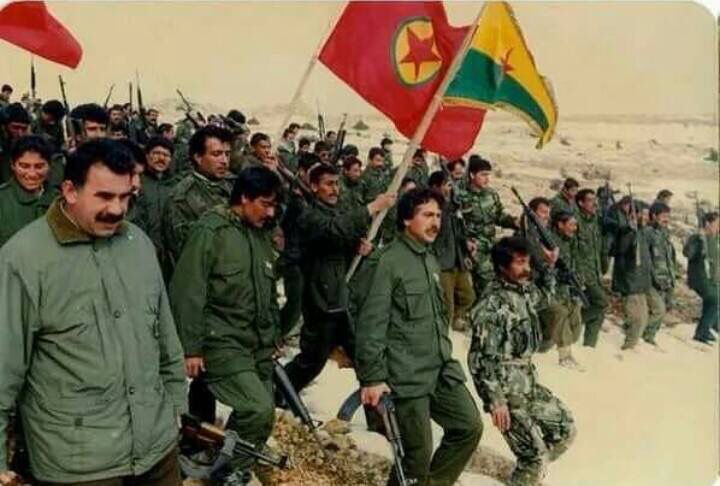

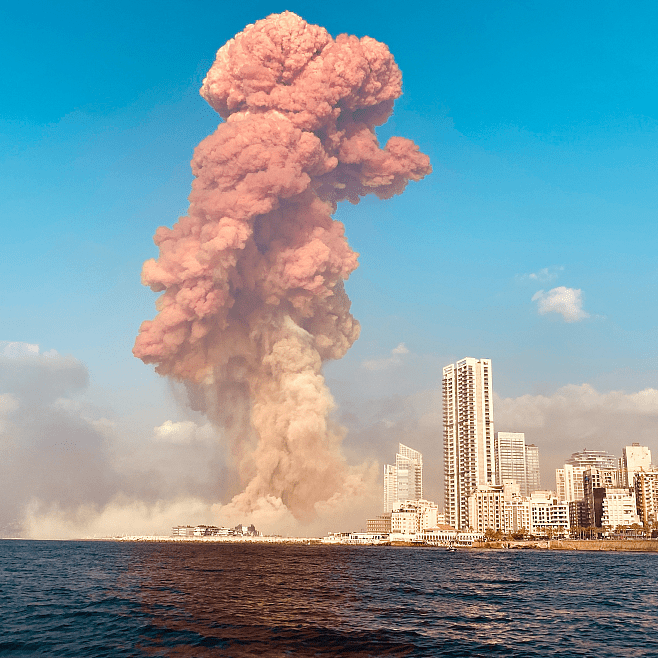



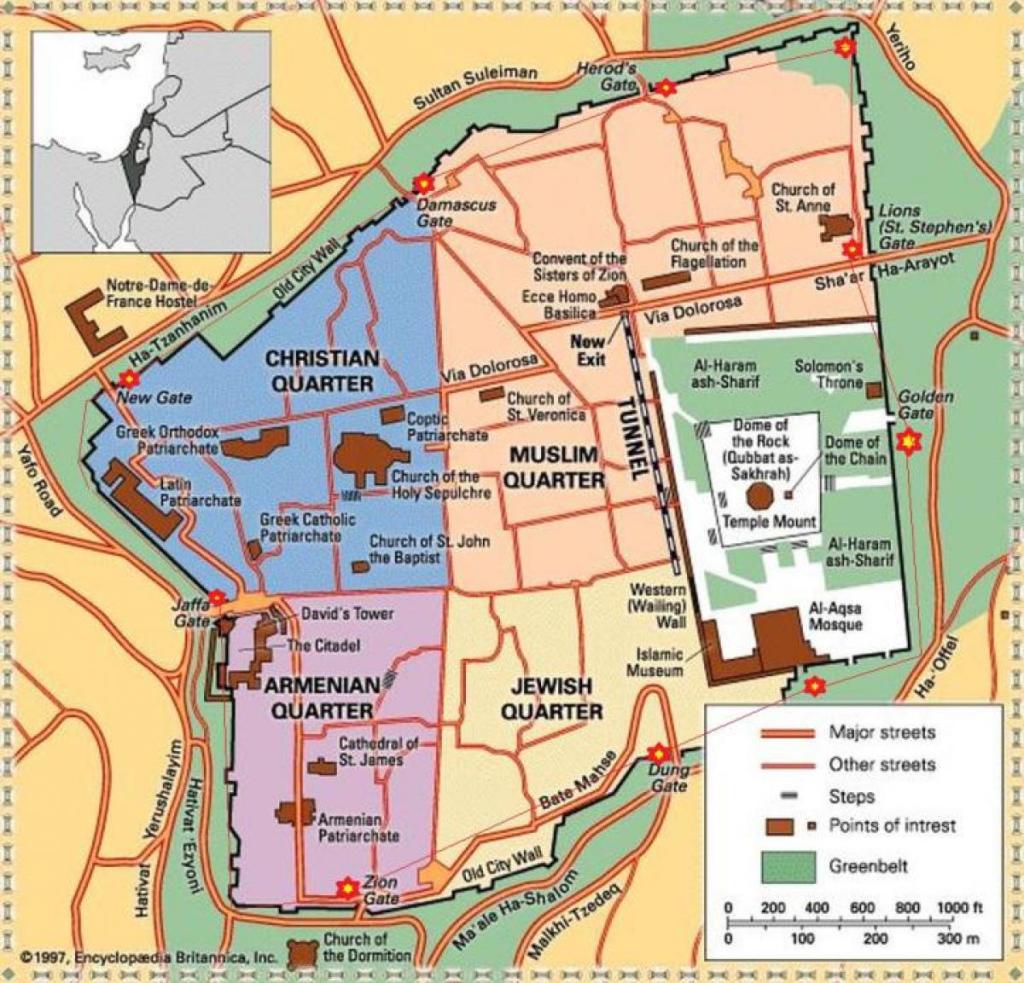
 WALTER SEBASTIAN ADLER