Comrade Norma Olivia Sanchez has jet black hair and is petite. She’s vaguely malnourished for a Cuban, but still attractive and “dynamico”. Of course! She is and always will be a member of the Committees for Defense of the Revolution. The vigilant internal defense mechanism against Yankee imperialist aggression and unrestrained, insatiable sex tourism. Her mother was a fairly high ranking person in the Party, and told her of the struggles to defend socialism during the Cold War years. Told her of the deprivations and economic siege beginning in 1989 when the Soviet Union collapsed and virtually all proto-communist regimes along with it.
COMRADE NORMA OLIVIA:
“The U.S.S.R. was the sun and we were just a proud and tiny island fortress. When the sun went out, when we lost our greatest, sturdiest ally; we would be in the dark and there were many things in the dark that could ruin us.”
There would be no more petrol for the cars and tractors, buses and power plants. There would not be fertilizer for growing food. There would be shortages of absolutely everything on every level of consumption. There would be long lines and no electricity. There would be no fans or air conditioners, there would be zip-zero-nada. And in this proverbial darkness of our times ahead, our enemy which had sought to ruin us from the very day of our independence would move in, emboldened by the so-called end of history.
I have some understanding that was it not for decisions made during the revolution, if not for our Russian friends and of course the own solid base of our people in the historical context; we could be living in an illiterate and deeply unhealthy place; with a brothel and gambling embankment running from Miramar to Varadero. 500 kilometers long where foreigners could just cheaply, scenically fuck our women, drink our rum and smoke our cigars in the sun.
I knew, the minute I was called to the office that we would not surrender, our great leaders, well the two brothers still alive; would not for one human second consider that the fight was lost.
I was there the day they called us all together. The top nine, the big two; the Ministers and the deputies of industry, defense, finance, agriculture, and espionage later. We had known it was coming, the fall of our protector and benefactor. In embassy cables and diplomatic whispers; we also knew, it was our job to know that when the big bear fell down, died, and became reborn as god only knows what under American guidance! And its brightest, newest oldest and also highly questionable satellites began dropping from the sky; that nothing, not one thing would stop the aggressors to the north from moving in upon us.
We knew this was the beginning of the end of the revolution as we understood it, but what could we do? We suspected the Syrians and the Libyans would not give in easily to them at all. And we watched one after another as communist regimes collapsed in Eastern Europe and Africa. It was really our estimation, that by the time the dust settled; it would be only us, the Vietnamese, the People’s Republic of China (both which had embraced capitalism in most regards five years ago, Laos, and whatever the backwards hell they were doing in North Korea! We assumed Nicaragua, Ethiopia, Namibia and Angola would remember what we did for them but be in no position to reciprocate. And between 1989 and 1994, it would all come tumbling down. The failed architecture of a dystopian dream.
We sat together at a time when even the leaders were hungry and when anyone looked in a mirror they would not always recognize their own faces, for a look of despair had set in, inside oneself. All that we had willed as a people could be undone in just one year. We were all the same outside, for the siege had not begun yet, it would begin tomorrow and the next day and for the next ten or twenty years. And the Yankee enemy in the North, the pale colder place just a few days out by raft or one hour by plane; it would either soon invade, or try and starve us out. The ten million that had refused to defect. And the accomplishments of the last fifty years could go up in smoke, or simply in a long whimper, as the Dominoes began to fall.
But I understood, it was my training from Moscow to understand and my own Cuban sense of putting it together and taking it apart and refashioning. I knew that there was only one thing that could hold the country together, and so did Fidel and Raul. We needed to buy the time it required us to shore up. I am not sure that we prepared adequately for this day, actually. I’m not really sure we believed this day would come.
They drove us out to a farm. Well of course they didn’t tell us and we didn’t ask. And we were told in a meeting this was going to be a “special period in times of peace”, which was to say all the conditions of a siege and a war were to be upon us, and really the only question was how long could we last until the U.S. gets bored, not tired for they have never been in a rush. More until the empire is bored with us, less obsessed with us. Long enough for the opposition to imperialism to recoup.
I remember in the car to the ranch which disguised the room for these situations. I remember wondering if this was the end of our experiment and life as we understood it.
“This comes right from Fidel; you’re all going abroad in a week. Some of you will join embassy staff or medical missions, some as private people with foreign passports. You will be going to allied countries and Western countries, you will be going to make some hasty business.”
Well really the whole speech was so much longer. But this was the short of it. We were not told in any specific terms how long supplies and foreign currency reserves could hold out on the island. We were told in no uncertain terms that things were going to run out and that our job was to generate hard currency through the operation of a variety of legal and illegal businesses to shore up the essential purchase; food, fuel, and probably armaments.
“They’re rioting in Moscow, in Warsaw, and in Budapest. It’s all coming down. Even the Chinese are talking about calling it something else.”
I tell you it wasn’t all cigar smoke and mirrors and fake foreign names, Cubans look like everyone and we had trained long ago to act like anyone, and we’d been assimilating for years into the second world and there was a contingency plan for a cut off over time from U.S.S.R. foreign aid, not overnight.
COMRADE NORMA:
“What brought it all down?”
LEADER MAXIMO CASTRO:
“This isn’t a polite or immediate question, comrade.”
But, the answer was several things. First, the West was economically more exploitative and comparatively more ruthless. Second, the Russian Communist Party lost its popular imperative, and third, the endless wars in proxy had sapped its will. But there was something else no one said, which was being said in the West; that Capitalism was simply a better system, no-no no one would say that. But everyone was always hoping blue jeans and popular gringo music would fall off a favela cart or plane hatch back from Miami. And it often did. Luxury carrots for all or for none says the evil murderous and often sloppy C.I.A.! But ours was a hard-won thing that had the support of the people and would not be defeated by American imperialism and temptation.
We will do what we have to do to survive this! Too much is historically on the line, if we fall like the others this idea and all our sacrifices and gains will have been for nothing. We would plot and organize, mobilize and do anything we had to do to secure the revolution. We would survive this coming Special Period in Times of Peace. We will break the grim Yankee blockade and ensure the relevancy of Cuban-style Marxist Leninism for ten thousand years to come! And I will wear blue jeans when I have to. Four people with mixed but exotic features enter the room, two men and two women, clad in loose army green tunics.
Thus declares our jefe:
RAUL CASTRO:
“I would like to introduce the delegation from the Kurdistan Workers Party.”
“They are quite expert in smuggling, establishing European business fronts and of course, they are committed revolutionaries motivated by the same historical forces as our own people.”
That was the very moment that the special relationship between the Cubans and Kurds solidified. Skill in smuggling and commerce would be exchanged for medical specialists and engineers that could design impregnable bunkers. Ten years later, Comrade Norma Sachez’s half Argentine daughter Alina Sanchez would become one of the first Cubans to serve in the Medical and Engineering Brigades attached to PKK guerillas in Turkey. Her Kurdish guerrilla name was Lêgerîn Çiya. One of the longest-serving members of the international brigade mobilized to protect the revolution in Rojava.
Chapter (1) One
Deir Ez-Zor, Syria
Flaming, low-lying wreckage spreads out before us in every direction. The ruins of an already desolate land. Sprawling two-story compounds along a mighty river. Pock marked with rifle rounds. Misery found absolutely everywhere. Syria is now a bi-word for total warfare, over 600,000 have so far died. A Revolution in a Civil War. A Third World War using several dozen proxy armies is underway. Russia, Iran, China, America and Europe all have their boots on the ground. In Northern Syria, an unrecognized administration in three cantons protects 4 million civilians and internal refugees. A Kurdish lead project for democracy, ethnic pluralism, women’s empowerment, and something called ‘social ecology’. The sun bakes you and the dust gets into absolutely everything.
In Deir Ez-Zor Province, a wasteland along the North bank of the Euphrates, in a few hundred hamlets, from their ‘capitals’ in Raqqa and Mosul, Iraq the most hateful and radical of Islamic fascists rules over 10 million persons. Some happily embrace its Caliph Baghdadi as the fulfillment of prophecy. Over 50,000 Muslim Jihadists from around the world arrived to reinforce this effort. At its maximum the Islamic State occupied massive swaths of Eastern Syria and North western Iraq, threatening to capture Baghdad and Damascus.
Deir Ez-Zor was one of the very first Syrian cities in 2011 to stage large scale demonstrations against the Assad Regime. In 2014 ISIS took over the city with little resistance leaving only a small pocket of pro-Assad military and perhaps over 100,000 civilian supporters cut off in an airbase and small section of the city. Supplied by helicopters and high altitude drop services the besieged garrison deep inside the ISIS control zone resisted capture for over 3 years and 2 months.
The siege of Deir Ez-Zor Airbase garrison lasted a very long time. ‘Daesh’ controlled everything except a small military airport which the Russians and Regime supplied by air for all of the war, but could not re-take, along with the city until just a month ago when it was “liberated” on 3rd November, 2017 by the SAA and the Russians.
At some point the Regime soldiers made the local women trade sex for basic rations of food. There were rarely sympathetic forces in the war, besides ours. But even the Y.P.G. conscripts children, forces Arabs off their land and dabbles in war crimes from time to time, to time. Now, on the South bank, Assad Regime forces, Hezbollah, Iranian Revolutionary guards and Russian special forces push south east down the southern bank of the River while Syrian Democratic Forces and United States lead coalition forces pushed rapidly south to the Euphrates North bank, both sides maneuvering to secure the majority of the Syrian oil fields. The S.D.F. capturing most of them. Now we slowly begin the final offensive to capture Isis’s last strongholds, moving down the river toward Hajin. Trying not to kick off World War Three.
“Perhaps I am not where I am supposed to be,” muses Heval Ciya, “Perhaps here, I will die for nothing at all. We can be killed so easily by anything, then they will dance about with my corpse making speeches in Kurmanji for a day, until my death takes on significance that it probably never had.”
Heval Ciya Zinar is the name they gave me. “Comrade Friend Mountain Rock”. I am a separatist minded Scottish Soldier. Although still a member of the British army, I voted for independence in our latest failed referendum. I am a gentleman by most accounts and a Y.P.G. International Volunteer. I have absolutely no political sympathies with the Kurdish lead formations, though I possess formal military training, making me more valuable than most of these preachy, useless ideologically motivated volunteers.
“There’s dust in my beard and men die all around me!” exclaims Heval Ciya from Scottland.
As we grew closer to the Euphrates we can see fire in the sky and the night is lit up with heavy coalition airstrikes somewhere far away to the south. The convoy of nine trucks had left Al Hasakah, the largest rebel held city in the morning and drove about five hours south toward some forward operating base. The eight of us internationals had not been issued weapons until halfway to the front. We stopped of course several times for obligatory tea and some volleyball. The sport of ‘Apoist’ revolution. Sometimes we’d stop at what seemed like the same identical storefront kiosk, next to well stocked pharmacies. The road bodega of Kurdistan is stocked with energy drinks, smokes and Turkish day to day items, never toilet paper. All the toilet paper in Syria was now gone. There we bought energy drinks and cigarettes of a more potent type, as the party issued Ardens were lights or ultra lights at best. There was tons of canned Pepsi, but no Coca-Cola throughout the liberated zones. Real freedom evidently has not been won yet.
In the first battle that I participated in during the Syrian Civil War five Arab soldiers in our S.D.F./ Y.P.G. Unit were blown to bits by mines and mortars as we stormed the river basin a little after midnight. Evidently, there were far more Daesh entrenched than we had thought. From a dirt sand trench I fired my AK-47 shiftlessly over the wall, peaking out I saw an Arab comrade ripped apart by gun fire and collapse in the sand.
The fire fight resumed immediately after a short re-calibration of the battle plan, after Heval Commander Dalil’s men were buried. A larger number of Kasadehwere trucked in, barely trained. Half or more might have fought for Daesh or the Regime at some point. Child soldiers all over the place. A major conscription drive happened, even some cadro tabors were moved in. This was a race to secure as much turf north of the Euphrates as we could as quickly as we could, creating a defensible buffer against the regime, Russians and Iranians to secure the oil fields. Of course, implicit in all that was to finish Daesh for good. Smash their final positions along 60 to 100 hamlets and miserable dust cake boney towns leading to Hajin, for the very last stand of the caliphate. Very bad intelligence friends! The bandits were still very well dug in, refugee were swarming out and among them suicide bombers. Five so far. it was impossible to know anymore who was Daesh or not among the refugees flooding out. Some two dozen Arab Hevals were martyred the first night of the operation. We were down the hardcore of the elite, the foreign fighter zealots, their families. Motorcycles with snipers affixed to reposition. Sleeper cell deployment, suicide bombers, booby traps, tunnel mines, the usual. Now they would in four battalions capture about fifty tiny key destitute towns working south in several prongs toward the river. “If you see a helicopter, don’t shoot at it!” Dalal had said, it was our new resupply drop copters. We allegedly had a very, very small air force now. “Do not shoot at the helicopters in general,” was repeated several times in Arabic and Kurdish. “Also, also! If the regime forces fire, return fire, but do not engage them. Unless they actually cross the river.” Declared Commander Heval Brusk, which means ‘commander lightning’. Commander lightning then personally presided over a few hours on conscript drills. None of these bearded partisans were trusted with grenades. So the very next day, at early dawn, ten of the destitution ridden little seemingly strategic ISIS hamlets were again stormed. There was chaotic gun fire erupting everywhere. There were utterly ransacked two story brown buildings all unfinished, all about the same shattered look. From several positions Takimcommandos were firing endlessly from roof tops and sniper holes out toward where it was believed the enemy was hiding. A mosque about half a kilometer away. Well of course every Daesh position was in a mosque, hospital or granary since nothing else was defensible. This was a mostly one sided AK-47 and mortar barrage. Much of the war had proceeded like this, pickup trucks dripping light infantry to storm abandoned Arab homes and light up anything that moved. Loot absolutely anything that wasn’t made of sand and carry it back north. One pipe, one water basin, one carpet at a time. A small child ran out into the road and was blown away. Briefly a pause, until he was clearly limp and dead. A day or two more of endless AK fire, sometimes at night too. Eventually the Americans were told to bomb the mosque. Spotters transmit grid coordinates. Soon, about 5 minutes later an airstrike rips apart the mosque. Battle won!
Many people have written at length about “how boring” it can be to be at war, but it is more terrifying than boring, actually Heval. You do your best to not think about how men and women far more prepared than yourself took a wrong turn and then just exploded. Or how a sniper cut them down. Or how they died in a Turkish airstrike. Or contracted hepatitis because of poor local appreciation of pooping with toilet paper and hand washing, then eating. The boredom of war Heval is perhaps a cover for a sneaking debilitating fear, so that is what people write about. Being bored, instead of being afraid. And in a war such as this certainly you sit around quite a lot drinking tea, smoking weak Party issued cigarettes and standing guard. Or looking for strategic places to jerk off or poop without setting off a mine. But nothing for us was the same for very long and thus all the time you spent sitting around was better spent ‘conversating’ on the Revolution’s bleak future, or studying some Kurdish, or horsing around with the Arabs. Who loved to try and communicate actually. And also show you pornography and awkwardly try and steal, trade for or buy your hand grenades. Or ask you to bring them to America or Europe hidden in a bag. Jokes abound, but really it is only you who will be brought back to Europe or America in a bag. While very few of us actually spoke any real Kurmanji Kurdish or Arabic, it seemed that the Arabs were far more interested in us than the Kurds though. I would call the Kurdish commanders attitude, begrudging appreciation and that of the rank and file borderline insulting. I would go so far as to say that at this stage in the war, being fought in majority Arab zones now by the Euphrates river that an increasing number of the front line fighters were Kasadeh, non Kurdish Arab S.D.F. fighters. The Assyrians too had a small group, less than a few hundred men, many little kids and old men. Many poorly trained and poorly paid semi conscripts. Many were not even very against the Islamic State, more eager to shoot at the Russians and regime forces on the other side of the river. With the Kadrosbeing withheld in clear preparation for the impending defense of Afrin Canton.
In retrospect I assume that Heval Fermander Dalil probably saved our lives by abandoning us in a rear fox hole in the dead of night. The ten internationalists that I was aware of were placed further back in the rear, but Heval Shervan ‘the crazed Irish gypsy’ commandeered a Humvee and caught us up, without any invitation to the troops of “Fermander Dalil”.
I remember freezing out in the dunes all night long while the Arab fighters shared neither bedding nor blanket. It was so bitterly god damn cold! Sometimes Heval Kawa, the idealistic New Yorker and I talk about the girls back home. I talk about my Ms. Ashley. He talks about his “Goldy”. Some escort Russian he has some arty muse thing with. Pretty much this is what men at war do. Although in my case, I motorboated my female best friend. In his case it seems a bit more fucking dark and tragic.
“Sometimes I close my eyes and remember your lips. Late into the long trip back to Brighton to your so-called home. I have no home, only ugly little flats around Brooklyn soviet which I rent out of poverty, artless and shared. Decorated with trinkets. I’ll never go back! To you or to Russia, or Haiti, nor to Mehanata the tavern or even dear Cuba! All these things are a form of slavery now. Your lingering Daria, it takes the form of ruminations on WhatsApp messages telling me to “come home”. But to what? To nothing. Life here is hard, but it is free life as they say.”
Kawa, the so-called American, is more a poet than a medic in his heart of hearts. Me? I am simply a Scottish warrior. I long for the fight and I got some.
I was deployed into the Deir Ez-Zor Province wastelands about ten days ago to the front near Omar, Daesh is nearly completely defeated they say, but everyday we are taking martyr bodies back to Al-Hasake. Assigned briefly to the Tabor Shahid Lawrence; we lost fifty men in the first few battles to advance south on the mighty Euphrates river. After all that initial death it seems they aim to break up our group of internationalists into different places. They do not want us all to die at once. They do not really seem to have achieved consensus or a plan on where we should be or when and if we should die, or what we are actually even good for. Or what to do when ISIS is finished, and America abandons them and the Turkish Army rolls over the border to kill us all. A heated internal debate is constantly held in both Turkish and Kurdish. Sometimes also in Arabic. Which always ends inconclusively. Well its a complex matter anyway. So many ways to die out here for the greatest cause of our time.
On this matter Kawa and I agree, that whatever motives brought us all to this wasteland, this place of dying and suffering over made up Gods and ideologies, invented ethnicities and world war three style great power politics; this was the resistance of the age. This was a battle between good men, bad men and crazy men who could not sit out. Because when the smoke clears there will be a different Middle East, a different world. I am no ideologue. I am no dreamer or religious fanatic. I am a professional soldier. While it is not unreasonable to say the Assad Regime backed by Russia and Iran, the Turks, Al Qaeda and of course the Daesh, are unequivocal forces of religious fanatical reaction, of fascism, or totalitarianism and death, well they are. While the Kurds and Arabs of Y.P.G./Y.P.J./S.D.F. are not saints of course. We are not angels here to help do some God’s work. We are fighting for democracy, feminism, ecology and tolerance in the heart of the Middle East. As opposed to all the other groups that are fighting for radical Islam, chauvinism, fascism and the right to impose the will of the minority on the majority.
Did you know that when you take off a person’s uniform to bury them, you cannot tell a fascist corpse, from a democratic corpse, from a Daesh corpse, not even from the length of the beard? Those three and letter affiliations, they don’t matter anyway. It matters more, the stuff inside a person’s heart. Their moral compass. Not the length of the beard or who they pray to. Not the historic struggle of their people or their claim to the rivers. When true warriors die, they might not end up anywhere glorious. They might just be dead. The “immortality” we are achieving in our death here is thus rooted in the way the story is framed. Which is to say, whoever wins the war. But can you really win a revolution inside a civil war, inside a World War? I see absolutely no good end in sight. Most likely, we will all get killed ingloriously. But there is of course a timeless epic glory for young men of all cultures to join a seemingly impossible battle, risk their lives and join a pantheon of immortal heroes. Of course, the Arabs, Assyrians, Kurds, Turks, Checehens, Turkmen, Persians and all the other micro-ethnic tribes gathered here to make war, well they sadly all have no choices. These are the oil rich, strategic holy lands and mountains they were cursed perhaps by their gods to be born in.
How did we even get here? How did this motley group of around 800 mostly Western foreigners take up the cause of Kurdistan?
Well, it began with a letter of introduction. As well as four short pamphlets that were written by the Uncle Leader himself, while serving twenty-one years in solitary confinement on the Turkish prison island of Imrali. These pamphlets attempt to paraphrase thousands and thousands of handwritten theoretical documents smuggled out by his lawyers from Imrali. The name if this 8 volume treatise are called alternatively “Democratic Confederalism” or “the Defenses of Abdullah Ocalan.” Taken as a body of ideology these writings translated into Kurmanji, Sorani, German, French, English, Spanish and Farsi from Turkish for the theoretical basis for the military and political objectives of the Party.
Chapter (2) Two
Deir Ez-Zor, Syria
On November 26th, 2017.
At the Green Village Outpost contact line.
Sometimes I close my eyes and remember your lips. Late into the long trips home. I have no home, it was your home only. Only my ungly little flats around the Brooklyn Soviet. Rented in desperation, vulnerability, an admission of poverty. And I will never go back to that humilating life. I will never see you again, or see Russia, or Cuba, or Mehanta or any other type of slavery life. Your lingering Goldy. It forever remains.
Now deployed about ten days ago to the Soutehrn front near Omar Feilds. Daesh is nealrly finished they say. Assigned first to Tabor Shihad Lawrence, five quickly died by snipers and mines in the first night of the operation.
The twenty internationalist volunteers are all drifting in different directions. They prefer we not all die at the same time. There are supposedly around 500 international fighters in Rojava, mostly from the U.S. and Europe, also Turkey. But numbers and time to the Kurds mean absolutely nothing. So maybe there are 500, or maybe just 50. Who knows Heval, who knows!
Daesh is nearly defeated. The Islamic State once size of Great Britain at its maximal, poised to take Baghdad and Damscus is reduced to the wasteleands of the deep desert and a strong of indefeinsible towns along the Euphrates River south east. From the North the Syrian Democratic Forces supported by the Western Coalition advance. We are part of that force. On the other side of the Euphrates the Russian Army, Lebanaese Hezbollah, and the Syrian Army advance. We all try and not shoot at each other, at least until ISIS is finished. Over the border in Iraq ISIS has been largely crushed; the SHi’a Populualr Mobilization Forces, the Iraqi Army, the Iranian Pasdaran, and Western advisors and Special forces have all but driven ISIS from Iraq to the Syrian border.
The name I have been given is Heval Kawa Zivistan which means “Comrade Black Smith Winter.” I am a Paramedic in civlian life and therefore one of the highest medically trained foreigners in the brigade.
Heval Shoresh from Brooklyn, I have known him since child hood. He has a child back in America. And I judge him for being here were it my right to judge. But this palace this revolution is irresistible to us both. He is a gardener back home. Here he carries a heavy duty long range, high power rifle called a X which is about twice his size. Hard to aim.
There is Heval Sasson from Austria. He was an EMT who once travelled with his girlfriend all over Africa on a motocycle. He is quiet, ideological, principled and socialist in disposition. With also is Scottish Heval Ciya a former British solider. Also the mad man possible career criminal kicked out of the French foriegn Legion called Heval Sivan, who although he claims he was also a British solider can’t hit a target with an AK to save his reputation. He hasn’t let up for many days talking about the Order of the Knights Templar, talking aboutthe Knights of Malta; actually engaged in an unending pressure of speech manic diatribe about the new crusades, that we are allegedly in. There’s also Heval Azad from Albania, something of a gypsy, a besepckeld intellectual; an anarchist.
There is also a French Legionaire of enormous size, amost a giant. He is called Heval Gabar and speaks only of the Legion, reveals nothing of his life. He isn’t very well liked by the other internationals. There is also a young kid who loks not more than 16 but is allegedly 18 his name is Max. One of the few held back in the Academy because of minor injury. He is dbbed Heval Maslum, but evryone just calls him Max. And that is how he introduces himself. He’s allegedly from Salem, Oregon. No matter what sems to happen he just repeats, “I don’t care.”
After the 5 Arab conscripts were blow apart the first night they broke the internationals nto smaller groupings. Ciya and Sivan were sent to a YPG Cadro Tabor based on being British military they were sent to the front. Soresh, Maslum, Gabar were merged into an Arab unit and sent to the front. Sasson and I were attached to Kurdish Red Crescent outpost in the Naqta in Omar Fields. Gabar and Maslum dubbed “pizkereks” or problem makers were sent to guard a fox hole on the edge of some useless “liberated village”. No one knew where Heval Azad was sent, but Albanians are very tough craft bunker people.
“He will turn up and be fine!” Heval Sasson says, ever an optimist.
***
Then night came and Sasson and I were quartered in a farm house. The commander invited us over to the field command for tea. The mood was the war with Daesh was almost over and very soon we would all be fighting Turkey in the north and or Assads forces right over the river.
The Commander is named Heval Azadi. They basically cycle out the same 50 Kurdish code names for everyone seems like.
The commander in very broken Enlgish invites us for black Tea in one of the many pillow rooms they like to build.
“Trump say, no more guns for YPG,” he tells us the SDF is the brand the YPG uses to appear more inclusive, a little less Apoist, an little more not the PKK, but the commanders almost always say YPG or PKK, theres a lot of little acronyms for small armies out here. The YPG, or the People’s Defense Forces make up 80% of the SDF; the Syrian Democratic Forces. All the best commanders are Turkish Kurd PKK trained.
“Daesh done in Iraq. Two towns left,” Azadi tells us.
“24 little Gundes to take along the river,” he says. A Gunde is a village.
“In Moscow, the PKK make a deal with regime, “ he says, regime meaning Assad and Syrian Army, “Iran, regime, Russian make deal on autonomy and oil rights.”
We are engaged in an operation to seize Syria’s oil fields, Sasson had explained. There were not many ISIS fighters lift after Mosul and Raqqah fell. This all now about who can take as much oil fields as possible to negotiate the final settlments. This seems to discourage Heval Sasson.
“Really all that is lef now, “says Commander, “NUSRA Front and HDS in Idlib.”
“Al Qaedas Syrian brand,” Sasson tells me.
“The PKK make a deal in Moscow, we will end up terms with Assad. The HDS, the Nusra, the Deash all the Islamist proxies in Idlib, Bab and Jarabalus City they must be eliminated to close the gap.”
Closing the Gap we learned in the Academy was about pushing through the Islmists into Turksih Hatay Province to gain sea access for Rojava. The Gap also being closing the lines between Afrin and Kobane. Afrin Canton is hard to resupply and will be the first thing the Turks attack.
“As soon as Deash war is over Turkey will attack, you will fight with Turkey?” they all wanted to know that. Would we we all stay and fight the second biggest army in Nato.
“Of course we will,” Kawa claims, but Sasson knows is suicide and also problematic when they rertun to their home lands.
“When Daesh is done there will be no ceasefire. Turkey will attack immediately. 45% of call Syria now in Rojava. In SDF hands. Turkey will waste no time.”
We all sepcualted about “Fighting the Turks near Afrin” while in the Academy. It will be slaughter. A cadro boasts that “We have peace deals with USA and with Russia maybe also China!” But the dependency on the U.S. airpower is real.
“The Regime will not ever accept Rojava in any form, it is just too weak to defeat it right now.”
“Russia will never abandon the regime,” someone says in Kurdish.
“It is like America and Israel, you have Syria and Russia. The Regime gives Russian Medditteranian Seport access, the Regime is only alive because of Russia and Iran.”
“There are many factors. Russian is loyal, America is not. When Daesh is over there will be no more guns, no more air support.”
“How many Western volunteers do you think are still in Rojava,” Sasson asks the commander.
“50, maybe less,” the Commander says. “50,000 came to fight for Daesh, maybe over time 2,000 came to help the SDF. 1,500 leftists from Turkey and 500 from the West. Now, in country still, 50 maybe.”
“The airports in Erbil and Sulymania are still shit down because of the independence referendum. For now you are here to stay. Who knows what will happen. PJAK is now fighting in Iran again. Maybe soon more fighting between Iraqi Army and Pesh Merga. And Turkey! They are coming trust me heval.”
Goldy wrote that she might have to marry her rich ugly patron. Polina wrote she is leaving me since I am “on the other side of the planet now” Chanie is back with Charlie, so probably I will never hear form her again. Anya, my attache, sends me some news from Baghdad. “They are arresting Western volunteers without good paperwork coming back from Rojava. Slemani and Erbil airports are down everyone ahs to go out rom Baghdad.” But I have good paper work. I called my parents the other day. An Arab had sold me a Syrian SIM card. They seem proud that I’m there.
I hope I can hold it togeter and reach ‘the moutaintop’.
Like in my dreams, the EMT Program of Kurdistan is just a means to an end. An after thought, the G.C.C. barely useful or functional any more out here. My so called partners Andrew, Forti, Jessica, Matthew Smith, Ovid all have defected and left me out here with no help. Can I count on David Smith, Kaveh, Jonah, or Dr. Wagner, probably not or only for a little.
Everything here is an assault on my senses!
Daily, I mist learn ideology, discipline, war, Arabic, Kurmanji, keep Sasson and I from stepping on mines, dying in airstirkes, gettting enough water. Sasson has said he is willing to help me run the EMT program if only we can get authorization to do so. The Kurds don;t believe in time, they don;t believe in space, and they don;t believe in foreigners.
The others we trained with, the twenty are all dispersed to different positions. Ten to Afrin and ten to Der Ez Zore. They must chose their own adventures in Rojava. I do hope that Soresh stays alive for the sake of his 6 year old child and yong wife. Ciya and Sasson signed the G.C.C. paperwork, the cover contracts that they will claim later to the government sof Austtria nad Scottland that when they did out here was purely medical. But, its not so much will they stay 6 months to train an EMT program it s more will the war ever actually end to allow the time and space to justify one.
It’s impossible to know how far up the mountain any of us will really ever go. Heval Barron was there almost a year. The German heval said little good or bad about it, he barely said much.
So many ways to die out here. We or most of the 2,000, or 500, or 50 shared a noble goal. Deafeat Daesh, defend the Revolution in Rojava.
In the mean time Sasson and I have been training Arab fighters in life saving skills. We try and stay sane. I am sure I will have to use this AK-47 before this is all over. The thought doesn bother me but I don’t delight in the thought of any killing.
Today, a villager “gundi” handed me their sick infant and I listed to its lungs and heart, and helped prepare some pedilite mix. The child was sick but dehydrated and stable, the Arab comrades keep telling people an American doctor is in the camp. But even in Syria I am still just a a paramedic not a doctor at all.
So much responsibility is on my shoulders. They all have varying medical issues. Infected toes, rotting death, abdoinal pains. I do what i can. The Party purchased me huge rolling duffle bag of medications and medical supplies. So we saty as busy as we can.
I day dream, and hope Goldy thinks about me more than sometimes, but probably only Chanie does when she is allowed to. Goldy sometimes whatsapps me cute photos and sometimes Anya, the attache flirts from Baghdad. I have been sending Chanie letters via the U.S. Special Forces were run into coming thorugh the camps.
I realize that G-d or no G-d, Abdullah Ocelan is writing about a universal truth. This is the last stand. The last chance we will ever have or get again.
“Deash is all wiped out,” the Commander repeats, ‘BUT THE TURKISH ARMY IS COMING FOR SURE. To burn all we have built to the ground,” he sighs, “Serkaften, we will fight them too.”
So we all still probably have a lot more bleeding left to do no matter what happens.
Chapter (3) Three
Derik, Syria-Rojava Region-Kurdistan
ADONAEV:
“It is not that any of us longed to die.”
It was only that we believed that in this transience, this short human life, it was preferable to die on one’s feet moving towards a just idea. Moving in solidarity, in defense of the powerless. Then it would be to die on our backs or our knees, half-lives, shuffling along like zombies. Always asleep. With meaningless, un-free lives wasted. Lives were spent like wallowing serfs and base slaves.
Have you ever had an amazing noble idea in your head? That simply refused to translate itself or find traction in reality? Have you ever risked everything, sacrificed absolutely everything for such an idea? Myopically, almost psychotically pushing forward in the face of a stubborn, intractable cruel reality. When you can bring yourself to do that. To engage in nothing short of overwhelming zealotry. Pursuing a new reality, a reality where the vast suffering of this world is mitigated. Where the chaos and carnage and daily humiliation that is the lot of most humans is undone by rights, by hope, by heroism. That is called the “motivation for the fight”.
It has been a very long hard bloody road to the mountains and back from them. From Manhattan to Jerusalem to Havana. All the trips to the City of Port-Au-Prince. To Greater Boston. Back to Brooklyn then to Russia. Across Russia on a train then into the Middle East to fight in Rojava. Iraq, Turkey, Syria and Egypt and then back to the Big Apple again. Riding on the backs of armored trucks and flying carpets. On horses, on tanks, on airships. Over the great rivers and through the woods. Mountains beyond mountains beyond mountains. With stopovers where all civilization has come to a resolute end in the Fertile Crescent. Smoldering villages. Enormous cities razed to the very foundations. Once historic places, simply crushed and undone. Burning down river by river shore to deep sands of desolation. A revolution within a civil war within an endless third world war. A place called Kurdistan which exists not on maps but in the hearts and dreams of perhaps forty million stateless, long oppressed people. Engaged a very long fight for their right to exist.
How do you make any sense of such carnage to people that were not there? How do you make an enjoyable narrative about bloody chaos? Articulate ideas that when they become facts on the ground, have vast contradictions. Have improbable capability to survive.
My name is Sebastian Adonaev, but the Kurds named me “Blacksmith Winter”, or Kawa Zivistan. The Arabs needed to name me too in a way familiar to them so they called me “Abu Yazan”. Because my then-part-girlfriend, part-confidant Polina has a son named Yazan. I was 33 when I deployed but looked and felt a bit younger. I felt brave or stupid enough to volunteer for a war. At the most desperate heights of the conflict, which would end up killing over 500,000 people, there was a cry for some extra hands, some Hamsas. Every side called up all available reinforcements. Just before Baghdad almost fell, the mostly Shiite al-Hashid ash-Sha’bi Popular Mobilization Forces called up half a million Iraqis to hold I.S.I.S. back. The Assad Regime enlisted thousands of Russian, Iranian and Lebanese Hezbollah to fight Daesh and other Sunni rebel factions aligned with ISIS, Al Qaeda, the Free Syrian Army brands and the Al Qaeda reboot H.T.S. The so-called Islamic State took in over 40,000 foreign fighters and the mostly Kurdish forces in the “Syrian Democratic Forces” enlisted just 500. I fought alongside the Iraqi Special Operations Forces in Iraq and for the Syrian Democratic Forces, in the Y.P.G. Militia defending the idea of Rojava in Syria. I contributed very few bullets, mostly serving as combat medic during my time there. Mostly stopping hemorrhage and carrying the wounded to ambulances. Mostly trying to train people to save lives, actually, at a time when almost everyone wanted to kill.
After defeating the so-called “Islamic State” as a force holding any territory, the United States military all but completely abandoned their Kurdish allies and Turkey invaded Rojava. Yet, she did not fall.
We who survived to talk about the Syrian Civil War, we often found there were not easy words to describe what we took part in. This is a story grounded in history and ideology. The tale of a stateless people spread over 4 nations, over 40 million strong. This is a love song after a series of hard fucks in Spanish and some love making in Russian. This is a Post-Soviet Lullaby, written in Imperial English about Western privileges. I have heard on the wire that the Turkish Army is fully mobilizing to crush Rojava. A fully modern army of over 435,000 soldiers. That Anya is losing her mind in Baghdad and Ana Campbell, that optimistic young woman I once gave hand grenades to, well she died in an airstrike in Afrin. Here I am in Capitalist Modernity’s very heartland and loving embrace. Doing nothing useful for Kurdistan. Just writing stupid love songs. Composing vain self serving propaganda plays.
I’m not sure exactly what I’m supposed to hide and what I can give away. I’m actually very detached from Western thinking so I don’t even know what actually makes compelling propaganda in the West anyway. Actually, the sly and looming enemy knows most of our real names, and frankly there were many informants amongst us, it is simply a matter of sad fact that to get their passports back many of the French and British volunteers gave us away. Not to snitch jacket, but with a little lean on anyone can make a person flip. Really, there were not that many of us internationalists to keep track of. As the mad China-man Andok said, “the hard drives containing our data were barely even secured and this place is awash in spies.” Our overall numbers were estimated to be around 500 strong of which around 50 later perished. Mostly in combat, some in a wave of alleged suicides. We were small enough therefore for the various security services to keep track of.
So what is the actual purpose of this little manuscript? It is certainly not to glorify or denigrate the volunteers. I think it’s brave we went there but I don’t think we changed a single thing. Perhaps we were all only there to bear witness that the revolution has even happened. It is surely not my aim to give away military secrets and name names, because I am many things but not a Josh, a ‘donkey ass betrayer’. Suffice to say the CIA, MI6 and the MIT. have all of our names.
JANSHER:
“I heard some comrades sang like little opera singers to get their European passports back. All speculation, none can actually say. Americans, you have the easiest deal. After ISIS is finished, maybe it will not be so black and white, fighting a N.A.T.O. ally and what not.”
Assisting a revolution for stateless democracy, women’s emancipation and social ecology in the heart of the war torn Middle East. ‘Heval Ciya’ the Scottsman always used to say that the 231 Sniper Unit changed the entire game, but really only the United States and the Coalition airstrikes probably, certainly did. When the last of the under 2,500 U.S. Special Forces leave the Turks will invade in force and try to undo everything. There’s a story we heard about a Y.P.G. Euro volunteer vacationing in Turkey immediately after his tour. He was of course arrested and will serve life in prison. He probably should have made better choices for leave and decompression. There are lots of crazy people here. You have to be little crazy to travel halfway across the earth to enlist in a revolution inside a bloody brutal civil war amid a great power confrontation placing Russia and Iran directly against the United States and N.A.T.O. I was told by ‘Heval Jansher’ the Y.P.G. guerrilla who helped train us that, if I survive the war I should “write something about Rojava that does justice to the over 12,000 martyrs. That does justice to the cause of Kurdistan. Honors Abdullah Ocalan and upholds the values of the revolution.” That it should humanize this resistance struggle inside a revolution inside a civil war inside a great game for the Middle East.
JANSHER:
“Maybe Heval, just make it a kind of strange fucked up love story! Call it; A MIDDLE EASTERN WESTERN!”
Jansher joked with me over cigarettes and endless black tea. He probably would never have cursed publically. As he was living a life of “unlimited modesty”.
So I hope this account manages some of that, compiling the oral history, experiences and many martyrdom shared amongst the approximate 500-600 foreign Y.P.G./Y.P.J./I.F.B. Internationalist fighters. At the very least I’d like to capture what it was that made us enlist in this hell to take part, to fight and die and kill and try and help, to be less than a footnote in the epic tale of Kurdistan. But still a part of a part.
JANSHER:
“It has to be a love story or they will never make a movie about it, comrade! To the West without a Movie, it is perhaps like this struggle is not even happening at all.”
But he also said things like:
“A ‘real revolutionist’ has no love except for his or her people. Any romantic love, or sexual yearning is a bourgeois luxury. For civilians, actually. A Kadro moves beyond the physical temptations of life, not because they are sinful or weak. They are just weakening to a revolutionary militant. Distracting the focus one must have to maintain motivation for our fight”.
“Our love story is for the Resistance of the Age” he used to say, but then Heval Jansher also laughed and noted that Heval Actor Jake Gillenhaul was then already shopping around a script where he plays an anarchist falling in love for a beautiful Y.P.J. fighter and another action exploitation of the Y.P.J. was coming out soon in France.
JANSHER:
“But that will likely not go anywhere useful. By the time it comes out we will all be dead, or have achieved victory, actually.”
He always punctuates, or punctuated his thoughts with “actually”.
JANSHER:
You see Heval, in real life we would probably platform and deport this stupid volunteer and the Y.P.J. comrade, she would be shamed and sent briefly to prison” Heval Jansher told me. A famous saying states that the “Kurds have no friends besides the mountains.” Well that’s no longer completely true. The 600 who served and the 45 who died besides the 12,000 Kurdish and Arab martyrs of the battle to defeat ISIS and defend the Rojava Revolution will live forever in the Kurdish tradition, since in Kurdistan ‘Martyrs never die’. Shahid Namarin.
These were the kinds of little talks we had at theQerechow Academy. Like a father and son seated on the floor of a small office, in a tiny outpost at the end of the world.
That said, this is not a love story at all. It’s not even “a Middle Eastern Western”. The revolution itself has hardly been secured. The struggle is hardly over. The iron heel and might of the Turkish army looms right over the border to the North. Ready to descend quickly and murder us all. Undo everything that has been fought for against the so-called Islamic State. The Forces of the bloody dictator Assad backed by the Russian army and Hezbollah dig into the south of the Euphrates river. The collaborationist Iraqi Kurdish K.D.P. Peshmerga, the Iranian supported Hashid Ashabi popular mobilization forces, the Shi’a dominated Iraqi Army and all manners of Iranian revolutionary guards to the south east in Sinjar. To the West the Jihadists of Al Qaeda’s latest rebrand and Islamists of different types in Idlib.
Enemies of the revolution on every single side! In fulfillment of my promises I will try and present our little part of the story as the defense has really only just begun. Everything might be wiped away before you even paid attention to the vastness and hope of it. I worry, no sadly I expect, that long before this manuscript is ever published anywhere, all will be lost. My remaining Hevals will all likely be killed. The Turkish Army will literally roll over the border and everyone will be slaughtered. This isn’t really speculation, since it has happened many times before.
Chapter (4) Four
Nizhny Novograd, Russian Federation
“It’s not always cold in Russia,” explains Polina Mazaeva, a Russian Chuvasan sympathizer and mother of a seven seven old named Yazan. Yazan was born to a Syrian Druze father who is not with them anymore. It’s complicated, yet not that complicated in virtually every society.
MAZAEVA:
“As men abandoning women with their child is a very old story actually in all cultures.”
A pause.
“It’s just that we have had to exhibit a certain moralistic coldness. A certainly ethical chill? This was the experience of growing up in the ruins of the Soviet Union. But we are not without beliefs. We are not without our sympathies. You just have to be careful how you talk about them. Things need to be rational, they need to be sentimental but only if sentimentality is kept in letters or behind closed doors.
Outside Moscow and St. Pete’s life is often lived poorly. Nationalism was at an all time high. When many have an internal critique about our leaders, or the price of buses. Or the treatment of homosexuals or Chechens, perhaps we keep it out of our heads. Because the United Russia Party has made many advances to restore us to national dignity. Curb the oligarchy to some degree and reign in the gangster-ism of the 1990’s. The infrastructure of the Russian city of Nizhny Novgorod, outside the downtown area remains largely as it was in the late 1950’s. Optimistically better than what Stalin provided, but still brutalist, soul sucking Soviet crumble. Certainly the upcoming bus boycott will test the limits of ‘free speech’. There are piles of dirty snow all about the fourth largest city in the Federation. The very tall statue of Lenin still stands near the Hotel Marins Park. He’s still the default father of the nation. Only the ultra-wealthy have any admiration for the Czars, except for of course Peter the Great who stands tall over Moscow.”
Russia is a multiethnic, mostly single party oligarchic federation of some 158 nationalities, immediately east four hours from Moscow is the Chuvash Republic. The semi-central Asian Chuvash people are vaguely European and vaguely Asian; almost all are orthodox Christian and have never in remembered Russian history run afoul of the central authority. Never got themselves butchered or deported en-masse to Siberia. No, no, the Chuvash play well with others. The Chuvashan capital is Cheboksary on the Volga, but many can be found in Nizhny Novgorod, the Russian Detroit, once a closed and secret city called Gorky.
Who is Polina Mazaeva? A coy Russian Agit-prop? No, No, she actually has fallen in love with this tragic radical, Sebastian Adon. And they are preparing to meet, but have composed a number of Russian American, or Americano Soviet love songs and scribbles.
Why and when Sebastian and Polina began to write to each other is of no great mystery, both were in pure existential crisis. They wrote often and eloquently in the year leading up to his deployment in Kurdistan Syria and Iraq. These letters and poems all sounded similar, but not the same to previous love affairs across the Cold War, but they reinforced each others’; motivation.
This is not a ballad for two people who move on. But fundamentally the reality of their underlying narrative was that one day Sebastian, who had more agency via his U.S. passport would fly to her and give her a new life. A more tragic but realistic understanding of the correspondence was that before he was going to do the hard part; give her and her son a new life; he would go to Syria, where obviously he could die.
She brought the contradiction up only seldom. Their worst fights were Polina’s frequent accusations of Sebastian’s womanizing. Which was real, but not as magnified as she made. He wasn’t sleeping with every single woman friend he appeared in a Facebook photo with. But, he had lovers she didn’t see. He assumed she did too, but in reality she did not. She loved the idea of him, but never expected him to ask for some mega long distance monogamous relationship. It was strange. But she had a son and little Yazan kept her more faithful. Sebastian in the meantime took under half a dozen women to bed, the idea of Polina was sentimental to him, but also not exactly real. Periodically she would flip out over a woman he appeared with on social media. But, it would fade. Several times he threatened to cancel the Russian leg of the trip, but he didn’t actually want to. Russia was something he needed to see before he died. And, he probably will die out there like the 600,000 plus others who had perished in the war so far. Maybe in an airstrike, but likely from a mine. ISIS had allegedly booby trapped every room of every house of every village, town and city they had occupied.
The correspondence was real. They uniquely relied on each other to float. The underlying assumption that their struggle was real, that Sebastian would die on some barricade rather than raise a family and that Yazan had sort of frozen her life into place. Sebastian had clearly acquired a revolutionary delusion of grandeur and was now enslaved to his own expectations of heroism. Polina had fallen hard for her baby’s father and been rejected and abandoned. The Russian state and her parents shouldered some of the costs of raising a seven year old, but her life was a dull repetition and a soft cage.
Yes, the struggle was quite real! Sebastian had several times averted ongoing suicidal ideations through her soft tone and patient words. Polina had taken on new online classes and high expectations of what was possible. While the flirtation with self-harm was mitigated by the responsibility of motherhood, she had dark times. They needed each other after a point. They waited happily for the next response which honestly flowed all day every day since he was an ambulance man and she was very per diem self-employed with information technology type assignments in graphic design. They wrote and wrote and wrote. Sometimes poems, songs or sketches. Sometimes he would tell her how hard he planned to fuck her, or she would write out something that seemed hard enough to be a rape scene. They both were getting what they needed out of it. A friend in a dark time. Two friends in long distance Post-Soviet love. Two dreamers who live in utter and total nightmares. It gave them something to believe in.
Polina Ivanova Mazaeva throws back her crimson dyed hair and makes a pouty Chvashan face for a selfie. I love only three men! I love my son the very most, he is the future. He is happy and free and built from diverse parts. Yazan is his name and he is seven. Like any mother I have to love my son very first, even before myself! I am sometimes a dramatic and hysterical person, but this is who I am. Also, a jealous wife.
My mother is of unknown ethnicity, unknown as her mother was adopted as an orphan during the Great Patriotic War against Germany. Her father is a happy smiling Chuvash.
I love second, my forbidden ex-husband, Damien. He is in Dubai now, we tried hard to make this work, but he is Druze and I am Chuvasan, and never the two can be together. We tried. But it was too complicated. I love him still, I fantasize about him returning for me and carrying me off to the high tech parts of the Middle East, but he is gone.
Only the face of my son reminds me of him a little. They make fun of him in school and call him Arab, but this is not Arab. He is Chuvash, and Druze. Holy, actually, a reincarnated Druze inside him will speak in parables sometimes.
“My third love, and final for now is Mr. Comrade Sebastian Adonaev. An American. A New York revolutionary, a medical worker on ambulances and a very gifted artist. Perhaps better understood an upper middle class malcontent. Aspiring revolutionary? I hope he will not die in Syria, but statistically, it is probable. He has my heart in some strange way. Actually only with his spirited words.”
Sebastian makes a lot of written reports, partly because he’s a writer and partly because his team is spread widely over four countries. He writes me love letters and also forwards technical reports. They are highly boring, but cast some insight into his Middle Eastern movements and affairs. I am not really invested in his brigade of foreign fighters bound for Syria, of course, but I admire them all for their relative bravery. Rather, it would be better if he just stayed in Russia with me when he arrives, which will apparently be on May Day 2017.
Sebastian writes to Polina Mazaeva frequently, as though the spirit of the 18th century coils still be alive with the tools and technology of Century 21:
Dear Pauline,
There are eight people in or supporting the growing expeditionary party into Rojava. Some are working on the field ground and some from the safety of the U.S.A. Demhat al-Jabari, a Kurdish patriot I met in university, is negotiating with me in Kurdistan. He will likely go to Rojava, but return for school in the fall. Shoresh is an actual anarchist, he doesn’t really have a role as much as he showed up to fight in the Y.P.G. and perhaps do some gardening. The constant gardener doesn’t care about any bigger picture or whether Rojava will rise or fall, he will come for six months and depart. He has a wife and young baby, so it’s better, I guess. Alacan al-Biban Rasool is a Kurdish fixer boss. He’s a local to Erbil. He does Fixing, without ever taking money. Yelizaveta Kotlyarova is a Russian doctor, actually just a podiatrist, and Dr. Jordan Wagner is an ER doctor and they will do medical control from the stateside. Pete Saint Reed is a marine leading a little medical detachment inside Mosul. Justine Grace Schwab is working with Alacan al-Biban, also with Pete, and maybe could be our 8th; but she has savvy and magic and cunning, but doesn’t play on a team well.
Our overall contribution to the humanitarian side of the war in the end was under forty women and men deployed in Iraq under the auspices of Pete Reed’s N.G.O. Global Response Management, and mere four volunteers from abroad, myself and a gardener named Spike going up in the mountains, and over the river and into the Y.P.G. A Peruvian nurse named Francisco who worked briefly with Pete in the battle of Hawija, and a Kurdish American negotiator named Demhat al-Jabari. So Pete Saint Reed was definitely a better commander and focused wholly on the work in Iraq.
“There are a lot of complications,” he claimed. One may have been the lack of a reliable hotel bar in Rojava.
My unit of four, really three in the end was actually all we could manage to get over there and into Syria. Several dropped out, unexpectedly? No expediently expected. The American activist drama queen, “VIP leftist” Cecily Macmillan. A medical assistant in training named Joshua Hunter and a Ukrainian EMT named Philip. Syria is not actually an easy place to sell volunteerism in America.
Few of these volunteers in the end proved dependable, but who could really blame them in the face of the Syrian Civil War bloodbath. Only the Kurds Alacan al-Biban and Roj did any leg work, out of patriotism. Oh yes, Spike did his seven months but certainly none of that was dedicated to the medical mission. He deployed to shoot.
Really Pete Reed’s success, if you can deem it any success what he actually accomplished, in Iraq was about managing to access the W.H.O. money. His military veteran can do bravery and being embedded with the Iraqi Special Operations Forces helped a lot. The potential disaster of our Syria mission had most to do with the near total inability to reinforce or evacuate our team once inside Syria, being therefore wholly dependent on the whims of the YPG. Which again, stands for People’s Protection Units, the P.K.K. mostly Kurdish militia fighting ISIS as the primary Coalition-led proxy. Who allegedly, and in reality have a deep “martyr culture” and a sort of contempt for Western medical workers.
Sebastian’s reports, like his mind, dig deep then ramble out into incomplete destinations. Actually almost no one read them besides Demhat, Alacan al-Biban and Polina; sometimes Mr. David Smith, or Arlington. On the subject of Polina and Sebastian;
“We are both writers and both artists, she took only a slight interest in my Middle Eastern Affairs.” So Sebastian thought, but that was not true she followed Russia in Syria closely. The Russian media anyway called it world war three. Polina wrote many email letters and some he printed out and carried with him in a leather binder.
Sebastian carried her letters about to reinforce himself when the weather was too hot which it always was and death would inevitably get too near, which it sometimes did. Such was one;
My Dear Comrade Sebastian,
Priviet,
Maybe because many of all in my life you don’t know. You are important for me, that’s why I am winding all, afraid to lose you. I don’t want to be selfish, it just happens. And I really didn’t want any relationship before I knew you better, because I needed to take a break after the last relationships, and do something with my psyche and my life.
Why do I love you? When you wrote to me in October, I just couldn’t understand why you sent me such long letters. Especially because most of them were difficult for me to read. I just wanted to be polite and answered when I could. But then I saw that you feel bad, very bad. And I have a rule – if I have failed so far in my plans, I need to support those who don’t see for themselves how much they can do. You can do all you wish. You can gather people and organize them for common activities. For a good deal. You are a wonderful person. You supported me later. And I began to be inspired by you. I learned how you feel, how you sympathize with other people, what your heart is. You have a beautiful smile and so much fire. Simply, we are all people, and we all have weaknesses that we have to contend with. And you too, and me.
Now you inspire me more and more, and I like your ideas, because I begin to understand them (it was difficult before because of the language barrier), and of course this feeling – I hate it, but I miss you constantly and I would not want to share you with anyone. I’m really unstable for the last three years, there were so many reasons, that’s why I did not want to get attached to anyone – it would create problems for everyone.
But you’re great, just know this. I love your strange smile. Your brown eyes. Even when they are tired after a hard day. I love your voice and I love your face. I love your body (so far imagined in the pictures), I love your thoughts and that thing which guides you, the reasons why you are and what you do. You are a very kind person, so you suffered a lot. And you are wonderful, in any case, even when your strength is running out. I just love you because you exist. I would follow you everywhere and support you in any crazy thing, and I would share with you my most beautiful night dreams. And if you were nearby, I couldn’t let you leave a bed, I would give you all of me. Simply, you are very important and forgive me, if somewhere my old complexes I project on you. I’m not perfect at this. Sorry. It happens in only one timeline, then leaves. Wait a little, please, you’ll see a lot of good from me. And I hope you feel a little better today or soon. If you need to speak about any of your problems I am always here.
Your comrade & your future lover,
Polina Ivanova Mazaeva
P.S.
Don’t have affairs with other lesser women or get yourself killed in the war. There are actually many people besides me who care about you!
Chapter (5) Five
Diyarbakir (Ahmed)
Recounts Heval Amraz, also known in certain circles as “Comrade Moving Target.”
AMRAZ:
“I found myself as a young man in Diyarbakir City, the place we long call ‘Ahmed’, the future capital of all Kurdistan.” The black walled citadel of Bakur. The proud capital city of a nation that doesn’t exist, yet.” And the wicked Turkish boots do grind the necks and general spirit of the people all around us.
A poetic if not fully epic place! An ancient citadel of giant black stone walls and total martial law. A town of prisons, stories, heroes and valiance in the epoch of the Kurdish people. Little wine bars, a thriving literary scene. It cannot decide whether to be eastern or western, Turkish or Kurdish. The epicenter of a great revolt, or the dystopian mockery of the full blown repression of a colonizing power forcing a boot heel on our neck. As Kurdistan is a powerful and long repressed enduring idea, that idea is becoming a reality on the barricades here and in a long running fight in the mountains. An imagined community of over forty million souls who are wrongfully, shamefully divided between the imposed nation states of Turkey, Syria, Iraq and Iran all things have two names, all things are both real and imposed upon us. As if to be a Kurd requires an act of insanity, and an act of double thinking. A persistent zealous fight to make the world acknowledge our rights and identity. To admit we have a right to survive as a nation beset with enemies on all sides.
AMRAZ:
“Following the Turkish military coup of 1980, the Kurdish language was prohibited in public and private life. The prison of Diyarbakir filled up and the endless wails of rape and torture propelled the movement to full mobilization and to take up arms again.
Diyarbakir, which in my people’s tradition is also called “Ahmed”, has now swollen to nearly 4 million people since the eradication and ethnic cleansing of over 5,000 Kurdish villages in the great ranges of mountains to the east. The primary battlegrounds between the Party and the Turkish State. Growing up there, there was of course no Kurdish allowed in school, no Kurdish books or music except deeply underground. Were it within the Turkish State’s power, we would not even have Kurdish names! We would admit to being backwards people of “Mountain Turks”. I was born in the year of the largest, latest and greatest uprising. And although since the days of the Medes there have been “one thousand sighs and one thousand failed revolts” ‘, this uprising was to be completely different.
In 1984 Abdullah Ocalan and the Kurdistan Workers Party simultaneously attacked three Turkish army posts and police stations in Bakur and announced the beginning of the revolution. For the next thirty years, almost without pause the P.K.K. and its armed guerrillas would battle the Turkish military across Bakur, the name we call the Turkish occupied zone of Kurdistan which means “the North”. Over 50,000 would die, mostly Kurds actually. The Turks would engage in vast acts of scorched earth barbarism and we in the Party would eventually turn to outright terror. In the end, the majority of the deaths were Kurdish civilians. In the end the only liberated ground was a handful of villages deep in the mountains of North Iraq, the Qandil.
Now, ‘Heval Amraz’ is of course not my original name. It is the name given to me by the guerrillas of the P.K.K. when I joined the Party. By that time we were fully surrounded in Qandil being attacked on all sides and death seemed certain. Total defeat as well. Our great leader had been kidnapped in Kenya. Major leaders of the movement including the brother of Abdullah Ocalan, Osman, had completely betrayed us. Our own Iraqi Kurdish brothers in the K.D.P. and P.U.K.-Peshmerga were collaborating with Turkey and America to annihilate us.
How do I tell you my story? What does it really matter? How does this even begin or end for an outsider. For people who do not even know where Kurdistan begins or ends, or even care. As Turkey is a N.A.T.O. ally, and no matter what it says or does will remain a beneficiary of great power largesse.
AMRAZ:
“I cannot tell you my real name of course. I cannot speak for the Party, nor can I fully disclose the deepness of my hope and my hate to a stranger. I can only speak to a feeling shared on differing levels by thirty to forty million Kurds. ”
I will try to say something for the benefit of doubt, that non-Kurds could care about us so much that they would come to our land by the hundreds. To fight and die alongside us not simply fighting in resistance to Islamic radicalism, genocide and repression, but also because they grasp the larger idea. The total and utter radicalism and implications of Abdullah Ocalan’s vision. The survival of the revolution rests not in securing a Kurdish State, but instead to export these ideas abroad. To make the blood of the martyrs raise the flood waters of all mankind and provide a blueprint for liberation.
Of course we began as communists, we began admiring the Cubans and it was the Russians and Palestinians that first trained armed resistance in the early days in the Bekaa Valley of Lebanon. But we are not Communists or Nationalists anymore. Our thinking on the subject of liberation has evolved. The Cuban connection and the Palestinians connection are very real and enduring parts of the story.
But, when we all almost died on the mountain top, surrounded and out gunned in 2000 there were no Cubans, or Russians or Palestinians to help us as they were all defeated or fully besieged. By some miracle, or just by sheer will the Party survived. And the 1989 defeat of Communism internationally required us to climb higher, dig deeper to criticize and self-criticize. To adopt an evolution in our thinking. With our ranks decimated, the armed struggle In a complete stalemate, declared a terrorist organization by almost every European country; we evolved. The revolution could not ever be won with arms and ideology alone. Nor could we secure Kurdistan while every other nation on earth embraced “Capitalist Modernity”. To secure our victory and survival as a people in Bakur, Bashur, Rojhelat and Rojava we would embrace the ideas of a Jewish anarchist from Vermont, as re-interpreted in prison by Ocalan and implemented by the new largely female leadership of the Party. This methodology called “Democratic Confederalism”, adopted by the Party in 2004 would soon find actual expression in Rojava. The Wild West of Kurdistan, the North most area of Syria. In 2014 when the Civil War broke out the Party and its allied militias seized control of major towns and cities across Syria abandoned by the Assad regime.
AMRAZ:
Thus we came down from the mountains, out of the underground and prepared to make a stand in Rojava where the radicals of the Islamic State were terrorizing our people and butchering everyone in their path. If we go back to the mountains it will signal only our isolation and defeat. If we hold these cities, if we showcase that we are fighting to defend not just for Kurds but for Arabs, Assyrians, Yazidis, Circassaians, Chechens and the Turkmen too; if we show that Democratic Confederalism is the solution, the way ahead for all oppressed peoples; then others will join us. And like the Nawruz mountain fires this uprising will eventually spread everywhere! There is a historic destiny to our revolution. To be victorious where all others failed!
A most dramatic pause.
Out of habit, Comrade Moving Target lights a cigarette and pours himself a cup of black tea. On the walls of the small office set up at the training base, which is also his room, Comrade Amraz looks the dead in the eyes. Or death in the eyes? Or perhaps both. As the posters of the martyrs plaster all the walls and the war expands everywhere around us.
Chapter (6) Six
Newyorkgrad, United American States
“All of the buildings appear to be very, shall we say, forever. Permanent. Almost invulnerable, blyat. These elegant high towers of blue and black, glass and steel, towers built in defiance of gravity and common sense. Like mega sculpture, like a love song to the invisible hero called American Capitalism. You look down at all of the City, even all Downtown and Midtown and imagine all the utter debauchery other people are having at your expense. Well anyway I have my name on my own little cage here. So I too can say I’ve made it in New York City. “So I’ve made it here in America!”
In the background a saxophone cacophony erupts!
As told by “Heval” Goldy. A Russian Sympathizer now held in a small electrified cage in Midtown West. A gated community for the ultra-rich called the Hudson Yards. They call her “Goldy the Very Expensive Goldfish”. Of course that wasn’t her real name at all. Her name at the agency is Sussudio. Her name in Russian, it means “rich soon”.
And she states in letter:
“I live in a tall residential tower complex in Western Midtown in a costly new development named the Hudson Yards. Right in the very heart of success. A tower complex built in recent years above the train yards of west 34th street. I work my sweet ass off to keep that apartment rent free. The game I am playing with this chubby Indian Brahman venture capitalist roommate, is eating off his plate without him imagining he’s becoming my patron. Drain the clock, not his cock as they say. But really he annoyingly proposes marriage as often as my Sergei had. And the others. And the other. I am waiting for a Russian Jewish doctor. He will love me again. I know it. The stars say as much. As for Sebastian. I think he’s calling himself Kawa now.” I guess we all have all kinds of names.
“He writes to me. I don’t write to him back,” I would later tell the FBI, or the CIA, or the Police Dept. and the Department of Homeland Security or whoever else I was being forced to talk to. But I, of course blat, I do write him back, I’m his muse. He creates well, though most of it is chaos. Much of it very much misses the mark, as it were.
I once remarked to Oleg the Bear, a common friend; “A relationship with Comrade Adonaev is like a roller coaster. Extremes of up and down, drama and thrills. But like all such thrill machines. You can tolerate it only in increments, you must step off and stay off. Sometimes for many years.”
My blonde hair is convincingly dyed from light brown. I told Sebastian that once and he said I was beautiful either way, but should try brown hair like him. I don’t hate him. I just prefer not to have him around, thinking he can save me, heal me. Get me to higher ground on his terms. I just don’t like giving him hope that we have a future of any kind. I’ve always been adamant about that. Sometimes against my better judgment I’ve kissed him and those kisses gave him too much hope. That he can save up, get it together and save me, he can’t. I’m a kept woman. That comes with a price tag and comes with responsibilities. Like sex on demand. I’ve told him that, but I’ve told him many not true things so maybe he can’t put it all together. He thinks it’s love. It’s maybe some kind of fucking weird 19th century muse lust love, blat, but it’s really a product of his mental illness, not my encouragement. His writing is pretty prolific, some of his paintings are highly unique. Overall, he’s impressive. But not patron or marriage material, as he is broke.
Not long walks and art making and picnics with couscous and chicken blat with no value. The book and paintings he’s made me don’t help my mom immigrate to the U.S.A. Or get me a passport, for that matter now that it’s looking like my special marriage hasn’t resulted in anything.
“Let me roll up my sleeves and also my skirt, a little! Look at me in the eyes! I have all my teeth to bite. So sexy and educated and multilingual. What a catch to catch if you can. I am a wild debutante, elusive and amazing. I am a graceful fighter of course, forced to pour men off shots in a tavern downtown.”
“Zdrastvistia! The purpose of my sponsor is to buy and sell luxury carrots. Also a flying carpet to get you home after all the bullshit we will make you sit through telling Russian American tales. Also to warn you about Chechens, and also to distribute out a phone number where slaves with abused lives can get J 1, S 1 or go to college. There is singing and poems. We will try and pour you things called Vodka, but it’s not Vodka. To us it’s like water for wound care.”
“Good and also bad men went to war and women also went to war, and Americans and Russians watched out of the corner of the Newspaper or on the telescreen. And of course supplied the arsenal and the airstrikes. But, ultimately it was a far away spectacle happening far from both empires.”
“The papers called them “the New Chechens” because when the war kept going, people came back trained in god-only-knows how much carnage capability. The war I’m referring to is the Syrian Civil War/ the Revolution in Rojava which was a phantom menace to all. But it was more a dark dream based on improbable odds. Chechens, are in fact a very real jihadist menace that fought us to the last bullet in Mosul, Raqqa and Deir-A-Zor. They brought their whole families into their fun little Jihad. These re-moniquored “Chechens” aren’t like them. They were secular and young, and mostly on the Kurdish or Shi’a side, or the Peshmerga. They all left our families at home. There were plenty of war path teams and factions, mine/ ours was the most moral, but lived in a state of total delusion. They were following a pudgy faced aging man in Turkish solitary confinement. We thought breaking rocks was a useful form of soliloquy.”
My latest patron is a Brahman, which is something pretty fancy in India. He’s a tech guy but looks and acts more like a Wall Street guy. He’s just too fucking rough on me. It has a lot in common with rape in my own home. He goes deep up my ass too often. He’s pulling my hair and slamming me against the bar. He punches me in the head as hard as he can. He gets what he pays for. He slams me for about five minutes until he cums. Like a Quisling, snorting pig. I’m the star of a very private show!
Sebastian wrote to me the other night to go down memory lane and formally tell me he is off for Syria soon. Well I guess this is the end of him finally. I don’t feel that bad, or much of anything. He wants to end it like this anyway. He’s living up to an expectation of himself. He wants to die a martyr, that is up to him.
My patron climbs off me eventually. A lot of meat to him, I’ll need to stretch it out. Jon isn’t really just a Jon, he’s my roommate too. He’s the one paying me to live somewhere nice with him. A Brahmin. They do what they want. Including fuck my asshole on a Tuesday afternoon. Am I fucking to not pay my rent? Yes, that’s exactly what I’m doing. I wish I had something better, someone better to do but I don’t. The Russian doctor, well he said I was “a little too high maintenance.”
I haven’t seen Comrade Sebastian Adonaev since the end of the summer. The time we gave it another go, the poetry for some kissing. The hopeless romanticism in him. Well anyway he’s the same old man and I’m the same old gal. He’s still broke and still just a shiftless adventurer, romanticizing the Chornay. He once wrote an 800 page book for me, yet I’ve only read the first couple chapters. He wrote me over 200 poems, but they all sound about the same. Words rhyming about love, hate sex and devastation in Angliski. He painted and framed a painting in Brighton and bought a gold frame for it. It’s still up. I was dating a doctor, but he left me. I was dating a Corporate lawyer but it was never serious. My original patron cut me off over my first Adonaev affair. Now I’m fucking the so-called roommate to cut down on expenses. Well anyway “my roommate” has a pretty big Indian style Xanny Kama sutra cock. He manages some tech finance derivatives schemes in L.A., which could be anything.
Later on, in a year when I was arrested by the secret [police and they demanded that I tell them about what Sebastian was to be doing in Syria, honestly I didn’t know that much. I wasn’t that interested or directly invested.
He periodically would send me all these miserable looking, often bloody war photos, but I didn’t want to see any of them. He would beg to be allowed to see me. But in reality I wanted very little nothing to do with him. I live my own life. It’s mostly mine. I chose it and made all the bad decisions! Later on I’d sometimes message his WhatsApp and tell him to ‘Come home now please’. But I didn’t, mean, to me. He would probably survive the war. He is tough in his own way. Very lucky. The roommate, comrade Brahmin patron, he likes to choke me. I need a new roommate. Or I should just pay cash, every hole is too many holes. I’m working on a possible new patron with a place by the beach in Miami.
I remember thinking only a little bit about his strange Syria objective. What I failed to see, though Sasho, our old boss explained it to me, was that he was actually going to Syria to impress me. How ludicrous, nothing could be further from impressive to me. He was going to live, I was pretty sure. But to do what? Live to be a mentally broken person that I could never imagine how to heal.
We have some fun but also very messy history Sebastian Adonaev and I, blat, but I think going to this war was the stupidest thing he ever did, far worse than Haiti, worse than loving me. It was hard on me anyway. I will certainly not be meeting him at the airport, should he survive the war. I am tougher than he, but it’s still not nice to make a person watch un willingly your attempt at self murder. Functionally speaking that man is dead to me. I have to insulate myself from mad men seeking high publicized means for suicide. The man just wants to die in a meaningful way, but that doesn’t help my situation at all! Yet, I still have all his letters, I still have the two published books about me. I still have the gold framed multi-color pornograph on the wall.
When the secret police dragged me in to find out where Sebastian went, I told them:
“He is probably in Havana…”
“He’s definitely not in Havana, toots.”
“Don’t call me toots, blyat.”
They then did pretty nasty stuff to me just to punish him. Or maybe just cause I don’t have any actual papers? Or maybe because degrading a Russian blonde is as American now as apple pie. They eventually bent me over and just took turns fucking me on the interrogation table. Good times. It’s really not that free a country.
Eventually, my Brahman patron bailed me out, somehow. He lectured me about “pussy footing around with terrorists that don’t have my best interests at heart.”
“Well where the fuck is your useless Jew Chechen is now?” my Patron asks me.
“He’s probably climbing up a Holy Mountain, blyat. In his mind anyway. Thinking of me the whole entire time.”
“But here you are. Locked in a fish bowl with no passport. With one to help you besides me and maybe your Serge,” the patron replies, “And like a goldfish, I can do whatever I want and you won’t remember it 8 seconds later.
He punches her in the face and rapes her with his partner over a table.
Chapter (7) Seven
Shengal (Sinjar), Iraq
“There have been reports of genocide on the Holy Mountain.”
They’re mass executing all the men, and carrying about the women and children as slaves.
Bahaa Ilyas and Roza Saeed Al-Qaidi are Yazidi activists. These are wholly their words. Taken from reports amde right after the genocide:
“The sun greeted me as I woke on the morning of 3 August 2014. I was a researcher at the University of Duhok, 200 miles from Sinjar. It was to be a happy day as I was waiting – first for my salary, and then for Roza, my then-fiancée. Roza and I had plans to go shopping for our engagement party, which was to take place a few days later. We were excited, our future now starting to unfurl before us. We have not felt that way again since.”
As Roza and I waited at the bank, uneasy murmurs started around us, and phones began to ring. My phone vibrated; a friend was calling. ISIS has attacked Sinjar, he said frantically. Time stopped as the news took hold of us. Roza phoned her sister who was at her home on the outskirts of Duhok. Her sister told her that videos were being published online of ISIS fighters in Sinjar, and that there was news of killings of Yazidis in the streets. I called another friend, a Yazidi man in a village in Sinjar, who described ISIS vehicles with banners and heavy artillery driving past his home. My mother who was in my family’s town of Bashiqa, also called to say she had heard that ISIS was slaughtering Yazidi men and taking away women. Yazidis are fleeing, she said, urgently.
I withdrew as much cash as I could and ran outside to flag down a car to take me to my mother in Bashiqa. Roza waited for a bus to take her to her family’s village outside of Duhok. We said goodbye tearfully, but quickly. We weren’t sure if and when we would see each other again. I made my way to my town, into which ISIS had not yet advanced. My entire family was put into the cars and drove to Lalesh, the Yazidi holy site near Duhok. Concerned that ISIS would advance to Lalesh, women and children were then driven by car to Duhok. Some of my uncles and myself followed on foot. Two days later, ISIS had occupied Bashiqa. My family survived, but thousands of Yazidis in Sinjar did not.
The Yazidis are a religious minority that has existed for millennia. With less than a million individuals, most of us live in the Kurdish Region of Iraq. Other Yazidi communities live in Syria, Turkey, Russia, Armenia, and Georgia, as well as farther afield, in Germany, the US and elsewhere. The Yazidi faith descends from the ancient religions of Mesopotamia, and today we believe in the one God. That the Yazidis are a pre-Judaic religion, and so are not ‘People of the Book’, has long motivated the political, economic and social marginalization of our community.
At various points throughout our history, attempts have been made to wipe us out– we regularly refer to the ‘73 genocides’ that we have suffered. Prior to the ISIS attack, it was the Ottoman Turks who had made the most successful attempt. Misunderstandings of our faith are deeply rooted and it is not uncommon for people to casually – and wrongly – refer to us as ‘devil worshippers’ or ‘those who worship stones’. ISIS founded its genocidal attack on these old prejudices.
In the early hours of the morning of 3 August 2014, while I was still asleep in Duhok, ISIS fighters left their bases in Iraq and Syria and moved towards the Sinjar region in northwest Iraq, close to the Iraqi–Syrian border. Hundreds of villages are spread out around the base of Mount Sinjar, with one main town, Sinjar town, huddled at the base of the southeastern side of the mountain. Mount Sinjar, an arid 100-kilometre-long mountain range, forms the region’s heart. Before the ISIS attacks, the majority of the region’s inhabitants were Yazidis, with a smaller number of Sunni Arabs. The relationship between the Yazidi and Arab communities, who lived together in Sinjar town and in some of the other villages, was built on friendship and neighbourly relations that extended across generations.
ISIS attack on Sinjar came two months after they occupied Mosul in June 2014. It was quickly apparent that the Yazidis were their target, our existence perceived to be a stain on their so-called caliphate. Some families fled into the Kurdish Region of Iraq. Others escaped to the upper slopes of Mount Sinjar, where they were besieged by ISIS. Thousands were trapped under Iraq’s August sun, with no shade, water, food or medical care. Hundreds died on the mountain before the Syrian Kurdish forces, operating under the cover of Iraqi and American airstrikes, rescued the survivors.
ISIS captured thousands of Yazidis in their villages or on the roads during their attempt to flee. Within 72 hours, most of the villages had been emptied, with the exception of Kocho, which ISIS did not vacate of its residents until 15 August 2014. Upon capture, ISIS fighters separated Yazidi men and adolescent boys from their families. Almost all of the men and boys were executed, often by a shot to the back of the head. Their families were sometimes made to watch. ISIS fighters then moved the Yazidi women and children deeper into ISIS-controlled territory where they were registered. ISIS took note of the ages of the women and girls over the age of 9: whether they were married or not; whether they had children and, if so, how many. In short, they were pricing them.
Yazidi women and girls have been sold and resold into sexual slavery, beaten, starved and forced into labour in the homes of ISIS fighters. ISIS does not permit the sale of Yazidis to non-ISIS members, but the money to be made is enough for fighters to risk their own lives breaching this rule. Fighters sell women and children back to their families for tens of thousands of US dollars. Yazidi families are selling all they have, and borrowing more, to buy back their women and children from the men who raped and tortured them. There has been tremendous media attention on Yazidi women and girls who have been enslaved – but there has been little attempt to understand how the crimes ISIS commits against our women and girls fit into the group’s attempts to destroy our community. The Yazidi women and girls held by ISIS are not ‘sex slaves’. They are genocide survivors, and for those who did not survive, they are victims.
Boys over the age of 7 are taken from their mothers and forced into ISIS training camps, where they are indoctrinated and taught to fight. Some have died fighting on ISIS’s frontlines. It has been difficult to locate the boys and rescue them.
As ISIS-controlled territory in Iraq and Syria came under aerial attack by the US-led coalition, Yazidi captives, trapped in fighters’ houses and on ISIS military bases, were reportedly among the casualties. As the ‘caliphate’ crumbled, ISIS fighters fled, taking the captured Yazidi women and children with them. Their fate and whereabouts remain unknown.
Today, I am back living in Duhok and working as a research assistant on the LSE Middle East Centre’s project ‘Documenting Yazidi Victims of ISIS‘. The project aims to build a consolidated database of Yazidi victims by age, gender, location and crime(s) suffered, using rigorous demographic techniques modelled on the methodology accepted by the International Criminal Tribunal for the former Yugoslavia. Our team will – with the consent of the survivors and their communities – create and organise data collected for use in accountability proceedings, identification of remains in mass graves, humanitarian interventions, community-building, and broader advocacy. It is specifically envisaged, and is an integral aspect of the methodological planning, that the documentation project will play a significant role in achieving justice for Yazidis against the crimes committed against them by ISIS. The data will ground existing advocacy for accountability processes in national, regional and international courts and tribunals. Once courts or tribunals seize the cases, the documentation project’s data will provide reliable information of high probative value for use before various existing and future accountability processes. I am proud to be part of this effort.
For the Yazidis who have survived, most of us now live in displaced people’s camps, unfinished buildings and in rented accommodation in the Kurdish Region of Iraq. A small number have received asylum in Germany, Sweden, Canada and elsewhere. Others, in their desperation to find safety, have fled on dinghies to Greece. Some, including people I know, have drowned in the Mediterranean. A few have taken the risk and returned to Sinjar, which – though destroyed – is now under the control of the Iraqi central government. The region, littered with IEDs, is not yet safe. Mass graves holding the remains of Yazidis are regularly uncovered. There is a need for forensic preservation and analysis, as well as more generally for reconstruction. Living with dignity in Sinjar remains a challenge.
The Yazidis continue to hope for the rescue and return of the women and children still held by ISIS. We hold out hope that some of the Yazidi men captured have survived and might also be reunited with their families. We have survived, for now, ISIS’s attempt to destroy us, but we remain a deeply traumatized community in need of support: psycho-social support, educational and livelihood initiatives, including those specifically aimed at increasing female social and economic independence, forensic documentation of mass graves, reconstruction, including infrastructure for potable water, healthcare and education – our list is long. But if I were to summarise, I would say the Yazidi community, displaced from Sinjar and desirous to return, needs three things: assured security, justice for the crimes committed against us and recognition of the genocide. The prejudices against our community must be uprooted and made to wither in the light. This requires the calling of the crime committed against us by its true name.
The morning I awoke thinking about my engagement belongs to a more innocent time, one to which Roza and I cannot return. This morning, I sat in front of my computer. On its screen are the names of thousands and thousands of Yazidis.
They are categorized: killed, kidnapped, missing. I know they, like me, they once woke up looking forward to the day ahead of them.
Report by:
Bahaa Ilyas is a Yazidi activist who has been in close contact with internally displaced people through different agencies and organizations since 2014. Currently, he is a researcher on the LSE Middle East Centre’s ‘Documenting Yazidi Victims of ISIS‘ project.
Roza Saeed Al-Qaidi is a Yazidi activist. Since ISIS’ attacks on the Yazidis in August 2014, she has been involved in humanitarian aid and has interviewed Yazidi survivors, particularly women and girls who had been sexually enslaved by ISIS fighters, on behalf of a number of different organizations.
Further explains the fixer Abu Hamza, the assumed Kunya of Kurdish businessman named Alacan Al-Biban of Kirkuk:
ABU HAMZA:
“The Yazidis live in and around a holy mountain called Jabal Sinjar. It lies along the Syrian-Iraqi border 80 kilometers West from Mosul in the Nineveh Governorate. Their holiest site called Lalish, the tomb of their avatar for the Peacock Angel “Tawuse Melek”, Sheikh Adi ibn Musafir is found between three mountains. The Arafat, the Misat and the Hizrat.”
On the highest peak of Jabal Sinjar is the Chel Mera Temple. “The Temple of Forty Men”. The temple is so ancient no one actually remembers how it got that name, but it is believed forty men were buried there.
The Yazidis have three hereditary castes; the Murids, the Sheikhs and the Pirs. In some ways their beliefs are linked to Sufism and Zoroastrianism. They believe in reincarnation and forbid intermarriage with other groups. Although some claim they have holy books called the Kiteba Cilwe (Book of Revelation) and Mishefa Res (Black Book), there is great reason to believe these are forgeries created in 1911-1913 and virtually all Yazidi religious theology is a chain or oral transmission called Qawls; hymns with cryptic allusions and supporting stories.
The Yazidis are ethnically and linguistically Kurdish. They speak Kurmanji, like the Kurds of Syria and Turkey. They are concentrated in North western Iraq in a highly mountainous area called Sinjar by the Arabs or Shengal, by the Kurds. They are monotheistic, Gnostic religion. Over the years Sunni Muslim Arabs have typically accused them of devil worship, because of their belief in a pea cock fire angel. In 1414 their sacred Lalish was razed. In 1640, Ottoman Turks carried out a pogrom killing around 5,000 of them. In 1892 Turkish Ottoman Sultan Abdulhamid II mass conscripted the men to eradicate their faith. In 1974-1975 Saddam Hussein deported Yazidis and re-settled Arabs in Sinjar. Around 137 Yazidi villages were destroyed. In 2007 there was a Jihadi campaign of bus bombings, kidnappings and terrorism that left as many as 300 Yazidis death and over 1,500 injured. In 2009 Al-Qaeda used a series of truck bombs in Sinjar to kill upwards of 500 Yazidis in Qahtaniya and al-Jazira. So Turks and Arabs killing Yazidi is as Sunni Islamic as tea and shawarma.
The story of the woman being fed, oh yes, fed, her one year old son. A later story.
In August of 2014 “Those who run from death”, the KDP Peshmerga, abandoned their positions and allowed almost all of Shengal to fall to ISIS without firing a shot. ISIS then began a rapid campaign of summary execution, forced conversions, sex slaving and out right genocide. On August 3rd 2014 ISIS captured the holy city of Sinjar. A massacre began. Over 200,000 Yazidis fled into the surrounding mountainside. 50,000 of them were trapped on Mt. Sinjar exposed to the elements with ISIS bandits raping and murdering their family and friends.
ISIS Cheta shot 70 to 90 men in Qiniyeh Village, 360 in Harden village. 200 Yazidis were lined up and shot in Sinjar city. 60 to 70 killed in Ramadi Jabal. 50 in Dhola village, 100 in Khana Sor and 200 more on the road between Adaniaya and Jazeera. Dozens in al-Shimal village and more on the road from Matu to Jabal Sinjar. Women were gang raped. Children were buried alive. In most cases the Yazidi girls and women were separated for rape and sex traffic to various ISIS held cities. Old women were shot.
Using “rape as a weapon of war” Daesh bandits actually had gynecologists examine their captives to set slave prices based on virginity. They were treated like cattle. There were online price indexes. Sales on Telegram, Facebook and WhatsApp. Prices varied. Between $2,000.00 and $10,000.00. Less than 5 women actually escaped. Many died in captivity or allied bombardment.
The Sinjar Mountains are over 100 km long range running east to west. The lower western segment in Syria and eastern higher segment in Iraq. The range is viewed as sacred by the Yazidis who consider them the place where Noah’s ark came to rest.
On August 8th the United States President Barack Obama ordered airstrikes against ISIS in the area of Sinjar. Air strikes and supply drops for the Yazidis hiding there.
ABU HAMZA:
The 50,000 Yazidi besieged on top of Mount Sinjar began to die from hunger and thirst and exposure to the elements. On August 10th P.K.K. and Y.P.G. guerrillas, with truck mounted heavy machine guns supported by mobile light infantry charges, broke the ISIS siege and began guiding Yazidis to refugee camps and shelter. Some were evacuated by the Peshmerga via Cezanne and Telkocher roads to Dohuk, Iraq-K.R.G. Though the majority broke out with the P.K.K.-Y.P.G. safe corridor to Rojava.
They fought most of the rescue operation from pick up trucks or on foot. With small backpacks which mostly had been loaded with extra magazines and hand-grenades, canteens of water and sometimes a few cans of Mortadella. Or canned olives or whatever there was left before they shipped out. Clad in green baggy fatigues the PKK made a rapid incursion through ISIS held territory to launch the largest humanitarian evacuation of the war, saving the lives of tens of thousands of civilians hiding on the mountain.
By August 8th most of the remaining Yazidis had been evacuated by the P.K.K. to the K.R.G. areas and Rojava. On August 10th airstrikes opened up a passage for another P.K.K. evacuation into Syria of some additional 20,000 to 30,000 Yazidis. But there were still around 10,000 trapped on the mountain still by 13th August receiving airdrops of food and water from the coalition forces. Eventually, the guerrillas got almost everybody out alive.
On August 15th there was a large massacre in Kojo. Over 80 men were killed outright. The entire male population of Khocho, around 400 men were butchered. Around 1,000 women and children were abducted for sex slavery. In Tal Afar 200 Yazidi were shot at the prison. A report in late September concluded over 5,000 Yazidis had been exterminated. Several thousand, perhaps as many as 7,000-10,800 women and girls were carried off to Mosul, Raqqa and other ISIS strongholds. The confirmation of the missing versus the dead has not been cleared up yet many years later.
Repeated raids by P.K.K. commandos rescued 51 Yazidis in March and 53 in April. The majority of the abducted women and girls are still missing, having been living in brutal, in-human slavery for over four years. Most have all been presumed dead. Mass graves keep getting found all over the liberated areas.
“From time to time a young woman, an escapee, jumps off Mt. Sinjar. That will probably go on for many years to come,” explains Alacan, known mostly to outsiders and journalists as Abu Hamza.
“They were all mentally and definitely physically abused by the vile bearded Chetta in ways we cannot ever possibly comprehend. That few can even bear to hear.”
Chapter (8) Eight
‘The Academy’ on Mt. Qerechow, Rojava-Syria
On April 25th, 2017.
A few hours ago the Turkish State rocket bombed our training academy on the plateau of Mt. Qerechow. 18 Hevals died, some of them foreign volunteers. 5 Peshmerga also died in the strikes. The training base has been moved down the ridge into the oil pumping facility. It is unclear what makes the new location any safer. A new batch of internationals has just arrived from Sulaymaniyah. The lessons and training must continue.
Jansher is a mustached bear of a man, clad in a forest green multicam uniform gesticulating all his lessons with his animated hands.
“People were being massacred and sold into sexual slavery. Gang rapes and decapitations were gleefully being live streamed. What exactly would you have done?” recounts Heval Jansher the intellectual Georgian Kadro responsible for the ideological and historical training of new Internationalist volunteers.
“We came down from the mountains in convoys of pick up trucks, semi-armored school buses and on foot. We moved in fearless columns committing perhaps half of our remaining beleaguered armed forces. Tens of thousands of Yazidi men, women and children were huddling helplessly and exposed in the Shengal mountains. Without our intervention all their men would have been massacred and their women sold off in markets. In Kobane around this same time Daesh has surrounded our Syrian Kurdish brothers and sisters and were on the verge of wiping us off the ground in North Syria. At that time ISIS was 30 miles from Baghdad and 100 miles from Damascus. Every day hundreds of foreign fanatics were joining them. Entering easily with the help of the Turkish state.”
“We broke through the Turkish lines and along with American airstrikes saved Kobane from total destruction. We literally saved the lives of over 50,000 Yazidis trapped in the Sinjar facing Daesh genocide. We took up positions in Kirkuk awaiting an inevitable Daesh or Iraqi Army attack.”
Perhaps sometimes we changed out of our baggy green guerrilla uniforms into those of local forces or simply took the uniform off. Without the Party, without the People’s Defense Forces which bolstered every Y.P.G./Y.P.J. position there would have been no one for the Americans to arm as it would have all been Islamic State territory.
It is possible that the P.K.K., that is to say the Kurdistan Workers Party did some very nasty things internally and externally during its thirty year war with the Turkish State. Certainly there were both internal purges of real and imagined counter revolutionaries as well as deliberate attacks on civilians, but war is war and war is very brutal on absolutely everyone.
The P.K.K. was trained in war by the Palestinians in the Bekaa Valley of Lebanon in the 1970’s. There is a historic sympathy that the Party has to the cause of Palestine as a thankful result of this early collaboration. It is completely unacknowledged, and unsubstantiated that the Russians also trained the P.K.K. But that’s who was hanging out in the Bekaa Valley in the 1980’s. Palestinian guerrillas. Iranian special forces. Lebanese Shiite partisans. Russian spies.
The P.K.K. got openly involved in the fight against ISIS first in Kobane and then in Sinjar. It can be said in unambiguous terms that without the leadership of the Party, assisted by coalition air power the revolution in Rojava would not have survived the Islamic State onslaught. Abdullah Ocalan has been in prison since 1999.
A variety of tactical and ideological innovations have had to have been made for us to survive. However, the adaptation of Democratic Confederalism is not a publicity stunt or mere revisionism. The Party has had to adapt, Ocalan has helped us find the context to adapt. Without his leadership the P.K.K. would not have withstood the tumultuous collapse of global state socialism in the 1990s.
The Revolution in Rojava is of course a product of Party discipline and functionally speaking there is very little difference between the Y.P.G./Y.P.J. and the People’s Defense Forces of the P.K.K., the majority of the Y.P.G./Y.P.J. commanders are P.K.K. cadres.
In the insurrection against the Turkish State which began in this phase in 1984, over 50,000 people died and the majority of them were Kurds. If nasty, brutal violent things such as burying people alive, executing busloads of Turkish civil servants, carrying out suicide bombings, periodically purging the ranks of real or accused counter revolutionaries.
But even though we are declared a terrorist organization because Turkey is so important to N.A.T.O. and the Kurdish issue is so intractable, the U.S. led coalition of course used the Y.P.G./Y.P.J. dressed up as the Syrian Democratic Forces to annihilate ISIS. The Turkish state had a daily telephone riot with their American counterparts. No one was stupid. Everyone knew every dollar, every rifle and every bit of training given to the Syrian Democratic Forces which was over 60% Kurdish Y.P.G./Y.P.J. anyway would be routed to the P.K.K. when the war with ISIS was over and the fighting resumed in earnest between the Kurdish allies and Turkish Army. But, in 2015 after Kobane there was no other reliable ally on the ground and the Turks had to wait for the dust to settle. In Kobane the tide was turned for ISIS and the S.D.F. became the default U.S. Coalition proxy in Syria. Between 2015 and 2018 the S.D.F. smashed ISIS towns and cities from the North and the Assad Regime aided by the Russians hit them from the West. With no friends, under attack in every direction the once seemingly invincible Jihadists of Daesh were defeated, falling back to Ar-Raqqah and holes in the desert to hide. The Regime forces, Hezbollah, the S.D.F., the P.K.K. the Coalition, the Iraqi Army, the Iranian Revolutionary Guards and the al-Hashid ash-Sha’bi Popular Mobilization Forces we all ground them under our boot heels on all sides. Now only Deir Ez-Zor is left to liberate. But once these Cheta Daesh are temporarily defeated, isolated, trampled on and crushed in some shitty desert town that will change nothing. The Saudi funded and Pakistani spread Wahabbi-Salfist virus By no means will this war be over any time soon.
By 2014 around the time that the Y.P.G./ Y.P.J. militia, assisted heavily by the P.K.K.’s People’s Defense Forces, the K.D.P. Peshmerga and the Coalition airstrikes were battling their way out of the ISIS siege in Kobane, effectively cementing for five years an American led Coalition- leftist Kurdish alliance and changing the dynamics of the Civil War in the North of Syria completely. But no one was stupid, not Turkey, not Daesh not the American Special Forces sent to arm and coordinate airstrikes with us. There were acrimony upon acronyms, there were shells of meaningless letters to make the American Congress feel better about releasing military aid. But, no one Heval was completely stupid. We all knew that the very minute Daesh was defeated we’d be alone and that all these enemies and friends knew the truth. That nothing happening politically or militarily in North Syria would be decided except by the Party.
The P.K.K. Our Party, the Kurdistan Workers Party! To the Turks we are nefarious terrorists. They want to hunt us down and kill us all. For we are an existential threat to the Turkish State. All states, really Hevals.
They convinced America and Europe to adopt that line. To the Kurdish people the premier Party of Resistance to oppression and total annihilation as a coherent people. The very last defense against seemingly triumphant Capitalist Modernity. The only military force capable of defeating I.S.I.S. on the ground. An entity that is outside the immediate theatre of war, with the possible exception of Russia and China, still very much considered a terror group by the West and N.A.T.O. forces of which the Turkish State contributes the second largest military force. Over 250,000 combatants.
No one in their wildest dreams can imagine that when the smoke clears and ash settles that the first Democratic Confederalist polity, safeguarding some 4-5 million people will be allowed to survive. But for now the total rubble of what was left from the siege of Kobane has in defiance been rebuilt in the sprawl of white brutalist two to six story dwellings buttressing in defiance the long white wall and treacherous minefield the Turks built across the entire northern border.
Says Heval Commander Cancer, pronounced ‘Jansher’ the Guerrilla from his notes,
“Actually, I tried to prepare them for a lifestyle of revolutionary militancy. Kill the enemy. Kill the enemy before the enemy can airstrike, execute, torture or disappear you and your friends. I don’t think they all got it. The training was just too short. They retained much of their Western bourgeoisie privileges. They thought it would maybe be like a movie. It’s a shame the British woman died, she was the one with possibly the very most revolutionary potential, for a foreigner excluding the Germans. That’s all I can say about that, Heval.”
Heval is the Kurdish Kurmanji word for friend, or comrade. In case you had forgotten that. Sometimes I find it best just to repeat myself over and over and over again to make sure you’re paying attention. I was born in Georgia. I’m not even ethnically Kurdish, actually.
Within the Kurdish movement there is a tendency to imbibe a rather endless amount of black tea. A tendency to have poor sleeping habits. A tendency to chain smoke. But, they also light their own cigarette. To let another light your cigarette is ideologically suspect.
Sometimes the Party has debated on banning cigarette smoking, like it has alcohol, drugs, sex, romance, having kids, having a family, contacting your immediate family and acquiring any material things beyond what fits in a ruck sack, in service of the war effort. However, being a revolutionary militant is quite stressful actually. And there sure are a lot of things that can kill you faster than a cigarette. A whole lot of things, actually.
“The legend goes that in a meeting in a tea house in the village of Lice near Diyarbakir City, on November 25th of 1978 a group of young students lead by Abdullah Ocalan founded the Kurdistan Workers Partyand launched a revolution unlike anything the world had ever seen before it,” explains Heval Jansher. A Guerrilla in good standing with the Party. Good standing means trust. Good standing means not being a Pizkarek; a problem. Bad standing, means re-education, prolonged isolation or indefinite detention. Eventually, if nothing else seems to work, it means a bullet.
Chapter (9) Nine
Birmingham, United Kingdom
In Birmingham, U.K. sometime in late of 2016, two British Hevals meet in a bleak coffee shop with no phones to say hello, good bye and hash out some final details for their upcoming deployment into Rojava.
“My government name is not relevant to you, Hevalin, as they say.” Havalin is the plural of Hevals, my man and multiple friends.
Says Heval Errdal, a cheeky British Jew of left wing leanings with many Kurdish friends. He sits with his old friend Ana Montgomery Campbell from Lewes, U.K. who later died a Martyr in the defense of Afrin Canton. The British pipeline begins in Birmingham. Actually hundreds of ISIS Islamists had been recruited from Birmingham. Literally many hundreds.
“You may call me by my Kurdish guerrilla name, Heval Erdal. I’m lanky and have a highly disarming grin, so say the ladies. I’m just having a kid, which is to say a laugh; the ladies don’t say nothing like that. I’m British clearly, but also a cheeky part Jew. It’s not a very well thought out part to be honest. Don’t practice any of it. I became active in the Kurdish movement protesting Turkish arms deals and attending cultural events at the centers. My working class British city had literally hundreds of Jihadists who took off for the Middle East and joined Daesh. Fuck all mate, hundreds! They took wee kids and wives with them. They thought it was the end of times. Well it had end of times properties, I’ll give it that.”
So I was always a ‘wee activist’ with politics of the progressive kind, but I love them Kurds man! They’re so awesome. Humble, principled mountain people. Leftists. Warriors. Love um! Sometime in August of 2016 I made up my mind to travel to Kurdistan and join up with the People’s Protection Units; the famous and glorious Y.P.G..
So I worked a bit more than usual. I saved up about 2,000 quid and there I had a chance to ask the right questions about who to contact, literally just an email address called YPG REVOLUTION, and I answered a bunch of questions for them. Then I was approved to go. It didn’t take nearly as long as lots of chaps complained. Britain has the second largest contribution of foreign fighters to Y.P.G./Y.P.J. right after Turkish leftists.
But life happens, you have a girlfriend you can’t bring, and you have an apartment you can’t just leave. You also have a bit of fear in you. No one wants to die! Unless you’re one of these Jihadist tossers. You make various excuses. Well not me, I don’t worry about dying. I had a pretty boring apartment. My job was bullocks. We all have bollocksy jobs so it made it easier to leave mine and go, knowing how much I hated my current situation in what Kurds call Capitalist Modernity. Also, there were brave Hevals who went in earlier, when things were more desperate and asymmetrical.
I had become friendly with Heval Helen Qerechow, whose British name was Ana Campbell via the various protests and Kurdish events. She was far more ideological than I was. She was what we called later a ‘true believer’ a highly committed young revolutionary. Me, I just wanted to kill Daesh, and also the Turkish fascists. I wasn’t stupid to the politics mind you, but I was more of the fighterly mind set. I had set myself on a warpath. I grew up working class and I would die working class and revolution would never come home to the U.K., but if I could contribute well to the Y.P.G. and aid the Kurdish resistance then I would feel like I was a man of my word. All these years yelling about arms deals and Turkish coups all didn’t ever do much, but it was how you made friends with Hevals and aspiring Hevals. Heval in Kurdish means comrade/friend. It’s what movement people call each other affectionately and ideologically.
Actually they had met just one weekend before her self deployment to Syria. I went out with Ana and we talked a little bit about what we were risking and why we were risking it. She went in about five months before me. This was maybe on the eve of.
“I’m all in the game mate, I’m just all about it. As an anarchist and as a human, this is the real deal as I see it,” Ana declared.
“I mean eye to eye sis, I agree,” I tells her.
“I mean as a woman and as an activist this seems so big, so important, how could we ever just go on and ignore this and act like we have and validity to our own fight?”
Ana always talked in big questions, rhetorical like ones for circular thinking.
“I mean are you scared?” she asks me, “I’m not scared at all.”
“No, not scared to die. Maybe scared to be tortured or maimed, but all part of a revolution I guess,” I reply.
“You have to be brave. Everyone is watching us. The Kurds and the vultures, you know they want to make up stories about why we went out there, going out there to die in a foreign war, a Kurdish war! It’s our war, it’s the last stand for idealism.”
“It’s pathetic so few leftists are going, have gone,” I say.
“No, it’s up to us to be an example of trust worthy European leftists and what we can contribute. Everything has to be about possibility not fear!”
“You’re a shining star,” I tell her.
“Serok Apo says that Womens’ leadership is what saved the P.K.K. in Qandil, and has saved the Rojava revolution.”
“Well surely it has,” I just agree with her now because I’m not ever one to argue with her on either Feminism or what Serok Apo said. She’s very ideological and I am not, so it’s easy to avoid contentious bickering.
“I’m so happy we’re both finally going,” she says.
“Yeah, good times,” I reply.
“We probably won’t see each other that often. The Y.P.J. has its own separate structures. How do you feel about that? I think I prefer the old way when we were all together.”
“I think I read they need to be able to tell the conservative Kurdish village fathers their daughters aren’t getting banged out in the P.K.K., and also because Kurdish Women’s Movement wants their own self-governing spaces.”
“Yeah both probably. But anyway we will meet up for tea and have long fireside talks about ideology like you love so much,” she smiles.
So I was scheduled to begin the Academy in Qerechow in August of 2017. I had booked a direct flight to Erbil from Heathrow. Ana was in the class before me for the Y.P.J.; Women’s Protection Units, the co-gendered womens structure.
We had both been arrested several times scuffling with the Turkish security service at this demo or that. Never did any hard times either of us. Well why should we have? We were fighting for Kurdish Freedom, for peoples’ freedom; against fascists and Islamic terrorists, the kind that lived in Birmingham and migrated to Syria with their families for the war.
Now my motives were pure, but they were not purely ideological. Apo didn’t make me do it! I just felt that Daesh was a heinous evil. I felt the Turks to be true aggressors. And I wanted to avenge the fact that so many people from my city had headed over to the enemy. An enemy which throws homos off roof tops. Kidnaps and sex enslaves young women. Commits genocide! And until the Operation Inherent Resolve I.S.I.S. was gradually taking over the entire Middle East into their “Caliphate”.
“So I packed my bag and joined the international volunteers!” About five months after Anya went down to Rojava to join the Y.P.J. The proud, inglorious 500 or 600 so who ended up with the Y.P.G. and its various affiliated structures. The embarrassingly low turnout compared to the well over 40,000 Jihadists who turned out to join I.S.I.S. is a matter of leftist defeat, human cowardice, ineptitude of Kurdish propaganda, and the psychological barriers of joining a violent shit show that no one is clearly ever going to win.
Her last words before she left England were actually the same last words she said to me before she was blown apart on the Afrin Front. The phrase has a couple meanings to the Hevals. “Onwards to invincible victory,” or “Victory is certain ”, or in Kurman, “Serkaften ”.
To which I replied “Serchevan.” On the eyes.
Within the next year Heval Errdal’s entire family would be arrested in the United Kingdom and cahrged with aiding terrorists financiall and Anna Campbell would be dead.
Chapter (10) Ten
Raqqa City, ISIS Controlled Territory, former Syria
Recounts the decapitated mujahadeen Abdullah Shamil Abu-Idris.
ABU IDRIS
“There is a protracted siege now well underway of this Syrian Bunker Citadel, that historically changed hands many many times; and it was clearly not going to end well. Not for the attackers, the defenders, or the 200,000 plus people trapped standing in between.”
Not every single ‘Daesh’ is an intimately, innately miserable and evil person. Some are also Turkish spies, the mentally ill, or rapists. Some are on drugs, some are sadists and also people with identity crises. Some just wanted to fuck concubines. Or impose themselves upon others. For many of the ten million people who found themselves within the ISIS zone of control, an area around the size of Great Britain. It was the lesser of many evils. That is why in virtually every city that initially encountered ISIS with all but a few exceptions, there was no resistance at all.
The City of Raqqa at the height of the S.D.F. Offensive had around half a million people living in it and under it. Raqqah was re-developed by the Assad regime as one enormous bunker complex, a fall back base for the regime if Damascus fell. Which it nearly did. The capture of either Baghdad or Damascus, historic centers of Islam would have triggered in the global Muslim community a surge of foreign fighters. It would have subconsciously triggered a mighty influx of support.
“God is Great”, but his actions are often highly in-understandable! Everywhere on earth the Ummah was suffering, crying out for the righteous to stand up to these Crusaders, these Shiite Apostates and their Zionist allies. That is what the Baghdadi Caliphate was set up to achieve. The defeat of the Kafirs and the glorious triumph of Sunni Islam. Real Islam, not the Islam of reformers, collaborationists, idolaters and innovationists. Embracers of Shirk. The inevitable return of the Mahdi our redeemer. But, things have again completely fallen apart. We’re barely holding on now, surrounded by a united cohort of enemies.”
As explained by the Jihadi Abdullah Abu-Idris a Syrian Arab from Medayiin captured and interrogated during the gruesome 9 month battle for Raqqah City.
At the height of the Caliphate following the death of the Prophet Mohammed, Abu as Salem, in X year our Ummah stretched from Spain to Indonesia, from the Balkans down to Africa. The Caliphate of Baghdadi well it was allegedly the size of Great Britain, had some 12 million subjects and stretched from just west of Baghdad to just east of Damascus. The largest city, currently completely under siege was Mosul and the administrative capital also completely now surrounded by Kurdish hordes is Ar Raqqah.
There are barren beige rocky, earth dunes in every direction. Alongside the Euphrates River it is lush and periodically scenic, but less than three kilometers out; dust and despair. Ramadan has begun, but the infidels bombard us day and night. We are in full retreat on all sides.
It is so hot, but of course I remember to make my prayers and keep my faith, because I am a Muslim. I submit only to Allah, and I know the road I am on will lead me to paradise either in this world should we be victorious, or in the next should we fall as Martyrs.
There remains a deep vacuum in the depiction of the war to explain the motivation of the 40,000 estimated Muslim volunteers who crossed the world, infiltrated Iraq & Syria, to defend the radical Caliphate led by Baghdadi. Humanizing these people is essential to making any basic arguments that ISIS had real grievances and framed reality in a way that spoke and speaks to a whole generation of Muslims. However, as complex the span of motives might have been, but 2017 most of them were dead and the coalition had encircled both Mosul and Raqqa City their dual capitals. If a Mahdi was coming, he was very late in the game. As rapidly as “the Caliphate” had risen and marched in every direction, its forces were now nearly obliterated. Of course it was this hardcore of foreign fighters that held out the longest, with their families, with absolutely nowhere to run and nowhere to hide.
My name is Abdullah Shamil Abu-Idris, or ‘Shamil Basayev’ as my name of war. I’m named after a famous Chechen Mujahideen, freedom fighter killed in the liberation and resistance wars that happened in the Caucuses between 1994 and 2004. He was killed in an airstrike to his phone in 2006. I am Syrian, but to us Shamil is a real Muslim hero. He took on the Russians after all, the same barbarians we fight now on our south western front. Well anyway, the Russians eventually martyred Shamel. Allegedly also they killed 1 in 7 Chechens and raped 1 in 3 of all Chechen women. Which perhaps is why such a large contingent of foreign mujaheddin as Chechens.
Now, we fight the Russians and Hezbollah from the South and the Kurds from the North. In Mosul the Shiites surround us. The American airstrikes have completely tilted the battle field against us.
There are not that many of us left. Perhaps 5,000 fighters, in the beginning it seemed we were sanctified and invisible, mujahedeen arriving from around the world. There is a distinctive dread of impending defeat. The Kafirshave bombed all out cities and given weapons to the Kurds and Shi’ites who are our resolute enemies.
I never got enthusiasm from a public beheading. I’m a good Muslim, so I never got down on the excesses happening under the mantle of the Caliphate. I came with my wife and two children from Chechnya. Clearly the Ummah is under attack in every corner of the globe and the Caliphate here was such an obvious form of resistance. The endless be-headings, gruesome public burnings and sex slaves were a little much for me. Over tea, some of us would go so far as to say it was the actual undoing of the entire Islamic State project this very well publicized brutality. Throwing homosexuals off the roof tops, well everyone had a chuckle about it, but really we should not have televised all that stuff.
Now, Mosul and Raqqa are completely besieged and we’re all going to fight to the death. Raqqah City was rather beautiful once. The Caliphate was nothing like all the slaughter and terrorism on the media, though we made that media and we made that terrorism. What people will never understand, the Kafrs I mean, is that we all actually want a caliphate. We want women protected in the home. We want non-believers regulated paying the Demi tax. We want alcohol and cigarettes banned. We want mandatory prayer five times a day. It’s Islamic to want these things. The Kurds are all secular communists, so we killed them. The Shi’a are treacherous hypocrites, so we killed them. The Yazidis are devil worshipers, so we massacred them in Sinjar and made their women sex slaves. I didn’t do any of that. I arrived in 2016. It was actually beginning to crumble apart already, but I had faith in the Caliphate. Well of course I still do have faith that the will of Allah is highly complicated and this grand set back is all part of a larger clash, a cosmic war. Of course Islam will triumph in the end, because that is what the prophet declared. But, for now, things look bleak.
I mean, how many generations of Muslims must fall to these crusaders before we restore the true religion of Islam? This is about resistance to the genocide of Muslims. Albeit, strange that the leaders live in mansions and drive sports cars. Strange that none of the Imams are very learned. Strange that Turkish and Saudi money is all over the place in rumors, but all the ISIS leaders met in an American prison.
Frankly, life here is not a lot better or a lot worse that in fascist Russia. I would say that for my family all things are comparable, or were until Raqqah was besieged. Now, I suppose we will all die here at the murderous hands of Kurdish communist armies.
I think it is good to die for Islam, but maybe for the sake of my family we will try and get through the lines and cross down the river to Al-Mayadeen.
The last stand against the invading Kurdish army will be in the Deir-Ez-Zor Province, deep in the desert along the Euphrates River valley.
The Western Media dehumanizes Muslims and makes us look fanatical, but after our people are massacred in every single nation on earth and the West declares explicit war on our religion, what exactly is the moderate position? There isn’t one.
I was young when the towers came down, but it was appropriate. The C.I.A. and its Zionist allies have toppled the governments of Iraq, Afghanistan, Libya and Syria. They are remaking the Middle East for the good of Israel and oil corporations. The fact that their alliance against is one of Shiites and Kurds speaks to how they will stop at nothing, arm anyone to destroy Islamic law and governance. The great hypocrites are the Saudis for while they secretly send us money and clerics, they live off the glut of American petroleum trade.
This project, the Caliphate had contradictions of course. But, it was popular to many and most under its rule. Sunnis welcomed a protecting force with so much instability in Syria and Iraq. Iraq has fallen to the Persian Kafirs who fight us with Iranian help in Mosul.
We are better warriors than the Shi’a or Kurds, but we don’t have air power. This is why we are now losing the war town by town, street by street.
I will get out of Raqqah, but I will fight and die with the brothers for the Islamic State. I know that at least for me and my Muslim brothers, this is very historical and important. 40,000 of us came to support this, thus it is not the cult of Baghdadi or extremism. It is legitimate and essential to Sunni that this survive, whatever the odds.
I am of course willing to shoot Kafirs to protect true Islam! That is in the Qur’an. That is what Jihad is. War is terrible, the war in Syria is very awful. But, we didn’t start the war. The war is a product of the big game between Russia and America. Everyone is clear on that. The Shiites side with Russia because of oil interests and politics. The Kurds side with America, because everyone hates their seditious plans.
Look, I’m not so violent! I’m not so radical. I’m against the sex slaves, fast cars and big houses of the leadership. I’d like to sometimes have a drink, sometimes. I had bacon in Russia, it was very tasty. You will never understand why this was important to us, but it was very important to us. For my generation it was almost cataclysmic. As if the Prophet himself might show up any day now.
But in the end he did not. And the coalition airstrikes took their bloody toll. Though I will likely meet a martyr’s death out here, I must say that the Caliphate and the rise of ISIS was enthralling to all the billion or more believers. Everywhere on earth Muslims are being massacred. Everywhere we are impoverished and abused.
If like others I had sat this all out and watched it from a TV screen I would not have lived up to my own beliefs about Allah and my faith and my religion.
Later on they very much beat me badly for many days. Then eventually I was executed in a ditch. I cannot really confirm or deny that there were any virgins where I went because I do not want to upset any of the tens of thousands of Islamic martyrs who resisted the Kurdish infidels, Shiite apostates, and Western Crusader forces.
But actually, when I died, I was just dead, with no bells whistles, virgins or rivers of milk or of red wine. The only virgins were probably the Kurdish and Yazidi girls we all abused.
Chapter (11) Eleven
Kobani
(Ayn al-Arab),
Rojava Region, Northern Syria
Kobani—also known as Ayn al-Arab—lies to the east of the Euphrates River.
The town had grown up around a 1912 train station built as a stop on the Ottoman Empire’s Berlin-to-Baghdad railway. The city was largely home to Armenians and Kurds and had a population of about 45,000 when Syria’s civil war began in 2011.
In July 2012, Kurdish forces in the Y.P.G./Y.P.J./P.K.K. took over protection of the city of Kobani and all the districts around it.
Kobani holds a strategic position on the border with Turkey. From Kobani in the West, past Sinjar and toward Erbil in the East, lay a corridor of oil pipelines and refineries. ISIS was tapping the oil for more than $2 million per day in revenue. Control of Kobani would help solidify ISIS control of Syria’s oil fields. Locking down that revenue was part of the goal for creating the ISIS caliphate Under ISIS control, Kobani would also be a haven for recruits going south to fight in Iraq. Already over 50,000 had crossed in.
“It looked easy.” On Sept. 16, ISIS forces seized a key bridge over the Euphrates. A drive with tanks and artillery captured small villages and brought ISIS to within 10 kilometers of the city of Kobani by Sept. 20. Soon artillery fire was falling into the city. Turkey counted 130,000 Syrian Kurdish refugees streaming across the border four days later.
Up to 4,000 ISIS fighters were advancing in parts of the city. Countering them was a determined force of fighters, starting with groups of Syrian Kurds. They were soon joined by Peshmerga, official Kurdish forces of Iraq’s autonomous Kurdish region, and numerous other groups. Kobani’s defenders were in trouble, though. ISIS took an important hill from the YPG—Kurdish militia in Syria—on Sept. 26. The momentum could overwhelm the city. Brazen ISIS forces behaved like an army moving freely, out in the open on the roads and arid terrain.
The Siege of Kobanî was launched by the Islamic State of Iraq and the Levant on 13 September 2014, in order to capture the Kobanî Canton and its main city of Kobanî(also known as Kobanê or Ayn al-Arab) in northern Syria, in the de facto autonomous region of Rojava.
By 2nd October 2014, the Islamic State had succeeded in capturing 350 Kurdish villages and towns in the vicinity of Kobanê,generating a wave of some 300,000 Kurdish refugees, who fled across the border into Turkey‘s Şanlıurfa Province. By January 2015, this had risen to 400,000.The Kurdish People’s Protection Units (YPG) and some Free Syrian Army (FSA) factions (under the Euphrates Volcano joint operations room), Peshmerga of the Kurdistan Regional Government, and American and US-allied Arab militaries’ airstrikes began to mount a last minute defense.
For the next 112 days the world watched as the Kurdish forces defended the city street by street by street block by block in horrific bloody street fighting.
Waves upon waves of Daesh truck bombs blowing young men and women apart. It was believed that the outnumbered and outgunned Free Syrian Army, Peshmerga, Y.P.G. and Y.P.J. were doomed and would be quickly annihilated.
The Islamic State advanced with precision and with incredible confidence. In several prongs they attacked Kobane City murdering everyone standing in their way. Some people they put them naked in cages, then burned them alive. Some they gang raped, some they scalped, beheaded or others they burned alive in cages.
In the ISIS mythology anyone killed by a female fighter is denied the glory of martyrdom, so they savagely set on any female defenders they captured.
In many ways, every horrific thing you might associate with the Syrian Civil War came from the Islamic State, or the Assad Regime and or the Russians. But the brutality Daesh is known for, they recorded it gleefully. They broadcast it freely. They made it sleek for replay in dark corners of the internet. And also on the screens of Western TV.
In a Report by American Air Force analyst Rebecca Grant:
“When the so-called Islamic State set its sights on Kobani, Syria, in mid-September 2014—encircling Kurdish fighters there—then-Secretary of State John Kerry warned that the city couldn’t be saved. As Turkish tank crews watched tensely from across the border, the US Air Force and coalition air power went into action, making supply drops and hitting surrounding ISIS forces with bombs dropped from B-1B bombers.
The 112-day siege proved to be the turning point in America’s commitment to fighting in Syria, and a battle lab for dynamic air and ground tactics.”
Mosul, Iraq, fell to ISIS in June 2014. Three months later, ISIS fighters were battling Iraqi forces less than 25 miles from Baghdad. The fall of either Baghdad or Damascus would have sent a theological signal to an even greater number of foreign volunteers to enlist. At the time of Kobane it was widely understood by the intelligence community that over 50,000 foreign fighters had joined ISIS. Largely entering through Turkey.
US and coalition airpower intervened, releasing 1,200 weapons in strikes during August and September 2014.
“As you know, this has been an important week for the US and our coalition forces as we began air strikes in Syria,” Defense Secretary Chuck Hagel said Sept. 26. US and Arab allies carried out 43 air strikes into Syria, he reported.
The first US airstrikes near Kobani began on Sept. 27. Air Force F-15Es struck an ISIS command and control center; a typical target for that phase of the campaign. Also in action were aircraft from the carrier USS George H. W. Bush. For the next two weeks, coalition air strikes continued, but only in small doses. Coalition planners struggled to pinpoint suitable targets and to work with Kobani’s defenders. By Sept. 30, the Pentagon reported 76 airstrikes in Syria, mostly near Kobani.
Washington was in shock. The Intelligence Community and Director of National Intelligence James R. Clapper “acknowledged that they underestimated what had been taking place in Syria,” President Barack Obama told “60 Minutes” on Sept. 30, 2014.
Defending Kobani would take a direct US commitment to defeating ISIS in Syria. While US and coalition partners were pledged to chase ISIS out of Iraq, Syrian policy was another matter. Fighting for Kobani meant more intelligence, surveillance, and reconnaissance, more air strikes, and forging a relationship with groups of Syrian Kurds as new partners on the ground.
“You can’t defend Kobani, Baghdad, Mosul, Erbil, and Sinjar,” as well as conduct strikes “against the Islamic State in places such as Raqqa, with a limited number of ISR orbits to collect necessary intelligence,” a senior Pentagon official told Kate Brannen of Foreign Policy on Oct. 7.
Although the coalition apportioned air strikes to the beleaguered town, pessimism prevailed. A total of 135 air strikes had been carried out on Kobani targets by Oct. 9. “The US has now struck Kobani more than any other target except the Mosul dam,” Jim Sciutto of CNN tweeted on Oct. 9, 2014.
Still, Washington wavered. The Obama administration had committed publicly and at the United Nations to pursuing ISIS through Iraq. What about Syria
“As horrific as it is to watch in real time what is happening in Kobani … you have to step back and understand the strategic objective,” Kerry said at a news conference in Washington with Philip Hammond, Britain’s foreign secretary.
“We are trying to deprive ISIS of the overall ability to wage [war], not just in Kobani but throughout Syria and into Iraq,” Kerry added.
“No Can Do” screamed Time magazine’s headline on the prospects of saving Kobani.
“The US has been restricted in its ability to battle ISIS for two reasons: it waited for months before taking action, and then—per Obama’s orders—it decided not to commit any US ground troops to the fight,” Mark Thompson wrote in Time on Oct. 9, 2014. Katherine Wilkens of the Carnegie Endowment for Peace called Kobani “A Kurdish Alamo.”
“In a coalition where most of Washington’s regional partners are primarily focused on regime change in Syria, the jihadist attack on Kobani offers a test case of whether the United States can get its partners to temporarily set aside their other priorities and act effectively against the Islamic State,” Wilkens wrote in an Oct. 10, 2014, piece.
NATO allies such as the Netherlands and Belgium were deploying forces to join the coalition, and France was already in the fight. For the time being, their parliaments had restricted air strikes to territory in Iraq only. Ultimately, Bahrain, Britain, Jordan, Qatar, Saudi Arabia, and the UAE air forces participated alongside the US providing air support for Kobani.
Airpower was the main tool available. “Just to remind, there’s not going to be a US ground combat role here,” Rear Adm. John Kirby, Pentagon spokesman, said on Oct. 10, 2014. “I’m putting that out very clearly.”
As for airpower, some doubted its effectiveness, given the slipping situation.
“I don’t know what’s going to happen because, again, in the absence of any ground force there, it is going to be difficult just through airpower to prevent ISIS from potentially taking over the town,” then-Deputy National Security Advisor Tony Blinken told NBC News on Oct. 13.
Air strikes were, however, definitely having an effect. The attacks quickly constricted the mobility of ISIS forces. “Before the air strikes happened, they pretty much had free rein,” admitted Kirby. “They don’t have that free rein anymore, because they know we’re watching from the air.”
ISIS forces got better at concealment, according to Kirby.
Two types of air strikes were underway. First was dynamic targeting of what Kirby called “mobile assets on the ground.” These included tanks, command posts, even trucks used in the oil smuggling. Deliberate, pre-planned targeting also went against “fixed targets, a headquarters building, command and control nodes, a finance center, oil refineries.” The idea was to prevent ISIS from consolidating its gains.
However, a sprinkling of strikes wasn’t going to be enough. ISIS forc- es and tanks advanced closer to the center of Kobani on Oct. 10. A spasm of suicide vehicle bombings followed as ISIS fighters tried to dislodge Kurdish strongpoints.
Both sides were now determined to prevail.
Saudi Arabia joined US fighters and bombers striking ISIS targets southwest of Kobani on Oct. 13.
“Rather than the bombing prompting a tactical retreat” by ISIS units, “they appear to have doubled down in their quest for Kobani,” observed Derek Flood, a journalist who was in Turkey on Oct. 15, 2014. As American air strikes rapidly increased in and around Kobani, ISIS fighters “ushered in reinforcements from their reservoir of recruits in al-Raqqa and Aleppo, and ramped up their employment of vehicle-borne suicide bombers,” Flood wrote in the CTC Sentinel, West Point’s counterterrorism journal, in November 2014.
For ISIS, too, this was chosen ground. It clearly mattered to ISIS, Kirby said, “because they kept presenting themselves there and presenting targets.”
In fact, the air strikes put Kobani in the global spotlight. For the US and coalition partners, Kobani was on the verge of becoming a major failure.
Across the border, Turkish tanks lined up to keep a wary watch. Turkish civilians could see the fighting in Kobani from the town of Suruc on their side of the border.
ISIS fighters took over key checkpoints then a key outlying overlooking hill. And then drove the Kurdish defenders out of a key defensible school building. Defeat look inevitable.
With Kobani nearly defeated, Washington made its move. NATO ally Turkey had entered the anti-ISIS coalition on Oct. 2. Now Turkey agreed to allow resupply to the Kurds to sustain the fight in Kobani. Washington placed its bet on airpower.
On Oct. 20, three USAF C-130s conducted multiple airdrops to resupply Kurdish forces, defending the city. In the airdrops were 24 tons of small arms and ammunition. The airdrops also included 10 tons of medical supplies. Kurdish authorities in Iraq provided the supplies, according to Central Command. As the operation progressed, Operation Inherent Resolve would log over 1.4 million pounds of supplies airdropped from August to December of 2014. From a strategic perspective, there was hope.
“For its campaign against Kobane, [ISIS] has converged en masse for a conventional attack upon a fixed geographic point,” observed Jill Sargent Russell of Kings College London. While ISIS “might momentarily hold an advantage against any concerted defense with effective fire support, they are weak and soft targets,” she pointed out in an Oct. 20, 2014, comment to Britain’s Daily Telegraph.
“Suddenly, the fight for this little-known town took on vast symbolic significance,” wrote Fred Kaplan in Slate on Oct. 31, 2014. “And if ISIS was telling the world that Kobani was a decisive battle along the path to the Islamic State’s victory, then Obama—who’d put American resources and credibility on the line—had little choice but to treat it as a decisive battle as well,” Kaplan assessed.
By early November, ISIS was failing to gain new ground. Four attempts to take a border crossing with Turkey had failed. ISIS called for reinforcements. So did the Kurdish fighters. Backed by steady US and coalition airpower, the Kurdish groups were securing their foothold in Kobani.
ISIS controlled about 60 percent of Kobani as of Nov. 5, 2014. It would prove to be their high-water mark.
The decision to assist Kobani marked a change in the US strategy in Syria. Now the US had to “deliver on helping develop a trained, moderate opposition in Syria that has the requisite leadership and military skills to actually go ahead and defend territory inside Syria,” as Kirby explained at the Pentagon.
What followed was two months of street-by-street fighting. For US airpower, the problem was that ISIS fighters had wrapped themselves around the city and what was left of its civilian population.
It was up to a combination of ISR and battlefield input from the Kurds to outline areas for strikes. As the force on the ground improved tactically, so did its use of airpower. Open supply lines from Turkey also had a significant effect.
US and coalition aircraft striking Kobani faced a long flight from deployed bases. They also had to fly past Syria’s air defenses. Syria’s integrated air defense system usually looked westward, toward Israel, and coalition aircraft operated in the East. Yet the threats were real.
American F-22s in-theater helped quarterback the strike packages. Aircraft such as B-1 bombers, F-15E and F-16 fighters, and others carried electronic warfare systems able to process and jam signals. The B-1s were especially good at dealing with electronic threats.
Dynamic targeting was sharpened during the siege of Kobani. Joint Tactical Air Controllers rarely deployed with the Kurds. Instead, they employed ISR to watch the fight. As targets developed, JTACS did collateral damage estimates and forwarded targeting. Sometimes cell phones were part of the process.
Lt. Gen. John W. Hesterman III, then-commander of US Air Forces Central Command, explained that the vast majority of dynamic targeting strikes were “well away from friendly troops in contact. And we use a multitude of sources to initially ID the enemy and communicate what we see. Then JTACS in operations centers do a collateral damage estimate and then we deconflict friendlies. And when that’s done, a senior officer clears the sortie.”
“You know, the average time for those strikes, by the way, is measured in minutes, not hours, or even halves of hours.”
By far the single largest amount of ordnance pounding ISIS targets in Kobani came from B-1 bombers, which dropped 1,700 precision guided weapons on Kobani during the siege.
“Bones” from the 9th Bomb Squadron at Dyess AFB, Texas, deployed to Qatar in July 2014 expecting six months of long combat overwatch flights to and from Afghanistan’s airspace. They had been used consistently since 2001 to loiter and drop bombs, provide overflights, or simply keep watch. Previously, in Afghanistan, the 9th Bomb Squadron’s B-1 crews found it could take four to five hours to develop and strike a target.
In 2013, they’d dropped just 93 bombs in Afghanistan over six months.
At Kobani, the intensity of the fight ratcheted up. “It was a massive shift in rules of engagement,” said Lt. Col. Erick Lord, the 9th BS commander, to Military.com in a January 2018 interview.
In Kobani, “It was just go. Blow everything up,” Lord said.
“It was an urban environment, so there were a lot of buildings,” Maj. Charles Kilchrist told the website.
“We had jets there every single day for 24 hours a day. Along with the F-15E Strike Eagles,” he said.
An F-16 pilot described her missions over Kobani. Especially after night sorties, dawn would break over the deserted town. It looked “like a moonscape,” she said.
One ongoing concern was interference from Syria’s Air Force. This F-16 pilot appreciated how F-22s often just took care of air superiority and let the F-16s concentrate on air-to-ground work.
Maintaining air patrols over Kobani meant six or more hours on station. Depending on what happened, fighters were often rerouted back into Iraq to refuel.
The F-15s and B-1s would tag each other, handing off targeting coordinates as they rotated in and out for the days-long watch.
“We were just bombing them back, and back, and back … to the West, and [ISIS] would try to sneak around to the South, and then we would see them, and … it was just a huge battle,” Kilchrist said.
On the ground, the arrival of Iraqi Kurd Peshmerga troops brought forces with experience in coordinating US air strikes.
“There were times we were bombing across the street, and as soon as the weapons were going off, they are charging into the rubble to take out what’s left and move forward that line of troops to the next block,” one B-1 pilot told Air Force Times. “It’s an amazing job the [Kurdish forces] did and how they are, more so than air- power, critical to victory in Kobani.”
The B-1s went Winchester—dropping their entire bomb load in one mission—a total of 31 times in the fight for Kobani. That was a credit to smooth air-ground coordination. Typically, crews would release weapons on individual targets throughout several hours.
“The more they [ISIS] try to act like an army … they just reinforce failure, and we kill them at a very great rate,” concluded Hesterman.
“They were very willing to impale themselves on that city,” one B-1 crew member told Air Force Times.
On Jan. 19, 2015, Kurdish YPG fighters stormed Mistanour Hill. Kobani was declared fully liberated about a week later.
The “air strikes helped a lot. It helped when we had a reliable partner on the ground in there who could help us fine-tune those strikes,” Kirby told reporters at the Pentagon on Jan. 27.
Kobani was a significant defeat for ISIS. It lost personnel, territory, and its command and control safe haven. The ISIS plan to mass and exert military force over the city fell apart.
CNN reported ISIS fighters withdrew from Kobani because “we no longer had places to hold there,” an ISIS fighter said. “We were inside Ayn al-Arab and we occupied more than 70 percent, but the air strikes did not leave any building standing, they destroyed everything.” The targets even included motorcycles, he added.
Also in late January, Hagel announced the US would begin to train and arm Syrian opposition forces. The success of combining Kurd ground forces and coalition airpower at Kobani had proved the concept.
Then-USAF Chief of Staff Gen. Mark A. Welsh acknowledged that his service flew about 60 percent of the sorties in the air war against ISIS. However, he shrugged off the credit.
“The DOD approach is not to defeat ISIS from the air. The intent is to inhibit ISIS, to attrit ISIS, to slow ISIS down, to give a ground force time to be trained because the ground force will be required,” Welsh said in a State of the Air Force press conference on Jan. 15, 2015.
Holding Kobani was not the end of the ISIS fight. It took a huge acceleration of air strikes from 2015 through 2017 to secure Iraq and bottle up the worst of ISIS. The weapons release count for Operation Inherent Resolve reached 106,808 at the end of 2017.
However, at Kobani, airpower again stepped in as the workable option in a foreign policy crisis, with lives on the line and the world watching. As with Bosnia, Kosovo, and the early days of Afghanistan, allies found their airmen provided a way to fight.
Concluded one B-1 crewman: “I look forward to telling my grandkids that I got to help these people and to defend their homes.”
On 26 January 2015, the YPG and its allies, backed by the continued US-led airstrikes, began to retake the city, driving ISIL into a steady retreat. The city of Kobanê was fully recaptured on 27 January; however, most of the remaining villages in the Kobanî Canton remained under ISIL control.The YPG and its allies then made rapid advances in rural Kobanî, with ISIL withdrawing 25 km from the city of Kobanî by 2 February.By late April 2015, ISIL had lost almost all of the villages it had captured in the Canton, but maintained control of a few dozen villages it seized in the northwestern part of the Raqqa Governorate. In late June 2015, ISIL launched a new offensive against the city, killing at least 233 civilians, but were quickly driven back.
The battle for Kobanî was considered a turning point in the war against Islamic State and the beginning of official collaboration between the United States of America, the single largest military force on earth and the Kurdistan Workers Party, considered a terrorist organization by Turkey, American and virtually every major country in NATO.
This was also the beginning of the PKK-American alliance lacking any other credible ground force to take on ISIS; a leading imperalist hegemon shortly after began training and funding one of the last important leftist gurerral groups left standing after the cold war, as long as they could work under a front; and the name of that front become the SYRIAN DEMOCRATIC FORCES.
Chapter (12) Twelve
Paris, the Capital of France
Located inside the Sheghan Zone of the European Union
HEVAL PILING
“I am a comrade, and have always been a comrade, that is that.
Absolument tout moun, all people, in “La Resistance”, which is to say le People’s Protection Units (Y.P.G.) and Women’s Protection Units (Y.P.J.), will give you only a Kurdish guerrilla name,” says Heval Piling of Paris, France. He is the son of African immigrants that have settled in the outskirts of the French capital.
Some are given their “heval name” by the P.K.K. cadros during the smuggle crossing from the base of the Qandil mountain over le Tigris river into north east Syria’s Jazeera Canton. Others are given their nom de guerre in the first few days of their arrival at the guerrilla Academy near Qerechow. Some gain it beforehand through their affiliation with Kurdish Movement in Europe. There are probably under 100 names used. 20 of them are quite common and they are frequently recycled.
The training base is located amid the levers, pumps and minoring systems of the Ruemelin oil fields, the original base and 22 foreign volunteers and Y.P.G./Y.P.J. fighters were incinerated in Turkish airstrikes which occurred in early May.
You are given a first name and can choose your last name. And this is who you are while fighting for the Revolution in Rojava.
My code name means ‘The Tiger’. I heard a story before I left for Syria from a tall anarchist, code named HevalFirat. I am very paranoid about any press coverage or even photographs the French police are already harassing my family. I am a black so I will not be treated the same as other French. I am already under suspicion.
Heval Firat told me that after his first tour of six months he came back and held a small meeting of radicals. He told them of his time in Rojava and encouraged them to go experience the revolution themselves. He was arrested two days later. Clearly an informant was in the meeting. He was charged with terrorism and recruitment of terrorists. His passport was confiscated and it took him a year to travel to Rojava because getting it back was such mierd. (Such shit).
I grew up on the outskirts of Paris. In one of those Arab ghettos you always see the riots happening in. I am of African descent thus I am not treated exactly like a French man. When I deployed to Rojava with the volunteers my family was harassed weekly. I was accused of joining Daesh and preparing for terrorism. The entire time I was there serving, I was stressed. So stressed. The security service kept telling my Mom I was a traitor to France. France is one of countries with strict policies on entering the Y.P.G. as a volunteer. Like Britain they make your life a living hell and try confiscate your passport on reentry.
My name is the Tiger, or Piling in Kurdish. The Arabs have given me another name, but it is top secret. I later went on to kill many men in Deir-Ez Zor with the Dragunov sniper rifle I was given. I speak fluent Kurmanji so I was put in a Kadro unit. Party lifers who have sworn total allegiance to ‘the Revolution’ and Serok Apo. Fanatics, like me.
Abdullah Ocalan’s face is absolutely everywhere in Rojava we have read. The sly, chubby brilliant revolutionary beaming out at us all from his prison cell in Imrili, should he still be alive. He is perhaps not alive. The Turkish fascists have held him hostage and tortured him since 1999. But this is his party and his revolution. One must accept the cult of Apo (which means uncle) because his leadership allowed miracles for the Kurdistan Workers Party (P.K.K.); yes ‘our P.K.K.’ survived the Cold War and is the last resistance movement left to challenge the West and its puppet Turkey. We are asked to read his books and understand his thinking before we enter the Y.P.G. because this is a revolutionary militia. We are fighting for far more than the destruction of Daesh!
I am an Anarcho-Syndicalist and a Platformist. My group in France and Russian has sent to the Y.P.G. to make an assessment about its capabilities and Rojava’s potential for survival against the Turkish army once Daesh is eradicated. Groups like M.L.K.P. have for years used Rojava as a training ground and contributed hundreds of fighters to the cause. Not as many as the Jihadists certainly. But it is thought that more than half of the 500 volunteers were Turkish nationals with the M.L.K.P. I am to discover if my group can make a base here like they do. I am to discover if the Turks will just burn this whole revolutionary effort to the ground.
HEVAL PILING
“I am very excited to join the armed struggle.”
I think it is inspiring what the Kurds have done since the Siege of Kobane when they were almost completely annihilated.
Of course the U.S. airstrikes saved them. Of course as soon as ISIS is finished the Turks will sweep south to mop up this cordon of resistance the P.K.K. has built via its Syrian arm the P.Y.D. We are probably the last wave of foreigners that will go in. The logistics will get worse and the fight with Turkey will not be the same as the fight with Jihadists in Daesh.
I am good with a rifle. I know the language. They will respect me more because I have taken the time to learn Kurmanji, the other volunteers always complain how shut out they are by language. Firat managed to get his passport back and not be charged with terrorism. He arrived in Rojava a few months before me and went back to his Suikastunit. Heval Firat encouraged me to come, though I was not at the fatefully infiltrated meeting where all the potentials were discovered, charged and shook up to step down.
The number 500 is very small. Embarrassing even; the M.L.K.P. is a disciplined Turkish communist group who has taken on over 100 Shahids. They have a deep alliance with the Party. But my structure has sent me to make the same deal. Can Rojava hold out long enough to export revolution? Can volunteers survive long enough to return to fight in the West? These are the questions I must answer. And while I’m away French police will make my mother very upset and afraid. They will basically terrorize her.
Besides from Firat the Anarchist and Piling, the Tiger; there were several other French of note who prepared to cross into Rojava or were already inside. We know them only by their assigned Kurdish names. Heval Serhat was a lawyer and a petite aristocrat. Proudly French he prepared for adventure not revolution. He was there to kill ISIS and avenge his terrorized homeland. France had over all borne the brunt of ISIS terror. They sure underestimated what effect the well-choreographed executions would have on the hyper-plugged in West. If anything it got them invaded with greater speed.
Serhat wasn’t named Serhat yet, nor was he even trying to join the Y.P.G. He was not a leftist and was hoping to link up with a famous Spanish fascist who had made a name for himself in Sinjar with the YBS. Unlike the YPG, he wouldn’t have to deal with all the ideological bullshit he was told. Serhat was a dandy; handsome and conservative. The struggle of his life before he got to the killing fields may have been the challenge of law school examinations. Some woman may have broken his heart once.
A stranger to military or Islamist danger, Sher was “a Parisian waiter with socialist family values”. He had less qualms with the left being a leftist and was eager to join the YPG. His English was almost non-existent as was his Arabic and Kurdish, but he was eager to battle ISIS. Sher was a communist but not in any party. He had fired a rifle before and assumed he proved to be a good enough shot.
Neither Heval Sher nor Heval Serhat were eager to battle the Turks. They were aware that they were coming in on the tail end of the counter-ISIS operation. Raqqa, Mosul and the rest would all fall one after another by the wintertime. And after that all acknowledged the Americans would abandon its Kurdish and Shiite allies. The Turks would then move in to crush the revolution in Rojava and kill anything in their path. These were the discussed eventualities.
HEVAL PILING:
This was going to be the last time volunteers could get in easily, and fight ISIS, as they would be finished soon and the border sealed up for a time.
After this batch, everyone will be fighting against Turkey. What made the period of our deployment most uncertain was a combination of factors. First, ISIS was almost entirely annihilated in Raqqa and on the run in Deir Ez-Zor. Second, the Russian Syrian-backed army and the Y.P.G. were racing on either side of the Euphrates River to seize more territory. So far most of the largest river cities were in the hands of the Syrian Regime and most of the oil was in our hands. Tension was building, sometimes erupted into firefights; since no one realistically believes the Assad Regime will tolerate Federal Rojava. At the same time, Turkey is ready to attack Afrin Canton at any time, seizing the Western most Canton before we can fight our way through Syrian Jihadists in Al Qaeda to close the gap. And, everyone knows our U.S. allies will abandon us as soon as ISIS is vanquished. Thirdly, the impending Kurdish referendum will provoke the Iraqi Army to seize border crossings in Sinjar and North West of Dokuk, making betting people and supplies into Rojava even harder.
The biggest uncertainty is what will happen when ISIS is inevitably defeated. But it’s not that uncertain really. Turkey, the second largest military in N.A.T.O. will immediately attack us and try and crush the revolution. Any of us are still here to face them. We will all most likely be killed. C’est la vie. This is the risk of real change. This is the Resistance of our time so we say. The historic event that will shape the movement for real change for the next thousand years.
“Only a full coward would profess loudly these coffee house revolutionary views, these most noble of aspirations for the brotherhood of all mankind; then, when pressed to relinquish the luxury and safety of the West! They turn their back on defending a real revolution!”
Not I comrade, not I, Pasdaran! These Turkish bstanrds will not pass.
Chapter (13) Thirteen
Mosul,
in ISIS controlled territory,
formerly in North eastern Iraq
A battle is raging.
“Peter Reed,” I presume.
But there was no need for presumption and it was just a jokingly used phrase; the two of them had served in an international brigade before; 3 years ago in Haiti.
ADONAEV
I have known Comrade Peter Saint Reed, the marine since the long, hot summer of 2014. We served together for three months in Croix-Des-Bouquets, Haiti. Staffing a small fort where about forty Haitian patriots were being clandestinely trained as emergency medical technicians, community health workers, and comabt medics. We were developing and implementing the fourth version of the remote EMT training program in Haiti on behalf of sveral udnergorund Haitian political parties and their diaspora. I am unabashedly a fan of his work.
SAINT REED
“We could liberate this whole damn country with less than 500 women and men,” he had once said.
ADONAEV
Liberate is very relative word, but what he meant to say in his own cowboy way wss that the Haitian people could cast off foreign oppression with a relatively small armed force.
Only shortly after that 2014 training operation, Saint Reed bought a one way ticket to the Kurdish region Iraq and subsquently enlisted with a group of Slovakian mercinaries providing medical aid to the Peshmerga forces. It is widely understood his bravery and EMT training saved many lives.
“I saw you again on the news,” Sebstian wrote to him, “I envy you and think what you are doing is very important. I’ll contact you when my team is coming over the border.”
Reported by Gareth Browne on 18 December 2016:
Meet the U.S. volunteers treating patients at a front line clinic in Mosul! Pete Reed, and Derek Coleman both 27, catch their breath during one of the many long waits at a frontline medical clinic in Eastern Mosul.
MOSUL, Iraq – Grasping her son’s arm in one hand, and a saline drip in the other, Hamdiya Saleh stumbled across the dirt. The 30-year-old Mosulawi had walked for several hours, her black abaya trailing on the ground, to the motley Al-Samah Clinic in the Al-Samah neighbourhood of eastern Mosul.Just five days ago, her nine-year-old son Thanoor Saleh was caught in the blast of an Islamic State group mortar. Their home, in the now partially liberated neighbourhood of Aden in eastern Mosul, is often the target of reprisal IS mortar attacks on as much as an hourly basis.
While playing in the street outside his home, Thanoor took a piece of shrapnel to the neck. Despite receiving near immediate treatment, the injury is still causing him problems, and this clinic staffed by Iraqi special forces medics with the help of the Academy of Emergency Medicine, a Slovak-US NGO, is the only front line clinic in the east of the city. It is the only help they can reach.
Hamdiya and her young son, seeking follow-up medical treatment, are among the first to arrive at the clinic early that morning. Pete Reed, 27, from Trenton, New Jersey, is a bearded former US marine with two tours of Afghanistan under his belt and a commanding presence, now helping to run the clinic.
After leaving the marines, he spent time working as a ski instructor, but was drawn to Iraq late last year, originally to fight alongside the Kurds, but it quickly became evident that his skills as a combat medic were of far greater value. He instructs Hamdiya to take her son to the hospital. There is still shrapnel in his wound and he requires treatment. The treatment may require surgery, and with those at the clinic only trained in basic trauma medical care, it goes beyond their remit.
Iraqi army medics, with the help of medics from US-Slovak NGO, fight to save a young boy with shrapnel wounds from indiscriminate mortar fire carried out by the Islamic State.
The journey should take no more than one hour, but between these eastern outskirts of Mosul and Erbil there lie at least 4 checkpoints, some controlled by the Iraqi army, and beyond that by the Kurdish Peshmerga.
The journey via ambulance should be straightforward, but this is the humanitarian front line in the war against IS, and nothing is as it should be. Hamdiya returns to the clinic later that afternoon, just as the medics are packing up like shopkeepers after a long day of trade. She told of how she and her son were arbitrarily stopped at two Peshmerga checkpoints, and the journey took almost five hours. Some of the soldiers insisted that “there was nothing wrong with him”, and he did not need treatment. Then upon arriving at the hospital, Hamdiya was asked: “Why are you here? You’re Arab,” before being turned away.
Arab-Kurdish tensions have ratcheted up in recent weeks, and many Kurds are intensely suspicious of Sunnis fleeing the largely Arab city of Mosul. Following the liberation of Ramadi earlier in the year, ISIS attempted to use abaya-clad women to attack checkpoints, the explosive vests hidden away under their garments. Male fighters have also attempted to flee the embattled city, posing as civilians, making life even more difficult for those citizens genuinely trying to flee.
“We just do what we can,” says Saint Reed
What happened to Hamdiya was not an isolated incident. First Sergeant Ghali, the moustached spokesman of the elite Counter Terrorism Unit’s medical corps unit in charge of running the clinic, says it is “happening every day,” adding “sometimes we have to send people to Baghdad [400 km away] for treatment.”
The clinic is officially an Iraqi army installation, but the support of the NGO is both welcome and necessary. Iraqi army medics and the NGO staff – particularly Reed and Coleman – work hand in hand treating patients, maintaining the clinic and sourcing supplies. The two came to Iraq late last year with the vague notion of wanting to help in the battle against Islamic State. Instead, it was providing basic trauma medical care and training that they deemed the most effective means of helping. They worked initially with the Kurdish Peshmerga, and only in recent weeks joined up with Iraqi forces, sweet talking generals and hustling their way through military checkpoints as “Special Forces”. They openly admit they have been “blagging it.”
This delay and sometimes denial of surgery and more advanced medical treatment is costing lives, as Reed acknowledges: “We know that a lot of people we patch up here die en route to the hospitals in Erbil, we just do what we can”.
Saint Reed, a former US combat Marine, battles to stop a patient bleeding. This is just one of dozens of patients treated in the clinic everyday.
Reed’s colleague Derek Coleman adds: “The medical care after us is the weak link; all we can really do is stabilise people, and give them a bit more time. The suspicion of IS fighters and supporters doesn’t help, nor do this part of Iraq’s long-standing Arab-Kurdish tensions.”
Periods at the clinic consist of long waits – moments of reflection disrupted by a heavy influx of patients. It is during one of these interim periods that a macabre sense humour and deep conversation about what exactly is going on take place. As Reed says, dragging on a cigarette and sipping from a can of home-brand energy drink, “some days we’ll have 60 patients, other days it’s only 25, but that doesn’t make it any easier, because in the interim you just have more time to think about who you had today – the downtime makes it harder.”
Reed’s colleague, Derek Coleman, 27, is a former machinist from San Diego, with only basic civilian medical training, but that hasn’t stopped him from trying to make a difference. Like Reed, he too initially came to Iraq to join the Kurds as a foreign fighter. But, he says, “I realised that was all bullshitt, and this was a better use of my time.”
The two are fiercely critical of the overall medical situation. “There is no coordination between the government and all the agencies, they all do their own thing,” says Coleman.
It would be easy to dismiss the two as war junkies, and indeed some have. Coleman, however, seems to be a well-read and intelligent man. He tends to casually drop the likes of John Stuart Mill into the conversation and answers tough questions with reason, a far cry from the war junkie some have tried to paint him as being. Coleman recalls the case of a young girl he treated recently. “She didn’t make it,” he avoids eye contact, as his voice begins to break, “but I just remember trying to wash her blood off my hands; that was hard.”
Despite months of exposure to this suffering, he is anything but immune to the emotional effects. Similarly, it is clear that Reed is not just here for the ride. He has the sort of experience – providing critical care in conflict zones – that often makes the difference in tough cases where patients could go either way.
A conversation with Coleman about his favourite tanks is interrupted with the eerie sound of a Golden Division Humvee’s horn. Skidding to a halt, civilians drag two men from the vehicle – brothers, both injured in an Islamic State mortar attack. “Get him on oxygen,” yells Reed, seeing instantly that the first of the men pulled from the vehicle is in a critical state.
Within minutes, the 27-year-old named Ali Khalil is declared dead, and focus switches to his brother Umar Khalil who lays on a stretcher in the building’s courtyard as his chest is bandaged. “How is my brother?” he asks repeatedly; “Don’t worry, he’s going to be fine,” whispers an Iraqi medic in his ear.
“But really we get almost no support from anyone,” Saint Reed says.
Outside the clinic stands the brother’s neighbour, who is exhausted and covered in dust. With Umar stabilised, and Ali dead, they discuss what to do next. According to Islamic custom, after death a body should be buried as quickly as possible. “We can’t just bury him, his family must see the body,” shouts Ubay Abdel Basset, the neighbour who pulled Ali from the rubble. He explains that much of the family has fled Mosul to Erbil. But without identity cards, their car will likely be unable to cross checkpoints. They elect to return to Mosul, and with Ali’s body wrapped in a blanket, they board an Iraqi army Humvee and head for the family’s plot in a graveyard in the Mosul neighbourhood of Qadisiya.
This is but one example of the logistical dilemmas friends and families increasingly find themselves facing as the civilian casualty rate climbs.
As the vehicle accelerates away, towards the sound of distant gunfire, Ali shouts: “Only God can help us. We will go back to Mosul. Maybe tomorrow we will die, but we will go back to Mosul.” And, as suddenly as they came, no more than 20 minutes after arriving, the patients are gone, and the clinic returns to a deathly silence, interrupted only by the slopping sound of a young Iraqi private mopping blood.
Despite the great number of deaths, some of the toughest times ahead are for those that the clinic does manage to save. As the medics finish a lunch break, a middle-aged man is brought in, his arms slung over the shoulders of his father and a brother, and he is placed on the stretcher and whimpers a few barely audible words over and over again – “my legs, my legs.”
Sami Abdul-Razaq has been shot in the back by an IS sniper while trying to flee the city despite carrying a white flag. An Iraqi medic frisks his pockets urgently searching for a key, but settles on a pair of scissors sitting on the side. Using the sharp end, he prods the man’s feet searching for some sort of response but nothing. “This is not good,” he whispers to himself.
Psychological and physiological support for those who have survived serious injuries is not readily available in Iraq, and even where there is an NGO or government department in place to support patients, treatment is often delayed or incomplete due to a lack of coordination and bureaucracy. It is the same obstacles that often leave this clinic short on supplies or without an ambulance, and that leaves critically injured civilians stuck at army checkpoints for hours on end because of a lack of paperwork.
As one ONG worker, who as usual declined to be named, said: “Even if the Islamic State doesn’t kill you, the chronic inefficiency just might!” What a dumb fucking thing to say.
Chapter (14) Fourteen
Al-Brooklyn Okrug, Newyorkgrad, U.A.S.
On December 29th, 2016.
“Yulia is dead,” Kreminizer wrote to me.
A horrible feeling, feeling someone who is very strong buckle, being in the shadow of their horrible feeling.
“She and I never had that great art and writing collabo moment we always talked about.”
“And you never will. She died on Tuesday.”
She was one one of the very few that every had read deeply into nay of my books. Kreminaizer was one of the men who trained me as a Paramedic.
I was in Al-Brooklyn, U.A.S. The heart of a party and the very soul of New-York-Grad; “the big apple”. The City that never sleeps, or slept and sleeps no more. . In a clear and well furnished safe house abutting the J-M-Z line. I never want to go above $800.00 for a room at a safe house. Okay, I’ll rephrase that. $800.00 is the cap my budget can allow such a room. I always pay cash, I never sign anything. I always put down one month in advance. The people I have to live with are all just as shady as I am.
In terms of a safe house, what you’re basically trying to establish is secrecy and staging. You can’t have anyone in the security apparatus know where it is of course, you need it to be hiding in plain sight.
“Don’t bring lovers to the safe house. Bring them to a fucking hotel.”
There are a ton of women in my life, but they all do different very things, chemically electrically speaking. Without them, I would perhaps not have as much supporting strength to carry my beleaguered little projects out into the world in the face of great risk, there would also not be as much love or hope in me. Or as Kurds like to say, “Motivation.”
Broadly, I could say there are women I fuck and who I don’t fuck, love and who I don’t feel that much at all, but there is a lot more to it than that distinction. Friends with benefits competing with lovers who are impossible to win, buttressed by ex-girlfriends who still want to help the cause. I learned about Jinology in Kurdistan, but I’m not sure if it all stuck.
The “Science of Women” (Jinology) cannot be taught in two days and much of what it has to say is just a radical take on feminism. For instance that for every position of power should be co-chairs; a male and a female running the show together. Women are not special, or complicated. In many ways they are just the same as men. I like listening to them more though, I appreciate the feminine presence.
They all want something different though, but the same. And it’s all built on the foundation of friendship, like any healthy relationship. The way they pity me is different. Very few admire me, well they do but the pity instinct is a greater driver of their behavior. Or the way my work inspires them.
Goldy Andreavna was no longer answering my calls or returning my letters. She had had enough. It sure is cold. And the worst parts of me just want to die. Life is thankless, and I am aware that it is also very cruel to most of my human people. That all makes me want to fight, but I’m sure I’ll just make myself into a new statistic. The train rattles by on the above ground track next to the room I’m renting. It doesn’t sound like the ocean at all. It sounds like living in poverty next to plenty. I worked 80 hours this week. I still can’t manage to sleep.
“A hero or a hooligan, well that part’s never clear.” I would have them put that Might Might Bosstone lyric on my tombstone if I believed they would ever find my body or figure out how to make me die.
I lean towards Hooligan in depicting myself, “lower your flighty expectations”. I will not live up to your expectations for me and my agency, me and my powers. I am an easily broken man running from capitalist modernity into dreams, poems and the world beyond American reach.
It was the icy cold night of Purim in the Hebrew year 5777. Super Futuristic. The full moon was huge and it was brick as shit, it was Friday, everyone was drunk. But that had nothing to do with their silly drunk festival called Purim. The coldness goes right through his sheets, through his comforter, the space heater doesn’t start up right away. It’s a fire trap in here with all the subdivided dry walls. But it’s brik, as the brothers say, no matter how many layers I put over him. That means harshly cold in the Ebony peasant vernacular. He knew that were I so inclined there would be multiple places to fete and masquerade tonight, but I was conserving my finances. Hoarding up my comfortable sleeps on his big Queen sized mattress made in Brooklyn that he’d lashed now three times to the roof of my civic and trafficked about the borough. Moving rooms in safe houses. Working everyday towards my next operation. Nothing is given to you in the movement. You have to earn or take initiative. That can appear attractive to women, sometimes, for a bit. But he’s basically broke.
The safe house isn’t so bad. It has high ceilings. The train is obnoxious and the neighborhood used to be a war zone. It’s still dirty. There’s still robberies every day. But the rent was a square $800, which was reasonable. Things were gentrifying here in the Bed Stuy- Bushwhack area. Still looked and felt like the ghetto Adonaev worked the 37 Bravo unit in. It still looked like the dark place Rahula died in.
That was our first American Martyr, shot himself twice in the head. But now there were white hipsters and cafes. It was a cute place except a couple little things. Like the no drinking rule which annoyed me and the German intelligence officer slash painter greatly.
Her name was Brit Tully and we did time together in the camps a few years back. She never admitted to being such but this is what my associate Alan Medved told Adon, and he knew about such things. Brit was a metal worker, glass worker and an introvert. Her square job was retail in a fancy SoHo denim outlet. We co-habituated the domicile, a medium spacious loft on the third floor of Broadway across from the J & M above ground rail line and, I can’t say any more precisely where; I can’t tell you; it’s a safe house. It was Brit Tully in the small middle room, with my room to the right and Handler Hicks to the left. A fucking nut. We had all these hippy rules none of us followed and we both kind of hated him, he was a shifty fuck.
The man who set up this little shop was none other than the infamous small time publisher and writer Handler Hicks, who for a lesser intellectual was wild eyed.
And somewhat muscular and vigorous looking from being straight edge, being Zen and believing that “God is Good!” He is a total nut who fixates on 9/11 conspiracy theories and has all the tendencies of being a junky off junk. His little boy, when custody allowed as always there every other weekend, looked feeble. Looking malnourished and unhappy to be there, yet chipper. Handler is an endless passive aggressive pain in the ass, but Brit and Sebastian Adonaev need a house for a cash and paper trail and you get what you pay for in this city.
Handler took me in when the safe house just before it got too hot. Right before I skipped town to Baltimore to get my assignment from the local committee. A safe house falls apart for two main reasons; too much traffic or drama among spies. This place Brooklyn is infested these days with whores, with criminal scum, with sedition and with spies. It’s a good staging area for working in the City with no papers.
Natasha Salzano, which was just her passport name was a cold cunt. Natalia Khiterova, which was her name in Russia, had fled almost overnight back to Russian Federation and left me and poor confused student Tanya Drozdova, basically squatting a lovely grand place on Eastern Parkway with the rent supposedly 8,000 plus dollars in arrears. I made off with a fancy mirror and my gear in almost the dead of night.
A couple things about a good safe house, it’s hard to find. And, frankly the Russians have too many rules and idiosyncrasies. Like if you live with a woman and you keep leaving the seat up, or water on the floor after you shower; a good fucking or not fucking or two, some talk it out and you can be socialized. In a safe house; whoever is on the lease is the boss.
So Natasha’s whole thing was always “touching her stuff” which was all over the place, but even a slight movement of the cutting board, or moving the walk in storage closet around; she’d flip. She was tall and bleached, she was stern. She claimed she had gotten a Masters in International Communications, but who knew.
She left Tanya and I with a flat where the rent hadn’t been paid in months, the landlord was threatening to evict us; and she took off back to Russia. There was Mongol in her, I could sense it and she never smiled but the now defunct safe house on Church & Eastern Parkway was really quite luxurious for my tastes. She had basically turned the entire living room into my room and with it came actually really, really nice stuff which incrementally she sold, and the Mirror well I guess I stole. Her last words in an email were, “calm the fuck down you’re acting like a stupid fucking American! Everything’s gonna be fine!”
I didn’t pay her last month’s rent because Tanya said she’d just rob it and leave us high and dry anyway. But if one day I bump into her in Russian and she has a tough guy kill me over $735, well, that’s life. I’d kill someone over no less than 5,000 and depend on what they’d done to deserve it.
Handler Hicks had written and gotten published two books on 9/11 Truth and was maybe the figurehead of that rabble band of conspiracy theorists and anti-Semites. Anti-Zionists, excuse me. His first book was that the government did it, the second was that the Saudis were in on it too and after a recent trip to Iran, well his third book is about the Zionist angle, which I’m sure will go over great here and get rave reviews.
Moving on, it was so damn suddenly cold. It had been jeans and t-shirt weather in March. It had been the most limp, listless winter ever, or maybe I was still traumatized by the two year winter of Boston and the Blizzard of 2010. I had invested in a long heavy Soviet grey coat, and layers of thermal underwear as well as an Ushanka. The big furry hat everyone knows and loves. Fucking around with the contents of my desk I find some letters from Adelina Blazenaya, a lover long gone. She called me some time a year ago on the road to Washington D.C.
And really I never heard from her again. Like someone with a better, more giving dick inside her or maybe her conscience ordered her not speak with ever me. I have three love letters she wrote me and I carry them around in the black leather party envelope I was issued in Haiti. I try quite hard to break that silence of hers. To get friendship or something more or less than that. No dice ever. Legally speaking, I’ve left her 33% of this new shell company if I’m killed in the coming deployment.
I’m rambling about nothing useful. My existential first world concerns to my laptop, I’m comparing gear I need to procure. Bags and boots and devices. I’ll expropriate them with a fabricated credit card. About 2,000 worth of kit. Maybe I’ll even get a new laptop. If anyone manages to rob me on the road from Havana to Qamishli, well it would be a damn good haul.
Handler is out first every night. He sometimes reads in the living room, we wait it out in our rooms. Brit and I are almost pure night creatures. Once I was fired from my slave job about three weeks ago I immediately reverted to my preferred biological clock. I’d been waking up at 445 am all summer and fall to drive to the ambulance base in the Rockaways. Now I’d wake up at 1 to 2pm and go to bed at 5am to 6am. I just like working at night, less witnesses? I’m sitting at the big long wooden table Handler built. It’s shoddy work like the bunk beds he builds. He’s a carpenter by trade, like my man Jesus was. But he’s chicken shit. It’s pretty ok, this safe house. Even if we can’t drink here. I think Brit does heroin in her room or at the very least smokes dope on the roof, she’s great though. Never emotional and always objective, she’s going back to Berlin soon, her case work never comes up and isn’t polite conversation.
We were imprisoned in a detention facility in 2013. Now the year is 2016. She had handed me her email address on a green paper with a Walt Whitman quote, something about noting. Well anyway many years later like six months ago I found it and when Handler subdivided the loft into three rooms I social engineered her in, but she was my second choice. I’d really wanted to live with my friend Erin Moore who is dark humored and funny and can cook her ass off. But, frankly Handler sketched her out too much. The subdivide room was also not such a steal ever for $600 USD, and maybe a little firetrap hazardous.
Actually I plan to drug Handlers and burn him alive in his home the night after I leave the states. That’s not because he gets under my skin. It’s because he is working for the Iranians and that’s what Brit and I were paid to do. Burn him alive.
Weird fantasies of murder still pop in and out of my head from time to time, but I’m a medical man in the emergency Pre-hospital health field.
The thing about a safe house is that you don’t tell anyone where it is, you don’t have your name on it, you pay cash and don’t sign anything, and everyone in it is a super hero in their own mind. And you don’t pick up a blonde bimbo hipster in a bar and bring her back there to savagely fuck her in every hole in her body with a belt around her neck. How do I say that again, the people living in a safe house are shady fucking gypsies? The people living in safe houses, like me have something to hide? Or for people just too unstable in credit and finances to sign a lease. It could be a number of factors.
But, Brit was supposedly German intelligence, Handler a well-known brilliant crack pot being paid by the Iranians to enlarge the American propaganda base of Press TV. Also the undisputed leader of a 16 year effort to uncover 9/11 Truth. Most things seemed to tick back to that. His father is a famous IMF economist. He single handedly helped push an unauthorized biography on George W. Bush to market via his printing house, and then that man “killed himself” and that seemed to weigh on Handler, and behind the hippy Zen retreats, the walls of books that he had in fact read, he was always reading, or pretending to be reading behind the chirpy banter was a killer. And, an Iranian propaganda asset. And I was going to dope him up with benzo sedatives and literally cook him alive.
I say that still having shared Rosh Hashanah with him, that means Hebrew New Years; and we cooked for each other the cuisine of vegetarian poverty goulash, and yes once he threatened to throw me out, and yes like Natasha he was a total tyrant, but I played several times with his dorky little scientist son, the fucker was so precocious. I don’t mean to talk so much shit, I’m working on it. I’m in shit talking recovery!
I am not a great person all of the time. I fucked that little hipster like a Ukrainian by the hour. Her face to the wooden floor and my cock up her ass. For something a lot like rape she took it seven or eight times before I murdered Handlers and jumped country.
Handler Hicks is a zealot, I respect him only for that. And about ten years my senior was in many ways what I worried a failed version of myself might look like complete with child and broken marriage. Fuck, I just did it again. I like him, he likes me, and he’s really not a bad guy in fact, he’s a lesser hero of this story I’m about to tell. But, I will admit that I didn’t mind the idea of killing him. He was annoying and also human trash. Because the truth is Iran doesn’t have any shortage of agents in this city, and his theories on 9/11 aren’t that well received anywhere. And he’s big faggot dork; so why did a two person hit team get sent to cook him?
Well, that’s because loose lips sink ships and traitors get put in the ground.
I am one to think every other high powered person living in the darkness is mental, a whore, a killer or a spy. It’s mostly true. It’s baseless. God only knows what they whisper about me back in the station or worse, the home office. They probably just say I’m crazy. But, I am a paramedic and it took me a while to reconcile that; helping and saving sometimes, murdering and torturing other times. But a man’s got-to-do what a man’s got to do.
So this small plane is gonna take off from an airstrip on the south coast of Brooklyn near Queens Border and it’s gonna fly me low down the coast to Cuba. And pretty much I’m gonna sit on a beach and meditate with rum and pussy after a meeting with Cuban intelligence about my training system and how it works.
Then I’m gonna fly back to Brooklyn and trade tropical white linen clothes for Spring in Russia clothes and I’m gonna fly to Finland then Moscow and check into the hotel Metropole to meet my “new attache” and confidant Ms. Polina Mazaeva, who I’ve never met but have corresponded with for about six months and seen naked many times, more on that later. Thanks to the internet. And she will take me by the trains to Nizhny Novgorod, check me into a hotel with an Irish Pub, a Sushi restaurant and Strip Club, all a New Yorker really needs, and we’re gonna be working on a few things. Getting some paperwork and concepts in order before I fly to Erbil, Iraq then infiltrate Syria to reach the Rojava Revolution sometime in the fall. But before I leave my city for a while, perhaps forever. Handler Hicks will die! If not by my hand, then his own. He’s a black hole or vile negative sucking energy.
Polina is a cozy, coy little red head doll. Died of course. She’s overly attentive to my interests and actually reads my work which is flattering since, honestly most Russian women take all my money and suck on my dick, try to rearrange my wardrobe and ride me for housing and good meals. That’s cheap, but no totally off. Polina is looking at editing my shortest book, which means she’s manipulating me for someone. She has a little kid, she lives in the fifth biggest Russian city Nizhny Novgorod, looks provincial and bleak.
I’ve never been to the Russian Federation. It won’t be hostile, well it might be a little. It’s better when I don’t talk because vaguely, I look like them. That is what people say.
A translation of a book about Haiti into Russian, a joint collaboration called ‘Endless Walk’ which you are now reading; and how we can pose as a family with her seven year old son Yazan and secure work visas for Dubai, in the heart of the United Arab Emirates. And then, we fall in love. Or I’ll use her and she’ll use me, and when it stops working we can part as nothing.
But mostly my heart is cold, but I still know how to talk soothingly to a woman and I am governed by both the Code of the Haitian Gentleman, Hebrew tribal law and the desire to be a good communist; so whatever happens between is of course, or course based on consent and mutual admiration for the work of the other. She is a talented singer, a painter and really too much of an artist for Russia’s third to fifth biggest city. She should be in Moscow, London or New York; her son has her pinned down though and wages are low in Russia. She makes her pittances as a graphic designer. They pay her jackbumsquat, which is my gibberish for fucking less than nothing. She lives with her kid, her brother and her parents in what looks worse than an American housing project.
I’m looking forward to May Day in the Capital and Victory Day in Nizhny, which according to my research survived the Mongol horde invasions nicely, combatively speaking. Those savage fucking Mongols.
Then I’ll load into a plane at GOJ Nizhny, fly to Istanbul, then provided I am not arrested and detained, head into Iraqi Kurdistan as we like to call it; Erbil City. And wait for Demhat al-Jabari, my colleague and fellow card carrying D/U associate, to arrive a week later so we get to Sulaymaniyah, contact the resistance and be smuggled into Syrian Kurdistan, over the border into the Rojava Federation. It’s very exciting to me anyway, I’ve wanted to see all these places for years, but for two years I’ve been an ambulance slave. My operational budget is a lot leaner than last time, I am trying to get a good price for my car, but all the prices have sucked; I did too much damage to it using it like an ambulance. $2650 is the best price so far for a no-frills 2009 Honda Civic with paramedic plates and 58,000 miles, which Brit says is low, like I only drive in circles in this dark city rat race, with a two year little exile in Boston.
I’ve been to Russia in a past life, which I hope to see again in my present and future. I spend most of my time in the Russian quarter on the Brooklyn coast. I like everything about them. I can go deep or very, very shallow on it. I have read several dozen pieces of Russian literature and deeply admire the effort of the Soviet Union. I was blowing the coke off a Bulgarian lady friend’s tits the morning after my 33rd birthday. I liked it a lot, but it felt also disgusting and cheap and I couldn’t bring myself to fuck her, so I paid and left. I guess Malcolm Veshanti, one of our comrades who stayed up all night with us, I can’t confirm but I think she passed out there at the Harlem brothel, woke up and fucked her.
So there I was making a procurement list and seeing how I could raise a little cash here and there without breaking too many laws, and safe house, the high ceilings with pipes running across was so quiet only the pitter patter of my keyboard, and, Handler was asleep since 11:43pm and Brit was out not long after and I just felt compelled to get my inventory logs sorted, my deployment budge square, file the logs; transcribe some poems I found in a little notebook to Adelina, send them to her, no response. Svetlana, her confidant messaged me on the book face that she did wish me luck, I pretended Adelina was there with her watching me type.
Sveta said she had a man now, and was surely happy. I hope she’s happy and motherfucker isn’t twice her age. It might seem like I have all these lovers laying around, or like I’m a cold confused whore mongering whatever I am; but no. That’s not true. Generally I have a free life partner, she bares me and the movement for a year or two, and she tries to save or fix or improve me; get me out of the movement and into medical school; then ultimately breaks it off when I do some time. I’ve spent 2 ½ years of my life inside camps cells and involuntary detention.
I’m not a cheat, I don’t beat women up except when they like that in bed. Which seems like a lot, leading me to question my own sweetness. I pay for everything. I dress pretty well, I’m smart and an artist. I’m a decorated hero paramedic. I’ve written 8 books. I’m just a little bit crazy. And I’m a communist. And I do think those things are fine in Russian Federation, no cause for alarm like here. I did bring not one but two pairs of handcuffs to put Polina in, which is kinky but also tasteless and savage.
Tonight, just after midnight the man who helped the most to train me as a paramedic Mikhail Kreminizer messages me. His wife, maybe just his longtime girlfriend, has just died, will be cremated in the morning. That’s the way poor people do it. Burying people isn’t cost effective. It can cost over forty grand.
You have to understand this man is a tank. A big Russian-Israeli storm trooper who used to torture people, Palestinians specifically. May or may not be a Mason, definitely some kind of strange Q-ANON enthusiast. has killed men with his bare hands and now operates an ambulance in midtown Manhattan. Trying to save his own soul which he barely believes in? No for money. No one gets saved on ambulances. It’s all a profiteering machine of mythology and greed.
After the secret police broke up our attempt to hold the 9th Congress of the Association & Union in North Brooklyn, after they raped my Polina Mazaeva and tortured me for 5 weeks until the underground could force my ransom; after we bombed the five Strip clubs on Victory Day, after we kidnapped the Satmar Rabbi, well I was too hot for a lot of people in 2016 and Michael had to distance himself from me and withdraw his orbit of protection, which was as vast as he is tall.
“Yulia is dead,” Kreminizer had written to me.
A horrible feeling, feeling someone who is very strong buckle, being in the shadow of their horrible feeling.
“She and I never had that great art and writing collabo moment we always talked about.”
“And you never will. She died on Tuesday.”
“Fuck. I’m so sorry.”
“Thank you.”
“No, that’s horrible. I’m so sorry Michael. I know how much you loved her.”
“Yup. I just came from New Jersey. She will get cremated tomorrow.”
“I remember it was two summers ago. Yulia and I were on the phone and I was so manic and we were talking about her illustrating my book.”
“Well. That won’t happen.”
“Not in this life, no.”
“Agree.”
“In the world to come maybe she will be willing. I’m so sorry.”
“I’m going to get some rest. Good night buddy.”
I hate it when he calls me “buddy” but his chick is dead.
“Good night.”
“I’m leaving the States on April 12th for Adelina’s birthday. I’m sure you prefer to suffer in silence, but if you want to hang out. I’ll drive out your way. She loved you so much.”
“We will see how I feel in the morning. Where are you going this time?” he asks me.
“Cuba. Then Russia. Iraq and then Syria. I’ll leave the night after Passover.”
“Be careful. You were just lucky last time.”
“Yeah. But I’ve got more men and training now. A good team. A real fine outfit.”
“Only reason you’re still alive.”
“I’ll try and get to see you more than the one year usual. I do not only feel your pain, but I know it like I know my own mask of a face.”
And he didn’t reply because he doesn’t have to pretend to be strong, but I felt a small cry in me, this man had patiently precept-ed and apprenticed into paramedicine, my secondary trade, but first love trade; he had shown me how to put IVs in the dark with feel, while in a moving vehicle at high speeds, he’d talked me through heart blocks, and my own blocked heart over Daria, and always treated me like an Israeli, not an American even though I’m really from here, wink. He taught me how to interrogate traffickers with the EKG monitor, how to start or stop the human heart, he was patient with me, he didn’t have to take that time I was on the black list I’d never be allowed on a good truck, a 911 truck again.
I felt this great knot of sadness because Michael Kreminizer suddenly had nothing to live for and not fearing god or devils; his self-destruction was frankly inevitable.
You have to always be ready for suicide watch dealing with out kind, dealing with high energy people, empaths, bipolar ones, bonobos; whatever. We feel too much and frankly get a little self-destructive which is why so many join the service and why so many die off the job where no one can see it happen.
Michael is a pretty hard man. And maybe he killed so many people he had to stay working to balance it out, but I know, I know he loved her, loves her so much. And this could be the one thing. I have to stop. Stop, the archangel won’t die tonight or tomorrow, and you haven’t even seen him in a year? Two years? Three years? Four years? Stupid time, like a lot of people he said he’d be my reference, but worried about me. And didn’t have time for the hootenanny I got into. He called me Chechen once, because he could read into me and see many of my past lives.
I felt so sad, like I hadn’t been sad in so long and I thought about Adelina. What would I do if she took me back and we made a life and then died?
Suicide rates are actual low in Israel. And I was born in Trinidad and Michael was born in Lithuania, but we’re both Ivory. We’re both paramedics. We’re both parapsychologists. We’re both a lot crazy. We both love Russian women. And he’s the size of a killer robot made of steel from the future, but this could kill him. If anything could, this could.
“One by one having fun tonight, if she only knew what I did for life, it’s an endless walk of dreams versus nightmare.”
Don’t leave me alone.
A late night later on I joined Comrade Brit on the roof for a smoke.
We were sure looking off the safe house roof, the city visible 5 miles out, the evil stack house of Woodhull hospital within rocket range and the tallest city project on Myrtle Ave, the sniper nest in days to come, we were sure it was jeans and t-shirt day, because Brit Tully and I were wearing jeans and t-shirt, well I was.
Brit almost always wore black and on top a black overcoat which had seen its prime days some time ago, like my ideals. We were smoking some of her American Spirit dark greens and I hadn’t slept in 24 hours. It was really nice out for mid-March; it had never gotten cold in December, January or even February.
“They are conserving the weather machine for when it matters,” Brit said, and I agreed.
She was so dark and introverted and cynical, as well as a lesbian. We only went out together a handful of times, but we smoked on the roof together a lot and both hated the passive aggressive Handlers.
Brit would always say she’d leave for a lover in German soon, I always said I’d leave for revolution in Syria. We were both suffering in the Brooklyn ghetto, in the loft of Handler Hicks the conspiracy theorist and Iranian puppet. Who we had been paid to rub out of circulation. But, you can’t just kill a man and get away with it in the United States. You have to be realistic about that. We weren’t really gonna light him on fire, nobody really paid us to kill him and neither of us were really intelligence agents.
We were all just living in relative poverty of conscience and slight material poverty deep in the Brooklyn labor ghetto, where you lived paycheck to paycheck. Where your collar is blue shade. It was just a transit point to death or greatness. But death was more likely to come first.
Chapter (15) Fifteen
Al-Brooklyn Okrug, Newyorkgrad
At the “House of Yes” on New Years Eve there is glitter fucking everywhere.
On January 1st, 2017.In an underground afterhours party there is a young Peruvian girl with great big tits and a tramp stamp dancing on my face. Happy new years to me. Or to somebody with a better looking life. Sure better than any house of no!
ADONAEV
“What a City? It can get as flashy, as artsy, as chic or as Ghetto as you want. You can get anything here. It can all be found or obtained somewhere in all five boroughs of the City for a price. IF YOU CAN’T MAKE IT HERE YOU CAN HOPEFULLY MAKE IT SOMEWHERE ELSE!”
But nothing is ever real. It’s a gathering point for people who have abandoned their people. It’s a petting zoo for an Empire filled with hookers and administered by the cream of the Jews.”
Sebastian Adonaev the paramedic adventuer watches over the Brooklyn Ghetto at night. Smoking a Newport from the rooftop. Recording his angry thoughts in a leather bound journal.
As is typical in my own fashion I worked on a holiday that to me is a pagan aberration. Clearly 2017 is not the actual year. In the Russian culture which I have in some form absorbed into my own amalgamated creed, what you do and who you surround yourself on New Years Eve, is essentially a sample of the year to come. Which is like many Russian idioms, up to variable interpretation. Especially as Old Russian New Year is probably a couple weeks away, still in the future.
ADONAEV
I am a civilian and a transport paramedic. A serf in the latest New New York City. Or, NEWYORKGRAD; depends if you know about the occupation or not.
Danny Hertz has a crazy looking hippy beard. He throws me some nightlife work over the years. He offers me $250 for a 10 hour gig at House of Yes, the artsy hipster performing arts multi-space. So I take it, just like I did in 2016. So the shortlist of the New Years variables. I came off my real ambulance job. I slept 6 hours had dinner with aging parents. Took a cab to House Of Yes. Made new work friends. As usual got on well with security and took care of two intoxicated women, both who invited me into the cab I placed them in. Then a guy went briefly unconscious, I induced vomiting and cleaned him up, leaving him with the doctor friends. When the ball finally dropped, my two ambulance partners Alisha and Jose wished me well. Julia the lawyer invited me for coffee in the New Year. Polina Mazaeva left me a voicemail. No one tried to kiss me. But that was way after midnight. And of course I had a long conversation about not a lot with a gangster from East New York named Cyrus. I ran into my old volunteer and friend Jon Denby, who fought with us in Haiti, and eventually Danny Hersh came at 9am to relieve me, as the party was to carry on until 6pm.
There is this Peruvian-Italian chick. With enormous breasts dancing near me while I made sure the intoxicated people sleeping were dead. And I felt a kind of savage carnal lust, very different from that which I felt in awhile. And I saw her look at me and I knew she’d let me draw her something, but I didn’t do or say shit. And not new years or sleep deprivation, or run changes all that. And the bartender offered me a drink, but I don’t let battimen I don’t know give me drinks, no, it didn’t matter he was gay. I just didn’t really need or want a drink. Smoked some cigarettes, ate complimentary egg and cheese. Texted Polina happy New Years and took the trains home not an Uber. Like a worker. Because, fundamentally I have been a hard worker for awhile. And fundamentally, I like trains. But not as much as I like to fuck that Italian with big tits like a savage.
I feel like 2016 was a year of incredible defeat, near death and only partial recovery. So that would mean 2017 has the potential to be, anything. Since Russian idioms are about mind games and superstition, not about fate or destiny. But no matter how much I would like to say I’ve developed some real self interest. It may be a year to stack cash, and stabilize what’s left of sympathetic base and fee friends. A part of me wants to blow coke off her tits, and ravish her in a way that my girlfriend can’t manage. .the reality is that I must maintain my honor and my courage, my course. It is my destiny to be a guerrilla, not a reckless debauch. Not a scoundrel. Not a normal serf. I will use my time this year to be healthy enough to resume the fight, when I am ready to sustain it.
***
A few weeks before Sebastian Adonaev left New York for Cuba, then Russia, then Turkey, then Iraq for Rojava he gave a firebrand speech in front of nearly 40,000 people sometime in early April on Time Square at a large liberal pageant called ‘Today We Are All Muslims’. His speech was just a 5 minute radical little foot note in an overall group hug of liberalism. Under five minutes in duration, its message to remember how all immigrants were treated when they arrived here was coupled with an extollation for the resistance to defend Muslim lives in America. This ‘resistance’ that he spoke of us was nebulous here in the U.S.A. Mostly it amounted to loud anti-Trump pageants. Freedom of speech almost without any limits.
He imagined while speaking that his on again off again, sometimes hot mostly cold muse, a debutante of Midtown, possibly Russian courtesan ex-flame Goldy was watching it from the crowd, but that was improbable that she was. The speech called for the defense of Muslims amid the international genocide being perpetrated against them. It called on immigrants and descendants of immigrants to mount collective defense. My family came to watch, it was the very last thing they were ever proud of. Better to say it so others can do it, it seemed to be the family ethic.
His kid cousin Alexis came to watch him speak. She was into it, but also a bit chicken shit and American mentally at the end of the day. Also something of a hipster. Not a bad kid, just high levels of probably not gonna make it in New York. But maybe, she could still make it somewhere else? Eventually later when the art didn’t pay the bills she turned to sex work.
After a fancy dinner, which was once a week normal for his upper middle class household, lots of bottles of white wine later; perhaps three, still in the dark blue rebel uniform of a G.C.C. a “staff medical officer”, he headed off to the fancy night club Le Bain on the roof of the Standard Hotel with Benny, his younger brother, Benny’s fiance Nessa-Vanessa and little hipster cousin Alexis. They all rediscover old friend uncle Vodka, they all get pretty fucking lit. In the glamour and chaos of the night, Sebastian Adonaev is to meet his future lawyer. Buxom and brilliant Ms. Chanie Chanel Rossi. His future lawyer.
Remembers Sebastian,
Out of my left eyes I saw a very attractive blonde in big glasses looking elegant and upper class but well intentioned. I saw her surrounded by tall dark and handsome men, wondering if she was an escort. Wondered what she charged. You see I’m not about that life because I can’t afford it sure, but not about that life because it’s so fucking degrading to all the women walking it. The woman who introduced herself as Chanel was happy and pleasant and gave me an email address and number to send her some of my work. My paintings.
It was all very businesslike, like a transaction. But she was filled with good happy energy and I was about to fly off and possibly die for this cause! If necessary. Not ideally. Ideally I’d come back and get the girl. Like in an American movie.
Remembers Chanel:
I think he wants to put me on my back for a very long time. I think I would open minded to it, except that I love my boyfriend Charlie. So therefore, it actually barely doesn’t cross my mind. Charlie and I are made for each other, which is why I have to be so careful with this older man writing to me. But if his cock was between my legs, actually even if Charlie finds a single letter; then I get off my master plan, which is Harvard and Law and a perfect husband. Charlie is actually nearly perfect and we’ve been together seven years.
It’s safe to say I find Sebastian Adonaev more than a little attractive. And that has to do with what he is, a paramedic and also what he says he will do which is much more than regular people. Which is to say volunteer in Syria.
Sebastian recounts:
If I told you that I wasn’t hoping to have a lot of sex with this young woman, I would be a great big fucking liar. But, it was all highly innocent talk. She admired my work and my lifestyle and I admired her convictions. Her words you could say had pure and undiminished optimism.
Her body, I could spend days on, in one or many settings. But, the opportunity would never present itself. In my culture you can marry women half your age plus seven, but it was not about that. She had a man.
That never came to be an option for us as lovers, as she was very devoted to her boyfriend Mr. Charlie, a bit of a possessive psychopath if you ask me. He would later find the innocent letters and flip out. I suppose he was right that I would go to bed with his girlfriend, probably anyone might, if given the opportunity. As the story goes he just left her in an airport and turned around.
But they were always off and on for as long as she ever wrote to me about magic and positive energy and hopeful living. He got her pregnant and abandoned her. She had an abortion, he took her back. That was her miserable lot, Charlie. But Sebastian neither passed judgement nor respected things without rings on fingers.
I never got the opportunity because of her morals and of course logistics, I met her about two weeks before deployment. She was up in Harvard and I was down in Brooklyn.
But she made quite an impression, he notes:
Let’s talk about Chanel Chantal Rossi, shall we. She’s a blonde bourgeoisie from the Caribbean island of St. Martin. I met her only briefly, perhaps under a minute in a fancy supper club in the city. It was just long enough for me to take her information and strike up a correspondence based on her hippy views and happy optimism. I made her a rather beautiful sketch, she mailed me a book called ‘Mindfulness on the Go’ and we wrote to each other periodically throughout the war.
Actually she never got any of my letters until about half a year after I returned because the Special Forces were running a really special pony express from the front to her apartment near Harvard in Boston.
By that time her boyfriend Charlie had found the letters and didn’t think very well of them at all. Really in the end Ms. Chanie without engaging in a single infidelity unleashed an incredible insecurity and rage. But at that stage, there was only light magic and enchanted optimism. She was delighted with the painting. She mailed him some candles and a small book called Mindfulness on the Go.
To Mr. Sebastian Adonaev,
I apologize for not responding sooner. As you can imagine, I was quickly drowned in work once I got back. Your letter touched my soul in so many ways. First, your awareness and choice of words and how you articulate them together, are mesmerizing. You are a truly gifted artist with strong depth.
The journey you are about to embark on is one of great respect and inspiration. I know you will touch many lives, however slight, but most likely grand as you have done so far, and I am sure of that. Without knowing you in a material physical aspect (as in only speaking with you for a brief 30 seconds), you have already impacted my life in which I will never forget.
With that being said, I would love to be your pen pal and hear all about the moments you experience. I have so much respect for you, people like you are those who make a difference in our world for the greater good. Even if it is to put a smile on a stranger’s face.
Send me your address. We will be hand-writing letters to each other very soon.
Yours truly,
Chanel
+++
Dear Ms. Chanie,
Such is the hard work of studying law, and surely it will be daunting but you will persevere. Your words are quite kind and make me feel quite appreciated. It is a very complex task ahead and it makes me glad you will allow such correspondence. Although after 12 April I will be abroad more a year or more and with often a wholly unreliable postal system, we can alternate pen and email as you see fit, and of the letters you send to the address below can be pony expressed or scanned and sent. Any art I make out there, same route. Cuba and Russia will be short wonderful extremes before I get into Iraq in late May and soon after North Syria; a place called Rojava.
I make drawings, and paintings, I make long rhyming poems and I’ve written some novels, but I suppose it just makes me very happy to have a chance to put my mind before a stranger and see yours as you reveal it. As said the idea of you was a strange magic, but I long to know the actual you as well and make you the subject of my art. It will also be surely relieving to sometimes hear of Boston, and your woes of scholarship, and your loves and losses and all. I thrive on the attention of strangers and can only be well informed via their impartial critiques. But, as stated, you were fascinating to me.
Best wishes, Happy International Women’s Day! I look forward to our exchange.
+++
Dearest Sebastian,
Words cannot describe the appreciation I feel. I’ve always felt as if I was maybe underestimated by my looks and at times may be overestimated in this judgmental society we live in. Everything is based on how you look and not what you offer as a human.
Yet,
You made me feel like although that does come into play, you made me feel much more than that with eyes beyond the physicality of objects of this world with your attention to detail. It is not the mere creation of technique, but what it intends to portray with the story it wants to tell.
I am so thankful to the universe for that day, in so many ways, and one being our casual, brief and meaningful kindle.
Funny story; my over protective brother thought I was giving you my phone number & got a little mad. I explained to him and told him it was okay, he trusts my judgment. And to be honest… it was your old-school way of a notepad and pen that really played well with my instinct. I am an old soul too.
I love candles, how did you know? I cannot wait and look forward to hearing about your future endeavors. You will be receiving something from me by early next week 🙂 Again, Thank you!
Yours Truly and also Dearly,
Chanel Rossi
***
Chapter (16) Sixteen
Greater Boston Area, USA
On January 9th, 2017 in Al-Boston, U.S.A. A trucker with a heart of gold clings to his worst memories to not fully lose his mind in pity and drink.
HEVAL JILO
“Shipping out from Boston any day now,” I tell myself. I tell myself the pain will be over soon. I tell myself I’m just an ordinary New England Joe. You can call me Micky because it’s my born name.
I have a pretty gruff face. A New England working class disposition. I think it made a lot of the younger volunteers think I had some kind of training I didn’t actually have. Actually, just a little bit of running and my knees would start to hurt. But they all ask me if I was in the military, even though I never ever was. Very few of the YPG volunteers have any useful training, besides from the leftists. They are self trained to see things, imagine things that are probably not even there.
On my chest I am wearing a picture of my ex-girl friend, about the size of a baseball card. But more on that later down the line.
I watched it on the news for several years before the cumulative effect took over me. By the time I was being struck by Turkish air force and artillery vollies, running through trenches and tunnels in Afrin Canton, called by the Hevals as Jilo Boston, well I used to drive a UPS truck. That was all the training for this I had. After that I installed solar panels. I had no other serious qualifications that made me ready for the war. Even a bit of light running makes my knees hurt.
Explains Heval Jilo from Boston.
“I mean it’s really Mike, but they named me Heval Jilo from Boston.”
Now, strangely it seemed that in the Academy Hevals Zinar and Jansher, the two principle instructors and commanders of Western internationalists ended up sending people with no ideology to occupy Raqqa and those they somewhat ideologically trusted to fight in still raging battles near Deir Ez-Zor. But that wasn’t a hard fast rule.
They liked, but didn’t seem to trust me, well any of us. Some of the leftists like Kawa and Shoresh tried to buddy up to Cancer. Some of the military guys like Heval Ciya tried to buddy up to Zinar, but really they didn’t seem to have favorites.
We all looked good on our martyr posters and in death could bring the Kurdish cause to the front pages of our national papers.
I’m cynical about Zinar and Cancer, they were of course there just to figure out how to use us effectively as so-called ‘revolutionary militants.’ Most of the Academy, which lasted about six weeks was all rhetoric and talk. I might have fired my AK maybe 15 rounds worth.
I held up well I think given my age!
I hadn’t intended to join the Y.P.G. in the beginning, I tried to enlist in Sinjar first with the Y.B.S., but they had put a freeze on international volunteers for whatever reason. Eventually the P.K.K. smuggled me, a loud British Gypsy and a French aristocrat lawyer from Makumr Camps into Syria.
Around my neck is a picture of my ex-girlfriend. I’m sure it sends a more portrait of my mental health to the few who see it, but I don’t have to explain shit to anyone. I don’t want to say anymore, so I won’t. My name is to be Jilo Boston, or that’s what they plan to call me in Kurdistan. I enlisted via proton mail in a formation called the Y.B.S. and received permission to make the crossing.
I don’t have any formal military experience, though some people ask me about it, say I have that look. I’ve been watching the Islamic State terrorize the world on TV for about three years. After a while, I just came to accept that I would go be a part of it. Contribute in my little way. As several hundred had done before me and probably will do after.
My last job was to install solar panels on roof tops. My previous job before that was as a UPS truck driver. I think it goes without saying I was lonely and felt that doing something heroic, even if I got killed was tangible and important.
I was supposed to fly to Sulymania and then get smuggled to Shengal. The YBS were at that time fighting in Raqqa city. I had to close out my life part by part. There was no fear in my body, only excitement. No longer would I be an observer. This was going to be the most high stakes thing I ever did, I could only fantasize that someone would tell the woman on my chest I fell fighting heroically.
I can’t say that was all the motivation or even half. I cared of course that she knew about my contributions, should I end up making them.
What did I feel like? Like shit. Like I didn’t have such an interesting or amazing life and that if I did this with honor, died or not I’d have some kind of redemption.
What to say more? I don’t know I’m not the one writing this book. I will just say that I want my ex to be proud of me for what I tried to do, even if it was just to get blown up being somewhere I shouldn’t be in the Middle East. In the desperate trenches of Afrin he would be known by my Kurdish name Jilo Boston. Man, we barely got out alive. I look back at it sometimes and I get this sad empty feeling like all these fucking people gave their lives for absolutely nothing.
Because in the end, we didn’t really defeat I.S.I.S., we definitely didn’t replace Assad, we didn’t stabilize Iraq or the oil, we didn’t curb Turkey, we didn’t build so-called democracy and everyone pretty much went and got killed for almost nothing.
They say the first stage of constructing a believable fictitious identity is to focus on one banal old job, knowing its most minute components inside out. Have one sad story, your sort of guarded reason to be and one good reason to not talk alot. Above all else, don’t tell stories about places you have never been to.
Chapter (17) Seventeen
Al-Brooklyn Canton
On January 31st, 2017 in Al-Brooklyn, U.S.A.
ADONAEV
“The Brooklyn Labor Ghetto at Night, smells like drum smoked chicken, like muscle cars and also like marjuana and or just a rotting refuse the aura blown up into the heavens by the heating exhaust steams.”
On my 32nd birthday, everyone assumed I would soon die in the Syrian Civil War. So my birthday was actually very well attended and unfolded with lots of cocaine, alcohol and dancing over four venues well into the next day. Everyone toasts to everything!
Often to me!
Often to whatever they warble!
It was by far the single largest birthday I have ever had and seems as though I had many friends and allies. But really actually a year later when and if I survived the war, none of these people would care, or were going to be around when really needed. They of course had lives which were occupied with varying struggles that left no room for actual human solidarity. These friends are always there to drink my food and eat my wine, to hear about adventures but not really ever get involved for the most part. Having no real culture of my own, at some point I adopted elements of Trinidadian and Russian cultures, both which place tremendous value and veneration on the birthday ritual. I would even go so far to say that West Indians and Post Soviets treat the birthday as a sort of celebratory holiday, trumped only by weddings, funerals and for Trinidadian Carnivals. I had this feeling on my 33rd birthday, that very very few people knew or cared if and when I was alive inside. Didn’t know how to react to my intention to head off to Syria. I had the feeling for my family any day in January could do, and that preparing a meal like any other meal, with a cake was adequate. Now, were I a homeless drug addict, or a person of very low social and moral character, perhaps I should feel tremendous gratitude that I have a family, that I am being given some food and also a cake. Perhaps, I am a very ungrateful wretched person.However, my birthday is on the 30th not the 23rd, and to me it is offensive and borderline insulting that my family would sort of ambush me with a birthday eight days early largely based on my brother’s flight plans. Because that is exactly what happened, it was a Potemkin birthday for the sake of my brother who I had not seen in perhaps 2 years. As for most others, without social media I’m sure few really knew when it was. And so with the world’s smallest violin in my hand I undertook to spend it completely alone, or partially alone since both Alan and Martina had discovered it and in their own ways cultures and obligations understood the importance of a birthday ritual. So without any real plan the guest list ballooned to over fifty people. None of which approved of my upcoming travel plans. Martina was the first person to ever publish my writing, while perhaps a poem or short story or two had appeared in varying poorly circulated underground presses, this was not any more auspicious but I was certainly more widely read. Martina is a Bulgarian journalist and real estate agent now. I see her maybe once a year. There was nothing going on here except sympathy. Just before I drove back to my Brooklyn safe house before 5 am dawn, I was doing some coke off her inner leg.
Sometimes late at night from a safe house in the borough of Brooklyn Sebastian Adonaev will read from one of his manuscripts and post it to the internet, for whoever might be listening. Really no one was listening, maybe Polina, depending on what time of night. These were futile, desperate calls for attention. For validation. For reaction. Since, in the United States the cause of anti-capitalism was for the most part soundly defeated many decades in the past.
The man had some relative sympathy, but not exactly a sympathizer base which he might have cultivated more effectively over the years. Which might have resulted in a short little burst of terrorism, truncated of course by the all-pervasive American security state.
What held him back were all the repeated hospitalizations, which came nearly annually. Invalidating his mind and his message. This never seemed to deviate from a meme of communism and human rights, but by the age of 33, he had only a few people willing to listen to even just 1 minute of his message.
Sebastian Adonaev reads:
Sometimes, old friend, I cry from my own weakness. I bash my Jew face against various mirrors around town angered by my own lack of force, lack of seed, and lack of ability to carry my band more truly into glorious and successful battle. I beat my frail fists on concrete walls which always win! I ask my God why it entrusted me with anything at all. For I am so small and so unable it seems to be a good fighter, an adequate lover, or a good leader, or a good son, or a good husband to Adelina, a good much of anything. I started the game with such a strong position but have not leveraged that to advance my people and cause, even protect those I loved the most!
Then I remember my actual role, not the role my mad ego ascribes. I am but one single partial partisan. One isolated man with such true friends.
I am commanding, a funny word “commanding”, more appropriate term coordinating for can one even give orders to a volunteer? A force that numbers at any given time no more than ten to maybe twenty women and men. And no God nor man nor foreign government gave us marching orders; well at times a Russian woman gave me some directions, but only when at most desperate and bleak junctures, I had no counsel to turn to. But, I brought almost all this chaos upon my house unaided! But this is hardly a wide conspiracy. But looking into my own soul I am not doing this for God or man, I am not simply avenging my losses, nor am I simply working off a duty to act. No, no; I am self-propelled and highly lucky. I am doing this because my eyes see fire. I am doing this because I have seen the view from the top of the Mountain, I have seen the killing fields too.
I have a great empathy with my kind. I wish good to triumph over callous and well planned evil!
And the responsibilities that were impressed on me by the old leadership, they were small bits. And I say to myself that if our little band with no weapons and no training and no funding and the protection provided us only by our passports and various skin tones could do so much! Still we did accomplish a range of small things in the Americas and beyond. We took over buildings, organized demonstrations, built unions, and operated a substantial underground press. If we could build youth brigades and lay cells across four continents; if we could operate clandestine supply chains, raise tens of thousands in equipment and supplies, conduct hundreds of underground political training, infiltrate major city civil service organizations, if we could smuggle activists and trainers into distant countries uninvited and opposed by the government. If we could do all of this with no outside support and do it with keeping all our partisans out of long term prison, and have only buried three men in seventeen years of war under questionable circumstances. Well perhaps we are all still young and the war shows no sign of being over. Perhaps we have a small latent talent for freedom fighting and if not killed or imprisoned could with a little guidance grow more professional.
And we have not killed one single person in seventeen years, in fact we have with our own hands saved the lives of thousands and counting.
“I’ve always said he has a fucking ton of potential! For good, for self or for evil, wherever his own heart ultimately sends him,” Goldy once declared.
So, really as was explained to me then in 2012 before the uprising in Brooklyn by my confidant Goldy Andreavna; I could either surrender, collaborate or be utterly destroyed. But as she gauged my nature was highly American, she guessed correctly I would never tolerate a life of collaboration, so thus death or some impossible victory were the only moves coming.
I have been imprisoned twenty times. My brothers and sisters have never allowed them to take me for long. Each time they have chained me to beds, administered electricity, loaded me with drugs, asked millions of stupid questions to attempt to make me alter my perspective, denounce my own logic. I have observed members of the band lose their very homes and their livelihoods and their freedom and their health. I have seen men thrown through Plexiglas glass windows. We have been held in cages and also tortured. The deaths of McGaffey, Becker and Black were all sudden and violent and unexplained. I remember little Paul behind bars, I remember harassment and humiliation of Comrade Vik, I remember how much was sacrificed vainly in the name of this struggle. This struggle which absorbs my beingness as though it were the love of a woman, but I am a zealot. I am not good for anything but this. I am in love with my entire people and I have resolved that it would be better to be killed, to lose my privileges of skin and class, than to live in a world where a tiny vile few make the lives of the many, the lives of all I know and love a wretched grinding torture. Truly a half-life.
I cry sometimes, no longer in the presence of any others. Goldy mocked me so each time I failed to be a man. I cry because the horror is so vast and the injustice so great. And I have but ten to twenty partisans, several with wives and children. I worry that I am not going to be able to shoulder this struggle, that I lead my closest to sedition and doom. I worry I do not have the moral fortitude, the calm patience of humble leadership, the organizational skills, the funds we will need, the weapons, the uniforms, the petrol, the Planes, the will. For I am a man and I am seduced sometimes by wanting a good life, wanting to walk away. This is not your fight, she said, no one asked you to struggle!!
Friends, they torture me once a year. They tell me I have an unstable mind. They drag me away over and over and over again. I am grateful for such friends as you, who refuse to accept surrender. Who know that we can win the war! I wanted to tell you all, see what we do with just ten women and men. You have that many fighters too. Here we all are at the top of the mountain, assembled in the ghettos encircling the Isle of Man.
I loved her so much. Maybe only one or two of you know what I’m talking about. They took from me the only thing a man should care about.
I’m thankful for the resistance. I’m thankful for our little Otriad in Brooklyn. For the cells in Chicago, Philly, Baltimore and DC. The underground in Moldova, Cambodia, Haiti and occupied Israel. Thankful for Commander Reed in Mosul, Commander Bonhomie in Port Au Prince. Inspired deeply by the teachings of Solomon and DeBuitléirs. I love my family and my wife, I hope this is the year we go pro.
She is a million miles away, but she can hear me. She can see me. She liked me better before I found Communism, liked me better before I rediscovered my religion. She even liked my used suits better than the battered blue uniform I wear now.
I raise glass to the East, for somewhere out there I hope she is waiting for me, waiting for us to win. I raise my glass, I look my men and women in the eyes when I toast, “Long live the resistance, God protect the bloodline of the prophets and the Meshiaakand the Mahdi. God keeps us moving along the straight path, not the path of those who are cowards, or those who have been lost and led astray.”
For those of you who are joining us from home, for those listening from the trenches, from the fields or from the big house, or as servants in the towers. This is just a love song!
***
Chapter (18) Eightteen
NIZHNY NOVGOROD, RUSSIAN FEDERATION
On February 3rd, 2017 in Nizhny Novgorod, Russian Federation.
“The confluence of two cultural contexts, generally can only result in disappointment, misunderstanding, sexual disappointment, further misunderstanding or far worse a nuclear war in the Middle East, ” Polina Mazaeva informs Sebastian in a letter.
“Actually, Putin and the leaders of the Russian government will never ever-ever, ever-ever abandon Syrian President Bashar Hefez al-Assad, the chubby brutal ophthalmologist.”
“Nizhny Novgorod stands at the confluence of two rivers. The Volga and the Oka. The Oka divides the city in two parts, the upper part and the lower one. And people from the top hate people from the bottom, because the upper part is educated and cultured people of the European type, and in the lower part live like Gobniki; Orcs. With Gopnik’s world view. Serfs and half human Gopnik Orcs!” writes Polina Mazaeva from the little ninth floor apartment she cohabitates with her mother, father, part Middle Eastern son and Orc-like vile brother.
The legend says that once upon a time the holy elder Makariy. The person who founded our famous Makaryev Monastery sailed down the Oka River. He sailed, and moored to the pier at the mouth of the Pochaina River near Nizhny Novgorod. He was seen by women who washed their underwear there. And they thought that he was a beggar. They beat him with wet panties and trousers, and he was very offended. And he cursed the city! So, probably, everything here is so terrible. He said that when there is a Last Judgment, the city will flood one of the rivers, Pochayna. But so far with the city there is a lot of other garbage worse than flooding going on.
The main square of the city is the Minin and Pozharsky square. There are monuments to Minin and Pozharsky, as well as access to the Upper Volga Embankment and to the monument to Valery Pavlovich Chkalov was a Russian aircraft test pilot and a Hero of the Soviet Union (1936), also to Chkalovchka staircase, very large and quite beautiful.
The policy of our city is this: “We have a historic city and we preserve its historical appearance.” In fact, you can read: “We don’t want to spend money on reconstruction, and when the houses collapse by themselves, these lands will be bought by rich people to build another shopping center.” Malls here are very large, real small smart cities. But I’ll write about this later too. So, here a little photo of the area of Minin and Pozharsky, as well as – the upper Volga embankment. She attached many photos of the city, but it looked quite sketchy in most of them.
Polina Mazaeva is translating Sebastian’s book on Haiti into Russian. She claims its content of American volunteers arriving uninvited into a national disaster will “tickle the Russian cultural context.” The subject of Haiti is exotic and endearing to Russian audiences, your other books are actually way too political to even try and approach the Russian publishing agencies with.”
“Wait for Part Two edits tomorrow my friend. Here it is not so bad in general, because many of them are strange and interesting. As you know, I started to translate your book and do it when I have time, but I need your help. Even if I can’t write adequately in English, I can see much of difficult places in the book, which I can’t change without you, because it’s all written by you, yes, but made into understandable form only by me. I can tell you that there are many difficult words which your people don’t perceive. And also there are many strange structures in your text. And things you know, but people don’t. So. For example:
“They are all mostly unfamiliar with the dynamic of free association based on two tiered consensus utilized by the People’s Army.” I know not what that even means in translation!”
“I can’t change this phrase exactly for simpler text, because it is how you called these things officially. But who knows, what is it? People can lose their interest in these phrases.
Also: “multidisciplinary; a linguist, a paramedic, a marine, a fire commissioner, a spook and an inner city transport” – but transport is not profession! You can’t tell this about any person, but may be you mean – a driver of inner city transport? It would be more correct, or I can’t understand something.
Also:
“Sebastian and Adelina are lovers living together for the last nine months in the exile of Massachusetts so despite it” – great!! Readers at last can see real faces, real persons in your books, but not difficult phrases, but after this I read: “one shit given not a shit of a shit…” Is it a deliberate tautology? But it does not sound out!
(Who the blat is Adelina I wonder).
So, I translated it more freely, but I marked some places in text with red and asked you questions, please, take a look at this document and help me. I will need it a lot. And I really have to translate with free style, because many things sound tricky.
“I love you also. It is a really interesting thing you wrote, but let people chance to read it the easiest way. So, can I edit it as I do it in Russian (only), and you will check it after of course? This is all I can write for now. I am thinking of you and hoping your ongoing projects bring forth a victory! What victory can he possibly hope for in Syria? A place of total hell on the earth.”
“There was a lot of obsessing over Russian women going on in his life over the years”, explained Polina Mazaeva in a letter to her friend.
“It should make him easier to influence then,” wrote the friend.
“I was told not to play with his emotions, but the man is as much as true an artist as he is a committed revolutionary. But for who?”
“Just make sure you keep him writing everything down,” replies the well resourced and deceptive friend.
“Make sure he gets some actual training when he gets to Nizhny,” the friend also says.
We Russian women are hard to win and hard to keep and seem to make our men tougher, stronger men. Not always happier though because once early rough thrusts of sleeping with the enemy wore off, I realized dating us was not unlike dating an unhappy prostitute sometimes. And all of them, well at least the five I read about all of them for the most all wanted some security that Sebastian didn’t have so the thing always had a shelf life. But I would say when it comes to me, Polina Mazaeva, there was a lot of foreplay. And even though I was paid to watch him, I did really grow to like him alot.
We wrote back and forth for almost a year before we even met, so old school, is that what chornay say “old school.”. Which was indeed of the old school, co-dependant and wonderful.
Polina Ivanova Mazaeva and Sebastian Adonaev met on Facebook “by accident”, which is really kind of banal.
Her “job” was for an agency, or an agency, sub contracted to a less department of a government bureau called the F.S.B., “to influence Americans, pre-election”. She was part of a very large team doing so before and after their stupid upcoming election. The logic was very simple. Trump would have major conflicts of interest preventing a new Cold War style escalation while Clinton, well Hillary Clinton is a sworn life long enemy of Russia. But they discovered Sebastian almost by accident.
She looks in her photos like a red headed version of Sebastian’s very first love Gabby. And so it took for about a year to casually banter and not so casual dream planning. Lots of co-psyche-social support. A lot of sharing of writing through Google translate, “I’m not even sure I spoke English very well when the writing first began sometime in late 2016. I was probably not his only mail order girlfriend, but I planned to be an exceptional one! As that is what ‘the agency’ which helps feed myself and my son pays me for.”
Reads Polina Mazaeva:
It is only “Google translator” translation. We can make it much better! It is based on real events that have not yet occurred. I am like a precognitive person I think sometimes, I know you will understand. I miss you and the weather is still cold. Yazan is afflicted with attention deficit disorder and I’m struggling to keep him in school. Kisses. Yazan, my seven year old Syrian Druze son had another strange lucid dream about the end of the world.
Grandmother always said that human history is built on legends. Legends can turn human consciousness. They are building a world system. And every person, regardless of fame and origin, also has a legend. Sometimes it grows and becomes so huge that it transcends one person, grows and becomes public. If you do not believe me, tell me, how much do John Lennon’s panties cost? More Rubles than you even know!
I was much more fortunate than the famous musician. Because if you hold this diary in your hands, then we are still in the same reality. Before you start reading, I should warn you. Some things that I wrote half a lifetime ago, cause a rush of blood even to my transparent cheeks. Now I have changed beyond recognition, and I am ashamed of many thoughts of the past. But I cannot hide them, since I think and act differently half a lifetime ago, I would never be the same as now. I changed some lines and edited them so that the reader was comfortable navigating in time. As much as it is possible in the circumstances of this story.
The outgoing day unswervingly followed its manner of spoiling the mood of people. It would seem that it’s much worse: the school year barely had time to start, as you were overwhelmed with a ton of homework and extra-curricular duties. Do this, learn it, take part in the contest for the best beaver from the dried stems of bamboo, show others an example and draw a portrait of your best friend. Especially when you consider that my friends at my school did not start, not counting Anki the dog-owner. That is, the “dog girl” she was nicknamed for a special love with dogs, and with people she has about the same as me. No wonder: no one loves children from large and poor families, who only dreamed of smartphones and who do not shine to dress, like the girls on the pictures in Tumbler.
Actually sometimes trying to communicate in English degrades into a mass of perishable gibberish.
And the “Capsule of Time” on the nose. Such an event, when they gather all the best students from different schools and force them to write touching letters to their descendants, and then put the whole thing in one big urn and dig in for many years. Then somebody (at best) extracts “letters of happiness” to the light and solemnly reads to the disciples of the future. In the worst case – just lets in the expense of a school subbotnik. To kindle fires, or you yourself understand in what capacity.
To my regret, I turned out to be one of those “lucky ones” who had the honor to put aside the maggot for these shoots from a bright future. And today there was to be a photo shoot about this. They told everyone to look better than they really are. And you understand what a 15-year-old girl can come up with about this, who has neither work nor well-off parents. That’s right – nothing good.
For this reason, yesterday I again had to spend my lunch money for a conversation with Mr. Comrade Marmalade. So it’s called on the Internet, but in the life of this guy I have not met. All that is known about him is that he is about the same age as me. And that he is studying in some particularly cool school, just does not say exactly where. I do not know the real name either. And I understand how stupid this will sound, but … I can say with full confidence that this person can be considered my only friend. Without him, I would have completely gone mad, there is so much injustice in my life, and only he is the only one I can tell about everything. I do not have a smartphone, just a button phone. But, fortunately, in our remote places there were still Internet clubs, not yet rebuilt into some other laser tag. People have not forgotten how cool is sometimes a personal presence, even if you are fighting over the net. And this fact gives me a chance for moral support of the only person in this world who understands me.
“Mr. Comrade Marmalade is a character I created after you because you Sebastian are both cool and smooth like a cool Mr. Butter. I honor you as a writer this way my love.”
As usual, after talking with Mr. Comrade Marmalade, I calmed down a bit. Decided to follow his advice and talk with his mother, with whom my relationship is not glued. It’s useless to talk to my father, and he was not my father at all-when I was eight years old my mother met this ram and, to brighten up her loneliness, married him. After the first spit in my soul happened the second: the mother gave birth to Seryozha. This small squeaking lump of evil grew wider day by day, as if even his physical shell was filled with a sense of self-importance. Now he is three years old and looks like Homer Simpson from the cartoon. The same bald and fat, and just as little understands what they want from him. But his mother simply adores him and devotes all his time to him. The stepfather devotes his time to work as a loader and his school friends, with whom he successfully divides his love for a bottle every day for almost six months.
A neighbor on the landing says that soon it will all end badly for him and he will be fired, but at work, only Tajik guest workers will be left as porters, because they are always sober. But none of our family seems to care about that, and her mother likes to turn away from unpleasant subjects, and when her stepfather returns home, she simply goes into the bedroom and puts Seryozha. The stepfather remains in the kitchen, eats his dinner, smokes and after a while breaks into my room, where I try to do my homework. He sits on a chair and asks me to turn to him and listen to what an adult, intelligent person will say to me. I break away from the lessons and try to pretend that I’m very interested. Because if you try to agree to him, after half an hour he, satisfied, is expelled from the room and goes to the bedroom, where the mother already pretends to be asleep. There he falls to his part of the bed and is forgotten by a sound sleep until the morning.
At six the alarm goes off and he again goes to work as a loader. And as soon as the door closes behind him and the key turns in the lock, each of the remaining houses exhales quietly and begins to gather for their business.
I dress my rejuvenation from my neighbor’s shoulder, because I have nothing more to wear. I’m having breakfast with what’s left from yesterday, picking up my backpack and going to school. The mother rises, reluctantly takes a shower (because after a night in the stepfather’s step-father’s room without this in any way) and goes to prepare food for her beloved Seryozhenka. Sometimes she pretends not to notice me, and then suddenly takes offense at the fact that I did not tell her “Good Morning” first. On this, we diverge, and I remember my mother again when I hear the whistling of a teapot from a window on the way to school.
Yesterday I broke the tradition of almost not talking to my mother and asked her to buy me a mascara and a dress to look decent on the photo, which will go to the city’s educational news blog. But the mother pretended not to hear me. I repeated my question, but she just turned away and rather grumbled “leave me alone.” And then she simply retired to the bedroom, to her Seryozhenka.
Having lost all hope of transformation, I locked myself in a bathtub. From the mirror, I saw an ugly face: narrow brown eyes. Liquid light brown hair to the shoulders. The red tubercle above the lip is the first sign of Herpes that grows in all directions, just the day before the photo session. And now the eyelids are still swollen from tears of resentment. Cool!
I had five minutes to make a decision. Now I admit that I did a pretty bad thing: but what was left for me under the current conditions? I waited until my mother drove Seryozha for a walk. She did it quite detached, without even calling me to help her pull out the stroller. Probably was too angry with me, but I was just glad about it.
From my hiding place I heard the wheelchair rattling its spokes on wheels, rolled out onto the landing. As the elevator rose and opened, letting my mother and Seryozhenka in, how his doors slammed shut and the booth went down. As soon as everything was quiet, I left the bathroom and made my way into my parents’ bedroom. There they have a closet in which the mother hides usually all the valuable things and things that should not be caught by the eyes of me personally. She does not know that I’ve already found many interesting things there.
I crept in there and found a cosmetic bag, in which the mother keeps her little secrets, which should help her to keep my stepfather’s interest. For example, a tube of cheap hand cream. Or here, colorless lipstick (mother almost does not make up). And the only toilet water, to which “daddy” was ruined on the day of her birth (she herself was to blame, it was necessary to choose someone richer, not this drunkard). Somewhere on the very bottom of the cosmetic bag there should be an old-old mascara that needs to be rubbed with a brush, like shadows. If this compound is applied to the eyelashes, then there will be nothing like this ink.
Finally, I groped for the right box and, squeezing it, I took my hand out into the light. But rummaging through the cursed cupboard, I did not hear the front door open. And as soon as I returned the cosmetic bag to the place and tightened the closet doors, I was waiting for a surprise.
Silent scene – my alcohol-stained “daddy”, barely standing on his feet, swaying in the doorway, trying to realize the full extent of my impudence. After all, as luck would have it, the bedroom is just opposite the front door. And who knew that today his patience will burst with patience, to whom the labor of Tajik migrant workers really turned out to be both cheaper and more sober.
My step dad was ready to rape me! Again. Perhaps once he did it and I made myself forget about it. Over and over. Violation and forgetting! This is Russia, a violation and then forgetting for hundreds if not thousands of years. Then it was like a bad movie. That is, as in a movie with a bad ending, and not some foreign comedy, where everything always ends well! Like our strange love for each other. Please don’t die in this war Sebastian Adonaev.You will not replace so easily. Is that even normal English?
Chapter (19) Nineteen
QANDIL MOUNTAIN, IRAQ
The epicenter of the entire revolution lies far beyond the indefensible deserts and three month a year grass and flower lands of Rojava.
The majority of the fight for the future if not existance of Kurdistan has taken place on Turkish territory in the region known as Bakur. This is where the PKK was founded, though militarilty it was trained by the Palestinians in the Bekka Valley of Lebannon before the beginning of the armed conflict in 1984. After the arrest of Abdullah Ocelan in 1999 the Party and its armed forces were driven from Turkey into Northern Iraq where they reestablished their bases in the impenetrable moutnains around Mount Qandil.
The following is an interview with PKK co-founder Mustafa Karasu, conducted by İsmet Kayhan. The interview is about Haki Karer, a Turkish internationalist and co-founder of the PKK. The Kurdistan Workers Party.
KARASU:
The years in which Haki Karer began to study at the university were the years of strong repression as a result of the military coup of March 12, 1971. The effects of the resistance of the revolutionary leaders Deniz Gezmiş, Mahir Çayan and İbrahim Kaypakkaya against the fascism of March 12 shaped Haki Karer very much. He took a place in the front ranks of revolutionary youth resistance, which spread like an avalanche from 1973. During this time, from 1973 onwards, he personally got to know the leaders of the left-wing and revolutionary youth movements. The person who shaped him most and was to change his life was the Kurdish people’s leader Abdullah Öcalan.
He met Öcalan in 1972 and from then on their paths did not part. The central reason that brought these two revolutionaries together was the ideological line that saw the liberation of Kurdish and Turkish society as a unity.
Haki Karer lost his life on 18 May 1977 as a result of a plot by the “Sterka Sor” after a year in Dîlok (Antep). His death was to deeply affect Öcalan and his friends. Öcalan called his companion Haki Karer his “secret soul”. Mustafa Karasu, a member of the Executive Council of the Community of Societies of Kurdistan (KCK), has reported on Haki Karer’s organizational activities within the workers and students of Dîlok and on the ideological struggle with Turkish left circles. Karasu, who also took part in the funeral of Haki Karer, spoke extensively about this time.
Although there were not many, the Apoist group had created a core of cadres in Ankara in 1975. The same was to be achieved in Kurdistan’s cities. The logical step was to go to Kurdistan. At the end of 1975 the Apoists began their journey there.
Dîlok (Antep), Serhat, Amed (Diyarbakır) and Êlih (Batman) were the first cities organized by the Apoist movement. Haki Karer “shouldered his blanket” and went to Adana-Iskenderun. Kemal Pir, Cemil Bayık, Mazlum Doğan, Mehmet Hayri Durmuş, Duran Kalkan and Ali Haydar Kaytan also left for Kurdistan. Mustafa Karasu went together with Doğan Kılıçkaya, who later fall, to Dîlok in July 1976. There Haki Karer had returned from Êlih. He played a pioneering role in the ideological group formation of the Apoists and in the movement of the group to Kurdistan.
ABU HAMZA:
“Where and when did you first meet Haki Karer?
What impression did he make when you first met him?”
KARASU:
“I saw Haki Karer for the first time at a meeting in 1975. I don’t remember exactly which month it was. I didn’t know then that he came from the Black Sea, Ordu. I saw him as a normal member and cadre of the group. I didn’t know that he had met the chairman Apo and the movement much earlier, because I had never seen him with his friends before. So I thought he was new. He didn’t speak much at the meeting either, he listened more. But he was a quiet friend, serious and wise with a soft expression on his face. That was my observation. At first glance, he made the impression of revolutionary seriousness, determination, and commitment to the cause. We concluded this from his attitude and behaviour.”
ABU HAMZA:
“Ağrı was the first city in Kurdistan he went to?”
KARASU:
“It was the year 1975, when he went to Agirî (Ağrı), I don’t remember that month exactly. He went together with Abdurrahman Ayhan, who knew Agirî well. When they left, they took quite a few books with them. At that time we sent many books from Ankara to Kurdistan, especially books about national liberation movements and Marxist classics. Among the Marxist classics there were especially the books of Lenin on the right of self-determination of peoples and national liberation wars as well as Stalin’s book on the national question. We mainly sent books about organisation at that time. I think Haki also took many books with him to Agirî. It was his first trip to Kurdistan. It was not about staying there for a long time, but about getting to know Kurdistan, making contacts and having discussions.”
“In the first phase, it was mainly for this reason that people went there. They stayed in a city for a few months and returned to Ankara. Friends who studied went to their towns and villages during the holidays. Haki Karer was one of the friends who had gone to Kurdistan before the decision to return to the country, taken at the Dikmen meeting in January 1976. At that time, of course, we already knew his personality, his character and his origins in the Black Sea.”
ABU HAMZA:
“It is remarkable that he, as someone from the Black Sea, was one of the first to go to Kurdistan…”
KARASU:
“I remember that he went to Agirî with great enthusiasm. He reflected the first steps, the first attitude for the decision to develop the national liberation struggle in Kurdistan. The fact that he, as a friend from the Black Sea, was one of the first to leave shows how much importance and value Haki Karer attached to the liberation struggle of Kurdish society. He was one of the first friends of the chairman Apo. After the chairman was released from prison in 1972, he went to Haki and Kemal’s apartment at the suggestion of a friend. He then lived with them in the same house. Kemal and Haki as revolutionary youth immediately accepted that another revolutionary friend lived with them. This relationship and acceptance are also important to show the revolutionary character of Haki Karer.”
“A later meeting was important: The meeting in January 1976, when the decision to return to Kurdistan was made, was also attended by the friends Kemal and Haki. There I got to know their character and attitude better. At this meeting, everyone spoke about their family situation, their background, the social structure of the family, the course of studies, the first discussion of revolutionary ideas and the phase of joining the group. We heard the story of Haki and Kemal and learned that they had met the chairman Apo much earlier.”
ABU HAMZA:
“What role did Haki Karer play in the emergence of the Apoist movement?”
KARASU:
“His friend Haki embodied the Apoist culture, the cadre and cooperative understanding of the chairman Apo and the revolutionary attitude. He best represented the mentality, attitude, and life of the leadership in the communes and in Dîlok. He had many responsibilities but was very modest. He was not one to carry out his responsibility with authoritarian behavior, but rather with work, ideas and personality. His personality already created respect in one day. Those who knew him respected his friend Haki and listened to him. The chairman said about him: “He was my secret soul, we looked into each other’s eyes and understood each other”. The friend Haki did the work with his gaze, his word and his attitude. He shaped the standards of the commune with his friendship relations, his orderly attitude, his language and his character. He was strong in giving value to friendship relations. Where he stayed, he created the atmosphere of a commune, solidarity and a common spirit. This reality makes the difference between the Apoist group and other Turkish left or Kurdish groups. There were also communal houses in the Turkish left. But in the place where Haki stayed there was not only a common life, but a common spirit, an attitude of mutual respect and love, the fulfillment of work and the organization of life in collective competition.”
“At that time, everything was done together in the communal houses. The laundry was washed together, the food prepared together. There was no real system. If the situation was right, then the work was started. And comrade Haki was always in first place. He made most of the effort within the commune. He wore the oldest clothes. First and foremost he took care of his friends. Because he always wore the oldest clothes, the friends sometimes made jokes. Even in winter, Comrade Haki always wore the oldest clothes. There was a series on television at the time, Commissioner Columbo. The commissioner’s coat was always wrinkled, messy, and old. Because Haki Karer also always wore the oldest, his friends sometimes said that he would wear Columbo’s coat.”
“The theoretical consciousness and ideological power of Haki were very pronounced. He explained the thoughts of the chairman and the line of the Apoist group in the best way and thereby gained reputation. When Haki spoke to someone, he gained respect and seriousness. Nobody could take a non-serious attitude towards Haki. He was a revolutionary personality with seriousness and a sense of responsibility.”
ABU HAMZA:
“The Turkish left claimed that the Apoists would not discuss, but force their ideas on them. Was this really the case?”
KARASU:
“It was necessary both in the ideological and in the anti-fascist struggle to be right at the front. The Apoists did both. They offered both a strong ideological resistance and constantly discussed and led an effective fight against the fascists. Therefore this assertion is not true. There was an intense ideological struggle with a militant attitude. The greatest peculiarity was that the Apoist group had detached itself from the system. It had broken away from the state, the family, the school, from petty bourgeois dreams and longings. There was no egoism, they had dedicated no second of their lives to anything other than the struggle for freedom, democracy and socialism. This made the ideological struggle so strong. For they were steadfast in word and deed. They were socialist in language and socialist in life. If they had been socialist and revolutionary only in their words and had not detached themselves from the system, traditional relations and traditional gender relations, they would not have been able to influence the youth.”
ABU HAMZA:
“They brought the body of Haki Karer to Ulubey … Can you tell us about the commemoration? In an article you wrote in 1991: ” We have not taken an appropriate attitude towards Haki”. Why?”
KARASU:
“When Haki Karer fell, we were not in Dîlok, but in Ankara. We heard about his death and left Ankara for Dîlok with some friends. We left with the perspective of fighting against the attackers. On the way, friends stopped us and said they would bring the body from Ankara to Ulubey. So we went from Ankara to Ordu, with over 30 friends, mainly from Ankara, and from Ordu to Ulubey.”
“Haki was a well-known personality in Ulubey and a youth that everyone liked. During his time in Ulubey he worked in the gardens and fields. He was known everywhere. That is why hundreds, if not thousands, of Turkish left-wing groups came to his commemoration. Every group was there. At that time there were sympathizers from China, the Soviet Union and Albania. They called each other social fascists and social imperialists. They all came to the memory of Haki. We were not able to classify this well. We were not good enough in bringing these groups, through the person of Haki, closer to the apoist group and building cooperative relations. We were just a group whose friend had fallen and buried him. But we should have had a different approach, at a memorial service for a friend like Haki who attracted so many people.”
“When we told Chairman Apo about the funeral, he criticized it. Two months later he went to Ulubey himself and expressed his condolences to the family. He brought the character and personality of Haki closer to his family and people he knew.”
ABU HAMZA:
“Kemal Pir gave a speech at the commemoration ceremony?”
KARASU:
“The funeral was attended by about 30 friends. Among them were Duran Kalkan and Muzaffer Ayata. The people had gathered in front of the house before going to the cemetery and a speech was to be made. Everyone said that Kemal Pir should talk. He was an agitator. But when he stepped up to Haki’s body, he could only say, “This friend, Haki.” His neck became narrow and he could say nothing more. He cried and stepped back. They had been long friends, lived in the same house, and knew each other very well. Losing such a friend had touched Kemal very deeply.”
ABU HAMZA:
“In his defense writings, written on the prison island Imralı, Öcalan writes: “Haki was my invisible soul”. How was the relationship between Öcalan and Haki Karer? Were you able to witness a conversation between them?”
KARASU:
“The chairman Apo was always very respectful in his relationship with Haki. There was mutual respect. When you look at Chairman Apo’s relationships with other friends, his relationship with Haki was a little different. The chairman said that Haki was his invisible soul. Invisible soul meant that Haki practiced what he thought; that he knew, without saying anything, how to behave. You didn’t have to say anything to Haki. He was aware of his responsibility anyway and fulfilled his duties wordlessly. This means secret soul.”
Chapter (20) Twenty
Isle of Mann, Newyorkgrad, U.S.A.
On April 11th, 2017.
It is a Passover to remember or at least not to immediately forget. At least as far as Sebastian was concerned. The house was entirely packed to capacity, probably for the same reasons my birthday had been. Tonight’s the night, am I right?! My very last night in America.
“Emotional blackmail at its highest theological and ideological levels!” maybe, just maybe for some.
But what was I really getting out of any of this besides a loose sympathy? Later on it would seem that some of these friends and family would complain that I had traumatized them with my conduct in Kurdistan! That somehow they had suffered worse than me! Imagine, the power of social media.
The House of Adonaev, the family name of the soon-to-be S.D.F. Partisan Kawa, also to be known by his Arab guerrilla name Abu Yazan, was down on the edge of the District Financial had not seen such a feast in years. It was the second night of Passover of the “Hebrew Year 5777”, the spacious loft apartment of Avram and Barbara was filled nearly to capacity around a long makeshift series of contiguous tables. Candles flickered, Israeli pop music, Jazz and Afro-pop played over the sound system. Red wine, white wine, Champagne and Vodka. The place kept filling up. In the coming morning, perhaps in eight hours, Sebastian Adonaev would leave for Cuba. From Cuba he would fly to Moscow, travel by train to Nizhny Novgorod, then fly to Iraq and shortly after be smuggled into Northern Syria. It was unsaid, but reflected on popular attendance, that many were making sure they didn’t miss the last chance to see him alive they might get.
Adonaev was always known for having dinners, political salons and regular salons, Jazz with red lights and Hebrew feasts like Passover, Chanukah, Sukkot, but not Purim; that sort of used the excuse of a holiday to get everyone under one roof.
“Everyone was very nice to me, presuming they would never see me again. Most did not even really bother to stay in touch during my travels, with friends such as these! Later, those left breathing and sober went out together into the night. They did techno at the Output, a mega venue. Never was actually fun, never was good for talking to women. At least if art or politics was involved it didn’t feel like I was selling myself.”
It was evident by the nature of the music that there was no soul to any of this. There was no battle cry, no telling out of a forlorn love song, there weren’t even words. There was no feeling of anything except the thumping bass, which crept through the warehouse and rattled the bones more than the nerves. The people look like zombies, they make little words and ideas, they make transactions. And everyone was on drugs. So it probably didn’t matter what was or was not being programmed into them.
In the mass of gyrating listless corpses were vampires selling more cocktails. It would be easy to speculate that the dead could dance if you called a lot of this dancing with crystal powders, bumps of this and that, the bass began to shake the floor in pulsing waves. Sebastian could sense other tribesmen, knew Israelites were here and there buying and selling.
This was underground to them, this was the full extent of their capability for a rebellion. Escaping from empty meaningless lives into technology. He imagines that maybe each session was different by a little but he liked words, liked romance. His world view was fine if Dancehall, Soca and Calypso. His world was either a world of the future or a golden age or both, there was no middle way, this was hell and demon shit. This was fire and brimstone. Perhaps that allegory gave it too much credit. This was the neo-Rock and Roll, the beat drop in all the capitals of the empire.
In the dark and red and base of this grim warehouse deep into the Queens-Brooklyn border, sitting in the corner collecting twenty dollars an hour to not do much yet, he wonders two things, at the same time. Firstly he wonders when his papers will arrive which give him the ability to leave the Mountain for good, for it is better to die in battle than end your wasted self here. Second, though he doesn’t hope for it. He wonders how he got so lost. Was there not anything better he could be doing? Finishing up a manuscript, making the new girl a painting, writing the blueprint, sleeping in a bed. So alien here. In the corner writing a book no one will read on a smart phone with a radio in his pocket hoping it won’t go off, which there are at least 3 more hours of wishing, the zombies don’t drop tonight. Not because he can’t handle it, but because he doesn’t care.
Out of the corner of the darkness and throbbing lights; was that Goldy?
If she showed up here it would be sad. He’s slowly fucking his way out from under her memory, going through slow motions that he’s a single man. Better to not write about it, less maybe it’ll happen. He thinks it healthy to not even use her name in polite conversation.
When the world ends, he guesses ‘the last Harrah’ will probably make the burning man look meek. But there will be techno. Now that it’s 5am the zombies are gonna fall over. Well that’s what they pay him for. That possibility. If he smoked some weed maybe he’d be better adjusted. Everything about civilian life is hard. What’s your name and what’s your number is so-so hard. He’d sooner intubate a child in a moving ambulance. Well that’s extreme. It’s hard to talk to people you fundamentally don’t believe are human any more. And there’s never anything to say. All parts of his identity betray him. If only he were a strong and silent type, but he is not. All the things he wants to talk about are unattractive. Actually all of them, beginning with dialectical socialism, history, Russian literature, bipolar disorder, theology, parapsychology, Medical internationalism, black power, Cuba, Haiti, revolutionary theory, and maybe also the Israel Palestine conflict and his role in it. But actually all those things are unattractive to most women. So he tries to pretend that things like their careers, their interests, and their history are interesting. But he can’t take that so far even as ‘an Empath.’ All he can think about right now is when will this stupid fucking zombie party be raided by the cops. Wonders if he should go down the alley and make that happen. He would but that idea passes, he’s not a snitch. This is not a party for people who don’t take drugs.
“All that time I kept thinking, this is probably the last time I will see New York alive. The day after, really the early morning after Passover I boarded a plane to Havana. I was sleep deprived, but felt so excited to be out of this Babylon rat race. I felt like landing for the second time in Cuba. I was setting foot on liberated territory. Hard defended rebel turf. It felt almost like I was making this little Communist pilgrimage before my dangerous mission. And that is because I was convinced of the barbarism of my own country and the vile greedy rapacious nature of Capitalism in modern times and historical context.
I never go to sleep on the night before a flight. Flying is always terrible and unnatural. I take a long lukewarm shower in the morning, I put on my flight suit, a gray cotton tracksuit. I take a cab to J.F.K., mumble something about the educational, non-touristic purposes of the visa, pay a small bribe and then fly directly to Havana.
Chapter (21) Twenty One
Havana, Cuba
On April 13th, 2017 in Havana, Cuba. Jet lagged on the roof of Miramar district Casa Bella Vista owned and operated by his acquaintance, a Party man, a hablador, a nuclear physicist. Sebastian composes a letter.
Dear Ms. Chanie,
Writing to you from Havana; it’s a dream. I was here in 2014 and not so much has changed. It was illegal then, it will be legal for a little longer then, Trump will try and close the short openness. But maybe that won’t happen right away. You should visit. It;s a city of love and intrigue. For late night dancing, live music. So many dark corners, so much tension without much or many dangers. It’s safe here. I’ve been to a lot of places in my wild ride so far; like Haiti, D.R., Egypt, Israel, Czech, Turkey; where I would always have to watch my back; not here really. It’s this impressive citadel of sprawl, of crumble and rebuild, or repaint and make last. Of the colonial old districts, the tenements of centro, the brutalist Soviet skyscrapers. And of course the seawall and sea, the people and the party. One day, you have to come. It’s a city for lovers anyway. It’s got damn good magic to it. I came last time with a woman I loved in 2014. There is still this happy feeling of having seen it with her all for the first time.
I’m on something of a walkabout this time. Retracing the past steps of a lost life toward an old friend I have to make case to.
I walked 5 miles across town from the Casa I stay at to Old Havana. I stopped at a seawall Russian bar, Nozdrovia. A Soviet themed Bar owned by the kids and grandkids of USSR Cuban love kids. A bar-resto with Micheladas and Bosrshe. A huge red USSR flag still hanging on the second floor balcony facing the sea. Just like I left it last time.
It was my last drink and writing haunt. I’m only here for 12 days but I always feel like I want to live here for a while, pull a Hemingway.
So, I’m a communinist.
I hope that doesn’t upset you too much. But that is what I am. I’m not in any Party but I have long identified with Cuba and with Socialism. Because it seems so much more fair. It seems to make poor people actually empowered. So imagine you all your life held a belief which all around you ridiculed, told you it was aberrant. Told you it was failed logic at best, sinister and evil at worst. And coming from an upper middle class family as I do; growing up with virtually unlimited opportunity; well I sort of just found the basic teachings and beliefs on the right side of humanity. On the right side of history. Now imagine you discover a palace where, one of the only places where; you ideas, really the ideas of Marx-ENgles and Lenin had pretty much cured illiteracy and disease; and turned a country of mafia owned sugar salvery, sex tourism and gambling brothels into a medical super power! Well anyway, it’s amazing and powerful. I’m happy to be back here. To most people, stupid, but to me, proof. Proof this idea works.
In a controlled, small relatively isolated environment. And ideas about civil poltical rights I value aer subsumed by the idea that having seen D.R. and Haiti; knowing what occurs in Jamaican and PR; this country is FREE. It makes its own terms and it exports human development all over the world.
Anyway, I will try not to preach to you Ms. Chanie. Not for too long anyway in my long winded letters. I just wanted to tell you that what was bouncing around my mind earlier coming off the plane, having a Michelada on the roof of the Hotel Ambrose Munidos where Hemmingway used to live. My arms are already red.
I have not been in the sun in maybe 2 years. I used to tan very well. Everyone thinks I’m Cuban until I talk. My friend thinks I should enroll in the University of Havanas Spanish program; make more friends, stay awhile.
And I’d love to. From the bottom of my heart. To make $16 a month as Havana paramedic? Be an expat writer on the booze and lusty late night pursuits? Fight for medical internationalism in the darkest corners of mother Africa? Just change my name and papers and commit some treason? It’s all very possible here. I don;t know if you know what the legal concept of “duty to act” is, yet, but that, that’s what is pushing me toward Syria.
It isn;t about age, but I am 33. There is a crush on me, a sense of making myself into the man I want to be, the man I think I am. I don’t know if it is a wholly American concept. It is bound by a sense of personal honor. A sense of needing to carry out a course of action because one’s honor is relying on it and a higher course of being demands it; family, god, country; no. A sense of human patria.
A duty to act, means one has the agency and training to act, and is bound by a duty to act because one is capable of it.
So these skills I have learned to save lives, the ability to engage in politics, my training in development; I have a duty to use this and of course Syria, Rojava was not my first plan. I submitted plans to actors in Haiti, Jamaica; DR, South Sudan, Liberia and Bangladesh first. And they responded fastest from Rojava with the most guarantees and logistical promises.
When it is all said and done I will not be paid one single shekel for my work. Not one dollar. I helped build a small army of EMTs, Medics, teachers and sympathizers to help; and on April 29th I will go to Russia, then May 26th to North Iraq-Kurdistan and if we manage to get over the border; into Rojava.
And it’s not the higher power that put all this training into me; and I do feel it; the power of a conscious humanity; my duty to spread an idea. The world is such a shit show. A circus. A theatre of the oppressed. They say I have delusions. Delusions of grandeur; but its so fucking logoical to me now. One foot in front of the other, the left hand clasping the right; you get teams into the worst and poorest places and you teach young women and men to form groups, emergency groups to replace broken social services beginning with health and education. Just as the Cubans do as foreign policy.
Enough, Havana is amazing. I’m taking a bus to Santiago de Cuba in a few days. Right after Easter. That’s the second biggest city. On the eastern side of the Island. 12 hours east. Then, I’ll head to Sancti Spiritus to meet an old friend. A man I met in Haiti, from the Cuban Medical Brigades. I’m sure after Syria I’ll come back. I’d quite like to be here longer. So, you must visit one day. After Harvard, after law school is conquered.
With a lover preferably, though Cuban men are hot too. I hope so, as they all keep saying I look like one. I hope law school is going very well. I will shortly after sending this letter be one the moves again. Well abroad from here the postal system may break down. I’ll keep using the couriers. Write to me in New York; my little cousin says she will camera phone them and send them on signal. Or we can type it out I guess, but there isn;t a lot of art in that.
Like the 18th century but with adjacent technology. I have your little book. I’m working on it. Being less primitive and more open. And I have a lot of potential, they say. My hope is to be less savage, I’ll write about it as I read deeper. At a later date. As long as being a Communist isn’t offensive to you. But, it is part of what I am. So I sought to share it, it’s a highly civilized form of communism, mostly law abiding, human rights respecting. Like Cuba, mostly.
“My heart is in Havana.”
Before he deployed to Russian and then Kurdistan, Sebastian Adonaev decided to take a pre-probable death holiday. From April 12th until April 29th. But really nothing with him was ever as simple as a holiday. He packs very light clothes and dresses in linen. He carries an external hard drive. In it is a training system for Prehospital care providers he developed in Haiti. Some pictures and short films documenting the effort. Also a short message to the Health Ministry of Cuba through an old contact in the Medical Brigades.
Havana looks like a paint job just won’t do it. Everything chipped and in decay. Not even the phrase ‘faded charm’ applies. “Seaside police brothel without any paint”. No mattresses fit to really get sleep on. Nothing that tasty to eat. Where everybody, or just about nearly everybody is a whore with no pimping. For sale, but not at market value.
When he came the first time in the summer of 2014 the embargo was fully on and he had to pass through Haiti. Now, under the Obama thaw, he can fly directly from J.F.K. on JetBlue. He sleeps most of the day at a Casa Particular, a guest house. Then he goes for a walk in the evening.
He walks along the sea wall from Mirmar toward the Old City through the crumbling slums of Barrio Centro. The electricity is still on, the entire place still needs one huge coat of paint. Everyone has been wearing their clothing a bit longer than you might in a country where a box of worldly goods can get sent to your doorstep. There’s chain smoking. There’s live music everywhere. There is Santeria, and food with pork, and sexual tension that is also material frustration long simmering.
He meets a young woman named Safia Férnan in a city park and she attaches herself to him. That’s what Cubans do, they attach themselves to foreigners. It’s as invasive as you want to make it.
First, for ‘sexual practice acts’ and second to discover what he was doing in Havana. Third, because he made love well enough to not charge him for it. And she needed money for baby formula. No she didn’t. She was hustling, but it wasn’t in-complicated hustling. Her mother was a very famous woman here. For her work during the ‘Special Period in Times of Peace.’ As a school teacher Safia was making 16 CUC a month, $16. As a CDR agent, she makes a little more, but not a lot more.
Sebastian had barely been in Cuba 24 hours when Safia Férnan spotted him coming out of the Tower Bar and followed him to the park, where she introduced herself and soon offered sex. Through mobile translating devices. The next morning she formally turned him over to Norma, a local block President of the Committees for Defense of the Revolution, the C.D.R. and then she was assigned to watch and report on him for the rest of his trip. He seems clever, but not wholly sure how closely he’s been being watched.
“Cubans attach themselves to you and begin making up stories. They begin making up tours using their social network and the promise of small enterprise kickbacks. That’s Safia brought me to Norma and how Norma referred to Estevan the driver who brought us to the Banyans. Banyans are the painted rush hills of the Western most end of the island. Safia and I drove out there on a day trip. It was pure second rate tourist stuff, not nearly as tropical lush as the D.R. for whatever reason.”
This year it is estimated that the Republic of Cuba, which recently opened to US tourists since 2014 is absorbing 4 million visitors a year. There is no longer an off season, there is only a rapid scramble to accommodate multiplying American tourists who are forgoing more traditional tourist destinations of Mexico, Puerto Rico, Dominican Republic, Jamaica and Costa Rica for Cuba. Such is working class America’s pursuit of the mostly all-inclusive, approximately two week annual vacation on a beach for two under $4,000.00, with or without a cruise.
There are two currencies available in Cuba, the Convertible Peso (CUC) pegged to the dollar with an 87 to 96 CUC trade in value on island dollars to CUC. There is also the Cuban Peso (CUP) worth 24 or 25 CUP to one CUC, depending on the arbitrary ruling of the vendor, which for a Gringo, will almost always be 24. The ideal conversion currencies are Euros and Canadian dollars, and any debit/credit card issued by an American bank is useless.
But, Cuba is so safe. Because really as a non-Spanish speaking American, really all of the countries we like to go to are not safe, at all. Mexico and Jamaica outside resorts are really, really not safe. Maybe more so than much of the USA, Cuba at all hours is not a threat to you. You would really have to go out of your way to be robbed or molested in Cuba. Allegedly sometimes people are given the 25x less valuable CUP as change for a CUC, but that never happened to me and they really look quite a bit different. There are not only committees of unpaid, innocuous secret Police called Committees for the Defense of the Revolution (CDR) on every single block, but a heavy police presence as well. Grey and blue is armed and a dark green unarmed military deployment assisting in both traffic and making arrests. A vast consensus exists now that tourism is the only thing this country is floating up on. Which is not wholly true accompanied with biomedical research, pharmaceuticals, medical/technical services and soon oil.
Cubans don’t for the most part speak English, at all. So it’s good that I know some. Enough to navigate, bargain and order food, but also to show respect. But that doesn’t keep them from trying because the monthly salary is currently around 32 CUC a month for teachers and around 1,000 CUC a month for certain types of doctors or top officials. Which means that virtually every single person has a second job and third kind of hustle related to tourism.
According to my new comrade Raphael,
“Every single week the government rolls out more and more small liberalizing regulations, everything is changing, but with smarts, piecemeal. To obtain the clear gains of capitalism, while preserving the health and educational benefits we fought sixty years for in our revolution.”
Rafael believes within 5 years the Party will remain, Fidel, Raul, Che, and Emilio Camfuegos (a much lesser known hero) will all still be venerated; but capitalism will be here mostly in the sectors of tourism and petroleum. Cuba has major reserves off the North West coast. Which is good according to Alvaro, “As the CIA has almost completely destabilized Venezuela, the faltering ally who under Chavez began trading Cuba oil for technical support and doctors amongst other things. But now Chavez is dead and Maduro is neither as popular nor effective as a leader. Whether you blame mismanagement, the drug trade, the Colombian Civil War (now mostly over thanks to Cuba) or socialism itself; the impending end of the Bolivarian Revolution/ Socialism in Venezuela; Cuba made a detente with the U.S.A. in 2014.
The revolution to all the Cubans I drank with, road tripped with, beach burned with, danced until 7am with, debated with, played Dominos or GO with, took long walks on the Sea Wall (Malecon) with, did business with; because as a US citizen I was certain there not for tourism at all but one of the 12 categories I signed on my affidavit. In my case, a business trip. Which could really also have been medical research or cultural exchange. And clearly no one, right now in the State or Finance Department cares.
Between 1994 and 1999 Cuba experienced a time called the Special Period in Times of Peace. Abruptly cut off from the U.S.S.R. which collapsed as a patron and protector by 1991.
“But now we are in a delicate new time,” explained Mauricio Alfonso, retired nuclear physicist and internationally famous hablador, a big talker, also host of the Casa Bellvista, in Miramar, the wealthier, more suburban diplomatic district. “It is unclear to those of us following the international news whether Trump will make the blockade an anachronism, an do lots of good business, or be influenced by the Cubans in Miami, and make things unreasonable again.”
But everyone else, all 24 of my mostly new friends were optimistic, unabashedly so. There was not one without a relative in Miami. Not one who didn’t want to visit or live in New York. Not one, except the older ones who didn’t openly so, we need more to keep this going.
Alvaro Cancio is a 54 year old translator for the Medical Brigades and teaches English, French and Italian at a university in Sancti Spiritus, in the very center of the island near UNESCO protected Trinidad, allegedly a historic wonder of colonial architecture. I was a bit more about the night club Cabaret deep in the cave.
“I have a daughter in the USA. I hope the laws will change and she will be able to see us soon in person. She defected and it is heartbreaking for us. But it is true, the younger generation doesn’t know exactly why this is so important, they are less political and more culturally curious about the USA. I will tell you though just 5 years ago it would have been a crime to talk with you, to have you in my home.”
Alvaro, who Sebastian has corresponded with as a colleague for three years since he met him in Haiti, is markedly candid,
“There is some middle way the leadership is trying to find. We did not have this revolution to give everything away for rap music and new clothing, and no one will ever accept anything less than the one unified party that brought us here. But, we are slowly finding a middle way like China and Vietnam to preserve the party and liberalize the economy, on our own timetable. Our own terms.”
Safia Férnan is 26, petite and vaguely malnourished; she has a wee, three year old son named ‘Hayson’ in Camaguey. She left the city about a month ago with a 6 month internal Visa. Cubans need to live in Havana, a city of roughly 2.7 million people. Safia and I met in a WiFi park, for 3 CUC any Cuban can go online in dozens of parks, but no YouTube or Instagram. Facebook is newly allowed. All pornography is not only blocked, but a serious crime to import or partake in. A serious issue now is prostitution Safia says. Young girls like her come from all over the country are coming to Havana attempting to bed foreign tourists for money, or opportunity. The Party is cracking down hard. No Cuban, who cannot plausibly converse with a foreigner, is safe. Police when they see girls with foreign men will ask for papers or make arrests. Prostitution as a repeat offence carried 4 years in prison. It is currently illegal for a Cuban and a foreigner to share a bed for one night without some clearly documented prior history of friendship or relationship.
“Except for the hotels, Safia says, “they are hypocrites, rich tourists will do as they want. The issue in play is money. No one makes enough money. So we attach ourselves to tourists and hope for something better, but really it is black and white. Some girls just want 60 CUC to screw. Some want relationships,” she explained. “Which do you want,” I joke, realizing she attached herself to me. “I want you to marry me and take me to New York of course,” she jokes, but it’s a halfway joke. It’s actually not really any kind of joke at all. She’d be very happy if the gringo took her to New York.
There are really only 5 Communist Parties running countries left on the earth, in the sense of continuity between a group which staged a revolution and objectively brought their people tumultuously to higher ground, or something, that’s 5 of 206 countries post-Cold War holding out. China and Vietnam are politically on party communist, but went capitalist economically in 1986. Laos is not such a revolution to write home about, its people didn’t gain very much. Russia’s second biggest party is the party that ran the U.S.S.R., but it’s very secondary to Putin’s United Russia Party. North Korea is not actually communist anymore. It’s something called “Juche”, an autocracy that can barely feed its people. Finally it stopped calling itself that and no one was so upset. An international pariah, propped up by China. But Cuba has really no reservations about being Communist, staying communist, although nothing but liberalization is happening. Liberalization and higher salaries was a means to shore up social gains, not an end in itself at all. They’re trying to preserve social services.
Safia told me, “You’re crazy to romanticize anything here. It’s very, very hard here. We always work two, three or four jobs. It’s never ever secure, it’s never enough of anything.” Tu entiendo nada, she reminded me every day. Safia never, ever went so far as to criticize the party, but she never ever seemed to accept the social benefits outweighed the gain. During my two weeks in Cuba two of her friends were arrested by the police for “being with foreigners”, which was understood as a euphemism for hooking. Actually Safia was constantly worried about being arrested when out with me, even after Norma and Alvaro both assured me she was not going to be harassed, which coming from two connected people seemed like enough to me, but not her.
You never ever feel, at least not when you only speak English, that you are in a highly disciplined police state, which for now is really governed on the admittedly liberalizing ideas of President Raul Castro, one of the 12 original, last surviving M26 July revolutionaries that landed in Cuba on the Granma yacht to launch the revolution. And to put that in perspective for the Cubans in Cuba, this is like George Washington’s brother being still alive, but also something far more profound. 86 men invaded Cuba to end the Bautista dictatorship in 1952, and only Raul is still alive.
“It’s so different, now we talk about whatever we want, we criticize whatever we want,” says Rafael, “we can’t form a second party, we can’t make demonstrations and we can’t print serious opposition to the party, but all else is open now,” he says.
There is a painting openly hanging in the chic Ideas Café in Vedado of the Granma Newspaper, the party daily organ, hanging as a roll of toilet paper. The TV is a poorly produced mix of lectures, telenovelas from the continent, and subtitled American serials. There is a heavy open trade in American pop culture via USB, there is actually an Agency de Rap in district Centro. And none of the American pop culture is prohibited.
Isabel, the only other Cuban I met in open opposition says, “They all live stupidly trapped in the past. They are holding on to a revolution that is actually very over. And when they all die soon,” she says never referring to a Castro by name, “no one will care about liberalization. It’s happening, it’s going to happen more and nothing will stop it. We are living in a time warp still.” Isabel is GLBTU rights activist and a so-called independent journalist.
“All C.I.A. stooges and Miami influenced rightist subversives,” Alvaro explains, “they are all on a CIA payroll to discredit the regime and accelerate liberalization on the terms of the North.” And only Alvaro goes so far as to affirm that the USA is still mostly an actual antagonist, and only Isabel would go so far as to state both the USA and the party are two evils on their own. But for everyone else this is the Special Period in a Time of Tourism.
Which means that Cuba is open for business, more and more day by day. Direct foreign investment is booming, new hotels and new developments are going up and across the capital everything is for sale.
In Casa Particulars, private homes run a bit like Airbnb for between 15 to 50 CUC a night. You basically just live with a key in a Cuban home, and you find these also on every single block. And in a country where the maximum price of a cocktail is 2-6 CUC and a five star hotel costs nearly what a 5 star hotel costs. There isn’t really any sense of anything in between. Which is to say that you can reach the white sand beaches of Varadero or Cayo Largo del Sur and spend well above Mexican all inclusive, or kind of ball out at 100 CUC a day. And it’s all very much a feeling of tourism wise, not being ready for the big leagues, not quite elite but why would you think it would be that way, the only country to go out of its way as a population to not go capitalist. And I would say Cubans are warm and amazing. I would go so far as to say in 12 days you can’t see anything, or know anything without Spanish. But, you have to use common sense. And you have to ask yourself what you are getting out of your vacation, because Cuba has soul. It has a lot of authentic, indigenous souls. Which is currently being granted to you for a limited time at a price that does beat out the rest of the beach properties you could escape to.
And things are changing, on Cuban terms and they will continue to do so. Here is the one country in all of the developing world that eradicated illiteracy, brought health care to a first world level and projected itself as a power despite being no more than 13 million people. And you get all the beach, all the club, all the music, all the real sense of national pride based on hard struggle and work; and maybe all you want is rum based cocktails. And some sand. And surely for that it’s a big Caribbean, but if you would like to see something that is alive not selling itself while dying, this is the reverse of all you were taught. But absolutely everyone could use more.
“What are you doing here really? Just some passing sex tourism and short vacation?” she asks through the translator device.
“Ha. I came to bring a proposal to the Health Ministry. I don’t work for the CIA, or the Mossad, or the M5 or 6. Not even 7. Or anybody important who fucks things up economies and assassinates people, or plies people with whores. I mean people can trust me. I am an American Communist looking for a way forward,” comes his reply.
“A freelance trouble walker maker? Maybe worse, like an anarchist with a white linen suit. Like I previously deduced. No one cares though. You treated me quite a bit like a whore last night. But I treated you like a mark, so maybe it was all okay. All in the violence. I know you’re good with your fat little hands.”
“My hands are completely normal sized! Do you remember how hard I tried to justify Cuban style communism? And myself? I really wanted to be liked, wanted, and desired, you know “mi amore”.”
She types; “I remember your penis down my throat and getting fucked pretty hard in stupid English. I think you tied me up with your belt. You do that a lot to women Mi Amore? Tie bitches up? I’ve had a lot better if you can handle the small talk papi. Do you remember my son? I told you about my baby. The one I was trying to feed, fuck your silly ideas about communism up the ass. Seriously. It doesn’t work well. I want higher wages and tight modern blue jeans! And luxury carrots!”
He simmers on all of her words. Harsh words on a tiny little screen.
“Was it always you doing this with the foreigners or did I? Hmm. Miss a crucial sex traffic plot point and road signal? I didn’t come to Havana for this. It was a side project.”
“All men come to Havana for this Punto. Yes, you fucked a Cuban whore with no money and contributed very little since you managed to not have to pay me after the very first night. Do you think I sit in parks making translator apps talk to get banged around in overpornofied fashion? With my legs over your chubby shoulders. Well I guess you weren’t that chubby. Fucked me like a hooker though, papi. You don’t make love ever do you to anyone? What about your Russian girl? The one you have never met yet.”
“So you like me? A little? I don’t want to talk about my so-called Russian girlfriend, who is perhaps not Russian or a girl friend.”
“Pocito, pocito. Yes my friendly gringo asshole do I kind of like you. You’re medium classy and thick to fuck. You try way too hard to prove you’re not an American, but you’re an American and unfortunately I’m not the chick who you were hoping to irrationally solve all here problems with green cards and rough sex. It should make you sick. I’m a mother though, the things you called me in bed! Man, go home to Brooklyn and get some work with your fat hands and friends of hands.”
“Calm down lady. You bit off more than you planned to chew?”
“Who’s paying you for all this? You’re a fucking gringo spy aren’t you! You’re an enemy of the people! I can have you arrested gringo!”
“I don’t work for anybody. I’m here as a friendly courier. I’m bringing a report indirectly to the medical brigades.”
“I don’t really care. No one cares though really. You don’t speak Spanish so you can’t talk to like 90% of the population. You treated me quite a bit like a whore though. One hundred CUC for the fuck you gave me was not enough. The rest was all pro bono as your Jews say. You’re a Jew right?”
“Tell me again, was our exchange really just pure commercial?”
“I have a son. I live on $16 a week. What don’t you get baby asshole? You only paid on the first night.”
“What kind of foreign lover do you take me for?”
“A renegade. A freelance trouble walker. A guy who thinks he’s too classy to pay, but doesn’t mind paying once if he can pay the rest in art and small talk; you think I need your art and companionship? I don’t think it was a lost business opportunity those two weeks. A total wash. Well anyway I hooked you from the park when you travelled to the interior of your alleged business.
“Sad. I’m feeling sad, small, and pathetic. Like a guy who buys his sex. And grossly underpaid for it at that.”
“It’s okay gringo. It’s all for fun anyway. Wake up Yankee playboy. Communism is completely dead. I tell you definitively, its words are like bullshit. I’m poor. Everybody here is poor. And you’re having fun in Havana behind your Russian girlfriend’s back. Right? Am I right? I know I’m right, I’m a woman.”
“You’re mostly right. I guess nothing is super real to me. I’m just getting comfortable in pretty places before I perhaps die in the war. That’s the excuse anyway. The hope is not to die of course, but death seems quite possible.”
“Wake up baby. Don’t go to Syria. What the fuck for? Communism is dead, I’m super poor and you’re still calling yourself a communist. Right? Am I right? Wake up, you live in some Cold War fantasy world, but it is 2017,papi. Don’t die in Syria please.”
“I don’t feel a lot of guilt. You faked it all very well”
“Not as well as your Russian girlfriend will. You’re gonna kill her when you die though, maybe. Me and you are a summer fling, but you and she, well she invested in you to deliver her. To let her be weak and you be strong. But here you are with me, here you are talking about Syria. You can’t help but feel sorry for yourself a little. But, you’re not a good horse to bet on for a marriage.”
Safia looked angry some nights after sex. We’d go for a few hours in the Casa particularly owned by a slughlty aging by regal Ms. Norma Sanchez. She was never allowed to sleep over, that was the law here. I’m not sure what Norma was being permissive about, Safia had brought me here after our first night together. But she still fucked me every single night I was in the capital. It was maybe just “sexual practice.”
It wasn’t that Polina Mazaeva wasn’t real, it was that she wasn’t ever going to be real. She was in many ways not unlike an app which spouted off reassuring words of friendship punctuated with a few naked pictures. Maybe, none of it was real, just a pleasant dream fuck before my inevitable death.”
Well, it went on like that for two days or so. Real rough fucking con balada con Rum. With a two day trip to the interior, on the Viazul bus to Sancti Spiritos to turn over the training materials to Alvaro. Try and get some support from the only government partly singing my song, and equipped to use my methods on the large scale playing field.
Chapter (22) Twenty Two
Sancti Spirtos, Cuba
On April 15th, 2017 in Sancti Spiritus, Cuba. My Informal diplomacy into the interior began with a long and very uncomfortable night bus ride on the Verazul and ended in turning over my entire hard drive.
Senore Comrade Alvaro and I have been corresponding for around three years. We met in 2014 during my work in Haiti, he was serving as chief translator for the Medical Brigades in Port Au Prince. Mostly I kept him informed about my travel goals, latest political developments in the States, really nothing of meat.
The Viazul bus left Havana in the evening and drove for what felt like six or seven hours east to Sancti Spiritus, a historic city in the dead center of the island.
When we met at the central bus station in that dreary, but not miserable little town they didn’t almost recognize each other. Since they had only met in person just once before. Three years ago in Haiti.
“I think in my own quasi-grandiose mind I had some hope I’d one day be a Jewish Che Guevara. Or at the very least live a life of meaningful adventure fighting on behalf of the working class and oppressed masses. Such was the mentality that led me to be negotiator with the Palestinian, briefly their human shield. Such was the thinking behind Occupy Wall Street and my several deployments to Haiti, later to Kurdistan. Always with Fidel, Che and Cubans in my heart.During the campaign in Haiti I had the pleasure of meeting the leadership of the Cuban Medical Brigade and making a short presentation on our work.”
I attempted then in 2014 to summarize the training operations and place them within a broader context of Medical Internationalism. The chief translator was named Alvaro Cancio. For the next three years I wrote to him, but it never seemed to go anywhere. There seemed no real role for an American in Cuba. But, Alvaro was never discouraging. I learned nothing on my first trip in 2014 for a week to Havana except that it was a very enjoyable tourist location. I didn’t go anywhere or really meet anyone. Adelina, my ex once got sick drinking the water for two days, otherwise, it was a honeymoon from Haiti.
I had prepared a short letter to deliver to Alvaro this second trip. I took the uncomfortable bus out to the mid-island city of Sancti Spiritus fairly aware that without moving here and outright becoming a Cuban, there wasn’t a lot of room for compromise with their most important trade secret; the deployment of medical workers in service of the developing third world.
16 April, 2017
Attn: To Whom It May Concern
At the Cuban Ministry of Health:
Dr. Michel Salona Martin and Mr. Alvaro Cancio suggested that I write to you. I had the pleasure of meeting both of them in Haiti in the summer of 2014. Mr. Cancio and I met again in April in Cuba to discuss the possibility of my working as a part of the Cuban Medical International service.
I am a United States National Registry Paramedic from New York City. I also hold a Masters Degree in Sustainable International Development from the Heller School for Social Policy & Research at Brandeis University. I have been referred to you by my Cuban colleagues in hopes that a role might be found for me in the support of Cuban medical efforts throughout the developing world.
My expertise and previous work has been focused on developing and delivering emergency medical training modules for Haitian nationals. I have led the implementation of four successful medical training sessions in Port-Au-Prince between 2011-2015. The 104 Haitian EMT cadets we have previously trained are employed in a variety of Haitian emergency response agencies. They have also implemented four of their own self-sustaining medical training sessions independent of any foreign support. A version of this austere medical program is preparing to be launched in Yangon, Myanmar in the fall of 2017. I have been working in Iraq since May 2017 negotiating the partnerships needed to begin such training camps for emergency medical services in Qamishli, Syria, Erbil, Iraqi Kurdistan and Mosul, Iraq.
My colleagues and I are devoted to providing foreign nationals in under developed countries with self-reliant emergency medical training sessions that can be replicated by the people we train and that can also expand educational and medical service capacity in the countries where they are held.
These medical training modules are very different from existing Western health care interventions implemented by non-governmental organizations. They are based on models generally disregarded by the United States and Europe, and are more aligned with models utilized in the U.S.S.R., China, Cuba, Iran, Bangladesh and Israel. The training modules have been designed to enable local capacity with minimal long-term foreign investment and no ongoing foreign subsidy.
My research at Brandeis University has validated my concerns about the gross inadequacies, intrinsic foreign dependencies, and the overt political motivations of the international development efforts of European and American non-governmental organizations. My field work and research suggest that the majority of current international development methods rather than building sustainable capacity actually keep developing nations in full economic dependence on the priorities of providers’ national interests. There are heroic exceptions, which attempt to advance self-reliance and cooperation, which I have witnessed and studied. I wish to be a part of such efforts in the medical field. My work is devoted to developing the internal capacity of nations with critical social service deficits, which can operate cost effective training programs that result in highly trained indigenous medical workers and trainers.
Cuba’s work in providing medical services is a remarkable example of human solidarity and the quest for effective solutions that are truly liberating to the poorest of the poor. I am deeply inspired by the courageous and effective collective efforts your organization has accomplished exemplified by its multi-dimensional approaches, which combine a variety of effective development technologies. I am currently seeking to enlist myself in whatever capacity my training and abilities could bring to the Cuban International Brigades needs, in a manner acceptable to my U.S. citizenship and my current lack of ability to speak Spanish. I would quickly immerse myself in learning Spanish and am quick with learning languages.
I have developed some viable and innovative tactics that will add further impact to Cuba’s global medical operations. I have developed both a theoretical framework and proven tactical applications through my work in the Republic of Haiti. The name of this theory is called Mass Capacity Development. It is a framework which posits that a wide range of professions critical to daily needs and rights can be taught to local people in a modular fashion with capacity building training. We have demonstrated that this can be successful and sustainable without capital inputs from non-indigenous people or foreign governments or non-governmental organizations. Skills and training in the fields of education, health care, hydrology, agronomy, green energy, and community infrastructure can be successfully delivered to local populations in austere conditions while they are being simultaneously organized into operational social services.
My current objective is to test the broader international validity of this model under the supervision, the expertise and guidance of your leadership. This model allows even resource-poor organizations working and leading from the developing world a means to exponentially increase their impact and effectiveness without dependency. I am interested in working with your paraprofessional and health units to facilitate the scalability of this mass capacity module development program.
I am submitting this letter accompanied by my CV in the hopes that your leadership might eventually authorize a limited pilot program of mass capacity building in one of the countries in which you operate; or that I might serve in an operational role in a medical capacity or provision of service within one of your existing projects to learn more about the work your organization employs with existing health workers training in the field.
The macro-level of my intentions is built on the rational foundation that Cuba already has long surpassed all other nations and non-governmental organizations in the field when it comes to massive capacity building centered on the developing world.
I am seeking to demonstrate how rapidly and how remotely with as few resources as possible we can expand the training of millions to raise them out of their poverty, desperation, exploitation and imposed foreign dependency through providing a way for them to earn meaningful livelihoods while introducing critical community assets. This module-based capacity building program is not just about fighting poverty; it is about equalizing power differentials. As your nation has known for years, the poor are not poor by virtue of some unexplained calamity; they are poor because powerful people have denied them access to a means which enables their needs, rights and emancipatory development. My vision is that if we can prove that mass capacity works in the health sector we can expand its use to other strategic fields, and that your nation, based upon the actual needs and aspirations of the communities you serve, can solicit a participatory call for what skills and services are needed in their communities. I believe that by using modern technology coupled with low tech implementation and the absorption of risk; that your national mission, which I and others interpret as the emancipation of victimized people, will see rapid and exponential realization.
I completed my graduate education on May 5th, 2015. I would like to set up an appointment with an appropriate member of your brigades to explore how I might partner with you either to implement the module I have developed or to work in some other needed capacity to build confidence. I am attaching a CV with a summary of my technical skills, current certifications and a program design executive summary based on the four successful EMT Modules deployed in the Republic of Haiti. As stated the aim is to introduce these trainings into Iraq, Syria and Myanmar in 2018. We request your blessings and your eventual involvement in such operations.
Sincerely,
Sebastian Adonaev
MA, EMT-P
Director of Training & Education
General Coordinating Committee (G.C.C.)
“Well anyway, such letters don’t go anywhere in English or Spanish, no one can sign on to what might be a spook trick. More CIA games at our expense, of course you understand. You are a suspect my friend.”
“I’m just passing along what I’m doing in Syria. In case anyone is interested.”
“Well anyway, I’ll pass it along. I don’t think you are a spy persay, but who knows these days? You’re just too reckless and creative to be a good spy anyway. I still think you should enroll in the University of Havana, get a little better known here. You’re gonna get your head cut off in Syria right now.”
They are drinking 3 year aged ‘Mulatta Rum’ in the basic two bedroom apartment Alvaro shares with his wife, when he isn’t deployed to Haiti. A simple home not lacking much, but still by any developed nation’s standard quite basic. Alvaro has a daughter in Miami. She’s a doctor. She defected with her husbands to the Americans while deployed to Brazil. Alvaro has been a translator for ten years. Mostly in Haiti. He speaks English, Spanish, French and Haitian Kreyol.
“Let me ask you some questions, ” says Alvaro, “I’m sure they will ask them all again in greater detail if and when you are ever called to the Ministry. Some short answers to the basic, but crucial questions posed to accompany the more extensive briefings we are sending.”
“How many cadres can be trained at a time?” he asks Sebastian.
“With a ground staff of a paramedic, an EMT, a teacher, and two local nationals not necessarily but preferably with some teaching/ medical experience; we can train 40 students at a time over 246 hours, approximately 3 months. This presumes the students have no prior medical training and do not necessarily speak English. A larger number of indigenous national support staff, i.e. your organization providing more adjunct instructors (nurses, doctors or combat medics); the non-indigenous (extra-national) staff could train 80 students in the same period of time if a night/ day class was organized. The ideal ratio of students to instructors is 5 to 40.
“What group will be the recipient of the training?” Alvaro asks.
“The EMT course is designed for both civilian and military use. Therefore given the context of the ongoing Syrian civil war and the complexities of Rojava; we recommend a mixture of front line combat medical personnel, ambulance workers, hospital staff as well as civilians be selected to participate, but we place those policy preferences on your local leadership. We will be throughout the course identifying the top students and working with them to make the programs replicable past the departure of the GCC unit. If it is in the interest of the sponsoring organization we can tailor additional sessions of the course to the personnel likely to engage in military defense operations with an emphasis on the practical skills over the strictly medical curriculum.
“Will the students require any prior medical or educational background?,” Alvaro asks.
“No, none is required or encouraged. This course is designed to rapidly make civilians professionally proficient in basic life support, prehospital care.”
“What is the age range and gender demographics?”
“Students should be 18 years old and be approximately half male, half female.
“How big does the class room space need to be?”
“The classroom should allow 40 students to be seated in front of a power point projector with the ability for them to take active notes in notebooks. It should be shielded from the elements as best as possible and should be able to have the desks quickly cleared for drills where the 40 students are broken into units of 5-10. The power point projector requires the room to be relatively dim when lectures are being given. Electricity is required for 4-6 hours each day. A white sheet can be used as a projector screen, we can acquire and move a projector device into the country if none is available. There should be mats or drop rugs to allow students to be supine on the floor for drills and assessment training. There needs to be an open space near the class room, indoors or outdoors where the students can drill in the practical skills; a space double or triple the size of the classroom. There should be a ready source of hydration available to the students.
“For how many hours a day/ days a month will the training class run?”
“A standard class of 40, morning, afternoon or evening will be between 4-6 hours per day, 4-5 days a week for approximately 3 months (246 hours of training). About half of this time will be spent in a medical/ trauma lecture and half as practical skill drills and hospital rotations.
“What materials and equipment will be needed?”
Sebastian reads a list of easily obtainable basic life support and first aid equipment.
“What must be provided to sustain your foreign instructor staff?”
“Instructors will require the following things from the hosting organization.
A mutual aid contract specifies the stakeholders, their roles, and obligations to each other.
Contacts or support to assist the team in transport from Erbil to the Rojava border.
Pick up at the border and facilitation of transportation to the site of training
Basic and secure location to sleep, wash and rest.
A modest living stipend to be negotiated, if available.
Three basic meals a day.
A regular provided source of hydration.
Periodic access to the internet.
Logistical support to and from the border and then a year later assistance in crossing back to Iraq.
“What translation activities must be provided?”
“There are approximately 50 power point slide presentations that must be translated before or during the course into Kurdish or Arabic. There are 12 exams that must be translated and 8 skill sheets. As none of the GCC instructors speak Kurdish or Arabic there must be at least 2 full time bi-lingual instructors on site, at all hours of instruction to render short spurt translation (burst per sentence) of what the EMT and Paramedic are saying. The course should be taught off the slides by these same 2 local national bilingual instructors. When a more detailed question emerges the foreign national EMT or Paramedic will assist in expanding on the topic. The third member of the foreign team, an educator will be constantly working with staff and students to improve and modify teaching methods. The workload on the local national teaching staff is immense. They must teach a course in a second or third language while working to translate slides and materials. This translation process is essential to indigenous control of replication, ideally more than 2 instructors should be employed by the sponsoring organizations, agencies, governmental, non-governmental and social movements enrolled in the mutual aid agreement. The actual calculated GCC cost to implement a year of courses, four rounds of EMT training for 160 EMTs is approximately 500,000 USD. Due to the unique and exceptional circumstances of the civil war, the Rojava governorate as well as G.C.C.s broad sympathies with your people we are waiving all normative salaries. To carry out a three month course where your organization will then possess the ability for replication will require a sturdy coalition of actors in mutual support and the rapid ability for you to translate the materials. This is by default going to be an operation and implementation based heavily on confidence building and trust.”
Alvaro asks, “Who will ultimately certify, credential and take responsibility for the newly trained EMT personnel?”
“Following a procedural model established in the Republic of Haiti; the ultimate authority over the newly trained EMTs is a nationally licensed physician in the country’s Ministry of Health and other doctors who employ and deploy these EMTs after graduation. The majority of the EMTs in the Rojava context will be likely deployed as combat medics and rearguard ambulance operators as well as technicians in hospitals to support existing nurses and emergency room physicians.”
Whatever medical body funds and operates your health care system will ideally over time replicate this course using the materials we provide modified for the local contexts and epidemiology. Certification has to occur through the primary implementing body, the group hosting the training and facilitating the class. In the Haitian context, this was a major NGO Project Medishare controlling one of the biggest hospitals in the capital and Haitian American Caucus a Haitian civil society organization. The ministry of health is still evaluating the EMT title to this day, and allows EMT employment but due to the Haitian context is not overseeing the EMT training process. Credentialing has to occur through the government so once certified a political representative must push to recognize this title in the country. In practical terms these 40 new EMTs should be absorbed as needed into existing groups in the coalition with one particular group assuming ongoing training operations.
“In the Haitian context and in the context of most developing nations the EMTs will either seek employment at hospitals, NGOs and ambulance groups. In the Rojava context most of these students will assume positions of prehospital care as needed in the ongoing defense of the country.”
“Fucking Syria of all palces right now!,” Alvaro mutters, “what motivates you to take on projects like this for no compensation?” asks Alvaro.
Sebastian reads “We are medical internationalists. Completely nonaligned with the foreign policy of any government and also broadly contemptuous of the N.G.O. industrial complex. Our willingness to work with any actor is based on the belief that healthcare is a right and that the post-colonial, developing and maldeveloped world inhabited by the majority of the human race requires bold action to meaningfully advance. Our members are primarily U.S. and Haitian nationals and therefore they are beholden to the laws of our countries of origin. But, in so far as a government, organization or social movement will facilitate this course and replicate it. We will work with you as a partner to discover how to make these training sessions feasible.”
“At this time it will be impossible to provide Kurdish or Arabic speaking instructors without a payroll. This a strong local team of bilingual instructors is essential to the success of this program. As payroll will not be available we will have to utilize available resources and what they lack in language skills they will make up for in clinical acumen and experience in remote operations. If all items above are negotiated and in place we would hope to move the unit to Rojava by early June.”
“We are foreigners and we are aware of the risks involved in this undertaking. We are deeply moved by the long suffering of the Kurdish people, the complex national aspirations and nuanced Democratic Confederalism realities of the dispersion. We pledge that we will bring you the best trainers we have and in the period we are there we will deliver your organization a means to save lives in the many coming battles to follow. We have not the arrogance to suggest our model, the system of Anglo-American pre-hospital care is relevant to your people in all contexts, and we will help modify them. However, we can assure you that this is not medical vocational training; this is the nucleus of an expandable medical brigade your organization and your people can rely on as front line providers of emergency care. The G.C.C. looks forward to negotiations and partnership.”
Alvaro takes a minute, “Off the record. Can you be talked out of going to Syria? Who put this terrible fucking idea into your head?”
“Can you make me some incredible alternative offer of access and support from the Brigades? Will the Ministry even humor something like this? Do you really think they will let an American carry out anything from your bases, ever? We can all dream right?”
“I’m afraid, these things all take time. Especially since you’re a North American gringo, who doesn’t speak Spanish. But if you go through with your plans, I think you’ll end up dead before we can build a working relationship with you.”
“But in Syria, it’s all happening right now. Two years of plotting have launched this attempt into quick reality. I certainly tried other places, other potential patrons. All I can ask is you to read, translate and forward my reports.”
“It’s too unpredictable right now. You’re taking a huge risk. We don’t even have a brigade out there except some minimal commitments in Damascus. I think if you survive your interpretation of the factions will be very interesting to us. Should, informally you decide to share that information. As your Companero I wish you would reconsider your little committee’s plans. You’re going right into a civil war zone with very very little support.”
“I appreciate your concern, friend, but the time for any reservations has already passed and the plot set in motion and the plane tickets are fully purchased one way.”
“We can’t get involved with Rojava because we’ve been working with Assad for many years. Well I’ll make sure the Palestinian reps show up in Qamishly once you get established there. Try not get yourself killed before they get to Qamishli or basically all of your hard work and maneuvering will be for big fat nothing. You’re gambling with your life.”
“No one is gonna back this program because they can’t see the bigger effects of it. They need to see it work outside of the chaos of Haiti.”
“Syria is a very bad idea hermano. Everyone has already probably told you that before. I’ll tell you again. And again. It is a horrible misuse of your time and talents.”
“I’m committed.”
“That’s a pity. We can never trust you fully, but here we can give you a real base for your work. There, well brother it is very bad in Syria now. Like World War Three.”
“I am unfortuntely committed. But I plan to survive, and return with a more refined product to pitch again.”
“You are wanting a life like Ernesto Che Guevara? Have you read about him in any depth?” Alvaro asks me.
“Yeah, some.”
“I’ll give you a very good book. You try and read it before you go over. It is about his life. On the surface, we venerate him as a martyr. Below the surface, remember that we got everybody close to him killed. He failed at every single operation outside of Cuba, and he got many good people killed because he had too much zeal and not enough common sense.”
“I’ll read your book, of course.”
“People are manipulating you possibly. Maybe the Russians. Maybe the Kurds. Possibly the Mossad. But you have to agree to be used, don’t you? I assure you that you will remain in my prayers and I’ll pass your curious case along. And Cuba will be here when you get back of course. Just remember that Che was badly tortured, had his hands cut off and dumped in an unmarked grave. While Fidel and Raul went on to raise families, write books and run a country. Not every single person is cut out for the guerrilla. Not every person has a good head like yours. Don’t get it cut off.”
“I’ll do my best, of course.”
“You are sure what you’re after is really to found in Syria?”
“I’ll tell you when I get back.”
“Don’t play games with your life Comrade Adonaev.”
“They say I’m a hard man to make disappear.”
“Well then comrade, don’t play games with the lives of others.”
Chapter (23) Twenty Three
Havana Libre Hotel, Havana, Cuba
From April 18th-29th, 2017.
Sebastian Adonaev was in Cuba. This was his second time there and it felt, feels, laways will feel to him somewhere he is safe, and somewhere be belongs. That is not really because he either speaks Spanish, or as an American can every truely be safe or trusted there. But, as a younger man he identified as a Communist, and this being a Communist country is a palace where in his mind people of his world views, are safe.
ADONAEV
My Informal Diplomacy into the Interior began with a long uncomfortable night bus ride on the Verazul and ended in ghosts that go everywhere with you. The ghosts of past and present lovers. The ghosts of dead friends and ghosts of impending doom.
“Unsurprisingly, you can cheaply call Russia from any Cuban hotel or home.”
The phone rings just a couple times. I call Polina Mazaeva pretty cheaply from Havana, as you might expect if you read any history. I was staying in a Casa Particular owned by Norma, the President of her C.D.R. Black in Vedado. Safia is coming later for another session of “sexual gymnastics.” Maybe some drawings. She’s not allowed to stay the night. I think they can only fuck foreigners with enough money for hotels. Maybe it’s actually a law. Polina picks up and strains to speak English.
“What if you don’t find me beautiful, in the real?” Polina asks me over the phone to Cuba. Her English is absolutely improving.
“I think you’re very beautiful already. I’ve seen your pictures, I’ve seen you on Skype, I have all the proof I need” Sebastian replies.
“Yes, but anything is possible, Heval!”
Polina Mazaeva and Sebastian Adonaev talk on the phone with VIBER sometimes, but in Cuba he calls her from the casa particular of Norma Sanchez, a C.D.R. volunteer. It doesn’t cost that many CUC to do it. Polina’s English is slow, but determined. His Russian, an embarrassment. How did he make it through years of Maria, Yelizaveta, Daria and Adelina without picking up the language? American laziness and anything else is a rationalizing subterfuge. He was lazy with language. All four women had tried to teach him a little. He had retained barely fifty phrases and words.
“Dobre Utro, no more negro spirituals for now,” he says. She protests all the Afro Caribbean YouTube links he sends. Like every Russian broad before her. They share nothing really when it comes to culture.
He has sent her a picture of a sketch he has made of her. It’s ok. It’s not the best of his work to be honest and she knows that too.
“An interesting type of art you make, very sexual,” Polina Mazaeva notes, “Is this one all about your Saturday, future Saturdays and us, and dancing and our kissing? Polinka is my more sweet nickname by the way, clever guess. I see it all over the piece.”
He had sent her a picture of a small sketch he had made of her, not as good by any stretch of imagination as that which he made for little Chanel Rossi, but it was just ok.
“Like it still?”
“It’s beautiful, I inspire you to do great art.”
“Thank you darling, was reading a book on the beach about Che Guevara, cutting the medical, the political and dreaming about the erotic. You have to sometimes, I like making you good art, I like the idea of being with you soon.”
“You were right,” he continues, “hearing you makes one want to meet you even more. I’ve become addicted to you, even the thought of seeing you in two weeks makes me giddy.”
“I think you are an ideal lover,” she interjects.
“I’ll look into that, we can try and speak again Friday after my dinner with Alvaro. He’s trying to talk me out of Syria.”
“Syria is way too dangerous. I wish to talk you out of Syria too! Don’t have to go still!”
His heart lightens. He is in a sense addicted to her words and the idea of one day getting to meet her in the flesh. Just another week and a jet plane.
“You make a grown man blush, I’ll read more after the gym, stay dry and I’ll message you later before bed,” he tells her and cuts off the chat.
+++
Later on I got casually drunk at the Hotel Havana Libre roof club and had rough sex with Safia all night back at the Casa. She never stays over, it’s actually against the law. More so as I’m staying at a CDR commanders apartment.
“You have to stay at a five star to fuck a Cuban and let him or her sleep over, or at the very least not stay with the block comadante of the CDR!”
Next day, after some light Havana Club Rum based day drinking. Sebastian calls Polina again in the evening glow;
“Dobre Utro, had a very crazy night! Bed time shortly. Have a lovely day in this neutral weather,” he writes.
“How are your negotiations going,” she replies.
“They’re just going. Nothing so optimistic to report. Alvaro lets me talk a lot, but offers up very little.”
“The Cubans don’t trust you of course.”
“Well, no one trusts me I guess. Do you trust me?”
“Of course not. Get some rest, you can tell me about your night after.”
“Okay, dream about you if I have permission, peonies are my favorite flower too.”
“Get into your wild imaginations,” she tells him.
“To the things we might do and the places I hope we will go, good night, keep me in your wild thoughts too,” and he smiles inside.
+++
One night towards the end of the trip in a downtown tavern in the Vedado District. Sebastian is drunk and happy on smoke and rum. In his head, he imagines the gangster Medved lecturing him.
“You can’t even consider supporting Polina, look at the state you’re in,” exclaimed the ghost of the gangster Medved. “Even if in a year you were rolling in it, why would you support a woman and her son? Out of made up imagined duty to act? The kind that is sending you off to Syria in the first place?”
“Maybe.”
“No. Certainly. What do you care or know about children, much less someone else’s children. The boy will need Russian language school. He has ADD so maybe a specialized school. Where will you live? Where are you living now? How will you get that bitch a visa?”
“These are all unanswered questions. I love her though, I feel like I need to do this.”
“Nope. You do not. In a month you’ll have another woman, or girl if you want. In the meantime is Polina even talking to you honestly? Or is she just handling you like this Cuban broad? ”
“No, she is not.”
“Prosto, that’s it. She might be. You two are a pretty okay team. You weren’t prolific like with Daria or exceptionally motivated like with Adelina. In fact, I think you could almost say she did nothing to help your cause. I guess you gonna mind fuck a bit in Russia? To what end.”
“No, it was only okay, sometimes less than okay to be honest.”
“And you want a marriage and a world of work?! You’re not stupid Sebastian, but your head is not on the right way. Go slap yourself in the bathroom. Go jump on the Cuban shot girl for a ride.”
That seemed like a terrific idea.
Safia draws him over to a small table, though on duty as a shot girl she remains an inquisitive lover. She understands that he is not a threat to her. She passed him a note on her phone.
“Tell me about the civil war. A little bit, enough to have a sense of what anyone is supposed to do about you or your friends who came back to us.,” she types out and it translates.
“More good will hopefully be done than evil, by me anyway. I’m sure the others will kill more Jihadists and I did more medical care, but it was all a group effort. But really, most of my friends survived the war. The Arabs and Kurds are just going to grind away until Turkey rolls in to squash the revolution.
“So, you are aware then that the Afrin Canton is almost completely overrun and Mambij is next and the Turkish army will probably undo all if any progress you all had made?
“I don’t sleep anymore. I use combinations of masturbation, drinking and drugs to put the lights out, I guess some emphasis on the drinking too. I get it. We all died or almost died or didn’t die and it was all for nothing. I get it. And Polina and I never saw each other again, and I writhe in pain avoiding my face in the mirror.”
“Prosto! You need a whore! Someone to pay to love you. Not me, I’m too much for you. I want luxury American carrots to remember, not paintings or poems. The couple times we eye kissed, it just makes me pity you a lot. You’re basically not a man to me. You have no car, no property and for right now no ability to move beyond your own paralysis.
“Neyet Prosto. Not simple. I need a revolver so I can restively and decisively shoot myself in the head like a man! That will be enough. I should have died with my friends in Afrin. Do you even possess the understanding to know what was on the table there? Do you even have the care? They were liberating the women, they were instituting a democracy and they were planting trees. I feel like I briefly defended a utopia, only to be cast out.
“Prosto! (Simple) Go back to the beginning of the narrative and explain to me your inner most motivation! Tell me how your mission began and the connection between your ideas on free life verses a meaningful life in motion. Be, fucking linear! Tell the tale from beginning to end instead of dancing around like a crazy person.”
But Sebastian, being Sebastian hoped to convolute the story war and Islamic militancy and revolutionary fervor with sex-escapades, poems and perhaps some borrowed prophesy.
“Safia Férnan,I would like a one song lap dance from you. I will pay the full price.”
“You know I don’t partake in the lapland. Don’t you have a forest wife in Nizhny Novgorod as well as a son? It will cost you one hundred dollars to degrade you and me.
“I don’t have 100 left in CUC to my name.”
“Then you get what you pay for, which is small talk, medium talk and physical nothing.
“What is my story worth?
“It’s worth a lot more than a lap dance. That’s my guy feeling,” she says.
“I’m not making you into a muse you know.”
“I’m gonna dance on your face until your mask falls off.”
His dick goes in every single one of her tight holes. He can tell Safia is pro one way or another. He wonders what she’s getting if anything from this. Wonders if Alvaro, Safia or the CDR secret police set this all up. I Try to not think too much about it. The Cubans love sex. Safia sucks on him for what seems like several hours then takes it up the ass, yet again.
He wakes up alone and calls Polina.
“Polina, I was dreaming of some wonderful things.”
“Are you working so little, to have time for these dreams? I’m looking at your drawings again. You’re a pervert you know.”
“I’m still back in Havana. I’m not a pervert. I just like fucking.”
“Thinking about you fucking me soon. How is Havana?”
“One day soon I’ll take you here.”
“Who says I want to go back in time dear? You can take me to New York City instead.”
“It’s just a fun time.”
“Well I’m glad it makes you feel that way too,” she states, “Not too many girls around I hope.”
“No, business only of course. Craziness over here, Polina Mazaeva you are never far from my thoughts. Ever! It makes me feel vulnerable given so many other aspects of our lives. When you sleep, think of me pleasantly. Nothing on this island has anything on the way I feel when I kiss and dance with you.”
+++
Later on. With heat and Rum onboard.
Safia can only really communicate via her phone. They dine out at a Russian restaurant on the Malecon Sea Wall called ‘Nozdrovie’. They go to see a Cabaret show on the roof of the Havana Libre Tripe Hotel. He fucks her without a condom. He cums on her face. She leaves him at the Casa. It feels increasingly like prostitution without any money up front.
He calls Polina from the lobby of the Trippe.
“Hey beautiful one, Polina, just got home. Can’t wait to see you. Hope I will dream of kissing you all over. Read more of the book. Everyone wants to be unique, but we can be. I can make all the logistical decisions but anything you’d like to do tonight we can do. Thinking of you makes me smile.”
“I just wanted to thank you for coming into my life, as uncertain as everything may be. It’s been a long time since I thought very much about smiling. I swear to g-d that if you learn to trust me I will never let you down. Good night and see you hopefully in dreams. You’re incredible and I had a great time.”
“Vibes don’t lie, you make me feel different. Is this the right word for the vibes?”
“That’s exactly how I feel. I couldn’t stop kissing you in my dreams. It was amazing, it felt like I’d known you for so much longer.”
“They say when you have that feeling we have crossed paths before in past lives.”
“I believe in that very much. That’s what the mystic and I were talking about. Separating the illusion from the delusion, the fakeness from the real, and the dreams from the lives before from the world to come after. Alvaro asked me if we’d been separated for a long time and were making up for lost time.”
“That might just be how we are in love without even ever kissing.”
Like the old country, he thinks.
+++
Havana with Safia Fernan seems just like a slew of Rum based cocktails and Salsa dancing, he wonders what he would do if had to live here for more than three weeks. Alvaro has no more leads and he can tell no one trusts him. How can you trust an American in Cuba in this age anyway? Safia Férnan gives him a few more fucks and a few more dances and dinners. They make real small talk through the cell phone. He draws her part naked a few times.
“I got one life and it’s not a rehearsal, I have room to be a little naughty.”
Calls Polina after she leaves:
“If you were to pick one thing that gets you so turned on about me what would it be,” she asks him.
“Polina Mazaeva, there are so many things! And if I have my way they will all be the subject of a body of art and writing and actions of the next 100 years or more. But for now I’ll start with telling you that when we kiss and your eyes are open and it goes on and on, the way you look at me, the way you feel. It feels like undivided passion.”
“Did I kiss your ear last night in your dreams? Kissing and oral are my two weaknesses.”
“Yeah, you sure did. And it made me crazy and all I wanted to do was ravish you for days on end. You don’t have weaknesses, you only have ways I want to please you.”
“I’ll be honest your hands drive me crazy. I have a hand fetish.”
“I like putting them all over you. I think we have a matching animalistic desire. Amongst a good deal of other things in common. I can barely take my eyes off you, all three times so far.”
“It only gets better and harder.”
“I don’t doubt it. Insatiably so. Making men do fearless or irrational things. Last night honestly it was like none of those people were there. I could have kissed you for hours and hours. Nothing mattered at all. There’s only one historic defense from a siren. Tie yourself to the mast and put wax in the ears of the crew. And don’t hit the rocks. You’re not fully siren though strong suit wise. As I’m not fully ideal. I don’t fear your powers, I revel in them. Still may need to tie myself to something though,” he says with a smile, “What’s so captivating about you is that I want to trust you and be trusted.”
“PS, bathtub reading says I’m not a dandy or a natural.”
“Sebastian, you’re not a specific one thing. Your qualities fit into more than one description, interesting people like us have several types of personalities. And, as a woman I bring out of you some things you never knew you possessed.”
“Oh, I’m not any of them, because I don’t go through life thinking that seduction is any substitute for that which I really want most. It’s an engaging bathtub book though. As a woman you are incredible in all ways. As a Polina Mazaeva I can only guess what you’ll bring out. Which is to say I find you wholly attractive.”
“Kissing me while pulling my hair; I like pain. Pull away.”
“You’ll like it even more when it can seamlessly move based on your desires between rough and highly tender. Good night gonna probably stay in and do work. When you’re beautiful and sleeping just remember how much I want you back in my arms.”
She remarks, “Spakona NocheSebastian.”
“Spakona noche Polinka.”
“That’s because I was having a dream about making love to you. And my passion could be felt from Brooklyn to Queens. I woke up at 11am and felt very alive and had to hold back an immediate desire to ask you to see me again, or text before seemed appropriate.”
“That was a crazy feeling.”
“I just want you to know that you are amazing and powerful and so am I and we just have to go slowly.”
“I’m in no rush.”
“Me neither. Because as mostly free people we make most our own rules. You’re exceptional and it makes me wild. But, we both have duties we have to work around. Remember that a man lives or dies by his words. So while I may speak well I act in harmony. Wink at me and I’ll kiss you in a dream.”
She winks.
“Not all men are true, to their words. I hope you will stay different.”
She winks again.
“I run with a very small and embattled Otriad, but we were raised by giants not wolves. Lead by women and children of believers. Which is my cutesy way of saying, I swear I’ll never let you down.”
“Sebastian Adonaev, those are strong words.”
The next day.
She quotes him from his third novel, she has found excerpts online.
“I will extend my hand and then step back for the right hand salute given my Otriad fighters to their commanding officers, he thinks,” she quotes.
But he is groggy and doesn’t hear a quote, he hears a challenge or a value proposition.
“No. Nobody will be able to control you. So it has never factored into any kind of calculation. I do a lot more fighting than commanding so I never lost the mentality of the rank and file. Good afternoon sweetness.”
“I was reading some of your work. Impressive. You describe the character based on who you are in many scenes, but are very adequate able to be other people..”
“I managed to send the third and best book to the publisher late last night actually. It’s written mostly narrated by me, third person omniscient and a series of dangerous female protagonists. How was the wedding? My partner is teaching me free weights in the Spartan Club, just run four miles.”
“Have fun, whatever books you end up in will be even better.”
“I bet that is possible,” she says.
“I’m not really the gambling type.”
He uses almost the last of his CUC to Jose Marti International. He flies out to Moscow via Finland the very next day.
Chapter (24) Twenty Four
Moscow, Russian Federation
On April 30th, 2017.
Sebastian arrives in Moscow, Russia. Very few things in his entire life have had, or will ever have the momentous combined dual feelings of excitement, anticipation, and being acutely aware you are some where potentially very unsafe.
Vulnerable is the right word, like whatever the Russian security state wants to do it can and will do.
ADONAEV
I land in Moscow and promptly got ripped off on the cab fare from the airport to the Hotel. To the tune of nearly 150 dollars’ worth of rubles. But, I didn’t care, it was like living a wild dream. I even tipped the man who robbed me. The Metropole was built grand and epic; a room for every day of the year. The founding fathers of Russian Socialism lived here. The Hotel Metropol has one room for every day of the year.
My room is smallish, but has a fancy chandelier. High ranking members of the Communist Party had lived here immediately after the 1917 revolution. Outside a British boy band called “the King’s Men” put on a show in a park with an enormous statue of Karl Marx. The British and the Russian upper classes always seemed to have an eye to eye understanding.
The flight was uneventful. That is how I prefer flights to be. There was a transfer in Finland. All four of my cargo bags go through without any extra customs inspection. Moscow actually has four international airports. And quite a lot more way to get ripped off for a cab ride.
Sebastian Adonaev arrives at the Hotel Metropole after an unusually expensive cab ride.
“I must admit that I fear flight and find it very, very unnatural. I can never sleep the night before a flight and no amount of on board drinking ever really puts me to ease. While flying I half expect the wings to fly off, or terrorists to emerge or someone to go into cardiac arrest. I don’t hope for it, I just expect it.”
I wander Moscow on foot all day long. Everything is futuristic and hyper material and yet also Brutalist, and historic and simply put, exactly as I left it, though I have never been to Russia before. I am blown away by the crossing of futuristic and Soviet, classical and Russian orthodox. The city was so beautiful. There is live music being performed in parks. Wide clean streets and elegant people. Designer stores and expensive cars.
I eat Vietnamese food for lunch, quite by accident. Sort of just wandering into the place. I am still kind of in a dream, sleep deprived from the flight. Not fearing anything at all. An English boy band of around ten singers called King’s Men performed in the park. There are Communist emblems and statues just about everywhere. Perhaps Putin had them put back, perhaps they never came down at all.
I walk across the Red Square and take some epic selfies. I walk for miles just taking in the vibe of the Russian capital. Wanting to pause here. For a year or so, maybe ever longer. Not keep moving toward my inevitable self-destruction, or at least probable self-destruction.
I’d arrived in the morning and Polina will join me some time in the evening. I don’t feel nervous about it, though the entire interaction is not like any of have ever had. Meeting a woman online. Writing for a year, may more than a year.
***
That night I meet Polina Mazaeva at the Hotel Metropole. She seems coy. Nervous, but also giddy. We go for dinner and a walk, she admits she’d been drinking a bit. Out of nervousness. Her English is basic, but limited. It is also like there is only formality, having written so intimately for so long through a translator.
We collide. We kiss passionately. Behind the sheets, love making and fuck making. And with them torn away like we had waited a year. I was a mail order boyfriend. But no one paid this time. I guess I needed some excuse to come here, it had been a decade long obsession anyway. I placed myself in every hole in her body and put her in metal cuffs of something near pleasure.
I took her in every hole in her body, largely because it was pleasurable and I promised I would do so. I pulled her hair and pushed her over the bed ramming my cock inside her. She took it on her knees, she sucked in on her knees. I penetrated her asshole deep and harsh so I could cum a third time. There were many elements to a rape, a ravishing an all three holes for several hours. She asked for it and offered it up, I take her roughly. Was there not just a way to claim, we had a pent up lust waiting almost a year to unleash it itself, or just say, we made love at the Hotel Metropol?
***
In the morning we ate a huge breakfast of Champagne, black caviar crepes and just about everything else you might want to eat for breakfast then went to explore art museums. I would almost go so far as to say that it was the most decadent breakfast I have ever had ever.
After many years of flirting dangerously with Brighton Beach I decided there were an enormous amount of things I deeply enjoy about the people of the “former Soviet Union”. What we erroneously lump together in New York City as “the Russians” is really a deeply heterogeneous, historic culture linking perhaps as many as 185 designated nationalities within the Russian Federation and the 17 now independent former Soviet states. So, after many years of talking about it I bought a ticket and decided to live in Russia for a month.
The first thing I will note, which is not news to anyone who does their homework before they travel, is that the people of the Russian Federation do not hate Americans per say. At least not to our faces. In the immortal words of my colleague, “We don’t hate you, we just want to have your things and live in your homes, drive your cars and have your lifestyles!” But really people in Moscow are cool. It is true almost no one is smiling.
We are all at least partially familiar with the Cold War and its antagonisms between 1917 and 1991. I would go so far as to say that very few people even in Moscow speak English well and outside Moscow or St. Petersburg really no one speaks it at all. But, innumerous businesses place their signs in English, English language education is a booming business and of course American pop culture is virtually everywhere. Russians by and large are happy and curious to meet Americans. There is in fact a Lenin statue or a hammer and sickle on almost every corner. Stalin mostly invokes warm feelings of previous Russian might. The Communist Party is still the second biggest political party in Russian Federation. Most Russians think their government brought Trump to power. Everyone is closely following the war in Syria. However, everyone really likes having new stuff and for the most part Muscovites engage in one of the warmest cultures to foreigners I’ve actually ever seen. (Second of course to the people of Brooklyn and Queens). African Americans especially are a hot commodity and there is a growing popularity for hip hop dance competition. Of course racism and bigotry exist in Russia, but frankly speaking in a nation of 185 ethnic groups with a younger generation raised on hip hop and American movies; it’s not as visceral as the US.
Three days before I arrived Russian opposition leader Alexei Navalny, who regularly goes to jail for challenging corruption in Russia, was hospitalized after caustic green antiseptic dye was splashed on his face for the second time this year.
Now maybe you’re saying, but wait, “you (the author) look very Russian and you have an attractive Russian girlfriend translating everything.” Fine, that’s perhaps true, but there were tourists everywhere of all ethnicities and frankly for older non-Russian speakers there is veritable playground of theatre, dance, art and architecture. For younger tourists a plethora of night life and out all night drinking culture again gives New York a real run for the money.
Moscow is a great deal like New York in several regards. It’s a sprawling metropolitan playground with many things to do all seven days of the week. It is a series of concentric rings around the Red Square and Kremlin with real-estate rising exponentially toward the center. Its population is around 13.2 million people. At the 3 international airports a highly efficient system is place to rob you on a Taxi charge. You need to find yellow cabs and ask them to run the meter. Or a ride from any of them to hotels at the center will be the equivalent of $150. Running the meter in a yellow cab will make it about $60 depending where you are going. The ruble is currently 57 RUB to 1 dollar and while it is possible to find a $35 cocktail or ruthlessly exclusive via “face control” night spots; besides from real-estate nothing in Moscow is as expensive as Manhattan unless you hunt for it. I would go so far as to say a five star Hotel like the Metropol Moscow in the very heart of the city can be booked for under $160 a room a night. Fancy restaurants all cost less than Manhattan. Except the Troyka Multispace, which is actually a shape shifting mansion monthly party which physically rearranges the club each party. Upscale nightclubs are not that much more exclusive or expensive than upscale Manhattan clubs. Make a reservation, wear nice clothing, have money to spend and or arrive with a beautiful woman, or two. The pure Russian phrase “face control” literally means if you didn’t do any of those things I just listed and they don’t like your face you will not get in ever. Simple. Russian clubs do not have last call until near 7 am. There are definitely a lot of places just like New York for art, live music, theatre, dance and ballet.
You clearly cannot try to do Moscow in only five days.
We did the best we could.
There was live music acts on every other city block celebrating May Day, the rest of the world’s version of Labor Day. Russian spring break had bars and clubs packed every night. On 9 May which is known as Victory Day celebrating the Russian defeat of Nazi Germany (and commemorating the loss of over 20 million of its soldiers and citizens) there is full blown military parade in every major city. Every male Russian above 18 who does not get into university is conscripted to the military.
The Moscow subway is beautiful, clean and efficient. It is sprawling and absolutely the best way to get around until it closes at 1 am. If you like staying out drinking and dancing until 7am you are in luck because it reopens around 5:25am. Otherwise it is expensive cab time.
We took selfies on Red Square of course. We picnicked at the Kremlin, the historic red fortress and government center. We hit the Red October District’s highly packed art gallery scene and elevated bar restaurants; the River Club, Gipsy and Icon at night. We saw fine art at the State Tretyakov Gallery. We got really drunk at the City Space elevated bar in the Swiss Hotel. We also got really drunk in Stalin’s Bunker 42 a bar deep under the city. Then we got drunk at expat favorite Propaganda. And a Vietnamese speakeasy bar. Also Jazz spot Forte Club and the fancy high rise supper club White Rabbit (which was still not as expensive as New York) and also tried to find the Mayakovsky Museum, but it was closed indefinitely for renovation. For some reason, although right outside out hotel I seem to have forgot to buy tickets for ballet at the Bolshoi Theatre, next time. We found a deeply confused old man from the Caucuses wandering around the river walk late at night and called an ambulance for him which came in under 8 minutes. Moscow ambulances are staffed with nurses or doctors.
I would say that there is certainly a culture of endless drinking, but it is deeply embedded in a culture of eating while drinking so in all the drinking that we did over those 5 days I really felt pretty coherent. As a lot of 4 course meals go with the Vodka. All the food we had was really quite good, but outside of Moscow’ center all of the food is really barely edible or really quite good. Not unlike social services, housing and depth of the democracy here.
Then we make love again back at the Hotel Metropole.
I cannot overstate that everyone was really nice and happy to meet an American, especially a New Yorker. I do not speak more than 100 words, maybe really 50, but my partner was fluent so it was all smooth. But I would stress that the whole trip is more fun with a native who knows what they’re doing, like anywhere. But nothing really ever felt unsafe or even slightly threatening. Warnings from all that “Moscow is the most expensive city on earth”, maybe but New York City is worse item for item service for service. That then said culture, dining, fine art, live music, party all night wise; Moscow can give New York a serious run for the money. What it does lack in diversity it makes up for in doing things well.
Then after just 5 days in Moscow, instead of doing the typical tourist thing which is to see St. Petersburg, the cultural capital and second biggest city; we took a train to the fifth biggest Russian city Nizhny Novgorod, home of writer Maxim Gorky. Sealed off from the world as a “closed city” until 1990, Nizhny is also known as “Russian Detroit”. Not because the water is contaminated, the city awash with violent street gangs and there are no jobs. No, it’s because this is where Russia used to make all its cars.
We observe the International Working Class celebrate itself from the hotel window. A tame but happy pageant is on and I seek to join in it. Later, we’re lying about the bed in the Metropole. The room smells like perfume and also a great deal of sex. She’s a sexy red headed fox. Polina reads me from her upcoming classic book, it makes absolutely no sense in English. After five days exploring the capital we prepared to take a train four hours east to Nizhny Novgorod.
Chapter (25) Twenty Five
Moscow, Russian Federation
On May 2ndh, 2017 in Moscow, Russia. A really impressive night club in a bunker. A really dirty night in a Hotel.
X
Chapter (26) Twenty Six
Nizhny Novgorod, Russian Federation
From May 5th to 10th, 2017 Sebastian Adonaev was in Nizhny Novgorod, Russia.The very most basic of basic training begins.
“American friend, you have to keep your finger off the trigger until you plan to try and kill someone,” the instructor says.
The Russian Forest rolls by as the train makes its way four hours to the east from Moscow to Nizhny, Polina’s home city.
A Gopnik is a Russian petty criminal, or an unemployed petty crook most associated with squatting in tracksuits in front of housing projects. Also beating the shit of people they don’t know, and do know, and robbing them for fun. It is Polina Ivanova Mazaeva’s intention to keep Sebastian out of their hands.
“Look, what do I know? You are going to the war. I want you to come out of the war alive, okay. So we must take you for some training. I think this is best.”
The Marin’s Park Hotel comes with breakfast and dinner, neither are much to write home about. There is an Irish themed pub, a Karaoke Bar, a steakhouse, a strip club and a pay by the hour bath house all to be found in the lobby. Outside are an amusing array of stretch limousines for hire which no one appears to hire.
In front of the Marins Park Hotel, which has existed since Communist times is an enormous statue of Lenin, perhaps three stories tall cast in Iron. He looks like he is triumphantly leading the working class to something epic pointing in the direction of the Marin’s Park. In the hotel is an Irish Pub, a pay by the hour bath house and a strip club as stated and they try all of them except for the strip club. All are pretty mediocre. One thing to notice about this sad American who never left the hotel on his own, was his obedience. He never once picked up a girl in the streets or the strip club or in the lobby. He just sorted of got picked up by the girl with red hair and dropped off by the same girl and presumably their child.
The little boy looks peculiar and foreign to Russia, perhaps foreign to this world. He did not resemble the American at all or even his own mother. He was so lanky and his face was Asiatic not Slavic or American. It has been several hundreds years since the Tartar raiding of the white slave trade delivered Eastern European flesh to the Middle Eastern slave markets, but since 1991. Russian women have ended up everywhere.
They took the boy to supper at the hotel cafe each night, well almost each night. There was always mediocre live music and sub-mediocre food. Sometimes the Borscht was red, and sometimes it was Brown. The boy always ate off the red headed woman’s plate and never had his own. It was sort of her being economical for the American the help guessed. The American tipped a few hundred rubble a meal, which was bizarre. Everyone looked kind of sad, like it was unnatural for them to all be together, like the American had no place in Nizhny Novgorod. Over the years many Americans had swooped in to claim mail order brides and internet girlfriends. It was a common enough ritual.
Now every night around 7 the three of them took a meal for two in the dining hall. There were only a couple of variations they made from the meal after they tried all four options on the menu. The borscht was either red, or disgusting brown. The American always tipping for some reason. No one cared very much to judge or not judge, these things happened. There was not really such a thing as a happy friendship between an American and a Russian.
More
More
More
Chapter (27) Twenty Seven
Nizhny Novgorod, Russian Federation
On May 11th to 27th, 2017 in Nizhny Novgorod, Russia.
“A life you never got to lead in Russia.”
I wanted to figure out what the hell I might do for money here. Maybe wash dishes, she said, maybe. But in the long term its not safe. More than not safe its a waste of your talent to sat here.
The realization that he could just stay here
A strip club, a banya and an Irish pub
Weapons and parkour training
Yazan
Strip Karaoke at Gold Snure
The Top Club
MORE
The last night before goodbye we didn’t sleep. Sex was perfunctory. Lazy even, it took less than ten minutes. But cuddling went on all night. The desire for sexual satisfaction was truncated by Polina’s inner rage over all the lovers before her.
Sebastian’s sex drive was a bipolar as he was. He had taken as much as he needed for his ego, but realized she was distant and cold and it was basically his fault. That then said, they had grown on each other in the month together in Russia. And, she didn’t want him to die. About a full bag of his stuff was to be left with her in Nizhny, including the book Revolution in Rojava. The propaganda summary he had just completed.
They held each other tight. In the morning she shared the cab with him to the airport driving through the Gopnik parts of town she’d kept him away from. She was happy to have given him a little holiday before his deployment.
At the boarding gate Polina gave him a loving but ultimately haunting and tragic embrace. A very long kiss then last gaze good bye. As though she knew and he knew that they would never see each other again. Well anyway her body alive or my body dead was still going to be something to write about.
“No blind faith or fanatical sentiments, and we may yet win this war!”
– Cirok Apo./ Abdullah Ocelan
On February 17th, 2015.
We’re at the precipice of civilization. At a hotel roof bar in the world’s oldest, continuously inhabited city. Just me, a good lucking shall we call it’ journalist?’ My friend, Abu Hamza, a Kurdish patriot, and also a waiter chain smoking and watching the telexcreen nervously. I hold a book, well more of a rhetorical report on ‘capitalist modernity’. The order to evacuate Erbil were given just an hour ago.
“Total chaos,” says Abu Hamza.
Just outside the city, to the South West, in the darkness are literally gathering hordes. Bearded men in black hoods, capable of nearly unlimited violence. Perhaps many thousands of them. Actually? allegedly? Who knows. Not coalition military intelligence. With belt fed machine guns mounted on pickup trucks and ferociously sharp blades. The hord is at the gates. The City is understandibly in a total panic. Tens of Thousands have already fled for the mountains.
It is called “Erbil” by the Arabs and “Hewler” by the Kurds.
The citadel is looped by ring roads. And thus, from the air it looks like a target. Newly paved, well lit highways link hotels to malls to mosques to shopping centers. This a city on the very edge of an oblivion. Each tower, each pylon, each bolt, each cocktail; 6,000 years of human civilization brought to the full hilt. To the Maximum.
The defense of the City, managed by two factions of Kurdish Peshmerga and the CIA will revolve around using the hotels as sniper points, and fighting ring by ring.
On the second innermost highway ring, of the 1,000 Meter Road, atop the Dedeman Hotel. Here we find a mixed race European Justine. Her last name is slightly different on several official documents, actually. It’s a little hard to pronounce. She sits for twilight libation. If the defenses don’t hold and the air strikes don’t materialzie, it’s gonna be a real dry town fast.
“A contextual report on the Crisis in Greater Kurdistan”. From Case Officer Justine Tomas Falafarian to her colleagues in the Kurdistan Workers Party. On the eve of the battle for Erbil.
ABU HAMZA:
The temperature went over 114 degrees today in Erbil City Streets. I am on the roof of a newly erected brutalist slab housing tower on the One Thousand Meter Ring Road to the southeast of Hewler. I take a little break. To watch the last lights of the sun dip below the low range to the West of the world’s oldest continuously inhabited city. The whole roof is lit up in white lights. I will continue the broadcast. Any hour now we’ll be going over the border into what’s left of Syria. Into Rojava. Into a Revolution inside a grisly Civil war whose outcome is very much still up in the air. If Erbil falls tonight, sooner than later hopefully.
Abu Hamza looks a little dower. Probably calacualting how defensible the City is, base don how many Pesh Merga militia have fled, or will soon flee.
JUSTINE:
“When you open your paper, turn on your TV, or boot up your smartphone and attempt to understand what is happening; you are already tuned into people paid well to validate a view you already had!”
One such view is that there is a war going on between Islam and the mainly Christian Eastern & Western Bloc that affects China too. Both Russia and the United States have been poorly managing Wahhabi-Salafist terror in their countries since long before the Cold War supposedly ended in 1991. The United States by funding it and Russia by committing war crimes against whoever deploys it against them or their interests. China has been battling Islamic separatists that wish to section off 1/5 of its country to the Northwest in Xinjiang province. Perhaps what you tune into tells you it’s all some massive clash of civilizations. This ridiculous idea was popularized by Samuel Huntington in 1992. Other writers and pundits declare the events all part of a long-running proxy war extending past when Francis Fukuyama ended history after the Cold War. If you’re deeply religious, and much of the human race is, you might periodically wonder if this is the end of times. As humans have wondered many, many times before. Neither the media nor the thought leaders nor your religious intuitions are paid by telling the truth. They are paid because you like how they interpret horrifying, unpredictable events for you. You subscribe to their interpretations because they assist you in rationalizing, wholly irrational human behavior, predatory government malfeasance, and social policies that enable a virtually endless war.
From your house of worship or via your TV screen you might try to rationalize what’s happening here in the killing fields of the Middle East through the prism of your respective prophet’s scriptures or favorite pundit’s words. The news is a nasty circular addiction. A part of religion is a repetitive act of denial. You almost have to always deny that vast portions of the rest of your species are even loved or protected by God. This allows a dynamic whereby you systematically begin to not care as much about whole blocks of other humans, based on something you must have faith is real, but cannot be proved by science or reason. So in many regards, any group of religious practitioners that equate Godly protection to a set of scriptures is always probably re-written and re-translated by a fallible man. It is implicit to accept the belief that your hands are washed off much of humanity’s manifest suffering. But the wretched of the earth are statistically Muslim, Christian, Buddhist, and Hindu in relatively equal proportions. But let’s look at the flood of violence from this phase of this longest war today. Let’s try to be dispassionate! Objective and rational, without losing our solidarity or our souls.
I could only assure you on the political science and international development level it is wholly rational what is happening in the world today. Outside of wars for diminishing resources, prophetic revelations, and clashing civilizations. It is the product of high-level planning and an absence of low-level care. We might extend that to the human tragedy generally and the Middle East Highly specifically.
The steak is just as tender in New York, London, Geneva, Paris, Rome, Berlin, Beijing, Shanghai, St. Petersburg, and Moscow!
The politicians in these places and those who manage them live in a similar style of homes. People who own energy companies, big financial firms, manage banks, own the arms, or information tech companies; their mansions and yachts have similar styles and elite luxury amenities. The suits that their businessmen wear are of similar styles and fine materials. The sports cars their kids drive are all around the same speeds, and costs since luxury items are all price fixed. The women for sale in all three power blocks have the same price tags and services for sale.
Thank G-d the “Cold War” is supposedly over because, for a cold war, a kind of hot series of medium-scale wars, civil wars, and highly bloody armed events occurred in almost every single country on earth between 1945 and 1991. Although most respective national histories are total propaganda by omission, it has been agreed in the West that Communism was soundly disproven and defeated and of course, the West allegedly ended history and “won.” But the Pax American of 1989 to 2001 was short-lived.
We are supposedly all very democratic in the West. We have Republican or Parliamentary governments with generally only two major opposing parties and free-market economies. The Russians supposedly are that thing called Democracy as well. After all the looting that happened in the gangland 90s under the Shock Doctrines. Nigeria will tell you it’s a democracy and so will a lot of other people. It’s hard to find a Kurdish political party without the word Democracy in it. The absolute most war town, brutal, depraved place on earth is called the Democratic Republic of Congo.
In reality, we all have highly Managed-Democracies. Scripted even. They are managed differently in Russia than in the West. Also generally with two parties of angry, loud ambitious lawyers, technocrats and oligarchs trying their hands at populism. In European social democracies, after looting the entire earth, they raised taxes and funded social services. Well certainly in Russia with only one relevant Party Yedinaya Rossiya (United Russia), democracy is slightly easier to implement. In Russia, the Communist Party is still the second-biggest party. Anyone effectively opposing United Russia or even writing about it in a negative way is promptly killed. Its corruption is referred to as the “party of crooks and thieves.” But most Russians agree that Vladimir Putin has restored security and dignity to Russia. So America is a back and forth two-party state and Russia is a multiple-party, one-party state. Designer consumer goods are readily available in both places. Russians as the losers of the Cold War are demographically poorer than Americans, but Russians have higher rates of university graduation and literacy. Both have pretty enormous domestic reserves of fossil fuels. This is why their ferocious Middle Eastern proxy war can’t be just about oil at all.
China has a strong one-party state, and it is run by the Communist Party. Its impressive economic growth since embracing State Capitalism in 1986 has propelled it to be a clear contender to the Western Hegemony. China is disinterested in both military interventions and experiments in the Middle East. All three powers have increasing energy needs that America and Russia can meet within their borders and China cannot, who therefore has elected to colonize every country in Africa. However, energy resources; oil and natural gas are the engines of both war and development.
America in 2017 has willing proxies in Egypt, Jordan, and Israel. Its base for all Central Command, Military operations is in Qatar. The U.S. invaded Iraq in 2003, as some may recall. It mostly withdrew in 2011 but returned to contain ISIS in 2014. Saudi Arabia and all the Gulf States are Western oil clients, but all of them have intrinsic ties to the propagation of radical Islam.
Russia has a long-term client relationship with Syria and its only Mediterranean naval base there. Along with Crimea which it annexed in 2014 on the black sea, this is one of only two warm-water ports. The key Russian regional ally is Iran. Iran as a result of the American invasion of Iraq controls everything in Iraq that is not Iraqi Kurdistan, the Sunni Triangle, and the remains of the ISIS-held areas (Ar Raqqah, Anbar, Al-Hawijja, Deir-Ez-Zor). Most people here call them Daesh, the pejorative using the acronym.
For over 2/3rds of the human race, the very events critical to their respective, overlapping, and at times contradictory faiths took place in Egypt, the Levant, and Mesopotamia. For followers of Zoroastrianism, Judaism, Christianity, Islam, Baha’i, and numerous sub-sects of each, this is where their very prophets were all born, raised, and communicated with the source. From the very moment, according to their own religious texts, that the Israelites arrived out of Egypt there has never, except for several long authoritarian periods of Islamic Caliphate rule, been one even year of continuous peace. The Crusades were a several hundred-year series of barbaric attempts to establish a genocidal, white supremacist Roman Catholic foothold in an area only slightly larger than modern Israel. When not seeking to expand Islam into ¼ of the earth or repulsing Christian incursions; the Abbasids, the Umayyads, and the Ottomans were fighting constant wars with Mongol hordes, each other, or the long-running Sunni v. Shia wars.
There is nothing that can be written academically or rhetorically, presented on any medium to give the West or the East a new conscience. It is now a simple matter of public record that the developed world has accepted that the only obligations it has to the maldeveloped world is periodic mitigation. Famines, wars, floods, and disease epidemics are to be poorly managed by direct aid. Multilateral efforts through the United Nations are to be the extent of collaboration. NGOs will proliferate as donor trends determine. Regular military intervention will remove or shore up state systems intrinsically hostile to any of the three centers of global power; named Washington, Moscow and Beijing.
The World Wars and Cold Wars brought humanity closer than it ever has come to total self-destruction. But, there was nothing particularly stable about the Pax-Americana from 1991 to 2001. The Russian and Chinese embrace of free-market capitalism has not altered in the slightest way how they maneuver as states toward their citizens and world. Albeit with fewer disasters, periods of social engineering. There is nothing particularly comforting about the Chinese hegemony when it fully arrives.
Consistent for nearly 100 years has been the Middle Eastern theater of a war that changes locations, ideologies, factions, and names. But, it is all in fact a singular ongoing war.
If we accept the validity of real politics being intrinsically hostile and equity in the international order; if we excuse every type of growing human rights violation as explained in the national interest; the center cannot hold. The earth has only so much capacity for economic pillage. The weapons of war are exponentially more destructive. The exodus toward the West is overwhelming. We cannot prove broad conspiracy nor do we have to. We cannot confirm or deny that something in human nature is self-interested, violent, and cruel. But, we can truly verify a coherent, consistent willingness for wealthy nations to prey on the developing ones and keep them deliberately dependent and maldeveloped.
The Middle East has been in flames since 1919 and it is irresponsible to pretend that it has something to do with civilization, religion, or cultural clashes. It fundamentally has to do with two forces pushing from the East and the West toward an energy resource. But that is in itself simplistic since both the United States and Russia have some of the largest proven reserves under their own territory. A Middle Eastern market for the weapons needed for constant warfare is a vital aspect. Both the Western and Eastern Blocs are seeking to control the oil in the ground and sell the dozens of Middle Eastern players’ advanced and simple tools for defense but mostly more killing. The various holy sites for the numerous religious believers convolute the basic thesis but are the third pillar of the equation. Were there no oil, there would be no willingness to arm so many opposing players. Observe Somalia where Muslims are in a desert and absolutely no Western powers really care until high-profile piracy occurs.
Were there no arms racing there could only be very small wars. Without political actors in Moscow as well as Washington, London and Berlin there couldn’t be such a cauldron of bloodshed. There have been countless stated rationales for intervention, proxy arming, and invasion. It is nearly impossible to convince the democracies they ever did anything to escalate this. The war with the Islamic State has become a focal point, almost an obsession for everyone, but it is the latest manifestation of a long-running problem.
Before there was ever such a thing as the Islamic State in Iraq and Syria; the usual pundits and politicians screamed Cold War. Then East and West heavily armed everyone. Israel then tripled its landmass, Syria became the Russian proxy, and Egypt changed opportunistically sides. Next, they screamed about the containment of the Iranian Revolution rather than the West-armed Saddam Hussain. A gruesome eight-year war later Iraq genocided the Kurds. During this period to give the USSR their own Vietnam, the Saudis, Pakistanis, and Americans created Al-Qaeda and turned then Communist Afghanistan into the ungovernable Islamist warzone it is today. Then Saddam annexed Kuwait, and the West invaded. Several atrocities against Shi’a and Kurds later he remained in power. The pundits screamed loudest after September 11th, 2001 and the Global War on Terror began. Russian atrocities in Chechnya in the 1990s where one in seven Chechens was killed were replied to with the 2002 Beslan and 2004 Ord Nost Hostage crisis. Hundreds of innocent Russian hostages died in both events. An estimated 240,000 people had died in Chechnya in two wars that leveled the separatist state. Most regimes including Israel saw waves of protest in 2011 over domestic grievances and inequality during the Arab Spring. Virtually all regimes besides Tunisia quelled the uprisings. Civil War broke out in Libya and Syria. By 2014 Afghanistan, Iraq, Libya, Yemen, and Syria were all in total unrest, ashes, and anarchy. The corrupt military dictatorship of Egypt had been overthrown, then restored with U.S. intervention. Saudi Arabia and Iran were fighting proxy wars all over the region.
ABU HAMZA:
“Turkey has clearly logistically enabled the creation of a Sunni-oriented, Wahhabi Salafist ultra-fundamentalist Jihadist entity which took the world by complete surprise. Saudi Arabia has long provided it with a hateful Sunni version of Islam. Qatari actors gave their sophisticated propaganda and branding. Pakistani intelligence coordinated it as they had in Yemen and Afghanistan.”
Then, the so-called “Islamic State” took dozens of Syrian and Iraqi cities including Mosul, which had come dangerously close to taking Baghdad, before being turned back by Iranian coordinated militias and Kurdish Democratic Confederalists. The Peshmerga and the Iraqi military had fled in varying ways exposing civilians to atrocity. But allegedly quite a lot of these Sunni tribes people liked living under the Islamic State’s brand of non-state governance! It validated their identity, it gave them something big and powerful to believe in. But, now they are near the brink of annihilation. It is actually not important to indict who thought up the Islamic State, and who planned it. Some say the Gulf States, some say Iran, Israel, and the West. The evidence though is clear that Turkey, Saudi Arabia, and Qatar all fueled its development and Pakistan has the only intelligence service capable of working out the variables. It is pretty fucking childlike to believe it was created by Islamists and Ba’athist officers in U.S. custody.
It can be difficult to figure out what’s happening out here in the Middle East. It can become an abstraction of alien cultures, conflicts, and ethnic configurations that are easily blurred to an uncaring or untrained eye. It is hard to get your head around how the alleged cradle of human civilization became such an everlasting intractable bloodbath. Perhaps it is only the responsibility of the Western audience to know what is happening because the collateral of the carnage is spilling over into their European and American cities. No one will perhaps admit that, but yes. And it is also important to render the Middle East more human because the weapons distributed here are from the West or Russia. The oil being pumped is being bought and sold by Western or Russian firms. Most people living in the West don’t actually know what Kurdistan is, but that doesn’t say so much as most people in the West don’t know where a lot of things are. I would go so far as to say the majority don’t care.
Most probably won’t admit that they didn’t know that the Kurdish ethnic group existed until 2014. It was not until various pundits made it clear “the Kurds” were actively fighting the Islamic State did anyone ever hear about things like the Peshmerga, the People’s Protection Units (YPG), or about Kurds in general. The perversity and violence of ISIS kept it in the headlines for the past three years and the Kurdish issue has increasingly been at the forefront of understating geopolitics in the region. Particularly because Iraqi Kurdistan, administered by the Kurdish Regional Government as an autonomous area since 2003 is set to hold its next referendum vote for independence on September 27th, 2017. And it is sitting on top of the fifth-largest proven crude oil reserve on earth. No one should totally wash their hands of what happens in the Middle East because its conflicts are fought with Western and Russian weapons, paid for by American and Russian tax dollars. The companies pumping out the oil are largely Western or Russian-based firms.
JUSTINE:
There are in fact a lot of players, but all of them fall into four big tents; Western Allies led by the United States Military and Coalition forces. Russian Allies most prominently Syria and Iran. Gulf Sunni Client States claim they are Western Allies but can be linked to the Islamic State through one or two acts of deductive reasoning. And the 40 million Kurds spread across Turkey, Iran, Iraq, and Syria. The Kurds, who are the world’s largest stateless people are seeking some viable means to safeguard their long-abused community and of course, get rich off the oil under their Iraqi territory.
“I plan to be very repetitive with names and places that matter.”
Or places that have more than one name so the reader can try and learn them. There are a lot of overlapping players, a lot of acronyms, national interests, international interests, and underlying religious and ethnic antagonisms that go back thousands of years. There is a very long history of desert prophecy. This is certainly the land of Zoroaster, Abraham, Bab & Bahaullah (Iran); Moses (Egypt), Jesus (Israel/Palestine), and Muhammed (Saudi Arabia). Well documented and repetitive ethnic killing is the reality of life here for over 4,000 years punctuated by foreign occupations, colonies, and Islamic empires. Devastating foreign invasions on behalf of Mongolia and Europe altered the entire composition of the region; culturally, politically, and genetically. There is deep-rooted tribalism which has to be understood as a means of both loyalty and social organization. There are monarchies created by Europeans to crown their favored Bedouins as oil clients. There was the re-birth of the Jewish State for the third time in three thousand years. There was the re-birth of the revolutionary Shi’a State in Iran which carries a similar sense of Messianic optimism and zealous indoctrination to preserve for Shi’a what the Jewish one does for Jews. There is absolutely a more recent history since 1947 of several large and also small wars and protracted atrocities. Such as those experienced by the Palestinians at the hands of almost everyone in the region. You could rightfully say with a straight face that since the collapse of the Ottoman Empire in 1919; there has been a constant war playing out inside every single country in the region.
The Western Media’s linguistic and cultural detachment from these antagonistic protagonists borders on being crude Orientalism. An anti-Islamism mixed with a thirst for covering and sensationalizing bloodshed. The fact that suicide bombs are regularly going off in Western cities has made everything more immediate, more visceral. But it is undeniable now that some of the biggest beneficiaries of being Western petro-colony clients (Saudi Arabia, United Arab Emirates, Qatar, Bahrain, and Oman) can be linked to funding and supporting Wahhabi Salafist doctrines when not being caught outright funding the Islamic State. Frankly, the enduring miserable heat doesn’t help anything. While obsessing, that is the word I would use; obsessing about the regions 5 million Jews and 7 million Palestinians of Greater Israel, West Bank and Gaza take up a lot of printed word on the subject. The enduring issue, the issue that everyone needs to become more fluent in, is the question of Kurdistan.
Beyond the wars, the ceaseless violence and the conservative, most intolerant, male-dominated nature of Middle Eastern society in general; and Arab, Kurdish and Persian society in particular. All anthropological and political variants are made worse by what I would call claustrophobia. A feeling of being trapped in small spaces disguised as holy lands with nowhere to really go. Or fear of impending genocide, which affects all the players out here, and there are many. As I did not write this article for academics, let me paint with broad brushstrokes a paragraph on demographics.
ABU HAMZA:
There are 35-40 million Kurds mostly spread across Turkey, Iran, Iraq, and Syria. They are mostly Sunni Muslims., There are two primary types of Muslims; Sunni and Shi’a which differ in a range of practices and beliefs, but are mostly divided over who was the rightful successor of the Prophet Muhamad. The Shi’a declare it was Muhammad’s cousin and son-in-law Ali and have been historically persecuted by the Sunni caliphates and rulers. Sunni Islam, which is the majority sectarian faction of global Islam (say 70-90%) Shi’ism is the smaller (say 10-20%) faction of the Ummah or Global Muslim community which is about 1/3 of the human race.
Kurds are also the world’s largest stateless people. Linguistically, culturally, spiritually, and often militarily Kurds are a great deal like Persians.
The nation of Iran has been a Revolutionary Shiite Islamic State since 1979, and is about 65% Persian, or say 50% of its 80 million people. There are also 9-10 million Kurds living there. While they are certainly not free from Iranian Sharia law; they are generally better treated than everywhere else in their historic lands of settlement. In Iraq, a genocide called Anfal happened in 1988 which brutally killed 180,000 Kurds. In Turkey Kurds and Turks have been in an open civil war since 1984. In Syria, Arabization campaigns and forced resettlement made them third-class citizens. Iran had an anti-Western, anti-Shah revolution in 1979. The United States promptly armed U.S. client Saddam Hussain to the teeth. Then sold guns secretly to Iran in the Iran-Contra Affair. While North Korea, Libya, and Israel all sold arms and also secretly advised the Iranians. An 8-year war occurred in the style of World War I with trenches and poison gas where over a million people were killed. In the last days of the war, Saddam Hussain ordered Al-Anfal or the systematic killing of 180,000 Kurdish Iraqis.
The nation that used to be Iraq was ruled by Saddam Hussain and the Ba’ath Party until 2003 when the US successfully “liberated” the nation. Only the Kurds would call it liberation as both the Shi’a and Sunni Iraqi Arabs both for the most part hate the United States. The Ba’ath party which was nominally Arab-Socialism but really a one-man dictatorship is also found in Syria. It is the political party of President Bashar al-Assad, who is an Alawite, but we will come back to that. It is certainly neither irrational nor poorly documented that historically everyone out here has at one point tried to annihilate each other. As most of the groups out here have at one point or are actively today trying to obliterate each other. None of this is helped by the obvious fact that the biggest Western powers & Russia cannot and will not allow control of natural resources under Iraq, Iran, Saudi Arabia, and the Gulf States to go unspoken for. Or be nationalized. Or be made inaccessible by virtually endless conflict.
Sometime around 0-400 there were the mechanized sounds, the rumbling of the hord, the incursion. Followed by death from above. The coalition airstrikes light up the wastelands. These Cheta scum, these ISIS bandits are blown apart just sixteen kilomters from the outer most ring road. Unbeknownst to them the city was virtully defenseless, all the Pesh Merga and most of the civilians had fled. If not for the Coalitio nairstrikes Erbil would have fallen in hours.
Alan Medved, an intellectual, also a Ukrainian gangster.
Dmitry Khulushin, a businessman.
Maria Silverstova, “a journalist”, perhaps also a spy.
Shoresh Kesk, an anarchist.
Anya Campbell, a lovely martyr.
Errdal Old Newey, A poltical prisoner.
Peter Saint Reed, a dead colonial marine.
Anna Belle Rhubarb, a courtisan and mystic.
Abu Hamza, an intrepid fixer. A Kurdish Patriot.
Cormade Mountain Rock, a Professional soldier.
Comrade Spirit of War, a Georgian guerrilla.
Daria, sometimes called Dasha, sometimes called Goldy,
“a consort and a Courtesan.”
“A MIDDLE EASTERN WESTERN”
ACT ONE
SCENE 1
SET IN:
NEWYORKGRAD
Sebastian Adonaev enters the Tavern. A place of refuge! The double doors swing shut and seal him inside. The place is entirely deserted. Music plays lightly. He is a fugitive and a soldier returning from a forgotten foreign war. He is losing his mind. A busty slavic shot girl, Maria Silverstova with forty bullet shots, sells Vodka based drinks. They meet at the eyes.
SONG PLAYS
Well I guess I didn’t die in the war!
I’m alive!
But my friends are dead.
I survived to say the most and do the least.
We are the ones who held the barricades
I just returned,
On a shuttle from the fires of the Middle East,
I survived, I survived by happenstance,
This I know!
When dozens that I slept beside are now in coffins,
In the ground below.
This revolution is a first, and perhaps also the last chance.
Their fearless faces,
Are now martyr posters on a wall,
Reports are now coming in, the Turkish Army is fast advancing;
Rojava will most likely fall!
Well I guess I didn’t die in the war!
I’m alive!
But my friends are dead.
I walk in concentric circles, I try to tell our story,
A story etched upon my brain.
I tell the tale to many scared civilians, they look at me like a mad man,
A foreign person. A person gone insane!
Thanks to the fallen, the Islamic State is now defeated.
Thanks to the YPG and YPJ these bandits have retreated.
Now raise the glass or the flag!
For what we’ve done!
American thanks, still it remains unsaid.
There was a clear and present danger,
A vile Jihadist menace,
Lives lost, flags flown high, the dead cannot mourn the dead.
Thanks to my training:
I can stay awake for days,
Here I am!
Here I am.
I’m alive, I’m alive but my friends are dead,
Find me the means, count me in all the ways!
Back in this fortress of a city,
In the heart of the Empire,
Make a stand;
You know the way!
This is your land.
What we gave and what we lost is a nightmare that forever will replay!
On the very soil of my homeland,
the total safety of this place,
I beg my God, I beg my family and my lovers,
Give me bullets!
Let me not die in disgrace!
In my adopted not-a-country Kurdistan,
The enemy advances
The Turkish Army kills my people, burns our cities,
Aims to defeat our revolution,
What are the odds,
What are the chances?
I know forever I will carry, the faces of my dead friends, dagger etched inside me the on the innermost compartment of my mind,
There was so much hurry up and waiting, there were bodies on the road,
40,000 died for Kurdistan!
Everything around you could explode!
There was fire on the mountains there, there was bloody murder in the streets,
There was marching, there was dying,
And defeating
There was attacking,
There was terror,
There was going forward then retreating.
Thanks to my training,
I can take apart a rifle. I can put it back together.
Thanks to my training,
I can engage in democracy, I can believe we can do better.
Well I guess I didn’t die in the war!
I’m alive! I’m alive!
But my friends are dead.
I was hiding in that Tavern,
then Adonaev said:
ADONAEV
During our border reentry run from Rojava back into Suly, most of our column was blown apart in repeated missile strikes. We hid in a P.K.K. dugout bunker for two days. I was covered in piss, shit, blood, mostly other people’s blood, mostly my own piss. Heval Jansher, my mentor and immediate commander, I think he died in a drone strike. Died getting us out of Rojava before the Turkish invasion began. I turned 33. An Armenian volunteer bought me an oriental woman. But all I wanted to do was take a long hot shower. Wash the filth and death off of me. Get out of that fucking uniform forever, and get on the next evacuation shuttle. Get back to Daria alive!
I spent the evening of my 33rd birthday in a Chinese bathhouse on the outskirts of Sulaimaniya. Yet, not one thing in it was made clean. Or for bathing. “Suly”, or also called “Slemani”, is the more libertine of the Kurdish cities in liberated North Western Iraq. A liberated, but unrecognized country politically divided by two city states.
The Chinese sex worker bore witness to a madness that would soon follow. My colleague, balls deep in something carnal his way come. I just kept washing myself vigorously. The filth I felt of cowardice. The shame of retreat. She put her hands on me for only a moment and I shuddered. Pushed her away. I then fell on my knees and I cried. I picked myself up, and the Armenian volunteer paid our bill. We had a beer in the adjacent bar. Right before midnight we took a cab back to the safehouse. They went through our bags to make sure nothing would flag us at an airport. Some party men put us in a van with tinted windows then we were hustled through security. My magic carpet landed in Baghdad. Then a 24 hour layover in Cairo. Almost fell out of the sky over the Atlantic several times. Then with no questions asked I was in JFK.
Now! I am back in Newyorkgrad, far from the war raging in Iraq, Syria, and Yemen. But! The war and the ghosts never leave me. I ride the train with plump and ignorant civilians. Some Chornay put on an obnoxious ‘show time’.
By way of Baghdad then Cairo, now I am back. My mind isn’t where I had thought I’d left it and neither are any of my friends and family. Is it March? It’s March or it’s April. I have just done an eighty-day bid in the hospital. Might have been eighty with a two-day run for the mountains in between. I might be facing an assault charge. I might be tailed. I hide in the only place I think I can fit in. A Tavern on Ludlow street. I call Sasho from a pay phone. He says to lay low and head to the Tavern right before nightfall. I don’t know what the hospitals did to me, actually. I just want to kill myself.
I showed up at the Tavern very early. The place is empty. The owner Sasho isn’t around nor is my friend and associate, the Gangster Medved. On the wire, I heard Ms. Daria will get married tomorrow on her 29th birthday, right after the curtain call on a play she sings in, in Midtown. She wrote to me every day during the war. I think I’m just too late.
I think I’m being followed. I threw my phone in the river. Now I don’t have a phone. I’m either chasing myself in a circle around the Isle of Man, or the follow-follow men are trailing me. Seeing who I meet with before they pick me up again.
Well anyway, there’s only one way in, but four ways out of this Bulgarian tavern.Other than a pity coffee here and there, everyone is nervous about me and giving me tons of space. Avoiding me that is to say. Not Medved, he’s buying me a drink. Out in the wide open. Like he doesn’t give a fuck!
In walks a newly hired shot girl Maria Silverstova. A chesty young thing. She says she is “from Moscow” but is actually from the glorious nation of Bulgaria.
ADONAEV
Zdrastvistia.
SILVERSTOVA
Why hello my very strange one! My wayward and my leeward Amerikanski. You can say Privet to me, my old new friend. For I do know you naked.
ADONAEV
I had met Ms. Maria at the Bulgarian Bar the very night I got off the evacuation plane. I first met her again on international working women’s day.
She gave me a good price. There are 70 Rubles in Dollar. Her shots cost 280. Her body is far more. Her mind is not for sale.
SILVERSTOVA
I tell people “I’m from Moscow”, though of course I am not.
My waist is tight and breasts are quite ample. It is all contained under a little black cocktail dress. Holding around forty plastic bullets of Vodka; I sell them in the Tavern for 70 Rubles apiece. Ethnically speaking I am clearly one of Russia’s 157 sub-ethnicities, perhaps a Chechen, perhaps part Tajik or Uzbek. I think I am a very good listener.
Sasho said you were coming to hide out with us.
ADONAEV
I’m looking for Medved.
SILVERSTOVA
And Medved, he looks for you, droogy.
SILVERSTOVA:
Sasho said, “try and make him happy”.
Sasho has a long history with him. Aiding and abetting a terrorist. The Bulgarians have never really expelled him from that ugly little tavern. In an on-scene kind of way, maybe they encourage him. Giving him a refuge.
Adonaev doesn’t remember meeting me 80 days ago. He came here right from the airport. Had Sasho the Voorhi sort him out some work and some papers.
He looked and still looks like a terrifying person, a real mad man.
He had just gotten that very same night in a stupid fist fight, beat a Chornay half to death yelling racial epitaphs. And almost was asked to exit, relinquishing his tavern card last Saturday.
I draw him over to a small table, though on duty as a shot girl I remain an inquisitive journalist.
ADONAEV
Maria, Tovarish Maria how goes the life of night?
SILVERSTOVA
I’m alive. It’s a start from which all options can follow. Would you like a drink?
ADONAEV
Not on your ruble.
SILVERSTOVA
There are other Rubles to pour from. Let’s sit. Tell me about the Civil War. A little bit, enough to have a sense of what anyone is supposed to do about you or your friends who came back to us.
ADONAEV
More good was done than any evil. By my Otriad anyway. I’m sure the others killed more Jihadists and I did more medical care, but it was all a group effort. But really, few of my single serving friends have survived the war. The Arabs and Kurds are just going to grind away until Turkey rolls in to squash the entire revolution.
SILVERSTOVA:
What Otriad did you serve in? I’m a little familiar with actors.
ADONAEV:
I served in the Shahid Firat Tabor of the People’s Protection Units, the Y.P.G.
SILVERSTOVA:
Ye-Peh-Gay? Or WHY-PEE-GEE?
ADONAEV:
The Kurdish Militia received American support to defeat the Islamic State.
SILVERSTOVA:
Freedom fighting and or U.S. Imperialism, maybe both? Same, same; not different?
ADONAEV:
We were defending the only alleged Democracy in the Middle East, besides the alleged democracy in Israel. Turkey was bombing us from the North, Al Qaeda attacking from Idlib in the West, the Hashid Shaabi Popular Mobilization forces from the East, and ISIS from the south.
You take guns from who offers them in that kind of situation, nu.
SILVERSTOVA:
So, on the news tonight. Turkey has begun a new Operation against Rojava. You are aware Afrin Canton is almost completely overrun and Mambij is next and the Turkish army will probably undo all if any progress you all had made out there, against whoever it was the Americans had you fighting? And have now abandoned.
ADONAEV:
I don’t sleep well anymore. I use combinations of masturbation, drinking, and drugs to put the lights out, I guess some emphasis on the drinking too. I get it. We all died or almost died or didn’t die and it was all for nothing. I get it. And Goldy and I will never see each other again, and I writhe in pain avoiding my face in the mirror.
I need help from you or Medved. A different kind of bullet.
SILVERSTOVA:
Prosto! You just need a new whore! Excuse me, I mean muse. Someone to pay to love you even better than before. Not me, I’m too much for you too. I too want luxury carrots to remember. Not paintings or any poems. The couple times we eye to eyed, we french kissed, it all just makes me pity you a lot.
You’re basically not a man to me or your Goldy. You have no car, no good job, no property, and for right now no ability to move beyond your own paralysis. I and she and others like us have to think about papers.
ADONAEV:
Ne-yet Prosto. Not simple. I need a revolver so I can restively and decisively shoot myself in the head like a man! Or turn it on her fat ugly Patron. That will be enough. I should have died with my friends in Afrin.
Do you even possess the understanding to know what is on the table there? Do you even have the care? They were liberating the women, they were instituting democracy and they were planting trees. I feel like I briefly defended a utopia, only to be cast out.
Sent back here where I am less than a man. Less than a criminal!
SILVERSTOVA:
Prosto! (Simple) Go back to the beginning of the narrative and explain to me your motivation!
Tell me how your valiant and slightly suicidal mission began and the connection between your ideas on free life versus a meaningful life in motion. Be, fucking linear! Tell the tale from beginning to end instead of dancing around like a crazy person.
ADONAEV:
Tovarish Maria,I would like a dance from you first. I will pay the full amount in green dollars.
SILVERSTOVA:
Your money Tovarish, they say is no good here. You can’t pay for a bullet or a dance. You can’t pay in Rubles, Dollars, or the now faceless Dinars.
You can buy time with or without sympathy.
ADONAEV:
Sympathies with the resistance?
SILVERSTOVA:
Sympathy with an American Mayakovsky, and those who enjoy his performances. Shamelessly flailing, shamelessly throwing himself in front of armies and trains, over what?
ADONAEV:
You do in fact know what!
SILVERSTOVA:
You know I don’t partake in the lapland for free. Don’t you have a forest wife in Nizhny Novgorod as well as a son somewhere? It will cost you nine hundred dollars to degrade yourself and me tonight. That is actually 64,800 Rubles an hour. Supply and demand. I don’t think you even have enough for a bullet. Certainly not enough to buy the only thing you really want.
ADONAEV:
I don’t have 100 Rubles to my name.
SILVERSTOVA:
Then you get what you pay for! Which are nothingly nothings.
ADONAEV:
What is my story worth?
SILVERSTOVA:
It’s worth less than a lap dance.
ADONAEV:
I need her, you know.
SILVERSTOVA:
Oh that we all know that story.
“It doesn’t take a weather man or woman to know which way the winds blow.” Old American saying?
ADONAEV:
I don’t follow your pretty little allegory.
SILVERSTOVA:
Old Russian saying, “I want to dance on your face until your mask falls off.”
ADONAEV:
That one I understood, perfectly.
SILVERSTOVA:
As if I was making reports in Russian, or Turkish.
“He has just returned from Syria. The duration of the self-deployment was around nine months were we to include Cuba and Russia and also Iraq, Turkey, and Egypt. He is haunted. And despondent, a veteran of the People’s Protection Units; called the Y.P.G, you pronounce the G as ‘gay’. He has been without any doubt ideologically indoctrinated by the Kurdistan Workers Party and given some basic military training. Brainwashing. He is to be watched if necessary: eliminated.”
Well I guess you didn’t die in the war.
ADONAEV:
Well I guess I didn’t die in the war.
There was a lot of shame in that. I was mysteriously back in New York, trapped and totally useless. All my best efforts were forgotten and amounted to less than one nothing.
SILVERSTOVA:
Stop talking and thinking only about yourself for a minute, blat… Tell me about your murdered Comrade Anya Campbell. Tell me about your soon-to-be-dead Kurdish friends. Confirm a little rumor I heard?
ADONAEV:
A rumor?
SILVERSTOVA:
Stop talking and thinking only about yourself for a minute, blat..now I heard a rumor. It’s a, how do you say, doozy, of a rumor.
ADONAEV:
Go on.
SILVERSTOVA:
I heard that the same people that did 9.11 basically created the Islamic State from scratch.
Enter the Gangster Medved, Sebastian and Medved bearhug embrace.
MEDVED:
Loose hips sink ships! Say no more serious things to this chesty one, my one old friend! Maria, call up some of your friends! This man needs a serious distraction.
But Sebastian Adonaev, being the Sebastian Adonaev, who I invest too much time and energy in; hopes to fully convolute the narrative. Blur apart the story of war and Islamic militancy and revolutionary fervor with busty sexcapades, pornographic poems, and perhaps some borrowed prophecy and Haitians. Chornay dancing about the room waving their flags in the air!
SILVERSTOVA:
A simple patriotic task.
MEDVED:
One night at the tavern, about one week after Sebastian arrived home. I was sure he was being followed. Shortly after our reunion, he was taken.
Shall I call them “American secret police?”
His voyage, quest perhaps, which began in Cuba, then to Russia, then Iraq, Turkey, Iraq, Turkey, Iraq, and then finally Syria, then out via Baghdad and Cairo. The detention lasted 80 days. All were behind him for now. He tries to tell me about his time in Kurdistan. In the end, the sad conversation always goes back to Ms. Daria.
ADONAEV:
What news do you have about Daria?
MEDVED:
Listen, man, not again. She’s all cleaned up. Singing on Broad Street. Has a nice place in Midtown.
ADONAEV:
She wrote to me…
MEDVED:
…every single day of the war?
ADONAEV:
Da.
MEDVED:
They have apps that can do that now. Robots can also write to you every single day too. You don’t even need to pay them, or sponsor their citizenship.
ADONAEV:
She loves me. And I love her. And the rest of the details can get figured out. For nine months she urged me to stay alive and come home. I need to find her.
Medved:
You can’t even consider supporting Daria, look at the state you’re in.
Even if you were rolling in it, why would you support a woman and her son, who isn’t your son, to stay here? Out of made-up imagined duty to act? A perverse Russian American lovesickness?
The kind that sent you to Syria in the first place. You can’t even be your own damn Patron. She’s taken anyway, man. Someone else has been paying her rent, credit cards, and keeping her papers in order.
ADONAEV:
Sergei? Dmitry? The Chubby Brahman? Corporate Robert Bruce?
MEDVED:
What does it matter? Other people’s property now. Other people’s problems.
ADONAEV:
I need to see her tonight.
MEDVED:
Impossible. She’s a kept woman. Kept a lot closer now.
ADONAEV:
Well, I have her tower address. Maybe leaning towards possibly, possible.
MEDVED:
Leave her alone. If you know what’s good for her. Also for yourself.
ADONAEV:
I need to do this. She wrote to me every day during the war.
MEDVED:
Nope. You do not! In a month, or less, you’ll have another woman. Or girl if you want. In the meantime is Daria even talking to you?
ADONAEV:
No, she is not. She cut the letters off a couple of weeks ago.
MEDVED:
Prosto, that’s it. You too were an okay team once. You supported each other, in a very strange way. But really, that Suka is a curse.
ADONAEV:
She’s only with whoever she is with for some money and the green card.
MEDVED:
And you actually want a paperwork marriage and a world of work?! You’re not stupid Sebastian, but your head is not on the right path, again. Go slap yourself in the bathroom. Go jump on the shot girl for a ride.
You have less than 100 Rubles. Two whole fucking American dollars.
You cannot afford a woman like Daria, I will just come out and say that. You do not have enough shiny gold things.
ADONAEV:
Not yet.
MEDVED:
Not yet. What do you plan to do when this is all over?
ROJAVA [The Land of the Setting Sun]………………………………………………………..
HOMAGE TO ROJAVA
AN ORAL HISTORY OF THE INTERNATIONAL BRIGADE
IN LETTERS TO LOVERS AND FRIENDS
Written By:
Walter Sebastian Adler
a.k.a. Kawa Zivistan,
a.k.a. Abu Yazan,
Under the pen name of;
Zachariah Arstien Artesh
With additional statements or reports and writings from Polina Mazaeva, Bahaa Ilyas, Roza Saeed Al-Qaidi,Gareth Bronwne, Ismet Kayhan, Rebecca Grant, Agah Hazir & Heval Macer Gifford, and Pete Reed.
Dedicated to the Martyrs of Rojava
Dedicated to Shahid Peter Reed
Written 2017-2018
An Introductory Email from Friends
Dem Baş Heval,
We are glad to hear that you want to come to Rojava and support the YPG.
This is a standard procedure we follow in order to determine whether you seriously consider coming here. In order to proceed to our communication, you are expected to answer the questions below. If we know you better, we would figure out how you would help us during your stay here. This is not a one sided phase. The more we know you, the more you will be informed about our principles, our expectations and about the challenges you will face. We do not want you to be disappointed and frustrated here. We highly value those who want to offer their solidarity and struggle with us shoulder to shoulder against the enemies of humanity in the name of freedom and justice.
The YPG strives for a democratic, ecologic, and anti-patriarchal system of self-organization; it takes its power from the people and fights for the people. We struggle to defend the dignity of being a human when there is no one around to defend it and to create an ethico-political society in order to realize ideals of equality, justice, freedom, and self-determination. We wage a war against all forms of fascism and capitalist hegemony that try to enslave the peoples and destroy the nature. We get our inspiration from the philosophy of Serok APO whose ideas have become a torch in the jungle of oppression for the poor and the downtrodden; not only in Kurdistan but also in all around the world.
The YPG is more than a military force. It is a revolutionary organization that protects the transformation towards the ethical-political society against its external and internal enemies in accordance with the principles of democratic confederalism. So its fundamental mission is to defend the people and the Rojava Revolution. Based on the philosophy of Serok APO, the YPG struggles for a free and democratic Syria where tolerance towards other political views, religions, sects, ethnicities, cultures, and languages is a fundamental value. In this sense the YPG is democratic and legitimate self-defense force against hegemonic assaults of capitalist modernity and against pathological ideologies such as ISIS that had been produced by capitalist modernity itself along with a deep crisis in the Middle East.
The YPG is one of the forces in the Middle East that offers an alternative to capitalist modernity and its freakish products: the solution of democratic modernity. This alternative solution is not an abstract formulation; nor is it a salaried speculation. It offers ‘economic community’ as an alternative to capitalism. It confronts the industrialism of capitalism through an ecological-economic community. It contests nation-statism through an ethical-political society. This, however, radical and realistic position the YPG defends militarily, creates enemies more than it creates friends. The Turkish state in the north for example is cooperating with ISIS. The KDP as the representative of the primitive-nationalist and petty-bourgeois line in the Middle Eastern political spectrum cooperates with the Turkish state, and tries to suffocate.
Rojava with closed borders and with embargoes, and even attacks to Kurdish people in collaboration with the Turkish state. If the Assad regime does not attack the YPG now, it is because it has powerful enemies around itself that wait for an opportunity to strangle
it. Despite the defensive position of ISIS, it seems that it will take more time to defeat these murderers completely. But that the YPG struggles with enemies of humanity and defends the transformation of Rojava in the direction of a democratic modernity is being appreciated every day more and more by many. Dozens of the YPG martyrs from Germany to Australia and of the internationalist revolutionaries who fell fighting shoulder to shoulder with the red star of the YPG and of the YPJ are proof that the Rojava Revolution has already become an internationalist revolution that would never be extinguished.
To achieve a revolution is hard work, to protect it is harder; if not the hardest of all ethical-political activities. If a revolution does not gain a global dimension by establishing a network of solidarities everywhere, it is bound to be defeated by the reactionary forces and byproducts of capitalist modernity. Hence, as Serok Apo points out in “Democratic Confederalism” that has been translated by International Initiative, “We need to put up a platform of national civil societies in terms of a confederate assembly to oppose the United Nations as an association of nation-states under the leadership of the superpowers”. So, people from all around the world, those who think that another world is possible and that one has to fight and confront the monsters to make another world possible, would contribute to the platform that would spread the revolution of peace and justice.
You can download the books below and learn more about Serok APO’s ideas that inspire us. Please let us know about your opinions on the books that are expressed in the four works by Serok Apo we are sending you below.
If you want to support the YPG in Rojava you should then do this for the values of humanity, and not only for your own agenda. You won’t be fighting here for money. We won’t tolerate those who only seek fame through our struggle. What we can offer you is the possibility to join an honorable struggle for the values of humanity in the search for the truth and the right way of life and the possibility to learn more about the most important progressive revolution and struggle right now on the planet.
We prefer to have people here who want to be part of this for the right reasons. We don’t need people who think that they are Rambo – and please no Fascists. Rojava is not an adventure park, this war is not a Hollywood film and the YPG is not a PR-Agency. The YPG is not a place for people who like to kill people because of their beliefs and identities. We won’t tolerate people here among us in the YPG who are actual members of police, army or intelligence services. There are other channels for these institutions to contact with the political and military institutions of the Rojava Revolution.
Supporting the YPG in Rojava is hard work, and you will need much effort and patience. Rojava is not a place for exotic holiday trips or for adventures. Supporting the YPG is not a game, and no fun activity for bored people. Read this text carefully, these are the most important basics that you have to know and understand if you want to support the YPG in Rojava. When you have read this text and you are still willing to come to Rojava to support the YPG then you should answer the questions below.
These are the characteristics that people should have who wish to support the YPG in Rojava:
1. Serious in thinking, speaking and acting.
2. Honest and determined.
3. Respectful for different ways of thinking and living, cultures and beliefs of the people in the Middle East and ethical and cultural values of the YPG.
4. Willing to integrate into the system of the YPG and willing to learn, work, and live in a collective way.
5. Disciplined, sincere, and modest.
6. Patient and able to build up strong social relationships.
7. Open-Minded and ready to criticize and to be criticized.
8. Positive thinking and constructive acting.
9. Respecting the idea of womens’ liberation and its practical organizations.
10. Willing to embrace defending and serving the people as the most important principle.
You do not need to be ex-special forces, even not a former soldier, but of course military experience would be helpful. We appreciate people who share their tactical and technical knowledge and people with experiences and constructive criticism, but you should keep in mind that we are not amateurs. Our six years of experience against our enemies would easily prove this. However, we are always open to learn new things, to develop ourselves, to work with a self-critical approach, and to overcome our failures for better outcomes.
People with special skills and knowledge would do a plethora of things here in Rojava and in the YPG, but to be able to do that you have to learn a basic level of Kurdish and you have to understand some basic things about the Rojava Revolution and culture, history, ethical values and mentality of the people of the Middle East. Besides, you should have some understanding of political, economical, social, and military situation of Rojava, Kurdistan and the Middle East. You will find a completely different reality here. Without a certain level of understanding of all this, a sense of frustration would be inevitable. In order to prevent this, basic training will be provided for you.
If you are physically and mentally fit and healthy, open-minded and patient, willing to respect our culture and values, and ready to learn, to work, and to fight constantly for a minimum of 6 months in a war-torn Middle East country; then you would support the YPG in Rojava. Do not expect Western standards of material luxury and prepare for a life without internet and smart-phones. Do expect harsh conditions concerning food and sleep. Be aware of the fact that you will have to adapt to a foreign cultural and ideological context and military standards and rules.
What we want to know about you:
The following questions can be a help for you to write a text which is able to show us how serious and realistic you are with your decision to support the YPG in Rojava. The last part of the questions, you just have to answer with yes or no. Copy and paste and write your answers next to the questions.
Pt. 2: “The Parallel States of Isreal and Palestine”
Pt. 3. “Seperation and Hudna until later Union”
A Three-Part Chorus of Revisionist Zionisists sing to a divided Palestine
SING:
‘What kind of man wear’s a pin stripe suit on a bus that costs ten dollars to ride?
And how many people does he have to recruit, to cross over to the other side?
He says he loves her, but is it true? He’s combined his two favorite songs for you.
And there’s been hard times that the booze cannot erase; but everything of beauty is compared against her face.’
Sebastian Adon called Zachariah Artstein/ Abu Yazan
“There was a great big bang kiddo. A flash of thunder and then some lying bloody in a long hard rain before lying even longer in a bright white ER; and in the confusion of that calamity I certainly lost my God. There was only a past I needed to now forget quickly, someone else’s made up religion to cling to and the realization that I had wandered quite far in the desert from my home.”
Emma Soloman called Maya Rose
“Naked I came from the womb of that ship, but so help me God, naked shall I not depart.”
Avinadav called Andrew the Saint
א
El Al flight 510 touched down at Lod International Airport on May 9, 2001 at exactly 15:04 Israeli time, which differs from the time in the rest of the zone by always being fifteen minutes behind schedule.
The passengers on the plane start clapping as the wheels hit the tarmac. Many of the passengers are very happy to be home, and happier still that the Palestinians didn’t manage to hijack or ‘explode’ the plane. Someone whispers that things had gotten much worse in the weeks leading up to Independence Day. There had been two bombings the week before. The second Palestinian Intifada has blown the top off the kettle.
“Welcome to Israel,” the flight attendant tells us.
She gives the date, time, and weather in Hebrew and then repeats it in thickly accented English, and then once again in Arabic, which is the second national language. English lettering is below all the Hebrew/Arabic signs because America foots the bill around here.
We descended onto the tarmac from the hatchway in the back of the plane. I have an urge to bend down and kiss the ground, but do not. It’s not very dignified something tells me, a voice inside that once had a name. It is brutally hot. I am wearing my kosher, blue pinstripe suit. I am glad I left my Kashmir trench coat in Spain. I stop for a moment and cover my eyes, lowering my head.
“Shma Yisrael Adonoi Elohanynu, Adonoi EhHad.”
This is the only prayer I can remember that would make any sense in this occasion.
The revolution had failed me completely. But I knew I had also failed it. I had been misguided. The staunch atheism that the Family School had instilled in me for a time seemed to have been shattered by my last three weeks in Golder’s Green. Rabbi Tatz had opened a door for me only to have it slammed in my face when Rabbi Gabi declared that I wasn’t’ a real Jew. As I stared out the open window of the cab I saw the green fields of my people’s land blooming, highways filled with compact cars, and new buildings being erected everywhere. I was home and ready. Babylon was behind me. There was no more need to struggle needlessly.
***
All of Tel Aviv was bouncing off the walls. The streets were filled with loud and pushy people. There were beautiful women with olive skin and manly guys with tight t-shirts and jeans. There were all drunk. Everyone had a gun and a flag. It was Israeli Independence Day and Israel had just won the basketball championship against all of Europe. I have never seen so many beautiful girls in my life. Tel Aviv was wild and free like New York on a beach. They may have driven us into the sea with gas and bullets in Europe but now we struck back with basketball and, well really fucking attractive women. I found the basketball win hard to believe, but it made me happy. The racist in me asserted that Ethiopians had evidently been put in charge of the team. Some girl told me they had just recruited a bunch of American Blacks. Even better.
I checked into a hostel on Kikar Diezinkoff or DiezinkoffSquare. An elevated platform supported a white sculpture fountain with interlocking colored disks in the middle of the square. It was like a Union Square of the Middle East with more junkies and less skaters. The hostel smelled like radio deodorant-free Europe. I was in a coed dorm room with twelve bunk beds. My bunkmates were mostly South Africans. Africanz is the ugliest language I’ve ever heard. I changed out of my suit, showered, and decided to go exploring. I grabbed a street map from the front desk and wandered out into the bustling, raucous Ben Yehuda Street, which I hoped led to the beach.
There was a rally going on in the square for the union which controlled Egged Buses, one of the two major government-owned lines. Groups of teenagers were hanging out and drinking in public, which I’m told is totally legal here. A group of Russian punks gave me some very cheap vodka and I slammed it back. I drew them a picture of a punk with a shotgun mashing. They gave me more vodka but didn’t speak a word of English. There was a large movie theatre on a corner of the square. What looks like a huge and shady motel occupied another corner under a huge red neon sign that says KDA. Hebrew is spoken everywhere or Russian. I am enthralled and overwhelmed. It is almost too much to take in. The signs and language keep reminding me the land is ours. The cute girls with stacks of party flyers remind me that it’s not just another Friday night; it’s the biggest party night of the year.
Eventually I wound my way down to the beach. It’s an endless strip of mini skyscrapers, hotels highway and the boardwalk, called the tiyeled. Itis the land of see-and-be-seen, play-and-get-hustled, hoot, holler and dance. Little wooden pergolas and stone benches run miles in either direction. It’s the coast of the Mediterranean, but it’s more like Vegas than Nice. Everything is all lit up in a hundred shades of red or blue and there is live music being performed on mini stages along the way, mostly salsa and house music. I stand below a huge white terraced structure called the Opera Tower and look down the main strip from Hof Yersushalaim, the Jerusalem Beach. Some came to the Holy Land for that broken down wall locked up in the mountains, but I like my pilgrimages to end by the beach with a cocktail. Cars fly by with Israeli flags flapping out the windows. The occupants are yelling on the top of their lungs blasting Arabic sounding music from their vehicles. Everybody keeps offering me shots. Every crew and their Russian girl friends have multiple bottles of vodka and hookah set up for the fireworks show about to light up the beach.
As I walked further down the boardwalk, halfway to drunk by now, I encountered every manner of hustler, hawker, pusher, and thief. Children selling flashy neon toys. Eastern European émigrés hustling the tourists at games of three-card Monty lured in by a cute Romanian girl that keeps winning and might just be the dealer’s lady. Tables set up selling trinkets, selling temporary tattoos, selling smokes, selling girls who sell the smokes and not a single street artist in sight. Or copper for that matter. I decided not to set up tonight. It’s the Shabos on top of Independence Day and Victory over Europe. Rabbi Tatz said I would learn to carry out the mitzvahs gradually. But then Rabbi Gabbi said I wasn’t a Jew, so why I kept referencing those Jews of the Green was beyond me. The Israeli government counts you as a Jew if a single grandparent was Jewish. This is surely better odds than having a halachically-converted Jewish mother.
I heard a South African saying that it was good they let these not quite Jewish Ruskies in because with the uprising going on in, it was unwise to let the Palestinians cross the green line to work like dogs in all the jobs the Jews don’t want. Half the Russians I was drinking with had gold crucifixes come to think of it. Guess they had a Jewish grandparent before Communism made them Orthodox Christians or whatever-the-hell they are.
I’m happy to be reunited with my Noblisse cigarettes. I remembered hoping they came in menthol when I first found them in the ubiquitous cigarette machines. They aren’t that bad for smokes which cost six shekels. That’s just over $1.50. Thank god for no more TOP rollies. These are Israel’s general-purpose cigarettes. They are the cheapest cigarettes you can buy when you’re poor. They are also smoked by the kibbutzniks, because if you live on kibbutz, you’re inherently poor. The Russians don’t smoke them. They smoke something only a little better called L & M, which feels more like a cheap Marlboro Light.
With my sketchpad and accented-English flying, I befriend a Russian named Roman along with his car, his bottle of vodka standard and his three lady friends. I take off in this former Soviet’s car, a Roman who knew where the party was up country. At a good party you can forget about everything. So I ended up staying in Tel Aviv in the arms of a wild little Russian sweat thing named Anya for nearly a week before I ended up making moves north.
ב
I was told it is very green up north in the shade of Mt. Tabor. I took a bus from the Techanama Gazit Central Bus Station to a town called Afula, which is as mediocre as it is relatively isolated. The kibbutz itself was still a good half an hour north, so I stuck my thumb in the air for several hours before a Bedouin trucker dropped me at the gates of Kibbutz Ein Dor.
My one-night stand had turned into a good long week of come-on-in-sin. With less than $200 of my money left, I decided to quit my evil ways and earn to speak the language of the world’s oldest tribe while doing a bit of the old ‘agrarian collective labor’.
Kibbutz Ein Dor was established at its present location facing Mount Tabor in the eastern section of the Lower Galilee in May of 1948. Its members came from groups of the Zionist youth movement Hashomer Hatzair from Israel, Hungary, and the United States. Later groups from Chile and Uruguay and much smaller groups and individuals from over 30 different countries joined them. Today the kibbutz boasts about 430 members and candidates for membership, and a permanent population of close to 800 when children, parents of members, and Hebrew Ulpan students are taken into account. The kibbutz’s economy is built almost entirely upon its cable factory, Teldor, which manufactures telecommunication and electronic cables. The kibbutz still cultivates a wide range of field crops, has a dairy farm, and raises chickens. That’s almost verbatim off the kibbutz Web site.
Ein Dor is situated where the Chesulloth Basin meets the eastern section of the Lower Galilee and the JezreelValley. There was a new electric entrance gate that was surrounded by a security fence made of barbed wire as old as the country itself. A guard was posted at the entrance. The young man had dark hair and a black uniform and was sitting with his feet up at the post with an Uzi submachine in his lap looking bored and disinterested. The guard was no older than seventeen.
All of the buildings were white stucco with a solid earthy appearance and red corrugated tin roofs. Massive olive trees and other shrubbery made the kibbutz exude abundance. Compared with the dry and dusty hills and the two small Arab villages with their scrawny sheep that flanked it, the kibbutz felt like a fortress of bounty. Flowers had been planted everywhere and the grounds were immaculate. Green grass covered the lawns of all the kibbutz buildings. As I walked up the main street to the central building, I saw what looked like a huge auditorium that served as the central dining hall. A sign told me as much in Hebrew and English, but not in Arabic.
The Russians Roman and Anya had told me that the Israelis hate the weak, naïve American tourists. That I come from New York means a lot less here. A lot of fat, rich, lazy American Jews live in that city.
“Above your head there flashes a great big dollar sign,” the Russian girl Anya I made fuck with in Tel Aviv had said to me adding, “Your nice words will not so much to protect you here.”
Sometimes Americans call Israelis sabras after the cactus-like, thorny fruit with the sweet center when opened up as if deep down these Israelites were warm and respectful to outsiders. That’s very wishful thinking, which doesn’t last long past the two-week tour.
I’m looking for a woman named Bruria who is the volunteer coordinator of the kibbutz.
Bruria’s closet-like office was in a small shed attached to the main Volunteer Office building. I can’t help but thinking she looks like a man in a dress. Her English isn’t very good and I am informed that it will cost me a thousand, two hundred shekels and fifty agarot to enroll in the ulpan program. Everything they say about the poor, impoverished kibbutzniks must be truish because they actually want my agarot; the bullshit Jewish penny. Nobody chases those down the street.
I feign agreement fully wondering where I am going to come up with that kind of money considering my net worth financially is perhaps no more than $180 at this time. She takes every penny and tells me I can pay the rest down the line.
It’s hard times in the hills of Galilee. I now don’t have a shekel to my name.
The kibbutz does not make a great first impression. Built something like a cross between Jurassic Park and the Soviet Union, the adults seem embittered and cagey as Bruria brings me around. The facilities are pleasant, until we arrive in the area where the volunteers live. Stucco and pebble faced buildings give way to trailer bungalows near a sign that reads ‘welcome to our ghetto.’ There are close to twenty white bungalow buildings on a steeply inclined hill that are each only one story tall. Each bungalow has a porch with some irregular lawn chairs and assorted stools. Each houses four volunteers in two sets of ‘living quarters’. There are two outdoor showers per building, which four volunteers share. These dwellings overlook a series of olive fields and in the distance you can see the small Arab village of Deburiya. The Adhan, the Muslim call to prayer echoes across the valley five times a day she warns me.
“It may sound like a scary cry of war, but it is actually how they pray. They are good Arabs, long time neighbors we control now their water which makes them more good.”
Bruria unlocks my apartment and tells me to leave my stuff. I have just my one large black rucksack. The room she calls a ‘living quarters’ is a one-room affair with two dormitory steel cots and two adjacent closets. My roommate is rather neat. His t-shirts are all folded, his stuff tucked inside the large closet. There are no posters on the walls or art, just a small wooden table with an alarm clock that has a picture of pretty Israeli girl in black and white with X O X O scribbled on it and a big red lipstick kiss. Guess that’s what he’s doing here.
It’s laconic, that is to say the bare minimum of what one needs. But after squatting for three months in a dirty hovel this is a marked improvement. She tells me my roommate’s name is Danny and that he is from Los Angles
Classes are in session. The classroom building is on top of the hill. It is built in the same white stucco style with a red-shingled roof. Bruria interrupts the class and announces that I ‘will be the new student.’ There are about twenty other people in the class. All of them are easily twice my age by the look of it. I had been under the impression that there would be people my age forgetting that this was a program for new immigrants, not seventeen-year old radicals in some fucked up self-imposed exile. Everybody smiles and then gets back to work.
Later that day I am introduced to the ghetto’s ‘North American social club.’ It on is the porch of a bungalow at the top of the ghetto on the hill. It has a third fridge on the porch. There is a Russian quarter, an Argentinean quarter with a Columbian among them here to garden not to learn, and the American section. The Russians only speak Russian; the Latin Americans don’t speak Russian or English well. And go figure, we don’t speak anything at all besides English including the Chilean girl and Canadian guy in my new ‘club.’ Everyone is learning Hebrew but vodka is the lingua franca by the looks of it.
My roommate introduces himself Daniel Asher Callahan who is questionably Jewish. He is tall and lanky, has dark hair with freckles and knows how to freestyle rap. The Canadian John Yuma, whom everybody calls Johnny Bravo, is all things loud, drunk, and misogynistic. Like Paul Bunyan and Izzy Vitz, he tells tall tales. According to his own booze soaked account, he was formerly a freelance soldier, this gun for hire in the French Foreign Legion for eight years. He boasts combat on nearly every continent ‘with the browns or yellows’ and is visibly a degenerate drunk. Bobby Brown is the third American in the social club. He’s part bookworm and part smartass jock. He has glasses and flashcards. He goes for jogs to Duriyah. He’s liberal but still doesn’t trust Arabs. Both Danny and Yuma aren’t sure it has been worth their coming here. The more they drank, the less they liked the Holy Land air and long summer months with no rain. Bobby Brown was a good little Zionist through and through.
It’s my first day at the Kibbutz and they’ve extended me membership. Club activities generally involve pounding back Gold Star or Macabbi beers, the national swag of Israel, and puffing carton upon carton of Noblisse from the commissary. It is as if they pay us weekly in booze and smokes. That’s all our little company store stipend gets us in the end. Yuma spots me the beers.
“You’re new so you get the shitty chair ‘til you steal a better one,” Danny says to me.
“Steal anything that’s not tied down,” he says is the way of things.
Bobby becomes more social the more he drinks. John Yuma seems to get louder and more lewd.
School and work alternate everyday except Saturday. Depending on your assignment you work about eight hours a day with a two-hour lunch. Most volunteers are in the mess hall cooking, food prepping and doing dishes for nearly 800 three times a day, although I’m told many families eat at home. Other options include Yards, which means constantly weeding and laying sprinkler line or Gardens, which is helping to maintain the flowers and trees on the grounds. The ambitious and trusted either milk cows or work for TELDOR the chief kibbutz product, which is telecommunications wiring. Everyone tells me that I have to decide by tomorrow to work in the mess hall for obvious reason like stealing food and air-conditioning, but I need to be outside using my hands.
We are all sitting on the porch of the North American Social Club drinking Gold Star beers that Yuma bought in Afula except for Bobby Brown who is immersed in the course work.
“So where are you going to slave,” asks John Yuma.
“I was thinking about Yards and Gardens.”
“That’s a lot of digging. You got to dig mini trenches for the sprinkler lines, which keep the place so green. You should get work to keep your soft hands not dirty. And fill our fridge,” Yuma says.
“You see, a kibbutz is about doing as little work as possible and getting drunk as often as you can. And givin’ it to every new girl that comes.”
“I only say it ‘cause you’re scrawny. Teldor and field work is man’s work,” says Yuma.
“Where do all the curvy kibbutz girls work?”
“They don’t. Most of them are real underage. Like get locked up underage. Pickings are very slim these days. There’s a fine Brazilian girl named Carla but she he has a kibbutznik boyfriend. She works on Yards and Gardens if you’re looking for good eye candy. Girl is stacked and curvy,” says Bobby looking up from his books
“I’m always looking for eye candy. I’m a horny seventeen year old.”
Just down the hill at the bungalow below ours some Russians in our Ulpan Program start yelling at us from their window and waving with their arms for us to come down.
“What do they want?” I ask.
“They want us to get really trashed on vodka,” says Bobby Brown.
“Come on,” says John, “It’s a kibbutz highlight that never gets old.”
It was one we would have over and over again. Bobby and Danny sat it out. I had no idea why because I figured it was just for a shot. The Russians apparently really, really liked sharing.
There were four Russians in the small room. All four of them were in their early thirties. Three were Slavs and the other one was a dark Georgian. They offered their names but I only caught one distinctively, Alexi, who was the youngest. The Georgian had a crucifix around his neck, which he never took off. None of them spoke English and I wasn’t able to catch any of the names of the other three. The vodka was very cheap and highly flammable one of them demonstrated by igniting a wall briefly. We slammed two shots in the first minute or two. Then we chased each shot with water. I was laid out by the time I reached eight. It burned my throat and made my head spin. I fell off the cot as I yelled profanity in drunken glee. Alexi showed us a picture of his sister or girlfriend. Who cared or knew. Yuma told him ‘I’d fucked her in the ass.’ They all started cheering and patting me on the back.
And then a blackout, and a blur of sweat and yelling and more shots.
The last thing I remember hearing was John with his arm around a Russian yelling, “WE’RE GONNA FUCK YOUR MOTHERS IN THE ASS!”
They had no idea what he was saying so that just cheered and we all did another shot. I had to be practically carried back to my room by John and Danny sometime after midnight. I stunk of booze for a week. The Russians saw to that.
***
The girls on the kibbutz were all about 12 years old. So I settled on Yards and Gardens managed by a triumvirate two Latin laborers and the Kibbutz Yards and Garden foreman Mr. Jones. Mr. Jones was half English/half Irish. He’d come here in the sixties leftist and reckless. He had gotten an Israelite pregnant and never left. He’d acquired kibbutz membership, married the girl and had three kids. He was a good guy with numerous yarns, which all seemed to amount to a warning about getting out before I got one of their girls pregnant. The girls were all 12 I told him. He told me he was talking about the country not the kibbutz. The other two weren’t Jewish either. Adonoi Gonzalez was Colombian and strapping. He’d been here a couple years. Said prospects were better here than in his own ‘piece of shit’ country. And there was the hot Brazilian, a tall gorgeous brunette, the hot sweaty eye candy Yuma had mentioned.
Our work was largely the maintenance of the sprinkler system. Without it the hills would not be so green. The Israelis utilized a drip irrigation system. The pioneers in less than a hundred years had reclaimed vast swathes of swamp and desert and rock, but milk and honey had hardly come. The kibbutznik dream of agrarian socialism was over. They had outlived their colonial purpose.
But if there was some timeless war going on, I hadn’t seen any of it yet. Not in Tel Aviv or the Galilee anyway. I dug up sprinkler lines shirtless, never seeming to burn in the nonstop sun. I was getting a little less scrawny with the three meals a day. The kibbutz was always the same work, the same food and the same people every single day. I’d get shit hammered drunk with the Russians and the North American Social Club. I’d sit bored in the classroom pretending to learn Hebrew. I wondered sometimes if I was in too deep. I wondered if Zionism was really the end of the ideological road for me. It had been too easy. I wondered when the hammer would fall or the real test would come. I was living in war zone wholly sheltered from the war. I wondered when I’d meet a Palestinian again.
I wondered if little Kareem from the Wadi would light himself up in a bus that I was on or perhaps he had already. The kibbutz was a vacuum. Each weekend came and I hitchhiked down to Tel Aviv. To see Israel. To get fucked and hammered and blown by everything except Palestinians. My dreams were a dull silence. Mike Washington was truly dead it seemed. I had learned to sleep like normal people do, in quiet but without peace.
Every so often some kibbutznik would tell me to put a shirt on lest I burn up, but I never seemed to. My blood wasn’t wholly infused with the European. Just my skin. My great, great grandmother’s rape had not been complete, as I didn’t burn. So I ate cucumber, onion, and tomato salads, tried to pick up Hebrew and fought the good fight to keep the yards and gardens green.
After work I’d sit on the porch with Danny and Johnny Yuma smoking cigarette after cigarette and downing frosty cold liter bottles of Coca Cola. We’d look out over the village of Deburiya and listen to their call to prayer go off around sundown. The ghostly Adhan echoed throughout the valley. We could sit in our walled little compound sipping Coke and getting hammered on cheap beer. We could pretend the Intifada was taking place in the cities and wouldn’t reach us. But like the village of Deburiya, we could cut off their water and lock them off their lands, but to ignore them would be impossible.
ג
As soon as Friday came, I caught the last bus out before sundown and headed south. Sundown on Friday is when they shut everything down, everything except Tel Aviv. I needed eye candy and attractions. I needed to sell art because I was completely out of cash.
And sell well I did that night far out pacing any records set in London. The tiyeled was packed. The strip was lit up particularly brightly. I felt really good about getting back to this city. I moved through the crowd impressed with how quickly I’d made my 100 shekels. This equivalent of nearly $25 was chump change except on a kibbutz.
I could smell the cheap perfume of the Russian frehhote. Many of the young Russian men had bleached their hair like Eminem. A salsa band was playing and an Argentinean Jewish woman was dancing and singing through a Madonna mike surrounded by a crowd of onlookers. Everyone was clapping to the beat. A group of Arab Israelis was hawking watches, lighters and bootleg L & M smokes from a foldout table. Some rough-edged Romanian hustlers and their friends were taking money off stupid, shit-brained cocky American Yeshiva boys in games of three-card Monty. On the beach I saw the flash of fire poi whirling in the night. The Opera Towers looked huge. I could see a security guard patting down Yemenite Jews because they look Arab while he let the paler Ashkenazim in without any trouble at all.
Canadian Dave who is the bartender over at Mike’s Blues Bar gave me a bunch of flyers to hand out. They were taking up half the space in my bag. He’s giving me fifty sheks and a meal to hand them out. I got this gig through a girl I drew on the tiyeled a week ago.There are several big parties tonight. I off load flyers to anyone who will take them at drop spots along the way to the Dolphinarium. The Dolphinarium beach-bar-restaurant complex, which houses a mega club called Pacha. Builtnear the Dan Hotel where the boardwalk hits the Turkish Fort at Yafo. No one I give flyers to will actually go to Mike’s because it’s an American tourist jump-off right next to the American embassy.
It’s 10:40 pm. I make my way to Abulafia for a couple of mini pizzas. Abulafia is a 24-hour bakery that sells mini pizzas and pita soaked in olive oil with zataar, a green fragrant spice that tastes like Palestinian oregano. The place has non-stop business especially around sunrise when it gets swarmed with club goers on the way home. That’s when the fights break out between the Russians and Arabs or the Russians and the Ethiopians. It’s always the Russians and someone else. The owners of Abulafia seem to have a lot of sons and nephews named Muhammad. They do a good business. One of them tells me they live in Yafo, the Old City, the Arab Quarter. It was the Arab port of long, long ago. The Yafo-Tel Aviv border is near the Dolphinarium and near a huge Ottoman prison that now apparently houses a BSDM sex club called the Dungeon.
***
A man in a cab is approaching the Dolphinarium. He is wearing a club suit that covers a payload of ball bearings and nails. He thinks nervously,
‘It is too heavy. They will notice me as soon as I step from the cab. This vest and jacket are making me sweat.’
He looks out the window. The driver seems nervous. The man doesn’t say much. This is not a situation for small talk. He looks at his watch. It’s 22:53. He observes people strolling on the tiyeled as the cab speeds by.The cab passes the Sheraton Hotel. The man wonders if one day all this will be returned to his people. He wonders when these Jews will be driven back to Hell. It’s 22:57. He takes a deep breath and tries to come to terms with the fact that he will be dead within the hour.
***
Roman is standing outside the Pasha Club in the parking lot talking to his friends. He thinks,
‘Fuck this place. Fuck this place big time.’
Roman is of regular build and is wearing a tight black t-shirt and FOXX jeans. His shoes are polished. There is gel in his hair. He speaks in thickly accented Hebrew. He mixes in Russian words. When he gets angry he stops speaking Hebrew altogether. He never goes anywhere without his cell phone, which seems to never stop ringing. All his friends are from the Ukraine. They are racially Slavic and technically Jewish, which is to say that they have a Jewish grandparent. This doesn’t change the fact that they go to the Orthodox Church.
This is his third time at the Pasha Club. He wouldn’t normally go to this venue, but the girl his friend is fucking dragged them along. Her friends are Russian and they act like whores when they drink like most Russian girls he knows. One of them is Georgian. Her family is using Israel as a halfway point between the former Soviet Union and the US. Like most of the olim hadashim from that part of the world, they have no intention of staying here too long. Roman hopes his family get their U.S. visas soon because the Arabs are going crazy and he’s about to get drafted into the IDF.
The line is always too long. The Dan Hotel is across the street. Its plaza is large and white. He’s never stayed there, but he imagines it’s rather descent. When he gets to America he’ll stay in a hotel like that. Or maybe even own one if he works hard.
***
I remember the joy of walking in the damp sand by the water with no shoes. Zachariah and Sebastian equate this with happy childhood memories so it’s pleasing to the body they now share.
I finally break free from the crowd as I get to the end of Jerusalem Beach. I deliberately walk on the sand even if it means no people to take flyers. I can see Yafo in the distance. Compared to Tel Aviv it is ominous and lower key. I’m wearing my khaki pants with the tan button-down work shirt that says Mike on the left breast and has a Drop Kick Murphy patch sewn on the right.
I had passed out most of the flyers for Mike’s Blues Bar to groups of arsim and frehhote. They ask me questions in Hebrew or Russian, but I hardly speak either language well enough to know what they are asking me.
I reach into my pocket and pull out a crumpled pack of Noblisse cigarettes. There are only three left.
***
The waves are crashing against the levy. The rocks extend out into the water and you can walk along them toward the end, which is as a good a place as any to smoke hash. The levy is on the sea side of the Dolphinarium. This section of the Beach is called Tiki Beach. During the day people play Congo drums and an outdoor café serves overpriced beverages with a scenic view. There is a private club next to the Pasha and a barbed wire fence prevents people from climbing from the levy into its outdoor section. House music is blaring from Pasha.
Slightly removed from the chaos, Ze’ev and his friends smoke a joint of tobacco mixed with hash. Ze’ev knows he’s a scumbag. The girl he and his friends had been gang-raping in his car had been left slumped against the rocks down by the water. They had pissed all over her before they left her. They’d slipped her a ‘knock out’ in the last club.
***
The man in the lethal club suit is approaching Target B in the cab. He had three targets to pick from. He had rejected the other two as unsuitable.
He thought,
‘I have never been to this part of town before.’
He removed his wristwatch and placed it into an envelope in the front seat. The envelope already contained his wedding ring, his wallet and other petty personal effects. The only thing that remains is a small snapshot of his son and roughly 2 pounds of military grade plastic explosives.
He begins a silent prayer,
‘My God is merciful, and all good things come of it. I will be your sword, my people’s sword against the Zionists who killed my son and stole my land.’
***
I finally arrived at the Dolphinarium with no flyers to hinder my game and my two-step. Long lines had formed to get into the club. Its clientele are mostly underage Russian immigrants. Dave doesn’t need or want this demographic at his bar, but fuck Dave. What’s twelve dollars and a beer. Absolutely nothing. I should just dump the damn flyers in a trashcan and rattle off some tourist spots I magically hit up.
There are arsim everywhere. The word is sort of like the Bridge and Tunnel Crowd of Israel. A little meaner actually.They are dressed pretty much the same. Tight t-shirts, jeans, hair gel. They all reflect the same mannerisms and mentality. They always give me shit everywhere I go in the country while I’m selling art. My style is way too different for them. When they want me to draw something, it’s always crude and they never pay. They might sit and watch me draw and then wander off like crack heads with ADD. They are the club guys of the Middle East, the socio-economic equivalent to a mix of Jersey guidos and ghetto Blacks coming to Manhattan clubs with a hard-on and a roofy. They love the ultra violence. Most of them aren’t from Tel Aviv. They just come here for the clubs and the tiyeled. Packs of them will follow groups of girls around propositioning them until a rejection or a hook up or rape. They take Ecstasy. They are offensive to everyone. They frequent bad clubs and get into fights. Not unlike the Jersey guidos, they thrill me. Racially they tend to be non-Ashkenazi, Romanians, Russians, and the Yemenites who live in Israel’s smaller, rougher cities like Bat Yam, Rehovet, Peta Tikvah, and Pardes Hana..
I watch young, stupid people try to get laid after they wait on a long line for a high priced bottle of poison. The Russian immigrant girls look blazing.They are really loving this whole free market thing and are waiting eagerly to get visas for the US or Canada. In the meantime they’re made up as hell even when they are only going to the store for laundry detergent.
I see my friend of three weeks, Roman, talking to a group of pretty former-Soviet girls. The Israelis are curvier and less made-up. I walk over to give him a pound and he introduces me to several of the girls whose names all end in ‘a.’ They, of course, don’t speak any English. They are maybe Russian, but could be from Kazakhstan because they look a little Asian. I have no idea what they are trying to say to me. Roman’s English isn’t too hot either. We mostly communicate through gestures and the occasional sentence or two in Hebrew. He’s excited to have ‘an American friend.’ Like most of the Russians I’ve met, I have only the most basic knowledge of who Roman is as a person. I’ve known him for less than three weeks. He was the first person I met in Israel and when I’m in Tel Aviv he always drops by to get his lady friends to buy sketches off me. Then we party in broken Hebanglish.
***
Ze’ev wonders what that American asshole is doing here. He remembered how the guy looked at the girl he was with last week when he met them for the first time at his stupid hobo art stand. Ze’ev thinks he dresses like a hobo. I should tell my friend not to let that American hobo into the club. Nobody looked at his girls like that. Ze’ev wasn’t some little punk lookout anymore. He was moving pills and would soon get a piece of Jerusalem beach to milk or bleed.
Ze’ev knows everyone worthwhile in the Tel Aviv club scene. It’s all he’s been doing for the past four years. He gets comped at most of the low-end joints and a few of the mid-end. He’s still too young for the real hot spots. He doesn’t like the niggers so most of the hip-hop venues are out. All the bouncers know he deals and that he’s affiliated so he gets in quick if the spot is Russian.
He wonders why those girls are flirting with the hobo. It’s because he’s American and they want to get to America by using him. It’s the only explanation. His pictures are stupid and communist.
***
The human time bomb stepped out of the black cab.
As he surveys the scene, he thinks, ‘I’m so close I can smell them. These Israeli girls smell like whores. It’s the scent of my enemy. They all look so young. I don’t see any soldiers. My lieutenant gave me orders, ‘Take from them their young as they do to us.’ In a few years they’ll all be in the army killing my people anyway. One of those girls is giving me a funny look. They know I’m an Arab and I’m wearing a suit that’s too bulky.’
Quick thoughts raced through his head.
He thought about his son. He thought about his people. He thought about the land that they stole from his people.
Someone pointed at him as he edged near the line.
He tugged the ripcord at his sleeve.
“Salwa, I miss you,” he whispered to his long dead wife.
***
I’m chatting up one of the Russian girls when I realized I was out of cigarettes. I told the girl to hold on for a second. I asked Roman if he had one. He told me that he did not. Everyone smokes, but I really want a Noblisse. They all have L&Ms or worse. I didn’t want to stop talking to the Kazak girl, so I asked Roman if I could toss him some loot to buy me a pack. He didn’t pick up the phrase ‘toss him some loot.’ He looked at me like I was crazy.
I looked at my watch. 11:31pm. I hopped the barrier and am about to cross into the parking lot. I don’t even know if the kiosk is open across the street. I look back to see if the girl is still. . .
BOOM.
***
Ze’ev is telling his friend about ‘some chick that gave him head on the beach.’ That chick is a 16-year old that he and three friends raped. She is lying unconscious face down in the sand by the water. He tells them he came all over her
BOOM.
What the fuck was that he wonders. It came from the street by the club entrance. Of course he knows what it is. This is Israel.
***
Roman is on his cell phone. It’s hot as hell here, even in the night. He looks up and sees a quick bright flash.
BOOM.
***
I’m on my knees half deaf.
I hear a terrible ringing in my head, but I can’t hear anything else. There are tiny droplets of blood all over me, but I don’t think any of it’s mine. Dozens of people are screaming, slouched on the ground. Some of them don’t look like much more than bloody bundles of tattered flesh.
There’s blood on the ground and there’s blood in my hair. I don’t really know what to do. I am slumped down facing what was once the outside of a really popular nightclub. I reach into my pocket to pull out a smoke and I realize it is the fucking cigarettes that just saved my life.
My first suicide bombing.
Saved by a fucking pack of cigarettes. There are a lot of dead bodies less than twenty feet away from me. I see the lights of the paramedic trucks and hear the sirens through the cluttered tunnel of my inner ear. I see people trying to pick themselves up and help the wounded. I’ve never seen so much real blood. Not in real life anyway. Everything I thought I knew about anything was ripped to shreds in a fiery burst of nails, ball bearings, and sharp things flying through the air. Violence looks so cool until you meet him in person. Then he just looks like the Angel of Death.
I try to stand up. I can’t. I’m a coward in the face of it all. A part of me is thinking: So that’s what a suicide bombing looks like. And another part of me realizes: Holy fuck! I almost just got all blown up.
And another part of me, the part that has my undivided attention, is asking where the fuck my god was tonight.
ד
I was two hours late to work back at the kibbutz on Sunday morning. I showed up for my duty on Yards and Gardens hung over, un-showered, and looking vacant. My supervisor Mr. Jones saw the blood on my khaki shirt and the terrible look in my eyes. He sent me to go sleep it off. He didn’t ask, nor did I mention. Maybe he knew or maybe he didn’t. I didn’t say anything about the Dolphinarium to anyone. When I woke up the Associated Press had told the world. I crashed out in my cot and slept hard.
* * *
“Do you still remember the dream?” I ask myself looking into a mirror in the floor of a cave.
The person I see is older, harder, and more knowledgeable of death.
The cave has no ceiling that I can make out. I look into a mirror that is a perfect circle on the floor.
“How did you get here, Zachariah,” I ask myself, “They even took away your true name.”
The cave is an enormous dome with no light or sound. I cannot see much. There is only a feeling of enormity and darkness that surrounds me.
“Death follows you, Zachariah. You whisper hope but are stalked by death.”
I’m talking to myself with a conviction that the person talking back is engaged in a dialogue. Mike Washington is dead and I am stranger because of it.
“Who is this Zachariah, the warrior and who is really Sebastian the terrified little refugee?”
A whisper emerges from the pool at my feet.
“Zachariah is your noble soul. Sebastian is only a reflection trapped inside a distorted cave.”
***
The next day I climbed Mt. Tabor after Ulpan class as the sun was setting with what seemed like the only person my age on the kibbutz, a young Persian Jew named Hadas Naphtali from the near by village of Ramat Ishai. She claimed to be an anarchist and practitioner of black voodoo magic. We brought a copy of the Tenach from the kibbutz library. We said little as I followed her up the mountain. We watched darkness overtake the valley from the top of the mount. She began to read, her D’s and her tease had me fully under her spell.
It was an interesting Biblical passage she recounted describing how King Saul consulted with the wizard woman from Ein Dor before his fatal battle on the Gilboa. King Saul had persecuted spiritual people during his Kingdom, so no wonder she was afraid of the King. Although he came to the meeting disguised, the witch recognized him. Saul required her services in order to get a sign about the future he would face in the crucial battle on the next day against the Philistines. King Saul brought back the ghost of the recently dead prophet Samuel, however Samuel did not deliver a positive outcome of the battle. Indeed, King Saul died on the next day.
It was at Ein Dor that King Saul learned of the fate of Israel as well as his own on the next day, which he was powerless to stop. His own lord was silent. In the silence he put fatal trust in the witch of Ein Dor. And now so did I.
Hadas Naphtali, part Persian, part ravishing reads my palm. The valley’s Arab villages and the electric glow of Kibbutz Ein Dor flickered in the twilight. Hadas turns over my hand examining the lines of my palm. Suddenly she bites the thick my right hand below the thumb, bites it hard. I wrench my hand back.
“The spirits watch over you Zachy boy,’ she whispers to me, ‘Take precautions, because nothing for you is totally written. You could be undone on Tisha’bav. They will strike at you on the day you are the most happy.”
My hand still smarts from where she bit me.
“What’s all that supposed to mean?” I ask.
“That you’re sexy and I like you,” she tells me.
***
I did not mention the bombing to either Hadas or my compatriots of the North American Social Club. But they could see that I had sunken into some kind of depression. I stopped attending Ulpan class and began to drink more heavily. Yuma began to taunt me, or at least that’s how I perceived it.
Sometime in mid-June a new girl from Ramat Ishai, a small town twenty minutes to the north had moved onto the kibbutz after fighting with her mother about curfew. She hadn’t even unpacked her bags before I took her on a picnic, got drunk in the cornfields, and fucked her in the ass on the floor of her shower. She had black voodoo magic, next thing I knew we were taking nature hikes and she was interpreting dreams.
Danny Callahan and I grew closer. Danny became a sort of older brother to me, following in a long line of slightly older men. After awhile we dropped out of the North American Social Club altogether to spend time with our respectively cute native flings. After a day in the yards we often sat on our own porch watching Debriyiah and sipping from big bottles of frosty cold Coke. I always snared a few liters whenever I ventured off the kibbutz. We’d pontificate about these wonderful desert women. He was set to marry one this time next year.
Danny was teaching me to free style, to rap off the top of my head. I was always something of a make shift romantic poet and Danny told me this would be yet another tool I might use to communicate my message. I had sense shared with him both my past and my subversive ideals. Back in LA Danny had been a regular at open mikes in various hip clubs. In America I would have laughed at this, but this was the Middle East. You clung to what you were before on some gut level. He gave me my first hip-hop CD by out outfit called LATYRX.
I told Danny more about my revolution.
He nodded approvingly at most of it and wished me luck as many slightly older men had done before him. He assured me that I’d never be out of work here. Something was always broken or exploding or burning down.
We rarely talked about the Palestinians, what they wanted or what should be done about them. Danny told me he thought that they had more right to this land that he or I did. After all, they had nowhere else to go. Their only fallback position was death and defeat.
Danny wasn’t a Jew at all, but had claimed his grandmother was one to get an immigration VISA. He’d be off to the Army in September once he completed the Ulpan program. He was 26, which put him at the age for active service. I had neither renewed my soon-to-expire tourist visa nor made any real strides toward official Alleya. Even Johnny Yuma had gotten his Todat Zhoot, which entitled him tosome cash and subsidies from the government.
Danny told me that even though I was a more bonified Jew with my candle lighting rituals and my intermittent prayers, I would be looking at three years service in the Defense forces. It wasn’t even theoretically legal for a 17-year old to be bopping about Israel with no guide or family, but no one seemed to ever call me on this. My freedom of movement would be further curtailed with registration.
Mr. Jones, my foreman in Yards and Gardens told me to catch the next flight out of here.
“Go back to Brooklyn, kid. This whole place is sinking in the heat of violence not too long in the future to be swallowed by the sands.”
I was getting a lot of advice about my future. Through it all Danny remained neutral. In his cool, collected cold stoner way, he said that I should take all the time I needed to make a decision. He urged me to:
“Flee the shelter of this stupid kibbutz and see more of the country. Better now than when they stick you with a rifle to defend it.”
It was all good advice. Eventually I had to take some of it.
ה
Hadas Naphtali drank like a fish and smoked like a chimney as such trite clichés go. Her English grew worse the more she drank and she used Farsi curses after every fourth word. She was some cross between a schoolgirl and a punk, a Persian or Jew depending on what she had to do after you took her clothes off. This little badass riot girl had gotten me into trouble before.
Moaglie a kibbutz brat arse had some long-standing territorial claim on her. I was encroaching.
He was her ex boyfriend and wanted to beat me senseless when Johnny Yuma informed on me, buddying up to him to get better food and watch HBO with air conditioning. The scum fucker Yuma told him that Hadas was sweet on me. That lip-flapping, eluding bastard sent the jungle boy after me. The little ape threw a brick at my head and chased me with a shovel across the field into the village of Debriyiah. The kid was huge. Some villagers let me hide in their little mosque.
I took this violent outburst of jealousy and its consequences as a sign to move after somebody turned my whole room inside out. One night I threw a brick through the jungle boy’s window and lit off a Molotov cocktail on his porch. ‘Us bitches are nothing but trouble,’ Hadas told me giggling after the fact.
Bruriya told me to pack my bags and ‘get gone.’ She refunded a couple hundred sheks from the Ulpan and washed her hands of me. The best way was to keep it internal and banish me before me or the jungle boy tried to kill each other.
I caught the next bus to Tel Aviv. I hadn’t been there since the bombing. I wasn’t cut out for collective living anyway. I had the phone numbers of my roommate, the wild witch Hadas and Mr. Jones if I ever needed places to crash.
The mood in Tel Aviv had grown darker.
The central bus station of Tel Aviv was still a maze of commerce and a madhouse failure in human trafficking. It was Grand Central Station with neither grandeur, elegance nor any discernable organization. It was like the Port Authority with five minutes to live. Increased security and soldiers swarmed the area. ID and random bag checks were done on everyone coming or going. Arab Israelis and Yemenite or Moroccan Jews may as well have never put the identity cards back in their pockets. It was a kind of muted hysteria, not as edgy as being terrorized, but prepared to jump on anyone who looked suspicious. People were colder than normal. Everyone was more jumpy, more likely to curse out strangers and cut lines.
Nothing had really changed except me. I kept my eyes peeled for bag bombs and racially profiled out my ass. I took a Sheroort, a mini-van cab, from the bus station to Jerusalem Beach. I always seemed to wind up here. It was open and safe.
I dropped my black rucksack and set up my art stand from the huge plywood piece near the foot de-sander sprinklers. It air-dried in about five minutes and so did I. The heat was something ridiculous Celsius. I was soaked through and through. I affixed a large white tablecloth that I had expropriated from the kibbutz to the board and then taped my twenty some odd sketches to it. I dropped a handful of new Israeli shekels on my turquoise, bandana-wrapped archive sketchbook. I wedged a sign that some girl had made for me next to it, which said OMANOOT MAQHAR, ‘Resistance Art’ in Hebrew.
With my makeshift art stand up and running, I sat in the shade and counted out my remaining shekels. I only had 280 left. I had few options for living free or cheap. The most rundown hostels cost 40-plus a night and we’re talking places you would only bring hookers to. I had to get some money and a roof over my head fast.
Squatting wasn’t really an option because of the heat and the junkies. There was not really a squatter movement here in Israel, that is, unless you counted the several million Palestinians as a kind of squatter community, squatting their own homes now deemed illegal. The irony of this was not lost upon me. Only junkies in bombed out shit holes didn’t pay rent. They were constantly evicted. I didn’t want to live in that kind of situation.
The boardwalk was empty because of the heat. A small girl came up to me with her mother and then ran off quickly. They only buy my sketches at night when they’re drunk. On a Thursday or a Friday, it would get busy and I could do okay. Or at least that was what it was like when I was coming down just for weekends.They can’t seem to get an American selling political art here. They also really can’t get their heads around a New Yorker immigrating here. They spend more time trying to talk me out of moving to Israel than buying art. Only girls and tourists buy anything for more than ten NIS. They buy what hangs on the board sometimes quite inspired my one of my scribbles. I don’t put the time into these that I did in London. A lot of them are photocopies of my archive colored in with pencils and sharpies.
No wonder they thought I was crazy. Whatever AIPAC and the big US Jew lobby was doing, it worked. Israel was the single largest recipient of US aid on the planet. What it offered in intelligence or just about anything seemed too negligible for the amount of US dollars it received each year. These are the subjects of lofty and opinionated books, but Israel seemed more like an outpost than a colony. Its claims toward both democracy and Westernness were highly exaggerated. Things were neither particularly Western nor Democratic in the Holy Land.
Arab rhetoricians liked to compare the ‘Zionist entity’ to the crusader state during the Middle Ages. That was weak, too. Israel was clearly quite capable of fighting off joint amalgamations of Arab armies prior to the serious military aid that didn’t get started in earnest until after the war in 1956. The massive evangelical Christian support for Israel was geared to their Bible book of Revelations, based upon wishful thinking that the Jewish return would precede the end of days. The Evangelicals were thrilled about us coming home. The sooner we all returned home and were slaughtered, the sooner Jesus would return.
This little outpost of 8 million people was also like a large ghetto in the sands. This outpost oasis would always be armed and walled and holding out for reinforcements, which were never coming. The hundreds of millions of dollars in gun money and the immigrant waves of several thousand a year couldn’t outgun or out breed the Palestinian will for their nation. We’d built our ghetto on top of someone else’s. If it had been ours some thousands of years ago, that didn’t matter on the Arab street. They weren’t going anywhere and neither were we.
That an American artist would come here to draw was neither logical nor in line with the Israelite Dream. You did your army time and then moved on to New York via Bali or Europe if your finances allowed. If you got to America you didn’t come back unless you came back rich. The Russians were just biding time. Their Zionist yearnings were in an entirely different language. If things had been shit for Jews in Russia, they were shit here too. Only Brighton Beach was paved in gold. For the Israeli kids it was in Williamsburg or DUMBO where these golden streets were to be found. They all just wanted out of here. They felt the walls beginning to chip.
Draft dodging wasn’t just on the rise; it was a supported subculture. These Refuseniks, as they were called claimed insanity, or pacifism, or whatever they could. Most went to prison or fled the country. The ones who stayed were ruined. Doors were closed to them not only for vital state monies for healthcare and school, but also for thousands of upper middle class jobs. You were marked as a traitor if you didn’t join the IDF because the whole outpost relied on the strength and violence of its young to hold the fort.
The religious, or Dosiim as they were called derogatorily by my Russian friends, were exempt from the army and taxes too. Their role was to keep the ‘Jewish character’ together. maintain Jewish identity. They voted as a block and their SHAS party was always needed for any government coalition. This created a tremendous amount of religious baggage that was foisted upon the secular Jewish state. It impacted nearly every aspect of Israeli life. You couldn’t get married if you weren’t Jewish. You had to fly to Cyprus to consummate a marriage that was not halachically approved.
Things were locked down on Shabos. Not everything, but just about everything outside of Tel Aviv. Russians and Arabs ran their stores and clubs, but the national bus and train lines went down for 24 hours. You couldn’t find too many restaurants with pepperoni pizza. Technically you couldn’t have pigs on the territory of Israel but Russians got around it with elevated sties. There were ways around everything, but the real result was divisions that had been growing in Israel since the mass waves of Sephardic Jews began showing up in the 50’s fleeing pogroms in Arab countries after the first two wars had gone so badly.
The Mizrahiim, as they were derogatively called by the Ashkenazim, the white European Israelis, looked like Arabs, spoke and thought in Arabic, ate foods like Arabs and to an outsider were indistinguishable culturally from Arabs. The Jews and Muslims had done well enough together for about 1600 years, far better than Jews had done living in Christian Europe. Their status as a “People of the Book” had protected them under theIslamic Shari’ah Law for hundreds of years. There was intermarriage as well as vast cultural exchange as Jews had been integrated throughout the Caliphates. This ended quite abruptly in 1948. Beat enough war drums and shed enough blood and now less than fifty years later, the Jews and Muslims will swear they have been enemies since creation.
The Mizrahiim demographically are quite diverse but the largest contingents are the Jews from Yemen and Morocco. For decades the racial and cultural tensions drove the first schisms within the Jewish state. The constant state of war, however never allowed these differences to be politically dangerous. There had been a Black Panther Party of Israel in the 1970’s, which fought discrimination. Eventually they were arrested or co-opted or forgotten about or ignored. When there’s a war every ten years and the survival of the state always seems to hang in the balance, these internal contradictions are swept under the great wool rug. Then came huge waves of Ethiopian Jews in the 70’s and there was a new other, one more racially pronounced and completely unaccustomed to living in a quasi-developed, industrial country. But better to be a nigger in the outpost than a nigger in a war zone. Ethiopia went up in the flames of civil war and the 20,000 odd Ethiopian Jews were lifted out and naturalized in Israel. They belonged to two great African tribes that had been practicing Judaism for over 2,000 years and were widely believed to be the lost tribe of Dan. My Russian friends called them the Cosiim, which meant Blacks, but might as well have meant niggers. The Russians seemed to never play nice with Ethiopians. There were fights in the ghettos, fights in the schools, fights in the army, and fights in the clubs. I almost got the shit kicked out of me in front of Abulafiah trying to break up a Russian-Ethiopian fisticuff right after I first arrived.
The Russian flood began in 1989 when the wall came down and surged by the early nineties. Any Russian with even the most flimsy claim to being the grandchild of a Jew came in swarms. All over the former Soviet Union as former party and KGB operators grabbed up turf, men and weapons, the fall of communism meant a mass exodus of a million so-called Russian Jews to Israel. Fleeing poverty, repression and anarchy, these Russians were called Barbarians by just about every other marginalized group as they packed ghettos all over the outpost to capacity right next to Sephardic, Ethiopian, and lower class Ashkenazi groups like the Romanians. The adjustment to this new immigration was still underway. My closest friends here, like the now exploded and dead Roman, were the children of this new wave. They spoke English better than they spoke Hebrew because they tuned into MTV and VH1 everyday having grown up cold-war, capitalist-culture deprived.
There was another very important demographic in our outpost. They were harder to count because they had so many kids they didn’t always report. They had their own ways and were as insular as they could be. A Tagliit Birth Right Israel guide would call them the Arab Israelis; but that was a fiction for tourists not attuned to demographics or statecraft. There are easily a million Arab Israelis or Palestinians living in Israel proper. They are the ones who never left. Some of them were Christians, like the inhabitants of the town of Nazareth and Acho. Many were not. No one wanted to call them Palestinians, but that’s what they called themselves. I had met a few on the tiyeled. They went out in packs because it was safer that way. They didn’t have to join the army, but they benefited by staying. They were hated by everyone else and suspected as a fifth column in this latest Intifada.
There were two more subgroups of the Arab-Israelis with whom I had no contact: the Druze and the Bedui. You had to count them separately because even though they were Arab they had always sided with the Israeli state despite any silly claims at ethnic loyalties. The Bedouin were Sunni Muslim like the Palestinians, but their nomadic desert nature put them quite at odds with every Arab regime in the region. They were concentrated largely in settlements all over the Negev and periodically joined the army as trackers. They were very poor and were also well integrated into southern crime and smuggling out of Egypt. I hoped to meet one eventually. I’d never been south of Judea. The Druze were more ambiguous still because they practiced a highly secretive religion something like Hinduism and Islam mixed together. They lived in little village citadels in the north in Lebanon and the Galilee. They were active supporters of the Jewish state and many sent their children to the IDF. I was told that even if I did meet a Druze, they’d never tell me anything about their religion. They kept to the hills and to their own ways clandestino.
So our little outpost of 8 million souls, 11 if one counted Palestinians in the territories, had quite enough internal fighting simmering to add to the twenty-plus nations in the region that continued to swear to kill us, not to mention the two million Palestinians in the occupied territories. There were internal contradictions of the inner city and the ghettos. I saw them clearly on the tiyeled. I drew pictures about them and about the need for unity even with the Palestinians at war with us. It was becoming obvious to me that this internal fighting would do in our outpost far sooner than some Arab army could. All this building hatred was exploding around us three or four times a week. A bus here, a bar there. Sometimes it was just a child with a Kalashnikov opening up on people in a market. The suicide bombing campaign was low intensity and high volume. There were never more than twenty fatalities per attack, but it was taking its toll. The Israelis would strike back with ‘smart bombs’ and checkpoints and road closures, but it stopped nothing. This thing was just getting started.
Anya was the blondinit-streaked, raven-haired Russian girl that I was fooling around with from the town of Pardes Hana. She told me that it all started when Ariel Sharon and a huge armed escort made their way to the Temple Mount where the Dome of the Rock sits and demanded access to pray. A violent and terrifying fitna erupted within twenty minutes of the Prime Minister’s initial visit. It was this that had started the first Intifada. It must have begun less than a month since I first had visited in 2000. Now, nine months later, the body count was in the thousands with daily retaliations. It was the bomber belt versus the F-15 fighter with their laser-guided rocket smart bombs that always knocked out the terrorists and nine families living near them. It was blood for blood and bullet for bullet, a test of wills as to who possessed the constitution hold the outpost.
I was working late on a Thursday when I saw something unusually gangster. Two carloads of Palestinians were careening down the highway that runs alongside the tiyeled at over 70 mph. They were each waving four huge red flags with the crescent of Islam upon them. Thirty Israeli police cars were pursuing them with sirens wailing. It was high-speed chase over what might have just been a first amendment question at a high speed, but was getting blown up into something more significant. It was indeed quite gangster so see these Arab bandits tearing down the highway repping their colors. They’d be very lucky if the Israelis didn’t open fire on them. I hoped to not see the end of it. It was really brave, really noble, more of a statement than exploding yourself in a club full of uninvolved high school kids. But that was naïve. Everyone was involved.
One of the Israeli squad cars pulled off a pit maneuver on the rear vehicle and it spun out of control into a concrete barrier and flipped. The lead car took off out of site heading south toward the Dan Hotel and District Yaffo. A crowd gathered around the vehicle and the police took positions with their pistols drawn. Some fat American tourists with handheld video cameras turned their attention from the three-card Monte stands to ‘the terrorists.’ A group of Russian youth swarmed the site, but not too close in case the people in the overturned car ‘exploded’ themselves.
A young Arab man crawled out one of the broken windows. He dragged his buddy with him. The police started screaming in Hebrew for him to put his arms in the air. A policeman fired in the air. I think you only fire in the air in third world countries. The young Arab rebel’s hands and shirt were all bloodied up. He hadn’t let go of the flag.
There were two more guys in the back who were pretty fucked up because they hadn’t been wearing seat belts. The paramedics were arriving on the scene as well as a few more cop cars. A loud speaker was telling everyone in Hebrew and English to get back in case the car was booby-trapped. Maybe it was because the fat Americans were filming. Maybe it was because he hated the sound of Hebrew. Maybe it was because English is the Modern Greek, the bloodied Arab rebel bellowed,
“FreEEEEEEEEEEEEEEEdom!”
He did not bellow it very long. Some of the gawking Russian kids overran the security cordon and started kicking his face in. They tore him and his friend in the front seat apart.
The police beat the Russians back with riot sticks and pepper spray. Peace was eventually restored. Four young Arabs were in cuffs. Only one of them was conscious. The police called some ambulances for the four kids who couldn’t really have been said to have been doing much more than speeding with the pride of nation.
ו
I had stayed in a number of questionable places while I was a weekend warrior. I’d slept in the kind of hotel rooms that you pay for by the hour and where small roaches creep up the bathroom walls out cracks in the ceiling and floor. Places where it sounds like someone’s raping then eviscerating a hooker in the next room. Grunts through paper-thin walls, and bed boards banging like a carnal metronome. Sometimes I’d sleep on Jerusalem Beach under one of the many wooden pergolas built on the sands. Occasionally I’d get offered a couch in a female or gay man’s never-seemed-to-be-air-conditioned apartment. I’d always wake up in my own sweat feeling hung over stinking of cheap vodka when I was lucky with a broad whose name ended with an ‘A.’
The place I’m at tonight is kind of swank and swingin.’ This happens when my morals are loose.
The weekend warrior tale had alternative endings. The first was called the missionary. I’d split a bottle of vodka with a client or two and sit on the beach recounting my yarn of exile. We’d palaver on the boardwalk over a twenty-shekel bottle of still water chased with cola or cherry juice about how I came to this place and what was across the sea in that city they all seemed so eager to run toward. That was missionary work. I had worked this tale so many times that it came out like a sermon. My congregants always spent more to purchase a picture after the homily was delivered than they would have before. They’d often give me a number to get fed or get fucked or have a placed to sleep for the night that was not sand or pavement.
Far more often than the missionary came the genie in the bottle. The small peace I had seen through observing shabbos with the Golder’s Green Jews was drowned in the even greater peace of drinking, fucking, smoking and fighting. I was back to the lifestyle I led prior to my internment in the series of hospitals and the Family School. The rapes and the robberies were gone, but in all other ways it was come-on-in-and-sin. I smoked opium and hash. I drank vodka alone and with my congregation.
My Russian compatriots yearned for New York Americana and I delivered it. I was a symbol of the city they hoped every night that they might still get to grow up in. So their girls swallowed my cock and fucked me even when I couldn’t speak a word of their language. Anya spoke a sort of broken half-English. Everything was in the future tense and every sentence included a couple of Russian words, a couple of Hebrew ones and the curse word blat, which means bitch-fuck-shit-cunt. These street Russians use it like a comma.
Anya doesn’t live in Tel Aviv. She lives in Pardes Hanna on the road to Haifa. She’s down here on the tiyeled more than I am for her work. She never says what kind of work. One of the many Dimitri’s tells me she is a ‘medical agent.’ These Russians roll really deep, like twenty people whose names I’m not expected to keep track of. Mostly they sit on the boardwalk getting drunk all weekend. The Russians post up where I sell across from the Opera Towers so now I’m part of the gang.
The only time I recall paying for a hotel by the hour was when I banged out Anya in a roach motel with no sheets. We’d drunk so much still water that it was hard to stand. We fucked frantically. I clenched her burgundy blonde hair as I sucked on her C-plus tits thrust after thrust.
The night she attempted to tell me about how Ariel Sharon started the second Intifada, I realized it would be nice to take her to dinner. Or at least have a picnic with a scenic view. Some figs and cheap white wine. Some crackers and some cheese. I don’t really want these girls to think I’m some dark fuck that has no romance in him.
I guess everyone likes an artist and I know I am playing a part in all these young girls’ fantasies. I’m that hero in the night who’s gonna whisper it’s all gonna get better one day after I tell them a good story. Never mind my art, it’s all in the epic sincerity of my various yarns. I give these girls something to believe in. I give them some hope that life is like is a mission and not just a journey in the darkness. I mean some girls fuck me just because I’m from New York, but I’d like to think that Anya could understand every fourteenth word I say. Then I can be a kid again and do the cute courtship type stuff, maybe write her a poem or something. It washes over me and recedes just as fast. My emotions would be wasted on her. It would add a sense of development to a relationship that has been taken as far as it can or should be.
***
I found a free place to live after three days in Tel Aviv.
I was selling art, as I generally do when money and options run out. A lanky and dark- complexioned Ashkenazi and a jacked-up Russian with spiked hair approached me. Their names were Gilead and the Greek respectively. The Russian kid called the Greek understood more than he could communicate so he let Gilead do the talking. Gilead seemed something of a slimy ass to me. They were both aimless street kids. Gilead told me there was place called Bet Ashanti where I could get three meals and a bed for free just by being homeless and underage. They said it was clean and relatively safe. I was sold.
I accompanied them all the way down past the Dolphinarium and the drummers of the Tiki Beach beyond the Dan Hotel to the crossroads of Tel Aviv and Yaffo into a neighborhood named Florentine. At least the Bet Ashanti was clean. It looked like an urban kibbutz behind the Dan Hotel across from a rundown parking lot. There were twin wooden bunkhouses and a huge wooden porch cluttered with twenty boys and girls about my age on wooden tables and chairs. The rec room had computers and couches and a pregnant 15-year old Yemeni. There was something about it that was very Mary Poppins, but in reality it was more like Lord of the Flies. The older battle-axe of a woman who was on duty looked like she had punched a few of these kids out. My new housemates were sizing up what I had to steal even before I put my bag down. Most of them introduced themselves, but I can’t ever catch names when I meet more than ten new people at a time.
It just so happened to be sundown on Friday. We gathered around a huge table in the rec room to eat a Shabbos dinner, light some candles and sing the prayers. There were forty kids in all. The girls had their own apartment up the street. They gave me a locker without a lock and bottom bunk in large room full of kids that stayed in and out of juvee. Greek told me to hold down anything I had of value. I was one of only two or three Ashkenazim in the lot. They told me not to do drugs and to come home by midnight. They said I could stay here until I got on my feet.
I like ‘food on the free,’ so I was pretty sold. If it was going to get bad I’d roll with the punches like always.
ז
It was getting about as hot as I’m told it gets. Bet Ashanti was keeping food in my belly and providing me a cot near a fan. If things went missing at least they didn’t go missing with a knife to my throat. My CD player, my belt, and some loose shekels all seemed to disappear down the black hole of the closet. My inner Jewish accountant said the meals and cot were worth it and to ride it out a few more weeks. It was just so hot.
Those weeks in June of 2001 were killer. There were more bus bombings, more shootings, more reprisals, and more death on public transit. The Europeans were condemning the Israelis because they kept taking out little kids in their smart bomb attacks. Americans condemned the terrorists while doing nothing more than keeping the money spigot flowing.
I hustled my art seven days a week in front of the Opera Towers, on the tiyeled and on the beaches. I was selling my art faster than I could restock. I was turning out sketches on demand. It was hotter and hotter by day and the Zachariah show going strong.
I made a day trip to Pardes Hanna to bring Anya flowers against my better judgment. She was a dead ringer for Izzy Vitz’s Lithuanian-Japanese ex Jackie Niche back in New York, but with bigger tits. She wasn’t just a ‘leisure agent.’ She was also an emergency medical technician for the Sheroot Leumi, which was a sort of do-community-service-from-home-to-stay-out-of-the-army jump off for females and the patriotic religious.
This was hardly a leap into monogamy. She didn’t seem to want more of me than I could give. Anya didn’t speak enough English to get deep about it, but she’d bat her eyes and ask me to take her to New York one day soon. This giving her flowers thing was a madhouse idea after a month of dirty drunk mouth-to-ass sex. Some nights we sat on the boardwalk with on the piles of stacked up beach chairs. Whenever I was up her way we promptly fucked all over her ever-absent mommy’s house. Made love rather, if I hadn’t been drinking.
I hadn’t kissed a girl sober in a very long time. Not Daphne Collins or the other one in England, not Hadas and certainly rarely ever Anya. In less than a week she had fallen for me. So I feigned some lovemaking, some ‘slow fucking’ as Izzy once had called it. I came three times that first night. On her breasts and in her mouth and in a condom. I moaned ‘suck my dick’ and some dirty-talk language getting head in the big steel bathtub. The girl lay with me in the dark at her mother’s small apartment in Pardes Hana and she begged me to take her to New York once her time in the national services was completed. She showed me a pistol and a ton of ammunition her ex had stolen for her.
She had really great breasts. I must be a titty man because I really need those things huge to get off. I’m socialized like that I suppose. And if I’m the American pretending to be an Israeli, she was certainly doing a bang-up job working to not be from here. She’d come here from Karaganda by way of Taskent in 1990. Often she practiced reducing her accent to nothing with the TV and mail order accent-reduction tapes. She wasn’t Russian but wanted to model there. She was cute enough, but she didn’t have the starvation frame. She’s a curvy little former Soviet. In America you’d call her a ‘Russian.’ Here too, maybe, but in reality she was half Kazakh, half Uzbek. Unlikely any part Jew.
I told Bet Ashanti’s madam that I was meeting an uncle in Haifa for the weekend. I hitchhiked up to Pardes Hana to get with Anya instead. It seemed she had quite a few boyfriends bopping around to stare me down, but that didn’t stop us from kissing and fucking all night and whispering things about running off country. We filled her ashtray with three packs of butts and I got so caught up in the moment that I failed to see how quick this girly had taken to me.
She was my comfort girl and I was her golden ticket out of Dodge City.
***
I met people really quickly and developed intense relationships in my line of work.
You take a reasonably intelligent person and they see this big art stand with pictures filled up with Commie imagery, carnal orgiastic renditions, biblical allegories, and current events. You break into some topic a picture you like alludes to, only to meet a young kid who defies every idea you have about Americans. That sort of explains how I was getting down.
I took a whole lot more numbers than I called. Numbers to get fed, to get fucked, to ‘finish a good conversation,’ and even offers to take the Zachariah Artstein show on the road to quaint and quieter inner country locals like in Ashdod and Herzaliya. There were also young kids my own age that wanted me to paint murals in their bedrooms and rap for their friends.
I never did as well selling as when I worked the tiyeled. It was July 4th and the masses were out in force. Bands played salsa music on small bandstands set up on the boardwalk. Street hustlers worked games of Three Card Monty. Teenage girls looking for a quick summer buck sold all sorts of glowing toys to small children passing by as little boys hustled couples with flowers and Polaroid pictures. There was a whole culture of street hustlers that worked the tiyeled. I was one of them. I had been in Tel Aviv about a month since leaving the Ein Dor kibbutz and moving to Bet Ashanti, home for runaway teens. I sold my art every night. Five shekels here, twenty shekels there. It was just enough to eke out a desperately thin existence on ice cold mayiim, crunchy falafel, Zaatar cakes and Noblisse cigarettes.
My new business partner, the half Russian boy named Ditri Massaud, would watch the stand as I worked the crowd. I mingled in and out of the great crowds shouting in Hebrew,
“Bo tista-clu al omanute sha-li!” or “Come look at my art!”
Ditri was twice my size and had lived in the desert town of Be’er Sheva. He had borrowed the equivalent of nearly a thousand dollars from the local Romanian mob to finance and stock his stall in the market. The enterprise had been less than successful and he had fled to Tel Aviv to avoid the consequences of owing dangerous people too much money. It was small country so they’d catch him eventually. He didn’t speak English so that our communication in my garbled Hebrew was limited, to say the least. His English was limited to “Yes,” “No” and “You are friend of Ditri”.
Ditri owned two pairs of clothing. He slept in the sand under one of the many beach pergolas. He was barred from Bet Ashanti for a reason that was never really explained to me. Greek mentioned that he was violent and crazy. Ditri was a bulky kid with curly blond hair and Mongoloid features. He was very loyal. Whenever someone tried to steal from our collection plate as the gangs of arsim often did, Ditri would chase then down and clobber them something awful. Maybe he is really violent, but it all works to my advantage.
During the heat of the day we shared a bottle of Coke and watched the waves crash gently on the beach. We spaced out slightly as a result of the heat exhaustion. I don’t know if I would call Ditri my friend, for I know precious little about him, but he serves nicely in our new symbiotic relationship as street hustlers.
Our best customers are the American and English tourists vacationing in Israel for the summer. That’s because ‘the ZA show’ works best when your English is good. Most of them stay in Jerusalem, hyped up on some propaganda-induced spiritual experience. Jerusalem is the brainwashing capital of the world as far as I am concerned. I haven’t even stepped foot in it since I’d arrived back in the country. Secular Jews visiting for a week always run into some Dos or Hasid who will give them a crash course in the workings of the Old Testament and get them hooked.
The religious Jews, the Dosim and Hasidim, are on the national dole. These two groups are more offensive than the other groups of religious Jews because of their penchant for rock throwing and religious rioting. They neither pay taxes nor serve in the IDF. Most importantly, they never buy art. They don’t even stop to look. It’s good they don’t look because the Tetranomogram, the ‘Yod Hei Vav Hei’ gets incorporated quite bit and they’d flip shit over that.
Israelis don’t have any true need for a thing like street art.
It’s not that they don’t like art, but they really need some persuading to buy it from a street vendor. To make a living from a street stand here, one has to know how to work the crowds, create a market, and deliver a desirable product. This country has little time for charity cases, which is what I get perceived as most of the time.
My best sales pitch is to young girls who are fascinated with the American expatriate who loves a country no one seems to want to live in. Maybe that is a misinterpretation on my part. It just seems that each Israeli I talk to dreams of living in New York. While many people stop to examine our goods, the bulk of our money comes from the tourists and from the regulars. A regular is someone who lives or works by the tiyeled and will drop money anytime they see us out. To survive in this game you need your regulars.
Svetlana Tchaadaev is perfect example of a regular. She’s an American-educated Russian trust-fund baby, which is just a code word for her daddy being a Russian mobster-robber baron. Ms. Tchaadaev carries on romantic flings with the artists and bohemians of the Tel Aviv subculture. Despite the fact that she is independently wealthy, she works as a flyer girl for Mike’s Blues Bar just up the beach. I’d been doing the same thing for Mike’s the night the Pasha club blew up.
Svetlana normally shares her beers and meals with me and always buys a picture. We try to steal yellow beach chairs from the lock up on Jerusalem Beach before they are chained together for the night. She sits with me and helps me in the hustle. She is shady as hell. Ditri never seems to like her. She always tries to get me to sell her my passport.
There are other far less problematic regulars, like curly, blonde-haired Ethiopian Lina, who even though she was born in village without running water or electricity seems more Americanized and hip in fashion and sensibility then most Ashkenazi Israelis. Abby and Rachel are the ‘two birds’ from Golder’s Green, students of Rabbi Akiva Tatz. They bring young men from Jerusalem to meet with me to spar on issues of Talmud and religion. These are the people that keep Ditri and me in water, meal money and smokes. I am the sale-man and he is the strongman. It is like any Russian business except in ours the salesman gets to call the shots.
Although I consider myself a Resistance Artist, the truth is I am barely making ends meet. On a terrific evening, generally a Friday or Saturday, I might bring in close to 200 shekels, the equivalent of fifty dollars. The money I save is largely earmarked to take my girl Anya out to dinner when she comes into the city to visit me. You might say I am becoming like a normal person. Bit by bit by bit, less like street trash. Anything left over is earmarked toward pens, sketchpads, vodka, ice-cold mayiim and Noblisse cigarettes.
It is necessary to keep yourself looking presentable when you street hustle. You can’t have the buyers think that you are begging for the money. It is important to communicate that you are a skilled artisan, a poor and hungry skilled artisan, but nonetheless incredibly talented. When I feel humorous I compare my art to Van Gogh and Picasso when they traded paintings for food. I convince my customers they are making a serious investment and that one day these sketches I make will be worth a small fortune on the art market when I cut off my ear for a woman or go out against fascism in a hail of bullets.
My art stock consists of three types: political cartoons, dream-based consignment pieces and commissions.
My favorite works are the political cartoons surrealistically drawn with black Uniball pens on 8 ½ by 11 paper. Normally they start with a cartoon version of myself blowing away the ‘pigs and capitalist traitors of the Iron heel.’ Then with that image somewhere in the page I drop in any number of red flag hammer and sickles, bare-naked women engaged in carnality or war or both. Then with a slightly finer pen, normally a Uniball Fine Point, I stencil in the message of the day, which could be anything really, but is normally anti-war, anti-state, anti-religious and Israeli issue themed. Finally, I write bold needlessly proactive messages. The phrases are always in English, but sometimes in a, shall we say artistic, rendition of the phrases in Hebrew, Russian, or Arabic.
There is little color in any of my work and the sketches take on a variety of subjects, but generally they were quite dark and violent in their depictions of Israeli or American social ills. Lots of ‘Join or Die’ type themes with the 14 big Israeli ethnic groups. If color does get used its either black or red Sharpie fill-ins, highlighter color-ins of people’s eyes, or gold etched inlay on edges to simulate shadow.
The lowest I go on these pieces is 20 Shek a pop, although Ditri made a bunch of Photostat copies one day from my archive sketch book, and I loosely colored a few in. These we sell for just 10 Shek, or a comparable offered price, because frankly, a photocopy costs Ditri only 10 Agarot to bang off.
My dream-based work is all in pencil on thicker matte paper far larger in size. These sketches are from the vivid dreams I used to have about Mike Washington and the Pale City. The gun battles against the screaming Zombie hordes, the underground railroad, the flying machines, the redheaded girl, the Old Man and his game. All of these take at least a day to render. Since traffic is so slow during daylight, I fashion most of these pieces then.
These sell almost right away for 100 Sheks or more. I can crack out the political stuff on demand, but these take longer as I have to remember them. Most of the customers fixate on the controversial statements of the political work. It takes awhile, an hour even of conversation before a customer turns their attention to the dream pieces. As long as it was a good conversation and the offer price exceeds 100, I never haggle over their sale.
I have other artists work too. The twenty odd pieces always on display are generally half mine and half consigned stock. The consigned pieces are from a variety of young Israeli artists who admire my tenacity at salesmanship and are curious to see what prices their work might fetch on the open market in Israel. They were generous enough to let me keep 30% of the sale, for they could see I was destitute. Most of them go to art school in Haifa and my trade inspires them of the future they hope for in Williamsburg and DUMBO once their Sheroot Lummi commitments are finished. Just under half my earnings come from selling the Israeli’s their own children’s art. By the end of June I was representing over twelve Israeli artists, one Ethiopian, three Arabs, two Russians, three Mizrahi, two Ashkenazim, and one dos, the derogatory word for the religious now added to my vernacular.
The commissions are where my living truly comes from. Most of the times it is a goods-for-services swap situation. I paint a small mural for a haircut or charcoal a portrait for a bath when I am hitchhiking about the Galilee. I am just ‘eeking out a very base existence, but Bet Ashanti put a roof over my head and two meals a day in my belly.
The staff there thinks that I work as an overnight busboy; otherwise, I’d have to be in by midnight. Because the other kids are such freeloaders they appreciate me working and let me slide. My entire cycle has been reversed. It’s too hot to do anything during the day and I can’t stand the sun anyway.
I sleep on the bottom bunk in one of the two boy’s rooms along with about twelve other kids. Most of them don’t speak too much English. Those that do hold day jobs and I rarely see them.
Bet Ashanti is a place for runaways, misfits and ghetto trash. It has been associated with a series of scandals over the years involving, but not limited to accusations of drug dealing on behalf of the residents, accusations of child molestation on behalf of the residents, high rates of Army desertion on behalf of the residents upon reaching age 18, and it had recently been in the papers when its owner and founder was accused of raping a 17 year-old female resident. That most of the boys are in street gangs, that no one goes to school, and that the mayor of Tel Aviv was under some public pressure to shut the operation down, nothing seemed any worse here than say, sleeping on a street while hungry.
As far as I can tell there are a lot of rules, but only three that truly matter. The first is no substance abuse, at least not on the premises. No drugs or drinking anywhere near Bet Ashanti. But these kids are all drug addicts and smoke hash all day on the beach. The second rule is no fighting. No one is allowed to fight anywhere near the Shanti House. But that’s also a stupid rule for kids who are members of street gangs and all manner of shady shit. I watched the Greek break some guy’s jaw in a prizefight he took me to a day ago. The last rule is no stealing. People are not allowed to take stuff belonging to Bet Ashanti or the kids that live there. One would think these rules sort of go without saying, but in fact there is seldom a time when these kids aren’t doing drugs, fighting, and stealing.
By evening I have only seen a few of my regulars. Greek, the Russian kid from Bet Ashanti had dropped by to show me his new girlfriend. Svetlana had passed by on a flyer run. There were other familiar faces, but no regulars. It is very cool for an evening in mid-July. Business has been good and the collection pot is up to about 90 shekels. I had made an additional 100 shekels yesterday that I hadn’t gotten to blow yet on one of my girls and the still water. The colorful paper notes were tucked neatly in my billfold. New Israeli shekels, the good old ‘NIS’ currency looks like Monopoly money to me.
***
The evening is coming to a close. The bands have stopped playing and the crowd has thinned out to a trickle. Drunken revelers are dancing in the moonlight. There is a fight going on across the street. As it nears 2 am, I begin to consider closing up shop. I have close to 150 shekels in my pocket, a small comparative fortune.
I stand up to stretch.
My hands are sore from the non-stop drawing I had been doing all evening. I pop my knuckles and light up a Noblisse. This is perhaps my thirtieth stoag of the day. I tend to smoke I great deal when I am on the job. Placing the crumpled green packet into the cargo pocket of my ripped and baggy khakis, I palm Ditri a fifty note for his troubles.
“Thank you Ze-Hariah,” said Ditri, for to him this was a great deal of money.
“You are friend of Ditri.”
“Take it easy, big guy.”
The big oaf gives me a hearty pat on the pack that almost knocks me flat on my face.
“Ditri now goes sleep,” he says.
I had to hand it to him. His English was improving, as was my Hebrew. I was starting to understand phrases and bits of conversation, and could get my point across if I had to. Most Israelis learned English in high school and could hold a conversation. It was the Arabs and the Russians who refused to learn English. There were exceptions but few that I encountered could understand what I was saying. Ditri bargained for me in Russian, but Arabic was lost on both of us, which is odd him being half Bedouin. I had recently considered doing the sign in Arabic and Russian to broaden my clientele, but kept forgetting to ask someone to translate it. Ditri was virtually illiterate and could neither read nor write in Hebrew or Russian.
Svetlana could do it for me in Russian, but she despised anything that revealed her actual and not imagined heritage. She would feign ignorance in order to not speak or write her native tongue. She had invited me for late night drinks at the Blues Bar and I had made enough money to easily cover my expenses for the week, cigarettes, vodka, and more art supplies.
I am quite proud of myself for making that much money and decide to celebrate at the Blues Bar over a pint of Maccabi, which isn’t as good as the piss water Gold Star and can’t hold a candle to a Stella, but I guess I want to be down with the tribe. It is close to 3 in the morning. Ditri has found some corner to fall asleep in. I am just putting some last touches on a large pencil sketch.
I make a final count of my money and start packing up the pieces into my bag. I start with the 8 ½ by 11’s, peeling the tape off the back that hold them to the enormous tabletop I use as a display board. I have neatly inserted three of the pieces into my binder when I hear a voice behind me.
“So what exactly are you selling?” Her voice sounds like Brooklyn.
“Art,” I respond without looking up, “the finest street art in Tel Aviv if not the entire Western World. Except for maybe Barcelona where the street art is well, pretty fucking good also.”
I turn around to face her and lord, is she beautiful with long flowing brown hair and a smile to disarm any man. I catch her chest like a second later, but that smile caught me off guard for a minute, because I just don’t really look at that in a girl ever.
She is a little shorter than me and looks like a natural hustler. That is to say she looks elegant and she can hold her shit down hard like a killer. Like a stripper putting herself though law school, things aren’t always what you degrade them to be.
“It is pretty good, kiddo. You’re wasting time being in Tel Aviv, but you knew that of course.”
“I was about to close! You’re lucky you caught me. I wouldn’t want a girl like you going home without a piece of Resistance Art.”
“I bet, you say cheesy shit like that to girls all night and they throw their phone numbers at you because the color of your passport is dark blue.”
“Actually I leave for Cairo in the morning and this might be your last chance to buy one.”
“Right. Cause it’s not like you’re here every single night of the week,” she responds smugly, “and incidentally the Taba border crossing with Egypt is closed at the moment because they found four tunnels across Rafah they were carting rockets in through.”
I laugh with her a sec. At each other and ourselves.
“You’re just really, really charming miss?”
“Maya. Maya Rose.”
“Zachariah Artstein.”
She looks dead at me and smirks.
“I don’t think that’s your real name.”
“I don’t think you really told me yours.”
A pause.
“What’s in name? Buy some fucking art,” I laugh.
“How much for that one?”
She points to a pencil sketch of 40 rebels holding the walls of Jerusalem with swords and rifles and spears against a massive army of the undead. At the center of the drawing stands a bloodied fighter waving a grey banner as he empties his pistol into swine depicted police forces attacking the rebels within the city.
“That one’s called ‘The Hero’s Last Stand at the Golden Gate’.”
“You made that name up just now on the spot.”
“No, I swear I put a lot of thought into naming them because of how, truly deep they really all are.”
“No, you just made that name up now. I mean its real good. I’ve seen your work before, but I never got a chance to get close enough to look and actually talk to you about it.”
“Yeah, the crowds are getting bigger and bigger these days.”
“Crowds? I was referring to your seemingly constant flirtation with mindless frekhot.”
“Flirtation? I just want them to feed me and fuck me.”
“If you were a little prettier I’d swear I met a long lost brother,” she laughs.
“Quite. It’s a smallish tribe though. I’ll tell you what, you tell me your real name and I’ll give you the piece for any price you declare.”
“My real name eh, for a discount? I thought you were a business man, Zach.”
“I’m in the business of telling people things they only thought they’d get to hear in movies and romantic novels.”
“Where does the resistance come in?” she says noticing my sign.
“I’m resisting starvation.”
“So what you’re selling is communist-propaganda-meets-an-elaborate-pick-up-line?”
“Yeah, that sums it up if you wish to cheapen and devalue nearly everything I believe into a sound bite.”
“I see you have this speech carefully worked out.”
“Maya, you don’t spy on me do you?”
“Someone as ravishing as me gets spied upon but does not spy herself. I’m just acutely honed at deductive reasoning.”
“So you’re a psychic detective moonlighting as a stripper, eh?”
“Maybe I’m just a law student moonlighting as psychic detective who likes to take my clothing off.”
“Yeah, so what’s your real name, Maya Rose?”
“A better question is what you’re really doing in Tel Aviv. You know, when you’re not being a hipster.”
“Darling, I’m glad you asked. I think that there is no such thing as the devil, but if there were, and the devil was the head of a large militarized state, his greatest trick would be making people believe they had something other than themselves to blame for the evils of the world. The wool pulled over our eyes and iron heel upon our necks are kept there by our belief that we shouldn’t do anything; that the fault lies with some huge and powerful other and not in our own lack of will.”
“Spoken like someone with soft, soft hands. I don’t know what any of that means. Give me something more definitive, Zachariah, cause I’ve heard this schpiel before. It’s 3 am and you’ve got only a couple minutes to make this sale.”
“One need not make the masses aware, nor arm them nor give them doctrines on dreams that do not feed their children. The working people who have long been taught to hate and kill each other over skin tones, invisible friends, and flag patterns don’t need to feel unity beyond the communities in which they live. But if these could see such a stand and a story demonstrated for their children’s children to remember and repeat; then they would have that one crucial thing the workers republic will be founded on.”
“Controlling the means of production?”
“No. The new republic is a thing to be founded on hope.”
“I assume this is where you hope to make your little stand.”
“Here’s what I know. Give these Palestinians a little land. Re-absorb the Palestinian Diaspora into a combined Jewish-Arab nation and separate our shul from our state. No Rabbis and Imams allowed in Knesset. Accept that being America’s whore is far worse than failing to retain the ‘Jewish character’ of this nation. Since the Palestinians are a political football the other Arab states use to keep us weak and the other Arab states hate the Palestinians anyway, a Pal-Isra solution makes sense since all Christians basically hate Jews So in a nutshell I’m here ready for the revolution.”
“First off Zachariah, you’re pretty damn divorced from the political reality of the world in which you live. But that I can dig. Israel can barely support those living here now. There isn’t enough land and there isn’t enough water.”
“Lies.”
“Second, this is the JEWISH homeland. We can’t just turn it into another secular country cause we’d lose the one place Jews can actually turn to escape persecution.”
“Rhetoric.”
“Third, what makes you think these people actually want to share the land in the first place?”
“Because in the end they’ll realize that it’s better to live side by side than to keep killing each other’s children in a turf war no one cares about but your average New York Times reader.”
“It’s been sixty years and no one seems to have learnt that lesson yet.”
“This can’t go on for much longer.”
“I beg to differ. We can kill each other indefinitely. The US will never turn off the gun spigot and the Palestinians can hold their asymmetric war another couple hundred years unless the Israelis do something to make them look like Germans, which they probably won’t.”
“My Kazakhi girlfriend advocates gassing them all at camps in the Negev.”
“Says something about your tastes in women.”
“Listen, I came to Israel to start a new life. I believe that in the end there’s got to be someway to make peace in this land. If I didn’t believe that then I would have to leave.”
“There are other reasons to be here like fast girls, nice beaches and a good hustle. How can you be so naive about the world and live in Israel, the most divided nation on the planet? Not exactly the best place to demonstrate peace and tolerance. If ya hadn’t noticed we live in a state of constant and unending war.”
“Where better for me to be? In America people don’t understand the concept of fighting for an ideal. They’re fat with the glut of their own apathy.”
“Fair enough, but enough people want war in Israel to make this conflict go on for decades more. There’s never been peace in this country. It has been a big non-stop war for the last sixty odd years. We’re sitting on the wall of a war field, a vast experimental powder keg upon which our kind gather half their number.”
“And one day it’ll explode.”
“Explode? Maybe you don’t watch the news, but it explodes nearly everyday.”
“Witty. You know what I mean.”
“I’m not sure I do.”
“Before there can be peace, there needs to be a conflict big enough to show these people why they shouldn’t fight indefinitely. Most Israeli kids don’t want to dress in a uniform and impose curfews and checkpoints on the Palestinians. I find it real hard to believe that every Palestinian wants to be a brick thrower or a shahiid. Everyone wants peace, but all the leaders can think of is how to get a bigger piece.”
“The Jews never went out and murdered civilians.”
“Except in the cases of Baruch Kappel Goldstein, Sabra and Shatilla. OR Deir Yassin! Suicide bombing is counter-productive to the Palestinian cause, but it’s the only method they feel that works. They have ten thousand rocks for every Merkava Tank we have. For every ten thousand trained soldiers in the Tsvah they have one young person willing to blow themselves up as a martyr.”
“And you want to give in to them. You want to hand then the keys to the temple and expect them to let us live here.”
“I didn’t say give the land away. I said share it because it’s not anymore ours than it is theirs.”
“Ha. Priceless idealism. I agree with you, Zachariah in my heart and principles, believe me I do. I just don’t see a possibility of hope for these people.”
“We are these people.”
At that moment she looked at me and smiled again like when I first saw her. There was a moment of silence as we stared at each other anticipating each other’s response. She reached into her pocket and took out a purple NIS fifty note.
“I don’t know if you’ve completely sold me, but here’s some props for having the right ideals. The real name’s Emma but don’t call me that in front of other people when and if we hang out again.”
I remove the piece from the display board. I hand it to her and her eyes ran the gamut of its details.
“I know I’m giving you far less than it might be worth.”
“Throw your number in and I’ll pretend I’m not disappointed.”
I roll it up, and hand it to her. She smiles and hands me a business card and writes a cell phone number on the back of it. I look over the card Emma called Maya Rose handed me which looks like a club flyer, laminated small blue and white. It said in English: THE DEEP.
“What’s The Deep?”
“It’s a nightclub, drop by on a Thursday and we’ll make sure to sort it out .
“Sort what out?”
“If we’re shooting for the same side. It was nice to meet you, Mr. Adon.”
What a lady.
***
I have this three-day rule when I get a girl’s number. It’s from the movie Swingers. You can’t seem eager. So there went Saturday, Sunday, and Monday. I sold every piece I had that weekend. I hung out in a café in Yaffo with Anya all day Tuesday and called Emma that night. She told me she was running around promoting at a ton of parties and couldn’t give me any attention. She said it was best for me just to come to the Deep alone on Thursday about midnight-thirty. Then she could hang out with me all night.
I had made plans to move out of Bet Ashanti. I wanted to see more of the country, and the terms of the bread and a bed were fairly constraining logistically. And I was tired of the war of attrition going on to keep my property from being stolen. So, I said good-bye to Gilead and the Greek and packed up all my gear and left. I moved into a room at the Mugrabi Hostel on Allenby Street five blocks from the Opera Towers. I rented a cot for 33 NIS sheks a night, which was manageable.
I closed early that Thursday night so I could make it to the club at some reasonable hour. For me closing early was closing anytime before 11. No one even hits the clubs until around midnight in Israel. In New York you’ve done three bars already by this time. I suppose it’s the heat that keeps the nightlife hard, cool and strictly nocturnal.
The Deep was located in the heart of Tel Aviv near the monolithic white tower of the Ministry of the Interior. It was an underground hotspot nestled on a dark side street. It was known for its wild queer after hours parties, but was now run and operated by Black Israelites. Emma worked as a promoter and a partner. For every 25 people she brought to the club, her boss Andrew put five hundred shekels in her pocket. Apparently Maya was the top promoter. She was able to bring in roughly 125 people every Thursday. As I arrived at the entrance, a well-dressed Israeli Ashkenazi stood at the door with the guest list. A group of drunken Russian frekhot was trying to get into the club free of charge. They argued in Hebrew, as I waited behind them to get in. The street was empty besides the girls, the gatekeeper and me. A Black male with a diamond earring in his left ear emerged from behind the red curtain. At first I assumed he was Ethiopian, until I heard him talk.
“WHAT the hell are these trifling bitches goin’ on about?”
It was the first time I had heard a trace of an Ebonics accent in over a year.
“Excuse me,” I interject.
“Can I help you, cracka?” says a young black thug with the enormous diamond earring from the land of Zirconium.
I hadn’t heard that since New York.
“I’m looking for Maya Rose, she said I was on the list.”
Like a fabulous ghetto St. Peter this Middle Eastern gangster looks at his list scornfully. He shakes his head looking tired. And then Maya emerged from behind the curtain.
“Dizzy, this one’s with me,” she says to him and takes my hand. Past the black velvet rope we go down into a catacomb below the streets into a place that was once a blast shelter. The cavernous basement is packed wall to wall with Israelis who are black and brown. This bunker is dimly lit with red lights and strobes flashing to the beat of the music. There are huge black couches against the walls and white swings installed at the edge of the dance floor. The DJ is spinning Old School American Hip-Hop music.
I take a seat at the bar with Maya. Other than her I’m the only Caucasian in the place.
“What are you drinking?” she asks me.
“Gold Star.”
She waves down and whispers something to the bartender. I try to pass her some NIS shekel ten spot coins but she looks at me like I’m crazy.
“Beers on Andrew,” she says.
“Andrew is the guy who runs this place?”
“Indeed.”
“An American?”
“Israelite. Andrew, and half the other people who work for this club are Black Israelites from a little city in the Negev named Demona where they keep the nuclear weapons.”
“You mean the Ethiopian Jews.”
“No, there’s a huge difference between an Ethiopian and a Black Israelite. One’s humble and from Africa and one will call you a cracker and has a nasty jump shot.”
“Where did they come from?”
“Chicago mostly. That was about forty years ago. There’s maybe a couple thousand of them
living in Israel now. Some like Andrew have neither Israeli nor American citizenship. The state
of Israel still doesn’t believe they’re Jews.’
“State of Israel doesn’t believe a lot of people are Jews.”
“It deports them whenever it can. Andrew built up the Deep’s rep for the past year or so as
haven for Israeli Blacks who want to rock out. Ethiopians don’t have too many of their own places and I’m sure you’ve seen what happens when a Black guy dances with a White or Russian girl.”
We drink and dance a bit and I call her Maya in front of couple dozen ‘Black Israelites’ I get introduced to. She introduces me to everyone as Zachariah. I was thrilled to see something like this here. I’d seen some pretty racist shit in the past few weeks of Tel Aviv nightlife.
I finally got introduced to Andrew the Hustler, the man behind this little operation who introduces himself as Avinadav. In a manic little rant about names while rolling up a spliff, he tells me ‘everyone calls him Andrew, but he’s been thinking, dreaming really, that it’s better to use his ‘Hebrew name’ and not his ‘Babylon slave name.’ He is related to a good many people here. He is the big brother who came to the big city and made good for the rest of them. He comes across as generous, maybe to a fault.
It was really after hours now, like 5 am, when Maya and Andrew called Avinadav, and this Jamaican Rasta guy Bradshaw and I are hanging out in the courtyard across from the club as Andrew rolls up another spliff. It was the first time I’d seen weed being smoked in Israel.
“I mean, I’m not saying that a Black guy can’t go to the GSPOT or the GAT RAMON or any other jump off rave psyche trance party. It happens, it do. BUT, if they wanna kick game to some Ashkenazi or Russia sister then its problems nine of ten. I mean shit, this Eretz isn’t South Africa or Southside bad, I mean it’s not legislated. I’m just sayin’ all my girlfriends not from the community in Demona are Yemeni girls. They know about being Black before the Ethiopians and us got here in the 70’s. Shit, they think of themselves as Black. I think of um like Puerto Rican actually. I mean the Black man will always be everybody’s favorite nigger. But the Palestinians are givin’ us a run. I mean racism ain’t shit next to holy war. I want chu’ to know I’m not fucked up and high and I’m just wired a bit cause I couldn’t sleep last night. I mean I talk, talk, talk but I feel like you got some shit to say kid.”
Both Andrew and Maya call me kid or kiddo, but neither is much older than me. Maya is 18 and Andrew is 26.
“There’s hate based on race and a hate based on religion, but those are just pretexts for political leaders to consolidate powers. Likud and Avodah and the governing coalition can play ball for years by keeping everybody divided. I mean the Russians, Yemenis and Ethiopians all live in the same shit neighborhoods and go to same run down hospitals, but they can’t wait to fight each other over any stupid thing. The Palestinian Christians, Palestinians in Gaza, Palestinians in the West Bank and the so-called ‘Arab Israelis’ are not even different peoples and they can’t even work together on the uprising. Bedouins and Druze are Arabs but have more in common with the coalition government than with each other. For a nation of eight million there’s quite a bit of disunity.”
“We unified over beatin’ back the other Arab states. Even Palestinians hate the other Arabs. The Jordanians butchered um in ’71. The Lebanese butchered um in ’83, and any person with a brain knows they aren’t gonna give the Palestinians a country once the Jews get ‘driven into the sea’. Egypt would take the Negev and the Coast until Ashkelon. Jordan would take the West Bank to the Sea, and Syria would swallow up what was left. Like a football those Palestinians get thrown around to be a thorn in our side. Fools.”
“So you consider yourself an Israeli then?” I ask him.
“Even if they don’t consider me one. I mean I ain’t even got US citizenship. I grew up in Demona. I was born in Demona and I ain’t even got a valid todat zeeoot. I’m a resident alien. Don’t even get me started on our troubles. It was worse before. The state has at least somewhat accepted we ain’t goin back to America.”
The brother with the diamond earring and black suit whose name I didn’t catch joined us. He was one of Andrew’s partners and also a cousin. He’d called me cracka when I arrived. They looked alike, same build and complexion. His name was Disrael, Dizzy for short. Andrew kept with these manic, politico-spiritual rants and his cousin looked tired and wanted to cash out. The Jamaican; Ian Bradshaw and Maya barely said a word. They just listened. I guess she was sizing things up. Andrew was both articulate and wildly knowledgeable about theology and political science. Maya never got drunk even though she never stopped drinking.
By sunrise Andrew, Maya, the Jamaican and I were having breakfast at dawn in an outdoor café on lower Allenby Street.
“So, you a change maker then? That’s a damn good thing ‘cause I’m a change maker too. Something has to give or break because it can’t be like this much longer. To fathom one day one of us bringing a kid up in this balagan. Unthinkable. I mean the three of us, we ain’t gonna see change. We’ll see some fight, see a lot of death, but nothin’ we can believe in. But you gotta lay a foundation for the future generations, gotta give your kids something better to reach from if they weren’t born that tall.”
Andrew chuckles.
“But really now, both of you need to try and call me Avinadav even if the others won’t.”
I nod and light one of Emma’s cigarettes. Did I call her Maya in front of ‘Avinidav’ even when he called her Emma? Like me she responded quickly enough to both.
“So what brought you to Israel, Maya?” I ask her.
“I’m not sure really. People are obsessed with this notion that God has the power to dole out property rights,” says Maya, “but I’m mostly hear for the beaches.
“Sure as a pillar of salt once was a woman, God willed this land to us,” interjects Avinadav, “If you ask some Israelis, they’ll tell you that God promised us this land. Ask a Muslim they’ll say they’ve always been here and it is Allah’s will that they remain. Christians wanna take the whole planet anyway. Muslims too, but mark my words, God gave us this stretch to be for the Hebrews.”
“Hebrews?” I ask.
“The title of our twelve tribes collectively.”
“You mean the Jews?” questions Maya.
“That’s not the proper way we’re called,” he retorts.
“I don’t get it. It’s semantics. Jews, Israelites, Hebrews. What’s the difference?” she says.
“When the tribes came back from exile in Babylon there were only three tribes left, Judah, Levi and Benjamin. The rest were lost in Babylon, which means they intermarried, got inter-raped, converted or never came back. Judah, which is also the tribe that Yeshua the messiah and King David come from, rose to prominence. Levi was the priestly tribe and Benjamin, they all had red hair and now they look Ethiopian. When the Romans fought the Hebrews around 60 AD in the Bar Kokhba Revolt and wiped out twelve Roman legions, the Romans knew these weren’t a people to fuck around with. Judah was the largest tribe so when Masada and later Betar finally fell and the raping and second temple burning and Diaspora all began, they derogatorily called our proud Hebrew people the ‘Yahuds’ or Jews. It was like nigger, a slur imposed in bondage. Now think about the etymology. ‘ISH,” is kind of like. ChildISH, kind of like a child. JewISH, kind of like a JEW. I’m a Hebrew. You two are Hebrew. Not only is Jewish a watered-downdegrading title, it implies that we are all from the tribe of Yehuda. But we could be from Gad, or Manasseh, or Ephraim or Asher or any of ‘um. It’s like the Nigerians. WHERE THE FUCK DID THEY GET THAT NAME I WONDER?”
“I don’t really care whose land God says it is as long as the violence eventually stops,” cuts in Maya.
“Do you believe in God ,Maya?” Avinadav asks her point blank.
“Every other Friday.”
“Pardon my candor, but what has God done lately for us?” I mutter.
“That’s a loaded question if I ever heard one,” she says.
“Yeah, but let’s answer it anyway,” Avinadav says.
“Well Zach, I suppose not a whole lot. But if there is actually a God, who are we to interpret Its actions?” Maya puts in.
“Its?” I ask.
“Hey, if you guys wanna rename whole religious ethnic groups, I feel free to de-masculinize the almighty.”
“That’s fine, fuck the dumb shit” smiles Avinadav.
“Look, to me God isn’t like a be-all-end-all safety net. You don’t get blessed by just believing in him, It. You have to trust It works through the actions of good people more than miracles,” Maya responds.
“AND there will be more miracles,” states Avinadav banging on the table.
“I’m not ruling out the existence of God. All I’m saying is that maybe It’s given up on us,” says Maya
“How do you figure?” Avinadav demands again attracting the attention of other people in the café more for being Black and loud than for just being loud.
“What if God decided humanity just wasn’t worth all the grief we cause. What if it looks at us as a failed experiment and stopped devoting time to divine interventions and the like?” Maya says.
“I’m with that opinion,” I say, “I don’t find it so hard to believe.”
“So you think God has bailed on us?” Avinadav asks us.
“Yep,” she smirks.
“Don’t blaspheme and sound ridiculous at the same time,” Avinadav mumbles in a grin.
“Well let’s not hold our breathe on that one. I’m just doing my part working on that miracle in case God holds out.”
“What kind of miracle, kid?” Avinadav asks.
“The miracle of a revolution done right.”
“I like that. The boy’s articulate and totally insane,” Avinadav weighs in.
“I like that about Zach, too,” she says.
“Most people do I bet. Do you ever wonder the purpose of it all, Maya?” Avinadav asks.
“The purpose of what?”
“The purpose of God sending this kid our way?”
“Guys, I’m really not that much younger than either of you.”
“It’s totally random. He just wants to nail me,” she smiles, “There’s no purpose, Andrew.”
“Avinadav.”
“Sorry.”
“Guys, I’m sitting right here.”
“If there is no purpose and there’s no greater meaning to it all, it is pretty pointless to be alive. I mean the things he says are the things this country needs to hear right now,” Avinadav says to Maya.
“He’s just young and you believe in God too strongly. I’m a cynic. I like watching you two talk though.”
“Cynics are fallen idealists frustrated with the failure of their original ideals,” I interject.
“Excuse me?” she utters, “I would like to say I still believe in the potential for a better world, but lately I’ve begun to doubt whether humans would actually tolerate a better world.”
“Our kind is pretty fucked,” Avinadav reflects openly.
“Only mostly fucked. There’s always a potential for change making,” I say.
“I’m not discounting the fact that there are a few good people out there, but certainly not the majority. And few like less than a dozen in the country that would join what you are talking about. Most people just want to go about their lives and not have to think big thoughts about brave new worlds and the governing factors behind the human nature and if God taps people to participate in history or a higher plan. You’re making demands that never get answered, Zach. Sure people come up with relatively comprehensible concepts explaining certain things about our existence, but even Socrates was working in the shadows of a cave,” Maya responds.
“What’s your point?” I ask.
“It’s hard to keep the attention of the masses. There is something wrong with the world, but the good people, the rebels you hope to find aren’t interested employing the right tactics for change,” Maya continues.
“What tactics would you employ?” Avinadav asks me.
“The most radical ones I could find,” I retort.
“Such as?”
“You know, something that tells the people that the rebels aren’t fucking around. Like kidnapping the representative or majority shareholder of the McDonald’s corporation in Israel and blowing his brains out on national television.”
They stare at me for a second, then at each other and then they go on.
“Spoken like a true zealot,” Avinadav states.
“And what the fuck would that accomplish,” she asks me.
“It would tell Israelis we won’t eat the processed-treif shit America sends us to chow on,” Avinadav chimes in coldly.
Maya takes off her glasses and gives us both a ‘you’re both talking like terrorists’ look as she lights another cigarette.
“And then for your second little miracle?” she says under her breathe.
“We’d take the old city of Jerusalem with a few hundred fighters then proceed to blow up the Kotel, Dome of the Rock, and Church of the Holy Sepulreche so nobody had any misconceptions about how unholy this war was gonna get,” I say coldly.
“That one I like more,” Maya says, “And for a grand finale Jesus could back with a fleet of gold plated tanks to relieve your hunted and abandoned fighters?”
“We’d retreat into the Negev, then deeper into Sinai to regroup, unite with the million Bedouin in the desert and capture the major southern cities with the aid of Iran. Then via a coordinated general strike and massive defection within the army, we’d take the central districts and cut the country in half before closing in on the capital.”
“Ah, well Mr. Hubert, what would you do about the Palestinians and other Arab states that would love to hit us while we fight amongst ourselves,” she chuckles, “Aided by the Islamic Republic of Iran, of course.”
“Who’s Mr. Hubert? I’m really quite insulated from Western pop cultural references,” says Avinadav glibly.
“She’s mocking me again. He wrote Dune.”
“Dune?” he shrugs.
“Islamic Star Wars,” she says.
“Oh. Missed that entirely,” he responds, “Go on.”
“Well it wouldn’t work unless Palestinians were involved from the beginning within the rebel leadership. We’d have to smash Fatah and their Al’Aksa Martyrs Brigade because they’re secular, corrupt puppets. We’d have to eliminate Islamic Jihad because they’re too fundamentalist or at least drive them into merging with Hamas.”
They are both staring at me speechless.
“Our obvious ally the socialist Popular Front for the Liberation of Palestine would help us hem in Hamas. Hamas, who will soon emerge as the premiere representative of the Palestinian Intifada will have to be brought to the bargaining table by pressure from a revitalized Popular Front and their patron, the Islamic Republic of Iran. Hamas, ironically enough, will be our closest ally, the only Palestinian player to fully mobilize their people for this endgame.
“When we ‘smash’ the IDF, Knesset and American interests, of course,” utters Maya.
“As I said, after the south and the Sinai are in the hands of the rebels, much of the IDF will dessert to the confederated rebels after the general strike. The Knesset and their American supporters will order the IDF to end the strike, which will seal the fate of the Jewish State, America’s 51st.”
“How the hell could you even dream of allying with Hamas! They want to kill us all.” Maya scoffs.
“Because they’re led by Muslim fundamentalists, which means they won’t be co-opted by the secular Arab dictatorships that are American proxies. They hate the leaders of Iraq, Egypt, Syria, and the Emirates more than they hate the Israelis,” Avinadav cuts in.
“And that’s sort of my point. You want to unite a lot of people who are pretty fundamentalist about what they believe,” I say.
“Then like magic, and a lot of miracle magic is involved in your plan, these groups fall in line into a leadership council, then a governing body called Pal’Israel?” Maya scowls in disbelief.
“Well actually it would be ‘Pal’Isra’ if you wanted to be more unified in the national title,” states Avinadav, “but everyone knows that’s just called Zion anyway. That will never fly with the Arabs though, calling it Zion I mean.”
“What’s in a name?” Maya smirks, “When we have such wild imaginations and so much unused magic.”
“Well, anyway whatever you build on the Hebrew side you gotta build in Gaza and the West Bank as well as anywhere with large Palestinian and Jewish Diasporas like New York, Baghdad, Paris, Deerborn and Tehran. When the revolution comes it will begin with direct action, proceed to a general strike, a revolt in the defense forces and then a rapid move to realign the new nation with the Iran, China, and Latin America.”
“So like Beirut in 82?” she says.
“More like Tehran in ‘79, but replace Shi’a fundamentalism with populist nationalism founded in human rights and democracy.”
“I think it’s sexy when he says violent radical shit, don’t you?” Maya says to Avinadav.
“Real sexy,” Avinadav says.
Andrew the Hustler is thinking hard watching a younger whiter version of himself talk dangerously.
Maya has put back on her huge black sunglasses and is sipping on her coffee while smoking a Marlboro menthol cigarette. A waiter brings out a large platter of hardboiled eggs, a pitcher of orange juice, another of Turkish coffee and something sort of like hash browns and Israeli salad, which is diced cucumbers, tomatoes, and onions. We’d all be eating from the same plate.
“What’s the plan then, boys? You’ve fallen in love. I can see it in your eyes,” Maya says to us.
“Well then, Zach. You got some big crazy fucking ideas. God sent you to us. That I know. I got the means. She’s got the will when she’s willing. We can talk all morning but fuck the dumb shit, as I like to say. What you playin’ with here?”
I was smoking deeply from one of Emma’s Marlboros. Just like London, ain’t no Newport pleasure in the Holy Land.
“I’ve been dreaming for along time about making a stand, about a small group of people showing the world that we need not live our lives like slaves lashed to a rolling engine of war. This I know in my heart. If we can rally the wretched of this broken land behind a banner of unity then a land of tears and blood will yield the milk and honey promised.”
“Bottom line. What’s step?” Avinadav asks.
“I don’t follow.”
“What’s the first course of action that might involve us and what’s your final objective?” she asks.
“I need unrestricted access to the Deep for meetings and maybe storage of equipment. I need multiple safe houses around the country to recruit from. And your help designing and translating a basic manifesto into Hebrew, Russian, and Palestinian Arabic.”
“You can have meetings in the club, just don’t run up the bar. We can get your places to stay in every major city as long as its real short term,” says Andrew.
“But what do you want long-term, Zachariah? What are we conspiring to do? I want you to say it a simple sentence so we three can digest the severity of what we plan to set in motion.”
“Say it once and never again ‘til it’s real,” Andrew says.
I smother my cigarette butt in the cheap grey plastic ash trey.
“Our aim is to violently overthrow the government of Israel.”
“I’m in,” Avinadav says his eyes never blinking.
“Well somebody’s gonna have to make sure women don’t get cut out as usual when the freedom starts getting handed out,” Emma grins darkly, “I hope you got some good magic, kid.”
“Or someone’s on our side that’s good with the miracles,” I say.
ח
There’s water dripping on my head. How long have I been asleep in such an uncomfortable bed? It’s no bed at all. I’m on the cold, wet floor of some huge cave. My right hand is shackled to something heavy in the pool next to me. Whatever it is, it’s both heavy and beneath the surface. I’ve been in this cave since London. Was it since my escape from the Tower? Or since the Turk with the flying carpet rescued me? My memories come and go and tell me nothing. But my guide is gone. I haven’t seen Mr. Washington and his gold-plated revolvers hammering out death upon those who would assail me.
I’ve been in this cave such a long time that I can’t clearly remember life before it. There was a Pale City, but how terrible it was is fading. Wasn’t there a redheaded girl I was protecting? Or had she been kidnapped? Or was it the father of her child, maybe? No, I couldn’t remember at all.
I saw a game store burning and an eviscerated old man being lit on fire on the curb of some street, still part alive while slimy, dead things poured diesel all over him. It’s hard to ignite diesel right away. So they cut more pieces of flesh from him first. It was a war after all, wasn’t it? These things happen in a war. Who was that girl with red hair anyway?
So a lot happened, or maybe nothing at all. Maybe the shadows on the walls of the cave got my mind racing and conjuring big things. Maybe I’m just a creative little fucker. Maybe those shadows are the red head, and old man, and Mike…
Something almost pulls me in the water as it pulls itself out. It’s whatever my right hand is cuffed to in the pool. It crashes out of the pool.
“If I wasn’t so hard to kill it would be easier to forget about me,” says a figure standing above me pulling me to my feet with the chain.
I don’t know what to say. I hope this man isn’t an enemy because we’re connected with less than three feet of thick iron chain. I don’t recognize him at first. He has bandages over eyes that I suppose have been cut out and a huge dressing taped up to where a bullet went through his head. I’m confused and I’ve been in the cave so long I can’t even remember another human face. He can’t see, but he reaches out and feels my face. I’m chained to war-torn version of myself who has a name.
“They got us good in London. They took her and blew out my brains. The game and its pieces are gone. The old man is dead, his ideas made treasonous and abolished throughout the land. And what can I shoot if I have no eyes. They took my eyes, Sebastian.”
“Who are you?”
“The cave clouds your will. You forget the past therefore you have no good frame of reference for some hope for a brighter future. They can’t kill you. They have to taint you, make you lose all hope.”
“I betrayed everything in London. The only things I remember clearly are helping them rape the girl and murder you.”
“You don’t know what’s real and what’s not anymore.”
He’s wet and dripping with the slime in the pool.
“I told them everything. I betrayed the rebellion. I sold out the teachings of the Old Man. They brought me in and the girl was covered in blood and piss and semen and they told me to fuck her again. They tazered us while we fucked. I fucked her like an animal on the floor of some cell in the Tower.”
My betrayal had come back to me with some clarity. I was crying and dropped to the feet of this mauled man Mr. Washington.
“They made me play marbles with your eyes,” I sobbed beating my own chest.
“Time to hit back then,” he said succinctly, “When you wake up, I’ll be there to teach you how to shoot. We’re going to get the girl back. We’re going to go after the things they love.”
“I can’t anymore,” I cry out.
He drags me on to my feet, and then slaps me across my face with the back of his hand. I stare into the bloody sockets; his face drips; and then he begins to sing:
“As soon as you’re born they make you feel small, By giving you no time instead of it all, Til the pain is so big you feel nothing at all, A working class hero is something to be, A working class hero is something to be.”
He’s no bigger than me, but he’s got so much coal black hate and violence in him he could snap a man in half. He drags me along in the darkness through tight alcoves singing:
“They hurt you at home and they hit you at school, They hate you if you’re clever and they despise a fool, Till you’re so fucking crazy you can follow their rules, A working class hero is something to be, A working class hero is something to be.”
There are broken boards to ascending mine shafts he shatters with his other fist. He’s blind, but always sees better than I do. The manacles that bind us yank me along as I try and beg him to go no further. I’ve been in darkness so long I’m terrified to face myself in the light. It is better to remember nothing than wage a fight against the black future coming upon us. Still he sings. He’s wrong in thinking John Lennon’s song will give me any courage.
“When they’ve tortured and scared you for twenty odd years, Then they expect you to pick a career, When you can’t really function you’re so full of fear, A working class hero is something to be, A working class hero is something to be. Keep you doped with religion and sex and TV, And you think you’re so clever and classless and free, But you’re still fucking peasants as far as I can see!”
In my head I hear a voice. It is the voice of the original Polish Zachariah Artstein who is also Mike Washington who is also perhaps the Archangel Mikh’hael. We plow together through the darkness. He’s still singing.
“They took everything from me, Sebastian. Before the fall, before history, before my eighteen lives and time as a seraphim and then back into the trenches as an angel, I was once a young man lost like you. As we are to be so close for the duration of your time on earth for this round, I will tell you something I hope will make you more brave.”
He was dragging me by the chain at this stage in our ascent as I fought to return to the warm dark, bowels of the cave.
“A working class hero is something to be, A working class hero is something to be.”
“They say the voice of God is impossible for your kind to hear without a psychic breakdown or severe mental damage. And when one of us gets born that can hear the voice of God in flashes and gets the dreams, then we have to protect these people because of the epic good and evil they have the potential to unleash. We can’t have anyone kicking off anymore Islams or Christianities.”
I’m desperately fighting now to cling to the cave wall so he can’t pull me to the surface. He strikes at me whenever I fight to remain.
“You see anybody can theoretically reach out and connect with the higher power, but after the fall, humanity stopped listening, turned upon itself and the slaughter began. I’ll go over a great deal more of this when you reach the wilderness of Tzin.’
“There’s room at the top they are telling you still, But first you must learn how to smile as you kill, If you want to be like the folks on the hill, A working class hero is something to be. A working class hero is something to be. If you want to be a hero, well just follow me, If you want to be a hero, well just follow me.”
He was digging now as we neared the final passage to the surface. I begged and screamed for him to stop, that the light would kill us. That I just wanted to die in the cave. And then there was light. He tore through the broken tunnel and dragged us both from the cave, me kicking and screaming into the light. This was not the desert of my mind. There were green and rocky hills jutting out the side of a cliff. I could see again. Both of us were covered in dirt and slime from the cave. Behind us was what looked like a subway entrance point we’d dug out of.
It might have once said the Q Train.
Michael Washington looked like he’d been in the trenches for a very long time. The bandages around his eyes were caked in filth and blood. The dressing on his head had fallen off and I saw the gaping bullet hole where his execution had been carried out. But exposed to the sun we both became a little healthier and cleaner. The dust blew off of us in a fresh wind. The bullet expelled itself from his cranium and dropped to the ground. Scar tissue was forming over the wound. His eyes were gone and not returning. We stood on the edge of this great green precipice feeling the glow of the sun at high noon. The desert was below us, but in the ocean of sand the day was serene.
We were both wearing black suits, which needed to be traded in. They were caked in filth beyond what the wind and or any dry cleaning could expel. On the ground in front of us were two shrink-wrapped suits in the sand. There were two gold-plated pistols on top of the suit with my name pinned to it. A long cavalry sword had been leaned against the subway tunnel we had emerged from. Zachariah, with great balance for a man with his eyes removed, picked up one of the guns and blew apart the chain connecting us. We began to disrobe and change into the suits that had been left for us. I shouldered the weapons in straps within the suit. Mike picked up the sword and threw it over his shoulder.
Below us was a valley into the wilderness.
“And on the seventh day God found time to leave us leisure suits and hand guns?” I asked.
“For on the eighth day, when the resting was done those weapons were wielded by the righteous. Time to put down the whores and still water bottles and step back onto the line, Mr. Adon.”
***
It’s odd. I haven’t seen the sun in over a week. I work from 9ish at night until close to 3 in the morning, chill by the beach, and then go back to Mugrabi to sleep. I’d walk past the Opera Towers, about a mile north on the tiyeled until I got to Mike’s Blues Bar. I’d shoot the shit with everyone’s favorite Russian-who-wanted-to-be-American Svetlana, drink a beer, eat a burger, pass out a shit ton of flyers to Americans and trash containers, then go back and have Alex buy me a shot while Canadian Dave the manager told me about being a sniper in the IDF. Turned out he and Maya, whom he also called Emma were old lovers or something for a short time. I really liked the guy. Once he took me on the roof of his building, a great crib on Ben Yehuda Street, and taught me about sniping with a broom. To exhale and then to fire. To always change positions quickly after firing. To wait for hours if you have to get the most bang for your exposure. He told me that sniping is like ancient times when you have to remember the face of each woman or man you kill. I told him I wanted to be a sniper in the army and he just figured the army I meant was the IDF. Lessons were scheduled for once a week, but only happened two more times.
I ghost wrote a short manifesto with Maya and Avinadav and they turned it into Hebrew. I didn’t trust any of my Russians to take a look at it and didn’t know any Arabs to trust either. We set up a timetable for me to set up cells in Haifa, Be’er Sheva, and Jerusalem. I was to spend about three days in each city recruiting. I was to attempt to be back at the Deep on Thursday to check in. Maya would set up a ‘unit’ in Tel Aviv and Avinadav would be the money and logistics man.
The Organization, as we soon took to calling the thing, was founded in Tel Aviv in late July of 2001. ‘A group without a name was formed to launch a movement without a color’ as our line went. The initial objective of our group was the resolution of the conflict between Israel and Palestine. It was believed that through the creation of a united front among the peoples of the region, a solution could be achieved that might serve as a springboard for a worldwide revolution against American hegemony and the cultural mentality it perpetuates. The principle on which this group was founded was that ‘we are in fact not an organization, but rather individuals becoming organized’ another line from our playbook. The Organization was to serve as a network through which very different people could unite under common revolutionary goals. Our goals were to be better defined in a soon-to-be-written 10 Point Program for the Revolution in Israel.
I was taking notes from Che Guevara’s manual on guerilla warfare and Mao’s Little Red Book. I was mixing it with populist Israeli rhetoric and Marxist overtones. We didn’t say proletariat. We just said we fought for the rights of the working class. I was getting my training on the fly. So were Maya and Avinadav. Maya revealed no ideological leanings other than progressive feminism. She came across as pretty left without needing to declare it. She was Spanish by passport and Canadian in upbringing, but she’d been in HaEretz a year and a half. As a club promoter she had half the basic skill set of a revolutionary anyway, the gift of random gab. She took a role of support and advice and begrudgingly accepted a title on our cabinet. She urged me to hammer out a ten-point program before she tried to recruit anyone she knew.
Andrew Mannaseh Butler, aka Andrew the Hustler, whom no one seemed to call Avinadav except for me, not even Maya who quite a few men called Emma, told me one night over dinner that Maya and I could be the activists, but he had ‘keep the focus on the mission.’
Avinadav and I would talk all night. He lived in a sprawling penthouse near the outer highways and skyscraper towers of the Azraeli center at the edge of Ramat Gan. It was real near the Tel Aviv Light Rail Depot so I’d crash with him once and awhile at his ‘House of the Rising Sun’ as Emma called it. There were always people crashing on the couches, on the floors and anywhere they could. There was a White rapper from the American hip-hop group Cyprus Hill who had been drafted to play for Maccabi Tel Aviv and then fucked it up some how. Nice guy, but a huge show boater and big talker. One night he and I picked up these two Ashkianaz cuties and he claimed he was rapping at GSPOT, this huge hip-hop club and could get us all comped. I closed up the stand and the four of us walked our asses all the way north to the Sheraton and beyond only for him to disappear into the club and ditch us outside.
I talked big too, but I prided myself on delivering what I promised with broads and bullets both. This guy was living on Avinadav’s couch indefinitely. Disrael, the partner at The Deep with the ice in his ear, which he declared ‘It’s a cubit diamond from the land of Zirconium, was the only other rent payer besides Yashara, Avindav’s Yemenite special lady who looked Dominican more than Arab or Jewish. At any given time there could be between four to seven ‘community relatives’ who’d gotten exiled from Demona for this or that and were living with Avinadav until something came along or they got forgiven.
“We were all in ‘back against the wall country,’ some of us more than others. So when the honorable Prophet Ben-Ami led seventy-odd Black brothers and sisters in 1969 from Chi-Town’s Southside across Africa to build the Hebrew Israelite Community in the badlands of Southern Israel and then when your father gets into a fight with the Prophet over annulling a marriage and your whole clan gets tossed out of the community, but you and your brethren don’t have Israeli or American passports, well fuck the dumb shit, where we gonna go?”
“How many of you are there?”
“A couple thousand now. Not one a citizen. Ethiopians, they at least begrudgingly call them Jews. We don’t even get citizenship. If we the field Negroes, then you got some idea why it’s ‘Waleed and the Lethal Leisure Suite’ time for the Palestinians. It never comes down too hard on more than one demographic group at a time. The others make believe it won’t happen to them. Besides you Ashkinaz, everybody’s shut out of something.”
“Just like in the States.”
“A microcosm of all the stupid suffering that the wretched of the earth are subject to because they refuse to fight back. I want you to dig inside, Zach. I want you to look into your soul and know that our struggle is doomed to fail like the thousands of other risings before ours if you can’t honestly see the soul you have is of the same worth as the one Hashem gave the Arabs and the Christians, the pagans, communists and atheists like Emma Solomon.”
“I thought she was agnostic like everybody else.”
“Nope. She just plays one on TV to get more answers out of you.”
“Ah. Answers about what?”
“To judge if we can trust you, a stranger, with our lives.”
“I’m not asking for that kind of trust. I’m asking for help printing propaganda, obtaining safe houses, and recruiting partners. What do my religious inclinations have to do with the mission?”
“What’s the mission then, Zachariah?”
“Empower the Israeli and Palestinian people to win a class war against the American backed proxy government of this country.”
“Which would take a miracle.”
“You’re not saying…”
“Who’s Mike Washington?”
“How did you….?”
“Emma says you ask him questions in your sleep. Lucky you.”
“It’s not like that.”
“I know it’s not like that. The girl’s a goddess, heavenly just to lie beside. But back to Mr. Washington.”
“I have an imaginary friend who’s a sort of fire walking paramedic with a handgun, something concocted in my head since I was 13 to shoot all the monsters when I sleep.”
“Gets um all doesn’t he? Shoots straight, never misses, reliable? Brotherly maybe?”
“Something like that.”
“You believe in your dreams, Zachariah?”
“I’d say they confuse more than guide me.”
“You don’t have a guide in the waking life to translate for you what It’s telling you.”
“Who? Mike Washington?”
“Mr. Washington is just a messenger. Your name in Hebrew means ‘God Remembers’ incidentally. You ought to toy with the notion of our meeting not being accident but in fact providence. You ought to meditate on why you’re in the land so young and so early.”
“One should be careful in presuming their dreams have anymore meaning than necessary.”
“Be as careful as you want. Emma and I are careful as hell. The road to Zion is paved in shit that can get you killed. And there are so, so many things worse than death in the world today. It makes hell quite superfluous to have a world like this.”
“I agree. Your allusions make me want a cigarette. I think I’m in love with Maya by the way.”
“With Maya or Emma?”
“Same person.”
“Are Sebastian and Zachariah the same person?”
“Emma told you my real name?”
“Yeah, but I learned it again going through your pockets when you slept over last time. We have to make sure everybody is who they say they are. Got me?”
“Zachariah’s me trying to live up to the expectations of Mr. Washington.”
“Complicated. Being that you haven’t fucked her, but you guys have rolled up like kittens and cuddled three times in the past week on some pretext. You are in love with Emma. What’s it to you to hold that girl?”
“It’s to remind myself I’m a good man whenever I’ve been tested. Otherwise she wouldn’t want me near her.”
“That’s part of it. What else you feel?”
“That I remember what love felt like the first and only time I felt it in my life.”
“Whatcha gonna do about it?”
“Why so you can tell her?”
“Information only flows one way around here.”
“Nothing at all. I can fall in love and have family in the world to come. I make a better fighter than a lover anyway even though I try and kid myself otherwise. I’ll tell her how I feel before I cross over to the other side.”
“That’s reassuring to hear. It’s not romantic or right, or fair because you very well might give her the love she needs to restore her black heart. But I need two lieutenants who can be objective about what we have to do. You want to seize one of the most important spiritual hot zones of the planet there are some time honored ideas about infrastructure and discipline you would do well to embrace.”
“Yeah. Go on.”
“The bottle makes you play the fool. The smokes make you sick and will kill you before their bullets do, and a revolutionary gets only one love, his people. Regulate your vices as soon as you are able.”
“You want me to quit smoking and drinking?”
“And stop being promiscuous.”
“You and Emma are gonna do that?”
“Of course not. Everyone gets to be a hypocrite except for you.”
“Why the fuck is that?”
“Because you’re gonna be a mouthpiece for something massive. If you’re willing to have a message get you crucified, don’t let some run of the mill garden variety sin degrade your credibility.”
“You keep alluding to me on some God tip, but we don’t know if God wants any of this. You’re saying you think Hashem got me all the way to the Promised Land to help you and Emma form and lead a revolutionary army?”
“If I have to dignify that with a response, it is really gonna take eleven more years.”
“Eleven more years?”
“People think 2012 is when the world ‘ends’.”
“The world doesn’t end.”
“If the masses were such great political scientists and theologians we probably wouldn’t have left the garden.”
“Why 2012?”
“It’s a Mayan calendar thing. It’s in the collective conscious.”
“You were quick to help me, Avinadav. Why is that?”
“Every community gets a few prophets right before tumultuous times. All the holy books say so.”
“I wouldn’t be so fast to construe dreams with prophesy.”
“I get dreams too. And so does Emma. So does everyone, but only some people get dreams that give um ideas about what Hashem has put them here to do. I believe in the things you say Zachariah; and your soul is eons older than your years of life. Let’s just hope Hashem sends some reinforcements because this plan of ours will not go unnoticed for very long.”
***
So, we built the thing, cobbled it together based on the various books we’d read and life experiences we’d had. The Organization, whom the Israelis called Ha Irgun, was structured to be a constantly evolving effort based upon an ongoing dialogue between Avinadav and me with Emma making corrections. It was the amalgamation of our three quite different viewpoints. Our goal was for the Organization to be composed of autonomous cells throughout the Middle East engaging in political work, community support, business and military operations, and whatever else proved logistically expedient to our ends. We had all done a bit of research on all this before we met. Avinadav made himself Chairman and Minister of Finance. Maya was appointed Defense Minister. I was elected to serve as the Minister of Operations handling logistics and recruiting. We set up a 12-person Cabinet that would command hundreds of 3 to 5-person cells in different communities across the country loosely organized around the Ten Point Program, under the leadership of the Cabinet. Maya and I authored the first statement that we would print on glossy club flyers with a grey fist.
We selected the color grey as our standard because it was no color at all, but many shades of understanding and identity. We called our manifesto-in-progress the Little Grey Book. It began simply:
“The Organization will not stop fighting until all people on this Earth are free.”
We argued about the name for a whole night then figured what’s in a name? We all had a couple of names, so why not the group? We were organizing. It was an organization. The word for that in Hebrew was Ha Irgun, which sounded officious enough to me and had been the street name for one of the original Israeli independence groups. So we ran off stacks of these grey cards with the black fist and a little call to arms.
ט
I was just about ready to take to the roads on my mission in the last week of July. 6,000 of our postcard-sized flyers were stacked up in boxes in a back room of The Deep labeled ‘New Years 2012 Party’. Avinadav had a cousin who was now apparently hip to these happenings. I got nods of approval from lots of young Black Israelites I didn’t know. They might not have known the score, but they knew the big man ‘Andrew’ and I were up to something. I was always around the club, but never drinking, never dancing not really laying game. I went over plans and notes and made suggestions about operations. The general staff of the little Cabinet soon included his cousin Dizrael ‘Dizzy’ as Communication Minister, the Jamaican Claude as Education Minister and Svetlana the Russian debutante, ‘can’t stand being from Russia’ as a financier. Svetlana had only been convinced by Maya because she wasn’t very fond of Blacks and looked at me like I was sort of a loud, radical younger sibling. But one night over drinks Maya convinced her to crack the trust fund as long as she was convinced nothing violent was going on. Svetlana had paid for all ‘New Years’ flyers.
I was working as a day laborer unloading furniture and textiles from Southeast Asia toiling to raise money for a cell phone, a ‘decent’ suit and a black market handgun near Hertzolia Petoach. I made some sub-slavish wage to haul and sort tons of cheap imports with a handful of Arab workers. Ditri came along with me. We walked away each day with close to 400 sheks. 100 bucks for ten hours of work wasn’t so bad. I got a lot of odd slave work out of the Mugrabi Hostel. I’d post up in the lobby around 6 am and guys would come to collect workers for menial one-day labor jobs usually paying about 400 shekels for the day. It was more lucrative than art selling especially on a weekday. It wasn’t always hauling. Sometimes it was scrubbing stoves or repainting housing projects or odd gardening job. I scrubbed shit and vomit out of party hall bathrooms after the party went on too long. I was doing thankless horrible work that wouldn’t put money in the bank, but could feed me and get me a few nicer things for my time here. I had become a Mexican wetback, but a Pancho Villa kind of fucking Mexican. I had become what I was supposed to be.
I bought a tough black and grey messenger bag for the road, a black leather planner, a white linen suit, and a grey poncho from a Georgian retail store in the Florentine neighborhood.
I was always meeting new people. I needed new ears for yarns and new women for carnal company. I also needed new friends and new brothers and new parents. I adopted older brothers because I don’t have one. From time to time someone saw something in me they had to save. Like I’ve lost my way and shouldn’t be selling pictures in foreign boulevards. Normally this took the form of either an older woman or a homosexual. The homos invited me for sleepovers, but they liked feeding me too, while giving me advice. Gay Avi wants me to be an event planner and the English girls from Golder’s Green tell me to get married and move to Jerusalem to train as a rabbi. The correlation of the two is beyond me.
I guess Brent Avery wants to save me from the ghetto because he is in Israel converting young boys to Christianity. It wasn’t pervy if it came across like that. Brent wasn’t just saving souls for Evangelical Bible-belters. It was more interesting and subversive than that.
The night I met him I was hooting and hammering, trying to find people to recruit for the Organization. This group of faggy White dudes comes up to me and asks me about a picture with a guy in a beret crucified with a red hammer and sickle tattoo on his bicep. I tell them Jesus was a communist. They were having one of those very Christian conversations with me full of polite contempt and always ready to drop a fucking gospel passage. But I’m trained to play that game and the whole thing soon turned into a communist versus Christian debate as a crowd gathered. It was like this was Hyde Park Speaker’s Corner on the Mediterranean.
There were five of them. I know one was named Paul and one was named Che, who I asked if he was an Argentinean. He didn’t get it. There were two other White boys not really talking and a chaperone. The chaperone was named Brent Avery. He listened more than he talked. I argued with his minions for easily an hour. I know the gospel well from being locked up in the Family School. But our debate was for the spectators not each other.
At 1 am this guy Brent Avery bought me some pizza at Abulafiah and we didn’t talk about religion, but about what I was doing in Israel.
“Sex, pictures and reckless adventurism,” I told him. “With a bit of drinking and a lot of smoking.”
For a preacher he wasn’t all that preachy. He didn’t have that really annoying habit of putting each segment of the conversation in the context of the texts of his creed. I think he didn’t even drop the name of the J-man. He asked simple questions attempting to elicit god-only-knew-what. He let me talk a great deal about communism. He had me go into detail about tons of things I hadn’t thought out so well. The phrases didn’t seem to alarm him. I’d say ‘death to bourgeoisie scum and their spies’ and he’d just scratch his beard neither judgmentally nor in any way in agreement. It was like two wild alien creatures asking small questions as if they had never been around each other’s kind before.
To him I was a sort of hardened city-boy radical or just some lost street urchin with a Biblical moniker. He was a shit-kicker preaching gospel talk in the wrong fucking country as far I was concerned. I rambled about class war hoping to jostle him, but the guy just went on asking questions letting me smoke my face off. Over a couple hours at a café, I told him about the Family School, about my lengthy perditions, about exile in London and the struggle unfolding in Tel Aviv. He had this very good sense of punctuation. He knew when he should hold his tongue. He knew I would get up and leave if he started his fucking sentence with, ‘In the second book of Timothy.’
When it was all said and done and my long political diatribe expounded, I didn’t feel like I had said anything at all. He had let me go on all night with this tale of tragic misadventure. As dawn broke I felt my confidence begin to run dry. As the mission yarn wore thinner I saw for the first time the great, great error I had made. He didn’t need to do anything but let me talk to expose myself.
In that moment I had a realization. There had been no reconciliation between my warring parts. I had in no way reconciled whether or not I could complete this mission without the very intervention of a God. I had an even harder time accepting the use of miracles in a class war. I had the hardest time still believing, as it seemed Avinadav did, that I was some mouthpiece for the dreams of epic, divine things to come.
The fat man named Brent Avery was remarkably good in his mission because of his commitment to patient tenacity. He, expert recruiter that he was, was not concerned with the quantity of converts but only with the perfect training of more recruiters. If he saw in me a potential convert, a lost soul, a broken sinner, he did not reveal this. As the sun rose he said simply:
“Your eyes betray you, son. You’re not convinced you’ll win.”
“What then would you have me do? Pray for more answers?”
“It would be in your interest to consult your maker as He will provide the necessary covenant for this battle you’re intent on waging. The things you speak of calmly, many men and women have been slaughtered to avoid the coming of. It is time, Zachariah, to find your God in the wilderness.”
After breakfast we went to a bookstore. My head was spinning in the way it does when I don’t sleep. Before he left me to do the things I am now too aware that I must do, he bought me a hardcover book that it was high time I read. It is many books in one divided between two traditions. I purchased another book to take with me to make sure I had the whole trilogy.
י
The first night.
The city of Be’er Sheva is a way station on the dusty road to hell that runs through the Middle East. It’s the last stop of all the light rail trains southbound into the deep desert. Four hours southbound from Tel Aviv by bus, the place pops out of the wilderness like an electric, neon strip-mine. The first thing you see is a cluster of lights and white brick low cost housing buildings. This place is the inner outpost, a way station on the road from what was once called Palestine to the region of Mitzraim now called Egypt and it had been for nearly 4,000 years. All those centuries and the demographics of the city changed only slightly until the Jews came back. Things change hands and names a lot around here it seems. The dust and sand don’t care if they are considered Muslim dust or Jewish sand. The city of Be’er Sheva was originally on the Palestinian side when the partition came. It was seized by Haganah fighters during the 1948 war and was eventually annexed into the State of Israel relatively Palestinian free. There is nothing but rocky dunes of sand and dust and, of course the desert people for hundreds of miles.
The desert people have been here long enough to see the borders change ten thousand times. They were here for Israel parts one, two and three. They outlived both Rome and the Ottoman Empire. The only difference now is how porous the borders are. They are no longer quite so easy to cross. It’s hard to say how many desert people there are. They might number in the tens of thousands organized into hundreds of inter-tribal alliances. The governments of the Middle Eastern nations place their numbers far lower. Some of them pretend they don’t exist at all. So they starve them or drive them deeper into the desert. The Israelis tried to make them settle, unsuccessfully, of course. The Ottomans tried to teach them agriculture. The Israelis built factories and tried to make their kids go to schools. The Saudis and Egyptians try to kill them off with bullets and helicopter gun ships. The Hebrew word for these desert people is Bedui.
The population of Be’er Sheva is made up of some 144,000 souls. Its primary demographics are Russian immigrants, Romanian and Yemenite Jews, as well as over 10,000 Ethiopians. They were lured here during their settlement with subsidized houses in neighborhoods that had just been built. The Russians took over the crime and gang operations from the Romanians and Yemenites within a year of arriving. By 1990 the various Mafias controlled everything. The southern drug port was wide open and the dope flowed north.
The central bus station didn’t have a roof. It was just dirty orange brick walls with shops in a big L-shape where the buses docked. I arrived near dusk. Everything was going to be shut down and I’d be stranded in this creepy ghost town. The place was awash with beggars and junkies. They eyed everyone looking for a mark. Some wandered about like the living dead. The graffiti on the walls was all in Hebrew except for a large white sign sprayed in white paint ‘D E A T H W I LL FALL OW’. I saw a bunch of Orthodox women, heads covered, scuttle briskly toward a gender-segregated charter bus.
It’s the fourth largest city in the country but to most it’s just a way station on the road to Eilat, the Jewish version of Las Vegas on the Dead Sea. It’s also a college town and a place of broken dreams. The sprawling Negev lies between Be’er Sheva and Eilat. The desert is a vast and deadly wasteland uninterrupted by anything but black asphalt highways and an occasional Moshav settlement. Ben Gurion was convinced that the Negev was the key to the future survival of the State of Israel. He spent the last days of his life there and was buried at a kibbutz named Sde Boker.
Be’er Sheva is known to outsiders for a couple things they don’t talk about at the Chamber of Commerce– the wicked heat, which the soldiers all say is the worst in the country. The increasing isolation as no one wants to move and the young never come back after the army. And, of course, crime. An interesting feature of Be’er Sheva is its massive number of abandoned buildings. Derelict Ottoman structures litter the city. Many are now inhabited by what the Israelis call narcomanim or violent drug addicts. All drugs coming into the State of Israel from Egypt first pass through Be’er Sheva. The Syrian and Lebanese border is sealed and so are the Jordanian and Egyptian fronts. It is easier for the drugs to flow where relations are normalized.
I only knew about Be-er Sheva through hearsay. It is a city on the edge of the desert and a perfect starting point for my trek. I arrived here on the last bus out of Tel Aviv about a half an hour before dusk. I am carrying my box of water bottles outside the central bus station. There are Muslim cab drivers everywhere and there is general disorder as people hurry to get home before the start of the Sabbath. The shops, which line the outer rim of the one-story central bus station are pulling down their shutters. I was hoping to get to the desert before sundown, but no dice. I would have to walk there if I didn’t take a cab, which was a stupid idea for a myriad of reasons.
“Aifo ata tzarik leHhlectet?” A cab driver is asking me where do I need to go. The cabs are mostly white here, smaller older models of their cousins in the Big Apple.
“I need you to drive me as far into the south desert as you can for 100 shekels.”
“You want go to desert? We are in desert already.”
“I need to go further south to the southern ridge.”
“Why? Is nothing there. Come. I take you to hotel, to Eilat, to hookers.”
“I need you to drive me deeper into the Negev. I need you to drive me somewhere without people.”
He pauses as if confused, like he wants no business if my business means trouble.
“Get in. I will show you the map,” he says.
He produces a foldout road map of Israel. It is completely worn. He points to where Be’er Sheva is and shrugs his shoulders, confused as the where I want to go. I look at the map for a minute and pick out a stretch of wilderness removed from any signs of civilization.
“Bi’Quat Tzin?” he asks.
“Yeah. Take me there and I’ll give you 100 shekels.”
He looks me over.
“It will cost 200 shekels. This is hour south of here.”
They haggle over everything here, even over 20 shek.
“I don’t have time for this habibi. I’m not gonna sit down and barter with you. You’ll do it for 100 or I’ll find another driver.”
“175.”
“80.”
He gives me a look like I’m crazy.
“170, this is my final price.”
“100, like I said.”
“165.”
“80.”
“That wouldn’t cover the fuel for the trip. 160.”
“I think I’ll flag another cab.”
I jump out of the back seat.
“155!” he yells out the window.
The only rule to bargaining with Arabs is to know what you’re willing to pay and never, ever go higher than their price, which is a 500% mark up anyway. I notice there aren’t many cabs or passengers left in the shuttered terminal, just junkies, trash and electric security lights. I don’t have many options and he doesn’t have prospects except that it’s Friday night and someone always needs to get somewhere. So my bargaining needs to end soon.
There are at least five more taxis all caked in dust and mud. After propositioning a few more drivers I finally found one that will take me into the desert for 80 sheks. I put my small crate of water bottles into the trunk of his white cab. We pulled out of town along the southern highway named Derekh Eilat, the road to Eilat. I had no idea where we are going now except deeper into the darkness.
There are no other cars on the road. Eventually there are no more streetlights on the road. I can feel the dry heat with that sticky feeling of sweat running down my back. The cab’s AC is broken, my driver claims. In my mind I have a picture of how this little escapade will play out. I have 14 liters of water. I’ll need that in the desert more than anything else. I have a blue lantern, which illuminates my way and won’t take out my night vision. I even got my hands on a white linen poncho for day and a black one for night courtesy of my demented old boss at the import warehouse.
Move at night. Sleep in the day. Yeah, that sounds right. You see scenes in the movies and read about it and hope that some of it is true and isn’t going to be Hollywood getting you killed. All I’m missing is a mother fuckin’ still suit. But this isn’t Dune and it is questionable if I’ll find what I’m looking for out here.
The driver says nothing. Maybe he doesn’t speak much English. I rummage through my kit and take out a map of Israel. There is a big patch of nothingness between Be’er Sheva and Eilat. I am heading deeper into it with every passing minute. I notice the driver looking at me through the rearview mirror.
“I am wondering what you plan to do when you get to the desert.”
I see no reason not to be honest.
“I plan to walk as far into the wilderness as is needed to hear a message from God.”
“My people say that God will talk directly to no one after the Prophet Muhammad abu aSaalam.”
“He spoke to me already. I’m looking for a more precise revelation.”
“And what did your god tell you, boy?”
“He told me that I needed to suffer so that I might become righteous.”
“So you’ve suffered enough have you?”
“I’m not sure. It’s all rather subjective.”
“What is subjective?”
“It means that that everyone experiences their own degrees of hardship.”
“My first wife died in childbirth. She was not very beautiful. At first I was very angry with God, but being angry with God is a useless rage. You cannot be angry for long with something you cannot control or understand.”
“I’m sorry for you loss.”
“It was the will of God. Now I have a younger wife who is more young and beautiful than the first wife HamduAllah. You say you must suffer to become righteous. I do not believe these two things are connected. You are only righteous when you can submit absolutely to Allah.”
“HaShem and Allah are the same.”
“You pray to “the name.” That is what HaShem means. Your people believe that the name is beyond your comprehension. My people say God has a name. That name is Allah.”
“Where I come from God has many names. In Babylon the McDonalds arches and the Crucifix hold equal spiritual sway.”
“But those are distractions. When things are rounded out and counted, they will distract from Allah like a grain of sand distracts the tidal wave.”
“But for now they hold more sway than your sand grain.”
“You will also be distracted in a desert by the sand. Your faith being weak, you will wander after distractions chasing answers and then die. You are too white for that desert, Yankee.”
“Maybe. Or maybe I’ll get to see what I need to see.”
“So you think that by coming here and wandering into our desert you will have some answer revealed to you?”
“That’s the idea.”
“How long do you plan to remain in the desert?”
“Seven days.”
“You do not have the provisions for seven days.”
“Allah will provide what I may lack.”
He pauses and stares at me through the rearview.
“Why do you think this message will be heard more clearly in our desert?”
“It is where our people originally received theirs.”
He looks at me for a while and says nothing.
“Allah’s message is not heard in one place more clearly than another.”
“I know.”
“So why not ask your questions closer to home?”
“I have no true home anymore.”
“The desert is brutal. You will be always thirsty and feel too hot during the day. At night you will shiver and freeze as you lose your trail. When, tell me, will you be able to pray?”
“I will not stop praying.”
“If you get lost, you will certainly die.”
“So be it to hear the word.”
He once again seems deep in thought, continuing to stare at me, only occasionally glancing back at the highway. The stars are so very bright and provide illumination that the broken road markings cannot come close to.
“My people are born from this desert.”
“You are a Bedouin then?”
“Yes. From the great Tarabiin tribe.”
“Your people can both pray and survive the desert.”
“You are certainly not one of us.”
“I am more like you than you know.”
“In what ways?”
“I always wander. I carry with me all I need to survive. I have no homeland. I have no national allegiance. I have only God and my belief in his will.”
“You are Jewish?”
“I am Hebrew.”
“What is Hebrew?”
“A wandering people of the desert who struggle on the path to do the will of HaShem.”
“I am worried that I am driving you to death.”
“Not unless it’s the will of Allah.”
“Both your people and mine share a saying.”
“Which is?”
“Don’t tempt God.”
***
The Bedouin cab driver dropped me off at the main gate of the Ste Boker kibbutz, the last settlement of its size for hundreds of kilometers and the tomb of the great Ben Gurion. I had been here before but couldn’t remember when. On the previous trip, obviously. The driver rolled down his window and yelled something to the guard at the gate in Hebrew. Right outside the main gate was an army compound guarded by two boys about my own age. They sat by the camp’s entrance, clad in olive drab with M16’s slung over their shoulders. While the camp was covered in green cammo netting, one could see inside and make out the large tents and silhouettes moving inside them.
I started taking the water bottles out of the cardboard crate and trying to figure out what to do with them. I obviously can’t just carry the box across the desert; however, there is no way I can fit any of these into my bag. Two liters a day was also possibly cutting this too close and dry.
I managed to fit two bottles into each side pocket of my white UFO cargo pants. I tied them against my upper thigh to keep them from banging against my leg. Four. I jammed two into the bag. Six. I took out the black poncho and rolled eight more bottles into a vagabond pouch slinging it over my shoulder.
The guard at the gate, an olive-skinned Israeli with a revolver strapped to his belt, watches what I am doing and yells for me to come over in Hebrew. I ignore him and look down into the valley planning my descent. The road seems to curve sharply winding down the rocky slope. Ste Boker overlooks a massive ridge of rocky dune that crests over vast badlands below it stretching on as far as I can see in every direction east of the ridge. I see a fire in the base of the valley, but the valley more is a place of darkness and shadows.
As I’m about to begin the trek, the nervous guard at the gate walks over speaking quickly in Hebrew. It sounds like a question. I think he wants to know where I’m going.
“Bi’Quat Tzin.”
“Lama ata rotseh leleHhet shama?” Why do you want to go there, he asks.
I ask him if he speaks English and he shakes his head negative. I try to explain why I’m going into the desert. I tell him it’s a nature walk. He stares at me blankly. I can’t remember the word for desert. Mitbar or mitbah? Kitchen and desert are pretty different words. I try to tell him I’m going into the wilderness for a couple days to camp. I am pretty sure that he doesn’t catch most of what I’m telling him. He looks confused and nervous, but he’s the one with the machine gun.
As I’m speaking to him I realize the water bottles have to be arranged differently. I untie the leg straps and try to readjust them. It’s probably a really good thing I arranged all these bottles after arriving at the kibbutz gate. With bulky undergarments being all the rage these days, they usually shoot first and examine later. I needed a stick to attach to the bundle. As people do when they think they need to communicate important things and don’t speak enough of the language, the young guard got louder and slower with me. I cut him off, laying down both my bag and my bundle to hunt for a stick by the edge of the road. He followed me out of the booth and took out his cell phone.
Most of the wood is dry and breaks too easily but I finally found a branch that will do the trick. When I got back to the booth, the guard was talking quickly on the phone. He gives me a Dodge City look, but I continue preparing my kit. He probably thinks I’m an insane hobo.
The guard keeps asking me questions in Hebrew. I only get a couple words. I reply to the best of my ability. He tells me that he lives on the kibbutz and has just finished the army. I ask what unit he was in and he drops some name I can’t place. I ask if it was a combat or a jobnik unit. He says jobnick. Something about tank repair. I’m about ready to go when a big white and blue police patrol van pulls up at the gate. The driver rolled down his window and called out to guard. The guard pointed at me.
Three big guys in dark blue police uniforms got out of the van. They come up to me and one begins to ask me questions with an intense look of concern in his eyes. I tell them ani lo medaber ivrit. I don’t speak Hebrew. The officer who was driving the van tells me to come with them.
“You…questions…police station.”
“Why? I didn’t do anything!” I reply sharply.
“No…trouble.”
“You bet your ass I’m not in trouble.”
I try to tell them in Hebrew that I’m going to the desert for seven days to camp, but I don’t know the word for camp so I say it in English with an Israeli accent.
“Please…no trouble,” another one of them says.
They finally convinced me to come with them in the van. I decided that there must be some purpose to all of this. Perhaps it’s all part of a greater design. It also crossed my mind that they might not be cops at all. Either way, I decided to let it play out. They have guns. I have no gun. That’s just how it is. They put all my gear in the trunk and we drove for what seemed like a long time back towards Be’er Sheva. I can’t be sure because the roads all look the same and its pretty dark by this point. I hope they won’t pat me down because I have an illegal knife strapped to the small of my back. They don’t pat me down, because I’m not under arrest. They keep reassuring me that I’m not in trouble.
The police station is a dusty little outpost surrounded with a barbed wire fence somewhere in the vicinity of a large Bedouin settlement and a village named Yeroham. There is a sign in English, Arabic, and Hebrew, which reads: Police. They brought me inside to a little office. The man inside, a sergeant according to his rank, handed me a cup of hot, hot tea and started asking me questions in Hebrew. I told him that I don’t speak the language. He switches over to broken English. He’s a rough, but jovial man who has been in the dessert chasing drug smugglers too may years.
“Why do you want to suicide?” he asks me.
“What the hell are you talking about?”
“Why you want to die in desert.”
“I’m not trying to die in the desert.”
“Kibbutz guard says you spoke this.”
“That’s because he doesn’t speak any fucking, English.” I annunciate each word.
“What you want in the desert?”
“Camping trip,” I lie.
“Camping trip alone?”
He gazes at me bored and unconvinced. His dusty, unpolished combat boots are up on a desk that is cluttered with auspicious looking piles of files, photos and paperwork. He’s wearing a dark blue uniform that looks more like military than police. He has a small blue yarmulke pinned to his black hair that is speckled with silver on the way to turning gray.
“You free to go,” he says.
“Just like that?”
“Not want to die. This is good. I have less paperwork that way. No one wants a dead American in our desert. It gives impression country is not safe for tourists.”
“Wouldn’t want tourists thinking that. The country is obviously safe for everybody, tight as a drum. Can I get a ride back to the kibbutz then?”
“Of course,” he smiles.
As they were leading me out of the office, he said something in Hebrew to the officers who brought me in. They both have a good laugh. I laugh too, but am really thinking, why don’t you fucking primitives speak any English?
It took about a half an hour before we got back to Sde Boker. They stopped at a gas station to fuel up the van and I spent my last seven sheks on a pack of Noblisse cigarettes.
“Have fun in the desert,” an officer says as they leave me off back at Sde Boker.
Finally, after repositioning my 14 liters of water, I begin my trek down the narrow winding asphalt road that made a dare devilish descent several thousand meters into the valley below. I made my way to the floor of the valley in darkness. It was a day-night-day-night hike towards reaching a place beyond the watchful eyes of man and civilization. I followed the path that lead to the wilderness, the path to the Bi’Quat Tzin.
***
The stars are brighter than I had ever remembered them. The horizon appears like an abyss more distant and gargantuan than even the rocky precipice into which I had made my way. I am now a stranger in an even stranger land. While the asphalt road below me indicated that I was still in a place that humans had attempted to conquer, a total darkness swept upon me. The moon itself nearly vanished, waxed out to a sliver. It was as if with each step I took I conjoined the worlds of my dark and violent dreamscape with the realities of my waking life. I did not have a destination other than I knew that if my God was with me, I would be guided to one. The objective was simply the journey. It was not a suicide mission unless that is what it is fated to be. I did not long for death, the long kiss goodnight; I instead felt that I had to obtain a blessing. I had to know what had set me on this road.
Before a boy can become a man in any culture there is some test. For warlike and primitive peoples a young boy might have to best another in mortal combat to be baptized in the blood of some warrior ethos. Some had to pull sapling trees from the ground to demonstrate sheer strength. For some of the tribes of aboriginal Australia a boy might make his way out into the desert with a gourd of water and brave the wilderness for a period. My tribe, the Hebrews, had asked it’s young to familiarize themselves with the written word, with the law, and then to sing about them. You might say that explained a thing or two about our reoccurring brush with slaughter and extermination.
I felt the desert rocks and sand-caked embankments crunch under my feet.
After walking for what seems like several hours I saw a small campfire casting dancing silhouettes on the rocky valley walls. The valley is many hundred meters across and the asphalt road suddenly ended at a green metal roadblock divider, an unmanned checkpoint. I am near a large wooden frame upon which a map of the Bi’Quat Tzin is displayed for campers, bikers and all traffickers of the ‘Ein Avdat National Park’ into which I’ve randomly progressed. There is a stack of folding trail maps in an old, rusted tin box. The Jordanian border is 80 km away beyond the trail map. If I were to get that far, I will have long cleared the valley, crossed the wilderness and come to what appeared to be a rail line somewhere in the deep desert. I was unlikely to find another human soul.
Several large dunes obstructed the camp. I heard what sounded like men laughing. I found a group of young men camped out under some desert palm trees by a parked military jeep. They have dirt bikes with them and are cooking something like a quail stew over a low burning fire.
“Am I intruding?” I ask.
I have startled one of the men and he almost jumps right out of his skin. He points a rifle at me. I realize I’m wrapped in a black sheet and am wearing a kafia. And those 14 liters are all tied off underneath me. I appear to have ambushed a group of soldiers camping on leave.
“You scared the shit out of me,” one of them says.
“Sorry about that.”
“You look like an Arab dressed like that. What’s the big idea? If I were more drunk I’d have shot you right now,” says the one I startled.
“Sorry, again.”
I pull off the Kafia and drop my pack on the ground.
“I’m just getting a late start on a long hike across the reservation.”
“Reservation?” The third one looks up curiously from the stew.
“He means the national park,” said the soldier who had pointed the gun at me.
“The Bi’Quat Tzin,” I say.
“It’s all the same. Lots of ways to talk about the desert, like we have some control over it.”
“What’s your name,” a third one asks still while working on stew, “How’d ya get here Americanski?”
“ZeKhariah.”
“I am called Ofer and these are my friends Alon and David.”
“Good to meet you,” I said as I shake hands with Alon and David. Ofer nods and keeps stirring the stew.
“We’re cooking good dinner. You want eat?” asks the man named David.
“Yeah, sure. Can I add something from my kit?”
“You can if you want, but we have loads to eat. I’m not sure we need anything.”
“Wilko. Thanks guys.”
“So what are you doing out in the desert by yourself,” Ofer asks.
Camping. I’m going camping. Anything else might make them suspicious and not feed me delicious quail stew.
“Oh, um, I’m going camping.”
“By yourself, you camp?” asks Alon.
“Yeah, my lady in Tel Aviv might not love me, and my lady in Ramat Ishai likes threesomes, and my lady in Pardes Hanna thinks she’s fucking her way to green card. I need to clear my head a bit.”
“Welcome to Israel!” says David, “They smell your green passport from the sound of your American voice.”
“That does not make sense, David,” says Ofer.
“Our passports are dark blue,” I add.
“It does not matter. They smell them no matter what color they are!”
“Or you have a big dick and they want to be in love this summer. Who cares? Like he said, welcome to Israel and welcome to the Negev,” says Alon.
“More sand! Less Palestinians!” yells David.
“Our friend is already drunk,” says Ofer, “We’ve been guarding checkpoints for a month and we are now on leave for three days. This is our vacation.”
“I’d say you guys have a better reason not to be out some desert squandering your free time.”
“Maybe we have girl troubles, too.”
“Little frechot bitches!” shouts David. On the ground next to him is an empty bottle of vodka.
“So, how goes the good fight against Palestinian terror?” I ask popping a squat on top of my pack.
“Oh, we fight the good fight to keep the roads closed with checkpoints and reap terror on the Palestinian economic and transportation infrastructure,” explains Ofer.
“We sit in the sun all fucking day telling an ever growing mob of people they can’t pass without the right papers. As it gets hotter this mob gets bigger and bigger. The tension grows and the situation escalates. Someone throws a rock, or maybe a sniper fires a shot. With how these things go, it always degenerates into madness quickly. We fire in the air and tell them the road is closed. And they always have family in the town one hour away by foot, or valid employment in the neighboring city. But when all is said and done if we let one guy through who’s a bomber and he blows himself up in some club, well what can we do? We have our orders. No one gets through.”
He looks around nervously.
“What’s it like over on their side, the West Bank and Gaza I mean?”
“Who says it’s their side?” mutters David.
“It’s quite bad,” states Alon. “They live in squalor and their leaders rob them blind.”
“They act like niggers,” says David.
“If you think its bad in the cities, it’s much worse in the trenches, checkpoints, and territories. Worse each week, each fucking day.”
“They are like animals trapped in a cage, feral creatures backed into a deadly corner. No one else wants them and, of course, we can give them nothing,” states Ofer.
“What Sharon and our leaders did last September at the al Aqsa mosque was a pointless provocation. But what choice is there? If it had not been over the temple mount, it would have been over something else. Now the blood in the street flows freely.”
“I just had a whole ordeal with the cops and the Sde Boker guards. I got detained for two hours,” I told them.
“Glad to know that even in the deep desert we have hysteria and overly scrupulous security screenings. They didn’t speak English and you were wearing their headwear. You’re lucky you weren’t shot. David would have shot you.”
“I would have shot you,” David agrees.
“What do the Palestinians say to you at the check points?”
“That’s the funny part. They’re just like us until something sets them off. Their hate and disregard for a queue. Their boisterousness and arrogance. The young men even dress like us. We do so much to create an otherness about them, but they are our cousins after all. How different could they be?” asks Alon.
“But then they became feral. Then the rock throwing begins and it degenerates from there. The world was shocked and horrified when we accidentally shot little Muhammad Jamal al-Durrah. Then everyone watched in more horror on October 12, when the two Israeli reservists who entered Ramallah were arrested by the PA police then slaughtered. This Palestinian mob stormed the police station on live television and beat the two soldiers to death. They threw their mutilated bodies into the street from a second floor window. The killings were captured on video by an Italian TV crew and broadcast in Europe. They just publicly lynched two prisoners in their custody. The sheer brutality of the killings shocked the Israeli public and were even generally condemned by Palestinian leaders, Our government launched a series of retaliatory air strikes against the Palestinian Authority, which did wonders for their credibility and overall control,” explains Ofer.
“Food’s ready,” says David.
He parceled out four portions of quail stew over steamed pilaf, thick eastern rice from central Asia. It smells delicious. The small plump chunks of pungent meat have that ‘eat me and grow big’ smell. We hungrily dig in.
“So it began when Sharon went to the temple mount last September and escalated rapidly?” I ask.
“It began fifty years ago when we established a state. This is just another round. It’s no more or less violent. No more or less brutal. There’s the Internet now so everyone can weigh in from the safety of their homes. The suicide bombings will continue and in turn we will strike back at them,” says Alon.
“Death to Arabs!” saysDavid as he finishes his food.
Alon, who is a bit better educated it seems, has been doing most of the talking. Alon was a member of the leftist HashGavroche Hatzair before he joined the Army. It is illegal to maintain a political affiliation while enlisted in the IDF. He doesn’t trust Sharon and is sure the Intifada will only escalate as the summer and heat go on. Ofer doesn’t have much of any opinion besides cynicism.
“If I have to kill an Arab, I’ll kill the Arab who’s shooting at me,” Ofer finally adds.
Only Alon speaks about peace, but doesn’t believe it will really ever come.
“Death to ALL Arabs,” says David.
David is in the Mugav, the rough-and-tumble border patrol you get in by having the lowest Kaba scores. Alon and Ofer are infantrymen with a unit I can’t pronounce. They got drafted only a year ago so they have two more before they get out.
“What are you doing here then?” asks Alon as we all enjoy David’s Marlboros after our meal.
“I make and sell art. Sketches mostly. I sell them all over the country.”
“Why did you come to Israel to sell art?” asks Ofer.
“I know. You all hate your country. I should be selling art back in New York.”
“No. I wasn’t gonna tell you that. It’s just that no one buys art in Israel.”
“I’m doing pretty well.”
“You’re dressed like an Arab,” notes David.
“I’m not always dressed like an Arab. I do pretty well on a Thursday night in Tel Aviv.”
“Like how much are we talking about?” asks Alon.
“Like a hundred skek.”
“That’s peanuts.”
“It’s subjective what a peanut is worth.”
“I’m not trying to be rude, but one hundred shekels is not a lot of money,” says Alon.
“I can live off it.”
“You can survive off it,” interjects Ofer, “We survive on a couple hundred shekels a month, but we have families and other jobs and have three meals and cot and still we think it unbearable.”
“Once you get past survival everything else is superfluous.”
“Once you get past survival everything is comfortable,” states Alon.
“What do you do besides keep Palestinians off the roads?” I ask.
“Ofer and I work for a tech firm in Ashkelon on and off. It’ll be our fulltime job in two years when the Army is finished. Information technology. They’re working on new software systems for cell phones. Our boss wants to turn cell phones into cheap, portable mini-computers. David sells ecstasy at rave parties.”
“You sell art?” scoffs David.
“Yep.”
“Like caricatures?”
“A little bit of this and that.”
“Draw us something. Maybe we’ll buy it if you’re any good,” says Alon who cracks a Gold Star and passes it to me.
“Fer sure.”
David makes some comment in Hebrew and the three of them pause then chuckle about something.
“What’s so funny?” I ask.
“It doesn’t translate exactly. He just said its ironic that you’d come to the middle of the East, to the middle of the desert, to make pictures of people who really just want to flee here to where you’re from and engage in superfluous professions like the arts over in New York. He just thinks it’s ironic.”
After dinner we bullshit around and they end up paying me a hundred shekels for a picture of the burning bush Moses saw in the Sinai desert. The stars are even brighter. They light up the valley. There are electric lights still visible from the basis and Ste Boker, but the young soldiers tell me that in one day’s time there will be nothing settled to the east for two hundred miles past the Jordanian border to the small mining city of At Tafilah. They say I should follow the highway out of the valley until I hit a high-elevated bridge that runs across the valley mouth. The rail line along the southern ridge leads out into the wildness then eventually to some phosphate-mining depot. The Northern Ridge line goes north up into Demona. They suggested that I hitch a ride on that rail to get myself out of the desert were I to venture out that far.
The stars are so many and so bright. I quite love it. They try and talk me out of my intended mission like everybody has tried to. We get drunker and drunker and then finally I fall asleep.
The first day.
When I wake up everyone is gone. There’s still a couple smoldering embers left in the fire pit. The soldiers and the bikes and the military jeep are gone and so is the cover of night. I’m sticky with sweat. Before they went to sleep they gave me a topographic map showing me the three main oases of the area as well as a rough outline of the Tzin valley itself. I figure I’ll head to the outermost oasis and take it from there. Once I clear the valley I’ll be in the badlands on the edge of the great endless nothing that is the Bi’Quat Tzin.
After surveying the landscape I begin trekking in the direction of the first oasis. The valley is a geographical formation known as a wadi. During the winter these valleys flash flood and become lush with foliage. In what look like massive trenches below them are vast underground caverns filled with water that sustain the plant life on the wadi floor. An oasis is simply a break where the water is pushed out of this cavern and creates a constantly refilling pool amid the deep desert and plant life pops there. Mainly palms and shrubs. Nothing lush or pretty. I have this Hollywood image of what an oasis is and I hope the reality lives up to it but I doubt it will. Huge palm trees, camels, Bedouins and large fucking fruits growing everywhere. I can’t wait to meet the Bedouin in their element. I realize that I have already met a couple of them ever since I left Be’er Sheva but it’s not Hollywood if they have a cab instead of a camel.
The heat is soon ridiculous. I’m walking along this small, nondescript dirt road following the tracks of a vehicle. There doesn’t seem to be a shady spot anywhere close. Around me are towering dunes of sand dust and rock. A few hours later the last vestiges of civilization melt behind me on the top of the valley’s northern ridge. I am wrapped in my white poncho and am using the black one as a bundled pack over my shoulder containing six of the water liters. I have two strapped down in each cargo pocket of my baggy, white UFO pants and two more in my rucksack. The going is slow and tedious. I have to concentrate on not drinking too much water. I keep looking back to make sure Ste Boker is really gone.
My path winds deeper into this wasteland. I try to drink water only when I feel I need it, but I feel like I need it all the time. By noontime I’ve almost liquidated three liters worth. I keep the empty bottles hoping there will be somewhere to refill them. I aimed to ration off at about two bottles per day, which according to some soldiers I met in the Tel Aviv Central Bus station is far too little anyway. That doesn’t seem very realistic at this point. It feels like I’ve been walking for miles, but then I remember the rest of the world is measured in kilometers. I haven’t seen a person all day and the kibbutz on the ridge is no longer in sight. I am following a path marked largely by vehicle tracks and compressed earth. There is not so much as a breeze to reassure me. Not even four hours into the wilderness and my gait has become a quiet stumble.
It is hot, hot, and my brain is boiling. [°F] = [°C] × 9⁄5 + 32. Had I made it through Bronx Science I’d perhaps been able to convert the fact that it was apparently now 33 degrees Celsius out here into something high and intimidating in my native Fahrenheit. My constant need to consume water and the sweat tricking into my eyes alerted me that the desert was a killer.
I’m such a stupid fucking American. Only my Lawrence of Arabia, read too much Dune, could conceive of finding a spiritual connection in this wasteland. How can I think of God when all I can think about is water? More water. Drowning becomes an orgiastic notion. I guess I thought that by coming out here I’d learn something. I’ve learned that at the rate I’m going in three days or less, all my water will be gone. It pops into my head to turn back. I’m only half a day out anyway. Write it all off as a stupid notion and a funny day trip. Just quit. It’s too fucking hot.
“It always has to be so damn dramatic doesn’t it?” I say aloud to myself.
And then.
“I’d like to think I’m doing it for a good reason.”
“Hold you’re shit together. It hasn’t even been a whole day out here yet.”
There is sand and death as far as the eye can see. The walls of the valley deceptively appear to offer shade, but to reach them seems like several km to either side. I’m moving into sloping precipices of red and tan rock, of dust long settled and some tiny barren shrubbery called acacia trees or shittim, which the are apparently common in the wilderness areas, particularly near the stream beds. The durable wood of this tree was used in the construction of the tabernacle and a number of its objects, including the sacrificial altar, table of showbread, and Ark of the Covenant. I know this because the back of the map has a small list of flora and fauna found in the Tzin Valley.
The map says the oasis is 15 km from the base camp we’d made. The going is slow and hard. My water is warm like soup. At least it’s wet. I can feel my exposed hands and face first-degree burning. There is a slow bake of my brain in the very cerebrospinal fluid it floats in. The thing about the desert is that you have to always find ways to occupy your mind or it plays tricks on you out of water glut. The parasympathetic nervous system keeps urging you to do the rational thing and get your body off the stove.
“There isn’t anything out here,” I whisper to myself.
I spit out something lacking fluid. It’s just you, the voice in your own head whomever it is you pray to, and a whole lot of time between you and your next sip of water. The desert takes it all away. I squat under a low-lying bush that provides a little cover. Looking at my map it doesn’t look all that far to the Jordanian border. Only about 70 km, but the desert is very deceptive when it comes to distance. My tribe apparently spent forty years wandering this desert. They had just escaped from Egypt and I guess they were wondering what I’m wondering about now. I suppose God was a bit more proactive then with all the smiting of Egyptian armies, burning bushes, and tablets with a plan. I need some tablets with a plan about now. I’m seventeen years old and I’d like to think I have a good idea of I’m doing just no conception of how it is to be done.
In the distance it looks like I see a small lake. Fuck tablets and give me a kayak. Of course, just like in the movies, there’s no lake at all. Just more barren earth, which twinkles like a stream in the distance, your mad desire to drink more water, and a profound sense of accomplishment that you’ve made your way just a little bit further spells your death by wandering off the road too far for nothing. There might be a real good metaphor waiting for me behind the next set of dunes at that mirage. I’m traveling toward death for an imagined thing; but I’m the kind of cat that ultimately wants to see a burning bush. I just need you to give me something to believe.
I reach the first oasis by about 4 pm. It’s gotten a little cooler by now, but not much. At least the sunshine isn’t hitting point blank under this grove of rugged palm tress. It blows my mind because it is the first time I’ve ever seen an oasis. It isn’t all that far off from what I had pictured. I guess once in awhile the movies tell the truth.
The first oasis which the map calls Ein Avdat is nestled in a tight chalk ravine that gets increasingly greener as you enter it with Euphrates poplars known for their various-shaped leaves. As one travels into this jagged cut in the side of the valley’s southern ridge the dust is made lush culminating in a gigantic waterfall raining down in buckets into a bowl sixty meters across under an enormous ledge. The contrast between the wasteland and this place make the jaw drop. I strip naked and dive into the freezing pool. I’m the only one here for my first baptism. The water is fresh. It flows from a vast underground spring collected from the winter’s rains. I swim and drink and dive deep into the bottomless pool. I swim about underwater realizing the bottom eludes each dive. I break the surface and drink myself retarded from this first desert well. I spend the whole day at the pool recovering my strength.
The second night.
I find a chalk cave that runs twenty meters into a ridge wall situated above the pool after a quick climb. I unpack my kit and decide to make this cave my resting place for the night, which had fallen. It’s getting cold in the valley quickly and the winds have picked up.
During the winter this was a river if that could be believed. I’d never even seen it rain in Israel, but one of the soldiers told me the Wadi fills up from an underground lake and sets off a chain reaction, which renders the valley green for several months of winter. Sure wasn’t very green anywhere but where the water broke the surface at the three watering holes.
Ein Avdat, where I had been recuperating all evening was nestled in a rocky ravine that broke several hundred meters into the south ridge down and across from Sde Boker Kibbutz. This kibbutz housed not only several thousand residents, but also a desert research division branch of Ben Gurion University in the Negev of Be’er Sheva, as well as a training base for soldiers about to be deployed in desert recon and infantry units. The Negev, which was roughly 60% of the total landmass of Israel, was a barren triangle. It’s northern rim was defined by a great crater where Mitzpah Ramone, the last real recognized town before Eilat, perched atop a great ridge.
Sometime after dusk I eventually fell sleep. I wrapped myself in both poncho shawls in a small cave near the pool, refreshed and full from eating several tins of pears and nearly half a block of cheese. In my enduring slumber, my greatest four-hour nap ever had been rudely interrupted by a wave of new dreams.
* * *
“Some of these caves carved into the chalky limestone cliffs of Nahal Zin were apparently used in the 6th century A.D. by monks from nearby Avdat. These monks sculpted out closets, shelves, benches, stairs, and water systems. A Greek inscription was found in one of the caves. It is a prayer to St. Theodorus, a monk whose name is also found in a monastery in Avdat. At the top of the canyon are the remains of a Roman fortress. But that’s not where were going.”
“Five more minutes,” I mumble in Aramaic.
“Sleep tight, kid. When you get up there is quite a bit more ground to cover.”
Mike Washington is sitting on a rock by a low fire. This is not the deep desert. We are still near the way station, still near the seven springs, which sustain the life of the city and the desert people around it. I’m wrapped in blankets of wool on a bed of pillows of tough and durable sheets of red and black cloth. I hear him, but I’m so exhausted I don’t even open my eyes. It’s a deep and comfortable sleep I’m in, peaceful for the near first time in my life. Clean for the first time in as long as I can remember.
“You’re getting tougher boy. You’ve been tough, but now comes the test. Tough ain’t enough, as they say.”
I still don’t say anything or try to get up. I’m afraid if I move or even open my eyes this tranquility will be lost forever.
“You have to wake up soon, kid. You’ve got to reach the second watering hole by sun up. This one’s a bit further out. Better to make the trek in the cool of night.”
I grumble something to him, or at him really. It sounds again a bit like ‘five more minutes,’ again in Aramaic.
“You don’t have five minutes. The devil’s gaining on us and you ain’t got a chance at a fiddle made of gold.”
I hear some foul and evil howl.
‘Let me start by saying that our God is not a God of tricks and tests and cosmic hoop jumping. It isn’t making any lists and checking them twice. God knows not only what decision you’re about to make out here, but all the ones you might make, or won’t make or can’t make based upon your limited awareness of the things unseen. God knows already that your knife will fail you in battle, that your water will soon be gone and that you will loose your way in the badlands of the deep desert. It can also see you become a killer like me, deadly with blade and bullets. You might conserve your water. You might be better at topography than you currently appear. Our God doesn’t get angry, or jealous or worry about what you do with your soul. It can see everything that ever has been, could be and is.”
I glance over at the voice of my mentor. Then I see him. His head is shaved and a grey rag is wrapped around his empty eye sockets. He’s wearing a dark grey sleeveless, collarless shirt plated in light interlocking armor, a bulletproof vest for someone who has already been shot and doesn’t die. His gold pistols hang from suspender-like straps on his chest. Upon his lap, a fedora hat, also grey. His pants are black with white pin stripes. The suit jacket has been tossed over his shoulder.
“If you are being tested, if that’s what you want to believe, then you are merely testing yourself. There are many realities playing out simultaneously, so you have an equal probability of success or failure out here.”
I’m not moving until I have to. I know that as soon as I get up, the very second, is when the running and shooting and jumping and exploding of enemy heads will begin. I know that even without his eyes Mr. Washington can still kill.
“Wake up from your waking life and ask yourself, are you ready to face what made you from a single clot?” says Washington.
“We’ve bled quite a bit to get here,” I mutter.
“We’ve just begun to bleed.”
“You’re reassuring.”
‘Not my job to help you lie to yourself, little Zachariah.”
“Tell me what you are.”
“I’ve told you before.”
“Then tell me what I am.”
He looks at me like I’m deaf and stupid.
“I tell you that every single time I see you.”
“I don’t believe you. I think I’ve gone and caught the madness.”
“You can’t be crazy unless you run around claiming you’re Jesus Christ.”
“I would assure you that there are way more subtle ways to go crazy.”
“But you’re just not a subtle guy, Zachariah.”
“Zachariah’s your name, guy. I’m Sebastian. I don’t ever forget that even if other people are led to.”
“The naming of names and changing of things doesn’t make a mountain less a mountain or a gunslinger anything other than a killer with a cause. We’ve come an awful long way for you and I not to embrace the purpose many have worked to steer you toward.”
‘”I see little purpose to anything I’ve done so far, Mr. Washington.”
“That’s sad. But oh, you’re about to. You’re gonna have to step up the game.”
“We lost already. Don’t you fucking remember? They killed everybody. I betrayed you all.”
“You can’t betray people you don’t know.”
“I can’t trust the people I don’t know either. You’ve jumped about in my mind four years now. The worse I get each time you do, too. I don’t even know when you first came along. When I was young. Back when I needed something to believe.’
“You were only 8 when you first started writing and drawing stories about me. About us really, but you weren’t conscious of what I was then. The dreams followed the stories.”
“You’re a product of my sick, fucked up head.”
“You’re the product of God’s. That is if it had a head or emotions of any kind beyond love, admiration and mercy. It created the heavens and earth, the skies and the sea, the night and the day, and then there came a day when little Zachariah was called to deliver the next great salvo of changes to be made among your kind in a long tradition of such noble work.”
“Why don’t you go find a fucking rabbi?”
“Because the ranks of the righteous are always drafted from the fallen, the sick and the broken to make example.”
“What example?”
“That it hasn’t forgotten a single one of its children.”
“Even if that’s true. I can’t do it. I don’t even really believe. I’m not sure I ever did. I prayed to die and I guess it saved me. I begged to be saved in the foxhole and then dug deeper. I tried to be a Jew in London and was driven out of the tribe. The land I was taught was Zion is a bloody circus of fanatics. What reason, what proof have you that I am not so sick, that I’ve wandered so far from reason, that my very mind is split in this chalk cave babbling to an imaginary friend!? I AM UNDONE! You are a figment of my ego, a ghost of things I wish I were! YOU’RE A PRODUCT OF MY SICK FUCKING MIND!!!”
I dashed my head on the wall of the cave. I felt a trickle of blood run down the right side of my head and a dull sting, but he didn’t go anywhere.
He waits for my rant to end and then starts up again, as he was prone to do.
“I am what you were and will soon be again.”
I’m pondering what the hell that means when I hear a spine-chilling howl like the sound of a feral beast and a horse dying. If you mixed those sounds together, you’d kind of gather what that evil fucking sound, sounded like.
“Just to forewarn you,” he said putting on his gangster hat,”’ you’d better get ready to fight for more than your own lost soul.”
* * *
I awaken with a start, my index finger pointing at the cave’s entrance like it’s a handgun. I knew this would happen. The nightmarish dream world was beginning to break through again. I had no fuck or bottle to keep them back, no pink pilly-willies to shut them out. Those had been abandoned before London. I’d be facing my demons out here dead on and my imaginary friend, my guardian angel, had had his imaginary or angelic eyes ripped from his head. I’d have to step the game up because I couldn’t definitively say the howl I’d heard was really locked away in my head or out here in the darkness.
My intention had been to haul out of here tonight, but it had gotten very late while I slumbered. I wasn’t up for anymore rounding about under that brutal sun. All future ambulations would take place under the cover of the cold, cold night. My watch said it was 4:05 am. That wouldn’t give me enough moon cover to get to Ein Boker. According to the map, this third oasis in the Wadi Tzin was the smallest of the three that were connected by the Spice Road on the highway out of the valley and into the wilderness, the Bi’Quat.
I am sitting in the dark of night smoking a cigarette. I remember something my father had taught me a long time ago, how to field strip a cigarette. To extinguish it, to break the casing and scatter the guts. To pocket the paper and the filter for incineration. This was just one of the many interesting things my father showed me. He told me a good soldier doesn’t smoke because it exposes him and makes him a target. It makes him easy to track.
It’s freezing. It crept up on me while I was sleeping. I’m shivering thumb to toe. Neither of the linen ponchos is very thick. The chills swim through me. The chalk cave in the valley hill above the great pool of the spring offers very little sanctuary from the winds through the valley. I dig in, wrapping the poncho sheets about me like a cocoon and ball up in a tight fetal position as cold and thankless as the day I was born.
Something moves out there, scurrying across the sands in the darkness. And then something, which sounds like a terrible scream in the night, echoes off miles away, direction unknown. I clutch my saceen, and I hold out for the daybreak in this little cave, but despite my terror or more because of it, I do not ask for my God to help me.
The second day.
I manage to awaken a little before dawn, because I never went into a proper deep sleep for more than a solid four hours. I left my gear up in the cave and began climbing the rocks to the mouth of the spring on the south ridge from where the water flows. I only have my canteen and my book, the book that Brent bought me the morning of our first meeting.
I’ve already got some notions about this desert by day. When you are in the desert your eyes play tricks on you. It is like sensory bombardment resulting from subsistence deprivation. You’re running on a near empty tank at all times. Out there in that desert it’s you, and whatever name you call your god, and the freezing cold nights, and the dead by dusk heat that makes you sweat even when you aren’t building pyramids.
People have the wrong conception of a mirage. It’s not so much that you think you see a lake or some body of water elusively situated upon the horizon. It’s a twinkle of salvation that stays just as far away each time you move towards it. The mirage represents some supposed place of destination generally always off the path. You could tell yourself it looks like water because water begins to occupy most of your waking consciousness out there. But it’s not water. It’s just another stretch of land, which you halfway died to get to, that yields oh so little in return. If the cold could end life by night then, the heat does you in by day. But the reason you let it do so, the reason you wasted all that water, is to chase some mirage that isn’t on your path at all.
The Negev is home to thousands of Bedouin, who have been here for roughly 7,000 years. Their tribal alliances stretch from the Maghreb of Northern Africa well across the Middle East into Iraq. These desert people fear their God and know their desert. They were the first converts of the religion of Muhammad and their armies spread Islam from Spain to China within three generations of the revelation. It was the Bedouin that emerged from the desert to carry the third revelation of the Abrahamic line to the people of the world. It was these people who lent their swords to the message of the Prophet Muhammad.
Throughout most of their history, the Bedouin have engaged primarily in nomadic herding, limited agriculture, guerilla raiding and the occasional fishing. At times various powers have provided them income by contracting them to transport goods and people across the desert. Scarcity of water and of arable lands required them to move constantly so as to not deplete the previous waters of the wadis and wells hidden throughout the great desert. There are no countries or empires the Bedouin are bound to respect, even the Islamic Caliphate they brought to power. When the civil war began after the Umayyad tribe attempted to usurp the reigns of power and murder the prophet’s family, the Bedouin began to understand that a thing fixed and stagnant is thing breeding evil and bound to be corrupt. The Islamic empire soon spanned three continents. Its leaders no longer emerged from the nomadic Arab tries that helped it grow in the early years.
When it came time for the collapse of the sick man of Europe, nearly thirteen thousand years after the battles in which the Prophet Muhammad and an irregular Bedouin Arab army had taken over the Arabian Peninsula, in the final days of the last caliphate, the Bedouin led by an English intelligence officer helped end the last great Muslim world power. The Ottoman Empire helped Lawrence hammer their supply lines and seize the port of Aqaba. Their alliances shifted like the sands. They carried Islam to glory then handed the region over to the infidel English and French out of contempt for the power of the Turks. The famous Bedouin witticism ‘myself against my brother, my brother and I against my cousin, my cousin and I against the world’ somewhat articulates the ever shifting Bedouin loyalties.
I didn’t see another person all day, Bedouin or otherwise. I took out the two books I carried, which contained three. The Tanakh and the Gospel and the Qur’an. The first I knew from two years of Hebrew School, the second I was drilled with daily in the Family Foundation camp. I had never opened the Qur’an. I knew they did not represent the totality of some revelation. As ambiguous a believer as I am, I am not about to cut out Zen Buddhism, Confucian thinking, Zoroastrianism and 4,000 years of Hinduism just because the three I know are easier to grasp. But it was a path was it not? I had to start with the revelations that were sent to my tribe. There are great linkages, which I cannot, and perhaps will not get to see. That all these religions are one isn’t even something I question anymore. But if I am out here to connect with my God, I need to do so with the traditions established for my kind, those of the Jews, Christians, and Muslims.
Brent had told me not to try to read these books cover to cover or to take their words literally. There was hidden meaning in each message, verses tailored to the individual believer.
So, I sat most of that first day in the chalk cave rereading the Torah. It is targeted speed-reading really. I don’t know what I am looking for, but I process it quickly. I am spending just one day per book. Two to meditate on them and two more for whatever I am meant to receive from this journey. I immerse myself in the spring regularly as the heat rises.
The lush oasis in the ravine is some shelter from the inferno out there in the desert and I read on. I read of the beginning, then soon of the Patriarchs Abraham, Isaac, and Jacob. Since King James was not living back then and these were desert people, I should say Avram, Yitzhak and Yaakov. One of the earliest stories I had been taught in Hebrew Sunday School was that Abraham, or Avram as he called himself, worked as a seller of great stone idols that his father built somewhere in what is now Iraq and Iran. He helped his father sculpt these intricate stone deities for the market where people might purchase a medium in which to engage in the then accepted polytheistic prayer.
One day God spoke to Avram. It revealed to Avram that all things were one and that all people were one people, the work of a single higher entity. Avram took a hammer and destroyed every idol in his father’s shop.
My Hebrew school had us make little clay figurines. I spent a great deal of time on mine. I spent a whole Sunday afternoon making a merman. We came back a week later and they told us to break all of our ‘idols’ with little hammers. It was religious indoctrination like a madrassa with coloring books and I flatly refused. I cried and yelled and guarded my idol, or sculpture as I saw it until my father came to withdraw me from Hebrew school. I didn’t go back for seven more years when I began to get ready for my bar mitzvah. By that time they found a Reform Shul with a lesbian, guitar-playing rabbi.
God surely whispered to Avram shortly after that it wasn’t about destroying idols but that it was about creating a new kind of faith. The beginning of the book tells epic stories of ordinary, even sinful people that prove their faith. Adam and Eve and their fall from the Garden of Eden. Men like Noah and the building Arc. Men like Lot attempting to stop the destruction of Sodom and Gomorra. Then a whole book traces the bloodline of the House of Avram. Of his children Yitzhak and the casting out Ishmael, or his grandchildren Yaakov and the cast out Esau. The twelve children of Yaakov renamed Israel, and of Joseph, betrayed by his eleven other brothers over a Technicolor dream coat and Israel’s affliction of being sold as slave in Egypt. Yoseph earns favor with the Pharaoh using his prophetic dreams to save the Egyptians from famine and then humbles himself and saves the families of this eleven other brothers when they come begging for food in Egypt. Genesis ends with the twelve tribes of Israel comfortable and settled as honored guests of the Egyptian state.
The Tanakh is not filled with saintly, righteous people. The patriarchs are polygamists. Avram attempts to sacrifice his son to prove his love for God. Lot is a drunk and gets his own daughter pregnant. The founding brothers of Israel’s twelve tribes sell their own brother into slavery over a coat. But the House of Adam and the Tribes of Avram persevere and uphold their respective covenants with the Lord. By the beginning of Exodus, the Israelites are slaves in Egypt and I take a brief nap.
When I wake up, I eat a can of tuna and some black Baltic bread. I read most of Exodus without speed reading or skimming. I read how Moses lead the 144,000 descendants of Israel’s twelve sons out of Egypt into Mt. Sinai and over into the very desert I am now sitting in over a 40-year journey. I spin through Leviticus, Deuteronomy and Numbers chronicling the 613 things Christians are sure they don’t have follow if they show up on Sunday or at least Christmas and Easter.
Every single Israelite including Moses dies in that great desert before reaching the promised land of Zion. Their betrayal at Mt. Sinai was too great. They waited 40 days and nights at the foot of that mountain for Moses to come down with the Commandments. They had set up a Golden Cow and were engaged in a drunken, wild orgy when their leader made the treacherous descent with the first tablets. Moses got to look out over Zion, but even he died before Yeshau; called Joshua by King James led the children of these desert people over the river Jordan to drive the Canaanites from their traditional land. You can’t say history doesn’t repeat itself. It almost repeats itself verbatim.
I get as far as Canaan and have to stop for while. The Israelites, enslaved and oppressed in Egypt, then after spending 40 years living in the wilderness of Sinai, Negev, and Arabia engage in a wild genocide to take over their promised land. I had only some half-baked notion about this particular incident. In some cases the Israelite armies drew circles around a village in Canaan and their priests declared that everything inside had to be obliterated, every structure, every piece of property, every last man, woman and child. It’s all in the Tanakh, but they sure as hell didn’t teach this stuff in Hebrew school. We had come a log way, suffered quite a great deal to soil our hands and souls first with the Canaanites and now again with Palestinians.
I wanted to vomit but dove instead again into the deep, blue pool. There was nothing so chosen about my tribe that made us any less capable of base slaughter.
Over the rest of the afternoon I read through the Judges, Prophets Major and Minor, and found little that justified what the Israelites appeared to have done. In the years to come they created a mighty little kingdom for one hundred years. But failing to fully eradicate the polytheists in their midst, and embracing brutal marshal law, they forgot their religion. They smashed more idols than they internalized faith in God. Their house was divided, the temple was destroyed, and all twelve tribes were carried off into Babylonian exile. Ten of the twelve tribes were completely lost. They sang many songs of return, but did not foresee that even several hundred years later when Cyrus of the Persians let them return to Zion that they’d rebuild their Second Temple, forget the lessons yet again and loose everything for a thousand years, this time when the Romans ground them under the heel.
The night has fallen yet again.
The second night.
I made my way toward Ein Boker oasis under the cover of the darkness and the cold. I had picked up all my refuse and tied it into a bundle to carry out with me. I refilled my three-liter jugs at the spring and took one more dip. It began to get a bit colder after nightfall. I could feel the chemicals changing inside my body, my mind using new parts. I felt like a hunter. I secured my black and white checkered kafia headdress once again. I clicked on my electric lantern and tied the excess water bottles one by one to a stronger staff I had acquired. I strapped my pack on and left the oasis on a trail called the Spice Road, which I hoped by morning would bring me to the next oasis on the route, Ein Boker. My instincts were honed in the cold night. There had been a howl perhaps, perhaps something evil was out there lurking in ambush. Something worse than warnings of smugglers, an evil that had been with me all along that was finally ready to move in for the kill. Sleep is truly is the cousin of death in the desert. If you do not make use of the night for transit, you will be caught out during the day. This will drain your water considerably.
I was now 15 km in from Sde Boker, it was apparently 17 more of these so-called kilometers to reach Ein Boker, the third of large springs in Wadi Tzin. The valley before it dropped off into the great Bi’Quat, the expansive wilderness. Were I to not make this second crossing before daybreak, finding the shelter of the wadi and the poplar trees, then there was little hope in maintaining the water needed to get clear of the valley and into the wilderness beyond.
This break into the deep desert was approximately a 60-kilometer trek.
The landmark that would tell me I had gotten that far was a train rail bridge that hooked over the ridge of the valley from a phosphate harvesting mine in the deep desert and ran out and up into Demona. The map appeared like a great test of endurance laid out before me. Did I possess the constitution to get deep enough into the flaming mess and then ride out on a train one way or another? As I trekked through the dark following the track bed of long haul rigs along the wide Spice Road, I understood that this was a cakewalk compared to the third stretch between Ein Boker and the high bridge on the map. The valley had an upper and lower access. The upper access was to the south and involved a steep and treacherous climb from Ein Avdat to a parking lot several hundred meters above. I had come in the lower access from the baseand university on the Kibbutz of Sde Boker, the tomb of Ben Gurion, Israel’s greatest hero and founder. He had lived the last years of his life in Sde Boker in the desert dreaming. Now I too was in this desert to dream. The map had vast wide spaces, which were neither flat nor inviting. Dunes and boulders and scorched earth, fall out from the smiting of the great Sodom and Gomorra. That old heart of darkness, the quite literally lowest point on Earth was a mere 50 km northeast of my location. It was only death out here. I would prove myself its match or just die out in it.
I made my way in darkness. I heard things moving out there in the night. If they made themselves my enemies I had a double-edged saceen, an Israeli hoodlum weapon acquired for ninety shekels in the Shanti House. It was four-inch blade mounted on a metal handle whose base unscrewed. By unscrewing the base of the saceeen you removed a second blade from inside the handle then re-screwed it into a double-edged, six-inch sword. It’s all about those extra inches they say in American movies. Aim for the right upper quadrant of the abdominal area someone had taught me. The liver contains 40% of body’s red blood cells at any given time.
My eyes are playing tricks. Something always seems to dart by me several hundred meters into where I couldn’t see. There is no moon and the blackness swallows the whole valley enveloping all. The only way I keep my way is to follow the indents of the large semi-trucks that used the Spice Route toward the railway line.
There are things out here. What scurries by so quickly is quite possibly a rabbit or some kind of small deer. It surely has no monstrous claws and fangs to render me from my bones or to slaughter me after a sickly short chase. I unclip my sacceen and unscrew the dagger’s base. With one hand I hold my water jug staff, four bottles tied to one end with my lantern tied to the other. With my pack strapped to my side, my right hand wields the sacceen should this thing in the darkness make its move. I trudge along leading with my lantern and my leftover food. According to my watch it is 3:30 am. The sun will be up around 7 am and unbearable by 8. There is really no way of knowing how much ground I have covered between Avdat and Boker. I have no geographic indicator other than the sudden appearance of trees to really know. I just keep moving. I just keep seeing things in the darkness.
I was Dante with no participating Virgil. I was Lewis with no Clarke and no Indian guide. There are things moving in the night around me, but I doubt those things are Indians or the Roman poet of antiquity. Maybe the moving things are in my mind. They are the terror finally taking hold. As I progress I move deeper into the mouth of madness. The desert is a whole new place when the sun is absent. At least by day your nemesis the sun fights you face to face, but by night your creeping enemies are more slimy, sly and elusive.
I came to a fork in the wide dirt road around midnight. I read a sign illuminated by my lantern, which was written in Arabic and Hebrew and English. To my left the Spice Route became the Old Spice Route. It remained broad and swept northeast toward the High Bridge and Sodom. I imagined it in relation to Sde Boker, which I placed behind me. The Spice Route also continued on through what appeared to be a village of corrugated tin roofs and derelict hulls of rusted mining apparatus. The machinery could have been for anything really. It sat dormant like a herd of iron behemoths. I was unable to place them as friend or foe, omnivore or carnivore. I popped a little squat for a pow-wow with one. I lit up a Noblisse after not smoking all day, which didn’t help me pick a route at all by getting off in a head rush. I smoked in the darkness attempting to ascertain which route led to Ein Boker and which to the High Bridge, the tracks over the valley. Since I didn’t have enough water to make it to the bridge, especially since there was no water near the bridge, it was vital that I picked correctly on this one. I smoked away thinking about both my directional predicament and what thing crept behind me somewhere in the dark.
I can feel something out there in the gloom watching me. Part clown, part insect, part pederast, part Disney, both a giant elephant-spider and some timeless evil is dancing circles out there around me.
I had refilled five of my liter jugs with spring water. I finally gauged that Ein Boker, the third oasis before the deep desert, was straight ahead into the derelict bone yard. According to my little map, I would have to backtrack seven km from the spring to the bone yard and exit out the valley north to the high bridge. Otherwise I’d have to cross some 20 km over rough dune, hill, and brush without a clear path to follow, no fun at all. I began to hike straight through the bone yard. I was not able to fathom attempting such a crossing tonight.
It’s a misconception that everything in the desert is dead. At night you hear rabbits or small dear scurrying across the dunes. There are snakes and birds. Kill the birds and eat them and leave those snakes alone. All manner of the toughest creatures alive thrive out in the wasteland. At night it’s freezing cold and the wind rips dust across the wilderness. I’ve wrapped myself in the white poncho underneath with the black cloak on top. My face is covered, masked in the checkered kafia. The crescent sliver is very bright, bright like I’ve never seen before. It is better to move at night for obvious reasons, but I have to be careful not to lose my path. Things can get quite fatal out here without a grounded sense of direction. I have to cover as much ground as possible in these rough and frigid conditions. I have to calculate my destination carefully so that I will end up in at this spring before daybreak. The freezing cold rips right to the bone and I wonder what is worse, the blazing heat or the frozen nights? But I guess I’m stuck with both. One will never see stars like this in America. There are no city lights or suburban sprawl in a hundred miles to dull their brilliance. I see the first shooting star tear across the horizon and I wonder if it was an Air Force exercise until I see the next shooting star. I don’t know the difference.
Somewhere far away I see a vehicle making strange circles deep out in the desert, in the direction of the Old Spice Route. It cannot be heard, but I see it out there chasing something, perhaps itself. Is it a Bedouin drug run or a Mugavnik Patrol? Neither would serve my cause. It is too far, too distant to make me out and it doesn’t appear to be closing in. My eyes still haven’t adjusted out here. I swear that in the bone yard I will find danger and make my way out of it quickly. These broken trucks and cranes remind me of the huge, slimy metal sentinels that usher the prisoner convoys into the to deep desert in the Pale City to be destroyed by the gas and the crematoriums. My eyes continue to play tricks. I see the trenches by the roadside filled with hooded bodies bloated from poison gas. I expect the large metal beasts behind me will rise from the sands at any minute to come crashing after me. But this is the real world, where they cannot go. I must fear them only in my dreams. There are no bodies in these trenches, just rocks and dust.
I reach Ein Boker before dawn. It is nestled in a little crater. Its pools are larger than those at Ein Avdat, but less pristine. It is questionable if the water in them is good to bathe in much less drink. There is a micro forest of Euphrates poplars. Someone has erected a lean-to tent with poplar branches and black sheets tied off. With several hours to dawn I bunk down in this little shelter. The oasis is deserted, but there are signs of a recently smoldered fire pit and several cigarette butts near the campground. I lost the car lights in the distance and have put a few km between the bone yard, and myself but the mounting feeling of being hunted has not past.
I am traveling deeper into the wilderness with the works of the man Jesus Christ as my next lesson. I still clutch my saceen for all the good it won’t do me if something sets upon me while I slumber. For my internal enemies I have Mr. Washington, but out here it’s just this doubled edged sword.
***
Mike and I have been crossing the dunes for what seems like three days without a pause to even rest. The sea of sand we cross stretches out thousands of miles. And we cross it in a light ship.
The ship is roughly the width of a two-person sailboat but it is two thousand meters in length. It is named ‘Temptation’ and has sails that are nearly a quarter mile tall and elevated wings in waves about its flanks and is made of a paper-thin metal. Its mast towers far above us and flies a huge grey flag. The sails are of a thin white cloth with grey ropes stitching them to the mast and wings. We are nearly off the desert floor. The strong winds let us sail upon sand. Mike sits on the deck with a cigarette controlling ‘Temptation’ with a complicated network of pullies and levers. I sit, gazing out at the vast and terrible desert we would surely never be able to cross without this terrific vessel.
Our destination is the thing on the other side of the Wilderness, the City of Many, Many Lights in the land of Zion. The Pale City from which we’ve spent over four years fleeing is miles behind us. The desert is measured in kilometers now, smaller in increments of ten, and far more civilized. I haven’t even seen him shoot somebody since we stole the thing three days ago at Port Said.
We have been living on manna and quail ever since. Manna tastes a good deal like frog’s legs, but perhaps a little like marshmallow lamb. Most of our trip is spent in silence. This vast sea of sand has taken seven days via this strange transport to traverse and now has come the morning of day eight. I put down the book I am reading to scan the horizon for structures, for people, for anything. Only red and yellow sand.
Our nemesis has taken the red-haired girl hostage and moved just two days ahead of us in a convoy to the City of Lights, that point where one could access God in this world. It is all that is left of a great civilization brought under heel by its own wicked leaders and its own lack of faith. 8 million had been put to death in the camps surrounding the Pale City I had been imprisoned in. Nearly every last man woman and child had their life and hope dashed. The sands swallowed a once green landscape.
These were the parables of Mr. Washington coming and going throughout our desert cruise and palaver.
Now nothing but zombies, fiends, demons and certain death.
The girl we are protecting needs to be brought over to the other side, the world of my waking life. She will bear a child of auspicious blood whose life will bring unity to the world of man. This child will carry the message of God across the wide world and humanity will know dignity and peace.
It is a nice fairytale.
I asked him why they are bringing her to the same place we had attempted to reach, to Zion and the City of Many Many Lights.
“Because they wish to crossover, too. The child inside her is a clean slate they hope to write profanities upon. This is a dying world you dream of Zachariah. Its days are few in number,” Mike says to me.
“They must have killed her child when they..,” I couldn’t go on.
“You can’t kill a baby whose name will be Hope,” he responded.
The vessel careened onward, blown over the endless sand.
* * *
I awaken from sand blowing on my face. Winds have sent a shower of dust upon the oasis. The skies color is different. The dawn will break soon. I have quite a bit more reading to do.
The third day.
After reviewing the Tanakh it is time for the Christian stuff. TheNew Testament I set out to read is, of course, the Gospel of the man Jesus Christ according to four of his closest companions. But what of the other eight? What of the thirty years in Egypt? It is not that I ever doubted the accuracy of the gospels as it was reported they were written just 90 years after Jesus’ death, it was that I didn’t have the whole story of his life and rebellion.
I made a small fire in the pit to prepare some tea in case anyone came through this neck of the woods. It is an English tradition, apparently a Bedouin tradition, too. My breakfast consists of a sliced up apple with honey and some black bread with white cheese. I bury most of my water jugs to keep them cool in the mud around the spring. The waters here are red with sediment.
The Gospels leave out eight other lieutenants of Jesus’ holy war. You have to read between the lines. This was a Roman dominated puppet colony in the backwater of the Empire. The Pharisee priests were pawns of the Roman governor and the territory itself had no vital resources or great strategic importance. Then one day this man begins healing the sick and helping the poor throughout the colony with a message of hope and renewal. He surrounds himself with the wretched, the broken, and the damned, with prostitutes, criminals and thieves. They call him Rabbi. Next thing you know the Roman Garrison is after him, the Jewish Police are after him, and he’s moving about the Galilee giving sermons about freedom, love and unity. Then they capture him, accuse him of treason and nail him to a cross. Everyone sort of knows this story. They teach that the Jews had to choose between executing Jesus and executing some Robin Hood type. They chose to murder Jesus because the miracles were performed in another part of the country and it was a wider world back then. They took him the night of Passover, tortured him and put him on the cross, a punishment for treason not for heresy.
You read the thing a few times. It isn’t very long. Like the Tanakh, the real meat is in the front of the book. The Hebrew prophets had always laid down quite a few benchmarks the messiah would have to meet to qualify for the role. The first was that he had to be born from the house of King David. His father Yoseph was indeed the thirteenth descendant from Jeconiah who was the last generation born in Babylon. Jeconiah was the fourteenth descendant of King David and fourteen generations before King David was Avram himself according to the Book of Mathew. The second criterion was that he be a ‘Nazarene’ living in the city of Nazareth. This came to be. Another prophetic detail was that he would be pierced, and pierced he was. Jesus was 42 generations in decent from the original patriarch, 28 generations descended from King David, and 14 from the last refugee out of Babylon. But other than these four accounts and some supporting details from the Roman historian Josephus, we don’t have much. That he was rebel was undeniable. He chased the Pharisees out of the Great Temple for their hypocrisy and taught a message of compassion and peace. Was it improbable for him to call for independence from heathen Roman, the vast and decadent empire?
As I read on I understand that for the Jewish prophesy of the messiah being from the house of David to work, Jesus could not be of a ‘virgin birth.’ Only the union and progeny of Maryim and Yoseph could qualify for the Hebrew benchmark. For Marayim to bear a child who was God himself, this theology ruined everything. Christ as God himself? Christ as the son of the father who is being called God? This theology has no basis in the Gospel. It is the revisionism of the Council of Nicaea, the meeting 90 years after Christ’s death when some Gospels were deemed correct and others suppressed. The classic Greek that was the lingual franca of Rome helped spread his message throughout the Roman Empire within a hundred years of his death and the early church made some strategic decisions about what was marketable. I mean sort of marketable until they started getting fed to lions. Circumcision was out. Kosher eating was out. The commandments were out. Only four of eight gospels were put into circulation.
Was there a gospel of Marayim his mother? Was there a gospel of Maria Magdaliin whom they called a whore but was perhaps the mother of his child? Did Jesus leave even a single written revelation beyond what was written of him? Moses and Muhammad were quite prolific writers were they not? There was a lot about Christianity that never made sense. There was also the underlying lunacy in that it was the only religion on earth that damned people to hell for simple non-belief. Even Islam sent people into hell to collect the righteous non-believer. Judaism, Hinduism, Buddhism didn’t even have a real conception of some permanent hell. Christianity seemed to take a very noble message in the gospel and then its leaders said, “You’re either with us or with Satan,” and then preached that you only had one chance at making God happy. You only had this one singular life to obtain grace. I liked the book though. I liked the way he carried himself, this man Jesus.
As I read on it seemed that I was only reading part of the larger story. This book didn’t tie together the struggles and journeys of the first book. It is not as if things got substantially more just after the coming of the man Jesus. No, quite to the contrary, things became much worse. The very people that first toiled to build the early church, the converts from the Jews were those most hated in the end because of it. And how many civilizations tasted plague, rape, and sword under the banner of a bloody cross? Islam at least only turned the sword on governments and allowed people generations to follow the faith. Not so much under the Christian kings. It had been the sick and final days of bastard Rome, which co-opted Christianity to buttress the failing Empire. After the teachings were altered, made intolerant and vulgar, they spread through the Germanic barbarian tribes like yet another compact of war. You cannot deny the beauty of the man Jesus’ message and the goodness of his works, but his flag was quite a bloody soiled rag. I’m sure the Christians whisper the same things about the man Muhammad and the religion of Islam, or maybe they don’t even credit his life and message at all. And both Islam and Christianity place prophetic betrayal upon the Jews who, of course, see in both newer faiths a wild plagiarism of their original, untainted prophesy. But the Jews committed genocide against the Canaanites and then corrupted themselves as subjects of various occupying empires. It seems that no one has clean hands.
I am suddenly no longer alone at Ein Boker. Three young boys, none of them any older than seven, are sitting on the rocky dune near the entrance to the spring. They have on dirty blue jeans and dusty t-shirts. They have been quietly watching me for how long I’m not sure. One of them is much younger than the others. They appear unafraid in any way, and there are likely many more of them I haven’t seen yet. The Bedouin always travel in groups. Suddenly a large number; maybe a hundred camels and twice as many sheep pour over the dune the boys are squatting on driven by two older boys with reed crops and lashes. An arc is being emptied upon the wadi.
I have ridden a camel once before on my first trip to Israel. They are alien looking things neither ugly nor cute, perhaps both rugged and fairly downtrodden. These camels seemed rougher than the tourist mounts I had ridden on a three-hour tour within the Galilee. They have been driven all day, likely before sunrise if these Bedouin followed the migration patterns I had improvised.
The camels and sheep separate themselves roughly by their species and size. They pick the two largest watering holes to quench their humps. It is a total frenzy. I have never seen animals so thirsty. The sheep’s wool is covered in a fine desert dust. So are the camel’s manes. Five Bedouin boys now palaver quietly never taking their eyes off me. I am a curious site in my white poncho with the Palestinian-checkered kafia wrapped around my head. This surely isn’t all of them.
“AS SALAM ALEKUUM,” the youngest one yells down to me.
“Alekuum Salam,” I shout back.
I take off the headdress to reveal my pasty Ashkinazi face. Didn’t want to catch anyone by surprise even though my garb is still too clean and unorthodox to be mistaken for a desert person. Me being White did not surprise them as they had been watching me for a while. With the animals being quenched all around me the five boys cautiously stroll down the dune to where I sit in the tent. It is their tent and their grazing area even if the Israelis seem to think it is a National Park.
“KIF HALAK?” the oldest says to me.
I don’t speak a word of Arabic and remain quiet.
This doesn’t surprise them.
“Ata medaber Aravti,” the smallest one asks. They ask me in Hebrew if I speak Arabic.
“I only know how to speak Anglit.”
“Ente Bedui?” one of the older ones asks pointing to my kafia.
“Ana Bedui Americai.” An American Bedouin, I respond.
The oldest one starts laughing and then they all do. We all begin to try to communicate with whatever English and Hebrew we can muster. It is rough going. The youngest boys were sent off to keep the animals grazing and the older two offer me cigarettes. I prepare black tea for them. The ritual has been engaged. Communication is made easier with my sketchpad. I draw objects and maps and things I am curious about. They look at my pictures with caution and then a sort of curious glee. The younger three are between seven and twelve; the older two are around my age. At least three of them are named Muhammad. I guess it is like all those Latino kids named Jesus, just shouting out to the big guy. But like my first encounter in the desert with the Palestinians about a year ago, this too involves little hostility or meaningful communication. They too are just caught off guard seeing a White boy wandering about the wadi. I draw them a camel and they keep giving me a thumbs up. We are civil and smoke a bunch of cigarettes and drink more hot tea.
After about an hour a pick up truck drove down the road with a Bedouin man with a long dark beard in his forties and olive-skinned woman about half his age. He helped her out of the vehicle only after one of the children made some quiet hand sign indicating that everything is all right. The man has a dark complexion. He has a kafia tied around his neck of a different pattern than mine. The woman is wearing the Muslim hijab and, upon seeing me, covers her face showing nothing but her obsidian eyes. The man is polite, but does not attempt to communicate. He directs all his questions to his oldest son. Finally he yells something to his wife who brings a large metal canteen out from the dirty white pickup truck. He offers me both a cigarette and his cold water. The wife begins to prepare lunch around the fire pit while his boys look after the camels and sheep. The man says almost nothing to me. His wife soon brings us Bedouin tea from a small black pot. It is sweet as hell and piping hot. The man just sits on a rough red mat he has unfurled from the truck. He is sitting with me in the shade of the lean-to tent making sure I never run out of Cleopatra cigarettes or sweet, hot tea.
He waves his hand quietly at the whole dessert. He points to me and shrugs his shoulders as if to ask what I am doing out here. Unlike his children, who delighted in attempting communication, he resorts to simple hand signs.
I take out my sketchbook map and books of revelation. I point to pictures of me attempting to reach the high bridge then trace my hand out into the deep desert. I point to various sketches I’d made of the coming revolution. I point to the Qur’an and the two Testaments and indicate that I am out here to pray and meditate. He nods looking intently at the drawings perhaps deep in thought. He picks up the Qur’an as if examining it. The only Arabic writing is on the cover. Then he hands everything back but the map of the desert. Reaching into the loose black robe he is wearing, a single piece like a long flowing shirt to his ankles, he takes out his Cleopatra’s, gives one to me and takes one for himself. He gets up and opens the door of his truck and takes out a map. On the ground next to my map he opens a detailed topographic map of the Sinai and the Negev. As his wife grills a huge platter of lamb sausages on the fire and his children chase after wandering sheep, he points to his own eyes then to me and then points to a spot not on my map. It is maybe 30 km east of where my map ends. He indicates the loop the high bridge makes cutting over the ridges closing off the valley. To the north Demona, to the south then hooking back east, the railway track runs 30 km toward the Jordanian border then stops at something unlisted. Taking one of my sketches he points to a train I had drawn that indicates the track going east. Then he grabs another sketch he’d been looking at. It’s a sketch of the Pale City. Its spires, high walls with barbed wire, the Ferris wheel, game shop, and horrid clown. The man looks at me with terror then points to the spot where the train tracks end.
“Jabal Tzin.”
He points to the spot on the map.
“I don’t understand.” I had intended to catch the rail from the high bridge and go north to Demona.
“Har Tzin.”
I try to understand. He keeps repeating that this spot is important. He’s pointing to a spot maybe 40 some odd km away and indicating this is where the Pale City is. He keeps pointing back at the picture I’ve drawn.
***
The man’s wife made us quite a feast for late lunch. They all prayed around noon out of site in a clearing they’ve cut in the foliage. The eight of us sat on the rough, red mat around a massive circular tin of lamb sausage, grilled chicken, toasted pita, couscous and five huge and frosty bottles of Coca Cola, which we all drink out of tiny plastic cups. We’re all eating with our hands, watching each other. It’s maybe the first proper meal I’ve eaten three days. It’s a feast.
When it’s all done, when we’re all made fat and sated, the wife, who doesn’t look at me once, removes the platter and brings us more hot tea. The youngest boys are playing in the red waters that the camels and sheep have all but drained. The father and two elder sons return from another round of praying and sit with me in the tent. The son offers me a cigarette, but the father slaps his hand away to give me one of his. I attempted to contribute my two remaining tins of pears, but the father refuses them. I’m in their tent. I’m their guest. For a while all four of us are quiet. We watch the little ones play and the wife washes the cooking utensils and meal platter.
The sun begins to set, or hints that it will soon. It is no longer too hot to venture far from the lean-to. The man gets up and speaks to me a speech in Arabic that is very intense and sincere. He is aware I understand none of it, but perhaps he is testifying something more for his children than me. The eight of us are around the coals of the low fire, the sky becoming fire red and then icy pink. I never ask his name, but it may be just al-Haj, the journey, because he repeated this phrase throughout his speech in reference to himself. I know from my own studies that Muslims are required as a pillar of their faith to attempt a journey called the Haj to Mecca and Medina once in their lifetimes. Perhaps he is recounting his experiences on that Haj. Perhaps he compares my journey to this Muslim right of passage. His wife speaks for the first time, looks at me, and nods her head perhaps approvingly. For a while there is silence. The woman says something to him. I don’t understand any of it.
Then the man offers me the kafia around his neck. It is dirtier than my own. It’s pattern more of roughly kit black and white checkering than the Palestinian one I wear. He takes mine and puts it into the fire. He then leans over and arranges its folds around my neck. I reach into my bag and offer the man the drawings of the camel, the revolution to come, and the dreams of the Pale City. He refuses the ones of the Pale City and revolution and takes one of the camel.
Then he palms me his last cigarette. I tuck it under my ear.
The third night.
Sometime before darkness fell we went our separate ways. The man, el-Haj, as I will forever call him wished me peace as the Muslims do and I returned it. Then with his three youngest in the back, he and his woman drove out of Ein Boker towards wherever their tribe has pitched its tents illegally on the national park declared upon their land. I accompany the two oldest, with their sticks. They herd the camels and sheep back west on the Spice Route. I unearth the jugs buried by the banks of the spring and schlep them along with me. 11 liters, no longer 14. When we reach the junction near the metal bone yard, the boys in turn wish me peace and I them. I bear north to the high bridge and they to whatever clandestine route they enter the valley to graze their herd. It is quite fully night.
I am about two to five hours into my northward journey over a flat and brambled plain, when the whistling of the wind begins. The crescent sliver of the moon hangs high above me. The wind over this vast flat stretch I venture is blowing dust into my eyes and face. The trail, in the darkness and distraction, becomes less easy to interpret. Twice I wander off toward dead ends, the New Spice Route has deviations from off-roading vehicles. It is upon correction of my second mistaken path that I hear a very real howl. Something very of this world. The double blade of the saceen comes right back out.
The sand storm makes the going slow. Previously I had some covers from dunes, hills, wadis and ravines. Now the cover is gone. The sand is whipped up as the wind races through the valley. My new Bedouin kafia is tightly wrapped over my face, but nothing protects my eyes. I trip on my own feet and go sprawling onto my knees in the rocky red sands.
It can’t even be past midnight. I can’t have covered even a kilometer or two. I make my way off the road, the winds picking up blowing dust all about me. I hunch down, squatting in a dusty dried up creek by the edge of the road wrapping the black poncho to cover my face from the sands. I will not be able to make a good crossing tonight. I will surely lose the road. It is not amicable, but necessary to move during daylight so that the highway is not swallowed up in the dark. The cold has returned and I shiver, shiver, and shiver. I kick the ground in front of me in frustration. I long for a fire to huddle about for warmth. I toy with the idea of retreating to Ein Boker, but I’m not sure I can find it. The map I carry is of little use when one loses the road. I have no reference out this far, the valley twists and even the lights of Sde Boker cannot be seen. I wrap my two poncho sheets about me for all the good they will do in this cold night. I wonder if my God is watching me, not totally sure yet there is a God. The only escape from the cold is sleep. I smoke the last cigarette I have, after much trouble lighting it. Then I drift off to sleep curled up like a rabbit in a hole.
* * *
“We might have a little problem,” says Mike Washington navigating still without his eyes from the bow of the sand ship Temptation.
“With you the problems are never ever that little,” I respond.
“I’d encourage you to scan the dunes to the north of our position.”
I unclip some binoculars from the side of the bow. What looks like little specks over our left side in the skies some many miles away and above are fast moving zeppelins of enormous size, some several thousand of them swooping in like black and ominous locusts.
“I foresee this being a problem. Normally we have a far faster get away vehicle,” he says.
“You’re slipping, Mr. Washington. At that speed those things will reach us in under an hour.”
“Correct you are, Mr. Artstein. Any suggestions.”
“Run shooting and hide. That seems to have always kept us alive so far.”
“Well those three blue bags are filled with bullets, but all we have are your two pistols and this thing sure isn’t going any faster. It ain’t easy being green.”
“How far are we from the City of Many, Many Lights?”
“A day, not an hour.”
“The girl, is she up in those blimps? I thought we were chasing them.”
“We overtook their position last night.”
“Then steer in their direction, brother, because there’s no use reaching Zion without the red-haired girl on our arm.”
“I like your chivalrous, albeit suicidal thinking, Mr. Artstein. We’ll make a Quixote out of you yet.’”
“Is there anything between us and that swarm we can land in and make an ambush?”
“You realize our sails are nearly half a mile high? Inconfuckingspicuous this thing is not.”
“I see a small wadi on the maps thirty km from here near an abandoned rail bridge.”
“They’ll be on us before we get there.”
“Jettison the mast sail. Drop the wings. It will triple our speed and crash land us under a half-mile of white canvas sail atop a green little wadi before they get to us. And then we ambush them.”
For the first time he looks at me like I’m crazy. Then he smiles.
He flicks some release clamps and the near mile-high mast swings rear catapulting us forward over the sand. Another few levers and the side sails clamp tighter to the vessel. The Temptation rockets ahead. A tiny green spot appears in my binoculars under an aqueduct-like bridge over two rocky dunes.
There’s a very loud crash as the Temptation slams into the poplar trees of the wadi. The main sail breaks. The boat, the wadi, the well, Mike Washington and I are covered under this massive central sail as it rests against the high bridge above us.
Mike unclips his seat belt throws two ammo bags over his shoulder and jumps off the ship. I grab the last bag, the binoculars and follow him over the rail. We are under a great white tent of our mast sail. I follow him past a sign that says Wadi Farin over to a deep well with a thick stone wall about it. Mike rests the blue ammo bags on he edge of the well and pulls a bucket from this well that appears to be 4 meters in diameter. He fills up my canteen then dumps the bucket over his head. He throws his pin stripe suit top on the grassy oasis floor and upholsters a pistol. He passes the other one to me.
“Looks like a last stand at the Wadi Farin,” he says.
“Have just a little more faith,” I demand.
* * *
The fourth day.
I am totally exposed. The sun wakes me and even in half slumber, I polish off nearly a liter of water before I realize the path is gone. I’ve walked way off the trail. I’m sort of fucked unless I can act like a desert person and not some weak little tourist. But I haven’t ever been a tourist.
I’m a motherfuckin’ desert person by now. I like to wander as long as it’s on a strict timeframe. Because when you’re out in the desert you lose track of how long you’ve been walking and if you don’t budget your water correctly, this can be a serious problem. The desert is a place to go to lose yourself in exile, but it is a better place to be hardened for a future purpose. You move with as little as possible and what you carry is calculated: weight vs. necessity towards your survival. Like a water canteen, like a saceeen, like a blanket or a book of divine law. You grab and go. You move by night, and you think long and hard about the path that got you here in the wasteland.
The desert is also a place of extremes and it breeds extremists. It’s not just the night’s cold and burning hot days and animals or mirages or bandits and death. It is that when you take away all those creature comforts, those flashing neon signs, those places to buy some so-called happiness, you begin to see. The Misson. The Cause. The Struggle. Call it the idealized purpose of one’s life. They become a little more focused. Your role in it all becomes more defined. And the profit margins, the cost benefit analysis, your sophomoric, university-influenced conception of human nature? None of those things come out here with you. Your family is across an ocean. Your friends don’t know where you are. And the cute Russian girl back in Pardes Hanna can’t send you adorable text message smiles. When that’s all gone, when the water runs out, when you go off path following a mirage, when you’re out there without anyway to reach your destination, when you have been stripped of all distractions, you learn absolutes. You learn extremes, and you universalize the human condition.
When the water runs out you have to think quickly about what matters. You have to conserve your strength, even conserve your thought process. You have to focus on getting out of the desert alive. But this is secondary to ascertaining what you came into the desert to learn. Desert people quicken their process. Time is never on their side. The absolutes are the lessons we’ve learned that translated into righteous action. The extremes are idealized conceptions of your beliefs brought into focus so one might take a stand. And the final realization of a desert person is that out there in the wasteland, no matter what nation, what religion, what race, or what people; without water everyone in the desert is going to die.
Desert people are out there for a whole lot of reasons. There are whispers in that desert that might give a person a semblance of a plan. We didn’t go out to that desert to fuck a whore in a casino, build a golden calf, or take ecstasy and watch a fifty-foot, man-shaped idol burn. Desert people do not engage in those activities. Not when they want to be right with whatever they call God. It’s a place to go when you have to make a decision. It’s a beginning point or an end based on what path you follow. It’s not a weekend retreat or a three-hour tour. Out there in that desert when the water runs out, you and whatever you call your God can take the precious time left to calculate what you’ve been doing with your life.
By midday it’s hot as hell and I still haven’t found the Old Spice Route. I think I see where the two ridgelines are. They’re up ahead after a whole lot more walking, beyond hill and red rock the north and south ridge meet and the valley drops off into a great crater out in the wilderness. Out there is the High Bridge whose rail I can follow all the way to the Pale City.
Hot. Heat. Dripping sweat in my eyes stings like hell. I trudge on. The sun blinds me. I can feel my vital organs bake in my own blood and parts of my skin begin to burn and blister. I’m trudging deeper into an inferno. Jug 11 got consumed last night enroute. Jug 10 was polished off when I got up. Jug 9, sometime in the afternoon. I’m exposed out here completely. There is no real shade for miles. Miles now because I need a unit of measurement based on past exertion to calculate my time along. Three or four miles later Jug 8 is half gone.
Now I’m moving uphill. Ascending over black and red rock. Rocks and boulders scattered all over the trail. No more wadi, no more bramble grass, no more shade of the Euphrates poplar. I can’t stop because going to sleep out here would be real bad. Real, real bad. I should have done this at night. I have no idea how far it is to the High Bridge. I’m not even sure if I’m going the right way. Fuck.
The road, if you can call it a road, is like an ascending path from one long rocky plain to another. I cross maybe four of these plains before I realize Jug 8 is empty. My water glut is going kill me. I can’t even be certain there’s more water out here. There were no springs on anyone’s map. I now only have 7 liters for the rest of this trek. I stop and sit upon a large rock out in the badlands to consider my lack of options. I must have to admit to myself before long that I’m lost in the desert. One more day like this and the water is going to run out.
I rise slowly in the dry heat. I walk to the side of the road and lay my black poncho in a dried out riverbed. I take the white poncho and lay it over the creek making myself a tiny gully tent. I weight the sides with rocks so it won’t blow. I polish off half a liter from Jug 7. Then I pass out from exhaustion in my artificial shade. It’s not unlike a shallow grave.
* * *
“How soon til they attack?” I ask Mike under our white sail cover.
We sit on the edge of the well waiting, a gold pistol for each of us.
“When they’re good and ready, thoroughly convinced we’re weak and afraid.”
Above our heads these huge black metal zeppelins circle above the WADI FARIN like oil soaked Leviathans. A swarm of smaller assault craft is deployed out their sides. The skies above the wadi are dark. There are so many of these ships that they block the desert sun. There is a clanox siren blaring announcing their descent. A million howling zombies and their animal feeding frenzy could not shake Mr. Washington. He slew them in the tens of thousands. Whatever comes out of the belly of these zeppelins is something he has not much luck in besting.
For the first time he’s not convinced immortality will save him. He’s not sure these things will let us die or become reborn.
Thousands of smaller support aircraft and landing ships zip about the larger craft like buzzard crows awaiting the kill. Shock troops are being loaded onto them. They plan to spare no expense in their onslaught. They cannot see us. I can only see them because Mike Washington can see them even without his eyes.
“Why send so many after just the two of us?”
“Numbers don’t ever matter in a spiritual war.”
“Who do they serve?”
“They serve only themselves.”
The sand around us begins to tremble on the lip of the wall surrounding the well. The siren and roar above us increases in volume. Each of the zeppelins fires several long feeder tubes into the sand. The ground trembles as they impact. The tubes burrow into the sand below us. Then a sickly sucking noise. A terrible slurp for seven minutes and eleven seconds. The grass of the wadi shrivels and dies. I watch the well empty its water.
“They’re draining the wadi from the reservoir below it. They’re cutting the water before they rush our position.”
“Why. Why waste the time?”
“Just to flex their incredible muscles.”
“Pimps don’t need to masturbate,” I suggest.
“Pimps only get off when they masturbate,” he responds.
When all the water below us is gone, the steel tentacles withdraw. We hear the sound of a million soldiers laughing. Then comes the round of a million arrows unquivered.
In under a second Mike yanks the bags and me over the mouth of the well. It is covered with a corrugated tin roof. We tumble ten feet below the surface onto the soft bottom of the dried up well bed. The well seems to be made of several concentric circles so we might step up two five-foot rungs back to the surface. We get as low to the ground as we can as a million arrows tear into everything above ground rendering apart anything exposed. These arrows fall like a million pin pricks pinning the vast sail over the wadi and the well.
We hear a vast cacophony of laughter as these shuttles descend with an army upon us.
* * *
The fourth night.
When night falls again I emerge from my trench and pick up the direction I had been gambling might lead to the high bridge through this wasteland. Having jettisoned or consumed over half my water and food, the going is lighter. I thought of people like Moses and his 40 days and nights on Mt. Sinai and the man Jesus and his 40 days and nights in the wilderness. What sustained these great men? Surely faith, but then where was my quail and manna. Soldiers, a spring, and the Bedouin had brought it so far, but who was out this deep? Although I didn’t want to admit it, I wondered if my foolish insane self was enacting a tragic, Israeli-themed trek into the wild and that the desert would simply swallow me up. At least now it was just after nightfall. No terrible winds of cold, at least not yet. As I walked I paged thorough my Qur’an. I took little breaks every hour to read a Sura at random. I began with the Takwir, Sura 81, the folding up. It was a very different revelation from the Tanakh and the Gospel. It was a powerful poem that sang to me as I sang to God.
When the sun (with its spacious light) is folded up;
When the stars fall losing their luster.
When the mountains vanish (like a mirage);
When the she-camels, ten months with young
Are left unattended.
When wild beasts are herded together (In human habitations);
When the oceans boil over with a swell;
When the souls are sorted out (Being joined, like with like);
When the female (infant),
Buried alive, is questioned for what crime she was killed;
When the scrolls are laid open;
When the sky is unveiled;
When the blazing fire is kindled to a fierce heat;
And when the Garden is brought near;
(Then) shall each soul know what it put forward;
So verily I call to witness the planets, that recede;
Go straight, or hide.
And the night as it dissipates;
And the dawn as it breathes away the darkness.
These ayas from the Takfir gave me strength in the darkness. The richness of the prophet’s words differentiated these words from the Israelite tribulation accounts, or words about the man Jesus that were told secondhand. These were from the hand and mouth of a prophet of God. One had to recognize that the Qur’an was a substantially different document than the twin testaments. As I read on it seemed less a story and more a poem from the one true God. I marched on in the darkness.
Avram passed his covenant to his children Yitzhak and Ishmael. The first son of Avram to whom the original covenant should have passed was Ishmael not Yitzhak, his second son to whom the Jews trace the origins of the tribes. Because his first wife Sarah would not bear him a child, he fathered a child with his second wife Hagar. God apparently heard Sarah’s prayers and then bore her a child, the second son Yitzhak shortly after. According to the Tanakh at some point Avram took young Yitzhak and offered him up in sacrifice at Mt. Moriah in Jerusalem. According to the Qur’an at some point Avram took young Ishmael off near Mecca and attempted to offer him up but Allah substituted Ishmael with a ram. Same story as the Jews tell about a thousand km southeast from Jerusalem to Mecca. I wasn’t dissuaded by biblical narrative. King David is a descendant of Moses who is a descendant of Joseph son of Yaakov renamed Israel, son of Yitzhak, son of Abraham. A lot less goes on in the Islamic narrative, less inter-scene drama, but the progeny of Hagar and Avram, Avram’s first son Ishmael many years later perhaps close to 1,000 years later in 600-something AD, the descendant of Ishmael, Muhammad reveals the new religion of Islam. That is three religions whose prophets all share the blood of Avram, the original forger of the covenant. That such fratricide occurred is inconceivable no matter how historic and real. The basics of these religions are very similar. The subsequent violence has been largely over the packaging and market competition.
Moses the prophet said to the Israelites in the Wilderness:
‘For I know thy rebellion, and thy stiff neck: behold, while I am yet alive with you this day, ye have been rebellious against the Lord; and how much more after my death? Gather unto me all the elders of your tribes, and your officers, that I may speak these words in their ears, and call heaven and earth to record against them. For I know that after my death ye will utterly corrupt yourselves, and turn aside from the way which I have commanded you; and evil will befall you in the latter days; because ye will do evil in the sight of the Lord, to provoke him to anger through the work of your hands.’
The wickedness of humanity turned these revelations into more division and hatred. Our evil allowed us to co-opt words of charity, humility, chastity and virtue warping them into one more instrument of war.
Something is out here with me that is neither Bedouin, nor devil, nor self. Were it Bedouin I would not hear it. Were it animal, it would make a howl. I do not believe in the devil for man is devilish enough alone. I am beginning to doubt my madness more than ever. If I am mad I share my crazy blood with a host of noble martyrs and heroes, leaders and inventers. The blood in my veins is Hebrew blood that makes me capable of the miracles accomplished by others of my kind. I will not perish in these badlands. I will find my way out to the Pale City and I will slay the monsters there. I will demonstrate to my God that I am a rebel prophet as the angel Michael says I am.
Again I think I see a grotesque thing slither quickly against the dune besides me. I am so close to a portal to the dark world perhaps they begin to push their way out toward open confrontation. I think of the quiet clown in the Pale City who supervises all the destruction with a smug smile. That thing is not controlling us or directing the evil, it just grows strong basking in our failures and our bloodshed. It cannot ever overtake God. It can only even exist in the darkness where God is rejected. It is apathy, fear and death. It is no mighty other; simply a byproduct that would be washed away had our kind developed real virtue and true faith. It is a clown because we make a mockery of ourselves. A spider because it entraps us. A snake because it makes us poison ourselves. But if we looked at this horrid thing long enough, if we grappled with this so-called devil, so called Satan, Lucifer, prince of darkness and lies, we’d see only ourselves. We’d be grappling with our own emptiness, our own rejection of purpose and light. It is not the ego that slithers out there like a spider or a snake. It is us. It is the monster we make ourselves into. It is nothingness. It is the absence of light.
I swing my finger towards the darkness like a handgun. I can blow great shotgun holes in this thing by pointing and saying BAM. I should not fear it because it only exits when I am afraid.
I venture all night in the dark and cold of the badlands. I pause to read the glorious Qur’an and then return to the path, finger extended should the wicked thing come upon me. When I reach the high bridge, I will be one day’s journey from the Pale City. Here the thing will have nowhere to run or hide. In waking life I position myself at the mouth of madness to undertake a final test before I meet my maker. In dreams Mike Washington and I make a final stand one day out from the City of Many, Many Lights to die trying to free the girl and her child. These battles play out simultaneously day and night. My water is almost gone. Only 5 liter-jugs remain. Dawn begins to break. I think I’m back on the Old Spice Route. I see the archway of the High Bridge just around the orange of the dawn.
The fifth day.
The valley draws together at this point. The bridge towers above me guiding the light rain out of the wilderness up into Demona made of white stone. I thank God for preventing the need to sleep in another sweltering grave. There is vast shade under the bridge. I climb up the side of the ridge and I am well situated to spend the day’s terrible heat in a cave-like alcove under the main rail. I celebrate with a water glut. Down to 4 liters, 4 jugs. I watch the sun rise and stare out into the wilderness of Tzin, the Bi’quat on the other side of the High Bridge. I look back at how far I have come. I do not see either wadi, nor do I see Sde Boker as if the desert swallowed them up behind me. I will wait for night then I will follow the light rail line southeast over the wilderness until I reach the place el-Haj called JABAL ZIN. Rest comes easily enough. I’ve walked many miles in the night.
* * *
My eyes aren’t open yet, but I’m breathing very fast, very hard. My ears are ringing. I take a deep breath and open, close, and reopen my eyes. A terrific explosion rains sand upon us from above, rocking the very rock dune we’ve been resting under.
“They’ve surrounded the oasis completely”, yells Washington as he slaps me awake.
There is an intermittent firing of rifles at our position. We are crouching in a dried-up well, the oasis itself cut off from the main spring a day before. I spring up and peak out a hole in the circular brick wall around the mouth of the well, severely damaged by projectile weaponry.
“WHAT THE FUCK HAPPENED?!!” I demand.
“You needed to rest, but they aren’t stopping. Now we’re hiding in a well.”
“Why are WE HIDING IN A WELL?!”
“We’ve been here almost 12 hours inside this well. It is the most cover from their bullets and arrows and cannons available in this little wadi.”
I peak out again. There is volley of non-automatic rifle fire. Stones fly. Dust is sent flying. There are hundreds of thousands of arrows stuck in the ground around us. Tens of thousands of black fatigue-clad fiends have taken firing positions on every hill above and around our location. The bodies of dozens upon dozen of them litter the mouth of the well.
Washington’s eyes are still wrapped in a bloody rag. His pinstripe suit looks as though he went from Lindy Hopping to a weekend of trench warfare. His hat is gone. He is posted up against the stone wall, his gold pistols hot and smoking.
“How did you kill so many of them without any eyes?”
“From all those years of listening to you complain I acquired exceptional hearing.”
In a moment of amnesty I peak out one of the holes. We are completely surrounded. There are thousands of them in columns and hundreds setting up more artillery pieces. Hundreds with swords and long bows. Thousands with antique looking single-shot carbines popping off shots. The oasis is shriveled and cut off from the waters. The foliage is flaming. The grounds of a once-lush wadi are scorched and inlaid with thousands of pockmarks and arrow shafts. The lowest point of the wadi, where we are making our last stand, is a dried up hole of a well surrounded by a small ring of cemented rock, much of which has crumbled under fire. Mike is reloading his pistols from the last blue ruck sac filled with empty magazine clips.
“I thought you never have to reload.”
“Only in Hollywood do people never reload.”
“I’ve seen us shoot hundreds of thousands of rounds before making a dramatic pause to reload a weapon.”
“They say that in real life, you run out of ammunition right before it’s your time to die.”
‘”I know you can’t die. You’re an angel.”
“So you believe that now?”
His question is punctuated by an explosion. A shell must have hit right near the mouth of the well. Dust and rock half bury us.
“We must keep assuring ourselves that there are far worse things than death.”
“Oh. Well as I have sold out the only people I love, abandoned all that believed in me, then preceded to betray my imaginary friends and had to witness their destruction, I’d say death isn’t the worst thing I can imagine at all. You even got executed and your eyes shot. What’s worse than these things? Not death.”
A volley of arrows thud all about the mouth of the well.
“I will tell you something much worse than these or death itself.”
“Go on.”
“Surrender is far worse than death, surrender to anything other than God itself. God said to Moses and Muhammad, ‘There is no god but God.’”
“What are those things out there?”
“They are the horsemen of death. They delight in your suffering and will be only slightly amused when they eventually destroy you.”
“They serve the devil?”
‘”There is no devil. Only people and things that in the darkness reject that which gave them life.”
“These horsemen appear to have given up with the artillery.”
“They don’t have much use for weapons that don’t make us suffer greatly before we die. Even their rifles use a very low caliber bullet. They enjoy the blood that they get on their hands.”
“They control the Pale City we flee from?”
“And they control the world in which you wake to when I am absent from your council. They are the foul and fallen nature of your kind when blinded by religion when you lost your God.”
“Why don’t they charge us then? They must outnumber us 100,000 to 1.”
“Actually they only outnumber us 97,912 to 2. I killed quite a few of them before my ammo began to run out.”
“Why are they waiting?”
“Perhaps they think there are more of us. Perhaps they think this is but the mouth of a cave, a great-undiscovered rebel bunker. They took the time to cut the water off and burn out all the tree cover. They can wait a few hours more to move in for the kill.”
“You sure fooled them. Little do they know you have only two mags left of bullets and this is just a ten-foot grave. I should have stayed in the fucking cave.”
“OH COME ON. Don’t you want to see this thing to the end!?” he yells at me.
“Oh, it looks pretty clear that the end isn’t very far away. Good thing this is just a dream.”
“Die in a dream and wake up brain dead then. Wake up blissfully, fucking brain dead, Zach!”
I’ve never seen him upset before. It’s a bad sign when your imaginary friend gets angry with you.
“What do you need me to do?”
He turns his head toward me. He is dirty and tired, broken and bleeding.
“I need you to believe that there is something greater than yourself worth fighting for. I need you to believe that there is no god but God. I need you to understand that all good things in his world come from It. I need you to believe It is able to forgive anything you’ve done as long as you will make the old wrongs right with better future action. I need you be willing to serve our God by bringing a message of hope to our people.”
I realize that I want to be a gever. I want to be a good man. I know that if I accept what this angel is telling me, the struggle will only intensify. If I reject my God then I am no better than those that would kill me for this message of change I am called to deliver.
“I will believe the things you tell me. I will follow the path to Zion and serve our God.”
“‘Better late than never, kid. Our tribe was not chosen to make movies, invent the bagel and control the media. It was bred to produce the most receptive rebel prophets.”
“Why are we called rebel prophets?”
“Because the message you will soon carry is against everything humanity has been tricked into believing for the last 4,000 years. Once you make that message clear they will hunt your kind down in every city, every town, attic and bad place you might hide. They will unleash wrath upon you because you ask them to rebel against the nature, laws, and religions they have been fooled into thinking are the will of some God.”
“Do you smell something,” he asks me.
I look out one of the blast holes.
“Yeah. FUCK!! Oil!!! They’re pouring barrels of oil down the sides of the dune.”
I see a stream of tar black slick rolling down towards the mouth of the well. They will send us up monetarily in a plume.
“Now what, Mike Washington?”
“Told you it was a last stand.”
He presses the revolvers into my hands caked in dirt, sweat and blood.
“What do you want me to do?” he says to me.
“I want God to help us.”
The oil begins to fill up the hole we are standing in.
“God helps those who help themselves.”
Over some massive public address system the horde puts out a call for surrender kind of like a siren, a piercing screech that makes our noses and ears bleed transmitting the imagery of our submission right into the cortex. You can’t shut a noise like that out. It was the same voice and language, if it could be called such a thing, that I had heard imprisoned in the Tower of London. It tells us we will be raped and tortured if taken alive. It tells us it will revive our corpses for rape and torture if taken dead. We are warriors and ignore these gruesome taunts.
It tells us it will flay the girl and her unborn child alive if we do not come out of this hole. It asks us if we have ever seen a snuff film with 30 million studs and one redheaded whore. It mocks our resistance and mocks our God. Mike Washington spits blood.
The war siren goes off again. The oil is up to our knees. Out the bullet holes I see landing craft take positions hovering above the ground in perfect centurion phalanxes. Soldiers onboard each craft fire up flamethrowers that appear like crusty black super soakers with single cylinder backpacks. An oil flow smears down upon my face.
“Such a violation will not be visited upon the mother of our prophet,” he says.
He removes the blindfold shielding his bloody, empty socket, which once had eyes. He beckons for me to stare into them. In them I see his plan. He need not say another word.
He throws one pistol out of the mouth of the well. It makes a clunk on the oil soaked sand around us. He then hurls out one of the blue ammo bags filled with spent magazines. Out of his leather boot he removes a saceen half the length of his forearm.
With one hand he clutches my right shoulder, and whispers in my ear,
“BismilAllah al Rahman al Rahim,” this he whispers then plunges the blade into his chest. Blood spurts out his mouth, but he never screams. He cuts a four-inch laceration in his abdomen as I clutch him. He takes the remaining pistol from me and inserts the totality of the weapon inside his own chest cavity. He coughs blood all over me, his whole body drawn over in pain. I take a roll of duct tape from his ammunition bag and seal up his cavity. His blood is everywhere.
Now, blood is streaming out his mouth, also out the open sockets of his eyes. I help him try to stand. I lean him on the second platform in the well.
‘” Want you to,” a pause to cough up more blood, ‘to, climb, out of this hole and kill our tormenters,” he mutters now as I tie a dirty blue cloth back over where is eyes were.
“I want you to avenge, all the people, who died dragging you toward your God.”
There is a foul and overpowering smell of petroleum wafting down into the hole we hide in. Enough black petrol fuel begins to drip through the cracks in the wall surrounding our well to fill the well to the second platform.
I help Washington up the third and final tier. For an immortal being he’s looking pretty human and broken.
“You’ll get one shot at the bastard,’” was the last thing he said to me.
I waved a dirty white flag of surrender then threw it over the stone wall. I dragged Mike’s quite less then ambulatory body over the wall and the two of us slumped over by the mouth of the well. Above us was the dark armada. Small craft darted about the sky like insects. On the ground tens of thousands of horsemen pointed various sword, arrow, boom sticks and flame igniters at us. I clutched Mike Washington, what was left of him, with one arm and waved the white flag of surrender, which was tattered, dirty and grey. On a telescreen perhaps three miles long on the side of one of the zeppelin, I saw the face of the clown. The huge, hideous thing laughed at us, as we lay there broken on the scorched earth of the WADI FARIN. It laughed and so did its legion of horsemen. All laughing, the same way at the same time. Like chattering, vile insects. The army of the clown snapped to attention. The clown and his army saluted our surrender in unison.
* * *
The fifth night.
I have been sleeping under the high bridge all day with no sight or sound of a train. My food is now completely gone. Only three-liter jugs of water remain. This water is warm and no longer quite refueling. Now, for all I know I am about to follow an abandoned rail line 20 kilometers into the deep desert, which would mean about 60 kilometers from the starting point at Kibbutz Sde Boker. My water will run out before I reach my destination, the place called JABAL ZIN. I’m not even sure what JABAL ZIN is for I am really only making a leap of faith that the Bedouin man is directing me to the Pale City. What I will do when I reach this place is equally unclear. If the train line is no longer functional, then I am done for. I am too far out here to get back on foot. My few remaining liters would maybe get me far enough back to the kibbutz, or at least to Ein Boker but nothing ventured nothing gained. Out of faith I can only hope that the light rail runs irregularly and that I will be able to hitch a ride from this place up north to Demona. As the object of this mission is endurance and faith, I press on. I climb the south ridge at dusk and begin following the winding tracks out into the wilderness. They make a steady path.
The rail had been built upon a mound that runs for many miles, or kilometers rather. Every several kilometers or so a small concrete tunnel runs under the rail mound, perhaps a drainage tunnel for when a river run out here in the winter, or perhaps shelters from the heat. It is night so I don’t linger in them too long.
The crescent moon had grown much longer and now I see numerous shooting stars. I feel great pride in conquering so much distance. I know that at dawn it will be the sixth day of my pilgrimage and using the rail line as a proper path I will reach this place the desert people indicated. The going is easier. The night is still and cool. I will cover much more ground following the elevated track bed thanI did the night before navigating the end of the valley. I can see for many kilometers from up on this rail. This track across the desert exposes the wilderness as a sea of rocky dunes in a great crater. The Old Spice Route below me disappears eventually and I march on out into a vast dead unknown.
At night these dunes and growing mountains again appear like zeppelins or giant leviathan whales resting on the valley floor. My eyes continue to trick me into seeing things move out in the darkness, but I have no fear. No longer am I slow moving under the weight of my supplies. I follow the track straight to the east.
I arrive at a corrugated steel way station at about 3 am. It sits at a highway junction where a wide unpaved, three-lane road merges into one lane to cross the light rail track. The way station is unoccupied. It has four metal bars holding up a metal roof, but only one wall of thick green plastic on the east side of the little structure. There is a massive ten or fifteen liter drum of cold water. I water glut myself completely. I realize this is a good stopping point. I know the JABAL ZIN will not be much further away. I see no lights. I hear no people. As I sit in the way station I hear the rumbling of a car coming over the hills south of the tracks. I see its lights grind toward the way station in the darkness.
A clean-shaven Bedouin man steps out of the dirt red car. He starts asking me something in Hebrew, and then switches over to a shrug. I point east and make a waving motion with my fingers simply saying, ‘JABAL ZIN.’ He nods cautiously.
“Mee Ata,” he says curtly.
“Zacharias ArtstenIAH. Bedui Americai.”
He chuckles for a minute lighting a cigarette, an L & M, as well as offering me one. I figure they must give out loosies when they don’t have sweet tea.
“Ata Tzarik Okhel?” he asks me if I want food.
“Bevakasha haver.”
He goes into his car and takes out a brown paper bag. He tosses it to me without coming over again to the way station.
“Layla tov gever,” he says to me, then gets back in his car and drives over the light rail to the north side of the tracks.
There is a bottle of apple juice, a chicken sandwich and a chocolate chip cookie in the bag. I eat everything then go to sleep in the way station under the stars of the deep desert.
The sixth day.
In the morning I meet a new Muhammad at the way station. He is lively and awakens me with jokes, some breakfast of eggs and potatoes on a tray and a few light jabs of a stick. He seems starved for attention and has apparently been pre-informed that I am an American and am on my way to the JABAL ZIN. His English is as limited as the rest of them but his Hebrew allows him to get a few things across.
I have reached a mining outpost quite near, less than 5 km to the west in fact, of some landmark called the JABAL ZIN. Massive dump trucks cross the track all day long hauling some mineral out of the ground and loading it upon trains to transport it to a refinery near my intended destination. Muhammad guards the rail line, guards the trucks, counts each driver’s number of daily pick-ups and off-loads. They also place orders with him for their three daily meals that he radios over to the mess hall. It’s quite a lot of responsibility for a 14-year old. Mostly he sits in the way station making note of what run a given trucker is on.
It’s quite a large operation out here. There are quarry pits in several dozen sites although they appear to be hauling out of only one that is a few dozen kilometers south of the rail line. The truckers and miners are mostly Bedouin, but Muhammad indicates there is a second camp closer to the refinery for Yehudis. There are a few dozen men out here extracting minerals, probably a few dozen more and an administrative skeleton crew over at the base camp.
Muhammad notices I’m reading the Qur’an and takes one of my pens for a two-hour lesson in written Arabic. Eventually another Bedouin trucker jumps off the rig to place an order for lunch and hands little Muhammad a chessboard. As Muhammad scribbles Hebrew letters next to the Arabic letters of the same sound he begins to get up a game of chess. The Bedouin are wild and erratic multi-taskers when allowed some leisure time it seems. He hands me back the Hebrew to Arabic cheat sheet he’s made and I notice only two or three letters don’t quite fit. He’s improvised a sound key.
We drink lots of water and play some chess. The Qur’an that is scribbled in an alien tongue is of little use to him. The only English he knows is the single phrase, “What’s up doc?” He giggles every time he speaks this Bugs Bunny staple. He takes more lunch orders. When lunch comes I’m served a large helping of chickpeas, Israeli salad, a large cutlet of chicken, some brown rice, and a bottle of Pepsi all from a Styrofoam tray.
He talks on and on to me in Arabic as if I understand. We play quite a few games of chess, him black, me white. I get demolished. His knowledge of the board’s terrain and the striking power of the pieces are far more experienced than my own. At first I think that were he not born a Bedouin out in the deep Negev, he could be so many other things. But I realize then that had I been born a Bedouin and not the child of a wealthy Jewish dentist, perhaps my rebellions and perdition would have never happened. Muhammad and I play on. While he may drink Pepsi, he wears a faded red Coca Cola tee as if to say Bedouins are sitting out both geopolitics and the Coke/Pepsi wars.
I set off when the sun begins to fade in the late of the afternoon. Before I do Muhammad orders me another tray of food in packaging that will outlive us both. I refill my four remaining jugs of water. He also orders me a small loaf of bread. Speaking on to me in Arabic he repeats several times the words, ‘JABAL ZIN, HAR TZIN.’ His hand shoots out over the horizon in a sweeping motion to demonstrate the gravity of this place.
I set off along the rail line east. I still haven’t seen a train all day.
The sixth night.
After much walking before total darkness, I reach what appears to be a giant whale beached upon the crater floor. It is a tan white whale with a pale belly. Its top is quite flat. Its eyes are small but pronounced even in the near total dark. The whale’s head is illuminated by the electric glow of a city directly to its northeast, the place the tracks end. This great creature’s name is JABAL ZIN, it guards the approach to the Pale City. I have reached it the sixth day of my quest.
I know such a whale will arise and devour me if I keep along the tracks so I make my way to the base of the sleeping giant through a chalk white quarry where these Bedouin truckers and Hebrew engineers extract the minerals from the dead earth. The air is dry and still as I make my approach. If this beast awakens, if it hears my approach, I will surely be sucked into the depths of the sands. The only things I have ever seen this big are the towers of my native city.
I carefully follow a trail through the quarry up to the side of the whale. The eerie glow of the Pale City is more felt than actually seen, blocked out in the shadow of this thing. It need not move for me to know it is massive and alive.
I follow a path up the side of the great white whale, iron rungs cut into its vast white frame. These rungs allow a person to climb slowly out of the desert onto the head and shoulders of this whale. I would estimate the whale to be over fifty stories tall by the standards of the towers in my own city. I would gauge the whale to be as long as three city blocks, both kilometers and miles are of no use here. I climb the iron rungs. The lights of the Pale City begin to illuminate the head of the whale. Through nooks and crags I climb remembering my youth at the Mohonk Reserve in upstate New York. Such a climb would have intimidated me if I had not climbed a comparable whale once or thrice before. JABAL ZIN was a sleeping giant, a whale mountain upon whose head I would soon make a camp.
Finally after a clandestine, silent climb whose duration may have been about two hours, I wound my way up to the head of the whale. From this great perch I could gaze down upon the illuminated Pale City. I could see its barbed fences, its watchtowers, the slow and steady grind of the wheel. The haunting of my mind for the last four years was truly not madness. For in the twilight of my waking life I had journeyed to it in a real and physical state.
The whale remained asleep. I sat on its flat head facing east, the city glowing like hell below me. Stars flew by overhead. I would ride this whale against the city and snuff out this foul blight upon the world. Mike Washington and I were trapped and dying in the world of my dreams, but here in waking life I had surmounted both the desert and the whale and stood ready for a final assault on the damned citadel.
I gathered many rocks about me, which littered the pediment of the great thing’s shoulders. To take control of this massive golem I had to erect a temple upon it, a temple for my Lord. As a mere man, I could not move something so massive against my enemies below. With God represented, all things were possible. I gathered up stones and carried them to the west of the whale near the arch of its spine and tale. The head made a forward, higher plateau from which the Pale City was visible. The back and tail made a second lower acropolis that on the rear portion of which I built a low walled circle of stones perhaps three meters across atop the white poncho sheet. Mecca was to my southeast, Jerusalem to my north. I thought of my own city, my own land of which I was an exile, made so by my reprehensible actions, my quest to be righteous, my political war and of course my God. Hashem, Yahweh, Jehovah,Allah, the Muslims claimed It had 99 names, the Hebrews 72 letters in the name of greatest glory. Here I was. I would build my little temple facing the city of towers, the city of New York with its many, many lights. Upon a stone like a red brick the size of my forearm I placed three smooth stones. The whale’s back contained a geological cornucopia. I drew a crescent on one rock with a black Sharpie. It and a single drawing Uniball were all I had left of my supplies. I had given the rest as a gift to Muhammad being the only Arab I encountered who liked to draw in defiance of his religious edicts. My drawing was plain in comparison to the real moon above me. On the north end of this red brick positioned facing the direction of New York, I dropped a white stone with a crescent and a star. In the middle of the altar and to the left of this stone for Islam, I drew a fish upon a second white smooth rock. I had read that the fish was the symbol of the man Jesus Christ who ought to be represented at such a ritual. A final third white stone was placed to the left of the fish symbol. I drew the ‘Yod-Hay-Vav-Hay’ upon it, the sacred four-letter word in the Tanakh pronounced Hashem or Adonoi that religious Jews cannot write, touch or utter. Upon this sacred name on the left side of the red brick I placed the pinky ring Zoe had given me with the Star of David on top of the holy name of God. I position the two volumes of the three holy books inside this shrine.
I sat outside the temple and consumed my final meal before stepping into the circle on the whale, my rough temple outpost that I have built at midnight on the sixth day. I put the refuse into my nearly empty rucksack. I stripped naked and poured two jugs of water over myself in a makeshift do-it-yourself baptism. I took a third jug just to wash my hair. Then, I took sand and rubbed it on my hands, feet and face. I took the last of the water and washed out my mouth. My supplies are gone. The refuse is stowed in my sac.
I draw a symbol that once appeared in a dream, tattooed upon the forehead of the red headed girl on a final smooth white stone. I had never seen it on her when we traveled with her and Mr. Washington toward Zion in the last year of my dreamings. I had seen it painted upon her right hand and brow in red henna only in a photograph she carried. It looked half like a rune, half like a Persian ideogram. Hadas, the 15-year old rude girl who I had fooled around with on Kibbutz Ein Dor had given me these references. The girl had familiarity with Farsi and with witchcraft, so she seemed a candidate for revealing its origins. One night after fuck I had drawn the thing, the image for her who proclaimed knowledge of such things. I had never seen Hadas again to consult her if she had discovered something of its nature, but now caught in spiritual ecstasy atop the whale I knew it for what it was. It was the Ezekiel mark, the mark bound upon the right hand and forehead of the soldiers of YEHAVAH. Those destined in the coming dark times to make a great demonstration to humanity of the justice of the one true God.
I drew this symbol from my dreams upon the fourth stone and placed it above the fish for the man Jesus Christ, making it the representation of all other denominations, creeds, beliefs and ideas both divine and temporal. It was not just another symbol of a creed; it was the spiraling change of future things to come, of hope itself. I had been brought to God via the teachings of my tribe the Israelites, but this was only half my blood. The actions of the man Jesus Christ and the deeds and song of the Prophet Muhammad had led me across this perilous terrain.
I removed my talis, the prayer shawl from my Bar Mitzvah, which besides some parchment, my clothing, the two pens, the lantern and the saceen are my only belongings left. I am clean and naked besides my black poncho tied around me like a toga. I am tuning out the cold winds. My head is covered in the Bedouin kafia, my bag left outside the temple. I take the saceen and step into the circle facing west toward New York. With the blade drawn I slit open a quick cut on my left bicep. I plunge the knife into the back of the whale, my right hand dripping with blood I drip some on all four stones. I whisper out to the heavens.
“As great men bled in the way of the Lord, so now shall I. On JABAL ZIN I make my covenant.”
From the book of Deuteronomy in the Tanakh I read:
“Give ear, O you heavens, and I will speak; and hear, O earth, the words of my mouth. My doctrine shall drop as the rain; my speech shall distill as the dew, as the small rain upon the tender herb, and as the showers upon the grass. Because I will proclaim the name of the Lord; ascribe greatness to our God. He is the Rock, his work is perfect; for all his ways are justice; a God of truth and without iniquity, just and right is he.”
I prostrate myself like I have seen the Muslims do in submission to my god YEHAVAH, and call out his name taught by the Jews forbidden.
From the Sermon on the Mount I then whispered aloud the words of the man Jesus Christ:
“Blessed are the poor in spirit: for theirs is the kingdom of heaven.
Blessed are they that mourn: for they shall be comforted.
Blessed are the meek: for they shall inherit the earth.
Blessed are they which do hunger and thirst after righteousness: for they shall be filled.
Blessed are the merciful: for they shall obtain mercy.
Blessed are the pure in heart: for they shall see God.
Blessed are the peacemakers: for they shall be called the children of God.
Blessed are they which are persecuted for righteousness’ sake: for theirs is the kingdom of heaven.
Blessed are ye, when men shall revile you, and persecute you, and shall say all manner of evil against you falsely, for my sake.
Rejoice, and be exceeding glad: for great is your reward in heaven: for so persecuted they the prophets which were before you.
Ye are the salt of the earth; but if the salt have lost his savor, wherewith shall it be salted? it is thenceforth good for nothing, but to be cast out, and to be trodden under foot of men.
Ye are the light of the world. A city that is set on a hill cannot be hid. Neither do men light a candle, and put it under a bushel, but on a candlestick; and it giveth light unto all that are in the house. Let your light so shine before men, that they may see your good works, and glorify your God which is in heaven.
Think not that I am come to destroy the law, or the prophets: I am not come to destroy, but to fulfill. For verily I say unto you, Till heaven and earth pass, one jot or one title shall in no wise pass from the law, till all be fulfilled.”
And then again I prostrated myself like I had scene the Muslims do in prayer.
Finally I open the Qur’an to the first of the two suras I had selected for this offering:
From the Faatihah, the Opening and first Sura:
“In the name of Allah, the Most beneficent and most merciful,
The cherisher and sustainer of the worlds;
Most beneficent, most merciful;
Master of the Day of Judgment;
Thee do we worship, and thine aid we seek;
Show us the straight way,
The way of those on whom,
Thou hast bestowed Thy Grace,
Those whose (portion) is not wrath,
And who go not astray.”
I prostrate myself before turning to my fourth and final selected reading. I reopen the Qur’an now to Sura Balad; the ninetieth Sura in the book. Somehow I feel like a wizard with a spell book about to open a vast and ethereal world of power. I brace my already bleeding mind for the coming break with reality. I chant something certainly not English and in no way close to Arabic. I chant in tongues phrases perhaps not on the page in front of me;
“In the name of YEHAVAH’Allah, the Most beneficent and most merciful,
“Nay I do swear by my city,
And thow art an inhabitant of my city,
And the beginning and the end at once.
Verily you created humanity not into toil and struggle.
Think we, that Allah’s power has run out over us and other things?
Does man think Allah cannot see him?
Have we not made for him a pair of eyes?
And a tongue, And a pair of lips?
And shown him the two highways?
But he hath made not haste on the path that is steep.
And what will explain to thee the path that is steep?
It is: freeing the bondman;
Or the giving of food in a day of privation.
To provide for the orphan, with no claims or relationship,
Or the indigent down in the dust.
Then will he be of those who believe.
And enjoin patience, constancy and self-restraint.
And enjoin deeds of kindness and compassion.
Such are the companions of the right hand.
But those who reject Our signs,
they are the unhappy companions of the left hand.
On them will be fire vaulted over, all around.”
In my crude temple, my left bicep still bleeding, I prostrate myself again and this time, like when drugged with chemicals in the hospitals, like when forced into my grave in the Family Foundation, like in London when badly beaten, the reality falls away. The great whale sails off with a rumble out of the wilderness flying over the moon.
* * *
The last phrase I hear was selected for me:
“Leave the dead to bury their own dead.”
I am on my knees not far from the mouth of the well. The scorched earth of a once lush oasis, the WADI FARIN, is a battle torn hell awash with pock marks from artillery, countless arrows protruding from the ground, and, of course, drenched in oil. Mike Washington lays next to me breathing, face down in a puddle of his own blood.
The army of the clown does not draw much closer. The face of the clown still flickers on a several mile high screen. The horsemen have black bags on their faces or what looks like masks of flesh with nothing underneath but TV static flickering from their eyes, souls long departed. They stand at attention moving not even a dull twitch.
In this silence I watch Mike bleed to death. The arterial red pool collects underneath him soaking through his duct taped grey bandages. The pistol hidden in his gut must cause him incredible agony. He bellowed in pain when I dragged him out of our foxhole.
The horsemen stand over us less than fifty meters away. Their legions surround us and the well in a great enveloping circle of the thousands of zeppelins and assorted craft. The deliberate lax and lazy apprehension is perhaps just a part of its game.
We are in a dead place. Only one day from the end of a four-year journey, we are beaten. Like in a good Western or tale of knights, they had the girl and we were surrounded. No reinforcements were coming.
I remember something Mike once told me about the early days of his rebel career, when he received his first paramilitary training in a cave complex deep in the hills of Judea. A reincarnated soul possessed with the ghost of the Chinese general of Sun Tzu was instructing the fighters of Bar Giora in the ancient arts of spear craft and asymmetrical war.
The oracle had enchanted a young boy whose blood made him able to receive the spirits of the dead. The oracle put Sun Tzu within the boy and the boy honed the irregular Hebrew forces of several thousand untrained farmers into the guerrilla army Simon Bar Giora used to smash Roman legions. Michael had served throughout the three Hebrew Revolts following the death of the man Jesus Christ.
He told me he was only 17 when the war against Rome began. The death of the man Yeshau Ben Yoseph was taken by many to be the sign of the end. The man Jesus Christ, born Yeshua Ben Yoseph became a symbol to many throughout the Roman Empire that the iron heel of Caesar could be cast off. The Province of Judea in 60 AD was the first to try. Michael served as an officer until the very end, through 57 years of grisly desert war. In the third round of Hebrew-Roman fighting an entire legion, the XXII Deiotariana, was completely wiped out. The Second Temple of Jerusalem was razed and every last Hebrew man, woman and child were deported as slaves into exile.
“The ghost of the Chinese general told us ‘Death to traitors and spies.’ The first we slew were those in our midst who were pawns of Rome. The tavern owners, our corrupted class of priests, our foremen and merchants doing business with the empire, the harem proprietors, the spies and turncoats. The ghost of Sun Tzu taught us that many of our people never thought for themselves, had forgotten their people to fill their bellies and pockets and were more our enemies than even the hated Roman occupiers. He called them the living dead, soulless animals that consume but are no longer human. He taught us to cut off the heads of these zombies, to wash the streets with their blood. He taught us these zombies were the enemy within, that which consumes its own kind.”
Mike continued his story.
“I was there surrounded at the fortress of Masada in the first revolt, one of seven to survive the ordeal. They cut off our water, then forced our own people to build the ramp up the mountain. We slew those zombies by the thousands. When we ran out of arrows we threw rocks upon them,” he told me.
“The thing about zombies, or even these horsemen without their own heads, they take their orders not from a god but just one man. Kill a million horsemen they just keep charging. Killing a zombie just removes an immediate threat to your survival. But if you ever get to fire at Caesar, you’ll only get one shot. But if you hit Caesar, hit him right between the eyes and you’ll bring an empire to its knees. Few men think for themselves. They mostly just follow some tyrant.”
As I sat there on the ground, on my knees watching my companion die I remembered these words. The old, fat clown was Caesar. To him all human suffering was a joke we brought upon ourselves. A grinding of gears and spiraling of machinery from the grandest zeppelin above let me know the clown was coming. A great catwalk of warped metal and tubing was twisting down at me like snakes, descending to the dune directly in front of me out of these Babylonian Airistrocities. The screeching of the metal ramp did more damage than the air raid sirens above us. The ramp hit the oil soaked sand with a mighty thud. I still couldn’t see it. The ramp towered into the bowels of a great blimp above us. It seemed as if the other craft had begun extending docking mechanisms intertwining them all into a great aerial city. They intended to dock with Zion, to put out the many, many lights and send something foul and wicked to my world.
Mike was dying. He squirmed on his side bleeding heavily from his gut. He spasms in pain but does not cry out.
As the dark thing approached a quiet death took hold. Slowly and deliberately it moved down towards us. It had gotten fat feeding on pain. It held a gold chain in its hand with a green tube attached to something behind it we could not see. It wore a regal white gown, a crown of thorns and white golf shirt. Its red face was circle with a leering smile painted in red. Its eyes were blackened orbs. Its massive spider limbs crept out down the plank. Its body pulsated under the gown rising and falling like a serpent. As it got closer the dark horsemen all fell upon one knee.
‘You’ll only get one shot,” Mike had said to me.
I knew that as soon as it got within firing distance. As it swooned over us to mock us, maybe shit on our head or piss on our wounds, I’d tear the golden pistol from my companions dying chest and shoot Caesar between the eyes. The rest of the things would crumble. The horsemen would fall one by one like dominoes. The zeppelins would fall and be rendered apart like Hindenburgs.
In theory.
But the best-laid plans and theories of angelic gunslingers and mentally ill young men . . . you know how the saying goes. Mike coughs more blood out on the sand when he sees it. A yank of the chain and she steps out in front of him. She is dressed in white, a burka nikab and a miniskirt, a miniburka. Her slender fleshy legs are exposed and nothing else. You could bend over to fuck her in the ass without ever seeing her face. I see her green eyes. She’s wearing makeup under the veil. The shirt is high like a burlesque show whore. The gold chain is around her neck. The green tube descends into her swollen pregnant belly. My nemesis is as cunning as we.
Mike’s sockets show no anguish, but his face is clenched in fury. But he’s too far gone to have to make the decision I’m about to. I see the redheaded girl tremble, a nervous flinch. She traveled with us too long to not suspect that we have some plan. ‘Knock around rebels for god’ like us cannot be brought to heel. But what makes her shudder is the look upon our faces seeing her like that, seeing her tied to him and knowing we can’t do a damn thing. The best laid plans. The tube goes out the clown’s beating exposed black heart winding down into her belly through a port and likely into the child.
When the creature addresses us it sounds like nails dragged across a chalkboard. It speaks in images.
As it speaks I see buildings burning shortly in the City of Many Many lights. I see blood in the streets. I see its towers falling in flames.
“KIL,,L me wil’ yo,,,,,,,,,,,,u? You could try.”
Its voice makes me cry blood. Mike has no more eyes with which to cry.
“I am the gr,,,,,,,,,,,,,,,,,,,,,,,,,,eat wooooooooorrrm. I aaaaaaaaaaa,,m the rot. In the darkness I feast on things which learn to kill each other.”
“WHA,,,,,,,,,T you do h;e,,,,re in the de;sert has had no meaning. We distracted you and ma,,,,,,,,,,,,de you si,,,ick like us.”
“WHERE IS YOUR GOD. IT HA,S ABANDONED YOU ALL TO EACH OTHER. I am the w,,orm ,th,a,t, ,f,eeds on the dying; YOUR KIND is a flower of death. EAT OF MY TREE.”
The thing grows twice as big, its torso expanding out of the arachnid frame of limbs, a worm, a tree of death. The red-haired girl cries from behind her veil. I know Mike Washington says to kill Caesar. He ended his life and broke his wings for me to kill the clown. But what use is killing Caesar when it is Caesar’s happiness to die. It sits leering, its black heart exposed. I could kill the beast but not save the babe. The babe will be polluted with the foul things dying breath. If this world is a dead world then I am death too. In the place of the whale there is hope. I’m going have to throw the baby out with the bathwater.
Fidel Castro once said history would absolve him. I just hope God will absolve me.
It thought us callous, but perhaps not hard. I tear the hand weapon out of my dying friend’s chest. I splatter open his abdomen into the sand. The gold pistol barks three times in my hand. The red-haired girl receives a bullet in her head, in her heart and in the heart of the babe. The babe with the power.
The thing screams its wretched screech. It’s bellows blow down its legion. The horsemen spasm reality shudders then stand suddenly still.
All around me is the scene of a great war put on standstill. I see the clown king reeling on its tentacles and limbs screaming, now frozen. I see Mike quite dead, splattered open, frozen. I see the red-haired girl who for a whole year we protected, whose baby was named Hope. We were close to helping her cross over. The white miniburka is stained in blood. I have just killed her and her unborn child. Frozen too is the fleet of zeppelins merging above us and the army we held off from a well for half a day the now scorched WADI FARIN.
I am SCUD the disposable assassin. I am God’s Knock around Rebel.
But from the hills above the wadi I see two small things move. In addition to me they are the only pieces of this desert Guernica that remain unfrozen and ambulatory. I recognize them at once and am glad. These are my two friends who have been missing for eight years. They stand less than one foot tall and move about on furry, weathered limbs like plush beanbag animals. They have the appearance somewhere between bears and klansmen. One is furry and whitish, the other is one furry and grayish. They have black marbles for eyes. I had thought them long vacationing in Mexico.
‘Black Bear and White Bear?” I ask amid the carnage, still on my knees still clutching a golden handgun.
White Bear has a voice like a smurf filled with glee.
This glee-filled voice says to me, “Looks like you found the golden ticket.”
Black Bear, called such even though he has a grey coat has a voice like a Negro Dick Tracy.
“Pedro thanks you for your going away present. He and his family are living in Los Angles now. White Bear and I joined a South Central Chicano street gang. Pedro’s girlfriend thinks I’m cute, but Whitey could use some new fur.’
“Such talk is fucking ridiculous Black Ass. Good to see you, old buddy. Looks like you’re still pretty loose with the personal possessions. That girl is dead as a doornail.” His little voice is sickly cute.
“I didn’t teach you guys to curse.”
“The mother of the little Mexican boy did. We can’t fucking stop now,” explains Black Bear.
The two bears waddle up to me and I pick them up. They’re a little heavier than before. They also move, talk, and appear a little alive. I remember that the first time in my life when I sincerely cried and felt down and out and over-powered with sorrow was when I left these two bears in Mexico at the age of eight. Nine years later they walk about and spill foul language like milk and cheese.
“How now, Brown cow?” White Bear says to me. “I know you liked that girl, but you did what had to be done.”
“You did what needed doing,” says Black Bear.
“I mean, you can’t kill the devil in you,” states White Bear matter of factly.
“What’s that supposed to mean?” I almost sob.
From out of nowhere White Bear produces a remote control. With a click he turns off everything. One click and its just Black Bear, White Bear, me and the universe like back when I was a little boy.
Were lying again in the strawberry field. Black Bear hands me a cigarette. The bears grew up rougher in Mexico.
Where did you guys go”’ I asked a little more calmly now that the battle has receded in the distance.
“You were growing up. You needed a role model, not playthings for reckless adventurism,” says Black Bear smoking a fag.
“Good adventures went on though,” I say reminiscing. For the first time I can remember a lot of my childhood. It glows like a warm memory off the two little bears.
“Remember the Mohegan Dunes near Montauk?’ asks White Bear. “Do you remember when I showed you the rocket landing point, where the spaceship emergency docked and dropped off your coding?”
I remember a hastily constructed spaceport in the sand dunes of Eastern long Island. I remember playing a vast game of capture the flag brought there by the Pathfinder’s Day camp. White Bear and I went off to hide and unearthed a spaceship buried in the sands.
“Almost,” I say.
“Remember when you took me to that Art Barge one summer and in the sub basements of the sullied ship we found the endless maze of coffins, the great leaders of the world cloned and frozen for the coming showdown between man and his nature? The Art Barge was the mouth of a bunker, which contained part of salvation within it. It contained a frozen pantheon of leadership for when the world turns finally and fatally upon itself.”
“I remember the Barge, at least,” I mutter. “It was near a long string of metal radio towers on a sandy bay.
“There are so many adventures left for you, Sebastian. I’m halfway jealous you’ve grown too old for imaginary friends,” says White Bear.
“Is Mike Washington dead finally?’ I ask.
“He taught you everything you needed to know. And you gotta realize nothing is ever created or destroyed. It just changes form,” states White Bear.
“Physics?”
“Common sense, change, movement, birth and even death are only upsetting to you creatures lacking a fourth dimensional perspective,” says Black Bear.
“Huh?”
“You might be like, ‘Fuck! I failed. The Old Man is dead. The game is lost. Mike Washington is gone. Who’s gonna lead me to Zion? I just shot the girl and her unborn savior baby (who might just be your own child). The Clown ain’t dead. I still haven’t faced god and I’m stuck in a dream field talking to my two long lost teddy bears.’ You might be like, ‘FUCK, FUCK and fuck. I’m a victim and worse, a failure,’ “ rants White Bear.
I have no words to respond.
“But you’d be dead wrong,” says Black Bear suddenly breaking the awkward pause in the soliloquy.
“We, being fourth dimensional creatures can tell you definitively there is so much more going on than even the best human can gather in their mind’s eye. There is an infinity of worlds existing parallel to the one’s you inhabit. You, as of just right now exhibit limited control in two,” continues White Bear.
“Just two,” states Black Bear. “Two, out of infinity.”
“There are world’s where Hitler killed all the Jews and you were never born. There are worlds where you were raised Christian and athletic. There are worlds where the darkness reigns and worlds where the forces of Allah are triumphant. There are worlds where art is the sole and universal means of communication. There are worlds where humanity has wiped itself off the face of the planet in a thermo nuclear exchange. There are worlds. . .”
As White Bear continues his talk, Black Bear clicks his controller again and reality unfolds about us like a vast speedy filing cabinet replacing the strawberry field with countless snapshots, playing around us like grainy, silent films of the worlds the little bear talks of.
“Just because you can’t see a thing doesn’t mean the thing is gone,” says Black Bear. We step through one of the picture screens around us into a flat and grassy plain. It’s the Midwest before there were Midwesterners to terror-form and colonize it.
“Hold onto your slippers, were back in Kansas,” says Black Bear.
“Where are you taking me now,” I ask.
Around me is a vast green prairie emptying off into a small electric city. I see a skeletal rail and river town in the distance that by size could only house and hold several thousand souls. A massive arch that makes me think ‘Saint Louis” anachronistically, somehow already constructed.
“Welcome to the grassy fields of Zion,” says Black Bear.
“Guess the Mormons had to be right about something,” I respond.
“You gotta be less judgmental. You gotta realize everybody sees little bits of the great truth,” says Black Bear.
I pick up the two Bears and put them on my shoulders. The plains are massive and I see this outpost in front of me on a river running north to south, maybe the Mississippi, or perhaps the Jordan. I see a rail line, which runs ten thousand miles into the east. This is the last stop as far as western expansion, as far as people needed to take it. We approach the outpost walls. A large green stone sign in Hebrew reads,
WELCOME TO ZION
‘City of Many, Many Lights’
Founded 2012
By the Rebel Saints Judas, Catherine, Maria, Nicholas, Nina, Michael, Jai, and Hugh
Population 144,001
“Doesn’t look nearly big enough to have that many people,” I say.
“Not everything takes place on the surface,” says White Bear.
It’s nearly dusk, but the city is bright as day on the other side of its massive stone walls. Its architecture is Victorian, wild western, but its fortifications are all red stone like the Alhambra. The tallest structure is the archway many stories above us, a giant gateway towering above the walls of the outpost.
“Everything is stone,” I mutter.
“Can’t burn a stone wall. Can’t break stone will,” mutters Black Bear.
We close in on the huge sealed gates of Zion. The red, impenetrable fortifications loom above us, the archway of the City of Many, Many Lights illuminates everything.
“We’ll wait here,” says White Bear, the two little things jumping off my back. They sit their furry selves upon a small and grassy mound perhaps 40 meters before the first checkpoint established on the ascending approach to the gates.
“This place is not for Angels and Djinn; it is a sanctuary for lost women and wary men. You will find us when you get the answers you are looking for,” says White Bear.
“Try not to leave us behind again. Things are moving quickly now. Everything with a beginning…”
“Has an end?” I interject.
“Nope,” says Black Bear, his little Teddy face pulling off a smirk.
“Everything with a beginning knows not yet of God,” finishes White Bear looking like a cherub. The Bears seated behind me seem to glow with their own halos. But only Black Bear has a Halo. White Bear is a Djinn.
I make my final approach on Zion.
The city outpost stands on a great mound. The vibrant green of the prairie at dusk is lit up not just by the towering arch, but also by watchtowers along the red walls. The walls are Spanish in character, massive maybe sixteen stories tall. Geometric and ornate, ZION stands like a great citadel.
The Old Man and his great game were swallowed by the darkness. Mike was slaughtered bringing me here safely. It took four years to make our crossing. What struck me most heavily, what weighted down my stride were the Bears’ suggestions that the baby I had killed when I shot down the red-haired girl was my own. It was terrible enough to have fired upon her anyway. Three shots it took to keep the clown out of Zion and out of my own world of the whale. But how was it my baby and the clown’s baby at the same time? The redhead was pregnant when we first abducted her off the flying omnibus. Her name she said was….how come I couldn’t remember her name? I’d palavered with her many times in our journey, almost a year, about ten months that the three of us were together. The bears were babbling. What was I fucking saying? I was amid a vivid, lucid dream conversing with long lost childhood toys in a metaphor.
What color was her red hair, really? Orange-red like Jessica Rabbit? Crimson red like some Eastern European bombshell. She was Russian after all. Red like an Irish girl named Alice from outside Boston. Red like Rosy the working girl or Alana the Leisure Agent from Pardes Hana. I suppose if I crossed between the two worlds so could she. I suppose the only evidence of her original pregnancy was the word of the devil clown.
But I killed that little beauty because it had to be done.
Either the clown or I had made her with child. If she reached this place invested by it I’d be committing a vast inescapable evil. I put those bullets in the girl and her baby to save this city and my world from becoming like the land of the Pale City.
I was about to cross the threshold of a seemingly unguarded check point stacked in sand bags when it hit me like a ton of bricks. Well two things really.
Flashing through my head was the fourth dimensional truth that I was many things at many times and at the same time that these tribulations were so terrible because my condition allowed me live in two of these worlds at once, one dead, one dying. I realized I could be the scared little boy, the delinquent prodigal son, or even the romantic artiste. I could be the rebel prophet gunslinger, but if I wasn’t the black messiah and husband to this girl (which surely I was not); then I was the rapist, devil clown too. The bears were right. The child was mine. I had forgotten what an evil thing I once was (am).
This hit me in the exact moment two men camouflaged perfectly with the ground emerged with lightning speed to bring the butts of their shotguns down upon my head. WHOOSH.
* * *
You can dream and still be awake. I know that now. You can struggle in the name of God and be confronted that you have been quite a devil, shrug and do nothing. The whale keeps sailing upward towards the moon to make a roundabout approach upon the Pale City. Soon I will get my palaver with the One most high. I feel like a hanging man.
* * *
When I return to consciousness, I find myself chained to the sturdy, outstretched limb of some great tree. It is not so inhumane. My hands are bolted in manacles above my head to the large branch but I am seated in a wooden chair with a red pillow. It is very bright out in this garden in which I am a prisoner. There is a welt on my head from the stock blow and there’s blood in my eyes. But I’m back in the garden at least. At least they let me cross to the other side.
I can’t see so well because of the bright synthetic sunlight and the blood in my eye, but there are two chairs next to me at the base of this tree, both empty. One with a black pillow, one with a green pillow. I squint and see a young man across from me seated on a stool. I squint again. It’s Nicholas Rosetree, my dear best friend.
“Rosetree?”
“Actually here on the other side, it’s Rosetree, but yeah, buddy, it’s me.”
“What happened to me? Am I in Zion?”
‘Well you’ve been down and out in heaven and hell.’
“I guess these are the trials of a prophet.”
“So you know what you are now, buddy? Long scary ride to a simple truth if you ask me,” he smirks.
He takes a wet cloth, warm like at a Japanese restaurant and starts cleaning up my face.
“We weren’t expecting you so soon. You caught the sentinels off guard up top and security around here is tight as a drum.”
“It’s fine,” I mutter.
“They fucked you up good, brother. You’re still my best wingman since Flannigan went faggot on me. You’ll heal up in no time. The women around here are something else. They got character like a Stacy Epstein, blazing beauty, super coy like Zoe or Sophie’s cousin whatsername.”
“Whatsername?”
“The one with the great tits you fooled with.”
“I can’t remember.”
“It’s been that many?”
“I guess it has.”
“Well you’re a rock star. So, that’s what you get.”
“Am I dead, Nick? Did I run out of water in the deep desert and hallucinate my way to Zion through death.”
“Oh, you’re out of water in the deep desert back in the dying the world. That’s true enough. You ain’t dead yet though. You’re lights out on top of the JABAL ZIN riding the great whale.”
“So what happens next? Can you take the chains off me?”
“What happens next is you get to meet the management. Those chains too tight?”
“No, not really, the chair is comfortable as hell.”
“On some nights we get to sit on pillows.”
“Management?”
“If you have to ask at this stage.”
“I don’t have to ask. Why the chains?”
“When Pericles yearned to hear the sirens, he had his men bind him to the mast. Such rapture was the result of this sirens’ song that countless sailors had dashed their ships upon the rocks to get closer to the source. Being your best friend and an obvious player in this great game, I cannot allow you to burst afire when management bestows you with your answers and guidance. We’ve chained you to the tree of life, bound you to it so that you know that when your meeting is adorned you must return to the dying world with the gift of your life. Get it? You’re a man and you are to soon meet your maker. We don’t want a lawsuit. Clear enough?”
“Crystal.”
“I’ll see you back in the Upper West of York.”
He gives me a hug.
“Keep repeating to yourself, ‘it won’t be like in the movies,’” he says.
Nick hugs me again then blindfolds me with a cool, damp veil over my head. I see grey then darkness and warmth.
In the darkness I hear violin music playing. I am boy again of only 11 years in my grandfather’s home in Cape Girardeau, Missouri. The violin turns to a crescendo of Afro-beat, classical jazz. I’m in the wine cellar on a metal-framed bunk bed. There are four bunks that used to sleep my mother Briana, her sister Annie, and her brothers Bruce and Andrew. The house my grandfather built is on a homestead several hours outside St. Louis on a highway through the prairie called Beautiful Downtown Dutchtown. The music fills the big, warm wooden home Gordon Wallace, my maternal grandfather designed and erected. His children are all grown up. Just him and my grandma now. He was an emergency room surgeon for 46 years then retired to the Cloister as he calls this farm to harvest and press wine, tailor 1940’s style men’s suits, cook elaborate meals and read a good many epic books.
I’m very small and very, very far away from New York City half a continent away. The music is beautiful and now I smell delicious food being cooked upstairs. I climb the steps into the living room with its red brick archways and big glass windows that overlook the valley, lake, vineyards and farm. My grandmother is putting the finishing touches on an apple pie. My grandfather has retired to an easy chair with a volume of some great book. He beckons me to come to on his lap. My grandmother turns down the music and says dinner will be ready in five minutes. My grandpa has a weathered grey suit on with a golden pocket watch tucked in his breast pocket. It’s a grey suit with white pinstripes he tailored himself. The man can make just about everything, but not without my grandma’s adjustments and contributions. He’s very old, older than anyone I know. My mom said he founded the Unitarian church of Cape Girardeau, Missouri because they wouldn’t let Blacks in the Protestant one. He is an old fashioned man, my grandfather, but the traditions he upholds are the universal ones that you don’t improve on much.
My first childhood memory is being with my mother in the strawberry fields near Montauk.
The second farthest back is what I’m experiencing now, sitting on my grandpa’s lap, my grandma just about to feed us. He’s reading from a huge blue volume called ‘THE MISERABLE ONES’.
“We only have five minutes, Sebastian,” he says to me as I sit on his lap like a child.
“Let’s finish the story, Grandpa,” I say.
From the kitchen my grandma laughs, “That story you’re reading has no ending, and even if you finish all the pages, Gordon will just invent future exploits.”
“Well, that might be right, but I’ll give the boy some momentary closure.”
“We’ve been reading this book for years, Grandpa,” I say.
“You don’t like the book anymore?” he asks.
“It’s sad. Everybody is poor and no one cares about each other. The man Valjean was imprisoned nineteen years for stealing a loaf of bread. The women had to sell her own hair and prostitute herself then dies of sickness before she ever gets to be with the daughter she tries to provide for. Her daughter is adopted and then forced into slavery. Then most of the other characters die needlessly on the barricades of a revolution their people never rise to join. It’s a terribly sad book this old French tale.”
“These miserable ones are not just some characters in an old French story. These wretched are among us. They starve in the streets and bleed in thankless trenches.”
“We’ve been reading this book for nearly four years, Grandpa. How does it end? Do they throw the man in prison after all this time? Does the young rebel bleed to death or get to run off with the girl? Why did they shoot the little boy helping to pick up the bullets? What song are the people singing? You keep jumping around the book. I’m so confused.”
“Slowly, slowly, little Sebastian. Life is no linear story.”
“Please tell me how it ends. Please?”
The young men take the barricades with their rebel group because they want liberty and justice for the workers. The National Guard that supports the dictator of France kills all but one of them. Thousands of young idealistic, men and women die because the masses don’t stand behind their rebellion. The barricades come down three days after. They kill the little boy trying to take ammunition from dead National Guard troops. They kill the rebel leader as he waves his flag rallying the students to keep fighting. They shoot down the girl because she loves the rebel leader and is on the barricades because of this love.”
“But one rebel survives. Marius, right? How?”
“Valjean carries him out through the sewers during the fighting.”
“Why?”
“Because Cosette is in love with Marius and Marius with her and Valjean realizes that their love is more important than Marius becoming another dead martyr.”
‘”What’s a martyr, Grandpa?”
“A person who sacrifices himself so that others can realize some freedom and some truth.”
“What truth did the students die for?”
“That working people must resist the iron heel trampling upon their liberty.”
“Isn’t that a good thing to die for?”
“Better to live and let a young man know what is the thing called love. In the case of young Marius, there were many, many others who fell that day in his place. He would have died had no Valjean risked everything to save him.”
“Because Valjean loves his adopted daughter, Cosette?”
“Exactly.”
“How does it end though, Grandpa?”
“With the revolutionaries soundly defeated and a thief stealing silver from the wedding of Marius and Cosette.”
“That’s boring. Wasn’t Valjean stealing silver from the priest in the beginning of the book and gets caught? Then the priest lets him keep it rather than send him back to prison.”
“This is the original act of mercy that rehabilitates him and puts him on the path to God.”
“What about the thief in the end of the book? Does Marius pardon him?”
“No, they have him arrested and imprisoned, I think.”
“That doesn’t seem fair.”
“But he’s the villain, Thernardiers who worked Cosette as a child and then betrayed the rebels in the rising.”
“I don’t get the point of this book. Is it about rebels, about love? Is it about God or about forgiveness? We’ve spent so much time reading these people’s stories, but I don’t get the ending at all.”
“Time for dinner, boys,” announces my Grandmother.
I climb off my Grandpa’s lap and he set the book about the Miserable people down on the nightstand.
“The only greater human purpose than martyrdom is true love and the only thing that catches God’s attention more than a person in love is an act of true redemption.”
“Is that the song the people sing?”
“The real story in this book is of Jean Valjean. It is not enough to change the way you live your life. This does not fully please YEHAVAH. Your God is most impressed when not only do you change your past wicked ways, but that you take action and deeds to help the broken and the damned.”
“Why did you pick this story, Grandpa. It’s different from Tom Sawyer and Huck Finn.”
“Only because it is epic and further from home.”
I join my Grandmother at the table.
‘Are you ready, Sebastian?’ she asks me.
A great flood of white light. Everything is illuminated.
The reason I would suppose I have been chained to the tree of life is because experiencing the management, that is to say to stand in the presence of YEHAVAH’AllahAdonoiElohanuHashem, and that’s only a 32-letter name, is comparable to how a caterpillar perched atop a pebble stone of grass might feel having a cup of tea with a supernova. Like measuring a dimple on one’s cheek then using this length to gauge the distance to the end of the universe. Like the government of Grenada in the Caribbean being asked to represent the solar system at some intercosmic clearinghouse. The feeling of something very small juxtaposed with something great of which your cloth is cut.
A great flood of grey light in the intricacies of existence is revealed as a thing of precision and clockwork. I’m floating up and up. For a minute I see fourth dimensionally. I see the existence of a great X/ Y axis of possibility and coinciding pasts and presents and futures. It’s like a cosmic factory, a storyboard picture show for all things that ever were and could ever be. Along my sides spanning out in an endless corridor are all possible realities playing at once. Up and down are past lives of the souls inhabiting each possible world and rising toward the lives they will live. And then a golden flicker wraps about all these lives and images spiraling this X / Y nexus into a great unified sphere. It’s not the ‘holy spirit’ generating dimension three of this perfect, endless orb as much as it is this beautiful flame interlinking these countless human journeys like a shapeless, perfect fire. I see it. This is God. The interconnectivity of the dimensions of time, possibility and space. It asks me in the form of rose petals fluttering in the wind that I do not grovel, or beg. Can’t I see it’s been with me all along and could never bear to leave my side. I can.
Around me in vast, amazing linear order I can see the great game the old man sought to render on that board. I see stories unfolding about me. I glance for a second at the same story retold in infinitely different ways. Sometimes we win, sometimes we lose, but every single time we get to choose. And even the stories with gruesome endings, whose beginnings seemed weighted for failure, these souls get round after round to bring themselves back to where they began in some beautiful place with a gentle breeze at their back. Allah is all about them whispering possibility.
At the side of such power and union, you cry out to the Lord.
“What use have you for me?”
And It needs no words to answer you. Though the gaze you feel upon has no eyes, what you can see feels like the first time you were in love and the feeling you got on the holidays giving your mother a hug. It loves me. Now I know that I can bear some other worse emotions because I have felt good things enough times to justify the fighting in the trenches down below.
A billion blue birds whisk up from the viewing post I stand upon. Up and up. Still up.
“Am I righteous yet? Am I good enough?”
The birds launch me through the pool on the ceiling on the sphere. Through the window in the ceiling underground. There’s a sound like when a thermo nuclear weapon goes off and then the smell of lilac.
Drink deep from the waters of existence. I love you and have never left your side.
I am now seeing fourth dimensionally. I am connecting dots. I am living far more than two lives at once. I am not a Buddhist monk. I am not enlightened.
As Tyler Durden once said, “Putting feathers in your ass doesn’t make you a chicken.”
Being invited to drink from the water of existence does not prevent you from drowning in it.
They say the hardest part about seeing things in the fourth dimension is returning from such a state. You’ve become one with God. You see all that has been, all that will be, and all that could be. You are peace. You are mercy. You realize that the greatest power there is wraps around you. True and total love. You worked so hard to fight your way back to this place. You may be catatonic, stumbling through the desert water bankrupt at the foot of JABAL ZIN, but that is only one time, one place. Oh how far you’ve come. In the fourth dimension you’re shed of your humanity, of the human myopic egotism that your one silly life is the center of a vast cosmic circus in which you star. I’m floating now. At any moment now, lift off is achieved. I am as pure as a baby in the womb. I am not my race, not my deeds past nor my future. I have no religion thrust upon me. I am for a short time without any sin.
“Don’t make me leave your side again. I see the terrific folly of our ways. I see what we do to ourselves when left in the darkness too long.”
The waters of existence can be anything. Man can mold them into a thing like a furnace and a hell. I will always send prophets to each world, to every man woman and child from behind those foul enemy lines. Your war is always waged with yourself in trying to believe that you have been forged in the waters of creation. In the furnace of your sweltering ignorance, in the dark of the mind’s cave, I said, ‘Let there be light.’ Who will be my torchbearers? Who will be my dawn breakers, my beloved rebel prophets? I said help was coming to your dying world, Sebastian called Zachariah. You are some help. You drank of me and grew humble. Now drink again of me and cast your fists in iron like a hero soon to be.
Someone’s holding me as every atom of my body attempts to reject reintegration.
Shake. Shiver.
I want to refuse this torch. I want to lie in the water of eternity just five minutes more. But I can’t. It’s not what was intended for this round. I plummet free falling back towards reality.
Memories, sweet memories return.
“Roxanne I did all this for you to see the good in me.”
There was another battle, once again a giant and inconclusive atrocious draw.
The whale dashed itself against the gates of the Pale City walls. On a giant wave it washed this blight from the dying world. The whale launched back up to the heavens, toward the moon. In the morning it rested again in the place called Biqu’at Tzin. The Pale horsemen were but dust. The Pale rider was only a delirious boy clutching ripped up holy books, babbling like a mad man hidden in his satchel parchments and plans.
The Pale City lay obliterated. Its gate to this world closed, it lies like a metal bone yard. Only its guts are exposed like a refinery and a phosphate strip mine. A threat is gone.
I remember chasing the clown, firing at it with Mike’s pistols and putting hollow tip explosive holes in its hide. I chased that thing across the JABAL ZIN over into Jordan and into a pit of sharp spears. I rendered off its head; but it can never really die.
* * *
The seventh day and the seventh night.
An engineer working at a crane near the mine noticed a young man chasing himself about the summit of Har Tzin. He sent a couple security guards to investigate.
At around 3 pm in the deadly heat, they found a half-mad teenager suffering from dehydration and heat exhaustion wandering near the base camp. He collapsed slightly before contact. The foreman ordered a Bedouin trucker named Muhammad to take him back to Sde Boker for medical treatment; but a sandstorm shut down communications. They waited for nightfall to move the boy. A couple of the workers at the Bedouin camp near the way station sat with him while he yelled out deliriously in a language they didn’t understand. Two of them had seen him before he went up the JABAL ZIN. When he revived around dusk they swore he was possessed by Djinn.
The Jewish foremen intended to hand him over the Mugav as he was technically trespassing in a closed industrial zone. But the Bedouin took him to an illegal settlement south of Yeroham to feed him, then back to the outskirts of Sde Boker to hand him over to a chubby white American man he asked for.
Brent Avery.
Being a Messianic Christian and as it was Friday, technically he shouldn’t have been driving. But an Arab had called him just before sundown and said they’d picked up the nearly dead boy out of the deep desert. Brent broke Sabbath to save a life. The boy was asleep when he finally reached Zachariah well past midnight at a Bedouin encampment around the area of Sde Boker. The boy was wrapped up in blankets. Brent guessed that the two Bedouins were the ones who found him. One was young; one was old. They helped the boy up into Brent’s car.
The kid didn’t say anything on the drive back to Jerusalem. He just curled up in the back seat of the car clutching his black rucksack to his chest. The sun was on its way up by the time they reached the King David Hotel.
He stayed in Jerusalem recovering from his wilderness trek for what felt like two more days but was very likely less. He and the Minister Brent Avery took Sunday evening to discuss the solitary contents of boy’s rucksack. There were two parchment pages filled to the margin on all four sides with diagrams, dates and small, tight unintelligible characters.
Other than his dagger, nothing else had come out of the desert.
The Minister said he’d expected something like these pages to come out of the desert. They spent Sunday night interpreting, or more accurately weighing the details of the dig. The boy did not remember writing the two parchment pages.
Brent Avery, a plump and very descent man who had rescued the boy from the wilderness, instructed him how to deal with these pages. Avery flew back to America the next day.
כ
Maya
That crazy kid. He’s wearing a plantation suit. He calls me Maya in front of other people, Emma when we’re alone, and both when we are with Andrew. He’s been gone a week without calling. I miss him already. It’s just plan after insane crazy plan. The madness of hope flies out his mouth thought Maya.
He was totally sure of himself. He was only a year younger than Maya, but he talked like he was twice her age. She’d never met a boy like Zachariah Artstein. Sebastian Adon was just a slightly younger, male version of her, a doppelganger in exile. Svetlana, the Russian debutante, said lost souls find each other.
“People say we look like siblings,” he said to her at the Deep one night.
“Cause if you’re my brother, you’re not my man,” she laughed back at him.
He got it. She couldn’t fuck him for obvious reasons. Why that was on her mind was after some smart comment Andrew’s cousin Dizzy spat out. Disrael was real into her. His eyes didn’t lie at all. He half said as much at the club each week. He made some smart shit fly out about Zach’s stuff at her flat. She didn’t react, didn’t read too deep until later.
Do they think I’m fucking him?
Zach was in Tel Aviv two or three days a week. He had a key to her flat. When he was in the city they nearly always shared the bed.
There had been one night they almost kissed while sleeping. They sometimes snuggled. He’d come in around 4 am, the last of night. She shared the flat with two other people. It was sort of three, self-contained apartments in one. She shared it with a young corporate guy and a ‘dancer’ who was never, ever there.
Maya Rose was a name she invented sometime before Canada. It was a stripper name, the kind of name you tell a John. Emma Solomon was from a quasi-wealthy European family, the last Jews left in Spain. She had long flowing brown hair. Her eyes changed color all the time, but were usually hazel.
Sebastian Adon picked Zachariah Artstein as a nom de guerre. Zachariah Artstein sounded like the name of someone from a quasi-wealthy European family, the last Jew out of Warsaw.
Maya spoke Hebrew and English, both with a slight Canadian accent. Emma was also fluent in German and, of course, Spanish.
When Zach, finally got back to Tel Aviv, she figured she was the first one he’d call. But he called her from Andrew’s house phone, so she guesses that’s how it is going to be. Two boys playing revolutionary generals. The girl just standing by looking pretty. She knew it wasn’t like that but could tell already the desert had changed him. Before she was his confidant, his best friend of one month, his lover without kissing. Now he had things to tell Andrew. He had to tell Andrew before he told her.
Fine.
I met him on the beach near the Hilton Hotel. He was sitting by himself in one of the beach cafes sipping red wine and smoking a Marlboro red cigarette, not the Noblisse that was so much his steez. He was wearing dark sunglasses even though it was late in the night. That had been my steez for a while. My Dad used to tell me that you could never trust a person who wears sunglasses at night. “Only rapists and criminals do that,” my Dad had said.
Dizzy asked if I fucked him and I laughed at him. I can’t tabulate the kind of emotion the kid brings out in me. I’m just happy he didn’t die in the desert. He looks hard and tan.
There are huge red glowing orbs set up to illuminate the beach. I sit and order a large plate of fruit and a watermelon martini.
“Learn anything interesting out there?” I ask him.
Before he can respond I hug him and kiss his cheek and then withdraw quickly not knowing how he’ll react. He doesn’t.
“I missed you,” is all he says to me.
“Feelings mutual kiddo. So, what did you do in that desert?”
“The trip took a lot out of me. I had to rest halfway in Jerusalem for a few days.”
“I was worried, Andrew less so. He said you’d need a rest and that it would take more than a week for you to get back up country. Andrew has nothing but faith in and admiration for you.”
We lean back into the yellow plastic beach chairs. The waiter brings out a platter of melons and my fancy cocktail.
“How far out did you get?”
“Roughly sixty kilometers into the deep desert east toward Jordan.”
“Quite a ways to wander.”
“It was a good little mission.”
“You’re a pretty crazy kid. I realize that now. That takes some wild mix of madness, balls and faith to wander out into the deep desert for as long as you did.”
“It was what it was. Needed to get some perspective.”
“You had a vision did you?”
“A vision and a series of dreams. It was strangely complete. I don’t know if vision is the right word. It was as if I was dreaming the whole time, but reality and my dreams were meshed together so much intertwined that it was impossible to tell what was real and what was not. It was quite a fire walk.”
“You were out there in your own crazy head looking for an answer inside you. What did you see then?”
“I saw everything at once, the whole of what we’re meant to do. I’m not sure I’m ready yet to tell the whole of it. It’s etched itself upon me, simmering.”
He continues on, “I know it was all in my mind out there. By the fourth day, I lost the trail and began using too much water. By the sixth day all my water and food were gone. I blacked out sometime on the sixth day and woke up in small Bedouin settlement near the Kibbutz where I entered the desert.”
“The Bedouin saved your ass then.”
“They found me wandering out there and carried me back to the kibbutz. When I came out of the desert I had no clothes. I was wrapped in a black linen sheet with a Bedouin scarf around my neck. My provisions, lantern, ID cards, my books were all missing. My passport, my wallet, my little red address book, my sketches; gone.”
“Someone stripped you after you lost consciousness, probably the Bedui. A passport and a hundred bucks for your life ain’t a bad trade kiddo all things considered.”
“Except they left my shiv. My dagger and two pieces of parchment upon which I had written extensively while in my altered state were all that remained when I was awakened back in Sde Boker by the man Brent Avery.”
I pause to sip the watermelon poison.
“Well what’s on the parchment?” I whisper to him, “And don’t promise things you know you can’t deliver.”
“I’ve been known for several years to be excellent with a claim to follow-through. The only things that are truly impossible are the things a person lacks the will to do.”
“You have my undivided attention kiddo.”
“The problem with most political or religious movements is that they attempt to attack a problem from one side using one demographic. Nothing can be as simple as that and no solution can come from only one affected party.”
“So your parchment says what exactly?”
“The creation of a nationalist organization that takes no name or demographic should proceed as planned along the lines we’ve established. An association with a constantly evolving decentralized structure that seeks a one state solution by means of armed struggle here in Israel. When the world comes to an end such an association will stand as the water, bridge and wall to the city of Zion.”
“But you believed all that before you went fire walking.”
“Yeah, but now I gather we have the endorsement of the management.”
“So you presume. This is beyond crazy.”
“What is?”
“Everything you say. This entire conversation.”
“It’s only crazy until we pull it off.”
“This organization we’ve been building, what the hell does religion have to do with it?”
“Not religion, Emma, faith in the unseen. It preserves the good in us through the storm of war, through much worse coming times.”
“So, this thing is now to be an insurrectionary group led by a self declared prophet?”
“Not the right word either. Prophet. Presumes singularity of voice. It presumes religion, presumes gloom, doom, and apocalypse, fire and brimstone. I’d like to think of us as more highly evolved, as receivers, if you will.”
“And what exactly are we receiving, Zach?
“Instructions on how to make change. It’s in our blood.”
“What if you’re wrong about all this?”
“I’m not asking anything from you I wouldn’t have asked in the three weeks before the desert. We have power, Emma. We have a power to change the future of this nation.”
“Don’t put this on me, Zach. Don’t come to me and say my blood and bones make me chosen for some fight I never signed up for.”
“We’ve got chosen in our bones, Emma; that itch to do something when we know we are capable.”
“Says you and Andrew. I joined this otriad for peaceful settlement and human rights.”
“These things are connected like day and night. Why did such a powerful thing as our God allow us to degenerate into wretched, evil suffering monkeys?”
“I never asked that question. I just accepted God hated us. Stopped believing we were worth It’s time.”
I stare off toward the sea. I hear the waves crash on the beach. I look up at the stars and know I don’t have the strength to read what’s wrapped up in his satchel. I don’t want to read gibberish and believe he’s just mad. I don’t want to read how the world ends and what I’m going to have to do. The crazy part is I met this boy less than a month ago.
“I’ll help you with whatever you need. You know that already,” I tell him.
“But you’re doing it for your people and don’t believe in things you can’t see?”
“Correcto. I’m not gonna read what’s on those papers, Zach. I’m not helping you because I think God wants me to. I’m doing it because I believe the things you fight for are right. Keep that God shit between you and Andrew. I’m a soldier, but not for any battles over the soul. I don’t need a religion to tell me to act right.”
“I didn’t come here to teach you your religion. I came here to remind you of the weight of your blood. This struggle was yours at birth.”
For a while I say nothing. We sit together and watch the city by the sea.
“What will happen when the struggle is over and there are no more battles for a person like you to fight?” I ask him.
“Surely I won’t be alive to worry about such a thing.”
“Tell me why you do this? Why do you bring people into such a war? Most would never know your war existed had you not persuaded them to play detective with conscious and soul. Tell me without any divine reference why you’ve closed your door on New York, crossed an ocean and wedded yourself to a bleeding, thankless desert quagmire.”
“I do it out of love.”
“Ha. More like you believe in the struggle as if it were love.”
“Perhaps, it was a whole string of events that began with my birth and won’t conclude until my death. The unifying theme other than a colorful protagonist has always been tragedy and needless suffering averted by a few moments of genuine love. I needed just three weeks of true, good love to illuminate the darkness shrouding the nearly 17 years of my life.”
“Who was this love of yours that made you so selfless?”
“Her name escapes me. It’s the idea of her that sustains me. She made me, if for but only briefly, believe my own human worth and goodness.”
“Sounds like love quite divorced from that of common people. Sounds a bit idealized and lonely. And so your beds get filled with bright eyed young women who admire you even if you can’t love them as much as you love your struggle?”
“Sometimes. Have no fear. You’ll never be one of those women.”
“I know I’ll never be one of those women. I share the bed with you because you’re warm.”
“And you’ll help me in this revolt for the same reason?”
“I’ll help you because I once dreamed a young, handsome man would sweep me off my feet and carry me to a far and exotic land. He’d give me beautiful children and we’d build a happy home. So, I escaped the gilded life I lived in Spain to have a chance encounter such a young man. I crossed the ocean in the other direction to Montreal, Canada and became a prostitute at the age of 17. There was a great big, unlucky bang, kiddo. A flash of thunder and then some lying bloody in a long hard rain before lying even longer in a bright white ER. I certainly lost my God in the confusion of that calamity. The young, handsome man was just a brutal exploitive pimp who did great violence to a bright-eyed young girl. The exotic land upon which I landed is just a desert thick with fools, blood and black smoke. You are warm.”
I know all his war stories, but he knows few of mine. I tell him these things to show him that I, too, am hard.
“But your warmth is less interesting to me than your mission.”
He removes the grey corduroy beret running his finger through his brown hair looking at me earnestly. He still looks half like a newsy, a 1930’s street urchin hustler, in that cap. The other half is cut from the Cuban revolution. Maybe it’s his new clothes. The white linen suit he’s wearing with that Bedouin scarf tucked around his neck. Maybe it’s those red sunglasses, rose-colored like his vision. I want him to know I’m solid like he is, that I’m proud to know him and to let him know me. I want him to know that I’ll die by his side if I have to, to get this thing of ours accomplished, but I won’t do it for some God or some religion. I’ll do it for my fellow man. I want to tell him too many things at one time, so I just blurt out,
“Good luck to us.”
He smiles with satisfaction. It’s the first time I’ve ever seen him smile like that with that look in his eyes that’s a cross between temperament and treason. But I guess it’s only treason if you’re a native.
ל
My logic was something along the lines of “fuck it then, the southland’s calling him and who am I to argue.” While Andrew set about organizing his club and familial contacts into our new little shadow army, I was still unclear of what role to play. Zach asked me to assist him in setting up other cells outside Tel Aviv Command. It was only logical that I should get conscripted in establishing a beachhead in another major Israeli city. I was willing to help and was up for road trips. Southern Israel wasn’t my first pick.
Andrew and Zach said we needed to establish four regional commands: one in Tel Aviv for central Israel; one in Haifa for the Galilee region; one in Be’er Sheva for the Negev and south; and, of course, one in the capital Jerusalem. It would have been logical just to start where we all lived, but Zach and Andrew said we should go south first. I took a day off from promoting for the Deep to go with Zach south to Be’er Sheva more out of curiosity than to participate. I wasn’t even sure what he planned to do. Set up his table, sell pictures, and win souls. Who knew? I told him I’d give him a day. Be’er Sheva was four hours away. I had been there once or twice going to and from Eilat like other normal people. I never stayed there long. The place was a mess. A ‘southland desert slum park’ as Svetlana had ranted about it when I told her I was going.
Zach had just come from the Galilee so a southern powerbase was the next logical step. Andrew had him running up and down the country between the Golan town Qiyrat Shemona, the coastal cities of Acco, as well as the Galilee outpost of Tiberius. He hadn’t been to Haifa yet. I found the whole thing pretty anarchic. I felt like Andrew’s zeal and Zachariah’s newfound mania were a bad combination. The boy was tramping all about the north getting out our message and drumming up support. I hadn’t done much so far. I’d handed out flyers with him on the tiyeled. I’d gone with him and Svetlana over to Jerusalem to meet with a cluster of new people. Most of them were young as hell, not young like us. Young like 14. It was relative I figured, but I saw who the kid attracted: the young, the poor, and the messed up street urchins like himself. I think Andrew offered him a job promoting for us but he turned it down for whatever crazy reason.
I know he has a girl in the north because he comes back glowing. He never talks about that kind of thing with me. We sleep together less. Only once a week when he comes back from recruiting in time for Andrew’s Thursday party. Nothing comes of it. No heavy petting. No attempts to kiss me. If I don’t initiate holding him, he won’t even put his arms about me. But once I do he’ll hold me tight. It never goes anywhere. I don’t think I’d let it anyway.
We had been in the Tel Aviv central bus station for what seemed like most of the day waiting for shabos to end so we could jump on a bus. Zach kept selling pictures and handing out the postcards we’d created for the Organization. I backed him up by wandering up to jump in on his pitch. Whenever I did this with girls they seemed annoyed; whenever I did it with guys, they wanted my number. As we walked around the central bus station I paid attention to every detail of what he was doing trying to get a pitch together. He never really used a pitch other than his art shtick. If the drawings and conversations led to politics, he’d let people take the lead. Mostly they’d share some detail of their lives with him. If he could relate it to our struggle, he would. We were here for four hours. He took a ten-minute break to drink some orange soda.
I was a little anxious being here in light of recent events. Why was a person wearing a coat? Did someone look nervous? Why was that guy lingering so long? I spent longer looking at the faces of the Arabs because it wasn’t going to come from anybody else. The authorities came on television and told us we had to ask ourselves these questions to stay alive. Every time I stepped into that bus station I constantly expected an attack. There hadn’t been a big once since the Dolphinarium, but there had been tons of shootouts and tons of failed attempts the security forces had caught. Hysteria was catching. They said another big attack was coming any day now. With the way Arab heads were getting smashed in the territories in the last couple days in Tulkarem, Jenin and Nablus, you figured it was coming.
I knew Zach crossed into the West Bank several times while he was in the north. I knew he’d almost been shot in Jenin when some Palestinian motorists left him there one night as he tried to reach Afula from Hadera. I know he never went anywhere without the Bedouin kafia now. He figured he’d gotten out of Jenin alive only because the gunmen searched his bag before they tried to shoot him. Apparently they’d fired in the air and he ran out of Jenin with the kafia tied across his face. I was nervous about stories like this. I knew he’d keep going deeper. He’d try to reach Ramala or Hebron eventually. I worried his luck might run out. The situation was getting much worse. I had no idea what these border runs were good for. No Palestinian was going to join the organization during the current crisis. He thought differently, but focused mostly on the wretched of Israel.
He reported back to Andrew, Disrael, Svetlana and me. The four of us are the core of the command in Tel Aviv now that we have cells getting ready to set up operating groups in Pardes Hanna, Acco, Afula, Bet She’ an, Rehovet and Netanya. He said with a few more good conversations and a sit-down we could bring in an Nazareth-based Arab Christian street gang of approximately several dozen in one clean shot. He said he’d recruited an Arab Christian named Deeb who supplied toiletries, medication, and home appliances to numerous Arab, Jewish and Druze village pharmacies throughout the north. Zach was getting around using the guy’s truck routes. This guy Deeb was willing to be a captain out of the Arab slums in Haifa where he lived.
I thought that all these accomplishments in the north meant that we should firm them up with a day trip up north. Andrew continued to insist that we go south. He said if the accomplishments were solid they would still be ready to move in two weeks.
He had a lightweight metal bar stool with him. It had been a good idea to take it. Rather than set up a stand, Zach wandered the bus station “picturing” people while they waited for their bus. He was getting better at his hustle. He would invite a person to sit in the chair and look through his art portfolio, which increasingly had the work of several other young Israelis artists selling through him on consignment. I guess he had about thirty of his own pieces and about twenty consigned works, mostly of fairies and forest creatures. Real girly-girl stuff. After looking through the portfolio, people could then decide to either buy one of his pieces or have one commissioned why they waited. Most opted for what he had. I sat on the stool when my feet got tired. I imagined him sitting on that stool on the edge of the highway hitching back to us.
I had long come to the conclusion that Israelis are quite self-obsessed. Of the hundred or so pictures I’ve seen him move, nearly 70% were caricatures. He wasn’t getting good at them though, not realistic in the slightest. All his portraits of people look about the same. While hardly a photo realist, his unique style was getting a good response. If he drew the girl’s tits big and made her man look strong, no one would complain. But his ten shek a drawing commission deal was where he was making most of his money. He could really bang those out in around five minutes. It was cool to watch.
He was wearing his white wife beater with the hammer and sickle that his arrogant, motorcycle riding, journalist friend Danny from the Mareev had given himand some white UFO’s. He’d left quite a lot of clothing up north with his buddy Danny Callahan from the kibbutz. Eventually the sun went down and the buses started running.
***
I slept through most of the bus ride, my head on his shoulder. It was dark when we arrived in Be’er Sheva around 9 o’clock. The central bus station was much smaller than the one in Tel Aviv. It was all outdoors and was only one level high with red mesh caging with shops on a dirty promenade. Right down the street was the railroad line of the southernmost stop on Israel’s light rail system. The Ramon Crater makes engineering a train line to Eilat too costly for now. The white cabs were everywhere. The Sheroot minibuses were lined up for heading to Eilat. They were going at the rate of sixty skeks a person, which I imagine is a little higher than the bus fare and a good deal more cramped. Every time I’ve been to Eilat there were athletes, rappers, escalades and a good amount of coke involved. No Sheroots though. As our business will likely not be concluded until some inappropriate hour, these will be my best way back to Tel Aviv. Zach will probably end up sleeping here if past excursions are any indicator.
I knew he only had what he made in the bus station. I bought him a shwarma from a stand at the station. We deliberated setting up in the central bus station, but decided it might be more fruitful to check out the Old City, which according to a guide had recently been renovated and was not too far of a walk. There is an enormous Mall next to the Central Bus Station. It’s got a white and tan rock foundation, blue glass, and a tower on one end that is maybe thirty or forty stories high. It is the biggest tower in the city where the elite have homes and offices. It’s not a big mall really, at least not by American standards, but certainly for Israel. It looks like every other mall I’ve ever seen around the country. What stands out is the tall glass cylinder attached to the side of it giving it something of an aesthetic appeal. It’s getting dark, but the mall shines bright. There are junkies all over the streets begging near the bus station, but armed guards keep them out of the mall.
There is a highway that runs parallel to the Central Station. We follow it past a row of palm trees heading in the direction towards the Old City. The dry heat lingers but it is getting cooler as the sun goes down. You forget briefly that you’re in the middle of the desert with this electric strip mine of a city paved over the dunes.
When we get there, the Old City doesn’t look all that old. There is a well lit up stone plaza where skaters are doing rail grinds and jumps. There is a restored aqueduct, probably not authentic, that runs along the outside of the square made of white stone into a fountain that I guess they put on in the winter when the valley greens up and the river flows through. This fountain sits on the main connecting street and right up the block is a well-fortified police station next to a rowdy bar filled with Russians. There aren’t too many people out. At least not compared to the Tel Aviv Merkaz or Ben Yahuda Street in Jerusalem, but this seems like the best place for now. I forgot what it was like in the provinces. A massive yellow billboard on the top of one of the adjacent buildings is advertising for supporting the Lubaviture Rabbi. Some one has spray painted “Heroin is God” in Hebrew over it. Welcome to Be’er Sheva.
The whole square is made of red or white brick and laid out in a circle with descending tiers. There are a few bars and a few places to buy more Gold Star or falafel. But the Old City is a ghost town at dusk.I help Zach put out his green drop mat over a bench and then drape it in a sheet. He starts taping down the pictures. I put down his wrapped sketchbook and drop a few coins on it. No agaroat, shekels as coin attracts coin. We lay out his statements of purpose that arty broad Dana wrote for him and at last the sign reading Resistance Art in Hebrew. Time to go to work. I look at the time on my cell and tell him he gets until midnight and then he’s walking me back to the bus station.
***
We’d been sitting there for an hour when he eventually got somebody to really stop. He had made only one sale and traffic was nil to non-existent. Some arse told us everybody was at some wild party at a mega club called the Forum. Finally after a whole lot of nothing gets done these two girls show up on the square. One is dressed in all black like a slutty Goth, the other is a tomboy with blue coveralls and curly black hair. They wandered past and stopped. Both of them look very young.
“Why in the hell would you leave America to come here,” says the larger girl without any trace of an accent after reading his banner sign.
“Political reasons” he responds.
I look at him and don’t say anything. It’s all a little too many cards on the table all at once to people who probably don’t get what he’s talking about.
“What kind of politics?” asks the tomboy with the curly hair in thick Israeli accent.
“Communist minded,” I smirk.
“What does that mean?” the slutty looking Goth says. She has no accent at all.
“Politics is just a dirty word for the recovery and protection of people’s rights,” Zach tells them matter of factly, “Rights you were tricked into thinking you had all along.”
“And what is there to do in Be’er Sheva?” the little Tomboy asks.
“Southern recruiting,” I say while firing up a Marlborough Menthol smoke.
“Recruiting for what?” asks the Goth.
“Change making, sweetheart,” Zach continues.
“Wrong country, bad choice. Nothing changes here and nothing ever will” the slutty Goth states.
“Says people who don’t like to dirty their hands getting what’s theirs by right,” I respond.
“But what’s a revolution ever good for?” asks the slutty Goth who sounds Canadian.
“To end the violence in the land,” the little tomboy cuts in.
“Which side’s violence?” the Goth sort of snarls at her for taking the side of strangers.
“Both side’s so-called leaders are equally to blame. Both side’s people have little say in perpetuating the bloodletting,” Zach says.
“So let me sort this out. You guys want to make revolution in Israel?” the Goth asks.
“That’s his plan,” I nod.
She smiles at me with fakery. I don’t smile back. I think this slutty Goth just wants Zach’s balls on her chin. The tomboy is a more interesting a candidate.
“There’s a guy you ought to meet,” the little tomboy says.
I’ve determined she’s probably a little girl who likes big boy things. She can’t be older than 14.
“He’s a local rocker. Plays in band with some guys we also know. I say this because I think you have a lot to talk about. He very political,” the Tomboy says.
“When could we meet him?” asks Zach.
“Right now if you want. He’s probably over drinking at this rundown park and band shell near the edge of the city in the district Noat Loan,” the Goth tells us.
“I’d like that, but I need to sell a couple more pictures before I close up. If you got an orange I’ll call you in a couple hours,” Zach says.
“I’ll buy one for thirty NIS if you come with us to meet this kid,” the little Tomboy replies. She seems adamant.
“Which one you want then?” I say so Zach can’t object.
“I’ll take the one with devil versus Che,” the Tomboy responds sharp as a tack.
I notice she is wearing a small silver, rebel star pendant around her neck.
“What are your names?” Zachariah asks.
“I’m Ester. This is Sahar,” says the slutty Goth who sounds Canadian.
“A pleasure. I’m Zachariah Artstein. This is my partner Maya Rose.”
He’s real into the ‘remember my first and last name thing.’ It’s formal. I’m his partner, eh? Partner in crime.
Sahar hands him a crumpled twenty and a ten-shek coin, which is small fortune for him. He pockets them and starts breaking down the stand.
“So, when you guys say revolution, what political camp are you coming from?” asks the tomboy Sahar.
“That’s a big question for an Israeli school girl,” I say.
“Everybody is always more than they appear to be right, Zach” the girl Ester says.
“Indeed. Personally, I’m a communist. Ms. Rose doesn’t entertain such labels. The organization we are members of however is quite deliberately non-partisan. We want civil rights and demilitarization.”
“What’s the name of your little organization?” asks Sahar.
“Ha Irgun.”
“The Organization? What kind of fucking name is ‘the Organization’,” she smirks. Sort of the way I first reacted to the name Zach came up with. Who do you think you are, Tyler Durden, I’d said to him once.
“It’s the name of original fighting units of the Jacobin Club in the French Revolution, the name of original combat units that drove the British out of Palestine and blew up the King David, the name of a wide range of Russian proto-anarchist formations, as well as the title for a group without a name launching a movement without a color.”
“That is an ominous little fucking title. You forgot Pol Pot’s Khmer Rouge. They were called the Organization in the beginning too,” interjects Ester impressing me for the first time.
“It’s an ominous fucking line of work,” I say.
“What does your group do?” Sahar asks, ever the precocious little fucker.
“Right now we are setting up units around the country to engage in political education, propaganda work and training lieutenants to command flying columns.”
“What’s a flying column?” asks the girl Sahar.
“Irregular paramilitary forces that resist fixed unit combat for asymmetrical strike and go attacks. The Irish came up with it,” Ester tells her companion.
These young rebels gravitate to Zach, don’t they? Or to the flags he flies with his pictures. You wouldn’t stop unless you knew the references he made in the art or thought he was cute and wanted to screw the artist.
“Exactly,” he says impressed now, “And three weeks ago we established ourselves on this front.”
“And your bottom line?” Ester asks us.
“It’s the People’s Republic of the Middle East, the united nations of the desert we are fighting for,” I say remembering the kid’s rhetoric from Jerusalem.
“Why should we give the Arabs anything?” Asks Ester, “Why fight our own government, which is crazy enough, to put Arabs in charge of their own countries as well as ours. Try selling that to anybody around here.”
Zach starts to respond but I cut him off.
“Well, we just figured since you guys are willing to slaughter each other for a two-hour by eight-hour strip of turf that neither you nor the Palestinians can actually wrest from each other without the business of all out genocide; we just figured on a long enough time line you’d turn your guns on the leaders who keep this all gong and not on each other,” I say.
“That’s as wild an idea as it is optimistic about a large number of factors. How many people have you actually convinced to enlist in your little shadow army?”
“A few dozen.” Actually quite shy of a true dozen actually committed beyond rhetoric, I think to myself.
“How many of them are Army age and older?” Ester retorts.
“Less than two,” Zach shoots back. “If we don’t recruit people before the Army and the war gets um and then it’s too late. You’re country is one big armed military-politico indoctrination camp.”
“You said front. Where are the other fronts?” asks Sahar.
Now there’s a question that I, too, was curious about, because I thought Andrew and I invented this thing with him.
“There are quite a few. I cannot gauge the numbers of the full international movement, but the man who brought me in said this body was active across the globe in hundreds of countries, operating under thousands of different names with one objective.”
“Which is?” asks Ester.
“To smash the international state system and replace it with a system that upholds human rights,” I respond.
I know his all his lines by now.
“How many other members, other than the ones you’ve recruited, have you met?” asks Sahar.
“I only know the man who brought me onboard,” Zach says.
All news to me.
“God, this sounds a lot like a terrorist group,” smirks Ester.
“We believe strictly in non-violence to non combatants.”
“Small favor as everyone in Israel is on their way to the Army; or is in the Army or is on Reserve in the Army until the age of 45. That doesn’t rule too many of us out.”
“Violence upon civilians is a tactic we will not reciprocate. But turning the other cheek will get you killed,” he says.
He folds everything up into its case and sticks the case into his black satchel bag.
“I don’t think non-violent revolution is possible,” Sahar responds, “Force is our method with everything. If you try to set up group here, they will dismantle it the second they perceive threat.”
“Not if we gain the right network of support and tread carefully,” Zach retorts.
“Explain to me how propositioning random strangers on a city street about a revolutionary organization is acting careful. We could be in Shebac for all you know,” exclaims Ester.
“But something tells me you’re not,” he says to her, “You’re too young. You’re too educated and we haven’t truly revealed more than rhetoric.”
“You’re right. I’m not in Shebac. I’m not even old enough to be in the Army yet, but never forget we have one of the best intelligence gathering forces in the world. If you are serious about setting up this organization, you are going to have to be a lot more subtle in how you recruit,” says Ester.
“Zach has a good way to read the people he brings on. And we’ll keep it tight as a drum when it comes to the things that get people in trouble. And they are too busy fighting Islamists to spot leftist radicals like us.”
Zach and little Sahar look at each other each sizing the other up.
“Let’s talk more about this in district Noat Loan,” Sahar finally says.
***
Ester is on the phone with that guy Gavroche and it’s two hours to midnight. He agrees to meet us and Zach says after he’ll find me a Sheroot to get back to Tel Aviv. Zach and the girls promise to walk me back to the central bus station. There are quite a lot of junkies and abandoned buildings that I’m not getting yanked into.
We’ve been walking for about twenty minutes along one of the city’s main north-south thoroughfares toward a neighborhood called Shkonah Dalet. Most of the city housing blocs are named after letters. I infer that only the good areas get real names. There are abandoned buildings right next to new high-rise developments everywhere. Ester says the city is trying to drive out the junky-squatter community by knocking down all the old buildings from pre-Allenby Be’er Sheva; but a ton of them are old enough to be historic landmarks. Many of them are considered historic treasures and the city has been ordered not to tear down anything without loads of paperwork and bureaucracy from the National Archeological Society in Jerusalem.
“Gavroche will meet us in fifteen minutes,” Ester reports.
“Aight,” says Zach posting up on a concrete barrier on the side of the central highway.
“Do you have somewhere to stay in Be’er Sheva?” Sahar asks him.
“I was gonna squat out in one of the abandoned buildings I saw on my way over here.”
“That isn’t smart idea,” warns Sahar.
“I can take care of myself.”
“Stay in those buildings if you want be raped or robbed. They filled with drug addicts. They’ll murder you and steal your stuff when you go sleep. They’re also littered with dirty needles and garbage and bird shit,” Sahar adds.
“We will find a place for you to sleep,” Ester promises him.
***
Near midnight we make our way to a park in the Dalet neighborhood of northern Be’er Sheva with a gang of some twenty odd kids. There was a bunch of kids smoking and drinking in the lot behind the row of apartment complexes on the main strip. They looked like Israel’s version of punk rock. The air was dry and dead, but cold enough at night for leather jackets. It was dark. The only lights came from the electric white light grid on the housing projects as most of the street lamps were shot out. There was a string of beat up old shoes laced up over a wire above the street. Sahar said it was dope-dealing spot. We were introduced to the other kids. Their names mostly escaped me. We were waiting for Gavroche.
He eventually rolled up wearing green coveralls. His nose was pierced and he had a small Jewphro that hadn’t been washed in awhile. He arrived with a skinny little girl that looked black Russian. She was petite, dressed all in beige Air Force khakis with a thin black overcoat. Her hair was pulled up and held in place with a thin metal hairpin. Her eyes were painted like a predator, like an actress out of Faster Pussy Cat; KILL! KILL!
There was some base line chit of chat and introduction. Their names were Gavroche and Katusha. His family was once Moroccan, hers was once Ukrainian, but they were Israelis now.
“Why are you here?” Katusha asks firmly and finally.
“Because I’m at war with my America,” Zach responds.
“Why take that upon yourself? And what makes you think the people here will support that notion and course,” she continues
“Because the chosen people don’t like building pyramids and sacrificing first born sons.”
“But we do like Levy jeans, punk rock our MTV,” responds Gavroche.
Katusha watches my every movement saying nothing else. Zach spins his yarn, makes his sales pitch. Then Gavroche asks the question of the rebel.
“So what is the real purpose of all this?”
“The great lie is that there is no purpose. It’s the world’s oldest lie. Ignore what you see now because one day you’ll be rewarded, one day you’ll get yours. All that Dos messiah and world to come horseshit keeps us from improving our lot. We plan to make a stand here in Ertez Yisrael. We need to level the playing field so that more people have access to the basic good things of life. That’s the great fear of Babylon. That people might come to think they have some right to things not being nasty, brutish and short.”
“Babylon?” Katusha smirks.
She says something to Gavroche in Hebrew.
“And how does one burn Babylon?” Gavroche asks with murder in his eyes.
“Anything can be done when a people becomes well organized,” I say to him.
“This otriad you have called us here to join, what would you have us do?” asks Gavroche,
Katusha jumps back into the discourse,
“There will be a lot of blood,” she says, “you’re both much crazier than our friend said. You speak of these things like one might describe a chess game. You are matter of factly stating that we take on the most highly militarized state in existence other than maybe your country of origin. You do realize that this country is armed to the teeth and adamantly pro-American across the board? And that the Pan-Arab street wants to drive us into the sea not unite with our people against their local governments?”
“In my mind this makes it the most logical place to start. We attack at a point of improbable victory, so improbable it is left unguarded to such an internal threat,” Zach retorts.
“It is a plan for pure and utter suicide you speak of,” Katusha tells us quietly.
Gavroche just grins and wipes his brow. It looks like he’s thinking hard about what Zach is saying or maybe he just still thinks we’re crazy.
“Well let’s hear the particulars of your plan,” Gavroche says.
Zach breaks it down over a Noblisse cigarette.
“First, we will group the settlements, farms, villages, towns, kibbutzim, moshaviim, and cities into fourteen regions each named for the 12 tribes of Israel and the 2 Arab tribes of Ishmael and Esau. Each tribe or division will establish a command city. One unit, in each command city will coordinate the logistics for a network of cells within a given division. One Captain from each region will sit on a Cabinet of the leadership, which will command the 14 divisions, bound by our program and operating guide. No big moves until we’ve got soldiers organized in all 14 regions into viable flying columns. What we have is a rough outline for a structure and a one page written preamble on why we fight. Everything else that Ha Irgun becomes will be up to those that take over as captains and lieutenants. The day you join you will have an equal say on what will be the master plan for your division, Be’er Sheva, of course, being a command city.”
“The tribe of Judah of Shimon?” asks Katusha.
“Judah. Shimon is Eilat, and Esau is the Bedouin triangle and national Parks,” I say.
“The overlap with the crutch of Hebrew religion makes me wince,” Gavroche says.
“There won’t be orders coming down from a high command. You’ll get no resources, no support, and no reinforcements for the first year. Cells will work to circulate our program among the various areas of the country and train their own men and women under the leadership of their regional command without directives from the Cabinet. No one will move against the government until we’ve put infrastructure in place for the long, hard fight.”
“Until then you plan to keep everyone in the dark about each others identities?” asks Katusha.
“Only key people in each Division’s command will know the identities of a few other Division captains. We need to minimize a compromised Unit or Cells ability to neutralize other commands if captured.”
“And this organization will be open only to Jews?” Gavroche asks.
“That would give us less than half the people of this country,” Zach explains.
“We need the Bedouins as much as the Dosiim. We need Egyptians in the Sinai and Jordanians across the river. We need Filipino and Southeast Asian migrant workers, the Romanians, the Russians, the Indian Jews, both tribes of Ethiopian Jews and the Black Israelites, too. We need the Arab Christians and the Muslim Arab Israelis as well as the Druze, Jewish Iraqis, and not mention the Yemenites and Moroccan Mizrahiim,” I tell them.
“And fags and Palestinians, too, no doubt,” sputters Gavroche.
“That is correct. Fags and Palestinians also can pull triggers and field a general strike,” Zachariah tells him.
“To even speak of doing this with Palestinian involvement is heresy,” he continues.
He stares at us. Then smirks again insanely.
“I guess I’m very amused. You’re creative for so-called communists. I’ll give you that. With this little plan of yours, you have to do a great deal of cutting and pasting to just survive.”
“Will you join us then, my brother?” Zach asks.
“Why such battle, for a piece of desert?” asks Katusha. Unlike Gavroche she has no accent at all, but slow pauses between every few words.
“The deep desert of the Negev and Sinai is to be our shield. Great empires have dashed themselves attempting to uproot an entrenched desert people from the mountains of the deep. The Sinai alone can shelter over one million Bedouin from the wrath of the Egyptian state. The IDF has set up fortifications and bunkers all over the desert that we can take over and use as a great fortress. The ones in the Sinai are already under Bedouin control.”
“Like Masada?” Gavroche snorts. “You’re asking us to join an organization that doesn’t have an established name or program. You’re asking us to partake in what sounds like a terrorist plot that seeks to wreak havoc in my country for the purpose of undermining yours.”
“I’m asking you to join an association of women and men that will bring together an irregular force composed of every race, religion, and creed of this land. I am asking you to help me make this organization a reality and to set your people on a path to get free.”
“How many are you?” Sahar asks. She’s been listening in on the sidelines.
“Right here in Israel? I’d say a dozen solid, four dozen more briefed and deciding,” I say before Zach can aggrandize anything.
“It appears we caught you during the early stages of this plot,” Gavroche mutters.
“Like he said, if you become involved, your command will be what you make of it. Ha Irgun will become what you decide to shape it into.”
Gavroche looks on calculating the costs of any future benefits. He and Katusha lock eyes and she shrugs then fires up an L&M.
“Ester will find you a place to sleep. In the morning we will tell you whether we become involved. By morning you will either have Katusha and I as comrades or you will not. I want your promise though on something though first.”
“Go on,” says Zach.
“We would demand true and absolute autonomy. Not gonna tolerate some agitated refugees dictating how I should make revolution in my own damn country”
“But of course.”
The two men clasp hands. We women nod to each other.
A friend of Gavroche’s named Big Guy, a massive wall of punk rock muscle, drove us in silence back to the Central Bus Station. I was exhausted, but it felt like Zach was getting somewhere. If Gavroche gave him an okay, then he could stand to bring a massive circle of punk rockers and street toughs into this Be’er Sheva Regional Command Unit. I realized more and more that Zach said very different things to different people. That might get us in trouble one day.
Big Guy waits engine running and Zach walks over to an empty Sheroot and gives the guy a five hundred NIS to drive me all the way back to my house on Hayorkon and Allenby. I try and stop him, but he’s easy come, easy go with his money. Where he’d suddenly become so flush with cash I had no idea. We have a tight and lingering embrace.
“I’ll see you at the Deep,” he says to me.
“Stay out of the sun neshama,” I say kissing him on the cheek.
***
I wake up alone in my bed in Tel Aviv a block from the sea about 20 hours later. The Sheroot brought me home around 6 am. I’ve slept like I was drugged.
The apartment is empty and I help myself to a glass of orange juice from the fridge. A note on the bedroom door says that Veronica my stripper roommate had to go meet someone in Eilat for two weeks and that the rent is stuffed in her leather jacket pocket in her room. The note also mentions that Zach called and he left a number I can reach him in Ashdod. I pack up my gear and let myself out. What a weird evening. Lots of desert at dusk.
I’m out of minutes on my Talkman so I throw on some clothes and head out to the store. Sweat drips down my brow and it won’t be long before my t-shirt is drenched. It’s humid even at night in this city. I buy a carton of Marlboro Menthol Lights, a huge bottle of cold mineral water and a talkman card then take a brief walk on the Boardwalk. I call the Ashdod number a little after 8.
“What did they decide?” I ask him on the orange.
“They want in. Gavroche, Katusha, Sahar, Ester, Big Guy and a handful of others right away.”
“Nice job, kiddo.”
“To both of us. Gavroche and I tramped over to this underground Punk venue in Ashdod for a concert. Gavroche wants me to spend the week in the south so he can take me around a few towns and I can help explain Ha Irgun to lots of local kids.”
“Try and find some members older than eighteen, sweetheart.”
“If I do they’ll all be foreigners or Bedui.”
“Don’t be gone too long, brother of mine,” I say to him.
“Don’t miss me too much,” he responds.
“I stopped missing you yesterday.”
“Ashdod is quiet and serene.”
“You’ll put an end to that, kid.”
מ
“No nonsense motherfuckers. The Hebrew people were chosen to produce the most receptive of the prophets. God’s word is unintelligible to most and corrupted and distorted by nearly all those who hear it. The Hebrew tradition allows its nation to bear messengers with a larger tolerance for the word. The Hebrew religion is a spiritual and intellectual discipline. Consider yourself chosen only in that you have to bear the hardest message ever heard,” said my no nonsense boss, partner and friend, Andrew the Hustler.
We sat in his large living room of the penthouse he shared with a few too many freeloading people. I didn’t come by so often because of how far away I lived. He was supposedly having a dinner party, but it was just a huge bowl of spaghetti, several loaves of bread and some white wine.
I am not a quiet broad, not at all, but it’s getting really stuffy in here. The boys were laying on the God talk, passing a mike between them preaching someone’s good word about the battles we were soon to face. Andrew opened up his house to a great flood of people whom Zach had collected on the street corners and squares of greater Tel Aviv. The boys were having a lot of fun. They were like MCs in free style battle. They raised the ante each time they passed the buck. There were close to forty strangers in that house listening to the Avinadav and Zachariah show go down.
The two leaders stood. Zach in his white linen suit, Andrew in a black one at the head of the room near the route to the door.
“Now, my chosen sisters and brothers,” interludes Mr. Artstein, “We want to talk to you about why we fight. We want to lay down for you why you should make the sacrifices the Organization says are necessary. Why it is time to tear the wool from off your eyes and storm the gates of the temple-palace. Not for money, not for power but because the things inside that palace defile us all and oppress our kind.”
I’d only seen this show once before on a street corner in London as a child. I had a feeling they had practiced and memorized this speech. In their own ways Andrew and Zach were both salesmen as well as performers. I see Gavroche and Katusha from Be’er Sheva in the back the room. At least I think it’s them.
“Brothers and sisters, we welcome you home, back to the front lines of the longest, battle our kind has ever known. I welcome you home even if you’ve lived here your whole life because you’re going see this thing with some new eyes,” Andrew begins.
“We are here to tell you why the Organization chooses to fight, and why we want to you to join us shoulder to shoulder.”
The little street artist appears to be channeling the ghost of one of the dead black revolutionaries he admires. He pauses and passes, Andrew takes the cadence over.
“We cross the line between apathy and action when we decide that it is not only our aim but also our duty and our right to question the integrity of a system that embraces wealth as a status symbol, a system that breeds self-indulgence, rewards greed, and has repeatedly taught us that the meek shall not inherit the Earth.”
“Those in power want you believe the battle is against the Palestinians and other Arab states. But the battle is at home. In our schools. In our churches and synagogues and mosques. And in our streets. But the eye of the storm, the devil you must grapple with if you have any hope of victory, is the devil in you. You must fight with your own conditioning to make yourself believe our kind is good. Our victory is inevitable if we fight generation to generation with freedom dreams lodged in our minds, bodies, and souls.”
“Despite this call to you women and men assembled, the internal or domestic crises have been made to appear insignificant in the light of mounting international conflict. The Knesset has always required a negative external force to distract the people from their domestic plights. Our government would have us believe that the front line is somewhere in the Gaza Strip or West Bank, perhaps plotted in Damascus, Beirut and Tehran. That the fight for freedom is being fought and won in the settlements of Hebron and Ariel. The front line is here.” Zach points to his own head.
“What of the political prisoners in the camp complexes? What of the disappeared? What of the oligarchies in Latin America and Central Asia we protect and arm to support our security and economic interests? What of the suffering in the ghettos and the collective poverty of the Ashkinazi conscience?”
Back to Andrew.
“This government spends obscenely more on defense than on social programs. We can wage a sixty-year war, but can’t get more than half the kids in the country to finish high school. We trumpet our first world trapping but our people live and act like those of a developing nation, each ethnic ghetto for itself. We are a pawn of a massive overseas empire and a forward command for that empire’s interests in the region. Our nation has a basic law, but no constitution. We throw people in camps without a trial of their peers and we don’t even directly elect our own prime minister. Does this uphold the promise of freedom and democracy? Is this the nation we envisioned? I say, fuck the dumb shit. It’s time for revolution, brothers and sisters. Time to pick up the gun in revolt.”
Zach chimes back in.
“The Israeli State is neither a democracy nor even a republic. One must differentiate between a democracy and a republic, and furthermore between a republic and a corporate oligarchy, a governing body of the ruthless corporate elite who dominate the crumbling institutions of our supposed democracy, including the Army, media, big business as well as control the gross and superfluous aid from the one Israeli political party with two faces. This Sharon Government was stacked with the third party crazy’s that enforce shabos, prevent interfaith marriage, and advocate deporting the remainder of Israel’s hardworking and surprisingly loyal Arab population.”
Andrew now picks up.
“We do not discount the power of our independent community leaders. Yet the real political power remains in the hands of this corporate oligarchy. Our people have become too complacent, all too willing to let others decide our fate. It is in the name of security that we are asked to conform and submit. Israelis have been reduced to stagnant apathy and fail to comprehend the origin of this paralysis. We are an incredibly unique society in the sense that we are a nation of brutalized refugees who have overrun a colony, subjugated its continuously subjugated local people, then turned to further brutality not just among these people we have transplanted but among our own vast non-white populations. This false promise of security has been given to the people as a substitute for political empowerment and true social mobility We, brothers and sisters live in a modern Apartheid State, bank rolled by the only super power left standing.”
I see them all. A few of them squint to follow the English. Clusters have formed so that lost details can be translated into Russian and Arabic. All the Ashkinazis speak pretty descent English. We brought them here for shwarma and wine to tell them to enlist in our otriad, Ha Irgun, the only show playing like this in the entire nation. Zach allows a reflective silence before he takes the money shot.
“This country was not founded on the principle that when the government or ruling authority ceases to insure the natural rights of the individual, it is the duty of the people to rebel. That rhetoric is of my own land’s broken freedom songs. Israel was founded after the slaughter of the Shoah to safeguard what was left of our beleaguered tribe. Sitting across from me tonight I see people who might not consider themselves members of this tribe. I see Black Israelites who were led here by the Prophet Ben-Ami and nearly twenty-five years later haven’t been recognized as Jews, given citizenship and face deportation at the whim of the state. Next, I see Russians who don’t even consider yourselves Jewish who fled the former Soviet Union as the last stop to Brighton harbor. I see a couple Bedouin and Arab Israelis that certainly consider themselves Muslims but are called traitors by the Palestinians in the West Bank and Gaza because they stayed to make a life in Israel where they had always lived. There are more tribes gathered in this country than stars in the sky. If we cannot agree we are Jews, then we should agree we are all children of the tribe of Avram. If not that, then we can all say we are a nation of refugees one way or another.”
“What we must strive for is a true democracy, a rule by the people, not by those who falsely represent us, wolves in sheep’s clothing. A pluralistic society, not just one dominated by Ashkinazi Jews. Our slogan is all power to the people and this is our objective. Burning inside every person is the desire for a better world. We fight because if we do not, our government will carry out genocide and exploitation in our name. We fight because as Israelis we are held accountable for what our government does. It is not only our right, but also our duty to fight. If we do nothing, we enable the American iron heel to break our backs and stand upon our collective neck. We enable our own government to be but a pawn to the new Roman Empire.”
“My brothers and sisters, this is your call to arms,” Zach concludes.
The clapping began in the back of the room, and then caught on. These people had never heard words like these uttered about their own nation. A couple of fists went up from the brothers. Gavroche salutes Andrew. Men of many confessions and colors pat each other on the back. The women and men assembled begin banging their fists on the tabletops. The forty gathered here lost themselves in erupted applause.
Andrew drops a big grey bucket on the table.
“Thank you everyone for your time. We need Kesef for gas, need Kesef for bus and rail tickets. We need Kesef for printing a newspaper, distributing propaganda. We need Kesef to buy some arms. We know you all feel what was said. There are envelopes and index cards on the table. Leave your name, city, number and email if you wanna enlist. Fill them envelopes with NIS if you can contribute. Just don’t walk out the door and put yourself on the side of our enemies by doing nothing. Battle lines are being drawn and we need you all by our side, shoulder to shoulder, ready to take back the nation.”
I slipped out the door for a smoke while the two rock stars took questions, money and membership cards. I felt a bit of resentment, mostly at myself for not asserting more of a role in there. They wouldn’t have stopped me. I just wasn’t sure yet. I could play along, but it was a scary bottom line. I was looking the sketch Zach gave me that night we met and saw an enormous picture of one of his dreams. It was all of us at the Jerusalem city walls holding back a vast army. I was bleeding. Zach and Andrew had been shot a couple times. The picture was nearly the same as a reoccurring dream I’d been having of us all getting killed over this organization.
I sat outside having my smoke wishing Zach would come outside and let me know I was part of the leadership or at least part of team. I’d been plotting with them since the beginning and now I had to pry out what the next move was.
I wanted Zach to come downstairs, put his arm around me and sweetly say,
“How did we do up there?”
I imagined I’d respond, “Playing cards with you two is like washing your feet with your socks on.”
It was an old line from a B movie. But he never came down. He was organizing.
נ
I went on another day trip to Be’er Sheva in the very beginning of August. The young, tough Gavroche went right to work enlisting the local, disaffected youth of the urban Be’er Sheva sprawl. He was not a great thinker. He was a young man of action. What he seemed to like was that there wasn’t too much of a preset plan. He didn’t have to read anything to join. That was the beauty of it that made so many people just plug in and fight. For years people had said things like this are only in the movies or in Russian literature.
None of that was important anymore though because we were a machine. You came by. You plugged in, or maybe enlisted was a better word because by then we had written our own kaaba, an internal proficiency and placement exam. You got told about it because a friend had signed up. You saw a group of kids learning how to take a soldier’s weapon, saw them practicing martial arts in a park, and then one night it hit you. That fucking heroin dealer that used to be in that park was gone. So were the junkies posted up on the playground. You noticed the gang graffiti on the bombed out buildings had been painted over. Sometimes just grey paint. Sometimes a small mural. Sometimes an odd black pictograph you’d never seen in your life. A food basket ended up in front of your house. Just a little bundle, but if you’re hard up enough any bit helps. It came again a few days later courtesy of Ha Irgun. You picked up someone hitchhiking and they put you on to our righteous revolution. That someone was almost always the young Zachariah Artstein making rounds with his old buddy Hadas.
Zach got in trouble anytime we went up the hill to Jerusalem.
The Mugavnkiim arrested him and held him 48 hours when he tried crossing from East Jerusalem into Nablus’ Balata Refugee Camp. He had lost his passport sometime ago and it was really lucky they didn’t hand him over to the American embassy or deport him. On a trip before this one, we got caught up in some Arab quarter unrest and had to hide for a few hours in a metal shuttered market stall with a couple identical twin Palestinian brothers and their father as the Mugav storm troopers flooded the market with tear gas and shots rang out all afternoon.
But by the second week of August we’re solid in Tel Aviv. Mostly Black Israelites and European émigrés. The base of the Cabinet and flagship chapter was called the ManassehCommand. Our network was based out of the Deep Leisure Club and Avinadav’s loft on the edge of town. We’d secured a printing facility and were working on secure lines of online communication.
We were also solid in Be’er Sheva led by Gavroche, Katusha, Sahar and a small army of punk rock kids and working class hooligans. This formation we called the Judah Command. Out in the desert these young fighters were training on M1 rifles and learning Krav Maga. Expansion was being focused on christening cells in Ashdod, Arad and among the Bedouin settlements.
We were solid in Haifa too, a large cluster of Arab Christian youth led by the young preacher Deeb al Hadid and a some Ashkinazi artstudents at the university on the top of Mt. Carmel who were led by a girl named Hadas, some one time lover of Zach’s from the kibbutz days. The fighters up in the Galilee we called the Asher Command.
There were several three to five person cells recently established in Pardes Hanna among Zach’s Russian immigrant friends. In Akko there were a couple of Arab Israeli girls who owned a tattoo parlor. Afula never seemed that solid. Bet She’ an consisted of a kibbutz hippy and his boyfriend. There were a couple of paramedics in Rehovet. In Sheroot Lummi and in Netanya, it was more Russian street kid friends of Zach’s.
In Jerusalem we were entirely without representation.
There was just one single mission. We would drive the U.S. influence out of Israel and we would make a stand for a government that upheld human rights. I had spent a good many nights wondering if Zach’s communism would set us free or just get us killed for nothing.
For many years as a young girl I just hoped I’d go to heaven. I pictured heaven as this endless beach with tall white castles and all the people I’d ever loved were waiting for me to get there, waiting for me to come home. I wondered if God valued the work we were doing even if I wasn’t sure about there being a God. But I could never make myself truly believe. And now I knew that the only heaven I might ever live to see was the one I was ready to fight for. The heaven we’d create right here, right now, our Zion in the wilderness.
This Romanian Jewish girl Noaah was making the rounds to collect donations for our relief baskets. Gavroche’s ladylove Katusha was editing the articles that would go into the first edition of our mini-newspaper. The little ones they called Sahar and ‘Molly the Fairy’ were sweeping up this massive abandoned building called the Bedouin School House where Zach and Molly lived in a room under the great stairs. She had become his little protégé. She followed him everywhere. The little Russian half pint street urchin had been made homeless because of an insane mother and an abusive father who was a self professed ‘anarchist.’ She was just 13. Enormous glasses, bright outlandish clothing, little braids died different shades of pink. She adored Zach and believed in the ideas of Ha Irgun completely. Tribe Judah had a wide range of child soldiers, but it was the only command with predominantly Jewish members. Asher was largely Christian Arabs and Manasseh was mostly foreign expats and Black Israelites.
Three weeks ago the Bedouin School House was overrun with junkies until Gavroche, Big Guy, Zachariah and few others from the Be’er Sheva Unit’s paramilitary arm EGROPH flooded the building with diverted sprinkler lines and then drove them out. The junkies moved into the abandoned military base on the other side of the electric neon Old City. Ha Irgun took over the enormous two-story Ottoman structure destined for many years to be a science center. The boys padlocked the doors shut, dragged in meeting tables, bricked up some windows and called it the KDAA, some made up word surely of Zach’s creation.
You couldn’t teach what we were preaching because we were making it up as we went along. And there was no one to compete with. Hamas, Islamic Jihad, and the Al-Aqsa Martyr Brigades kept everyone, for lack of a better phrase, pretty fucking terrorized. And all the while as both the second Intifada and our revolution unfolded around us so out of control, I never stopped to think which among us would be the victims of either of these little wars. The Palestinian war ever punctuated with a bullet or a bang. Ours new and in the shadows, but we’d have our bangs and bullets too before long.
***
On August 9th, Zach and I left Be’er Sheva bound for a third try at organizing the Capital city into a regional command to be dubbed Ephraim. We got there around noon and got lunch at Mike’s Place Jerusalem, a sister joint to the one managed by my close friend Canadian Dave. We took our time eating. I think the kid was a little burnt out. He’d been busy and never seemed to like coming to the holiest of holies. We were both more Tel Aviv kind of people. We made our way down to King George Street, one of the huge thoroughfares. Zach looked in his bag.
“Fuck,” he muttered.
“What is it?”
“I’m all out of art.”
Then three blocks ahead of us we heard a BANG and I nearly jumped in the air. We froze for a second and then watched the smoke and dust settle. The Palestinians had blown up a pizza place up the street. People were screaming. The place was a hectic mess. Zach slumped in to a green bench on the road and took off his hat, as he sometimes did when he got impassioned or upset. The cloud of dust and the screams of wounded people didn’t stop until he flagged a cab and told the driver to take us back to Tel Aviv.
The Sbarro restaurant suicide bombing took place on around 2pm. The blast killed 15 people, including 7 small children and wounded around 130. Both Hamas and the Islamic Jihad immediately claimed joint responsibility.
The only thing he said on the way back to Tel Aviv, with soldiers and emergency medical personnel swarming to seal off the city were,
“I ain’t gonna be caught dead in that city again.”
ס
Always read into shout outs. I know that from working in an underground hip hop club like the Deep. I know it better for my three months of work for the rolling rebel party ball, The Organization.
The thing about most of what Zachariah writes is that any collaboration he ascribes to the document is greatly overstated. According to the mythology he perpetrated about the land, the Ten Point Program was the joint product of many representatives from the many ‘tribes’ of the country.
A Sephardic Israeli, Gavroche from the City of Beer Sheva; a Russian Israeli, Katusha, Gavroche’s lover from the city of Beer Sheva via Kiev; a Mizrahi Israeli named Hadas from the town of Ramat Ishai; an Ethiopian with a parent from each of the two tribes named Lina from Bat Yam near Tel Aviv; a young Haredi Dos named Aa’ron from a Yeshiva in Jerusalem; a Bedouin named Ditri who was born in Tel Sheva, but lived in exile in Tel Aviv; the son of an Arab Christian preacher named Deeb al Hadid born in the city of Haifa; a queer from Tel Aviv named Gay Avi. Probably involved also were a little Russian street urchin that followed Zach around country named Molly the Fairy; the wealthy, cynical Russian debutante Svetlana from Moscow, residing for whatever reason in Tel Aviv. There were the well educated albeit very young Ashkinazi students Sahar; Ester who had a Canadian father; and their more working class Romanian friends Noah and Big Guy. It is logical to presume that Zach ran everything by his defacto older brother for the season, Daniel Callahan, an Irishman pretending to be a Jew. But certainly few Southeast Asians, Indian Jews, or Palestinians ever saw the document simply because Zach really only spoke English. Stories he told me about him and Deeb in the north led me to believe a few Druze were examining the document but not getting organized with us.
There were many signatories on the draft copy. But realistically Zach, Andrew and I came up with the list of demands almost the second time that we met. Zachariah wrote the whole thing on the home computer of a non-affiliated friend of his named David Levy, the founder of Israel’s greatest, first, and only Ska band ‘the Beer 7’s’, whose nickname was ‘the original rude boy’. And sure he asked the opinions of all those people who’s name appeared on the ‘secret and official’ first draft, but what I’m getting at is he liked to share credit for work he mostly did alone.
For the past week Zach had been collecting signatures, not for official distribution, on something we called the TEN POINT PROGRAM FOR THE REVOLTION IN ISRAEL. It read something like this, but god knows how many changes took place between what I signed and what someone might read now.
It read:
“To every one of us the revolution in Israel means something different. To some, it is the creation of a society founded on economic justice and mutual aid. To others it means an end to endless war and grinding poverty. To others still it is a means to an end to halt the cycling ethnic and religious violence. To the women and men living in our streets it means a vocational training and a living wage.
The Ten Point Program is our list of demands delivered to the government of Israel and a foundation to the future society we seek to create. They are what we fight for and what we believe; they are the fundamentals of our revolution; and the first of many rights we seek to restore to the peoples of this land.
1. An end to war and illegal settlement.
We believe that any use of force that has the purpose of acquiring territory, expanding hegemony, making economic gains, or the imposition of culture upon another region or people is against the ideal of freedom. Not only do we stand against military conflict, we are equally devoted to the right of any and all people to practice their religion, culture, or creed without fear of forced submission by another power.
2. A universal free and equal health care system.
We believe that every person is entitled to free healthcare and that healthcare is a human right. We believe that access to medicine, sanitary hospitals, and capable medical professionals must be available to any person who is in need. It must be ensured that every person can seek reliable medical attention without exception.
3. A universal free and equal educational system.
We believe that a solid education is the solution to many of the nation’s problems. Education is an essential tool to abolish poverty, end discrimination, and promote general equality through equal opportunity. Through the establishment of a free educational system, everyone is set on an even footing, which creates opportunity for all, regardless of their economic or social background.
4. The establishment of a community-controlled justice system based on international human rights.
We believe it is the right of every community to build consensus on how to deal with deviant behavior. Our communities should strive not to punish, but to address root causes of crime. Each community must participate in its own enforcement of the laws in regard to civil and religious laws particular to the community and all communities must be equal in regard to the international declaration of human rights established by the UN.
5. The establishment democratic governance.
We believe that participatory democracy can only be achieved when everyone actively takes steps to decide the terms on which they wish to live to those who claim to rule them. People must have the right to communicate dissent and struggle collectively to improve the system in which they live and assert themselves upon the political apparatus. We must uphold a system of one person, one vote with political leaders directly nominated by the population of the nation.
6. Abolition of labor exploitation regardless of industry.
We believe that an economic system motivated by the constant pursuit of profit can only result in exploitation. We believe that it is completely unacceptable for any industry or business to exploit their workers within our nation or abroad. We define exploitation as any economic arrangement where workers do not enjoy adequate benefits or just compensation for their labor.
7. Adequate and sanitary housing, water and food for all people living in Israel proper and the occupied territories of the West Bank, Gaza Strip, Golan Heights and Sheeba Farms.
We believe that the means to live comfortably are natural human rights for any and all people. In today’s society, these items are commodities that are only available to those who are able to pay for them. We have adequate means of producing and providing these necessities for all people. These three things are indispensable to the very existence of life and any just political regime must secure them for the 12 million denizens of this land; regardless of confession or creed.
8. An end to discrimination based on ethnicity, religion, and country of origin so as to work toward the ultimate goal of equality before the law.
We believe that society should grant equal opportunity to individuals regardless of gender, sexual orientation, ideology, ethnicity, personal belief, place of origin or any other aspect of their person. We believe our society should reward diversity not simply protect and privilege Jewishness.
9. The pursuit of sustainable environmental practices and lifestyles.
We believe that to adequately coexist with our environment, we must be invest in sustainable solutions to be employed through the use of renewable resources and healthy long-term environmental planning. We must work to ensure that no further damage is done to our land and to improve the health of our nation by eliminating a dependence on the petroleum controlled by neighboring hostile regimes.
10. The end of the Arab-Israeli wars.
The wars between the Arabs and the Jews have caused a great deal of suffering and have done nothing to address the root causes of this religious-nationalist violence. We believe that all foreign powers must remove support and cease exporting weapons to either side in order for the Israeli and Palestinian people conduct meaningful negotiations on issues resulting in a treaty, which will be implemented via a bilateral national referendum. Until human rights and rule of law is brought to the region we must opt for separation and economic development, not vague road maps to a false peace.
POWER TO THE PEOPLE OF ISRAEL AND PALESTINE!
THE ORGANIZATION FIGHTS FOR YOU!
* * *
I didn’t see everything because I was caught up in the zeitgeist of the boy himself. I didn’t see how Andrew submerged the kid in a cold water baptism one night and then carefully wrote what the half delirious boy was spitting out. I had to half beat that story out of Disrael. I also hadn’t been invited to Andrew and Zach’s late night decoding sessions using the books of the Tanakh for making battle plan. Zach slept at Andrew’s more than my place, even though he kept all his stuff in a large black frame pack tucked in my closet. But there was more unsettling shit I heard from people like Svetlana, Canadian Dave and other sources on the Tel Aviv wire.
Svetlana walked in on, and got chased out of a meeting where it seemed Zach and a new guy Gilead she didn’t know were supervising ten other recruits as they practiced ambushing and subduing soldiers from behind. Reviewing the movements of creep and attack using high-powered tasers to knock them out and take their weapons and uniforms.
Svetlana quit soon after she saw that, but assured Zach and I that she wasn’t telling anyone anything. Zach hinted to me this was a major breach in security and that we should consider. . .I cut him right off. What was he gonna consider doing to the girl that gave him his first job in the country. He dropped it.
But then more things happened throughout late August. I heard Ditri, Zach and some of the EGROPH fighters from Bat Yam had lobbed phosphorous smoke grenades into a whorehouse and then brutalized some young pimp. Ditri, Zach’s big violent bodyguard demolished the young pimp’s face. Shit like this was big trouble based on who everybody knew controlled the whorehouses in Tel Aviv.
The McDonalds on Kikar Diezenkoff got their windows smashed in the same night as a McDonalds on the Haifa Carmel did too. More broken windows and phosphorous smoke bombs.
A couple minor pusher’s got beaten with bats in Be’er Sheva. The cops found a second drug dealer hung naked upside down, doped up from a tree soaked in kerosene.
There were rumors that began to circulate throughout the southland of the country about an underground political party named The Organization also known as the Ha Irgun ShelShivtay Avra; or simply as Ha Irgun. There was blood in the streets and writing on the walls of collective imagination.
It read, ‘HA HaLoan Sheli, LeKhioat HofShee!’ (OUR DREAM IS TO BE FREE).
ע
One night in early September, Zachariah got what was coming to him. Blood. I’d been out of the citya week before and heard the whole story on the wire mostly from Svetlana and Andrew who’d been with him in the emergency room. Everybody knows you can’t run around beating up pimps and pushers until somebody gets wise in a county this small. Thankfully, by luck the crew Zach and the EGROPH fighters had manhandled or knocked around were Romanian not Russian because the reaction would have been very different. Suffice it to say, they would have just shot him. But had the Romanians known Zach was a rebel ringleader, not just resisting the shake down, they’d have shot him too.
One Thursday night some time after I split with the kid over who loved who and how he had set up his stand on the tiyeled like he had so many times before, he went out with a big group of his Russians from Pardes Hanna and Netanya right across from the Opera Towers like usual.
Rumor had it that this brawl was over the shakedowns. A second more reliable rumor said a young pusher arse named Ze’ev just wanted to kill Zach because Zach stole the pusher’s girl, a young hooker named Anya. The feud in all likelihood didn’t have anything to do with Zach’s rebel moonlighting. It didn’t matter. They nearly got him.
Four guys ran at him with knives while he gave a speech to a crowd of twenty or so. It was quite a mêlée. First he used his left forearm as a shield. The blade entered seven inches distal to his elbow and remained lodged in him the rest of the fight. He kicked the first attacker as hard as he could then pulled the big wooden board with the art between him and three of the others as a shield. Blood got all over his white pants and white wife beater with the hammer and sickle. His little Russian comrades rushed to defend him and two of them Dima and Ditri, I think, grappled with two of the attackers on the ground. Zach took out his knife at this point and a little Romanian thug named Ze’ev who everybody knew as a pusher around the clubs lunged at Zach. The fourth attacker fled in the crowd. The two of them toppled clean over the boardwalk onto the sand. Zach’s dagger ripped across Zee’s shirt and right hand drawing blood. The two of them wrestled on the ground a bit bashing away at each other. Ze’ev ended up on the bottom. Zach and Ze’ev were locked in combat with only Zee’s knife between them. Then the fourth thug reappeared to give Zach a steel-toed kick in the side of the head. Romanians fight in packs.
Zach was bleeding from three stab wounds in his left arm and from his mouth and head. He was staggering from an arterial bleed. The fight wound its way back onto the tiyeled as sirens were heard bringing cops and paramedics. The Russian friends of Zach well out-numbered the Romanians. Those Russian street kids surely saved his life getting him out from under Ze’ev and the one with steel boots. The mêlée attracted a huge crowd of arsiim and frekhot bystanders cheering not for one side or another, only caught in the blood lust and thrill. Breaking apart, or pulled apart Ze’ev and Zach stared at each other on the boardwalk less than ten meters apart. Zach bled out his arm, face and head and was panting, heaving it seemed, forcing himself to stand. Ze’ev looked down at his right hand. In the topple over the boardwalk there had been inflicted deep, gushing laceration across the palm his right hand.
Blood was all over the boardwalk. Roman blood and Hebrew blood mixed. Both staggered ready to run at each other again. Their compatriots kicked the shit out of each other. The crowd cheered for no one in particular. The Russians were winning, if only through strength in numbers.
Audible sirens and flashing lights swooped down upon the battle close by.
When the cops got there they arrested Ditri who was pummeling one Romanian that didn’t flee. They arrested three Russians as they beat another Romanian half to death. Ze’ev the instigator and his last standing companion took off. Zach’s little strawberry blonde Kazak girl who he always had thought was Russian, Anya was holding him when the paramedics lifted him onto a stretcher and took him to the nearest trauma center.
They put fluids in him and stitched up the three wounds. He got discharged around midnight in the care of his good friend Avinadav and his ex-comrade but still friend and confident Svetlana the debutante. Anya spirited him out of the city to Pardes Hana and nursed him back to health.
There was still more blood to flow.
פ
My first thought that was that it was a movie. My second inclination told me that their government did it. Everyone in both Israel and America remembers what they were doing on September 11th. I hate telling my story. It was a day just like any other day. It was a day when America felt what we’d been feeling for years. I believe political science professors call it the American exceptionalism. We had lived with violence and terror all summer so the words on most Israelis lips when there wasn’t a camera thrust into their faces, were, ‘how does it taste.’
Zach and I had been at a nature party rave on the Sea of Galilee the night before with his friend and comrade, the precocious high school dropout and anarchist Hadas. It had gone on all night. We danced until around five in the morning on a beach. I was on ecstasy and he was on God. Prior to that September morning I had slept only in winks. We’d been partying and recruiting all over Galilee, trying to build up a Naphtali Command. I was enforcing a vacation on the kid who never slept. I liked his friend Hadas completely. We both took Ecstasy.
Three hours here on a bus. Two hours on a couch at some house on a kibbutz we stayed at passing north of Afula. Five or six in the Druze village watched over by the most omniscient seeming children I had ever met. Lots of cuddling, heavy petting, and time spent nursing his wounds. He’s still all bandaged up from his little brawl in Tel Aviv. The stitches came out too early. He drank a fifth a bottle of vodka, doused the three wounds and had me stitch him back up. He flinched but never whimpered, the little machismo son of a bitch.
We turned on the TV that September morning to what I thought looked a whole lot like a Bruce Willis movie. It went off just as quick. We tuned in later to discover it was no cinema, but international relations we had witnessed. The second tower had just been hit. There were rumors coming over the TV screaming repeatedly with pure hysteria that eight planes had been taken, that tens of thousand were dead.
“I’m not sure what to say to you,” said the girl Hadas to Zach.
“I’m not sure I would know how to respond,” he says back.
He says the smoke rolling around the street on the TV is his parent’s street. Something in me wanted to assure him that they were fine. But, it wouldn’t have made him feel any different.
“Do you want to try and call your relatives?” Hadas asks handing him a phone.
“I know they’re alive.”
“How do you know?” I ask. “Why don’t you call.”
“I have a feeling they are not in their home.”
Hadas gives me a puzzled look to which I shrug.
“I’d make the call,” she says, “to be sure.”
He picks up her rotary house phone and dials the number to his house in the states on Nassau Street in New York.
THIS CALL CANNOT BE COMPLETED AS DIALED was the response we heard. He tried again this time with Hadas’ mother’s cell phone. He got a busy signal. His third call was to Avinadav. It rang only once.
“Avinadav, its Zach.”
“You’re watching this right!” he says clearly excited.
“Yeah.”
“You in Tel Aviv?”
“Ramat Ishai.”
“Can you get back to Tel Aviv by tonight?”
“Yeah. Why?”
“I got something you need to hear and that we can’t talk about over the phone. You get your ass back to my place, all right? You with Emma?”
“Yeah.”
“I need the two of you need to be back at my house by nightfall.”
“Then we’ll see you soon brother.”
Hadas rolls across the bed and lights a cigarette. She’s like a pampered, anarchist cat.
“Worried?” she asks him.
“I told you I’m not.”
“I bet you think this is a sign,” she says curtly.
“I don’t know what else it could be.”
“We have to get back to Tel Aviv,” I say to Zach.
“I want to see my sister in Rehovet. We can hitchhike out of here whenever you’re ready,” says Hadas.
We say goodbye to her kind French mother who likes Zach quite a lot and is concerned about his family and countrymen perhaps more than he is. We walk up to the main road to hitchhike southwest toward Hadera and the coast. We have Zach hang back in one of the cement bus shelters. Hadas looks quite a bit like the actress Rose McGowan and it gets us a ride quickly even though three’s a crowd in tramping. We get picked up in five minutes flat.
***
Andrew’s apartment is packed with relatives. Most I knew. Some I didn’t. He was dressed in a black suit and his head was covered in a black Kufee. When Zach and I enter the apartment he took Zach’s bag and offered me a frosted glass filled with water kissing my cheek. We left the main living room congested as it is with Israelites and went back to the small library study where we had most of previous conspiratorial conversations.
“I had a dream last night. In it a great army took over Israel. They conquered us and we became corrupted slaves. The community in Demona was deported back to Babylon wholesale and a McDonald’s arch went up in place of the Temple in Jerusalem. These are the last days my brother. Look at Babylon burn.” He points to the TV.
I had not realized the Pentagon was also hit with a third 747 and a fourth had been “brought down” in a field in Pennsylvania enroute presumably to the White House.
“It is frightening that we talked about this for so long and now it’s here. We are both going to be tested. We are both going to have to act. Did you dream anything last night?”
“As of late I rarely sleep.”
“They say sleep is the cousin of death. Are you getting more visions?”
“Each day a few, but nothing clear or decisive since the time in the wilderness. The instructions transmitted on the parchment pointed in this direction to be sure.”
It was from these conversations I had been excluded from until now.
“And what is it that you now see,” I ask him asserting myself.
“I see a mark upon the people that I love, but the mark is not the mark of the Chosen 144,000 or the Mark of the Beast. It is the mark of those that bring deliverance, a mark for Rebel Prophets 14 in number.”
“Don’t the Chosen bring deliverance to themselves?” I ask, throwing back his rhetoric at him.
“There are those that walk a fine line between heaven and hell. The man I described that visited me when I was locked up was one of those marked in my dreams. In the dreams I see the beast’s mark everywhere. It is the Nike Swoosh on the sneakers of the youth. It is the American Flag emblazoned on T-shirts. It is the McDonalds arch erected on every city block. The beast has marked nearly everyone. The dreams I have are symbolic. Those that prosper and choose to do nothing, these are the ones marked by the beast. There are those that are marked as chosen, the mark of Ezekiel. This can only be seen in the end times and finally comes my mark, the mark of the prophets, those that will organize their people to resist Babylon. In my dreams I am marked and so are the two of you.”
“They say beware false prophecy,” I say to them both folding my arms in disbelief.
“He is no false prophet,” Avinadav scowls at me.
Andrew the Hustler never had a visible rage.
“What frightens me is the vivid way your visions and dreams coincide with my own,” Andrew admits rubbing his head.
“It was our fate to meet, to conjoin the lost houses in exile as Babylon goes up in smoke,” Zach cryptically utters.
“But what happens after your Babylon burns?” I slowly ask.
“The Babylonians retaliate,” says Andrew, “And we are all drawn deeper into a land of smoke, twisted metal and broken glass.”
“I have no dreams at all,” I lie. “I didn’t help found the Organization to play Jonestown.”
I have dreams similar to those of my two compatriots Avinadav and Zachariah, but I do not have the courage to make them as public.
“Everyone dreams, but few remember. You have to force yourself to have one foot in each world,” Zach says to me.
Avinadav places his hand on Zach’s shoulder.
“I have a notion you will reject at first, but later understand the necessity of. You have to return to Babylon. The days of your exile are drawing to a rapid close,” Avinadav suddenly tells him.
Zach looks like he wants to spit on the ground or strangle Andrew, curse at him. But, he has enough restraint just to shudder. The thing suggested has not even crossed his mind.
“Don’t ask me to do a thing that I’m not able,” Zach mutters.
“You were brought to the land of Israel up out of a Babylon to bear witness to your destiny. I would say as surely as those Towers crumble, your time in exile is coming to an end.”
He looks pale upon the suggestion.
“I cannot return to that hateful place.”
“You must remember your whole House, the people you love and nurtured. You are all trapped behind those lines.”
“I am not ready. I’m not strong enough to go back.”
“Of course you are. You’re one of the strongest brothers I’ve ever known. The things you saw in the deep desert. This Organization you were meant to build was written on the four sides of two parchments. It is an organization that must now be planted in the belly of the beast.”
I don’t say anything, but I take his hand because he looks real upset.
“Emma and I care about you, Zachariah. The grey banner you wave will go up both sides of the ocean, but when Babylon is done burning, it will strike back. It will send its gunships and flying fortresses first against Afghanistan and then beyond. Emma and I will continue our work here. You must return to your land to ready your House for a stand and then an exodus.”
Was it madness that one had caught from the other? Or had each of them simply exacerbated each other’s latent madness. I was glad I could not dream so vividly and even gladder I never read the kid’s desert scribbling. I couldn’t make myself believe.
“Go try and call your family again and make sure they are all right,” I say finally to him.
The most troubling thing about Avinadav was that he believed that Zach had the powers of prophesy. He truly thought some God spoke to the boy. Had I been religious, any type of religious, or even a genuine leftist, these things I was hearing would have been written off as heresy, delusion or certainly mental illness. Both Zach and I were diagnosed with the condition bipolar disorder. I tried to forget that both he and I have a serious mental condition, that it is likely very responsible for both our tumultuous lives. I tried to forget that he hadn’t taken his pills for close to nine months. I hadn’t taken mine for two years, the salts of lithium carbonate.
We were either hearing the voice of God or going crazy or a little of both. The kid certainly was now on the edge of the abyss. He probably denied his so-called mission until Andrew started helping him put it into the context of that pan-religious potpourri called The Hebrew Black Israelite Society of Demona. I knew all the boy’s so called revelations and epic dreams. He had shared everything with me and was well inclined to put ink on paper.
The first was a call up on the seventh floor of a Hell’s Kitchen balcony back in New York not to take his life and that coming was trial, suffering and then righteousness. The second was a call and vision in the deep desert to get ready to fight, to create the Organization of the Tribes of Abraham to ready the people of the land for epoch struggle. And now his trusted friend and mentor Avinadav, who until we met the boy in mid June was just Andrew the Hustler, was now instructing Zach to abandon his promised land and return to the place which brought the boy real dread. He made his way through the mob scene that formed a large half moon in the living room around Andrew’s massive digital television tuned into CNN. Planes, towers, BANG, smoke, people jumping, people running, BANG, tower falling, people screaming, ash and dust, terrorists, terrorists, terrorists. It played on constant loop.
Four planes, two into the Towers, one into the Pentagon, and one that crashed when the passengers resisted, or was shot down with a cruise missile in a field in Shanksville, Pennsylvania.
They said as many as 6,000 people were dead. The Pentagon and Ground Zero were still smoking on the morning of the second day. Zach watched the 9/11 loop play over and over again. The commentators weren’t saying anything new. They didn’t even know who was responsible yet. But September 11th has been quite a historically auspicious day in the annals of warfare and aviation.
There were short clips of street celebrations happening around the Muslim world. Clips of Palestinians handing out candy and dancing in the street. The Israeli press stated that Hezbollah had condemned the attack on the Towers, but declared the Pentagon a valid military target, even if they had used a 747 worth of civilians to hit it. American pundits, everybody’s pundits went crazy with the blame game. But soon it was clear enough who was responsible.
There were 19 men responsible who in one cell of four and three cells of five had captured 4- 747 Jet airlines with the intention of flying them into major symbols of U.S. hegemony. Fifteen of the hijackers were from Saudi Arabia, two from the United Arab Emirates, one from Egypt, and one from Lebanon. A man named Mohamed Atta had been the key organizer, the lieutenant and leader of the 19 hijackers. He was a lieutenant of an organization called Al Qaeda, or, ‘the foundation’, or ‘the base’ in Arabic. This network was composed of thousands of hardcore, militarily capable underground fighters and was now presumed responsible for a range of terrorist attacks in the decade since the Soviet withdrawal from Afghanistan. Including, but not limited to the African Embassy bombings in ‘98, the destruction of the U.S. Cole, and the original attack in 1993 against the World Trade Center.
In sharp contrast to the standard profile of suicide bombers, the hijackers were well-educated, mature adults, whose belief systems were fully formed. They were not only wealthy and college educated, most of them had grown up in Europe.
Volunteers arrived by the train and truckload to aid a besieged and burning New York. Everyone was trying to help pull bodies out of that flaming hole in lower Manhattan they now were calling Ground Zero. 343 Firemen. That was quite a lot of dead fire fighters. 341 Firefighters actually and two paramedics. We got all these authoritative reports, which were all white lies or half-truths or patriotic jingoisms. Everyone was terrified.
And everybody knew this thing that happened wouldn’t be over for years.
***
Rosetree/ Adon Interlude 1
Everyone seems caught half between sympathy, ‘call your family’, and now ‘they know what we’ve been going through.’ The thing was huge. I didn’t have my head around it yet. I just kept seeing the smoke debris roll down my parent’s block. 140 Nassau Street is about two avenue blocks from the Trade Center, the Towers, the wreckage and smoking crater now called ‘Ground Zero.’ I knew they weren’t there when it happened. My father would be at his dental office on Staten Island, my mother up in SoHo at the Scholastic building and Benjamin would be in La Guardia High School locked inside somewhere on the West Side in the fifties. Since work and school necessitated all of them arriving at those places by eight at the latest, the attacks that also took place at eight and change would have put them way clear.
I dipped my card in the orange phone booth across the street from the penthouse. I called Nick Rosetree on his cell. I hadn’t spoken with him since February when the exile began.
The first thing I hear when he picks up are sirens in the background. Screams and sirens.
“Hello?” he yells.
“What’s up, Nick? It’s Sebastian. Is everybody okay!?”
“Holy shit! It’s been awhile. You’re over in the Middle East, right?!”
“Yeah. I’m in Tel Aviv!”
“Things are pretty fubar back in New York. I’m sure you’ve seen the TV.”
“Ain’t that the truth. Listen. I can’t reach my family. Can you confirm they’re all right?!”
“No problem, buddy. I got Benjamin and your Mom’s numbers. I’ll hit um up in a few minutes. The cell phone networks are better than the landlines, which are all down. The city’s a mess. The National Guard’s is trying to seal off the island at Canal Street! There’s lots of chaos going on. Sebastian…”
“Yeah?”
“Things are about to get bad here in America. It’s good you’re not here.”
“Should I come home?!”
“That’s on you.”
“Where are you?! How bad is the damage?”
“I’m bicycling into the ruins to take pictures. I snuck through the checkpoints near Chinatown with Brickman and Micky O’Lyons. We’re gonna get some footage and pictures of what’s really happening! ”
What he’s saying starts getting drowned out by sirens.
“Can you check at my house to see if my parents are okay?”
“Sure thing, brother. Be safe out there ‘Live in the Middle East’! Good luck with what you’re up to.”
“Thanks, I always need all the luck I can get. What’s it like back home?”
“The skies burning and it looks like hell.”
צ
Avinadav
“I want to make something abundantly clear. America is our enemy. It is Babylon. It is Rome. It is the absolute incarnate of what we as free people stand against. We can make no compromise. We cannot buy its products and we cannot adopt its means of governance. We must never forget the ways in which the American hegemony, the ability of our enemy to exert its power, has brought so much violence upon our land. It provides the weapons in which the Palestinians are kept oppressed. It corrupts our young people with its deification of wealth and luxury. It makes us its 51st state and promotes the violation of religious and cultural standards. America is a beast. It is always hungry for more power, resources, and profit. Pal-Israel is one of many states beholden to its will.”
Those words come out my mouth, but I know these were not my words three months ago. These are the words of Zachariah Artstien to whom I am a student, but also a teacher.
After the Romanian gang went after him a second time I figured he would be safer in Be’er Sheva or the north. He recuperated for a week with his Russian girl in Pardes Hanna and then he began what he called the loop. He’d stay Sunday to Tuesday in Haifa, take the light rail down country to the last stop in Be’er Sheva, stay there Tuesday night to sometime Thursday and then join me at the Deep Thursday night. Parts of the weekend he still spent in Tel Aviv, the Russians keeping him safish, I guess.
Zach and Emma. They got a fucked up relationship, which hopefully doesn’t involve sex. I don’t give my two cents. I don’t know if they’ve gotten nasty. Don’t care. I didn’t know they were in love ‘til recently. I could have guessed it. Zach told me he missed her too often in passing. She never shut up about him. I told him to leave that shit alone, but what could a kid like that leave alone. Emma is a fine and beautiful girl and he’s got all that panache. But mostly, it didn’t complicate anything.
It’s not a woman’s role to lead these things. Not a woman’s role at all. They think about it far too sentimental. They don’t get that to win this war we have kill. They just want peace without using a piece. Zach is brilliant, but he also a young dude. Emma also very talented but she relies on not having to feel. He brings feelings out in her. That’s for sure. So much that when they are separated they pine for each other in round about ways, mostly via calling me and asking about the other. The week before the Romanians cut him up, Zach told me he ‘could be old with her, if he lived to be old.’ May have told her he loved her. What a fuckin’ mess. Now I’m the middle man ‘cause things are awkward. No way to run an army, to make it plain.
He spent a whole week not working after the melee on the tiyeled. I knew he hadn’t kept the Sabbath more than twice in his lifetime, so the down time should do him some good. Took up with his cute little central Asian thing up north. Anya’s her name if I recall. But he’s the kind of man that doesn’t know what a vacation means. He’s got no use for rest because he’s fighting for his redemption and can’t pause a minute.
I’m up here hostin’ one of the so-called Shabbat Salon’s we encourage throughout the Organization’s network. I’m giving my two-man speech with Disrael tonight cause God only knows where Zachariah is. I figure he might be here later because the rail line runs near enough to my penthouse.
People come and go. Show love, show support. My Yemenite ladylove Scheherazade, who I just call Sherri helps tidy up. Finally I get a phone call. He’s still in the north. Doesn’t know when he’s coming back to Tel Aviv. He called to report what he had been up to in Haifa. He talked until his phone card died then called me back from another pay phone. We made chit chat. First about the Club. Not about Emma. And then onto the business at hand.
“The folks Deeb leads in District Hadar are all Arab Christians. Hadas and her people up on the Carmel at the university are all different shades of anarchist, syndicalist or bohemian radicals. It’s hard to get that mix to coalesce.”
“Just be sure them radicals get on that religious tip.”
“I’m working on it. Hadas is politically bipolar. We might have to let her keep her Unit’s autonomy.”
“No.”
“No what?” he demands.
“Look. I know Emma is on the activist trip. I know she goes about saying go out and get um organized, but shit man, the unity is in the praise of God.”
“There’s a different catalyst for everyone.”
“Okay, but there’s what we say to get people organized and there’s the righteousness that we built this on. You let in all the longhaired, anarchist freaks, Bedouins, Muslim fundamentalists, whatever. You know I won’t jive too far or long about who wants to pick up the gun. Just make sure when they take aim they know at what and for whom. You go to Demona yet? ”
“I’m a little hesitant. It seemed premature.”
“Don’t be so fucking naïve,” I tell him.
“What the hell do you mean!?”
“Don’t sweat the race thing. Shit. Just working at the club and I’m sure you know a few people.”
“It’s not a race thing. Trust me. I just don’t want to stroll into the Israelite community, unannounced and uninvited and ask Ben-Ami to take on the spiritual leadership of this organization.”
“Oh. You want him to ask you?”
“Always with the fucking sardonic wit.”
“You think you can throw me off with those big words, but I know your jive, Zachariah.”
“Alright. Fine. Just tell me what I have to do to get an audience.”
“I’ll make a call or two.”
“I thought you were banned.”
“I am. That don’t mean I don’t know every fucking Israelite in the whole the damn country.”
“Look. We really need to meet in person you and me.”
“I sure as shit ain’t comin’ down to Be’er Sheva.”
“I’ll be at the club next Thursday, then.”
“Now we’re talking.’ You can be around Emma with no bullshit, right?”
“What’s she say?”
“She just mad at you fo’ loving her. She love you too and she don’t want any of that bringing her back toward feeling. The girl is lost, lonely and lethal. Put a city in between you two for now.”
“So Friday we’ll do breakfast after the club?” he asks changing the subject.
“Yeah, that works.”
***
After unleashing his opening salvo of anarchy about the three major cities, it seemed the experience with the Romanians, but more so the experience with Emma, had changed his approach. All his time was spent now in the environs of Haifa and Be’er Sheva. He left me and Disrael in charge of printing a newspaper in Tel Aviv and was gone all of August and early September riding the rail back and forth from Haifa to Be’er Sheva getting our people organized.
To my knowledge I was the only person who had read the four pages on the two parchments he carried out of the dessert. They were a chilling testimony of things to come, of our role, of wheres and when’s I could believe in. He had brought those papers out of the desert and to me. They confirmed his prophetic calling. The papers were a certain badge that if the boy survived the trials ahead of him, he might truly lead us to into Zion.
I say I was a student of his because even though he was only 17 years of age, his old soul communicated great knowledge to the people of my land. But he was unable to fully control his powers, unable to fully direct his revelation. So much so that even as I helped him there was only one other who might be able to help him harness his gift of prophecy. That man was surely the prophet Ben-Ami who had led my people here up and out of Chi-Town many decades ago. Prophets can spot their own after all. The kid was using the black-white racial tension shit because I think he was a little afraid Ben Ami wouldn’t give him a seal. The approval of another prophet. So I suppose he was building his rep of miracles before the encounter that never came.
The parchments were rolled up in a single metal pipe. I kept them at my home often studying them. The diagrams upon them, the pictographic swirls and drawings, which accompanied the simple truths the papers, revealed. Although Be’er Sheva was close enough to Demona for him to easily make a visit to the Israelite Community, he procrastinated. I had not been in the community for many years myself and when he suggested I return with him, I, too, found excuses. As much as I was raised a person of faith, there is always some doubt when it is thrust upon you to be the mentor and protector of what might be God’s latest prophet or might be a lost boy with terrible mental illness.
But the changes in the boy were as vast as they were subtle. He had turned his heart away for awhile from the sweeping business of the great revolution, turned his soul, perhaps, to the doing of good works with his hands outstretched to God.
In the weeks before the Towers fell he was occupied mostly with the cruel life of Avi Vodka and the saving Molly Viseman. These two short stories best illustrate the character of the boy Sebastian Adon who we all mostly knew as Zachariah Artstien. He encountered both during the month of August as he attempted to set the country on its head and was bested easily by the ever-escalating war being waged by the Palestinians.
Molly Viseman also known as Molly the Fairy, was a drug addicted thirteen-year old street urchin when she joined the Organization’s Be’er Sheva Unit. She met Zach thorough Sahar, Ester, Katusha and Gavroche and quickly joined Ha Irgun. She helped Zach hustle in the central bus station and was inseparable from him when he was in town taking up residency with him at the Bedouin School House, that massive Ottoman thing they squatted. Their relationship together was that of siblings. It must be argued that he brought great things out in the girl by giving her an older brother and giving her something to believe. He mentored her, taught her political science and religion. He got her taking two showers a day and eating three meals. In truth it was not Gavroche’s strong talk and campaign against heroin that firmed up Be’er Sheva so tightly, although this war on the traffickers got some good results for a while. People were stunned to see Molly the Fairy start going back to school, start reading, stop taking ecstasy pills, acid, and smoking opium. They were happy about the little girl having a big brother. Sahar Rosenfeld’s mother had spent many years reaching out to help the girl with disappointing results. Molly looked up to young Zachariah and changed herself because of him. Everyone whispered if these changes would continue once he went away, which is what the kids’ parents in Be’er Sheva, those with parents, warned them would happen. She even moved back in with her father on Zach’s suggestion a couple nights of the week.
Zach focused his zeal into the lands of the Desert people, the sun soon made his blood boil.
It hadn’t been all his influence. I just wanted to put our logo out there, plant our flag. I had never made Be’er Sheva a priority like he seemed to. I sent a cousin of mine in for meeting on a Wednesday night in early October. He recounted the comings and goings to me in shocking detail.
My cousin Disrael reported back to me a day later.
Katusha, in one of her few verbal contributions to the general meeting, had said it was about time we cleaned the heroin out of the old city. She explained, her painted eyes full of fire, that we could give our Egroph fighters some hands-on experience and strike at one of Be’er Sheva’s worst problems. One of the kids had lost a brother to a heroin overdose and it kind of went from there. Next thing I knew Gavroche had taken a Sharpie and outlined on the map in the command center the area that we should try to take and the four main buildings we ought to occupy. We already controlled one and had it locked down. The KDAA, which they had already established in the Bedouin School House, still needed a lot of work, but five of them had already moved in. It was at least partially swept out on the first floor.
The next step was obvious. David Levy that they all called ‘The Original Rudeboy’, had told them about it and Zach had already scouted and proposed it at least once. The abandoned movie theatre was ideal because it had a stage in the theatre, as well as at least twenty other adjoining chambers and rooms. Problem was, as I had found out, it was fucking infested with Narcomanim. Molly figured that at least three lived in it and god only knew how many others used it as a place to shoot up.
The other two locations were equally ambitious. The Ottoman Mosque and the Baasis. The abandoned Ottoman mosque because it was literally a block from the Afoock a la Foock youth center they were doing their recruiting out of. That was bad fucking news altogether because it was a serious dealing spot. I didn’t even want to fuck with it. That would take a war. They had no idea about the Baasis. It was an abandoned Army post with ten or eleven separate buildings. There was running water and doors that locked. It, too, was supposed to be infested. In three months they had gone from feed the poor to drive out the dealers. Zach saw no reason not to do both. As crazy as it all sounded, I couldn’t help but think of all those people I had known in Demona whose lives had been ruined by drugs. And every time Zach hustled the Be’er Sheva bus terminal he had to see junkies like Avi begging for agarot so they could forget for another day that they had wives, maybe a few kids, and ruined lungs from cleaning out chemical vats. Tons of the junkies were former employees of the chemical mines and extraction companies all over the area that employed Bedouin. Not that most junkies were Bedouin, just enough. Something needed to be done.
So it came together over a five-hour meeting. Noaah and Big Guy made their votes conditional on the fact that we would provide support for the addicts that weren’t dealers. Their idea, Noaah’s really, was that we take the Baasis first and use it as a detox clinic for the junkies that wanted to get clean. Sidra this Arab girl worked for three years for Maagan David Adom and could use her training at the drug clinic to provide rehab for the patients.
It was crazy and it was complete. First they would clean out three rooms at the Baasis and turn them into detox chambers. I didn’t know anything about that, but apparently the medical cadre did. They started talking in Hebrew and no one bothered to translate. I trusted Sidra and the three other girls that said they had dealt with junkies at the clinic. They assigned six people to scout the Baasis and report back how we could secure it. Once we had a means to rehabilitate the junkies, Stage Two would be to clean it out and take over the theatre. It couldn’t really be secured. Molly and Zach had tried, and on top of that, the smut store near the entrance was apparently a dealing spot and a place where junkie girls turned tricks in the back rooms.
Gavroche started talking crazy at that point, at least to the ears of my cousin Dizzy. He and some of the other Egroph fighters wanted to keep upping the ante. He wanted to fire bomb the smut store, use it as a warning, and then clear the junkies out room by room like we had been training to do in the KDAA. He got real excited and for a minute the room broke out into a bedlam babble of Hebrew, Arabic, and Russian as the translators scrambled to explain to those who didn’t speak English how fucking crazy the plan really was. But, Zach liked it. He liked it a lot. The girls led by Katusha refused to sanction any outright bombings until we had built a stable mass base. The fighters reluctantly settled on clearing the theatre, posting a sign, and then periodically enforcing it with a daily sweep. Then everything went into Hebrew and Dizzy didn’t understand shit.
Little Sahar, in faulty English, tried to keep Dizzy, who’s Hebrew is very questionable in the loop. The fight going on between Gavroche and Noaah was about the old hard fact that odds are they weren’t going to stop these junkies from using with force. Gavroche wouldn’t listen. A few girls had gotten raped over the years in these derelict buildings and I knew he hated the narcomanim almost as much as he hated the police and mugavnikiim. In his head he couldn’t differentiate between user and dealer and outright deviant rapist. Sahar said that Gavroche wanted to go after the source of the heroin first. At this point, Sidra started laughing. Be’er Sheva was the source for all of Israel she said in English. Who the fuck were we to think that we could stop the heroin flow. Then everyone stopped talking.
“We can do it because we’re bad ass fucking revolutionaries. We’ll stop the drug flow one city block at a time,” Zach said in English.
And because he was their real leader, the plan went through by a close vote. Stage One would begin after the reconnaissance. They’d physically mark off Gavroche’s territory with spray paint. And then they’d start clearing the buildings. Like everything about Ha Irgun, a few leaders in a cell, unit or command knew what was going on and went ahead without consulting any of the other commands.
***
Back in Haifa on the top of the Carmel, Zach had ridden Israelis best and only subway up the hill from Hadar to Carmel Center to bridge an ethnic/religious divide between another vital Asher Command of our organization. The meeting took place in a bombed out restaurant in the park atop the hill near the north entrance to the sprawling Baha’i gardens. All the windows had been kicked in. It had become a northern home to junkies. Zachariah reached out to an alcoholic named Avi Vodka living in the rubble. The man was the worst kind of drunk. He had come to Israel at some point to find God and found the bottle. Zach set about getting him off alcohol. Working with one of his Russians, a well-dressed brutal tough named Alon, he cleaned out a room for Avi Vodka in the upstairs of this restaurant and for a few days Alon and Zach worked in shifts to keep Avi from drinking. Zach did it because he was good and Alondid it because he was cruel. They smashed bottles. They chased him about being encouraging, reading from AA’ s big blue book. Finally, he disappeared for a day to remerge clean-shaven and sober.
Zach took the train back to Tel Aviv to tell me both stories. He was so fucking happy with himself for once. I tried to tell him that he needed to sleep. He said he hadn’t slept in four days. He was manic as hell telling tales a mile a minute. He said he was seeing a great interconnectedness of things. I told him to rest. I told him that what all prophets had to do was reveal and record a message. I told him no one expected miracles from him.
I think he didn’t have a good handle on his powers. That kind of thing can kill a man. He tried long and hard to humanize that wild little girl, get her out of the Bedouin School House and back with her father in Shauna Dalet even as ghetto as that shit is. Tried to get her going to school on time, doing homework, eating right. And a lot of local people helped and supported him.
He tried long and hard to get the drunken, crack-headed, possibly schizophrenic madman Avi Vodka, the best-known alcoholic mess in Haifa, to clean himself up. He and violent Brighton-born Kazak Alon hunted and hounded him, tortured him really. They even locked him in a shed when he got the frenzy in him. They fed him and supported him until they thought he was ready to get his AA on and be clean. And a lot of local people helped and supported him.
There were tipping points at each operation when Zach made the local people in Be’er Sheva and Haifa believe the boy was working some magic to save these two lost and broken souls. Like a chain reaction they saw little Zachariah a stranger in a strange land, an American no less breaking his back to help a young lost girl and a sick old man. And those that watched him work loved him for the impossible things he sought to do.
When the girl Molly was domiciled and in school and the man Avi was off the vodka one week, he reported back to me that these two cases were proof God was with us. The Organization grew each week adding a few members. I warned the kid not to play God. I warned him that even if God was with us he should be in the business of giving great speeches and making fine art not saving souls, as he was a prophet, not the man Jesus Christ. I think he only half-listened. He reported the stories of Molly and Avi to me. He helped heal her mind and his liver. He was also still trying to mend the broken faith and heart of Emma Solomon called Maya Rose, whom he now professed to dearly love.
A few days later he called me quite broken. Said he’d bloodied his hands.
He had returned to Be’er Sheva to find Molly had been beaten up by her father, dropped school again, and laid herself out on junk in the very KDAA he’d build to teach these kids revolution and religion and that she had been molested by some junkies. He turned her over to Katusha and Sahar then led an EGROPH fighter unit of eight guys and Gavroche into the den of junkies that was the abandoned Baasis. He told me they lost control that night. The fighters all had some relationship to Molly, a street sibling thing from Afoock a la Foock center and living on the street. They beat junkies with bats, slashed up a few; dragged um into one big building on the base and covered him in gasoline. These weren’t even the same junkies probably, just six random junkies laid out in the near by abandoned basis. Beaten, cut-up junkies begging for their lives, offering shit Gavroche’s fighters didn’t want and made um sick covered in petrol. Gavroche threatened to burn um alive if they didn’t say where the guys who molested Molly were.
The fighters crept one by one into an abandoned movie theatre in the Old City above a 24/7 peep show operation down a dark ally off the main square. The nine of them slipped though the narrow entrance way thinly barricaded by the narcomanim. The nine of them caught the two junkies that had molested Molly and tore them apart.
ק
You have to copy edit the stuff Zachariah writes because he never edits it himself. He’d print a manifesto with spelling errors and poor grammar and feel fine signing it. That isn’t to say he’s lazy but his end of the labor is the creation of a thing, not its perfection, refinement, or continuation. He’s a resistance artist, pure and simple. Not a résistance curator or the Minister of Information. He’s down in the wilderness again drafting his ‘Little Grey Book.’
There was this guy Daavid, his friends called him ‘the original rude boy.’ Played Guitar in a band ‘the Beer 7’s’ and spoke English like an American with no accent at all. He was skateboarding, guitar playing, hash-smoking, womanizing drunk of a rude boy. He reminded Zach certainly a great deal of his New York buddy Mickey Lyons, the Rude boy he went with to hear Stand Pipe Siamese shows back in New York. The two of them could have been brothers. What Zach and Micky shared that Zach and Daavid shared also, was that they were almost two of a kind in their respective scenes. American youth fazed out Ska after the Third Wave for Punk and Emo and even Hip-Hop and Jungle. Ska hadn’t really been popular since 1998 and in Israel it hadn’t ever really caught on. Daavid, found it exciting that Zachariah was establishing Israel’s first serious multi-confessional, multi-ethnic revolutionary group. He happened to be the Rude boy and was setting up Israel’s first Ska band. He liked the ideas of revolution as much as the music of Jamaica.
I don’t think this guy Daavid ever joined Ha Irgun. However, most of our core documents got written on his computer before they got edited on mine for printing. Zach told me they were like brothers, like meeting your other half, or a clone of yourself an entire continent away in a park. Daavid was close to getting his band ‘the Beer 7’s’ ready to play their first show. Zach heard their music. It wasn’t amazing Ska, but you gotta give a pioneer credit when credit is due. I didn’t even know what Ska was. Reggae with horns apparently. Zach loved that shit. Daavid encouraged and supported Zach with the revolution. Zach encouraged David to run with his Ska band. In between guitar riffs Daavid did some copyediting.
Two week after the events of September 11th, The Tel Aviv Manessah Command Unit distributed the first version of the ‘Grey Book’ with an appendix on something that the Haifa Anarchists called Security Culture and map of greater Israel with a 14 regional ‘tribal allotment.’ Zach ran it out to all three Regional Commands in Tel Aviv, Be’er Sheva, Hadar/Carmel in Haifa and about two dozen cells and support clusters, our term for people who wouldn’t do work but kept harboring recruiters like Zach, Emma and Hadas.
It was given out on floppy disks. I think Zach was trying to make sure people didn’t make stupid mistakes like the one that launched him into exile. Those Haifa anarchists were itching for, well for lack of a better word, anarchy.
Brutality, insanity, and terror marked the month of September. Rosh Hashanah our Hebrew New Year was coming and I was gonna have a huge party at the Deep. The mood was getting worse and worse in both countries. America seemed pretty convinced that the people responsible for the Twin Towers and Pentagon attacks were holed up in bunkers in Afghanistan. There was a lot of saber rattling going on at some ridiculous ‘Axis of Evil’ composed of North Korea, Iran and Iraq who, as far as I could tell, had nothing in common other than all hating the United States.
Everyone knew the US was going invade somebody. It was the kind of country they were. Some Islamic Fundamentalists known as the Taliban ran Afghanistan. They still hadn’t agreed on giving up this Osama guy who everybody said was responsible. In the meantime the Israeli-Palestinian conflict was getting renewed attention. CNN was blowing our crisis up as the half-time show.
To most Americans, fuck the dumb shit, I’d say the Israeli situation is as troubling as it is obscure. Most of them probably didn’t know what Hamas was until after 9/11. Hell, most of um could only find our country on an unmarked map because America teaches the Crusades like it was a relevant world event in high school world history and because we’re on the sea. While I sympathize with the plight of the Palestinian people, I would say that this, like most situations, lacks a clear definition of right and wrong. Everybody knows more Palestinians have died in our reprisals than the Israelis who have been killed in suicide bombings, rocket attacks and shootings. It is hard for an educated person to take a side without understanding the suffering on both sides of the green line. In the end you just take your own people’s side because ultimately, the other side just wants to kill you.
While much has been written on the subject I shall attempt brevity and merely report what Zach and I saw on both sides of the green line. He spent a total of seven months in Pali-Isra and I have never left Israel once in my 26 years of life. Pal’Isra, in case you hadn’t caught it, was his term for our war-torn, multi-ethnic nation converted to a land controlled by neither Jew nor by a free and well-educated populace.
To understand Pal’Isra you must attempt to look beyond the world painted by the media. One cannot know a situation through op-ed pieces and shock tactic journalism. To your typical Pal’Israelian every thought is not of this conflict. I run a club. Zach sells art and runs around chasing young girls. Emma is looking at various international law schools and sees a shrink. There are men and women with explosives strapped to them lighting off bars, clubs and buses. But those men and women had jobs and families and a country taken away from them before they became willing to blow themselves up.
Zach said it well.
“We are a whole nation of refugees that escaped persecution and slaughter only to take our turn perpetuating it.”
This is our wild ghetto outpost by the sea. Eight hours by two hours driving time in size. The West loves how democratic and Western we appear but this is an illusion. There are mines and walls and war to keep our neighbors out. There are more fences to keep the Palestinians penned in. The struggle becomes a daily part of one’s existence. The bombings are a weekly phenomenon. To us terrorism isn’t this unseen specter haunting our every move; it is quite present and real. We terrorize the Palestinians and they, in turn, terrorize us. We are both of the same blood and possess the same iron will and constitution.
The way a baby looks ripped apart by ball bearings and nails lying mutilated in its Jewish mother’s half broken arms is the same way an Arab mother’s dead baby looks when laser guided smart bombs rip through the apartment next-door. I am Black. I am an Israelite. I might even say I’m a Jew; but I would light myself up like a Chinese candle in the middle of nursery school–wouldn’t care who’s in the nursery school, like a mother-fuckin Chechnyan– if some government’s Army killed my family, took my land from me, and killed my baby.
Zach and I watched Israeli bulldozers flatten Palestinian homes in East Jerusalem. We watched the Mugav beat men and women with rifles at the checkpoints. We’ve seen the squalor of Gaza City through binoculars on a hillside near the high fence. I know this war will go on a very long time. No American President will tell me any differently. Like the Chi-Town ghetto my father fled from with the Prophet Ben-Ami, we have nowhere to go. We’ve been beaten bloody for so long that we are part animal ourselves. Now that we’re locked in this ghetto, this armed outpost by the sea; we begin to turn on each other. Ashkinazi on Sephardic. Russian on Ethiopian. Bedouin on Arab Israeli. Arab Christian on Arab Muslim. Romanian on Russian. Palestinian on Druze. Moroccan on Yemenite. Indian Jew on SE Asian immigrant. Black Israelite on the nation at large. Straight on gay. Woman on man.
They tell us on State Television that the Palestinians are our enemy and that the existence of the state always lies in the balance. Now more than ever. I think after all I’ve seen in the past several months that we are just like the Palestinians. Just like um. We act the same, fight the same, and bleed the same blood. I’d say this war will go on for quite sometime. Unless something like The Organization takes control, my kids will have to fight this war. They say the greatest threat to Israel is the Palestinians. I say the greatest threat to the State of Israel is the disunity and self-hatred of the Israelis.
Oh Revolutionary, change thyself! Now it was clear to me. If the boy stays here he will surely be arrested or killed; or worse, his hope will die. Little Zachariah, you love your people so much. I cannot force you to do anything, but I pray you return to New York where you can hone your powers and your message. You’ve tasted some blood, some hate and failure now, but I’m not sure how you react to it. They’ve thrown stones upon you in Meer Shariim because you write God’s name in your pictures. They’ve tried to kill you twice with fists and daggers. The Palestinians almost blew you apart June 1st. And again on the 9th of August. Did you see enough yet? Did you?
I have. I am a believer that with a few brave men one changes history. With 144,000, with just 64, with a dozen; or even with just two.
When I met the boy Zachariah I was known to most as Andrew the Hustler. I let it slip to the boy that Avinadav was my Hebrew name. After that he called me nothing else. Now I know that even if the whole revolution is a betrayed and is a colossal failure, I will try to be called Avinadav from now on, or at least, Andrew the Saint. I said once to this boy I was both a student and a teacher. I helped teach him his religion, but I am a student of his hope.
ר
Emma
I’m drunk as Hell coming back from a Sunday night party at the GAT RAMON when I see him sitting, puffing away a Noblisse on my stoop. It’s not early enough for the gleam of morning light, but the darkness is almost on its last legs. It had have been three weeks since I saw him last at the Cabinet meeting on Rosh Hashanah. I gave him a bottle or Red Label Whiskey as a present. Then he was gone. Not even Andrew had heard from him.
I hadn’t even gotten a call. I just found him in front of my house one early, early morning, which was odd because he had a pair of keys. He looked a bit like death, skinnier than I remembered him, bags under his eyes. We got upstairs and went out onto the small balcony facing the sea. He looked like he hadn’t eaten for a while so I started making him a tuna fish sandwich on pita with Zataar spice. He didn’t say anything to me, but he had a black eye and some new cuts and bruises. The wounds from the knife fight had been re-bandaged. I knew I didn’t have to ask, that he’d tell me eventually. While he ate I took a rag and cleaned him up a bit.
Finally I worked out my first salvo of words to him.
“You’re an inconsiderate fuck. I haven’t heard from you since New Years.”
“Good to see you too, Emma.”
“I’m Emma now?”
“You’re always Emma except when you don’t want to be.”
He’s finishes his sandwich and takes out another smoke.
“I know what you’re doing.”
“I’m trying to fight a revolution.”
“Against anyone in particular? I could swear you were just lashing out at everything around you until someone makes a useless martyr out of you.”
“What’s this really about Emma?”
“Svetlana said. . . “
He cuts me off.
“What, did that turncoat Russian bourgeois whore say?”
“She said you were getting ready to ambush off duty soldiers and take their guns.”
He gives me a wild look like a killer or a crazy person.
“You believe her!? After we threw her out?”
“She quit.”
“Whatever. You think she’d know something like that even if it were true!?”
“Is it true?”
First he looks away ready to lie to me then stops.
“Yes.”
“What?! Why do I have to beat that out of you! WHY ARE YOU DOING STUPID IRRESPOSNIBLE THINGS THAT ARE GONNA GET US KILLED?!!!!”
“It won’t happen for 6 more months. The only reason she knows is she’s still helping because she’s fucking our guy Gilead.”
“All her money’s tied up in the mob. She’s a little Russian Mafia brat. What makes you think she wouldn’t turn you over on a whim? What FUCKIN’ THEN? ZACH, I CARE ABOUT YOU AND YOU DON’T EVEN BOTHER TO CONSULT ME WITH THIS SHIT ANYMORE!”
I am yelling at him. I can’t believe I’m yelling at him.
I hit him a few times. He barely tries to stop me.
“I’m sorry, Emma.”
“It’s not good enough to say sorry. You and Andrew. . .”
“Avinadav.”
“You and Andrew make all these wild decisions. Then I have to do all this detective shit to find out what’s going on when I go on recruiting trips. WHY are you all escalating this shit before we’re ready and without telling me!?”
“You never asked. You never even took a real rank or declared even what you planned to do.”
“I helped you fucking recruit people. I was the Minister of Defense, whatever the Hell that means!”
“Whatever that means? Ha! You admit to abdicating all responsibility to us. Don’t play like a half soldier then expect to go to the General’s meeting!?”
“THE GENERAL’S MEETING!!! Isn’t this place a little far away to fight America from, Sebastian Adon?”
“You wanna use real names? We’ll use real names then. Pick a fucking side, Emma!”
“WHY did YOU COME HERE?
“This is by far the best place I can think of to fight from. Every empire needs hubs around the world. It is a simple task to militarily conquer a group of people and establish a political hub. It is quite another thing, a more sophisticated form of control, to get other nations to adopt the lifestyle, mentality, and culture of the empire voluntarily.”
“Israel doesn’t want to be like the US.”
“Au motherfuckin’ contraire. This country isn’t the second largest recipient of U.S. aid for nothing. It has been culturally colonized. The decadence and materialism of American society are evident here. The American dream is being sold in Tel Aviv. It is being purchased both in the temples of Jerusalem and the brothels of Eilat.”
“What the hell are you babbling about?”
“A cultural colony believes that it is independent. Politically, it is separate, but borders mean so little these days. What America exports more than anything else is its mentality. The greed, the hedonism, the lust for power. Israel has been bought. HaShem isn’t as important as the beast anymore. We may go through the motions of being a Jewish state, but we’re just state #51 when it comes to who controls our lives.”
“I still don’t get it. You’re running around the country vandalizing McDonalds, harassing sex trade operations and beating up drug dealers! What the Hell does that have to do with American hegemony?!”
“We will be like fingers bound into a tight and disciplined fist. This fist will strike with deadly precision upon our opponents throughout the land. We will make examples of those who sell their people to the Americans for profit. Our fist will come down hard and fast upon traitors, pimps, pushers and spies,” he fired back still with that look in his eyes I’ve never seen before.
“Radicals want to tell us that everything is about class and economics. They want us unified under class lines not nationalism. As if there ever was an international working class mentality. The problem is that no one thinks about class anymore because everyone thinks it’s only a matter of time before they get rich. It’s hard to put this kind of oppression into words. I’m only just now starting to grasp it. It’s like a spiritualized capitalist mentality. It is the deification of currency with the salvation being profit,” he rambles on in a rage.
“You are such a fucking confused communist.”
“That’s the thing. I’m really not. I think I was guided here to participate in something much bigger than religion or ideology.”
“You speak of revolution as if it were God.”
“Believe in a power greater than yourself is what they used to say in AA. The revolution just had to be internalized and then finally spiritualized.”
“What does that even mean?”
“We’re not fighting for political power anymore. Not for control of resources, lands, or the means of production. The battle isn’t for control of physical territory. It’s for control of our souls and our lives. It is the reclamation of purpose.”
“Communists don’t believe in God or in souls, Sebastian.”
“I’m not a good communist then. I just think our salvation is obtainable in this life and that we’re only going to get one shot at freedom. If we miss, if we refuse to fight for it, then when we die our lives will have been for nothing.”
“What are you fighting for, Sebastian called Zachariah? Please tell me. If I believe you then I’ll follow you forever, but don’t make me wait in the hall as you and Andrew plot your own destruction.”
I watch him look at me again with that burning passion that I love him for.
“I’m fighting to restore some meaning to this life I lead. I’m fighting to make there be a reason to believe that our species deserves its existence. I want to wake up every morning like today is the last day of my life. I’m going out with a big fuckin Kool-Aid smile knowing I fought as hard as I could for what I believed in.”
“And what do you believe in?”
“I believe that human nature is the pursuit of subjective purpose. No more chasing the dollar. No more needless praying, begging even for entrance into the world to come. I have come a long way and made myself a refugee. But beyond that I have learned nothing. What I finally realize is that everything I hate about America, I hate first about myself. And I believe that if I change myself, make myself a demonstration of a new sort of human nature that I will get one shot to make this happen. After that I’ll die, but I believe I am finally able to say that I want for a stranger, what I want for myself.”
“So you’re going to start a suicide cult?!!”
He looks at me quite pained. Then it turns to rage.
“Where did you get cult from all that?”
“You want to lead people to their freedom. To do that you are going to have to start a cult. You can make people believe in you, but you’ll never make people believe in themselves. You Americans have quite a messiah complex going on.”
“I think you missed my point.”
“No I got it. You are going to start a cult and lead our revolution. You keep mixing up words, but I know exactly what you’re saying.”
“You don’t get it at all, Emma. I’m not trying to be the messiah. I’m just trying to convince your everyday person to get free.”
“You underestimate how attractive this system is.”
“I underestimate nothing.”
“I want to clue you into something. For a person to be viewed as important there needs to be a basis for comparison. If you don’t have loads of poor people, the rich wouldn’t be all that special. I see what you’re saying about spiritualized capitalism, but you don’t get how hard it’s going to be to make people change. Everyone wants to be happy, not content, just happy. They want lots of fleeting orgasms, hopefully one a day, but if not, one a week. Power makes people happy and to have power you have to have followers. There would be no use in having a leader that people didn’t follow. The everyday Joe doesn’t want equality. He just wants to be on top like everybody else. As long as a random few keep making it, the rest will keep playing the game hoping that their lucky number is going to come up. It’s the living lottery and you better believe you’re not going to convince anyone but a few dozen angry street kids that change is actually gonna happen.”
“What the hell made you so suddenly cold??!!”
“I’m just a product of my society.”
“That’s quite sad, Emma,” he says breathing smoke.
“So are you going to try to save me, Sebastian? Are you going make me believe in my salvation!? You going play Jesus with me!?”
He slaps me across my face like a man who’d hit a woman before.
“Don’t fucking call me that,” he says coldly.
I’m shocked he hit me. I realize I’m a bit drunk from the open bar at the Gat Ramon.
“All you revolutionists talk a big game, but you never have much of a plan.”
“All you useless cynics can knock anything that tries to make this world a better place and your plan is just to keep things as they are,” he coldly retorts.
“No more politics, Zachariah. I’m going to bed and I want to be cuddled. You are either going to cuddle with me or you’re going sleep on the street.”
I figure he’ll just run off and sleep on the beach out of righteous indignation, but he just keeps sitting there.
“I didn’t think you were the cuddling type tonight,” he says.
My bedroom walls are painted a dull yellow like the dunes. I look out the window at the sea and coast skyline. The streetlights cast a glow over the roof top water purifiers on every house. The walls of my room are bare except for a hanging HAMSA symbol, the hand of God and two sketches. There’s the sketch he made me once of the two of us. My boobs look huge. There’s the larger sketch with pencil that he made the day I met him. It’s of the day he’s going to die.
“Forgive me then?” he asks.
“Yeah. I’m sorry I was cruel. I just feel like you guys shut me out. Don’t hit me ever again, ok?”
I sit on the bed and he sits down next to me.
“You tired?” I ask.
“Not really.”
“Me neither.”
We sit in silence for a while. He gets up and kills the lights. I pull back the thin blanket covers and we lie down together. The sheets are cotton. I know it feels really good for him to sleep in a bed after more than two weeks on the road. I wonder if in the dark I remind him of Roxanne. But then I remember Roxanne was a flat, scrawny, half-Latin blonde and I’m a busty brunette, a full Hebrew. I take a little pride in that. I realize, however, that he’ll always need to find her in one form or another.
We both lie on my bed parallel to each other but not touching.
“Sebastian, hold me please,” I say.
He puts his arms around me. I’m only a little smaller than he is. I cuddle up in his arms pressing my breasts against his chest.
I turn around and whisper in his ear,
“I want you to hurt me.”
He knows what I’m talking about.
“I’m not going to hurt you again.”
“Kissing doesn’t do anything for me so I don’t want you to kiss me. I don’t fuck boys either. Never really cared for it after the rape. But, I want you to get me off and the only way to do that is to hurt me.”
“Hurt you like how?”
“Twist my arm. Bite me. Just cause me some pain.”
“I think I’ll sleep on the beach tonight.”
As he’s getting up I hit him in the head with my fist. It’s more of an annoyance than a pain, but it smarts me as much as him. I try to strike again at his face and he pins me down to the bed and twists my arm behind my back. I cry out in a groan in glee.
“You’re fuckin crazy, Emma, you know that right?”
“Do it harder.”
He lets go. He doesn’t want to give me another sick thrill.
“Do it again. You like it. All men like it. Force me to submit.”
He looks at me in the dark and I think about Roxanne his only love.
“I want you to stop, Emma,” he says.
“Look how helpless I am. Alone in this apartment you could do anything you want to me.”
“Yeah. You’re drunk. I’ll be down on the beach if you need me for anything that doesn’t involve your sick little games.”
I grab his hand and bite it has hard as I can.
“Owww!” he yelps.
He shoves me back against the wall and tries to yank his hand away from me as I clamp into the calloused flesh of his palm. I hold onto him biting harder and harder. He slaps me harder with his other hand. I let go, slink to the floor, and sit there holding my cheek grinning.
“It felt good didn’t it?”
“What? Hitting you? Hardly.”
“Zach. I want you to hurt me. I like it.”
“You play these games with everyone or am I somehow deserving tonight of this special affection?”
“Look. I don’t like kissing and I don’t like fucking. It does nothing for me. You want me and I want you too in a different way. So play along.”
“What do you want me to do?”
“Come back to bed.”
He thinks this over. The religious part of him, his spiritual conscious, is probably telling him it’s against God to give a girl sexual satisfaction by hurting her. The artist freak in him probably thinks differently. He’s torn, but not that torn because when it comes down to it, he’s a seventeen-year old boy. I’m an eighteen-year old girl. We’re both a little lost, lonely and lethal. He sits back down on the bed. He takes my wrist and twists it hard. I groan quietly with my eyes closed.
“More Zach,” I groan.
I feel his hand squeeze my right tit. On certain level this shit turns him on too.
I lie on my stomach with his cock pressed against ass and he twists my arm back until I almost scream. And so I don’t end up falling into too much pulp fiction porn diction, this shit goes on until the sun comes up several hours later. No kisses, no fuck, just bound wrists and dripping wax.
“Sebastian?” I whisper curled up in his arms.
“Yeah?”
“Do, you think I’m fucked up?”
“Who am I to play the judge?”
“I used to be a nice girl once.”
“I didn’t say you weren’t nice, you’re just into the rough shit apparently.”
Out of nowhere I tell him.
“The first guy who raped me was my own father. I was twelve.”
He holds me closer thinking that’s what you’re supposed to do when someone says some awful shit like that. Heartfelt empathy was always hard for me to display. What does one even say to that I wondered?
“You’re right about one thing, Sebastian.”
“What’s that?”
“This is a cruel world and someone needs to change it.”
He doesn’t respond to that, he just says quietly before he passes off to sleep,
“I’ll find you one day in fifteen years when this is over. When I’m better able to love you the way you should be loved.”
Did I hear him say that correctly?
“When we can both remember to kiss softly. Know that I will always love you in one form or another, Emma Solomon. Good night.”
When I woke up he was gone and so was his stuff.
All I had left of Zachariah was a picture he drew of me on my wall. He’d colored in the small Rosh Hashanah sketch of the two of us together. One picture of Zach with a rifle, and another of Sebastian and me, young and happy on a clear day in Galilee.
ש
Rosetree/ Adon Interlude 2
I left her beautiful and sleeping. I realized that I acutely miss New York.
My best friend Nick Rosetree sent me an email, which I then printed and was turning over and over in my hands.
He said things were getting a little scary stateside. People not thinking clearly. Lots of rallying around the red, white and blue. Lots of pledging allegiance and beating the war drums. I hadn’t spoken with him since he confirmed that my family was safe on September 11. He sent the email to a secure hotmail account, ZOBagent@hotmail.com, that I only used to receive messages from a handful of people stateside like Sorieya Levy, Micky Lyons and Nina Yoh with whom I kept an irregular correspondence.
Nick uncharacteristically told me he was scared about what was going on back in Babylon. He said he knew I was happy, but now would be a real good time for the revolutionaries to come home.
In the Light Rail depot I used a rag to clean the dried blood off my black boots. I was wearing the blue pin stripe suit from Golder’s Green. I had spent my last money to have it dry cleaned. My possessions were only occupying half the space in the large black rucksack. I had left the little one with my bowler hat and a portfolio worth of sketches at the home of Danny Callahan in Atilt who had since moved off the kibbutz and into the home of his girlfriend’s parents. He was working as a baker until her got called up to the draft in January. I had a few changes of clothing, a pair of sneakers I never ever seemed to wear, three volumes of photos and sketches in my archives, and a few odd things like the Bedouin Kafia from the Tarabiin tribe. I found out later the Tarabiin was the notorious gunrunning tribe on either side of the Egyptian border supplying the Palestinians with small arms. It was members of their tribe who had saved me. The gunrunners.
I had some maps. I had a compass. I had a new lantern. I had assorted art supplies. I had about nine Polaroid pictures my little hustler buddy had taken over time. Several of me preaching, several of me with cute girls, some of my art stand, and even one of me all bloodied and hypovolemic during the knife fight. There was one of Emma that I threw away.
After events played out as they did in Be’er Sheva, I was running out of cities that brought me peace. I only had one left, in fact: Haifa. I had arrived in this port city as the last of all the major cities where recruiting for the IrGun would take me. I had for whatever reason never reached the Las Vegas of Israel called Eilat on the Red Sea, but I’d damn near been everywhere else. Although I could have stayed in the home of our Captain Deeb, I didn’t make any calls as I arrived that evening. Not to the gangster Alon. Not to Hadas,the busty anarchist. I hadn’t even visited strawberry blonde Anya who loved me for nothing.
My head hurt. It was like something was bleeding inside. If I slept anymore it was on the bus. A couple of hours here, an hour there. I had toured all our positions in a week and had asked myself if they were ready. They weren’t. Most of them weren’t even in regular contact with Avinadav and Disrael who theoretically were in charge. In reality nobody was in charge. No one consulted the Executive Committee for anything; but then, we’d been telling them all along they didn’t really have to. As a result there were a dozen mini-organizations that operated as affinity groups without any real hierarchy or chain of command. I had no idea that they had torched the two McDonalds until I heard it after the fact. Gavroche and his brutal war on junkies was just totally apolitical. My tour of the country revealed that everybody still acted like the army of the great unwashed. No steps had been taken to regiment the movement like I kept asking. The cells either wanted action and went and found it, or they wanted discussion and that’s all they did. Our written documents were a cluster-fuck of languages and messages. There was no unified cry to arms. Avinadav was right. I was no miracle worker. I was only a half-descent organizer. As many as three times I’d go to a place, get a salon together and then emerge with nothing. Then the junkies molested Molly while she was all strung out. Two steps forward and sixty-two steps back. That shit just means that I’m losing.
I found Avi Vodka in the basement of the bombed out restaurant blitzed out of his mind. He was screaming about the Knights Templar and smashing the basement mirrors with a stolen fire axe. His white beard had grown back all crazy. I was told he was in his forties but he looked much, much older.
“FOURTEEEN planes flew out north to Beirut. The SECret WAR! Only three came BACK.”
“Avi.” He turns suddenly holding up the fire axe like he’s going to swing it on me. I try not to flinch.
“Zachy, Zach, Zach! Welcome back!”
And just like that my victories are back to none.
“Can you put down the ax, Avi? You’re gonna hurt yourself.”
He has already. His face is peppered with minor lacerations from the exploding glass. He’s done in all the mirrors in basement of the abandoned restaurant.
“You know, THEY can’t kill me Zach. THEY can’t kill OLD ABRAHAM.”
“I know they can’t, Avi.”
“I CAME HERE WITH THE BEST O’INTENTIONS,” he’s singing now.
At least he’s stopped breaking things.
“I GUARD THIS place. I KEEP the DARK FROM COMING THORUGH THE GATES. The Templar’s had to SECURE The Portals. If they GOT A LITTLE KILL HAPPY, It was probably the heat.”
“How bout we go outside and have a cigarette, Avi.”
“DON’T you TRY and take away MY BOTTLE! You have no right.”
“I won’t. You ran us ragged for a whole week and still didn’t quit. They were right about you, you’ll never ever quit.”
He looks at me with a moment of half sobriety.
“THEY SAY you can’t QUIT either. BottLE won’t kill me half as quick as WHAT you’re addicted to boy.”
I say nothing. I light my last cigarette. I toss the crumbled green pack on the ground.
“I know about game,” he blurts out.
“What did you just say?”
“I didn’t say nothing.”
“You said. . . “
“Nothing. I CAME ERE WITH THE BEST O’INTENTIONS!” he starts singing again.
My watch says midnight. There ain’t nothing more I can do.
He makes a wild-faced sneer at me and spits on the ground.
“Dead bury the dead.”
“What?”
“I didn’t say nothing.”
He presses his head against the broken mirrors. He starts drawing with his finger on the wall. He makes low guttural chants. I take the opportunity to steal his fire axe. It isn’t huge or heavy. It looks like he stole it out of the hotel.
“YOU can keep the axe, George,” he says still pressed about the wall examining nothing with inherent precision.
My head hurts a lot more now. I want to sleep, but doubt I can.
“I know about game,” he blurts out.
“I know about game,” he blurts out again.
“What do you know about game, Avi?”
“Never gonna have the right pieces.”
“What the hell does that mean?”
“I’m driving a race car. I’m EXPIREIn’ my first kiss. I grew up in Persia, but lived most my life in Egypt. If you don’t see it yet, boy, you never will. CHECK your blood pressure BOY. Your head can explode once the door in your mind swings OPEN. Did you come here to eat from the tree of life or just prove you’ll kill for your God on the slopes of Mt. Moriah?”
He pauses and then continues.
“WITH THE BEST O’INTENTIONS!”
He staggers and then falls to the ground.
I move to help him, but he flails his arms and shits and screams to get away threatening me with a broken shard of glass.
He twitches and spits and then vomits on himself, a vile yellow sputum.
“I can help you, Avi. I’m sitting here in this bombed out building on the hill on a Friday night. I’ll take care of you, Avi. I’ll take you to a hospital.”
The old man everyone calls Avi Vodka suddenly with some last great strength clutches my wrist. He yanks me toward him and whispers in my ear something that chills me to the bones. Then he bellows at the top of his lungs.
“Yo, BOY. JUST LEAVE ME TO MY DRINKIN’!!!!”
These words ended my brief relationship with Avi Vodka who had been named Abraham once. It had happened quite quickly. Once again he was drunk. I’d attempted for a week to help him and it had been meaningless. The break up was as unofficial and as sudden as it had begun.
I was sleeping in Carmel Park for the second time in two weeks. I had been right in expecting very little. Down the hill near the huge Russian bar Beer House, once again, the cops had routed the local punks drinking in the park. Their retreat had directed them to a broken down lot right where Avi slept. They’d give him more drink. His dismissal of me had sent me storming off angry, leaving quickly without saying good-bye. He had been going on about something. I was a little too drunk to be dealing with a mad man’s rantings.
I made my way down to the walkway that overlooks the water. The broken derelicts of several dozen tanker ships protruded out of the current. Haifa is built on a great hill and now I look out from the top. I can see the lights in Akko. I keep walking down the road. There is an elevated park on a white stone terrace above me with palm trees. There are hotels there with the best views in Haifa. And then I see it or the first the light of it. The most distinctive site in the entire city, which few ask who built it or why. It is the Gardens of the Baha’i. Stretching from the port to the top of Mount Carmel are 18 terraced gardens and an illuminated golden shrine. Its architecture is taken from many ages. There is a copper-gold tiled dome on a multi-tiered white stone foundation. It was all a thing of such beauty. From my vantage point I could see the vast garden complex. I didn’t even know what a Baha’i was. Was it a pagan rich person goddess culture or the Scientology of the Middle East? It wasn’t Jewish, though. To me it looked like a spiritual casino, a real life golden cow. It’s elegant and astounding, but so are Eilat and Vegas. It’s like these Baha’i are rubbing it in all of our faces how messed up this country is. I can hate them without knowing a thing about them.
I forgot to drink enough water today. I haven’t eaten in awhile. My sleeping is irregular. I’m glimpsing at something. Things being what they are, I wonder. Am I too weak a messenger for the message being sent? The vessel has begun to crack.
The fire axe is wrapped in a black sheet. My bag isn’t heavy anymore. I have few things. This afternoon I looked at my reflection in the bathroom of a trucker way station. I didn’t recognize who I was anymore.
A FLASH in my mind, the dull crack of my fists breaking some junkies face.
Wet sloppy cracks. I stumbled along the promenade overlooking the massive garden below me overlooking Haifa and the sea. I haven’t had a drink in four days but I’m drunk on something.
A FLASH out the corner or my eye. Junkies huddled under the highway bridge on the ridge above me. Then they’re gone. I slap myself twice real hard.
“Get a grip on yourself, Sebastian.”
Stumbling again. Why am I carrying this fucking axe. I should call someone. I should sleep. More FLASHES.
Dead hookers with their throats slit for fun. I saw that once.
FLASHES.
The red-haired girl cradling her African child hidden in the garden below. She smiles for the first time ever. I see Mike Washington off somewhere in green and fertile hill practicing quitting smoking, learning to garden and not blow people away with guns. I saw him with his eyes back smiling from retirement.
I heard the air raid siren blow far off in the west.
FLASHES.
The dull pain in my head getting worse. Feels like my eyes are bleeding, but they aren’t. We’ve done a whole lot of shooting to get here. I mean that in every possible sense.
FLASHES of some ambulance driven by paramedic Nick Barker bringing my mother to Mt. Sinai but having to stop at NYU instead.
I stumble and I fall. I sit stupidly on the pavement knowing no one is going to come and pick me up. Somewhere up in the tree line I think I see a man hanging from a tree. I get up. I hop the low stone wall and drop down into the upper terrace of the vast illuminated gardens. There’s no security. No cameras. Just a cobblestone path that leads from the place I jumped the wall down into the garden. I carry an ax to grind. I’m going to destroy something beautiful in this hateful garden.
I need to sleep. I need to rest my weary eyes. I need to eat something, remember what a warm meal used to taste like.
I think about New York. How I miss Union Square and Murphy Park and my friends from Hunter and Bronx Science. I miss my brother and Mom and Dad. I feel like a sham, like a failure to return so soon. Just ten months of having learned nothing, done nothing, helped no one.
As I wander down into the vast garden, I smell the fresh harbor dew. I walk further and further down the hill. I’m going to find some idol to smash. I am going to chop down one of their fruit trees. I’m going to turn the ax on myself.
I have journeyed so far. I’m so tired. I’m sick. I’m going to take this ax and chop off my right hand. I’m going to bleed to death out in this garden. I’ll sacrifice myself on Mt. Carmel if Abraham is too drunk to do it himself. There won’t be a lamb. No one will stop me.
I got her here didn’t I? I got the red-haired girl and her savior baby back here. Didn’t I? Didn’t I? Didn’t I do something worthy of sleep? Worthy of death?
There are cuts and bandages all over me from fighting. My head hurts. I need to rest. I drop the ax and sit on small white stone bench about halfway down to the main temple with is beautiful copper dome. I’ve touched a lot of lives since I became a refugee. At least I’d like to think so. I’ve made quite a lot of art.
This condition I have has gotten the best of me again.
Am I bleeding out of my eyes? No, it’s all in my head. All in my head.
How much of what’s been happening is real at all? Some? None? Any?
I fumble with the straps of my black rucksack and produce the two parchment pages rolled up and tied with grey string. I open them up and read them. Brent has read them and told me I should destroy them.
“The devil has gotten in you,” he said.
Avinadav read them and told me,
“They’ll kill you for writing this and me for believing it.”
He said he’d follow me anyway.
I crumple the pages in my trembling hands. This is the mandate for things to come that I cannot control and that I cannot possibly live up to. I rip up the two parchments pages with their drawings and symbols and plans. I chew them up and eat them. I swallow them before they can do me any more harm.
There was a spiral pictogram that I started seeing in my dreams. I showed it once to Hadas. She said it looked like the Farsi word for change, the Hebrew name for God and the Rune meaning death all interlocked.
I showed it to Emma on the beach one day, she just said,
“You’ve got quite a mind, Mr. Artstein.”
I take a black sharpie out of the bag and draw that symbol on a flat smooth rock. I finally reach a building called the Universal House of Justice in the gardens on one side of their beautiful temple. I haven’t yet found the place to mutilate myself. This will do. I left my bag in the upper garden. All I have is an ax and the marked stone. I take a couple of deep breaths readying the ax to chop off my right hand. There will be no words to imaginary friends big or small. Just do the deed. No use cutting down trees, smashing idols, being angry or showing rage. I have to sacrifice myself. This is the only devil left to deal with.
A good hard chop might take the thing right off. If I don’t scream like a little kid, I will bleed out all over the plaza of the Universal House of Justice.
Just then, I hear a voice.
“Don’t be a coward, my brother. Hold out for the dawn just a little bit longer.”
It is no voice of God, just the voice of a little half-Indian, half-Persian gardener named Du’uv D’Avon, a 26-year old volunteering time to the Baha’i World Service. I look up at this little Bah’ai gardener in his simple grey uniform with black lapels. The Baha’i nine-sided star is pinned to his collar. I let the ax clatter to the plaza floor. I am just not any good at making myself die. I tell the gardener as much.
“A Bah’ai from New York told me to give this to you,” I say and hand him the polished stone with the strange symbol from my dreams. The young gardener accepts this offering then leads me back to the upper terrace to retrieve my rucksack.
He tells me nothing of his religion. He says it is against the rules of his faith to proselytize, especially on holy land. He tells me that I don’t need temples or a great pilgrimage to find God. He says that my God has been with me every step of the journey. That He was with me at my birth and would be waiting any night, but tonight to take me to the sweet hereafter.
He says that I need to sleep. He walked me down the hill and let me out the front gate at the base of the mountain. I slept the night on the roof of building under construction in the shadow of Mt. Carmel and the shrine of the Baha’u’llah.
In the morning some construction workers woke me up and kicked me out. I called Brent Avery with my last two shekels. I knew he was back in the country looking for me.
ת
I’m sitting in that Haifa café with Brent Avery.
I’m wondering if there is any spiritual significance to any of this. Have I been wiling out for ten months with a serious mental condition or is there a real political mission that I am a part of? I’m leaning toward mental condition but the Jerusalem syndrome has me all hyped up hoping that there has been a purpose. That’s the main selling point of these religions and revolutions anyway. They give us a purpose.
I reflect upon the last four years. After I throw some God and struggle into it, it seems to justify itself. All the crazy shit I’ve gotten into. All the lives I’ve made myself a part of. All the people I’ve hurt or helped or disappointed or inspired. It all looks so much more significant if the Big Guy has been involved. That’s what turns seventeen-year old, bipolar, rich American kids into a prophet, right? The inspiration changes the perception.
But right now, I’m not fooling anyone.
We drive back to Tel Aviv in silence. I wonder why this guy is helping me. I wonder if this means I actually have to go back to Babylon. I’m pretty sure that’s the impression that he has. Everything is pretty blurry to me. There is this uncertainty that is plaguing my last days in the land. I feel like I have been deceived. After that entire struggle all I have to show for it is a couple of scrapbooks of pictures and some neat battle scars.
Brent thinks I am ready to accept Jesus Christ as a lord and savior and to return to my family back in New York. Odds are I am over simplifying what boils down to some damn good intentions on the part of this Christian soldier. It has been a long time since I have gotten to know anyone well enough for them to tell me that I need to go home. Avinadav and Brent are the only two in the whole journey. Brent is convinced. I’m not. Many people I meet think my perspective changes radically ever couple weeks. I appear fickle. It’s not that my perspective changes, it’s just that my personality, my politics and my relationship to my higher power does. Nothing huge. Sometimes ever couple weeks or sometimes every five minutes. It’s a condition.
And hope sustains me.
***
I told Brent that I had some unfinished business in Be’er Sheva. I got on the bus and took the trip down. I have to let those kids know that I am going back home. Brent has secured a temporary passport from the U.S. Consulate and booked a flight back to Newark, New Jersey.
When I got back to the KDAA, Molly was still sleeping. She had been up all night with Sahar spray-painting our logo around the area we mapped out that would be Tribe Judah territory. The regional commands had been renamed Tribes at some point in October. It was the first step toward our goal at reclamation. It had been a nice little dream.
As I tucked little fairy Molly under her blanket I thought about the month of October and how we cut those two guys up. I try to wake up Molly and she tries to punch me.
“Ze-hariah, you fuck. Where have you been?” she says half asleep, in her thick Russian accent.
“It’s like three in the afternoon.”
“You just got back from Tel Aviv? I no have idea. It’s dark in KDAA. Under stairs, no idea.”
She slowly climbs out of bed and puts on her purple hat. She takes off her glasses and rubs her eyes.
“Let’s go get some food.”
“Food good,” she smiles.
***
We walked through the old city to the shwarma stand where we always got our lunch. The vendor Arif always gives us free food. A part of me thinks that it was because of Molly. Another part thinks his boss told him to do it after the sheik had approved our food basket program. A day later half the Bedouin vendors were turning over their throw-aways wrapped up in bags to be picked up by Noaah at the end of the day.
I assembled all the Be’er Sheva Command at the KDAA. I tell them that besides from them and a cluster of individuals in Tel Aviv and Haifa, there is no The Organization. They tell me that they knew that all along. I am glad. I tell them there was no real international fellowship of resistance, that nothing tied together the world’s revolutionaries much besides belief in revolution. They know that too. I tell them that my real name is Sebastian Adon and that I am seventeen-years old and that I grew up in New York City.
The nineteen young fighters gathered in the KDAA accepted these truths in different ways. All but one accepted that I needed to leave. Gavroche raged at me in Hebrew. He over turned a table. He called me a coward and stormed off. Katusha, his girl with painted eyes apologized for Gavroche. She thanked me for what I had given them and left quietly repeating that I was a coward. One by one the most loyal members of the Organization left the KDAA. Their reactions were very different. They walked out until only Sahar and Molly remained.
The three of us walk in silence to a going-away-to-the-army party Daavid Levy is throwing for his brother. He takes my repatriation the hardest as I have been the only real rude boy he has ever known.
***
Daavid Levy let Molly shower and sleep at his house. He tucked her into bed and she wrapped blankets about herself. Daavid was soon making out with some girl in his shower. Sahar took a cab home.
“So you’re just gonna leave?” asks Molly.
“Yeah.”
“You’re real name is Sebastian?”
“Yep.”
“So what was point of The Organization?”
“We were sort of making it up as we went along.”
“So it was never as big as you said?”
“Are there people everywhere that hate the way things are and want to be free? Yes. Are they organized? Not at all.”
“You could stay and organize us.”
“This isn’t my country. And at this point I don’t know if I have it in me.”
“Why are you being this weak?”
“Because I’ve lost a lot of my faith.”
“Stupid God. You shouldn’t count on Him to help you through this. I never believed in God and still I’m fine. You, you go back and forth. It’s not healthy at all. Make up your mind. Either you crazy or there is God. Can’t be both. I think you crazy.”
She gives me a hug.
“Better I just to remember you a crazy. If you’re not a crazy, you’re a traitor and a coward.”
It was tough talk from a thirteen-year old.
***
Brent Avery baptized me in the sea north of Tel Aviv on a cool, clear afternoon. I figured since I was no good at moving miracles or saving souls, I should just accept a final surrender. I was long an admirer of the man called Jesus Christ. Brent Avery who is a Messianic Christian evangelist accepts Christianity as the fulfillment of Judaism and practices a perfect mix of both. I figure that is a good thing. Brent Avery is paying for my plane ticket back to America not because he is a Christian or messianic Jew. It is because he figures a 17-year old is better off at home with his family in school than running around the streets of a war-torn foreign country dangerously preaching revolution.
The guy moves slowly and talks with a drawl. He is from Oklahoma City and had lost a very close friend when Timothy McVeigh truck-bombed the Federal Building and killed all those little kids back in the 90’s. I think he found Jewish Jesus or Yeshua Ben Yoseph as Brent calls him soon after.
I was baptized the day we flew home on a public beach in front of several hundred Israelis who probably felt quite hateful about an American evangelical converting young Jewish men. I tell myself that it isn’t a conversion, just an upgrade. Nothing changed when Brent dipped me under the water three times. For a father, a son and a holy spirit. Nothing changed at all.
That night I burned the personal effects of Mr. Artstein. I made a little fire on the Jerusalem Beach and sent the last of my clothing up in flames. The sneakers I never wore, my white linen suit, my numerous pre-tied ties, the khaki pants with the Moon Ska emblem, the yellow baggy UFOs, my now-dirty wife beater with the communist hammer and sickle, Emma’s Gold’s Gym muscle shirt, Avinadav’s slick black button-down. All of it was fairly dirty and worn from being out in this desert too long. I dropped in what was left of The Organization’s literature. I dropped in the conspicuously diagramed maps of Jerusalem and Be’er Sheva. It all went up in flames.
The baptism in the name of the man Jesus Christ is a symbolic rebirth in the sea on the desert’s edge before I experience the re-taint of Babylon. This was a baptism by fire putting Zachariah to sleep for a while.
I remember Avinadav speaking one night about slavery in the language of Job.
“Naked I came from the womb of that ship, but so help me God, naked shall I not depart.”
All my things except the blue pinstripe suit that the Jews of the Green gave me in London burned in that fire. Everything except the three books of my archives and this pinstripe suit.
Long past midnight two wandering strangers, a young woman and old man joined me. They came from different directions. The man from the north and the woman from the south.
The old man told me, “You can’t change what you are.”
The girl responded, “But you can change where you come from.”
Finally, I tossed my grey corduroy beret that has covered my head nearly throughout my exile into the fire. I cast Zachariah Artstein into the fire. But hope not only floats, it is inflammable. For my last act of this ritual I pick up a large ember of coal from my fire with the metal tongs people use to arrange the coals of the Nagillah and press the burning ember to the flat of my right forearm. Flesh sears for several minutes as the last of my effects go up in smoke. I take away the glowing coal and look at the seared red circle on my right arm just below the wrist. It is my mark, my promise that I will return again when I was stronger. It is a forbidden tattoo in the form of another battle scar.
Baptized in water, Brent Avery purified me before I made myself the prodigal son. Baptized in fire, I hardened myself lest I forget in the plush lap of Babylon, in the steel towers between River Hudson and River Euphrates, where I came from.
The days of exile are over.
Epilogue 1
There’s a smoldering crater a block from where my parents live. It’s a house of ash. It is the dust of asbestos and bone and the smell of jet fuel and death. On the flight back I conceptualized walking about down there with Nick like two astronauts on the moon.
But the moon and every other thing was now a terrorist target and south of Houston Street was sealed up tight as a drum. There are flags everywhere. Everybody rallies around them. We’re going to invade Iraq, or maybe Afghanistan people say. Saddam Hussein did it. Bin Laden did it. Surely North Korea and Iran were involved somehow. Screams and whispers on the television.
“We’ll get um!”
“Make um pay for 9/11!”
“We’ll KILL THEIR CHILDREN, RAPE ALL THEIR WOMEN. WE’LL WIPE THOSE SAND NIGGERS OFF THE FUCKING MAP!”
No, they just think the last part.
The drums of war are beating like a Trini steel band.
Epilogue 2
The nurse from Scarbourough, Tobago is giving the night guard Kareem a briefing on the newest patient who they’ve had in restraints since he got admitted. The night nurse is frantic and annoyed because she has to commute all the way back from Connecticut to Flatbush, but return by 9 am. She’s a slave to the overtime. Kareem is saving money for a bigger apartment, a sound system for his car, and maybe one day, PA school. A violent little seventeen-year old, just back from the Middle East and cycling out of control with unmedicated Bi-polar 2 was admitted this morning. Been giving security a run for their money.
“There are a few things you need to know about him before you go in there.”
“Lay it on me.”
“He is completely insane. He lies about everything pathologically and he’s very convincing about it. He’ll keep telling you stories to distract you from figuring out what’s wrong with him. Nothing he will tell you is true. He creates reality for himself and attempts to fool others that acting as if it’s real.”
“What, like everyone else in America?”
“Don’t be smart with me. He’s been chemically restrained on a lot of Haldol and Thorazine so he should be pretty tame. Just don’t underestimate his ability to manipulate you.”
“You act as if he’s some kind of monster.”
“Have you looked at his file yet?”
“I glanced over it, why?”
“Like I said, he’s pathological and he needs to be in here a long time.”
“I ain’t gonna read that whole thing. What’d he do?”
“Ran away to Europe and Middle East for ten months, got all mixed with ‘the extremists,’ got arrested left and right, ended up in the East Bank of Gaza in Palestine. Some preacher brought him back. Then he tried to burn down his parent’s house in the Hamptons. A fucking psychotic stupid rich kid. Just what the world needs more of.”
“I’ll be fine. He’s sleeping like a baby,” says Kareem, who’s name was Mike before he converted to Islam.
I lie there bound and sedated. It fees like I’m drunk and uncoordinated. The security in this ward is tight, but the security in the youth ward is just screen windows, which can be cut and a wooden fence, which can be climbed.
The After Party
Up onto the window and over the wall and through the woods to the Norfolk MTA light rail we go. I lock myself in a bathroom stall and don’t come out until we reach Madison Square Garden. A payphone call from 96th and West End later and I am reunited with my best friend Nicolas Rosetree.
He meets me on the corner of 96th and West End in front of a deli and we exchange a pound and a tough guy hug and then buy a shit ton of 40’s.
Sitting on Nick’s rooftop I tell him the story of events, of women, places, things, friends and comrades made along the rocky road from New York to the desert and back. I tell him of the whores and radicals, of Milan, too, and Italian Genoa. Of the cliffs and deep blue sea of Nice. The Paris of Pigalle and of urinating off their great tower. Of the train from Paris to London. Of London’s mean South Bank and of the Riots of May. Of my realizations in Spain. Of the tranquil interlude that came to be in Madrid, Seville, Cordoba and the red fortress of the Alhambra. I tell him of the Holy Land. Of the kibbutz where no one seemed to like working. Of the Dolphinarium bombing. Of the desert. Of my battles, adventures and love affair with Andrew called Avinadav, Emma called Maya Rose and the battle horse of our invention: Ha Irgun, The Organization.
There’s a quiet look of understanding in my best friend’s eyes. He gives he a hard pat on the back then gets up for another 40. We light up a few more Newports looking out on the Hudson River from his parent’s roof balcony 15 stories up. He looks like he’s about to say something, but instead just keeps smoking away.
Nick the cocaine fiend, child actor, womanizer and also a master of the art of storytelling. Nick who always put me up when ran from home. Nick Rosetree who founded YUFE and walked away. Nickolas Taylor Rosetree born only half a Jew on his father’s side, just like me. Hard drinker, hard smoker, first person I knew with a business card and a cell phone. Nick who always knows where the party is. My quiet second gunman. This gun for hire now that Mike Washington is in retirement on his ‘grapemint farm.’ I was always his wingman when it came to girls, but now I need a wingman for a different reason. I need him to offer his gun to the struggle.
“We could use a group like The Organization in New York right about now,” Rosetree says to me through the cigarette smoke.
“I feel that we should recognize that as far as we know, we are the last two sane people in the whole damn country.”
Nick laughs at that.
“Things might get real bad soon,” I say.
“Repatriate a refugee and get a rebel, eh?”
“If you remember nothing of my story throughout the long night with no sleep, remember this Rosetree. If there are but two people sitting in a dimly lit room, their minds bent on hatching conspiracy and composing freedom songs, then no one can turn and say humanity is sick, humanity is evil, selfish and cruel. If no one can see it, God can. IT sees everything at once. Look there! Humanity has not made itself a total cowardly, traitorous whore. There are two. And two who love knowledge, love freedom and would offer themselves in sacrifice for a broken junkie, an orphan, the poor and the enslaved. These two can light a fire. These two can organize a million to teach, to heal, to fight. We will make our stand right here in the city of our birth. For those who love freedom, even two can beat their drums and use their words like artillery.”
A quiet puffing of Newport and Marlboro cigarettes. No light out but the many lights of the City.
“Just you and me against the world then?” he says quietly.
“Like usual.”
‘We’re going to need a lot of reinforcements.”
PART TWO
Para-State Strategies in Israel Palestine
An Intervention Blueprint
By: Walter Sebastian Adler & Yousef Bashir
Heller School for Social Policy and Management
21 April 2014
Para-State Strategies in Israel Palestine
Walter Sebastian Adler & Yousef Bashir
21 April 2014
Abstract
Conflicts around the world today are fully shaped by the lasting machinations & legacies of the former colonial powers. Denial of that is revisionist and irrational. National interests and the economic dependencies fostered in that period have paved the way for the inhabitants of those former colonies to remain entrenched in deep ethnic conflict and lasting hatreds fueled by the ongoing proxy conflicts of the great powers, or economic considerations. US-Russian Cold War calculations repeatedly fueled the major Arab-Israeli Wars. Iranian-Israeli relations repeatedly utilize Palestinians, Kurds and Lebanese in their proxy engagements. Arab Spring uprisings will continuously bring to power regimes that are increasingly anti-West and anti-Israel.
Peoples marginalized and displaced by the process of colonization hold lasting grievances that in new wars will continue to trigger violent engagements. The ongoing tensions and currently intractable low grade violence between the Jewish and Palestinian communities is certainly more complex than colonialism yet far more immediate than distant wars and expulsions with ancient Babylon or Rome. Moving forward it is less vital that root cause be debated conclusively, but instead that the proximate causes are understood and acted upon to secure a lasting settlement. The mechanisms of which we believe are outside the normative nation state framework.
This analysis will propose the rationale and series of interlinked tactical interventions to be carried out in Israel Palestine that will break the intractable deadlock of the failed peace negotiations. It will highlight the combination of renewed multi-track diplomatic efforts that will in harmonization produce three viable confederated states; coexistence; as well as peace and economic development between various peoples involved. Most importantly it will showcase a new intervention theory called Parallel State; the Para-State approach to seemingly endless inter-ethnic conflicts.
Section One
An analysis of the problem
Historic Grievances & Immediate Threats
The seemingly innumerous problems with the so-called peace process are founded in the complete lack of agreement on how and when the conflict began; who allowed this process to occur and ultimately who currently supports its continuation. This rhetoric and historic revisionism contributes to the lack of meaningful dialogue and subsequent action. Via a MSTC rapid historical phase analysis we observe highly divergent reference points and alignments of modern grievance.
Jewish/Israeli Perception:
a) Slavery in Egypt b) Canaanite Conquest, c) First Hebrew Commonwealth, d) Babylonian Exile, e) Second Hebrew Commonwealth, f) Roman Occupation, g) Judeo-Roman Wars, h) Diaspora, i) Zionist Congressional Organizing, j) Shoah, k) Independence War, l) Sinai War 1956, m) 1967 Six Day War, n) 1973 Yom Kippur War o) 1982 Lebanon War, p) Intifada One, q) Oslo Process, r) Intifada Two, s) post 2005 Separation Barrier, t) 2008 Hezbollah War, u) Gaza War 2010, v) Post 2010 Intractability.
Palestinian Perception:
Caliphate b) Ottoman Rule, c)Revolt of 1843 c) British Rule, d) 1948 Catastrophe, e) 1967 Occupation of West Bank and Gaza, f) Formation of PLO 1964 g)1967 Catastrophe h) Post-1967 Resistance Period, i) 1970 Black September Massacres in Jordan, j) 1982 Israeli-Lebanon War, k) Sabra-Shatilla Massacres, l) First Intifada One, m) Oslo, n) Second Intifada o) 2005 Hudna/ Apartheid Wall p) 2006 Hamas Electoral Victory/ Hamas/Fatah Civil Conflict q) 2010 Gaza War, r) post 2010 Intractability.
The contradictions of these clustered collective perspectives are virtually irreconcilable. But that is not as important as you may believe. We do not have to agree to a narrative only aims and indicators.
From the Palestinian historic narrative there occurred a series of grave injustices and failures of leadership that took place throughout Ottoman and British occupations. Working against their rightful existence in the state of Palestine; Arab, Turkish and English collaborators enabled a Jewish colonial presence which by the end of the Second World War; facilitated by Euro-American guilt over German atrocities allowed mass Jewish immigration to occur into historic Palestine which had not had any substantial Jewish population since 73 CE (Laqueur, 1972). Between 1936 and 1939 the Palestinians organized a large revolt against the British commission’s recommendations to divide Palestine. Deborah J. Gerner in Encyclopedia of 20th Century Ethnic Conflict stated that;
“Initially the rebellion was nonviolent; however after a British commission recommended splitting Palestine the revolt flared again in a much more violent form”.
Following a series of provocations, ethnic cleansing and the military defeats of Arab armies; by January 1949 Palestine was literally wiped off the map in order to give birth to the State of Israel. For many Palestinians the source of the conflict goes back to the end of the First World War when Palestine was conquered from the dissolving Ottoman Empire by Great Britain and France which via the Sykes-Picot Agreement divided up the Arab world to ensure there spheres of interest. During the same time period the Balfour Declaration was issued in Britain which promoted the idea of establishing a Jewish homeland in Palestine. Zionist political manipulations in the United States fueled by the calculations of the Cold War enabled the State of Israel to expand rapidly past the boundaries established by the United Nations in 1948. Following the event called “the Catastrophe” (Nakba); Israel enraged in rapid annexation of all of historic Palestine in 1967. A series of wars with its neighbors; a series of atrocities inside Israel and other nations; and a continuous brutal occupation is now further compounded by daily expansions of Jewish settlements in the West Bank and a state of total siege and blockade in the Hamas controlled Gaza Strip.
A commonly held perception is that the Europeans and Americans helped the Jews build a Zionist colony on their historic homeland (Hroub, p.37). In many cases they fled to Arab nations that reduced them to permanent internal refugees and others that massacred and expelled them. After being betrayed by the other Arab leaderships they were forced into an extended exile that continues to this day. The Americans, controlled by the Zionist Lobby will arm and support the Israelis no matter what human rights violations are committed (Hroub, p. 110). Currently, not only has every Arab nation for the most part failed to help them or defeat Israel; the Americans have invaded Iraq and removed their primary ally Saddam Hussein, their political leadership has been completely divided between Hamas (Gaza Strip) and Fatah (West Bank); and Israeli settlement expansions in the West Banks are proceeding; displacing Palestinians from whatever bi-national settlement potentially is achieved (over 9% of West Bank has been settled).
The Jewish-Israeli historic narrative is around two thousand years longer in collective formation; reinforced by the annual retelling of the narrative within the religion itself.To Jews this is their historic homeland, given to them by their god after slavery in Egypt; from which they were exiled after three violent wars with the Roman Empire (66-135 CE). In the collective memory of the Jewish people they then lived in a series ghettos within Muslim and European countries that ended regularly with pogroms, rape, robbery, deportation and eventually the genocide of the Shoah(Holocaust) between 1939-1945. Inspired and motivated by the global Zionist movement and its founder Theodor Herzl; Jewish gradual colonization of Palestine had begun in the 1840’s but rapidly accelerated following the first world war in 1919. From the Jewish Zionist prospective Palestine was the only viable homeland for the Jewish people though settlements were offered and discussed in Sinai, Dominican Republic, Cyprus, Uganda and Argentina. The Zionist Movement had succeed by 1943 in purchasing nearly 400,000 acres, amounting to around 6% of the land for an estimated $560,000,000 paid to corrupt Ottoman officials, absentee Palestinian landlords living abroad and peasant Fellahin (Laquer/Rubenberg). This provoked a massive Palestinian Uprising in 1936-1939 which was crushed by the British Colonial Authority shattering prematurely any nascent resistance to the Zionist program. Jews entered the Allied forces en masse during both WW1 & 2 and gained military training throughout the war while virtually all Palestinians abstained from military service and some of Palestinian leadership openly collaborated with the Nazis (Khalidi, p.115).
It was of course vitally important to these planners that Zionism and later Israeli forces first overcome Palestinian resistance and then clear as much of the country as they could of its Palestinian population. They understood perfectly that otherwise the Jewish State called for by the partition plan would not have control of its internal lines of communication. Most importantly, they understood the well-established demographic calculus of Palestine, which meant that without ethnic cleansing, the new state would have nearly as many Arabs as Jews. But least as important as this objective was the driving forward and establishing of strategic lines on which the Arab armies could be confronted should they enter Palestine as they did on May 15th, 1948 (Khalidi, p.127).
In 1948 United Nations Resolution 181 divided Palestine into two new, highly unreasonable states; one Jewish and the other Palestinian Arab but this was rejected completely by the surrounding Arab countries who quickly decided to go to war with Israel which defeated them easily despite the mythology of six Arab armies v. Jewish partisans and holocaust survivors; it was militarily comparable match (Morris, 2009). For the Jewish people this was a historic victory and the beginning of modern Israel while for most Arabs and Palestinians this was an unjustified post-colonial war; an illegal partition of the land and a humanitarian catastrophe. Subsequent Arab-Israeli wars in 56, 67, 73, 82 and 08 only made the Palestinian political question less likely to be answered and expanded the size of the Zionist state. Egypt and Jordan pressured Palestinians in the West Bank and the Gaza Strip not to challenge the status quo or engage in acts of resistance against Israel (Gerner). Palestinians were massacred by Arab armies in Jordan (1970) and Lebanon (1982). Palestinians lacked any unifying, effective leadership for decades and lacked any formal political representation until the creation of the Palestinian Liberation Organization in 1964. In addition to this all most of the Palestinian leaders were expelled, assassinated or exiled once the Israeli 1967 occupation of Gaza and West Bank began.
According to UNRWA (United Nations Relief and Works Agency) nearly 5,000,000 Palestinians are still refugees while the State of Israel has been fully recognized by all of the Global North and most non-Muslim nations. To the Palestinians this created a lasting hatred and feeling of betrayal by the international community but most importantly created a feeling of hostility towards the new citizens of Israel who were celebrating their victory and freedom at the expense of another nation.
The widespread Israeli belief is that without US military support and a strong military-industrial complex they will be annihilated by their Muslim neighbors. The Palestinians have never been an existential threat to Israel as compared to Egypt, Syria, Iraq and Iran, but they remain the most serious catalyst of organized political violence against Israel. Ultimately whatever political color Israelis hold three deep resentments will shape any peace process: A) there are dozens of Muslim States and this is the only Jewish State; their historic persecution necessitates a national home. B) Whatever they have done to the Palestinians is pale in comparison of what other groups have done in the same situation and continue to do. C) If this is nothing resolved in the next forty years the “Arab-Israeli” population (of 1.6 million) will grow inside pre-1967 Israel to point where ensuring a “Jewish State” will become impossible to maintain.
Critiques of UNRWA state that it fosters dependency, lacks fiscal transparency and is unusual as the UN’s only ethno-specific refugee organization (Berkowitz, 2008).
Romirowsky and Spyer in How UNRWA creates dependency state,
“As it stands, the self-perpetuating bureaucracy of UNRWA is one of the central factors offering day jobs to members of terror groups, propping up Palestinian dependency and perpetuating the myths and falsehoods about Israel which help prevent a solution to the conflict.”
To many Palestinians UNRWA is their only reliable existing para-state (Kimmerling/Migdal, p. 160). War failed, Intifada 1 & 2, Oslo failed; Track 1 & 2 has also failed. The result is a de facto one-state (or three-state) solution which is an incubator for a wider longer violence. Multi-track diplomacy is about all levels of engagement working on conjunction as a system, but due to the unfeasible nature of the previous engagements; we are proposing a more radical intervention package without necessitating recognition of anyone’s states.
“This grisly inventory finds the total number of deaths in conflicts since 1950 numbering about 85,000,000. Of that sum, the deaths in the Arab-Israeli conflict since 1950 include 32,000 deaths due to Arab state attacks and 19,000 due to Palestinian attacks, or 51,000 in all. Arabs make up roughly 35,000 of these dead and Jewish Israelis make up 16,000.
These figures mean that deaths in Arab-Israeli fighting since 1950 amount to just 0.06 percent of the total number of deaths in all conflicts in that period. More graphically, only 1 out of about 1,700 persons killed in conflicts since 1950 has died due to Arab-Israeli fighting.
Adding the 11,00g0 killed in the Israeli war of independence, 1947-49, made up of 5,000 Arabs and 6,000 Israeli Jews, does not significantly alter these figures.
In a different perspective, some 11,000,000 Muslims have been violently killed since 1948, of which 35,000, or 0.3 percent, died during the sixty years of fighting Israel, or just 1 out of every 315 Muslim fatalities. In contrast, over 90 percent of the 11 million who perished were killed by fellow Muslims.” (Pipes, 2007)
After tallying the extent of specific civilian casualty inter-communal violence between Palestinians and Israelis since hostilities began in 1948 a total combined loss of life has been estimated at wide range between 14,000 to 21,500 civilians.
Objective Proximate Causes
Objective proximate causes are existential problems for both states and both peoples. As in for every square meter of West Bank territory absorbed into a settlement any future Palestinian state slowly ceases to lose ground. For every Arab-Israeli (Palestinian) born inside Israel; the reality of the Jewish State begins to crumble. As revolutions break out all over the region the overall security situation is deteriorating. Peace has always take a back seat to security and has always been punctuated with a new round of violent engagement. The following causes are understood on both sides as the primary provocations which trigger violence in the conflict.
Primary Root:Physical integrity of bi-national territory.
This is clearly understood on both sides in relation to the highly limited size of territory both peoples lay their claim to. Pre-1967 Israel has a population of over 1.6 million Palestinian Arabs. East Jerusalem and the West Bank have been settled by over 650,150 Jews which hold an estimated 9% of West Bank territory. The issues most difficult to negotiate include not only Jerusalem; the capital claimed by both; or the ever expanding settlements or the separation/apartheid barriers; but by where to draw borders so that a viable Palestine can exist alongside a secure Israel.
Primary Proximate Causes:
Each side holds a seemingly intractable bottom line perspective making their distrust grow even deeper as their leaders fail to deliver peace, security or economic development. These core provocation issues and the policies taken on them most harm the ability to hold any meaningful negotiations for peace. What follows are the ten primary proximate causes which require corresponding Benefit Harm indicators we advocate for in the fourth section to monitor their resolution or disruption. Symmetric Indicators as explained in more detail later are the agreed to measurement systems for a specific proximate causes where belligerent sides in a conflict lay out specific provocation parameters.
According to a report by B’TSELEM (Sep, 2008), Access Denied, Israeli Measures to deny Palestinians access to land around settlements:
“Israel has created in the Occupied Territories a regime of separation by discrimination, in which it runs separate legal systems, one for Israelis and the other for Palestinians, and under which the scope and nature of human-rights violations vary based on nationality. This system has led to the theft of hundreds of thousands of dunams of land to benefit the settlements and their residents”.
1. Structural Apartheid: Israelis are very loathe to be equated with South Africa and deeply fear the long term ramifications of the nascent boycott, divestment and sanction movement. Apartheid which is a crime against humanity is also the basis of the Israeli-Arab conflict; structural attempts in Israel and the occupied territories to maintain Jewish privilege, especially Ashkenazi Jewish privilege over all other ethnic groups. Apartheid is measured and understood as explicit and implicit structural division for the purpose of fortifying ethnic privilege. The most obvious extensions of this Apartheid are the checkpoints, ethnic identity cards and the Security Barrier Walls.
2. Jerusalem/ Holy Sites: Both Israelis and Palestinians view Jerusalem/Al Quds as their capital. The Old City holds the most holy site to Judaism (Ha Kotel/ Western Wall of destroyed second temple) and the Dome of the Rock; the third holiest site in Islam. A periodic flashpoint for violence, Jerusalem/ Al Quds highlights a major issue between both sides. The Palestinians want full control of East Jerusalem, which was occupied by Jordan prior to the Six Day War in 1967. Israel has actively worked to expand the Jewish presence in East Jerusalem and environs in order to make its division impossible. All West Bank Palestinian Muslims under age 35 are restricted from entering the Dome of the Rock except on major holidays with permits. All Palestinian-Israeli Jerusalem residents have access. All attempts to expand Jewish presence represent an explicit arena of contention. As do Arab or Jewish desecration and neglect
3. Settlement Expansion: Israeli settlements in the West Bank according to Israeli NGO B’Tselem occupy on 1% of West Bank territory but via security barriers and jurisdiction extend to a full 42% of administrative control (Yesha Council disputes this and states that the settlements take up 9.2 %, arguably on some of the best lands). This issue is one of the most glaring issues on the table as the majority of international human rights bodies have repeatedly ruled that the Israeli settlements in the Palestinian territories have no legal basis and must be removed in order to pave the way for a viable Palestinian state to emerge. Despite such obvious refusal of the settlements Israel has ignored all UN resolutions and recommendations and planned for more settlements to be built on Palestinian lands. Israel unilaterally dissolved and destroyed its Gaza Strip settlements in 2005.
4. Access to Water: As of today Israel has access to all the major water resources in the area some of which are located in the Palestinian Territories. Most of the natural resources that go into the Palestinian areas are only allowed to go in under Israeli control and monitoring and this would be essential to be removed in order to allow the state of Palestine to grow and enjoy full and real sovereignty.
5. Refugees/Right to Return: in 1948 over 711,000 Palestinian refugees decided to flee their homes thinking that they could return in a matter of weeks or months after Israel’s defeat by the Arab armies. Others were forced out of their homes by the advancing Israeli army which forcibly evacuated of 500 villages (Pappe, 2006). By leaving their homes they paved the way for the actual establishment of the state of Israel and paved the way for almost never returning to their homes. A good number of Palestinians did not flee and became the so-called “Arab-Israelis” and today they are part of the Israeli society albeit as fourth class citizens. Today the Refugees issue is being used for political use only as most of the Arab countries to refuse to give Palestinian refugees and rights or citizenships in order to support “the right of return” and Israel will never allow Palestinian to return as this would mean that the Jewish people would become a minority in their own Jewish land that they have fought so much in order to have. On the Jewish side, persons with one Jewish grandparent are covered under the existing right to return and are given an extensive benefit basket.
6. The Borders/ Palestinian State Recognition: The Israeli government has repeatedly stood against any idea of a true sovereign Palestinian state due to proclaimed existential security risks. According to Israel any Palestinian state will not be connected in terms of geography with limited air space and sea freedom making the idea of a state kind of hopeless in the eyes of many Palestinians. In addition, there many Israeli restrictions relating to any future state for the Palestinian people such as any state would need to be without any army and even the polices forces would need to fully report its use of weapons. The state would also be forced to rely on Israeli utility companies, water works and be economically dependent for some time.
7. US Military Aid: Israel was the recipient $2.775 billion in 2010, $3 billion in 2011, $3.07 billion in 2012 (and $3.15 billion per year from 2013-2018) while Israel’s defense budget is around $15 billion. The United States and Israel engage in extensive intelligence sharing and defense research. The US also has the largest community of Jews outside of Israel. AIPAC, the Israel lobby in the United States has a disproportionate amount of influence over U.S. policy and the notion of the U.S. an independent outside arbiter is naive.
8. Demographic Changes: Israelis are acutely worried about demographic changes inside of Israel that will affect the state’s “Jewish Character” in the long run. 1.6 million Israeli citizens of Arab, Bedouin, Druze and Palestinian descent make up currently over 20 % of the population. Equally worrying is that out of an estimated 12 million people in greater Israel (Israel, Judea & Samaria/ West Bank), under Israeli jurisdiction (excluding 1.7 million in Gaza) only 5.6 million are classified as being Jewish.
9. Regional Instability: As various Arab governments erupt in civil strife and internal conflict Israel continues to worry about its own security in an environment rife with revolution, civil war and arms proliferation. Egypt’s 2011 revolution and subsequent coup brought Muslim Brotherhood in and then out of power; Hamas is the Palestinian branch of Muslim Brotherhood. Jordan which is over 70% Palestinian is Israel’s only remaining regional ally besides Turkey which is growing also increasingly hostile.
10. Bi-Partisan Palestine: Since the Palestinian civil war in 2006 Gaza Strip has been controlled by Hamas and the West Bank Palestinian Authority by Fatah. Hamas does not recognize Israel’s right to exist and Fatah is viewed as corrupted. This in essence has created two Palestines only one of which is willing to negotiate anything with the State of Israel and neither of which can enforce policy on the other.
These are the major issue is the grievance that both sides hold against one another. This is a major point that can be far more important than Jerusalem, water, or even refugees. The hatred that both sides have for one another and the pain that each side caused the other are so deep that they cannot simply make any future agreements because of a true lack any sense of trust or sincerity. There has to be a true healing process to be formed that involves both sides with the focus on those who suffered because of the Israeli existence or the Palestinian presence in the Territories.
Section Two
An analysis and justification of an intervention(s) to address the problem(s), including theories of change to use.
Our underlying analysis is that Western imposed peace negotiations have completely failed, Palestinian statehood is inevitable; and demographic realities inside of Israel make the continuation of a Jewish state impossible if the status quo is maintained. This intervention package to be coordinated by the Palestinian & Jewish diaspora. It is geared to reinvigorate meaningful dialogue, foster functional reliance and allow three viable administrative division within a Palestinian-Israeli Confederation based on violence cessation, recognition of each other’s territorial claims and freedom of movement & rights attainment within the three territories (Gaza, Pre-1967 Israel, and the West Bank).
The four underlying theories of change are:
“Parastate Infrastructure”; the development of capacity via civil services, trade unions and social enterprises interlinking diaspora financing to community based organizations. Operating in a given nation wracked by failed state policies; a parallel state is built in the shadow of a failing one. This economic leverage is first utilized in the building the capability through Civil Society organizations to provide services to populations; then coordinating their functionality to mirror those attributed to best practices of developed countries. The Para State is build piecemeal out of CBS, SMO, NGOs and small businesses with a unified vision of human rights attainment for the communal identity they share. Successful demonstrations of Parallel State Development are the American Nation of Islam, the Kurdish national movement, the Irish Republican movement, the Bangladeshi mega “NGO” BRAC, Iranian built Hezbollah, Palestinian Hamas and of course the Zionist Movement’s formation of the State of Israel.
“Trilateral cooperation” assumes triumvirate confidence building with full inclusion of Hamas, Fatah, and the Israeli Coalition government functioning as three cooperative administrative units assuming separate but coordinate jurisdiction over their zones of control. All confidence measures revolve on acceptance of Eight Core Agreements; 1) Israel’s’ right to exist in historic Palestine, 2) Palestine’s right to exist in modern Israel, 3) Agreement to a thirty year Hudna (ceasefire) that rewards security and development cooperation with a roll back of Israeli military presence to 1967 borders 4) Right to return of all foreign nationals with one Jewish or Palestinian grandparent to areas under respective tri-national control, 5) Palestinian (“Arab-Israeli”) populations centers inside pre-1967 Israel fall administratively under Palestinian Authority if 67% are Arab 6) Israeli settlement expansion freeze and 1 m3/ for 1m3 reciprocity of pre-1967 Israel in exchange for West Bank territory settled, 7) Bi-nationalization of Jerusalem 8) All political offices will be held based on democratic election; the peace process is to be governed by human rights indicators & tri-state administration of Gaza, Israel & West Bank.
“Multinationalization”; is economic and human rights centered development coupled with civil disobedience; utilizing battalions of foreign volunteers. Multi-nationalization is deliberate and strategic diversification of a project’s field team to recruit and include a composition of staff whereby harm directed against this staff is mitigated by their groupings of foreign nationals. This strategy plays directly to racist/ nationalist media tendencies and multiplies the “outsider Impact” of the field teams effort. Multi-nationalization is however completely subordinated to leadership directives of the CBOs the effort helps facilitate the impact of.
“Functional Reliance”: formation of strategic and economic partnerships that involve multi-ethnic enterprises to build solidarity via functionally relying on the other ethnic group to co-lead, manage and serve in programs. It also involves mass inclusion of belligerent populations within ethno-heterogeneous civil services functionally relying on peace to ensure development.
Our intervention recommendations involve measured, scalable responses in the following categories based on threat levels corresponding to rights violations in the 3 categories of Symmetric Indicators to be outlined in the fourth section. For the sake of vast simplification of the algorithm findings matrix here are the primary intervention recommendations by category:
Interventions to be taken by Non-State Actors
Multi-nationalizing the conflict decreases impunity of violent reprisals. Increasing overall levels of Developed-nation volunteers serving in territories as well as Arabs serving in Israel is ideal especially during escalations of conflict.
Gaza blockade naval flotillas should be launched periodically but attempt to enter Gaza from international waters only in response to symmetric indicator based events. .
Boycott, Divestment, Sanction campaigns directed against Israeli economic, educational and cultural sectors should be strengthened.
Refusals to serve in occupied territories and diversions to National Service should be encouraged. Mass Israeli dissident infiltration of National Service should mirror mass Palestinian infiltration of the UNRWA agencies.
Person-to-person correspondence campaigns increased. Social media ought to broadly utilized in order to increase the awareness of the other side’s perspectives and lives through a mass facilitation program.
“Seeds of Peace” style camps and activities should be rapidly stepped up and further established in Cyprus, Egypt and Jordan. These camps should be seen as vital organizational training grounds for this effort.
Joint Palestinian-Israeli economic ventures should be encouraged especially activities that link asset ownership and management. Palestinians should switch to their own currency pegged to the Jordanian Dinar.
Palestinian populations in diaspora should be organized into Parastate administrative units. Politically and industrially organized and administered by either Hamas, Fatah or an emergent Party. All States that have since 1948 not recognized benefits of citizenship of Palestinian diaspora ought to be viewed as hostile to peace. Factions are urged to pursue annexation efforts of territory into a Greater Palestine.
Mobilization of a Palestinian Lobby to harness Palestinian-American remittances and votes. This lobby like AIPAC must focus on all areas capable of social agency. It must mirror AIPAC’s tactics and organizational structure in every possible regard. It must also focus on reducing AIPAC monopoly of agency in regards to the Near East within the United States.
Occupational Annexes should never be excluded as they are based on precedent. Sykes Picot was the first precedent arbitrarily drawing up the borders of the region. Israel itself is of course the second occupying and annexing far beyond the 1948 agreed borders. Russia is the th third taking territory, basing soldiers there and annexing it via referendum. Valid occupational annexes include any territory bordering any of the three administrative zones Gaza, Israel, and West Bank containing a 67% majority population of Palestinians or Jews.
Interventions as Policy recommendations to State Actors
Recognition of Bi-partisan Palestinian State in exchange for recognition of Israeli Administrative control of pre-1967 borders excluding population centers with 67% Palestinian Arab majority. Further equalizing administrative land disputes proceed to equalize land holdings to 1m3/1m3, a 50/50 land and resource split involving trading taxation/ administration of Arab-Israeli population centers for Jewish Settlement in West Bank.
Settlement freezes/ and scheduled settlement turn-overs.
Prisoner amnesty for quarterly periods of violence cessation.
Israeli Development assistance in exchange for periods of violence cessation.
Institute full draft in Israel with enlargement of National Service to channel Arab-Israeli intuitional exclusion into capacity building via service in Gaza and West Bank.
Piecemeal, scheduled administrative turnovers proceed for periods of violence cessation.
Targeted kidnappings of soldiers are only to be traded one for one.
Scholarships for Palestinian students at Israeli universities.
Extension of Joint-Palestinian Israeli Civil Service inclusion.
Mashav will develop modules to teach Palestinians cooperative economic and organizational frameworks necessary for state capacity.
Mashav and UNRWA will fund the creation of joint Palestinian-Israeli peacekeeping and emergency relief brigades and deploy them under the UN peacekeeping architecture.
Joint Palestinian-Israeli kibbutzim and Moshaviim for collective living, industry and agriculture will be established in Gaza, West Bank, Israel proper and Sinai subsidized by American Jewish community, USAID, Qatar, Jordan and Saudi Arabia.
Long Term Conflict Intervention Recommendations:
Political/Diplomatic tools
• Outsider Mediation for implementation of localized programs.
• Coexistence-Coordination Offices established in each village, town and city.
• Political Capacity and Aid assistance to all factions espousing peace and recognition.
• Hudna/Recognition/Normalization especially between Israel-Hamas; Israel-Iran, and Israel-Hezbollah.
• Human Rights Defense Missions increased inside of Syria along with continued non-military support for any Syrian factions that might recognize Israel.
• Dispute resolution mechanisms further established.
• Crisis Management Systems better implemented.
• Public Diplomacy/Pressure: U.S.A. must reduce military aid to Israel.
• Threat/Use of diplomatic sanctions: A regional arms embargo must be put in place to curtail weapons flow into a region that will be plagued by increasing civil unrest.
Legal/Constitutional tools
• Constitutional Reforms in place in both Israel & Palestine to better reflect Human Rights obligations.
• Formal power sharing mechanisms set in place to create a functional bi-partisan Palestinian State alongside an Israeli one.
• Human Rights monitoring must be carried out by outside multinationals.
• Police, judiciary, corrections capacity assistance must increase in Palestine.
Economic/Social tools
• Conflict-sensitive Israeli led Development Assistance via Mashav.
• Intergroup dialogue interactions stepped up on all four tracks.
• Threat/Use of targeted economic sanctions (BDS): Although this has been viewed with controversy among countries like Israel and the USA but has received wide and major official and non-official support from many countries around the world such as England, Norway, Denmark, and others who imposed sanctions on Israeli banks that fund and have ties with the Israeli illegal settlements. We think that this is indeed an effective tool that can add more pressure on the Israeli refusal to accept and respect International Law but we also think that it can generate more awareness and more understanding among the public in Israel for example and not explaining the problems with an angry tone.
Military/Security tools
• Security guarantees including “Arab-Israeli” units of the IDF to help in security of West Bank and Gaza. Joint defense training between Israeli, Hamas, and Fatah fighters.
• Systematic Confidence-building measures
• Security Sector Reform: All Israelis and Palestinians to be drafted into either IDF or PDF (Palestinian Defense Force) regardless of ethnicity. Only way out universal draft will be enrolment in a revised National Service Corps to be radically expanded in scope to all civil services.
• Joint Israeli-Palestinian Military Observer/ Peacekeeping and Humanitarian Missions will be enhanced via the United Nations.
• Arms Embargoes will be encouraged between Russia and America to cut arms flow into the Middle East generally.
• Preventive Military/Police deployment will cease except by combined units. All Israeli security-intelligence forces will be pulled out of post-1967 borders except to facilitate settlement turn over.
• Threat of Force/Deterrence
Primary Resource Agreements:
Joint PA/Israeli control of Galilee water resource
Joint Administration of Hospitals and Universities
Doubling Israeli-Palestinian land mass via purchase/ annexation of Sinai and Transjordan
Israeli non-proliferation for Iranian non-proliferation
Demilitarized Golan (to be included in the Palestinian State)
Demilitarized Gaza Strip (to be connected to West Bank via a security corridor and train tunnel)
Demilitarization South of Litany River and North of Kishon River
Return of Sheba Farms to Lebanon
Golan Heights transfer to PA control
Implementation of a 2 Child maximum per family
Extension of West Bank PA down to Gulf of Aqaba
Triple Seacoast of PA (Akko, Gaza City, and a third site build between Aqaba and Eilat)
4 Separate Courts, Civil and Religious; 2 per polity
Separate Knesset/ Palestinian Congress both based in East and West Jerusalem respectively.
Release of all Palestinian political prisoners
Right of Return respective and regulated, parity in returning numbers negotiated to return to respective zones of control.
EU to aid Palestine (infrastructure only)
US to aid Israel (infrastructure only)
Bedouin autonomous region in Sinai or population transfer to Palestinian zone.
Structural dual citizenship benefits (tax credits, work visas, health care, educational)
Dismantling the barrier walls
Reduction of Israeli arsenal in exchange for greater aid, (Aid for decommissioned weapons program).
Structural reform from Knesset Parliamentary system to tri-territory Representative Democracy.
Section Three
Suggested partnerships that are required to develop the intervention(s) and how these might be obtained.
The concept of a Para-State is an intermediate tactic of development coupled with resistance to human rights violation meant to forge realities on the ground leading up to the changing of borders and setting of policies of governments the Parallel State exists beside. To achieve any of of our “unrealistic” demands and programs we of course accept that one cannot ignore the hard line of either side which is holding power. Fatah is awash with collaborators, opportunists and corrupt officials. Hamas is led by Islamist fundamentalists. Likud, Kadima and even Avodah have entrenched elite interests to serve.
Ceasefire and Separation
There comes a time beyond outsider pontification, and insider political imagination when the forces on the ground most come to the realistic calculus that the end game for this conflict must be in separation before there can be meaningful coexistence. As we have outlined, militarily neither side’s strategy proves effective at eliminating the other, and certainly hardens the resolve of both confessions. Historically, each has a vague (and at the same time existentially immediate) claim to this land. Religious zeal aside there is overwhelming archeological proof of this being the historical Hebrew homeland, and suffice to say the Dome of the Rock occupies its place as Islam’s third holiest site. From a human rights perspective the Palestinian people, cognizant of a nationalist identity or not, were living on this land for at least the last 1,930 years.
The mindset and values of Israeli Jewish society and Palestinian Muslim society are so different and mutually exclusive as to render a vision of bi-national statehood tenable only in the most disconnected and unrealistic of minds (Morris, p.187).
Surely Israeli society is an incredibly diverse one in both ethnicity and political perspective. It has vast potential to be an exporter of development, medicine and technology to the developing world once it can divest itself from this ongoing war. Surely Palestinian fundamentalisms and Hebrew fundamentalisms are not the desired ends of either peoples, but a part and parcel result of this war.
To end the war we must separate the combatants, but this task must fall upon the shoulders of the hardliners; the Revisionists and Hamas who can at present muster the political will to take this bold step. To cantonize and ghettoized the Gaza Strip and West Bank into non-viable micro-states will not end this conflict. The separation must be implemented and development must follow.
Hamas has in recent years undergone an incremental process of political integration, a process mostly ignored by the movement’s foes and detractors. It has displayed political and tactical moderation, including keeping unilateral ceasefires until June 2006, abandoning the claim to mandatory Palestine and accepting a two-state solution comprising the 1967 territories. Hamas has not, however, complied with external pressures to abandon armed resistance, disarm and recognize Israel. The main reason for doing so is not only ideological, but strategic: complying with the demands would leave Hamas without any credible sanctions in the final-status negotiations that until now have been the only scenario for a lasting peace (Knudsen & Ezbidi, p. 204).
We are at the brink. The demographic reality is that within twenty years there will be an equal number of Arabs and Jews occupying the territorial space of Palestine, this will not broad well for either Israel’s commitment to democracy or the Palestinians already diminished human rights. The willingness of Iran to fuel violence by proxy as well as the total lack of dialogue and cultural exchange within the Middle East between the Muslim nations and the third Hebrew commonwealth leaves no lasting avenues for human exchange. Vultures swoop over Palestine and both the Christian and Muslim world have explicitly demonstrated their zeal to use both Jew and Palestinian as pawns in a game. If Hamas will not put down its guns (and who could rationally expect them to) or acknowledge the right of the Jews to occupy their land, then let us work with what they have offered for some time. The premise of Hudna: long term truce.
Hamas is silent about what happens when a notional long term Hudna signed with the Israelis comes to its appointed end. While Hamas’ leaders have left open the length of the term of the proposed Hudna, regarding this as subject of negotiation with the Israelis once they have accepted the principle, their general philosophy is that the future should be left up to future generations. It is usually assumed that a long term Hudna will probably last for a quarter of a century or more. That is viewed as too long a time for anyone now to predict what may happen afterward. There will always be a possibility that the Hudna will come to a premature end because of a breach. If that were to occur, it would be unlikely that the breach would come from the Hamas side. This is for the simple reason that it is a religious obligation on the Islamic side to honor such an agreement until the end, once made, unless violated by another party. Should the Hudna last until the prescribed date, one scenario is that those in charge then will simply negotiate a renewal (Azzam, p.168).
Were some emerging, strong Israeli leaders able to the muster the will of their divided society to accept their sworn enemy Hamas as a partner in Hudna it might have lasting impacts that would shake the region to the core. The signing of such a truce need not happen on the Lawn of the White House or need be rewarded with some Nobel Prize. The proof of its worth would be in its results. The objective would be simple to grasp. The House of Israel and the House of Palestine have been for around one hundred years locked in bloody combat. To stop the war one need not peace, but instead the structural pursuit of lasting ceasefire coupled with a program to build two economically healthy nations with intertwined need.
Surely the Jewish radicals of the Kach underground and Gush Emunim would prefer a Jewish civil war to a lasting partition, surely no one on either side wishes to give an inch. But this program is an inch by inch reclamation coupled with one more territorial reality. Other than Egypt, Israel and Iran what county in the region has any claim to historical borders other than those imposed by Sykes-Picot. That is to say that the Palestinian Diaspora must surely be aware the extent to which the Arab regional powers owe them, have failed them and have despised them.
A Hudna, signed by a Zionist government and Hamas would be an act of covenant not international relations. To Hamas it would be a holy act and an existential necessity to prove the validity of Islamism in Palestine. To Memshala Israel it would mean a settlement of a prolonged drain on its nation’s coffers and moral and an opening of its society to the developing world. As per the Blueprint, not the Road Map: Jerusalem would be bi-nationally controlled (the Palestinians would maintain control over the Temple Mount, Christian and Muslim Quarters and the East of the City as AL Quds). The West Bank and Gaza Strip would be supplemented by additional territories in Israel, Jordan, Lebanon, Syria and Sinai; settlements would be exchanged for Arab towns and land would be purchased (or simply seized) from neighboring countries unwilling to endorse this lasting truce. Refugees abroad would have the right to return to newly constituted Palestine and those with specific claims to land and property inside Israel proper would be bought out and compensated. Hamas would have free reign to Islamize Palestine in so far as it did so within a Democratic sphere and allowed secular space in its new society. But, even if it refused to moderate its zeal for religion, it would be empowered by Israel to dismantle the armed forces of all other factions and be the sole army on the ground.
The messy business of a population transfer must begin immediately at the offset of implementation. It goes without saying that Israel’s Arab Israeli population will seek and lobby to have their Palestinian cake and eat it too as it were. That is to say some will find it far easier to live as second class citizens in a multi-ethnic Hebrew dominated commonwealth, then as forced participants in a newly independent, Shari’ah dominated Palestinian nascent state. Suffice to say these are the painful realities of survival. Israel cannot maintain even a minute percentage of 20% Arab population within its borders; so-called Arab Israelis, Bedouin, and any Druze unwilling to serve in the armed forces will find themselves on the other side of the line.
This process must proceed in staged evacuations one for one; one settlement block for one Arab Israeli town, there will be misery, separation anxiety, and great soul searching as to moral justification and long term finality of peace. There will be obvious Palestinian anxiety on absorbing a largely secular, more affluent Arab-Israeli middle class, and finalizing the loss of of their historic territory to the Zionists. The Israeli public will surely grieve the infighting of evacuating 600,000 plus settlers from the West Bank and ceding any claim to East Jerusalem, “Judea” and “Samaria”. But it is the very homes of the settlers, their infrastructure, their roads, their settlements into which the larger Arab Israeli evacuees must be placed.
We reiterate that this process will not be easy, nor will it be quickly accomplished. There will be resistance on the part of the settlers, anticipatively armed resistance; and there will be obvious international objection to the forced deportation of the Arab-Israeli into the newly created Gaza-West Bank Palestine.
The vital stage must be to insure the Israeli coalition government and Hamas dominated PA work together to implement this transfer and maintain Hudna with the realization that territorial integrity of their respective nations is vital.
It is irrelevant as to whether Hamas recognizes Israel’s right to exist, or if the final treaty implementing the separation plan is one of ‘peace’ or instead ‘Hudna’. It is irrelevant if the two sides agree to a 10 year truce, a 60 year truce, or a 100 year truce. Phase 1 is separation in its most utter form, the sealing of each side behind their lines. As the Jew and Arab are separated from each other’s forced and hateful embrace the iron wall must be strengthened. The separation barrier must be built taller and its gates must be locked on both sides until the time is correct. For in the period of Hudna there must arise a new generation who does not remember the war or the blood spilled in repetition.
The common media adage suggests that the Arab world is particularly hostile to democracy. In virtually all but a single regional state a cruel military oligarchy rules with a junta and an iron fist. Surely, second to Israel the greatest acknowledged enemy of the Arab masses are their own governments. However, in both Israel and occupied Palestine the Palestinian Arabs have repeatedly demonstrated a zeal for both democratic process and a commitment to civic society. Although the election of the Hamas government was a seemingly critical blow to the trampled peace process, it has not been argued that this was not a supervised and legitimate expression of Palestinian democracy. Within Israel itself the Arab parties and the 1.3 million Arab-Israeli Palestinians participate in the regions only democracy, within the Jewish State.
We are not dealing with howling mullah unfamiliar with Western ideas of statecraft. The BluePrint as a plan is flexible and staged in its intricate redrafting of the Middle Eastern Map, its specifics are for another treatise at another time. Paramount to the survival of both people’s is a rational acknowledgment that they have failed for nearly 100 years at both peace and war. Surely some of the responsibility for rebuilding the Palestinian nation falls on the oil oligarchies and the European Union, just as surely does America have a long term relationship with Israel. But, before any realistic mobilization of these respective mini-states can be used to demonstrate Democratic Islamism and Zionist Universalism respectively; they must stop the war.
It has been found that social movements like those which are responsible for the modern concepts of Israel and Palestine thrive on ‘imagined community’, strictly defined identity, and symbols of some historical Golden Age. When coupled with religion a social movement has the ability to draw from a deep well of support and sustain a struggle indefinitely.
The acronym for Hamas translates to the word Zeal. There was once a group of Hebrew revolutionaries in the year 66 CE that carried the same name in their war with an occupying power the Roman Empire. Their faction, the Zealots and Sicarii carried out merciless acts of terrorism against their own people and the Roman occupiers. The Hebrew people are ‘stiff necked’ the Torah says, prone to stubborn arrogance as well as religious fervor. I am not a man of peace, but a man of pragmatism. If on this wide earth the Hebrew and Palestinian people have found no meaningful source of shelter and security for their respective kind; if locked in bloody struggle the sins of Europe and the sins of Arab oligarchy are channeling both out houses to cosmic, unending war; then we must separate and do so quickly.
If in a simple ten year Hudna both Houses can be made relatively politically homogeneous and their peoples can, uninterrupted by siege and war build two nations, side by side. Then one day, as each subsequent Hudna is renewed the fundamentalists on both sides will find their grasp weakened, they will find blue jeans and art museums are more to the mass appeal than puritanical embrace of religion. The time to act is now. The leaderships of both houses are old men who know nothing but war. But old men die. Younger more visionary leaders who forge their respective nations in the prism of human rights not theological canon can from inside their war torn land and from its vast Diaspora bring both peoples apart and then raise them up side by side together.
What factions influence the ongoing conflict?
Israeli/ Jewish:
Sabra Ashkenazi Elite in Avodah/ Likud/ Kadima
American Jewish Diaspora via AIPAC umbrella
Sephardic Elite
Ultra-Orthodox Parties/ Sects
Russian-Israeli leadership/ Israel Betanyahu
Mizrahi Jews
Ladino Jews
Druse
Ethiopians
Bedouins
Non-Jewish Migrant workers
Non-Jewish African refugees
Palestinian/Arab/Iranian
Fatah (West Bank Palestinian Elites)
Hamas (Gaza leadership)
Palestinian Left Wing
“Arab-Israeli” Palestinians
Palestinian Euro-American Diaspora
Jordanian Palestinians
Palestinians in Syria/ Lebanon/ Iraq /Egypt
Iranian Revolutionary Guard
Hezbollah
The Core Track 1 Parties are obviously the State of Israel (Likud & Avodah), the Palestinian parties Fatah (discluding still Hamas); the United States, Russia, the European Union, Saudi Arabia and the Arab League. The core parties to implement Parastate Strategies however are the dissident and opposition parties that make up the adversarial political culture on both the Israeli and the Palestinian side in country and diaspora, the political construction on both sides have shown to add more complications and challenges in the face of finding any peaceful resolutions to the conflicts over the years via Track 1 & 2 because they revolve around intractable elite actors. On the Israeli side Israel is widely considered as one of the few democracies that exist in the Middle East region if not the only one. The political system in Israel is based on a multi-party participation in the Knesset which has 120 seats. The politics of Israel is full mix of right wing, left wing, center, and religious parties; but the current Likud government led by Netanyahu is the most conservative in Israeli history. There are a number of parties that represent the Arab population of Israel but such parties and other minority parties such Meretz, Balad, United Arab List, Hadash have limited seats in the Knesset.
There is more however to the Israeli politics as there groups who play a major role in the Israeli politics and it influences it a great deal such as the Israeli lobby in the United States AIPAC and other groups that help and promote to finance and help build the illegal settlements in the West Bank and the Gaza Strip before 2005. The politics in Israel can be quite complicated and hard as the Prime Minister cannot act alone without the support and consent of the parties that are part of any political coalition. For example right now Prime Minister Netanyahu has been under heavy pressure from his religious allies in the Knesset and who played a major role in his win of 31 win seats in the parliament making it difficult for him to go ahead and make and deals with the Palestinians for example that could enable and help the “peace process” move right ahead.
For the Palestinians on the other hand it is quite different, since the removal of the Palestinian people and the UN mandated “State of Palestine” in 1948, politics among the Palestinians did not see the light until 1964 when the Palestinian Liberation Organization was established. Yasser Arafat who was born in the Gaza Strip, Khan Younis was elected chairman later that year making himself a lifelong representative on behalf of the Palestinian people and for the Palestinian cause. The PLO also engaged in military operations against Israel and other Arab regimes.
An important faction of the Palestinian politics is Hamas, a party that is enjoys a wide support from many Palestinian factions especially those among Palestinian who reside in refugee camps which make up the majority of the population in Gaza Strip for example. The party was founded by Sheik Ahmed Yassin who was viewed by Israel as fully peaceful and in fact Hamas was allowed and supported by Israel as Israel saw that the sole enemy of Israel was the secular nationalist party of Fatah. There are more parties that emerged throughout the Palestinian territories like the Third Way, The Future, Palestine Democratic Union, and Palestine Forum launched by Palestinian businessman Munib al-Masri. Much of the Palestinian political system only came through to the scene in the last 10 years while before it was the PLO and essentially the 1980’s were Hamas began to become Fatah’s main rival.
It is important to highlight that most of the parties involved receive support from outside parties. Hamas was supported by Israel at first then as its political agenda became to be more threatening to Israel it found support from countries that are considered enemies by Israel such as Iran and even countries like Saudi Arabia and most recently Qatar, one of the biggest donors and supporters of Hamas today. The same applies to Fatah, the primary party emerging from PLO that struggled ever since its creation by the Arab League to find a home as the organization had been forced to relocate from a number of countries either by international pressure promoted by Israel or by hosting Arab countries.
Many positive and negative changes happened since the beginning of the conflict in 1948. A major and notable change is the rise of Israeli human right groups that promote justice and peace for the Palestinian people as such groups did not appear when Israel was established for example and at the same time many Palestinian organizations that promote peace and co-existence have emerged recently as they also did not appear during war times with Israel and emerged increasingly after the signing of the 1993 Oslo Accords which is so far the biggest positive change that took place between the Israelis and the Palestinians. Before 1993 Israel has always defined the PLO as one that is responsible for “terrorist attacks” against Israeli targets in Israel and outside of Israel. And for the PLO and the Palestinian the idea of signing peace agreements with Israel was never an idea to be taken with much seriousness. This is a big positive change that added many positive points to the Palestinians and the Israelis at the same time as it increased and made a new kind of hope that perhaps and despite all the complications the Palestinians and the Israelis can still find a way to make true peace and live side by side in co-existence and respect. Also relevant are the New Historians; Israeli academics challenging long held beliefs about events within the context of the conflict.
The first Palestinian elections that took place in 2005 was also a major change as it showed a strong sign of the Palestinian readiness to run state and civil institutions sending a strong and powerful message to the world that it was time to help the Palestinian gain their right of a state. Unfortunately this message was negatively received by the International community and Israel as the major winner of such elections was the organization of Hamas and eventually leading to a full isolation of the organization and any decisions made by its government. In fact many of its democratically elected officials were simply arrested by the Israeli army. This lead to a major division among the Palestinians making it more difficult for any unity that can run a state if any and more sanction imposed by Israel especially on the Gaza Strip. Also after the signing of the Oslo Accords, the assassination the of the Israeli Prime Minister Rabin by Jewish extremists was a major blow to the peace process as it set the Oslo agreements in another direction that eventually lead to its collapse and the Palestinians uprising once against the occupation in Gaza and the West Bank. The unilateral Israeli withdrawal from Gaza in 2005 also played a major role in the politics among the Palestinians as the Fatah militias gradually began to lose control over the strip allowing the Hamas forces to eventually force them out of the strip and take over the governance of the Strip leaving the Palestinians under two governments one in the West Bank and one in the Gaza Strip leaving Israel as a clear winner of such division as it became easy for the Israeli propaganda to argue that Palestinian lack for ability to manage and run a state on their own.
Effect of Third Parties
Third parties have played a big role in the conflict but unfortunately so far without much effectiveness because of client-patron relationship between American and Israeli. The uncanny relationship between Israel and the United States has hampered the US’s ability to serve as a so-called neutral mediator.
The United States has mixed interest with its efforts to make peace in the Middle East making it lose credibility not only among the Palestinians but also among the Israelis. For example, the US quickly condemned the Iraqi occupation of Kuwait while ignoring the obvious occupation of the Palestinian territories by the Israeli army. The United States played a major role in the birth of the Oslo Accords and the peace between Jordan, Egypt, and Israel. Russia and recently the European Union have played an important role in the management of the conflict but unfortunately with not much success due to the Israeli refusal of obeying international resolutions carried out by organizations such as the United Nations. Or the Russian support for the Syrian government in the vile Civil War no ongoing.
The role of mediation is essential to resolve this situation and to implement the broad package of interventions we are recommending. The superpowers have taken the role of the mediator over the years and since the 1948 war between Israel and the Arab States. It is important to understand that at least one side of the fighting groups would still find many reasons to think that the parties playing the role of mediation may have a highly biased, being biased can jeopardize any creation of an honest peace talk that aims to a lasting peace between Arabs and Jews.
To successful bring peace is not ever a matter of negotiations, but instead of the collective of the communities at war. Since elite interests in both Israel and Palestine so color this discourse we resolve that the Para-State will draw its operational strength from a variety of factions in Israel, Palestine and the Diaspora which do not feel bound to entrenched interests of the old rules of the game. They need not share ideology or end game view; instead three things hold this alliance of partnered organizations together: 1) understanding that the survival of both peoples relies on immediate resolution; 2) that state failure will be rectified with para-state tactics, and 3) to obtain the 8 core agreements and meaningful coexistence violence cessation via a Hudna and separation communities into functional administrative units is more relevant than high minded notions of peace.
Primary Organizational Partners:
As was demonstrated in the First 1987 Intifada and the Israeli Social Justice Demonstrations of 2011 there is a great deal of internal dissent within both communities that can be mobilized outside of the major power blocs and parties. These are the groups that we would involve in the early coalition to form the terms of the network applying Para-State strategies.
Peace Now (Shalom Achshav): is the largest Israeli SMO with the goal of promoting a viable two-state solution to the Israeli-Palestinian conflict utilizing mass mobilization and policy advocacy. They believe in Jerusalem as “two-capitals for two States”, the viability of land swaps, dismantling settlements which it views the key existential long term threat to state of Israel and Palestine.
Seeds of Peace: The group was founded in 1993 and was in presence of the signing of the Oslo Accords at the White House. The main idea of Seeds of Peace is to allow the future leaders of Palestine, Israel, India, Pakistan, Afghanistan, Cyprus, and other countries that experience conflict and ethnic disputes. It’s main program comes through the Seeds of Peace International Camp in the state of Maine, USA. Where teenagers from almost 27 countries are given a life changing experience in which they are able to interact with one another away from the conflict zone in order to provide them with a unique chance to see the world together from a coexistence point of view.
Meretz is the largest of the left-wing, Zionist, social-democraticpolitical parties with the greatest degree of electoral success (with 12 seats held b/t 1992-1996 and 6 seats currently). It was the result of 1992 merger of leftist Ratz, Mapam, and Shinui. The party emphasizes a two-state solution, social justice, human rights, freedom of religion.
Al-Haq: is an independent Palestinian human-rights organization founded in 1979 and based in Ramallah. Its main purpose and mission is to monitor and document human-rights violations by all parties involved in the conflict, it also provides regular reports on human right violations as well as research and studies the are related to the conflict.
B’Tselem: It was founded in 1989 and its main purpose is to monitor all the human rights violations that take place within the Palestinian Territories by multi-nationalizing the conflict with foreign volunteers. It also promotes for more peace efforts within the state of Israel. They have been very effective in developing a model for development coupled with non-violent resistance inside of Palestine.
International Solidarity Movement (ISM): is a Pro-Palestinian Rights organization founded by Israelis and Palestinians that works to resist the occupation peacefully and what they view as the long and unjustified oppression of the Palestinian people by what they view as the apartheid state of Israel. It was founded in 2001 and it’s main aim is to strengthen the Palestinian non-violent resistance by utilization of multi-national volunteers for development programs and non-violent resistance.
The New Israel Fund (NIF) is a U.S.-based non-profit organization established in 1979 which describes its aim as social justice and equality for all Israelis. It is credited with seed-funding “almost every significant cause-related progressive NGO in Israel”. Since its inception the fund has provided over US $250 million to more than 900 organizations. NIF states that while its position is that “Israel is and must be a Jewish and democratic state” it says it was “among the first organizations to see that civil, human and economic rights for Israeli Arabs is an issue crucial to the long-term survival of the state. Its “activist arm” Israeli NGO Shatil will be vital to this effort.
This list does not even begin to scratch the surface of the opposition movements in both communities, merely to provide a departure point from the Hamas/Fatah & Likud/Avodah leadership “consensus”.
Section Four
A process for Monitoring and Evaluating the success of the intervention.
We will plan to utilize an advanced hybrid conflict monitoring tool to track our work in Israel Palestine. Via the cumulative work of three coordinated, multi-nationalized teams; a “FAST” monitoring team, a “Harm/Benefit” intervention team advising interventions on the ground, and a “MSTC” research team in a secure location removed from conflict directing policy advocacy toward outside stakeholders and manipulating the public via the media; we will apply M&E to our interventions.
All three sections of this team are vital to comprehensive and meaningful analysis guiding targeted intervention. M&E operatives are to be non-politically aligned, human rights oriented coordinating directly with local staffs in Israel, Egypt, Jordan, Lebanon, Syria, Turkey, Iraq, Iran, the West Bank, Gaza Strip and Cyprus. There will not be a centralized base of country operations except in Greece. A policy advocacy office will be established in Washington D.C.
Swiss “FAST” will be used for predictive trending, CARE “Benefits/Harm Handbook” to rationalize intervention and “Making Sense of Turbulent Contexts” (MSTC) for long term contextual planning. Rather than identify one and invalidate others for approach we seek to make a base line conflict analysis using a fusion of three. None of them are complete enough for field level practitioners to comprehensively offer meaningful intervention solutions. But each offers possibility in hybrid for definitive action to interdict mass violence.
All Interventions supported with Information & Intelligence. That means that all participating partner organizations are incentivized via transparent data sharing and mutual aid based resource sharing agreements. It means that hundreds of small CBO, SMO, NGO, trade unions, religious groups and parties are cooperating and coordinating action on the same network. Events are interpreted using FAST and interventions are recommended via BHH. All interventions are monitored using universal human rights and supported with hard data.
Tool: FAST
“Rapid Interpretation of Meaningful Data”
Application purpose of FAST:An office staff is set up in Greece to monitor the following communications data coming out of the region. Their objective is to acquire qualitative data to determine “root, proximate, and intervening factors that can lead to the outbreak of a violent conflict or shape an existing conflict”and acquire quantitative data based on daily event indicators.
The tool allows a trained bi-national data collection team to selectively analyze big data trending from a) internet reports from factional monitoring groups, b) news/social media content from institutions of influence by faction c) monitor civilian radio communications in zones, d) collate incoming first hand field reports to flag indicators based on conflict variables.
Qualitative data methods: Arabic/Hebrew/Farsi language news/social media; reports from leading CBO monitoring groups; Benetech open source reports; data triangulation via UN and NGO reports; Palestinian & Israeli governmental data.
Primary Root:Physical integrity of bi-national territory.
Quantitative factors measurements: the following are primary tracking indicators. # Instances of mass violence reflected via hospitalizations/ reported casualties. # Instances of arrest. Weekly prison population. # of demonstrations/ funeral processions in approximate participating numbers. # targeted assassinations quarterly. # exchanges of fire with casualties. # Suicide attacks/Rocket attacks. Settlement expansion by m3. $ US aid/remittances to both sides civilian/ military per quarter. Quantity # of multinationals present in occupied territories. Quarterly demographic reviews.
Assumptions: Presence of bi-lingual, bi-national data analysis team. Operational relationship with understood mutual aid agreements with monitoring agencies based in Gaza, Israel, West Bank and United States. Open channels of communication with all major factions. Aggregate software to recommend daily threat levels and trend annual data in means that as politically useful for the peace process. All operational imperatives meet two decisive bottom lines; a) violence cessation and b) the right of both peoples to exist within the territory of Palestine within three administrative units; Gaza, Israel and West Bank as a confederated entity.
Resource Implications/ Availability: Office staff of 24 staff/ 24 volunteers to utilize tool 24/7 based in Greece. Regional administrative bases in Gaza, Jerusalem, & Nablus. Strategic Autonomous Partner Action Organizations in every population center above population 25,000 capable of monitoring and actionable effect.
Conflict intervention recommendations: TheFAST team in Greece will issue daily reports to all allied Partner Organizations; make weekly ‘process threat’ advisories; hold monthly web briefings on findings and trends, and issue quarterly summaries directly to the communications/ diplomatic representatives of all Israeli/Palestinian/American Jewish factions. It will issue twitter and text message alerts in the event of imminent hostilities to all subscribers. It will maintain clear line of communication open between a) Hamas leadership, b) Fatah leadership, c) the Israeli party in power/ the 2nd and 3rd largest Israeli parties by seat in Knesset d) AIPAC e) U.S. State Department.
Intervention recommendations will proceed via three levels. A) Public Address via mass advisories, b) Partnership Network Alliance and 3) External Factions of influence. All will embrace free association, autonomous action, explicit non-violence and human rights based approach via Benefit/Harms Handbook (BHH) Tool.
Tool: BHH
Application of Benefits/Harms Handbook (BHH) in “Approximate benefit/harm of threat & intervention:
Application purpose is to “to help actors take responsibility for the impact of their work on people’s human rights. It offers a set of simple interrogative tools that help staff think more deeply and effectively about the impacts of their work, and taking responsibility for both positive and negative impacts. It also provides a framework for monitoring potential negative or unintended impacts, as well as ways to mitigate these.”(Action Alert, 2004).
BHH is centered on weighing the impact of ones interventions though three delineated categories of existing human rights: Security Rights (RR), Civil/Political Rights (CPR), and Economic/Social/Cultural Rights (ESCR) along with their indicators, impacts and logical framework outcomes.
The Tool applies a Human Rights Based Approach to the logical framework model. It best used in local operations and not well suited for conflict management at large short term.
Assumptions: Participation of organized Palestinian and Israeli NGOs with indigenous bases of support to accurately conduct Human Rights centered DME of recommended interventions is imperative. Each is operating autonomously in our network with daily operations, budgeting, and operational protocols independent of central authority. Symmetric Indicators agreed to by all parties in conflict utilized throughout engagement. Demographic disaggregation of quantitative data based on religion, ethnicity, political faction utilized in FAST are withheld as this system centers on overall human rights implications.
A focused BHH application to an intervention is up to discretion of the faction or operational body recommended too. Non-discrimination/ protected categories are selectively applied as needed. Broad Segment data is used to guide operational discretion on intervention usage. For our system we will have provided training to each of our allies to apply a Logical Framework Approach algorithm to assess use of an intervention based of level of potential war violation (harm) with level of peaceful rights advancement (benefit). The fundamental process revolves around ‘Symmetric Indicators’ being agreed to within the analytical process.
“The practice of human rights actors in development reveals little consistency in the formulation of indicators. A bewildering diversity prevails, whether actors are focusing on duty-bearer compliance at the macro-level or on performance of planned development change at the micro-level. One overriding challenge is therefore how to establish greater consistency in the design of indicators to facilitate horizontal comparisons between countries or between state parties” (Human Rights Indicators, WB p.15)
Analytical Framework: Main Steps and Suggested process
BHH contains “tools for situation analysis (profile tools), impact assessment (impact tools), and project (re)design (decision tools)” (Action Alert, 2004). Profile tools allow us to achieve a human rights centered, balanced assessment of the perceived impact an intervention will achieve. The objective supply of data to aid the best practice implementation of the tool will be supplied by the FAST team making the intervention recommendation. BHH will allow the local operational leadership to act.
Consultation with local contacts in community, organizational review of the FAST data and individual partner organizations’ information & intelligence capacities will ultimately guide the decision to select the intervention.
Guiding Questions / Pre-Arranged Indicators
Two quotes serve to illustrate the challenge and dilemma. In the OHCHR Draft Guidelines on a Human Rights Approach to Poverty Reduction, from 2003, it was argued that “most of the indicators proposed in these Guidelines are standard indicators of socioeconomic progress, although it should be observed that some human rights indicators, especially those relating to civil and political rights, do not usually figure in measures of socio- economic progress. Essentially, what distinguishes a human rights indicator from a standard disaggregated indicator of socio-economic progress is less its substance than (a) its explicit derivation from a human rights norm and (b) the purpose to which it is put, namely human rights monitoring with a view to holding duty-bearers to account. (OHCHR Indicators Draft)
The Profile, Impact and Decision sub-tools are each organized according to the three categories of human rights:
Security Rights (SR):
Right to a) life b) liberty c) security of person d) Right not to be subjected to torture or cruel, inhuman, or degrading treatment or punishment.
Civil/Political Rights (CPR):
Right to a) participate in public affairs, b) freedom of opinion/expression c) a fair trial
Economic, Social & Cultural Rights (ESCR):
Right to a) the enjoyment of the highest attainable standard of physical and mental health b) to adequate food c) to adequate housing d) to education e) to social security f) to work with paid leave & ability to form trade unions.
Special Protective Categories: a) women, b) children, c) migrant workers, d) demographic minorities.
The tool addresses the full action impact of rights holders/ duty bearers and the underlying causes of the potential harm or benefit via action. Actions, Attitudes and Artifices are the focus of the tool.
Human rights-based approach to relief and development presupposes that all people are entitled to certain minimum conditions of living with dignity (human rights). Relief and development organizations aim to help people achieve these conditions, thereby acknowledging their human responsibility to do so. This implies they take responsibility for the human rights impact of their work –whether positive or negative. Human rights are therefore the central criteria for analyzing the overall impact of a project.” (Action Alert, 2004.)
Quantitative/ Quantitative data measurements: Agreed to “Symmetric Indicators for Separation & Economic Development in Israel Palestine 2020.”
Resource Implications/ Availability: Utilizing DME/BHH trained staff regional leadership assesses a threat and intervention response via 3 categories of benefit/harm to rights (Security, CPR, ESCR) posed by threat/event/action looking at its history-nature via PROFILE. That threat/event/action data is plugged into IMPACT TOOL algorithm which weighs the Benefit/Harm Level (potential rights violation) on a scale of 58. Each increment has corresponding intervention recommendations made via the DECISION. The 3 rights categories via benefits/harms are then again re-assessed and intervention is selected.
Conflict Intervention Recommendations: The Palestinian-Israeli conflict is a multi-dimensional, ongoing low-intensity mass human rights violation that directly aids in fueling the instability of the region at large. One of the least understood aspects of the occupation and conflict has been the role of non-Israeli/ non-Palestinian multinational volunteers. Although comparatively low in overall casualty count compared to other global conflicts since the 1991 Palestinian Uprising a steady cohort of European, Latin American, American and Iranian volunteers have changed the overall strategic calculus.
Military intelligence officers of the Iranian Revolutionary Guard Corps have highly enhanced Palestinian capacity for military action and terrorism since the first intifada. Multi-nationalization actions via the International Solidarity Movement have smuggled thousands of Euro-American volunteers to serve in Palestinian development capacities as well as human shields in the occupied territories. The combination of capacity to inflict harm, European non-violent foreign volunteers embracing the BDS movement, the Israeli embrace of structural apartheid via the Security Wall and take over Gaza by Hamas have all worked to reduce the levels of violence that peaked in the Second Intifada (2000-2005). Surely track 1, 2, 3, & 4 peace work has contributed as well.
Our intervention recommendations involve measured, scalable responses in the following categories based on threat levels corresponding to rights violations in the 3 categories.
All interventions are reviewed once implemented via BHH Human Rights implications, impacts, and outcomes. Each side should adopt a 1 for 1 approach. Harm for Harm & Benefit for Benefit.
Application of “Making Sense of Turbulent Contexts” (MSTC) to “place the intervention in a wider context of outcomes that secure rights obligations and make complex ethno-political phenomena understandable to outside parties.” Most of the problem/ provocation data was detailed in section one.
Primary Purpose: The MSTC Tool’s primary purpose is to render highly complicated, protracted ethnic conflicts understandable to internal and external actors.
Conceptual Assumptions
“Turbulent Contexts” refers to “Situations of Chronic Political Instability (SCPI).” This term expands the notion of ‘complex humanitarian emergency’ to reflect the long-term, cyclical and political nature of many of these contexts. It covers phenomena such as cyclical conflict, violence against civilians, political unrest, extreme polarization of wealth, natural disasters over a number of years, population displacement, and the need for humanitarian assistance. The emphasis is on the chronic and political nature of these contexts. (Action Alert, 2004) The goals is to analyze greed/ grievance as well as historic and current perceptions in light of complicated political science/ identity driven variables.
Conclusion
We do not possess the arrogance to assume that all or many of these specific tactical or policy suggestions will result in coexistence or peace in the immediate future. We shall no longer be beholden to the European constructed state system, to international law forced upon us from the outside or the so-called norms of diplomacy and state building. To advocate for a Para-State is a revolutionary act as it inherently rejects the salvation of either people lies in a government imposed solution. It also conquers the means to attain human rights from those that perpetually violate them.
This blueprint, like the ones we wish to see emerge in every nation where governments and elites trample on the rights of humanity is an emerging vision. One subject to the free association and consensus of those it effects; to be led by social movement organizations that do not believe in the particularism of national origin or identity or the exclusionary determinism forced upon them by either history or an outside party.
A people without a land retuned to a land that still had people. This land has changed hands via blood and fire throughout the centuries and while “holy” to some and “strategic” to many; it is now the home of over 13 million people, Jews and Palestinians who respectively seek a solution that is based on Justice. That barrier to peace is never common people. It is always in the interests of those that rule to perpetuate war. The Parallel State’s aim is not one state, two state, three state; or to redraw a map that never reflected anyone’s wishes to begin with. Our aim is simple. Without violence or political office our aim is to seize control of those things that were our states obligation; freedom, security and development thus safe guarding our collective human rights without waiting for those that have trampled upon them of centuries to negotiate responsibly for their attainment.
References
Abu-Arr, Z (1993). “Hamas: A Historical and Political background”, in Journal of Palestine Studies. Volume 22, Number 4 (Summer 1993): 5-19.
Herzog, C. (2004). The Arab Israeli Wars. New York: Vintage.
Hroub, K. (2006). Hamas: A Beginners Guide. London: Pluto Press.
Khalidi, R.(2006). The Iron Cage: The Story of Palestinian Struggle for Statehood. Beacon Press, Boston.
Lederach, P. J. (1997). Building peace: Sustainable reconciliation in divided societies. Washington DC: United States Institute of Peace.
Laqueur, W. (2003). The History of Zionism. New York: Schocken Books.
Khalidi, R. (2006). The Iron Cage: The Story of the Palestinian Struggle for Statehood. Boston: Beacon Press.
Mearsheimer, J.J. & Walt, S.M.(2007). The Israel Lobby and U.S. Foreign Policy. New York: Farrar, Straus and Giroux
Merom, G. (2003). How Democracies Lose Small Wars: State, Society, and the Failures of France in Algeria, Israel in Lebanon, and the United States in Vietnam. Cambridge: Cambridge University Press.
Morris, B. (1987).The Birth of the Palestinian Refugee Problem. Cambridge University Press: New York.
Morris, B. (2009). One State, Two States: Resolving the Israel/Palestine Conflict. Yale University Press: New Haven.
Mishal, S. (1986). The PLO Under Arafat: Between the Gun and Olive Branch. Yale University Press: New Haven.
Mishal, S. & Sela, A (2006).The Palestinian Hamas. Columbia University Press: New York.
Nasr, V. (2006). The Shi’a Revival. W.W. Norton & Company: New York
Ilan Pappé (2006). The Ethnic Cleansing of Palestine, Oneworld Oxford.
Rubenberg, C. (2003). The Palestinians: In Search of a Just Peace. Lynne Reinner Publishers: Boulder.
Said, E. (1992). The Question of Palestine. Vintage Books: New York
Sayigh, R. (2007). The Palestinians: From Peasants to Revolutionaries. Zed Books: New York.
Schanzer, J (2008). Hamas vs. Fatah: The Struggle for Palestine. Palgrave-Macmillan: New York.
Romirowsky, A. & Spyer, J. (27 February 2009) “How UNRWA creates dependency.” Middle East Forum.
Appendix 1
Conflicts since 1950 with over 10,000 Fatalities (all figures rounded)*
1
40,000,000
Communist China, 1949-76 (outright killing, man-made famine, Gulag)
2
10,000,000
Soviet Bloc: late Stalinism, 1950-53; post-Stalinism, to 1987 (mostly Gulag)
Tajikistan, 1992-96 (secularists against Islamists)
52
50,000
Equatorial Guinea, 1969-79
53
50,000
Peru, 1980-2000
54
50,000
Guinea, 1958-84
55
40,000
Chad, 1982-90
56
30,000
Bulgaria, 1948-89 (own people)
57
30,000
Rhodesia, 1972-79
58
30,000
Argentina, 1976-83 (own people)
59
27,000
Hungary, 1948-89 (own people)
60
26,000
Kashmir independence, 1989-present
61
25,000
Jordan government vs. Palestinians, 1970-71 (Black September)
62
22,000
Poland, 1948-89 (own people)
63
20,000
Syria, 1982 (against Islamists in Hama)
64
20,000
Chinese-Vietnamese war, 1979
65
19,000
Morocco: war against France, 1953-56 (3,000) and in Western Sahara, 1975-present (16,000)
66
18,000
Congo Republic, 1997-99
67
10,000
South Yemen, 1986 (civil war)
Sources: Z. Brzezinski, Out of Control: Global Turmoil on the Eve of the Twenty-first Century, 1993; S. Courtois, Le Livre Noir du Communism, 1997; G. Heinsohn, Lexikon der Völkermorde, 1999, 2nd ed.; G. Heinsohn, Söhne und Weltmacht, 2006, 8th ed.; R. Rummel, Death by Government, 1994; M. Small and J.D. Singer, Resort to Arms: International and Civil Wars 1816-1980, 1982; M. White, “Death Tolls for the Major Wars and Atrocities of the Twentieth Century,” 2003.
Appendix 2
NINE TRACKS IN THE MULTI-TRACK SYSTEM
Track 1 – Government, or Peacemaking through Diplomacy. This is the world of official diplomacy, policy making, and peacebuilding as expressed through formal aspects of the governmental process.
Track 2 – Nongovernment/Professional, or Peacemaking through Conflict Resolution. This is the realm of professional nongovernmental action attempting to analyze, prevent, resolve, and manage international conflicts by non-state actors.
Track 3 – Business, or Peacemaking through Commerce. This is the field of business and its actual and potential effects on peacebuilding through the provision of economic opportunities, international friendship and understanding, informal channels of communication, and support for other peacemaking activities.
Track 4 – Private Citizen, or Peacemaking through Personal Involvement. This includes the various ways that individual citizens become involved in peace and development activities through citizen diplomacy, exchange programs, private voluntary organizations, nongovernmental organizations, and special-interest groups.
Track 5 – Research, Training, and Education, or peacemaking through Learning. This track includes three related worlds: research, as it is connected to university programs, think tanks, and special-interest research centers; training programs that seek to provide training in practitioner skills such as negotiation, mediation, conflict resolution, and third-party facilitation; and education, including kindergarten through PhD programs that cover various aspects of global or cross-cultural studies, peace and world order studies, and conflict analysis, management, and resolution.
Track 6 – Activism, or Peacemaking through Advocacy. This track covers the field of peace and environmental activism on such issues as disarmament, human rights, social and economic justice, and advocacy of special-interest groups regarding specific governmental policies.
Track 7 – Religion, or Peacemaking through Faith in action. This examines the beliefs and peace-oriented actions of spiritual and religious communities and such morality-based movements as pacifism, sanctuary, and nonviolence.
Track 8 – Funding, or Peacemaking through Providing Resources. This refers to the funding community-those foundations and individual philanthropists that provide the financial support for many of the activities undertaken by the other tracks.
Track 9 – Communications and the Media, or Peacemaking through Information. This is the realm of the voice of the people: how public opinion gets shaped and expressed by the media-print, film, video, radio, electronic systems, the arts.
Institute for Multi-Track Diplomacy
Appendix 3
A Realistic View
Of the Islamic Resistance:
Hamas as the Partner
For Separation and Economic Development
Prepared by: Walter Sebastian Adler
Abstract:
The status quo of Israel in Palestine is not sustainable. There are critical security, international relations and domestic crisis issues that threaten the very existence of Israel more so than the ongoing occupation of the Palestinian zones of control in the West Bank and blighted Gaza. All of these scenarios are inseparable from the conflict between the Israelis and the Palestinians. To stop the flood gates from opening, to address the broad systemic internal contradictions of the Israeli state and to secure the third Hebrew commonwealth, a radical policy of reorientation must begin with a realistic assessment of the only other party on the ground besides Memshala Yisraelwhich can broker regional stability. Hamas.
The central thesis of this paper is that in order to safeguard Israel as a ‘Jewish National Home,’ some very fundamental assumptions on regional security and domestic policy must be altered to reflect new realities emerging on the ground.The most vital among them being recognition of the Harakat al-Muqawama al-Islamiyya (Islamic Resistance Movement/Hamas) as the only viable partner the State of Israel has to implement lasting détente, separation and a cessation to this prolonged conflict with an endgame result of peace.
Introduction:
It is no longer a question of moralizing the conflict, obsessing over past failures or temporarily abating a cycle of degenerating violence. Both the Israeli Knesset, the Palestinian resistance factions, the various Arab power brokers and the para-state organizations on the ground (and in Diaspora) all realize that neither by sheer will nor by force of arms can they destroy one another. Blame for the modern quagmire that is the Middle East may fall squarely on the post-colonial powers of Europe and the United States for proliferation of arms without stipulation or control. However the new reality is that if the third Hebrew Commonwealth of Israel is to survive as well as if any measure of regional stability is to be achieved, radical and unorthodox steps must be taken to close the breach. The breach is not simply a result of Israeli defense against Arab aggression, or vice versa; it is a breach in the foundation of the modern security calculus. All parties involved must become more attuned to the heightened stakes via lessons of history and sound political science.
This paper offers an objective analysis of the Harakat al-Muqawama al-Islamiyya in order to advocate for its recognition as a viable partner, not in immediate peace; but in implementation of separation, economic development and most importantly; Hudna.
To claim that Memshala Israel has secured its borders, or contained conventional military threats to its existence is to say that glass is made out of sand. The process by which glass is made from sand renders the base substance un-alterably changed and requires much the release of energy through fire and heat to yield something far more unstable than its original form. While the cousins of Ishmael and Yitzhak, the Israelis and Palestinians, are indeed two peoples intractably bound to a single piece of land, they are met with a reoccurring problem. The Israeli public and government lack the will to commit genocide. The Palestinian Resistance factions cannot procure or introduce a means to mass murder that won’t render their own homeland a house of ash.
Surely whispered in both camps is the notion that it wouldn’t be ‘objectionable’ for the other and their kind to be ‘pushed into the sea’ or ‘dumped on the other side of the Jordan.’ The survivors of the Shoah cannot (yet) bring themselves to this, nor would international opinion condone genocide in the Holy Land in this day and age. As for the Palestinians, pushing the Jews into the sea has more to do with rhetoric than ability, conscience or even intention. The ancestors of both races defended the holy land against the Christian Crusader locked arm in arm. There are over 1,400 years of precedent for relatively peaceful co-existence and less than 100 to the contrary.
Even the death toll of the First Intifada (estimated at 421 Israeli/1,549 Palestinian) and the more bloody melee of the Second Intifada, which included suicide bombers and collective punishment, cost only 1,062 Israeli and 5,500 Palestinian lives. The invasion of the Gaza Strip in 2008 resulted in 13 Israeli and 1,417 Palestinians. The body count of the Palestinian Israel civil war is comparatively low when compared with other global ethnic conflicts like those waged in Sri Lanka, Darfur, Rwanda and Chechnya.
Hamas must be engaged as the only viable partner capable of securing Palestinian temporary acceptance of the third Hebrew Commonwealth and thereby securing the Jewish National home by buying both sides more time for ultimate reconciliation before more desperate measures are introduced.
This paper is broken into four Sections each with sub-segments utilized to illustrate the viability of the central thesis. Section one is a baseline on Hamas’ tactics and beliefs to establish how they have developed as a movement. Section two demonstrates Hamas’ evolution in response to failed Israeli tactics of counter-insurgency. Section three deals with the evolution of the Hamas’ military-political strategy over time. Section four explains how these evolutions can be interpreted as establishing Hamas as a reliable partner for separation and economic development.
Section 1: What Hamas Believes
“Allah is its goal, the Prophet is its Modal, the Qur’an is its constitution, and death for the sake of Allah its most coveted desire.”
-Hamas Charter
Article 8.
Religious Nationalism
It is impossible to grasp the political dynamic of the region by embracing either one’s visceral reaction or a revisionist reinterpretation of historical events. We must divest our respective identities from the end game solution. We must then look at the progression of events and ideas behind the formation of Hamas through the prism of reality not Western notions of morality or international convention. The Hamas movement holds beliefs and a worldview that are a direct descendent of the evolution of the Muslim Brotherhood style of political Islam and of the tangible military victories of the Shi’a Revival. We must understand the roots of their world view to calculate their evolution as a movement.
The failure of the Arab states to make social and economic progress their people yearned for, the widening socioeconomic gap between rich and poor, the growing phenomenon of social and moral anomie identified with Western culture especially affected the urban, educated, lower middle-class Muslims. Their disillusion with modernity and revolutionary secularism heightened their inclination to seek refuge in religious traditions as a cure for the current social malaise and as a source of individual and collective hope. The growing trend of Islamification and institutionalization in the cultural and social spheres soon assumed a political, sometimes violent form (Mishal & Sela, p. 27).
To assert Hamas won the 2007 elections due to a Palestinian embrace of rejectionist political violence and collective fundamentalism is to make the equally baseless claim that Israel is a product of Western guilt following the Holocaust. Both claims would be divorced from over 1600 years of generally amicable relations between the houses of Ishmael and Yitzhak. The most uncompromising, principled and ruthless advent of Palestinian Resistance is surely Hamas much as the Hebrew Commonwealth must trace its own nationalistic yearnings of nationhood to the French Revolution, the Jewish enlightenment, labor Zionism and Jabotinsky militancy following centuries of persecution in Europe. Hamas’ rise is also a product of historical factors including the rise of the Muslim Brotherhood, the Iranian Revolution and the successes of the Hezbollah movement in forcing the withdrawal of Israel out of Lebanon in 2000 and 2005. The amalgamation of religious zeal with tightly compartmentalized political organization as Para-state infrastructure has proven to be a powerful force in the demand for radical social change in the Middle East, which has been utilized by Hebrew and Muslim alike. The circumstances through which the ruins of Arab nationalism gave birth to political Islam is both a logical consequence of socio-economic factors and a resurgence of Islamic identity reacting to the failures of western secular ideology.
Islamist movements are loose coalitions of three elements: a counter elite composed of businessmen and professionals, a second stratum of frustrated intellectuals and unemployed or underemployed university of secondary school graduates, and a mass base of the young, semi educated unemployed…these people harbor deep grievances. They are personally and collectively frustrated. Education and exposure to the wider world have broadened their horizons, but the grim realities of the job and housing market have dashed their hopes (Richards & Waterbury p.347).
The Muslim world has always struggled with political identity. The emerging states had attempted to co-opt populist sentiment and place power firmly in the hands of the authoritarian regimes by the early 1950’s and 1960’s in a region defined by a deep rooted tradition of religious faith and left with the deep and humiliating battle scars of colonialism and foreign domination. An identity became manifested in groups like the Muslim Brotherhood in Egypt that sought to re-implement the tradition of Shari’ah law and a revival of Islamic values in the world beginning at a grassroots level. Arab state repression could not wholly stifle the resistance produced by the conditions of their regimes despite the attempts of the Nasserists to drown religious fervor in the drumbeat of Pan-Arabism and Arab socialism. Nor could they harness the deep-seated belief system of religious national identity that the political Islamists could harness via the Masjid and imagined history.
The nationalist regimes of Egypt and Syria had been dealt a crippling blow by the Israeli Defense Forces in the Six Day War by the end of 1967. Just as the Israeli War of Independence in 1948 had demonstrated the weakness of the monarchs; the illusion of Arab unity and the strength of Arab Socialism were called into serious question over their inability to uproot the ‘Zionist Entity.’ Adding insult to injury, the state led economies that were promised to bring economic equality to the region were hopeless failures insuring that a quickly growing, educated urban class of young people held far greater expectations for their futures than their government could produce. They turned to the Islamist ideology as a vehicle which could bring about an end to the domination of the authoritarian elites and rehabilitate the political weakness the Arab street felt was responsible for the emergence of a Jewish State when they were offered mindless jobs in a hapless state bureaucracy. With state suppression of dissident opinion many found that the mosques were the only place where grievances against the state could be openly addressed. This desire for social and economic justice spread across class lines uniting the implementation and belief in Shari’ah law with the conception of an Islamic state; the Qur’an as their constitution.
The intellectuals did this by concentrating on the moral and cultural dimensions of religion. They won the broadest base of support when they mobilized both the young urban poor and the devout bourgeoisie with an ideology that offered a vague social agenda but a sharp focus on morality. (Kepel p. 67)
In the year 1928, an organization by the name of Al Ikhwan Al Musliimeen (the Muslim Brotherhood) was established in Egypt by religious scholar Hassan al-Banna embracing Islamic Dawa and activism as a grassroots response to Western cultural imperialism and the weakness of the post-colonial Muslim world. Many found common cause with his ideas (for which he was murdered by the Egyptian state in 1949. The organization of Al Banna evolved over time. There was state repression of the writings and oratory of a second man named Sayyid Qutb. Qutb was an Egyptian intellectual and member of the Muslim Brotherhood who was also arrested, imprisoned and murdered by the Egyptian state in 1966. He wrote prolifically on the subject of political Islam declaring that the nationalist regimes were jahiliyya, or barbaric and contrary to the Muslim ideal.He considered the nationalist “worship” of the army, party or state to be a form of idolatry. His language was directed at the young whom he advocated to carry the torch of Islamic revolution first against their own corrupt regimes and then the Dar al Har, governments of the West. Along with the later Shi’a writings of Ayatollah Khomeini, it was Qutb who almost single-handedly codified the ideology for revolutionary political Islam. The ideology of revolutionary religious nationalist filled a vacuum left in the early 1970’s as Pan-Arabism, Arab Socialism and secular nationalist factions were met with defeat on the battlefield against Israel and brought the iron heels of repression upon the necks of their own people, notably the Palestinians.
The Muslim Brotherhood by the 1980’s was the dominant organizational framework for political Islam throughout the Middle East. It members were at times hunted and hounded by authoritarian regimes, or in other cases, like in Saudi Arabia or Hashemite Jordan, it was co-opted by the oligarchs. While the Brotherhood attempted to the tone down the radicalism of political Islam preached by men like Qutb, they none-the-less succeeded in making the message of Islam easily accessible throughout the Muslim world at a time when the economic and social systems of the West were proving to be less than popular. After the murder of Qutb in 1966, the Muslim Brotherhood spread rapidly. Its leadership took haven in Saudi Arabia and its activists laid in for a long haul strategy of Islamic society implemented from the bottom up.
Throughout the twentieth century, the Muslim Brotherhood expanded rapidly, despite period of government repression in several countries, to become one of the largest (if not the largest) Islamist organizations in the world. Experts often haggle over the exact membership of the worldwide movement, but the Brotherhood has penetrated every Muslim country, with predictably strong membership in the Arab world but also surprisingly large numbers in the West (Schanzer, p. 15).
The events of the 1967 Six Day Warin which Israel occupied the Golan Heights, Gaza Strip, Sinai Peninsula, the West Bank and Jerusalem was instrumental in allowing the Muslim Brotherhood of Jordan and Muslim Brotherhood of Egypt to connect their activists via Israeli occupation. The burden of Palestinian liberation was being taken up by the secular nationalist operations of the Fatah dominated PLO, no longer trusting of military victory via the Arab-Socialist coalition, but upon forces organized on the ground. While the PLO conducted wave after wave of terrorist strikes and struggles against Israel, the Muslim Brotherhood focused itself on the spiritual reformation of the Palestinian people in the occupied zones.
The Iranian revolution in 1979 represented a social manifestation of the ideas of political Islam. This model had failed to apply itself practically in any of the predominantly Sunni Muslim countries. While various MB factions in Syria, Islamic Jihad among the Palestinians and several variants in North Africa had waged various campaigns under the banner of Islam against their authoritarian regimes, political Islam found itself confined as a movement unable to break the stranglehold these regimes held on their countries. The return to Islamic practice had increased exponentially despite the failures of the revolutionaries. The rise of political Islam both symbolized a return to the imagined roots of their civilization and an increased association of the current regimes with impiety. The seizure of state power in Iran in 1979 and advent of Lebanese Hezbollah sent a clear message to Sunni Muslim loyalists of the Muslim Brotherhood. Religious nationalism could be marshaled and the successes their Shi’a brothers had achieved against Israel and the West could be tactically replicated within occupied Palestine.
The vast material network and supply lines of communications and logistics the Brotherhood possessed throughout the Muslim world would in 1987 merge Sunni Political Islam with tactics of Shi’a asymmetric resistance. On the eve of the first Intifada Hamas was born. There is virtually no doctrinal distinction to be drawn from the mother organization. The Palestinian Muslim Brotherhood’s creation of the Islamic Resistance Movement of Hamas was a tactical evolution borrowed and enhanced by the Iranian Revolutionary Guard and their surrogate force Hezbollah. While isolation based on religious confession can hinder the logistics and mass support in the Muslim world for these two victories of the Shi’a Revival, Hamas being spawned out of the Gaza City Branch of the Palestinian Muslim Brotherhood laid the groundwork for an internationalist manifestation of Sunni political Islam, which could rely on a vast pool of resources both doctrinal and material across sectarian lines in its fight against Memshala Yisrael.
The Masjid as a bunker and a school
The development of autonomous space and minimization of the Israeli intelligence forces ability to penetrate the organization and its zones of control is directly linked to the period after 1967 when Israel encouraged the rise of political Islam via the Muslim Brotherhood to discourage support and indoctrination carried out by the secular Fatah, PLO and Palestinian left then responsible for innumerable acts of armed resistance. The creation of a corporate identity on the basis of religious fundamentalism, albeit then not harnessed toward Jihad, was thought to offset gains the PLO and Palestinian leftists were making to organizing resistance activities.
The Israeli decision, despite obvious second thoughts, to grant the license to the Islamic Compound in Tel Aviv was an indicator of what would become unannounced, but official, Israeli policy. The Israeli government perceived its staunch enemy to be the nationalist and secular PLO and, by allowing Islamist rivals to flourish, believed that opposing Palestinian groups would do its work on the ground in a way that did not necessitate active Israeli involvement (Chehab, p20).
Israel allowed and granted official license for the Muslim Brotherhood to construct a massive network of mosque-centered, bootstrap social services, which by the late 80’s had become a new Muslim nucleus of Palestinian civil society complete with social infrastructure and civic organizations not controlled by the Israel occupational authorities or the wildly corrupt Fatah party. The nucleus of this organizing was the Al-Mujamma (Islamic Center), a focal point for hundreds of grassroots social services and schools of Islamic indoctrination.
In the beginning the Muslim Brotherhood was quite cognizant of the fact that it would have to begin its campaign of dawa on a mass scale in order to arrive at a Palestinian polity that was Islamic was well as independent of Israeli rule. From the outset, the mother organization of Hamas (Muslim Brotherhood) was engaged in education, proselytizing and vast reorientation of largely secular Palestinian society from the pulpit rather than the barricade. While throughout the 70’s and early 80’s groups like Black September, Fatah-PLO, Popular Front for the Liberation of Palestine (PFLP) and other secular nationalist groups launched successive waves of hijackings, bombings and political violence; the political Islamists who were quite aware of the force of state repression being carried against their movement throughout the Arab world, chose to engage in a program of Islamification from the ground up, by which the final armed struggle for Palestine would be proceeded by a return to ‘true Islamic practice’ by the Palestinian masses.
Until the advent and formation of Hamas as the mechanism for revolt and insurrection catalyzed by the competing forces of militant Islamic Jihad and PLO domination at the opening of the first Intifada, the Muslim Brotherhood and its chief instruments of indoctrination, Islamic University of Gaza and the al-Mujamma movement, sought to reform the religious character of Palestine via the Masjid and bootstrap social services. The Muslim Brotherhood tapped a vein of latent religiosity that had proven so successful for the Shi’a Hezbollah movement in Southern Lebanon via tapping into the hierarchy of needs. ; Palestinian society has taken an obvious turn toward conservative Sunni Islam as evidenced by the wearing of Hijab as a superficial indicator of Islamification as well as avoiding gender mixing, western dress and the permeation of Western culture. The Hijab is now commonly worn where it was once not. Cinemas have all but closed and Hamas has instituted, often by force, a regime in Gaza akin to the Taliban’s Ministry of Promotion of Virtue and Prevention of Vice.
Hamas now directs the most sophisticated hearts and minds apparatus of any of numerous factions on the ground. Israel cannot easily penetrate the vast network of mosque-based charities and instruments of indoctrination via religion as it is loathe to shut down the only functional network of charities operational in the occupied territories, which would risk an even larger human rights disaster than that which currently exists. Israel will not risk international condemnation to demolish a mosque, nor will it raid a hospital or a school. Yet the mosque is to Hamas the focal point of the resistance above all other tactics. Islamification, the blending of nationalism and religious zeal, the purge of Western influence from the Palestinian masses and the re-crafting of identity are the bedrock of the new Jihad.
The corporate identity of a movement cannot be suppressed with assassination, retaliatory airstrikes, sanctions or siege. The zeal that is being taught via the Hamas Masjid network and the successes of their grassroots charities are a bunker the Israelis cannot penetrate and a rallying point that cannot be captured.
Social Programs and Grassroots Advocacy
The sheer scope of the Hamas’ network of social infrastructure is breathtaking and bears direct responsibility for the group’s popularity. Islamic Jihad, Fatah and the other factions of the PLO do not come close to providing the wide range of services the charities set up by Muslim Brotherhood and now controlled by Hamas.
As a branch of the Muslim Brotherhood and indeed inextricably intertwined with it, Hamas has been able to build on the mother organization’s extensive infrastructure in expanding its public base of operations. It is thus that nursery schools, kindergartens, social and sports clubs, libraries, and other such associations fall under its auspices, and the Islamic University continues under its control. These various institutions, to say nothing of the network of mosques-are useful vehicles for spreading Hamas’ ideas and influence and enlisting supporters (Abu-Amr, p.14).
The foundation of Hamas’ popularity and deep connectivity to the civilian base, which shelters its leaders and fighters was established through the decades of Islamic activism of the Muslim Brotherhood. Israel’s tacit approval of this dawa organizing, as well as Israel’s fixation on standing Arab armies and PLO terror squads inevitably allowed Hamas the breathing space and time build a mass base in both Gaza and the West Bank. Hamas has Islamified Palestinian society via the bread basket by combining the millions in aid from foreign backers and the ground apparatus of its mother organization
The Islamist movement whose Dawa tradition has most influenced Hamas, the Egyptian Muslim Brotherhood, is notable for having a politically activist nature. Academic scholars have noted that Brotherhood activists use communal activities at the grassroots level to “reshape the political consciousness of educated youth.” By focusing on impressionable youth and in areas lacking social welfare services, the Brotherhood’s Islamic institutions serve as “functional substitutes for the welfare apparatus of the state and constitute a natural and familiar setting in which young activists can reach out to uncommitted peers.” In other words, social service institutions function as an ideal tool used by Islamists to radicalize and recruit Muslim youth (Levitt, p.17).
Hamas administers its social services network via its indirect affiliations. This prevents Israel from connecting specific charitable organizations, hospitals, mosques and Palestinian civic associations with pipelines from arms and guerrilla operations. This enables vast amounts of foreign capital to fill Hamas’ coffers from Iran, Syria, Sudan and the West without allegations being made besides regular ones by America and Israel that aid money is being used for armed struggle. Each piece of indirectly affiliated Muslim Brotherhood, al-Mujamma foundation, or spiritual/educational apparatus is absolutely employed in the war effort with Israel. It is estimated that not only does Hamas utilize these boot-strap operations for indoctrination and its hearts and minds victory, each doubles as a command base, a cache or a means for the dissemination of propaganda. The most epic failure of groups such as the Popular Front for the Liberation of Palestine, Fatah-PLO and Islamic Jihad was their myopic obsession with armed struggle without establishing such networks.
It is not logical to assume that Hamas would not engage its organizational and social programs purely for humanitarian purposes if one studies the absolute nature of the Hamas war against Israel. One can also draw lessons from years of insurgency by studying Israeli allegations of ambulances being used to move arms, of hospitals being converted into military operations centers and of mosques as being used as platforms for the spread of religious hatred. The Palestinian people certainly have their backs to the wall if one looks at sixty years of occupation and the full quarantine and siege underway in Gaza since 2007 combined with the reality of Israeli military prowess and the grinding bloodshed of two failed uprisings. Hamas social programs have become the bed-rock of their Para-state, which is utilized for both survival and the ongoing war effort.
These social services are vital to the masses of occupied Palestine, as are those administered by Hezbollah to the Shi’a of Southern Lebanon. Israel encouraged their establishment in the late 80’s and from them Hamas derives the bulk of its support in leadership of the Al-Aqsa Intifada.
Democratic Participation
Hamas had previously boycotted participating in the Fatah dominated government. Its leadership had posited that legitimizing the PA would by default give legitimacy to final partition. This changed in the staggered municipal elections of 2004-2006. When Hamas ran candidates in the January 2006 election, for the Palestinian National Congress, it shocked the world (and itself); by winning. To the shock and appall of Israel and the West, Hamas captured a plurality of 42.9% of the total votes as well as 74 out of 132 available seats in the congress.
Hamas’ strategies reflected a perception based on neither a full acceptance nor a total rejection of the political order emanating from the Oslo accords and the establishment of the PA. Although Hamas made its struggle with Israel a religious duty, it did not lose sight of its socio-political interests. Senses of political realism and “here and now” considerations were signs of pragmatism. Hamas’ thrust toward extremism was balanced by its awareness of political constraints and structural limitations. Hamas refused to accept basic assumptions or to officially recognize the consequences of the peace process. But, it did not seek all out confrontation with the emerging new political order prompted by the PA-Israeli dialogue. Thus the Hamas discourse represented its inclination to stick to its ideological premises and pursue its long term goal of establishing an alternative social and moral order, but it also demonstrated its implicit acceptance of the current political realities (Mishal & Sela, pp147-148).
The newly formed Hamas government was immediately boycotted by all Western aligned countries, and of course Israel, upon assuming power within the Palestinian Authority in elections that had been internationally monitored and had engaged some 80% of the Palestinians in the occupied territories. Like Hezbollah before them, Hamas refused to put down their guns and acknowledge Israel’s right to statehood while engaged in the formation of an elected para-state. Although democratically elected, both the EU and USA deemed the election of a designated ‘terrorist group’ wholly illegitimate and proceeded to cut all but the most basic aspects of foreign aid via humanitarian groups and the UN.
The election was a vote of no confidence for the perceived inept and corrupt Fatah faction. It also intensified the internal fitnabetween Hamas and Fatah. This civil strife, which had been going on since the late 80’s and had resulted in numerous small-scale violent clashes between the two groups now reached a boiling point. A Hamas electoral victory alongside the vast networks for dawa and charity they already controlled placed incredible pressure on the Fatah party of take radical steps to consolidate a semblance of control. Both Fatah’s Al-Aqsa Martyr Brigades and Yasir Arafat himself were highly responsible for initiating the second wave of bloodletting in the Second Intifada. Yet, after the Hamas victory the West continued to pin hope on the fact that the PLO-Fatah might revive the doomed Road Map to Peace. The West and Israel with continued skepticism, redirected aid and arms to bolster the PLO. They had been the official Palestinian negotiating party in Oslo after all; the enemy Memshala Yisrael believed it tacitly understood. Hamas prepared to seize Gaza.
Hamas crushed the Fatah regiments and police forces in Gaza in a six day military operation culminating on June 14, 2007 and assumed full control of the besieged Strip. This resulted in the international blockade of Gaza on all sides and a desperate Western attempt to shore up the positions of Fatah in the West Bank before a second seizure occurred. PLO President Mahmoud Abbas nullified the Hamas government with Western approval and set up another un-elected Congress based in the West Bank. Hamas now dominates the Gaza Strip ‘ghetto’ of 1.5 million and while is temporarily ‘contained’ by the blockade and sanctions; surely has its eyes set on the West Bank.
While various commentators view the participation in the elections as an evolution toward moderation it must be called for what it is: another card in their deck of tactics. Their mandate to rule the para-state of occupied Palestine was not a result of an across the board Palestinian embrace of terrorist tactics or political Islam. However, two lessons ought to be drawn from their stunning victory. First, the West once again has demonstrated to the Muslim world that it prefers the corrupt oligarchy that can be controlled as opposed to the democratic regime that it deems adversarial. Second, Hamas has evolved from a religious nationalist association, to a guerilla army and now on to an elected para-state. This is a testimony to Hamas’ ever increasing political sophistication. Not even in the EU or United States does 80% of any country even show up to the polls. Occupied Palestine could reasonably be called the second emerging true democracy of the Middle East except for the fact that unlike a true democracy, the political loser Fatah will surely not give up power without an even bloodier fight.
Hamas’ behavior during the 2004-2006 electoral campaign suggests that it is acutely aware not only of what constitutes power in an electoral environment, but also of its dependency on gaining votes. Its emphasis on grassroots consultations and surveys in the shaping of the electoral program and the selection of its candidates suggests that, in an electoral context, Hamas heeds public opinion-within the boundaries of its ideological commitments. It remains to be seen whether a U.S.-Israel sponsored peace process is capable of reconciling itself with an electoral system which can bring opponents of the peace process to power. But, the fact that Hamas has invested so much effort in the playing the electoral system well suggests that, at last in Hamas’ eyes, a future Palestinian state is likely to be built around an electoral system in which power is concentrated in elected offices (Gunning, p.191).
It may no longer be stated that the PLO-Fatah is the ‘sole legitimate’ representative of the Palestinian people. After the 2006 elections Hamas is.
Pragmatism and Political Maturity
In most Western academic literature on Hamas there is the attempt to pigeonhole the movement as fundamentalist and unwavering in its call for the destruction of the Jewish state. While most Arab intellectuals produce tomes to the contrary, it is actually Hamas’ unwavering zeal to destroy Israel and dogmatic insistence on religious doctrine that make it the ideal partner to implement a meaningful truce.
In the 22 years since the December 8th, 1987 founding of Hamas the party has exhibited near total commitment to its core mission, the creation of an Islamic Palestinian state from the Jordan River to the Mediterranean Sea. In its Islamification of highly secular Palestinian society, and its 2006 electoral victory over Fatah it has assumed the reigns of democratic para-state power without compromising itself in the minds of the Palestinian masses. As compared to the PLO, which has all but accepted a two state solution ceding more than 78% of the territory to the ‘Zionist entity’; renounced armed struggle against Israel (accept when pressured into it simply to compete with Islamic Jihad and Hamas); was beaten and expelled from Jordan in 1970; was beaten and expelled from Lebanon in 1983; and had for all intents and purposes neglected the running of social infrastructure while lining the pockets of its bureaucrats and family members living abroad.
Hamas is hardly to be compared to the Paki-Afghan Taliban in three important regards. First, the leadership of Hamas is largely composed of Western educated technocrats who while they embrace a framework of religious nationalism are fully cognizant of international law, global political trends and world history. Secondly, they can rely on and cultivate deep religious understanding of their faith and are for the most part capable of carrying out internal debate applying Shari’ah in a loose and far more inclusive structure than other more literal fundamentalists (like Taliban and Pakistani Salafists). Third, there exist numerous competing trends of leadership within the movement which forces Hamas to engage in a balancing act between modernity and zeal which it has thus so far navigated rather well.
To draw a parallel to the evolution of Memshala Yisrael, observe its three founding resistance factions Ha Haganah (The Defense), Ha’Irgun HaTzva’i HaLe’umi (ETZEL/National Military Organization) and the smaller, albeit more inclined to sensational terrorism: Lohamei Herut Israel (Fighters of the Freedom of Israel, also called the Stern Gang). While none of these three factions were particularly rooted in Jewish religious fundamentalism they serve as telling indicators of future of the three principle clusters of the Palestinian resistance. Upon victory in 1949, the Haganah (likened in this metaphor to the PLO) assumed responsibility as the ‘sole and legitimate’ instrument of Jewish National Defense and its Labor Zionist backers were designated as the sole representatives of armed struggle. The Revisionist Irgun (which in this case I shall liken to Hamas) was co-opted into the government, but was virtually cut out of the labor coalition until the Menachem Begin victory of 1977. The Stern Gang, which in this allegory I liken to Islamic Jihad, after serving its brutal function was suppressed entirely. The members of the Haganah and members of the Irgun, most certainly were as ideologically divided as Hamas and Fatah, and certainly one came to the forefront; the one with more time, money and guns on the ground, the one first on the scene. For near forty years the Fatah dominated PLO and its leftist ilk have engaged in every tactic under the sun from hijacking, to car bombing, from Columbia Yard to the White House Lawn. And like the founders of the Labor Zionist (descendants of Haganah) realized in 1977; the PLO in a single election learned their number was up. The Irgun (Herut Party and Likud Party) had watched the mistakes of the Haganah. In the realm of Palestinian national struggle, Islamism has triumphed over Marxism and secular nationalism. In the future realm of Israeli politics: Revisionist Zionism can reshape and re-orientate Israel at the brink of ruin after a near thirty years of Labor Zionist influence and rule.
The forces that are coming to power now, are forces that brought about the beginnings of this war. The Palestinians were Muslim before there was Palestine. The Revisionists, like the Islamists of Hamas had patiently watched both their near and far enemies, developed a base and reignited the war. Just as Stern Gang had a use, as does Islamic Jihad, but just as Stern Gang lacked a base; Islamic Jihad will be absorbed or destroyed before long. But Likud is not just an evolved and matured Irgun; it is a sophisticated political machine evolved via observation and years in power. Hamas will react in a simlar fashion, in fact it already has. These rumblings about long term ceasefire (Hudna), the new responsibilities of governance, its gradual divestment form the tactic of suicide bombing, its several periods of unilateral calm(unilateral cessation of bombings); its participation in the Palestinian Authority
Elections; and its interactions with para-state actor Hezbollah have all evolved Hamas. It is no longer proper to view Hamas as the Palestinian Muslim Brotherhood bearing arms. They too will become more mature with power and with time. Fatah is largely discredited, its ideology of secular pan-Arab nationalism disproven, and its time is up.
Section 2: How Memshala Yisrael Behaves
“Our feet are standing within thy gates O Jerusalem and they will never leave. This is Zionism, and the United Gentiles call it ‘Racist’ and debate how to take my city away from me. Foolish world; sooner will the sun fail to rise tomorrow. The Jews have come home to their Zion and have welded their city together with fierce tightness that none least of all the humor that is the United Nations can sunder. A people patiently bides it’s time for millennia will not easily-ever-give up its state and capital.”
-Rabbi Meir Kahane
Listen World, Listen Jew
The Israeli Defense Forces, by all accounts, are superior to Hamas’ Ez Ed Din al-Qassam Brigades in funding, training, raw numbers and firepower. Yet, despite its superiority in strength the IDF has repeatedly failed to uproot the Islamic Resistance or destroy its leadership in nearly 25 years of continuous counter-insurgency and siege. The strategic failings of the Israeli military in attempting to destroy the Islamic Resistance are many. This section will survey the Israeli strategy in both the West Bank and Gaza Strip and look to illustrate failures in several tactical segments. This section outlines the primary military deficits that have allowed Hamas to survive and thrive despite tremendous and overwhelming Israeli military pressure against them.
Unpreparedness for Asymmetric War
Certainly Hamas is a very large movement, and within it you can find a range of voices and concepts, this is part of our diversity. Still, some account should be taken of extreme pressures on the ground in terms of the Israeli occupation and military incursions, not to mention the economic boycott and the deprivation of rights. Such a situation can occasionally push people to give priority to self-preservation. Such a situation can produce errors and excesses. But this a reaction, an attempt at self-defense in the face of attack. Oppression and abuse always produce counter-reactions, which can be extreme and which we do not desire (Khalid Mishal in interview with Journal of Palestine Studies, p.178).
In analyzing the outcome of a military confrontation between disproportionately matched forces the following observation is made by military strategist Ivan Arreuin-Toft: “in regards to strategic interaction weaker powers can win conflicts when they employ tactics that minimize direct confrontation with the enemy, cultivate and maintain civilian support, and prolong the duration of the conflict.” Hamas has heeded this critical lesson well. The key factor according to Toft goes beyond the will and interests of the two parties (Israel and Palestine). It relies on applying the proper response to the enemy’s tactics that favor the conditions suitable to resistance by the weak; that is to say favorable to irregular warfare and a guerrilla campaign.
The Toft analysis is seen in light of Andrew Mack’s ideas of ‘interest asymmetry’. This understanding of asymmetrical warfare has three key elements: 1. “Relative power explains relative interest” (Hamas is representing an occupied people/ Memshala Yisrael is the strongest military power in the region), 2. “Relative interest explains relative political vulnerability” (Memshala Yisrael must answer to public wary of war and occupation) and 3. Relative vulnerability is why strong actors lose”. Summed up, Mack is saying that weak powers (like Hamas) have a high interest because it is the survival of their people that is at stake and their political freedom where as strong power’s are viewing the conflict through a prism of expansion, a theory of political dominos, or an issue of credibility. This makes them more politically vulnerable because the rational for waging a long war has to be justified on the home front to an increasingly adversarial population. The stronger power will often, according to Mack, abandon the war because of unrest at home on behalf of population or local elites (as Israel has done in several recent military engagements). Toft introduces the idea that while interest is a factor it is not the sole factor. The decisive element to the equation is known as strategic interaction. In a conflict there is always a grand strategy (the totality of an actor’s resources devoted to the military, political, and economic objectives of the engagement) and the tactics (the art of fighting battles and specific instruments of war employed). According to Toft the objective of war is to compel the other actor to do its will. To understand this combination of grand strategy implemented through the tactics employed Toft identifies four specific types of engagement: two offensive, two defensive. Direct Attack is the use of force to capture an opponent’s values (cities, strategic assets, economic centers) and eliminate the opponent’s armed forces’ ability to resist (which Israel successfully utilized in the wars of 1948, 1956, 1967 and 1973). Barbarism is a systematic violation of the laws of war (War Convention) directing violence at non-combatants via rape, torture, and genocide to achieve the military or political goals of the campaign (which Memshala Yisrael is relatively loath to do). Direct Defense is the use of armed forces to thwart an adversary’s capture or destruction of values (which Hamas avoids). The goal is to cripple the advancing force. Guerrilla Warfare is the organization of a portion of the society to engage in irregular warfare while avoiding direct confrontation with the enemy. (This is the bulk of the security threat Memshala Yisrael must contend with.) Since every strategy is presumed to have an ideal counterstrategy Toft argues that these four strategic interactions in varying combinations are at the heart of explaining asymmetrical warfare scenarios where the weak win.
In a situation of Direct Attack v. Direct Defense nothing mediates the imbalance of one side’s armed forces. The defending, weaker power as a result most is almost certain to lose the interaction. In the situation of Direct Attack v. Indirect Defense i.e.; guerrilla warfare; the forces of the attacker tend to kill large numbers of non-combatants in their attempt to uproot an irregular force. This stimulates weak-actor resistance. The defender has sacrificed values for the ability to engage the attacker when he is least prepared to resist. Values are sacrificed for time. In this scenario the weaker actor can win. With Indirect Attack v. Direct Defense attacks on civilian population centers generally harden the resolve of the defender and general acts of barbarism stiffen resistance to the enemy (as Suicide attacks and Israeli collective punishment have illustrated). In the case of Indirect Attack v. Indirect Defense where barbarism is used to repress an irregular campaign cases prove that the stronger power when willing to use barbarism on an occupied population soon make the costs of the guerrilla campaign too high to sustain (which Israel has not attempted to do). These are Toft’s strategic interaction outcomes.
In general Toft’s thesis supports the idea that each side is always better off using a mixed strategy; that is to say by using the opposite approach of the one being offered in resistance or attack. Anything that allows civilian participation in resistance, prolongs the conflict, and avoids direct engagements deflects a stronger conventional force. Whenever a stronger force can directly meet a weaker enemy or resorts to barbarism in the face of irregular warfare the weaker party is likely to lose. Toft therefore believes it is interaction not interest that explains the phenomenon of why the weak sometimes win.
Surprise is the essential feature of Guerrilla Warfare. In a circumstance where one cannot beat ones enemy in a direct confrontation the best approach is to draw out the conflict, attack when unexpected, and rely on civilian support. Passing off one’s forces as civilians but functioning as combatants; poses a challenge to the War Convention (on acceptable conduct under arms) by blurring the definition of combatant/non-combatant. If surrender is an explicit agreement and exchange: an actor stops fighting for benevolent quarantine. Than in guerrilla war the actor allows occupation (surrender) but carries on all the activities of a war. Guerillas don’t subvert the war convention by attacking civilians (as terrorists do): they invite the enemy to do that by hiding in their midst.
Walzer states that resistance is legitimate and the punishment of resistance is therefore also legitimate. There is a twofold justification for guerrilla action which serves as a framework for those that fight it. First, the people are no longer being defended by an army; the only army in the field is the army of the oppressors; the people are defending themselves. Second, if you want to fight them you are going to have to fight civilians and you won’t be war with an army you’ll be at war with a people and a nation. In this kind of war the lines are blurred.
Both Memshala Yisrael and the Islamic Resistance have incredible (and obvious) stake and interest in winning this war. However, the framework Israel has chosen to fight from make it particularly vulnerable to guerrilla attacks. Says Walzer: “Soldiers are supposed to protect civilians who stand behind them; guerrillas are protected by civilians among whom they stand.” Hamas completely blurs this line as does Israel with its national service mandatory conscription, but the reality is that Israel is still fighting the six day war, which worked in 1973, but hasn’t worked since.
Embrace of Effects Based Operations (EBO)
The IDF has zealously embraced the American tactic of EBO. The aim of Effects Based Operations (EBO) is to paralyze the enemy’s operational ability in contrast to destroying its military force. According to Col. John Warden, the author of The Enemy as a System13in which the idea of EBO was first developed; there are three preconditions to EBO use. First, the enemy has a system-like structure; second, the system has critical junctions; and third, there is sufficient familiarity with the enemy’s system and its critical junctions. The EBO system is designed to reduce casualties by using “Shock and Awe” tactics on key elements of the targeted actor’s infrastructure. This could include elimination of the leadership or bombardment of key communications components as was so successful in both the 1956 War in Sinai and the 1967 Six Day War in which Memshala Yisrael was engaged in pre-emptive strike against Soviet supplied Para-modern armies with fixed assets, critical junctions and top down chain of command.
This strategy, in regards to Hamas and Hezbollah has failed with the Israelis for three reasons. First, Israel is unfamiliar with overall command structure (specifically identity and location of the external command of the HAMAS movement); second, the Islamic Resistance command structure is designed to reduce operational confusion by eliminating critical junctions (i.e.: granting autonomy to both regional divisions, infrastructure, and combat groups); and third, failing to utilize ground forces effectively Israel did not neutralize the bulk of Hamas bunkers, tunnels, fighting groups; nor disable the groups arms cache or logistical pipelines by which the movement can be materially resupplied by its allies Syria and Iran.
EBO only works when coupled with an overwhelming use of force on the ground and Hamas has re-organized itself to function even if a break down occurs in its lines of command. Not only does it zealously protect the identity of external leadership outside the territories from which it receives state-sponsor funding, it has subdivided districts of command and control (seven districts with five sub-districts per sector) within the Gaza Strip and West Bank to enable fighters to operate if necessary without critical junctions by which a modern army would need to coordinate battle.
Each sector within the Gaza Strip and the West Bank is organized with the armaments it needs to hold out for long periods of time without needing to be re-supplied or issued direct orders from a central command. In this way Israel would have to seek out and destroy each and every combat group (totally embedded and harbored by the Palestinian population at large) and not rely on overwhelming aerial force to neutralize their ability to operate. As successive wars in Lebanon and Gaza have demonstrated, EBO is the tactic of the ‘last great war’ and using it is akin to fighting a land war in Asia. Not only does EBO fail against guerrilla armies, the primary deficit inflicts the greatest harm on the Palestinian civilian population while doing little to materially weaken the Islamic Resistance. In so far as tunnels remain open, an external leadership can raise funds abroad, and Hamas can continue to operate its network of grassroots social services EBO is in effect useless. If anything, by attacking these listed critical junctions maximum burden falls on the civilians of the Gaza Strip while providing propaganda value for Hamas. Unwilling to engage in re-occupation of the Strip and casualty intensive uprooting of underground logistics bases from which the resistance functions, Memshala Israel has directed operations largely utilizing targeted assassination in essence presuming individual leaders as critical junctions themselves.
Over Reliance on Air Power
The Israeli engagement in the Gaza War of 2008 was largely limited to air power. The IAF proved quite incapable of capturing of terminating large numbers of central leadership, disrupting supply tunnels, or accomplishing more than exacerbating an already grievous human rights disaster to little or no political or military gain. The reality is that while Hamas is certain to lose the firing mechanism (the launcher) anytime it fires a medium or long range missile from Gaza into Israel proper; there is (as was surely demonstrated in the 2006 Second War in Lebanon) little Israel can do to prevent Qassam or Katusha rocket fire simply because the launchers are cheap, mobile and ultimately disposable.
Differentiating between military and civilian targets is therefore problematic if not impossible on both sides, precisely because Hamas uses most civilian facilities as covers for their military operations and can justify most reprisals on the Israeli public due to the complete mobilization of Israeli society into the war machine. The IAF was proven incapable of contending with Hezbollah’s short and medium range missile batteries where the signature is low, the firing mechanism simple and expendable, and the volume far higher. Hamas utilizing similar operating systems with an even lower signature in its prolonged siege of areas like Ashdod, Ashkelon, Sderiot and Negev Settlements utilize simlar mechanics of operation while eliminating many of Hezbollah’s restraints on movement (i.e.: with similar weapons Hamas can strike the remaining key metropolitan urban areas of Israel; Tel Aviv, Jerusalem, Be’er Sheva and Eilat). As long as Islamic Resistance Fighters can set up and fire short range Qassam rockets close to the barrier wall with a range of 3-10 km depending on rocket class (1-3) the IAF can only cope with a part of the missile threat. And an ineffective part at that, back to the zero sum game of tit-for-tat reprisals. That is to say, failure to seriously commit ground forces led to engage a Hamas military arm leaves the organization still very much intact and the missile threat undiminished.
Long and Medium Range rockets need to be fired from trucks or installations especially outfitted to fire missiles of this size. Since the Hamas rocket campaign is more psychological than material (15 Israeli deaths since 2001); further enlarging its short range arsenal allows Hamas optimum psychological impact in Israel without exposing the lives of its fighters to retaliatory strikes.
Presumably the Israeli public and world opinion would not tolerate a highly casualty intensive re-occupation of the Strip by ground forces. The result of moving the necessary amount of troops into Gaza to disarm the Hamas Qassam brigades and demolish the numerous supply tunnels and subterranean bunker systems would result in a Grozny like atrocity. The Gaza Strip is the world’s most densely populated area with a population of 1.5 million. Hamas understands perfectly well that it can hold that strip for at least as long as the world will exert pressure on Israel (notably the Obama Administration and the EU) to disengage. Hamas is more than understanding of Israel’s unwillingness to engage in atrocity on the mass level or the Israeli public’s ability to tolerate a high threshold of causalities.
The expectation that the IAF could single-handedly dispatch a highly organized guerrilla army on the ground gave rise to false expectations. The solution to short range launchers is better intelligence and the commitment of ground forces. As long as the Islamic Resistance controls the area from which short range rockets can hit Southern border cities; air force retaliation is not an effective deterrent.
The options available are not attractive. Using ground forces to reoccupy Gaza will alienate Israel in the international community and commit the IDF to a method and theatre of fighting for which Hamas is better prepared to inflict substantial casualties. A second option relies on punitive strikes upon an area from which the missiles are launched which is called barbarism, collective punishment and a war crime under the Geneva Convention. Thus so far Israel pursues the second option. It’s the choice between the method that is ineffective and the method for which one’s enemy calls the terms of engagement. Being that the Israeli public is not likely to allow a reoccupation of the Gaza Strip due to the risk of life involved the remaining option remains with air power whose limitations we have illustrated above and whose implementation only hardens the resolve of those who support the Islamic Resistance.
Inadequate Intelligence
Memshala Israel, like most state actors continues to fight the last war, with the last wars tactics. The bulk of its counter insurgency operations against Hamas are from the playbook of combating terror inflicted by 1970’s formations Black September, PFLP and the PLO (from a time when information could be purchased from collaborators with ease). The focus had been on secular-nationalist factions largely operating from abroad, with limited territorial infrastructure to win the hearts-minds-bread-basket game Hamas so ably administers. Not only did Memshala Yisrael encourage the rise of political Islam as a counter balance in the territories, it has achieved backwards operational familiarity with the more disciplined and horizontal style of command utilized by Hezbollah and Hamas, as taught by the Iranian Revolutionary Guards. As a result the IDF was in the largely in the dark at the beginning of the Al-Aqsa Intifada, but more grievously during the brief Gaza War in three crucial intelligence arenas.
In regards to weapons; Israel failed to contain the traffic of arms and munitions through tunnels into the Gaza Strip, thus allowing for a massive proliferation of small arms vital to attrition based urban fighting. Memshala Yisrael was also unclear as to what extend the Iranian Revolutionary Guards and their surrogate in the region Hezbollah had facilitated training programs, infiltrated supplies and evolve d the Hamas military arm into something of far greater combat proficiency.
In regards to combat and defense tactics; the IDF trained in scenarios largely based on combating conventional force invasions from Arab states and Palestinian terror cells (akin more to Islamic Jihad than Hamas) found themselves in an “unfamiliar work environment” when the deployment of IDF ground forces occurred in a hyper-restricted manner. Simply put Israel was not prepared for the sophistication and training of the Islamic Resistance fighters because intelligence reports underestimated not just their size but depth of training.
Critical failures in intelligence prioritization on behalf of the Shin Bet and Mossad contribute to misunderstanding and reactionary development of armed intervention. All of the military operations carried out in the West Bank, Gaza Strip, and Southern Lebanon in the last nine years have accomplished nothing in regards to deterrence. The Islamic Resistance has in fact largely been strengthened because of them. The intelligence situation of the 1980’s and the field today are not comparable. Hamas and Hezbollah have maintained strict adherence to communications security and have left the IDF unprepared to deal with their military arms once hostilities resumed in 2000. Since the critical formation of Hamas and its internal security arm where once Israel might have had thousands of informants on payroll ready to sell out the resistance for coin and visa, Hamas has hunted down and murdered hundreds of informants, compartmentalized its command, and kept the identity of its external leadership secret from the military intelligence arms of Memshala Yisrael.
Underestimation is a critical failure in asymmetrical warfare especially when it leads to gross unfamiliarity with the organizational structure of one’s adversary.
Strategic Settlement
The settlements have become an integral part of the escalation of violence between Memshala Yisrael and Hamas. The surge in settlement activity on behalf of Likud government in an effort to create a permanent hold on Jerusalem, Judea and Samaria is viewed by the Hamas government and the Palestinian people as a whole as tantamount to ethnic cleansing of their land hill by hill. For by transplanting hundreds of thousands of Jews into the occupied territories the Israeli government has sought through settlement to effectively legitimize the annexation of the Palestinian land. The formation of the settlements has been a progression, their trends and development evolving in response to whatever coalition holds power in the Knesset. While the settlement program was initiated by the Begin government beginning in 1977, it has proceeded unabated even during brief periods of Avodah (Labor) and Kadima control.
The Settlements are fortified civilian compound communities with the occupied territories captured in the six day war of 1967. While concentrations have been established in the Golan Heights, Jerusalem, and the Gaza Strip (until vacated in 2005) at the time of publication there are 280,000 settlers concentrated largely in the West Bank in 121 authorized settlements, as well as 190,000settlers in East Jerusalem and 102 unauthorized outposts of various sizes.
Large commuter settlements like Mod’in Illit, Maale Adumim, Betar Illit, and Ariel are veritable mini-cities with near 40,000 plus residents. Some such as those in the Gush Etzion Bloc are ideologically dedicated to reclaiming lost or destroyed former holy sites such as those in and around Hebron. These sites continue to be one of the most divisive issues in the conflict as their supply and security involve vast restrictions on Palestinian movement and continuity of a future state. Hamas and every other Palestinian faction interpret settlement growth as ongoing attempts to seize and hold more of already diminished Palestine.
As stated, by 1967 Israel had conquered not only Gaza, the Golan and Sinai, but the region of Judea and Samaria known as the West Bank. In order to legitimize the conquest the Israeli government created military posts on seized or abandoned land to create a “security zone for the protection of the state”. This of course was another way to justify expansion.
The original settlement wave, post the establishment of military compounds in outlying areas was started by the squatters of the Gush Emunim movement. They stressed the need to keep the whole of Israel intact by taking over land conquered during the Six Day War and creating armed encampments that could be expanded into towns to establish Jewish control. The Allon Plan, the intended plan of the state, sought to settle Israelis in the relatively unpopulated Jordan rift to create a buffer against future attack while consolidating Palestinian population centers into three mini-cantons. The Gush Emmunim, representing a more radical trend in settlement activitysought to position themselves near Palestinian population centers and holy sites under Palestinian control. Their activities were supported by the Begin government who legitimized widespread settlement activity and promised to help establish more upon coming to power in a landslide victory supported by the Sephardic Jews in 1977.
In order to establish a cold-peace with Egypt, Israel agreed to return the Sinai along with the settlements it had set up there. Israel had never before abandoned a settlement and the Begin government decided they would make up for the loss with a consolidation of the more ideologically significant West Bank. By the 1980’s the Memshala Yisrael said that it would create only ten settlements and enlarge the three existing ones, but the object was clear, consolidate a hold on the West bank by establishing settlements at strategic points that could be linked later and annexed into the state.
The Begin government held through the 1981 election by a slim margin by rapidly expanding the settlements before election day. At this time much of the population was greatly in favor of holding the settlements and the Begin government appealed to the people by promising to hold Judea and Samaria. They organized tours of the West Bank settlements and began a building project to expand them for thousands of families. The commuter settlement had been born.
The Drubles plan was put together by the World Zionist Organization called for an expansion of the settlements to accommodate 100,000 settlers. It was his belief that such an expansion could legitimize hold on the West Bank. This Program of 100,000 would become Israel’s new settlement policy. The problem was that Gush was running out of human resources and the state was short of volunteers. They created a land reclamation fund and began subsidizing immigrants move into the territories. Hebron became a heated center of settler activity as religious zealots more radical than even the Gush movement began violent efforts to reclaim the Tomb of the Patriarch starting in 1981. As the government moved immigrants into newly constructed settlements, the zealots sought to drive Palestinians out of the Hebron holy sites which resulted in various riots and inter-communal violence.
By 1986 the 100,000 mark had been met and the courts had opened up much of the seized land for development. The Likud party was strong with the settler lobby and many non ideological settlements had been established through the subsidies. While there was opposition on the basis of renewed attempts of land for the peace, by the early 1990’s the settlements were firmly established and had little intention of being removed by either Likud or Avodah governments.
The settlement strategy was piecemeal and waves would be followed by radical action and then by lulls. The settlements remain a crucial stumbling block for the peace process being that they are now at such a substantial population. Massive amounts of funding have gone into their creation and they must be defended against constant attack by the IDF. To Palestinians, they are a constant reminder of the permanent intent of the occupation and a prelude to finalized annexation.
Apartheid Barrier
The security wall was not initially supported by the Sharon government due to the fact that it would harden a boundary that would allocate more land to the Palestinians than was considered desirable. As the Al-Aqsa Intifada intensified it became clear that pleasing the public and keeping hold of the land were not mutually exclusive. Israel’s far-left opposed the barrier on the grounds that such highhanded unilateralism would set back the peace process, but the political mainstream embraced the wall as a self-defensive measure to be implemented to stem the waves of suicide bombers largely emanating from the Nablus-Jenin-Tulkarm triangle.
The security wall was originally intended to seal out the West bank along the 1967 border, but plans soon changed. The actual construction of the wall runs deep into Palestinian territory to incorporate the settlements into is defensive boundary. While the barrier in the north initially follows the 1967 border path, albeit built on the Palestinian side, the farther south the barrier runs, the more it starts to swerve and dip eastwards to include the settlements. It is the extent and reach of these detours from the Green Line that convinces Palestinians that the barrier is both a project for Israel’s security, but more a means to realize the colonial ambitions of the settler movement and its supporters. Several Palestinian population centers are trapped between the Green Line and the barrier. The inhabitants of these areas will be prohibited from entering Israel to the west, and barred from reaching their lands, businesses, and extended families in the West Bank to the east. 30,000 Palestinian farmers who live on the east side of the barrier are now cut off from their orchards, groves and farms on the western side. The UN reports that 160,000 dunams (36,000 acres) or 2% of the West Bank’s total land area, now falls on the Israeli side of the barrier. This brings Israel in control of a full 80% of country should a unilateral break be affected giving the East Bank (of the Wall) and Gaza for some incorporation into a future state.
The Israeli government claims that the land has been seized for security reasons and that it is legitimized by law that they can utilize it until a threat no longer exists. To the Palestinians the wall looks less than temporary; an enormous investment has been made in it construction. The barrier is between 60 and 100 meters wide, built of concrete walls, electronic and razor-wire fences, trenches or ditches, and is surrounded by three roads: one to trace infiltrators, another for army patrols and a third wide one for tanks. The wall has cut many farmers off from their land and many have abandoned it. The Israelis use an old Ottoman law that states that if the land is abandoned for three years it can be claimed by the state. Since 1967, Israel has invoked this law to take over 60% of the West Bank as state land, to build 135 settlements and to transplant more3 than 500,000 of its Jewish citizens into occupied territory, including East Jerusalem. The wall and settlements will insure that a two state solution cannot be a viable reality as the “Palestinian State” will become little more than a patchwork isolated communities. Once this canonization reaches a critical juncture, disengagement will become politically impossible for any Israeli leader to accomplish.
Management of Civilian Casualties
It is in fact commendable to both the Israeli Defense Forces (and intelligence services of the Mossad and Shebac) as well as to the Parties of Palestinian Resistance that so much restraint has been used.
This is not discount the many tens of thousands maimed, the tens of thousands of homes and lives destroyed, or the incalculable human suffering caused. But measure via raw, unsentimental body count; less than 10,000 men, women and children have dies in the bloodiest decade of intra-communal fighting these two groups have seen.
Compared to the two separatist wars in Chechnya: most estimates give figures of between 3,500 and 7,500 Russian military dead, between 3,000 and 15,000 Chechen militants dead, and no fewer than 35,000civilian deaths—a total of at least 41,500 dead. Others have cited figures in the range of 80,000 to 100,000 in a period between 1994 and 1996. Round two of the fighting from 1999 to present is placed at 3,643 Russian soldiers, 1,722 Interior ministry troops and 1,045 Chechen police officers killed, 113 militants killed. Chechen civilian deaths in the Second conflict run between 25,000 killed and up to 5,000 “disappeared in filtration camps” to as high as 50,000 killed in various stages of shelling..
Comparable death tolls of non-combatant deaths in Darfur are placed at 300,000, in Rwanda at 800,000 and Sri Lanka at 80,000. These conflicts all took place after the start of the first Intifada. The devil in the details is that the Palestinians and Israelis show incredible, incredible restraint.
Both Hamas and Memshala Yisrael accuse each other of war crimes and of the indiscriminate targeting of civilians; in fact both justify some of their more messy operations as retaliations for each other’s attacks. Israel claims that Hamas fighters hide weapons and command centers amid civilian neighborhoods and fire rockets from within civilian population centers (which they obviously do). And Hamas does not deny this at all claiming the basic principles of a guerrilla war. Hamas claims that suicide attacks and the firing of rockets at Israeli population centers is a reprisal for murdering Palestinian civilians and movement leadership. Hamas also contends that since virtually every member of Israeli society will be, is, or serving in reserve for the IDF; than the line between combatant and non-combatant is equally blurred in a fully war mobilized society. Israel thus finds itself in a difficult situation. It is dealing with a popularly supported guerrilla army shielded by a sophisticated Para-state apparatus (that is now the elected leadership of the PA) that is willingly shielded by the masses. Israel continues to engage in tactics that lead to the deaths of non-combatants further radicalizing the Palestinians in favor of the Islamic Resistance.
This latest tit-for-tat cycle of retaliatory violence (directed against civilians) appears to have stemmed from the Goldstein massacre of 1996 when a revisionist settler opened fire in the Mosque of the Patriarchs killing 32 unarmed women and children. Just as the massacre in Deir Yassin triggered the massacre of the Mt. Scopus medical column, each side has unlimited justifications for political violence and unrestricted willingness to turn that violence against non-combatants, even if both sides non-combatants are directly or indirectly engaged in the struggle. An Israeli would say little Muhammad Dura would have surely grown up to support Hamas, and a Palestinian would claim that while it is objectionable to kill children, they would one day go off to join the IDF.
As per recent reports by the UN Office for the Coordination of Humanitarian Affairs, during the period of fighting from 2005 until 2008 116 Israelis, including both civilians and security forces were killed in both Israel and the Palestinian Territories involved in “direct conflict related incidents” and 1,509 were injured. During this same time, 1,735 Palestinians, including civilians and militants from various groups, were killed and 8,308 wounded in “direct conflict related incidents”.
As compared to previous rounds of war, the Israeli ability to inflict harm increases while that of the Palestinians decreases, this result is not purely determined by an advance in Israeli counter-insurgency. It is as much via a Hamas change in tactics.
Assassination of Leadership
Since Mid 2001, Hamas has lost three of its founding members- Ismail Abu Shanan, Sheikh Ahmed Yasin, and Abdel al-Aziz Rantisi- in addition to more than 300 cadres in Gaza and abroad. The assassinations increased popular support for Hamas which quickly recovered from the loss of its founders, although it became cautious about naming its new leader publically in an effort to protect their lives (Knudsen & Ezbidi, p.198).
There is probably no better example of a failed Israeli tactic in this regard. For each member of the Palestinian leadership, particularly Hamas, it terminates; the Israelis supply 100 more convicted zealots to the movement which so rewards the notion of martyrdom in the Jihad as if it were synonymous to charity or prayer.
During the first Intifada Israel sought to decapitate the movement by deporting its primary and secondary leadership to Lebanon. The 417 leaders (of both Hamas and Islamic Jihad) were in fact delivered right into the open arms of Hezbollah movement. While the round up and deportation of major players of the first Intifada briefly united Fatah and Hamas (as well as much of the international community) in outrage against Israel, it did little to neutralize the nascent movement. In fact, not only did a long and active partnership between Sunni Hamas and Shi’a Iran form out of this deportation, the street credibility of Hamas skyrocketed. In fact, each time Memshala Yisrael deports a Hamas leader or arrests one, or has them ‘liquidated’, the organization evolves to tighten security, more radical leaders emerge and the Palestinian street celebrates the sacrifice of the group.
Hamas has vast pool of trained recruits and cadre to re-coup its ranks from. Drawn from a large body of sources and supporters, the horizontal nature of their structure; external/internal leaderships, Shura Council support from clerics, wide ranging and diffuse pools of recruitment, autonomous military units; all of this makes the Israeli EBO strategy of liquidating leaders little more than a political maneuver to their own people.
Now with the Al-Aqsa Intifada underway a policy of liquidation, or what Israelis officially termed ‘targeted killing’, ‘pin-pointing attackers’, or ‘neutralizing the organizers of attacks’, namely Palestinian activists affiliated to Fatah, Hamas, or Islamic Jihad, was approved by the Cabinet. The aim of the policy was threefold: to weaken the Palestinian command on the ground, to deter new potential Palestinian leaders from joining the ranks; and perhaps most importantly, to foil and pre-empt Palestinian attackers- suicide bombers and others from carrying out their missions in Israeli towns and cities (Bregman, p.220).
However, as best demonstrated with the botched assassination attempt in Jordan of Khaled Mish’al, the 200,000 plus Gaza City funeral procession for Sheik Yassin, or the countless instances of glorification within the Hamas ‘cult of martyrdom’; killing individual leaders (even on the highest level of command) has done the reverse of the intended effect. Rather than have an identifiable nemesis who might be brought to bargain, there are now multiple levels of leadership with varying influences (few of them moderate).
Each leader Memshala Yisrael kills fuels the commitment within the ranks to strike back harder and more aggressively. Next to settlement construction and prisoners it is assassinations that provide the greatest fuel to the fire of Islamic resistance ignited by Hamas.
Section 3: The Evolution of the Hamas Strategy
“I want to proclaim loudly to the world that we are not fighting Jews because they are Jews! We are fighting them because they assaulted us, they killed us, they took our land and our homes; they attacked our children and our women; they scattered us. All we want is our rights. We don’t want more.”
Sheikh Ahmad Yassin
Hamas Founder
Localization of Jihad
To date, Hamas has not carried out a single attack outside of Green Line Israel and the occupied territories, nor has it deliberately targeted Westerners or foreign nationals whose governments support Israel. This is not to indicate that when you ignite your own body in a blaze of c4 and ball bearings indiscriminately hoping to slaughter civilians that some foreigners have not been killed.
Hamas posits itself as the vanguard of Pan-Islamic revolution, but suffice to say it has very nationalistic goals that preclude its involvement in international Jihadist activities except in direct cooperation with Israel’s immediate enemies: Sudan, Syria, Hezbollah zones of control in Lebanon and of course Iran. While it may rhetorically support the actions of various international Jihadist groups, it hardly embraces an irrational utopianism akin to say, Al Qaeda. For that reason Hamas is loath to take symbolic of tactical acts of collaboration (such as those extended by Bin Laden and Chechen guerillas) for any cause not involving Israel and Palestine. It has a rational localized objective and does not distract itself with what it perceives as antagonistic actions (attacking the West and U.S.) that will only marginalize its fight with Israel.
Iran and Syria have long term policy interests in a strong and militarily formidable Hamas and both countries have been formative in nurturing and supplying both Hamas, Palestinian Islamic Jihad and Lebanese Hezbollah with anything they needs. Both Damascus and Tehran have facilitated various factions within the resistance as a means of power projection in the Levant and in pursuit of harming their common enemy Memshala Yisrael. Over the years Hamas as made use of both foreign aid and training working as military a surrogate while it maintains its long term goal of an Islamic state in Palestine.
Syria is not interested in another head-on military clash with Israel that it is certain to once again lose. Its support for Hamas and Hezbollah falls in three main areas of interest. First, Hamas serves as a thorn in Israel’s side and reminder over the annexed Golan Heights that Syria
seeks to keep in the focus of any peace settlement with Israel. Second, cross border war is bad for the Lebanese economy which in turn could displace the hundreds of thousands of Syria workers in Lebanon and exacerbate the refugee problem the Syrians already have. War by proxy minimizes this risk. Third, Syrian provoked wars with Israel further tarnish the Syrian relationship with the Lebanese people while working through Hezbollah and Hamas promotes pro-Syrian policies from indigenous proxies.
From the very beginning in 1982 Iran’s Revolutionary Guards supplied Hezbollah with the material and ideological support it needed to grow as an organization. As Hezbollah’s skill and arsenal developed it continued to rely on Iran for the tools it needed for its war with Israel. A product of the “export the revolution” policies of Khomeini; Hezbollah is dependent on Iran for all of its arms and much of its funding. Lebanon is home to the largest Shi’a Arab community second to Iraq and Hezbollah gives Iranian policy a platform in Lebanon. Contact with Hamas was initiated in 1986 and beginning in 1987 Iran began an arms and money pipeline hoping to shore up Sunni Hamas and Islamic Jihad as allies in the common fight against Israel.
Both Syria in the way of movement logistics and Iran in the way of funding seek to use Hamas as their proxy in the war with Israel. Hamas over the years has exploited this reality to its advantage retain its own autonomy in voice and operations.
At times Israeli or American pundits and politicians attempt to claim that groups like Hamas and Hezbollah are part of the larger ‘Islamo-fasciest’ constellation of ‘Global Jihadist’ groups united around the ideas of Al-Qaida. This mythology transforms the loosely affiliated, former-Mujahedeen of the Jihad against the Soviet Union in Afghanistan into a shadowy transnational conspiracy. It (via the War on Terror) proceeds to lump a wide range of militant Islamic nationalist groups waging struggled with their near enemy (local corrupt regimes); with franchise type cellular networks willing to engage in indiscriminate violence against the far enemy (Israel and the West); along with state actors like North Korea, Iraq and Iran which endorse and fund terrorist insurgencies. This cluster of identities does not embrace a single world view, have a coordinated leadership, or share more than a wide constellation of perceived grievances. Periodically Memshala Yisrael and the U.S. assert that Hamas is linked within the broader Al-Qaida network: an irrational and expansionist Islamic regime.
It is true that Hamas has embraced terrorism since 1996. It is also true that numerous foreign nationals have been killed in its various attacks. It is further true that Hamas rhetorically makes statements in solidarity with various components of the Jihadist movement. It is true that Hamas receives state aid from Iran, Syria, Sudan, Saudi Arabia and Libya in various degrees over time. It is true that Hamas has mutual aid and training alliances with Hezbollah, Islamic Jihad and various wings of the Ikhwan. This does not mean that Hamas has ever, or will ever embrace indiscriminate violence against the West, nor will it materially support internationalist Islamist groups whose guns are not singularly turned on Israel. To that end Shi’a Hezbollah and Sunni Hamas, in sharing a common enemy (Israel) and common patrons (Iran and Syria) while not sharing a theological framework, engage in tactical mutual aid. Both however, clearly an explicitly denounced the 9/11 attacks on the trade center (while at the same time claiming the Pentagon was a valid military target). Both have not carried out a single attack (even against Israelis) on foreign soil. Both have limited nationalist goals (Shari’ah states in Lebanon and Palestine.)
While pariah states such as Syria, Sudan and Iran (for varying reasons) all provide vast degrees of support for Hamas, they too have only a limited interest in striking out at the Western far enemy. Sudan for ideological reasons provides Hamas supply conduits into Sinai but is more preoccupied with its internal civil war (read ethnic cleansing). Syria has a long term grievance over the Golan Heights that it fears will be permanently annexed to Israel in the event of any peace settlement. A long time enemy of Memshala Yisrael its capital Damascus is also a major base of operations for Hamas EXTERNAL leadership. Syria supplies land routes and training bases to move Iranian supplies into Palestine. However, as smuggling routes are far softer for infiltration via Sinai, Sudan and Syria are logistical bases for camps and smuggling, not financial powerhouses behind the movement. The real patron extraordinaire is the Islamic Republic of Iran. Iran’s leadership beyond its embrace of revolutionary Shi’ism remember the recent past of 1978 when it was Israel who trained and supported the Shah’s brutal internal security corps.
Memshala Yisrael and the world’s only Islamic republic are locked in a mortal combat of conflicting ideologies both with a road through Jerusalem. Hamas certainly embraces the old Chinese military adage that the ‘enemy of my enemy is my friend’, but that does not mean that the friend of Hamas’ enemy becomes its enemy. Hamas has no aspiration for a transnational Islamic revolution or a restoration of some golden aged Caliphate. It has a simple pragmatic aim; restoration of Palestine restored via localized nationalist resistance.
Sophisticated command Structure
The Hamas structure, post-interaction and training via the Iran revolutionary guards has taken on the form of a highly evolved Para-state apparatus. Its structure is both difficult for Memshala Yisrael to engage and even more difficult to infiltrate. After repeated waves of imprisonment, assassination and deportation Hamas has taken moves to secure its leaders and further neutralize the forces within Gaza and the West Bank that have supplied information on its members and branches.
Hamas is organized in four areas of operations. The Gaza Strip, under Hamas control since 2007 is at this stage their largest center for weapons caches, social services, recruitment and religious indoctrination. However, since their election to control of the PA and their armed seizure of the strip from the Fatah faction a year later, tight sanctions and security cordon has largely prevented members inside rte strip from leaving. The second area is the West Bank, now under the control of Mahmud Abbas led Fatah but Hamas still maintains vast organizational networks their via charities and Masjids, as well as numerous combat cells, particularly in the Jenin-Tulkarm-Nablus triangle. The third area is inside green-line Israel where Hamas enjoys varying degrees of logistical support and sympathy from the INSERT number Arab-Israelis. The fourth area are the training bases, regional command offices, fund raising fronts, and pipelines of arms that Hamas has established largely in Iran, Syria, Sudan, Egypt, and various cities in the West.
Hamas is led by and INTERNAL and an EXTERNAL leadership, guided by a carefully concealed Advisory Council called Majalis Shura. A Political Bureau (al-Maktab al-Siyasi) coordinates the various branches of the organization while shaping its poltical message and sanctioning its tactics. This Political Bureau is organized into five sub-division; Foreign Affairs, Finance, Propaganda, Internal Security, and Military Affairs. Both the internal leadership (residing within the territories) and the external leadership (abroad) hold various posts on the Political Bureau which relies on the Advisory Council for material support and theological rulings. While it is now fairly established who holds power on the Political Bureau, Hamas has managed to completely conceal both its leaders in the territories (Internal) and its secretive Shura Council. It is believed that this external leadership (which composes most of the Bureau) is at times at odds with leadership on the ground, but has classically exhibited more influence via access and coordination of foreign purse strings.
Directly subordinate to the Political Bureau are District Committees (five in the West Bank, seven in Gaza) which serve as local implementing bodies of Political Bureau (ie: external leadership) directives through intermediaries, largely unknown to Israel who are influential West Bank and Gazan organizers. These District Committees are largely political in nature, largely logistically autonomous and are only partially aware (beyond a few key spokes people in the Bureau) of the identities of other INTERNAL and EXTERNAL leadership. These Committees are organized into five sub-divisions: Education, Prisoner Support, Area Security, Publishing, and Finance. The Political Bureau operates in ‘informal affiliation’ with the multitude of Muslim Brotherhood controlled social services; particularly the Islamic Center (al-Mujumma al-Islami) the vast charity and mosque network founded by former Chairman Sheik Yassin; the Islamic University in Gaza which Hamas controls via its faculty and funding, a wide range of Hospitals, clinics, and professional associations; as well as the National Islamic Salvation Party (Hisb al-Khalas al-Witani al-Islmai).
The twelve localized District Committees aid in the political-charitable-military interface, but are largely to further legitimate political ends of the movement. Most charitable work is being performed under the auspices of an informally affiliated subsidiary and military operations are carried out via autonomous combat groups.
Apart from the victims of guerrillas, few still identify irregular paramilitary warfare with terrorism but the two activities do overlap a great deal in their operational characteristics. The tactical logic of guerrilla operations resembles that in terrorist attacks: the weaker rebels use stealth and the cover of the civilian society to concentrate their striking power against one among many of the stronger enemy’s dispersed assets; they strike quickly and eliminate the target before the defender can move forces from other areas to respond; they melt back into civilian society to avoid detection and re-concentrate against another target. The government or occupier has far superior strength in terms of conventional military power, but cannot counter-concentrate in time because it has to defend all points, while the insurgent attacker can pick its targets at will (Betts, p.8).
All Hamas fighters are mainly civilians that do not stay in the field outside of specific combat engagements. Thus, the Islamic Resistance is a reserve army that is sheltered by the population making it even harder for Israel to pinpoint specific members or sector leaders. Islamic Resistance fighters are students at universities, farmers, and professionals in the major cities. Sector leaders can instruct a fighting group’s members to report to an Operational
Headquarters where they receive their instructions before deployment. Once assembled the group is instructed by a Sector Commander on the specific nature of the operation. Fighters are then armed, uniformed, and put into the field.
Hezbollah has a relatively flat and decentralized organizational structure, and compromises a network of territorial units operating almost autonomously and, generally, without the need for maneuvering forces or transporting supplies. The fighters, weapons, and supplies are deployed in the field in advance and blend easily within the civilian populations or in “nature reserves” (concealed bunker systems in valleys). On the other hand, Hezbollah does not have an operational center of gravity whose destruction would lead to the collapse of the organization’s other organs and obviate the need to destroy them individually (Tira, p.4).
And it is the Hezbollah modal Hamas has embraced.
During the Gaza war Hamas generally refused to wear uniforms and defend fixed positions, Islamic Resistance fighters then are indistinguishable from civilians. Each member only has knowledge of the few other men in his combat group although Hamas is attempting to build a popular army in a Gaza to keep roughly 40,000 fighters in reserve. Because the Israeli army is trained for large scale engagements with aggressive Arab armies fighting from fixed positions this structure makes it difficult for the IDF to effectively stop Hezbollah because they are not fighting on the same playing field. That is to say Hezbollah maintains an indirect defense.
Bunker Systems
Since Israel’s unilateral withdrawal from Gaza in 2005 Hamas has wasted no time in constructing elaborate fortifications throughout the strip, building elaborate bunker complexes, supply tunnels, and underground attack corridors under Israel’s security barrier.
Although it was suspected that Hezbollah was building defensive fortifications, neither the UN peacekeepers nor the Israeli military had any idea as to the scale they had assisted the Palestinians. When Israeli troops discovered and dynamited one of the bunkers days after the cease-fire, they found a structure consisting of firing positions, operations rooms, medical facilities, lighting and ventilation systems, kitchens and bathrooms with hot water-sufficient for dozens of fighters to live underground for weeks (Blanford, p.7)
Not only do the numerous Hamas bunkers allow the Party to conceal its low-signature mobile fleet of short range Qassam and Katyusha rocket launchers, it allows the Islamic Resistance to move and remain hidden long before the IAF makes retaliatory strikes. That is to say these sophisticated bunkers build with Iranian funding and technical support prevent the IDF from effectively neutralizing the Gaza Strip command posts of the Islamic Resistance without a protracted occupation and an unacceptable amount of casualties.
The oddest deployment of ground forces took place in the last sixty hours of the fighting. The ground forces were deployed after the political campaign ended; in other words, the deployment was not intended to achieve any political objectives. The forces were deployed without the area being cleared of enemy combatants, i.e., the aim was not search, destroy, and inflict damage on Hezbollah’s firing capacity or its forces. When the ceasefire came into effect, IDF forces were interspersed with the enemy forces, and hence there were difficulties with land and air supplies (Tira, p.5).
Hamas ally Hezbollah was able to fire over 100 Katyusha rockets a day at Northern Israeli cities and Settlements because these bunkers allow them to unveil and quickly fire without the IAF being able to successfully pin point firing locations to neutralize the launcher and crew. Such installations once active in the Gaza Strip could target the reminder of Israel’s major population centers in the next round of hostilities. The bunker complexes also serve the vital function of concealing the Islamic Resistance Fighters. The approximately 20,000 fighters of the Izz Ed Din al-Qassam Brigades could never hope to withstand a direct confrontation with several Divisions of the IDF. In absence of centralized command or fixed fronts and positions the bunker complex allows fighter units to wait out Israeli advances and attack the Israeli supply lines once the IDF has passed deeper into urban territory. Basically, the Hezbollah inspired bunker system allows Hamas to make the best use of its guerrilla training and assets by forcing the IDF to fight on its terms in a theatre it controls and maintains civilian support.
Short Range Rockets
Hamas, under the tutelage of Hezbollah (and the Iranian Revolutionary Guard) has begun a compartmentalization of military action moving away from suicide bombings (which Hamas is surely cognizant are inexplicable and anathema to the West) towards use of short range Qassam rockets as resistance modus-operandi.
Integral to the balance of fear is the constant and unpredictable nature of where and when Hamas can strike. In utilizing rockets not suicide attacks Palestinian resistance factions, replicating lessons learned in Lebanon via Hezbollah instinctually realize how alienating the West via suicide bombings makes it harder to paint themselves as freedom fighters as opposed to terrorists. Rockets which don’t cost much to produce and fire (and rarely sacrifice trained operatives to do so) are a dual result of three factors, a) the effectiveness of the security barrier, b) a Hamas evolution and understanding of how the Western media views their ‘martyrdom operations’, and c) internal debate regarding the religious justification for sacrifice vs. suicide in Jihad.
During the Al-Aqsa Intifada Hamas began production (under Iranian ) tutelage of a domestic arms industry. The product was the Qassam-1 Rocket, a short range missile that could be built out of a wide range of household and construction items available in Gaza to fire a protracted battery of rockets over the wall into Israel proper. The early modals had a maximum range of 3 miles (4.5 kilometers). Most of the suicide attacks of the Al-Aqsa intifada occurred between 2000 and 2004, prior to the construction of the security barrier, largely using operatives form the West Bank. The Qassam missile strategy is to instill a renewed balance of fear, and enable besieged Gaza to strike at various surrounding areas. To date 15 Israelis have died from Qassam rocket attacks which have become increasingly sophisticated and longer in range. Thousands of these homemade rockets have fallen on the Israeli town of Sderiot and during the 2008 Gaza War of Operation Cast Lead; Hamas demonstrated it could fire Qassam 3 and Katusha rockets as deep into Israel as the largest Southern City:(4th largest in Israel) Be’er Sheva.
The Qassam Rocket class 1-3 are quickly produced out of basic goods both available from the UN relief agencies and more sophisticated via smuggling operations through the Sinai tunnels. The Qassam is propelled via a mixture of sugar (available via relief organizations) and potassium nitrate (found in fertilizer). The explosive war head is packed with TNT (smuggled in) and urea nitrate (another readily available fertilizer). The rocket is constructed out of steel cylinders of varying sizes (UN relief or scavenged pipes) and a simple trigger mechanism is then
built at the end out of a cartridge, spring and nail. The Qassam is impossible to aim and thus what it hits is purely up to probability and direction of firing. The manufacturers of the Qassam rocket class do not have canted nozzles (the rocket thus doesn’t spin), this is to simplify launch procedure at the expense of accuracy which is nil with home-made short range missiles to begin with. The Qassam’s basic components are highly unstable which prevents a stockpiling and barrage type tactic. Instead, missiles are built and quickly fired in order to create the low intensity version of the terror inflicted via their suicide attacks.
Suicide Terrorism
Suicide bombings are undoubtedly the most contentious element of Palestinian resistance. They merit equal condemnation with Israel’s killing of civilians; yet it is important to explain why some individuals carry out these acts, as well as why some groups promote their use. The explanation resides neither in the propagandized version of Islam (which says the bombers are brainwashed to believe that if they die martyred they will go to paradise, where some 72 virgins await them). Neither is it because they hate Jews and want to kill as many as possible. Fundamentally, the explanation is to be found in despair so overwhelming that these individuals believe they have no future and thus they are willing to sacrifice themselves. In the context of occupation, and the Israeli’s daily assaults on their families and friends, the despair combines with rage and an explosive desire for revenge fuels their actions (Rubenberg, pp.338-339.)
The Palestinians are in a comparable position to the Jews of the early 19th century, their homeland in the hands of a foreign power, their numbers divided among many continents and nations, their collective welfare in the hands of squabbling political factions. They live in ghettos, the bulk of their number in poverty with little chance for social and political advancement. The Israelis on the other hand possess international recognition by the world’s great powers, a modern conventional military capable of defeating all other forces in the region on the battlefield with the possible exception of the Islamic Republic of Iran; as well a vibrant economy, and the ability to strike at Palestinian leadership and population centers with near impunity.
Palestinian organizations that use martyrdom operations maintain that they never target children. They insist that they target predominantly army personnel, and that any attacks on civilians are either unintended or inevitable, as long as Israel continues to target Palestinian civilians. Additionally, they argue that Israel is a military state where every man and woman, part from the ultra-Orthodox Jews, serves in the army. They explain that they target buses because soldiers travel in them. They target bars and night clubs because these are meeting places for off-duty service men and women who earlier in the day would be actively engaged in military operations in the occupied territories (Tamimi, p.186).
A great body of scholarship has been done on the motivations for, psychology of and history behind suicide bombings, called by Hamas ‘martyrdom operations’. Hamas began utilizing this tactic operationally in 1996 and is to date the leading Palestinian faction in its prolific use. However, as documented a combination of a) Iranian influence, b) the separation and barrier and c) internal religious discourse has led to a discontinuation of suicide bombings in the past few years. Of course this does not preclude their total discontinuation, but it appears that Hamas seeks to develop more conventional military capabilities to achieve some degree of recognition as a guerrilla army, not as a terrorist group.
The Iranian influence is very important in this regard. Although Shi’a Hezbollah inflicted heavy causalities against France, America and Israel during the Lebanese Civil War via the use of suicide truck bombs, by and large Shi’a revolutionary groups draw a hard line between combatant and non-combatant which makes fatwa based justification of suicide bombings directed at civilian population centers impossible to justify on a religious grounds. Iran (next too foreign money raised to run al-Mujamma charities) is the largest financial contributor to the Hamas movement. The Iranian Revolutionary Guard has provided engineering support, training facilities, weapons, and a whole range of contributions which lend the Hamas ear to the powers in Tehran. Hamas, as a keen student of history has evolved its tactics since 2000 to more closely resemble Hezbollah, the Shi’a Lebanese proxy of Iran.
It is far easier to rationalize a missile fired toward an enemy city as an act of war (albeit without a targeting system) than is a cross-dressed man in a lethal leisure suit lighting up a club of underage kids with ball bearings.
It is of importance to recognize that from the outset there has been a debate within Hamas as to whether these kinds of attacks are even permissible in Islam. Desperation being the mother of violent invention, it is clear that Hamas initially embraced these ‘martyrdom operations’ in the hopeless days of the first intifada and intensified them after the death of Oslo in the Al-Aqsa intifada of 2000. The Iranian embrace hands Hamas more deadly tools and training, but forges them into an army of resistance fighters who must then act like soldiers, not desperate terrorists eager for death and revenge.
Section 4: Hamas as a Partner in Separation
“I have also shown to you already that, in our submission, there is no question of ousting the Arabs. On the contrary, the idea is that Palestine on both sides of the Jordan should hold Arabs, their progeny and many millions of Jews. What I do not deny is that in that process the Arabs of Palestine will necessarily become a minority in the country of Palestine.
What I do deny is that it will be a hardship.”
Vladimir Ze’ev Jabotinsky
Founder of Revisionist Zionism
There comes a time beyond outsider pontification, and insider political imagination when the forces on the ground most come to the realistic calculus that the end game for this conflict must be in separation. As we have outlined, militarily neither side’s strategy proves remarkably affective at eliminating the other, and certainly hardens the resolve of both confessions. Historically, each has a vague historical (and at the same time existentially immediate) claim to this land. Religious zeal aside there is overwhelming archeological proof of this being the historical Hebrew homeland, and suffice to say the Dome of the Rock occupies its place as Islam’s third holiest site. From a human rights perspective the Palestinian people, cognizant of a nationalist identity or not, were living on this land for at least the last 1,930 years.
The mindset and values of Israeli Jewish society and Palestinian Muslim society are so different and mutually exclusive as to render a vision of bi-national statehood tenable only in the most disconnected and unrealistic of minds (Morris, p.187).
Surely Israeli society is an incredibly diverse one in both ethnicity and political perspective. It has vast potential to be an exporter of development, science and structural development of the third world once it can divest itself form this war. Surely Palestinian fundamentalisms and Hebrew fundamentalisms are not the desired ends of either peoples, but a part and parcel result of this war.
To end the war we must sepearte the combatants, but this task must fall upon the sholders of the hardliners; the Revisionists and Hamas who can at present muster the poltical will to take this bold step. To cantonize and ghettoize the Gaza Strip and West Bank into inviable micro-states will not end this conflict. The sepeartion must be imlimented and development must follow.
Hamas has in recent years undergone an incremental process of political integration, a process mostly ignored by the movement’s foes and detractors. It has displayed political and tactical moderation, including keeping unilateral ceasefires until June 2006, abandoning the claim to mandatory Palestine and accepting a two-state solution comprising the 1967 territories. Hamas has not, however, complied with external pressures to abandon armed resistance, disarm and recognize Israel. The main reason for doing so is not only ideological, but strategic: complying with the demands would leave Hamas without any credible sanctions in the final-status negotiations that until now have been the only scenario for a lasting peace (Knudsen & Ezbidi, p. 204).
We are at the brink. The demographic realty is that within twenty years there will be an equal number of Arabs and Jews occupying the territorial space of Palestine, this will not broad well for either Israel’s commitment to democracy or the Palestinian’s already diminished human rights. The willingness of Iran to fuel violence by proxy as well as the total lack of dialogue and cultural exchange within the Middle East between the Muslim nations and the third Hebrew commonwealth leaves no lasting avenues for human exchange. Vultures swoop over Palestine and both the Christian and Muslim world have explicitly demonstrated their zeal to use both Jew and Palestinian as pawns in a game.
If Hamas will not put down its guns (and who could rationally expect it to) or acknowledge the right of the Jews to occupy their land, then let us work with what they have offered for some time. The premise of Hudna: long term truce.
Hamas is silent about what happens when a notional long term Hudna signed with the Israelis comes to its appointed end. While Hamas’ leaders have left open the length of the term of the proposed Hudna, regarding this as subject of negotiation with the Israelis once they have accepted the principle, their general philosophy is that the future should be left up to future generations. It is usually assumed that a long term Hudna will probably last for a quarter of a century or more. That is viewed as too long a time for anyone now to predict what may happen afterward. There will always be a possibility that the Hudna will come to a premature end because of a breach. If that were to occur, it would be unlikely that the breach would come from the Hamas side. This is for the simple reason that it is a religious obligation on the Islamic side to honor such an agreement until the end, once made, unless violated by another party. Should the Hudna last until the proscribed date, one scenario is that those in charge then will simply negotiate a renewal (Azzam, p.168).
Were emerging, strong Israeli leaders able to the muster the will of their divided society to accept their sworn enemy Hamas as a partner in Hudna it might have lasting impacts that would shake the region to the core. The signing of such a truce need not happen on the Lawn of the White House or need be rewarded with some Nobel Prize. The proof of its worth would be in its results. The objective would be simple to grasp. The House of Israel and the House of Ishmael have been sixty years and more locked in bloody combat. To stop the war one need not peace, but instead the structural pursuit of lasting ceasefire coupled with a program to build two economically healthy nations with intertwined need.
Surely the Jewish radicals of the Kach underground and Gush Emunim would prefer a Jewish civil war to a lasting partition, surely no one on either side wishes to give an inch. But this program is an inch by inch reclamation coupled with one more territorial reality. Other than Egypt, Israel and Iran what county in the region has any claim to historical borders other than those imposed by Sykes-Picot. That is to say that the Palestinian Diaspora must surely be aware the extent to which the Arab regional powers owe them, have failed them and have despised them.
A Hudna, signed by a Zionist government and Hamas would be an act of covenant not international relations. To Hamas it would be a holy act and an existential necessity to prove the validity of Islamism in Palestine. To Memshala Israel it would mean a settlement of a prolonged drain on its nation’s coffers and moral and an opening of its society to the developing world. As per the Blue Print, not the Road Map: Jerusalem would be divided (the Palestinians would maintain control over the Temple Mount, Christian and Muslim Quarters and the East of the City as AL Quds). The West Bank and Gaza Strip would be supplemented by additional territories in Israel, Jordan, Lebanon, Syria and Sinai; settlements would be exchanged for Arab towns and land would be purchased (or simply seized) from neighboring countries unwilling to endorse this lasting truce. Refugees abroad would have the right to return to newly constituted Palestine and those with specific claims to land and property inside Israel proper would be bought out and compensated. Hamas would have free reign to Islamize Palestine in so far as it did so within a Democratic sphere and allowed secular space in its new society. But, even if it refused to moderate its zeal for religion, it would be empowered by Israel to dismantle the armed forces of all other factions and be the sole army on the ground.
The messy business of a population transfer must begin immediately at the off set of implementation. It goes without saying that Israel’s Arab Israeli population will seek and lobby to have their Palestinian cake and eat it too as it were. That is to say some will find it far easier to live as second class citizens in a multi-ethnic Hebrew dominated commonwealth, then as forced participants in a newly independent, Shari’ah dominated Palestinian nascent state. Suffice to say these are the painful realities of survival. Israel cannot maintain even a minute percentage of 20% Arab population within its borders; so-called Arab Israelis, Bedouin, and any Druze unwilling to serve in the armed forces will find themselves on the other side of the line.
This process must proceed in staged evacuations one for one; one settlement block for one Arab Israeli town, there will be misery, separation anxiety, and great soul searching as to moral justification and long term finality of peace. There will be obvious Palestinian anxiety on absorbing a largely secular, more affluent Arab-Israeli middle class, and finalizing the loss of sum 78% of their historic territory to the Zionists. The Israeli public will surely grieve the infighting of evacuating 200,000 plus settlers from the West Bank and ceding any claim to East Jerusalem, “Judea” and “Samaria”. But it is the very homes of the settlers, their infrastructure, their roads, their settlements into which the larger Arab Israeli evacuees must be placed.
I reiterate that this process will not be easy, nor will it be quickly accomplished. There will be resistance on the part of the settlers, anticipatively armed resistance; and there will be obvious international objection to the forced deportation of the Arab-Israeli into the newly created Gaza-West Bank Palestine.
The vital stage must be to insure that Memshala Yisrael and Hamas dominated PA work together to implement this transfer and maintain Hudna with the realization that territorial integrity of their respective nations is vital.
It is irrelevant as to whether Hamas recognizes Israel’s right to exist, or if the final treaty implementing the separation plan is one of ‘peace’ or instead ‘Hudna’. It is irrelevant if the two sides agree to a 10 year truce, a 60 year truce, or a 100 year truce. Phase 1 is separation in its most utter form, the sealing of each side behind their lines. As the Jew and Arab are separated from each other’s forced and hateful embrace the iron wall must be strengthened. The separation barrier must be built taller and its gates must be locked on both sides. For in the period of Hudna there must arise a new generation who does not remember the war or the blood spilled in repetition.
The common media adage suggests that the Arab world is particularly hostile to democracy. In virtually all but a single regional state a cruel military oligarchy rules with a junta and an iron fist. Surely, second to Israel the greatest acknowledged enemy of the Arab masses are their own governments. However, in both Israel and occupied Palestine the Palestinian Arabs have repeatedly demonstrated a zeal for both democratic process and a commitment to civic society. Although the election of the Hamas government was a seemingly critical blow to the trampled peace process, it has not been argued that this was not a supervised and legitimate expression of Palestinian democracy. Within Israel itself the Arab parties and the 1.3 million Arab-Israeli Palestinians participate in the regions only democracy, within the Jewish State.
We are not dealing with howling mullah unfamiliar with Western ideas of statecraft. The Blue Print as a plan is flexible and staged in its intricate redrafting of the Middle Eastern Map, its specifics are for another treatise at another time. Paramount to the survival of both people’s is a rational acknowledgment that they have failed for nearly 100 years at both peace and war. Surely some of the responsibility for rebuilding the Palestinian nation falls on the oil oligarchies and the European Union, just as surely does America have a long term relationship with Israel. But, before any realistic mobilization of these respective mini-states can be used to demonstrate Democratic Islamism and Zionist Universalism respectively; they must stop the war.
It has been found that social movements like those which are responsible for the modern concepts of Israel and Palestine thrive on ‘imagined community’, strictly defined identity, and symbols of some historical Golden Age. When coupled with religion a social movement has the ability to draw from a deep well of support and sustain a struggle indefinitely.
The acronym for Hamas translates to the word Zeal. There was once a group of Hebrew revolutionaries in the year 66 CE that carried the same name in their war with an occupying power the Roman Empire. Their faction, the Zealots and Sicarii carried out merciless acts of terrorism against their own people and the Roman occupiers. The Hebrew people are ‘stiff necked’ the Torah says, prone to stubborn arrogance as well as religious fervor. I am not a man of peace, but a man of pragmatism. If on this wide earth the Hebrew and Palestinian people have found no meaningful source of shelter and security for their respective kind; if locked in bloody struggle the sins of Europe and the sins of Arab oligarchy are channeling both out houses to cosmic, unending war; then we must separate and do so quickly.
If in a simple ten year Hudna both Houses can be made relatively homogonous and their peoples can, uninterrupted by siege and war build two nations, side by side. Then one day, as each subsequent Hudna is renewed the fundamentalists on both sides will find their grasp weakened, they will find blue jeans and art museums are more to the mass appeal than puritanical embrace of religion. The time to act is now. The leaderships of both houses are old men who know nothing but war. But old men die. Younger more visionary leaders who forge their respective nations in the prism of human rights not theological canon can from inside their war torn land and from its vast Diaspora bring both peoples apart and then raise them up side by side together.
Summary of Appendices
Appendix 1: Maps of Israel Palestine
Appendix 2: Hamas Attacks by Year
Appendix 3: Assassinations carried out by Israel
Appendix 4: Total civilian/military casualties in Second Intifada
Appendix 5: ‘Road Map’ highlights and benchmarks
Appendix 6: ‘Blue Print 3’ highlights and benchmarks
Appendix 7: List of Israeli political parties and factions
Appendix 8: List of Palestinian parties and factions
Killed with his driver, Awni Dhuheir, when their car is fired upon by IDF troops in Gaza. Two innocent bystanders in the car in front of Abdel Raziq—Sami Abu Laban, 29, a baker, and Na’el Al Leddawi, 22, a student—also killed in the attack.[6][7]
Assassinated in an Israeli air strike, along with his four wives and eleven of their children. He is the most senior Hamas member to be killed since 2004.
Appendix 4: Total civilian/military casualties in Second Intifada
Appendix 5: ‘Road Map’ highlights and benchmarks
Phase I: End to Palestinian violence; Palestinian political reform; Israeli withdrawal from Palestinian cities and freeze on settlement expansion; Palestinian elections.
Phase II: International Conference to support Palestinian economic recovery and launch a process, leading to establishment of an independent Palestinian state with provisional borders; revival of multilateral engagement on issues including regional water resources, environment, economic development, refugees, and arms control issues; Arab states restore pre-intifada links to Israel (trade offices, etc.).
Phase III Second international conference; permanent status agreement and end of conflict; agreement on final borders, clarification of the highly controversial question of the fate of Jerusalem, refugees and settlements; Arab state to agree to peace deals with Israel.
Appendix 6: ‘Blue Print 3’ highlights and benchmarks
Primary Structural Tenets:
PHASE ONE: Separate Populations: Jewish Settlements for Arab Towns
PHASE TWO: Purchase of Sinai from Egypt
PHASE THREE: Purchase of portions of the East Bank from Jordan
PHASE FOUR: Partition of Jerusalem-Al Quds
PHASE FIVE: Free Trade Zones in Western Sinai and Saudi Coast
PHASE SIX: Implementation of Demilitarized Zones
PHASE SEVEN: Staggered return of Diaspora
PHASE EIGHT: Resource Sharing Agreements
Primary Resource Agreements:
Joint PA/Israeli control of Galilee water resource
Joint Administration of select Hospitals and 4 Universities
Doubling Israeli-Palestinian land mass via purchase of Sinai and parts of East Bank of the Jordan
Israeli non-proliferation for Iranian non-proliferation
Demilitarized Golan (to be included in the Palestinian State)
Demilitarized Gaza Strip (to be connected to West Bank via a security corridor and train tunnel)
Demilitarization South of Litany River and North of Kishon River. (to be filled with UN Peacekeeping forces).
Return of Sheba Farms to Lebanon
Golan Heights transfer to PA control
Implementation of a 2 Child maximum per family
Extension of West Bank PA down to Gulf of Aqaba
Triple Seacoast of PA (Acco, Gaza City, and a third site build between Aqaba and Eilat)
4 Separate Courts, Civil and Religious; 2 per polity
Separate Knesset/ Palestinian Congress both based in East and West Jerusalem respectively.
Release of all Palestinian political prisoners
Right of Return respective and regulated, parity in returning numbers negotiated to return to respective zones of control.
EU to aid Palestine (infrastructure only)
US to aid Israel (infrastructure only)
Bedouin autonomous region in Sinai or population transfer to Palestinian zone.
Structural dual citizenship benefits (tax credits, work visas, healthcare, educational)
Physically strengthening the barrier wall
Reduction of Israeli arsenal in exchange for greater aid, (Aid for decommissioned weapons program).
Structural reform from Parliamentary system to representative democracy.
Selected Bibliography
Abu-Arr, Z (1993). “Hamas: A Historical and Political background”, in Journal of Palestine Studies. Volume 22, Number 4 (Summer 1993): 5-19.
Anderson, B. (2006). Imagined Communities. Verso: London.
Arik, J. P. (2005). Hezbollah: The Changing Face of Terrorism. New York: I. B. Tauris.
Arreguin-Toft, (2001). How the Weak Win: A Theory of Asymmetric Conflict. International Security, vol. 26, no. 1. Summer 2001. pp.93-128.
Azlan, R. (2009). How to Win A Cosmic War. New York: Random House.
Bregman, A. (2002). Israel’s Wars: A History Since 1947. London: Routledge.
Betts, R. K. (2002). The Soft Underbelly of American Primacy: Tactical Advantages of Terror. Political Science Quarterly, vol. 117, no. 1. Spring 2002. pp. 19-36.
Chehab, Z. (2007). Inside Hamas: The Untold Story of the Militant Islamic Movement. Nation Books: New York.
Cleveland, W. L. (2004). A History of the Middle East: Third Edition.
Fanon, F. (1968). The Wretched of the Earth. New York: Grove Press.
Gellner, E. (2006). Nation and Nationalism. Malden: Blackwell Publishing.
Grayzel, S. (1968). A History of the Jews. New York: Mentor Books.
Hamzeh, A. N. (2004). In the Path of Hezbollah. Syracuse: Syracuse University Press.
Harik, J. P. (2005). Hezbollah: The Changing Face of Terrorism. London: I.B. Tauris.
Hendal, Y. (2006). Failed Tactical Intelligence in the Lebanon War. Strategic Assessment, Vol. 9, No. 3, November 2006. Jaffee Center for Strategic Studies: Tel Aviv.
Herzog, C. (2004). The Arab Israeli Wars. New York: Vintage.
Humpherys, R.S (2001). Between Memory and Desire: The Middle East in a Troubled Age. University of California Press: Los Angles.
Khalidi, Rashid (2006). The Iron Cage: The Story of Palestinian Struggle for Statehood. Beacon Press, Boston.
Katz, S. (1996). Lone Wolf: A Biography of Vladimir (Ze’ev) Jabotinsky. Barricade Books Inc: New York.
Kepel, G. (2003). Jihad: The Trail of Political Islam. Cambridge: Harvard University Press.
Knudsen, A. & Ezbidi, B (2009). “Hamas and Palestinian Statehood,” in Where Now for Palestine? Edited by Jamil Hilal. Zed Books: London.
La Guardia, A. (2003). War without End: Israelis, Palestinians and the Struggle for a Promised Land. St. Martin’s Press.
Laqueur, W. (2003). The History of Zionism. New York: Schocken Books.
Laquer, W. & Rubin, B. (2008). The Israel-Arab Reader. Penguin Books, New York.
Lewis, B. (2004). From Babel to Dragomans: Interpreting the Middle East. Oxford: Oxford University Press.
Levitt, M. (2006). Hamas: Politics, Charity, and Terrorism in the Service of Jihad. Yale University Press: New Haven
Luttwak, E. (1968). Coup D’Etat: A Practical Handbook. Cambridge: Harvard University Press.
Mearsheimer, J.J. & Walt, S.M.(2007). The Israel Lobby and U.S. Foreign Policy. New York: Farrar, Straus and Giroux
Merom, G. (2003). How Democracies Lose Small Wars: State, Society, and the Failures of France in Algeria, Israel in Lebanon, and the United States in Vietnam. Cambridge: Cambridge University Press.
Morris, B. (1987).The Birth of the Palestinian Refugee Problem. Cambridge University Press: New York.
Morris, B. (2009). One State, Two States: Resolving the Israel/Palestine Conflict. Yale University Press: New Haven.
Mishal, S. (1986). The PLO Under Arafat: Between the Gun and Olive Branch. Yale University Press: New Haven.
Mishal, S. & Sela, A (2006).The Palestinian Hamas. Columbia University Press: New York.
Nasr, V. (2006). The Shi’a Revival. W.W. Norton & Company: New York
Ophir, N. (2006). Look Not to the Skies: The IAF vs. Surface-to-Surface Rocket Launchers. Strategic Assessment, Vol. 9, No. 3, November 2006. Jaffee Center for Strategic Studies: Tel Aviv.
Qassem, N. (2005). Hezbollah: The Qassem. Saqi: London.
Reinhart, T. (2002). Israel/Palestine: How to End the War of 1948. Seven Stories Press: New York
Richards, A. & Waterbury, J. (1998). A Political Economy of the Middle East. West View Press: Boulder.
Rubenberg, C. (2003). The Palestinians: In Search of a Just Peace. Lynne Reinner Publishers: Boulder.
Sayigh, R. (2007). The Palestinians: From Peasants to Revolutionaries. Zed Books: New York.
Saad-Ghorayeb, A. (2002). Hizbu’llah Politics & Religion. Pluto Press: London
Said, E. (1992). The Question of Palestine. Vintage Books: New York
Schanzer, J (2008). Hamas vs. Fatah: The Struggle for Palestine. Palgrave-Macmillan: New York.
Schweitzer, Y. (2006). Hezbollah and the Morning After: Guerrilla, Terror, and Psychological Warfare. Strategic Assessment, Vol. 9, No. 2, August 2006. Jaffee Center for Strategic Studies: Tel Aviv.
Schelling, T.C. (1966). Arms and Influence. Bookcrafters Inc: Fredericksburg.
Schultz, R.H. Jr. & Dew, A.J. (2006). Insurgents, Terrorists, and Militias: The Warriors of Contemporary Combat. New York: Columbia University Press.
Shalim, A.(1990). The Poltics of Partiton. Columbia Press:New York.Inteerlink Publishing Group: Northhampton.
Tamimi, A. (2007). Hamas: A History from Within. Olive Branch Press: Northhampton.
Tira, R. (2006). Breaking the Amoeba’s Bones. Strategic Assessment, Vol. 9, No. 3, November 2006. Jaffee Center for Strategic Studies: Tel Aviv.
Walzer, M. (1977). Just and Unjust Wars. Basic Books: New York.
“If we do not agree on either common history or even current reality; how can we objectively hope to measure any progress or change?”
The most divisive problem facing the respective fields of peacebuilding, development, humanitarian aid, and human rights advocacy today is the total lack of agreement as to what drives the source of violent conflict & mass poverty.
Somewhere between the Washington Consensus and BRICS foreign policy are some valid and unrecognized middle pathways that circumvent power in the delivery of capability to the wretched of the earth. Neither the free market nor the command economy has provenly brought security and opportunity to the global poor. But had something succeeded could we have even really measured it?
The second major problem is that we have no agreed means of measuring the effectiveness of our efforts.
We have vehement suggestions, but no common agreed-upon set of indicators either economic/rights-based/or peace-promoting that have been adopted across the four humanitarian sectors in question. And of course, there is no current way to coerce or incentivize mandatory, objective monitoring and evaluation to see if our operations are even effective at either alleviating poverty or preventing war. We are in short at both a crisis of ethics and meaningful qualification of our effort’s collective results.
Find me one actual human rights-respecting democracy on this earth to negotiate with or proposition for aid dollars. Perhaps you tell me the name of some Northern European country and I will still assert that democracy means more than free press, two parties, and stability. I will tell you that all these international frameworks and all these high-minded conferences are ultimately funded by hegemon powers that do more to “aid violence” and violate rights than any developing nation dictatorship or military junta; simply by scale of hegemony. If it is from these hegemons and corporate behemoths that we draw our payrolls, and budgets and form projects that are acceptable to the whims of the donor or calculations of the government supporter then we are immediately subjected to produce politically useful products. Can a peacemaker draw his or her salary granted by an engine of violation? How does one even clearly say that humanitarian good has been achieved? What makes a thing sustainable and by who’s methodology of ranking?
Universal indicators should be developed and applied across many different conflict contexts.
We are in a business, and to use banal language, our business is poverty alleviation/ violence reduction-mitigation. We require a means to gauge return on investment.
Because anything besides that calculation is called ideology, politics, idealism or assertions of universal paradigms that cannot be proven. We must focus on tangible measurements guided by just & universal principles. Not ideas that have no basis valid in reality.
The various practitioners of “humanitarianism” increasingly take the language and approach of running a small to medium-sized racket in a booming poverty business. They cloak any unpalatable indictments of the nation-state system in a self-serving “nativity of politics”. They balance almost psychotically the bipoles of “doing no harm” without “aiding violence”, which is to say for the most part accepting the “realities” in which they operate. The business acumen that this fosters within our four sectors brings the need to be more cost-effective; to apply logical frameworks of results-based management, or to apply M&E to appease donors.
To be accountable.
Universal indicators if imposed across the board on NGOs, corporations and governments could make the game quite interesting. Let’s think about the state in play as is. One attempts to measure development based on the new (2010) human development index; life expectancy at birth, mean years of schooling/ expected years of schooling, and the GNI per capita. One mostly measures human rights based on the degree of violation. One tries to think that their aid is “conflict-sensitive”. One attempts to measure peace using a variety of indicators demonstrating non-violence or perceived inter-communal cooperation. But as we know peace is not an absence of war, human development is highly, highly subjective, and human rights is still a noble rhetoric not an enforceable legal framework. It is time to tie all these sectors into at the very least a common operating language and since human rights is such an adequate paradigm this is how we must measure our work. They provide civil, political, economic, social, and cultural measurements for human progress. The means to aggregate and analyze big data is obviously available.
What would be some of the strengths and weaknesses of using universal indicators?
Human rights indicators rank our institutions and initiatives in (58) disaggregated categories. You can apply them to conflict mitigation as well as a small-scale literacy program. Both corporations and governments are now at work to use this language in their frameworks. “Corporate Social Responsibility” and United Nations programs desire a system that allows them to show their donor dollars matter. Too much of the current development enterprise fixates on Social Entrepreneurship. Microfinance, ecotourism, “livelihoods”, “small and medium enterprises” and the creation of jobs. Are we in essence in the profession of indirectly profiting off the poor? “There is no money in this line of work” so we attract visionless people myopically focused on a symptom of poverty, a region of concern, and not the disease itself or more important the pathology of poverty. Which runs from state and corporate impacts. Impacts that persistently imperil rights, development, and peace in the name of a) national interest and b) profit.
The greatest weakness of universal indicators is that if they are adopted in a way that allows gross subjectivity; prevents outsider monitoring and evaluation; if they focus on partial rights (progressive realization), or a narrow concern set (MDGs); worst if they are selectively applied then they will mean nothing. The greatest strength of universal indicators, using Human Rights Based Indicators, is that they frontload rights and politics back into peacemaking, development and aid delivery. In essence reasserting the completely political nature of this field. We will in essence replace “do no harm” with “was a solid measurable good achieved?” And equally important to DME using human rights is M&E of institutions, governments included, that politically/economically negate and undermine the most noble of efforts to advance humanity. There must be one set of indicator standards. Universal rights touch on each and every aspect of the human condition and can be quantified. There is for instance a right to an education. There is a framework for how to apply it. We can therefore deduce a universal indicator by
a) identifying the individual right and
b) applying the AAAQ minimum obligation criteria; measuring the availability of schools (#), measuring access to schools (enrollments), measuring acceptability of schools to their communities (survey data), and the quality of education given (survey data, grad stats, post-school employment stats). It will be difficult, contentious, and potentially expensive to turn (58) rights into indicators. It will be highly contentious to impose this complex indicator standard across countries and sectors. There is a right to life, education, and employment (the HDI indicators) but all 55 additional rights must be factored in too. Because these rankings when taken into account will tell us who by action or inaction is causing peace and prosperity and who is causing misery, poverty, and war.
Peace is not an absence of war! But all of the human rights guarantees and their advancement will remove the primary drivers of war and poverty. If we can adequately measure the rights as qualitative/quantitative variables and see what institutional impacts and actions drive them then we can see how peace and prosperity is generated, and what parties sabotage both. The factors that exacerbate violent conflict are truly to be found in the systems and intuitions that deny or violate rights.
Who should develop these?
Radical as it may seem, the poor actually do in fact know what they need and are willing to tell us. Technology allows us to analyze big data quickly and more importantly allows us to crowd source polls, open source indicator inputs, and rapidly coordinate collection and cross-checking of data. When we use HDI for development, and separate sets of partial indicators for peacebuilding, aid delivery, or capacity building we are doing a great disservice to humanity. We are measuring the same suffering in incomplete and redundant ways. Once some basic rights-based indicator guidelines are agreed to as the means to monitor, they ought to be placed in the hands of those we are claiming to serve.
The world does not need more technocrats or grand conferences. It needs broad solicitation of indicator-based human rights data coming from the people themselves. The United Nations is a fine platform to introduce the measurement system, as is the field of M&E generally, but we cannot realistically expect such a massive indicator shift to happen top-down and quickly. It should be imposed bottom up.
“I believe it to be a historically objective reality that the policies of Europeans toward the rest of the world are directly and completely to blame for the current state of global underdevelopment which seems established in nearly every former colony. That these same states would now dictate economic terms to others, dictate rights obligations to those they always violated or continue to, and hide exploitation under other names is a triple offense.”
Peacebuilding has proven little more than violence cessation or banal mitigation. And these are not truly different “sectors” but instead “humanitarian approaches”. There are no human rights a nation is legally forced to respect. There is no peace process that has done more but freeze a conflict in place. Development seems most suited to getting the ground ready for neo-colonialism; that is to say, a hegemon power laying claim and ownership over the resources of an underdeveloped country.
There is a crisis of conscience that is eating away at us and the intentions of our seemingly honorable fields. There is both a programmatic realization of the inadequacy of our tactics and there is a bankruptcy of ideology that subsumed by neo-liberalism whitewashing and enables structural violence by blurring the lines of blame and causality.
I once asked an epidemiologist what is the leading killer of the poor in Sub-Saharan Africa and she responded that the disease in question was poverty itself. I then asked her what was to blame for this poverty most immediately and she replied that it was “corruption and government negligence and international complicity”. But she explained that for every corrupt military regime or personality cult was a great power foreign backer and whether that backer was a European, an American, Chinese or Russian it was never a question of so-called human rights, just aid in exchange for resource access and geostrategic loyalties.
At the heart of this void lies the true lack of a unifying paradigm useful in monitoring and evaluation of a globally interconnected system. A uniform tactical adherence to human rights indicator based DME must become the accepted norm. A big tent approach is inherently necessary because competing theories of change, tactical frameworks, ideological drivers, political realities and competing bases of funding generates anarchy in approach and thus stagnation of progress.
Perhaps for most development practitioners and peace negotiators doing no harm is as good as they think things can get, but there is violence in that thinking! For if we measure our works in rights achieved instead of markets improved we can claim in honesty that “development is a means to freedom.” But, if we view one vocabulary, one set of indicators, one language of measurement as a threat then we cannot affect the unreasonable “reality” of a system at war with its inhabitants. And we should acknowledge the madness of measuring a thing only by the small elements of its parts.
Conflicts around the world today are fully shaped by the lasting machinations & legacies of the former colonial powers. Denial of that is revisionist and irrational. National interests and the economic dependencies fostered in that period have paved the way for the inhabitants of those former colonies to remain entrenched in deep ethnic conflict and lasting hatreds fueled by the ongoing proxy conflicts of the great powers, or economic considerations. US-Russian Cold War calculations repeatedly fueled the major Arab-Israeli Wars. Iranian-Israeli relations repeatedly utilize Palestinians, Kurds, and Lebanese in their proxy engagements. Arab Spring uprisings will continuously bring to power regimes that are increasingly anti-West and anti-Israel.
People marginalized and displaced by the process of colonization hold lasting grievances that in new wars will continue to trigger violent engagements. The ongoing tensions and currently intractable low-grade then high-grade violence between the Judean and Palestinian communities is certainly more complex than colonialism yet far more immediate than distant wars and expulsions with ancient Babylon or Rome. Moving forward it is less vital that the root cause be debated conclusively, but instead that the proximate causes are understood and acted upon to secure a lasting settlement. The mechanisms of which we believe are outside the normative nation-state framework.
This analysis will propose the rationale and series of interlinked tactical interventions to be carried out in Israel and Palestine that will break the intractable deadlock of the failed peace negotiations. It will highlight the combination of renewed multi-track diplomatic efforts that will in harmonization produce three viable confederated states; coexistence; as well as peace and economic development between various peoples involved. Most importantly it will showcase a new intervention theory called Parallel State; the Para-State approach to seemingly endless inter-ethnic conflicts.
ANALYSIS
“An analysis of the problem begins with the fallacy of thinking the solution to the problem begins or ends with the land.”
“It also must begin with the understanding that all roads may go through Al-Quds/ Jerusalem, but not all roads lead to it. More importantly, not all possibilities stem from the obsession, a European obsession, with control of the Holy Land.”
Historic Grievances & Immediate Threats
The seemingly innumerous problems with the so-called peace process are founded in the complete lack of agreement on how and when the conflict began; who allowed this process to occur and ultimately who currently supports its continuation.
This rhetoric and vast historical revisionism contribute to the lack of meaningful dialogue and subsequent action. Via a rapid historical phase analysis, we can observe highly divergent reference points and alignments of modern grievance.
What most shapes our narrative is a sense of eternal victimization, persecution, near extermination and refusal to be obliterated at the hands of nearly all the peoples of the Middle East and Europe.
Judean/Israeli Perception:
a) Slavery in Egypt
b) Canaanite Conquest,
c) First Hebrew Commonwealth,
d) Babylonian Exile,
e) Second Hebrew Commonwealth,
f) Roman Occupation,
g) Judeo-Roman Wars,
h) Diaspora,
i) Zionist Congressional Organizing,
j) Shoah (HOLOCAUST),
k) Independence War,
l) Sinai War 1956,
m) 1967 Six Day War,
n) 1973 Yom Kippur War
o) 1982 Lebanon War,
p) Intifada One,
q) Oslo Process,
r) Intifada Two,
s) post 2005 Separation Barrier,
t) 2008 Hezbollah War,
u) Gaza War 2006, 2008, and 2010,
v) Gaza War 2014,
w) Judicial Unrest 2023
x) October 7th War
“What most shapes our narrative is a sense of eternal victimization stemming from having to pay with our blood and our lands for the crimes of the Europeans.”
“The contradictions of these clustered collective perspectives are virtually irreconcilable. But that is not as important as you may believe. We do not have to agree to a narrative only aims and indicators.”
From the Palestinian historic narrative there occurred a series of grave injustices and failures of leadership that took place throughout Ottoman and British occupations. Working against their rightful existence in the state of Palestine; Arab, Turkish, and English collaborators enabled a Jewish colonial presence which by the end of the Second World War; facilitated by Euro-American guilt over German atrocities allowed mass Jewish immigration to occur into historic Palestine which had not had any substantial Jewish population since 73 CE (Laqueur, 1972). Between 1936 and 1939 the Palestinians organized a large revolt against the British commission’s recommendations to divide Palestine. Deborah J. Gerner in Encyclopedia of 20th Century Ethnic Conflict stated that;
“Initially the rebellion was nonviolent; however after a British commission recommended splitting Palestine the revolt flared again in a much more violent form”.
Following a series of provocations, ethnic cleansing, and the military defeats of Arab armies; by January 1949 Palestine was literally wiped off the map in order to give birth to the State of Israel. For many Palestinians, the source of the conflict goes back to the end of the First World War when Palestine was conquered from the dissolving Ottoman Empire by Great Britain and France which via the Sykes-Picot Agreement divided up the Arab world to ensure their spheres of interest.
During the same time period, the Balfour Declaration was issued in Britain which promoted the idea of establishing a Jewish homeland in Palestine. Zionist political manipulations in the United States fueled by the calculations of the Cold War enabled the State of Israel to expand rapidly past the boundaries established by the United Nations in 1948. Following the event called “the Catastrophe” (Nakba); Israel engaged in rapid annexation of all of historic Palestine in 1967. A series of wars with its neighbors; a series of atrocities inside Israel and other nations; and a continuous brutal occupation are now further compounded by daily expansions of Jewish settlements in the West Bank and a state of total siege and blockade in the Hamas-controlled Gaza Strip.
A commonly held perception is that the Europeans and Americans helped the Jews build a Zionist colony on their historic homeland.
In many cases, they fled to Arab nations that reduced them to permanent internal refugees and others that massacred and expelled them. After being betrayed by the other Arab leaders they were forced into an extended exile that continues to this day. The Americans, controlled by the Zionist Lobby will arm and support the Israelis no matter what human rights violations are committed. Currently, not only has every Arab nation for the most part failed to help us or defeat Israel; the Americans have invaded Iraq and removed our primary ally Saddam Hussein, and our political leadership has been completely divided between Hamas (Gaza Strip) and Fatah (West Bank); and Israeli settlement expansions in the West Banks are proceeding; displacing Palestinians from whatever bi-national settlement potentially is achieved (over 9% of West Bank has been settled).
“The Judean-Israeli historic narrative is around two thousand years longer in collective formation; reinforced by the annual retelling of the narrative within the religion itself.”
To Judeans this is our historic homeland, given to them by their god after slavery in Egypt; from which they were exiled after three violent wars with the Roman Empire (66-135 CE). In the collective memory of the Jewish people they then lived in a series of ghettos within Muslim and European countries that ended regularly with pogroms, rape, robbery, deportation, and eventually the genocide of the Shoah(Holocaust) between 1939-1945.
Inspired and motivated by the global Zionist movement and its founder Theodor Herzl; Jewish gradual colonization of Palestine had begun in the 1840’s but rapidly accelerated following the First World War in 1919. From the Jewish Zionist perspective Palestine was the only viable homeland for the Jewish people though settlements were offered and discussed in Sinai, Dominican Republic, Cyprus, Uganda, and Argentina. The Zionist Movement had succeeded by 1943 in purchasing nearly 400,000 acres, amounting to around 6% of the land for an estimated $560,000,000 paid to corrupt Ottoman officials, absentee Palestinian landlords living abroad, and peasant Fellahin (Laquer/Rubenberg). This provoked a massive Palestinian Uprising in 1936-1939 which was crushed by the British Colonial Authority shattering prematurely any nascent resistance to the Zionist program. Jews entered the Allied forces en masse during both WW1 & 2 and gained military training throughout the war while virtually all Palestinians abstained from military service and some of the Palestinian leadership openly collaborated with the Nazis.
It was of course vitally important to these planners that Zionism and later Israeli forces first overcome Palestinian resistance and then clear as much of the country as they could of its Palestinian population. They understood perfectly that otherwise the Jewish State called for by the partition plan would not have control of its internal lines of communication. Most importantly, they understood the well-established demographic calculus of Palestine, which meant that without ethnic cleansing, the new state would have nearly as many Arabs as Jews. But least as important as this objective was the driving forward and establishing of strategic lines on which the Arab armies could be confronted should they enter Palestine as they did on May 15th, 1948.
In 1948 United Nations Resolution 181 divided Palestine into two new, highly unreasonable states; one Jewish and the other Palestinian Arab but this was rejected completely by the surrounding Arab countries who quickly decided to go to war with Israel which defeated them easily despite the mythology of six Arab armies v. Jewish partisans and holocaust survivors; it was a militarily comparable match (Morris, 2009). For the Judean people, this was a historic victory and the beginning of modern Israel while for most Arabs and Palestinians this was an unjustified post-colonial war; an illegal partition of the land, and a humanitarian catastrophe.
Subsequent Arab-Israeli wars in 1956, 1967, 1973, 1982, 2008, 2014, and 2023 only made the Palestinian political question less likely to be answered and expanded the size of the Zionist state. Egypt and Jordan pressured Palestinians in the West Bank and the Gaza Strip not to challenge the status quo or engage in acts of resistance against Israel (Gerner). Palestinians were massacred by Arab armies in Jordan (1970) and Lebanon (1982). Palestinians lacked any unifying, effective leadership for decades and lacked any formal political representation until the creation of the Palestinian Liberation Organization in 1964. In addition to this all most of the Palestinian leaders were expelled, assassinated or exiled once the Israeli 1967 occupation of Gaza and the West Bank began.
According to UNRWA (United Nations Relief and Works Agency), nearly 6,000,000 Palestinians are still refugees while the State of Israel has been fully recognized by all of the Global North and most non-Muslim nations. To the Palestinians this created a lasting hatred and feeling of betrayal by the international community but most importantly created a feeling of hostility towards the new citizens of Israel who were celebrating their victory and freedom at the expense of another nation.
The widespread Israeli belief is that without US military support and a strong military-industrial complex they will be annihilated by their Muslim neighbors. The Palestinians have never been an existential threat to Israel as compared to Egypt, Syria, Iraq and Iran, but they remain the most serious catalyst of organized political violence against Israel. Ultimately whatever political color Israelis hold three deep resentments will shape any peace process: A) there are dozens of Muslim States and this is the only Jewish State; their historic persecution necessitates a national home. B) Whatever they have done to the Palestinians is pale in comparison of what other groups have done in the same situation and continue to do. C) If this is nothing resolved in the next forty years the “Arab-Israeli” population (of 1.6 million) will grow inside pre-1967 Israel to point where ensuring a “Jewish State” will become impossible to maintain.
Critiques of UNRWA state that it fosters dependency, lacks fiscal transparency and is unusual as the UN’s only ethno-specific refugee organization.
“As it stands, the self-perpetuating bureaucracy of UNRWA is one of the central factors offering day jobs to members of terror groups, propping up Palestinian dependency and perpetuating the myths and falsehoods about Israel which help prevent a solution to the conflict.”- Romirowsky and Spyer in How UNRWA creates a dependency state.
To many Palestinians UNRWA is their only reliable existing para-state. War failed, Intifada 1 & 2, Oslo failed. Track 1 & 2 has also failed. The brutal operations of October 7th, 2023 have created a ne chaos in Gaza. The result is a de facto one-state (or three-state) solution which is an incubator for a wider longer violence. Multi-track diplomacy is about all levels of engagement working on conjunction as a system, but due to the unfeasible nature of the previous engagements; we are proposing a more radical intervention package without necessitating recognition of anyone’s states.
In the early morning of October 7th, 2023 Hamas terrorists killed approximately 1,200 people and carried of 200 as hostages. In under 72 hours the IDF killed around 3,000 Palestinians in Gaza. As of last recrodring that number was above 11,500 on 11/15.
“Violence is actually all we seem to understand lately, but also all we have engaged in since the very very beginning. Although the ratio of killing remains favoroable to Israelis at a rate of about 20 to 1.”
“This grisly inventory finds the total number of deaths in conflicts since 1916 numbering around 45,000 Arabs and Judeans.
“It’s not irrational to hate people you see as dribing you off your land and reducing your entire people to the status of refugees. What we do with that hate has to be modualted.”
Speaking to the Objective Proximate Causes
Objective proximate causes are existential problems for both states and both peoples. As in for every square meter of West Bank territory absorbed into a settlement any future Palestinian state slowly ceases to lose ground. For every Arab-Israeli (Palestinian) born inside Israel; the reality of the Jewish State begins to crumble. As revolutions break out all over the region the overall security situation is deteriorating. Peace has always take a back seat to security and has always been punctuated with a new round of violent engagement. The following causes are understood on both sides as the primary provocations which trigger violence in the conflict.
The Primary Root Cuase:Physical integrity of bi-national territory.
This is clearly understood on both sides in relation to the highly limited size of territory both peoples lay their claim to. Pre-1967 Israel has a population of over 2.0 million Palestinian Arabs. East Jerusalem and the West Bank have been settled by over 650,150 Jews which hold an estimated 9% of West Bank territory. The issues most difficult to negotiate include not only Jerusalem; the capital claimed by both; or the ever expanding settlements or the separation/apartheid barriers; but by where to draw borders so that a viable Palestine can exist alongside a secure Israel.
Speaking to the Primary Proximate Causes:
Each side holds a seemingly intractable bottom line perspective making their distrust grow even deeper as their leaders fail to deliver peace, security or economic development. These core provocation issues and the policies taken on them most harm the ability to hold any meaningful negotiations for peace. What follows are the ten primary proximate causes which require corresponding Benefit Harm indicators we advocate for in the fourth section to monitor their resolution or disruption. Symmetric Indicators as explained in more detail later are the agreed to measurement systems for a specific proximate causes where belligerent sides in a conflict lay out specific provocation parameters.
According to a report by B’TSELEM (Sep, 2008), Access Denied, Israeli Measures to deny Palestinians access to land around settlements:
“Israel has created in the Occupied Territories a regime of separation by discrimination, in which it runs separate legal systems, one for Israelis and the other for Palestinians, and under which the scope and nature of human-rights violations vary based on nationality. This system has led to the theft of hundreds of thousands of dunams of land to benefit the settlements and their residents”.
“Look, the grievances are very well documented. There is very little land and very little room for neogtiaon. Also, Palestinians in exile number around 9 million, and those living under occupation number 5.3 million. There 14.4 million Palestinians in the world and there are around 22.6 million people that might be considered Judeans; we cannot all live on a piece of land the size of New Jersey.”
1. Structural Apartheid: Israelis are always very loathe to be equated with South Africa and deeply fear the long term ramifications of the nascent boycott, divestment and sanction movement. The word however means a policy of seperateness, a state of seperation of peoples based on their identity. Apartheid which is a crime against humanity is also the basis of the Israeli-Arab conflict; structural attempts in Israel and the occupied territories to maintain Jewish privilege, especially Ashkenazi Jewish privilege over all other ethnic groups. Apartheid is measured and understood as explicit and implicit structural division for the purpose of fortifying ethnic privilege. The most obvious extensions of this Apartheid are the checkpoints, ethnic identity cards and the Security Barrier Walls.
2. Jerusalem/Al-Quds Holy Sites: Both Israelis and Palestinians view Jerusalem/Al Quds as their capital. The Old City holds the most holy site to Judaism (Ha Kotel/ Western Wall of destroyed second temple) and the Dome of the Rock; the third holiest site in Islam. A periodic flashpoint for violence, Jerusalem/ Al Quds highlights a major issue between both sides. The Palestinians want full control of East Jerusalem, which was occupied by Jordan prior to the Six Day War in 1967. Israel has actively worked to expand the Jewish presence in East Jerusalem and environs in order to make its division impossible. All West Bank Palestinian Muslims under age 35 are restricted from entering the Dome of the Rock except on major holidays with permits. All Palestinian-Israeli Jerusalem residents have access. All attempts to expand Jewish presence represent an explicit arena of contention. As do Arab or Jewish desecration and neglect
3. Settlement Expansion/Cessation: Israeli settlements in the West Bank according to Israeli NGO B’Tselem occupy on 1% of West Bank territory but via security barriers and jurisdiction extend to a full 42% of administrative control (Yesha Council disputes this and states that the settlements take up 9.2 %, arguably on some of the best lands). This issue is one of the most glaring issues on the table as the majority of international human rights bodies have repeatedly ruled that the Israeli settlements in the Palestinian territories have no legal basis and must be removed in order to pave the way for a viable Palestinian state to emerge. Despite such obvious refusal of the settlements Israel has ignored all UN resolutions and recommendations and planned for more settlements to be built on Palestinian lands. Israel unilaterally dissolved and destroyed its Gaza Strip settlements in 2005.
4. Access to Water: As of today Israel has access to all the major water resources in the area some of which are located in the Palestinian Territories. Most of the natural resources that go into the Palestinian areas are only allowed to go in under Israeli control and monitoring and this would be essential to be removed in order to allow the state of Palestine to grow and enjoy full and real sovereignty.
5. Refugees/Right to Return: in 1948 over 711,000 Palestinian refugees decided to flee their homes thinking that they could return in a matter of weeks or months after Israel’s defeat by the Arab armies. Others were forced out of their homes by the advancing Israeli army which forcibly evacuated of 500 villages (Pappe, 2006). By leaving their homes they paved the way for the actual establishment of the state of Israel and paved the way for almost never returning to their homes. A good number of Palestinians did not flee and became the so-called “Arab-Israelis” and today they are part of the Israeli society albeit as fourth class citizens. Today the Refugees issue is being used for political use only as most of the Arab countries to refuse to give Palestinian refugees and rights or citizenships in order to support “the right of return” and Israel will never allow Palestinian to return as this would mean that the Jewish people would become a minority in their own Jewish land that they have fought so much in order to have. On the Jewish side, persons with one Jewish grandparent are covered under the existing right to return and are given an extensive benefit basket.
6. The Borders/ Palestinian State Recognition: The Israeli government has repeatedly stood against any idea of a true sovereign Palestinian state due to proclaimed existential security risks. According to Israel any Palestinian state will not be connected in terms of geography with limited air space and sea freedom making the idea of a state kind of hopeless in the eyes of many Palestinians. In addition, there many Israeli restrictions relating to any future state for the Palestinian people such as any state would need to be without any army and even the polices forces would need to fully report its use of weapons. The state would also be forced to rely on Israeli utility companies, water works and be economically dependent for some time.
7. Foreign Military Aid/ UNRWA Aid:Israel was the recipient $2.775 billion in 2010, $3 billion in 2011, $3.07 billion in 2012 (and $3.15 billion per year from 2013-2018) while Israel’s defense budget is around $15 billion. The United States and Israel engage in extensive intelligence sharing and defense research. The US also has the largest community of Jews outside of Israel. AIPAC, the Israel lobby in the United States has a disproportionate amount of influence over U.S. policy and the notion of the U.S. an independent outside arbiter is naive.
8. Demographic Changes:Israelis are acutely worried about demographic changes inside of Israel that will affect the state’s “Jewish Character” in the long run. 1.6 million Israeli citizens of Arab, Bedouin, Druze and Palestinian descent make up currently over 20 % of the population. Equally worrying is that out of an estimated 13 million people in greater Israel (Israel, Judea & Samaria/ West Bank), under Israeli jurisdiction (excluding 2.3 million in Gaza) only 7.4 million are classified as being Jewish.
9. Regional Instability: As various Arab governments erupt in civil strife and internal conflict Israel continues to worry about its own security in an environment rife with revolution, civil war and arms proliferation. Egypt’s 2011 revolution and subsequent coup brought Muslim Brotherhood in and then out of power; Hamas is the Palestinian branch of Muslim Brotherhood. Jordan which is over 70% Palestinian is Israel’s only remaining regional ally besides Turkey which is growing also increasingly hostile. There has just been a war in Syria that killed over 600,000 people and divded up the entire country. There is brutal war in Yemen. The current confict in Gaza will take many more lives.
10. Bi-Partisan Palestine/ Israeli politician instablity: Since the Palestinian civil war in 2006 Gaza Strip has been controlled by Hamas and the West Bank Palestinian Authority by Fatah. Hamas does not recognize Israel’s right to exist and Fatah is viewed as corrupted. This in essence has created two Palestines only one of which is willing to negotiate anything with the State of Israel and neither of which can enforce policy on the other.
It is important to note that immediately prior to the October 7th attack thre had been many proceeding months of Judean unrest around the Likud Party efforts to curtail the powers of the Supereme Court.
And, of course on October 7th, 2023 on the 50th of the Yom Kippur War; several thousand Hamas commandos infiltrated southern Israel; slughtered 1,200 people, kidnapped 203 and triggered the overwheling Israel response which has so far killed over 11,500 Palestinians ans seeks to proceed with a ground operation inside Gaza.
“These are the major issues, but the grievance that both sides hold against one another: we have been locked in brotal existential struggle for around 75 years.”
This is a major point that can be far more important than Jerusalem, water, or even refugees. The hatred that both sides have for one another and the pain that each side caused the other are so deep that we cannot simply make any future agreements because of a true lack any sense of trust or sincerity. There has to be a true healing process to be formed that involves both sides with the focus on those who suffered because of the Israeli existence or the Palestinian presence in the Territories.
Ultiatmely, the harsh and uncomfortable reality is that we must look beyond Palestine and Israel as a paradigm for a solution process. The total failure of the so-called Peace Process is rooted in that it is grounded in the Westphalian State system.
It has been dictated to us on fully European terms.
“Now, I will say this. When I first learned the Irgun, the Shi’a, and also the Kurds were holding meetigns in Rojava I said this was clearly all a Mossad plot. Or smoeting Russian.”
Why would so many long time enemies be making deals?
It was so illogical that the Zionists were deaking with Iran directly behind the backs of the Americans.
However, it was clear to me that many people were involved in the Rojava Revolution and with time it occurred to me that we have been accused of “never missing an oppertnity to miss an opportunity.”
I think we all felt a desperation after the October 7th attacks, particularly because Hamas had been participating in the Solution Process. It was their most vile reactionary element that carried out of the blood carnage of Alksa Flood, but certainly it was also the most vile elements of the Likudkik government and deep state that knew about it, and did nothing.
“Hamas is not a monolith. Every single resistance has factions and every single movement doesn’t always have the luxury of control over its armed wings. However, we all know the killing ratio is 100 to 1, so whatever we unleash the will take 100 in the end as long as the Americans keep footing the war bill. What is tragic is that we were getting closer and closer to a meaningful Hudna, and then the bloody flood.”
Section Two
An analysis and justification of an intervention(s) to address the problem(s), including theories of change to use.
Our underlying analysis is that Western imposed peace negotiations have completely failed, Palestinian statehood is inevitable; and demographic realities inside of Israel make the continuation of a Jewish state impossible if the status quo is maintained.
This intervention package to be coordinated by the Palestinian & Jewish diaspora. It is geared to reinvigorate meaningful dialogue, foster functional reliance and allow three viable administrative division within a Palestinian-Israeli Confederation based on violence cessation, recognition of each other’s territorial claims and freedom of movement & rights attainment within the three territories (Gaza, Pre-1967 Israel, and the West Bank).
The five underlying theories of change are:
Democratic Confederalism.The Kurds developed a fusion ideology in 2004. Abdullah Ocelan should be credited with merging anti-imperialism, women’s liberation, zionism, anarchism, Brazilian social theory, and armed self defense. With Ocelan in Turkish prison from 1999 onward his corresdondance with Murray Booklchin a Jewish American theroist metamophaized the Kurdistan Workers Party from a Leftist National liberation struggle into the moden parallel state system of Cantons in Northern Syria. This ideology and its tactics, its practical applications will be found in later chapters.
Parastate Infrastructure: The development of capacity via civil services, trade unions and social enterprises interlinking diaspora financing to community based organizations. Operating in a given nation wracked by failed state policies; a parallel state is built in the shadow of a failing one. This economic leverage is first utilized in the building the capability through Civil Society organizations to provide services to populations; then coordinating their functionality to mirror those attributed to best practices of developed countries. The Para State is build piecemeal out of CBS, SMO, NGOs and small businesses with a unified vision of human rights attainment for the communal identity they share. Successful demonstrations of Parallel State Development are the American Nation of Islam, the Kurdish national movement, the Irish Republican movement, the Bangladeshi mega “NGO” BRAC, Iranian built Hezbollah, Palestinian Hamas and of course the Zionist Movement’s formation of the State of Israel. That is alot of loded aremd actors to devise that there is an alternative to the predatory state system.
“Trilateral Confederation” assumes triumvirate confidence building with full inclusion of Hamas, Fatah, and the Israeli Coalition government functioning as three
cooperative administrative units assuming separate but coordinate jurisdiction over their zones of control. All confidence measures revolve on acceptance of Eight Core Agreements;
1) Israel’s’ right to exist in historic Palestine,
2) Palestine’s right to exist in modern Israel,
3) Agreement to a forty five year Hudna (ceasefire) that rewards security and development cooperation with a roll back of Israeli military presence to 1967 borders
4) Right to return of all foreign nationals with one Jewish or Palestinian grandparent to areas under respective tri-national control,
5) Palestinian (“Arab-Israeli”) populations centers inside pre-1967 Israel fall administratively under Palestinian Authority if 67% are Arab
6) Israeli settlement expansion freeze and 1 m3/ for 1m3 reciprocity of pre-1967 Israel in exchange for West Bank territory settled,
7) Joint adminsitration of Jerusalem
8) All political offices will be held based on democratic election; the peace process is to be governed by human rights indicators & tri-state administration of Gaza, Israel & West Bank.
9) Jordan and Egyptian Sinai will be merged into the nucleus of the First Confederation.
10) The First Confederation will pursue normaization of relations with Iran, Saudi Arabia, Lebanon, Iraq and Syria. Which will form the nucleaus of the Seond Confderation.
4. “Multinationalization; is economic and human rights centered development coupled with civil disobedience an non violent peacefaire directed against anti-domcratic regimes; utilizing battalions of foreign volunteers.
All Confderation allies and states will field a fully multi-nation, muklti-religions civil service and defense force. Such a force will deliberately work to reduce regressive ethnic confessionalism by forming units (Tabors) cross composed of ethnic gorups and genders.
Multi-nationalization is deliberate and strategic diversification of a project’s field team to recruit and include a composition of staff whereby harm directed against this staff is mitigated by their groupings of foreign nationals.
This strategy plays directly to racist/ nationalist media tendencies and multiplies the “outsider Impact” of the field teams effort. Multi-nationalization is however completely subordinated to leadership directives of the CBOs the effort helps facilitate the impact of.
5. “Functional Reliance”: formation of strategic and economic partnerships that involve multi-ethnic enterprises to build solidarity via functionally relying on the other ethnic group to co-lead, manage and serve in programs. It also involves mass inclusion of belligerent populations within ethno-heterogeneous civil services functionally relying on peace to ensure development.
Fucntional relaince proposes that socia service dependency should be fostered by the multi ethnic multi sectarian civil service. It should be impossible for one ethnic gorup to dominate any branch of the services.
A revoltuion of course follows a similar pathway of blood letting and elite consolidation of new spoils of war and chaos. We must move from the eye for eye barbaric mentality towards reconciliation and justice.
Our intervention recommendations involve measured, scalable responses in the following categories based on threat levels corresponding to rights violations in the 3 categories of Symmetric Indicators to be outlined in the next section. For the sake of vast simplification of the algorithm findings matrix here are the primary intervention recommendations by category:
Interventions to be taken by Non-State Actors
Multi-nationalizing the conflict decreases impunity of violent reprisals. Increasing overall levels of developed-nation volunteers serving in territories as well as Arabs serving in Israel is ideal especially during escalations of conflict.
Until the estbalishment of the First Confedertation the combined civil service and defense force will be known as the POPULAR MOBILISATION FORCES.
The Gaza Strip must be evacauted and then fully rebuilt. It is an open wound and flash point for everlasting violence. Gaza blockade naval flotillas should be launched periodically but attempt to enter Gaza from international waters only in response to symmetric indicator based events. Egypt must allow Palestinian settlement in the Sinai.
Boycott, Divestment, Sanction campaignsdirected against Israeli, Egyptian, and Jordanian economic, educational and cultural sectors should be strengthened.
Refusals to serve in occupied territories and diversions to National Service should be encouraged. Mass Israeli dissident infiltration of National Service should mirror mass Palestinian infiltration of the UNRWA agencies.
Person-to-person correspondence campaigns increased. Social media ought to broadly utilized in order to increase the awareness of the other side’s perspectives and lives through a mass facilitation program.
“Seeds of Peace” style camps and activities should be rapidly stepped up and further established in Rojava, Cyprus, Lebanon, Egypt and Jordan. These camps should be seen as vital organizational training grounds for this effort. They should be human rights grounded, democratic confderalist in nature, and impart skills needed to support the Popular Mobilisation Forces.
Joint economic ventures should be encouraged especially activities that link asset ownership and management. Palestinians should switch to their own currency pegged to the Jordanian Dinar.
Palestinian and Judeean populations in diaspora should be organized into Parastate administrative units. Politically and industrially organized and administered by either Hamas, Fatah or an emergent Party. All States that have since 1948 not recognized benefits of citizenship of Palestinian diaspora ought to be viewed as hostile to peace. Factions are urged to pursue annexation efforts of territory into a Greater Palestine.
Mobilization of a Palestinian Lobby to harness Palestinian-American remittances and votes. This lobby like AIPAC must focus on all areas capable of social agency. It must mirror AIPAC’s tactics and organizational structure in every possible regard. It must also focus on reducing AIPAC monopoly of agency in regards to the Near East within the United States. We must block foreign arms from reaching the Middle East.
Occupational Annexes should never be excluded as they are based on precedent. Sykes Picot was the first precedent arbitrarily drawing up the borders of the region. Israel itself is of course the second occupying and annexing far beyond the 1948 agreed borders. Russia is the th third taking territory, basing soldiers there and annexing it via referendum. Valid occupational annexes include any territory bordering any of the three administrative zones Gaza, Israel, and West Bank containing a 67% majority population of Palestinians or Judeans
So some portion of us after a study of history reject that the state system is such an advanced and civilized way to manage social policy. Most of that analysis would sugest the state system is an engine of ahrvest and war.
Interventions as Policy recommendations to State Actors
Recognition of Bi-partisan Palestinian State in exchange for recognition of Israeli Administrative control of pre-1967 borders excluding population centers with 67% Palestinian Arab majority. Further equalizing administrative land disputes proceed to equalize land holdings to 1m3/1m3, a 50/50 land and resource split involving trading taxation/ administration of Arab-Israeli population centers for Jewish Settlement in West Bank.
Settlement freezes/ and scheduled settlement turn-overs.
Prisoner amnesty for quarterly periods of violence cessation.
Israeli Development assistance in exchange for periods of violence cessation.
Institute full draft in Israel with enlargement of National Service to channel Arab-Israeli intuitional exclusion into capacity building via service in Gaza and West Bank.
Piecemeal, scheduled administrative turnovers proceed for periods of violence cessation.
Targeted kidnappings of soldiers are only to be traded one for one.
Scholarships for Palestinian students at Israeli universities.
Extension of Joint-Palestinian Israeli Civil Service inclusion.
Mashav will develop modules to teach Palestinians cooperative economic and organizational frameworks necessary for state capacity.
Mashav and UNRWA will fund the creation of joint Palestinian-Israeli peacekeeping and emergency relief brigades and deploy them under the UN peacekeeping architecture.
Joint Palestinian-Israeli kibbutzim and Moshaviim for collective living, industry and agriculture will be established in Gaza, West Bank, Israel proper and Sinai subsidized by American Jewish community, USAID, Qatar, Jordan and Saudi Arabia.
Long Term Conflict Intervention Recommendations:
Political/Diplomatic tools
• Outsider Mediation for implementation of localized programs.
• Coexistence-Coordination Offices established in each village, town and city.
• Political Capacity and Aid assistance to all factions espousing peace and recognition.
• Hudna/Recognition/Normalization especially between Israel-Hamas; Israel-Iran, and Israel-Hezbollah.
• Human Rights Defense Missions increased inside of Syria along with continued non-military support for any Syrian factions that might recognize Israel.
• Dispute resolution mechanisms further established.
• Crisis Management Systems better implemented.
• Public Diplomacy/Pressure: U.S.A. must reduce military aid to Israel.
• Threat/Use of diplomatic sanctions: A regional arms embargo must be put in place to curtail weapons flow into a region that will be plagued by increasing civil unrest.
Legal/Constitutional tools
Codification of an agrreebale founding draft for the First Confederation based on the recommendations of this treatise.
• Constitutional Reforms in place in both Israel & Palestine, Egypt, and Jordan to better reflect Human Rights obligations.
• Formal power sharing mechanisms set in place to create a functional bi-partisan Palestinian State alongside an Israeli one.
• Human Rights monitoring must be carried out by outside multinationals.
• Police, judiciary, corrections capacity assistance must increase in Palestine.
Economic/Social tools
• Conflict-sensitive Israeli led Development Assistance via Mashav.
• Intergroup dialogue interactions stepped up on all four tracks.
• Threat/Use of targeted economic sanctions (BDS): Although this has been viewed with controversy among countries like Israel and the USA but has received wide and major official and non-official support from many countries around the world such as England, Norway, Denmark, and others who imposed sanctions on Israeli banks that fund and have ties with the Israeli illegal settlements. We think that this is indeed an effective tool that can add more pressure on the Israeli refusal to accept and respect International Law but we also think that it can generate more awareness and more understanding among the public in Israel for example and not explaining the problems with an angry tone.
Military/Security tools
Foundation of the POPULAR MOBILISAITON FORCES, THE MIDDLE EASTERN CIVIL SERVICE, AND THE MEC DEFENSE FORCES.
• Security guarantees including “Arab-Israeli” units of the IDF to help in security of West Bank and Gaza. Joint defense training between Israeli, Hamas, and Fatah fighters.
• Systematic Confidence-building measures
• Security Sector Reform: All Israelis and Palestinians to be drafted into either IDF or PDF (Palestinian Defense Force) regardless of ethnicity. Only way out universal draft will be enrolment in a revised National Service Corps to be radically expanded in scope to all civil services.
• Joint Israeli-Palestinian Military Observer/ Peacekeeping and Humanitarian Missions will be enhanced via the United Nations.
• Arms Embargoes will be encouraged between Russia and America to cut arms flow into the Middle East generally.
• Preventive Military/Police deployment will cease except by combined units. All Israeli security-intelligence forces will be pulled out of post-1967 borders except to facilitate settlement turn over.
• Threat of Force/Deterrence
Primary Resource Agreements:
Joint Palestinian/Israeli/Jordanian control of Galilee water resource
Joint Administration of Hospitals and Universities
Doubling Israeli-Palestinian land mass via purchase/ annexation of Sinai and Transjordan
Israeli non-proliferation for Iranian non-proliferation
Demilitarized Golan (to be included in the Palestinian State)
Demilitarized Gaza Strip (to be connected to West Bank via a security corridor and train tunnel)
Demilitarization South of Litany River and North of Kishon River
Return of Sheba Farms to Lebanon
Golan Heights transfer to PA control
Implementation of a 2 Child maximum per family
Extension of West Bank PA down to Gulf of Aqaba
Triple Seacoast of PA (Akko, Gaza City, and a third site build between Aqaba and Eilat)
4 Separate Courts, Civil and Religious; 2 per polity
Separate Knesset/ Palestinian Congress both based in East and West Jerusalem respectively.
Release of all Palestinian political prisoners
Right of Return respective and regulated, parity in returning numbers negotiated to return to respective zones of control.
EU to aid Palestine (infrastructure only)
US to aid Israel (infrastructure only)
Bedouin autonomous region in Sinai or population transfer to Palestinian zone.
Structural dual citizenship benefits (tax credits, work visas, health care, educational)
Dismantling the barrier walls
Reduction of Israeli arsenal in exchange for greater aid, (Aid for decommissioned weapons program).
Structural reform from Knesset Parliamentary system to tri-territory Representative Democracy within a Democratic Confederalist framework.
Section Three
Suggested partnerships that are required to develop the intervention(s) and how these might be obtained.
The concept of a Para-State is an intermediate tactic of development coupled with resistance to human rights violation meant to forge realities on the ground leading up to the changing of borders and setting of policies of governments the Parallel State exists beside. To achieve any of of our “unrealistic” demands and programs we of course accept that one cannot ignore the hard line of either side which is holding power. Fatah is awash with collaborators, opportunists and corrupt officials. Hamas is led by Islamist fundamentalists. Likud, Kadima and even Avodah have entrenched elite interests to serve.
Ceasefire and Separation
There comes a time beyond outsider pontification, and insider political imagination when the forces on the ground most come to the realistic calculus that the end game for this conflict must be in separation before there can be meaningful coexistence. As we have outlined, militarily neither side’s strategy proves effective at eliminating the other, and certainly hardens the resolve of both confessions. Historically, each has a vague (and at the same time existentially immediate) claim to this land. Religious zeal aside there is overwhelming archeological proof of this being the historical Hebrew homeland, and suffice to say the Dome of the Rock occupies its place as Islam’s third holiest site. From a human rights perspective the Palestinian people, cognizant of a nationalist identity or not, were living on this land for at least the last 1,930 years.
The mindset and values of Israeli Jewish society and Palestinian Muslim society are so different and mutually exclusive as to render a vision of bi-national statehood tenable only in the most disconnected and unrealistic of minds (Morris, p.187).
Surely Israeli society is an incredibly diverse one in both ethnicity and political perspective. It has vast potential to be an exporter of development, medicine and technology to the developing world once it can divest itself from this ongoing war. Surely Palestinian fundamentalisms and Hebrew fundamentalisms are not the desired ends of either peoples, but a part and parcel result of this war.
To end the war we must separate the combatants, but this task must fall upon the shoulders of the hardliners; the Revisionists and Hamas who can at present muster the political will to take this bold step. To cantonize and ghettoized the Gaza Strip and West Bank into non-viable micro-states will not end this conflict. The separation must be implemented and development must follow.
Hamas has in recent years undergone an incremental process of political integration, a process mostly ignored by the movement’s foes and detractors. It has displayed political and tactical moderation, including keeping unilateral ceasefires until June 2006, abandoning the claim to mandatory Palestine and accepting a two-state solution comprising the 1967 territories. Hamas has not, however, complied with external pressures to abandon armed resistance, disarm and recognize Israel. The main reason for doing so is not only ideological, but strategic: complying with the demands would leave Hamas without any credible sanctions in the final-status negotiations that until now have been the only scenario for a lasting peace (Knudsen & Ezbidi, p. 204).
We are past the brink. The demographic reality is that within twenty years there will be an equal number of Arabs and Jews occupying the territorial space of Palestine, this will not broad well for either Israel’s commitment to democracy or the Palestinians already diminished human rights. The willingness of Iran to fuel violence by proxy as well as the total lack of dialogue and cultural exchange within the Middle East between the Muslim nations and the third Hebrew commonwealth leaves no lasting avenues for human exchange. Vultures swoop over Palestine and both the Christian and Muslim world have explicitly demonstrated their zeal to use both Jew and Palestinian as pawns in a game. If Hamas will not put down its guns (and who could rationally expect them to) or acknowledge the right of the Jews to occupy their land, then let us work with what they have offered for some time. The premise of Hudna: long term truce.
Hamas is silent about what happens when a notional long term Hudna signed with the Israelis comes to its appointed end. While Hamas’ leaders have left open the length of the term of the proposed Hudna, regarding this as subject of negotiation with the Israelis once they have accepted the principle, their general philosophy is that the future should be left up to future generations. It is usually assumed that a long term Hudna will probably last for a quarter of a century or more. That is viewed as too long a time for anyone now to predict what may happen afterward. There will always be a possibility that the Hudna will come to a premature end because of a breach. If that were to occur, it would be unlikely that the breach would come from the Hamas side. This is for the simple reason that it is a religious obligation on the Islamic side to honor such an agreement until the end, once made, unless violated by another party. Should the Hudna last until the prescribed date, one scenario is that those in charge then will simply negotiate a renewal (Azzam, p.168).
Were some emerging, strong Israeli leaders able to the muster the will of their divided society to accept their sworn enemy Hamas as a partner in Hudna it might have lasting impacts that would shake the region to the core. The signing of such a truce need not happen on the Lawn of the White House or need be rewarded with some Nobel Prize. The proof of its worth would be in its results. The objective would be simple to grasp. The House of Israel and the House of Palestine have been for around one hundred years locked in bloody combat. To stop the war one need not peace, but instead the structural pursuit of lasting ceasefire coupled with a program to build two economically healthy nations with intertwined need.
Surely the Jewish radicals of the Kach underground and Gush Emunim would prefer a Jewish civil war to a lasting partition, surely no one on either side wishes to give an inch. But this program is an inch by inch reclamation coupled with one more territorial reality. Other than Egypt, Israel and Iran what county in the region has any claim to historical borders other than those imposed by Sykes-Picot. That is to say that the Palestinian Diaspora must surely be aware the extent to which the Arab regional powers owe them, have failed them and have despised them.
A Hudna, signed by a Zionist government and Hamas would be an act of covenant not international relations. To Hamas it would be a holy act and an existential necessity to prove the validity of Islamism in Palestine. To Memshala Israel it would mean a settlement of a prolonged drain on its nation’s coffers and moral and an opening of its society to the developing world. As per the Blueprint, not the Road Map: Jerusalem would be bi-nationally controlled (the Palestinians would maintain control over the Temple Mount, Christian and Muslim Quarters and the East of the City as AL Quds). The West Bank and Gaza Strip would be supplemented by additional territories in Israel, Jordan, Lebanon, Syria and Sinai; settlements would be exchanged for Arab towns and land would be purchased (or simply seized) from neighboring countries unwilling to endorse this lasting truce. Refugees abroad would have the right to return to newly constituted Palestine and those with specific claims to land and property inside Israel proper would be bought out and compensated. Hamas would have free reign to Islamize Palestine in so far as it did so within a Democratic sphere and allowed secular space in its new society. But, even if it refused to moderate its zeal for religion, it would be empowered by Israel to dismantle the armed forces of all other factions and be the sole army on the ground.
The messy business of a population transfer must begin immediately at the offset of implementation. It goes without saying that Israel’s Arab Israeli population will seek and lobby to have their Palestinian cake and eat it too as it were. That is to say some will find it far easier to live as second class citizens in a multi-ethnic Hebrew dominated commonwealth, then as forced participants in a newly independent, Shari’ah dominated Palestinian nascent state. Suffice to say these are the painful realities of survival. Israel cannot maintain even a minute percentage of 20% Arab population within its borders; so-called Arab Israelis, Bedouin, and any Druze unwilling to serve in the armed forces will find themselves on the other side of the line.
This process must proceed in staged evacuations one for one; one settlement block for one Arab Israeli town, there will be misery, separation anxiety, and great soul searching as to moral justification and long term finality of peace. There will be obvious Palestinian anxiety on absorbing a largely secular, more affluent Arab-Israeli middle class, and finalizing the loss of of their historic territory to the Zionists. The Israeli public will surely grieve the infighting of evacuating 600,000 plus settlers from the West Bank and ceding any claim to East Jerusalem, “Judea” and “Samaria”. But it is the very homes of the settlers, their infrastructure, their roads, their settlements into which the larger Arab Israeli evacuees must be placed.
We reiterate that this process will not be easy, nor will it be quickly accomplished. There will be resistance on the part of the settlers, anticipatively armed resistance; and there will be obvious international objection to the forced deportation of the Arab-Israeli into the newly created Gaza-West Bank Palestine.
The vital stage must be to insure the Israeli coalition government and Hamas dominated PA work together to implement this transfer and maintain Hudna with the realization that territorial integrity of their respective nations is vital.
It is irrelevant as to whether Hamas recognizes Israel’s right to exist, or if the final treaty implementing the separation plan is one of ‘peace’ or instead ‘Hudna’. It is irrelevant if the two sides agree to a 10 year truce, a 60 year truce, or a 100 year truce. Phase 1 is separation in its most utter form, the sealing of each side behind their lines. As the Jew and Arab are separated from each other’s forced and hateful embrace the iron wall must be strengthened. The separation barrier must be built taller and its gates must be locked on both sides until the time is correct. For in the period of Hudna there must arise a new generation who does not remember the war or the blood spilled in repetition.
The common media adage suggests that the Arab world is particularly hostile to democracy. In virtually all but a single regional state a cruel military oligarchy rules with a junta and an iron fist. Surely, second to Israel the greatest acknowledged enemy of the Arab masses are their own governments. However, in both Israel and occupied Palestine the Palestinian Arabs have repeatedly demonstrated a zeal for both democratic process and a commitment to civic society. Although the election of the Hamas government was a seemingly critical blow to the trampled peace process, it has not been argued that this was not a supervised and legitimate expression of Palestinian democracy. Within Israel itself the Arab parties and the 1.3 million Arab-Israeli Palestinians participate in the regions only democracy, within the Jewish State.
We are not dealing with howling mullah unfamiliar with Western ideas of statecraft. The BluePrint as a plan is flexible and staged in its intricate redrafting of the Middle Eastern Map, its specifics are for another treatise at another time. Paramount to the survival of both people’s is a rational acknowledgment that they have failed for nearly 100 years at both peace and war. Surely some of the responsibility for rebuilding the Palestinian nation falls on the oil oligarchies and the European Union, just as surely does America have a long term relationship with Israel. But, before any realistic mobilization of these respective mini-states can be used to demonstrate Democratic Islamism and Zionist Universalism respectively; they must stop the war.
It has been found that social movements like those which are responsible for the modern concepts of Israel and Palestine thrive on ‘imagined community’, strictly defined identity, and symbols of some historical Golden Age. When coupled with religion a social movement has the ability to draw from a deep well of support and sustain a struggle indefinitely.
The acronym for Hamas translates to the word Zeal. There was once a group of Hebrew revolutionaries in the year 66 CE that carried the same name in their war with an occupying power the Roman Empire. Their faction, the Zealots and Sicarii carried out merciless acts of terrorism against their own people and the Roman occupiers. The Hebrew people are ‘stiff necked’ the Torah says, prone to stubborn arrogance as well as religious fervor. I am not a man of peace, but a man of pragmatism. If on this wide earth the Hebrew and Palestinian people have found no meaningful source of shelter and security for their respective kind; if locked in bloody struggle the sins of Europe and the sins of Arab oligarchy are channeling both out houses to cosmic, unending war; then we must separate and do so quickly.
If in a simple ten year Hudna both Houses can be made relatively politically homogeneous and their peoples can, uninterrupted by siege and war build two nations, side by side. Then one day, as each subsequent Hudna is renewed the fundamentalists on both sides will find their grasp weakened, they will find blue jeans and art museums are more to the mass appeal than puritanical embrace of religion. The time to act is now. The leaderships of both houses are old men who know nothing but war. But old men die. Younger more visionary leaders who forge their respective nations in the prism of human rights not theological canon can from inside their war torn land and from its vast Diaspora bring both peoples apart and then raise them up side by side together.
What factions most influence the ongoing conflict?
Israeli/ Judean:
Sabra Ashkenazi Elite in Avodah/ Likud/ Kadima
American Jewish Diaspora via AIPAC umbrella
Sephardic Elite
Ultra-Orthodox Parties/ Sects
Russian-Israeli leadership/ Israel Betanyahu
Mizrahi Jews
Ladino Jews
Druse
Ethiopians
Bedouins
Non-Jewish Migrant workers
Non-Jewish African refugees
Palestinian/Arab/Iranian
Fatah (West Bank Palestinian Elites)
Hamas (Gaza leadership)
Palestinian Left Wing
“Arab-Israeli” Palestinians
Palestinian Euro-American Diaspora
Jordanian Palestinians
Palestinians in Syria/ Lebanon/ Iraq /Egypt
Iranian Revolutionary Guard
Hezbollah Lebanon
Hezbollah Iraq
The Core Track 1 Parties are obviously the State of Israel (lack of credible actors), the Palestinian parties Fatah (discluding still Hamas); the United States, Russia, the European Union, Saudi Arabia and the Arab League. The core parties to implement Parastate Strategies however are the dissident and opposition parties that make up the adversarial political culture on both the Israeli and the Palestinian side in country and diaspora, the political construction on both sides have shown to add more complications and challenges in the face of finding any peaceful resolutions to the conflicts over the years via Track 1 & 2 because they revolve around intractable elite actors. On the Israeli side Israel is widely considered as one of the few democracies that exist in the Middle East region if not the only one. The political system in Israel is based on a multi-party participation in the Knesset which has 120 seats. The politics of Israel is full mix of right wing, left wing, center, and religious parties; but the current Likud government led by Netanyahu is the most conservative in Israeli history. There are a number of parties that represent the Arab population of Israel but such parties and other minority parties such Meretz, Balad, United Arab List, Hadash have limited seats in the Knesset.
There is more however to the Israeli politics as there groups who play a major role in the Israeli politics and it influences it a great deal such as the Israeli lobby in the United States AIPAC and other groups that help and promote to finance and help build the illegal settlements in the West Bank and the Gaza Strip before 2005. The politics in Israel can be quite complicated and hard as the Prime Minister cannot act alone without the support and consent of the parties that are part of any political coalition. For example right now Prime Minister Netanyahu has been under heavy pressure from his religious allies in the Knesset and who played a major role in his win of 31 win seats in the parliament making it difficult for him to go ahead and make and deals with the Palestinians for example that could enable and help the “peace process” move right ahead.
For the Palestinians on the other hand it is quite different, since the removal of the Palestinian people and the UN mandated “State of Palestine” in 1948, politics among the Palestinians did not see the light until 1964 when the Palestinian Liberation Organization was established. Yasser Arafat who was born in the Gaza Strip, Khan Younis was elected chairman later that year making himself a lifelong representative on behalf of the Palestinian people and for the Palestinian cause. The PLO also engaged in military operations against Israel and other Arab regimes.
An important faction of the Palestinian politics is Hamas, a party that is enjoys a wide support from many Palestinian factions especially those among Palestinian who reside in refugee camps which make up the majority of the population in Gaza Strip for example. The party was founded by Sheik Ahmed Yassin who was viewed by Israel as fully peaceful and in fact Hamas was allowed and supported by Israel as Israel saw that the sole enemy of Israel was the secular nationalist party of Fatah. There are more parties that emerged throughout the Palestinian territories like the Third Way, The Future, Palestine Democratic Union, and Palestine Forum launched by Palestinian businessman Munib al-Masri. Much of the Palestinian political system only came through to the scene in the last 10 years while before it was the PLO and essentially the 1980’s were Hamas began to become Fatah’s main rival.
It is important to highlight that most of the parties involved receive support from outside parties. Hamas was supported by Israel at first then as its political agenda became to be more threatening to Israel it found support from countries that are considered enemies by Israel such as Iran and even countries like Saudi Arabia and most recently Qatar, one of the biggest donors and supporters of Hamas today. The same applies to Fatah, the primary party emerging from PLO that struggled ever since its creation by the Arab League to find a home as the organization had been forced to relocate from a number of countries either by international pressure promoted by Israel or by hosting Arab countries.
Many positive and negative changes happened since the beginning of the conflict in 1948. A major and notable change is the rise of Israeli human right groups that promote justice and peace for the Palestinian people as such groups did not appear when Israel was established for example and at the same time many Palestinian organizations that promote peace and co-existence have emerged recently as they also did not appear during war times with Israel and emerged increasingly after the signing of the 1993 Oslo Accords which is so far the biggest positive change that took place between the Israelis and the Palestinians. Before 1993 Israel has always defined the PLO as one that is responsible for “terrorist attacks” against Israeli targets in Israel and outside of Israel. And for the PLO and the Palestinian the idea of signing peace agreements with Israel was never an idea to be taken with much seriousness. This is a big positive change that added many positive points to the Palestinians and the Israelis at the same time as it increased and made a new kind of hope that perhaps and despite all the complications the Palestinians and the Israelis can still find a way to make true peace and live side by side in co-existence and respect. Also relevant are the New Historians; Israeli academics challenging long held beliefs about events within the context of the conflict.
The first Palestinian elections that took place in 2005 was also a major change as it showed a strong sign of the Palestinian readiness to run state and civil institutions sending a strong and powerful message to the world that it was time to help the Palestinian gain their right of a state. Unfortunately this message was negatively received by the International community and Israel as the major winner of such elections was the organization of Hamas and eventually leading to a full isolation of the organization and any decisions made by its government. In fact many of its democratically elected officials were simply arrested by the Israeli army. This lead to a major division among the Palestinians making it more difficult for any unity that can run a state if any and more sanction imposed by Israel especially on the Gaza Strip. Also after the signing of the Oslo Accords, the assassination the of the Israeli Prime Minister Rabin by Jewish extremists was a major blow to the peace process as it set the Oslo agreements in another direction that eventually lead to its collapse and the Palestinians uprising once against the occupation in Gaza and the West Bank. The unilateral Israeli withdrawal from Gaza in 2005 also played a major role in the politics among the Palestinians as the Fatah militias gradually began to lose control over the strip allowing the Hamas forces to eventually force them out of the strip and take over the governance of the Strip leaving the Palestinians under two governments one in the West Bank and one in the Gaza Strip leaving Israel as a clear winner of such division as it became easy for the Israeli propaganda to argue that Palestinian lack for ability to manage and run a state on their own.
Effect of Third Parties
Third parties have played a big role in the conflict but unfortunately so far without much effectiveness because of client-patron relationship between American and Israeli. The uncanny relationship between Israel and the United States has hampered the US’s ability to serve as a so-called neutral mediator.
The United States has mixed interest with its efforts to make peace in the Middle East making it lose credibility not only among the Palestinians but also among the Israelis. For example, the US quickly condemned the Iraqi occupation of Kuwait while ignoring the obvious occupation of the Palestinian territories by the Israeli army. The United States played a major role in the birth of the Oslo Accords and the peace between Jordan, Egypt, and Israel. Russia and recently the European Union have played an important role in the management of the conflict but unfortunately with not much success due to the Israeli refusal of obeying international resolutions carried out by organizations such as the United Nations. Or the Russian support for the Syrian government in the vile Civil War no ongoing.
The role of mediation is essential to resolve this situation and to implement the broad package of interventions we are recommending. The superpowers have taken the role of the mediator over the years and since the 1948 war between Israel and the Arab States. It is important to understand that at least one side of the fighting groups would still find many reasons to think that the parties playing the role of mediation may have a highly biased, being biased can jeopardize any creation of an honest peace talk that aims to a lasting peace between Arabs and Jews.
To successful bring peace is not ever a matter of negotiations, but instead of the collective of the communities at war. Since elite interests in both Israel and Palestine so color this discourse we resolve that the Para-State will draw its operational strength from a variety of factions in Israel, Palestine and the Diaspora which do not feel bound to entrenched interests of the old rules of the game. They need not share ideology or end game view; instead three things hold this alliance of partnered organizations together: 1) understanding that the survival of both peoples relies on immediate resolution; 2) that state failure will be rectified with para-state tactics, and 3) to obtain the 8 core agreements and meaningful coexistence violence cessation via a Hudna and separation communities into functional administrative units is more relevant than high minded notions of peace.
Primary Organizational Partners:
As was demonstrated in the First 1987 Intifada and the Israeli Social Justice Demonstrations of 2011 there is a great deal of internal dissent within both communities that can be mobilized outside of the major power blocs and parties. These are the groups that we would involve in the early coalition to form the terms of the network applying Para-State strategies.
Peace Now (Shalom Achshav): is the largest Israeli SMO with the goal of promoting a viable two-state solution to the Israeli-Palestinian conflict utilizing mass mobilization and policy advocacy. They believe in Jerusalem as “two-capitals for two States”, the viability of land swaps, dismantling settlements which it views the key existential long term threat to state of Israel and Palestine.
Seeds of Peace: The group was founded in 1993 and was in presence of the signing of the Oslo Accords at the White House. The main idea of Seeds of Peace is to allow the future leaders of Palestine, Israel, India, Pakistan, Afghanistan, Cyprus, and other countries that experience conflict and ethnic disputes. It’s main program comes through the Seeds of Peace International Camp in the state of Maine, USA. Where teenagers from almost 27 countries are given a life changing experience in which they are able to interact with one another away from the conflict zone in order to provide them with a unique chance to see the world together from a coexistence point of view.
Meretz is the largest of the left-wing, Zionist, social-democraticpolitical parties with the greatest degree of electoral success (with 12 seats held b/t 1992-1996 and 6 seats currently). It was the result of 1992 merger of leftist Ratz, Mapam, and Shinui. The party emphasizes a two-state solution, social justice, human rights, freedom of religion.
Al-Haq: is an independent Palestinian human-rights organization founded in 1979 and based in Ramallah. Its main purpose and mission is to monitor and document human-rights violations by all parties involved in the conflict, it also provides regular reports on human right violations as well as research and studies the are related to the conflict.
B’Tselem: It was founded in 1989 and its main purpose is to monitor all the human rights violations that take place within the Palestinian Territories by multi-nationalizing the conflict with foreign volunteers. It also promotes for more peace efforts within the state of Israel. They have been very effective in developing a model for development coupled with non-violent resistance inside of Palestine.
International Solidarity Movement (ISM): is a Pro-Palestinian Rights organization founded by Israelis and Palestinians that works to resist the occupation peacefully and what they view as the long and unjustified oppression of the Palestinian people by what they view as the apartheid state of Israel. It was founded in 2001 and it’s main aim is to strengthen the Palestinian non-violent resistance by utilization of multi-national volunteers for development programs and non-violent resistance.
The New Israel Fund (NIF) is a U.S.-based non-profit organization established in 1979 which describes its aim as social justice and equality for all Israelis. It is credited with seed-funding “almost every significant cause-related progressive NGO in Israel”. Since its inception the fund has provided over US $250 million to more than 900 organizations. NIF states that while its position is that “Israel is and must be a Jewish and democratic state” it says it was “among the first organizations to see that civil, human and economic rights for Israeli Arabs is an issue crucial to the long-term survival of the state. Its “activist arm” Israeli NGO Shatil will be vital to this effort.
This list does not even begin to scratch the surface of the opposition movements in both communities, merely to provide a departure point from the Hamas/Fatah & Likud/Avodah leadership “consensus”.
Section Four
A process for Monitoring and Evaluating the success of the intervention.
We will plan to utilize an advanced hybrid conflict monitoring tool to track our work in Israel Palestine. Via the cumulative work of three coordinated, multi-nationalized teams; a “FAST” monitoring team, a “Harm/Benefit” intervention team advising interventions on the ground, and a “MSTC” research team in a secure location removed from conflict directing policy advocacy toward outside stakeholders and manipulating the public via the media; we will apply M&E to our interventions.
All three sections of this team are vital to comprehensive and meaningful analysis guiding targeted intervention. M&E operatives are to be non-politically aligned, human rights oriented coordinating directly with local staffs in Israel, Egypt, Jordan, Lebanon, Syria, Turkey, Iraq, Iran, the West Bank, Gaza Strip and Cyprus. There will not be a centralized base of country operations except in Greece. A policy advocacy office will be established in Washington D.C.
Swiss “FAST” will be used for predictive trending, CARE “Benefits/Harm Handbook” to rationalize intervention and “Making Sense of Turbulent Contexts” (MSTC) for long term contextual planning. Rather than identify one and invalidate others for approach we seek to make a base line conflict analysis using a fusion of three. None of them are complete enough for field level practitioners to comprehensively offer meaningful intervention solutions. But each offers possibility in hybrid for definitive action to interdict mass violence.
All Interventions supported with Information & Intelligence. That means that all participating partner organizations are incentivized via transparent data sharing and mutual aid based resource sharing agreements. It means that hundreds of small CBO, SMO, NGO, trade unions, religious groups and parties are cooperating and coordinating action on the same network. Events are interpreted using FAST and interventions are recommended via BHH. All interventions are monitored using universal human rights and supported with hard data.
Tool: FAST
“Rapid Interpretation of Meaningful Data”
Application purpose of FAST:An office staff is set up in Greece to monitor the following communications data coming out of the region. Their objective is to acquire qualitative data to determine “root, proximate, and intervening factors that can lead to the outbreak of a violent conflict or shape an existing conflict”and acquire quantitative data based on daily event indicators.
The tool allows a trained bi-national data collection team to selectively analyze big data trending from a) internet reports from factional monitoring groups, b) news/social media content from institutions of influence by faction c) monitor civilian radio communications in zones, d) collate incoming first hand field reports to flag indicators based on conflict variables.
Qualitative data methods: Arabic/Hebrew/Farsi language news/social media; reports from leading CBO monitoring groups; Benetech open source reports; data triangulation via UN and NGO reports; Palestinian & Israeli governmental data.
Primary Root:Physical integrity of bi-national territory.
Quantitative factors measurements: the following are primary tracking indicators. # Instances of mass violence reflected via hospitalizations/ reported casualties. # Instances of arrest. Weekly prison population. # of demonstrations/ funeral processions in approximate participating numbers. # targeted assassinations quarterly. # exchanges of fire with casualties. # Suicide attacks/Rocket attacks. Settlement expansion by m3. $ US aid/remittances to both sides civilian/ military per quarter. Quantity # of multinationals present in occupied territories. Quarterly demographic reviews.
Assumptions: Presence of bi-lingual, bi-national data analysis team. Operational relationship with understood mutual aid agreements with monitoring agencies based in Gaza, Israel, West Bank and United States. Open channels of communication with all major factions. Aggregate software to recommend daily threat levels and trend annual data in means that as politically useful for the peace process. All operational imperatives meet two decisive bottom lines; a) violence cessation and b) the right of both peoples to exist within the territory of Palestine within three administrative units; Gaza, Israel and West Bank as a confederated entity.
Resource Implications/ Availability: Office staff of 24 staff/ 24 volunteers to utilize tool 24/7 based in Greece. Regional administrative bases in Gaza, Jerusalem, & Nablus. Strategic Autonomous Partner Action Organizations in every population center above population 25,000 capable of monitoring and actionable effect.
Conflict intervention recommendations: TheFAST team in Greece will issue daily reports to all allied Partner Organizations; make weekly ‘process threat’ advisories; hold monthly web briefings on findings and trends, and issue quarterly summaries directly to the communications/ diplomatic representatives of all Israeli/Palestinian/American Jewish factions. It will issue twitter and text message alerts in the event of imminent hostilities to all subscribers. It will maintain clear line of communication open between a) Hamas leadership, b) Fatah leadership, c) the Israeli party in power/ the 2nd and 3rd largest Israeli parties by seat in Knesset d) AIPAC e) U.S. State Department.
Intervention recommendations will proceed via three levels. A) Public Address via mass advisories, b) Partnership Network Alliance and 3) External Factions of influence. All will embrace free association, autonomous action, explicit non-violence and human rights based approach via Benefit/Harms Handbook (BHH) Tool.
Tool: BHH
Application of Benefits/Harms Handbook (BHH) in “Approximate benefit/harm of threat & intervention:
Application purpose is to “to help actors take responsibility for the impact of their work on people’s human rights. It offers a set of simple interrogative tools that help staff think more deeply and effectively about the impacts of their work, and taking responsibility for both positive and negative impacts. It also provides a framework for monitoring potential negative or unintended impacts, as well as ways to mitigate these.”(Action Alert, 2004).
BHH is centered on weighing the impact of ones interventions though three delineated categories of existing human rights: Security Rights (RR), Civil/Political Rights (CPR), and Economic/Social/Cultural Rights (ESCR) along with their indicators, impacts and logical framework outcomes.
The Tool applies a Human Rights Based Approach to the logical framework model. It best used in local operations and not well suited for conflict management at large short term.
Assumptions: Participation of organized Palestinian and Israeli NGOs with indigenous bases of support to accurately conduct Human Rights centered DME of recommended interventions is imperative. Each is operating autonomously in our network with daily operations, budgeting, and operational protocols independent of central authority. Symmetric Indicators agreed to by all parties in conflict utilized throughout engagement. Demographic disaggregation of quantitative data based on religion, ethnicity, political faction utilized in FAST are withheld as this system centers on overall human rights implications.
A focused BHH application to an intervention is up to discretion of the faction or operational body recommended too. Non-discrimination/ protected categories are selectively applied as needed. Broad Segment data is used to guide operational discretion on intervention usage. For our system we will have provided training to each of our allies to apply a Logical Framework Approach algorithm to assess use of an intervention based of level of potential war violation (harm) with level of peaceful rights advancement (benefit). The fundamental process revolves around ‘Symmetric Indicators’ being agreed to within the analytical process.
“The practice of human rights actors in development reveals little consistency in the formulation of indicators. A bewildering diversity prevails, whether actors are focusing on duty-bearer compliance at the macro-level or on performance of planned development change at the micro-level. One overriding challenge is therefore how to establish greater consistency in the design of indicators to facilitate horizontal comparisons between countries or between state parties” (Human Rights Indicators, WB p.15)
Analytical Framework: Main Steps and Suggested process
BHH contains “tools for situation analysis (profile tools), impact assessment (impact tools), and project (re)design (decision tools)” (Action Alert, 2004). Profile tools allow us to achieve a human rights centered, balanced assessment of the perceived impact an intervention will achieve. The objective supply of data to aid the best practice implementation of the tool will be supplied by the FAST team making the intervention recommendation. BHH will allow the local operational leadership to act.
Consultation with local contacts in community, organizational review of the FAST data and individual partner organizations’ information & intelligence capacities will ultimately guide the decision to select the intervention.
Guiding Questions / Pre-Arranged Indicators
Two quotes serve to illustrate the challenge and dilemma. In the OHCHR Draft Guidelines on a Human Rights Approach to Poverty Reduction, from 2003, it was argued that “most of the indicators proposed in these Guidelines are standard indicators of socioeconomic progress, although it should be observed that some human rights indicators, especially those relating to civil and political rights, do not usually figure in measures of socio- economic progress. Essentially, what distinguishes a human rights indicator from a standard disaggregated indicator of socio-economic progress is less its substance than (a) its explicit derivation from a human rights norm and (b) the purpose to which it is put, namely human rights monitoring with a view to holding duty-bearers to account. (OHCHR Indicators Draft)
The Profile, Impact and Decision sub-tools are each organized according to the three categories of human rights:
Security Rights (SR):
Right to a) life b) liberty c) security of person d) Right not to be subjected to torture or cruel, inhuman, or degrading treatment or punishment.
Civil/Political Rights (CPR):
Right to a) participate in public affairs, b) freedom of opinion/expression c) a fair trial
Economic, Social & Cultural Rights (ESCR):
Right to a) the enjoyment of the highest attainable standard of physical and mental health b) to adequate food c) to adequate housing d) to education e) to social security f) to work with paid leave & ability to form trade unions.
Special Protective Categories: a) women, b) children, c) migrant workers, d) demographic minorities.
The tool addresses the full action impact of rights holders/ duty bearers and the underlying causes of the potential harm or benefit via action. Actions, Attitudes and Artifices are the focus of the tool.
Human rights-based approach to relief and development presupposes that all people are entitled to certain minimum conditions of living with dignity (human rights). Relief and development organizations aim to help people achieve these conditions, thereby acknowledging their human responsibility to do so. This implies they take responsibility for the human rights impact of their work –whether positive or negative. Human rights are therefore the central criteria for analyzing the overall impact of a project.” (Action Alert, 2004.)
Quantitative/ Quantitative data measurements: Agreed to “Symmetric Indicators for Separation & Economic Development in Israel Palestine 2020.”
Resource Implications/ Availability: Utilizing DME/BHH trained staff regional leadership assesses a threat and intervention response via 3 categories of benefit/harm to rights (Security, CPR, ESCR) posed by threat/event/action looking at its history-nature via PROFILE. That threat/event/action data is plugged into IMPACT TOOL algorithm which weighs the Benefit/Harm Level (potential rights violation) on a scale of 58. Each increment has corresponding intervention recommendations made via the DECISION. The 3 rights categories via benefits/harms are then again re-assessed and intervention is selected.
Conflict Intervention Recommendations: The Palestinian-Israeli conflict is a multi-dimensional, ongoing low-intensity mass human rights violation that directly aids in fueling the instability of the region at large. One of the least understood aspects of the occupation and conflict has been the role of non-Israeli/ non-Palestinian multinational volunteers. Although comparatively low in overall casualty count compared to other global conflicts since the 1991 Palestinian Uprising a steady cohort of European, Latin American, American and Iranian volunteers have changed the overall strategic calculus.
Military intelligence officers of the Iranian Revolutionary Guard Corps have highly enhanced Palestinian capacity for military action and terrorism since the first intifada. Multi-nationalization actions via the International Solidarity Movement have smuggled thousands of Euro-American volunteers to serve in Palestinian development capacities as well as human shields in the occupied territories. The combination of capacity to inflict harm, European non-violent foreign volunteers embracing the BDS movement, the Israeli embrace of structural apartheid via the Security Wall and take over Gaza by Hamas have all worked to reduce the levels of violence that peaked in the Second Intifada (2000-2005). Surely track 1, 2, 3, & 4 peace work has contributed as well.
Our intervention recommendations involve measured, scalable responses in the following categories based on threat levels corresponding to rights violations in the 3 categories.
All interventions are reviewed once implemented via BHH Human Rights implications, impacts, and outcomes. Each side should adopt a 1 for 1 approach. Harm for Harm & Benefit for Benefit.
Application of “Making Sense of Turbulent Contexts” (MSTC) to “place the intervention in a wider context of outcomes that secure rights obligations and make complex ethno-political phenomena understandable to outside parties.” Most of the problem/ provocation data was detailed in section one.
Primary Purpose: The MSTC Tool’s primary purpose is to render highly complicated, protracted ethnic conflicts understandable to internal and external actors.
Conceptual Assumptions
“Turbulent Contexts” refers to “Situations of Chronic Political Instability (SCPI).” This term expands the notion of ‘complex humanitarian emergency’ to reflect the long-term, cyclical and political nature of many of these contexts. It covers phenomena such as cyclical conflict, violence against civilians, political unrest, extreme polarization of wealth, natural disasters over a number of years, population displacement, and the need for humanitarian assistance. The emphasis is on the chronic and political nature of these contexts. (Action Alert, 2004) The goals is to analyze greed/ grievance as well as historic and current perceptions in light of complicated political science/ identity driven variables.
Conclusion
We do not possess the arrogance to assume that all or many of these specific tactical or policy suggestions will result in coexistence or peace in the immediate future. We shall no longer be beholden to the European constructed state system, to international law forced upon us from the outside or the so-called norms of diplomacy and state building. To advocate for a Para-State is a revolutionary act as it inherently rejects the salvation of either people lies in a government imposed solution. It also conquers the means to attain human rights from those that perpetually violate them.
This blueprint, like the ones we wish to see emerge in every nation where governments and elites trample on the rights of humanity is an emerging vision. One subject to the free association and consensus of those it effects; to be led by social movement organizations that do not believe in the particularism of national origin or identity or the exclusionary determinism forced upon them by either history or an outside party.
A people without a land retuned to a land that still had people. This land has changed hands via blood and fire throughout the centuries and while “holy” to some and “strategic” to many; it is now the home of over 13 million people, Jews and Palestinians who respectively seek a solution that is based on Justice. That barrier to peace is never common people. It is always in the interests of those that rule to perpetuate war. The Parallel State’s aim is not one state, two state, three state; or to redraw a map that never reflected anyone’s wishes to begin with. Our aim is simple. Without violence or political office our aim is to seize control of those things that were our states obligation; freedom, security and development thus safe guarding our collective human rights without waiting for those that have trampled upon them of centuries to negotiate responsibly for their attainment.
Appendix 2
NINE TRACKS IN THE MULTI-TRACK SYSTEM
Track 1 – Government, or Peacemaking through Diplomacy. This is the world of official diplomacy, policy making, and peacebuilding as expressed through formal aspects of the governmental process.
Track 2 – Nongovernment/Professional, or Peacemaking through Conflict Resolution. This is the realm of professional nongovernmental action attempting to analyze, prevent, resolve, and manage international conflicts by non-state actors.
Track 3 – Business, or Peacemaking through Commerce. This is the field of business and its actual and potential effects on peacebuilding through the provision of economic opportunities, international friendship and understanding, informal channels of communication, and support for other peacemaking activities.
Track 4 – Private Citizen, or Peacemaking through Personal Involvement. This includes the various ways that individual citizens become involved in peace and development activities through citizen diplomacy, exchange programs, private voluntary organizations, nongovernmental organizations, and special-interest groups.
Track 5 – Research, Training, and Education, or peacemaking through Learning. This track includes three related worlds: research, as it is connected to university programs, think tanks, and special-interest research centers; training programs that seek to provide training in practitioner skills such as negotiation, mediation, conflict resolution, and third-party facilitation; and education, including kindergarten through PhD programs that cover various aspects of global or cross-cultural studies, peace and world order studies, and conflict analysis, management, and resolution.
Track 6 – Activism, or Peacemaking through Advocacy. This track covers the field of peace and environmental activism on such issues as disarmament, human rights, social and economic justice, and advocacy of special-interest groups regarding specific governmental policies.
Track 7 – Religion, or Peacemaking through Faith in action. This examines the beliefs and peace-oriented actions of spiritual and religious communities and such morality-based movements as pacifism, sanctuary, and nonviolence.
Track 8 – Funding, or Peacemaking through Providing Resources. This refers to the funding community-those foundations and individual philanthropists that provide the financial support for many of the activities undertaken by the other tracks.
Track 9 – Communications and the Media, or Peacemaking through Information. This is the realm of the voice of the people: how public opinion gets shaped and expressed by the media-print, film, video, radio, electronic systems, the arts.
None of us are pro-peace. We are pro-survival. Pro-stability. We are invested in possibilities that by the birth of the Confederation stop the flow of blood throughout our lands. We have all been taught an endless amount of mythology, based on very little real evidence. It suggests that what occurred between the Tigris and Euphrates, and what occurred down the Nile was progress. It suggests civilization, and later religion, and even later science all emanate from our peoples and our lands.
The Ziggurats of the Neolithic age tell a story. Civilization began with the creation of castes and the centralization of power into early state systems. The cradle of all civilization began with specializations of labor; chaining early humanity to useful trades; and the conscription of worker slaves. The appointment of Kings. It began with tributes to unseen Gods, all-powerful oligarchs, and eventually a cast of priests to preside over mythology, then later religions, later still over since, and this all served one thing: to prevent us from rebellion. The unnatural subjugation of all humanity into productive labor is not a unique story to Mesopotamia. This book is not about insurrection or economic development. It’s not a rejection of ethnic identity or the work of atheists. What is clear:
The status quo is not sustainable. It is chaotic uncertainty at best. The entire Middle East is awash in an endless war and has experienced every measure of barbaric atrocity. This state of modern warfare has proceeded without any actual peace since 1920, but the bloody chaos existed a long time before that. Almost in perpetuity for as long as we have ever known. Every nation is vulnerable, every nation is complicit in the killing fields today. The Western powers and Eastern powers have used us. They have handed us sophisticated weapons to murder each other in varying combinations while the great transnational corporations harvest the energy supplies in the ground. This has nothing to do with civilizational clashes or the competing interpretations of Abrahamic religion. That is just the framework for our terrifying division, not the cause of it. The Modern Middle East must cast off its oligarchy, cast off its foreign domination, cast off its ethnic particularism, and embrace peace on its own terms.
It is not true that the tinderbox of the dying Ottoman erupted via Palestine. Nor is it true that the roads to Jerusalem from Cairo, Damascus, Karbala, Najaf, Mecca, Medina, and Tehran are all guarded by the now-flailing American empire. Not all original sins of the region began with Crusaders, Ottomans, Zionists, meddling foreigners, and with our oil.
“The truth is, that any so-called peace process is little more than a short-term buy-off. Allowing the hegemon powers more time to take, to utilize what lies under our sands until it all runs out.” Egypt, Jordan, and briefly the PLO were paid off to make peace. Now the UAE, Morocco, Bahrain, Sudan, and soon even Saudi Arabia are paid to stand down because the Americans and Europeans use Israel in Palestine as a forward operating base. Just as the Russians use Syria and Iran. Of course, the Iranians and Israelis have their interests, and of course, they have their own regional goals; but without external arms and subsidies, they could not sustain such aggressive posturing and mount such adventuristic foreign policy.
It is also a wild deception that the Islamic State (ISIS) has its origins in any normal version of Islam. That its goals were divinely inspired and that its recent defeat brought an end to this type of Wahbai Salafist insurgency. ISIS was an entity controlled by, supplied by, and supported by Turkey, Saudi Arabia, Qatar, and Pakistan’s intelligence services.
It is time now for the coming generation of the Middle East to take steps to prevent the interventions of foreign powers, as well as to contain the regressive impulses of theocracy.
In short, the road to an actual long-lasting peace is not through the conquest of states, the dispersion of the Jews again, or religious fundamentalism. The road to peace is in fact not peace; it is instead about ceasefire, and separation into stable units but not embracing the chauvinistic nationalism of outsiders; particularly the meddling of the East and the West; NATO, Russian Federation, and rising China. We do not have to commit to anything with these actors. But we must enter a confederation strong enough to repel foreign aggression, stamp out internal fundamentalism, stamp out ethnic conflicts, and secure the ceasefire. Secure a framework of civil and human rights acceptable to the diversity of religions and of course, prevent the indefinite traffic of weapons and currency for access to the finite resources of gas and oil.
The academia, the media, and the West obsessively have focused on Palestine, because (a) The Israelis, despite being mostly Jewish are at least half European or Slavic in appearance (approx. 2 million are Ashkanzi/ European and 4 million are Sefardic/ Mizhahi) (b) Israel is without a single doubt a manipulation of several thousand years of collective trauma experienced by the Jewish people into being a modern Otremer: a colony that Europe and America rely on for regional control. But while accepting or refuting that statement; it cannot be denied that so was Pahlavi Iran until 1979. So has been Jordan and Egypt, and the abomination of Wahbbi Salafist extremist Saudi Arabia; as well as each of the Petro-States of the Gulf. Unique in a world where race is the most essential passport to privilege; of 8-9 million Israelites: 3 million look fully European. For the greater part of 800 years since being butchered by Crusaders culminating in the holocaust; the Jews have in essence, or at least the Ashkanzi in charge of Israel decided they will collaborate with Christian Europe against their Semitic cousins, the people of the region they were expelled from by Romans nearly 1,900 years ago.
The Shi’a also know a great deal about persecution. Iran and the Shi’a have many characteristics similar to the Jews. Particularly a feeling of their backs against a wall, then the sea. The world’s oldest groups of Christians; the Armenians, Assyrians, and Maronites have survived endless wars by retreating to the mountains. The Sunni are being held hostage between secularism and regressive fundamentalism; Egypt, Turkey, and Pakistan are caught between those feelings. The contradictions of Saudi Arabia and the Gulf States are lost on no one.
Thus an unusual realignment is suggested. Five pillars, keystone nations if you will, that if realigned restore the Israelis to their lost homeland indefinitely and return the Jews to being a people of the Middle East. With the realignment of Israel away from her European mixed tribes, abusers of over two thousand years back to the tent of her blood; then there are only four nations left that can sow widespread death, extremism, and disorder and they; Iran, Saudi Arabia, Pakistan and Turkey will be managed one by one.
The five intrinsic incubators of regional instability and endless war behind which the Middle Eastern resources are divided up and plundered: Israel, Iran, Saudi Arabia, Turkey, and Pakistan. Each with external pipeline of funds and trade linking back to hegemonic power. The semi-peripheral powers of the Middle East.
The three intrinsic imperialists are external profiteers who secure themselves from endless war. They steal resources and direct efforts toward Maldevelopment: USA-NATO, Russian Federation, and eventually the People’s Republic of China.
The initial geography behind which a Middle Eastern Confederation can be birthed, formed, and fortified: Israel, Palestine, Jordan, Egypt, Sudan, Syria, Lebanon, Iran, Iraq, Turkey, Armenia, Kurdistan, Saudi Arabia, Afghanistan, Pakistan, and the Kashmir.
For the skeptics let us draw on the fact that America is under 300 years old. The virtually complete reliance on fossil fuels for transport and trade is less than 100 years. All of Europe exhibited mass violence and religious atrocity for around 2,000 + years and the nations of the Middle East have produced all Western religions, writing, science and literacy dating back perhaps 3,000 years. Essential to this document is an understanding that we are proposing the confederation of peoples who have lived beside each other in relative non-violence for as long as recorded history existed, and only the interventions of Crusaders, Mongols, and European imperialists have escalated conditions to perpetual war and genocide.
The road between both halves of Jerusalem to Al-Quds runs in fact to the mountains of Kurdistan. To a people without a state, who by historical circumstance were in the last 40 years trained to fight by Palestinians and trained to organize by Zionists. Who, although speaking 11 dialects of Kurdish are linguistically and culturally most similar to the Persian Iranians. The Iranians, who are the only existential threat to Israel, still have over 40,000 Jewish citizens and share a version of Shi’a faith with the Lebanese, Yemanis, Bahrainians, and Iraqis and a language with the Afghans; fight East and West via these Proxies. Finally, Egypt is a nation that subsists on Western aid but revolution is always below the surface. Jordan is over 60-70% Palestinian and without American and Israeli support could not exist as a country.
So it is not the coexistence of Israel in Palestine that is the lynchpin of peace. Yet in warfare, they have drawn in virtually all the actors that are needed to make a Hudna, or a lasting ceasefire in order for the Israelis to ally with the two other powers that ensure the Confederation can raise its flags; Iran and Egypt. Which is to say the historic enemies of the Jews. Nations that as Egypt and the Babylonian and Assyrian Empires; did reportedly attempt to obliterate the Jews, then the “Eivree” or Hebrews. “Jews’ is a word invented by Romans, as there is no J sound in Hebrew or Aramaic.
Although all our people learn and think in several thousand-year segments. Although we find almost unceasing war records no matter what empire or confederation was in power. The point of unity for the nations of this proposed Confederation is a historical legitimacy and self-awareness of being largely monotheistic, desert tribes that absolutely no outsider or insider to the region could subjugate completely. This does not make an argument that Palestinians are Canaanites, the Lebanese Phoenicians, or that Jews should not be called Jews but are the 20-30% intermixed survivors of the Israelite tribes Dan, Yehuda, and Levy; Eivri, or Yehudeans. Or that of the 13 million worldwide population of descendants of the Jews perhaps as few as 5 million are remotely even practicing the religion. Which is speculated.
“Essentially speaking we are talking about a confederated alliance of states and self-governing cantons that must find a common cause for separation and economic development intrinsically linked to a series of strategic agreements between Judeans, Persians, Arabs of all religious confessions, and Kurds of all political types. Not factoring in whether they have states or are not recognized by the world state system.”
The Confederation is founded by historic tribes, the geographic nation is secondary if not necessary to the parties representing the majority of the tribes who reside in the Maghreb, Middle, and Near East. Specifically the fertile crescent with geopolitical implications from Tunisia to the west, to Kashmir in the East, to Sudan in the south, and the Caucuses. But rooted deeply in accords between Israel, Palestine, Shi’a Iran, and the Parties of the Kurds.
The Confederation is based on ethnic cantons that will be self-governedby religious law, civil law, or tribal custom but all cantons must be Universal Human Rights law-abiding; which is to allow the exit from any community of those that wish to live under secular civil law.
The Confederation is based on democratic autonomy; thus a co-gendered leadership, a census, and a system of voting and elections must be in place to implement religious laws that are binding throughout a canton.
The Confederation will conscript and maintain a unified Defense Force and Civil Service that through 3 years of military or civil duty deploy diverse forces amid the Confederation to foster shared values in a complex and diverse society.
The ethno-civil administrative capitals of the Confederation pending cessation of military conflict will be Cairo, Jerusalem-Al Quds, Beirut, Damascus, Baghdad, Mecca, Diyarbakur, Istambul, and Tehran.
The Israelis and Palestinians are not the key elements of actualizing the Confederation, but they are capable of indefinitely destabilizing the effort to form the alliance and must be specifically managed.
The Israeli, Iranian, Saudi, and Turkish agreement is the only way to militarily secure the confederation.
The Kurds (in civil society/ ideology), Shi’a (in security), Lebanese (in trade), and Israeli (in technology, but certainly all sectors) have specific developmental technology as well as governance systems that are integral to this project.
The Confederation will pursue non-alignment.
There are critical security, international relations, and domestic crisis issues that threaten the very existence of the Israeli and Palestinian peoples much more so than the ongoing, comparatively low-intensity occupation of the Palestinian zones of control in the West Bank and blighted Gaza. The region at large is in an acute state of political and social unrest; the governments of Somalia, Afghanistan, Tunisia, Libya, Iraq, Syria, Egypt, and Yemen have fallen resulting in foreign occupations, civil wars, and general anarchy. Shi’a Iran and Sunni Saudi Arabia are at proxy war throughout the Muslim world.
Many will object to us describing Israel as a “Jewish military Colony”, and object to calling the separation barrier the “Apartheid Wall” but linguistics and agreement of a shared paradigm are vital to the success of this unit’s objectives. We assure you the credentials of our core research team from Israel are sufficiently grounded in lived experiences of both the intelligence service and defense forces; while our Palestinian team’s Jihadist and patriotic background would be of little question.
Chaos and revolution are spreading while security, what little there was is unraveling. All of this was acutely exacerbated by the 2001 & 2003 American invasions of Afghanistanand Iraq; resulting in the virtual anarchic non-governance of both countries today.
This treatise has been researched and written by a group of Judeans, Arabs, Israelis, Palestinians, and Kurds concerned with the collective survival of their respective peoples as they occupy and are occupied in the heart of this massive, unending conflict. There is very little hope of this macros-regional war or micro-peace settlement between Israel and Palestine being resolved on the level of government. Palestinians have two competing governments; Hamas and Fatah; Israel has a coalition government, but in reality is controlled as a military oligarchy on the behest of Ashkenazi Judaism and the foreign policy goals of the United States of America.
For the approximately 16 million humans living in Greater Israel/ Historic Palestine; the scenarios are not optimistic in the slightest.
Peace is improbable, demographics are not favorable to the 5-6 million categorized Jews and beyond the religious overtone of the landmarks described by three world religions as ‘holy land’; Israel is also a nuclear-armed semi-peripheral power aligned completely and dependent on financially a Jewish Lobby and interest in the United States which cultivates the specific and direct interests of two intractable groups; the US military-industrial complex and the 2-3 million Ashkenazi (European) Israeli Jews; which enjoy a standard of living inside the Jewish colony markedly different from the Jews of other ethnic backgrounds.
There has been ceaseless warfare in the Maghreb & Middle East since 1920. All of the scenarios discussed in the treatise are inseparable from the conflict between the Israelis and the Palestinians, but it is naïve and European to link the peace of the region to our specific peace. A peace that will never be under the dynamics of the current situation, the minuscule size of the land, and endless regional intrigue. Arms and aid money, for control of energy resources.
Thus we concern ourselves in this first manuscript with Israelis (of all religions and ethnicities) and Palestinians (of all demographics). We are concerned with the broader course of humanity, but this has been authored to ensure that regardless of humanities general course; there will always be Palestinians, and there will always be Jews; and if there are to be “Israelis” an identity that is less than 85 years old; we must engage in radical steps to subvert the course of the mainstream Zionist project; delink ourselves of Euro-American hegemony and stop the inevitable slaughter of our collective peoples.
“A new level of atrocity is coming.”
Palestinian demographics will increase to above 50% inside the green line which they trend toward (currently the reality is something like 7 million Arabs to 8 million Jews + others), and or if Israel uses a nuclear weapon of which it has over 500. Or Israel is sucked into or provokes a war with Iran. Or any number of possible scenarios with state collapse, proxy war, Saudi and Iranian warfare, and further misadventures with enormous cost in-human life. To stop the final floodgates from opening, to address the broad systemic internal contradictions of the Israeli state and to secure a viable Middle Eastern Confederation, a radical policy of reorientation must begin with a realistic assessment of the only other three parties on the ground besides Memshala Yisraelwhich can broker regional any lasting stability. Israel must deal directly with Hamas, Fatah, Kurdish Parties, and most importantly the Islamic Republic of Iran. Only an uneasy truce and alliance of this kind can focus policy and praxis on awakening the consciousness of the Sunni Arab majority.
“It is no longer a question of moralizing the conflict, obsessing over past failures, or temporarily abating a cycle of degenerating violence. Or conducting more banal and expensive anthropological studies on identity.”
In the Israeli Knesset, amid the Palestinian resistance factions, among the various Persian & Arab power brokers and the para-state organizations on the ground (and in the Diaspora) all realize that neither by sheer will nor by force of arms can they destroy one another. Blame for the modern quagmire that is the Middle East may fall squarely on the post-colonial powers of Europe and the United States for the proliferation of arms without stipulation or control. However, the new reality is that if the third Hebrew Commonwealth of Israel is to survive; if a Palestinian State is to be brought into being; as well as if any measure of regional stability is to be achieved, radical and unorthodox steps must be taken to close the breach. The breach is not simply a result of Israeli defense against Arab aggression, or vice versa; it is a breach in the foundation of the modern security calculus. All parties involved must become more attuned to the heightened stakes via lessons of history and sound political science.
This treatise offers an objective analysis of the Harakat al-Muqawama al-Islamiyya in order to advocate for its recognition as a viable partner, not in immediate peace; but in implementation of separation, economic development, and most importantly; Hudna. It makes a fundamental case for supporting Kurdish national ambitions in Turkey, Iraq, and Syria. We advocate for a full and lasting partnership between Israel and the revolutionary Shi’a government in Iran. But, we envision and call for something so much more powerful.
To claim that Memshala Israel has secured its borders, or contained conventional military threats to its existence is to say that glass is made out of sand. The process by which glass is made from sand renders the base substance unalterably changed and requires the release of energy through fire and heat to yield something far more unstable than its original form. While the cousins of Ishmael and Yitzhak, the Israelis and Palestinians, are indeed two peoples intractably bound to a single, tiny piece of land, they are met with a recurring problem. The Israeli public and government (currently) lack the will to commit genocide. The Palestinian Resistance factions cannot (currently) procure or introduce a means to mass murder that won’t render their own homeland a house of ash.
Surely whispered in both camps is the notion that it wouldn’t be ‘objectionable’ for the other and their kind to be ‘pushed into the sea’ or ‘dumped on the other side of the Jordan.’ The survivors of the Shoah cannot (yet) bring themselves to this, nor would international opinion condone genocide in the Holy Land in this day and age. As for the Palestinians, pushing the Jews into the sea has more to do with rhetoric than ability, conscience, or even intention. The ancestors of both races defended the holy land against the Christian Crusaders locked arm in arm.
There are over 1,400 years of precedent for relatively peaceful co-existence and less than 100 to the contrary. Anyone telling you otherwise has a vested interest in your ignorance.
Even the death toll of the First Intifada (estimated at 421 Israeli/1,549 Palestinian) and the more bloody melee of the Second Intifada, which included suicide bombers and collective punishment, cost only 1,062 Israeli and 5,500 Palestinian lives. The invasion of the Gaza Strip in 2008 resulted in 13 Israeli and 1,417 Palestinians. In the ongoing Gaza Wars in 2010-2015, an estimated 100 Israelis and over 5,000 Palestinians have lost their lives.
Between 2015 and 2023 multiple rounds of fighting in Gaza killed several thousands of Palestinians and a few dozen Israelis. In the same period, the Syrian Civil War killed over 500,000 people. That means that in the entirety of the Palestinian-Israeli conflict beginning in 1948; less than 50,000 people have cumulatively died, comparatively to virtually all other ethnic conflicts that is a footnote, a statistic. The body count of the Palestinian-Israel civil war is comparatively low when compared with other global ethnic conflicts like those waged in Sri Lanka, Sudan, Burundi, Rwanda, Chechnya, Iraq, Afghanistan, Yemen, Syria, and Ukraine.
Hamas must be directly engaged as the only viable partner capable of securing Palestinian temporary acceptance of the third Hebrew Commonwealth and thereby securing the Jewish National home by buying both sides more time for ultimate reconciliation before more desperate measures are introduced. The Three Parties of Kurdistan must be supported aggressively by both people overtly and covertly. Shi’a Iran is the only semi-peripheral power both sides can count on, as all other states besides Egypt are European inventions; and Egypt is an incredibly unstable place locked between a US-backed military dictatorship and the Muslim Brotherhood. The road to peace does not run through Jerusalem/ Al-Quds, but without a full ceasefire between the Judeans and Palestinians no other keystone ally, tribe, or faction can be aligned to the program to build up a Middle East Confederation in our lifetimes.
“The window of achieving political and military victory within our lifetimes is a narrowing window. If we falter, if we squander possibility in the name of imagined identity and unseen gods; all will be lost. All of our people no matter what they pray to, will be facing annihilation together.”
“We ask you to read these documents carefully and go back to your factions, parties, organizations, armies, and places of worship to testify on the nature t of this plan.”
By the best calculations of our Party we have a window of less than 200 years before the oil reserves run out, but under 40 years to achieve the Confederation on the terms of the many peoples of our nations. There is nothing in anyone’s scripture that calls for this endless warfare. There is nothing that tells us there must be homogenous practice or uniform belief.
A Reading from the Blessed Qu’ran:
When the sun (with its spacious light) is folded up;
When the stars fall losing their luster.
When the mountains vanish (like a mirage);
When the she-camels, ten months with young
Are left unattended.
When wild beasts are herded together (In human habitations);
When the oceans boil over with a swell;
When the souls are sorted out (Being joined, like with like);
When the female (infant),
Buried alive, is questioned for what crime she was killed;
When the scrolls are laid open;
When the sky is unveiled;
When the blazing fire is kindled to a fierce heat;
And when the Garden is brought near;
(Then) shall each soul know what it put forward;
So verily I call to witness the planets, that recedes;
Go straight, or hide.
And the night as it dissipates;
And the dawn as it breathes away the darkness.
“We are going to use code.”
We are going to use metaphor. We will fight on the low roads and high roads and from the mountains. We will not contradict myths or religious tenets, we will not offer up science as a God.
We are all very old peoples. We all laugh, we love and we dance in circles with our comrades. We have many types of language and custom, and many of these customs have been subsumed, or evolved, or were maintained with zeal and blood of martyrs.
It is not in our interests to keep fighting even if we have no will to make peace. For it is clear that we have no ability or also ACTUAL willingness to completely destroy each other. So we must find a way to live on our very different terms.
For thousands of years our people gathered at the crossroads of the world. Or were born here. We traded, we intermarried, we made alliances, we raided, we fled, we made war and also, we conquered, pillaged, assimilated, massacred, made total fitna. But none of our peoples have killed in the numbers we now kill with weapons from outside our sphere. Many tribes, many peoples, ARE WE who remember our ways and our customs BACK THOUSANDS OF YEARS. With stiff necks and incredible stubbornness to relinquish our sense of identities OR BELIEFS.
We all live with memories and tribulations going back several thousand years.
This is a treatise co-written by the People of the Book, but also those that came before these books, and those that never believed in a religion. It is pieced together and translated differently by the Zoroastrians, and the Judeans; by the Persians, by Arabs, and Phoenicians, by the Kurds; by the Palestinians living as citizens in exile or in camps as refugees. By Assyrians and Druze, by Shi’a, by Sunni, by Orthodox and Latin Christians. By Yemanites, Chechens, Assyrians, Armenians, Maronites, Sunni and Shi’a Lebanese, Jordanians and Syrian Arabs, Alawites, and Georgians as well.
“All who wish to see peace and if not peace, separation and long-term ceasefire. If not peace, if not understanding; then trade and normality. All people in our region have suffered enough. To survive the wars of the last four thousand years, to stop the wars of tomorrow;
“Enough! Ceasefire.
Build confidence apart.”
“Let us separate into our respective camps and return to our ancestral lands or in those lands we are welcomed; let us confederate and defeat forever the meddling of outside nations that speak of peace, trade in arms, and reduce us to barbarism!”
“These authors and practitioners of a fourth track diplomacy call for an end to false, wasteful peace. An end to all outside invasions.
If we cannot pray in the same ways, or speak the same languages; this is no impediment to declare HOLLIS! HUDNA! From our many flags let us become a Middle East Confederation from the Western Maghreb to the Indus River.”
TABLE OF CONTENTS
PREAMBLE………………………………………………………………………………………3
CONTEXTUAL SUMMARY OF PRIOR NEGOTIATIONS…………………………………..12
UNIVERSAL INDICATORS……………………………………………………………………48
STATEMENTS OF POSITIONS……………………………………………………………………………………….
ROJAVA [The Land of the Setting Sun]………………………………………………………..
PART THREE……………………………………………………………………………
Inner Book Three: A Vision of Life in the Middle East Confederation
I. [DECOLONIZED JUDEANS: The Eivree back from the exile] ………………………………………
II. [AWAKENEDSUNNIS: The majority Arab population and the Turks]………………………………
III. [SHI’A REVIVAL: Iran, Lebanon, Bahrain, Hezbollah, Alawites, Popular Mobilization Forces, Houthis]……………………………………………………………………………………………………………….
IV. [KURDS & KURDISTAN: A people with no state]………………………………………………………
V. [CHRISTIAN ORTHODOXY: Assyrians, Chaldeans, Maronites, Greek Orthodox Arabs, Armenians]………………………………………………………………………………………………………………….
VI. [SABEANS: Druze, Yazidis, Samaritans, Zoroastrians, and the protection of special minority populations]………………………………………………………………………………………………………………….
VIII. [BAHAI]………………………………………………………………………………………………………………
VIII. [SECURING EQUAL RIGHTS AND CIVIL PROTECTIONS FOR CITIZENS, GUEST MIGRANTS, and NONBELIEVERS]……………………………………………………………………………

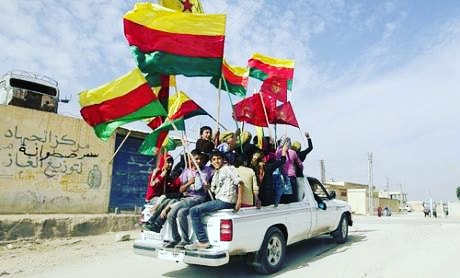





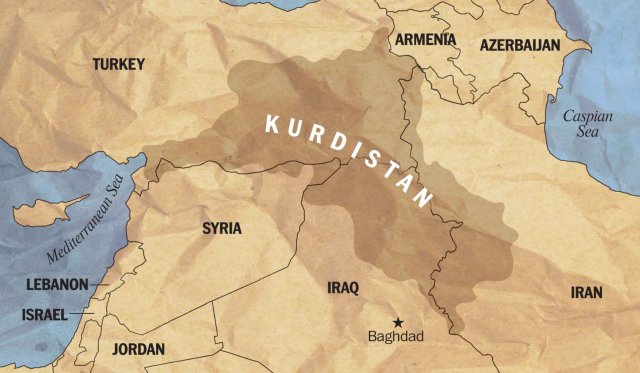






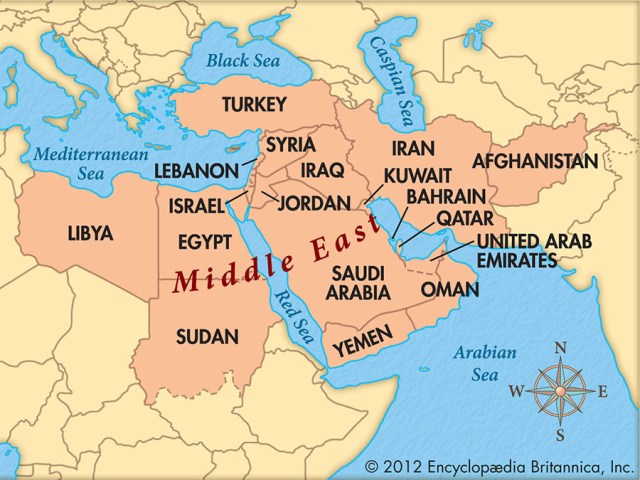

 WALTER SEBASTIAN ADLER