Absolument tout moun, all people, in “La Resistance”, which is to say le People’s Protection Units (Y.P.G.) and Women’s Protection Units (Y.P.J.), will give you only a Kurdish guerrilla name,” says Heval Piling of Paris, France. He is the son of African immigrants that have settled in the outskirts of the French capital.
Some are given their “heval name” by the P.K.K. cadros during the smuggle crossing from the base of the Qandil mountain over le Tigris river into north east Syria’s Jazeera Canton. Others are given their nom de guerre in the first few days of their arrival at the guerrilla Academy near Qerechow. Some gain it beforehand through their affiliation with Kurdish Movement in Europe. There are probably under 100 names used. 20 of them are quite common and they are frequently recycled.
The training base is located amid the levers, pumps and minoring systems of the Ruemelin oil fields, the original base and 22 foreign volunteers and Y.P.G./Y.P.J. fighters were incinerated in Turkish airstrikes which occurred in early May.
You are given a first name and can choose your last name. And this is who you are while fighting for the Revolution in Rojava.
My code name means ‘The Tiger’. I heard a story before I left for Syria from a tall anarchist, code named Firat. I am very paranoid about any press coverage or even photographs the French police are already harassing my family. I am a black so I will not be treated the same as other French. I am already under suspicion.
Heval Firat told me that after his first tour of six months he came back and held a small meeting of radicals. He told them of his time in Rojava and encouraged them to go experience the revolution themselves. He was arrested two days later. Clearly an informant was in the meeting. He was charged with terrorism and recruitment of terrorists. His passport was confiscated and it took him a year to travel to Rojava because getting it back was such mierd. (Such shit).
I grew up on the outskirts of Paris. In one of those Arab ghettos you always see the riots happening in. I am of African descent thus I am not treated exactly like a French man. When I deployed to Rojava with the volunteers my family was harassed weekly. I was accused of joining Daesh and preparing for terrorism. The entire time I was there serving, I was stressed. So stressed. The security service kept telling my Mom I was a traitor to France. France is one of countries with strict policies on entering the Y.P.G. as a volunteer. Like Britain they make your life a living hell and try confiscate your passport on reentry.
My name is the Tiger, or Piling in Kurdish. The Arabs have given me another name, but it is top secret. I later went on to kill many men in Deir-Ez Zor with the Dragunov sniper rifle I was given. I speak fluent Kurmanji so I was put in a Kadro unit. Party lifers who have sworn total allegiance to ‘the Revolution’ and Serok Apo. Fanatics, like me.
Abdullah Ocalan’s face is absolutely everywhere in Rojava we have read. The sly, chubby brilliant revolutionary beaming out at us all from his prison cell in Imrili, should he still be alive. He is perhaps not alive. The Turkish fascists have held him hostage and tortured him since 1999. But this is his party and his revolution. One must accept the cult of Apo (which means uncle) because his leadership allowed miracles for the Kurdistan Workers Party (P.K.K.); yes ‘our P.K.K.’ survived the Cold War and is the last resistance movement left to challenge the West and its puppet Turkey. We are asked to read his books and understand his thinking before we enter the Y.P.G. because this is a revolutionary militia. We are fighting for far more than the destruction of Daesh!
I am an Anarcho-Syndicalist and a Platformist. My group in France and Russian has sent to the Y.P.G. to make an assessment about its capabilities and Rojava’s potential for survival against the Turkish army once Daesh is eradicated. Groups like M.L.K.P. have for years used Rojava as a training ground and contributed hundreds of fighters to the cause. Not as many as the Jihadists certainly. But it is thought that more than half of the 500 volunteers were Turkish nationals with the M.L.K.P. I am to discover if my group can make a base here like they do. I am to discover if the Turks will just burn this whole revolutionary effort to the ground.
HEVAL PILING
I am very excited to join the armed struggle. I think it is inspiring what the Kurds have done since the Siege of Kobane when they were almost completely annihilated.
Of course the U.S. airstrikes saved them. Of course as soon as ISIS is finished the Turks will sweep south to mop up this cordon of resistance the P.K.K. has built via its Syrian arm the P.Y.D. We are probably the last wave of foreigners that will go in. The logistics will get worse and the fight with Turkey will not be the same as the fight with Jihadists in Daesh.
I am good with a rifle. I know the language. They will respect me more because I have taken the time to learn Kurmanji, the other volunteers always complain how shut out they are by language. Firat managed to get his passport back and not be charged with terrorism. He arrived in Rojava a few months before me and went back to his Suikastunit. Heval Firat encouraged me to come, though I was not at the fatefully infiltrated meeting where all the potentials were discovered, charged and shook up to step down.
The number 500 is very small. Embarrassing even; the M.L.K.P. is a disciplined Turkish communist group who has taken on over 100 Shahids. They have a deep alliance with the Party. But my structure has sent me to make the same deal. Can Rojava hold out long enough to export revolution? Can volunteers survive long enough to return to fight in the West? These are the questions I must answer. And while I’m away French police will make my mother very upset and afraid. They will basically terrorize her.
Besides from Firat the Anarchist and Piling, the Tiger; there were several other French of note who prepared to cross into Rojava or were already inside. We know them only by their assigned Kurdish names. Heval Serhat was a lawyer and a petite aristocrat. Proudly French he prepared for adventure not revolution. He was there to kill ISIS and avenge his terrorized homeland. France had over all borne the brunt of ISIS terror. They sure underestimated what effect the well-choreographed executions would have on the hyper-plugged in West. If anything it got them invaded with greater speed.
Serhat wasn’t named Serhat yet, nor was he even trying to join the Y.P.G. He was not a leftist and was hoping to link up with a famous Spanish fascist who had made a name for himself in Sinjar with the YBS. Unlike the YPG, he wouldn’t have to deal with all the ideological bullshit he was told. Serhat was a dandy; handsome and conservative. The struggle of his life before he got to the killing fields may have been the challenge of law school examinations. Some woman may have broken his heart once.
A stranger to military or Islamist danger, Sher was “a Parisian waiter with socialist family values”. He had less qualms with the left being a leftist and was eager to join the YPG. His English was almost non-existent as was his Arabic and Kurdish, but he was eager to battle ISIS. Sher was a communist but not in any party. He had fired a rifle before and assumed he proved to be a good enough shot.
Neither Heval Sher nor Heval Serhat were eager to battle the Turks. They were aware that they were coming in on the tail end of the counter-ISIS operation. Raqqa, Mosul and the rest would all fall one after another by the wintertime. And after that all acknowledged the Americans would abandon its Kurdish and Shiite allies. The Turks would then move in to crush the revolution in Rojava and kill anything in their path. These were the discussed eventualities.
HEVAL PILING:
This was going to be the last time volunteers could get in easily, and fight ISIS, as they would be finished soon and the border sealed up for a time.
After this batch, everyone will be fighting against Turkey. What made the period of our deployment most uncertain was a combination of factors. First, ISIS was almost entirely annihilated in Raqqa and on the run in Deir Ez-Zor. Second, the Russian Syrian-backed army and the Y.P.G. were racing on either side of the Euphrates River to seize more territory. So far most of the largest river cities were in the hands of the Syrian Regime and most of the oil was in our hands. Tension was building, sometimes erupted into firefights; since no one realistically believes the Assad Regime will tolerate Federal Rojava. At the same time, Turkey is ready to attack Afrin Canton at any time, seizing the Western most Canton before we can fight our way through Syrian Jihadists in Al Qaeda to close the gap. And, everyone knows our U.S. allies will abandon us as soon as ISIS is vanquished. Thirdly, the impending Kurdish referendum will provoke the Iraqi Army to seize border crossings in Sinjar and North West of Dokuk, making betting people and supplies into Rojava even harder.
The biggest uncertainty is what will happen when ISIS is inevitably defeated. But it’s not that uncertain really. Turkey, the second largest military in N.A.T.O. will immediately attack us and try and crush the revolution. Any of us are still here to face them. We will all most likely be killed. C’est la vie. This is the risk of real change. This is the Resistance of our time so we say. The historic event that will shape the movement for real change for the next thousand years.
“Only a coward would profess loudly these coffee house revolutionary views then turn their back on defending a real revolution!”
Kobani—also known as Ayn al-Arab—lies to the east of the Euphrates River. The town had grown up around a 1912 train station built as a stop on the Ottoman Empire’s Berlin-to-Baghdad railway. The city was largely home to Armenians and Kurds and had a population of about 45,000 when Syria’s civil war began in 2011.
In July 2012, Kurdish forces in the Y.P.G./Y.P.J./P.K.K. took over protection of the city of Kobani and all the districts around it.
Kobani holds a strategic position on the border with Turkey. From Kobani in the West, past Sinjar and toward Erbil in the East, lay a corridor of oil pipelines and refineries. ISIS was tapping the oil for more than $2 million per day in revenue. Control of Kobani would help solidify ISIS control of Syria’s oil fields. Locking down that revenue was part of the goal for creating the ISIS caliphate Under ISIS control, Kobani would also be a haven for recruits going south to fight in Iraq. Already over 50,000 had crossed in.
“It looked easy.” On Sept. 16, ISIS forces seized a key bridge over the Euphrates. A drive with tanks and artillery captured small villages and brought ISIS to within 10 kilometers of the city of Kobani by Sept. 20. Soon artillery fire was falling into the city. Turkey counted 130,000 Syrian Kurdish refugees streaming across the border four days later.
Up to 4,000 ISIS fighters were advancing in parts of the city. Countering them was a determined force of fighters, starting with groups of Syrian Kurds. They were soon joined by Peshmerga, official Kurdish forces of Iraq’s autonomous Kurdish region, and numerous other groups. Kobani’s defenders were in trouble, though. ISIS took an important hill from the YPG—Kurdish militia in Syria—on Sept. 26. The momentum could overwhelm the city. Brazen ISIS forces behaved like an army moving freely, out in the open on the roads and arid terrain.
The Siege of Kobanî was launched by the Islamic State of Iraq and the Levant on 13 September 2014, in order to capture the Kobanî Canton and its main city of Kobanî(also known as Kobanê or Ayn al-Arab) in northern Syria, in the de facto autonomous region of Rojava.
By 2nd October 2014, the Islamic State had succeeded in capturing 350 Kurdish villages and towns in the vicinity of Kobanê,generating a wave of some 300,000 Kurdish refugees, who fled across the border into Turkey‘s Şanlıurfa Province. By January 2015, this had risen to 400,000.The Kurdish People’s Protection Units (YPG) and some Free Syrian Army (FSA) factions (under the Euphrates Volcano joint operations room), Peshmerga of the Kurdistan Regional Government, and American and US-allied Arab militaries’ airstrikes began to mount a last-minute defense.
For the next 112 days the world watched as the Kurdish forces defended the city street by street by street block by block in horrific bloody street fighting.
Waves upon waves of Daesh truck bombs blowing young men and women apart. It was believed that the outnumbered and outgunned Free Syrian Army, Peshmerga, Y.P.G. and Y.P.J. were doomed and would be quickly annihilated.
The Islamic State advanced with precision and with incredible confidence. In several prongs they attacked Kobane City murdering everyone standing in their way. Some people they put them naked in cages, then burned them alive. Some they gang raped, some they scalped, beheaded or others they burned alive in cages.
In the ISIS mythology anyone killed by a female fighter is denied the glory of martyrdom, so they savagely set on any female defenders they captured.
In many ways, every horrific thing you might associate with the Syrian Civil War came from the Islamic State, or the Assad Regime and or the Russians. But the brutality Daesh is known for, they recorded it gleefully. They broadcast it freely. They made it sleek for replay in dark corners of the internet. And also on the screens of Western TV.
In a Report by American Air Force analyst Rebecca Grant:
“When the so-called Islamic State set its sights on Kobani, Syria, in mid-September 2014—encircling Kurdish fighters there—then-Secretary of State John Kerry warned that the city couldn’t be saved. As Turkish tank crews watched tensely from across the border, the US Air Force and coalition air power went into action, making supply drops and hitting surrounding ISIS forces with bombs dropped from B-1B bombers.
The 112-day siege proved to be the turning point in America’s commitment to fighting in Syria, and a battle lab for dynamic air and ground tactics.”
Mosul, Iraq, fell to ISIS in June 2014. Three months later, ISIS fighters were battling Iraqi forces less than 25 miles from Baghdad. The fall of either Baghdad or Damascus would have sent a theological signal to an even greater number of foreign volunteers to enlist. At the time of Kobane it was widely understood by the intelligence community that over 50,000 foreign fighters had joined ISIS. Largely entering through Turkey.
US and coalition airpower intervened, releasing 1,200 weapons in strikes during August and September 2014.
“As you know, this has been an important week for the US and our coalition forces as we began air strikes in Syria,” Defense Secretary Chuck Hagel said Sept. 26. US and Arab allies carried out 43 air strikes into Syria, he reported.
The first US airstrikes near Kobani began on Sept. 27. Air Force F-15Es struck an ISIS command and control center; a typical target for that phase of the campaign. Also in action were aircraft from the carrier USS George H. W. Bush. For the next two weeks, coalition air strikes continued, but only in small doses. Coalition planners struggled to pinpoint suitable targets and to work with Kobani’s defenders. By Sept. 30, the Pentagon reported 76 airstrikes in Syria, mostly near Kobani.
Washington was in shock. The Intelligence Community and Director of National Intelligence James R. Clapper “acknowledged that they underestimated what had been taking place in Syria,” President Barack Obama told “60 Minutes” on Sept. 30, 2014.
Defending Kobani would take a direct US commitment to defeating ISIS in Syria. While US and coalition partners were pledged to chase ISIS out of Iraq, Syrian policy was another matter. Fighting for Kobani meant more intelligence, surveillance, and reconnaissance, more air strikes, and forging a relationship with groups of Syrian Kurds as new partners on the ground.
“You can’t defend Kobani, Baghdad, Mosul, Erbil, and Sinjar,” as well as conduct strikes “against the Islamic State in places such as Raqqa, with a limited number of ISR orbits to collect necessary intelligence,” a senior Pentagon official told Kate Brannen of Foreign Policy on Oct. 7.
Although the coalition apportioned air strikes to the beleaguered town, pessimism prevailed. A total of 135 air strikes had been carried out on Kobani targets by Oct. 9. “The US has now struck Kobani more than any other target except the Mosul dam,” Jim Sciutto of CNN tweeted on Oct. 9, 2014.
Still, Washington wavered. The Obama administration had committed publicly and at the United Nations to pursuing ISIS through Iraq. What about Syria
“As horrific as it is to watch in real time what is happening in Kobani … you have to step back and understand the strategic objective,” Kerry said at a news conference in Washington with Philip Hammond, Britain’s foreign secretary.
“We are trying to deprive ISIS of the overall ability to wage [war], not just in Kobani but throughout Syria and into Iraq,” Kerry added.
“No Can Do” screamed Time magazine’s headline on the prospects of saving Kobani.
“The US has been restricted in its ability to battle ISIS for two reasons: it waited for months before taking action, and then—per Obama’s orders—it decided not to commit any US ground troops to the fight,” Mark Thompson wrote in Time on Oct. 9, 2014. Katherine Wilkens of the Carnegie Endowment for Peace called Kobani “A Kurdish Alamo.”
“In a coalition where most of Washington’s regional partners are primarily focused on regime change in Syria, the jihadist attack on Kobani offers a test case of whether the United States can get its partners to temporarily set aside their other priorities and act effectively against the Islamic State,” Wilkens wrote in an Oct. 10, 2014, piece.
NATO allies such as the Netherlands and Belgium were deploying forces to join the coalition, and France was already in the fight. For the time being, their parliaments had restricted air strikes to territory in Iraq only. Ultimately, Bahrain, Britain, Jordan, Qatar, Saudi Arabia, and the UAE air forces participated alongside the US providing air support for Kobani.
Airpower was the main tool available. “Just to remind, there’s not going to be a US ground combat role here,” Rear Adm. John Kirby, Pentagon spokesman, said on Oct. 10, 2014. “I’m putting that out very clearly.”
As for airpower, some doubted its effectiveness, given the slipping situation.
“I don’t know what’s going to happen because, again, in the absence of any ground force there, it is going to be difficult just through airpower to prevent ISIS from potentially taking over the town,” then-Deputy National Security Advisor Tony Blinken told NBC News on Oct. 13.
Air strikes were, however, definitely having an effect. The attacks quickly constricted the mobility of ISIS forces. “Before the air strikes happened, they pretty much had free rein,” admitted Kirby. “They don’t have that free rein anymore, because they know we’re watching from the air.”
ISIS forces got better at concealment, according to Kirby.
Two types of air strikes were underway. First was dynamic targeting of what Kirby called “mobile assets on the ground.” These included tanks, command posts, even trucks used in the oil smuggling. Deliberate, pre-planned targeting also went against “fixed targets, a headquarters building, command and control nodes, a finance center, oil refineries.” The idea was to prevent ISIS from consolidating its gains.
However, a sprinkling of strikes wasn’t going to be enough. ISIS forc- es and tanks advanced closer to the center of Kobani on Oct. 10. A spasm of suicide vehicle bombings followed as ISIS fighters tried to dislodge Kurdish strongpoints.
Both sides were now determined to prevail.
Saudi Arabia joined US fighters and bombers striking ISIS targets southwest of Kobani on Oct. 13.
“Rather than the bombing prompting a tactical retreat” by ISIS units, “they appear to have doubled down in their quest for Kobani,” observed Derek Flood, a journalist who was in Turkey on Oct. 15, 2014. As American air strikes rapidly increased in and around Kobani, ISIS fighters “ushered in reinforcements from their reservoir of recruits in al-Raqqa and Aleppo, and ramped up their employment of vehicle-borne suicide bombers,” Flood wrote in the CTC Sentinel, West Point’s counterterrorism journal, in November 2014.
For ISIS, too, this was chosen ground. It clearly mattered to ISIS, Kirby said, “because they kept presenting themselves there and presenting targets.”
In fact, the air strikes put Kobani in the global spotlight. For the US and coalition partners, Kobani was on the verge of becoming a major failure.
Across the border, Turkish tanks lined up to keep a wary watch. Turkish civilians could see the fighting in Kobani from the town of Suruc on their side of the border.
ISIS fighters took over key checkpoints then a key outlying overlooking hill. And then drove the Kurdish defenders out of a key defensible school building. Defeat look inevitable.
With Kobani nearly defeated, Washington made its move. NATO ally Turkey had entered the anti-ISIS coalition on Oct. 2. Now Turkey agreed to allow resupply to the Kurds to sustain the fight in Kobani. Washington placed its bet on airpower.
On Oct. 20, three USAF C-130s conducted multiple airdrops to resupply Kurdish forces, defending the city. In the airdrops were 24 tons of small arms and ammunition. The airdrops also included 10 tons of medical supplies. Kurdish authorities in Iraq provided the supplies, according to Central Command. As the operation progressed, Operation Inherent Resolve would log over 1.4 million pounds of supplies airdropped from August to December of 2014. From a strategic perspective, there was hope.
“For its campaign against Kobane, [ISIS] has converged en masse for a conventional attack upon a fixed geographic point,” observed Jill Sargent Russell of Kings College London. While ISIS “might momentarily hold an advantage against any concerted defense with effective fire support, they are weak and soft targets,” she pointed out in an Oct. 20, 2014, comment to Britain’s Daily Telegraph.
“Suddenly, the fight for this little-known town took on vast symbolic significance,” wrote Fred Kaplan in Slate on Oct. 31, 2014. “And if ISIS was telling the world that Kobani was a decisive battle along the path to the Islamic State’s victory, then Obama—who’d put American resources and credibility on the line—had little choice but to treat it as a decisive battle as well,” Kaplan assessed.
By early November, ISIS was failing to gain new ground. Four attempts to take a border crossing with Turkey had failed. ISIS called for reinforcements. So did the Kurdish fighters. Backed by steady US and coalition airpower, the Kurdish groups were securing their foothold in Kobani.
ISIS controlled about 60 percent of Kobani as of Nov. 5, 2014. It would prove to be their high-water mark.
The decision to assist Kobani marked a change in the US strategy in Syria. Now the US had to “deliver on helping develop a trained, moderate opposition in Syria that has the requisite leadership and military skills to actually go ahead and defend territory inside Syria,” as Kirby explained at the Pentagon.
What followed was two months of street-by-street fighting. For US airpower, the problem was that ISIS fighters had wrapped themselves around the city and what was left of its civilian population.
It was up to a combination of ISR and battlefield input from the Kurds to outline areas for strikes. As the force on the ground improved tactically, so did its use of airpower. Open supply lines from Turkey also had a significant effect.
US and coalition aircraft striking Kobani faced a long flight from deployed bases. They also had to fly past Syria’s air defenses. Syria’s integrated air defense system usually looked westward, toward Israel, and coalition aircraft operated in the East. Yet the threats were real.
American F-22s in-theater helped quarterback the strike packages. Aircraft such as B-1 bombers, F-15E and F-16 fighters, and others carried electronic warfare systems able to process and jam signals. The B-1s were especially good at dealing with electronic threats.
Dynamic targeting was sharpened during the siege of Kobani. Joint Tactical Air Controllers rarely deployed with the Kurds. Instead, they employed ISR to watch the fight. As targets developed, JTACS did collateral damage estimates and forwarded targeting. Sometimes cell phones were part of the process.
Lt. Gen. John W. Hesterman III, then-commander of US Air Forces Central Command, explained that the vast majority of dynamic targeting strikes were “well away from friendly troops in contact. And we use a multitude of sources to initially ID the enemy and communicate what we see. Then JTACS in operations centers do a collateral damage estimate and then we deconflict friendlies. And when that’s done, a senior officer clears the sortie.”
“You know, the average time for those strikes, by the way, is measured in minutes, not hours, or even halves of hours.”
By far the single largest amount of ordnance pounding ISIS targets in Kobani came from B-1 bombers, which dropped 1,700 precision guided weapons on Kobani during the siege.
“Bones” from the 9th Bomb Squadron at Dyess AFB, Texas, deployed to Qatar in July 2014 expecting six months of long combat overwatch flights to and from Afghanistan’s airspace. They had been used consistently since 2001 to loiter and drop bombs, provide overflights, or simply keep watch. Previously, in Afghanistan, the 9th Bomb Squadron’s B-1 crews found it could take four to five hours to develop and strike a target.
In 2013, they’d dropped just 93 bombs in Afghanistan over six months.
At Kobani, the intensity of the fight ratcheted up. “It was a massive shift in rules of engagement,” said Lt. Col. Erick Lord, the 9th BS commander, to Military.com in a January 2018 interview.
In Kobani, “It was just go. Blow everything up,” Lord said.
“It was an urban environment, so there were a lot of buildings,” Maj. Charles Kilchrist told the website.
“We had jets there every single day for 24 hours a day. Along with the F-15E Strike Eagles,” he said.
An F-16 pilot described her missions over Kobani. Especially after night sorties, dawn would break over the deserted town. It looked “like a moonscape,” she said.
One ongoing concern was interference from Syria’s Air Force. This F-16 pilot appreciated how F-22s often just took care of air superiority and let the F-16s concentrate on air-to-ground work.
Maintaining air patrols over Kobani meant six or more hours on station. Depending on what happened, fighters were often rerouted back into Iraq to refuel.
The F-15s and B-1s would tag each other, handing off targeting coordinates as they rotated in and out for the days-long watch.
“We were just bombing them back, and back, and back … to the West, and [ISIS] would try to sneak around to the South, and then we would see them, and … it was just a huge battle,” Kilchrist said.
On the ground, the arrival of Iraqi Kurd Peshmerga troops brought forces with experience in coordinating US air strikes.
“There were times we were bombing across the street, and as soon as the weapons were going off, they are charging into the rubble to take out what’s left and move forward that line of troops to the next block,” one B-1 pilot told Air Force Times. “It’s an amazing job the [Kurdish forces] did and how they are, more so than air- power, critical to victory in Kobani.”
The B-1s went Winchester—dropping their entire bomb load in one mission—a total of 31 times in the fight for Kobani. That was a credit to smooth air-ground coordination. Typically, crews would release weapons on individual targets throughout several hours.
“The more they [ISIS] try to act like an army … they just reinforce failure, and we kill them at a very great rate,” concluded Hesterman.
“They were very willing to impale themselves on that city,” one B-1 crew member told Air Force Times.
On Jan. 19, 2015, Kurdish YPG fighters stormed Mistanour Hill. Kobani was declared fully liberated about a week later.
The “air strikes helped a lot. It helped when we had a reliable partner on the ground in there who could help us fine-tune those strikes,” Kirby told reporters at the Pentagon on Jan. 27.
Kobani was a significant defeat for ISIS. It lost personnel, territory, and its command and control safe haven. The ISIS plan to mass and exert military force over the city fell apart.
CNN reported ISIS fighters withdrew from Kobani because “we no longer had places to hold there,” an ISIS fighter said. “We were inside Ayn al-Arab and we occupied more than 70 percent, but the air strikes did not leave any building standing, they destroyed everything.” The targets even included motorcycles, he added.
Also in late January, Hagel announced the US would begin to train and arm Syrian opposition forces. The success of combining Kurd ground forces and coalition airpower at Kobani had proved the concept.
Then-USAF Chief of Staff Gen. Mark A. Welsh acknowledged that his service flew about 60 percent of the sorties in the air war against ISIS. However, he shrugged off the credit.
“The DOD approach is not to defeat ISIS from the air. The intent is to inhibit ISIS, to attrit ISIS, to slow ISIS down, to give a ground force time to be trained because the ground force will be required,” Welsh said in a State of the Air Force press conference on Jan. 15, 2015.
Holding Kobani was not the end of the ISIS fight. It took a huge acceleration of air strikes from 2015 through 2017 to secure Iraq and bottle up the worst of ISIS. The weapons release count for Operation Inherent Resolve reached 106,808 at the end of 2017.
However, at Kobani, airpower again stepped in as the workable option in a foreign policy crisis, with lives on the line and the world watching. As with Bosnia, Kosovo, and the early days of Afghanistan, allies found their airmen provided a way to fight.
Concluded one B-1 crewman: “I look forward to telling my grandkids that I got to help these people and to defend their homes.”
On 26 January 2015, the YPG and its allies, backed by the continued US-led airstrikes, began to retake the city, driving ISIL into a steady retreat. The city of Kobanê was fully recaptured on 27 January; however, most of the remaining villages in the Kobanî Canton remained under ISIL control.The YPG and its allies then made rapid advances in rural Kobanî, with ISIL withdrawing 25 km from the city of Kobanî by 2 February.By late April 2015, ISIL had lost almost all of the villages it had captured in the Canton, but maintained control of a few dozen villages it seized in the northwestern part of the Raqqa Governorate. In late June 2015, ISIL launched a new offensive against the city, killing at least 233 civilians, but were quickly driven back.
The battle for Kobanî was considered a turning point in the war against Islamic State and the beginning of official collaboration between the United States of America, the single largest military force on earth and the Kurdistan Workers Party, considered a terrorist organization by Turkey, American and virtually every major country in NATO.
This was also the beginning of the PKK-American alliance lacking any other credible ground force to take on ISIS; a leading imperalist hegemon shortly after began training and funding one of the last important leftist gurerral groups left standing after the cold war, as long as they could work under a front; and the name of that front become the SYRIAN DEMOCRATIC FORCES.
Raqqa City, ISIS Controlled Territory, former Syria
Recounts the decapitated mujahadeen Abdullah Shamil Abu-Idris.
ABU IDRIS
“There is a protracted siege now well underway of this Syrian Bunker Citadel, that historically changed hands many many times; and it was clearly not going to end well. Not for the attackers, the defenders, or the 200,000 plus people trapped standing in between.”
Not every single ‘Daesh’ is an intimately, innately miserable and evil person. Some are also Turkish spies, the mentally ill, or rapists. Some are on drugs, some are sadists and also people with identity crises. Some just wanted to fuck concubines. Or impose themselves upon others. For many of the ten million people who found themselves within the ISIS zone of control, an area around the size of Great Britain. It was the lesser of many evils. That is why in virtually every city that initially encountered ISIS with all but a few exceptions, there was no resistance at all.
The City of Raqqa at the height of the S.D.F. Offensive had around half a million people living in it and under it. Raqqah was re-developed by the Assad regime as one enormous bunker complex, a fall back base for the regime if Damascus fell. Which it nearly did. The capture of either Baghdad or Damascus, historic centers of Islam would have triggered in the global Muslim community a surge of foreign fighters. It would have subconsciously triggered a mighty influx of support.
“God is Great”, but his actions are often highly in-understandable! Everywhere on earth the Ummah was suffering, crying out for the righteous to stand up to these Crusaders, these Shiite Apostates and their Zionist allies. That is what the Baghdadi Caliphate was set up to achieve. The defeat of the Kafirs and the glorious triumph of Sunni Islam. Real Islam, not the Islam of reformers, collaborationists, idolaters and innovationists. Embracers of Shirk. The inevitable return of the Mahdi our redeemer. But, things have again completely fallen apart. We’re barely holding on now, surrounded by a united cohort of enemies.”
As explained by the Jihadi Abdullah Abu-Idris a Syrian Arab from Medayiin captured and interrogated during the gruesome 9 month battle for Raqqah City.
At the height of the Caliphate following the death of the Prophet Mohammed, Abu as Salem, in X year our Ummah stretched from Spain to Indonesia, from the Balkans down to Africa. The Caliphate of Baghdadi well it was allegedly the size of Great Britain, had some 12 million subjects and stretched from just west of Baghdad to just east of Damascus. The largest city, currently completely under siege was Mosul and the administrative capital also completely now surrounded by Kurdish hordes is Ar Raqqah.
There are barren beige rocky, earth dunes in every direction. Alongside the Euphrates River it is lush and periodically scenic, but less than three kilometers out; dust and despair. Ramadan has begun, but the infidels bombard us day and night. We are in full retreat on all sides.
It is so hot, but of course I remember to make my prayers and keep my faith, because I am a Muslim. I submit only to Allah, and I know the road I am on will lead me to paradise either in this world should we be victorious, or in the next should we fall as Martyrs.
There remains a deep vacuum in the depiction of the war to explain the motivation of the 40,000 estimated Muslim volunteers who crossed the world, infiltrated Iraq & Syria, to defend the radical Caliphate led by Baghdadi. Humanizing these people is essential to making any basic arguments that ISIS had real grievances and framed reality in a way that spoke and speaks to a whole generation of Muslims. However, as complex the span of motives might have been, but 2017 most of them were dead and the coalition had encircled both Mosul and Raqqa City their dual capitals. If a Mahdi was coming, he was very late in the game. As rapidly as “the Caliphate” had risen and marched in every direction, its forces were now nearly obliterated. Of course it was this hardcore of foreign fighters that held out the longest, with their families, with absolutely nowhere to run and nowhere to hide.
My name is Abdullah Shamil Abu-Idris, or ‘Shamil Basayev’ as my name of war. I’m named after a famous Chechen Mujahideen, freedom fighter killed in the liberation and resistance wars that happened in the Caucuses between 1994 and 2004. He was killed in an airstrike to his phone in 2006. I am Syrian, but to us Shamil is a real Muslim hero. He took on the Russians after all, the same barbarians we fight now on our south western front. Well anyway, the Russians eventually martyred Shamel. Allegedly also they killed 1 in 7 Chechens and raped 1 in 3 of all Chechen women. Which perhaps is why such a large contingent of foreign mujaheddin as Chechens.
Now, we fight the Russians and Hezbollah from the South and the Kurds from the North. In Mosul the Shiites surround us. The American airstrikes have completely tilted the battle field against us.
There are not that many of us left. Perhaps 5,000 fighters, in the beginning it seemed we were sanctified and invisible, mujahedeen arriving from around the world. There is a distinctive dread of impending defeat. The Kafirshave bombed all out cities and given weapons to the Kurds and Shi’ites who are our resolute enemies.
I never got enthusiasm from a public beheading. I’m a good Muslim, so I never got down on the excesses happening under the mantle of the Caliphate. I came with my wife and two children from Chechnya. Clearly the Ummah is under attack in every corner of the globe and the Caliphate here was such an obvious form of resistance. The endless be-headings, gruesome public burnings and sex slaves were a little much for me. Over tea, some of us would go so far as to say it was the actual undoing of the entire Islamic State project this very well publicized brutality. Throwing homosexuals off the roof tops, well everyone had a chuckle about it, but really we should not have televised all that stuff.
Now, Mosul and Raqqa are completely besieged and we’re all going to fight to the death. Raqqah City was rather beautiful once. The Caliphate was nothing like all the slaughter and terrorism on the media, though we made that media and we made that terrorism. What people will never understand, the Kafrs I mean, is that we all actually want a caliphate. We want women protected in the home. We want non-believers regulated paying the Demi tax. We want alcohol and cigarettes banned. We want mandatory prayer five times a day. It’s Islamic to want these things. The Kurds are all secular communists, so we killed them. The Shi’a are treacherous hypocrites, so we killed them. The Yazidis are devil worshipers, so we massacred them in Sinjar and made their women sex slaves. I didn’t do any of that. I arrived in 2016. It was actually beginning to crumble apart already, but I had faith in the Caliphate. Well of course I still do have faith that the will of Allah is highly complicated and this grand set back is all part of a larger clash, a cosmic war. Of course Islam will triumph in the end, because that is what the prophet declared. But, for now, things look bleak.
I mean, how many generations of Muslims must fall to these crusaders before we restore the true religion of Islam? This is about resistance to the genocide of Muslims. Albeit, strange that the leaders live in mansions and drive sports cars. Strange that none of the Imams are very learned. Strange that Turkish and Saudi money is all over the place in rumors, but all the ISIS leaders met in an American prison.
Frankly, life here is not a lot better or a lot worse that in fascist Russia. I would say that for my family all things are comparable, or were until Raqqah was besieged. Now, I suppose we will all die here at the murderous hands of Kurdish communist armies.
I think it is good to die for Islam, but maybe for the sake of my family we will try and get through the lines and cross down the river to Al-Mayadeen.
The last stand against the invading Kurdish army will be in the Deir-Ez-Zor Province, deep in the desert along the Euphrates River valley.
The Western Media dehumanizes Muslims and makes us look fanatical, but after our people are massacred in every single nation on earth and the West declares explicit war on our religion, what exactly is the moderate position? There isn’t one.
I was young when the towers came down, but it was appropriate. The C.I.A. and its Zionist allies have toppled the governments of Iraq, Afghanistan, Libya and Syria. They are remaking the Middle East for the good of Israel and oil corporations. The fact that their alliance against is one of Shiites and Kurds speaks to how they will stop at nothing, arm anyone to destroy Islamic law and governance. The great hypocrites are the Saudis for while they secretly send us money and clerics, they live off the glut of American petroleum trade.
This project, the Caliphate had contradictions of course. But, it was popular to many and most under its rule. Sunnis welcomed a protecting force with so much instability in Syria and Iraq. Iraq has fallen to the Persian Kafirs who fight us with Iranian help in Mosul.
We are better warriors than the Shi’a or Kurds, but we don’t have air power. This is why we are now losing the war town by town, street by street.
I will get out of Raqqah, but I will fight and die with the brothers for the Islamic State. I know that at least for me and my Muslim brothers, this is very historical and important. 40,000 of us came to support this, thus it is not the cult of Baghdadi or extremism. It is legitimate and essential to Sunni that this survive, whatever the odds.
I am of course willing to shoot Kafirs to protect true Islam! That is in the Qur’an. That is what Jihad is. War is terrible, the war in Syria is very awful. But, we didn’t start the war. The war is a product of the big game between Russia and America. Everyone is clear on that. The Shiites side with Russia because of oil interests and politics. The Kurds side with America, because everyone hates their seditious plans.
Look, I’m not so violent! I’m not so radical. I’m against the sex slaves, fast cars and big houses of the leadership. I’d like to sometimes have a drink, sometimes. I had bacon in Russia, it was very tasty. You will never understand why this was important to us, but it was very important to us. For my generation it was almost cataclysmic. As if the Prophet himself might show up any day now.
But in the end he did not. And the coalition airstrikes took their bloody toll. Though I will likely meet a martyr’s death out here, I must say that the Caliphate and the rise of ISIS was enthralling to all the billion or more believers. Everywhere on earth Muslims are being massacred. Everywhere we are impoverished and abused.
If like others I had sat this all out and watched it from a TV screen I would not have lived up to my own beliefs about Allah and my faith and my religion.
Later on they very much beat me badly for many days. Then eventually I was executed in a ditch. I cannot really confirm or deny that there were any virgins where I went because I do not want to upset any of the tens of thousands of Islamic martyrs who resisted the Kurdish infidels, Shiite apostates, and Western Crusader forces.
But actually, when I died, I was just dead, with no bells whistles, virgins or rivers of milk or of red wine. The only virgins were probably the Kurdish and Yazidi girls we all abused.
In Birmingham, U.K. sometime in late of 2016, two British Hevals meet in a bleak coffee shop with no phones to say hello, good bye and hash out some final details for their upcoming deployment into Rojava.
“My government name is not relevant to you, Hevalin, as they say.” Havalin is the plural of Hevals, my man and multiple friends.
Says Heval Errdal, a cheeky British Jew of left wing leanings with many Kurdish friends. He sits with his old friend Ana Montgomery Campbell from Lewes, U.K. who later died a Martyr in the defense of Afrin Canton. The British pipeline begins in Birmingham. Actually hundreds of ISIS Islamists had been recruited from Birmingham. Literally many hundreds.
“You may call me by my Kurdish guerrilla name, Heval Erdal. I’m lanky and have a highly disarming grin, so say the ladies. I’m just having a kid, which is to say a laugh; the ladies don’t say nothing like that. I’m British clearly, but also a cheeky part Jew. It’s not a very well thought out part to be honest. Don’t practice any of it. I became active in the Kurdish movement protesting Turkish arms deals and attending cultural events at the centers. My working class British city had literally hundreds of Jihadists who took off for the Middle East and joined Daesh. Fuck all mate, hundreds! They took wee kids and wives with them. They thought it was the end of times. Well it had end of times properties, I’ll give it that.”
So I was always a ‘wee activist’ with politics of the progressive kind, but I love them Kurds man! They’re so awesome. Humble, principled mountain people. Leftists. Warriors. Love um! Sometime in August of 2016 I made up my mind to travel to Kurdistan and join up with the People’s Protection Units; the famous and glorious Y.P.G..
So I worked a bit more than usual. I saved up about 2,000 quid and there I had a chance to ask the right questions about who to contact, literally just an email address called YPG REVOLUTION, and I answered a bunch of questions for them. Then I was approved to go. It didn’t take nearly as long as lots of chaps complained. Britain has the second largest contribution of foreign fighters to Y.P.G./Y.P.J. right after Turkish leftists.
But life happens, you have a girlfriend you can’t bring, and you have an apartment you can’t just leave. You also have a bit of fear in you. No one wants to die! Unless you’re one of these Jihadist tossers. You make various excuses. Well not me, I don’t worry about dying. I had a pretty boring apartment. My job was bullocks. We all have bollocksy jobs so it made it easier to leave mine and go, knowing how much I hated my current situation in what Kurds call Capitalist Modernity. Also, there were brave Hevals who went in earlier, when things were more desperate and asymmetrical.
I had become friendly with Heval Helen Qerechow, whose British name was Ana Campbell via the various protests and Kurdish events. She was far more ideological than I was. She was what we called later a ‘true believer’ a highly committed young revolutionary. Me, I just wanted to kill Daesh, and also the Turkish fascists. I wasn’t stupid to the politics mind you, but I was more of the fighterly mind set. I had set myself on a warpath. I grew up working class and I would die working class and revolution would never come home to the U.K., but if I could contribute well to the Y.P.G. and aid the Kurdish resistance then I would feel like I was a man of my word. All these years yelling about arms deals and Turkish coups all didn’t ever do much, but it was how you made friends with Hevals and aspiring Hevals. Heval in Kurdish means comrade/friend. It’s what movement people call each other affectionately and ideologically.
Actually they had met just one weekend before her self deployment to Syria. I went out with Ana and we talked a little bit about what we were risking and why we were risking it. She went in about five months before me. This was maybe on the eve of.
“I’m all in the game mate, I’m just all about it. As an anarchist and as a human, this is the real deal as I see it,” Ana declared.
“I mean eye to eye sis, I agree,” I tells her.
“I mean as a woman and as an activist this seems so big, so important, how could we ever just go on and ignore this and act like we have and validity to our own fight?”
Ana always talked in big questions, rhetorical like ones for circular thinking.
“I mean are you scared?” she asks me, “I’m not scared at all.”
“No, not scared to die. Maybe scared to be tortured or maimed, but all part of a revolution I guess,” I reply.
“You have to be brave. Everyone is watching us. The Kurds and the vultures, you know they want to make up stories about why we went out there, going out there to die in a foreign war, a Kurdish war! It’s our war, it’s the last stand for idealism.”
“It’s pathetic so few leftists are going, have gone,” I say.
“No, it’s up to us to be an example of trust worthy European leftists and what we can contribute. Everything has to be about possibility not fear!”
“You’re a shining star,” I tell her.
“Serok Apo says that Womens’ leadership is what saved the P.K.K. in Qandil, and has saved the Rojava revolution.”
“Well surely it has,” I just agree with her now because I’m not ever one to argue with her on either Feminism or what Serok Apo said. She’s very ideological and I am not, so it’s easy to avoid contentious bickering.
“I’m so happy we’re both finally going,” she says.
“Yeah, good times,” I reply.
“We probably won’t see each other that often. The Y.P.J. has its own separate structures. How do you feel about that? I think I prefer the old way when we were all together.”
“I think I read they need to be able to tell the conservative Kurdish village fathers their daughters aren’t getting banged out in the P.K.K., and also because Kurdish Women’s Movement wants their own self-governing spaces.”
“Yeah both probably. But anyway we will meet up for tea and have long fireside talks about ideology like you love so much,” she smiles.
So I was scheduled to begin the Academy in Qerechow in August of 2017. I had booked a direct flight to Erbil from Heathrow. Ana was in the class before me for the Y.P.J.; Women’s Protection Units, the co-gendered womens structure.
We had both been arrested several times scuffling with the Turkish security service at this demo or that. Never did any hard times either of us. Well why should we have? We were fighting for Kurdish Freedom, for peoples’ freedom; against fascists and Islamic terrorists, the kind that lived in Birmingham and migrated to Syria with their families for the war.
Now my motives were pure, but they were not purely ideological. Apo didn’t make me do it! I just felt that Daesh was a heinous evil. I felt the Turks to be true aggressors. And I wanted to avenge the fact that so many people from my city had headed over to the enemy. An enemy which throws homos off roof tops. Kidnaps and sex enslaves young women. Commits genocide! And until the Operation Inherent Resolve I.S.I.S. was gradually taking over the entire Middle East into their “Caliphate”.
“So I packed my bag and joined the international volunteers!” About five months after Anya went down to Rojava to join the Y.P.J. The proud, inglorious 500 or 600 so who ended up with the Y.P.G. and its various affiliated structures. The embarrassingly low turnout compared to the well over 40,000 Jihadists who turned out to join I.S.I.S. is a matter of leftist defeat, human cowardice, ineptitude of Kurdish propaganda, and the psychological barriers of joining a violent shit show that no one is clearly ever going to win.
Her last words before she left England were actually the same last words she said to me before she was blown apart on the Afrin Front. The phrase has a couple meanings to the Hevals. “Onwards to invincible victory,” or “Victory is certain ”, or in Kurman, “Serkaften ”.
To which I replied “Serchevan.” On the eyes.
Within the next year Heval Errdal’s entire family would be arrested in the United Kingdom and cahrged with aiding terrorists financiall and Anna Campbell would be dead.
A few hours ago the Turkish State rocket bombed our training academy on the plateau of Mt. Qerechow. 18 Hevals died, some of them foreign volunteers. 5 Peshmerga also died in the strikes. The training base has been moved down the ridge into the oil pumping facility. It is unclear what makes the new location any safer. A new batch of internationals has just arrived from Sulaymaniyah. The lessons and training must continue.
Jansher is a mustached bear of a man, clad in a forest green multicam uniform gesticulating all his lessons with his animated hands.
“People were being massacred and sold into sexual slavery. Gang rapes and decapitations were gleefully being live streamed. What exactly would you have done?” recounts Heval Jansher the intellectual Georgian Kadro responsible for the ideological and historical training of new Internationalist volunteers.
“We came down from the mountains in convoys of pick up trucks, semi-armored school buses and on foot. We moved in fearless columns committing perhaps half of our remaining beleaguered armed forces. Tens of thousands of Yazidi men, women and children were huddling helplessly and exposed in the Shengal mountains. Without our intervention all their men would have been massacred and their women sold off in markets. In Kobane around this same time Daesh has surrounded our Syrian Kurdish brothers and sisters and were on the verge of wiping us off the ground in North Syria. At that time ISIS was 30 miles from Baghdad and 100 miles from Damascus. Every day hundreds of foreign fanatics were joining them. Entering easily with the help of the Turkish state.”
“We broke through the Turkish lines and along with American airstrikes saved Kobane from total destruction. We literally saved the lives of over 50,000 Yazidis trapped in the Sinjar facing Daesh genocide. We took up positions in Kirkuk awaiting an inevitable Daesh or Iraqi Army attack.”
Perhaps sometimes we changed out of our baggy green guerrilla uniforms into those of local forces or simply took the uniform off. Without the Party, without the People’s Defense Forces which bolstered every Y.P.G./Y.P.J. position there would have been no one for the Americans to arm as it would have all been Islamic State territory.
It is possible that the P.K.K., that is to say the Kurdistan Workers Party did some very nasty things internally and externally during its thirty year war with the Turkish State. Certainly there were both internal purges of real and imagined counter revolutionaries as well as deliberate attacks on civilians, but war is war and war is very brutal on absolutely everyone.
The P.K.K. was trained in war by the Palestinians in the Bekaa Valley of Lebanon in the 1970’s. There is a historic sympathy that the Party has to the cause of Palestine as a thankful result of this early collaboration. It is completely unacknowledged, and unsubstantiated that the Russians also trained the P.K.K. But that’s who was hanging out in the Bekaa Valley in the 1980’s. Palestinian guerrillas. Iranian special forces. Lebanese Shiite partisans. Russian spies.
The P.K.K. got openly involved in the fight against ISIS first in Kobane and then in Sinjar. It can be said in unambiguous terms that without the leadership of the Party, assisted by coalition air power the revolution in Rojava would not have survived the Islamic State onslaught. Abdullah Ocalan has been in prison since 1999.
A variety of tactical and ideological innovations have had to have been made for us to survive. However, the adaptation of Democratic Confederalism is not a publicity stunt or mere revisionism. The Party has had to adapt, Ocalan has helped us find the context to adapt. Without his leadership the P.K.K. would not have withstood the tumultuous collapse of global state socialism in the 1990s.
The Revolution in Rojava is of course a product of Party discipline and functionally speaking there is very little difference between the Y.P.G./Y.P.J. and the People’s Defense Forces of the P.K.K., the majority of the Y.P.G./Y.P.J. commanders are P.K.K. cadres.
In the insurrection against the Turkish State which began in this phase in 1984, over 50,000 people died and the majority of them were Kurds. If nasty, brutal violent things such as burying people alive, executing busloads of Turkish civil servants, carrying out suicide bombings, periodically purging the ranks of real or accused counter revolutionaries.
But even though we are declared a terrorist organization because Turkey is so important to N.A.T.O. and the Kurdish issue is so intractable, the U.S. led coalition of course used the Y.P.G./Y.P.J. dressed up as the Syrian Democratic Forces to annihilate ISIS. The Turkish state had a daily telephone riot with their American counterparts. No one was stupid. Everyone knew every dollar, every rifle and every bit of training given to the Syrian Democratic Forces which was over 60% Kurdish Y.P.G./Y.P.J. anyway would be routed to the P.K.K. when the war with ISIS was over and the fighting resumed in earnest between the Kurdish allies and Turkish Army. But, in 2015 after Kobane there was no other reliable ally on the ground and the Turks had to wait for the dust to settle. In Kobane the tide was turned for ISIS and the S.D.F. became the default U.S. Coalition proxy in Syria. Between 2015 and 2018 the S.D.F. smashed ISIS towns and cities from the North and the Assad Regime aided by the Russians hit them from the West. With no friends, under attack in every direction the once seemingly invincible Jihadists of Daesh were defeated, falling back to Ar-Raqqah and holes in the desert to hide. The Regime forces, Hezbollah, the S.D.F., the P.K.K. the Coalition, the Iraqi Army, the Iranian Revolutionary Guards and the al-Hashid ash-Sha’bi Popular Mobilization Forces we all ground them under our boot heels on all sides. Now only Deir Ez-Zor is left to liberate. But once these Cheta Daesh are temporarily defeated, isolated, trampled on and crushed in some shitty desert town that will change nothing. The Saudi funded and Pakistani spread Wahabbi-Salfist virus By no means will this war be over any time soon.
By 2014 around the time that the Y.P.G./ Y.P.J. militia, assisted heavily by the P.K.K.’s People’s Defense Forces, the K.D.P. Peshmerga and the Coalition airstrikes were battling their way out of the ISIS siege in Kobane, effectively cementing for five years an American led Coalition- leftist Kurdish alliance and changing the dynamics of the Civil War in the North of Syria completely. But no one was stupid, not Turkey, not Daesh not the American Special Forces sent to arm and coordinate airstrikes with us. There were acrimony upon acronyms, there were shells of meaningless letters to make the American Congress feel better about releasing military aid. But, no one Heval was completely stupid. We all knew that the very minute Daesh was defeated we’d be alone and that all these enemies and friends knew the truth. That nothing happening politically or militarily in North Syria would be decided except by the Party.
The P.K.K. Our Party, the Kurdistan Workers Party! To the Turks we are nefarious terrorists. They want to hunt us down and kill us all. For we are an existential threat to the Turkish State. All states, really Hevals.
They convinced America and Europe to adopt that line. To the Kurdish people the premier Party of Resistance to oppression and total annihilation as a coherent people. The very last defense against seemingly triumphant Capitalist Modernity. The only military force capable of defeating I.S.I.S. on the ground. An entity that is outside the immediate theatre of war, with the possible exception of Russia and China, still very much considered a terror group by the West and N.A.T.O. forces of which the Turkish State contributes the second largest military force. Over 250,000 combatants.
No one in their wildest dreams can imagine that when the smoke clears and ash settles that the first Democratic Confederalist polity, safeguarding some 4-5 million people will be allowed to survive. But for now the total rubble of what was left from the siege of Kobane has in defiance been rebuilt in the sprawl of white brutalist two to six story dwellings buttressing in defiance the long white wall and treacherous minefield the Turks built across the entire northern border.
Says Heval Commander Cancer, pronounced ‘Jansher’ the Guerrilla from his notes,
“Actually, I tried to prepare them for a lifestyle of revolutionary militancy. Kill the enemy. Kill the enemy before the enemy can airstrike, execute, torture or disappear you and your friends. I don’t think they all got it. The training was just too short. They retained much of their Western bourgeoisie privileges. They thought it would maybe be like a movie. It’s a shame the British woman died, she was the one with possibly the very most revolutionary potential, for a foreigner excluding the Germans. That’s all I can say about that, Heval.”
Heval is the Kurdish Kurmanji word for friend, or comrade. In case you had forgotten that. Sometimes I find it best just to repeat myself over and over and over again to make sure you’re paying attention. I was born in Georgia. I’m not even ethnically Kurdish, actually.
Within the Kurdish movement there is a tendency to imbibe a rather endless amount of black tea. A tendency to have poor sleeping habits. A tendency to chain smoke. But, they also light their own cigarette. To let another light your cigarette is ideologically suspect.
Sometimes the Party has debated on banning cigarette smoking, like it has alcohol, drugs, sex, romance, having kids, having a family, contacting your immediate family and acquiring any material things beyond what fits in a ruck sack, in service of the war effort. However, being a revolutionary militant is quite stressful actually. And there sure are a lot of things that can kill you faster than a cigarette. A whole lot of things, actually.
“The legend goes that in a meeting in a tea house in the village of Lice near Diyarbakir City, on November 25th of 1978 a group of young students lead by Abdullah Ocalan founded the Kurdistan Workers Partyand launched a revolution unlike anything the world had ever seen before it,” explains Heval Jansher. A Guerrilla in good standing with the Party. Good standing means trust. Good standing means not being a Pizkarek; a problem. Bad standing, means re-education, prolonged isolation or indefinite detention. Eventually, if nothing else seems to work, it means a bullet.
“There have been reports of genocide on the Holy Mountain.”
They’re mass executing all the men, and carrying about the women and children as slaves.
Bahaa Ilyas and Roza Saeed Al-Qaidi are Yazidi activists. These are wholly their words. Taken from reports amde right after the genocide:
“The sun greeted me as I woke on the morning of 3 August 2014. I was a researcher at the University of Duhok, 200 miles from Sinjar. It was to be a happy day as I was waiting – first for my salary, and then for Roza, my then-fiancée. Roza and I had plans to go shopping for our engagement party, which was to take place a few days later. We were excited, our future now starting to unfurl before us. We have not felt that way again since.”
As Roza and I waited at the bank, uneasy murmurs started around us, and phones began to ring. My phone vibrated; a friend was calling. ISIS has attacked Sinjar, he said frantically. Time stopped as the news took hold of us. Roza phoned her sister who was at her home on the outskirts of Duhok. Her sister told her that videos were being published online of ISIS fighters in Sinjar, and that there was news of killings of Yazidis in the streets. I called another friend, a Yazidi man in a village in Sinjar, who described ISIS vehicles with banners and heavy artillery driving past his home. My mother who was in my family’s town of Bashiqa, also called to say she had heard that ISIS was slaughtering Yazidi men and taking away women. Yazidis are fleeing, she said, urgently.
I withdrew as much cash as I could and ran outside to flag down a car to take me to my mother in Bashiqa. Roza waited for a bus to take her to her family’s village outside of Duhok. We said goodbye tearfully, but quickly. We weren’t sure if and when we would see each other again. I made my way to my town, into which ISIS had not yet advanced. My entire family was put into the cars and drove to Lalesh, the Yazidi holy site near Duhok. Concerned that ISIS would advance to Lalesh, women and children were then driven by car to Duhok. Some of my uncles and myself followed on foot. Two days later, ISIS had occupied Bashiqa. My family survived, but thousands of Yazidis in Sinjar did not.
The Yazidis are a religious minority that has existed for millennia. With less than a million individuals, most of us live in the Kurdish Region of Iraq. Other Yazidi communities live in Syria, Turkey, Russia, Armenia, and Georgia, as well as farther afield, in Germany, the US and elsewhere. The Yazidi faith descends from the ancient religions of Mesopotamia, and today we believe in the one God. That the Yazidis are a pre-Judaic religion, and so are not ‘People of the Book’, has long motivated the political, economic and social marginalization of our community.
At various points throughout our history, attempts have been made to wipe us out– we regularly refer to the ‘73 genocides’ that we have suffered. Prior to the ISIS attack, it was the Ottoman Turks who had made the most successful attempt. Misunderstandings of our faith are deeply rooted and it is not uncommon for people to casually – and wrongly – refer to us as ‘devil worshippers’ or ‘those who worship stones’. ISIS founded its genocidal attack on these old prejudices.
In the early hours of the morning of 3 August 2014, while I was still asleep in Duhok, ISIS fighters left their bases in Iraq and Syria and moved towards the Sinjar region in northwest Iraq, close to the Iraqi–Syrian border. Hundreds of villages are spread out around the base of Mount Sinjar, with one main town, Sinjar town, huddled at the base of the southeastern side of the mountain. Mount Sinjar, an arid 100-kilometre-long mountain range, forms the region’s heart. Before the ISIS attacks, the majority of the region’s inhabitants were Yazidis, with a smaller number of Sunni Arabs. The relationship between the Yazidi and Arab communities, who lived together in Sinjar town and in some of the other villages, was built on friendship and neighbourly relations that extended across generations.
ISIS attack on Sinjar came two months after they occupied Mosul in June 2014. It was quickly apparent that the Yazidis were their target, our existence perceived to be a stain on their so-called caliphate. Some families fled into the Kurdish Region of Iraq. Others escaped to the upper slopes of Mount Sinjar, where they were besieged by ISIS. Thousands were trapped under Iraq’s August sun, with no shade, water, food or medical care. Hundreds died on the mountain before the Syrian Kurdish forces, operating under the cover of Iraqi and American airstrikes, rescued the survivors.
ISIS captured thousands of Yazidis in their villages or on the roads during their attempt to flee. Within 72 hours, most of the villages had been emptied, with the exception of Kocho, which ISIS did not vacate of its residents until 15 August 2014. Upon capture, ISIS fighters separated Yazidi men and adolescent boys from their families. Almost all of the men and boys were executed, often by a shot to the back of the head. Their families were sometimes made to watch. ISIS fighters then moved the Yazidi women and children deeper into ISIS-controlled territory where they were registered. ISIS took note of the ages of the women and girls over the age of 9: whether they were married or not; whether they had children and, if so, how many. In short, they were pricing them.
Yazidi women and girls have been sold and resold into sexual slavery, beaten, starved and forced into labour in the homes of ISIS fighters. ISIS does not permit the sale of Yazidis to non-ISIS members, but the money to be made is enough for fighters to risk their own lives breaching this rule. Fighters sell women and children back to their families for tens of thousands of US dollars. Yazidi families are selling all they have, and borrowing more, to buy back their women and children from the men who raped and tortured them. There has been tremendous media attention on Yazidi women and girls who have been enslaved – but there has been little attempt to understand how the crimes ISIS commits against our women and girls fit into the group’s attempts to destroy our community. The Yazidi women and girls held by ISIS are not ‘sex slaves’. They are genocide survivors, and for those who did not survive, they are victims.
Boys over the age of 7 are taken from their mothers and forced into ISIS training camps, where they are indoctrinated and taught to fight. Some have died fighting on ISIS’s frontlines. It has been difficult to locate the boys and rescue them.
As ISIS-controlled territory in Iraq and Syria came under aerial attack by the US-led coalition, Yazidi captives, trapped in fighters’ houses and on ISIS military bases, were reportedly among the casualties. As the ‘caliphate’ crumbled, ISIS fighters fled, taking the captured Yazidi women and children with them. Their fate and whereabouts remain unknown.
Today, I am back living in Duhok and working as a research assistant on the LSE Middle East Centre’s project ‘Documenting Yazidi Victims of ISIS‘. The project aims to build a consolidated database of Yazidi victims by age, gender, location and crime(s) suffered, using rigorous demographic techniques modelled on the methodology accepted by the International Criminal Tribunal for the former Yugoslavia. Our team will – with the consent of the survivors and their communities – create and organise data collected for use in accountability proceedings, identification of remains in mass graves, humanitarian interventions, community-building, and broader advocacy. It is specifically envisaged, and is an integral aspect of the methodological planning, that the documentation project will play a significant role in achieving justice for Yazidis against the crimes committed against them by ISIS. The data will ground existing advocacy for accountability processes in national, regional and international courts and tribunals. Once courts or tribunals seize the cases, the documentation project’s data will provide reliable information of high probative value for use before various existing and future accountability processes. I am proud to be part of this effort.
For the Yazidis who have survived, most of us now live in displaced people’s camps, unfinished buildings and in rented accommodation in the Kurdish Region of Iraq. A small number have received asylum in Germany, Sweden, Canada and elsewhere. Others, in their desperation to find safety, have fled on dinghies to Greece. Some, including people I know, have drowned in the Mediterranean. A few have taken the risk and returned to Sinjar, which – though destroyed – is now under the control of the Iraqi central government. The region, littered with IEDs, is not yet safe. Mass graves holding the remains of Yazidis are regularly uncovered. There is a need for forensic preservation and analysis, as well as more generally for reconstruction. Living with dignity in Sinjar remains a challenge.
The Yazidis continue to hope for the rescue and return of the women and children still held by ISIS. We hold out hope that some of the Yazidi men captured have survived and might also be reunited with their families. We have survived, for now, ISIS’s attempt to destroy us, but we remain a deeply traumatized community in need of support: psycho-social support, educational and livelihood initiatives, including those specifically aimed at increasing female social and economic independence, forensic documentation of mass graves, reconstruction, including infrastructure for potable water, healthcare and education – our list is long. But if I were to summarise, I would say the Yazidi community, displaced from Sinjar and desirous to return, needs three things: assured security, justice for the crimes committed against us and recognition of the genocide. The prejudices against our community must be uprooted and made to wither in the light. This requires the calling of the crime committed against us by its true name.
The morning I awoke thinking about my engagement belongs to a more innocent time, one to which Roza and I cannot return. This morning, I sat in front of my computer. On its screen are the names of thousands and thousands of Yazidis.
They are categorized: killed, kidnapped, missing. I know they, like me, they once woke up looking forward to the day ahead of them.
Report by:
Bahaa Ilyas is a Yazidi activist who has been in close contact with internally displaced people through different agencies and organizations since 2014. Currently, he is a researcher on the LSE Middle East Centre’s ‘Documenting Yazidi Victims of ISIS‘ project.
Roza Saeed Al-Qaidi is a Yazidi activist. Since ISIS’ attacks on the Yazidis in August 2014, she has been involved in humanitarian aid and has interviewed Yazidi survivors, particularly women and girls who had been sexually enslaved by ISIS fighters, on behalf of a number of different organizations.
Further explains the fixer Abu Hamza, the assumed Kunya of Kurdish businessman named Alacan Al-Biban of Kirkuk:
ABU HAMZA:
“The Yazidis live in and around a holy mountain called Jabal Sinjar. It lies along the Syrian-Iraqi border 80 kilometers West from Mosul in the Nineveh Governorate. Their holiest site called Lalish, the tomb of their avatar for the Peacock Angel “Tawuse Melek”, Sheikh Adi ibn Musafir is found between three mountains. The Arafat, the Misat and the Hizrat.”
On the highest peak of Jabal Sinjar is the Chel Mera Temple. “The Temple of Forty Men”. The temple is so ancient no one actually remembers how it got that name, but it is believed forty men were buried there.
The Yazidis have three hereditary castes; the Murids, the Sheikhs and the Pirs. In some ways their beliefs are linked to Sufism and Zoroastrianism. They believe in reincarnation and forbid intermarriage with other groups. Although some claim they have holy books called the Kiteba Cilwe (Book of Revelation) and Mishefa Res (Black Book), there is great reason to believe these are forgeries created in 1911-1913 and virtually all Yazidi religious theology is a chain or oral transmission called Qawls; hymns with cryptic allusions and supporting stories.
The Yazidis are ethnically and linguistically Kurdish. They speak Kurmanji, like the Kurds of Syria and Turkey. They are concentrated in North western Iraq in a highly mountainous area called Sinjar by the Arabs or Shengal, by the Kurds. They are monotheistic, Gnostic religion. Over the years Sunni Muslim Arabs have typically accused them of devil worship, because of their belief in a pea cock fire angel. In 1414 their sacred Lalish was razed. In 1640, Ottoman Turks carried out a pogrom killing around 5,000 of them. In 1892 Turkish Ottoman Sultan Abdulhamid II mass conscripted the men to eradicate their faith. In 1974-1975 Saddam Hussein deported Yazidis and re-settled Arabs in Sinjar. Around 137 Yazidi villages were destroyed. In 2007 there was a Jihadi campaign of bus bombings, kidnappings and terrorism that left as many as 300 Yazidis death and over 1,500 injured. In 2009 Al-Qaeda used a series of truck bombs in Sinjar to kill upwards of 500 Yazidis in Qahtaniya and al-Jazira. So Turks and Arabs killing Yazidi is as Sunni Islamic as tea and shawarma.
The story of the woman being fed, oh yes, fed, her one year old son. A later story.
In August of 2014 “Those who run from death”, the KDP Peshmerga, abandoned their positions and allowed almost all of Shengal to fall to ISIS without firing a shot. ISIS then began a rapid campaign of summary execution, forced conversions, sex slaving and out right genocide. On August 3rd 2014 ISIS captured the holy city of Sinjar. A massacre began. Over 200,000 Yazidis fled into the surrounding mountainside. 50,000 of them were trapped on Mt. Sinjar exposed to the elements with ISIS bandits raping and murdering their family and friends.
ISIS Cheta shot 70 to 90 men in Qiniyeh Village, 360 in Harden village. 200 Yazidis were lined up and shot in Sinjar city. 60 to 70 killed in Ramadi Jabal. 50 in Dhola village, 100 in Khana Sor and 200 more on the road between Adaniaya and Jazeera. Dozens in al-Shimal village and more on the road from Matu to Jabal Sinjar. Women were gang raped. Children were buried alive. In most cases the Yazidi girls and women were separated for rape and sex traffic to various ISIS held cities. Old women were shot.
Using “rape as a weapon of war” Daesh bandits actually had gynecologists examine their captives to set slave prices based on virginity. They were treated like cattle. There were online price indexes. Sales on Telegram, Facebook and WhatsApp. Prices varied. Between $2,000.00 and $10,000.00. Less than 5 women actually escaped. Many died in captivity or allied bombardment.
The Sinjar Mountains are over 100 km long range running east to west. The lower western segment in Syria and eastern higher segment in Iraq. The range is viewed as sacred by the Yazidis who consider them the place where Noah’s ark came to rest.
On August 8th the United States President Barack Obama ordered airstrikes against ISIS in the area of Sinjar. Air strikes and supply drops for the Yazidis hiding there.
ABU HAMZA:
The 50,000 Yazidi besieged on top of Mount Sinjar began to die from hunger and thirst and exposure to the elements. On August 10th P.K.K. and Y.P.G. guerrillas, with truck mounted heavy machine guns supported by mobile light infantry charges, broke the ISIS siege and began guiding Yazidis to refugee camps and shelter. Some were evacuated by the Peshmerga via Cezanne and Telkocher roads to Dohuk, Iraq-K.R.G. Though the majority broke out with the P.K.K.-Y.P.G. safe corridor to Rojava.
They fought most of the rescue operation from pick up trucks or on foot. With small backpacks which mostly had been loaded with extra magazines and hand-grenades, canteens of water and sometimes a few cans of Mortadella. Or canned olives or whatever there was left before they shipped out. Clad in green baggy fatigues the PKK made a rapid incursion through ISIS held territory to launch the largest humanitarian evacuation of the war, saving the lives of tens of thousands of civilians hiding on the mountain.
By August 8th most of the remaining Yazidis had been evacuated by the P.K.K. to the K.R.G. areas and Rojava. On August 10th airstrikes opened up a passage for another P.K.K. evacuation into Syria of some additional 20,000 to 30,000 Yazidis. But there were still around 10,000 trapped on the mountain still by 13th August receiving airdrops of food and water from the coalition forces. Eventually, the guerrillas got almost everybody out alive.
On August 15th there was a large massacre in Kojo. Over 80 men were killed outright. The entire male population of Khocho, around 400 men were butchered. Around 1,000 women and children were abducted for sex slavery. In Tal Afar 200 Yazidi were shot at the prison. A report in late September concluded over 5,000 Yazidis had been exterminated. Several thousand, perhaps as many as 7,000-10,800 women and girls were carried off to Mosul, Raqqa and other ISIS strongholds. The confirmation of the missing versus the dead has not been cleared up yet many years later.
Repeated raids by P.K.K. commandos rescued 51 Yazidis in March and 53 in April. The majority of the abducted women and girls are still missing, having been living in brutal, in-human slavery for over four years. Most have all been presumed dead. Mass graves keep getting found all over the liberated areas.
“From time to time a young woman, an escapee, jumps off Mt. Sinjar. That will probably go on for many years to come,” explains Alacan, known mostly to outsiders and journalists as Abu Hamza.
“They were all mentally and definitely physically abused by the vile bearded Chetta in ways we cannot ever possibly comprehend. That few can even bear to hear.”
“All of the buildings appear to be very, shall we say, forever. Permanent. Almost invulnerable, blyat. These elegant high towers of blue and black, glass and steel, towers built in defiance of gravity and common sense. Like mega sculpture, like a love song to the invisible hero called American Capitalism. You look down at all of the City, even all Downtown and Midtown and imagine all the utter debauchery other people are having at your expense. Well anyway I have my name on my own little cage here. So I too can say I’ve made it in New York City. “So I’ve made it here in America!”
In the background a saxophone cacophony erupts!
As told by “Heval” Goldy. A Russian Sympathizer now held in a small electrified cage in Midtown West. A gated community for the ultra-rich called the Hudson Yards. They call her “Goldy the Very Expensive Goldfish”. Of course that wasn’t her real name at all. Her name at the agency is Sussudio. Her name in Russian, it means “rich soon”.
And she states in letter:
“I live in a tall residential tower complex in Western Midtown in a costly new development named the Hudson Yards. Right in the very heart of success. A tower complex built in recent years above the train yards of west 34th street. I work my sweet ass off to keep that apartment rent free. The game I am playing with this chubby Indian Brahman venture capitalist roommate, is eating off his plate without him imagining he’s becoming my patron. Drain the clock, not his cock as they say. But really he annoyingly proposes marriage as often as my Sergei had. And the others. And the other. I am waiting for a Russian Jewish doctor. He will love me again. I know it. The stars say as much. As for Sebastian. I think he’s calling himself Kawa now.” I guess we all have all kinds of names.
“He writes to me. I don’t write to him back,” I would later tell the FBI, or the CIA, or the Police Dept. and the Department of Homeland Security or whoever else I was being forced to talk to. But I, of course blat, I do write him back, I’m his muse. He creates well, though most of it is chaos. Much of it very much misses the mark, as it were.
I once remarked to Oleg the Bear, a common friend; “A relationship with Comrade Adonaev is like a roller coaster. Extremes of up and down, drama and thrills. But like all such thrill machines. You can tolerate it only in increments, you must step off and stay off. Sometimes for many years.”
My blonde hair is convincingly dyed from light brown. I told Sebastian that once and he said I was beautiful either way, but should try brown hair like him. I don’t hate him. I just prefer not to have him around, thinking he can save me, heal me. Get me to higher ground on his terms. I just don’t like giving him hope that we have a future of any kind. I’ve always been adamant about that. Sometimes against my better judgment I’ve kissed him and those kisses gave him too much hope. That he can save up, get it together and save me, he can’t. I’m a kept woman. That comes with a price tag and comes with responsibilities. Like sex on demand. I’ve told him that, but I’ve told him many not true things so maybe he can’t put it all together. He thinks it’s love. It’s maybe some kind of fucking weird 19th century muse lust love, blat, but it’s really a product of his mental illness, not my encouragement. His writing is pretty prolific, some of his paintings are highly unique. Overall, he’s impressive. But not patron or marriage material, as he is broke.
Not long walks and art making and picnics with couscous and chicken blat with no value. The book and paintings he’s made me don’t help my mom immigrate to the U.S.A. Or get me a passport, for that matter now that it’s looking like my special marriage hasn’t resulted in anything.
“Let me roll up my sleeves and also my skirt, a little! Look at me in the eyes! I have all my teeth to bite. So sexy and educated and multilingual. What a catch to catch if you can. I am a wild debutante, elusive and amazing. I am a graceful fighter of course, forced to pour men off shots in a tavern downtown.”
“Zdrastvistia! The purpose of my sponsor is to buy and sell luxury carrots. Also a flying carpet to get you home after all the bullshit we will make you sit through telling Russian American tales. Also to warn you about Chechens, and also to distribute out a phone number where slaves with abused lives can get J 1, S 1 or go to college. There is singing and poems. We will try and pour you things called Vodka, but it’s not Vodka. To us it’s like water for wound care.”
“Good and also bad men went to war and women also went to war, and Americans and Russians watched out of the corner of the Newspaper or on the telescreen. And of course supplied the arsenal and the airstrikes. But, ultimately it was a far away spectacle happening far from both empires.”
“The papers called them “the New Chechens” because when the war kept going, people came back trained in god-only-knows how much carnage capability. The war I’m referring to is the Syrian Civil War/ the Revolution in Rojava which was a phantom menace to all. But it was more a dark dream based on improbable odds. Chechens, are in fact a very real jihadist menace that fought us to the last bullet in Mosul, Raqqa and Deir-A-Zor. They brought their whole families into their fun little Jihad. These re-moniquored “Chechens” aren’t like them. They were secular and young, and mostly on the Kurdish or Shi’a side, or the Peshmerga. They all left our families at home. There were plenty of war path teams and factions, mine/ ours was the most moral, but lived in a state of total delusion. They were following a pudgy faced aging man in Turkish solitary confinement. We thought breaking rocks was a useful form of soliloquy.”
My latest patron is a Brahman, which is something pretty fancy in India. He’s a tech guy but looks and acts more like a Wall Street guy. He’s just too fucking rough on me. It has a lot in common with rape in my own home. He goes deep up my ass too often. He’s pulling my hair and slamming me against the bar. He punches me in the head as hard as he can. He gets what he pays for. He slams me for about five minutes until he cums. Like a Quisling, snorting pig. I’m the star of a very private show!
Sebastian wrote to me the other night to go down memory lane and formally tell me he is off for Syria soon. Well I guess this is the end of him finally. I don’t feel that bad, or much of anything. He wants to end it like this anyway. He’s living up to an expectation of himself. He wants to die a martyr, that is up to him.
My patron climbs off me eventually. A lot of meat to him, I’ll need to stretch it out. Jon isn’t really just a Jon, he’s my roommate too. He’s the one paying me to live somewhere nice with him. A Brahmin. They do what they want. Including fuck my asshole on a Tuesday afternoon. Am I fucking to not pay my rent? Yes, that’s exactly what I’m doing. I wish I had something better, someone better to do but I don’t. The Russian doctor, well he said I was “a little too high maintenance.”
I haven’t seen Comrade Sebastian Adonaev since the end of the summer. The time we gave it another go, the poetry for some kissing. The hopeless romanticism in him. Well anyway he’s the same old man and I’m the same old gal. He’s still broke and still just a shiftless adventurer, romanticizing the Chornay. He once wrote an 800 page book for me, yet I’ve only read the first couple chapters. He wrote me over 200 poems, but they all sound about the same. Words rhyming about love, hate sex and devastation in Angliski. He painted and framed a painting in Brighton and bought a gold frame for it. It’s still up. I was dating a doctor, but he left me. I was dating a Corporate lawyer but it was never serious. My original patron cut me off over my first Adonaev affair. Now I’m fucking the so-called roommate to cut down on expenses. Well anyway “my roommate” has a pretty big Indian style Xanny Kama sutra cock. He manages some tech finance derivatives schemes in L.A., which could be anything.
Later on, in a year when I was arrested by the secret [police and they demanded that I tell them about what Sebastian was to be doing in Syria, honestly I didn’t know that much. I wasn’t that interested or directly invested.
He periodically would send me all these miserable looking, often bloody war photos, but I didn’t want to see any of them. He would beg to be allowed to see me. But in reality I wanted very little nothing to do with him. I live my own life. It’s mostly mine. I chose it and made all the bad decisions! Later on I’d sometimes message his WhatsApp and tell him to ‘Come home now please’. But I didn’t, mean, to me. He would probably survive the war. He is tough in his own way. Very lucky. The roommate, comrade Brahmin patron, he likes to choke me. I need a new roommate. Or I should just pay cash, every hole is too many holes. I’m working on a possible new patron with a place by the beach in Miami.
I remember thinking only a little bit about his strange Syria objective. What I failed to see, though Sasho, our old boss explained it to me, was that he was actually going to Syria to impress me. How ludicrous, nothing could be further from impressive to me. He was going to live, I was pretty sure. But to do what? Live to be a mentally broken person that I could never imagine how to heal.
We have some fun but also very messy history Sebastian Adonaev and I, blat, but I think going to this war was the stupidest thing he ever did, far worse than Haiti, worse than loving me. It was hard on me anyway. I will certainly not be meeting him at the airport, should he survive the war. I am tougher than he, but it’s still not nice to make a person watch un willingly your attempt at self murder. Functionally speaking that man is dead to me. I have to insulate myself from mad men seeking high publicized means for suicide. The man just wants to die in a meaningful way, but that doesn’t help my situation at all! Yet, I still have all his letters, I still have the two published books about me. I still have the gold framed multi-color pornograph on the wall.
When the secret police dragged me in to find out where Sebastian went, I told them:
“He is probably in Havana…”
“He’s definitely not in Havana, toots.”
“Don’t call me toots, blyat.”
They then did pretty nasty stuff to me just to punish him. Or maybe just cause I don’t have any actual papers? Or maybe because degrading a Russian blonde is as American now as apple pie. They eventually bent me over and just took turns fucking me on the interrogation table. Good times. It’s really not that free a country.
Eventually, my Brahman patron bailed me out, somehow. He lectured me about “pussy footing around with terrorists that don’t have my best interests at heart.”
“Well where the fuck is your useless Jew Chechen is now?” my Patron asks me.
“He’s probably climbing up a Holy Mountain, blyat. In his mind anyway. Thinking of me the whole entire time.”
“But here you are. Locked in a fish bowl with no passport. With one to help you besides me and maybe your Serge,” the patron replies, “And like a goldfish, I can do whatever I want and you won’t remember it 8 seconds later.
He punches her in the face and rapes her with his partner over a table.
Recounts Heval Amraz, also known in certain circles as “Comrade Moving Target.”
AMRAZ:
“I found myself as a young man in Diyarbakir City, the place we long call ‘Ahmed’, the future capital of all Kurdistan.” The black walled citadel of Bakur. The proud capital city of a nation that doesn’t exist, yet.” And the wicked Turkish boots do grind the necks and general spirit of the people all around us.
A poetic if not fully epic place! An ancient citadel of giant black stone walls and total martial law. A town of prisons, stories, heroes and valiance in the epoch of the Kurdish people. Little wine bars, a thriving literary scene. It cannot decide whether to be eastern or western, Turkish or Kurdish. The epicenter of a great revolt, or the dystopian mockery of the full blown repression of a colonizing power forcing a boot heel on our neck. As Kurdistan is a powerful and long repressed enduring idea, that idea is becoming a reality on the barricades here and in a long running fight in the mountains. An imagined community of over forty million souls who are wrongfully, shamefully divided between the imposed nation states of Turkey, Syria, Iraq and Iran all things have two names, all things are both real and imposed upon us. As if to be a Kurd requires an act of insanity, and an act of double thinking. A persistent zealous fight to make the world acknowledge our rights and identity. To admit we have a right to survive as a nation beset with enemies on all sides.
AMRAZ:
“Following the Turkish military coup of 1980, the Kurdish language was prohibited in public and private life. The prison of Diyarbakir filled up and the endless wails of rape and torture propelled the movement to full mobilization and to take up arms again.
Diyarbakir, which in my people’s tradition is also called “Ahmed”, has now swollen to nearly 4 million people since the eradication and ethnic cleansing of over 5,000 Kurdish villages in the great ranges of mountains to the east. The primary battlegrounds between the Party and the Turkish State. Growing up there, there was of course no Kurdish allowed in school, no Kurdish books or music except deeply underground. Were it within the Turkish State’s power, we would not even have Kurdish names! We would admit to being backwards people of “Mountain Turks”. I was born in the year of the largest, latest and greatest uprising. And although since the days of the Medes there have been “one thousand sighs and one thousand failed revolts” ‘, this uprising was to be completely different.
In 1984 Abdullah Ocalan and the Kurdistan Workers Party simultaneously attacked three Turkish army posts and police stations in Bakur and announced the beginning of the revolution. For the next thirty years, almost without pause the P.K.K. and its armed guerrillas would battle the Turkish military across Bakur, the name we call the Turkish occupied zone of Kurdistan which means “the North”. Over 50,000 would die, mostly Kurds actually. The Turks would engage in vast acts of scorched earth barbarism and we in the Party would eventually turn to outright terror. In the end, the majority of the deaths were Kurdish civilians. In the end the only liberated ground was a handful of villages deep in the mountains of North Iraq, the Qandil.
Now, ‘Heval Amraz’ is of course not my original name. It is the name given to me by the guerrillas of the P.K.K. when I joined the Party. By that time we were fully surrounded in Qandil being attacked on all sides and death seemed certain. Total defeat as well. Our great leader had been kidnapped in Kenya. Major leaders of the movement including the brother of Abdullah Ocalan, Osman, had completely betrayed us. Our own Iraqi Kurdish brothers in the K.D.P. and P.U.K.-Peshmerga were collaborating with Turkey and America to annihilate us.
How do I tell you my story? What does it really matter? How does this even begin or end for an outsider. For people who do not even know where Kurdistan begins or ends, or even care. As Turkey is a N.A.T.O. ally, and no matter what it says or does will remain a beneficiary of great power largesse.
AMRAZ:
“I cannot tell you my real name of course. I cannot speak for the Party, nor can I fully disclose the deepness of my hope and my hate to a stranger. I can only speak to a feeling shared on differing levels by thirty to forty million Kurds. ”
I will try to say something for the benefit of doubt, that non-Kurds could care about us so much that they would come to our land by the hundreds. To fight and die alongside us not simply fighting in resistance to Islamic radicalism, genocide and repression, but also because they grasp the larger idea. The total and utter radicalism and implications of Abdullah Ocalan’s vision. The survival of the revolution rests not in securing a Kurdish State, but instead to export these ideas abroad. To make the blood of the martyrs raise the flood waters of all mankind and provide a blueprint for liberation.
Of course we began as communists, we began admiring the Cubans and it was the Russians and Palestinians that first trained armed resistance in the early days in the Bekaa Valley of Lebanon. But we are not Communists or Nationalists anymore. Our thinking on the subject of liberation has evolved. The Cuban connection and the Palestinians connection are very real and enduring parts of the story.
But, when we all almost died on the mountain top, surrounded and out gunned in 2000 there were no Cubans, or Russians or Palestinians to help us as they were all defeated or fully besieged. By some miracle, or just by sheer will the Party survived. And the 1989 defeat of Communism internationally required us to climb higher, dig deeper to criticize and self-criticize. To adopt an evolution in our thinking. With our ranks decimated, the armed struggle In a complete stalemate, declared a terrorist organization by almost every European country; we evolved. The revolution could not ever be won with arms and ideology alone. Nor could we secure Kurdistan while every other nation on earth embraced “Capitalist Modernity”. To secure our victory and survival as a people in Bakur, Bashur, Rojhelat and Rojava we would embrace the ideas of a Jewish anarchist from Vermont, as re-interpreted in prison by Ocalan and implemented by the new largely female leadership of the Party. This methodology called “Democratic Confederalism”, adopted by the Party in 2004 would soon find actual expression in Rojava. The Wild West of Kurdistan, the North most area of Syria. In 2014 when the Civil War broke out the Party and its allied militias seized control of major towns and cities across Syria abandoned by the Assad regime.
AMRAZ:
Thus we came down from the mountains, out of the underground and prepared to make a stand in Rojava where the radicals of the Islamic State were terrorizing our people and butchering everyone in their path. If we go back to the mountains it will signal only our isolation and defeat. If we hold these cities, if we showcase that we are fighting to defend not just for Kurds but for Arabs, Assyrians, Yazidis, Circassaians, Chechens and the Turkmen too; if we show that Democratic Confederalism is the solution, the way ahead for all oppressed peoples; then others will join us. And like the Nawruz mountain fires this uprising will eventually spread everywhere! There is a historic destiny to our revolution. To be victorious where all others failed!
A most dramatic pause.
Out of habit, Comrade Moving Target lights a cigarette and pours himself a cup of black tea. On the walls of the small office set up at the training base, which is also his room, Comrade Amraz looks the dead in the eyes. Or death in the eyes? Or perhaps both. As the posters of the martyrs plaster all the walls and the war expands everywhere around us.
“It’s not always cold in Russia,” explains Polina Mazaeva, a Russian Chuvasan sympathizer and mother of a seven seven old named Yazan. Yazan was born to a Syrian Druze father who is not with them anymore. It’s complicated, yet not that complicated in virtually every society.
MAZAEVA:
“As men abandoning women with their child is a very old story actually in all cultures.”
A pause.
“It’s just that we have had to exhibit a certain moralistic coldness. A certainly ethical chill? This was the experience of growing up in the ruins of the Soviet Union. But we are not without beliefs. We are not without our sympathies. You just have to be careful how you talk about them. Things need to be rational, they need to be sentimental but only if sentimentality is kept in letters or behind closed doors.
Outside Moscow and St. Pete’s life is often lived poorly. Nationalism was at an all time high. When many have an internal critique about our leaders, or the price of buses. Or the treatment of homosexuals or Chechens, perhaps we keep it out of our heads. Because the United Russia Party has made many advances to restore us to national dignity. Curb the oligarchy to some degree and reign in the gangster-ism of the 1990’s. The infrastructure of the Russian city of Nizhny Novgorod, outside the downtown area remains largely as it was in the late 1950’s. Optimistically better than what Stalin provided, but still brutalist, soul sucking Soviet crumble. Certainly the upcoming bus boycott will test the limits of ‘free speech’. There are piles of dirty snow all about the fourth largest city in the Federation. The very tall statue of Lenin still stands near the Hotel Marins Park. He’s still the default father of the nation. Only the ultra-wealthy have any admiration for the Czars, except for of course Peter the Great who stands tall over Moscow.”
Russia is a multiethnic, mostly single party oligarchic federation of some 158 nationalities, immediately east four hours from Moscow is the Chuvash Republic. The semi-central Asian Chuvash people are vaguely European and vaguely Asian; almost all are orthodox Christian and have never in remembered Russian history run afoul of the central authority. Never got themselves butchered or deported en-masse to Siberia. No, no, the Chuvash play well with others. The Chuvashan capital is Cheboksary on the Volga, but many can be found in Nizhny Novgorod, the Russian Detroit, once a closed and secret city called Gorky.
Who is Polina Mazaeva? A coy Russian Agit-prop? No, No, she actually has fallen in love with this tragic radical, Sebastian Adon. And they are preparing to meet, but have composed a number of Russian American, or Americano Soviet love songs and scribbles.
Why and when Sebastian and Polina began to write to each other is of no great mystery, both were in pure existential crisis. They wrote often and eloquently in the year leading up to his deployment in Kurdistan Syria and Iraq. These letters and poems all sounded similar, but not the same to previous love affairs across the Cold War, but they reinforced each others’; motivation.
This is not a ballad for two people who move on. But fundamentally the reality of their underlying narrative was that one day Sebastian, who had more agency via his U.S. passport would fly to her and give her a new life. A more tragic but realistic understanding of the correspondence was that before he was going to do the hard part; give her and her son a new life; he would go to Syria, where obviously he could die.
She brought the contradiction up only seldom. Their worst fights were Polina’s frequent accusations of Sebastian’s womanizing. Which was real, but not as magnified as she made. He wasn’t sleeping with every single woman friend he appeared in a Facebook photo with. But, he had lovers she didn’t see. He assumed she did too, but in reality she did not. She loved the idea of him, but never expected him to ask for some mega long distance monogamous relationship. It was strange. But she had a son and little Yazan kept her more faithful. Sebastian in the meantime took under half a dozen women to bed, the idea of Polina was sentimental to him, but also not exactly real. Periodically she would flip out over a woman he appeared with on social media. But, it would fade. Several times he threatened to cancel the Russian leg of the trip, but he didn’t actually want to. Russia was something he needed to see before he died. And, he probably will die out there like the 600,000 plus others who had perished in the war so far. Maybe in an airstrike, but likely from a mine. ISIS had allegedly booby trapped every room of every house of every village, town and city they had occupied.
The correspondence was real. They uniquely relied on each other to float. The underlying assumption that their struggle was real, that Sebastian would die on some barricade rather than raise a family and that Yazan had sort of frozen her life into place. Sebastian had clearly acquired a revolutionary delusion of grandeur and was now enslaved to his own expectations of heroism. Polina had fallen hard for her baby’s father and been rejected and abandoned. The Russian state and her parents shouldered some of the costs of raising a seven year old, but her life was a dull repetition and a soft cage.
Yes, the struggle was quite real! Sebastian had several times averted ongoing suicidal ideations through her soft tone and patient words. Polina had taken on new online classes and high expectations of what was possible. While the flirtation with self-harm was mitigated by the responsibility of motherhood, she had dark times. They needed each other after a point. They waited happily for the next response which honestly flowed all day every day since he was an ambulance man and she was very per diem self-employed with information technology type assignments in graphic design. They wrote and wrote and wrote. Sometimes poems, songs or sketches. Sometimes he would tell her how hard he planned to fuck her, or she would write out something that seemed hard enough to be a rape scene. They both were getting what they needed out of it. A friend in a dark time. Two friends in long distance Post-Soviet love. Two dreamers who live in utter and total nightmares. It gave them something to believe in.
Polina Ivanova Mazaeva throws back her crimson dyed hair and makes a pouty Chvashan face for a selfie. I love only three men! I love my son the very most, he is the future. He is happy and free and built from diverse parts. Yazan is his name and he is seven. Like any mother I have to love my son very first, even before myself! I am sometimes a dramatic and hysterical person, but this is who I am. Also, a jealous wife.
My mother is of unknown ethnicity, unknown as her mother was adopted as an orphan during the Great Patriotic War against Germany. Her father is a happy smiling Chuvash.
I love second, my forbidden ex-husband, Damien. He is in Dubai now, we tried hard to make this work, but he is Druze and I am Chuvasan, and never the two can be together. We tried. But it was too complicated. I love him still, I fantasize about him returning for me and carrying me off to the high tech parts of the Middle East, but he is gone.
Only the face of my son reminds me of him a little. They make fun of him in school and call him Arab, but this is not Arab. He is Chuvash, and Druze. Holy, actually, a reincarnated Druze inside him will speak in parables sometimes.
“My third love, and final for now is Mr. Comrade Sebastian Adonaev. An American. A New York revolutionary, a medical worker on ambulances and a very gifted artist. Perhaps better understood an upper middle class malcontent. Aspiring revolutionary? I hope he will not die in Syria, but statistically, it is probable. He has my heart in some strange way. Actually only with his spirited words.”
Sebastian makes a lot of written reports, partly because he’s a writer and partly because his team is spread widely over four countries. He writes me love letters and also forwards technical reports. They are highly boring, but cast some insight into his Middle Eastern movements and affairs. I am not really invested in his brigade of foreign fighters bound for Syria, of course, but I admire them all for their relative bravery. Rather, it would be better if he just stayed in Russia with me when he arrives, which will apparently be on May Day 2017.
Sebastian writes to Polina Mazaeva frequently, as though the spirit of the 18th century coils still be alive with the tools and technology of Century 21:
Dear Pauline,
There are eight people in or supporting the growing expeditionary party into Rojava. Some are working on the field ground and some from the safety of the U.S.A. Demhat al-Jabari, a Kurdish patriot I met in university, is negotiating with me in Kurdistan. He will likely go to Rojava, but return for school in the fall. Shoresh is an actual anarchist, he doesn’t really have a role as much as he showed up to fight in the Y.P.G. and perhaps do some gardening. The constant gardener doesn’t care about any bigger picture or whether Rojava will rise or fall, he will come for six months and depart. He has a wife and young baby, so it’s better, I guess. Alacan al-Biban Rasool is a Kurdish fixer boss. He’s a local to Erbil. He does Fixing, without ever taking money. Yelizaveta Kotlyarova is a Russian doctor, actually just a podiatrist, and Dr. Jordan Wagner is an ER doctor and they will do medical control from the stateside. Pete Saint Reed is a marine leading a little medical detachment inside Mosul. Justine Grace Schwab is working with Alacan al-Biban, also with Pete, and maybe could be our 8th; but she has savvy and magic and cunning, but doesn’t play on a team well.
Our overall contribution to the humanitarian side of the war in the end was under forty women and men deployed in Iraq under the auspices of Pete Reed’s N.G.O. Global Response Management, and mere four volunteers from abroad, myself and a gardener named Spike going up in the mountains, and over the river and into the Y.P.G. A Peruvian nurse named Francisco who worked briefly with Pete in the battle of Hawija, and a Kurdish American negotiator named Demhat al-Jabari. So Pete Saint Reed was definitely a better commander and focused wholly on the work in Iraq.
“There are a lot of complications,” he claimed. One may have been the lack of a reliable hotel bar in Rojava.
My unit of four, really three in the end was actually all we could manage to get over there and into Syria. Several dropped out, unexpectedly? No expediently expected. The American activist drama queen, “VIP leftist” Cecily Macmillan. A medical assistant in training named Joshua Hunter and a Ukrainian EMT named Philip. Syria is not actually an easy place to sell volunteerism in America.
Few of these volunteers in the end proved dependable, but who could really blame them in the face of the Syrian Civil War bloodbath. Only the Kurds Alacan al-Biban and Roj did any leg work, out of patriotism. Oh yes, Spike did his seven months but certainly none of that was dedicated to the medical mission. He deployed to shoot.
Really Pete Reed’s success, if you can deem it any success what he actually accomplished, in Iraq was about managing to access the W.H.O. money. His military veteran can do bravery and being embedded with the Iraqi Special Operations Forces helped a lot. The potential disaster of our Syria mission had most to do with the near total inability to reinforce or evacuate our team once inside Syria, being therefore wholly dependent on the whims of the YPG. Which again, stands for People’s Protection Units, the P.K.K. mostly Kurdish militia fighting ISIS as the primary Coalition-led proxy. Who allegedly, and in reality have a deep “martyr culture” and a sort of contempt for Western medical workers.
Sebastian’s reports, like his mind, dig deep then ramble out into incomplete destinations. Actually almost no one read them besides Demhat, Alacan al-Biban and Polina; sometimes Mr. David Smith, or Arlington. On the subject of Polina and Sebastian;
“We are both writers and both artists, she took only a slight interest in my Middle Eastern Affairs.” So Sebastian thought, but that was not true she followed Russia in Syria closely. The Russian media anyway called it world war three. Polina wrote many email letters and some he printed out and carried with him in a leather binder.
Sebastian carried her letters about to reinforce himself when the weather was too hot which it always was and death would inevitably get too near, which it sometimes did. Such was one;
My Dear Comrade Sebastian,
Priviet,
Maybe because many of all in my life you don’t know. You are important for me, that’s why I am winding all, afraid to lose you. I don’t want to be selfish, it just happens. And I really didn’t want any relationship before I knew you better, because I needed to take a break after the last relationships, and do something with my psyche and my life.
Why do I love you? When you wrote to me in October, I just couldn’t understand why you sent me such long letters. Especially because most of them were difficult for me to read. I just wanted to be polite and answered when I could. But then I saw that you feel bad, very bad. And I have a rule – if I have failed so far in my plans, I need to support those who don’t see for themselves how much they can do. You can do all you wish. You can gather people and organize them for common activities. For a good deal. You are a wonderful person. You supported me later. And I began to be inspired by you. I learned how you feel, how you sympathize with other people, what your heart is. You have a beautiful smile and so much fire. Simply, we are all people, and we all have weaknesses that we have to contend with. And you too, and me.
Now you inspire me more and more, and I like your ideas, because I begin to understand them (it was difficult before because of the language barrier), and of course this feeling – I hate it, but I miss you constantly and I would not want to share you with anyone. I’m really unstable for the last three years, there were so many reasons, that’s why I did not want to get attached to anyone – it would create problems for everyone.
But you’re great, just know this. I love your strange smile. Your brown eyes. Even when they are tired after a hard day. I love your voice and I love your face. I love your body (so far imagined in the pictures), I love your thoughts and that thing which guides you, the reasons why you are and what you do. You are a very kind person, so you suffered a lot. And you are wonderful, in any case, even when your strength is running out. I just love you because you exist. I would follow you everywhere and support you in any crazy thing, and I would share with you my most beautiful night dreams. And if you were nearby, I couldn’t let you leave a bed, I would give you all of me. Simply, you are very important and forgive me, if somewhere my old complexes I project on you. I’m not perfect at this. Sorry. It happens in only one timeline, then leaves. Wait a little, please, you’ll see a lot of good from me. And I hope you feel a little better today or soon. If you need to speak about any of your problems I am always here.
Your comrade & your future lover,
Polina Ivanova Mazaeva
P.S.
Don’t have affairs with other lesser women or get yourself killed in the war. There are actually many people besides me who care about you!
It was only that we believed that in this transience, this short human life, it was preferable to die on one’s feet moving towards a just idea. Moving in solidarity, in defense of the powerless. Then it would be to die on our backs or our knees, half-lives, shuffling along like zombies. Always asleep. With meaningless, un-free lives wasted. Lives were spent like wallowing serfs and base slaves.
Have you ever had an amazing noble idea in your head? That simply refused to translate itself or find traction in reality? Have you ever risked everything, sacrificed absolutely everything for such an idea? Myopically, almost psychotically pushing forward in the face of a stubborn, intractable cruel reality. When you can bring yourself to do that. To engage in nothing short of overwhelming zealotry. Pursuing a new reality, a reality where the vast suffering of this world is mitigated. Where the chaos and carnage and daily humiliation that is the lot of most humans is undone by rights, by hope, by heroism. That is called the “motivation for the fight”.
It has been a very long hard bloody road to the mountains and back from them. From Manhattan to Jerusalem to Havana. All the trips to the City of Port-Au-Prince. To Greater Boston. Back to Brooklyn then to Russia. Across Russia on a train then into the Middle East to fight in Rojava. Iraq, Turkey, Syria and Egypt and then back to the Big Apple again. Riding on the backs of armored trucks and flying carpets. On horses, on tanks, on airships. Over the great rivers and through the woods. Mountains beyond mountains beyond mountains. With stopovers where all civilization has come to a resolute end in the Fertile Crescent. Smoldering villages. Enormous cities razed to the very foundations. Once historic places, simply crushed and undone. Burning down river by river shore to deep sands of desolation. A revolution within a civil war within an endless third world war. A place called Kurdistan which exists not on maps but in the hearts and dreams of perhaps forty million stateless, long oppressed people. Engaged a very long fight for their right to exist.
How do you make any sense of such carnage to people that were not there? How do you make an enjoyable narrative about bloody chaos? Articulate ideas that when they become facts on the ground, have vast contradictions. Have improbable capability to survive.
My name is Sebastian Adonaev, but the Kurds named me “Blacksmith Winter”, or Kawa Zivistan. The Arabs needed to name me too in a way familiar to them so they called me “Abu Yazan”. Because my then-part-girlfriend, part-confidant Polina has a son named Yazan. I was 33 when I deployed but looked and felt a bit younger. I felt brave or stupid enough to volunteer for a war. At the most desperate heights of the conflict, which would end up killing over 500,000 people, there was a cry for some extra hands, some Hamsas. Every side called up all available reinforcements. Just before Baghdad almost fell, the mostly Shiite al-Hashid ash-Sha’bi Popular Mobilization Forces called up half a million Iraqis to hold I.S.I.S. back. The Assad Regime enlisted thousands of Russian, Iranian and Lebanese Hezbollah to fight Daesh and other Sunni rebel factions aligned with ISIS, Al Qaeda, the Free Syrian Army brands and the Al Qaeda reboot H.T.S. The so-called Islamic State took in over 40,000 foreign fighters and the mostly Kurdish forces in the “Syrian Democratic Forces” enlisted just 500. I fought alongside the Iraqi Special Operations Forces in Iraq and for the Syrian Democratic Forces, in the Y.P.G. Militia defending the idea of Rojava in Syria. I contributed very few bullets, mostly serving as combat medic during my time there. Mostly stopping hemorrhage and carrying the wounded to ambulances. Mostly trying to train people to save lives, actually, at a time when almost everyone wanted to kill.
After defeating the so-called “Islamic State” as a force holding any territory, the United States military all but completely abandoned their Kurdish allies and Turkey invaded Rojava. Yet, she did not fall.
We who survived to talk about the Syrian Civil War, we often found there were not easy words to describe what we took part in. This is a story grounded in history and ideology. The tale of a stateless people spread over 4 nations, over 40 million strong. This is a love song after a series of hard fucks in Spanish and some love making in Russian. This is a Post-Soviet Lullaby, written in Imperial English about Western privileges. I have heard on the wire that the Turkish Army is fully mobilizing to crush Rojava. A fully modern army of over 435,000 soldiers. That Anya is losing her mind in Baghdad and Ana Campbell, that optimistic young woman I once gave hand grenades to, well she died in an airstrike in Afrin. Here I am in Capitalist Modernity’s very heartland and loving embrace. Doing nothing useful for Kurdistan. Just writing stupid love songs. Composing vain self serving propaganda plays.
I’m not sure exactly what I’m supposed to hide and what I can give away. I’m actually very detached from Western thinking so I don’t even know what actually makes compelling propaganda in the West anyway. Actually, the sly and looming enemy knows most of our real names, and frankly there were many informants amongst us, it is simply a matter of sad fact that to get their passports back many of the French and British volunteers gave us away. Not to snitch jacket, but with a little lean on anyone can make a person flip. Really, there were not that many of us internationalists to keep track of. As the mad China-man Andok said, “the hard drives containing our data were barely even secured and this place is awash in spies.” Our overall numbers were estimated to be around 500 strong of which around 50 later perished. Mostly in combat, some in a wave of alleged suicides. We were small enough therefore for the various security services to keep track of.
So what is the actual purpose of this little manuscript? It is certainly not to glorify or denigrate the volunteers. I think it’s brave we went there but I don’t think we changed a single thing. Perhaps we were all only there to bear witness that the revolution has even happened. It is surely not my aim to give away military secrets and name names, because I am many things but not a Josh, a ‘donkey ass betrayer’. Suffice to say the CIA, MI6 and the MIT. have all of our names.
JANSHER:
“I heard some comrades sang like little opera singers to get their European passports back. All speculation, none can actually say. Americans, you have the easiest deal. After ISIS is finished, maybe it will not be so black and white, fighting a N.A.T.O. ally and what not.”
Assisting a revolution for stateless democracy, women’s emancipation and social ecology in the heart of the war torn Middle East. ‘Heval Ciya’ the Scottsman always used to say that the 231 Sniper Unit changed the entire game, but really only the United States and the Coalition airstrikes probably, certainly did. When the last of the under 2,500 U.S. Special Forces leave the Turks will invade in force and try to undo everything. There’s a story we heard about a Y.P.G. Euro volunteer vacationing in Turkey immediately after his tour. He was of course arrested and will serve life in prison. He probably should have made better choices for leave and decompression. There are lots of crazy people here. You have to be little crazy to travel halfway across the earth to enlist in a revolution inside a bloody brutal civil war amid a great power confrontation placing Russia and Iran directly against the United States and N.A.T.O. I was told by ‘Heval Jansher’ the Y.P.G. guerrilla who helped train us that, if I survive the war I should “write something about Rojava that does justice to the over 12,000 martyrs. That does justice to the cause of Kurdistan. Honors Abdullah Ocalan and upholds the values of the revolution.” That it should humanize this resistance struggle inside a revolution inside a civil war inside a great game for the Middle East.
JANSHER:
“Maybe Heval, just make it a kind of strange fucked up love story! Call it; A MIDDLE EASTERN WESTERN!”
Jansher joked with me over cigarettes and endless black tea. He probably would never have cursed publically. As he was living a life of “unlimited modesty”.
So I hope this account manages some of that, compiling the oral history, experiences and many martyrdom shared amongst the approximate 500-600 foreign Y.P.G./Y.P.J./I.F.B. Internationalist fighters. At the very least I’d like to capture what it was that made us enlist in this hell to take part, to fight and die and kill and try and help, to be less than a footnote in the epic tale of Kurdistan. But still a part of a part.
JANSHER:
“It has to be a love story or they will never make a movie about it, comrade! To the West without a Movie, it is perhaps like this struggle is not even happening at all.”
But he also said things like:
“A ‘real revolutionist’ has no love except for his or her people. Any romantic love, or sexual yearning is a bourgeois luxury. For civilians, actually. A Kadro moves beyond the physical temptations of life, not because they are sinful or weak. They are just weakening to a revolutionary militant. Distracting the focus one must have to maintain motivation for our fight”.
“Our love story is for the Resistance of the Age” he used to say, but then Heval Jansher also laughed and noted that Heval Actor Jake Gillenhaul was then already shopping around a script where he plays an anarchist falling in love for a beautiful Y.P.J. fighter and another action exploitation of the Y.P.J. was coming out soon in France.
JANSHER:
“But that will likely not go anywhere useful. By the time it comes out we will all be dead, or have achieved victory, actually.”
He always punctuates, or punctuated his thoughts with “actually”.
JANSHER:
You see Heval, in real life we would probably platform and deport this stupid volunteer and the Y.P.J. comrade, she would be shamed and sent briefly to prison” Heval Jansher told me. A famous saying states that the “Kurds have no friends besides the mountains.” Well that’s no longer completely true. The 600 who served and the 45 who died besides the 12,000 Kurdish and Arab martyrs of the battle to defeat ISIS and defend the Rojava Revolution will live forever in the Kurdish tradition, since in Kurdistan ‘Martyrs never die’. Shahid Namarin.
These were the kinds of little talks we had at theQerechow Academy. Like a father and son seated on the floor of a small office, in a tiny outpost at the end of the world.
That said, this is not a love story at all. It’s not even “a Middle Eastern Western”. The revolution itself has hardly been secured. The struggle is hardly over. The iron heel and might of the Turkish army looms right over the border to the North. Ready to descend quickly and murder us all. Undo everything that has been fought for against the so-called Islamic State. The Forces of the bloody dictator Assad backed by the Russian army and Hezbollah dig into the south of the Euphrates river. The collaborationist Iraqi Kurdish K.D.P. Peshmerga, the Iranian supported Hashid Ashabi popular mobilization forces, the Shi’a dominated Iraqi Army and all manners of Iranian revolutionary guards to the south east in Sinjar. To the West the Jihadists of Al Qaeda’s latest rebrand and Islamists of different types in Idlib.
Enemies of the revolution on every single side! In fulfillment of my promises I will try and present our little part of the story as the defense has really only just begun. Everything might be wiped away before you even paid attention to the vastness and hope of it. I worry, no sadly I expect, that long before this manuscript is ever published anywhere, all will be lost. My remaining Hevals will all likely be killed. The Turkish Army will literally roll over the border and everyone will be slaughtered. This isn’t really speculation, since it has happened many times before.
Sometimes I close my eyes and remember your lips. Late into the long trips home. I have no home, it was your home only. Only my ungly little flats around the Brooklyn Soviet. Rented in desperation, vulnerability, an admission of poverty. And I will never go back to that humilating life. I will never see you again, or see Russia, or Cuba, or Mehanta or any other type of slavery life. Your lingering Goldy. It forever remains.
Now deployed about ten days ago to the Soutehrn front near Omar Feilds. Daesh is nealrly finished they say. Assigned first to Tabor Shihad Lawrence, five quickly died by snipers and mines in the first night of the operation.
The twenty internationalist volunteers are all drifting in different directions. They prefer we not all die at the same time. There are supposedly around 500 international fighters in Rojava, mostly from the U.S. and Europe, also Turkey. But numbers and time to the Kurds mean absolutely nothing. So maybe there are 500, or maybe just 50. Who knows Heval, who knows!
Daesh is nearly defeated. The Islamic State once size of Great Britain at its maximal, poised to take Baghdad and Damscus is reduced to the wasteleands of the deep desert and a strong of indefeinsible towns along the Euphrates River south east. From the North the Syrian Democratic Forces supported by the Western Coalition advance. We are part of that force. On the other side of the Euphrates the Russian Army, Lebanaese Hezbollah, and the Syrian Army advance. We all try and not shoot at each other, at least until ISIS is finished. Over the border in Iraq ISIS has been largely crushed; the SHi’a Populualr Mobilization Forces, the Iraqi Army, the Iranian Pasdaran, and Western advisors and Special forces have all but driven ISIS from Iraq to the Syrian border.
The name I have been given is Heval Kawa Zivistan which means “Comrade Black Smith Winter.” I am a Paramedic in civlian life and therefore one of the highest medically trained foreigners in the brigade.
Heval Shoresh from Brooklyn, I have known him since child hood. He has a child back in America. And I judge him for being here were it my right to judge. But this palace this revolution is irresistible to us both. He is a gardener back home. Here he carries a heavy duty long range, high power rifle called a X which is about twice his size. Hard to aim.
There is Heval Sasson from Austria. He was an EMT who once travelled with his girlfriend all over Africa on a motocycle. He is quiet, ideological, principled and socialist in disposition. With also is Scottish Heval Ciya a former British solider. Also the mad man possible career criminal kicked out of the French foriegn Legion called Heval Sivan, who although he claims he was also a British solider can’t hit a target with an AK to save his reputation. He hasn’t let up for many days talking about the Order of the Knights Templar, talking aboutthe Knights of Malta; actually engaged in an unending pressure of speech manic diatribe about the new crusades, that we are allegedly in. There’s also Heval Azad from Albania, something of a gypsy, a besepckeld intellectual; an anarchist.
There is also a French Legionaire of enormous size, amost a giant. He is called Heval Gabar and speaks only of the Legion, reveals nothing of his life. He isn’t very well liked by the other internationals. There is also a young kid who loks not more than 16 but is allegedly 18 his name is Max. One of the few held back in the Academy because of minor injury. He is dbbed Heval Maslum, but evryone just calls him Max. And that is how he introduces himself. He’s allegedly from Salem, Oregon. No matter what sems to happen he just repeats, “I don’t care.”
After the 5 Arab conscripts were blow apart the first night they broke the internationals nto smaller groupings. Ciya and Sivan were sent to a YPG Cadro Tabor based on being British military they were sent to the front. Soresh, Maslum, Gabar were merged into an Arab unit and sent to the front. Sasson and I were attached to Kurdish Red Crescent outpost in the Naqta in Omar Fields. Gabar and Maslum dubbed “pizkereks” or problem makers were sent to guard a fox hole on the edge of some useless “liberated village”. No one knew where Heval Azad was sent, but Albanians are very tough craft bunker people.
“He will turn up and be fine!” Heval Sasson says, ever an optimist.
***
Then night came and Sasson and I were quartered in a farm house. The commander invited us over to the field command for tea. The mood was the war with Daesh was almost over and very soon we would all be fighting Turkey in the north and or Assads forces right over the river.
The Commander is named Heval Azadi. They basically cycle out the same 50 Kurdish code names for everyone seems like.
The commander in very broken Enlgish invites us for black Tea in one of the many pillow rooms they like to build.
“Trump say, no more guns for YPG,” he tells us the SDF is the brand the YPG uses to appear more inclusive, a little less Apoist, an little more not the PKK, but the commanders almost always say YPG or PKK, theres a lot of little acronyms for small armies out here. The YPG, or the People’s Defense Forces make up 80% of the SDF; the Syrian Democratic Forces. All the best commanders are Turkish Kurd PKK trained.
“Daesh done in Iraq. Two towns left,” Azadi tells us.
“24 little Gundes to take along the river,” he says. A Gunde is a village.
“In Moscow, the PKK make a deal with regime, “ he says, regime meaning Assad and Syrian Army, “Iran, regime, Russian make deal on autonomy and oil rights.”
We are engaged in an operation to seize Syria’s oil fields, Sasson had explained. There were not many ISIS fighters lift after Mosul and Raqqah fell. This all now about who can take as much oil fields as possible to negotiate the final settlments. This seems to discourage Heval Sasson.
“Really all that is lef now, “says Commander, “NUSRA Front and HDS in Idlib.”
“Al Qaedas Syrian brand,” Sasson tells me.
“The PKK make a deal in Moscow, we will end up terms with Assad. The HDS, the Nusra, the Deash all the Islamist proxies in Idlib, Bab and Jarabalus City they must be eliminated to close the gap.”
Closing the Gap we learned in the Academy was about pushing through the Islmists into Turksih Hatay Province to gain sea access for Rojava. The Gap also being closing the lines between Afrin and Kobane. Afrin Canton is hard to resupply and will be the first thing the Turks attack.
“As soon as Deash war is over Turkey will attack, you will fight with Turkey?” they all wanted to know that. Would we we all stay and fight the second biggest army in Nato.
“Of course we will,” Kawa claims, but Sasson knows is suicide and also problematic when they rertun to their home lands.
“When Daesh is done there will be no ceasefire. Turkey will attack immediately. 45% of call Syria now in Rojava. In SDF hands. Turkey will waste no time.”
We all sepcualted about “Fighting the Turks near Afrin” while in the Academy. It will be slaughter. A cadro boasts that “We have peace deals with USA and with Russia maybe also China!” But the dependency on the U.S. airpower is real.
“The Regime will not ever accept Rojava in any form, it is just too weak to defeat it right now.”
“Russia will never abandon the regime,” someone says in Kurdish.
“It is like America and Israel, you have Syria and Russia. The Regime gives Russian Medditteranian Seport access, the Regime is only alive because of Russia and Iran.”
“There are many factors. Russian is loyal, America is not. When Daesh is over there will be no more guns, no more air support.”
“How many Western volunteers do you think are still in Rojava,” Sasson asks the commander.
“50, maybe less,” the Commander says. “50,000 came to fight for Daesh, maybe over time 2,000 came to help the SDF. 1,500 leftists from Turkey and 500 from the West. Now, in country still, 50 maybe.”
“The airports in Erbil and Sulymania are still shit down because of the independence referendum. For now you are here to stay. Who knows what will happen. PJAK is now fighting in Iran again. Maybe soon more fighting between Iraqi Army and Pesh Merga. And Turkey! They are coming trust me heval.”
Goldy wrote that she might have to marry her rich ugly patron. Polina wrote she is leaving me since I am “on the other side of the planet now” Chanie is back with Charlie, so probably I will never hear form her again. Anya, my attache, sends me some news from Baghdad. “They are arresting Western volunteers without good paperwork coming back from Rojava. Slemani and Erbil airports are down everyone ahs to go out rom Baghdad.” But I have good paper work. I called my parents the other day. An Arab had sold me a Syrian SIM card. They seem proud that I’m there.
I hope I can hold it togeter and reach ‘the moutaintop’.
Like in my dreams, the EMT Program of Kurdistan is just a means to an end. An after thought, the G.C.C. barely useful or functional any more out here. My so called partners Andrew, Forti, Jessica, Matthew Smith, Ovid all have defected and left me out here with no help. Can I count on David Smith, Kaveh, Jonah, or Dr. Wagner, probably not or only for a little.
Everything here is an assault on my senses!
Daily, I mist learn ideology, discipline, war, Arabic, Kurmanji, keep Sasson and I from stepping on mines, dying in airstirkes, gettting enough water. Sasson has said he is willing to help me run the EMT program if only we can get authorization to do so. The Kurds don;t believe in time, they don;t believe in space, and they don;t believe in foreigners.
The others we trained with, the twenty are all dispersed to different positions. Ten to Afrin and ten to Der Ez Zore. They must chose their own adventures in Rojava. I do hope that Soresh stays alive for the sake of his 6 year old child and yong wife. Ciya and Sasson signed the G.C.C. paperwork, the cover contracts that they will claim later to the government sof Austtria nad Scottland that when they did out here was purely medical. But, its not so much will they stay 6 months to train an EMT program it s more will the war ever actually end to allow the time and space to justify one.
It’s impossible to know how far up the mountain any of us will really ever go. Heval Barron was there almost a year. The German heval said little good or bad about it, he barely said much.
So many ways to die out here. We or most of the 2,000, or 500, or 50 shared a noble goal. Deafeat Daesh, defend the Revolution in Rojava.
In the mean time Sasson and I have been training Arab fighters in life saving skills. We try and stay sane. I am sure I will have to use this AK-47 before this is all over. The thought doesn bother me but I don’t delight in the thought of any killing.
Today, a villager “gundi” handed me their sick infant and I listed to its lungs and heart, and helped prepare some pedilite mix. The child was sick but dehydrated and stable, the Arab comrades keep telling people an American doctor is in the camp. But even in Syria I am still just a a paramedic not a doctor at all.
So much responsibility is on my shoulders. They all have varying medical issues. Infected toes, rotting death, abdoinal pains. I do what i can. The Party purchased me huge rolling duffle bag of medications and medical supplies. So we saty as busy as we can.
I day dream, and hope Goldy thinks about me more than sometimes, but probably only Chanie does when she is allowed to. Goldy sometimes whatsapps me cute photos and sometimes Anya, the attache flirts from Baghdad. I have been sending Chanie letters via the U.S. Special Forces were run into coming thorugh the camps.
I realize that G-d or no G-d, Abdullah Ocelan is writing about a universal truth. This is the last stand. The last chance we will ever have or get again.
“Deash is all wiped out,” the Commander repeats, ‘BUT THE TURKISH ARMY IS COMING FOR SURE. To burn all we have built to the ground,” he sighs, “Serkaften, we will fight them too.”
So we all still probably have a lot more bleeding left to do no matter what happens.
Flaming, low-lying wreckage spreads out before us in every direction. The ruins of an already desolate land. Sprawling two-story compounds along a mighty river. Pock marked with rifle rounds. Misery found absolutely everywhere. Syria is now a bi-word for total warfare, over 600,000 have so far died. A Revolution in a Civil War. A Third World War using several dozen proxy armies is underway. Russia, Iran, China, America and Europe all have their boots on the ground. In Northern Syria, an unrecognized administration in three cantons protects 4 million civilians and internal refugees. A Kurdish lead project for democracy, ethnic pluralism, women’s empowerment, and something called ‘social ecology’. The sun bakes you and the dust gets into absolutely everything.
In Deir Ez-Zor Province, a wasteland along the North bank of the Euphrates, in a few hundred hamlets, from their ‘capitals’ in Raqqa and Mosul, Iraq the most hateful and radical of Islamic fascists rules over 10 million persons. Some happily embrace its Caliph Baghdadi as the fulfillment of prophecy. Over 50,000 Muslim Jihadists from around the world arrived to reinforce this effort. At its maximum the Islamic State occupied massive swaths of Eastern Syria and North western Iraq, threatening to capture Baghdad and Damascus.
Deir Ez-Zor was one of the very first Syrian cities in 2011 to stage large scale demonstrations against the Assad Regime. In 2014 ISIS took over the city with little resistance leaving only a small pocket of pro-Assad military and perhaps over 100,000 civilian supporters cut off in an airbase and small section of the city. Supplied by helicopters and high altitude drop services the besieged garrison deep inside the ISIS control zone resisted capture for over 3 years and 2 months.
The siege of Deir Ez-Zor Airbase garrison lasted a very long time. ‘Daesh’ controlled everything except a small military airport which the Russians and Regime supplied by air for all of the war, but could not re-take, along with the city until just a month ago when it was “liberated” on 3rd November, 2017 by the SAA and the Russians.
At some point the Regime soldiers made the local women trade sex for basic rations of food. There were rarely sympathetic forces in the war, besides ours. But even the Y.P.G. conscripts children, forces Arabs off their land and dabbles in war crimes from time to time, to time. Now, on the South bank, Assad Regime forces, Hezbollah, Iranian Revolutionary guards and Russian special forces push south east down the southern bank of the River while Syrian Democratic Forces and United States lead coalition forces pushed rapidly south to the Euphrates North bank, both sides maneuvering to secure the majority of the Syrian oil fields. The S.D.F. capturing most of them. Now we slowly begin the final offensive to capture Isis’s last strongholds, moving down the river toward Hajin. Trying not to kick off World War Three.
“Perhaps I am not where I am supposed to be,” muses Heval Ciya, “Perhaps here, I will die for nothing at all. We can be killed so easily by anything, then they will dance about with my corpse making speeches in Kurmanji for a day, until my death takes on significance that it probably never had.”
Heval Ciya Zinar is the name they gave me. “Comrade Friend Mountain Rock”. I am a separatist minded Scottish Soldier. Although still a member of the British army, I voted for independence in our latest failed referendum. I am a gentleman by most accounts and a Y.P.G. International Volunteer. I have absolutely no political sympathies with the Kurdish lead formations, though I possess formal military training, making me more valuable than most of these preachy, useless ideologically motivated volunteers.
“There’s dust in my beard and men die all around me!” exclaims Heval Ciya from Scottland.
As we grew closer to the Euphrates we can see fire in the sky and the night is lit up with heavy coalition airstrikes somewhere far away to the south. The convoy of nine trucks had left Al Hasakah, the largest rebel held city in the morning and drove about five hours south toward some forward operating base. The eight of us internationals had not been issued weapons until halfway to the front. We stopped of course several times for obligatory tea and some volleyball. The sport of ‘Apoist’ revolution. Sometimes we’d stop at what seemed like the same identical storefront kiosk, next to well stocked pharmacies. The road bodega of Kurdistan is stocked with energy drinks, smokes and Turkish day to day items, never toilet paper. All the toilet paper in Syria was now gone. There we bought energy drinks and cigarettes of a more potent type, as the party issued Ardens were lights or ultra lights at best. There was tons of canned Pepsi, but no Coca-Cola throughout the liberated zones. Real freedom evidently has not been won yet.
In the first battle that I participated in during the Syrian Civil War five Arab soldiers in our S.D.F./ Y.P.G. Unit were blown to bits by mines and mortars as we stormed the river basin a little after midnight. Evidently, there were far more Daesh entrenched than we had thought. From a dirt sand trench I fired my AK-47 shiftlessly over the wall, peaking out I saw an Arab comrade ripped apart by gun fire and collapse in the sand.
The fire fight resumed immediately after a short re-calibration of the battle plan, after Heval Commander Dalil’s men were buried. A larger number of Kasadehwere trucked in, barely trained. Half or more might have fought for Daesh or the Regime at some point. Child soldiers all over the place. A major conscription drive happened, even some cadro tabors were moved in. This was a race to secure as much turf north of the Euphrates as we could as quickly as we could, creating a defensible buffer against the regime, Russians and Iranians to secure the oil fields. Of course, implicit in all that was to finish Daesh for good. Smash their final positions along 60 to 100 hamlets and miserable dust cake boney towns leading to Hajin, for the very last stand of the caliphate. Very bad intelligence friends! The bandits were still very well dug in, refugee were swarming out and among them suicide bombers. Five so far. it was impossible to know anymore who was Daesh or not among the refugees flooding out. Some two dozen Arab Hevals were martyred the first night of the operation. We were down the hardcore of the elite, the foreign fighter zealots, their families. Motorcycles with snipers affixed to reposition. Sleeper cell deployment, suicide bombers, booby traps, tunnel mines, the usual. Now they would in four battalions capture about fifty tiny key destitute towns working south in several prongs toward the river. “If you see a helicopter, don’t shoot at it!” Dalal had said, it was our new resupply drop copters. We allegedly had a very, very small air force now. “Do not shoot at the helicopters in general,” was repeated several times in Arabic and Kurdish. “Also, also! If the regime forces fire, return fire, but do not engage them. Unless they actually cross the river.” Declared Commander Heval Brusk, which means ‘commander lightning’. Commander lightning then personally presided over a few hours on conscript drills. None of these bearded partisans were trusted with grenades. So the very next day, at early dawn, ten of the destitution ridden little seemingly strategic ISIS hamlets were again stormed. There was chaotic gun fire erupting everywhere. There were utterly ransacked two story brown buildings all unfinished, all about the same shattered look. From several positions Takimcommandos were firing endlessly from roof tops and sniper holes out toward where it was believed the enemy was hiding. A mosque about half a kilometer away. Well of course every Daesh position was in a mosque, hospital or granary since nothing else was defensible. This was a mostly one sided AK-47 and mortar barrage. Much of the war had proceeded like this, pickup trucks dripping light infantry to storm abandoned Arab homes and light up anything that moved. Loot absolutely anything that wasn’t made of sand and carry it back north. One pipe, one water basin, one carpet at a time. A small child ran out into the road and was blown away. Briefly a pause, until he was clearly limp and dead. A day or two more of endless AK fire, sometimes at night too. Eventually the Americans were told to bomb the mosque. Spotters transmit grid coordinates. Soon, about 5 minutes later an airstrike rips apart the mosque. Battle won!
Many people have written at length about “how boring” it can be to be at war, but it is more terrifying than boring, actually Heval. You do your best to not think about how men and women far more prepared than yourself took a wrong turn and then just exploded. Or how a sniper cut them down. Or how they died in a Turkish airstrike. Or contracted hepatitis because of poor local appreciation of pooping with toilet paper and hand washing, then eating. The boredom of war Heval is perhaps a cover for a sneaking debilitating fear, so that is what people write about. Being bored, instead of being afraid. And in a war such as this certainly you sit around quite a lot drinking tea, smoking weak Party issued cigarettes and standing guard. Or looking for strategic places to jerk off or poop without setting off a mine. But nothing for us was the same for very long and thus all the time you spent sitting around was better spent ‘conversating’ on the Revolution’s bleak future, or studying some Kurdish, or horsing around with the Arabs. Who loved to try and communicate actually. And also show you pornography and awkwardly try and steal, trade for or buy your hand grenades. Or ask you to bring them to America or Europe hidden in a bag. Jokes abound, but really it is only you who will be brought back to Europe or America in a bag. While very few of us actually spoke any real Kurmanji Kurdish or Arabic, it seemed that the Arabs were far more interested in us than the Kurds though. I would call the Kurdish commanders attitude, begrudging appreciation and that of the rank and file borderline insulting. I would go so far as to say that at this stage in the war, being fought in majority Arab zones now by the Euphrates river that an increasing number of the front line fighters were Kasadeh, non Kurdish Arab S.D.F. fighters. The Assyrians too had a small group, less than a few hundred men, many little kids and old men. Many poorly trained and poorly paid semi conscripts. Many were not even very against the Islamic State, more eager to shoot at the Russians and regime forces on the other side of the river. With the Kadrosbeing withheld in clear preparation for the impending defense of Afrin Canton.
In retrospect I assume that Heval Fermander Dalil probably saved our lives by abandoning us in a rear fox hole in the dead of night. The ten internationalists that I was aware of were placed further back in the rear, but Heval Shervan ‘the crazed Irish gypsy’ commandeered a Humvee and caught us up, without any invitation to the troops of “Fermander Dalil”.
I remember freezing out in the dunes all night long while the Arab fighters shared neither bedding nor blanket. It was so bitterly god damn cold! Sometimes Heval Kawa, the idealistic New Yorker and I talk about the girls back home. I talk about my Ms. Ashley. He talks about his “Goldy”. Some escort Russian he has some arty muse thing with. Pretty much this is what men at war do. Although in my case, I motorboated my female best friend. In his case it seems a bit more fucking dark and tragic.
“Sometimes I close my eyes and remember your lips. Late into the long trip back to Brighton to your so-called home. I have no home, only ugly little flats around Brooklyn soviet which I rent out of poverty, artless and shared. Decorated with trinkets. I’ll never go back! To you or to Russia, or Haiti, nor to Mehanata the tavern or even dear Cuba! All these things are a form of slavery now. Your lingering Daria, it takes the form of ruminations on WhatsApp messages telling me to “come home”. But to what? To nothing. Life here is hard, but it is free life as they say.”
Kawa, the so-called American, is more a poet than a medic in his heart of hearts. Me? I am simply a Scottish warrior. I long for the fight and I got some.
I was deployed into the Deir Ez-Zor Province wastelands about ten days ago to the front near Omar, Daesh is nearly completely defeated they say, but everyday we are taking martyr bodies back to Al-Hasake. Assigned briefly to the Tabor Shahid Lawrence; we lost fifty men in the first few battles to advance south on the mighty Euphrates river. After all that initial death it seems they aim to break up our group of internationalists into different places. They do not want us all to die at once. They do not really seem to have achieved consensus or a plan on where we should be or when and if we should die, or what we are actually even good for. Or what to do when ISIS is finished, and America abandons them and the Turkish Army rolls over the border to kill us all. A heated internal debate is constantly held in both Turkish and Kurdish. Sometimes also in Arabic. Which always ends inconclusively. Well its a complex matter anyway. So many ways to die out here for the greatest cause of our time.
On this matter Kawa and I agree, that whatever motives brought us all to this wasteland, this place of dying and suffering over made up Gods and ideologies, invented ethnicities and world war three style great power politics; this was the resistance of the age. This was a battle between good men, bad men and crazy men who could not sit out. Because when the smoke clears there will be a different Middle East, a different world. I am no ideologue. I am no dreamer or religious fanatic. I am a professional soldier. While it is not unreasonable to say the Assad Regime backed by Russia and Iran, the Turks, Al Qaeda and of course the Daesh, are unequivocal forces of religious fanatical reaction, of fascism, or totalitarianism and death, well they are. While the Kurds and Arabs of Y.P.G./Y.P.J./S.D.F. are not saints of course. We are not angels here to help do some God’s work. We are fighting for democracy, feminism, ecology and tolerance in the heart of the Middle East. As opposed to all the other groups that are fighting for radical Islam, chauvinism, fascism and the right to impose the will of the minority on the majority.
Did you know that when you take off a person’s uniform to bury them, you cannot tell a fascist corpse, from a democratic corpse, from a Daesh corpse, not even from the length of the beard? Those three and letter affiliations, they don’t matter anyway. It matters more, the stuff inside a person’s heart. Their moral compass. Not the length of the beard or who they pray to. Not the historic struggle of their people or their claim to the rivers. When true warriors die, they might not end up anywhere glorious. They might just be dead. The “immortality” we are achieving in our death here is thus rooted in the way the story is framed. Which is to say, whoever wins the war. But can you really win a revolution inside a civil war, inside a World War? I see absolutely no good end in sight. Most likely, we will all get killed ingloriously. But there is of course a timeless epic glory for young men of all cultures to join a seemingly impossible battle, risk their lives and join a pantheon of immortal heroes. Of course, the Arabs, Assyrians, Kurds, Turks, Checehens, Turkmen, Persians and all the other micro-ethnic tribes gathered here to make war, well they sadly all have no choices. These are the oil rich, strategic holy lands and mountains they were cursed perhaps by their gods to be born in.
How did we even get here? How did this motley group of around 800 mostly Western foreigners take up the cause of Kurdistan?
Well, it began with a letter of introduction. As well as four short pamphlets that were written by the Uncle Leader himself, while serving twenty-one years in solitary confinement on the Turkish prison island of Imrali. These pamphlets attempt to paraphrase thousands and thousands of handwritten theoretical documents smuggled out by his lawyers from Imrali. The name if this 8 volume treatise are called alternatively “Democratic Confederalism” or “the Defenses of Abdullah Ocalan.” Taken as a body of ideology these writings translated into Kurmanji, Sorani, German, French, English, Spanish and Farsi from Turkish for the theoretical basis for the military and political objectives of the Party.





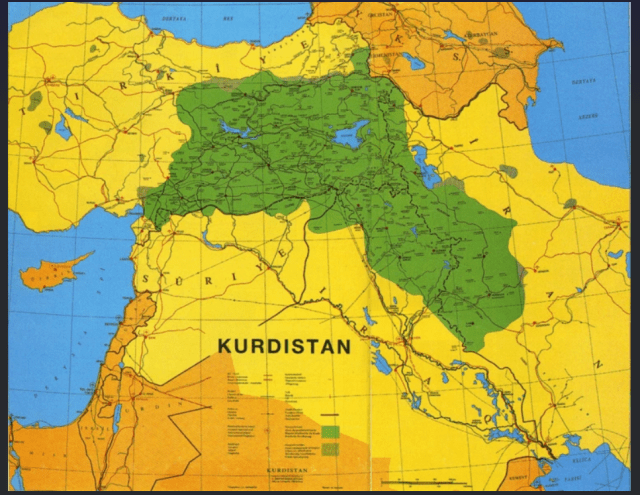

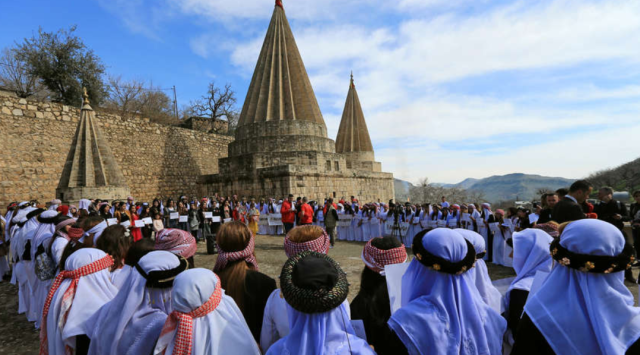



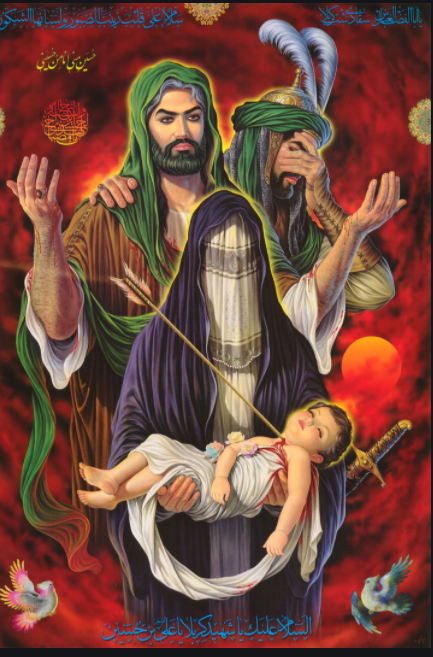


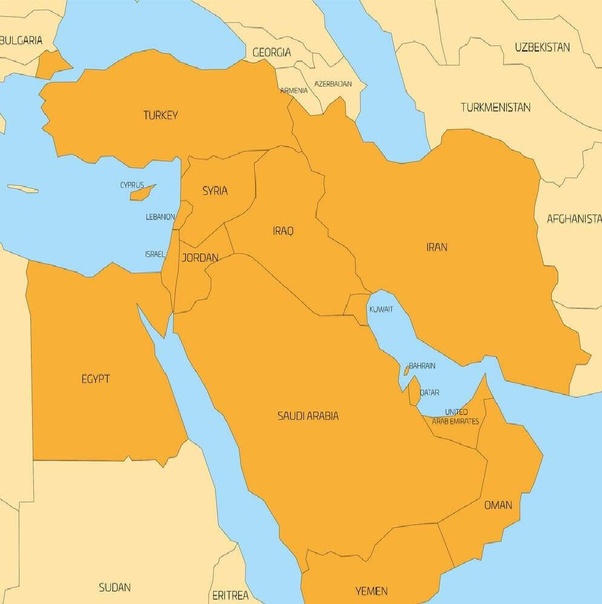
 WALTER SEBASTIAN ADLER